OUTshine LGBTQ+ Film Festival offers in-person, streaming options
Written By Sergy Odiduro April 22, 2022 at 9:11 PM
The documentary, “Make Me Famous,” highlights the career of Edward Brezinski. (Photo/Marcus Leatherdale)
There’s something to be said about someone who just won’t quit.
Exhibit A: Artist Edward Brezinski.
He pestered people to attend his art shows, doled out death threats and was best known for dismissing Robert Gober’s sculpture, “Bag of Donuts,” as … well … just a bag of donuts and then proceeding to consume one of its contents. And even though the stunt earned him a trip to the emergency room, this did nothing to temper his in-your-face antics, which are examined in “Make Me Famous,” a documentary showing at the 24th Annual OUTshine LGBTQ+ Film Festival.
Running from April 22-May 1, 2022, the festival will feature more than 45 international features and documentary screenings including “Jimmy in Saigon,” “Young and Afraid” and “Framing Agnes.” Parties and panel discussions will also be part of the festivities in venues throughout Miami-Dade County.
“Make Me Famous” is scheduled to screen at 5 p.m. Saturday, April 23, at the Regal Cinemas South Beach and be available for streaming throughout the duration of the event.
“This is really a great time for us to get out and come back together,” said Mark Gilbert, the festival’s board chair and interim executive director. “OUTshine LGBTQ+ festival is such a terrific event for people to come together and make new friends and see movies together in a theater where everybody is experiencing somewhat similar emotions. That to me is what is important and what makes our festival really special.”
Brian Vincent, director and coproducer of “Make Me Famous,” said he’s excited to be part of the event and hopes the film will continue to shine a light on the role of Brezinski.
“I think the most surprising thing about it is how much of an impact that Edward had on not just his contemporaries, who were all delighted to talk about him, but on the actual scene itself,” he said.
Set in New York City’s East Village, the film offers an unflinching look into the bleak, dilapidated and often filthy playground of artists like Jean-Michel Basquiat and a motley crew of painters, poets, photographers and others. The group was known for forming a cocoon of creativity, sparking a burgeoning arts movement, and nurturing a renaissance born amid hopelessness and the trash.
There is a whirlwind cast of characters, each one more fascinating than the next, who offer amusing and insightful testimonies on the overall art scene and Brezinski’s life. In all, the group coalesces into the perfect embodiment of the “starving artist” caricature, but it’s clear that this was no gimmick. The artists truly were hungry — and perhaps Brezinski, who stood on the cusp of a dynamic art scene, was the hungriest of them all.
“I wanted to tell the story as much as possible, from the point of view of people that were there with their artwork,” Vincent said. “They were all broke, and there really was no hope of having any money in the 1980s. Their goal was not to be rich. It was to impress each other with their creativity.”
There’s even a South Florida connection, according to Heather Spore Kelly, the film’s producer.
“Actually, Edward was homeless in Miami in the ’90s. He was a poor artist selling his paintings on the street. He actually got arrested for vagrancy as he was sleeping on the beach,” she said via email. “I bet there are several Floridians who have an Edward Brezinski painting, and they will be happily surprised they supported such a talented and dedicated artist!”
At first, bringing Brezinski’s life to the screen presented a number of challenges.
“Brezinski didn’t exist online,” Vincent said. “What had to happen then was we had to go into the community and to interview everyone and dig through all kinds of suitcases, cellars and every kind of railroad apartment. People would find these Brezinski photos, and they were all very delighted to talk about Edward because [he] was someone that they hadn’t thought about in years.
“It was extremely difficult to find enough archival [information] to tell the story.”
Connecting with artists proved to be another hurdle. The filmmakers had to gain the trust of reclusive artists including Richard Hambleton, who was suffering from melanoma and was persuaded to grant interviews after being coaxed through the crack of his door.
“They’re not like actors,” explained Vincent. “An actor will just show up if you call them and say, ‘Oh, I’m thinking about doing a show.’ Then they’ll be on your doorstep. But these artists are not like that at all. They inhabit their own worlds. They’re difficult to penetrate.”
The film’s producer hopes “Make Me Famous” will help spread an important message.
“This is actually our first film and we were inspired by the ’80s artists because they were so scrappy and innovative,” she said. “They serve as a shining example for those who toil away in obscurity to pursue their lifelong passions. We believe that a life devoted to art really means something. You can make a difference as an artist, whether or not you’re famous or rich.”
WHAT: 24th Annual OUTshine LGBTQ+ Film Festival
WHEN: “Make Me Famous” will be screened at 5 p.m. Saturday, April 23. Additional streaming options will be available throughout the festival, which runs from Friday, April 22, through Sunday, May 1.
WHERE: Regal Cinemas South Beach, 1120 Lincoln Road Mall, Miami Beach; other festival screenings and events are scheduled throughout Miami-Dade County
COST: $8 for in-person screenings and $7 for virtual screenings
Review: Set in the 1980s, ‘This Is Our Youth’ still holds up
Written By Christine Dolen April 21, 2022 at 5:32 PM
Luke Surretsky’s Dennis smokes another one as Teddy Calvin’s Warren watches in Area Stage’s “This Is Our Youth.” (Photo/Giancarlo Rodaz)
Kenneth Lonergan’s play, “This Is Our Youth,” has been widely produced since its Off-Broadway debut in 1996. One of those productions (at GableStage in the spring of 2000) featured a very young movie-star-to-be Oscar Isaac in the more sympathetic of the two male roles.
Now Area Stage cofounder John Rodaz, who gave Isaac one of his earliest professional roles at the company’s first space on Lincoln Road, has directed a new production of “This Is Our Youth” as his company’s second show in its new partnership with Miami’s Arsht Center.
The play is set in 1982 during the greed-is-good era of Ronald Reagan’s presidency. Lonergan’s three characters are rich-kid denizens of Manhattan’s Upper West Side (and it’s a bit mind-boggling to note that, were they real people, these late-teens/early 20s characters would now be pushing 60).
Materially, the kids are all right. Dennis Ziegler (Luke Surretsky) lives in a roomy enough studio apartment paid for by his father (a famous painter) and mother (a “harsh and extreme” social activist). Warren Straub (Teddy Calvin) lives with his dad, a man who made a fortune in lingerie manufacturing. Jessica Goldman (Harley Muir), an aspiring fashion designer, lives with her mom and is a friend of Dennis’ girlfriend, Valerie, never seen but the object of his telephonic wrath.
But money, of course, can’t buy happiness. And all three of these very young adults are finding the journey into maturity hard to navigate.
The characters played by Harley Muir and Teddy Calvin make a connection in “This Is Our Youth” at the Arsht Center. (Photo/Giancarlo Rodaz)
Dennis, whose folks would rather pay for his apartment than have him around, is a verbally abusive alpha male with a hair-trigger temper. Passing the time staring mindlessly at his small TV set when he’s not with Valerie, he spends his days and nights in search of, consuming or reselling drugs.
Warren would seem to have it worse. Low-key and more than a little lost – he’s struggling to recover from an unspeakable family tragedy – he is Dennis’ verbal whipping boy and his father’s literal punching bag. He shows up at the apartment having stolen $15,000 from his dad’s bedroom and carrying a suitcase full of valuable childhood memorabilia. What comes next isn’t clear, but once Dennis becomes aware of the dough, the manipulative shenanigans begin.
Jessica barely knows Warren, who has thus far been unlucky in the romance department, but due to his sudden influx of cash, the two go off for an adventure that both enjoy but handle awkwardly on the morning after.
All three actors in Area Stage’s cast appeared in the company’s first show at the Arsht’s Carnival Studio Theater, “Be More Chill.” They’re the right age for their roles, but none of them imbue the characters with qualities that would make these emotionally drifting kids more compelling company for the show’s almost 2 ½-hour running time.
Calvin comes closest, conveying Warren’s vulnerability and awkwardness, but why he would suffer Dennis’ abuse remains an utter mystery. Surretsky goes for broke with the nonstop and very loud belittling of Warren, occasionally mixing in a goofy laugh, but by the time he gets to Dennis’ big monologue, it’s too late for us to care. Muir’s Jessica comes off as a wisp of a girl, an insecure cipher who won’t know who she is for a very long time.
Rodaz has created some wild and wonderful moments in his staging, as when Warren manages to throw a football and break a sculpture Valerie has made for Dennis, who knows he’ll never hear the end of it.
Harley Muir’s Jessica inspects a very valuable toaster owned by Teddy Calvin’s Warren. (Photo/Giancarlo Rodaz)
Warren’s attempt to cut some cocaine – a move that just might help save him from yet another beating by his father – ends disastrously yet hilariously. A little dance scene between Warren and Jessica is so sweet and appealing that you understand why she’d say yes to his proposed adventure.
Frank Oliva’s set gets the details of Dennis’ apartment just right, from the painted white brick walls to the side-by-side radiators to the kitchen with its aging appliances. Lighting designer Cheyenne Sykes charts the changes from night to day, and costumer Rebecca Verpile especially has fun with Jessica’s flair for fashion. The sound design by Giancarlo Rodaz (son of the Area Stage founders) precisely delivers the vintage vinyl songs that Warren favors.
In life and American society, much has changed since this play set in 1982 debuted in 1996. When Dennis, Warren and Jessica were roaming the Upper West Side, there were no cellphones for instant and constant communication. No TikTok, no Facebook, no Instagram. The Sept. 11 terrorist attacks hadn’t yet awakened that facet of fear. The 24/7 drone of news about war, mass shootings and other tragedies hadn’t become omnipresent.
Yet “This Is Our Youth” holds up. For so many, the passage from the teenage years to adulthood is challenging, difficult, even disastrous. The world changes and evolves, but the key questions – Who am I? What should I do with my life? How do I navigate my way to a good life? – remain the same.
WHAT: Area Stage Co. presents “This Is Our Youth” by Kenneth Lonergan
WHEN: 7:30 p.m. Fridays, 2 p.m. and 7:30 p.m. Saturdays, through May 1; Sunday showings are set for 5 p.m. April 24 and 2 p.m. May 1
WHERE: Carnival Studio Theater at the Adrienne Arsht Center for the Performing Arts, 1300 Biscayne Blvd., Miami
GableStage’s ‘Boca’ ponders life & love in a senior world
Written By Christine Dolen April 20, 2022 at 12:45 AM
From left, Deborah Kondelik, Barbara Bonilla, Robert Zukerman, Beverly Blanchette and Avi Hoffman star in a comedy about a familiar place in GableStage’s “Boca.” (Photo/Magnus Stark)
If you live in South Florida, you know these people — or maybe you are one of them. They could be your friends, neighbors, relatives, parents, grandparents.
They live in a restricted community for those age 55 and older, a place where the sky is cerulean blue, the perfectly maintained grass is the most verdant green, and making the most of later-in-life experiences is on everyone’s to-do list.
“They” are the characters in “Boca,” a collection of 10 short related comedies by playwright Jessica Provenz, who lives in the Berkshires region of western Massachusetts, a different sort of paradise.
Revised since its August 2021 world premiere at Barrington Stage Co. in Pittsfield, Mass., the play is getting a vital second production as part of a “rolling world premiere” announced at the time of its Barrington debut. “Boca” is scheduled to preview on April 22, open on April 23 and run through May 22 at GableStage in Coral Gables. As with the commissioned premiere, Barrington cofounder and artistic director Julianne Boyd is staging the show’s second production.
At first glance, “Boca” may seem an unusual fit for GableStage, a company whose reputation was built on edgy dramas. But Bari Newport, in her first season as artistic director since succeeding the late Joseph Adler, begs to differ. In fact, the companies have about 80 subscribers in common.
“Roz [Rosalyn] Stuzin, the president of our board, is a passionate theater lover, and she’s also on the board of Barrington Stage. She sent me an early draft, and I was delighted by it,” Newport says. “I love Jessica’s writing. She has a quirky sense of humor and a gift for writing dialogue … It was brought to me, and I wanted to produce a play set in Florida first. Anyone can do it later.”
Newport — who summarizes the play’s theme as “life is short; spend it with the people you love” — sees Provenz’s script as “a love letter to Boca Raton and to making a community.”
Playwright Jessica Provenz is the author of GableStage’s “Boca,” a comedy about residents of an over-55 community in Palm Beach County. (Photo/Christopher Castanho)
“Boca” had its roots in a short piece titled, “Stay, Please.” The Juilliard-trained Provenz wrote it in 2019 for Barrington’s annual 10X10 New Play Festival. The single mom to a 10-year-old son has a day job working as Barrington’s development director, but she says she submitted it anonymously, and it became the hit of the festival. She wrote a second short play, and after that, Boyd and Barrington commissioned her to write an evening of short plays for the company’s senior actors. Inspired in part by an aunt who lives in Delray Beach, she began working on “Boca,” a play aimed at delighting audiences and making them laugh.
“During COVID, Julie called and asked, ‘How’s that play going?’ They really needed a comedy for last summer,” Provenz recalls. “I’ve been a playwright for 20 years, but this was the biggest platform I’d ever had.”
While writing “Boca,” Provenz wasn’t just dealing with the pressure of a deadline for a high-profile production.
“It was a bizarre existence. I would wake up at 5 a.m., writing to try to make myself laugh. Then I’d take my son to school, go in for radiation, then go to work,” says the 46-year-old playwright, who was undergoing breast cancer treatment at the time. “But it never felt like such a big deal. We’re all always going through something.”
“Boca” premiered last summer in a tent with 200 socially distanced seats and a masked audience. As with so many outdoor productions, noise was sometimes a factor – the actors had to wear microphones – and the weather was, well, unpredictable.
“Doing it in August was a tremendous challenge,” says Boyd, who plans to retire at the end of the 2022 season from the company she cofounded in 1995. “If it was hot outside, it was 95 degrees in the tent, and the actresses wear wigs – it’s hot with a wig on your head. If it was cold, we had to bring heaters into the tent. I had long johns on.”
Provenz, who notes that the temperature at the first Barrington preview was 55 degrees, says of this second production, “I’m so thrilled we will have walls!”
The actors who will bring “Boca” to life in GableStage’s space at the Biltmore Hotel are Avi Hoffman, Beverly Blanchette, Deborah Kondelik and Barbara Bonilla, all based in South Florida; and Robert Zukerman, a veteran of 16 Barrington Stage productions who appeared in last summer’s world premiere.
Originally, the play was made up of a dozen short pieces performed by three women and three men, all playing more than one role. Now, “Boca” has been slimmed down to 10 plays done by a trio of women (each playing two parts) and two men (Hoffman plays two roles, Zukerman three). The script touches on myriad subjects: life, death, romance, marital malaise, toxic homeowner associations, friendship, adventure, love, loneliness.
“Jessica is a terrific playwright. I’ve never met a younger woman writer who can write older characters so believably, especially older men,” says Zukerman, who appreciates strong roles for performers who have honed their craft over many years. “You know, we’re still here, and our experiences are important. Nothing bores me more than going to see a play about twentysomethings and their angst.”
Zukerman is also happy about the change of venue from outside in a tent to inside in a theater.
“I came to the conclusion that only pachyderms should perform under a tent. Now we can find the subtleties and explore the more serious, moving stuff. And we won’t be shrieking into microphones,” he says.
Barrington Stage cofounder and artistic director Julianne Boyd is directing “Boca.” (Photo/Bill Wright)
Hoffman, whose most recent GableStage appearance was in his play-with-music, “Joe Papp at the Ballroom,” in December, agrees that Provenz has a gift for creating compelling older characters.
“She gets their cadence, their struggles, their perspective, their wisdom,” he says. “It would be so easy to turn this into a stereotypical farce or comedy, but it’s not. These are real people with real problems … This is about people from all over the world who come to Boca, bringing their experiences and trying to figure out how to get old. How do you approach the last chapters of a life?”
Of the women in the play, only Blanchette has appeared at GableStage before. She likens the comedy in “Boca” to the style of “Modern Family.”
“It’s so funny that some of it is almost ridiculous, but there’s a subtle sentimentality. It’s heartfelt, with a message that isn’t overstated. I find myself easily moved to happy tears,” she says.
“There is definitely a through line with the characters and their relationships, one that culminates in the second-to-last scene,” observes Kondelik. “It’s a blast, but it has such poignant moments.”
Bonilla, a bilingual Cuban-American actor who grew up in New York, quips that she has been playing “old Jewish women since I was 14.” When she became aware of “Boca,” her thought was, “Oh my gosh, I have to audition for this. I know these people. I have been playing these people … Jessica just nailed so many things that happen in a 55+ community – the gossip, the Zoom board meetings, the card games.”
Bonilla knows about communities with rules. She lives in a home in Boynton Beach where the house numbers, exterior colors and mailboxes have to be just so.
“You’re independent, but not really. A lot of individuality is lessened,” she says. “At this stage of life, you’ve gotta laugh.”
Boyd and Provenz have been in South Florida together before, but not to work on a play. In late January each year, the women take fundraising trips to the region to raise money for Barrington, renting a car to drive around the state having breakfast, lunch and dinner with supporters. But as well as they know each other, Boyd was surprised by Provenz’s gift for crafting a comedy.
“Jessica has a wickedly funny voice,” Boyd says. “I didn’t realize she was so funny. You don’t [usually] laugh a lot when you’re raising money.”
WHAT: “Boca” by Jessica Provenz
WHEN: Preview 8 p.m. April 22, opening 8 p.m. April 23; regular performances 2 and 7 p.m. Wednesdays, 7 p.m. Thursdays, 8 p.m. Fridays, 2 p.m. and 8 p.m. Saturdays, 2 p.m. Sundays, through May 22, 2022
WHERE: GableStage in The Biltmore Hotel, 1200 Anastasia Ave., Coral Gables
Culture, politics and romance explored in Miami New Drama’s ‘The Cuban Vote’
Written By Christine Dolen April 19, 2022 at 11:39 PM
From left, Kristian Bikic, Marcela Paguaga, Evelyn Perez, Jonathan Nichols-Navarro, Carmen Pelaez and Andhy Mendez explore Miami politics in “The Cuban Vote.” (Photo/Rafael Guillén)
Playwright, actor and activist Carmen Pelaez is one dynamic woman. Outspoken, imaginative, always ready to fight for a better Miami, Pelaez has played a variety of roles in her family inspired works and in plays by others.
But during a talkback after Miami New Drama’s world premiere of her art world drama “Fake,” moderator-journalist Mirta Ojito pointed out that Pelaez had thus far avoided romance in her writing.
“I said, ‘I don’t write anything romantic because I don’t like writing tragedy,’” the playwright quipped. “Being a big girl, knowing how society sees you, I never thought I’d play a romantic lead.”
Never say never, as the saying goes.
With previews beginning April 22 and an official opening April 30, “The Cuban Vote” – written by and starring Pelaez – embroils her character in a race for Miami mayor, with a distinct romantic undercurrent loosely inspired by William Shakespeare’s “The Taming of the Shrew.”
“I always loved the dynamic of the relationship in ‘The Taming of the Shrew,’” Pelaez says. “I only ever fall for people when they’re really challenging.”
Miami New Drama’s cofounder and artistic director Michel Hausmann commissioned “The Cuban Vote” — the company’s third Pelaez play. “Fake” was the first, then came her short play, “Strapped,” part of the company’s innovative Drama League Award-winning “Seven Deadly Sins” production from November 2020 through January 2021.
Continuing to support Miami-based artists, bringing back accomplished Miamians who have built prominent careers elsewhere, and creating seasons that feature only world premieres are all part of Hausmann’s vision for Miami New Drama.
In addition to writing the play, Carmen Pelaez plays the main character, mayoral candidate Carolina “Caro” Clarens. (Photo/Rafael Guillén)
“We’ve been a very aspirational theater company. We want to be a theater that only does world premieres, with most of them in conversation with our community. We’ve arrived at that moment — we’ve commissioned a lot of work,” Hausmann says.
“The Cuban Vote” is a comedy centering on the mayoral campaign of Carolina “Caro” Clarens (Pelaez), a blunt-to-a-fault candidate whose passion for public service was ignited when she worked with her late father, a former mayor.
Although many admire her intellect and ideas, Carolina’s penchant for brutal honesty has hurt her in the polls. So hotshot D.C. political consultant Alejandro “Alex” Mesa (Andhy Mendez) is brought on board to polish the candidate’s rough edges – thus becoming a kind of 21st century Petruchio to Carolina’s outspoken Kate, though without the blatant misogyny.
“Carmen spends the entire play making fun of herself. Carolina is an exaggerated version of Carmen. She makes fun of Miami, the Cuban community, tech bros, the failures of government,” Hausmann says. “It has to resonate with Miami and speak truth to power so we see our own defects. It’s hilarious — it shows that ‘the Cuban vote’ is not a monolith.”
To bring the play to fruition, Hausmann paired Pelaez with a Miami artistic expat he greatly admires, director Loretta Greco.
The artistic director of San Francisco’s famed Magic Theatre was recently named the first woman artistic director in the 40-year history of Boston’s Huntington Theatre Co. Her lengthy resume includes directing on Broadway, off-Broadway and at regional theaters, including Miami’s Coconut Grove Playhouse. In 1978, she was the Silver Knight Award winner in drama — and, after earning degrees from Loyola University and Catholic University, she came home to teach drama at her alma mater, Southwest Miami High School, in the 1980s.
Though Hausmann had earlier asked Greco to take on different Miami New Drama projects, she always had conflicts. But he persisted.
The characters played, from left, by Kristian Bikic, Jonathan Nichols-Navarro and Andhy Mendez talk Miami politics in “The Cuban Vote.” (Photo/Rafael Guillén)
“Michel just wouldn’t give up. I thought, ‘OMG, there’s someone with the same tenacity I have,’” Greco recalls. “I read the play, and thought it had been so long since I’ve been connected to Miami and Cuba. I felt, ‘This is really good, but it could be great.’”
When Greco is working on a world premiere — and she’s done more than two dozen — it’s her practice to sit with the playwright and go over the script line by line, asking questions and giving notes.
Pelaez “did a very thorough, rigorous revision,” she says. “We wanted to know how substantive this could be without becoming part of the partisan noise. The play talks about issues Miamians care about, but it doesn’t get into the red-blue weeds.”
For her part, Pelaez is thrilled to be working with Greco.
“My first draft was horrible. Michel was great at homing in on what worked and what didn’t. He asked me to work with Loretta,” the playwright says. “Within a minute and a half, I was in love with her. She pinpointed exactly the things I also knew … It’s been a real partnership. She looked at problems and made suggestions, but she was never prescriptive.”
The play is performed by six Cuban-American actors, all living in or originally from Miami.
Mendez, who plays the political consultant, previously appeared in Miami New Drama’s “Confessions of a Cocaine Cowboy,”“The Cubans” and “Seven Deadly Sins.” He most recently played Fidel Castro in the world premiere of Eduardo Machado’s “Celia and Fidel” at Arena Stage in Washington, D.C. Among his extensive film, TV and stage highlights, Mendez was directed by Pulitzer Prize-winning Miami playwright Nilo Cruz in the “Sotto Voce” — and he likens Greco’s directing style to Cruz’s.
Marcela Paguaga, a New World School of the Arts graduate, plays Carolina’s sister, the social media wizard Blanca, with Evelyn Perez as their wise mother, Ofelia. Kristian Bikic is Benji Carbonell, a pal of Alex Mesa’s and a guy with two things on his mind: marrying Blanca (who, he believes, can’t wed until Carolina does) and making a killing in bitcoin.
Los Angeles-based Jonathan Nichols-Navarro, born in Havana and raised in Hialeah, plays the guayabera-wearing, old-school politician Gilberto Ruiz, a mayoral-race late entry who threatens to upend Carolina’s campaign. Once Gilberto is in, the contest becomes a study in contrasts: The younger Carolina remains focused on substantive issues (fair pay, climate change, housing, homelessness), while the cagey-but-folksy Gilberto represents an older, more conservative generation comfortable with special interest money and ready to use the hot-button words “communism” and “socialism” as weapons.
“I’d describe the play as ‘West Wing’ meets ‘Veep.’ There’s an urgency to it as well as comedy. But if people take anything away, it’s a love story,” Mendez says. “Carmen is a fair person. She doesn’t say one side is good and the other is bad. She knows how to maneuver the conversation without attacking one side or the other. It’s a piece about communication.”
Mendez also thinks that the way Pelaez strategically uses Spanish in the play — words here and there, sometimes in the middle of a sentence that is otherwise in English — rings very, very true.
“It’s genius. We live in a city that’s so different from any other one. We’re experts in starting a conversation in English and finishing it in Spanish,” he says.
Candidate Carolina Clarens (Carmen Pelaez) and political consultant Alejandro Mesa (Andhy Mendez) have yet another faceoff in a play that’s reminiscent of Shakespeare’s “The Taming of the Shrew.” (Photo/Rafael Guillén)
Nichols-Navarro played the lector in the Pulitzer Prize-winning “Anna in the Tropics” at the Coconut Grove Playhouse in 2004. Playing Gilberto in “The Cuban Vote,” he says, poses a different kind of challenge.
“You have to make him lovable, charming and conniving … I use an accent. He’s an old guy from the old country, the refugee who straddled the island and the Florida peninsula all his life,” the actor says. “I come in, get laughs and leave. You almost don’t believe someone would vote for him, until you look at the last few years.”
Campaign ads and videos are an integral part of the storytelling in “The Cuban Vote,” so one day recently Nichols-Navarro donned Gilberto’s omnipresent guayabera and went with a crew to Little Havana.
“It’s the most Cuban I’ve felt in a long, long time. They put me in a rum barrel [Gilberto’s method of transit from Cuba] in front of a picture of the Malecón. I rolled cigars. I went to a senior home, then danced and serenaded three women. I played a game of dominoes,” he says. “Listen, if you play even half of that video, the audience will fall in love with Gilberto.”
Paguaga, who played singer Margarita Maria Mendoza in the long-running immersive hit, “The Amparo Experience,” agrees that Pelaez got the substance and style of Miami’s Cuban community just right.
“Carmen is a powerhouse. Everyone on that stage is [like] someone you know,” she says. “I grew up in Hialeah, and I tell people my native language is Spanglish. For me, it’s organic. It feels natural.”
Director Loretta Greco’s lengthy resume includes shows on Broadway, off-Broadway and at regional theaters, including Miami’s Coconut Grove Playhouse. (Photo courtesy of Loretta Greco)
Bikic, who’s returning to Miami after working in Los Angeles and taking a pandemic career pause, is the son of a Cuban mother and an Argentine father. He describes himself as looking like “a super gringo,” and acknowledges that in the past he kept his cultural heritage at bay. But “The Cuban Vote” has already done more for him than giving him a role in a world premiere.
“It’s cool to represent a different type in this population. [During rehearsals], I’ve learned more about my culture and embracing it. I want Miamians to come see this play,” Bikic says. “Carmen’s writing is sharp, smart, funny and true. The accuracy that’s in this script is crazy.”
That Pelaez, the grandniece of famed Cuban artist Amelia Peláez, would get Cuban-American Miami so right is no surprise. She grew up here, got her training at the American Academy of Dramatic Arts and lived in New York for a time, then came home after the success of her hit solo show, “Rum & Coke.”
In terms of politics, she has worked with local and national campaigns, and she has been involved with the Miami Freedom Project, founded by her sister Ana Sofia Pelaez and the late Patrick Hidalgo. “The Cuban Vote” is dedicated to that organization.
“This is highly emotional. Anything involving Cuban politics is a third rail – you have to make sure that any criticism considers all sides,” Pelaez says. “The day the play was due to Miami New Drama, Patrick died … It was an incredible shock. So much of what I learned about political service I learned from Patrick.”
Her newest role, she says, is and isn’t like her.
“I really summoned my vulnerability to create her. Her approach to political work is the same, but I’m not nearly as confident. I’m stubborn, but I’m not as arrogant. I don’t want to play me,” Pelaez says. “She’s awesome, amazing. She holds on a lot tighter to what matters. Her quick humor is modeled on my personality.”
Such as?
“People have asked me to run for office, but I have zero interest in service,” she says. “I am not strategic. She has a plan for everything. I would be a nice dictator.”
WHAT: Miami New Drama’s world premiere of “The Cuban Vote” by Carmen Pelaez
WHEN: Previews April 22-24 and 29; opening night 8 p.m. April 30 by invitation only; after that, performances are 8 p.m. Thursday-Saturday and 3 p.m. Sunday, through May 15, 2022
WHERE: Colony Theatre, 1040 Lincoln Road, Miami Beach
Review: Like ‘SNL’ in the early days, ‘Not Ready For Prime Time’ is a work in progress
Written By Christine Dolen April 8, 2022 at 7:04 PM
Chris Ferrer (far right) as Lorne Michaels manages some unhappy stars in “Not Ready for Prime Time.” (Photo/George Schiavone)
So much has happened since “Not Ready for Prime Time,” a play by Miamians Erik J. Rodriguez and Charles A. Sothers, first made audiences laugh.
Two years after the play’s 2014 world premiere production by New Theatre at the South Miami-Dade Cultural Arts Center, that influential South Florida company (which commissioned and premiered Nilo Cruz’s Pulitzer Prize-winning “Anna in the Tropics”) went out of business.
But Rodriguez and Sothers (the latter the cofounder and artistic director of the nonprofit youth company, Roxy Theatre Group) kept the faith and kept working on their script about the launch and early years of NBC’s now-iconic, late-night comedy show, “Saturday Night Live,” aka “SNL.”
The pair forged new relationships with producers. Miami-Dade County built the sleek new Westchester Cultural Arts Center at the entrance to Tropical Park and chose Roxy to manage the facility and its 200-seat, black-box theater. A planned relaunch of “Not Ready for Prime Time” on New Year’s Eve 2021 was postponed as the COVID-19 pandemic lingered. Then, a key producer of the show, George Cabrera, died suddenly of a heart attack in late January at age 44.
René Granado and Dayana Corton click as “SNL” stars Bill Murray and Gilda Radner. (Photo/George Schiavone)
Through it all, “Not Ready for Prime Time” keeps moving forward – and now it’s back with a fresh production and a second chance.
Running through April 17, 2022, at the Westchester center, the production has been shaped and staged by director Conor Bagley. The audience is asked to play along, with theatergoers pretending they’re at a live taping in Studio 8H at 30 Rockefeller Plaza in Manhattan. A four-piece band holds forth, and when “Applause” signs are illuminated, the enthusiastic crowd is only too happy to oblige.
The show’s narrator – at least through the first act of a play that runs well over 2 1/2 hours, with intermission – is the man who created “Saturday Night Live,” Lorne Michaels (Chris Ferrer). The Canadian producer and showrunner, who (except for a five-year period from 1980 to 1985) has been at the helm of “SNL” since it launched in 1975 with George Carlin as host, tells us up-front exactly the kind of subversive late-night comedy show he’s determined to create: something “absurd, young and hip … and if you don’t like it, get the f**k out of the way.”
So within minutes, the audience gets not only the measure of Michaels but an idea of just how uncensored this trip through early “SNL” history will be.
We watch as actor-comedians Gilda Radner (Dayana Corton), John Belushi (Ryan Crout), Dan Aykroyd (Kristian Lugo), Chevy Chase (Caleb Scott), Garrett Morris (Roderick Randle), Jane Curtin (Ilana Isaacson) and Laraine Newman (Isabella Lopez) are hired, develop relationships and struggle to adjust to fast, massive fame.
After breakout star Chase decamps for Hollywood, Bill Murray (René Granado, who also does double-duty as NBC producer Dick Ebersol) joins the “Not Ready for Prime Time Players” and makes the ever-shifting romantic alliances more complex.
Since the original “SNL” material is copyright-protected, Rodriguez and Sothers have written sketches for the cast to perform. Some are quite funny. Others, not so much. There are depictions of or allusions to Belushi’s memorable samurai, the Coneheads, Murray’s cheesy lounge singer, the “Nerds” sketches with Radner as Lisa Loopner and Murray as Todd DiLaMuca. Chase sits at the Weekend Update anchor desk, deadpan and ever-ready for a pratfall.
Roderick Randle plays Garrett Morris in this look at the early years of “Saturday Night Live.” (Photo/George Schiavone)
But – and this is a big but – for all the laughs, the playwrights remain focused on illuminating what went on behind the scenes.
“Not Ready for Primetime” is overstuffed with exposition (it could easily be trimmed by 20 to 30 minutes). The flaws of nearly every character are revealed then reemphasized: the drug habit that would kill Belushi at 33; Newman’s heroin use; Morris’ drug use and roiling anger at workplace racism; Radner’s bulimia and loneliness; Aykroyd and Murray’s damaging womanizing within the cast. That warts-and-all look at the dark side of success gets hammered home, again and again and again.
Another challenge for Bagley and the performers has been deciding how closely the actors should hew to the stars they’re portraying without doing an impersonation. Mostly, the actors play a dichotomy: There’s a difference between their persona as an “SNL” star doing a sketch and who they are in writing sessions or personal encounters.
Corton, for example, is quite deft in the way she evokes Radner as Lisa Loopner, Baba Wawa or Roseanne Roseannadanna. But when she’s “just” Gilda, she comes off as a pretty, sweet young woman who’s not easy to tell apart visually from Lopez’s perpetually dissatisfied Newman. Isaacson plays the most arguably adult performer in the bunch, but isn’t much like Curtin at all.
Crout, who looks a lot like Belushi and can skew his face in the same here-comes-trouble way, is compelling even if he doesn’t radiate a similar sense of unpredictable danger. Lugo is a charismatic actor who isn’t a bit like Aykroyd, nor does he bother with Aykroyd’s Canadian-flavored accent.
Scott is stuck playing Chase as an insufferable, insensitive narcissist – which he does well – but he is a much finer actor than you would know from his character here. Randle is really fine and furious as Morris, and the staging emphasizes the performer’s sense of exclusion. The handsome Granado, who is fine as Michaels’ supporter and foil Ebersol, isn’t at all like Murray but rises to the occasion in his bits with Corton’s Radner. Ferrer is both a steady hand and a sometimes volatile and foul-mouthed presence as Michaels in the legendary producer’s youth.
The cast of Erik J. Rodriguez and Charles A. Sothers’ “Not Ready for Prime Time” assembles on the set. (Photo/George Schiavone)
The design team, working within the theater’s limited black-box space, gets the ’70s vibe right, from Jorgina Fernandez’s costumes (check out Morris’ white platform shoes) and Cindy Pearce’s wigs (none more striking than the one for Roseanne Roseannadanna) to Andrew Rodriguez-Triana’s necessarily compact set with its movable side units. Sound designer Ulises Otero, lighting designer Tony Galaska and music director-keyboard player Douglas McCall all contribute to the “SNL” vibe.
Like Michaels since the nascent days of “SNL,” this play has ambitions.
Those involved with the play would love for it to have a larger, longer life, and it’s a good thing that – thanks to the Roxy Theatre Group, Grove House Productions and Broadway Factor – the script is getting a second look with Bagley at the helm and new actors in the roles. Truth be told, the audience – unmasked, sipping wine and ready to party – laughs a lot and seems to have a great time.
Could “Not Ready for Prime Time” be better, more incisive, more balanced in its depiction of the highs and lows of the characters’ lives, on TV and off? Yes. That’s part of new play development, and it can make all the difference.
WHAT: “Not Ready for Prime Time”
WHEN: 8 p.m. Thursdays-Fridays, 3 p.m. and 8 p.m. Saturdays, 4 p.m. Sundays; through April 17, 2022
WHERE: Westchester Cultural Arts Center, 7930 SW 40th St., Miami
Miami playwright Gina Montét voices a new mom’s fears in ‘Overactive Letdown’
Written By Christine Dolen March 30, 2022 at 1:14 PM
The characters played by Alex Alvarez and Lindsey Corey contemplate life in the new play, “Overactive Letdown.” (Photo courtesy of Morgan Sophia Photography)
From extensive research and personal experience, Miami playwright Gina Montét knows that pregnancy, childbirth and new motherhood are anything but simple.
Baby showers and gender reveal parties, natural childbirth options, the adventures of nursing or of getting the baby on a strict schedule — these are all “normal” parts of the journey, if we’re to believe the detailed information in that pregnancy bible, “What To Expect When You’re Expecting,” or on websites like TheBump.com. But don’t believe everything you read.
Montét, whose play “Overactive Letdown” is getting a world premiere production at Boca Raton’s Theatre Lab, has caught one of a playwright’s brass rings just now.
Written in 2018-19 when Montét was part of the Playwright Development Program run by Miami-Dade County’s Department of Cultural Affairs, the script continued to evolve through various avenues: at the Playwrights’ Center and the Center for the Performing Arts in Minneapolis; with Florida International University’s The Greenhouse play development program; and as part of Theatre Lab’s 2020 New Play Festival. But Montét and any other playwright would tell you that a full production is the real beginning of a play’s potential ongoing life.
Montét’s aim in “Overactive Letdown” is to explore how societal and personal expectations, isolation, hormonal changes and severe sleep deprivation contribute to postpartum depression — or, in extreme cases, postpartum psychosis.
Initially, “Overactive Letdown” seems to be a playful exploration of expectations vs. reality, with some naivete thrown in for good measure. In the dark, before the stage lights come up, we hear the voices of Christine (Lindsey Corey) and Mark (Timothy Mark Davis). Are they having sex? Sure sounds like it.
Wrong. Hubby is actually making a plaster cast of his pregnant wife’s belly and breasts so that once the baby arrives — soon, really soon — it can be decorated and then adorn a wall in the nursery.
The new parents (played by Timothy Mark Davis and Lindsey Corey) cope with the stresses of life with a newborn baby. (Photo courtesy of Morgan Sophia Photography)
In that getting-to-know-them first scene, we learn that Christine and Mark are excited, funny and focused on their life-changing transition into parenthood. She’s hyper-organized, with baby minutiae arranged in color-coded binders. He’s game but doesn’t always listen. He’s also ready to take on extra work so she can be an at-home mom.
Post-delivery, the world inside the couple’s modest Miami apartment feels markedly different.
Baby Jack arrived by C-section, which has left Christine with guilt and pain. Nursing soon becomes a nightmare of excruciatingly sore breasts and a problematic overactive letdown reflex: The mother’s milk comes out so fast and at such a volume that the baby can choke or stop feeding.
Not wanting to see her controlling mother or anyone else, Christine burrows into new-baby isolation, sinking into loneliness, worry and feelings of inadequacy, the latter heightened by a judgmental lactation consultant and a breezily oblivious friend (both played by Maha McCain).
Sometimes, she finds escape and respite in Netflix movies. Montét serves up a series of male cinematic archetypes played by Alex Alvarez: a wealthy Regency-era landowner; a lover on a doomed ship; a man-of-few-words cowpoke; a seemingly friendly cop who deepens Christine’s fears; a final ominous presence. As the 90-minute play goes on, she spirals into the darkest place imaginable.
Theatre Lab’s premiere production is in the infinitely capable hands of director Margaret M. Ledford, an artist who has been attached to the play for some time, as have Corey and Alvarez. With grace and precision, she helps guide the characters and the audience on the play’s journey from joy-filled hope to the depths of despair.
Corey gives a richly complex performance as a young woman who innocently imagines she’ll be able to catch up on her reading and TV watching whenever her baby is napping. Instead, increasingly frantic and detached from reality, Corey’s Christine does her best to conceal how mental illness is infiltrating her every thought. It’s a powerful, difficult role, and Corey meets its shifting challenges.
Lindsey Corey’s Christine begins experiencing movie-fueled fantasies, played out here by Maha McCain and Alex Alvarez. (Photo courtesy of Morgan Sophia Photography)
As her husband, Davis is engaging and amusing, then increasingly disturbed and put off by his wife’s behavior. Because Mark is meant to be off working a lot — thus underscoring Christine’s isolation and making time for her movie-fueled fantasies — Davis has only a moderate amount of stage time, which is too bad, because his interactions with Corey’s Christine are illuminating.
McCain and Alvarez both have the pleasurable challenge of playing multiple characters.
McCain is first seen as a belle who doesn’t want to marry Alvarez’s Regency landowner (think “Bridgerton”), then as the lactation consultant whose baby-centric words make Christine utterly miserable, then as a supermom friend whose mastery of all baby-related things sends Christine spiraling further.
The handsome Alvarez, who shifts accents as he breathes life into those cinematic archetypes, becomes increasingly dangerous to Christine. Conjured from her imagination, embodying her worst fears made real, Alvarez becomes a striking, magnetic, ominous force.
Theatre Lab’s scenic designer Michael McClain has given Christine and Mark a living space that looks like a neat, if older, Miami apartment, one with a jalousie front door that becomes the portal to Christine’s fears. Lighting designer Eric Nelson and sound designer Matt Corey summon the characters’ fantasy worlds, the last one a nightmare straight out of a horror movie. Costume designer Dawn C. Shamburger underscores Christine’s changing physical state and psychological deterioration.
Often, a first production of any play can underscore what works, what doesn’t, what could make the script stronger.
Theatre Lab’s intimate stage makes the movie sequences more challenging to pull off, physical proximity blurring the line between fantasy and reality. The play has been described as a “dark thriller,” but though it is ultimately dark, the “thriller” part doesn’t quite fit. Tonally, its shift from happy anticipation to stark tragedy is ultimately jolting.
Montét, mother to three boys, notes in the play’s program that she experienced some postpartum depression, had a C-section and, while home with her third son, binge-watched movies — all experiential threads woven into the script. But in creating Christine and writing “Overactive Letdown,” she wanted to craft a play about “the agonizing shame and secrecy that can accompany mental illness.”
New motherhood can be joyous and exhausting, fulfilling and exasperating, often on the same day. Or in the same hour. But for some unlucky women, the darkness consumes the light. In “Overactive Letdown,” Montét gives them voice.
WHAT:Theatre Lab world premiere of “Overactive Letdown”
WHEN: 7:30 p.m. Thursdays-Saturdays and 3 p.m. Sundays, through April 10, 2022
WHERE: Parliament Hall at Florida Atlantic University, 777 Glades Road, Boca Raton
COST: $32 and $40 for general admission; $17 and $25 for faculty and staff; $10 for students
Live from Westchester, it’s ‘Not Ready for Prime Time’!
Written By Michelle F. Solomon March 29, 2022 at 5:09 PM
From left, Dayana Corton, Rene Granado, Ilana Isaacson, Isabella Lopez and Chris Ferrer star in the play as famous “Saturday Night Live” cast members. (Photo courtesy of Sebastian Lannes)
This isn’t the first time “Not Ready for Prime Time” opens in South Florida.
But this time around, the original play is most definitely ready, according to its Miami-Latin X creators, Erik J. Rodriguez and Charles A. Sothers.
The show — which chronicles the early years of the TV classic, “Saturday Night Live” — premiered in 2014, produced by New Theatre at the South Miami-Dade Cultural Arts Center. Then, it underwent retooling.
Years later, with new producers at the helm and a new venue, the show was ready to ring in New Year’s Eve on Dec. 31, 2021, at the Westchester Cultural Arts Center — until the COVID-19 Omicron variant sidelined it.
But the moment has finally arrived: The revamped version opens in Westchester on Thursday, March 31, 2022.
Dayana Corton plays Gilda Radner in “Not Ready for Prime Time.” (Photo courtesy of Charles Sothers)
“There have been a few hiccups here in us opening, but like Charlie and I say: This is the little show that could,” Rodriguez said. “The show is an absolute escape. It is good that we are coming back out of COVID. It’s a way for audiences to go back in time before there ever was a pandemic.”
The play revolves around eight comedians and creator Lorne Michaels, all part of the beginnings of the NBC sketch comedy show that would become part of pop-culture history after premiering on Oct. 11, 1975. Like the scrappy origins of “Saturday Night Live,” the pair’s coming together to write this play was just as serendipitous.
Two decades ago, Sothers cofounded the nonprofit Roxy Theatre Group, a youth performing arts training center in Kendall. Rodriguez was a student there.
“We were doing our annual holiday show, ‘Holly Jolly Follies’ … we were backstage and he started telling me about a book he was reading,” Sothers said.
Rodriguez interjected: “I was on this ‘Saturday Night Live’ kick, reading ‘Live From New York’ and Gilda Radner’s memoir.”
Ilana Isaacson stars as Jane Curtin in a “Saturday Night Live” Weekend Update skit. (Photo courtesy of Sebastian Lannes)
During that conversation, Rodriguez brought up the infamous story of a fight between Chevy Chase and Bill Murray during the show’s second season. This led to the idea of a play, and they put pen to paper almost immediately.
The focus wasn’t just the inner workings of the show, but also everything that surrounds celebrity culture.
“How much do we really know these people? That was the question. What’s their human story? What’s the backstory?” Sothers said. “And when it came to ‘SNL,’ how did they get this experimental new thing that was just starting on television to become this behemoth pop cultural institution that we know now?”
The playwrights tell the stories of what was happening backstage, as the newcomers were catapulted to stardom, from Laraine Newman and John Belushi’s drug addictions to Gilda Radner’s eating disorder.
Playwright Charles A. Sothers cofounded the nonprofit Roxy Theatre Group, a youth performing arts training center. (Photo courtesy of Bryant Gutierrez)
Playing the roles of the “Not Ready for Prime Time Players” and their show’s creator are South Florida actors Dayana Corton (Gilda Radner), Ryan Crout (John Belushi), Chris Ferrer (Lorne Michaels), Rene Granado (Bill Murray), Ilana Isaacson (Jane Curtin), Isabella Lopez (Laraine Newman), Kristian Lugo (Dan Aykroyd) and Roderick Randle (Garrett Morris). New York-based actor Caleb Scott plays Chevy Chase.
“Not Ready For Prime Time” marks a step forward for Sothers’ Roxy Theatre Group, which is now the managing company at the Westchester Cultural Arts Center at Tropical Park. The 200-seat black box theater and art gallery space was financed by Miami-Dade County as part of the voter-approved Building Better Communities General Obligation Bond program. The theater had its official inauguration ceremony in June 2021.
“We’ve been around for two decades. Now this great resource opens up in Westchester. We’re going to produce quality shows here,” he said.
Sothers’ Roxy Theatre Group is also one of three producing partners for “Not Ready for Prime Time.” The others are Grove House Productions and Broadway Factor.
For the play’s new iteration, New York-based Conor Bagley took over directing duties and has helped shape the script.
“He’s been very insightful in many ways, including having someone asking the questions that maybe you didn’t consider before,” Rodriguez said. “[Bagley] has really helped develop the concept.”
Erik J. Rodriguez is one of the Miami-based cowriters of “Not Ready for Prime Time.” (Photo courtesy of Madina Aiupova)
There’s an element that didn’t exist in the first script: The audience is now transported to NBC Studio 8H at Rockefeller Center to experience what a taping might have been like in the 1970s.
“The whole play is structured like an episode of ‘SNL,'” Bagley said. “We have a band that plays like the late-night show’s musical act, and creator Lorne Michaels plays the host while he’s also the one that takes us through the story of ‘SNL.’ Audiences are in the studio watching everything come together.”
The playwrights also took to heart feedback from previous audiences and found that the original seemed to lack comedy — after all, the comedic sketches are at the heart of the TV show’s success.
“We couldn’t use their original sketches because of copyright issues, so we wrote our own,” Rodriguez said.
Putting themselves in the shoes of writers in 1975 was eye-opening, Sothers said.
“How do some of the characters translate today? John Belushi’s ‘Samurai’ was a hit in 1975, but now it’s cultural appropriation,” he said.
Still, “Samurai” is in the new show. “We couldn’t do it any other way or we’d be judging from the lens of the present,” Sothers said. “We had to write it as if we were there then. That was the only way it would make sense.”
WHAT: “Not Ready for Prime Time”
WHEN: 8 p.m. Thursdays-Fridays, 3 p.m. and 8 p.m. Saturdays, 4 p.m. Sundays; through April 17, 2022
WHERE: Westchester Cultural Arts Center, 7930 SW 40th St., Miami
Review: Zoetic’s ‘Side by Side by Sondheim’ is a highly entertaining, engaging memorial to a giant
Written By Christine Dolen March 21, 2022 at 7:31 PM
From left, Stuart Meltzer, Joline Mujica, Aloysius Gigl and Jeni Hacker promise some comedy in Zoetic Stage’s “Side by Side by Sondheim.” (Photo/Justin Namon)
During his singular career as a brilliant and influential composer-lyricist, the late Stephen Sondheim was nothing if not eclectic in his choice of subject matter. The vicissitudes of marriage, childhood trauma, and the price of creating art are just three of the themes Sondheim explored in his wide-ranging body of work.
Though Sondheim collaborated as a lyricist with great composers such as Leonard Bernstein (on 1957’s “West Side Story”), Jule Styne (1959’s “Gypsy”) and Richard Rodgers (1965’s “Do I Hear a Waltz?”), the 16 shows he created as both composer and lyricist between 1954 and 2003 made him an icon to generations of musical theater artists and audiences.
Sondheim, who died in November 2021 at age 91, has been celebrated in at least a half-dozen revues devoted to his work. The first of these, 1976’s “Side by Side by Sondheim,” is now playing at the Arsht Center’s Carnival Studio Theater, where Miami’s Zoetic Stage is paying tribute to Sondheim’s art with art of its own.
“Side by Side by Sondheim” — the show and this production of it — seems simple enough. But, as with all things Sondheim, its riches run deep.
Aloysius Gigl performs a poignant rendition of “I Remember,” from Stephen Sonheim’s “Evening Primrose.” (Photo/Justin Namon)
Performed by three singers, a narrator and two pianists, the show includes tunes from “West Side Story,” “Gypsy,” “A Funny Thing Happened on the Way to the Forum,” “Company,” “Follies,” “Anyone Can Whistle,” “A Little Night Music,” “Pacific Overtures,” and a 1966 television production of “Evening Primrose” — more than enough for a revue that runs two hours plus an intermission.
Because the revue was created in 1976, you’ll hear nothing from “Sweeney Todd,” “Merrily We Roll Along,” “Sunday in the Park with George,” “Into the Woods,” “Assassins,” “Passion” or “Road Show,” all post-’76 Sondheim musicals. Even so, you get some visual reminders of some of those shows via projected photos from past Zoetic productions.
Zoetic’s artistic director and cofounder, Stuart Meltzer, has a deep and abiding appreciation for Sondheim’s work, so much so that he has stepped into the role of narrator. He sings just a bit (the first bars of the opening number, “Comedy Tonight,” are his), helps drive the action, and offers context and insight through his narration. He is, in a word, charming.
And of course, since he’s also the show’s director, Meltzer (with the help of many collaborators onstage and off) is responsible for its tone. Zoetic’s “Side by Side” is playful, joyous, at times virtuosic. Here and there, a moment misses, but most meet Sondheim’s abundant challenges. The result is a highly entertaining, engaging, living piece of theater that also serves as a memorial to a giant.
Stuart Meltzer is the narrator and director of “Side by Side by Sondheim,” which is playing at the Arsht Center’s Carnival Studio Theater through April. (Photo/Justin Namon)
With gorgeous two-piano accompaniment by music director Caryl Fantel and Jeff Hess, the versatile performers deliver everything from novelty songs to heartbreaking ballads. Jeni Hacker, Aloysius Gigl and Joline Mujica shift quickly from character to character, from solos to duets to group numbers. Three beautiful voices do justice to Sondheim, and then some.
Hacker and Gigl, who were paired as Mrs. Lovett and the title character in Zoetic’s “Sweeney Todd,” won Carbonell Awards as best actress and best actor in a musical for that show.
Hacker, who also starred as Fosca in Zoetic’s “Passion,” is an absolutely superb singing actor, as adroit with comedy (showcased in “The Boy From … ”) as she is with more serious Sondheim songs (“Send in the Clowns” — more on that in a moment). She also doubles as the show’s choreographer and fleet-footed tap dancer.
Gigl possesses a magnetic Broadway-caliber baritone, a voice that can summon tears (in “I Remember”), convey longing (“Pretty Lady”) or put the fear of God in you (“Could I Leave You?”). He’s also funny as he gazes into a hand mirror and sings “Tonight.” Think about it.
Mujica, a University of Miami graduate who played Tracy Turnblad in “Hairspray” at Actors’ Playhouse in 2011, has a lovely lyric soprano voice that doesn’t always land as impactfully as it should. “Losing My Mind,” for example, could be but isn’t yet a showstopper.
Speaking of showstoppers: Hacker’s “Send in the Clowns” is exactly that. The Grammy Award-winning number from “A Little Night Music” is among Sondheim’s best-known songs, recorded by Judy Collins, Frank Sinatra and others. Hacker delivers her version seated on a chaise longue, remaining still as her expressive voice and face take the audience on a journey of remembrance and regret. Hers is a truly exquisite, illuminating rendition.
Among other highlights of Zoetic’s “Side by Side” are Hacker’s cold-feet, furiously fast “Getting Married” (with great contributions from Gigl and Mujica); Gigl singing a self-deluding “You Must Meet My Wife;” Hacker and Mujica wallowing in double entendre as they sing “Can That Boy Foxtrot,” then singing a fierce “A Boy Like That,” followed by a tender “I Have a Love.”
From left, Jeni Hacker, Aloysius Gigl and Joline Mujica sing “Pretty Lady” from the musical, “Pacific Overtures.” (Photo/Justin Namon)
Other moments that don’t quite come off? “You Gotta Get a Gimmick” from “Gypsy,” in which the actors seem to be trying way too hard. A recurring bit in which an actor exits, followed by a loud crashing sound. The song-stuffed “Conversation Piece” near the end of the show in which the actors sing snippets of other Sondheim tunes but also repeat parts of numbers that have already been done in full.
To deliver the many shifting environments required for so many songs from so many shows, set designer Michael McKeever has created a playing area with versatile panels and screens. Tony Galaska’s lighting sometimes alters their colors, while McKeever-designed projections (with animation by Greg Duffy and projection mapping by Steven Covey) introduce still or moving images. One especially shimmering moment happens as Gigl sings an aching “I Remember,” images of snow and ice are projected, and Fantel and Hess conjure a soft snowfall through music.
Costume designer Marina Pareja supplies dozens of appropriate character pieces that can quickly be added or subtracted from an actor’s basic black outfit. Prop design is by Vanessa McCloskey (who is also the stage manager), and sound is by Matt Corey.
Although Sondheim himself has now exited the stage, his work lives on. “Company” is back on Broadway, and Steven Spielberg’s new take on “West Side Story” is up for seven Academy Awards. “Side by Side by Sondheim” serves as a reminder of a theater artisan’s greatness. And of what endures.
WHAT: Zoetic Stage presents “Side by Side by Sondheim”
WHEN: 7:30 p.m. Thursdays-Fridays, 3 p.m. and 7:30 p.m. Saturdays, 3 p.m. Sundays (with additional performance 7:30 p.m. March 23, and no matinee on March 26); through April 10, 2022
WHERE: Carnival Studio Theater at Adrienne Arsht Center for the Performing Arts, 1300 Biscayne Blvd., Miami
Miami filmmaker’s ‘The Sweetest Girl’ tells authentic story of Haitian family
Written By Sergy Odiduro March 17, 2022 at 9:33 PM
Genji Jacques plays Lucias Goodman, the husband and father in “The Sweetest Girl.” Sandra Justice, seen in the background, plays his wife. (Photo/C.W. Griffin)
Miami Dade College entrepreneurship professor Yanatha Desouvre believes that when it comes to African-American cinema in general, and Haitian-American films in particular, there’s something sorely missing.
“People are hungry for authentic stories of people of color, Black people specifically in Miami, and authentic Haitian stories that have never been told before or are told in a different way,” says Desouvre.
His answer to that: the short film, “The Sweetest Girl,” which explores a forbidden love affair, a crumbling marriage, and the dynamics that come into play from both. It deliberately stays away from tropes often reserved for people of color, he says, and presents the dynamics of an everyday family, which is many times taken for granted in mainstream movies.
(Video courtesy of Yanatha Desouvre)
“The Sweetest Girl” was screened at the 2021 South Florida International Film Festival, where it won “Best Picture” in the Black and African category. Among the accolades in the festival circuit, it also garnered “Best Original Story” at the New York International Film Awards and “Best Short Film” at the New Jersey Film Awards. Next up, Desouvre is working on another Miami screening during Haitian Heritage Month in May.
“You get a chance to see a Haitian family,” says the film’s producer and co-screenwriter. “You get to see a husband, who happens to be a father, who is a professional policeman and who’s not corrupt. You get to see a wife that’s a mother, who is a professional journalist, who wants to not only find out about the truth about her marriage, but also the truth about politics in Haiti.
“You get to see this complex family, a Haitian family, which I thought I’d never see on television or anywhere in film.”
Genji Jacques, known as the “Haitian Denzel Washington,” plays husband and father Lucias Goodman. He says he drew inspiration from his favorite actor to help him play a role that delivers the following points: “Loyalty, honesty and being able to be upfront and forthcoming with whatever issues you’re dealing with in your marriage …
“I think the message is intriguing and it’s needed … Not only that but there’s a lot of symbolic messages in this movie that people can pick from.”
Haiti native Yanatha Desouvre is a filmmaker and Miami Dade College entrepreneurship professor. (Photo/Brittney Bomnin)
In addition to tackling matters of the heart, “The Sweetest Girl” addresses systemic issues in Desouvre’s native Haiti. The existence of “restaveks” (children who are sold into a modern-day slavery system) and the prevalence of gun violence echo throughout the 23-minute film.
“I am very proud to be part of something like this that brings awareness to an issue that Haiti is struggling with to this day,” says Ayomi Russell, who plays the role of a “restavek.”
Russell is African-American, not of Haitian descent, and says she learned a lot during the movie-making process.
“I didn’t know much about it before I joined this project, but once I joined it, I became a little bit more educated on something I was ignorant on,” she says.
Her role is also used to highlight other ongoing issues.
“We were dealing with colorism, sexism, all types of ‘isms’ in this story,” says Desouvre, pointing to prevailing perceptions of affluence or education based on the lightness of one’s skin. “Colorism is something we do in the Black community all the time.”
Seen being filmed is Ayomi Russell, who plays a “restavek” (a child sold into a modern-day slavery system) in “The Sweetest Girl.” (Photo/C.W. Griffin)
Russell can definitely relate. Once taunted for her ebony hue, she now is comfortable in her own skin.
“I grew up a victim of bullying because of my skin tone,” she says. “It took a very long time to get where I am, to get to the confidence that I have today. I started to get a little bit more comfortable because the whole movement happened where Black women were cutting off their perms and growing out their afro and accepting the way they look in their natural beauty and breaking out of European beauty standards. That’s when I really started to like myself for who I am and appreciate it.”
Russell hopes that others will be inspired by her presence in the film.
“One of my main goals in pursuing this career in acting is to create representation for little girls … and any woman that looks like me. I just want to change the way Hollywood thinks and how Hollywood casts,” she says.
Desouvre agrees that representation on screen, and even behind the scenes, matters.
He points out that many on his crew, which includes a large Miami-based crew, are of African-American or Haitian descent. This includes award winning composer Janice Muller, actress Reanna Ameline, and costume designer Prisca Milliance, who is a fashion instructor at Miami Dade College.
A dramatic scene in the award-winning “The Sweetest Girl.” Photo/C.W. Griffin)
Together with his co-screenwriter, Harry Jeudy, and director Samuel Ladouceur, Desouvre has another film in the works, which is titled “Flatbush” and set in a Brooklyn, N.Y., neighborhood in the 1990s. The full-length movie – expected to begin filming this summer- will serve as an additional opportunity to discuss issues such as xenophobia and the effects of crime.
“I was born in Haiti but raised in Brooklyn, N.Y., and as a child, I experienced xenophobia like, ‘Haitian, Haitian, go back to your nation,’” Desouvre says.
“Representation is so important to mental health because you get to see yourself, especially being Black and brown, in a nonstereotypical role and in a positive role. So this is really for the next generation to inspire them to see the light and the value within themselves,” he adds. “I think [the films] will also challenge other directors and producers to say, ‘Hey, you know what? We need to start bringing some positive messages and some symbols in our movies. So that we will reflect not only our people but Haiti as a whole in a positive light.’”
And for those who have already seen “The Sweetest Girl,” Desouvre has a message: He plans to address the movie’s final cliffhanger with a prequel that is currently in production.
“We don’t know if it’s going to be a series or a film,” he says. “But, yes, there’s a Part 2 coming. I’m on the 25th page.”
For more information on “The Sweetest Girl,” visit yanatha.com.
Review: Miami New Drama’s ‘When Monica Met Hillary’ sets off fireworks
Written By Christine Dolen March 7, 2022 at 8:59 PM
Danielle Skraastad, left, as Hillary Clinton meets with Kyra Kennedy’s Monica Lewinsky in the Miami New Drama world premiere of “When Monica Met Hillary.” (Photo/Ernesto Sempoll)
One question cascades into so many others: What would happen if Monica Lewinsky were to come face-to-face with Hillary Clinton for a private reckoning?
Playwright Winter Miller imagines that encounter as an intense, discomfiting, revelatory final scene in “When Monica Met Hillary,” her Miami New Drama-commissioned play now getting its world premiere at The Colony Theatre on Miami Beach’s Lincoln Road.
Grounded in fact and Miller’s prodigious research, the play unfolds in a series of concise, quickly moving scenes.
They begin just after White House intern Lewinsky’s first private encounter with then-President Bill Clinton in 1995 and end some 27 years later with the meeting suggested by the play’s title – a meeting which becomes a debate between the 74-year-old former first lady, U.S. senator, secretary of state and two-time presidential candidate, and the 48-year-old Lewinsky, who now works to combat cyberbullying.
Between that beginning and ending, Miller considers the very different trajectories of the women’s lives, two vitally close relationships (Lewinsky’s with her mother, Marcia Lewis, and Clinton’s with her increasingly important political associate Huma Abedin), and the costs exacted by politics and fame.
Monica Lewinsky (Kyra Kennedy) meets up with her mother, Marcia Lewis (Mia Matthews). (Photo/Ernesto Sempoll)
The playwright also pinpoints generational and personal differences in feminist perspectives, points of view that factor into why Clinton and Lewinsky see the latter’s ruinous relationship with the former’s husband so differently.
“When Monica Met Hillary” is not, in any respect, a dry or heavy look at a 1990s scandal and its aftermath.
Miller and director Margot Bordelon shift the focus away from the women’s well-documented public personas, instead looking at how they may have reacted in private moments away from media scrutiny. Sorrow, fury, humor, calculation, despair and more come into play as the women cope with the fallout from the scandal that factored heavily into President Clinton’s impeachment in late 1998 (he was subsequently acquitted in a 1999 Senate trial).
Miller establishes the frank-to-a-fault nature of the relationship between Lewinsky (Kyra Kennedy) and her mother, Lewis (Mia Matthews), in the first scene.
The elegant Lewis meets her daughter in a pricey Washington, D.C., dress shop in mid-November 1995. Lewinsky, so excited she can barely get a sentence out, proceeds to give her mom a graphic step-by-step account of what the 22-year-old intern sees as a sexy romantic rendezvous with the president. Breathless, actually squealing more than once, she dismisses her mother’s cautionary advice.
Clinton (Danielle Skraastad) appears in the fourth scene, set in January 1998 on the morning after her husband’s confession that he’d lied to her about his relationship with Lewinsky.
She is angrily strategizing about how to cope with the coming fallout and how best to tell their daughter, Chelsea, the truth. Abedin (Rasha Zamamiri), the first lady’s former intern, offers her furious boss everything from soup to empathetic encouragement. Once she departs, a completely uncensored Clinton reams her husband out over the phone. Clearly, this is not a first offense.
Rasha Zamamiri as Huma Abedin, left, is consoled by Danielle Skraastad as Hillary Clinton. (Photo/Ernesto Sempoll)
“When Monica Met Hillary” is built in part on parallels as Clinton and Lewis, the older women, care for and nurture the younger ones.
When a hounded Lewinsky is hiding out at the Watergate apartment she shares with her mother, Lewis tries soup (the play’s comfort food), validation and emotional reassurance to keep her shattered daughter from doing anything drastic.
At a London hotel in 2011, as the pregnant Abedin is figuring out how she’ll cope with then-husband Anthony Weiner’s first sexting scandal, Clinton offers advice on handling the about-to-break crisis and getting beyond betrayal. Been there, done that, or as Clinton puts it, “I know all the words to that song.”
In less-adroit artistic hands, a “what if” play about a Monica Lewinsky-Hillary Clinton meeting might be unwieldy as it revisits so much history. But “When Monica Met Hillary” is 80 or so minutes of often riveting theater presented with clarity and thought-provoking emotional impact.
Augmented with a helpful-as-refresher timeline inserted into the play’s program, “When Monica Met Hillary” establishes the changing year and location via lighting designer Yuki Nakase Link’s projections at the beginning of each scene.
Reid Thompson’s set, a malleable space with striped pale-green and off-white wallpaper, swiftly transforms from the White House to a series of hotel rooms with the addition or subtraction of doorways and different furniture.
Underscored by sound designer and composer Palmer Hefferan, scene changes are so blink-of-an-eye brisk that the play feels as if it flows continuously. Kudos to director Bordelon for her vision and its execution.
With the character-transforming help of designer Dina El-Aziz’s costumes and Carol Raskin’s wigs, the actors look enough like the characters they’re playing that, for most in the audience, any mental images of the real-life women aren’t likely to intrude.
Playing Miller’s richly drawn roles, the performers go all-in with the fervor actors bring to originating a character in a significant play.
Danielle Skraastad portrays the 74-year-old former first lady, U.S. senator, secretary of state and two-time presidential candidate. (Photo/Ernesto Sempoll)
Skraastad shows us a carefully calibrated Hillary Clinton, a brilliant and ambitious woman who watches every word she utters in public but drops the filters with Abedin, railing after a 2007 college campaign stop, “Can we all agree to call preying on another woman’s husband a form of misogyny? And for Christ’s sake, yes, women are powerful, independent beings with sexual desire and agency! So let’s not take an autonomous woman, infantilize her and call her naive.”
Zamamiri’s Abedin has plenty to play as a woman undone by the idea that she, like her mentor, must navigate a marital scandal – not one, but two. She listens to Clinton’s advice but finally chooses a different path. Perhaps because the real Abedin chose to remain the woman behind the scenes for so many years of working with Clinton, Zamamiri most often registers as restrained and enigmatic.
As Lewinsky, Kennedy comes across at first as energetic and childlike, a Beverly Hills rich kid accustomed to validation, a girl who never had to work for anything. Lost after the scandal, taunted online by trolls, she eventually finds a purpose. Yet her in-person mea culpa to Clinton, particularly when the conversation veers into #MeToo territory, doesn’t go as planned. And in that critical final scene, the play’s payoff, Kennedy’s understandably nervous Monica doesn’t seem to have become a mature woman.
Though Matthews is playing the least-known figure in “When Monica Met Hillary,” her interpretation of Lewis is always assured and on point in terms of a mother fiercely protecting her daughter, often to the younger woman’s detriment. As the two visit a nail salon, her suggestions about ways in which her foundering child could change her life are pretty much soul-crushing.
The play’s final scene, the fulfillment of the title’s promise, mixes honesty, jolts of calculated cruelty and fireworks. Its final moments could be strengthened. But Miller’s artistic vision is powerful, making for an experience worth sharing and contemplating.
For Miami New Drama, Winter Miller imagines a Hillary Clinton-Monica Lewinsky face-off
Written By Christine Dolen March 2, 2022 at 7:47 PM
Danielle Skraastad portrays Hillary Clinton and Kyra Kennedy is Monica Lewinsky in Winter Miller’s new play. (Photo/Mauricio Donelli)
When Miami New Drama artistic director Michel Hausmann met playwright Winter Miller in 2017, the two were workshopping new plays at Utah’s Salt Lake Acting Co.
He was directing Hilary Bettis’ “Queen of Basel,” a commissioned new take on “Miss Julie” that bowed at The Colony Theatre in 2018. She was shaping her play, “No One Is Forgotten,” which premiered at New York’s Rattlestick Playwrights Theater in 2019.
The theater practitioners hit it off, and soon Hausmann was speaking with Miller about commissioning her to write a play for Miami New Drama. That play, “When Monica Met Hillary,” previews March 3-4 and opens March 5 at the company’s home in The Colony Theatre on Miami Beach’s Lincoln Road, where it will run through March 27, 2022.
The multifaceted play begins in 1995 and ends at some time in the near-future with exactly what its title implies: a decades-delayed face-off or debate between Hillary Clinton, one of the most famous and accomplished women in the United States, and Monica Lewinsky, a younger woman forever linked to a scandalous White House affair with President Bill Clinton.
Initially, Hausmann proposed a different idea to Miller for her commission: What about a play focused on the late 1995 government shutdown, a standoff between President Clinton and then-House Speaker Newt Gingrich?
“I was not interested in writing or watching a play about Bill Clinton and Newt Gingrich,” a bemused Miller says. “I told Michel I was interested in Monica Lewinsky. I had watched her TED Talk [“The Price of Shame” in 2015] and thought it was incredible. He said, ‘Sure, go ahead.’ He’s been entirely hands-off throughout the process, though the one thing he did say was that he’d like me to have what he called a commercial hit.”
Hausmann laughs as he confirms Miller’s “When Monica Met Hillary” origin story.
“I come in with an idea, and the playwright comes in with a much better one,” he says. “This is a very powerful piece … It’s not angry. It’s not activist. It’s about extremely smart and prepared women who have had to clean up the messes the men in their lives made. It opens a window into the souls of women we think we know all too well. We start from scratch and meet them again in a new light.”
Winter Miller brought a feminist point of view to writing about the four women whose lives intersect in “When Monica Met Hillary.” (Photo/Winter Miller)
Directed by New York-based Margot Bordelon, whose major focus is on new play work, “When Monica Met Hillary” is a fast-moving, four-character play.
Kyra Kennedy plays Lewinsky, with South Florida actor Mia Matthews as her mother, Marcia Lewis. Danielle Skraastad portrays Clinton, and Rasha Zamamiri plays her aide, Huma Abedin, who served as vice chair of her 2016 presidential campaign – and whose marriage to U.S. Rep. Anthony Weiner later imploded after his drawn-out sexting scandal.
Miller, who (like Lewinsky) was born in 1973, was working as a New York Times news clerk in 1998 when the scandal really hit the fan and the former White House intern’s face was everywhere. Story after story broke – the Starr Report from special counsel Kenneth Starr was issued in September; the House of Representatives impeached the president in December; the Senate acquitted him in February 1999 after a monthlong trial.
“Once we were familiar with the details, it was ‘enough is enough.’ The A section was [filled] with the Starr Report, the impeachment – the prurient and puritanical took up the news cycle. I remember being pissed at Clinton because I thought it meant he wouldn’t be able to govern,” the playwright recalls.
Miller, whose best-known play is 2006’s “In Darfur,” brought a feminist point of view to writing about the four women whose lives intersect in “When Monica Met Hillary.” She did prodigious research, tracking down other interns who were at the White House during Lewinsky’s time there, creating timelines, looking for “things off the beaten path, things behind the moments we know, things we never got to see. I wanted to be a fly on the wall.”
The result, which has become much leaner since Miller’s first draft, considers the mother-daughter relationship between Lewinsky and Lewis, as well as the dynamic of Clinton’s professional and personal relationship with Abedin – which has been, the play suggests, very much like a mother-daughter bond.
“We have been digging deep into the text, excavating it, defining it,” director Bordelon says. “I sent Winter a list of questions about clarifying the story, the characters and the timeline. With the actors working on it, the script has continued to evolve and change … It’s important to honor and respect these women, even though they have opposing points of view in the play.”
Kyra Kennedy (front left), Mia Matthews (rear left), Danielle Skraastad (front right) and Rasha Zamamiri (rear right) play four strong women in the Miami New Drama world premiere of “When Monica Met Hillary.” (Photo/Andrés Manner)
All of the actors agree that embodying women who are so well-known (Lewis excepted) involves conveying their essence, not doing an impersonation.
“There can be benefits of not trying to make a transformation into someone known by the audience,” says Skraastad, the play’s Clinton. “If you do that, the result can be impressive or unfortunate, but it distracts me from the conversation. I’m watching the actors behave.”
As for Lewinsky, she observes: “I was surprised by how important it felt to look again at that series of events, when someone who has not volunteered for a public life is catapulted into one in the most public way … She appeared to be acting out of a crush. She didn’t want to wreck a marriage or get a life in politics.”
Kennedy, the play’s Lewinsky, was born just three years prior to the affair. She has devoured all kinds of material about Lewinsky, watched the TED Talk, and come away impressed by the woman she’s playing.
“The TED Talk is inspiring. [After all this happened], she majored in psychology. She’s incredibly intelligent,” Kennedy says. “It’s been eye-opening and a gift that I was so young when it happened that I didn’t have preconceived notions.”
Zamamiri is getting married to her scientist fiancé in May and had been turning down multiple roles. But she found it impossible to resist playing Abedin in “When Monica Met Hillary.”
“This play is about four strong women doing everything in their power to succeed, but these men keep getting in the way … This is a story as old as time. Show me one powerful woman men haven’t tried to stomp down,” says Zamamiri. “What happened to Huma Abedin was a nightmare. She wanted to stay out of the public eye.”
The actor calls the Clinton-Abedin working relationship and friendship “beautiful” as captured by Miller; among the surprising-to-some facts that surface in the play is that Abedin was interning for the then-First Lady at the same time the Lewinsky-Clinton affair was happening. She thinks the play may cause some thinking about its subjects to shift.
“People are going to leave with a lot more questions and new perspectives on who Monica and Hillary were. I hope they’ll reflect on their own lives, and on injustices done to these women,” she says.
Director Margot Bordelon, who specializes in new play work, is staging “When Monica Met Hillary” for Miami New Drama. (Photo/Zack DeZon)
Matthews, who was part of Miami New Drama’s groundbreaking “Seven Deadly Sins” pandemic production in 2020-21, didn’t have nearly as much to go on in getting ready to play Lewinsky’s mother. Marcia Lewis participated in the 2018 documentary, “The Clinton Affair,” but she has kept a low profile since becoming her daughter’s rock, protector and confidante after the scandal broke.
Even so, “I didn’t have to find my way in,” says Matthews, who has drawn on her relationship with her two daughters while working on the play. “We’re so often cast as wives and mothers, and that’s it. These women are so powerful and multifaceted … I love the way Winter wanted to honor the truth and stick with what the truth might have been. She wasn’t villainizing or hero worshipping.”
Miller — whose children’s book, “Not a Cat: a memoir,” is expected to be published on March 22 — knew exactly what she wanted from the climactic final scene in “When Monica Met Hillary.”
“I wanted it to feel like a boxing match in which the opponents were not equally matched in terms of experience and regard,” she says. “It’s not a fair fight, but I wanted to find surprising sides of Hillary we could never imagine … For Monica, I used conjecture based on what I read or what she Tweets. She seems to be very honest about life, very grounded and intuitive, wanting to make life better for people who have been bullied.”
Kennedy sees the final scene as “a love letter or apology to Monica. It shows her as a fully formed human being. She’s debating with her past and the world via the vessel of Hillary Clinton.”
In staging the last scene, says Bordelon, “you want to craft it for maximum impact. You want people to leave with a greater respect for these women and their points of view … You never want it to skew into a cat fight. You want them to have an incredible debate.”
As for what the play could become in Miller’s eclectic career — maybe Hausmann’s vision of a much-produced hit? — the playwright is both realistic and ready.
“I write plays about things [that make] people afraid to produce them: abortions, genocide, hostage-taking,” she says. “I would like nothing more than full houses and people leaving talking about feminism.”
WHAT: Miami New Drama production, “When Monica Met Hillary,” by Winter Miller
WHEN: Previews 8 p.m. March 3-4, opens 8 p.m. March 5 (invitation only); after opening, performances are 8 p.m. Thursdays-Saturdays, 3 p.m. Sundays (one Wednesday performance at 8 p.m. March 23); through March 27
WHERE: The Colony Theatre, 1040 Lincoln Road, Miami Beach
Review: Claudia Rankine’s ‘The White Card’ leaves audiences with much to unpack
Written By Christine Dolen March 1, 2022 at 12:12 AM
The characters played by Tom Wahl, Rita Cole and Iain Batchelor have a discussion over bubbly in GableStage’s “The White Card.” (Photo/Magnus Stark)
Claudia Rankine’s “The White Card” opened at GableStage on Feb. 26, 2022, precisely a decade after the murder of 17-year-old Miami teen Trayvon Martin. That tragedy sparked the Black Lives Matter movement.
In the 10 years since, one name after another, one life after another, one shattered family after another have been added to the ledger of racism’s deadly cost.
Artists, poets and playwrights – MacArthur “Genius Grant” recipient Rankine is all three – use their intellect, craft and aching hearts to illuminate difficult questions. Central to “The White Card” is this one: What price do all of us pay for white dominance in this country?
Rankine’s play, you should know, is a thoroughly thought-provoking, engaging, intricately layered piece of work laced with moments of surprising humor. Its 90 minutes, give or take, flow swiftly by as the playwright, director Lydia Fort and the cast tell the story of a wealthy white arts patron and an on-the-rise Black photographer going head-to-head in Manhattan’s rarefied visual arts scene.
Poet, essayist and playwright Claudia Rankine wants to promote conversation about white dominance in the United States. (Photo/John Lucas)
The setup: Charles Hamilton Spencer (Tom Wahl), who has amassed his fortune in real estate, is a well-connected art collector and philanthropist known for his support of diverse artists. On this particular night in 2017, he and wife Virginia (Barbara Sloan), a former corporate art consultant, have invited Eric Schmidt (Iain Batchelor), an art dealer, adviser and board member of their Spencer Art Foundation, to an intimate dinner in their all-white Tribeca loft.
Their son, Alex (Joshua Hernandez), a Columbia University student involved in Black Lives Matter and Showing Up for Racial Justice protests, is also expected to arrive once he’s done with a protest against then-President Donald Trump’s Muslim travel ban.
But the guest of honor, the focus of this business dinner done up as a social occasion, is Charlotte Cummings (Rita Cole plays the role through March 6, followed by Lela Elam from March 9-27).
Charlotte is a Black photographer who has become a rising star through works that capture recreated moments of violence against Black people. Rumor has it that she’s working on a series depicting the aftermath of the 2015 murders of Pastor Clementa C. Pinckney and eight Black worshippers in a Bible study session at a church in Charleston, S.C.
Pushed hard by Eric, Charles is determined to acquire the new work and add Charlotte to what Virginia calls his “stable of artists.”
Joshua Hernandez plays the Spencers’ son, Alex, an outspoken Columbia University student and activist. (Photo/Darnell-Bennett)
Charles has long championed art of the kind Charlotte creates. Except for Robert Rauschenberg’s 1951 “White Painting,” the spotlighted pieces perched on the loft’s stark-white walls – including Robert Longo’s 2014 “Untitled,” Glenn Ligon’s 1996 “Hands,” and Jean-Michel Basquiat’s 1983 “The Death of Michael Stewart” – depict Black protest, suffering and death.
Though the evening begins with sophisticated banter and lots of bubbly, it soon disintegrates as microaggressions, clueless mistakes and Alex’s ongoing rebellion against his “woke” parents come into play.
“The White Card” has moments, many moments, that will make you grimace or recoil or laugh uncomfortably. You may think, “I can’t believe he/she just said that.” They do, though, because the playwright paints these people who are so proud of their empathetic advocacy as part of what writer Teju Cole calls the white-savior industrial complex. Rankine’s aim is to bring the realities of white privilege into sharp relief and provoke ongoing thought about the many issues referenced in the play.
Fort’s carefully calibrated direction keeps the play flowing through its tonal turns, from the breezy if loaded conversation that begins the first scene to the shattering image that ends it, through the choreographed scene change that moves the story to a different location in the following year, to a final reckoning between Charles and Charlotte – with one more devastating final image.
The experienced GableStage actors fully commit to Rankine’s characters, including the warts-and-all ones.
Director Lydia Fort keeps the play flowing through its tonal turns. (Photo/Hosea Johnson)
Wahl’s Charles, for example, says to his guest without a trace of self-awareness, “Charlotte, if I collect your dead, they’ll never be buried. You can be certain of that.” And in the final scene, when his blinders and more come off, Wahl persuasively takes us through an epiphany that, like so many things in Charles’s life, doesn’t play out as intended.
As Virginia, Sloan is skillfully playing a woman who perceives herself as sincere and empathetic. Yet her intentions cannot and do not outweigh her mistakes (she conflates the names of Eric Garner and Freddie Gray) and microaggressions (when Charlotte rises to help clear the table, an inebriated Virginia spits, “Sit down. You’re not the maid.”).
As 20-year-old Alex, Hernandez has mainly the note of rebelliousness to play, though he also conveys naivete and fervor as the character picks apart almost everything his parents do or say. He also is the vessel for introducing important information about what he sees as his father’s hypocrisy – angrily, of course.
Batchelor’s Eric comes across as a well-tailored shark ready to lunge at any opportunity. Speaking with a markedly nasal American accent that is not his own, the actor smoothly communicates the character’s flaws as Eric pretends to know everything about everything, then mangles the name “Ta-Nehisi Coates.”
In “The White Card,” Charlotte is, in essence, the playwright’s stand-in. Striking and commanding, Cole plays the photographer as an elegant, inquisitive, thoughtful artist comfortable in navigating myriad environments. Her Charlotte straightforwardly sets the record straight and shares her perspective, yet the microaggressions that come floating her way like so much dust in a shaft of sunlight never really surprise her. Cole’s key moments at the end of each scene are visceral and shattering.
The production’s design team – set designer Frank J. Oliva, lighting designer Quanikqua “Q” Bryant, sound designer Brandyé Bias, costume designer Camilla Haith – collaborate to bring to life the Spencers’ moneyed world in the first scene and Charlotte’s studio in the second.
Rita Cole’s Charlotte (second from left) makes a point in GableStage’s production of “The White Card.” (Photo/Magnus Stark)
Although “The White Card” is not a long play, it leaves audiences with much to unpack. To that end, GableStage is holding guided 20-minute engagement sessions, led by Katie Christie of Voices United, at the end of each performance. You may stay or not, but the exercises and discussion touch on multiple aspects of what theatergoers have just seen, and the diversity of reactions can spur further insights.
Rankine has a new commissioned play, “Help,” scheduled to premiere at New York’s The Shed on March 15. Meanwhile, you can see her best-known transition from the page to the stage here and now at GableStage as she asks that question: What price do all of us pay for white dominance in this country?
WHAT: “The White Card” by Claudia Rankine
WHEN: 2 p.m. and 7 p.m. Wednesdays, 7 p.m. Thursdays, 8 p.m. Fridays, 2 p.m. and 8 p.m. Saturdays, and 2 p.m. Sundays; through March 27, 2022
WHERE: GableStage in The Biltmore Hotel, 1200 Anastasia Ave., Coral Gables
COST: $40-$70 (processing fee additional; discounts available for students, groups, artists, military, veterans and Biltmore staff members)
SAFETY PROTOCOLS: Masks and proof of vaccination or a negative COVID-19 test required; visit gablestage.org/healthsafety for more details

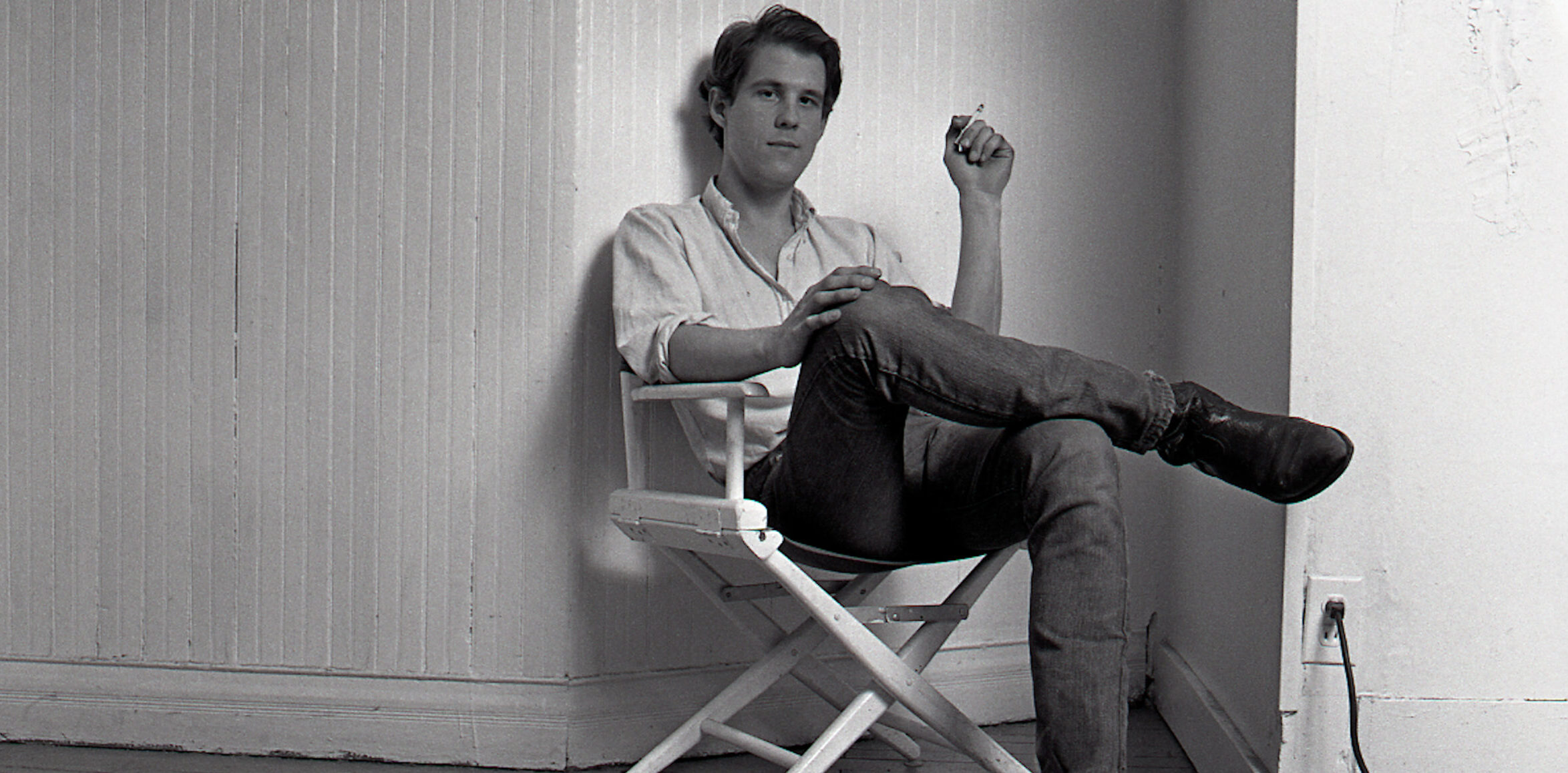



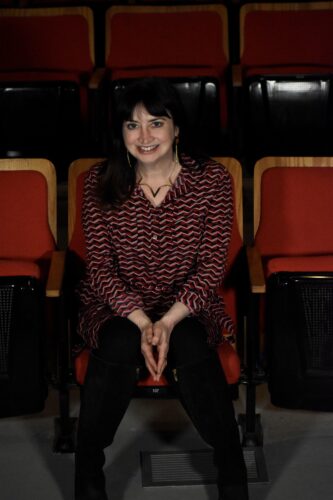



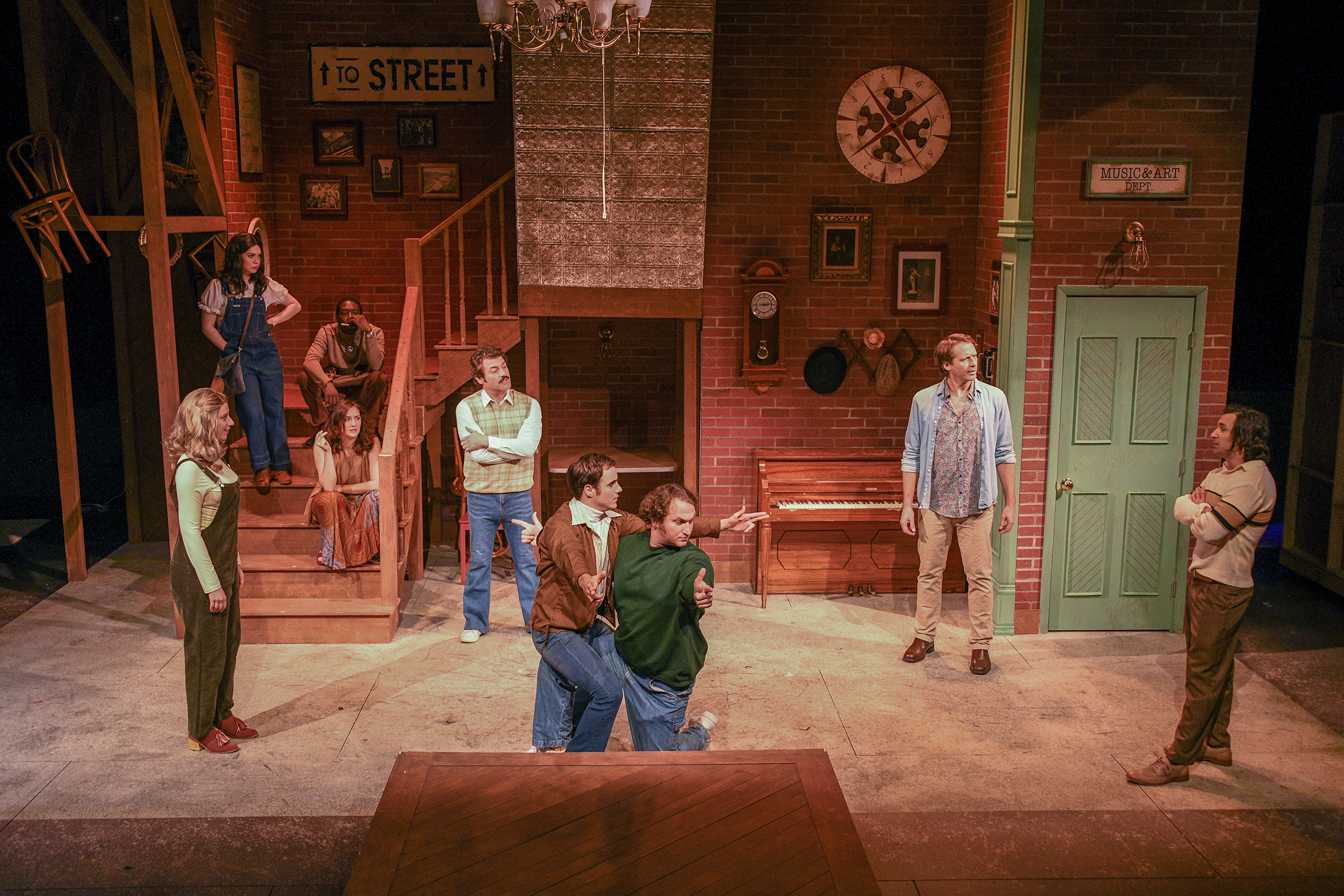



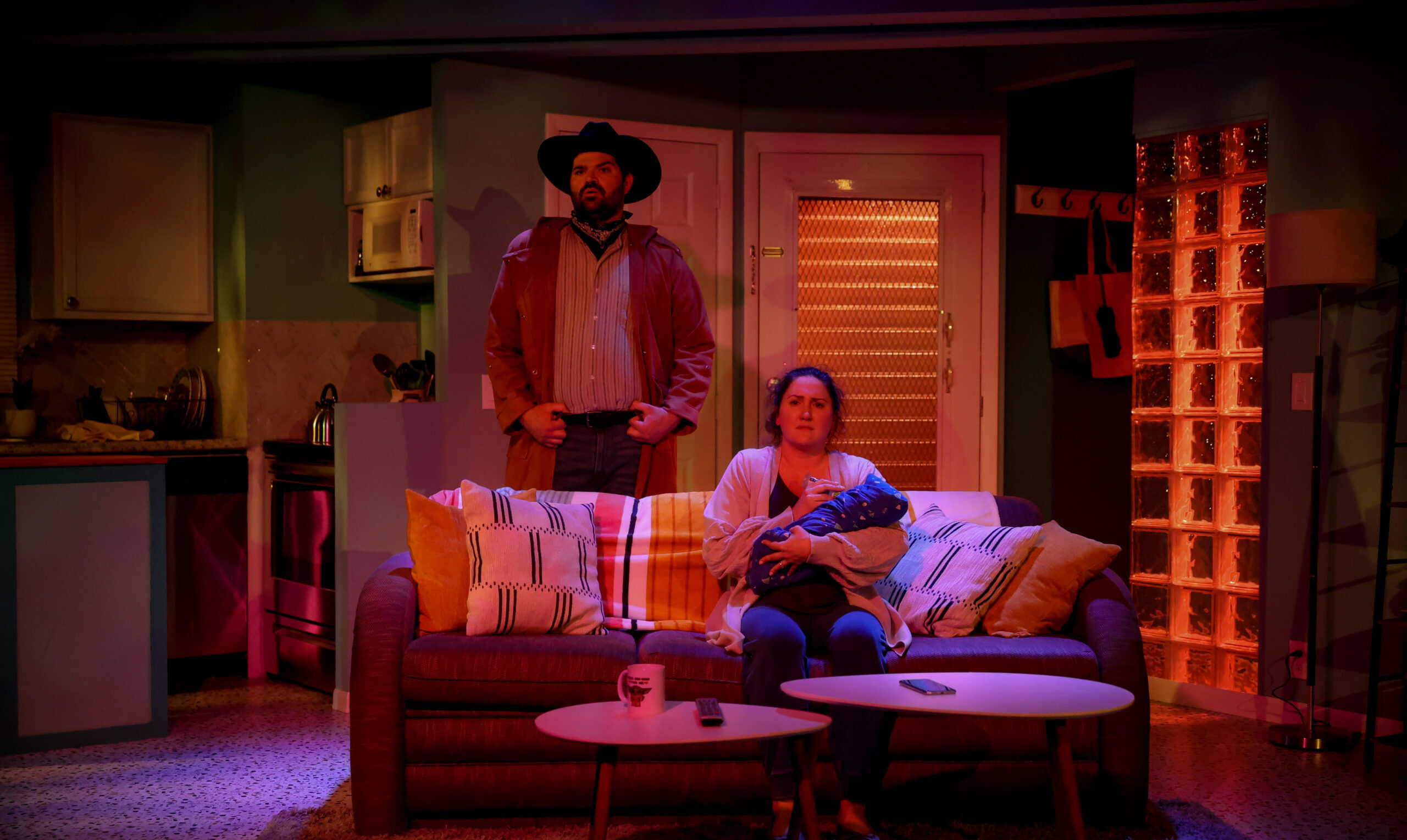
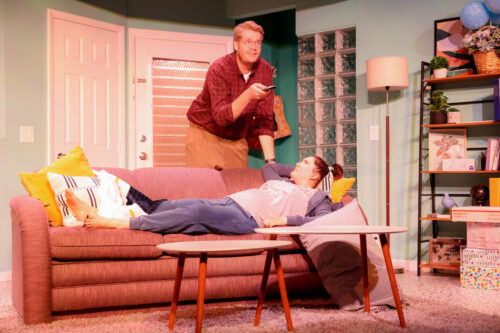
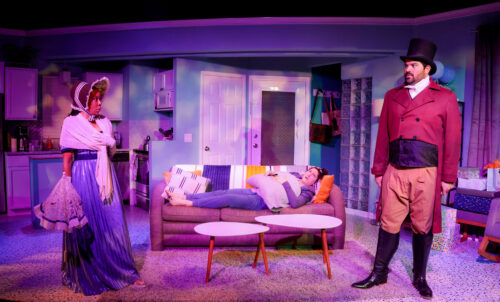
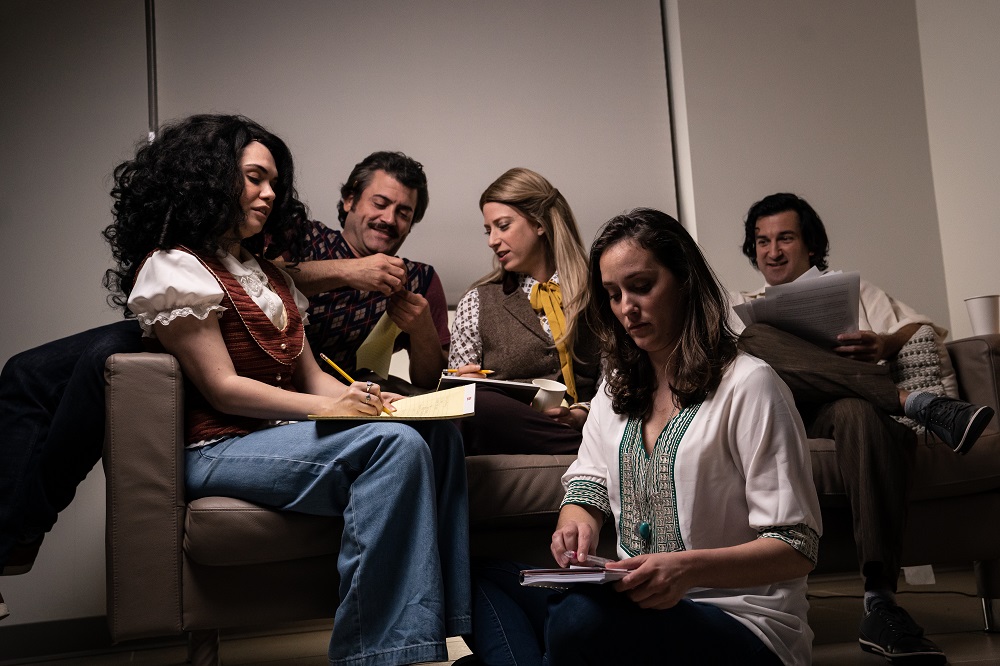

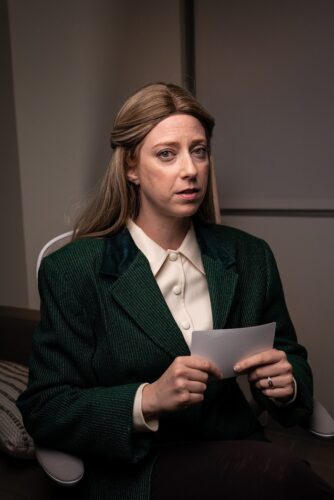










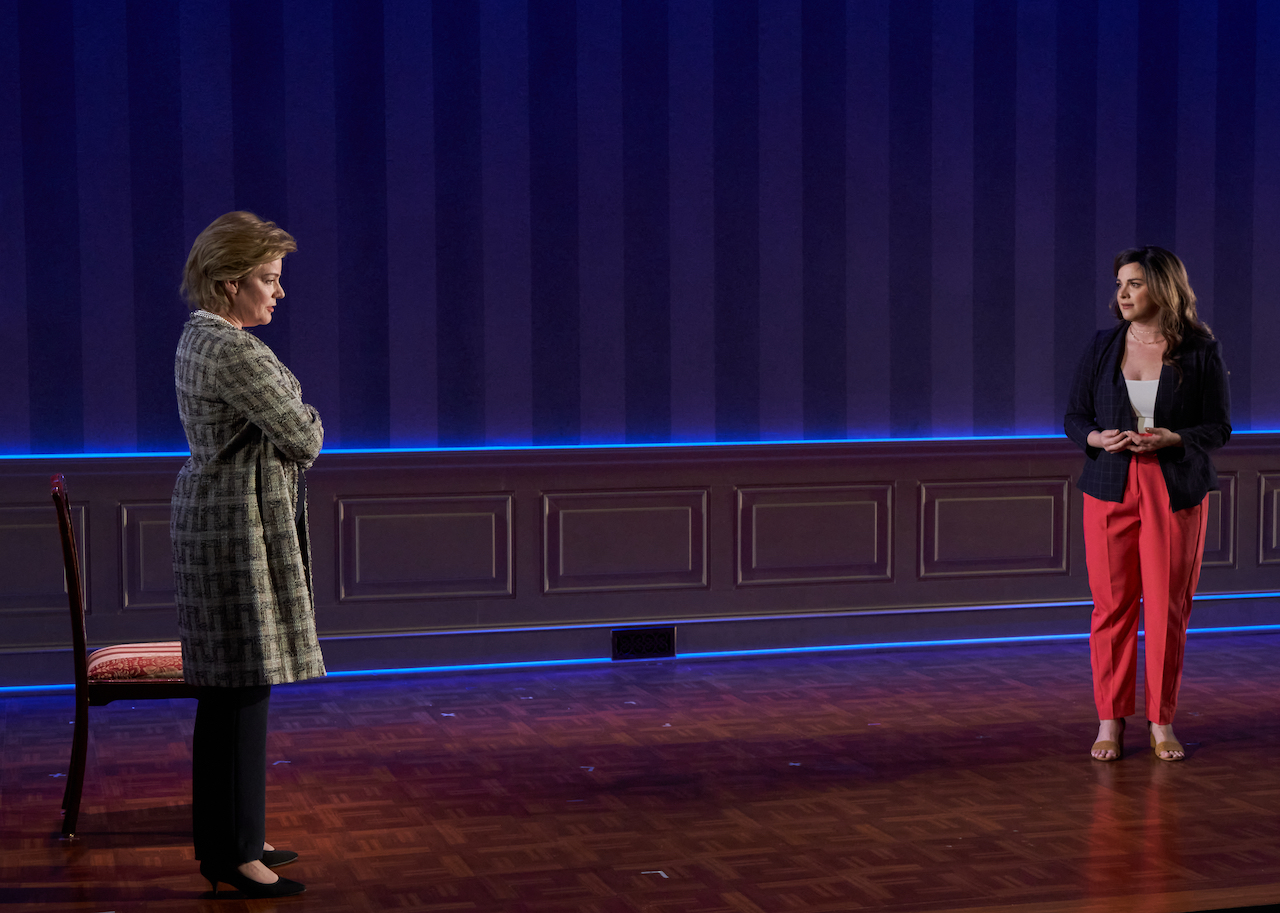


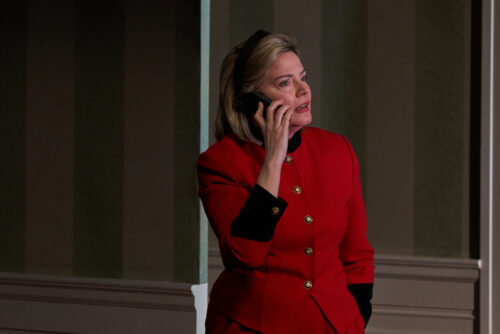



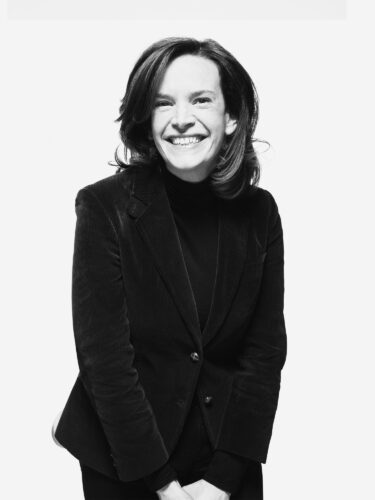

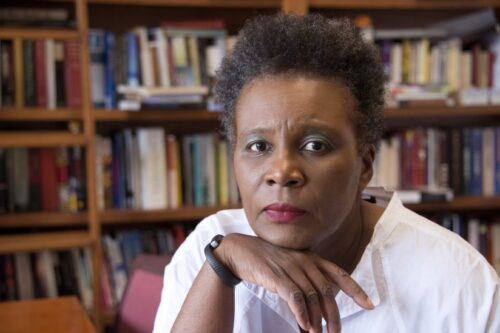
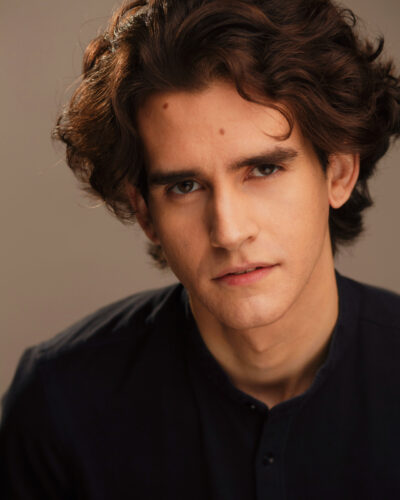
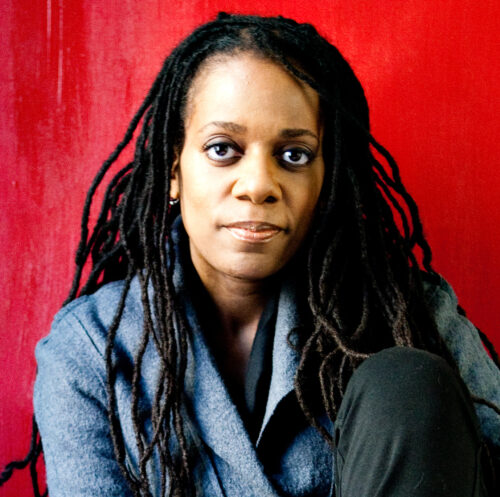
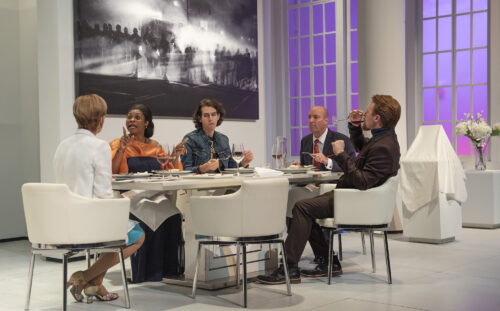
Recent Comments