Blog Article Category: Theater / Film
‘Miami Motel Stories’ looks dramatically at a diverse North Beach
Written By Christine Dolen
February 3, 2020 at 3:46 PM
Playwright Juan C. Sanchez and directors Ana Margineanu and Tai Thompson are the creative team behind “Miami Motel Stories: North Beach.” (Photo courtesy of Daniella Piantini)
Beginning with “Miami Motel Stories: Little Havana” in 2017, Juggerknot Theatre Co. has continued to create immersive theater in an idiosyncratic, widely embraced way.
Led by founder and artistic director Tanya Bravo, the company has no set performance space. Instead, it partners with developers to turn makeover-ready motels, hotels or special places (The Tower in Little Havana; the Gold Dust in MiMo in 2018; the former Wynwood Yard in 2019) into site-specific playgrounds for creators, actors and theatergoers.
From Feb. 8 through Feb. 29, it’s the North Beach neighborhood’s turn to get the Juggerknot treatment, starting at The Broadmoor Hotel on Miami Beach’s Ocean Terrace, then shifting over to the old Ocean Terrace Hotel, where most of the action happens.
Juggerknot’s resident playwright, Juan C. Sanchez, has written every one of the dozens of short plays for the three iterations of “Miami Motel Stories” as well as “Wynwood Stories.”
He’s collaborating for the fourth time with director Tai Thompson, who is working alongside New York-based director Ana Margineanu, co-founder of the immersive company PopUp Theatrics. A number of the 28 actors in “Miami Motel Stories: North Beach” have also been involved with the earlier Juggerknot productions, honing their immersive skills, getting accustomed to doing the same short show repeatedly each night for tiny audience groups in close quarters.
“It’s actually harder to write one of these now,” Sanchez says in a production office nestled inside the Ocean Terrace Hotel, its outside adorned with several “No Trespassing” signs. “You have to be mindful of not repeating yourself, not falling into a groove and doing it by rote.”
To that end, Sanchez has come up with a meta layer for the new production – one that everyone involved wants to keep secret until the opening. The theatrical stories he’s telling in his latest short plays take place over a period of nearly nine decades, from 1933 to the present, reflecting the area’s diversity throughout its history.
The characters this time include: a hard-boiled undercover woman reporter; a Hasidic woman and Hasidic young man on the cusp of change; an Argentine couple with a tumultuous relationship; a mobster; black and white classmates; a honeymooning New York couple; a domestic worker; the victim of a vicious mugging; squatters; and a certain notorious killer. Inside the Ocean Terrace, 18 rooms will be filled with plays and activity.
To create the plays, Sanchez did his now-customary deep dive into North Beach’s history and its different areas. He did research at the HistoryMiami Museum, spoke with the museum’s resident historian, Dr. Paul S. George, and Miami Design Preservation League historian Jeff Donnelly. He spent time at the North Shore Library near the beach and interviewed longtime residents who wanted their stories represented. Then, the playwright – who so often writes as he’s traveling by bus to and from his home on the mainland – did something different.
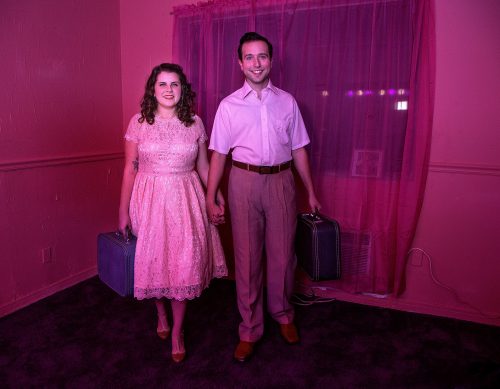
Amy Coker and Robert Fritz play a honeymooning couple circa 1956 in the latest Juggerknot Theatre Co. production. (Photo courtesy of Pedro Portal)
“I did talk to a lot of strangers this time. I came here every couple of days, and I’d ask what it’s like to live here. One or two of those interviews became stories,” Sanchez says, citing a play about squatters at the Ocean Terrace Hotel.
What began to coalesce for him were images of North Beach as a welcoming place of refuge and as the less glamorous stepsister to sizzling hot South Beach.
“One of the first things I found out about was the Biscayne House of Refuge, which was built in [1876] as a life-saving station and home to aid sailors lost at sea,” he says. “Then this became a family neighborhood for Jewish people, then Cuban Jewish people who had services in Spanish, then Argentines … welcoming became the spark.”
The North Beach vs. South Beach notion came from seeing “film crews every time I showed up. So I wondered: Is North Beach becoming the new South Beach? Is it winning the duel?” he says. “North Beach still has a bit of a hometown feel; I think the past is still here. So how can we theatricalize that? I’ve gambled with structure this time, but it’s important to take risks, especially with immersive work.”
Thompson and Margineanu are the directors tasked with bringing Sanchez’s creative vision to vibrant, precisely timed life. “Miami Motel Stories: North Beach” is told in four separate tracks, identified with color-coded “keys” – pink, orange, yellow and blue. Each runs 90 minutes, with 18 theatergoers per track divided into three groups of six each to be ushered in and out of the rooms where the stories get told. That’s a lot of simultaneous activity, for the actors, crew and audiences.
“Working together as directors is not the most common thing,” says Margineanu, a Romanian theater artist who has worked all over the world. “There are huge advantages, yet the ego gets hurt because you’re not the only shining star … But my philosophy is that this is how it should be in the mainstream more, because theater is the art of collaboration.”
Thompson adds, “There are some compromises … There’s a great amount of trust involved in making one cohesive show. We’re using each other’s actors, and they all have to be in a certain place at a certain time … It all has to be timed to the minute.”
Margineanu calls the immersive experience “a marathon,” in which theatergoers can choose their level of involvement.
“[Some] people are scared of ‘interactive’ theater, but what they’re really scared of is being put on a stage and having 100 people laughing at them,” she says. “People love to play, to be part of it for a couple of hours, to leave their problems behind and just go down the rabbit hole.”
Two of the actors who will take audiences down the rabbit hole are Susie K. Taylor and June Raven Romero. Taylor has performed in two previous Juggerknot productions, as the effervescent hostess Mrs. Wade in “Miami Motel Stories: MiMo” and as a chic, fuming gallery owner in “Wynwood Stories.” Romero, a transgender actor, gave a memorably intense performance as a trans woman who fought back against her attacker in “Veronica,” part of “Miami Motel Stories: MiMo.”
This time, Taylor is playing Deb, a woman who has made the life-altering decision to leave her Hasidic community in 1980. Romero is Madge, a tough reporter who has gone undercover to expose vice at the Jungle Inn in 1933. Both artists say that working in this kind of theater has made them better actors.
“I’ve become obsessed with immersive theater,” Taylor says. “When I’m doing [traditional] theater, my brain is bored, operating on one cylinder. This tickles your brain. It brings new people to the theater. This is so quick and close. People are on their screens all the time, and this is a bridge. A lot of people feel seen in this kind of theater.”
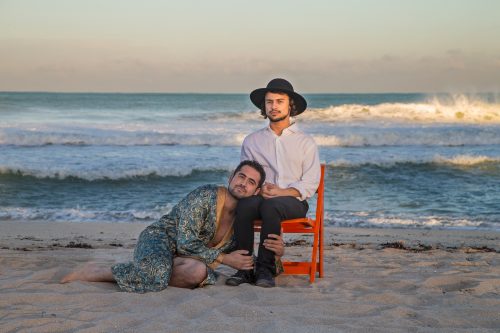
J.C. Gutierrez as a bartender has an encounter with Kevin Veloz as a young Hasidic man in “Miami Motel Stories: North Beach.” (Photo courtesy of Pedro Portal)
Romero, who describes her past experience of playing Veronica multiple times per night as “90 minutes of full-on panicking,” says that at times she has felt tokenized when she was called in for certain casting opportunities. But working with Juggerknot, a company in which the leaders, directors, designers, crew and many actors are women, has been different.
“I’m just another individual here,” she says. “You look at all of us and say, ‘Yeah, they’re diverse.’”
Bravo, who has been spearheading the production of “Miami Motel Stories: North Beach” for the past three months, acknowledges that she and her collaborators have reached the point in the process where they’re feeling exhausted. Producing such a large, complex show on a limited budget is tough and would be impossible without partner companies, cities and institutions – in this case, Perrier, Ketel One, Café La Llave, the city of Miami Beach, The Salvation Army, Dragonfly Thrift Boutique, Don Bailey, Ace Hardware and the Welcome Channel. And, of course, Ocean Terrace Holdings, which made space at The Broadmoor and the Ocean Terrace Hotel available.
Developer Sandor Scher explains why his company finds value in giving space to Juggerknot.
“Ocean Terrace Holdings is committed to preserving the heritage that existed in the 1950s and ’60s along upper Collins Avenue and Ocean Terrace, and is looking to the past to inspire our future redevelopment plans for the block,” he says. “‘Miami Motel Stories: North Beach’ is the perfect opportunity to share our neighborhood’s story and provide the community a venue to engage in this unique, immersive theatrical experience, while underscoring our commitment to promoting the arts.”
Bravo is a firm believer in the future of immersive theater, a form she has played a major role in establishing in South Florida.
“It’s a trend now. It has great flexibility. You can do it anywhere. We’re planning to take it to Coconut Grove and Overtown,” she says. “There’s an immediate party feeling to it. And people in Miami want to go to an event.”
What: “Miami Motel Stories: North Beach” by Juan C. Sanchez
When: 7:30 and 9:30 p.m. Thursdays-Sundays; running from Feb. 8-29
Where: Juggerknot Theatre Co. production starts at The Broadmoor Hotel, 7450 Ocean Terrace, Miami Beach
Cost: Separate orange, yellow, pink and blue tracks cost $69.99 each (orange track is accessible to theatergoers with disabilities)
More information: 866-441-9962; miamimotelstories.com
ArtburstMiami.com is a nonprofit source of theater, dance, visual arts, music and performing arts news. Sign up for our newsletter and never miss a story.
No posts found
Review: ‘The Cubans’ marks debut of playwright with a voice worth experiencing
Written By Christine Dolen
January 27, 2020 at 9:40 PM
Old wounds are addressed as the characters played by, from left, Ashley Alvarez, Caleb Scott, Andhy Mendez, Adriana Gaviria, Ruben Rabasa, James Puig, Jezabel Montero and René Granado face off in “The Cubans.” (Photo courtesy of Justin Namon)
An observant, funny, moving slice of Miami life is occupying the stage of Miami Beach’s Colony Theatre just now, thanks to Miami New Drama’s world premiere of Michael Leon’s “The Cubans.”
A New York-based actor who grew up in Miami and graduated from Florida International University, Leon has said he wrote “The Cubans” in part because he didn’t see his community and culture represented in the complex family plays that spoke to him so powerfully.
Now, his first produced play is adding a Cuban/Cuban-American “sabor” (flavor) to the genre, a point of view that is deeply specific yet universally resonant in its exploration of intergenerational conflict and the challenges that test us as we move through life.
Working with director Victoria Collado, who earlier staged Vanessa Garcia’s long-running hit play “The Amparo Experience,” Leon lets the audience eavesdrop on members of an extended Cuban-American family and their friends – first as they gather in Westchester for a celebratory meal, then during a fraught “Nochebuena” (Christmas Eve) dinner.
We meet Martica (Vivian Ruiz), the family’s matriarch, as she’s cooking pork and “frijoles negros” (black beans) for a get-together celebrating son Mati’s graduation from the University of Florida.
Daughter Christy (Ashley Alvarez), who has spent the past nine years in New York struggling to get her acting career off the ground, has come home for the party – and, concurrent with the cooking, mother and daughter continue their long-running battle over Christy’s life choices.
Patriarch Jesus (James Puig), who adores his daughter, is a man forever in motion, unsuccessful at playing peacemaker but clearly in love with the strong woman who is his wife.
Then the guests arrive: first, Ramoncito (Andhy Mendez), Christy’s cousin; then Ana (Jezabel Montero), Martica’s attention-seeking younger sister, with her new younger Anglo boyfriend, Eric (Caleb Scott); then family friends Vero (Adriana Gaviria) and Pepe (René Granado), who have an uncomfortable history with Ramoncito; and finally, Manolo (Ruben Rabasa), Jesus’ memory-challenged older friend who is like an “abuelo” (grandfather) to Christy and her brother.
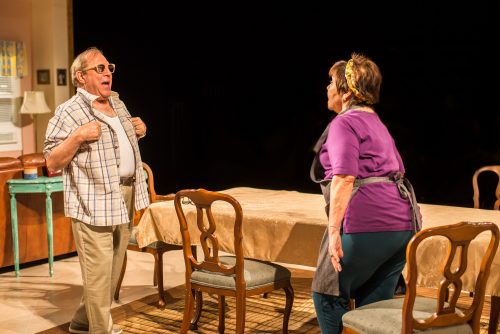
James Puig as Jesus and Vivian Ruiz as Martica share a playful moment in Michael Leon’s “The Cubans.” (Photo courtesy of Justin Namon)
As in life, the conversation in the first act ranges from the mundane to the profound, with Leon’s characters revealing their beliefs and very natures. For the members of the older generation, the aching loss of life as they knew it in Cuba is omnipresent; as Martica says to Christy, “We had to build this new life over the ruins of our grief.”
Born in Miami, the younger family members struggle to break free of parental expectations, determined to carve out their own lives. For Christy, that means living elsewhere, focusing on career, putting marriage and family on hold, maybe permanently. For Ramoncito, it means living an authentic life, though coming clean with his father about his sexual orientation has led to their estrangement.
For all the serious issues underpinning the first act, much of it is buoyantly funny, thanks to Leon’s writing, Collado’s deft way of balancing tone, and the actors’ considerable skill. One particularly priceless moment happens when a clueless Eric says, “You guys must be thrilled about the lifting of the embargo.” The statement goes over like a lead balloon or something unspeakable being dropped in the proverbial punch bowl.
Because of a life-altering event that happens at the end of the first act, the second is far more somber in tone, a shift that is even reflected in the palette of Caroline Spitzer’s costumes. The metaphors grow heavier and more vividly expressed. As a rainstorm pounds, the old Westchester house is literally falling apart.
Further change is on the horizon, and an openly mournful Martica can’t bear it: “I’m stuck. Stuck in a cycle of saying goodbyes, finding my footing, pushing forward, forgetting the past to just have my world demolished again. I’m tired. So tired of this endless tumble towards nowhere. I have to make it stop. I won’t, I can’t say goodbye again.”
New play development is never easy, and as impressive as Miami New Drama’s production is in many regards, some elements don’t yet work as they’re intended.
As with some of its past productions, the company is utilizing its space at the Colony in a fresh way. Carbonell Award-winning set designers Christopher and Justin Swader have created a living-dining-kitchen area that lies between some onstage seating and the regular audience chamber – a traverse arrangement that puts the actors between the two sections of theatergoers, who then watch each other watching the play.
Collado and the performers therefore must be mindful moment to moment of actors not turning away from one section of the audience when key lines are delivered, creating an extra level of challenge in the staging and in the work by sound designer Abigail Nover and lighting designer Yuki Nakase Link.
The set itself, a tidy space with tile floors and lived-in details (props are by Jameelah Bailey), is another metaphor. In the second act, it transforms in a way that symbolizes what is happening to the family. Very dramatic, except that Nover (at least by opening night) couldn’t always overcome the difficulties of balancing sound effects and certain significant speeches by some actors.
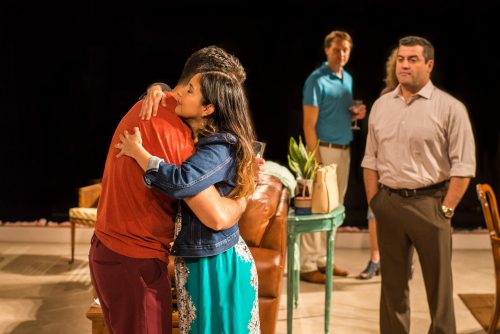
Adriana Gaviria’s Vero embraces Andhy Mendez’s Ramoncito in the Miami New Drama world premiere of “The Cubans.” (Photo courtesy of Justin Namon)
Incorporating script changes throughout the rehearsal process, which comes with the territory in world premieres, the actors have brought a stage full of memorable characters to life.
Alvarez’s Christy is a dynamo, a young woman who curses too much for her mother’s taste, a restless 30-year-old who speaks English the way the older generation speaks Spanish – “rapidamente” (rapidly). Her hurt at the ongoing disconnect with Martica, her sense of her mother’s perpetual disapproval, is palpable.
Ruiz convincingly journeys from in-charge matriarch to a woman mourning yet more change. Her explosive second-act reckoning with her hurting husband is potentially among the play’s most powerful moments, but likely because of the extent of her lines and changes in the text, she’s still struggling in certain speeches.
Puig’s Jesus is strong, loving, a family leader who knows when to defer to his wife. Granado’s Pepe is the macho Latino male – bombastic, controlling, opinionated – while Gaviria as his wife, Vero, is warmer, more conciliatory. Rabasa is touching as the elderly Manolo, struggling to cope with the loss of home, memory and the world as it used to be, though the actor is sometimes quite hard to hear.
Montero is spot-on as the free-spirited Ana, while Scott gives two impressively differentiated performances as Ana’s ill-suited boyfriend and Ramoncito’s significant other, Anthony. Speaking of Ramoncito, Mendez is mesmerizing as a man who is fighting just as hard as Christy to live in his truth. The scene in which the cousins reunite, share secrets and have a dance is one of the loveliest moments in the play.
Though the play and production are still coalescing, “The Cubans” marks the debut of a playwright with a voice worth experiencing. Leon’s story speaks, with affection and understanding, to anyone determined to find or return to the comforting embrace of home in an ever-changing world.
What: Miami New Drama production of “The Cubans” by Michael Leon
When: 8 p.m. Thursdays-Fridays, 2 and 8 p.m. Saturdays and 3 p.m. Sundays, through Feb. 16
Where: Colony Theatre, 1040 Lincoln Road, Miami Beach
Cost: $39-$95
More information: 305-674-1040; colonymb.org
ArtburstMiami.com is a nonprofit source of theater, dance, visual arts, music and performing arts news. Sign up for our newsletter and never miss a story.
No posts found
Review: ‘Mamma Mia!’ at Actors’ Playhouse is escapist theater of the best kind
Written By Christine Dolen
January 27, 2020 at 3:40 PM
From left, Jim Ballard, Mark Sanders, Meredith Pughe and Ed Kemper play out a hidden agenda in the Actors’ Playhouse production of “Mamma Mia!” (Photo courtesy of Alberto Romeu)
Feeling joyous is not so easy these days, given the country’s toxic politics, global climate change, potential pandemics – well, pick your anxiety-producing crisis.
But at least temporarily, joy can be experienced for the price of a theater ticket.
Anyone who helped make “Mamma Mia!” a $4 billion global behemoth would probably tell you that the 21-year-old jukebox musical, which pairs hits from the Swedish pop supergroup ABBA with a silly plot, is pretty much a sure thing when it comes to mood boosting. That doesn’t mean “Mamma Mia!” is great theater – it isn’t – but it works as an escapist oasis.
Actors’ Playhouse at the Miracle Theatre in Coral Gables has just opened a “Mamma Mia!” that is bright, bouncy and beyond broad.
Artistic Director David Arisco’s production features plenty of first-rate vocal talent; skillfully enthusiastic dancers to execute Ron Hutchins’ athletic choreography; and a pop-adept, eight-piece band led by musical director Caryl Fantel.
Set designer Sean McClelland and set dresser Jodi Dellaventura, lighting designer Eric Nelson and costume designer Ellis Tillman create the inviting, sun-kissed fictional Aegean Sea island of Kalokairi, where clothing worn by the buff younger inhabitants tends toward the skimpy. Sound designer Shaun Mitchell cranks up the volume so that this “Mamma Mia!” is part-theater, part-concert.
As for Catherine Johnson’s drop-an-ABBA-hit-here plot, which is set in a “not so distant past,” the show centers on the upcoming nuptials of 20-year-old Sophie Sheridan (Meredith Pughe). Sophie has been raised by her never-wed mom Donna (Jodie Langel), a former singer who has carved out a nice life for the two running an inn on the island.
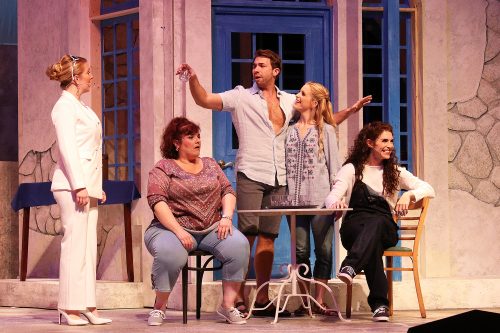
From left, Mandy Striph, Margot Moreland, Drew Arisco, Meredith Pughe and Jodie Langel gather for a Greek island wedding in “Mamma Mia!”, playing at the Actors’ Playhouse in Coral Gables through Feb. 23. (Photo courtesy of Alberto Romeu)
As her wedding to Sky (Drew Arisco) draws near, Sophie discovers her mother’s diary from 1979 and figures out that one of three guys who were Donna’s lovers in quick succession – American architect Sam Carmichael (Jim Ballard), British banker Harry Bright (Mark Sanders) and Aussie writer Bill Austin (Ed Kemper) – is probably the father she has never known. Without saying anything to her mom, she invites all three to the wedding.
Once the guys show up, it seems to take an inordinate amount of time for the older generation to figure out what’s going on (we have the advantage, since we’ve seen the “Mamma Mia!” movies starring Meryl Streep).
Does it matter? Not really. “Mamma Mia!” is all about the tunes written by ABBA’s Benny Andersson and Björn Ulvaeus, and whether or not (sometimes not) they fit tidily into the plot, they’re belted or crooned with aplomb in the Actors’ production.
Langel, a dark-haired beauty with an amazingly toned figure and Broadway chops, delivers the vocal goods whether her Donna is singing dramatic solos or singing as Donna and the Dynamos with her backup besties: Tanya (Mandy Striph) and Rosie (Margot Moreland).
Striph gets a nice showcase moment with Reynel Reynaldo’s smitten Pepper on “Does Your Mother Know,” and Moreland goes all-out (and then some) in comic pursuit of Kemper’s flummoxed Bill as they sing “Take a Chance on Me.”
Ballard, who also played Sam in the Maltz Jupiter Theatre’s memorably fine production of “Mamma Mia!” a year ago, tonally matches Langel in terms of exasperation as the two sing “S.O.S.” to deal with past wounds and present misunderstandings. Sanders’ Harry is the buttoned-up banker on holiday, a man determined to release his inner goofball.
As Sophie, Pughe gets the show going with a lovely “I Have a Dream,” and she sings well with her “dads” and her beloved Sky, who is more than a little miffed that she has undertaken this finding-my-father thing without confiding in him. Actor Arisco, son of the show’s director, has performed at various regional theaters and toured nationally in “Something Rotten!,” and his warm voice and comfortable dance style are suited to Sky.
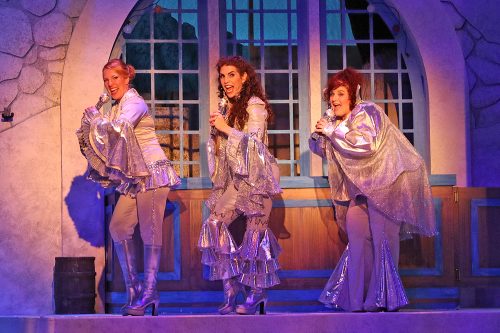
From left, Mandy Striph, Jodie Langel and Margot Moreland relive their performing glory days as Donna and the Dynamos. (Photo courtesy of Alberto Romeu)
Kaléa Leverette as Lisa and Lauren Horgan as Ali, Sophie’s pals and bridesmaids, manage to sing “Honey, Honey” with her while executing sometimes-awkward moves. Conor Walton as Eddie and Reynaldo as Pepper remain charming even as they’re literally being pushed around by Donna.
Alex Jorth, also among several cast members who did “Mamma Mia!” at the Maltz, radiates unflappability as the wedding officiant who can cope with a major change at the last minute.
In sensory terms, the Actors’ Playhouse production can be an overwhelming experience. Some of the performers push so hard they might as well be in their final moments in a hospital delivery room. The rock concert-style sound is rarely subtle – quite the opposite – and at least on opening night, some performers were fleetingly a tiny bit off in terms of pitch.
“Mamma Mia!” is not, obviously, a musical theater masterwork, nor is it in the same league with a great jukebox musical like “Jersey Boys.” It serves up escapist fun largely via its ABBA earworms, which gets some in the audience singing along even during the overture and turns most theatergoers into dancing queens by the time the concert-style curtain call comes around.
What: “Mamma Mia!” by Benny Andersson, Björn Ulvaeus and Catherine Johnson
When: 8 p.m. Wednesdays-Saturdays, 3 p.m. Sundays (additional matinee 2 p.m. Jan. 29); through Feb. 23
Where: Actors’ Playhouse at the Miracle Theatre, 280 Miracle Mile, Coral Gables
Cost: $30-$75
More information: 305-444-9293; actorsplayhouse.org
ArtburstMiami.com is a nonprofit source of theater, dance, visual arts, music and performing arts news. Sign up for our newsletter and never miss a story.
No posts found
‘Feos’ tells a love story with puppets
Written By Elizabeth Hanly
January 22, 2020 at 2:12 PM
Chile’s Aline Kuppenheim with the two puppet protagonists from her most recent directorial work, “Feos.” (Photo courtesy of Elio Frugone Piña)
The Greeks knew a thing or two about theater. In their works – meditations on the deepest of human emotions, plays that became nothing less than the cornerstones of Western culture – the actors wore masks. The Greeks understood that somehow the masked actors, rather than alienating an audience, mysteriously brought the audience closer to them.
Flash-forward several millennia: A well-known actress hungry to deepen the theatrical experience of her audience begins to work with a “cousin” of the masks the Greeks used. Chile’s Aline Kuppenheim begins to explore theater where puppets take the stage. Her most recent directorial work, “Feos,” will be presented this weekend by FUNDarte at Miami-Dade County Auditorium’s On.Stage Black Box Theatre.
The work comes to Miami immediately after being performed in New York City’s Public Theater, where it received standing ovations, not a few tears, and a rave review in the New York Times.
While Kuppenheim sometimes writes and directs work for children, “Feos” most certainly is not meant for that audience. It is the story of an accidental meeting, a love story.
The piece is based on a short story by acclaimed Uruguayan novelist and poet Mario Benedetti. Powerhouse Chilean dramatist Guillermo Calderon worked with Kuppenheim on the script.
A man notices a woman waiting in line to buy a ticket for a movie. Her face is badly disfigured, as is his. After the movie, he invites her for coffee. She hesitatingly agrees.
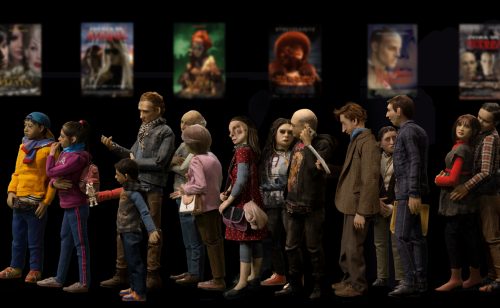
In the piece, based on a short story by novelist and poet Mario Benedetti, a man notices a woman waiting in line to buy a ticket for a movie. (Photo courtesy of Elio Frugone Piña)
Slowly over 50 minutes, each puppet tells the other her/his story. The conversation is sometimes comical, sometimes a rumination on beauty and wounds, on desire and longing. Finally, the couple exit the coffeeshop and, in a dialogue so lyrical as to become almost a song, the two make their way to the man’s apartment. Ah, but what happens next?
Remember that all this feeling is conjured by wooden puppets. Well, not exactly.
Kuppenheim’s puppetry is in the tradition of the Japanese art of Bunraku. Actors dressed hand to foot in black are on stage with the wooden creatures, moving them at their various joints. Sometimes a single puppet – they are nearly life-sized – will have more than one puppeteer at its beck and call. Actors also give voice to the puppets.
According to Kuppenheim, this work in a supportive role can cut through many of the usual preoccupations of actors, enabling an actor “to be present to her/himself in a new way, one more at a distance from ego.”
And then there are the truly mysterious moments that sometimes occur during rehearsals early on in a production. Sometimes, as the puppets are being moved, an expression or a gesture appears as if by accident.
“These moments,” Kuppenheim says, “ can feel like a revelation, as if the puppet is showing us the way towards possibilities. We had yet to see that deepen our own understanding of the text, its contradictions and complexities.”
There is still another layer to the relationship between the puppets and their handlers. During the production, there are times when the black shapes that are the handlers/actors, seem almost to be embracing the puppets, to be offering their story strength from another dimension.
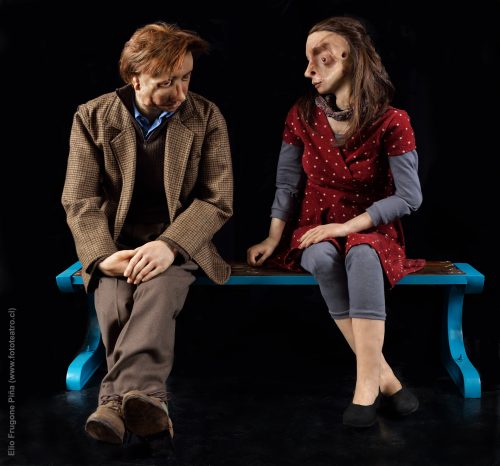
Slowly, over the course of “Feos,” each puppet tells the other her/his story. (Photo courtesy of Elio Frugone Piña)
Small wonder then that Kuppenheim calls her company, Teatro y Su Doble (Theater and Its Double).
Kuppenheim not only directs this presentation, she also has designed the puppets. They are done by hand, which takes months. Each puppet is composed of myriad parts, allowing for ample expression. The props in all of Kuppenheim’s plays – miniature tables and chairs, bus-stops – also are handmade in the company’s small studio.
Slow-motion animation, also done by Kuppenheim, adds to the scenes. And lighting completes them. In its review of the show, the New York Times described it as the “gloaming of a sustained, velvety night.”
“Here in the United States,” Kuppenheim says, “the public has been surprised and moved by the depth of emotion these pieces of wood bring.” Indeed.
What: “Feos” by Teatro y Su Doble (adult content; age recommendation is 14 and older)
When: 8:30 p.m. Jan. 25, 3 p.m. Jan. 26
Where: On.Stage Black Box Theatre at Miami-Dade County Auditorium, 2901 W. Flagler St., Miami
Cost: $30 for adults; $25 for students and seniors with ID; $20 for groups of 10 or more
More information: 305-547-5414 (auditorium); 786-348-0789 (FUNDarte); fundarte.us
ArtburstMiami.com is a nonprofit source of theater, dance, visual arts, music and performing arts news. Sign up for our newsletter and never miss a story.
No posts found
Review: ‘Ordinary Americans’ is an impactful cautionary tale as relevant today as in the ’50s
Written By Christine Dolen
January 21, 2020 at 1:59 PM
Elizabeth Dimon’s Gertrude Berg contemplates the challenges facing her in “Ordinary Americans” at GableStage. (Photo courtesy of Alicia Donelan)
“Ordinary Americans” is a cautionary tale rooted in the past and resonant in the present.
Commissioned by Palm Beach Dramaworks, Joseph McDonough’s play about pioneering television titan Gertrude Berg had a highly successful five-week run at the West Palm Beach theater before making the move to GableStage, where it runs through Feb. 16. The companies collaborated on the world premiere, but with the exception of one cast change, the production that Coral Gables audiences will see in GableStage’s more intimate space at the Biltmore Hotel is essentially the same one that became an in-demand Dramaworks show from the time it was announced.
The idea for a play about the creator, writer and star of the 1949-57 TV series “The Goldbergs” came from Carbonell Award-winning actor Elizabeth Dimon, who portrays Gertrude “Tillie” Berg in “Ordinary Americans.”
Dimon and castmates David Kwiat, Rob Donohoe and Tom Wahl have finely honed their moving performances through the play’s earlier run. At GableStage, they’re joined by Patti Gardner, who brings her own take to a role originated by Margery Lowe.
Staged by Dramaworks producing artistic director William Hayes, “Ordinary Americans” is a memory play about the toughest time in Emmy- and Tony Award-winning Berg’s long career.
We follow into a CBS television studio for a rehearsal of her ratings-topping show “The Goldbergs.”
Dimon’s Berg dons an apron and an accent to portray Molly Goldberg, matriarch of a Jewish family living in a Bronx tenement. Kwiat plays actor and activist Philip Loeb, who stars as Molly’s husband, Jake. Donohoe is actor Eli Mintz, who portrays the family’s Uncle David; later, he utterly transforms into an impatient and unhelpful version of New York’s Cardinal Spellman.
Gardner is Berg’s pal and assistant Fannie, who plays Molly’s neighbor, Mrs. Kramer on “The Goldbergs,” summoning Molly to their adjoining windows by calling out the famous line, “Yoo-hoo, Mrs. Goldberg!” Wahl plays the show’s director, Walter Hart, as well as sponsor representatives, an ad man and CBS head Frank Stanton.
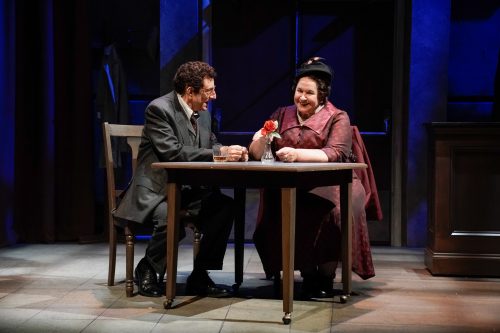
David Kwiat as Philip Loeb meets with Elizabeth Dimon as his boss and friend, Gertrude Berg, in “Ordinary Americans.” (Photo courtesy of Alicia Donelan)
The scenes re-creating “The Goldbergs” are suffused with nostalgia, from the show’s theme music to its observant family comedy to Molly’s kitschy live commercials for Sanka coffee. But the impactful power of “Ordinary Americans” flows from its examination of artists, careers and lives crushed by the repressive Red Scare politics of the early 1950s.
Not far into the 90-minute play, Dimon’s Berg is informed by Wahl’s curt General Foods exec Roger Addington that her co-star, Loeb, has been named in the infamous Red Channels report alleging Communist influence in radio and television. Addington tells her to fire Loeb, but she tells him off and refuses.
The tension grows through subsequent scenes until CBS chief Stanton calls Berg into his office and gives her a chilling ultimatum: Fire Loeb or lose “The Goldbergs.” She refuses yet again, and Stanton makes good on his promise, immediately yanking his highest-rated show from the CBS lineup.
Playwright McDonough then follows Berg’s increasingly desperate attempts to find a new sponsor, save her show and keep Loeb – a widower who is the sole support of an adult son with schizophrenia – in his role as Jake. She is forced to face the cost of her loyalty to a colleague, and after Loeb’s testimony before the Senate Internal Security Subcommittee in 1952, the story takes a horrifyingly tragic turn.
The performances in “Ordinary Americans” are impeccable. Dimon conveys Berg’s strength and drive as a content creator in a male-dominated world, her torment over the forces moving against Loeb, and the endearing appeal of Berg’s portrayal of Molly. Kwiat grows increasingly frustrated, then desperate as Loeb faces unfounded attacks. And as he’s bathed in a blinding white light for his testimony scene, he shows us Loeb’s shattered soul.
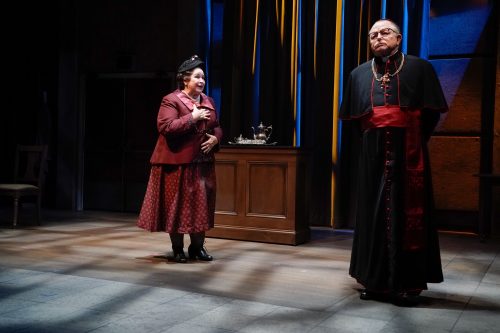
Elizabeth Dimon’s Gertrude Berg seeks a big favor from Rob Donohoe’s less-than-sympathetic Cardinal Spellman. (Photo courtesy of Alicia Donelan)
Donohoe nails each of his varied characters, from a folksy Dayton diner owner to the cocktail-loving Mintz to the less-than-sympathetic Cardinal Spellman. Wahl artfully differentiates his array of characters, most of whom have to deliver bad news – first about Loeb, then about the fading viability of an “ethnic” TV series – to Berg. Gardner brings great warmth to her portrayal of Fannie, Berg’s right-hand woman.
The work of the terrific Dramaworks design team – set designer Michael Amico, sound designer David Thomas and costume designer Brian O’Keefe – along with the fine lighting design by Steve Welsh creates the play’s myriad locations, looks and moods.
“Ordinary Americans” is an interpretation of a true story. The play is of a time when artists and free speech were under siege, when politicians damaged lives under the guise of patriotism, when cultural homogeneity crowded out the richness of America’s melting pot society. Without being heavy-handed about it, McDonough, Hayes and the cast underscore the continuing relevance of “Ordinary Americans.”
What: “Ordinary Americans” by Joseph McDonough
When: 8 p.m. Thursdays-Saturdays, 2 and 7 p.m. Sundays, through Feb. 16
Where: GableStage at the Biltmore, 1200 Anastasia Ave., Coral Gables
Cost: $50-$65; students pay $15 on Thursdays
More information: 305-445-1119; gablestage.org
ArtburstMiami.com is a nonprofit source of theater, dance, visual arts, music and performing arts news. Sign up for our newsletter and never miss a story.
No posts found
Miami New Drama’s ‘The Cubans’ is all about family
Written By Christine Dolen
January 20, 2020 at 7:26 PM
Clockwise from left: René Granado, Adriana Gaviria, Ruben Rabasa, Ashley Alvarez, Vivian Ruiz, James Puig, Andhy Mendez, Caleb Scott and Jezabel Montero star in “The Cubans.” (Photo courtesy of Andres Manner)
Michael Leon is a successful New York-based actor who grew up in Miami. Since graduating from Florida International University and Manhattan’s Atlantic Acting School, he has worked with high-profile companies including the LAByrinth Theater Co., New York Theatre Workshop, Rattlestick Playwrights Theater, Steppenwolf Theatre, Northlight Theatre, INTAR Theatre and more.
Leon also has been an admirer of complex family plays, but he’s felt that diverse voices are too often missing.
“I got tired of going to the theater and not seeing myself and my family represented. We deserve more. I felt compelled to start creating something, not for me but for my community,” he says.
This week, after four years of writing and readings and rewrites, Leon’s creative response to what he felt was missing will get its world premiere when Miami New Drama opens “The Cubans” at the Colony Theatre on Miami Beach’s Lincoln Road.
Company co-founder and artistic director Michel Hausmann credits Erik J. Rodriguez, Miami New Drama’s director of new work, with championing Leon’s play.
“Erik insisted I should consider it further and organized a reading,” Hausmann says. “I love that Michael is exploring his generation, his community. It’s his Miami play. There is a lot to explore in the Cuban-American experience … lo bonito, lo feo (the pretty, the ugly) … and he’s writing with a critical eye. I’m producing ‘The Cubans’ because I also want to produce Michael’s second play, his third play.”
Hausmann thinks director Victoria Collado – fresh from her staging of Miami’s much-extended immersive theater hit, “The Amparo Experience” – has been a great creative partner for Leon, given her success at juggling multiple simultaneous storylines.
“Sometimes, this play has seven conversations going at the same time. That is so true to a lot of Hispanic families. It’s as if great musicians are playing at the same time,” he says.
Leon began writing “The Cubans” in 2016. Then 30, he had gone through an identity crisis after leaving South Florida and moving to Chicago, then New York.
“I grew up in a place with a Cuban-American majority, then went to Chicago and suddenly felt like a minority,” he says. “When I went out for roles, they’d look at me to play gangsters. Yet in New York, there’s an incredible group of Latinx writers. We should be further along by now.”
Over cafecito Cubano and tostones, Leon, Collado and others read through “The Cubans” on the day after Thanksgiving 2016 in Collado’s New York apartment. At that gathering, Leon asked Collado, also an FIU grad, to direct his debut play.
Four years into the script’s evolution, Collado says, “The audience should expect to see a very heightened version of themselves. It’s not a form of criticism or stereotyping. It’s an opportunity for the Cuban people of Miami to see themselves onstage – with a little extra.”
“The Cubans” centers on a pair of family gatherings in the middle-class Westchester home of Martica (Vivian Ruiz) and husband Jesus (James Puig). Their struggling actor-daughter Christy (Ashley Alvarez) has come from New York for a summer get-together celebrating her younger brother Mati’s graduation from the University of Florida.
Also part of the party are nephew Ramoncito (Andhy Mendez), estranged from his widower father; family friends Vero (Adriana Gaviria) and Pepe (René Granado); free-spirited aunt Ana (Jezabel Montero) and her younger boyfriend, Eric (Caleb Scott); and Manolito (Ruben Rabasa), Jesus’ oldest friend from Cuba, who is struggling with cognitive impairment.
In the second act, family and friends have come together again for Nochebuena, and much has changed. Mati isn’t seen, yet he’s omnipresent. Ana’s on her own, but Ramoncito has brought Anthony (also played by Scott), a “friend” from work. Manolito is obviously worse, and the old Westchester house is continuing to fall apart.
Most significantly, the realistic tone of the first act shifts into intricately staged absurdist theater. Carbonell Award-winning designers Christopher and Justin Swader enhance that tonal shift with their dining room set, which is placed between an onstage audience seating area and the Colony’s standard seats.
The themes and issues within “The Cubans” include parental expectations and disappointment, criticism and acceptance, the power of familial love and loss. And Cuba, always Cuba, with its pull and its multiple meanings to different generations.
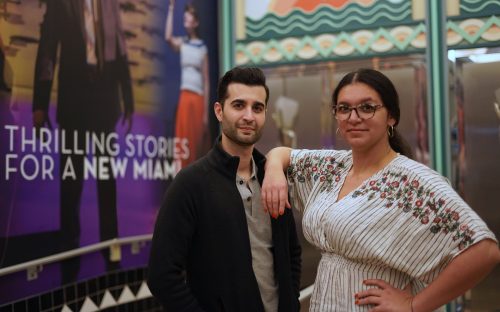
Playwright Michael Leon is working with director Victoria Collado on the Miami New Drama world premiere of his first play, “The Cubans.” (Photo courtesy of Cristian Soto)
Collado, who worked with Granado, Rabasa and Ruiz on “The Amparo Experience,” says the cast for Leon’s play features “titans of acting.”
Rabasa, now 81, came to the United States in 1955, “before Fidel.” He has made dozens of movies, many with low budgets and no big star names. He is known as a great comic actor but turns tearful as he talks about playing a man exiled from Cuba, a man battling Alzheimer’s disease.
“Manolito had to leave the country against his will. He knew no English. He had no family. Nobody,” says Rabasa, who then thinks about what might have been with his own career. “There are so many things I wanted to do. Maybe I couldn’t make it because of my English.”
In the play, the mother-and-daughter characters played by Alvarez and Ruiz are at odds over Christy’s slow-to-start career. In life, the two actors have had different experiences in terms of family support for pursuing their acting dreams.
“Like Christy, I’m a first-generation American. My mom is a dancer, but my whole life she said I should be a doctor or a lawyer, because she wanted me to have the American dream,” says Alvarez, who is married to Leon and is a fellow FIU grad.
“I relate to Martica, who is very much like my mom and the women in my family,” Ruiz says. “But I started as an actress and dancer, and my mom would go to all my shows. She was in Cuba in the late 1930s and wanted to be an actress. She lived her dream through mine.”
Puig, who like Ruiz was in the Miami New Drama world premiere of Carmen Pelaez’s play “Fake,” has an impressive body of work, from Broadway to Off-Broadway to regional theater and 14 productions at Miami’s historic Coconut Grove Playhouse. He recalls being deeply moved when he read “The Cubans.”
“Michael’s writing got to me so much that I couldn’t stop crying when I read the second act,” he says. “I’ve been in over 200 plays, but I’ve only played a few Hispanic characters. Doing this [at Miami New Drama] is a dream.”
Collado, who has spent the better part of two years working on “The Amparo Experience” (about the exile of the family that created Havana Club Rum) and “The Cubans,” has at times become emotional about being immersed in such deeply Cuban stories. But telling them is vital, she says.
“It has become clear to me what we as a community are avoiding. We’ve had to experience fear, paranoia, generational trauma. This house [in ‘The Cubans’] is the bubble that we built for ourselves,” she observes. “I’m getting more appreciation for those who came before us. That generation made a ton of sacrifices so that we can do this. If my dad hadn’t written a letter explaining what he went through on the Mariel boatlift, my view [of Cuban Miami] might be ‘Scarface.’”
“The Cubans,” she adds, demonstrates that “Amparo” isn’t a “once-in-a-lifetime thing. These people are working on what they want to be working on.”
What: Miami New Drama production of “The Cubans” by Michael Leon
When: Previews 8 p.m. Jan. 23-24; opens 8 p.m. Jan. 25 (opening night sold out); regular performances at 8 p.m. Thursdays-Fridays, 2 and 8 p.m. Saturdays and 3 p.m. Sundays, through Feb. 16
Where: Colony Theatre, 1040 Lincoln Road, Miami Beach
Cost: $39-$75
More information: 305-674-1040; colonymb.org
ArtburstMiami.com is a nonprofit source of theater, dance, visual arts, music and performing arts news. Sign up for our newsletter and never miss a story.
No posts found
Miami Short Film Festival to present its seven 2019 winners
Written By Mike Hamersly
January 15, 2020 at 3:56 PM
Memo Sauceda’s three-minute film, “Moriendum,” won for “Best Experimental Short Film.” (Photo courtesy of Memo Sauceda)
The culmination of a yearlong search for the best short films is about to be on display.
The Miami Short Film Festival, started in 2002 by filmmaker William Vela, celebrates its 2019 festival winners on Jan. 19 at the Deering Estate Theatre in Miami.
Seven films out of more than 1,000 submissions made the final cut and will show at the event. Categories include best narrative, animated, foreign, musical, documentary, experimental and South Florida production.
“A.M.A.,” by director Peter Ebanks, won for “Best South Florida Production.” The 15-minute film is a stylish, tense drama whose terse synopsis – “A self-driving car is forced to make a moral decision” – only hints at the extreme ethical question that unfolds.
The premise is straightforward: A married man texts for a ride to take him to see his mistress, and the vehicle that arrives ends up being a self-driving car, named A.M.A. The Alexa-like voice in the car – it turns out that A.M.A. stand for Artificial Moral Agent – goes beyond simply providing transportation: “She” probes deep into, and ends up judging, the man’s personal life, setting up a decidedly uncomfortable situation.
“I wanted to speak about technology and how it’s moving forward so fast,” says Ebanks, 39, who attended the University of Miami and the University of Florida, then graduated from Florida Atlantic University. “I wanted to leave the audience with the question of, ‘Is it OK for a computer algorithm to make a determination if you live or die?’
“That’s very drastic, because we have computer algorithms talking about what things we should buy and focusing on our online habits, telling us what we should be purchasing based on ads off YouTube, Facebook and so forth. What would happen if we took things one step further?”
Ebanks was born and raised in Fort Lauderdale, and he gets the most out of his hometown in this film, with quick nightlife scenes involving The Historic Downtowner tavern and other clubs on Las Olas Boulevard, plus noirish music by the Wilkes Booth Band, which helps set an ominous tone from the start.
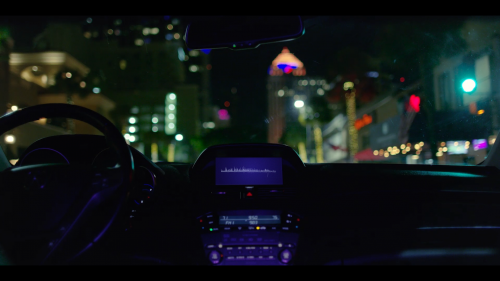
An image from “A.M.A.,” by director Peter Ebanks, which won for “Best South Florida Production.” (Photo courtesy of Peter Ebanks)
“You try to lead the audience,” Ebanks says. “Directing is not only camera, movement and actors, but what your audience sees, feels and hears.”
Another work is the blink-and-you’ll-miss-it “Moriendum,” a three-minute film by Memo Sauceda that won for “Best Experimental Short Film.” It’s a surreal, cryptic effort that’s autobiographical, based on a rock-bottom period in the 54-year-old father of three’s life.
Its synopsis? “A father with many responsibilities tries to make sense of them all, but sometimes, the weight of life is too much to bear.”
Sauceda explains: “When you’re a dad, you have many things going through your mind, and when I wrote it, work was kind of slow, and my kid was going to college, so there were a lot of expenses, and everything just came together and it was a difficult time.”
“Moriendum” is Latin for “dying.” And the rapid-fire visuals in the film show Sauceda levitating out of bed, being swallowed into the earth, hit by a school bus, drowning underwater and other situations that demonstrate how overwhelmed he was feeling.
Sauceda sees the title as an existential struggle.
“You choose: Do you want to live your life as a dying man, or as a guy that enjoys life?”
Sauceda moved to Miami in 1997 from Monterey, Mexico, and says he’s normally a very happy person, very positive.
“It’s very rare for me to be that unhappy,” he says. “Most of the things I do are comedy, and I don’t believe that you have to be miserable to do your best work. I look at the positive side of things. So to be able to write that, I think I was in a hole, a place where I didn’t know if I was going to be able to provide for my family and be able to do all the things that I needed to.
“But now I can say that I overcame it. To create the short was a way to exorcise all that.”
For Sauceda, short films are superior in many ways to feature films.
“I love things that you can start and finish quickly,” he says. “It’s very nice to be able to say you’re gonna do something tomorrow, and you’ll have it ready tomorrow. And you focus totally on one thing. Sometimes in movies, you feel when they don’t know how to continue, and you feel a gap, so all the energy just goes down, and that’s when you, if you’re a dad, kind of doze off at the cinema. So I don’t like those dramatic drops. With a short film, everything has to be there. If it’s good, people won’t get distracted, and you can tell your message in a very succinct way. It’s beautiful.”
Ebanks takes his praise of short films a step further.
“I think it’s the wave of the future,” he says. “As people’s time becomes more valuable, and people start just digesting information, the time spans are shorter. Our feature films right now have gotten shorter – they’re not those 2 1/2-hour things that we grew up with in the past. It’s just smaller, and there are really great, interesting stories that you can encapsulate in 10, 15 minutes. It’s a great format and a great medium.”
What: Miami Short Film Festival presents the 2019 winners
When: Cocktail reception at 6 p.m. Jan. 19; film workshop hosted by Memo Sauceda at 6:30 p.m.; show time at 7 p.m.; question-and-answer session at 8:15 p.m.)
Where: Deering Estate, Visitor Center Theatre, 16701 SW 72nd Ave., Miami
Cost: $12
More information: miamishortfilmfestival.com
ArtburstMiami.com is a nonprofit source of theater, dance, visual arts, music and performing arts news. Sign up for our newsletter and never miss a story.
No posts found
Miami grad returns to Florida Grand Opera in ‘Madama Butterfly’
Written By Michelle F. Solomon
January 13, 2020 at 10:54 PM
Soprano Sandra Lopez – who is returning to South Florida in the Florida Grand Opera’s “Madama Butterfly” – has a story not many performers can tell.
She was one of the first singers on the second-largest performing arts stage in the United States: the Ziff Ballet Opera House at the Adrienne Arsht Center for the Performing Arts.
In 2006, she had just completed Florida Grand Opera’s Young Artists Program, when she was asked to help out at the soon-to-open Arsht, then named the Carnival Center.
Along with a baritone, Lopez was called in to sing with a full orchestra to help acoustical experts tweak the sound.
“They were putting the finishing touches on the stage,” she says. “The orchestra played, and we sang, and the experts would listen from various points in the theater.”
When the center opened on Oct. 5, 2006, Lopez performed at its gala celebration.
“I learned something then about acoustics,” she says. “Having sung now in many of the older opera houses in Europe, I realize that acoustics are part of the magic for the audience being inside a theater listening to opera.”
She returned to the same stage 12 years later to sing the title role in Daniel Catán’s “Florencia en el Amazonas” for the Florida Grand Opera.
For the Miami Palmetto Senior High and University of Miami Frost School of Music graduate, this latest return to the Arsht is a dream come true. She will perform a role she has become known for and has come to cherish in her hometown of Miami, as well as in Fort Lauderdale’s Broward Center.
“I’ve sung ‘Madama Butterfly’ all over the United States and in Europe,” she says.
In the middle of the Florida Grand Opera’s run of the show, Lopez will hit the milestone of 50 performances of playing Cio-Cio San, the geisha girl who marries a U.S. Navy lieutenant named Pinkerton.
Lopez is fascinated with the message of cultural understanding, or lack thereof, in the storyline of “Madama Butterfly.” She was born to a Cuban father and a mother of European descent who was born and grew up in Ecuador. Though originally from New York, Lopez was soon swept up in moving from place to place overseas.
“My father was an international businessman. We lived in Hawaii, Singapore, passed through Japan, Mexico City for a year and a half, and then we moved back to the states,” she says. “I constantly felt that I had gone through so many cultures, and here I was a Hispanic-American.”
When the family moved to Miami while she was a teenager, she didn’t speak Spanish well. “I taught myself Spanish, and now I am completely fluent.”
She was always obsessed with music, playing piano and viola, and influenced by her father’s love for classical music – but when she learned a second language, the intrigue of other languages began to mix with her passion for music.
“I became interested in the stories that opera was telling. What does the language tell me about this character? What is the history that’s being told in this story?”
It all came together when a music teacher said she had the voice for opera.
Her career has taken her throughout the world. One of the many highlights: performing on tour with tenor Andrea Bocelli. It was memorable on many levels, she says, but she recalls a particularly unforgettable moment at a show in Puerto Rico.
Bocelli had been singing a song in Spanish throughout the tour. “He had been doing it with a Spanish accent everywhere we played. We were in San Juan and, at intermission, he came running into my dressing room and he wanted to speak through the words with me. He wanted to change the pronunciation of the words to be appropriate for South America and not for Spain. He wanted it to be right for the people of Puerto Rico.
“I found that to be such a level of love for his audience,” she says. “The respect he has for the music is something I completely admire.”
For the mother of two girls, ages 9 and 17 months, music is all in the family. Her husband is tenor Stuart Neill. The two met while performing as Mimi and Rodolfo in a production of Puccini’s “La Boheme.” The couple live north of Atlanta.
Puccini has a place in Lopez’s personal and professional life. She has a deep affection for “Madama Butterfly” and Cio-Cio San because of a cherished childhood memory. She was told that her great-great-grandmother studied singing and was also a soprano.
“My grandmother remembers as a young girl that her grandmother would hum ‘Un bel di vedremo’ to put her to sleep. This is ‘Madama Butterfly’s’ most famous aria,” she says. “My grandmother used to sing to me a couple of bars of ‘Un bel di’ and tell me how beautiful the music was. When it turned out that I had a voice that could sing ‘Butterfly,’ it was mind-blowing.”
With this latest performance, Lopez says she’s looking at “Butterfly” differently.
“There’s more humanity in this production than I’ve been able to experience before.”
She credits E. Loren Meeker, one of the four female stage directors the Florida Grand Opera has helming each production of its 2019-2020 season.
To bring authenticity to the 116-year-old opera by Giacomo Puccini set in 1904 in Nagasaki, Meeker worked with cultural consultants from Japan, Lopez says.
“I have done certain things in every production I’ve performed in of ‘Butterfly.’ I have seen things done in productions, but this director will say, ‘Actually, that’s not correct for this particular time period,’ or she’ll say that my character would not have done something a certain way because traditionally it was done this way.’
“She is very much wanting to tell the story for it to feel very real. People will feel the humanity in this production. These are not archetypal characters; these are real people. And we have a front-row seat to what’s going on in their hearts and in their minds.”
What: Florida Grand Opera’s “Madama Butterfly”
When/where: The production will open Jan. 18 with a Butterfly Ball commemorating Florida Grand Opera’s 79th season. The evening will include cocktails at 5 p.m., the opera at 6 p.m., and dinner and dancing afterward.
*8 p.m. Jan. 21 and Jan. 23, and 2 p.m. Jan. 26 at Adrienne Arsht Center for the Performing Arts of Miami-Dade County, 1300 Biscayne Blvd., Miami
*7:30 p.m. Jan. 30 and Feb. 1 at Broward Center for the Performing Arts, 201 SW Fifth Ave., Fort Lauderdale
Cost: Tickets start at $15 in Miami and $21 in Fort Lauderdale
More information: 800-741-1010; fgo.org
ArtburstMiami.com is a nonprofit source of theater, dance, visual arts, music and performing arts news. Sign up for our newsletter and never miss a story.
Top photo: Soprano Sandra Lopez and Brian Jagde in the Virginia Opera’s 2011 production of “Madama Butterfly.” (Photo courtesy of Anne M. Peterson)
No posts found
Zoetic Stage’s ‘American Son’ represents S. Florida theater at its finest
Written By Christine Dolen
January 13, 2020 at 4:15 PM
Like many contemporary plays, Christopher Demos-Brown’s “American Son” is a small-cast drama, one that unfolds in a taut 84 minutes. But those minutes hold a story of uncommon depth, one that is straightforward yet layered, observant, achingly real and ultimately devastating.
Demos-Brown’s finest play to date was created in Miami and is set here, though its world premiere was in 2016 in Massachusetts, followed by a high-profile Broadway run in 2018 and a Netflix debut in 2019.
But those who take in the new Zoetic Stage production of “American Son” at Miami’s Adrienne Arsht Center for the Performing Arts – and anyone who loves intensely engaging theater should seek it out – will understand that the wait for the play’s homecoming was worth it.
The work on the stage at the Arsht’s Carnival Studio Theater represents South Florida theater at its finest.
Demos-Brown, a lawyer/playwright whose excellent work has made him a key part of the region’s growing playwriting scene, and Zoetic Artistic Director Stuart Meltzer, who has staged four Demos-Brown world premieres, are superb creative collaborators.
Actors Karen Stephens, Clive Cholerton, Ryan Didato (all of whom worked on developmental readings of the play) and Zoetic newcomer James Samuel Randolph are at the top of their game in “American Son.”
Zoetic’s creative team has devised a Miami police station waiting area that becomes a sleek circle of hell for parents awaiting news of their 18-year-old biracial son after they’re told he has been involved in an early-morning “incident.”
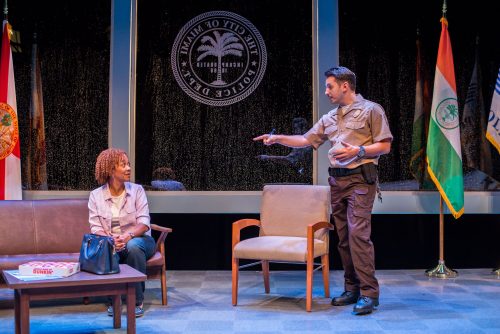
Karen Stephens as Kendra grows increasingly frustrated with Ryan Didato’s Officer Larkin in Zoetic Stage’s “American Son.” (Photo courtesy of Justin Namon)
Like the couple’s frustration, the intensity of “American Son” ebbs and flows as Demos-Brown artfully doles out information. Initially, black psychology professor Kendra Ellis-Connor (Stephens) is nervously waiting alone, trying to reach her missing son, Jamal. She leaves him a voicemail demanding he call back, then another that communicates her love and worry. When the young white (and obviously green) Officer Paul Larkin (Didato) appears, she also varies her tactics, combatively pushing for information, getting infuriated by the racial stereotyping of his questions about Jamal, then becoming more conciliatory when the pleasant by-the-book officer finally loses his temper.
Kendra’s estranged husband, Scott (Cholerton), a white FBI agent, finally arrives when she’s out of the room, and Larkin mistakes him for the morning public affairs liaison officer who will take over the handling of the case – and of Kendra. More cringe-inducing racism from Larkin ensues, until Kendra reappears and he realizes his error. Professionally starstruck, Larkin fetches coffee and more information for Scott, to Kendra’s disgust.
As they wait, the couple revisits familiar marital and parenting arguments, eventually touching on the things that first drew them together. Racial issues infuse their conversation and shape their perspectives, which differ sharply when it comes to Jamal’s future.
Then Scott’s brother, who works at a local TV station, sends him an alarming video that rockets the couple into panic mode just as Lt. John Stokes (Randolph), a black veteran cop who is the actual liaison officer, arrives. From that moment, the play hurtles toward a terrible and all-too-familiar conclusion.
To a person, the actors in Zoetic’s cast are ideally suited to their roles.
Stephens, among the region’s most powerful actors, portrays a fierce and intelligent woman so agitated with worry that she just might jump out of her skin. Cholerton, a director who stepped away from acting for more than a decade, is utterly comfortable onstage, endearing in spite of the familial upheaval caused by Scott’s departure, then explosively fearful and heartbreakingly distraught.
Didato, properly amiable and naive as Larkin, effectively navigates the character’s goofy humor and reflexive racism. Randolph, whose Stokes gets the least stage time, is a towering force in the play as he supplies the law enforcement perspective in the incendiary debate over policing and deadly force. His one-on-one conversation with Stephens’ Kendra, just another scene in other productions, is utterly riveting.
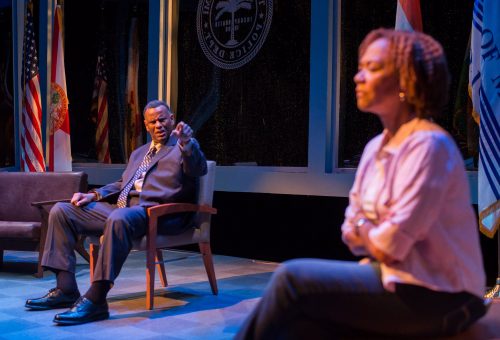
James Samuel Randolph as Lt. Stokes has a tense reckoning with Karen Stephens’ Kendra in “American Son” at the Arsht Center. (Photo courtesy of Justin Namon)
Set designers Natalie Taveras and Jodi Dellaventura, lighting designer Rebecca Montero, sound designer and composer Matt Corey, and costume designer Marina Pareja create an atmosphere that perfectly serves the play, supplying sudden rainstorms that run down the station’s windows, the twirling red-and-blue lights and sudden sirens of police cars, the claustrophobic atmosphere of a government building in early morning where the couple must await the most relieving or worst news of their lives.
“American Son,” now published by Samuel French and slated for future productions in the United States and around the world, has had several impactful productions since the summer of 2016. But Zoetic’s rivals or surpasses all of them, thanks to a playwright and director who understand each other’s language and to a quartet of actors giving performances as powerful as anything they’ve ever done.
What: “American Son,” a play by Christopher Demos-Brown
When: 7:30 p.m. Wednesdays-Saturdays and 3 p.m. Sundays, through Jan. 26
Where: Zoetic Stage production in the Carnival Studio Theater at the Adrienne Arsht Center for the Performing Arts of Miami-Dade County, 1300 Biscayne Blvd., Miami
Cost: $50 and $55
More information: 305-949-6722; arshtcenter.org
ArtburstMiami.com is a nonprofit source of theater, dance, visual arts, music and performing arts news. Sign up for our newsletter and never miss a story.
Top photo: Scott (Clive Cholerton) and Kendra (Karen Stephens) wait nervously for news of their missing teen son in Christopher Demos-Brown’s “American Son.” (Photo courtesy of Justin Namon)
No posts found
Christopher Demos-Brown’s ‘American Son’ comes home
Written By Christine Dolen
January 7, 2020 at 4:36 PM
A parent’s worst nightmare can take many forms, but this is indisputably one of them.
You get a call from the police in the wee small hours of the morning. A car given to your high-achieving son for his 18th birthday has been involved in what is only described as “an incident.” You frantically call his cellphone, which goes to voicemail again and again.
At 4 a.m., you’re in a Miami-Dade County police station trying to pry answers out of a tight-lipped rookie officer as you await your estranged husband, who not so long ago moved out and moved on. The intricate, incendiary issues of race add another layer to the mounting tension: You are black; your ex is white; your missing son, Jamal, is biracial – his whereabouts something the young white cop can’t, or won’t, reveal.
Thus begins Christopher Demos-Brown’s “American Son,” which previews Jan. 9 and opens Jan. 10 in a Zoetic Stage production that will run in the Carnival Studio Theater at Miami’s Adrienne Arsht Center for the Performing Arts through Jan. 26.
Although this marks the Florida premiere of a play that was running on Broadway just a year ago – a devastatingly intense drama that was adapted for and debuted on Netflix two months ago – both Demos-Brown and Zoetic Artistic Director Stuart Meltzer describe the new production as a homecoming.
The set-in-Miami play was written as part of the Playwright Development Program financed by Miami-Dade County’s Department of Cultural Affairs. It had several major staged readings in South Florida before going on to its world premiere at Barrington Stage Co. in Pittsfield, Mass., in the summer of 2016.
“Scandal” TV star Kerry Washington played psychology professor Kendra Ellis-Connor on Broadway from November 2018 to January 2019, opposite Steven Pasquale as her FBI agent husband, Scott. Jeremy Jordan played the rookie officer, Paul Larkin, and Eugene Lee completed the ensemble as the seasoned black police lieutenant John Stokes. Tony Award winner Kenny Leon staged the Broadway production.
All that said, while writing the play, Demos-Brown had in his head the voices of three of the four actors in Zoetic’s production.
“Unlike people who write novels, when you write for theater, you really depend on a community of artists, especially actors. If you don’t have a group of artists you trust, it’s hard to see if something isn’t working because of the actor or the material,” the playwright says.
In the case of “American Son,” Demos-Brown imagined Carbonell Award winner Karen Stephens, who appeared in the Zoetic world premiere of his play, “Fear Up Harsh,” as the worried mother; Carbonell-winning director and actor Clive Cholerton as the estranged husband; and Ryan Didato, who was in the Zoetic world premiere of the playwright’s “Wrongful Death and Other Circus Acts,” as the rookie officer.
Carbonell winner and New World School of the Arts associate professor James Samuel Randolph, who portrays Stokes, is new to the play and to Zoetic.
Of Stephens, Demos-Brown says: “Karen is not lacking in strong opinions. She wasn’t deterred by the fact that the play has had four productions and 16 readings, that it ran on Broadway and has been published by Samuel French. She would tell me what she thought needed to be changed … She has a toughness about her, and she wears it on her sleeve. But life has taken some shots at her, and that’s who Kendra is.”
Cholerton, who directed Stephens in “Clybourne Park” when he was running the Caldwell Theatre Co. in Boca Raton, has extensive acting and directing credits in the United States and his native Canada. Demos-Brown thinks Cholerton’s physicality as a former semipro athlete, his intelligence and his “Canadian gentleness” work well in portraying the husband. That he and Stephens are closer to the ages the playwright intended the characters to be is another asset.
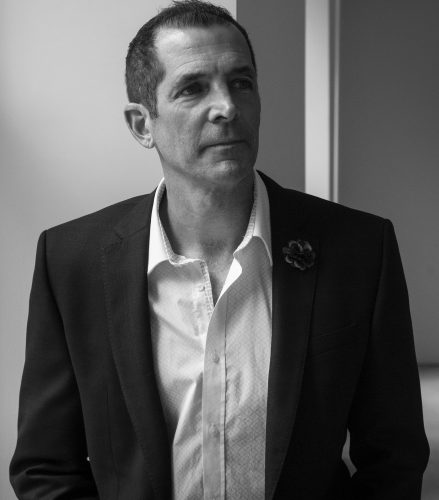
Playwright and Zoetic Stage co-founder Christopher Demos-Brown saw his play “American Son” go to Broadway and Netflix. (Photo courtesy of Joey Stocks)
“That gives their relationship with their son more poignancy,” Demos-Brown says. “This is it for them. They’re much more on the back-end of life.”
Cholerton is father to an 18-year-old, college-bound high school senior (whose mom is Carbonell winner Margery Lowe). Although the play’s circumstances are intense and particular, Cholerton finds it easy to identify with his character’s reactions.
“Scott is a logical FBI guy, but when your child’s life is at stake, you will go to any length. It’s an almost animalistic feeling,” he says of a drama that takes him to an extreme emotional place in every performance. “I don’t know that I could do the play for more than three weeks.”
For her part, Stephens also identifies with multiple aspects of Kendra’s character.
“Kendra straddles two worlds, being married to a white man and having her career in academia, and being a black woman and black mother. She struggles and juggles, and on this night her worlds collide,” she says.
“I navigate that every day of my life. Sometimes, you don’t want to sacrifice your own culture. You just want to be who you are. But you’re forced to adhere to the perceptions of the majority culture if you want to get ahead. It creates great emotional and intellectual stress.”
Randolph grew up in Miami as the son of teachers and administrators whose friends included civic leaders and people in law enforcement. As a theater student, he was often out late at night driving home from rehearsals, something that worried his mother.
“I was pulled over once or twice when I was young, probably for driving while black. I stayed calm and listened to the better angels of my mother’s nature in my head,” the actor says. “This is a well-made play grounded in truth. We get to know this [missing] young man, even though we never see him.”
Didato saw “American Son” on Broadway and auditioned to be the production’s male understudy. He “skipped around” the Netflix version and says Demos-Brown has told him he wrote the role of Larkin with “my voice, my energy in mind.”
But he thinks that tonally, Zoetic’s production will be noticeably different from the Broadway version.
“Chris is the smartest person in any room, and all his characters are smart, relatable, flawed,” Didato says. “He has created characters who are very real, so engaging. You empathize with the mother and the police officers. Clive’s Scott is so likeable, such a nice guy … You laugh a lot at Larkin’s expense. Stuart is so great at mining comedy, and playing with being uncomfortable is in my wheelhouse. The play has a lot more laughs than most people are expecting.”
Observes Randolph: “Humor lets people survive day in and day out. The more humor you find in this 90-minute play, the more hard-hitting it is when it’s no longer funny.”
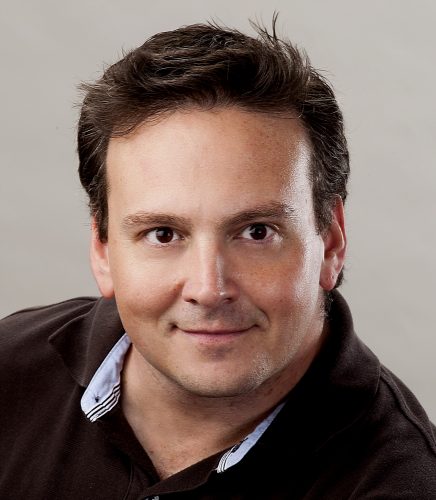
Stuart Meltzer, Zoetic Stage artistic director and co-founder, is staging “American Son” after directing several Christopher Demos-Brown world premieres. (Photo courtesy of George Schiavone)
Cholerton notes that he and Stephens, who have known each other a long time, are also focusing on “finding the quiet moments between the lines, when they look at each other and reflect, moments when they get reminded of something. It’s all there.”Finding real and funny moments has been crucial to Meltzer’s vision of the play.
“I’ve been working hard not to telegraph the ending of the play from the beginning,” the director says. “The big responsibility for me is to interpret it. The benefit I have is understanding Chris and his writing. His tempo, humor, wit and the sardonic nature of it. I can look at it with empathy from years of work alongside him.”
Although “American Son” has a history elsewhere, Meltzer adds, “This is a big homecoming for the play. It was born in Miami of a writer who knows and loves this community.”
“American Son” will also have a life after Miami. Samuel French has licensed 15 productions around the United States, and there are productions planned in Israel, France, Belgium, Brazil and India.
Demos-Brown, who continues working as an attorney with wife and law partner Stephanie Demos, is finalizing a contract to write a miniseries for FX based on a true crime story. He is continuing to work on “Coral Gables,” a companion piece to his play, “Captiva,” which had its world premiere at Zoetic in 2011.
Despite having had a play on Broadway, he is still trying to get his plays done at larger American regional theaters.
“Being an older, white male playwright is not a growth industry,” he says. “I can’t get larger theaters to bite. Family dysfunction stuff all seems the same – until you see the plays.”
The playwright got some pushback in New York for being exactly who he is: a white male writing insightfully about race and policing. Stephens argues that’s unfair.
“Throughout history, we have had white allies who marched with us and died with us. We’ve asked white America to see our pain. And when someone does that, we question it? I think it’s admirable and validating,” she says.
What: “American Son,” a play by Christopher Demos-Brown
When: Preview at 7:30 p.m. Jan. 9; opening 7:30 p.m. Jan. 10; regular performances 7:30 p.m. Wednesdays-Saturdays and 3 p.m. Sundays , through Jan. 26. Additional matinee 3 p.m. Jan. 11.
Where: Zoetic Stage production in the Carnival Studio Theater at the Adrienne Arsht Center for the Performing Arts of Miami-Dade County, 1300 Biscayne Blvd., Miami
Cost: $50 and $55
More information: 305-949-6722; arshtcenter.org
ArtburstMiami.com is a nonprofit source of theater, dance, visual arts, music and performing arts news. Sign up for our newsletter and never miss a story.
Top photo: Karen Stephens and Clive Cholerton play estranged parents trying to get answers about their missing son in Zoetic Stage’s “American Son.” (Photo courtesy of Chris Headshots)
No posts found
Miami Jewish Film Festival to open with ‘Saul & Ruby’ world premiere about Holocaust survivors’ band
Written By Michelle F. Solomon
January 3, 2020 at 9:39 PM
Documentarian Tod Lending goes into his films knowing that he doesn’t know what’s going to happen in them. Longitudinal documentaries, or long docs, are his niche.
“I follow people for years, however long it takes for the story to present itself,” Lending said.
At the heart of his latest – “Saul & Ruby, To Life!” – are two Holocaust survivors, Saul Dreier, 94, of Coconut Creek and Reuwen “Ruby” Sosnowicz, 90, of Delray Beach, and their Holocaust Survivor Band.
The documentary will open the Miami Jewish Film Festival on Jan. 9 at the Aventura Arts & Cultural Center. The festival will run through Jan. 23 at 14 venues throughout Miami-Dade County, and feature more than 100 films from 25 countries.
“Even though I’m Jewish, I’ve never done a Jewish-themed story,” said Lending, 60, a native of Chicago. “I always wondered if I would ever make a film that had a connection to my own background and history.”
He never could’ve imagined where their story would take him.
At first, the film delved into their pasts in Poland and how Dreier found out about Sosnowicz when he wanted to form a Holocaust survivor klezmer band in 2014. Lending began filming in 2015, while the band was playing in community centers and becoming known.
As the film progressed, so did the lives of the two men and the trajectory of the band. On the personal side, the two men lost their wives to illnesses during filming, and on the professional side, they found a way to play their dream concert in Poland.
“We had no idea they would make it to Poland when we began,” Lending said.
The harrowing stories of the Holocaust are interspersed within the film. Dreier tells of how his family was killed by Nazis, and he expresses his wonder on how he was the one who survived.
“To survive is a 99 percent miracle,” he said in the documentary. “Ask me from day to day, I can’t comprehend. The way I was living, the way I was eating.”
In the film, Sosnowicz recalls living in Warsaw’s Jewish quarter: “I had five sisters and four brothers. I was the youngest. When Germany invaded, my father knew how to get out of town.”
But when they arrived at the Poland-Russia border, the young boy ran the wrong way and lost his family as they crossed the border. A farmer found him and kept him hidden and fed throughout the war.
“Ruby had a different experience than Saul, and both stories will resonate with audiences,” Lending said. “I will always be inspired by these two men and their drive to live and to be connected to the world in spite of what they went through.”
After a friend showed him a short documentary online in the New York Times about the pair, “I fell in love with these two guys,” Lending said. He remembers learning that film companies had already contacted them.
“I was ready to jump on this. I flew to Florida immediately to meet with Saul,” he said.
While he would go through his normal fundraising channels, Lending decided this was the film he had been waiting for. “I had put money aside throughout the years for a passion project, and this was it,” he said.

From left, Reuwen”Ruby” Sosnowicz and daughter Chana Rose Sosnowicz with Saul Dreier and Jeff Black at a concert in Warsaw, Poland, in 2016. Filmmaker Tod Lending is at right. (Photo courtesy of Tod Lending)
Lending was intrigued by the Holocaust Survivor Band, made up of survivors and children of survivors.
The idea for the band began when Dreier read a newspaper article about the death of Alice Herz-Sommer, a 110-year-old woman in England who had survived her time in concentration camps by playing piano in concerts the Nazis arranged.
“I want to do something for her,” Dreier recalled thinking. “I’m going to put together a band.”
In 1945, Dreier was 19 and played drums in a displaced persons camp after the U.S. Army liberated him from a concentration camp in Linz, Austria.
“One day, a truck arrived with a piano and a set of drums. The director of the camp asked who wants to play the piano, and a man from Yugoslavia raised his hand. No one wanted to play the drums, so I volunteered,” he said.
He stopped playing the drums, he said, “when I moved to the United States, went to work, got married and had a family.”
Sosnowicz learned to play music at a displaced persons camp in Germany, where he acquired his first accordion. When he migrated to Israel and served in the Israeli Army, he formed a band. When he lived in Paris, he played his accordion in the streets. He later moved to Montreal, then eventually settled in the United States, where he continued to play as a professional musician, including entertaining through the Borscht Belt of upstate New York before retiring to Florida.
“Saul & Ruby, To Life!” already has a distribution deal with Samuel Goldwyn Films, which means it will be shown throughout U.S. movie theaters. It is the 13th feature film to be acquired from the Miami Jewish Film Festival in the past seven years, according to the festival’s director, Igor Shteyrenberg.
Before “Saul & Ruby, To Life!”, Lending completed “Omar & Pete,” which followed two men in the period before their release from prison and then two years after.
“The majority of my work has been on social justice and has always been stories about minorities, drug addiction, incarceration, sexual abuse,” Lending said.
Lending was nominated for an Academy Award in 2001 for his feature-length documentary, “Legacy,” which he filmed over a five-year period, about an African-American family’s struggle and how they overcame community violence, drug addiction and the loss of a child.
What: “Saul & Ruby, To Life!” will open the Miami Jewish Film Festival
When: 7 p.m. Jan. 9; the festival runs through Jan. 23
Where: Aventura Arts & Cultural Center, 3385 NE 188th St.; the festival includes 13 other venues
Cost: $15 for single tickets; $325 for festival badge passes
More information: 305-573-7304; miamijewishfilmfestival.org
ArtburstMiami.com is a nonprofit source of theater, dance, visual arts, music and performing arts news. Sign up for our newsletter and never miss a story.
Top photo: From left, Reuwen “Ruby” Sosnowicz withdaughter Chana Rose Sosnowicz and Saul Dreier in a clip from”Saul & Ruby, To Life!” (Photo courtesy of Tod Lending)
No posts found
‘Macbeth’ takes a murderous quest for power to 4 Miami-Dade locations
Written By Christine Dolen
December 30, 2019 at 4:28 PM
Actor Seth Trucks has been living with Macbeth and “Macbeth” – one of William Shakespeare’s great roles in one of his great tragedies – for much of the current theater season.
In August, Trucks played the ruthlessly pragmatic Scottish king in an intimate New City Players production at The Vanguard in Fort Lauderdale. Now, throughout January, the accomplished actor is going bigger, of necessity: He’ll play Macbeth, the once-valiant general who murders his way onto the throne, at four outdoor locations in Miami-Dade County, the smallest of which seats 550 people.
“Playing him twice has given me an increased familiarity with the role, allowing for intimate finetuning and detail work,” Trucks acknowledges via email, adding, “but the change in space requires a larger, more performative approach, which has been an interesting tightrope to walk.”
Trucks is working on his second “Macbeth” in six months with Florida Shakespeare Theater’s founding producing artistic director, Colleen Stovall. The company will take the play, which Stovall has placed in the early 12th century, to the North Beach Bandshell in Miami Beach on Jan. 3-5, the Downtown Doral Park in Doral on Jan. 10-12, The Barnacle Historic State Park in Miami’s Coconut Grove neighborhood on Jan. 17-19, and Pinecrest Gardens in Pinecrest on Jan. 24-26. Admission is free.
Stovall – who previously directed Trucks in the title role in “Hamlet” and as Shylock in “The Merchant of Venice” – has paired him with Sara Grant as Lady Macbeth. The director first staged “Macbeth” for the company a decade ago, and she has intricate ideas about what she wants to communicate in this new production.
“I wanted to chart the trajectory of a man who was beloved and heroic [as he became] someone who laid a country to waste for his own base needs and desires,” Stovall writes in an email. “[Seth] works to find and project the spark of humanity in each of his characters … Although Macbeth is a villain, Seth manages to show us his mental anguish and confusion when everything goes wrong.”
As for Lady Macbeth, Stovall has added an opening sequence that shows the grieving character giving up her dead baby, suggesting “why she might be angry at the world and so eager to call up the dark side in order to wreak havoc,” the director notes. “Sara’s confidence at the top of the show devolves into anger, regret and eventually madness. Our main goal is to show the progression of both characters.”
Colleen Stovall is the founding producing artistic director of the Florida Shakespeare Theater. (Photo courtesy of Bill Kress)
Grant explains that “Colleen was concerned that we build a character arc for Lady Macbeth that showed her brilliance, her brains and her initial control over Macbeth, and not just paint a flat, one-dimensional villain.”
Taking a cast of 17 professional actors and two interns to a new venue each week is just one of the challenges of performing Shakespeare in large outdoor settings.
Weather is another, as is achieving topnotch outdoor theatrical sound. Stovall designed and built 22 of the more than 40 costumes, which have layers of leather, fur, wool or linen-like fabric. The spare, bare set has to be put up, taken down and moved each week. Everything is designed to bring to vibrant life a play that Stovall calls “Shakespeare’s most accessible tragedy.”
Trucks, also an experienced fight choreographer, will execute a large-scale broadsword duel choreographed by Joey Costello. He’ll also be focusing on how he delivers Shakespeare’s language.
“With Shakespeare, I always begin by trying to make each line sound perfectly casual and understandable coming out of my mouth, then I add what poetry I think the delivery calls for,” he says. “With Macbeth, that is an ongoing process, as his words are particularly rich, even for Shakespeare. Try saying ‘the multitudinous seas incarnadine’ casually.”
What: Florida Shakespeare Theater’s “Macbeth”
When/where:
Jan. 3-5 at North Beach Bandshell, 7275 Collins Ave., Miami Beach
Jan. 10-12 at Downtown Doral Park, 8395 NW 53rd St., Doral
Jan. 17-19 at The Barnacle Historic State Park , 3485 Main Highway, Miami
Jan. 24-26 at Pinecrest Gardens, 11000 Red Road, Pinecrest
Hours: 8 p.m. Fridays-Saturdays, 6 p.m. Sundays (matinee 2 p.m. Jan. 25)
Cost: Free
More information: floridashakes.com
ArtburstMiami.com is a nonprofit source of theater, dance, visual arts, music and performing arts news. Sign up for our newsletter and never miss a story.
Top photo: Sara Grant as Lady Macbeth and Seth Trucks as Macbeth rehearse for the Florida Shakespeare Theater production. (Photo courtesy of Joey Costello)
No posts found

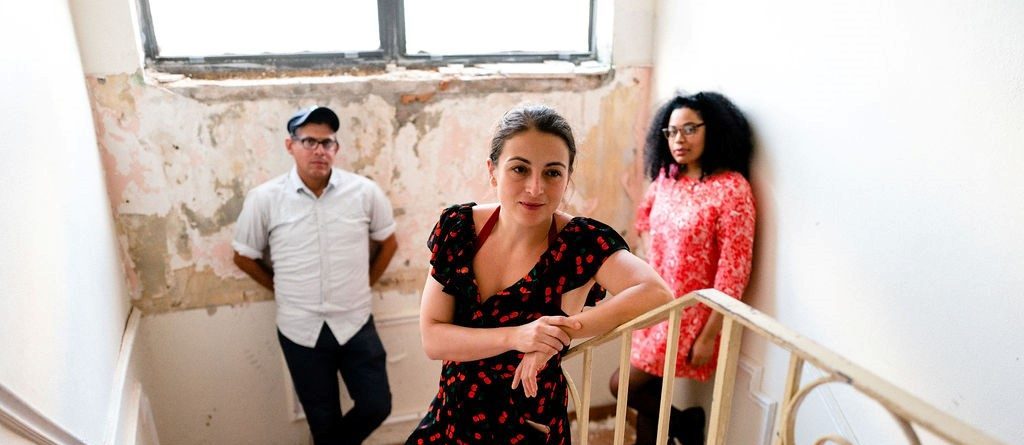
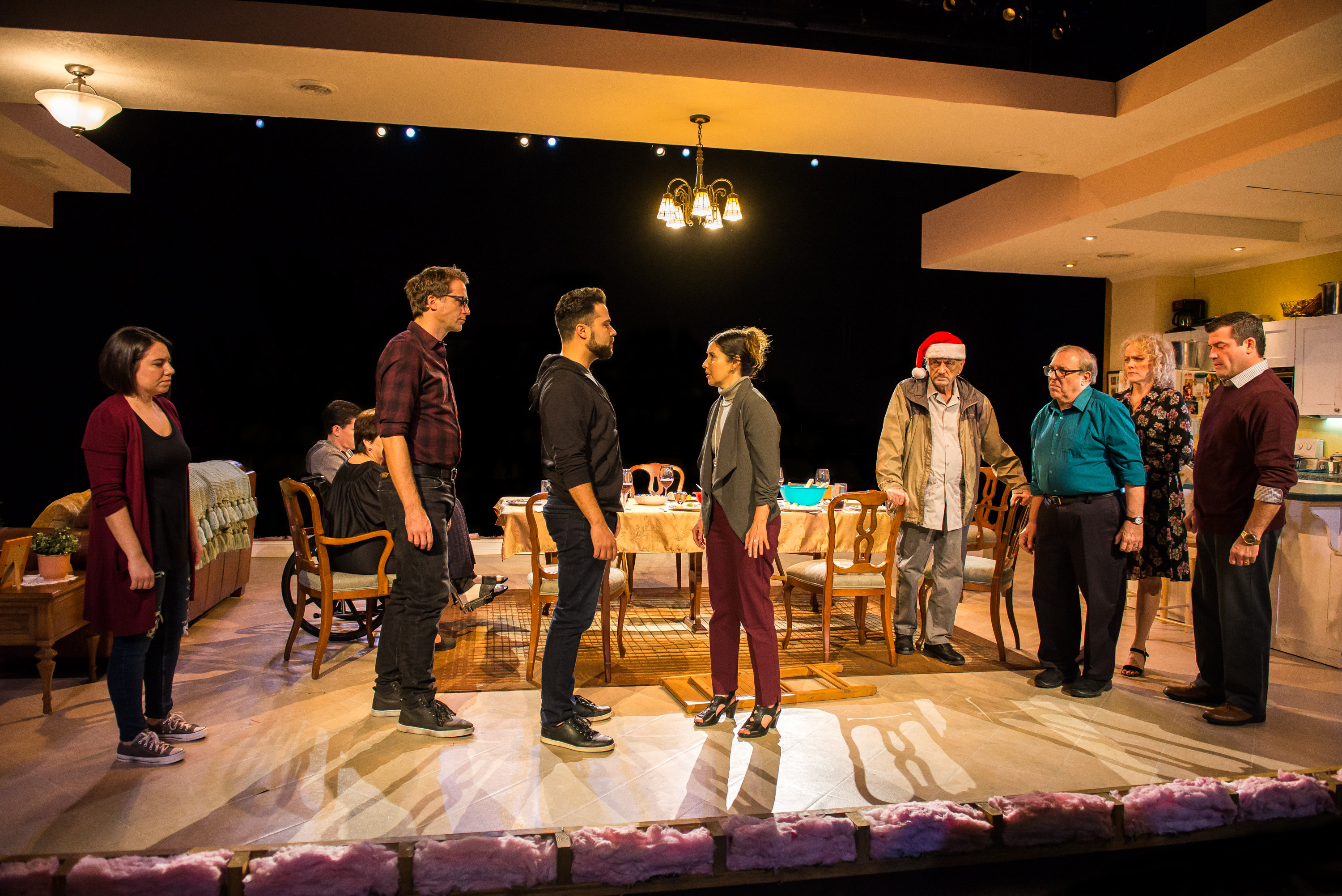
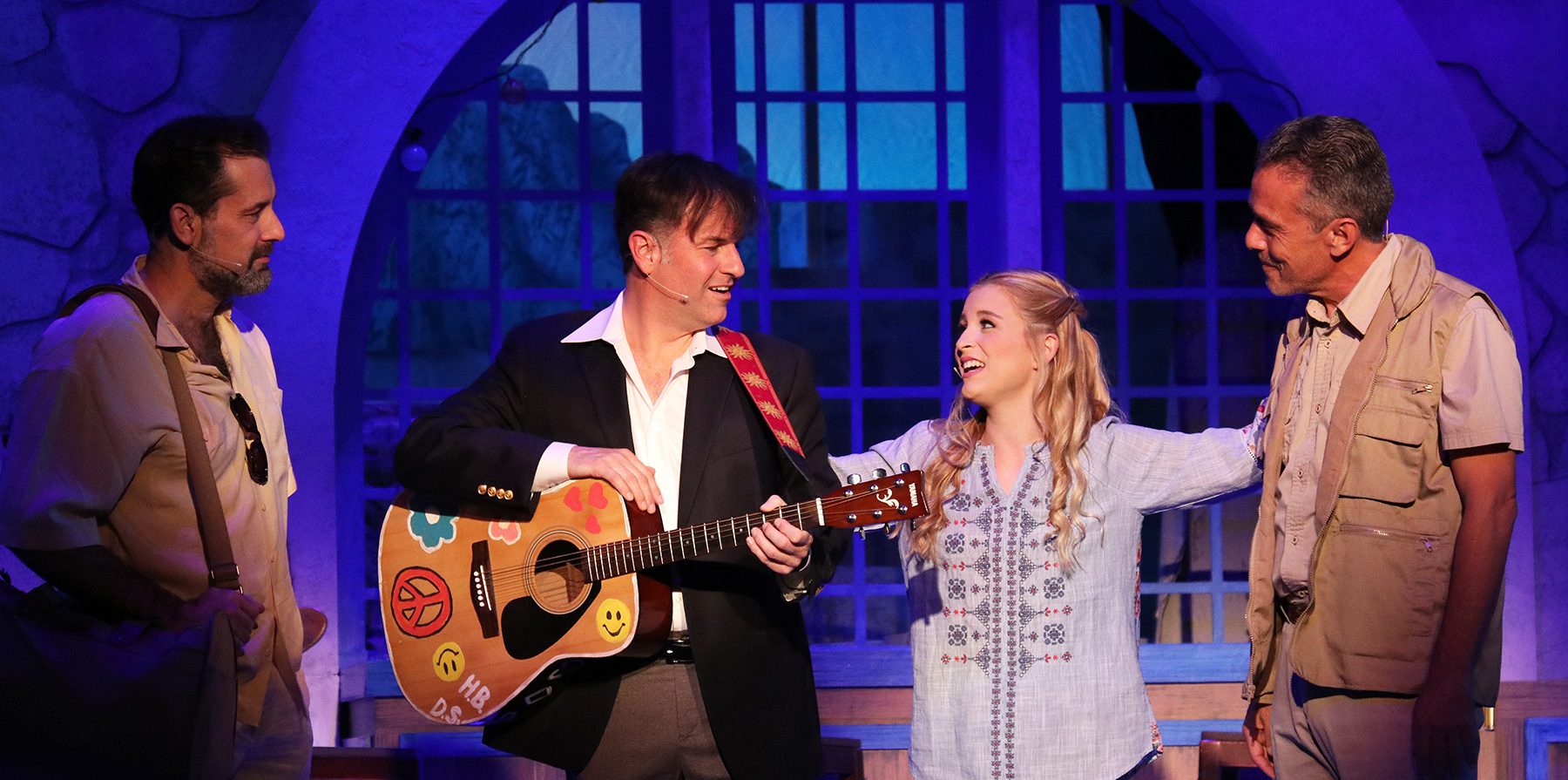

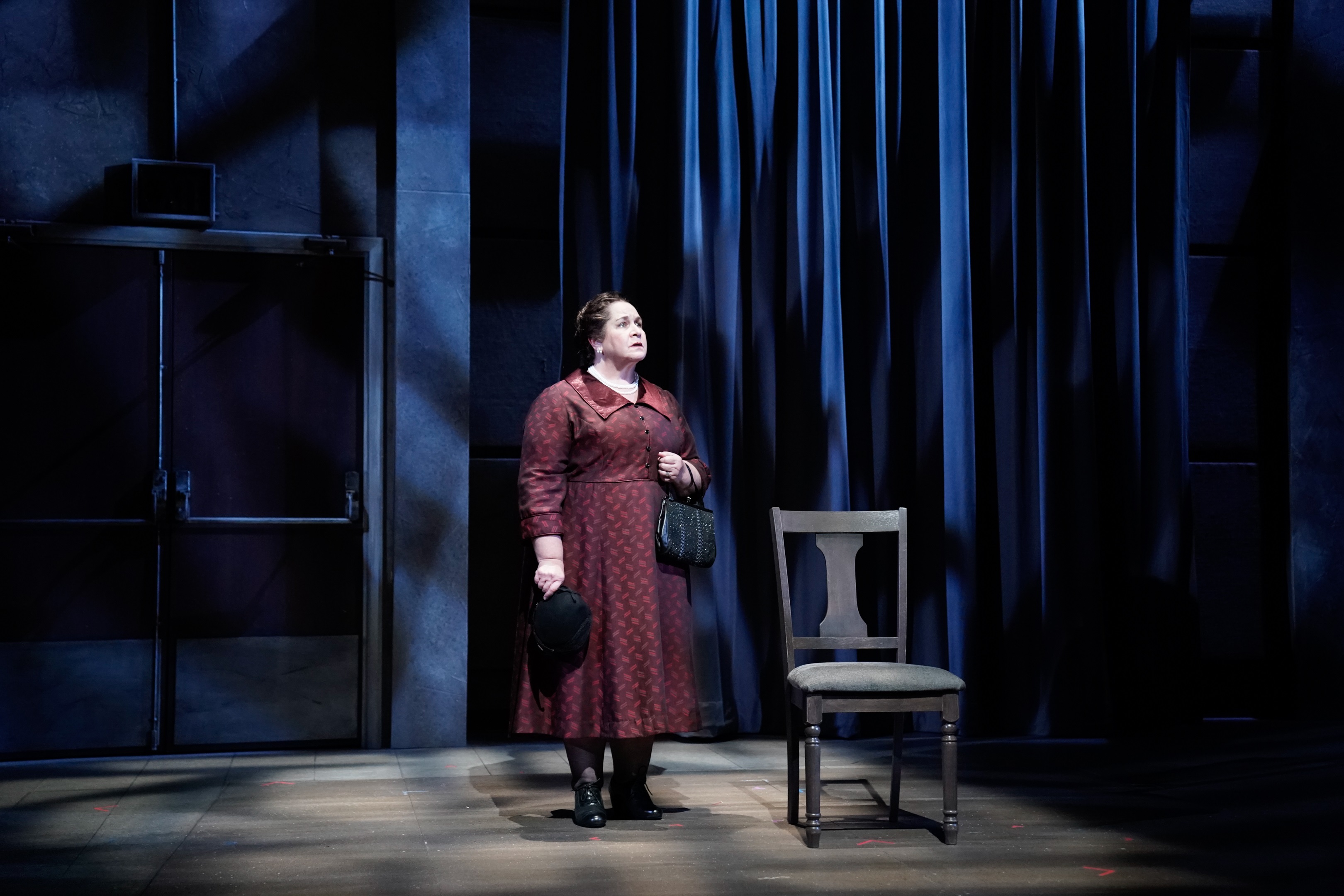
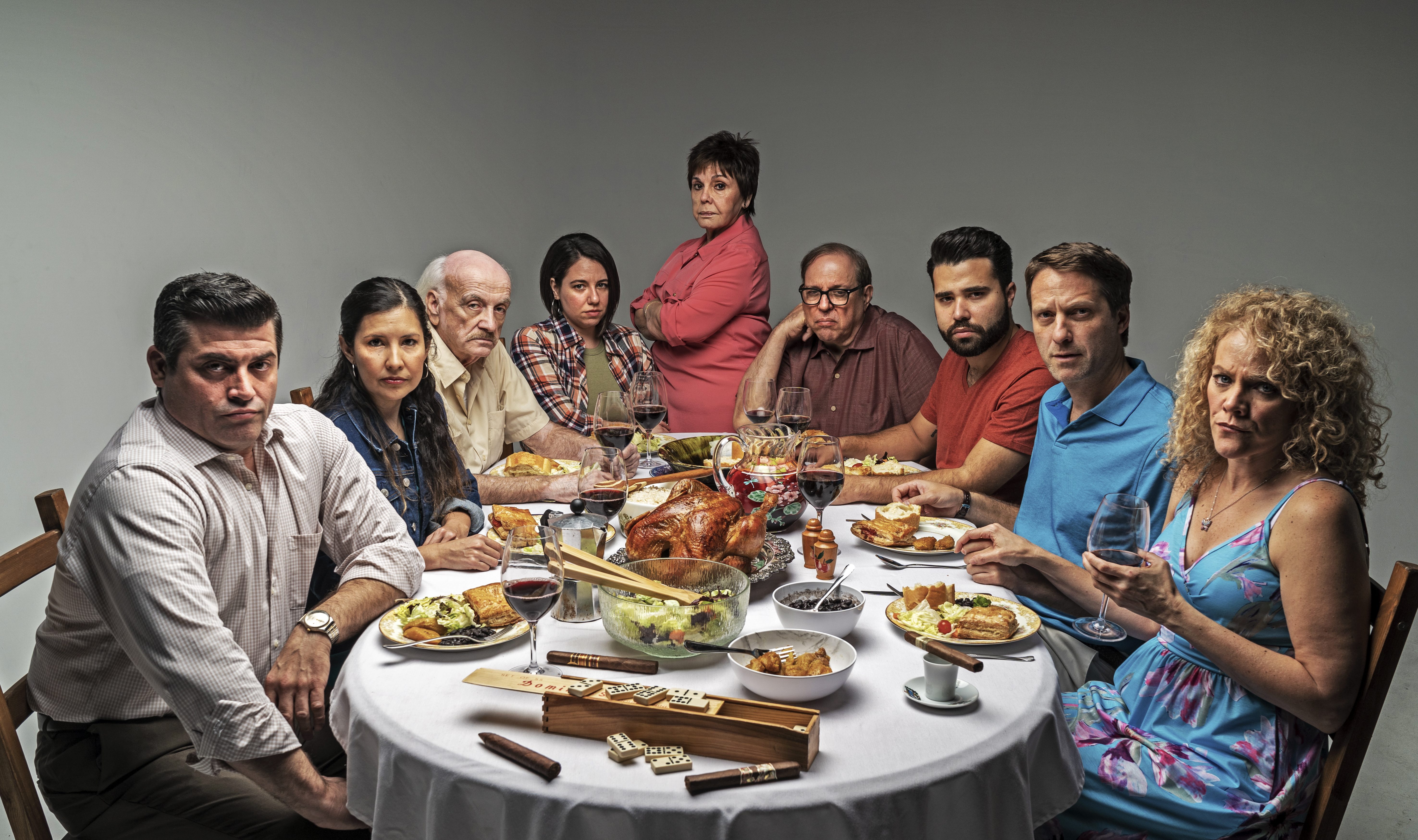
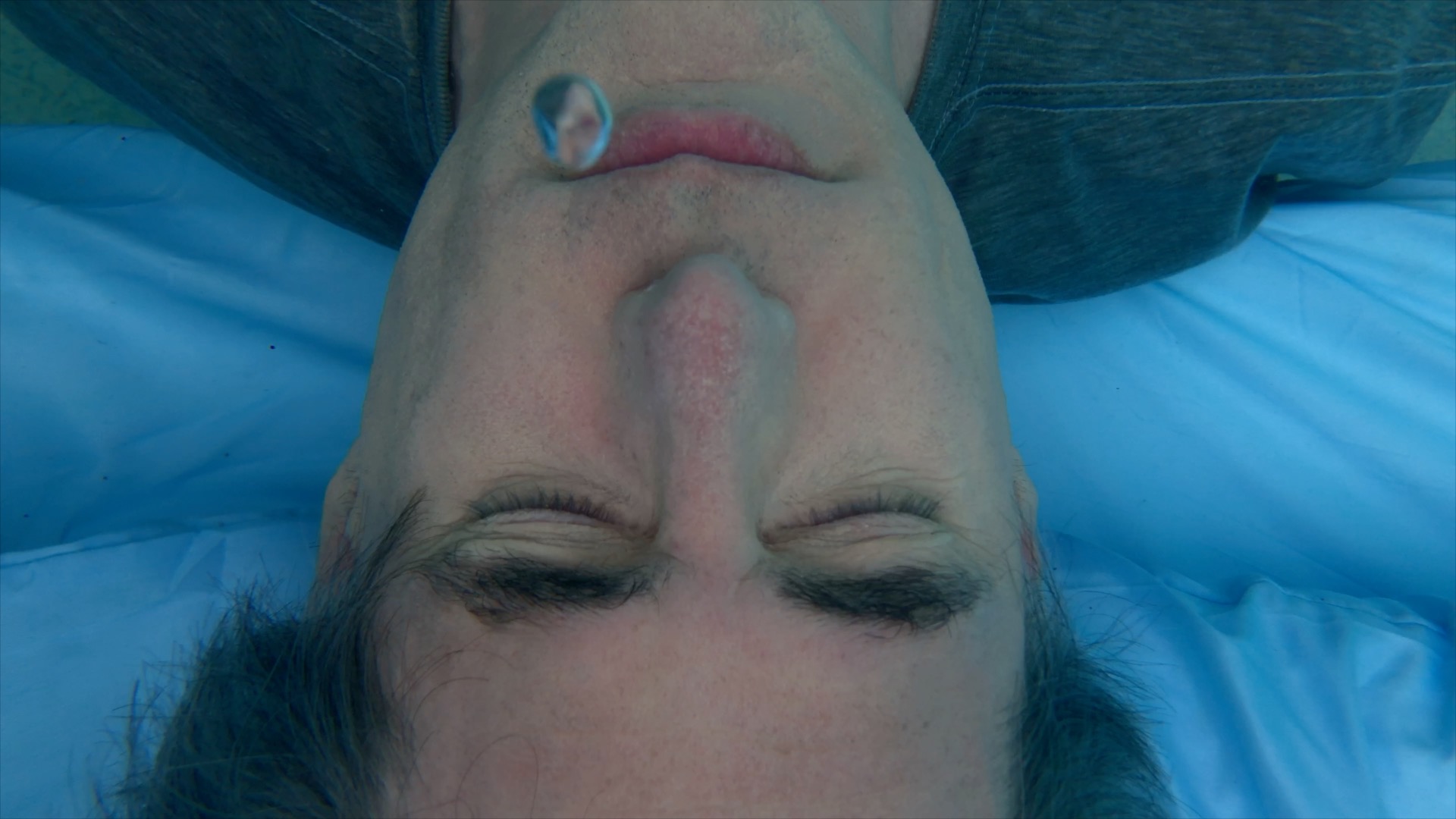
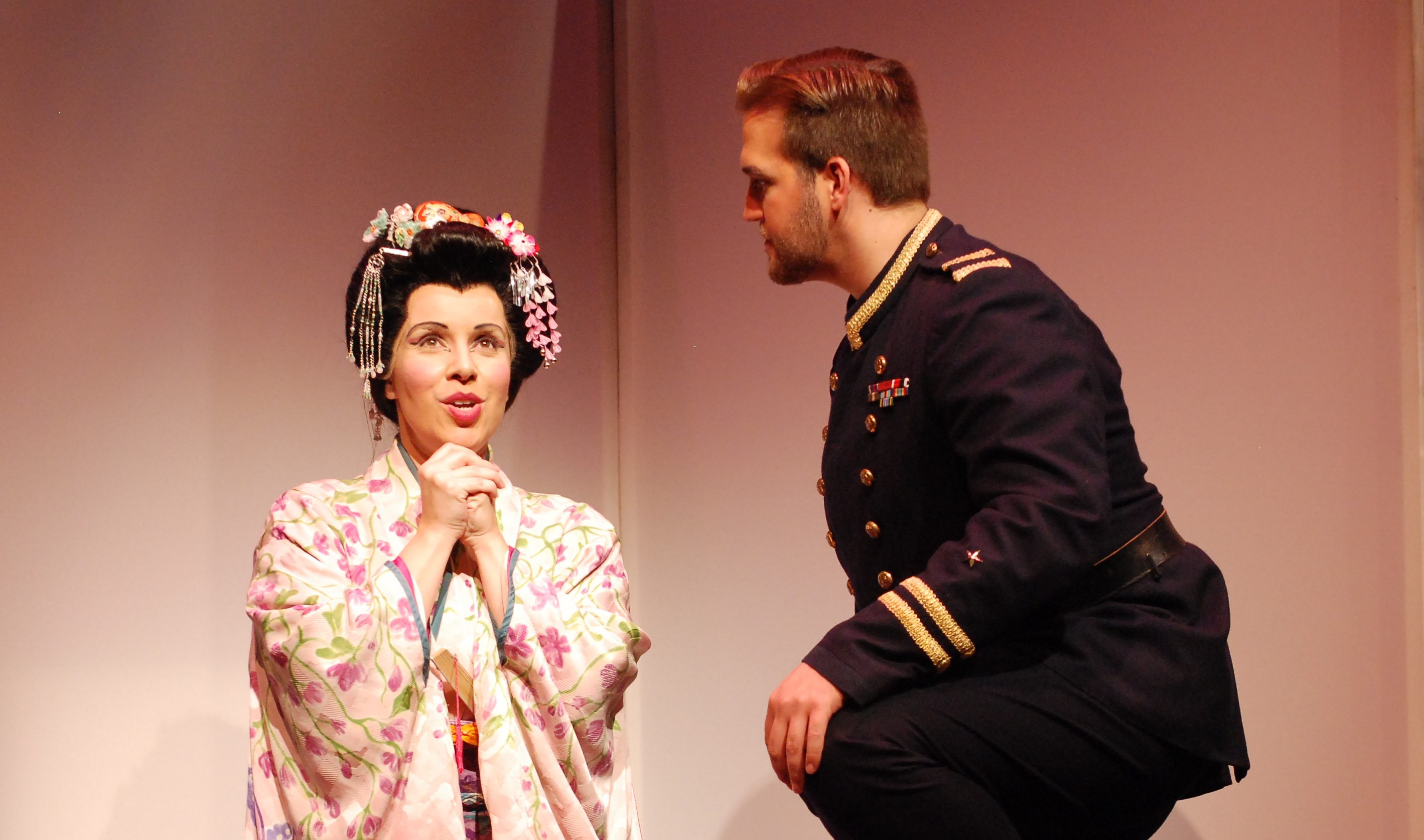
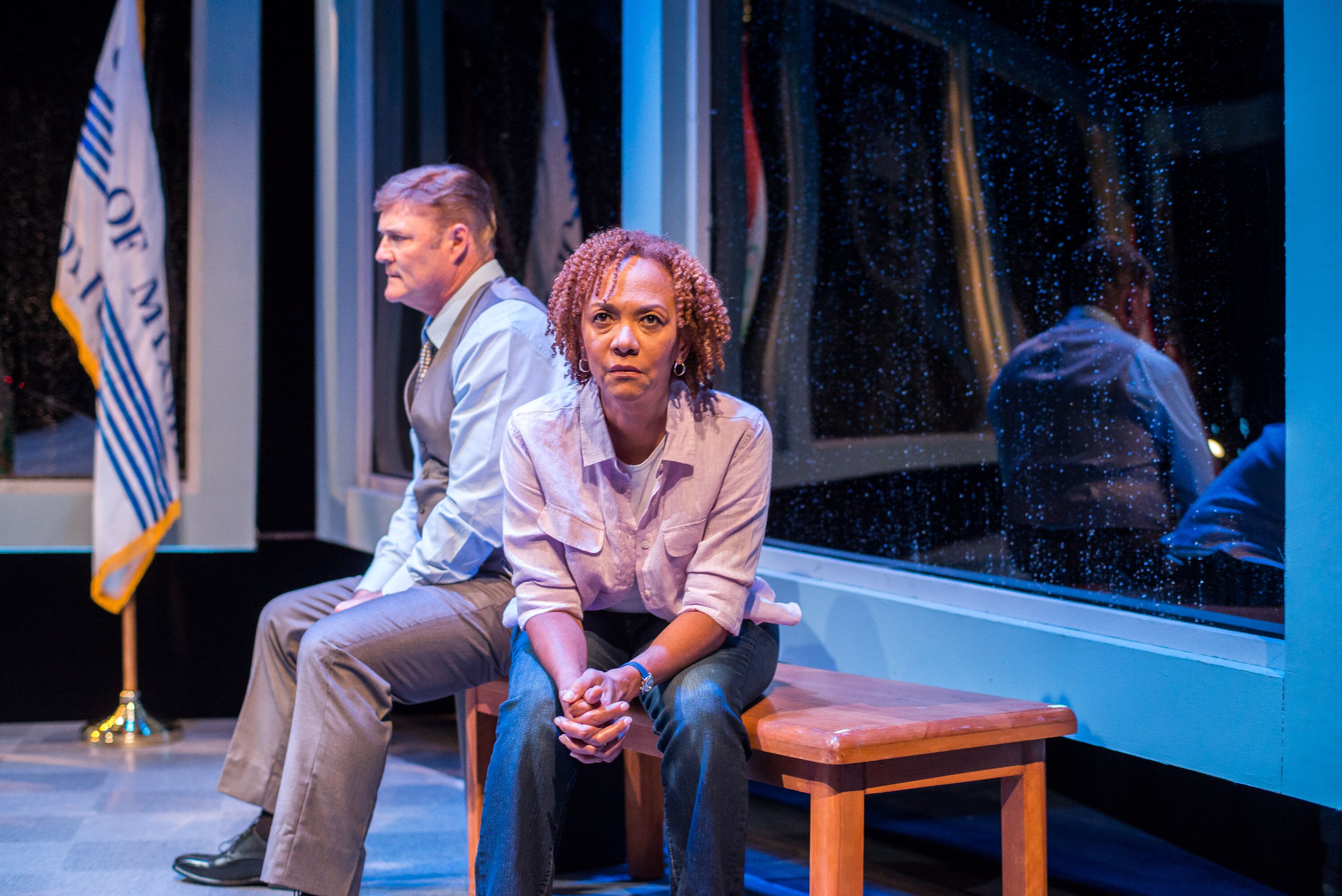
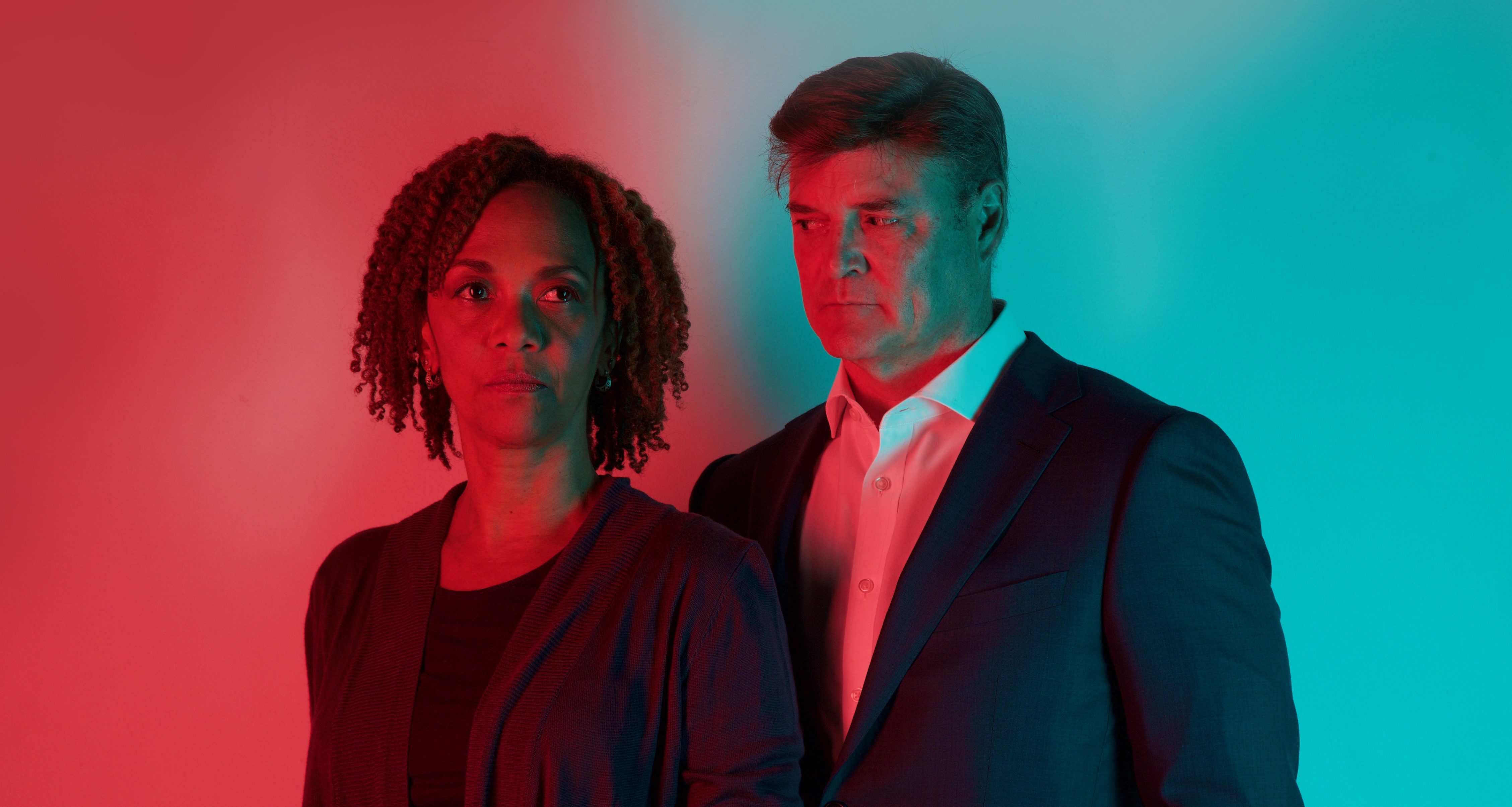
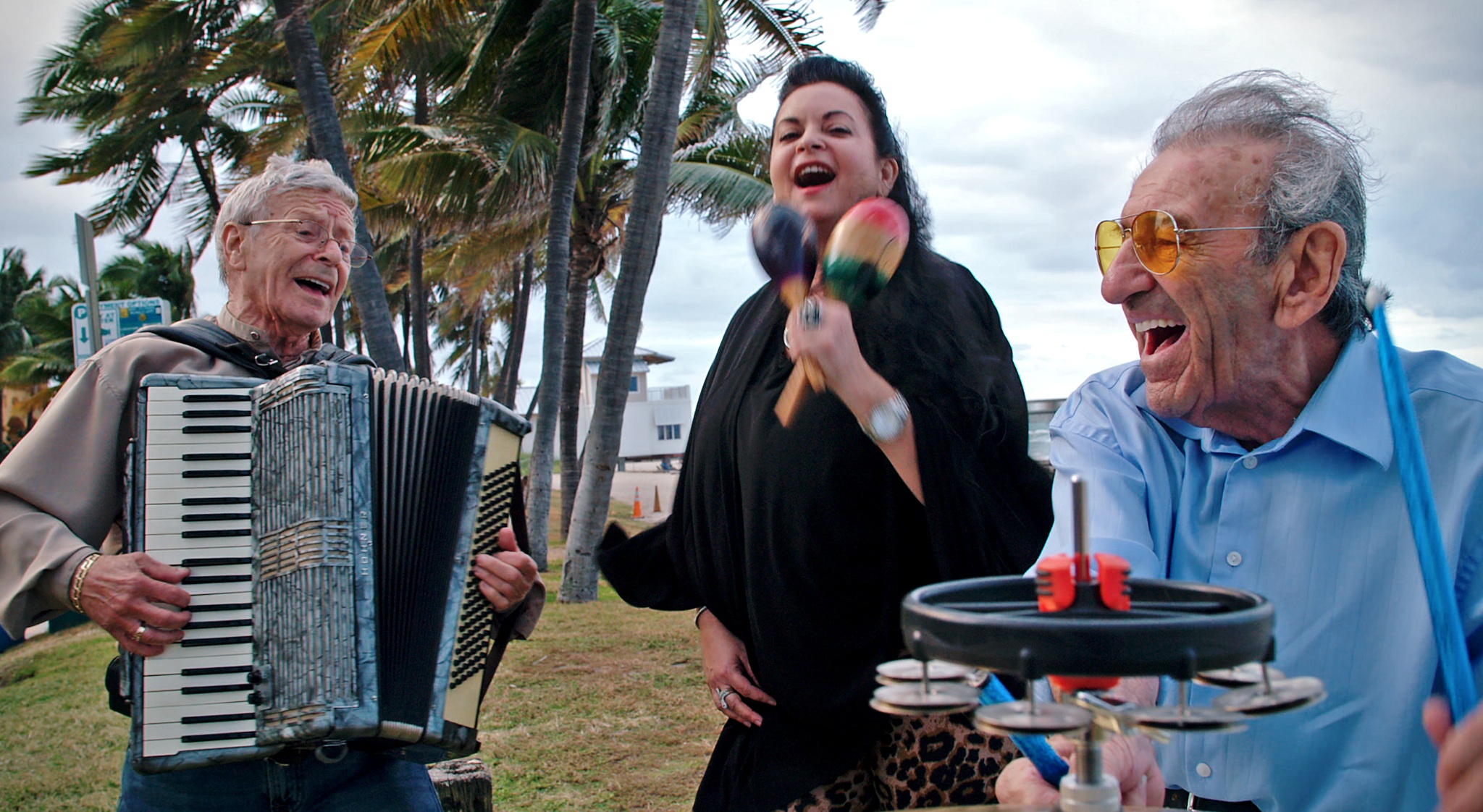
Recent Comments