Two Miami Film Festival documentaries unearth subcultures of the past and present
Written By Michelle F. Solomon February 25, 2022 at 10:29 PM
Appearing in the 107-minute documentary, “South Beach Shark Club,” Shannon Bustamente represents the present-day shark fisherman. (Photo courtesy of South Beach Shark Club)
Two films with decidedly different subject matters share a commonality: They both capture subcultures of South Florida.
Robert Requejo Ramos introduces the shark hunters of 1970s Miami Beach in his documentary, “South Beach Shark Club: Legends and Lore of the South Florida Shark Hunters.” Ramos focuses his lens squarely on true-life stories of a group of guys who lived to fish for shark — and one legend in particular whose obsession is, excuse the pun, a whale of a tale.
Rachelle Salnave’s “Madame Pipi” takes place in the present-day and introduces moviegoers to the lives of bathroom attendants working the nightclubs of South Florida. The film shows women of Haitian descent toting rolling luggage full of perfumes, hairsprays and candies to set up in the restrooms. They work only for tips. Most, if not all, of their money is sent to Haiti to help their families.
The documentaries are among more than 120 films to be featured in this year’s Miami Film Festival. From March 4-13, 2022, moviegoers have their pick at three Miami venues: Silverspot Cinema, 300 SE Third St.; Miami Dade College’s Tower Theater Miami, 1508 SW Eighth St.; and the Adrienne Arsht Center for the Performing Arts’ Knight Concert Hall, 1300 Biscayne Blvd.
The two South Florida-based films join 16 others in a juried competition for the Knight Made in MIA Award, which is supported by the Knight Foundation and has cash prizes of $30,000 for first prize, $15,000 for second prize and $10,000 for third prize. The criteria for the category is that a substantial portion of the film’s content (story, setting and filming location) has to be from South Florida and use “its story and theme for universal resonance.”
“South Beach Shark Club” director Robert Requejo Ramos was born and raised in Miami Beach and sought to preserve a moment in time in the 1970s. (Photo courtesy of South Beach Shark Club)
South Florida is, without a doubt, a character in both Ramos and Salnave’s movies.
Ramos grew up on Miami Beach — “born and raised,” he says. His uncle was a member of the South Beach Shark Club and appears in the movie.
“When I was a kid, I had it in my head that it would be cool to do some kind of origin story like a ‘Dogtown and Z-Boys,'” Ramos said, referring to Stacy Peralta’s documentary about the famed Zephyr skateboard team circa 1970 in Venice, Calif.
As a film major at Miami Dade College (MDC), Ramos kept going back to the idea. “I felt a calling to tell the story. Like, if I didn’t do it, it would go unnoticed or disappear.”
In 2017, he completed the short film, “Rene De Dios and the South Beach Shark Club,” while at MDC and won the Miami Film Festival’s CinemaSlam competition in 2018.
But he went back to the topic because, “to be honest, I always thought of it as a full-length feature,” he says.
The 107-minute documentary showcases the eccentric group that make up the South Beach Shark Club and the legendary De Dios, who Ramos says was larger than life.
“It is the story of an off-the-rails obsession,” he says.
However, there’s more to this film than that obsession. He casts a wider net than that. It’s a character study of those who spent their days on the old First Street Pier tossing fishing lines into the ocean.
“I wasn’t out to glorify shark fishing. It is more of an anthropological study of these people,” he says. “More than anything, I wanted to tell a story that happened before the ‘Cocaine Cowboys.’ The old Miami Beach, the characters there.”
He wanted to “put something out there that would preserve that era.”
As the film shares, the eventual demolition of the First Street Pier changed the lives of the close-knit group whose very existence revolved around that sanctuary.
“Miami is on the map right now with so many people moving here from other places. Hopefully, people take an interest in the film and want to learn something about this sleepy little beach town and how it became the crazy place it is now,” Ramos says.
Director Rachelle Salnave on location for her film, “Madame Pipi.” (Photo courtesy of Jayme Gershen)
Salvane’s film sheds light on a different side of Miami Beach.
On a visit to Paris, the Haitian-American filmmaker learned about “la dame pipi,” women who keep restroom toilets clean. (If you’ve watched the Netflix show, “Emily in Paris,” there’s a lesson in the trade of “la dame pipi” in the first season.)
For Salvane, it took on a different meaning when she discovered Haitian bathroom attendants working in the nightclubs of Miami.
“Being in Miami and being more aware of my Haitian identity, I’m going into these bathrooms, and it is such a juxtaposition. The crazy wild women from the clubs, the raunchy music and then you have these older women, some in their 50s, some 60s and older. They are sitting there and reading their Bibles. They are praying and singing hymns, they are on their phones with family from Haiti. I saw these two worlds converging, and I found it fascinating,” she says.
Then in January 2018, there were reports that President Donald Trump had referred to Haiti and African nations as “sh**hole” countries. It struck a nerve with Salvane.
“These women work in sh**. They have to clean up sh**. But yet the tips they make contribute to more than one-third of the GDP in Haiti,” Salvane says.
The women in Rachelle Salnave’s documentary work for only tips in the nightclub bathrooms in South Florida. (Photo courtesy of Rachelle Salnave)
Salvane says she teamed up with another local filmmaker, Jayme Gershen. to make her 25-minute documentary, “Madame Pipi.”
“We would go into the different bathrooms from Broward to Miami-Dade counties, up and down Collins Avenue, as many clubs that would allow us to go in,” Salvane says.
Among the women she discovered was Darline Francoeur, originally from Cap-Haitien, who calls it a “volunteer job” because the club doesn’t pay you, “you work with the customers and the customers pay you.”
Then there was Jacqueline Benjamin from Labadee, who returns to her bathroom attendant job wearing a mask and a face shield after COVID restrictions are lifted.
“Before I go, I put God in front of me,” she says in her native language. “God will help me with all the precautions because he sees I am not there for pleasure or for dancing. I am not going there to celebrate anything.”
Salvane says some of the women were hesitant to tell their stories.
“Many of them are conservative. They love to talk all day, especially if you tip them, but when you turn on the camera or the microphone they are like, ‘No way.’
After spending time with them, they began to trust her.
“They all come from different backgrounds, but they all symbolize for me this universal theme – of what happens when you have to migrate to another country and do what you have to do to feed your family.”
WHAT: Miami Dade College’s 39th Annual Miami Film Festival
WHEN: March 4-13, 2022
WHERE: Silverspot Cinema, 300 SE Third St., Miami; and Miami Dade College’s Tower Theater Miami, 1508 SW Eighth St., Miami; and Adrienne Arsht Center for the Performing Arts, Knight Concert Hall, 1300 Biscayne Blvd., Miami
COST: $13 for general admission, $12 seniors age 65 and older; $10 for Miami Film Society members, veterans and students with ID
Claudia Rankine examines racial privilege in GableStage’s ‘The White Card’
Written By Christine Dolen February 22, 2022 at 7:28 PM
The characters played by Tom Wahl, Barbara Sloan, Iain Batchelor and Joshua Hernandez get unexpected reactions from Charlotte, played by Rita Cole, in GableStage’s “The White Card.” (Photo/Magnus Stark)
When celebrated poet, playwright and essayist Claudia Rankine was promoting her 2014 book, “Citizen: An American Lyric,” a middle-aged white man (Rankine’s descriptors for him) rose during a question-and-answer session to ask, “What can I do for you? How can I help you?”
The response from the thoughtful, thought-provoking artist and academic was not what he was expecting.
“I think the question you should be asking is what you can do for you,” she replied – which did not sit well with him, to put it mildly.
“If that is how you answer questions, then no one will ask you anything,” she recalled him saying, and his palpable anger took Rankine by surprise.
From that exchange, that inciting moment, a piece of stage art was born. Rankine makes the connection in the preface to her play, “The White Card,” a drama aimed at encouraging examination of white dominance and anti-Black racism in American life.
Premiering in 2018 in Boston in a joint production by ArtsEmerson and the American Repertory Theater, “The White Card” was produced again just before the pandemic shutdown by Saint Paul’s venerable Penumbra Theatre, Minnesota’s only professional Black theater company.
Now “The White Card” is coming to life onstage again, this time at GableStage in Coral Gables’ historic Biltmore Hotel.
Originally scheduled to open in mid-January, the production was delayed due to the surge in the Omicron variant of COVID-19. The show’s official opening night is Feb. 26 – which also happens to be the 10-year anniversary of Trayvon Martin’s fatal shooting. That tragedy and so many subsequent ones, the human cost exacted by racism, ripple through Rankine’s taut script about a “woke” white contemporary art collector and the rising-star Black photographer whose work he wants to acquire.
Poet, essayist and playwright Claudia Rankine wants to promote conversation about white dominance in the United States. (Photo/John Lucas)
Rankine, who was awarded a MacArthur Fellowship (aka the “Genius Grant”) in 2016, was born in Jamaica and raised in the Bronx, earning degrees from Williams College and Columbia University. She received the 2015 National Book Critics Circle Award for poetry and a host of other awards for “Citizen,” and she has taught at a number of top-tier universities – currently, at New York University.
Rankine and husband John Lucas, a white photographer and filmmaker who sometimes collaborates with her, plan to be in South Florida for the opening weekend of “The White Card.” During a recent phone interview, the poet said that the shock of her questioner’s reaction at the “Citizen” presentation sparked ideas.
“It’s one thing to express the pain of anti-Black racism. It’s another to think about what it means to have dominance, to walk around with complete mobility, to understand the mechanism of rage at having to share,” she said. “Theater is not passively being able to take what you want and leave the rest. Theater involves taking from one body into another. That’s how I got from ‘Citizen’ to ‘The White Card,’ from the page to the theater.”
GableStage producing artistic director Bari Newport saw the Boston production of “The White Card” while she was running the Penobscot Theatre Co. in Maine; Newport and her husband, photographer Magnus Stark, are friends with Rankine and Lucas. Looking around at the mostly white theatergoers at that Boston performance, then watching the play, Newport realized “The White Card” was reaching its intended audience.
“A core idea of the play is to unpack the idea of racism itself – and that racism isn’t ‘someone else’s problem.’ It isn’t a Black problem. It is a white person’s problem, and nothing will change unless we look in the mirror,” she noted in an email, adding that she had thought she’d feel guilty after watching the play.
Instead, she said, it “spoke to me with invigorating humor and with a fresh poeticism, which left me deeply thinking about difficult subjects with a different perspective.”
Director Lydia Fort, who also teaches at Atlanta’s Emory University, said working on this play “was more like stepping into a history that is my own.” (Screenshot of video by Magnus Stark)
To give GableStage audiences the chance to have the deepest communal engagement with “The White Card,” the play is the only one in the season that won’t be streamed. Every performance will be followed by an optional discussion led by Katie Christie of Voices United, a Miami nonprofit aimed at fostering cross-cultural understanding through the arts.
What audiences will witness is a play about a 1-percenter, Charles Hamilton Spencer (played by Tom Wahl), a Manhattan developer, philanthropist and champion of diverse artists; and Charlotte Cummings (played by Rita Cole through March 6, then by Lela Elam), a prize-winning photographer poised to enter the international art market.
Charles and his wife, Virginia Compton Spencer (Barbara Sloan), have invited Charlotte to their sleek all-white Tribeca loft at the behest of Eric Schmidt (Iain Batchelor), an art dealer who serves as a key adviser to the couple. Over a getting-to-know-you dinner, the idea of the Spencer Art Collection acquiring some of Charlotte’s work will be on the table – as will many, many more ideas, including those of the Spencers’ younger son, Alex (Joshua Hernandez), an outspoken Columbia University student and activist in the Showing Up for Racial Justice (SURJ) movement.
The pieces on the couple’s walls were stipulated by the playwright and most are, with the notable exception of Robert Rauschenberg’s “White Painting,” art depicting violence against Black people. Robert Longo’s “Untitled (Ferguson Police, August 13, 2014)” is there. So is Jean-Michel Basquiat’s “The Death of Michael Stewart.”
“I wanted to have the art embody the arguments in the play,” Rankine said. “Violence is encoded in the pieces, but they’re pieces Virginia’s character could live with.”
Directing “The White Card” at GableStage is Lydia Fort. The in-demand regional theater director, and assistant professor at Atlanta’s Emory University, said researching each play she stages is part of what she loves about the job, but this one “was more like stepping into a history that is my own.”
In rehearsals, Fort focused on creating a safe space for her actors to explore and express their thoughts.
“Having one Black woman in a cast of white actors is always challenging. Then to have the play be about race puts pressure on the person of color,” she said. “Part of it is me being a teacher and wanting to have something for everyone to learn – what Claudia is asking the audience to do. Otherwise, people start putting up walls. They don’t want to be personally judged … And always, you want to make a great play.”
Rita Cole’s Charlotte surprises Tom Wahl’s Charles in “The White Card” at GableStage. (Photo/Magnus Stark)
Wahl and his fellow actors sing Fort’s praises.
“She is amazing in every way. So thoughtful, caring and considerate. We’re dealing with some deep stuff … and she didn’t want anyone to feel they have to apologize,” said Wahl, who in recent years has played some tough, manipulative men – most notably in another play about racism: GableStage’s 2018 production of Bruce Graham’s “White Guy on the Bus,” in which Wahl played the title role opposite Cole.
In taking on “The White Card” and working to make Charles a fully fleshed-out character rather than the unambiguous villain of the piece, Wahl said he has learned a lot about himself, white privilege and the sudden sting of microaggressions.
“One day, Lydia, Rita and I were walking into the Biltmore entrance, and an employee said, ‘Good morning, sir.’ He ignored Rita and Lydia. I pointed it out to them, and they both shrugged and said, ‘That happens to us all the time – there’s no closure to that,’” he recalled. “What bothers me is that I didn’t say anything when it happened.”
Because of the rescheduled “White Card” dates, two Carbonell Award-winning actors will take turns playing Charlotte.
Cole, who was already committed to Palm Beach Dramaworks’ March 30-April 17 production of Lynn Nottage’s “Intimate Apparel,” will portray Charlotte through March 6.
“Our American pastimes are sports and forgetting. But if you don’t forget, maybe you will work to make a change,” Cole said. “I’m glad audience members will have the chance for talkbacks and discussion vs. talking in the car on the way home. If you share your reaction in a public space, you can digest it. Talking is the first step that brings acknowledgement.”
In preparing to play Charlotte, the actor spoke with Trayvon Martin’s mother, Sybrina Fulton, a sorority sister of Cole’s mother, and tapped into the specifics of the art world via her own sister, a painter. As for being a Black artist in a society built around white dominance, she said, “I live in my skin every day.”
As a student at the University of Central Florida, she was cast as the lead in Bertolt Brecht’s “The Good Person of Szechwan,” a parable set in China. At one performance, she heard loud shouting from the audience. She learned afterward that an older white couple had stormed out of the theater, gone to the box office and canceled subscription seats they had held for almost three decades.
Elam, who will begin playing Charlotte on March 9, said the role is “one of the closest characters to myself that I’ve ever played.” The New World School of the Arts graduate remembers, as a child, getting lots of comments along the lines of, “Oh, you’re so well-spoken.”
“It was an insult meant as a compliment. I wanted to say, ‘Yeah, and I live in a house too,’” she said, of the microaggressions that are all too familiar to so many Black Americans. “I have a lot of experience with this. A lot of times, I’m the only Black girl in the room.”
Lela Elam is scheduled to take over the role of Charlotte starting with the March 9 production. (Screenshot of video by Magnus Stark)
Elam said she acknowledges the desire for societal change on the part of white people appalled by anti-Black racism. But the responsibility for that change, she believes, rests with them.
“I’m tired of having conversations with people who should know better. I’m not giving out any more passes or educating people. That’s not my job,” she said. “There are lots of books people can read. They can go to museums and libraries, if they really want to.”
“The White Card,” Sloan said, offers a fresh, beautifully written, nuanced way for Rankine to share her perspective on the intricate intertwining of white privilege and racism – an issue so urgent that the playwright used money from her MacArthur grant to establish The Racial Imaginary Institute, a think tank for artists and activists.
With the play, “she has decided to say: Come, get on this train with me and go where I go so you can see what I see,” Sloan said.
Batchelor, who grew up in Wales and began his acting career there, says that in playing the “White Card” art dealer, he is portraying “someone with a moral and social compass a world away from my own.”
That said, he admires Rankine’s finesse as a playwright.
“She makes very, very awkward and uncomfortable conversations very palatable. It goes down smoothly,” he observed. “Then she turns a switch, and you realize, ‘Oh my god. I’ve been complicit in all of this.’
“Her points are clear and incisive. I hope the audience will take them away too. [The play] asks you to check again what you think you know about racism and what you think you’re doing. The idea of a safe space to examine these things cannot be understated. The ability to hear someone out and not react in an impulsive way is nearly impossible.”
Along with her prize-winning career as a successful writer of prose, poetry, theater and multimedia works, Rankine remains a teacher, and the response to her work can be vast.
A 2019 New York Times magazine piece she wrote (“I Wanted To Know What White Men Thought About Their Privilege. So I Asked.”) has drawn more than 2,000 online comments and more than 200 letters sent directly to Rankine. Her most recent book, 2020’s “Just Us: An American Conversation,” continues her exploration of white privilege, as does her new commissioned play, “Help,” which is scheduled to premiere at The Shed in Manhattan on March 15.
“People [sometimes] say to me, ‘Why are you preaching to the converted?’ We want to think that liberal white America is different from, better than. But the commitment to white dominance wouldn’t have existed without a collusion across party lines,” she said. “When we started The Racial Imaginary Institute, people would say, ‘What are you talking about?’ Now, everyone understands.”
WHAT: “The White Card” by Claudia Rankine
WHEN: Preview 8 p.m. Feb. 25; regular performances 2 p.m. and 7 p.m. Wednesdays, 7 p.m. Thursdays, 8 p.m. Fridays, 2 p.m. and 8 p.m. Saturdays, and 2 p.m. Sundays; through March 27
WHERE: GableStage in The Biltmore Hotel, 1200 Anastasia Ave., Coral Gables
COST: $40-$70 (processing fee additional; discounts available for students, groups, artists, military, veterans and Biltmore staff members)
SAFETY PROTOCOLS: Masks and proof of vaccination or a negative COVID-19 test required; visit gablestage.org/healthsafety for more details
Review: ‘Dahomey Warriors’ has compelling story, highly theatrical moments – and a communication issue
Written By Christine Dolen February 16, 2022 at 9:37 PM
The characters played by Toddra Brunson and Aixa Kendrick are ready for battle in M Ensemble’s production of “The Dahomey Warriors.” (Photo/Christa Ingraham)
The works of Layon Gray have been an inspiring fit for Miami’s M Ensemble ever since the 50-year-old company inaugurated its new home at Liberty City’s Sandrell Rivers Theater with the playwright’s “Kings of Harlem” in 2017.
That production of the piece about members of the Harlem Renaissance Black pro basketball team circa 1939 won several key Carbonell Awards, and it led to the company staging Gray’s “Meet Me at the Oak” (a family-inspired play about racism set in the mid-1950s) in 2019 and “Cowboy” (about a Black 19th-century U.S. marshal) in 2021.
Gray has now returned to M Ensemble with a Black History Month production of his play “The Dahomey Warriors.” First staged in 2017 under the title “Black Sparta” in New York, the play was also done at 2017’s National Black Theatre Festival and at a Pittsburgh theater in 2018.
Rechristened “The Dahomey Warriors,” the play is, like so much of Gray’s work, steeped in history. It was inspired by a regiment of fierce women soldiers who fought in the West African kingdom of Dahomey (now the Republic of Benin) from the 17th century to the end of the 19th century.
(Video courtesy of McKinson Souverain)
Although they were called Amazons by invading Europeans, the women referred to themselves in the Fon language as “Mino,” which translates to “our mothers.” Motherly is not, however, a quality that comes to mind in relation to a group whose motto was “conquer or die,” whose activities included beheading and drinking the blood of their enemies and sending off some of their captives to be enslaved. The Dora Milaje women warriors in “Black Panther” were inspired in part by the female soldiers of Dahomey.
Gray, who directed and appears in the play at M Ensemble, sets his drama in 1892, when the French were expanding their colonization of Dahomey and some 25 years after the end of the barbaric transatlantic slave trade. Since an intimate theater space isn’t conducive to re-creating vast battles or delivering the kind of history lesson more suited to a classroom, Gray evokes the time, the place and, most significantly, the people with a smaller-scale story.
General Oni (Aixa Kendrick) has come to a place of beautiful solitude to train the king’s privileged daughter, Ebele (Asilia Neilly). It’s the last thing that Oni wants to do, but because the Mino leader unfailingly obeys the monarch, she complies – though not without giving her charge a hard time verbally and physically.
Asilia Neilly, Toddra Brunson and Aixa Kendrick play committed fighters. (Photo/Christa Ingraham)
The two are soon joined by Kunto (Toddra Brunson), a Mino who is hours or minutes away from giving birth to the king’s baby. Hovering nearby, howling and threatening and retreating, is a hyena named Arrali (Iman Clark), whose relationship with Oni is particularly intense. The three women speak of war, troop losses, the invading French. Though it is forbidden, they remember a time when people and animals lived together in peace underground. They talk of rival gods and cultures, of the fatal price paid for disobedience.
Eventually, two men show up: Abioye (Gray), Oni’s longlost brother; and Colonel Muller (Charles Reuben Kornegay), a mixed-race French officer ready to make Oni an offer he’s sure she won’t refuse. But he’s wrong.
That’s about all of the story that can be told to keep it spoiler-free for audiences who want to see it during its run through Feb. 27, 2022.
“The Dahomey Warriors” illuminates a significant piece of Black history during the month devoted to celebrating it. The story of valiant African warrior women from a nation overrun by French colonizers is universally compelling, and thus far the creative partnership between the thought-provoking actor-director-playwright and Miami’s oldest still-producing theater company has been impressive. But know this: “The Dahomey Warriors” is not nearly as accessible as Gray’s three previous works at M Ensemble.
Part of the problem is that if you don’t know much about the history of the women warriors, references to places, battles, practices and people mean little. The larger problem is that the dialogue blends heavily accented English (the lines are written to be spoken that way), broken Yoruba and French. This renders some segments of the play nearly incomprehensible, which can be frustrating for the audience and is unfair to the artists.
Toddra Brunson, Aixa Kendrick and Layon Gray evoke 19th-century Africa at Miami’s Sandrell Rivers Theater. (Photo/ Christa Ingraham)
In theater, communication is key. And though the athletic and commanding Kendrick has played Oni in every production of the play so far, though Neilly and Brunson believably inhabit their characters (Brunson’s Kunto with the disadvantage of having to give birth at record speed, then immediately dash off to war), finding a way to more deeply connect with the audience needs to be a priority.
As director, Gray pulls off some highly theatrical moments, none more chilling than his re-creation of a slave ship as Abioye is evoking his earlier fate. He is also an eminently engaging actor, but in truth he’s not the right age to play Abioye. Kornegay is properly the imperious bully as the colonel, though his tricorn hat distractingly keeps slip-sliding on his head.
Set, lighting and projection designer Mitchell Ost creates a multilevel playing area complete with a small waterfall, which mixes with music, the sound of crickets and the cries of animals. Costume designer Dunia Pacheco makes the women look ready for combat and the men appear ready to colonize (except for that hat). Fight choreographer Diego Villada keeps the actors safe as they battle with a slightly restrained ferocity.
Gray is, without a doubt, a playwright who is deft at blending history and his own imagination. This time, though, his quest for authenticity gets in his way.
WHAT: M Ensemble Co. presents “The Dahomey Warriors” by Layon Gray
WHEN: 8 p.m. Thursdays-Saturdays and 3 p.m. Sundays, through Feb. 27, 2022
Review: Both musically and theatrically, ‘On Your Feet!’ at The Miracle is spectacular
Written By Christine Dolen February 14, 2022 at 7:24 PM
With Jason Canela as Emilio Estefan and Claudia Yanez as Gloria Estefan front and center, the cast of “On Your Feet!” gets ready for their bows at Actors’ Playhouse. (Photo/Alberto Romeu)
Joy, loss and unflagging determination coalesce at the heart of “On Your Feet!,” the inspiration-filled show about Miami’s musical power couple, Gloria and Emilio Estefan.
Blending biography with the extensive catalog of Gloria Estefan/Miami Sound Machine pop hits, the jukebox musical played Broadway from 2015 to 2017, then toured the country (including a weeklong stop at Miami’s Arsht Center for the Performing Arts), with additional productions in the Netherlands and on London’s West End.
But now, complete with an electrifying opening night that included the Estefans and their extended family in the audience, “On Your Feet!” has come back to the place where the Cuban-American couple made their crossover dreams come true.
After a lengthy pandemic pause and a pair of smaller shows, Actors’ Playhouse in Coral Gables has come roaring back with its own sizzling, large-scale production of “On Your Feet!”
(Video/Diego Pocoví)
Staged with abundant insight and finesse by Miamian Andy Señor Jr., who served as associate director of the Broadway production, the show at The Miracle Theatre in Coral Gables pulls out all the stops in celebrating artists who forged their own path to stardom.
Alexander Dinelaris, the musical’s Academy Award-winning book writer, tracks the Estefans’ inspiring success story. But he also vividly illuminates the struggles faced by immigrants and exiles trying to build new lives in the United States.
Gloria Estefan’s mother, Gloria Fajardo, for example, earned a Ph.D. in Cuba but had to acquire a new set of education degrees in Miami to support her family: daughters Gloria and Rebecca, and husband José, a Cuban political prisoner who developed multiple sclerosis after serving in Vietnam. Before his elder daughter’s music career began to soar, he died at age 47.
Emilio Estefan fled Cuba as a teenager, first going to Spain where he and his father lived in poverty. They wound up in Miami where, as Emilio recalls in the show, signs posted at hotels and apartment buildings in the late 1960s read: “No Pets, No Cubans.”
Many more obstacles are highlighted in “On Your Feet!,” including Gloria Fajardo’s opposition to her multilingual daughter becoming Miami Sound Machine’s lead singer and marrying its ambitious keyboard player-producer; Emilio’s lengthy struggles to get American record companies to release songs the band recorded in English; a long estrangement from Gloria’s mother; and the horrible 1990 tour bus crash that fractured the singer’s spine.
And yet, “On Your Feet!” is a show filled with joy. Overriding everything is the couple’s enduring love story and the potent uplift of their music.
Claudia Yanez as Gloria Estefan welcomes Alma Cuervo as her grandmother, Consuelo, to the stage in “On Your Feet!” (Photo/Alberto Romeu)
As with any of the really good jukebox musicals – “Jersey Boys,” “Beautiful: The Carole King Musical,” “Ain’t Too Proud: The Life and Times of the Temptations” – “On Your Feet!” is a blend of musical theater and concert. Both musically and theatrically, the show at The Miracle is spectacular.
Consider its superb band, always visible upstage center. Six of the 10 musicians led by musical director and longtime Estefan collaborator Clay Ostwald have been members of Miami Sound Machine. To say they deliver the score flawlessly isn’t hyperbole.
Downstage is where the scenes play out, where the dazzling dancers led by choreographer Natalie Caruncho and dance captain Hector Maisonet do their thing, often at breathtaking speed.
The large cast is led by Claudia Yanez as singer-songwriter Gloria and, making his professional stage debut, Jason Canela as producer-songwriter Emilio. Both actors clearly convey the strength and determination of their Grammy Award-winning, real-life counterparts, and both dynamically interpret their songs.
Former Miamian Yanez blossoms from a teen crushing on Emilio (as the shorts-wearing founder of the Miami Latin Boys) into a wife and mother certain she knows what’s best for her family. Her voice isn’t terribly similar to Estefan’s warmer, slightly lower instrument. But vocally, she shines on a gloriously long list of hits, including “1-2-3,” “Conga,” “Get on Your Feet,” “Live for Loving You” and many more.
The Hialeah-raised Canela has so far built his career in film and television, yet despite his newcomer status, he seems equally at home onstage – commanding, even. He’s a fine dancer, an even better pop singer (crooning “I See Your Smile,” “Here We Are” and “Coming out of the Dark” with Yanez, a pained “Don’t Wanna Lose You” and, with Eileen Faxas as Gloria Fajardo, “If I Never Got to Tell You”) and an absolutely charismatic actor.
In addition to the leads, the talent in the Actors’ Playhouse company runs deep.
Alma Cuervo, who originated her role on Broadway and performed it on tour, is an absolute treasure as Gloria’s grandmother, Consuelo, a woman with abundant wisdom and a great sense of humor. Ex-Miamian Faxas combines tempered dominance and disappointed judgment in her portrayal of Gloria Fajardo opposite ensemble member Adriel Garcia as the singer’s father, José. She sparkles in the character’s might-have-been moment in the spotlight as she sings “Mi Tierra.”
Katerina Morin sings appealingly in Spanish as young Gloria, while flashy dancer Zachary Roy plays the young Emilio and the Estefans’ son, Nayib. Ensemble member Seth Trucks demonstrates his versatility in playing a stubbornly obstructionist record producer and a caring doctor. The always impressive Henry Gainza (who has already moved on to his next show, Billy Crystal’s upcoming “Mr. Saturday Night” on Broadway) added his gorgeous vocals to the mix through opening weekend.
Claudia Yanez and Jason Canela portray Gloria and Emilio Estefan taking a break from touring life. (Photo/Alberto Romeu)
The ensemble includes Alexander Blanco, Míchel Alejandro Castillo, Emma Sofia Caymares, Elvis Collado, Teresa Garcia, Lauren Horgan, Alessandro J. López, Amanda Lopez, Alejandra Matos, Claudia Mulet, Jeremey Adam Rey, Alexis Semevolos-Velazquez, plus swings Rebecca Kritzer and Henry Julián Gendron.
Wardrobe supervisor Ellis Tillman has adapted Emilio Sosa’s original costume designs and Chuck Lapointe’s wig designs for the large company, while technical director Gene Seyffer and set dresser Jodi Dellaventura have interpreted David Rockwell’s original larger-scale scenic designs for the smaller Miracle stage.
Designer Eric Nelson’s lighting palette is as colorful as the show’s music, and sound designer Shaun Mitchell delivers everything from tender ballads to explosive pop hits with clarity.
One quibble from opening night: The name-dropping list of ’80s radio stations and clubs didn’t land with quite the hometown bang that it should have because some got lost in the frenzy of actors frantically pitching Miami Sound Machine’s English-language “Dr. Beat” to DJs and club owners.
Presidential Medal of Freedom recipients in 2015, the Estefans are continuing their multifaceted careers as artists and entrepreneurs. Gloria Estefan, who became the first Cuban-American Kennedy Center honoree in 2017, will next be seen onscreen in the remake of “Father of the Bride” opposite longtime friend Andy Garcia. Artistically, the couple has played a huge role in bringing Latin music into the mainstream. Philanthropically, the two have given back over decades to the community and country that became theirs.
Although they weren’t involved in this new production, in sharing this musical story, they’re giving back yet again.
At The Miracle, Miami-connected, Cuban-American artists have brought a resonant celebratory tale to life, sparking joy in themselves and their audiences. Coming out of the dark that was the pandemic, they’re also helping the team at Actors’ Playhouse get on their feet with the kind of large-scale show that built the company’s reputation. Qué maravilloso.
WHAT: “On Your Feet!”
WHEN: 8 p.m. Wednesdays-Fridays, 2 p.m. and 8 p.m. Saturdays, and 3 p.m. Sundays, through March 6, 2022
WHERE: Actors’ Playhouse at The Miracle Theatre, 280 Miracle Mile, Coral Gables.
COST: $55-$85 (seniors age 65 and older get 10 percent off weekdays only, students age 25 and younger with valid student ID pay $15 for a rush ticket available 15 minutes before a weekday performance)
SAFETY PROTOCOLS: Proof of vaccination or a recent negative COVID-19 test or COVID-19 Antigen test required; masks required except when eating or drinking in designated areas. For details, visit actorsplayhouse.org/actors-playhouse-health-and-safety-policy.
‘Be More Chill’ brings Area Stage to the Arsht Center
Written By Christine Dolen February 8, 2022 at 4:51 PM
High school kids grapple with popularity, social anxiety and more in in Area Stage’s “Be More Chill” at the Arsht Center. (Photo/Frank J. Oliva)
Ah, the teen years. Navigating that fraught passage from childhood to adulthood has never been easy. For many kids, it’s a journey filled with emotional land mines: grappling with identity, popularity, intimacy and more.
That’s the thematic heart of “Be More Chill,” a musical getting its South Florida premiere in an Area Stage Co. production at the Arsht Center’s Carnival Studio Theater.
Since its 1989 founding by John Rodaz and Maria Banda-Rodaz in a former Lincoln Road shoe store, the pioneering Area Stage has grown into a company that has educated and showcased aspiring young talents via its extensive conservatory programs while also producing professional adult theater. In June, an immersive and widely acclaimed “Annie” in the company’s space at The Shops at Sunset Place in South Miami set off a fresh buzz about Area Stage and its young associate artistic director, Giancarlo Rodaz, who reimagined and directed the show.
The younger Rodaz, John and Maria’s son, is again at the helm as Area Stage makes its Arsht Center debut with “Be More Chill,” through Feb. 27. Although becoming an arts partner at Miami’s major performing arts facility carries some financial risk for Area Stage, selectively producing key shows there can also bring a new and broader audience plus greater visibility for the company’s work. That’s exactly what “Be More Chill” is intended to do.
Though one could quibble with the choice of this particular show (more on that in a moment), director Rodaz, his Area Stage team and the cast do their usual fine job in bringing it to life and connecting with an enthusiastic audience – especially with coveted, sometimes hard-to-reach younger theatergoers. “Be More Chill” developed a massive social media fan base as it was progressing from its first regional production in 2015 to a Broadway run in 2019, so its Miami debut doubtless comes with an avid built-in-audience.
The cast of Area Stage’s “Be More Chill” sport a green Mountain Dew vibe in the Arsht Center production. (Photo/Kyla Stewart)
Based on a 2004 young adult novel by Ned Vizzini, “Be More Chill” is the work of two guys named Joe: composer-lyricist Joe Iconis and book writer Joe Tracz. It clocks in at a too-hefty 2½ hours, but it does have many moments that elicit pings of recognition in young or formerly young theatergoers. Truth be told, it simply isn’t in a league with deeper shows such as “Spring Awakening” and “Dear Evan Hansen” (which makes its Miami debut at the Arsht’s Ziff Ballet Opera House on Feb. 15-20) or fizzier fare like “The Prom” and “Mean Girls.”
Even so, there’s plenty to laugh at, cringe at or be moved by in Area Stage’s “Be More Chill,” thanks to Rodaz’s astute handling of meaningful moments and the work by the cast, a mixture of actors from South Florida and the New York area.
Blending teen angst with sci-fi that doesn’t seem all that improbable, “Be More Chill” follows the misadventures of Jeremy Heere (Teddy Calvin), a lanky high school junior with a mop of long hair and a curved posture that makes him look like he’s trying to fold himself in half.
Lonely since his mom left him and his dad (Michael Vadnal) behind, Jeremy is constantly embarrassed by his out-of-it father, whose favorite at-home look is an open robe, an undershirt and tighty whities. Playing video games with his best pal, Michael (Aaron Hagos), brings Jeremy his only real joy and escape from the nightmare that is the rest of his life.
At school, he’s bullied by over-the-top popular Rich Goranski (Luke Surretsky). He’s crushing on Christine Canigula (Rachel Barsness), a theater kid who has eyes for popular jock Jake Dillinger (Zachary Scott Prall) and nobody else. Other girls – Chloe Valentine (Katie Duerr), Jenna Rolan (Jennifer Molson) and Brooke Lohst (Harley Muir) – tease or torment him, though Brooke has a change of heart once Jeremy makes a life-altering decision.
At the suggestion of Rich, who turns out to have a secret behind his cool-kid status, Jeremy downs something called a SQUIP (Super Quantum Unit Intel Processor), a pill-sized computer that implants itself in his brain and advises him on every move that can change him from hopeless nerd to magnetic hottie.
Predictably, things go wrong, both hilariously and painfully. Yet impressively, Rodaz and company deliver the whole spectrum of emotional colors in a show that’s sometimes clever, sometimes just plain goofy.
With music director Rick Kaydas and the band delivering a score full of rock and show tunes, the actors shine vocally as a group and in key solos.
Luke Surretsky’s Rich (kneeling) and Teddy Calvin’s Jeremy clash at school in Area Stage’s “Be More Chill.” (Photo/Frank J. Oliva)
Barsness embodies the committed passion of every theater kid when she sings “I Love Play Rehearsal.” Calvin morphs from tormented misfit to a guy with a more powerful voice and an appealing confidence, though his “new” Jeremy never seems quite as much a mean boy as the show’s creators probably intended. Duerr has some masterful comedic moments when she sings “Do You Wanna Hang?” to Jeremy, then proceeds to come on to him while costumed as a baby for a Halloween party. Hagos delivers a wounded, moving “Michael in the Bathroom” after one too many hurtful encounters with his now-former best bud.
Surretsky gets to do a reverse Jeremy as Rich, rocking out on “The SQUIP Song,” then much later changing drastically into the very different guy he was before the SQUIP got into his head. Enzo Everett is a hoot as drama teacher Mr. Reyes, whose other job is at Hobby Lobby, and Frank Montoto has just the right amount of scary edginess as a SQUIP purveyor who sells his product out of the stock room at a Payless store (lots of store name dropping in this show). Vadnal is playing a depressed, stuck guy as Jeremy’s dad, and maybe he does too good a job – the effect is kind of meh.
Frank J. Oliva’s set is a flexible version of a high school classroom, complete with linoleum floor, easy-to-move desks (and walls, the better to allow the cast to dance to Irma Becker’s choreography) and a deliberately institutional look. The lighting by Cheyenne Sykes helps alter the environment so that “school” changes into a brightly colored party place, or so that it reflects the effect that green and red Mountain Dew is having on the students (see the show if you want to get that bit).
Costume designer Rebecca Levovitz supplies the school uniforms but gets creative with outfits for the school play and the fateful Halloween party. Director Rodaz also devised the sound and video design, balancing the floor-level musicians with the singing actors on the elevated stage, and creating videos with other-worldly sound and images to help the audience get inside Jeremy’s SQUIP-controlled brain.
Having Area Stage join Zoetic Stage and City Theatre as another South Florida theater company producing work at the Arsht is a welcome move. And if you see “Be More Chill,” you’ll grasp why Area Stage belongs there, whether or not this particular show is your kind of entertainment experience.
WHAT: Area Stage Co. presents “Be More Chill,” by Joe Iconis and Joe Tracz
WHEN: 7:30 p.m. Fridays, 2 and 7:30 p.m. Saturdays, and 5 p.m. Sundays, through Feb. 27, 2022
WHERE: Carnival Studio Theater at the Adrienne Arsht Center for the Performing Arts, 1300 Biscayne Blvd., Miami
COST: $63
SAFETY PROTOCOLS: Masks and proof of a recent negative COVID-19 test or vaccination required.
Actors’ Playhouse brings the Gloria and Emilio Estefan story full circle
Written By Christine Dolen February 2, 2022 at 4:12 PM
Actors’ Playhouse ON YOUR FEET! cast members Natalie Caruncho, Hector Maisonet, Claudia Yanez, Jason Canela, Jeremey Adam Rey and Alejandra Matos pose in front of local artist Disem’s new mural of the Estefans located at La Casa De Los Trucos. (Photo/Brooke Noble)
Theirs is a 305 love story, one involving leaving behind a beloved homeland, forging a new life and achieving success on a scale beyond their grandest dreams.
That lived-in-Miami, made-for-Miami saga is about to be celebrated again in their Broadway bio musical, a show getting its first big regional production here thanks to Actors’ Playhouse at the Miracle Theatre in Coral Gables.
And while it’s true that most couples will never see their personal histories play out on a stage, most couples aren’t Grammy Award-winning, much-celebrated music superstars Gloria and Emilio Estefan.
“On Your Feet!,” the more-than-a-jukebox musical that played Broadway’s Marquis Theatre from 2015 to 2017 (to get specific, that’s 34 previews and 746 regular performances), was supposed to open at the Miracle in November 2020. The COVID-19 pandemic shredded that plan.
Rehearsals for the rescheduled production were to have started Jan. 4, 2022, but after the Omicron variant surged, the show got pushed back a couple of weeks. Now, “On Your Feet!” will preview Feb. 9-10 and open Feb. 11 for a run through March 9.
David Arisco, Artistic Director for “On Your Feet!” Photo credit: Alberto Romeu
“This is a huge, ridiculously complicated show,” says artistic director David Arisco, who is overseeing the production along with executive producing director Barbara Stein.
“We have 21 adult actors, two kids, two swing performers, a crew of about a dozen and 10 musicians – six of them from the Miami Sound Machine. We had to add wig specialists; rent a lighting package, a projection package, costumes and furniture; bring in a new sound board….Our usual production costs might be $450,000 for a big musical – this one, including marketing and all the people working in the building, is $750,000 and climbing.”
Beyond that monetary investment in a first-rate “On Your Feet!,” which has a book by Oscar winner Alexander Dinelaris (a former Barry University student) and music credited to the Estefans and the Miami Sound Machine, the choice of the show’s creative team and cast reflects the company’s deep commitment to honoring an iconic Cuban-American Miami story.
International Superstar Gloria Estefan with Andy Señor Jr. (Director), Natalie Caruncho (Associate Director & Choreographer/ensemble) and Clay Ostwald (Musical Director). Photo by Alberto Romeu.
Andy Señor Jr., associate director of the Broadway production and the history-making director of “Rent” in Havana, is staging the show at the Miracle. Natalie Caruncho, who performed in “On Your Feet!” on Broadway and was a performer and associate choreographer on the national tour, is choreographer and associate director of the Actors’ Playhouse production. Both artists were born and raised in Miami.
Clay Ostwald, the show’s musical director, is a University of Miami grad, original member of the Miami Sound Machine and a composer, lyricist, arranger and producer credited on many of the group’s hits starting in 1986. The musical’s title song (“Get On Your Feet,” written with the late Sound Machine bass player Jorge Casas, John DeFaria and Gloria Estefan), “Oye Mi Canto” and “Party Time” are all numbers Ostwald had a major role in crafting. Though he moved to New York when “On Your Feet!” went to Broadway, he has come home to be part of the Actors’ Playhouse production.
“I haven’t said no to Gloria and Emilio very often in the 36 years we’ve worked together. I admire them so much,” Ostwald says. “I’m amazed at the power of the theatrical art form. This was a way of getting people into this story, and not just Latino people who have had to stand up, struggle and overcome obstacles.”
Ostwald points out an unusual-for-theater challenge in the way the show’s music is performed.
“The music is crafted around pop conventions but also spontaneity, and it has jazz elements. It can’t be etched in concrete every night,” he says. “The actors have to do it word-for-word, but I’m talking about the actual playing. It’s fluid and creative. I’ve played these songs a million times. I know the ins and outs of every moment. And I get excited every time.”
Claudia Yanez stars as Gloria Estefan in the Actors’ Playhouse production. Photo credit: Guanchen Liu
Starring in the production are former Miamian Claudia Yanez and Hialeah-raised Jason Canela. Yanez played the superstar’s sister Rebecca and often stepped into the leading role on the national tour. Canela, a Los Angeles-based film and television actor, is the first Cuban American to portray music mogul Emilio Estefan in the show.
Also part of the cast, a mix of South Florida talent and performers based elsewhere, are Alma Cuervo, University of Miami grad Henry Gainza, Alejandra Matos and Hector Maisonet, all of whom appeared in the show on Broadway, on tour or both.
Andy Señor Jr. (Director). Photo credit: @lacostas
“My dad was the neighbor of Gloria’s mom and dad in Havana. When Gloria’s mom went into labor with her, my dad drove her to the hospital,” says Señor, a Florida International University grad who now lives in Barcelona. “My dad got into the music business in Miami and played parties with the Miami Sound Machine….Gloria called my dad ‘padrino’ [godfather]. They were a huge influence on me. Their success and Jon Secada’s success rewired my brain.”
As a kid, Señor took a fateful field trip to the original Actors’ Playhouse location in Kendall to see a production of the musical “Godspell.” That show gave him a preview of his future.
“It changed my life,” he says simply, acknowledging his happiness at working with Arisco and Stein, while noting their decades of hard work that made a difference in so many South Florida performers’ careers.
Señor, who played the luminous and tragic Angel Schunard in the long-running Broadway production of “Rent,” calls choreographer Caruncho the “MVP” in “On Your Feet!” at the Miracle.
“My understanding of the material has deepened profoundly since we did it on Broadway. But no one knows how it lives onstage like Natalie does. Without her, I can’t do it the way it should be done,” he says.
Natalie Caruncho, Associate Director & Choreographer/ensemble for “On Your Feet!” Photo credit: David Noles Photography
Caruncho made her Broadway debut in “On Your Feet!,” serving as dance captain and a swing performer who covered eight different ensemble roles – a challenge, yes, but a wonderful one.
“You learn all these parts, and you have to be the most flexible, focused, strong and malleable people in the building. I felt very useful,” she recalls, noting that she did eventually go on in all eight roles. “It’s just different from being focused on one track in a show and knowing that to perfection. It’s like being in ‘The Matrix.’”
The dance in the show is based on “authentic Cuban salsa,” Caruncho says, as well as pop concert performances from the 1980s and ‘90s. And after the first rehearsal, she knew the Actors’ Playhouse cast was ready for it.
“This is the most Miami, the most Cuban cast we’ve ever had. It almost feels like another first, the way we’re bringing it home. It sounds like us. Each person feels, ‘This is my family. These are my friends,’” she says. “This show has connected me more to my sense of being Cuban American. Living it on a stage fills me with a sense of pride…It’s such a joyful show, with conga, sequins and sparkles, but it’s also deep.”
Dinelaris’s script serves up plenty of the Estefans’ joy and success, but it also doesn’t downplay the tougher moments in their lives.
He includes the opposition that Gloria Fajardo, the singer’s mother, had to her future son-in-law, to her daughter getting into the music business and to the couple taking her younger daughter Rebecca on the road with them; the death of Gloria Estefan’s father José Fajardo, a Bay of Pigs and Vietnam veteran, from multiple sclerosis; the serious 1990 tour bus crash that fractured the singer’s spine, even as it led to a reconciliation and deeper relationship between the couple and Fajardo.
Certainly, the drama, singing and dancing have given Yanez and Canela a lot to work with as they approach opening night.
“I feel like I’ve been preparing for this my whole life without even knowing it. When I was eight, I took voice lessons from Gina Maretta, who was Gloria’s voice teacher,” says Yanez. “Most of the research I did was to watch video of Gloria’s concerts, listen to her recordings, watch how she takes up space.”
Yanez, who got her musical theater training in Boston, calls performing “On Your Feet!” a “magical” experience that almost feels like going to church, especially in Miami.
“Gloria and Emilio are such a part of the DNA of this city,” she observes. “I’m trying to stay true to how she’d phrase a sound. She’s such a beautiful performer, such a song writer through and through. It’s all about the lyrics for her.”
Jason Canela. Photo credit: Erika Perez
Canela, the younger brother of actor and musician Jencarlos Canela, studied acting at the New York’s Lee Strasberg Theatre & Film Institute. He’s been busy amassing credits in English- and Spanish-language television and film, but “On Your Feet!” marks his professional theater debut. To say he has fallen in love with the art form is an understatement.
“The first few days, I was just in awe. Everyone is so good,” he says. “They bring so much emotion, so much precision into every dance, every word spoken and sung…It really does feel like a religious experience. When I leave the theater, I count the minutes until I get to go back into that space.”
The actor jokes that the first four performances will be sold out because of his extended Miami family members who are planning to see the show. As a first generation Cuban American, he remembers how he felt when he first read the script.
“I saw myself. I saw myself, my mother, my father, my brother, my cousins. It felt like home,” Canela says. “I did all the research about who Gloria and Emilio are, what they’ve done, what they’re doing. But I felt like they were my aunt and uncle, even though I met them later in life. They’re a part of any Cuban kid who grew up here and anyone who knows Latin music.”
Señor and Caruncho second that sentiment and underscore the inspirational power of “On Your Feet!.”
“Gloria and Emilio’s music is an essential soundtrack to the history of Miami,” says Señor.
Adds Caruncho: “This is a high-level love story about music, the Cuban-American experience and following your dreams. It’s also about Gloria and Emilio’s tenacity and grit, their unshakeable belief that you take one step, then another. You keep pushing. You keep showing up.”
“On Your Feet!” is at Actors’ Playhouse at the Miracle Theatre, 280 Miracle Mile, Coral Gables, through March 6; previews 8 p.m. Feb. 9-10, opens 8 p.m. Feb. 11; regular performances 8 p.m. Wednesday-Friday, 2 and 8 p.m. Saturday, 3 p.m. Sunday; tickets cost $55 to $85 (seniors 65 and over get 10 percent off weekdays only, students 25 and under with valid student ID pay $15 for a rush ticket available 15 minutes before a weekday performance); proof of vaccination or a recent negative COVID-19 test or COVID-19 Antigen test required; masks required except when eating or drinking in designated areas; 305-444-9293 or www.actorsplayhouse.org.
To read Christine Dolen’s review for this show, click here.
Review: Zoetic’s ‘GringoLandia’ brings the longing for home, laughs & much more in must-see world premiere
Written By Christine Dolen January 17, 2022 at 5:24 PM
James Puig as Carlos is comforted by Gabriell Salgado as Danny in the Zoetic Stage world premiere of “GringoLandia.” (Photo/Tony Tur)
You can’t go home again, or so novelist Thomas Wolfe observed in his posthumously published masterpiece of that title. Truth. And yet we try.
At the heart of Hannah Benitez’s wonderful, funny, smart new play, “GringoLandia,” is the longing to return, physically and emotionally, to that elusive place we call home. The realization that “home” as we remember it no longer exists, that we are a blend of the places, people and events that have shaped our lives — that comes in stages.
Commissioned by Miami’s Zoetic Stage, “GringoLandia” is getting an inspired world premiere production in the Arsht Center’s Carnival Studio Theater through Jan. 30.
Benitez — who grew up in Miami, went to high school at the New World School of the Arts and graduated with a degree in acting from Florida State University — is a rising playwriting star with projects in the works at multiple theaters around the country. “GringoLandia” provides plenty of proof that she’s the real deal, that the excitement surrounding her work is justified.
The play charts the fraught journey of Carlos Alvarez (James Puig), a Cuban-American whose family fled to Miami when he was a just boy, back to a homeland forever altered by Fidel Castro’s revolution. After his beloved mother’s death, Carlos brings his Miami born-and-raised kids, 26-year-old Michi (Alicia Cruz) and 25-year-old Danny (Gabriell Salgado), along on what is ostensibly a quest to track down a family heirloom.
Really, though, Carlos wants to reconnect with a place refracted through his memories. And he wants his grown-but-struggling children, both very much products of “Gringolandia” (as the United States is dismissively called by some), to experience firsthand the country that might have been theirs.
What the three encounter as they travel around the island will test and maddeningly frustrate them, even as the cumulative experiences deepen their bond.
Former homes are barely recognizable. Long-lost relatives reach out for help. A teen prostitute (Stephanie Vazquez) plies her trade, to Danny’s subsequent regret. A beyond-vintage car with Jerry-rigged parts strands the family in the middle of nowhere. La Bebé (also played by Vazquez), a “santera,” sees things in the spirit world and hustles in this one. The kids are sent on a quest very different from their father’s.
Alicia Cruz and Gabriell Salgado play a bickering sister and brother in the Zoetic Stage world premiere of Hannah Benitez’s “GringoLandia.” (Photo/Tony Tur)
Shaped with the collaboration of dramaturg Kathleen Capdesuñer, director Stuart Meltzer and the world premiere cast, “GringoLandia” is brimming with observant detail and outlandish-yet-hilarious situations (Danny and Michi’s wakeup call in a convent comes to mind).
The play is beginning its life in the ideal place, Miami, in front of audiences brimming with bilingual Cuban-Americans. But “GringoLandia” has plenty to say to everyone. If you don’t speak or understand Spanish, “no hay problema.” Neither does Danny, so in the brief instances when a character says something that isn’t restated or translated, you’ll be standing in his shoes.
The character wearing those shoes is, as actor Salgado describes him, a “Kendall bro” — aimless, expecting everything to come easily, an inadvertent goofball. If you saw Salgado as the Creature in Zoetic’s “Frankenstein” in October, you caught a tour de force debut melding an astonishing physical performance with the embodiment of a tragic soul abandoned by his egomaniacal creator. The actor is thoroughly different, yet creatively riveting, as the hapless Danny, naive and needy and a hot, hilarious mess.
Salgado’s Danny and Cruz’s Michi raise adult sibling bickering to an art form, though soon enough they’ll discover how important they are to each other. Cruz radiates the frustrations of the “good” kid who made sure to learn Spanish and got a college degree in order to pursue her dreams as a pianist — even if that still means three survival jobs to pay the bills. A particularly stellar scene takes place in a doctor’s office as Michi translates her suffering brother’s medical symptoms for La Doctora (Vazquez again) with horrified embarrassment.
A “santera” (Stephanie Vazquez) has a proposition for Michi (Alicia Cruz) in this enlightening and touching production. (Photo/Tony Tur)
Puig, a veteran actor with numerous New York and regional theater credits, shares a bit of Carlos’ history in that he arrived from Cuba as a child and then made Miami his home. Initially, Carlos is fairly low-key (if frustrated with his offspring) as he encounters one disappointment and frustration after another. But, oh, does that pay off near the end of the play when, drunk on too many mojitos and shots of rum, he encounters a clueless American tourist (another Vazquez role) in a smalltown bar. And there’s another tender, bittersweet payoff at the play’s end, as Carlos gets his homecoming, fleeting though it may be.
The oft-mentioned Vazquez, a Miami native who (like Cruz and Puig) is making her Zoetic debut, in many ways gets the showiest role(s) in “GringoLandia” and makes the most of them.
In addition to the “santera,” the doctor, the tourist and the prostitute, she plays a drunken dancing woman, Michi’s cousin, a cigar-smoking woman who drives the faulty car then abandons the family, a nun who is decidedly not amused by the hungover brother and sister. With just-right costumes from designer Marina Pareja, Vazquez becomes the quick-change artist she needs to be, creating women who look, sound and move distinctively.
Percussionist Yarelis Gandul, most often performing from a small platform upstage right, sometimes weaves in and out of the action, her energetic rhythms combining with Matt Corey’s sound design to create an aural portrait of Cuba.
Visually, Cuba is evoked through Michael McKeever’s weathered-building set design, Rebecca Montero’s tropics-inspired lighting design and Jodi Dellaventura’s props, as well as video and photos shot in Cuba by Meltzer and Salgado and projection mapped by Steven Covey. Nicole Perry has contributed intimacy direction, and Vanessa McCloskey serves as both resident stage manager and production manager.
Director Meltzer, the man with the steady hand and creative vision, has shaped “GringoLandia” into an enlightening, touching, stylistically uniform piece of theater — amid the Omicron surge, no less (though the Arsht employs state-of-the-industry safety measures). If you could use a laugh or a sigh of recognition, if you appreciate emerging young talent, “GringoLandia” is must-see theater.
To read Christine Dolen’s preview for “GringoLandia,” click here.
WHAT: Zoetic Stage’s world premiere of “GringoLandia: A Cuban Journey,” by Hannah Benitez
WHEN: Jan. 13-30, 2022
WHERE: Carnival Studio Theater at the Adrienne Arsht Center for the Performing Arts, 1300 Biscayne Blvd., Miami
COST: $55 and $60
SAFETY PROTOCOLS: Masks and proof of a recent negative COVID-19 test or vaccination required.
Written By Christine Dolen January 11, 2022 at 10:08 PM
The Actors’ Playhouse production of the Gloria and Emilio Estefan bio musical — “On Your Feet!” — will now run Feb. 9-March 6. (Image courtesy of Actors’ Playhouse)
Despite widespread vaccinations and implementation of state-of-the-pandemic safety measures, the latest COVID-19 surge caused by the Omicron variant is forcing several Miami-Dade County theater companies to alter their seasons in ways large and small.
The key moves:
GableStage has pushed the run of Claudia Rankine’s “The White Card” to Feb. 25-March 27; delayed the world premiere musical, “Me Before You,” to the 2022-2023 season; and added Joan Didion’s “The Year of Magical Thinking” to the current season at Coral Gables’ Biltmore Hotel.
Actors’ Playhouse at The Miracle Theatre in Coral Gables is delaying “On Your Feet!,” the biographical Broadway musical about Gloria and Emilio Estefan, by two weeks; the show will now run Feb. 9-March 6.
Zoetic Stage is presenting its world premiere run of Hannah Benitez’s “GringoLandia” as planned Jan. 13-30 in the Carnival Studio Theater at Miami’s Arsht Center. But the company has opted to switch out its large-cast production of Stephen Sondheim and Hugh Wheeler’s “A Little Night Music” for the intimate revue “Side by Side by Sondheim,” which will run March 17-April 10.
Miami New Drama at the Colony Theatre in Miami Beach is winding up its world premiere run of the Louis Armstrong musical, “A Wonderful World,” on Jan. 16, with plans to stream the show soon. But the company is pushing back the runs of the rest of its season by two weeks, with Winter Miller’s “When Monica Met Hillary” now set for its world premiere on March 3-27 and the world premiere of Carmen Pelaez’s “The Cuban Vote” on April 21-May 15. Dates for the fourth show, “Papá Cuatro,” are still to be announced.
The GableStage South Florida premiere of Claudia Rankine’s “The White Card” is moving to late February. (Photo courtesy of John Lucas)
Changes and delays have not, of course, been limited to these four companies in Miami-Dade.
“Not Ready for Prime Time,” a play by Erik J. Rodriguez and Charles A. Sothers about the early days of “Saturday Night Live” at the new Westchester Cultural Arts Center, moved its run dates from Dec. 31-Jan. 16, 2021, to March 17-April 10, 2022. And “Prelude to 2100,” an immersive, futuristic, multidisciplinary piece created by Susan Caraballo and more than 30 artists, has shortened its planned run at Miami’s Deering Estate by a week and will now welcome outdoor audiences on Feb. 3-4 and Feb. 6.
Theaters in Broward and Palm Beach counties have been affected as well — with some delaying opening dates; Boca Raton’s Theatre Lab postponing its 2022 New Play Festival; and the Maltz Jupiter Theatre making major changes due to COVID-related construction delays on its $36 million building renovation.
The bottom line: Throughout South Florida, artistic directors have been challenged yet again to figure out ways to keep their colleagues, artists and audiences safe and their seasons financially viable.
Bari Newport, navigating her first season as GableStage’s producing artistic director, was concerned about having “The White Card” director Lydia Fort, the cast and creative team in rehearsal during the Omicron surge for the previously planned Jan. 14-Feb. 13 run.
“At the end of the day, it turns into a financial decision on par with questions of health, in terms of capacity and conditions,” Newport says. “There’s no way we could afford an understudy for every role, and I don’t want to put anyone in the position of having to start and stop a production.”
GableStage producing artistic director Bari Newport has shuffled her first season. (Photo courtesy of Magnus Stark)
“The White Card,” a searing play about a Black photographer and wealthy white arts patrons, also has a vital post-show audience engagement element led by Katie Christie of Voices United. Unlike the rest of GableStage’s productions, “The White Card” will not be streamed and must be experienced in person.
Moving “The White Card” into the slot intended for the world premiere musical “Me Before You” prompted other changes. The Janece Shaffer-Kristian Bush musical, about the effects of the hearings over Brett Kavanaugh’s Supreme Court nomination on a long-married couple, will instead get an intensive nine-day workshop. Donors and potential sponsors will be able to get a first look during a staged reading at the North Beach Bandshell in Miami Beach on Feb. 2. The show would get its world premiere production next season.
The Florida premiere of Jessica Provenz’s “Boca” will go on as planned April 22-May 22, then GableStage will present the solo show, “The Year of Magical Thinking,” on June 3-26 in tribute to author Joan Didion, who passed away Dec. 23, 2021. In collaboration with the Abre Camino Collective, GableStage will present Cuban-American actor Ruben Rabasa in “Rubenology: The Making of an American Legend” on July 14-31. Tanya Saracho’s “Fade,” a Teo Castellanos-directed dramatic comedy about class and culture within the Latino community, is scheduled to close out the season on Aug. 19-Sept. 18.
For Newport, making most of the season available through streaming is significant in several ways.
“I think it is wildly important. There are a thousand reasons why people cannot physically come to the theater. Many have immune-compromised systems, or someone doesn’t want to come without his or her spouse,” she says. “It’s also a fantastic way to introduce a company’s work everywhere. Theater tourism is a real thing.”
Making changes to the season was a difficult but necessary decision, she adds.
“I need to make sure the marathon can be run, not just the sprint,” Newport says. “I’ll have to manage the company’s ambitions long-term vs. making pragmatic moves going forward.”
According to artistic director David Arisco of Actors’ Playhouse, pushing the start of “On Your Feet!” performances was also a matter of safety and numbers.
“We’re back in pause-and-pivot mode,” he says. “We had planned a six-week run, so now we’ll do a four-week run, with the option of extending a week if sales are great.”
Claudia Yanez will star as Gloria Estefan in the Actors’ Playhouse production of “On Your Feet!” (Photo courtesy of Guanchen Liu)
The musical — directed by Miami native Andy Señor Jr. (who was associate director of the Broadway production) and choreographed by Natalie Caruncho (a member of the Broadway and touring casts) — will feature actors from Broadway, the national tour and South Florida, as well as musicians from the Estefans’ Miami Sound Machine. Claudia Yanez, who played Gloria’s younger sister and understudied the lead role on Broadway, will play Gloria at Actors’ Playhouse, and Jason Canela will portray Emilio.
“On Your Feet!” is the largest show Actors’ Playhouse has produced since COVID-19 hit, with 21 adult actors and two children, two swing performers and each role understudied by others in the cast, as well as a 10-piece orchestra.
“We’ve had time to get all our COVID safety protocols in place, and I think everyone feels better about coming here,” Arisco says. “Everyone in the company will be tested three days a week and will wear masks at rehearsals. I’m optimistic we’ll get through the season with quality and safety.”
The Actors’ Playhouse season also includes “Murder on the Orient Express” on April 6-24; “Hank Williams: Lost Highway” on May 18-June 12; and “Now and Then” on July 13-Aug. 7.
At the Arsht Center, Zoetic artistic director Stuart Meltzer didn’t consider moving the world premiere of Benitez’s “GringoLandia” because other productions (including Area Stage’s “Be More Chill” on Feb. 4-27) were already booked into the Carnival Studio Theater. But he did decide that doing the large-scale “A Little Night Music” on March 17-April 10 wouldn’t be the best move during a pandemic that had first shut down the show during rehearsals in March 2020.
“I was looking at what was happening at my colleagues’ theaters, at the challenges and realities,” Meltzer says. “I decided that something smaller and a bit more controlled would allow us to continue on the path of the Sondheim work to which we’re so committed.”
Miami New Drama’s Michel Hausmann is moving this season’s opening dates by two weeks. (Photo courtesy of Juancho Hernandez Husband)
Hence the scheduling of “Side by Side by Sondheim,” which includes three actors and Meltzer as the narrator. The show features songs from “Company,” “Follies,” “A Little Night Music,” “A Funny Thing Happened on the Way to the Forum,” “Anyone Can Whistle,” “Pacific Overtures” and other shows by the profoundly influential Broadway composer-lyricist, who died on Nov. 26, 2021. As planned, Zoetic will wrap up its season on May 5-22 with Alexis Scheer’s “Our Dear Dead Drug Lord.”
“These are incredibly challenging times. You have to remain agile and have a sense of humor and be prepared,” Meltzer says. “If not, you’ll land a little too hard.”
Being agile helped Miami New Drama cofounder and artistic director Michel Hausmann and his colleagues navigate through the world premiere run of “A Wonderful World.” Despite daily COVID testing, the musical about jazz legend Louis Armstrong, with a book by former Miamian Aurin Squire, had to cancel performances during a run that will end Jan. 16. Understudies and swing performers sometimes had to step in for ailing actors — and Hausmann was impressed.
“We sometimes performed with four swings, and the show is so solid you couldn’t tell. It was an eye-opener about the amount of talent here. They killed it with a few hours’ notice,” Hausmann says.
At the same time, not extending the run and giving the company some breathing room before the world premiere of “When Monica Met Hillary” seemed prudent.
“Not canceling, not pushing anything to another season was a matter of implementing systems and moving everything two weeks later,” he says, adding, “I’m trying to work to develop outdoor performance spaces, with the understanding that there’s a chance our world has changed for good. We have to pivot. We need to be doing more experiments to see what event-based storytelling will work.”
Two generations encounter Cuba in Zoetic’s ‘GringoLandia’ world premiere
Written By Christine Dolen January 10, 2022 at 9:50 PM
Stephanie Vazquez and Gabriell Salgado have the first of many encounters in the Zoetic Stage world premiere of Hannah Benitez’s “GringoLandia.” (Photo: Chris Headshots)
For theCuban-Americans who call South Florida home, Cuba remains a source of profound emotion. The island nation just 90 miles from Key West exemplifies a proud heritage, treasured memories, terrible loss and much more.
Hannah Benitez, a Cuban-American/Jewish playwright (as well as an actor, musician and novelist) who grew up in Miami, knows that each person’s Cuba is distinctive, that a homeland carrying so much beauty and sorrow may not resonate the same way for different generations.
That truth is at the heart of “GringoLandia: A Cuban Journey,” Benitez’s sometimes wild, observant and undeniably funny world-premiere family saga. Commissioned by Zoetic Stage, the multimedia play will preview on Jan. 13 and open Jan. 14 for a run through Jan. 30 in the Carnival Studio Theater at Miami’s Arsht Center for the Performing Arts.
The seeds of “GringoLandia” were planted backstage when Benitez appeared in Zoetic’s 2018 production of “Fun Home” as an actor. She had taken a trip to Cuba with her father the previous year and shared with artistic director Stuart Meltzer the idea that evolved into the play: A father who left Cuba as a child takes his Miami-born, twentysomething daughter and son to the island in search of a family heirloom.
“I thought she had such a gift, an understanding of how to drive the drama without forgetting about the humor, which is rare in a young writer,” Meltzer says. “She’s very dry, and you get that when she speaks. I fell in love with it and her excitement for it.”
In crafting “GringoLandia,” Hannah Benitez pulled from her own experience and observations. (Photo/Michael Eady)
Benitez studied playwriting in the high school program at Miami’s New World School of the Arts, under “Moonlight” Academy Award winner Tarell Alvin McCraney and “The Royale” playwright Marco Ramirez. She earned a bachelor of fine arts degree in acting from Florida State University. Now living in New York, she continues to perform (locally, her recent acting work includes the 2017 Main Street Players production of “Bad Jews,” Zoetic’s 2018 “Fun Home” and GableStage’s 2019 “Indecent”), while her concurrent writing career is soaring.
Her play, “The 6th, or, The Patriots,” a farcical adaptation of “Henry VI,” is a finalist for the Shakespeare’s New Contemporaries competition at Virginia’s American Shakespeare Center, and her play, “Adaptive Radiation,” will be presented next month at New York’s American Academy of Dramatic Arts. In addition to having written 10 full-length plays, she’s working on a novel with the intriguing title, “Trains to Hell Go Faster.”
Benitez knows, however, that doing a play about Cuba in her hometown carries a particular weight.
“It’s really special to have a play done in Miami,” she says. “It does raise the stakes. It’s a very visceral subject in this town.”
“GringoLandia” follows the experiences – the adventures and misadventures – of a Miami Cuban-American family during a fraught trip to Cuba.
Father Carlos (James Puig) wants his Miami-born kids Daniel/Danny (Gabriell Salgado) and Michelle/Michi (Alicia Cruz) to better understand the place that holds so many memories and shaped his life in exile. Danny and Michi, young adults who are very much a product of their hometown, seem to be gringos out of water as they encounter a series of women (all played by Stephanie Vazquez) and the sometimes-maddening realities of life in Cuba circa 2017. Percussionist Yarelis Gandul Cabrera makes her own artful contribution to the piece.
In crafting “GringoLandia,” Benitez pulled from her own experience and from “other members of my family and friends who had done birthright trips to Cuba.” Her journey affected her in a variety of ways.
“It connected a lot of intergenerational behavior for me. I’ll think, ‘Oh, that’s why I act like that when I drop a glass,’” she observes. “Cuba has changed my relationship to Miami. It clarified within the first 15 minutes why Miami is the way it is, why there’s a hustle mentality – it’s the residue of survival. The sounds were familiar, too. Everybody sounds like my grandparents.”
Alicia Cruz, James Puig, Gabriell Salgado and Stephanie Vazquez journey through Cuba in Zoetic Stage’s “GringoLandia.” (Photo/Tony Tur)
Puig, who is making his Zoetic debut as Carlos, came to Miami from Cuba as a child. He’s never been back – “this is home to me,” he says – and after graduating from Barry University (then Barry College) and the University of Miami, he built a formidable theater career in New York (both on Broadway and Off-Broadway) and at major regional theaters, though rarely playing Latino roles.
He auditioned for “GringoLandia” before the COVID-19 pandemic hit, and knew instantly that he wanted to be part of the world premiere production.
“I fell in love with Hannah’s play from the two small scenes I was given to prepare for the audition,” Puig says. “And auditioning for Stuart was so wonderfully unique that I vividly remember wishing and praying with tremendous intensity for God to let me work with Stuart on this play.
“That was over two years ago, and that hopeful joy of working with him on Hannah’s remarkable play has sustained me through the lonely isolation of COVID times.”
Puig calls Benitez “a major talent” and finds common ground with Carlos in the character’s love of family. Both the actor and the working-class character he plays were drawn to the world of the arts, though the paths they chose were different.
“He followed his head, whereas I followed my heart,” Puig says.
Cruz, a 2019 Florida International University graduate, can also relate to the play. Her father came to the United States in the 1960s as part of the Pedro Pan program. He returned to Cuba for a visit in the 1980s, and Cruz says the experience was bittersweet.
“Some smells and sights were the same, but the energy had changed. There was silence when he was riding on the bus. He saw lots of family members who missed and loved him, and others who didn’t want to speak to him,” she says. “There was a lot of pain. It brought back a flood of memories.”
Of her character Michi, she says, “Making the journey as the child of immigrants, you understand this place is part of your cultural identity, but you have had access to only a representation of it. It’s shocking to go to Cuba and realize your cultural armor. She begins thinking, ‘I am Cuban. It’s part of me.’ Then she comes to the hurtful realization that she’s a gringa in Miami.”
Salgado recently made his professional debut as the Creature in Zoetic’s “Frankenstein.” He has since regained the weight he lost to help him create a dazzling, physically complex performance that won him glowing reviews. His character in “GringoLandia,” Danny, is an altogether different role. But Salgado says if not for the New World School of the Arts, he could have been a guy like Danny.
“Oh, Danny is me if I’d never become an artist,” says the Miami-raised actor, who graduated from New World in 2019. “I used to be that bro. I had that energy, that complacency, that lack of ambition. If I’d never found my passion, I’d be as lost and immature.”
Zoetic Stage artistic director and cofounder Stuart Meltzer commissioned “GringoLandia” for the company. (Photo/Chris Headshots)
Just before COVID-19 hit, Salgado traveled with Meltzer, his artistic mentor, friend and former teacher, to Cuba to experience the country and to capture photos and videos that will be used in “GringoLandia.” As with Benitez, Salgado found the journey transformative.
“My perception of that place was completely off. Some of the things my parents and grandparents told me just weren’t true, but they come from trauma when you’re forced to leave,” he says. “I know what it means to say I’m Cuban-American, the weight of it. It’s a beautiful place and so sad. It’s a weird dichotomy.”
In a playwright’s note at the beginning of her script, Benitez writes: “In many ways, Cuba is the antagonist of this story. Not because Cuba, nor the Cuban people, are the enemy, but because the systems of the country are what technically … provide our characters, including the Cuban-born ones, with their obstacles. Perhaps if we engage with the story keeping this in mind, we (I’m looking at you, citizens of the ‘developed world’) can fully exercise our empathy, political and global muscles. The saying goes, if you visited Cuba and had a ‘great time’ … you didn’t see the real Cuba.”
In Cuba, Meltzer says, he and Salgado spoke with people all over the island to gather research and images. He, too, felt the trip was eye-opening and often found himself speaking with Cubans about their families in Miami.
“There is not a political leaning in the play. The antagonist of the play is Cuba itself,” Meltzer affirms. “So much of our community will know these people.”
To read Christine Dolen’s review for “GringoLandia,” click here.
World premiere of made-in-South Florida ‘iMordecai’ to open Miami Jewish Film Festival
Written By Michelle F. Solomon January 5, 2022 at 1:14 AM
Judd Hirsch stars as Mordecai Samel in “iMordecai,” opening the Miami Jewish Film Festival at the North Beach Bandshell in Miami Beach on Jan. 13, 2022. (Photo courtesy of FeMor Productions)
How does a first-time film director and writer get A-list actors to star in his made-in-Miami movie?
To hear Emmy Award-winning star Judd Hirsch tell it, he was first taken in by director Marvin Samel’s chutzpah in wanting him for the title role in the film, “iMordecai.” Then he learned about the movie’s protagonist (and the director’s father), Mordecai Samel, a Holocaust survivor from Poland with a feisty sense of humor and self-assured hubris – and Hirsch was intrigued almost immediately.
“[Mordecai] was yanked out of Poland as a child,” Hirsch says. “People who have had this tragic beginning, they have such comedy in them that it really tells the story. I wanted to play this guy, I knew I could play this guy who survived and had a great sense of humor.”
(Video courtesy of Miami Jewish Film Festival)
The world premiere of “iMordecai” is expected to open the 25th edition of the Miami Jewish Film Festival, which will be offered in person and online from Jan. 13-27, 2022. “iMordecai” will be screened the first night at the North Beach Bandshell, 7275 Collins Ave., Miami Beach, with an encore presentation scheduled for Saturday, Jan. 22, at the Michael-Ann Russell Jewish Community Center, 18900 NE 25th Ave., North Miami Beach.
The comedy, a story based on the director-and-father relationship, presents a slice of life about the family of a Holocaust survivor who was born in a different time. Mordecai, now a retiree living in Aventura, Fla., is facing the realities of the 21st century, including trading in his trusty “flip phone” for a device that has, as he laments, “no buttons.”
Mordecai Samel and son Marvin Samel, director and writer of “iMordecai,” during a day of shooting at the Shops at Sunset Place in South Miami. (Photo courtesy of FeMor Productions)
Upon learning Samel wanted to meet with him, Hirsch recalls setting a condition: If Samel came to his favorite New York City eatery, Nick’s Restaurant and Pizzeria on Second Avenue and 94th Street, he would speak with him.
“He’s in Florida, so I never thought he’d come,” Hirsch says. “Lo and behold, the day I told him to come up, he was there. He was sitting in that restaurant waiting for me.”
Bringing the true story to the screen was a seven-year-journey for Samel, the Brooklyn native who relocated his cigar business to South Florida in 2004. He created Drew Estate in 1996 with college fraternity brother Jonathan Drew, and they sold it to Swisher International Inc. in 2014.
“I have always been a storyteller,” Samel says, of the special skill he honed while promoting his product at stores and conferences around the country. “I did the cigar circuit for 20 years. What I learned was there is only so long that you can hold people’s attention about a cigar wrapper, leaf and filler.”
So he began telling stories about his relationship with his father, and it turned into a quasi-comedy routine.
“Then, as soon as I was finished at one place, I’d write down what story I told because I knew I was going to go back there again and I didn’t want to repeat the same routine,” he says.
Judd Hirsch as Mordecai Samel and Sean Astin as Marvin Samel in a scene shot in Aventura. (Photo courtesy of FeMor Productions)
After selling the cigar business, Samel was encouraged to compile his family stories, but it wasn’t an easy road.
“Then my twins were born, and my mother was diagnosed with Alzheimer’s disease. And what should have been the happiest time of my life, well, it threw me into a tailspin,” he says.
At night, in between feeding the babies, he would hole up in his home office and commit the stories to his computer.
“I had never written anything but copy about my cigars,” Samel says. But he knew he had something.
He started writing a film treatment and found a screenplay writer named Rudy Gaines to work with him. That’s when things began to take off. Los Angeles film producers Allen Bain and Dahlia Heyman came on board, eventually persuading Samel that he should direct the film.
He dove into learning from directors including Ron Howard, Jodie Foster and Martin Scorsese – spending 10 hours a day on the online teaching platform, MasterClass.com.
Judd Hirsch and Carol Kane, of “Taxi” fame, star as the director’s parents. (Photo courtesy of FeMor Productions)
“I took a deep dive and filtered out all the noise from my life for over a year,” Samel says.
During the Scorsese class, Samel got the message that gave him the confidence he needed: “Martin Scorsese said, ‘You have to make your story personal.’ I said to myself, ‘Well, that shouldn’t be a problem with ‘iMordecai’ because it’s about my life.’ ”
Samel enjoyed what he called surreal days on set, when he was interacting with his father and had Hirsch “on the other side” playing his father. It seems Samel’s two “fathers” really clicked.
“We just kind of loved each other in a second,” says Hirsch, who starred in TV’s “Taxi” and “Dear John.” “[Mordecai] was as genuine as could be. Because the son wrote the story, I wanted to find out how much of everything was true.”
Samel is played by Sean Astin, of “Lord of the Rings” fame, and another “Taxi” alum, Carol Kane, took on the role of Samel’s mother, Fela, who passed away just before shooting of “iMordecai” began.
(Video interview with Igor Shteyrenberg, executive director of the Miami Jewish Film Festival, is courtesy of Florida International University’s Inspicio Arts e-magazine. Find more videos with Shteyrenberg by clicking here.)
The other character in the film, Samel says, is Miami. Scenes were shot in Aventura, of course, as well as in South Miami, Wynwood and Miami Beach. In one of the most pivotal and poignant scenes, Mordecai and Fela walk along Lincoln Road, where the couple were known to spend their Sundays.
The Miami Jewish Film Festival will include world premieres of other made-in-Florida films, too, including the documentaries “Against All Odds: Surviving the Holocaust,” “Ezra, May His Memory Be a Blessing for All” and “Sylvie from the Sunshine State.”
For his film, Samel says they also looked at locations in Savannah, Ga., “but I wanted this to be a love letter to Miami. Every shot in the film that takes place in Miami has a personal relationship to my parents and me.”
WHAT: Miami Jewish Film Festival
WHEN: Jan. 13-27, 2022
WHERE: Live events will take place at the Michael-Ann Russell Jewish Community Center, 18900 NE 25th Ave., North Miami Beach; the University of Miami, 1330 Miller Drive, Coral Gables; and three Miami Beach locations: the North Beach Bandshell, 7275 Collins Ave.; The Betsy Hotel, 1440 Ocean Drive; and the Miami Beach Jewish Community Center, 4221 Pine Tree Drive. Find virtual screenings at the official website.
COST: Virtual screenings are free of charge, while in-person range in price from $15-$36.
Joseph Papp gets a theatrical tribute at GableStage
Written By Christine Dolen December 21, 2021 at 4:53 PM
Avi Hoffman plays theater impresario Joseph Papp in the world premiere of “Joe Papp at the Ballroom at GableStage. Photo credit Magnus Stark.
The incomparable theatrical impresario Joseph Papp has been memorialized in different ways since his death in 1991 at the age of 70. Among the most notable: Helen Epstein’s hefty 1994 biography “Joe Papp: An American Life,” and the 2010 documentary “Joe Papp in Five Acts.”
Now, three decades after his passing, Papp and his legacy have become the subjects of an almost-solo show, “Joe Papp at the Ballroom.”
Debuting at GableStage through Dec. 31, the world premiere piece is the work of three adaptors: actor Avi Hoffman, director Eleanor Reissa and playwright Susan Papp-Lippman, eldest of Papp’s children. The show’s creators are listed that way because the text and song selection are largely drawn from several Manhattan concert appearances by Papp in 1978 at a SoHo venue called The Ballroom.
In other words – in his words, in the songs he chose – “Joe Papp at the Ballroom” conveys the hugely influential producer’s perspective on his life 13 years before his death.
Hoffman’s aim in co-creating and starring in the show is to remind audiences of the extraordinarily impactful role Papp played in the history of 20th century American theater. And given the ever-more-fleeting nature of collective memory, that’s a good thing.
Papp was, after all, the creator of the New York Shakespeare Festival, whose mission was presenting William Shakespeare’s plays for free. He prevailed over the mighty New York Parks Commissioner Robert Moses, who demanded he charge admission to the shows in Central Park; as Papp put it, “David beat Goliath.”
The producer turned the former Astor Library into the Public Theater, a not-for-profit institution with seven stages, where cutting-edge, diverse work could be developed and premiered. Papp gave work to and influenced several generations of artists – actors, playwrights, composers, designers – and he found a way to help sustain the Public by giving shows like “Hair” and “A Chorus Line” to commercial Broadway runs.
Avi Hoffman plays theater impresario Joseph Papp in the world premiere of “Joe Papp at the Ballroom at GableStage. Photo credit Magnus Stark.
“Joe Papp at the Ballroom” explores the Brooklyn-born producer’s Yiddish roots (he was born Joseph Papirofsky), the poor but abundantly loving early family life with his Eastern European immigrant parents, his World War II crash course in showbiz (with young sailor and future legend Bob Fosse) putting on shows for the Navy in the South Pacific. Papp, the fighter who refused to name names before the House Un-American Activities Committee, also gets his due. And his own failings as a four-time husband and father of five also get fleeting acknowledgement.
That’s a lot of information to pack into a play-with-music, with a running time of around 80 minutes.
New play development is vital yet inevitably challenging. “Joe Papp at the Ballroom” is, at present, a piece with both potential and problems.
Structurally, it’s bifurcated. In the first part, Hoffman is dressed formally (top hat included) as he performs part of Papp’s Ballroom show in front of a filmy curtain, his pianist-music director Phil Hinton off to one side. In the second, he’s in Papp’s impressive office at the Public, dressed more casually, briefly puffing on a cigar as he ruminates on and evaluates his life.
Hoffman knew and worked with Papp, and his Yiddish background is every bit as strong as the producer’s. He understands Papp’s world on multiple levels.
But despite some moving moments – his lovely version of Irving Berlin’s “A Russian Lullaby,” his thought-provoking rendition of “Brother, Can You Spare a Dime?” come to mind – he comes across more as the engaging song-and-dance man of his own “Too Jewish” shows than the fierce, transformative producer. Director Reissa could push him harder on that front.
To work more powerfully as a theatrical portrait, the script could use a rewrite. Better integrating both parts of the show would help, as would deepening the look back at Papp’s accomplishments to more compellingly explore what made him tick. At present, the British-born Hinton (who sports a truly bad wig) delivers a few lines, most designed to spur Papp’s memory. His delivery is fine, but the device works better in a concert than a play.
The show’s three adaptors are not, of course, the only collaborators involved in “Joe Papp at the Ballroom.” GableStage is presenting the world premiere, as the program states it, “in alliance with” the Hoffman-founded not-for-profit Yiddishkayt Initiative.
Set designer Lauren Helpern necessarily pushes the action downstage for the Ballroom concert sequence, with those filmy white curtains taking on meaningful colors (green when Papp sings a lyric about money, for instance) thanks to Tony Galaska’s lighting design. Her truly impressive work appears when the curtain parts to reveal Papp’s office, its famous Paul Davis posters on the walls, a vintage radiator and architectural details conveying the sense of an historic space.
Avi Hoffman plays impresario Joseph Papp in the GableStage world premiere of “Joe Papp at the Ballroom.” Photo credit Magnus Stark.
Sound designer Sean McGinley achieves a nice balance between Hoffman’s singing and Hinton’s piano accompaniment, although a few distracting mic blips marred opening night. Costume designer Emil White makes Hoffman-Papp look elegant in the Ballroom part of the evening, but his office attire – blue suit, white polo shirt, white sneakers – says Florida condo casual, not theater mogul in the seat of his power (whether or not Papp ever wore that precise outfit).
Without doubt, Joseph Papp, the man behind so many significant pieces of theater in the latter half of the 20th century, deserves a show of his own. “Joe Papp at the Ballroom” has some promise, but its developmental process needs to continue.
ArtburstMiami.com is a non-profit source of theater, dance, music, film and performing arts news.
“Joe Papp at the Ballroom” is at GableStage in the Biltmore Hotel, 1200 Anastasia Ave., Coral Gables, through Dec. 31; 2 and 7 p.m. Wednesday, 7 p.m. Thursday, 8 p.m. Friday, 2 and 8 p.m. Saturday, 2 p.m. Sunday (no Christmas performance; special performance times 2:30 p.m. Dec. 24, 6:30 p.m. Dec. 31; streaming available Dec. 22-31); tickets cost $50 to $65 (includes $5 processing fee, $5 COVID cleaning fee); ticket discounts for students, groups, artists, military, veterans and Biltmore staff members; masks and proof of vaccination or a negative COVID-19 test required; 305-445-1119 or www.gablestage.org.
No posts found
Theater legend sings and reminisces in GableStage world premiere
Written By Christine Dolen December 16, 2021 at 1:34 AM
The GableStage world premiere of “Joe Papp at the Ballroom” aims to remind audiences of the influential impresario’s legacy. (Graphic courtesy of GableStage)
Just looking at actor-singer Avi Hoffman — creator and star of the popular “Too Jewish” shows, as well as a Carbonell Award winner for playing the adoring hubby in “Hairspray” at Actors’ Playhouse — you wouldn’t necessarily think of casting him as visionary New York Shakespeare Festival founder Joseph Papp.
After all (yes, this is superficial), Hoffman has sandy hair, bright blue eyes and a ready smile. He was born almost four decades after Papp, who died in 1991 at age 70, so they grew up in different eras.
Papp, born Joseph Papirofsky in Brooklyn, had dark brown hair and piercing brown eyes. You can find pictures of him smiling, sure. But mostly he sported the intense look of a man determined to shake up the theater world.
Still, if you come to GableStage’s “Joe Papp at the Ballroom,” a world premiere play-with-music, it’s Hoffman you’ll find onstage as Papp.
The show, which previews at 8 p.m. Dec. 17 and opens at 8 p.m. Dec. 18 for a run through Dec. 31, is a collaborative effort by Hoffman, Tony Award-nominated director and playwright Eleanor Reissa, and Susan Papp-Lippman, one of Papp’s five children.
“Joe Papp at the Ballroom” aims to enlighten as it entertains. Hoffman, who won rave reviews for playing Willy Loman in a 2015 Yiddish-language production of “Death of a Salesman” by New York’s New Yiddish Rep, considers Papp “the most important producer of the 20th-century.” In celebrating his legacy through the show, the actor wants to remind audiences of the groundbreaking ways in which Papp shaped theater in New York and beyond.
In brief: Papp created the New York Shakespeare Festival to share free performances of William Shakespeare’s work with one and all, a practice that continues at the open-air Delacorte Theater in Central Park. He established the multistage Public Theater in the former Astor Library, developing and showcasing both plays and musicals, with several winning a Pulitzer Prize. He cast Black and Latino artists in leading roles decades before the conversation about opportunities in theater intensified. He championed the work of multiple playwrights, and in transferring Public-developed hits like “Hair” and “A Chorus Line” to Broadway, he found a way to ensure the survival of his vitally important and influential nonprofit theater operation.
“I love that this project, a true American theatrical love letter and history lesson, is a world premiere that we developed and [are] originating at GableStage,” says Bari Newport, the company’s artistic director. “I really love the script! It is a theatrical, inspirational and triumphant everyman story: one ordinary man who accomplishes the extraordinary.”
Produced in conjunction with YI Love Jewish (a division of the nonprofit Yiddishkayt Initiative founded by Hoffman), the project took off after Hoffman became aware that Papp had done a week of concert appearances at The Ballroom in New York’s SoHo neighborhood in 1978. Papp-Lippman had audiotapes which she shared with the actor, who was impressed with the quality of Papp’s singing.
“He was a great singer. You’d be shocked at how good he was,” says Hoffman. “It wasn’t for lack of talent that he didn’t pursue a singing career. It was lack of desire.”
Avi Hoffman is a co-author and star of the GableStage world premiere, “Joe Papp at the Ballroom.” (Photo courtesy of George Schiavone)
Hoffman met Papp through his mother, now-retired Columbia University professor Miriam Hoffman, who’d interviewed the impresario in the early 1980s. Papp spent the years before he started school speaking only Yiddish, and Miriam Hoffman reportedly reminded him of his mother. In 1989, when Miriam Hoffman wrote the book for the Yiddish-language musical, “Songs of Paradise,” Papp presented it at the Public Theater in a production directed by Avi Hoffman and musically staged by Reissa, both of whom appeared in the show.
Papp-Lippman, who spends part of the year in Delray Beach, entered the picture after she attended a Florida Atlantic University lecture Miriam Hoffman delivered in 2016 about her relationship with Joe Papp. The women became friends, and after Papp-Lippman met Avi Hoffman – whose work, she confessed, she hadn’t known – she thought, “OK. This is a performer.”
Hoffman went on to do several performances of a nearly word-for-word concert version of Papp’s Ballroom appearance, but he wanted to develop the show further.
“Avi is so passionate about keeping my father’s legacy alive,” Papp-Lippman says. “He wanted to do a show, to add something, so he brought in Eleanor, who had a spin on it. As a reference librarian, I love the steps along the way … We wanted to get at the heart of this man, to hear the back story of what made this genius tick.”
Papp-Lippman sees her father’s life as “a Jewish Horatio Alger story.” Although he left when she was a baby and didn’t come back into her life until she was 16, she says, “I called him perfectly imperfect. He was a flawed man, but flawless in his beliefs.”
Director Reissa, who appeared on Broadway in “Indecent” (Hoffman was in GableStage’s production) and who is the former artistic director of the National Yiddish Theatre Folksbiene in New York, has also been recording the audiobook for her upcoming memoir when she’s not in rehearsal for“Joe Papp at the Ballroom.” (“The Letters Project: A Daughter’s Journey” is expected to be published on Jan. 18, 2022.)
Director Eleanor Reissa helped write and shape the script of “Joe Papp at the Ballroom.” (Photo courtesy of Adrian Buckmaster)
“Avi and I met decades ago. We did three pieces together. He said his mother had written this thing based on ‘Songs of Paradise,’ and he told me, ‘Ya know, Joe Papp is coming.’ Lo and behold, Joe Papp shows up. And we moved to the Public,” she says. “He was an awesome guy. He really evoked awe because of his accomplishments. I knew him as a boss and an inspiration. What would we have done without Joe Papp?”
Reissa, who came up with a way to tell more of the impresario’s story in “Joe Papp at the Ballroom,” is as committed as Hoffman to conveying their subject’s legacy.
“Fame is fleeting, and history seems to be something people are not paying attention to that much,” she says. “This was a man who was brave and bold and forward-seeing … People may not remember him, but when he performed at the Ballroom in 1978, everybody knew who he was. In [this show], we get to see his journey and experience him evaluating his life and time.”
In “Joe Papp at the Ballroom,” Hoffman will perform alongside pianist Phil Hinton, his longtime musical collaborator, singing songs by Richard Rodgers and Lorenz Hart, Irving Berlin and others, as well as fragments from “Hair” and “A Chorus Line,” and Yiddish tunes that reflect a key part of who Papp was.
Of the man he’ll be portraying, Hoffman says, “He was a magnificent force and a fallible human.”
And like Papp, Hoffman is a dreamer and a doer.
“Any strong singing actor could do this,” he says. “I think about Kevin Kline, Martin Sheen, Nathan Lane, Mandy Patinkin [all actors who worked with Papp]. Let them take their stab at it on Broadway. I want it to run forever.”
WHAT: “Joe Papp at the Ballroom,” adapted by Avi Hoffman, Susan Papp-Lippman and Eleanor Reissa
WHEN: Preview 8 p.m. Dec. 17, opens 8 p.m. Dec. 18; regular performances Wednesdays to Sundays, through Dec. 31, 2o21 (no Christmas Day performance)
WHERE: GableStage in the Biltmore Hotel, 1200 Anastasia Ave., Coral Gables
COST: $35-$65 (plus $5 processing fee and $5 COVID cleaning fee); ticket discounts available for students, groups, artists, military, veterans and Biltmore staff members
SAFETY PROTOCOLS: Masks and proof of vaccination or a negative COVID-19 test are required.
STREAMING: A streaming option is available Dec. 22-31; cost is the same as the price of a regular ticket. Check with the box office for details.

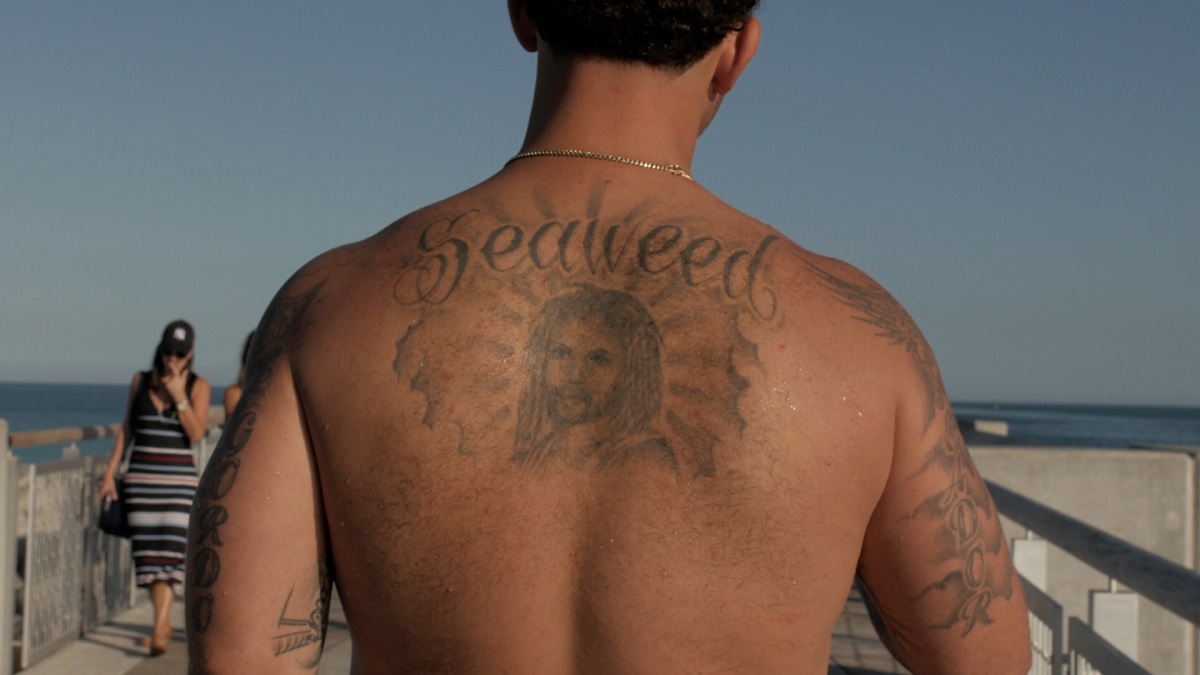
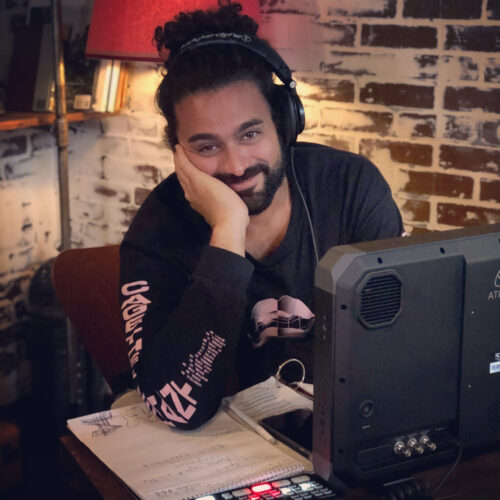
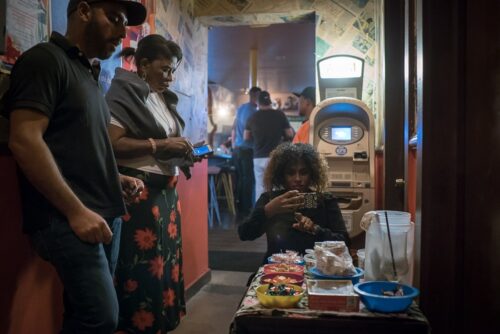
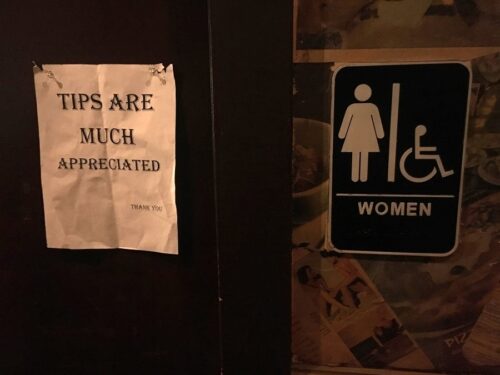

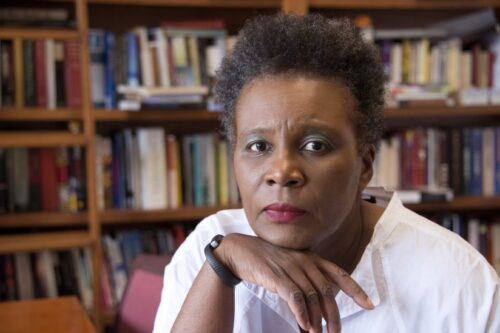









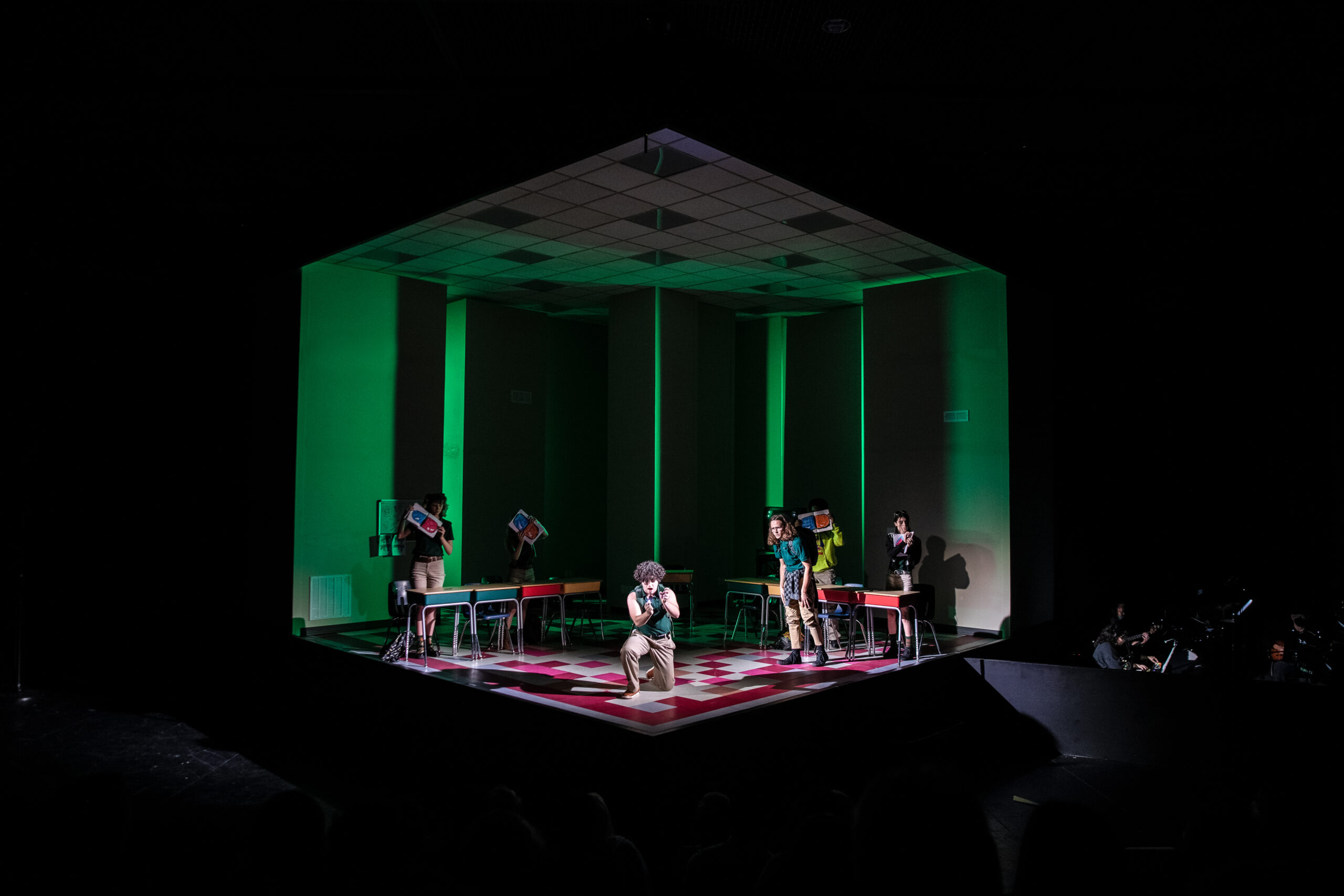

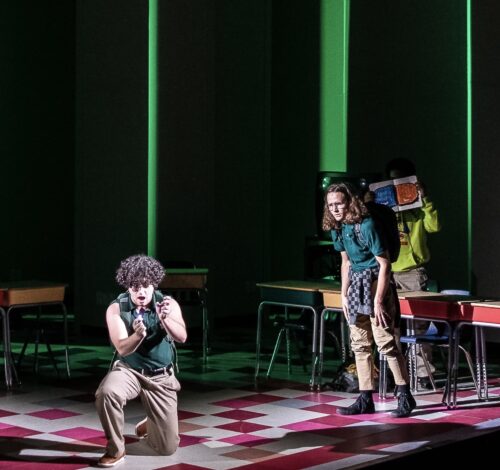
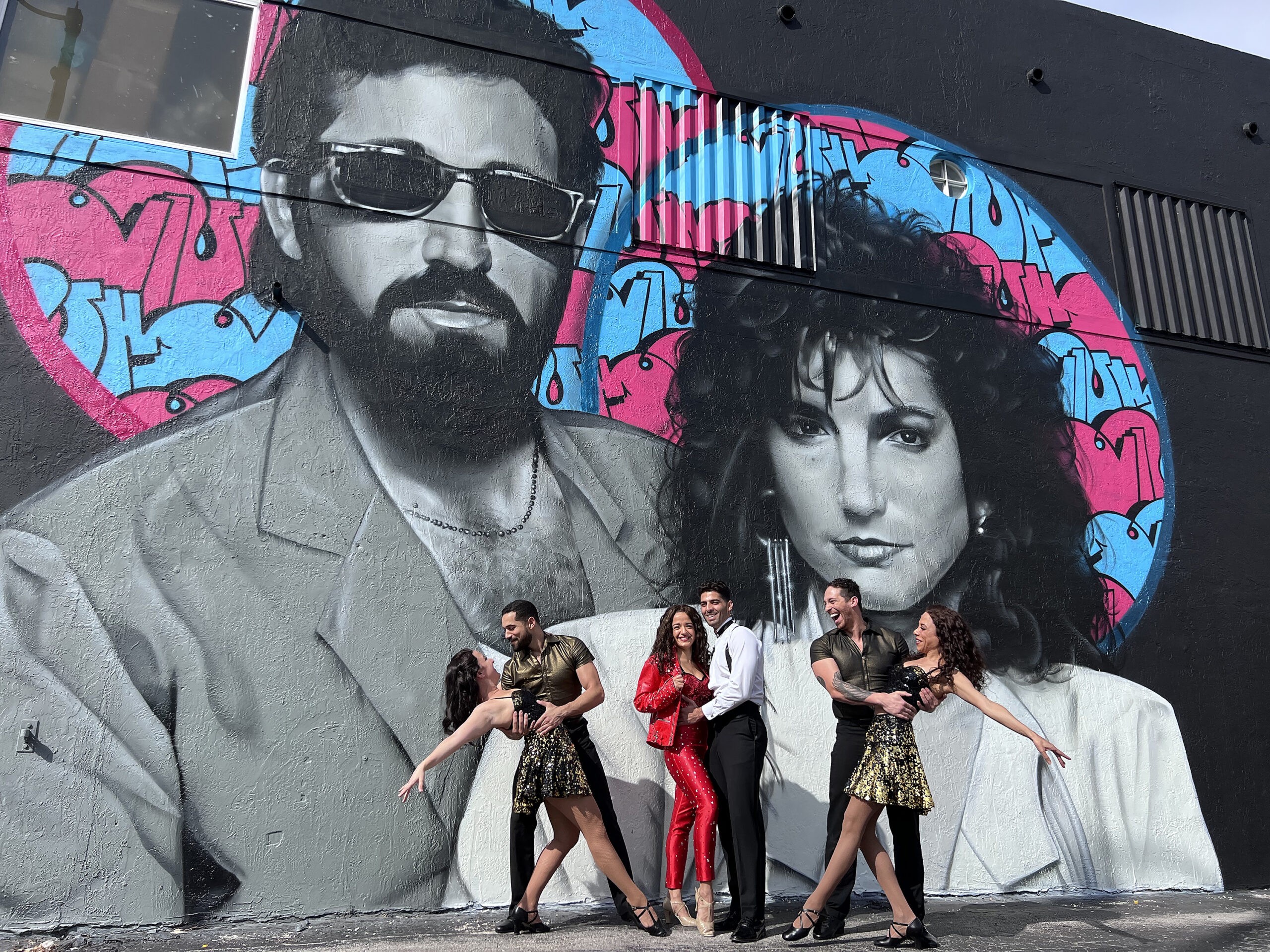
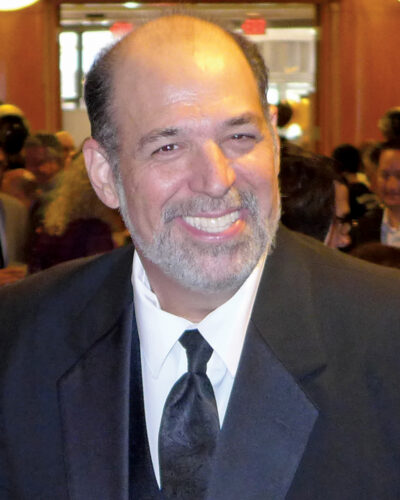
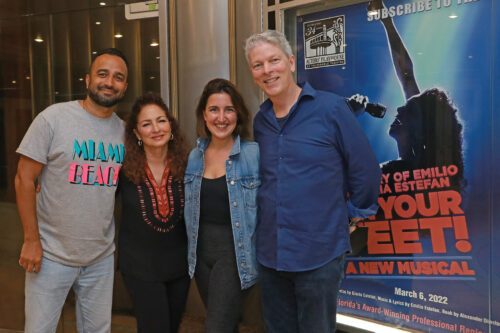





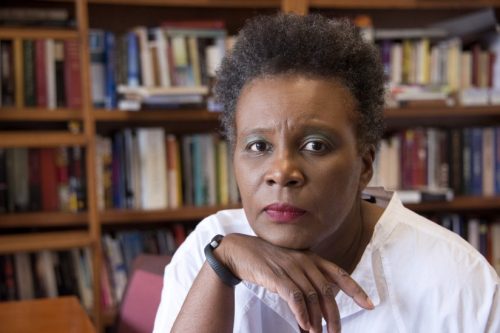
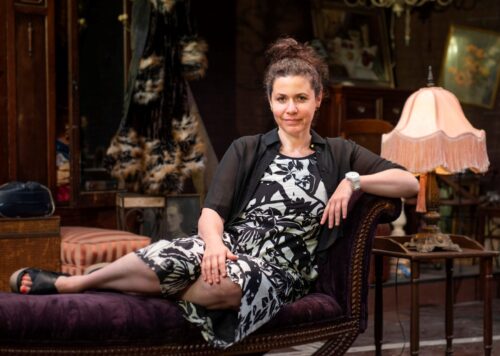

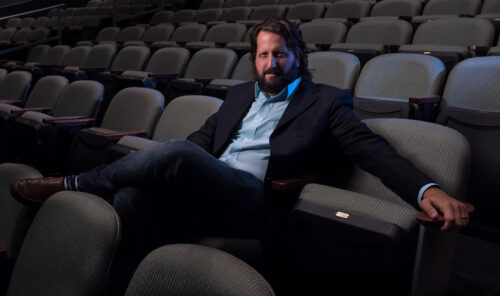
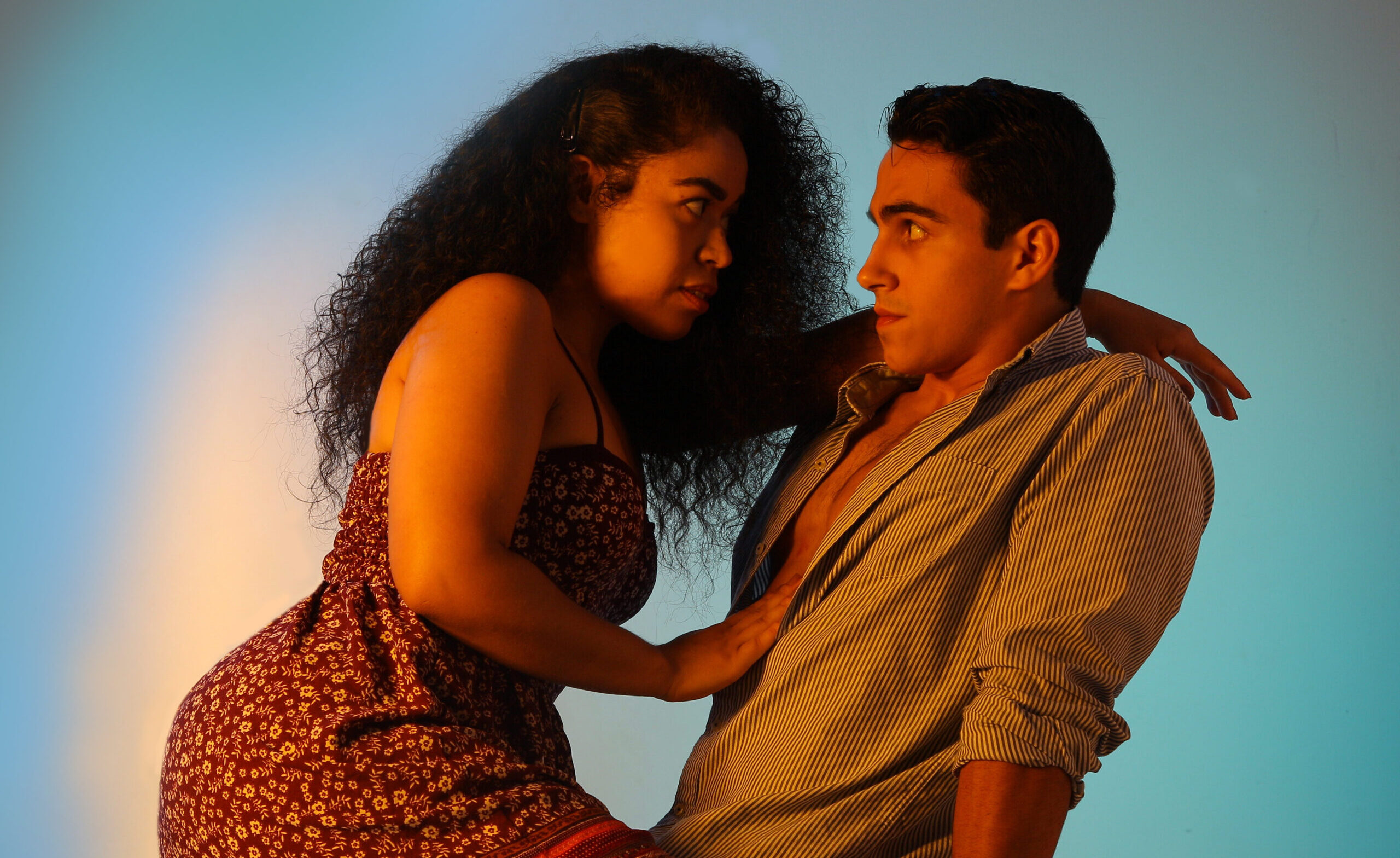
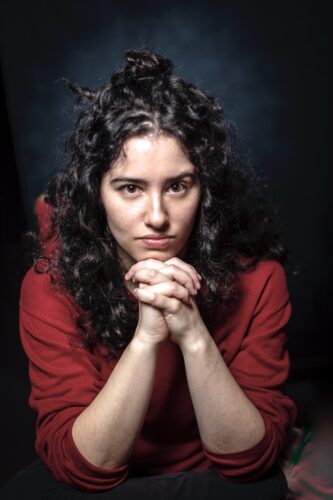



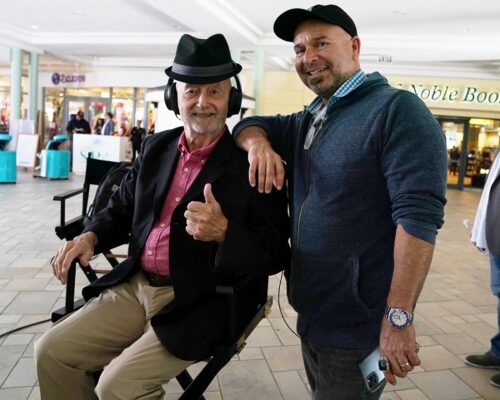
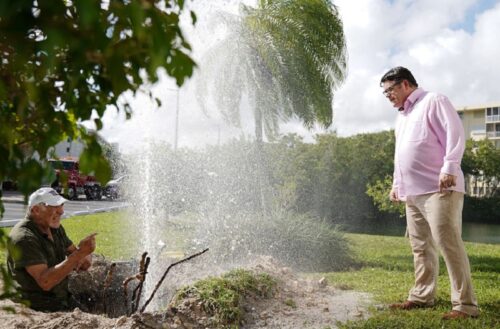
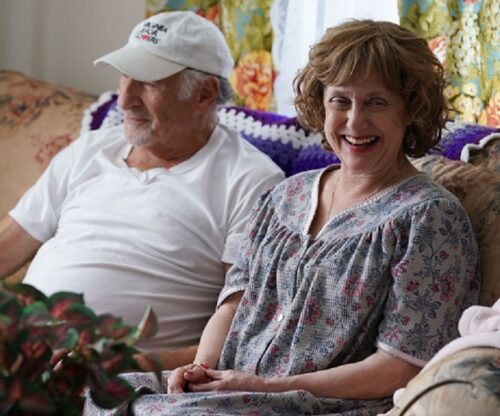
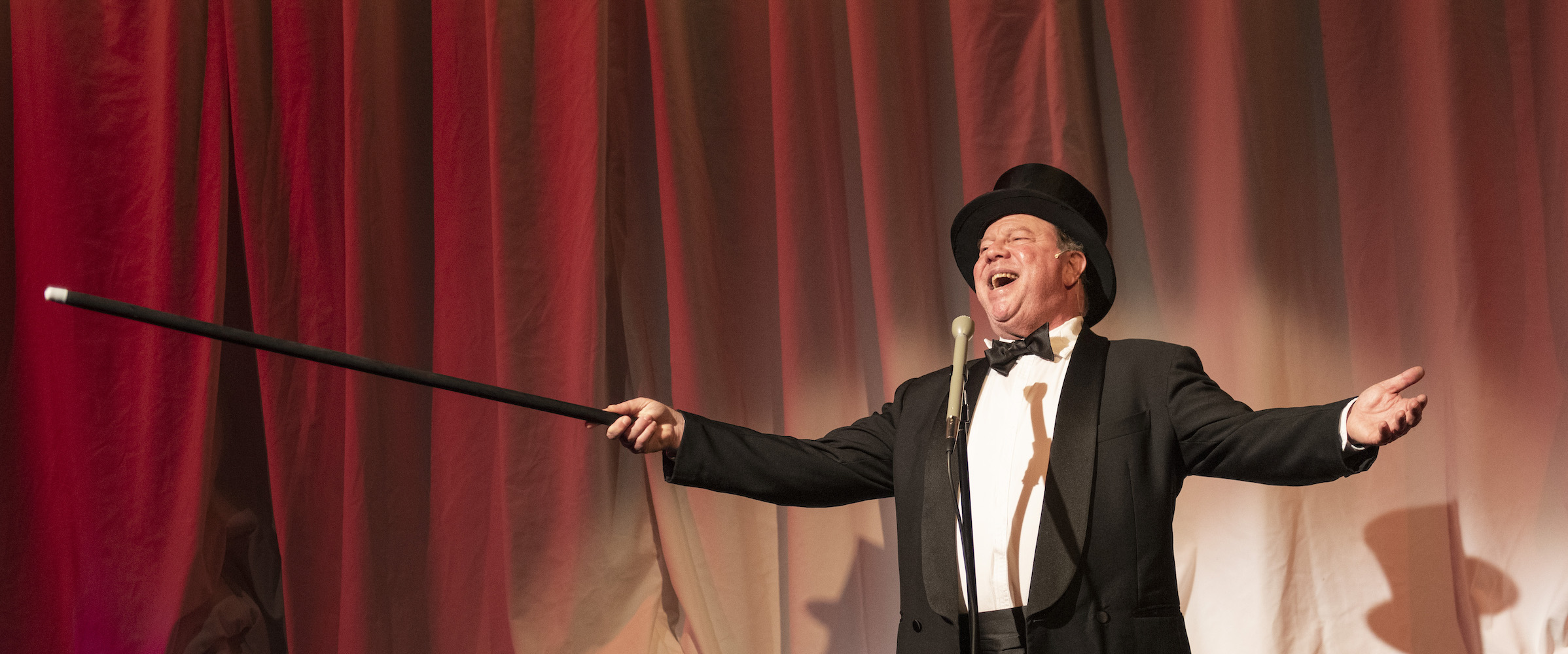

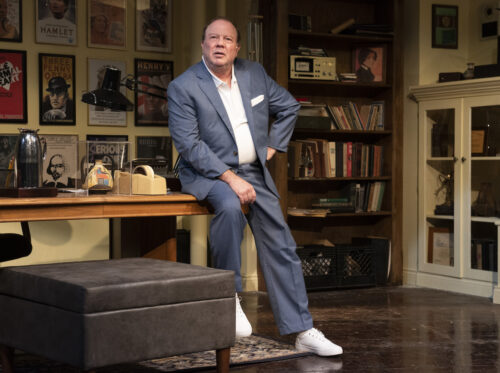


Recent Comments