Review: Long-awaited ‘A Wonderful World’ is wonderful in every way
Written By Christine Dolen December 14, 2021 at 6:18 PM
From left, Christina Sajous, Allison Semmes, Juson Williams, Darlene Hope and Nicole Henry tell Louis Armstrong’s story in “A Wonderful World.” (Photo courtesy of Ernesto Sempoll)
From the first words they utter in Miami New Drama’s world premiere musical, “A Wonderful World,” the women Louis Armstrong loved — the four that he married, at any rate — memorialize different versions of a flawed, complicated genius propelled by all kinds of desire.
To Daisy Parker, a hot-tempered New Orleans prostitute, he was passion and turmoil. Chicago pianist Lil Hardin helped transform him from a country boy with “a $5 smile in a $2 suit” into a slick, in-demand musician. Alpha Smith developed a taste for the finer things during his Hollywood years but never fully sated his restless passion and domestic desires. And former Cotton Club performer Lucille Wilson, the savvy partner in his longest-lasting marriage, found a way to make her deal with the wanderlust-driven devil work.
Celebrated as a jazz genius, remembered for his larger-than-life personality and gravel-infused singing, the offstage/offscreen Armstrong was a man with a gift for getting into and out of trouble. His contradictions and complexities — the good, the bad and the ugly of an extraordinary American life — are woven artfully through the storytelling in “A Wonderful World,” thanks to an uncommonly layered, nuanced and contextually rich book by playwright Aurin Squire.
Juson Williams, left, as Louis Armstrong and Jason Holley as Lincoln Perry have a dance-off in “A Wonderful World.” (Photo courtesy of Stian Roenning)
The songs in the show’s glorious score are mainly standards associated with Armstrong. Brilliantly arranged by musical supervisors Michael O. Mitchell and Annastasia Victory, the numbers (some full, others fragments) have been placed so that the lyrics amplify or comment on the drama of the moment.
After a 638-day pandemic pause between the final 2020 preview performance and the opening of the 2021 version of the piece, “A Wonderful World” is at long last up and running at the Colony Theatre on Miami Beach’s Lincoln Road.
For anyone who loves musicals, new work and thrilling theater, that’s wonderful news indeed.
Getting “A Wonderful World” to this point in its evolution — a word that implies it will have an ongoing, larger life in many cities, which it should — has presented Miami New Drama with myriad challenges, not the least of which was the long COVID-19 shutdown. Some roles had to be recast. Illness hit several actors during the most recent previews, and an understudy performed as Daisy on opening night. Two different rounds of enhancement money were necessary to pull off the most lavish show in the company’s history.
But finally, the creative and financial investments have paid off.
As director, Broadway and West End veteran Christopher Renshaw has worked with his inspired creative collaborators to deliver a highly entertaining, engrossing portrait of a great Black artist shaped by his environment, American society and his own seemingly insatiable desires.
(Video interview with actor Juson Williams is courtesy of Florida International University’s Inspicio Arts e-magazine. Find more videos with Williams by clicking here.)
This iteration of Louis Armstrong, played by Juson Williams with abundant charisma, torment and an undercurrent of menace, isn’t just the influential jazz innovator and smiling trumpet virtuoso familiar from his days as a Hollywood performer and later-life American icon. The Armstrong of “A Wonderful World” is a warts-and-all, fallible human being — in great part because of Squire’s choice to present him from the perspectives of the four women he loved and hurt.
Armstrong’s early life in New Orleans comes first, with Squire touching on his rough upbringing in a neighborhood called the Battlefield, his constant hustle to survive, his time in a reformatory for firing a gun. At the Colored Waif’s Home, bandleader Professor Davis (Jason Holley) changes the course of Armstrong’s life by teaching him to play the cornet; later, playing aboard Mississippi riverboats, Armstrong learns to read music from bandleader Fate Marable (Paul Louis).
But his relationship with Daisy Parker (understudy Dori Waymer, subbing for an ailing Christina Sajous) is the connecting thread in that chapter of his life.
Allison Semmes as piano player Lil Hardin belts out a number in the latest Miami New Drama production. (Photo courtesy of Stian Roenning)
Beautiful, volatile, knife-wielding Daisy works in a brothel and at first sells her services to the rough-edged musician. (“People say I have a little bit of a temper,” she observes dryly, more than once.) After relentless wooing and a spirited duet on “I Can’t Give You Anything but Love,” they wed. But a working musician’s home is on the road (or in the young Armstrong’s case, the river), so before long he proves to be a love-’em-and-leave-’em husband.
In Chicago in the 1920s, he starts working with bandleader King Joe Oliver (a charismatic Gavin Gregory), tries to duck gangsters on his tail, and woos piano player Lil Hardin (Allison Semmes). Armstrong’s relationship with Lil begins on the bandstand and ends in bed, with Lil polishing his style and image, and Armstrong making her his Mrs. #2. Daisy isn’t entirely out of the picture, though, and when she shows up in the Windy City to confront her ex and his ambitious spouse, the women engage in the vocal equivalent of a knife fight as they sing a fierce version of “Mack the Knife.”
After a row with Lil, who has grander ambitions for herself and her unfaithful husband, he meets two key figures in the next chapter of his life.
As a nightclub singer (Kareema Khouri, a stunning vocalist) delivers an irresistibly seductive rendition of “Body and Soul,” bartender Joe Glaser (the magnetic Stephen G. Anthony) delivers some unwanted career advice, and a seemingly shy knockout named Alpha Smith (Nicole Henry) stirs his libido.
Before too long (because that’s how things flow in musicals), Glaser will violently “persuade” Armstrong’s perpetually inebriated, ineffectual Irish manager Johnny Collins (Daniel Barrett) to let him guide the rest of the musician’s career. Armstrong decamps with Alpha for Hollywood where, after a rough start, he breaks into movies bigtime — and the now-glamorous Alpha spends money like there’s no tomorrow (whenever she’s not making him the rice and beans he craves, or trying to help him realize another dream by making him a daddy).
After Alpha, impatient with her husband’s constant touring and betrayals, turns the tables on him and leaves, Armstrong embarks on his life’s last chapter in New York. By his side on and off from their marriage in 1942 until his death in 1971, ex-showgirl Lucille Wilson (Darlene Hope) weathers his frequent infidelities and proves herself an indefatigable “researcher,” getting the goods on greedy Joe Glaser’s personal life and Armstrong’s extracurricular activities to ensure she’ll get what she wants: a home in Queens, if not a family.
(Video interview with Nicole Henry is courtesy of Florida International University’s Inspicio Arts e-magazine. Find more videos with Henry by clicking here and more videos with the cast by clicking here.)
That’s a lot of content to pack into a 2 ½-hour musical, but Squire does much more. He contextualizes what happens to Armstrong, his choices, his failures, his triumphs, within the Black American experience.
An innocent young riverboat musician is lynched after a false accusation by a white woman, and the memory haunts Armstrong for life. In a dazzling meta moment, Armstrong learns from masterful millionaire Lincoln Perry, aka Stepin Fetchit (also played by Holley, in a brief but undeniable tour de force), how to turn what white audiences love about Black entertainers into big bucks he can keep instead of giving his dough to exploitative managers. After the civil rights movement takes off, he publicly — and explicitly — unleashes his rage.
Thanks to enhancement money, Miami New Drama has been able to give “A Wonderful World” the artistic sendoff it deserves.
The large cast, a mixture of out-of-town and local talent, deliver knockout moments, shocking ones, intimate interludes.
Williams is, of course, the focal character, and his transformation from a gullible New Orleans innocent into an artist who pours his aching soul into each word of “Black and Blue” is a wonder. So, too, is the way he delivers the moment when he alters his normal higher singing and speaking voice — Armstrong is hacking from cold nights on the riverboat — into the lower, grittier sound he uses for the rest of the show.
Jazz singer Nicole Henry plays the only wife who left Louis Armstrong, Alpha Smith. (Photo courtesy of Stian Roenning)
Substituting for Sajous on opening night, Waymer is a wary, alluring and dangerous Daisy. Semmes is chic and all business as Lil. Henry, best known in South Florida as a virtuoso jazz singer, is a visually and vocally gorgeous Alpha. Hope brings her deeper voice, gravitas and intelligence to Lucille. When the four sing “St. James Infirmary” to the ailing man they all have loved, the number is as good as anything you’ll hear in any musical.
From the leads to the ensemble, everyone in the show is at the top of his or her game, including Lindsey Corey (who has a trio of comic moments as a Chicago lady of the evening, an eager reporter and an appalled White House assistant), Ashley McManus, Alysha Morgan, Khadijah Rolle, Brett Sturgis, Kevin Tate and Donesha Rose.
The live musicians meet the score’s myriad stylistic challenges — and, crucially, trumpet players Jean Caze and Luvens Lubin deliver the goods for Williams, who mimes playing but actually doesn’t.
Rickey Tripp’s choreography and musical staging require great dancers, and “A Wonderful World” has them in abundance. Sometimes in musicals, dance sequences can feel like fillers, but Tripp’s are worth savoring.
Adam Koch’s scenic design, dominated by piled-high trunks and platforms, is transformed by Steven Royal’s equally important projections from a brothel to a riverboat to Chicago, Hollywood and New York City. Cory Pattak’s lighting sets every mood, and Kai Harada’s sound design is responsive and clear. Ari Fulton’s era-spanning costumes are flat-out gorgeous.
Even erasing the pandemic from the equation — not possible, of course — the making of a new musical is a hugely challenging collaborative endeavor. Under artistic director Michel Hausmann and managing director Nicholas Richberg, Miami New Drama has devised one about a music and showbiz icon, a piece with a powerful point of view, a show that deserves to be seen in the spot where it was created.
For the holidays and beyond, that is something wonderful.
WHAT: Miami New Drama production of “A Wonderful World,” by Aurin Squire
WHEN: 8 p.m. Wednesdays-Fridays, 1 p.m. and 8 p.m. Saturdays, and 3 p.m. Sundays, through Jan. 16, 2022
WHERE: Colony Theatre, 1040 Lincoln Road, Miami Beach
COST: $51.50-$91.50 (includes $6.50 service fee)
SAFETY PROTOCOLS: Masks required, plus a negative COVID-19 PCR test, negative COVID-19 antigen test or proof of vaccination. For more details, visit miaminewdrama.org/show/a-wonderful-world.
Play finds ties in Miami, becomes a made-in-South Florida film with a Latin flair
Written By Michelle F. Solomon December 8, 2021 at 3:12 PM
Directors Oscar Ernesto Ortega and Carlos Rafael Betancourt on the set of “Borrowed” in Miami Beach’s Normandy Isles neighborhood. (Photo courtesy of Jose Rovira)
Movie lighting shines bright outside a home in the Normandy Isles neighborhood of Miami Beach. It’s around dusk in August, and passersby in cars slow down to catch a glimpse of what’s going on behind the spotlights.
Inside, a chef sets the table for a dinner scene, while an actor gets prepped in a room-turned-makeup-and-costume-area. The home’s original furniture has been moved into a corner to make way for original artwork that will be an integral part of the movie’s plot, as well as other set pieces. Camera equipment is everywhere.
The film is “Borrowed,” a psychological thriller based on a play by Jim Kierstead that was presented as a streamed Zoom reading during the COVID-19 pandemic. The plot concerns a lonely older artist named David who connects online with a younger man, Justin. The latter agrees to meet David at his bungalow, with the implication of a sexual encounter. But after Justin arrives and decides not to move forward, the story takes dark twists and turns.
(Video courtesy of Oscar Ernesto Ortega and Carlos Rafael Betancourt)
The play found ties in Miami and became a film made in South Florida with a Latin flair — produced by Broadway United’s Kierstead and William Fernandez, who joined forces with El Central Productions, which is helmed by filmmakers Carlos Rafael Betancourt and Oscar Ernesto Ortega. Between the four of them, they represent Miami Beach, New York City and Los Angeles.
Kierstead and Fernandez have had a string of Broadway successes as producers, most recently receiving a Tony Award this year for Matthew Lopez’s “Inheritance,” which made history as the first time a Latino playwright won for best play.
Fernandez, who is on the board of directors of Zoetic Stage at the Adrienne Arsht Center for the Performing Arts, was instrumental in having the play shown during the pandemic. “Borrowed” initially streamed on Broadway Virtual, another of his business partnerships with Kierstead, then as part of Zoetic Stage’s Virtual Play Reading Series.
The story of how it became a film started before the pandemic shut everything down, however. Fernandez attended the Miami Film Festival screening for Betancourt and Ortega’s film, “The Last Rafter,” at the Tower Theater in March 2020 — and struck up conversation with Ortega, which led to more conversations about potentially partnering on future projects.
The play “Borrowed” immediately came to mind, Fernandez says.
“I showed them the Zoom version of ‘Borrowed,’ and they liked it,” he says. “Carlos and Oscar said they had a window of time for a second project that they could do in August of 2021 … They sat me down and said they wanted their second project to be ‘Borrowed.’ ”
Actors Hector Medina, left, and Jonathan Del Arco infused their own backgrounds into the characters. (Photo courtesy of Jose Rovira)
Being a producer, Fernandez’s first thought veered toward fundraising.
“But Oscar and Carlos said something that was magnificent. They said, ‘If you guys are willing to do this, let’s fund it ourselves,’ ” he recalls.
Fernandez called Kierstead and, within an hour, they had a deal. They split the costs and ended up making the film for just under $500,000, according to Fernandez.
Turning “Borrowed” from a play format to screenplay was the next order of business. The playwright and the two filmmakers started to adapt the story.
“I trusted the play to these professionals and their vision,” Kierstead says. “They are beautiful filmmakers, and the story unfolds in such a lovely way.”
The setting was moved from New York City to the Florida Keys. David, who is played by Jonathan Del Arco, is an artist living a secluded life in the Keys, kept company only by his paintings. If Del Arco’s name sounds familiar, it’s likely for his roles in the “Star Trek” television franchise, including his most recent, playing Hugh on “Star Trek: Picard,” which streamed on Paramount+.
Justin, who meets David through a dating app, is played by Hector Medina who starred in Betancourt and Ortega’s “The Last Rafter.”
Betancourt explains that working with two Latinx actors played into the film’s identity: “The first idea was that Justin would be Latino and would speak Spanish or Spanglish. And then we cast Jonathan, who is from Uruguay, and that elevated David’s character, so that he is also Latino.”
Filmmaker Oscar Ernesto Ortega in the middle of shooting. He and Betancourt had founded a film production company in Cuba before moving it to the United States. (Photo courtesy of Jose Rovira)
The filmmaker says the actors infuse their own backgrounds into the characters.
“David’s character never says where he is from, but he gives the vibe of someone who is clearly from South America — Argentina, Chile, Uruguay. Justin has more of the Caribbean or Venezuelan vibe,” he says. “David is also a man of his generation and has been shaped in a way that there are certain things that you don’t violate. Justin is challenging all that.”
It was a very conscious decision on the filmmakers’ part, Betancourt adds, to explore the characters’ identities in a Hispanic context.
“There is LGBTQIA (lesbian, gay, bisexual, transgender, intersex, queer and/or questioning, asexual and/or ally) subject matter and exploration of themes around that, and then there is the Latino and Latinx experience, the immigration experience, and the fish-out-of-water in bigger worlds. There’s a lot in ‘Borrowed’ that we explore,” says Betancourt, who in 2008 founded a film production company in Cuba with Ortega, before they moved it to the United States.
Now that the movie has finished filming in Miami Beach, on Key Largo in Tavernier, and in Los Angeles, the foursome of Fernandez, Kierstead, Ortega and Betancourt are actively working to get “Borrowed” into film festivals across the United States, in Europe and Latin America. It’s possible the movie could follow the same course as “The Last Rafter,” being shown in festivals and then on a streaming platform. In the case of “The Last Rafter,” the independent film was picked up by HBO and shown on its HBO Max and HBO Latino platforms.
“We are actively seeking film distribution,” Betancourt says, “but we do not want to go straight to streaming. We are defending our festival round as much as possible unless we get an offer that we just can’t refuse.”
Review of ‘Jacob Marley’s Christmas Carol’: A captivating one-man performance in a heartwarming production
Written By Christine Dolen December 7, 2021 at 7:06 PM
Among his many roles, Colin McPhillamy portrays the Ghost of Christmas Present in “Jacob Marley’s Christmas Carol” at the Adrienne Arsht Center for the Performing Arts. (Photo courtesy of Justin Namon)
Since time immemorial, theater has been a storytelling art form. Just now, a potent and sometimes poignant reminder of that truth is onstage in Miami at the Arsht Center’s Carnival Studio Theater, where “Jacob Marley’s Christmas Carol” is running through Dec. 19, 2021.
City Theatre’s production of the play by Tom Mula stars actor Colin McPhillamy in 18 distinct roles: that of the title character as well as a host of others from the 1843 Charles Dickens classic, “A Christmas Carol.”
Although a short intermission affords him a wee break (as his Scottish-accented character, Bogle, might put it), the British actor spends nearly two hours doing the theatrical equivalent of running a marathon. The solo show tests the stamina, skills and interpretive invention of even the most experienced performer, but the captivating McPhillamy quickly immerses the audience in his version of a beloved holiday tale.
Playwright Mula’s wrinkle is to share the Dickens story from the perspective of Jacob Marley, the late business partner to Ebenezer Scrooge. Marley, though dead, appears in “A Christmas Carol,” of course, but here he’s the star of the show.
Playing the titular Jacob Marley, actor Colin McPhillamy gets ready to scare Scrooge. (Photo courtesy of Justin Namon)
Dealing with the Record Keeper, an embodiment of everlasting fate, Marley gets a final chance to avoid going straight to hell. He’ll have 24 hours to get the old skinflint to repent, to change Scrooge’s heart. Otherwise, he’s doomed.
Accompanying Marley on his fool’s errand is the Bogle, a tiny troublemaker of a spirit. He’s impishly portrayed by McPhillamy, who glues his upper arms to each side, rapidly flapping his hands as though they were miniature wings.
Using his malleable voice, movement and facial expressions, McPhillamy shifts instantly from Marley to Scrooge, evoking scenes from “A Christmas Carol.” Likewise, he becomes a Cockney kid as the Ghost of Christmas Past, a warm presence as the Ghost of Christmas Present, a frightening figure as the Ghost of Christmas Yet to Come.
In theater, bringing even the best solo storytelling to life takes a village, and McPhillamy has an impressive group of collaborators.
Artistic director Margaret M. Ledford has helped the actor to define and clarify each character, precisely differentiating the emotional moods of the script. Sometimes, she has him scurry over the faux stone steps and ramps of Norma Castillo O’Hep’s nostalgic set. She has him dip into a trunk to pull out the chains Marley forged in life, then brings him briefly to rest behind a podium or a small table.
British actor Colin McPhillamy plays 18 distinct roles in the City Theatre production. (Photo courtesy of Justin Namon)
Matt Corey’s soundscape is a vital part of the production, serving up church bells, a swirling wind or a closing door at precisely the right time. Likewise, Eric Nelson’s lighting helps define location shifts, and his tight green-lit focus on Marley’s face as the old man begins his terrorizing of Scrooge is priceless. Though multiple costume changes aren’t possible with the lightning pace of McPhillamy’s character transformations, designer Ellis Tillman simply and effectively suggests the Victorian era with one look and several add-on pieces.
At a matinee over the weekend, McPhillamy’s often spell-binding performance was interrupted a number of times as audience members – sometimes several people at a time – decided that they just had to walk out right then for a bathroom break or a snack or maybe because they got tired of listening to an artist telling them a story. Trouble is, beyond that rudeness, leaving the Carnival Studio Theater mid-performance is a noisy proposition, as the theatergoer thumps down the audience riser, then click-clacks over the wooden floor to the exit door.
The actor, the heartwarming production and your fellow audience members deserve better.
To read Christine Dolen’s preview for this play, click here.
WHAT: “Jacob Marley’s Christmas Carol” by Tom Mula
WHEN: 7:30 p.m Thursdays-Fridays, 3 p.m. and 7:30 p.m. Saturdays (no matinee Dec. 11), and 3 p.m. Sundays; through Dec. 19, 2021
WHERE: City Theatre production in the Carnival Studio Theater at the Adrienne Arsht Center for the Performing Arts, 1300 Biscayne Blvd., Miami
The COVID-19 pandemic put so much of life on hold, world premieres included. But now, after almost two years of down time and a fresh week of previews at Miami Beach’s Colony Theatre, “A Wonderful World” is set to open at last, on Saturday, Dec. 11, 2021.
With a book by former Miamian Aurin Squire, and more than three dozen songs orchestrated by Annastasia Victory and Michael O. Mitchell, the musical follows the innovative and hugely influential Armstrong from his boyhood in New Orleans to his 1971 death in New York City at age 69.
(Video courtesy of Florida International University’s Inspicio Arts e-magazine. Aurin Squire discusses how development of the play, “A Wonderful World,” came about. Find more video interviews with Squire by clicking here.)
Squire, a writer-producer on the CBS television series “The Good Fight” and “Evil,” tells Armstrong’s story in chapters, each from the perspective of one of his four wives: Daisy Parker, a volatile New Orleans prostitute; Lil Hardin Armstrong, a Chicago pianist who helped polish his image; Hollywood-glamorous Alpha Smith, the only wife who left him; and former Cotton Club singer Lucille Wilson, whose home with him in Queens is now the Louis Armstrong House Museum, a National Historic Landmark.
Of the man himself, Squire says, “He led a quintessential American life. He was the best at balancing the white audiences who paid his bills but not losing his credibility among Black audiences … His almost 70 years as a jazz musician was like 140 years for a normal person.”
Adam Koch’s set for “A Wonderful World” has been sitting on the Colony Theatre’s stage for the past 21 months, awaiting the return of the artists who would bring Armstrong’s world to life. But aspects of the production, its resonance and the artists themselves have changed during the long pandemic pause.
Miami New Drama artistic director Michel Hausmann remained determined to get “A Wonderful World” back to the Colony Theatre. (Photo courtesy of Juancho Hernandez Husband)
“Aurin packed a knife into Louis Armstrong’s trumpet case. This is a very politically and socially astute play about America,” says Michel Hausmann, cofounder and artistic director of Miami New Drama. “This is the right play for the world as it begins again. But certain things should not be seasonal. Confronting the oppression of non-whites, especially Black people, is urgent.”
About half of the original “Wonderful World” cast was unable to return to the show due to other commitments.
“Some things allow you to be nimble, but a musical isn’t one of them. We had to coordinate the schedules of at least 50 people,” Hausmann says. “We also decided to push the show closer to the end of the year, because we thought the fall would be an experimental period with people going out again. I’m glad we waited.”
Juson Williams, who appeared with his JW’s Inspirational Singers on “America’s Got Talent” in June, is still starring as Armstrong, the jazz genius and gravel-voiced singer whose engaging public persona made him an international star with crossover appeal. Miami jazz singer Nicole Henry is back as Alpha Smith, and Homestead-born Darlene Hope is again playing Lucille Wilson. New to principal roles are Christina Sajous as Daisy Parker and Allison Semmes as Lil Hardin.
“When I came back, I started to give him more grace,” Williams says, of the Armstrong role. “Those types of people have been hurt. He hurt people and didn’t realize it. Finding that was healing.
“I’m bringing a new level into the show, from not being in theater for two years. I believe that.”
Darlene Hope, a Homestead native, is back in the role of Lucille Wilson, fourth wife of Louis Armstrong. (Photo courtesy of Michael Cairns)
Director Christopher Renshaw has seen growth in Williams.
“Juson has more wisdom. He’s thinking more deeply. He has changed in a good way,” Renshaw says.
Hope, grateful to be back, has also undergone a shift in perspective.
“Some of the tactics I was using before feel stale now. You have to find fresh reasons for what you do, have to listen more deeply. Acting is being. Acting is living,” she says. “Coming out of the pandemic, where we’ve all lived 1,000 lifetimes in a year and a half, you have more to draw from than before … I feel more connected to Lucille. She’s not a monument; she’s a human being.”
Henry — whose eclectic newest CD, “Time to Love Again” — was recorded during the pandemic, kept her music career going while doing periodic artistic check-ins with her “Wonderful World” role.
Miami jazz singer Nicole Henry plays Louis Armstrong’s third wife, Alpha Smith. (Photo by Rafael Balcazar)
“Character development can be endless. I tried to visit Alpha every now and then,” she says. “Being a vocalist is such singular work. It’s wonderful to be back here, to be part of a unit. Everybody is so joyous. We feel even more connected.”
Asked about Sajous and Semmes, the two new “wives” in the show, Squire calls their contributions “remarkable” while appreciating the work of their predecessors.
“They give their roles a completely different tone, [refreshing] some of the thoughts I had. They bring all these colors to the roles. It’s like comparing Picasso to Matisse,” he says.
Sajous, who has been in five Broadway shows, was drawn to “A Wonderful World” and the character of Daisy Parker — about whom little is known — because of Squire’s script.
“The story feels very linear, especially for musical theater. I’m impressed with how Aurin uses time – he injects a lot of story into small scenes,” she says. “It feels so full of life. The pacing is amazing. This is something I had to do … Working from the inside out, I had to figure out how to integrate a woman I don’t know, other women and myself to bring her to life in a relatable way.”
Semmes, a singer-actor who performed in two Broadway shows and toured as Diana Ross in “Motown the Musical,” says “A Wonderful World” made her rethink her pre-pandemic decision to walk away from musical theater.
“This story feels so familiar, and it’s like all the stars have aligned … The writing got me … it’s yummy. I connected with Lil Hardin. I’m from Chicago and a family of jazz musicians. My grandmother knew or interviewed Lil,” Semmes says.
(Video courtesy of Florida International University’s Inspicio Arts e-magazine. Actor Darlene Hope answers the question: “Do you think that most Millennials will know who Louis Armstrong was?” Find more video interviews with Hope by clicking here and more videos with the cast by clicking here.)
Hausmann thought the original “Wonderful World” cast was “outstanding,” but he sees the value in coming back to the show with new artists in the mix.
“The new cast allows us to revisit the play in a completely new light,” he says. “It’s been a blessing to have some cast members discovering the play for the first time, and the creative team has also been looking at the show with fresh eyes … Hopefully, this will become a part of the American theater canon.”
“A Wonderful World” began as an idea dreamed up by the show’s Tony Award-nominated British director Renshaw and writer Andrew Delaplaine, whose sister Renee and brother-in-law Thomas E. Rodgers Jr. are major investors and retain the commercial rights to future productions of the musical. Hausmann introduced Renshaw and Squire, who hit it off creatively and made a show.
Renshaw, who lives in Miami Beach near the Colony, has directed a “King and I” revival and “Taboo” on Broadway. He says he was in denial at first when “A Wonderful World” closed abruptly, but that Hausmann “kept the faith and promised me it would reopen.”
The director has found he’s enjoying the work more as he blends the performances of original and new cast members. Given the lessons of the pandemic, the Black Lives Matter protests, and the push for greater equity, diversity and inclusion in theater, Renshaw thinks the musical “feels more relevant, more important. I have the privilege of directing a family of Black artists in a special piece that can help with the healing the world still needs. Even in the first number [the title song], the lyrics have a resonance as a vision for a better world.”
While keeping up with his demanding TV writing career, Squire spent time during the pandemic tightening the script: “We changed some music, tones, transitions.”
Juson Williams stars as jazz great Louis Armstrong in Miami New Drama’s “A Wonderful World.” (Photo courtesy of Stian Roenning)
Squire hopes that “A Wonderful World” will endure and have a life, whether in London, New York City or elsewhere, but his current goal is to “have a great production fully realized here,” so that in the future the typical route of musicals coming from Broadway to Miami can sometimes be reversed.
The set was already built, but labor, personnel, a large cast and seasonal housing in Miami Beach before, during and after Art Basel will make “A Wonderful World” the most expensive production in the company’s season of four world premieres, according to Miami New Drama managing director Nicholas Richberg.
“It wouldn’t have been possible to produce something on this scale without Tom Rodgers,” he says.
Rodgers, a local entrepreneur who became interested in the musician’s story after reading Laurence Bergreen’s hefty biography, “Louis Armstrong: An Extravagant Life,” calls Squire’s script “fabulous.”
“He came up with the angle of telling his life story through the eyes of Louis’ four wives. The biography just follows him around,” Rodgers says. “Most people will recognize every song in the show. I hope we can take it another step farther. I think [the creative team] has bigger visions this time around … It’s a very worthwhile story about music history and jazz history.”
WHAT: Miami New Drama production of “A Wonderful World,” by Aurin Squire
WHEN: Through Jan. 16, 2022. Remaining previews are 8 p.m. Dec. 9-10, then it opens 8 p.m. Dec. 11. After opening, performances are 8 p.m. Wednesdays-Fridays, 1 p.m. and 8 p.m. Saturdays, and 3 p.m. Sundays.
WHERE: Colony Theatre, 1040 Lincoln Road, Miami Beach
COST: $51.50-$91.50 (includes $6.50 service fee)
SAFETY PROTOCOLS: Masks required, plus a negative COVID-19 PCR test, negative COVID-19 antigen test or proof of vaccination. For more details, visit miaminewdrama.org/show/a-wonderful-world.
City Theatre offers a solo take on a Christmas classic
Written By Christine Dolen November 29, 2021 at 5:53 PM
Actor Colin McPhillamy plays Scrooge’s late business partner and 17 other roles in City Theatre’s production of “Jacob Marley’s Christmas Carol.” (Photo courtesy of Morgan Sophia Parker)
Ever since Charles Dickens dreamed up his evergreen tale of greed and redemption in 1843, “A Christmas Carol” has remained a beloved part of the holiday zeitgeist.
Along with “The Nutcracker” ballet, “A Christmas Carol” has entertained countless generations, reminding readers and audiences of the need for compassion, the importance of gratitude and the possibility of change – themes from a story that has continued to resonate as the world evolves.
Authors and actors have put their stamp on the story thanks to stage, movie and television versions of “A Christmas Carol.” Now it’s Colin McPhillamy’s turn to demonstrate how one artful actor can bring Dickens’ entire novella to life.
McPhillamy is the star of – and only actor in – “Jacob Marley’s Christmas Carol,” an 18-character play by actor-playwright Tom Mula. This version began as a 1995 novel, then got an audio treatment that aired on National Public Radio for seven seasons, then became a play that could be done by either one actor or four performers in 1998.
Miami’s City Theatre is making its return to the Arsht Center’s Carnival Studio Theater with “Jacob Marley” as part of the Theater Up Close series. Previewing Dec. 2, opening Dec. 3 and running through Dec. 19, the family friendly solo show will serve as a transformational showcase for the erudite McPhillamy, who will portray not just the about-to-be-damned Marley but also the man’s miserly former partner, Ebenezer Scrooge, as well as Scrooge’s put-upon employee, Bob Cratchit, and every other familiar “Christmas Carol” character, including the ghosts of Christmas Past, Christmas Present and Christmas Yet To Come.
The London-born Colin McPhillamy is the star of – and only actor in – “Jacob Marley’s Christmas Carol,” playing at the Arsht Center through Dec. 19. (Photo courtesy of Morgan Sophia Parker)
In learning and differentiating all those characters, McPhillamy is “trying to channel the spirit of Robin Williams,” he says with a laugh.
Born in London to Australian parents, McPhillamy has worked in theaters throughout the United Kingdom, Australia, New Zealand and the United States, appearing five times on Broadway where his wife, Patricia Conolly, is now performing in “To Kill a Mockingbird.” He also has a rich South Florida history, having worked at Palm Beach Dramaworks, Florida Stage, the Promethean Theatre, Actors’ Playhouse and the Maltz Jupiter Theatre – 14 productions total in this region.
“Jacob Marley’s Christmas Carol” also marks his third time working with Margaret M. Ledford, now City Theatre’s artistic director.
“I’m here to guide Colin, to say, ‘This is what I’m seeing.’ I love watching him play and discover things,” Ledford says. “When I called him about it, he said, ‘Don’t send me the script. I’ll talk myself into it.”
McPhillamy remembers telling Ledford, “‘That sounds like a lot of words.’ Having done almost nothing for 20 months, I wondered if I could still do it.”
The answer, say Ledford and City Theatre’s cofounder-literary director Susan Westfall, is that McPhillamy has lost none of his inventiveness due to the pandemic layoff.
Watching the actor run through the play and in a rehearsal room “made me profoundly joyful and grateful,” Westfall says. “Who knew a decision made in January 2020 to do a play that wouldn’t be produced until two years later would turn out to be so timely and relevant?
“By the time we’re done in three weeks, Colin’s going to have cooked up 8 million more pieces to it. To watch an artist on his game do something like this – it’s just a relief.”
Adds Ledford: “Actors tend to be kinesthetic learners. You put movement with dialogue in a way that supports the dramatic action of the play.”
Colin McPhillamy has a rich South Florida history, having worked at Palm Beach Dramaworks, Florida Stage, the Promethean Theatre, Actors’ Playhouse and the Maltz Jupiter Theatre. (Photo courtesy of Morgan Sophia Parker)
McPhillamy says he’s found that the plays of William Shakespeare can be easier to memorize than those of playwrights like Edward Albee or Alan Ayckbourn.
“With Shakespeare, the rhythm of iambic pentameter makes it easier. Albee or Ayckbourn is difficult because they insist on observing every ellipsis,” he says. “What Tom Mula has written is derivative of Dickens’ style, very keen on language … Dickens is a particular thing. His language is much more ornate.”
A piece such as “Jacob Marley’s Christmas Carol” needs neither an elaborate set nor myriad costumes – the performer changes characters so quickly that he doesn’t have time to swap out clothing. Voice, stance, gesture, movement, facial expression: Those serve as the actor’s tools.
“This is theatrical storytelling at its finest. It’s supported by technical elements, but at its core, it’s good storytelling,” says Ledford.
McPhillamy believes fervently in the need for and power of stories, including the one he’s about to tell about Jacob Marley’s last chance for redemption.
“Why do people tell stories? Why do people need to hear stories?” he muses. “The good practice of theater is as essential to society as the practice of medicine, law or engineering. The world becomes monochrome without stories.”
To read Christine Dolen’s review of this play, click here.
WHAT: “Jacob Marley’s Christmas Carol” by Tom Mula
WHEN: Preview 7:30 p.m. Dec. 2; opens 7:30 p.m. Dec. 3; regular performances set for 7:30 p.m Thursdays-Fridays, 3 p.m. and 7:30 p.m. Saturdays (no matinee Dec. 11), and 3 p.m. Sundays; through Dec. 19, 2021
WHERE: City Theatre production in the Carnival Studio Theater at the Adrienne Arsht Center for the Performing Arts, 1300 Biscayne Blvd., Miami
Review: Friendship themes, familiar faces make for a pleasant visit to ‘Middletown’
Written By Christine Dolen November 22, 2021 at 10:36 PM
The characters played by Adrian Zmed, from left, Didi Conn, Loretta Swit and Donny Most share a toast in Dan Clancy’s “Middletown.” (Photo courtesy of Alberto Romeu)
After the long pandemic shutdown, theaters in South Florida and all over the country are getting back to business as usual. Actors’ Playhouse is reemerging strategically.
The company began cautiously welcoming back audiences in August-September with “¡FUÁCATA! or A Latina’s Guide to Surviving the Universe,” a solo show cowritten by actor Elena María García and director Stuart Meltzer. It will get back to large-scale production with the Gloria and Emilio Estefan bio musical “On Your Feet!” from Jan. 26 to March 6, 2022.
In between, onstage now and running through Dec. 12, is Dan Clancy’s four-character play “Middletown,” presented by Actors’ Playhouse and GFour Productions. (This is not, it should be noted, Will Eno’s 2010 play also titled, “Middletown.”)
As some theater-savvy folks in the region may recall, “Middletown” launched in Boca Raton’s Lynn University as part of the late Jan McArt’s New Play Reading Series in 2016, then had a production at Boca’s Levis Jewish Community Center, earning it a Carbonell Award nomination as best new work. Clancy, who splits his time between Fort Lauderdale and New York, is also the author of “The Timekeepers,” which received multiple Carbonell drama and design awards.
Adrian Zmed and Didi Conn play the long-married couple Tom and Peg Hogan. (Photo courtesy of Alberto Romeu)
For “Middletown,” Clancy has embraced a style similar to the one used by A.R. Gurney in his 1988 play, “Love Letters,” a Pulitzer Prize finalist.
Instead of having the actors learn their lines and perform the play on a traditional set, Clancy and director Seth Greenleaf place their stars on a stage sporting nothing more than four chairs, a pair of tables holding tissues and water, and four music stands holding scripts. The actors – Didi Conn, Adrian Zmed, Loretta Swit and Donny Most – read their dialogue and interact as performers at staged readings do, smoothly referencing the text as they find connective moments with each other.
For presenters and performers, the beauty of this approach is that famous actors can parachute into a show without having to memorize the script or learn elaborate blocking. Conn, Zmed and Most have done “Middletown” before. Swit is a new addition, but the combination works and will likely deepen during the Coral Gables run.
“Middletown” is, as Conn’s character confides in a brief introduction at the top of the show, a play about remembering. It charts the 45-year friendship of two New Jersey couples, Peg and Tom Hogan (Conn and Zmed) and Dotty and Don Abrams (Swit and Most).
The gals originally meet while dropping off their daughters at kindergarten, becoming fast friends over cups of coffee. In time, they engineer a dinner with their husbands and, though Don is the blue-collar owner of a pool company and Tom a business executive with a penchant for poetry, the men hit it off too. Thus begin regular Friday night dinners at an Italian restaurant and a decades-long involvement in each other’s lives.
Performed by Boomer actors and aimed squarely at that demographic, “Middletown” touches on historical flash points – the Sept. 11 terrorist attacks, for instance, become devastatingly personal for one couple – as well as familiar life events. References to religion, politics, favorite foods or drinks, and astrological signs are designed to get little pings of recognition. Diving deeper, parenting, teen rebellion, sexual orientation, illness, infidelity, death and much more figure into the 90-minute play.
Adrian Zmed, left, and Donny Most play men starting off a beautiful decades-long friendship. (Photo courtesy of Alberto Romeu)
Part of the allure of the show from the audience’s perspective is watching the quartet of familiar actors perform. Conn played Frenchy in the “Grease” and “Grease 2” movies, while the others are best-known for their TV roles. Most was Ralph Malph on “Happy Days;” Zmed starred on “T.J. Hooker;” and Swit was a two-time Emmy Award winner as the edgy Major Margaret “Hot Lips” Houlihan on “M*A*S*H.” These roles are emphasized in publicity materials, but if you take time to dig into their program bios, you’ll see that all have extensive credits in theater, film and television.
Their polish and experience inform their performances. Conn’s Peg is vulnerable, unsure about many aspects of her life, ultimately a woman who personifies the old-fashioned adjective “dear.” Zmed’s Tom is suave, charming and appealing, yet capable of inflicting great pain. Most’s Don is a salt-of-the-earth guy, while Swit’s Dotty is simply salty, a take-no-prisoners former teacher who never hesitates to say exactly what she means.
“Middletown” is more than a minimally rehearsed staged reading, less than a fully developed and staged play, arguably overpriced at $90 for an up-close seat on a weekend. If you had to describe it, “pleasant” is a word that comes to mind. And “touching,” occasionally.
WHEN: 8 p.m. Wednesdays-Saturdays, 2 p.m. Saturdays-Sundays (no Thanksgiving Day performance); through Dec. 12, 2021
WHERE: Actors’ Playhouse at The Miracle Theatre, 280 Miracle Mile, Coral Gables
COST: $40-$90 (age 65 and older get $10 off weekdays only; students age 25 and younger with valid student ID pay $15 for a rush ticket available 15 minutes before a weekday performance)
SAFETY PROTOCOLS: Audience members age 12 and older are required to provide one of the following: a negative COVID-19 PCR result for a test conducted within 72 hours OR a negative COVID-19 Antigen result for a test done within 24 hours before the show OR proof of full COVID-19 vaccination. All audience members are required to wear a face covering at all times, “except when eating and drinking in designated areas,” according to the theater website.
Review: GableStage’s ‘The Price’ is engrossing and beautifully acted
Written By Christine Dolen November 15, 2021 at 6:00 PM
The character of Victor Franz (Gregg Weiner), at left, watches as his wife, Esther (Patti Gardner), converses with used-furniture dealer Gregory Solomon (Peter Haig) in Arthur Miller’s “The Price” at GableStage. (Photo courtesy of George Schiavone)
Forever on the short list of the greatest American playwrights, Arthur Miller had a gift for crafting dramas that were steeped in time and place, yet timeless in their exploration of truths about the complexities of the human experience.
In his major works — ranging from “All My Sons” in 1947 and his Pulitzer Prize-winning “Death of a Salesman” in 1949 to “The Crucible” in 1953, “A View from the Bridge” in 1955 and “The Price” in 1968 — Miller took on issues such as war profiteering, the crushing dark side of the American Dream, McCarthyism, illegal immigration, and the settling of familial scores.
Threaded thematically throughout Miller’s plays are questions about morality and the consequences of ignoring bedrock ethical principles.
After a sudden COVID-19 closure, the death of its longtime leader and a 20-month production pause during the pandemic, GableStage has come fully back to life with its newly opened production of Miller’s “The Price.” The play was to have been the last one directed by GableStage’s longtime producing artistic director, Joseph Adler, who passed away after a long battle with cancer. Now, it’s the first directed by his successor, Bari Newport, who has already put her stamp on the company in multiple ways.
Changes become apparent from the moment you walk up to GableStage’s space at the eastern end of Coral Gables’ historic Biltmore Hotel. A staffer checks for vaccination status or a recent negative COVID test, then issues a wristband before you proceed to an outdoor box office. Newport herself may be found outside, talking about the play and taking questions, and there’s more outdoor, pre-show seating. Additional staff members are in evidence, ready to help, and the house is open well before curtain time, a rarity in the Adler era.
Gregg Weiner plays a New York sergeant questioning his life in “The Price.” (Photo courtesy of George Schiavone)
The space inside is spruced-up but, except for Adler’s palpable absence, it is reassuringly familiar. After a welcoming speech from Newport, the art begins – and that too is familiar, engrossing and delivered at the company’s customary high level.
Set in 1968, “The Price” has four characters, but you could argue that Lyle Baskin’s set constitutes a fifth. Chockablock with the possessions and furniture of a once-wealthy family ruined by the Depression, the attic floor of a soon-to-be-demolished Manhattan brownstone symbolizes loss, betrayal and poisonous family secrets. It had been home to Victor’s late father until the elder man’s passing 16 years earlier. (Properties designer Beth Fath is responsible for the artfully chosen clutter in the attic.)
Victor Franz (Gregg Weiner), a New York police sergeant who has walked the beat for decades, is turning 50 and eligible to retire. He and wife Esther (Patti Gardner) are meeting used-furniture dealer Gregory Solomon (Peter Haig) at the attic. Missing, at least initially, is Victor’s estranged brother, Walter (Michael McKenzie), a successful doctor and the legal co-owner of all that clutter.
Though many contemporary plays run 90 minutes with no intermission, “The Price” is old-school: 2½ hours, with intermission, of character exploration and carefully plotted revelations.
In the first act, though Victor and Esther are at odds over the timing of his retirement, what he’ll do next and how some of her long-restrained dreams might finally be fulfilled, Miller makes room for humor. Solomon, on the cusp of turning 90, is a cagey old fellow with a lifetime of self-benefiting tactics at his disposal, including jokes, misdirection, delays and faux outrage.
But once Walter shows up and the second act gets rolling, “The Price” shifts into more serious territory as it becomes a reckoning between the brothers. Sacrifice, selfishness and sins of omission all come into play. And some of the twists are shocking, piercingly painful and, for anyone questioning the wisdom of life choices, unnerving.
The characters played by Gregg Weiner, left, Patti Gardner and Michael McKenzie clash over choices in “The Price.” (Photo courtesy of George Schiavone)
The production is beautifully acted, with Weiner delivering a richly shaded performance as Victor. In his 18th GableStage show, the actor plays the cop-at-a-crossroads with warmth and restraint. Rather than being genuinely annoyed by Solomon, he’s more bemused, and the approach lifts the first-act comedy. The choice makes room for an explosive, take-the-gloves-off confrontation with McKenzie’s Walter, whose portrait of a cocky doctor accustomed to power ends up cracking to reveal the damaged man underneath.
Gardner’s Esther, who is known to enjoy a cocktail or three, is a lovely woman raggedly on the edge. She understands that this moment and Victor’s decisions may mean she’ll get some of the material things she’s long been denied. But she clips in some cajoling here and complaining there, as she doesn’t trust the good man who is her husband to do what she thinks is in their best interest.
Haig has a joyful, detailed field day as Solomon. Climbing the stairs to the attic may have presented a brief physical test to the former vaudevillian, but he’s a live wire by nature, and wrestling with whether to take on an attic full of furniture reenergizes him.
Lighting designer Tony Galaska, sound designer Matt Corey, costume designer Emil White and stage manager Katie Ellison have worked seamlessly with Newport, Baskin and the actors to give Miller’s play its due – and then some.
It isn’t difficult to speculate about why Adler, a celebrated director who left such a significant imprint on South Florida theater, chose “The Price” as his final production. He knew his remaining days were limited, and a play about choices and regrets spoke to him, as it does to us. Newport, who will carry GableStage into its future, has made sure of that.
WHEN: 2 p.m. and 7 p.m. Wednesdays, 7 p.m. Thursdays, 8 p.m. Fridays, 2 and 8 p.m. Saturdays, 2 p.m. Sundays; through Dec. 12
WHERE: GableStage in the Biltmore Hotel, 1200 Anastasia Ave., Coral Gables
COST: $35-$70 (plus an additional $5 processing fee and $5 COVID cleaning fee per ticket); discounts available for students, groups, artists, military, veterans and Biltmore staff members
SAFETY PROTOCOLS: Masks and proof of vaccination or a negative COVID-19 test are required.
STREAMING: A streaming option is available beginning Nov. 17; cost is the same as the price of a regular ticket. Check with the box office for details.
Dan Clancy brings his ‘Middletown’ to South Florida
Written By Michelle F. Solomon November 12, 2021 at 6:45 PM
Adrian Zmed, left, plays Tom Hogan and Donny Most is Don Abrams in “Middletown,” opening at Actors’ Playhouse at The Miracle Theater in Coral Gables. (Photo courtesy of IraKuzmaPhotos)
Dan Clancy is eager to tell the story about how his play “Middletown” got its start.
Unlike with the playwright’s “The Timekeepers” — a drama set during the Holocaust, which ran off-Broadway before being produced in 17 countries — there were no big aspirations for “Middletown,” he says. But, through a series of events, the four-character play, which will open Nov. 17 at Actors’ Playhouse at The Miracle Theatre in Coral Gables, has come into its own and is a bona fide theatrical experience.
“Middletown” began as a good deed, as a favor for a theater in Fire Island, Clancy recalls.
“My husband, Charlie, and I had this summer cottage in Cherry Grove on Fire Island, and the community had this wonderful barn theater. The theater was in disrepair and I was asked if I could write something that they could use for a fundraiser,” Clancy says.
In 2017, he put together a play entitled, “Quartet,” for the Cherry Grove Community Theater.
“Now, I know from past experiences that when you write something for a fundraiser — and if there’s a cocktail party after that — you can’t make it longer than 50 minutes. Longer than that and the audience starts thinking to themselves, ‘Should I stick to wine or go for the extra dry martini?’ ” he says, half seriously.
So, there it was. A 50-minute play performed by four friends who were actors at the community theater.
“They were in their 60s and 70s and they told me, ‘Yes, we’ll do it, but we don’t want to memorize a script,’ ” he says.
Playwright Dan Clancy splits his time between Fort Lauderdale and New York City. (Photo courtesy of George Wentzler)
This led to the framework for the play: It’s no longer than 50 minutes, written with characters in their 60s and 70s, with a script that could be presented as reader’s theater. And the story? “These four people had been friends for years. I’ll write about a friendship between two couples,” he says.
The fundraiser was a success, he says, and that was that — until The White Barn theater in Napa Valley wanted to present the play.
“One of the actors had a friend who ran the theater and she said, ‘They need some money, too,’ ” he recalls.
She asked Dan about giving “Quartet” to them for their fundraiser, and he complied. There was just one issue: Clancy remembers White Barn organizers telling him, ” ‘We have people that drive a distance, and they won’t want to drive for a shorter play.’ So, 50 minutes wasn’t going to work for them.”
Clancy added 15 minutes for The White Barn. Then “Quartet” took off and began a run on the fundraising circuit. Theaters were calling him from Palm Springs, Los Angeles, and Asheville, N.C., saying that the four-person play, which had a relatable story and didn’t require anyone to memorize lines, would be a perfect fit. Of course, more theaters meant more tweaks.
“One of the companies asked if I could change the name of the play from ‘Quartet’ to something else. They were concerned that people would expect to see musicians playing a piece by Brahms,” Clancy says.
The title “Middletown” worked on many levels, he says. The play takes place in Middletown, N.J., for one, and there’s probably a Middletown in every state, he says.
It’s about “a town people can relate to and a universal story of love and friendship,” says the playwright, who splits his time between Fort Lauderdale and New York City.
The play follows two married couples, Peg and Tom Hogan and Dotty and Don Abrams, and is staged without a set or many props. It has only music stands and a chair or stool behind each of the stands. The actors read directly from scripts, as if, Clancy explains, they are reading from the book of their own lives.
Seth Greenleaf, artistic director of GFour Productions, became familiar with “Middletown” during Jan McArt’s play-reading series at Boca Raton’s Lynn University in 2016. He could see its potential. GFour Productions has a cadre of Broadway and London’s West End shows in its portfolio, including the perennial hit, “Menopause The Musical.”
And there was a vision for “Middletown.” Part of that included keeping the structure of the play as it was. “After much conversation with Dan, and the way the play reads, it felt really right to keep it as is — to allow the storytelling and the soul of the actors to do the work,” Greenleaf says.
Didi Conn, best known for her role as Frenchy in the movie “Grease,” is one of the stars in “Middletown.” (Photo courtesy of IraKuzmaPhotos)
GFour Productions brought another idea to the table to draw in audiences: using familiar celebrities in the roles. For its first run at The Smith Center for the Performing Arts in Las Vegas in 2019, Didi Conn (known for her role as the pink-haired Frenchy in the 1978 film, “Grease,” among others) joined Donny Most (“Happy Days”), Adrian Zmed (“T.J. Hooker”) and Cindy Williams (“Laverne and Shirley”).
After Las Vegas, the show traveled throughout the United States, stopping in Chicago right before COVID-19 pandemic shut down theaters. Actors Sally Struthers and Sandy Duncan joined the cast at different times, but Conn, Most and Zmed remained the regulars. For the Actors’ Playhouse run, Loretta Swit (“M*A*S*H”) joins the cast.
Greenleaf says the familiar faces work for many reasons. For one, they bring a familiarity to the characters from the get-go.
“Audiences already, perhaps, have had a relationship with these people, so it creates this emotional connection to the characters and their stories,” Greenleaf says. “Having been fans of theirs for so long, I think that helps the style work even better.”
Conn, who has appeared in productions of the show playing both Peg and Dotty, says she has experienced that from the audience.
“The truth is that we have been in people’s living rooms for many, many years,” she says. “They feel like they know us. We feel like we are coming into a theater and an audience of friends, and they feel the same about us. And the theme of the play is about friendship.”
Most says “Middletown’s” mix of acting and reading was ingenious, and it’s what attracted him to the play.
“Dan’s idea about the purity of the language and the purity of the story, and that coming through without the distractions of a set and props, maybe it forces the audience to be attentive,” he says.
Though he was known as the comedic Ralph Malph on the long-running ABC series, “Happy Days,” Most’s heart has always been in drama. Coming back to theater for him in a dramedy has been a good fit, he says.
“The characters are so richly drawn, [as is] the journey of their lives that the play follows. These two couples have been friends for so many years, through the highs and lows,” Most says.
The characters’ stories are told from the time they are in their 30s through their 70s. “I can personally relate to all the stages of what my character goes through,” says Most, who is 68.
For Greenleaf, who directs the show, bringing “Middletown” to South Florida and having GFour producing it with Actors’ Playhouse (the companies have previously developed shows together) brings everything full circle.
“It’s a homecoming,” he says. “We’ve done multiple iterations of this show. Now we know what it is and why we love it. This is really a celebration of the show and that felt really appropriate to do in South Florida.”
WHEN: Nov. 17–Dec. 12, 2021; 8 p.m. Wednesdays-Saturdays, 2 p.m. Saturdays-Sundays (no matinee on Saturday, Nov. 20)
WHERE: Actors’ Playhouse at The Miracle Theatre, 280 Miracle Mile, Coral Gables
COST: $40–$90
SAFETY PROTOCOLS: Audience members age 12 and older are required to provide one of the following: a negative COVID-19 PCR result for a test conducted within 72 hours OR a negative COVID-19 Antigen result for a test done within 24 hours before the show OR proof of full COVID-19 vaccination. All audience members are required to wear a face covering at all times, “except when eating and drinking in designated areas,” according to the theater website.
LIVESTREAM OPTION: A $25 livestream ticket is available for 8 p.m. Saturday, Nov. 20
Nilo Cruz explores passion in a pair of Miami world premieres
Written By Christine Dolen November 8, 2021 at 6:33 PM
Pulitzer-winning playwright Nilo Cruz will have two plays premiering at Miami-Dade County Auditorium’s On.Stage Black Box Theatre. (Photo courtesy of Marc Richard Tousignant)
Desire ripples through the plays of Nilo Cruz, slipping past custom and convention, ignoring boundaries, embedding itself in characters parched with longing.
Miami’s own Pulitzer Prize-winning playwright, who arrived in South Florida in 1970 at age 10 on a Freedom Flight from Cuba, has been justifiably celebrated for the poetry that suffuses his stage language. But in many of his 15 plays, including the 2003 Pulitzer-winning “Anna in the Tropics,” desire simmers, then catches fire.
Certainly, that’s the case with a pair of commissioned Cruz world premieres that will debut at co-presenter Miami-Dade County Auditorium’s intimate On.Stage Black Box Theatre. Produced by Arca Images, the bilingual Miami theater company where Cruz has served as artistic director since 2013, the plays incorporate different kinds of daring from their author-director. But the language, the longing? Pure Cruz.
First up, and nearly sold out, is “Hotel Desiderium,” which has a five-performance run Nov. 18-21. The other world premiere, “Kisses Through the Glass,” is scheduled to follow in July 2022, with a run twice as long. Both plays are performed in English and had their premieres pushed back by the pandemic.
Arca founder and executive producing director Alexa Kuve understands the craving for a new Cruz play. And she appreciates the frustration likely to be felt by those unable to get a ticket to see “Hotel Desiderium” during its fleeting run at the in-demand, county-owned facility, which has reduced capacity in the interest of audience safety.
Alexa Kuve, Arca Images founder and executive producing director, is also an actor who has been directed by Nilo Cruz in three productions. (Photo courtesy of Justin Macala)
“I feel, ‘Oh my god, we’re only doing five shows. Oh my god, it’s such a short run. Oh my god, we can seat only 80 people at each performance,’” Kuve says. “I can complain, or I can be grateful that we’re doing theater. I’d rather feel blessed.”
Cruz himself is accepting of how brief the world premiere run is for “Hotel Desiderium” — “desiderium” is defined as an ardent desire or longing coupled with grief for something lost.
Since becoming the first Latino playwright to win the Pulitzer, Cruz has also been working in the world of opera, where lengthy developmental periods and relatively short runs can be the norm: He collaborated with Peruvian composer Jimmy López on the Lyric Opera of Chicago’s world premiere of “Bel Canto” in 2015; and his Spanish-language opera with composer Gabriela Lena Frank, “El último sueño de Frida y Diego” (The Last Dream of Frida and Diego), about an otherworldly reunion of Mexican artists Frida Kahlo and Diego Rivera, will have its delayed world premiere at the San Diego Opera in the fall of 2022.
“It is a crime that [“Hotel Desiderium” is] running only one weekend. It took a year to write,” he says. “But I adore exploring this play with a group of actors. It’s so worth it.”
Supported by grants from the Knight Foundation, the National Endowment for the Arts and Funding Arts Network, “Hotel Desiderium” is set largely in a hotel with an international clientele and staff during the 2018 edition of Art Basel Miami Beach. The spark of the idea for the play, he says, came from a friend who worked at a South Beach restaurant.
“He told me about an immigrant worker who had an accident with a gas lamp that burned his face. He was terrified to go to the doctor for help,” Cruz says of the badly injured man, who didn’t have the papers to work legally. “I decided to write about that, then expanded it to writing about the people who work behind the scenes in hotels and those who benefit from their labor, the clientele.”
Alejandra Corchado plays Mikaela in the world premiere of “Hotel Desiderium.” (Photo courtesy of Javier Enrique)
But as always with a Cruz play, and given the extra writing time he had during the pandemic, “Hotel Desiderium” evolved through a dozen drafts.
Now, the play centers on a trio of young lovers: Lucienne (Hannia Guillén), a nearly blind Spanish painter; Dante (Leo Oliva), an Italian painter also going blind; and Sunol (Gonzalo Trigueros), a Romani actor from Latin America who gets hired at the hotel and as a take-it-all-off go-go dancer at a nearby club.
Serafín Falcón plays Fedor, the Slovenian boss at the hotel; Anna Silvetti is Magda, a Spanish art dealer and Lucienne’s extremely protective mother; and Alejandra Corchado is Mikaela, Sunol’s Latin American coworker and the one who hooks him up with the dancing job. The play contains plenty of lust and longing, as well as brief nudity.
Four of the six actors have worked with Cruz in multiple productions of his plays. Only one, the Barcelona-born Silvetti, is based in Miami. The others have traveled from distant cities (Guillén from Paris) to appear in and help shape a Cruz world premiere.
“I hadn’t heard the play read until the first day of rehearsal,” Cruz says. “It’s amazing. We’re discovering so much. I don’t have full knowledge of the characters until I start working with the actors.”
He adds: “I’m not an argument-directed playwright. I follow the characters and discover things as I go along. I’m always surprised. I didn’t know there would be a ‘ménage à trois.’ I didn’t know that there would be two blind artists.”
As it evolved, he acknowledges, “the play got wild.”
Leo Oliva is the Italian painter Dante in Nilo Cruz’s “Hotel Desiderium.” (Photo courtesy of Jonny Marlow)
Silvetti has previously appeared in multiple Cruz readings and plays, including “Sotto Voce,” “Beauty of the Father” and “The Color of Desire.”
“Nilo writes amazing characters for women, especially women my age, who are forgotten in theater nowadays,” Silvetti says. “His work is full of poetry. He’s among my three top guys: Nilo, Anton Chekhov and Federico García Lorca.”
Silvetti also believes that Cruz’s Cuban-American multicultural background and openness to multiple points of view are abundantly reflected in his work.
“Nilo is a perfect mixture of two cultures — he has been embedded in them since he got to America so young,” she says. “He can also absorb every culture easily, respecting the point of view of what he sees. He really is amazing.”
When the play warrants it, Cruz can be a voracious researcher, as he was when he was commissioned to write “Anna in the Tropics” for Coral Gables’ New Theatre in 2002. He became an expert on the “lectores” who would read to the Cuban-American workers in Ybor City’s cigar factories in the 1920s as they hand-rolled cigars. He thoroughly understood the politics and culture of a tradition on the cusp of change. But as much as that attention to detail lends authenticity to the stories Cruz chooses to tell, it’s his characters who drive the work.
“Kisses Through the Glass” is Cruz’s pandemic play, a piece born of isolation and myriad questions about how theater and human interaction could change as the result of COVID-19. Its two characters are Anabella Landi, a New York actress of Latin American descent, and Trevor Dos Santos, a Portuguese-American truck driver from Rhode Island. Passion, fear and a desire to protect one another follow them from their meeting in the cafeteria at a highway rest stop through a life-altering journey toward — could be salvation, might be oblivion.
Nilo Cruz is seen here accepting his Pulitzer Prize from Columbia University President Lee C. Bollinger in 2003. (Photo courtesy of The Pulitzer Prize)
In writing it, Cruz says, “I thought about reconstructing theater. About a reader’s theater. About [Samuel] Beckett as well. About how to do it without jeopardizing [the safety of] the actors.”
“I’ve traveled to see other stagings of his plays, but his understanding of the play, its magic, its poetry is like no other,” she says. “Nilo has a path to find beauty in places you would never imagine.”
She also believes that fans of Cruz’s work will be intrigued by the differences in his newest plays.
“‘Kisses Through the Glass’ has Nilo’s stamp, but it surprised me. There’s poetry in every line. It’s subtle, delicate,” she observes. “‘Hotel Desiderium’ is very daring. It’s risky. Its characters are living on the edge.”
Silvetti says she becomes a better actor with each Cruz play — and echoes Kuve’s praise of his skill as a director.
“He’s a minimalist. He doesn’t need a huge palace to tell the audience we’re in a palace,” she says. “It’s the gift of synthesis. He has a wonderful imagination brushed with poetry and amazing ideas. The way he looks at the world is really different from the way the rest of us look at it.
“Nilo is a free spirit. When he writes, he doesn’t have any boundaries. ‘Hotel Desiderium’ is new territory. It’s the least conservative play of his that I’ve read. He doesn’t make any concessions. He expresses himself and his point of view. He doesn’t care what people will think.”
“Hotel Desiderium” is playing Nov. 18-21 in the On.Stage Black Box Theatre at the Miami-Dade County Auditorium, 2901 W. Flagler St., Miami. Most performances are sold out; masks and social distancing are required. For more information, visit arcaimages.org or call 786-327-4539; miamidadecountyauditorium.org or call 305-547-5414.
GableStage’s Bari Newport bridges past & future with an Arthur Miller classic
Written By Christine Dolen November 4, 2021 at 5:15 PM
The characters played by Gregg Weiner, left, Patti Gardner and Michael McKenzie clash over choices in the GableStage production of “The Price.” (Photo courtesy of George Schiavone)
For any professional theater company, the journey from choosing a play to celebrating its opening night involves hundreds of decisions, endless creative collaboration, and the refining of a vision.
Now imagine the greater complexity of that process after a 20-month layoff due to the COVID-19 pandemic.
Then, add to all of that the death of this particular theater’s award-winning producing artistic director, Joseph Adler – a man whose aesthetic was reflected in everything his company did – not long after the pandemic shutdown.
As GableStage’s Bari Newport gets ready to open her first production at the company she’ll lead into a new era, she has already faced all of those challenges. And she’s ready to take on the ones to come.
“My goal for GableStage is to have a healthy, vibrant theater company – a citizen of the arts community that goes way beyond the plays we do. And I want to make sure that the actors are a priority,” she says.
At the same time, she is relying on the team she has assembled – many longtime GableStage staff members and creative associates, others new to the company – to keep the theater moving forward while she’s in rehearsals for Arthur Miller’s “The Price.”
“I’m trying to do the most important thing we do: putting on depth-filled plays that tell human stories,” Newport says.
“The Price,” which premiered on Broadway in 1968, was to have opened at GableStage in March 2020 as Adler’s final production. However, in mid-March, the play’s opening was pushed back, then canceled. The cast, designers, staff and Adler were devastated, knowing how little time he had left and how much the playwright, the play and its themes meant to him.
After Newport left the Penobscot Theatre Co. in Bangor, Maine, to take the helm at GableStage, she began assembling an eclectic, adventurous first season. She chose “The Price” as her opener for reasons both practical and empathetic.
“The [Lyle Baskin] set was already onstage. We’ve added a lot to it, and also to the costumes, the sound, the lights,” she says. “People haven’t had time to properly grieve. It’s not like I’m taking over from someone who retired after five years. It’s a passing of the baton, with longtime GableStage actors.”
Director Bari Newport has crafted a version of “The Price” that reflects her interpretation of the play. (Photo courtesy of Magnus Stark)
Set in the attic of a Manhattan brownstone in the late ’60s, Miller’s four-character play examines the consequences of choices, regret over roads not taken, the devastating power of family secrets.
New York police sergeant Victor Franz (Gregg Weiner) has come with his wife, Esther (Patti Gardner), to the place where his late father’s furniture and a lifetime of difficult memories are crammed together.
He hasn’t had luck communicating with his estranged doctor-brother Walter (Michael McKenzie) about getting rid of the stuff before the building is torn down, but an octogenarian, used-furniture dealer, Gregory Solomon (Peter Haig), is coming ’round to assess what the haul might be worth – and, Victor hopes, buy it all.
In taking on “The Price,” and incorporating another director’s vision into her own, Newport acknowledges that she faced some unique challenges.
“I did not know this play. I’m not an Arthur Miller aficionado,” says the director, who is now steeped in the world of “The Price.”
“I asked Katie [Ellison, the stage manager] for Joe’s blocking notes, so I could see why the furniture placement was the way it was to help me understand more about how Joe staged things,” she adds. “The movement indicates changes that happen, an idea of how he saw the play unfolding, what its beats were.”
Newport could also draw on the memories of Gardner and McKenzie, who were part of Adler’s production. (Actor Tom Wahl, originally cast as Victor, was committed to the upcoming Palm Beach Dramaworks world premiere of Michael McKeever’s “The People Downstairs,” so the role was re-cast with longtime GableStage actor Weiner.)
Nonetheless, Newport has crafted a version of “The Price” that reflects her interpretation of the play.
“Miller was a genius who wrote about complex themes that affect everyone. He wrote timeless pieces about our existential choices. He asked what price we pay for the choices we make, now or later,” she observes.
She points to a wide timeline on one wall near the stage, a paper with detailed notes about the events referenced in the play, from the ruinous Great Depression to 1968.
“This is different. I do things differently,” she says. “I’ve added the idea of time, which is extremely important, hence the timeline and the multiple clocks on the set. Beth [Fath, the props designer] and I have added more and more to it.”
GableStage’s theater space in the historic Biltmore Hotel has been refurbished and upgraded since Newport’s arrival, with fresh paint, new carpet, a better backstage area and more. For the cast, returning to a place where all except McKenzie had appeared in multiple Adler productions has been bittersweet, nostalgic and inspiring.
Weiner, who won two Carbonell Awards in 17 previous GableStage appearances, is now based in New York. He has felt complex emotions about returning to a place that helped shape him as an actor for more than two decades.
“I dreaded coming back here, because I thought it would hit me like a truck. But once the work began, I realized it wasn’t about being sad that someone is gone,” says the actor, who is tackling his first Miller work and who calls “The Price” a “dense-ass play.”
He adds of his late friend: “I never met anyone like Joe. His voice is in my head. I try to think what he would think, and I know. I miss him every day.”
Weiner and Gardner have worked together in a number of shows, though this is their first time playing husband and wife. But that history is beneficial.
“We listen and work off of each other. We know each other’s rhythms and intonations,” he says.
Gardner says doing her 11th GableStage show has filled her with emotion.
“Everyone remembers what it was like to leave and then revisit the play in just 18 months. I’m a different person now. It’s exciting and emotional,” she says. “Bari has been incredible. If anyone can take the ball and run with it, it’s Bari … Her communication skills are great, and she’s so collaborative.”
Gregg Weiner plays a New York sergeant questioning his life in the GableStage production of “The Price.” (Photo courtesy of George Schiavone)
Doing his seventh GableStage show, Haig, who has appeared in two earlier productions of “The Price,” appreciates the chance to play the wily Solomon.
“This is a dream role for an older actor,” says Haig, who compares the character’s dialogue deep into the first act to an aria.
Although McKenzie has yet to experience his first GableStage opening night, he recalls Adler’s process during rehearsals.
“Joe really worked moment to moment. He would open up a moment, really zero in on something,” says McKenzie, whose acting resume includes three Broadway shows. “In this time off, the play has really percolated in my brain. I think I realized I was doing it totally wrong. I find myself wishing Joe could see it.”
Moving forward, Newport will continue to do things her way at GableStage.
She plans to be outside the theater an hour before every performance to talk about the company’s future and answer guests’ questions. For each show during the season, Newport and the cast will offer a talkback about the play following the first Sunday matinee of the run. She’s determined to grow the theater’s subscription audience and is hoping that her choices will also draw younger theatergoers.
Since taking the GableStage job, Newport has made a point of meeting as many people as possible in the theater and arts communities, and she has traveled throughout Miami-Dade, Broward and Palm Beach counties to see shows at multiple theaters.
“Theater here is so unique. It’s incredibly distinctive for this place,” she says. “It’s hand-curated for this community, and it’s done exceptionally well. I’m thrilled to be a part of it.”
WHEN: 2 p.m. and 7 p.m. Wednesdays, 7 p.m. Thursdays, 8 p.m. Fridays, 2 and 8 p.m. Saturdays, 2 p.m. Sundays; through Dec. 12
WHERE: GableStage in the Biltmore Hotel, 1200 Anastasia Ave., Coral Gables
COST: $35-$70 (plus an additional $5 processing fee and $5 COVID cleaning fee per ticket); discounts available for students, groups, artists, military, veterans and Biltmore staff members
SAFETY PROTOCOLS: Masks and proof of vaccination or a negative COVID-19 test are required.
STREAMING: A streaming option is available beginning Nov. 17; cost is the same as the price of a regular ticket. Check with the box office for details.
Review: Zoetic Stage’s ‘Frankenstein’ stitches together a potent mix of emotions, performances and vision
Written By Michelle F. Solomon October 18, 2021 at 5:31 PM
Actors Henry Gainza, Gabriell Salgado and Imran Hylton help bring to life the potent story behind playwright Nick Dear’s adaptation of “Frankenstein.” (Photo courtesy of Justin Namon)
It’s difficult not to draw parallels as a creature-man fights his way out of an alien-type pod at the beginning of Zoetic Stage’s “Frankenstein.”
Only minutes before, during opening night of the production, Zoetic artistic director Stuart Meltzer had welcomed the audience back to live theater with a speech laced with exuberance while tinged with an undertone of malaise from the past 19 months. Live theater was upended by COVID-19, as we all know, and Meltzer has been waiting to stage a show inside the company’s home at the Adrienne Arsht Center’s Carnival Studio Theater.
The character of the Creature trying to break free of an isolative structure could easily be a metaphor for what an audience member feels like attending the first live performance in so many months. The “new theater normal” at the Arsht includes checking in outside to show either a negative antigen test or proof of vaccination. Then, ushers waiting at the theater door scan contactless tickets and assist those struggling to get the image to show on their phones. (And, of course, everyone but those on stage is wearing a mask.)
There’s a loneliness in British playwright Nick Dear’s 2011 adaptation of Mary Shelley’s 1818 gothic novel — and it isn’t lost on an audience just coming out of isolation.
Gabriell Salgado shines as the Creature in “Frankenstein,” which is playing inside the Adrienne Arsht Center’s Carnival Studio Theater. (Photo courtesy of Justin Namon)
This is where Meltzer’s production draws its strength. Most, if not all, of the characters in Dear’s play are struggling with some sort of inner turmoil and longing. First and foremost is the Creature (played with complete devotion by Gabriell Salgado ), who is created then abandoned to fend for himself. He must try to make meaning of the world alone, while judged at every turn by his appearance. Victor Frankenstein (Daniel Capote) deals with his ambitions as savior of the world, someone who can defy God by bringing the dead back to life. Then there is an internal battle of morals, which manifests itself in the love-hate relationship he has with his creation.
Elizabeth (Lindsey Corey) must deal with a workaholic fiance who has put off their wedding to focus on his servitude to science. De Lacey (Barry Tarallo), a blind man, has lived in a dark loneliness, finally finding companionship in the Creature who stumbles into his home. De Lacey gains a sense of purpose as he teaches the Creature about the great poets, scholars and writers, but he soon learns something’s amiss with his newfound friend’s appearance.
Meanwhile, De Lacey’s family have their own woes: Felix (Nate Promkul) and Agatha (Donesha Rose) can’t get their land, filled with rocks, to yield crops. And Frankenstein’s father (Matthew W. Korinko), already a widower, then loses a son – his isolation is wrapped in grief.
However, while this is a 13-person play (others in the cast are Henry Gainza, Jeni Hacker, Imran Hylton, Ross Kaplan, Alessandro J. Lopez and Seth Trucks), it might as well be a two-hander. The story belongs to Victor Frankenstein and the Creature. The supporting characters are only there to further their story.
Salgado, a 2019 graduate of the New World School of the Arts, makes his debut at Zoetic as the Creature. Makeup artist Kelly Flores has done an exceptional job of transforming Salgado into the Creature, but don’t expect the neck-bolted monster of the 1931 Boris Karloff movie. Gone is the ill-fitting suit and platform boots. This Creature wears only a loin cloth and is covered in stitches and scars, as if his skin has been patchworked onto his body.
Barry Tarallo as De Lacey befriends Gabriell Salgado’s Creature in a scene from Zoetic Stage’s “Frankenstein,” playing through Oct. 31, 2021. (Photo courtesy of Justin Namon)
The first two scenes have no dialogue, as the Creature writhes out of the womblike pod and tries to get his footing. There’s a choreography to how the Creature takes his first steps (fellow actor Hacker worked with the actor to finetune the movements). Salgado takes the Creature from a wide-eyed, childlike innocent to a hostile and murderous monster whose tenderness turns to rage.
This is a tale as old as time, in which a hideous beast loses its innocence after it acquires knowledge and is exposed to the selfishness of the world.
Yet, even as the Creature begins to commit heinous acts, Salgado never becomes a growling monster. There’s a human side that Salgado keeps ever-present, thereby eliciting sympathy from an audience who, like others in the play, won’t judge him.
Capote’s scientist is intense, hell-bent on proving to himself and others that he has done something spectacular. The actor finds a way to match the intensity of Salgado’s Creature by having us believe that he is a victim of circumstance. The scenes between Capote and Salgado are forceful yet eloquent.
As the Creature becomes more powerful, his creator’s control diminishes. The playwright’s words, as uttered by the Creature, are: “The son becomes the father, the master the slave.” We see what the scientist’s deeds have brought to him and how actions can create consequence.
The stage goes from one end of the black-box theater to the other, with bleacher-style chairs on both sides. It makes little difference which side of the stage you choose, as there’s nothing missed from either. However, there’s an overall sense of distance created in this choice of setup. The view is that of spectator to what is happening on-stage, not allowing for an immersion into Frankenstein’s world. Considering the limits of virtual performances during the COVID-19 pandemic, a staging that allowed for the audience to feel less like bystanders might have been a better choice.
Victor Frankenstein (played by Daniel Capote) is threatened by his creation (Gabriell Salgado) in Zoetic Stage’s “Frankenstein,” directed by Stuart Meltzer. (Photo courtesy of Justin Namon)
Adding to the sense of emptiness and struggle, Meltzer keeps everything sparse on the stage, so the focus is on the main characters. Designers Natalie Taveras and Jodi Dellaventura go for the minimalistic. Rebecca Montero’s lighting design finds a middle ground between presenting necessary realism and keeping the dark mood. Matt Corey’s sound design has a similar approach. Marina Pareja’s costumes capture the era.
Though not in the original play notes, a choral rendition of composer Arvo Pärt’s “De Profundis” puts extra emphasis on the climatic ending. Meltzer uses his ensemble as a choir, under the direction of Anthony Cabrera, who is artistic director of the Miami Gay Men’s Chorus. As the scientist crawls through an Arctic tundra while his Creature torments him, the ensemble encircles the pair while singing.
The piece, which takes its name from the first lines of Psalm 130 (“Out of the depths … “), is a haunting ode to feelings of longing, hope and faith. After a two-hour roller coaster of despair, death, murder, madness — and a ruthless contemplation of what it is to be human — it is a fitting closure.
Click here to read Christine Dolen’s preview for this production.
WHAT: Zoetic Stage presents “Frankenstein” by Nick Dear
WHEN: Wednesdays-Sundays through Oct. 31, 2021
WHERE: Carnival Studio Theater at Adrienne Arsht Center for the Performing Arts of Miami-Dade County, 1300 Biscayne Blvd., Miami
COST: Ranges from $50-$60
SAFETY PROTOCOLS: Masks and proof of vaccination or a recent negative COVID-19 test are required.
Zoetic Stage creates a dark, enticing ‘Frankenstein’ in time for Halloween
Written By Christine Dolen October 12, 2021 at 7:30 PM
Gabriell Salgado plays the tormented Creature in Zoetic Stage’s “Frankenstein.” (Photo courtesy of Chris Headshots)
Unless you’re familiar with Mary Shelley’s novel about an obsessed scientist and the creature he brings to life, forget what you think you know about “Frankenstein.”
Shelley’s 1818 origin story blends gothic horror and science-fiction in the chilling tale of hubristic scientist Victor Frankenstein and the Creature he creates then abandons. Though it feels seasonally appropriate, this is not the story of a huge monster with a bolt through its neck, ala Boris Karloff in the famous 1931 movie, nor a tongue-in-cheek take on the genre like the 1974 Mel Brooks comedy, “Young Frankenstein.”
The name Frankenstein, in fact, refers to the creator, not his creation.
So it’s that “Frankenstein” – dark, intense, with echoes of Prometheus, “Pygmalion” and “Paradise Lost” – that audiences will encounter as Miami’s Zoetic Stage returns to its home in the Adrienne Arsht Center’s Carnival Studio Theater this week. The play will launch the Arsht’s 2021-2022 Theater Up Close series, previewing on Oct. 14, opening on Oct. 15 and running through Oct. 31.
In rehearsals for Stephen Sondheim and Hugh Wheeler’s “A Little Night Music” when the COVID-19 pandemic hit in March 2020, Zoetic has waited 19 months to get back to presenting provocative theater inside the Arsht. Artistic director and company co-founder Stuart Meltzer chose British playwright Nick Dear’s 2011 version of “Frankenstein” as the piece to end the Zoetic’s transformative hiatus.
“I wanted to get back into the theater with guns a-blazin’,” says Meltzer, who turned to a play that premiered a decade ago at London’s Royal National Theatre. “I fell in love with the sparseness of Nick’s script, the way it’s lean, contemporary and direct, and the many ways you could present it.”
Daniel Capote plays the driven Dr. Victor Frankenstein. (Photo courtesy of Chris Headshots)
The National Theatre’s “Frankenstein” featured stars Benedict Cumberbatch and Jonny Lee Miller alternating in the roles of Dr. Victor Frankenstein and the Creature. (Both versions of the show were filmed, to showcase the acting challenge). Meltzer deliberately avoided watching the two Danny Boyle-directed versions of the play, preferring to find his own way into the story.
“In theater, certain shows – like ‘Kinky Boots’ or ‘Rent’ – have to be done a certain way. I tend to do things my own way. It’s refreshing to work things out with a team of people,” says Meltzer. “This play has so many elements, with so many special effects involving fire, snowfall, water. I had to figure out how to do them … And I fell in love with the empathy in Mary Shelley’s story. Its themes touched me so deeply.”
Embedded in the story of an innocent Creature who learns quickly and turns deadly after being shunned by his creator and the rest of the world, those themes involve “how we treat each other, how we can easily rip each other apart out of fear, and man’s desire to act as God in creating life without divinity,” Meltzer observes.
Zoetic’s “Frankenstein” is being performed by a diverse 13-member cast. Two Cuban-American actors from Miami are playing the leading roles, and the cast mixes veteran actors and young performers, several making their professional debuts.
Gabriell Salgado, a 2019 New World School of the Arts grad, lost 20 pounds, shaved his head and will spend a little over an hour before each performance donning special makeup to help him transform into the stitched-together Creature.
The Juilliard School grad Daniel Capote, who appeared previously in Zoetic’s “The Caretaker” and “Dracula,” plays the driven title character, Victor Frankenstein.
Donesha Rose is making her professional debut in “Frankenstein.” (Photo courtesy of Lynn Parks)
Also in the cast are Lindsey Corey, Henry Gainza, Jeni Hacker, Barry Tarallo, Matthew W. Korinko, Seth Trucks, Donesha Rose, Imran Hylton, Ross Kaplan, Nate Promkul and Alessandro J. Lopez.
Originally, Salgado was to have made his Zoetic debut as a non-singing butler in the 2020 production of “A Little Night Music.” Then he would have taken on the larger character of a Cuban-American guy in the world premiere of Hannah Benitez’s “GringoLandia” before playing the Creature. The pandemic forced postponements and upended the order of the shows, so now Salgado is beginning with the most intense, extensive of the three parts. (He’ll still appear in the rescheduled “GringoLandia” Jan. 13-30 and “A Little Night Music” March 17-April 10.)
When “Frankenstein” begins, the focus is entirely on the Creature, who emerges from a pod or orb, knowing nothing, with the scientist nowhere in sight.
“This is the most committed role I’ve ever done,” says Salgado, who asked his former teacher, Meltzer, to mentor him at New World and beyond. “With the year gap, I let this simmer, and I feel more confident that I had all of this time to work on my craft and skills.
“I had to think about the journey that the Creature has. I lean toward him being a clean slate or a blank hard drive. He’s a boy in a man’s body, so innocent, but no one lets him in. There are not many ways that can end. It’s so emotional and sensual – it’s quite the arc. It’s simple, but it’s not easy.”
Capote, who read Shelley’s “dense, detailed” novel several times and did extensive research before beginning rehearsals, thinks “Frankenstein” is far deeper than a play about a monster.
“This is heavy and very intense, though Stuart can always find moments of humor in things. It’s not a complete horror show, like going to a haunted house,” he says. “It holds up a mirror to ugliness, hope and innocence – the whole gamut of human emotions.”
Victor Frankenstein, Capote says, is a man “who wants to be better than God, for fame, notoriety and prestige. And he’ll stop at nothing to get it.”
Zoetic Stage artistic director Stuart Meltzer chose “Frankenstein” for the company’s return to the Arsht Center. (Photo courtesy of Chris Headshots)
As the Creature acquires movement, speech, knowledge and feelings, as he reacts to the fear and rejection his appearance provokes, he demands Dr. Frankenstein create a female companion to lessen his loneliness. In her professional debut, New World grad Rose is playing that role and the part of Agatha, daughter-in-law of the blind man who becomes the Creature’s first teacher and friend.
Rose, single mom to a 4-year-old daughter, sees Agatha as “the glue who holds the family together … who does everything for everyone.” The female Creature, she feels, is “conjured in a dream by the male, as a mixture of the women he has come across after Frankenstein abandons him. He doesn’t have anyone.”
The play speaks to life today in multiple ways, she says.
“When people are not oppressed, they’re full of brotherly love. But when times are hard, you find out who your friends are. People are on edge,” she says.
Daughter of a Jamaican immigrant mom, Rose studied at New World during the years of the Trump presidency, the Black Lives Matter protests and the push for greater BIPOC (Black, Indigenous, People of Color) presence in the arts. She enjoyed all the theatrical storytelling she did in school but was particularly moved by Oscar winner and fellow New World grad Tarell McCraney’s “In the Red and Brown Water,” which she performed in her senior year.
“Tarell writes stories that people who look like me understand. He’s successful. That’s what inspires me – I don’t feel like I won’t be heard,” she says.
Among Meltzer’s original choices in the production is the inclusion, near the end of the play, of the choral piece, “De Profundis,” by Estonian composer Arvo Pärt. A version of Psalm 130 with lyrics in Latin, it requires powerful, accomplished singers – something the Zoetic cast has in abundance.
Hacker, Promkul and Gainza, for example, were in Zoetic’s Carbonell Award-winning “Sweeney Todd.” Tarallo and Gainza have performed on and Off-Broadway as well as in regional theaters throughout the country. Corey and Korinko are among the best and busiest musical theater actors in South Florida.
Gainza, who has been based in New York since graduating from the University of Miami, spent most of the pandemic here with family. He’s grateful that he can reenter the world of theater in his hometown in a pair of roles (one as a drifter, the other a grave robber) infused with a bit of humor that allows “more colors in our palette,” he says.
Henry Gainza plays a pair of roles infused with humor. (Photo courtesy of Carlos E. Gonzalez)
Healing through art and embracing laughter, he says, saved him after the death of his father in 2018. At the time, he was performing in a Milwaukee Repertory Theater co-production of Lin-Manuel Miranda’s “In the Heights.”
“Laughter is what saved me. So much was going on. In retrospect, it’s what kept me sane. You heal yourself,” Gainza says.
The actor has appeared twice at Zoetic, first in the company’s 2014 musical “Assassins” (as Giuseppe Zangara, a naturalized Italian-American and would-be assassin of Franklin Delano Roosevelt), then in 2019’s “Sweeney Todd” (as conniving Brit Beadle Bamford). Outside Miami, Gainza was typically cast in Latino roles as a “diversity hire,” he says. But at Zoetic, Meltzer has given him a chance to demonstrate the versatility of his talents.
“Everything I’ve seen at Zoetic reaches a level that is superior, detailed, nuanced,” Gainza says.
Given the nationwide pandemic-era reckoning over the way theater typically gets made – issues of equity, diversity, inclusion, hours, pay and more – Meltzer and his Zoetic colleagues came back to work at the Arsht trying to be and do better.
Workdays were reduced from six to five, and rehearsal hours were trimmed so that actors with side jobs could better manage their schedules. In addition to acting in the play, for example, Hacker signed on as intimacy coordinator and movement consultant to work on a pivotal violent scene involving the Creature and Corey as Victor Frankenstein’s bride.
Anthony Cabrera, artistic director of the Miami Gay Men’s Chorus and minister of liturgical arts at Coral Gables Congregational Church, came in to work with the cast on “De Profundis.” The extensive behind-the-scenes creative team also includes set designers Natalie Taveras and Jodi Dellaventura, lighting designer Rebecca Montero, costume designer Marina Pareja, makeup designer Kelly Flores, sound designer Matt Corey, stage manager Vanessa McCloskey, assistant stage manager Shannon Veguilla, fight coordinator Lee Soroko, dialect coach Rebecca Covey and COVID safety manager Annabel Herrera.
“We are working to create a sense of inclusion and ownership. To have grace when we make a mistake. To be human and respectful,” Meltzer says.
“I feel blessed to be at the Arsht and have an arts partner, to have [department director] Michael Spring and his colleagues at the Miami-Dade Department of Cultural Affairs* fight for us, to have the audience stand by us. And to have artists who couldn’t wait to get back to work at Zoetic.”
Click here to read Michelle Solomon’s review for this production.
WHAT: Zoetic Stage presents “Frankenstein” by Nick Dear
WHEN: Previews 7:30 p.m. Oct. 14; opens Oct. 15 for a run through Oct. 31
WHERE: Carnival Studio Theater at Adrienne Arsht Center for the Performing Arts of Miami-Dade County, 1300 Biscayne Blvd., Miami
COST: $50 and $55
SAFETY PROTOCOLS: Masks and proof of vaccination or a recent negative COVID-19 test are required.

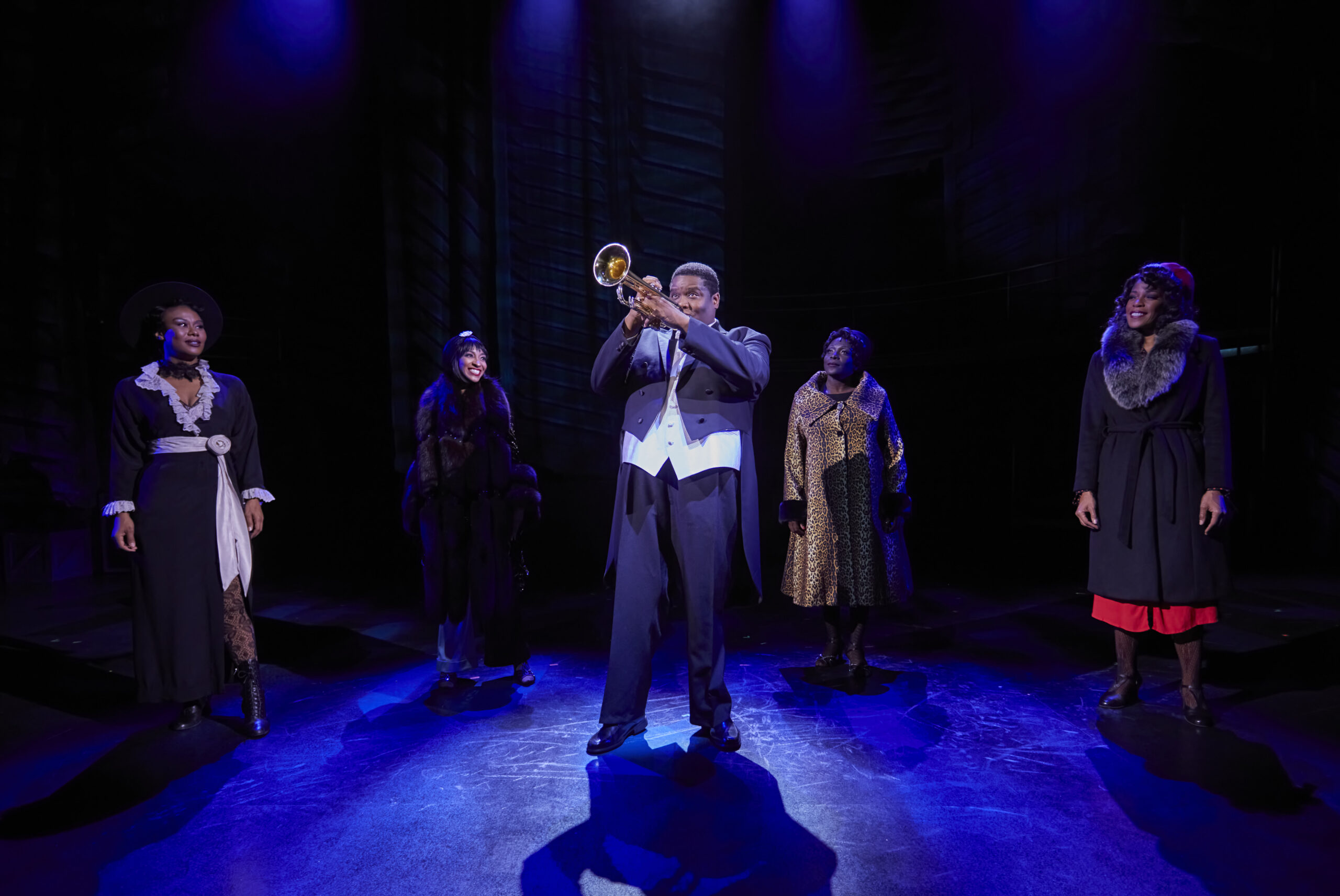
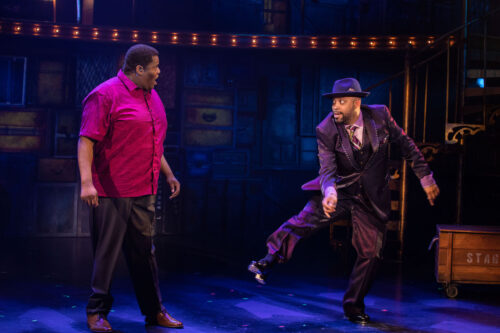

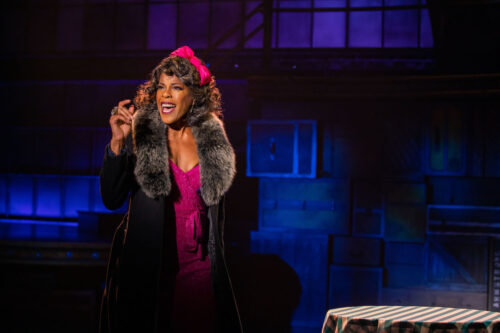






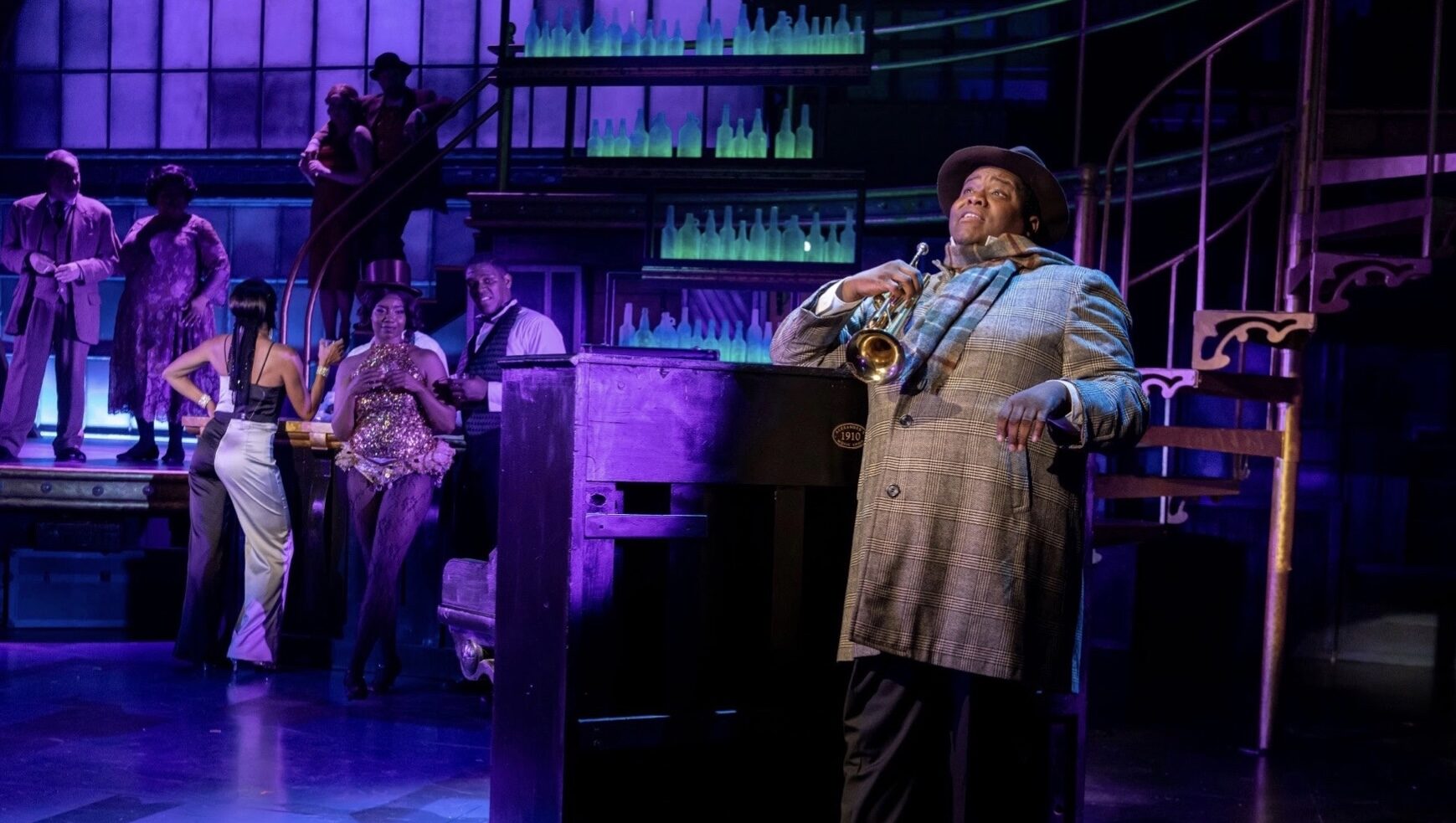
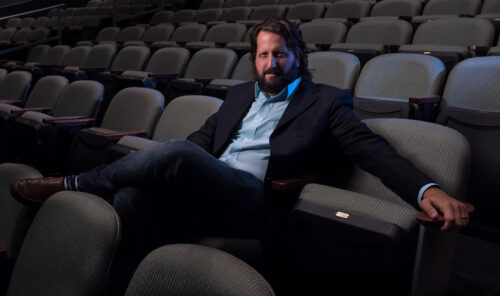
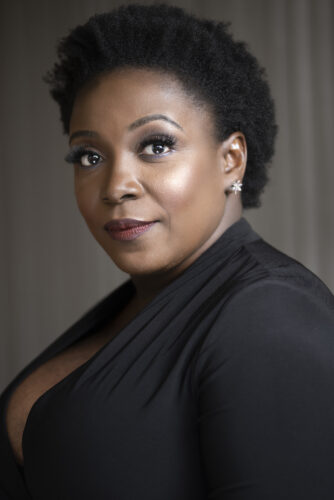

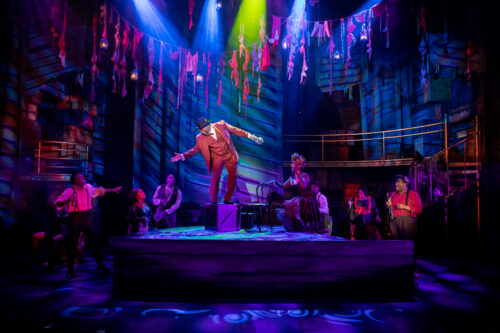
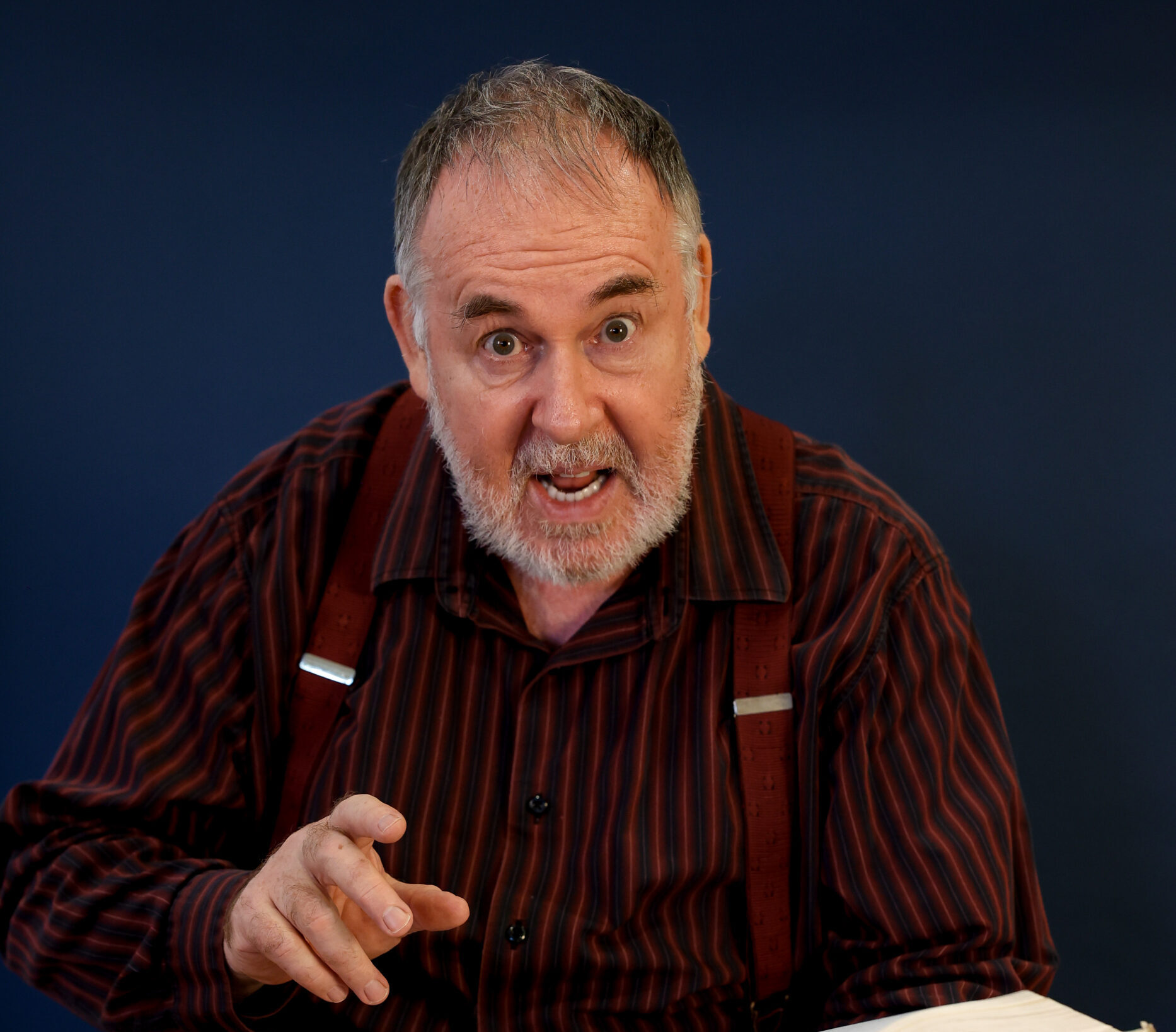
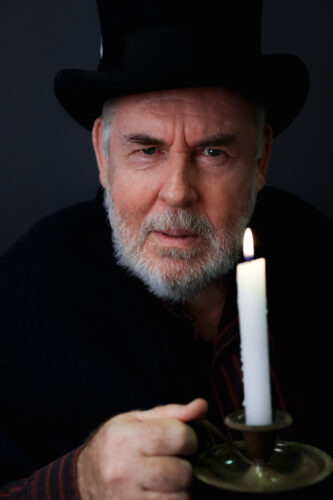
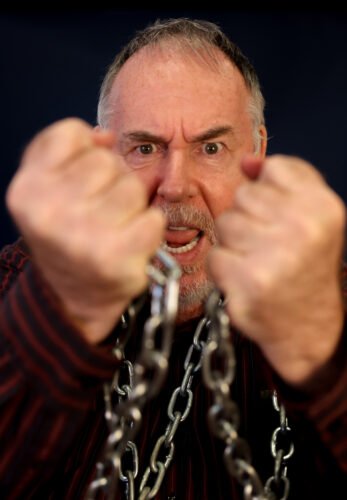



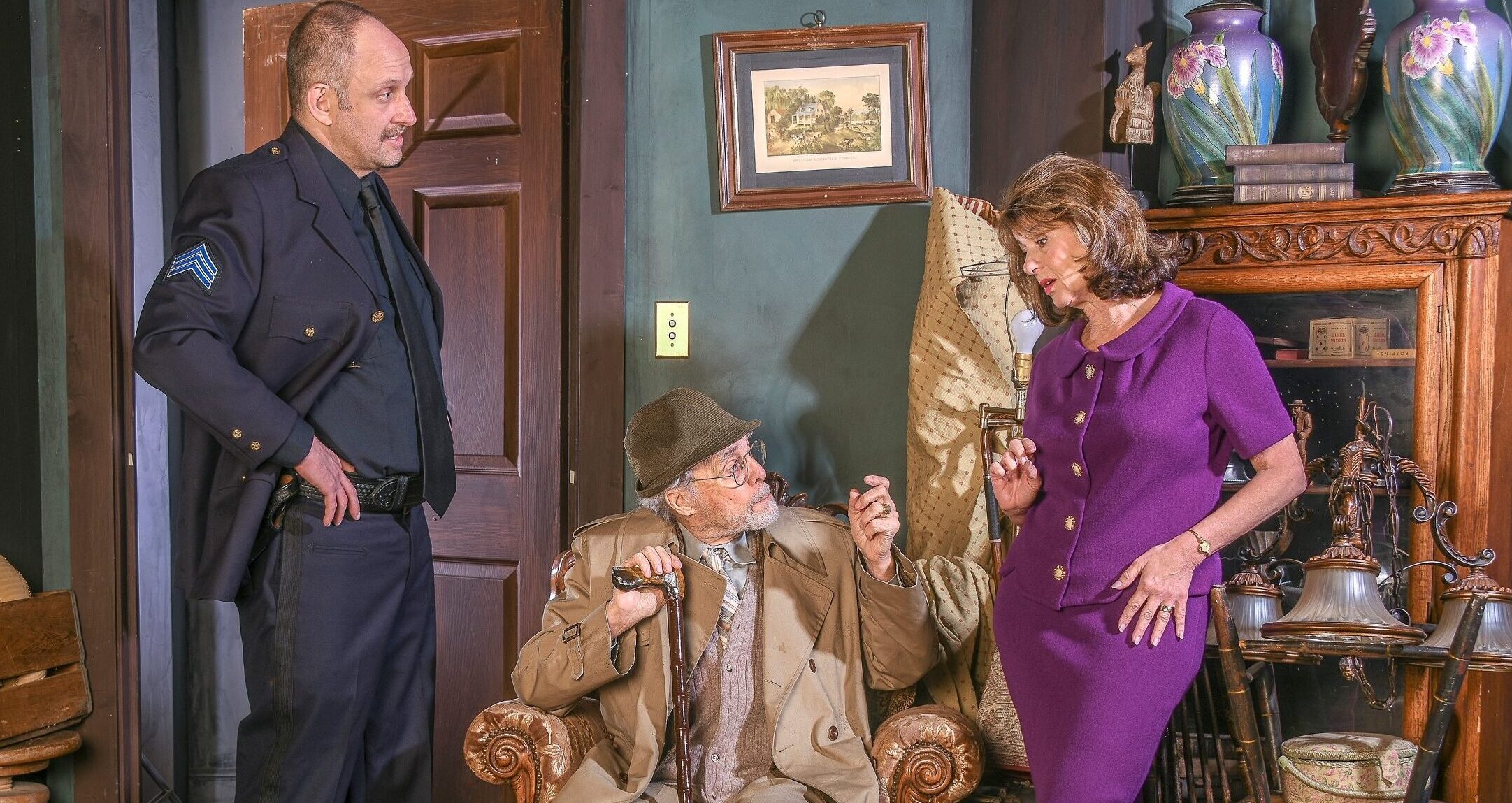
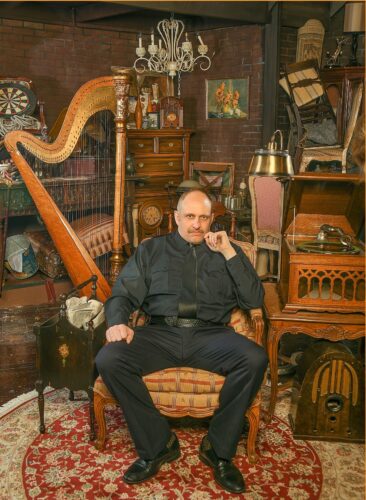
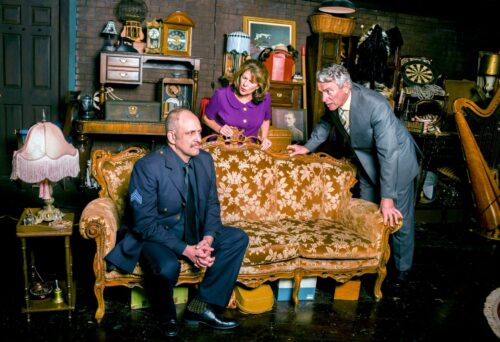


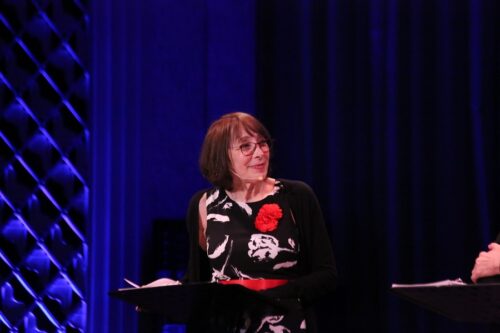
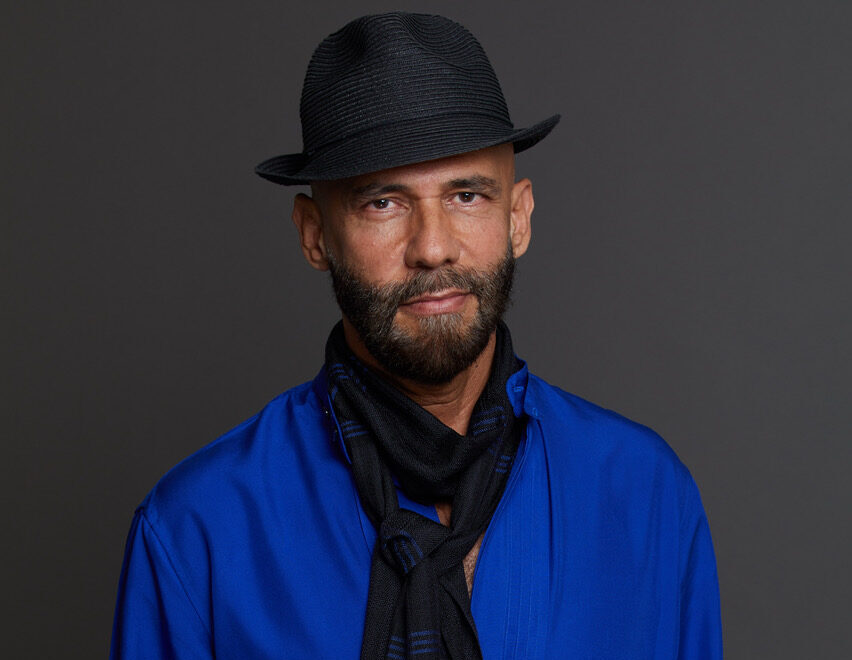
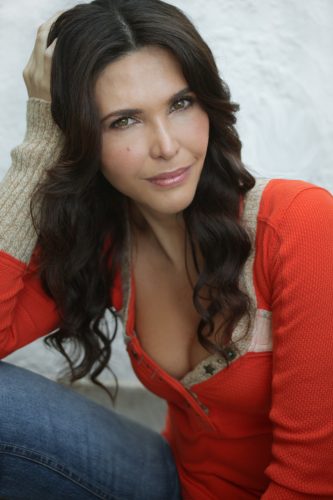


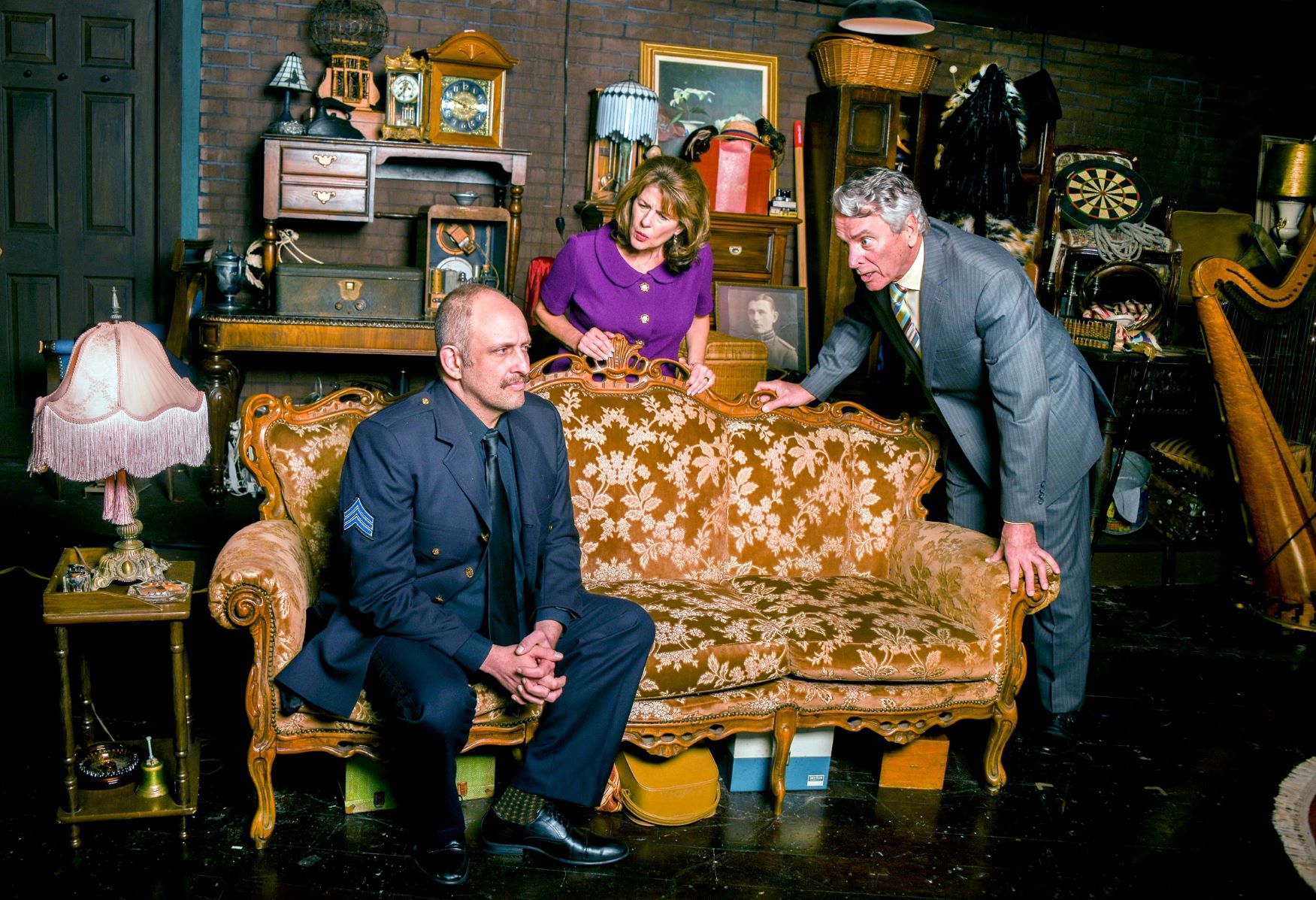





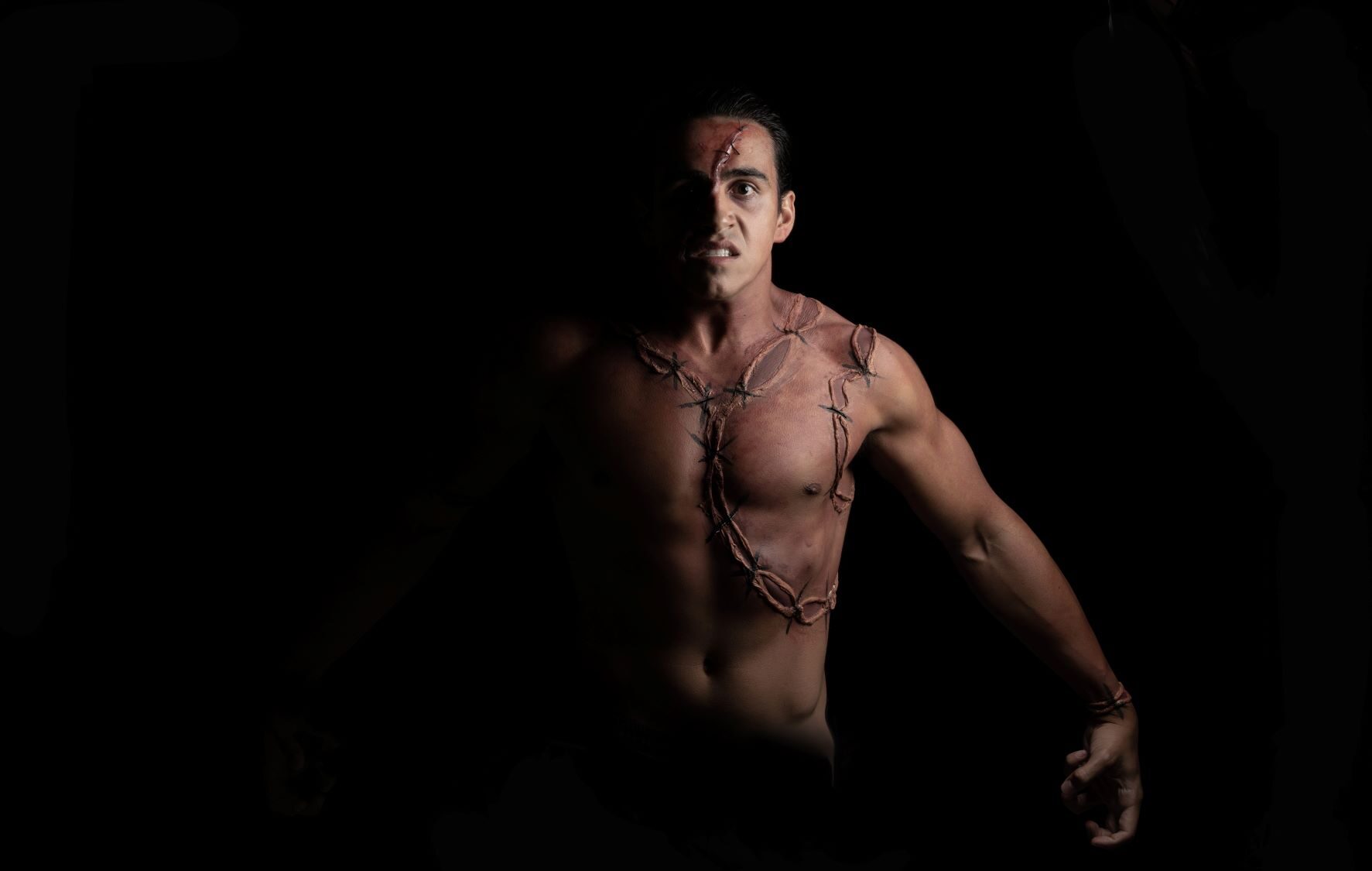



Recent Comments