Alvin Ailey dance company returns to South Florida – showcasing the works of 2 Miami alums
Written By Jordan Levin March 3, 2022 at 12:38 AM
Members of the Alvin Ailey dance troupe perform Jamar Roberts’ “Holding Space” at the Adrienne Arsht Center’s Ziff Ballet Opera House. (Photo/Daniel Azoulay)
There was plenty to celebrate in the Alvin Ailey American Dance Theater’s return to Miami on Feb. 25-26, 2022: The exhilaration of gathering with other dance lovers at the Adrienne Arsht Center’s Ziff Ballet Opera House, a joyful annual ritual that was interrupted by two years of pandemic. The thrill of witnessing superb dancers. The emotional rush of watching founder Alvin Ailey’s iconic and beloved masterpiece, “Revelations.”
A particular reason for Miami to celebrate: The two artistic leaders of one of the largest, most famous and most important modern dance companies in the United States are from Miami-Dade County.
Liberty City-raised Robert Battle marked 10 years as artistic director, with a program of his dances on Friday evening and Saturday afternoon. Saturday night’s show paid tribute to another Miami alum, star dancer Jamar Roberts, who is retiring from performing after 20 years but has started a vital new era as the Ailey troupe’s first resident choreographer.
“Two Miamians — there must be something in the water here,” said Battle from the stage on Saturday, grinning ear to ear. “Don’t tell the governor.” That was the only mention of politics in his warm, hometown-loving, pre-show speeches, which on Friday included shout-outs to his mother (“How am I doin’, mom?”), to other relatives (“My aunt is here. She taught me how to cook.”), and the community that fostered him.
In his speeches, Robert Battle mentioned Miami Northwestern Senior High School, where he started dancing, as well as Liberty City’s African Heritage Cultural Arts Center and NWSA. Battle became artistic director of Alvin Ailey in July 2011. (Photo/Daniel Azoulay)
Something else for Miami to be proud of — and take note of: Battle and Roberts, both from families with limited means, had their talent fostered in public school arts magnet programs, got crucial mentoring as boys from dedicated teachers who went far beyond their jobs, and graduated from the New World School of the Arts (NWSA), the city’s public arts education jewel. (At a time of attacks on public education, these two men’s achievements serve as an important reminder of what can happen when any child, not just those who can pay for private lessons, is able to participate in the arts.)
Both were inspired by seeing the Alvin Ailey troupe perform in school-sponsored trips. In his speeches, Battle also mentioned Miami Northwestern Senior High School, where he started dancing, as well as Liberty City’s African Heritage Cultural Arts Center and NWSA.
He did drop the knowing aside that “at Ailey, we celebrate Black History Month all year long.” But mostly, Battle celebrated the ability of dance, and the arts in general, to unite and lift us up in dark times.
“We need to really relish being here together,” he said on Saturday. “‘Revelations’ stands as an emblem of defiance, resilience, beauty, hope and faith. The notion that we can all come together in this space to celebrate beauty, and that this too shall pass.”
(Video interview with Jamar Roberts is courtesy of Florida International University’s Inspicio Arts e-magazine. Find more videos with Roberts by clicking here.)
The two men are very different choreographers. The Battle program on Friday was packed with seven of his pieces; most of them different stylistically, short and with small casts – a thorough choreographic sampler, but with little sense of an artistic throughline. All but one pre-dated Battle’s tenure leading the company.
“Mass,” the opener, was inspired by Battle’s childhood singing in church choirs, with 16 dancers in opalescent robes, set to a percussive commissioned score by John Mackey. They moved in precise, darting lines and circles into shifting, beautifully shaped formations, with small tense flurries of movement — soloists (Jeroboam Bozeman was excellent) emerging with urgent but still-taut bursts. The sense was not of exaltation, but of yearning constrained by regimented structure.
Company veteran Yannick Lebrun gave a marvelous performance in “In/Side,” a solo to Nina Simone singing “Wild is the Wind,” twisting and contorting as if emotional agony were literally turning him inside out. “Ella,” by contrast, was all lickety-split musical and physical playfulness, with an excellent Ghrai-DeVore Stokes and Samantha Figgins charming the audience in this blisteringly fast, witty mirroring of Ella Fitzgerald’s vocal pyrotechnics. It felt similar to “For Four,” with Ashley Kaylynn Green, Solomon Dumas, Belén Indhira Pereyra and Miranda Quinn stunning and charismatic in a virtuoso spinning, leaping, booty winding (with a hint of vaudeville) choreographic riffing on Wynton Marsalis’s “Delfeayo’s Dilemma.” (Two brief activist gestures, an image of an American flag and the dancers raising their fists in the air, felt out of place.)
From left, Solomon Dumas, Miranda Quinn, Belén Indhira Pereyra and Ashley Kaylynn Green perform Robert Battle’s “For Four.” (Photo/Daniel Azoulay)
Diminutive Kanji Segawa was impressive in “Takademe,” a humorous, quirky distillation of Sheila Chandra’s vocal scatting on Indian dance rhythms. “Unfold,” by contrast, was a swirling, yearning love duet, ecstatically danced by Bozeman and Jacqueline Green, to an aching Leontyne Price aria.
The Battle program concluded with his section of “Love Stories,” the final part of a three-part tribute to the Ailey company from 2004, which was his first commission from the troupe. Set to Stevie Wonder’s soulfully irresistible “Fingertips” (Parts 1 and 2), this was the most emotionally resonant of the Battle pieces, an evocation of the Ailey company’s legacy, of dance as struggle and triumph, as a way to move forward.
“The notion for me was getting out in the street, use your body against inequity,” Battle told me of “Love Stories” in a 2011 interview, as he prepared to become artistic director. “To me, that was a metaphor for the company — using your whole self to break down barriers.”
“Love Stories,” with 10 dancers, vibrated with a contradictory mix of anger, frustration, determination, flashes of bitter humor, cohering, finally, into joy.
In Saturday’s program, we got to see Roberts dance one last time, in his farewell solo, “You Are the Golden Hour That Would Soon Evanesce” — short, meditative, immensely moving. Set to a Jason Moran jazz piece, it opens with Roberts silhouetted, a towering, dark figure. He emerges into the light, flows fluidly through spirals, reaches, contractions, pauses, as if his countless memories of dancing were surfacing naturally through his body, thought seamlessly translated into movement. One of the marvels of Roberts as a dancer was watching such a big, powerful man (he’s 6’4”) move with such softness and fluidity, a quality that took on an added poignance in “Golden Hour.” He finished as he began, returning to darkness, disappearing from the stage, but not from our memories.
Especially not since Roberts will be making pieces like “Holding Space,” a powerful evocation of the anxiety and isolation of the early stages of the pandemic. It’s set to stark electronic music by Tim Hecker, with 13 dancers in loose white pants and tops (designed by Roberts) that evoke both pajamas and asylum inmate uniforms, and Brandon Stirling Baker’s harsh white lighting adding to the tension. Roberts’ choreography has an organic quality that gives the dancing, and structure, an intoxicating sense of natural flow. It seems to radiate from the Ailey dancers as naturally as their breath.
Both performances ended with “Revelations,” which the audience welcomed like a longlost family member. (Photo/Daniel Azoulay)
They start in squares of light, each dancing differently, as if trapped in apartments or their own heads. Later, women dance alone inside a big box frame and others rotate around them, as if inside a shifting social isolation bubble. “Holding Space” finishes with a sense of resolution —golden light, the dancers, still separated, but moving, calmly, determinedly, together.
Saturday’s show included an early company classic, “Cry,” the 1971 solo that Alvin Ailey made for his muse, Judith Jamison, and dedicated to “all Black women everywhere — especially our mothers.” Jacqueline Green’s commanding performance showed us that this masterpiece, with its strikingly sculpted, dramatically resonant images, endures beyond its original interpreter. “Cry” evokes desperation, anger, exhaustion, mourning, struggle, work, determination, and a sense of joyous resolution that brought the audience at the Arsht Center to its feet. Fifty years later, “Cry” is still relevant.
Both performances ended with “Revelations,” which the audience welcomed like a longlost family member, especially Saturday’s livelier rendition. After a two-year absence, it was a joy to experience this perpetually powerful, emotional, jubilant gospel masterpiece. “Revelations” is its own ritual, for the troupe, and for audiences, an exultant affirmation of the power of the Ailey company and of dancing.
For information on the New York-based Alvin Ailey American Dance Theater, visit alvinailey.org. For more on the Adrienne Arsht Center for the Performing Arts of Miami-Dade County, visit arshtcenter.org.
Review: Miami enthusiastically welcomes Alexei Ratmansky’s vibrant, ‘restored’ version of ‘Swan Lake’
Written By Sean Erwin February 19, 2022 at 2:56 PM
Miami City Ballet’s “Swan Lake” is an Alexei Ratmansky revamp that’s currently touring South Florida performing arts centers. (Photo/Alexander Iziliaev)
A few decades back, controversy erupted around restoration work on a famous Italian chapel. Some disliked the new striking and vibrant hues, preferring the familiar, softer colors, and found the restored sections jarring. A number even asked whether the project should continue.
On Feb. 11-13, 2022, the Miami City Ballet debuted the North American premiere of choreographer Alexei Ratmansky’s “restored” production of “Swan Lake” at Miami’s Adrienne Arsht Center for the Performing Arts, restaging the 1895 version by Marius Petipa and Lev Ivanov.
Judging by the standing ovations from the packed house during Friday evening and Saturday and Sunday matinee performances, the South Florida audience appeared to have the opposite reaction — enthusiastically welcoming this vibrant, “restored” version, notable for its clarity of structure, its gorgeous music, scenery and costuming, its elite-level performances, and above all, its presentation of a very human story where virtuous and vicious characters brim with both strengths and frailties.
The three-act ballet tells the story of a woman named Odette who is enchanted by the “evil genius” Von Rothbart. By day, Odette and her court become swans. At night, they return to human form. The spell can only be broken by Prince Siegfried, but Von Rothbart tricks him into pledging himself to an Odette doppelganger – the “Black Swan” Odile – and Odette’s chance for freedom is lost. Odette and Siegfried then drown themselves, breaking the enchantment and freeing their love for the next life.
Miami City Ballet dancers in a grand scene from Act I of “Swan Lake” at the Arsht Center for the Performing Arts. (Photo/Alexander Iziliaev)
Ratmansky’s new interpretation depends on his study of the original 1895 production as preserved in Stepanov notation (a shorthand for writing down dance movements). It removes features that define later versions of the Petipa/Ivanov classic, which may be jarring to those audiences who know and love them.
But there are clear advantages to Ratmansky’s “restored” version. For example, dancer Cameron Catazaro performed a wonderfully theatrical Von Rothbart throughout the weekend opening – portraying this balletic bad guy not as an otherworldly genie but as an “evil genius” who is completely human. Although he’s still vicious, Catazaro played up the sorcerer’s comic side as well when he coached Odile on how best to manipulate the young prince during the Act II pas de deux. In a series of gorgeously pantomimed exchanges with Odette, we learn Von Rothbart possesses weaknesses she exploits to resist and, finally, defeat him.
Also, thankfully, Ratmansky’s “Swan Lake’ removes the Jester – a high-octane virtuosic role for a male principal – to immediate positive effect. Act I, Scene 1 traditionally has the Jester making moves on the girl in the yellow dress during the opening pas de trois, and his actions distort her delicate sequences as she shoos him off. The absence of this character cleared space for both Samantha Hope Galler on Friday and Sunday and Ellen Grocki on Saturday to shine as they hopped and circled en pointe.
Obvious care and much commitment went into bringing this revamped “Swan Lake” version to South Florida stages. (Photo/Alexander Iziliaev)
Ratmansky drains a lot of the “swanness” from this “Swan Lake,” and it’s a good thing. According to the libretto’s logic, audiences never see Odette as a swan, since she only appears in dance sequences during night scenes. And yet, most versions have Odette incessantly flapping her arms.
Ratmansky has taken this out, freeing Jennifer Lauren to display masterful upper body nuance in the role of Odette on Saturday and Sunday. With less energy poured into flapping her arms, Lauren forged a bond with Rainer Krenstetter (as Siegfried) with the tilt of her chin or by subtly opening and closing the space between neck and shoulder.
A Ratmansky addition to Act I is the role of Siegfried’s best friend, Benno, who acts as a second partner (with Siegfried) to Odette during the Scene 2’s “Adagio.” Dancer Damian Zamorano was a weekend highlight both in the role of Benno and as the male dancer in the opening pas de trois.
When Benno supports Odette through a pivoted penchée, he gives Siegfried the space to admire her – and their relationship showcases trust and affection between men as Siegfried’s no-drama wingman. Zamorano cued this by placing a hand over his chest and lowering his gaze to show his respect for the couple, another example of the exquisitely pantomimed sequences the Ratmansky version includes.
Another important difference evident in the Ratmansky remake is the character of Odile, whose Act II seduction of Prince Siegfried crushes Odette’s chance for freedom from the spell. Far from Natalie Portman’s black-costumed swan featured in the 2010 film, Ratmansky’s Odile wears a dress layered in plum, teal and sparkly black tulle with a black and emerald-green bodice. This Odile is no swan, but rather a twisted, self-centered human.
A striking scene from Miami City Ballet’s “Swan Lake.” (Photo/Alexander Iziliaev)
Replacing an injured Nathalia Arja on Friday, principal Katia Carranza performed an Odile that was an equal partner to Von Rothbart’s viciousness in her Act II pas de deux with Prince Siegfried (performed on Friday by Renan Cerdeiro). The role of Odile takes balletic technique beyond the limits of the traditionally correct, and Carranza captured this in deliberately exaggerated backbends or sharp turns in attitude that projected power as Von Rothbart looked on from the throne, casually stroking his red beard.
Notable as well on Friday was Cerdeiro’s variation, in which he exhibited clearly defined beats of his feet and legs snapping in sailing cabrioles, landing in solidly planted arabesque.
Jerome Kaplan’s costuming and scenery presented detailed mountain landscapes and a palette of pastel fabrics accented with bright splashes of ribbon and flower baskets for the peasant dances of Act I, lovely ankle-length gowns with waist-length open sleeves for the fiancees of Act III, not to mention the lemony skirts and bodices trimmed in mint blue for the Neapolitan dancers.
Following a straight-forward romantic agenda, “Swan Lake” is a musical vehicle for connecting the audience with love of freedom as a transcendent passion. As such, Pyotr Tchaikovsky’s 1877 score teams with quotations from Richard Wagner’s “Lohengrin” and “Tristan and Isolde.” Tchaikovsky even took heat from critics for the ballet’s operatic tone.
For the 1895 ballet, composer Riccardo Drigo drastically re-arranged the Tchaikovsky score, but its operatic flavor remains, making for demanding music.
During each Miami City Ballet performance, conductor Beatrice Jona Affron and the Opus I orchestra received deserved standing ovations. The orchestra shifted seamlessly to accommodate the composer’s different musical styles and moods. Notable solo performances included concertmaster and principal violinist Mei Mei Luo, principal harpist Deborah Fleisher and principal oboist Erin Gittelsohn.
Renan Cerdeiro (Siegfried) and Katia Carranza (Odile) in Act II of Alexei Ratmansky’s “Swan Lake.” (Photo/Alexander Iziliaev)
Ratmansky’s adaptation does not change all of the known features of the original. However, in MCB’s “Swan Lake” premiere, neither Carranza nor Lauren went beyond 27 fouettés for Odile’s dance in the coda. Odile’s 32 fouettés were a feature specifically written into the 1895 Ivanov/Petipa “Swan Lake” premiere for Italian sensation Pierina Legnani, who had previously executed 32 fouettés in the 1893 premiere of “Cinderella.”
Ratmansky himself has emphasized the importance of this bravura step for the restored version, so it was unclear why the ballerinas didn’t do them (though concern over injuries may be a culprit here, with the company announcing the sidelining of principals Carranza and Arja).
A special guest artist, Boston Ballet principal Viktorina Kapitonova, was invited to perform the Feb. 19-20 evening performances at the Kravis Center for the Performing Arts in West Palm Beach. Ratmansky personally selected and coached the acclaimed Russian dancer, who originated the role of Odette/Odile at Ballet Zürich, when the new version had its European premiere in 2016.
Six years in the making, and a pandemic later, this “Swan Lake” shows that much commitment and obvious care went into bringing the revamped classic to South Florida stages.
The remaining performances of Alexei Ratmansky’s “Swan Lake” are in Broward and Palm Beach counties. Catch it Feb. 19-20 at the Kravis Center for the Performing Arts, 701 Okeechobee Blvd., West Palm Beach; and Feb. 26-27 at the Broward Center for the Performing Arts, 201 SW Fifth Ave., Fort Lauderdale. Tickets start at $37 and are available via miamicityballet.org/swan. For safety protocols, visit kravis.org/healthsafety or browardcenter.org/visit/health-safety-guidelines.
Karen Peterson and Dancers reflects on cycle of life in ‘Samsara’
Written By Sean Erwin February 15, 2022 at 5:13 PM
Penelope Huerta, Sun Young Park and Barny Espinal make up a cast of eight adults performing in KPD’s “Samsara.” (Photo/Lisa Nalven)
Anyone who enjoys exercise or sports can remember moments when aches and pains prompted a change of routine. For choreographer Karen Peterson, decades of dance eventually led to twin hip replacement surgeries. But after recovery, she experienced a freedom in movement she hadn’t felt in years.
“I rediscovered the joy of movement when I again had everything working and did not have pain anymore,” said the artistic director of Karen Peterson and Dancers (KPD), one of Miami’s foremost physically integrated dance companies. “I have three grandchildren and I’m getting older, and some of my dancers are getting older, and so I began reflecting about the cycle of life.
“We are all going to the same place in the end, whether we have one or two legs, one or two arms.”
Her recent experience of post-op physical renewal — alongside discussions with her dancers about familial life and parental memories — are at the heart of KPD’s latest program, “Samsara” (the Sanskrit term referring to the cycle of life). With three mothers in her company, “Samsara” places special emphasis on the theme of family.
“This program is a narrative inspired by sharing very personal stories about our families,” Peterson said. “We realized we had the family of Karen Peterson Dancers, but we also had our own original families. Of course, a lot of love comes out when sharing about that subject, but also fear and distrust. We take those personal histories and put it in our bodies.”
Sun Young Park and Adam Eckstat. (Photo/Lisa Nalven)
Peterson sampled gestures and movements from improvising on those histories in the studio and made them the basis for her choreographies. Inspirations for the movements began with the mothers among the dancers and then were passed on to the rest of the company. Peterson decided to incorporate three of the dancers’ daughters, all younger than age 5, by giving them a loose improvisational structure and pairing them with their mothers for the performance.
She also turned for inspiration to the Gaga dance technique, developed by Ohad Naharin, artistic director of the Israeli dance company, Batsheva. Naharin’s large, improvisational classes encourage students to generate movements from an inside place.
“Gaga is very physical and very taxing, and [Naharin] holds these improvisational sessions for people in wheelchairs. I was asking the dancers to relearn their bodies and how to communicate physically,” she said.
“During Naharin’s classes, company members move so freely and give off the feel that they are totally aware of every bone in their body and every muscle,” Peterson continued. “They move with 100 percent of their physical self. He reminds the class that they are not pieces of furniture. Everything is totally connected.”
Peterson finds this to be especially true for wheelchair dancers.
“For PI (physically integrated) dance, it’s about one’s physicality in the chair – there is life in your spine and life in your ribcage, so it’s about relearning how to be a physical dancer,” she said. “After I convince a dancer with a disability that they can be a dancer and expressive mover, we begin to think about how they can make their body an expressive tool. I’m trying to give the dancers a new sensation.”
The cast of “Samsara” includes eight adult dancers – Penelope Huerta, Barny Espinal, Sun Young Park, Adam Eckstat, Marjorie Burnett, Lisa Sandelin, Shawn Buller, and Monica Lynne – and three children: Sara Sofia Vasquez Huerta, Eleah Espinal and Julissa Espinal.
COVID-19 recovery money from the National Endowment for the Arts (NEA) gave the company some extra support.
“Recovery money from the NEA has been helpful to give us some extra time for rehearsal in the studio than we might have had in the past when preparing a program,” Peterson said.
Barny Espinal with Eleah Espinal, 6, along with Marjorie Burnett and Sun Young Park with Julissa Espinal, 2. (Photo/Lisa Nalven)
The hourlong “Samsara” also includes video elements created by Miami visual artist Maria Lino.
“I’ve been doing video art since the mid-’70s as part of my interest in the visual arts,” Lino said. “For ‘Samsara,’ I watched the different rehearsals and concentrated on what the choreography was trying to say. I requested the dancers be dressed in black with red scarves, and we’d arrange the rehearsal space.
“I tried to show close-ups of the hands, faces, and also high angles – viewpoints the audience usually doesn’t get to see. Then I’d enhance elements like lighting in the editing process,” she added.
The current program represents Lino and Peterson’s fifth collaboration. Their last project, “Warmamas,” debuted at the storied Judson Memorial Church in New York’s Greenwich Village in 2019.
“Maria Lino shot a lot of footage [for ‘Samsara’], and then she would pick and choose moments from the choreography. She then expanded and played with them,” Peterson said. “Some of the images fade in and fade out, they are very abstracted, or they may occupy a part of the screen … They are sometimes integrated into the dance and sometimes she makes a video statement that stands on its own.”
WHAT: Karen Peterson & Dancers presents world premiere of “Samsara”
WHEN: 8 p.m. Feb. 18-19, 2022
WHERE: Miami-Dade County Auditorium’s On.Stage Black Box, 2901 W. Flagler St., Miami
COST: $25 for general admission; $20 for students and seniors
ALEXEI RATMANSKY, HIS ‘SWAN LAKE’ RECONSTRUCTION AND ITS LONG-AWAITED PREMIERE BY MIAMI CITY BALLET
Written By Orlando Taquechel February 7, 2022 at 9:20 PM
Carlos Quenedit and Katia Carranza as Siegfried and Odette in Alexei Ratmansky’s “Swan Lake.” (Photo/Gary James)
Choreographer Alexei Ratmansky’s reconstruction of the original staging of Marius Petipa and Lev Ivanov’s “Swan Lake” will finally have its North American premiere on Friday, Feb. 11, 2022, at the Adrienne Arsht Center for the Performing Arts in Miami.
This reconstruction has its origin in the notations of repertory works created under the supervision of Nikolai Sergeev (1876-1951), dancer, choreographer and régisseur of the Mariinsky Ballet from 1894 to 1918. When Sergeev left Russia, he took the notations with him.
Almost three years have passed since Lourdes López, artistic director of the Miami City Ballet (MCB) and “A Life for Dance” award honoree at the last International Ballet Festival of Miami, announced in March 2019 the premiere of “Swan Lake” as the great event of the company’s 35th anniversary season. We all know what happened next with the appearance of COVID-19.
Miami City Ballet dancers in a rehearsal of “Swan Lake.” (Photo/Alexander Iziliaev)
Ratmansky needs no introduction because MCB already has three of his works in its repertoire: “Symphonic Dances” (2012), “The Fairy’s Kiss” (2017), and “Concerto DSCH” (2018). So, taking advantage that he’s in Miami supervising the last rehearsals, we asked him several questions.
Q: What does MCB have that makes you come back?
A: Balanchine’s and Edward Villella’s heritage, Lourdes López’s leadership, and the dancers’ trust and friendship.
Q: To what do you attribute the appeal and popularity of Petipa/Ivanov’s “Swan Lake” 126 years after its original staging?
A: To the truly great score, beautiful and poetic story, and genius choreography.
Alexei Ratmansky and Carlos Quenedit prepare for the big premiere. (Photo/Alexander Iziliaev)
Q: What have been the biggest challenges in reconstructing the original Petipa/Ivanov choreography?
A: There are some original steps that are extremely difficult, even for today’s dancers. Also, it’s not easy to get the pantomime right because the dancers (and the spectators) now have little understanding of it. The mime must be alive and interesting to watch. We are working on it.
Q: What has been the greatest satisfaction?
A: To see the logic and the inspiration of the original choreographers making it back into the ballet they created in 1895. To see it come alive.
Alexei Ratmansky, Tatiana Ratmansky, and Lourdes López during a “Swan Lake” rehearsal. (Photo/Alexander Iziliaev)
Q: How do you make sure a reconstructed classic does not end up being a work of interest only for the “connoisseurs”?
A: By inspiring the dancers to make it their own.
Q:How reliable are the notations of the time to affirm that what we will see is the original version? For example, is another choreographer possibly presenting a different reconstruction from the same annotations?
A: The notations show the choreography performed during Petipa’s lifetime (the early 1900s). It’s the closest we can get to the original 1895 choreographic text. If the stager follows precisely what is notated, the result will be more or less the same. However, there are some gaps in the notation. And that needs to be filled according to the taste and knowledge of the stager.
Q: The first staging of this reconstruction was in Zurich and the second in Milan. In an interview, you compared both productions and explained their differences. How different is the Miami version?
A: The Miami version is closer to Zurich’s in terms of the number of dancers on stage (the La Scala company is bigger). Hungarian and Goblet dances are slightly reworked. For some casts, we separated the role of Benno and the male lead in Pas de Trois (as it was in the original). In Zurich and Milan, it was performed by one person. But some MCB dancers are going to perform both roles at once.
Q: How has the experience of staging “Swan Lake” been with the MCB dancers?
A: It pushes the MCB dancers out of their comfort zone. But they are willing to go for it, and that’s been very satisfying. I am not talking about the obvious COVID-related challenges, like rehearsing in masks, postponements, cancellations, etc. The last two years have been extremely difficult for ballet people.
Katia Carranza and Carlos Quenedit during rehearsals. (Photo/Alexander Iziliaev)
Q: Today, it must be difficult to find dancers who do not have a set idea of interpreting the main characters – Odette/Odile, Prince Siegfried – of “Swan Lake.” So how do you work with those who have already performed other versions?
A: Every major company has its production of “Swan Lake,” so the ideas vary. I can always say if the dancer has a pre-established idea of a role and then I try to navigate them toward the new understanding gently.
Q: In Miami, a large audience of Cuban origin loves ballet and knows the version of the “Swan Lake” by Alicia Alonso, “based on the original by Marius Petipa and Lev Ivanov.” Do your reconstruction and Alonso’s interpretation have something in common?
A: Alonso is probably my favorite interpreter of the Odette/Odile role ever. Her dancing in American Ballet Theatre’s Alexandra Fedorova production that I saw in the New York Public Library is pure genius. But any version that claims to be “based on the original,” in reality, is never based on the original. Instead, it is based on earlier interpretations of other interpretations, which were based on the original at some point. I am not saying that these versions don’t have artistic merit, not at all. It’s just that my goal is different and very specific. I want to present the “Swan Lake” choreography created by two great masters, Petipa and Ivanov. Luckily, the notations made by Nikolai Sergeev and his colleagues at the Imperial Ballet make this improbable task possible. And I am grateful that Lourdes López is as inspired by the idea as I am.
Q: Finally, are you planning to return to Miami for opening night?
A: How could I miss it?
Miami City Ballet will perform “Swan Lake” from Feb. 11- 13, 2022, at the Adrienne Arsht Center’s Ziff Ballet Opera House, 1300 Biscayne Blvd, Miami. The Arsht Center requires masks and a recent negative COVID-19 test or proof of vaccination. To purchase tickets (starting at $37), visit tickets.miamicityballet.org/events.
To read the Spanish-language version of this story, click here.
Maya Billig’s ‘Gate Closes at 3:05’ aims to provide a post-apocalyptic safe space
Written By Sean Erwin February 3, 2022 at 9:58 PM
Miami choreographer, dancer and filmmaker Maya Billig in her latest work, “Gate Closes at 3:05.” (Photo/Brianna Campbell)
People coped differently when the pandemic interrupted life. Some turned to gardening, some learned to cut hair, others baked. For Miami choreographer, dancer and filmmaker Maya Billig, the shutdown of arts performances triggered her impulse to create new work.
“My natural response when things start going haywire is to create and that naturally flows out of me in times of pressure,” Billig said. “During the pandemic is when my work as a choreographer really took off. We were finally able to go into the studios with one or two other dancers, and creating became my means of survival.”
Billig’s latest work, “Gate Closes at 3:05,” will show at 8 p.m. Feb. 4-5, 2022, at The Light Box at Goldman Warehouse, 404 NW 26th St., Miami. The show has its origins in “A Lot,” an experimental piece staged in a parking lot and performed in December 2020 with support from a Knight Foundation New Work grant and the Miami Light Project. Some of the challenges of staging that work included dancers becoming sick in the weeks leading up to the performance.
Many of those challenges to art-creation persist today.
“I am still dealing with this, because if one dancer gets sick then what then? It really feels like the Wild West out here trying to make art,” Billig said. “But art making has been my lifeline throughout all of this.”
Billig, a 2019 graduate of Miami’s New World School of the Arts, grew up in Coconut Grove, where she still lives.
“I was raised by old Grove hippies,” she said. “My grandparents came from New York when the art and music scene was booming in the Grove.”
Traveling informs her creative process. She regularly takes two-month solo trips, soaking up the sights and smells that then find their way into her work.
Billig drew inspiration for the hourlong “Gate” program from the Netflix outer space Western, “Cowboy Bebop,” and from her experience at warehouse ruin bars while traveling in Budapest.
“I would put my new work in a dance theater category with modern roots like hip-hop and house dancing weaved into a modern style,” Billig said. “The set design resembles Cowboy Bebop as well as bars in Budapest where they had turned ruined buildings into bars and clubs that were these eclectic mixes of things and furniture.
Rafael Ruiz in “Gate Closes at 3:05.” (Photo/Maya Billig)
“This program will be a surreal experience for audiences with four characters —performed by dancers Rafael Ruiz, Brianna Campbell, Marisa Fernandez and myself — with intertwining back stories.”
The key to Billig’s new program is the live music, specially composed for the performance, that blends electronic house music with Fats Waller tunes and meditation sounds.
“It is this which makes it surreal,” Billig said. “Working on this, I was thinking of Edgar Allen Poe’s ‘The Masque of the Red Death,’ where there is a party inside while all this death is happening outside. The speakeasy idea is the idea of the dance space as a kind of haven and, when I made this. I was missing going out to dance.”
Billig turned to musicians Charles Levine of Soul Clap, Phill Celeste (also known as Life on Planets) and Greg Paulus of No Regular Play. The three joined up in Miami for a week of 12-hour days to compose the soundscape for “Gate Closes at 3:05.”
“I’ve always wanted to see how this fine arts dance world would blend with this historical house music scene,” Billig said.
The idea of art as a haven and refuge is central to this experiment, and Billig sees it as a thread running through her body of work.
The cast is made up of Rafael Ruiz, Brianna Campbell, Marisa Fernandez and Maya Billig. (Photo/Enrique Villacreses)
“I’m so drawn to creating these surreal spaces, because for a short period of time the audience is in a suspended state, and in that suspended state there is an opportunity for people to renegotiate their beliefs and understandings,” Billig said. “This is the root of why we go to the theater.”
“Gate Closes at 3:05” attempts to create a safe space by integrating audience and performers within the theater.
“The musicians will speak throughout the performance, and at times the dancers will form part of the audience as well,” Billig said. “Some of the dancers will sit at tables with members of the audience. Dancers will look audience members in the eye and even pass things to the audience. The program starts with one of the dancers coming out and literally smiling at everyone as acceptance of the fact that we are here and they are here and we are completely aware of that.”
WHAT: “Maya Billig: Gate Closes at 3:05”
WHEN: 8 p.m. Feb. 4-5, 2022
WHERE: The Light Box at Goldman Warehouse, 404 NW 26th St., Miami
COST: $15-$25
SAFETY PROTOCOLS: Must wear a mask inside the building (including audience members who are age 2 and older). Must provide proof of full vaccination or of a negative COVID-19 test completed within 72 hours. Temperature will be checked.
Cuban Classical Ballet of Miami presents ‘An Evening in White’
Written By Orlando Taquechel January 28, 2022 at 4:05 PM
Arianne Lafita and Vittorio Galloro in “Swan Lake.” (Photography: Aldo Palosci; courtesy of Cuban Classical Ballet of Miami)
Under the artistic direction of Eriberto Jiménez, the Cuban Classical Ballet of Miami (CCBM) returns to the Jackie Gleason Theater in Miami Beach to offer a unique performance titled, “An Evening in White,” dedicated to the so-called white ballets of the Romantic repertoire of the 19th century.
The program promises to be a beautiful concert with guest stars, on the stage where some of the company’s most successful performances have taken place, and includes fragments drawn from masterpieces such as “Giselle” (1841), “La Bayadère” (1877), “Swan Lake” (1895) and “Les Sylphides” (1909).
(Video courtesy of CCBM)
The insertion of “Les Sylphides” in the program deserves an explanation for not being a work premiered during the 19th century. This short piece in one act (with music by Frédéric Chopin and choreography by Michel Fokine) is for some a late white ballet and, for others, a nostalgic exercise that resurrects the style and pays homage to its predecessors.
However, the justification for its appearance in “An Evening in White” is simple. While the other three selected titles are examples of the genre because they contain a scene where the dancers wear white and move like ethereal beings, “Les Sylphides” is a white ballet in form and content, from beginning to end.
“Las Sílfides.” (Photography: Alberto Romeu; courtesy of CCBM)
At the time, the white ballet turned out to be the perfect choreographic solution to represent the spirituality of the drama of love that manages to manifest itself beyond death, without forgetting that in terms of staging, it meant a vital contribution to the development of ballet with argument.
You can substitute without significant consequences the csárdás for polka in “Swan Lake,” but you cannot change the swans for Willis without affecting the story and destroying its essence.
Although its original premiere – choreographed by the Czech Julius Reisinger – was in 1877, “Swan Lake” as it is known today comes from the 1895 revival made by the Frenchman Marius Petipa and the Russian Lev Ivanov for the Imperial Ballet of the Mariinsky Theater in St. Petersburg.
Promotional poster. (Images: Simon Song; design: Camilo Rubio; courtesy of CCBM)
In their “Lake,” there are two imperishable pas de deux of irrefutable beauty. The first is the love duet of the second act, performed by Prince Siegfried and Odette, the Queen of the Swans. The second, known as “the pas de deux of the Black Swan,” appears in the third act, is danced by Siegfried and Odile, and includes the famous 32 fouettés. Odette is a white swan; Odile is a black swan.
For “An Evening in White,” CCBM has selected the pas de deux of the second act for obvious reasons, and the Cuban dancer Arianne Lafita with Italian dancer Vittorio Galloro will be its interpreters on Saturday night. Both will be returning to Miami only to participate in this function. They will also give life to another emblematic Romantic couple (Giselle and Albrecht) in the pas de deux of the second act of “Giselle.”
For its part, “Les Sylphides” will be performed by Ihosvany Rodríguez as the young poet who goes for a walk and meets the feminine spirit of the air, represented by Astrid Arvelo, Mayrel Martínez, and Natali Alvarez.
Gretel Batista and Ihosvany Rodriguez in “La Bayadera.” (Photography: Simon Soong; courtesy of CCBM)
In “La Bayadère” (with music by Ludwig Minkus and choreography by Marius Petipa), Rebecca Storani, Ihosvany Rodríguez, Astrid Arvelo, Eleni Gialas, and Natali Alvarez will dance the parts of the main couple and the soloists, in the scene known as “The Kingdom of the Shades.”
But Lafita and Galloro are the big attraction of “An Evening in White” because they both left a charming impression on us in 2011 when they participated in Miami’s XVI International Ballet Festival.
“Miami audiences are very enthusiastic and grateful to the artists. When we performed at the festival in 2011, it was a very nice experience, because even though they were our first international appearances, people appreciated our art,” they tell us when we communicate with them via email.
What have they done since then?
“We have been dancing together for 11 years as independent First Dancers, performing almost the entire repertoire of classical ballet, neoclassical and contemporary pieces. In addition, we have performed as guests in many National Theatres and Operas in Europe, Russia, Asia, and Latin America. In fact, on Wednesday, Jan. 26, before traveling to Miami, we will perform with the full ballet ‘The Nutcracker’ in a performance for the Centennial of the Bucharest Opera.”
Arianne Lafita y Vittorio Galloro in “Giselle.” (Photography: Giovanni Caruso; courtesy of CCBM)
What does this trip to Miami mean to you?
“In these difficult times worldwide, the Cuban Classical Ballet of Miami, together with its director Eriberto Jiménez, is showing the high level that the art of ballet has in Miami and how important it is to give art and culture to the public. For us, it is a great pleasure and an honor to share the stage with the artists who will participate in this Gala. It is also a great joy to return to Miami and meet again with its wonderful audience. We are sure it will be an unforgettable night.”
“If you remove from your hearts the love of beauty, you will remove all the charm of life,” said Jean Jacques Rousseau, a Swiss writer, and philosopher revered by the Romantics.
But there is no reason to worry. Beauty has always been one of the objectives of art; the theme of Romanticism maintains its validity in our days, and the love of beauty is an acquired taste in the ballet-loving Miami audience.
WHAT: Miami Cuban Classical Ballet’s “An Evening in White”
WHEN: 8 p.m. Saturday, Jan. 29, 2022
WHERE: The Fillmore Miami Beach at the Jackie Gleason Theater, 1700 Washington Ave.
Peter London Global Dance Co. Finds Reasons to Celebrate in ‘Touch and Rain on Me’
Written By Sean Erwin December 22, 2021 at 4:36 PM
Peter London Global Dance Company- Photo by Osmany Torres
UPDATE: “Due to a breakthrough Covid-19 case, Peter London Global Dance Company: Touch & Rain On Me has been canceled for the remaining performances tonight December 30 and tomorrow December 31, 2021. The health and safety of everyone is of paramount importance.”
Homelessness, domestic abuse, loss of employment, intimacy and joyful activities – the list of the pandemic’s impacts goes on.
In its 11th season, the Peter London Global Dance Company tackles these pandemic consequences and still locates reasons to celebrate closing out 2021 in its newest program “Touch and Rain on Me,” at the Arsht Center’s Carnival Studio Theater.
Peter London – PLDGC Artistic Director and New World School of the Arts Professor of Dance — drew inspiration for the December program from the social consequences he saw unfolding around him during the Spring.
“We knew that homelessness was increasing across the country, and we saw what was happening in California and South Florida,” said London. “The pandemic then hit and people were being evicted. I found myself asking how would they even get clean water?”
Questions like this one prompted him to head to the beach where he created the solo — “The Streets” – danced by PLGDC dancer, Terrence Pride. London used found objects as props for the piece.
“A water bottle I found on the road became a face and that became his lady friend who kept him [Pride] company through the day and night,” explained London. “Being homeless you really have to innovate to survive.”
Incidents of domestic violence also spiked during the lockdown with so many people confined at home. London translated this violence some couples experienced into his second duet, “Touch Me One Last Time” – danced by Eden Collier and Rafael Del Vizo and set to the mellifluous lyrics of Billie Holiday’s, “Don’t Explain,” known for her share of relationships with abusive men.
Peter London Global Dance Company- Photo by Osmany Torres
“I originally created the dance and filmed it on a sidewalk between 73rd and 54th street walled in by hedges on either side and a hotel wall on another. The space is tight. The man and woman are forced into this tight space and having an argument,” said London. “He acts violently towards her but is also remorseful and loving at the same time.”
For London, human beings naturally thrive off the sensation of touch, but the pandemic made that dangerous.
“The whole idea of touch became something like a death sentence,” added London. “In situations of domestic abuse touch can cause death, and even if you escape you are out on the street.”
London carried this idea of the dangers of touch further in the duet, “Journey to Tea”. In the work London examines how the pandemic shaped the death experience for many families.
“We could only press our hands against the glass when our grandmothers and loved ones were dying,” continued London. “We sometimes only heard them for the last time on the phone. That was happening all over the place. The parents would bring their grandchildren to put their fingers against the glass.”
Originally shot as a film at 73rd and Collins, the dance begins with an Adam-like figure (danced by Aaron Lopez) lying on the floor and an Eve-like figure (danced by Nicole Pedraza) dancing to Japanese music with the sound of a waterfall in the background.
“She (Pedraza) does a wonderful rippling movement with her arms, like steam arising from the teapot,” explained London. “The two never actually touch one another no matter how close they get because there is that glass which separates them. We see tenderness and we see the frustration and tension of not being able to have an intimate relationship.”
The challenges of the pandemic persuaded London to create his dances both for live performance and film. “Back in May there was no guarantee there would be live performance at all. I thought, ‘If that happens when December comes I will have it and present it as a film.’”
For this London turned to Miami videographer and filmmaker, Carlos Ochoa. “Carlos put together a wonderful crew who were amazed and excited and dedicated and they were so glad to do what they do again.”
The pandemic’s ongoing power to generate uncertainties from one week to the next London captured in, “Urban Serengeti,” which ends the program.
“From week to week we don’t know what’s going to happen. We are living in an urban Serengeti with lots of loss of life, and we had to be alert just like the animals out on the Serengeti.”
Peter London Global Dance Company- Photo by Osmany Torres
Composed of three movements – Kalinda Wash, King Carnival, and Bacchanal Tuesday – “Urban Serengeti” is set to excerpts from “Creole Soul” – an album by Trinidadian composer, Etienne Charles as well as original music Charles composed specifically for the PLGDC program.
For London it was important the December program end on a joyful note. “Bacchanal Tuesday celebrates the closing of Carnival when all the bands play and thousands are in the streets. It is about getting back to life and a new year with new energy.”
However, for London, the December program also represents a homecoming and family reunion due to the presence of former students among the dancers.
“Brooke Logan – a local dancer who has assisted Jamal Roberts, Artistic Director of Alvin Ailey — has created a new piece for this program, “The Missing Link,”” said London. “I’ve taught her since she was 9 years old as well as Justin and Evan Rapaport who will also perform. Justin recently won the Danish Dance Theater Award at the 14th Copenhagen International Choreography Competition.”
“They are my kids and they always come home to perform with us every year. The families come to the show and the performance ends up a family reunion. PLGDC is a Miami oasis for our young artists who go away but who have a place to come back and share their art.”
WHAT: Peter London Global Dance Company’s “Touch and Rain on Me”
WHERE: The Carnival Studio Theater of the Adrienne Arsht Center of the Performing Arts (1300 Biscayne Boulevard, Miami, FL 33132).
WHEN: December 28-30 at 7:30pm and December 31st at 4pm.
TICKETS: Tickets for TOUCH and RAIN ON ME are $44 and $53 and may be purchased at the Adrienne Arsht Center box office by calling (305) 949-6722, or online at arshtcenter.org.
ArtburstMiami.com is a nonprofit source of theater, dance, visual arts, music and performing arts news. Sign up for our newsletter and never miss a story.
No posts found
Review: Miami City Ballet’s ‘Nutcracker’ is a holiday tradition that’s especially meaningful this year
Written By Sean Erwin December 16, 2021 at 12:42 AM
Miami City Ballet is presenting “George Balanchine’s The Nutcracker” at different venues throughout South Florida this holiday season. (Photo courtesy of Alexander Iziliaev)
“The Nutcracker” is a holiday tradition every year. But Miami City Ballet’s presentations this year are even more meaningful — representing, for many in the audience, a return to live dance since the onset of the pandemic.
MCB opened its holiday run of “George Balanchine’s The Nutcracker” on Dec. 10-12, 2021, at the Broward Center for the Performing Arts in Fort Lauderdale, with a roster of 54, including 16 new dancers. The Friday, Saturday and Sunday performances showcased a company with considerable depth of talent.
Each also featured gorgeous music performed by the Opus One Orchestra, under director and principal conductor Gary Sheldon on Friday and Saturday and guest conductor Laura Joella on Sunday, plus terrific violin solos by concertmaster Mei Mei Luo.
(Video courtesy of Miami City Ballet)
The late Isabel Toledo, celebrated woman’s bespoke designer, and her husband, artist and illustrator Ruben Toledo, revamped MCB’s “Nutcracker” in 2017, and their magic appears throughout the production, with costumes sporting eye-popping combinations of fabrics. Wendall Harrington’s projections and John Hall’s lighting imbued traditional scenic elements with an otherworldly feel, as when the Christmas tree swells to titanic proportions.
Balanchine divided the ballet in two acts and fashioned it with roles for the entire company, from students to professionals. One benefit of so many stagings is that audiences often see dancers in unexpected roles, like corps dancers performing lead parts usually reserved for soloists or principals. This was the case for the Broward performances this year, with happy results.
The first act opened with a holiday party at the house of Dr. and Mrs. Stahlbaum, where guests have gathered including Herr Drosselmeier (performed by Reyneris Reyes). The watchmaker and inventor came bearing gifts: marvelous automated toys that dance for the children. Playing the toys, dancers Mayumi Enokibara as Columbine and Shimon Ito as the Toy Soldier best crafted the illusion of mechanical life — Enokibara hopping in arabesque and Ito spinning in double tours.
Satoki Habuchi, left, and Ellen Grocki in “George Balanchine’s The Nutcracker.” (Photo courtesy of Alexander Iziliaev)
Drosselmeier also brought along his nephew (wonderfully performed all weekend by Dominick Scherer, in his ninth year with the production) and a traditional Nutcracker doll, both of whom captivate the Stahlbaums’ daughter, Marie (the radiant Allegra Dacquino Richerson).
When the partygoers dispersed, Marie fell asleep with her Nutcracker doll beside the Christmas tree, later awakening to the legions of the seven-headed Mouse King (Cameron Catazaro) infesting the house. Act II closed with her organizing the Nutcracker and toy soldiers to battle the mouse army.
Marie first had to travel through a wintry landscape on her way to the Land of the Sweets. To the first chirps of the piccolo, dancer Ellen Grocki rushed to the center, snapped en pointe, then rushed off followed by Enokibara, Matilda Solis and Taylor Naturkas. In the “Waltz of the Snowflakes,” 16 dancers crisscrossed the stage in ¾ time, pounded by a paper blizzard. One sequence had several dancers rushing toward the center, then leaping, snapping their legs and pivoting still in the air, speeding off in a new direction when they hit the ground, imitating the play of snow in the wind.
MCB’s corps dancers were exciting and demonstrated exquisite timing all weekend.
In Act II, Marie found herself now a princess escorted by her Nutcracker doll-turned-prince (Scherer) in a land teeming with sweets and cakes. Ruben Toledo’s tongue-in-cheek touches were everywhere, including lime slices framing a pineapple crown and 30-foot ice cream people painted on the leg curtains draping the stage. This transition set up a series of dances by the citizens of the realm ruled by the Sugar Plum Fairy.
Hannah Fischer in “George Balanchine’s The Nutcracker.” (Photo courtesy of Alexander Iziliaev)
First up was the dance of Chocolate. Lead Chocolates — Nicole Stalker and Damian Zamorano on Friday and Sunday and Adrienne Carter and Francisco Schilereff on Saturday — snapped in attitude and sailed in saut de basque with equally high energy. The dark brown velvet coats and bodices of the dancers represent a Toledo winner here.
For the sinuous dance of Coffee, the Saturday night performance by MCB newcomer Hannah Fischer was spectacular, combining contortionism with impressive theatricality.
Both Ito and MCB newcomer Andrei Chagas were impressive as the male lead for the Tea segment. Ito was flawless scissoring his legs as he leapt forward in jeté cloche, and Chagas oozed energy, launching splits to close out the passage.
An equally energetic Alexander Peters launched himself through the dance of Candy Canes on Friday, snapping turn after turn jump-roping his hoop.
Grocki owned the role of lead Shepherdess on Friday and Saturday, flawlessly working through the role’s quirky pointe work set to staccato piccolo and flute.
Originally an image on a brand of chocolates in the 1880s, the Toledo rethink of Mother Ginger — performed by Bradley Dunlap on Friday and Harrison Monaco on Saturday and Sunday — had a satisfying air of the sci-fi monster about it.
Miami City Ballet’s holiday run of “George Balanchine’s The Nutcracker” showcases a company with considerable depth of talent. (Photo courtesy of Alexander Iziliaev)
Slipping from her voluminous skirts, student dancers Lara Chiang, Evangeline Faraldo, Grace Milam, Carolina Rodriguez, Mia Chiang, Grace Eaton, Pamela Hall, Celeste Martinez were consistently precise, very coordinated, and buoyant in each performance as the Polichinelles — named for clown-shaped chocolates.
In the “Waltz of the Flowers,” principal Nathalia Arja in the role of Dewdrop wowed on Friday and Saturday, packing furious energy into the movements of her upper body and well-defined fouettés. However, a softer interpretation of the role by newly minted corps dancer Naturkas on Sunday was also memorable.
Principals Tricia Albertson and Steven Loch were spectacular in the roles of the Sugar Plum Fairy and her Cavalier. Loch attentively secured Albertson through spins and lifts, and his jetés in the coda were impressive.
Samantha Hope Galler and Ariel Rose played the pair in the Sunday casting and were also lovely. Hopefully, MCB has future performances in mind for this pairing.
Several North American dance companies succumbed to the economic challenges brought on by the pandemic, and some dance observers openly speculated whether audiences would even return to halls with vaccine availability, claiming dancers’ calls of racism and body-shaming might keep people away.
In this latest production, Miami City Ballet has presented a company whose talent base has clearly expanded during the shutdown, and whose Toledo-inspired “Nutcracker” continues to read as a commitment to classical dance becoming a genuinely multiracial and multicultural art form.
WHAT: Miami City Ballet presents “George Balanchine’s The Nutcracker”
WHERE/WHEN: Performances continue at the Arsht Center for the Performing Arts (1300 Biscayne Blvd., Miami) from Dec. 16-26, and at the Kravis Center for the Performing Arts (701 Okeechobee Road, West Palm Beach) from December 29-30.
DANCE NOW! MIAMI TRAVELS IN TIME TO MEET ISADORA DUNCAN
Written By Orlando Taquechel November 30, 2021 at 7:09 PM
Allyn Ginns Ayers will dance the role of the mother in Isadora Duncan’s “Ave Maria.” (Photo courtesy of Simon Soong)
Imagine you could go to the theater today to enjoy a dance concert with Isadora Duncan.
Considered to be the “Mother of Modern Dance,” Duncan died in 1927 at age 50 when her scarf got caught in the wheels of a car while traveling in Nice, France.
Dance Now! Miami (DNM) will offer audiences an exciting journey back in time to see some of her works and appreciate a certain way of doing things, from a time when a viewer’s attention did not depend on a succession of stimuli, which often suffocates today’s creative projects.
At 8 p.m. Saturday, Dec. 11, in the Miami Theater Center (MTC) in Miami Shores, the company founded and directed by Hannah Baumgarten and Diego Salterini will present a program titled, “Stories for the Holidays,” which includes four short pieces from Duncan.
(Video courtesy of Dance NOW! Miami)
With this performance, DNM wants to give its audience “the opportunity to enjoy the beauty of dance by presenting a series of short works with straightforward messages of love, passion, joy, and resilience,” says Salterini. “Each piece is a small vignette, from Duncan’s angelic figures in ‘Ave Maria’ and ‘Harp Etude’ to the nonbinary genre of Hannah’s ‘Die Frauen’ that celebrates the feminine in each of us.
“I will be presenting ‘Lunatico,’ an ode to the moon, masterfully danced by our youngest member David Jewett,” he continues. “And ‘Three Moments in Time,’ a series of duets that portrays three couples (or maybe it’s the same couple) in three moments of their relationship from the first date to the 10th anniversary. “
Adds Baumgarten: “The program also includes Jon Lehrer’s ‘Solstice’ and ‘All Shook Up,’ originally created for our former rehearsal director, Jenny Hegarty. It will be performed by an exceptionally talented DNM Youth Ensemble dancer, Nicole Espinel, who trains at Miami Arts Charter School.”
On this occasion, the South Beach Chamber Ensemble (SBCE) will accompany Dance NOW! on “Three Moments in Time,” “Ave Maria,” and “Lunatico.” Salterini tells us that, “the relationship between DNM and SBCE is almost two decades old. Every time we have the opportunity to work together, we do it. Using live music just improves everything.”
The South Beach Chamber Ensemble features, from left: Karen Lord-Powell, Sheena Gutierrez, Michael Andrews and Eric Eakes. (Photo courtesy of Stepan Rudenko)
Baumgarten also explains how the idea of incorporating “Solstice” into the DNM repertoire came about: “Jon Lehrer is a contemporary choreographer based in New York. We love his energy and sincere approach to dance and invited him to come to Miami in the fall of 2020, but COVID derailed our plans, and we were only able to bring him now. His work is very dynamic, and a lot of fun, and he fits in perfectly with the company. His style is, in a sense, very similar to Diego’s and mine.”
Salterini predicts “it will leave the audience with a pleasant and serene smile. It is very satisfying to see it and, according to the dancers, it is also a pleasure to dance it.”
But Duncan’s works are the highlight of the program, and Andrea Mantell Seidel, former artistic director of the Isadora Duncan Dance Ensemble in Miami, has been in charge of restaging them. So, in addition to “Ave Maria” and “Harp Etude,” the show will feature “Varshiavianka,” and “Dubinushka,” two of Duncan’s so-called “Russian revolutionary dances.”
Dariel Milan and Cristiane Silva in “Three Moments in Time.” (Photo courtesy of Jenny Abreu)
Asked about Duncan’s style and Mantell Seidel’s process of working with the company, two DNM dancers shared their thoughts.
For dancer Allyn Ginns Ayers, “Isadora Duncan’s technique consists mainly of simple walks, jumps and gestures. It sounds easy, but it is not. While in recent years, the trend in dance has largely been towards virtuosity, Duncan’s steps are trimmed and shed of any excess. Instead, we are asked to start with the ‘truth’ of the dance or character and let the emotion reveal the choreography. It is a precise way of approaching movement that has influenced my approach as a dancer even in works that have nothing to do with Duncan.”
After the death of two of her youngest children in an accident, Duncan choreographed Franz Schubert’s “Ave Maria” to revive her spirit, and as a tribute to them. This work has two versions: a solo and a group piece for six dancers. On this occasion, Allyn Ginns Ayers will dance the role of the mother with four other women around her.
David Harris, David Jewett and Fatima Andere in “Solstice.” (Photo courtesy of Simon Soong)
Even though DNM dancer Anthony Velázquez prepared for this show last season, he will not dance at this concert because of an injury. Still, he shares his point of view with us: “It’s different from other jobs I’ve done because I usually approach the choreography with a more technical approach, then the emotion follows. But Andrea Mantell Seidel demanded ’emotion before movement,’ and her words stayed with me since she staged Isadora’s works for us. I then used that approach for ‘La Malinche’ where I played a native Mexican, and it helped me connect with what José Limón was trying to convey. Duncan and Limón’s works offer stories that to tell them correctly we must start from a real place.”
And that is something always recognized and appreciated by the public. Limón’s “La Malinche” was a huge artistic achievement for DNM last April, and Duncan’s works promise to provide a stellar year’s end for the company.
To read this performance preview in Spanish, click here.
WHAT: Dance NOW! Miami presents “Stories for the Holidays”
WHEN: 8 p.m. Saturday, Dec. 11, 2021
WHERE: Miami Theater Center, 9806 NE Second Ave., Miami Shores
COST: $40 for general admission, $25 for Miami Shores residents, and $15 for students with valid ID
SAFETY PROTOCOLS: Face coverings will be required inside the theater at all times unless proof of full vaccination is provided, according to the website.
Men Who Dance to return for a second year, this time as a festival
Written By Sean Erwin November 19, 2021 at 8:09 PM
Argentine twin brothers Nicolas and German Filipeli are scheduled to perform at the Inter-American Choreographic Institute’s Men Who Dance Festival 2021. (Photo courtesy of Manzo Foong)
When the Inter-American Choreographic Institute (ICI) presented its first-ever Men Who Dance program in November 2020, it sought to explore and challenge ideas of masculinity before a live audience – and marked a return to indoor shows at the Broward Center for the Performing Arts since the pandemic closures.
This year, it’s back in the same venue, with the second edition now known as the Men Who Dance Festival 2021.
“The purpose of Men Who Dance is to create a platform to do gender exploration,” ICI artistic director Rafi Maldonado-Lopez said. “The beginning of the show plays on the notion of: What is man?”
The festival will feature many returning Miami-Dade County-based dancers and companies, including Dimensions Dance Theatre of Miami, Arts Ballet Theatre of Florida, Tango Out, Cuban Classical Ballet of Miami, and Dance NOW! Miami. But there are some newcomers also scheduled, including Miami choreographer Randolph Ward, as well as artists from Paraguay, Brazil and Denmark.
Ward plans to debut his new work, “The Practice of 10 Years,” a two-act solo he conceived as a tribute to his 10-year relationship with his husband, Miami drag artist CC Glitzer.
“The first half is dedicated to the conflicts of a relationship, and then I pay homage to him as a drag artist,” Ward said. “He’s sugar and I’m spice.”
For Ward, an important element of dance involves challenging audience expectations.
“I think it’s important that the audience sees things that are not traditional, because it shakes your core and makes you think about your life,” he said.
One of this year’s international performers will be Pontus Lidberg, artistic director of the Danish Dance Theatre in Copenhagen. He will participate in the duet, “Wings and Ash,” set to the work of composer David Lang.
“I have to make work relevant to me and based on my life experiences,” said Pontus Lidberg, artistic director of the Danish Dance Theatre in Copenhagen. (Photo courtesy of Nir Arieli)
“I have explored male partnering during most of my choreographic career,” Lidberg said. “I am a hybrid choreographer that works with big dance theater and modern dance companies and everything in between. Male partnering is a red line through my work.
“I have to make work relevant to me and based on my life experiences. Not to do that would be completely weird.”
Among the show’s 2020 highlights was a performance titled, “Connected Sight,” by the Miami-based program, Tango Out, which is expected back this year.
“Their performance last year had two men dancing tango … created by Miami choreographer Ray Sullivan as a tribute to the victims of the 2016 Pulse nightclub massacre,” Maldonado-Lopez said. “It was one of the performances we received the most positive feedback about.”
João Pedro da Silva will represent Brazil at the show. (Photo courtesy of Alvaro Dallafina)
Tango Out’s contribution to this year’s festival will be “Monólogo,” performed by Argentine twin brothers Nicolas and German Filipeli, who were third-place winners in the 2019 Tango World Cup.
“The brothers represent two aristocratic ‘compadritos’– defiant but friendly – who compete with one another to determine who is the better dancer,” explained Sullivan. “They represent prototypes of a style of life of a kind of ‘porteño’ (a Buenos Aires resident) from the 1920s and ’30s.”
Cuban Classical Ballet of Miami is also set to return, with a pas de deux that reenvisions Georges Bizet’s 1875 opera, “Carmen” – whose namesake, the gypsy Carmen is the love interest of the soldier, Don José, and the toreador, Escamillo. This new version, titled “The Flower,” retells the opera as a love story between the two male leads.
“Why can’t these two men question themselves and then fall in love?” said Eriberto Jimenez, executive artistic director of the Cuban Classical Ballet of Miami. “I think it’s important that we explore our sexuality and the way human behavior works.”
WHAT: Inter-American Choreographic Institute’s Men Who Dance Festival 2021
WHERE: Amaturo Theater at Broward Center for the Performing Arts, 201 SW Fifth Ave., Fort Lauderdale
COST: $25-$150
SAFETY PROTOCOLS: According to the Broward Center website, “this performance is on sale at full capacity without physical distancing limitations. The Broward Center’s health & safety guidelines have been developed in collaboration with Cleveland Clinic and follow guidance of local and state health officials and the Centers for Disease Control (CDC).” To review the center’s “Health & Safety Guidelines,” visit browardcenter.org/visit/health-safety-guidelines.
Dimensions Dance Theatre’s Program I to showcase works of 3 choreographers
Written By Sean Erwin November 10, 2021 at 6:10 PM
Miranda Montes de Oca and Kevin Hernandez rehearsing for “DECO: Danzón of Eclectic Cultural Origin.” (Photo courtesy of Dimensions Dance Theatre of Miami)
Dimensions Dance Theatre of Miami’s Paulina Zambrana step-skips across the floor on the diagonal to a slow piano ballad, arms wafting overhead, then drifting behind her back. She slow-pirouettes into a lunge, bends back deeply, then springs forward into a deliberate set of chainé turns en pointe, catching a note with each step.
She is rehearsing her solo portion in “Preludes,” a new work by South Florida choreographer and Miami City Ballet dancer Ariel Rose that’s set to debut as part of Dimensions’ Program I: “World Premieres” on Saturday, Nov. 13. The company, led by co-artistic directors Carlos Guerra and Jennifer Kronenberg, is presenting three world premieres that evening at the South Miami-Dade Cultural Arts Center in Cutler Bay.
(VIDEO: DECO Trailer | October 2021)
The first, “Preludes,” embodies a “liquid quality” in the movements, designed to “imitate how human beings flow through different situations and emotions,” according to Zambrana’s partner in the piece, Dimensions dancer Maikel Hernandez.
Out of breath as she finishes her performance, Zambrana remarks that Rose has coached her “to feel like you’re swimming underwater, [as if] everything is very fluid and lush with the changes in the music.”
That music is piano work from Jorge Mejia’s 2015 album, “Preludes,” which served as inspiration for Rose’s work. (Mejia is president of the Latin division at Sony/ATV Music Publishing and a product of Miami’s New World School of the Arts.)
Next up is “DECO: Danzón of Eclectic Cultural Origin,” a collaborative piece strongly accented with features of Persian and Indian dance, whose title word, “Danzón,” is a nod to Mexican composer Arturo Márquez’s dramatic orchestral composition, “Danzón No. 2.” Supported by a Knight New Works grant from the John S. and James L. Knight Foundation, the Art Deco-inspired piece is the work of choreographer Kevin Jenkins, and describes Miami’s present diversity and the myriad influences that shaped its past.
“DECO” opens with a solo by Dimensions dancer Miranda Montes de Oca, who walks toward the audience inserting pronounced hip rolls, her shoulders rolling into broad circles that sweep forward to the oboe’s melody or snap and freeze in odd angles in time to the beat tapped out on the wood block. At her side, dancers Stephan Fons, Mayrel Martinez, Selah Jane Oliver, Kevin Hernandez, Alexey Minkin and Melissa and Lyvan Verdecia form a diamond. They stretch out to their sides with their legs, as their arms trace wave patterns then sweep forward as if casting a weight.
“DECO: Danzón of Eclectic Cultural Origin” is the result of choreographer Kevin Jenkins’ fascination with Miami. (Photo courtesy of Dimensions Dance Theatre of Miami)
“DECO” shows off Jenkins’ distinctive style – arms, wrists, hands and fingers moving ceaselessly, forming gestures that coordinate with off-center head tilts and pigeon-like slides. The body below the torso remains calm and grounded. The effect calls to mind classical Indian dance.
“We focused attention on coordinating hand placement and the head. We also worked on the positions of the fingers a lot,” Oliver says, referring to how Jenkins coached them in this style.
Dimensions will also debut “Landscapes,” created by South Florida choreographer Donna Murray and inspired by the poems of Lani Scozzari.
Murray developed the work during the pandemic lockdown, with the support of an Artist Innovation Fellowship funded by the Cultural Council for Palm Beach County.
“The poems described a love affair during a road trip, where the poet described the state of the couple’s relationship using features taken from the context of each stop,” Murray says.
Murray rethought the message of the poems, putting the love first and then recast it for three couples dancing three pas de deux — the first danced by Oliver and Montes de Oca, the second by Dimensions’ Yanis Eric Pikieris and Daniel White, and the third by company newcomers Melissa and Lyvan Verdecia (the married couple danced in New York City’s Ballet Hispánico before relocating to South Florida).
Selah Jane Oliver and Miranda Montes de Oca in “Landscapes” from Donna Murray. (Photo courtesy of Simon Soong)
The duets exhibit different spaces of emotional intimacy between the couples.
For example, the piece opens to the slow notes of a cello, and Oliver and Montes de Oca sitting at the center of the room. Montes de Oca shrugs forward then reclines into Oliver’s lap. They stand and pivot, then stretch forward and embrace. Montes de Oca appears intent on containing Oliver, either by circling her or by catching her arm and pulling her back to her side. The segment ends with both dancers stretched toward the other on the floor, their cheeks touching.
As she looks forward to returning to the stage after the pandemic closures, Oliver says the pandemic has changed her approach – dance is now for fun.
“In the background is the thought: What if I can’t dance again? What if something happens? I’m trying to enjoy it rather than obsess about it being perfect.”
Click here to read our Spanish-language preview for this performance.
WHAT: Dimensions Dance Theatre of Miami’s Program I: “World Premieres”
WHEN: 8 p.m. Saturday, Nov. 13, 2021
WHERE: South Miami-Dade Cultural Arts Center, 10950 SW 211th St., Cutler Bay
COST: $25-$45 for general admission, $75 for VIP tickets and $10 for students with identification
SAFETY PROTOCOLS: Social-distanced seating and enhanced sanitation measures are in effect and mask wearing is “strongly encouraged” at the South Miami-Dade Cultural Arts Center.
brigid baker wholeproject puts ‘opera’ into ‘Operation Birdsong’
Written By Sean Erwin November 5, 2021 at 5:50 PM
Meredith Barton will appear in brigid baker wholeproject’s “Operation Birdsong,” set for Nov. 11-14, 2021. (Photo courtesy of Cristina Isabel Rivera)
In an era when grandiose titles such as Operation Enduring Freedom and Operation Warp Speed routinely announce mass mobilizations, Miami choreographer Brigid Baker has named her newest program, “Operation Birdsong,” with an emphasis on the word “opera.”
For Baker, opera is an all-encompassing artform, and her latest program “is a poem and an opera in a fever dream, whose structure erases itself and vanishes, and is designed to expose emotion. A poem is slippery and can move in between worlds, it doesn’t have to offer clarity or hope or vision, it only has to make us pay attention to the world.”
Through “Operation Birdsong,” the brigid baker wholeproject company showcases human beings’ kinship with their bird cousins — from shared song patterns to the over-the-top displays of color and costuming both species can exhibit. Presented at Miami-Dade County Auditorium’s On.Stage Black Box Theatre from Nov. 11-14, 2021, the show forms the second installment of the company’s three-part trilogy that also includes “Crown” (which debuted in November 2020 as a drive-through experience) and “Return of the Bird Tribes” (scheduled to debut spring 2022).
For decades, the calls of birds have seemingly changed due to greater urban ambient noise. When the pandemic hit, some changed their tunes entirely.
“The sudden quiet enabled them to hear each other on a wider scale and vary their communication. They sing now more quietly in a lower tone, but with more flourishes,” Baker continues, as she pins a loop of fabric tight under the arm of wholeproject dancer Isaiah Gonzalez in the company’s 6th Street Dance Studio in Little Havana.
Gonzalez steps back and moves his arms in the altered costume. Half-dress, half-cape, the white fabric billows, sail-like, with patterns of bright yellow and mauve circles.
Nearby are two, 5-foot-tall blue papier-mâché robin eggs and against the wall is an enormous “nest” the size of a barn door. Baker refers to the nest as a mandala that will float across the stage at key moments of the performance, with brooms hanging beneath it.
During this recent rehearsal, Gonzalez then lines up on the opposite side of the studio along with two other dancers, Amy Trieger and Meredith Barton. After a narrator recites the names of birds, a brief recording of their specific song plays. With each new bird call, the dancers shift their movements. The screeches of the blue jay, for example, trigger quick steps, with the dancers tightly sandwiching one another, while the puffin’s call inspires long, sweeping leaps.
From left, Isaiah Gonzalez, Amy Trieger and Meredith Barton. (Photo courtesy of Cristina Isabel Rivera)
At the eagle’s scream, the three plié deeply, torsos bent toward their side, while for the seagull they stretch at an angle. As they shuffle through the sequences, they often snap out birdlike shifts of their head, quick ankle-height kicks, or fluttering twists of their wrists.
Video also forms an essential component of “Operation Birdsong.” Baker affectionately terms her own videos as “slash-and-hack jobs.” But audiences who have seen her films know they feature poignant, tongue-in-cheek edited clips sourced from the web and often teeming with gorgeous natural images set to music.
Baker — dressed in an orange top and loose-fitting black slacks — starts up a black-and-white video featuring soprano Beverly Sills as Cleopatra in Handel’s opera, “Julius Caesar.” Sills packs her performance with runs, trills and virtuosic leaps of octave.
Sporting a crown of white feathers and a white cape hanging from her shoulders, Sills looks like a fantastic bird performing a mating dance.
“If I take clips of operas and put them alongside birds in song, we are similar, down to the plumage,” says Baker, as the video shifts to common songbirds warbling their tunes.
“Also, Justin has the sound wired in the theater to give a surround-sound effect to the bird calls,” she adds, referring to Justin Trieger, digital multimedia artist, recording engineer and manager of New World Symphony’s collaborative, internet-based projects. Trieger consistently contributes videos for wholeproject programs.
With so much emphasis on music, the program also includes Baker’s sister, Bertilla Baker, singing a cappella Irish folksongs.
The video ends. The dancers do a quick costume change, donning black robes and velvet black hats angled like a tuft of feather on the head of a bird. Each hat has a gold feather sewn into its side. The performers line up on the far side of the studio, facing away.
As a husky male voice recites the Wallace Stevens poem, “Thirteen Ways of Looking at a Blackbird,” the dancers sweep the floor, beating their arms overhead and to their sides, then launch into tight pirouettes before falling out to sweep across the floor again. The choreography comes off as part-dance, part-ritual invocation.
Baker sees the COVID-19 pandemic as an opportunity for people to recalibrate their priorities.
“We’ve lost 3 billion birds worldwide since the 1970s,” she says. “And the idea that we would let their songs disappear is insane.”
To read our Spanish-language preview for this event, click here.
WHERE: Miami-Dade County Auditorium’s On.Stage Black Box Theatre, 2901 W. Flagler St., Miami
COST: $25
SAFETY PROTOCOLS: The facility “strongly” encourages the continued use of face masks for indoor performances. Disposable face masks will be available. For more information, go to miamidadecountyauditorium.org/coronavirus-updates.

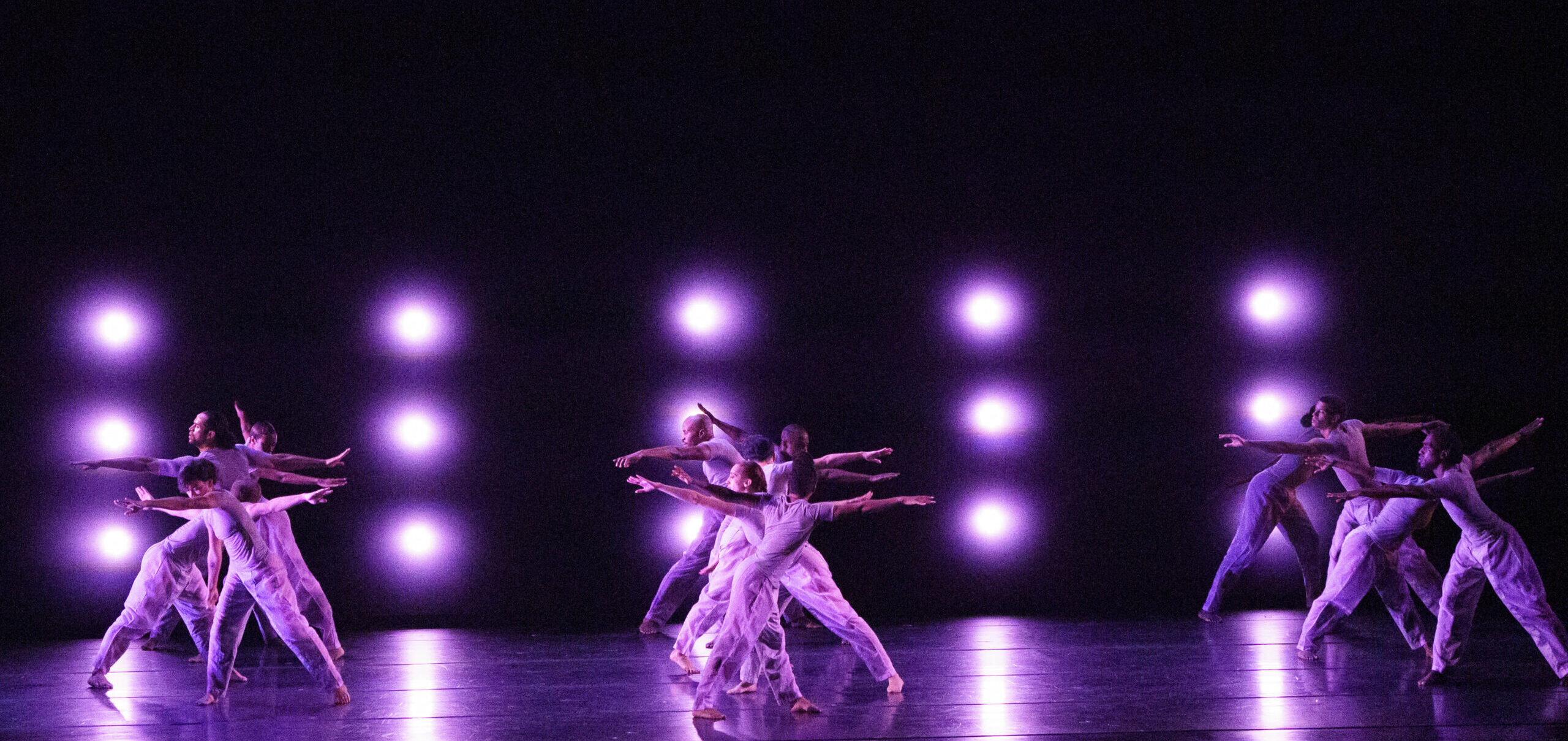

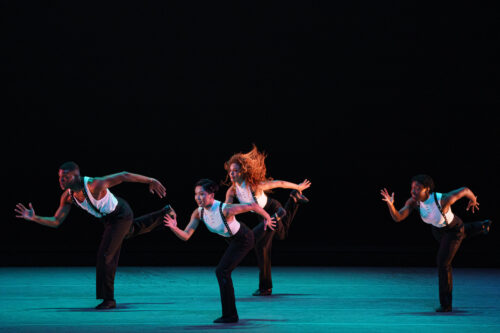
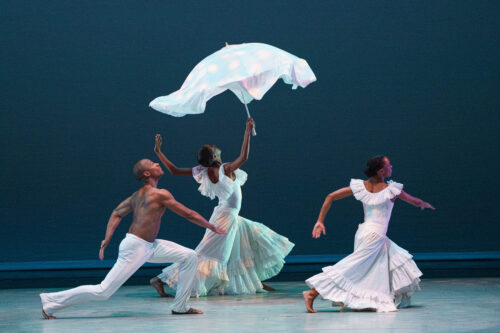
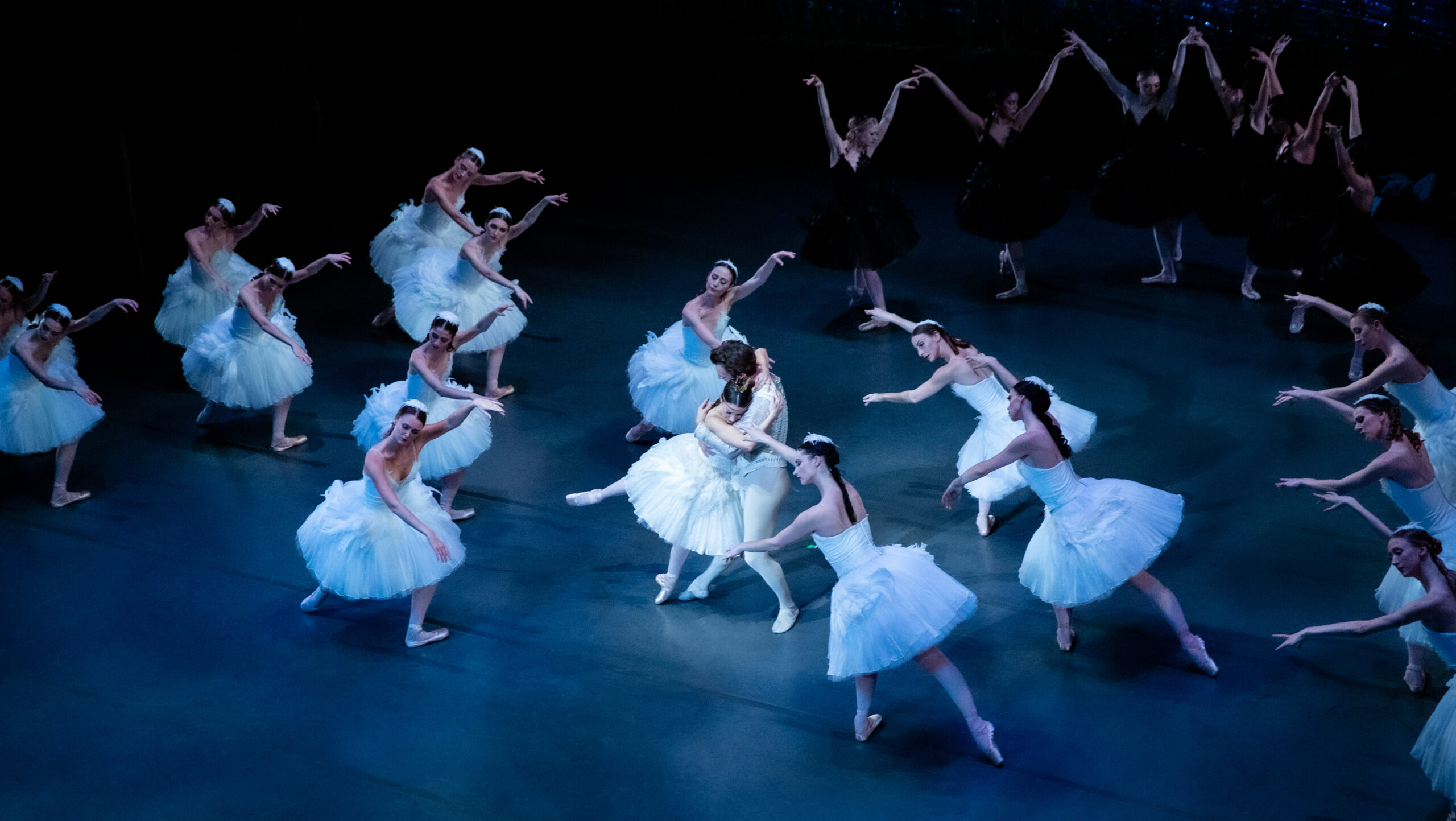
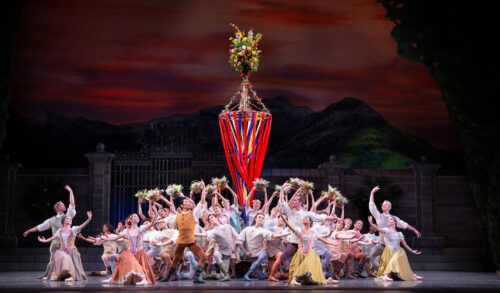
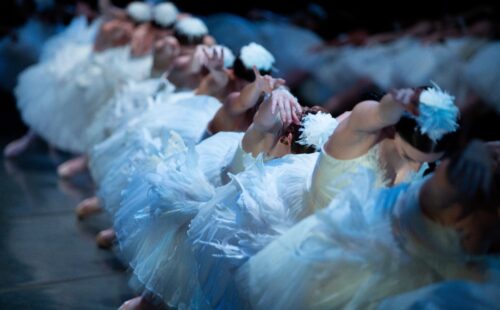
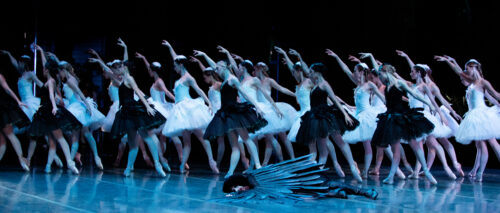
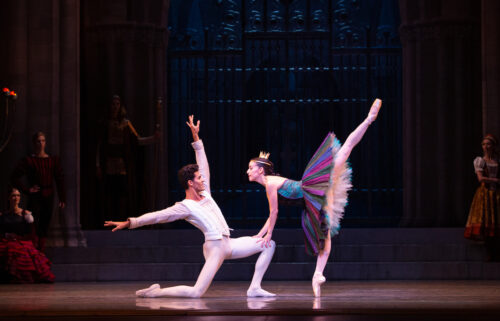
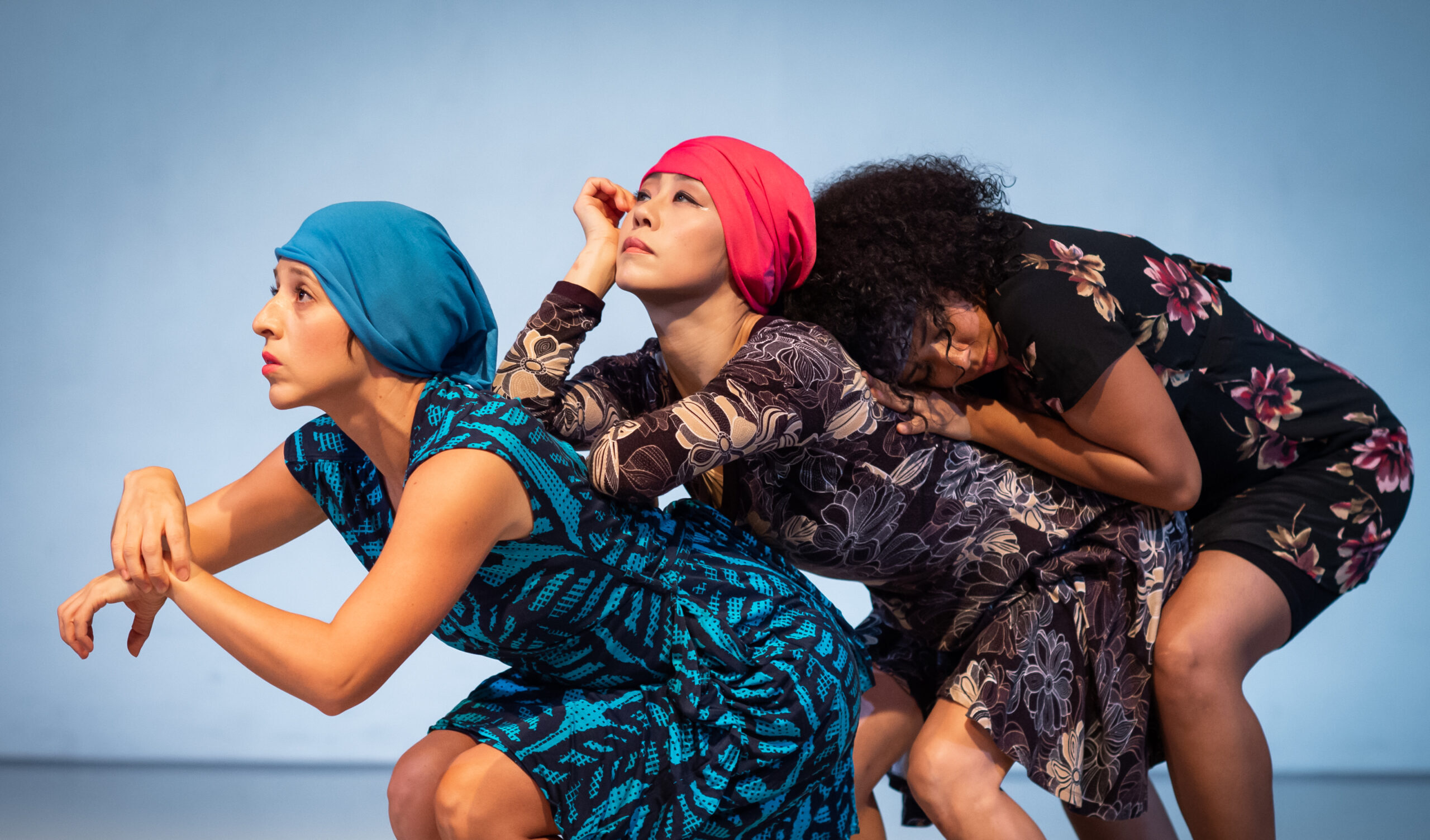
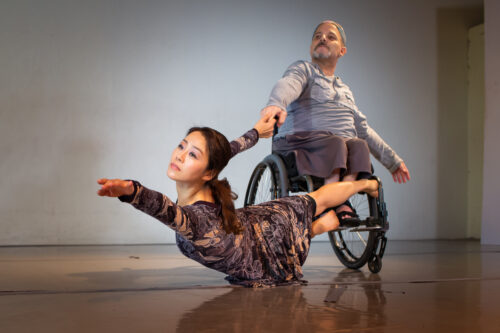

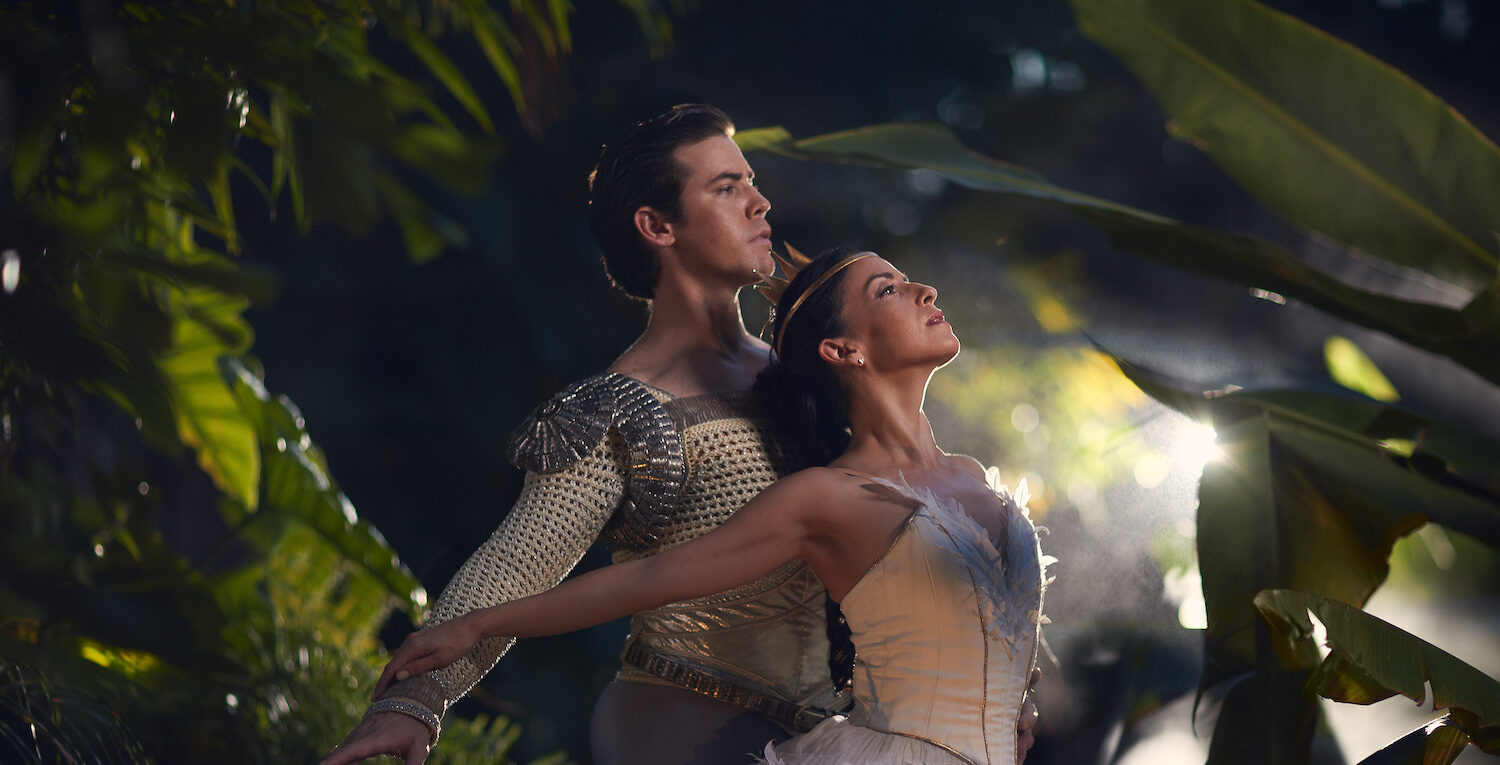
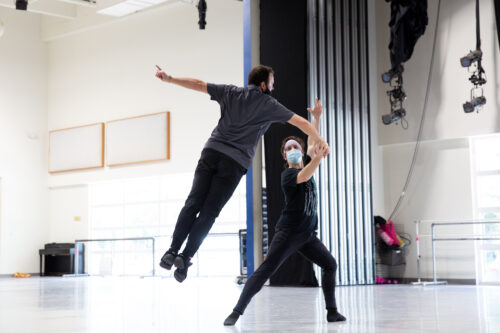

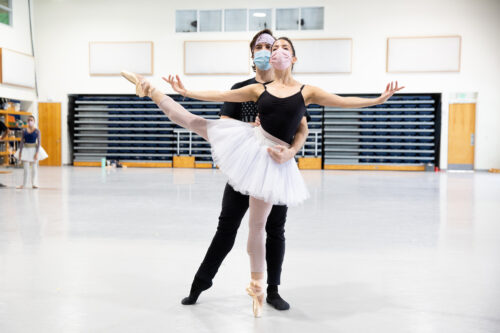
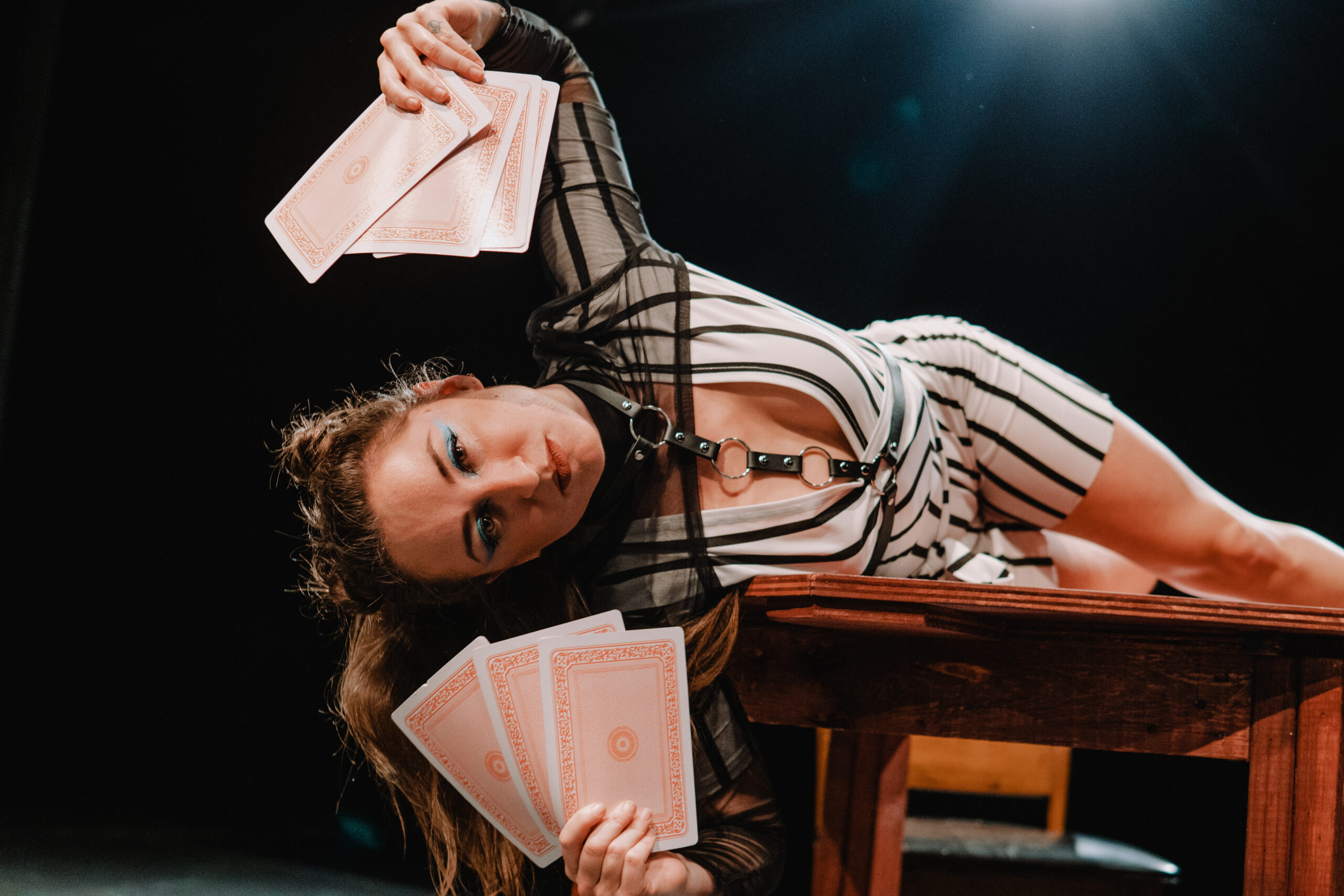
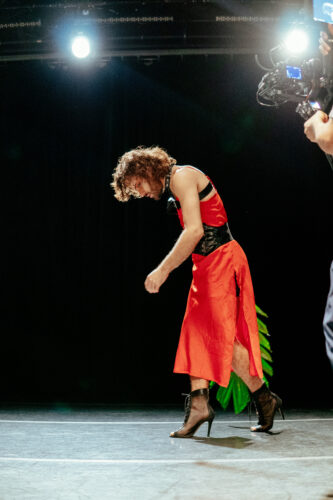
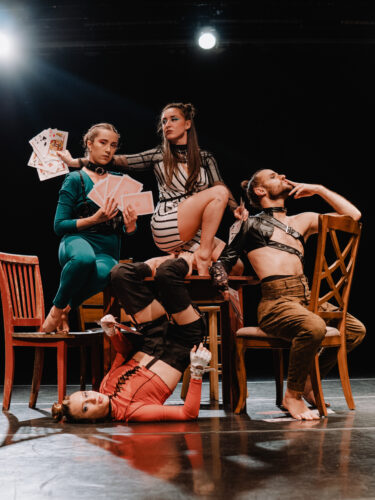
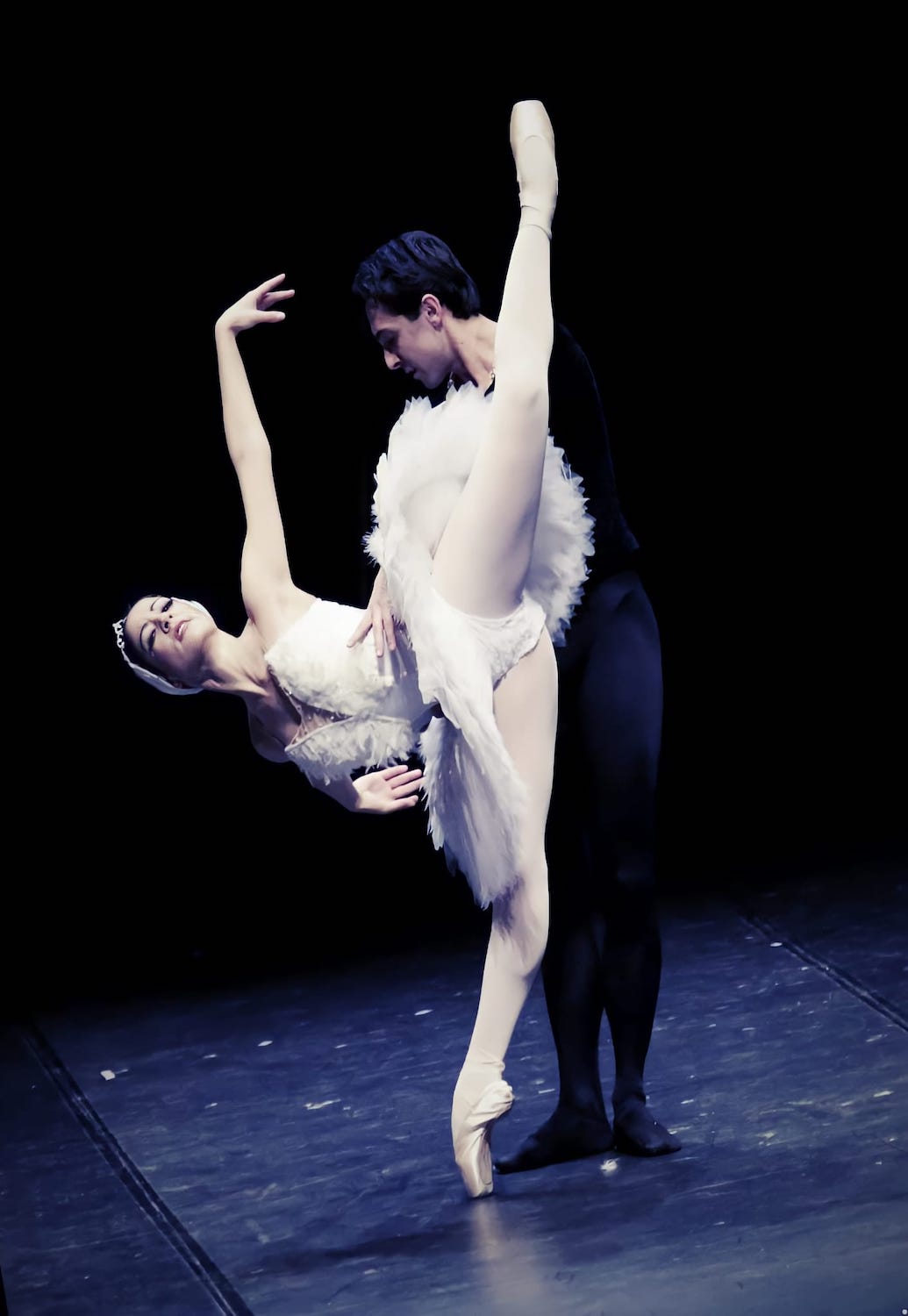
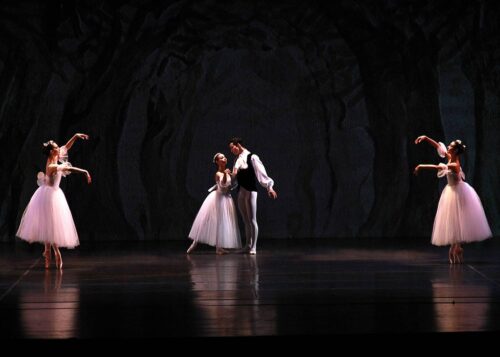
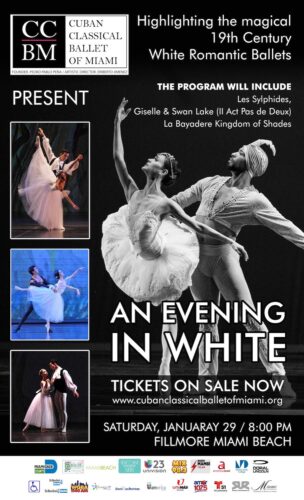
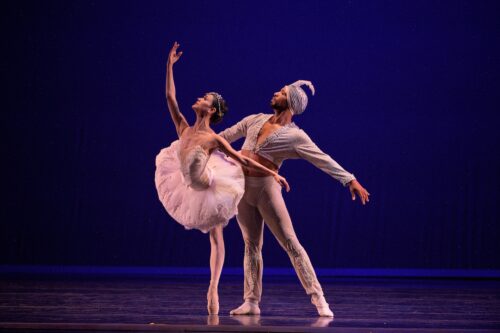
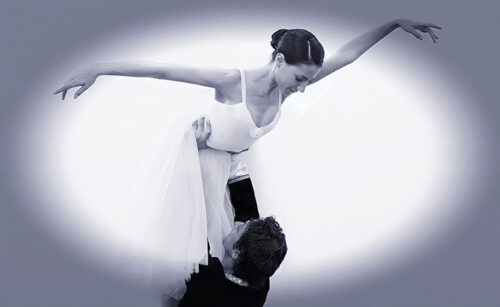
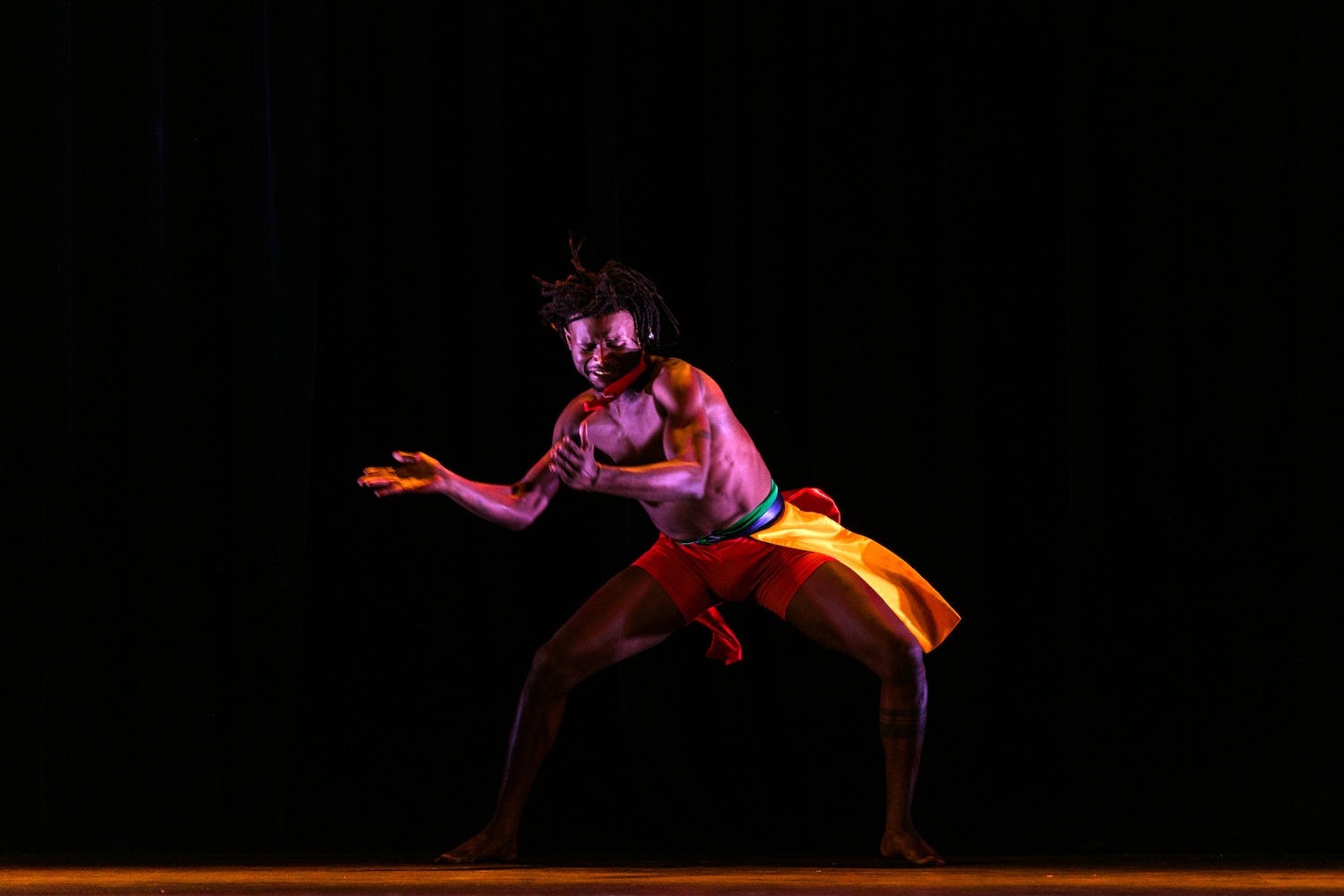
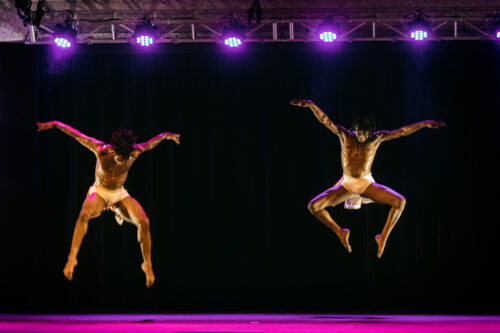
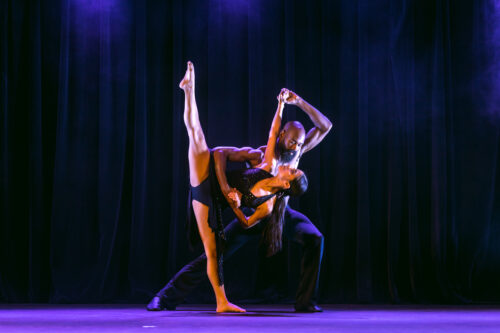

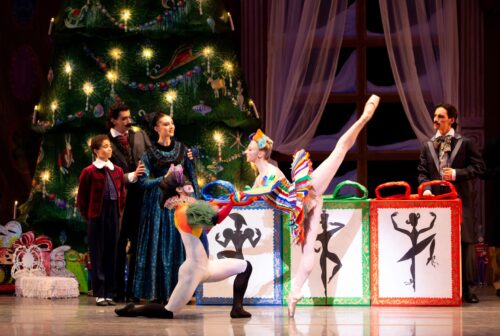
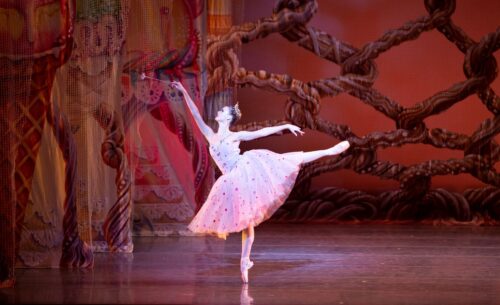
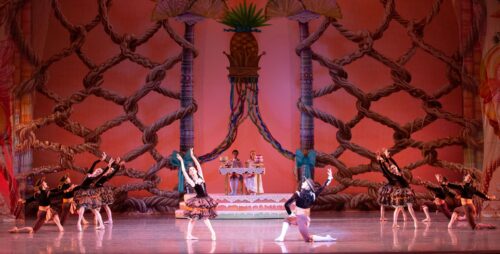
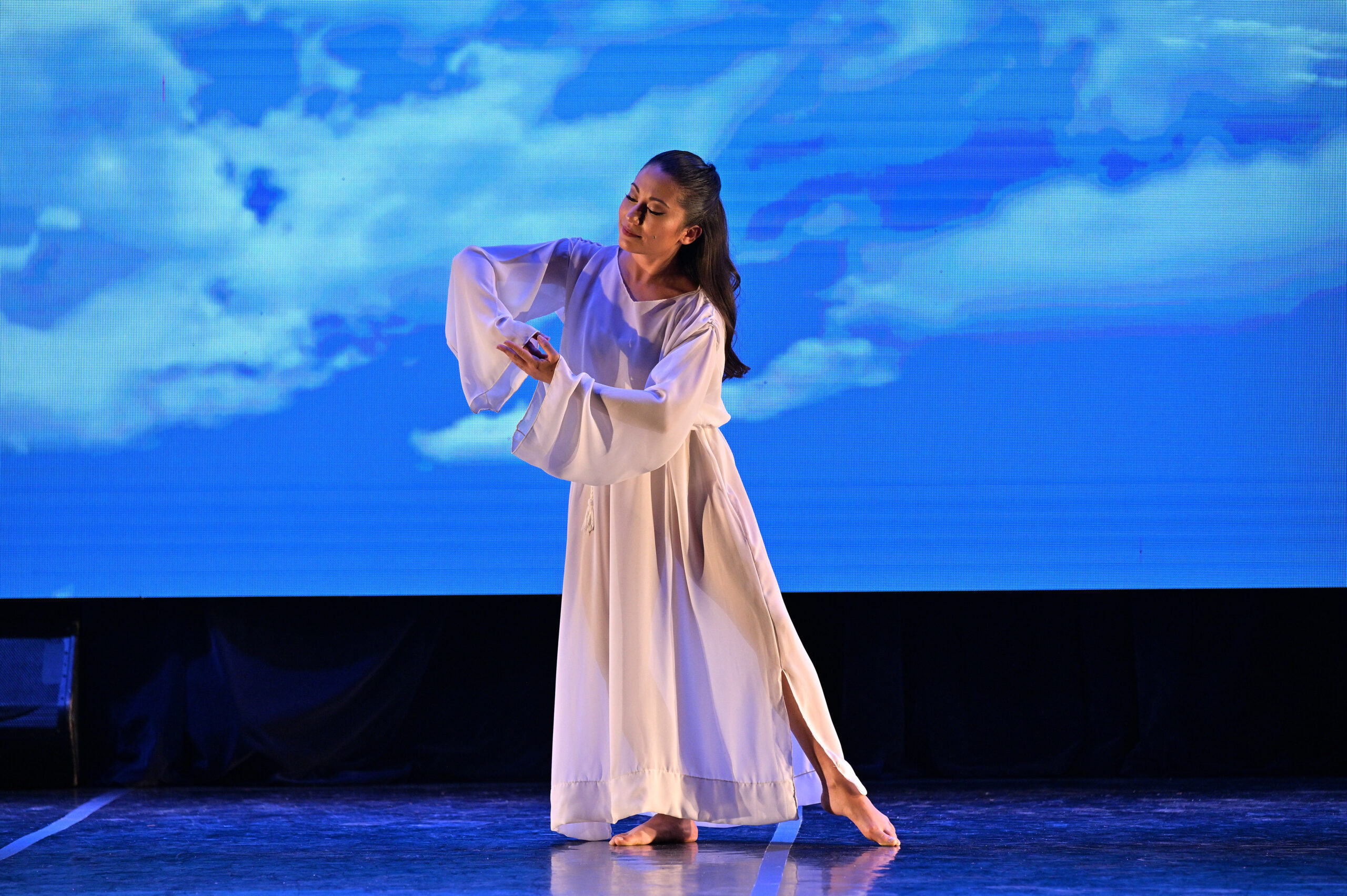
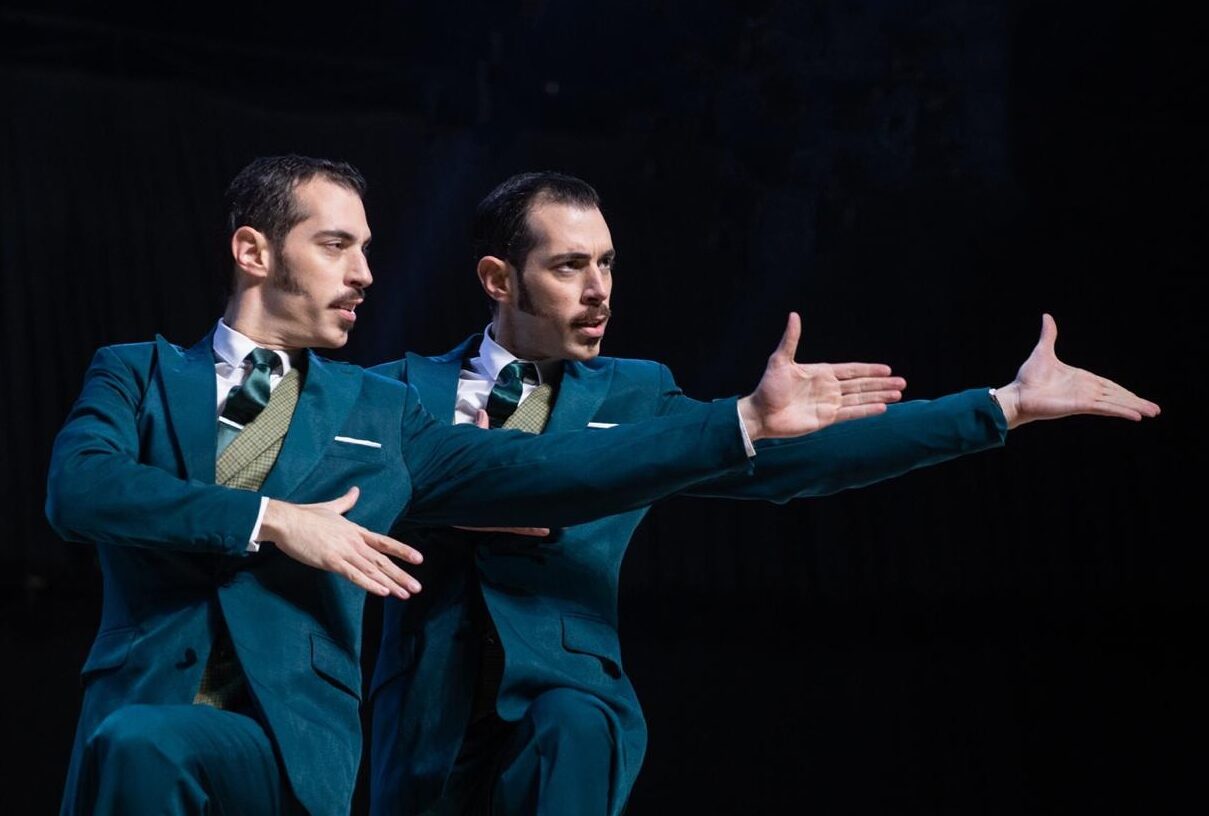

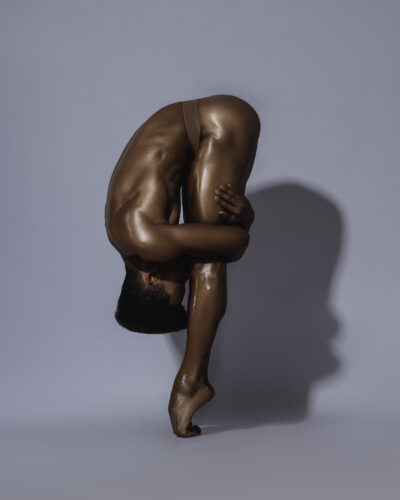
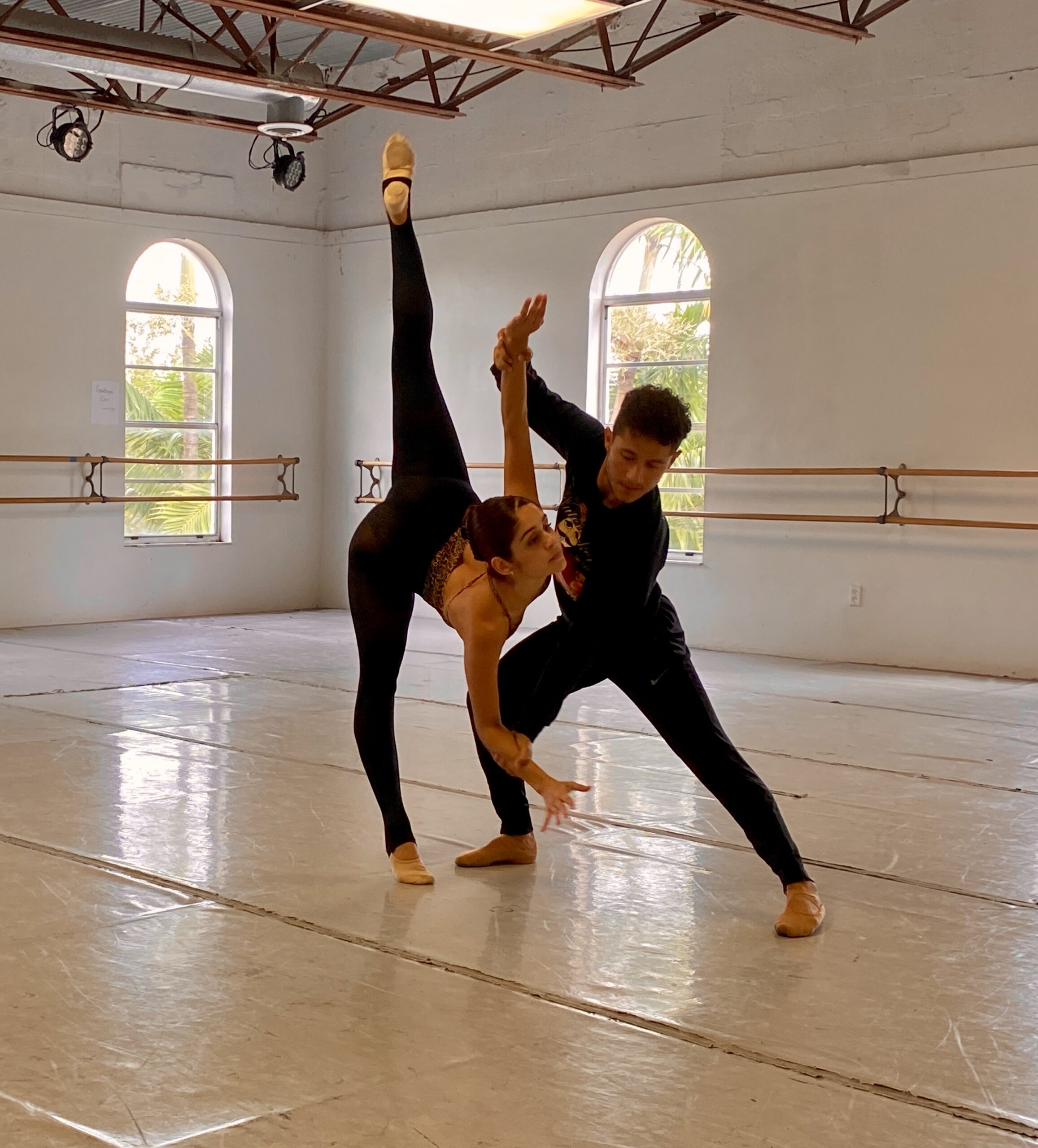
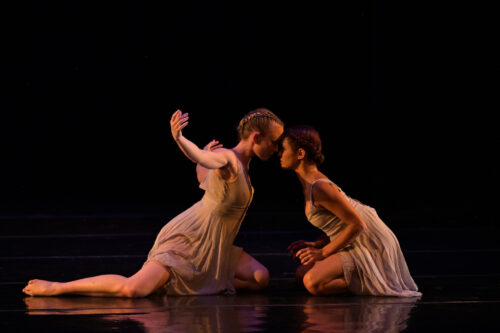
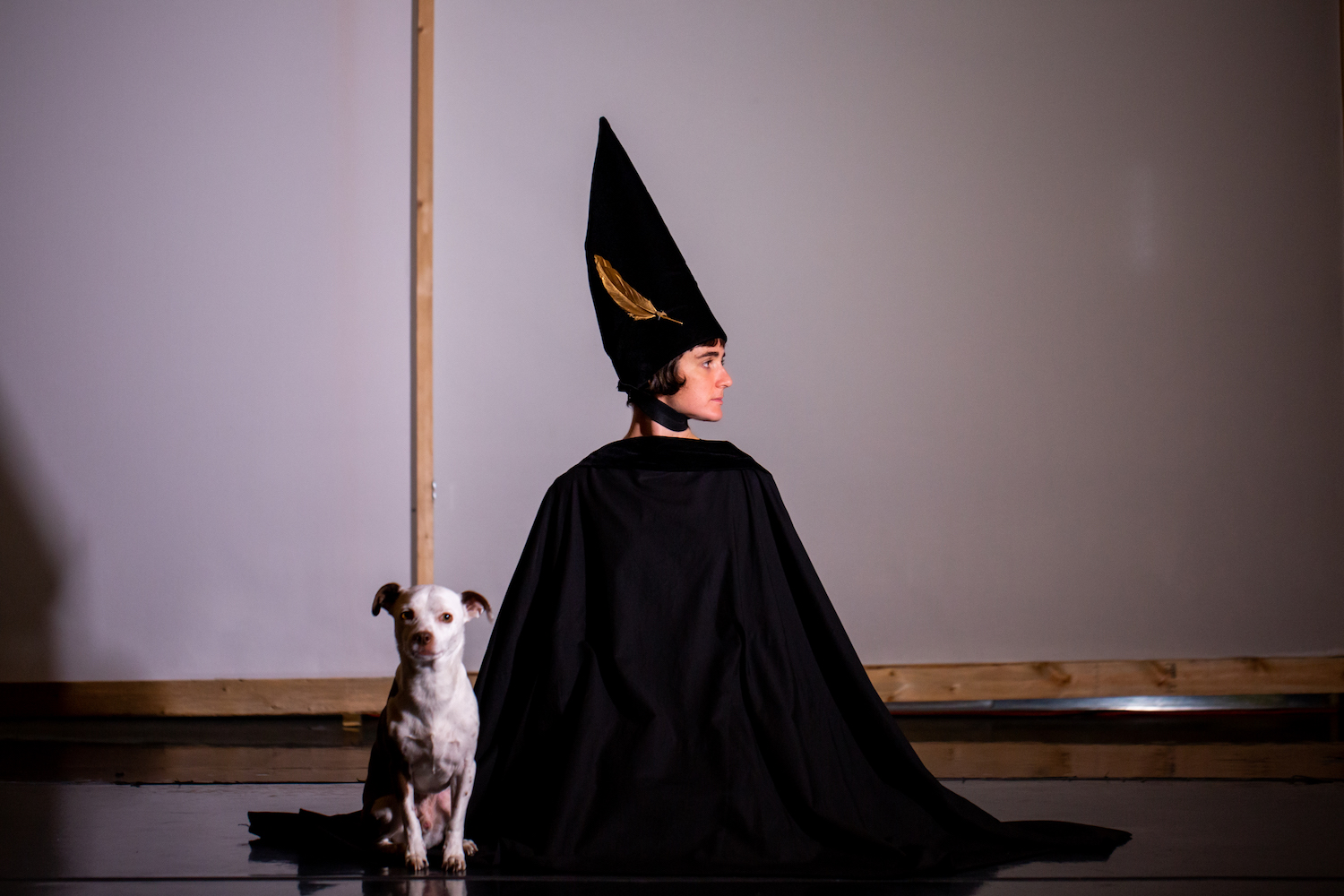
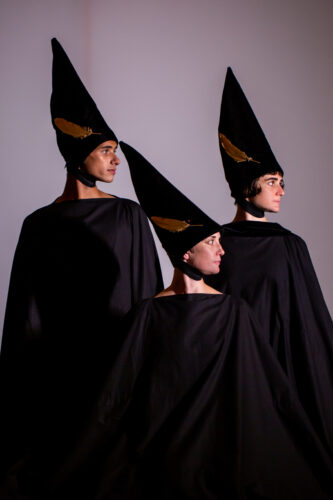
Recent Comments