Cuban Classical Ballet of Miami seeks to expand its audience with works by young choreographers
Written By Orlando Taquechel October 22, 2021 at 9:28 PM
Diana Figueroa in “De Toi” by Phillipe Obregon. (Photo courtesy of Simon Soong)
The Cuban Classical Ballet of Miami (CCBM) will present its “Choreographers Showcase” on Saturday, Oct. 30, at the Miami Theater Center in Miami Shores.
Choreography is more than “the writing of dance,” the closest definition to the history and origin of the term. And a choreographer is much more than the one who creates the steps and movements of the dance.
The choreographer is also the playwright and artistic director for the staging. The choreography is at the core of any piece of dance, academic or improvised in appearance. You could say that improvisation frees the performer from choreography. But the reality is that you would only be successful “improvising” if your efforts result in a proposal with steps and movements that communicate something. And that’s choreography.
Promotional poster for “Choreographers Showcase.”
But there is more. Without choreography, there is no work to interpret, and only with good choreography can a good repertoire be achieved. Without repertoire, there is no way to identify the style of a ballet company. And a repertory is also needed to illustrate the style of the dancers at any national ballet school.
Choreography is a fundamental resource for all dance companies. Its diversification is a problem that Eriberto Jimenez, artistic director of CCBM, is proactively trying to solve.
“For the Cuban Classical Ballet of Miami, it is imperative to start creating new programs for a different audience,” he tells us. “Our regular audiences will continue to enjoy classical ballet performances twice a year. We will include programs combining classical and contemporary styles. But I think it is essential to allow new generations to develop their choreographic skills creating new ballets for the company.”
Q: Is this the first time CCBM is presenting “Choreographers Showcase”?
Jimenez: “Not really. We presented our first ‘Choreographers Showcase’ on Feb. 27, 2021. In 2020, something similar was created during the months of confinement. Eight dancers participated, and pianist Isaac Rodriguez created the original music for the project. We called the program, ‘Rebuilding Together.’ We taped each dancer individually, and then the whole thing was edited as one piece. The idea of bringing together different choreographers and dancers came about as a way to create programs we could present in unconventional places — different from the theaters where we regularly perform.”
Fernando Garcia in “The Sentence,” which he choreographed. (Photo courtesy of Simon Soong)
On this occasion, the program will include new creations as well as works that are already part of the company’s repertoire, such as “Lecuona Suite” (2018, with choreography by Jimenez), which is a tribute to renowned Cuban composer Ernesto Lecuona and has live music by Rodriguez.
Choreographers presenting new contemporary pieces include Enrique Villacreses and Rafael Ruiz del Vizo, two young dancers who graduated from Miami’s New World School of the Arts.
Villacreses’ work, titled “My Universe,” deals with the barriers that human beings create within themselves and includes a tetrahedral artwork by artist Don Lambert. Ruiz del Vizo will present two pieces: “Geminis,” which portrays duality, the inner development of the antagonism between body and soul; and “Orbits,” a search for constant movement around each human being and his or her environment.
Marisa Fernandez in “Gemini,” by Rafael Ruiz del Vizo. (Photo courtesy of Simon Soong)
Q: How are choreographers invited to participate?
Jimenez: “For these first two programs, the choreographers have been selected from a group of talented young people who participate in a daily class offered by the company. Some are members of the company, and others attend classes with us to stay trained. I have seen their work, and I think it is essential to support them in their vision as creators. In addition, each brings a different kind of body language to the members of the company. And everyone is enjoying the creation process, which for some also represents a challenge …
“Along with Villacreses and Ruiz del Vizo, Phillipe Obregon will be presenting ‘De Toi.’ He is a contemporary and jazz dancer from Colombia. The Cuban-born Fernando Garcia will participate with ‘The Sentence,’ and I will premiere a piece, still without a title. The program will also include two choreographic works by the St. Lucie Ballet. Under the artistic direction of Rogelio Corrales and Lydia Oquendo, this group frequently collaborate with us, and Miami audiences are familiar with their work.”
WHAT: Cuban Classical Ballet of Miami presents “Choreographers Showcase”
WHEN: 7 p.m. Saturday, Oct. 30, 2021
WHERE: Miami Theater Center, 9806 NE Second Ave., Miami Shores
South Florida’s rich dance culture to be fully on display at Daniel Lewis Dance Sampler
Written By Cameron Basden October 21, 2021 at 5:16 PM
Arts Ballet Theatre of Florida will present an excerpt from “Viva España,” choreographed by artistic director Vladimir Issaev. (Photo courtesy of Patricia Laine)
There truly is something for everyone in South Florida’s eclectic and varied dance scene. Offering a wealth of multiple genres that span the gamut from sultry tango and flamenco to edgy contemporary and classic ballet to performance art and site-specific works, the dance culture here is rich.
Audiences will have the opportunity to experience the artistry of myriad professional dance organizations all on one stage when the Daniel Lewis Dance Sampler presents its inaugural post-COVID live performance on Oct. 29-31, 2021.
The Sampler’s three artistic directors — Daniel Lewis, Hannah Baumgarten and Diego Salterini — agree that the unity of organizations and audience is a vital component for the dance culture in this community and a unique occasion for dance artists to work together.
Initially created in the early ’90s as the Modern Dance Sampler by Lewis, founding dean of Miami’s prestigious New World School of the Arts, the yearly performance was meant to cross-pollinate audiences, give exposure and visibility for modern dance organizations, and provide a performance opportunity on a larger scale.
(Video courtesy of Daniel Lewis Dance Sampler)
“I was offering a showcase where different audiences could come together and see something new, and they might start going to other concerts,” Lewis says. “I watched the audience grow over the years.”
Both Baumgarten and Salterini were early Modern Dance Sampler participants.
“As young dancers in the community, we felt the profound effect of being in a show with other dancers in the community,” Baumgarten says. “Of being exposed to the other choreographers in the community and, of course, to the audiences.”
The Sampler continued through 1999, until — as Lewis says, laughingly — “I eventually retired the Miami Dance Sampler, and it ceased to exist for about 10 years.”
The Sampler idea was reborn after Baumgarten and Salterini were granted the possibility of working at the Little Haiti Cultural Center with their company, Dance NOW! Miami, in 2009. For them, it was a blessing to have both rehearsal space and a theater and, in return, they wanted to give back to the community.
Even without a large initial funding source, Baumgarten and Salterini felt that unifying professional dance in a performance like the Sampler was such an important part of the dance culture that they trudged ahead relentlessly, restarting the program under the name, the Daniel Lewis Dance Sampler (DLDS), honoring Lewis as the initial founder and garnering his blessing.
Ballet Vero Beach’s Anders Southerland and Daniel White will perform “Caprice.” (Photo courtesy of Joe Semkow)
“I was pleased that they wanted me as one of the artistic directors,” Lewis says. “That I had a voice within their vision.”
More than a decade later, it has grown to be produced by Lewis’s organization, Miami Dance Futures, in collaboration with Dance NOW! Miami, New World School of the Arts, Florida Dance Education Organization, and Palm Beach State College’s Duncan Theatre.
Today, the Sampler invites not only participants from Miami, but from throughout the state.
“Last year, because of COVID, we were virtual. This year, we can present the Sampler in its full capacity and expand finally into two counties,” Salterini says.
The performance will be at the Duncan Theatre in Lake Worth on Oct. 29 and at the New World School of the Arts Dance Theater in Miami from Oct. 30-31.
“In a city like Miami, where we are so spread out, this is a great opportunity to create community,” Salterini says. “One of the most important moments is when all the dancers are together taking class on the stage before the show starts. We’re all together, all abilities, all ages. It’s so important for the young dancers to see that there is a dance community here.”
A first-time participant in the Sampler, Ballet Vero Beach (BVB) will present an excerpt from “Caprice” by Matthew Lovegood, with music by Antonio Vivaldi. The enigmatic male duet questions the relationship and intentions of the two men. Originally danced by BVB director Adam Schnell and choreographer Lovegood, the roles this time will be performed by Anders Southerland and Daniel White.
Valerie Barreiro in “MIA” by Sandra Portal-Andreu. (Photo courtesy of Liliana Mora)
New World dance students plan to perform an excerpt from “Dancing Spirit” by choreographer Ronald K. Brown, with music by Duke Ellington, Wynton Marsalis and War. Paying tribute to Alvin Ailey’s former artistic director, Judith Jamison, Brown uses movements from Cuba, Brazil and the United States “to conjure dancing spirits who embody Jamison’s elegance, vision, dignity and generosity,” according to the Alvin Ailey website.
Mary Lisa Burns, current dean of dance at New World, says: “The DLDS showcases so many different styles of dance and such a range of approaches to choreography. It is an annual event unlike any other, and one which we look forward to hosting each year at our Dance Theater.”
Having recently presented her work, “CIRCA/MIA,” through Miami Dade College’s Live Arts Miami LALA (Live Arts Lab Alliance) Performance Series and in partnership with the Perez Art Museum, Miami, Sandra Portal-Andreu will now bring a condensed version — called simply “MIA” — to the Sampler. Featuring music by Miami duo Afrobeta, “MIA” plays as a response to the hopes and fears that children have about climate change and the future of Miami.
“This will be the first time in three years that I present a work on stage,” Portal-Andreu says. “In recent years, most of my work has been site-specific, which is where I have this newfound comfort.”
Bringing “MIA” into the theater, the audience will be engulfed with audio and visuals that drive home the message of what climate change looks like through the eyes of children. Portal-Andreu says she hopes this work will engage the adults in the room to take action for the next generation.
A scene from Ballet Flamenco La Rosa’s “Verano y Humo,” which was inspired by the Tennessee Williams’ play, “Summer and Smoke.” The performers here were Raquel Lamadrid and Eloy Aguilar. (Photo courtesy of Jenny Abreu)
Flamenco dance is very much a part of the South Florida dance community. Rather unique to Miami in its narrative ballet presentations is Ballet Flamenco La Rosa (BFLR). The company is joining the Sampler to present “Verano y Humo,” an original Flamenco Ballet choreographed by BFLR artistic director Ilisa Rosal and inspired by Tennessee Williams’ play, “Summer and Smoke.” The characters in Williams’ play are represented fittingly in flamenco movement and will be performed by Jose Junco, Mayelu Perez and Paloma de Vega. Live music composed by guitarist Jose Luis de la Paz and vocal artist Jose Cortes will accompany the artists.
“Flamenco is coming from a tradition in Europe where men’s and women’s roles, and how they’re looked at by society, are very prevalent issues,” Rosal says. “Williams’ play has these amazing characters, and flamenco is a perfect language to express all of it.”
A serendipitous connection allowed Rosal to cast De Vega in the role of Nellie, one of the lead characters in the play. De Vega, a singer, actress and dancer, happens to be visiting Miami from Spain. She auditioned and was considered perfect for the role.
Meanwhile, Arts Ballet Theatre of Florida will celebrate being back in the theater with “Viva España,” a vibrant and romantic piece choreographed by artistic director Vladimir Issaev to music by Jules Massenet, based on “El Cid.”
“We will be showcasing our new dancers, and the Sampler will be the first opportunity they will get to perform before we officially open our 2021-2022 season in early November,” says Ruby Romero-Issaev, executive director and wife of Vladimir Issaev.
Dancer and choreographer Maya Billig (left) is seen here performing her creation, “Brink,” alongside Isaiah Gonzalez and Kayla Castellon. (Photo courtesy of Enrique Villacreses)
Another new participant in the Sampler this year is choreographer, director and dancer Maya Billig, who will show an excerpt from “Brink,” a contemporary dance theater piece inspired by the 1938 Orson Welles radio adaptation of “War of the Worlds.” Performed by Billig, Danielle Davis and Isaiah Gonzalez, “Brink” uses the “heightened theatricality of a dreamscape to offer poignancy juxtaposed by moments of relief and humor,” Billig says.
“‘Brink’ was created during the pandemic and has only been viewed virtually,” she adds. “Performing on the Sampler is an opportunity for the work to be experienced with a live audience, as it was designed to.”
Having just completed the Forward Motion Festival in September, Karen Peterson and Dancers will bring a duet to the Sampler from her full-length work, “Lost and Found.” The piece, to be performed by Penelope Huerta and Jesus Vidal, speaks to the people lost during the pandemic and the empathy and hope experienced after a year of confinement and isolation.
Culminating the performance, the full Dance NOW! Miami company will present “Solstice,” created by Jon Lehrer in 2019 for his Jon Lehrer Dance Co.
In summary, Salterini says: “We do believe that audiences are eager to get back to live theater.”
He takes an emotional breath and continues: “While video has been very helpful to keep us entertained during the quarantine, there is nothing like a live performance. We hope audiences come back with courage and enthusiasm to rekindle the love and passion for sharing a physical space.”
THE DLDS 2021 VIDEO SHOWCASE
Paying tribute to last year’s totally virtual Sampler and to the wonderful creations in video dance, and recognizing that everyone is not fully “up and running” again, the DLDS is offering a free video component this year. Through Oct. 31, view four videos created during the pandemica, plus a special addition of Lewis performing in a site-specific video from the late ’70s created by dance icon Anna Sokolow. Each piece will be introduced by Baumgarten, Salterini and Lewis. To view the showcase, visit vimeo.com/625041185.
WHAT: 11th annual Daniel Lewis Dance Sampler
WHEN/WHERE:
8 p.m. Friday, Oct. 29, 2021, at Duncan Theatre, 4200 S. Congress Ave., Lake Worth
8 p.m. Saturday, Oct. 30, and 4 p.m. Sunday, Oct. 31, at New World School of the Arts, 25 NE Second St., eighth floor, Miami
COST: $25 for general admission, $15 students; tickets may be purchased online for both venues at dancenowmiami.org/events/dlds or in person at the performances
SAFETY PROTOCOLS:Both venues will follow federal, state and local public health regulations and guidance in response to the COVID-19 pandemic. Face coverings are “strongly encouraged” at Duncan, according to the Dance NOW! website, and masks are required at New World.
INFORMATION: Call 305-975-8489, email info@dancenowmiami.org or visit dancenowmiami.org
Click here to read our Spanish-language preview for this event.
Review: Bistoury Physical Theatre’s ‘The Commune – Chapter 2’ has a lot to say
Written By Sean Erwin October 18, 2021 at 3:25 PM
Carla Forte was one of four dancers in “The Commune — Chapter 2: The Anarchist,” which was presented Oct. 7-8, 2021, at the Miami-Dade County Auditorium. (Photo courtesy of Alexey Taran)
When Bistoury Physical Theatre performed “The Commune — Chapter 1: A commune of oranges,” back in January 2020, the show questioned the threshold between dream and reality in the search for alternative ways of being in the world.
In its second installment, “The Commune — Chapter 2: The Anarchist,” performed Oct. 7-8, 2021, at the Miami-Dade County Auditorium, BPT had a different message. In show notes, the group said “The Anarchist” presented a practice of freedom based on principles of equality and nondiscrimination.
It opened with dancers Heather Maloney, Carla Forte, Carlos Fabián and Gabriela Burdsall seated in a line, to the left of the stage. Alexey Taran stood behind them working soundboard and videos. Behind the stage, a film screen draped the back wall. On the floor, the tight loops of a spiral were drawn in white chalk.
Beside each of the performers were props. At Maloney’s feet sat a suitcase carrying children’s drawings and a mask, in front of Forte were oranges and an open book. Fabián occasionally leaned forward to write sentences on the floor in chalk, and Burdsall, in a black robe tied with a red sash, looked like Medusa with long twisted curlers wrapped snake-like in her hair.
As with BPT’s 2020 work, “The Anarchist” depended heavily on film. Early in the performance, a black-and-white video showed the dancers sitting around a table drinking, laughing and eating. In English and Spanish, they posed topics such as the persistence of life after death (a la Facebook algorithms messaging a deceased person’s birthday), the connection to one’s surroundings through feeling, or speculations over past lives. Fabián insisted he had once lived life as an animal, while Maloney believes she had once been a temple girl.
Gabriela Burdsall. (Photo courtesy of Alexey Taran)
The conversation cuts to a cello solo and closeups of a tree canopy. Maloney, in a floor-length white dress went backward to the center of the stage then bent over, walking her fists forward then palming her legs. She repeated the sequence then cradled her belly, arms sweeping overhead. Her movements throughout were stiff and fatigued.
Maloney’s dance was the first of four signature pieces from each of the performers. Each dance expressed a feeling and movement motif that recurred and transformed as the show progressed.
As violins fired up, Forte paced the stage in a black polka-dot dress. Projected on the backdrop were two images of a seated woman’s back, one in color, the other in black and white. Water ran up her shoulders, defying gravity.
On the floor, Forte laughed and sobbed like someone losing touch, walking with legs turned inward then akimbo, arms making sharp angles at the elbows or swinging wildly at her sides. She squealed as she punched the air, her fists and feet catching the music’s accents.
When a piano began to play, Burdsall crossed the stage, her arms and legs smoothly circling her body. From time to time, she partnered with her silhouette cast against the wall by a bright spotlight. On the screen, fingers created a pattern of small mirrors against a slab of cement. She closed at the center, pointing intently at something above her.
As the music grew ominous, a combative Fabián strode across the stage, at times assuming a fighter’s stance, fists up, at others standing at the center, hands palming nervously up his body. He finished his sequence staring fixedly into the audience, repeating: “I just wanted to say … um … uh … I just wanted to say … ”
The next segment unfolded in two gorgeous duets and suggested as it did so how the principle of association could intervene in the emotional struggles the opening performances presented.
Heather Maloney. (Photo courtesy of Alexey Taran)
In each duet, the signature movements of the dancers gradually took on aspects of the movement style established by their partner. For instance, as Maloney and Forte danced, Maloney’s stiff, fatigued movements grew more casual, less effortful, and Forte’s agitated jerks and twists smoothed and grew calmer.
Similarly, Burdsall and Fabián riffed off each other’s opening patterns. From punches, his arms shaped wide circles, as Burdsall sprouted kicks and snapped an occasional fist. Their duet ended when Taran, dressed in black, abandoned his place behind audioboards and computer screens and began to stalk Burdsall with his camera, inches from her face, her closeup projected on the backdrop in black and white.
In the sequence that unfolded, the play of reflected and filmed images concretely separated the performer from their performance.
Burdsall first soliloquized into the camera, repeating, “I woke up, looking at myself … I woke up a bright light in my hand …”
As she spoke, Taran circled her, camera glued to his face. Her speech shifted into a chant in English and Spanish — “Crystal, crystal, crystal, machine, machine, machine, water” — and she crossed the floor on footlong mirror tiles she laid ahead of herself.
The scene ended with Burdsall reflecting Maloney in a tile filmed by Taran. Maloney then began her sequence with Taran obsessively focused on her hands.
Each of the four vignettes appeared to display the emotional messaging behind the performers’ opening signature sequences. However, this time, Taran’s filmic intervention created distance between performer and message, objectifying that emotional core onto the screen.
This sequence behaved as a pivot point for the work. Where struggle, trauma and grief opened the evening, subsequent segments increasingly suggested how silliness and friendship, intimacy and community can heal traumatic pain.
For instance, in the next sequence, the dancers placed their chairs at the center then began to loudly and frantically talk at one another, aggressively gesturing for attention. Their communication gradually slowed, and their eye contact increased. They ended responding casually to one another, recalling the show’s friendly opening discussion around the table.
Another sequence laid out a dance of connection as Maloney offered one end of a rope to Fabián. He took it and lunged across the floor as if to escape the stage but came up short against the rope’s limit. The two exchanged positions and Forte then Burdsall seized the rope as well. The four criss-crossed randomly, laughing at entanglements but increasingly coordinating until they came together at the center, silent and motionless, foreheads touching.
With the first strains of a cumbia, they dissolved into a spontaneous dance of community, extemporizing on the rhythms — first in laughing, intimate couples but increasingly as a happy group, the four dancers facing the audience in a line as they pressed out the music in legs and hips.
The message of “The Anarchist” is that principles of association, connection, intimacy, community and friendship can intervene in the emotional messaging at the root of interpersonal conflict and traumatic experience. The Thursday and Friday performances convincingly delivered on this message.
However, “The Anarchist” also poses the question of whether “the practice of freedom,” approached in this way, can intervene effectively in today’s political struggles around color, sexual identity and gender, themes (and struggles) noticeably absent from this treatment. Perhaps BPT’s response to that question will form “The Commune — Chapter 3”?
Bistoury Physical Theatre & Film provides an avant-garde creative platform for dance, theater and film. For more information on BPT, visit bistoury.org.
Review: ‘Birds of Paradise’ is ambitious, spectacular … and unsettlingly personal
Written By Jordan Levin September 17, 2021 at 5:06 PM
Gabriela Cruz in “Birds of Paradise.” (Photo courtesy of WorldRedEye.com)
Visually spectacular. Intensely, even unsettlingly personal. Revealing yet opaque.
After a twisting two-year journey sent into unexpected directions, like everything else, by the pandemic, choreographer Pioneer Winter’s dance/multimedia work, “Birds of Paradise,” premiered at the Adrienne Arsht Center for the Performing Arts on Thursday, Sept. 16, 2021 — and it turns out to be powerful but mysterious, even indeterminate. Very much like what the pandemic has been to all of us.
By digging deep to explore the vulnerable psyches of his eight performer/collaborators across giant screens and in front of us, Winter has made something revealing about an uncertain time, and the power inside us, whether separate or apart. Commissioned by the Arsht Center when it made Winter its first resident-artist in more than a decade, “Birds of Paradise” plays at the Arsht through this Sunday only.
Lize-Lotte Pitlo in “Birds of Paradise.” (Photo courtesy of WorldRedEye.com)
“Birds of Paradise” is certainly the most ambitious piece that Winter, who has become one of Miami’s most influential artists, has ever made. His influence is not only as a dancemaker who champions individuality and queer identity outside all kinds of conventional margins (he works with performers who are disabled, transgender, physically large, or not traditionally trained, among other things), but as a producer of site-specific work and the director of Miami Light Project’s ScreenDance Miami festival.
Winter has explained the piece many times (for insight, check out the study guide on the Pioneer Winter Collective website), and he did so again for the audience that filled the socially distanced seats in the Arsht’s Carnival Studio Theater on Thursday evening: “In the queer community, isolation is felt often,” he said. “This is the first time everyone felt that isolation. But it’s also beautiful to see what can be made in that void. Tonight, we celebrate eight solo artists, then see them come together. We celebrate the power of transformation. Especially the transformation that nobody sees.”
That sounds pretty comprehensive. But it doesn’t get to the visual gorgeousness, intensity, and the interwoven film, sound, costume, design and performance elements of “Birds of Paradise” — it’s a true creative collaboration. The piece opens with performer Barbara Meulener’s hands blooming against a blue sky on a wall-spanning screen, as part of a film, the first of eight. The films are by Ronald Baez’s White Elephant Group. Baez is credited as co-director, with Kevin Berriz as cinematographer, colorist and editor. The stunningly shot, emotionally detailed and unnervingly intimate films are the most vivid aspect of “Birds of Paradise.”
Frank Campisano in “Birds of Paradise.” (Photo courtesy of WorldRedEye.com)
Also integral is Juraj Kojš’ sound design, which brings us the dancers’ voices, their breathing, their inchoate noises, almost as if we were inside their heads. Chaplin Tyler’s fantastical, intricate costumes, in brilliant red or pale flesh tones, incorporate billowing clouds of fabric, body-hugging lace rosettes or filmy sheaths, wisps of feather. Mai Lan Lau also gets credit for styling. Hair and makeup designer Angel Torres splashes their faces and bodies with iridescent gold and red. The effect is to turn the dancers into hallucinatory, very faintly birdlike creatures.
The piece starts with films in the studio theater, each on their own screen, then moves down a hallway into another large space, with the films continuing on multiple screens. (Also impressive are David Hans Lau’s production design and Quanikqua Bryant’s lighting.) Although projected text invites us to move around, the audience stayed seated in each room.
Each film is an expressionistic portrait that includes the dancers speaking about their state of mind during isolation. Meulener arches and spins in a velvety black void, images of blue sky and her lying on a lush green lawn flash, as if she’s imagining the outdoors – a shot of grass springing back evokes her absence. Frank Campisano, a sinewy, elderly, classically trained dancer struts with sensual disco-ish moves across three split screens. Niurca Marquez, face haggard with black eye shadow, crouches atop a wood box like an abandoned goddess who’s partied too hard, hands clawing and arms winding in a jagged twist on flamenco.
Josue Garcia in “Birds of Paradise.” (Photo courtesy of WorldRedEye.com)
“Exploration of the thing deep inside,” she says. “It also shows you are alive.”
We see Josue Garcia, imperiously large, swelling pectoral breasts outlined by feathers, belly curving over a bikini, and hear him curse his mother for abandoning him. “Why did you leave me?! Why didn’t you love me?” In the past, or just now?
Garcia leads us to the next space and to powerful, statuesque Katrina Petrarca, panting, writhing, reaching toward a camera that zooms into her face.
“I’m reaching that crescendo,” she says, “that point of letting it all out.”
Enigmatic Gabriela Cruz seems to float in a cloud of a dress, her hooked and elongated hands flinging wide, while Lize-Lotte Pitlo lunges, arches and spins.
“It’s like I’m putting my skin under a microscope,” Pitlo says. “I almost feel you can read my thoughts.”
Niurca Marquez in “Birds of Paradise.” (Photo courtesy of WorldRedEye.com)
Last and most powerful is Shamar Watt, not only because he’s a such an intense, formidable presence, but because he is the only performer who interacts live with his film, projected on three screens. A wide, bell-shaped tunic swinging around his muscular frame, Watt stamps atop an amplified platform, the sound thundering ominously. He howls, head thrown back, an agonized king bird, while the film shows him silhouetted in a vast orange-red background, as if in a lonely nightmare from inside his head. It’s immensely affecting and unsettling, and it makes you wish “Birds of Paradise” had more of this kind of exchange between film and live performer.
The finale sees the other seven performers together onstage, no film. They sway, circle, reach, arch, clump together and spin apart, crouch on the three amplified platforms to scratch up sounds (another of Kojš’ inspirations). The section seems like a structured improvisation, and while the dancers’ fierce commitment carries the dance, the moment also feels meandering. And yet, it also fits. As if they’ve ventured out of their isolated pandemic film cells into the world: uncertain, chaotic, and anxious – but filled with the energy of coming together.
WHAT: Pioneer Winter Collective: “Birds of Paradise”
WHEN: 7:30 p.m. Sept. 16-18 and 2 p.m. Sept. 19
WHERE: Adrienne Arsht Center for the Performing Arts of Miami-Dade County, Carnival Studio Theater, 1300 Biscayne Blvd., Miami
COST: $40 admission, plus $15 tickets available as part of the Arsht’s “Sweet 15” celebration (arshtcenter.org/Tickets/Sweet-15)
SAFETY INFORMATION: Based on guidance from national and local health officials, the performance will be seated at limited capacity and require face coverings.
Miami’s 3rd Forward Motion Festival returns with a message of inclusivity
Written By Sean Erwin September 13, 2021 at 9:46 PM
Penelope Huerta and Jesus Vidal de Leon performing Karen Peterson and Dancers’ “Lost and Found,” which will be featured at the Forward Motion Festival. (Photo courtesy of Giorgio Vera)
There’s a renewed interest in physically integrated dance, according to Karen Peterson.
The artistic director of Karen Peterson and Dancers sees it as a consequence of recent social movements: “After the social upheaval of this past year, and with diversity, equity and inclusion on the minds of most everyone today, there is more focus on PI (physically integrated) dance than before.”
Good thing, then, that the event she founded – the Forward Motion Dance Festival – is able to return this year after being canceled in 2020.
From Sept. 22-25, the third edition of the festival will showcase the nation’s top PI dance companies, including Peterson’s company, KPD, as well as Oakland-based AXIS Dance Co., Cleveland’s Dancing Wheels Co. and Tampa’s REVolutions Dance. Performances, workshops and lectures on PI dance techniques will take place at Miami Dade College’s Koubek Center and the Miami-Dade County Auditorium.
Uniting disabled and non-disabled performers onstage, the festival is meant to challenge conventional notions of dance.
“What is KPD’s value to the community? Everyone loves our work, but still many do not enjoy wheelchairs moving onstage. Does KPD have artistic integrity? How do we measure pointe work to wheelchair balances? How does one look at a trained ballerina and compare the individual to a wheelchair dancer? Are they apples and oranges?” Peterson says. “Many of these questions have different answers, but PI dance certainly pushes the envelope about who can and cannot dance.”
For Mary Verdi-Fletcher, artistic director of Dancing Wheels, the artform of PI dance goes hand in hand with advocacy work for expanding opportunities and safeguarding the rights of the disabled.
“Not all the performances are geared toward a social message, but by the inclusivity of the company the message is there, because the inclusivity speaks to it. The performance is in that way educational for the audience,” Verdi-Fletcher says. “I was born with my disability, and there weren’t opportunities for people to participate in the arts other than being a viewer or audience member. But then I started dancing, including social dancing. This was in the disco days, and what I was doing actually caught on like wildfire. I was in a competition that was nationally televised and people wanted to see us perform.”
Performers with Dancing Wheels Co. will present “Pallas Athena.” (Photo courtesy of Al Fuchs)
Her company, Dancing Wheels, employs 11 dancers and celebrated its 40th anniversary in June. Before the COVID-19 pandemic, the company had a robust national and international tour schedule and offered master classes, concerts and lectures.
At the Forward Motion Festival, Dancing Wheels will present the Miami premieres of two works: “Pallas Athena” and “Od:yssey.”
“Pallas Athena” includes nine dancers (two disabled and seven non-disabled). Featuring the music of David Bowie, the concert work was choreographed by the rehearsal director of Dancing Wheels, Catherine Meredith.
The second piece, “Od:yssey,” showcases eight dancers (two disabled and six non-disabled) and was created by choreographer Marc Brew, who is the artistic director of AXIS Dance Co.
“I had commissioned [Brew] along with two other disabled choreographers for a show that featured disabled choreographers. There are not a lot of disabled choreographers,” noted Verdi-Fletcher.
Brew’s interest in choreography began when he was an 11-year-old dance student in Australia. He began his career as a professional ballet dancer, but a car accident in South Africa left him paralyzed from the chest down. Brew went on to work with New York dancer Kitty Lunn, a disability activist and founder of Infinity Dance Theater, to translate classical techniques into the upper body.
Marc Brew choreographed several pieces for the festival and will also conduct a workshop and lecture. (Photo courtesy of Maurice Ramírez)
Brew frequently focuses on the concept of restriction in his choreographies: “When I first started using my chair, people would say I’m wheelchair-bound. However, this is not what I mean by this. By working with restriction, I mean exploring floorwork and partnering and contact improvisation by restricting space and setting up guidelines and structures that present an opportunity for the dancers to solve a problem.”
In addition to contributing “Od:yssey,” he choreographed the KPD solo, “Remember When,” featuring wheelchair dancer Jesus Vidal de Leon, who once studied with Brew during an AXIS Dance Co. summer session. Brew will also conduct a workshop and lecture during the festival.
For Brew, the greatest obstacle to appreciating PI dance is often the preoccupation with the disability of the dancers.
“People need to get over looking out for the disability of a dancer during a performance and identifying who’s disabled and who’s not,” Brew says. “Look for the artistry of their performance, their awesomeness. Look for how they join together their diversity of shapes, sizes, genders. Take in and absorb being moved.
“I want audiences to be moved – not just emotionally, but with lots of questions and images in their minds, and have them take something away from that moment.”
WHAT: Forward Motion Festival 2021
WHEN: Sept. 22-25, 2021
WHERE: Miami Dade College’s Koubek Center, 2705 SW Third St., and Miami-Dade County Auditorium, 2901 W. Flagler St.
ADMISSION: There will be free events, as well as $10 workshops. Admission for the main performances are $25 for the general public and $18 for students and seniors age 65 and older.
SAFETY PROTOCOLS: The venues will follow federal, state and local public health regulations and guidance related to the COVID-19 pandemic. Face coverings are “strongly encouraged” at the Koubek Center and required at the Miami-Dade County Auditorium, according to the website.
This article originally incorrectly attributed choreographer Marc Brew’s involvement with one of the Dancing Wheels Co.’s dance pieces. Brew worked with the company on “Od:yssey.” Additionally, the number of performers changed for “Od:yssey,” which showcases eight dancers (two disabled and six non-disabled). The story now reflects these changes.
Click here to read our Spanish-language preview for this event.
Pioneer Winter Collective’s ‘Birds of Paradise’ finally getting off the ground
Written By Michelle F. Solomon September 7, 2021 at 7:00 PM
Barbara Meulener’s solo in “Birds of Paradise” is about a sense of becoming, beginnings and liberation, according to choreographer Pioneer Winter. (Photo courtesy of WorldRedEye.com)
The creation of the Adrienne Arsht Center’s first commissioned contemporary dance work – from its first artist-in-residency in a decade – had more than its share of ups and downs, as did just about anything that had its beginnings not long before the COVID-19 pandemic.
Now, a little less than a year after its originally scheduled date, choreographer-dancer Pioneer Winter’s “Birds of Paradise” is ready for its world premiere.
“The project itself was reborn. It had to be,” Winter says about the production, which was originally set for October 2020 and will now debut inside the Arsht Center’s Carnival Studio Theater on Thursday, Sept. 16, 2021.
The work envisioned about coalition, ensemble and a collective mindset became impossible in the midst of a pandemic, according to Winter.
“The piece was supposed to be about being en masse, being in group, being this collective mindset – collective in a way that is unity. Then it became taboo for us to be able to be together. So, it made the very thing that we were making a dance about impossible to do,” Winter says.
Choreographer-dancer Pioneer Winter adjusts Frank Campisano’s costume. (Photo courtesy of WorldRedEye.com)
The original vision for the Pioneer Winter Collective began with an open audition for dancers in October 2019, followed by rehearsals with a full ensemble of 11.
“On March 13, 2020, we decided that it was no longer safe for us to work as a group, so we took a few weeks off,” Winter says.
They resumed rehearsals using Zoom for three months, but it wasn’t conducive to Winter’s vision – almost a year went by in which they weren’t able to work as a group at all. And when the piece could be revived, it no longer made sense to work as an ensemble because of safety precautions.
Not knowing where Miami, or the world for that matter, would be by the time “Birds of Paradise” premiered at the Arsht, Winter had to figure out a way to make the work “pandemic-proof.”
They returned to rehearsals in late January 2021, with eight dancers working on individual solos over four months. Then their performances were filmed individually inside the Carnival Studio for eight consecutive days in May.
When it premieres, “Birds of Paradise” will begin with the film installations shown throughout the Carnival Studio Theater and end with a 20-minute piece in which the dancers come together live as an ensemble in the center’s Peacock Foundation Studio. The dancers are: Barbara Meulener, Frank Campisano, Niurca Marquez, Josue Garcia, Katrina Petrarca, Gabriela Cruz, Lize-Lotte Pitlo and Shamar Watt.
Shamar Watt “tries to contain the sun, but eventually he has to become his own radiance,” Winter says about the dancer’s solo in “Birds of Paradise.” (Photo courtesy of WorldRedEye.com)
“This was never meant to be a transmedia piece, so it will not be presented as a series of film screenings,” Winter says.
Each film has its own individuality, Winter stresses, with different camera work used and other techniques: “Some are projected on Plexiglas, some are on a wall. One of them is set up in a hallway to create the illusion that the performer is in that hallway with you.”
For Arsht CEO and president Johann Zietsman, the commissioning of “Birds of Paradise” represents an exciting chapter in the center’s history.
“The center has never commissioned a contemporary dance piece, so it is very special,” Zietsman says.
Bringing “Birds of Paradise” to fruition has been “a winding road of challenges and surprises, but all great,” says Jairo Ontiveros, vice president of Education and Community Engagement at the Arsht Center, the department charged with overseeing the residency.
The core of their commitment didn’t change, Ontiveros says, nor did their focus on what the residency represented.
“We wanted to make sure that we were supporting Pioneer as a developing choreographer,” Ontiveros says. “In supporting new work, one of our primary goals is to reflect and represent the Miami community, especially those marginalized voices, the pockets in our community that are under-represented. In this case, it is the LGBTQ+ community that the Pioneer Winter Collective represents.”
Gabriela Cruz is part of the Pioneer Winter Collective in a solo about self-discovery (Photo courtesy of WorldRedEye.com)
Ontiveros calls the artist-in-residency a “hand-in-hand process to bring other voices that have been historically excluded from our stages around the country and around the world, and that to us is really important.”
What audiences will see in the premiere of “Birds of Paradise” is only the beginning, Winter says. “It will keep evolving. It has to.”
Because the piece received funds from the New England Foundation for the Arts (NEFA) National Dance Project, it’s expected to tour for at least the next two years, Winter says. Commissioned by the Arsht Center, Winter also received funding from the Doris Duke Charitable Foundation, The Andrew W. Mellon Foundation, The MAP Fund, Our Fund Foundation, and the John S. and James L. Knight Foundation as part of its 2019 Knight Arts Challenge.
As it continues, the dream for “Birds of Paradise” is that the individual solos will be created with performers from everywhere. Winter hopes that, post-pandemic, the work will become a hybrid of film and live solos.
Despite the difficulties, Winter says the delays helped to “inform” the piece further than he had imagined.
“All artwork right now is deeply affected by the pandemic, including the isolation and the need for closeness and community … Isolation was already pervasive in the queer community, but during the pandemic, it became a common thread,” Winter says. “Now, for maybe the first time in our history, everyone felt isolated.”
“Birds of Paradise” is meant to acknowledge that some of the greatest struggles and growth are experienced alone, and then the person can “emerge liberated, stronger, iridescent and beyond definition,” Winter says.
“It’s become about celebrating the individual. Everyone has experienced a time where they are in their own void and, oftentimes, you think that you are the only one experiencing that,” Winter continues. “This is about acknowledging that you’re not alone and there is a virtuosity, even in the small things we do in order to keep going.”
WHAT: Pioneer Winter Collective: “Birds of Paradise”
WHEN: 7:30 p.m. Sept. 16-18 and 2 p.m. Sept. 19
WHERE: Adrienne Arsht Center for the Performing Arts of Miami-Dade County, Carnival Studio Theater, 1300 Biscayne Blvd., Miami
COST: $40 admission, plus $15 tickets available as part of the Arsht’s “Sweet 15” celebration (arshtcenter.org/Tickets/Sweet-15)
SAFETY INFORMATION: Based on guidance from national and local health officials, the performance will be seated at limited capacity and require face coverings.
IN CONVERSATION WITH LOURDES LÓPEZ, ‘A LIFE FOR DANCE’ AWARD RECIPIENT
Written By Orlando Taquechel August 26, 2021 at 2:45 PM
Lourdes López with Miami City Ballet dancers in a rehearsal for George Balanchine’s “Jewels.” (Photo courtesy of Alexander Iziliaev)
Lourdes López (Havana, 1958) this year received the Lifetime Achievement Award “A Life for Dance” (in Spanish, “Una Vida para la Danza”), which has been presented since 1998 by the International Ballet Festival of Miami (IBFM).
The artistic director of the Miami City Ballet (MCB) now becomes part of a select group of personalities from the world of dance, as the 25th honoree and the 11th woman. Also, as the fourth Cuban-born recipient – after Alberto Alonso in 2006, Carlos Gacio in 2016, and Pedro Pablo Peña, founder of the IBFM, posthumously in 2018.
How did the news of the “A Life for Dance” award make you feel?
“It was very moving. My mom always wrote to me saying, ‘Lourdita, put Cuba’s name up.’ So I grew up Cuban. And knowing that the award comes from a Festival that has so much history among Cubans here in Miami made me feel: “I’m a Cuban receiving an award!”. Add to that the fact that I’m entering my tenth year with the company and that this season we’re coming back from the pandemic, and you can say those three things made it much more special.”
Lourdes’ family emigrated to the United States in 1959, and she grew up in Miami, where she began taking ballet lessons at the age of six. When she was eleven, she received a full scholarship to the School of American Ballet (SAB) in New York.
Lourdes López in George Balanchine’s “Divertimento No. 15” (1979), from The New York Public Library Digital Collections. (Photo courtesy of Miami City Ballet)
Being an artist was always the only option for you?
“No. I started taking ballet classes because of some medical problems I had in my legs. When I was young, I loved being around children, and at some point, I thought I wanted to be a child psychologist. My dad wanted me to go to the University, but I have no regrets about the career I chose because I can say that from a very young age, I found something that really fills my soul.”
Do you remember the first time you saw a dance performance?
“Yes. It was at the Miami-Dade County Auditorium, where a dance festival was presented that visited Miami once or twice a year. Because we were migrants and poor, my mom would buy a ticket, hide it in the program, and we would enter like… three of us. I remember seeing Lydia Díaz Cruz in “The Dying Swan,” Carla Fracci and Lupe Serrano, [both are also recipients of the IBFM’s A Life for Dance Award] among many other great dancers.”
At the age of 16, Lourdes joined the ballet corps of the New York City Ballet, became Principal in June 1984, and played numerous roles in choreographies created by George Balanchine and Jerome Robbins. After retiring as a dancer, Lopez worked as a cultural reporter, administrator, teacher, and even executive director of the George Balanchine Foundation.
With Maria Calegari and Karin von Aroldingen in George Balanchine’s “Serenade” (1983), from The New York Public Library Digital Collections. (Photo courtesy of Miami City Ballet)
In 2007, she and the choreographer Christopher Wheeldon created a company called Morphoses, and in 2012 she replaced Edward Villella – also recognized by IBFM in 2004 – as MCB’s Artistic Director. Her management at the head of the company immediately exceeded expectations, and today his creative leadership is recognized by the public and critics. In 2018, she received the prestigious Dance Magazine Award.
What made you stop dancing?
“The respect I have for art. I’m a person who always tries to be realistic. I looked in the mirror, and my eyes saw me. I’ve never been blind. I looked at myself and recognized what I was missing, what I needed, and what wasn’t right. When I was about 38, I began to realize that there were pieces that I wasn’t dancing the way they should be danced, and I said to myself, ‘no more… I prefer to retire with dignity.’ So, I finished the season and didn’t come back.
But the truth is that I danced more than I ever thought. I danced in a company that I never thought of dancing in my life. I never thought I would be a Soloist, and I never thought I would become a Principal. For me, it was always getting up every day and working, but I didn’t have those goals in mind. It wasn’t an easy thing to make the decision to stop dancing, but maybe that’s why it was easier for me than it was for others.”
“Sesame Street” – Cooperate (Lourdes López and Jock Soto), Season 28, 1996-97. “The choreography is by a young Christopher Wheldon,” says Lourdes.
What personal characteristic has been of most help to you in your career?
“What has helped me in my career is something my parents taught me, and that’s a commitment to the job. ‘You have to put one foot in front of the other.’ ‘You can’t take it for granted that someone is going to give you something.’ All those things they tell you. And my parents were a great example because they worked for many years.”
What is your definition of success?
“Success is to be happy in what you do. It’s not the money. It’s not the material things. It’s being able to say, ‘I’m doing what I love, what I like, what I want,’ because only then the effort, time, and energy you invest in what you do will not shock you too much.”
With Peter Frame in “Interplay,” choreography by Jerome Robbins (1983), from The New York Public Library Digital Collections. (Photo courtesy of Miami City Ballet)
What achievement has made you feel most proud?
“In my personal life, my two daughters, I swear. The first one was born while I was dancing, and she changed my way of thinking, even my way of dancing. Children make you see the world differently. In my career, that’s something I can’t answer because every single thing I’ve done has a different meaning. But there is something that is never mentioned and of which I am very proud. It is to have been the first and only Latina Principal Dancer -until today- of the New York City Ballet. Latina and Cuban”.
When two Cubans have a conversation like this one, the current situation in Cuba is a must, and for quite a while, we didn’t talk about anything else.
“The unprecedented wave of protests taking place in Cuba is something powerful. The Cuban people are speaking out against what has been a lack of human rights for a long time. And about a government that has not heard their cries for change. Everyone has the right to be heard, live their lives without fear of expressing themselves, and freely determine their own future. As a Cuban and an artist, I stand in solidarity with the Cuban people and support their struggle for change.”
Lourdes López as the firebird in Balanchine / Robbins’ “Firebird,” a performance called “magical” by Jennifer Dunning (The New York Times) in 1995. (Photo courtesy of Steve Caras)
Finally, what is your recommendation to a young artist interested in making a career in dance?
“My advice would be to take every day as it comes. And by that, I mean two things. One is that what happens today, good and bad, is likely not to be that important in five years. The second is that life is not going to be a straight shot. Life is up and down, next to and around. So, the important thing is to be present every day. The important thing is to stay present.”
Armour Dance Theatre renamed & reorganized to promote social equity mission – VIDEO
Written By Sean Erwin August 16, 2021 at 5:21 PM
“Armour Dance Theatre teaches dancers to express the movement of their own body rather than someone else’s body,” says Stephanie Bell, forefront, an ADT student and high school junior at the New World School of the Arts. (Photo courtesy of Addyson Fonte)
When is a ballet academy more than a dance school?
When ballet instruction helps remove the economic, social and emotional hurdles that may prevent students from thriving.
That is the mission of Armour Dance Theatre (ADT): Miami’s Community Dance Conservatory, formerly Thomas Armour Youth Ballet — and this year has brought changes in name and leadership that are meant to further move the school in that direction.
“Armour Dance Theatre is a social justice organization whose goal is to address accessibility and inequity in the community,” says Ruth Wiesen, artistic director and outgoing executive director of Armour Dance Theatre. “We have dance students who do go into professional companies, but that’s not our goal. All of our kids go to college or get into a company.”
As part of the evolution, Wiesen has passed the baton to Camila Gil, a former scholarship student who worked there during college handling data collection for ADT’s first grant from The Children’s Trust (whose mission is to help Miami-Dade County children and families). In the process, Gil became ADT’s director of community programs, rolling out services addressing a mix of academics, nutrition, parenting and social and emotional learning.
“Adding those components allowed for greater impact,” said Gil, who more recently served as ADT’s associate director before taking on the new role of executive director. “We started with a dream of providing quality dance training and quality academic support. We hired certified teachers from the community, who were hired from the same neighborhoods where we taught the program. This allowed for a lot more connections with the kids beyond programming hours.”
Asked about the challenges of using ballet — a historically elitist art form — to promote conditions of racial equity in the community, Gil replied: “We’ve always known at Armour Dance Theatre that ballet has been an elitist and racist art form, but we know the historical and technical value ballet has for informing a dancer. We have to take the initiative to make it diverse and make it inclusive and to preserve its historical value.”
To further support students academically, Armour Dance Theatre through the years has developed community programs with a focus on reading, math, social-emotional learning and dance at four schools in Miami-Dade County: Morningside K-8 Academy, Robert Russa Moton Elementary, Miami Gardens Elementary and Pine Villa Elementary.
Ruth Wiesen is the artistic director and outgoing executive director of Armour Dance Theatre. (Photo courtesy of ADT)
“You can’t just offer dance classes,” said Wiesen. “You need also an obstacle removal program as well. There are small things in kids’ lives we can fix, from eyeglasses and a metro card to homelessness, sexual identity and medical issues. We’re very fortunate to have a diverse array of partners, both private and governmental, who support us so that we can offer this support …
“The community programs arose when we saw how much the challenge of transportation limited our ability to reach more children. We decided to bring the programming directly to neighborhoods. We have set up programming in many venues over 20 years, including South Miami-Dade Cultural Arts Center, a Homestead Housing Authority house, churches, recreational centers and public schools,” Wiesen added. “As the scope of programming expanded to daily dance, academics and social-emotional skills, the amount of space and time greatly increased. Miami Dade County Public Schools welcomed the programming and were able to accommodate the space and time issues.”
Wiesen, a former dancer who trained with world-renowned classical ballet dancer and ADT founder Thomas Armour, had been juggling the roles of artistic and executive director for quite a while. But as the organization expanded, she found herself swamped by the two positions: “I love teaching and I love to be with the kids, and the executive work kept me behind the desk, paying bills and paying vendors.”
Among her biggest accomplishments, she founded the Thomas Armour Youth Ballet Scholarship Program in 1989, providing opportunities for youths who perhaps couldn’t afford dance training and helping to set the course for ADT’s well-rounded approach.
“Our goal was to get our students into high-performing schools like New World School of the Arts. But we weren’t really dealing with their grades,” Wiesen said. “We’d help get a child into New World only to find out that they were years behind in reading and math.”
ADT alumnus Christopher Rudd went on to become founder and artistic director of New York-based RudduR Dance in 2015 and a Guggenheim Choreography Fellow in 2019. (Photo courtesy of Kristina Zaidner)
With the artistic and executive director roles now split, the idea is for ADT to continue growing and flourishing. The other big change: The academy dropped “Ballet” from its name to better reflect current student interests, with classes in hip-hop and musical theater/jazz added to the mix.
ADT student Stephanie Bell, a high school junior at the New World School of the Arts, values the influence the dance school has had on her life.
“In general, dance is an expensive art form and brutal. Many dancers go through it mentally, questioning whether they are doing the right things,” Bell said. “George Balanchine would teach tall, white dancers with long legs to dance a certain way. Armour Dance Theatre teaches dancers to express the movement of their own body rather than someone else’s body. They prepare dancers for the dance world from that perspective.”
Added Bell’s friend, Sophia Chang, also a junior at New World: “Since Armour Dance is right in the center of the city, I know so many people who get here through the train, the car, walking, bicycle. Armour Dance Theatre gives people a purpose … they give that to those who live in the worst areas and in the best areas. They help people with mental health, physical health … they’ve saved so many lives.”
ADT counts Robert Battle, the artistic director at Alvin Ailey American Dance Theater in New York, as an alumnus. At one point, 25 percent of the dancers at New York’s Martha Graham Dance Co. could trace their origins back to ADT, according to Wiesen.
Another alumnus, Chris Rudd, became the founder and artistic director of New York-based RudduR Dance in 2015 and a Guggenheim Choreography Fellow in 2019. In November 2020, the American Ballet Theatre premiered Rudd’s groundbreaking work, “Touché,” as part of a virtual gala. It featured a pas de deux between two men, marking the first time the American Ballet Theatre presented a work with an explicitly homosexual theme.
Camila Gil has held many roles at Armour Dance Theatre, starting as a scholarship student, working there through college, then becoming director of community programs and associate director before assuming her latest position: executive director. (Photo courtesy of ADT)
The former ADT scholarship student credited Armour Dance Theatre with opening the door to ballet and providing a second family.
“I started dancing through the company’s scholarship program around 1990, when it was just taking off,” said Rudd. “Ruth [Wiesen] became our second mom. We were all welcome despite the fact that we had different needs. She then put this spirit into her institution, filling the gaps our parents couldn’t for whatever reason.”
For Rudd, Armour Dance Theatre is unique among ballet schools in its holistic approach toward its students.
“Only now is the rest of the ballet world having conversations about the importance of this approach,” Rudd said. “It is evidence for what ballet companies could have become had they approached education this way.”
For more information on Armour Dance Theatre’s academy and community programs, go to Armourdance.org, call 305-667-5543, or visit its studios at 5818 SW 73rd St., Miami.
XXVI International Ballet Festival of Miami showcasing dance at its finest
Written By Cameron Basden July 26, 2021 at 8:57 PM
Ihosvany Rodriguez and Gretel Batista are seen here during one of last year’s performances, without a public, at The Fillmore Miami Beach at the Jackie Gleason Theater. (Photo courtesy of Simon Soong)
The XXVI International Ballet Festival of Miami is more expansive than ever, with an encompassing three weeks of dance and events running through Sunday, Aug. 15. Expect classical and contemporary performances, a book launch, art exhibit, film series, plus numerous free activities, a summer dance intensive workshop, as well as indoor and outdoor events that invite public participation.
“This year, thankfully, we have the chance once again to be back in theaters,” says Eriberto Jimenez, director of the festival and artistic director of the Cuban Classical Ballet of Miami. “We found seven wonderful venues, some of which are new to us. I thought we would also take some activities outside to be accessible to everyone.”
Six dance films will be shown outdoors, free of charge, at two different locations. Additionally, one special documentary by Cuban director Miguel Castanet will honor the late Pedro Pablo Peña, Jimenez’s predecessor and mentor. Castanet was fortunate to have interviewed Peña before his death in March 2018 — and the resulting documentary, “La Amable Euforia de la Danza” (“The Kind Euphoria of Dance”), will be shown publicly in Miami for the first time after garnering awards worldwide. Playing at the Sanctuary of the Arts in Coral Gables, it highlights the founding of this popular Miami festival, as well as of the Miami Hispanic Cultural Arts Center and the Cuban Classical Ballet of Miami.
On Sunday, Aug. 1, local dance students and participating studios and artists will converge at Bayfront Park for the IBFM First Dance Marathon.
“I added the dance marathon, first, to bring the dance community together after a year of being so separated,” Jimenez says. “Second, many of the dance students don’t know about the festival. Dancing is what they like, so this is a way to bring the dancers together, and also to promote the festival.”
As part of the festivities, a “Life for Dance Award” statuette, created by Mexican artist David Camorlinga Tagle, will be presented this year to Miami City Ballet (MCB) artistic director Lourdes Lopez. Not only was Lopez a principal ballerina with the New York City Ballet, but the Miami resident has built MCB to be a major classical company that is recognized throughout the world.
Among all the periphery events taking place throughout South Florida, the highlights of the festival, of course, are the dance performances.
The first week is dedicated to young dancers and the future. Competition medalists will dance during a Youth Gala Performance, in collaboration with Miami International Ballet Competition, Universal Ballet Competition (United States), World Dance Award (Italy), Mercosur Dance Festival and Concurso Internacional Latinoamerica Danza (Argentina), and Danza Activa (Panama). Students attend daily classes as part of the Cuban Classical Ballet Summer Intensive and receive free tickets to the festival’s performances and events.
Katherine Barkman, pictured here with Jorge Oscar Sánchez, returns to this year’s festival, representing Washington Ballet. (Photo courtesy of Simon Soong)
The second week will feature four contemporary performances — presented throughout Miami-Dade and Broward counties — by a mix of companies from Miami and New York City, and from countries such as Colombia and Switzerland.
The final weekend of performances will include the much-anticipated Etoiles Classical Gala and Gala of the Stars, presented by 10 international groups from throughout the United States and Austria, Colombia, Brazil, Mexico, Germany, Italy and Slovenia.
Representing the United States, and uniting with the international groups, will be dancers from the San Francisco Ballet and United Ballet Theatre in Orlando. Audiences will see the familiar faces of returning dancers from Milwaukee Ballet, Marize Fumero and Arionel Vargas, and from The Washington Ballet, Katherine Barkman.
Lyric Dance Co. from Italy will offer a virtual performance as part of the XXVI International Ballet Festival of Miami. (Photo courtesy of Simon Soong)
The local organizations participating in the festival are MCB, Dimensions Dance Theatre of Miami, Arts Ballet Theatre of Florida, Dance Now! Miami and, of course, the Cuban Classical Ballet of Miami.
“I hope that the festival continues to grow, is more inclusive, and that we can open up to be more accessible to audiences,” Jimenez says. “If you don’t get to see the art, the dance, how can you know what it is?”
Having spent a year presenting performances virtually, Jimenez plans to continue giving viewing opportunities by streaming some performances online. IBFM performances will be available through the website or the Facebook page.
The XXVI International Ballet Festival of Miami is taking place through Sunday, Aug. 15, at indoor and outdoor locations throughout Miami-Dade and Broward counties. Prices vary. For a schedule and more information, visit Internationalballetfestival.org.
Dimensions Dance’s Program II marks return to the Main Stage
Written By Sean Erwin July 10, 2021 at 3:09 PM
Claudia Lezcano and Maikel Hernandez in “The Four Seasons” by Yanis Pikieris. (Photo courtesy of Dimensions Dance Theatre of Miami)
Dimensions Dance Theatre of Miami returns to the SMDCAC Main Stage in July with its Program II: “Generations of Genius.”
The program, set for July 17-18 at the South Miami-Dade Cultural Arts Center, will feature premieres choreographed by different generations.
The first, “Around Midnight,” is the work of DDTM dancer and choreographer Yanis Eric Pikieris. The five-movement, 20-minute piece was originally commissioned and performed in January by Ballet Vero Beach. Pikieris set “Around Midnight” to music by 20th-century Hungarian composer Ernst von Dohnànyi, and said he found inspiration from a painting of the same name by Hungarian painter Robert Pelles.
In it, the painter establishes a counterpoint on the canvas between hard-edged, brightly colored geometric figuration and cloudy washes of purple and blue tones.
Mayrel Martinez and Alexey Minkin in “The Four Seasons” by Yanis Pikieris. (Photo courtesy of Dimensions Dance Theatre of Miami)
This counterpoint of sharp and soft is one of the choreographer’s hallmarks. Solo and group sequences mesh snap re-directions with gooey duets in which the partners twine together. Unsurprisingly, this is the kind of transition that Pikieris the dancer executes brilliantly.
“In this piece, I’m committed to the concrete reality of connection between dancers while also remaining committed to abstraction in movement. For ‘Around Midnight,” this means visually repeating the ethereal, airy quality of the music and painting while locating moments of tenderness in the abstraction,” he said. “If there’s no connection between the people dancing, abstract dance can get boring. It’s important that the dancers locate each other and have a relationship for the dance to feel warm.”
DDTM’s Program II connects both dancers and choreographers. Pikieris not only contributes a new work to the program but dances a principal part in his father’s full-length, 40-minute choreography of composer Antonio Vivaldi’s 1723 violin concerti, “The Four Seasons.” (DDTM frequently performs to excerpts of the piece, but this will be the first program where the company dances the entire work.)
During a recent rehearsal, the violins pulsed brightly with the principal theme of “Spring,” the work’s opening movement, as Pikieris’ father, choreographer Yanis Pikieris, observed intently from the sidelines.
Dancers Meisy Laffitte, Claudia Lezcano, Miranda Montes de Oca, Calista Olson, Paulina Zambrana and Cassidy McAndrew circled the floor in pairs, sashaying en pointe, their arms sweeping low to overhead before forming three pairs that introduced a visual fugue. Each pair executed a forward-kick swung back in attitude then freezing in a lunge, their arms reaching overhead as if holding up a trophy.
“And then we run out of steps,” said the senior Pikieris, jokingly, as he cut the music. “This used to be a solo. We never had this many women dancing with us, so I’ve redone the piece to include them.”
DDTM was founded in 2016 by former Miami City Ballet principal dancers Jennifer Kronenberg and Carlos Guerra and, since then, has built a reputation for consistently strong dancing. On this afternoon of rehearsals, though, the lunges seemed deeper, the footwork crisper, the coordination and group timing even sharper than before the shutdown.
“I feel everyone returned with a new appreciation for what they’re doing,” said Kronenberg. “They have a mentality now of, ‘Let’s not hold back. This is something that can be taken from me.’ People aren’t saving themselves.
“Also, throwing Emily and Cassidy into the mix has been fun, like throwing a pebble into a lake,” she added, referring to Los Angeles Ballet company dancer Cassidy McAndrew and former Miami City Ballet principal Emily Bromberg, who both perform in this program.
Selah Jane Oliver in “The Four Seasons” by Yanis Pikieris. (Photo courtesy of Dimensions Dance Theatre of Miami)
With the first slow chords of “Summer,” Bromberg transitioned elastically from deeply forward to a full backbend, her arm wafting with the adagio passage above her head, and the tip of her finger lifting softly to mark the end of the phrase.
“I asked if I could take class and they said sure, so long as I was vaccinated,” Bromberg later related. “Then after a set of canceled performances, I realized I’d go to Spain without dancing for eight months.”
Bromberg is headed to Spain for her new role next year, as both principal and ballet mistress with the Ballet de Barcelona under artistic director, Chase Johnsey.
“I found it gracious of [DDTM] to invite me,” Bromberg said. “March 2020 was the last time I was in a theater, and this program gives me the chance to dance one last performance for audiences in Miami before I leave.”
For Kronenberg, Bromberg brings a special skill: “I think she embodies what we are trying to get [the dancers] to do. She has a different style and technique … Her footwork is so deliberate, intentional – you don’t see the shoe when she dances, not to mention her suppleness and musicality.”
Program II also includes “Maria,” a pas de deux set to “Ave Maria” and choreographed by Ballet Hispanico dancers Melissa Fernandez and Lyvan Verdecia. It will be danced by Selah Jane Oliver and Stephan Fons.
Oliver admitted some nervousness at the prospect of performing live on the SMDCAC Main Stage after such a long pause.
Daniel White in Gerald Arpino’s “Touch Me.” (Photo courtesy of Dimensions Dance Theatre of Miami)
“This is the first Main Stage ballet, so I have nerves, but they’re good nerves,” she said.
The final piece is “Touch Me,” a 1977 Gerald Arpino work being danced by DDTM guest artist Daniel White. It was staged for DDTM by Cameron Basden, a Joffrey Ballet repetiteur, The Gerald Arpino Foundation board member and Artburst Miami collaborator. Set to a recording of a live concert by the Rev. James Cleveland and the Charles Fold Singers, “Touch Me” is notable for its nod to Alvin Ailey works like “Cry,” and the striking visuals the bare-chested dancer makes as he sweeps the floor, draped in a voluminous white gown.
“Arpino’s sensitivity in every element of ‘Touch Me’ truly shows how inspired he was by Rev. Cleveland’s music,” Basden said. “It becomes a real journey for the dancer using Arpino’s modern-influenced movement combined with the spiritual gospel music. I know audiences will be moved.”
With “Generations of Genius,” DDTM hopes to move and inspire.
“The world needs a beautiful experience and to see how it’s possible for beauty to emerge from a really ugly time,” Kronenberg said. “And these [dancers] are a product of the community. It’s about the artists representing the resilience of the community. They didn’t give up. They didn’t go somewhere else. It says a lot that they felt that investment in the community.”
WHAT: Dimensions Dance Theatre of Miami’s Program II: “Generations of Genius”
WHEN: 8 p.m. Saturday July 17, and 3 p.m. Sunday, July 18
WHERE: South Miami-Dade Cultural Arts Center Main Stage, 10950 SW 211th St., Cutler Bay
‘Boys Will Be Boys’: Choreographer Randolph Ward’s work confronts toxic masculinity
Written By Sean Erwin June 29, 2021 at 4:43 PM
Karl Stephan St. Louis is among the dancers performing in Randolph Ward’s “Boys Will Be Boys” at Miami’s Sandrell Rivers Theater. (Photo courtesy of Roi Lemayh)
“Don’t cry. Be tough. Don’t show weakness. Be strong.”
Miami choreographer Randolph Ward’s latest work, “Boys Will Be Boys” — debuting July 10 at the Sandrell Rivers Theater — confronts the emotional landscape masked by such bromides as it examines the complexities of growing up male in America.
Where intellectuals and academics talk about toxic masculinity, Ward lived it as a ballet dancer with the San Francisco Ballet.
“When I was a professional ballet dancer, I always had to put on a mask,” Ward says. “In classical ballet, the men are strong and the women need saving.”
For Ward, the issue was one of body type. “The image of maleness classical ballet projects didn’t really fit me because I’m tall, long and thin. I would meet people after a performance and they would be surprised and say, ‘But you are so masculine on stage.’”
He recalls a moment in San Francisco when “a very famous ballet dancer” took him to task.
“During rehearsals one day, I was in a tutu and pretending to be a girl. She pulled me to the side and said, ‘We don’t care what you do outside but don’t you dare do that in the studio.’”
Experiences like these inspired Ward to tackle the theme of toxic masculinity in a short work, “What Makes a Man,” that debuted in 2019 for Dimensions Dance Theatre of Miami’s lab theater series. The work, which explored male femininity and homophobia, featured a duet between dancers Natanael Leal and Kevin Hernandez.
“The full evening is a spin-off of that duet,” Ward says.
The July 10 program, which starts at 8 p.m. and is followed by a post-performance talk, will also include Leal, along with CC Glitzer, Ariel Miyake-Mugler, Karl Stephan St. Louis, Ryan Nicolas DeAlexandro and Sascha Baer.
Through solo and group pieces, the dancers tackle the raw feelings behind homophobia, male emotional unavailability, fraternity and locker room culture, and masculinity as a performance.
Leal, who identifies as nonbinary, performs a work about the experience of locker room humiliation. Growing up in a favela in Rio de Janeiro, Leal was the first to come out in the family.
Ward recorded Leal’s voice reciting slurs in Portuguese, Spanish and English — words often directed at Leal both in the favela and in the United States.
“I am representing in my piece what society dislikes the most, femininity in the male figure,” Leal says. “The story I am telling is the story of my life, not knowing why I was being hated for being a fem person.”
Ward left room for the performers to reflect on how they survived the experiences reflected in their pieces.
“For people like me, we don’t have a choice — it’s a life-or-death situation,” Leal says. “A younger me created a persona that allowed me to walk through the world, knowing at any moment I could be killed. My family used to agree with other people’s judgments and tell me I should die.”
Those conflicts followed Leal to Miami, even within the dance community.
“People would doubt my ability to dance a work because I am nonbinary,” Leal says. “The dance community wants you to believe it is a safe place for queer artists, but that is not the case. If they look at you and think you are queer, they will doubt your ability. A dancer who passes as straight does not raise those doubts.”
Working with Ward was the first time Leal experienced immediate acceptance as a nonbinary dancer on the basis of talent. Leal found in Ward another artist who immediately understood the struggle.
“In 20 years as a dancer, preparing for this ballet was the first time I had to ask for five minutes to go to the restroom and cry,” Leal says. “I never thought anyone would be interested in hearing what I went through. I tried to forget these emotions because I needed to survive. This piece is a like a chance to move on for myself. I feel like I’m saying to myself, ‘You’re going to go through this, and then move on.’”
Glitzer – a German drag artist and Ward’s partner – performs a piece that examines masculinity as a performance. Glitzer lip syncs to the song, “I’maman,” which was released in 1973 by Jobriath (the stage name of Bruce Wayne Campbell), the first openly gay artist to be signed to a major record label.
Natanael Leal performs a work about the experience of locker room humiliation in “Boys Will Be Boys.” (Photo courtesy of Roi Lemayh)
Glitzer’s passion for drag as an artform grew out of her interest in makeup and styling hair.
“The art of drag allows me to bring joy, smiles and laughter to my LGBTQIA+ (lesbian, gay, bisexual, transgender, queer/questioning, intersex, asexual/allied) community and others, giving them a brief break from the daily stresses of life,” Glitzer says.
Interestingly, Glitzer’s piece in the program spotlights an act of “de-dragging.”
“To ‘de-drag’ on stage is a powerful statement to me,” Glitzer says. “At first, I thought it would make me feel more vulnerable. but it has actually had the opposite effect. It is making me even stronger and realizing even more that ‘we are all born naked and the rest is drag.’ We are all basically playing a role and pretending to be something other than ourselves to survive the daily grind of life.”
Asked what he hoped audiences would take away from the program, Ward muses: “I want the performance to start a conversation around humanity. When I lived and worked in Germany, the Germans talked about what was going on, but in the U.S., we don’t talk about anything.”
WHAT: Choreographer Randolph Ward’s “Boys Will Be Boys”
Cuban Classical Ballet of Miami’s gala to celebrate dance & live performance
Written By Cameron Basden May 27, 2021 at 7:06 PM
Cuban Classical Ballet of Miami dancers in “La Vivandière Pas de Six,” one of the ballets to be performed at the June 5 Grand Classical Gala. (Photo courtesy of Carlos Llano)
A yearly gala performance is a tradition for most dance companies. The Cuban Classical Ballet of Miami is no different.
CCBM will be presenting its Grand Classical Gala on Saturday, June 5, at The Fillmore Miami Beach at the Jackie Gleason Theater. However, instead of a customary fundraising gala, CCBM will be using this performance as a celebration of dance and a joyous homage to live performance. It will be both live with a socially distanced in-person audience and livestreamed from the company’s website.
“Every year, we do one big gala,” says CCBM artistic director Eriberto Jimenez. “It is more elegant and is a big event, but it is not a fundraiser. It is our largest performance of the year, and we try to do mainly classical ballet.”
This year’s performance will be a repeat of a 2014 show that paid tribute to some of the greatest and most established classical ballets. The chosen ballets are from the golden age of Diaghilev’s Ballets Russes, a company that broke barriers in Paris in the early 1900s – with colorful, vibrant costumes and sets and collaborations with the greatest musicians and set designers of the time – and affected the way audiences viewed dance from then on.
“It is important for audiences to see a range of classical ballet on the same program,” Jimenez says. “And these ballets should be seen over and over.”
The Ballet Russes favorites will be “La Vivandière Pas de Six,” “Le Spectre de la Rose,” “La Bayadère Suite,” “Les Biches,” and “Carnaval” to close. The program will be an hour and 15 minutes with no intermission, per COVID-19 safety protocols.
CCBM was created by Cuban-born Pedro Pablo Peña (1944-2018) in 2006 as a vehicle to continue the tradition of Cuban classical ballet outside of the island. Jimenez, who arrived to the United States in 1989, became Peña’s righthand man.
Through the years, even while dancing, Jimenez was responsible for staging, coaching and choreographing repertory, as well as overseeing all of the backstage needs. Later, he began accompanying Peña at business meetings. It’s evident Jimenez was being trained to take over as artistic director when the time came.
“I got everything through Pedro [Pablo Peña],” Jimenez says.
“La Vivandière Pas de Six” will feature Ihosvany Rodriguez (here pictured with Gretel Batista). (Photo courtesy of Simon Soong)
Now as artistic director, and in preparation for the June 5 gala, Jimenez has staged and coached each of the ballets. He pays particular attention to continuing the vision of preserving the repertoire and technique of classical ballet and displaying the distinctive talent and artistry of Cuban dancers.
Most of the dancers that will be seen during the gala are Cuban and are part of the South Florida dance community. To augment the company, the CCBM has established a partnership with the Florida’s St. Lucie Ballet, whose dancers will act as the ensemble.
Opening the performance will be the jewel of a ballet, “La Vivandière Pas de Six” (or “Markitenka,” as it is known in Russia), which premiered in 1844, with choreography by Arthur Saint-Léon and Fanny Cerrito, and music by Cesare Pugni. The pas de six is the only section from the one-act ballet that is preserved and notated (documenting the movements). The difficulty lies in the expressive Bournonville technique and the effortless and charming quality of the dancers.
Performing will be Paula Zapata and Ihosvany Rodriguez, accompanied by Eleni Gialas, Myriam Ayala, Jennifer Villalon, and Niuris Rodriguez.
“Le Spectre de la rose” premiered in April 1911, produced by the great choreographer Michel Fokine and set-costume designer Léon Bakst. It featured Hector Berlioz’s 1841 orchestration of Carl Maria von Weber’s piano music, “Invitation to the Dance.”
The ballet tells the story of a young girl who dreams of dancing with the spirit of a rose that she’d received at her first ball. The ballet’s premiere was a huge success, notably for Nijinsky’s portrayal and for the huge leap he made through a window at the ballet’s end. Ronna Olarte and Carlos Caballero Hopuy will dance the parts of “The Young Girl” and “The Rose,” respectively.
The gala is expected to close with the 1910 ballet, “Carnaval.” (Photo courtesy of Carlos Llano)
The full four-act ballet, “La Bayadère” – with music by Ludwig Minkus and original choreography by Marius Petipa – premiered in 1877. This exotic ballet follows an eternal love between the noble Solor and the temple dancer (bayadère) Nikiya, which is disrupted by the vengeance of the beautiful temptress, Gamzatti. For this rendition, Gamzatti is played by Daynelis Muñoz; the warrior, Solor, is Jonhal Fernandez; and the corps de ballet will feature the St. Lucie Ballet.
The chic and atmospheric “Les Biches” is a one-act ballet premiered in 1924 with choreography by Bronislava Nijinska (Nijinsky’s sister) and music by Francis Poulenc. The plotless ballet depicts the random interactions of a group of mainly young people in a house party on a summer afternoon. CCBM will reenact a scene where a group of sophisticated ladies enjoy a pleasant evening.
Finally, the 1910 ballet, “Carnaval,” featured the music of Robert Schumann’s piano suite, “Carnaval, Op. 9,” choreography by Fokine and costume designs by Bakst. The ballet has been described as a series of light and humorous incidents intertwined with poignant moments and an undercurrent of satire. The characters are the melancholic Pierrot (played by Carlos Caballero Hopuy), the fickle Columbine (Muñoz), the mischievous Harlequin (Rodriguez) and four couples. All the fun and romp will bring the evening to a delightful close.
To read a Spanish-language preview of this upcoming performance, click here.
WHAT: Cuban Classical Ballet of Miami’s Grand Classical Gala
WHEN: 8 p.m. Saturday, June 5
WHERE: The Fillmore Miami Beach, 1700 Washington Ave.

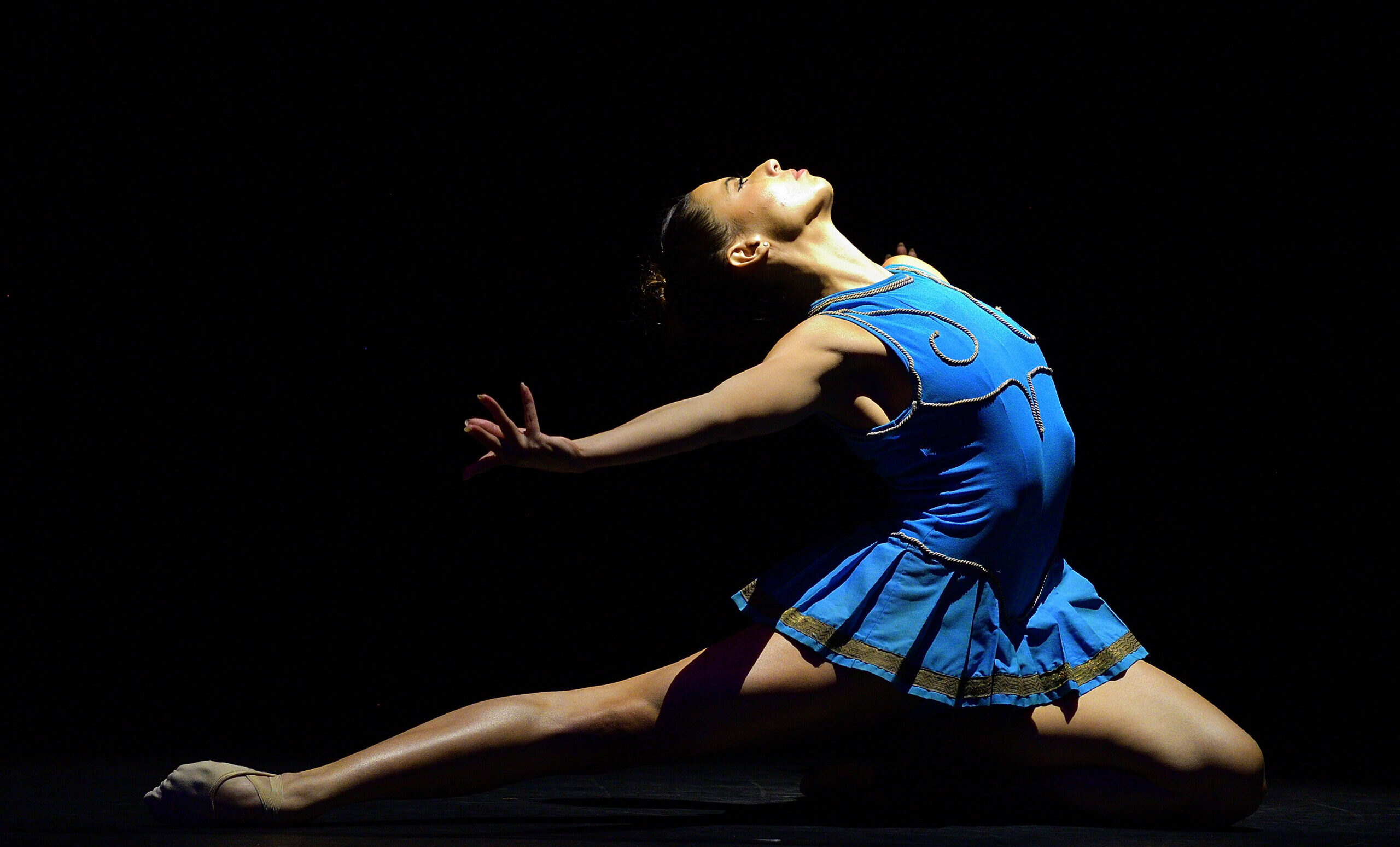

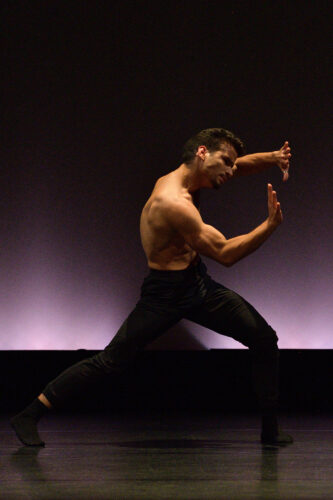
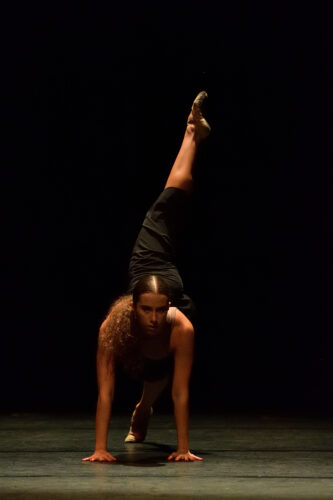
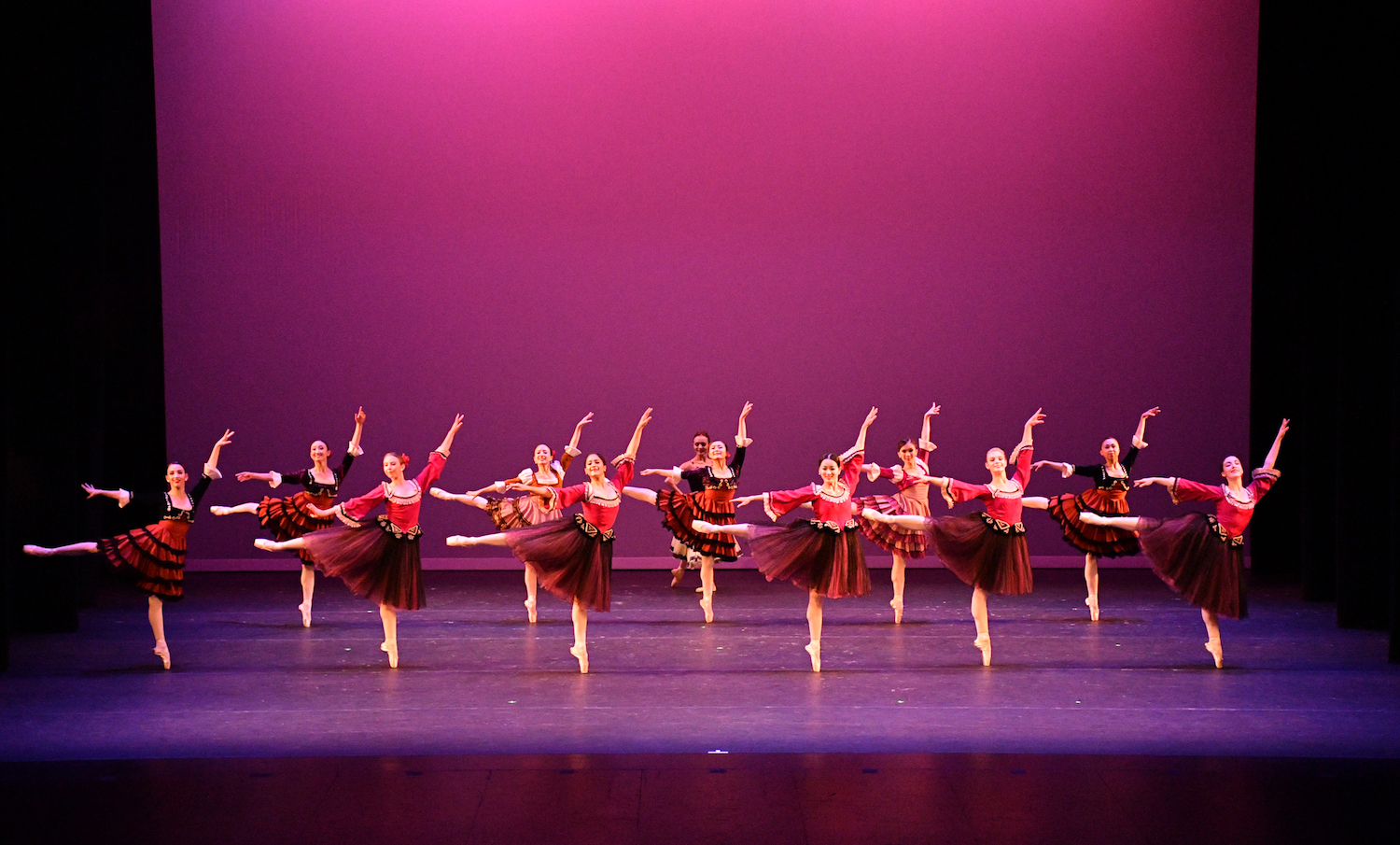
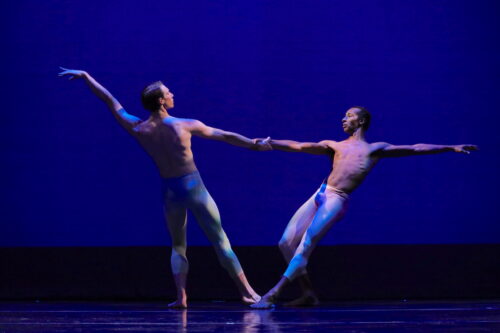
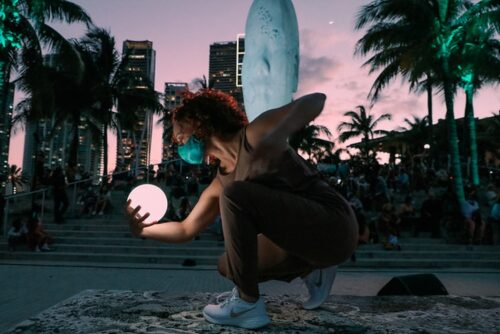

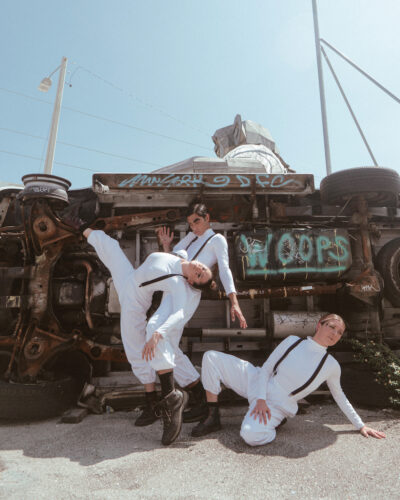
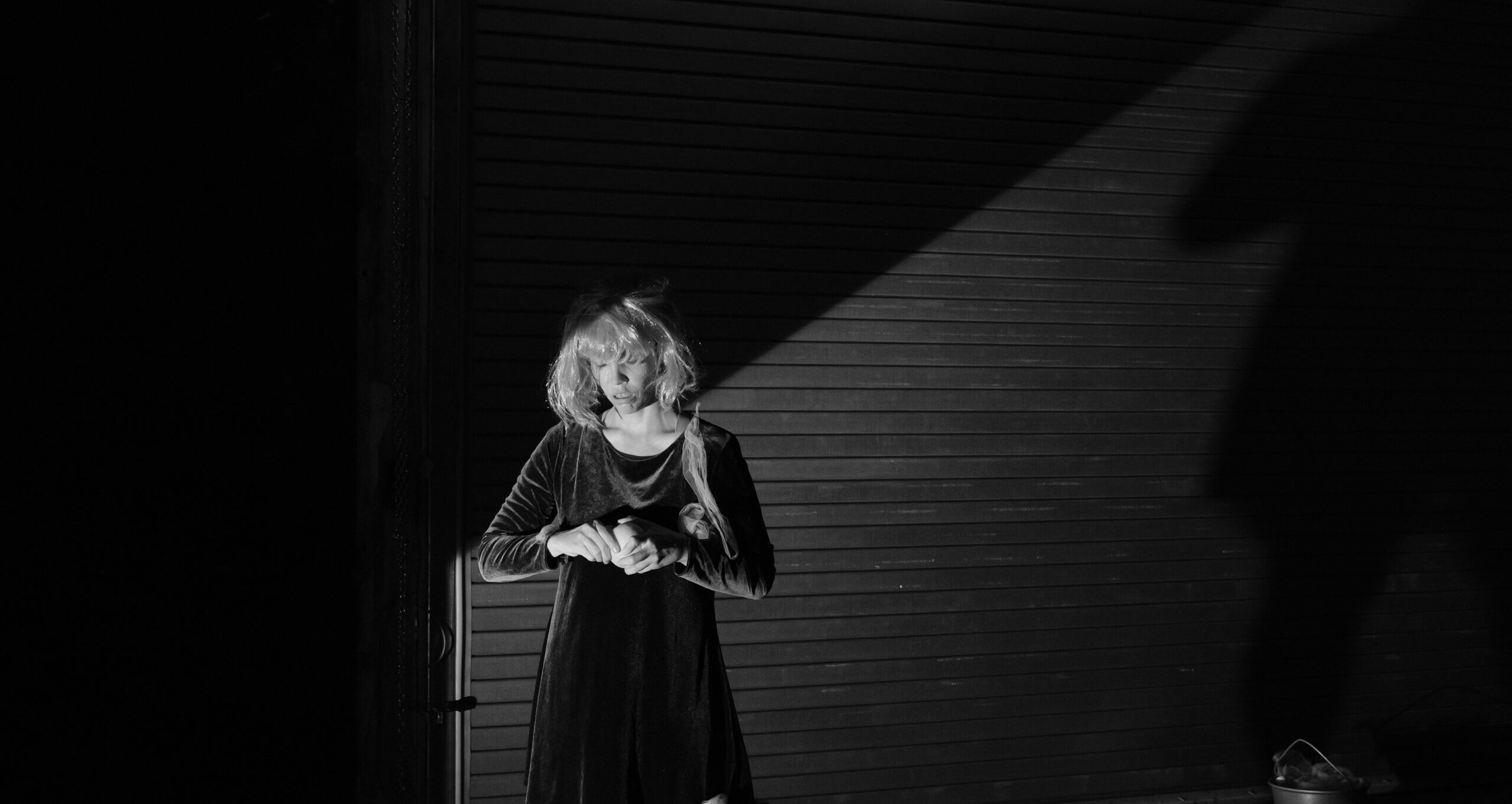

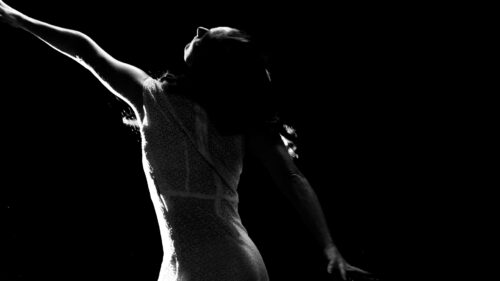
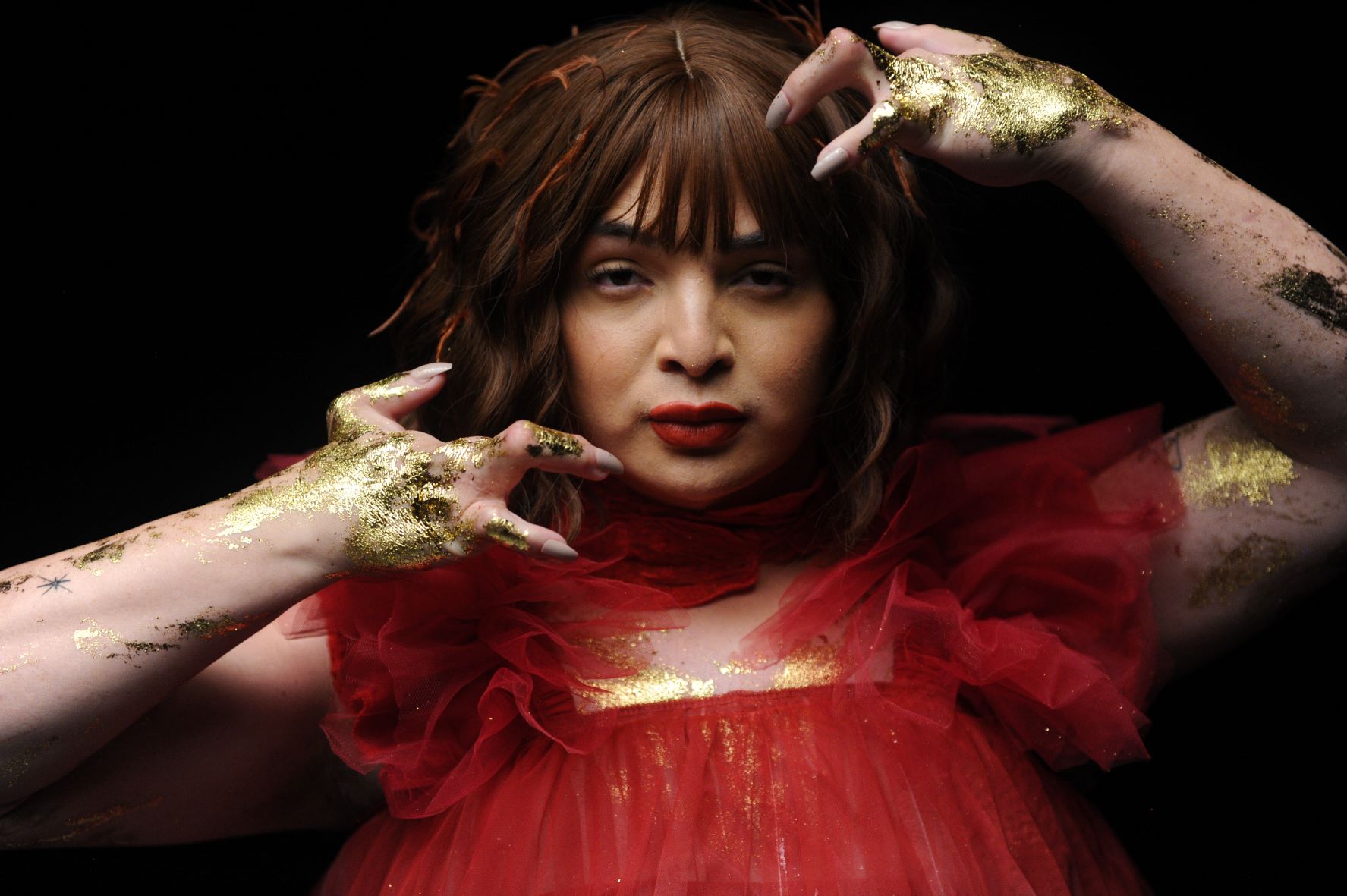
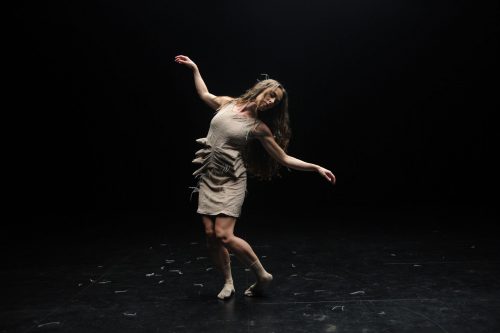
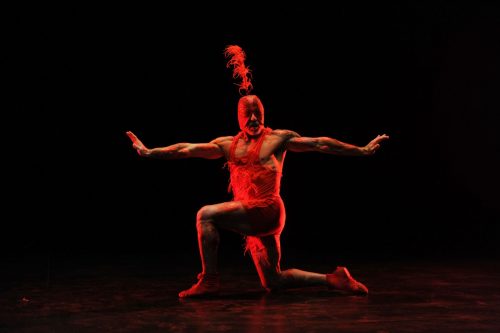
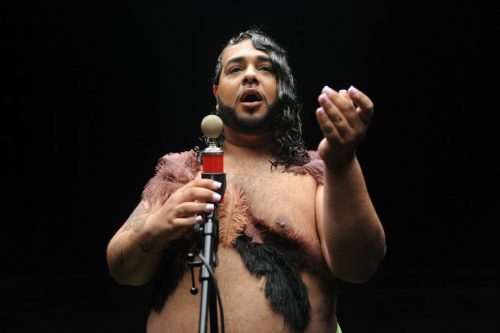
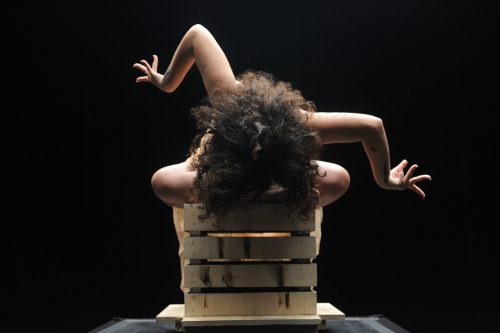
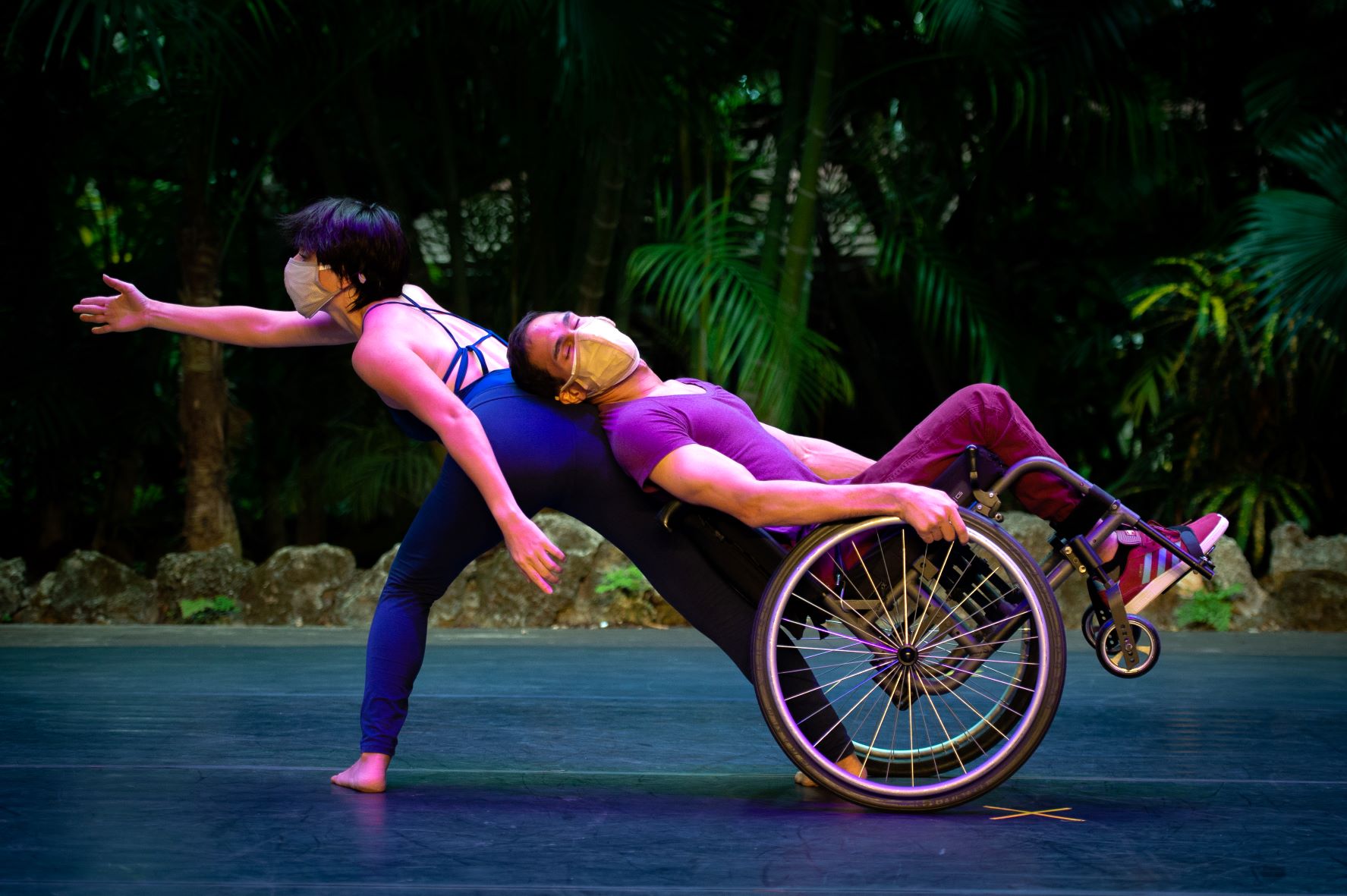
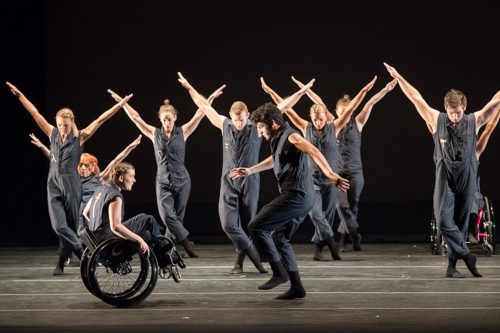
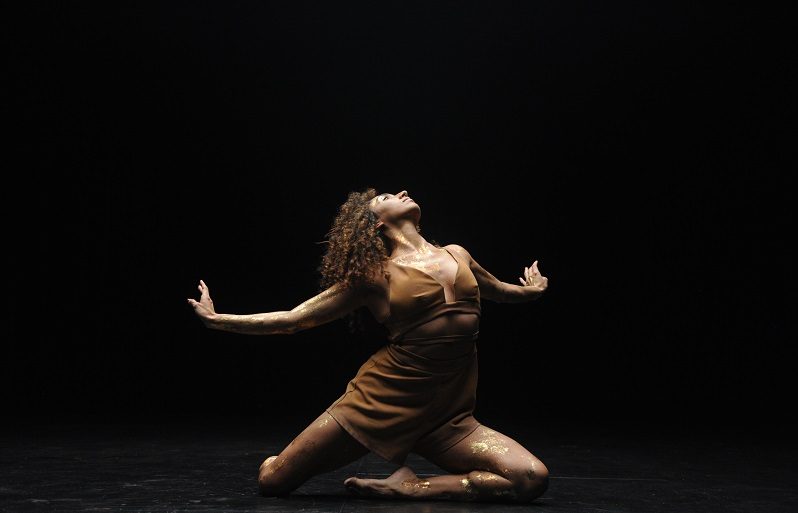
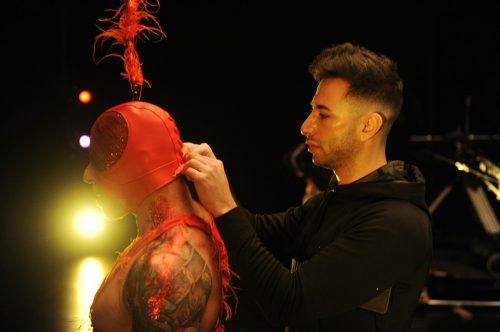
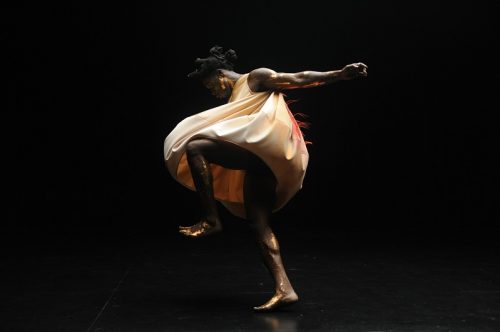
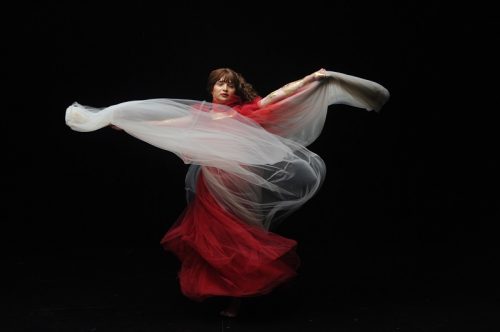
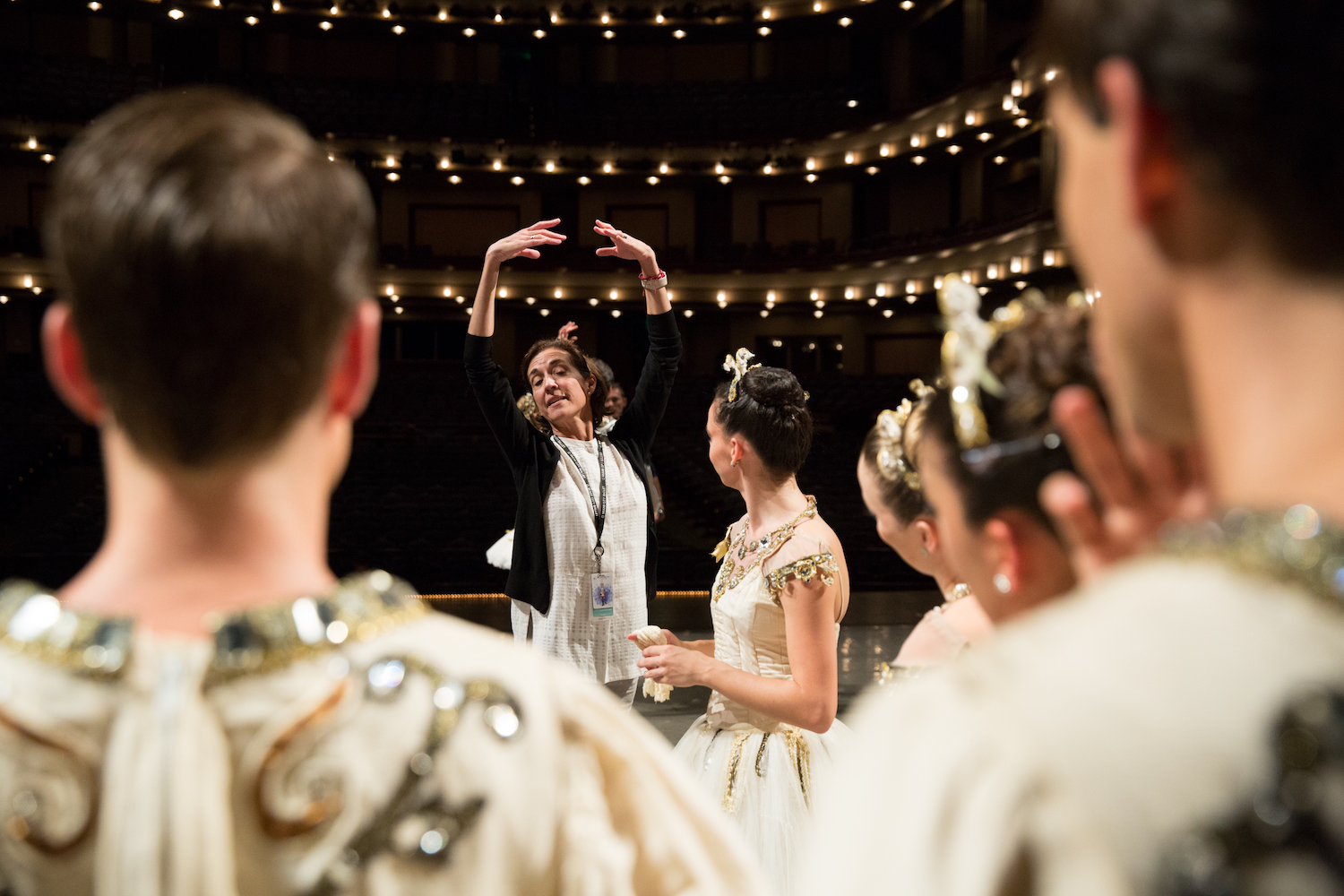
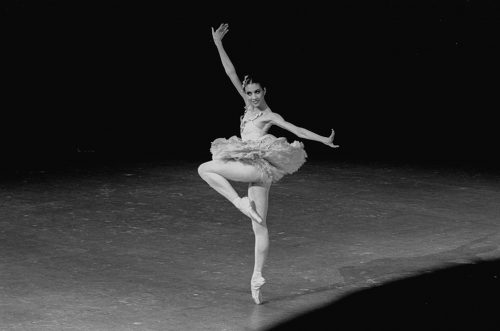
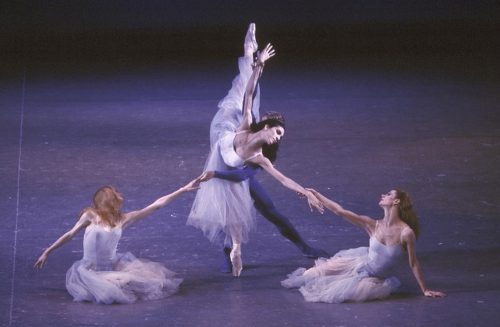
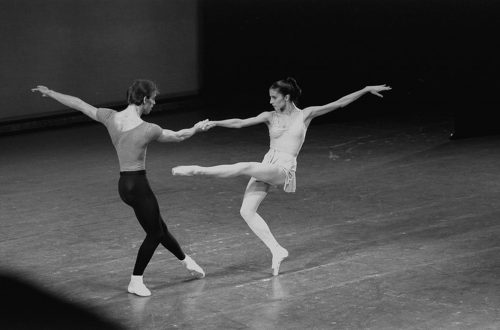
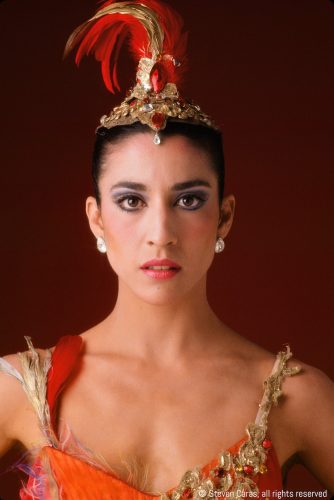


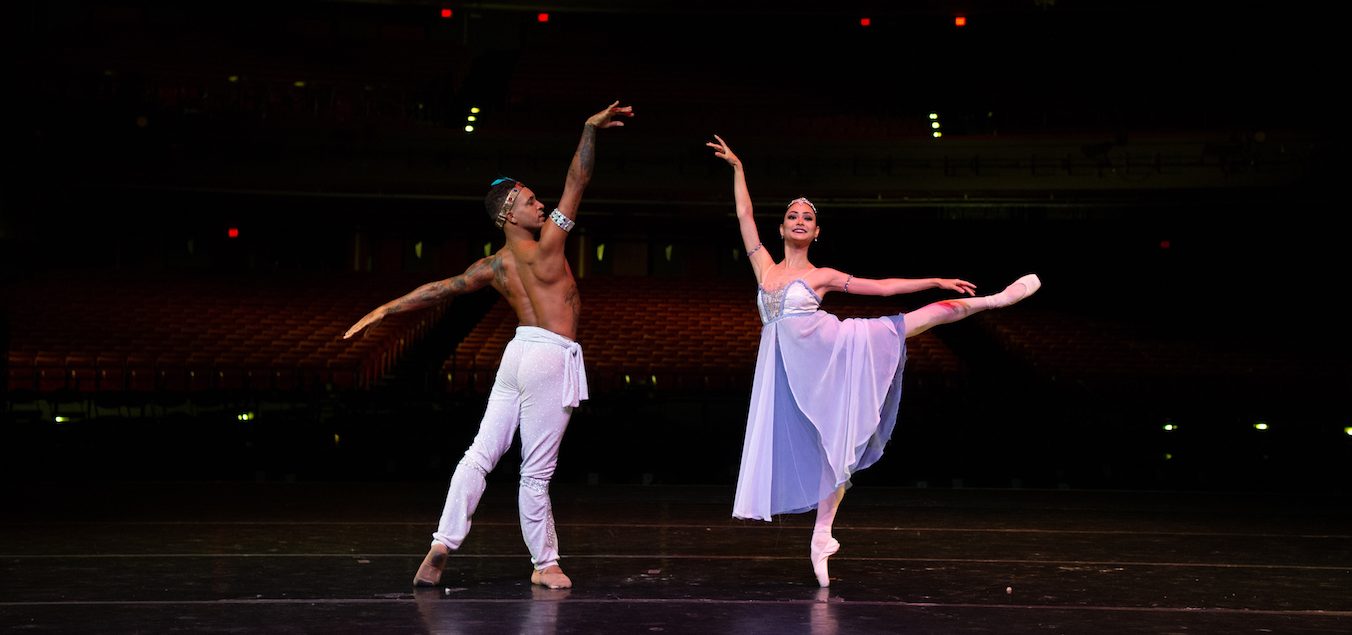


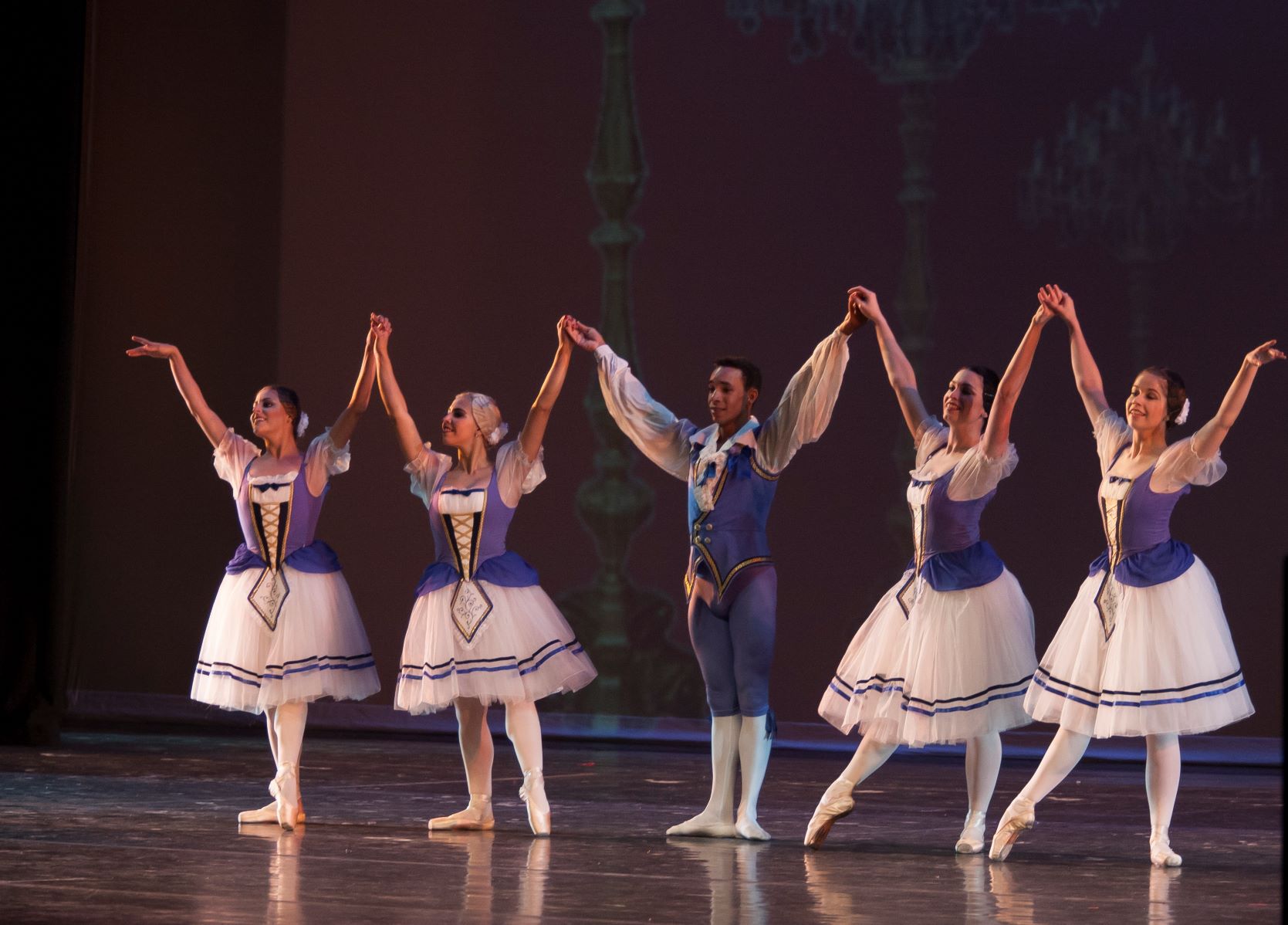
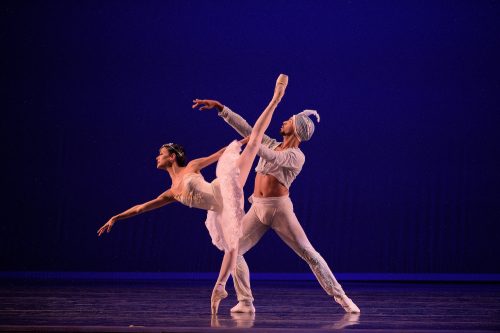
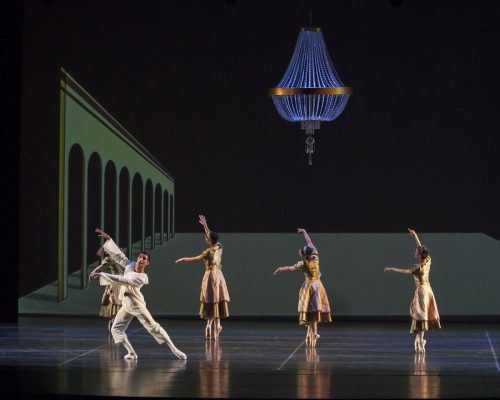
Recent Comments