The Bonnier Gallery presents digital art in ‘Yucef Merhi: Open’
Written By Michelle F. Solomon September 22, 2021 at 2:56 PM
Yucef Merhi’s “Compassion” is part of a new exhibit at The Bonnier Gallery. (Photo courtesy of Zachary Balber)
With its new exhibit, “Yucef Merhi: Open,” The Bonnier Gallery invites visitors to open their eyes, hearts and minds to digital art — to feel its energy and go beyond the buzz.
“There has been a lot of buzz and conversation about digital art as of late because of NFTs,” says gallery co-owner Grant Bonnier, referring to non-fungible tokens — those digital assets (from music clips to photos to artwork) that exist only in cyberspace and are bought and sold using cryptocurrency. “For a lot of people who are new to the art world, they think that because of NFTs, digital art is something new and it’s not.”
They may also see it as “something that is cold and sterile,” says Bonnier. “With Yucef’s work, it’s very much not.”
The Venezuelan-born, Miami-based Merhi infuses a certain energy into what could be considered vapid technological components and gives them life. The exhibit features 15 pieces from the artist, poet and computer programmer.
The artist uses TV sets with clear casings in some of his works, including in “Atari Poetry VI” (2006). The TVs were originally used in prisons. (Photo courtesy of The Bonnier Gallery)
“Cathexis, it’s the art of instilling energy into an object, and that’s what Yucef does,” Bonnier explains, adding that much of what’s included in “Open” is work that is also steeped in poetry. He says The Bonnier Gallery, which he opened in November 2018 with wife Christina in the Miami neighborhood of Allapattah, has a “particular interest in works that find themselves at the intersection of visual art and language.”
“Open” presents a mix of ideas, a “critical mid-point” of Merhi’s career, according to Bonnier. Some works are indicative of Merhi’s very early explorations, while others show the evolution and metamorphosis of the 44-year-old’s decades-long practice.
When he received an Atari console as a child, he turned it into a programmable computer. That was the beginning.
“When I was a kid, I felt like I could communicate with Atari machines,” Merhi says. “Electronic toys were the way I was able to build my reality.”
Yucef Merhi is a Venezuelan-born, Miami-based artist, poet, academic researcher, computer programmer and coder. (Photo courtesy of The Bonnier Gallery)
“Compassion,” the largest piece in the exhibit and one of the newest, features five television sets and five Atari 2600 game consoles and cartridges, which Merhi programmed to display words. Set up on a rising staircase, the top TV shows the word, “Compassion,” with the TVs on the next steps completing the statement: “Compassion is the divine compass.”
Merhi says he spent all of 2020, “the year of the pandemic,” building the work. The intensity of creating “Compassion” came from coding the Atari cartridges.
“They take several months each to build, and there were five of them,” Merhi says.
The 13-inch RCA television sets had been manufactured specifically to be used in prisons, with clear back panels that are meant to ensure prisoners cannot tamper with the electronics.
“I also spent time meditating in front of them, because I wanted to put energy into the objects and to make peace with the people who had these TVs,” Merhi says. “I also wanted to cleanse the past out of them and especially my own darkness, my own shadows.”
A computer is programmed to create the question “Who Am I?” in Yucef Merhi’s “Atari Ex Machina” (2007). (Photo courtesy of The Bonnier Gallery)
The idea was to reclaim the televisions with positive meaning, according to Merhi.
“Compassion” is the grand finale and is perhaps the most powerful piece in the exhibit. It also incorporates the early Atari work that gained Merhi acclaim. He’s coined a word for the use of the Atari systems and the TVs: retrocycling. Rather than the old consoles, computer boards and TVs ending up in a landfill, he gives them a new life and a new purpose.
This idea is what grabbed the interest of the Massachusetts Institute of Technology (MIT), which selected Mehri for a fellowship as part of its MIT Open Documentary Lab. For the fellowship, he will be investigating how to reduce electronic waste that comes from obsolete technologies — such as Atari consoles, cassette and CD players, TVs and slide projectors — and have been filling up dumps for decades.
“The Poetic Clock: 2.0” (2020) transforms time into poetry and generates 86,400 different poems every 24 hours. (Photo courtesy of The Bonnier Gallery)
Another grand work in the “Open” exhibition at The Bonnier is “The Poetic Clock 2.0” (2000), a digital time machine that displays three lines of poetry. Merhi created software so that, at different times, each line will change. The top sentence changes every hour, the second verse shifts every minute, and the third every second. The digital artist here is displaying language through the movement of time with a new poem constantly being generated.
The clock generates 86,400 different poems every 24 hours.
Political commentary is also prevalent in much of his art. In “Artificial Stupidity” (2019), for example, what looks like a friendly video arcade game, upon closer inspection, features Venezuelan leader Nicolas Maduro chasing flags. As the user moves the character of Maduro, who is the computer game’s equivalent to Pac-Man, the end game is to have him eat the flag and watch it be expelled into a poop emoji, or “transformed into digital excrement,” Merhi says, “alluding to the systematic destruction of the country.”
Merhi recently had two pieces on display at Oolite Arts as part of its group exhibition, “Where there is power.” His work, “Maximum Security” (1998-2004),” consists of hacked emails from Venezuela’s previous leader, Hugo Chavez, while “No Fly Security” (2018-2019) is composed of an assortment of documents and emails that includes the non-public roster of individuals prohibited from flying in and out of the United States on suspicion of terrorist ties.
One of the custom programmed Atari cartridges created for “Compassion” by Yucef Merhi. (Photo courtesy of The Bonnier Gallery)
A smaller study, which was the genesis for “No Fly Security,” is on exhibition as part of “Open.”
Bonnier says all of the works are especially thought-provoking, and he invites visitors to spend time with each. He walks over to a retro Hitachi television set displaying computer language on the screen. Two lines move back and forth before spelling out, “Who Am I?” It’s a work entitled, “Atari Ex Machina” (2007).
“Every time the pixels meet, the question appears. If you stop to think about the question, is it Yucef asking, ‘Who am I?’ Is it the Atari asking itself the question? Or is it the viewer?” Bonnier says. “Just the nature of sitting with and engaging with an idea, that’s no different than the way we would [look] at an abstract painting.”
WHAT: “Yucef Merhi: Open”
WHEN: 11 a.m.-6 p.m. Tuesdays-Saturdays, through Nov. 20, 2021
WHERE: The Bonnier Gallery, 3408 NW Seventh Ave., Miami
COST: Free
SAFETY PROTOCOLS: Facial coverings should be worn inside the gallery, and appointments are encouraged.
Miami-based artist Edouard Duval-Carrié's work, currently in the 61st Venice Biennale, echoes the Italian exhibition in “From Venice with Love” in Miami Beach at The Betsy Hotel.
“The Science Behind Pixar” at Frost Science takes visitors behind the scenes of Pixar films with more than 50 interactive experiences exploring animation, engineering, math and technology.
Lowe Art Museum reopens, with new exhibits, free admission
Written By Sergy Odiduro August 30, 2021 at 10:57 PM
An image from “William Wegman: Instant Miami,” at the Lowe Art Museum. (Photo courtesy of William Wegman)
The Lowe Art Museum is back.
The University of Miami-operated institution has reopened in anticipation for the fall season, more than a year after switching to a virtual format due to the COVID-19 pandemic. And to mark the occasion, the Lowe has planned three new exhibits, as well as gallery installations, and the gift of free admission.
“We are all very relieved and excited to be able to welcome visitors back through our doors,” said Jill Deupi, the Lowe’s Beaux Arts director and chief curator. “We have quite a few works that have never been seen before, as well as some really important loans from local collections.”
The exhibits on display will feature something for everyone, including those who would like a trip down memory lane.
“William Wegman: Instant Miami,” for example, offers a nostalgic look at Miami through the lens of a celebrated and noted photographer who is best known for his whimsical portrayal of his Weimaraner dogs. It will be on view through Sept. 26.
“This is actually an encore performance,” Deupi said. “Back in November of 1984, the then-director Ira Licht commissioned William Wegman to come to Miami for just over a week. The charge was to let Wegman photograph whatever captured his imagination and his interest.”
The technical aspects of the production proved to be a unique and, at times, humorous part of the project.
“He was documenting the city with this really crazy, very large Polaroid Land camera,” said Deupi, of the 235-pound piece of photographic equipment. “It is quite literally the size of a refrigerator that had to be rented from the manufacturer. It took several people to operate, so it’s really quite fascinating.”
She invites those who may have missed the exhibit the first time to come in and take a look.
“This hasn’t been shown here since late ’84, early ’85, the one and only time that they were on public view, so we’re really happy to be able to reshare them with people who may have seen that show almost 40 years ago,” she said. “It’s a real slice of history. It’s just Miami as it was during a very different time.”
If your tastes lean toward the rich and famous, then look no further than “Duane Michals: The Portraitist.” The exhibit, which features 135 images of the inner circle of the Hollywood circuit, will also be available through Sept. 26.
The works “are not only beautiful as artwork but super-interesting because the sitters are all glitterati,” Deupi said.
Whom you recognize will depend on your generation, with photos including “people like Burt Reynolds and Tilda Swinton and the cast from ‘Saturday Night Live’ and Andy Warhol, painters, musicians, movie stars, writers. They’re all there so that’s really, really fun and interesting, because Michals is such a gifted portraitist,” she said.
“His photography is not only visually stunning, but he has a real gift for getting into the mind and the soul of his sitters, which I think is the hallmark of a truly gifted photographer who’s focusing on people.”
On view through Oct. 17, “FORCE OF NATURE: Highlights from the Myrna B. Palley Art Jewelry Collection” focuses on objects rather than people.
“It’s a small sampling of her wonderful collection of art jewelry, so that people can get a sense of an area of her collection that was very private and personal to her — although people who knew Myrna will definitely recognize some of the works that are on view because she actually wore all of her jewelry. In fact, she would select her jewelry before she selected her outfits, which is, I think, the reverse of what people normally do,” Deupi said. “She was just so excited about the art jewelry that she had, she wanted to share it with the wider world. The pieces are really quite stunning. They are wearable sculptures.”
Admission to the newly reopened Lowe Art Museum will be free through May 31, 2022. (Photo courtesy of Lowe Art Museum)
The Lowe is able to welcome back patrons free of charge thanks to Beaux Arts, which was founded to provide assistance for the museum. The complimentary admission will be available through May 31, 2022.
“We’re a small but very mighty group of passionate women who help out in the community,” said Beaux Arts president Elizabeth Timberlake Green. “Women banded together to support the Lowe and helped to grow it over the years.”
She has witnessed how the Lowe Art Museum has successfully navigated the challenges of the pandemic.
“It’s been an interesting year to see how they still maintained a connection with the community with the works of art they have within their walls,” she said.
The Lowe has carefully cultivated its online collections — and plans to continue doing so.
“Even though we are open, we will continue to build out that platform,” Deupi said. “We’ve learned just how important those virtual programs are, in terms of reaching a broader audience far afield, so there’s a really rich array of material there that I would encourage people to take a look at.”
Still, she said, there’s nothing like the human element when it comes to art.
“It has become abundantly clear [that] art without people is not really art. It’s something altogether different, and similarly museums without guests really function as store houses, rather than a meeting place where people can come and engage with works of art as well as with one another,” she said.
“I think it’s really important for people who have never visited to be aware of us and understand that we are the oldest art museum in Miami … Now that we’re free, I think that it’s a perfect opportunity to visit and see what we have to offer.”
Several precautions are being put in place to address the pandemic, including requiring patrons to register in advance.
“We carefully control the number of people who can be on-site at any one time, so it’s 20 people every 30 minutes,” Deupi said. “And we have a very large facility, so there’s really no worry about people feeling overcrowded or unsafe in any way.”
The Lowe Art Museum, at 1301 Stanford Drive, Coral Gables, has reopened and is now available from 10 a.m. to 4 p.m. Thursday through Saturday with reservations. Admission will be free through May 31, 2022. For more information, visit lowe.miami.edu or call 305-284-3535.
Miami-based artist Edouard Duval-Carrié's work, currently in the 61st Venice Biennale, echoes the Italian exhibition in “From Venice with Love” in Miami Beach at The Betsy Hotel.
“The Science Behind Pixar” at Frost Science takes visitors behind the scenes of Pixar films with more than 50 interactive experiences exploring animation, engineering, math and technology.
Fringe Projects puts art in unexpected places for ‘Public Color’ exhibition
Written By Michelle F. Solomon August 27, 2021 at 3:18 PM
Mark Fleuridor’s “Being Held” mural covers one wall at the Carol Glassman Donaldson Childcare Center, across from the Miami-Dade Children’s Courthouse. (Photo courtesy of Zachary Balber)
The painted scenes depict the idea of being cared for, cherished. They’re tender family tableaus, all showing children of different ages cradled in the arms of someone who could be a nurturing parent, grandparent, aunt or uncle. They’re painted in bright colors, resembling a tapestry.
Entitled “Being Held,” the 52.9- by-12-foot mural from Miami artist Mark Fleuridor graces the front of the Carol Glassman Donaldson Childcare Center in downtown Miami. One of eight works commissioned by Fringe Projects, it’s meant to welcome families into the daycare center but also to serve another audience: people going in and out of the Miami-Dade Children’s Courthouse directly across the street.
“Mark’s work has that feeling of hope,” says Deborah Di Capua, executive director of Fringe Projects. “And we were thinking about the people that were going into the children’s courthouse for one reason or another and giving them this tenderness that they might, at that moment, feel a little distanced from.”
Fringe Projects’ “Public Color” outdoor exhibition, which appears throughout the downtown area and the Design District, features artists of Caribbean descent. All but one are Miami-based artists.
Haitian-American artist Mark Fleuridor received two commissions for Fringe Projects’ “Public Color” outdoor exhibition. (Photo courtesy of Jeff Barnett-Winsby & Wassaic Project)
It’s the result of a partnership between Fringe Projects’ Di Capua and María Elena Ortiz, the curator at Pérez Art Museum Miami (PAMM) who leads the Caribbean Cultural Institute (CCI). Di Capua explains that Ortiz had opened a show of all contemporary Caribbean art as part of CCI: “We said, ‘Let’s do more projects with artists of Caribbean descent.'”
Fleuridor, who is Haitian-American, says his art is always based on depictions of his family. For the daycare mural, Fleuridor used sketches of “family members holding babies from images that I had taken. Then I saw the mural space and I thought it would fit perfectly together …
“I also added references to the artwork of things that remind me of Miami, food and patterns within the mural,” he adds. “There are patterns of hibiscus plants, which is the national plant of Haiti, and strawberry candies, which is something I grew up eating.”
Fleuridor also painted “Beach Day” above a storefront on East Flagler Street.Passersby can check out the mural of two children enjoying the beach, which he says was inspired by his niece and nephew.
Charo Oquet’s mixed-media sculpture is meant to be a meeting point at The Plaza at Government Center in downtown Miami. (Photo courtesy of Zachary Balber)
Dominican-born, Miami-based artist Charo Oquet created her work, “Points of Joy,” at The Plaza at Government Center. The large monument, which could resemble a statue of a deity from another time, was made with hundreds of found objects then covered in gold.
“Points of Joy” is meant to be a place to pause and perhaps say, “What is that?”
“I hoped it would be a meeting point where people would gather and maybe stop and talk and think about what has been going on in these difficult times,” Oquet says.
The sculpture encompasses many of Oquet’s interests including Afro-Caribbean rituals inspired by her upbringing in the Dominican Republic.
Di Capua says “Points of Joy” is perfectly at home in its high-traffic area. “When it comes to site specificity, it just makes the projects richer,” she says.
“It had to be something that appealed to everyone — the people who take the bus there, or who work in a government office, and there’s a cross-range of people, working-class people, so many who are multicultural, Hispanic, African-American … I wanted the work to speak to them,” says Dominican-born artist Charo Oquet, of her “Points of Joy” sculpture. (Photo courtesy of the artist)
Oquet took to heart the many different people who would likely cross paths with “Points of Joy.”
“It had to be something that appealed to everyone — the people who take the bus there, or who work in a government office, and there’s a cross-range of people, working-class people, so many who are multicultural, Hispanic, African-American,” she says. “There are [people] from all over the place. I felt that was my audience. I wanted the work to speak to them.”
The exhibition is being presented in collaboration with the John S. and James L. Knight Foundation, Miami Downtown Development Authority, Miami Design District, Oolite Arts and Miami-Dade County Department of Cultural Affairs (which helps support Artburst Miami).
On a rolling garage door in the middle of the Miami Design District is April Bey’s “Colonial Day Sale: What Are You Gonna Do, If You Like a Woman and Your Mama No Like Am?” (Photo courtesy of Zachary Balber)
All but three of the pieces are currently installed. Morel Doucet’s digital installation, “Opia (Under the Stars, Black Girl’s Dream),” was exhibited for a short time on the side of the InterContinental Miami hotel, because of what Di Capua explains as “the transitory nature of the piece.” Another very large and intensive piece will be installed in the fall, and a site is still being scouted for a third work that’s already completed.
“There is a fluidity where some pieces have longer life spans and others are gone sooner,” Di Capua says, adding the decision for the works to not be permanent, like many public art projects, is entirely intentional.
“Permanent work becomes part of the infrastructure and you get used to it and it blends in. But when something is all of a sudden here, it has the ability to cause a bit of a surprise,” Di Capua says. “What I love about public art, and what I’ve always loved about public art, is that you can introduce it into the everyday life of people. These works of art can live in the world, like we all live, in the grid of everyday life, but still be a special experience that also gives solitude, mindfulness, and creates curiosity.”
“Moving Interlude” by GeoVanna Gonzalez is at The Plaza at Government Center. (Photo courtesy of Zachary Balber)
The works in Fringe Projects’ “Public Color” include:
“Opia (Under the Stars, Black Girl’s Dream),” a digital light animation at the InterContinental Miami, 100 Chopin Plaza, by Morel Doucet (this installation ended June 3)
“Moving Interlude,” at The Plaza at Government Center, 111 NW First St., by GeoVanna Gonzalez
“Being Held,” acrylic paint on a wall at Carol Glassman Donaldson Childcare Center, 112 NW Third St., and “Beach Day,” acrylic paint on a facade at 129 E. Flagler St., both by Mark Fleuridor
“Points of Joy,” mixed media at The Plaza at Government Center, by Charo Oquet
“Colonial Day Sale: What Are You Gonna Do, If You Like a Woman and Your Mama No Like Am?” in Miami Design District, a vinyl print on a garage roller door next to 170 NE 40th St., by Los Angeles artist April Bey (she is the only non-Miami artist featured)
Installation (not yet titled) on the facade at 146 E. Flagler St., by Kathia St. Hilaire (expected fall 2021)
“Praise the Bridges that Carried Us Over” by Johanne Rahaman (installation and location forthcoming)
WHAT: Fringe Projects presents the “Public Color” outdoor exhibition
WHEN: Through January 2022
WHERE: Sites around downtown Miami and the Miami Design District
Miami-based artist Edouard Duval-Carrié's work, currently in the 61st Venice Biennale, echoes the Italian exhibition in “From Venice with Love” in Miami Beach at The Betsy Hotel.
“The Science Behind Pixar” at Frost Science takes visitors behind the scenes of Pixar films with more than 50 interactive experiences exploring animation, engineering, math and technology.
‘Where there is power’ aims to pack a thought-provoking punch for the current landscape
Written By Michelle F. Solomon August 13, 2021 at 7:54 PM
Asif Farooq’s “Balalaika” (2012-ongoing). (Photo courtesy of Asif Farooq estate and studio)
In a small project room on the second floor of Oolite Arts on Lincoln Road, a monitor displays a circle that resembles a sonar. Below that, a printer sporadically releases a large, colored abstract work on paper.
It’s meant as a visual representation of continuous flow of digital data moving between Miami Beach and Havana, Cuba. The work by Rodolfo Peraza, entitled “Pilgram: Naked Link 3.0,” is part of “Where there is power,” which is on view through Sept. 19 at the Miami Beach gallery
The exhibit, which runs through Sept. 19, 2021, features an array of works by 13 Miami-based artists, touching on topics of particular relevance in the current landscape of bipartisan battles, worldwide protests, border issues, gun violence, and policing disparities in the Black community. When viewed on a deeper level, the pieces are meant to be thought-provoking and unsettling.
“The exhibition creates an entry point into understanding some of the larger systems that govern our daily lives,” says Amanda Bradley, programs manager at Oolite Arts. “What ties every piece together are the deeply personal and political intersections of power.”
She and co-organizer René Morales, director of curatorial affairs and chief curator at Pérez Art Museum Miami, say the exhibit pieces represent the many ways that artists “access, spy upon, expose, memorialize, and occasionally trouble the machinations of power.”
Peraza’s “Pilgram” creates a trace route gathering all the IP addresses in Cuba tracking the flow of information. (IP is short for Internet Protocol, and each unique address identifies a device on the internet or a local network.)
“The radar creates a visualization map of the exact locations that the IP is pinging and prints it out,” Bradley explains.
Peraza’s work was created even before Cubans took to the streets in early July. In an effort to stop the flow of information into and out of the island, Cuban authorities reportedly restricted internet access. Bradley has noticed that the IP addresses have been less and less active because of these latest restrictions.
Yucef Merhi’s “Maximum Security” ( 1998-2004). (Photo courtesy of the artist and The Bonnier Gallery)
Artist Yucef Merhi’s wallpaper installations of digital prints on laser paper are plastered along Oolite’s curved walls at the entrance of the exhibit. The assemblage of emails and government documents may appear arbitrary, but Merhi invites the viewer to look closer at how he’s placed them piece by piece.
“Each single sheet of paper was laid consciously, even though it looks random,” Merhi says. “There is something poetic about the data and arranging some of the information that is out of sight and not reachable.”
This exhibit marks the first time that two of the pioneering digital artist’s installations exist in the same space.
On the left is his “Maximum Security” (1998-2004). At age 20, and using only a dial-up modem available at the time, Merhi hacked into the emails of Venezuela’s Hugo Chávez. Merhi says he was living in his native Venezuela and had information that Chávez was going to be a presidential candidate. The project traced his candidacy and early presidency but came to a halt, Merhi says, when Chávez’s official account was transferred to a new server.
While all the emails are in Spanish, the magnitude of the work speaks for itself.
As for any retribution for the hacked emails, Merhi says: “I have had some issues. Fortunately, I was and am surrounded by good people who understand what I am doing.”
Directly across from “Maximum Security,” on the other curved wall, is the more recent “No Fly Security” (2018-2019), another assortment of documents and emails that includes the non-public roster of individuals prohibited from flying in and out of the United States on suspicion of terrorist ties. There are many emails from citizens asking why they were stopped at the airport. One, from an 84-year-old woman from Lexington, Ky., describes how she was detained at a Florida airport.
“This is only the second time it’s been shown in public. This information is [supposed] to remain invisible, and that’s one of the strongest points of control,” Merhi says.
Yucef Merhi’s “No Fly Security” (2018-2019). (Photo courtesy of The CIFO Collection)
Together, both installations make up 1,500 documents of a “datagram,” a term coined by the artist, in which the aesthetic of the site-specific work examines the network of documents as they make their circuitous route through cyberspace.
“René and I talked about this intersection and for us having both Latin America and the United States was very important,” Bradley says.
The curatorial idea, which Merhi readily embraced, was that “No Fly Security” symbolizes the North (United States) and “Maximum Security,” directly across, represents the South (Latin America).
Across the gallery, and high above on the V-shaped ceiling, is a large photomural by Edny Jean Joseph that brings us into the present.
“This came directly amid the Black Lives Matter protests and George Floyd,” Bradley says.
She and Morales got the idea to place Joseph’s mural on the ceiling while sitting on a ledge in front of the arched windows at Oolite.
“We talked a lot about where his work would go, because we wanted the scale to remain large,” Bradley says. “We looked up at the ceiling. In art history, the ceiling has represented wealth and power. We wanted to change the narrative of that and, as viewers look up, his work shifts the power dynamic.”
Edny Jean Joseph’s “The Spectacle” (2020). (Photo courtesy of the artist and Andrew Quarrie & Void Projects)
On one side of the photo collage, entitled “The Spectacle” (2020), Joseph reimagines a bullfight. The bull charging at the Black matador is a white police officer armed with a long club. An adjacent image shows the face of a smiling Black man, positioned to be “watching” the fight. Joseph says the face was originally a small piece of a larger photo, which he has zoomed in to make hundreds of times bigger than the original image. The matador image had been shown previously, but this is the first time he’s paired it with the smiling man looking on.
“I didn’t just want to put an image onto a wall. I wanted to make something that activated a spectacle,” Joseph says. “So now, the viewer looks up at the matador, and the man on the other side is also watching.”
Joseph says creating commentary by manipulating photos brings with it another type of power: “I think about myself in participating in revisionist history because of my ability to make images that never existed.”
In the middle of the exhibition space are pieces from the late Asif Farooq’s dream project, “Balalaika” (2012-ongoing), described by Oolite as a “slightly larger-than-life-size, fully-detailed paper airplane based on the Russian MiG-21 fighter jet.” When the artist died unexpectedly at age 40 in August 2020, the plane was about 85 percent completed.
The model of the 2-ton plane is in a warehouse space in west Miami-Dade County, where his studio team continues working to complete it.
Bradley says Farooq was wholly dedicated to making sure that every element was true to scale and that the plane would be fully functional when completed.
Farooq’s work is indicative of how the exhibition touches on power but not always in an obvious way.
“The plane is such a recognizable object of military control,” Bradley explains, adding that the sections they picked for this exhibition were intentionally pieces that give the plane its power.
‘WHERE THERE IS POWER’ ALSO INCLUDES:
Reginald O’Neal’s “My Father” (2018). This oil on canvas captures the first depiction of his father, who has been incarcerated since O’Neal was a child. There’s also an audio recording of one of the many prison phone conversations between O’Neal and his dad.
Reginald O’Neal’s “My Father” (2018). (Photo courtesy of the artist)
Chire Regans’ “When They Ask Me What I Did, I’ll Say Everything I Could” (2021). The charcoal, pencil and acrylic paint portraits depict young people who have been victims of gun violence in Miami. To date, Regans (known as VantaBlack) has created more than 250 portraits.
Tony Vazquez-Figueroa’s “Ourglass” (2019). Instead of sand, this hourglass has three minutes’ worth of slowly dripping crude oil.
José Álvarez’s “The Visitor” (2007). A single-channel video shows the artist, also known as D.O.P.A., playing the role of a medium channeling a 2,000-year-old spirit. With packed houses across the globe coming to see him between 1988 and 2003, Álvarez never accepted money for his shows. At the end of each performance, he would reveal that he was a conceptual artist whose purpose was to “use deception to reveal the truth.”
Agustina Woodgate’s “Emergency Exchange” (2019). The bullet-resistant acrylic box with one month’s supply of emergency drinking water pouches is a commentary on how money is made from commodities that are central to human life, Bradley says.
Agustina Woodgate’s “Emergency Exchange” (2019). (Photo courtesy of the artist and Spinello Projects)
Judi Werthein’s “Brinco (Jump)” (2005). Werthein developed custom-made sneakers to start debate on the subject of illegal immigration along the U.S.-Mexico border. The shoes come equipped with necessities such as a map, compass, flashlight, money, medicine and documents. She provided them free of charge to people in Mexico and sold them for $200 as limited-edition art objects at a high-end San Diego store. Part of the proceeds was donated to a shelter for asylum seekers.
Francisco Masó‘s “The Architecture of Power, N° 7″ (2019). Made of acrylic on wood panel, his abstract geometric compositions are based on the colors and patterns that appear in the shirts worn by secret police in Cuba.
Antonia Wright and Ruben Millares’ “Where there is power, there is resistance” (2021). For the most recent piece in their steel barricade series, the pair added fluorescent lights to their installation sculpture. The series contemplates the connotation of barricades, from the innocence of crowd control at parades to the seriousness of the deployment to manage protesters. By replacing the steel, vertical bars with fluorescent lights, the artists aim to neutralize the barricade’s power, evoking the notion that the objects as an obstacle are easily shattered.
WHAT: “Where there is power” exhibition
WHEN: Through Sept. 19, 2021; appointments are encouraged
WHERE: Oolite Arts, 924 Lincoln Road, second floor, Miami Beach
Miami-based artist Edouard Duval-Carrié's work, currently in the 61st Venice Biennale, echoes the Italian exhibition in “From Venice with Love” in Miami Beach at The Betsy Hotel.
“The Science Behind Pixar” at Frost Science takes visitors behind the scenes of Pixar films with more than 50 interactive experiences exploring animation, engineering, math and technology.
Written By Sergy Odiduro August 3, 2021 at 2:30 PM
Antonia Wright’s “Touch Has a Memory” is part of Oolite Arts’ “Natural Transcendence” exhibit. (Photo courtesy of Spinello Projects)
If it seems like it’s too good to be true, it usually is.
When internet reports emerged of dolphins creeping back into Venetian canals, as a result of human inactivity during quarantine, the tale put a smile on faces everywhere.
“I thought it was one of the more uplifting stories during the pandemic, with everything else being so apocalyptic,” photographer Anastasia Samoylova said.
But, of course, it wasn’t true. Samoylova’s “Dolphins In Venice,” a vibrant photo collage with a striking color scheme, boldly captures the quirkiness of the event.
“It is exaggeratingly theatrical. It’s like a kaleidoscope, and there’s definitely an element of humor,” Samoylova said. “It is also a visual metaphor. Always seek out truth and dig deeper. Always look beyond the facade of an image.
“Art is not just aesthetics,” she continued. “It’s about thought. Nothing is just black and white.”
Anastasia Samoylova’s “Dolphins in Venice.” (Photo courtesy of Dot Fiftyone gallery)
Samoylova’s piece is one of several featured in the lens-based exhibit, “Natural Transcendence,” presented by Oolite Arts in Miami Beach through Nov. 7. The exhibit has been extended past its original end date of Aug. 22.
“‘Natural Transcendence’ is our first exhibit in over a year that is open to the public,” said Dennis Scholl, president and CEO of Oolite Arts. “Given how it poignantly ties to our experiences during the pandemic, we are hopeful that the community is able to embrace and be inspired by these seven artists who, through their unique vision, allow us to connect to our deeper sensibilities with nature.”
Filmmaker and video artist Rhonda Mitrani, who curated the exhibition, said she focused on finding artists whose work is heavily based on the environment.
“For me, it’s important to raise socially conscious issues,” she said. “I knew they all worked in nature. Each artist brought their own personality.”
There were several who immediately came to mind, such as artist and educator Wendy Wischer. Her “Where Water and Rock Collide” stimulates the senses while providing a meditative and immersive experience.
Wendy Wischer’s “Where Water and Rock Collide.” (Photo courtesy of the artist)
“I tried to give it the feeling that you are on water,” Wischer said. “Most of the footage came from the Grand Canyon. The piece is about any river, but at the same time, it is the Colorado River. I made it ambiguous enough so that people can insert themselves.”
The symbolism of the piece is clear.
“The overall metaphor is the desire to keep flowing, the way all rivers do,” Wischer said. “The rocks that become obstacles in our life, like the rocks that become obstacles within rivers, can be thrilling and beautiful, but they can also be devastating. The piece is about resilience and continuing to move forward.”
Megan McLarney’s “Blue Cascade” is another water-based piece. Mitrani approached McLarney because of her uncanny ability to focus on what others may overlook.
Megan McLarney’s “Blue Cascade.” (Photo courtesy of the artist)
“[She] takes an ordinary moment in nature and makes it extraordinary,” said Mitrani.
The five-panel vertical video display features a continuous cascading waterfall. The piece, which was captured near a meditation center, is deliberately devoid of sound.
“Sounds can be very aggressive. White sounds are less [so], but I want you to have your own sound,” McLarney said. “Art is kind of like therapy. You take away what you need and explore what you need to explore. But what I would hope is that there’s a moment of peace and solitude that you look for in nature.”
McLarney also views the piece as a celebration of the minutiae in honing her craft: “Here’s this water moving and, as it moves, it creates these grooves. It cuts into rock and you see the movement over time, but it also shifts. I feel like that’s kind of like the shooting process that I do. [I shoot] again and again and again.”
Jennifer Steinkamp’s “Dervish 2.” (Photo courtesy of the Margulies Collection, Miami)
Exploring motion and mobility are also prominent themes in Jennifer Steinkamp’s “Dervish 2.”
The enthralling video projection, which draws heavily on whirling Islamic dance, is what inspired Mitrani to showcase her work.
“The physical movement of the trees echo human movement,” said Mitrani. “You can’t dance without using your soul.”
Steinkamp said “Dervish 2” evolved out of “Eye Catching,” a piece she did in 2003 that explored Medusa heads in the Yerebatan Cistern.
“I researched Medusa and decided to make this enchanted area for her with trees that move like the snakes in her hair,” she said. “If a man looks her in the eye, he turns to stone. You can interpret that with a sexual innuendo if you want. I think it’s funnier that way.”
After viewing a dervish performance, she was inspired to make trees that whirled just like the dancers.
“This piece, in very quick time, goes through all the seasons in a year,” Steinkamp said. “I guess it never dies. Although winter is sort of a death, but then there is a rebirth once again.”
Colleen Plumb’s “Elsa in the Grass with Dandelions.” (Photo courtesy of the artist)
After a rebirth, there is often resilience. And who better to teach us about adversity than children?
“Elsa in the Grass with Dandelions” shows us the importance of taking time to kick back, relax and take our shoes off even, if (and especially when) we are dealing with challenges.
“[This piece] indirectly speaks to the experience of kids during the pandemic,” said Colleen Plumb, whose daughters have often been the subject of her photography.
Children are often keen observers in environments that adults may take for granted.
“I think the whole show is a lot about paying attention,” Plumb said. “It addresses the exquisite balance of life on earth. When I’m around trees, water or animals, I have a chance to be reminded of their interconnectedness, especially now, after we’ve all been forced to slow down.”
Plumb captured the piece during an outing with her daughter. “I didn’t direct her to be in that position,” she noted. “But I think that’s symbolic of what we all need, to just lie down in the grass. Maybe we don’t do that enough as adults.”
For Antonia Wright, creating “Touch Has a Memory,” a cyanotype photogram, was one way of keeping herself grounded.
“When the quarantine began, everything was so separated and removed from each other, so making these prints, where I’m actually laying on the page, was a way to have a connection during a time that was so devoid of touch,” Wright said.
The process involves several steps: “I go out into the sun, really quickly, and I lay the paper down. I place plants on the page and then I lay my body on top of the plants. Then I stay there for 8 minutes and that’s the exposure. So, normally photographs, a lot of them, you can make them in the darkroom. But this one uses the sun as the light source, and then it’s a photograph but it’s a non-negative photograph…”
Mitrani views the large-scale vinyls as “a unique and wonderful addition to the show. She is literally physically embedding herself in nature.”
Adler Guerrier’s “Untitled (Hello! How am I spending my time_!). (Photo courtesy of the artist)
Adler Guerrier also uses plants as a vehicle to convey his thoughts.
In “Untitled (The croton brightens and dignifies; here we will be.),” he offers a contemplative and unique perspective right from the vantage point of his own personal space.
“It’s an image that illustrates a moment where I have found within the corner of my yard how a croton and a palm frond at a particular moment in time, and at a particular moment in the day, catches light, and bounces back,” he said. “It becomes a central object that shapes and dominates my physical space, and me spending time next to that, it does what the title suggests, it brightens my day. And it continues to add to the dignity in my life.”
He noted how we often incorporate the environment in our daily lives.
“Even though we don’t always live in nature, nature lives in our homes,” he said. “We replicate nature and natural settings, sometimes as large as a garden, or as small as a potted plant on one’s windows. But this desire to replicate the natural world, we do it because we’re trying to connect.”
Mitrani agreed.
“The way that nature and humans connect is beyond scientific analysis,” she said. “We are recalibrating our relationship with nature.”
Miami-based artist Edouard Duval-Carrié's work, currently in the 61st Venice Biennale, echoes the Italian exhibition in “From Venice with Love” in Miami Beach at The Betsy Hotel.
“The Science Behind Pixar” at Frost Science takes visitors behind the scenes of Pixar films with more than 50 interactive experiences exploring animation, engineering, math and technology.
HistoryMiami digs deep for ‘It’s a Miami Thing’ display
Written By Michelle F. Solomon July 22, 2021 at 7:31 PM
The six-floor flagship Burdines store, on the corner of Flagler Street and Miami Avenue, became synonymous with the city’s downtown in 1947. The neon sign adorned the corner of the building until 2005, when Macy’s, which then owned the store, renamed it and took it down. (Photo courtesy of HistoryMiami Museum)
“Someone once referred to HistoryMiami Museum as Miami-Dade County’s attic,” says Paul S. George, who has been the museum’s resident historian for more than three decades.
This “attic” is filled with all things Miami. Now, with the museum coming up on 81 years of collecting, and Miami celebrating its 125th anniversary of incorporation on July 28, HistoryMiami’s curators have combed through their vast stash to present “It’s a Miami Thing: Highlights from Our Collection.”
“The core idea behind the exhibit, as the subtitle suggests, is to feature highlights of our extensive archival and objects collections,” says Michael Knoll, the museum’s director of curatorial affairs and chief curator.
These items help “tell the stories of our community,” he says, and reflect the uniqueness of the city — they “help make Miami, well, Miami.”
A letter from the late 1890s from Henry Flagler to Julia Tuttle, as part of their correspondence for Flagler to extend his railway to Miami, is in HistoryMiami Museum’s archival collection. (Photo courtesy of HistoryMiami Museum)
“It’s a Miami Thing: Highlights from Our Collection” is scheduled to open with a community celebration on Thursday, July 29, and remain on display through Jan. 9, 2022.
So, what have curators taken out of their trunks for this landmark display?
Highlights include the trademark cape of TV psychic astrologer Walter Mercado and the landmark neon “B” sign from the Burdines store that was a quintessential part of downtown Miami from 1947 until it was taken down in 2005. There are the marvelous maritime treasures from a 1622 shipwreck found sunken off the Florida Keys, and a circa 1980 airboat from the Everglades, a donation from the Airboat Association of Florida, that was delivered and set up specifically for this exhibit.
“The museum is the repository for so much. I could spend months and years and never exhaust everything that’s there,” George says. “You really could spend half a lifetime going through its collection.”
HistoryMiami has some of the rare treasures from a 1622 shipwreck that was discovered off the coast of the Florida Keys. (Photo courtesy of HistoryMiami Museum)
The exhibit’s curators know visitors don’t have half a lifetime, Knoll says, so they’ve created a framework to showcase the strengths of the collection, divvying hundreds of items up by type of object, from textiles to objects related to architectural drawings to archival materials that cover everything from historic signs to cherished letters.
The textiles area is where you’ll find Mercado’s cape and another “don’t miss,” according to Knoll: a Bahamas Junkanoo Revue costume, made and worn by ensemble leader Langston Longley.
Turn the corner to the archival section and the area is dedicated to various items related to journalism. “There’s much from the Miami Herald’s history,” Knoll says.
Featured in the archival area are photographs, maps, architectural records, and the one item that never loses its fascination for historian George — a typewritten correspondence from Henry Flagler, considered by many to be the “Father of Miami,” to Julia Tuttle, the so-called “Mother of Miami,” written in April 1895.
During construction of what is now Hard Rock Stadium, crews unearthed interesting finds, which turned out to be Tequesta Tribe artifacts. (Photo courtesy of HistoryMiami Museum)
The letter is significant in the exhibit since it coincides with the date of Miami’s incorporation and part of the “It’s a Miami Thing” celebration. In the letter, Flagler agrees that, in exchange for half of Tuttle’s Miami property and the right to build a resort hotel near Biscayne Bay, he would extend his Florida East Coast railroad from West Palm Beach to Miami. Almost exactly one year later, on April 15, 1896, the first train arrived in Miami, and the town was officially incorporated on July 28, 1896.
“In many ways, it is one of the city’s birth notes,” George says. “This [exhibit] can really give a sense of where we’ve come from and, hopefully, what we are going to become. There is such a great variety of artifacts that point to these human experiences.”
The museum, as the official repository for archaeological excavations conducted in Miami-Dade County, also has some “remarkable” artifacts, which visitors will get to see in the exhibition, according to Knoll.
Construction crews digging ground for Joe Robbie Stadium, now called Hard Rock Stadium, unearthed an interesting find — artifacts dating from about 800 A.D. A state-mandated archaeological excavation of the site uncovered arrowheads and pottery associated with the Tequesta, one of the first Native American tribes to settle in South Florida in the 16th century, and copper arrowheads made by Seminoles living on the site in the 19th century.
In 2019, HistoryMiami Museum opened an exhibition of TV psychic astrologer Walter Mercado. He died that same year. The museum has many of his costumes, mementos and ephemera. (Photo courtesy of HistoryMiami Museum)
Also included in the exhibit are Spanish treasures salvaged from the 1622 Nuestra Señora de Atocha shipwreck, which was discovered in the 1980s off the coast of the Florida Keys.
But the exhibit wouldn’t be complete without a lasting legacy left by its current inhabitants, Knoll says.
“Inside the gallery, there will be an area to record a video that will be immediately uploaded and added to the exhibition. This is where the public is invited to reflect on and share what their own personal ‘Miami thing’ is,” he says.
For those who want to contribute from home, the museum’s website will feature an interactive portal through which people may record their own “It’s a Miami Thing” recollection and upload it. Those, too, will be added to the exhibit, Knoll says.
In summing up the relevance of HistoryMiami’s exhibition, George thinks back to what Miami has been through in the past year, including the most recent tragedy of the Surfside building collapse.
“The past gives us a perspective on today and a point of view of the future,” he says. “The past is really a source of solace during times of crisis.”
WHAT: “It’s a Miami Thing: Highlights from Our Collection”
WHEN: Runs July 29, 2021, through Jan. 9, 2022; from 10 a.m. to 4 p.m. Thursdaysthrough Saturdays and noon to 4 p.m. Sundays
WHERE: HistoryMiami Museum, 101 W. Flagler St., Miami
COST: Free admission through Aug. 31. Starting Sept. 1, admission will be $10 for adults; $8 for seniors and students with identification; and $5 for children age 6 to 12 $5. Entry is free for museum members and children younger than 6.
Miami-based artist Edouard Duval-Carrié's work, currently in the 61st Venice Biennale, echoes the Italian exhibition in “From Venice with Love” in Miami Beach at The Betsy Hotel.
“The Science Behind Pixar” at Frost Science takes visitors behind the scenes of Pixar films with more than 50 interactive experiences exploring animation, engineering, math and technology.
Knight Arts Challenge has $2 million up for grabs for South Florida creatives
Written By Michelle F. Solomon June 21, 2021 at 2:51 PM
Kunya Rowley is the artistic director of Hued Songs, which began after receiving initial funding from the Knight Foundation. In 2018, Hued Songs presented Spirituals & Òrìṣàs at the Overtown Performing Arts Center. (Photo courtesy of Hued Songs)
Since joining the John S. and James L. Knight Foundation in 2016, program officer Adam Ganuza has reviewed more than 11,000 proposals from artists vying for its Arts Challenge.
There are three rules to apply: The idea must be about the arts; the project must take place in, or benefit, South Florida; and awardees must match the Knight Foundation’s commitment.
The process starts simply, Ganuza says, with a 150-word proposal: “Just 150 words, which doesn’t require a massive investment of energy to submit.”
Then, if the submission is accepted to move forward, prospective awardees are asked to write a full proposal.
Ganuza recalls being on the other side of this process. When he was production director of Miami Beach’s The Rhythm Foundation, more than $100,000 in Knight funds helped expand its “Big Night in Little Haiti” concert series.
“The very first grant that I successfully received as a grant writer was the Knight Arts Challenge program,” he says. “I didn’t know anything about grants or nonprofit funding before being exposed to the Arts Challenge.
“Now, becoming the administrator of the Challenge, it’s all gone full circle.”
Adam Ganuza is a program officer on the Knight Arts team. Since joining the foundation in August 2016, he has led the administration of the Knight Arts Challenge. (Photo courtesy of the Knight Foundation)
The biennial granting initiative this year will award $2 million to finance ideas from creatives in Miami-Dade, Monroe and Broward counties. Applications may be submitted at the Knight Foundation’s website from July 1 through 11:59 p.m. July 31.
Kunya C. Rowley, an opera singer and actor, said it was never a dream of his to start an organization, but the kickstart of a $20,000 award in 2017 for his proposal, “Hued Songs of Strength and Freedom,” led to Hued Songs becoming a full-fledged organization. Incorporated in 2019, it is now a Florida nonprofit.
His proposal idea was to create a concert series of works by African-American composers. What spurred him to take the first step into uncharted waters of applying for a grant was the feeling of accessibility, he says.
“Very often, as artists, there is no one soliciting our ideas, especially as performing artists. Then, here’s this platform that says, ‘Tell us about your idea around arts and our community and what you would build if you had the opportunity,’ ” Rowley says.
Now, with a stated mission, Rowley said Hued Songs amplifies the work of Black and Brown artists: “It is a platform where they can be seen, heard, and paid.”
For many recipients, the Knight Arts Challenge is their first grant, Ganuza said.
“In that way, it’s a bit of a gateway grant – an opportunity for people to engage with philanthropy in a way that has a relatively low barrier,” he says.
Kunya Rowley’s proposal for the “Hued Songs of Strength and Freedom” concert series led to Hued Songs becoming a full-fledged organization. (Photo courtesy of Hued Songs)
The basic through line since the Knight Arts Challenge began in 2008 has been: “What’s your best idea for the arts?” However, this year’s challenge has an added caveat.
Since artists and arts organizations had to adapt in many ways due to the pandemic, the foundation is interested in how they are leveraging technology to attract audiences and enhance in-person experiences.
“COVID-19 has been a major disrupter in every aspect of our lives, particularly in the arts and culture sector,” Ganuza says. “There aren’t many silver linings about this past year and a half, but there are a few lessons that artists have learned around how it is that they can create and present art in novel ways.”
The Knight Foundation wants to “support those organizations and artists that are helping to show the way forward as cities reopen,” he adds. “We want to encourage them to embrace these new forms of expression that mirror the way that audiences are now engaging in art.”
The Arts Challenge awards funds across a range of art forms, from visual arts, popular and classical music, dance, architecture, theater, film and literature.
“The list goes on,” according to Ganuza. “There’s no project that’s too big or too small. The message is that if you have a great idea, the Knight Arts Challenge wants to know about it.”
To submit an idea for the 2021 Knight Arts Challenge, click here.
Miami-based artist Edouard Duval-Carrié's work, currently in the 61st Venice Biennale, echoes the Italian exhibition in “From Venice with Love” in Miami Beach at The Betsy Hotel.
“The Science Behind Pixar” at Frost Science takes visitors behind the scenes of Pixar films with more than 50 interactive experiences exploring animation, engineering, math and technology.
Review: ‘Metaphysical Hotline’ is a moving sensory experience with a message
Written By Michelle F. Solomon June 10, 2021 at 2:34 PM
“Oil Ancestors: Metaphysical Hotline” is an interactive audio time-travel experience about power and responsibility in an era of rapid global change. (Graphic courtesy of LALA Performance Series)
Driven by a caring for the environment – although it goes so much deeper than that – interdisciplinary artist Fereshteh Toosi’s interactive phone theater performance, “Oil Ancestors: Metaphysical Hotline,” is an entertaining, sensory experience with a message.
The plot, so to speak, is that the Metaphysical Hotline is seeking “curious, open-minded volunteer participants for a research study about power and responsibility in an era of rapid global change.”
The 30- to 40-minute hotline provides an intimate conversational performance about the health of the planet. However, Toosi doesn’t push or prod the participant to be swayed into a particular way of thinking. Instead, they allow for, and hope for, reflection on the person’s ecological position in the world.
The initial conversation is with a medium (Toosi), who channels a futureling, a being from the “seventh generation.” The premise is that the futureling is trying to contact her grandmother but is instead transferred to the hotline participant, who is referred to as an “ancestor” during the call.
While the conversation has a lighthearted tone — as Toosi adopts a younger, inquisitive demeanor for the future being who has a few questions about life in the current environment — underneath the playfulness are some fundamental musings.
The work is the fourth piece in the second cycle of Miami Dade College’s Live Arts Miami’s LALA residency, with performances made in Miami. All the artists selected for the second LALA (Live Arts Lab Alliance) artist-in-residence commissions shared a passion for climate justice, according to Live Arts Miami executive director Kathryn Garcia.
The piece wasn’t originally envisioned as a telephone performance. Toosi said they played around with different ways of delivery, but since the ideas were in development before the COVID-19 quarantines started, they had to come up with a method that would be pandemic-proof, even if the epidemic had a limited shelf life. Which, as we know, it didn’t.
However, the hotline creates an intimacy with its one-on-one format. The live and interactive audio experience recalls elements of an old-time radio play. At different moments throughout the call, the futureling asks whether the participant would like to hear some unearthed historical archives.
One of the recordings is of Zora Neale Hurston, a Florida writer and anthropologist. She relates how she learned the song, “Let’s Shake It,” from a worker laying railroad tracks for Florida East Coast Railway founder Henry Flagler. Another recording featured the 1940s track, “Aladdin’s Lamp,” by The Ink Spots.
“We can think about our present times through the histories, through the recordings played [in the piece],” Toosi said
With “Oil Ancestors: Metaphysical Hotline,” interdisciplinary artist Fereshteh Toosi has created an entertaining, sensory experience with a message. (Photo courtesy of (Photo courtesy of Laura Mitchell)
The hotline conversation evolves from Toosi’s interest in how the past influences the present. Ironically, in speaking with the future being in the present, the speaker is put in the position of influencing the future. It is quite an astounding observation to consider.
“Oil Ancestors: Metaphysical Hotline” is free, and those who wish to participate are asked to complete a questionnaire online. Currently, there are only a few openings left for the run of the phone theater, but Toosi encourages people to fill out the pre-performance questionnaire for either a chance to participate or to help bolster a future archive.
The questionnaire is not a test and doesn’t decide whether someone will get a chance to participate in the piece based on the answers. If accepted, the participant receives a notification with an appointment time.
It is all part of the experience. The preface to the questionnaire states: “There is no right or wrong way to do the questionnaire. This is a space for reflection.”
The questionnaire gets the wheels turning:
What is one of your greatest strengths as a human living in the 21st century?
Have the actions of people from previous generations affected your life?
Please share a story about a meaningful interaction you’ve had with an animal, plant, stone, or waterway.
In a poignant moment near the end of the piece, the futureling extends an olive branch to the ancestor on the other end of the line: “We are really grateful for you and everyone in your time who are working to change how things are happening so that humans can get back on track for survival. The fact that we can find water to drink, and soil that’s safe to grow our food, it’s only thanks to the work that you are doing on our behalf.”
No matter which side of the eco fence you are on, the message of the “Metaphysical Hotline” is tender, but firm. It’s also an extremely well-done performance art piece.
HOW: Take the questionnaire for a chance to participate in the interactive experience at Oilancestors.com/metaphysical-hotline. Many slots are filled, but the artist says appointments may open up due to cancellations.
Miami-based artist Edouard Duval-Carrié's work, currently in the 61st Venice Biennale, echoes the Italian exhibition in “From Venice with Love” in Miami Beach at The Betsy Hotel.
“The Science Behind Pixar” at Frost Science takes visitors behind the scenes of Pixar films with more than 50 interactive experiences exploring animation, engineering, math and technology.
Review: Superblue Miami is a watered-down immersive experience
Written By Michelle F. Solomon June 4, 2021 at 2:05 PM
“Flowers and People, Cannot be Controlled but Live Together – Transcending Boundaries, A Whole Year per Hour” (2017), by the art collective, teamLab, is part of the Superblue Miami experience. (Photo courtesy of Pace Gallery)
Cover up in a rain poncho, booties and goggles, and enter a space filled with bubbles that is meant to recreate being lost in the clouds. Then, pop into a series of huge rooms with black backdrops where computer-generated flowers blossom in and out as trippy music plays in the background. In another space, behold a giant movie screen that shows a dizzying film before opening to allow visitors to explore a two-story maze of mirrors.
It’s all part of Superblue Miami, the first of many planned experiential art centers set to open around the country. With the tagline “created by artists, completed by you,” the expectation behind this immersive art extravaganza in Miami’s Allapattah neighborhood is that of the visitor becoming a part of the work.
Yet, it can feel like a confusing tangle of disjointed installations, instead leaving you questioning how immersed you actually feel after the hourlong experience.
Part of the disjunction comes from the odd juxtaposition. All of the inaugural installations in the exhibition, entitled “Every Wall Is a Door,” deal with elements of nature: clouds, flowers, light and trees. But artificiality abounds – computer-generated images of flowers; soap bubbles that form clouds in an enclosed room where visitors slog through while suited up in plastic gear; a shallow pool where the image of the visitor is distorted into a shadowy tree-like figure. Nothing seemed connected with the natural.
In the lobby area, visitors first encounter “Meadow,” created by Amsterdam-based Studio Drift. The beautiful kinetic sculptures are upside-down mechanical flowers, which open and close, but the visitor is merely looking up at the ceiling to take in the intricate design and its movement.
For an extra fee, visitors may enter “Massless Clouds Between Sculpture and Life,” created by the art collective, teamLab.
“Meadow” is the creation of Amsterdam-based Studio Drift. (Photo courtesy of Studio Drift)
Soap (the guide pointed out that organic soap is used) forms the bubbles that stream out of overhead chutes and from metal pillars perforated with holes. As explained by teamLab, the bubble-bath clouds are a floating sculpture where visitors immerse their bodies and then “the sculpture will break and naturally repair itself like a living thing.” It is fun playing around in the bubble room, much like splashing around in a tub without water. It didn’t, however, render an effect of floating in clouds or of being part of a sculptural creation.
(Visitors have the choice to wear a poncho and booties, which is suggested, as the soap has a sticky residue. Lockers also are available to keep purses, cellphones and other valuables dry, much like those found at a theme-park water ride.)
After discarding the “wet gear,” visitors may head to the next installation, also by teamLab, which features computer-generated flowers blooming all around. Apparently, when one steps on the flowers projected on the floor, the petals are meant to scatter and wither. But without clear explanation, some may not know they must stand in place to make the installation interactive.
Where to go next? A holding area awaits and visitors are instructed to don another pair of disposable booties, so as not to mar the floors inside the next two exhibition rooms.
Following a guide’s brief introduction, visitors descend black stairs into a large, white room for “AKHU,” created by experiential artist James Turrell. The white floor slopes downward in the spatially odd enclosure. On the back wall is an oversized oblong of light, which gradually changes color from pink to green to tan, tinting the room.
As part of Es Devlin’s “Forest of Us,” a film first plays, then the walls open up to reveal an infinity maze. (Photo courtesy of Andrea Mora)
Turrell, a pilot with a degree in psychology, refers to his light installations as “Ganzfeld” (for the Ganzfeld Effect, which – used in psychology – happens when the brain reacts to a lack of visual stimulation).
To fully experience Turrell’s work, one must linger with it for a while, to take it in and become immersed in how he plays with space and light. Turrell’s work requires a degree of surrender, but the experience of “AKHU” is stunted since, after 10 to 12 minutes, visitors are ushered out to the next installation.
The final experience is Es Devlin’s “Forest of Us.” A three-minute film plays, with a whirling array of people, nature and bronchi, and then the walls open up to reveal an infinity maze that its creator says is meant to resemble the human respiratory system. One couldn’t help but recall Yayoi Kusama’s “Infinity Mirror Rooms,” which were displayed at ICA Miami during 2019-2020. But where Kusama’s illusion created endless reflection, Devlin’s twists and turns and the harsh lighting have become more of a selfie spot, as visitors line up against the mirrored tiles or lay on the floor looking up into the mirrored ceiling to snap their photos.
After more than a year of soulless disconnection amid the pandemic, of viewing art through Zoom screens, Superblue Miami should have allowed us to break out of the confines and once again embrace a feeling of connectedness. However, despite the obvious longing to involve and envelop its visitors in the works, the aloofness that looms over the inaugural exhibition makes everything disappear into the darkness of the space. And starting out by being covered head to toe in protective gear doesn’t leave much room to feel fully immersed in art.
WHAT: Superblue Miami’s “Every Wall Is a Door”
WHEN: Ongoing through at least 2022
WHERE: 1101 NW 23rd St., Miami
COST: $36 for adults; $34 for seniors age 65-plus, students, military and frontline workers; $32 for children age 3-12; plus an extra $12 for the “Clouds” experience
Miami-based artist Edouard Duval-Carrié's work, currently in the 61st Venice Biennale, echoes the Italian exhibition in “From Venice with Love” in Miami Beach at The Betsy Hotel.
“The Science Behind Pixar” at Frost Science takes visitors behind the scenes of Pixar films with more than 50 interactive experiences exploring animation, engineering, math and technology.
Miami-based artist William Osorio keeps pushing boundaries with ‘Margins of Truth’
Written By Jonel Juste May 18, 2021 at 12:54 AM
For the Cuban-born and Miami-based William Osorio, the question of identity is personal. (Photo courtesy of LnS Gallery)
“Margins of Truth” is the title of William Osorio’s exhibit at LnS Gallery in Coconut Grove – and it is, he says, a paradox.
“When we think of truth, we think of something that is absolute and complete. When I use the word ‘margins,’ I am confining truth to a space. When something has margins, it has limits, and there is something outside of the limits, which is the possibility of all the truths to come to existence,” says the Cuban-born and Miami-based artist. “Truth here has to do with reality, the reality of all the beautiful things in the world, but also the suffering.”
Absorbing his work, on display through May 22, it is noticeable that some of his paintings reflect the reality of the past year. His COVID-inspired works illustrate the state of inertia the whole world found itself starting last year. Pieces such as “Conversation with Simone,” “Paraiso I” and “Paraiso III” show the stillness of time and bodies waiting to return to normal or adapting to a new normal. Some subjects are on a sofa, others in hammock or reading.
“His works are mirrors in many ways of what we’re going through today, the challenges we’ve gone through over the last 18 months since COVID, having to deal with interior spaces, having to understand our position on a global scale,” says Sergio Cernuda, curator and co-owner of the LnS Gallery. “This is an important exhibit that allows you to dialogue with this perspective of inner spaces. It’s exciting to have an artist being so dedicated to do what an artist needs to do, which is to document and discuss what’s happening in their surroundings and our time.”
Cernuda says he met Osorio about four years ago by following the Instagram hashtag #MiamiArtist.
“I saw one of his paintings, so I clicked on it and I really loved the talent,” Cernuda says. “I visited his studio and that was the debut of a successful relationship.”
That is the power of the Internet and hashtags. This is now Osorio’s second solo exhibition at LnS Gallery.
“We believe that he is an artist that keeps pushing the boundaries of painting, [with] a figurative expressionist style that continues to challenge the idea of painting,” Cernuda says. “It’s an honor to have his paintings on our walls and showcase one of the local talents in Miami.”
“Paraiso I” by William Osorio. (Photo courtesy of LnS Gallery)
The question of identity
Osorio’s “Margins of Truth” also explores the concept of identity as more of a journey than a destination, according to LnS Gallery. To the artist, the question of identity is personal.
“For me, it became a personal experience when I left Cuba, which is an island,” he says. “An island is a sort of planet in itself. When you leave the island, you realize that a lot of specific anthropological characteristics that you believed in were only yours and part of who you were.”
When Osorio arrived in the United States in 2007, he began meeting people from everywhere, “which is different from Cuba, where we have a very close political system and less foreigners.”
“At that point,” he adds, “I realized that leaving Cuba was the beginning of me climbing that self-mountain that was going to be my identity.”
He concluded that identity is something that is constructed by history and traditions. However, he insists, some traditions are not ethical today, being more destructive than constructive.
“Building an identity becomes a process of removing skins that have been given to you by your past and finding the skin you want to be seen in,” he says.
“Contingency I” by William Osorio. (Photo courtesy of LnS Gallery)
The art of Osorio
Though he has some formal training – having studied sculpture and painting in his hometown of Holguin – what defines Osorio as an artist, according to LnS Gallery, is “his rejection of continued studies through the traditional academic path,” and “the spontaneity and expression that he aims to achieve within his artwork.”
Explaining his approach to painting, Osorio says he wants “to put a light into the kaleidoscope of the human condition.” In order to achieve that, in addition to philosophy and literature, the artist lets several movements influence his work, such as action painting, also known as abstract expressionism. Geometric figures are a constant in Osorio’s works. Artists Francis Bacon and Jackson Pollock are some of his influences.
He is also an avid reader of international philosophers and poets, such as Friedrich Nietzsche, Martin Heidegger, John Milton, Hermann Hesse and Jorge Luis Borges – whose books were in plain view during a recent visit to the LnS Gallery.
One of Osorio’s missions is to achieve authenticity. He admits, however, that it’s hard to be authentic while being fed information from everywhere, surrounded by meanings.
“We live in a system where everything already has a meaning. And the work of an artist is to create new things. How do you do that?” he says. “As human beings, we have the possibility to bring the infinite to the finite. That is how we create.”
WHAT: “Margins of Truth”
WHEN: Public hours of exhibition are 11 a.m.-6 p.m. Tuesday-Friday and noon-5 p.m. Saturday, through May 22
WHERE: LnS Gallery, 2610 SW 28th Lane, Miami
COST: Free; timed ticketing will use timeslots to allow visitors in and out of the space; visitors are urged to reserve their spot online
Miami-based artist Edouard Duval-Carrié's work, currently in the 61st Venice Biennale, echoes the Italian exhibition in “From Venice with Love” in Miami Beach at The Betsy Hotel.
“The Science Behind Pixar” at Frost Science takes visitors behind the scenes of Pixar films with more than 50 interactive experiences exploring animation, engineering, math and technology.
New PAMM exhibition to pull back the curtain on Miccosukee symbols, stories
Written By Michelle F. Solomon May 14, 2021 at 3:49 PM
Felipe Mujica’s “Pyramid” (2021) will be on display at Pérez Art Museum Miami. (Photo courtesy of Luis Corzo)
Miccosukee tribal member Khadijah Cypress learned patchwork by watching her grandmother weave strips of contrasting colored fabrics by hand. The bands of the intricate patterns were then sewn into clothing – horizontal stripes layered into rows, which created a skirt, dress or shirt.
These patterns are now at the heart of an exhibition opening May 20 at Pérez Art Museum Miami.
With “The Swaying Motion on the Bank of the River Falls,” Chilean artist Felipe Mujica has woven Cypress’ Miccosukee patchwork and symbols of South Florida into large, abstract-design fabric panels. Together, they are telling a collaborative story.
“The patchwork themselves are abstract and that’s something I wanted to incorporate in the work,” Mujica says. “To see that applied to a much larger scale and in dialogue with architecture and in relation to space, there is an expansion of their knowledge into another field. And for me, it is vice versa. My work expands and incorporates their knowledge.”
This site-specific commission at PAMM – Mujica’s first large exhibition in a museum – will feature more than 20 panels, measuring about 6X4.75 feet each.
“Sometimes people will refer to them as flags or banners, but I call them curtains,” Mujica says. “There’s a connotation or a symbolism that shifts the conversation with that reference.”
Miccosukee tribal member and patchwork artist Khadijah Cypress opened a community center on the reservation, which is in the heart of the Everglades in Miami-Dade County, to teach the tradition of patchwork. (Photo courtesy of Courtney Cypress)
Perhaps he is helping to pull back the curtain, so to speak, on these traditional handicrafts that hold so much history and tradition, knowledge and culture – all transferred through the artisans’ hands in the work.
The Miccosukee patchwork designs by Cypress in Mujica’s fabric panels include symbols and patterns of abstractions of South Florida, including lightning, rain, river and wind. Mujica says he is drawn to the Miccosukee patchwork abstractions because of their symbolism and meaning.
“Most of the abstractions are something from nature – the elements or animals,” he says.
Mujica typically starts out with a design on a sketchbook, then the works evolve with the patchwork creators.
“He had designs, yes,” says Cypress. “I told him, ‘I’m just going to make whatever patchwork I can think of and we can figure it out later.’
“When we got together, I was looking at the designs he made and some of them reflected the patchwork, and that’s how we were able to put it together.”
While Mujica chooses the background textiles – mostly all of them, except for a few that will appear in outdoor spaces, are made of 100 percent organic cotton – in this case, Cypress selected which patchworks to produce and their color combinations. How the patchwork relates to the background and to the drawing Mujica creates from the outset is what he says creates the dialogue of the pieces.
“Each curtain’s title will have the name of its patchwork: Big Storm, Fire, Snake Skin, Steps, Worm, Turtle, Frog, Bird, Diamond, Man on Horse, Pyramid, Lightning,” he says. “And with most of the color combinations decided by [Cypress], this brings into the project both her personal and cultural self.”
Also, how the curtains interact in the space and with the visitor is meant to evoke interpretation.
“He’s interested in how the viewer experiences the work physically as well as visually,” says PAMM associate curator Jennifer Ignacio.
Some of the curtains will be hung by a single string. “Imagine a flat panel hung that way,” Ignacio says. “It is going to move around and rotate as the air flows. It is not going to be static.”
Others will be hung by two strings. “That is when the artist is making the decision of exactly where he wants them – that maybe those, he doesn’t want to move around,” she adds.
Chilean artist Felipe Mujica, now living in New York, collaborates with indigenous communities and its artisans to introduce traditional forms on his large, abstract design fabric panels. (Photo courtesy of the artist)
A third set will be hung by wire on a cable. “This is a way more direct way to interact. Viewers are meant to move them across the room,” she says.
In all three cases, the installation will be in constant movement, “whether that is created by the viewer or as a result of the space itself,” she says.
Ignacio first noticed Mujica’s work at the 2016 São Paulo Biennial in Brazil and says she knew in an instant that he was someone PAMM wanted to bring to Miami. At the root of his practice is the collective, where he works with traditional artisans and introduces the forms onto a different medium.
What she saw at the biennial was the partnership he had created with Brazilian designers and a local community of embroiderers from outside of São Paulo. He also previously partnered with Wixárika tribal artisans from Zacatecas, Mexico, incorporating their traditional beading method into his panels.
“We wanted to have him here and to show his work, but also in a way that invited him to look at Miami and connect with a community here,” Ignacio says.
Mujica’s collaboration with South Florida’s Miccosukee Tribe happened through an introduction by PAMM’s curatorial team.
“It was so out of the box,” Cypress says, about the idea of her patchwork merging with Mujica’s textiles.
To think of them being incorporated in a museum work of art was astounding to her, she says.
“If you were to tell me I could come up with something like that, I wouldn’t think I would know how to do it,” Cypress says. “I’ve always made patchwork for skirts and traditional things,” she says.
Cypress started a community center on the Miccosukee reservation, where she lives in the Everglades. It is there that she teaches others about patchwork and fosters the traditional craftwork of the tribe.
“It ended up being a marriage between the two interests, but coming from different angles,” Ignacio says. “[Cypress] is already building collaboration and building community within her own community and that is what Felipe’s work is about – he builds bridges working with these communities.”
The exhibition is also meant to serve as a platform for environmental and cultural issues of importance to the Miccosukee Tribe. The museum is planning educational and historical talks to bring attention to these topics, and Cypress welcomes the exposure.
“When we speak out, it feels like we’re just talking into a void,” she says. “I know some people are into art and hopefully it expands their world.”
WHAT: “Felipe Mujica: The Swaying Motion on the Bank of the River Falls”
WHEN: From spring 2021 to spring 2022; opens Thursday, May 20
WHERE: Pérez Art Museum Miami, 1103 Biscayne Blvd.
COST: Visitors must reserve tickets at this time due to COVID-19 protocols. Tickets are $16 for general admission and $12 for seniors age 62 and older, students and children age 7-18. Admission is free for children age 6 and younger and first responders and health-care professionals.
Miami-based artist Edouard Duval-Carrié's work, currently in the 61st Venice Biennale, echoes the Italian exhibition in “From Venice with Love” in Miami Beach at The Betsy Hotel.
“The Science Behind Pixar” at Frost Science takes visitors behind the scenes of Pixar films with more than 50 interactive experiences exploring animation, engineering, math and technology.
Commentary: Miami ‘chonga’ culture as a tool of empowerment
Written By Nicole Martinez May 6, 2021 at 11:09 PM
University of Florida professor Jillian Hernandez is author of “Aesthetics of Excess: The Art and Politics of Black and Latina Embodiment.” (Courtesy of Crystal Pearl Molinary)
Growing up between my mother’s house in Miramar and my grandmother’s in Hialeah, I straddled two entirely different worlds. The order and austerity of my suburban neighborhood sat in stark contrast to the industrial wasteland that jostled with the chaotic hum of Caribbean influence. According to Jillian Hernandez, author of “Aesthetics of Excess: The Art and Politics of Black and Latina Embodiment” (Duke University Press Books; $27.95), the key to transitioning between these two worlds was dressing the part.
As the women who raised me always taught me: Makeup, heels and dresses were essential adornments for even the most rote errands. I was conditioned to be “presumida,” to take studious care in my image and appearance, and I took to the practice fondly, even as a little girl. I loved choosing my outfits, which I would often select in emulation of my favorite pop stars or film characters. As I grew up, my ideal shifted — and with it, I switched to bigger earrings and dark lipliner, and I smoothed my curly hair into a slick center part with hair clips, letting my ringlets spill out over them in an unruly mass.
As I transitioned into adulthood and a professional career as a cultural worker in the Miami art world, the colorful, oversized shirts I would excavate from thrift stores, paired with high-waisted shorts and a top exposing just a hint of midriff, would become a sort of calling card of my personal style.
Hernandez would declare the act of being “presumida” as one of rebellion in the face of white supremacy. It served as a means of obtaining legitimacy and acceptance from a culture that couldn’t have been more different from my own. But despite my best attempts, I moved through these worlds with apprehension — as my female classmates mocked me for being too “dressy,” as my male classmates created a fantasy out of my “Latinidad,” and as my personal style stood out in a sea of pristine black and white.
A screenshot from Laura Di Lorenzo and Mimi Davila’s “Chongalicious” video.
Within the messiness of my own personal history lies the heart of Hernandez’s empathic research into the politics of identity and aesthetics for Black and Brown girls. A culture of excess as a cloak for belonging “is why Celia Cruz wore spectacular gowns and wigs, why the late Chicana singer Selena bedazzled her bras with sequins and rhinestones,” and why the author’s Puerto Rican grandmother wore impeccable hair and makeup to work as a seamstress, just as my own Cuban grandmother did to cut hair in the garage of her North Miami home. Done in the spirit of assimilation, this culture of excess ironically only succeeded in othering and dividing us even further, as Hernandez’s rigorous study of body and identity politics uncovered.
“Aesthetics of Excess” is grounded on learnings obtained through Hernandez’s seminal program, Women on the Rise!, an outreach initiative that offered instructional art-making and praxis to young Black and Latina women in Miami. In the WOTR workshops, local female artists such as Hernandez, Anya Wallace and Crystal Pearl Molinary shared images by and of contemporary artists — including Ana Mendieta, Laura Di Lorenzo and Mimi Davila, Wangechi Mutu, Kara Walker, and Nicki Minaj — prompting discussion and active art-making like collaging and drawing, based on their reactions to the bodily aesthetics of these women’s images and works. She launched the program in partnership with the Museum of Contemporary Art (MOCA), North Miami, in 2004. But as many of Miami’s longtime arts patrons know, MOCA’s board later decamped to the Design District, and the ownership of Women on the Rise! fell squarely within this dispute.
(Book cover courtesy of Crystal Pearl Molinary)
Hernandez threads this turmoil as a case study that proves much of what the book declares.
The book focuses predominantly on the “chonga” aesthetic, a look that is marked by hypersexualized clothing, bold jewelry and crinkled hair. If you’re a Black or Brown girl who grew up in Miami, chances are you went through a chonga phase. Based on consistently negative reactions from both WOTR participants and the public at large, and experiencing simultaneous appropriation and disapproval of the program by museum donors and workers, Hernandez examined why it continues to make people so uncomfortable.
According to her, the chonga aesthetic is simply the wrong kind of excess — it’s the kind of bodily appearance that doesn’t allow Latinos to assimilate into white culture and thereby raise their social status.
“I am struck by the continued negative responses to images of Latinas that embrace the aesthetic of excess,” says the University of Florida professor, during a phone interview. “I think that there’s still an investment among Latino people who aspire to success through association with whiteness to distance themselves from the aesthetics of excess.”
Noting that Black women viewed the chonga aesthetic as cultural appropriation, while white Latinas viewed it as trashy, Hernandez discusses how the Chonga persona is often viewed as an aggressor and is widely the subject of mockery and disdain. She breaks down the race barriers that exist between Latin, Afro-Latin and Black women as oppressive tools that keep us from uniting in a shared activism against white supremacy.
“Black girls view Latina girls as more privileged, which might seem surprising given the landscape of visual culture,” she says. “Even though we do have these representations of Black women that are very complex and affirming, Black girls and black women are still policed much more heavily than Latino girls.”
Women on the Rise! artists making collages. (Photo courtesy of Women on the Rise!)
Building upon the lack of Latina representation in visual culture, Hernandez highlights how the contemporary art world is loath to exalt Latina perspectives and embodiments unless they’re created by the “right” kinds of artists — pointing to the staged “chonga cheerleaders” photographs of Luis Gispert, for example, and the more candid chonga imagery produced by Nikki S. Lee, both of which received wide acclaim.
She addresses how Davila and Di Lorenzo, who went viral with their video parody, “Chongalicious,” faced being pigeonholed into these personas. She additionally notes that she’s been unable to place an exhibition about chonga aesthetics at a single Miami exhibition space.
“It feels like such a part of the identity here in Miami, and the fact that it is kind of tossed aside and not considered a part of the history is really concerning,” she says. “But I think it just goes back to a lack of representation generally in the mainstream.”
Dissecting the politics of aesthetic excess is complex work. It requires Latina women to reckon with their oppression. But reading Hernandez’s work suggests that excess is ultimately a tool of empowerment, designed to make us more visible and break down barriers of class, gender and race.
As Hernandez notes, aesthetic excess can make class burn — we just have to be willing to dress the part.
Miami-based artist Edouard Duval-Carrié's work, currently in the 61st Venice Biennale, echoes the Italian exhibition in “From Venice with Love” in Miami Beach at The Betsy Hotel.
“The Science Behind Pixar” at Frost Science takes visitors behind the scenes of Pixar films with more than 50 interactive experiences exploring animation, engineering, math and technology.

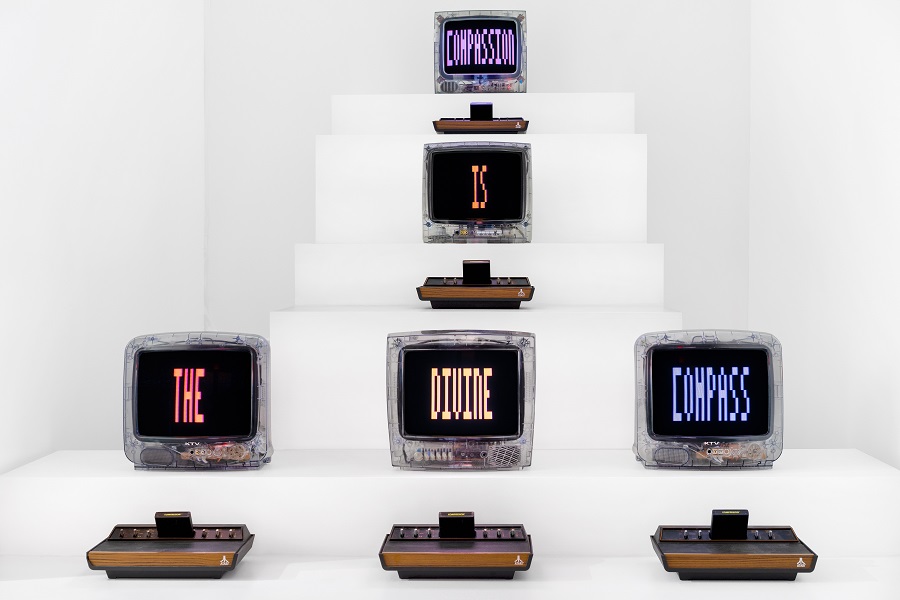

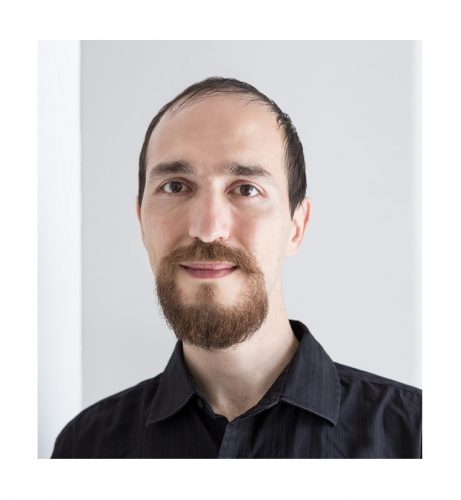
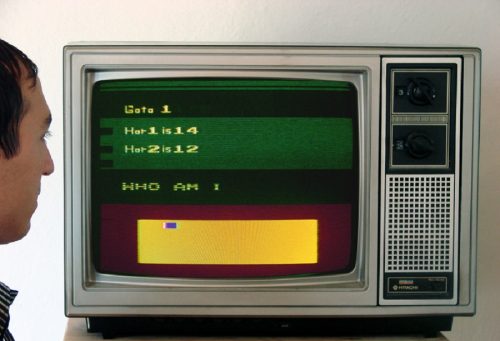
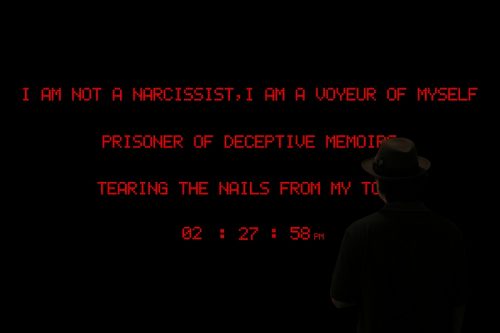
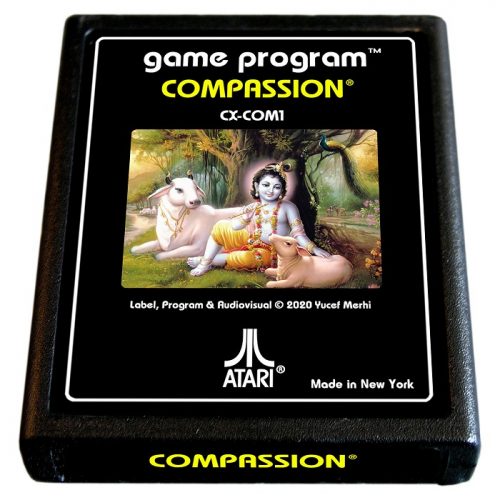
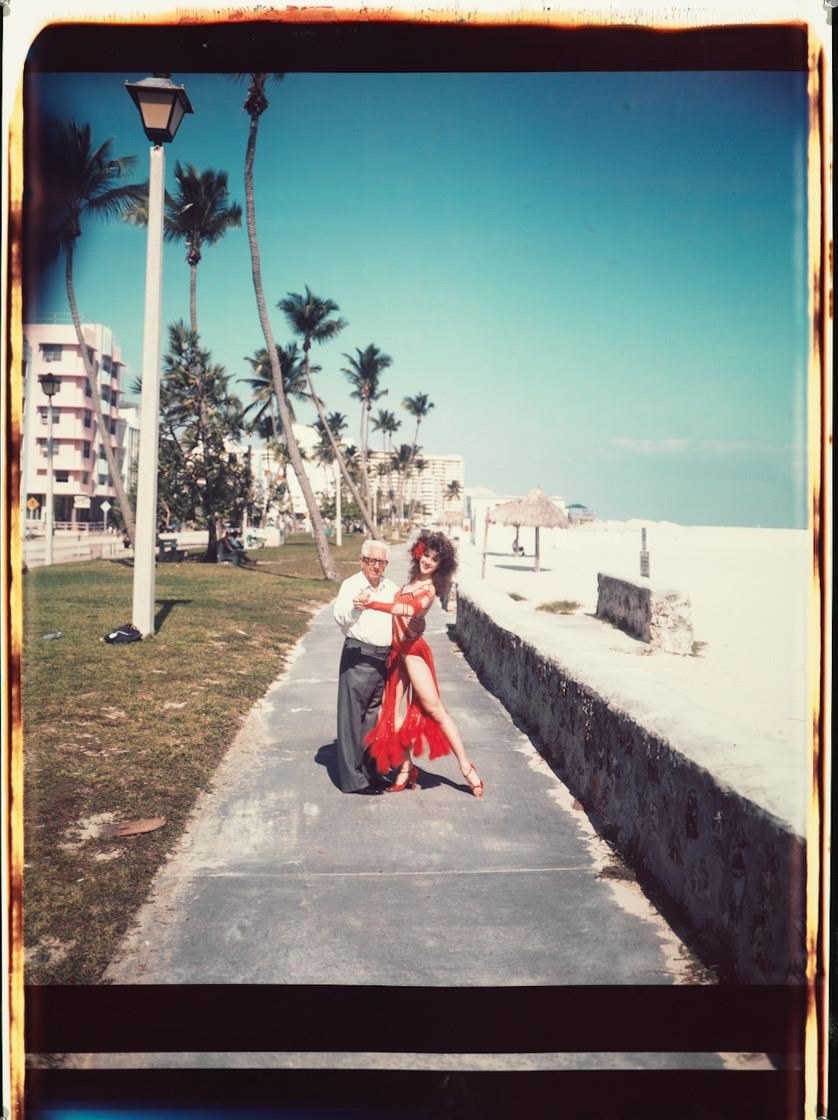
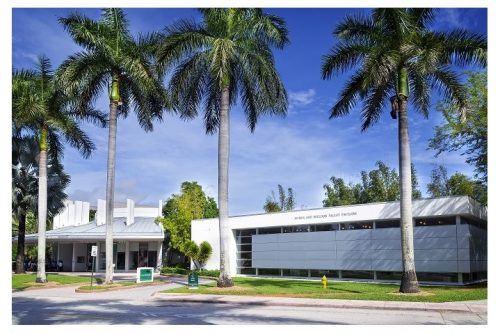
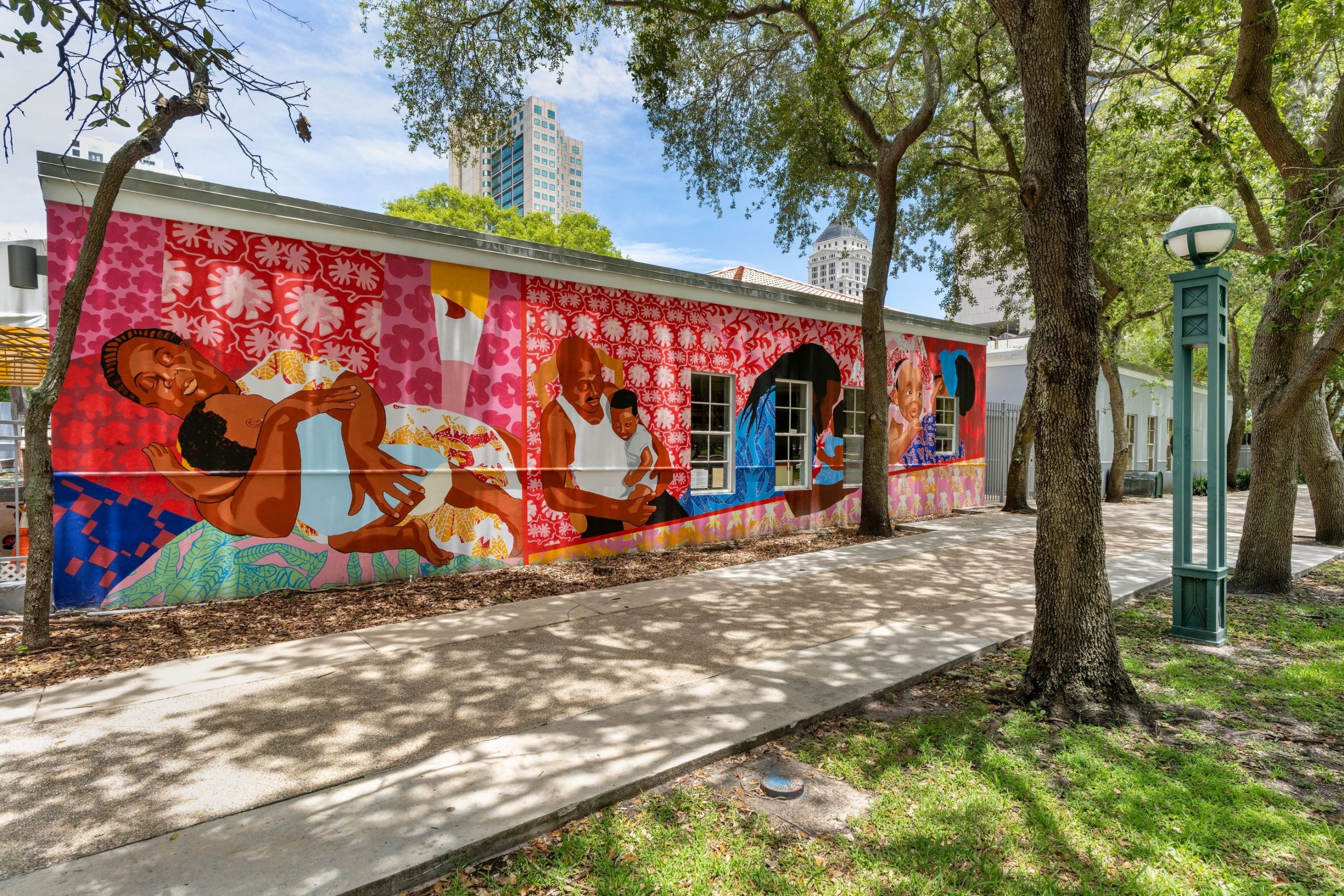
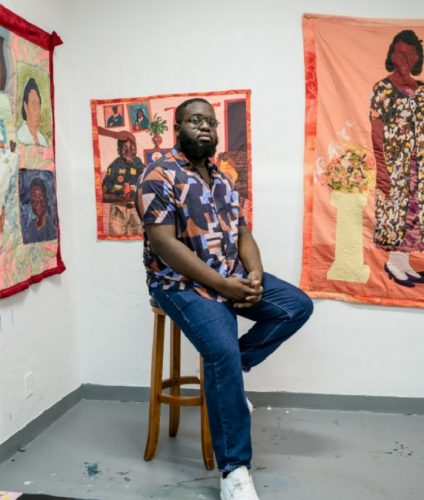
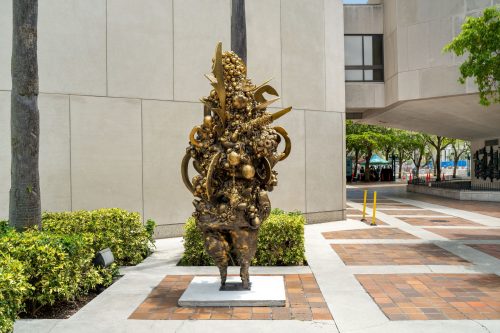

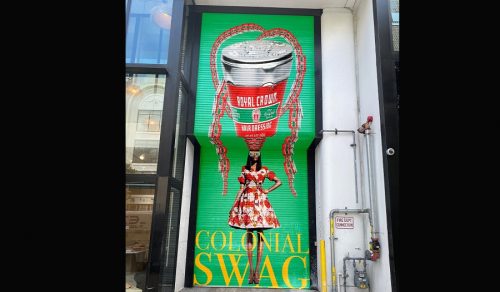

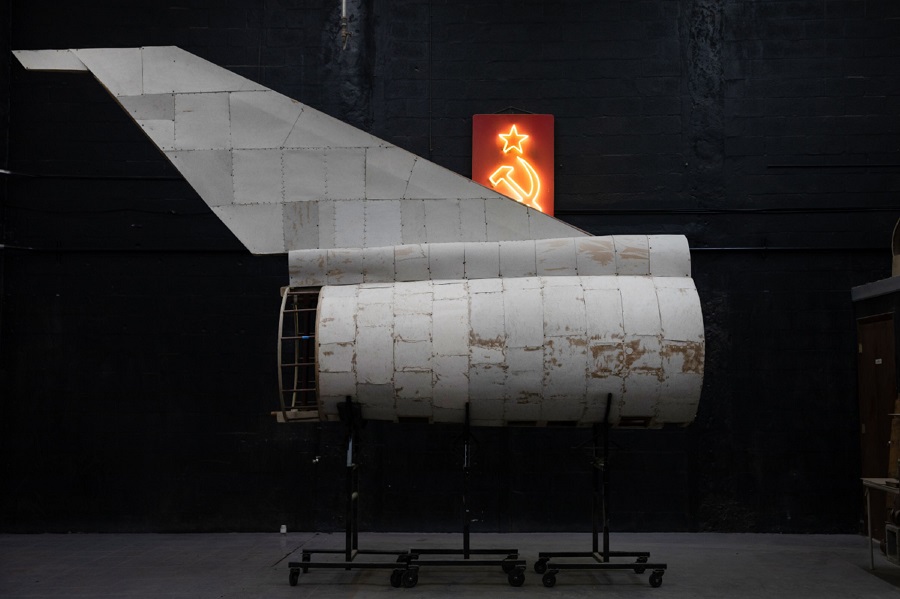
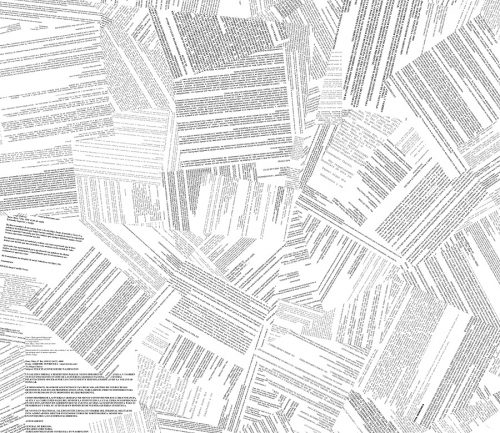
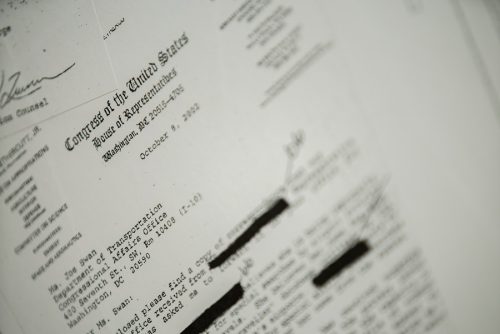
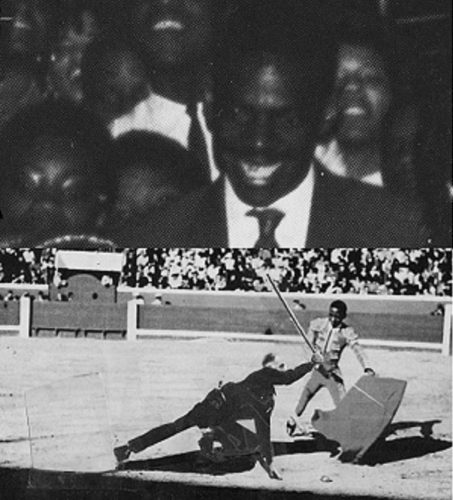
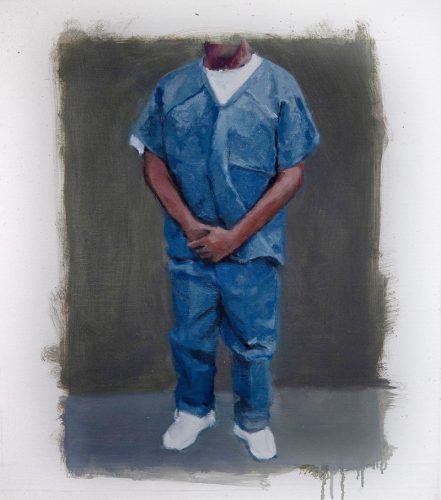

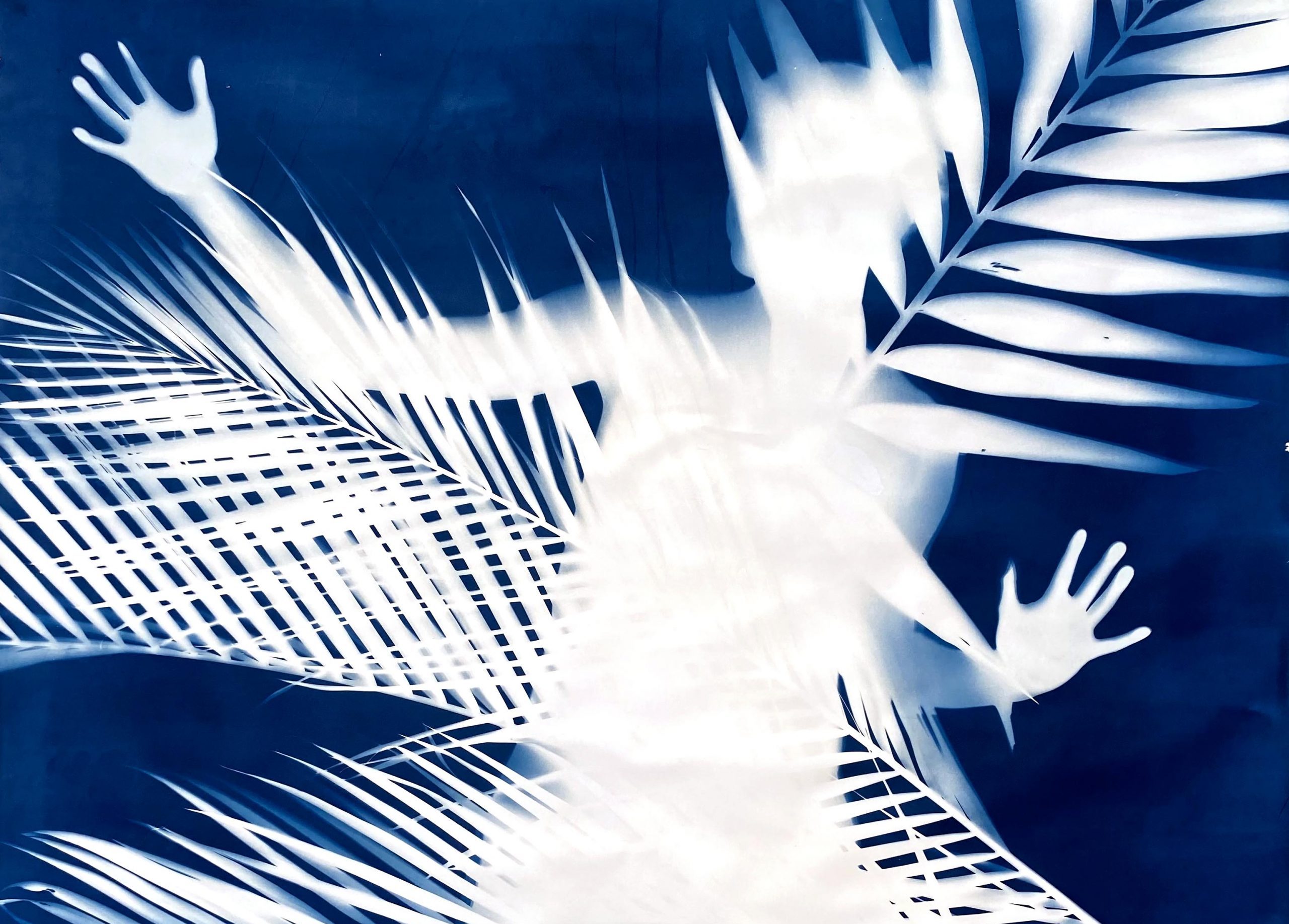
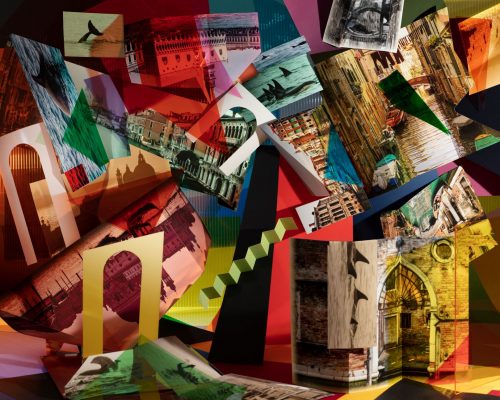
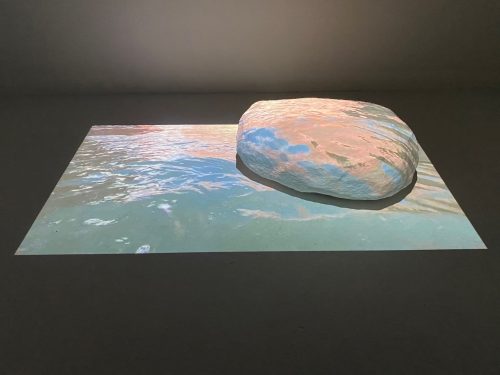
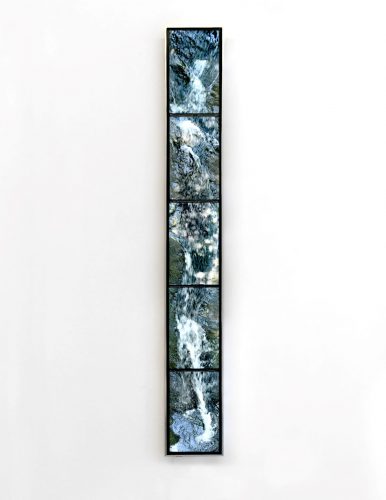
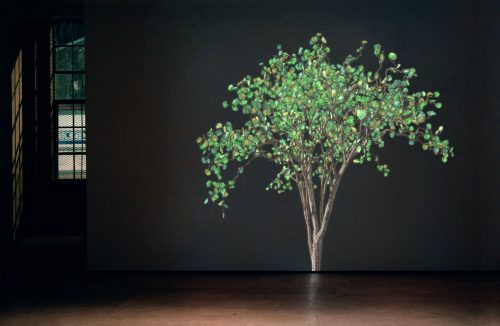
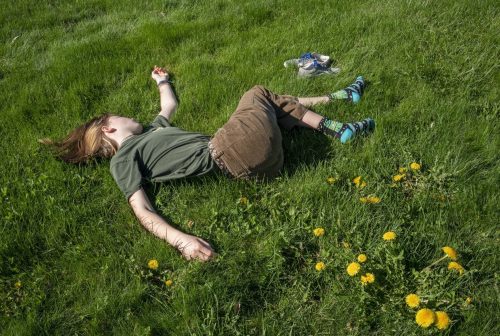
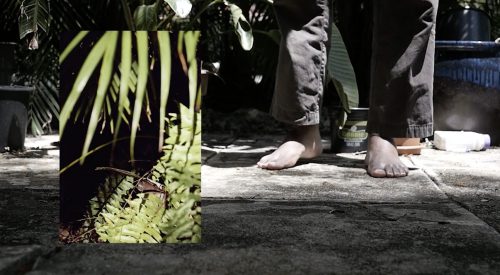
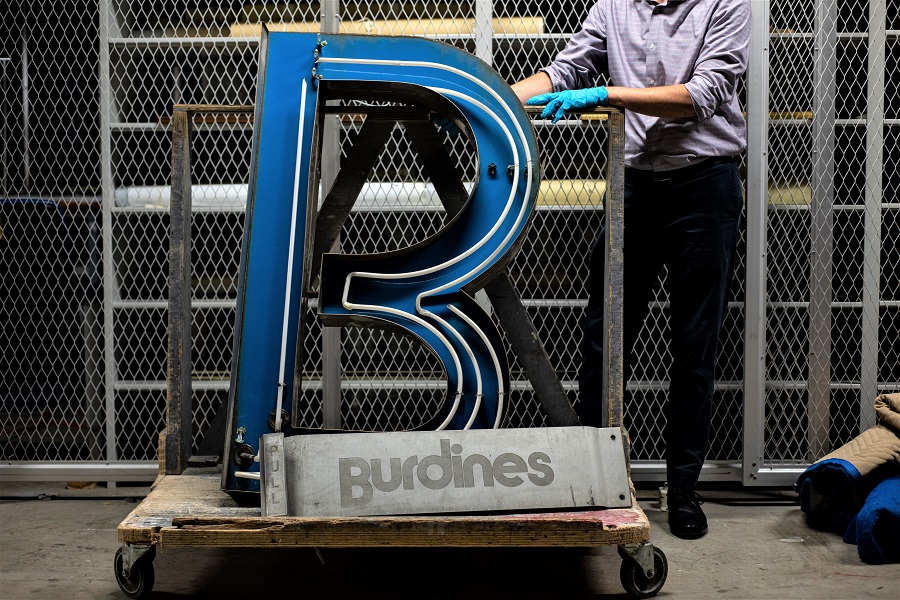
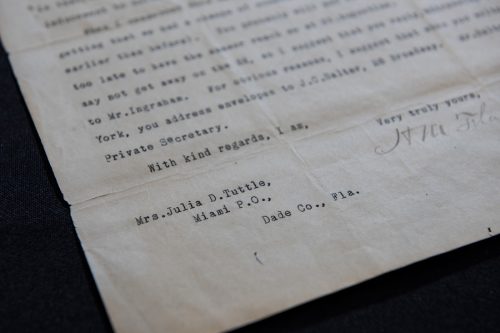
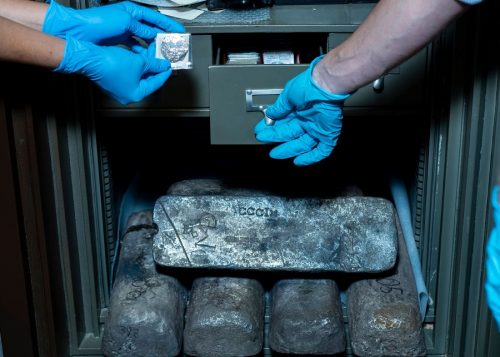
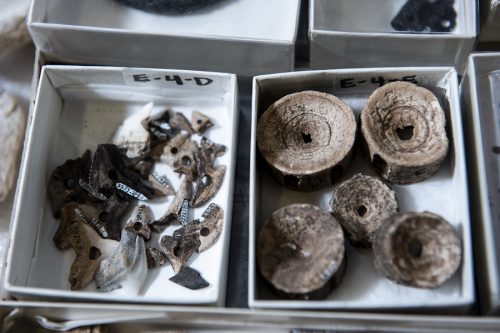
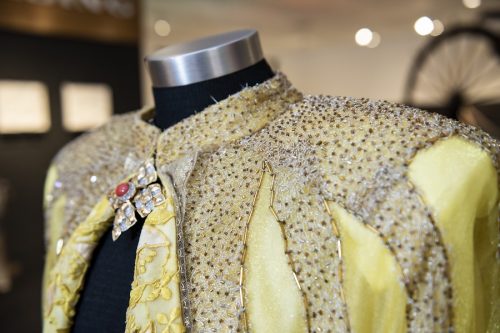
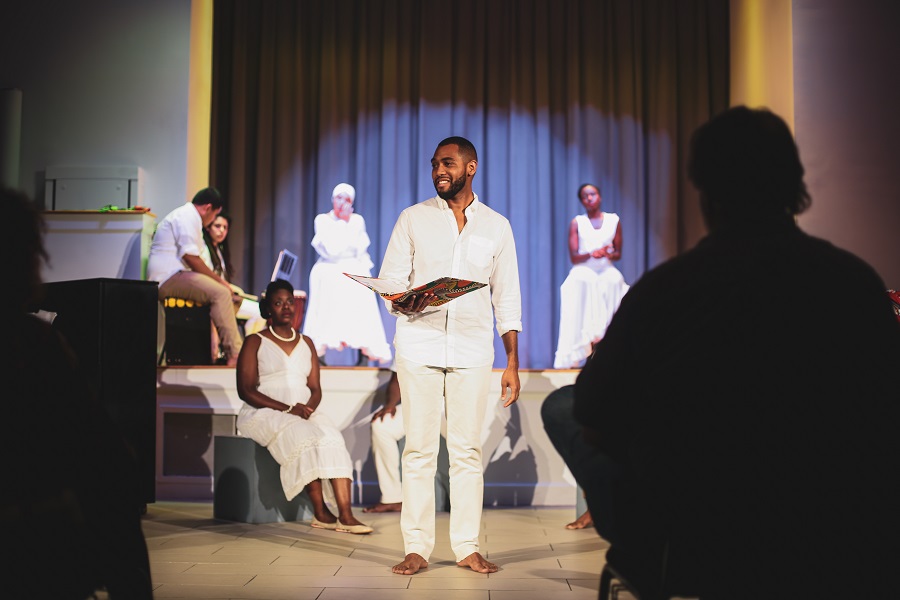
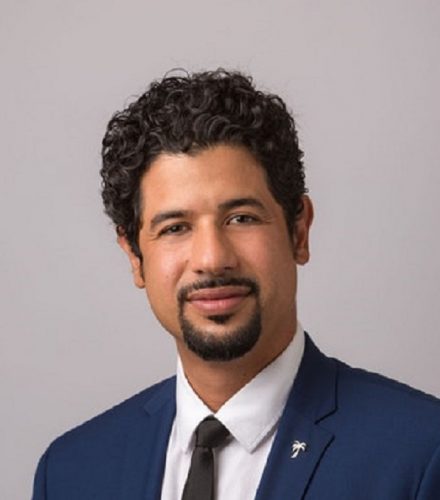
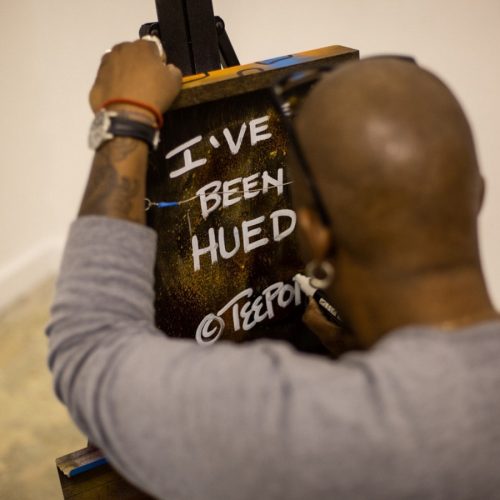
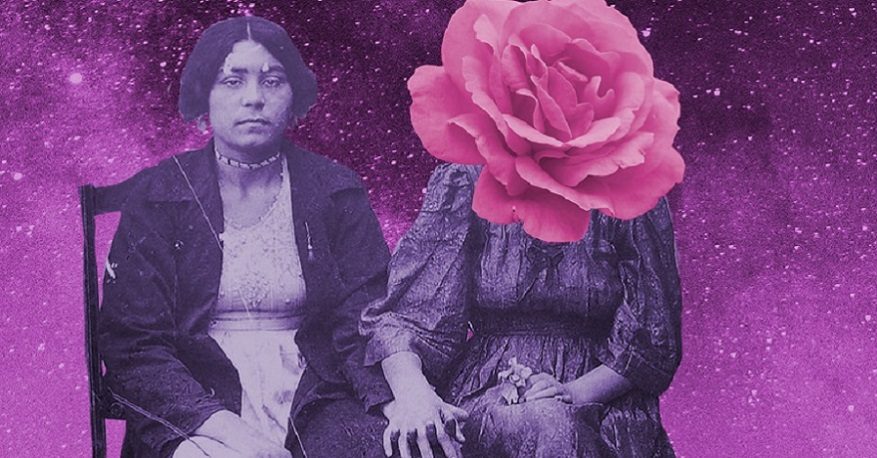
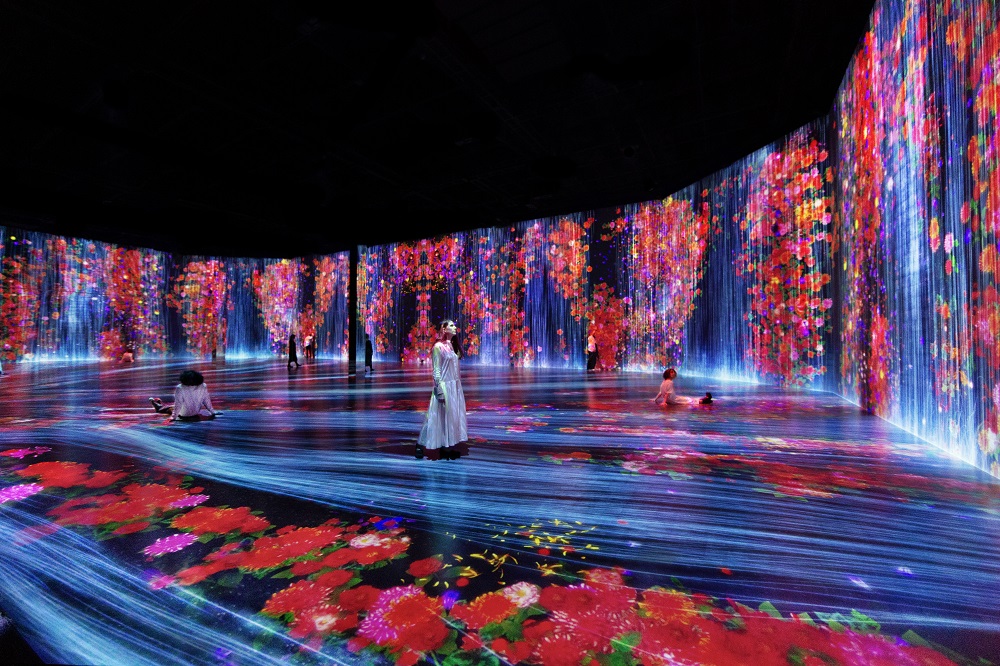
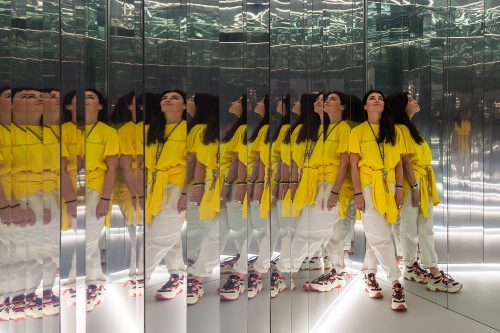
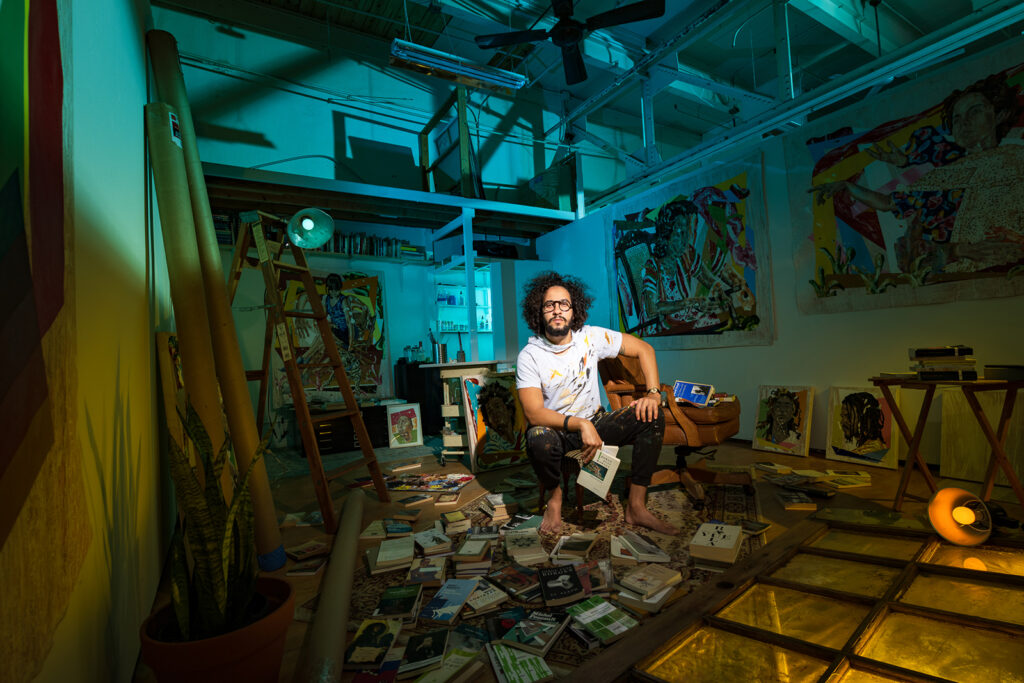
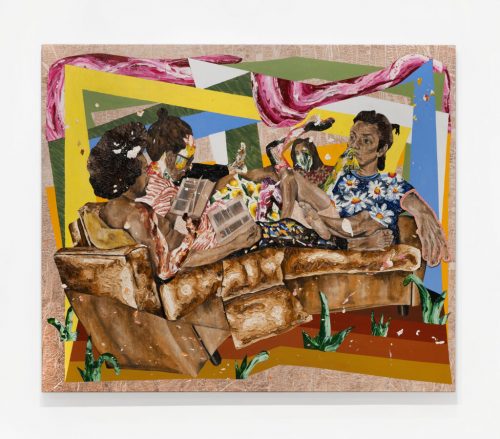
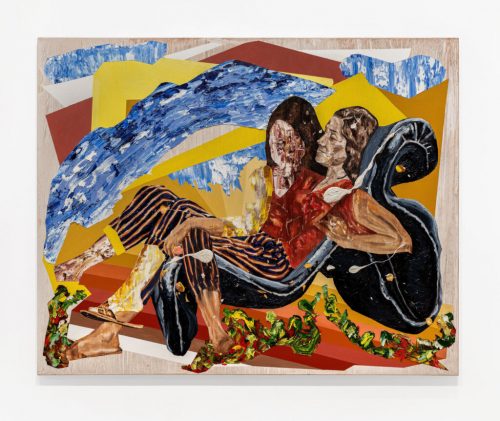
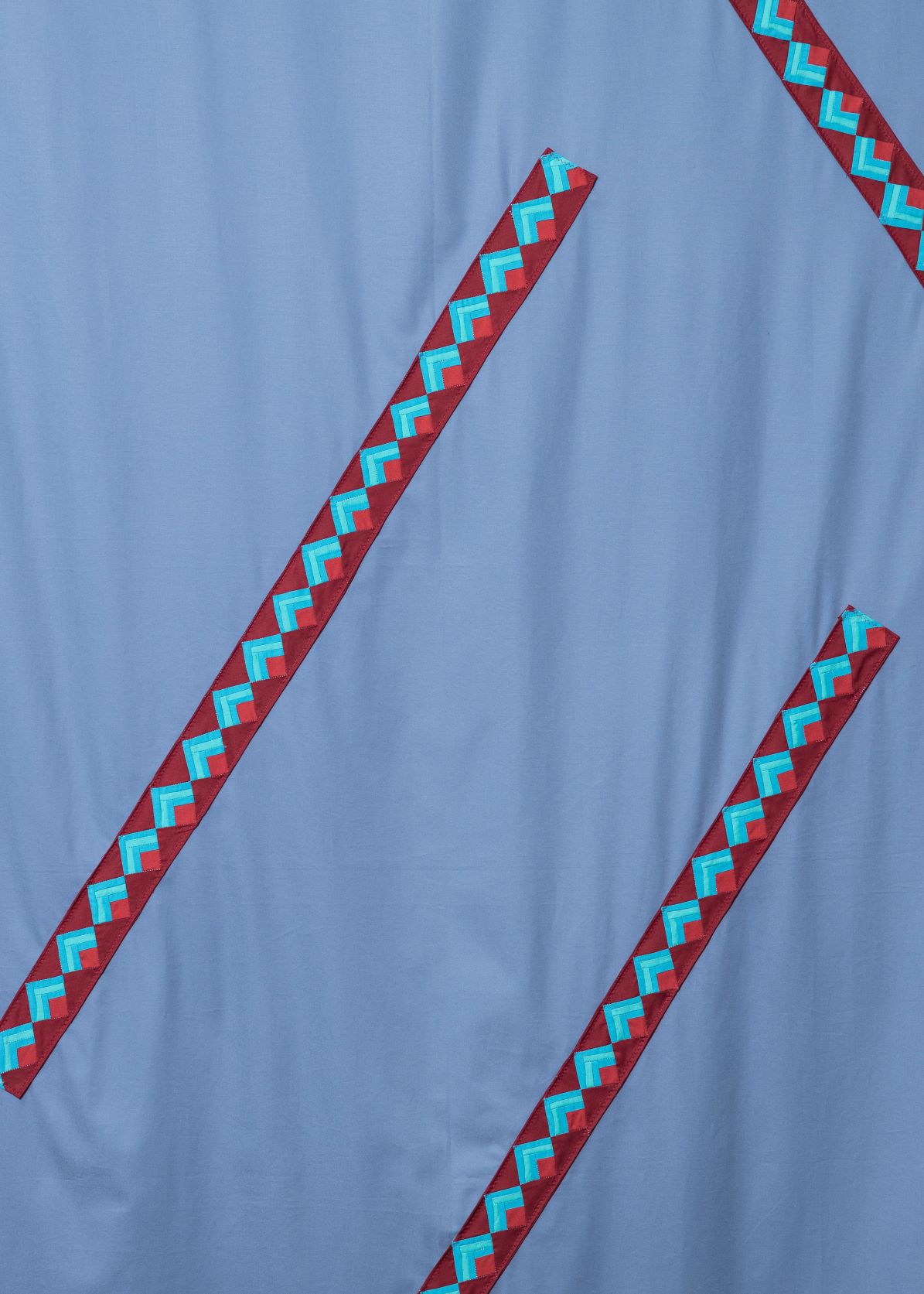
Recent Comments