Known as godmother of Miami’s arts scene, Mira Lehr is on fire
Written By Sergy Odiduro January 5, 2022 at 9:35 PM
Mira Lehr in her Miami Beach studio. (Photo by Michael E. Fryd)
To many, she is the godmother of Miami’s arts scene.
Trailblazing eco-feminist artist Mira Lehr has dramatically shaped the creative landscape, clearing a path for those who are up and coming. Her work has been showcased by notable art institutions and squirreled away by private collectors.
She’s now in her late 80s – and the honors don’t stop coming. Just last year, she was part of the Visiting Artist Residency program at the University of Central Florida’s Flying Horse Editions studio, and her resulting artwork debuted during Art Basel 2021. And this spring, Milan-based publisher Skira Editore is expected to release an homage to her life and career entitled “Mira Lehr: Arc of Nature — The Complete Monograph.”
Lehr is a firm believer that this is no time to slow down.
“I love being an artist. It gives me a great sense of creation,” she says. “I don’t know why, but it almost feels like you’re a little mini god.”
Originally from Brooklyn, N.Y., Lehr demonstrated an early propensity for artistically creating new galaxies. She recalls how her love affair began.
“I had those beautiful boxes of Crayola crayons and, when they were brand-new, they came with these wonderful points on them,” says Lehr. “I hated to mess up the points, but I loved working with my Crayola.”
(Video interview with artist Mira Lehr is courtesy of Florida International University’s Inspicio Arts e-magazine. Find more videos with Lehr by clicking here.)
She realized she was good, she says, because “in school the teachers always used to choose my drawings to hang on the board.”
She nurtured her craft and, by the 1950s, had her finger on the pulse of New York’s art scene. She studied with the likes of James Brooks, Robert Motherwell, Ludwig Sander, and married couple Nieves and James Billmyer (“She’s more abstract expressionist, he is more geometric,” she says).
Through the Billmyers, she was able to tap into a wealth of information, most notably from renowned modernist Hans Hofmann.
“The [Billmyers] worked a very long time with Hans Hofmann, so a lot of my knowledge came almost directly from him. I was lucky,” she says.
Then, in 1960, she moved to Miami, where she faced new opportunities but also encountered resistance.
“I experienced a lot of negative energy about being a woman. When I started out, women were not recognized. If you were married and had children and lived in Florida, you would definitely be considered a dilettante,” says Lehr, who raised four children in Miami. “To be taken seriously was very, very difficult.”
Installation image of Mira Lehr’s painting, “Pandora’s Blossoms,” at Miami’s Deering Estate. (Photo by Zachary Balber)
She also had to deal with the dearth of a Miami arts scene, but she fought back. In her first year, she created one of the first co-ops for women artists in the country and encouraged New York-based artists to come down to Miami to lead workshops.
“Used to be New York was it. If you didn’t make it in New York, forget it,” Lehr says. “But it’s changed now, Miami has a very big arts scene.”
Those who admire Lehr’s work know that she’s had a lot to do with that – and are thrilled that she has persevered.
“I am a huge fan of hers and have been for a long time now,” said Melissa Diaz, cultural arts curator at Miami’s Deering Estate, which hosted a nature-inspired solo exhibition highlighting Lehr’s work in October 2021. Titled “Regenerative Rhythms,” it included pieces created during the COVID-19 pandemic, such as “Pandora’s Blossoms” and “Emerging from the Field of Reeds.”
“I really want to underscore how important Mira is as an individual in creating the Miami arts community,” says Diaz. “We often get lost in the Art Basel of it all, and that, of course, has really helped us to build and to grow. But Mira is truly a pioneer and really an icon of the South Florida arts community.”
Not to mention Lehr’s impact on women artists.
“Mira has made space for other female artists by being persistent,” Diaz adds. “Seeing her name out there, especially in the world of abstraction, which was so male-dominated, and pushing her way in and leaning in and creating space for herself, also helps to make space for other female artists who then can get in through the door that she’s created for them.”
This door has also allowed Lehr a platform to discuss the issues and explore the techniques she holds near and dear to her heart.
“I’m always interested in the environment. I’ve always painted things from nature,” Lehr says. “As our environment became more and more compromised, I became more and more worried about it.”
Large-scale installations such as her “Mangrove Labyrinth” offer fierce commentary on issues affecting the planet. Diaz says pieces like this one demonstrate how Lehr’s work continuously offers a new perspective.
Installation image of Mira Lehr’s “Emerging from the Field of Reeds.” (Photo by Zachary Balber)
“Every time I view these works, I see something new,” Diaz says. “There’s a new texture. There’s a new layer. There’s something that emerges or comes through to the surface that speaks to me, and so there’s never, ever a feeling that I have mastered each work.”
Diaz has observed how Lehr’s novel approach also extends to her technique.
“Mira is very relevant because she opens herself up to new ideas, new practices and experimentation,” Diaz says. “I really love her embrace of fire and gunpowder and burning as contemporary art practices. That’s a technique that is very risky. It’s dangerous, and there is a good chance that the entire thing will just go up in flames.
“So the fact that she embraces this kind of chaos and this potential for violence or destruction in her work is really great,” she adds. “I think it keeps her in line with other younger contemporary artists, because she’s constantly pushing herself to try new things and she hasn’t stayed within the limitations of one specific style or practice.”
On her path, Lehr continues inspiring the next generation of artists. She mourns the shift of producing artwork for commercial purposes and ultimately hopes artists will remain faithful to their craft.
“Do your work with confidence, love, and integrity,” she says. “Work from your heart.”
For more information on artist Mira Lehr, visit miralehr.com.
Miami-based artist Edouard Duval-Carrié's work, currently in the 61st Venice Biennale, echoes the Italian exhibition in “From Venice with Love” in Miami Beach at The Betsy Hotel.
“The Science Behind Pixar” at Frost Science takes visitors behind the scenes of Pixar films with more than 50 interactive experiences exploring animation, engineering, math and technology.
Knight Arts Challenge winners have ‘bona fide connection’ to Miami
Written By Michelle F. Solomon December 17, 2021 at 8:00 PM
Hued Songs’ presentation of “The Juneteenth Experience” started in Miami-Dade County and is expected to expand north to Broward and Palm Beach counties thanks to funds from the Knight Arts Challenge. (Photo courtesy of Hued Songs)
A multimedia rock-and-guaguancó opera that captures the sounds of Miami. An homage to the songs of Juneteenth, born during the pandemic. And a downtown-centric outdoor theater experience with audiences arriving to each segment riding a bicycle, scooter, or anything else on wheels.
These three projects are among the 24 winners of the 2021 Knight Arts Challenge, selected by the John S. and James L. Knight Foundation for a combined $2 million in grants.
The aim of the grant program is to enable artists and arts groups to do their work. For some of the recipients, it helps propel projects that have already had their springboard but need a financial foundation to take them to the next level.
There are, however, some fundamental components, according to Adam Ganuza, chief of staff for the Knight Foundation’s President’s office. To win a grant, the projects must contribute to the greater good and have what he calls “a bona fide connection” to Miami.
“We aren’t interested in investing in projects or groups that parachute into a place, do their thing, and then leave as quickly as they came in,” says Ganuza, who helped review proposals along with a selected panel from throughout the arts community. “We look for an authenticity to place, i.e. Miami, then we consider the artistic rigor of the project itself.”
This year’s Knight Arts Challenge is part of a new yearlong initiative, titled “365 in the 305.”
“Especially just coming off of Art Basel and Miami Art Week, and having the eye of the international art world here … we launched ‘365 in the 305’ with the point being that the creative spirit is something that defines our community all year round, not just on Art Week,” Ganuza says. “For most of the projects that we are talking about, we are a starting line for them. We want to have a platform for them once they cross the finish line and that will be all within the framework of the ‘365 in the 305’ campaign.”
Deborah Di Capua, executive director, and her Fringe Projects received $150,000 for its public art initiative, Southern Histories. (Photo courtesy of Fringe Projects)
Since 2008, the Knight Arts Challenge has invested about $34 million on more than 400 projects ranging from large-scale public art to new theatrical performances, according to the foundation. Recipients are required to find matching funds.
“This is a grant program that scours our arts and cultural scene to find the best work that’s being done by people and groups that are an authentic reflection of South Florida,” Ganuza says, who added that about three-quarters of the projects are led by BIPOC (Black, Indigenous, People of Color) artists or groups, or those who explore BIPOC themes.
And it keeps paying forward. Opera singer and actor Kunya C. Rowley won a $20,000 award back in 2017 for his proposal “Hued Songs of Strength and Freedom,” and as a result today leads the nonprofit performing arts group, Hued Songs, which celebrates Black culture through experiences rooted in music. On June 19, 2021, Rowley produced and performed in “The Juneteenth Experience! Live from the North Beach Bandshell.”
This year, Hued Songs received $90,000 to broaden “The Juneteenth Experience” through performances in Broward and Palm Beach counties as well.
“The funding does a couple of things,” Rowley says. “It allows us to expand across multiple counties, but it also allows for us to keep the experience free to audiences. We really believe that the arts are a right and not just a privilege.”
The money also helps to pay the performers. “We want to be a platform where Black and Brown artists can be seen, heard and paid,” Rowley says.
To expand the experience, Hued Songs has found partners in Broward, with the African-American Research Library and Cultural Center in Fort Lauderdale, and in Palm Beach County, with the Theatre Lab at Florida Atlantic University in Boca Raton.
Rowley hopes the expansion will create more exposure for the event to become an annual tradition for families.
“This award is such a big step for us to expand and to let people know that ‘The Juneteenth Experience’ is something the community can look forward to every year,” he says.
Miami-based multi-instrumentalist Sol Ruiz began her multimedia music opera with a commission from the Miami Light Project. Now with funds from the Knight Arts Challenge, she has a bigger vision for the project. (Photo courtesy of Miami Light Project)
Grammy Award-nominated singer-songwriter Sol Ruiz received $59,000 in this round of the Arts Challenge for her project, “Positive Vibration Nation.” The Miami-bred, Cuban-rooted performance artist released a concept album with her band, Sol and The Tribu, during the pandemic, which led to the larger vision of creating a multimedia rock opera.
Commissioned by the Miami Light Project, as part of its Here & Now program, “Positive Vibration nation” focuses on the unique sounds of Miami, fusing Caribbean music and modern technology. She presented excerpts during Miami Light Project’s Here & Now Festival earlier this year, and now has the chance to further the work.
“It consists of six characters, including myself, who embark on a journey to search their roots and, through their discovery and unification, they unlock their superhero powers,” Ruiz says. “This rock opera is a way to export what our identity is here in Miami, to take this project throughout the world and introduce the Miami sound and what creates its uniqueness, a melting pot of music.”
The other Knights Art Challenge 2021 winners are:
Olympia Center/Olympia Arts MIAMI: “Bicycle Theatre” — $150,000
Museum of Contemporary Art (MOCA), North Miami: Welcome to Paradise program — $150,000
Robert Colom: Cinemovil — $150,000
Fringe Projects: Southern Histories — $150,000
Miami Dade College’s Live Arts Miami: “Haint Blu” — $100,000
Downtown Doral Arts & Culture Foundation: Downtown Doral Holiday Festival — $100,000
The White Elephant Group: White Elephant Film Festival — $98,600
JurajKojš and Pioneer Winter: “Close Encounters” — $75,000
Lee Pivnik: “Habitat: Regenerative Shelters as Symbiotic Solutions” — $75,000
Gustavo Matamoros: “And Sometimes The Space is Full of a Previous Space” — $64,000
Delou Africa: “Tall Spirit: Stilt Artistry of Black Immigrants” — $60,825
Islandia Press: Islandia Journal — $60,000
Miami-Dade Public Library System: The Vasari Project: Miami’s Art Timeline — $60,000
LIZN’BOW (Liz Ferrer and Bow Ty Enterprises Venture Capital: [Cries in Spanish] — $60,000
[NAME] Publications: Migrant Archives — $60,000
Dimensions Variable: Archive, Digital, and Writer Commissions — $50,000
WAAM (Women Artists Archive Miami): Artist as Archivist Residency — $50,000
Antiheroes Project: “As Miamense as Possible” — $42,000
Adam Weinert & Institute for Contemporary Art Miami: “Dance of the Ages” — $39,500
Symone Titania Major: “Martin’s Footprints: Marches in Coconut Grove & Goulds” — $30,000
The Patricia & Phillip Frost Art Museum: “An Elegy to Rosewood”— $25,000
Alexandra Fields O’Neale: “Bound//Unbound” — $13,300
Miami-based artist Edouard Duval-Carrié's work, currently in the 61st Venice Biennale, echoes the Italian exhibition in “From Venice with Love” in Miami Beach at The Betsy Hotel.
“The Science Behind Pixar” at Frost Science takes visitors behind the scenes of Pixar films with more than 50 interactive experiences exploring animation, engineering, math and technology.
Written By Sergy Odiduro December 10, 2021 at 5:56 PM
Among the works featured in “Betye Saar: Serious Moonlight” at the Institute of Contemporary Art, Miami is this piece titled “Gliding Into Midnight.” (Photo courtesy of the artist and Roberts Projects)
Vibrant. Haunting. Memorable. Cosmology and spirituality intersect in “Betye Saar: Serious Moonlight” at the Institute of Contemporary Art, Miami (ICA Miami).
Fans of the pioneering feminist artist can enjoy free access to some of her rarely seen installations, through April 17, 2022, on the second floor of the Miami Design District museum.
“Betye Saar is a legend of American art,” said Alex Gartenfeld, ICA Miami’s artistic director. “She is a master sculpture of assemblage, and her work has made a pointed commentary on the depictions of Black individuals throughout the 20th century.”
The 95-year-old Saar is known for ushering in the medium of assemblage, which focuses on using older items to create something new. Saar’s iconic piece, titled “The Liberation of Aunt Jemima,” is particularly emblematic of this style.
Though she is celebrated for her assemblage work, the exhibit at ICA Miami highlights an alternative art form. The pieces on view are heavily influenced by her travels in the 1970s spurred by research trips to Nigeria, Haiti and Mexico.
“She’s worked also in the medium of installations,” said Stephanie Seidel, the exhibit’s curator. “Many of these have not been shown in over three decades.”
Among these are “House of Fortune” and “Circle of Fire,” as well as “Wings of Morning,” a participatory altarpiece encouraging notes and offerings for those who have passed.
“Celestial Universe” (Photo courtesy of Robert Wedemeyer)
“Her installations, in particular, refer to a lot of themes of spirituality and mysticism, and I think they’re interesting in the way that they combine different spiritual and religious traditions,” Seidel said.
Projecting the combined essence of Saar’s work and providing the proper atmosphere for individual pieces was of utmost importance.
“We constructed freestanding pavilions or rooms to house the work,” Gartenfeld said.
“We have an open floor plan at the museum, and so the curator and the artists worked on this challenge or intrigue of how to present a mysterious, productive work within an open floor plan. And the solution they came up with, I think, is really visually successful at creating these poetic interludes, which are these rooms.”
Saar was unable to attend the exhibit’s October 2021 opening due to COVID-19 concerns, but she had a big role in producing the show.
“Betty worked really, really closely on the exhibition and was incredibly involved with the presentation and vision interpretation of her work,” Gartenfeld said. “She has an incredible engagement and dynamism and life and joy she brings to her work in the studio.”
The production process included presenting various elements of her work, which goes beyond the exploration of spirituality. Race and identity also play a prominent role in the pieces.
Though some pieces were created decades ago, Seidel points to their relevance today. Works such as “Mojotech,” “Gliding Into Midnight” and “A Woman’s Boat: Voyages” — combined with fragments of the installation “In Troubled Waters” — all speak to this experience.
“Oasis” (Photo courtesy of the artist and Roberts Projects)
“Her installations are from the ’80s and ’90s, however, I think they’re still extremely timely as they address questions of discrimination and racism, but also the experience of the African diaspora,” Seidel said. “A lot of her work also refers to the experience as an African-American woman in the United States.”
The exhibit provides the perfect opportunity for viewers to survey a cross-section of Saar’s messaging while examining meaningful aspects of her work.
“This exhibit is really about illustrating the range of Betty’s artistic work and activism,” Gartenfeld said. “The way that she relentlessly worked with materials and reinvented these installations that she made during the ’80s and ’90s. These were made during a time when she was moving around the world … I think that there weren’t a lot of the supports there, commercially and institutionally, to really give her the platform to create the work that she wanted to make. This work sees her traveling around the world, making work in places like embassies, using materials at hand, being incredibly adaptive and inventive.”
Which is why it’s so important to be showing her work at this time, Gartenfeld said.
“I think that she has an influence on most every sculptor working today,” he said. “I think that her inventiveness with found objects is really profound. I think that she is an artist who, again, as influential as she is, there hasn’t been an exhibition like this that brings together these installations.”
WHAT: “Betye Saar: Serious Moonlight”
WHEN: Wednesdays through Sundays, through April 17, 2022; hours are noon-6 p.m. for general admission and 11 a.m.-noon for seniors and at-risk visitors; closed on major federal holidays
WHERE: Institute of Contemporary Art, Miami, 61 NE 41st St.
COST: Free
SAFETY PROTOCOLS: The museum requires social distancing and face coverings for all guests age 2 and older. For more details, visit icamiami.org/visit.
Miami-based artist Edouard Duval-Carrié's work, currently in the 61st Venice Biennale, echoes the Italian exhibition in “From Venice with Love” in Miami Beach at The Betsy Hotel.
“The Science Behind Pixar” at Frost Science takes visitors behind the scenes of Pixar films with more than 50 interactive experiences exploring animation, engineering, math and technology.
Miami Mural Festival: ‘Community access to art is very important’
Written By Sergy Odiduro November 30, 2021 at 7:26 PM
Artist Maren Conrad’s “Legacy in Levity” mural, featured as part of the Miami Mural Festival, honors her late friend. (Photo courtesy of the artist)
At first, no one wanted to give them the time of day.
Maren Conrad, a Sacramento, Calif.-based artist, needed someone — anyone — to pose for her contribution to the Miami Mural Festival.
“We were honestly begging people to take a photo of them. It was so weird … We were chasing people down,” Conrad said, with a laugh. “And the more we tried to sell this, the creepier we sounded.
“‘Don’t you want a picture of your kid on this wall?’” she would say to skeptical pedestrians who passed her by. The approach, needless to say, was not working. Yet she persisted, and the hard work paid off.
Conrad’s sprawling 11,000-square-foot piece, at 261 NE First St., features a giant bubble bottle bearing the words, “Forget Me Not Jacquelyn,” next to the images of more than 1,000 people who finally said yes to the proposition. Titled “Legacy in Levity,” it is one of the works featured as part of the Miami Mural Festival, running through Sunday, Dec. 5, in the downtown and Wynwood areas.
Festivalgoers will have the opportunity to watch artists work live on their projects. A map detailing the locations of all pieces is available via the festival’s website.
Teddy Ward, chief of staff for Mana Group, said they launched the festival to bring much-needed attention to downtown Miami and surrounding areas. The Mana Group’s Mana Common, an urban renewal and community development platform, created Mana Public Arts, which in turn created the festival.
“About two years ago, we decided to take a more active approach in community involvement and creative placemaking,” Ward said. “We started looking at downtown Miami and the Flagler districts. There is really a very big absence of public art, and we decided that we wanted to use the impetus of Art Basel to help address that.”
The impact of art, said Ward, is substantial: “Community access to art is very important for just general happiness and the overall benefit of the city.”
Additionally, from an economic development standpoint, “mural street art and creative placemaking has become a huge tool in terms of generating foot traffic, which in turn generates dollars spent, which in turn generates tax revenue and benefits for the overall city … What we want to do, so that there are more economic opportunities at the end of the day, is to create public art for the general good, but it’s also [to think about] how we can find ways to improve the neighborhood so that more businesses come in.”
Miami artist Daniel Fila, who is also known as Krave, has seen for himself how art has the ability to completely transform neighborhoods.
“It’s a proven model that works,” he said. “It brings pride to communities and forms a unified identity.”
This is why he decided that it was important to help out, not only by producing the festival, but also by contributing his own piece.
“I’m doing one behind the old Macy’s building [on Flagler]. It’s going to be about 80 feet tall. It’s going to be a tribute to the ‘Mother of Miami,’ Julia Tuttle, and also Marjory Stoneman Douglas,” Fila said. “It’s a representational portrait in an abstracted way where I can note all these different contributors to the development of our city.”
Maren Conrad’s “Legacy in Levity” mural is made up of images from community residents. (Photo courtesy of the artist)
Ward said this year’s event is just the beginning.
“This is going to be something that grows annually … in subsequent years we hope to extend it to all parts of the county,” he said. “We’ve really done our best to give opportunities to local artists, to make sure that the artists that live in Miami year-round have that opportunity, which doesn’t always happen around Art Basel.”
Conrad said she was particularly sensitive to that issue. Her mural, inspired by the passing of her friend, a photographer named Jacquelyn Anderson, incorporates elements of Miami’s different neighborhoods and the people who live in them.
“We really wanted to capture the spirit of Miami and the identity of Miami, even though we’re a California-based crew,” Conrad said. “We went out to the community and we worked with the HistoryMiami museum and La Cantina Restaurant … and our artists hit the street.
“We showed up, we popped up, we invited anyone to take pictures with us … which gave us a true cross section. People who are homeless. People who are affluent. People who are out on a date. People who are out on a girls’ night with three generations of their family. Guys washing the dishes in the back of restaurants. It was just a wonderful slice of life. There was some guy who carried around his favorite WrestleMania character doll,” she continued.
“There was this funny group of Trumpsters, [as well as] people who hated Trump. People who were diehard Floridians, who have been here for four generations. People who just moved here yesterday. Our criteria was you had to live in Miami. Other than that, you could be anybody.”
But there was one person she remembers in particular.
“There was a gentleman who I think really captured what we were trying to say. It was a man in a wheelchair. He wasn’t homeless, He wasn’t asking for money or anything. He just had a little sign with him that said, ‘Even without legs life is beautiful.’
“Even when our loved ones are lost, we can breathe for them. We can create for them. We can honor them. We can carry on their work,” she said. “We’ve all been through hell, and all of us as a community are finding ways to find happiness and be together again. And this gentleman with that little message on his lap really is exactly the sentiment that we were trying to get to.
“As a community we can overcome anything.”
Though transportation between the murals will not be provided, HistoryMiami museum is hosting a walking tour centered on the murals in downtown Miami’s Flagler District. The free event is scheduled for 10 to 11:30 a.m. Saturday, Dec. 4. For more information, visit historymiami.org/city-tour/miami-mural-festival-walking-tour.
WHAT: Miami Mural Festival
WHEN: Through 6 p.m. Sunday, Dec. 5, 2021
WHERE: Throughout Miami’s downtown and Wynwood neighborhoods
Miami-based artist Edouard Duval-Carrié's work, currently in the 61st Venice Biennale, echoes the Italian exhibition in “From Venice with Love” in Miami Beach at The Betsy Hotel.
“The Science Behind Pixar” at Frost Science takes visitors behind the scenes of Pixar films with more than 50 interactive experiences exploring animation, engineering, math and technology.
Latinx writers unite for ‘Home in Florida’ anthology
Written By Michelle F. Solomon November 17, 2021 at 7:29 PM
Miami author Anjanette Delgado is editor of the anthology, “Home In Florida,” which includes the works of Latinx writers who have called Florida home. (Photo courtesy of Javier Romero)
“Immigration is a political word or a legal word,” Miami-based author Anjanette Delgado says. “But uprootedness? That is a social word. That is a human word. That is a word that describes what happens to us when we pick up and start over.”
And that word, Delgado continues, is the thread that ties together the anthology book, “Home in Florida: Latinx Writers and the Literature of Uprootedness” (University Press of Florida, 2021).
As the book’s editor, Delgado gathered 33 writers of fiction, nonfiction and poetry, all Latinx and all having the Sunshine State in common. They’re first-, second- and third-generation immigrants from countries such as Cuba, Mexico, Honduras, Peru, Argentina and Chile — reflecting the diversity of Latinx experiences across Florida.
On Nov. 20, Delgado was joined by some of the contributors, including Richard Blanco, Ariel Francisco, Ana Menéndez, Caridad Moro-Gronlier, Frances Negrón-Muntaner, Achy Obejas and Isvett Verde, at the Miami Book Fair for “In Conversation: On Home in Florida.”
Delgado planned to discuss, among other topics, the gender-neutral, panethnic label, “Latinx” — a word she addresses in the book’s introduction, saying it “defines the collective immigrant experience of people who share a past.”
“It is a term some people say shouldn’t even exist,” she says during an interview. “But, to me, Latinx means that there are these people from all kinds of different countries with a similar background, and, in our case, what unites our countries is colonization.”
Colombian-American author Patrica Engel’s essay, “La Ciudad Mágica,” is included in the anthology, “Home in Florida.” (Photo courtesy of Elliot and Erick Jimenez)
Most of the book’s contributors shared stories about life in South Florida, she says, though there are also some from Tampa, Tallahassee and Orlando. “One wrote about Key West,” Delgado says.
They each bring with them perspectives about what it’s like to “uproot from somewhere else, to come here and make it home.” And even those who didn’t uproot themselves may still carry with them the history of their ancestors, she says.
In her short story, entitled “La Ciudad Mágica,” author Patricia Engel writes: “Your Miami begins in New York, where you moved to at eighteen … [and] tried on different lives for over a decade before deciding to leave …
“Your Miami begins in the Andean highlands … before Colombia was Colombia …,” continues Engel, an associate professor of creative writing at the University of Miami, who was born to Colombian parents. “Your Miami begins in Puerto Rico, where your older brother was born, and before that, it begins in the other America.”
New writer Nilsa Ada Rivera contributes “I write to Mami about Florida,” which consists of a series of letters beginning in 1990. They convey emotions about what it’s like to feel displaced in Miami. Each has a signoff at the end: Your homeless daughter. Your birthday girl. Your lost girl. Your caged girl. Your trailer park chick. Your diluted Puerto Rican. Your Florida resident.
“Her story is amazing. If you don’t cry after you read this essay, and if it doesn’t give you the flavor of all of Florida, I don’t know what will,” Delgado says.
Richard Blanco, selected as President Barack Obama’s inaugural poet in 2013, is also scheduled to appear with Anjanette Delgado at the Miami Book Fair’s “In Conversation.” (Photo courtesy of Alissa Morris)
For Delgado, the theme of uprootedness was inspired by a 1983 interview with Cuban novelist Reinaldo Arenas, published in The New Yorker in December 2013. Arenas tells the interviewer: “I want to create a new body of work now, a literature of uprootedness about someone who’s living in an environment that’s not his own.”
Delgado is ecstatic about the meaning that word has brought to the book.
“That word has everything, right? It envelops the heartbreak of leaving, the uncertainty of arriving. It tells a story of the tension. There is always tension when you get to a new place,” she says.
“I feel like uprootedness talks about the nostalgia of leaving one place. It’s a word that describes what happens to us when we pick up and start over. And that’s what the book is really about.”
Arenas, who spent years in a Cuban prison under Fidel Castro, died by suicide at age 47 in his N.Y. apartment in 1990. His work, “The Glass Tower,” is featured in the anthology.
“It’s a piece that has never before been anthologized after he published it,” Delgado says.
In creating the anthology, starting in April 2020, Delgado sought to put together what she called her “dream collection,” reaching out to writers she wasn’t even sure would be interested.
(Video courtesy of Florida International University’s Inspicio Arts e-magazine. Here, he discusses how his writing typically addresses the immigrant search for a mythic America. Find more videos for Richard Blanco by clicking here.)
“I’m not going to worry whether I know them or not, [or] if this person is too famous, or if they are going to say no,” she says. “I’m going to invite everyone.”
Delgado says she was able to include nine authors “who you probably would never read because they usually write in Spanish.”
She credits Stephanye Hunter, acquisitions editor at the University Press of Florida, as instrumental in getting those works translated, explaining to the powers-that-be at University Press that the book would not be complete without all voices to encompass an entire spectrum of experiences — “people for whom it was recent and painful and those who had processed it and come out the other side.
“Star writers are mixed in with people who are just emerging,” she says. “There is just a lot of talent in this book.”
Miami-based artist Edouard Duval-Carrié's work, currently in the 61st Venice Biennale, echoes the Italian exhibition in “From Venice with Love” in Miami Beach at The Betsy Hotel.
“The Science Behind Pixar” at Frost Science takes visitors behind the scenes of Pixar films with more than 50 interactive experiences exploring animation, engineering, math and technology.
Bakehouse Art Complex marks 35 years with big plans for the future
Written By Michelle F. Solomon November 11, 2021 at 6:08 PM
The founding artists are pictured in front of the Art Deco-era bakery building in Miami that they named The Bakehouse. (Photo courtesy of Bakehouse Art Complex)
When Chire Regans was creating a mural to cover 245 feet of the outside wall of Miami’s Bakehouse Art Complex in July 2020, something interesting happened.
Her public art memorial project, “Say Their Names,” on the west-facing wall along Northwest Sixth Avenue attracted the attention of passersby who watched as she painted the names of people lost to hate crimes and gun, police, gender and domestic violence.
Then they would comment, said Laura Novoa, curatorial and public programs associate.
“They’d say, ‘Where’s the name of my uncle, my brother, my cousin?’ ” Novoa remembers.
It became a community effort, she said, with people helping Regans (also known as VantaBlack) add names. “Say Their Names” took six months to complete and was unveiled on Dec. 5, 2020.
The story is illustrative of the direction in which the nonprofit artist studio and residency complex is headed as it marks 35 years in what’s become known as Wynwood Norte, a 35-block area that runs from Northwest 29th to 36th streets and Interstate-95 to North Miami Avenue.
“Say Their Names,” a public art project by Chire Regans, is on the west-facing wall of Bakehouse Art Complex. (Photo courtesy of Greg Clark)
Cathy Leff, director of the Bakehouse Art Complex, said Regans’ mural and a second one, entitled “Ode to Bakehouse” by poet Arsimmer McCoy and visual artist Chris Friday, use art in outdoor spaces as a way to invite the neighborhood in, so to speak.
“Ode,” situated on the building’s north-facing wall along Northwest 33rd Street, is expected to be unveiled Friday, Nov. 12, as part of the complex’s 35th anniversary festivities.
“This is an effort that we’ve been very dedicated to that, both literally and metaphorically, breaks down barriers between us and the neighborhood,” Novoa said.
The Bakehouse campus encompasses 2.3 acres that wrap around Northwest 32nd Street. The primary building, which houses artists’ studios, galleries, a print shop, ceramics, woodworking and welding facilities was once home to an industrial Art Deco-era bakery built in 1926.
Leff said its founders, who got together a contingent of other artists, had the foresight to realize that the only way to have permanence was to own their own site.
“Thirty-five years ago, a group of artists recognized when they were evicted from a rental space that they had gotten kicked out once, and it wasn’t going to happen again,” Leff said.
A warranty deed shows a $10 transaction in 1985 between The Bakehouse Art Complex Inc., and the Miami Baking Co. According to a 1998 New York Times story, the appraisal of the land was $900,000.
The Bakehouse group then reportedly received grant money of $225,000 from the City of Miami and Miami-Dade County to ensure the building could be retrofitted and renovated to create a working space for artists.
Now, Leff said, the time has come for Bakehouse to move into its next chapter, which includes growth not only for the organization itself, but for the neighborhood that surrounds it.
Artist Mateo Nava in his studio at Bakehouse Art Complex. Nava’s work is included in the Bakehouse group exhibition “Viewpoints: Expressions of an artist community” opening Saturday, Nov. 13. (Photo courtesy of Carmelo Castro-Netsky)
A sold-out fundraiser on Friday, Nov. 12, with tickets at $500 per person, kicks into gear a full-steam-ahead approach to a strategic plan adopted by the board on Jan. 28, 2019. And a recent green light for rezoning has Leff and the board chomping at the bit to get moving.
“We realized that we had an underutilized piece of real estate and, if we could change its use, that potentially we could add housing for artists,” Leff said. “I started talking to the city to see if there was an appetite and if this was something that was viable.”
In March 2021, Miami commissioners approved the Wynwood Norte Neighborhood Revitalization District. As part of the overarching plan for the area, Bakehouse’s application for rezoning and land-use conversion was also approved.
Most importantly, Leff said, this will further the vision of Bakehouse administrators and its board to build “a significant amount of attainable housing” on the complex for its artists as part of a five-year plan.
“The rezoning of the property and the change in land-use gave us a lifeline,” Leff said.
The plan includes renovating the nearly 100-year-old building as a 21st century art-making facility,” Leff said.
On Nov. 2, Bakehouse received $200,000 from the Jorge Perez Family Foundation’s CreArte program. The money is, in part, to bolster master planning efforts for the historic building renovation, expand the complex facilities and ensure its long-term sustainability.
“We were recipients in their first round of funding—two years ago– receiving $100,000 over the two years. Now, we just were awarded another two- year grant for $200,000 ($100,000 per year) to continue to provide affordable spaces for artists to work, as well as advance the plans for our future campus,” Leff said. “This is a very significant gift for us . . . We are overjoyed by the support and affirmation that we are on the right path and filling an important gap in the ecosystem.”
The John S. and James L. Knight Foundation also assisted with the development of the five-year “Vision of the Future” strategic plan, according to Leff, providing a $150,000 grant that brought in curators to work with artists in creating a site-specific project to help Bakehouse become a more integrated part of the neighborhood.
At its 35th anniversary celebration on Nov. 12, as part of its fundraising and revitalization efforts, Bakehouse will unveil the new Fresh Goods Gallery. Within it, the exhibition, “Fresh Goods for Sale,” is scheduled to open to the public at noon Saturday, Nov. 13. Leff said “Fresh Goods for Sale” will be a pop-up of sorts now and again inside the Bakehouse, but items will be available for purchase continually online.
Michael Putnam’s “Oakland” (1964) is one of 55 vintage and contemporary photographs donated to Bakehouse for sale in its “Fresh Goods Gallery.” (Photo courtesy of Bakehouse Art Complex)
It’s an extension of a virtual gallery created during the COVID-19 pandemic, to sell donated works by Bakehouse artists and help sustain the complex and its studios. The in-person Fresh Goods space will also feature vintage and contemporary photographs from Miami-based art collector Martin Z. Margulies. Margulies donated 55 photographs from his collection for the organization to sell and keep the proceeds.
Also on Nov. 13, Bakehouse will present a group exhibition of 25 of its artists. “Viewpoints: Expressions of an artist community” is co-curated by Novoa and visual artist and Bakehouse board member Edouard Duval-Carrié.
Both “Fresh Goods for Sale” and “Viewpoints” will be on display through March 2022.
At any given time, Bakehouse has about 100 artists working in-house: 70 artists have studio space; some are in shared spaces. Rents vary from low-cost to wholly subsidized.
Another 30 artists have associate member status. “They are able to use our facilities 24 hours, they just don’t have a dedicated space,” Leff said.
Miami artist Rhea Leonard, who arrived at Bakehouse after graduating from Florida International University, said her subsidized studio was bestowed to her in the fall of 2018.
“I count my blessings,” she said. “If I didn’t have the studio, I wouldn’t have been in the orbit of the people who have really helped me progress as far as I have since graduate school.”
Leonard hopes to one day live and work at Bakehouse. She currently lives about an hour away and remembers having experiences in artist residencies where she was able to be in the same space as her work: “Being able to wake up and not have to go too far, or you get an idea and think you want to go right to the studio and work on it . . . that would be a gift.”
WHAT/WHEN:
“Fresh Goods For Sale,” Fresh Goods Gallery, from Nov. 13, 2021, to March 13, 2022
“Viewpoints: Expressions of an artist community,” Audrey Love Gallery, from Nov. 13, 2021, to March 27, 2022
HOURS: Studios open to the public daily from noon to 5 p.m.
WHERE: Bakehouse Art Complex, 561 NW 32nd St., Miami
COST: Free
SAFETY PROTOCOLS: Masks are required at all times, both indoors and outdoors at the Bakehouse Art Complex. One-way traffic flow in indoor galleries in place to ensure social distancing.
Miami-based artist Edouard Duval-Carrié's work, currently in the 61st Venice Biennale, echoes the Italian exhibition in “From Venice with Love” in Miami Beach at The Betsy Hotel.
“The Science Behind Pixar” at Frost Science takes visitors behind the scenes of Pixar films with more than 50 interactive experiences exploring animation, engineering, math and technology.
3 MOAD exhibitions span different times in artists’ careers
Written By Michelle F. Solomon November 2, 2021 at 8:33 PM
Hreinn Fridfinnsson’s “A leaf that fell to the ground and was picked up sometime in the early80s” (2015), features polished stainless steel, an autumn leaf and wood. (Photo courtesy of the artist)
In November 2020, the Museum of Art and Design (MOAD) at Miami Dade College opened the issues-heavy “The Body Electric,” a show that focused on technology’s impact on human interaction.
Rina Carvajal, the museum’s executive director and chief curator, considered it a good fit for the pandemic mood of disconnectedness.
A year later, the museum will unveil “For the Time Being,” a collection of works by Icelandic artist Hreinn Fridfinnsson — which, Carvajal says, brings an entirely different atmosphere to the space.
“I feel like this work returns the power to people, to imagination and how we view the world around us — our connection to nature and our connection to self and time,” says Carvajal, who curated the exhibition, with Isabela Villanueva as consulting assistant curator.
Two other solo shows will accompany “For the Time Being” at MOAD: “Mongrel” by Cuban-American artist Jorge Pardo and “Constructed Color” by Venezuelan-American artist Loriel Beltrán. The shows, curated by Carvajal, will be on display from Nov. 6, 2021, through May 1, 2022.
Hreinn Fridfinnson’s “For the Time Being” at the Museum of Art and Design (MOAD) at MDC represents the first American museum exhibition for the Icelandic artist. (Photo courtesy of i8 Gallery, Reykjavik, Iceland)
“Each of these artists are in a different moment in their careers,” Carvajal says.
She describes Fridfinnsson as a “sophisticated conceptual artist, but also a poet.” Now 78 years old and living in Amsterdam, Netherlands, Fridfinnsson grew up on a farm in Baer Dölum, Iceland.
His art is one of simplicity, propelled by an attraction to the fables and legends of his birthplace. “He is influenced by his own background, having been born in a country that is so vast and immersed in nature that has no limit,” she says.
Carvajal thinks the work exhibited in Miami will strike a chord.
“How do we connect with nature here? Many of us move here trying to find that connection,” she says. “A show like this can bring about questions of the way you look at things and the impact that has in your life.”
“For the Time Being” spans six decades and features at least 50 pieces from throughout the world: “Some are from Iceland’s museums and private collections. We are bringing works from Europe — from Berlin, from Spain — and we have borrowed works from collectors in the United States.”
This will mark the first American museum exhibition for the artist, according to MOAD.
The immersive exhibition by Cuban-American artist Jorge Pardo entitled “Mongrel” will also be featured at the Museum of Art and Design (MOAD) at MDC beginning Nov. 6, 2021. (Photo courtesy of Ed Talavera)
During a phone interview from Amsterdam, Fridfinnsson discusses one particular 1971 diptych that’s in the exhibition: a pair of photographs entitled, “Drawing a Tiger.” One image depicts the artist as a boy in 1952, sitting on a bale of hay and sketching a tiger. The adjacent photograph captures the artist in the same pose, but as an adult. Fridfinnsson uses this example to describe the exploration of self.
“I’m 9 years old and I am drawing this tiger and it’s a good drawing. Then, 20 years later, I’m in the Netherlands and I’m this grownup with hippie long hair,” he says. “You can see that the kid is completely motivated in the moment, but the adult … ”
Look closely at the drawing paper in front of the adult artist and notice it is blank. A 2019 article in the international magazine, Artforum, says the second photograph “reveals a hint of agnosticism.”
Carvajal explains that the beauty in the artist’s work is his poetic restraint: “He never unveils what is behind this storytelling, but leaves it open for the viewer to attach their own meaning to it.”
A rendering of Jorge Pardo’s “Mongrel” installation shows a chandelier expected to weigh 992 pounds that will be situated in MOAD’s Skylight Gallery. (Photo courtesy of Petzel Gallery)
The second exhibition, “Mongrel,” is a site-specific, immersive installation that taps into the artist’s past, including his childhood memories as a Cuban refugee. Upon arriving in Miami, Pardo was processed with his family at the historic Freedom Tower, which now houses the museum. He now divides his time between New York City and Mérida, Mexico.
“He has a strong connection to the building where we are located and to Miami,” Carvajal says. “This is a very personal project for Jorge.”
Finally, there’s Beltrán’s “Constructed Color,” which inaugurates MOAD Projects, a new series focused on Miami artists. The artist, whose studio is in East Hialeah, creates abstract paintings using a technique in which he builds rectangular molds then pours layers of paint to create solid blocks. After it sets, he slices the slabs of paint and applies them onto wooden panels and other surfaces.
“I started making the layers of paint 12 years ago or more, and then, the process is complicated, so I came to a roadblock. I started exploring other things,” Beltrán says.
But he couldn’t shake the idea of slabs of paint: “I wanted to reconnect with this work. Really figure it out.”
Miami-based artist Loriel Beltrán creates abstract paintings by using a technique in which he builds cubes, then pours paint to create solid blocks. (Photo courtesy of Karli Evans)
The exhibition at MOAD, he says, is the result of what he has been “exploring for the past five or six years, so it is definitely new work.”
Though he and the other two artists all are different in their works and approach, “we all have certain sensibilities that connect us,” Beltrán says. “Hreinn’s work is poetic and subtle, and connects with the way my paintings feel, especially when you see them in person. He deals with time, too, like I do.
“Jorge Pardo has this fractal sense and his ideas of memory and place in environment. These are the things that roughly connect the three of us.”
Artist Jorge Pardo will join curator Lynne Cooke at the museum to discuss his work at 3 p.m. Sunday, Nov. 7, 2021.Art historian Juan Ledezma will speak with artist Loriel Beltrán about the exhibition during an online event at 6:30 p.m. Thursday, Jan. 13, 2022. Both talks are free but require registration.
WHAT:
“Hreinn Fridfinnsson: For the Time Being”
“Jorge Pardo: Mongrel”
“Loriel Beltrán: Constructed Color”
WHEN: Saturday, Nov. 6, 2021, through Sunday, May 1, 2022. Hours: 1-6 p.m. Wednesdays and Fridays-Sundays, 1 to 8 p.m. Thursdays
WHERE: Museum of Art and Design at Miami Dade College, Freedom Tower, 600 Biscayne Blvd., second floor, Miami
COST: Museum admission is $12 for adults; $8 for seniors and military; $5 for students; and free for children age 12 and younger, as well as Miami Dade College students, faculty and staff. General admission is free from 4-8 p.m. Thursdays.
SAFETY PROTOCOLS: Masks are strongly encouraged for all staff and visitors to MOAD, and social distancing is required.
Miami-based artist Edouard Duval-Carrié's work, currently in the 61st Venice Biennale, echoes the Italian exhibition in “From Venice with Love” in Miami Beach at The Betsy Hotel.
“The Science Behind Pixar” at Frost Science takes visitors behind the scenes of Pixar films with more than 50 interactive experiences exploring animation, engineering, math and technology.
‘Witness’ exhibit highlights contemporary African and African Diaspora artists
Written By Sergy Odiduro November 1, 2021 at 3:19 PM
In “ReincarNATION,” Nigerian artist DaàPò Réo tackles the topics of race, immigration and nationality. (Screenshot courtesy of Angie Gonzalez)
Porcupine lives matter.
It is a bold statement, and Nigerian artist DaàPò Réo isn’t afraid to make it.
In an eye-opening video piece, entitled “ReincarNATION,” Réo offers searing commentary and often humorous observations on race, immigration and nationality. The symbolic use of African textiles, cowrie shells and Barbie dolls, interwoven with his thoughts on Kentucky Fried Chicken, provide a backdrop to a thought-provoking conversation that will take your breath away.
“ReincarNATION” is on display through Saturday, Nov. 6, at the Piero Atchugarry Gallery, 5520 NE Fourth Ave., Miami — part of the multidisciplinary exhibit, “Witness,” which highlights five contemporary African and African Diaspora artists. In addition to Réo, the exhibit features Ângela Ferreira, Lungiswa Gqunta, Tariku Shiferaw and Chris Soal.
The pieces in “Witness” address issues affecting the African continent, its inhabitants and the Diaspora from a postcolonial perspective.
Réo’s porcupine statement references a recent case in which two former Maine police officers were sentenced to jail for beating porcupines to death. In the work, Reo wonders aloud about justice for the marginalized in this country.
Tariku Shiferaw’s “Jamaica” (2020). (Photo courtesy of Betty McGhee)
The artist is keen on reaching out to those willing to engage with his artwork.
“My art [serves] as storytelling vessels, and everybody likes to listen to a very good story,” he says. “You have to engage with my art. If you don’t engage with my art, then it doesn’t exist.”
“ReincarNATION,” he says, is much more than meets the eye.
“It’s very ritualistic. You are engaging with my ritual, and I am desperately trying to tell you a story,” he says. “A lot of people are interested in the craftsmanship of the piece, but every textile, every line, is a paragraph, a comma and an exclamation point.
“My work is mostly about rendering the texture of an experience as closely as possible, much more so than the aesthetic aspects of the work itself,” he adds.
Réo isn’t the only one at the exhibit who taps into different materials to deliver a message. South African artist Soal uses his artwork to breathe new life into items that are often mindlessly discarded.
Chris Soal’s “As far as the eye can touch” (2020). (Photo courtesy of Matthew Bradley)
“There are a number of materials that I work with in the studio, but I think the most prominent would be bottle tops, toothpicks and then a combination of industrial materials such as concrete, rebar and whatnot,” Soal says.
His use of bottle tops began when he first noticed their sheer prevalence.
“Johannesburg itself is a city that was founded on a gold rush in the 1800s. Today, it’s known as Egoli, which is nicknamed the ‘city of gold,’ and essentially the only gold that I was seeing on the streets … was these gold-colored bottle tops that were thrown away and lying in the gutters,” Soal says. “So, this was a way for me to utilize this medium to examine the sociopolitical history of that space and the contemporary legacy of that mining history.”
With some luck and ingenuity, Soal was able to shoehorn his way into the manufacturing world of these bottle tops. A world that few people ever see.
“I managed to pull the ‘poor-struggling-student-artist-curious-about the-world card’ to get my foot in the door of this ridiculously layered, high-end security, 24/7 manufacturing plant. And I’m now friends with people in management who have just showered me with kindness,” he says.
Soal discovered, among other things, that the amount of waste materials produced is staggering. Bottle tops are routinely rejected due to exacting computer systems.
His piece entitled — “Even revolutions don’t cause change. Change causes revolutions.” —embodies his passion for upcycling.
Chris Soal’s “Even revolutions don’t cause change. Change causes revolutions.” (2021). (Photo courtesy of Matthew Bradley)
“It’s constructed from hundreds of thousands of discarded beer bottle tops, which has become a signature material within my work,” Soal says. “I think it’s quite an exciting piece, because it merges so many of the different forms and compositions that I’ve been playing with over six years.
“You have this relationship between order and chaos, these tightly wound spirals at the top of the piece that unravel and descend downwards,” he continues. “I think that the color choices are very specific. [It] incorporates royal blues and reds and greens, similar to what you’d find in portraits of Madonna and the apostles.”
The significance and use of symbolism and color is not lost on Ethiopian-born artist Shiferaw, whose pieces are part of his series titled, “Africa Paintings.” His technique of mark-making, coupled with African Diaspora flags, is a unique addition to the exhibit.
“The flags are underneath the painting, and you can barely see them. They’re painted over with white acrylic paint, and there’s some markings, some gestures, some lines, some scribbles, that allow you to see the overall image of the flag,” he says. “But when you’re too close to it, all you see is just this white paint, sometimes with some colors in it. The white covers up the entire surface to the point where you could barely tell. It’s sort of abstract.”
The pieces also harken back to colonialism.
“There’s this quality of mark-making, that is in conversation with painting and the history of the way Western abstraction is talked about, but in this particular case, these markings, the white coverup, is an act of covering up the flags of these African and Caribbean nations, simultaneously negating the forced division of the people and reimagines the new future for all black diasporas across the globe,” he says. “Africa, in the past, has historically been divided during the European nations’ scramble for territories, where they divided some of the biggest tribes into multiple nations so that the natives would not unite and become a power to take over their own land.
“It’s not until the 1950s and ’60s that we see independence from colonialism, but even then, that’s just an illusion of independence. We’re still financially dependent on the European market, and that is a form of financial colonization as well.”
Lungiswa Gqunta’s “Horse Memorial” (2017). (Photo courtesy of Betty McGhee)
The exhibit aims to provide an avenue for continuous conversation about these topics and the role that African artists play.
As a South African of European descent, Soal says his participation in the exhibit may serve to add a layer of nuance when it comes to the topic of identity and how that plays a role in artistic expression.
“I think I can add maybe another dimension to the conversation that we’re currently having. And it kind of expands with these narrow boxes that we’re trying to fit into,” Soal says. “I think that all of our identities, in many ways, are in flux to some degree. And I think that it’s very few of us that fit into any particular box, or can be restrained or constrained by one.”
Réo also hopes the exhibit will provide a way for others to reexamine commonly held perceptions.
“When someone says they are an African artist and they make African art, I tend to ask: What does that mean? It’s a label that I struggle with a lot,” he says. “Art is art, the perception of the world. We are not just talking about Africa or Africans. Where does an African artist stand in today’s context in the art world? Where do we stand? What do we represent? What does our work, our art, our music, what does it do to the society? Does it affect it? Where do we go from here?”
The Piero Atchugarry Gallery has two locations: in Miami and in Garzón, Uruguay. It opened near the Design District neighborhood in December 2018 and has since been commited to supporting and presenting the work of local and international artists with an institutional approach.
WHAT: “Witness” exhibit, featuring contemporary African and African Diaspora artists
WHEN: 11 a.m.-5 p.m. Nov. 2-6, 2021
WHERE: Piero Atchugarry Gallery, 5520 NE Fourth Ave., Miami
Miami-based artist Edouard Duval-Carrié's work, currently in the 61st Venice Biennale, echoes the Italian exhibition in “From Venice with Love” in Miami Beach at The Betsy Hotel.
“The Science Behind Pixar” at Frost Science takes visitors behind the scenes of Pixar films with more than 50 interactive experiences exploring animation, engineering, math and technology.
Written By Jonel Juste October 25, 2021 at 9:25 PM
“A Glorious Summer Morning.” (Photo courtesy of Lisa Remeny)
Lisa Remeny draws her inspiration from the luxurious natural scenery of Florida.
Her artwork is an homage to nature, particularly to the tropics under which she grew. It is filled with blue skies and plants that practically define the Sunshine State.
Remeny was born and raised in Miami Beach but had a chance to live elsewhere before making her return. She attended the California College of the Arts then, after graduation, went on to live throughout the Caribbean. While sailing and making stopovers in different islands, she says she basked in the beauty of nature.
“In my 20s, I moved to the Caribbean island of Jamaica and maintained a home there for a decade. This facilitated my ability to devote my life to painting, and I continued making my living that way,” Remeny recalls.
Remeny paints and draws. Her first published works were greeting cards back in 1982.
For Remeny, art is a family affair. She started out painting with watercolor as a child, under the tutelage of her maternal grandmother, then her mother, and had a succession of art teachers throughout her school years.
“There are quite a few artists in my family including my late mother and many cousins. Among my biggest influences are my late father and my grandmother,” she says. “My grandmother, who was an artist and attended Pratt Institute [in New York] in her youth, was my first motivator.”
“Palm Fronds on the Bay.” (Photo courtesy of Lisa Remeny)
Remeny says she “draws on location, mostly blind contour-based, sometimes adding watercolor.” Her work is colorful and filled with sunlight; the lush vegetation she paints pops out of the frame.
She returned to Florida in 1991, settling in Coconut Grove, considered an art community, where she continued honing her craft.
Asked about her drawing and painting style, the artist says she identifies most with realism, both modern and classic.
“I keep up with the artists I admire, but I’m not really following a trend, per se,” she explains.
Among her influences are René Magritte, Paul Gauguin, Luis Buñuel, American Man Ray, Colin Garland, an Australian Surrealist artist, Judy Ann MacMillan and Julio Larraz.
Today, Remeny’s paintings can be found in different venues. Earlier this year, her art was on display at an exhibition about the history of Coconut Grove at the Patricia & Phillip Frost Art Museum. She is currently exhibiting works at Florida International University’s Steven and Dorothea Green Library, along with Jamaican artist Jacqueline Gopie, who lives in Coral Gables. Titled “Color Our World,” the exhibition is on view through the end of this week.
“I am moved to re-create beautiful things; drawn to the light, to look for the magic,” Remeny says in a statement. “My intention is to promote an aura of peace, happiness and well-being.”
Miami-based artist Edouard Duval-Carrié's work, currently in the 61st Venice Biennale, echoes the Italian exhibition in “From Venice with Love” in Miami Beach at The Betsy Hotel.
“The Science Behind Pixar” at Frost Science takes visitors behind the scenes of Pixar films with more than 50 interactive experiences exploring animation, engineering, math and technology.
3 Locust Projects art installations take on urgency of human condition with very different works, views
Written By Michelle F. Solomon October 13, 2021 at 10:35 PM
Loni Johnson’s “Remnants” at Locust Projects features various homages. (Photo courtesy of World Red Eye)
Three artists from different walks of life — and perspectives and geographic locations — now have their installations inside the exhibition space at Miami Design District’s Locust Projects. And while it was entirely unplanned, the works by Miami’s Loni Johnson, New York’s Jessica Segall and Philadelphia’s Lewis Colburn come together with a common through line: that the existential crossroad which humanity is facing is at a tipping point.
For the three artists, there’s an urgent necessity for exploration and conversation.
“The artists are all responding to the current moment — from climate change to the rise of authoritarianism to the silencing of the voices of Black girls and women,” says Locust Projects executive director Lorie Mertes, about the three installations that are on display through Saturday, Nov. 6, 2021.
Johnson’s “Remnants” appears first inside the gallery, tucked in what is known as the Mobile Studio, a storefront area to the right of Locust Projects’ main lobby. The area has been painted two shades of pink for Johnson’s exhibition — colors the artist remembers from her grandmother’s home. There are intricate wall hangings and Santeria-inspired altars set up in the space, as well as collages where images of Black women and girls are embellished with shells, beads and gold jewelry.
Santeria-inspired altars are set up in the space for Loni Johnson’s “Remnants.” (Photo courtesy of World Red Eye)
“The altars are a visual installation. This is as much installation as what’s in churches. Churches were the first places for installation art. People were surrounded by the visuals that were meant to inform reverence to religions,” Mertes says during a walkthrough of the space, adding that the storefront area allows the works to be seen from the outside. It suggests the front of a botánica, well known in the Afro-Latino cultures, she says.
For Johnson, the ability to view the installation from both inside and outside has multiple meanings.
“[It] introduces and invites those that usually don’t have access to these kinds of spaces, having them enter and then allowing that space to speak to them and speak for them,” Johnson says. “[It becomes] a place for them to see themselves in, and that is really the intention with this exhibition and my work in general.”
Art museums and exhibition spaces historically have been considered out of reach for people of color, either because of economic reasons or geographic locations or limited representation of non-white audiences. Johnson says the photographs in her installation showcase Black women and girls who are hardly represented, who don’t have access to nor have a history of being welcomed into what are perceived as spaces that represent a different class structure.
“This is an entry point that doesn’t happen a lot in the art world,” she says.
There are historical images of women in her family, her great-grandmothers, their siblings, and photos that include Johnson accompanying them. Her work, she explains, “brings them with me and presents this idea of how they informed me. Maybe then I can inform others to be aware of how we acknowledge our ancestors when we introduce them into these spaces.”
Jessica Segall’s “Reverse Alchemy on the Gold Coast” at Locust Projects includes a gold-fed garden with plants common in South Florida. (Photo courtesy of World Red Eye)
In the main gallery of Locust Projects, it’s a different golden experience, much darker and less obvious in its message. Segall’s “Reverse Alchemy on the Gold Coast” takes on the harm done to the ecosystem from gold mining.
Visitors enter through a black curtain that separates the front of the exhibition area and the main space. Mounds and mounds of dirt (21 square yards, to be exact) act as the foundation for plants in what resembles a grow house. There’s much to take in. The centerpiece is a gold-fed garden that uses a reverse-engineering process to irrigate Florida native plants with a diluted gold solution.
“I’m interested in transformation and process,” Segall says. “All of my work has some kind of process where there is a material change usually happening within it or an energy exchange.”
Through the gold-mining process, harsh chemicals such as cyanide and mercury are used to bleach it out therefore it contaminates water supplies: “This work takes it one step further toward absurdity by saying, ‘Let’s put the gold back in the ground,’ ” she says.
She was influenced by the notion that gold represents power and, in breaking down the gold to its original form, creates a statement on its status.
“This speaks to not just the gold itself but to the power structures that surround it. Seeing gold transformed from this incredible symbol of power to nothingness, that’s something that I wanted to portray,” Segall says.
While researching contamination caused by gold mining, she spent time in a gold mine with Peruvian environmentalist Maxima Acuña, who is known for her resistance against the mining industry that wanted to cultivate her land.
“It made a powerful impression,” Segall says.
The “Reverse Alchemy” installation features video projections filmed during her reverse-engineering process, in which U.S. Mint gold coins were dissolved into a gold solution and then diluted into the water that irrigates the plants.
Segall says she discovered an interesting dichotomy between her work and Johnson’s “Remnants” installation just a few feet away: “Loni works with gold in a metaphorical sense of value, and it is compelling to put the two together because we are coming from such oppositive perspectives.”
In the back of the exhibition space is the Project Room, where Colburn’s “A Fountain for a Dark Future” is a stark contrast visually to the darkness of “Alchemy” preceding it.
Installation artist Lewis Colburn created his work onsite at Locust Projects, spending almost three weeks in August. (Photo courtesy of World Red Eye)
Open the door to the room of vivid white walls and see a bright-white, 8-foot-tall sculpture that consumes the space. The sculpture is “protected” by aluminum rods, while automated robot arms with small brushes attached continually clean it. At the bottom, a large tray is continually filled with water, a commentary on the impact of rising sea levels on Miami and its people.
The work shares a laundry list of problems, including workers being replaced by automation, and water rising around places that people live because of climate shifts. But there’s irony and humor, too.
“A Fountain for a Dark Future” resembles a blurred figure in motion while its feet rest in plastic trays through which water circulates. It is a recreation of Italian Futurist Umberto Boccioni’s iconic sculpture, “Unique Forms of Continuity in Space” from 1913. Colburn says in his artist statement that he “re-creates sculptural forms of the past to interrogate the conditions of the present, examining the ways these artifacts reinforce and shape narratives that persist today.”
“This is my nod to the Futurists. They had some pretty troubling ideologies,” he says. “The fact that they, in the early 20th century, were so enamored with cars and machine guns and it translated into a wholesale embrace of violence … to me, that’s the same kind of wholesale charging forward [we see today] without any kind of critical sense in languages of tech and disruption.”
During a conversation from his home near Philadelphia, Colburn says the sculpture was entirely created onsite at Locust Projects for almost three weeks in August.
When it came time to actually physically build the piece, Colburn found that times had changed quite a bit since conception of “Fountain,” he says.
“I wrote the proposal for this work in the summer of 2019 and, at that point, I thought things were pretty bad in terms of the way the world was going, and then 2020 happened,” he says. “It was conceived with weighty issues in mind, and it could be focused on the doom and gloom. I do hope, though, that people leave with a sense of a certain hopefulness from seeing the piece, that there is change that we can realize, but that we have to think about all of these things.”
WHAT:
“Loni Johnson: Remnants”
“Jessica Segall: Reverse Alchemy on the Gold Coast”
“Lewis Colburn: A Fountain for a Dark Future”
WHEN: 11 a.m.-5 p.m. Wednesdays-Saturdays, through Nov. 6, 2021
WHERE: Locust Projects, 3852 N. Miami Ave., Miami
COST: Free
SAFETY PROTOCOLS: Masks and social distancing are required.
Miami-based artist Edouard Duval-Carrié's work, currently in the 61st Venice Biennale, echoes the Italian exhibition in “From Venice with Love” in Miami Beach at The Betsy Hotel.
“The Science Behind Pixar” at Frost Science takes visitors behind the scenes of Pixar films with more than 50 interactive experiences exploring animation, engineering, math and technology.
Opa-locka’s poetry lighting project extended through 2022
Written By Sergy Odiduro October 5, 2021 at 6:00 PM
One of nine poems featured as part of the Opa-locka Light District. (Photo courtesy of Gesi Schilling)
Femi Folami-Browne needed a break. After spending considerable time producing “When Liberty Burns,” an award-winning documentary on Miami’s 1980 “McDuffie Riots,” she welcomed the opportunity to delve into something that wasn’t nearly as hard-hitting.
The opportunity to submit poetry for a new project offered a welcome reprieve.
“There was an open call for writers who had lived in or had been residents of Opa-locka,” she said. “The McDuffie story is a very dark one, and I wanted to do something different.”
Folami-Browne’s connections to Opa-locka are many. Among her memories, she recalls the scent of mangoes in the air, a youthful courtship with a former husband, and raising one of her children there.
Now her words are showcased in the city, along with those of others whose works were selected for the Opa-locka Light District. Created by O, Miami and the Opa-locka Community Development Corp. (OLCDC), the Light District includes nine poems and 10 streetlights along Opa-locka Boulevard — with one light featuring a title card instead of a poem. Through specially designed outdoor projectors, words appear emblazoned onto the pavement below and on building facades.
(Photo courtesy of Gesi Schilling)
Ashley Cover, who originally came up with the idea, never thought her project would see the light of day.
“I was inspired by protest art seen during the elections in 2016. Those were usually projected images, and I thought how awesome would it be to project poems around the city instead and put a positive spin on it,” said Cover, who is a data analyst for the OLCDC.
The Light District proposal, which was pitched in 2018, went on to win an $18,000 Public Space Challenge grant from The Miami Foundation. It has also received support from the John S. and James L. Knight Foundation and the Andrew W. Mellon Foundation. Moonlighter Maker Lab and Maker Faire Miami, and Mario Cruz, who is involved with both, were then brought in to work on the technical aspects.
“They are the tinkerers and mad geniuses behind this story,” said Melody Santiago Cummings, director of development and communications for O Miami. “The way that it works is that the light shines through a piece of metal that has the poem etched on it, so that when you see it on the street, it’s almost as if it’s glowing.”
The specific components of the lighting units evolved during the planning process.
“The actual physical light structure changed,” Santiago Cummings said. “Initially, they were going to look almost like theater lights: very big and really robust, and then Mario [Cruz] was able to get them to be smaller, less intrusive and lightweight. Over time, they became weatherproof in the process. We were also able to get a longer lifespan out of it.”
(Photo courtesy of Gesi Schilling)
At one point, the project came to a complete standstill: “The main reason was COVID,” she said. “The manufacturer we were dealing with shipped from China, so that just wasn’t a thing for about eight months.”
Due to the delay, the lighting project has now been extended through next year.
“Initially we were hoping to keep them up for a season and take them down during hurricane season, but then we made the choice to keep them up all the way through April 2022,” Santiago Cummings said. “Knock on wood that the weather is fine … [but] since it took a long time to do, we figured why not just keep them up and have them really be celebrated, almost as infrastructure in the city…”
The selection process culled works from multiple sources, including poetry workshops for the general public and for schoolchildren. Poets and writers were also invited to participate.
“Inviting poets of all ages to share their Miami point of view was essential to this project,” Santiago Cummings said. “Our goal with projects like Opa-Locka Light District is that it inspires those who encounter it to identify with their own community.”
Opa-locka Mayor Matthew Pigatt said the lighting project has had a positive impact.
“I’m just in awe and honored that Opa-locka CDC is partnering with our youth to literally light up our community with words from their hearts and their spirits,” Pigatt said. “[It] really brightens Opa-locka at nighttime, so I’m proud that this initiative is going on within the city and that they’re lighting up the community with words of inspiration.”
(Photo courtesy of Gesi Schilling)
Poet Junior Williams is among those featured, with the words: “A dream is a vessel that runs on the tracks of your mind.”
“Opa-locka is a place where you have people get up and go to school, you have people get up in the morning and go to work. It’s a community where … everyday people live. So I’m glad this project is here to highlight the voices of the people that are there and to show that we are a part of Miami-Dade County just like everybody else.”
Jerod Simon, another artist who participated in the program, agreed: “Opa-locka usually gets a bad rap, so to have something so beautiful come out of it is super-amazing.”
Cover hopes the poems will continue to uplift those who see them, especially since she knows how powerful creative expression can be.
“Whenever you stumble across a beautiful piece of art anywhere, it always makes you feel lighter. It makes you smile. It makes you happy,” she said. “So I hope people from outside of Opa-locka are inspired to make the trip there, to go and see it, and know that they are safe in Opa-locka and that it is a beautiful place with beautiful people.”
A free evening walk event is being planned to coincide with Miami Art Week, with the date and details coming soon. Information on all Opa-Locka Light District community events will be available at olcdc.org/event.
Miami-based artist Edouard Duval-Carrié's work, currently in the 61st Venice Biennale, echoes the Italian exhibition in “From Venice with Love” in Miami Beach at The Betsy Hotel.
“The Science Behind Pixar” at Frost Science takes visitors behind the scenes of Pixar films with more than 50 interactive experiences exploring animation, engineering, math and technology.
Hattie Mae Williams balances the elements in ‘Currents’ at MOCA
Written By Sean Erwin October 1, 2021 at 7:31 PM
“Currents” from Hattie Mae Williams is on view at the Museum of Contemporary Art, North Miami (MOCA), from Oct. 6-10. (Still image courtesy of Christian Salazar)
Sounding the alarm about the effects of climate change doesn’t buy the groceries or pick the 4-year-old up from day care.
“Currents” — the latest installation work from dancer and choreographer Hattie Mae Williams — strives to balance the demands of living a contemporary life with the deeper spiritual experience of acknowledging a changing Earth.
For Williams, the first step in achieving this balance begins with recognizing that we all possess tendencies that, if left unchecked, may harm the Earth and one another.
“I feel that we are indoctrinated in a society where capitalism and patriarchy, sexism, etc., all rule,” Williams says. “It’s ingrained, even when parents are trying to protect us from it, and we absorb it. This is one of the ways I understand domination, and it aligns with masculine energy. When we have been taught that masculine is better and the feminine is weaker and softer, we have a tendency to go toward the more dominant way of being within nature.”
(Video courtesy of Live Arts Miami)
“Currents” — on view at the Museum of Contemporary Art, North Miami (MOCA), from Oct. 6-10 — forms part of Miami Dade College’s 2021 Live Arts Miami LALA Performance Series. The installation features four “spirit chambers,” each one devoted to a specific element, that provide audiences with an immersive art experience.
Once they enter the spirit chambers, visitors may take in their surroundings, ponder the significance of stylized Florida maps that Williams created showing, for instance, the location of crisis pregnancy centers throughout the state, and view two movies: “Mother Of” and “Marooned.” The films form the centerpiece of “Currents.”
“Mother Of” is a seven-minute short film focused on women that shows Williams transforming the negative, nonconsensual, violent energy she says people put into the Earth through an “Earth-offering” ritual.
She set “Mother Of” at Virginia Key Beach, Miami’s historic Blacks-only beach, based on a feeling: “I wanted to set the film there because it is a really rich part of Miami. It was where so many Black folks gathered for so long, and I just really liked the vibe of it. I felt a connection with the place, and every time I went to Virginia Key, I was getting so much back, so I wanted to offer something — and in the film I do that.”
The 15-minute film, “Marooned,” grew out of Williams’ experiences of isolation and the ambiguous role played by technology during the pandemic.
“When I think of the feminine aspect, I think of creation,” said artist Hattie Mae Williams. “After all, we do have to take from the Earth, but then what seeds are you planting?” (Still image courtesy of Christian Salazar)
“There are elements of technology that we use, but how much of it do we need to survive? Not to be in community brings us sickness,” Williams said. “‘Marooned’ poses the question of technology, and allows people to look at how they interact with nature and technology, and maybe to think about stepping out of the bubble.”
Live Arts Miami executive director Kathryn Garcia said Williams’ interest in social and climate issues made her a good fit in the current cohort’s residency program.
“Hattie has a really powerful way to tap into those things that aren’t on the surface … and invites [people] to think about those things that aren’t immediately seen and felt,” Garcia said. “She’s a messenger for our relationship to nature, for how we relate to the elements. All it takes for an artist to be a changemaker is that they can be a door to change something in your life, and in this way Hattie opens up new ideas and experiences to her audience.”
Born and raised in South Florida, Williams attended the New World School of the Arts before traveling to New York where she earned a bachelor of fine arts degree through the Alvin Ailey American Dance Theater program at Fordham University. For the next 15 years, she pursued her dance career, even founding her own company, The Tattooed Ballerinas, which allowed her to express herself socially and politically in dance. She returned to Miami in 2014.
Williams believes accommodating masculine energy may teach people to play it safe and to value making money, but feminine energy is needed as well for life to thrive.
“When I think of the feminine aspect, I think of creation,” Williams said. “After all, we do have to take from the Earth, but then what seeds are you planting? I think innately when you have a womb, you know that you have to give back to the Earth or your descendants will not have what they need.”
Hattie Mae Williams is “a messenger for our relationship to nature, for how we relate to the elements,” Live Arts Miami executive director Kathryn Garcia said. (Still image courtesy of Christian Salazar)
Williams identifies these ideas of the feminine and giving back to the Earth with relating to people through a spirit of collaboration and community.
Her MOCA installation took shape through Miami-based collaborations with artist Freddy Jouwayed and filmmaker Christian Salazar. The artistic partnership between Williams and Salazar began in the 1980s while both were students at the New World School of the Arts.
At stake for Williams in her struggle to balance masculine and feminine energies is a new vision of our life here on Earth.
“For me the question is, how do we survive, get what we need, but also be a devotee to the Earth?” she said. “It has to be about survival and reimagining a new world where these elements are balanced.”
WHAT: Hattie Mae Williams’ “Currents,” presented by Live Arts Miami
WHEN: A self-guided experience will be offered noon-7 p.m. Oct. 6 and 10 a.m.-5 p.m. Oct. 7-Oct. 10; a guided experience with an artist question-and-answer session will take place 3-5 p.m. Oct. 9
WHERE: Museum of Contemporary Art, North Miami (MOCA), 770 NE 125th St., North Miami
COST: Free with RSVP
SAFETY PROTOCOLS: Capacity at MOCA will be limited, and all visitors and staff will be required to practice social distancing and wear a facial covering at all times.
Miami-based artist Edouard Duval-Carrié's work, currently in the 61st Venice Biennale, echoes the Italian exhibition in “From Venice with Love” in Miami Beach at The Betsy Hotel.
“The Science Behind Pixar” at Frost Science takes visitors behind the scenes of Pixar films with more than 50 interactive experiences exploring animation, engineering, math and technology.

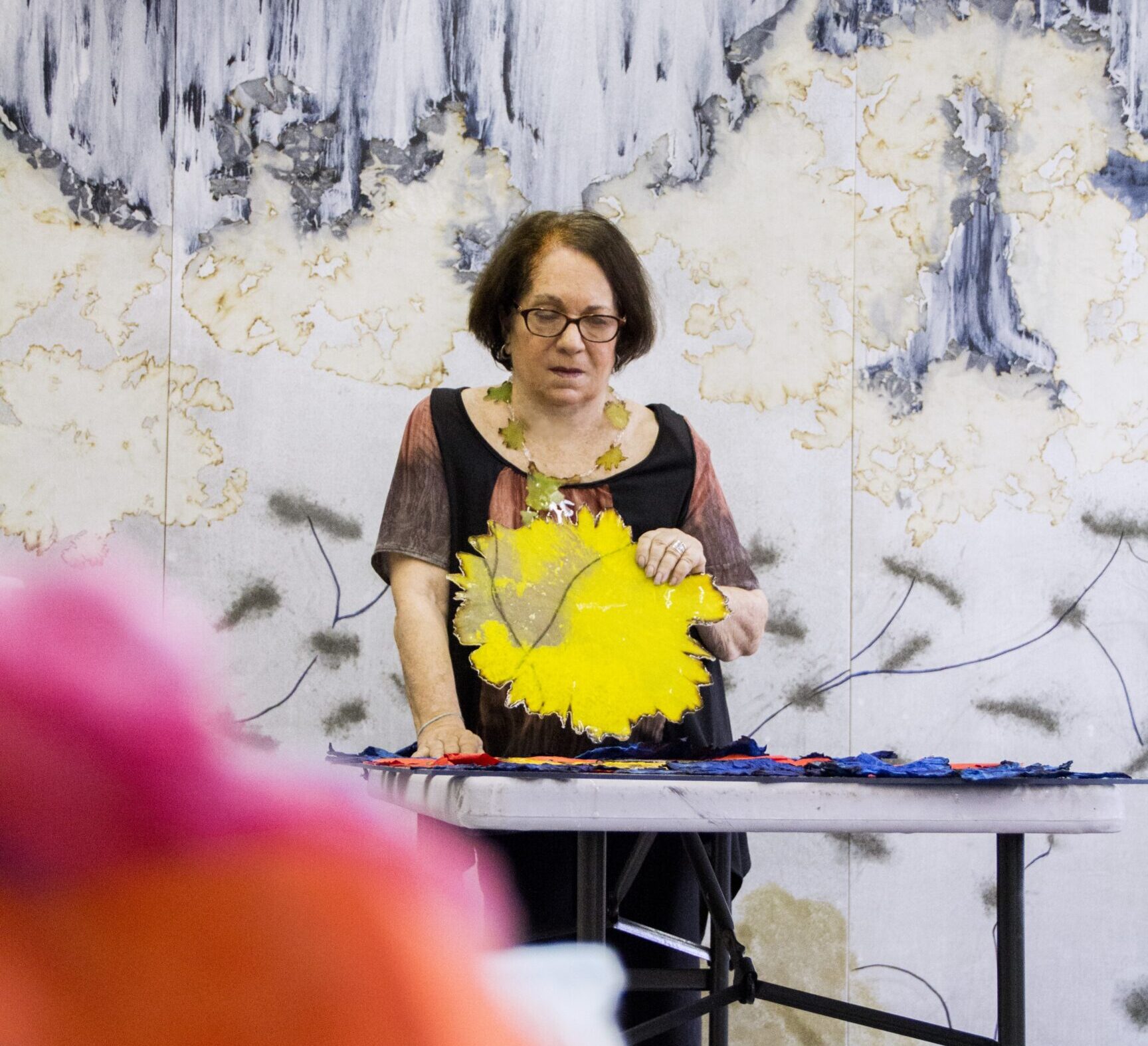
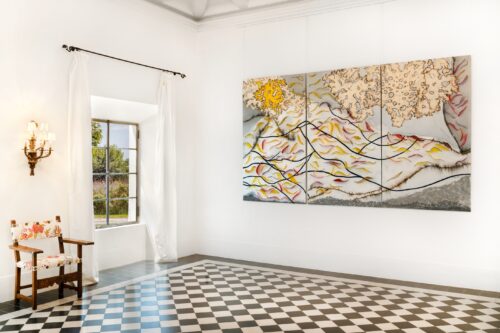
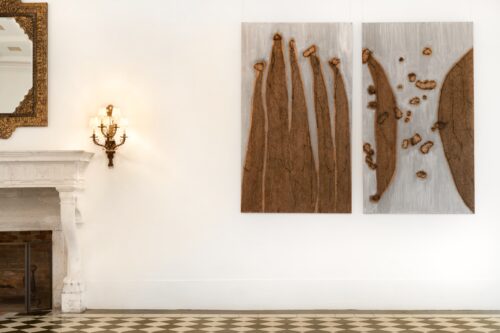
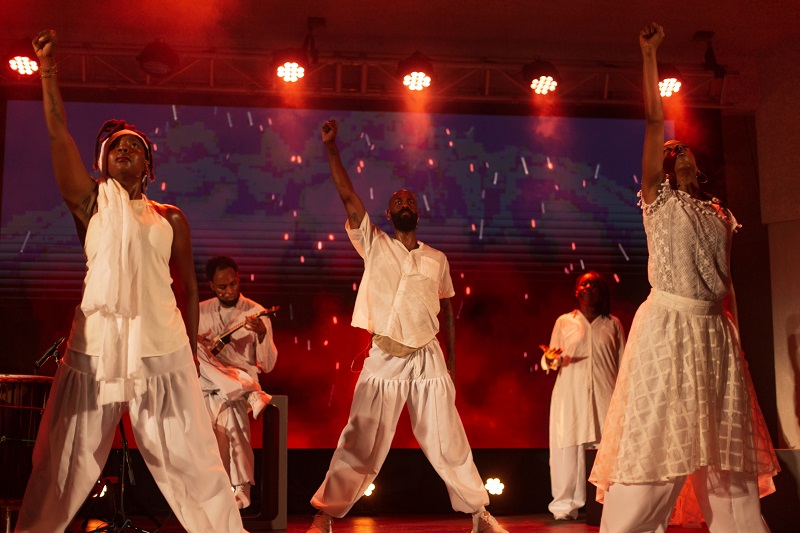
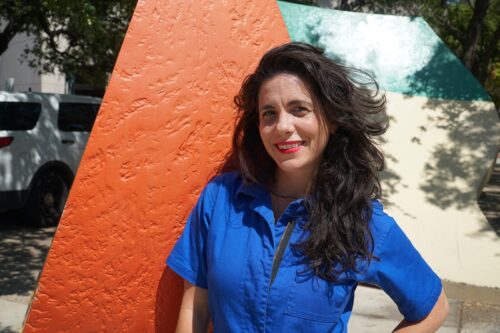
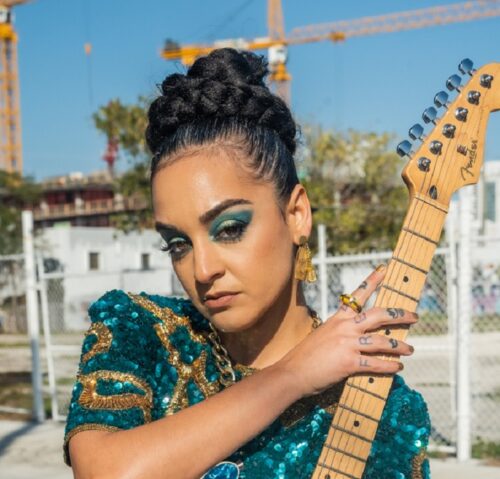
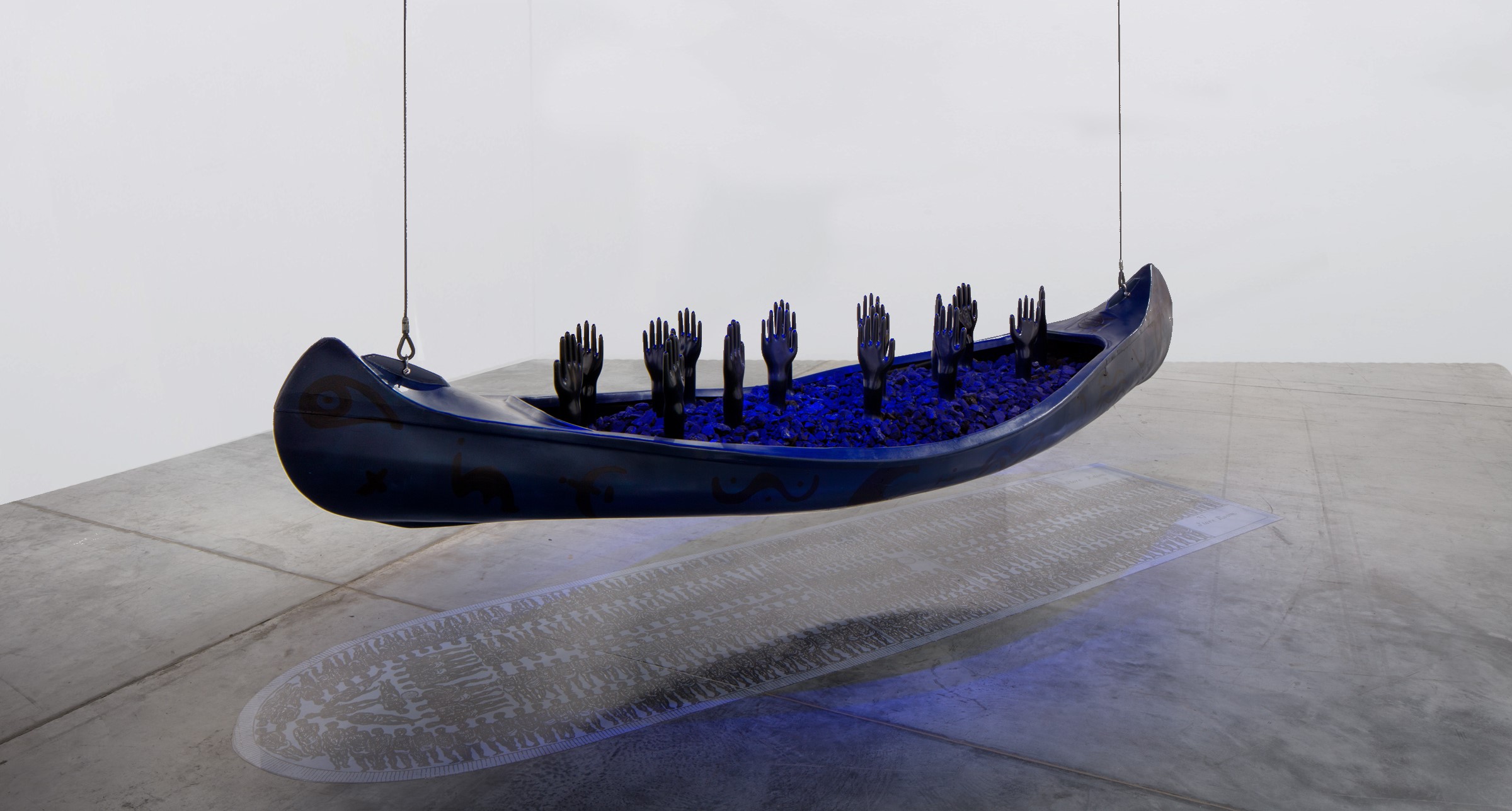
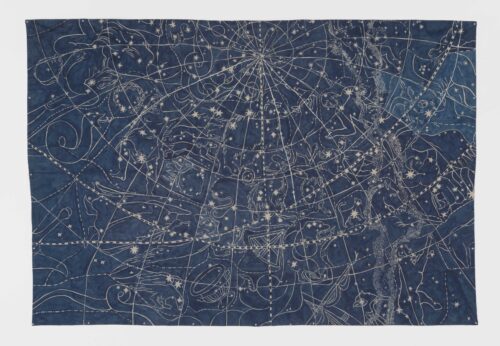
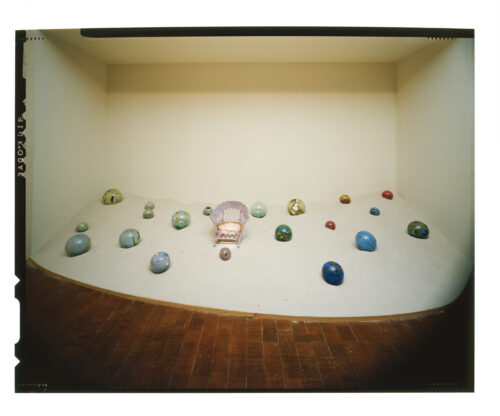
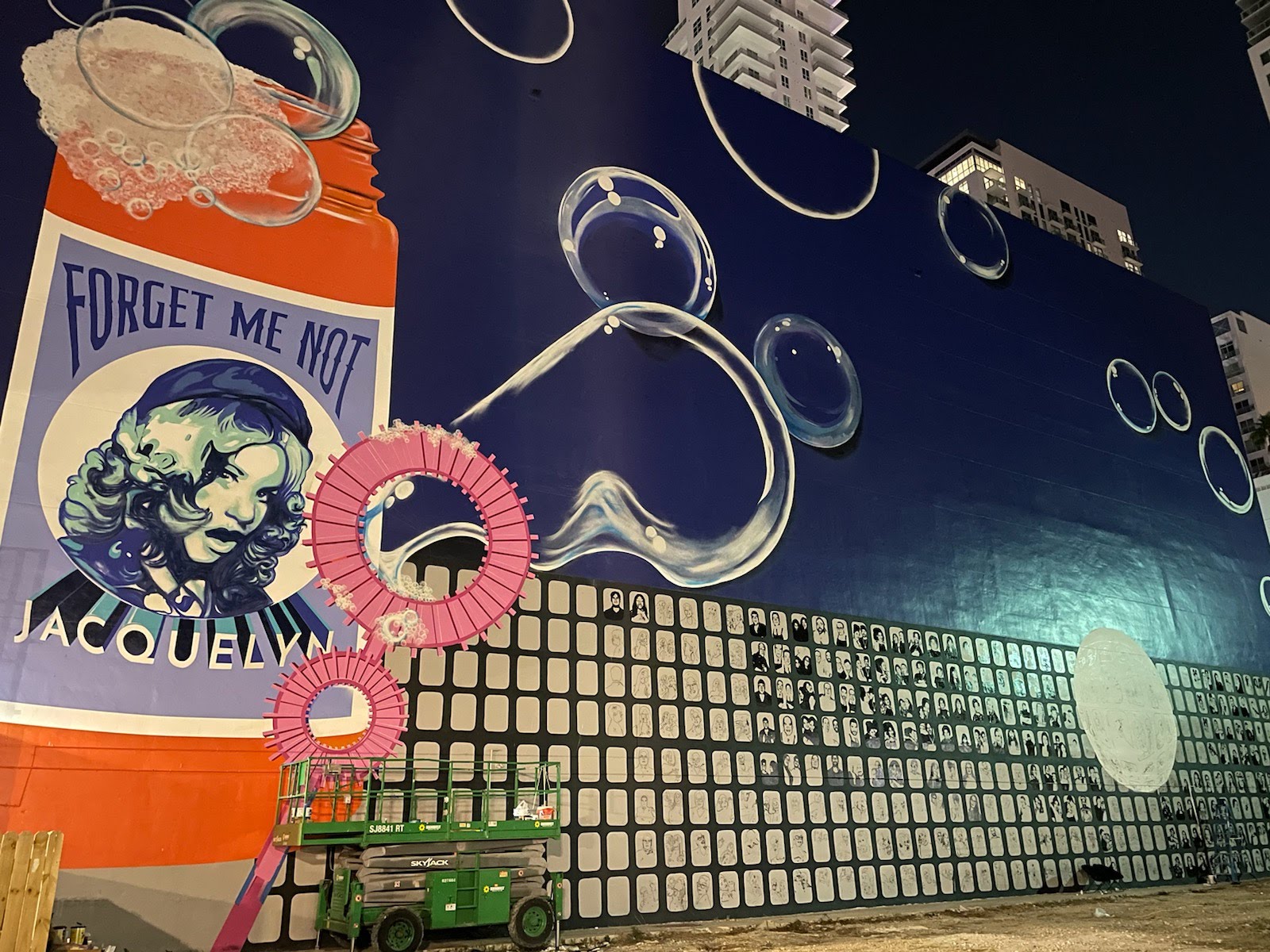
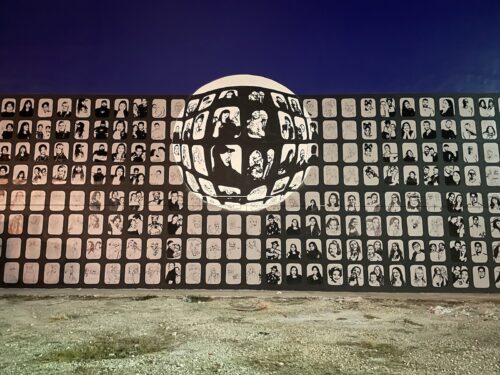
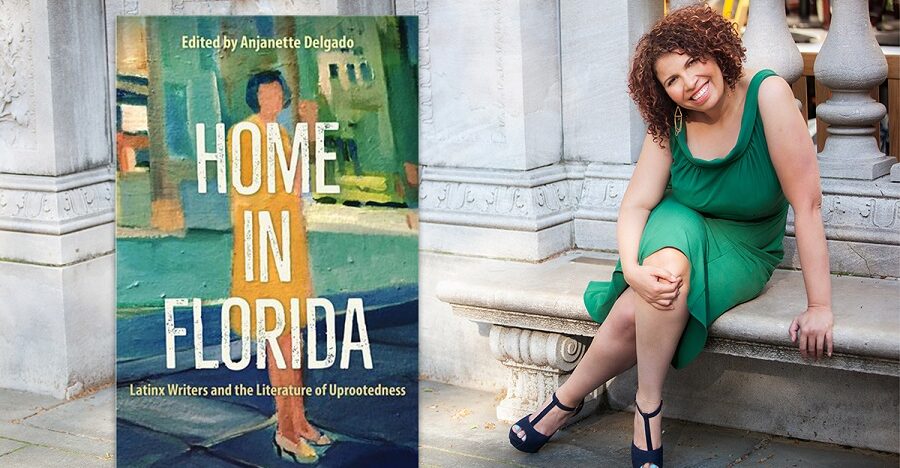
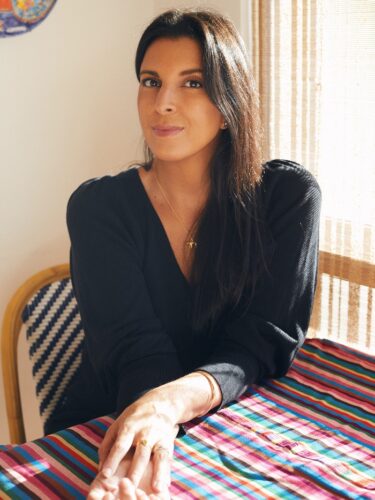
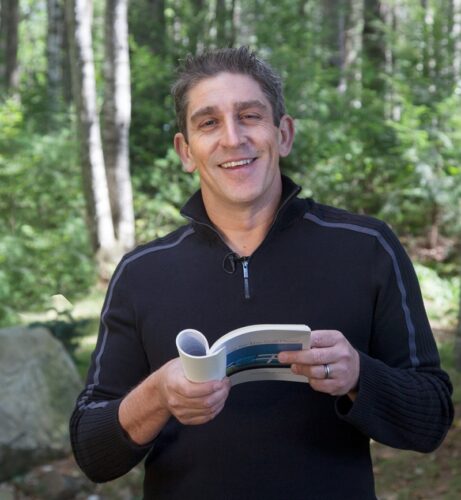
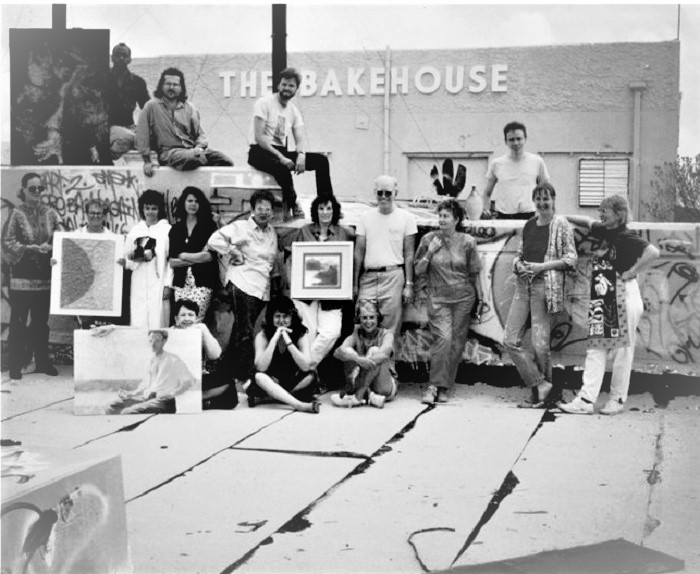
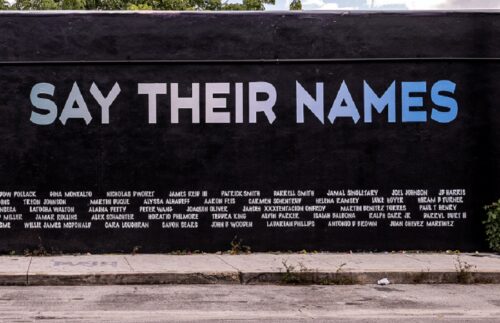
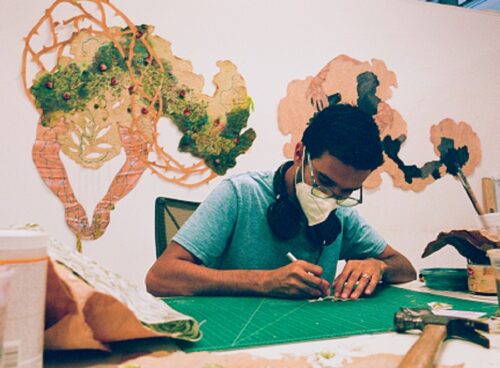
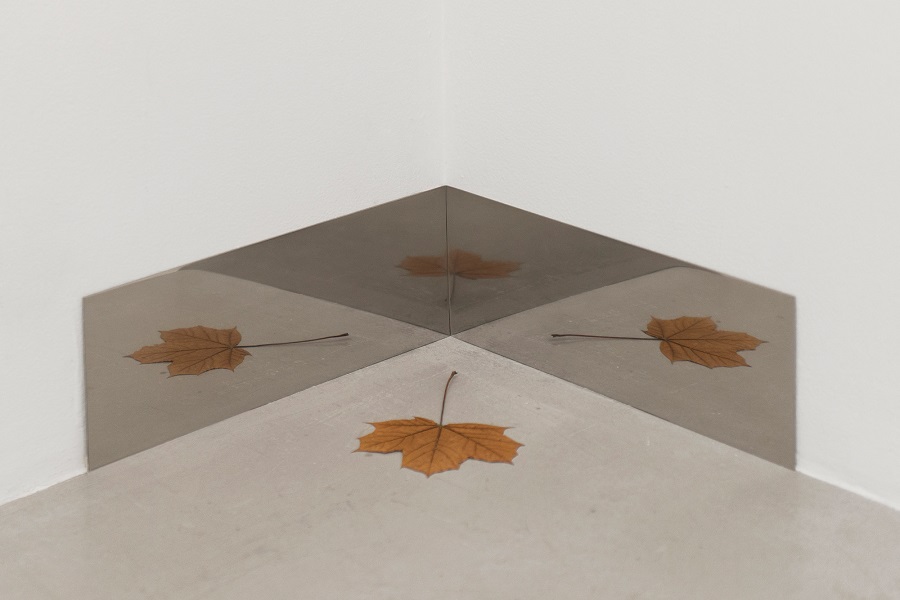
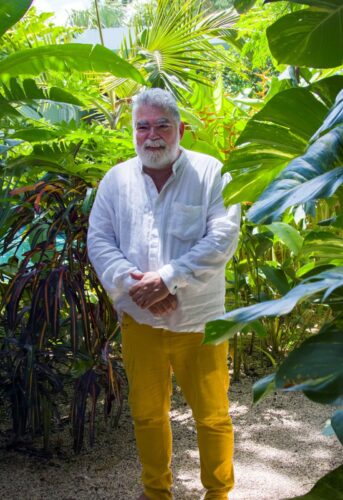
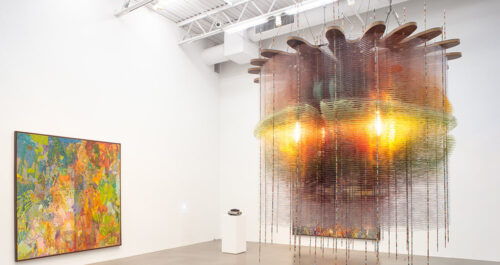
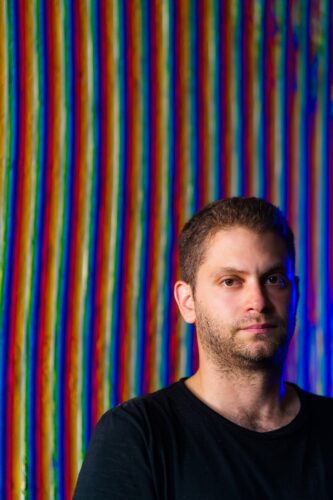
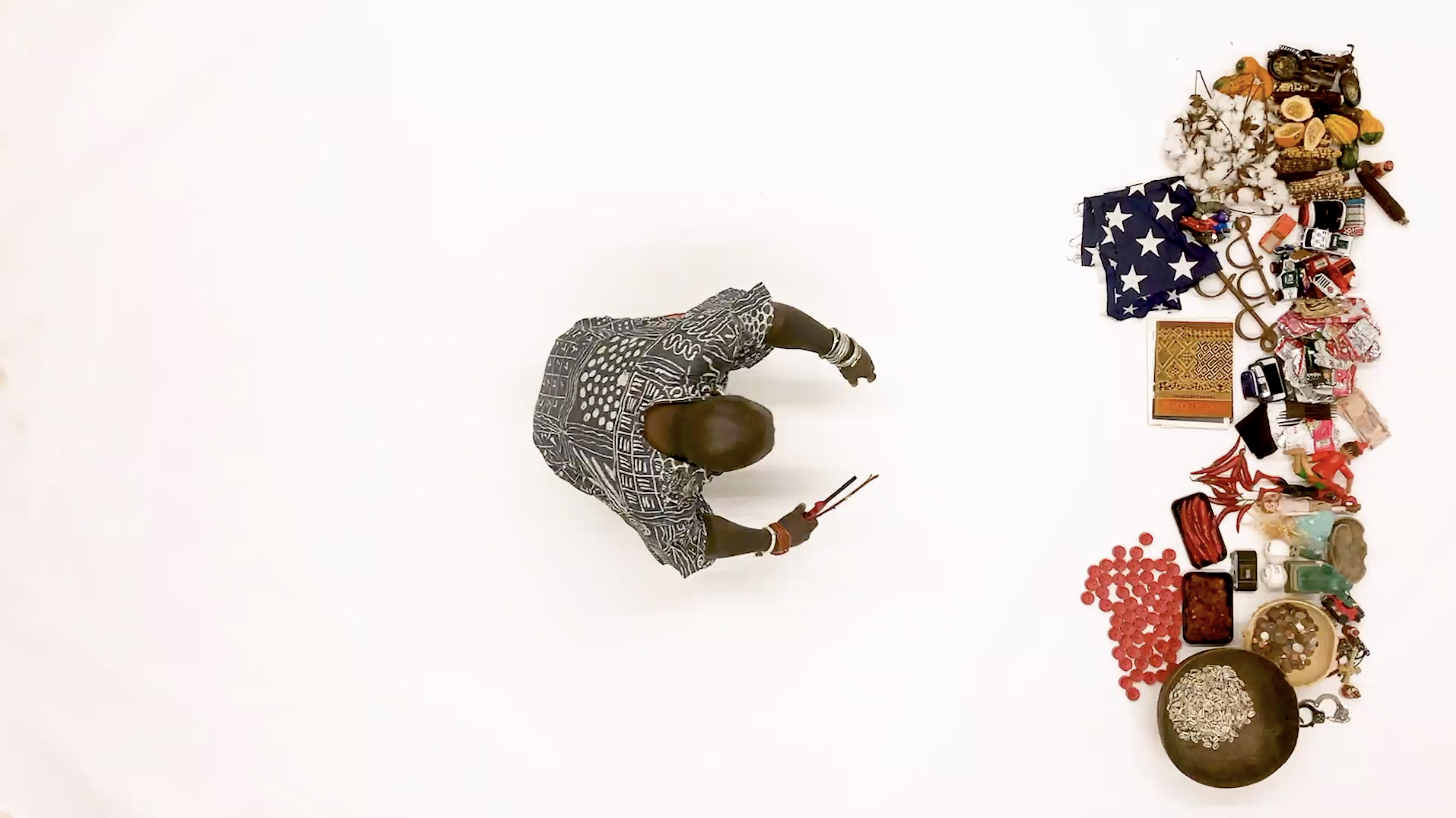
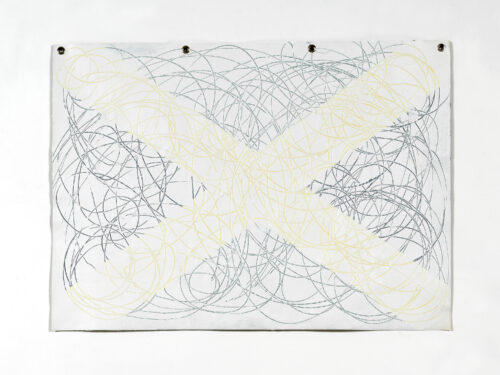
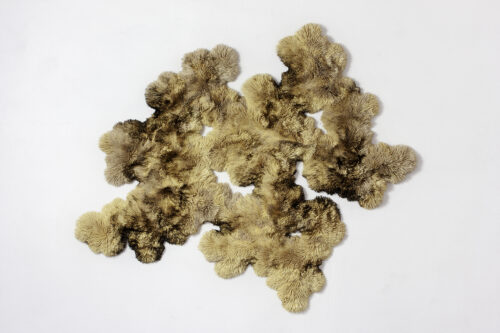
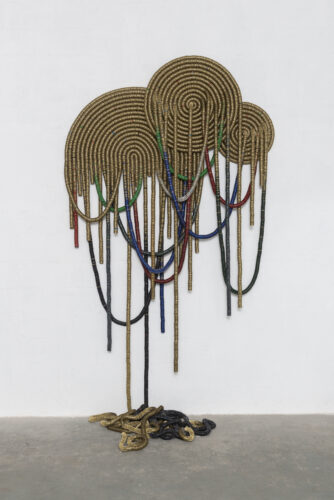
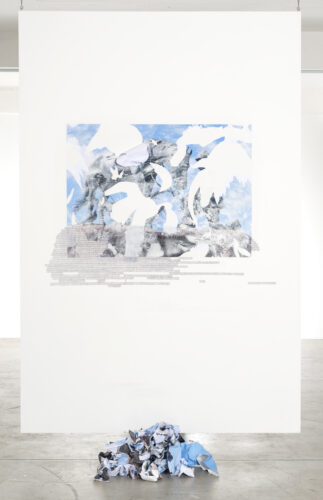
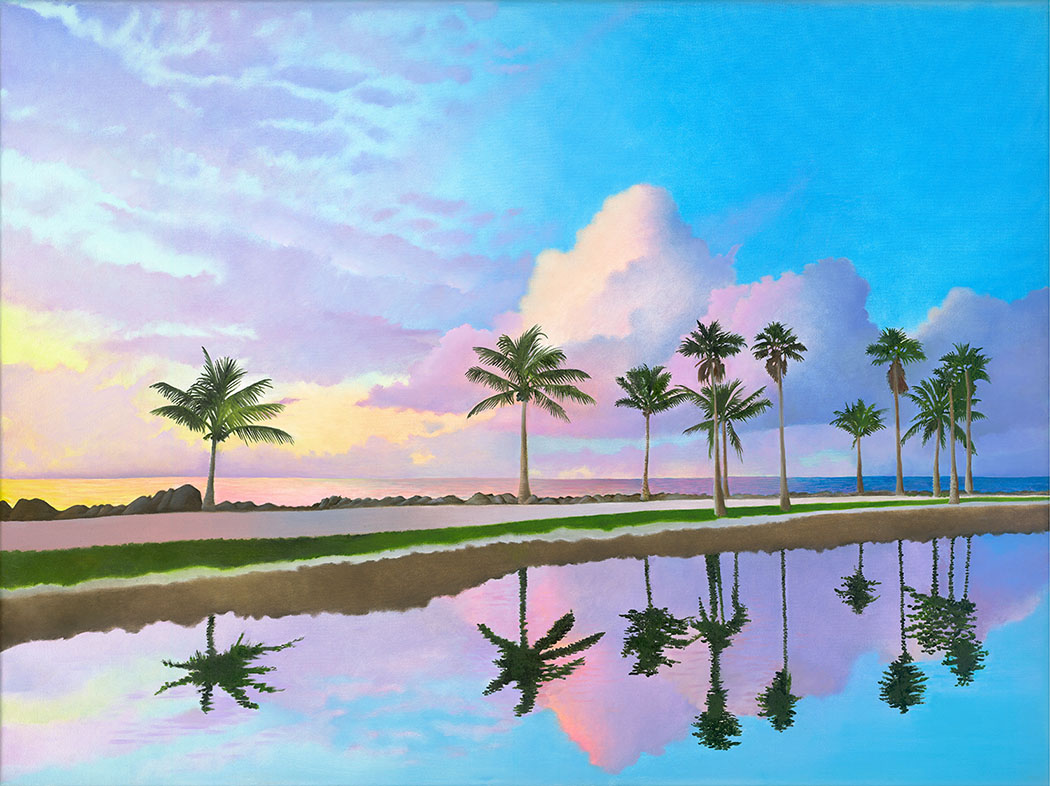
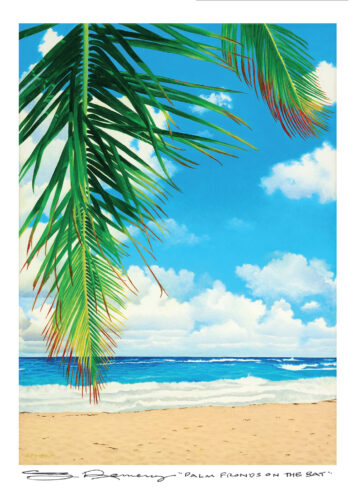
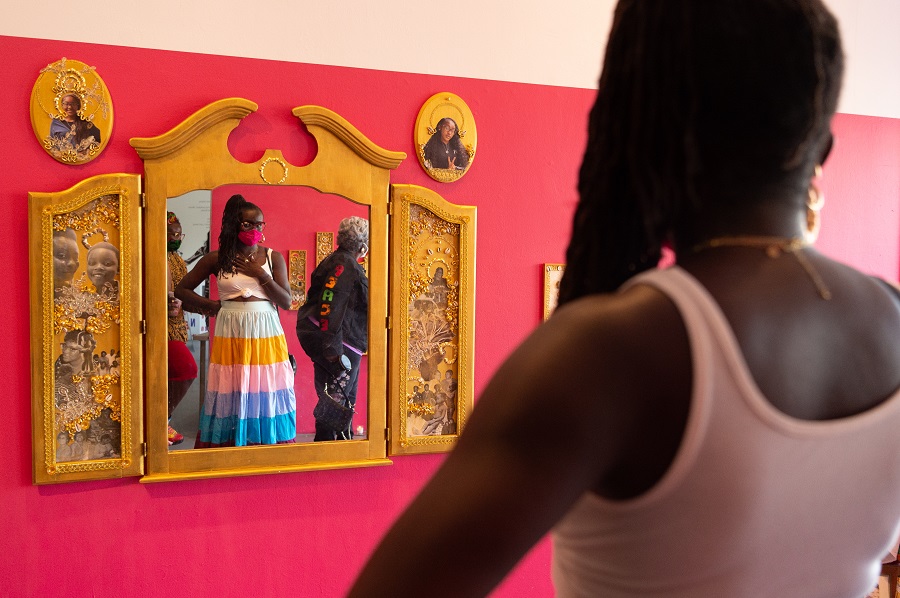
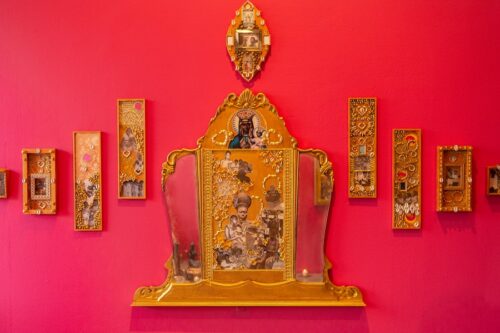
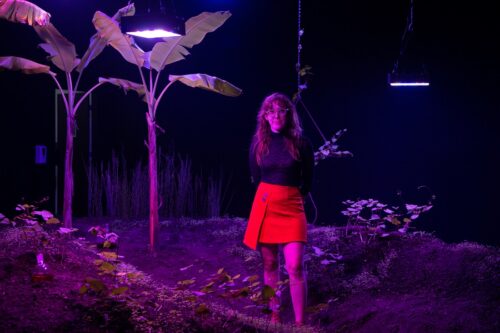
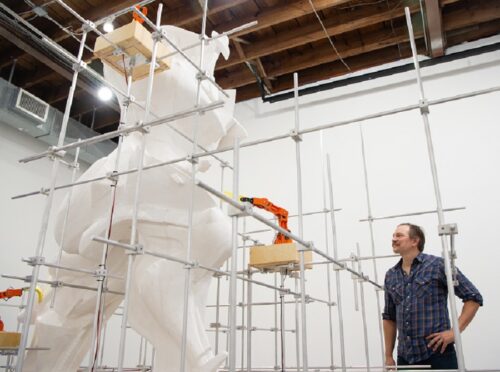
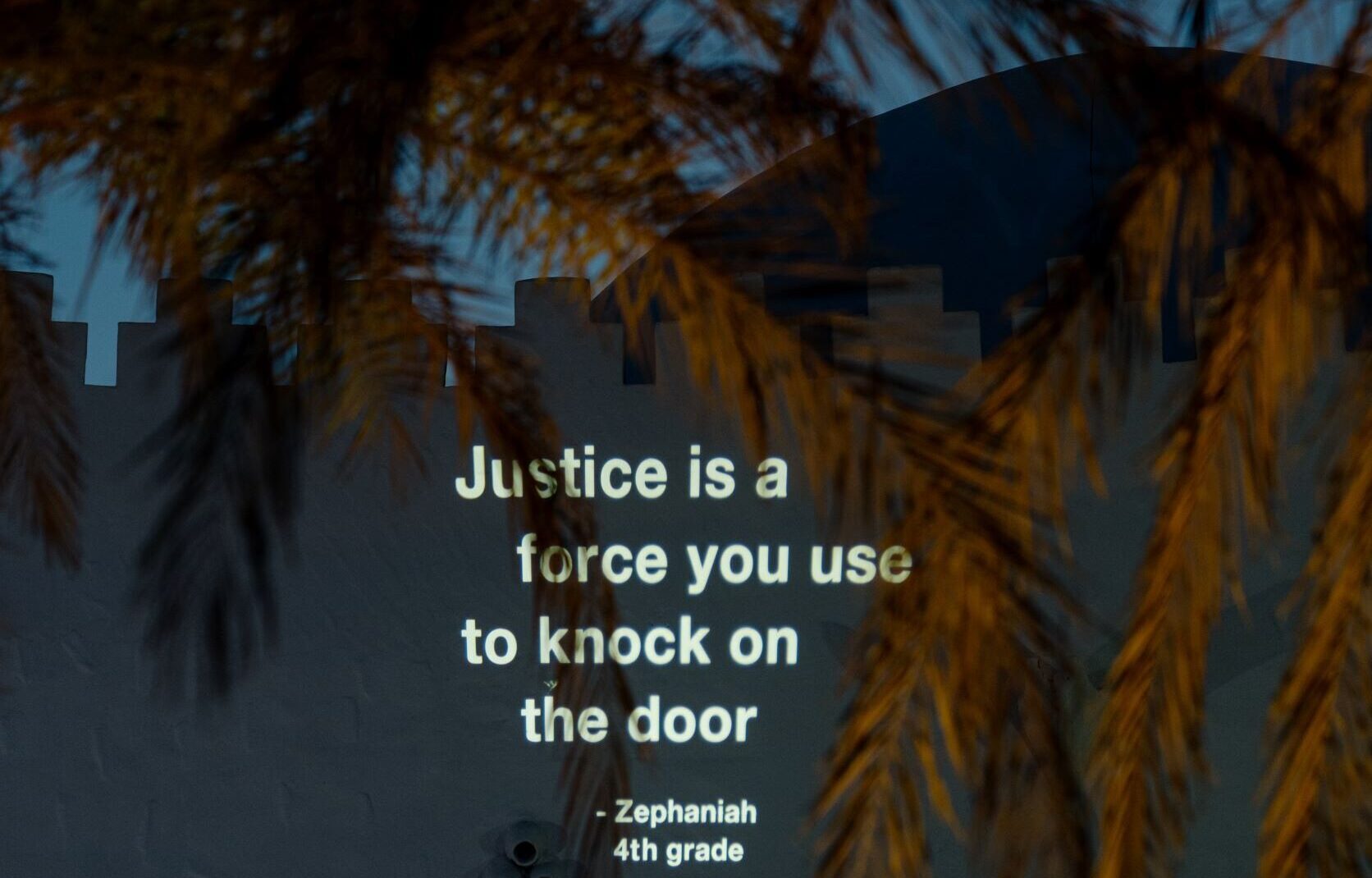
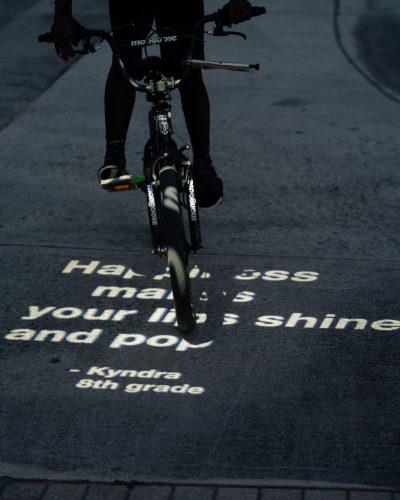
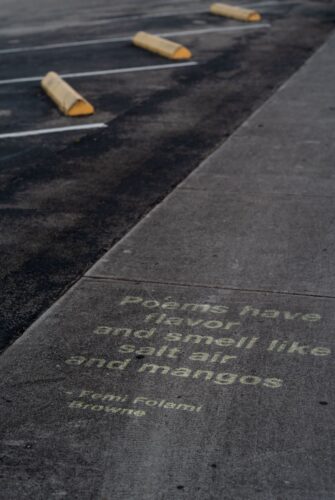
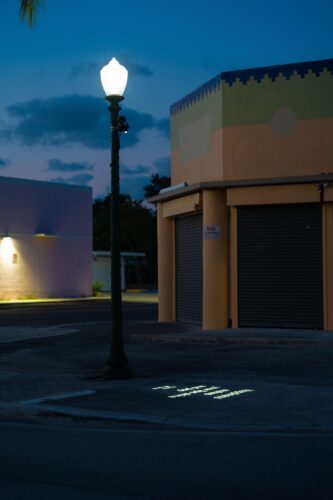
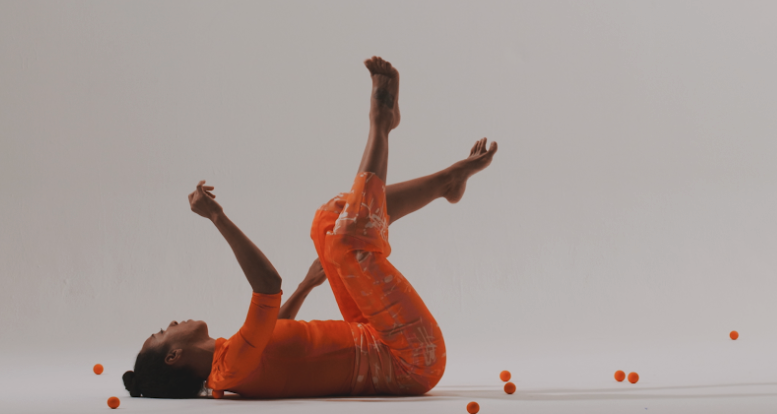
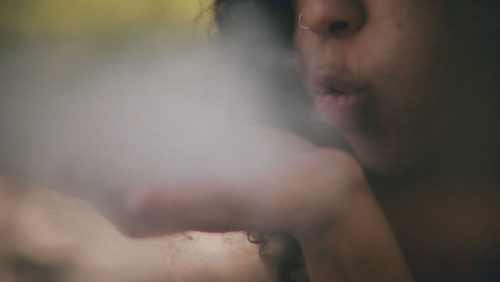
Recent Comments