Artists Open: Enter Miami-Dade studios and watch art happen
Written By Michelle F. Solomon April 29, 2021 at 7:51 PM
Artists Open founder Kathryn Mikesell wears a design by Fountainhead Studios artist Pangea Kali Virga while photographed in Stephen Arboite’s studio. (Courtesy of World Red Eye)
Miami artist Nina Surel compares attending the Artists Open to peeking inside a restaurant’s kitchen to see how an exquisite dish comes together.
“It is like you are seeing the ingredients, seeing the work in progress — not just the final product, not just the art that makes it into a gallery or a museum,” says Surel, who is founder and coordinator of Collective 62, an artist-run space in Liberty City.
Surel is among more than 250 artists throughout Miami-Dade County who will swing open their doors on Saturday, May 8, to usher in the public as part of the second in-person Artists Open.
Presented by Fountainhead Residency and Studio, the event isn’t about seeing a finished work of art, but rather about meeting artists, seeing their process, discovering the art community that exists in Miami-Dade, says Kathryn Mikesell, co-founder of Fountainhead and founder of Artists Open.
Nina Surel at Collective 62. (Courtesy of Collective 62)
Having helped start Fountainhead as a place to allow artists the freedom to create and to show people that art is accessible, Mikesell had always dreamed of organizing a countywide open-studios experience.
“This is something that is done all over,” Mikesell says. Miami-Dade, with its wealth of artistic talent, deserved one too.
The first in-person Artists Open took place in 2019, with support from the John S. and James L. Knight Foundation. She recalls contacting artists from around the country who had participated in other open-studio formats — and she learned what she wanted Miami-Dade’s Artists Open to be and what she wanted to avoid.
“So many artists I talked to from other places said they felt that eventually they came second to what became more of a party or an outing. When food and performances became involved, the purpose got lost,” she says.
Her Artists Open doesn’t have ancillary events, so as not to take away from the stars of the show: “My objective is very simple: to highlight the artists,” she says.
Kathryn Mikesell discusses the inspiration behind the creation of Fountainhead. (Video courtesy of Florida International University’s Inspicio e-magazine)
“It’s about going into the artists’ studios and meeting with them and learning about their inspiration. Finding out why they do what they do. It sounds so obvious, but I want people to clearly understand the value of the artist, not just the art that is made by them.”
As with many events, the pandemic forced the Artists Open online last year. Throughout six months, more than 90 artists offered virtual tours of their studios via Instagram Live.
“They were raw, and I just loved the virtual experiences,” Mikesell says. “But when it came to this year, this is the time. People are hungry to get out and thirsting for art, and artists need to be heard and seen.”
With safety protocols in place (such as social distancing and mask requirements), and with the greater availability of vaccines for different ages, she feels this is the right time.
“The longer we waited, the more things would be happening, competing,” she says. “If we had to work all day and night to get this year’s in-person visit day ready, we would.”
Ian Fichman at Bakehouse Art Complex. (Photo courtesy of Pedro Wazzan)
After a year of economic and artistic challenges, “this is important right now to have artists in the limelight,” she adds.
Among the participants are individual studios as well as large complexes including Doral Art Studios, Bridge Red Studios in North Miami, and Oolite Arts in Miami Beach. Visitors will also find the welcome mat out at hotspots such as the Little Havana Art District, Bird Road Art District and Leah (Hialeah) Arts District, and in the many artist complexes in Miami neighborhoods such as Little Haiti/Little River, Wynwood and Liberty City.
Painter Mette Tommerup, who works out of Fountainhead Studios, says she appreciates that Artists Open “puts everyone on a level playing field.”
Collective 62’s Surel agrees and credits Mikesell for ensuring the event is open to all. “For Kathryn, there’s no status of who is better or best. For her, just being an artist is enough,” Surel says.
Founded in 2017, the studio has grown from six to 16 artists, Surel says, and has become an all-female creative community with artists from throughout the United States and the world, including from Morocco, Israel, Argentina, Brazil, Chile and the United Kingdom.
Mixed-media artist Vickie Pierre at Fountainhead Studios. (Photo courtesy of Fountainhead Residency and Studios)
“It’s so refreshing for us to be able to open studios again,” Surel says.
Jean Jaffe, who is part of Collective 62, says Artists Open will give visitors an opportunity to explore Miami-Dade communities.
“You get a history of the area,” says Jaffe.
It was also designed to open a dialogue between artists and the community. Mikesell hopes personal relationships will be developed, bringing another layer of meaning to an artist’s work.
“My wish is that Artists Open is only a start for those who visit. That when they connect, they follow the ones they like, that they bring them into their lives, that they buy their work and introduce it to friends,” Mikesell says. “It’s not just about this one day, it’s about what I hope will bring art and artists into people’s lives from that day forward.”
For more information on Kathryn Mikesell, check out Florida International University’s Inspicio e-magazine, which has a series of video interviews at this link.
Miami-based artist Edouard Duval-Carrié's work, currently in the 61st Venice Biennale, echoes the Italian exhibition in “From Venice with Love” in Miami Beach at The Betsy Hotel.
“The Science Behind Pixar” at Frost Science takes visitors behind the scenes of Pixar films with more than 50 interactive experiences exploring animation, engineering, math and technology.
Still time to catch HistoryMiami’s Muhammad Ali exhibit
Written By Jonel Juste April 26, 2021 at 8:06 PM
All photos shown here are part of the “Muhammad Ali in Miami: Training for the ‘Fight of the Century’” exhibit at HistoryMiami Museum, through Aug. 29. (Courtesy of Larry Spitzer/Louisville Courier-Journal)
Fifty years later, the world still remembers the famous “Fight of the Century” between Muhammad Ali and Joe Frazier. But what some may not know is that Ali trained in Miami Beach for that bout.
HistoryMiami Museum is shining a light on the relationship between South Florida and “The Greatest of All Time,” with an exhibit of rare images that’s on display through Aug. 29.
“Muhammad Ali had a deep connection with the city of Miami, which plays an important role in his life and career,” said Michael Knoll, the museum’s chief curator and the director of curatorial affairs. “We hope that visitors are going to connect with the story of Muhammad Ali in Miami, and hopefully be inspired to learn more about his connection to the city.”
The exhibit, “Muhammad Ali in Miami: Training for the ‘Fight of the Century,’” features 20 silver gelatin photographs from the “ALI/MIA” portfolio, obtained with the support of the Knight Foundation. They were selected and handmade by Miami Beach-based photographer Andrew Kaufman. Seventeen of the images document Ali’s time training for the 1971 match at the 5th St. Gym in Miami Beach.
“These photos captured a historic moment for Ali. He was just returning to boxing after his conviction for refusing to register for the draft in 1967 had been overturned,” the museum’s executive director, Jorge Zamanillo, said in a statement. “These photos show him preparing to return to the biggest stage in sports at that time, and we hope everyone will visit the museum to view an incredible and rarely seen collection of images.”
(Courtesy of Larry Spitzer/Louisville Courier-Journal)
The three other images — which capture Ali’s final fight, dubbed “Drama in Bahama,” against Trevor Berbick — were taken in 1981 by Pulitzer Prize-winning photographers Larry Spitzer and Jebb Harris of Louisville’s Courier-Journal.
The images are displayed within a new photography gallery dedicated to exhibiting selections from the museum’s extensive collection, Knoll said.
“We created a new gallery to specifically highlight our photography collection. We did that to share more of our collection and tell more of Miami’s stories,” he said.
ALI & MIAMI, STRONG ROOTS
Ali’s personal physician and cornerman, Ferdie Pacheco, has oft been quoted as saying: “Cassius Clay was born in Louisville, but Muhammad Ali was made in Miami.”
He arrived in South Florida in 1960 — and both Miami and Miami Beach would bear witness to many moments and milestones: He was known to enjoy the music scene at the Hampton House, near Brownsville, a historic Black neighborhood west of Liberty City. He trained at 5th St. for his 1964 fight vs. Sonny Liston at the Miami Beach Convention Center and became heavyweight champion here. He later announced his conversion to Islam here and changed his name from Cassius Clay to Cassius X then to Muhammad Ali.
But, of course, most of the exhibit focuses on the “Fight of the Century,” and his preparation in Miami Beach.
(Courtesy of Larry Spitzer/Louisville Courier-Journal)
About four years prior, Ali had been stripped of his title for refusing to sign up for the draft for the Vietnam War. He stated that he would not fight for a country that was still oppressing its own people, according to HistoryMiami Museum. But Ali headed back to the ring with great confidence.
On March 8, 1971, the world watched, with more than 300 million viewers reportedly tuning in to see the two undefeated heavyweight champions facing off. Ali lost that match. Still, he went on to fight Frazier twice more and beat him twice.
The exhibit at HistoryMiami, which is an affiliate of the Smithsonian Institution, is free and open to the public. Its collection boasts more than 2 million images documenting South Florida history from the late 1800s to the present, according to the museum. These include photojournalism, aerial photography, street scenes, architectural photography, and images of everyday life.
WHAT: “Muhammad Ali in Miami: Training for the ‘Fight of the Century’”
WHEN: 10 a.m.-5 p.m. Thursdays-Saturdays and noon-5 p.m. Sundays, through Aug. 29
Miami-based artist Edouard Duval-Carrié's work, currently in the 61st Venice Biennale, echoes the Italian exhibition in “From Venice with Love” in Miami Beach at The Betsy Hotel.
“The Science Behind Pixar” at Frost Science takes visitors behind the scenes of Pixar films with more than 50 interactive experiences exploring animation, engineering, math and technology.
Review: Seeing MOAD’s ‘The Body Electric’ during pandemic conveys new urgency
Written By Elisa Turner April 15, 2021 at 9:45 PM
Juliana Huxtable’s “Lil’ Marvel” (2015) is part of “The Body Electric” exhibit at the Museum of Art and Design at Miami Dade College. (Courtesy of the artist)
A strange, life-saving paradox pulsates at the heart of “The Body Electric,” an ambitious contemporary art exhibit at the Museum of Art and Design at Miami Dade College. It tackles controversies concerning race, class and gender, while showing how art and technology have converged since the mid-1960s.
In its title, there’s an unexpected nod to 19th-century American poet Walt Whitman’s famously sensual and exuberantly titled poem, “I Sing the Body Electric,” celebrating the union of body and soul.
Yet voices in this Miami body electric are surprisingly soft.
“The Body Electric” brings together 59 artists from several generations. Influencing their art are sights and sounds from the historic impact of television and the 1960s Sony Portapak, the first widely available, portable video-recording system that could be carried by one person. There’s a significant video presence — the exhibit presents 34 works in video with sound, out of 90 individual works on display.
But here’s the paradox for an exhibit with so much video: For life-saving reasons brought on by the global pandemic, headphones — which allow visitors to hear videos privately without interrupting the experience of others — are banished. As a result, the sound in videos is available to all visitors, but it is by necessity less than optimal, except in the few cases where a video installation merits a single gallery.
Hito Steyerl’s “How Not to Be Seen” (2013). (Courtesy of the artist)
It’s often tough to parse remarks from Black artist Howardena Pindell in her seminal 1980 video, “Free, White and 21,” as she describes encounters with racism and sexism. At one point, she wraps her head in bandages to symbolize being silenced and treated as invisible.
An excerpt from the 1986 video, “What You Mean We?” by performance artist Laurie Anderson, shows her in what appears to be a zany dialogue with a chain-smoking digital double, but faint sound can render her performance largely sterile.
Such frustrating experiences were never meant to happen. Before traveling to Miami, “The Body Electric” first opened during the heady pre-pandemic days of 2019 at the Walker Art Center in Minneapolis, which organized this exhibit.
After Minneapolis, the exhibit’s next stop was Yerba Buena Center for the Arts in San Francisco, where it closed in February 2020, shortly before life as we used to know it shut down. The exhibit then opened in November in Miami at the Museum of Art and Design at MDC as a pandemic ravaged the globe, necessitating near seismic changes for many cultural institutions.
Lorna Simpson views her work, “LA ’57-NY ‘09” (2009) at the Museum of Art and Design. (Courtesy of Karli Evans)
Experienced today in Miami, “The Body Electric” anticipates how many of us have lived much of our life through computer screens during lockdown and quarantine. Zoom technology has replaced physical meetings, sending forth endless electronic versions of human bodies.
Seeing this art through the unintended lens of a pervasive dependence on technology to navigate millions of social encounters conveys new urgency. As more technology pervades daily life, the art illustrates how we invite more surveillance, more ethically questionable manipulation of information.
Curiously, that dark potential isn’t really apparent in pioneering works by Nam June Paik, considered the founder of video art and widely known for wanting to “humanize technology.” “The Body Electric” includes his iconic 1969 “TV Bra for Living Sculpture.” Avant-garde cellist Charlotte Moorman wore a “TV bra” instead of a real one while playing the cello in a five-hour performance in a New York gallery.
While the TV bra seems almost anti-climactic as an object, with its ungainly welter of Plexiglas boxes and vinyl straps, a 1971 silent film transferred to video shows her legendary performance. Her body truly becomes a kinetic sculpture merged with technology.
Produced much later, “Surface Tension” by Rafael Lozano-Hemmer may have humanized technology by creating a giant video eye, but its impact is ominous. This nightmarish, oversized eyeball tracks the museum visitor walking near the video.
According to the wall text, Lozano-Hemmer was inspired by camera-guided bombs raining destruction on Iraq during the Gulf War in 1991. During the Iraq War beginning in 2003, he reformatted “Surface Tension.”
Today, it’s a metaphor for constant 21st-century surveillance, such as data mining conducted by social media and internet sites. As such, it reminds us how Facebook posts were used to identify participants in the Jan. 6 attack on the U.S Capitol.
Ed Atkins’ HD video: “Happy Birthday!!” (2014). (Courtesy of the artist)
Presenting numerous self-portraits, this exhibit foreshadows and parallels ubiquitous “selfies” posted on social media. Boundaries between what’s real and what’s virtual start to dissolve.
There’s Cindy Sherman’s 1981 “Untitled #92,” a feminist riff on erotic centerfolds, in which Sherman adopts the pose of a porn magazine model but with a disturbed and anxious facial expression, forestalling many viewers’ desire for vicarious pleasure.
Black-and-white photographs by Lorna Simpson also take cues from images of women in the media. Simpson’s 2009 “LA ’57-NY ’09” offers a witty critique of vintage photos of Black pinup models. They seem indebted to white notions of beauty popularized in movies. Simpson was said to be inspired by a 1957 photo album purchased on eBay that featured anonymous Black women in Los Angeles posing flirtatiously. In 2009, she took portraits of herself posed in similar fashion, presenting them side by side, shining a light on dated images of “prettiness” from another era.
The 2015 self-portrait, “Untitled (Lil’ Marvel),” by Juliana Huxtable possesses the fierce hustle of a Marvel Comics heroine highly seasoned with a Black supermodel’s sexy confidence. A transgender artist, Huxtable is known for creating gender-fluid avatars, electronic images that can be manipulated by computer users such as video gamers.
Ed Atkins dives into avatar technology as well. His 2014 “Happy Birthday!!” in HD video uses computer graphics to create a robotic male figure that seems anything but happy while embracing another robotic figure.
Clever computer-generated scenarios contrast with chilling commentary on surveillance technology in Hito Steyerl’s “How Not to Be Seen,” commissioned for the 2013 Venice Biennale. Relevant today, it presents a mock tutorial with absurd advice for eluding detection in a world of watchers.
Dark irony caps this observation near the end: “Today the most important things want to remain invisible. Love is invisible. War is invisible. Capital is invisible.”
WHAT: “The Body Electric”
WHEN: Through May 30. Public hours of exhibition are 1-6 p.m. Wednesdays and Fridays-Sundays, and 1-8 p.m. Thursdays.
WHERE: Museum of Art and Design at Miami Dade College, Freedom Tower, 600 Biscayne Blvd.
COST:Museum admission is $12 for adults; $8 for seniors and military; $5 for students; and free for children age 12 and younger, as well as Miami Dade College students, faculty and staff. General admission is free from 4-8 p.m. Thursdays. Tickets are available for purchase online or in person at Freedom Tower.
VIRTUAL PROGRAMMING: MOAD Talks is offering live events and prerecorded presentations that unite artists, curators, critics and others to discuss the effects of art, science and technology on contemporary life. MOAD Talks are free, but advance registration is required for live events. Visit the website for the schedule and registration information.
Miami-based artist Edouard Duval-Carrié's work, currently in the 61st Venice Biennale, echoes the Italian exhibition in “From Venice with Love” in Miami Beach at The Betsy Hotel.
“The Science Behind Pixar” at Frost Science takes visitors behind the scenes of Pixar films with more than 50 interactive experiences exploring animation, engineering, math and technology.
MOCA’s Michael Richards exhibit offers ‘a homecoming of sorts’ for the late artist
Written By Sergy Odiduro April 14, 2021 at 10:12 PM
This photo by Etienne Frossard shows Michael Richards’ work, “A Loss of Faith Brings Vertigo” (1994), which will be part of the latest exhibit at the Museum of Contemporary Art, North Miami. (Photo courtesy of The Michael Richards Estate )
Michael Richards had a special connection to South Florida.
It was where he debuted his largest solo exhibition at the now-defunct Ambrosino Gallery, just across the street from the Museum of Contemporary Art, North Miami (MOCA). It’s fitting then that MOCA is the site of a new exhibit featuring the artwork of the late artist, “Michael Richards: Are You Down?”
“This is a homecoming of sorts,” says Alex Fialho, co-curator of the exhibit. “This is a major opportunity to see all of the work that Michael created in his lifetime in one exhibition, including at least four newly conserved large-scale sculptures.”
The exhibit, available from April 21 through Oct. 10, will mark the first time that many of Richards’ pieces will be on display since his untimely passing during the Sept. 11 terrorist attacks at New York’s World Trade Center. The museum has planned free online programming as well, including children’s events, conversations with the curators, and virtual tours.
“Michael Richards: Are You Down?” (named after one of his pieces) was a labor of love for its co-curators, Fialho and Melissa Levin, who discovered the artist after writing an essay about him for an unrelated project.
“It piqued our interest … so, at the end of 2015, we embarked on a journey of trying to curate an exhibition dedicated to his work,” Levin says.
Their research included speaking with those who knew him best.
“Every conversation was a revelation,” she says. “Some were lighter than others, and some were really emotional. As you can imagine, for some people, it really was the first time that they were opening up about Michael since his passing.”
Eventually their efforts led them to Dawn Dale, Richards’ cousin and the steward of his estate. There, in her garage, they discovered a treasure trove of items, some of which had never been on display.
“It turned out that Dawn had been holding on to unopened boxes containing Michael’s artwork and other ephemera since his passing in 2001,” Levin says.
Their visit caught Dale by surprise: “It was unexpected, but it was nice that somebody cared about him and his art.”
“Tar Baby vs. St. Sebastian” (1999), shown in this photograph by Henrik Kam, depicts a life-sized likeness of Richards as a Tuskegee airman impaled by miniature planes. (Photo courtesy of The Michael Richards Estate)
Though she admits that she’d had a limited interest in her cousin’s artwork while he was alive, she has become the standard-bearer for his legacy after his death.
Richards was an artist-in-residence at the Lower Manhattan Cultural Center in the Twin Towers, working on one of his projects when the planes hit.
Dale said she’d had no idea that he was there, thinking he was in Harlem instead. “I was devastated,” she says.
Dale pushed through her grief and immediately went to work retrieving his artwork and gathered them in a centralized location. When one of his sculptures was in danger of being thrown away, she says she sprang into action and saved it.
“That’s my favorite,” Dale says. “That’s the one with the planes flying into him.
“You look at it and you see Michael.”
Entitled “Tar Baby vs St. Sebastian,” the piece is particularly poignant, especially when viewed through the lens of the Sept. 11 attacks. The life-sized likeness of Richards depicts a uniformed Tuskegee airman impaled by miniature US P-51 Mustang planes.
“I think that is one of the most important contemporary artworks of the last 50 years, ” says Dennis Scholl, president and chief executive officer of Oolite Arts.
The Miami Beach-based organization, which offers a $75,000 annual award in his name, produced the film “Are You Down?” to be shown at the exhibit.
Oolite’s relationship with Richards dates back to 1997, when he started there as an artist-in-residence. He produced the “Tar Baby” piece at Oolite Arts, as part of the National Foundation for Advancement in the Arts program.
Scholl says the sculpture is just one example of how Richards’ artwork has sparked conversations on topics that continue to affect us today.
“The Great Black Airmen (Tuskegee)” references the first Black military pilots in the United States, while offering commentary on the “Tuskegee Syphilis Experiment.” (Photo courtesy of The Michael Richards Estate)
“Michael was so far ahead [of his time] and so dialed in to the kinds of issues that now we are all talking about,” he says.
Fialho agrees, pointing to Richards’ “The Great Black Airmen (Tuskegee)” sculpture as another example. The piece references the first Black military pilots in the United States, while offering commentary on the “Tuskegee Syphilis Experiment,” in which the U.S. government withheld treatment from Black men to study untreated syphilis.
The rippling effect of those experiments, Fialho says, are being felt till this day, especially in light of the COVID-19 pandemic.
“When we think about questions about vaccines and trusting governments, the ‘Tuskegee Syphilis Experiment’ is a central reference in a lot of these conversations, particularly in the Black community,” Fialho says.
While exploring the effects of social inequity and racial injustice is paramount, the curators also hope that the exhibit is seen as an opportunity to learn more about the artist.
“We want people to know who he was, and we want people to know about his incredible body of work,” Levin says.
Richards’ personality shines through in the exhibit, Fialho says. “We’re going to feature between 15 to 20 remembrances about Michael and his life, and around half point to how he had this big, beautiful smile.”
The sentiment is unsurprising given the overall impact Richards made on the arts community.
“He was a beloved artist,” Scholl said.
He urges those who are curious about Richards and his artistic contributions to stop in at the exhibit and take a look: “It’s going to be extraordinary.”
WHAT: “Michael Richards: Are You Down?”
WHEN: April 21-Oct. 10
WHERE: Museum of Contemporary Art, North Miami, 770 NE 125th St.
COST: $10 for general admission; $3 for students and seniors; free for children younger than 12, North Miami residents, city employees, veterans and MOCA members.
SAFETY PROTOCOLS: MOCA is limiting capacity and requiring social distancing and facial coverings. For more on safety measures, go to Mocanomi.org/sample-page/reopening-safety-guidelines.
Miami-based artist Edouard Duval-Carrié's work, currently in the 61st Venice Biennale, echoes the Italian exhibition in “From Venice with Love” in Miami Beach at The Betsy Hotel.
“The Science Behind Pixar” at Frost Science takes visitors behind the scenes of Pixar films with more than 50 interactive experiences exploring animation, engineering, math and technology.
Museum of Graffiti exhibit honors the queen herself: Lady Pink
Written By Jonel Juste April 1, 2021 at 10:09 PM
Lady Pink with her work, “TC5 Teamwork” (2018). (Photo courtesy of Sarah Cascone)
Female artists are thriving in the graffiti arena. But it was not always this way.
Forty years ago, the graffiti world was male-dominated, and just a few women practiced the art form. Among them was Lady Pink (Sandra Fabara), who embarked on this artistic journey in 1979.
Through May 20, her story is being told at Miami’s Museum of Graffiti, 299 NW 25th St., in the Wynwood neighborhood. The exhibit, entitled “Lady Pink — Graffiti HerStory,” spans her four-decade career, from her start painting on trains to her renown today.
“This exhibit is the story of a young woman who discovered the graffiti art form in high school and how it opened the doors for her as an artist, made her lifelong friends and mentors and peers within the arts, and gave her an avenue to have a successful career,” says Alan Ket, museum cofounder and curator. “It’s also the story of a Latina artist who found her voice and her activism in her paintings. Those paintings are ones that call attention to all types of injustice and things she believes in.”
Lady Pink’s “TC5 in the Yard.” (Photo courtesy of Museum of Graffiti)
Known as the “First Lady of Graffiti,” Lady Pink is considered one of the most recognized graffiti artists in the world. She was born in Ecuador but grew up in New York City, where she started painting on trains and walls as a teenager and quickly became known as the only female capable of competing with “the boys” in the graffiti subculture. She was perceived as an abnormality, practicing a form of art once considered dangerous and not always legal.
She began exploring graffiti “for the fun of it,” she says. “It was for the excitement of fame.”
But, of course, she faced the challenges that came with being looked down on by her male peers.
“The boys didn’t take me seriously at first, because I am very feminine. So I had to prove myself to them,” she says.
Lady Pink’s “Sisters oh Sisters” (2019). (Photo courtesy of Museum of Graffiti)
And prove herself she did, getting invited to important exhibits, such as what was considered a groundbreaking New York show, “Graffiti Art Success for America.”
“I was pretty much accepted [at that point], even while I was still an amateur. I was accepted as one of them because there were so few females,” she says. “Also, the male artists were feeling the feminist movement as well. They were being supportive and accepting. Not all of them but most.”
The New York artist has since presented her craft around the world, including in Miami. Lady Pink currently has two murals in Wynwood: on Northwest 26th Street and Third Avenue and Northwest 36th Street and First Ave.
“Lady Pink— Graffiti HerStory” is the first exhibition of the queen of graffiti at Miami’s Museum of Graffiti. Art lovers have the opportunity to enjoy a solo exhibition of her works on paper and canvas, as well as photographs by the New York City graffiti artist, muralist and fine artist.
Lady Pink’s “Black Venus” (2020). (Photo courtesy of Museum of Graffiti)
Presented in two adjacent rooms, the exhibit emphasizes the subject matters closest to Lady Pink. The first room has a personal and touching tribute to her teachers and icons of graffiti artists, including Dondi White, Caine One and Doze Green. The second room features pieces dedicated to human rights advocacy and feminism, next to a collection depicting a life dedicated to the graffiti art form.
“She’s a pioneering woman in the graffiti movement,” Ket says. “For more than 40 years, she has designed graffiti, murals and paintings that have been exhibited all over the world. We wanted to showcase her work here because she’s such an important contributor to the art, graffiti and the mural movement as well.”
The museum also wanted to do away with the misconception that women do not participate in the graffiti culture. Today, more female artists are doing graffiti around the world, including Tatyana Fazlalizadeh, Christina Angelina (also known as Starfighter), Shamsia Hassani, Evelyn Queiroz (Negahamburguer) and Jules Muck, who painted a mural in Wynwood honoring Lady Pink.
A portrait of Lady Pink by California-based graffiti artist Jules Muck. (Photo courtesy of Jonel Juste)
“There is not a lot of information and history about it, but the more we do research, we find that there are women who have been contributing to the movement since the beginning,” Ket says. “We want to show that there is valuable participation of women in this movement, which is just as good and sometimes better than men’s.”
It’s no coincidence that the exhibition was unveiled in March, which is Women’s History Month.
Says Ket: “It is important for us to showcase female artists’ works to inspire the next generation of women painters.”
WHAT: “Lady Pink — Graffiti HerStory”
WHEN: 11 a.m.-6 p.m. Mondays-Thursdays and 11 a.m.-7 p.m. Fridays-Sundays, through May 20
WHERE: Museum of Graffiti, 299 NW 25th St., Miami
COST: $16 for general admission; free for children age 13 and younger
SAFETY PROTOCOLS: The museum has established safety-first procedures. Guests must select the time/day they wish to view the exhibition and purchase tickets in advance online.
Miami-based artist Edouard Duval-Carrié's work, currently in the 61st Venice Biennale, echoes the Italian exhibition in “From Venice with Love” in Miami Beach at The Betsy Hotel.
“The Science Behind Pixar” at Frost Science takes visitors behind the scenes of Pixar films with more than 50 interactive experiences exploring animation, engineering, math and technology.
Rare works at the center of PAMM’s ‘The Artist as Poet’
Written By Michelle F. Solomon March 18, 2021 at 4:00 PM
María Martínez-Cañas’ “Años Continuos” (1994), a photographic print collage on foam core, is part of “The Artist as Poet: Selections from PAMM’s Collection.” (Photo courtesy of Pérez Art Museum Miami)
Surrealism conjures images of Salvador Dali’s iconic painting, “The Persistence of Memory” — with its clocks that appear to be melting, hanging off branches and sliding from walls. But there were elements of the Surrealist movement not so prevalent in the public domain.
“The Artist as Poet: Selections from PAMM’s Collection” delves into the time period of the “Poème-Objet” (poem-object), a very particular moment in the 1930s and ’40s where Surrealist artists used found objects and mixed them with text. The exhibition opens March 25 at the Pérez Art Museum Miami.
“When you give people artworks that have or incorporate text, it gives them an entry point and allows people to interpret the works in whatever way they choose,” says curator Maritza Lacayo, who is PAMM’s curatorial assistant and publications coordinator. “So the show is accessible while simultaneously shedding a light on a rich Surrealist tradition.”
That tradition is self-reflection through the creation of the poem-object.
“Bringing found objects and text as a way of getting to know your own subconscious, and bringing those aspects together, was really what André Breton (known as the father of Surrealism) wanted the movement to be about,” Lacayo says.
While the show was planned before the pandemic, then put on hold when COVID-19 closed down the museum, Lacayo thinks the element of self-reflection makes it all the more relevant in these times.
Alfredo Jaar’s “I Can’t Go On, I’ll Go On” (2016). (Photo courtesy of Pérez Art Museum Miami)
“The pandemic has brought out this moment of reflection for us. This moment of trying to sit still, or at least learning how to. I’m not very good at that,” she confesses. “Having these moments to yourself to self-reflect about who you are and the way certain things make you feel.”
The exhibit features 50 to 60 works that span 10 decades, between 1917 and 2017, and belong to PAMM’s permanent collection. Many of them have never been exhibited publicly.
Miami artist María Martínez-Cañas says she was surprised to learn her photographic print collage, “Años Continuos” (1994), was included as part of a group exhibition of Surrealist-themed works. Yet she sees a link, as she was influenced by Cuban Surrealist painter Wilfredo Lam while creating these pieces.
“Maybe the seed was planted in my head and, in that way, you never know if it’s going to show up or not,” she says. “I think to have a curator look at my work in a way maybe that I haven’t looked at before is an exciting moment for me, because it opens up new ways … maybe something that has been in front all this time, but I never noticed before.”
Lacayo stresses that “Años Continuos” absolutely fits: “Her work is very much a self-reflection of her own experiences. Cuban-born but having left the island as a baby and moved to Puerto Rico, she explores ideas of identity and confusion about who you are and where you come from.”
Aimée García Marrero’s 2017 untitled piece features mixed media. (Photo courtesy of Pérez Art Museum Miami)
“Años Continuos” was created as a template for Martínez-Cañas’ large-scale commission for Miami-Dade County’s “Art in Public Places,” which was installed in 1996 at Miami International Airport. This particular piece was made from 400 collaged images, entirely by hand, not digitized, she says.
“Collage is something that I have worked with in my entire career and it was used a lot during the Surrealist period,” she says.
“The Artist as Poet: Selections from PAMM’s Collection” has been in the works for some time, according to Lacayo. The subject was the premise of her master’s thesis at the University of Glasgow in 2014.
For Lacayo, one of the most exciting pieces in the exhibition is also one of the rarest. While studying art in Europe, Lacayo says she traveled to see a letterpress softcover book, “Clair de terre” (1923) by Breton, one of only 240 in existence.
“I’ve only seen two of them in person,” she says. The second one she saw up-close was at PAMM, acquired from the Sackner Archive of Concrete and Visual Poetry, and it is now included in her exhibit.
The story relayed through this exhibit is one she’s always wanted to tell: “For me to be doing it in 2021, and to do it through PAMM’s permanent collection and in my hometown, it feels really full circle.”
WHAT: “The Artist as Poet: Selections from PAMM’s Collection”
WHEN: Opens March 25, 2021
WHERE: Pérez Art Museum Miami, 1103 Biscayne Blvd.
COST: $16 for general admission; $12 for seniors, students, and youths age 7-18
Miami-based artist Edouard Duval-Carrié's work, currently in the 61st Venice Biennale, echoes the Italian exhibition in “From Venice with Love” in Miami Beach at The Betsy Hotel.
“The Science Behind Pixar” at Frost Science takes visitors behind the scenes of Pixar films with more than 50 interactive experiences exploring animation, engineering, math and technology.
‘Dreams of Unknown Islands’ at Oolite Arts imagines new futures
Written By Sean Erwin March 16, 2021 at 4:37 PM
Miami Beach artist Sasha Wortzel says she intended for her installation, “Dreams of Unknown Islands,” to invoke contradictions. (Photo courtesy of Shoog McDaniel)
Artist and filmmaker Sasha Wortzel has an installation on display at Miami Beach’s Oolite Arts – entitled “Dreams of Unknown Islands” – that dwells on what emerges when life comes untethered from quotidian patterns.
It’s the perfect fit for 2021, after a year that taught us all about daily rhythms disrupted and lives placed on hold.
“When things are so constantly disrupted, one may feel in free fall,” says Wortzel, a South Florida native who lives in Miami Beach. “It could be that you are falling, and the world is also falling, so you would think everything is static, but it also awry. The pandemic exacerbated this sensation for most of us.”
The installation, on display through April 4, starts on the first floor of the Lincoln Road gallery. A long, glass vitrine bathed in a golden glow lines the hallway, and “A Litany for Survival” – by African-American poet Audre Lorde – coats the wall.
The poem’s opening reads:
“For those of us who live at the shoreline
standing upon the edges of decision
crucial and alone … ”
“She is one of my favorite poets that I returned to at the beginning of the pandemic,” Wortzel says.
The installation features “A Litany for Survival,” by Audre Lorde, one of the artist’s favorite poets. (Photo courtesy of Pedro Wazzan)
Before the pandemic, Wortzel split her time between South Florida and Brooklyn, and her previous works have appeared at institutions such as ICA London, Manhattan’s MoMA, New York City’s New Museum and The Kitchen, and the Brooklyn Museum, as well as at film events including BAMcinématek, DOC NYC, and the Berlinale.
Wortzel’s recent works emphasize the artist’s search for a sonic, visual and cinematic language to both acknowledge those whose histories have been systematically erased and to interrogate the very processes by which that erasure occurs.
Exhibition curator Kristan Kennedy sees many points of continuity between Wortzel’s current installation and some of her other more cinematic works.
“In the case of ‘Dreams of Unknown Islands,’ we are asked to contemplate how we move and exist on this planet, as human beings in shifting landscapes and catastrophes exasperated by our existence and our impact on the environment,” Kennedy says.
Climbing the stairs to the gallery’s second floor, one enters the main part of the installation, greeted by the sounds of rushing water collaged with voices that chant and hum.
Two foldable, aluminum beach chairs sit side by side in a white circle on the floor, its web straps made with strips of black hide sourced from invasive Burmese pythons. (Photo courtesy of Pedro Wazzan)
Two small alcove rooms frame the upstairs gallery space, one facing east and the other west. Inside the western-facing alcove, a video projection captures a Gulf Coast sunset, the sun inching below the horizon, framed by vast sky and choppy waves.
Two videos are displayed on the walls of the eastern-facing alcove: One shows a sunrise at Big Cypress National Preserve. As the rising orb ignites the mist over the Everglades, it suddenly reverses direction and retraces its path before ascending again. The scene plays on loop.
The other captures a sea turtle emerging from the sea at night. The black-and-white film follows the turtle’s trek up the beach beneath a full moon as she deposits her glistening, pearl-white eggs into the sand.
Wortzel began the sea turtles film in June 2020, with the lockdown in full effect, and followed the turtle clutch until the last hatchlings emerged in early November.
The Big Cypress and turtles films create a counterpoint. One focuses on the solar cycle – so central to human patterns – looping on a disrupted path. The other gestures toward other terrestrial rhythms that persist through the disruption and grow in prominence because of it.
Set side by side, the two films symbolize human embeddedness in the natural world and suggest our enmeshment with it.
A video projection shows a Gulf Coast sunset, the sun inching below the horizon. (Photo courtesy of Pedro Wazzan)
Beyond the two alcoves, a short hallway opens onto the main gallery, painted in soft papaya. Windows overlooking Lincoln Road’s canopy suffuse the space with indirect light. Seven angular, sharp-edged sculptures resembling seashells, each about 18 inches long, are suspended from the ceiling on wires.
The sculptures – created using 3D printing techniques – serve as channel speakers and are the source of the gallery’s soundscape.
During the lockdown, Wortzel participated in a “Kaddish constellation call,” an online gathering in which participants chant the “Mourner’s Kaddish,” a prayer recited by Jews at the death of a loved one. Wortzel mixed the chant with the sounds of underwater recordings made at the Gulf Coast shoreline during a red tide bloom.
“As someone who is Jewish, I realized didn’t need to reinvent the wheel. I could use my ancestral practices and reinvent them. This is why I turned to the ‘Mourner’s Kaddish,” Wortzel says. “I felt that as a culture we don’t make enough space for grief and we need that grieving and mourning space for our relationship with one another.”
Two foldable, aluminum beach chairs, set side by side in a white circle on the floor, are the room’s other features. The chairs’ web straps were replaced with strips of black hide sourced from invasive Burmese pythons. Entitled, “Sitting Shiva,” the display of the chairs is meant to illustrate the effects of Florida’s tourist economy and how it behaves as a force of nature on South Florida ecosystems. Burmese pythons, introduced to the Everglades by overwhelmed pet owners, are cited for the drop in numbers of South Florida species such as marsh rabbits and bobcats.
Wortzel says she intended for the exhibit to invoke contradictions: “I was thinking about the relationship between real estate speculation and storms that uproot, but at the same time Holocaust survivors moved to the area and experienced peace for the first time here. Ecological destruction and regeneration in addition to absolute joy, respite, and pride in a place experienced by the indigenous peoples, Holocaust survivors, Cubans, Haitians, and Mexicans who moved here.”
Benches have been placed strategically around the gallery, inviting visitors to spend time in the space, reflect on the gorgeously produced exhibition catalog and absorb the exhibit’s soft vibe and champagne-quality light.
In conjunction with “Dreams of Unknown Islands,” Wortzel invited six collaborators to activate seven minutes at sunset over a span of seven weeks. Viewers can tune in to @oolitearts IGTV every Friday at sunset (ET) for a moment of meditation and reflection. The series will culminate with a sunset video by Wortzel on April 4. Participating artists include: Saretta Morgan, Tourmaline, Adee Roberson, Samuel Tommie, Betty Osceola and Sacha Yanow.
“I also think about the healing and peace Sasha’s work offers, how visceral it is with glowing colors and sounds and textures emanating from the sculptures and subtle interactions with the architecture of the space,” Kennedy adds. “Sasha has used this opportunity to create a sort of in-between time where we get to reflect and store up energy and find meaning … which hopefully propels us into finding solutions and ways of being that take care of the Earth and our intersecting communities while we imagine new futures.”
WHAT: Sasha Wortzel’s installation, “Dreams of Unknown Islands”
WHEN: Through April 4, 2021. Gallery hours are 9 a.m.-5 p.m. Mondays-Sundays.
WHERE: Oolite Arts, 924 Lincoln Road, Miami Beach
COST: Admission is free but requires an appointment
Miami-based artist Edouard Duval-Carrié's work, currently in the 61st Venice Biennale, echoes the Italian exhibition in “From Venice with Love” in Miami Beach at The Betsy Hotel.
“The Science Behind Pixar” at Frost Science takes visitors behind the scenes of Pixar films with more than 50 interactive experiences exploring animation, engineering, math and technology.
‘Inter|Sectionality: Diaspora Art from the Creole City’: Compelling, thought-provoking, timely
Written By Elisa Turner March 11, 2021 at 9:46 PM
Deborah Willis’ “Reflections on Joan Baez’s Civil War” features portraits and a video with dancers Dajassi Johnson and Kevin Boseman. (Photo courtesy of Juan Cabrera)
At last, this Creole City art returns home.
“Inter|Sectionality: Diaspora Art from the Creole City” is on display at the Moore Building in the Miami Design District. Featuring sculpture, photography, painting, video and installation art, it mirrors the city’s evolving Afro-Caribbean and Creole culture.
But before coming home, it had an impressive journey to Washington, D.C. — one of triumph followed by uncertainty.
Rosie Gordon-Wallace, founder of the Miami-based Diaspora Vibe Cultural Arts Incubator (DVCAI), curated the exhibit, which opened in November 2019 at the Corcoran School of the Arts and Design at George Washington University. “Inter|Sectionality” brought together art by 27 artists from 18 countries, many of whom have worked or still work in Miami.
Principal funding for the Corcoran exhibit came from the Knight Foundation, with additional funds from The Andy Warhol Foundation for the Visual Arts and the Ford Foundation, says Gordon-Wallace. It was an unprecedented coup for this small nonprofit organization, founded in 1996.
But DVCAI’s fortunes changed abruptly after the global pandemic hit. “Inter|Sectionality” closed in D.C. in March 2020, and some future venues became unavailable until further notice. A few months behind schedule, “Inter|Sectionality” opened in July 2020 at the Harvey B. Gantt Center for African-American Arts and Culture in Charlotte, N.C., and remained there through Jan. 31, 2021.
Caroline Holder’s “Land of the Free?” (2019) features ceramics, found objects and collage. (Photo courtesy of DVCAI)
Now it’s at the Moore Building, a short walk from where DVCAI had a gallery on North Miami Avenue for more than 15 years. Craig Robins, an art collector who leads Miami Design District real estate development company, Dacra, invited her to bring the exhibit to the area, says Gordon-Wallace, because she was one of his longtime tenants.
“Rosie is one of the really important visionary personalities in Miami’s art world,” Robins says. “For us to have Rosie back with such an extraordinary show is a dream.”
In the Moore Building, “the art comes back to a multicultural community that knows this work,” says Gordon-Wallace. “DVCAI has a 20-year history of going to the Caribbean once a year, supported by the Miami-Dade County Department of Cultural Affairs. The artists in our exhibition have come from those meanderings around the Caribbean.”
Much of the art is as compelling as it is thought-provoking and timely. It underscores the legacy of Jim Crow and colonialism. Following the Jan. 6 attack on the Capitol, when a Confederate flag was carried inside, “Inter|Sectionality” is more relevant than ever.
“Yes, we are in this toxic system of racism,” says the Jamaica-born Gordon-Wallace. “But there is a new awakening.” For the first time since she has lived in this country, she adds, people in the United States are talking about systemic racism.
At the Moore, the haunting strains of Joan Baez singing “Civil War,” from her 2018 album “Whistle Down the Wind,” emanate from a magnificent installation by MacArthur fellow Deborah Willis, an artist and Black visual culture scholar who teaches at New York University Tisch School of the Arts.
Willis’ installation, “Reflections on Joan Baez’s Civil War,” sets the tone for “Inter|Sectionality.” Bodily grace and perseverance defy historic injustice.
“Reflections” is composed of digital inkjet prints and a video. Directed by Willis, the video shows an enthralling performance by dancers Djassi Johnson and Kevin Boseman, with choreography by Johnson. The video premiered in 2018 on Smithsonian.com.
Barefoot and wearing 19th-century garb, the dancers carve beautiful calligraphic shapes in space. They move apart, the woman seeming to pummel invisible foes, and then waltz together. Projected over their bodies in motion are historic and contemporary photographs recording Black history, including Civil War portraits of Black soldiers and domestic workers. Some photographs belong to the Smithsonian archives and Willis’ own collection.
In a nearby gallery, powerful videos by artists Guy Gabon and Minia Biabiany reiterate similar themes in differing contexts. Unfortunately, the crowded presentation of both videos prevents all but the most patient viewers to absorb their impact.
Gabon’s “Mary Prince” shows a Black woman’s feet repeatedly marking a place in the sand, as the surf threatens to wash away her footprints. This video is said to invite meditation on the slave narrative of Mary Prince, published in England in 1831.
Michael Elliot’s digital photograph, “Empire’s Pot,” with a Black arm replacing the spout on a classic British china teapot, exploits the decorative charm of a common household item with searing wit. What could be a play on “Alice in Wonderland”-type fantasy refers to the United Kingdom’s efforts to deport Caribbean immigrants who led productive lives for years in England.
In Caroline Holder’s “Insomniac’s Menagerie,” miniature pillow-shaped ceramic forms, featuring thought bubbles, hover above a standard headboard. They bear messages such as “Don’t look at me in that tone of voice!” and “Bend the branch or break it.”
Caroline Holder’s “Insomniac’s Menagerie” (2019) is a mixed media installation with ceramics. (Photo courtesy of DVCAI)
Materials evoking the body are found in works created with fibers, including those by Christopher Carter, Katrina Coombs, and Evelyn Politzer. Fibers like rope and yarn recall the vital, vulnerable infrastructure of blood vessels.
Juan Erman Gonzalez’s “El Camino” installation enlarges what appears to be a child’s drawing of a house to modest life-sized proportions. It’s built with transparent recycled fabric. This house-as-empty-shelter, perhaps evoking an immigrant experience, is frail but stands upright. Ceramic shoes are placed outside, as if to keep the colorless interior spotless and above reproach.
Asser Saint-Val’s vibrant paintings and audacious installation in the Moore’s atrium can’t be missed. “The Philosopher’s Stone” features a helium balloon radiant with fantastical tropical flora, suspended over a luxurious round bed placed in the atrium’s center.
For his activation of this space on Feb. 27, he collaborated with various artists. A performance artist’s delicate movements contrasted with a cellist playing Bach arpeggios. A professional body painter had already transformed the skin of both cellist and performance artist with surreal colors like those found in Saint-Val’s paintings.
Saint-Val surrounds viewers with dream-like, sensual imagery, shaped by his interest in Haitian Vodou and 19th-century Black spiritualist Paschal Beverly Randolph.
Echoing the liberating spirit of “Inter|Sectionality,” Saint-Val says he strives to create open-ended experiences for seeing art that unleash “the essence of who we are, our true self that’s hidden.”
WHAT: “Inter|Sectionality: Diaspora Art from the Creole City”
WHEN: Through May 31. Public hours of exhibition are 11 a.m.-6 p.m. Thursdays-Saturdays and by appointment only on Sundays.
WHERE: Moore Building, Atrium and Suite 200, 4040 NE Second Ave., Miami
Miami-based artist Edouard Duval-Carrié's work, currently in the 61st Venice Biennale, echoes the Italian exhibition in “From Venice with Love” in Miami Beach at The Betsy Hotel.
“The Science Behind Pixar” at Frost Science takes visitors behind the scenes of Pixar films with more than 50 interactive experiences exploring animation, engineering, math and technology.
MOCA’s ‘Life and Spirituality in Haitian Art’ exhibit: Simple materials, exceptional vision
Written By Elisa Turner February 19, 2021 at 10:43 PM
Hector Hyppolite’s “Une jeune dame” features mixed media on wood. The artist drew international attention in 1947 when his work was featured in a UNESCO exhibit in Paris. (Photo courtesy of the Betty and Isaac Rudman Trust Collection)
Don’t call these artists naive. It’s a patronizing term smacking of colonial arrogance.
The works in “Life and Spirituality in Haitian Art: Selection from the Betty and Isaac Rudman Trust Collection” — on display at the Museum of Contemporary Art in North Miami — offer a stylized portrait of Haiti, primarily in the 1940s and 1950s, by artists working with simple materials and exceptional vision. They depict the hardscrabble Caribbean nation with grace and pride.
However, paintings such as these were once labeled “naive,” says exhibit curator Francine Birbragher. “This was a negative connotation,” she adds, arising from the artists’ lack of formal training and materials.
Yes, the paintings often have the “flat” look common to artists unused to portraying their subjects with three-dimensional perspective. Although some paintings are by artists more skilled than others at depicting subjects realistically, she says, “In general, these artists are all self-taught. They did not have acrylics or oils. They used house paint. They were very resourceful.”
MOCA’s “Life and Spirituality in Haitian Art” features master works that have rarely, if ever, been exhibited, according to the museum’s executive director, Chana Budgazad Sheldon.
“The artists in this exhibition, such as Hector Hyppolite, are considered masters of the Haitian art movement, or the Haitian Renaissance, in the 1940s,” she says.
Immediately the exhibit takes viewers to a seminal moment. It begins with paintings by the legendary Hyppolite, one of the first artists championed by the pivotal Le Centre d’Art in Port-au-Prince.
Founded in 1944 by American watercolorist DeWitt Peters, Le Centre has provided support for artists while promoting their work. It was there, in 1945, that Hyppolite’s paintings caught the eye of a celebrated visitor, French Surrealist poet Andre Breton, who was said to admire them for the absence of European techniques and styles.
Initially, Hyppolite worked with brushes made of chicken feathers and the enamel paint he’d used for painting doors and furniture to earn a living. Later, he acquired conventional brushes from Le Centre.
Prestigious recognition followed the artist’s encounter with the poet. Breton included Hyppolite in a widely read essay on Surrealism, and the artist drew international attention in 1947 when his work was featured in a UNESCO exhibit in Paris.
Today, his 1946 painting, “The Congo Queen,” hangs in The Museum of Modern Art in New York. It reflects influences of Roman Catholicism from French colonizers in Haiti and the country’s Vodou religion.
The son and grandson of Vodou priests, Hyppolite was a self-taught artist and, by many accounts, a Vodou priest. He had not formally studied European art but was well-versed in the sacred arts of Haitian Vodou, interlacing iconic scenes of spirits with flora and fauna.
Haitian Vodou is a folk religion born of a fusion of Roman Catholicism and West African deities, an unfairly maligned cultural manifestation of the world’s first free Black republic. It’s engendered visually rich stories and symbols adapted by historic and contemporary Haitian artists.
These artists range from Hyppolite to contemporary figures such as Edouard Duval-Carrié and those included in a dazzling, challenging exhibit co-curated by Duval-Carrié in 2019 at the museum, “PÒTOPRENS: The Urban Artists of Port-au-Prince.”
With “Life and Spirituality in Haitian Art,” MOCA provides a “historical context for contemporary Haitian artwork,” like that exhibited in “PÒTOPRENS,” Sheldon says. Overall, the tone of that exhibit and its art from ingeniously recycled materials, reflecting the country’s extreme hardship, was more blunt and grim.
Only a few paintings in the current exhibit fall into the cliches of portraying an impossibly idyllic paradise, such as the candy-colored village painted by Roland Palanquet.
Hector Hyppolite’s “Femme nue avec oiseaux” (1946), oil on canvas. (Photo courtesy of the Betty and Isaac Rudman Trust Collection)
Works by Hyppolite include a female nude posed among rhythmic, nearly abstract patterns of flowers and leaves. Two tropical birds gaze at the woman, whose face we cannot see, enhancing her mystery.
The painting, “Femme nue avec oiseaux,” is disarming for its “flatness” or lack of three-dimensional perspective, signifying the artist’s self-taught status. Its dreamy, vivid allure is undeniable. The woman’s body seems to float above small green mountains, overpowering them with heavenly, voluptuous beauty.
The 1946 “Toilette Paysanne” by Louverture Poisson shows a woman in a modest country home arranging her hair before a mirror propped on a log. Realistic details, from pots for collecting water to her reflection, capture a private, personal experience.
A 1963 painting by Gerard Valcin, who worked as a tile setter, depicts workers planting fields marked with fastidiously straight lines, surely echoing demands of his day job more than fields in Haiti, says Birbragher.
In the painting’s background, symmetrically rounded green hills are more abstract than realistic. The formal geometry animating this rural landscape illustrates Valcin’s refined sense of composition.
Other works record village life and spiritual ceremonies. “Baptizing of Assotor” by Rigaud Benoit shows a curvilinear Vodou drawing being created to attract spirits.
Jacques-Enguerrand Gourgue’s untitled portrait of Toussaint Louverture, oil on board. (Photo courtesy of the Betty and Isaac Rudman Trust Collection)
Complementing these visual stories of Haitian daily life are military portraits by Jacques-Enguerrand Gourgue. They depict men, all but one formerly enslaved, who are considered Haiti’s founding fathers: Toussaint Louverture, Jean-Jacques Dessalines, Henri Christophe, and Alexandre Sabès Pétion. The portraits exude defiant grandeur, with the revered leaders wearing elaborate Napoleonic uniforms.
All these historic paintings offer a sudden, disorienting contrast to the contemporary “Raúl de Nieves: Eternal Return and the Obsidian Heart” in the first gallery at MOCA. To enter and depart “Life and Spirituality in Haitian Art,” visitors must walk through the carnivalesque “Raúl de Nieves” exhibit.
In our screen-dominated days, when it’s easy to shift from one point in time to another on our devices, moving between MOCA exhibits is somewhat akin to switching from Eric Satie’s piano music in early 20th century Paris to Mardi Gras fanfare in New Orleans.
Be prepared to welcome this instantaneous passage between past and present.
WHAT: “Life and Spirituality in Haitian Art: Selection from the Betty and Isaac Rudman Trust Collection”
WHEN: Through March 14. Public hours of exhibition are noon-7 p.m. Wednesdays and 10 a.m-5 p.m. Thursdays-Sundays.
WHERE: Museum of Contemporary Art North Miami, Joan Lehman Building, 770 NE 125th St.
COST: $10 for general admission; $3 for students and seniors; and free for children younger than 12, MOCA members, North Miami residents, city employees and veterans.
Miami-based artist Edouard Duval-Carrié's work, currently in the 61st Venice Biennale, echoes the Italian exhibition in “From Venice with Love” in Miami Beach at The Betsy Hotel.
“The Science Behind Pixar” at Frost Science takes visitors behind the scenes of Pixar films with more than 50 interactive experiences exploring animation, engineering, math and technology.
‘Dennis Manuel: The Eye of Afropunk’ captures a global movement
Written By Michelle F. Solomon February 16, 2021 at 10:41 PM
The “Dennis Manuel: The Eye of Afropunk” exhibit features one of the photographer’s most iconic images: a closeup image of Grace Jones’ performance during Afropunk 2016 in London. (Photo courtesy of Dennis Manuel)
To fully appreciate and understand Dennis Manuel’s photography, it’s important to consider the global movement that’s the basis of his work.
Manuel is the official photographer for the Afropunk festival, an annual event that showcases live music, film, fashion and art produced by Black artists. And his craft has evolved along with Afropunk, a Black experience movement that was born out of the documentary, “Afro-Punk,” directed by James Spooner. The 2003 film highlighted Black punk artists around the United States and explored the lives of the musicians within a white-dominated punk subculture. Where Afropunk came together was through the multi-genre festivals that began in Brooklyn in 2005 and have since taken place throughout the world.
Through the years, these events have become a statement in self-expression – captured in the exhibit, “Dennis Manuel: The Eye of Afropunk,” available for viewing at the Historic Ward Rooming House in Miami’s Overtown. The photos were on limited display during Miami Art Week but have been brought back to the same space through March 13.
Christopher Norwood J.D., the exhibit’s curator, said there is intent behind showing a history-in-the-making exhibit during Black History Month.
“We look at history from the perspective of things past, which is very important and, yes, it is the primary function, but you can also be pigeonholed. We wanted to break out of that square of Black history and show how the act of making history is even more relevant in Black History Month,” said Norwood, who is also co-founder of Hampton Art Lovers, which is presenting the exhibit at the Historic Ward Rooming House. “I had literally hundreds of photos that I filtered down to the 35 that are showing. The curatorial theme was to focus equally on the interaction of the people, the performers, and the actual event itself.”
Photographer Dennis Manuel has been capturing Black performance art for more than 20 years. (Photo courtesy of Dennis Manuel)
The exhibit features photographs Manuel has shot at Afropunk festivals in Atlanta, New York City, London, Paris and Johannesburg. The New York-based Manuel met Matthew Morgan, now founder and CEO of the festivals, when the latter was starting out as a music promoter.
“I would go to some of the smaller events and different venues around Brooklyn,” Manuel said.
That’s where the festival’s roots were beginning to take shape, he recalled.
As it has come into its own, Afropunk has also formed an identity, and those attending the festivals are decked out in bold fashions.
“Festivalgoers are adorned in makeup, hats, and Afrocentric face paint,” Manuel said.
He recalled a photo taken during Afropunk Paris, where singer Solange Knowles was performing and ventured from the stage out into the crowd.
“The young girls were going crazy with excitement. I looked and there was one girl with tears streaming down her face,” Manuel recalled. “I got that shot of those tears of joy.”
This perspective is what broadens the scope of the work. He doesn’t squarely fixate on what’s happening onstage but wants to extract the energy of the event as a whole.
“In a broader sense, I enjoy capturing the reactions,” he said. “I have my head on a swivel between the performer and then I turn around because the crowd reacts to something.”
A point-and-shoot camera and a high school photography class planted the seed of photography for Manuel. “Initially, I just wanted to be good enough to shoot concerts,” he said, with a goal of getting “up close and within arm’s length” of musicians he idolized, such as Lenny Kravitz, Alicia Keys and Erykah Badu.
The exhibit features photographs that Dennis Manuel has shot at Afropunk festivals in Atlanta, New York City, London, Paris and Johannesburg. (Photo courtesy of Dennis Manuel)
“The most exciting thing for me was taking photos of artists that I admired when they were performing onstage, and the pageantry of the whole concert experience, then meeting them backstage,” he said, adding that capturing them in all of their different moods and atmospheres was what he loved “wrapping his camera around.”
While working by day as a mortgage banker in Brooklyn and shooting his concert photography at night, his hobby eventually became a career. He found his voice, so to speak, when he became the official photographer for Afropunk.
One of the most iconic photos in Manuel’s portfolio is from Afropunk 2016 in London. That’s where Studio 54 disco queen Grace Jones, as the headliner, would yield some of his most fascinating images.
Covered in body paint and wearing assorted, colorful neon necklaces and bracelets, she was captivating, Manuel said. As always, the legendary supermodel, singer and actress was “theatrical, her expressions dynamic and bold, and in your face,” Manuel said. “She was probably no more than 10 feet away from me, max. I noticed that in a lot of the shots, she was looking directly into my camera.”
Then there was the moment when everything just clicked. “Usually, a performer will focus on a part of the crowd, but she seemed to just be focusing on me.”
Norwood’s hope for the exhibit is to not only showcase Manuel’s work, but to have the viewer step away from the generalizations of Black history.
“What it is to look Black, how it is to think Black, all of these things were situational to the time in which that thinking was made, but always the intent of it was to be free,” Norwood said. “The whole fight was to have freedom. That’s what this show is about. The freedom to be whoever and whatever you want to be and to break out of that square of Black history, so that new Black history can emerge.”
Miami-based artist Edouard Duval-Carrié's work, currently in the 61st Venice Biennale, echoes the Italian exhibition in “From Venice with Love” in Miami Beach at The Betsy Hotel.
“The Science Behind Pixar” at Frost Science takes visitors behind the scenes of Pixar films with more than 50 interactive experiences exploring animation, engineering, math and technology.
‘Illuminate Coral Gables’ to transform city’s downtown into outdoor museum
Written By Michelle F. Solomon February 5, 2021 at 9:43 PM
Cai Guo-Qiang’s “Fireflies” will be one of the works displayed during “Illuminate Coral Gables.” Commissioned by the Association for Public Art with Fung Collaboratives, it was first presented in Philadelphia in 2017. (Photo courtesy of “Illuminate Coral Gables”)
“Illuminate Coral Gables” is a public art exhibit that’s perfect for these times.
Opening Feb. 12, this incandescent-and-interactive project is transforming downtown Coral Gables into a free outdoor museum – with newly commissioned and existing works by local, national and international artists curated to engage with some of the city’s most preeminent landmarks.
“Unlike all other blockbuster museum shows right now that had to be postponed because they could not be presented because of indoor restrictions, ‘ICG’ is meant to be a free, outdoor, high-quality contemporary art exhibit,” says its chief curator, Lance Fung.
Pedestrians through the downtown area will spot the work of Cuban-born, Miami-based artist Carlos Estévez, who is developing video content on people’s movements, interactions and sense of community. His first technology-based artwork, the video-mapped projection will be cast over the entire surface of the historic Coral Gables City Hall building.
Another technologically and artistically intricate work: Kiki Smith’s “Blue Night,” commissioned by the city specifically for “Illuminate Coral Gables.” The 40-by-190-foot installation will create a wonderland of constellations in Giralda Plaza.
Other works that use video mapping and projections will be found in Gables International Plaza (aka the Davidson Building) on Le Jeune Road; Actors’ Playhouse on Miracle Mile; and Coral Gables Museum’s facade on Aragon Avenue.
Planning for “Illuminate Coral Gables” began in January 2019. Exhibit co-founder Patrick O’Connell says the idea was brought to light by the city’s mayor, Raúl Valdés-Fauli.
“He started talking about this a few years ago. He had seen other public art and light-based exhibitions on his travels and thought this would be great for the Gables,” says O’Connell.
The mayor and Venny Torre, president of the city’s Business Improvement District and now president and co-founder of “Illuminate Coral Gables,” got together and started thinking about ways to make it come to life, O’Connell says.
Carlos Estévez’s “Urban Universes, 2021” was created specifically for “Illuminate Coral Gables.” The work will be projected on the facade of City Hall. (Photo courtesy of “Illuminate Coral Gables”)
The initiative is a city project, in collaboration with the Business Improvement District as well as the Coral Gables Chamber of Commerce, Coral Gables Community Foundation, and Coral Gables Museum, and in partnership with the Greater Miami Convention and Visitors Bureau. It has received funding grants from the Knight Foundation and The Kirk Foundation, other multiple family foundations, private companies, and in-kind sponsorships, according to O’Connell.
The overall costs for resources in this first year are a little under $1 million, O’Connell says. But the first “Illuminate Coral Gables” exhibition is worth well over several million dollars based on the artistic works alone, Fung adds. Six of the works were commissioned specifically for the show, while two others – Cai Guo-Qiang’s “Fireflies” and Sandra Ramos’ “90 Miles” – have been shown in various forms in two other exhibitions.
“‘Illuminate Coral Gables’ is really about focusing and enhancing the Coral Gables profile in the fine arts community and bringing more artists to the Gables,” O’Connell says.
To bring a show of such a scope together, the board of “Illuminate Coral Gables” conducted a search for a chief curator. With more than 40 responses from local, national and international curators, it selected Fung, of California-based Fung Collaboratives. Then Fung added a curatorial team, which includes Catherine Cathers, Coral Gables’ arts and culture specialist; Jennifer Easton, art program manager collection for California’s Bay Area Rapid Transit; and Rosie Gordon-Wallace, founder of the Diaspora Vibe Cultural Arts Incubator.
Fung’s specialty is curating large-scale, public art exhibitions. Before he even began working with the board of “Illuminate Coral Gables,” he wanted to make sure he was the right fit for the project. He wasn’t just presenting art plunked down in various places. He and the board agreed that this was going to be a public art exhibition of international scale.
“I work on large scale shows where the work is easily accessible and visually captivating, socially aware and conceptually driven,” he says. “I work with artists whose work can stand equally inside a museum in Miami, for instance, or in front of a museum, or in a public space, and it is still the same artwork.”
Truth be told, the original iteration of “Illuminate Coral Gables” was to have included 20 installations.
“Many of them were static sculptures and art that would require people to gather around,” O’Connell says.
The question for all those involved was: How would that work during a pandemic?
So, that number has been culled to eight for the first year, Fung says. He believes the eight works by 16 artists will not only speak to visitors, but also engage them in conversation, and – of course – impress, all at the same time.
David Gumbs’ “Echos of Souls, 2021” will be shown on what is known as the Davidson Building, on Le Jeune Road. (Photo courtesy of “Illuminate Coral Gables”)
“My first criteria for all of the pieces was to have the works be super-compelling in the daytime and, at night, have them come alive in a different way,” he says. “Daytime, they may be more intellectual or more obvious, but the subtlety comes alive at night. That’s when it’s a little more magical, sometimes even spiritual.”
Martinique-based artist David Gumbs’ work will appear in Gables International Plaza and at the Miracle Theatre. Movements will trigger random, computer-generated animations and patterns. The work is a “token to lost souls due to the COVID pandemic and to social injustices,” Gumbs says.
In storefront windows along Miracle Mile, artist Joseph Clayton Mills will project archival footage from Coral Gables and other communities through an array of rotating mirrors.
Jonathan Perez, Florida International University’s digital arts faculty member in the Art + Art History Department, along with students Jennifer Hudock, Heather Kostrna, L’nique Noel, Maria Daniela Maldonado, Tara Remmen, Ari Temkin and Emily Silverio-Williams, created an interactive video mapping display, which will transmit sound elements of Coral Gables’ residents telling a story as imagery floods the walls of the Coral Gables Museum.
Ruben Millares and Antonia Wright created site-specific sculptural light installations. Through their barricade installations placed in different locations, the artists will transform a utilitarian object into a work of art that viewers can interpret in ways personal to their own experience.
Visitors will find Ramos’ “90 Miles: De-construction, 2021” at the Hotel Colonnade on Aragon Avenue. The divided 32-foot walkway is composed of 12 light boxes representing the journey between Havana and Miami.
Guo-Qiang’s “Fireflies” was first commissioned by the Association for Public Art and presented in Philadelphia in 2017. A series of American-made pedicabs are transformed into interactive sculptures through handmade silk Chinese lanterns. Previously an interactive work where visitors could enter the pedicabs, this time around, “Fireflies” has selected volunteers riding throughout the exhibit.
“We could not figure out a way to have people ride these safely during COVID-19,” Fung says. “Maybe next year.”
The lanterns, made in the artist’s hometown village in China, are collaged onto the bicycles. “At night, when they flit around downtown, it will look like a mirage,” Fung says.
While it has been a year and a half of fits and starts because of the pandemic, Fung assures that this exhibit is the start of something. Organizers are nothing short of proud of their new benchmark and what they hope will grow to become an annual, internationally recognized, public art exhibition.
“You know, seeing even one or two of these site-specific works would be phenomenal, but the fact that there are eight scattered throughout, it’s nothing short of amazing,” Fung says.
Miami-based artist Edouard Duval-Carrié's work, currently in the 61st Venice Biennale, echoes the Italian exhibition in “From Venice with Love” in Miami Beach at The Betsy Hotel.
“The Science Behind Pixar” at Frost Science takes visitors behind the scenes of Pixar films with more than 50 interactive experiences exploring animation, engineering, math and technology.
Knight Foundation grants aim to foster togetherness through the arts
Written By Michelle F. Solomon January 21, 2021 at 4:02 PM
The Bookleggers Library was one of nine nonprofit beneficiaries of a $2.2 million investment by the Knight Foundation. Its staff includes, from left, Robert Colom, founder Nathaniel Sandler and Laura Monzon. (Photo courtesy of Pedro Wazzan)
Nathaniel Sandler founded Bookleggers in 2012 out of his Miami Beach apartment, with the dream of opening his own public library.
His mission: To use books as a way of building community.
Since growing out of its original home space, the Bookleggers Library had a few incarnations, moving to Mana Contemporary Miami in 2018, then to its current home at Wynwood’s Bakehouse Art Complex in 2020. These moves allowed Sandler to host ever-expanding community gatherings.
Despite the arrival of COVID-19, and the ensuing quarantines and shutdowns, Sandler continues working to keep that sense of community, exploring new ways of reaching its intended audience.
And his organization has received some sizable help, in the form of a $250,000 grant from the John S. and James L. Knight Foundation. The Bookleggers Library was one of nine nonprofit beneficiaries of a $2.2 million investment by the foundation, which has been creating grants to support arts groups during these unusual times.
The other beneficiaries were the Institute of Contemporary Art, Miami; Coral Gables Community Foundation; Miami City Ballet; Museum of Contemporary Art, North Miami; Prizm Projects; Miami Dade College Foundation; Third Horizon; and Nite Owl Theater.
“The big thing for us is the validation the Knight Foundation grant gives, along with the funding,” Sandler says. “To see our name up with institutions that are so established in the local public consciousness, it puts us out there in a way that is really meaningful.”
Each grant was tailor-made to the organization and its specific purpose, which was how the amount of funds was determined too, says Adam Ganuza, an arts program officer with the foundation.
“Bookleggers is not only rethinking the way that they do their in-person literary events, but finding ways, in these unprecedented times, to recreate new experiences to connect with audiences,” Ganuza says.
The grant will further the development of Bookleggers’ audiobook series and its online “Storytime for Grown-Ups,” which is an Instagram-based, storytelling series. It will also contribute to the completion of a Book Box Bicycle, a custom-made vehicle that will have wi-fi and musical capabilities and a front-load cargo box filled with a small library of books. The bicycle operator will be a dancer, musician or theatrical performer who creates an event around the Book Box Bicycle – for a multidisciplinary, outdoor experience, Sandler says.
“The idea is that we will be able to take the Book Box Bicycle out into the public and do scaled-down versions of our events, where the library becomes a one-to-one experience,” he explains.
The Bookleggers Library and other recipients are continuing to build on the foundation’s vision of a Miami where art is inclusive and accessible to all, even amid a pandemic, according to Victoria Rogers, Knight’s vice president for arts.
And these funds are meant as an investment in their evolution, Ganuza adds, helping “them transform into what their post-pandemic form will be.”
Nite Owl Theater’s grant will go toward creating the Nite Owl Drive-In in downtown Miami. (Photo courtesy of Nite Owl Theater)
Another organization that is creating an indoor-to-outdoor experience is Nite Owl Theater, which received $128,800 for development of a drive-in theater in downtown Miami.
“It’s the next level for Nite Owl,” says Ganuza.
Nayib Estefan, son of Miami’s own Gloria and Emilio Estefan, opened Nite Owl Theater in the Miami Design District’s Melin Building in 2017. It was born out of his Secret Celluloid Society, which is dedicated to showing 35 mm films.
Thanks to the new funds, Nite Owl can transition from 35 mm to laser digital cinema projection, which will be retrofitted into an airstream trailer. The mobile projection booth will enable Nite Owl to host drive-in theater experiences and launch a four-week film series in a green space covering an entire city block.
“[Estefan] has this incredible ability to generate excitement around films – and not first-run films,” Ganuza says.
The largest grant given in this round of funding, $750,000, went to another film-centric organization, Third Horizon.
“From the very beginning, the Knight Foundation has helped us explore an explosive growth,” says Third Horizon co-founder Jason Fitzroy Jeffers, whose organization began in 2016 to showcase an annual film festival of Caribbean and Caribbean-American filmmakers. “This investment is transformative. It empowers us to root down into what we are already doing but do so much more.”
The success of the film festival over the past four years has spurred a demand for Third Horizon programming year-round. “Be that at different museums, other film festivals, other art institutions,” Jeffers says.
A portion of the grant will get Third Horizon’s film residency programming up and running, in what Jeffers describes will be “the mentoring of seven different filmmakers per cohort in the creation of a film.”
As part of its continuing evolution, Third Horizon merged with New York-based Caribbean Film Academy (CaFA) – a move meant to provide Caribbean filmmakers with an even wider reach. The Knight Foundation grant propels that, Jeffers says: “With more funding, there’s stronger work, and with stronger work, there’s more investment. It’s all part of the transformation.”
Says Ganuza: “What Third Horizon has done is that they’ve gone from being an upstart film collective to becoming the primary source for Caribbean and Caribbean-American storytelling, especially through film.”
Cai Guo-Qiang’s “Fireflies” will be one of the installations in the outdoor public art exhibition, “Illuminate Coral Gables,” which opens Feb. 12. (Photo courtesy of Jeff Fusco Photography)
The Coral Gables Community Foundation’s Illuminate Coral Gables was already in the works when COVID-19 hit, but organizers had to pivot. The $35,000 grant helps finance the tech-enabled outdoor public art exhibition, which is set to run Feb. 12 through March 14 in the city’s downtown area.
“Some of the organizations that received grants had ideas that were already in development,” Ganuza says.
Plans for the exhibition began in January 2019. “So, this was way pre-COVID,” says Patrick O’Connell, co-founder of Illuminate Coral Gables. “It was in motion for 14 months before COVID took the wind out of our sails.”
O’Connell says they were “wringing their hands for two months,” asking themselves if they could make the exhibition possible in a pandemic environment.
“We thought about it for a couple of months and stopped the planning for a bit. We had 20 installations that we had planned, many of them static sculptures and art that would require people to gather around,” he says. “But the more we thought about it, and with our chief curator (Lance M. Fung), we were able to plan it in a way with sensitivity to COVID.”
The exhibition will turn the streets, buildings and public spaces of Coral Gables into an outdoor museum, says O’Connell. The installations of newly commissioned and existing works from world-renowned local, national and international artists are in the form of light sculptures, projections and interactive works that can be safely viewed from afar and within socially distanced recommendations.
The grant will support Illuminate Coral Gables in its first year, O’Connell says, and will build a foundation for the outdoor exhibition to become an annual event.
Adam Ganuza, who joined the Knight Foundation in 2016, says the sense of togetherness and connection that comes through arts and culture is “incredibly critical. (Photo courtesy of Knight Foundation)
The idea behind the Knight Foundation funding also was to bridge physical divides brought on by the pandemic and allow organizations to continue their forward-thinking as they adapt to a new reality.
“At a time when we are so disconnected from each other in so many different ways, not just physically, the sense of togetherness and connection that comes through these kinds of experiences – through arts and culture – is incredibly critical,” Ganuza says.
The Miami Dade College Foundation, which presented its annual book fair for the first time online in 2020, received a $150,000 investment to continue development of the event’s online streaming platform – created in response to the challenge of presenting author and literary gatherings in virtual spaces.
Miami City Ballet received $250,000 for continued support of its outdoor production of George Balanchine’s “The Nutcracker,” which allowed for the holiday classic to continue its annual tradition – albeit reimagined to navigate COVID-19 health protocols for dancers, production staff and audience members alike. It also received $67,500 to commission two digital dance works.
“What we’re funding here are parts of these necessary adaptations that arts and cultural organizations and artists had to make to respond to the constraints of the pandemic,” Ganuza says. “Certainly, some of that will stay with us moving ahead into the future.”
Miami-based artist Edouard Duval-Carrié's work, currently in the 61st Venice Biennale, echoes the Italian exhibition in “From Venice with Love” in Miami Beach at The Betsy Hotel.
“The Science Behind Pixar” at Frost Science takes visitors behind the scenes of Pixar films with more than 50 interactive experiences exploring animation, engineering, math and technology.

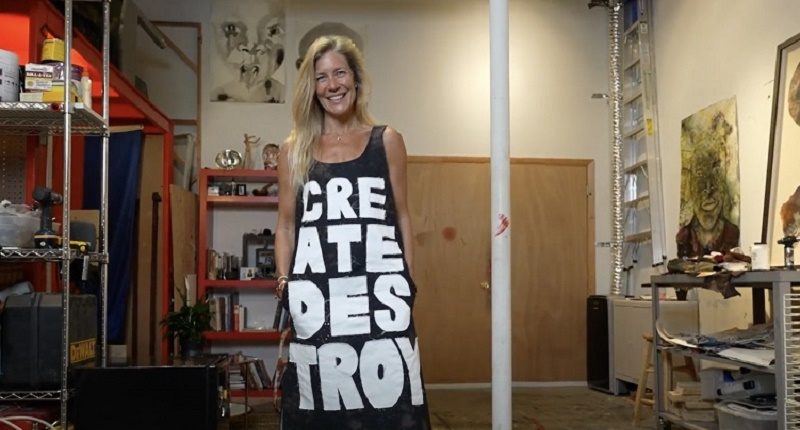
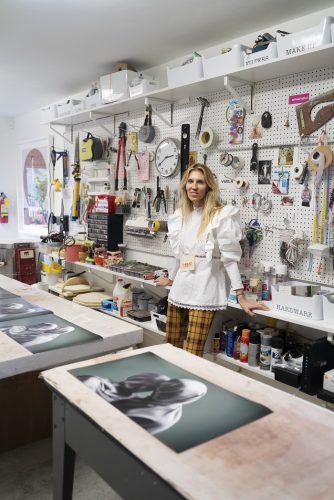
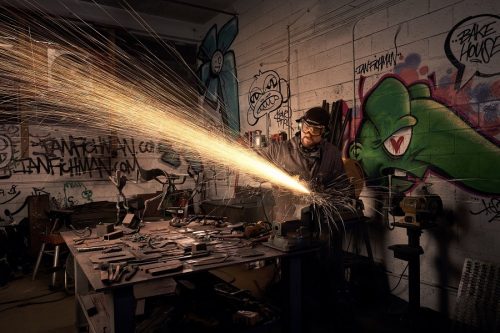
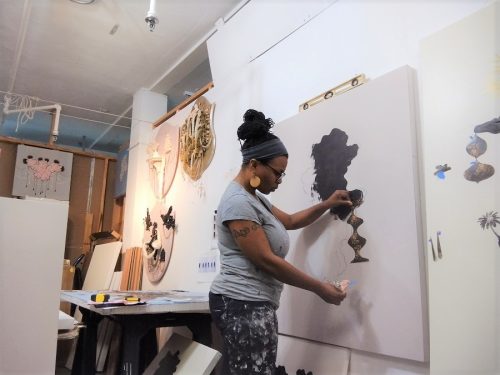
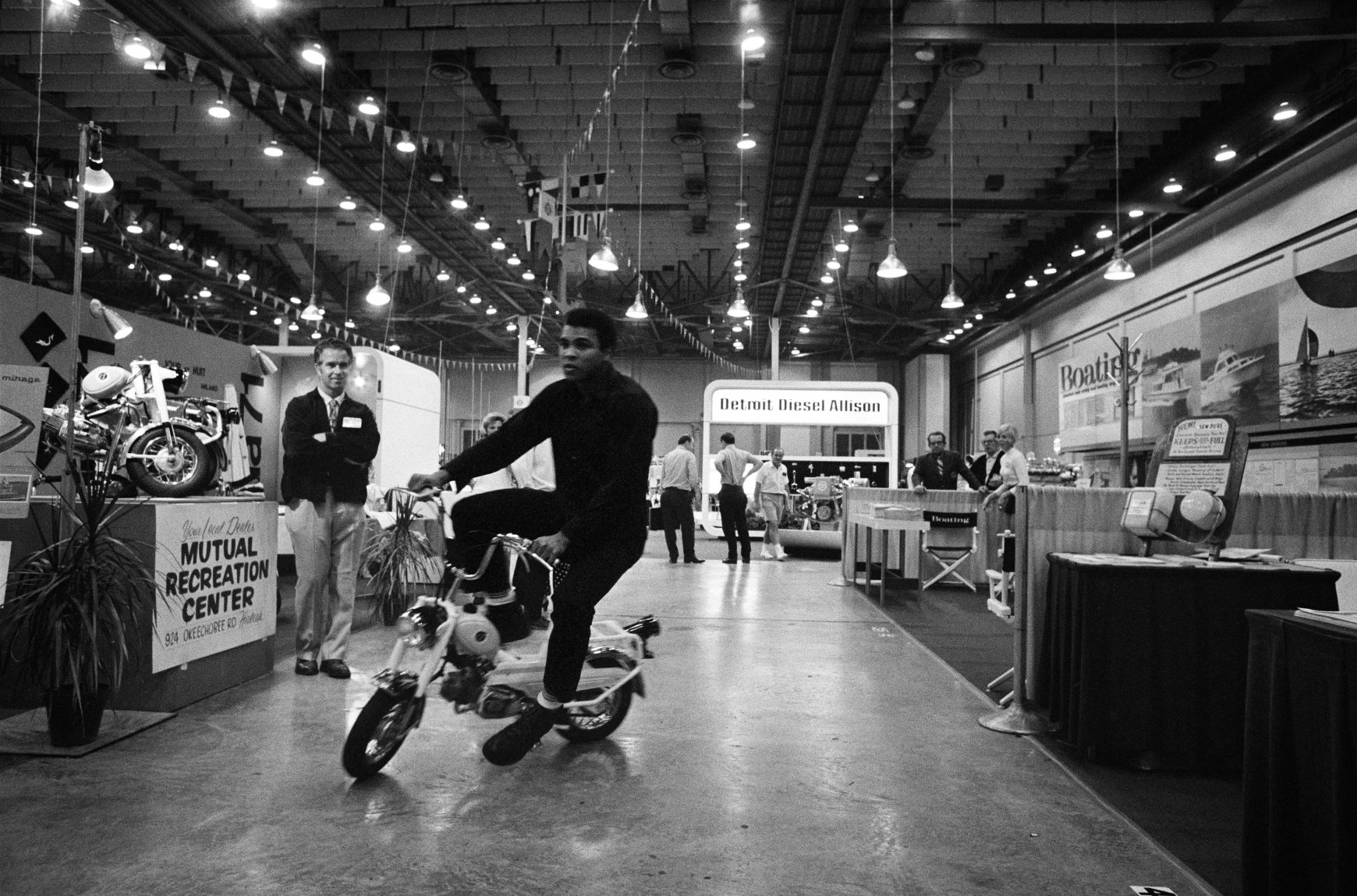
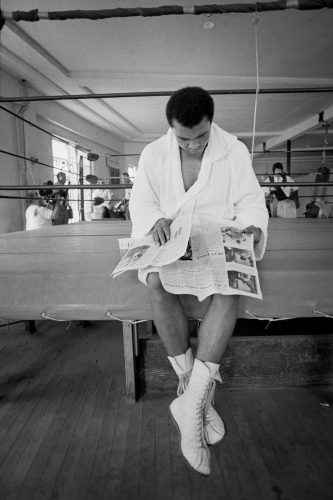
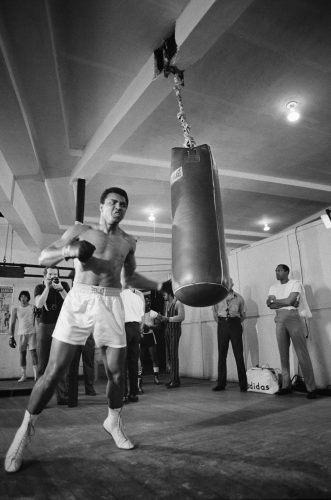
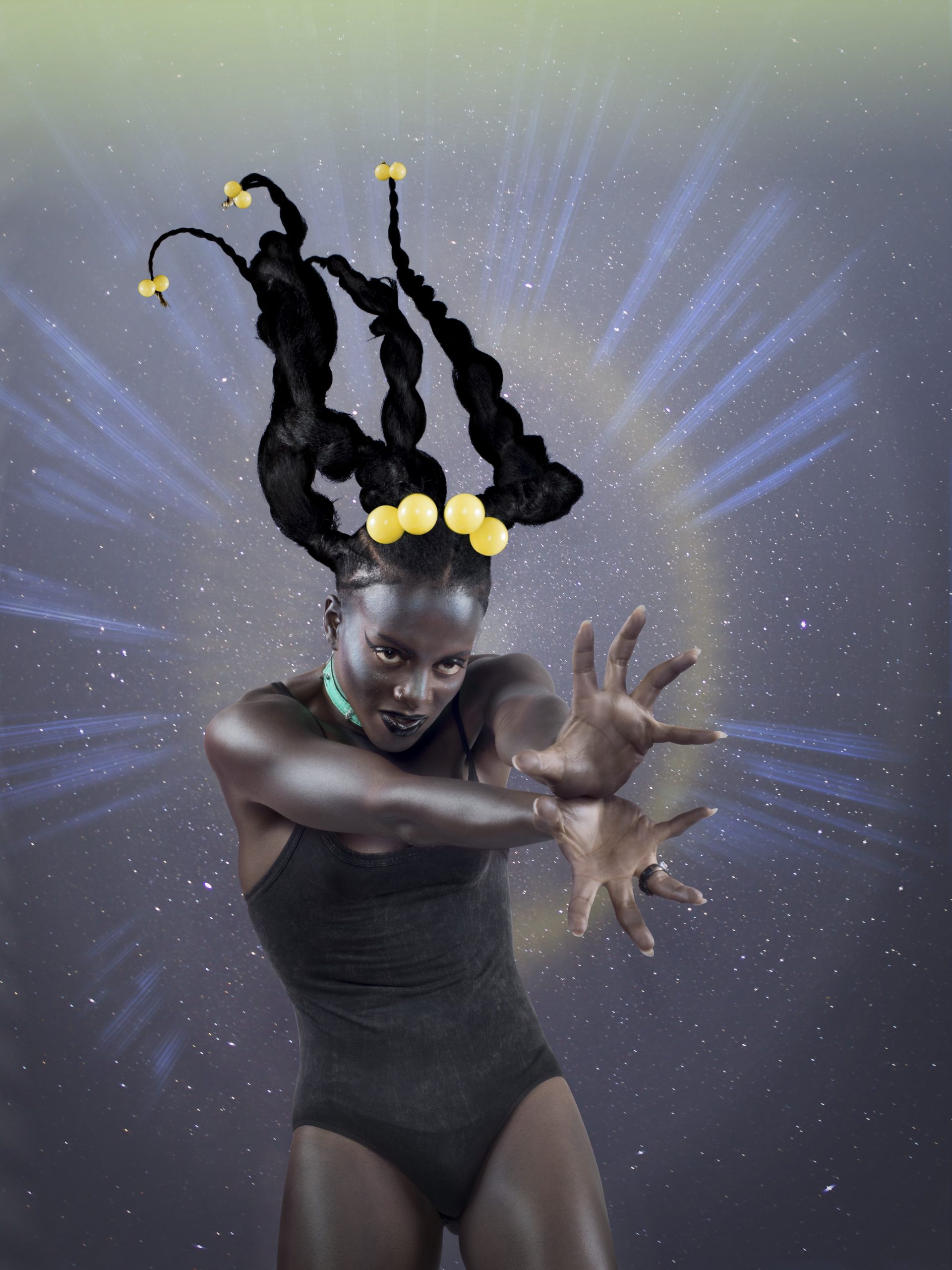
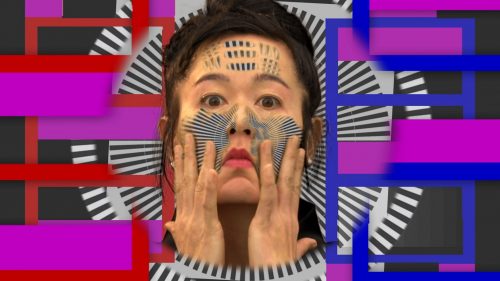
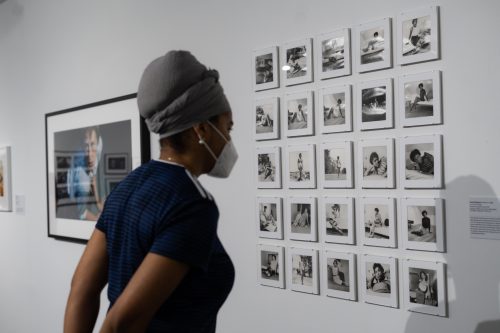
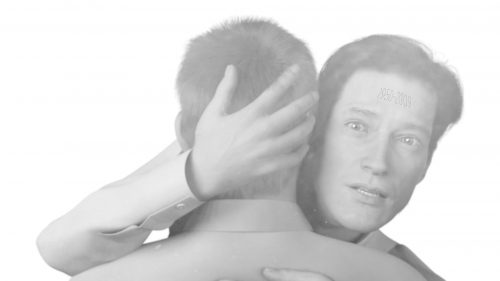
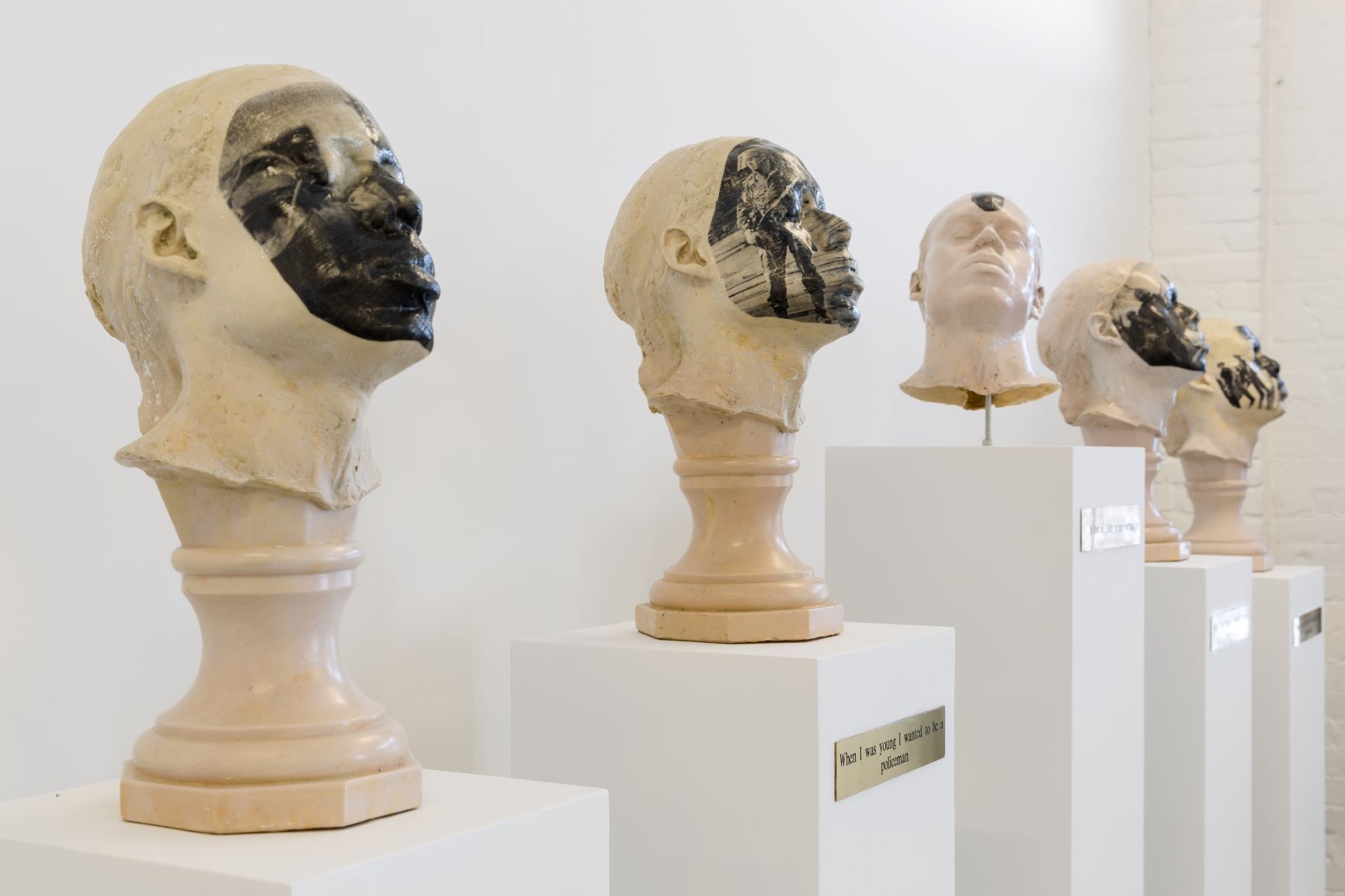
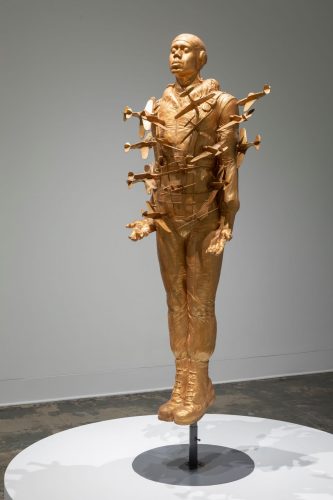
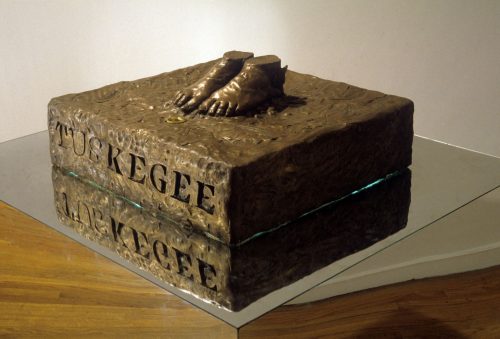

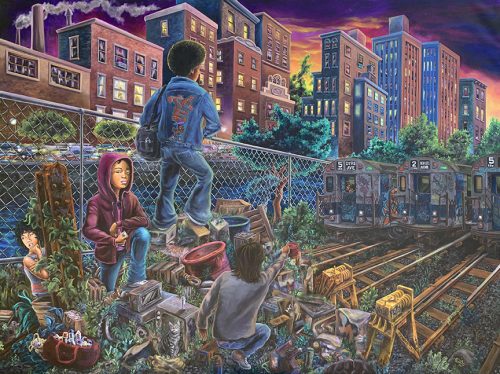
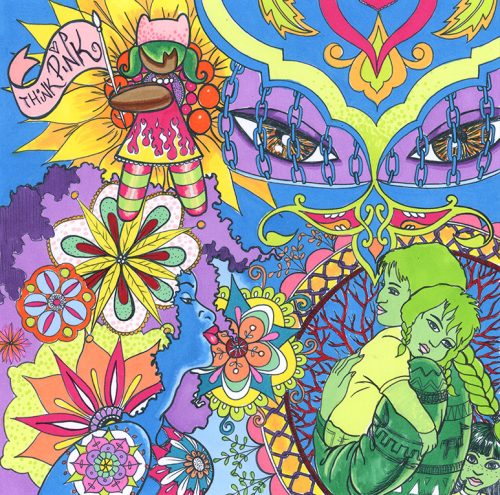
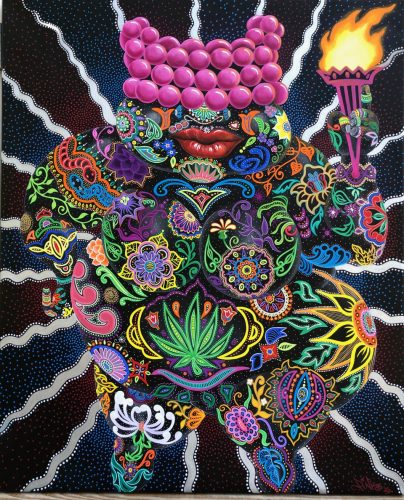
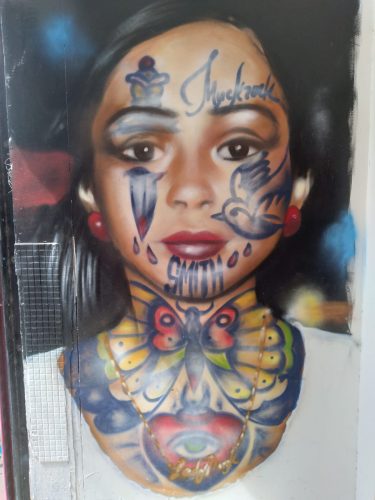

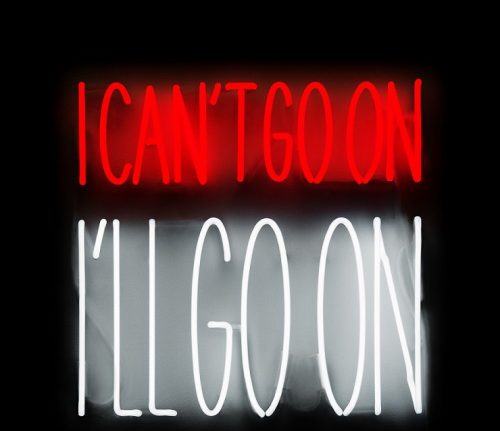
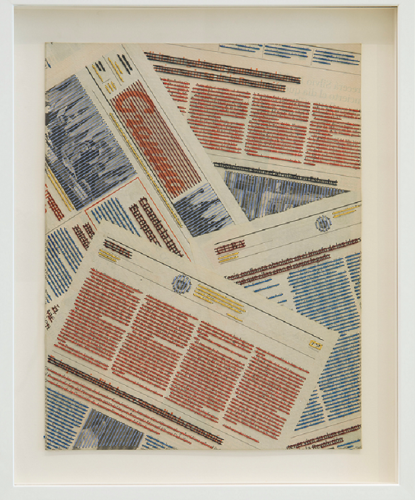
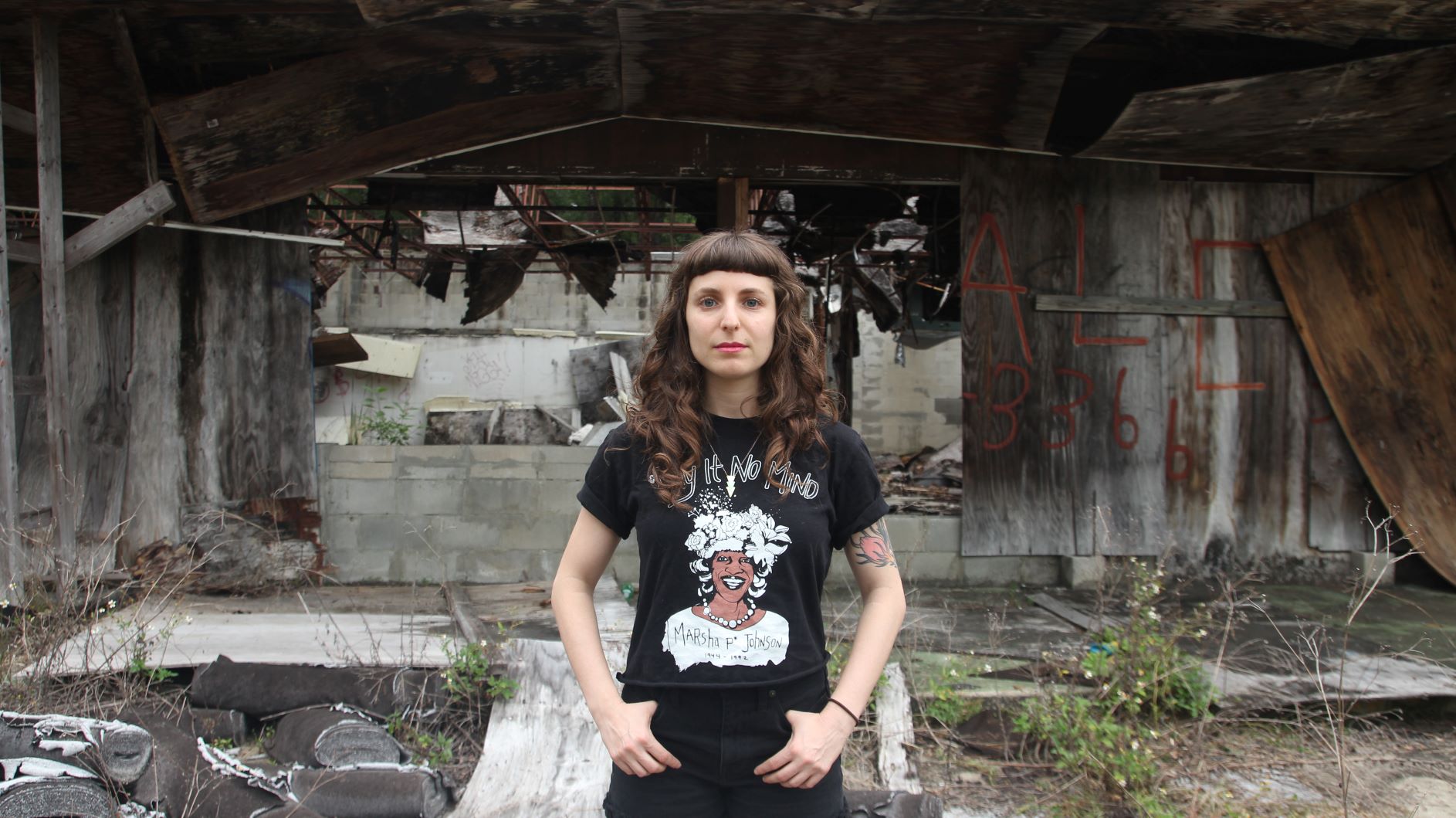
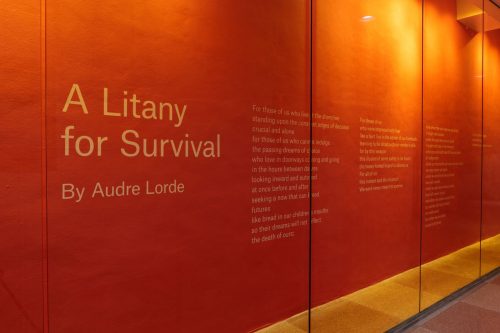
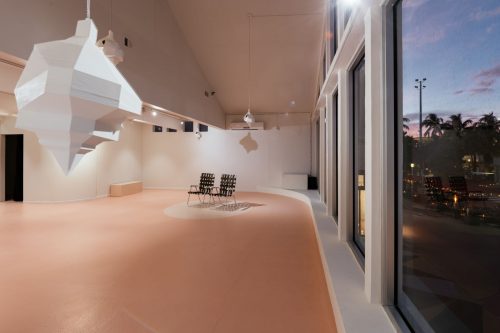
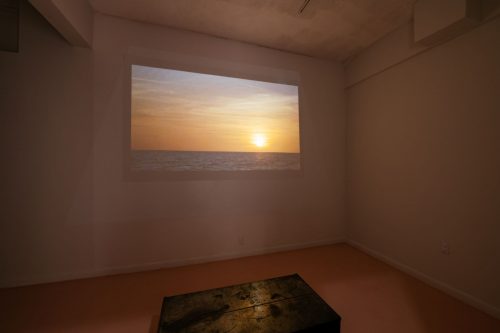
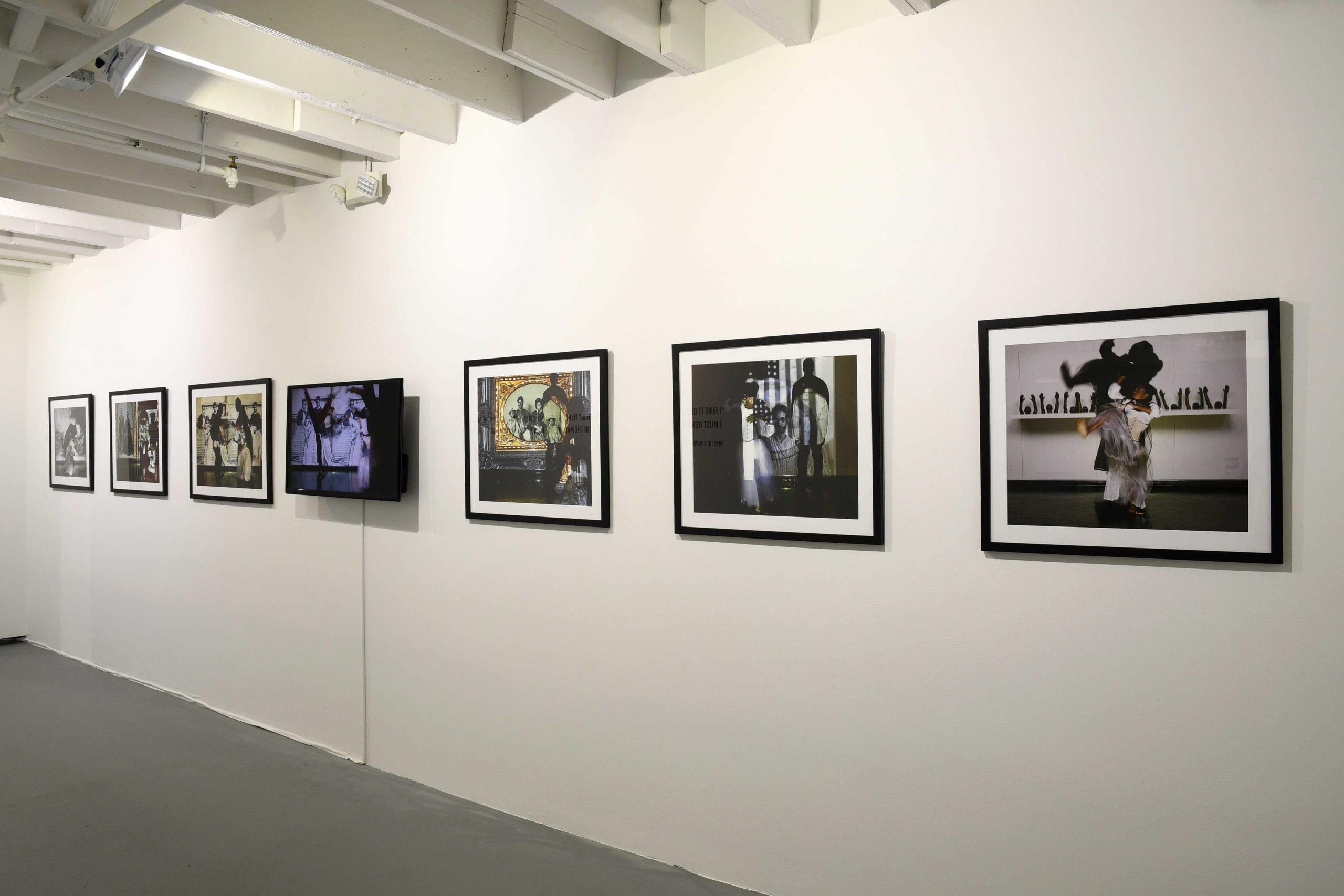
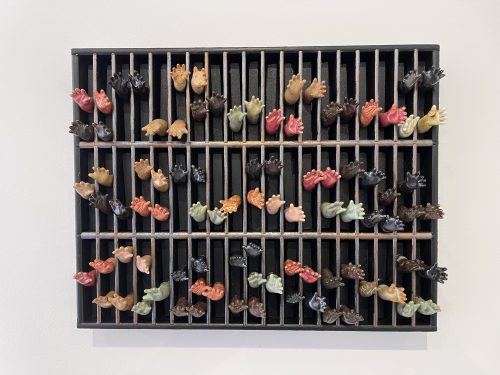
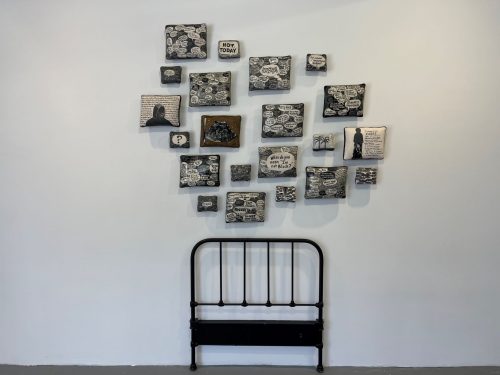
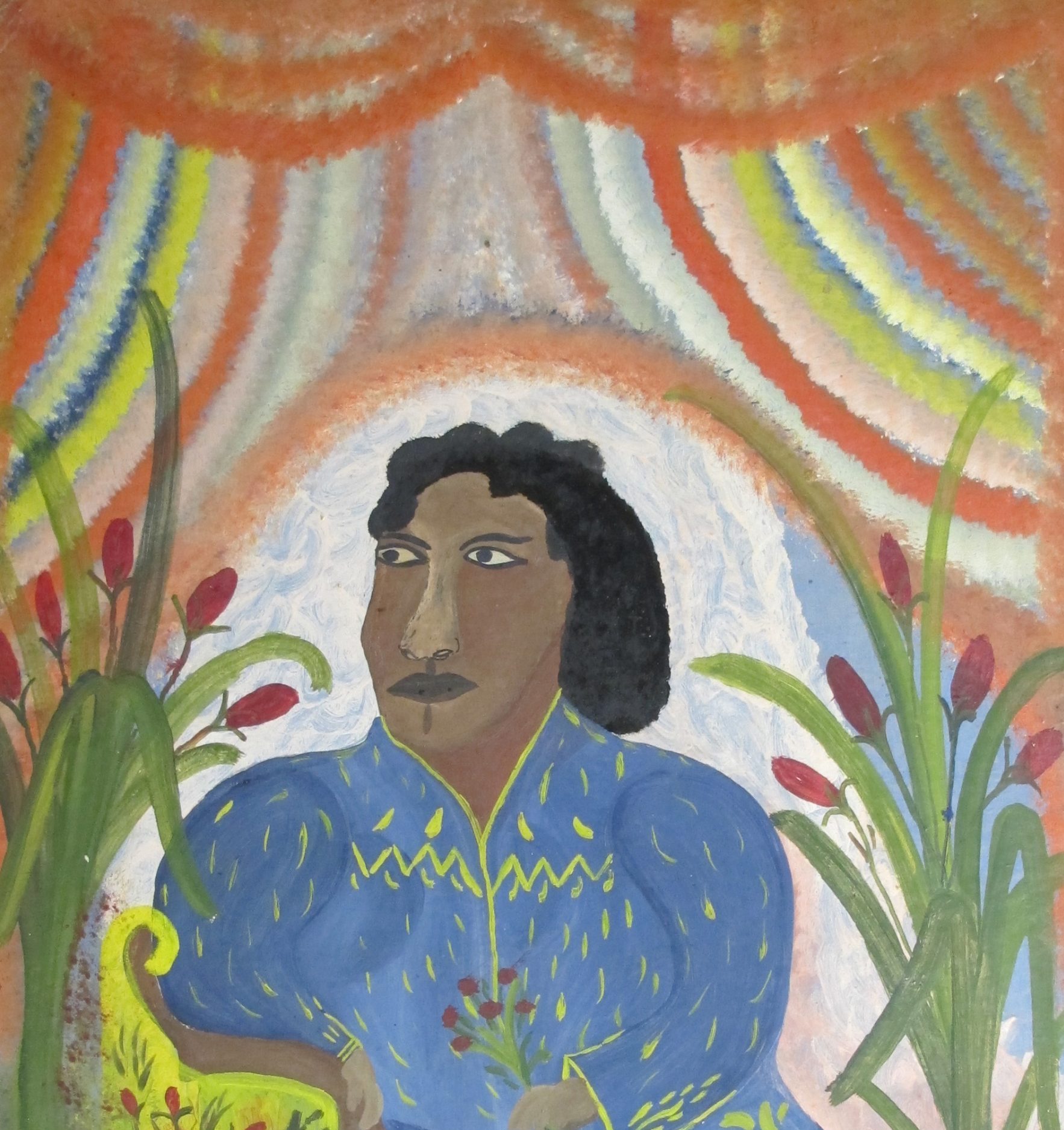
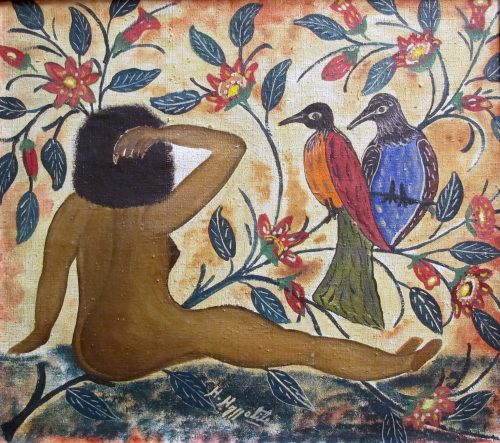
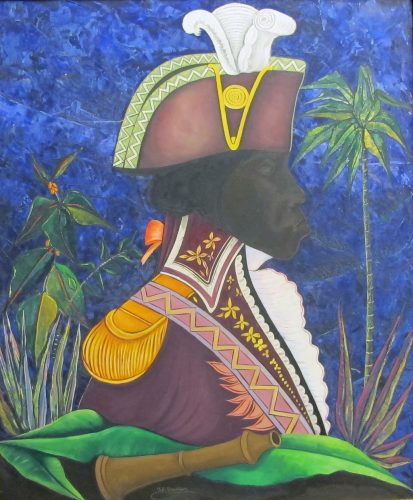
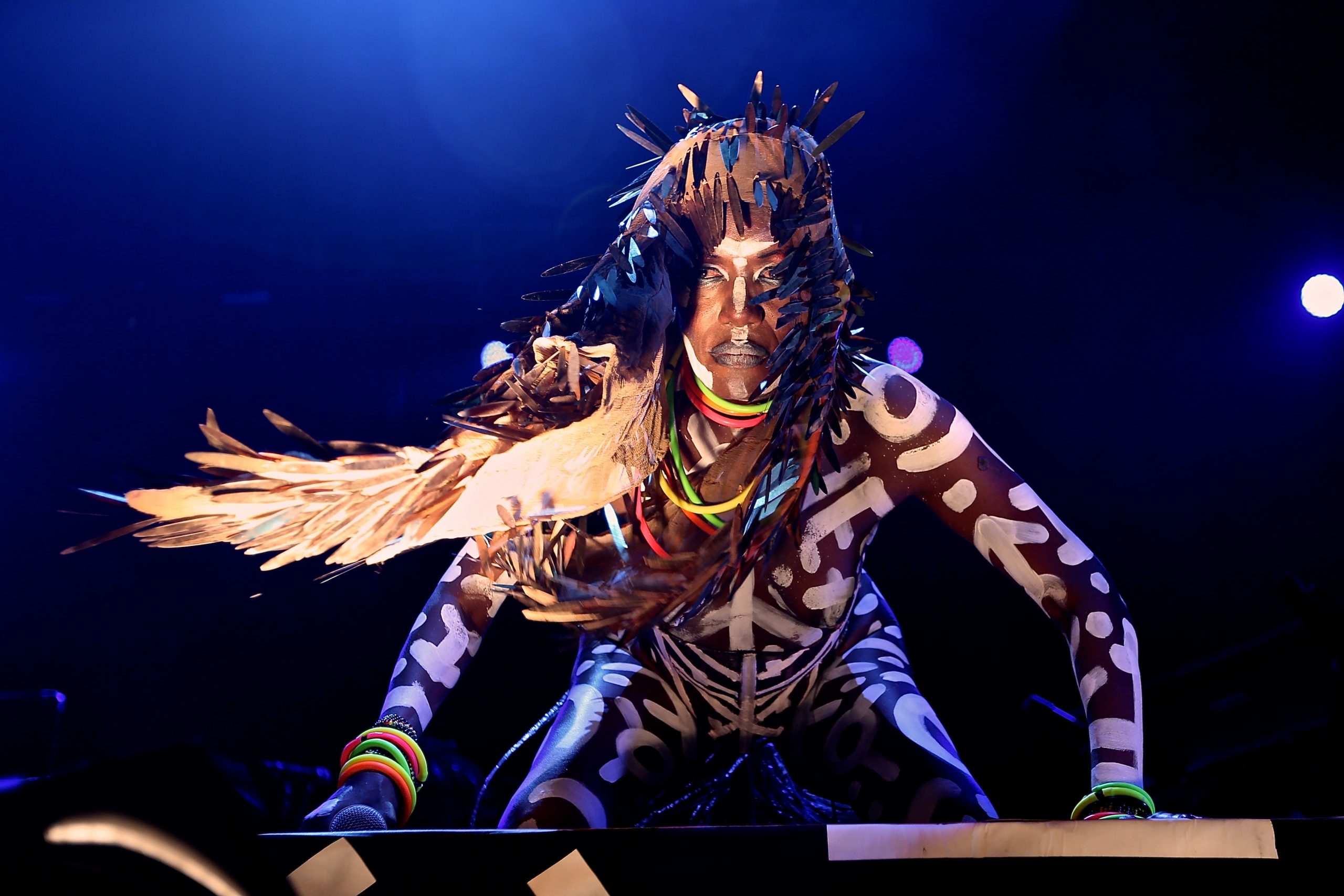
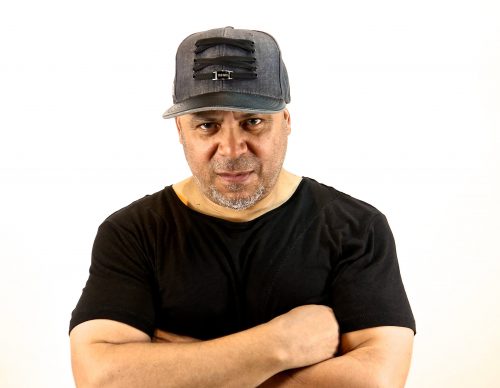
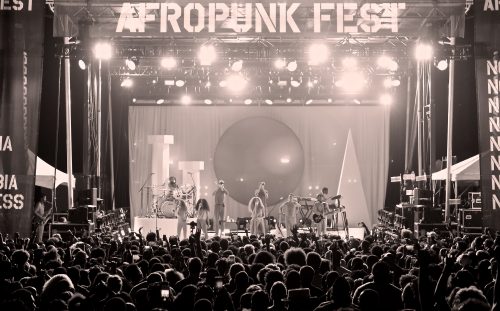
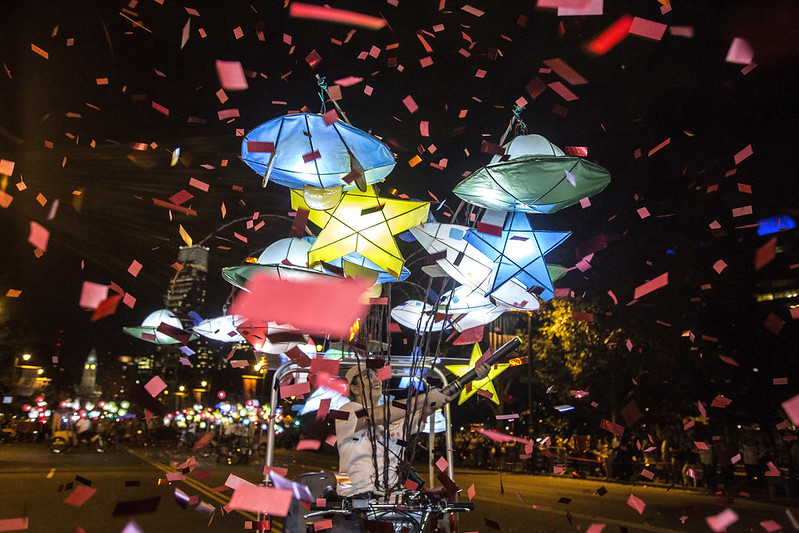
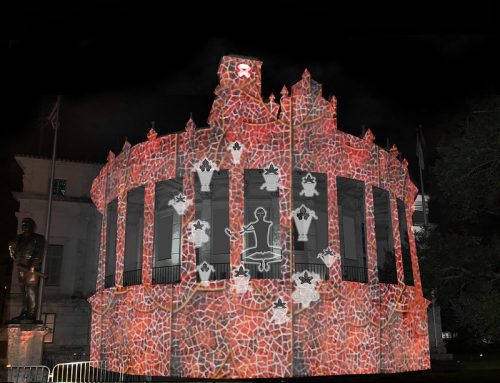
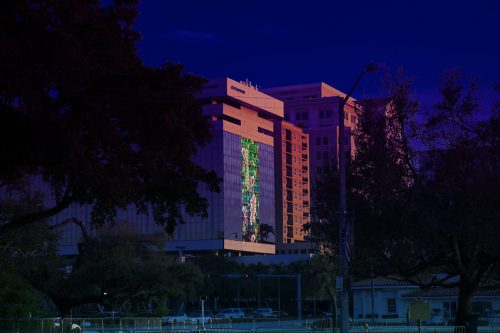
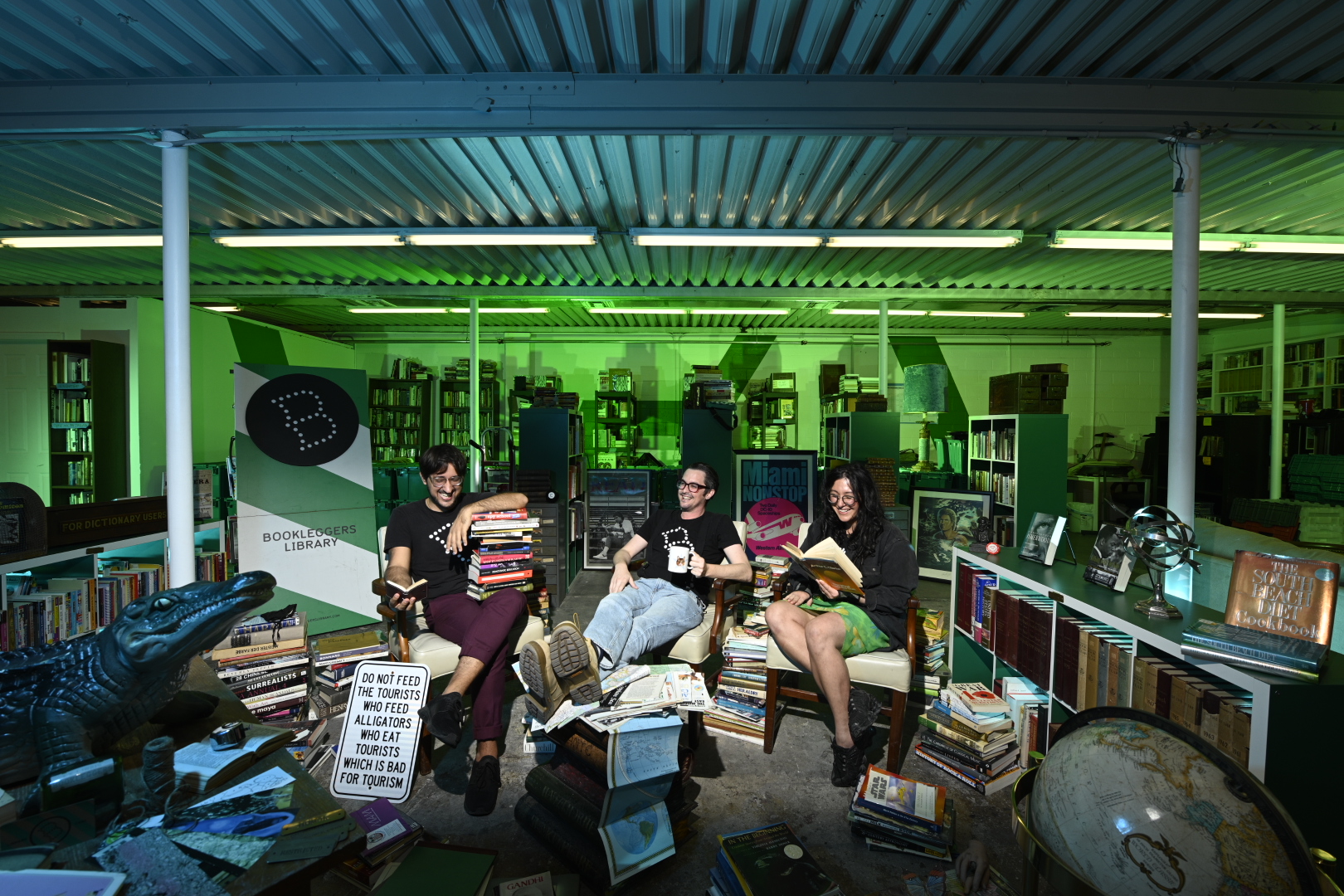
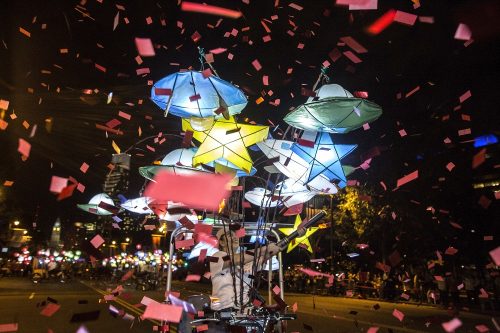

Recent Comments