
Visual Art
John Baldessari Show Reflects PAMM’s Programming Pivot
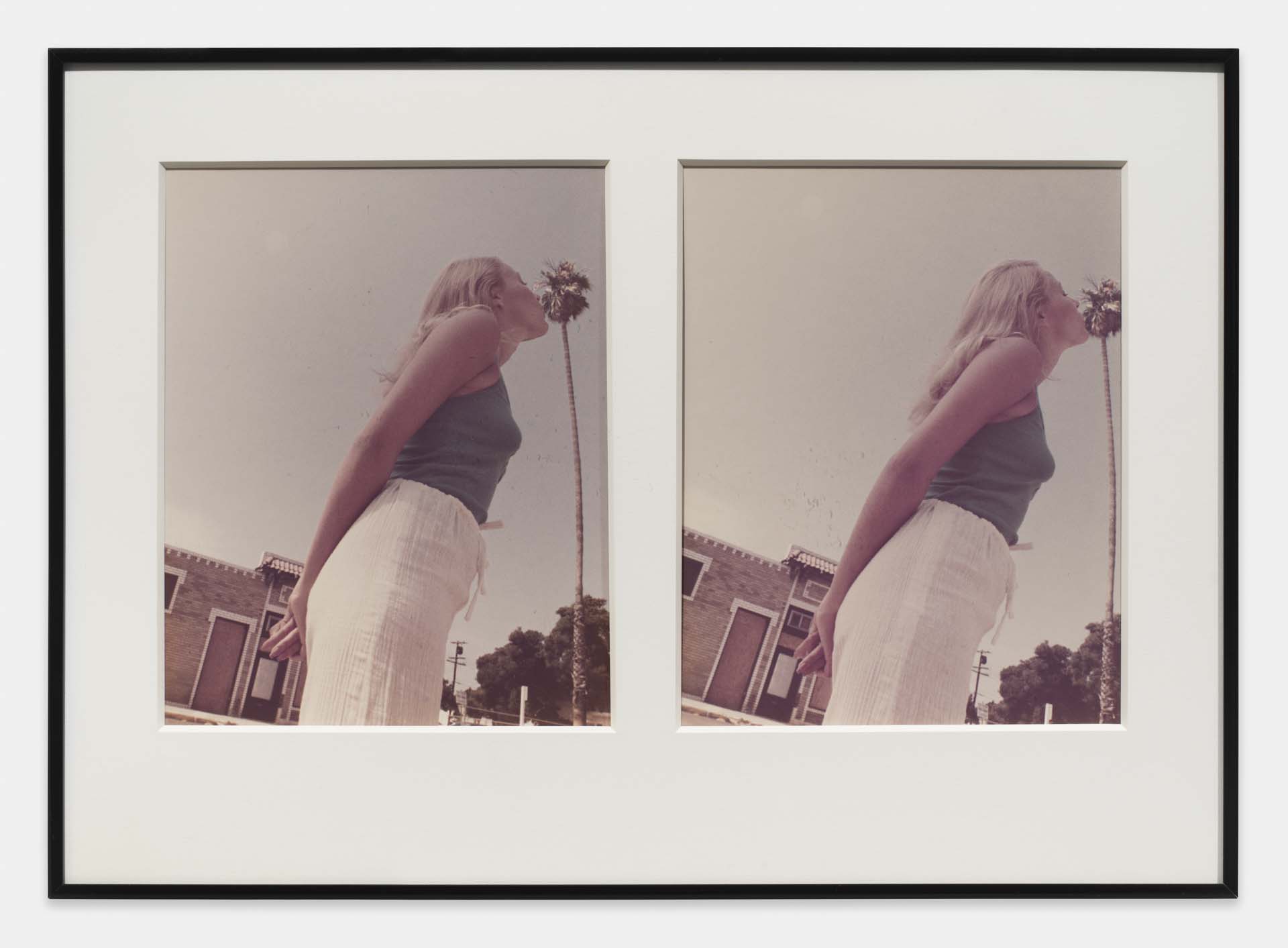
John Baldessari, “Kissing Series: Simone. Palm Trees (Near),” 1975, two color photographs, from the Craig Robins Collection, Miami, is one of the works in “John Baldessari: End of the Line,” opening Thursday, Aug. 20 at PAMM. © 1975 -2026 John Baldessari Family Foundation. (Courtesy Estate of John Baldessari; Spruth Magers)
John Baldessari was one of the great iconoclasts of 20th century art. Coming of age as abstract expressionism ruled the art world, he rejected the dominant style and looked towards conceptualism, art focused on ideas rather than aesthetics. He embraced text and photography, creating work that interrogated what art can be and how it can be made, forming a bridge between conceptual and pop art. He also influenced countless artists both as a teacher at institutions such as UCLA and CalArts – some of his students include David Salle, Jack Goldstein, and Analia Saban – and as an inspiration to artists like Cindy Sherman, Barbara Krueger, and Anastasia Samoylova.
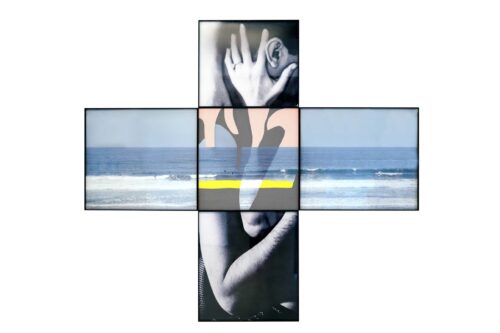
John Baldessari, “Intersection Series: Embrace (Hand and Ear)/Seascape,” 2001, Five digital photographic prints (one with acrylic paint) mounted on foam PVC board. (Courtesy Estate of John Baldessari; Spruth Magers)
“I think someone like Baldessari is super impactful,” says José Diaz, senior director of curatorial affairs and chief curator at PAMM. “He was someone who broke the rules. I think he helped define that art can be reinterpreted in new ways, and I think he’s done that with visuals, but also with text. And because he was also a professor, I think he’s also been able to contribute to the way artists think today.”
Now, six years after his death in 2020, Pérez Art Museum Miami is celebrating Baldessari’s legacy with a new retrospective of the boundary-pushing artist. “John Baldessari: The End of the Line” is the first major survey of Baldessari’s work in South Florida. It features nearly 40 works from across the artist’s career, mostly drawn from the collection of Craig Robins, the Miami-based property developer best known for developing the Miami Design District. The show comes to PAMM in its largest format yet after successful runs in Buenos Aires, Argentina, and Maldonado, Uruguay.
Miamians are already likely to be familiar with the artist, even if they don’t realize it. Thanks to the artist’s friendship with Robins, Baldessari’s art has become an integral part of the built environment of Miami. In the early 2010s the developer invited the artist to design two murals for the Design District, both titled “Fun,” which incorporate vintage photos of beachgoers that wryly comment on the city’s tourism industry.
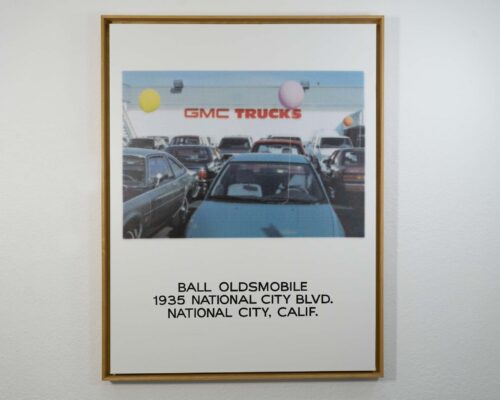
John Baldessari, “Ball Oldsmobile, 1935 National City Blvd., National City, Calif.,” 1996, Ink-jet and enamel paint on canvas 149.9 x 114.9 cm, 59 x 45 1/4 inches. Craig Robins Collection, Miami. © 1996 -2026 John Baldessari Family Foundation
(Courtesy Estate of John Baldessari; Spruth Magers)
“I think Craig likes art that is smart and punchy, and that sort of has an impact through either sense of humor or wit,” says Karen Grimson, curator of the Craig Robins Collection. “That’s always something that attracts him, and that’s why he has a significant roster of conceptualists in the collection.”
Indeed, while Baldessari’s work might seem bland and intellectual at first glance, plenty of pieces in the show put his sense of humor on full display. These include a series of photographs with the self-explanatory title “Throwing Three Balls in the Air to Get a Straight Line (Best of Thirty-Six Attempts)” and his “Repository” series, ironically responding to Marcel Duchamp’s famous urinal-turned-artwork “Fountain” by inscribing a succession of colorful bedpans with the slogan “The artist is a fountain.”
Other works in the show are more provocative, such as an archival, nine-minute film documenting the one-time performance of his infamous “Cremation Project.” A major turning point in the artist’s career, the piece saw Baldessari famously burning nearly all of his early paintings in 1970, repurposing a destructive act as a creative one.
“It’s sort of a rebirth,” says Diaz. “It’s really inspirational because he starts to think about photography as he transitions away from painting, thinking about cameras and how they can function as an artistic medium. That’s how he accumulates this abundant inventory of film stills and images that you see throughout his later work, and I think that use of images to tell stories is something you see in a lot of artists.”
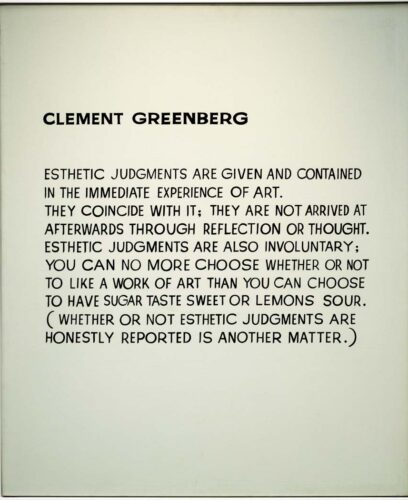
John Baldessari, “Clement Greenberg,” 1966-68, acrylic on canvas 172.7 x 142.2 cm, 68 x 56 inches, Craig Robins Collection, Miami. © 1966-68 – 2026 John Baldessari Family Foundation (Courtesy Estate of John Baldessari; Spruth Magers)
The Baldessari show might also be seen as something of a rebirth for PAMM itself. It’s the first presentation at the museum under Diaz’s stewardship as chief curator after joining PAMM last year from the Seattle Art Museum. It’s also part of an intentional pivot in programming towards what Diaz calls “landmark artists,” household names from the 20th-century onward. Baldessari, with his outsize influence on contemporary art, is one example, as are a concurrently running show of paintings by Jean-Michel Basquiat and an upcoming presentation featuring work by three masters of modern art: Pablo Picasso, Paul Klee, and Henri Matisse.
For Diaz, a born-and-raised local who witnessed Miami’s transformation into an art city in the post-Art Basel era, the shift reflects a belief that PAMM should serve the community by allowing them to engage with important, canonical art, not just the ultra-contemporary work that the city has become famous for.
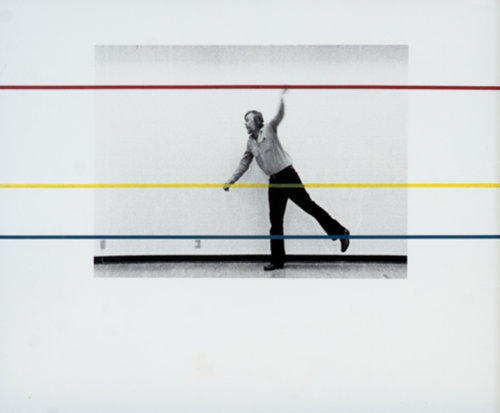
“Throwing a Ball Once to Get Three Melodies and Fifteen Chords (detail),” 1975
Three pages from the unpaginated (32 pages) artist book: softcover, staple bound, offset lithography 20.3 x 25.4 cm, 8 x 10 inches (each) (framed). Craig Robins Collection, Miami. © 1975 -2026 John Baldessari Family Foundation. (Courtesy Estate of John Baldessari; Spruth Magers)
“The fact that somebody can come here and see close to a dozen works by Basquiat from the particular period ‘82 to ‘85, it’s like a really fantastic opportunity,” Diaz says. “But it’s also like being very thoughtful of people who actually live here that get a chance to see these types of arts without having to go to New York or having to have to go to other places.”
Throughout his life, Baldessari made reference to his outsider status in the art world, particularly his birthplace of National City, Calif., near the Mexican border – “the end of the line,” as he called it, the phrase that gives the show its name. As another city on the margins of America, a place caught between commercialism and conceptualism, there are perhaps few artists better suited to Miami than Baldessari.
WHAT: “John Baldessari: The End of the Line”
WHERE: Pérez Art Museum Miami (PAMM), 1103 Biscayne Blvd, Miami
WHEN: 11 a.m. to 6 p.m. Monday, Friday and Saturday; 11 a.m. to 9 p.m. Thursday; 1 to 6 p.m. Sunday. Opening Thursday, Aug. 20 through Sunday, May 9, 2027.
COST: $18 adults; $14 seniors 62 and older, students with ID, and ages 7 to 18; free for members, children 6 and under, and free admission for all on Thursdays after 5 p.m.; Other free admissions with ID: active U.S. military and veterans, health care professionals and first responders, Florida educators, and visitors identifying as disabled and their accompanying caregiver.
INFORMATION: (305) 375-3000 or pamm.org
ArtburstMiami.com is a nonprofit media source for the arts featuring fresh and original stories by writers dedicated to theater, dance, visual arts, film, music and more. Don’t miss a story at www.artburstmiami.com.