Blog Article Category: Theater / Film
Review: From Hilarious To Heartfelt, City Theatre Strikes A Balance With 27th ‘Summer Shorts’
Written By Mary Damiano
June 20, 2024 at 7:40 PM
One of the featured plays in City Theatre’s “Summer Shorts: Flipping the Script,” “Swordfish Grilled (So I Don’t Get Sued”), with Nat Ordoñez and Therese Adelina was written by local playwright Maleeha Naseer. “Shorts” runs through Sunday, June 23. (Photo courtesy of Morgan Sophia Photography)
A prospective customer has an awkward encounter with an employee over a piercing, a teen learns of her neighbor’s sad past, and a biblical story is given the “what if?” treatment in “Summer Shorts Flipping the Script, playing through Sunday, June 23, inside the Carnival Studio Theater at the Adrienne Arsht Center in Miami.
“Summer Shorts” is City Theatre’s signature event, and “Flipping the Script” is its 27th edition of the short play program which is, for many, the official start of the summer theater season. Although past additions of “Summer Shorts” have featured many nationally well-known playwrights, this summer is all about locals and newbies.

Toddra Brunson and Kimberly Vilbrun-Francois in Nerissa Street’s “Leaving Jamaica.” (Photo courtesy of Morgan Sophia Photography)
Four of the playwrights, Brittany “bk” King, Maleeha Naseer, Nerissa Street, and Brandon Urrutia are from City Theatre’s Homegrown Playwrights Development Program. The other four, John Bavoso, Rhiannon Ling, R.D. Murphy, and Karissa Murrell Myers, are finalists in the Susan J. Westfall National Short Playwriting Contest. (Westfall is one of the founders of City Theatre, and, after guiding the company for years, is now on their board.) The result is eight short plays with new perspectives and diverse voices.
The terrific ensemble cast features Therese Adelina, Alex Alvarez, Toddra Brunson, Devon A. Dassaw, Chris Anthony Ferrer, Diana Garle, and Kimberly Vilbrun-Francois. Karina Batchelor, Sabrina Lynn Gore, JC Gutierrez, Carey Brianna Hart, and Stephen Trovillion are the five directors for “Summer Shorts, Flipping the Script” — Alvarez, Gore, and Trovillion have been part of the acting ensemble in past “Summer Shorts.”
[RELATED: Homegrown Playwrights Talk About Their Summer Shorts]
The plays run the gamut in plot and tone — from hilarity to heartbreak, from quirky to creepy — and feature situations both relatable and original, with fleshed-out characters, and great imagination.

Chris Anthony Ferrer in “Manic Pixie Dream Girl Goes To Brunch” by Rhiannon Ling. (Photo courtesy of Morgan Sophia Photography)
“Manic Pixie Dream Girl Goes to Brunch,” written by Ling, directed by Gore, and featuring Adelina, Deesaw, Ferrera, and Garle, is set during a Zoom call. It is a funny and introspective look at the relationship between four college students as each of them tries to reconcile their high school persona with the person they’ve become.
Did you ever wonder what the walk home was like after Abraham lured his son Isaac to the mountain and didn’t sacrifice him to God? “An Awkward Conversation in the Shadow of Mount Moriah,” written by Bavoso, directed by Trovillion and featuring Alvarez as Abraham and Ferrer as Isaac, provides a hilarious yet touching answer to that question.
In “Leaving Jamaica,” written by Street, one of the local playwrights, is a funny yet poignant story of a student who struggles with leaving her island paradise, and her mother, who wants her to explore the world. Directed by Hart, the short play features Brunson, Vilbrun-Francois, and Francian Sonique,
Urrutia, another member of the Homegrown Playwrights, offers “Dickery Pokery” about a Claire’s jewelry store employee who is out of her element when a man comes in with a coupon and requests a different kind of piercing. Directed by Batchelor with Vilbrun-Francois and Alvarez, who are fantastic, make “Dickey Pokery the most hilarious short in the program.

“Dickery Pokery” by Brandon Urrutia with Kimberly Vilbrun-Francois and Alex Alvarez. (Photo courtesy of Morgan Sophia Photography)
“This Week in the Land of Democracy,” written by King, also a Homegrown Playwright, and directed by Gore, is about what happens when a student, played by Brunson, discovers that her professor has altered her virtual reality project and turned it into something sinister.
“Search for an Ending,” written by Myers and directed by Hart, is a funny and all-too-familiar tale of mansplaining by two male screenwriters, Dassaw and Ferrer, working on a movie with a female protagonist, yet neither bother to listen to the only woman in the room, played by Garle.
In the loveliest play in the program, “The Pros and Cons of Implosion” by Murphy and directed by Trovillion, Adelina plays an extremely smart college-bound car enthusiast who discovers some shocking information about a neighbor, played by Alvarez, when she tries to goad him into letting her restore his classic Volvo. Tissues are in order for this funny and heart-wrenching gem.

“The Pros and Cons of Implosion” by R.D. Murphy with Therese Adelina and Alex Alvarez. (Photo courtesy of Morgan Sophia Photography)
The laughs come in Spanish and English in “Swordfish Grilled (So I Don’t Get Sued)” written by local playwright Naseer and directed by Gutierrez. It’s a play tailor-made for Miami audiences. Chaos and wackiness abound as the staff of a Kendall restaurant, Adelina, Deesaw, Ferrer, Garle, Nat Ordoñez, and Cristian Torres, prepare for an important corporate visit while dealing with an unusual situation in the ladies’ room.
The ensemble cast is adept at changing characters from one play to the next and displays a frenetic energy and enthusiasm. They are ably supported by a group of emerging artists, Ordoñez, Dorian Caty, Emily Coll, Amanda Leslie, Sheena O. Murray, Francian Sonique, and Cristian Torres. Each director has different challenges with the plays but creates a cohesive program.
The design elements are first-rate —a special shout-out to Ernesto K. Gonzalez for his sound design and also his clever song choices, which he chose in collaboration with the directing team and Margaret M. Ledford, City Theatre’s artistic director.

“An Awkward Conversation in the Shadow of Mount Moriah” by John Bavoso with Chris Anthony Ferrer and Alex Alvarez. (Photo courtesy of Morgan Sophia Photography)
There are only a few more chances to catch “Summer Shorts Flipping the Script”, one of the best ways to have some smart, cool fun during the first official weekend of summer.
WHAT: “Summer Shorts: Flipping the Script”
WHERE: Carnival Studio Theater in the Ziff Ballet Opera House at the Adrienne Arsht Center for the Performing Arts, 1300 Biscayne Blvd., Miami
WHEN: 7:30 p.m. Thursday-Friday, 3 and 7:30 p.m. Saturday, 3 p.m. Sunday, through June 23.
COST: $50 and $75 (student tickets $15 with ID)
INFORMATION: 305-949-6722 or arshtcenter.org
ArtburstMiami.com is a nonprofit source of dance, visual arts, music, and performing arts news. Sign up for our newsletter and never miss a story.
No posts found
Local Playwrights Flip the Script for City Theatre’s ‘Summer Shorts’
Written By Michelle F. Solomon
June 3, 2024 at 6:04 PM
Toddra Brunson and Kimberly Vilbrun-Francois in a scene from Neressa Street’s play “Leaving Jamaica,” part of City Theatre’s “Summer Shorts: Flipping the Script,” with a preview night Thursday, June 6 and opening Friday, June 7 through Sunday, June 23. (Photo courtesy of Morgan Sophia Photography)
It’s a summer theater tradition. City Theatre at the Adrienne Arsht Center has been putting on its short play fest for more than two decades. This year, it’s flipping the script.
“This is the 27th annual Summer Shorts,” says Margaret M. Ledford, the artistic director of City Theatre.
Last year, City Theatre spotlighted eight local playwrights participating in its inaugural Homegrown writers’ development program. This year, “Summer Shorts: Flipping the Script” features four original plays from Homegrown, a City Theatre initiative where the selected quartet cohort collaborates with a master playwright in a year-long intensive. The other four plays were selected from the Susan J. Westfall National Short Playwrighting Contest. Westfall is a playwright and co-founder of City Theatre.
“Summer Shorts: Flipping the Script” has one preview night on Thursday, June 6 then opens on Friday, June 7 and runs through Sunday, June 23 inside the Adrienne Arsht Center’s Carnival Studio Theater, 1300 Biscayne Blvd., Miami.

The company actors of “Summer Shorts: Flipping the Script” are, from left, Therese Adelina, Devon Dassaw, Chris Anthony Ferrer, Kimberly Vibrun-Francois, center, Toddra Brunson, Diana Garle, and Alex Alvarez. (Photo courtesy of Morgan Sophia Photography)
“City Theatre started with Susie, Stephanie Norman and Elna Wohl sitting around their table on Key Biscayne and at that point, and that was 1996, theater was dead in the summer. Miami was very seasonal. You came down for the winter and then you left,” says Ledford. “And so this was a great opportunity to employ a bunch of artists who wouldn’t be working otherwise. I think that totally changed the Miami landscape of what could be done in the summer, which I attribute 100 percent to these women.”
It was presented in association with the University of Miami’s Department of Theater Arts at the Jerry Herman Ring Theatre. The first program touted: “18 plays. 12 actors. 11 directors. 1 fantastic festival.”
“Now, we employ over 40 artists for summer shorts because it’s very important to us at City Theatre to help sustain the ecosystem of the South Florida artists’ community because they tend to leave. We really try to employ as many people as we can,” says Ledford.
The festival puts out a call for short plays, which has since developed into a national contest, where Ledford says they receive about 1,000 submissions each year. And now it has incorporated its Homegrown development program, which works to develop the voices of Miami-based writers from historically marginalized communities.
This year’s Homegrown playwrights began their training in October, according to Ledford. “They’ll develop a short play and a full-length play through us,” she says.

Homegrown playwrights Nerissa Street and Maleeha Naseer. (Photos courtesy of the artists)
The local playwrights are Nerissa Street, Maleeha Naseer, Brandon Urrutia, and BK King.
What they all say they have in common is that they are “storytellers.”
“I started out as someone who just loves stories,” says Street, whose play “Leaving Jamaica” was inspired by what she says was a different kind of immigrant experience.
In 2021, she says she began a project called Building Black Utopias. “I was telling the story of joy and prosperity and healing that is experienced in historic Black neighborhoods in South Florida. What I started to find was that the stories they were telling about sending their children away for education . . . .mirrored the story of Caribbean immigrants who also sent their children away for better opportunities. In Jamaica, where I am from, it’s a kind of thing that’s done. Once a child graduates from school, they find their way off the island – many for education heading to the UK or Canada or the United States, they just leave home . . leaving the island by choice. At any point, they can hop on a plane and go back home. So, I thought about other immigrant stories where they don’t have that option; that for whatever reason they can’t go home.”
She says that the idea sparked to have her short play look through the lens of immigrants who are able to go back and forth, to go home.
Her play, Street says, is written in the genre of comedy of manners, a bit of a satire. “There is humor in it and because it’s a Jamaican play, the humor will be understood by the Jamaicans. As a non-Jamaican, you’ll get a slice of Jamaican life and a different lens into Jamaicans. And what has been really fun is having that conversation with everyone involved with the production.”
For Naseer, her inspiration for “Swordfish Grilled (So I Don’t Get Sued)” came from the restaurant where she works, which takes place at the fictional Swordfish Bistro in West Kendall.

“Swordfish Grilled (So I Don’t Get Sued) by Maleeha Nasser with, from left, Diana Garle, Devon Dassaw, Chris Anthony Ferrer and Therese Adelina. (Photo courtesy of Morgan Sophia Photography)
“I work at a chain restaurant. There’s nothing I love more than listening to the things that happen in that place. Life is really colorful there and I thought that I should share that with an audience,” she says.
The 23-year-old who grew up in Miami says she, too, has always been interested in storytelling. “My father is from Pakistan and my mother is Cuban and one of the common grounds in my household was a love for movies. My mom loved to show my dad her movies and he loved showing her Bollywood and I loved watching all of it,” says Naseer. She says she remembers going to school and recounting tales of the Bollywood films to her friends. “I had to do it in a way to make it interesting, so I got very good at talking to people and I think that’s why I enjoy writing.”
While a student at Florida International University, Naseer wrote a one-woman show about Pakistani prime minister Benazir Bhutto. “I have kept working on it over the years. Once I’ve established myself a bit more here in the South Florida theater scene, I’d like to do it again because I feel like this is a part of the country that needs that kind of exposure and who better to hear it from than somebody who speaks Spanish, too?”
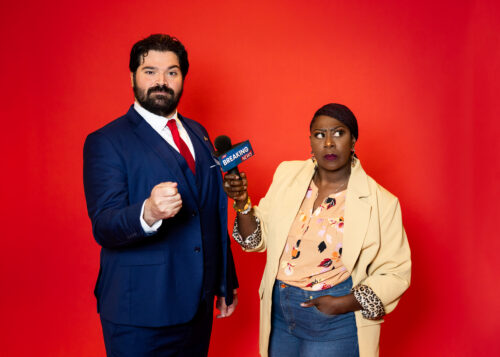
Alex Alvarez and Toddra Brunson in BK King’s “This Week in the Land of Democracy.” (Photo courtesy of Morgan Sophia Photography)
King describes her play, “This Week in the Land of Democracy,” as an absurdist comedy. The plot is about two sisters whose pizza night takes a bizarre turn when an algorithm reveals uncomfortable truths.
“One is a computer programmer in her third year in college and she’s writing an algorithm that would show people the type of world they would live in or the type of person they would be if money wasn’t a concern. We meet her as she’s getting notes from her professor who is claiming that the project is too radical and he wants to change it and then the story kind of goes from there.”
She says she’s been working on it since early 2020 and it was initially meant to be a radio play. “Some friends I met on an app called Clubhouse, we were supposed to perform it together but then things went awry as they often do.”
King then turned to her friend Terrence “T.M.” Pride, the producing artistic director of Brévo Theatre, and they began working on it together, but she says, when she started in Homegrown, she thought it would be a good piece to “take in another direction.”
She says that playwrighting for her is an “apparatus” she uses for storytelling as well as photography, podcasting, and other mediums. “I see myself as an artist, not just as a playwright. I like to tell stories about the future, very much in the way of (American science fiction writer) Octavia E. Butler . . . Trying to figure out what our future could look like in the hands of people that really want to care about it and not just exploit it for its resources and people power.”
In Urrutia’s “Dickery Pokery,” a husband’s quest to bring his wife joy brings him to the local mall.
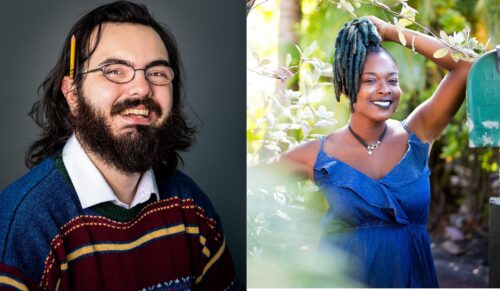
City Theatre’s Homegrown playwrights Brandon Urrutia and BK King. (Photos courtesy of the artists)
“It’s a fun little, short about a nice gentleman doing whatever he can bring love back into his life. The “doing whatever he can” is going to the local Claire’s to get what’s known as a “Prince Albert” penis piercing.
For Urrutia being in the Homegrown program has added another level to the work he says he is doing with the local theater company where he is artistic director and co-founder, Miami Lakes based LakeHouseRanchDotPng, where the focus is on original absurdist and experimental new work.
Like many of his creative endeavors, Urrutia says ideas can spring out of nowhere. In fact, the catchy title of his “Summer Shorts” comedy was just one of those moments.
“It came to me in the middle of the night. Funny, that’s all I remember,” he says.

Kimberly Vilbrun-Francois in Brandon Urrutia’s “Dickery Pokery.” (Photo courtesy of Morgan Sophia Photography)
The other playwrights and their plays in “Summer Shorts: Flipping the Script” are “Manic Pixie Dream Girl Goes to Brunch” by Rhiannon Ling, “Search for an Ending” by Karissa Murrell Myers, “An Awkward Conversation in the Shadow of Mount Moriah” by John Bavoso, and “Pros and Cons of Implosion” by R.D. Murphy.
Gladys Ramirez, City Theatre’s executive director, says the theme, “Flipping the Script” really can give audiences a hint as to what they are going to see.
“We’ve had themes in the past in terms of sets, for instance, but we started using these kinds of subtitles last year. “So ‘Flipping the Script’ are short plays that are unexpected, that are out of the norm, where you’re experiencing things that might surprise or challenge you. We think all of the plays in this lineup have a little bit of an unexpected take.”
WHAT: “Summer Shorts: Flipping the Script”
WHERE: Carnival Studio Theater in the Ziff Ballet Opera House at the Adrienne Arsht Center for the Performing Arts, 1300 Biscayne Blvd., Miami
WHEN: Preview 7:30 p.m., Thursday, June 6, opening 7:30 p.m., Friday, June 7. Regular performances 7:30 p.m. Thursday-Friday, 3 and 7:30 p.m. Saturday, 3 p.m. Sunday, through June 23. Opening night party with live music and food for purchase on the Arsht Center’s Thompson Plaza for the Arts.
COST: $50 and $75 (student tickets $15 with ID)
INFORMATION: 305-949-6722 or arshtcenter.org
ArtburstMiami.com is a nonprofit source of dance, visual arts, music, and performing arts news. Sign up for our newsletter and never miss a story.
No posts found
Review: ‘Laughs In Spanish’ At GableStage Captures The Flavor Of Miami
Written By Michelle F. Solomon
May 29, 2024 at 12:50 PM
Gaby Tortoledo as Estella and Mariana Mondragon as her daughter Mariana in GableStage’s “Laughs in Spanish” playing through June 23 at the theater at the Biltmore Hotel, Coral Gables. (Photo courtesy of Magnus Stark)
Although Miami native Alexis Scheer’s play, “Laughs in Spanish,” was born in Boston (she wrote it as her MFA playwrighting program thesis at Boston University), has played in Denver, Houston, and Milwaukee, seeing the show with a cast and a director who understand the nuances of Miami’s language and style, sets up a multi-layered playing field.
At GableStage, the actors obviously bring their own backgrounds to the piece – Colombian and Venezuelan roots, Cuban-American Miamians, and at the head of it all, Cuban-American director Victoria Collado, who producing artistic director Bari Newport had enlisted for the company’s early summer 2023 show, “Native Gardens.”
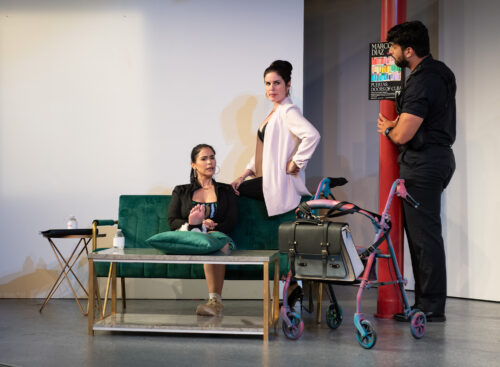
Marcela Paguaga, Gaby Tortoledo_and William Guevara in GableStage’s production of “Laughs in Spanish.” (Photo courtesy of Magnus Stark)
In Collado’s director’s notes, her thought process comes through: “This play celebrates our Miami . . where the best advice comes from your abuela, or your bubbe. The place where disco never died; it just evolved in Miami Sound Machine and House Music.”
“Laughs in Spanish” finds Wynwood art gallery owner, Mariana (Mariana Mondragón), on the verge of a nervous breakdown, when she discovers on the day of Art Basel, that someone has stolen star artist Marco Diaz’s artwork, the draw that would bring in the crème de la crème of the art world to her Studio Six gallery.
Her intern, Carolina or “Caro” (Marcela Paguaga) was the last person to leave the gallery and Mariana is pinning the disappearance on her incompetence. Meanwhile, Caro’s boyfriend, Juan (William Guevara), a Miami Police officer, is on hand to investigate. All he wants, however, is for his girlfriend, an MFA art student, to get the chance to show her paintings. Maybe this is the perfect time now that Mariana’s walls are empty.
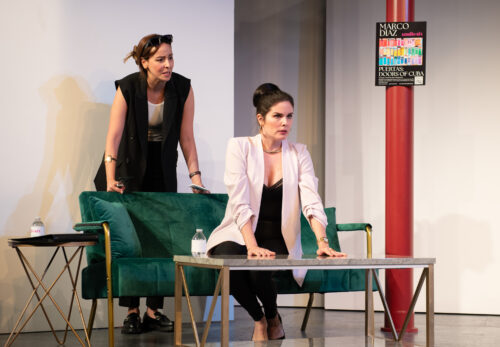
Mariana Mondragon as Mariana confronts her mother, Estella (Gaby Tortoledo) in a scene from GableStage’s “Laughs in Spanish” written by Miami native Alexis Scheer. (Photo courtesy of Magnus Stark)
To add more bedlam to the chaos, Mariana’s mother, Estella (Gaby Tortoledo), a Hollywood movie star has flown in from Los Angeles with her assistant Jenny (Magali Trench) to save the day. But sincerity is not Estella’s strong suit, and she hasn’t come to Miami entirely for her daughter; there’s something from her past that has called her back.
If there’s to be a criticism, Scheer has stuffed too many plotlines into her 80-minute play – Mariana’s resentment over her mother who was off being a movie star while she was growing up, a surprise situation that can change the relationship of Juan and Caro, and a hard-to-believe happenstance that Mariana and her mother’s assistant knew each other from boarding school. They now realize they always had feelings towards each other. The play tackles gender, celebrity, motherhood, and misogyny – it’s a lot in a show that plays like a sketch comedy.
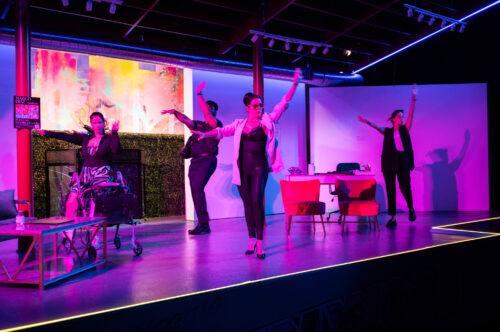
The cast of GableStage’s “Laughs In Spanish” in one of the dance segues. (Photo courtesy of Magnus Stark)
But the high energy direction and the staging overcomes any shortcomings of the script. The winners in this show are the production values – the bright Welcome to Wynwood graffiti-esque paint on the base of the stage, the floor to ceiling colorful artworks of Miami-based Diana “Didi” Contreras, that also end up gracing the walls of the gallery after the heist.
“Everyone should always be a moment away from dancing,” instructs Scheer in her stage notes, and they are. During scene changes, the cast vogues to a soundtrack by Ernesto K. Gonzalez, who is on stage as the DJ and is also the sound designer for the show.
Gonzalez’s music mix had some in the audience recognizing sounds going back to their Miami roots: “Yes and,” “Atrevete,” “Da Burrito,” “What You Came For,” “Burbujas de Amor,” “Pulitio Chicken,” “Contigo,” “Oye,” “Dreaming of You,” and “Esa Morena.”
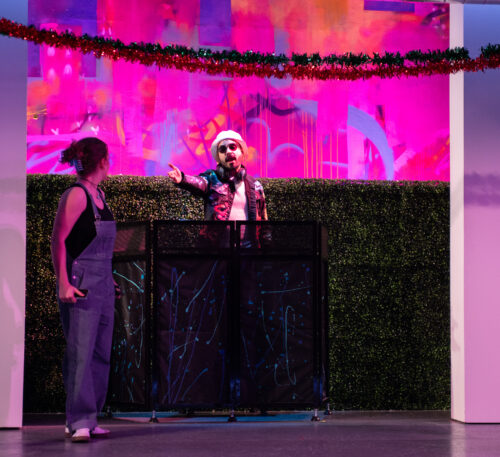
Ernesto K. Gonzalez seen here with actress Magali Trench created a soundtrack for “Laughs in Spanish” that is oh, so Miami. (Photo courtesy of Magnus Stark)
To her credit, while a specific culture is at the center of the play, Scheer never alienates, the story is universal, but it does help if you’re familiar with code-switching and Miami’s Spanglish that’s unlike anywhere else. Scheer instructs in the script: “The Miami natives in this play, all except Jenny, code-switch throughout the play…affecting their dialect, style, and vocabulary based on who they are speaking to. For example, anyone speaking to Jenny will unconsciously sound what we might understand as less-Hispanic. . . . These characters never do it for comedic effect, it’s simply the way they live. (But I hope, at times, we can find it funny.)”
“Laughs in Spanish” is also steadfast in its focus on that it be the work of an ensemble. While movie maven, Estella, is the strongest character, director Collado sticks to working with the ensemble as a whole to make everything work. The ensemble of GableStage’s “Laughs in Spanish” was put to the test when the actress playing Caro (Paguaga) fell during a rehearsal and injured her ankle. Scenes had to be restaged since Paguaga had to use a walker with a seat and crutches. No changes were made in the script to accommodate the injury. Smart move; her hobbling around the stage fits into the rest of the zaniness. Hats off to Paguaga for the ability to make it seem effortless.
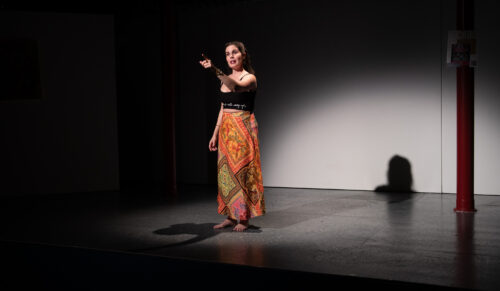
Gaby Tortoledo entertains her fans as Estella in GableStage’s “Laughs in Spanish.” (Photo courtesy of Magnus Stark)
This is a show that can draw a younger demographic into the theater and GableStage with its additions of colorful contemporary art and a thumping soundtrack. Also, with the help of Miami radio icon Lucy López, GableStage’s production features another element where a Miami influencer takes the stage as the DJ for Saturday evening performances bringing in their followers, perhaps some that have never been to the theater. Under Newport’s leadership, GableStage has been noticeably taking chances and working to remain relevant. This play choice is indicative of that.
With “Laughs in Spanish,” they’ve selected a breezy summer closer, nothing too heavy, lotsa laughs, and plenty of eye candy.
WHAT: “Laughs in Spanish” by Alexis Scheer
WHERE: GableStage in the Biltmore Hotel, 1200 Anastasia Ave., Coral Gables
WHEN: 2 and 7:30 p.m., Wednesday; 7:30 p.m., Thursday, Friday, and Saturday, 2 p.m. Sunday through June 23. Streaming available at regular performance times beginning May 31 through June 23.
COST: $45, $50, $60, $65, all with additional $10 service fee (discounts for students, teachers, artists, military and groups). $30 for streaming tickets.
INFORMATION: 305-445-1119 or gablestage.org
ArtburstMiami.com is a nonprofit media source for the arts featuring fresh and original stories by writers dedicated to theater, dance, visual arts, film, music and more. Don’t miss a story at www.artburstmiami.com.
No posts found
Review: ‘A Rock Sails By’ Is A Soul-Searching Delight at Actors’ Playhouse
Written By Michelle F. Solomon
May 21, 2024 at 1:01 PM
Daniel Llaca as Jason Harper, and Laura Turnbull as Dr. Lynn Cummings in the Actors’ Playhouse production of Sean Grennan’s “A Rock Sails By,” through Sunday, June 9 at the Miracle Theatre, Coral Gables. (Photo courtesy of Alberto Romeu)
It was 92 degrees outside of the Miracle Theatre in Coral Gables on a recent Sunday afternoon but in the second-floor balcony theater, it was a cool dark night in the New Mexico desert as no-nonsense, non-believer astrophysicist Dr. Lynn Cummings (Laura Turnbull) waited for a “big nothing rock” to pass by an observatory.
She was hellbent on proving to a journalist from an online magazine – a “rag” she called it – that an object from space would pass by and nothing Earth shattering would happen, well, to Earth.

Laura Turnbull as Dr. Lynn Cummings and Mallory Newbrough as her daughter, Olive, in the Actors’ Playhouse production of Sean Grennan’s “A Rock Sails By.” (Photo courtesy of Alberto Romeu)
However, that’s in Act II. Sean Grennan’s “A Rock Sails By” at Actors’ Playhouse through Sunday, June 9, begins a bit more sedate. Cummings is sitting in an Adirondack chair on her porch. She’s sipping a glass of white wine; the bottle is on the table next to her. She listens to a voicemail left by her husband; he’s bemoaning the fact that he can’t find artichokes at the grocery store.
From the start, Turnbull, last seen in Zoetic Stage’s “Cabaret,” is Dr. Lynn Cummings. Still reeling from the death of her husband, it’s just about the only time that Cummings shows emotion. But Turnbull knows how to steady the balancing act so that the two-time Nobel Prize-nominated sardonic scientist doesn’t come off as a one-dimensional naysayer. She’s a woman of fact, making it clear that Hippocrates said it best: “There are in fact two things, science and opinion; the former begets knowledge, the latter ignorance.”
She also has a photographic memory, which she announced by its medical term: “I have Hyperthymesia. I can remember the weather, the events for every day I’ve been alive. I can’t forget a thing. . . ” We learn that she is starting to experience signs of cognitive decline.

Laura Turnbull as Dr. Lynn Cummings listens to her husband’s voicemail message in the Actors’ Playhouse production of Sean Grennan’s “A Rock Sails By.” (Photo courtesy of Alberto Romeu)
Turnbull knows how to do justice to the brilliance in Grennan’s writing. It’s at times witty, other times deep. He has a knack for writing comedy and is especially smart with comic timing. An assistant sees Cummings adding up numbers on a piece of paper. She’s awestruck. “Wow . . .I’m watching you do math with a pencil . . .This is like Colonial Williamsburg.”
With the right actor in the lead role who carries most of the 108-minute show, a tight ensemble, and a director with an understanding of how to capture the script’s tempo, Actors’ Playhouse’s production positions the profound universal questions that Grennan wants to convey – is there life after death, life beyond Earth, and what’s it all for? Actors’ Playhouse Artistic Director David Arisco allows the play the space it needs so that the evolution of the characters’ revelations about themselves and the world around them gently and steadily unfolds.
The playwright gives his main character the best lines and Cummings is the most developed character leaving others a bit thin. We could learn more about 30-year-old daughter Olive (Mallory Newbrough) – yes, she hasn’t followed in the footsteps of her mother, she’s visiting the house she grew up in, living somewhere else getting a Ph.D., in English literature. She’s come back home because she’s noticed a change in her mother while on the phone with her and concerned about a fender bender where Mom rear-ended another car. But Olive is more or less a sidecar for the main character’s story. To be clear, it’s a small place for improvement and doesn’t upset the balance of the play.

Daniel Llaca as Jason Harper, and Laura Turnbull as Dr. Lynn Cummings in the Actors’ Playhouse production of Sean Grennan’s “A Rock Sails By.” (Photo courtesy of Alberto Romeu)
Grennan does have fun with Jason Harper (Daniel Llaca), the next most evolved role in “A Rock Sails By.” He’s caught in the middle of pleasing his editor who is only concerned about getting “clicks” to the online magazine and in needing the job but torn between that and his ethics. Llaca’s spectacularly combustible conversations with Turnbull’s Cummings are volleys that are a joy to watch. The two actors play off of each other with a familiar energy.
The fourth player is Lela Elam who must play multiple roles and, while they are, in many cases, insignificant except for the final surprise role toward the end of the show, the task of wearing these multiple hats is a feat.
She’s Jason Harper’s editor, she’s Cummings’ assistant, Haley, at the university where the astrophysicist is head of the department; and, in another scene, the university’s chancellor. She’s the doctor who arrives in the medical office with a box of tissues to deliver news about Cummings’ declining memory, and then, she’s the Messenger. It would be a spoiler to talk more about the Messenger, but Elam finds a way to make what could easily become a “Lost in Space” caricature into a multi-dimensional being.

Lela Elam in one of the multiple roles she plays with Laura Turnbull in the Actors’ Playhouse production of Sean Grennan’s “A Rock Sails By.” (Photo courtesy of Alberto Romeu)
Arisco is a self-described “big fan” of Grennan’s work. This is the sixth time (two musicals “Another Night Before Christmas” and “Married Alive” in 2009, and three plays, “Making God Laugh” in 2013, “The Tin Woman” in 2016, and “Now and Then” in 2022) Actors’ Playhouse has presented one of the Illinois-native playwright’s works; the third time Turnbull has appeared in one.
The balcony theater at Actors’ Playhouse gives the play the intimacy needed for the naturalism of the piece. In the rear of the stage is a large black fabric backdrop adorned with small, sparkling lights that resemble stars that stay lit for most of the play. There is no set change throughout Act I, which keeps the action flowing. Different areas portray locations: The center playing area is the porch – two chairs and a table, stage right is Cummings’ university office, stage right doubles as Jason’s desk at the magazine and the doctor’s office. A bench near stage right is used for Jason and Dr. Cummings’ meeting place for their interview. There is no mistake what action is happening where.
In Act II, the bench is the sole set piece.
The floor is painted black (all of this presents the space in a quasi-Black Box type setting) with different celestial shapes. Brandon M. Newton did the scenic design, Jodi Dellaventura the set dressing and properties. Eric Nelson designed the lighting and Ellis Tillman the costumes. Reidar Sorensen’s sound – ranging from crickets chirping to atonal violin music – creates atmosphere.

There could very well be a reason that Sean Grennan included doughnuts as the food of choice in his play. Here Laura Turnbull as Dr. Lynn Cummings enjoys one in the Actors’ Playhouse production of “A Rock Sails By.” (Photo courtesy of Alberto Romeu)
Grennan based “A Rock Sails By” on a true space phenomenon where, in 2017 an interstellar object, dubbed “Oumuamua” (the Polynesian word for “scout” or “messenger” – the telescope that discovered it is based in Hawaii) stumped scientists as it whirred by Earth at a high speed. According to NASA, “the mysterious visitor is the first object ever seen in our solar system that is known to have originated elsewhere.”
And don’t think it merely a coincidence that doughnuts play a role in a few scenes where Jason, the journalist, is hoping to win Cummings’ trust through food. Grennan has obviously done more digging. In July of 2021, astrophysicists posited that our Universe may be finite, which means that space is closed in on itself in all three dimensions like a 3D doughnut. For decades, astronomers have argued the nature of the Universe’s overall geometric shapes.
You’ll ponder these, and many other profundities, too, after seeing Grennan’s play.
WHAT: “A Rock Sails By” by Sean Grennan
WHERE: Balcony Theater at Actors’ Playhouse in the Miracle Theatre, 280 Miracle Mile, Coral Gables
WHEN: 8 p.m. Wednesday-Saturday, 3 p.m. Sunday (additional matinee at 2 p.m. Wednesday, May 22), through Sunday, June 9.
COST: $55 and $65, weekdays, $65 and $75 weekends. 10 percent off all weekday performances for seniors 65 and older and $15 student rush tickets to any performance 15 minutes prior to curtain with identification.
INFORMATION: 305-444-9293 or actorsplayhouse.org
ArtburstMiami.com is a nonprofit media source for the arts featuring fresh and original stories by writers dedicated to theater, dance, visual arts, film, music and more. Don’t miss a story at www.artburstmiami.com.
No posts found
Playwright Alexis Scheer Celebrates the Spanglish Side Of Miami at GableStage
Written By Miguel Sirgado
May 14, 2024 at 11:38 AM
GableStage presents the Florida premiere of “Laughs in Spanish,” a play written by Miami native Alexis Scheer, rescheduled to run from May 25 through June 23. The cast, from left, are: Magali Trench, Marcela Paguaga, Mariana Mondragon, Gaby Tortoledo, and William Guevara. (Photo courtesy of Magnus Stark)
Much has been said about how the Spanish we speak in Miami has affected the native English, and how this has led to the emergence of a new dialect in the bilingual generations. According to several academic studies, this phenomenon occurs when two languages come into close contact. Not to mention the interpersonal relationships of South Florida Latino families. From gestures to tone, Spanglish is here to stay.
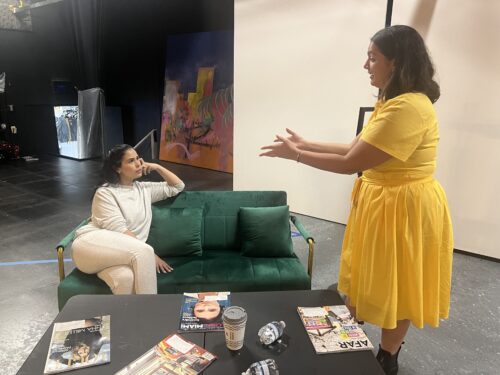
Marcela Paguaga, left, who plays the role of Carolina in “Laughs in Spanish,” works with Victoria Collado, director, in the Florida premiere of Alexis Scheer’s play. (Photo courtesy of Victoria Collado)
Celebrating the nuances of the “Miami language” is what GableStage’s “Laughs In Spanish” —a new comedy written by Miami born and made New World School of the Arts grad Alexis Scheer —is all about. Opening on Saturday, May 25, the playful exploration of identity, family and the local art scene will run at the company’s space in the Biltmore Hotel, Coral Gables, through Sunday, June 23.
“It’s interesting and fun to discover in the play how much can be presented on stage while still being accessible to English-speaking audiences,” says Scheer. “It was equally enjoyable to incorporate Spanish to inform the characters without excluding those who don’t speak Spanish. Regardless of language proficiency, viewers will still grasp the essence of the play. I found it crucial to bring this aspect of Miami’s flavor and texture to the stage, as it authentically reflects the city’s linguistic diversity,” she says.

“When I was in graduate school in Boston, my professors encouraged me ‘to go home’ with my writing, to introduce audiences to the people and the culture I grew up with,” says Alexis Scheer, who wrote “Laughs in Spanish.” (Photo courtesy of Alexis Scheer)
The plot begins on the cusp of Art Basel and Mariana, the director of an upscale modern gallery, has a big problem. Her showroom is the scene of a crime. When Mariana’s mother, a movie star, tries to save the exhibition, everything becomes hilariously “complicado.” Performed in English with a dash of Spanish, the fast-paced comedy about art and success—and mothers and daughters—is a lighthearted snapshot of Cuban and Colombian-American culture set in the heart of Miami’s Wynwood arts district.
[RELATED: Christine Dolen: Alexis Scheer’s Play ‘Our Dear Drug Lord’ At Zoetic Stage]
“Laughs in Spanish” had its world premiere in 2022 at the Denver Center for the Performing Arts. Scheer talks about how she came up with the idea of writing the peculiar piece with many of the best tricks of vernacular and traditional theater.
“When I was in graduate school in Boston, my professors encouraged me ‘to go home’ with my writing, to introduce audiences to the people and the culture I grew up with, the world I came from. So, I started writing about Miami and the people who populate the city.” Scheer grew up in Miami in a multicultural household, along with her Colombian mother and a Floridian father of European roots. “I wanted to introduce the audience to the rhythm and language of Miami and also introduce a cast of successful and funny Latinx characters,” she says.
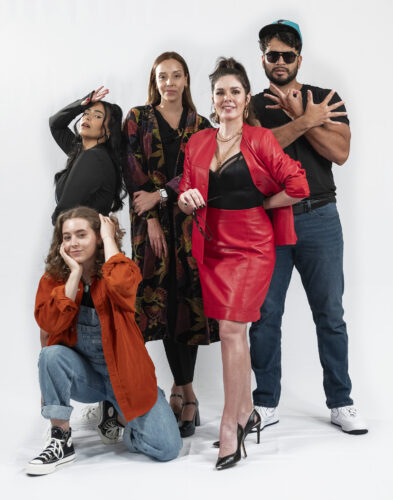
The cast of GableStage’s “Laughs in Spanish,” clockwise from left, Magali Trench, Marcela Paguaga, Mariana Mondragon, Gaby Tortoledo and William Guevara. (Photo courtesy of Magnus Stark)
The idea of a play with the structure of a comedy of entanglements was deeply rooted in the way Scheer finally conceived the text. “I was pulling from a lot of comedy tropes and stock characters, and the stakes were really high. Also, there was a little bit of ‘telenovela’ influence, so everything was just a little amped up and heightened. It felt like the story was dancing off the page. But mostly, I just wanted to have a good time.”
For Cuban-American director Victoria Collado, who directed GableStage’s “Native Gardens” last season, the case is similar. “I read the script and . . . I immediately fell in love with the play because I had never seen Miami people portrayed that way. There are characters that have never been seen on the American stage before. I was super excited, and that’s how I got involved with the Miami production.”
But when it comes to directing this production, the text has not been the only enjoyable challenge for Collado. The staging will also feature the work of prolific visual artist based in Miami, Diana “Didi” Contreras who has been asked to collaborate with companies such as Converse, Apple, and Warner Brothers; her paintings and murals commissioned by A-listers like Shakira.
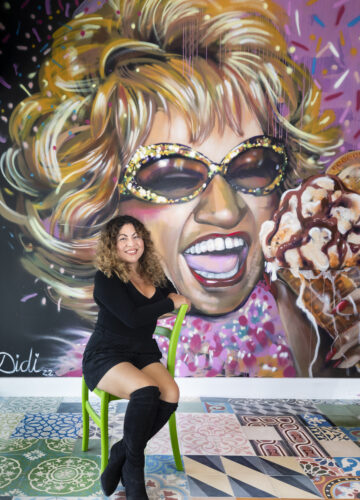
When discussing the inclusion of emerging artists in the play, Diana “Didi” Contreras —also known as Didi Rock, a Peruvian-American artist born in 1981 with ties to Miami, came to mind, says the director. (Photo courtesy of Armando Colls)
“I remember when discussing featuring emerging artists and Diana Contreras —also known as Didi Rock, a Peruvian-American artist born in 1981 with ties to Miami—was suggested. We decided to incorporate her work into the gallery in the theater and on the stage, viewing it as a special addition that contributes to the uniqueness of the production. This inclusion is akin to presenting a gift to Miami, showcasing our love and appreciation for the city,” says Collado.
With GableStage Producing Artistic Director Bari Newport, the two brainstormed ideas to include Newport’s desire for the stage to become a welcoming space for those unfamiliar with it.
“Recognizing the importance of community engagement, I immediately reached out to Lucy López, a highly regarded figure in Miami’s radio industry, to collaborate on involving the local community . . . leading to the concept of featuring a Miami influencer as a DJ for each performance,” says Collado.
Gaby Tortoledo says she can’t wait to introduce the character of Estella, the over-the-top movie-star mother, to GableStage audiences.
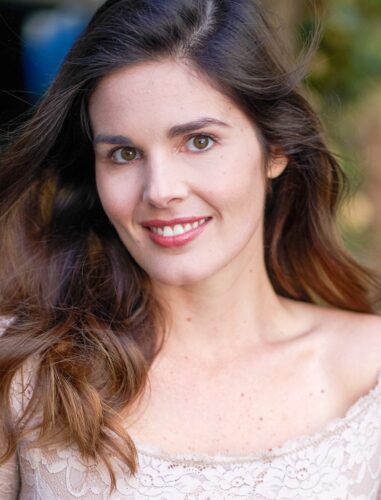
Venezuelan-born Gaby Tortoledo plays over-the-top mother, Estella, in “Laughs in Spanish.” (Photo courtesy of Eric Campbell)
“Estella is a huge character, and I knew from the moment I was asked to read for her that she was the role of a lifetime. During callbacks and before starting rehearsal I worked with my mentor, Michael Leeds, to find the gravitas of this woman; and I learned to feel free and honest inhabiting the world of a woman 20 years my senior,” says the Venezuelan-born actor.
“I also did some research studying Sofia Vergara, especially her character of Griselda in the namesake Netflix series. And (I also referenced) Kris Jenner, who similarly is a global icon, ‘momager’ extraordinaire, and constantly stealing the spotlight from her family. Once rehearsals began, Vicky was wonderful at allowing me to just play with Estella… working out scenes with the freedom to find every color in her spectrum: from a very real and very flawed human being to larger–than–life movie star galore.”
Also in the cast are Mariana Mondragon, Marcela Paguaga, William Guevara, Magali Trench, and Ernesto Gonzalez.
Tortoledo says that her character is the epitome of the Miami dream: an immigrant who escaped a dire situation in her country, then managed to build a new life for herself in Miami doing what she loves, which later propelled her onto the global stage.
“For many of us who come to the United States from South America, Miami is the gateway we use. It’s a city where, like Estella, we can start in this country without judgment, with opportunities. Even if we have an accent or our English isn’t perfect, we can find a taste of home on almost every corner.”
WHAT: “Laughs in Spanish” by Alexis Scheer
WHERE: GableStage in the Biltmore Hotel, 1200 Anastasia Ave., Coral Gables
WHEN: Opens 7:30 p.m. Saturday, May 25; 2 and 7:30 p.m., Wednesday; 7:30 p.m., Thursday, Friday, and Saturday, 2 p.m. Sunday through June 23. Streaming available at regular performance times beginning May 31 through June 23.
COST: $45, $50, $60, $65, all with additional $10 service fee (discounts for students, teachers, artists, military and groups). $30 for streaming tickets.
INFORMATION: 305-445-1119 or gablestage.org
ArtburstMiami.com is a nonprofit media source for the arts featuring fresh and original stories by writers dedicated to theater, dance, visual arts, film, music and more. Don’t miss a story at www.artburstmiami.com
No posts found
Review: Zoetic Stage’s ‘Cuban Chicken Soup’ Is Seasoned and Comically Spellbinding
Written By Michelle F. Solomon
May 7, 2024 at 11:08 AM
Local actress-comedian-playwright Elena María García in Zoetic Stage’s one-person original play “Cuban Chicken Soup: When There’s No More Café” through Sunday, May 19 at the Carnival Studio Theater inside the Adrienne Arsht Center, Miami. (Photo by Morgan Sophia)
It was 2017 when local actress-comedian-playwright Elena María García introduced us to the character Elena Flores in “¡FUÁCATA! Or a Latina’s Guide to Surviving the Universe” co-written by García and Zoetic Stage Artistic Director Stuart Meltzer.
Ten years later, García and Meltzer have audiences catching up with Elena, sole owner of the event planning company “Elena Plans Big Things,” again at Zoetic Stage, along with the cast of characters that come in and out of her world in the one-person play “Cuban Chicken Soup: When There’s No More Café.”
Their new work plays at the Carnival Studio Theater inside the Adrienne Arsht Center through Sunday, May 19.

Local actress-comedian-playwright Elena María García inhabits 14 different characters in 90 minutes in Zoetic Stage’s “Cuban Chicken Soup: When There’s No More Café.” (Photo courtesy of Morgan Sophia)
Like “¡FUÁCATA!,” the ingredient for “Cuban Chicken Soup” as a theatrical tour de force is García. After 90 intermissionless minutes, García will have you believing that you’ve just watched a show featuring 14 actors – a flirty valet at a fancy Michelin-starred restaurant in Wynwood (laughs will come from many local references), three ornery octogenarians, a gas-station griddle cook named Pipo whose specialty is python fritter nuggets, a “family first” candidate for Congress who believes, among many things, that there should be a community where only women convene and men aren’t allowed, and the flamboyant and gregarious (this is how he is described in the script) salon owner Fausto whose job it is to make every woman feel like an Audrey. “Audrey Hepburn gave me a passion,” he says.
A few characters from “¡FUÁCATA!” reappear but smartly the co-playwrights give them storylines in the current play that don’t rely on what came before – Elena’s office assistant, Sophie, who was single, is now married to Archie, pregnant with a bad case of acid reflux, and planning her own baby shower; Beatrice Goldberg, who had Elena in charge of her 50th wedding anniversary party is kvetching that her running-for-Congress daughter is planning an 80th birthday party and making guests pay to attend a la a political fundraiser, and Elena’s Mami who is now living with her and has been banned from the kitchen after several fires, some originating from aluminum foil inside a microwave.

Elena María García revisits the character Beatrice Goldberg in Zoetic Stage’s “Cuban Chicken Soup: When There’s No More Café.” (Photo courtesy of Morgan Sophia)
Like the character Elena, “¡FUÁCATA!” has matured into “Cuban Chicken Soup.” Its originality remains the astonishment factor of García’s comedic gift and feat of acting precision — her seamless switch from one character to the next to introduce an entirely different persona in mere seconds. The sleight of hand in that exercise rather than the characters’ emotional resonance seemed to be what drove “¡FUÁCATA!.”
While the precision and stamina are still present, what comes across more in the new work is an emotional resonance and characters that feel “lived in.” While the script is full of superbly comic moments, it also finds a way to develop the characters more fully to allow García the chance to dip into her dramatic abilities.
[RELATED: Zoetic Stage Evolves Original”¡FUÁCATA!” With “Cuban Chicken Soup”]
In one of the truly comedic highlights of the show, García can show off her shape-shifting ability to improvise on the spot as she sashays into the audience as hairdresser Fausto, going from seat to seat and row to row. At record speed, she interacts by tossing off an unscripted line or bit that attests to the absolute depth of García’s comedic talent.
There’s a subtle choice that may go unnoticed but shows García and Meltzer’s writing mastery – the only character that Elena doesn’t play and who is only present in voiceover is her husband, Javier. In “Cuban Chicken Soup,” Javier is the catalyst for much of what happens in the play for a wake-up call of sorts for Elena.
Like its predecessor, another strength of “Cuban Chicken Soup” is its sincerity and window into the world of a Latina going through mid-life struggles and its universality.

Like “¡FUÁCATA!,” the ingredient for “Cuban Chicken Soup” as a theatrical tour de force is local actress-comedian-playwright Elena María García. (Photo courtesy of Morgan Sophia)
But perhaps a weakness, like its predecessor, might be if either play could have life outside of Miami and does that need to be a consideration? With Miami’s elevated status of late, it certainly may work in another urban city. And other actresses have stepped into Lily Tomlin’s shoes to take on her unprecedented one-woman show so that wouldn’t be unheard of. But it feels like both of these creations come alive in García’s world and one she may only be able to inhabit.
The scenic design by Natasha Hernandez keeps the stage minimal with a living room chair at stage right and a table that doubles for a restaurant, a hair salon and Elena’s house. At right, there’s a simple chair, which is mostly the setting for Elena’s white Honda Civic (a call back to the previous show where the automatic seat belt still is a source of annoyance). In the back, a set of stairs with a landing offers another playing area. A stuffed chicken is placed on a shelf above the landing and “¡FUÁCATA!” is referenced on a back wall written in black paint next to a painting of a palm tree on the back of stage left.
Meltzer also directed García with staging that has her using almost every inch of the playing space, which helps keep up the show’s energy. Becky Montero’s lighting design uses soft blues and other pastel hues and, even in scenes where there needs to be more expressiveness, it’s never harsh.

Co-playwrights Elena María García and Zoetic Stage Artistic Director Stuart Meltzer on the set of “Cuban Chicken Soup: When There’s No More Café.” (Photo courtesy of Morgan Sophia)
Sound design by Matt Corey rounds out the portrait of Elena’s life with door slams, restaurant and salon chatter, Everglades atmosphere, and an opening soundtrack that deserves attention.
While the usual routine is to slide into your seat before the show starts, chat with those around you, look at your program, in this case take a minute to listen to the music.
It sets the stage for what’s to come and songs that set the tone – an offbeat, fun-filled riff on all that we know as normal curated by one woman.
There is The Puppini Sisters’ remix of Abba’s “Dancing Queen,” Dayme Arocena’s “Lo Que Fue” (“What Was”), and Brielle Von Hugel and Virginia Cavaliere’s Andrew Sisters-esque “Girls Just Want To Have Fun,” among others. I was so taken by the songs I used the Google feature “Identify song by listening.”
Little did I know at the start, but that’s just what the inventiveness of “Cuban Chicken Soup” makes you want to do, look deeper – how did she do that, I want to be part of it, and can I be an Audrey?
WHAT: “Cuban Chicken Soup: When There’s No More Café,” by Elena Maria García and Stuart Meltzer
WHERE: Zoetic Stage production in the Carnival Studio Theater at the Adrienne Arsht Center for the Performing Arts, 1300 Biscayne Blvd., Miami
WHEN: 7:30 p.m. Thursday-Friday, 2:30 p.m. and 7:30 p.m. Saturday, 2:30 p.m. Sunday, through Sunday, May 19. Additional performances: 7:30 p.m. Wednesday, May 8, 2:30 p.m. Saturday, May 18.
COST: $55 and $60
INFORMATION: 305-949-6722 or arshtcenter.org
ArtburstMiami.com is a nonprofit media source for the arts featuring fresh and original stories by writers dedicated to theater, dance, visual arts, film, music, and more. Don’t miss a story at www.artburstmiami.com.
No posts found
Third Horizon Spotlights Bold Films From The Caribbean
Written By Douglas Markowitz
May 2, 2024 at 6:46 PM
The documentary “Calls from Moscow,” which will be screened at this year’s Third Horizon Film Festival, follows a group of queer Cubans trapped in Moscow on the eve of Russia’s invasion of Ukraine. The film shows at 6:45 p.m., Saturday, May 11 at the Koubek Center at Miami Dade College. (Photo courtesy of Third Horizon)
Much has changed in Miami’s cinematic landscape since Third Horizon Film Festival held its last edition two years ago. The festival focusing on experimental and nonfiction cinema from the Caribbean and its diaspora had already weathered the loss of its original venue, O Cinema Wynwood, to the COVID-19 pandemic. After virtual editions and an in-person program at the Little Haiti Cultural Center in 2022, the same year the beloved movie house Tower Theater was closed under controversial circumstances, the organizing collective felt they needed a year off to take stock – not least of all because a few of them had films of their own to work on.
“We had to sort of shift our focus into our personal filmmaking careers,” says Monica Sorelle, managing director of Third Horizon 2024. “But I think we also wanted to take a break, because the Miami film landscape was changing as well, and we really wanted to take a step back and figure out what our next steps should be.”

A still from “Ramona,” screening at Third Horizon 2024 at 3 p.m., Friday, May 10. The film follows a Dominican actor preparing to play a pregnant teen. (Photo courtesy of Jaime Guerra)
Sorelle has worked with Third Horizon in various capacities since its inception in 2016. She and her colleague Robert Colón used the extra time to complete her feature “Mountains.”
The film, which addresses gentrification in Little Haiti, earned an Independent Spirit Award and the Miami Film Festival’s Made in MIA Feature Film Award. Festival co-founders Keisha Rae Witherspoon and Jason Fitzroy Jeffers also stepped back to work on filmmaking; the duo was recently selected to work on their film “Arc,” another movie deeply enmeshed in local Miami culture, at the Sundance Institute this year.
When it came time to return to Third Horizon, contributing to Miami’s cinematic and cultural fabric was of chief concern.
“I think this past year was a good time to really look at the organization and think about what we want to do here,” says Sorelle. “Are we committing to Miami or not? What is the value of committing to Miami? And how can we make sure we show up for the film community here?”
That support has come in the form of Third Horizon Forward, a fund supporting Caribbean filmmakers working in Miami. Six local filmmakers were chosen for the program in 2023, and the short films they made with the Forward funds will be screened on the festival’s opening night at the Pérez Art Museum Miami on Thursday, May 9.

“barrunto,” an experimental narrative feature by Puerto Rican filmmaker Emilia Beatriz, will screen at Third Horizon at 3:10 p.m. on Sunday, May 12 at the Koubek Center. (Photo courtesy of Third Horizon)
From there, the festival moves to the MDC’s Koubek Center, where its main slate of films will play from Friday, May 10 to Sunday, May 12. The films range widely in style, subject matter, and in their approach to the bridge between fact and fiction. Victoria Linares’ film “Ramona,” for instance, follows an actor in the Dominican Republic who interviews pregnant teenagers as she prepares to play one in a movie. The film’s approach recalls similar documentary-fiction hybrids like Abbas Kiarostami’s classic “Close-Up.”
There are also more traditional documentaries, including “Calls from Moscow,” a film about a group of queer Cubans trapped in Russia on the eve of the country’s invasion of Ukraine. Third Horizon’s programming director Jonathan Ali says the film emphasizes the liminal nature of its subjects’ plight, stuck in a queerphobic country that doesn’t want them, yet unwilling to return to a country they find equally unbearable.
“They don’t want to be there, but they can’t be in Cuba anymore,” says Ali. “They have nowhere to go, and the filmmaker brings them together into one apartment over the course of a single day and films them in the safety of this apartment, where they have solidarity with each other as queer Cubans.”
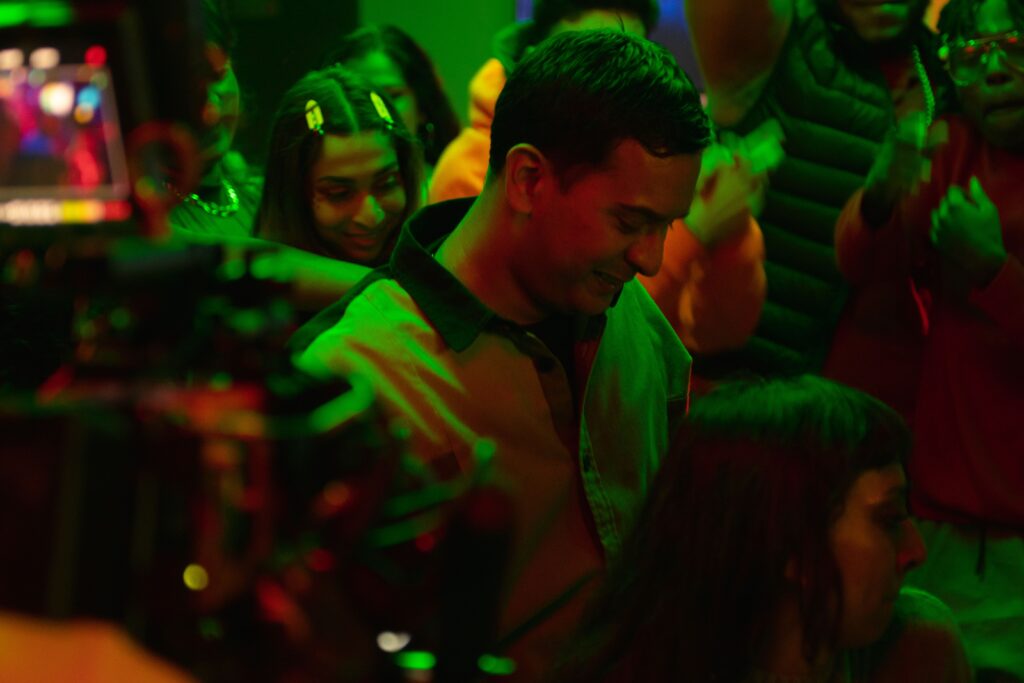
A Trinidadian street vendor searches for his father in Toronto in the movie “Doubles” screening at Third Horizon 2024 at 7:30 p.m. on Sunday, May 12, at the Koubek Center. (Photo courtesy of Yvano Antonio)
Other films include “barrunto,” a haunting experimental film with a non-traditional narrative that journeys across continents by Puerto Rican artist and director Emilia Beatriz; “Doubles,” a fiction feature about a Trinidadian street vendor who journeys to Toronto to confront his estranged father; and several short film programs focusing on marginalized perspectives. The festival is also hosting parties, workshops, filmmaker question and answer sessions, and a pair of programs designed to uplift Caribbean perspectives in cinema and society. The Caribbean Film Academy (CAFA) is a workshop for Caribbean filmmakers, while the inaugural Third Horizon Caribbean Think Tank aims to address development issues in the region.
It may be based in Miami, but Third Horizon’s ambitions are vast.
WHAT: Third Horizon Film Festival
WHEN: Thursday, May 9 through Sunday, May 12
WHERE: Pérez Art Museum Miami, 1103 Biscayne Blvd., Miami; Miami Dade College Koubek Center, 2705 SW 3rd St., Miami.
COST: $15 for individual tickets; $50 for day passes; $225 for all access pass (general); $130 for all access pass (students and seniors); filmmaker and supporter passes also available.
INFORMATION: Click here for the complete Third Horizon Film Festival Film Guide and tickets and information at thirdhorizonfilmfestival.com
ArtburstMiami.com is a nonprofit media source for the arts featuring fresh and original stories by writers dedicated to theater, dance, visual arts, film, music, and more. Don’t miss a story at www.artburstmiami.com.
No posts found
Zoetic Stage evolves original ‘¡Fuácata!’ with ‘Cuban Chicken Soup’
Written By Deborah Ramirez
April 24, 2024 at 12:51 PM
Elena Maria García transforms into 14 different characters in Zoetic Stage’s original one-woman show “Cuban Chicken Soup: When There’s No More Café,” in previews on Thursday, May 2 with an opening Friday, May 3 at the Carnival Studio Theater in the Arsht Center, through Sunday, May 19. (Photo courtesy of Chris Headshots)
When Elena Maria García and Stuart Meltzer took on the challenge to create an original one-woman play about Latina identity, they had no storyline or plot in mind — only endless possibilities.
“We had no expectations other than to get a one-person play together,” says Meltzer, the artistic director of Zoetic Stage at the Adrienne Arsht Center.
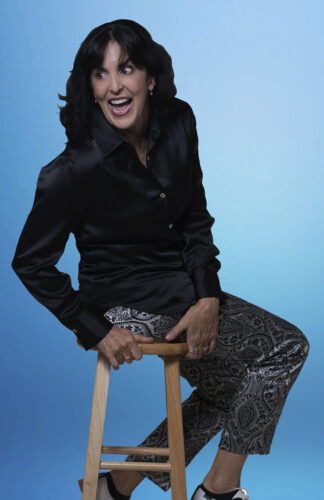
Elena Maria García co-wrote and stars in “Cuban Chicken Soup: When There’s No More Café” running through May 19 at the Arsht Center. (Photo courtesy of Chris Headshots)
“And we sort of figured out the story as we went,” recalls Meltzer. “In our process of doing this, it gave us a sense of freedom and discovery with the characters and who will help tell the story.”
Meltzer had seen García in her one-woman show “Do You Speak Mexican?” a humorous take on life as a Cuban-American in Florida. He realized she had a “great knack for being on stage by herself.” Zoetic agreed and commissioned the work.
From that came “¡Fuácata! A Latina’s Guide to Surviving the Universe,” which premiered at the Arsht in February 2017 and returned there in 2018. At the time, it was one of Zoetic’s top-selling shows, according to Meltzer. It also played at Coral Gables’ Actors’ Playhouse in the fall of 2021 as audiences were cautiously venturing back into theaters during COVID restrictions.
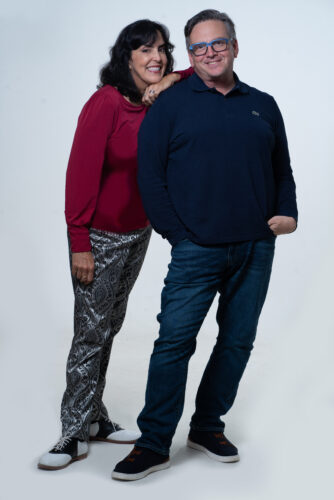
Elena Maria García and Stuart Meltzer continue the “¡Fuácata!” experience with their new one-woman show, “Cuban Chicken Soup: When There’s No More Café.” (Photo courtesy of Chris Headshots)
García and Meltzer – friends, they say, since their early days in theater — co-authored “¡Fuácata! A Latina’s Guide to Surviving the Universe.” Meltzer directed the production and García, gifted with comic timing and a master at rapid-fire improvisation, took on the starring role, where she transformed into more than 20 characters.
The co-writers now hope to engage audiences with a fresh take on the “¡Fuácata!” experience. Their new work titled “Cuban Chicken Soup: When There’s No More Café” gets its world premiere in previews on Thursday, May 2 then opening Friday, May 3, at the Carnival Studio Theater in the Arsht Center, and running through Sunday, May 19.
If “¡Fuácata!” was Cuban coffee on speed, “Cuban Chicken Soup” serves up generous portions of comfort food.
“I think the universal theme in ¡Fuácata! was about female empowerment, that we always find a way to keep moving forward,” says García in a recent phone interview. “In Chicken Soup (the message is) take the time to stop and observe everything around you and appreciate what you have and do not take things for granted.”

“¡Fuácata! A Latina’s Guide to Surviving the Universe” debuted at the Arsht Center in 2017. (Photo courtesy of Justin Namon)
“¡Fuácata!” centered around a day in the life of Latina party planner Elena Flores as she navigates Miami traffic and American assimilation – both with the aid of strong Cuban coffee. The play derives its name from Cuban slang for a backhanded slap or, in this context, a wake-up call.
The new play revisits Elena a decade later. Two more original characters are back: zany assistant Sophie, who comes up with a few surprises, and family matriarch “Mami,” who continues to nurture and impart wisdom but now faces challenges that come with aging.
The creators, however, caution against expecting “¡Fuácata!” Part 2. Their new show is a stand-alone play, they say, that intends to make audiences laugh but also take a deeper dive into human relationships.
“When we approached this new work, we said ‘Well, where is Elena now, and where are some of those same characters and how have they evolved? That was such an exciting component for us to figure out together,” says Meltzer.
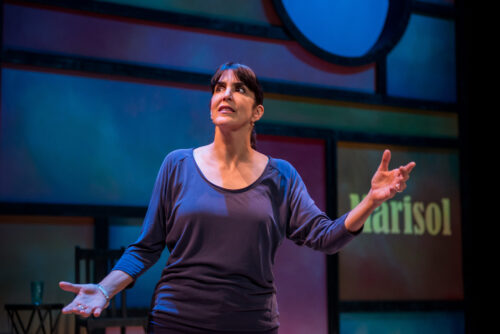
Elena Maria García as Marisol, the undocumented immigrant who risked all for a better future, in the 2017 production of “¡Fuácata!” at the Arsht Center. (Photo courtesy of Justin Namon)
As the title suggests, chicken soup is a metaphor for healing and bonding. For both writers, it’s also part of family tradition. Meltzer makes his chicken soup with matzo balls, reflecting his Jewish heritage. Elena’s Cuban version comes with malanga and yuca.
“In my home, if someone is sick, the way to heal is for my mother to go into the kitchen and make chicken soup,” says García.
In the play, the main character goes through a crisis. “And Mami is trying to fix it the way mamis do,” García adds.
“Chicken Soup” is also physically more demanding than its predecessor, even though fewer characters show up, according to the writers. Over 90 minutes, García will morph into 14 characters versus more than 20 in “¡Fuácata!.” Without giving anything away, García will be required to be physically more active on stage.
The actor builds up stamina, she says, by taking three-to-four-mile walks several times a week accompanied by 52 pages of dialogue tucked in her exercise pants waistband.
“I need to have my mind in my bone marrow; my body has to regulate itself so that I don’t blow all my energy in the first 15 minutes, which is so easy to do because this show is so much more physical,” she adds.
The new play also presents an opportunity for García, gifted with comedic timing and skills, to showcase her dramatic side as well, says Meltzer.
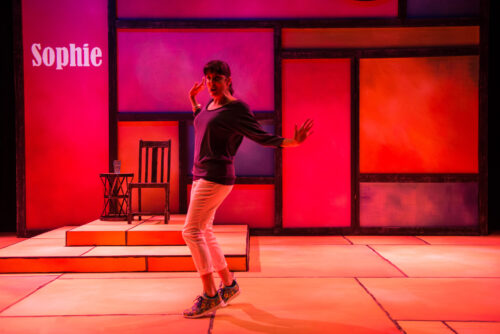
Elena Maria García as Sophie, a millennial party planning assistant, in the 2017 production of “¡Fuácata! A Latina’s Guide to Surviving the Universe,” at the Arsht Center. (Photo courtesy of Justin Namon)
“People always say that Elena is the Cuban Carol Burnett and that’s all wonderful… But there’s a deeper tone in ‘Cuban Chicken Soup,’ ” he says. While still being funny, “there’s a lot more gravitas.”
García hopes people will see themselves and their loved ones in her new one-woman show and reflect on what really matters in life.
“That’s what theater was meant to be from the very beginning: To bring the mirror up to you and say ‘Are you this person? How do you change? How do you make the world a better place to be in?” she asks. “So, in certain moments, in certain characters, this play brings up the mirror and says ‘Look at yourself.’”
Perhaps, with a hearty serving of chicken soup.
WHAT: “Cuban Chicken Soup: When There’s No More Café,” by Elena Maria García and Stuart Meltzer
WHERE: Zoetic Stage production in the Carnival Studio Theater at the Adrienne Arsht Center for the Performing Arts, 1300 Biscayne Blvd., Miami
WHEN: Previews 7:30 p.m. Thursday, May 2, opens 7:30 p.m. Friday, May 3; 7:30 p.m. Thursday-Friday, 2:30 p.m. and 7:30 p.m. Saturday, 2:30 p.m. Sunday, through Sunday, May 19. Additional performances: 7:30 p.m. Wednesday, May 8, 2:30 p.m. Saturday, May 4 and May 18.
COST: $55 and $60
INFORMATION: 305-949-6722 or arshtcenter.org
ArtburstMiami.com is a nonprofit media source for the arts featuring fresh and original stories by writers dedicated to theater, dance, visual arts, film, music, and more. Don’t miss a story at www.artburstmiami.com.
No posts found
South Florida Filmmakers Shine at OUTshine Festival
Written By Sergy Odiduro
April 19, 2024 at 3:51 PM
Cesar Pichardo plays a genie in “El Reggaetonero” playing during the 26th annual OUTshine LGBTQ+ Film Festival as part of its South Florida Shorts program on Monday, April 22. (Photo courtesy of Eddy Moon )
If there’s one kind of music that can shake anyone out of a funk it’s reggaeton.
This Latin-languaged cousin of reggae, with its hard to ignore beats and infectious rhythms, was exactly the kind of pick me up that Eddy Moon needed.
It was during the pandemic, and he, like so many others, was struggling.
“It was a dark time for me as an artist,” said Moon, a director and creative producer.
“Ever since I was like 12 or 13 All I’ve ever wanted to do with my life was to make movies. I’m 35 now so I’ve been pursuing the same goal for 20 something years. And with everything being shut down, I was like, am I ever going to make one again?”

Gabrielle Alexander and Diana Garle, star in “El Reggaetonero” a reggaetón musical written and directed by Eddy Moon. (Photo courtesy of Eddy Moon )
Day after day he pondered this, while he found himself moored to his couch, awash in a sea of emotions.
But ultimately it was music that offered a lyrical life raft that helped him dance his way back to shore.
It was as if each and every one of his favorite Reggaeton artists:
Bad Bunny, Residente, El Alfa, Daddy Yankee and Don Omar reached through his headphones, shook him by the shoulders and pushed him over the hump.
“I found solace in Reggaeton music, just because it was the complete opposite of everything that I was going through. I was feeling depressed and down and anxious. And when I put on music, it was lively, fun and exciting. Everybody was positive and joyful. And it brought me the kind of joy that I needed at the time.”
Eventually, he was able to pull himself together and channel their energy.
And then right there on his couch a new film was formed, a creative child born of the pandemic. And Its name was “El Reggaetonero.”

Cesar Pichardo in “El Reggaetonero.” The musical features an original soundtrack by DEMBOWYZ and Mago Music. (Photo courtesy of Eddy Moon )
Produced by Kevin Ondarza, Camila Marcano and Olivia Timmons and made with authentic reggaeton by DEMBOWYZ and Mago Music, this fun, over the top musical features a genie who offers a barrage of unwanted relationship advice to an anxious Lily who is set to go out on a first date with a recent love interest.
The film will be shown during the 26th annual OUTshine LGBTQ+ Film Festival as part of its South Florida Shorts program.
Attendees will be able to meet Moon and other local filmmakers when they will be given center stage during the Cocktails & Cinema South Florida Filmmakers Showcase on Monday, April 22 at Silverspot Cinema Miami. A question and answer with the movie makers and a reception will immediately follow the screening.
Films in the South Florida Shorts series will also be available for virtual screening through Sunday, May 5.
In addition, the festival includes a variety of activities that will be held at different sites. Attendees will have a choice of more than 50 features and shorts, panel discussions, parties, and a Latin Spotlight highlighting films from Latin America.
For those looking for insight into the local moviemaker scene, a filmmaker panel will be held on Saturday, April 27 at Regal South Beach. The event is part of an effort to encourage local filmmakers to tell their stories.
Joe Bilancio, the festival’s director of programming, said that as a bonus, participants will be offered discounted parking as well as free Uber rides to a select number of films.

Short film “Frag” will be featured during the OUTshine LGBTQ+ Film Festival. (Photo courtesy of Christopher Frentzel )
“It’s just a way to help people navigate what they perceive to be the difficulties of getting to and from a venue,” says Bilancio.
“What we try and do is think about what are potential difficulties and then cut them out.”
Showcasing a variety of films and offering events with a broad range of topics, is an additional part of their overall strategy in encouraging attendees to come. He hopes that festival goers will consider topics that they have not previously explored.
“I think people do trust that we’re going to have a good quality, well-rounded program, but they don’t necessarily step outside their box,” says Bilancio.
He knows that this year’s lineup is a good way to test the waters.
“Everything’s a good movie, Go see something. Maybe it’s outside of your comfort zone but we have a couple of, what I call out of the box, horror films that are also very good. Take a chance and see something that wouldn’t normally be on your radar. And I think you’ll really be a better person for it.”
“Frag,” also showing on Monday, April 22, by Christopher Frentzel is one such example.
All hell breaks loose in this true crime drama based on a war vet that strolls into a gay bar with a grenade.

Filmmaker Christopher Frentzel, director of “Frag,” says he focuses on underrepresented topics in the LGBTQ community. (Photo courtesy of Christopher Frentzel )
Frentzel hopes that “Frag,” and films like it, will help to expand the genre of films that can be viewed by the community.
“Most of my stories that I tend to tell are always about facets within the LGBTQ community that I feel are underrepresented a lot in film,” says Frentzel.
“When I was growing up trying to watch gay media, it was mostly stories about coming out and stories on non-accepting parents or overly accepting parents. That’s all I saw. And I mean, nowadays, you see a much brighter, wider variety and you also see a lot of queer stories in which the characters’ queerness isn’t a center plot point. But regardless, I feel like I tried to present facets of the queer community that aren’t touched upon, such as mental illness, or certain trauma or sexual assault.”
Bilancio says that OUTshine is more than a film festival.
“It’s not like you’re just going to a movie, you’re actually going to an event. It supports the community . . and it is such a social environment.”
WHAT: OUTshine LGBTQ+ Film Festival
WHEN: Thursday, April 18 through Sunday, May 5
WHERE: Film screenings at Silverspot Cinema Miami, 300 Southeast 3rd St. from Thursday, April 18 to Friday, April 24 and at Regal South Beach,1120 Lincoln Road Mall, Miami Beach from Saturday, April 25 to Tuesday, April 28. Additional festival activities, including virtual screenings, are available through Sunday, May 5.
COST: Tickets vary in price. Membership packages available. $15 for tickets to view films online in the Shorts Program. Log on to outshinefilm.com/ticket-information for detailed pricing information. For a full list of virtual screenings, go to watch.eventive.org/outshinespring2024. Tickets to view movies in the Shorts Program available at outshinespring2024.eventive.org/schedule/65f775ce9ea7cb008134faf0
INFORMATION: outshinefilm.com.
ArtburstMiami.com is a nonprofit media source for the arts featuring fresh and original stories by writers dedicated to theater, dance, visual arts, film, music and more. Don’t miss a story at www.artburstmiami.com.
No posts found
Review: Drink In M Ensemble’s Riveting ‘Bourbon at the Border’
Written By Michelle F. Solomon
April 16, 2024 at 10:44 AM
Jean Hyppolite, Carey Brianna Hart, Charles Reuben, and Dina Lewis in M Ensemble’s production of Pearl Cleage’s “Bourbon at the Border” at the Sandrell Rivers Theater, Miami, through Sunday, April 28. (Photo courtesy of Chasity Hart)
In “Bourbon at the Border,” Atlanta-based playwright Pearl Cleage, the daughter of civil rights activists, brings a piece of history into her 1997 play now being performed at Miami’s M Ensemble through Sunday, April 28.
Her fictional characters were part of the 1964 Freedom Summer project, launched as a voter registration drive in Mississippi, a place where segregation laws and fear tactics were being used to disenfranchise Black voters. A week after the first group of volunteers arrived, three civil rights workers, one Black and the other two white, were reported missing.
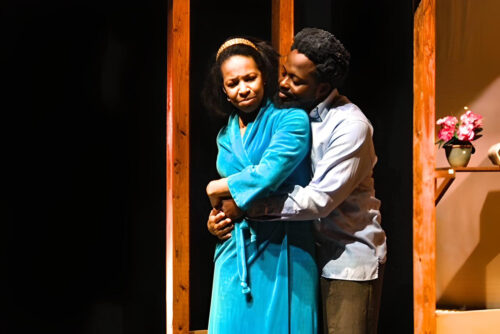
May Thompson (Carey Brianna Hart) and Charlie Thompson (Jean Hyppolite) are bonded by the past and looking for a better future in M Ensemble’s “Bourbon at the Border.” (Photo courtesy of Chasity Hart)
In Cleage’s play, the two main characters, May Thompson (Carey Brianna Hart) and Charles “Charlie” Thompson (Jean Hyppolite) were there, too. May tells her neighbor Rosa St. John (Dina Lewis) that she met Charlie, now her husband, while she was at Howard University, and he was rallying volunteers to go to Mississippi. “Every day at noon, he’d be standing down there on the steps of Douglas Hall talking about how we’d be the sorriest people on this earth if we let a bunch of white kids go down there to register all those Black folks to vote.”
Now it’s 1995, the couple is living in Detroit and May is plumping pillows and pacing waiting for Charlie to return home after months at a mental rehabilitation hospital. She tells Rosa’s boyfriend Tyrone (Charles Reuben) that Charlie is returning home from the hospital for rehab on his leg that “got hurt in Mississippi a long time ago . . .in Freedom Summer. You ever heard of it?” She doesn’t want Tyrone to think Charlie is crazy. (Charlie tells him that himself.)
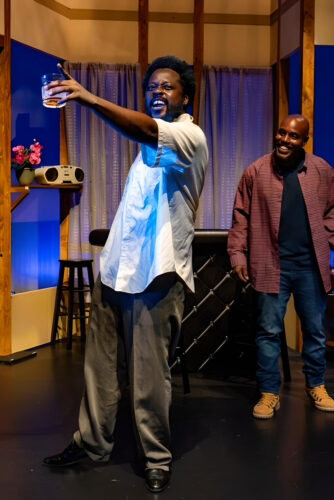
Charlie Thompson (Jean Hyppolite) toasts with a drink of Jack Daniels to new friend Tyrone (Charles Reuben) as they trade stories. (Photo courtesy of Chasity Hart)
The scars from the couple’s Freedom Summer trip run deep. They dream of moving to Canada to get away from America’s past, that summer that has forever changed each of them. Mitchell Ost’s set design beautifully employs a projection at the upper rear of stage that uses the Ambassador Bridge (which connects Detroit to Windsor, Canada) that can be seen from the couple’s apartment window. It shows the passage of time in the course of the play – daylight at the bridge then lit at night – but also represents the couple’s yearning to escape to a place where they can start fresh. They’ll be desperados, says May, drinking bourbon at the border. It also serves as a metaphor for May – a bridge of hope that Charlie will crossover from insanity to stability.
Artistic Director André L. Gainey brings out the best in his tightly knit, talented ensemble. While there is plenty of comedy in the first act with Lewis having the lion’s share of the fun and grabbing every juicy moment, Cleage’s play is complicated and needs to be paced just right throughout. It’s how May’s emotionally climatic monologue in the second act can be the most effective.
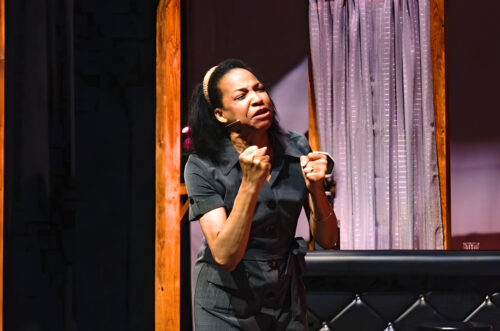
Carey Brianna Hart as May in a defining moment in M Ensemble’s “Bourbon at the Border” through Sunday, April 28. (Photo courtesy of Chasity Hart)
Gainey moves the action along allowing it to unfold just right and Hart’s portrayal of May is so deeply genuine throughout that when it comes time for her to let the emotions pour out from years of keeping them locked up, there’s visceral and gut-wrenching anguish. The actress, who has performed on stage, as a director, and in so many capacities in South Florida theater, shows here how much she’s grown as she gives an incredibly vulnerable and raw performance – it is riveting.
Hyppolite convincingly makes us feel for his physically and mentally disabled Charlie and how he has forever been changed from the horrific casualties of the Freedom Summer trip. (It would be a spoiler to say more about the atrocities the couple faced.)
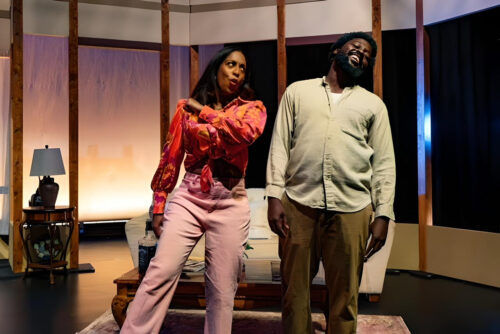
Rosa (Dina Lewis) stops by to make sure Charlie (Jean Hyppolite) is doing fine while his wife, May, is away in M Ensemble’s production of Pearl Cleage’s “Bourbon at the Border.” (Photo courtesy of Chasity Hart)
Charlie tells his wife how “they” tried to separate his head from his heart and soul and says “the only way they win is to make me too crazy to be with you.” Hyppolite makes you, like May, want the freedom fighter to overcome the odds, yet you fear for him that he won’t.
Rueben’s Tyrone, a wounded Vietnam vet, is charming as Rosa’s love interest, but uses depth of character to convey that his Tyrone understands Charlie – the two have much in common although they fought different “wars.” It’s an undercurrent that plays beautifully.
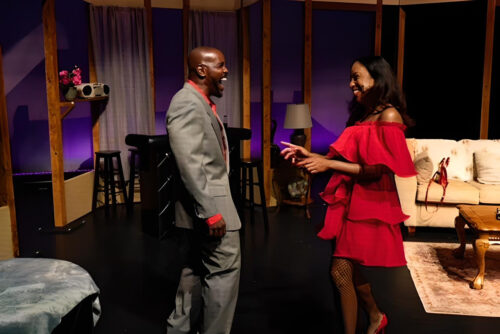
Tyrone Washington (Charles Reuben) and Rosa St. John (Dina Lewis) get ready to head out on a date. (Photo courtesy of Chasity Hart)
And Lewis as May’s best friend is so rightly cast as the comic relief, especially when she recreates her audition as a sex phone worker. Yet, the actress also knows when she needs to stay in the moment. Watching Lewis during Hart’s monologue, as Rosa, she never takes her eyes off of May for a minute and you feel as if she is hearing the story for the first time. It just adds to the intensity and another fine moment of the investment needed to make these characters so real.
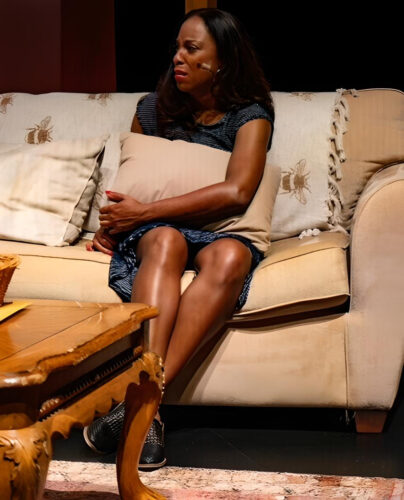
Dina Lewis as Rosa can’t believe what she’s hearing as May (Carey Brianna Hart) recounts what happened to her during Freedom Summer. (Photo courtesy of Chasity Hart)
The soundtrack for the show has familiar pop hits from the era and Gainey makes the choice in some scenes to have music play in the background. It helps to break up Cleage’s scenes with so many two-person dialogues and keeps them from seeming repetitive. Whether it was a mistaken sound cue or a purposeful placement, music immediately comes in at the end of the play, which lessens the impact of the final emotional moment.
Given that voters in certain states in the 2024 presidential election will encounter stricter ID requirements when they head to the polls as part of a wave of in-person voter ID laws enacted across the country during the last four years — laws that will probably work to disenfranchise many minority voters — this play recalling the Freedom Summer struggle for voting rights is, unfortunately in this day and age, timely.

May (Carey Brianna Hart), right, shows her friend Rosa (Dina Lewis) pictures from the past. (Photo courtesy of Chasity Hart)
With a powerful script and a director and his actors who show an understanding of the stakes that Cleage wants to get across to her audience, M Ensemble’s “Bourbon at the Border” will give you pause to think about the ills of the past, a divided America in the present, and what’s in store for the future.
WHAT: “Bourbon at the Border” by Pearl Cleage
WHERE: M Ensemble at the Sandrell Rivers Theater, 6103 NW 7th Ave., Miami.
WHEN: 8 p.m. Friday and Saturday, 3 p.m. Sunday. Through April 28.
COST: $36 plus $4.25 fee. 2 for 1 tickets, $18 plus $3.05 fee each through April 19 (must purchase 2)
INFORMATION: 305-705-3210 or themensemble.com
ArtburstMiami.com is a nonprofit media source for the arts featuring fresh and original stories by writers dedicated to theater, dance, visual arts, film, music, and more. Don’t miss a story at www.artburstmiami.com
No posts found
‘On Your Feet’ Musical Arrives At Hard Rock Live at Seminole Hard Rock Hotel & Casino Hollywood
Written By Michelle F. Solomon
April 15, 2024 at 9:51 PM
With director Luis Salgado’s ’80’s-inspired choreography, there was hit after hit in the show “On Your Feet” that played four performances at The Hard Rock Live at Seminole Hard Rock Hotel & Casino Hollywood. (Photo courtesy of Obislet Cardozo for Seminole Hard Rock Hotel & Casino Hollywood)
Usually a venue for rock bands like ZZ Top and Def Leppard, country superstars like Kenny Chesney and blasts from the past like Donny Osmond and Diana Ross, The Hard Rock Live at Seminole Hard Rock Hotel & Casino Hollywood ventured into a Broadway theatrical performance for four shows with opening night of “On Your Feet! The Story of Emilio and Gloria Estefan” on Thursday, April 11 and running through Saturday, April 13.
In 2017, the national touring production stopped by Miami, where it ran for an unbelievable 10 days and Actors’ Playhouse in Coral Gables did their own version with the Estefans showing up on opening night in 2022.
The Estefans didn’t show up at the Hard Rock but, on opening night, the crowd did and there were plenty of fans in the crowd that knew the words to songs and applauded when backdrop projections referenced 1980s Miami including signs projected of clubs the band got their start in: Casanovas in Hialeah and Honey for the Bears in Miami.

“On Your Feet” played four performances at the Hard Rock Live at Seminole Hard Rock Hotel & Casino Hollywood opening on April 11, 2024. (Photo courtesy of Obislet Cardozo for Seminole Hard Rock Hotel & Casino Hollywood)
Hard Rock Live at Seminole Hard Rock Hotel & Casino Hollywood, as part of a $1.5 billion property wide expansion, redid its former stadium venue, which opened in 2005. Now it’s a plush 7,000-seat theater, more intimate than the previous arena-like setting. The jukebox musical “On Your Feet” fit in just fine.
There’s a South Florida connection to the show. Seth Greenleaf from Boca Raton is the CEO and President of GFOUR Productions, the producers of the show. And another local connection, the non Equity tour with the same cast had its first run Nov. 15, 2022 in West Palm Beach’s Kravis Center. And more local connections. Adela Romero (Consuelo) who steals hearts through the show as Gloria’s biggest fan and abuela is from Miami. Madelin Marchant who is the understudy to Consuelo and who is in the ensemble is also from Miami.
Gaby Albo plays Gloria Estefan and Samuel Garnica is Emilio Estefan, who have been the leads since the national tour opened. Albo and Garnica starred in a Spanish language version of “On Your Feet” at the GALA Hispanic Theatre in Washington, D.C., too.

Samuel Garnica is Emilio Estefan and Gaby Albo plays Gloria Estefan in the national tour of “On Your Feet.” They have been in the lead roles since the national tour opened in 2022. (Photo courtesy of Obislet Cardozo for Seminole Hard Rock Hotel & Casino Hollywood)
The show starts off with a bang with the opening “Rhythm Is Gonna Get You” and then we’re taken back in time as a young Gloria is strumming a guitar while a voice on a tape of her father is cheering her on while fighting in Vietnam.
Quickly the musical gives us the story we’re waiting for – how she met Emilio and her rise with Miami Sound Machine.
Kristen Tarragó, as Gloria Fajardo, the bitter mother who objects to Emilio from the start and show biz, is a showstopper in the flashback to Cuba’s Tropicana where we learn she was a singer and had a career of her own.
There aren’t lavish sets – most of that is done with projections — and the costumes for the concert scenes fail to capture the essence of the era, but this was the right choice for an audience that came to hear Gloria Estefan’s songs, not see fancy sets. With director Luis Salgado’s ’80’s-inspired choreography, there was hit after hit: “Conga,”“Dr. Beat,” “Turn the Beat Around,” “1, 2, 3,” and, of course, “On Your Feet.”

One of the early scenes in the production with Gloria as a young girl. (Photo courtesy of Obislet Cardozo for Seminole Hard Rock Hotel & Casino Hollywood)
This was mostly a concert crowd. At intermission, some people in the audience were confused asking the ushers if the show was over. Live music shows usually don’t have an intermission. But they came back for the second half.
Who knows, maybe an introduction to a Broadway touring show in a venue like this playing to an audience that isn’t your usual theater crowd will get some of those folks buying tickets to the Arsht or the Broward Center.
Hard Rock Live at Seminole Hard Rock Hotel & Casino Hollywood is located at 1 Seminole Way, Hollywood. For a calendar of upcoming events, click here.
No posts found
Review: Miami New Drama’s ‘Dangerous Days’ Loses Its Focus
Written By Michelle F. Solomon
April 9, 2024 at 10:23 AM
Krystal Millie Valdes, left, as Anna and Caitlin Clouthier as Edna Buchanan in Nicholas Griffin’s “Dangerous Days,” a world premiere play at Miami New Drama in the Colony Theatre, Miami Beach, through Sunday, April 28. (Photo courtesy of Morgan Sophia Photography)
Miami New Drama’s newest world premiere, “Dangerous Days,” is drawn from part of a dense, 33-chapter, almost 250-page book with a title that suggests its scope: “The Year of Dangerous Days: Riots, Refugees and Cocaine in Miami 1980.”
Author Nicholas Griffin begins his 2020 non-fiction bestseller by stating in the prologue “this is a book based on interviews and public records.” He focused on Miami in 1980 because it was a pivotal year for the young city – as Michel Hausmann, artistic director of Miami New Drama points out in program notes, “Our city is merely 127 years young . . . compared to the centuries-old stories of New York, Detroit, and Los Angeles.”
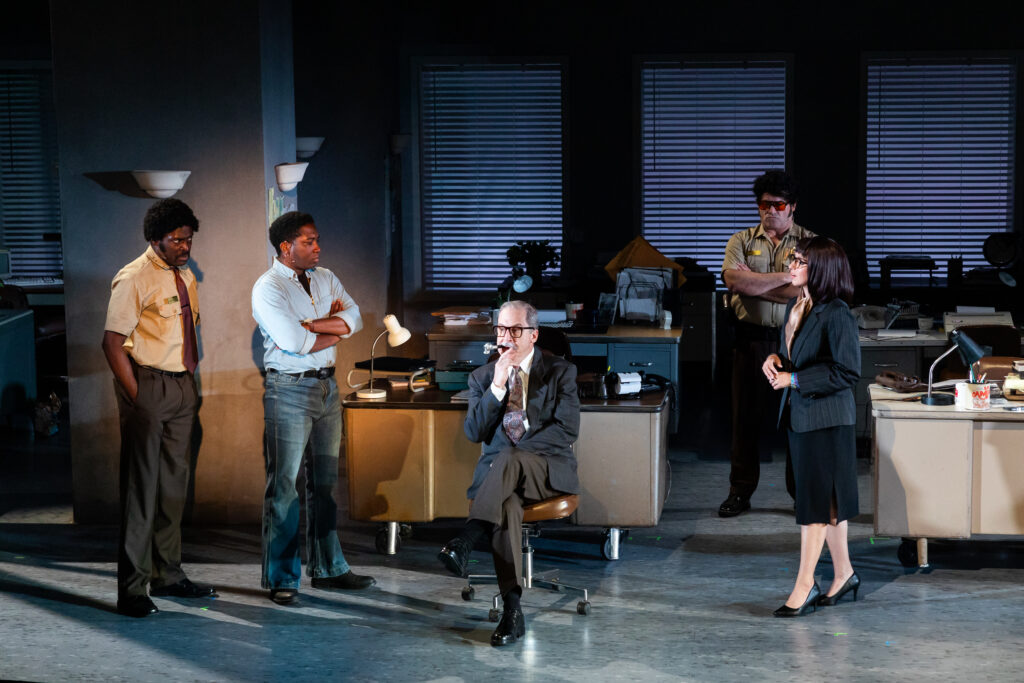
Stephen Trovillion, center, as the medical examiner Dr. Ron, with Jovon Jacobs as Bobby, Roderick Randle as Arthur McDuffie, Krystal Millie Valdes as the defense attorney and Rene Granado as police officer Vivic in Miami New Drama’s “Dangerous Days.” (Photo courtesy of Morgan Sophia Photography)
Griffin’s book dissects a year where a mashup of social change was converging so fast that it was hard to keep up: More than 100,000 Cubans arrived in the Mariel boatlift; Colombian drug traffickers were shooting and killing each other in broad daylight; and the death of Arthur McDuffie, a Black insurance salesman who police claimed was horrifically injured when his motorcycle crashed at the end of a chase on Dec. 17, 1979, left the city reeling.
What happened in the aftermath of that fateful chase weaves in and out of the book along with stories of Miami Herald crime reporter Edna Buchanan. She was the journalist who doggedly dug into inconsistencies in the cops recounting of what happened to McDuffie. Her reporting and an investigation landed some of the officers on trial. They were acquitted, a final domino that led to three days of rioting in Miami.
[RELATED: See Christine Dolen’s Preview of “Dangerous Days”]
Griffin’s book dives feet-first into how all of these factors led to a tinderbox. But the play culled from the book that Griffin worked on with Miami New Drama has trouble finding its footing – it just never lands on solid ground as a piece of theater.
Developing new plays is courageous and significant. Griffin, a first-time playwright who envisioned his book as a movie has ended up with a somewhat flawed play. The fatal flaw? It suffers from an identity crisis.
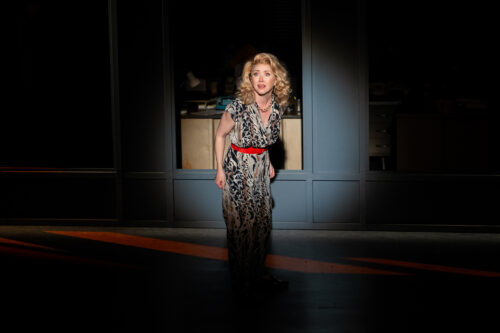
Caitlin Clouthier as Edna Buchanan in Buchanan’s signature pantsuit look by costume designer Celeste Jennings. (Photo courtesy of Morgan Sophia Photography)
“Dangerous Days” contains two character studies jockeying for attention. There’s the no-holds-barred reporter Buchanan (played by New York-based actress Caitlin Clouthier), whose lively personality has been amped up for theatricality’s sake. Here she comes across like a zany Rosalind Russell in the 1940s newspaper movie gem “His Girl Friday” rather than a future Pulitzer Prize-winning, self-taught journalist who worked the police beat for 18 years and conveyed so much of Miami’s essence in her stories.
The other major character study is of McDuffie (Roderick Randle), who narrates his own death and afterlife in “Dangerous Days.”
Another flaw is the play’s double standard. Granted, in the newsrooms of the early ‘80s, not an eye was batted when an editor referred to a female reporter as “Sweet Cheeks,” exactly the phrase that the play’s fictional editor Larry (Stephen Trovillion) tosses around in reference to Buchanan. But things get cringeworthy at the end of Act II when that same editor tells the audience that he thought of asking Buchanan out on a date when she first arrived in the newsroom, then shares that he was warned by a colleague that “if her pager went off during a hand job, you’d be on your own. . . .”

Caitlin Clouthier as Edna and Caleb Scott as police captain Marshall Frank in Nicholas Griffin’s “Dangerous Days.” (Photo courtesy of Morgan Sophia Photography)
The comic interludes, meant to add levity, only dilute the seriousness of what’s happening. In a play that deals with racial justice, sexism seems sorely out of place.
Anna the intern (Krystal Mille Valdes) is introduced early on – she’s a plot device for Buchanan to have someone to share dialogue with. But the reveal in Act III adds another layer to the question: Is this Buchanan’s story or McDuffie’s? And how can so much be told in just a little more than 90 minutes?
“Dangerous Days” needs some work; not unusual for a new play. In the places where “Dangerous Days” is at its best is when Griffin’s attention to detail comes through – the knowledge he shows from the research he’s done on the McDuffie incident and the way he has Buchanan describe how she approaches a story.
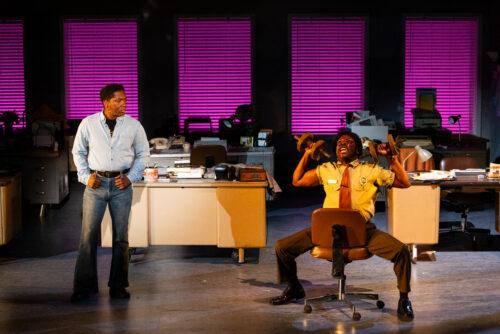
Jovon Jacobs as Bobby lifts weights as his friend from the past Arthur McDuffie (Roderick Randle) watches. (Photo courtesy of Morgan Sophia Photography)
The captivating actors and director Jen Wineman are topnotch, as is the standard for Miami New Drama.
All of the actors except for Clouthier as Buchanan and Randle as McDuffie play multiple roles.
Scott shows the most range of those playing several roles going from a drunk, fried-chicken demanding bully to police captain to prosecutor. Jovon Jacobs as McDuffie’s friend Bobby wears his heart on his sleeve, while Rene Granado plays Vivic, the first police officer to come forward, as tough as nails. Trovillion as Dr. Ron, the medical examiner who smokes a pipe shaped like a skull, is engaging as well as when he’s the Miami Beach curmudgeon with a Burdine’s bag who gives Buchanan a piece of his mind. Valdes brings to Anna a wide-eyed innocence and wisdom to boot, then in another scene becomes unrecognizable as a bespectacled defense attorney hellbent on getting her way.
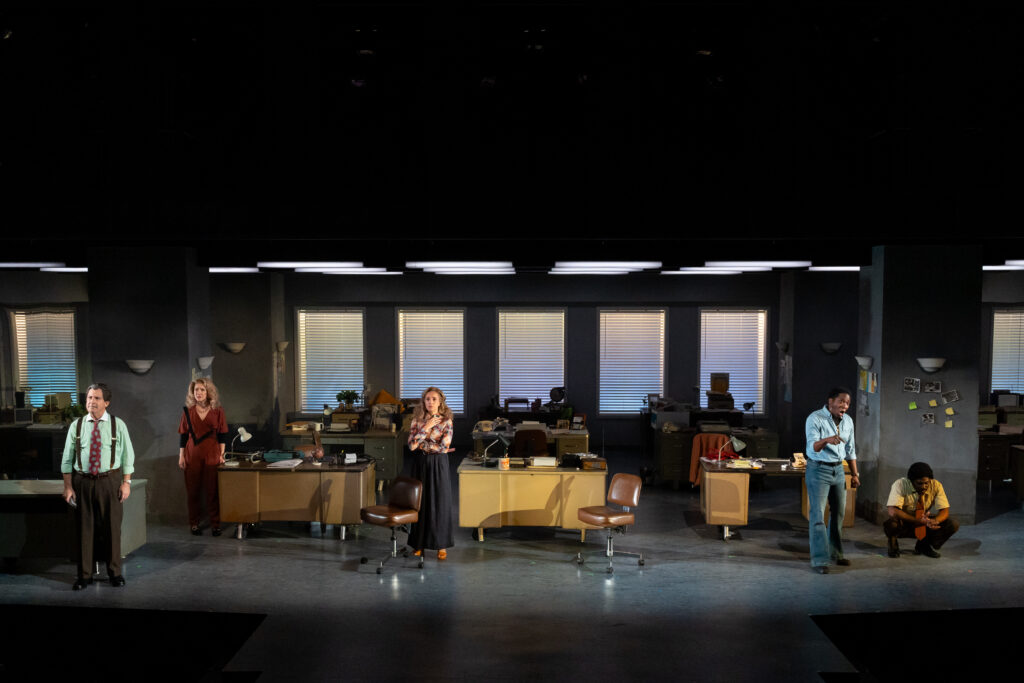
From left, Stephen Trovillion as Larry, Caitlin Clouthier as Edna, Krystal Millie Valdes as Anna, Roderick Randle as Arthur McDuffie, and Jovon Jacobs as Bobby on Tim Mackabee’s set for Miami New Drama’s world premiere play “Dangerous Days.” (Photo courtesy of Morgan Sophia Photography)
The Miami Herald newsroom, which doubles as police headquarters, is wonderfully executed for the time period by set designer Tim Mackabee enhanced by the throwback era prop design by Ana Maria Morales. Kudos to costume designer Celeste Jennings for capturing Buchanan’s love for pantsuits along with wig designer Carol Raskin whose different styles help create individuality for the multiple cast of supporting characters. Lighting designer Marie Yokoyama casts Miami 1980 in a blue haze, then ignites menacing red fire outside the building when the city is under siege. Co-sound design by Bailey Trierweiler, Daniela Hart, and Noel Nichols of Uptown Sound captures the era.
Miami New Drama had much success when it focused on 1980s Miami with 2019’s “Confessions of a Cocaine Cowboy,” working then with Billy Corben who created the 2006 documentary “Cocaine Cowboys,” and pairing him with playwright Aurin Squire.
“Cocaine Cowboys” was serious and dangerous. That’s something that the translation of “Dangerous Days” from page to stage lost along the way.
WHAT: “Dangerous Days” by Nicholas Griffin
WHERE: Miami New Drama production at the Colony Theatre, 1040 Lincoln Road, Miami Beach
WHEN: 8 p.m. Thursday-Saturday, 3 p.m. Sunday, through April 28
COST: $46.50, $66.50, $69.50, $76.50, $83.50
INFORMATION: 305-674-1040 or miaminewdrama.org
ArtburstMiami.com is a nonprofit media source for the arts featuring fresh and original stories by writers dedicated to theater, dance, visual arts, film, music, and more. Don’t miss a story at www.artburstmiami.com
No posts found








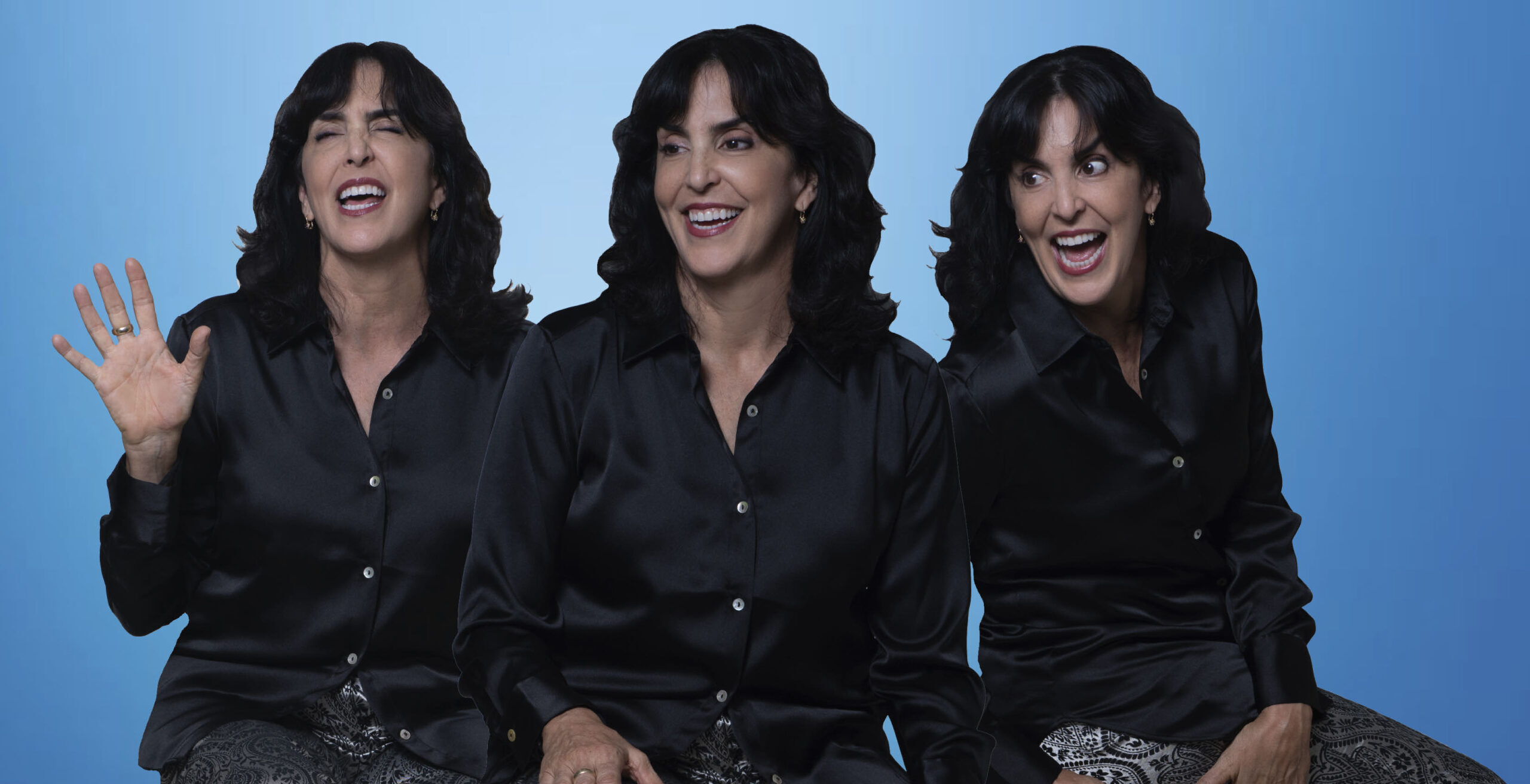

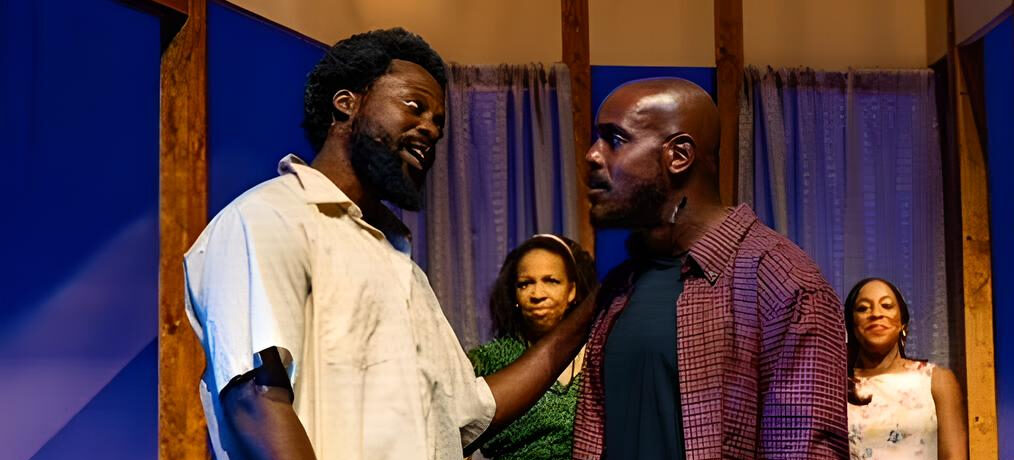


Recent Comments