Choreographers unite in outdoor performances for the planet
Written By Helena Alonso Paisley May 6, 2021 at 7:51 PM
“Such Rooted Things” will give audiences the unique opportunity of seeing Dale Andree perform with her daughter, New York dancer Thryn Saxon. (Photo courtesy of Karime Arabia)
** Due to weather conditions, “CIRCA/MIA” and “Such Rooted Things” has been rescheduled from May 13-14 to May 14-15. If you have any questions or concerns, email liveartsmiami@mdc.edu, follow PAMM on social media or check liveartsmiami.org for the latest updates.
The late performance artist Ana Mendieta once said, “I am overwhelmed by the feeling of having been cast from the womb (nature). My art is the way I re-establish the bonds that unite me to the universe. It is a return to the maternal source.”
In the two climate-conscious works that choreographers Dale Andree and Sandra Portal-Andreu will debut on May 14 and 15 outdoors in downtown Miami, it is dance that offers this connecting force: to nature, to the maternal, to community.
As part of Miami Dade College’s Live Arts Miami LALA (Live Arts Lab Alliance) Performance Series and the EcoCultura initiative, the special double-bill will feature Portal-Andreu’s “CIRCA/MIA,” followed by Andree’s “Such Rooted Things.” Each will consist of a dance component at Pérez Art Museum Miami’s adjacent Palm Terrace, at Maurice A. Ferré Park, and an accompanying short film screening inside PAMM. They’ll be presented live before a limited audience with COVID-19 protocols in place.
Andree, a pioneer in the Miami dance world and founder of the National Water Dance collective, has spent the past four months rehearsing weekly at Matheson Hammock Park, working on choreography for “Such Rooted Things.” At the park, she and her dancers bonded almost viscerally with nature. They connected with the mangrove forest “almost as if we’re being birthed out of it,” she said.
The performers behind “Such Rooted Things,” hard at practice at Matheson Hammock Park. (Photo courtesy of Karime Arabia)
It was a union forged by necessity. Never one to shy away from a challenge, Andree took the need to rehearse outside during the pandemic and raised it one. After all, why rehearse on solid ground when you can dance on sodden ground in a tangle of curved roots, mud and mosquitoes?
“We were in the mangroves every Saturday since January,” Andree said. “I’m a real process person, but it took me one level deeper in process.”
The dancers’ movements were awkward at first; one warm-up early on was spent just concentrating on how their feet should meet the soil.
“We took that into the way we moved on the mangroves and it changed everything,” said Andree. “There was a white heron sitting there and she never moved, because we were moving through [the trees] with that kind of care … the idea that every motion has intention, so even if you were at an awkward place, it wasn’t about making it right, but rather that intention to move created the dance … It brought art into an immediate moment for us.”
Andree has never approached choreography with the goal of telling a story. Here, she looked instead to illuminate the poetic truths offered by the natural world.
“You see death and birth right together in the mangroves, and that’s what’s so powerful,” she said. “It’s the rich cycle of life.” Where one dead branch is decaying, other cigar-shaped propagules are clinging to the sandy bottom, shooting out roots.
Dale Andree is a pioneer in the Miami dance world and founder of the National Water Dance collective. (Photo courtesy of Karime Arabia)
“I see that entanglement of the roots of the mangrove in the way we have to approach climate change,” she said. “The way they collectively hold the coastline … they’re the workhorses there that make life possible. I see community as that. The only way that we can deal with climate change is as a community.”
“Such Rooted Things” will give audiences the unique opportunity of seeing Andree perform with her daughter, New York dancer Thryn Saxon. Their collaboration marks the first time that the two have created a work together as co-choreographers and co-directors.
Physically, both are gorgeous to watch, with impossibly long limbs, beautiful line, and a capacity to invest the smallest gesture with intense meaning. While the two approach choreography very differently, their shared background in contact improvisation offered a firm base to build on. Still, dancing together presented both challenges and opportunities for mother and daughter.
“We’re really interwoven in our relationship,” Andree remarked. “But some of that had to be unthreaded … We needed to weave a new garment together.”
For Saxon, the idea of working with the woman she had spent her childhood dancing with caused mixed emotions. It seemed at first as if she were taking a step backward just when her artistic life in New York had been propelling her swiftly forward—to an apprenticeship with Bill T. Jones/Arnie Zane Dance Co., a place in the Kate Weare Co., and a steady gig in “Sleep No More” (an immersive theatrical experience based on “Macbeth;” Saxon had to shave her head for her role as one of the three witches). Still, she has come to call her pandemic year in Miami “a transformative experience.”
And her duet with Andree, she said, has turned out to be an intense 24 minutes.
Choreographer Sandra Portal-Andreu will dance in the evening performance, with images from the film projected behind them. (Photo courtesy of Stephanie Fuentes)
“We ran it the other day, and I was exhausted and covered in sweat … I think I just have taken for granted the fact that I get to do this with this incredible artist who has lived decades of an art life and life in general,” she said. “I just look at this experience of dancing with my 74-year-old mother as being not only artistically challenging, but physically challenging.”
Roles have a way of shifting in long-term relationships. A mother teaches a daughter who later comes back to teach the mother. For Andree, “everything in life is about birthing and dying and the sensuality of that, and the beauty of that, and this physical intimacy is just such a thing to relish.”
Live Arts Miami executive director Kathryn García, who developed the EcoCultura initiative at Miami Dade College when she was just coming off maternity leave, spoke of the special sense of responsibility mothers feel in addressing the climate crisis.
“I think in many ways Sandra, Dale, all of this cohort have been inspired by our children, right? And really thinking about what the crisis means for the next generations that are coming, and not only the generations that we know today, but the ones that follow after that,” she said. “What is our responsibility to take action now to really safeguard the future of generations to come, including those that are most personal to us, our children?”
In listening to her two young sons’ concerns regarding the climate crisis, choreographer Portal-Andreu was moved to create a film that would focus on the voices of young people as we seek collectively to rescue a wounded planet. She interviewed 37 children from neighborhoods throughout Miami-Dade County and collaborated with Miami Dade College’s MAGIC (Miami Animation and Gaming International Complex) program to create “CIRCA,” a short film that animates the children’s artwork. It is a child’s-eye view of Miami in the crosshairs.
The soundtrack is a combination of commissioned music from Miami duo Afrobeta and snippets from the children’s interviews.
“It’s something I haven’t seen done before,” García said, “and it opens up a whole new world, to really allow children to have a voice in a creative way.”
Six of the children’s mothers, including Portal-Andreu herself, will dance in the evening performance, with images from the film projected behind them.
Portal-Andreu hopes that the children’s message will not go unheard.
“I guess my hope for this project is that there is an opportunity for it to live on,” she said. “I would love for it to be sort of like a postcard to the people that are making decisions about the city’s future, you know, from our children.”
WHAT: LALA Performance Series presents “CIRCA/MIA” and “Such Rooted Things”
WHEN: 8 p.m. May 14-15 (Due to weather conditions, “CIRCA/MIA” and “Such Rooted Things” has been rescheduled from May 13-14 to May 14-15)
WHERE: Pérez Art Museum Miami, 1103 Biscayne Blvd., on its waterfront Palm Terrace
COST: Free; RSVP required
SAFETY PROTOCOLS: This event will require appropriate facial coverings (except when eating or drinking) and social distancing. All guests are expected to register in advance and present their E-ticket on their mobile device at the door.
Dance artist’s family tradition inspires Live Arts Miami’s ‘RoseWater’
Written By Sean Erwin April 21, 2021 at 1:01 AM
As the lockdown dragged on, dance artist Michelle Grant-Murray found herself wondering how her grandmothers had lived through the 1918 Spanish flu epidemic, which inspired her latest work. (Photo courtesy of Woosler Delisfort)
An African-American woman in a bright red dress and cat-eye sunglasses poses before a pale yellow Studebaker, a pair of white gloves in her hands. The slight fade to the Polaroid suggests the frequent handling of a cherished photo.
The image captures Elma Julius Newton-Henry, grandmother of dance artist Michelle Grant-Murray, who’s also associate professor and coordinator of dance at Miami Dade College. The stance of the woman’s body, and her body vernacular as she posed for that photo, will appear in Grant-Murray’s latest work, “RoseWater.”
Presented as a form of dance theater, “RoseWater” will explore memories from both of her grandmothers. The show is set for April 23–24 in Pinecrest Gardens, as part of Live Arts Miami’s LALA (Live Arts Lab Alliance) Artist-in-residence Program.
“RoseWater” emerged amid the COVID-19 pandemic, as Grant-Murray was trying to figure out how to cope. She says she thought about her grandmothers’ experiences during the 1918 Spanish flu epidemic – and was reminded of their practice of making rose water from scratch.
She began learning the craft of making rose water, experimenting with drying roses and distilling the flower’s oils. As her research expanded, she realized that her family’s use of rose water was a link in a centuries-old practice that traced back to Africa.
“All the ingredients [of rose water] have a medicinal purpose as well. They come from nature, and they have sustained people from antiquity,” she says. “I researched the connections rose water has with African spirituality and realized this knowledge existed within my family for hundreds of years.”
Shanna Woods is one of the performers to be featured in “RoseWater.” (Photo courtesy of Woosler Delisfort)
Last summer, Grant-Murray’s practice of creating and sharing rose water with neighbors and friends intersected with her passions for social justice and the environment.
“I started looking at why we have so many environmental issues right now. The main reason we have these issues has to do with environmental racism,” she says. “I asked myself, ‘How did we get to this point?’”
Guided by what she described as a “visceral feeling for the limitations of the freedom of Black women,” Grant-Murray and her company, Olujimi Dance Collective, mapped out the work using prompts that drew on collective memory and movements lodged in the body.
“In this work, I am looking at the decolonialization of the Black female body,” Grant-Murray says. “People don’t listen to Black women. They carry the essence of the world inside of their womb.”
Grant-Murray says the “perfect example of that” is Henrietta Lacks, the African-American woman whose cancer cells were found to be instrumental to medical research.
“Black women and the environmental DNA that exists in the Black body has answers to many of the issues that we are experiencing in the world,” she says.
When the pandemic shuttered dance studios in March 2020, the interruption and period of uncertainty allowed Grant-Murray to examine suppressed feelings of vulnerability.
“As a Black woman, [I] know that injustice happens and racism is very real. As an artist and an artmaker, I noticed I was finding ways to deflect situations and to refocus my energy, so I didn’t have to think about the injustices going around,” she says. “During the quarantine, we couldn’t get to a studio or share a space, so I started riding my bike, running and walking and kayaking. But these were solitary activities, and I was alone policing my thoughts and actions.”
Melissa Cobblah-Gutierrez does her part for Michelle Grant-Murray’s production at Pinecrest Gardens. (Photo courtesy of Woosler Delisfort)
The goal of Live Arts Miami’s LALA Program is to support a local arts ecosystem, with performances made in Miami and fueled by communal creative practices. “RoseWater” is billed as “the first of six unforgettable new performances” from LALA.
“In 2019, we commissioned our current cohort and were motivated to bring together a group of artists who shared a passion for climate justice,” says Live Arts Miami executive director Kathryn Garcia, with the aim of developing “new works centered on climate change and sustainability in Miami, as part of our larger ECOCultura initiative.”
That initiative is described as an ongoing series of action-driven programs and performances for the planet.
Grant-Murray’s track record of engaging issues of climate justice made her a perfect fit with the 2019 cohort.
“As an MDC professor and part of our Faculty Task Force, [Grant-Murray] has partnered with us on countless engagements connecting students with changemaking artists,” Garcia added. “Through LALA, we have had the incredible opportunity to support her artistic vision as a creator in our community.”
Still, even with the support of LALA, Grant-Murray found connecting audiences with “RoseWater” to be a challenge during a pandemic.
“Four films go along with this work, by videographer Woosler Delisfort. It was a way to present ‘RoseWater’ because we didn’t know that we could do a face-to-face performance. We thought it would originally have to be presented this way,” she says.
Grant-Murray even structured the 45-minute, open-air performance in a way that recalls features of the conferencing platform, Zoom – with a series of spaces where dancers will perform.
“The piece is informed by Zoom because we have the structure of the main room and the breakout rooms,” she says. “The piece is built so that people come into the main room where everyone sees everything. Then the audience members go into different spaces and all see something different. They all come into the main room and then have a discussion.”
Karen Peterson and Dancers reflects on pandemic, loss in new show
Written By Sean Erwin April 2, 2021 at 9:56 PM
“Lost and Found” performers will include, from left, Shawn Buller, Ximena England, Barny Espinal, Vanessa Dunleavy, Penelope Huerta and Jesus Vidal. (Photo courtesy of Karen Peterson)
Choreographer Karen Peterson talks about wheelchairs like some people talk about horses.
As artistic director of Florida’s leading physically integrated dance company – Karen Peterson and Dancers (KPD) – Peterson finds that the greatest challenge to choreographing wheelchair-bound dance is not the physical limitations of her performers but rather the “personalities” of their chairs.
“One of the most difficult things in dance practice or performance is to get wheelchairs to move in unison. The chairs have a mind of their own,” she says. “One has a battery that reacts this way, one’s wheels stick a little bit. The wheelchairs engage my imagination – from the speed of the chairs to their unique features to how fast they go.”
Peterson’s sensitivity for the intricate motions of wheelchairs as a building block for artistic meaning will be on full display when KPD presents “Lost and Found” at 4 p.m. April 11 in the Pinecrest Gardens Banyan Bowl, 11000 SW 57th Ave., Miami. The show will feature five duets – three mixed-ability dances and two able-bodied dances – that push the envelope of how dance can create meaning out of the pandemic. The losses it has left behind, she says, inspired her to tackle new ideas.
“What is it like to crumble?” she says. “What is it like for the body to crumble and the bones to crumble? I can support your weight and you can support mine, but what happens when that support is not there?”
The duets experiment by setting up sympathetic relays between audience and performers through weight displacements and games with negative space.
(Video courtesy of Karen Peterson)
“In the duets, I was focused on conveying physical empathy through the movements I developed,” Peterson says. “Physical empathy is having your arms full and having your arms empty, or having your chest open with someone there or the same chest open with no one there. There is a lot of coming together and pulling apart and filling and vacating space for one another.”
All seven company members will perform in the program. Asked about safety protocols and precautions, Peterson says: “The three wheelchair dancers were very mindful of what the virus could do to them if they got a severe case of the virus. They faced the difficulty of many live performers during this time, of the need to be masked while performing and exerting energy and feeling trapped within the mask.”
Still, in discussing mixed-ability dance, Peterson returns to the quirks of her performers’ wheelchairs.
“My mother had a stroke three years ago. I know from her experience that ordinary wheelchairs are very heavy and not very elegant. Some chairs just lend themselves to being more athletic,” she says. “In our company, one dancer is totally strapped into the chair so that he can balance on one wheel, and that’s unique to his chair and body. Whereas another’s chair is more like a solid piece of furniture.”
Specific types of chairs are so critical to a performance that if a chair changes, the choreography has to be adapted or dropped.
KPD dancer Jesus Vidal’s duet with Penelope Huerta pushes his current chair beyond its operational limits. His chair from Ki Mobility “is portable and compact and very responsive,” he says.
“My favorite part is when I tilt all the weight of my chair and my body back with her behind me,” Vidal says. “I really allow myself to be vulnerable when I do that. She presses me back into place and then we separate, and when we meet up again, she closes my eyes.”
Dancers Jesus Vidal and Penelope Huerta rehearse their “Lost and Found” duet. (Photo courtesy of Karen Peterson)
Adds Vidal: “It is both an abstract and narrative duet. It begins abstract then ends up narrative. We each have a solo at the beginning, and then as the duet progresses we exchange roles.”
Jesus began dancing ballet, hip-hop, jazz and contemporary routines at age 5, just for fun. Later, he became a professional gymnast, becoming an eight-time Dominican Republic national champion. But Vidal’s gymnastic career ended when he suffered a spinal injury during a floor exercise.
“Once you get injured, you think there is not a lot of opportunity to do dance. You get stuck in a bubble where you think you have lost use of your legs and the opportunities that come with them, and society says the same,” he says.
Then he discovered wheelchair dance. He caught a performance by AXIS Dance Co., a California-based, mixed-ability troupe, and learned they pursued dance full time. He was invited to train with some of the performers, and that was enough for him to catch the bug.
“I would now love to switch to a sports chair,” he says. “They are expensive, and I want to get the right one. Those … AXIS dancers use a small, light chair, and they use it solely for dance.”
In describing the dance experience before and after his accident, Vidal refers to his chair almost as a third partner.
“Before when I danced, I had more control of my body, and my job was to be aware of my partner,” he says. “Now I have three jobs – to be connected to my chair, be connected to my body, and be aware of my partner.”
WHAT: Karen Peterson and Dancers present “Lost and Found”
COST: Tickets will be sold in pods of two, at a price of $20 for general admission (available online at tinyurl.com/PinecrestKPD) or $10 for those age 18 and younger (available at the door on the day of the show, with valid identification)
INFORMATION: Visit Karenpetersondancers.org, email karen@karenpetersondancers.org or call 305-298-5879
Arts Ballet Theatre of Florida will bring to life ‘Fairy Doll’
Written By Sean Erwin March 2, 2021 at 3:03 PM
Starring as the fairy doll, Wendy Guo performs the ballet’s famous pas de trois with Taiyu He and Haowei Zhu. (Photo courtesy of Patricia Laine)
After months of cancellations forced by the pandemic, South Florida dance companies are showing signs of rebirth this season with a steady string of carefully staged indoor and outdoor productions.
As the latest offering, Arts Ballet Theatre of Florida will present “Fairy Doll” at the Miami Theater Center in Miami Shores on March 6 and at the Broward Center for the Performing Arts in Fort Lauderdale on March 13-14.
This Arts Ballet Theatre production features original choreography by the company’s artistic director, Vladimir Issaev, who admits he chose to rework this particular ballet for its lighthearted storyline.
“Why this ballet now? We need this right now – we need to relax,” Issaev said. “No one kills someone in a fight in it. There’s no black swan who steals the boyfriend. This is an easy story. This is a happy ballet with no drama. It’s about two guys in love with one girl, and there’s magic and a lot of fantasy.”
The work’s libretto may be meant to relax audiences, but his choice of ballet also communicates Issaev’s serious passion for dance history.
Set to music by Austrian composer Josef Bayer, “Fairy Doll” is a two-act, comic ballet based on the story “The Sandman” by E.T.A. Hoffman. The main protagonist brings to life the dolls in a toy shop. The story that unfolds shares features of its libretto with other 18th–century, Hoffman-based ballets such as “Coppelia” and the “Nutcracker.”
“[Issaev] is always trying to keep these old ballets alive,” said the company’s executive director and his wife, Ruby Issaev. “He loves and respects contemporary dance, but he insists that classical ballet shouldn’t die. When we travel, he likes to search for information on these old ballets.”
When the shop owner leaves, the dolls come to life in “Fairy Doll.” (Photo courtesy of Patricia Laine)
And this ballet has deep roots. First performed in Vienna in 1888 as “Im Puppenladen” (“In the Doll Shop”), the libretto of the “Fairy Doll” reflects the 18th-century obsession that bourgeois European audiences had with early robotics. Crowds flocked to gawk at complicated lifelike animatronics that both served to entertain and fueled theological disputes over the status of the soul.
Though Issaev choreographed much of the current production’s ballet, the closing pas de trois between the fairy doll and two rivals for her affection dates back to an early 20th-century version. To recreate this dance, Issaev relied on notes he took at university as well as his own experiences dancing this ballet in Russia when he was just 7 years old.
“When I studied at the university, we didn’t use video to learn dances,” he said. “At that time, we received ballets mouth to mouth. This is typical of the Russian tradition, which hands down ballets from one generation to the other.”
The ballet opens in a busy toy shop where the star attraction – the fairy doll – fascinates the village children. When the shop closes for the day, it comes to life and animates the shop’s other dolls. The second act unfolds in a series of nationality-inspired couple dances including Spanish-, French-, Brazilian-, Chinese- and Japanese-themed dolls.
When the pandemic began, both the company and the school closed. However, as early as July, Arts Ballet Theatre had returned to its North Miami Beach studio for in-person rehearsals and classes.
Liu acknowledged the hard road the performers have traveled, from lockdowns at the start of the pandemic to the current partial reopening of theaters. But she also identified an unexpected positive to mask-wearing during class and rehearsals: “When I was able to get back into the studio in the summer, it was uncomfortable to wear masks in the class. But now my stamina is getting better. The mask actually helped me to build up my stamina. It is so hard to breathe with the mask. I had more energy than ever during the company’s December performances of ‘The Nutcracker,’ which was the first performance I danced without the mask.”
From left to right, Takayuki Asai, Yuki Beppu and Hirofumi Kitazume in a 2015 performance of “Fairy Doll.” (Photo courtesy of Patricia Laine)
The March performances will take place indoors. Audience members will be seated in socially distanced pods, with two or four seats, and required to wear masks.
To maximize safety, the performers receive regular testing and wear masks when offstage or in dressing rooms. Onstage, the dancers perform without masks. Ruby Issaev credits the company’s strict testing and social distancing measures with creating a safe and healthy environment for the company’s classes and rehearsals.
“We are already teaching and practicing such a disciplined artform, and this is why it has not been a stretch for us to add another layer of discipline related to health and safety during the pandemic,” she said. “Discipline is not a punishment – it makes you organized, and that organization makes you free.”
Hong Kong native Janis Liu joined the company as a soloist in 2016 and will dance the current production’s title role. Liu shares Issaev’s opinion that the ballet’s subject matter couldn’t be better timed.
“The ballet is very fun, with a lot of acting and dancing, which makes it easier to follow,” she said. “Since the pandemic started, everyone is stressed out. It’s a way for people to escape.”
WHAT: Arts Ballet Theatre of Florida presents “Fairy Doll”
WHERE/WHEN:
Miami Theater Center, 9806 NE Second Ave., Miami Shores: 7 p.m. March 6
Broward Center for the Performing Arts’ Amaturo Theater, 201 SW Fifth Ave., Fort Lauderdale: 7 p.m. March 13 and 5 p.m. March 14
COST:
$35 for a pod of two or four seats in Miami
$40 for a pod of two or four seats in Fort Lauderdale
Dimensions Dance Theatre of Miami ready to return to live performance
Written By Sean Erwin February 12, 2021 at 6:52 PM
Josue Justiz, Gabriela Mesa and Fabian Morales in a previous performance of “Esferas,” one of the works returning in Dimensions Dance Theatre of Miami’s “Program I.” (Photo courtesy of Simon Soong)
When the pandemic hit, live dance halted, and companies shifted online. Now South Florida companies are increasingly capitalizing on outdoor performances to reunite performers and audiences for a safe and meaningful experience.
Among them is Dimensions Dance Theatre of Miami, which is presenting its first program of 2021 at 4 p.m. Feb. 20 at the South Miami-Dade Cultural Arts Center in Cutler Bay, on an outdoor stage built especially for the event.
Carlos Guerra and Jennifer Kronenberg – artistic directors of Dimensions Dance Theatre of Miami and former Miami City Ballet principals – are betting audiences are ready to return for live performances.
“It’s beyond time,” Kronenberg said. “It’s lovely that we’ve all been doing virtual [performances], but at the end of the day, the art form is not about that. There is a big loss in the translation from live to digital. This is not where this art form lives.”
Added Guerra: “We have to perform, and it can’t be all virtual … It is exciting that it is live, and it is important for the dancers.”
Alexey Minkin, Mayrel Martinez and Fabian Morales rehearse “Esferas” in the studio. (Photo courtesy of Yanis Eric Pikieris)
Dimensions Dance Theatre was a prominent content provider of virtual dance in 2020, with regular offerings that derived first from its archive and then from the creation of new online works. The Feb. 20 Spring program will be the first live, in-person performance for both the company and the South Miami-Dade Cultural Arts Center since the start of the pandemic.
Eric Fliss, the center’s managing director, expressed confidence that the facility’s rigorous adherence to Miami-Dade County’s “New Normal Guide” will provide a safe, socially distant experience for all involved.
The company established protocols to keep dancers safe and rehearsing throughout the fall, when numbers involved only two or three dancers. “Program I” increases the complexity because some works require the whole company to be onstage together.
“To handle that, we upped the strictness,” Kronenberg said. “The county requires testing of the dancers daily for seven days before the performance, and the dancers will wear masks during the performance.”
“Program I” will feature four works, with no intermission:
**The return of company favorite, “Esferas,” by choreographer and Miami City Ballet dancer Ariel Rose.
Miranda Montes de Oca in “Castles in the Air,” choreographed by Dimension Dance Theatre’s Yanis Eric Pikieris. (Photo courtesy of Yanis Eric Pikieris)
**The world premiere of “Castles in the Air,” choreographed by Dimension Dance Theatre’s Yanis Eric Pikieris. Set to composer Benjamin Britten’s “Bridge Variations,” it explores the sensation of being locked in a daydream.
“During the lockdown, we were dreaming of what the future might be, while acknowledging the present was what we had,” Pikieris said. “We were pretending we were together when we were actually taking class or choreographing through Zoom.
“In the piece, there is a duet where the two dancers – Maikel Hernandez and Mayrel Martinez – come very close to one another, but they don’t actually ever touch. And I took a lot of inspiration from the music itself, which is heavy and could make people think of isolation and loss.”
**The company premiere of “Adiemus,” a work co-choreographed by Yanis Pikieris Sr. and David Palmer, which the Maximum Dance Co. premiered in 1998.
For Pikieris Sr., “Adiemus” celebrates the joy of reconnecting – and it will be the first full-length work that includes the entire company onstage at the same time in more than a year.
“This was choreographed by me and David Palmer when we were both directors of Maximum Dance Company as a dance of celebration and exuberance …,” he said. “At that time, [my son] Yanis Eric was 3 years old. Now, for this performance, he will be dancing the role that I danced in it then.”
Fabian Morales and Claudia Lezcano in “RUTH: Ricordi per Due,” the final work choreographed by Joffrey Ballet artistic director Gerald Arpino. (Photo courtesy of Yanis Eric Pikieris)
**Another company premiere: “RUTH: Ricordi per Due,” the final work choreographed by Joffrey Ballet artistic director Gerald Arpino, before his death in 2008, and set on the company by Cameron Basden, former Joffrey Ballet dancer and now repetiteur and board member for The Gerald Arpino Foundation (and an occasional Artburst Miami writer).
Commissioned by Barbara Levy Kipper in the memory of her mother, Ruth Doctoroff Levy, the nine-minute pas de deux is set to the music of Italian Baroque composer Tomaso Albinoni and reflects on the experience of remembered loss.
Basden emphasized the relevance of the piece to the present: “The idea of losing someone is so prevalent in our life right now. It could not be more appropriate for this time that we are in,” she said. “It expresses both the love that one feels for the people who are here and those no longer here.”
WHAT: Dimensions Dance Theatre of Miami’s Spring 2021 “Program I”
WHEN: 4 p.m. Feb. 20
WHERE: South Miami-Dade Cultural Arts Center, 10950 SW 211th St., Cutler Bay
Miami City Ballet takes dance out into neighborhoods with ‘To Miami, With Love’
Written By Sean Erwin January 26, 2021 at 6:43 PM
Miami City Ballet dancer Itzkan Barbosa in a promotional image for “To Miami, With Love.” (Photo courtesy of Gary James)
Though the COVID-19 vaccine rollout holds out hope for an eventual return to normalcy, the near-term challenges of safely staging live performances remain real.
In December, Miami City Ballet tackled this challenge with its outdoor production of “George Balanchine’s The Nutcracker in the Park” in downtown Doral.
For its 2021 spring season, MCB extends this model further – bringing dance to South Florida neighborhoods with “To Miami, With Love,” a series of January and February pop-up performances set in iconic locations including Lincoln Road, Fairchild Tropical Botanic Garden, Wynwood, Vizcaya Museum and Gardens, Miami Design District, and The Underline.
Admission to the performances is free, though tickets are required. And all performances adhere to the health and safety measures implemented by each locality or individual business.
“As a cultural institution, we wanted to demonstrate our love for this city that really made us who we are,” said MCB artistic director Lourdes Lopez. “When COVID hit, we thought we are not going to let go of our desire to thank this city, instead we will find other ways of doing it.
“And the idea of pop-ups came up. What better way than to go out and dance in all the iconic places this mosaic of the city has to offer?”
For the first of the pop-ups, on Jan. 30, MCB and partnering New World Symphony will perform on Lincoln Road, as a nod to the historic Miami Beach beginnings of both organizations.
For MCB Corps dancer and choreographer Cameron Catazaro – whose new work, “A Lovely Feeling,” will headline the Lincoln Road performance, the pop-ups provide an opportunity to give back to the community.
MCB dancers Cameron Catazaro and Ellen Grocki rehearse “A Lovely Feeling” while quarantining in Maryland. (Photo courtesy of Cameron Catazaro)
“Before this horrible pandemic, the 35th season of Miami City Ballet was going to be a love letter to Miami, and we still wanted to find a way to give back to the community, give people a chance to take some time to relax,” said Catazaro, a former MCB school student who joined the company as a Corps member in 2019.
When the pandemic forced the cancellation of MCB’s season, Catazaro quarantined at home in Maryland with girlfriend and fellow MCB Corps member, Ellen Grocki. During downtime, he began work on “A Lovely Feeling,” a pas de deux set to the plaintive prelude of Giuseppe Verdi’s opera, “La Traviata.”
“It came naturally to me to choreograph,” Catazaro said. “The music we dance to is why I love to dance. Locating the music and then imagining the steps that would work for it was the fun part for me. Seeing the music play out through the dancers is what I really love.”
Verdi’s music especially moved him.
“I would play it during quarantine while doing puzzles,” he said. “Every time it would catch my ear, and I would put the needle back and play it again.”
The libretto of the Verdi opera revolves around the mortal illness of main character, Violetta. Asked whether his choice of music was intended to resonate with the broader theme of the pandemic, Catazaro said: “Originally I did not know the story behind it. It worked out perfectly for a time that is so challenging with so much sadness.”
Catazaro overcame the challenges of choreographing a dance for himself by shaping his steps around the sequences he laid out for Grocki. “In all partnering, it’s always about the girl. You want to make the girl look the best she can possibly look,” he said. “I’m doing my job if at the end of it someone says to me I barely noticed you.”
For the Jan. 30 pop-up, Catazaro and Grocki will dance to music performed by a quartet of New World string fellows, including third-year violin fellow Harry Chang.
Like Catazaro, Chang is elated at the opportunity to be performing again live in Miami.
“I’m so grateful that New World is trying everything to bring us back to the community,” said Chang, who returned home to Taiwan during the summer. “I’m very excited for this Lincoln Road pop-up … There’s something about playing for people on the street and having the human connection. That makes the experience intimate.”
The first pop-up will also include new work by Miami City Ballet Corps dancer and choreographer Julian Goodwin-Ferris.
Jordan Elizabeth Long will perform in Bradley Dunlap’s work on Feb. 21 at The Underline’s Sound Stage at Brickell Backyard. (Photo courtesy of Bradley Dunlap)
“For this project, I really spent a lot of time studying the musicality of Balanchine’s ‘Square Dance,’” he said. “Balanchine has such interesting ways of sometimes following Baroque music’s structure.”
His new work, “Realized Inner Voices,” is a two-part pas de trois danced by Satoki Habuchi, Jennifer Lauren and Eric Trope and set to the music of 18th-century composers Georg Philipp Telemann and Jean-Marie Leclair.
“Realized Inner Voices,” one of his first choreographies, was inspired by a visit to Vizcaya Museum and Gardens, where his ballet will be performed again on Feb. 5.
“Vizcaya feels like a villa you would see in Italy, but it is also a mix of different styles and eras of European history,” he said. “Vizcaya’s mash-up of different European art is, in a way, similar to ballet that is choreographed today. Influences and ideas often come from the large mix of the choreographers and ballets that came before, but the steps still trace their origin to the Italian court.”
For those unable to attend in person, the pop-up performances will be freely distributed on MCB’s social media channels beginning the week of March 8.
WHAT: “To Miami, With Love” pop-up performances WHEN: Jan. 30-Feb. 21 WHERE: Venues throughout Miami-Dade County COST: Admission is free, but tickets are required INFORMATION:MiamiCityBallet.org/popups
Dance NOW! Miami’s Anthony Velazquez and Benicka Grant will perform in Program I: “This Moment, Here,” on Jan. 10. (Photo courtesy of Simon Soong)
Amid the struggles of 2020, dance companies were forced to innovate at every stage of the artistic process – with performers doing their strength-conditioning in kitchens, rehearsals taking place in “pods,” and shows reaching audiences online.
Few dance companies have encapsulated the pandemic experience like Dance NOW! Miami. Since company shutdowns started in March 2020, DNM has rolled out 12 new programs working every angle of the pandemic, from the biomedical to the sociopolitical.
On Jan. 10 at the North Beach Bandshell, the Miami-based modern dance company will push the envelope even further with “This Moment, Here,” an emotional, eight-part archive that chronicles the events of 2020 in DNM’s most powerful treatment to date. The production, which will be offered virtually through its YouTube channel, tackles subjects ranging from the quarantine to civil unrest at the death of George Floyd to the 2020 election.
In a joint email statement, DNM co-artistic directors Diego Salterini and Hannah Baumgarten described “This Moment, Here” as having emerged “from the need to reflect on this moment in time and how 2020 is the culmination of many years of dissonant vibrations that continue to attempt to unravel the fabric of our society. The virus, Trump, police brutality, the political divisions are the manifestation of a world that is losing its humanity; a world where, through the fake illusion of easy mass communication and social media globalization, everyone is more and more alone.”
Several vignettes reflect on early moments of the pandemic, when shock prevented many from connecting emotionally with events as they were unfolding.
For instance, in “Prologue,” DNM dancers circle the floor to a jazzy, syncopated mesh of winds, strings and percussion, part of a new soundtrack created for the work by composer Federico Bonacossa. Matthew Heufner and Isabelle Luu Li Haas jog a circle while, in a corner, Benicka Grant and Anthony Velazquez anchor each other through lifts and turns. At the front of the stage, Renee Roberts solos in a half-dance, half-pantomime of quotidian tasks that range from gardening to washing dishes.
An emergency alarm screeches. The dancers freeze, scanning the room for threats. The action resumes, but the alarm again interrupts, and this time a dancer exits the floor until, finally, with the third alarm, those who remain don black masks.
Another vignette, “The Kitchen Table,” opens with Haas, Julia Faris, Joshua Rosado and David Harris seated or leaning around a table. None wear masks as they exchange sides, roll beneath the table, pile up in one corner, or scatter to the sides of the room, miming a heated conversation as they do so. The dancers’ circuits of activity repeat until Rosado falls to the floor.
At first, he struggles to return but soon falls again. Haas, Faris and Harris first hover over him before withdrawing to regard his outstretched body at a distance. They, too, then don masks.
Salterini says the vignette acknowledges the crescendo of deaths in Italy during the first wave: “It shows, in the beginning, families gathered together during the quarantine, fighting and playing, but then also transferring virus to one another as they did so.”
A prominent feature of “This Moment, Here” is its visceral treatment of events that are still in process.
In a brilliantly funny nod to the election cycle, “The Debate” opens with dancers perched on buckets, hands on knees, each in their respective corners. At the music, they fly to their feet, confront one another, jump in place, whirl and return to their corners. Their movements reflect the violence of the election’s rhetoric, but the tongue-in-cheek character of the movements playfully transforms it.
“This Moment, Here” closes with “8:46,” a work whose title refers to a period of time associated with the May death of George Floyd. Though the exact length of time that Floyd was pinned beneath a Minneapolis police officer’s knee has become unclear, the 8:46 number became a symbol for police brutality, and the company’s choreography symbolically lasts the full 8 minutes and 46 seconds.
The piece opens with streaming arpeggios, and the dancers in three lines. They turn, then first push out through their arms before pressing hands on their hearts. A duet begins between Velazquez and Grant. Starting from opposite sides of the floor, they first perform on their own. While Velazquez stretches out and spins freely, Grant repeatedly snaps her arms behind her back as if handcuffed or halts with her hands around her throat.
But as the melody turns pizzicato, they begin to circle, first Velazquez supporting Grant through lifts and pivots. The duet ends with them facing, their palms and forearms pressed against the other’s.
For Grant, the duet embodies the opposite of what happened to George Floyd. “The duet between Anthony and I portrays something else that could have happened in that time frame. He and I are two people who have no knowledge of one another at the beginning of the duet but somehow feel connected. Eventually, as the duet progresses, we form a relationship. We are full of joy and happiness. There are many moments within the choreography where I see it as, ‘I got you.’”
DNM dancer and rehearsal director Allyn Ginns Ayers thinks this is precisely the right time to look back on the past year’s issues and emotions.
“Of course, the pandemic and all of the societal issues that accompany it (social justice, health care, housing insecurity) are still unfolding and, undoubtedly, perspectives will change and evolve, as they have already,” she says. “But I don’t think the moment has to pass before one can or should comment on it.
“To the contrary, the process of creating – and consuming – art can allow us to reflect on, to understand, and ultimately to heal from this moment.”
WHAT: Dance NOW! Miami presents Program I: “This Moment, Here”
WHEN: 7 p.m. Jan. 10
WHERE: On DNM’s YouTube channel, livestreamed from the North Beach Bandshell. The venue will be closed to the public.
Review: MCB’s outdoor ‘Nutcracker’ offers glimpse of possible new directions for post-pandemic dance
Written By Sean Erwin December 23, 2020 at 3:25 PM
Miami City Ballet principals Jennifer Lauren and Renan Cerdeiro play the Sugar Plum Fairy and her Cavalier. (Photo courtesy of Alexander Iziliaev)
Every year, the “Nutcracker” ballet is a holiday tradition.
This year, ballet companies faced a difficult decision over whether to stage live performances. “Nutcracker” shows typically bring in a considerable percentage of yearly revenue for the nation’s ballet companies. Many companies that canceled their 2020-2021 seasons early continued to signal intentions of doing some sort of live “Nutcracker” well into the fall. However, in the end, they opted for online versions of the classic.
One notable exception: Miami City Ballet, whose 2020 rendition – entitled “George Balanchine’s Nutcracker in the Park” – is a live, full-length production with an outdoor audience and stringent safety protocols.
Presented through Dec. 31, this performance is a hybrid of filmed segments (mostly Act I) and live dancing (mostly Act II), based on the company’s 2017 “update” of choreographer George Balanchine’s 1954 version of the ballet. That update included new costuming by New York designer Isabel Toledo and scenic elements by her husband, Ruben Toledo, as well as South Florida-inspired lighting schemes by James Ingalls and gorgeous animated sequences from Wendall Harrington.
Doral Park dressed up for this newly designed rendition of Miami City Ballet’s “Nutcracker.” (Photo courtesy of Alexander Iziliaev)
This new “pandemic version” of the holiday production at downtown Doral Park is the product of combined community forces, including the City of Doral, the Codina Family, and health-care sponsor Baptist Health South Florida. Together, they implemented strong measures at the park designed to maximize audience safety.
For starters, the ticket-processing was touchless, socially distanced and organized to keep people flowing into the open theater space. Ticketholders were quickly seated in “pods” – distanced areas with room for four. Audience members had seats or could bring blankets, depending on ticket level.
Miami City Ballet also developed protocols with Baptist Health South Florida to safeguard the health of the performers, including consistent COVID-19 testing, rehearsal podding and mask-wearing.
On Dec. 18, which was opening night, the familiar Wendall Harrington projection of the “Nutcracker” doll on the stage backdrop and rows of gorgeously lit trees shaped an outdoor theater that was noticeably informed by biomedical protocols yet still pretty and festive. The roughly two-hour performance included a 10-minute intermission, in which most people remained seated.
The audience capacity at the park was restricted to 600, which meant ample distance between pods. The Friday night performance was free for essential workers. Those in attendance complied with the frequent messaging to wear masks and remain socially distanced at all times. As dancers left the stage, they could be seen donning masks.
Nathalia Arja, in white, showed accuracy, speed and precision in her pointe work as Dewdrop in “George Balanchine’s Nutcracker in the Park.” (Photo courtesy of Alexander Iziliaev)
Aspects of “George Balanchine’s Nutcracker in the Park” were startling and offered a glimpse of what a marriage of digital production and live dance can do.
Act I’s film segments are a virtual-reality projection based on a post-2017 company performance of the ballet. The 3-D effect of the L.E.D. screen is so pronounced that it can be eerily difficult to determine when a shift occurs between live dancers and filmed segments. Adopting this approach for Act I’s party and fight scenes allowed the company to avoid safety issues involving dozens of child performers.
The film effects were not perfect. The white tones saturated certain segments of the film, making it difficult to see facial expressions and obscuring some dance sequences.
Still, the spell cast by the 3-D effects was so complete that when Marie – ably performed by a very real Mia Zaffaroni – entered to nestle into the red velvet folds of the sofa with her broken Nutcracker doll, the sight of a real body on the stage for the first time caused a couple of double takes.
The sensation was magnified with the first group number, “Waltz of the Snowflakes,” when 16 dancers executed snap kicks, coordinated pivots, and skimmed the stage in bourrées, in tight groups of four and eight. Watching a group perform live after so many months of virtual-only productions was electrifying.
Much of Act II continued the live dance, with a few notable changes. For instance, the act traditionally opens with “Dance of the Angels,” performed by the very youngest dancers. However, due to safety concerns, the current version replaces it with a Harrington animation of brightly colored sea animals, birds and dolphins whirling in a trippy vortex that resolved into a South Florida beach-scape version of the “Land of Sweets.”
The Marzipan Shepherdesses coordinated flawlessly throughout the intricate choreography’s slight, unforgiving shifts of weight. (Photo courtesy of Alexander Iziliaev)
During the eight divertissements, some dancers struggled with the double tours, fouettés and ronds de jambe – entirely understandable given the cold (it was a breezy 60 degrees), the small dance floor, and the pandemic protocols.
Principal Jennifer Lauren was not one of them. In the role of the Sugar Plum Fairy, Lauren opened her solo against an emerald-blue backdrop, displaying terrific pointe work and piqué turns.
In the pas de deux that closes the act, Lauren returned with principal Renan Cerdeiro as her Cavalier. The two cast a spell, with Cerdeiro offering strong support during deep penchés, lifts and the choreography’s signature floated and pivoted arabesques.
Other highlights in Act II included the over-the-top exuberance that principals Lauren Fadeley as Hot Chocolate and Alexander Peters as Candy Cane brought to their respective roles. Emily Bromberg showed heroic attention to musicality throughout the contortions of the “Dance of Coffee.” Marzipan Shepherdesses Ashley Knox, Julia Cinquemani, Nina Fernandes, Suzette Logue and Helen Ruiz coordinated flawlessly throughout the intricate choreography’s slight, unforgiving shifts of weight, and principal Nathalia Arja as Dewdrop recalled her spectacular performance from last spring’s “Firebird” with the accuracy, speed and precision of her pointe work.
With solid dancing and palpable attention to safety protocols, Miami City Ballet’s latest “Nutcracker” offered South Florida audiences both an evening of relative normalcy and a glimpse of possible new directions for post-pandemic dance.
WHAT: “George Balanchine’s The Nutcracker in the Park”
WHEN: Dec. 18-31
WHERE: Downtown Doral Park, 8395 NW 53rd St.
COST: All tickets are sold as pods and cost from $120-$285, depending on the section and the date. All tickets include free parking.
Miami City Ballet presents its Christmas miracle: ‘The Nutcracker in the Park’
Written By Orlando Taquechel December 14, 2020 at 5:47 PM
Dancers from Miami City Ballet in “George Balanchine’s The Nutcracker in the Park.” (Photo courtesy of Alexander Izilieav)
First, the great news: Miami City Ballet is offering 14 performances of “The Nutcracker” in downtown Doral Park, starting Dec. 18 until New Year’s Eve.
And now for the story behind the news: It’s a beautiful Christmas tale, with a dance company planning its return amid a devastating pandemic and a public desperate to see in-person ballet once again. Two friends support the company’s director’s vision, and an even larger group sets out to make it come true. As a happy ending, we have the miracle of an unprecedented outdoor season.
It all started with a conversation between Lourdes López, artistic director of Miami City Ballet, and Ana-Marie Codina Barlick, CEO of Codina Partners, a real estate investment and development firm.
“This endeavor is the prime example of a public-private partnership at its best,” Codina says. “Seeing everybody working seamlessly together to bring this gift to the community has been inspiring: the private sector represented by Codina Partners, the Codina Family and Knight Foundation; the arts community by Miami City Ballet; the health-care sector by Baptist Health; and the government by the City of Doral.”
“This endeavor is the prime example of a public-private partnership at its best,” said Ana-Marie Codina Barlick, CEO of Codina Partners. (Photo courtesy of Gio Alma)
López adds: “Never in my 46 years of being involved in dance, have I seen this happen. All these separate sectors, coming together to answer a call for their community.”
Q: Whose idea was creating “The Nutcracker in the Park”?
“It came from me, initially,” López says. “But in May, I had a conversation with Ana, who asked me how the company was doing and what plans I had. I told her I was trying to put together an outdoor ‘Nutcracker.’ She immediately exclaimed, ‘If you do an outdoor [version], I want it for Doral.’ In conversation with another great friend, Wendall Harrington, we were commiserating on the state of the world and the arts. I told her about my ‘Nutcracker’ idea and about Doral. She said, ‘With an LED back wall, we can project the original … set designs by Ruben Toledo onto the wall for the outdoors.’ If I hadn’t shared my idea with both of them, this might not have happened.”
Harrington, a leading theatrical projection designer, has collaborated successfully with MCB on “A Midsummer Night’s Dream” (2016), “The Fairy’s Kiss” (2017), “The Nutcracker” (also in 2017), and “Firebird” in February of this year.
“This will be a slightly different version than the one you see at the Arsht,” López says. “First, it’s a multimedia performance, meaning the production will have video, animation, projections, and live dancing. All of Act II will be danced live, and some sections of Act I will be live as well.
“While I don’t want to reveal too much about where the production will take place, I promise it will still be a winter holiday performance, but winter down south!”
Q: Could it be considered a concert version?
“No!! This is the full ballet, all two acts. Nothing has been taken out of the ballet. In fact, the George Balanchine Trust, which licenses his works, would never allow us to take anything out or put anything in. It’s the same music, the same choreography, the same artistic sequencing of scenes. One way to look at it is that the scenes with many participants, specifically in Act 1, won’t be live but video,” López says. “And the special effects are even more spectacular because of the LED back wall. The set designs will be projected onto the LED back wall, and they will be visible from far away because they will be larger and brighter. Those living in apartment buildings across Doral Park will be able to sit on their terrace or stick their heads out a window and will still see a wonderful, magical and live performance right from their homes! And because of animation, we can now tell more of the story of ‘Nutcracker.’ For example, we can show you how Marie and the Prince got to the Land of Sweets in Act II. And, since I know everyone wants to know, the Tree still grows!”
Q: What have you learned from this project?
“I’ve learned so, so much,” López says. “First, it’s taught me that when a work is great, it remains timeless. Concerning our dancers, school and company, I’ve learned that all of us understand the responsibility we have as artists to regularly and consistently deliver beauty and hope. We are here for no other reason than to lift the human spirit. But the most important thing I’ve learned has to do with the community, with family. This ‘Nutcracker’ is happening because a Miami community came together to provide beauty and hope to its citizens.”
“It’s the same music, the same choreography, the same artistic sequencing of scenes,” affirms Lourdes López, pictured here in rehearsal with Chase Swatosh and Hannah Fischer. (Photo courtesy of Alexander Izilieav)
SAFETY MEASURES
Addressing the safety measures implemented, Codina describes enhanced, comprehensive health and safety protocols that “will be followed and strictly enforced to safeguard all. Daily COVID testing to our dancers, artistic staff and production crew will be provided by our health sponsor, Baptist Health South Florida. Required masks, social distancing standards, minimal to no-contact entry, and other health and safety measures in coordination with Baptist Health South Florida and local authorities will be strictly enforced for the safety of all.”
Additionally, guests will be seated in socially distanced pods, or separate sections of lawn that can accommodate a maximum of four people. Guests can select a chair module or a blanket module. In the chair sections, chairs will be provided. In the blanket sections, guests must bring their own blankets for seating.
WHAT: “George Balanchine’s The Nutcracker in the Park”
WHEN: Dec. 18-31, with an opening night dedicated to and exclusively for first-responders and essential workers fighting COVID-19.
WHERE: Downtown Doral Park, 8395 NW 53rd St.
COST: All tickets are sold as pods and cost from $120-$285, depending on the section and the date. All tickets include free parking. Tickets for the opening performance on Friday, 12/18, are sold out.
Cuban Classical Ballet of Miami is back, with a live & virtual performance of ‘Don Quixote’
Written By Orlando Taquechel December 2, 2020 at 8:26 PM
Lorena Feijóo and Rolando Sarabia as Kitri and Basilio in “Don Quijote,” on the night of its 2010 premiere by CCBM. (Photo courtesy of CCBM)
The Cuban Classical Ballet of Miami (CCBM), under the artistic direction of Eriberto Jiménez, is returning to the stage with “Don Quixote.” The company’s first and only live performance of 2020, after the closure of theaters due to COVID-19, will take place Dec. 5 at The Fillmore Miami Beach at the Jackie Gleason Theater. It also will be streamed live for online viewing.
The ballet “Don Quixote,” based on an episode of Miguel de Cervantes Saavedra’s masterpiece, has a close association with the history of CCBM. The famous Grand Pas de Deux has been present in many of its concert programs and in almost all of the International Ballet Festival of Miami (IBFM) galas.
Cover of the playbill for the premiere of the ballet “Don Quijote” by CCBM in 2010.
In conversation with Jiménez, we recently revisited that story and discuss this month’s unique presentation – which also marks the reopening of the iconic Miami Beach venue, site of some of CCBM’s greatest triumphs, including two unforgettable “Giselle” performances of February 2007. This interview was conducted in Spanish and translated.
Q: On this occasion, CCBM is not presenting the original complete ballet – by Marius Petipa with music by Leon Minkus – but rather a “suite.” What is the difference?
A: The suite is like a summary of a complete ballet. In this case, we have secured that the original story is maintained, but selected the brightest parts of it, as well as its most popular characters.
Katherine Barkman and Jorge Oscar Sánchez in the Grand Pas de Deux of the ballet “Don Quixote,” during the XXIV International Ballet Festival of Miami (IBFM) in 2019. (Photo courtesy of Simon Soong)
Q: Which moments are included?
A: We have chosen a bit of each act of the original work. A short prologue introduces us to Don Quixote. Something from the first act to appreciate the main couple and the famous bullfighting scene will also be there. We have the fight with the windmills and the dream of Don Quixote with ‘is Dulcinea. And we close with the always admired pas de deux.
The pas de deux of “Don Quixote” is one of the most danced pieces in ballet galas worldwide. It has been presented by the Cuban Classical Ballet of Miami on several occasions. We have enjoyed the participation of several Cuban principal dancers, such as Lorena Feijóo, Lorna Feijóo, Xiomara Reyes, Hayna Gutierrez, Marizé Fumero, Rolando Sarabia, Arionel Vargas, among others.
Q: When did CCBM premiere this “Don Quixote Suite”?
A: The company presented the complete ballet for the first time in 2010, in collaboration with the Cia Brasileira de Ballet (CBB). Our “Don Quixote Suite” premiered in 2015.
This seems to be an excellent time to present a “suite” again. Because of COVID-19, the theater does not want intermissions, to be able to maintain better control for the safety of the attendees.
Cover of the playbill for the premiere of “Don Quixote Suite” by CCBM in June 2015.
Q: Who will play the principal characters in this performance? Is this staging a collaboration with another company?
A: On this occasion, we will have as guests the Cuban dancers Ihosvany Rodríguez and Daynelis Muñoz, who were soloists of the National Ballet of Cuba before going into exile. Later, Daynelis was principal dancer with the Tulsa Ballet, and Ihosvany with the San Jose Ballet; he was also invited as a guest artist with the Slovenian National Ballet. This version is made in collaboration with St. Lucie Ballet, which is under the artistic direction of Lydia Oquendo and Rogelio Corrales. The dancers are from Greece, Russia, Brazil, Mexico, Chile, Colombia and Cuba.
Q: What are the protective measures taken to ensure the health of theatergoers?
A: The Fillmore Miami Beach at the Jackie Gleason Theater is the first theater in Miami to reopen, with the “Don Quixote Suite,” and for the public’s comfort and safety, it follow all the biosafety protocols established by the CDC and the Miami-Dade County Health Department, including payment procedures without physical contact.
The theater’s capacity has been reduced to ensure that distance between patrons be at least 6 feet, both in the seating area and in the line at the theater entrance. There will not even be intermissions, to avoid the crowding of people in the lobby.
The use of masks will be mandatory for the theater staff and the attending public. People who do not use those properly will not be allowed to enter or to stay in the premises. Only transparent plastic, vinyl or PVC bags with a maximum size of 12x6x12 inches will be allowed, and hand sanitizers will be available throughout the theater.”
WHAT: Cuban Classical Ballet of Miami presents “Don Quixote Suite”
WHEN: 8 p.m. Dec. 5 at The Fillmore Miami Beach at the Jackie Gleason Theater, 1700 Washington Ave.
COST: $35 and $45 for theater admission; $25 for online access
‘Men Who Dance’ to explore, challenge ideas of masculinity
Written By Jordan Levin November 24, 2020 at 3:05 PM
Miami City Ballet dancer Kleber Rebello will appear in Ariel Rose’s “Solstice in Solace,” as part of the “Men Who Dance” show. (Photo courtesy of “Men Who Dance”)
When he first planned his “Men Who Dance” program for last May, Rafi Maldonado was inspired by the idea of exploring and challenging ideas of masculinity in his art form. But after months of quarantine and restrictions, the showcase – now set for the Saturday after Thanksgiving – has another motivation: to lift up artists and audiences through live performance at a traumatic time.
“People say all the time that art is transformative,” said Maldonado, a veteran Miami jazz and contemporary dance teacher and choreographer. “The doctors are going to do a great job healing our bodies. What happens after that? That’s when artists come in. They can heal us differently, help us process information differently. That’s what art does, is be there in times of crisis.
“I see that as our mandate – to be there as soon as people can be there.”
“Men Who Dance,” which includes many of Miami’s top dance artists and companies, is set for Nov. 28 at the Broward Center for the Performing Arts, 201 SW Fifth Ave., Fort Lauderdale. The event will be one of the first live shows at the venue, as it – like Miami’s Adrienne Arsht Center and other groups – wrestles with how to keep the performing arts alive.
“People in the [arts] industry have been hit hardest and will be in a tough way longer,” said Kelley Shanley, CEO of the Broward Center, which has laid off all but 50 of its 500 employees. “We need to live with this virus because it’s going to be for a long time.”
Shanley said that Maldonado and others involved with the show “have the desire to overcome all the obstacles, take some risk, and give audiences what [they want] to see and artists an opportunity to perform. You’ve got to have great admiration for them – and we do.”
The Broward Center has worked with Cleveland Clinic to add safety procedures to its shows. Among the changes: Only 176 people will be able to attend the performance at the 584-seat Amaturo Theater, situated in groups of two or four away from the stage and 6 feet apart in all directions. Masks will be required.
Additionally, the venue has improved its HVAC system with better filtering and more outside air circulation, according to Shanley. Safeguards for the dancers include allowing just four onstage at a time, requiring they stay masked until they enter, and having only two people per dressing room.
“Men Who Dance” is a project of Maldonado’s Inter-American Choreographic Institute, or ICI, which he launched in 2014 with the aim of developing dance stories unique to the Americas – whether of Western pioneers in the United States or the Brazilian slaves who created capoeira.
As he traveled to work around the world, Maldonado became fascinated by how men are portrayed. (In addition to teaching at New World School of the Arts and at Miami City Ballet School, Maldonado became artistic director of Ballet Metropolitano de Medellin in Colombia in 2018.)
“Within our own art form, we have these stereotypes. We have to deconstruct these labels. This is not just machismo,” he says. “Whenever there is any sort of artistic intimacy onstage, many people are queasy about it if it’s the same gender. Or if the female is the stronger. There’s something wrong with that. I want to take this exploration to other countries and cultures.”
Saturday’s show reflects Maldonado’s long history and many connections in the Miami dance community, as well as multiple reactions to themes of masculinity, the pandemic, and performing.
Dimensions Dance Theatre of Miami, led by former MCB dancers Jennifer Kronenberg and Carlos Guerra, will contribute three pieces: “Shogun,” Brazilian-Japanese Ivonice Satie’s duet inspired by her grandfather and the relationship between a martial arts master and disciple; “Fiebre,” a quartet from a piece by Venezuelan choreographer Vicente Nebrada; and “Partida,” a solo by Dimensions dancer Ryan Nicolas DeAlexandro inspired by the exhilaration of performing again.
Eriberto Jimenez, leader of the Cuban Classical Ballet of Miami, which lent its Little Havana headquarters for rehearsals, will present the duet “Unbound,” danced to Florida Grand Opera tenor Dylan Elza singing a Donizetti aria. And Dance NOW! Miami will offer a new work, “In the Eye of the Cytokine Storm,” and a solo from “Lacrymosa,” created by South Florida-raised Joffrey Ballet dancer Edward Stierle in reaction to the AIDS epidemic, which killed him in 1991, when he was just 23 – a poignant reflection of the current COVID-19 pandemic.
Dance NOW! Miami’s Anthony Velazquez will perform “Lacrymosa.” (Photo courtesy of “Men Who Dance”)
Capoeira dancer Gustavo Guru will perform the Brazilian mix of dance and martial arts, while New World School graduate Enrique Villacreses will do his own funk/contemporary solo. Choreographer Ray Sullivan, whom Maldonado got to know while teaching at Miami City Ballet, will bring “Connected Sight,” a duet honoring the victims of the 2016 Pulse nightclub massacre, from his Tango Out project – exploring tango’s male roots and tense interplay of sexuality and power.
Maldonado’s ICI plans to open with his “On The Sixth Day,” a trio invoking Adam and the beginning of the world, and to close with former Miami City Ballet colleague Liz Malm’s “Resonate.”
For Ariel Rose, a rising choreographer who is also a Miami City Ballet dancer, creating for “Men Who Dance” has taken on new meaning since the onset of the pandemic. The overwhelming impact of the pandemic, quarantine, the longing to dance, and the difficult, uncertain efforts to bring back live performance, all have become part of his piece, “Solstice in Solace.”
When Maldonado first invited him, Rose planned to explore the closeness between Miami City Ballet stars Renan Cerdeiro and Kleber Rebello, childhood friends who studied dance together in their native Brazil.
“It’s not about homosexuality but about friendship,” says Rose. “They represent two artists who depend and lean on each other to absorb everything that’s happened in the world.”
The trio rehearsed in person at the National YoungArts Foundation’s JewelBox studio, and Miami City Ballet is allowing Rose, for the first time, to present one of his dances as a representative of the troupe.
“For me, it felt like a long winter, an eclipse, this absence of art,” says Rose, who just turned 30. “For my generation, this has been a defining era. We’ve seen 9/11, the stock market crash, the immigrant crisis. COVID made me look back on my life and what’s happened in this country.
“I’m trying to channel all those feelings into this piece.”
WHAT: Inter-American Choreographic Institute’s “Men Who Dance”
Written By Cameron Basden November 10, 2020 at 8:14 PM
Miami City Ballet dancers in George Balanchine’s “The Nutcracker,” which this year will be presented at a park in Doral. (Photo courtesy of Alexander Iziliaev)
Dance – a performing art that uses space, superhuman technical skills and artistry – has been relegated during these past quarantine months to kitchens, living rooms and backyards. Dance artists have been stifled, attempting in their various ways to maintain a positive outlook and, most of all, to keep their bodies and technique in check. It has not been an easy time.
Dance films have been created and archived material has been streamed. It is possible to watch a filmed performance of The Royal Ballet from London one second, then watch New York City Ballet the next. Creative filmmaking has thrived. Choreographers who had already been investigating digital formats for dance have found that necessity has pushed them to the forefront. Visual boundaries have been explored and broken.
Still, even with all the creativity and exploration occurring in the virtual realm, dancers have been in lockdown. They have been at home, filming, learning … and waiting for the first opportunity to let their bodies explode in space.
That time has come.
Dance performances are moving outside. From large organizations such as Miami City Ballet to smaller, site-specific choreography, dance is outdoors, where the air is fresh, distancing is possible, space is infinite, and live dance can be seen and can thrive.
As Miami dance icon Brigid Baker said, humorously, “I’d be dancing in a ditch right now if I had to. It’s so important. It’s who we are.”
In normal circumstances, Baker’s Whole Project would be performing in Miami-Dade County Auditorium’s On.Stage Black Box theater. For her company’s Nov. 13 show, Baker is moving her work outdoors onto an impromptu stage extending from the auditorium’s loading dock, as part of its Drive-Through Theatre Experience.
“The performance is free, with a limited number of cars so everyone can see,” Baker said. “You turn your radio to the soundtrack. It’s like a version of the drive-in.”
Baker will be showing a solo entitled “Crown,” which translates to “Corona” in Spanish and is performed by dancer Amy Trieger. The solo is an initiation to what Baker feels is a renaissance, a change that is coming. It is short in terms of minutes but rich with material and intricacies.
The solo movement is particular to Trieger, who has worked with Baker longer than any other dancer, and it was created to the haunting and soulful music of Arvo Pärt Fratres Version VI for percussion and strings.
Almost as challenging as the solo work itself are the outdoor logistics. Baker always creates natural, handmade sculptures that hang or move as part of her performances.
“There is no crew,” Baker said. “To be outside, I had to create something light in structure and able to be disassembled to hang in the space easily. If I thought about what I was doing, I would scare myself. I’m making a crown!”
On a much larger scale is Miami’s flagship dance company, Miami City Ballet, which will present Balanchine’s “The Nutcracker” from Dec. 18-31 at Downtown Doral Park.
Miami City Ballet typically presents multiple performances of “The Nutcracker” to packed houses in three South Florida counties. This year, encompassing all the magic and joy of the timeless holiday favorite, “The Nutcracker” will be seen on a huge outdoor stage, complete with an LED screen.
“As a society, everyone is hungry for joy,” said MCB artistic director Lourdes Lopez. “This is a time when comfort, healing and inspiration through the arts are more vital than ever.”
Set for Dec. 18-31, the performances have been organized with support from the City of Doral, Downtown Doral, The Codina Family (from Codina Partners), and Baptist Health South Florida.
“Never have I been part of a project where the government, city officials, a real estate business, medicine and a ballet company have come together to make this performance happen,” she said. “Not one entity could have done it on their own. It was truly everyone coming to the table and saying, ‘How do we make this work?’ This is not just getting on stage and doing a performance outside. This is truly a community event.”
Because so many children will make up the live production, segments will be shown on film. The LED screen will be used to seamlessly weave the live dancing with the projections and video, with the help of the original projection creator, Wendall Harrington.
The dance company is not unfamiliar with performing outdoors. However, performing with many safety protocols adds new layers. Choreography backstage and in front of house is as important as the choreography on stage – it’s a huge job that encompasses permits, barricades, ticket scanning, seating pods, safe markings on the lawn, and the cleaning and disinfecting of everything after each performance.
The city plans to set aside classrooms from a local school to safely house children in the performance, while office space behind the stage will be used as a dressing rooms area for the MCB dancers. Baptist will create testing sites for production staff, dancers, artistic staff and children. Baptist Hospital representatives who oversee COVID-19 safety and testing will come on board to understand how the show works and to ensure that it is done as safely as possible.
“As someone is heaving and breathing backstage, they’re not crossing paths with someone who is about to go on,” Lopez said. “We’re calling it the ‘Safety Start,’ the place where dancers prepare backstage. It’s all choreographed for safety.”
Meanwhile, Hannah Baumgarten and Diego Salterini – the co-artistic directors of Dance NOW! Miami – have shifted the Miami Beach location of their “Program I” on Dec. 13 from the closed Colony Theatre to the open-air North Beach Bandshell. (This program has been rescheduled to Jan. 10.)
The venue change has provided them with the opportunity to dance outside before an invited live audience while simultaneously livestreaming the performance for ticket-holders.
Dance NOW! Miami’s Anthony Velazquez and Benicka Grant. (Photo courtesy of Simon Soong)
“The good fortune of living in [the Miami area] allows for open spaces for performances. Necessity becomes a virtue,” Salterini said.
Dance NOW! Miami had much repertory created and rehearsed last year that was never performed, but it couldn’t create a program with that available repertory that would guarantee the 100 percent safety of its dancers. The company decided to drop all repertory it had and create a piece that was shaped by and reflective of the literal, physical and current situation that we’re living.
“We surveyed the dancers to see what level of comfort they have with masks or without masks,” Salterini said. “We know that everyone’s comfort level is not the same. That has made us follow what their level of comfort is as we choreograph.”
The co-choreographers created “This Moment, Here,” a complete work that speaks to what has occurred since those first days of the pandemic.
“People breaking up from stress or distance, falling in love, a depiction of disease, the horrific actions the body has when it attacks itself and eventually kills the person, a reflection on Black Lives Matter, political debates and the lack of agreements in our society. We felt we had to acknowledge where we are,” he says.
The company’s technical director, Bruce Brown, has created a set that keeps dancers at a distance from each other. Salterini and Baumgarten are considering having three different stages or spaces as a reminder that this pandemic isn’t over and maintaining distance is still a necessity.
An outdoor, site-specific venue also was used by choreographer Sandra Portal-Andreu and dancer Samantha Pazos, who last month joined forces to perform, “I am Speaking,” set to a compilation of famous speeches made by women including Maya Angelou, Malala Yousafzai, Ruth Bader Ginsburg, Sojourner Truth and Michelle Obama.
The activation was part of “Miami Vote Float,” which took place Oct. 24 in the parking lot at the Vizcaya Museum and Garden’s garage. The election event was designed to provide early voters with entertainment and to remind them of how much voting matters.
“I personally gravitated to this project not only because of the political climate, but because I felt this was the perfect opportunity to perform in a live open space,” Portal-Andreu said. “Dancing with a mask under the Miami heat and humidity demanded another level of strength and focus, but we paced our performance and channeled each other’s energies to respond to the powerful words that resonated from the speakers.”
Brigid Baker’s wholeproject performance, “Crown,” will be at 7:30, 8 and 8:30 p.m. Nov. 13 at Miami-Dade County Auditorium, 2901 W. Flagler St. Tickets are sold out, but a waitlist is available. Go to Miamidadecountyauditorium.org.
Miami City Ballet presents George Balanchine’s “The Nutcracker” in the Park from Dec. 18-31 at Downtown Doral Park, 8395 NW 53rd St. Tickets are available by visiting Miamicityballet.org or calling Miami City Ballet Customer Relations at 305-929-7010.
Dance NOW! Miami presents Program I featuring, “This Moment, Here,” at 7 p.m. Jan. 10. The show will be filmed at the North Beach Bandshell in Miami Beach and livestreamed via YouTube. Tickets cost $10 and are available at Dancenowmiami.org. Every ticket buyer will receive an email with the livestream link and the concert program. For additional information, call 305-975-8489.





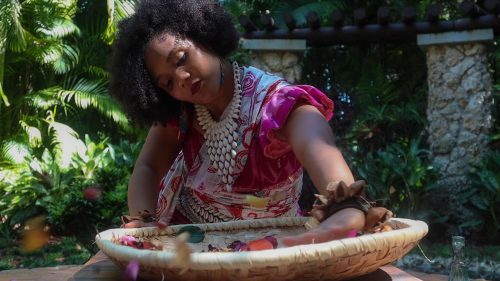


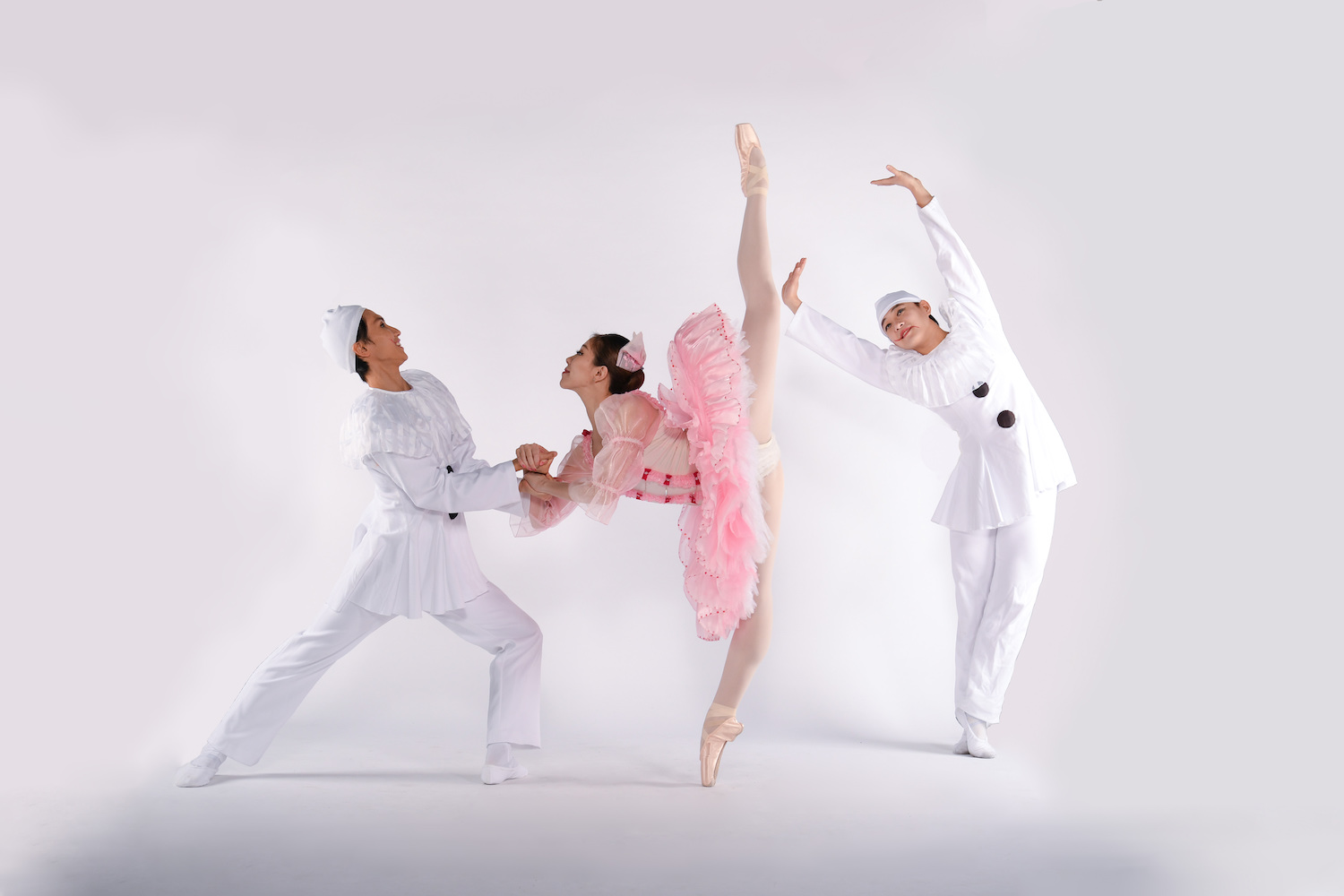
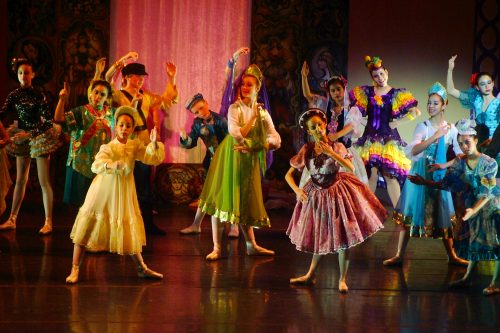
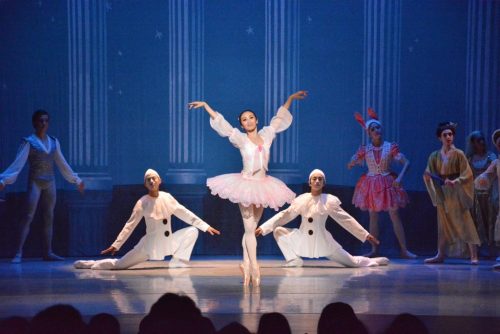
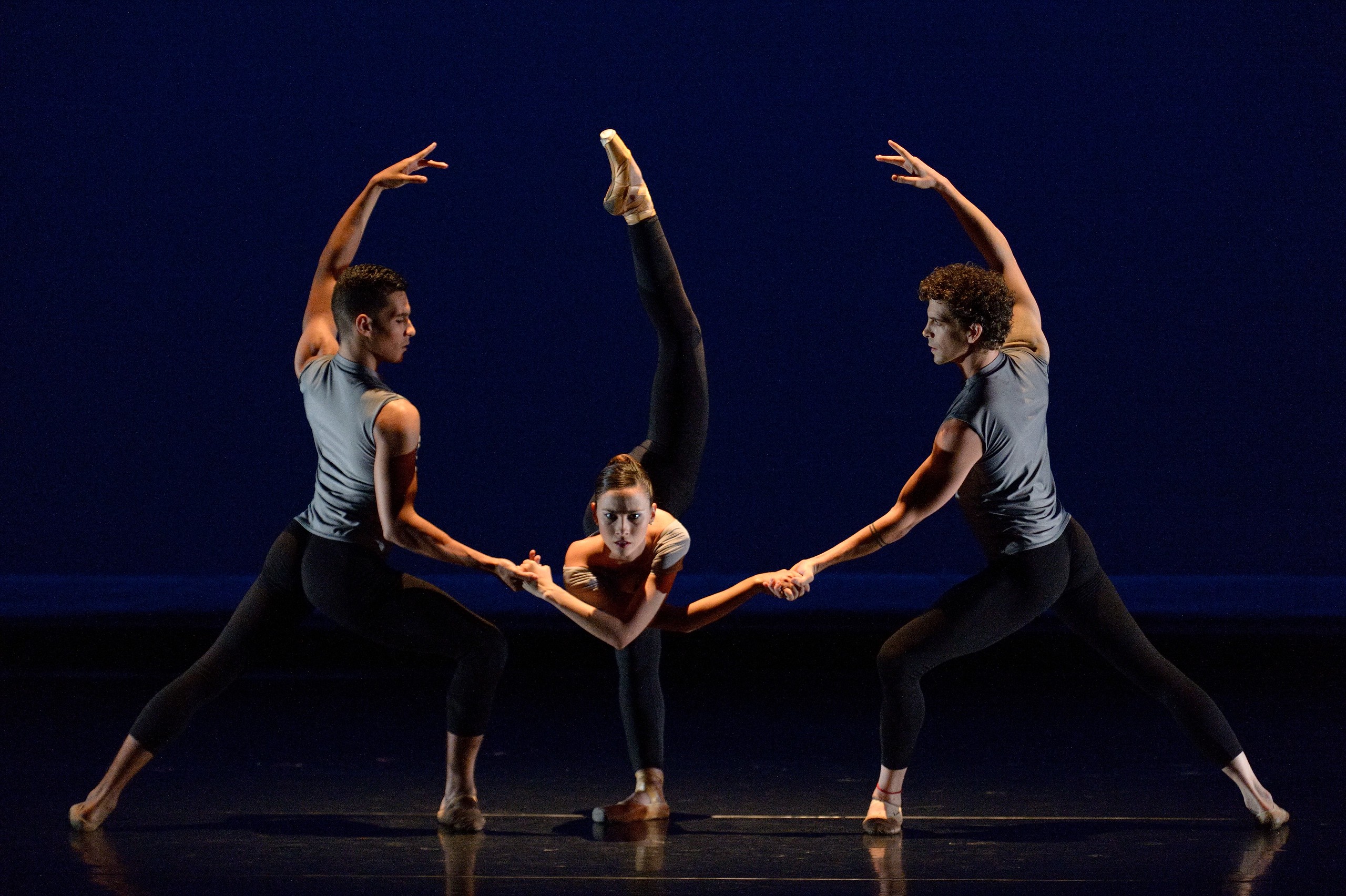
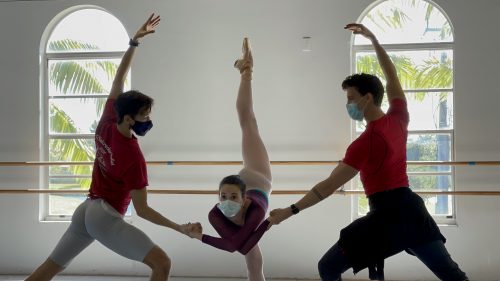
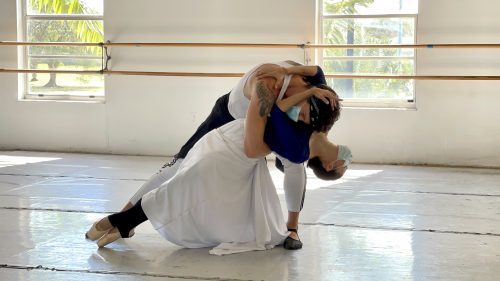

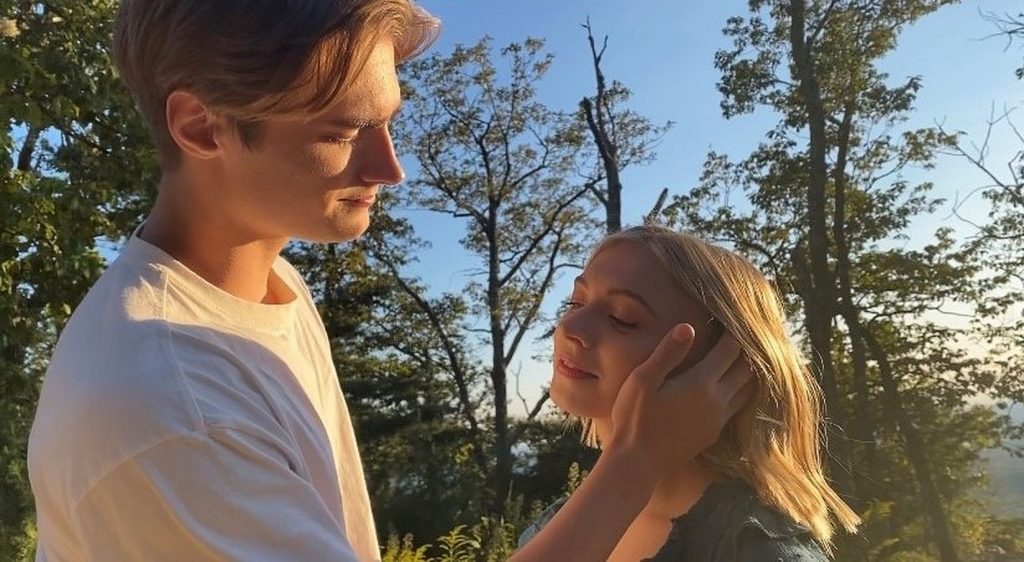
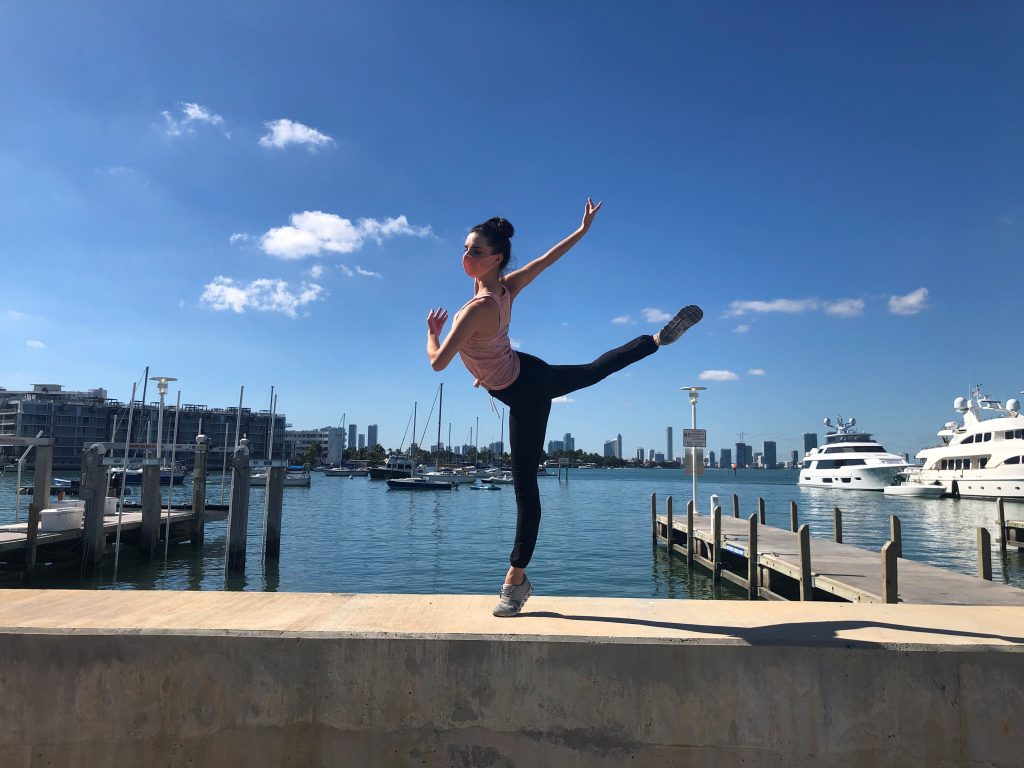
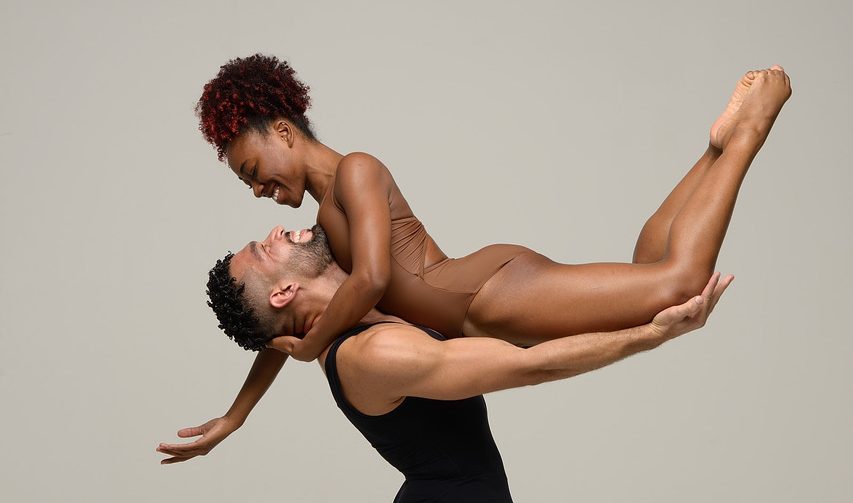
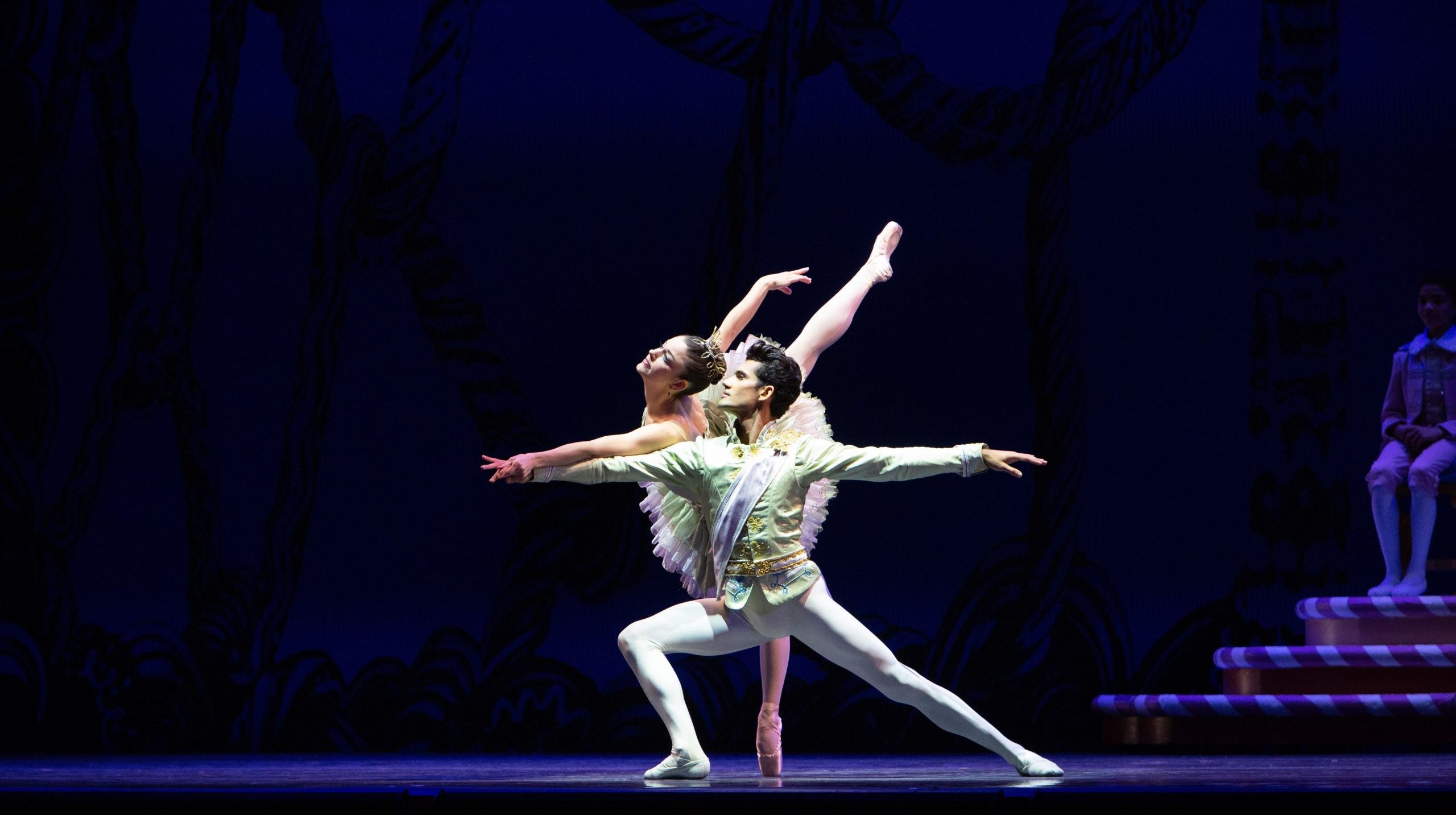
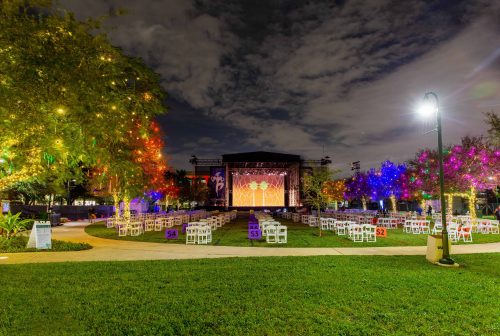
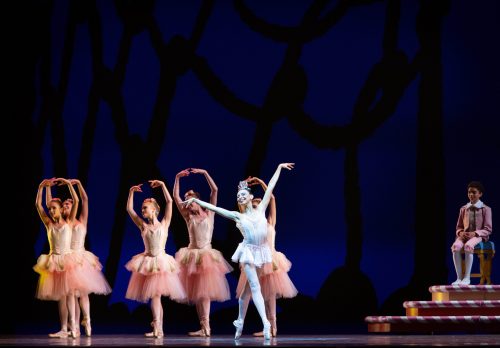
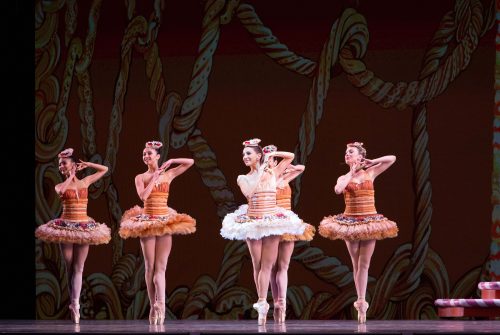
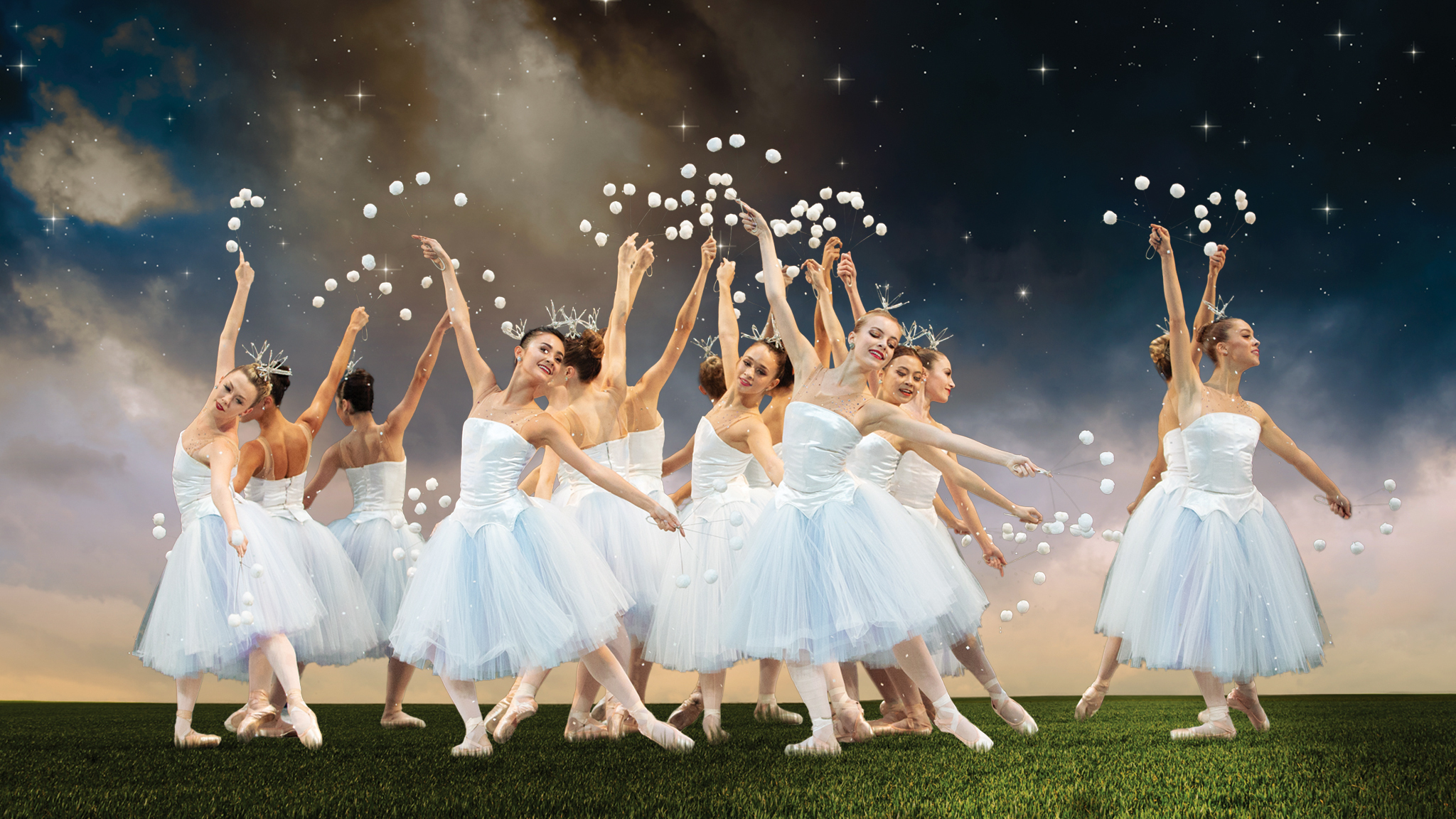

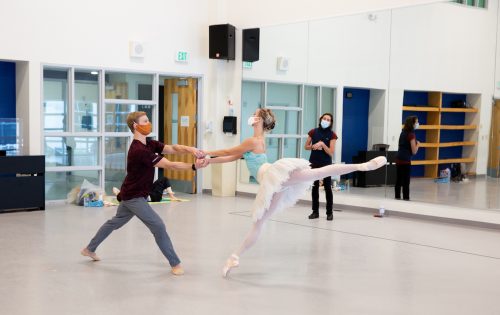
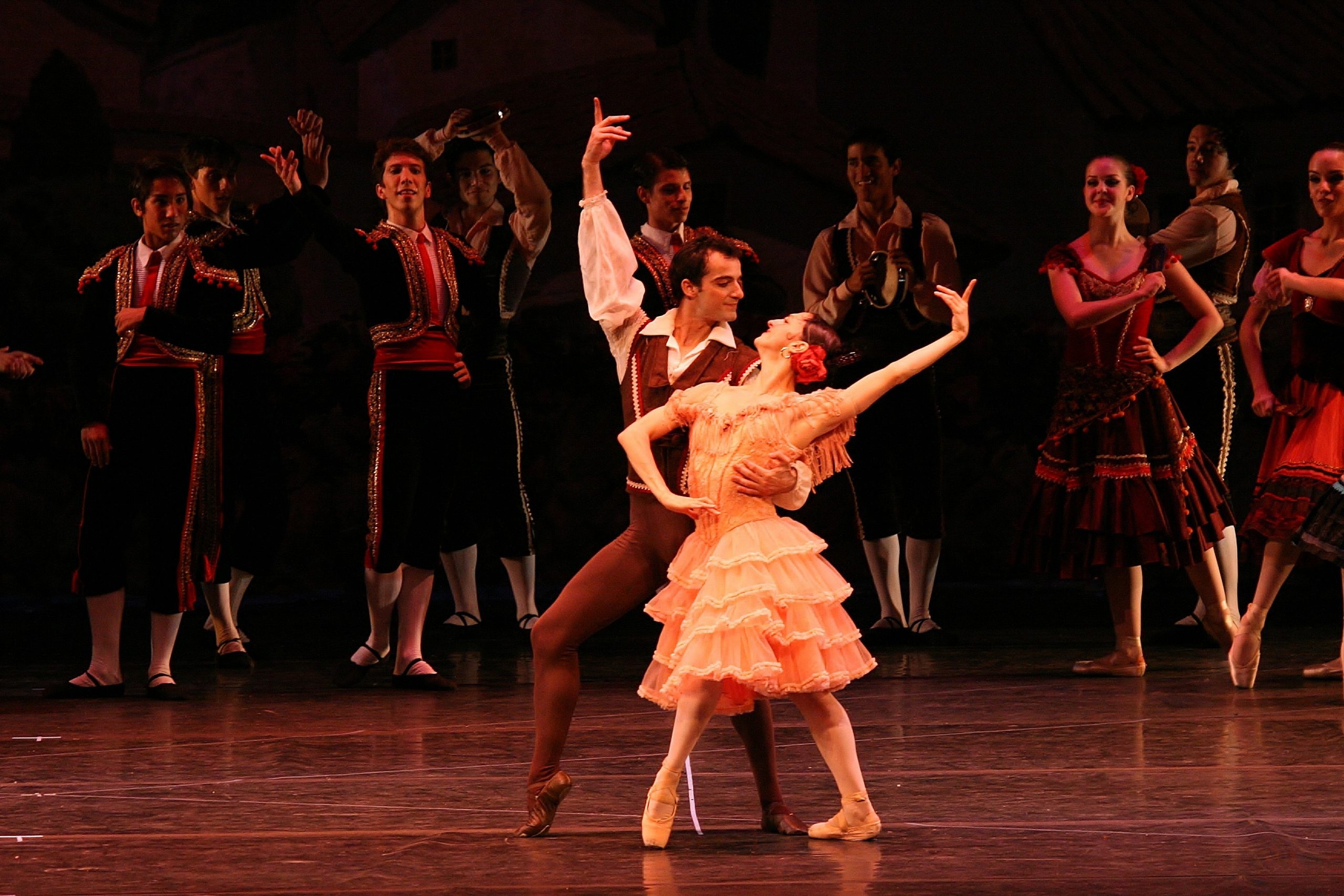
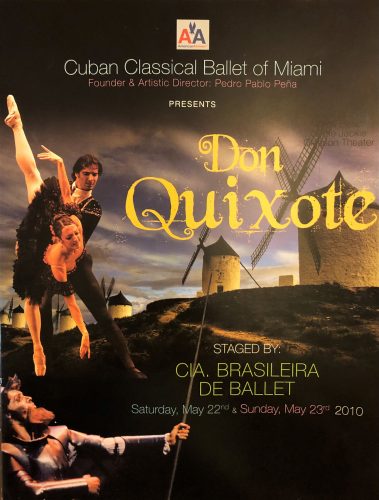
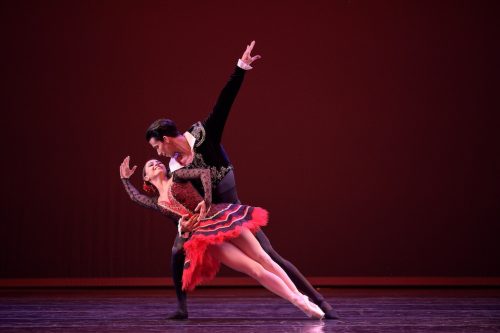
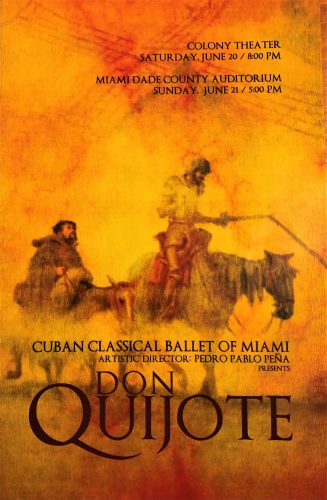
Recent Comments