Despite pandemic, Dimensions Dance Theatre of Miami to unveil new works
Written By Sean Erwin November 5, 2020 at 6:04 PM
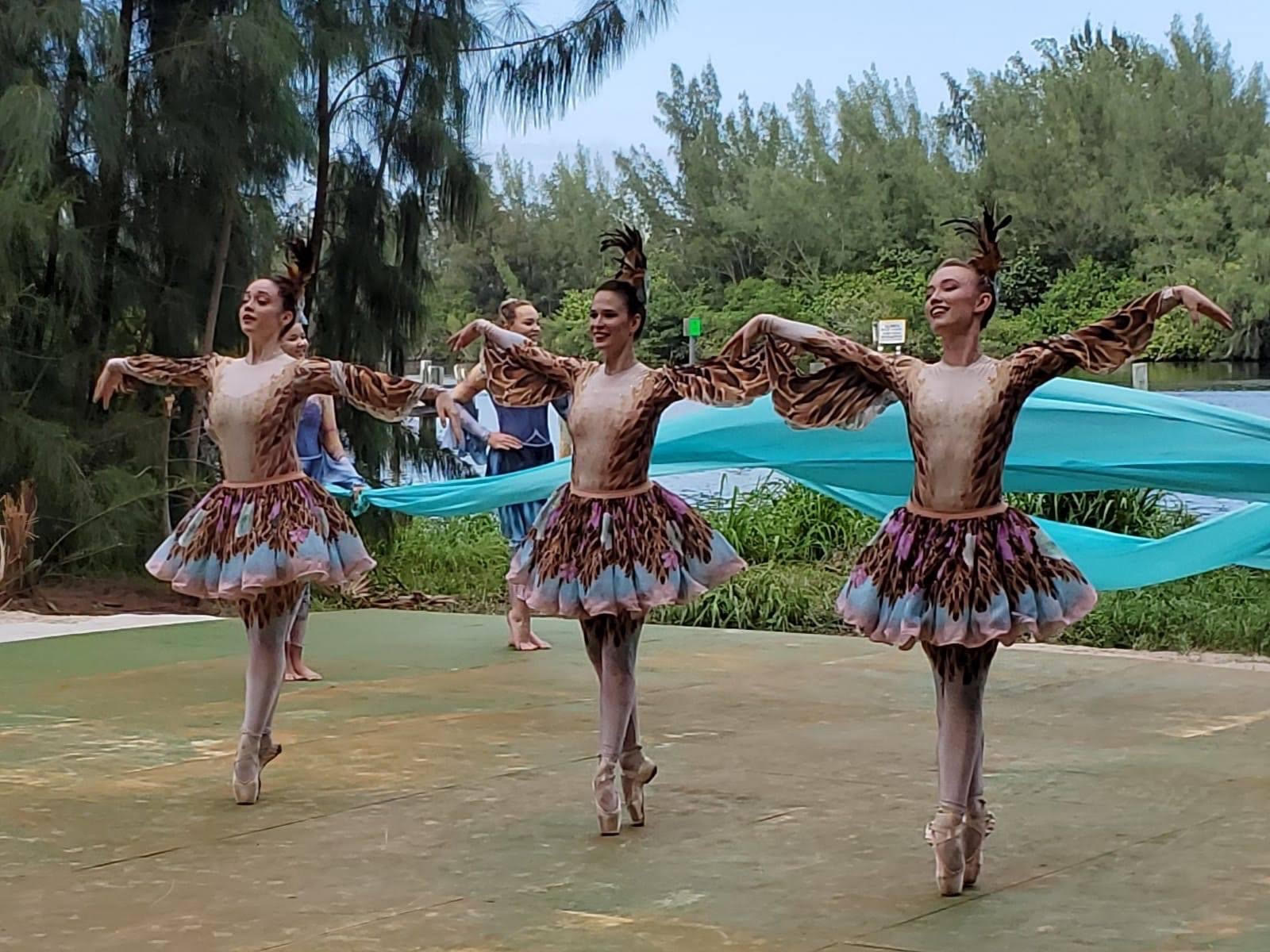
From left, Paulina Zambrana, Mayrel Martinez and Selah Oliver in “Nutcracker on the Indian River,” Dimensions Dance Theatre’s presentation in collaboration with Ballet Vero Beach. (Photo courtesy of Carlos Guerra)
Dimensions Dance Theatre of Miami has been busy preparing new, full-length works for its spring program.
But first, it will launch its fall series this week by offering a sneak peek at some of these works.
Starting Nov. 6, Dimensions Dance will present “From Behind the Mask: Digitally Unveiling DDTM’s 2021 Season,” a free virtual program with informal vignettes of upcoming premieres, interviews with choreographers, and artist insights into the works, as well as behind-the-scenes footage.
The first program will include two solos from South Florida choreographer Yanis Pikieris’ “Four Seasons,” and a pas de deux excerpted from Pikieris and David Palmer’s full-length ballet, “Adiemus,” performed by DDTM dancers Ryan Nicolas DeAlexandro and Meisy Laffitte.
“What I find magical about Yanis is the passion and energy that pours out of him,” said DeAlexandro. “I notice in his choreographies a similar energy to Vicente Nebrada’s choreography with lots of twisty-twervy movements for the girls. [‘Adiemus’] has a kind of Enya vibe – gooey, lovey, and Yanis knows all the tricks to the partnering.”
For Jennifer Kronenberg and husband Carlos Guerra – DDTM co-artistic directors – generating new works meant they could keep their dancers employed during tough times. The company received initial funding for its digital season from the state and Miami-Dade County, as well as from South Arts, a nonprofit foundation supporting performing arts organizations throughout the South. A recent boost came from The Miami Foundation, which has allowed Dimensions Dance to extend rehearsals an additional five weeks, Kronenberg said.
The “From Behind the Mask” season will end with a run of “Nutcracker on the Indian River,” an hourlong South Florida adaptation of the holiday favorite created in collaboration with Ballet Vero Beach. “Nutcracker on the Indian River” will stream from Dec. 23 to Jan. 6from a shared link on the Ballet Vero Beach and DDTM websites.
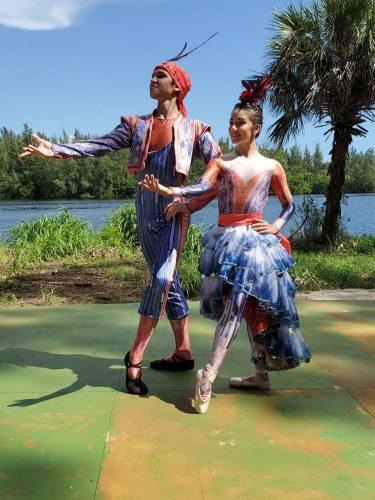
Alexey Minkin and Claudia Lezcano in “Nutcracker on the Indian River,” which will stream from Dec. 23 to Jan. 6. (Photo courtesy of Carlos Guerra)
“We’ve filmed an environmentally themed outdoor version of ‘Nutcracker’ in Vero Beach on the Indian River,” Kronenberg said. “For instance, instead of the Land of the Sweets, Clara encounters all kinds of local wildlife, like Mother Mangrove instead of Mother Ginger, the Cranes instead of the Arabian dancers. We have Sand Pipers instead of Mirlitons, Gopher Tortoises replace the Chinese, Land Crabs take the place of the Spanish – their claws act as castanets.”
Asked how they were able to continue creating new works during the COVID-19 pandemic, Kronenberg said the key to staying in the studio has been frequent testing. The dancers have formed social bubbles of twos and threes.
“We have a protocol list they had to sign if they wanted to work at this time,” Kronenberg said. “We are extremely diligent about daily safety protocols, including temperature taking, mask wearing, hand sanitizing and general sanitizing practices in the studio. We have successfully completed five weeks of work without any COVID scares.”
DDTM dancers DeAlexandro and Chloe Freytag agreed that the chance to return to the studio made any inconveniences observing the company’s protocols worth it.
“Knowing that a life-threatening virus could harm any of the people that I love motivates me to get tested regularly,” DeAlexandro said. “Of course, it can be a tedious task, but if that’s what we have to do to practice our craft together in the studio, then I am all for it!”
Of course, the pandemic makes it impossible to dance before a live audience right now. For DeAlexandro, no live audience meant less nerves and the added chance to push the envelope: “I felt a little more comfortable in the space, knowing that if someone would see something, we could pause. Knowing I could stop made me go for it and push even more.”
But both dancers agreed that dancing without an audience was just not the same. For a digitally streamed performance, the audience can respond in likes, comments and emojis, but that is all “really different than a roaring audience giving reverence to what you’ve just done,” Freytag admitted.
WHAT: Dimensions Dance Theatre of Miami’s “From Behind the Mask: Unveiling DDTM’s 2021 Season”
WHEN: Nov. 6, 13, 20 and 25. “Nutcracker on Indian River” will stream from Dec. 23 through Jan. 6.
HOW IT WORKS: On the publicized dates, patrons who sign up for the DDTM mailing list on the website will be sent a link to watch the performances. That link will remain active on the website for one week.
COST: Subscription for the DDTM mailing list is free, though there’s a suggested donation of $10.
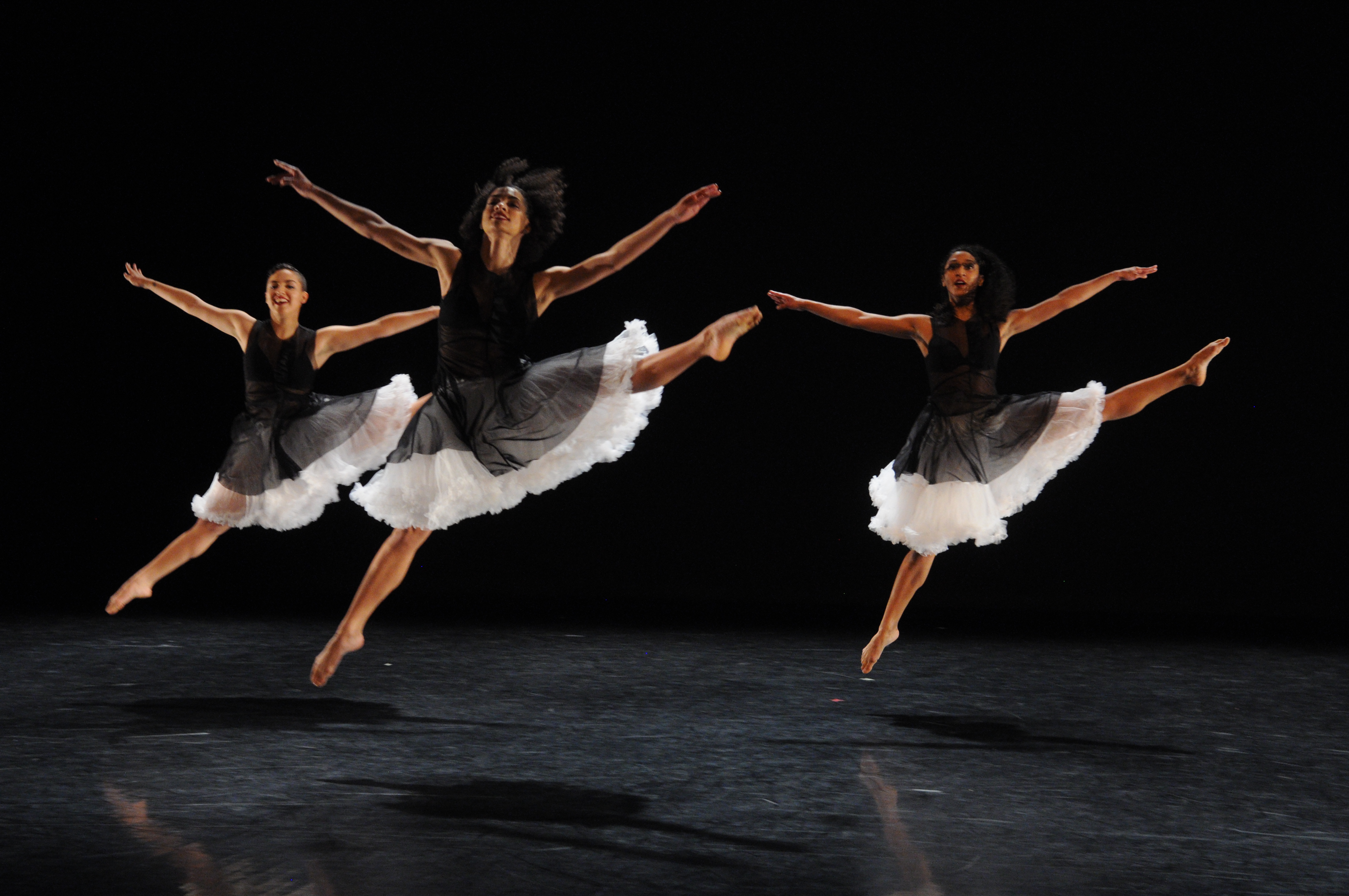
New World School of the Arts dancers (from left) Sashalie Rios, Deja Darbonne and Sydney Rabin will be seen performing “Nube Blanco,” by choreographer Annabelle Lopez Ochoa, as part of the Daniel Lewis Dance Sampler. (Photo courtesy of Juan Cabrera)
For decades, the Daniel Lewis Dance Sampler has showcased the best of Miami’s dance companies, choreographers and performers.
More than a kickoff to the Miami dance season, the event – named after the South Florida choreographer and former New World School of the Arts dean of dance – has provided participants with the opportunity to network and view each other’s latest works.
This year’s Daniel Lewis Dance Sampler, set for a virtual showing at 7 p.m. Oct. 23, will include pieces from Arts Ballet Theatre of Florida, Ballet Flamenco La Rosa, Dance NOW! Miami, Dimensions Dance Theatre of Miami, Karen Peterson Dancers, Momentum Dance Co., New World Dance Ensemble, Pioneer Winter Collective, choreographer Kyra Jean Green and dancer-choreographer Sandra Portal-Andreu.
The pandemic forced the organizers to think differently about this year’s event.
“Part of the call to the artists this year was to submit works that were very well-edited with interestingly filmed performance footage,” said Hannah Baumgarten, co-artistic director of the Daniel Lewis Dance Sampler along with Diego Salterini since 2009.
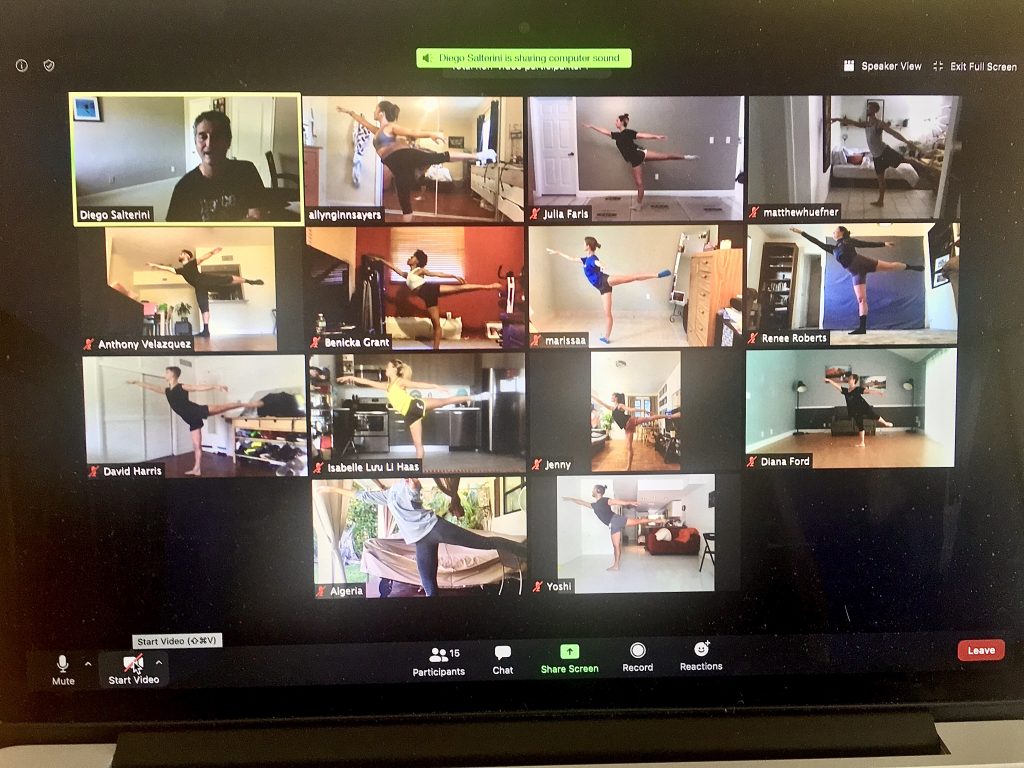
The pair also are artistic co-directors of Dance NOW! Miami, which will mark its 10th season at the Sampler with the first movement from the company’s playful, “ZOOM ZOOM ZOOM: A Love Letter to Italy.” Baumgarten and Salterini created the work during quarantine – made for viewing solely through Zoom.
Meanwhile, Dimensions Dance Theatre’s co-artistic directors, Jennifer Kronenberg and Carlos Guerra, chose choreographer Donna Goffredo Murray’s exquisite pas de deux, “Space Between Words,” for this year’s Sampler.
“The piece is subtle, quiet and impactful,” said Kronenberg. “[The dancers play] a romantic couple, but there is longing for something else. All the silences and moments without movement are as important as the passages with movement, and the piece really works for the Sampler because the couple dances in a very controlled space.”
For Guerra, the shift to digital presents an opportunity for local companies to expand their audiences.
“Over the summer, we started to present virtual performances of things we had already done and got a big interest,” he said. “People didn’t have to drive all the way to South Miami to see our performances. We even have audiences seeing our footage in Europe.”
For Pioneer Winter, founder and artistic director of the Pioneer Winter Collective, the Sampler is a great venue for bringing back old repertoire. The company will be screening, “Glory Tap,” a six-minute tap dance originally filmed in 2011 that takes place within a bathroom stall, exploring themes such as stigma, fear and liberation with choreographed moves implying an anonymous sexual encounter.
“You see two toilets and two pairs of legs inside the stalls. You see them dancing, and some of their movements are sexual,” he said.
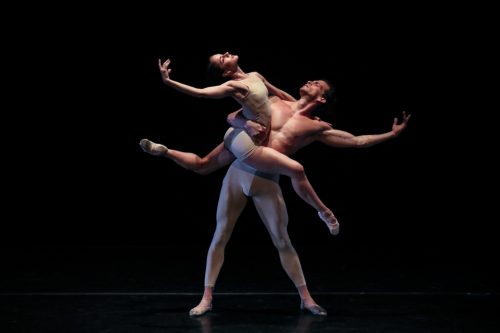
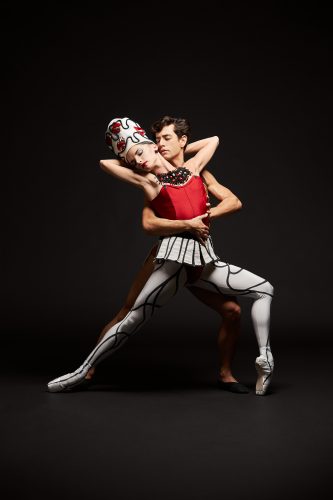
Claudia Lezcano and Fabian Morales of Dimensions Dance Theatre of Miami. (Photo courtesy of company)
When asked about the challenges of virtual performances, Winter replied: “The digital is just like a site-specific dance that has history or social or cultural information tied to it. Social issues are embedded in the technology. For instance, we’ve been playing around with virtual reality, and accessibility issues arise when you consider the cost of a $400 VR headset.”
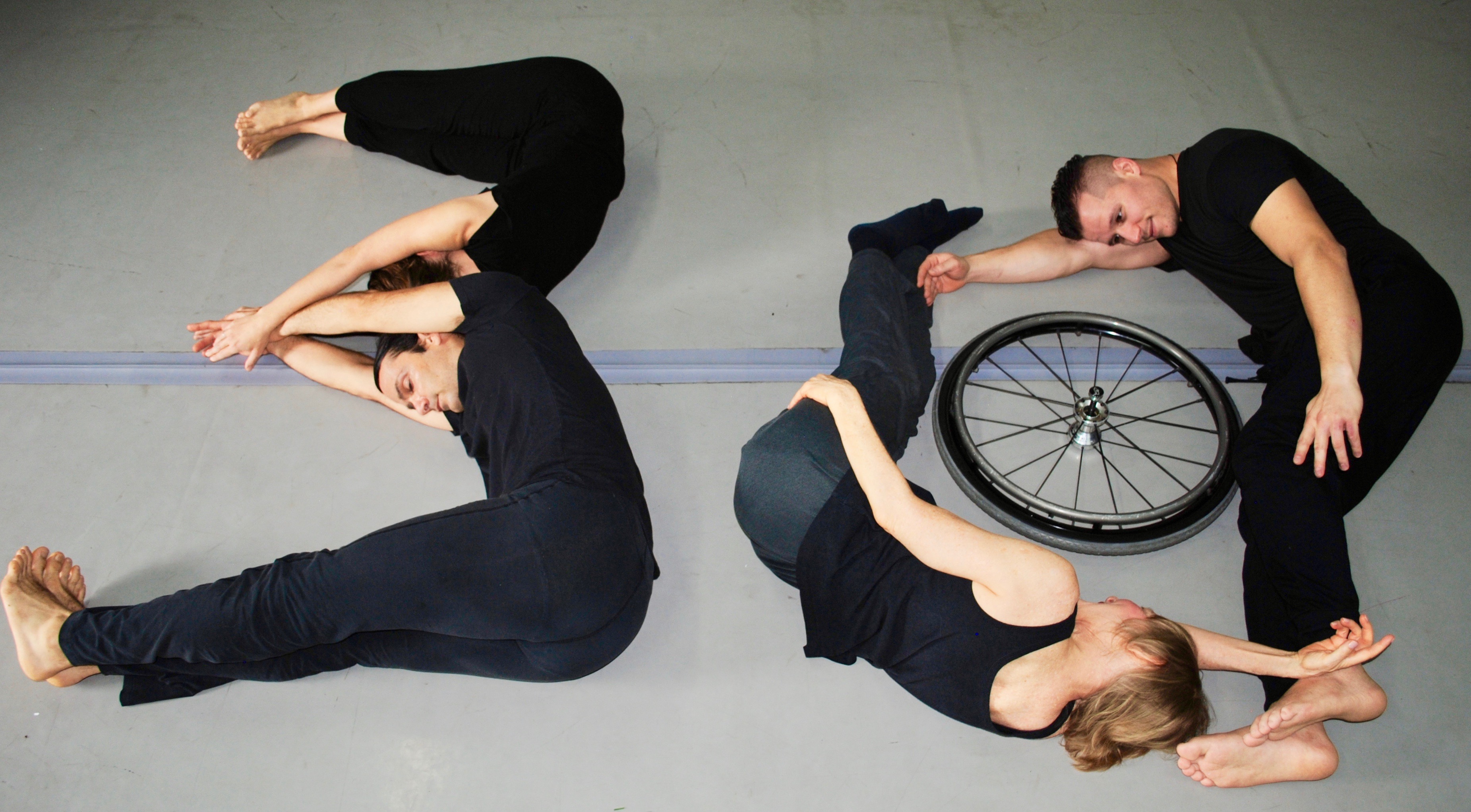
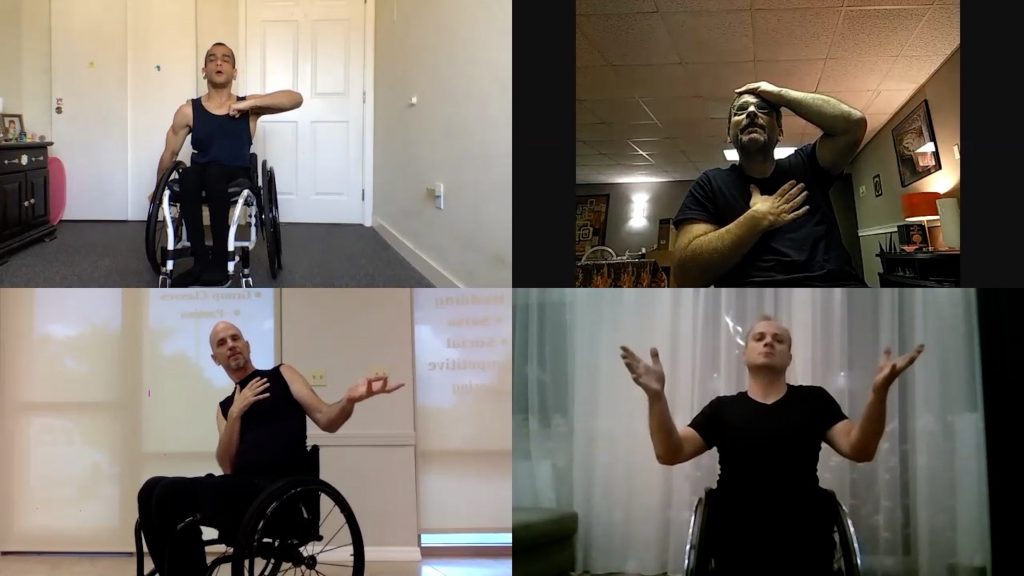
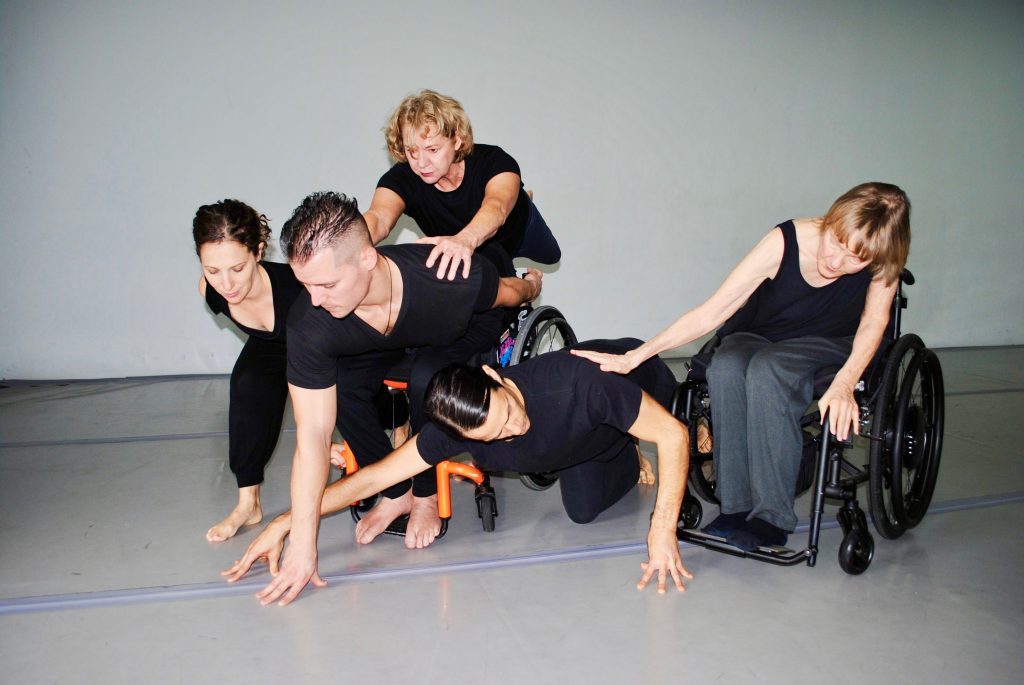
South Florida’s premiere physically integrated dance company, Karen Peterson Dancers, will debut a new solo, “Deep Concern.” The piece by Karen Peterson, dancer, choreographer and the company’s artistic director, was filmed with five cameras arranged in a studio set up in her apartment.
“Moving in the dark using physical impulses, I wanted to respond to my deep concern for the political climate,” Peterson said. “I’m concerned with the social inequities in our country and the health of my family. I’m also concerned with the unknowns of a dance company fighting for its life in Miami during a pandemic.”
Spliced between performances, the one-hour show will feature filmed interviews with the Sampler’s choreographers and directors, moderated by Cameron Basden from the nonprofit Miami Dance Hub.
The Sampler got its start in 1989, created by Lewis, who had accepted the position of founding dean of dance at the New World School of the Arts in 1987, attracted by the potential he saw for growing a vibrant dance community in Miami.
Daniel Lewis became founding dean of dance at the New World School of the Arts in 1987 and started the Dance Sampler two years later. (Photo courtesy of Daniel Lewis)
It was developed “mainly as an audience development tool, because I was going to dance performances for the local companies that were only 25 percent full. My hope with the Sampler was that all these different audiences would come to see their company, and they would like the other companies they saw, and then they’d come out for them, too,” said Lewis, whose new autobiography, “Daniel Lewis: A Life in Choreography and the Art of Dance,” was released in May. Escalating responsibilities at New World caused Lewis to step away from his programming role in 1998.
The New World School of the Arts is the only school invited to perform at the event, due to the special connection Lewis had to both. This year, the New World School’s Sampler contribution will be “Nube Blanco,” by choreographer Annabelle Lopez Ochoa.
“The work begins in silence with a male soloist and a flamenco-ish solo for one man in a square of light,” said Mary Lisa Burns, the school’s current dean of dance. “At the upstage, the women come in from the corners in red flamenco shoes and dresses, and the men in high pants and white T-shirts. As it develops, the piece examines gender stereotypes – the dancers remove [this] clothing during the course of the dance until all the dancers are genderless.”
After all these years, and despite the recent challenges, the mission of the Sampler seems to be alive and well.
“The Sampler is composed of companies born and bred right here in South Florida, and the special camaraderie among the companies that present there is tangible for the audience,” said Dimensions Dance Theatre’s Guerra. “Miami is so large and spread out, so there we get to see each other’s work and see what the other companies are up to.”
WHAT: Daniel Lewis Dance Sampler
WHEN/WHERE: 7 p.m. Oct. 23; online
COST: $10; guests receive access to a private link
Celebrating 30 years with Karen Peterson and Dancers
Written By Rebekah Lanae Lengel September 21, 2020 at 4:38 PM
Dancers from the company include, from left, Oscar Trujillo, Katie Brennan, Shawn Buller and Alexis Martinez. (Photo courtesy of Karime Arabia)
As Karen Peterson was planning the 30th anniversary of her eponymous dance company, she had lined up touring dates, a residency in Naples, and world premiere dance works.
“I really felt it was a great culmination of partnerships that I’ve been developing over 30 years of presenting creative, physically integrative dance,” Peterson says.
All of that preparation and planning came to a stop in March, when COVID-19 closures became widespread, causing the cancellation of their spring performance programs.
“I had to reinvent what we were going to do,” she says.
Innovation and reinvention have been staples of Peterson’s history.
Founded in 1990, Karen Peterson and Dancers has created mixed-ability dance that has been seen and celebrated worldwide. Peterson moved to Miami in 1979, after training at Boston Conservatory at Berklee, and quickly began to establish herself as one of the pioneers of dance in South Florida. It was through contact improvisation workshops that she began to develop mixed-ability dance work for both trained and untrained dancers alike, and from there her company was born.
Now, as Peterson adapts herself and her dancers to a new online reality, she has embraced the unknown: developing work and classes especially for Zoom, learning video editing, and creating a new way to showcase her work and to celebrate the company’s history – and to ensure its future.
She was also able to secure resilience funding from The Miami Foundation, Miami-Dade County, and the National Endowment for the Arts’ CARES Act to support her dancers during this time, which gave her room to plan.
“After the spring series, we do take a break in the summer. I feel very fortunate that there was some funding that I was able to hold on to for the future. Our original plan was to bring back our dancers on Oct. 1 and pick up what was canceled in April. Obviously, that wasn’t happening, which is why we decided to have a virtual celebration,” Peterson says.
This Zoom rehearsal features collaborators (counterclockwise from upper left) JanpiStar, Pawel Karpinski, Adam Eckstat and Dwayne Scheunemann. (Photo courtesy of Karen Peterson and Dancers)
The company’s newly imagined 30th anniversary celebration will feature six new works, created by Peterson and longtime collaborator Oscar Trujillo.
“Two of the works are reimagined rehearsal footage by filmmaker Dinorah de Jesus, who reimagined the work with visual effects, and adapted it to her vision,” she says.
There also will be a mini-documentary of the company by video artist Heber Siqueiros.
“This anniversary is a testament of what we have achieved online and how the two-dimensional dancer can look on screen, and how they can relate to one another, even though they are physically in different places, how there is a sense of composition,” says Peterson, explaining how she has adapted dance making to the Zoom screen. “How do we take a physical concept and give the movements out to dancers and have the vision realized?”
Taking into consideration the public’s “Zoom fatigue,” Peterson has made the program last 30 to 35 minutes. It will be followed by a live question-and-answer session featuring all dancers and collaborators.
From left: Katie Brennan, Karen Peterson, Alexis Martinez, Oscar Trujillo and Shawn Buller. (Photo courtesy of Karime Arabia)
As for what the future holds for the dance company, the indefatigable Peterson remains optimistic as she continues to adapt and build and find silver linings and opportunities in this moment.
“I think any dance company that gets through this time is very resilient. I think any individual dance artist who continues to be able to make work, it’s because of a passion and drive that is not going to go away. I do think about sidewalk performances, dances in the park, things that have been done before, because I think people do want to go back to the theater and relive experience,” she says. “But I think we are developing an audience that might be turned on by my group even though they don’t live here, which they never would have been in the past, and they might be able to see something live in the future.”
WHAT: Karen Peterson and Dancers’ Virtual 30th Anniversary Program, with performances, interviews and more
Peter London Global Dance Co. marks 10th anniversary with virtual production
Written By Sean Erwin September 10, 2020 at 8:04 PM
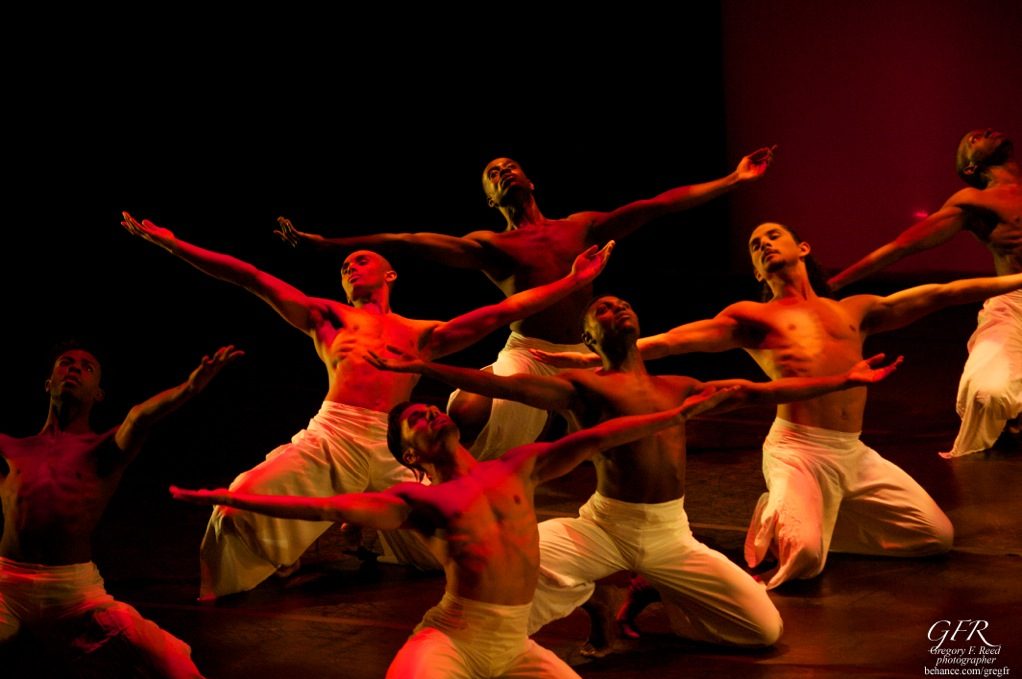
Peter London Global Dance Co. presents the 2019 world premiere of “Crossing,” choreographed by Peter London. (Archive image courtesy of Gregory Reed)
As the Peter London Global Dance Co. turns 10, its founder is already looking to the future.
Peter London’s goal for the next decade is to give his students not only the skills to succeed in the nation’s top companies but also reasons to stay in Miami and generate art here.
“Not all the dancers want to go to New York,” says London, who began training South Florida dancers and choreographers for the ranks of the nation’s elite dance companies as an instructor at the New World School of the Arts in the early ’90s. “The overall goal is to have in Miami a company of color that truly represents Miami as a global city.”
London, originally from Trinidad and Tobago, has seen many of his former students go on to star in top companies including Alvin Ailey, Martha Graham Dance, Paul Taylor Dance and Dance Theatre of Harlem. In fact, past pupils included Alvin Ailey’s artistic director, Robert Battle, and its first-ever resident choreographer, Jamar Roberts.
“Many dancers I first encountered at Dance Empire [of Miami], and I would then train them for New World,” says London. “I created a class structure in preparation for the end game – and that end game was Alvin Ailey Dance Center and The Juilliard School, since I studied at The Juilliard School of Dance on a full scholarship. I created a training program for them to acquire that certain attitude it takes to be principal dancers.”
London knows what it takes to get to the top because he danced as a principal with two New York City ensembles – first with the Limón Dance Co. and then with Martha Graham Dance, under Martha Graham herself.
“As Martha Graham used to say: The goal is freedom,” London relates. “The training includes a meditation style, which I developed. I taught them to take this centeredness not only into their dance classes but also into the academic classes. And, as far as the dancing part goes, they tear the place up.”
In December, the multicultural, contemporary dance company will mark its 10th anniversary with the premiere of “Women-Roses-Water.” The program, a contemporary and Afro-Caribbean dance fusion, was originally scheduled at the Adrienne Arsht Center for the Performing Arts. When it became clear that would not happen live because of the COVID-19 pandemic, the company reworked group choreographies into solos and duets that could be filmed separately and then edited for streaming.
“Everyone will film their solos virtually,” London says. “The dancer will pick the landscape where they will perform, whether in a park, their apartment, or out in the street. They’ll film their solos and duets, which will all be edited so that they look like they are happening together.”
The December program will speak to issues of gender and race.
“‘Women-Roses-Water’ came about because of me losing the important women in my life,” says London, referring to his recently deceased mother as well as numerous dance influences such as Graham, The Juilliard School’s Martha Hill, and Alvin Ailey’s Denise Jefferson.
But London also took inspiration from women outside dance: “Hillary Clinton and women who are pushing for political change, like Michelle Obama, and all those women who recently won offices in the 2016 election – this all formed part of the cosmic electricity that informed me. All of that came together in the themes women, roses, water.”
Founder and artistic director Peter London uses local dancers combined with dancers originally from Miami who are now working professionally in places such as New York City. Pictured here are dancers performing London’s “Seoul Soul.” (Archive image courtesy of Gregory Reed)
In 2011, London’s company was the recipient of a $120,000 Knight Foundation Arts Challenge, which went a long way to helping support the newly formed company. He has set having “a stable funding basis” as another company goal.
“The plan is that, after 10 years of constantly running from studio to studio, we can have a space for ourselves,” he says. “Our aim is to get a stable funding basis to employ at least 14 dancers with health insurance, and then get an administration in place, because I’ve been doing a lot of this myself and getting about two hours of sleep a night. We get invitations to do different things but, without an administration, we can’t do it.”
And yet, when the pandemic hit, forcing the cancellation of dance seasons, the Peter London Global Dance Co. didn’t miss a beat. The company’s new executive director, Kal Gajraj, immediately saw the challenges the pandemic posed, but also the opportunities it offered.
“As a dance company, what we do is live entertainment. We are used to performing for an audience, not in front of a camera. So, we had to ask ourselves: What happens when we pull the live out of a live performance?” Gajraj says. “It has forced us to innovate in how we produce art, and so if virtual is the way that we do it, then we are going to go that way.”
Gajraj drew on his experience in sports to connect meaningfully with company patrons: “I used to work for the Florida Panthers hockey team, where it is normal both to have fans come to the stadium and also have those who watch from home.”
In that spirit, Gajraj and London have remained connected with patrons through virtual, biweekly Happy Hour events on the streaming platform Patreon. They feature interviews, question-and-answer sessions with artists, dance classes and clips from previous company performances.
“Arts organizations are experiencing a huge learning curve,” Gajraj says. “Even if we could begin performing again in theaters tomorrow, the future of dance performance is in being able to do both – perform to a live audience and to make available this content for people who want to view at home.”
Peter London Global Dance Co.’s virtual premiere of “Women-Roses-Water” is scheduled for Dec. 26-27. For more information on this performance or the company’s continuing biweekly series, visit Plgdc.org.
XXV International Ballet Festival of Miami in full swing until Sept. 13
Written By Orlando Taquechel September 3, 2020 at 5:00 PM
Ballet Philippines perform “Opera,” choreographed by Rheda. (Photo courtesy of Jojo Mamangun)
One of the most anticipated dance events of the year for South Floridians, the International Ballet Festival of Miami (IBFM), is in full swing, reinvented as an exhibition, a virtual encounter, and a fundraising campaign.
Through the digital platform PLAY.ticketmundo.com, enjoy 20 prerecorded programs until Sept. 10, and three live “Gala” performances on Sept. 11 to 13. At $10 per program (which includes 24-hour access), the money raised will directly benefit participating companies.
“We already had everything prepared to celebrate the 25th anniversary with presentations at the Arsht Center, the Miami-Dade County Auditorium, the Fillmore and the Broward Center … but with the situation created by the pandemic we had to change the plans and make it virtual,” said Eriberto Jiménez, the festival’s artistic director.
On the IBFM Facebook page, watch dance workshops, interviews with artistic directors, and other collateral activities including the festival’s Aug. 15 inauguration, with the presentation of the commemorative poster and the documentary, “La Amable Euforia de la Danza,” by Miguel Castañet Jr., about IBFM founder Pedro Pablo Peña (1944-2018).
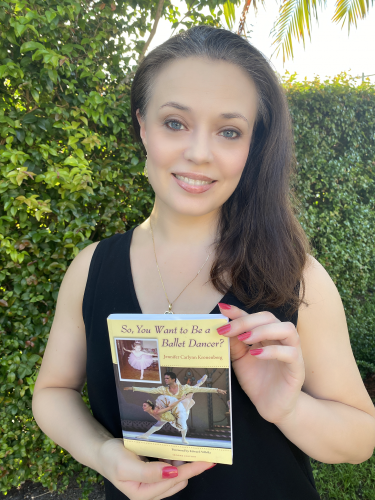
Also available online: the event’s traditional gathering with book authors, which took place Aug. 29. The evening’s discussions centered around Daniel Lewis and his recently published biography, “Daniel Lewis: A Life in Choreography and the Art of Dance” (McFarland, 2020), and Jennifer Kronenberg with “So, You Want to Be a Ballet Dancer?” (University Press of Florida, 2013).
Jennifer Kronenberg and her book, “So, You Want to Be a Ballet Dancer?” (Photo courtesy of Carlos M. Guerra)
Kronenberg considered it “a great honor to be presenting my book at the festival. When I wrote it eight years ago, I did it intending to mix memories with advice, to create an ‘evergreen’ guide for young dancers.”
Her participation was “a wonderful opportunity for me to revisit the book and check its relevance.”
For his part, Lewis will receive the “A Life for Dance” Lifetime Achievement Award at the start of the Grand Gala of Stars on Sept. 12.
“Being recognized by your peers, in your community, is a high tribute to your life’s work,” he said. “I am moved and delighted to be the recipient of such an award.”
Despite any challenges, this virtual edition of IBFM could end up being a truly memorable event for Miami ballet fans, because they will have the opportunity to appreciate the performances of participating artists in recordings they chose themselves, which should provide a guarantee of quality.
In the absence of a playbill, our recommendation is to learn about the participants before choosing what to watch. To facilitate your search, here is a list of all invited companies and their works – listed by country.
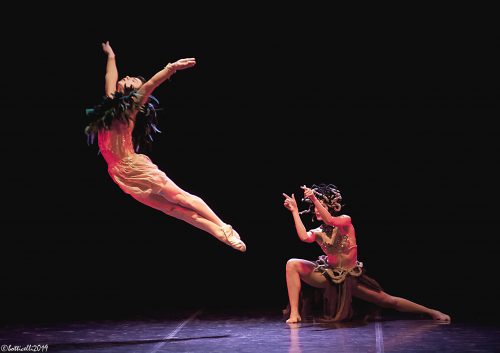
Eugenio Ebreh Casella and Reika Vigilucci, from Lyric Dance Company (Italia), performing “Caravaggio, Amor Vincit Omnia.” (Photo courtesy of Alessandro Botticelli)
Lorena Feijóo in “Carmen,” one of the performances presented by Cuban Classical Ballet de Miami. (Photo courtesy of Bernardo Dieguez)
As for the live entertainment portion of the festival, the Gala performances will be presented across three days, starting Sept. 11.
The first Gala, dedicated to contemporary ballet, will feature Dance Now! Miami, Ballet Flamenco La Rosa, Cuban Classical Ballet of Miami, Brigid Baker WholeProject, Ballet Inc. and Dancetown Miami.
“Only duets or solos will be presented in the Galas,” Jiménez said. “But it must be clarified that the duets will be performed by dancers who are a couple in real life, or who have been together all this time. We have tried to keep everything as safe as possible.”
For more information on participating groups, activities and scheduled performances, visit Internationalballetfestival.org. Tickets for prerecorded programs and live broadcasts are on sale at PLAY.ticketmundo.com.
Miami City Ballet returns to Lincoln Road roots with pop-up studio space
Written By Sean Erwin August 6, 2020 at 5:32 PM
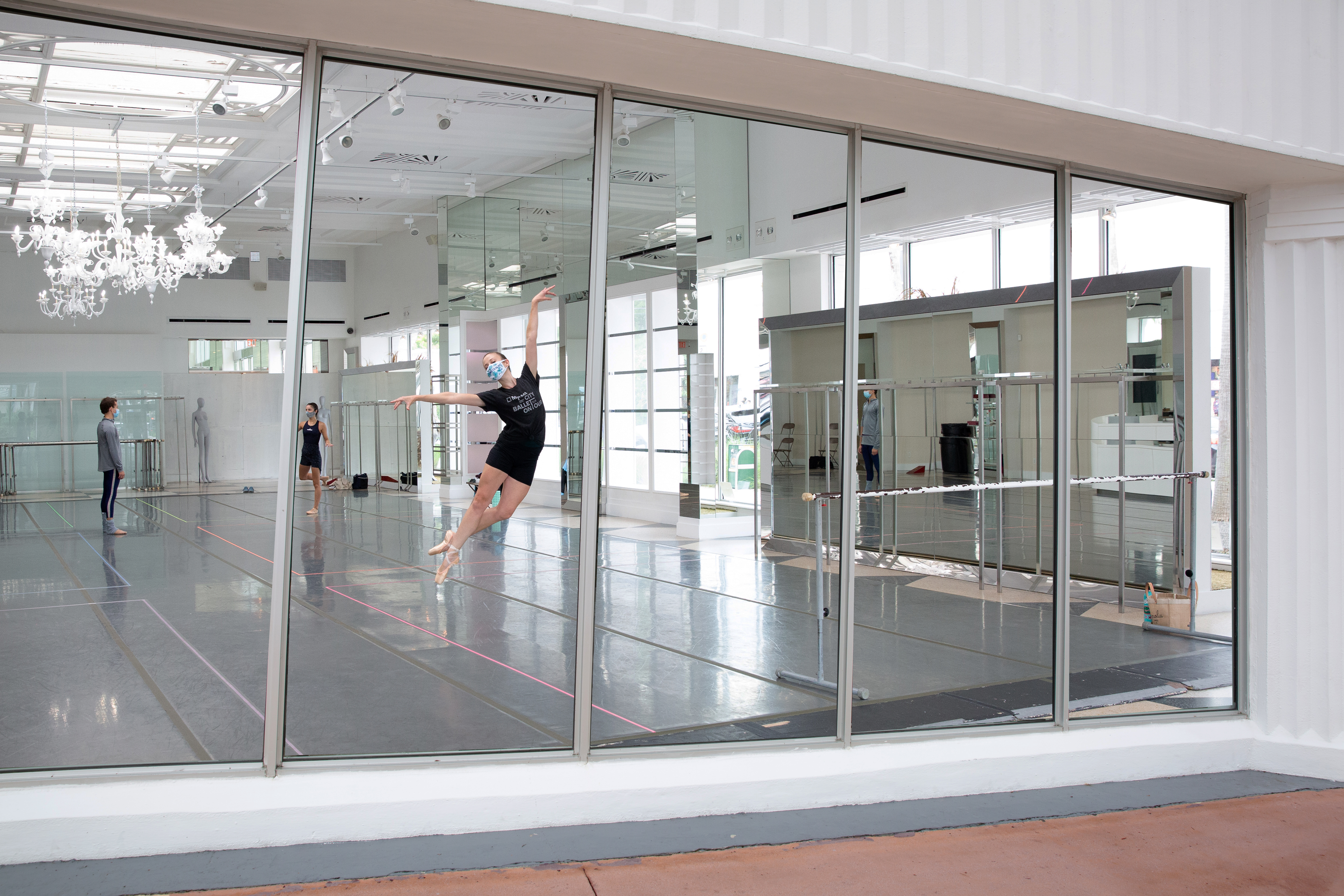
Miami City Ballet dancer Nicole Stalker rehearses in the new pop-up studio space on Lincoln Road. (Photo courtesy of Alexander Iziliaev)
Framed by retail mirrors, masked Miami City Ballet dancers Taylor Naturkas and Benjamin Lepson stretched out at barres placed 20 feet apart in the former BCBG Max Azria women’s apparel shop on Lincoln Road in Miami Beach.
Outdoor speakers pumped Elton John’s “Tiny Dancer” on a recent weekday, as one shopper after another casually peered in, then froze. Some examined the mannequins in the windows, draped with costumes sourced from MCB’s full-length production of “A Midsummer Night’s Dream.” Others pulled out smartphones to record the movements of the dancers inside. Circles painted on the pavement marked appropriate social distancing spots for the spectators.
When COVID-19 disrupted dance schedules worldwide and closed down theaters, Miami City Ballet began working on strategies to stay connected to audiences. Miami City Ballet x Lincoln Road, a new pop-up studio space, is part of that strategy – allowing fans, shoppers and casual passersby to enjoy dance right before their eyes.
“My goal in life is to do moments of surprising beauty for the public,” said Tim Schmand, executive director of the Lincoln Road Business Improvement District.
The Lincoln Road BID collaborated on the initiative with MCB, the City of Miami Beach and the Comras Co., the Miami retail leasing, investment and development company that owns the space.
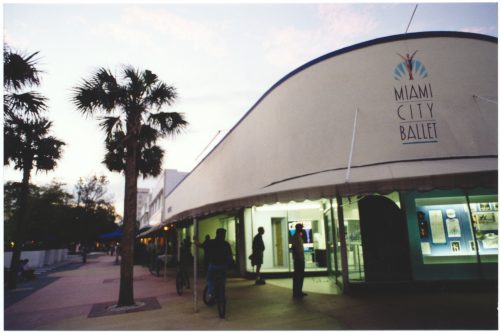
Miami City Ballet’s former home on Lincoln Road in Miami Beach. (Photo courtesy of City of Miami Beach)
“It all started with Michael Comras, CEO of the Comras Co., who remembered how the ballet started in 1985 with its first home [on] Lincoln Road, where Victoria’s Secret now is,” Schmand said. “Pre-pandemic, MCB had intended to be on Lincoln Road this season anyway and to do ongoing activations there.”
The current MCB pop-up has turned out to be a winner for both spectators and dancers. The cavernous space safely accommodates seven masked dancers at a time, giving them the opportunity to safely practice and reconnect with colleagues.
“Coming to this space has been invaluable,” MCB principal Tricia Albertson said. “Even if I only see five dancers at a time when I’m here, I realize we’re all just pending, waiting to get back to what we do.”
For MCB principal Tricia Albertson, “coming to this space has been invaluable.” (Photo courtesy of Miami City Ballet)
Albertson said her initial response to the sudden end of the season was panic. Diagnosing quickly her need for a schedule, Albertson jury-rigged a closet rod as a dance barre and laid down a patch of Marley dance flooring sent by the company for at-home rehearsals.
Along with dance and conditioning classes on Zoom, she has added cross-training to her training and is currently working on earning her yoga instructor certification online.
“I feel stronger in some ways than I used to feel in a season,” Albertson said.
The pop-up studio space reminds MCB principal dancer Katia Carranza of a time back when MCB was still based on Lincoln Road. (Photo courtesy of Miami City Ballet)
For MCB principal dancer Katia Carranza, the space offers a welcome step up from taking company classes by Zoom in her apartment. It also reminds Carranza, who joined the company in 1998, of a time back when MCB was still based on Lincoln Road.
“The company has grown in size and stature since then,” she said. “Even the programming has completely changed. We couldn’t do a full-length ballet back then.”
As she spoke, people stopped and snapped photos of the dancers at the barres.
“It’s so good for us to feel people are there, and it motivates us to be back onstage,” Carranza added, cheerfully.
Though the company’s Zoom classes have been a lifesaver, Carranza, whose parents are in Mexico, has found the isolation to be a challenge.
“Many of us have been by ourselves, and we have supported ourselves through that. We all miss what we love and are looking forward to having the opportunity to do what we love together again,” she said.
As part of Miami City Ballet x Lincoln Road, dancers are working out at 744 Lincoln Road every weekday, from 1 to 3 p.m. and 5 to 7 p.m., through Sept. 10.
The MCB pop-up is just one of Lincoln Road BID’s current experiments to bring art to the public during this time.
Another recent example: having New World Symphony musicians performing on golf carts along Lincoln Road over Father’s Day weekend. Keeping the performers in motion took the music straight to shoppers and kept crowds from forming.
After all, keeping things safe requires some out-of-the-box approaches. Said Schmand: “Now I have to be wily about bringing the arts to the public.”
What: Miami City Ballet x Lincoln Road
Where: 744 Lincoln Road, Miami Beach
When: 1 to 3 p.m. and 5 to 7 p.m. weekdays, through Sept. 10
Dance NOW! Miami’s 20th anniversary season finale to be a virtual celebration
Written By Jordan Levin May 26, 2020 at 7:37 PM
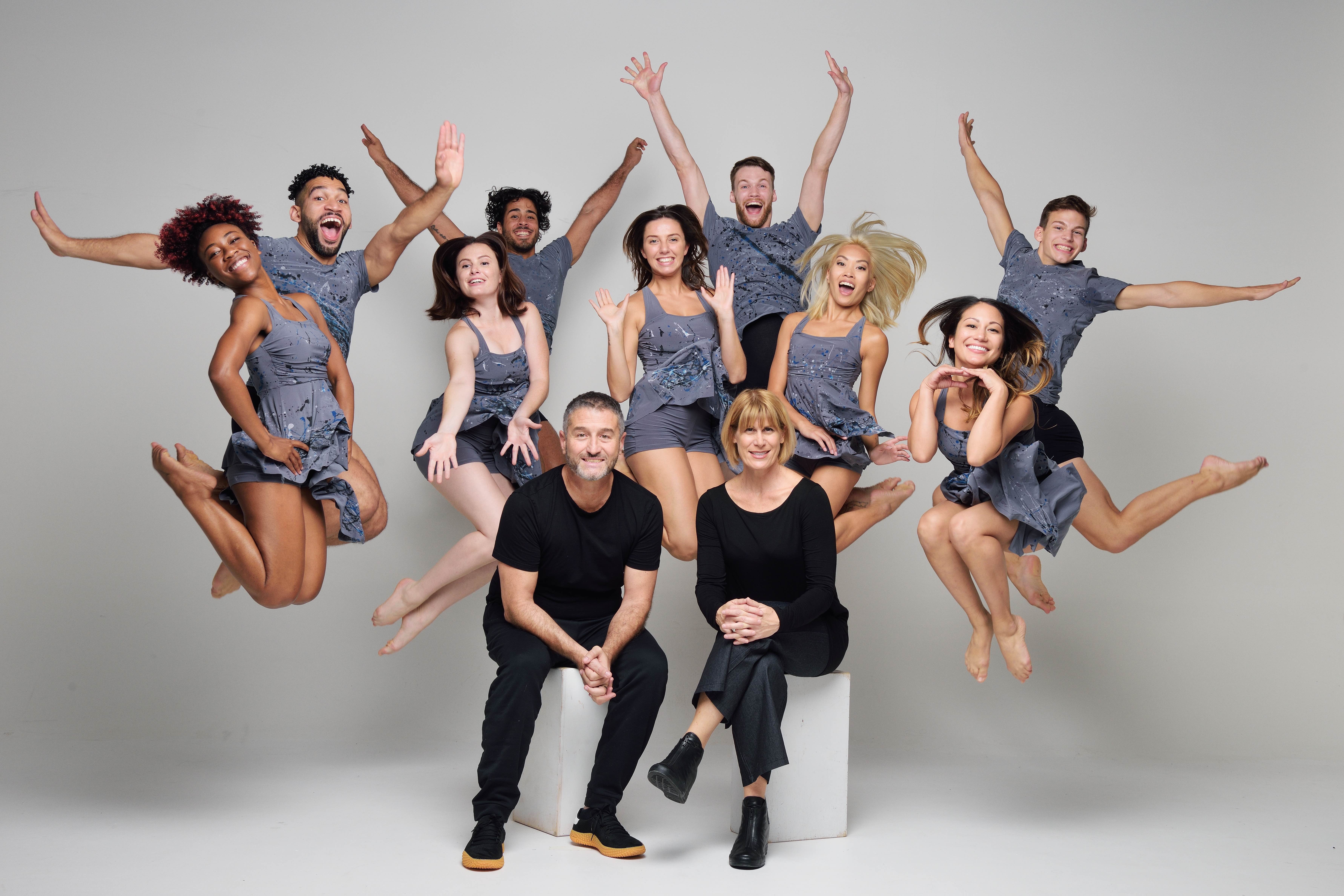
Diego Salterini and Hannah Baumgarten, at center, pose with members of their Dance NOW! Miami ensemble. (Photo courtesy by Simon Soong)
Twenty years is a long time for any dance company to not only survive but thrive.
Hannah Baumgarten and Diego Salterini, the founders and directors of Dance NOW! Miami, say the reason their company has flourished for two decades is because it isn’t solely about them.
“The focus of Dance NOW! is not Hannah and Diego, but to serve its community,” Salterini says.
Adds Baumgarten: “We understood quickly that, as beautiful as it can be, being a creative artist was not our sole purpose. Having a company that would allow dance to thrive was our goal.”
Their generous, can-do spirit has powered the company’s expansive mission, which through the years has grown to also include the restaging of historic modern dance and ballet works; presentation of new choreographers; educational and community programs; showcases for Miami dance artists; as well as the company’s own performances, international touring, and site-specific works.
In many ways, Dance NOW! has become a pillar of the Miami dance community.
When the COVID-19 lockdown derailed plans for their 20th anniversary season, Baumgarten and Salterini pivoted efforts to continue under quarantine.
Salterini’s video skills helped them to quickly figure out Zoom, keeping their company working on an imaginative series of “Covideos,” which included public service announcements on staying home and poignant blends of onstage and quarantine performances.
They’ll present their season finale concert on its original date of May 31 – but on Facebook Live, instead of onstage. It will be a kind of variety show (a throwback, perhaps, to Salterini’s previous life dancing on Italian TV), featuring interviews with collaborators and former dancers, images, fun facts and performance clips. The event will culminate in “Zoom, Zoom, Zoom,” a final Covideo piece they describe as playful and surreal. The virtual performance is free, though they are encouraging people to buy a $20 virtual ticket.
“We’ve always said to our students, ‘Go ahead and try, the floor is not that far,’” Baumgarten says. “Our life is based on uncertainty now. It’s all trial-and-error. Even companies with large budgets are exploring.
“We had to mark our 20th anniversary and tell the story of our history. It might not be ideal. But it’s the cards we were dealt.”
Baumgarten and Salterini met in the mid-’90s. Baumgarten, a graduate of the elite Juilliard School who had performed with modern dance and contemporary ballet troupes, came to Miami in 1994 after burning out on life in New York. Not long afterward, Salterini, who had been working as a dancer, assistant choreographer and director on Italian television’s elaborate variety shows, arrived in Miami in search of something more artistically substantial.
They met at PAN – a South Beach dance and performing arts center founded by Miami dance pioneer Ilisa Rosal – where Baumgarten was teaching.
It was creative love at first sight.
“In a totally cliché way, when we saw each other, I felt bells and whistles and flashes of light,” Baumgarten says. “It’s a weird feeling I never had before or since.”
Diego Salterini leads a dance class via Zoom during COVID-19 quarantine times. (Photo courtesy of Dance NOW! Miami)
Their bond is purely artistic, not romantic. They say their closeness sometimes confuses people. “Every time we meet someone new, it’s hard for them to understand we’re not married,” Salterini says.
They formed Dance NOW! Miami in 2000, initially with just themselves and two other dancers, primarily to present their own choreography. They made a key shift toward a more expansive mission in 2009, when they became one of the resident companies at the Little Haiti Cultural Center, a bustling arts center with a theater and two large dance studios. Having free rehearsal, storage and performance space (the group now pays a nominal rent) gave them crucial stability – they could function like an organization, rather than project to project.
Just as important, they joined with the center’s community and education programs. They developed the World Dance Summer Intensive with the center’s diverse resident troupes. They do free student and community performances at the center, and other school residencies on their own.
“We were so blessed to have the facility, we knew we needed to share,” Baumgarten says.
They built a rich matrix of relationships with multiple generations of artists and the dance community. They present young artists in their “New Voices” series, such as Chris Rudd, a Miami-raised New York choreographer, and experimental artist Lazaro Godoy.
Others are mentors, including Cameron Basden, a former close associate of Gerald Arpino (the late artistic director of Chicago’s Joffrey Ballet), who stages Arpino’s works for the troupe.
Another is Daniel Lewis, founding dean of the dance department at Miami’s New World School of the Arts. After Lewis retired in 2011, Baumgarten and Salterini took over his “Dance Sampler,” a longtime showcase of Miami artists ranging from newcomers to ’80s pioneers, and expanded it last year to include troupes from around Florida.
Now a close advisor, Lewis has staged works by modern dance pioneers Jose Limón and Doris Humphrey for the company’s “Masterpiece in Motion” series reviving historic choreographers.
This winter, Dance NOW! Miami had Andrea Seidel, another Miami pioneer, stage Isadora Duncan’s “Varshavianka,” an homage to revolutionary struggle. The goal was to perform it onstage in March. Instead, this week Baumgarten and Salterini posted video of a studio performance online – seeing a succession of dancers fighting to support each other now echoes health-care workers’ relentless battle against COVID-19.
“[The dancers are] running into their own death, and none of us in our generation know what that’s like. Now, suddenly, it’s happening,” Baumgarten says. “As we start to open up, I want us to remember [health-care workers] are still there trying to protect us.”
The pair began taking the threat of COVID-19 seriously back in February, as Salterini’s Italian family and Baumgarten’s Italian boyfriend endured that country’s desperate pandemic situation. By the time Miami locked down in March, they were already making plans.
“It took us a week to move everything online,” Salterini says. “We thought: We could retreat or move forward. So we moved forward.”
They’ve reacted by being proactive, positive and community-minded. They’ve kept their dancers engaged (and under paid contract), teaching classes online, creating the Covideo series, and joining Dale Andree’s online National Water Dance project. As they dealt with disappointment and uncertainty, they’ve been grateful for each other.
“The beautiful thing about having two of us is that, if one of us is in the gutter, the other can pull them out,” Salterini says.
“We knew we could bend and not break,” Baumgarten says. “We’re trying to lead by example, knowing everyone is experiencing the confusion, the claustrophobia and the longing. We will adapt.”
Even as they wonder what their 21st season will bring, they’re creating an extra celebration for this Sunday’s finale: a chance to join the company’s dancers in a live dance party.
To participate, find the event on Instagram to learn some of the movement phrases in advance.
“There’ll probably be some music and cocktails,” Baumgarten says. “Everyone needs to feel a little extra-connected now.”
What: Dance NOW! Miami’s 20th anniversary season finale
Miami City Ballet to premiere ‘A Dance for Heroes’ virtually
Written By Sean Erwin May 5, 2020 at 5:28 PM
Miami City Ballet principal Renan Cerdeiro performs in “A Dance for Heroes,” set for May 8. (Photo courtesy of Alexander Iziliaev)
After the COVID-19 pandemic hit, Miami City Ballet artistic director Lourdes Lopez asked herself: “What can we do to use this crisis, as artists, to help us all stay connected?”
The answer: “A Dance for Heroes,” a technological production that aims to honor the people whose work makes it possible for everyone else to quarantine.
The new ballet – set to premiere at 8 p.m. May 8 on the company’s Facebook page – is “a way to say thank you to the pandemic’s first-responders and essential workers, and to give our young artists some hope.”
It merges the steps of four dancers, moving separately, into one performance. Each dancer was filmed doing his or her part at Miami City Ballet’s studio, then the segments were edited to bring them all together.
For Lopez, who commissioned the ballet herself, it was critical the technology not overwhelm the dance.
“Whatever post-production was done had to be part of the dance,” Lopez says. “This was not meant to be a gimmick, and so the film had to be part of the choreography.”
She originally approached choreographer Durante Verzola and photographer/videographer Alexander Iziliaev and asked them to create work that could be presented online.
The quarantine presented formidable obstacles for all involved.
For Verzola, sheltering at his parents’ Kansas City home with five younger siblings and a gaggle of pets made his first problem just finding a quiet space to work.
“My parents have a pretty spacious bathroom. I could use the bathroom mirrors to get a sense for the movements on my own body,” Verzola says. “That was the biggest challenge – not being physically present with the dancers for any of it.”
Iziliaev, the company’s house photographer and video artist, had some ideas on how to make it all work, but his first hurdle was communicating software-heavy, film-editing processes to non-techies, Lopez and Verzola.
“When Lourdes approached me to dedicate this to the front-line heroes, I immediately began thinking, how can we do this when we can only take one dancer at a time?”
Iziliaev, once a dancer, created short videos of himself presenting the editing techniques he thought Verzola could use.
“[Iziliaev] presented me with different options,” Verzola says. “Since I knew the techniques he would use in the editing room, I planned the choreography knowing those options were there.”
“A Dance for Heroes” features Miami City Ballet principal dancers Jennifer Lauren and Renan Cerdeiro along with two of the school’s pre-professional students, Taylor Naturkas and Erick Rojas.
Learning and performing the choreography posed both technical and practical challenges.
“Usually we learn a choreography facing the choreographer’s back and we follow their movements,” Lauren says. “But when you work with a screen, it’s all in reverse since the screen shows you the opposite of everything.”
“Dance for Heroes” involved much online work by (clockwise, from left) Miami City Ballet principal Jennifer Lauren, videographer Alexander Iziliaev, principal Renan Cerdeiro, pre-professional dancers Erick Rojas and Taylor Naturkas, and choreographer Durante Verzola. (Photo courtesy of Alexander Iziliaev)
Says Cerdeiro: “When we were shooting, there were times when [Iziliaev] would stop me and say, ‘That was a great take, but you crossed the center mark a little.’ So even in the filming, there were things you weren’t free to do.”
And then there was the problem of dancers working out choreographies in apartments with wooden floors and neighbors quarantined underneath.
“I had a couple of jumps. I just couldn’t do them here in my apartment,” Cerdeiro says. “I did some of those steps for the first time the day we went in for the shooting.”
For Rojas, the biggest issue was working out couple sequences with Naturkas.
“We had to imagine we were dancing together even though we weren’t,” he says.
He and Naturkas resorted to text messages to communicate precise body positions, so they would appear to dance together in the digital space.
Even hearing the same piece of music was problematic. Durante organized the choreography around Wim Mertens’ “Often a Bird” (1996), chosen for its minimalistic string- and percussion-driven pulse. But music does not sound the same on either end of a Zoom videoconferencing session.
“We had to mute ourselves and play the music on our own phones because otherwise there would be a lag if we listened to the music through Zoom,” Naturkas says.
The final 4-minute product, Iziliaev says, is not strictly dance but it isn’t film either – it’s a new, third entity.
“This will never be done in live theater like it will be shown [in video],” Iziliaev says. “You can’t dance it like you will see it on the video.”
Despite dancing without an audience, Cerdeiro says he “felt emotionally connected just knowing that it was specifically dedicated to a certain group of people. Even in the studio, when there is no audience, you feel an emotional connection with a choreography – and we knew the intention of this choreography was deeper.”
The point of this particular ballet for him is the healing message that art communicates during a time of illness.
“For everyone who gets to watch this video, it’s a hope of better days to come and an injection of normality,” he says.
Iziliaev hopes essential workers will be able to see it, that they “will have a little bit of time to spare.”
“[Knowing] that other people support you in what you do is a huge help in confidence,” he adds. “That’s the support we wanted to give to them and to say, ‘We’re here with you,’ and to show that with what we do best.”
“I’m not a nurse and can’t do what they do,” says Lauren. “What we do is dance, and hopefully that will bring a moment of peace in their day.”
Dance NOW! Miami’s Allyn Ginns Ayers thinks the online rehearsal experience can’t replace the realities of the practice studio. (Photo courtesy of Chris Freeman)
When the rapid spread of COVID-19 vacated performance halls, it attacked Miami’s economic ecosystem of artistic activity. Within the dance community, as with many others, performers and organizations saw anticipated revenues evaporate in a matter of hours – and this in an industry dominated by 1099s.
For Brigid Baker, choreographer and artistic director of brigid baker wholeproject, no arena in society better illustrates the fragility of our economic ecosystem than that of artists, “in terms of symbiosis, group gathering and interconnected reliance.”
“Our studio supports the company and the arts community, and vice versa. The studio operates on income from classes, rehearsals, and rentals,” she said.
Baker said this crisis has offered an opportunity to rethink how the community supports its arts activities.
“There must be an extraordinary moment of reflection to determine a path in this new reality. It is not business as usual, and we should none of us behave as though it is,” cautioned Baker. “We need a moment of reflection to reorganize our society … We are being asked on every level to reassess our value system and reorganize our understanding of how things grow and are sustainable.”
Dimensions Dance Theatre of Miami lost “nearly $15,000 in revenues that we had been counting on to help us get through the remainder of the season,” said Jennifer Kronenberg, the company’s artistic director. “And two of the performances had fundraising initiatives built in, so the projected loss is even greater.”
In the immediate aftermath, the company’s first aim, she said, was to provide dancers with living stipends to bridge the gap of the shutdown, “because independent contractors were not eligible for unemployment benefits … Now, the rules have changed and they are able to apply and receive emergency benefits.”
They can also apply for help through funds such as Artist Relief, which offers $5,000 to qualifying unemployed artists in need.
“So it makes much more sense for them to explore these options first, and we have strongly encouraged them to do so,” Kronenberg said.
Chloe Freytag is a dancer with Dimensions Dance Theatre of Miami. (Photo courtesy of Yanni de Melo)
With these new alternatives available, she added, Dimensions Dance has reassessed its goals: “We have decided to reserve our fundraising efforts (which under the escalating circumstances, we really don’t feel ethically comfortable launching right now) for later on, aimed at helping get the organization back on its feet when this is all over.”
Ruby Issaev, executive director of Arts Ballet Theatre of Florida in North Miami Beach, made the point that lost dance revenues are not the only issue that companies are facing.
“Ballet is a visual art. Dancers need to be in shape, taking daily classes, and this quarantine is keeping every one stalled. No class, no rehearsals,” she said.
Many companies are having to make do by continuing classes virtually and producing digital content.
But that has its limits.
For Kronenberg, restrictions on public assembly mean that dance companies cannot function any longer as companies – even online: “We had initially thought about livestreaming rehearsals in lieu of the [live] lab performances, but the most recent social distancing mandates prevent us from getting together as a group in the studio.”
Dimensions Dance Theatre dancer Chloe Freytag worries that the industry cannot survive – much less thrive – through webcam performances.
“The trickiest thing about these cancellations and quarantine is that our work can’t be done from home,” she said. “This means unexpected and rapid unemployment with few available resources or plans in place to keep ourselves paid.”
Freytag added how the loss was felt not only financially but emotionally: “As artists, what keeps us mentally sane is our ability to express, to move and channel our emotions physically into our art. At home, we have very little space to express our bodies in that same way, and are definitely feeling the slight depression that kicks in as a result from being stagnant. Our bodies need to move.”
For dancer Allyn Ginns Ayers, who is rehearsal director of Dance NOW! Miami, the online rehearsal experience can’t replace the realities of the practice studio.
Pioneer Winter is artistic director of the Pioneer Winter Dance Collective in Miami Shores. (Photo courtesy of Mitchell Zachs)
“Ensemble dance, and especially in a small company like ours, is so inherently social, and that’s difficult to achieve in social distance. When I was taking class yesterday in my bedroom using my dresser as a barre, it was suddenly clear by omission how much I usually feed off the energy of my fellow dancers.”
Pioneer Winter – dancer, choreographer and artistic director of the Pioneer Winter Dance Collective, also questioned the effectiveness of online meeting platforms as an effective replacement for moving bodies in a physical room.
“If it’s just about being together, Zoom is fine, but if it’s about finetuning dance technique or excavating a particular moment from a dance phrase, Zoom does not solve that problem,” he said.
Of course, even after the problem of shuttered performances is finally over, the challenges might not be. In addition to financial, emotional and physical worries, there’s concern about the future.
Said Issaev: “We do not know if audiences will feel confident coming back to the theaters soon.”
Success, Challenges and “Swan Lake”… in conversation with Lourdes López (part two)
Written By Orlando Taquechel April 14, 2020 at 6:01 PM
Katia Carranza and Kleber Rebello, MCB Principal dancers. Photography: Gary James (courtesy)
The 2012-2013 season of Miami City Ballet’s 2012-2013 Season was the debut of Lourdes López as artistic director of the company.
On the special occasion of the announcement of the so-called “35th anniversary season” – Toby Lerner Ansin and Edward Villella founded Miami City Ballet (MCB) in 1985 – we spoke with López about what has been these eight years at the helm of the organization and the importance of the premiere for the company of Alexei Ratmansky’s “Swan Lake”.
What do you consider the biggest success?
It’s really not how I think, in terms of success, but I am proud of a few things. I am proud of our commissions, “Nutcracker” with Isabel and Ruben Toledo, “Midsummer Night’s Dream” (the very first ever re-imagined Balanchine ballet) with Michele Oka Doner and our “Firebird” (re-designed for the first time since 1949 and never seen outside of NY). I am proud of these projects and that we were able to bring them to our dancers and audiences.
What have been the biggest challenges?
The biggest challenge has been to get our audience to trust that when they come to a MCB performance, they will be transported, that they will leave the ordinary behind. We have now gotten to this point. Miami is trusting MCB, trusting that we put programs and performances on stage with tremendous care and thought. Right now, nothing has been as big as Covid-19 and I hope nothing ever will be again!
What is your vision for the future of the company?
I don’t necessarily have a specific vision, meaning, I want this to be a classical company, or a modern company. I don’t think that way. I just feel so strongly that dance is such a powerful art form, such a powerful tool to reach people, to communicate, to transport them, to unite, it’s how I have always felt while I was dancing. Every time that curtain came down after a performance, regardless of whether it was a good, or bad, performance, I was fulfilled. I always felt that I was in the right place, at the right time and that is what I want for the dancers and for our audience, to feel that they are in the right place, at the right time.
When I was young, had just entered NYCB, I asked Mr. Balanchine when I would dance like his ballerinas, what did I need to do? And you know what he said? “Every day you take class and work, and work, and work. Then one day you will wake up and you’ll be there. It’s work”. There’s a great quote by T.S. Eliot that a great friend of mine told me about: “Between the idea and the reality, between the motion and the act, falls the Shadow.” Basically, what it means is that vision is about having a goal and then getting to work.
“Vision is about having a goal and then getting to work”, says Lourdes Lopez, here in rehearsal with Katia Carranza and Carlos Quenedit. Photography: Alexander Iziliaev (courtesy)
Without a doubt, the main attraction of season 2020-2021 is the “Lake” of Ratmansky. This will be his fourth work in MCB repertoire, after “Symphonic Variations” (2012), “The Kiss of the Fairy” (2017) and “DSCH Concert” (2018). Why this version?
The short answer is, I was looking for a “Swan Lake” for MCB. The ballet is one of the most important ballets in the classical repertory and a ballet that really defines a classical ballet company and gives it a certain, artistic stature, a raison d’être. When I realized he had choreographed one in 2015, I thought, why not have the greatest ballet of all time “Swan Lake”, by the greatest living choreographer of our time.
Why now?
Balanchine always said, ‘we live in the present…there is no time like the present’. Why not now? But also, it’s our 35th anniversary and I wanted a work that would truly celebrate where MCB has gotten to. The level of artistry of its dancers, its productions its artistic strength, integrity and vision. I wanted something we could all celebrate together and be proud of how far we have come, in such a short time, together.
How difficult was the process to obtain the right to incorporate Alexei Ratmansky’s “Swan Lake” to Miami City Ballet repertory?
Alexei Ratmansky loves MCB and he has been very vocal about this, especially in the press. So, this part was not difficult. What was difficult was raising the funds for it. It had to do with educating individuals that “Swan Lake”, like our “Nutcracker” and our “Midsummer’s”, is an investment. “Swan Lake” is a ballet with a huge appeal for an audience and that appeal will be lasting. Audiences will always come to “Swan Lake”, and like “Nutcracker” it’s a narrative that resonates and then there’s that glorious score by Tchaikovsky, truly one of the great ballets of all time. “Swan Lake”, like “Nutcracker” and “Midsummer” is a gateway to the art form. If we put it on the stage, they will come!
There are a few things in this version that will make the ballet different from other very popular versions, like no dancing Rothbart, no jester, the absence of the swan arms, etc. In your opinion, what are the more significant changes?
The most significant one is that the humanity, the tenderness and betrayal of the narrative is more powerful in this one, than in any other version of “Swan Lake”, I’ve seen. This is not a love story between a bird and a Prince, this is a love story between a woman and the Prince who betrays her.
In a 2016 interview, Ratmansky said referring to the character dances in “Swan Lake” (Spanish, Neapolitan, etc.): “This is an art that disappears since modern choreographers do not use these styles in their works”. Do you agree?
Who am I to disagree with Ratmansky! What I do know is that the choreography for the divertissements in Act 3 (ballroom scene) all incorporate traditional ethnic steps from those cultural dances and perhaps this is what he meant.
The scenery and costume designs are by Jérôme Kaplan, based on those of the production Petipa / Ivanov. Are you ordering new sets and costumes or using those previously used by another company?
We are building sets and costumes – this is so we have the production available to us for touring when we need it and we do hope it will tour and a lot!
Miami City Ballet most definitely seems ready to add another blockbuster to their repertoire and show it off to the world. We’ll just have to wait.
Tickets for the Miami City Ballet 2020/21 season with performances at the Arsht Center (Miami), Broward Center (Ft. Lauderdale) and Kravis Center (West Palm Beach) are currently available only as part of a subscription. Individual tickets will go on sale later in the year. To stay up to date on dates, learn more about the works and programs mentioned here or purchase a subscription, visit miamicityballet.org or call (305) 929-7010.
MCB announces post-pandemic season… in conversation with Lourdes Lopez (part one)
Written By Orlando Taquechel April 9, 2020 at 7:44 PM
“Hope is not a strategy,” says LourdesLopez, artistic director of MCB. Photography: Alberto Oviedo (courtesy)
To speak with certainty about a coming season still “subject to change” may seem absolutely bold in times of the coronavirus.
But LourdesLopez, artistic director of Miami City Ballet (MCB), faces adversity with the audacity of an undeterred dreamer with enormous confidence in the future. She also knows that Miami’s dance audience is in dire need of good news.
So, knowing what MCB has prepared for its 35th anniversary season (“A love letter to South Florida” is the slogan) is a welcome palliative for the anguish of these days “at home”. Even though it’s inevitable to begin our two-part conversation with Lopez by mentioning the pandemic.
How is coronavirus affecting the activities of Miami City Ballet?
For now, all MCB staff is working remotely from home. The dancers have been sent home but are expected back for the start of their new season on May 18, provided that the government mandate to stay home, or to limit any groupings is lifted. The school started to offer online classes, first as a pilot program, just last week to the Pre professional classes, with Arantxa Ochoa, the artistic director for Miami City Ballet School, teaching an online class to see how it would work. The students and the parents loved it so much and the reaction was so positive that Arantxa is creating an entire online curriculum for all levels.
How do you anticipate the future of dance in Miami after this crisis?
I am a very optimistic person and strongly believe in the ability of humanity to persist and its innate desire to be communal. MCB is a social organization that is dependent on our human connection to others. Since, the arts are in essence, social, this is a crisis for us. At MCB we bring people together to create and those creations inspire and transform lives, for the better. The abrupt change has been devastating because we exist to bring people together.
Right now, many organizations are moving to an online presence by offering performances, or events online, including MCB. But, at MCB it is not about ‘just watching’, it’s about ‘engaging’. If all we do is put performances online, its entertainment, there’s nothing wrong with that, but the human connection is lost. The ability to change, or transform, is lost. We are in the process of thoughtfully curating our online presence and really thinking of how, when and why, we put something out to our audience that is meaningful.
A note to those interested: This is an especially complicated issue for a large company like MCB. For example, having presented “Firebird” with live music, MCB has no choice but to negotiate with the musicians’ union to broadcast the recording of the performance regardless of the circumstances – coronavirus included. For a small company using recorded music the process is simpler.
LourdesLopez and Katia Carranza during a rehearsal… before the coronavirus. Photo: Alexander Iziliaev (courtesy)
For me, human nature tends to remain constant, and I do believe that we will rebound from this and that people will want to be with people again and continue where we left off. However, hope is not a strategy and some changes will need to take place, especially if a vaccine is not available soon.
For the arts to start to re-imagine, or re-position themselves, a few things need to happen during these next few months, while the arts stabilize so that we can calmly and thoughtfully think of what the future might look like and what kind of changes might need to happen and what the new landscapes might be like. We cannot transition overnight and certainly when our revenue stream, people, is not available.
And city government to understand the economic impact of the arts in Miami. The Miami-Dade Cultural Affairs reported that Miami-Dade County’s nonprofit arts and cultural organizations represent a significant business industry in Miami-Dade County–one that generates almost $1.1 billion in local economic activity, an almost 17% increase over the last study released five years ago. This shows that the arts are an effective catalyst for a strong economy. The arts are a critical part of the economy.
Jordan-Elizabeth Long and Kleber Rebello in George Balanchine’s “Prodigal Son”. Photography: Gary James (courtesy)
López has been at the helm of the MCB since 2012, when the company had 42 dancers and now has 53. But the increase in the number of dancers is not the only thing different.
How has Miami City Ballet changed under your artistic direction?
I think the biggest change has been to the repertoire. I do believe it has increased, not only the number of commissions, but with new existing ballets added to the repertoire. This is what feeds our dancers and audiences. These new works entering our repertoire is what informs our dancers and audiences, it’s a journey of discovery that we all embark on together, it’s like growing together.
I also feel that MCB is now more visible in the community, we have been able to integrate ourselves into the fabric of this city. This has been done through our community engagement initiatives, through our school where we offer professional training for students and through our messaging- we are here to transform and change lives and at MCB every department, every dancer, every artist, every faculty member, every staff member believes in that and works towards that end. This is a powerful art form that we have dedicated ourselves to.
“The Nutcracker” will be back in December. Photo: Alexander Iziliaev (courtesy)
Judging by the information just released, the upcoming MCB season promises to be an ambitious and unique event: “Don Quixote” performances that were forced to be suspended just a few days ago will be added to their customary season format of four programs plus “The Nutcracker”.
What is the main idea behind the 35th Anniversary Season?
First and foremost, it is a celebration of South Florida’s vibrant and richly diverse arts and culture scene, and the audiences that have been there throughout the company’s remarkable 35-year journey. It is also a celebration of the past (Prodigal Son/Afternoon of a Faun), the present (Ablaze program) and the future of ballet (Ratmansky being the future).
The “present” Lopez talks about is the world premiere of works created by Durante Verzola, Claudia Schreier and Jamar Roberts together in the same program and the “future” is the U.S. premiere of the acclaimed reconstruction made by Alexei Ratmansky based on the original 1895 “Swan Lake “ by Petipa and Ivanov.
All the above makes the 35th anniversary season of MCB an artistic offering designed to please the most demanding balletomane and the general public.
In the second part of our conversation with LourdesLopez she discusses challenges and achievements, the future of Miami City Ballet and reveals some of the secrets of Ratmansky’s “Lake”.
Tickets for the Miami City Ballet 2020/21 season with performances at the Arsht Center (Miami), Broward Center (Ft. Lauderdale) and Kravis Center (West Palm Beach) are currently available only as part of a subscription. Individual tickets will go on sale later in the year. To stay up to date on dates, learn more about the works and programs mentioned here or purchase a subscription, visit miamicityballet.org or call (305) 929-7010.
ArtburstMiami.com is a nonprofit source of theater, dance, visual arts, music and performing arts news.
No posts found
Tango Out was set to expand into a festival – but now it’ll have to wait
Written By Cameron Basden April 3, 2020 at 1:55 PM
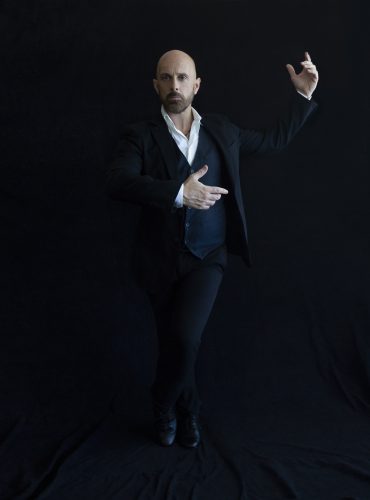
Ray Sullivan, left, is co-founder of Tango Out along with his partner, Luis Vivas. (Photo courtesy of Ray Sullivan)
Ray Sullivan – Miami mover-and-shaker, director, innovator and trained professional dancer – believes in the art of the “milonga.”
To his thinking, a good milonga, which refers to both a style of tango music and the gathering where this type of dancing takes place, has the power to unite a community.
So he started Tango Out in 2016, a class and milonga where queer couples can socialize, learn to dance and feel a sense of belonging.
“In creating Tango Out, we wanted to do something slightly different. We didn’t want to create a separate community, so we decided to invite the LGBTQ community to come and dance and feel welcome with the traditional tango community in the same spaces,” says Sullivan, who is co-founder along with his partner, Luis Vivas. “That became our mission from the very beginning. It wasn’t just about creating a separate queer space.”
This April, he was taking that idea even further with the creation of the first Miami International Queer Tango Festival, titled “Conexion,” paying homage to the connections that tango initiates. Sullivan received a Knight Foundation Grant and had set the Miami Beach festival for April 2-6, during Pride weekend.
Now, it’s been rescheduled for this fall.
“We were fortunate to move the festival to Oct. 8-12. That it worked is a real blessing because we needed to move all of the artists, the plane tickets, the venues, everything,” he says. “Everyone has been fantastic. Cross our fingers, we have everyone.”
Looking back, Sullivan has strong thoughts on how tango and milongas have influenced his life, the community and the direction of his career.
“In the early ’90s, my career took me to Buenos Aires, where I danced with the contemporary ballet there,” says Sullivan, who is originally from New Haven, Conn. “I did all of these dance-related things in Argentina that were really beautiful and exciting.”
A ballet dancer there invited him to a milonga in order to meet people and become a part of the Buenos Aires community.
“I didn’t know what a milonga was,” Sullivan says, laughing. “That was in 1993, I think, and basically I never stopped. The social dancing of tango, just going out and dancing socially, has been in my life since then.”
Ray Sullivan is originally from New Haven, Conn., but has spent the past 20 years in Miami. (Photo courtesy of Dina Levinson)
The milonga (meaning “many words”) originated in Argentina and Uruguay and was popularized in the 1870s as a social event. As a dance style, milonga refers to a fusion of many cultural dances but tends to be faster-paced and less complex.
Soon after arriving in Miami in late 1999, Sullivan began teaching at Miami City Ballet. He also became director of the now-closed Miami Contemporary Dance Co. and was involved in various dance-related endeavors throughout Miami.
One of the first pieces Sullivan choreographed for Miami Contemporary Dance was titled, “Tango Undressed.”
“At that time, it wasn’t common, globally, to have contemporary dance pieces or ballets with tango that used same-sex couples,” Sullivan says. “This was a full evening, and it had two duets with same-sex couples, one with two women and one with Luis Vivas and myself …
“I remember thinking, right before the first performance at the Jackie Gleason Theater to a pretty packed house, ‘What is the reaction of the audience going to be? I’ve created this work and am dancing one of the couples?’ I didn’t allow myself to think about that in the creative process. I just made this work.”
The piece went well, he says, and the audience was accepting and enthusiastic.
“‘Tango Undressed’ became a work that we performed quite a bit here, as well as on tour,” he says. “It really marked a part of both my career and my experience with what tango is like, mixing it with contemporary dance for stage.”
While “Tango Undressed” was concert dance, it opened the door and the thought process for Sullivan and Vivas to create something in the social dance arena that would begin to invite the LGBTQ community to come in and feel embraced.
For him, authentic tango dance has always been a social experience.
“Luis and I would go out dancing socially, and we could dance together. Even though it wasn’t always well looked upon, no one would tell us to get off the dance floor because we’re dancers,” he says. “We realized it wasn’t like that for everyone. There were people, just everyday people, who were feeling there was no way they could walk into this society and just appear.”
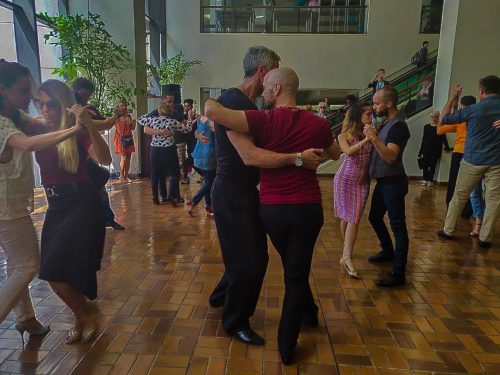
Through Tango Out, queer couples can socialize, learn to dance and feel a sense of belonging. (Photo courtesy of Ray Sullivan)
So they started Tango Out specifically with that mission: to be inclusive.
Sullivan says he feels really fortunate and blessed that his dance career has allowed him to be well-connected in the arts community with funders, supporters and people who work at the county level.
“Maybe four years ago, people didn’t know exactly what I was doing, and now they’re beginning to understand it. It speaks volumes about the strength of our community here in Miami,” he says.
Since its creation, Tango Out has offered more than 300 community classes, used a number of different venues, and presented a long list of artists, many of whom are internationally known in the tango world. The artists perform and teach, and students get to meet them, talk with them, and share a moment with them. It’s more intimate, more social – and it gets to the roots of tango.
Sullivan and Vivas decided the next step would be to create a queer tango festival in Miami.
“Luis and I have spent the last three or four years either participating in or attending queer festivals around the globe in order to prepare Miami to have our first queer tango festival here,” he says. “Everything in tango is about the connection you feel with the person you’re dancing with. You dance with people from all over the world. There are people from everywhere who dance tango that come and visit. You might be dancing with someone who doesn’t even speak your language, but you’re still connected.”
Being that Miami is a city that is such a connector, it was time for this festival to be here.
“It is so important that there are these social projects that are embracing the LGBTQ community along with the traditional tango community in the same spaces. It gives people the ability to actually share time together socially, dance together and get to know each other. I think it’s extremely important in the world today. If we want to have inclusion, tango and the dance space is a great way to begin that inclusion. Creating something with someone improvising on a dance floor together is so powerful, and it’s really difficult to exclude someone from your existence once you’ve embraced them.
“I think it’s important visually that there might be 40 couples on a dance floor and, within that, some of the couples are same-sex couples. If the eye becomes accustomed to it, sees it, becomes familiar with it, then that’s what causes inclusion, and that kind of knowledge and that kind of love is what gets rid of hate.”
Sullivan was pensive. “When there’s a problem, you address it and do something about it. This is our way of doing something.”
Because of social distancing, Tango Out has canceled its activities. Stay up to date with the group’s activities on Facebook and Instagram. For more information on Conexion in October, visit miamiqueertangofestival.com.









Recent Comments