Review: A boxing ring holds life lessons in ‘The Opponent’ at the African Heritage Cultural Arts Center
Written By Christine Dolen October 12, 2022 at 10:55 AM
Kedar Myers plays an on-the-rise boxer in “The Opponent” at the African Heritage Cultural Arts Center through Sunday, Oct. 23. (Photo courtesy of Leesa Richards)
Brett Neveu’s “The Opponent” is a two-character, one-set play about an on-the-rise boxer and his sometime trainer. The show would seem relatively simple to produce, but as the saying goes, appearances can be deceiving.
The 2012 drama by the Chicago-based Neveu is the first post-pandemic professional theater production at the African Heritage Cultural Arts Center (AHCAC) in Liberty City.
“The Opponent” pits boxer Donell Fusels (Kedar Myers) against his trainer Tremont “Tre” Billiford (Enrique Galán) at the African Heritage Cultural Arts Center. (Photo courtesy of Leesa Richards)
The facility itself is looking better than ever, thanks to an array of improvements and a variety of new equipment. And the return of drama to its Wendell A. Narcisse Performing Arts Theater is an enriching facet of AHCAC’s extensive programming.
Directed by Lowell Williams, “The Opponent” pits young Black boxer Donell Fusels (Kedar Myers) against his on-and-off white trainer Tremont “Tre” Billiford (Enrique Galán).
At Tre’s bare-bones gym in Lafayette, Louisiana, Donell is nervously getting ready for his third professional fight. If he beats successful boxer Jasper “Jas” Turner Dennis at their bout in New Orleans that night, Donell believes, he’ll be on his way to the career and lifestyle of his dreams.
What the older Tre communicates as he puts a jittery Donell through his paces boils down to this: not so fast.
Tre, an ex-boxer whose Louisiana accent is as pungent as the Café du Monde’s chicory coffee, has been there, done that and has the scars (physical, emotional, mental) to prove it. He knows that dreams of fame and wealth can be potent fuel for a fighter. But he also knows – too well – that reality can be far more bleak.
Enrique Galán portrays a boxing gym owner in “The Opponent” at the African Heritage Cultural Arts Center. (Photo courtesy of Leesa Richards)
Tre pushes Donell to train harder and faster. Donell wants to hold back, save his strength for the fight. As Donell punches against Tre’s hand pads – pow! pow! – the verbal jabs flow both ways.
Act II, longer than the relatively short Act I, jumps forward in time and finds both men changed. But those details are for audiences to discover.
As director, Williams had to draw the performances he wanted from two actors relatively new to theater, but he also had to make the boxing moves and training look real, keeping them in synch with the dialogue. He turned to athlete/coach Bladamir Santos Laffita as fight coordinator, who makes sure the physical action is convincing and that only a couple of intended errant punches seem to land as they’re meant to.
Problematically, Neveu’s script is dense with dialogue and only sporadically engaging. The playwright name-checks a string of boxers, but those names fly by almost unintelligibly pronounced rendering them meaningless.
Myers and Galán communicate the complexities of their characters’ shifting relationship. Friendship and mentorship figure in, sure, but so do disappointment and betrayal. Myers has a presence and conveys the cockiness of youth, while Galán’s world-weariness helps make Tre’s diminishing life more moving.
Kedar Myers (left) and Enrique Galán square off in “The Opponent” at the African Heritage Cultural Arts Center. (Photo courtesy of Leesa Richards)
Jade Mesa’s minimalist set is basic — the boxing ring with some benches and equipment placed around it. Lighting by Guy Haubrich and technical advisor Dudley Pinder brings the two men into sharp relief against the black velvet curtains that line the Narcisse Theater’s walls. Sound designer James Mungin II and costume designer Jacquelin Hodge contribute to the verisimilitude of the gym environment.
Next up in the AHCAC’s professional theater series is a production of Lynn Nottage’s powerful Pulitzer Prize-winning 2009 play “Ruined,” which will run Feb. 22-March 19, 2023. The drama about the lives of women in the Republic of Congo is larger in scale, more challenging to pull off and, simply put, a better work of theatrical art. Even so, it’s good to have “The Opponent” heralding the post-pandemic return of another South Florida theater company.
WHAT: “The Opponent” by Brett Neveu
WHERE: African Heritage Cultural Arts Center, 6161 NW 22nd Ave., Miami
WHEN: 7:30 p.m. Friday-Saturday, 2 p.m. Sunday, through Oct. 23
Playwright Lynn Nottage talks high stakes of ‘Mlima’s Tale,’ Zoetic Stage’s season opener
Written By Christine Dolen October 11, 2022 at 10:17 AM
Jerel Brown plays a majestic elephant in Zoetic Stage’s production of “Mlima’s Tale” at the Carnival Studio Theater in the Adrienne Arsht Center, Miami. (Photo courtesy of Chris Headshots)
Playwright Lynn Nottage navigates deeply into many worlds.
She has taken audiences along as she explored the life of a gifted black seamstress in “Intimate Apparel,” the horrific experiences of women in Congo in “Ruined,” racist Hollywood in “By the Way, Meet Vera Stark,” the fears and fury of steel workers in “Sweat,” the challenges of the formerly incarcerated in “Clyde’s,” and the complexities of superstar Michael Jackson in her book for the Broadway musical “MJ.”
That topical range, she says in a telephone interview while heading back to her home in Brooklyn’s Boerum Hill neighborhood, has to do with her particular creative nature.
“I’ve found I have a nomadic imagination and that I’m a restless artist,” says Nottage, who lives in her childhood home with her filmmaker husband Tony Gerber. “That’s foundational to my practice.”
Double Pulitzer Prize winner Lynn Nottage explores the violent world of ivory trading in her play “Mlima’s Tale.” )(Photo courtesy of Lynn Savarese)
Each piece in her large body of work is quite different, meticulously researched, comic or tragic or both. Nottage is the only woman to have won the Pulitzer Prize for Drama twice – for “Ruined” in 2009 and “Sweat” in 2017 – and in 2007 she received a MacArthur Fellowship, unofficially known as the “Genius Grant.”
The reach and impact of Nottage’s work are vast.
The Theatre Communications Group, which tabulates the most-produced plays and playwrights for the coming season at its 551 member theaters, recently announced that Nottage tops both lists. “Clyde’s” will get 11 productions (“Sweat” will have seven), and Nottage will have 24 productions of various plays around the country (a tie with Lauren Gunderson).
“The magnitude and muscle of Lynn Nottage are pretty fantastic,” says Zoetic Stage artistic director Stuart Meltzer, who is beginning the company’s season with the Florida premiere of Nottage’s “Mlima’s Tale.” “So is the way she gives voice to the voiceless.”
Different in content and style, “Mlima’s Tale” previews Oct. 13, opens Oct. 14 and runs through Oct. 30 in the Carnival Studio Theatre at Miami’s Arsht Center. The harrowing and deeply emotional story tracks the illegal trade in elephant ivory from the African savannah to the opulent home of a nouveau riche Asian couple.
Meltzer read the script of the 2018 play two years ago and fell in love with its style, story and power. Nottage structures scenes much as Arthur Schnitzler did in 1897’s “La Ronde,” with two characters interacting, then one moving on to the next scene to engage with a different character, who then moves on to the following scene – and on and on it goes.
The only omnipresent force is Mlima, whose name means “mountain” in Swahili. The magnificent African “long tusker” (so named because his enormous tusks nearly scrape the ground) meets his earthly end not long after the play begins. But his spirit follows the journey of his poached tusks, and with a quick touch, he marks each person involved as complicit.
Jerel Brown plays a majestic elephant in Zoetic Stage’s production of “Mlima’s Tale.” (Photo courtesy of Chris Headshots)
In notes at the beginning of the script, Nottage suggests a sparseness and fluidity in the staging, the use of a live musician, projections and media to summon different places – and a “breathless quality to the flow of the action” with no total blackouts until the end of the play.
“Ms. Nottage says to find what ‘works for you’ in this play. I’m always looking for material that lets us explore how creative we can be. She gives us this wonderland and lets us decide how to tell it,” says Meltzer, who is collaborating with choreographer Herman Payne on the production’s movement direction. “We can be inventive in the staging, sparse at times as we bring light out of darkness and sounds out of silence.”
Nottage was commissioned to write “Mlima’s Tale” by Kathryn Bigelow, the Oscar-winning director of “The Hurt Locker” and “Zero Dark Thirty.” An activist in the fight to save African elephants – whose numbers have plummeted from 10 million in 1900 to 415,000 today, despite a 1990 ivory trade ban – Bigelow made the 2014 short film “Last Days” to argue that the slaughter of majestic elephants for their ivory was not only hastening the extinction of a keystone species but also funding African terrorist groups.
Bigelow directed a staged reading of “Mlima’s Tale” at New York’s Public Theater, then Obie Award-winning director Jo Bonney (who had staged “By the Way, Meet Vera Stark”) became Nottage’s collaborator on the world premiere.
The playwright, who was once charged by an elephant on one of her trips to Africa, spent a year doing the research that underpins “Mlima’s Tale.” The key character was inspired by Satao, a Kenyan big tusker who was around 45 when poachers killed him with a poisoned arrow in 2014. But after all the research, bringing Mlima and his thoughts to life flowed from the deep wells of Nottage’s imagination.
For example: Nottage encapsulates Mlima’s nature and history in a vividly evocative two-page monologue at the start of the play. He relates his grandmother’s advice about the key aspect of survival in this chilling phrase: “…how you listen can mean the difference between life and death.”
By sharing Mlima’s story as a 90-minute play, Nottage says, “it’s easier to build empathy in the room. In telling the story of ivory traffickers, with so many characters, you have to have a strategy that will allow people to feel the depth and breadth of it.”
Hence the “La Ronde” structure and the decision to have three of the play’s four actors portray 19 different characters.
In the Zoetic production, Paul Torres Wong, Phillip Andrew Santiago and Sydney Presendieu must transform from scene to scene, playing a variety of African, Chinese, Vietnamese and American characters. Dialect coach Rebecca Covey has been key to those transformations, but Torres Wong observes that much of the magic lies in Nottage’s writing.
“Each character is a fully realized, multidimensional human being,” he says. “She has made it stereotype-proof.
Mlima is played by Jerel Brown, an actor, singer, dancer and choreographer who appeared in Nottage’s shattering “Ruined” at GableStage in 2012 and received a Carbonell Award nomination for his work in Slow Burn Theatre Company’s intense “Parade” in 2014. He is receiving a Silver Palm Award and just got another Carbonell nomination for his choreography of Slow Burn’s “Once on this Island.” Tall, muscular, graceful yet powerful as he moves around a stage, Brown is best known in South Florida as a dancer, a lynchpin of any ensemble.
“I hope this will show what I can do,” says the smiling, soft-spoken actor. “I don’t like being pigeonholed as a dancer. I started as a singer, then became an actor, then a dancer. Maybe I keep getting cast that way because there’s a lack of male dancers in South Florida.”
Zoetic Stage artistic director Stuart Meltzer appreciates the playwright’s invitation to creativity in staging the Florida premiere of “Mlima’s Tale.” (Photo courtesy of Chris Headshots)
Brown did his own research as he prepared for the role, reading about African elephants, looking at videos to observe their movement and reactions, watching numerous interviews with Nottage.
“Elephants celebrate when there’s a birth. When there’s a death, they mourn,” Brown says. “I play three Mlimas: the animal, the physical tusks and Mlima’s spirit…I’m the only actor onstage for the entire journey. I see the journey, and throughout it, I want each person to do the right thing.”
But from the play’s impoverished African poachers to its wealthy Chinese collectors, virtue is in short supply. Thus, Mlima leaves a mark on each one, a swipe of paint indicating complicity.
“The paint indicates an element of guilt. Everyone has blood on their hands,” says Santiago, whose Zoetic debut is also his first time appearing in a Nottage play. “It’s great to see a piece about conservation. Lynn Nottage’s work takes a big, big issue and puts it under a microscope.”
Torres Wong, who is of Chinese and Cuban descent, plays three distinct Chinese characters, two Kenyans, a Vietnamese woman and an American in “Mlima’s Tale.” He touches on just one of the play’s complexities when he observes, “The craft and art of ivory carving is meaningful in Chinese culture. But it’s tough to reconcile the atrocity of the ivory trade with this ancient tradition.”
As the elephant Mlima, actor Jerel Brown leaves a mark on those who have contributed to his fate in “Mlima’s Tale.” (Photo courtesy of Chris Headshots)
Presendieu, who graduated from Miami’s New World School of the Arts in 2020, is making her professional debut in a play that feels to her like the telling of an African folk tale.
Of Brown, whose Mlima is invisible to the other characters, she says, “He has a great presence. I can feel where he is onstage. He uses his body, his energy and his eyes to communicate, like a dance. It adds an eerie element.”
The forward progress of the glowingly reviewed “Mlima’s Tale” took a long pause during the pandemic, and Nottage says she had been optimistic about the play getting more productions, in part because “we’re not being good stewards of our fellow creatures.”
At one point not so long ago, Nottage was working simultaneously on “MJ” and “Clyde’s” for Broadway and the operatic version of “Intimate Apparel” at Lincoln Center. She survived, she says, by learning to compartmentalize, being fully present in each rehearsal room and turning to her pandemic-acquired skills of yoga and meditation when she got home.
Multiple projects lie ahead, including adapting “Clyde’s” into a television series. Nottage, who will turn 58 next month, says she is still happily focused on creating: “I’ve been so busy for so long that I haven’t had time to think about legacy or dream projects.”
Note to Nottage fans: The African Heritage Cultural Arts Center will produce “Ruined” Feb. 22-March 19 in its theater at 6161 NW 22nd Ave., Miami (305-638-6771 or www.ahcacmiami.org), and Main Street Players will present “Sweat” April 21-May 14 at the Main Street Playhouse, 6812 Main St., Miami Lakes (305-558-3737 or www.mainstreetplayers.com).
WHAT: “Mlima’s Tale” by Lynn Nottage
WHERE: Zoetic Stage production in the Carnival Studio Theater at the Adrienne Arsht Center for the Performing Arts, 1300 Biscayne Blvd., Miami
WHEN: Previews 7:30 p.m. Oct. 13, opens 7:30 p.m. Oct. 14; 7:30 p.m. Thursday-Friday, 3 and 7:30 p.m. Saturday, 3 p.m. Sunday (additional performance 7:30 p.m. Oct. 19, no matinee Oct. 22), through Oct. 30; Zoo Miami communications director Ron Magill will lead talkbacks after the matinee Oct. 23 and the matinee and evening performances Oct. 29
Miami’s regional theaters are digging into new (and newer) works
Written By Christine Dolen October 6, 2022 at 6:07 PM
Daniel Capote plays Jorge Mas Santos, with Andhy Mendez as Manny Diaz in Miami New Drama’s “Elían,” a new work commissioned by the company being produced at the Colony Theatre, Miami Beach. (Photo courtesy of Andres Manner)
Since ancient times, theater has enlightened and entertained us, helped us make sense of the world, mankind, ourselves. In 21st century Miami, it still does.
South Florida’s 2022-23 theater season is about to take off, and thanks to a growing community of playwrights, returning artists with Miami roots and artistic directors passionate about nurturing new works, this season is brimming with world premieres and plays making their regional debuts.
To get an idea of what’s on the horizon for theater-loving Miamians looking for something new, we connected with four artistic directors and five playwrights to talk about their projects and why new works are such a vital part of the theater ecosystem.
Margery Lowe plays a woman who finds unexpected love in GableStage’s “Heisenberg.” (Photo courtesy of Magnus Stark)
Key shows at several major Miami-Dade based companies – Miami New Drama at the Colony Theatre on Miami Beach, GableStage at the Biltmore Hotel in Coral Gables, and Zoetic Stage and City Theatre in the Carnival Studio Theater at Miami’s Arsht Center – speak to a growing focus on new (and newer) work as well as opportunities for Miami-connected playwrights.
“I don’t understand how we can be in the arts and not take risks,” says Miami New Drama co-founder and artistic director Michel Hausmann. “It’s so exciting because of the diversity of our community… to write the first drafts of great new American plays.”
Three of the company’s 2022-23 productions are premieres: Rogelio Martinez’s “Elián” Oct. 27-Nov. 20, Aurin Squire’s “Defacing Michael Jackson” March 9-April 2 and “Create Dangerously” May 4-28 by former Miamian Lileana Blain-Cruz, an acclaimed director basing the piece on Haitian-American writer Edwidge Danticat’s 2010 book of essays by the same title (the award-winning novelist and essayist makes her home in Miami.)
The fourth Miami New Drama play – a 20th anniversary production of Nilo Cruz’s “Anna in the Tropics” Jan. 14-Feb. 5, to be directed by the author – had its commissioned world premiere at the intimate New Theatre in Coral Gables in 2002. In 2003, it made its Miami-raised Cuban-American playwright the first Latino to win the Pulitzer Prize for drama, and a new production played the Tony-winning McCarter Theatre before moving to Broadway – all fuel for Miami’s then-nascent playwriting community.
Though “Anna” has been produced throughout the world, Miami-Dade school officials recently sparked controversy by refusing to allow high school students to see the play gratis courtesy of New Drama and at the Colony, citing what they stated was “age-inappropriate content.”
Rogelio Martinez was commissioned by Miami New Drama to write the world premiere play “Elián.” (Photo courtesy of Karen Martinez)
Miami New Drama’s season begins with the commissioned world premiere of Martinez’s “Elián,” which Hausmann will direct. The celebrated and widely produced Cuban-American playwright, who came to the United States on the Mariel boatlift, made multiple trips from his home in the New York area over several years to research the 2000 Elián González custody battle and interview some of those involved.
“The subject matter is really sensitive to this community… which wasn’t painted in the best light by the national media,” Hausmann says. “We have a responsibility to set the record straight while being entertaining and surprising.”
Martinez got vivid details from some of the lawyers and negotiators in the case, and as he writes in an email, at that point “…a slightly different narrative from the one on record started to emerge… When I write about history, I know that I’m contributing to a conversation that already exists. What I’m doing is adding to that conversation so when people see the play, they’ll discover new things and new points of view.”
The playwright also appreciates that Miami New Drama has underscored its faith in him by commissioning another world premiere piece, and he’s hoping that audiences will come to “Elián” to play their vital role in the developmental process.
“A play changes from one production to the next…because the audience has taught us something. If this play is to have a future life, it’s because there has been an audience there to ensure that. New plays need audiences,” he says.
Colony Memories: ‘Mostly Empty’
Aurin Squire, who wrote the book for Miami New Drama’s world premiere Louis Armstrong musical “A Wonderful World” and has built a thriving television career as a writer-producer on “Evil” and “The Good Fight,” is returning to the Colony this season with “Defacing Michael Jackson.”
Playwright Aurin Squire will see the new version of his play “Defacing Michael Jackson,” set in Opa-Locka, premiere at Miami New Drama. (Photo courtesy of the playwright.)
Squire, who grew up in Opa-Locka, first wrote the play as a 2004 one-act. He expanded it to a full-length play two years after Jackson’s 2009 death, and in 2018, a newer version was given a small production in Chicago. Now a different version of the play – rewritten to reflect new ideas and changing times – will premiere at Miami New Drama.
Set in Opa-locka in 1984, “Defacing Michael Jackson” is a coming-of-age play about teens, hero worship, and life-shaping personal and societal turmoil. The kids are members of a fan club devoted to the pop star, a figure who serves as a metaphor in Squire’s dark comedy.
The playwright is gratified that the piece is being produced at the Colony, which he remembers as “mostly empty” when he was growing up, and that Miami New Drama is part of a bustling South Florida theater season.
“Theater is not-for-profit…It only exists thanks to the support of artists, audiences, benefactors, patrons and government. All the best theater comes out of that, and Miami has made huge strides in finding a way to create a vibrant theater community,” Squire observes.
As to why people should seek out new work, Squire believes that “…the underlying engine in new plays are the ideas that keep us up at night. You’re looking at the obsessions, compulsions, addictions of the human soul. That’s why theater feeds all other dramatic forms because it starts with that obsessive idea…What we do in theater is pass along these obsessions and voices to others. That’s why theater has continued to enchant people for over 6,000 years. And even today, there is something about sitting in that dark space with others and letting new ideas spark something in your soul.”
Disney’s ‘Encanto’ Writer’s Play Comes Home
For her second season as GableStage’s producing artistic director, Bari Newport has assembled a five-show lineup that begins Oct. 28-Nov. 20 with “Heisenberg” by Simon Stephens, who transformed “The Curious Incident of the Dog in the Night-Time” into a Tony- and Olivier Award-winning play. Margery Lowe and Colin McPhillamy star as an improbable couple whose lives are transformed by love.
Two plays earlier produced in Palm Beach County – David Meyers’s “We Will Not Be Silent” (Jan. 6-29) and Lucas Hnath’s “A Doll’s House, Part 2” (Feb. 24-March 19) – will be followed by a pair of works by Latina playwrights: “El Huracán” by former Miamian Charise Castro Smith (April 14-May 14) and “Native Gardens” (June 9-July 1) by Karen Zacarías.
Via preshow talks outside the theater before every performance, Newport is hoping to give GableStage’s evolving audience context for what they’re about to see.
Charise Castro Smith will come home to Miami with a production of her play “El Huracan” at GableStage. (Photo courtesy of the playwright)
“It’s incredibly useful to be given a lens into new work,” she says. “The production and interpretation are always new.”
Newport is ecstatic that the Cuban-American Castro Smith – a playwright, director, actor, producer and screenwriter who cowrote and codirected the Oscar-winning animated Disney smash “Encanto” – is coming home for what will be only the fourth production of 2018’s “El Huracán.” Dámaso Rodríguez, a Miami-born Cuban-American director and artistic director who has worked at major regional theaters throughout the country, will stage the play.
“Dámaso brought me the script. This is a passion project for him,” Newport says. “This is absolutely a new play. Charise is doing rewrites on Act Two.”
Set in Miami, “El Huracán” focuses on four generations of Cuban-American women as they cope with exile, loss and three different hurricanes – including the 1992 monster, Hurricane Andrew.
“‘El Huracán’ is, by far, the most personal play I’ve ever written. It is deeply connected to my roots and to my family,” Castro Smith writes in an email. “It had always been a dream of mine to stage the play in Miami, the city where I grew up and also the land that bore witness firsthand to the devastating effects of Hurricane Andrew.”
The playwright also feels that “El Huracán” will resonate with many communities in a diverse Miami.
“‘El Huracán’ is, at its heart, a play about what we get to keep when it feels like everything has been stripped away,” she says. “It’s about exile and the longing for home, about how memories get passed down, about surviving and rebuilding after literal storms and about the possibility of transformation in the face of loss…It’s about magic and forgiveness… I’m honored and humbled to be able to share it with the city that inspired it all.”
Challenging Audiences
Miami’s Adrienne Arsht Center for the Performing Arts will play host to several Broadway tours new to the city, including the musicals “Six” (Oct. 25-30), “Hadestown” (Dec. 6-11) and a reconceived “My Fair Lady” (March 28-April 2). But as regional theater fans know, the Arsht’s Carnival Studio Theater is also home to several local companies including Zoetic Stage, City Theatre and Area Stage (which recently scored a massive success with director Giancarlo Rodaz’s immersive “Beauty and the Beast.” Next, back at its home base in South Miami, Rodaz is staging an immersive “Sweeney Todd” Oct.14-Nov. 6.)
Zoetic Stage is opening its season with the Florida premiere of “Mlima’s Tale” (Oct. 13-20), a shattering 2018 play about the deadly ivory trade by double Pulitzer Prize winner Lynn Nottage. The company is also producing the 2010 Pulitzer-winning musical “Next to Normal” (March 16-April 9). Zoetic’s other two shows are world premieres by South Florida-based playwrights: Michael McKeever’s “American Rhapsody” (Jan. 12-29) and Vanessa Garcia’s “#Graced” (May 4-21).
Jerel Brown plays a ghostly elephant the Zoetic Stage production of Lynn Nottage’s “Mlima’s Tale.” (Photo courtesy of Chris Headshots)
Artistic director Stuart Meltzer, who notes that two of the company’s five founders are playwrights (McKeever and Christopher Demos-Brown, both of whom have had multiple Zoetic world premieres), blends recent works, musicals (often by Stephen Sondheim) and new plays when he’s constructing a season. But it’s the new work that calls to him – and, he hopes, the audience.
“I find new work incredibly vital, engaging and a lot more interesting,” says Meltzer, who is hoping that Zoetic’s annual Finstrom Festival of New Work will grow from workshops and readings into a festival of fully produced plays presented in repertory. “Material that has been produced time and again becomes comfort food. With a new play, you have to listen, pay attention and get lost in the story. It’s beautiful.”
Meltzer describes his season’s new plays as “60-plus years of an American family…an epic poem” (“American Rhapsody”) and “a remarkable journey of an immigrant woman traveling through America and how she learns to create her own American dream” (“Graced#”).
The prolific McKeever has had his plays – all world premieres – produced at theaters throughout South Florida, and many have gone on to Off-Broadway, regional or international productions. Since launching his play-writing career with “That Sound You Hear” at New Theatre in 1996, he has successfully juggled work as a playwright, actor, designer and, for a time, Zoetic’s managing director. He has seen a sea change in the attitude of companies toward new work since he began at New Theatre 26 years ago.
“New Theatre and Florida Stage would worry about selling tickets to new plays,” he said of two important now-closed companies. “Now, almost all companies are excited about world premieres. There has never been a better time to be a South Florida playwright than now.”
“American Rhapsody” was commissioned by Sarasota’s Florida Studio Theatre, which told McKeever to “go as big as you want.” The play uses eight actors playing 14 characters to chart the evolution of a family and the America that surrounds them over six decades – “history through the eyes of four generations of one family,” McKeever says.
Michael McKeever and Vanessa Garcia will both have world premieres at Zoetic Stage this season. (Photo courtesy of Chris Headshots)
“When you see something new, you put yourself in the position of being among the first people to see the next ‘Strange Loop’ or ‘Anna in the Tropics’ or ‘August: Osage County,’” he says. “Miami and South Florida are such great incubators for new work.”
Garcia, a playwright, novelist, journalist and visual artist, is a multifaceted talent. The author of “Amparo,” Miami’s long-running immersive 2019 hit about the Cuban revolution and diaspora refracted through the experiences of the family behind Havana Club Rum, she’s in the midst of an eventful season: her first children’s book (“What the Bread Says”), the commissioned world premiere of a play she coauthored with inaugural poet Richard Blanco (“Sweet Goats & Blueberry Señoritas” at Maine’s Portland Stage Jan. 1-Feb. 12, 2023) and Zoetic’s world premiere of “#Graced.”
“I wanted ‘#Graced’ to be like a road trip movie, but it’s a play with a Latina woman at the helm,” Garcia says of the comedy, her third play to get a full production in Miami. “She represents a lot of Americans you don’t always see on New York stages.”
Development Program Nurtures Writing
Garcia twice participated in Miami-Dade County’s much-admired Playwright Development Program, working with master playwrights Deborah Zoe Laufer and Kenneth “Kenny” Finkle to develop her plays “The Cuban Spring” and “1,000 Miles.”
As a result of the region’s multiple developmental programs, new play festivals and the increased interest of companies in producing new work, Garcia says, “You can work from here and create here and not have to leave.”
Garcia is paying her experience forward by serving as the master playwright in the new City Theatre program Homegrown. Over a two-year period, she is mentoring eight emerging BIPOC playwrights as they develop pieces reflective of a diverse Miami.
The necessity of a program like Homegrown, says City Artistic Director Margaret Ledford, is illustrated by Miami artistic expats who have built careers elsewhere.
Elizabeth Price will debate and analyze the Constitution in City Theatre’s “What the Constitution Means to Me.” (Photo courtesy of Morgan Sophia Photography)
“Florida is in the export business when it comes to talent. We have to do a deep dive to support the artists living here, particularly artists of color and playwrights,” she says.
Because City’s focus for more than 25 years has been on producing short (and frequently new) comedies, dramas and musicals in its perpetually popular Summer Shorts Festival, its audiences eagerly embrace those world and regional premieres. But its annual December production of recent, more political full-length plays – this year, it’s Heidi Schreck’s 2017 work “What the Constitution Means to Me” (Dec. 1-18) – presents different challenges.
“For the winter audience, we have to convince people to sit in a room with others and enjoy a communal experience,” says Ledford, who cites Art Basel, the bustle of the holiday season and the outdoor lure of Florida in December as competitors for a theater lover’s presence.
Schreck’s play, which will star South Florida actor-director Elizabeth Price, is a trenchant comedy born of the playwright’s experience: As a teen, she earned prize money for college by giving speeches/having debates on the Constitution. Women’s rights, immigration, domestic abuse and protections afforded by the Constitution and its amendments figure into the play, as does a debate about whether the Constitution needs to evolve – or be scrapped.
“Theater has to start the harder conversations in order for us to have them,” Ledford says. “If you are or you know a woman, you need to see this play.”
Miami New Drama’s Hausmann, who has continued deepening his company’s relationships with Miami playwrights who have chosen to stay as well as those who forged careers elsewhere, is certain that new work created for Miami audiences can go on to a longer life – and should.
“A play that’s successful in Miami can be successful anywhere,” he argues. “Miami has grown more and more as a place for new work. It’s not a new wave.”
INFO:
City Theatre: “What the Constitution Means to Me” (Dec. 1-18), $55-$60. Carnival Studio Theater in Adrienne Arsht Center for the Performing Arts, 1300 Biscayne Blvd., Miami. www.citytheatre.com
Miami New Drama: “Elián” (Oct. 27-Nov. 20), “Defacing Michael Jackson” (March 9-April 2), “Create Dangerously” (May 4-28). Single tickets available now for “Elián” at $76.50, $65.50, $46.50, includes service charge; season memberships also available. Colony Theatre, 1040 Lincoln Road, Miami Beach. www.miaminewdrama.org
Zoetic Stage: “Mlima’s Tale” (Oct. 13-30), “American Rhapsody” (Jan. 19-29), “#Graced (May 4-21). Single tickets available for “Mlima’s Tale” at $55-$60; five-show Theatre Up Close subscription also available, includes City Theatre’s “What the Constitution Means to Me.” Carnival Studio Theater in the Adrienne Arsht Center for the Performing Arts, 1300 Biscayne Blvd., Miami. www.zoeticstage.com.
Teo Castellanos’ ‘F.Punk Junkies’ Blends Dance, Funk and Folktales
Written By Helena Alonso Paisley September 28, 2022 at 12:39 PM
Haitian American singer Inez Barlatier in Teo Castellanos D-Projects “F.Punk Junkies” presented by Miami Light Project at The Light Box at Goldman Warehouse in Wynwood. (Photo courtesy of Knight Foundation)
There are few individual performing artists who so fully represent modern Miami in all its multifaceted, gritty singularity as does Teo Castellanos. This shape-shifting actor, writer, dancer, and mentor has been an integral part of the city’s performing arts scene for over three decades—and he’s not done yet. Far from it.
Anyone who knew Castellanos in his early 20s would be forgiven for not recognizing him today. Born in Puerto Rico but raised in the rough streets of 1970s Carol City, the young Castellanos was a sometime bus driver and a frequent connoisseur of all manner of mood-altering chemicals. At 27, an epiphany, and a woman, caused him to turn his life around. He lost the drugs, married the woman, found theater, got a bachelor’s degree in fine arts, and started making art. He hasn’t stopped since.
Dancers Niurca Márquez, left, and dancer/co-choreographer Michelle Grant-Murray perform in “F.Punk Junkies.” (Photo courtesy of Knight Foundation)
Miami Light Project director Beth Boone calls Castellanos “the quintessential Miami artist.” Like so many Miamians, she says, “He’s from another place, but this is his home. He tells stories that traverse decades and cultural moments that are really important in the cultural and contemporary history of Miami and he reveals those stories on stage beautifully.”
Castellanos confides he considered moving to New York or Los Angeles after finishing his degree. His first job, directing a street theater troupe for at-risk young people, helped to convince him that his place was in the 305.
“I made the conscious decision to stay here and cultivate the art community here and work with those young people — those young people who, like myself, came from difficult upbringings and were mentorless. To me, it was really important that I did that, and that I did that in my community, the community where I grew up.”
“F.Punk Junkies”—the F stands for “funk”—is his latest high-energy and highly-anticipated work. Following the calendar of pandemic interruptus, the dance theater performance has been many years in the making commissioned, co-produced, and presented by Miami Light Project. Previews begin Monday, Oct. 3 through Wednesday, Oct. 5, with its official opening starting Thursday, Oct. 6 and running through Sunday, Oct. 9 at Wynwood’s The Light Box theater.
With “F.Punk Junkies,” Teo Castellanos celebrates twenty years of collaboration with The Miami Light Project. (Photo courtesy of Knight Foundation)
The piece features an all-female cast and showcases performers of different age groups and styles: Michelle Grant-Murray, who co-choreographed the piece with Brazzdance founder Augusto Soledade, comes from a background in West African and Afro-Brazilian dance. Performer/collaborator Niurca Márquez was originally a flamenco dancer, Maria “Mercy” López is principally a contemporary dancer, and the multi-talented Haitian American singer Inez Barlatier brings her skills as an actor to “F.Punk Junkies.” Keshia Abraham, the production’s dramaturg and also an actor in the piece, has a Ph.D. in African diaspora women’s literature.
As with all of Castellanos’ work, the process has been a learning experience for him as much as it has been for the artists in the company: “It’s experiential… (an) experience that’s had to happen in that space with the energy of these powerful women that has really been beautiful. Joyous. And at times overwhelming.”
Set in a “nondescript Caribbean kind of magical place,” Castellanos explains that the text is based on Black and Puerto Rican folktales and the stories of the Orishas, the demi-gods of the Santería pantheon.
Performer and dramaturg Keshia Abraham brings a deep knowledge of issues of race and colonialization to her work on “F.Punk Junkies.” (Photo courtesy of Knight Foundation)
“We are using narratives from Orisha tales,” Castellanos clarifies, “but it’s more like energies, right? There’s Eleguá energy, there is a story of Oba being told from the perspective of Changó, then Yemayá shows up. Those are the main four.”
And then there’s the music. 1980s Afropunk and funk was the soundtrack of Castellanos’s youth.
“It’s not only funk,” he said. “It’s more Black punk than funk. It’s the music that drives the piece,” but the “punk” of this work has nothing to do with the violent brand of nihilism performers like Sid Vicious so aptly personified. Patti Smith once defined punk as “the freedom to create, freedom to be successful, freedom to not be successful, freedom to be who you are. It’s freedom.” Punk embraces a DIY spirit—why buy any record with a bar code when you can create one yourself in your garage? Punk is non-conformist, it is revolutionary, it eschews consumerism. And finally, punk is about coming together in community, without judgement, to make and appreciate art.
Whatever the brand of punk you profess, however, all of it is fast and frenetic—it’s a far cry from the kind of energy Castellanos exudes. A Zen Buddhist, he begins each day at 5 a.m. with 40 minutes of meditation. Boone says that he brings something akin to a spiritual discipline to his artmaking:
“He starts each rehearsal with a meditation and then a physical warm-up. And then he moves into discussion around character, story line, text… He doesn’t rush the process—he respects and celebrates the ways in which each person in any given cast arrives in the space.” In ensemble building, she says, he is a master at “creating a space that is sacred and liberating for artists to do their best work.”
For Castellanos, his creative work is closely linked to his spirituality.
“I can’t separate my practice from my practice,” he explains simply. “Both practices, they unify, they work together. You’ll see Buddhist tenants in my work all the time. You’ll hear Buddhist teachings in the text. Buddhist concepts in the text. Sometimes you see Buddhist movement in the text…”
In addition to his focus on Buddhist tenets and ritual, says Boone, “he’s very much rooted in the tradition of the griot and folkloric storytellers. I think he finds really imaginative ways of realizing that tradition in a contemporary context.”
Contemporary dancer Maria “Mercy” López in “F.Punk Junkies.” (Photo courtesy of Knight Foundation)
“With every new piece,” Castellanos adds, “I take on a new challenge. The piece before this one, I worked with combat veterans from the Iraq war, Puerto Ricans, specifically… They were in their late thirties, maybe, but still younger than me, right? And historically my companies have all been men, specifically men of color.”
“This time,” he says, “I really decided that I would flip that and work with all women, and not only younger folks, but I wanted to work with artists who already were established and had had careers of their own. He adds: “I think it really began with the premise of having older bodies onstage, which is the reason I’m in the piece… because I wanted to make that statement of older artists onstage.”
Castellanos says that his impetus for doing the kind of work he does is quite simple: “I remember reading (an interview with) Eric Bogosian where he said, ‘I like to put work on stage that I would like to go see.’ That’s always been kind of one of my motivations, right? I would love to see this type of work on stage.”
Review: Main Street Players delivers emotional, raw reality in ‘Topdog/Underdog’
Written By Christine Dolen September 27, 2022 at 3:09 PM
Roderick Randle as Booth and Denzel McCausland as his brother Lincoln in “Topdog/Underdog” at Main Street Playhouse, Miami Lakes, through Sunday, Oct. 16. (Photo courtesy of Olimac Media)
The 20th-anniversary production of “Topdog/Underdog” begins previews on Broadway Sept. 27, with an opening set for Oct. 20. TV and movie actors – Corey Hawkins and Yahya Abdul-Mateen II – will play brothers Lincoln and Booth in the revival directed by Tony Award winner Kenny Leon.
Still, you don’t need to travel nearly that far to see a production of the searing, Pulitzer Prize-winning drama by Suzan-Lori Parks.
Denzel McCausland as Lincoln (right) recalls happier days in “Topdog/Underdog” at Main Street Playhouse. (Photo courtesy of Olimac Media)
Main Street Players in Miami Lakes obtained the rights to do the play before the pandemic hit, and the company has finally opened its own production, which will end a few days before the official Broadway opening. (Palm Beach Dramaworks will do a regional production of the show May 26-June 11.)
Staged by director-actor-playwright Carey Brianna Hart, “Topdog/Underdog” is, obviously, a far more intimate experience at the 50-seat Main Street Playhouse than it will be for audiences in Broadway’s 805-seat John Golden Theatre. Though the play is laced with laughs, particularly in earlier scenes, it is also intense, quicksilver in its mood shifts and ultimately tragic. Being so close to the actors feeds into the play’s aura of danger; at times, you may find yourself shrinking back in your seat or experiencing a touch of claustrophobia.
The play about two Black brothers in their 30s – the elder Lincoln (Denzel McCausland) and five years younger Booth (Roderick Randle) – takes place “here” and “now,” or so the program says, though the vibe feels like the bad ol’ days before the push to clean up Manhattan’s Times Square.
Roderick Randle, left, is Booth and Denzel McCausland, dressed as Lincoln, plays his brother Lincoln in “Topdog/Underdog” at Main Street Playhouse. (Photo courtesy of Olimac Media)
Naming the brothers for the 16th president and his actor-assassin was, Lincoln tells Booth, their father’s idea of a joke. The current situation for the siblings, as iffy as their entire lives have been, is that they share Booth’s single dilapidated room with no running water and no toilet.
Lincoln leaves every day for a job at an arcade, donning whiteface makeup, a stovepipe hat and a fake beard to play his presidential namesake. As he pretends to watch “Our American Cousin” at an imaginary Ford’s Theatre, tourists line up to “shoot” him with blanks – again and again and again. It is, he says, “sit down … easy work.”
Time was, Lincoln was the OG of Three-card Monte, a slick con man with hypnotic patter and dizzyingly fast hands. Then Lonny, his right-hand man, was murdered in front of him. Lincoln kept boozing and womanizing ‘til his wife Cookie threw him out. Hence the arcade job and the “temporary” living arrangement, just one source of Booth’s endless stream of complaints.
The volatile, insecure Booth has dreams of following in his brother’s hustler footsteps and rechristens himself “3-Card.” Truth be told, he has no gift for the grift; Lincoln, who chuckles as he masterfully puts baby bro in his place, says Booth has two left hands. Slow ones.
When it comes to shoplifting, on the other hand, no one boosts like Booth. In the play’s funniest scene, he brings home two fully accessorized outfits – and not in shopping bags.
“Topdog/Underdog” is a Cain and Abel story about brothers forever scarred by the warring, cheating parents who abandoned them when Lincoln was 16 and Booth 11. Both are damaged, barely getting by, anxious. But Booth – loud and angry, sick of living in his brother’s shadow, tired of being put off by his ex-girlfriend Grace – is ready to blow like a volcano.
As shaped by Hart and the actors, the performances and thus the brothers are quite different.
McCausland’s Lincoln is a more low-key, weary man whose unexplored talents (he sings beautifully, for example) were overshadowed by the need to hustle and protect his little brother from one day to the next. The actor’s work deepens as the play moves toward its inevitable end, with a kind of emotional blindness keeping Lincoln from fully grasping just how dangerous his brother can be.
Randle’s Booth is a fuse just waiting to be lit. Lying is like breathing to him, no matter the subject. His sexual prowess, his swagger, his Three-card Monte skills are all fodder for his delusions, envy and deadly jealousy. Randle is a ball of energy from the get-go, yet he still builds to the ferocity and heartbreak of the final scene.
Roderick Randle as Booth tries to summon some of his brother’s prowess with the cards in a scene from “Topdog/Underdog” at Main Street Playhouse. (Photo courtesy of Olimac Media)
The show’s designers get the essence of the brothers’ world just right, from Danny Nieves’s shudder-inducing set and Kat Svadbik’s props (including Lincoln’s “bed,” a broken green recliner with rips and paint dribbles on it) to Angie Esposito’s costumes and Alejandro Milian’s lighting.
One quibble with the sound, which was done by Nieves and Hart: In two places, to fill time for costume changes, noisy traffic sounds get loud then disappear. Sure, you can’t have that city cacophony going all the time if you want to hear the actors. But either there’s traffic outside the place they live or there isn’t; real noise doesn’t turn on and off like a faucet.
“Topdog/Underdog” at Main Street Playhouse tells the story of two brothers named Booth (Roderick Randle) and Lincoln (Denzel McCausland). (Photo courtesy of Olimac Media)
Though “Topdog/Underdog” won its Pulitzer two decades ago, this masterwork about the love-hate relationship between these broken brothers is as penetrating, insightful and disturbing as it was when Parks wrote it. Some of the language is vulgar and quite raw, some poetic (Booth calls Lincoln’s reminiscing his “raggedy recollections”), some revelatory.
Times change, but the crushing effects of prejudice, poverty and familial dysfunction endure, as does the American obsession with winning and losing.
Great plays endure too, giving theaters of all sizes and a younger generation of artists the chance to interpret a contemporary classic. With “Topdog/Underdog” and the singular voice of Suzan-Lori Parks, Main Street Players is taking its audiences on a profoundly emotional, thought-provoking ride.
WHAT “Topdog/Underdog” by Suzan-Lori Parks
WHERE: Main Street Playhouse, 6812 Main St., Miami Lakes
WHEN: 8 p.m. Friday-Saturday, 2 p.m. Sunday, through Oct. 16
COST: $30 ($25 for students and military personnel).
Review: Ronnie Larsen casts the family he’s missing in ‘The Actors’
Written By Christine Dolen September 19, 2022 at 10:14 AM
Ronnie Larsen stars as a man who hires actors to portray his family in “The Actors” at Plays of Wilton in Wilton Manors running through Oct. 2. (Photo courtesy of Jeff Walters)
Ronnie Larsen, a multi-faceted talent who writes and produces plays and musicals, sometimes acting in them and/or directing them, has created a body of work that is the definition of eclectic.
From his breakthrough Off-Broadway hit “Making Porn,” which ran for 511 performances in 1996 through 1997, to his 2019 South Florida successes with “An Evening With John Wayne Gacy Jr.” (with Larsen giving a chilling performance as the serial killer) and “Grindr Mom” (a solo show which won Carbonell Awards for the playwright and star Jeni Hacker), Larsen writes impressively and observantly about a wide range of subjects that intrigue him.
His gay-themed pieces (most recently the wild comedy “TruckStop Sally’s Sex Party”) draw enthusiastic sold-out audiences to The Foundry. The small Broward County theater where Larsen’s Plays of Wilton performs and the larger Island City Stage next door have created a compact theater district along a stretch of Dixie Highway in Wilton Manors.
At the moment, Larsen has taken yet another turn with his award-winning comedy “The Actors,” which he describes as his first “G-rated show.” Yes, this is a different addition to the Larsen oeuvre. But start to finish, “The Actors” underscores this truth about him: He’s a skilled actor-playwright with great depth.
Jeni Hacker, Ronnie Larsen, Chad Raven and David Kwiat star in “The Actors,” directed by Stuart Meltzer of Miami’s Zoetic Stage. (Photo courtesy of Jeff Walters)
Directed by Stuart Meltzer, the artistic director of Miami’s Zoetic Stage (who also staged Larsen’s “Grindr Mom”), the autobiographically inspired “The Actors” focuses on a depressed, lonely middle-aged man named Ronnie Larsen (who is, of course, played by the author).
Ever since the death of his mother Jeanette from cancer and his father Claire from a heart attack, Ronnie has struggled with a grief that will not dim. So, he has come up with his own unusual form of therapy: He’ll hire a pair of actors to come over and play his parents. They’ll hang out, watch television, eat together and remind their sad no-longer-little boy that he is loved. Maybe, Ronnie thinks, that void will become a little less empty.
Both of the actors, Jean (Hacker) and Clarence (David Kwiat) see the weirdness in what Ronnie calls “the project,” but since they need the work, they commit. That’s when things really start getting weird.
“The Actors” is frequently a very funny play, particularly when top-of-their-game Miami-Dade County Carbonell winners Hacker and Kwiat are engaging in some of their stranger antics.
Hacker, for instance, is too petite to simply gaze through the peephole in Ronnie’s front door, so whenever someone knocks, she has to leap up for a quick peek. Because Ronnie’s real mom was a knitter, Jean buys needles and some chopped-up yarn so she can sit on the couch faux knitting. Kwiat’s face speaks sly volumes when he’s inventing a backstory for Clarence and Jean, the better to persuade his acting partner to fully go for it (sex included) as pretend man and wife.
Two more characters, both named Jay, eventually show up to complicate the family dynamic. Actor Jay (Chad Raven, a graduate of Miami’s New World School of the Arts) is a handsome young man very familiar to Jean. Real Jay (Jerry Seeger) is Ronnie’s long absent middle-aged brother who provides a different perspective and fills in some blanks.
Chad Raven, Jeni Hacker, David Kwiat and Ronnie Larsen observe a birthday in “The Actors.” (Photo courtesy of Jeff Walters)
Although “The Actors” could benefit from some tightening (it feels long at two hours with an intermission), the play is multi-layered and stylistically rich, realistic and absurdist. Meltzer, who is so deft with comedy and drama, has shaped hilarious and tender moments with his cast, finding nostalgic sweetness in the father-son relationship, juvenile jealousies once Ronnie’s fake brother enters the picture, and a fine balance in Hacker’s quicksilver shifts from wary actor to self-assured mom.
The apartment set, with a kitchen cupboard packed with sugary-to-the max cereal, is by Michael Richman. Lighting designer Preston Bircher and sound-lighting tech Panos Mitos facilitate mood and aural time travel. The most attention-grabbing costume is one that Larsen supplied for himself: adult-sized Superman jammies that instantly transform a sad man into a rambunctious kid.
Larsen’s theater career to date has been as prolific as it is singular. “The Actors” deserves a continued life at theaters around the country. But through Oct. 2 in Wilton Manors, you can laugh at and be moved by one of Larsen’s best plays and by its author’s excellent, deeply felt performance – and you should.
WHAT: “The Actors,” a Plays of Wilton production, by Ronnie Larsen
WHERE: The Foundry, 2306 N. Dixie Highway, Wilton Manors
WHEN: 8 p.m. Wednesday-Saturday, 3 p.m. Sunday, through Oct 2 (no performance Sept. 30)
Josephine Baker silent film will be performed with live music at Coral Gables Cinema
Written By Sergy Odiduro September 12, 2022 at 10:47 AM
Josephine Baker dancing the Charleston at the Folies-Bergère, Paris, in 1926, a year before “Siren of the Tropics” was released. (Photo by Stanislaus Julian Walery is in the public domain courtesy of Wikimedia)
A silent film starring Josephine Baker gets an original soundtrack treatment at the Coral Gables Cinema.
“Siren of the Tropics” is a French film directed by Mario Nalpas and Henri Étiévant about a West Indian native who nurtures an unrequited love for an engineer who hails from Paris. The legendary dancer and civil rights activist was the first Black woman to star in a major studio production in the 1927 film.
“I think it’s time for people to know her,” says Carlene M. Sawyer, the executive director of the Dranoff 2 International Piano Foundation, who, along with the Coral Gables Cinema, is presenting a live two piano performance and screening of “Siren of the Tropics” on Wednesday, Sept. 14. “I don’t think many people have seen her perform,” adds Sawyer.
The event begins with an hour-long reception that kicks off at 6 p.m, followed by the film’s screening at 7 p.m. and then a talkback about Baker.
Performing for the event are pianists Angel Perez and Devin Shaw who will play live on two Steinway concert grands, according to Sawyer.
Miami Beach native Angel Perez will join Devin Shaw playing live on two Steinway concert grands at the Coral Gables Art Cinema. (Photo courtesy of the artist)
Perez, a Miami Beach native, has previously appeared at the Essentially Ellington Competition, Sankofa Jazz Festival, and the Miami Downtown Jazz Festival. He is currently pursuing a master’s degree in music therapy from the University of Miami.
He will be joined by 19-year-old pianist Shaw, who began his classical music training at the Chicago-based Merit School of Music. He went on to continue his training with the Chicago Youth Symphony Orchestra and the Ravinia Jazz Scholars. He is in the Stamps Scholars program in jazz studies at the University of Miami’s Frost School of Music.
During the performance, the two will present original works by jazz composer and Miami native Martin Bejerano and a new jazz score that will include music of Nina Simone, Duke Ellington, and Dizzy Gillespie, among others.
Bejerano, who assisted in the score’s curation, believes that the event is a great way to reach into the past while putting a new spin on a classic performance.
Devin Shaw will perform as one of two pianists presenting an original score to the Josephine Baker silent film “Siren of the Tropics” on Wednesday, Sept. 14. (Photo courtesy of the artist)
“I thought it would be nice to have some young blood in there, especially since it is such an old movie. I wanted to see what they would come up with,” Bejerano says.
Following the film, the program will delve into Baker’s contributions off screen.
“She’s such a star and a sophisticated performer as well. She wasn’t just an artist, she was an amazing human being,” comments Sawyer.
The talkback will discuss the historical significance of Baker’s cinematic roles as well as the overall portrayal of black artists.
Panelists include Dr. Terri Francis, author of “Josephine Baker’s Cinematic Prism,” Mo Beasley, performance artist, playwright and author, and Gentry George, a professional dancer who is on the faculty of the New World School of the Arts.
Roni Bennett, executive director and co-founder of South Florida People of Color, will lead the discussion. She hopes that the event will encourage everyone to take a second look at how Black people are portrayed in the media.
“During the talkback we will be able to objectively look at, not just films, but all types of media with a critical lens. This will hopefully help to dismantle stereotypes, tropes and implicit biases,” says Bennett.
Beasley points to how Baker actively used her movie roles to transcend restrictions imposed on her due to her race and ultimately used her influence and fame to her advantage.
Performance artists, playwright and author Mo Beasley will be part of the panel discussing Josephine Baker’s life and work at Coral Gables Art Cinema’s screening of “Siren of the Tropics.” (Photo courtesy of Julie Atwell)
“Josephine was an activist,” he says. “She left the United States because she wasn’t going to put up with racism anymore. For our children, and for our daughters in particular, it’s important to show them that she used those stereotypes to build a fortune so that she could fund her own movement for change. Whether it was having her rainbow tribe of children or by supporting liberation and the fight for freedom.”
Bejerano said that the film is a great way to see Baker in action and urged viewers to not pass up the chance to see the film.
“Silent films aren’t readily available. Silent films with a Black actress even more so. There are only a handful of films to choose from.”
He said that the opportunity to enjoy original music along with the screening is also an added bonus.
“It’s another step toward creativity,” says Bejerano. “They are going to create music live and one of the things I love about jazz is the improvisation aspect. The fact that we’re playing songs that have a structure and a melody and improvising quite a bit on top of those structures and to see that happening live along with the other visual elements is going to be really cool. And I hope it’s something that people will enjoy.”
Sawyer says that ultimately the night is about entertaining the audience.
“Two grand pianos and Josephine Baker? We’re going to have a blast.”
WHAT: “Siren of the Tropics” Screening with Talk Back Panel Discussion
WHEN: Wednesday, September 14,6 p.m. Reception, followed by film showing at 7 p.m.
WHERE: Coral Gables Art Cinema, 260 Aragon Ave., Coral Gables.
COST: $50, limited $5 student tickets available only at the box office.
Grandmother’s past is pivotal in playwright’s ‘A Recollection After the Holocaust’
Written By Jose Antonio Evora September 6, 2022 at 5:26 PM
Inspired by the lives of the playwright’s grandparents, Samuel Rotter Bechar’s Spanish-language play “A Recollection After the Holocaust” plays three shows at the Colony Theatre, Miami Beach, on Saturday, Sept. 10 and Sunday, Sept. 11. (Photo courtesy of 305 PR).
“A Recollection After the Holocaust” suggests that the play’s author recreates something that took place in a Nazi concentration camp, but it’s far from that. Although the story is based on actual events, it is, in fact, a memory play — a love story that ends up being a reflection of how the present informs the past.
“We don’t feel comfortable representing the Holocaust on stage; it seems trivial to us,” says Samuel Rotter Bechar, the author, who co-directs the play with his wife, Carolina Perelman.
Featured in the cast of “Recollection,” which will be performed on Saturday, Sept. 10, and Sunday, Sept. 11, at the Colony Theatre, Miami Beach, are Sara Batuecas, Fernando Bodega, Ksenia Guinea, Ángela López Aguilar and Francisco Martínez Vélez.
The main characters’ stories were based on the lives of Zygmunt Rotter and Anna Rzechte, Holocaust survivors and grandparents of the author. (Photo courtesy of 305 PR)
The main characters are inspired by the author’s grandparents, Anna Rzechte (Warsaw, 1930), who, at the age of 12, escaped from the Warsaw ghetto, and Zygmunt Rotter (Krakow, 1920), one of the survivors of Schindler’s list.
“We wanted to focus on them after the war, as survivors, particularly the love that unites them,” explains Rotter Bechar, who was born in Caracas and has lived in Madrid since 2017. “And the memory of the war, the memory itself. In the beginning, we witness their first meeting and how each one understands they are survivors and have lost their entire family. We then see how the memory of that meeting evolves in my grandmother’s mind . . .”
The cast of “A Recollection After the Holocaust”: Sara Batuecas, Fernando Bodega, Ksenia Guinea, Ángela López Aguilar and Francisco Martínez Vélez. (Photo courtesy of 305 PR).
As depicted in the play, the couple meet in Paris, where she has fled after the war thanks to a Red Cross program. She was 15 years old, and while studying and working there, she met the man who would be her husband by chance. He was from Colombia, visiting the French capital on a business trip. “My grandfather decided to postpone his return until my grandmother agreed to go with him,” says the author. “Three months later, she accepted him in marriage, and they moved to Colombia together.”
The weight of memories and the need to thoroughly unravel them has much to do with the person who became the love of his grandmother’s life, explains Rotter Bechar.
As the grandson of survivors, the playwright says he has always had an interest in studying and understanding the Holocaust.
“For me, it was a highly personal historical fact because, in a certain way, it was my family’s history. However, unlike so many survivors for whom it was difficult to talk about the subject, my grandparents dedicated themselves in the last decades to tell their stories in schools and universities,” says Rotter Bechar, adding that the pair founded a chair of Holocaust studies in Venezuela.
The playwright and his co-director say they gave special importance to the female characters’ perspectives. (Photo courtesy of 305 PR).
Determined to maintain that legacy, Rotter Bechar says he wanted to contribute as a writer and playwright to keep the memory of what happened alive. He also wanted to celebrate the love that united his grandparents, mainly how they supported each other to get through their difficulties and get on with life.
He explains that the play came about through a master’s degree in theater thesis that Perelman, who is now his wife, was working on.
Her teacher was the Spanish playwright Juan Antonio Mayorga Ruano, recently awarded the Princess of Asturias Prize for Letters 2022. “He has written plays about the Holocaust, and it seemed like a good opportunity for us to create one with the advice of a playwright with such a long career. So first, it was Carolina’s master’s thesis, then we presented it at the beginning of this year in Madrid. Fortunately, it received excellent reviews, encouraging us to continue investing in and improving it,” explains Rotter Bechar.
There were two fundamental reasons to make his grandmother, Anna, the protagonist, reveals the author. First, his grandfather’s story was already widely known thanks to Steven Spielberg’s film “Schindler’s List” (1993), and second, there was an importance that he and Perelman wanted to attach to the perspective of female characters.
After studying in the United States for a dual degree in literature and philosophy, Rotter Bechar moved to Madrid with Perelman. He finished his first novel, and then Perelman encouraged him to write a play, “Claridad,” which she would stage.
“It was during that montage that I realized how much I liked theater. It is a world of great passion, adrenaline, collaboration,” says the Rotter Bechar. A close friend later led him to a similar passion for cinema. As a result, he has written and directed two short films and co-produced two, which are now in the post-production process. But literature has not gone away. This year, he published his novel “Nothing Belongs to Us,” available on Amazon.
The play was well received in Spain, which was the starting point for Rotter Bechar and Perelman to engage in the process of bringing it to Miami, according to the author. (Photo courtesy of 305 PR).
“I’m inspired by very different filmmakers and writers,” he says. Due to his fascination, when mentioning influences in the three literary, cinematographic, and theatrical fields, he cites Romanian poet Mircea Cărtărescu, Jorge Luis Borges, and David Lynch. Also, the Argentine filmmaker Lucrecia Martell and American playwrights Samuel Beckett and Richard Foreman, plus filmmakers Andrei Tarkovski, Ingmar Bergman, Stanley Kubrick, Yasujirô Ozu, Akira Kurosawa, Jean-Luc Godard, Agnes Varda, and Werner Herzog.
“Herzog is possibly the one I identify with the most. He has been his producer, and he has carried out all his projects without waiting for someone to open the doors for him,” confesses Rotter Bechar. “I am very interested in psychology and the subconscious, the transformative art that tries to make you reflect on your existence; I have nothing against art that is merely for entertainment. On the contrary, it seems to me that it is necessary and can be extraordinary —but I am more interested in this other thing that sometimes you don’t even know how to describe very well.
WHAT: “A Recollection After the Holocaust.” (Performed only in Spanish without English supertitles)
WHEN: 5 and 8:30 p.m., Saturday, 5 p.m. Sunday
WHERE: Colony Theater, 1040 Lincoln Road, Miami Beach, FL 33139.
COST: $71.50, $61.50, $51.50, all include $6.50 service charge
INFORMATION: 305-674-1040 Monday through Friday between noon and 5 p.m. or miaminewdrama.org
Review: At Actors’ Playhouse, ‘Now and Then’ explores roads taken and paths ignored
Written By Christine Dolen August 29, 2022 at 11:54 AM
Stephen Trovillion, Kristian Bikic and Mallory Newbrough in Actors’ Playhouse’s “Now and Then” at the Miracle Theatre in Coral Gables through Sunday, Sept. 11. (Photo courtesy of Alberto Romeu)
A man walks into a bar and – OK, we’d stop right there if we’d vowed to keep this particular review 100 percent spoiler free.
But Sean Grennan’s dramatic comedy (or “dramedy,” as director David Arisco describes it) is neither a joke nor a shaggy dog story. Even if you guess what’s going on minutes into the new Actors’ Playhouse production of “Now and Then” (and many people will), Grennan’s play keeps you hooked from start to finish.
Something in Grennan’s work speaks to Arisco, the company’s artistic director for nearly all of the 35 years Actors’ Playhouse has been in business. “Now and Then,” which premiered in 2018, is the fifth Grennan show Actors’ has presented (“Married Alive!,” “Another Night Before Christmas,” “Making God Laugh” and “The Tin Woman” were the others). This one, with its carefully layered-in “surprises,” is as thought-provoking as it is entertaining.
Mallory Newbrough and Kristian Bikic face a life-changing decision in “Now and Then,” Sean Grennan’s dramatic-comedy at Actors’ Playhouse. (Photo courtesy of Alberto Romeu)
Trying to share much of the story while avoiding spoilers is pretty much futile, so we’ll stick to the setup.
The aforementioned Man (Stephen Trovillion) walks into Mulligan’s Irish bar in Chicago in 1981. Bartender Jamie (Kristian Bikic) is starting his nightly closing ritual as he waits for his girlfriend Abby (Mallory Newbrough), a waitress at the IHOP down the block. The Man (that’s how he’s identified in the program) is in a hurry, desperate for a drink and determined, so Jamie pours a Scotch and soda with a twist – at the going rate of $1.25.
Once Abby arrives, the Man makes the couple a strange, escalating offer which ends this way: If they’ll sit with him for one hour, talking and drinking, he’ll pay them $1,000 – each.
They bite. Jamie has been saving to take a break from the bar so he can focus on becoming a great jazz pianist. Abby wants to go back to college to study literature and writing. The Man’s money will speed up the process for both, so Jamie fixes a Tanqueray and tonic for Abby and a Rusty Nail for himself, then the Man launches into his storytelling, his questions and his agenda, sometimes with the help of a few rounds of Truth or Dare. The very late arrival of a character called Woman (Laura Turnbull) adds more layers of complexity and emotion.
Kristian Bikic, Stephen Trovillion and Mallory Newbrough share a laugh in the Actors’ Playhouse production of “Now and Then.” (Photo courtesy of Alberto Romeu)
As the younger couple looks ahead to their future and the older one contemplates the past, Grennan explores the myriad decisions, the small ones and the big ones, that forge the course of a life. Hopes, regrets, dreams, loss and love in its many manifestations all come into play, as well as that big, inevitable question: What if I choose this path instead of that one?
Arisco and his tight company of sublimely talented actors create moment after absorbing moment, including masterfully performed monologues.
Bikic’s Jamie knows what he wants but isn’t sure yet about what he doesn’t. Newbrough’s Abby seeks a way forward toward a bigger picture. Turnbull, intense and commanding, reminds us why she’s considered one of the region’s finest actors. The versatile Trovillion, back in South Florida after 16 seasons with City Theatre’s Summer Shorts festival and retiring from his subsequent university teaching job in Wisconsin, is everything in “Now and Then” – funny, maddening, heartbreaking.
With the play performed in the smaller Balcony Theatre upstairs at the Miracle Theatre, set designer Gene Seyffer and set dresser/properties designer Jodi Dellaventura give the cast a compact though proper Irish bar, its green-hued interior just waiting for the rush of St. Patrick’s Day revelers, though here’s hoping Jamie can get the jukebox fixed before then.
Laura Turnbull as Woman and Stephen Trovillion as Man in “Now and Then” at Actors’ Playhouse in the Miracle Theatre, Coral Gables. (Photo courtesy of Alberto Romeu)
Eric Nelson has designed lighting that fits the play’s shifting moods – mysterious, unforgiving, dreamy. Alex Bonilla’s sound includes a snippet of Frank Sinatra crooning George and Ira Gershwin’s “I’ve Got a Crush on You,” Jamie and the Man playing the piano, and the noise of the era’s hot Asteroids arcade game. Costume designer Ellis Tillman’s on-point work reflects the times, the characters’ taste (Jamie is one snappy dresser) and their financial status.
“Now and Then” isn’t a long play – under two hours, including an intermission – nor is it likely to change the way you look at life. You’ll feel it, though, especially in its final moments – a transporting stage picture involving all four characters, with Trovillion crooning the same tune as Ol’ Blue Eyes.
WHAT: “Now and Then” by Sean Grennan
WHERE: Actors Playhouse in the Balcony Theatre at the Miracle Theatre, 280 Miracle Mile, Coral Gables
WHEN: 8 p.m. Wednesday-Saturday, 3 p.m. Sunday, through Sept. 11
COST: $40 to $90 (seniors 65 and over get 10 percent off weekdays only; students 25 and under with valid student ID pay $15 for a rush ticket available 15 minutes before a weekday performance. Special Lunch Break deal offers half-price tickets between noon and 2 p.m. to same-day weeknight performances; Tix @ 6 offers half-price tickets weeknights between 6 and 6:30 p.m., with both requiring an in-person purchase at the box office, subject to availability)
Review: ‘Fade’ at GableStage follows unusual friendship multi-layered in culture, bias, and gender
Written By Christine Dolen August 21, 2022 at 9:43 PM
Alexandra Acosta is Lucia and Alex Alvarez is Abel in Tanya Saracho’s “Fade” at GableStage in Coral Gables through Sept. 18. (Photo courtesy of Magnus Stark)
Saracho’s play, staged with a fluid cinematic beauty by D-Projects founder Teo Castellanos, explores classism within a subset of the Latinx community. Its two characters are Mexican-American, somewhat alike in the particular sound of their Spanish, in their colloquialisms and slang, and in certain cultural references.
And yet, in addition to gender, their lives thus far make them different.
Alex Alvarez and Alexandra Acosta become two unlikely friends in Tanya Saracho’s “Fade,” directed by Teo Castellanos, at GableStage. (Photo courtesy of Magnus Stark)
Lucia (Alexandra Acosta), a Mexican-born novelist who moved from Chicago to Los Angeles to make money as a television writer, bristles when she’s called a fresa, suggesting she once was a preppy with money and a maid. She was.
Abel (Alex Alvarez) is a janitor born in the El Sereno neighborhood of east Los Angeles. He’s a product of his family’s Mexican culture, a man who served his country and his community before an awful, life-changing moment. He gets the job done and doesn’t say much. Until he does.
In the succession of scenes – some fleeting or nearly silent except for the music flowing into Abel’s earbuds, others parsing bias and microaggressions and more – Lucia and Abel slowly develop an after-hours work friendship.
He’s reluctant at first, willing to banter with Lucia about bad TV and the cultural deafness of her all-white-male writer’s room but tight-lipped about his personal life. Since her show is set in L.A. with a Latina leading lady and, late addition, a Latino love interest, Lucia soon realizes she can pick Abel’s savvy brain for ideas and authenticity.
That’s where the real trouble begins.
Alex Alvarez as Abel tells the story of his life in Tanya Saracho’s “Fade” at GableStage. (Photo courtesy of Magnus Stark)
For nearly all of the play’s 95-minute running time, “Fade” is almost effervescent, thanks to Saracho’s gift for comic observations, Castellanos’s smooth and illuminating direction, and the wonderfully detailed work of two truly fine actors.
Like their characters, Acosta and Alvarez are stylistically different.
Acosta makes Lucia an over-the-top drama queen. She’s always bursting into her office on the verge of tears, yelling, at her wit’s end about how to circumvent or beat her writers’ room nemesis. Acosta believably takes the audience on Lucia’s journey from frightened neophyte to a professional willing to do anything to claim her power.
As Abel, Alvarez is exquisitely in control. He’s funny, observant, down-to-earth, finally heartbreaking. Simply watching Alvarez react to the emotional roller coaster that is Lucia is a mini master class. Onstage, he’s not pretending to be Abel – he is Abel.
Alex Alvarez as Abel listens to Alexandra Acosta as TV writer Lucia in Tanya Saracho’s “Fade” at GableStage. (Photo courtesy of Magnus Stark)
Set and lighting designer Frank J. Oliva has crafted a utilitarian beginning writer’s office for Lucia, one that proclaims it’s a showbiz workplace via classic movie posters in the hallway outside her domain, with set dressing and properties design by Jameelah Bailey.
Costume designer Camilla Haith has created a variety of quick-change looks for Lucia, who seems to like to make herself look taller with island-vibe platforms or a pair of sparkly hot pink high-heeled sandals; Abel, always in uniform, is stuck in blue coveralls. Seth “Brimstone” Schere is the sound designer, providing a window into Abel’s varied musical world.
Alexandra Acosta as Lucia and Alex Alvarez as Abel share an emotional moment in “Fade” at GableStage. (Photo courtesy of Magnus Stark)
As it draws to a close, “Fade” – in film and television, the action of making a scene fade in or fade out – becomes something closer to the South Central L.A. slang meaning of the word: to murder. In this case, it’s not a person who dies but a friendship. An egregious violation of trust is the weapon, as truth is manipulated into a stereotype. It happens, but it’s painful to watch.
Still, though the effervescence dims, “Fade” provides a thought-provoking, impressively realized exploration of the ways classism and stereotyping pollute our lives.
WHAT: “Fade” by Tanya Saracho
WHERE: GableStage in the Biltmore Hotel, 1200 Anastasia Ave., Coral Gables
WHEN: 2 and 7 p.m. Wednesday, 7 p.m. Thursday, 8 p.m. Friday-Saturday, 2 p.m. Sunday (additional matinee 2 p.m. Aug. 27), through Sept. 18
Latinx playwright, cast, director of GableStage’s ‘Fade’ recognize themselves in story
Written By Christine Dolen August 15, 2022 at 8:28 PM
Alex Alvarez, Teo Castellanos and Alexandra Acosta rehearse a scene from Tanya Saracho’s “Fade” opening on Saturday, Aug. 20 at GableStage in Coral Gables. (Photo courtesy of Magnus Stark),
Tanya Saracho’s “Fade” is a smart, rueful workplace play that draws from the playwright’s imagination as well as her experiences when she was making the move from theater to television.
That’s what creative people do. They live and observe, sometimes folding that material into their work in ways that can make others unhappy. Which happens in “Fade,” opening on Saturday, Aug. 20 at GableStage.
As Bari Newport, GableStage’s artistic director, observes, “Life is complicated, and so is art.”
When Newport became the company’s leader following the death of producing artistic director Joseph Adler, as she was thinking about her 2021-2022 season, she considered some plays GableStage had already obtained the rights to present. “Fade” was one of those.
“Fade” playwright Tanya Saracho, left, and GableStage director Teo Castellanos (Photos courtesy of Jackson Davis and George Schiavone)
She found Saracho’s voice “fast-paced and fresh,” she says, a good fit for the theater’s audience. She also felt the way the playwright explores classism within a particular community (in this case, both characters are Mexican-American) might encourage more theater lovers from Miami-Dade County’s Latinx majority to discover GableStage.
To stage “Fade,” Newport chose Teo Castellanos, the celebrated playwright-actor-director and founder of Miami’s dance-theater group D-Projects. (A 2021 Doris Duke Artist Fellow, Castellanos and choreographers Michelle Grant-Murray and Augusto Soledad will debut their newest work “F/Punk Junkies” at the Miami Light Project’s Light Box Oct. 3-8.)
Performing “Fade” are Alexandra Acosta, a Colombian-born Miami-raised actor now based in New York, and Carbonell Award winner Alex Alvarez, a Cuban-American actor from Miami whose past GableStage appearances include “The Motherf**ker with the Hat” and “Stalking the Bogeyman.”
Acosta plays Lucia, a Mexican-born novelist and novice television writer who is the only Latina in her show’s writers’ room, a “diversity hire” as she’s openly told. Alvarez is Abel, a janitor and Los Angeles native entrenched in his family’s Mexican culture. After an awkward start – Lucia switches to rapid-fire Spanish, not realizing that Abel barely speaks the language – the two become friends and empathetic listeners. For awhile.
Saracho, who was born in Mexico and raised in Texas, built her theater career in Chicago as an artistic director, playwright, actor, and activist.
She co-founded Teatro Luna and The Alliance of Latinx Theater Artists of Chicago, had her work produced at a number of Chicago theaters (Steppenwolf Theatre Company commissioned her adaptation of Sandra Cisneros’s “The House on Mango Street”), and acted in Luis Alfaro’s “Electricidad” at the Goodman Theatre, which co-produced “El Nogalar” (Saracho’s set-in-Mexico adaptation of Anton Chekhov’s “The Cherry Orchard”). Her growing reputation led to commissions from a number of major regional theaters.
It was while she was supposed to be working on one of those, a musical biography of Mexican singer-actress-dancer Lupe Vélez for the Denver Center Theatre Company, that the seeds of “Fade” were planted.
Though her day job then was as a writer on Lifetime’s “Devious Maids” – for a time, she was the only Latina writer on a series about four Latina maids – in 2014 she participated in a playwrights’ workshop at the Center Theatre Group in Los Angeles. She struggled to produce pages to share with the other writers. Instead, she would complain about her TV job, until another group member said, “Why don’t you write about that?”
It took time and a couple of iterations, but that’s how “Fade” came to be.
“It started like therapy, but it became bigger once I’d started writing. It’s been great to step back and see it finished. It became its own thing,” Saracho says by phone from Los Angeles.
Alex Alvarez, left, listens as director Teo Castellanos demonstrates a point during rehearsals for Fade at GableStage. (Photo courtesy of Magnus Stark)
“Abel is based on three janitors who would start working at 6 p.m. I’d stay until 11 p.m., trying to learn Final Draft (a screenwriting program). When the janitors went on strike, I joined the picket line. In Chicago, I did theater for marginalized people; at Teatro Luna, we were very political. But in Los Angeles, the showrunner said, ‘No, don’t do that.’”
Becoming the show’s stated diversity hire while not knowing exactly how writing for television works was lonely and frustrating. Once, she says, “I was called ‘Spic and Span’ in the writers’ room.”
Nonetheless, Saracho persisted and became a master of her new craft, writing for “How To Get Away With Murder,” “Looking” and other shows. She created and served as producer-writer-showrunner on three seasons of the LGBTQ+ Latinx “Vida” on STARZ, leading a largely female, queer, Latinx writers’ room. For Anonymous Content, she has turned her 2014 play “Mala Hierba” into a movie that she’ll direct.
In their own successful arts careers, Castellanos, Alvarez and Acosta have encountered the issues threaded through “Fade.”
Castellanos last worked at GableStage as an actor in the 2011 production of “The Brothers Size” by Tarell Alvin McCraney, the “Moonlight” Oscar winner, playwright and head of the Yale School of Drama’s Playwriting Program. When McCraney was growing up in Miami, Castellanos – whom McCraney calls his “father in theater” – was his mentor.
“Classism and colorism is very, very alive in the Latinx culture. Tanya captures it in a way that’s not holding the individual responsible. These characters begin to unravel and unlearn,” says Castellanos, who was drawn to the play because of the complexities of its characters and its sociopolitical issues. “Each Latinx culture has its own unique traits and practices – there are vast differences in them.”
Alexandra Acosta, left, and Alex Alvarez star in GableStage’s production of “Fade.” (Photos courtesy of Thomas Vieljeux and Diana Garle)
Making her GableStage debut, Acosta is elated to be working at home. In 2018 she read “Fade,” which was produced in New York in 2016, and fell in love with the script.
“Tanya captures the class divide so brilliantly. Lucia’s experience is similar to mine: the loneliness you feel when you’re the only Latina in the room, and the connection you feel when you meet another one,” she says.
During the pandemic, theaters nationally did a deep dive into their practices, including limited opportunities for Latinx and BIPOC artists. Change seems to be happening, with more plays by artists of color being produced and more work for actors, designers, and technicians. But how real and lasting are those changes?
“I think there’s been a ton of work available for Latinx actors at a smaller scale. I’ve been a part of many new play readings that feature Latinx characters, but they hardly ever become full productions,” says Acosta. “I think there has been a slight shift, and we’re heading in the right direction, but we definitely need fresh new stories to be told and new voices to be heard.”
Castellanos agrees.
“Awareness is the first step. So many of us are embracing it. Some are fighting hard against it,” he says. “It took us 400 years to get here. I don’t think it will go away overnight. We must stay vigilant.”
Alvarez performs at theaters throughout South Florida, most often in non-Latino roles. He moved to Los Angeles from 2001 to 2009, hoping to find work in movies or television, but what he encountered was stereotyping and frustration.
“In L.A., you have a sense of what people want from you from the moment you enter a room,” he says. “They’d say, ‘Why don’t you do this with an accent?’ Everybody assumed I was Mexican. For them, there was no other kind of latinidad.”
Teo Castellanos directs Alex Alvarez and Alexandra Acosta in a rehearsal of GableStage’s production of “Fade.” (Photo courtesy of Magnus Stark)
Working with Castellanos for the first time, he appreciates the director’s approach to “Fade.”
“He emphasizes the importance of the story, of decolonizing the work. He’s really conscious of not treating this as if it’s just a well-made play. He’s aware of the themes and perspective – this is not a Eurocentric ‘great American play,’” says Alvarez, who is also a playwright and teacher.
The actor is also intrigued by the way Saracho explores class in “Fade” and impressed by her craft.
“Class is something we don’t talk about as much as ethnicity. We can get very myopic regarding our own experiences,” he says. “The play is clever, funny, light and not so light, accessible. Once you start to inhabit the character, you realize this is really smart. There’s such rich nuance.”
As for Saracho, her continuing success in Hollywood has meant she’s essentially stopped writing for theater. Outspoken as ever, she has plenty to say about what Latinas encounter in both worlds.
“In the 16 years I did theater, nothing moved. The talk was great. I would get Latina-related commissions, which is how I got into those (major regional theater) spaces. It was tokenism,” says Saracho, who turned to acting and voiceover work to help pay her rent when she was writing plays. “The American theater does not take care of its playwrights. They have to teach or come to television. The creative voice is not valued in that way. I was mad at the system, the marginalization, not the art form.”
While she loves writing in an extended form for television and film, Saracho remains dubious about Hollywood’s embrace of Latinx artists.
“There was a similar reckoning in the summer of 2020 towards radical inclusion. Now it’s 2022, and James Franco is playing Fidel Castro (in the upcoming movie ‘Alina of Cuba’),” she says. “Change didn’t happen. I think it’s bleak. Hollywood is showing us what they think of us. Erasure is almost worse than stereotyping.”
WHAT: “Fade” by Tanya Saracho
WHERE: GableStage in the Biltmore Hotel, 1200 Anastasia Ave., Coral Gables
WHEN: Previews 8 p.m. Friday, Aug. 19, opens 8 p.m. Saturday, Aug. 20; regular performances 2 and 7 p.m. Wednesday, 7 p.m. Thursday, 8 p.m. Friday-Saturday, 2 p.m. Sunday (additional matinee 2 p.m. Aug. 27), through Sunday, Sept. 18
Review: Area Stage Company’s transformative ‘Beauty and the Beast’ makes contemporary classic original
Written By Christine Dolen August 15, 2022 at 2:42 PM
Frank Montoto as Gaston and understudy Michelle Gordon as Belle in Area Stage Company’s “Beauty and the Beast” with the audience seated at tables to watch the action. The production is in the Carnival Studio Theater at Miami’s Arsht Center through Aug. 28. (Photo courtesy of Giancarlo Rodaz)
Area Stage Company’s new immersive production of Disney’s “Beauty and the Beast” is, as the French would say, magnifique.
Presented in a transformed Carnival Studio Theater at Miami’s Adrienne Arsht Center for the Performing Arts, the show is a two-year labor of love and creativity on the part of Giancarlo Rodaz, Area Stage’s associate artistic director. Working with numerous collaborators, the young director has achieved a larger-scale success on the order of his immensely popular immersive version of “Annie,” which the company presented in June of 2021, in the company’s smaller South Miami theater.
For this production, merely entering the Carnival Studio space is a tipoff that you’re not about to see a traditional version of Disney’s “Beauty and the Beast.” Set designer Frank Oliva has transformed the Carnival into the prince-turned-Beast’s castle. A small central playing area along one wall holds the creature’s throne, with the period-costumed musicians (all wearing white wigs, no less) nestled on either side.
Maxime Prissert as the Beast confronts Michelle Gordon’s Belle in Area Stage Company’s “Beauty and the Beast.” (Photo courtesy of Giancarlo Rodaz)
Theatergoers are seated on benches at three long tables (a few can choose seating along two walls), and they’re warned not to put anything on the tables because, well, that’s where the actors perform much of the musical. Even audience members get to make a grand entrance as they arrive to take their seats, and on opening night, two little girls who were each wearing Belle’s famous golden ballgown got a round of applause as they entered side by side.
So that’s the environment for a new way of telling a familiar story, one based on the 1756 French fairy tale “Le Belle et la Bête” by Jeanne-Marie Leprince de Beaumont.
What’s most significant, of course, is the way that story is told.
In terms of the music by Alan Menken, lyrics by Howard Ashman and Tim Rice, and the book by Linda Woolverton, the Area Stage Company version is completely faithful to Disney’s enduring 1994 Broadway show. But Rodaz’s distinctive interpretation sets the production apart and makes the familiar seem fresh.
Cast members play dual roles in Area Stage Company’s “Beauty and the Beast.” Frank Montoto (center) plays the narcissistic Gaston and the charming Lumiere. (Photo courtesy of Giancarlo Rodaz)
One example among many: The castle’s servants, suffering under the same spell that changed their cruelly imperious master Prince Adam into the Beast, are usually costumed as people who are gradually transforming into household objects. Rodaz at first thought of having the actors use puppets, but now the performers, as costumed by Maria Banda-Rodaz, appear to be trapped in a never-ending masked ball, one in which they carry real antique objects representing what their service is to the Beast. The effect is both beautiful and unsettling, and it gives a more adult feel to their plight.
Another example of the inventiveness: When the Beast, his heart softening toward the young woman he has taken prisoner, decides to let Belle have unrestricted access to his vast library, Rodaz creates a joyous moment by having audience members seated on either side of Belle and the Beast hold up books. They’ve been surreptitiously distributed by members of the ensemble.
The configuration of the room creates staging challenges, with actors running back and forth on the tables, leaping off the ends and squeezing by each other as they pass. Joe Naftal’s lighting guides your gaze, but depending on where you’re seated, you may find yourself doing a lot of head swiveling.
The five-piece orchestra, led by music director and pianist Rick Kaydas, plays the score beautifully and sound designer Rob Rick gets the interplay among musicians, singers and sound effects just right. Choreographer Irma Becker creates movement that necessarily plays out environmentally, but she honors tradition as the Beast dances with the golden-gowned Belle while Katie Duerr’s Mrs. Potts sings a moving version of the title song.
Understudy Michelle Gordon went on as Belle for the opening weekend of Area Stage Company’s “Beauty and the Beast.” (Photo courtesy of Giancarlo Rodaz)
The young 16-member cast was missing a key member on opening weekend due to the illness of Yardén Barr, who is expected to return as Belle for the second weekend of the show and the rest of the run. Understudy Michelle Gordon stepped into the role, and despite a few nerves at the beginning of opening night, she sang with sweetness and power, conveying Belle’s brains and bravery.
As Prince Adam and the Beast, Maxime Prissert is a presence both dominating and vulnerable. Rather than the customary Beast head and hairy “paws,” he wears a spooky metal mask with devilish curved horns, and his fleshless hands appear to be nothing but bone. Prissert’s booming voice is glorious, and his rendition of “If I Can’t Love Her” is as heartbreaking as it should be.
Rodaz has surrounded the title characters with talented singer-actors, including Duerr as the warm-hearted, British-accented Mrs. Potts and Luke Surretsky as her little boy Chip. Four of the other actors in key parts play two roles each.
Frank Montoto, who has a knockout voice, plays the seriously narcissistic Gaston and the charming Lumiere. John Luis is Gaston’s comic sidekick Lefou and the Beast’s worried majordomo Cogsworth. Imran Hylton is a loving, bumbling old soul as Belle’s father Maurice, but watch out when he dons the wig and dress of opera singer-turned-wardrobe Madame de la Grande Bouche – he’d be a shoo-in to win “Ru Paul’s Drag Race.” Greta Hicks is the Enchantress who does the spell casting and doubles as Babette, the sexy French maid.
John Luis as Cogsworth is slowly turning into a clock in Area Stage Company’s “Beauty and the Beast” at the Arsht Center. (Photo courtesy of Giancarlo Rodaz)
When they’re not singing or speaking in lightly French-accented English, the large ensemble – Sofia Sanabria, Jacqueline Rose, Tico Chiriboga, Jorge Amador, Gabriela Collazo, Lucca Castañeda, Grace Suarez, Isabella Arza (and Gordon, once Barr is back playing Belle ) – scurry around the “castle” keeping order among observers.
The care that Area Stage Company has taken with its “Beauty and the Beast” is evident in so many aspects of the show. Even the ornately decorated larger program is special, with French titles over its credits in a nod to the story’s origin.
Ticket demand for the show is great, but diehard fans of Disney’s “Beauty and the Beast” should be prepared for something different. What Rodaz and Area Stage Company are bringing to the table – well, those three long tables – is a different, involving way of storytelling, one that makes theatergoers of all ages look at a familiar piece with fresh eyes. And isn’t that what theater is all about?
WHAT: Disney’s “Beauty and the Beast”
WHERE: Area Stage Company production in the Carnival Studio Theater at the Adrienne Arsht Center for the Performing Arts, 1300 Biscayne Blvd., Miami
WHEN: 7:30 p.m. Thursday and Friday, 2 and 7:30 p.m. Saturday and Sunday, through Sept. 4. (No evening show Sept 4.)






















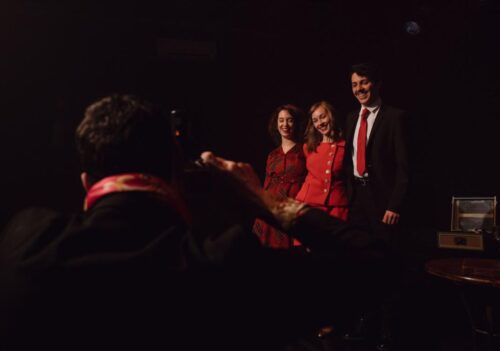


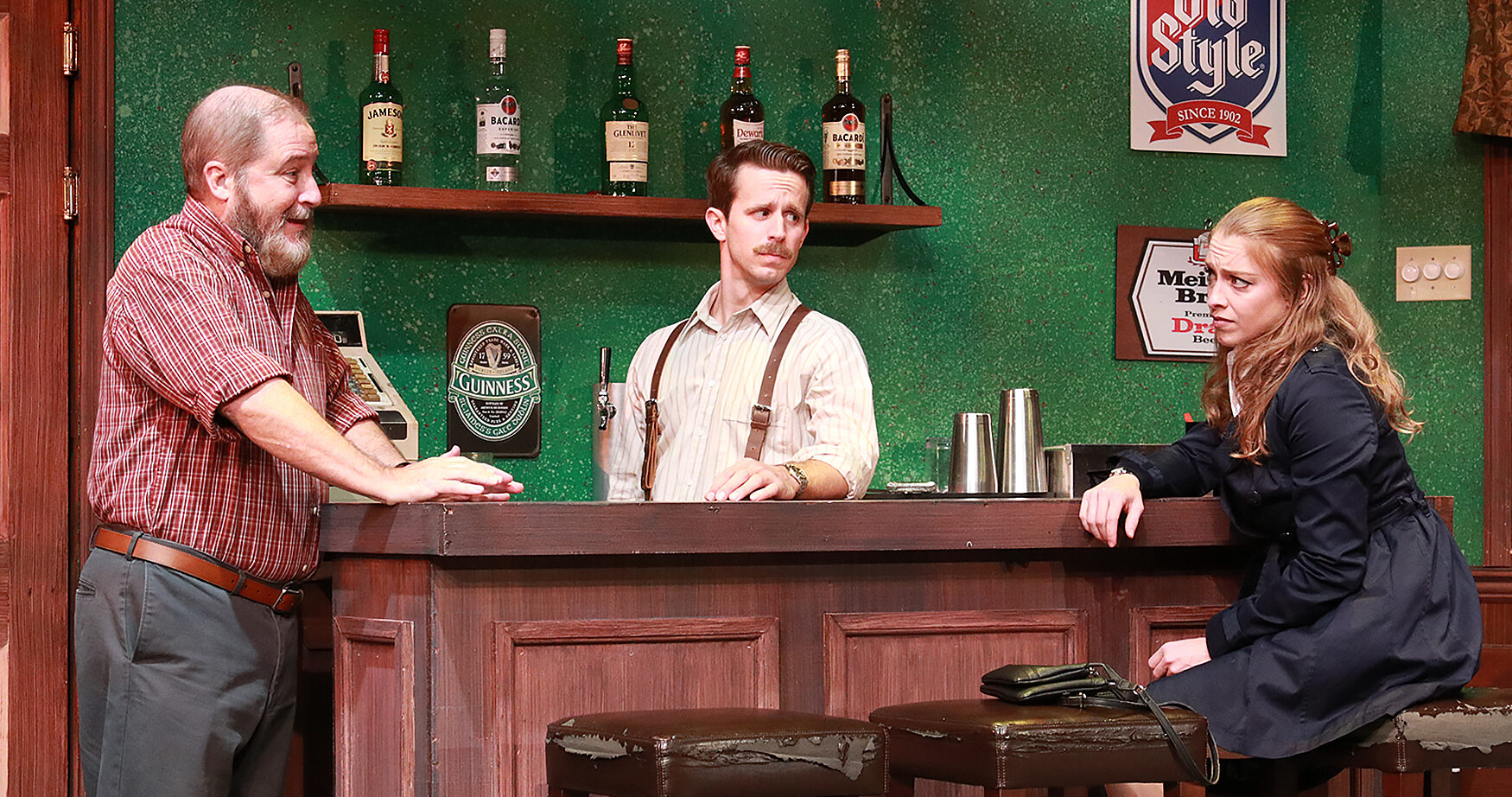

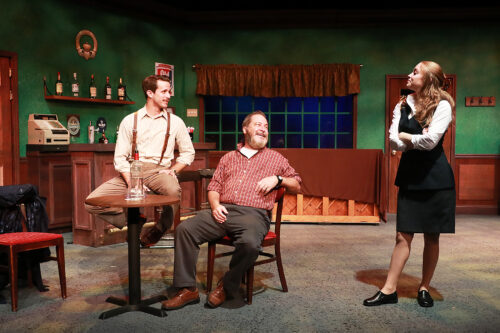
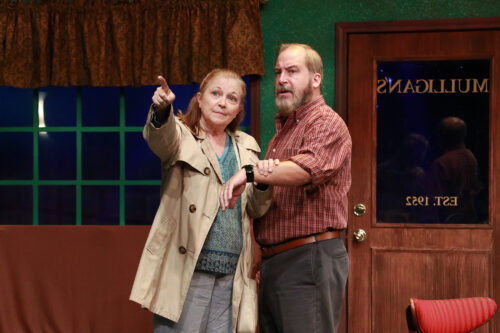
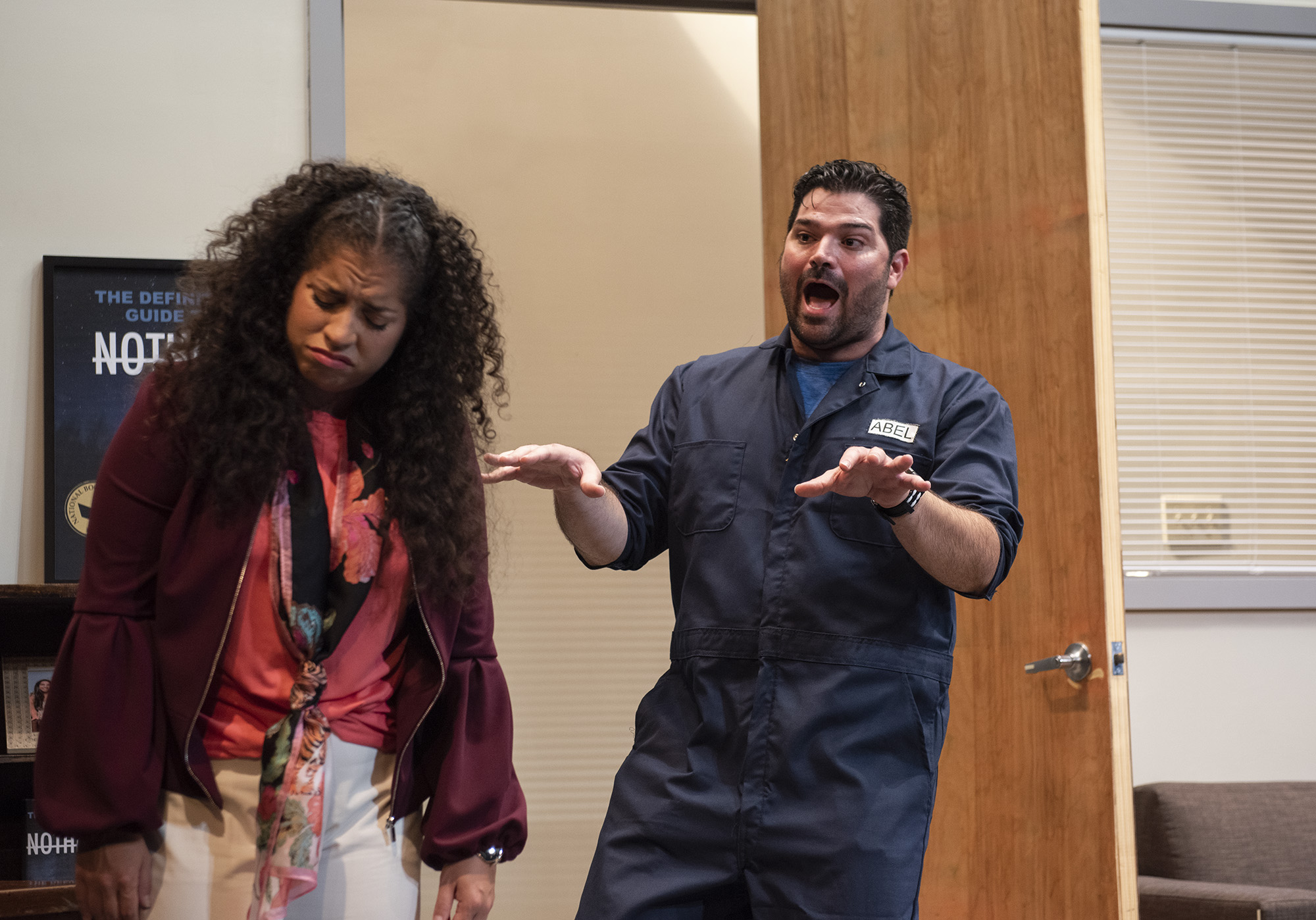
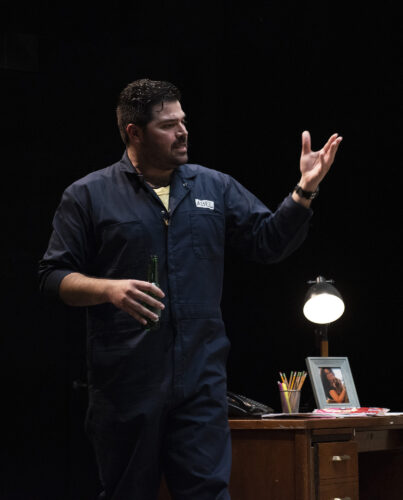
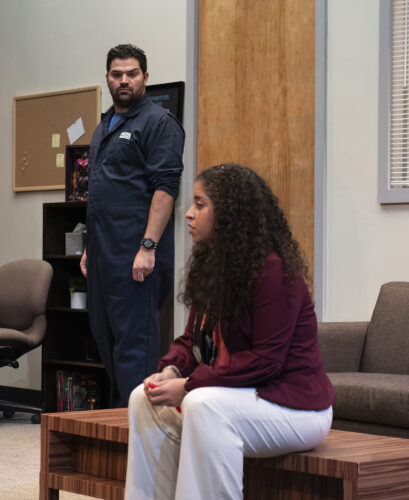

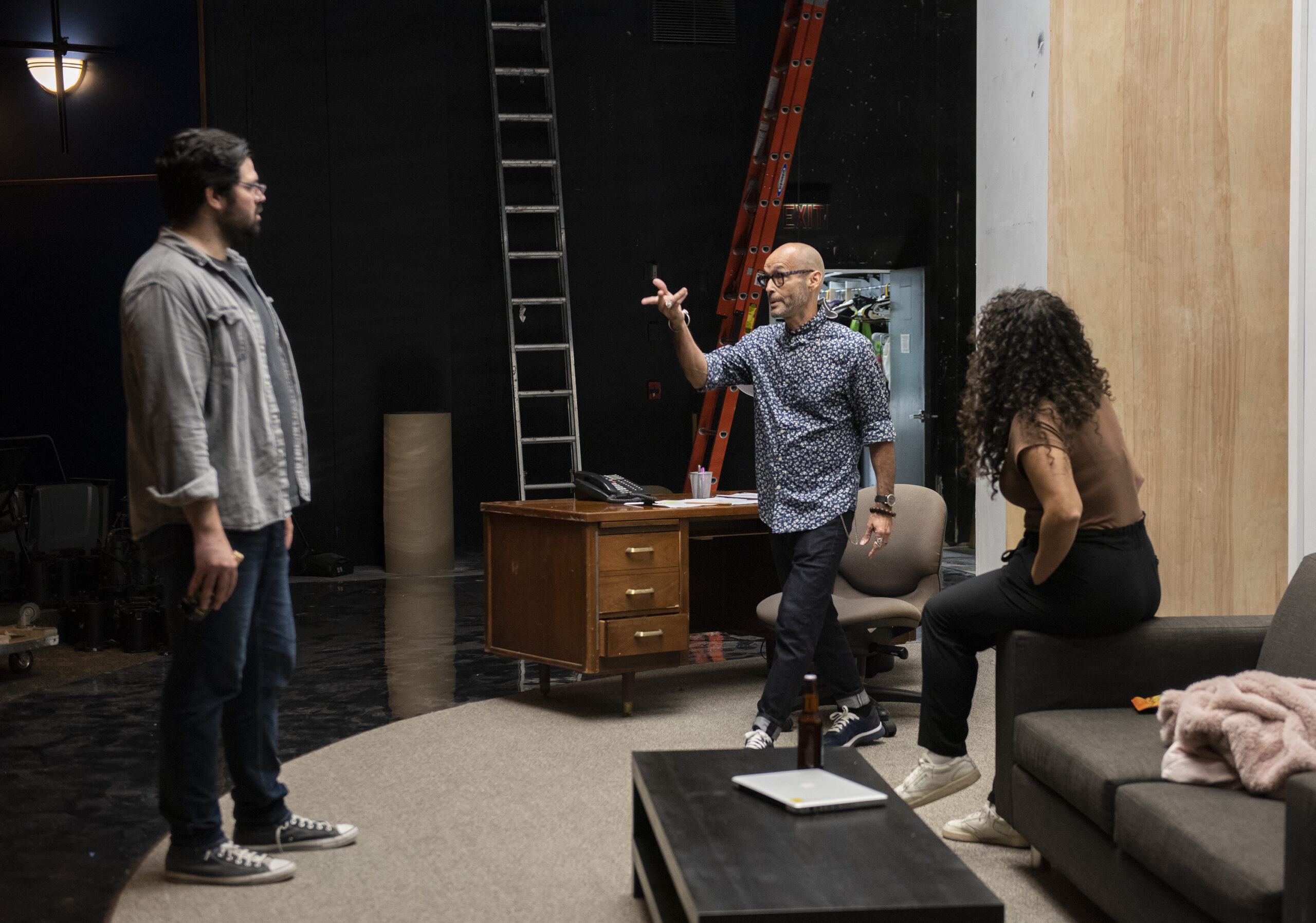

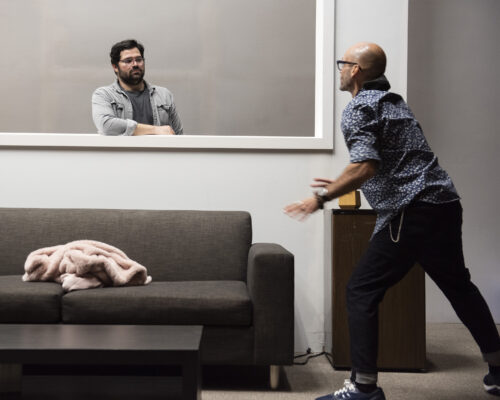

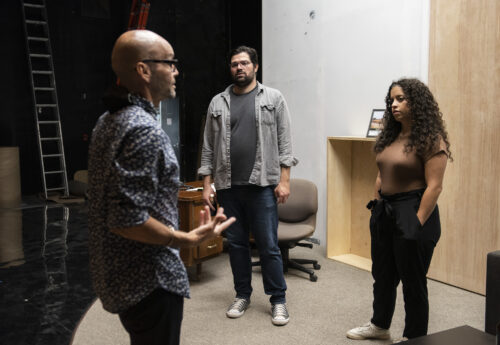


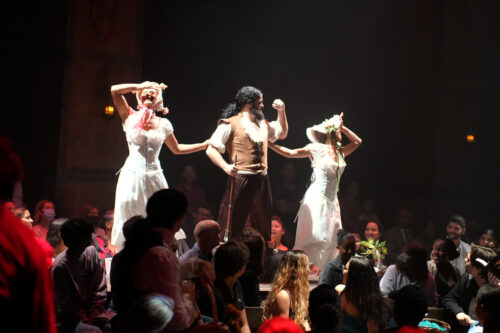


Recent Comments