Blog Article Category: Dance
Roxana Barba Examines the Past, Confronts the Future in ‘Apuntes Americanos-Kanay’
Written By Rebekah Lanae Lengel
October 12, 2023 at 2:58 PM
Performers Briana Mendez, Carlos Fabian Medina, Dayna Maldonado and Roxana Barba in “Apuntes Americanos-Kanay.” The multimedia work will be performed at the Koubek Center at Miami Dade College on Friday, Oct. 27 and Saturday, Oct. 28. (Photo courtesy of Paulo Cezar Alves)
The origins of Roxana Barba’s latest multimedia work “Apuntes Americanos-Kanay” are rooted in ancient history— 3,000 years before Christ history, on pre-Incan civilizations, cultures that had a deep study of cosmology and intricate relationships with the natural world.
“The cosmology really explains their view of the world and their existence and how the natural world, meaning their ancestors, their family and themselves, they were all interconnected,” says Barba after returning to Miami from an intensive month-long residency in the Peruvian rainforest. “I found that understanding was powerful and very relevant to me personally now, during these times where a main crisis has to do with the environmental crisis and our disconnection from the world around us.”
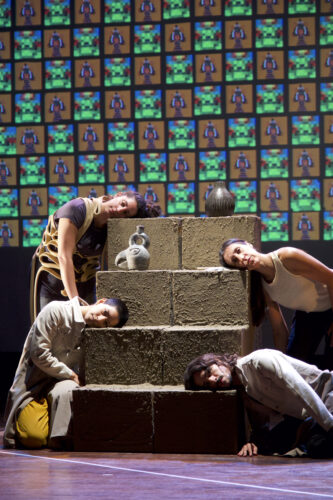
Sculpture by Marco Herrera. Performers Briana Mendez, Carlos Fabian Medina, Dayna Maldonado and Roxana Barba in the multidisciplinary work ‘Apuntes Americanos-Kanay.’ (Photo courtesy of Paulo Cezar Alves)
With support from the Knight Foundation, Barba began the research and development of the work in 2019 and created an early version, which she presented in 2021 in Peru with support from Alliance Cultural Française de Miraflores and Correlación Contemporánea.
Using archeological research of 19th-century French explorers as an entry point, “Apuntes Americanos-Kanay” has Barbra reimagining the Eurocentric vision of ancient Peruvian culture, excavating and sifting for truth among the long-held European archetypes of indigenous cultures and how they impact present-day thinking.
“The French explorers presented the image of this indigenous savage man, woman. For me, that was also particularly interesting because you know when we come to understand how we see race, how we see social classes, all these things are very rooted in historic events.”
Mixing movement, iconography, text and music that is informed by the past with a vision of a future, represented through an augmented reality video projections by artist Leo Casteneda, audiences are invited to enter an archeological excavation into a world of surprises.
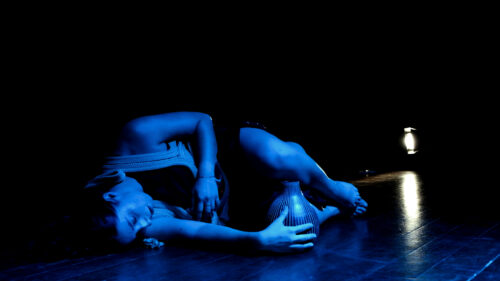
Performer Briana Mendez at Alianza Cultural Francesa de Miraflores, Lima, Peru, 2022 in Roxana Barba’s “Apuntes Americanos-Kanay.” (Photo courtesy of Paulo Cezar Alves)
“We take the liberty to make a little bit of fun of the French gaze towards what was observed through dance, through text,” she says, “with the idea that we reflect critically on our past, but also, use that — use what we learn to also decolonize the way that we envision our future as better embracing our place in the world.”
The piece also plays with the idea of time, borrowing from how it was viewed by ancient cultures. “One of the main things of the ancestral cosmovision is the way that time is viewed,” says Barba. “It is so unlike the way that we see time, which is linear — past, present, future. They see time as cyclical, so that’s why there’s a life and an afterlife. When I started thinking of these cyclical phases, perhaps like personal phases, while also looking at the world and what cycles we go through now, I felt that I understood what was happening in a larger dimension.”
The observation of these cycles and how early colonial framing of indigenous cultures continue to be portrayed in the present was further reinforced for Barba during the 2022 social and political protests in Peru, political violence that Amnesty International ascribed to systemic racism ingrained in Peruvian society and its authorities for decades.
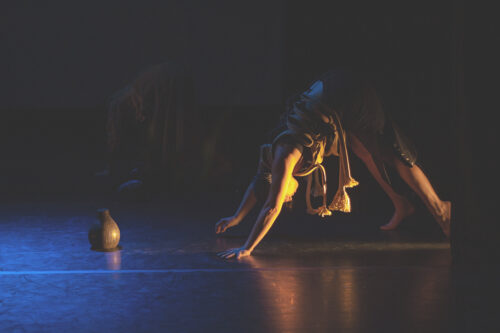
Performer Briana Mendez at Alianza Cultural Francesa de Miraflores, Lima, Peru, 2022, in Roxana Barba’s “Apuntes Americanos-Kanay” (Photo courtesy of Paulo Cezar Alves)
“Watching this from afar and having just presented an early version of the piece in Peru . . . it felt terribly upsetting, and felt I had to respond to these events somehow through the work.”
The resultant multi-sensory experience ultimately is meant to invoke curiosity, understanding, joy and a deeper connection to the natural world and humanity.
As Barba says, “It includes some unexpected surprises where we hopefully make people laugh, but then also, walk out with a sense of . . . that they may have had a profound experience.”
WHAT: “Apuntes Americanos-Kanay,” a multidisciplinary and multimedia work created and directed by Roxana Barba
WHEN: 8 p.m., Friday, Oct. 27 and Saturday, Oct. 28
WHERE: The Koubek Center Theater at Miami Dade College, 2705 S.W. 3rd St., Miami
COST: $15 online in advance
INFORMATION: (305) 237-7750 and koubekcenter.org
ArtburstMiami.com is a nonprofit media source for the arts featuring fresh and original stories by writers dedicated to theater, dance, visual arts, film, music and more. Don’t miss a story at www.artburstmiami.com.
No posts found
Dance Sampler gives audiences the chance to experience 10 different companies
Written By Sean Erwin
October 2, 2023 at 6:42 PM
Dance NOW! Miami dancers perform Hannah Baumgarten and Diego Salterini’s “Gli altri/The Others.” Dance NOW! co-artistic directors founded the Daniel Lewis Dance Sampler, which has become the unofficial kick-off to Miami’s dance season. (Photo courtesy of Simon Soong)
Miami signals the start of its Fall dance season with a party. The Daniel Lewis Dance Sampler unites area dance lovers with a showcase of the best of Miami dance.
Hannah Baumgarten and Diego Salterini – co-artistic directors of the modern dance company Dance NOW! Miami – founded the Sampler in 2012, which they named in honor of Daniel Lewis, the former assistant director of dance and faculty member at the Julliard School. Lewis is also former dean of dance at Miami’s New World School of the Arts.
Since then, the Sampler has become an informal kick-off to Miami’s dance season where audiences catch a preview of their favorite companies and the region’s dancers and choreographers, while dance administrators network and plan new projects.
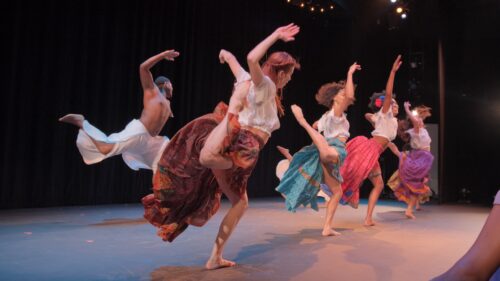
Dance Company, Zest Collective, performs “Afro Blue.” (Photo courtesy of Kevin Alvarez Cordova)
As it turns out, Baumgarten and Salterini were inspired by the success of another “Sampler,” which was known as “The Modern Dance Sampler,” an annual Miami event from 1988 to 1997.
Both Baumgarten and Salterini had danced in an earlier version of the event, which Lewis produced through Miami Dance Futures, a non-profit organization he founded to support dance in South Florida.
“(The Modern Dance Sampler) was usually presented at the Colony Theatre (on Miami Beach) and presented works of modern dance from Miami choreographers and companies,” says Baumgarten. “As young performers in Miami, we found the experience had a profound community-building component.”
Both old and new Dance Samplers work in the same way – by “aggregating” and “cross-pollinating” audiences.
Dance enthusiasts flock to the Sampler with hopes that they will see strong performances in at least one of their favorite dance genres.
Gathered in one place, those who favor one kind of dance can see talented dancers performing another form they might otherwise never have attended.

Arts Ballet Theatre dancers, Louise Rigby and Daniel Panameño dance a pas de deux in “Double Clef.” (Photo courtesy of Patricia Laine Romero)
This year’s Sampler features performances from ten companies, including Arts Ballet Theatre of Florida, Ballet Flamenco La Rosa, Ballet Vero Beach, Dance NOW! Miami, Dimensions Dance Theatre of Miami, Omayra Amaya Flamenco Dance Company, Emily Ricca, Syncopate Collective, New World Dance Ensemble and the Zest Collective.
“Our goal is to give our audiences a taste of what each company has to offer and leave them eagerly anticipating their future performances,” says Salterini. “First and foremost, it’s important to us that all of the companies and choreographers we feature are professionals. This means they have a track record of paying their artists and have a somewhat formed season of events beyond the Sampler.”
The formula is working. The Sampler continues to expand to theaters outside Miami-Dade. Even last year’s Hurricane Ian couldn’t block the Sampler’s debut on Florida’s West Coast.
“Two years ago, doing our best to rebuild after COVID devastated the performing arts, we decided to expand the Sampler both in terms of participating artists and audience reach,” says Baumgarten. “We sent out our call for submissions to every professional dance company in the state and as many professional choreographers as we could find.”
The venues that responded included Artis-Naples, a performing and visual arts center on Florida’s West Coast. “Our friends at the Limón Dance Company had just performed at Artis-Naples following their weekend of concerts in collaboration with Dance NOW! so we thought they may be interested in co-presenting and to our delight, they were,” she says.
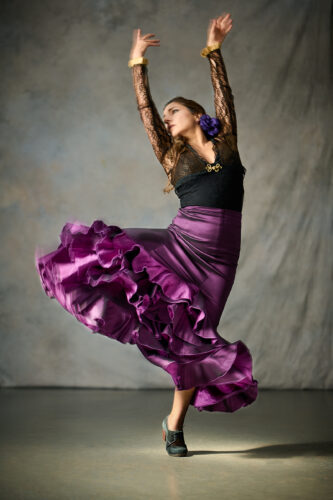
Omayra Flamenco Dance Company, “A Solas,” with dancer Omayra Amaya, will perform at this year’s Dance Sampler. (Photo courtesy of Frank Pool)
Even the devastating pandemic has proven a source of the Sampler’s growth. For the third time, the showcase includes a Video Dance Showcase featuring works online made to be viewed on a screen.
Baumgarten and Salterini create each year’s program by putting out a call to companies to submit videos of performances then the pair assess them with an eye to quality, style, rhythm and length.
Their aim is “to curate” a program that fully represents Miami’s dance community while respecting audience attention spans, according to the curators.
They admit that the process favors Miami’s more established companies and choreographers who often have the required submission materials readily available.
“The dance community here is constantly evolving and growing, with new artists and organizations emerging all the time,” says Salterini. “That’s why we prioritize giving up-and-comers a chance to plant their roots and show their commitment to our community.”
And this is where the Sampler shows its value to area dance professionals as a networking opportunity for performers and companies.
“It means a lot to me to be accepted. I’m a freelance ballerina,” says classical dancer and choreographer, Emily Ricca, who will perform at the Sampler for the first time with dance partner, Isaiah Gonzalez.
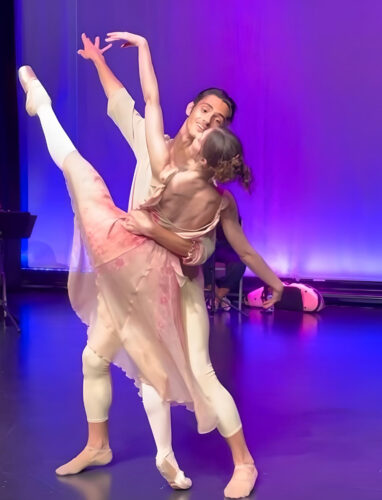
Classical dancer Emily Ricca dances a pas de deux with dance partner, Isaiah Gonzalez. (Photo courtesy of Kenyatta DeShazior)
“I’ve served in professional ballet companies throughout my career, but in Miami, I’ve created things on my own, and it means a lot to me to be part of a collective and to see other dancers and what they are doing,” says Ricca. “I want to be able to create with more dancers. I’m usually on my own or with my dance partner so I am so excited to be with other dancers and to network,” she says.
At the upcoming Sampler, the couple will perform “Coleridge Classic,” a pas de deux set to “Fantasiestücke for String Quartet” (Op. 5) by African American composer, Samuel Coleridge-Taylor (1875-1912).
“You will see some performers you may remember from one troupe last year, dancing with another one this year, and, in fact, you may see even a few dancers performing with several different groups,” says Baumgarten. “This is a testimony to the overarching climate in our community – one that understands, we all need each other, we need to share audiences, marketing, and sometimes even dancers.”
WHAT: 13th Annual Florida Daniel Lewis Dance Sampler.
WHERE: Artis–Naples Hayes Hall, 5833 Pelican Bay Blvd., Naples; New World School of the Arts, 25 NE 2nd St., 8th floor, Miami.
WHEN: 8 p.m., Friday, Oct. 6 at Artis–Naples, 8 p.m. Saturday, Oct. 7 and 2:30 p.m., Sunday, Oct. 8, at New World School of the Arts.
COST: At Artis–Naples, $29 to $59. At New World, $25 general admission, $15 students.
INFORMATION: 305-975-8489 or dancenowmiami.org
ArtburstMiami.com is a nonprofit media source for the arts featuring fresh and original stories by writers dedicated to theater, dance, visual arts, film, music and more. Don’t miss a story at www.artburstmiami.com.
No posts found
South Florida’s 2023-24 season of dance is non stop and full of surprises
Written By Guillermo Perez
September 17, 2023 at 11:04 PM
Arts Ballet Theatre’s “Le Papillon” with Janis Liu is one of the highlights of the upcoming South Florida dance season. (Photo courtesy of Patricia Laine Romero)
In the months ahead, sorcery will make nights crackle as fantastic creatures spin and scamper through the woods. Journeys across oceans will lead to the intrigue of tango and Iberian ardor. And journeys across time will reintroduce eccentric Victorians and legendary heroes. Eminent, too, are amorous entanglements, toilsome clashes—and sheer displays of skill and vigor that’ll make you cheer for loose-limbed, swift-footed Olympians. These are not the dubious predictions of a fortune-teller but the sure promise of dance coming to South Florida.

Miami City Ballet’s “In the Upper Room” features Brooks Landegger and Adrienne Carter. (Photo courtesy of Alexander Iziliaev)
For the 2023-24 season, Miami City Ballet has anchored each of its four programs with heavyweights, still letting rising choreographers stir expectations.
Balanchine’s rapturous “Serenade” to Tchaikovsky, his fairy-tale “Firebird,” with Jerome Robbins choreography adding color to the phantasmagoric pageantry, and his athletic “Agon”—those last two ballets to Stravinsky—arrive respectively in October, February, and March. Twyla Tharp’s “In the Upper Room” also storms through in Program 1, and Alonzo King’s “Following the Subtle Current Upstream,” marks a company first in Program 3.
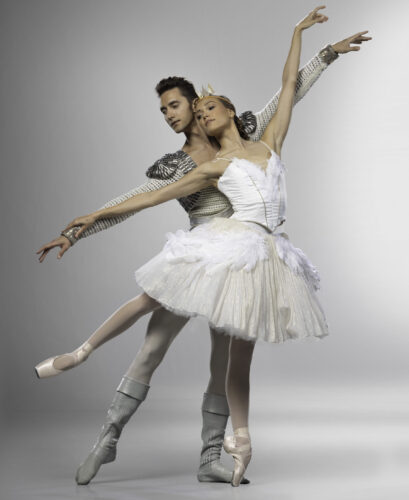
Yuliia Moskalensko and Stanislav Olshanskyi in Miami City Ballet’s “Swan Lake.” (Photo courtesy of Alexander Iziliaev)
To accompany these, MCB offers world premieres, including (for the Fall) “Sea Change” by Jamar Roberts, Miami favorite son and former resident choreographer at Alvin Ailey American Dance Theater, and (for the Winter) a new ballet to Paganini by Durante Verzola, MCB School faculty member and wunderkind.
In April through May, the company sails on Alexei Ratmansky’s “Swan Lake,” its studied vintage look leaping from the archives with a refreshed vitality.
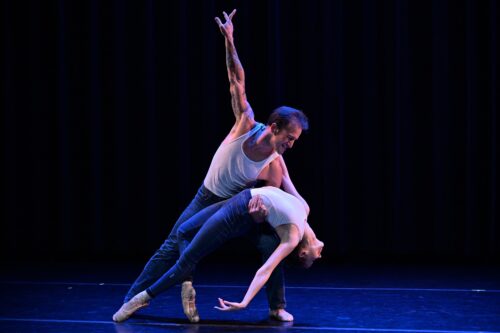
Dimensions Dance Theatre’s Salon Series in February at the Moss Cultural Arts Center gives a sneak peek at works-in-progress. (Photo courtesy of Simon Soong)
Dimensions Dance Theatre of Miami continues to flavor classicism with robust spices. In a November program international aromas waft in from the world premiere of Leonardo Reale’s “Tangos del Cristal” and the company’s first staging of Cuban choreographer Jorge García’s “Majísimo,” costumed and animated in the alluring spirit of Spain. Reale mines his native know-how of tango’s intimacies to amplify them in a ballet to Mariano Mores’ memorable compositions, some to be played live on the piano by his grandson Gabriel Mores. Company member Yanis Eric Pikieris whisks fellow dancers away to explore a scintillating space in “Voyager,” his premiere to an ethereal Oliver Davis concerto. DDTM’s Salon Series at the Moss Cultural Arts Center in February gives a sneak-peek at works-in-progress.
Arts Ballet Theatre of Florida, whose director Vladimir Issaev recently received a lifetime achievement award from the International Ballet Festival of Miami (that yearly event returns next summer), is keeping a spotlight on historical repertory. Issaev’s stagings of the whimsical flutters of “Le Papillon, originating at the Paris Opera in the 19th century, and of “Petrouchka” and “Le Spectre de la Rose”—among early 20th century standards from Diaghilev’s Ballets Russes—will brighten winter and spring by turn.
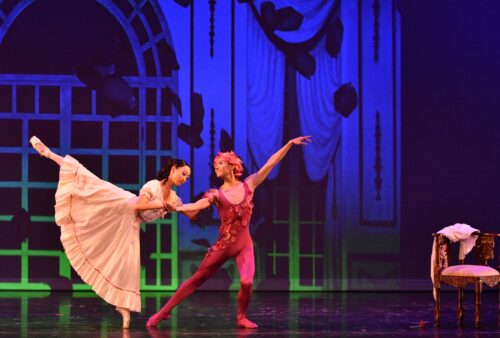
Arts Ballet Theatre of Florida’s “La spectre de la Rose. (Photo courtesy of Patricia Laine Romero)
But first, there’s Hispanic passion and pride this October with Yanis Pikieris’ “Danzón” and Issaev’s own “Inspired by Love,” a world premiere based on the soul-to-soul letters between revolutionary Manuela Sáenz and South American liberator Simón Bolívar.
DanceNOW!Miami makes good on the exclamation point in its name revisiting Charles Dickens’ “Great Expectations” through the side entry of the ruined and ruinous life of Miss Havisham, the novel’s disturbingly gothic character. As a dance-theater, site-specific premiere, “Havisham!” will guide the audience, accompanied by selections from the South Beach Chamber Ensemble, through North Miami Beach’s Ancient Spanish Monastery in February, ultimately replacing the withered bouquet of the story’s betrayed bride with fresh flowers of compassion and grace.
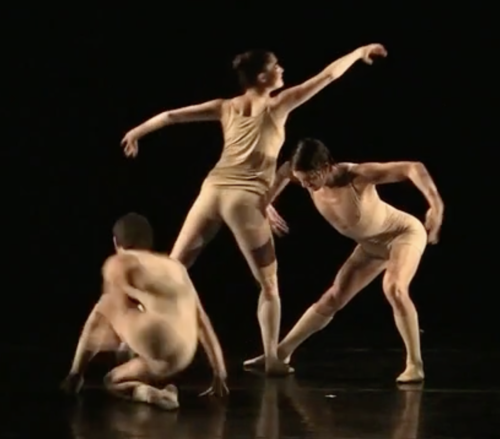
Dance NOW! Miami, “SOgni excerpt,” Isvel Bello with Amy Deer and Luke Stockton (Photo courtesy of Carlos Ochoa)
Major in DNM’s profile are partnerships with foreign companies. In March, Opus Ballet from Florence, Italy, joins in for “Gli Altri/The Others,” DNM company directors Hannah Baumgarten and Diego Salterini’s evocation of Federico Fellini’s planet of drifters and outcasts, with Nino Rota’s lush film scores supplying oxygen. Then also—and thanks to Michael Uthoff’s choreography to Astor Piazzolla—the company premiere of “A Media Luz” offers a first-class seat to Argentina. And the season concludes in May with “Pop,” a world premiere to reconceived ’80s and ’90s top-of-the-chart, tug-at-your-heart songs; “SOgni … ,” traipsing through dreamland; and “House on Fire”—don’t call the firefighters unless they’d like to get into the sexy action.
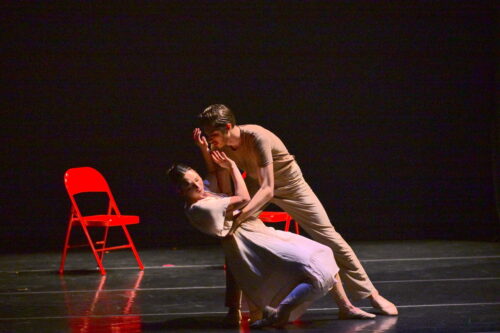
DanceNOW! Miami’s Amanda David and Austin Duclos in Gli Altri/The Others. (Photo courtesy of Simon Soong)
With its circuits on wheelchairs and maverick gaits, physically integrated dance—embracing differently-abled artists—can make of very particular moves—in lust, alarm, serenity—the lexicon of a universal language. For years now, Karen Peterson Dancers has shown us how that’s done, especially during the Forward Motion Dance Festival and Conference. Its fifth edition, slated for March, includes a collaboration with The Spirit of Goodwill Band and works from an array of emerging choreographers, Peterson, and Mark Travis Rivera, whose all-embracing humanity is informed by a Latinx queer identity.
Look out for other groups and their leaders who forge independent courses. Prominently, there’s Pioneer Winter with his Collective tending to an inventive ecosystem that makes the unorthodox—free of gender, age, and sexual restrictions—a central human resource. In November its “Birds of Paradise” will fly again at the Museum of Contemporary Art North Miami, with live jazz and Arsimmer McCoy’s poetry performance.
A residency hosted by Miami Light Project at the Miami Theater Center culminates there in a December showing of Winter’s “DJ Apollo,” a work-in-progress. Duets choreographed by him over more than a decade reveal unencumbered bodies and spirits at Sandrell Rivers Theater in March. And a site-specific Vizcaya Museum and Gardens residency in May supports the Grass Stains project under the mentorship of all-around-creator Gabri Christa.

Karen Peterson Dancers 5th Forward Motion Physically Integrated Dance Festival is at the Miami Dade County Auditorium in March 2024. (Photo courtesy of Karen Peterson Dancers)
Returning events will bring dependable pleasures — here a bow to all those productions of “The Nutcracker.” Miami Light Project is preparing its annual ScreenDance Miami for January — with showings at various venues, including Miami Theater Center — as well as the spring lineup for Here & Now, which more than two decades has fostered the explorations of local dance talents. Doing likewise, within an ever-expanding roster of international artists, Men Who Dance, under Rafi Maldonado’s direction, comes to the Broward Center for the Performing Arts in Fort Lauderdale in late November.
At Miami’s Arsht Center in March, Spain’s greatest dance company, Ballet Nacional de España, headlines the fifteenth edition of Flamenco Festival Miami. Cutting dashing figures to irrepressible rhythms, this also features the intergenerational all-male Stars of Flamenco. Les Ballets Trockadero de Monte Carlo visits in January, and this men-in-drag troupe—parodying tutu and pointe-shoe glories throughout history—remains anything but a drag on its 50th anniversary. And in February, the Arsht again welcomes Alvin Ailey American Dance Theater.
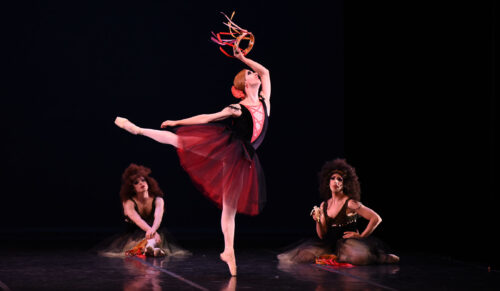
It’s the 50th anniversary of Les Ballet Trockadero de Monte Carlo. The troupe comes to the Adrienne Arsht Center for the Performing Arts in January. (Photo courtesy of Roberto Ricci)
The venue has also commissioned pieces for Miami’s Peter London Global Dance Company in December and Haiti’s Ayikodans in April.

Haiti’s Ayikodans perform at the Arsht Center in April. (Photo courtesy of Morgan Sophia Photography)
Global’s Edge of Tomorrow show will open new windows through world premieres by Jamar Roberts, Lloyd Knight (Dance Magazine’s February 2023 cover star), and Richard Villaverde—the last two choreographers prominent members of Martha Graham Dance Company and all three graduates of Miami’s New World School of the Arts.
The Moss Cultural Arts Center in Cutler Bay has reserved dates for notable companies on tour. Not to be missed are Tango Lovers (October), Dance Theatre of Harlem (January), Paul Taylor Dance Company (March), and BalletX (April).
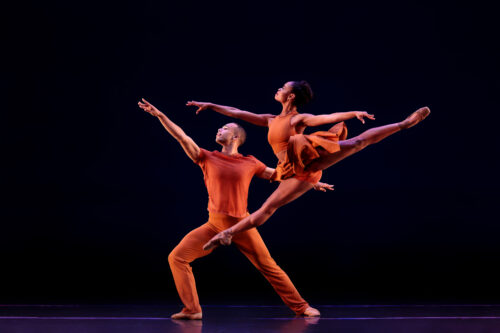
Dance Theater of Harlem company artists Kouadio Davis and Alexandra Hutchinson in “Higher Ground.” DTH comes to the Moss Cultural Arts Center in January. (Photo courtesy of Theik Smith)
At Miami Dade County Auditorium: dance shows from local companies include brigid baker wholeproject in November; Cuban Classical Ballet of Miami in February, and Bistoury Physical Theatre and Film in March with “Bird Woman,” a portrait of immigrant Latinas.
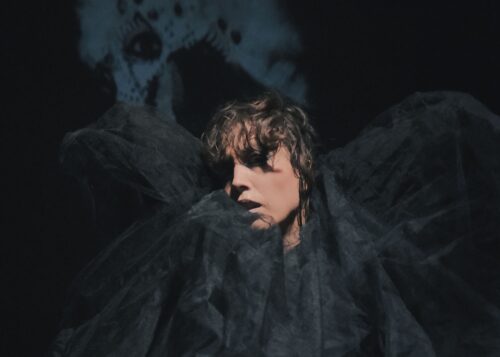
Bistoury Physical Theatre and Film in March with “Bird Woman,” a portrait of immigrant Latinas at Miami Dade County Auditorium. (Photo courtesy of Bistoury Physical Theatre Film)
And there’s no shortage of flamenco from Spain at this venue. See Antonio Moreno, a.k.a Polito, in “Fight” in late October; Maui de Utrera’s offbeat, right-on dance-theater, “Domingos de Vermut y Potaje” (Sunday Vermouth and Stew) in November; and FlamenGo in May, in a partnership with Centro Cultural Español Miami to showcase up-and-comers safeguarding the future of their national dance tradition.
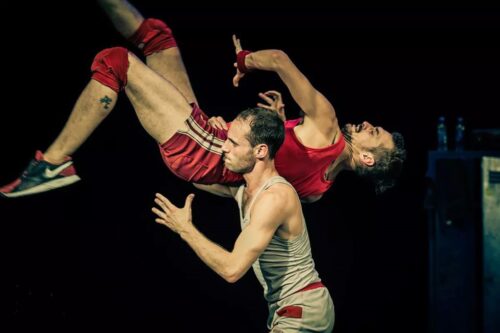
FUNDarte presents “Un poyo rojo” at the Miami Dade County Auditorium in April. (Photo courtesy of Miami Dade County Auditorium)
In April at the auditorium, though, FUNDarte’s presentation of “Un poyo rojo” arrives as a bundle of titillation from Argentina, delivered by a pair of sleek-muscled, skimpily-clad lads in a locker room who put manhood through the wringer of physical comedy.
(Coming up next: South Florida’s theater season preview.)
ArtburstMiami.com is a nonprofit media source for the arts featuring fresh and original stories by writers dedicated to theater, dance, visual arts, film, music and more. Don’t miss a story at www.artburstmiami.com.
No posts found
At this year’s Siempre Flamenco festival, it’s all in the family
Written By Sean Erwin
September 11, 2023 at 7:57 PM
Flamenco singer Mari Peña performs with her daughter, Mañuela Moya, left, and her husband, flamenco guitarist Antonio Moya as part of the 17th Siempre Festival de Cante Miami at the Adrienne Arsht Center for four performances beginning on Friday, Sept. 15. (Photo courtesy of sevillaesflamenco.com)
It was 17 years ago when flamenco dancer Celia Fonta and her husband, guitarist Paco Fonta, organized the first Siempre Festival de Cante Miami. Their mission was to present to Miami audiences the best dancers and musicians in traditional flamenco dance and music.
The festival grew out of the Fontas’ yearly trips to Andalucía, Spain’s southernmost region and the birthplace of flamenco, to visit Paco’s family and relatives in the town of Jaén, Spain where the musician learned flamenco singing and guitar from traditional musicians.
“Paco and I would travel every summer to visit his family and would attend many festivals in all the small towns nearby,” says Celia Fonte. “The festival was originally conceived and created to present a traditional singing festival like the ones we went to in Andalucía in the summer.”
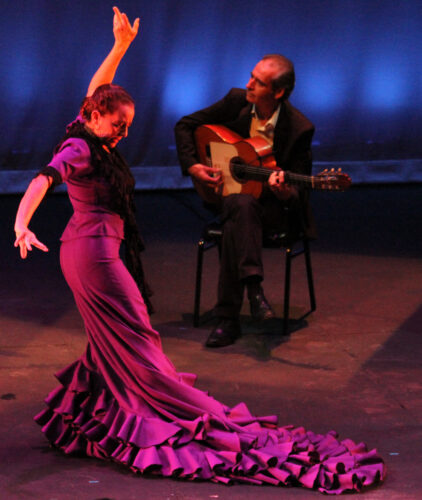
Flamenco dancer, Celia Fonta, and guitarist, Paco Fonta, founders of “Siempre Flamenco.” (Photo courtesy of Zizi Zabaneh)
The couple knew they wanted their festival to capture the magic of those small-town festivals that often presented five singers over a four-hour period. While they were aware that they had to tweak the format length to fit the attention spans of an American audience, their commitment to presenting traditional flamenco dance and music would not change.
Over the years, the festival has grown and its length has expanded from a single evening performance to four performances over three days at the Adrienne Arsht Center in Miami.
Celia Fonta says that the festival’s format has proven successful and has stayed the same.
First, there are three guest singers who perform a solo accompanied by a guitarist, then there is a guest dancer and then Celia dances. “… The opening and closing (is) where all artists participate.”
Newcomers to this year’s festival include flamenco vocalist, David El Galli, and gypsy singer Mari Peña. Peña heralds from the village of Utrera in the outskirts of Seville where she comes from a long line of famous Utreran gypsy flamenco vocalists.
“Her singing is very different from generic flamenco singing,” explains Celia Fonta. “(She) has a very particular style of marking the rhythms, and we have never had anyone from that region with us before.”
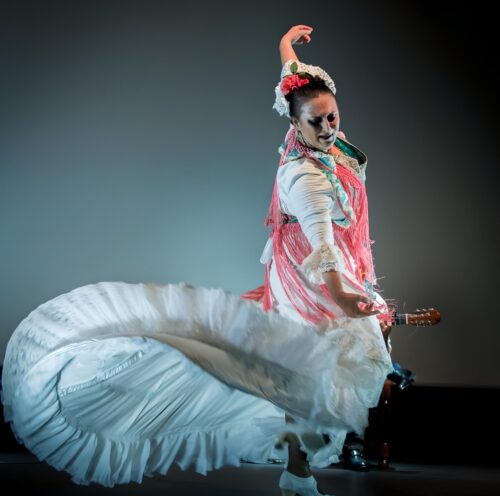
Dancer Susana Lupiañez performs flamenco as La Lupi. (Photo courtesy of Juan Conca)
The flamenco tradition in music stretches back to when the Roma (originally Doma) migrated from Rajasthan and the Punjab in northern India between the 10th and 11th centuries. In the 13th and 14th centuries, the nomads arrived in Western Europe bringing their musical instruments – castanets, hand clapping, feet rhythms, drums – and their voices.
In Spain, many of those Romani families settled in the province of Andalusia at the Southernmost tip of Spain where their musical practices absorbed native Spanish, Moorish and Jewish influences. Europeans believed these arrivals were from Egypt and called them “gypsies.” The Spanish called them “Gitanos ” (from “Egiptano”).
Originally meant as a slur, the term “gypsy singer” in flamenco has come to describe a prized quality and unique style in a singer’s voice. It also locates the vocalists as someone who traces their origins to gypsy families that settled in the chain of little Spanish towns linking Cadiz to Seville.
“A lot of flamenco shows a lot of influence from many of these gypsy families,” says Celia. “Not every singer comes from one of these important families from a town with 200 years of flamenco singing in their family. There are several important musical families in Andalucía, and she (Mari Peña) comes from an important one Utrera.”

Guitarist Francisco Daniel Fernandez performs guitar as “Curro de Maria.” (Photo courtesy of Beatriz Molnar)
Peña’s 2018 recording, “Mi tierra” (“My Land”), includes selections recorded with her husband, guitarist Antonio Moya, who will also be performing with her at the festival.
Born in France to a family of Andalusian immigrants, Moya has accompanied some of flamenco’s great singers including Bernarda de Utrera, Pepa de Benito, Gaspar de Utrera, Enrique el Extremeño and Tomás de Perrate, among others.
La Lupi’s festival invite originated last summer when Paco Fonta performed with her in Chicago at the Ensemble Español Spanish Dance Theater Festival sponsored by Northeastern Illinois University.
Celia Fonta says it’s the close-knit creative work of the husband and wife team that makes them so exciting.
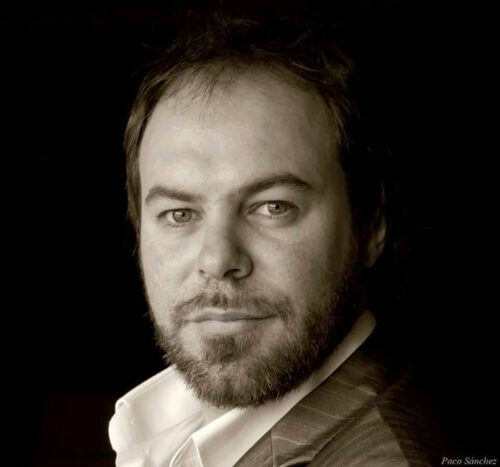
Flamenco singer, David Sanchez, known as “El Galli” will perform at this year’s Siempre Flamenco festival. (Photo by Paco Sanchez)
“Her husband (Curro de Maria) is a wonderful guitarist who writes all of their music. La Lupi adds the choreography to his composition,” says Fonta. “It is a collaborative process between the two of them.”
When asked about the three husband and wife pairings (which include Celia and Paco Fonta) that fill out this year’s program, Celia says: “It is pretty common in flamenco that you have a singer and a dancer or a guitarist pair off together.”
This year’s festival goes a step further and showcases the family roots of the flamenco art form. Peña and Moya’s 20-year-old daughter, Mañuela Moya – an up-and-coming flamenco vocalist in her own right – will also perform as part of her parents’ festival set.
WHAT: Siempre Flamenco’s 17th Annual Festival de Cante Miami
WHERE: Carnival Studio Theater, Adrienne Arsht Center for the Performing Arts, 1300 Biscayne Blvd., Miami.
WHEN: 8 p.m. Friday, Sept, 15, 3 and 8 p.m. Saturday, Sept. 16, and 4 p.m. Sunday, Sept. 17.
COST: $50-$68.
INFORMATION: 305-949-6722 or arshtcenter.org
ArtburstMiami.com is a nonprofit media source for the arts featuring fresh and original stories by writers dedicated to theater, dance, visual arts, film, music and more. Don’t miss a story at www.artburstmiami.com.
No posts found
Review: With summer dance performances in slumber, International Ballet Festival heats up scene
Written By Sean Erwin
August 24, 2023 at 6:06 PM
Arts Ballet Theatre of Florida principals, Mary Carmen Catoya and Daniel Panameno dance the duet “Vertigo.” (Photo courtesy of Simon Soong)
The International Ballet Festival of Miami capped off a month of dance-related performances, workshops, book talks and documentary movies with Gala performances at the Miami-Dade County Auditorium featuring some of the world’s top classical companies.
The Saturday, Aug. 12 Grand Classical Gala Performance showcased nine classical dance companies from six countries including Arts Ballet Theatre of Florida (United States), Unblanche (Japan), Compania Nacional de Dance (Mexico), Cuban Classical Ballet of Miami (United States), Milwaukee Ballet (United States), Teatro Massimo di Palermo (Italy), Incolballet (Colombia), Varna State Opera Ballet (Bulgaria) and the Pittsburgh Ballet Theatre (United States).
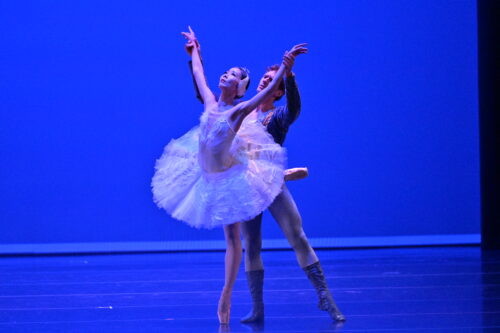
Compañia Nacional de Danza (Mexico) principals Mayuko Nijei and Eric Rodriguez dance Marius Petipa’s “Swan Lake.” (Photo courtesy of Simon Soong)
Packed with audience favorites of classical and neo-classical ballet, the program featured exceptional dancing and a warmly enthusiastic audience who were often caught up in rousing applause and up on their feet.
Eriberto Jimenez, IBFM Artistic Director, opened the evening by presenting the Festival’s “Life for Dance Award” to Arts Ballet Theatre of Florida Artistic Director, Vladimir Issaev.
A short documentary described the choreographer’s mind-blowing journey from his birthplace in Biszk, Siberia to dance companies in Kyrgystan, Odessa, and Caracas before founding ABTF in South Florida in 1997.
His wife and ABTF Executive Director, Ruby Romero-Issaev, accepted the award on the choreographer’s behalf who was detained in Hong Kong after coming down with COVID.
The dancing began with ABTF’s reprisal of the “Vertigo” pas de deux choreographed by Issaev featuring principal dancers, Mary Carmen Catoya and Daniel Panameno performing to the music of Bernard Hermann.
Catoya in black dress and Panameno in white shirt and black pants were both strong in the passionate duet. Panameno pressed Catayoa repeatedly overhead or floated her in splits the length of the stage before ending the piece with the ballerina making slow, poignant turns.
Mexico’s Compañía Nacional de Danza was an evening highlight presenting choreographer Marius Petipa’s Act II pas de deux from his 1895 ballet “Swan Lake” and performed on Saturday by MCND principals, Mayuko Nijei and Erick Rodriguez.
The Petipa duet features Prince Siegfried (Rodriguez) out hunting swans at night. When the swans reveal themselves to be young women, Siegfried professes his love for their Queen, Odette (Nijei).
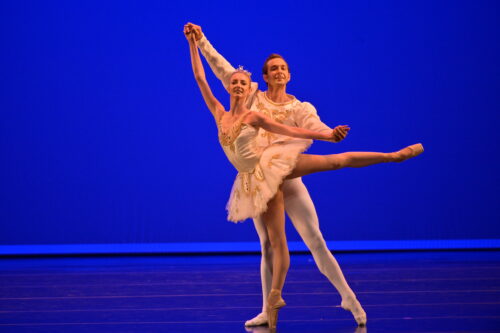
Pittsburgh Ballet Theatre principals Hannah Carter and Lucius Kirst dance George Balanchine’s “Diamonds.” (Photo courtesy of Simon Soong)
In the pas de deux, Odette expresses her gradual acceptance of the prince. Rodriguez in brown tunic and gray tights and Nijei in white performed the duet exceptionally well with Nijei communicating birdlike delicacy through her arm movements. Rodriguez accompanied her with precision whether supporting Nijei in lifts or turning her in arabesque.
Where most of the evening’s performances were excerpts from neo-classical and classical works, local company Cuban Classical Ballet of Miami mixed things up with “Ser” (“Being”) – a 2018 contemporary dance piece choreographed by Beatriz Garcia and set to music by Ezio Bosso.
CCBM dancers Beatriz Garcia, Daniela Cepero and Armando Brydson delivered electric performances accompanied by Bozzo’s driving, minimalist score with athletic sequences that had the three dancers rolling through an imaginative choreography packed with surprises.
In one sequence, the dancers began from a crouch before pivoting as a group and making a wave up their torsos that sent their arms high and gave them the impetus to spin and collapse back into a crouch.
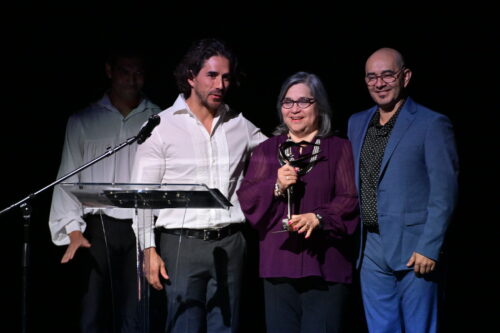
Ruby Romero-Issaev receives “A Life for Dance Award” on behalf of Arts Ballet Theatre of Florida Artistic Director, Vladimir Issaev, from David Camorlinga, left, and IBFM Artistic Director, Eriberto Jimenez, right. (Photo courtesy of Simon Soong)
The rousing shouts from the audience signaling their approval showed that CCBM clearly struck a chord with the hometown audience.
Dancers Nicole Nathalia Duque and Andres Felipe Vargas of the Columbian dance company, “Incolballet,” were spectacular dancing the Act II pas de deux of the 1841 ballet “Giselle” – choreographed by Jean Coralli and Jules Perrot.
The pas de deux features Count Albrecht (Vargas) reunited with his beloved Giselle (Duque) whom he betrayed at the altar. In the scene Giselle has just returned from death as a “Wili” – a ghost of a vengeful young woman who is stood up on her wedding day.
It can be challenging for modern audiences to connect with a ballet such as “Giselle” whose monochromatic values portray women as either the helpless victims of men or vengeful spirits out to lure them to their doom, but Duque and Vargas connected on Saturday with a breathtaking performance.
Duque in white bodice and full-length white dress opened the scene generating an illusion of weightlessness by sending gentle waves down her shoulders to her fingers before rising up into an arabesque that she turned full circle with slight pivots of her standing leg.
Duque moved liquidly from one position to the next supported by Vargas in black top and tights who then snapped out some eye-popping double turns and kicks of his own.
Pittsburgh Ballet Theatre dancers Hannah Carter and Lucius Kirst helped to close out the evening program with “Diamonds” – the third act of New York City Ballet artistic director and choreographer George Balanchine’s 1967 “Jewels.”
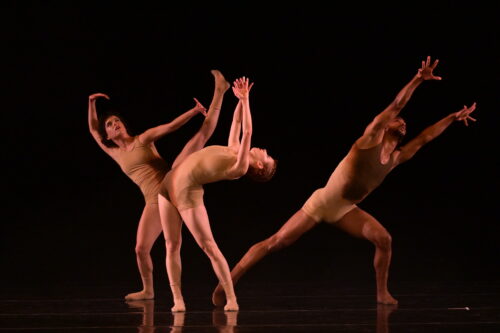
Cuban Classical Ballet of Miami’s Beatriz Garcia, Daniela Cepero and Armando Brydson in Beatriz Garcia’s “Ser.” (Photo courtesy of Simon Soong)
Performing to music excepted from composer Pyotr Ilych Tchaikovsky’s Symphony No. 3 in D major (Op. 29), the couple glittered in white in a demanding and severe work that has been called Balanchine’s salute to the Imperial pomp of his homeland Russia.
Carter opened en pointe slowly lifting one leg overhead using Kirst’s offered hand as support before threading that lifted leg back down and twisting it up and behind her as she fell forward into a deeply bent forward arabesque.
From start to conclusion, Carter and Kirst brought to this Balanchine classic both precision and a sense of connectedness with one another that allowed the lushness of the movement and music to shine through.
The IBFM is important to Miami’s dance calendar as a reminder of the city’s historical roots in the Cuban classical dance tradition. However, it also shows that the city’s dance programming extends beyond the yearly arrival and departure of snowbirds and that Miami is a city that supports yearlong serious dance teachers, performers and institutions as well as audiences who want to encourage and enjoy dance.
The International Ballet Festival of Miami is held every year in South Florida from the last week of July through mid-August.
ArtburstMiami.com is a nonprofit media source for the arts featuring fresh and original stories by writers dedicated to theater, dance, visual arts, film, music and more. Don’t miss a story at www.artburstmiami.com.
No posts found
Dancer-choreographer Rosie Herrera’s ‘Devotion’ continues exploration of rituals
Written By Guillermo Perez
August 22, 2023 at 8:14 AM
Leah Verier-Dunn in Rosie Herrera Dance Theatre’s “Devotion” at the Miami-Dade County Auditorium at 8 p.m. Thursday, Aug. 24 and Friday, Aug. 25. (Photo courtesy of Ben McKeown)
We check emails on our laptops each morning, perhaps in search of the message that will answer a prayer. Or, charmed by faraway voices and images, we clutch our cell phones before sleep, gazing into the face of a loved one or an adored celebrity. Compelling us to pay attention to these practices, like a contemporary liturgy of the hours, choreographer Rosie Herrera has dedicated her recent work to instances when the secular rises into sacredness and magic vibrates amid the mundane.
Staging the dance-theater piece “Devotion” at Miami-Dade County Auditorium on Thursday, Aug. 24 and Friday, Aug. 25, Rosie Herrera Dance Theatre (RHDT) will turn the black box stage, through impassioned moves and iconic poses, into a shrine for transcendental visions.
“I saw my first performance in that theater and came alive there,” says Herrera, whose father owned a restaurant across the street. “What a full circle moment it is to bring ‘Devotion’ to the Auditorium, thinking about what I’ve devoted my life to and have sacrificed for, doing so with great joy.”
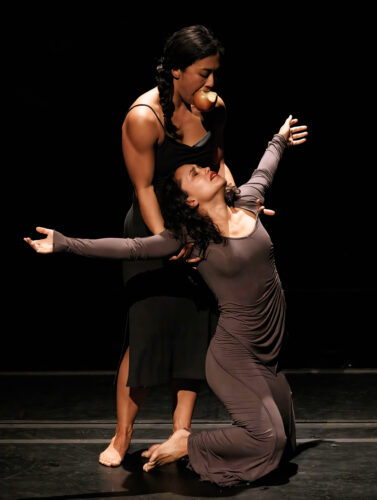
Britney Tokumoto and Victora Mora in Rosie Herrera Dance Theatre’s “Devotion.” (Photo courtesy of Ben McKeown)
A 2022 commission from the American Dance Festival (ADF), this last installment of a trilogy dealing with faith and the divine in worldly guises focuses on women at worship and within electronic networks where love withers or thrives.
“For people who know my works,” says Herrera, “this one will seem very different. They’ll be shocked — it’s my darkest. I never thought I’d put a black costume on stage, but thirteen years after starting my own company, here I am.”
The brighter scenarios with which she contrasts “Devotion” are in the years following her graduation from Miami’s New World School of the Arts, when her shows matched the wink-wink of sequins under spotlights with the irony of often playful sequences unafraid of roughhousing.
From 2009, “Various Stages of Drowning: A Cabaret” used water as a motif for what can assault and sustain us. A woman, for instance, was drenched by a hose—it hissed up like a snake in the garden—and a near-naked man stood in splendor in a claw-footed bathtub. The constant stream of quick-take imagery made a splash and so caught the attention of Charles L. Reinhart, the ADF leader who went on to mentor Herrera. Reinhart started with commissions of her group’s “Pity Party” in 20l0 and “Dining Alone” the following year, which played to sold-out houses at the venerable Durham, N.C. festival. That partnership has been bolstered by support from Miami Light Project and the Arsht Center, ushering Herrera to premieres for Ballet Hispánico and José Limón Dance Company.
While brash and often rollicking, Herrera’s earlier works were not devoid of yearnings and frustrations, the reverse side of exuberance that the Hialeah-raised artist gleaned from her Cuban heritage and forays into outsider culture, including drag and hip-hop. Her shows could take us clubbing or give us a buzz in quite a bash for the senses, but there was always that startling peek behind the tinseled curtain and sober moments when a beleaguered figure signaled for the warmth and strength of human hands.
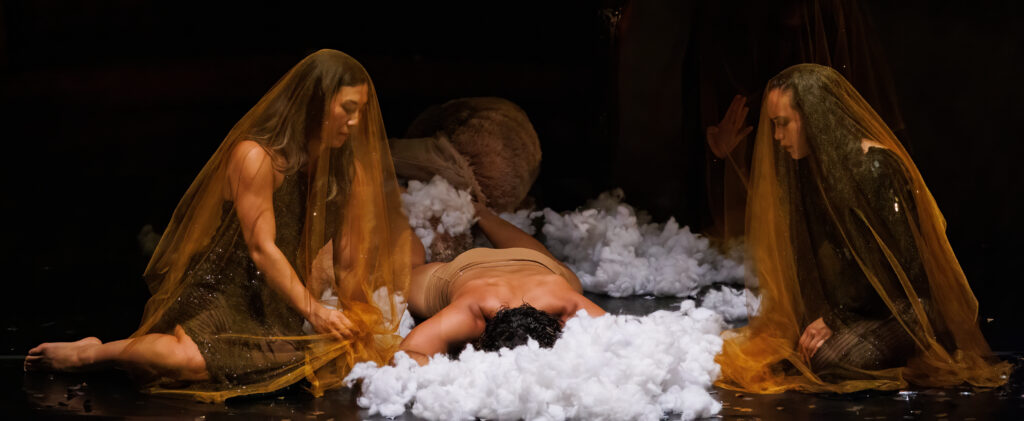
Britney Tokumoto, Luciano Cortes, and Victoria Mora in Rosie Herrera Dance Theatre’s “Devotion.” (Photo courtesy of Ben McKeown)
For all the pageantry—and this is especially apparent in her trilogy—Herrera points to its roots in religious tradition, explaining, “People say, oh, Rosie your work is so glamorous because you were involved in the drag community. And I go, ‘Well, no, it’s because I’m Catholic.’ ”
Aided by research, including conversations with a religion scholar who’s also a romance novelist, Herrera set off on this spiritual journey in 2016 with “Carne Viva”—literally “live flesh,” meaning a raw wound. The concerns go back to Herrera’s impressions—soul-piercing with their sensorial stabs—of Christ on the cross as she prayed at St. John the Apostle Catholic Church in Hialeah.
“It was my introduction to faith and dogma and even influenced my perception of romance,” says the choreographer. The images in the sanctuary became a reference, for “the violence of transcendence.”
2018’s “Make Believe” picked up the religious themes. “I like exploring the same ideas in different ways to see what happens if you take them into another environment,” says Herrera. Underscoring how the iconography of the Church has prevailed, she adds, “I am so imagery-based a lot of times what comes to me first is an image. When I’m able to exorcise that out of my body and see my relationship to it, I begin to understand its symbolism and capacity. With every piece, my interests—personal and aesthetic—gain clarity.”
Diverging from the pared-down look of “Carne Viva” but keeping its force, the second piece in the trilogy admitted greater embellishment. For Herrera “Make Believe” (which her group will present at Miami Theater Center in Miami Shores on Friday, Oct. 13 and Saturday, Oct. 14) is about “the residue of what’s imprinted on our bodies as children, its effect on how you make a life. It’s an homage to little girls—to the things that drew my eye when I was a child and stayed with me and feel magical.”
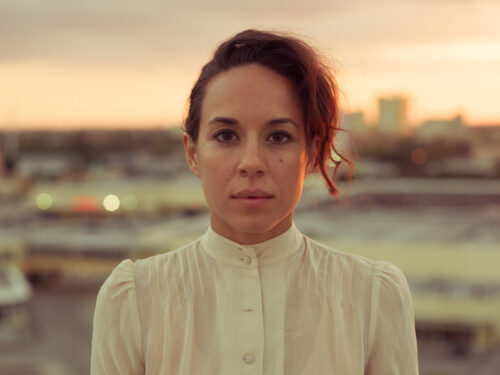
Rosie Herrera is a Cuban-American dancer, choreographer and artistic director of Rosie Herrera Dance Theatre. (Photo courtesy of Adam Reign)
Despite that bow to innocence, with its flights of fancy—a bouncy castle figures among the episodes—here the glittery crew, flailing like flagellants, sport red splotches on their costumes like the blood of martyrs, and a dancer comes out dragging the deflated funhouse, invoking Jesus on the Via Crucis.
Now with its own abundance of impactful imagery, “Devotion,” according to Herrera, “turns a more reverent eye on the rituals that we already engage in.”
Though the Man of Sorrows and the majesty of his divinity may hover over all — four of the six performers here are female. As Herrera says, “It struck me — Christianity is the religion of the absent father. So questioning its values, we asked how women worship. What does that look like for us?”
This connects with the way technology at present furnishes us with holy objects. The genesis of “Devotion,” in fact, lay in a twenty-minute segment of “Make Believe,” where dancers brandished cell phones, which Herrera cut after the earlier work’s first performance and re-planted for her trilogy’s last installment.
As she explains, “I really loved that section, but it was the introduction of a new idea — rather than the completion of one — aiming to dissect contemporary attitudes about faith. It may be controversial to say, but in a society that’s moving away from organized religion—when you talk about it, a lot of times people shut down—the closest thing we have to it is technology. It’s ever-present and has magical qualities. Cell phones have become symbols of our collective consciousness.”
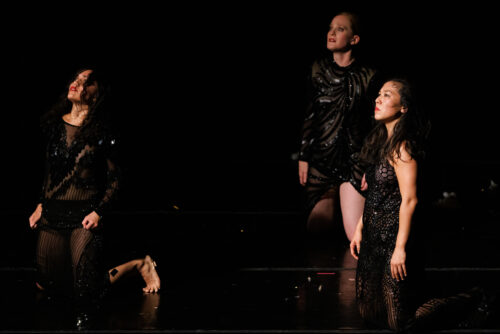
Victoria Mora, Leah Verier-Dunn, and Britney Tokumoto in Rose Herrera Dance Theatre’s “Devotion.” (Photo courtesy of Ben McKeown)
Thus sanctified, technology can be both a burden and a boon. “Just like religion, it can turn fanatical,” admits Herrera. “But it lets me call my father and see his face, and that’s sacred to me. If you’re a queer kid feeling isolated or know no one who looks like you or understands you, then the internet is your friend.”
And screens for many brought a sort of salvation during the scourge of COVID. In its fires, Herrera’s dearest impulses boiled down to one: dancing.
“That time was devastating,” she says, “but I never danced more than when my world was completely in question. I danced in my living room. I danced on the beach. I found a way to start dancing safely with my friends.”
And her dancer’s imagination kept the bloom on “Devotion,” even sending offshoots into short film collaborations. “There’s so much in the subject matter of these works,” she says about the trilogy, “I’m beginning to feel that it’ll never end.”
WHAT: “Devotion,” Rosie Herrera Dance Theatre
WHEN: 8 p.m. Thursday, Aug. 24 and Friday, Aug. 25
WHERE: Miami-Dade County Auditorium, 2901 West Flagler Street, Miami
COST: $22 plus fees.
INFORMATION: 305-547-5414 and miamidadecountyauditorium.org
ArtburstMiami.com is a nonprofit media source for the arts featuring fresh and original stories by writers dedicated to theater, dance, visual arts, film, music and more. Don’t miss a story at www.artburstmiami.com.
No posts found
Ilisa Rosal Adapts Tennessee Williams’ ‘Streetcar Named Desire’ For the Flamenco Stage
Written By Sean Erwin
August 15, 2023 at 6:29 PM
Flamenco dancer Pepe Flores as Stanley Kowalski in Ballet Flamenco La Rosa’s “Deseo” at the Miami Dade County Auditorium on Saturday, Aug. 19 and Sunday, Aug. 20. (Photo courtesy of Manuel Arce)
“Whoever you are—I have always depended on the kindness of strangers.” says Blanche DuBois to the unnamed doctor as he escorts her to the asylum at the close of Tennessee William’s 1947 Pulitzer-prize-winning play, “A Streetcar Named Desire.” In her imagination, she believes the doctor is the suitor she has been waiting to come to the door.
The play takes its name from the Desire streetcar line that ran through New Orleans French Quarter where Williams composed the script. The 1951 film version won four Academy Awards and starred Vivian Leigh in the role of Blanche and Marlon Brando as Stanley Kowalski – the brooding, violent husband of Blanche’s sister, Stella.
Miami flamenco company, Ballet Flamenco La Rosa, further adapts “Streetcar” for the dance stage in “Deseo” (“Desire”) opening Saturday, Aug. 19 at the Miami Dade County Auditorium. “Deseo” anchors the original play’s drama of powerful personalities in the passion and codes of flamenco.
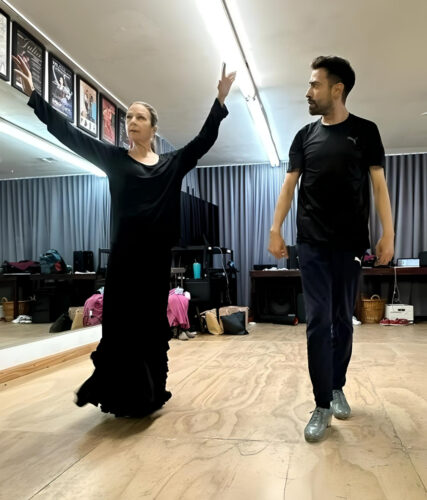
Ilisa Rosal, artistic Director of “Ballet Flamenco La Rosa,” in the studio with dancer Armando Tovar. (Photo courtesy of Pilar Fernández)
Ballet Flamenco La Rosa was founded in 1985 by choreographer, flamenco dancer and instructor, Ilisa Rosal. Rosal discovered her love of theater and dance growing up in Miami Beach where she trained in ballet and flamenco and performed in local theater productions.
When she was 21, Rosal relocated to New York City when acclaimed flamenco star, José Molina, asked her to dance in his company.
“If I’m going to dance I need to dance when I’m young. I can always do theater when I’m old,” says Rosal during an interview at her North Miami studio. “(I chose flamenco) and never looked back.”
Rosal left New York to pursue flamenco in Spain for the next five years. During that time she studied with many of the greats like the late, renowned gypsy flamenco artist, Manuel Santiago Maya,“Manolete.”
But even as she worked with Spain’s great artists, Rosal was mapping out her next steps.
“I knew I wanted to start a company and start it in the United States,” says Rosal. “I came back to Miami because I had friends and family who could support me here as I was getting started.”
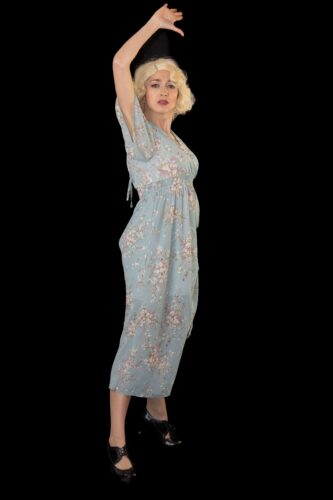
Flamenco dancer Paloma De Vega in the role of Blanche DuBois in Ballet Flamenco La Rosa’s “Deseo.” (Photo courtesy of Julia Rome)
Over the last four decades, Rosal has served as a conduit between Spain and the U.S. bringing dozens of flamenco dancers and musicians to teach and perform in Miami.
She also learned to channel her passion and talents for theater back into dance.
In the early 2000s, she began to present full-length flamenco ballets, adapting works like Euripides’ “The Trojan Women” and Flaubert’s “Herodias” to flamenco.
“Storytelling is the focus and primary thing for me. It is not more prominent than the dancing – it’s a shift,” explains Rosal. “The musicians want to tell the story using a musician logic and the dancers want to use a dance logic.”
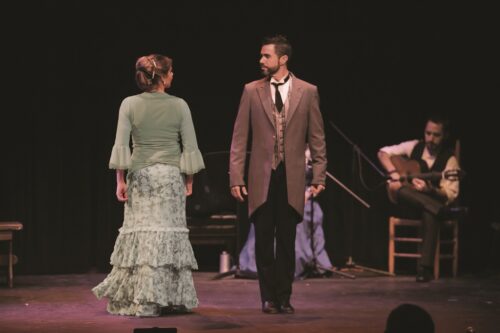
It isn’t the first time Ballet Flamenco La Rosa’s artistic director has tackled Tennessee Williams. In 2018, a production of Tennessee Williams’ “Verano y Humo” (“Summer and Smoke”) premiered at the Colony Theatre, Miami Beach. (Photo courtesy of Ballet Flamenco La Rosa)
Key to flamenco is the intimate relationship that exists between musicians and dancers, and “Deseo” highlights the original compositions and musical talents of flamenco guitarist, Antonio Espanadero, singers Nieves Diaz and Jose Diaz (“El Cachito”), and Rosal’s son and 2015 Berklee College of Music graduate, Jacob George, on blues guitar and vocals.
However, a great work like “Streetcar” requires a high level of dance expertise to perform lead roles effectively. For Rosal, this meant bringing in some performers from places like New York City and Spain.
“Finding the right artist for the right character is the key,” she says.
Rosal found her male lead for “Streetcar” through a chance meeting during one of her trips to Spain in 2016.
She was struck by gypsy flamenco dancer, Pepe Flores’ capacity for strong, dramatic expression. When she had Flores, who was the perfect fit for Kowalski, Rosal decided that she could line up the talent necessary to adapt “Streetcar.”
The play depicts Stanley as a brutish personality and violent toward his pregnant wife, Stella (performed by Teresa Barbero), and her sister, Blanche (performed by Paloma De Vega).
Other notable dancers include Jeranys Perez, as the blind Mexican street vendor, and Fran Bas, as Stanley’s friend and Blanche’s love interest, Harold “Mitch” Mitchell.
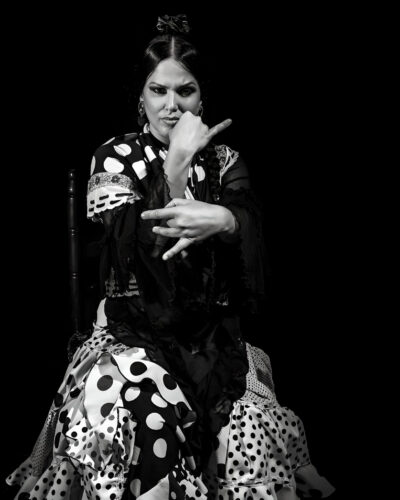
Jeranys Perez as the blind Mexican street vendor in Ballet Flamenco La Rosa’s adaption of Tennessee Williams’ “A Streetcar Named Desire.” (Photo courtesy of Ballet Flamenco La Rosa)
Rosal acknowledges the challenges of expressing violence, including sexual assault, through dance.
“I collaborated with the artists to find a delicate way to do this,” she explains.
When asked about the challenges posed by expressing the character of Blanche through flamenco, De Vega emphasized the difficulties of portraying such a complex personality trapped in an impossible situation.
“I found it challenging to play an educated, sophisticated and elegant character that is at the same time so insecure, fragile, vulnerable, frustrated and can find no way out of her tragic situation,” explains the New York-based flamenco dancer and actress.
De Vega started dancing flamenco at age 7 before specializing in Spanish dance and flamenco at the Real Conservatorio Profesional de Danza Mariemma. She then studied choreography at the Conservatorio Superior de Danza María de Ávila.
After her studies in Spain, De Vega moved to New York to dance flamenco and study acting in theater and film supported by a talent scholarship she received from the New York Film Academy.
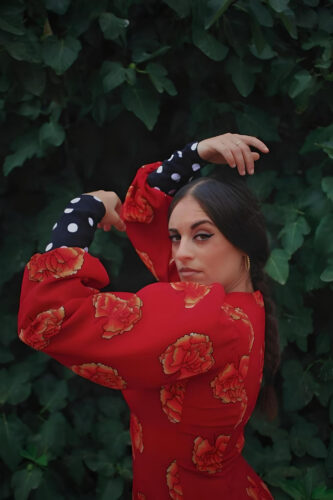
Blanche’s sister, Stella, is performed by Teresa Barbero in Ballet Flamenco La Rosa’s “Deseo.” (Photo courtesy of Ballet Flamenco La Rosa)
For De Vega BFLR’s “Deseo” is important because of its willingness to tackle big themes: “The work deals with the victimization of women, and the stigma, lack of empathy and support for mental illness and victims of sexual, psychological and emotional abuse.”
It isn’t the first time that Rosal has taken a Williams classic and translated it into the language of flamenco. In 2018, Ballet Flamenco La Rosa premiered “Verano y Humo,” an adaptation of the playwright’s “Summer and Smoke.”
WHAT: Ballet Flamenco La Rosa’s “Deseo!” Inspired by “A Streetcar Named Desire”
WHERE: Miami Dade County Auditorium, 2901 W. Flagler St., Miami
WHEN: 8 p.m., Saturday, Aug, 19, and 3 p.m., Sunday, Aug. 20.
TICKETS: $20 and $37 plus fees
INFORMATION: 305-547-5414 or miamidadecountyauditorium.org
ArtburstMiami.com is a nonprofit media source for the arts featuring fresh and original stories by writers dedicated to theater, dance, visual arts, film, music and more. Don’t miss a story at www.artburstmiami.com.
No posts found
MIAMI HEAT WAVE DANCE: ‘FIERY’ SHOWCASE OF CARIBBEAN DANCE CULTURE
Written By Orlando Taquechel
July 21, 2023 at 3:02 PM
The dancers of the Peter London Global Dance Company will perform in Miami Heat Wave Dance at Little Haiti Cultural Complex on Saturday, July 29. (Photo courtesy of Shameka Seabrook/PLGDC)
The word “combination” acquires a new meaning when talking about the event that, from Tuesday, July 25 to Saturday, July 29, will make the Miami summer an appropriate setting for a sample of Caribbean dance culture.
Miami Heat Wave Dance – Combination is a creative effort involving local group Peter London Global Dance Company (PLGDC) and M.D. Company, a Hip-Hop dance organization based in Martinique, a beautiful island that is part of the Lesser Antilles.
PLGDC is a multi-ethnic and multi-cultural group with dancers, choreographers, repertoire, musicians, and artists that showcase the rich multi-cultural heritage of the global community in Miami, where 70.2 percent of the population is Hispanic.
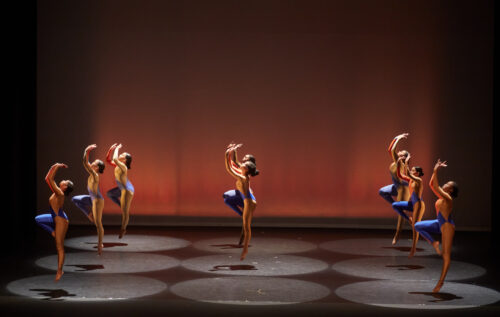
The dancers of M.D. Company of Martinique. (Photo courtesy of PLGDC)
That is why we should mention that among the dancers of Hispanic descent participating in the Miami Heat Wave Dance – Combination is Isabelle Vázquez, PLGDC solo dancer of Puerto Rican and Cuban descent, who will dance a contemporary salsa duet with Chilean-born choreographer Camilo Toro.
For her part, the soloist of M.D. Company, Elea Sedoine from Barcelona, will play a leading role in the quartet variation in the world premiere of “Children of the Underground” by Peter London, choreographer, founder, and artistic director of PLGDC. A work that shows the journey of African dance to America and the Caribbean from the days of the slave trade in the Atlantic to the current transformation of these dances into secular and popular forms. Sedoine also appears in “Spectre” the world premiere of David Milôme, artistic director of M.D. Company, which combines Hip-Hop and contemporary dance in the representation of a confrontation between street dancers.
Among the PLGDC artists included are Leon Cobb, a veteran dancer and teacher, a former member of the Martha Graham Dance Company, MOMIX, and Jose Limón Dance Company. Cobb appears in two world premieres scheduled for the Saturday, July 29 performance: Milôme’s “Combination” and London’s “Children of the Underground.” Also performing in Miami Heat Wave Dance – Combination are fellow PLGDC members Macey Rowan, Eden Collier, Clinton Harris, and Tt’Shaylah Lightbourn.
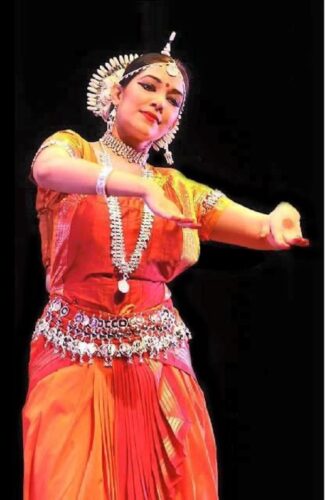
Kathak Kala Sangam Company of Trinidad and Tobago. (Photo courtesy of PLGDC)
London answered interview questions about Miami Heat Wave Dance – Combination via email while still in Martinique, shortly before returning to Miami to participate in event activities scheduled at the Little Haiti Cultural Complex,212-260 NE 59th Terrace.
The starting point for Miami Heat Wave Dance, he tells us, “is the Miami-Dade Department of Cultural Affairs sponsoring the International Cultural Partnership (ICP) program to collaborate with artists from around the world and create new works that will be performed in the countries of both artists.”
Regarding the expression “heat wave” in the name of the event, London notes that “it speaks both of the fiery dances that will debut on the program, as well as the heat of the Miami summer. The program includes our partner ICP (M.D. Company) and two groups from Trinidad and Tobago, Metamorphosis Dance Company and Kathak Kala Sangam Dance Company.”
Regarding the participating companies, London details that “M.D. Company was selected based on the internationally successful choreographic work of Milôme. Metamorphosis is one of Trinidad and Tobago’s leading dance companies for young artists. Kathak Kala Sangam is a leading Indian classical dance company, representing Trinidad and Tobago as a cultural ambassador.
As highlights of the show on Saturday, July 29, London mentions the two world premieres of Milôme created for both M.D. Company as for PLGDC: “Combination” and “Spectre.” The former “is a fast and dynamic blend of Hip-Hop and contemporary dance” and the latter “is a dance-theatre piece that uses various genres of hip-hop dance to tell a story of choosing peace through dance over violence.”
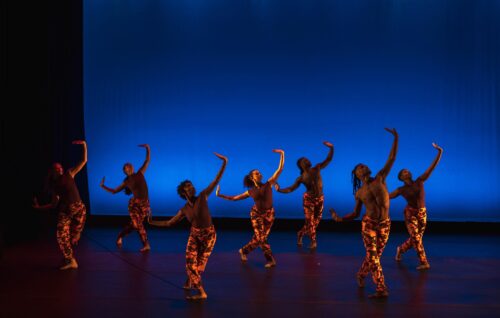
The dancers of the Metamorphosis Company from Trinidad and Tobago. (Photo courtesy of PLGDC)
Next, London references the presence of Kathak Kala Sangam’s artistic director, Satnarine Balkaransingh, with classical Indian dance in the Kathak and Odissi styles. And he concludes by specifying that Metamorphosis Dance Company, by Nancy Herrera, will present a series of dances in Afro-Caribbean and contemporary styles.
Regarding the three community classes the visiting companies will offer on Tuesday, July 25, and Wednesday, July 26, London points out that “the objective of the classes is to educate the community about the diverse cultural heritage of the Caribbean communities.”
This is an exciting collaboration between artists of diverse origins who come together to work, sharing common motives, purposes, and objectives. Undoubtedly, attending Miami Heat Wave Dance – Combination is the opportunity to appreciate the result of all that effort.
The last thing London tells us is good news: next year, there will be another edition of Miami Heat Wave Dance.
WHAT: Miami Heat Wave Dance – Combination
WHEN: 4 to 5:30 p.m. Tuesday, community class with M.D. Company. 3:30 to 4:45 p.m., Wednesday, July 26, community class with Metamorphosis Dance Company, and 5 to 6:30 p,m., community class with Kathak Kala Sangam Dance Company. 7 p.m., Saturday, July 29, performance hosted by Peter London Global Dance Company.
WHERE: Little Haiti Cultural Complex, 212-260 NE 59th Terrace, Miami
COST: Classes are free and open to the public, but there is a $5 registration fee. Tickets for the performance on Saturday, July 29 are $5-$20.
INFO: www.plgdc.org
ArtburstMiami.com is a nonprofit media source for the arts featuring fresh and original stories by writers dedicated to theater, dance, visual arts, film, music, and more. Don’t miss a story at www.artburstmiami.com.
No posts found
Miami’s International Ballet Festival Attracting Top Dance Companies
Written By Sean Erwin
July 17, 2023 at 5:51 PM
Milwaukee Ballet dancers, Marize Fumero and Arionel Vargas, will perform at the International Ballet Festival of Miami’s Gala performances, Saturday, Aug. 12 and Sunday, Aug. 13 at the Miami Dade County Auditorium. (Photo courtesy of Simon Soong)
For decades, Cuba has produced some of the world’s top ballet dancers. Greats like Alicia Alonso – founder of the Ballet Nacional de Cuba – to American Ballet Theatre principal Xiomara Reyes, San Francisco Ballet principal, Lorena Feijóo, and English National Ballet principal, Alejandro Virelles who all trace their beginnings to the island.
Miami’s dance scene has long been the benefactor of its tight links with the island country and the esteem Cubans have for classical dance.
Cuban dancer, teacher and choreographer, Pedro Pablo Peña, arrived in Miami from Cuba in 1983 and, at once, got busy contributing his expertise to the city’s dance scene.
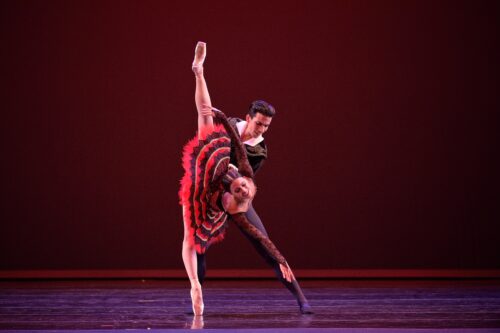
Washington Ballet dancers Katherine Barkman and Jorge Oscar Sanchez strike an arabesque penché. (Photo courtesy of Simon Soong)
Pooling the talents of local and exiled dance artists, he founded Creation Ballet the same year.
In 1996, he founded the International Ballet Festival of Miami (IBFM) attracting to South Florida dance luminaries from North and South America, Europe and Asia for two performances at the Miami Dade County Auditorium.
Dancer and choreographer, Eriberto Jimenez, was there at Peña’s side right from the start.
“In 1989, Mr. Pedro Pablo Pena offered me a scholarship to study at his dance studio and to dance with his company that at that time was named Creation Ballet,” says Jimenez. “Since then I started helping him with the office work as a volunteer, and I became more involved with the institution not only as a dancer.”
When Peña died in March 2018, Jimenez was the obvious choice to fill the role of the festival’s artistic director.
“ . . .The board thought that the only person that could continue his legacy (would) be me since I had been there from the beginning, knew the administrative work and was also part of the artistic team,” says Jimenez.
Since stepping into leadership, Jimenez has pressed forward with innovations such as a community dance program at the African Heritage Cultural Arts Center, outdoor performances at Lincoln Road, and a non-competitive Dance Marathon.
This year’s 28th festival features art exhibits, book presentations, a film series, dance workshops, master classes, an international summer dance intensive for students and performances in Miami, South Miami, Miami Beach and Fort Lauderdale.
The growing reputation of the IBFM has also attracted talented ballet companies and principal dancers from throughout North and South America, Europe and Asia.
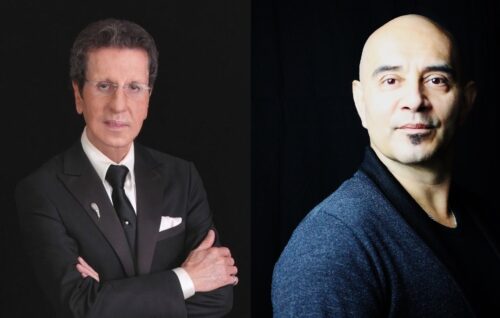
At right, current International Ballet Festival of Miami Artistic Director, Eriberto Jimenez, recalls that the IBFM board thought he was the only person to continue the legacy of the festival founder, Pedro Pablo Peña, who died in 2018. (Photo courtesy of Phillipe Obregon and Simon Soong)
As a result of Jimenez’s efforts, the 28th festival showcases 11 classical dance companies from six countries including Ballet do Teatro Municipal do Rio de Janeiro (Brazil), Varna State Opera Ballet (Bulgaria) Incolballet (Colombia), Teatro Massimo di Palermo (Italy), Unblanche (Japan), and United States dance companies including, Arts Ballet Theatre of Florida, Cuban Classical Ballet of Miami, Dimensions Dance Theatre of Miami, Milwaukee Ballet, Pittsburgh Ballet Theatre, and The Washington Ballet.
Marize Fumero was born in Havana and trained at the National Ballet School of Cuba. She danced with the Ballet Nacional de Cuba and the English National Ballet before becoming a Leading Artist in 2015 with the Milwaukee Ballet.
For Fumero, the IBFM’s value lies in its international recognition as a global destination for talented classical dancers.
“Dance is infused with aesthetic principles that distinguish it from other forms of art, which directly influence the cultural heritage of a community,” says Fumero. “This is exactly the type of path that IBFM has created within the North American dance world and beyond.”
One fresh feature of the festival is its recent inclusion of contemporary dance in the line-up. This year, dance companies from France, Columbia, the Dominican Republic, Switzerland and the United States are part of the contemporary program.
The decision to broaden the scope was a way for greater inclusivity, according to Jimenez.
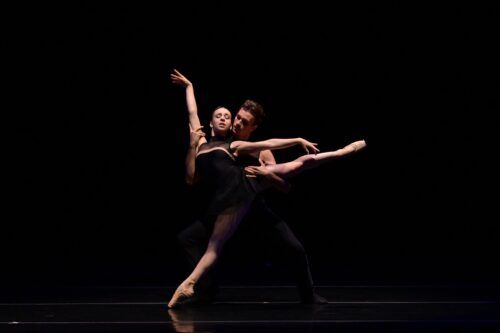
Arles Youth Ballet Company featuring dancers Diana Brandao and Maxence Deveaux in a pas de deux. (Photo courtesy of Simon Soong)
“(We) decided to create a weekend of only contemporary dance companies and another weekend for the classical ballet companies,” says Jimenez.
“Hopefully in the future we might include (even more) styles of dance,” he says.
Each year the festival awards two prizes to individuals who have distinguished themselves in the field of dance.
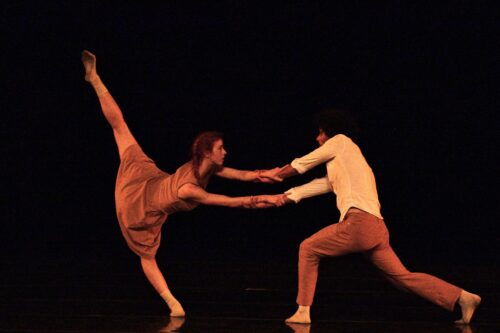
Cuban Classical Ballet of Miami dancers, Beatriz Garcia and Armando Brydson. (Photo courtesy of Simon Soong)
“A Life for Dance Award” honors the achievements of ballet dancers, choreographers and directors. Past recipients of the award include dance legends such as Edward Villela, Miami City Ballet founder and New York City Ballet star, Alberto Alonso, artistic director of the Ballet Nacional de Cuba, and Roland Petit, French choreographer, dancer and director.
This year’s recipient of the award, Vladimir Issaev, has been singled out for his work as founder and artistic director of Arts Ballet Theatre of Florida and the Miami International Ballet Competition.
The “Criticism and Culture of Ballet Award” honors the work of national and international dance critics.
Past recipients have included former New York Times dance critic, Anna Kisselgoff (2009), Dance Magazine’s editor-in-chief, Jennifer Stahl (2018), and former Nuevo Herald critic, author and current ArtburstMiami Spanish Editor, Orlando Taquechel (2014).
This year’s recipient is Rosario Manzanos, dance critic, columnist and journalist for the Mexican newspaper, Excélsior.
“It was a huge honor to be considered among important dance critics such as Clive Barnes, Roger Salas, and Anna Kisselgoff,” responded Taquechel when asked about the award. “It was also a very nice surprise because I was the first local dance critic recognized by IBFM.”
There are two free performances including Contemporary Performance on the Streets, at 8 p.m. Thursday, Aug. 3, at Euclid Circle on Euclid Avenue and Lincoln Lane on Miami Beach, and the other, IBFM at City Centre, at 8 p.m., Friday, Aug. 11, at the Brickell City Center’s Garden Deck on the second floor, 701 S. Miami Ave., Miami.
Jimenez says the free performances allow anyone access to see dancers from different parts of the world who have come to Miami.
“Every year South Florida has the opportunity to receive dance companies that have never performed before in the United States,” he says, “and local companies are able to share the stage with dancers from abroad.”
Contemporary Performances
WHAT: Performance I
WHEN: 8 p.m. Friday, Aug. 4
WHERE: Miami Dade College, North Campus, Lehman Theater, 11380 NW 27th St., Miami
COST: $30.75 includes service fee
INFO: internationalballetfestival.org
WHAT: Performance II
WHEN: 8 p.m. Saturday, Aug. 5
WHERE: Dennis C. Moss Cultural Center, 10950 SW 211 St., Cutler Bay
COST: $30 -$40
INFO: mosscenter.org
WHAT: Performance III
WHEN: 5 p.m., Sunday, Aug. 6
WHERE: Broward Center for the Performing Arts, Amaturo Theater, 201 SW 5th Ave., Fort Lauderdale
COST: $35 and $45
INFO: browardcenter.org/
Classical Performances
WHAT AND WHEN: Program III: Grand Classical Gala, 8 p.m., Saturday, Aug. 12, and Festival Closing Gala of the Stars, 5 p.m., Sunday, Aug. 13
WHERE: Miami Dade County Auditorium, 2901 W Flagler St., Miami
COST: $35, $45, $55 and $65
INFO: miamidadecountyauditorium.org/
ArtburstMiami.com is a nonprofit source of dance, visual arts, music, and performing arts news. Sign up for our newsletter and never miss a story.
No posts found
Dimensions Dance Theatre’s season closer is a sultry end for summer
Written By Guillermo Perez
July 7, 2023 at 4:04 PM
Chloe Freytag and Josue Justiz in “Fiebre,” by Vicente Nebrada in Dimensions Dance Theatre of Miami’s “Summer Dances,” at the Moss Cultural Arts Center on Saturday, July 15 and Sunday, July 16. “Fiebre” will feature live music from Alain Garcia and The Latin Power Band. (Photo courtesy of Simon Soong)
One swallow does not a summer make, goes the old saying. But a flock of dancers, akin to swallows flying toward a happy nest, can make for a glowing summer show. To confirm this, Beatriz Garcia’s “En Camino (On the Way),” referencing bird migration, joins three other dances—“Salt Water Song,” a commissioned world premiere by Marika Brussel, and repertory favorites, hot and bright—to close Dimensions Dance Theatre of Miami’s performance season at the Moss Cultural Arts Center, on Saturday, July 15 and Sunday, July 16.
“Summer Dances” stays true to our sultry latitudes and upholds Dimensions Dance Theatre’s mission to feature live music—here by Alain Garcia and The Latin Power Band, for the return of Vicente Nebrada’s “Fiebre,” with seven tart to turbulent boleros paying tribute to La Lupe, the drama queen of Cuban song. Gerald Arpino’s “Light Rain, both folkloric and other-worldly glamorous, will help celebrate the choreographer’s birth centennial.
Imperative to this show, Dimensions Dance Theatre also continues to engage women choreographers. Garcia as an emerging dancemaker—and evolving human being, she’d insist—has found a welcoming place in South Florida’s familial dance company, co-directed by Jennifer Kronenberg and Carlos Guerra.
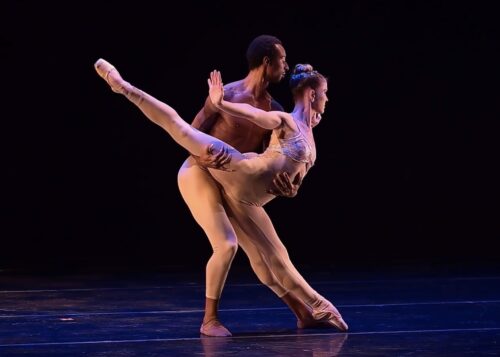
Chloe Freytag and Daniel White in “Light Rain,” Gerald Arpino’s fiercely energetic masterwork, performance of the work at The Joyce Theater in NYC. (Photo courtesy of Simon Soong)
“I want to regale these dancers with a work that’s outside their norm but unequivocally made with them in mind,” says Garcia in Spanish. She, along with her husband Armando Brydson, will be performing in “En Camino,” pleased by the relationship they’ve built with the rest of the nine-member cast.
“I’ve explained my personal story to them,” says Garcia. “It’s important they relate this to their own, along the same range of feelings, to communicate their dreams and struggles without words.”
Though she can dip into her ballet origins for choreographic details, Garcia has guided the dancers—stalwarts of classicism—into expanding their comfort zone through floor work and tricky partnering with authentic swag.
“I welcome the challenge of having the dancers discover qualities in themselves they might not have imagined,” the choreographer declares.
Residing in Miami for less than two years, Garcia and her husband have braved a different environment forging ahead with choreographic projects. Just last summer, they were invited to perform in the International Ballet Festival of Miami by director Eriberto Jimenez after he saw them taking class in his studios. In a matter of days, the couple came up with an intense and enthusiastically received duet, “To Zero Point.”
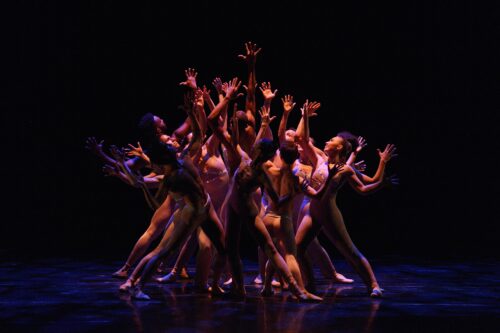
For its “Summer Dances,” Dimensions Dance Theatre will perform Gerald Arpino’s “Light Rain” in honor of the Arpino Centennial Celebration. (Photo courtesy of Simon Soong)
Garcia says, “It was an expression of all we had been living through—the stress, the emotions of starting life anew.” Up to this task thanks to skill and dedication, she and Brydson have not wavered from the path forward.
A graduate of Cuba’s National Ballet School and University of the Arts, Garcia carries with her all she learned at Malpaso, the highly regarded, Havana-based contemporary dance troupe with an international profile. The artist met her husband there and throughout eight years got to interpret works by choreographers of note, including Israeli trailblazer Ohad Naharin, whose Gaga method of movement spurred Garcia.
“He uses a very sensorial approach, close to our animal impulses, which I could deeply connect with and modify,” she explains. “But really each work I’ve performed has made me the artist I am today.”
And that artist is one who’s highly sensitive to the winds at her back—how they’ve helped propel her—and the highs and lows of her current creative landscape, the better to meet whatever opportunities—or obstacles, she recognizes—arise in the horizon.
Garcia left her own mark at Malpaso, with her trio “Being/Ser,” staged to fine notices, in repertory. But the spark that fired her up to choreograph came in a 2017 collaboration with Raul Reinoso for Acosta Dance. Enthusiasm for “Nosotros”—the title’s “us” accommodates various gender combinations, a fluidity Garcia encourages—took the supple dancer by surprise and nudged her toward creating more dances.
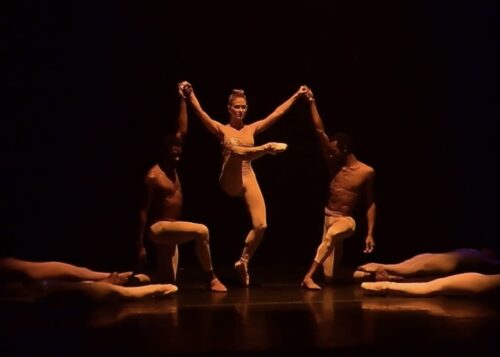
Chloe Freytag, center, Devaughn McGann, left, and Daniel_White, right, in Gerald Arpino’s “Light Rain.” (Photo courtesy of Simon Soong)
For Garcia, the urgency of continued exploration remains primary. (“I’m at a point where I want each new piece to be different from the previous one,” she maintains.) So, it’s no wonder that swallows—known for great-distance migrations—have long captivated her, now casting their winged shadows on “En Camino.”
“I like research and was fascinated to find out these birds adapt to changes in climate and even new constructions that pose dangers. Their tenacity connects with me. And I love that they choose a mate for life,” Garcia says.
Movement in “El Camino” is laid out in phases that Garcia refers to as chapters, posing questions: When is the right time to undertake a journey? What tools for this are necessary? Which companions merit trust in the endeavor? And how will the learning process continue in a new habitat? Claude Debussy compositions will keep this dance aloft on airy musical currents.
Her theme, Garcia underscores, pertains not only to immigration but to any life passage. And, while finding parallels to human behavior in our feathered friends, she doesn’t deal in crude imitation. Avian motifs remain subtle and poetic.
“I want this to be an ode to resiliency,” says the choreographer.
Turning from the skies to a coastline, audiences will encounter ancient-rooted but recognizable action in Marika Brussel’s re-interpretation of Greek myth. “Salt Water Song” surges from distilled and merged episodes in Homer’s “Odyssey,” taking us to the realm of Sirens and the nymph Calypso, who first captivated and then set the epic hero on a homeward course. The focus, however, shifts from Odysseus to female presences that a patriarchal tradition has denied their due.
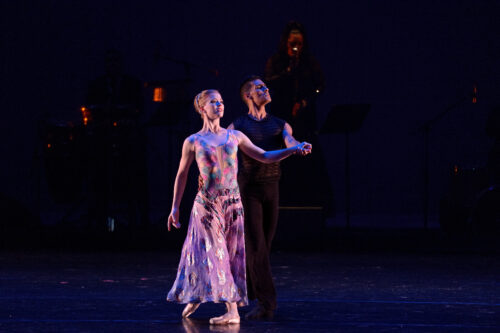
Chloe Freytag and Josue Justiz in“Fiebre,” by Vicente Nebrada. “Fiebre” will feature live music from Alain Garcia and The Latin Power Band. (Photo courtesy of Simon Soong)
“Banished on an island, Calypso’s lonely but unapologetic. She’s not just a seductress but complicated. And the Sirens—who were they singing for?” probes the choreographer, who uses their presence like a Greek chorus to remind Calypso of her power.
“A lot of my ballets address stories of women so they have more agency,” says Brussel. “I’ve done some around myth. Now I wanted to do one also involving water—the wildness of it, how we can’t control it.”
Considering this work evokes for the Queens, New York native—at present a London resident—scenes of childhood outings to Jones Beach and awe-inspiring views of the Pacific during her time in San Francisco, memories awash in emotions any tidewater Floridian would identify with.
Now at Dimensions, a company she’s admired from afar, the choreographer wants to “make the dancers shine. I try to be collaborative in a community of artists to bring in their vision.” Such collaboration extends to the original score by Ryan Cockerham, a violinist whose music Russell discovered by serendipity on another artist’s recording.
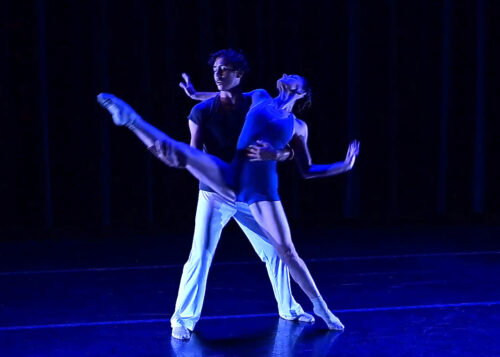
Emily Bromberg and Brian Gomez in Beatriz Garcia’s “En Camino (On the Way).” (Photo courtesy of Simon Soong)
“Salt Water Song” involves a narrative that connects with Brussel’s own unusual journey through the craggy shoals and marvel-filled harbors of dance. Having studied at Joffrey Ballet School and then danced professionally since her teens, she quit the stage for almost a decade and went on to earn a graduate degree in writing from Sarah Lawrence College.
“I was searching for something to replace ballet in my life. Well, this didn’t, but it gave me a different way to tell my stories,” reflects Brussel.
After starting to dance again with Ballet Theater of New Mexico, she leaned into choreography. Her arresting 2017 piece, “From Shadows,” about the un-housed population on the urban landscape, sprung from an autobiographical text she wrote about her father’s period of homelessness.
In the range of commissions that have come Brussel’s way—at Kansas City Ballet, for example, and in association with San Francisco’s renowned ODC/Dance—raising viewer awareness has often been at play. And life at present, she notes, has made her “ever more empathetic to people who’ve come to a new place,” perfect for a show full of wanderers and wonder.
WHAT: Dimensions Dance Theatre of Miami “Summer Dances”
WHEN: 8 p.m., Saturday, July 15 and 3 p.m., Sunday, July 16
WHERE: Dennis C. Moss Cultural Arts Center, 10950 SW 211 Street, Cutler Bay
COST: $25-$45.
INFORMATION: 786-573-5300 or dimensionsdancemiami.com.
ArtburstMiami.com is a nonprofit source of dance, visual arts, music, and performing arts news. Sign up for our newsletter and never miss a story.
No posts found
Review: Miami City Ballet Enjoys Life with Balanchine, Daydreams with Robbins
Written By Orlando Taquechel
May 25, 2023 at 4:49 PM
Dawn Atkins and Stanislav Olshansky in “Afternoon of a Faun,” choreography by Jerome Robbins, featured in Miami City Ballet’s closing program, “Entradas.” (Photo courtesy of Daniel Azoulay/Miami City Ballet)
Miami City Ballet (MCB) knows how to close a season with a bang along with allowing the chance to daydream.
With its recent “Entradas” program at Miami’s Arsht Center for the Performing Arts (Friday, May 19, Saturday, May 20, and Sunday, May 21), the company and its artistic director Lourdes Lopez seem to have taken into account that we are in 2023 and that some escapism is what is needed in these times to soothe the soul.
That was precisely what happened in presentations at the Arsht where a beautiful trip to the past was promoted as “an entryway into the origins of American ballet through masterworks by George Balanchine and Jerome Robbins.”
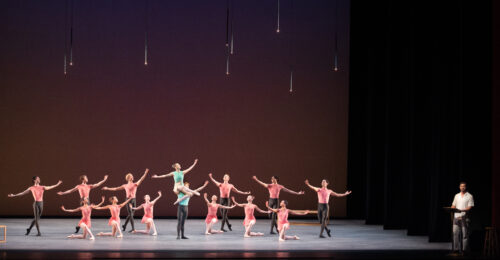
Miami City Ballet dancers and Philip Kalmanovitch in George Balanchine’s “Square Dance.” (Photo courtesy of Daniel Azoulay/Miami City Ballet)
Ballet is fantasy, but it could also be a contemporary and down-to-earth artistic experience. On this occasion, a reimagined “Square Dance” (“with a touch of South Florida,” states the program), a war conflict that upsets the reading of “Afternoon of a Faun” and the presence of Cuban-born composer/conductor Tania León to lead the Opus One Orchestra, guaranteed the coming together of both.
León’s baton ensured that Balanchine’s “Square Dance” remained in memory also as a ballet by Antonio Vivaldi and Arcangelo Corelli; that “Afternoon of a Faun” and “Antique Epigraphs” -both by Robbins- would be fully appreciated as the most exquisite Claude Debussy and that “Symphony in Three Movements” exploded like an Igor Stravinsky brand of fireworks.
But as an experienced conductor, she knows that the main objective of the orchestra in a dance performance is to make the music and the dancers become one, making the things invisible in the former become visible to the audience in the latter. So, she delivered with ineffable humanity to the task, transforming it into something personal and allowing for the feelings of each note and each musical passage waft over the audience like a pure breeze. The outcome was an extravagant event that both enchanted and eluded any sort of criticism.
The first work of the evening’s program was “Square Dance.” Contributing to the communicative effectiveness of the new staging was Montana Levi Blanco with costume designs. Rudi Goblen punctuated new command voices marinated in Spanglish, and the Miami-based British-Canadian baritone Philip Kalmanovitch served as the caller.
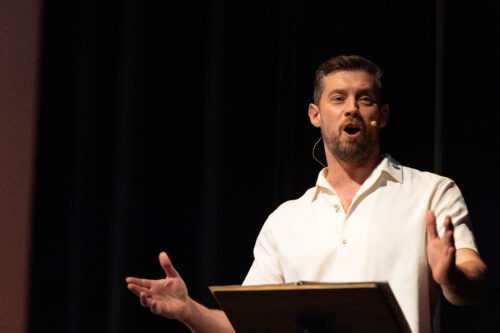
Philip Kalmanovitch as the caller in George Balanchine’s “Square Dance.” (Photo courtesy of Daniel Azoulay/Miami City Ballet)
There were no changes in the demanding choreography, which the dancers executed efficiently while the music, too, is well known. Still, it was Kalmanovitch -tall and charismatic- who earned absolute recognition. From his first appearance, his beautiful voice and gentle approach to the role he created the connection of “Square Dance” with the Miami audience.
At first, there was an occasional doubtful smile, but once he shouted “¡fuácata!” -a Cubanism that imitates the sound a coup makes- there was no turning back. The Arsht Center was alll his, and he was there to share it with the dancers.
In this “Square Dance,” everything that is said counts. Little by little, it became evident that the inclusion of some words in Spanish was not a joke or a gimmick but a natural redefinition of what it means to be an American in South Florida.
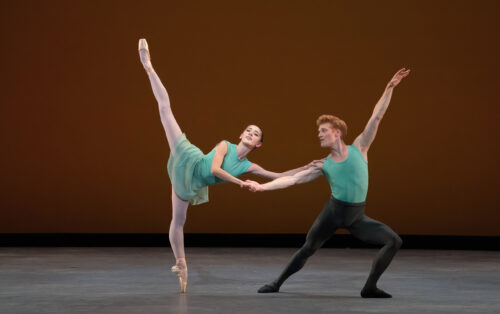
Taylor Naturkas and Alexander Peters in George Balanchine’s “Square Dance.” (Photo courtesy of Daniel Azoulay/Miami City Ballet)
The whole piece progressed smoothly, and each section was greeted with loving applause and a warm ovation at the end, which included an extra proscenium appearance by the charming Taylor Naturkas and Alexander Peters, accompanied by Kalmanovitch.
In summary, “Square Dance” was a beautiful gift for Miami but also a contribution to the legacy of Balanchine -a successful first-generation immigrant like Lourdes and Tania- who, looking down from his VIP seat on the Mount Olympus of great choreographers, must be extremely happy and still looking for a way to let us know his approval.
After the first intermission, “Afternoon of a Faun” and “Antique Epigraphs” were next.
The first featured Ukrainian dancer Stanislav Olshansky in the leading role. Olshansky has been with MCB since last year.
In the piece, something worries Olshansky beyond how he looks in the mirror, and it is impossible to ignore that this solitary faun in a rehearsal room is an artist who has to leave outside his country now, due to a Russian invasion. A fact that links him to another great Ukrainian dancer, Igor Youskevitch (1912 – 1994), whose family fled the Russian Revolution around 1920.
But the resemblance does not end there; everything indicates that it may be a matter of Ukrainian lineage.
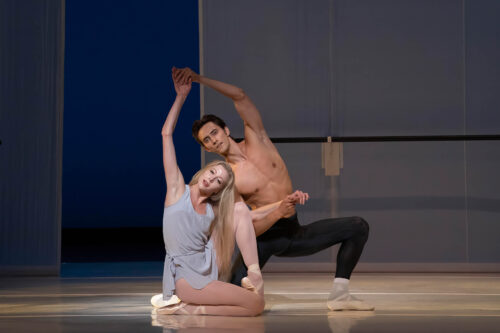
Dawn Atkins and Stanislav Olshansky in “Afternoon of a Faun,” choreography by Jerome Robbins. (Photo courtesy of Daniel Azoulay/Miami City Ballet)
Like Youskevitch, Olshansky is a handsome dancer with an Apollonian face, slim torso, small waist, broad shoulders, and erect bearing. And he is – again, like Youskevitch – a Partenaire of steely nobility.
Dawn Atkins was the ideal vision to keep Olshansky company. Her beauty was almost unreal in her harmony, and in her performance, the absence of movement created the same value as silence in music.
Together, they took the entire Arsht Center audience away into their world during the 11 minutes run time of “Afternoon of a Faun.”
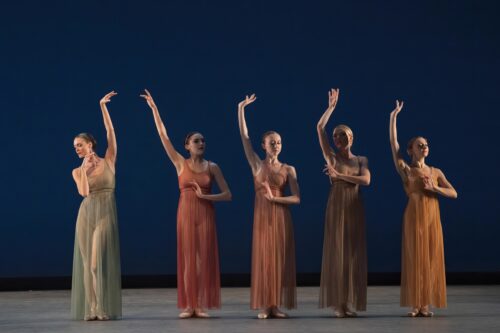
Hanna Fisher, Petra Love, Alaina Andersen, Madison McDonough, and Elle Grocki in “Antique Epigraphs,” choreography by Jerome Robbins. (Photo courtesy of Daniel Azoulay/Miami City Ballet)
After a brief pause, a similar effect was produced by the eight delicate dancers (Hannah Fisher, Samantha Hope Galler, Ashley Knox, and Taylos Naturkas, accompanied by Alaina Andersen, Ellen Grocki, Petra Love, and Madison McDonough), who evoked with haunting infallibility the sculptures in bas-relief from Ancient Greece in “Antique Epigraphs,” and flutist Karen Fuller, who helped them consolidate what we will never forget as a beautiful enchantment.
It is worth noting that Lourdes López stood out as one of the “Antique Epigraphs” soloists in her years as a dancer with the New York City Ballet.
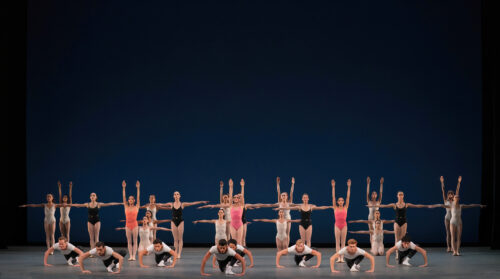
Miami City Ballet dancers in George Balanchine’s “Symphony in Three Movements.” (Photo courtesy of Daniel Azoulay/Miami City Ballet)
A final intermission brought Balanchine’s “Symphony in Three Movements,” a piece for 32 dancers that keeps everyone on the edge of their seats, climaxes in a thrilling group, and without a doubt receives a thunderous ovation as the curtain falls.
Among the soloists, Tricia Albertson and Renan Cerdeiro were magnificent. But all the participants deserve praise because each assumed their role as if they were minute mechanisms that move tirelessly inside a clock that never make a mistake when announcing the hour.
Like all Miami City Ballet’s seasons closings, this one was infallible.
To find out about Miami City Ballet’s upcoming season, go to miamicityballet.org
ArtburstMiami.com is a nonprofit source of theater, dance, visual arts, music and performing arts news. Sign up for our newsletter and never miss a story.
No posts found
Inaugural three-day ‘Miami Dances’ festival gets its feet off the ground
Written By Michelle F. Solomon
May 15, 2023 at 1:11 PM
Isabelle Haas, Allyn Ginns Ayers (center), David Harris, and Matthew Huefner in Dance NOW! Miami’s “Anusim,” which will be performed Sunday as part of the three-day “Miami Dances” festival at the Lehman Theater on Miami Dade College’s North Campus. (Photo courtesy of Simon Soong)
When Adele Myers relocated to Miami in 2015, she was looking for a home for her dance company.
“I toured for almost a decade,” says Myers, adding that she “never really had a home base.”
And while Myers and her company have found their footing here –receiving commissions from Miami Light Project and MDC Live Arts and its two-year residency at the Moss Center in 2021, and more – Myers recalls the sense of community she had with dancers from her days in New York.
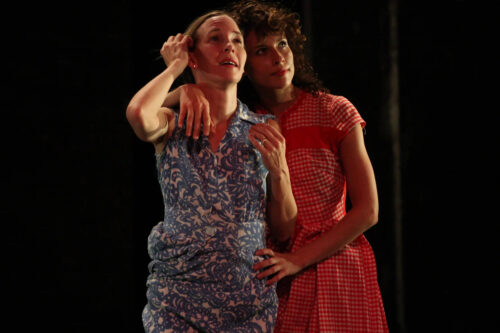
Adele Myers and Diana Deaver in “Is That All There Is,” which will be performed at “Miami Dances” on Saturday, May 19. (Photo courtesy of Steven Schreiber)
“We’d all be taking classes and different company members and artistic directors would be in the classes together. Other dancers would walk by on their way to rehearsal, or you’d sit in the hallways getting to know each other,” she recalls. “People were literally crossing paths. And there’s a space and an energy that comes around when there’s that kind of crisscrossing in space and time,” says Myers.
She and former Joffrey Ballet dancer Cameron Basden happened to move to Miami at around the same time, recalls Myers, and instantly connected.
“We had lunch together immediately because we were both excited about the dance community here and that there were so many kinds of dance. But we both had the same question. ‘Where is the center, where is it that everyone comes together?’ ”
It wasn’t so much a physical place, however, but more of a community. Basden says, “I kept hearing over and over that what was missing was that they wanted to be unified, they wanted to have conversations together, something that could be an umbrella to hold them together, that wouldn’t only promote (dancers) but unify them.”

Former Joffrey Ballet dancer, ballet master and associate director Cameron Basden, began Miami Dance Hub in 2018 and has created the three-day festival “Miami Dances.” (Photo courtesy of Artburst Miami)
Three years later, she founded a virtual dance site, Miami Dance Hub, which was the start of the coalition building. The idea was to create a networking platform for south Florida dance professionals along with digital resources.
Now, Basden has taken the idea of Miami Dance Hub and created a live, three-day festival.
“Miami Dances,” from Friday, May 19 through Sunday, May 21 at the Lehman Theater on Miami Dade College’s North Campus, has a multi-pronged mission – to start building the longed-for community foundation among Miami’s dancers, to encourage conversations, and to celebrate with audiences what Basden says is the richness of the area’s multi-genre dance scene.
The companies performing over two days include Myers’ company, Arts Ballet Theatre of Florida, Ballet Vero Beach, Ballet Florida, Karen Peterson and Dancers, Dimensions Dance Theatre of Miami, Dance NOW! Miami, Delou Africa Dance Ensemble, Ballet Flamenco La Rosa, Miami City Ballet, the hip-hop ensemble of Cultura and dancer Destiny Delancy.
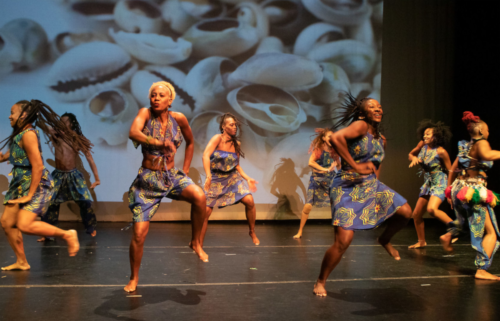
Delou Africa Dance Ensemble, accompanied by live drumming and voice, closes Saturday’s “Miami Dances.” (Photo courtesy of Delou Africa Dance Ensemble)
The idea began as an informal closing out of the dance season – a culmination of sorts that would give visibility to professional dance companies in South Florida. It would be mostly a way to introduce audiences, or for those who were already dance fans, to the diversity of companies here: Classical ballet, Flamenco, tap, folkloric, hip hop, storytelling, and mixed-ability troupes.
“I didn’t want it to be small excerpts – yes some of them are pas de deux and things like that, but I wanted to give a good dose of what people do and what dance in South Florida is. And the point for both audiences and dancers is to see worlds that maybe they don’t even know about,” explains Basden.
In many ways, too, it is meant to take companies out of their silos and by having them experience what others in their field are doing.
“Everyone works so hard putting on shows, running their companies, marketing, promoting, training, and sometimes it can be very solitary. You are in your world and there are so many little worlds going on,” says Basden.
The performance companies in “Miami Dances” cover a spectrum of styles – Basden wanted to make sure of that. She talks about putting barrier-breaking, hip hop artist and choreographer Cultura in the mix. “It was so important for her to be a part of this. She is from a different world and it’s not a world that I know – the commercial dance world; she’s young and energetic.”

Born in Miami, Gabriella Lemus, aka Cultura, grew up in Los Angeles. She moved back to Miami in 2017 and opened Cambio, a dance studio in Wynwood. She’ll bring hip hop to “Miami Dances.” (Photo courtesy of Cultura)
Born in Miami, Gabriella Lemus, aka Cultura, grew up in Los Angeles. She moved back to Miami in 2017 and opened Cambio, a dance studio in Wynwood.
“My focus is to create change. That’s what cambio means in Spanish. To create positive change in the Miami community.” The 31-year-old has created a coalition of professional dancers that are able to work in the industry. “Good people leave here to go to New York and Los Angeles, but there’s no need to leave. We have an industry here where almost all Latin videos are shot in Miami, we rehearse for the tours here and we have so many awards shows. There’s no reason that this community shouldn’t have all types of opportunities for dancers.”
Cultura herself knows about that world. She was a backup dancer for Boca Raton-born Ariana Grande in the megastar’s Dangerous Woman tour in 2017 and Cultura was the first female to dance as a male/gender neutral dancer among nine men in the company.
Cultura says that she’ll be presenting an ensemble that will be using hip hop as a vessel to bring awareness to “what’s going on in Florida right now,” but, she promises nothing preachy. “I felt like it would be kind of tone deaf of me to not address topics, many that affect me personally,” she says, adding that the piece she’ll bring to “Miami Dances” will be about love, acceptance, empathy and compassion. “The thing is, that’s how hip hop was born. It started as breaking and breaking came from a need for Black and Brown disenfranchised people in the ghetto to stop gang violence. They used dance as a form to fight. Hip hop has always been a reflection of what’s going on,” she says.
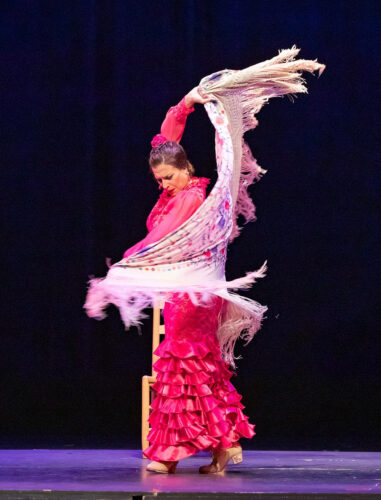
Soloist Mayelu Perez of Ballet Flamenco La Rosa. (Photo courtesy of Jenny Abreu)
While Basden didn’t put any specifics on what the performers could choose to do for their selections, she did want to put her own stake in the ground for an event that would have longevity.
For one, she wanted to make sure the admission price was kept affordable. “We wanted it to be accessible. To introduce people, families to what’s happening. To maybe open the eyes of young people to what’s possible,” she says, adding that the
selection of the venue was purposefully picked, too. “Our choice of the Lehman Theater on the Miami Dade College North Campus was to go to an area that wasn’s saturated with dance. To bring all of these different kinds of dance to that area.”
And, she wanted to make sure that artists participating were paid. “Dancers should get paid for their work,” she says.
She also hoped for the festival to offer a learning experience for dancers. Three days of master classes for intermediate and advanced dancers will be taught by South Florida choreographers and instructors.
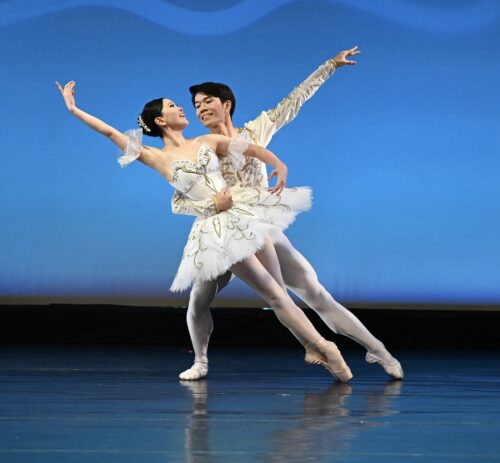
Arts Ballet Theatre of Florida presents classical dance with “Grand Pas Classique,” performed by Remina Tanaka and Yayoi Sasaki, on Saturday, May 20, at “Miami Dances.” (Photo courtesy of Patricia’s Photography)
“We have so many people that are giving classes here in Florida and all in different places. This is opening it up to say ‘Come and experience the amazing instructors that we have that are in multi-genres as well.’ Dance at this time is so inclusive, you can’t just stick to one thing. Dancers need to be a part of it all.”
While the classes are specifically for dancers, Basden says anyone can come and sit in as a spectator. For those who just want to get their bodies moving, there’s free yoga on Sunday morning.
“‘Miami Dances’ is for the community at large, but it’s also for the dance community,” says Basden.
Closing out the festival will be a deep-dive panel discussion into the state of dance in the world today with Miami artists, directors and choreographers Adam Schnell, Njeri Plato, Destiny Delancey and Myers. It’s a way to spark those conversations that Basden heard were missing when she first arrived in Miami.
“There is an importance of centering, of bringing all these people together. . . because the more we keep pushing that narrative, the more there is going to be a community that comes together in a way that is right for Miami,” says Myers.
WHAT: Miami Dance Hub presents “Miami Dances”
WHERE: Lehman Theater at Miami Dade College North Campus, 11380 NW 27th Ave., Miami.
WHEN: Performances 7 p.m. Saturday, May 20 featuring Adele Myers and Dancers, Arts Ballet Theatre of Florida, Ballet Vero Beach, Ballet Florida, tap soloist Destiny Delancy, Karen Peterson and Dancers mixed-ability company, and Delou Africa Dance Ensemble; 3 p.m. Sunday, May 21 features Ballet Flamenco La Rosa, Dimensions Dance Theatre of Miami, Miami City Ballet, Dance NOW! Miami, Dimensions Dance Theatre of Miami, and Cultura. Masterclasses are at various times Friday, May 19 through Sunday, May 21. 10 a.m. to 11 a.m. Sunday, May 21, Yoga on the Plaza.
COST: $10 for each performance. $10 for master classes dancers, or $50 for weekend pass for all classes and performances. Yoga on the Plaza, free.
INFORMATION: (312) 282-4636 or miamiadancehub.com
ArtburstMiami.com is a nonprofit source of theater, dance, visual arts, music and performing arts news.
No posts found

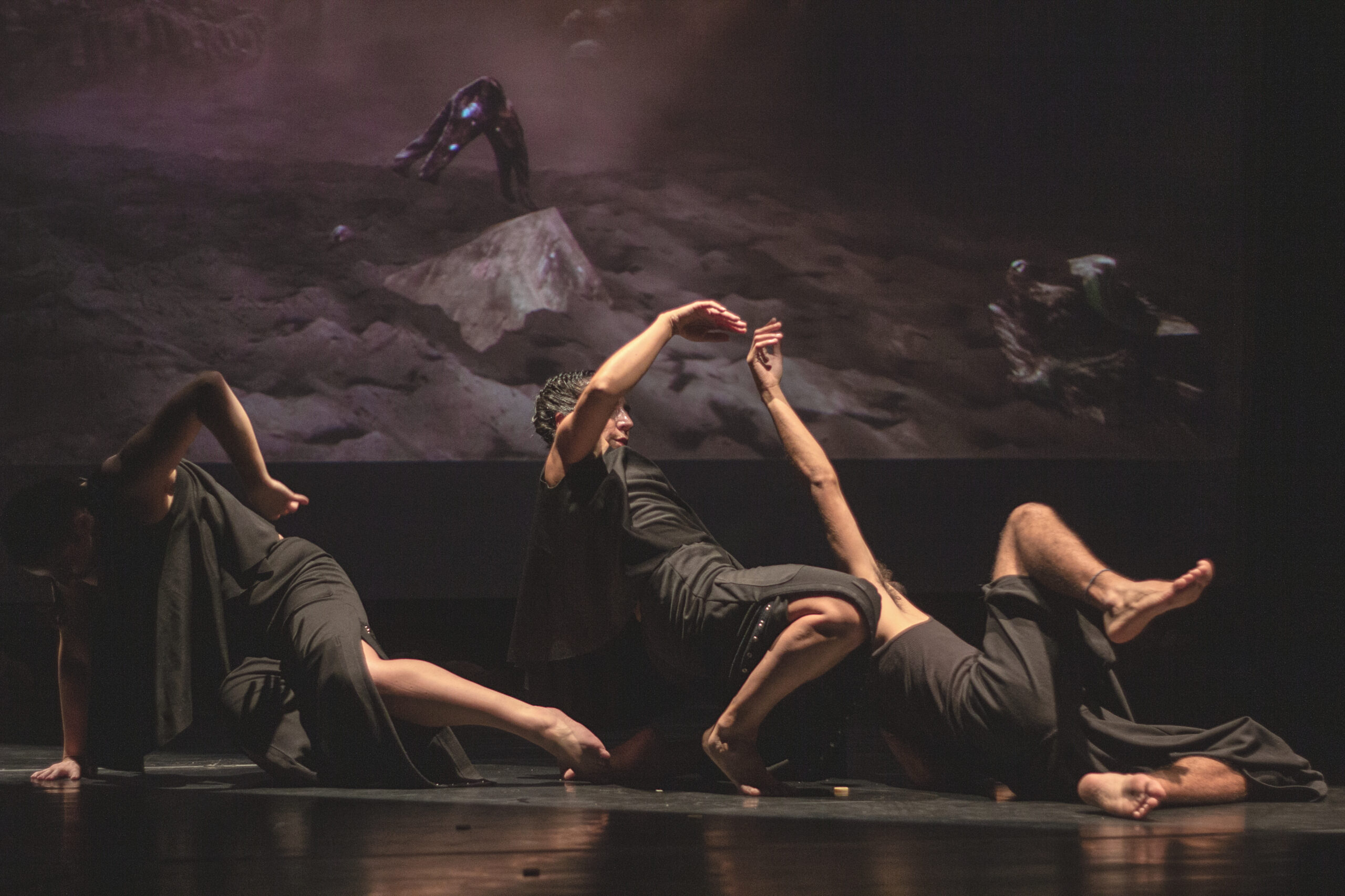
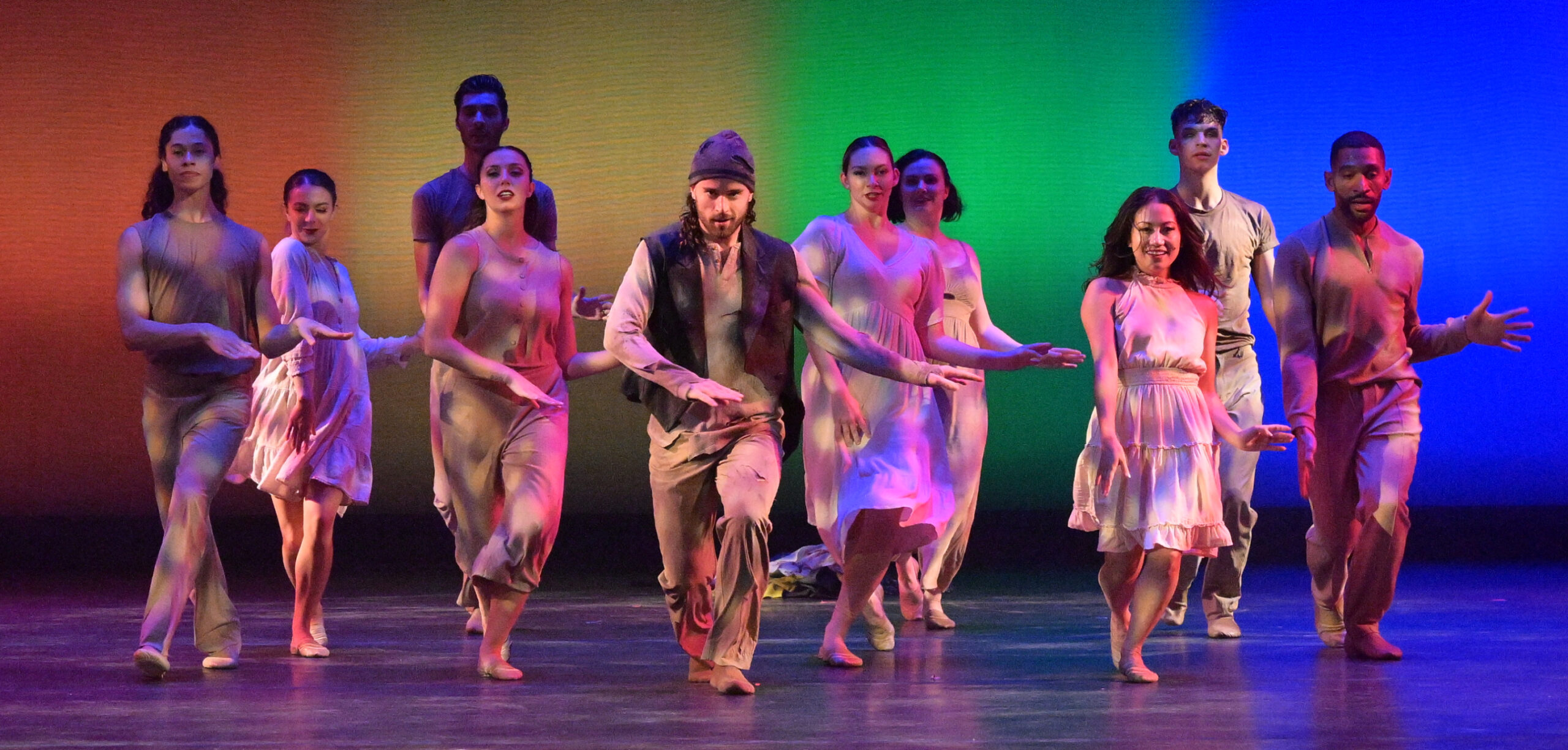

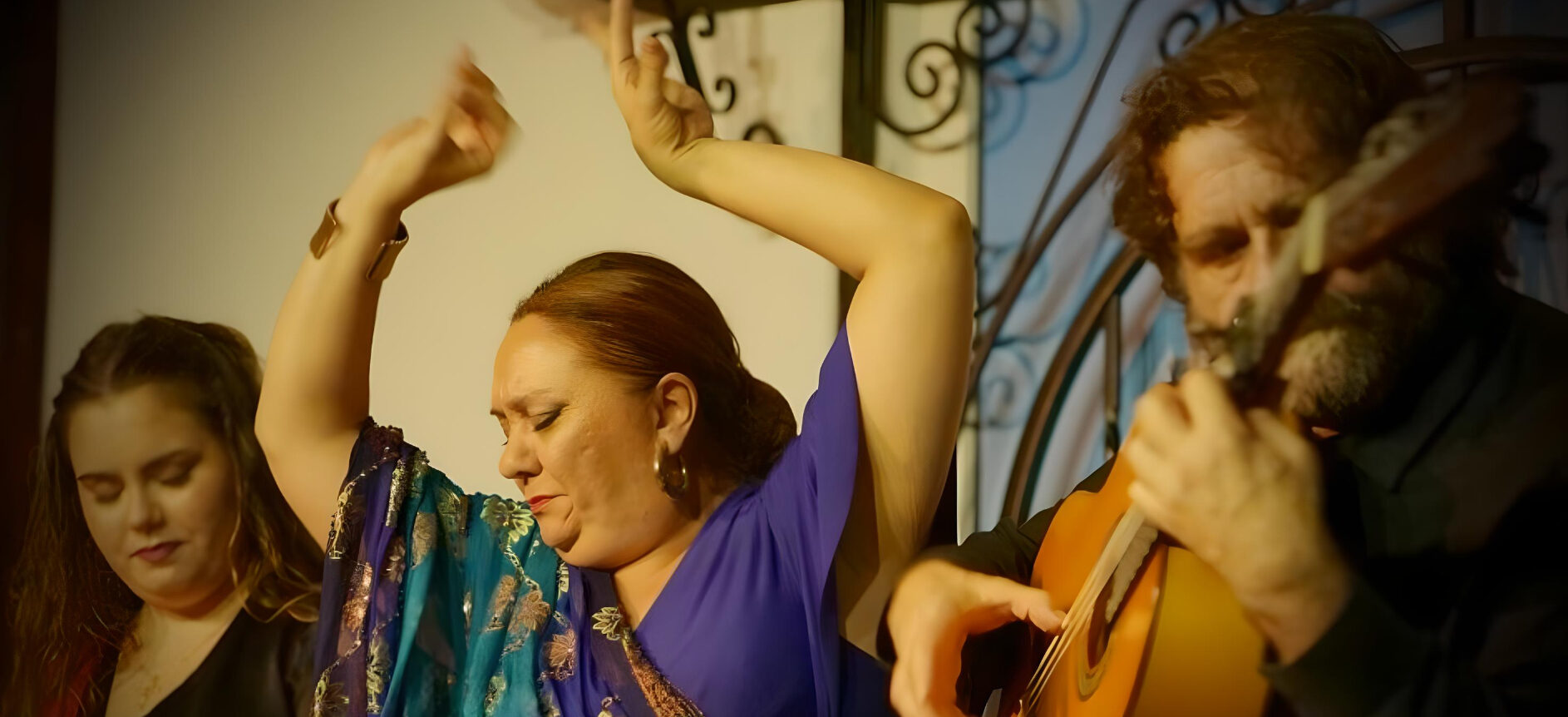
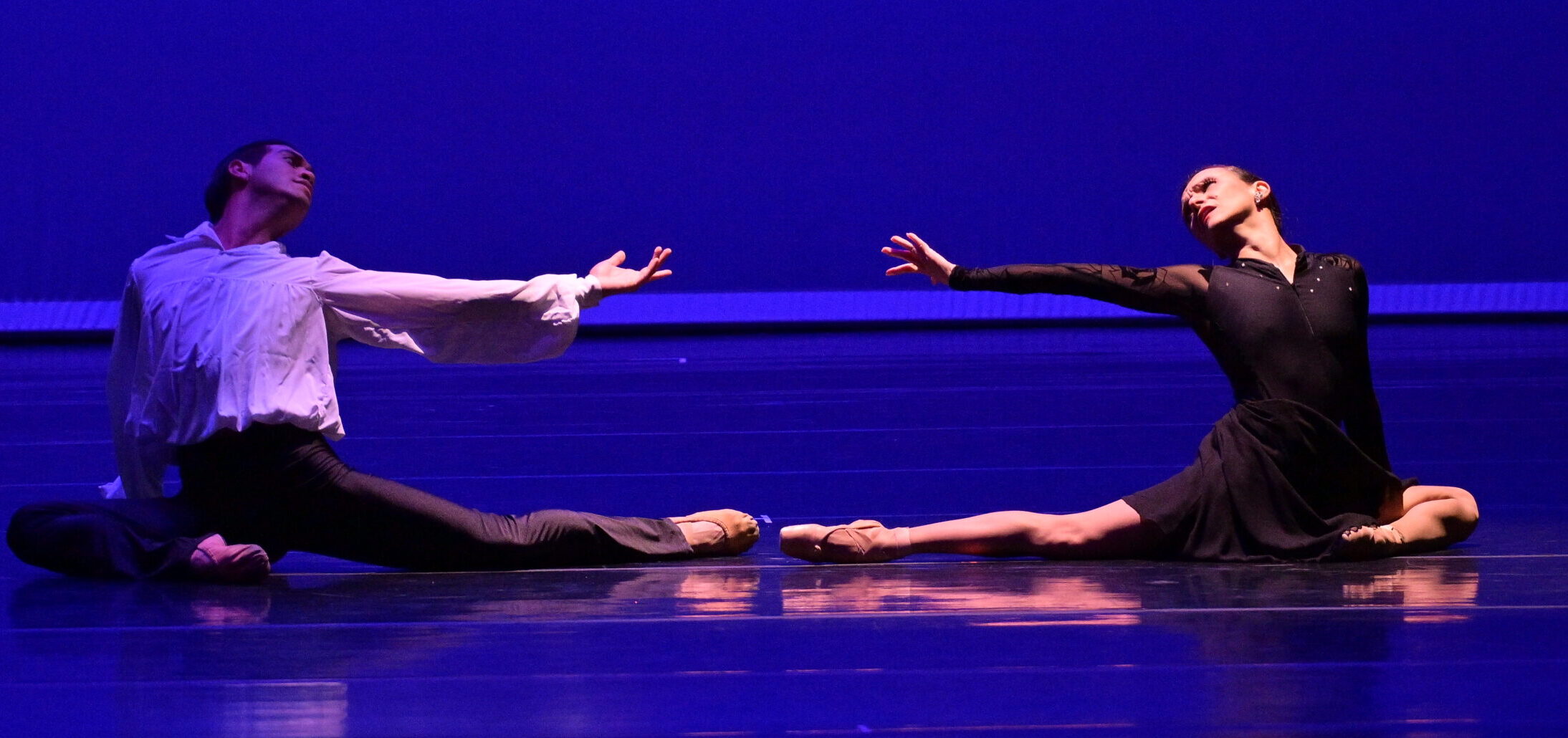

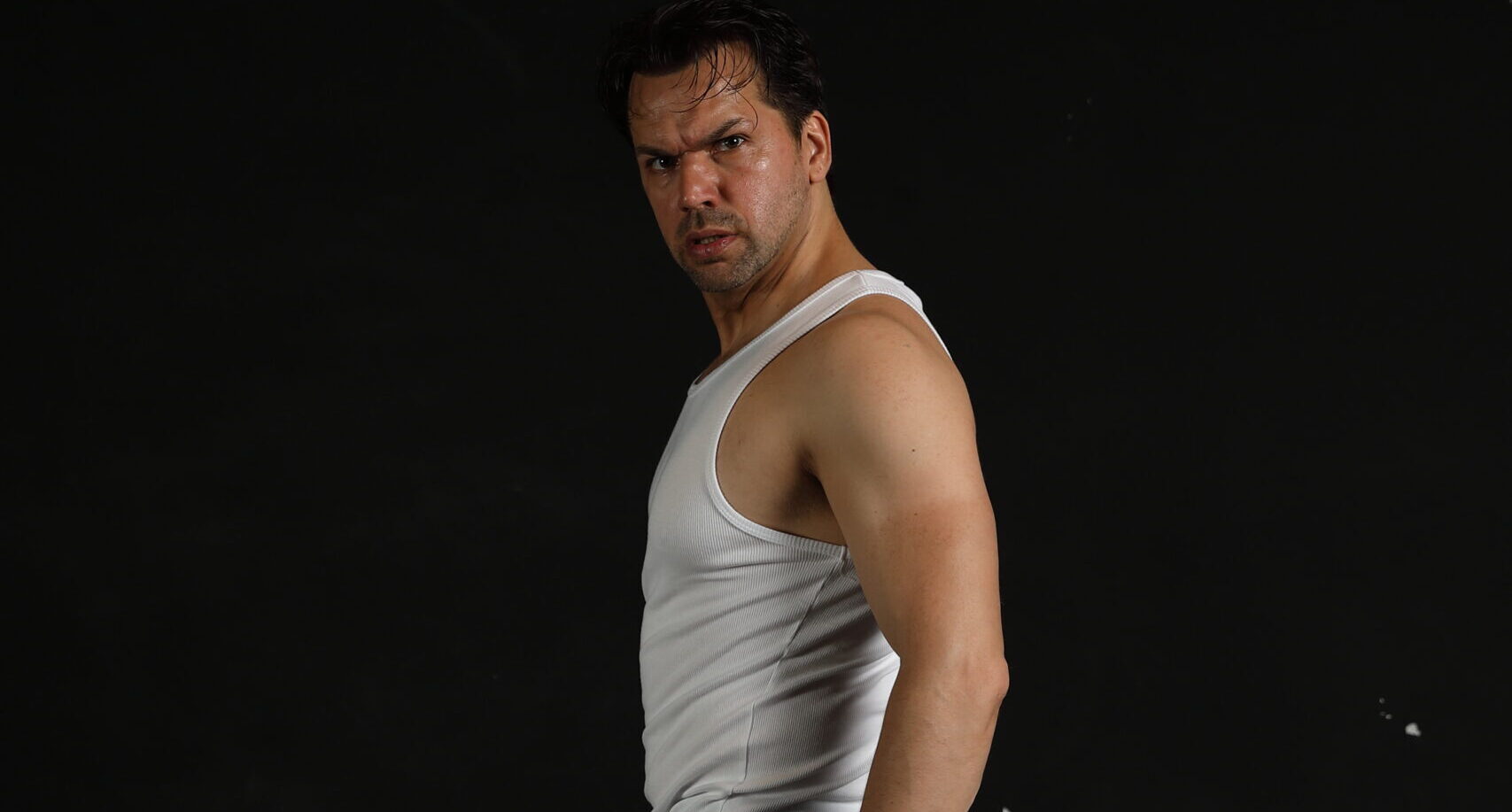
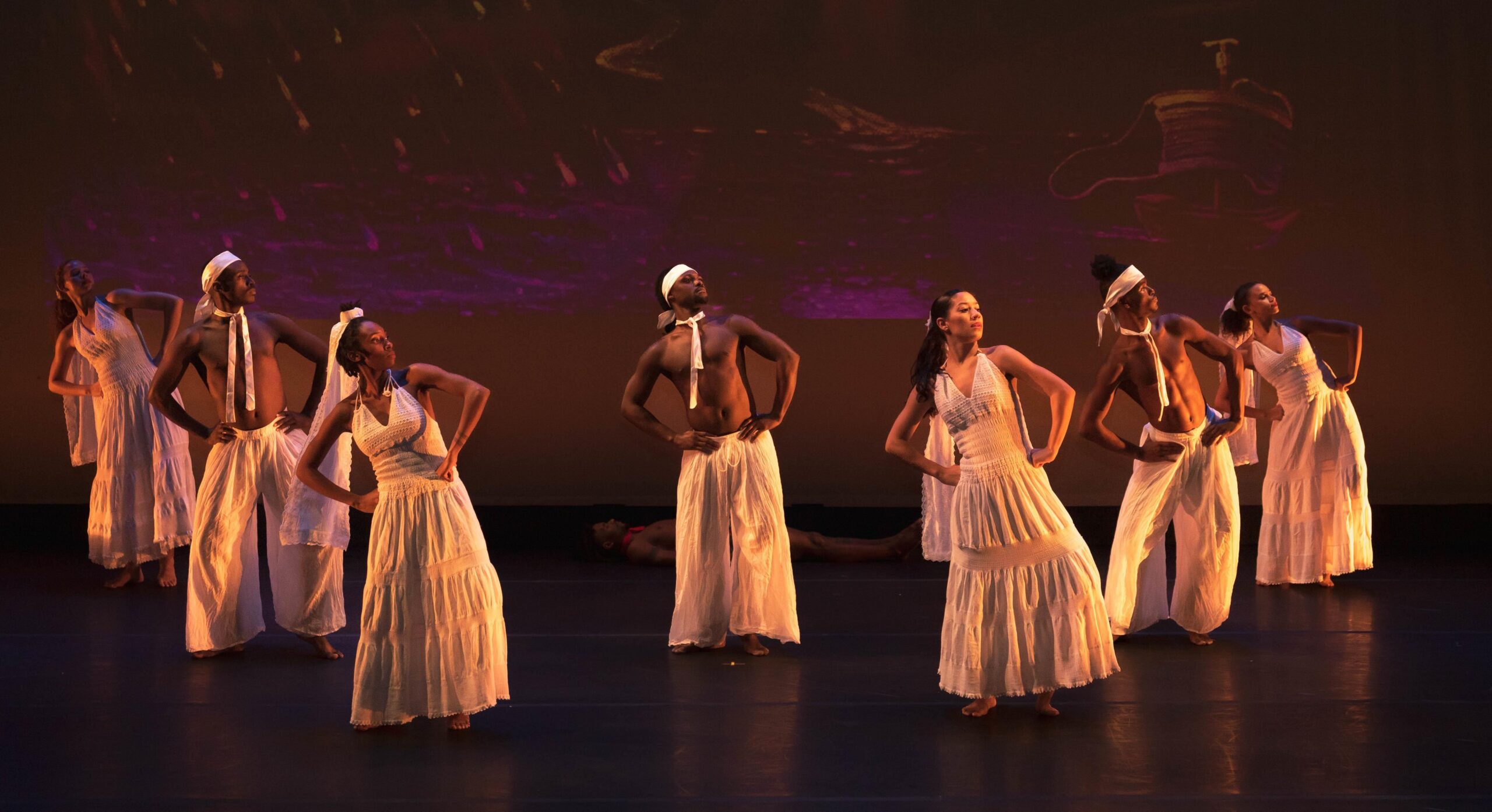
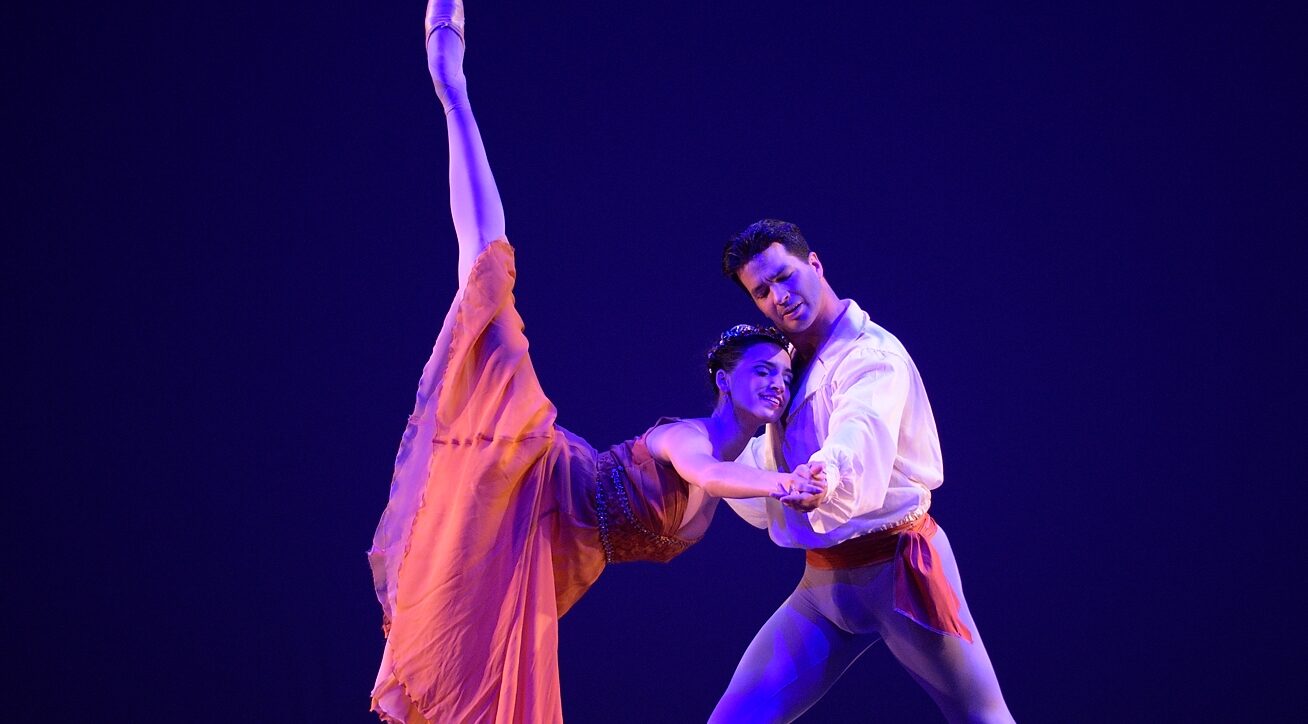
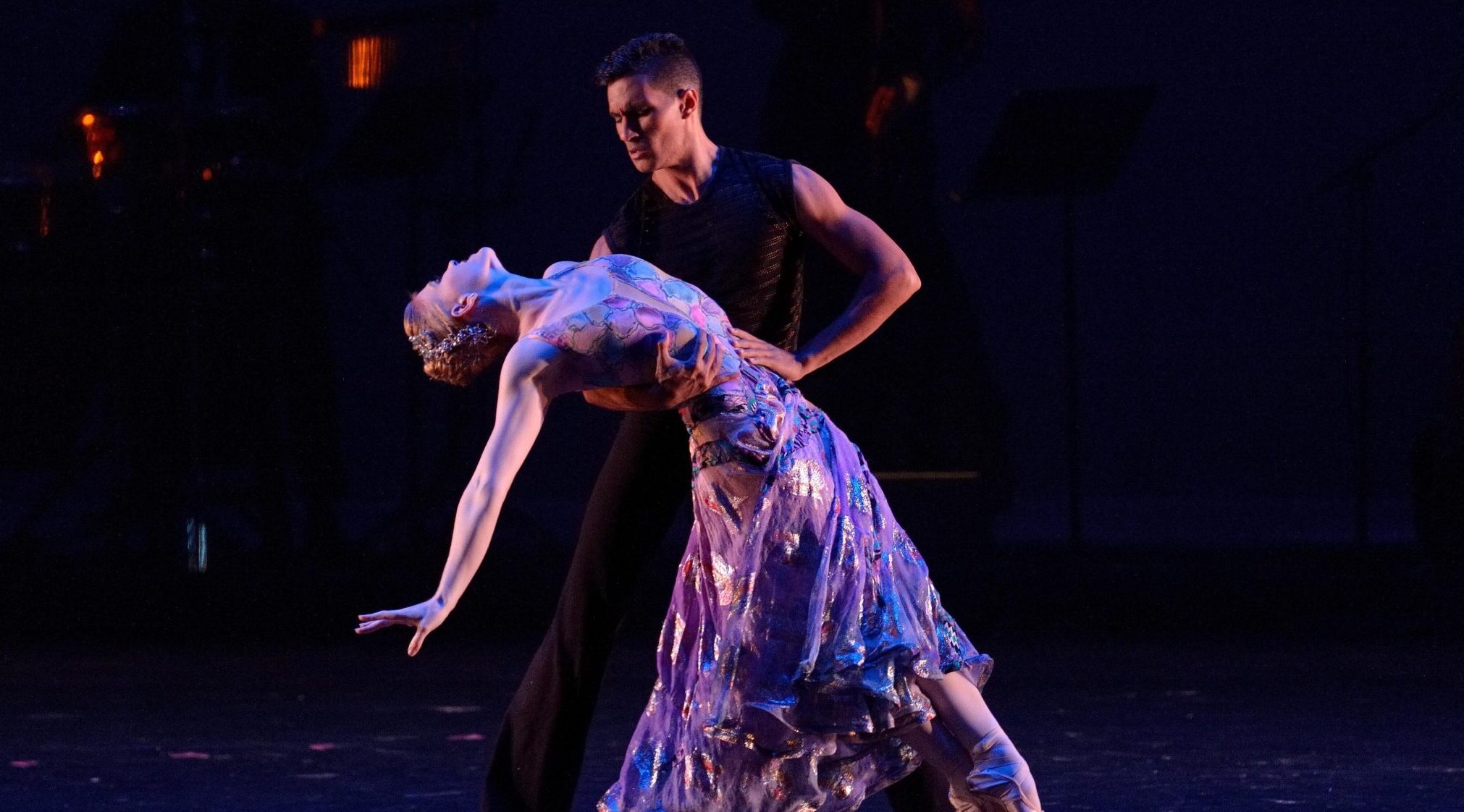
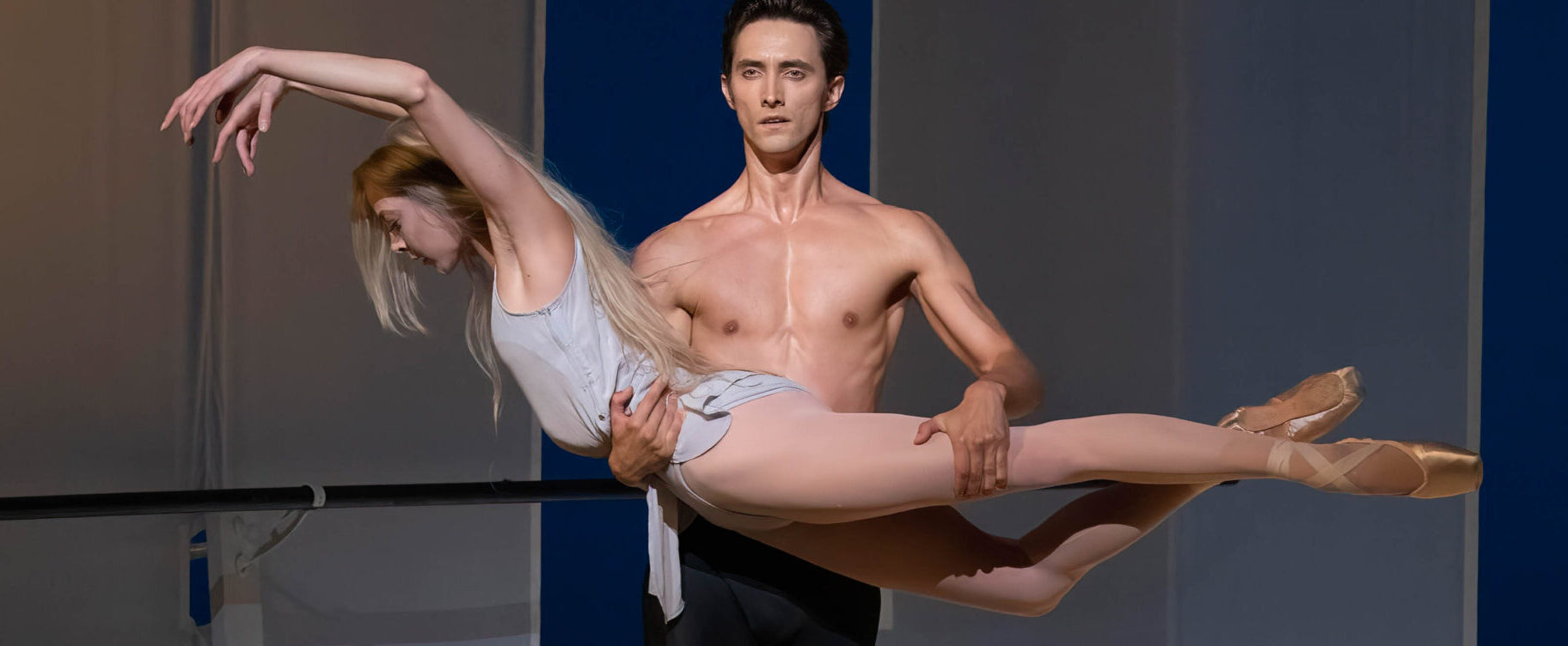
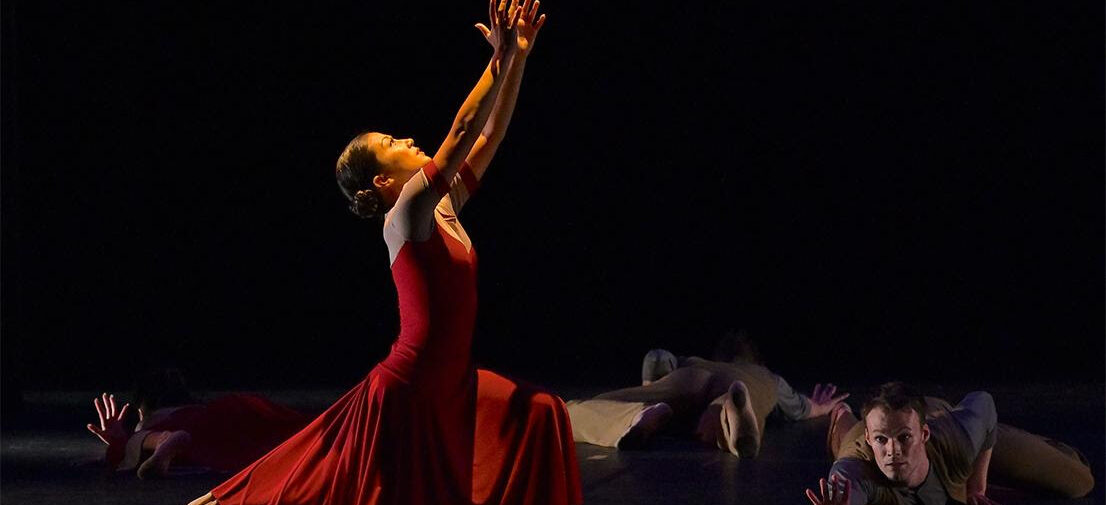
Recent Comments