Artistic director Lourdes Lopez packs plenty of excitement into Miami City Ballet’s ‘Entradas’
Written By Guillermo Perez May 10, 2023 at 12:46 PM
Miami City Ballet Artistic Director Lourdes Lopez and Miami City Ballet dancers in rehearsal for “Square Dance,” choreography by George Balanchine, featured in MCB’s “Entradas.” (Photo courtesy of Alexander Iziliaev)
Performers can step into a dance and sweep away the barriers of time, turning the long ago into right now. Just so, Miami City Ballet’s next show will let us feel the allure of antiquity and the tumult of history. Even a backyard bash, like one we’d love to be at, will pulse to music from across the centuries.
The company’s last program of the season, “Entradas (Entrances),” opening first in Palm Beach at the Kravis Center on Friday, May 12 through Sunday, May 14, offers a diverse yet complementary set of dances. It then comes to Miami’s Adrienne Arsht Center for the Performing Arts for shows Friday and Saturday, May 19 and 20, and also on Sunday, May 21.
For artistic director Lourdes Lopez, this comes with the excitement of projects she’s long wanted to bring to fruition: breathing new life into a repertory classic and inviting Cuban-born composer/conductor Tania León, a 2021 Pulitzer Prize winner and 2022 Kennedy Center honoree (a trailblazing Latina of color, Lopez asserts), to lead the orchestra.
Of course, it doesn’t hurt that here the featured choreographers are George Balanchine and Jerome Robbins. “This program really highlights why the two of them are geniuses,” says Lopez.
Prominently, “Entradas” includes a re-imagining of Balanchine’s “Square Dance,” a genre-defying choreography to Baroque strings. First staged in 1957, the ballet then featured a square-dance caller who put in bold the bond between this ballet to Vivaldi and Corelli and an American folk tradition whose rhythms and formations migrated from European courts to the hoedown.
While enthusiastic about Americana, Balanchine decided to omit the caller reviving the work at New York City Ballet in 1976, with a soulful solo for the male lead added. This made for a more stately piece, without the mischievous twang of the original, but still celebrating how canonical music can spark a do-si-do as nicely as a gargouillade—a devilish ballet step that stirs the air.
Lopez says, “I’ve been curious about ‘Square Dance’ for some time and wanted to bring back that same feeling of the original, wondering how it would change the work if the lyrics were added back. However, I realized the world has changed, and they didn’t fit anymore. So I thought about having lyrics that reflect us today—our Miami, pop culture, and, of course, our two languages.”
To provide text in Spanish and English, she recruited Rudi Goblen, recently at the Yale School of Drama and known to us for his performances with Ted Castellanos’ D-Projects and Rosie Herrera Dance Theatre. The patter will gain power from Miami actor/vocalist Danniel Giraldo’s delivery, and the party heats up in the subtropics.
“This is one of Balanchine’s hardest ballets,” notes Lopez. “Fast and constant, it never lets up. You need tremendous stamina and look like you’re having fun.”
Principal Tricia Albertson is quick to confirm the demands of “Square Dance,” which she handily clinched in her 26 years with the company. Now about to bid farewell to the stage, she’ll still show plenty of mettle tackling this program’s other Balanchine work, “Symphony in Three Movements,” named for its Stravinsky score.
“Dancing to Stravinsky, there’s no such thing as automatic pilot, so I can’t say I’ve petered out,” Albertson declares with a laugh.
Premiered in 1946 and reportedly energized by WWII documentary images, “Symphony in Three Movements” was Stravinsky’s first major composition in America. Responsive to its clamor, Balanchine spread big movement on a ballet field—some would say battlefield—with commanding positions and advances from dancers—mostly in black and white, with the three lead ballerinas in pink.
But don’t mistake the latter for tender blossoms. Whether jumping as if over mines or ricocheting about, they display— as Albertson underscores— an intense individuality.
“It’s crazy, but I danced ‘Symphony in Three’ at a School of American Ballet workshop right before I got hired here, so for me this is like coming full circle,” she says.
Acknowledging that nod from the universe, she recognizes another blessing in dancing the central pas de deux with Renan Cerdeiro, an anchor for her not just through his technique but even in his gaze, which bolsters their eerily inflected and angled exchange. “That’s magical,” says Albertson, who feels the searching buoyancy of her part ultimately brings a hopeful strain to the ballet’s turbulent scenario.
As Albertson readies an exit, 29-year-old Ukrainian-born and trained principal Stanislav Olshanskyi—at MCB only six months—has entered a new phase of his career performing Robbins works for the first time. “West Side Story Suite” behind him, he’s now immersed in the intimacy of “Afternoon of a Faun,” recently performed with the New World Symphony for its closing program on May 7.
“Honestly, there’s nothing I find uncomfortable in this,” he confesses, enjoying the piece’s everyday atmosphere. Here a young man and woman try out moves in a ballet studio as ancient legend wafts in from the Debussy score, which was inspired by an 1876 Stéphane Mallarmé poem about a faun describing his encounter with nymphs.
The Robbins ballet reflects carnal and ethereal qualities in the dancers’ meeting as we view them frontally, the fourth wall like the studio mirror. Their preening has led some critics to call “Faun” a study in narcissism. But Robbins considered such self-regard just a tool of their art. And Olshanskyi agrees.
“When I have time at night,” he says, “I come into the studio, put on some music, and improvise. I watch in the mirror, and I look this way and that, maybe change a pose or not. That’s about process—what Robbins, I think, wanted to show.”
It’s through such physicality that Olshanskyi discovers an on-stage character, in this case one simpler and more natural—as he points out—than the princes he specialized in at the National Opera of Ukraine.
Robbins considered his “Antique Epigraphs,” from 1984 and now an MCB premiere, the ideal companion piece to the much earlier “Faun.” That pairing, Lopez judges, is “Jerry’s meditation on Debussy. Creating two different worlds, with the same composer and musical style, works brilliantly.”
To an orchestrated version of Debussy’s “Six Épigraphes Antiques” and “Syrinx,” for solo flute, the ballet features a coterie of eight women in diaphanous gowns who strike sculptural poses derived from an antiquities museum. Whether still or in evanescent maneuvers, they’re spellbinding—their fleeting sensuality a reminder that Debussy’s “Épigraphes” was kindled by “The Songs of Bilitis,” erotic poems purportedly written by a Greek woman in Sappho’s circle, but in truth penned by Belgian-born author Pierre Louÿs in 1894.
All these choreographed compositions, according to Maestra León, have the advantage of also being established concert works. As a conductor—and not only for ballet—she says, “The music just speaks to me.”
For her, conducting for MCB comes with the pleasure of a long friendship with Lopez and the authority of an even longer relationship with ballet. León was the founding musical director and a contributing composer at Dance Theatre of Harlem. And she says, “I was fortunate there because Balanchine himself, sitting at the piano, coached me in many of his works. He was a fantastic musician.”
Cuban-born composer/conductor Tania León, a 2021 Pulitzer Prize winner and 2022 Kennedy Center honoree will lead the Miami City Ballet orchestra. (Photo courtesy of Gail Hadani)
At Dance Theatre of Harlem, León developed the wide focus needed, as she puts it, “for a total collaboration between musicians in the pit with the conductor and what’s happening on stage. Everything expressed must remain congruent with the sound.”
With opera and Broadway also on her resumé, León reveals a fundamental asset: “I am very flexible and always willing to learn.” Moreover, she remains wary of musical labels that divide periods, places and, most important, people. Art should open doors. So, as in this program, welcome myth into the workaday and enlist the classical for some fun with just folks.
“Music without borders,” León proposes, “might lead to humanity without borders, too.”
WHAT: Miami City Ballet’s “Entradas”
WHEN: In West Palm Beach, 7:30 p.m. Friday and Saturday, May 12 and 13; 2 p.m. Saturday, May 13; 1 p.m. Sunday, May 14. In Miami, 7:30 p.m. Friday and Saturday, May 19, 20; 2 p.m. Sunday, May 21.
WHERE: Kravis Center for the Performing Arts, 701 Okeechobee Blvd., West Palm Beach, andAdrienne Arsht Center for the Performing Arts, 1300 Biscayne Blvd., Miami
COST: $39, $40, $79, $115, $189, depending on show time and venue.
ArtburstMiami.com is a nonprofit source of theater, dance, visual arts, music and performing arts news.
No posts found
How Dance NOW! Miami Rescued Gerald Arpino’s ‘The Relativity of Icarus’
Written By Sean Erwin May 1, 2023 at 10:09 AM
Dance NOW Miami rehearsing Joffrey Ballet’s The Relativity of Icarus, L-R Anthony Velazquez and David Jewett, photographer Hannah Baumgarten.
Popular. Accessible. Hip. Most artists would welcome being described in such terms, but in the 1970s, critics meant this description as an attack when it described the works of choreographer Gerald Arpino.
Co-artistic directors of Dance NOW! Miami, Diego Salterini and Hannah Baumgarten had more than a few reasons to stage an Arpino work in its upcoming Program III. “The Relativity of Icarus,” choreographed by Arpino, who co-founded the Joffrey Ballet with Robert Joffrey, and later became its artistic director, premiered in New York City in October 1974.
Dance NOW Miami rehearsing Joffrey Ballet’s The Relativity of Icarus, L-R Anthony Velazquez and David Jewett, photographer Hannah Baumgarten.
Now, the work is in danger of being lost. No original recordings of the ballet exist and Arpino died in 2008 taking much of the dance with him. Salterini and Baumgarten who, since 2010, have taken great care of curating canonical works of 20th-century dance masters for Dance NOW! Miami. Past programs have included works by Isadora Duncan, Doris Humphrey, and José Limón.
To reconstruct “Icarus,” Salterini and Baumgarten turned to former Joffrey Ballet principal dancer Cameron Basden, who is on the board of directors for the Gerald Arpino Foundation and acts as a principal répétiteur of his works, authorized to teach and rehearse Arpino’s choreographies throughout the world. Basden is also the founder and artistic director of Miami Dance Hub.
The short, 12-minute ballet for three performers received fiercely negative criticism after its 1974 opening at the New York City Center and also with a 1978 reprisal.
Dance NOW Miami rehearsing Joffrey Ballet’s The Relativity of Icarus, L-R Anthony Velazquez and David Jewett, photographer Hannah Baumgarten.
New York Times dance critic, Anna Kisselgoff, questioned whether the work was just “a nightclub adagio act for two near‐naked men” while New Yorker critic Arlene Croce described the work’s central duet as “an endless vision of the young and gay in one another’s crotches.”
“The homoerotic undertones of the work made it very controversial at the time of its debut,” explains Salterini.
For his part, Arpino maintained the critics were wrong and that his “Icarus” was a retelling of the theme of paternal love embodied by the ancient myth of Daedalus and Icarus. In the Minoan myth, the great Greek inventor, Daedalus, created wings of feathers and wax so that he and his son could escape a tyrant’s clutches.
Despite his father’s warning, Icarus destroyed his wings by flying too close to the sun and died plunging into the sea.
Baumgarten says that the work was even considered scandalous when it premiered.
“We really felt confident that enough had changed since 1974, and the homoerotic overtones of ‘Icarus’ would take a back seat to the dramatic dance-reimagining of the Greek myth,” she says.
Company dancers David Jewett and Anthony Velazquez will perform the roles of Daedalus and Icarus respectively in Dance NOW! Miami’s program.
“Knowing Arpino the way I did, I’m sure there must have been an element of his personal taste in there,” says Basden. “However, he would have been so convinced of the story he was telling — the story of a father ‘giving wings’ to his son — that it would have taken priority in his mind. The son who becomes enamored, or addicted, to something (the Sun) and the eventual demise of the one thing that the son holds most dear, his father.”
Basden says there were a number of difficulties restaging “Icarus,” including that the ballet’s original music by Minneapolis Symphony conductor and composer Gerhard Samuel has been lost. Samuel died in 2008.
“To my knowledge there is no recording of the actual ballet itself,” says Basden. “We do know that Gerhard Samuel composed the score Arpino adapted for the 1974 ballet. We have received permission to use a recording of a performance made (of Samuel’s work) on Feb. 1, 1971 at the Fireman’s Fund Theater in San Francisco.”
Basden says she is still searching for some of the music, including the opening solo danced by the “Sun,” which will be performed by DNM dancer Julia Faris.
From the standpoint of dancing, “Icarus” poses its own challenges from the ballet’s scanty costuming to its set design.
Dance NOW! Miami L-R Austin Duclos and Julia Faris in Gli Altri/The Others, photographer Simon Soong.
“(W)ith a 12-foot diameter platform that is raked (meaning a tilted dancing surface), giant hanging mirrors, ropes and ribbons, the technical theater aspect of the piece is almost as daunting as the near-acrobatic dancing,” says Baumgarten, who described the “Icarus” reconstruction as “monumental.”
DNM’s May program also includes the world premiere of “Gli Altri/The Others.” Salterini and Baumgarten collaborated in creating the 40-minute ensemble piece that involves the entire company.
Set in a train station, “Gli Altri/The Others” (“gli altri” is Italian for “the others”) unfolds with dancers criss-crossing the stage as different kinds of people momentarily cross paths on the way to their destinations.
Salterini noted he drew inspiration for the ballet from the sensation of imagining someone’s story on the basis of how they look or behave in anonymous public spaces that teem with all kinds of people.
Dance NOW! Miami L-R David Jewett, Austin Duclos, Anthony Velazquez, David Harris in Gli Altri/The Others, photographer Simon Soong
“We see so many people, so many faces that catch our eye and often time draw conclusions about them only based on what we see,” says Salterini. “But what is the story behind? How far off are we in our assumptions, sometimes not far at all, some other times we are on a different planet.”
When asked how the new work fits with a heavyweight piece like “Icarus,” Baumgarten contrasts attitudes in the 1970s with present-day social trends.
“In the end, we are discovering that here in Florida we are experiencing some backlash in the progress on social issues and it is tough to see,” she says. “So, in a way, creating a piece that addresses ‘the others’ the unknown, hidden, overlooked is a good fit…but in a way it is a reminder of how the ballet and the choreographer himself were demonized and diminished for being ‘other,’ for showing that perspective.”
Note: The program contains some adult content and themes and may not be appropriate for all audiences.
WHAT: Dance NOW! Miami’s Program III featuring Gerald Arpino’s “The Relativity of Icarus”
WHERE AND WHEN: 8 p.m., Thursday, May 11 at The Duncan Theater, 4200 S. Congress Avenue, Lake Worth; 8 p.m., Friday, May 12 at the Amaturo Theatre, Broward Center for the Performing Arts, 201 SW 5th Avenue, Fort Lauderdale; 8 p.m., Saturday, May 13 at the Aventura Arts and Cultural Center, 3385 NE 188th Street, Aventura.
COST: $50 reserved seating, $20 for students with ID including a $25 early bird special if purchased before April 1. Prices the same for all venues.
Choreographer Durante Verzola returns to the place he started with Miami City Ballet premiere
Written By Guillermo Perez April 10, 2023 at 3:31 PM
Jordan Martinez and Alexander Kaden rehearse Durante Verzola’s “Sentimiento,” part of Miami City Ballet’s “Fresh & Fierce” program opening on Friday, April 14 at the Arsht Center, Miami. (Photo courtesy of Alexander Iziliaev)
Durante Verzola is a young artist with fine-aged craft stored in his soul. For his upcoming Miami City Ballet premiere “Sentimiento”—feeling, sentiment, a surge of great expectations and perhaps sorrow—the choreographer has communed with 20th-century Cuban composer Ernesto Lecuona, attuned to the beguiling melodies and irresistible rhythms of the maestro’s piano works. On these heirloom roses that he picked for his dance suite, Verzola has put the sparkle of morning dew.
Verzola’s piece brings the “fresh” to MCB’s third program of the season, “Fresh & Fierce,” opening at the Adrienne Arsht Center for the Performing Arts on Friday, April 14. For the “fierce,” it’s the ever-popular “West Side Story Suite,” Jerome Robbins’ 1995 concert piece with his high-gear choreography curated from the original Broadway musical. Balanchine’s “Divertimento No. 15” rounds out the offerings. For this blessed-in-heaven 1956 union with Mozart we can offer the right f-word—flawless, fulfilling, fabulous, would all fit the bill.
From left, Miami City Ballet dancers Jordan Martinez and Alexander Kaden in rehearsal with choreographer Durante Verzola for “Sentimiento.” (Photo courtesy of Alexander Iziliaev)
Being in the company of such dance royalty has given Verzola more motivation than pause. “It’s a big honor to share the program with choreographers I’ve drawn so many lessons from,” says the 27-year-old whose training at Miami City Ballet School (MCBS) and artistic contact with top New York City Ballet veterans Suzanne Farrell (he was in her company for two seasons), Kyra Nichols, and MCB’s own director Lourdes Lopez—who led him to Lecuona—places him at one degree of separation from Balanchine and Robbins.
“I couldn’t have gotten to where I am without learning what I have from them,” recognizes Verzola.
But the road to this program seems fated. “When I was thirteen,” says Verzola, “I used to check out the old ‘Dance in America’ tapes from PBS, which were my introduction to Balanchine. I always knew I wanted to make dances one day, and that gave me the original push. And the interesting thing is ‘Divertimento No. 15’ was the first ballet I saw Miami City Ballet perform.” In it he could glean how by adding or subtracting dancers—their number multiplied to the maximum power in ensembles—Balanchine worked choreographic math like magic as if balancing equations for everlasting art.
“Coming back to the beginning,” emphasizes Verzola, “makes me want to bring forth my best work.”
Verzola’s relationship with MCB is unique among contemporary choreographers, affording him the comforts of family. At 16, feeling his ballet training in Kansas City had reached a limit, he set his sights on the South Florida institution he admired for its Balanchine esthetic. He’d always counted on his parents to support his goals since, as an eight-year-old, he followed his sister into ballet class in West Point, N.Y., where his Filipino-American dad taught at the Military Academy. A self-described army brat, Verzola went on to train in Anchorage and at summer intensives throughout the country. But his most decisive moment arrived in 2012 when his parents agreed to drive him from the Midwest to Miami Beach, straight for the doors of MCB.
Esteban Cortázar’s designs add sizzle to Durante Verzola’s choreography. Photo courtesy of Miami City Ballet).
“We packed the whole car for me to come down and audition for the school, hoping I’d get in,” he recalls. And he did—on a full merit scholarship.
Before going on to dance at the Philadelphia Ballet II (formerly the Pennsylvania Ballet II) two years later, Verzola made his first work for students at MCBS. And he has continued to choreograph for them, now as a member of the permanent faculty, hired just last July to teach technique and repertory and lead the choreography class. He premiered “A Dance for Heroes” virtually on MCB during pandemic restrictions and still attends to freelance work.
“What’s made ‘Sentimiento’ even more special,” says Verzola, “is that there are dancers in it, like Jennifer Lauren (whom) I’ve idolized since I was in the school, dancers I took classes with, and dancers I’ve taught over the years of coming down here. This is really meaningful, allowing me to show them at their best.”
Verzola’s ballet begins with “Gitanerías,” a perky quartet for his former classmates Mayumi Enokibara, Ellen Grocki, and Damian Zamorano—all snap-and-crackle interpreters—along with Harrison Monaco, whom the choreographer danced with in Pennsylvania. “The music has so much vibrancy and light,” explains Verzola, “it was good for them to set the tone, putting out there that this is a love letter to Miami, a very magical place.”
Stanislav Olshanskyi and Jennifer Lauren of Miami City Ballet in rehearsal for “Divertimento No. 15.” Choreography by George Balanchine, The George Balanchine Trust. (Photo courtesy of Alexander Iziliaev)
By dressing the ballet in evocative colors and textures, Colombian-American Esteban Cortázar adds sizzle. “This is the first time I’ve collaborated with a fashion designer,” says Verzola. “That brings forward a different dynamic. As a highly creative individual, Esteban has contributed a lot of amazing ideas since he, too, has a deep connection to Miami.”
Verzola tells the story of Cortázar growing up on Ocean Drive, right above the News Café, watching Gianni Versace have his morning coffee and dreaming as an immigrant boy of a career that would spread elegance and glamour in the world—precisely the qualities the now highly successful professional helps bring out in “Sentimento,” with references to fauna and flora, jazz and Art Deco. For instance, in the quick, neon-bright “Burlesca,” the ballerinas take flight in flamingo hues and a salsa-party silhouette.
But a flashy look needs the heart to go with it, and the choreographer has taken care of that, with invaluable musical guidance from MCB company pianist Francisco Rennó, who’ll be playing on stage.
“He shaped the music in a detailed and creative way to perfectly keep its original perfume for a classical ballet in today’s world,” says Verzola. Rennó, for example, swathed the very recognizable “Damisela Encantadora (Enchanting Damsel)” in mystery, which Adrienne Carter, amid the waves of five ballerinas, swims through with expressive strength.
Brooks Landegger and Dawn Atkins rehearsing “Divertimento No. 15.” Choreography by George Balanchine, The George Balanchine Trust. (Photo courtesy of Alexander Iziliaev.)
For his premiere’s initial pas de deux, Verzola chose “Siempre En Mi Corazón (Always in My Heart),” the 1942 Oscar-nominated song by Lecuona, whose music was equally sought after for the silver screen, Carnegie Hall, or a nightclub. The movie theme let Verzola highlight those sweet moments when, as he puts it, “your heart skips a beat and swells up at the sight and touch of a new love interest in your life.”
Other aspects of romance follow in duets —with sociable groupings in the mix using selections like “Music Box” and “Aragón,” in which Verzola displays “swirling colors in formations like what I see walking down the street.” In the playful and sultry “Zambra Gitana,” he turns up the heat with one-on-one passion. And in the closing “Yo Te Quiero Siempre,” the forever love of the title sheds a moonlight sheen on a couple’s parting, their magnetism strong yet having to yield to outside forces.
As “Sentimiento” sails on currents stirred by love and locale, Verzola charts a unified course through the suite, a compositional form he admires in Robbins—and not just in the ready-made drama of “West Side Story Suite,” where forbidden passion and clan clashes hark back to “Romeo and Juliet.”
Ariel Rose and Ellen Grocki in “West Side Story Suite.” Choreography by jerome Robbins. (Photo courtesy of Gary James)
“I take a lot of inspiration from Robbins’ Chopin piano pieces like ‘Dances at a Gathering,’ with characters coming in and out but with cohesion,” Verzola confesses. But he insists innovation must come through a present-day stance. “Identifying as a queer choreographer means a lot to me,” he makes clear. “To also represent love between two men—with power and masculine energy but also tenderness—honors classical ballet by helping it progress.”
Just so “Sentimiento” embraces a romantic male duet in “San Francisco El Grande,” tracing the steps of a union seemingly sanctified by the bell-like sonorities of the music, descriptive of an 18th-century basilica in Madrid. As the titles of many of his works indicate, Lecuona, who was gay and died in exile in 1963, drew his art—similar to the choreographer—from impressive sites as well as the sighs of people in love.
“Each scene in my ballet is distinct, and the intricacy of the music takes us to different places,” says Verzola. “But I’d like for audiences, in that range of emotions, to find their own stories.”
WHAT: Miami City Ballet’s “Fresh & Fierce”
WHEN: 7:30 p.m. Friday and Saturday, April 14 and 15; 2 p.m. Sunday, April 16.
WHERE: Adrienne Arsht Center for the Performing Arts, 1300 Biscayne Blvd., Miami
ADDITIONAL PERFORMANCES: 7:30 p.m. Friday and Saturday, April 21, 22; 2 p.m. Saturday, April 22; 1 p.m. Sunday, April 23, Kravis Center for the Performing Arts, 701 Okeechobee Blvd., West Palm Beach. Also, 7:30 p.m. Saturday, April 29; 2 p.m. Sunday, April 30, Broward Center for the Performing Arts, 201 SW Fifth Ave., Fort Lauderdale
COST: $39, $40, $79, $115, $189, depending on show time and venue.
Peter London Global Dance Co.’s Spotlight On Women’s Choreographic Voices
Written By Sean Erwin March 24, 2023 at 4:18 PM
Clinton Harris, left, and Eden Collier rehearse Armando Gonzalez’s “Steppe Tango,” which will be featured in Peter London Global Dance Company’s “Women’s Choreographic Voices: The Rising,” on Saturday, April 1. (Photo courtesy of Tt’Shaylah Lightbourne)
There are two themes that leap out in Peter London Global Dance Company’s “Women’s Choreographic Voices: The Rising.” They are the celebration of women choreographers, dancers and performers and Argentine tango as a medium for expressing creative passions.
The program, on Saturday, April 1 at The Sanctuary of the Arts in Coral Gables, spotlights the female artistic spirit with new productions and two world premieres by Peter London Global Dance Company dancers and choreographers, Kashia Kancey and Brooke Skye Logan.
Peter London Global Dance Company in Melissa Verdecia’s, “Que se encuentra Los Arrabales” From left, Sasha Caicedo, Yu Mien-Wu, Alejandra Martinez, Angela Lowe and Jasmine Howell (photo courtesy of Gregory Reed)
A dance professor at New World School of the Arts since the early 1990s, London counts many of the emerging choreographers on the program as former high school or college students from dance programs at New World. Some of the dancers started training when they were even younger at the Pinecrest dance studio, Dance Empire, where London also taught.
Kancey is a former London student from New World who grew up in Miami’s Overtown neighborhood. Her new work “Merged” is a duet featuring Tt’Shaylah Lightbourn and Clinton Harris.
For Kancey, the work is about merging two souls.
“It’s about having someone in your life no matter where they are in the world,” explains Kancey. “You are both still connected, sensing, and in constant conversation with one another.”
Kancey set the choreography to an original composition by former New World college friend, Cristina Moya-Palacios. As an artist, Moya-Palacios’ training blurs the line between dancer and musician.
“My first introduction to music was through piano lessons as a kid,” says Moya-Palacios. “As I got older, I eventually became a dancer and continued to be inspired by those lessons and began to explore making scores on (the app) GarageBand.”
Another premiere in the program, “Wildflower’s Luminous Prayer,” was created for the company’s ensemble by Logan, a choreographer and former London dance student, too.
Angela Lowe and Heng Seng Tsui dance Melissa Verdecia’s, “Que se encuentra Los Arrabales” (Photo courtesy of Gregory Reed)
Like “Merged,” Logan’s new work took inspiration, its title, and even its structure from a new composition by a female composer, violinist Ari Urban. Logan titled the solo first movement, “Wildflower,” and the second movement, “Luminous Prayer.”
“This is my first work with the entire company, and I am very excited,” says Logan. “There are seven dancers in the group section and a soloist (Leon Cobb) at the beginning of the work.”
When asked what motivated the creation, she says that it came from reflecting on the question: “How beautiful it would be, if we could all just fall in love with humanity?”
Another piece by the choreographer, “Eomeoni,” also uses dance to communicate a universal message.
“The title refers to the word ‘Mother,’ ” she explains. The Peter London Global Dance Company premiered the work in 2018. “It is one of my most prized works. I would describe this piece as a call to humanity. To see and love one another as (he or she) truly is.”
The themes of women and tango intersect in Melissa Verdecia’s “Que se encuentra Los Arrabales,” a new production of a company work that premiered in 2015. Verdencia, a former student of London’s at New World, attended Juilliard and then was a soloist with “Ballet Hispánico,” based in New York City.
“I was definitely not trying to recreate an authentic tango,” Verdecia says of her work, “but use the knowledge that I had learned about the Argentine tango’s origins – how it evolved over the decades due to other cultural influences, such as the African dance culture and then (also the) more commonly known European traditions of waltz and polka that eventually led the tango to be commonly known as a ballroom style dance.”
Isabelle Vazquez rehearsing Peter London’s, “Calle Florida” (photo courtesy of Tt’Shaylah Lightbourne)
When asked how Argentine tango came to figure so prominently in a program celebrating women, London relates his first experiences of Buenos Aires and the energy he felt while touring there.
“I performed in Argentina in 1988 for the first time with José Limón Dance and then again later with Martha Graham Dance,” he says. “When José Limón performed in Buenos Aires, they told me to go to Calle Florida (Florida Street). When I stepped onto that street, I was struck by the energy, the dress, the swagger and sophistication and the cafés – it was just fabulous.”
He danced tango until 5 a.m., he recalls, while sweating to the bone.
“I always felt like I needed to express the emotion and the feeling of Buenos Aires of that time in a dance.”
London’s experiences in Buenos Aires became the stuff of London’s own “Calle Florida” – a 2015 piece also on the upcoming program, set to tango music and reprised by dancer, Isabelle Vazquez, one of London’s former students from New World.
“When I saw her (Vazquez) dancing it for the first time,” explains London, “she danced it like she was transported and the entire room exploded in applause.”
The full company will also perform London’s piece, “Kaiso Bacchanal,” with costumes by the choreographer. London describes the work as a colorful explosion of rhythm and fiery movement that brings to life the Carnival celebrations of Trinidad & Tobago.
With so many contributions from former students on the program it could be expected that London would have deep involvement in their creative process. On the contrary, London insists that after he commissions a new work he takes a strictly hands-off approach.
And for good reason. London’s former students come packed with talent and grace the line-ups of the nation’s top dance companies including Alvin Ailey, Martha Graham Dance, Paul Taylor Dance and Dance Theater of Harlem. They include Robert Battle, current artistic director of Alvin Ailey, and Jamar Roberts, Alvin Ailey’s first resident choreographer.
Peter London Global Dance Company ensemble in Peter London’s “Kaiso Bacchanal.” (photo courtesy of Gregory Reed)
Still, he sometimes admits wrestling with wanting to become involved while witnessing the twists and turns of their creative processes, although he says holds back. This was the case in the 2015 “Steppe Tango” by choreographer and dancer, Armando Gonzalez, whose piece will be performed in the upcoming program.
Gonzalez started dancing with London at the age of 14 and is now a principal dancer with the Ballet du Grand Théâtre de Genève, Switzerland.
“Armando used Bulgarian Folk music to open the dance, and I thought, ‘why is he doing that for tango?’” says London. “But, I thought, ‘these are young people and leave them alone.’ ”
The outcome was Gonzalez’s “Steppe Tango,” set to both Mongolian throat music and Argentine tango.
Gonzalez, whose mother is Argentine, didn’t grow up listening to tango, but he was attracted to the dance form.
“The dance form has always had a special place in my heart. Astor Piazzolla is super danceable,” adds Gonzalez referring to the Argentine classical composer (1921-1992) who created compositions that included tango rhythms and iconic instruments like the bandoneón in his works. “There have been countless ballets created to (Piazzolla’s) music,” continues Gonzalez. “Around the time Peter asked me to choreograph, I was watching a Netflix series set in Mongolia. The throat singing was captivating, so I tried to mix the two and see if it would work . . . and surprisingly, to my ears, it did.”
WHAT: Peter London Global Dance Company presents “Women’s Choreographic Voices: The Rising”
WHEN: 7:30 p.m., Saturday, April 1.
WHERE: Sanctuary of the Arts, 410 Andalusia Ave., Coral Gables
Review: Urban Bush Women’s ‘Haint Blu’ evokes past in site-specific performance
Written By Jordan Levin March 13, 2023 at 7:38 PM
Chanon Judson with Courtney Cook in “Haint Blu” by Urban Bush Women at Historic Hampton House. (Photo courtesy of MDC Live Arts Miami)
You summon ghosts, you don’t know where they’ll take you. Happily, the spirits brought to haunting life by Urban Bush Women’s “Haint Blu,” an extraordinary dance-theater event at Miami’s Historic Hampton House, took us from benign gathering to harrowing memory to explosive emotion to culminate in a luminous, otherworldly sense of power, affirmation, and redemption.
That this astonishing event, the result of three years of collaboration by UBW with Miami Dade College’s Live Arts and local artists and community figures, was staged just four times (from Thursday, March 9 through Sunday, March 12) reinforced its power. “Haint Blu” (a color that Blacks in the southeast United States believed would ward off malignant spirits) seemed as much ritual as performance, embodying lives and feelings in a singular, intensely meaningful act.
Urban Bush Women’s co-artistic directors Mame Diarra Speis is front and center in “Haint Blu” at Miami’s Historic Hampton House. (Photo courtesy of MDC’s Live Arts)
Urban Bush Women’s history with various incarnations of Miami Dade College’s cultural division goes back to the late 1980s. But “Haint Blu” is its most in-depth and community-connected project together. Founded by the visionary Jawole Willa Jo Zollar in New York in 1984, UBW is now led by co-artistic directors Chanon Judson and Mame Diarra Speis. Performers on an incandescent plane of their own, Judson and Speis are charged with guiding a company whose mission extends far beyond performance to profound work in community building, fostering artists, and activism. Judging by “Haint Blu,” UBW is in excellent hands.
For me, and likely for others, setting “Haint Blu” at Brownsville’s Hampton House, probably Miami’s most significant Black historical site, where culture-shifting figures like Martin Luther King, Malcolm X, and Muhammed Ali stayed, implied that the piece would invoke the former hotel’s specific history. It did not – at least not that I could tell. But the Hampton’s pristine, bright-colored, modernist interiors made for a dramatic and visually striking setting, while our awareness of all that Black history, those Black icons, imbued the site with a significance you could never get in a traditional theater. Wilder sections, set in raw spaces upstairs, brought to mind the underlying violence of the racism that created this segregated hotel.
Roobi Gaskins, Mikaila Ware and Kentoria Earle in “Haint Blu,” a collaboration between Arts Miami and Urban Bush Women at Historic Hampton House. (Photo courtesy of Live Arts Miami)
Sunday evening’s final performance opened with an audience of 60 people gathered in the Hampton’s high-ceilinged former nightclub for explanatory welcoming speeches by Live Arts executive director Kathryn Garcia and Hampton House brand manager Edwin Shepherd. But the piece began when we filed into the small lobby, to encounter Judson, imperious and possessed, burning with intensity, twisting in invitation and incantation to the spirits. “I’m the transporter,” she says. “A witness to what they want me to show.”
Moving to the interior patio around the pool, the atmosphere was, at first, casual. White-clad performers invited participants to add to a shrine filled with candles, offerings, and photos of famous Black figures; to get a drink at a bar; to cleanse themselves from a bowl of scented water; to explore. In addition to the eight UBW performers, the ensemble included Michelle Grant-Murray, the powerhouse dance professor and coordinator of dance at Miami Dade College Kendall Campus, and members of her student Jubilation Dance Ensemble. All radiated a fierce, joyful engagement that was essential to the power of “Haint Blu.”
One of the scenes from “Haint Blu” by Urban Bush Women at Miami’s Historic Hampton House. (Photo courtesy of MDC Live Arts)
As the audience settled into chairs, dancers in white dresses (the wonderful costumes were by Arianne Zager) stalked around the pool, arms undulating and summoning to an echoing soundscore. The invocation intensified as Grace Galu Kalambay, a towering woman in skintight black pants and a wide black hat, entered strumming a guitar and singing “Oh, Susana” in a magnificent, bluesy voice, riling up the audience to sing along to a gospel-sounding tune. Speis, a compact woman with wild graying hair and the force of a gale wind, raced up stairways and across the patio, bellowing: “What do you remember? Who’s calling you? Can you hear me?!”
There was a confusing amount going on – multiple performers moving and speaking. But maybe this is what happens when you call on many ghosts, many stories. We were sent off to explore. I ended up in the former café, with two dancers moving to a recorded tale of a bootlegging grandfather who shot two white sheriffs. Then we were all guided upstairs to the second floor; past a hypnotized-seeming Judson, performing a kind of ritual in an alcove; past a stairwell filled with a rippling line of dancers to dark, raw rooms stripped down to concrete and ragged silver hangings on the wall. (Nicholas Hussong did the beautifully detailed production design.) Kalambay and percussionist Lucianna Padmore, drumming fiercely, added to a musical dance party storm, EDM and Parliament Funkadelic, the dancers screaming (at one point “the roof, the roof, the roof is on fire!”), pumping, cheering each other on, lights flashing red and blue. It had a familiarity, like an underground club, with an eerie edge – as if demons and ghosts were attending the party.
Grace Kalu Kalamby gets the crowd singing in Live Arts Miami presents “Haint Blu” by Urban Bush Women at Historic Hampton House on March 8, 2023. (Photo courtesy of MDC Live Arts)
“You can find it, you can find it!” a performer howled, and ripped down the silver hangings to reveal a line of windows and glass doors, the outdoors suddenly showing. There was a dancer on the opposite balcony, framed in red neon; then a slow parade of arching, red-lit dancers, as if on an epic, otherworldly journey. Moving back to the patio, we could be submerged – Kalu booming the children’s song “there’s a hole in the bottom of the sea” was ominous. Speis yelped from stairways and a balcony with the fathomless pain of a woman giving birth, then plunged into a bathtub full of water, overcome, until two dancers, draped in gold netting, tenderly raised her up and draped her too. The performers, wrapped in gold, huddled, rose, and circled as the mood and movement shifted from apocalyptic to defiant to celebratory. Then, Kalu and Padmore thundered into the blues anthem “CC Rider.” One of the Urban Bush Women told the story of her great-grandmother, who persisted in dancing though her husband forbade it. “I been HERE,” she pronounced, pointing to herself, “I been HERE the whole time.”
Another voice called out, repeating, “Don’t look down, keep moving, press on to higher ground” as she moved away from us, arching, lunging, reaching, towards a doorway filled with light, moving through and beyond, taking the memories with her and leaving the ghosts behind.
Urban Bush Women’s “Haint Blu” was performed Thursday, March 9 through Sunday, March 12 at the Historic Hampton House, 4240 NW 27th Ave., Miami in collaboration with Miami Dade College’s Live Arts. To find out more about Live Arts, go to liveartsmiami.org
No posts found
Greats Grace Miami Flamenco Festival XIV And Sara Baras Is One Of Them
Written By Helena Alonso Paisley March 12, 2023 at 11:33 PM
Sara Baras brings her company in “Alma” to the 14th annual Flamenco Festival Miami at the Adrienne Arsht Center beginning Thursday, March 16 and Sunday, March 19. (Photo courtesy of Sofia Wittert)
Of the many gifted musicians performing in the Adrienne Arsht Center’s Flamenco Festival XIV Miami, two stand out, their places secure not just in Spain’s pantheon of greats, but in the world’s.
Guitarist Rafael Riqueni, who is celebrating his 45th anniversary as a performer, will be making his Miami debut. The festival opens Thursday, March 16 and runs through Sunday, March 19.
The other, Sara Baras, brings her company of 14 terrific dancers and musicians for a record third appearance at the festival, the most of any artist in its history, performing for three shows Friday, March 17, through Sunday, March 19.
With “Alma,” reigning queen of flamenco Sara Baras makes her third appearance at Flamenco Festival Miami. (Photo courtesy of Sofia Wittert)
As a dancer, Baras is known worldwide for the feline beauty of her line, the dervish-like velocity of her turns and the captivating power of her 1,000-megawatt smile that pulls audiences in like moths to a flame. Her charismatic presence and technical prowess have made her the most famous flamenco dancer performing today.
But Baras is also a musician, a virtuoso percussionist who plays the stage floor like a snare drum and who could go head-to-head with Travis Barker and not break a sweat. With bursts of machine gun speed and metronomic precision, she can lay down a groove on hardwood like few others.
Baras, who once said she could take reggaeton and make it flamenco, delights in mixing it up with musicians from other genres. She has performed with artists ranging from Chavela Vargas to Josep Carreras, from Russian cellist Mstislav Rostropovich to American saxophonist Tim Ries. For my money, you won’t find a more delicious flamenco-jazz fusion than when, in 2008, her footwork met Ries’ sax in a late-night single take of the Rolling Stones’ “Jumping Jack Flash” with vocalist Lisa Fischer.
(Watch the fusion happen in the video below in the clip at 5:30)
Under the musical direction of guitarist and composer Keko Baldomero, “Alma” (“soul” in Spanish) is its own brand of alchemy, taking traditional boleros and interpreting them through a flamenco prism. The stage is set with minimal props: a see-through fringed curtain that divides the performers, retro-looking mikes on stands, and a solitary clothes rack. The women’s costumes, ranging from tight pants and smoking jackets to silky gowns in shades of blue, lavender, and grey, complete the tableau. Visually, “Alma” makes a nostalgic nod to the great cabarets of the 1950s. Musically, it manages to sound completely modern.
Baras says that her inspiration for the piece arrived in a curious fashion. It came from her father, she explains, who she said was her biggest fan, but who clearly was not born with the family gift for flamenco.
“My father loved boleros. But he always talked about how hard it was to tell the different flamenco rhythms apart. One day, it started almost like a game. We would take a melody from a bolero that he knew and give it a flamenco rhythm, so he could remember them.” She dedicates “Alma” to his memory.
“He died a month after the debut,” she says, “so “Alma” has taken on a different meaning . . . It started as one thing and ended up being something very profound. The emotional element in it is really powerful. Without heart, without soul, it wouldn’t be the same. It’s not mathematical, it’s much more emotional, it’s a feeling . . . Our language, our heart is flamenco.”
In his Miami debut, virtuoso guitarist Rafael Riqueni closes Flamenco Festival Miami on Sunday, March 19 in an outdoor performance at the Arsht Center’s Thomson Plaza for the Arts. (Photo courtesy of Manuel Naranjo)
Like Baras, Riqueni, who performs in an outdoor concert on Sunday, March 19, threads the needle of remaining true to deep flamenco roots while welcoming other influences from the jazz and classical realms. He, too, has performed with an impressive array of dancers and singers throughout his career, from pop divas like Isabel Pantoja and Rocío Jurado to iconic flamenco singers like Enrique Morente and José Mercé. Today, cutting-edge younger performers like Rocío Molina and Rosario la Tremendita seek him out as a collaborator. One of the form’s most sensitive and gifted composers, his creative output shows no signs of slowing down in this, his fifth decade as a professional artist.
“I feel like I am playing better today than when I was younger,” he says. With recent albums like “Parque de Maria Luisa” (2017) and the Latin Grammy-nominated “Herencia” (2021), listeners can hear the broad spectrum of texture and mood Riqueni evokes in his works. These range from a deeply meditative tone poem like “Aquel Día,” from “Parque de María Luisa,” to a seductively danceable tango like “Pureza,” from “Herencia,” a piece that pulls you inexorably into its melodic orbit and plunges your heart into the steady and soothing cadence of its rhythm.
Miami’s Irene Lozano kicks off Flamenco Festival XIV on Thursday, March 16. (Photo courtesy of artist management)
The guitarist and the dancer hold a fundamental musical principle in common, one that Baras remembers learning from her maternal grandfather, a classical pianist.
“He would always say, ‘You don’t beat a piano, you caress it,’ ” she recalls. “I say the same thing. The dance floor, the stage—you caress it.” Riqueni does the same, seeming to effortlessly pull complex and timeless melodies from the very air around him.
These two extraordinary performers have both forged their artistic genius through countless hours, days, and decades of practice. As a boy of 12 or 13, Riqueni says, he was lucky to be taken on as a student by guitar legend Manolo Sanlúcar. “He showed me how to study. He taught me that discipline, and I would practice for seven or eight hours a day.”
Sara Baras steps out from behind an icicle curtain in “Alma,” where minimalist sets give off the cool of Vegas in its Rat Pack heyday. (Photo of Sofia Wittert)
“We have a gift,” Riqueni says simply. “That gift doesn’t belong to us. But we have this gift, and then there’s technique . . .Without technique, we can’t do anything with our gift.”
Baras concurs.
“If the inspiration finds you, it has to catch you with many hours of work behind you so that you are able to make something of that moment,” she says. “If not, nothing will come of it.”
WHAT AND WHEN: Flamenco Festival Miami with Irene Lozano: “Las Mujeres Que Habitan En Mi,” 7:30 p.m., Thursday, March 19, Peacock Foundation Studio. Sara Baras, “Alma,” 8 p.m. Friday, March 17 and Saturday, March 18; 2 p.m. Sunday, March 19, Knight Concert Hall. Rafael Riqueni, 7:30 p.m., Sunday, March 19, Thomson Plaza for the Arts.
WHERE: Adrienne Arsht Center for the Performing Arts, 1300 Biscayne Blvd., Miami
MDC Live Arts’ Partnership with Urban Bush Women Comes Alive At Hampton House
Written By Helena Alonso Paisley March 6, 2023 at 9:35 AM
MDC Live Arts Miami presents “Haint Blu” by the Urban Bush Women, a site-specific work inside Miami’s Historic Hampton House Thursday, March 9 through Sunday, March 12. (Photo courtesy of Woosler Delisfort)
Haint blue, the color of a cloudless sky, was traditionally used to paint porch ceilings from Key West, Fla., to Charleston, S.C.. The Gullah Geechee people of the islands off the Carolinas, Georgia and Florida believed that “haunts,” malignant spirits, could not cross water, and could thus be tricked to turn back when confronted with an expanse of blue paint at a home’s entry.
Urban Bush Women co-artistic directors Chanon Judson and Mame Diarra Speis with Mikaela Ware in their new site-specific work “Haint Blu” at Brownsville’s Historic Hampton House. (Photo courtesy of Woosler Delisfort)
You won’t find a blue ceiling when you enter Brownsville’s Historic Hampton House, where the Urban Bush Women will be performing its newest choreographic work, “Haint Blu.” You might, however, sense the presence of the many Black luminaries who stayed there in the motel’s heyday. Martin Luther King, for one, was a frequent guest at the Hampton House, and even gave an early version of his “I Have a Dream” speech there in 1960. Entertainers such as Nat King Cole, Sammy Davis Jr. and Aretha Franklin all performed there. And the meeting between Cassius Clay (soon to be Muhammad Ali), Malcolm X, Sam Cooke and football player Jim Brown depicted in the film “One Night in Miami” took place at this Green Book motel nearly sixty years ago.
MDC Live Arts Miami presents “Haint Blu” by the Urban Bush Women, a site-specific new work at Historic Hampton House, 4240 NW 27th Ave., Miami, from Thursday, March 9 through Sunday, March 12.
In a city not known for valuing its history, it is a miracle that we can visit the Hampton House at all. The midcentury modern structure was clearly overdue for its date with the wrecking ball when, in 2008, Brownsville preservationist and elemental force of nature Enid Pinkney, now 91, spearheaded the fight to save and restore the building. It now houses a small museum and hosts art exhibitions, classes, film screenings, and live performances like this one. In developing the site-specific performance piece “Haint Blu,” New York’s Urban Bush Women, together with a host of local collaborators, take a deep dive into the meaning of this formidable landmark for the past—and future—of Black Miami.
Chanon Judson in one of the costumes designed and built by Arianne Zager. (Photo courtesy of Woosler Delisfort)
Founded by cultural icon, MacArthur “genius grant” recipient and Florida State University professor Jawole Willa Jo Zollar in 1984, UBW has been creating engaging, fierce, socially responsive work since its inception. They were recently among 20 national arts organizations named by the Ford Foundation as one of “America’s Cultural Treasures.” In 2021, the group received a multimillion-dollar grant from MacKenzie Scott (formerly Bezos) for its extraordinary work in “Empowering Voices the World Needs to Hear.” For almost 40 years, the company has used dance, music and spoken word to seek out and bring forward seldom-heard voices and stories we need to hear.
“We’re amplifying and we’re lifting up an overall charge,” says co-artistic director Mame Diarra Speis, “an overall fight for liberation.”
UBW’s relationship with Live Arts Miami, the presenting arm of Miami Dade College, is decades long. Both organizations share common core values, says Live Arts director Kathryn Garcia, including their mutual interest in the intersection of the arts, civic engagement and social justice. When Garcia was approached with the opportunity to be a part of activating the Hampton House with work by this globally acclaimed dance company, she was immediately on board.
“With a site-responsive work, you’re in collaboration with the space . . . the people, the community,” says Urban Bush Woman’s co-artistic director Mame Diarra Speis. (Photo courtesy of Woosler Delisfort)
“Let’s do a major event in Brownsville,” she recalls thinking. “You know, that doesn’t happen, and it should be happening more, right? I was just like, let’s roll up our sleeves and get to work, let’s figure this out.”
“With site-responsive work, you’re in collaboration with the space, you’re in collaboration with the land, you’re in collaboration with the people, the community,” says Speis.
The collaboration has involved multiple visits to Miami over the past three years by Speis, co-artistic director Chanon Judson, and assistant artistic director Courtney J. Cook. Speis explains that, aside from the performances themselves, UBW’s goal is “to really amplify what communities are already doing—what they’re doing to rejuvenate, regenerate and to heal collectively—and to create and to be a part of organizing.”
“For me, what I’ve realized,” says Cook, “is that you’ve got to go beneath the surface of what is presented in the history, specifically with regards to Black people.”
The choreographers have forged new ties with local preservationists such as Pinkney and historians like Marvin Dunn and Nadege Green, who also will be appearing in “Haint Blu.” They have deepened long-held bonds with dancers such as Miami Dade College professor Michelle Grant-Murray, whom Cook calls a member of the “UBW diaspora.” Grant-Murray, who will be performing in the piece, points to the need for this kind of work in Miami.
Mikaila Ware of Urban Bush Women. (Photo courtesy of Woosler Delisfort)
“Miami would not be a city without Black Miami,” she says. “There is a level of creativity that exists inside of Miami, particularly for the African diaspora . . .that’s going to push the narrative of where innovation and creativity really lives inside of the city.”
Just as the Hampton House isn’t your ordinary dance venue, “Haint Blu” isn’t your traditional dance concert. Cook calls the work “a ritual performance” in which audiences are guided by dancers to different areas of the motel where they won’t merely be witnesses, but also participants in the piece. Only 60 tickets will be sold for each evening, and audiences will be divided into two smaller groups for the performance experience. Garcia explains that the various spaces “are all activated in different ways, you know, from the historic lobby to the cafe to the courtyard, to completely unfinished space on the second floor.”
Urban Bush Women’s assistant artistic director Courtney J. Cook in “Haint Blu.” (Photo courtesy of Woosler Delisfort)
“You will experience the journey,” says Cook, an odyssey that relies heavily on both live and recorded music to tell its stories—stories “building off of the blues, building off of folk music, ring shout, those kinds of ideas that are cultural markers,” she says. “Sound as a way of conjuring, and sound also as a medicinal heirloom being passed down.”
Grant-Murray says that “the audience will be asked to definitely sing, and they will be asked to dance . . . to have some fun and—find your joy. They’ll be asked to be free. They’ll be given permission to be free but also with their permission to be free, they’ll leave with a liberated understanding of what it is to live here. To actually live.”
WHAT: MDC Live Arts Miami presents “Haint Blu” by the Urban Bush Women
Miami Dancer One Of Ailey II’s ‘Next Generation of Dance’
Written By Sean Erwin February 21, 2023 at 12:54 PM
Ailey II company will perform William Forsythe’s “Enemy in the Figure” when it comes to the Adrienne Arsht Center’s Knight Concert Hall on Saturday, Feb. 25. (Photo courtesy of Erin Baiano).
Miami ties run deep in the storied New York City-based Ailey II, the second company of the world-renowned Alvin Ailey American Dance Theater.
Ailey luminaries like current artistic director and choreographer, Robert Battle, and 2016 Bessie Award winner, Ailey dancer and choreographer, Jamar Roberts, both hail from Miami.
Now in his first year, Ailey II dancer, Andrew Bryant, joins Battle and Roberts in calling both Miami and Ailey’s Manhattan studios “home.” He’ll perform with Ailey II at the Adrienne Arsht Center’s Knight Concert Hall on Saturday, Feb. 25 in its program, “The Next Generation of Dance.”
Ailey II dancer and Miami native Andrew Bryant (Photo courtesy of Nir Arieli)
When asked how growing up in Miami prepared him for his career in dance, Bryant says that his first inspiration came while he was attending Norland Middle School in Miami Gardens. He recalls watching his older brother, Shaquille Braham, dancing for Miami icon Traci Young-Byron.
“I went to his show and saw him alongside (dancer) Keenan Washington,” says Bryant. “I was so inspired by the way (Washington) performed each piece. His length, musicality, and overall swag he possessed in each ballet left me in awe.”
The experience inspired Bryant to audition for the Miami Northwestern Performing and Visual Arts Center under the direction of Byron. Bryant also went on to perform in Byron’s Miami-based company, Young Contemporary Dance Company.
The program at the Arsht’s Knight Concert Hall rounds out with Andrea Miller’s“Psūkhe,” a work for all thirteen Ailey II dancers. (Photo courtesy of Ailey II)
The Ailey II company appeared on his radar while Bryant was still a sophomore at Towson University outside Baltimore. “I originally went to Howard University for my freshmen year of college,” he says. “In search of new scenery and a different way to approach dance, I auditioned for Towson University where I met former Alvin Ailey American Dance Theater member Linda Denise Fisher-Harrell who introduced me to Ailey II.”
He says his relationship with Ailey II was born out of his time at Towson. “They had a partnership with the university and would visit every year to do technical rehearsals for their upcoming tour,” says Bryant. “There I would get invited to sit in on rehearsals, take classes, and get mentorship from the artistic directors.”
Earning his bachelor of fine arts degree from Towson, Bryant enrolled at The Ailey School where he studied for the next three years performing works by Alvin Ailey, Bradley Shelver, and Rebecca Margolick before receiving this year’s invite to join Ailey II.
Bryant says that having the chance to be a company member of Ailey II has been life-changing.
“Being in Ailey II has forced me to make a lot of life changes for the better,” says Bryant. “It’s allowed me to be more organized, to eat healthier, be more expressive, and to also embrace love and change in any situation.”
Founded in 1974 as the Alvin Ailey Repertory Ensemble, Ailey II has emerged as a training ground for up-and-coming dancers, pairing fresh talent with cutting-edge choreographers. In the process, Ailey II has earned critical acclaim for showcasing a high-energy and diverse repertoire.
In her second year as artistic director of Ailey II, Francesca Harper’s basically grew up with the company. Born in Chicago and raised in New York City, her mother, Denise Jefferson directed The Ailey School from 1984 to 2010.
Harper admits her history with the company makes her current role feel surreal.
Ailey II Artistic Director Francesca Harper (Photo courtesy of Nir Arieli)
“I enjoy entering the building (of the Ailey Studios) and seeing so many of the people I grew up with that are still working there,” explains Harper. “As I work with the talented young dancers, I have memories of all of my mentors at Ailey that poured so much love into me.”
Her long history training in the Ailey studios also explains Harper’s career as a dancer and choreographer with some of the world’s top companies including a decade with “Ballett Frankfurt” under avant-garde director and choreographer William Forsythe in the 1990s.
Forsythe’s provocative 1989 choreography, “Enemy in the Figure,” will be performed by Ailey II as part of the upcoming program in Miami.
Inspired by Thom Willem’s percussive electronic score, “Enemy in the Figure” is notable for its radical use of light and shadow.
Harper performed the work several times while at Ballett Frankfurt. “(Enemy in the Figure’) is challenging but I am a risk-taker,” says Harper, “so I always found the challenging aspect of the work exhilarating.
She admits that she included the work on the program as a nod to Forsythe whom she counts as a mentor.
For her part, Harper has compiled a formidable set of choreographic accomplishments. The Knight Concert Hall program includes “Freedom Series,” Harper’s six-part, 27-minute work for eleven dancers premiered by Ailey II in 2021.
Compositions by Esperanza Spalding, Slowdanger, Sampha, and Jon Hopkins inspired the work.
“It is a love letter to Alvin, The Ailey Organization, and it travels down a landscape of lifetime memories while also sharing my vision for Ailey II,” says Harper.
Ailey II company in Francesca Harper’s “Freedom Series” (Photo courtesy of Erin Baiano)
Miller, the current artistic director of Brooklyn-based company, GALLIM Dance, took the title for the work from the Greek word for “soul.” Miller became the first choreographer ever to be named the Choreographer-in-Residence for the Metropolitan Museum of Art in 2017.
Created for the Ailey company, the current version of the work is a revamp of the original and features new lighting and new costuming designed by Elias Gurrola.
For Harper, Miller’s work is a natural fit with this year’s program. “Andrea is a risk taker as well,” explains Harper. “Her movement is very physical and imaginative and so many aspects of the movement embody the new vision of the company.”
And for Bryant, Miller’s choreography makes him think big. “When I think of Andrea Miller’s ballet Psūkhe, the words ‘sensual, godly, larger than life’ come to mind to describe the ballet.”
Bryant says working with Harper has been nothing short of amazing. “She’s really pushing us to be bigger than ourselves artistically and intellectually. The new vision she has for Ailey ll really shines bright in each and every rehearsal, and that truly propels us to reach new heights,” he says.
WHAT: Ailey II’s “The Next Generation of Dance”
WHEN: 8 p.m., Saturday, Feb. 25.
WHERE: Knight Concert Hall, Adrienne Arsht Center of the Performing Arts, 1300 Biscayne Boulevard, Miami
Review: Miami City Ballet Showcases Love in ‘Modern Masters’
Written By Sean Erwin February 15, 2023 at 1:05 PM
Katia Carranza and Steven Loch in Martha Graham’s “Diversion of Angels” from Miami City Ballet’s “Modern Masters,” which continues its run in Broward and Palm Beach counties after premiering at the Adrienne Arsht Center, Miami. (Photo courtesy of Alexander Iziliaev).
A program pairing of two titans of 20th-century dance with two 21st-century up-and-comers showcased the versatility of Miami City Ballet’s dancers in the company’s second program of the season.
Miami City Ballet’s “Modern Masters” opened on Friday, Feb. 10 at the Adrienne Arsht Center with shows on Saturday, Feb. 11 and Sunday, Feb. 12, with the choreography of Martha Graham and José Limón and new works by Amy Hall Garner and Pontus Lidberg.
Versed in the technique of choreographer George Balanchine, the MCB dancers showed great flexibility adapting to very different schools of modern dance technique.
Miami City Ballet dancer Rui Cruz in the world premiere of Amy Hall Garner’s “Resplendent Fantasy.” (Photo courtesy of Alexander Iziliaev)
Set to music by Norman Della Joio, a company premiere of Martha Graham’s “Diversion of Angels” opened the evening with a work for eleven dancers. It first premiered at Connecticut College in 1948 with the original title, “Wilderness Stair.”
The choreography unfolded through vignettes that featured three couples – Dawn Atkins (dressed in white) and Chase Swatosh, Katia Carranza (in red) and Steven Loch, and Juliet Hay (in yellow) paired with Ariel Rose.
Each couple represented a different aspect of love with white for mature love, red for romantic love and yellow for young love.
The piece opened with MCB principal Chase Swatosh standing behind principal soloist Dawn Atkins. Swatosh raised his arm then brought his hand behind Atkins’ head making a halo of his fingers. In response, Atkins raised her left arm straight overhead.
Miami City Ballet Principal soloist Dawn Atkins and Principal Chase Swatosh as the “Couple in White” in Martha Graham’s “Diversion of Angels.” (Photo courtesy of Alexander Iziliaev)
The two formed a sculptural centerpiece as the other dancers circled them. The men entered at a run – bare chested with beige pants – then stopped dead on one leg, leaning forward, left hands scooping the air.
The women joined them in brown skirts, hopping and skipping across the stage, arms overhead.
The movements of the men and women had a tribal feel that contrasted sharply with the Hellenic-like pose struck by Atkins and Swatosh, a tension the work would sustain throughout.
Each of the couples wonderfully brought to life the different kinds of love they represented.
For instance, the duet between Juliet Hay and Ariel Rose in the role of “young” love showcased delightfully breathless chase sequences that featured Hay equal parts frantic and playful, arms flailing, legs kicking even as Rose scooped her overhead.
Next up was choreographer José Limón’s, “The Moor’s Pavane,” which first premiered at Connecticut College in 1949.
Premiered by Miami City Ballet in 1988, Limón’s work is loosely based on Shakespeare’s 1603 play, “Othello.”
Both the play and the choreography relate the tragedy caused by a husband’s jealousy that leads him to kill his blameless wife on suspicions fueled by a treacherous friend.
From left, Miami City Ballet dancers Hannah Fischer and Chase Swatosh, Steven Loch and Katia Carranza in José Limón’s, “The Moor’s Pavane.” (Photo courtesy of Alexander Iziliaev)
Limón organized the choreography in the form of a “pavane” – a form of Renaissance court dance. The use of this structure created tension during the piece as powerful emotions churned beneath a façade of courtly courtesies.
Steven Loch as “The Moor,” Chase Swatosh as “His Friend,” Hannah Fischer as “His Friend’s Wife,” and Katia Carranza as “The Moor’s Wife,” were each astonishingly powerful in their respective roles on Friday.
Swatosh saturated his performance of the traditional Iago role with duplicity as he disarmed Lochs’ barely contained rage and desperation with a submissive bow or glance.
The Opus 1 Orchestra, under the direction of conductor and Artistic Director Gary Sheldon, marvelously handled the demands of Baroque composer Henry Purcell’s score.
Next were two world premieres from contemporary choreographers Garner and Lidberg.
Miami City Ballet dancers in the world premiere of Pontus Lidberg’s “Petrichor.”(Photo courtesy of Alexander Iziliaev)
“Resplendent Fantasy” is the second MCB commission from Garnger, a Huntsville, Alabama native. The first was the 2021 digital premiere of “ViVa.”
“Resplendent Fantasy” is a high energy, flowing, three part work for five dancers set to music from composer Oliver Davis’ “Infinite Ocean,” Jonathan Dove’s “Piano Quintet” and Komitas’s “Krunk.”
Beautiful costuming dressed the women in peacock blue and scarlet dresses for the women and the men in silvery gray pants and blue tops.
In the first movement, Mayumi Enokibara – her arms circling – picked her way en pointe across the stage. She was followed by Ellen Grocki pivoting in chainé turns before flowing through lunges.
Garner built sequences with an emphasis on balletic steps but embellished them with quirky turns of wrists and ankles or unexpected body twists.
This was especially the case in the splendidly danced final movement marked by Rui Cruz who entered with a powerful leap then glided across the stage, kicking to accents in the violin solo.
The evening closed with the world premiere of Swedish-born Lidberg’s “Petrichor.”
Miami City Ballet dancers, principal soloists Hannah Fischer and Chase Swatosh in José Limón’s “The Moor’s Pavane.” (Photo courtesy of Alexander Iziliaev)
The title is composed of the two Greek words for stone and ichor and refers to the scent of the earth when rain falls on dry soil.
Set to Philip Glass’ iconic three movement first “Violin Concerto,” the 25-minute piece for ten dancers makes free use of digital technology effects.
As the dancers executed their sequences, the back scrim bled shades of dark gray like a spreading ink stain and suffused much of the action on the stage with a strong sense of foreboding.
In the second movement, the scrim darkened to black during the duet between Cameron Catazaro and principal Katia Carranza. Carranza seemed to absorb the black mood melting languidly over the arms of Catazaro or spreading motionless on the floor.
With the last movement, the scrim glowed with greens and reds and the heaviness of the dancing vanished with sequences full of energy and the women repeatedly running at the men who scooped them overhead.
The work ended a few times. First, the dancers formed a “V” then morphed into a pyramid before finally closing with principal Nathalia Arja, her back to the audience, glancing over her shoulder then walking toward the front as the curtain closed.
Miami City Ballet’s “Modern Masters” continues with performances through March 5 at the Kravis Center in West Palm Beach and the Broward Center for the Performing Arts.
WHAT: Miami City Ballet’s “Modern Masters”
WHERE, WHEN: 7:30 p.m. Friday and Saturday, Feb 17, 18; 2 p.m. Saturday, Feb 18; 1 p.m. Sunday, Feb 19, Kravis Center for the Performing Arts, 701 Okeechobee Blvd., West Palm Beach
7:30 p.m. Saturday, March 4; 2 p.m. Sunday, March 5, Broward Center for the Performing Arts, 201 SW Fifth Ave., Fort Lauderdale
COST: $39, $40, $79, $115, $189, depending on showtime and venue.
Miami City Ballet Journeys Into Worlds of ‘Modern Masters’
Written By Guillermo Perez February 7, 2023 at 5:31 PM
Miami City Ballet dancers Francisco Schilereff and Samantha Hope Galler in “Resplendent Fantasy,” choreography by Amy Hall Garner, as part of “Modern Masters,” opening on Friday, Feb. 10 at the Adrienne Arsht Center, Miami. (Photo courtesy of Alexander Izilieav)
Miami City Ballet’s second program of the season brings together new and venerable creative voices, showcasing the back and forth between ballet and modern dance. Two here-and-now works are in good company with two classics in “Modern Masters,” which opens at the Arsht Center on Friday, Feb. 10.
The program’s title points to Martha Graham and José Limón, towering 20th-century figures who could provide points of reference for the highest aims of the featured on-the-rise choreographers, Amy Hall Garner and Pontus Lidberg. To this track also come the MCB dancers, not only amply skilled in the ballets of George Balanchine but always game for an array of expression. Just so, noble spirits of the past and practitioners full of present energy will converge for the splendor of timeless artistry.
On view, Limón’s 1949 quartet “The Moor’s Pavane,” using music by English Baroque composer Henry Purcell and distilling drama from Shakespeare’s “Othello,” was created in a period when there were still notable artistic barricades between ballet and modern dance camps. Yet by 1970, this found its way into the repertory of American Ballet Theatre, and even the legendary Rudolf Nureyev embraced the Moor. MCB first staged the work more than three decades ago.
Miami City Ballet dancers Nicole Stalker, Adrienne Carter and Mayumi Enokibara in Martha Graham’s “Diversion of Angels,” one of two classics in “Modern Masters” opening on Friday, Feb. 10 at the Adrienne Arsht Center, Miami. (Photo courtesy of Gary James)
Graham’s “Diversion of Angels,” to American composer Norman Dello Joio’s pulsating score, premiered under a different name a year earlier than Limón’s piece at the same venue, Connecticut College, then hosting the American Dance Festival, a hothouse for modern dance. It was a burst of enduring brightness, with Graham’s admiration for the vibrant colors in Wassily Kandinsky’s paintings informing her design, the lead women’s costumes hue-coded to choreographic themes: yellow for the flickers of young flirtation; red for romance on high heat; and white for maturity’s cut-marble devotion. MCB first performed this at Jacob’s Pillow in Becket, Mass., just last summer.
Those journeys of modern dance to ballet companies, so frequent and valued now, might seem wondrous seen from the foundational era Limón documented in his “An Unfinished Memoir.” Though appreciative of contemporary ballets himself, he reports, “The clash of artistic ideologies during this period occasionally had a tragicomical aspect.” He describes, for instance, how in a lecture-demonstration Graham—her tigress defense at the ready—was heckled by none other than ballet luminary Michel Fokine.
Even so, militants in stylistic trenches could also turn into comrades-in-arms. And its camaraderie Dante Puleio, artistic director of the Limón Dance Company, salutes in MCB’s staging of “The Moor’s Pavane.” As he puts it, “An opportunity like this lets us extend our work, and that’s how dance history gets passed along—continuing the story of who Limón was.”
Puleio refers to the accomplishments of the Mexican immigrant to the U.S., a great choreographer and an unsurpassed exemplar of male dancing, who proved exceptional in his time and place. Notably, Limón’s body of work is the first to have stayed active so long in his own and other companies after the creator’s death.
According to Puleio, “The Moor’s Pavane” excels in choreography “so clear and beautifully executed that in twenty minutes four dancers in their courtly dance wrap you up intimately in storytelling with the impact of the big works in ballet repertoire.”
Puleio counted on Kurt Douglas, the first African-American to perform the Iago-based role in “The Moor’s Pavane,” to set the piece on the MCB casts. They were then fine-tuned with coaching from specialist Daniel Lewis, founding dean of dance at Miami’s New World School of the Arts and once a Limón company star.
“Whereas ballet is mostly about how light you can be,” Puleio explains, “in Limón, dancers must drop their weight exhibiting heaviness when needed.” And that exploration of gravity extends to Graham’s language, alongside her particular use of midriff contractions and floor work.
“In ‘Moor’s Pavane,’ performers also need to not just show but live inside emotion for greater impact,” says Puleio. Spatial awareness here also involves not anticipating but reacting to what others are doing.
Luckily, MCB dancers have proven true to the task. And they’ve shown comparable eagerness crossing into Garner’s “Resplendent Fantasy” and Lidberg’s “Petrichor,” company commissions from artists at ease with stylistic fluidity.
Miami City Ballet Dancers rehearsing “Petrichor” for the “Modern Masters” program. (Photo courtesy of Alexander Iziliaev)
With a career covering ballet, modern dance, and musical theater, Garner traces her artistic range back to her Alabama roots and through a Juilliard education. Commissions led her, mid-pandemic, to an MCB-Paul Taylor Dance Company joint project, a remotely choreographed screen duet titled “ViVa.” A recent MCB collaboration with Joffrey Ballet funded her “Rita Finds Home,” a young people’s ballet being performed by MCB School’s pre-professional division throughout South Florida. (Remaining performances are at 1:30 p.m., Saturday, Feb. 11, Arsht Center; 2 p.m., Saturday, Feb. 25, Society of the Four Arts, Palm Beach; 2 p.m. Sunday, March 12, Haulover Beach, 10800 Collins Ave., Miami Beach.)
The whimsical portrayal of an artistic girl’s journey has special meaning for Garner now that she’s the mother of a six-year-old boy.
Through all her varied creative endeavors, Garner confesses, “It’s music with momentum that gets my choreographic wheels turning.”
The three-section “Resplendent Fantasy” uses mood-setting compositions by Oliver Davis (the born-to-be-danced “Infinite Ocean”), Jonathan Dove (the third movement of “Piano Quintet”) and, intriguingly, early 20th-century Armenian priest Komitas (the folk-inspired “Krunk”).
“I really want this to be about the marriage of movement and music,” Garner says. No better entry point, then, for the five-member MCB casts, already standard bearers for Balanchine’s oft-repeated dictum to see the music and hear the dance.
Samantha Hope Galler and Ariel Rose in “Diversion of Angels,” choreography by Martha Graham. (Photo courtesy of Gary James)
Rehearsing the Davis section of “Resplendent Fantasy” at an MCB studio a few days before her premiere, Garner encouraged Ariel Rose and Rui Cruz in both classical amplitude and her own brand of energy, running in quirky circuits from their mid-section to their limbs. They seemed to be pulling in bliss from the music—from the air.
“I like to make dances full of positivity and joy,” emphasizes the choreographer. “It empowers audiences by leaving them on a high.”
Ten dancers in another studio—from corps members to principals interweaving briskly across ranks—were learning to scuttle and cluster in Lidberg’s “Petrichor,” the choreographer tightening up their patterns to Philip Glass’s “Violin Concerto No. 1.” The breeze-by moves and sudden surges—robust but elusive—gave hints of “The Smell of Earth After Rain,” the subtitle Lidberg gives to his piece’s recondite name.
“It’s something we all know but can’t quite put our fingers on,” explains Lidberg. “And I like it when dance evokes that. I want my piece to be transportive—with a degree of abstract narrative but not necessarily a story.”
The Swedish dance and filmmaker’s commissions have ranged from the Martha Graham Dance Company to Paris Opera Ballet. In fact, it was a screen work of his that first caught the attention of MCB artistic director Lourdes Lopez more than a decade ago. “Petrichor” now plumbs the possibilities of ballet—in which he was trained though he also studied modern dance.
Daniel Lewis with Luiz Silva, Samantha Hope Galler, Cameron Catazzaro and Ashley Knox rehearsing “The Moor’s Pavane,” choreography by José Limón. (Photo courtesy of Alexander Iziliaev)
“We all rest on the shoulders of giants, but there are many giants,” Lindberg says. Yet he remains “more of a searcher than a follower. I’m very open and can push in many different directions. But my process starts with finding out all that lives in the dancers’ bodies, what the soul of a company is, and then I move forward.”
Lidberg and Garner discovered bounty in MCB dancers. As Puleio judges, “They have what ballet and modern dance look for at the moment—as much versatility as possible. That comes down to not being afraid of vulnerability in exploring a new space. They are such exquisite artists it’s easy to share that with them as they take it and make it something incredible.”
WHERE: Adrienne Arsht Center for the Performing Arts, 1300 Biscayne Blvd., Miami
ADDITIONAL PERFORMANCES:
7:30 p.m. Friday and Saturday, Feb 17, 18; 2 p.m. Saturday, Feb 18; 1 p.m. Sunday, Feb 19, Kravis Center for the Performing Arts, 701 Okeechobee Blvd., West Palm Beach
7:30 p.m. Saturday, March 4; 2 p.m. Sunday, March 5, Broward Center for the Performing Arts, 201 SW Fifth Ave., Fort Lauderdale
COST: $39, $40, $79, $115, $189, depending on showtime and venue.
Cultural Side of Twerking Explored By Olujimi Dance Collective
Written By Sergy Odiduro January 19, 2023 at 1:14 PM
Dancers from the Olujimi Dance Collective rehearse at the Moss Center in Cutler Bay for the upcoming performance of T.W.E.R.K. (Photo courtesy of Olujimi Dance Collective)
Twerking.
Just the mere mention of the dance style can set off a fierce debate.
While some may dismiss it as a booty-popping, hips-gyrating dance craze best relegated to the dance floor, for Michelle Grant-Murray there is more to it than meets the eye.
The choreographer, educator, and artistic director of Olujimi Dance Collective, will explore this and more through the lens of four performances at the Dennis C. Moss Cultural Arts Center in Cutler Bay. The event will be held from Friday, Jan. 20 to Sunday, Jan. 22.
“We’ll have a live musician. We have some video elements and we have some vocalization going on through the spoken word,” says Grant-Murray.
Dancers will perform against the backdrop of something else that is known for movement: a train, she says.
Michelle Grant-Murray, dancer, choreographer and artistic director of Olujimi Dance Collective. (Photo courtesy of C.W. Griffin)
“Four women all get on this train for different reasons, but they all have a connection through their stories,” Grant-Murray explains. “What happens on the train is that they’re time-hopping so they’re coming from different places and spaces in time. We’re looking at culture, history and philosophy over a time period in telling these four individual stories.”
Grant-Murray says the presentation has evolved as part of a larger conversation she has been having on twerking. She tackled the topic in depth two years ago at a Black Artist Talk event held at Deering Estate. The subject, she said, is one that is worth exploring.
“It is a very deep conversation,” says Grant-Murray. “I’ve been thinking about this since 2014.”
She recalls that at the time she was seated on the porch of the Oloffson Hotel in Port-au-Prince, Haiti. Surrounding her was an eclectic group that included a historian, a life coach, and an artist (and a New Orleans second-line reveler), when the subject of twerking bubbled up as they belted out a string of gospel songs.
She realized that for every person who sees the style of dance as hypersexual or even vulgar, she, on the other hand, sees a dancer. A dancer whose hips are steeped in tradition and whose pelvic thrusts answer the call of the Congo.
Rehearsing for T.W.E.R.K. at the Moss Center. (Olujimi Dance Collective)
Carole Boyce-Davies, a featured speaker for the Black Artist Talk event and professor of Africana Studies and Literatures in English at Cornell University, explains that twerking traditionally served a specific purpose.
“(It’s now on) Tik Tok and all the various social media, Instagram and so on and it’s something that people are doing in a flagrant way to use their sexuality and their body without realizing that historically, many of these dance patterns had a very specific meaning, Whether they were fertility dances or dances for agricultural purposes (or other) reasons, just shaking the body was not part of the intent.”
Grant-Murray said that another opportunity allowed her the freedom to pursue the issue further.
“I’d already started to deconstruct the word T.W.E.R.K. (as) ‘Transnational Dance Works and Practices that Evoke Revolutionary Kinship.’ That was already a part of the conversation, deconstructing the word and what it actually looks like and how this movement, this practice, brings so many people together and so from that point, I was offered a residency at the South Miami Dade Cultural Center and I was like, This is perfect. I can work on T.W.E.R.K.”
Her investigation eventually culminated in a series of programs that included a T.WE.R.K summer dance intensive and collaborations with noted dancers and choreographers including Yanique Hume, Ph.D., head of the culture studies department at the University of the West Indies.
Dancers perform “RoseWater” at Miami Beach Botanical Gardens during 2022’s Aspen Climate conference. Akeitha Carey, Shanna Woods, Erika Loyola, Melissa Cobblah-Gutierrez and Michelle Grant-Murray. (Photo courtesy of Olujimi Dance Collective)
“We invited dance artists from different genres of the African diasporic movement form. So we had traditional West African and we had something called Umfundalali dance technique, which is a fusion of African dance forms that come from the continent and that was created by (the late) Dr. Karimu Welsh (an early scholar of African diaspora dance).”
With a wealth of knowledge under her belt, Grant-Murray views her latest event at the Dennis C. Moss Cultural Arts Center as the culmination and celebration her previous work combined. It also serves as the perfect opportunity to leave her audience with a larger message.
“I would like for them to walk away with a broader perspective of how movement has traveled over space and time and how we live with that information inside of our body and how valuable that information is,” she said. “The wealth of that knowledge and that level of power, we carry that in our body. And what I would like for them to walk away with is empowerment.”
WHAT: Olujimi Dance Collective presents T.W.E.R.K.: Transnational Dance Works and Practices that Evoke Revolutionary Kinship
WHERE: Dennis C. Moss Cultural Arts Center, 10950 SW 211 St., Cutler Bay
WHEN: 8:30 p.m., Friday, Jan. 20 and Saturday, Jan. 21. 3:30 p.m. Saturday, Jan. 21 and Sunday, Jan. 22.
COST: $35 general admission, $10 discounted student tickets also available.
Choreographers speak to personal experiences in Peter London Global Dance Co.’s ‘Ancestral Ground’
Written By Sean Erwin December 19, 2022 at 9:33 AM
Peter London Global Dance Company’s “Ancestral Ground” is in the Carnival Studio Theater at the Adrienne Arsht Center Wednesday, Dec. 28 through Saturday, Dec. 31. (Photo by Edison Boodosing)
Several of the works from Peter London Global Dance Company’s latest program, “Ancestral Ground,” recall the time when the pandemic’s lockdown restrictions finally began to lift. The centerpiece of the program, “La danse vie,” is a three-part bacchanal of movement Peter London created in the wake of the initial two-month lockdown.
When restrictions eased, London took his dancers to the beach.
“It was great being out in the open and in the fresh air,” London says, “and we performed the dance right when the sun was rising.”
“King Carnival,” from Peter London’s “La danse vie.” Photo from the National Auditorium for the Performing Arts of Trinidad and Tobago, July 23, 2022., with dancers Aaron Lopez and Clinton Harris. (Photo courtesy of Edison Boodoosing)
London conceived the opening of “La danse vie” as a ritual to the sun.
Peter London Global Dance Company performs at the Carnival Studio Theater inside the Adrienne Arsht Center with shows from Wednesday, Dec. 28 through Saturday, Dec. 31.
The choreographer calls the first movement “Kalinda Wash.” Performed by nine dancers and set to the percussion-rich composition, “D Train to Prospect Park,” by Palms Down, “Kalinda” is a Sanskrit word that refers to health and replenishment.
A native of Trinidad and Tobago, London drew inspiration for the second movement, “King Carnival,” from the Trinidadian Carnival.
“In Trinidad, during the Carnival season, it’s like the Carnival comes alive at 4 a.m.,” says London. “The second movement is an all-male quartet of solos and group sections and is fiery and vibrant and intense.”
Etienne Charles, a Trinidad-born trumpeter and percussionist and 2015 Guggenheim fellow, composed “Creole Soul” to accompany the movement.
“La danse vie” closes with “Bacchanal Tuesday,” a piece for nine dancers whose title refers to the Tuesday before Lent.
“That’s when all the big masquerades come out and everyone drinks and eats,” London says. “All hell breaks loose. It’s a physical and spiritual explosion.”
London turned again to Charles to capture Carnival’s spirit. The result is music that not only exudes explosive energy, but it also tells a history of creative musical resistance on the part of Trinidadian slaves.
“Bacchanal Tuesday,” the finale from Peter London’s “La danse vie.” Photo from the National Auditorium for the Performing Arts of Trinidad and Tobago, July 23, 2022, with dancers Margaret Bryant, Isabelle Vazquez, Macey Rowan, Tt’Shaylah Lightbourn, and Eden Collier. (Photo courtesy of Edison Boodoosing)
“If caught playing the drums one could have one’s hand cut off, since the drum made a code language that the plantation owners tried to subvert,” explains London. “When the plantation owners banned the slaves from using drums, we picked bamboo and we cut it at different lengths and sizes and that’s what we used to play the rhythms. The music makes you want to jump to your feet and dance in the theater.”
A dance professor at New World School of the Arts since the early 1990s, London says many of the company’s dancers and choreographers are former students. Some of his dancers started with him even younger at the Pinecrest dance studio, Dance Empire.
London’s students have gone on to work in top companies including Alvin Ailey, Martha Graham Dance, Paul Taylor Dance and Dance Theater of Harlem. They include Robert Battle, current artistic director of Alvin Ailey, and Jamar Roberts, Alvin Ailey’s first resident choreographer.
Dancer and choreographer Justin Rapaport, one of London’s former students, will premiere, “Around, As You Turn.”
Dances of the Peter London Global Dance Company. in “Kalinda Wash” from “La danse vie.” (Photo courtesy of Edison Boodoosing)
Rapaport began training with London at Dance Empire when he was eight years old. He followed London to New World of the Arts before being accepted to The Juilliard School. In 2016, he joined the Vancouver-based company, Ballet BC. It was a piece created as part of Ballet BC’s choreographic workshop, “Take Form,” that won him the Danish Dance Theater Award at the Copenhagen International Choreographic Competition in 2021. In 2022, he decided to strike out on his own.
“Our relationship has grown throughout the years, from teacher-student to mentor-mentee and now to artistic collaborators and better yet, friends,” says Rapaport when asked about training with London.
“Around, As You Turn,” is an eight-minute duet performed by PLGDC dancers Clinton Harris and Leon Kobb (Dec. 28 and 30) and Herne Jean-Baptiste and Leon Kobb (Dec. 29 and 31).
The work grew out of Rapaport’s reflections on the idea of individual progress.
“No matter how much we may change, we return to a place where we have been before,” says Rapaport. “Circumstances might be different: new people, new environment, new sense of self, and, yet, there is a sense of return and familiarity.”
Also, on the December program is “Embers” by choreographer Terry Springer. PLGDC dancers Macey Rowan and Clinton Harris (Dec. 28 and 30) and Brilley Rowan and Leon Cobb (Dec. 29 and 31 the 29th) solo to the music of Woodkid, Ambrose Williams and Jonatan Szer.
“Embers” addresses the theme of returning to life during the pandemic, which, for Springer, occurred like embers reviving into flame.
The program also includes Haitian-American choreographer Vitolio Jeune’s, “I am My Brother’s Keeper,” a duet danced by Harris and Cobb (Dec. 28 and 30) andJean-Baptiste and Cobb (Dec. 29 and 3). The work dramatizes the complicated, but loving, relationship Jeune had with his brother, he says.
Now in her second season with PLGDC, dancer Eden Collier first met London as a dance student at New World, though she began dancing at the age of three.
Peter London Dance Company dancers in ‘La danse vie’ at the National Auditorium for the Performing Arts of Trinidad and Tobago, July 23, 2022. (Photo by Edison Boodoosing)
Collier – who dances in most of the program – identifies strongly with London’s “Eye of Zimbabwe.” In this piece Collier shares solos with Harris, Cobb and Tt’Shaylah Lightbourn.
“It (‘Eye of Zimbabwe’) reminds me that I’m not alone,” says Collier, “and to remember to have gratitude for all that they’ve given me.”
“A lot of times we talk about racial trauma, but oftentimes we forgot to talk about the blessings that our ancestors passed down to us,” she says.
The first act closes with, “And So I Run,” choreographed by Kashia Kancey, a former London student from New World who grew up in Miami’s Overtown. Kancey’s new work reflects on the death of George Floyd, an African-American man killed in police custody in Minneapolis in 2020.
“Black folks many times run from the police and run for their lives,” says London about Kancey’s piece. “And so, the whole time you’re living you have to run.”
“The energy of the dancers (in ‘And So I Run’) is breathtaking and sometimes it is painful to watch,” London says. “We’ve been running for 500 years. Running is part of the experience of being free and trying to stay alive. And with all that running a lot of creativity happens.”
WHAT: Peter London Global Dance Company’s, “Ancestral Ground”

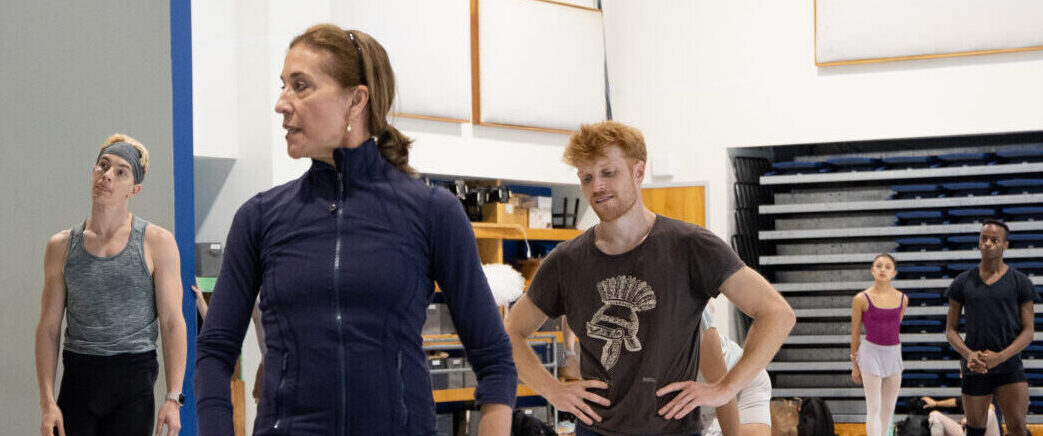
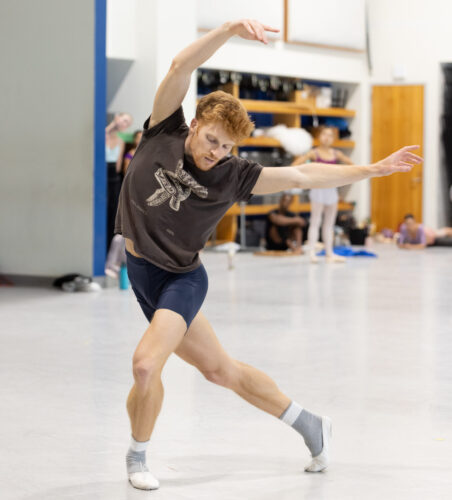
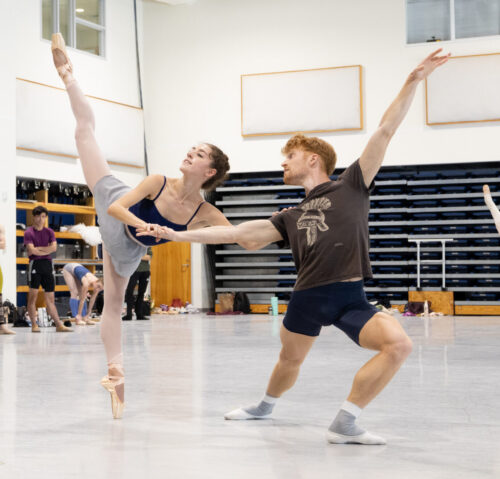
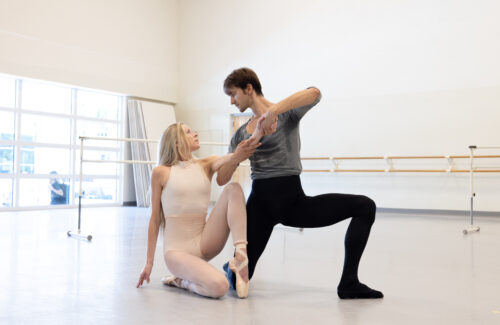
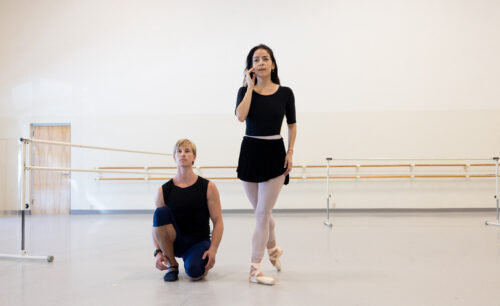
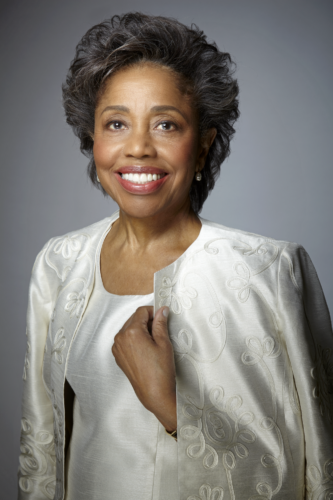
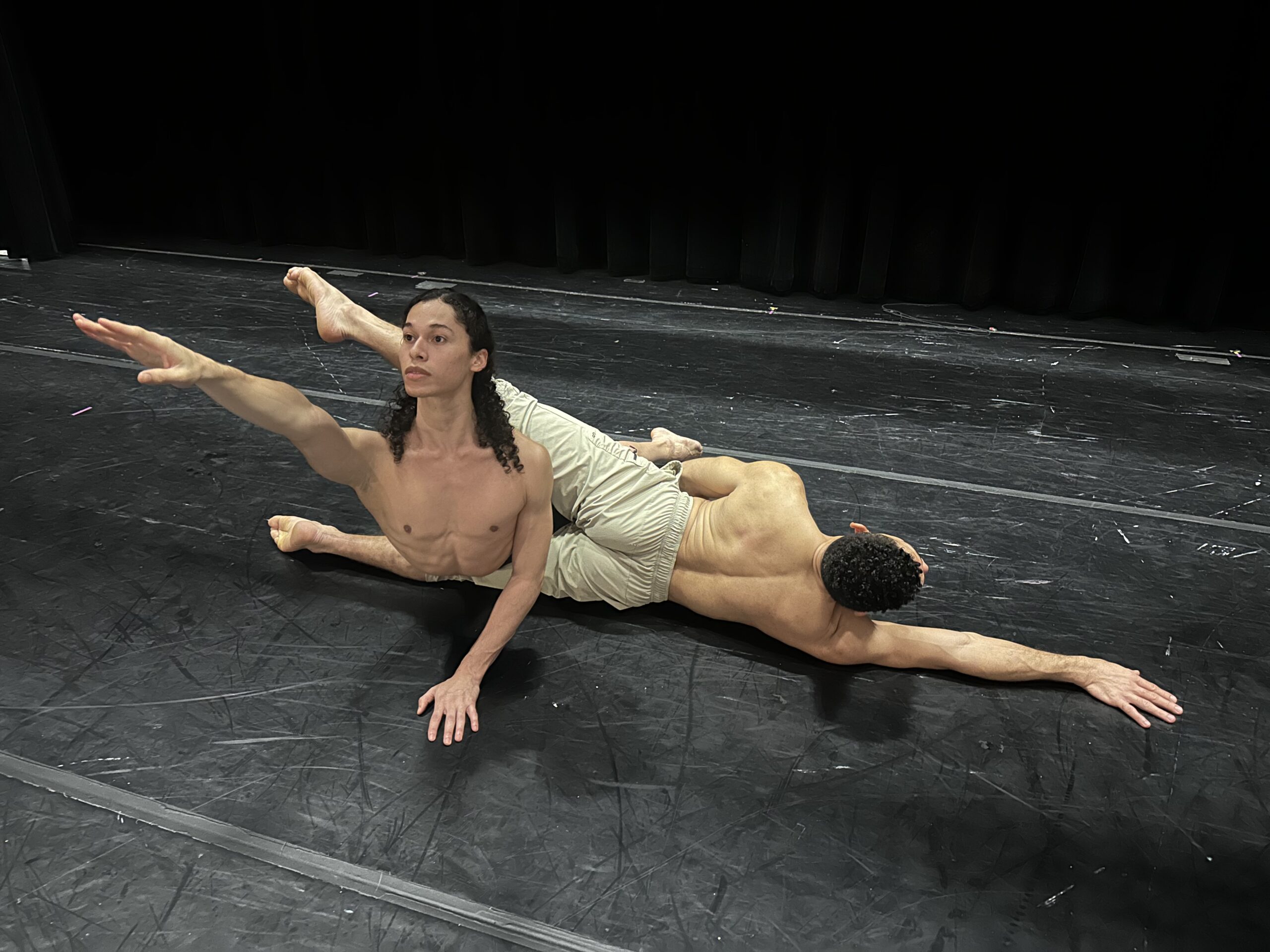
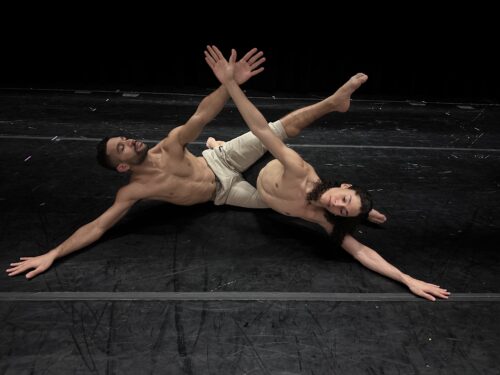
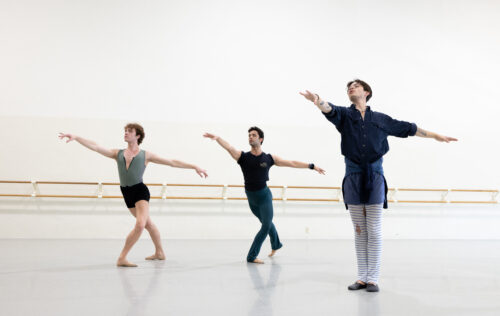
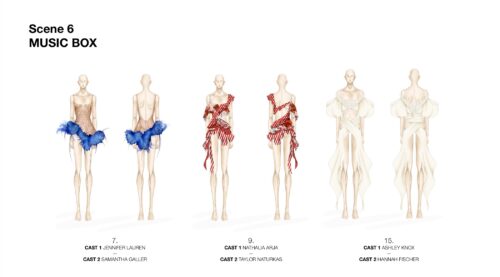
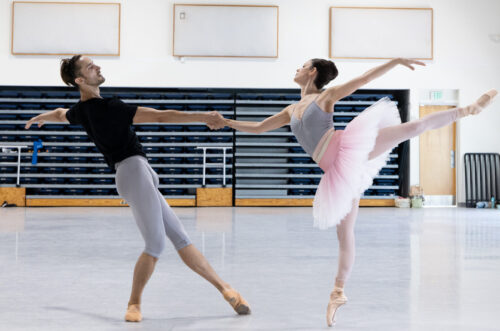
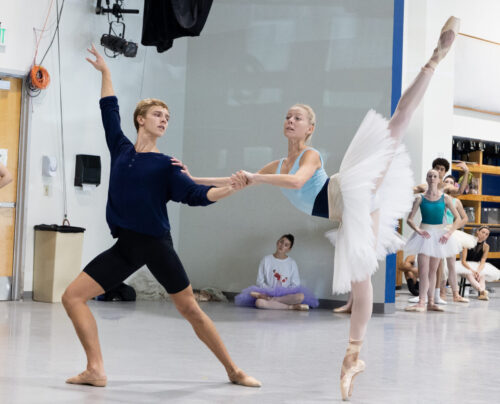

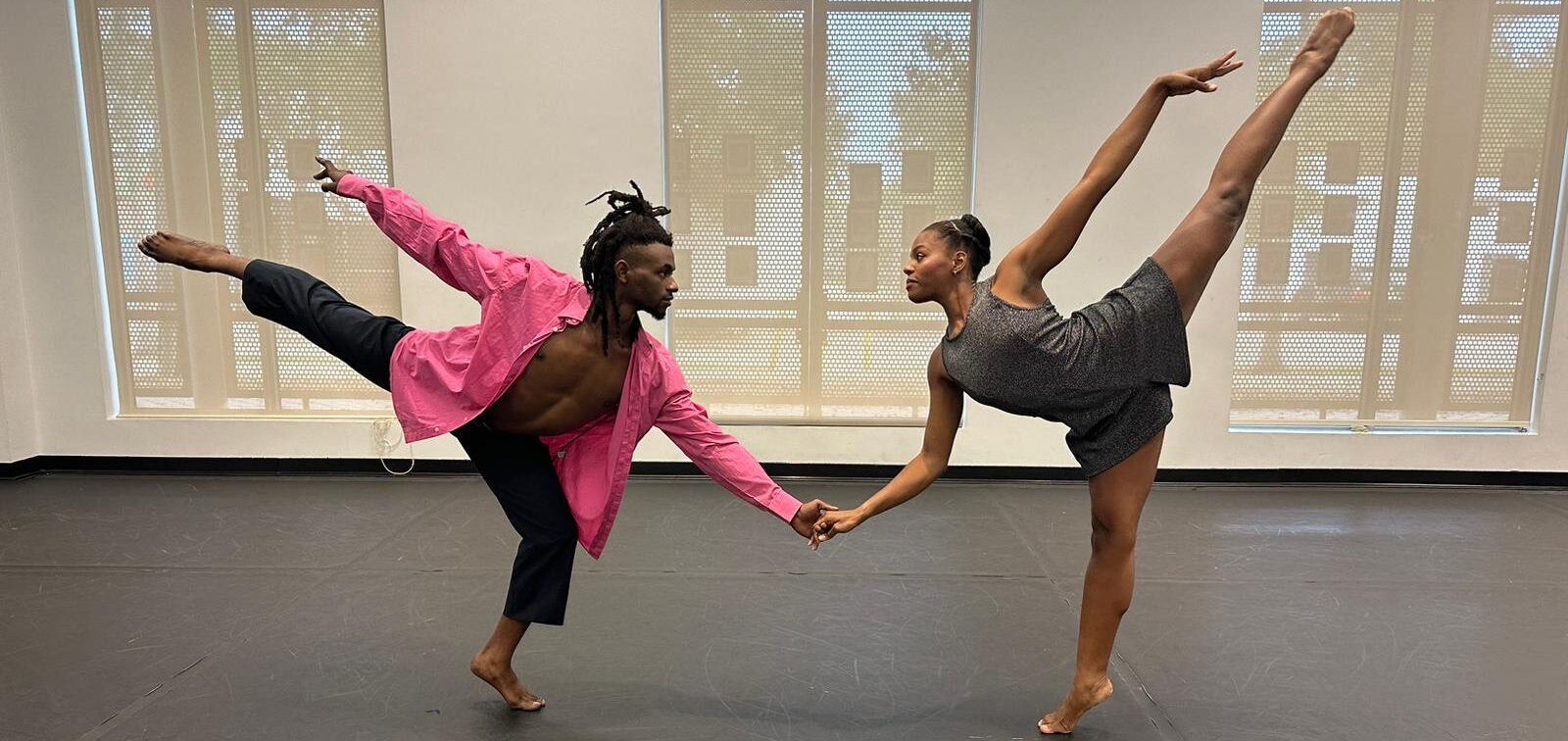
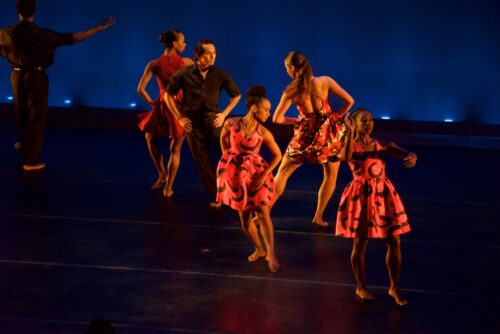
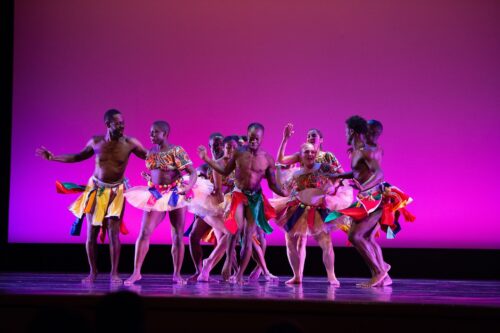
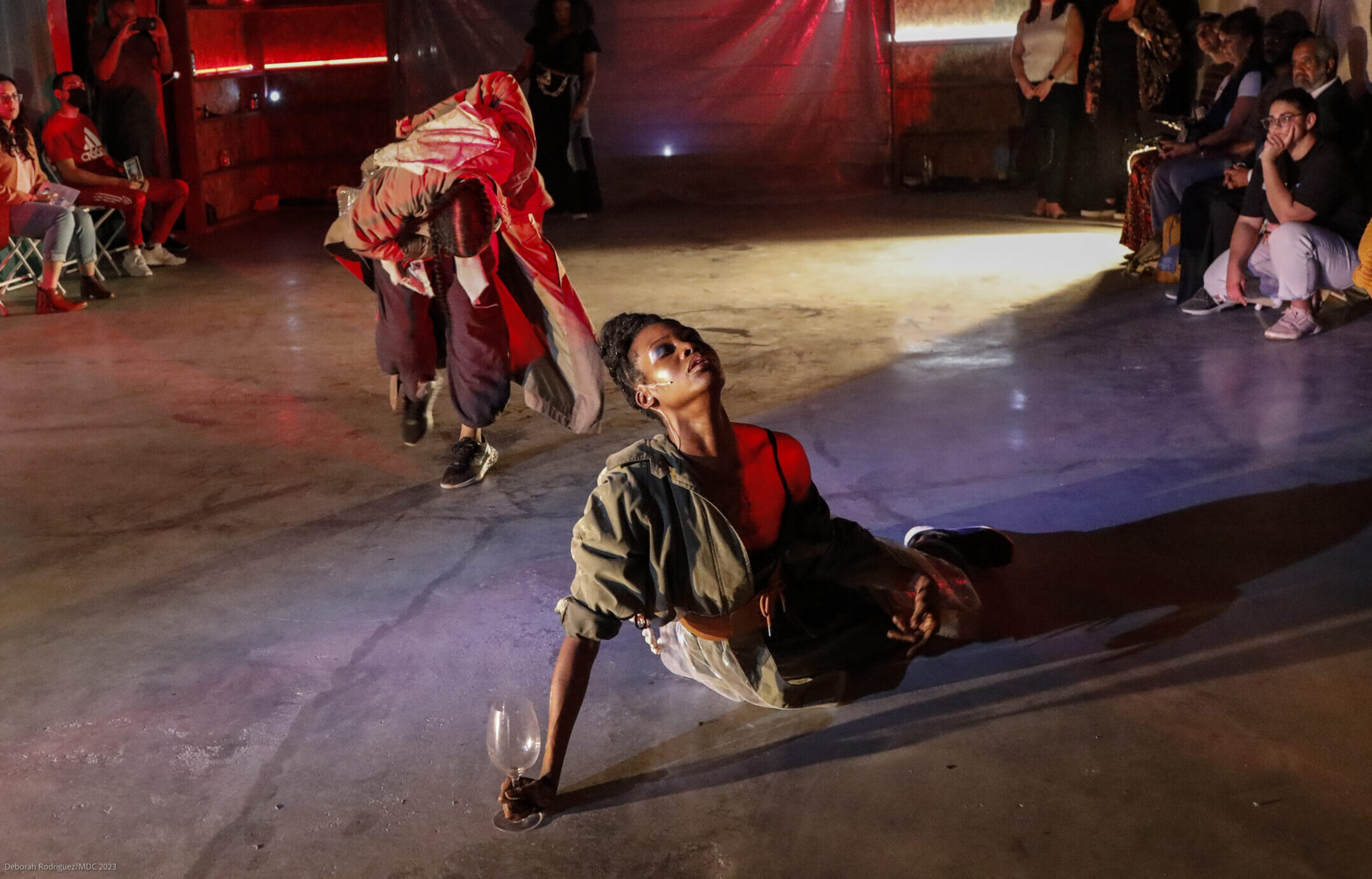
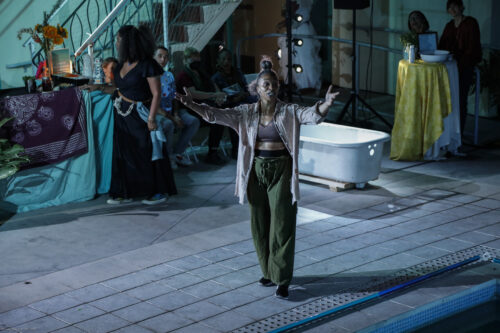
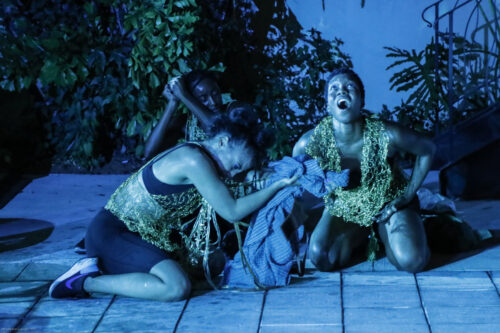
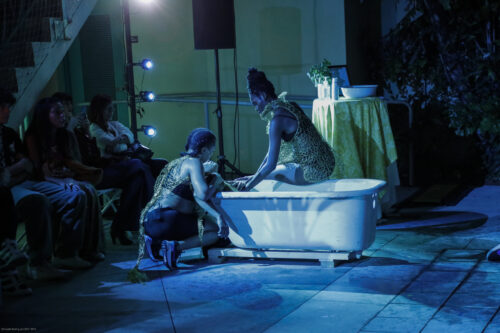
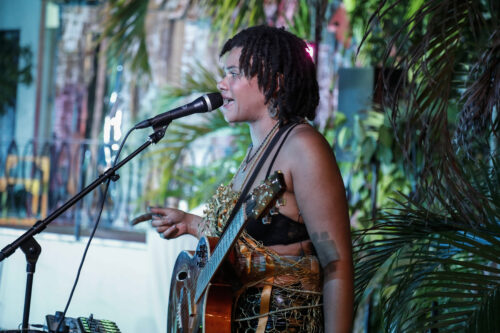
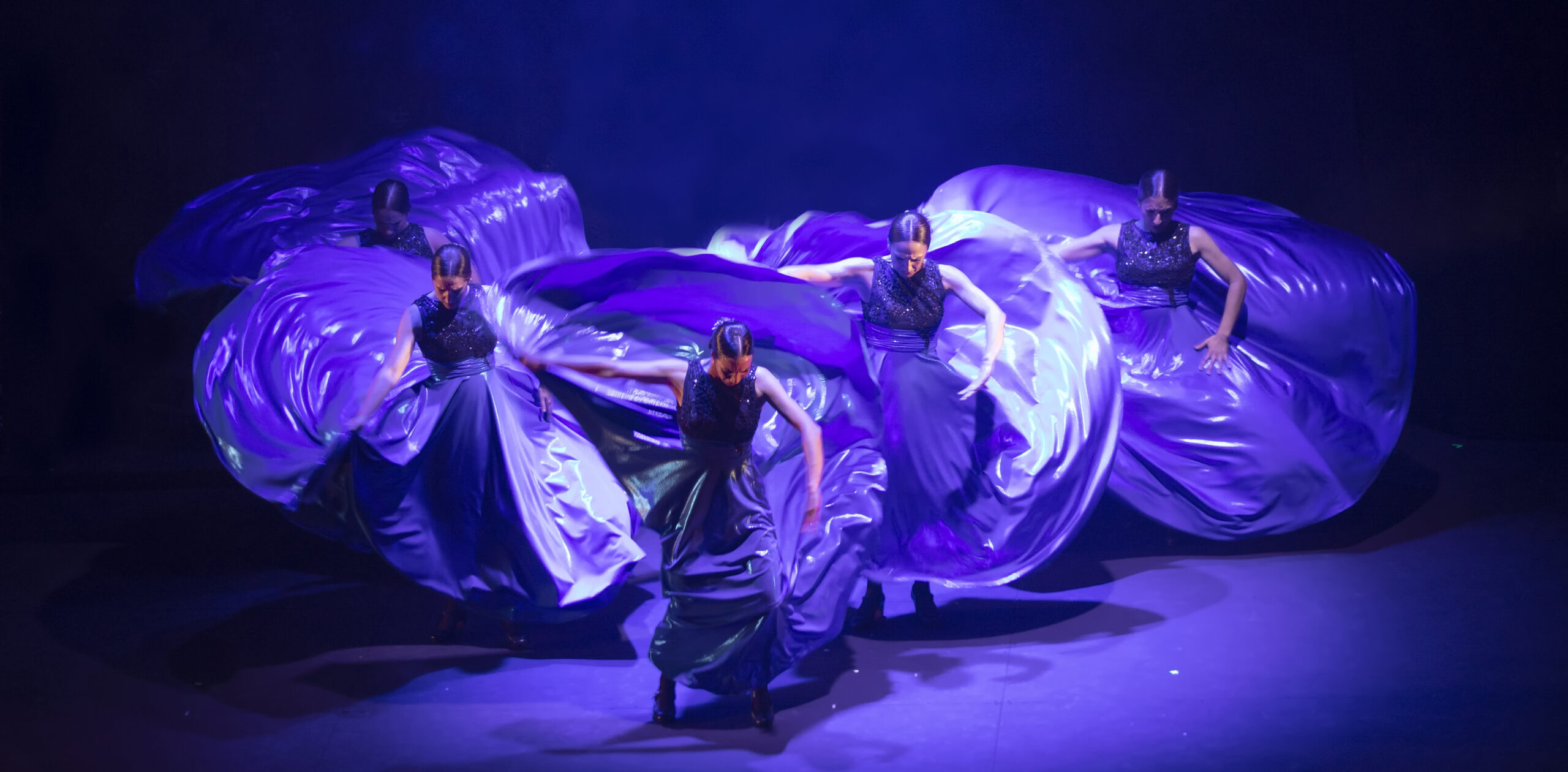
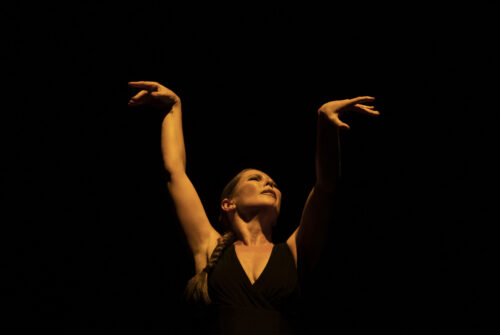
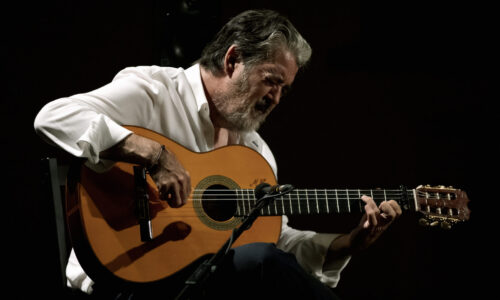
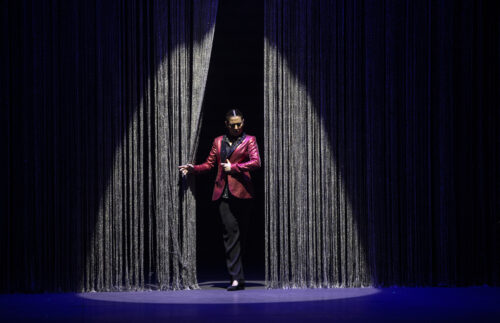

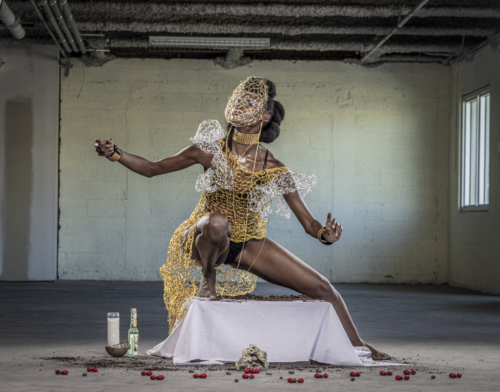

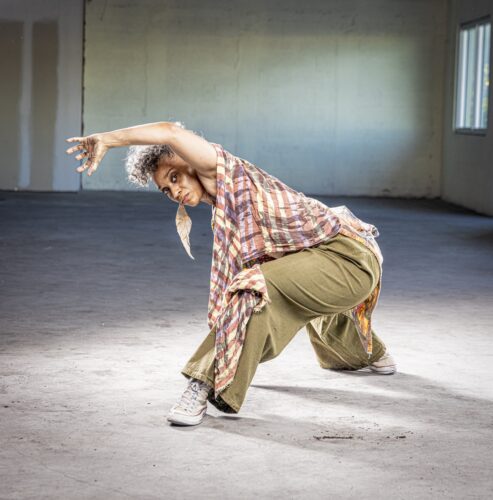
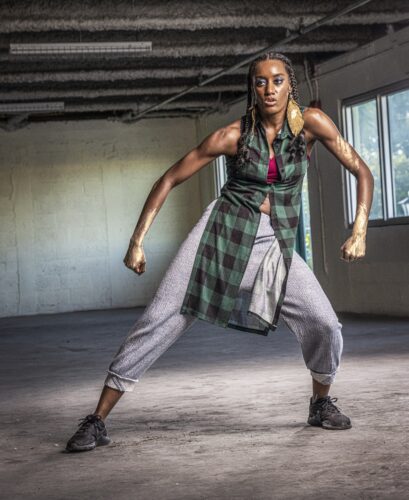
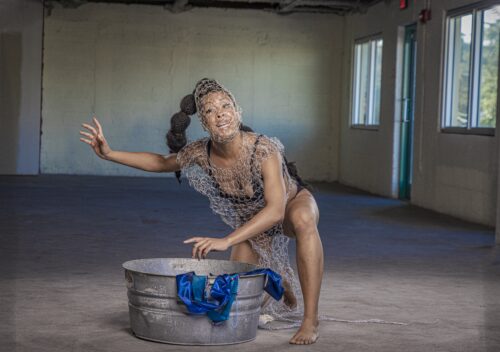
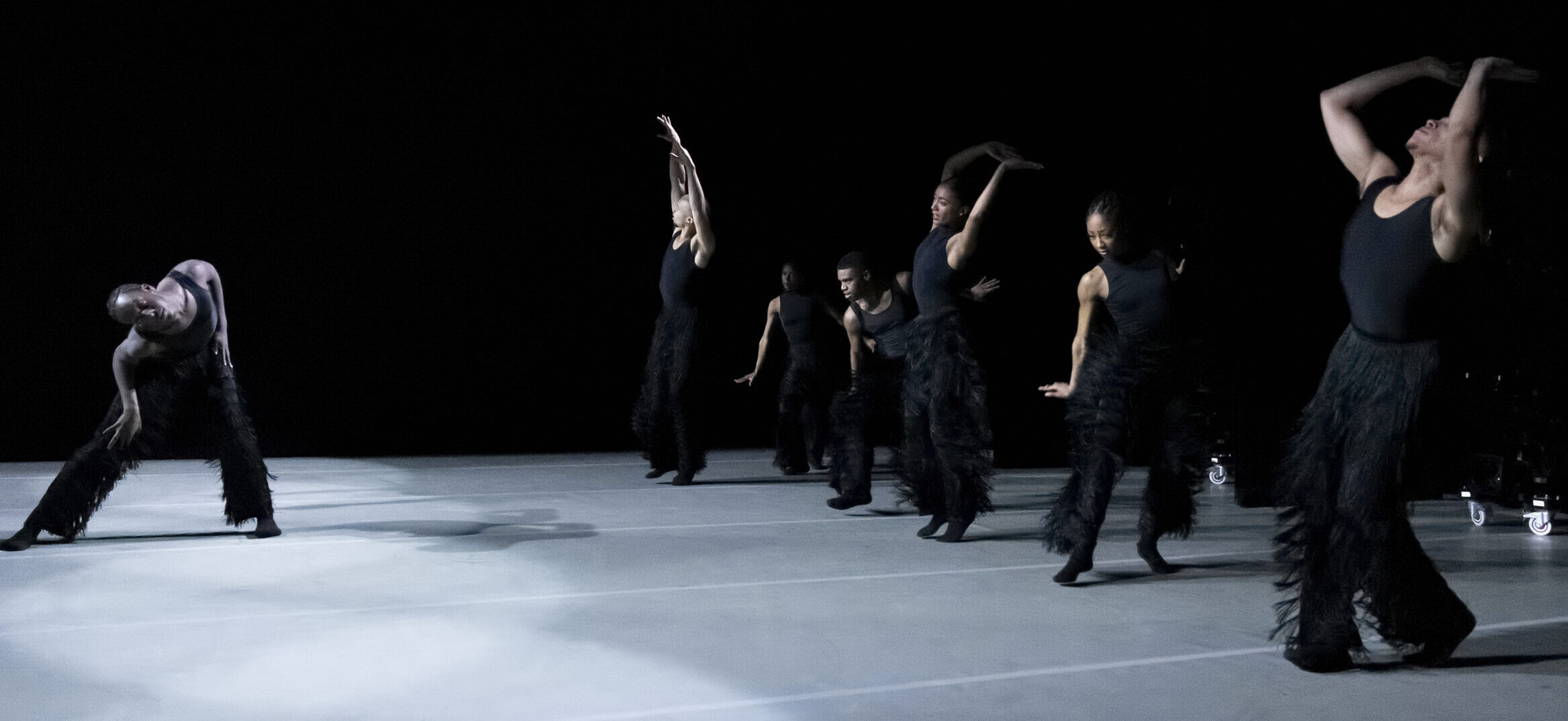
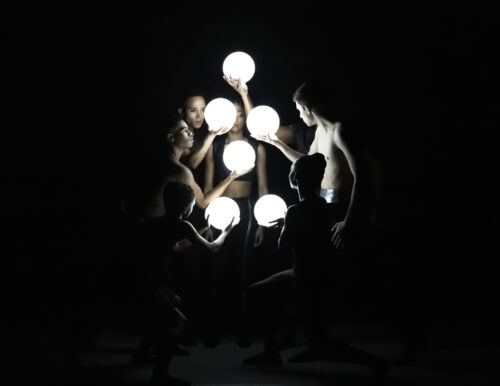
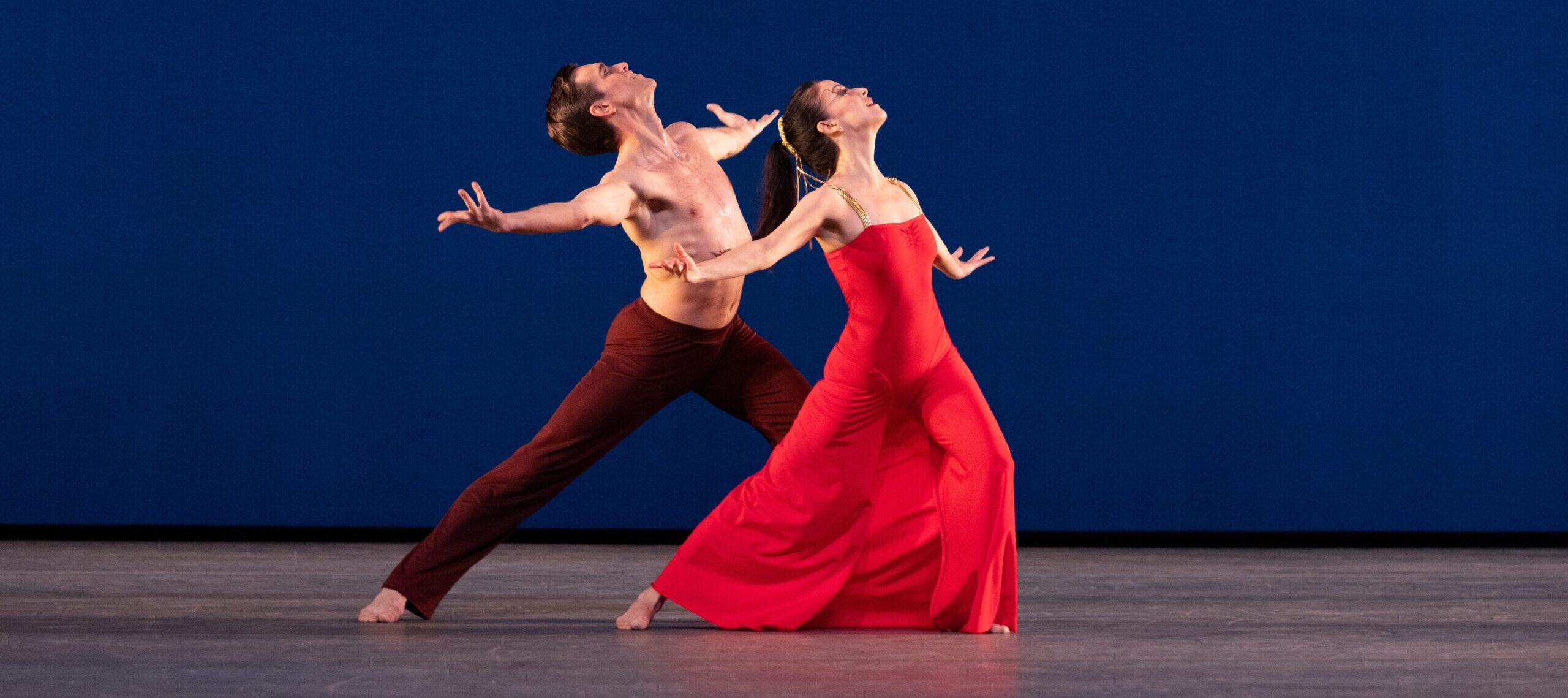
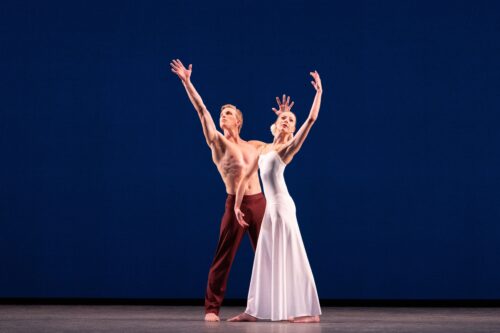
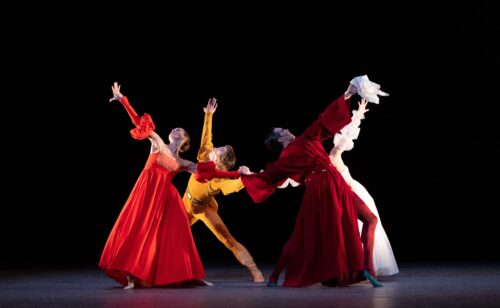
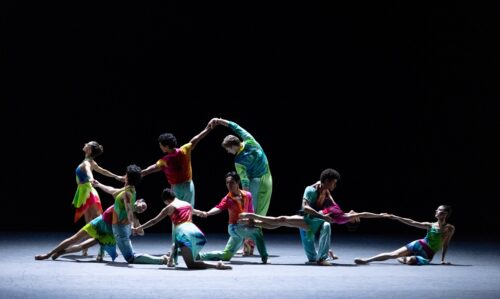
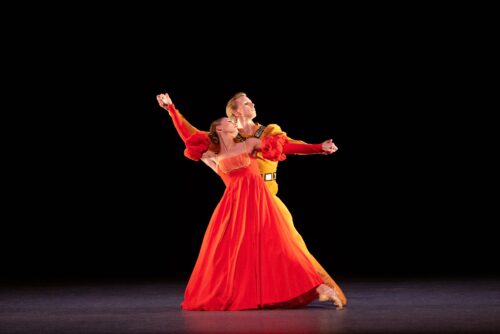
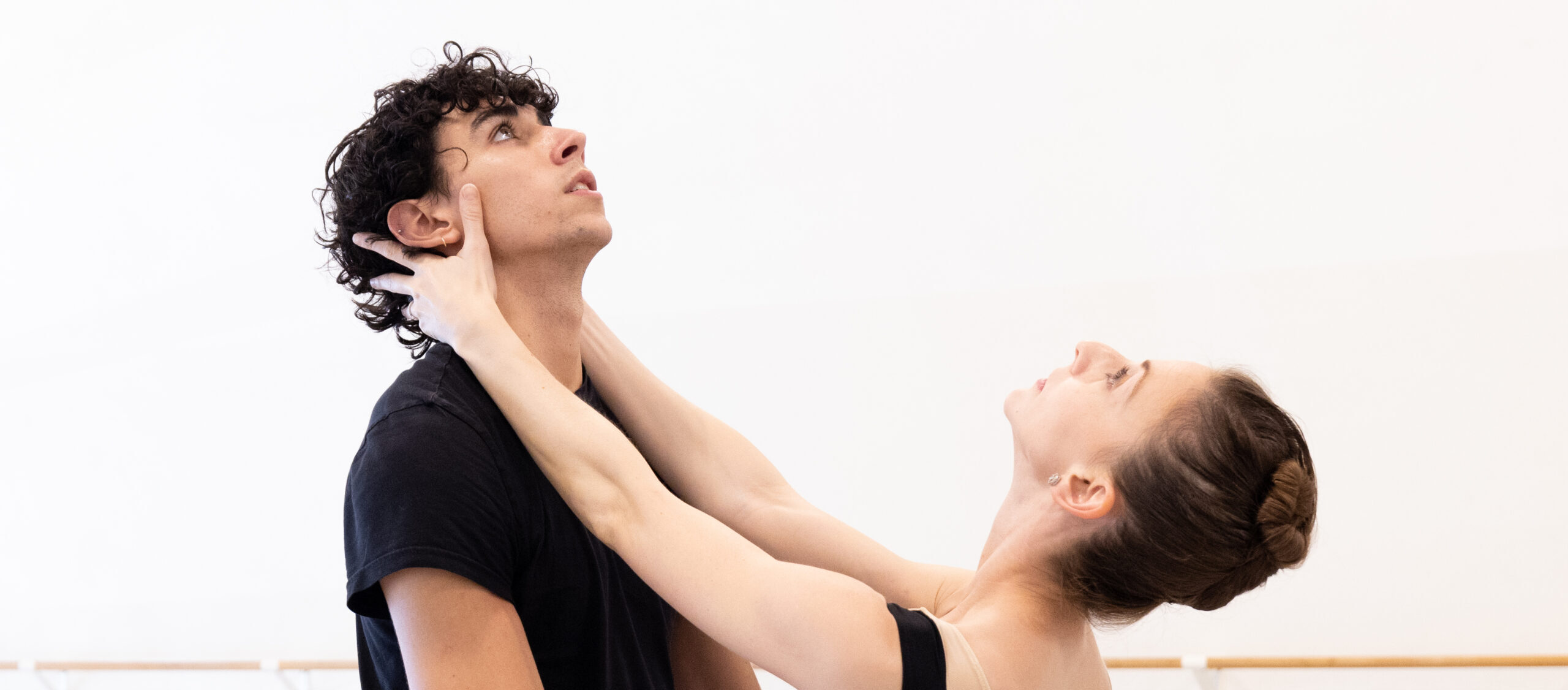

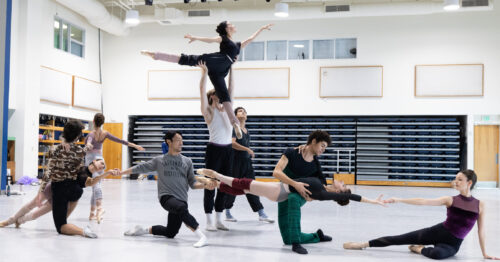

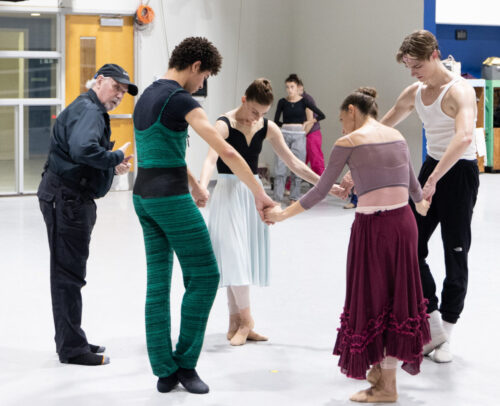
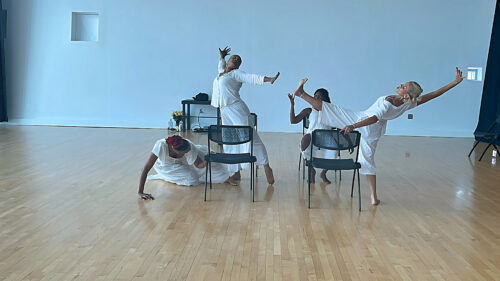

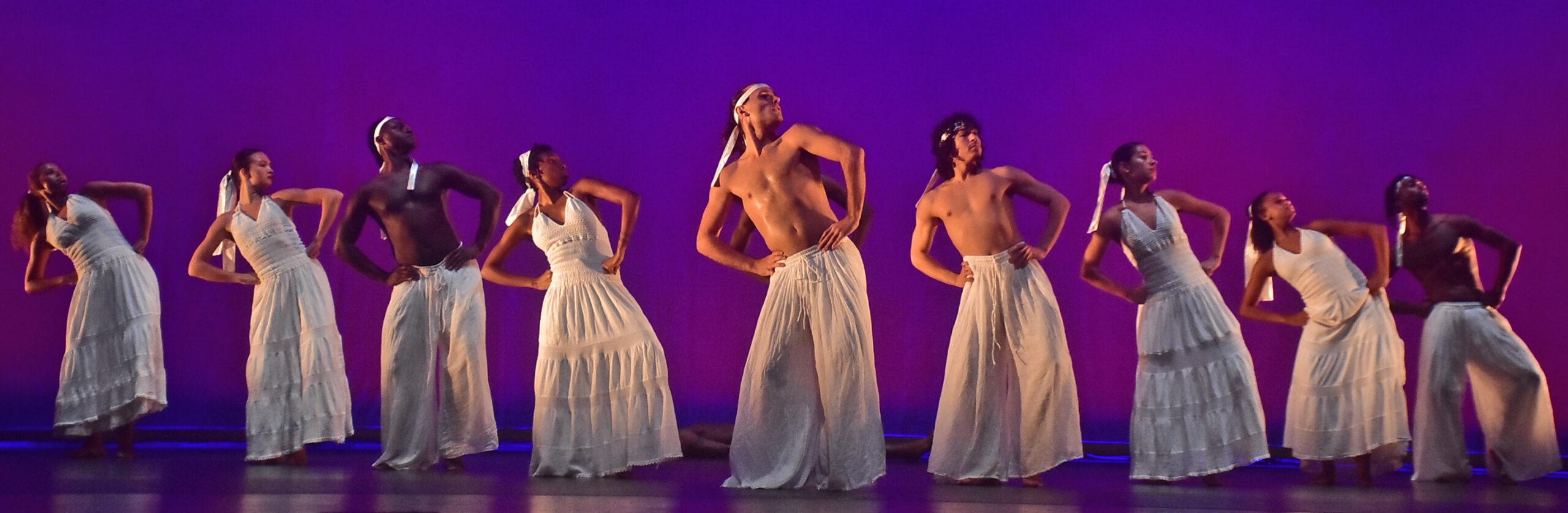
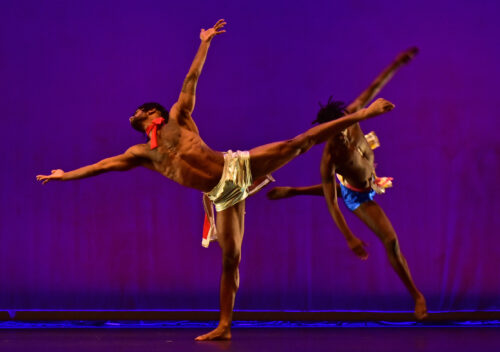
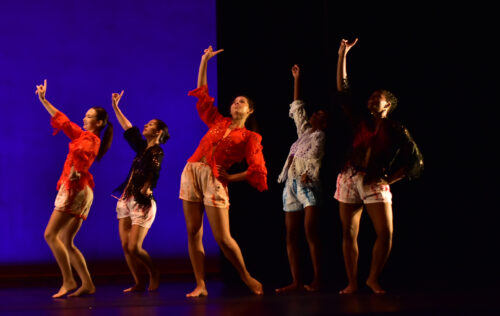
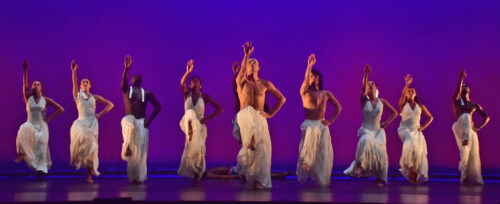
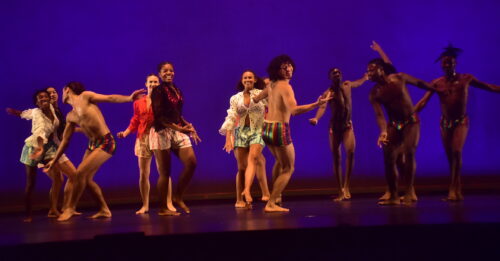
Recent Comments