Blog Article Category: Theater / Film
Playwright Nilo Cruz Explores Life In Afghanistan Through Monologues at Arca Images
Written By Sergy Odiduro
March 4, 2025 at 12:22 PM
Andrea Ferro in “Farhad, or the Secret of Being” by Nilo Cruz. The monologue is one of three featured in “Tres Veces Cruz” (Three Times Cruz),” presented by Arca Images at the Westchester Cultural Arts Center opening Thursday, March 6. (Photo courtesy of Asela Torres)
Andrea Ferro, who barely stands over five feet tall, says that there are perks to being short when you’re in the theater.
The most obvious, of course, are acquiring roles that call for smaller stature.
This includes her latest part, where Ferro grabs the lead in “Farhad, or the Secret of Being.” She uses her petite frame to house the powerful voice of a 15-year-old girl who, because of the local Bacha Posh tradition, is forced to masquerade as a boy. The benefits, in a culture that favor males, are aplenty, but with the onset of puberty her access to freedom is nevertheless cut short.
Ferro says that preparing for the role has been an eye-opening experience.

Andrea Ferro in “Farhad, or the Secret of Being” by Nilo Cruz. The monologue is one of three featured in “Tres Veces Cruz” (Three Times Cruz).” (Photo courtesy of Asela Torres)
“This role, in particular, is one of the most beautiful pieces that I’ve been lucky enough to work on in my career thus far,” she says. “And the role itself is very powerful, especially because it’s a story that not many people know.”
The piece, written and directed by Pulitzer Prize-winning playwright Nilo Cruz, is one of three monologues focused on life in Afghanistan.
Presented by Arca Images, “Tres Veces Cruz” (Three Times Cruz), the bilingual production, will be open Thursday, March 6 and continue through Sunday, March 16th at the Westchester Cultural Arts Center.
Cruz says that he initially discovered the concept for “Farhad, or the Secret of Being” after stumbling on a piece in the New York TImes.
“When I read the story, I was so intrigued that I started to do a little bit of research,” explains Cruz.

The Bacha Posh tradition requires girls to masquerade as boys until the onset of puberty. (Photo courtesy of Asela Torres)
“I wanted to write a monologue about a young girl in Afghanistan that has 24 hours to enjoy the freedom that boys have, and men have in that part of the world, before she starts dressing as a girl, and therefore is oppressed by the country that she lives in. And I just thought it was fascinating, and thought it was important to document this, and so I came up with this piece.”
The others include “Melisma, or the Song of a Syllable,” where Carlos Acosta Milián, stars as a wounded American soldier who confronts his own humanity by “discovering beauty in the most unexpected moments.”
[RELATED: Artburst En Español: Jose Antonio Evora, “Tres monólogos de Nilo Cruz”]
And in “The Journey of the Shadow,” Marcelo Miguel is an eight-year-old boy who desperately tries to communicate with his father who is a soldier in Afghanistan.
Andy Barbosa, who plays Marcelo, immediately felt a bond with the boy.
“It’s about falling in love with the character;” says Barbosa. “There has to be something that connects with me as an actor.”
He says he explores what it is about the character that also connects with the society that character is living in.

Andy Barbosa as Marcelo Miguel, an eight-year-old boy, who uses his imagination to communicate with his father. (Photo courtesy of Asela Torres)
“All that fantasy that the little boy was able to create, in order to have this final conversation with his father. is what is the most interesting thing for me, and what caught my attention was how this character is able to deal with something so hard, being aware that he could lose his father fighting in a war in Afghanistan.”
With the three monologues weaving such a rich tapestry of messages, Alexa Kuve, executive producer and artistic director of Arca Images says it is important to present the production in a way for all audiences to participate.
To do so, “The Journey of the Shadow” and “Melisma or the Song of a Syllable,” will be presented in Spanish, while “Farhad or the Secret of Being” will remain in English.
“We’re trying to involve the community more in our presentations,” says Kuve, whose company offers either simultaneous translations in English or subtitles for all of its shows.
“It’s important to us for the Anglo community, to get to know our work, and get exposed to different playwrights from Latin America.”

Pulitzer Prize-winning playwright Nilo Cruz, left, and Alexa Kuve, executive producer and artistic director of Arca Images. (Photo courtesy of Asela Torres)
As for Cruz, who is Cuban American, the use of language and culture is a crucial component to his success. He has leveraged both to provide audiences a front row seat into Latino culture. This is evidenced by numerous collaborations, translations and overall body of work including his Pulitzer Prize winning “Anna in the Tropics,” a play centered on Cuban immigrants laboring in a cigar factory. He won the 2003 Pulitzer Prize for Drama, the the first Latin American ever to win the Pulitzer for playwrighting.
With this monumental recognition in his pocket, Cruz continues to be grateful for other accolades he receives, including South Florida’s Carbonell Awards, which presented him with the 2024 George Abbott Award for Outstanding Achievement in the Arts.
“I was elated because I just write and I don’t worry about receiving external satisfaction, so it’s really great when someone taps you on the shoulder and then you’re reminded of all the work you’ve done throughout the year, and you’re awarded for it. It’s a really good feeling.”
Kuve believes that there is one main reason why Cruz’ work resonates with so many.
“He can write about so many subjects from so many different places. He’s very diverse in that sense. Because in the end, in my opinion, what he seeks is the human existence and that is universal. If there a subject that touches him, he can write about the most horrific event, war for example, and he does it but with beauty and imagination, and it’s just enchanting.”
While writing is a conduit for thoughts and expression, sentiments can get lost in translation too, and sometimes words just get in the way. Cruz explains his process.

Andy Barbosa plays Marcelo Miguel in “The Journey of the Shadow.” (Photo courtesy of Asela Torres)
“How language operates on stage is a curious thing,” says Cruz. “What is said but not said, what is spoken or unspoken. That’s something that I’m very interested in when I write. Do I need this word? Do I need this sentence? Can we just do this with a gesture?”
It’s what he says he loves about theater, that it “doesn’t just live on the page.”
“Theater lives on the stage with gestures, with silence and with images too. Sometimes you might be writing a scene in which there’s a lot of dialogue, and sometimes you might want to take away the dialogue and just do it with physicality, with just a moment or a look . . . Theater offers me this other dimension in which language operates, but in a visual way, or through silence or through gestures. And it’s something that I’m constantly discovering when I’m directing or writing a play.”
But Cruz hopes that “Tres Veces Cruz” (Three Times Cruz) brings a message home to the audience that ultimately transcends any language.
“I think the three pieces are existential in many ways, because these three characters live in hopeless situations but there’s also an element of resilience in the three of them. How these three people basically escape through the power of imagination, the power of dreaming, of creating a better self even if it’s only in their minds.”
WHAT: “Tres Veces Cruz” (Three Times Cruz)
WHEN: 8 p.m. Thursday through Saturday, 5 p.m. Sunday. Thursday, March 6 through Sunday, March 16.
WHERE: Westchester Cultural Arts Center, 7930 SW 40th St., Miami
COST: $25 general admission, $20 for seniors, students with valid ID, and groups of 10 or more.
INFORMATION: arcaimages.org
ArtburstMiami.com is a nonprofit media source for the arts featuring fresh and original stories by writers dedicated to theater, dance, visual arts, film, music and more. Don’t miss a story at www.artburstmiami.com.
No posts found
‘Arms Around America’ Brings Gun Talk to the Kitchen Table
Written By Sergy Odiduro
February 17, 2025 at 12:46 PM
Dan Froot brings his “Arms Around America” ensemble in a show examining America’s relationship with guns to the Lehman Theater at Miami Dade College’s Lehman Theater on Thursday, Feb. 20 and Friday, Feb. 21 through Feb. 21. (Photo courtesy of Rose Eichenbaum)
Gun control.
If you’re looking for a surefire way to start off a debate, all you have to do is utter those two words, then step back and watch the fireworks explode.
And most people, who are either vehemently for it or adamantly against it, will dig their heels in deep, refusing to share a common ground.
That’s where Dan Froot & Co.’s “Arms Around America” comes in.

Dan Froot in “Arms Around America.” The live radio drama, presented by Dan Froot & Co., Live Arts Miami and Miami Light Project, examines America’s relationship with guns. (Photo courtesy of Bailey Holiver)
On Thursday and Friday, Feb. 20 through Feb. 21, Miami Dade College’s Live Arts Miami, Miami Light Project and Froot, a performance artist, composer and musician, will present a live radio drama examining America’s relationship with guns. The show, based on three years of stories collected from Miami, Montana and Los Angeles, will feature an ensemble of cast members including Donna Simone Johnson, Justin Austin and two students from the New World School of the Arts with an original score by Julio Montero.
The conversation continues as students at MDC’s North Campus will be encouraged to explore the issue offstage through open mic events, songwriting and poetry workshops.
“The thesis for this piece is understanding that there are huge divides between people who want to hold on to their guns and people who want there to be less guns and more restrictions,” says Froot.
His goal is to bring both sides together and notes that there is one area that most people agree on.
“Every gun owner I speak with believes that gun violence is bad. And so that’s our common ground.”
One way to highlight commonalities is to foster a community-based discussion right before the conclusion of each show.
“As part of the performance, we have eight local people on stage sitting at a kitchen table who comment on the performance and its relevance to their lives and their communities,” says Froot.

Cast member Donna Simone Johnson appears in “Arms Around America.” The show is based on three years of stories collected from Miami, Montana and Los Angeles.
(Photo courtesy of Bailey Holiver)
Kathryn Garcia, executive director at Live Arts Miami, says that Froot’s method in broaching such an important topic, while incorporating individual stories, is one of the aspects she loves most about the show.
“The thing that really resonated with me was this emphasis on dialog versus debate,” remarks Garcia. “He takes these super complex stories and he humanizes them. And what’s beautiful about this project is the centering of these stories and trying to model civic dialog so that no matter where we stand on contentious issues, we can come together as members of this community to find ways forward”.
Beth Boone, Miami Light Project’s artistic and executive director, agrees.
She says that the play not only does a great job of tackling an incendiary issue but also promises to deliver a unique experience.
“It is an unexpected evening at the theater,” says Boone. “It is a beautiful, lively piece that is done with a master of craft.
She explains that the onstage radio play with sound effects has an energy.

Arms Around America is a project of Los Angeles-based theater group, Dan Froot & Co. that conducted book-length oral histories of families whose lives have been shaped by guns, in South Florida, Montana and Southern California. The live theater work is being performed in each family’s home community and around the country. (Photo courtesy of Bailey Holiver)
“People will be delighted to experience the work and will understand that while it is dealing with a difficult subject matter and difficult stories, it is an inspiring evening in the theater. Dan takes their very private, often painful stories and turns that into something poetic and universal, that human beings can then watch and see themselves in.”
And if fans of Froot’s work feel that the format for “Arms Around America” feels familiar, it’s because it is. This isn’t the first production Froot has launched that is designed to address a larger conversation.
“Pang!,” a radio drama, held the same objective and unwittingly served as a springboard for discussing guns and gun culture.
“We felt we had gotten to a place with our production where we were really making an impact in the communities where we were working, and we wanted to think about what else we might apply this model to,” explains Froot. “We’d been working with food insecurity for about 10 years or longer, and as we were finishing the production in Miami, the Marjory Stoneman Douglas shooting happened up in Parkland, and we turned to each other and we said, ‘Okay. That’s next.’ And that began our journey and we haven’t looked back.”
Froot says that the reaction to the play and his “Arms Around America” podcast has been overwhelmingly positive. So much so that he has encountered those who have modified their views because of it. This includes a gun rights advocate who will be a guest on their podcast and is slated to appear in a kitchen table discussion in Salt Lake City next year.
“His name is Clark Aposhian and he is a really strong Second Amendment advocate,” says Froot. “This is somebody who went to the Supreme Court to represent the case for bump stocks. Bump stocks turn a semi-automatic firearm into essentially a machine gun . . . he and I really come from different perspectives. I’ve met with him several times, and he’s still very much a gun rights advocate, and will always be.”

Ensemble cast member Justin Austin in Dan Froot & Co.’s “Arms Around America.”
(Photo courtesy of Bailey Holiver)
However, Froot presented one instance that caused Aposhian to slightly shift gears.
“I think that a lot of people feel like this is a kind of non-partisan production in that we’re not saying that guns are good or bad. We’re saying here’s a family where the dad took his own life, and now the son wants to learn how to shoot, and the mom has to make a decision whether to allow her son to feel close to the dad by learning to shoot, or to make sure that the son never comes in contact with guns because of their family history.”
Aposhian has since advocated for a law that allows police departments to accept people’s guns when someone is mentally unstable.
“A lot of his gun rights community were really upset with him for doing that but he is somebody who really supports ending suicide, and he holds that and his support for gun rights at the same time,” says Froot. “So he, at first, did not want to have anything to do with our production, but we found this common ground around suicide, and he is a huge advocate for what we’re doing. Now he’s connecting us to legislators in Utah and all kinds of gun rights communities.”
Froot said that along the way he has also realized a thing or two.
“I’ve learned how naive I am,” admits Froot.
Where he once believed that guns shouldn’t exist at all, he says that he has discovered that the vast majority of gun owners are responsible and educated in safety and proper gun practices.
In addition, Froot says that he has since realized that the history of the United States shows a propensity in continuously supporting gun ownership.
“I learned that the idea that we would do something like what Australia did, which was to basically take away the population’s guns, a very effective way of decreasing gun violence, that would never, ever happen in this country because of the way that it’s written into the
Constitution and the way that this country is built on a history of violence.”
But most of all, producing the play has only underscored what he already knows and that is how to implement the finest technique in bringing people together.
“I’ve learned that the best thing that we can all do is to learn to listen.”
WHAT: “Arms Around America”
WHEN: 8 p.m. Thursday, Feb. 20 and Friday, Feb. 21
WHERE: MDC North Campus, Lehman Theater, 11380 NW 27th Ave., Room 1315, Miami
COST: $35, $10 with ticket code LOVE
INFORMATION: Live Arts Miami or Miami Light Project
ArtburstMiami.com is a nonprofit media source for the arts featuring fresh and original stories by writers dedicated to theater, dance, visual arts, film, music and more. Don’t miss a story at www.artburstmiami.com.
No posts found
Miami Playwright Finds Inspiration For ‘Oskuneru’ In His Suriname Heritage
Written By Sergy Odiduro
February 4, 2025 at 11:25 AM
Henry Cadet as Akosua in Miami-born and Suriname-raised playwright Sefanja Richard Galon’s “OSKUNERU 2025,” opening at MDC’s Art Lab on Thursday, Feb. 6 through Saturday, Feb. 15. (Photo courtesy of Elijah Pestatna)
His ancestors are known for throwing off the shackles of enslavement, slipping into the jungles of Suriname and daring to seize freedom with both hands.
Sefanja Richard Galon is now tapping into that energy.
With the power of familial stories flowing through his veins, Galon has painted a portrait of humanity and resistance on his canvas of choice, a theatrical stage.
“It’s a story of human survival,” he says.

Francine Samuel As Maa Iya in ‘OSKUNERU 2025,’ an original play that highlights the journey of the Surinamese Maroons towards self-liberation. (Photo courtesy of Elijah Pestatna )
“OSKUNERU 2025: A Theatrical Journey Through the History of the Surinamese Maroons” is a play written and directed by Galon, presented by Maroon Isle Productions. The show debuts at MDC’s Art Lab on Thursday, Feb. 6 with performances through Saturday, Feb. 15.
Miami-born and Suriname-raised, his tribute to the maroons of Suriname and their legacy has come a long way.
Initially presented as a Zoom reading organized by the Black Student Union at the New World School of the Arts, it has since progressed into a live college production, a theatrical workshop at Main Street Players, and finally a reading in City Theatre’s HOMEGROWN playwright development series at the Adrienne Arsht Center in 2023.

Sefanja Richard Galon as Anansi in his play ‘OSKUNERU 2025: A Theatrical Journey Through the History of the Surinamese Maroons.’ (Photo courtesy of Elijah Pestatna )
Galon recalls how it began.
At the time, he had been coping with the effects of a worldwide pandemic, government shutdowns, isolation, national protests and racial strife. The turmoil of it all weighed heavily.
“I was alone, kind of depressed in my house, and I was watching everything that was happening on the news.”
What helped him the most, he says, was to draw from the strength of his ancestors. To acknowledge and embrace the lessons of the past so that he could focus on moving forward.
He realized that not only was it an effective way to center himself, but it also allowed him to put things in the proper perspective.

Brette Raia Curah and Chantal Mendoza as Village Girl and Ama in ‘OSKUNERU 2025: A Theatrical Journey Through the History of the Surinamese Maroons.’ (Photo courtesy of Elijah Pestatna )
“Hey, my ancestors came from slavery,” he says. “They fought colonialism. They won. They lived in the jungle away from all of that stuff. So, who am I to feel defeated by all the things that we have going on today?”
His conclusions led to further investigation.
Plunging headfirst into a pool of information, Galon eagerly sought out all aspects of his heritage.
His research led to cultural experts, historians, Surinamese lore or oral accounts passed down from parent to child, and even YouTube videos; anything he could get his hands on.
And then he began to write. And then he wrote some more.
Eventually, Galon’s search began to seep deep into his subconscious where he received nocturnal messages.
“I just started having these dreams,” he reveals. “These dreams of scenes and characters.”
At one point, Galon confides, he awoke and discovered that he was speaking the word Oskuneru, the title of his play.
But to manifest one’s dreams into reality, it often means that you must hash out minutiae or other mundane logistics or even deal with overarching essential components. This includes producing the perfect score.
“Music is cultural. Music is transcendental. It overcomes all the language barriers that we have,’ declares Galon. “It becomes something that you just feel in your body and in your bones. You hear the words when that music is playing and boy, your soul just moves.”

Justin Cook As Kumi in ‘OSKUNERU 2025: A Theatrical Journey Through the History of the Surinamese Maroons.’ (Photo courtesy of Elijah Pestatna )
He turned to former classmate Mikhael Mendoza, who was more than happy to contribute as musical director. Turns out he was well attuned to the task at hand. He knew exactly Galon was looking for.
“Being a composer is about creating the feeling of each song individually,” says Mendoza.
“It’s whatever we want the audience to feel in that moment, visually, but also musically. When they work together, it creates the perfect atmosphere theatrically. So for me, it was really important to try and just get you into the zone of what we were trying to make you feel in that moment.”
Working on the process has also given Mendoza the opportunity to hone his skills in an innovative way.
“This was a new challenge, but it was inviting, and it was fun,” says Mendoza, who has witnessed firsthand the evolution of the play.
“This is the first time that we’re actually going to implement live instruments throughout the entire show. Previously, we would all use (pre-recorded) tracks because I do have a producing background. But I’ve been learning more and more how to implement myself in terms of being a full composer and creating sheet music.
“Having sheet music and having a full score is very important, obviously, for musical theater artists, so being the music director and composer, I’ve taken upon myself to really dive into that process, really understand instruments and how they sound, their different timbres. I’m excited to see how it all turns out,” says Mendoza.
Margaret M. Ledford, artistic director for City Theatre Miami, is equally thrilled.
“We are proud parents. Actually we’re more like grandparents,” Ledford says in an interview, laughing at her own grandparents’ reference.
“We are pleased and so excited for Sefanja. We are excited that this story is going to be out in front of the world.”
Ledford says that providing support for playwrights like Galon and productions like “Oskuneru,” and then seeing the efforts reach a larger audience, is part of the bigger picture of City Theatre’s “HOMEGROWN” initiative.

Evelaure Denis and Henry Cadet as Saida and Akosua. (Photo courtesy of Elijah Pestatna )
The program, launched in 2021, works to promote and develop writers from historically marginalized communities by providing mentorship and instruction – the training and time to create original work.
Ledford says that “Oskuneru” is just one example of how “HOMEGROWN” has made a difference.
“You know, people don’t necessarily think of Miami as a theater town, but there are some talented theater artists here, including playwrights; having a local playwright development program allows the voices of Miami to be heard. And it allows the fostering nature of the program to not only support them as writers, but also as business people and functioning theater practitioners.”
She encourages people to support Galon’s new work to not only be entertained but to encourage those who are working Miami artists.
“I think they’re going to have an experience, a theatrical experience that moves them. They might even see themselves. People are going to see it as such a strong new voice with such a unique perspective. It just has to be heard and seen.”
WHAT:“OSKUNERU 2025: A Theatrical Journey Through the History of the Surinamese Maroons”
WHEN: 7: 30 p.m. Thursday, Feb. 6, Friday, Feb. 7 through Saturday, Feb. 8. Also, Thursday, Feb. 13, Friday, Feb. 14, and Saturday, Feb. 15.
WHERE: MDC’s Wolfson Campus, The Art Lab, 300 NE 2nd Ave., Miami
COST: $35 general admission, VIP $55
INFORMATION: (305) 680-0959 or maroonisleproductions.com
ArtburstMiami.com is a nonprofit media source for the arts featuring fresh and original stories by writers dedicated to theater, dance, visual arts, film, music and more. Don’t miss a story at www.artburstmiami.com.
No posts found
Tribute: Artburst Theater Critic Christine Dolen Will Be Missed
Written By Michelle F. Solomon, Artburst Editor
February 3, 2025 at 10:56 AM
Christine Dolen was the theater critic for artburstmiami.com after her retirement in 2015 from the Miami Herald. (Photo courtesy of artburstmiami.com)
Christine Dolen, the Miami Herald’s theater critic for almost four decades passed away at 74 years old after a progressive lung disease.
Her husband, former South Florida Sun Sentinel arts editor, wrote on Facebook from her social media account that his wife “passed peacefully (Saturday night) at home . . . spending the last 10 months in home hospice care.
After retiring from the Miami Herald in 2015, Christine joined artburstmiami.com as its theater critic writing hundreds of theater profiles, previews and reviews. Her last two reviews for artburstmiami.com were of two immersive theater productions: Miami’s Juggerknot Theatre Company’s “Conjuring the King” in the city’s Little River neighborhood and Miami New Drama’s “Museum Plays” at the Rubell Museum, both at the end of February 2024.
Laura Bruney, founder of the Arts & Business Council of Miami, who oversees artburstmiami.com, said “Christine was an arts journalist pioneer and so vital to us as we developed Artburst 20 years ago. She was also a wonderful person and champion for the arts. She will be lovingly remembered.”
A Personal Tribute From The Artburst Editor
When longtime theater critic Christine Dolen retired from the Miami Herald in 2015, it wouldn’t mean her insightful theater criticism would come to a halt. “I want to write about theater until my last days on Earth,” she promised. And that she did.
Christine and I had always seen each other at shows. I was freelancing as a critic for floridatheateronstage.com after Oline Cogdill and Bill Hirschman asked me if I wanted to write for them.
When I became the editor of artburstmiami.com in 2021, Christine was already writing for the Miami “arts bureau,” the brainchild of the Miami Dade County Cultural Affairs now Emeritus Director Michael Spring.
The chance to work with Christine was a wonderful journey and something I feel so fortunate to have had.
I was her last editor and it means the world to me.
We would plan theater coverage, she would send me her copy and I would make suggestions as a content editor does. There weren’t many fixes, of course, but she said she was so grateful to have someone with a theater background and with a similar passion working with her to toss ideas around and make our theater coverage the best. One time, I mentioned a story about focusing on all of the original work our regional theater companies were doing. The consummate journalist, she called me a few hours later to tell me she had all the interviews lined up and had already started work on it.
We talked about theater and our careers. I started acting when I was a kid with my mother in community theater, graduated from Emerson College in Boston as a theater major, and got my first job at a newspaper in Pennsylvania as a theater critic.

Christine Dolen and artburstmiami.com editor Michelle F. Solomon at the 2023 Silver Palm Awards. (Photo courtesy of artburstmiami.com)
Her father, William “Bill” Hindman, was a veteran South Florida actor who also worked on stages in New York, one time replacing the legendary Jason Robards in a 1985 Off-Broadway production of Eugene O’Neill’s “The Iceman Cometh.” He was in South Florida-made films, now famously recognized as the boys’ basketball coach in all three “Porky’s” movies, and played a priest in Syndey Pollack’s 1981 film shot in Miami, “Absence of Malice.” Some scenes were shot at the Miami Herald. He died at the age of 76 in 1999 at Palmetto General Hospital of complications following surgery for lung cancer.
We sometimes would go into deep-dive conversations about playwrights, genres, favorite shows, our past experiences, (we both worked in the features department at the Detroit Free Press, although at different times), and the good old days working at newspapers.
Christine and I shared another bond we often discussed: how important arts and theater criticism was to a community and how every day we felt blessed that we held an important place in the arts ecosystem to make sure that criticism and support for South Florida theaters continued to flourish.
She told me how much she appreciated that she had a “solid backup” ; I would pick up reviews to write when she had too many in one weekend, a usual occurrence during the busy South Florida theater season. But if she could’ve cloned herself to write all of them, she would.
The last two reviews she wrote for Artburst were at the end of February, immersive theater plays that required walking, sometimes standing, and not the typical proscenium seated show. I told her I would be happy to go and review in her place (she was already using oxygen to aid her breathing from the lung disease). She insisted that she go. She said she didn’t want to “let the theater companies down” or her reading audience.
For the past year, we texted and chatted on the telephone. Although she was no longer writing reviews, she wanted me to fill her in on what I was seeing and what was going on in South Florida theater.
One day I asked her if there was anything I could send to her. She said, “Well I really don’t need anything,” but since I insisted she would take me up on my offer. She loved the #10 Curry Ramen at Poke Ramen Asian Soul Kitchen, not far from her home. I sent her lunch via Uber Eats. It became a ritual after that for us. The next time, I delivered the #10 in person for lunch at her home.
She was working on a tribute to playwright Nilo Cruz for a Carbonell Awards presentation that she had been asked to create for the ceremony. It was a way for her to be there; it would be one of the only Carbonell Awards ceremonies she would miss. In 2023, she received the prestigious George Abbott Award from the Carbonells; just the second time since 1978 that it was given to the same recipient.
I shot video from my phone at the Carbonells of what she had written for Nilo’s award and sent it. She said she so appreciated it, but she also texted that it was important that I send her photos of the sparkly black dress and shoes that I told her at lunch I would be wearing to the awards.
“Send me pics. You will be a knockout!!,” she texted before the ceremony.
We texted frequently, which was easier for her in the past few months than talking on the phone, because of her breathing, talking on the phone was difficult. But she’d make sure we had our phone calls even if it was for a short time.
One of the texts I cherish was this: “So glad you are at Artburst enlightening people about theater.”
I texted her Friday to check in and to see when I could bring over lunch again. Did she want ramen? It became our running joke. She said she was looking forward to a visit from her sister on Monday, but would love to see me. Her last text to me was: “I’m still hanging in there . . . lunch sounds good.”
Next time I’m heading out to review a show, to carry on her legacy and keep the torch burning bright for Miami’s Drama Queen, and, in her words, “enlightening people about theater,” I’ll plan a special tribute. Dinner and a show: The #10 at Poke Ramen Asian then off to the theater.
I know the irreplaceable Christine Dolen will be there with me in spirit.
ArtburstMiami.com is a nonprofit media source for the arts featuring fresh and original stories by writers dedicated to theater, dance, visual arts, film, music and more. Don’t miss a story at www.artburstmiami.com.
No posts found
Review: ‘Jersey Boys’ At Actors’ Playhouse A Certified Hit
Written By Mary Damiano
January 30, 2025 at 8:49 PM
From left, Joshua Charles Skurnik, Domenic Servidio, Nathan Cockroft, and Quinn Corcoran in Actors’ Playhouse’s “Jersey Boys” at the Miracle Theatre in Coral Gables through Sunday, Feb. 23. (Photo by Albert Romeu, courtesy of Actors’ Playhouse)
“Jersey Boys” has finally arrived at Actors’ Playhouse in a lively production sure to have audiences on their feet, mouthing the words, and surreptitiously singing along.
In case you’ve been living under a musical theater rock for the past 21 years, “Jersey Boys” is a jukebox musical about the chart-topping quartet the Four Seasons – from their hardscrabble beginnings in New Jersey in the 1950s to their induction in the Rock and Roll Hall of Fame in 1990. The musical debuted on Broadway in 2005 and spent the next 12 years there, in addition to touring the world.
At the Actors’ Playhouse opening night, artistic director David Arisco and director of the production said in his curtain speech that he’d been waiting since 2005 to get the rights for “Jersey Boys.” It was worth the wait.

From left, Nathan Cockroft as Tommy DeVito, Joshua Charles Skurnik as Frankie Valli, Quinn Corcoran as Bob Gaudio, and Domenic Servidio as Nick Massi in Actors’ Playhouse’s “Jersey Boys” (Photo by Albert Romeu, courtesy of Actors’ Playhouse)
The structure of the show is that each of the original members of the Four Seasons – Frankie Valli, Tommy DeVito, Nick Massi, and Bob Gaudio – tell their versions of the story of the group. With a few exceptions, the Four Seasons’ songs are used chronologically to portray the group’s rise to super stardom.
The story begins in the 1950s with Tommy DeVito (Nathan Cockroft), and the various incarnations of his early bands with his friend, Nick Massi (Domenic Servidio).
Tommy meets Frankie Valli, (Joshua Charles Skurnik) a young teen with the voice – and falsetto – of an angel and brings him into the group. They flounder under a constantly changing band name and revolving door of musicians in that fourth slot, until a friend of Tommy’s named Joey (Tony Lawrence Clements) introduces the band to Bob Gaudio (Quinn Corcoran). Gaudio is a songwriter, keyboardist, and singer who’s already had a hit song with another band. He joins the group, the Four Seasons are born, and suddenly the sky is the limit.
“Jersey Boys” focuses on the music and hits, including “Sherry,” “Big Girls Don’t Cry,” and “Walk Like a Man,” but doesn’t shy away from the darker side of those happy years, which includes financial mismanagement, infighting, personal loss, and the eventual replacement of some of the original members. And while there is drama and plenty at stake, “Jersey Boys” always returns to the resilience of Valli – the man is in his 90s and still touring – and the longevity of the music.
The actors capture the sound and harmonies of the actual Four Seasons, and many of the musical numbers are staged so the audience feels they’re at one of the band’s concerts in the 1960s.
The four leads are the only cast members who play a single character; everyone else has multiple roles.

Domenic Servidio, Caroline Ordonez, and Nathan Cockroft in Actors’ Playhouse’s “Jersey Boys” (Photo by Albert Romeu, courtesy of Actors’ Playhouse)
Michael Scott Ross brings plenty of humor to his main role as Bob Crewe, the astrology-loving, flamboyant songwriter and producer for the Four Seasons. Seth Trucks excels as Gyp, the mobster friend to the band, as well as other characters throughout the show. And in a sea of male characters, Elaine Cotter delivers a standout performance as Mary Delgado, Frankie Valli’s first wife.
Cockroft nails the Jersey attitude needed to play DeVito, and he’s a fine singer, too, as he demonstrates on “Earth Angel” early in the show. If there’s a villain in “Jersey Boys,” it’s DeVito, and Cockroft leans into that, but also imbues his character with an invincibility and affability that makes his behavior believable and forgivable.
Corcoran plays Gaudio, one of the lynchpins to the band’s success, with an otherness that fits the show and character. While Gaudio was a team player, his Jersey upbringing was suburban, unlike Tommy, Nick, and Frankie, and that has an impact on his perspective. Corcoran plays Gaudio with refinement and warmth, and performs the classic 1975 hit, “December, 1963 (Oh, What a Night)” to perfection.
Servidio is spot on as Nick Massi, a man of few words, although when he does let loose, it’s fabulous. Servidio’s big spotlight scene is when impeccably groomed, fastidious Nick finally vents to the rest of the group about what it’s like to share a hotel room with Tommy, a thoughtless, disgusting slob. It’s a very funny scene, made all the more comical by Servidio’s explosive delivery.

From left, Quinn Corcoran, Joshua Charles Skurnik, Nathan Cockroft, and Domenic Servidio in Actors’ Playhouse’s “Jersey Boys.” (Photo by Albert Romeu, courtesy of Actors’ Playhouse)
Skurnik is a Jersey boy (from Bergen, N.J.) in real life and does a fine job portraying fellow native Frankie Valli. Although Skurnik’s voice has a nasal quality that comes through on some songs, his interpretation succeeds on most of the Four Seasons songs as well as Frankie Valli’s solo hits. He’s particularly great in portraying the evolution of a singer’s voice – as a very young Frankie he sounds like Mickey Mouse – and Skurnik’s voice in the show matures as his character ages.
Brandon M. Newton’s interpretation of the “Jersey Boys” scenic design of two metal staircases on each side of the stage flanking a narrow runway overhead is the perfect frame for all of the locations in the show. Ellis Tillman’s costumes are fun and evoke their period setting, especially in the free-wheeling 1960s. Eric Nelson’s lighting design gives the show a real-life concert vibe. Reidar Sorensen’s sound is crisp, clear, and does not overpower the performers.
A special shout-out to the excellent nine-piece live band, who perform onstage, behind the set and performers. They do a lot of the heavy lifting in “Jersey Boys,” and perform each song beautifully.
There’s a reason “Jersey Boys” spent 12 years on Broadway and has played to packed houses throughout the world. It’s fun and it’s nostalgia at its best.
Whether you’ve seen the show before or it’s your first time with the “Jersey Boys,” the Actors’ Playhouse production is a great way to experience the music of the Four Seasons — a part of the soundtrack of our lives.
WHAT: “Jersey Boys”
WHERE: Actors’ Playhouse at The Miracle Theatre, 280 Miracle Mile, Coral Gables
WHEN: 8 p.m. Wednesday, Thursday, and Friday; 3 p.m. Saturday and Sunday through Sunday, Feb. 23.
COST: $50, $60, and $70, weekdays; $65, $75, and $85, weekends.
INFORMATION: 305-444-9293 or actorsplayhouse.org.
ArtburstMiami.com is a nonprofit media source for the arts featuring fresh and original stories by writers dedicated to theater, dance, visual arts, film, music and more. Don’t miss a story at www.artburstmiami.com.
No posts found
GableStage Takes Audiences Inside a Southern Plantation House For ‘Appropriate’
Written By Michelle F. Solomon
January 29, 2025 at 2:19 PM
Seated, from left, Brandon Lafleur as Rhys, Rachel Burttram as Toni, Lorenzo Garcia as Ainsley, and Cecile Etzbach as Cassidy. Standing, Natalie Donahue McMahon as River, Tony Larkin as Frank/Franz, Mark H. Dold as Bo and Suzanne Ankrum in GableStage’s “Appropriate” opening Friday, Jan. 31 through Sunday, Feb. 23, inside the Biltmore Hotel, Coral Gables. (Photo by Magnus Stark/courtesy of GableStage)
It’s summer in Arkansas and members of the Lafayette family arrive after the brood’s patriarch has died. They are ready to sift through what’s left in the Southern plantation home, perhaps sell the place, split the money, and do everything most families are tasked with when someone passes away.
“Appropriate” opened on Broadway in December of 2023 and, after a demand for ticket sales, moved to another theater for an extension, finally closing at the end of June 2024. Only six months since its bow on Broadway, the play gets its Miami premiere at GableStage opening Friday, Jan. 31 and running through Sunday, Feb. 23.

Producing artistic director Bari Newport first read Branden Jacobs-Jenkins’ play “Appropriate” in 2013. Now she’s bringing it to GableStage only six months after it closed on Broadway. (Photo by Magnus Stark/courtesy of GableStage)
Bari Newport, GableStage’s producing artistic director, says she read the original version of the play in 2013 when she was leading the Penobscot Theater Company in Bangor, Maine. “At the time, it wasn’t right for that theater; the many, many layers didn’t make themselves known on the page,” she recalls. When she saw it on Broadway, she noticed that some “nips and tucks” had been made, which “helped bring out” more of the comedy. “It’s really quite funny and poignant. I believe it’s very much an actor’s piece and an ensemble piece. Each one of the characters is somewhat of an archetype and I try to find the Achilles heel of each of them.”
Written by Branden Jacobs-Jenkins, a Black playwright, “Appropriate” deals with a white family faced with denying or profiting from a legacy of racism. While the play is a feat getting eight actors together to create the perfect ensemble (two child actors are in the production, eight-year-old South Florida actor Lorenzo Garcia and Cecile Etzbach, a 13-year-old student at Ransom Everglades), there are other mountains to climb to create the realistic atmosphere.
For the company to put “Appropriate” inside the theater has been a technical undertaking, admits Newport. “It is pushing us in a lot of different ways to be more ambitious technically. It’s one thing to design it and then it’s another thing to build it,” she says, giving credit “where credit is due” to her technical team behind the scenes.
Newport says audiences will be “absolutely astounded by the set.” While the New York production created a cavernous, high-ceiling Southern mansion, Newport says the antebellum Arkansas plantation had to be entirely rethought for the GableStage space, housed since 1998 in the former horse stables at the historic Biltmore Hotel in Coral Gables.
“We only have width. We don’t have much depth,” confides Newport, about the approximately 140-seat theater.
The set, created by GableStage’s resident designer Frank J Oliva, is built out into the audience with the carpeted area of the floor covered with wood. The chandelier, which hangs in the house, is over the audience. “It’s about family roots and tree roots and history repeating itself. I wanted to make sure that the audience weren’t passive observers; they are truly sitting inside the house,” she says.

Rachel Burttram returns to GableStage as Toni in “Appropriate” after her debut with the company as Nora in “A Doll’s House, Part 2” in 2023. (Photo by Magnus Stark/courtesy of GableStage)
Rachel Burttram last appeared at GableStage in 2023 as Nora in Luca Hnath’s “A Doll’s House, Part 2.” She’s playing the role of Antoinette “Toni” Lafayette, which won Broadway actress Sarah Paulson, who originated the role, a Tony Award.
Toni is the oldest of the three Lafayette siblings, along with brother Bo (played by Mark H. Dold, last seen in GableStage’s “The Lehman Trilogy”) and estranged kid brother Frank, who now goes by Franz (played by Tony Larkin). She asserts herself as the matriarch, a sharp-tongued, no-holds-barred caretaker who remains loyal to her father especially when discoveries are made in the home that have everyone questioning his character.
Buttram, who was raised in Birmingham, Alabama, and has recently moved back to her hometown to be closer to her aging parents, says she relates to Toni’s over-protectiveness of her father.
“I was talking to some people about the play recently and I was fascinated because I just assumed everyone’s dynamics with their father were what I knew. All Southern women, if they have a good relationship with their father, well there’s this special bond, especially if you’re the eldest daughter,” says the actress. “That’s my life, right? He wants you to be tough because he probably wanted a son, and so you do have that toughness, and maybe you are a little bossy and you’re not afraid to have an opinion.”

Minneapolis-based Tony Larkin makes his debut with GableStage as Frank/Franz in “Appropriate.” (Photo by Magnus Stark/courtesy of GableStage)
Buttram says as she was reading the play before starting rehearsals, she said to herself, ” ‘I have to have really deep, serious conversations with my dad around this play,’ ” adding that he was “completely fascinated.”
While it does fit the mold of an American family drama a la Eugene O’Neill’s “Long Day’s Journey Into Night” or Traci Letts’ Pulitzer Prize-winning “August: Osage County,” Newport says it’s more of a satire on the genre.
Newport says that with all the drama that is inherent in “Appropriate,” she believes it shouldn’t be “played” as a drama. “It’s a satire or a dramedy if anything, but it’s very much a satire.”
When a book of photographs is found among the dead father’s belongings, it brings out long-held resentments among other turmoils within the family.
“What the play is really about,” says Newport, “are the people in the book who are not on stage. In many, many inappropriate ways, the play is a ride. It’s a fun night at the theater because it’s so wrong in so many right ways.”
WHAT: “Appropriate,” the Miami premiere by Branden Jacobs-Jenkins
WHERE: GableStage in the Biltmore Hotel, 1200 Anastasia Ave., Coral Gables
WHEN: 7:30 p.m. Tuesday, Thursday, Friday and Saturday. 2 p.m. Wednesday and Sunday. Opens Friday, Jan. 31 through Sunday, Feb. 23.
COST: $40 and $50, all with additional $10 service fee (discounts for students, teachers, artists, military and groups).
INFORMATION: 305-445-1119 or gablestage.org
ArtburstMiami.com is a nonprofit media source for the arts featuring fresh and original stories by writers dedicated to theater, dance, visual arts, film, music and more. Don’t miss a story at www.artburstmiami.com.
No posts found
Review: ‘Bad Dog’ At Miami New Drama Tackles The Art World, Identity, And A Dog’s Life
Written By Michelle F. Solomon
January 28, 2025 at 6:04 PM
Liba Vaynberg as the Gallerina and Caleb Scott as David/Buddy in Harley Elias’s “Bad Dog,” getting its world premiere at Miami New Drama at the Colony Theatre, Miami Beach, through Sunday, Feb. 16. (Photo by Morgan Sophia Photography/courtesy of Miami New Drama)
In 1974, German Conceptual artist Joseph Beuys arrived by plane to New York City. He was met by assistants who wrapped him in a large piece of felt per his direction, put him on a stretcher, loaded him into an ambulance and delivered him to a gallery in SoHo.
Waiting there was a coyote in a small space made to look like a corral. Beuys would spend three days, eight hours a day, with the live coyote. A spirit animal in Native American culture, the art piece was viewed as a critical commentary of the United States and how it had not found a way to coexist with Indigenous people.

Mia Matthews as Jane, Liba Vaynberg as the Gallerina and Caleb Scott as David/Buddy in Harley Elias’s new play “Bad Dog” at Miami New Drama. (Photo by Morgan Sophia Photography/courtesy of Miami New Drama)
“Bad Dog” at Miami New Drama recalls Beuys and his “Coyote.” In Harley Elias’s dark comedy, making its world premiere at the Colony Theatre through Sunday, Feb. 16, there are parallels to Beuys’ message — the questioning of one’s identity and identity politics, which are crucial to shaping the play’s narrative.
An artist, only identified as David (Caleb Scott), whose works can net a fortune for a gallerist, Jane, decides to present his most compelling piece to date for the Art Basel crowd who’ll descend on Miami. Gallerist Jane sees it as a cash cow.
For one month, he’ll be completely in character as a dog named Buddy. He instructs that wee-wee pads be placed in corners of the gallery and that he’ll be walked outside as a “dog” to relieve himself. He’ll only eat dog food. He’ll also be chained to a wall of the gallery.
Throughout the show and the “art show,” pieces of information left by the artist on an encrypted hard drive are revealed, which provide a window into the performance artist’s reasoning for his latest work. The artist appears on a video screen for insight, or someone must read a text that is unsealed in dramatic fashion.

Caleb Scott as David, a performance artist, who lives as a dog in a gallery for a month in Harley Elias’s “Bad Dog” at Miami New Drama. (Photo by Morgan Sophia Photography/courtesy of Miami New Drama)
David is the central character that gives voice to his struggle. We learn in Scene Two after the initial comic effect is introduced – a grown man in a jock strap on a chain and on all fours – why the artist has chosen to have surgical implants to have real fangs and undergo drastic transformations to become like a dog.
Elias’s play was commissioned as part of Miami New Drama’s The Y6K project, an initiative that began in the wake of the Oct. 7 attacks by Hamas and an increase in antisemitism.
David reveals in a statement that is read by the Assistant that he has always been perceived as a Jewish artist. A video screen on a side wall shows the word “Jew” in large text. The assistant reads the artist’s statement. It is existential to the core and, as a satire in itself, is wrapped up in philosophical art speak, but there is a message. “In a time when in the art world at large, all art must deal with one’s identity, the only art that people allow me to make, is art that deals with my Jewishness. . . ” As a dog, he has “relinquished his humanness.” He invites visitors to the gallery to “domesticate” him.

Liba Vaynberg as the Gallerina bares her soul to David/Buddy in a scene from “Bad Dog” at Miami New Drama. (Photo by Morgan Sophia Photography/courtesy of Miami New Drama)
As “Bad Dog” progresses, the comedy is heightened among the challenges of what it takes to keep a man as a dog in a gallery for a month, including the legality of a human defecating in public even if he’s in character as a canine.
But it isn’t only the artist’s life we’re asked to buy into: the playwright has created high stakes for each of the other three characters, where inevitably David’s choice leads to them questioning their own identities.
Mia Matthews’ Jane is the big dog, barking orders at her lead curatorial assistant, the Gallerina, played by Liba Vaynberg, and demanding sandwich runs from Krystal Millie Valdes as her assistant. Meanwhile, the two assistants have their own competition over pecking order.

Liba Vaynberg and Krystal Millie Valdes as assistants in a Miami gallery in “Bad Dog,” a new play at Miami New Drama. (Photo by Morgan Sophia Photography/courtesy of Miami New Drama)
Each actress is given a singular story by the playwright, a tall order to pull off in the midst of the central focus – a man entirely devoted to life as a dog.
But they are all up to the task in originating the characters. Matthews goes from Miranda Priestly in “The Devil Wears Prada” to someone who realizes that maybe she’s been judgmental her entire life because of antisemitic messages she was exposed to by her family. It’s a hard turn for an actress to make convincingly – to go from caricature to a sympathetic character, but a depth she is able to reach. Meanwhile, she gets the laughs with her physical comedy when Jane gets on all fours letting Buddy do whatever is necessary for her to sell his priceless works – it is a side-splitting pas de deux.

Mia Matthews gets down to Caleb Scott’s level in “Bad Dog” at Miami New Drama through Sunday, Feb. 16. (Photo by Morgan Sophia Photography/courtesy of Miami New Drama)
Valdes as the Assistant is left to discover that she’d rather be a poetic songwriter than scratching and clawing her way through the ranks of the art world. Valdes shows depth as she takes her character from meek to mighty. Sometimes, however, the rapid fire in which she approaches her lines leaves some of the important elements missed. One of the character’s crucial tasks is to convey the artist’s message as to why he’s become a dog.
Vaynberg makes the most of the Gallerina and basks in the rich material that Elias has given her. A monologue in which she talks aloud to the dog is exceptionally expressive, especially with no other actor on the other side as Buddy doesn’t speak – her timing is so wonderfully natural. Perhaps it’s because she is a playwright herself that she makes meaning of every word and each line.
Scott as David/Buddy plays the part with wild abandon, believable to his core. As Buddy, he’s entirely in the moment throughout and finds incredible nuances. He spends almost an entire scene fixated on a chew toy. In taped sessions as David, the actor stands in stark contrast to the panting mutt on stage. What is truly a difficult role, Scott makes look easy.
Michel Hausmann’s direction instills a sense of urgency at every moment allowing for an edge-of-your-seat experience. There are multiple scenes, which demand different configurations and no set change. Hausmann finds a way to keep everything and everyone on course during the one hour and 40-minute piece, which has no intermission. A good choice as an intermission would interrupt the necessary flow required of the story.

Krystal Mille Valdes as the Assistant delivers a message from David, the artist, about why he’s transformed into a dog. (Photo by Morgan Sophia Photography/courtesy of Miami New Drama)
Christopher and Justin Swader’s scenic design of the gallery is minimalist as it should be with the addition of skylights that bring in a sense of place. Christopher Vergara’s costumes chooses black and white ensembles for the assistants to allow for Jane’s contemporary art, overly colorful swatched dresses to be in stark contrast. And for Buddy, Vergara’s creation lends itself to realism along with humor. Original music by Salomon Lerner, with a focus on the deep masculine cello creates tension. At the same time, Kirk Bookman’s lighting design transforms the atmosphere from comic lightness to a deeply emotional narrative. Jemeelah Bailey as props designer and set dresser gets laughs from the oversized dog bed and Buddy’s metal bowls, and more.
Seeing new theater is thrilling when it is done well and while “Bad Dog” could use a few tweaks here and there — there are too many stories to follow giving each of the four characters an arc (could the assistant just be a supporting character?) – it’s a soul-searching, comic rollercoaster ride. This original play certainly follows the theory of what good art should do – elicit emotion, provoke thought and, of course, entertain.
WHAT: “Bad Dog” by Harley Elias
WHERE: Miami New Drama production at the Colony Theatre, 1040 Lincoln Road, Miami Beach
WHEN: 8 p.m. Thursday-Saturday, 3 p.m. Sunday, through Feb. 16
COST: $46.50, $66.50, $76.50 (plus a $6.50 service charge)
INFORMATION: 305-674-1040 or miaminewdrama.org
ArtburstMiami.com is a nonprofit media source for the arts featuring fresh and original stories by writers dedicated to theater, dance, visual arts, film, music, and more. Don’t miss a story at www.artburstmiami.com
No posts found
Review: ‘Lincoln Road Hustle’ Is A One-Of-A-Kind Miami Theatrical Experience
Written By Michelle F. Solomon
January 20, 2025 at 12:21 PM
Gregg Weiner as the Host and Jovon Jacobs as the Streetsweeper in Miami New Drama’s “Lincoln Road Hustle” playing a scene in front of the outdoor audience on Lincoln Road in the immersive experience running through Sunday, Feb. 16. (Photo by Julia Rose/courtesy of Miami New Drama)
Miami is a town of hustles –outdoor menu hosts barking today’s specials trying to get people into a Lincoln Road Mall restaurant, big name chefs vying for a Michelin star, developers taking advantage of the untouched beach of the Atlantic Ocean, building extravagant penthouses with designer interiors to line their pockets.
Miami New Drama takes the hustle and puts it into five short plays surrounded by a central theme (“the hustle” and not the 70s disco dance) with the stories coming together for a rousing finale.
There’s “Kitchen Critiques” where a social media Food Influencer (Marcela Paguaga) is invited for a freebie meal for promotional video purposes at the pre-opening of Chef Luna’s (Carmen Palaez) restaurant. In “Only Fandom,” a mother (Irene Adjan) and possible future daughter-in-law (Krystal Mille Valdez) sit at an outdoor table (the scene is the real Issabella’s on Lincoln Road) to discuss the future, which may include a pre-nuptial agreement along with other surprises.

A social media Food Influencer (Marcela Paguaga) is invited for a freebie meal for promotional video purposes at the pre-opening of Chef Luna’s (Carmen Palaez) restaurant in “Lincoln Road Hustle.” (Photo by Morgan Sophia Photography/courtesy of Miami New Drama)
A young entrepreneur (Carlos Fabian Medina) tracks down his role model, billionaire developer Deleon (Steve Anthony) in “Lifted.” “I’ve read all your books,” he says. ” ‘Building Fountains of the Future’ is my favorite. It changed my life,” he gushes, but the praise has an undercurrent: He’s hustling to get his cleaning business inside Deleon’s soon-to-be first casino on Miami Beach. And there’s more.
Two thieves (Kaelyn Gonzalez and Gabriell Salgado) bump into each other in a dark empty space filled with valuable relics uncovered during a development dig in “The Heist,” and a street sweeper (Jovon Jacobs) and a restaurant host (Gregg Weiner) trade stories of their groundhog-day jobs in “Shit Dance.”

Kaelyn Gonzalez and Gabriell Salgado meet unexpectedly in “The Heist,” a scene in Miami New Drama’s Lincoln Road Hustle. (Photo by FURIOSA Productions/courtesy of Miami New Drama)
Every character in “Lincoln Road Hustle” is taking risks. And, with the immersive production, MiND artistic director Michel Hausmann, who also directs the production, does too. It’s part of the heart-pounding fun of “Hustle.”
Let’s consider the setup. “Lincoln Road Hustle” is performed live along the busy pedestrian stretch of Miami Beach. Get your ticket at the box office, check the color of the ticket, then head over to a table filled with headphones and guides to outfit you with the right one. Your ticket and headphones are color-coded to coincide with what group you’ll be in.
How this all plays out is that you may see “Kitchen Critiques” first, then go to “Only Fandom.” Or maybe you see “Shit Dance” first then head off to the “indoor restaurant” to meet the food influencer and the chef. The succession of the five plays is different for each group.
It’s as fascinating as a Rubik’s Cube how everything coalesces despite five different starts at different scenes. And this is what sets “Lincoln Road Hustle’s” bar higher than MiND’s previous immersive shows, which began with “Seven Deadly Sins,” born of necessity to COVID with audiences in chairs outside of storefronts and actors behind glass performing to keep a safe distance. This first incarnation employed headphones, which is the same as “Hustle,” both needing the technology to allow for the dialogue to be heard.

“Only Fandom” takes place at an outdoor table at the real Issabella’s where regular patrons are part of the action. Krystal Millie Valdes and Irene Adjan are a future daughter in law and mother in law in the short play. (Photo by Morgan Sophia Photography/courtesy of Miami New Drama)
The second immersive show by MiND at the Rubell Museum used priceless artwork as the focal point to develop the scenes. In both cases, every short play stood on its own. The finale of “The Museum Plays” gathered the cast and the audience for the last play, but it was a standalone that didn’t tie everything together.
“Hustle” follows the same finale format. In this case, the audience returns to where they were told to gather for the opening scene. It’s a set up for the press conference for Roberto Antonio Francisco Emilio Rodrigo Deleon, the Lion of Lincoln Road, to make his announcement about developing Miami Beach’s multi-use extravaganza with luxury condos and a casino. For the wrap up, all hell breaks loose with close degrees of separation between all the characters appearing in the five plays.
The short plays (12 to 14 minutes each) are catchy and comical, written by Billy Corben and Harley Elias, who were commissioned to put into words and create characters from Hausmann’s initial idea.
Some work better than others – “Kitchen Critiques” and “Only Fandom” have good beginnings, middles and ends, while “Shit Dance” seems up in the air and a bit contrived – something about a sick kid and a found diamond ring. “The Heist” is interesting in the use of a real Miami story about ancient relics being unearthed at a development site.

Carlos Fabian and Steve Anthony in one of the short plays in “Lincoln Road Hustle.” Passersby become part of the action unbeknownst to them. (Photo by Morgan Sophia Photography/courtersy of Miami New Drama)
They are all tightly written, but lightweight enough so as not to overshadow what the real drama of “Lincoln Road Hustle” is – the wonder of pulling off live theater against the odds and using all kinds of obstacles (passersby, street noise, the unpredictability of Lincoln Road itself, weather and what not) to an advantage.
In between scenes, a podcast plays – a nice extra ditty in the headphones as the audience walks from one location to the next. That’s writer Corben interviewing someone about the unearthed relics and commercial pitches for Deleon’s Anti-Aging Clinics and Surgery Centers. And throughout the scenes, a roller skating Miami Beach fixture and hustle Cardio (Kristian Bikic) shows up unexpected at any moment (a usual occurrence on every day Lincoln Road.)

Michel Hausmann is directing “Lincoln Road Hustle” and “Bad Dog” both running simultaneously through Sunday, Feb. 16. (Photo by Erik J. Rodriguez/courtesy of Miami New Drama)
“Lincoln Road Hustle” is what theater needs to be to get non-theatergoers interested. Maybe they’ll like it so much they’ll buy a ticket for MiND’s other show that’s being performed on the proscenium stage inside the regional theater company’s Colony Theater. Getting its world premiere is the new play “Bad Dog” by Elias, who was half the team that wrote “Hustle,” and directed by Hausmann. (It opens Saturday, Jan. 25 and continues through Sunday, Feb. 16.)
Yes, Hausmann has two shows running simultaneously on Lincoln Road. Now that’s hustling.
WHAT: Miami New Drama’s “Lincoln Road Hustle” by Billy Corben and Harley Elias
WHERE: Along two blocks of Lincoln Road starting near the Colony Theatre, 1040 Lincoln Road, Miami Beach.
WHEN: 7:30 p.m. Thursday, Friday and Saturday, 7 p.m. Sundays through Sunday, Feb. 16.
COST: $85 or $95 for premium seating; $49 for standing room.
INFORMATION: 305-674-1040 or miaminewdrama.org
ArtburstMiami.com is a nonprofit media source for the arts featuring fresh and original stories by writers dedicated to theater, dance, visual arts, film, music and more. Don’t miss a story at www.artburstmiami.com
No posts found
Review: Zoetic Stage’s ‘POTUS’ Provides Comic Relief From Reality
Written By Michelle F. Solomon
January 15, 2025 at 10:26 AM
The cast of Zoetic Stage’s ‘POTUS: Or, Behind Every Great Dumbass are Seven Women Trying to Keep Him Alive.’ The comedy runs through Sunday, Jan. 26 in the Carnival Studio Theater at the Adrienne Arsht Center for the Performing Arts, Miami. (Photo by Morgan Sophia Photography/courtesy of Adrienne Arsht Center)
When Selina Fillinger’s “POTUS” opened on Broadway in 2022, Joe Biden was president after defeating Donald J. Trump in 2020 and no one imagined that a Black woman would run for the White House when the incumbent dropped out of the 2024 election.
Zoetic Stage’s production of “POTUS” was obviously programmed by the regional company way before anyone could have foreseen the rollercoaster of the recent election, but its moment in the season is perfectly timed.
The sheer craft of Fillinger’s farcical comedy is what makes jokes that landed perhaps one way in 2022 even more on point today amid the United States’ current state of the union. This is a play about partisanship – a cavernous divide caused by patriarchy.

Amber Joy Layne as Dusty and Elena Maria Garcia as Stephanie in Zoetic Stage’s production of Selina Fillinger’s “POTUS.” (Photo by Morgan Sophia Photography/courtesy of the Adrienne Arsht Center)
“POTUS: Or, Behind Every Great Dumbass are Seven Women Trying to Keep Him Alive” runs at the Adrienne Arsht Center for the Performing Arts through Sunday, Jan. 26.
The ensemble of seven South Florida actresses, Renata Eastlick, Elena Maria Garcia, Autumn Kioti Horne, Amber Joy Layne, Elizabeth Price, Karen Stephens and Gaby Tortoledo, create sidesplitting moments reveling in Fillinger’s gift for uproarious and outrageous scenarios.
The play’s secondary title, “Or, Behind Every Great Dumbass Are Seven Women Trying To Keep Him Alive,” describes the plot, a female staff trying to keep a misogynic, narcissistic president from sinking.
Zoetic’s founding artistic director Stuart Meltzer’s spot on direction ensures everyone and everything is intact to pull off the fast pace and outrageously zany situations – a secretary’s drug trip, a mistress’s penchant for Slurpees that result in blue-tinted vomit, the bust of a suffragette hurled across a room causing bodily harm, guns drawn, ankle cuffs cut, noisy breast pumps, and so much more.

Gaby Tortoledo as Jane, the White House press secretary, gives unsolicited advice to harried Harriet, played by Elizabeth Price as the White House Chief of Staff in Zoetic Stage’s “POTUS.” (Photo by Morgan Sophia Photography/courtesy of Adrienne Arsht Center)
Three already consumed cans of Diet Coke placed on White House press secretary Jean’s desk in the first scene hint at how overly caffeinated the next two hours will be.
And, while the opposite sex is talked to and talked about, the only hint of a male the audience ever sees on stage is suit pant legs, dress socks and shoes sticking out of an industrial laundry bin. It’s part of the biting feminist satire that maintains that patriarchy is present even when its recipients are absent.
It’s most likely a typical day in this White House, which the playwright in her script describes as the setting, which should not be “any current administration, but broad strokes of past presidents, combined with stress dreams of future ones.” And, she writes, “if we’re being honest, an amalgamation of them all.”
The clean-up crew has already started out the day with a public relations crisis on their hands. Press secretary Jean (Tortoledo) and harried White House chief of staff Harriet (Price) are trying to figure out how to put a spin on yet another POTUS faux pas as he tells a room full of diplomats that his wife, Margaret (Stephens) is absent because she was “having a (c word) morning.”
The play is not for anyone offended by the c word, the f word, or other assorted sordid sundries. But, if we’re being honest, it works, peppering the dialogue to what’s usually attributed as men’s “locker room talk,” the playwright point about double standards.

Karen Stephens is the gun toting First Lady, left, and Renata Eastlick is the journalist Chris in Zoetic Stage’s “POTUS.” (Photo by Morgan Sophia Photography/courtesy of Adrienne Arsht Center)
Stephens plays the president’s wife whose designer footwear has been replaced by Crocs after a social media frenzy when FOTUS wore stilettos to a homeless shelter. Eastlick is breast-pumping journalist Chris who’s on site for an interview scheduled with The First Lady but now she’s in the right place to get the exclusive on the c-word debacle. GenZ guys from hipper publications than the stodgy mainstream newspaper she works for are edging her out, so she’s desperate for a scoop.
Garcia is anxiety laden Stephanie, the prez’s secretary, who is practicing Harriet’s “power stance” mentoring and listening to a BitchBeats playlist – Joan Jett, Heart, Olivia Rodgrio, mixed taped for her by Harriet.
Enter Layne as the president’s mistress, Dusty – does the name Stormy come to mind? – who has been flown in from Iowa by private jet on the president’s orders. And the other surprise visitor played by Kioti Horne, Bernadette, who has been locked up in prison for drug trafficking. She’s still wearing an ankle monitor but ready for the pardon that’s been promised by her POTUS brother.
To clearly define personalities of seven characters is a challenge both in the writing and directing, but singular in their characterizations they are. Each actress provides multiple layers, which gives them depth, and surely thanks to Meltzer’s guidance, they can overcome Fillinger’s lack of dimensionality – the script and characters seem drawn from a sketch comedy template.

Autumn Kioti Horne is the president’s sister, Bernadette, who has a past with the White House press secretary Jane, played by Gaby Tortoledo in Zoetic Stage’s “POTUS.” (Photo by Morgan Sophia Photography/courtesy of Adrienne Arsht Center)
Price’s Harriet is tightly wound but never over the top so as to not be convincing, Stephens as the gun-toting First Lady commands the stage adding an ever so slight nuance of a certain familiar vice president. Tortoledo’s Ann Taylor-wearing press secretary is picture perfect ready to face the press at a moment’s notice. Eastlick’s Chris brings it on as the burned-out career woman and mother fighting to remain relevant.
Garcia, Layne and Kioti Horne are given the lion’s share of comic moments. It’s difficult to buy into Garcia as meek (SNL’s Rachel Dratch played the character in the Broadway production). Still, there aren’t many performers who can evoke such laughter with their physical comedy as Garcia. After Stephanie gets hold of some of Bernadette’s pills, she’s off and running on a drug trip giving Garcia the freedom to use every ounce of her physical comedy toolbox. The veteran actress knows how to balance the antics so there’s never any upstaging of her fellow actors. Layne’s Slurpee slurping farmgirl is a peppy cheerleader, laying on the requisite ditziness but just enough to stay believable. Kioti Horne, as the president’s butch jailbird sister is every bit of a rock star – channeling the looks of Chrissy Hynde with the moxie of “Orange is the New Black’s” Piper Chapman.

From left, Autumn Kioti Horne, Amber Joy Layne, Renata Eastlick, Elizabeth Price, Elena Maria Garcia and Karen Stephens in a scene from Zoetic Stage’s “POTUS.” (Photo by Morgan Sophia Photography/courtesy of the Adrienne Arsht Center)
Sound design includes a girl power soundtrack credited to Meltzer and associate director Bailey Hacker, set design by Michael McKeever puts the focal point on large portraits of past presidents and a change of set a couple of times moves the action to a vanity in the office’s ladies’ bathroom. Set changes run smoothly and appear practically choreographed as stagehands and actors move things quickly in and out. Dawn Shamburger’s costume design runs the gamut from corporate to crazy (wait until you get glimpse of Harriet’s glittery tuxedo in the final scene), Shannon Veguilla’s props and set dressing are perfectly presidential, and Becky Montero makes subtle but impactful lighting design choices to emphasize the fast-paced action. Kudos to the work of fight choreographer Paul Homza and intimacy director Jeni Hacker.
As inauguration day looms, political fighting over flags at half-staff, and confirmation hearings underway or delayed on Capitol Hill, Zoetic Stage’s “POTUS” takes us inside a White House whose executive order is hellbent on hilarity. Now, isn’t that the perfect declaration of independence?
WHAT: Zoetic Stage’s “POTUS: or, Behind Every Great Dumbass Are Seven Women Trying to Keep Him Alive” by Selina Fillinger
WHEN: 7:30 p.m., Thursday, Friday and Saturday; 2:30 p.m. Sunday. Additional Saturday matinee on Jan. 25. Through Sunday, Jan. 26.
COST: $56-61
WHERE: Carnival Studio Theater at the Adrienne Arsht Center for the Performing Arts, 1300 Biscayne Blvd., Miami
INFORMATION: (305) 949-6722, zoeticstage.org or arshtcenter.org
ArtburstMiami.com is a nonprofit media source for the arts featuring fresh and original stories by writers dedicated to theater, dance, visual arts, film, music and more. Don’t miss a story at www.artburstmiami.com
No posts found
ScreenDance Miami is a film festival that shows ‘what dance is and what dance can be’
Written By Carolina del Busto
January 14, 2025 at 1:03 PM
Dancer and mountain climber Yelda del Carmen strives to make history in the film “Mataperra,” showing Friday, Jan. 24 as part of “Films You Gotta See Big!” at New World Center’s Soundscape Park as part of ScreenDance Miami 2025. (Photo courtesy of Miami Light Project)
Dance on film can mean many things, says ScreenDance Miami festival director Pioneer Winter. In this year’s ScreenDance, he elaborates on one documentary that is part of the festival about a dancer and mountain climber. In the 21-minute “Mataperra,” directed by Rachel Trudeau, Yelda del Carmen strives to make history by becoming the first Cuban woman to conquer three legendary ascents in Viñales, Cuba..
“Audiences can expect to see a wide variety of things,” promises the festival director. Represented in the programming is definitely my own expansive view of what dance is and what dance can be,” says Winter.
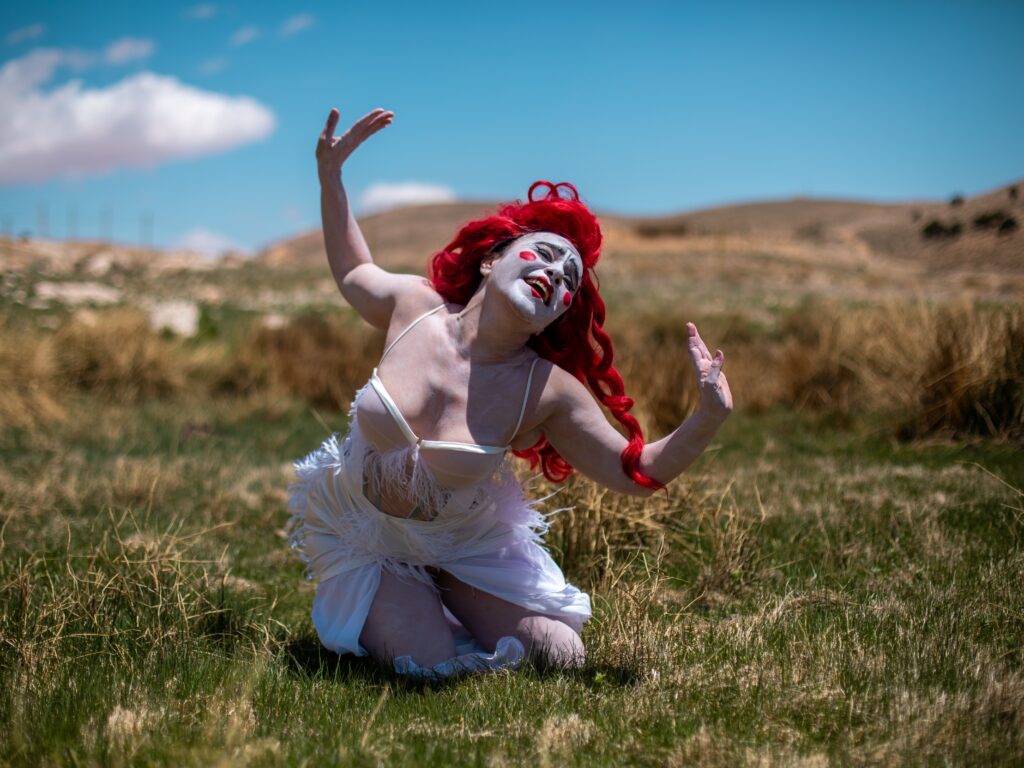
In an 8-minute film, “The Rooster,” filmmakers Rolly Dib and Chadi Younes bring to life Nizar Qabbani’s poem “AL Deek” on Program 1 of the Official Selections and Invited Short Films at PAMM at noon on Saturday, Jan. 25. (Photo courtesy of Miami Light Project)
The international dance on film festival, presented by Miami Light Project, has been bringing audiences a carefully curated selection of dance on film since 2014.
The five-day festival returns Friday, Jan. 17 through Saturday, Jan. 25 at different venues throughout the city. ScreenDance Miami kicks off with “Films You Gotta See Big!” on the 7,000-square-foot projection wall at the New World Center’s Soundscape Park at 7:30 p.m. with additional “Big” films on the lawn at 7:30 p.m. on Friday, Jan. 24. On Wednesday, Jan. 22. short and feature film selections play at the Miami Beach Bandshell and also Thursday, Jan. 23 at The Light Box Studio at Miami Theater Center, Miami Shores. ScreenDance Miami’s “2024 Official Selections” take center stage at the closing event at noon on Saturday, Jan. 25 at the Pérez Art Museum Miami.
Winter, a dancer and choreographer, describes his idea of what it means to capture movement on camera. “I love dance on film because I feel like it is this perfect marriage between movement and recorded image”.
When viewing a live performance, dancers are not in control as to what the audience’s attention may be drawn to, Winter says, but when choreographing for film, the director is able to focus the lens on what the audience sees and when.
“There’s a specificity to choreographing for the camera,” says Winter. “They call it the dancing camera, where the camera is just as an active participant as the dancer. Those are my favorite ones to program . . . they give you an experience that you wouldn’t have otherwise had if you were seeing this live.”
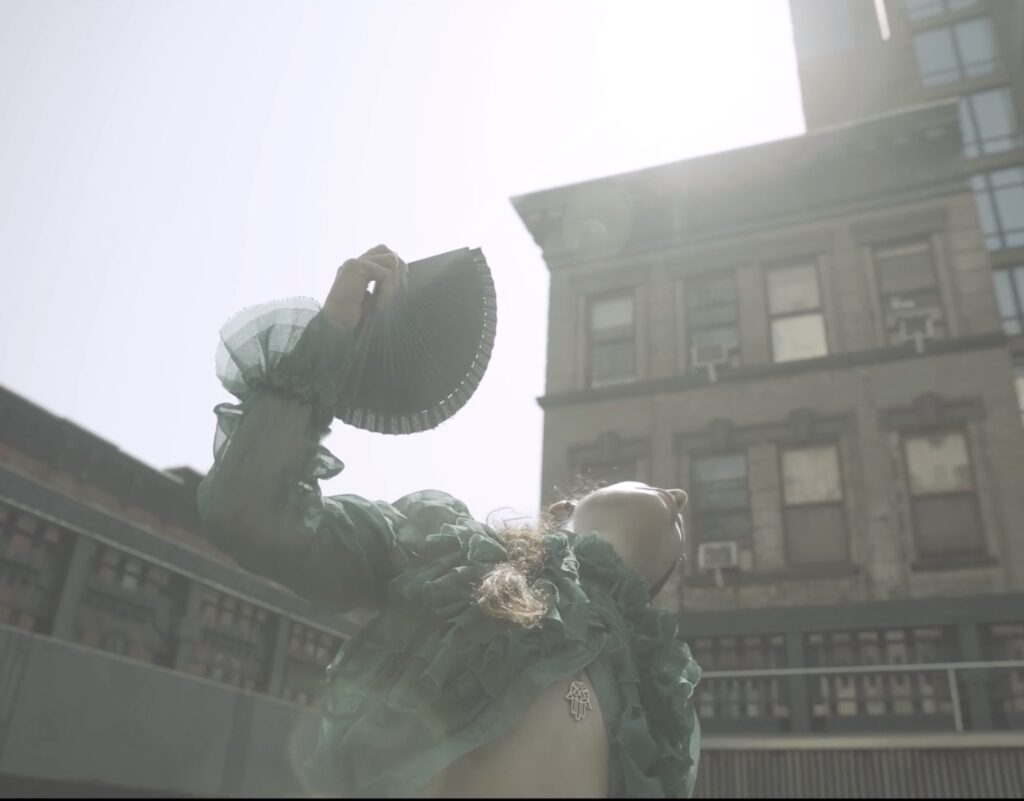
Making its world premiere is a 2-minute flamenco film titled “Silencio” by Cristina Candela showing at noon on Saturday, Jan. 25 at PAMM. (Photo courtesy of Miami Light Project)
Winter promises an eclectic selection of films in this year’s edition. “There are a mix of different films that we have programmed into the festival,” he says. “We have a few films that are kind of very frontal and are more documentation of a performance.”
Highlights include 12 Florida premieres, two U.S. premieres, six world premiere films, and six different countries represented in the lineup. Winter adds how he’s proud of how far the festival has come over the last 11 years. For the first time, three of the festival’s main features were submitted via the annual open call for submissions.
The dancer explains how in previous years, the features were “invited” films rather than submissions. “This is our first time having some really wonderful feature length films that have come to us,” he says.
Winter is particularly excited about the screening of Gabri Christa’s film, “Kankantri.” The 25-minute feature is having its Florida premiere during the Official Selection closing night event on Saturday, Jan. 25.
“She’s been a mentor of mine for years,” says Winter. “Gabri has been involved with ScreenDance since the beginning so I’m incredibly excited to be screening her film at PAMM.”
“KANKANTRI: The Silk Cotton Tree,” follows a woman’s journey of spiritual discovery as she connects with her ancestors through dance and rituals until she feels whole.
Christa says she the film has won several awards in Caribbean and Latin American festivals and in the Philippines.
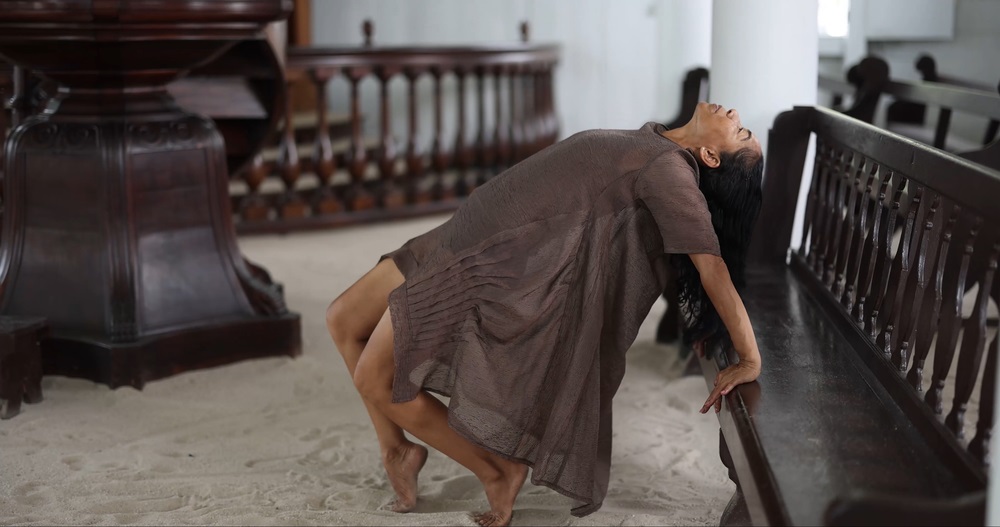
Gabri Christa’s “Kankantri” is having its Florida premiere and tells the story of a woman who is transported to a parallel universe full of her ancestors. (Photo courtesy of Miami Light Project)
“I’m grateful and honored to have my new film included in ScreenDance Miami,” she says via email. “I hope the Miami audience will also relate to the experimental and magical realism nature of the film that was shot in Suriname, South America.”
Another film screening included in as an Official Selections is the two-minute short “Batientes” by filmmakers Roxana Barba and Claudio Marcotulli. The film is the Spanish word for “hinge” and features dancer Barba flowing between a unique space filled with openings and potential.
The pair filmed the short back in 2019 while they were in Cuba for the “305 & Havana International Improv Festival.” They entered an interesting old home that had many doors and vibrant colors and were instantly inspired.
“I knew at the moment (of filming), as we were improvising, that the doors were going to be an important aspect of it. The film speaks to space and portals,” says Marcotulli.
Describing his process, the director adds, “Sometimes I produce a film, and I don’t even know what I’m doing. Eventually, the film tells me more or less the logic of it because I’m very abstract in my way of working.”
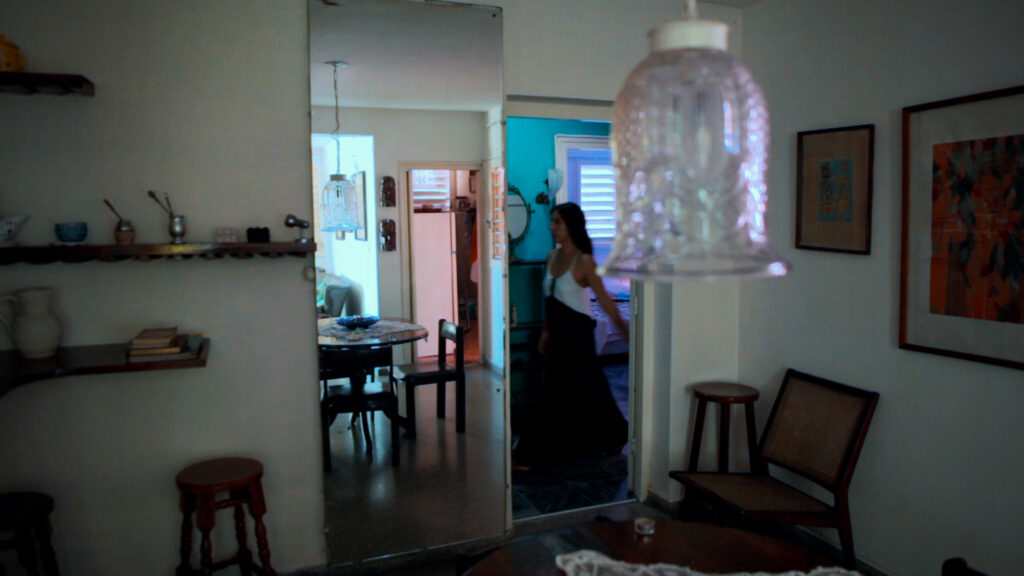
Roxana Barba and Claudio Marcotulli’s “Batientes” is featured in Program 1 of the Official Selections screening at PAMM beginning at noon on Saturday, Jan. 25. (Photo courtesy of Miami Light Project)
The two have been collaborating for over a decade. Whereas Marcotulli films and directs, Barba uses her rhythm to ebb and flow in all sorts of spaces. The dancer explains the nature of their partnership, saying, “We work very organically. When we start a film, we just film and see what comes out of that… We knew that while in Cuba we wanted to shoot something at that house, and it all happened so organically. I personally enjoy works like that.”
Dancer and performer Carla Forte, a part of the selection committee for this year’s festival, explains how the process includes focusing on a certain criteria, which includes choreography, performance, cinematography, and editing techniques.
“ScreenDance focuses on dance for the camera and experimental works, many of which are connected to our nature and the essence of who we are as human beings,” says Forte.
WHAT: ScreenDance Miami
WHERE: Miami Beach Bandshell, 7275 Collins Ave., Miami Beach; The Light Box Studio at Miami Theater Center, 9816 NE 2nd Ave., Miami Shores; New World Center’s Projection Wall at Soundscape Park, 400 17th St., Miami Beach; and Pérez Art Museum Miami, 1103 Biscayne Blvd., Miami.
WHEN: 7:30 p.m. Friday, Jan. 17, Wednesday, Jan. 22, Thursday, Jan. 23, Friday, Jan. 24, and noon, Saturday, Jan. 25.
COST: Free with RSVP via miamilightproject.com. At PAMM, free with museum admission. Admission is $18 for adults and free for museum members.
For the complete schedule, go to miamilightproject.com/program/screendance-miami-2025
INFORMATION: (305) 576-4350 or miamilightproject.com
ArtburstMiami.com is a nonprofit media source for the arts featuring fresh and original stories by writers dedicated to theater, dance, visual arts, film, music and more. Don’t miss a story at www.artburstmiami.com
No posts found
At Miami Jewish Film Festival, directors with local ties examine the gravity of Oct. 7 attacks
Written By Michelle F. Solomon
January 2, 2025 at 12:28 PM
Director Jonathan Jakubowicz with Moran Zer Katzenstein, founder of Israeli women’s rights activist group Bonot Alternativa, in “Soul of a Nation,” which opens the 28th edition of the Miami Jewish Film Festival at 7:30 p.m. on Thursday, Jan. 9 at the Miami Beach Bandshell. (Photo courtesy of Soul of a Nation)
When filmmaker Jonathan Jakubowicz went to Tel Aviv, he wanted to investigate the depths of the country’s polarization. He had been talking with his mother who has lived in Tel Aviv for almost two decades. “And then suddenly she started talking about the marches and the division and the end of democracy.”
His interest went deeper than his Jewish roots. He was born in Caracas, Venezuela, what he calls a “failed state that broke apart in many ways because of polarization.” Then, while in Tel Aviv in 2023 working on his project, “Soul of a Nation,” Palestinian group Hamas launched the largest ever terrorist attack on Israel on Oct. 7.
“We had no idea Oct. 7 was going to happen when we started making the documentary.” “Soul of a Nation” has its world premiere kicking off the 28th edition of the Miami Jewish Film Festival (MJFF) at 7:30 p.m., on Thursday, Jan. 9 at the Miami Beach Bandshell.

A scene from Jonathan Jakubowicz’s documentary “Soul of a Nation,” which gets its world premiere opening the 28th edition of the Miami Jewish Film Festival. (Photo courtesy of Soul of a Nation)
Miami native Wendy Sachs’ documentary “OCTOBER H8TE” gets its southeast United States premiere at The Hub at Temple Beth Am, Pinecrest, at 3 p.m. on Sunday, Jan. 12.
For both films, the filmmakers will be present to participate in question-and-answer sessions.
“I was born in South Miami and actually went to Temple Beth Am where the film is going to be screening. I grew up at the day school – from pre-school when I was four years old until I was in sixth grade,” Sachs fondly recalls. “It’s really a full circle moment.”
That is her origin story. Then there’s the origin story of how “OCTOBER H8TE” became a story that Sachs, a filmmaker, Emmy award-winning television producer and former Capitol Hill press secretary, felt she had to tell. Less than 24 hours after the Hamas massacre, anti-Israel demonstrations and support for Hamas swept across America and college campuses.
“On Oct. 7, I was visiting my daughter, Lexi, at the University of Wisconsin-Madison,” says Sachs. “Our phones started lighting up with messages and then we started to see the horrendous videos that were being put up on social media. And I think like so many in the Jewish community, we felt gutted.”

Documentary filmmaker and Miami native Wendy Sachs interviews IDF soldier Maya Bentwich at Kfar Aza, the site of the Hamas attacks, in southern Israel. (Photo courtesy of OCTOBER H8TE)
But it was the next day that Sachs says was the stunner. “There was a rally in Times Square celebrating Hamas as freedom fighters rather than terrorists. More than 30 student groups at Harvard signed a letter blaming Israel for the massacre. I knew that something had gone terribly wrong; it felt like the world had lost its mind.”
By the end of October 2023, Sachs put together a film treatment presenting the story she wanted to pitch to production companies. “(Places) where I had recently worked – NBC News and CNN. Everyone passed and I wasn’t surprised.”
She was determined to make the film and decided to move forward on her own.
“It needed to be documented, unpacked — what’s going on here and how we got to this moment,” says Sachs.
As is the case when creating a documentary and unlike a scripted film, events that happen in the midst of putting together the movie tend to shape the narrative.
Both filmmakers agree.
“The more time we spent in Israel and the more we spoke to people who participated and defined life there in the past, in the present, and who will define it in the future, the more evident it became that what was happening was the prelude for something truly horrific,” says Jakubowicz. “When we started the documentary, we had no idea what the third act was going to be.”
He points out one of the scenes in his film where Israeli reservists were hanging it up – no longer willing to fight for Israel. “When you heard it at the moment in Israel, you were like, well, that sounds risky, but when you see it in the documentary, and you realize that it had happened 77 days before Oct. 7 everything takes on a different meaning.”

Miami native Carlos Arroyo Jr., director of photography for “Soul of a Nation,” with Jonathan Jakubowicz on the streets of Tel Aviv. (Photo courtesy of Soul of a Nation)
Jakubowicz was able to shape his documentary with interviews with some of Israel’s key political figures – former Prime Ministers Naftali Bennet and Ehud Olmer, former President of the Supreme Court of Israel Dorit Beinisch, former Israeli Ambassador to the United States Michael Oren, and former Ministers of Foreign Affairs of Israel Tzipi Livni and Shlomo Ben Ami, as well as peace activists, and Muslim leaders.
Sachs onboarded actress, producer and social justice and human rights activist, Jewish American Debra Messing as co-executive producer. Messing also appears in the film. “Debra was using her platform and her voice to speak out when so many other celebrities and high-profile people were just silent and remained silent. So many people are being shut down and canceled out for showing support for Israel even for the hostages. She was just fearless and courageous and I really wanted her to be a part of this project.”

Actress and political activist Debra Messing appears in the film “OCTOBER H8TE” and is also co-executive producer. (Photo courtesy of OCTOBER H8TE)
She says through social media she found that they had a mutual connection, and she was able to speak with Messing through Zoom. “I told her about the film, and I told her what I was looking to do and she said, “OK, I am in.”
The Palmetto High School graduate, who was a journalism major at Northwestern University, right out of college was the youngest press secretary on Capitol Hill working for U.S. Rep Peter Deutsch. Fast forward to the 2024 election cycle and the former Democratic congressman made headlines when he vocally supported Republican Donald Trump citing the security of Israel as his reason for stepping out of party lines.
It was the 2016 election that led Sachs to make her first independent film released in 2020. “Surge” followed three women running for Congress. After that, Sachs worked on other documentaries mostly for MSNBC and CNN.
“And then, well Oct. 7 happened, and I just felt like I needed to tell this story.”
Jakubowicz lives in Los Angeles but says Miami is his second home. Miami New Drama co-founder Moises Kaufman turned Jakubowicz’s best-selling first novel, “Las Aventuras de Juan Planchard,” into an original stage play that had its world premiere in Miami Beach at the Colony Theatre in 2023. “When I am here and I stay in Aventura, I can’t tell you how many former classmates from Caracas I run into when I am walking through Aventura Mall that are living in South Florida.”

Ashager Araro, an Ethiopian-Israeli activist, in a scene from Wendy Sachs’ documentary “OCTOBER H8TE” showing as part of the Miami Jewish Film Festival. (Photo courtesy of OCTOBER H8TE)
The filmmaker’s voice is the narrative throughout “Soul of a Nation,” something Jakubowicz hadn’t planned. “The reality is that the journey was personal from the beginning. I’m Venezuelan. I’m also the grandson of Holocaust survivors so Israel matters to me because if it had existed during the war, my family would have been saved. This isn’t about a foreign county on the other side of the world.”
Jakubowicz acknowledges that his film feels eerily prophetic in light of what is happening around the world. In his voice, the end of the narrative of “Soul of a Nation” is this:
“I started this journey because the nation where I was born was bleeding too. A similar affliction has impacted almost every society in the world. I don’t know what the future holds for humanity, but I have now seen two nations face their darkest hours as a result of polarization, so I invite you to ask yourself: ‘Is your neighbor as bad as you claim or are you being manipulated into intolerance?’ ”
OTHER FILMS IN THE SPOTLIGHT
Films by South Florida directors and others about inhabitants of the Sunshine State and beyond are a few of the many don’t misses at the 28th edition of the Miami Jewish Film Festival.
“Milk & Honey, Blood & Tears”
Miami-based filmmaker Leslie Gelrubin Benitah takes a deep dive into the impact of Oct. 7 on Kibbutz Be’eri, a community once known for its peace and coexistence just a few miles from Gaza. Benitah is the creator of the online project called “The Last Ones,” a series of interviews with some of the last living Holocaust survivors and shares the stories with younger generations. Born and raised in Paris, she is a third-generation Holocaust Survivor and received her PhD in journalism from Sorbonne Université, now living in Miami. In her new documentary, Benitah talks to residents and uses archival footage and real-time accounts to tell the story of the kibbutz movement and the aftermath. Benitah will introduce the film and participate in a question-and-answer session after the screening.6:30 p.m., Sunday, Jan. 19, Michael-Ann Russell JCC.

The once thriving Miami Garment District is chronicled in the film “Miami Schmatta” from South Florida filmmakers Aaron Glickman and Grace Arts Center founder Clare Vickery. (Photo courtesy of Miami Jewish Film Festival)
“Miami Schmatta”
South Florida director Aaron Glickman teamed with Grace Arts Center founder Clare Vickery as co-director for a look back at what Wynwood was before it was the Wynwood of today – Miami’s garment district that flourished. The film, which is getting its world premiere at MJFF, follows the rise of the post World War II garment industry that thrived in Miami. Despite challenges and labor shortages, a scaled-down garment industry endures in Miami. The directors will introduce the film and participate in a question-and-answer session after the screening. 7:30 p.m., Monday, Jan. 13, Michael-Ann Russell JCC.
“One Big Happy Family”
Actress Linda Lavin, who passed away on Dec. 30, best known for her role in the 1970s sitcom “Alice,” appears in one of her last film roles in “One Big Happy Family.” Lisa Brenner, wrote, produced and co-stars in the film about a woman whose life takes an unexpected turn on her 40th birthday when a DNA test reveals a surprising result. Lavin plays her mother who accompanies her on a journey of self-discovery. The movie gets its world premiere at the MJFF with Brenner appearing who will introduce the film and participate in a question-and-answer session after the screening. 8 p.m., Saturday, Jan. 11, Temple Beth Am; 3 p.m. Sunday, Jan. 12 and 8 p.m., Tuesday, Jan. 21, Miami Theater Center.
“Janis Ian: Breaking Silence”
Grammy Award-winning musician Janis Ian became a Florida resident in 2018 after moving to Anna Maria Island on the coast of Manatee County. Ian has a musical career that spans five decades and known for hits such as “At Seventeen” and the trailblazing “Society’s Child.” The documentary chronicles the singer’s life beginning with her Jewish childhood raised on a chicken farm in New Jersey to her release of the album “Breaking Silence,” which she leveraged to come out publicly about her relationship with wife, Pat Snyder. Ian will introduce the film and participate in a question-and-answer session after the screening. 8 p.m., Saturday, Jan. 18, O Cinema Miami Beach.

Amichai Lau-Lavie, the subject of the documentary “Sabbath Queen.” (Photo courtesy of Miami Jewish Film Festival)
“Sabbath Queen”
Amichai Lau-Lavie was born in the suburbs of Tel Aviv to a family that spanned 38 generations of Orthodox rabbis. The feature documentary, directed and produced by Sandi DuBowski, was filmed over 21 years following Lau-Lavie’s epic journey – he was ordained as a rabbi in 2016. The Israel-born gay man has spent his life’s journey breaking norms with part of the journey performing Jewish rituals in drag. Lau Lavie and DuBowski will introduce the film and participate in a question-and-answer session after the screening. 7 p.m., Thursday, Jan. 16, Miami Beach Botanical Garden.
IF YOU GO
WHAT: The 28th edition of the Miami Jewish Film Festival
WHEN: Thursday, Jan. 9 through Thursday, Jan. 23
WHERE: Coral Gables Art Cinema, 260 Aragon Ave., Coral Gables; Michael-Ann Russell JCC, 18900 NE 25th Ave., North Miami Beach; Miami Beach Bandshell, 7275 Collins Ave., Miami Beach Botanical Garden, 2000 Convention Center Drive, Miami Beach JCC, 4221 Pine Tree Drive, O Cinema South Beach, 1130 Washington Ave., Miami Beach; Miami Theater Center, 9806 NE 2nd Ave., Miami Shores; The Hub at Temple Beth Am, 5950 N. Kendall Drive, Pinecrest.
COST: $54, opening night; $36 closing night; $15 general admission for all other films, $14 seniors 65 plus and students with ID; $325 for all access.
INFORMATION: 305-503-5182 or miamijewishfilmfestival.org/
ArtburstMiami.com is a nonprofit media source for the arts featuring fresh and original stories by writers dedicated to theater, dance, visual arts, film, music and more. Don’t miss a story at www.artburstmiami.com
No posts found
Review: ‘Both Sides Now’ at GableStage An Intimate Musical Tribute
Written By Michelle F. Solomon
December 17, 2024 at 1:46 PM
Danielle Wertz and Robbie Schaefer in “Both Sides Now: The Music and Lives of Joni Mitchell and Leonard Cohen” perform at GableStage in the Biltmore Hotel through Jan. 5. (Photo courtesy of Magnus Stark)
Two stuffed chairs with a guitar leaning against one of them; a small table between with a large retro ceramic lamp with a white shade; two microphone stands; at stage right is a baby grand piano; Oriental rugs of different sizes are underneath. This is the atmosphere that sets the scene for GableStage’s “Both Sides Now: The Music and Lives of Joni Mitchell and Leonard Cohen.”
Billed as a “theatrical concert,” it’s more of a salon-listening room show than a theatrical presentation although through the storytelling we learn about the legendary musicians with tales interwoven by Danielle Wertz and Robbie Schaefer; the performers developed the piece at Washington D.C.’s Signature Theatre. It’s played smaller concert venues such as The Ark in Ann Arbor, Mich., and will kick off a tour after its three-week run at GableStage — The Concert Hall at City Winery, Atlanta; The Music Hall Lounge in Portsmouth, The Chocolate Church Arts Center in Bath, Maine, and other venues.

Danielle Wertz and Robbie Schaefer developed “Both Sides Now: The Music and Lives of Joni Mitchell and Leonard Cohen” at Washington D.C.’s Signature Theatre.
While a bit of a departure as GableStage is the purveyor of staged theatrical works, Wertz and Schaefer’s musical cabaret about the two folk singers keeps the duo’s writing and musical selections intact; GableStage contributes its expertise in scenic design (Frank J. Oliva), lighting design (Tony Galaska, whose lighting must be mentioned with its soft spotlights on the performers, sometimes even mimicking a flickering candle), set dressing (Marcela Paguaga) and sound engineering (Hector Martinez).
The genial pair enter the stage as Wertz carries a candle, which she places on the table, then lights it. Both are holding mugs with teabags hanging out of each cup. They sit, set down the tea. Schaefer grabs his guitar.
Before the show began at the first Friday performance, GableStage artistic director Bari Newport confided that she had been looking for a Leonard Cohen “theater piece” since she was 22 years old and believed she found it with “Both Sides Now.” She also told the audience that Schaefer was ordained as a rabbi only days before the GableStage appearances.

With 15 songs and an “encore,” the show opens with Danielle Wertz on vocals singing Mitchell’s “A Case of You” while Robbie Schaefer accompanies her on guitar. (Photo courtesy of Magnus Stark)
“Both Sides Now” weaves in stories and biographies of Mitchell, now 80 years old, who started her career as a painter and Cohen was a poet and novelist before becoming a defining musical voice in the folk scene during the 1960s; he died at the age of 82 in 2016.
With 15 songs and an “encore,” the show opens with Wertz on vocals singing Mitchell’s “A Case of You” while Schaefer accompanies her on guitar. The song is from Mitchell’s 1971 “Blue” LP, her fourth studio album and considered her greatest work.
“Both Sides Now” features nine of Mitchell’s songs and seven of Cohen’s.
Schaefer says that the performing duo met two years ago through their shared love of each of the icons’ music but “Jonie and Leonard met decades before.” Lovers for only weeks, according to Schaefer, their friendship lasted a lifetime.
This is where “Both Sides Now” connects – through the earnestness of Wertz and Schaefer conveying their personal stories as they weave through stories of Mitchell and Cohen’s careers and personal lives.
Wertz’s admission: “I was a teenager listening to Duke Ellington’s ‘Melancholia.’ What teenager does that?” she jokes. And commentary courtesy of Mitchell about how she felt regarding stardom: “If they are going to put me on a pedestal, they should know who they are worshipping,” she said of her laid bare lyrics.

There’s a beautiful rendition sung a capella by both Danielle Wertz and Robbie Schaefer on Joni Mitchell’s “Fiddle and Drum.” (Photo courtesy of Magnus Stark)
Schaefer is a gifted storyteller painting a vivid image of a hiking trip he took to the top of a volcano in Nicaragua. He says he imagined Leonard Cohen sitting next to him as he lay at the summit crater staring into the black hole.
He talks about spending his childhood outside of the U.S. until he was 11 years old and when playing his guitar then for a girl at school, she told him his voice sounded like singer-songwriter James Taylor. He wanted to impress the girl and acknowledged the compliment – then reveals he didn’t know who James Taylor was.
Schaefer does have a bit of Taylor in his vocal delivery, but he has the soul of Cohen.
The pair hit all the high notes in the song choices, Mitchell’s “Big Yellow Taxi” with Wertz at the piano and the two singing it as a jazzy-tinged duet, “Little Green,” which Wertz prefaces by telling the story of Mitchell writing the song in 1966 shortly after she signed the papers to give up her daughter for adoption.
There’s a beautiful rendition sung a capella by both of Mitchell’s “Fiddle and Drum” and another memorable styling as the two join together vocally each time for the chorus of Cohen’s “Lover, Lover, Lover.”
Then there’s Schaefer’s arrangement of Cohen’s 1974 “Who By Fire,” which he pairs with Jewish prayer, the only song the duo recorded because, they say, it was difficult for them to obtain the rights to the Mitchell and Cohen library. It’s by far the most moving piece in the evening.
Of course, no Cohen show would be complete without “Hallelujah,” which he wrote in 1984, and has been covered by artists of every genre from Willie Nelson to k.d. lang, the most famous rendition by Jeff Buckley released in 2007.

The atmosphere is that of a cozy living room for GableStage’s presentation of “Both Sides Now: The Music and Lives of Joni Mitchell and Leonard Cohen. (Photo courtesy of Magnus Stark)
More concert etiquette than stage bow, the duo ends the show with “Hallelujah” and leaves the stage. The audience stands and applauds (some who thought the show was over began to leave – not unusual for Miami audiences who frequently duck out before curtain calls.). The pair returns to perform the “encore,” which is listed in the program – Mitchell’s 1966 “Circle Game.” The audience is asked to help out with the chorus: “And the seasons, they go ’round and ’round, and the painted ponies go up and down, we’re captive on the carousel of time.”
“Both Sides Now: The Lives of Joni Mitchell and Leonard Cohen” will be a Rock 101 introduction to the troubadours for some and a revisiting of the legends for others. A few small tweaks could add dramatic flair and create more of a theatrical experience. Perhaps projections (we never do see photographs of the real pair); maybe sound clips of Mitchell’s and Cohen’s voices speaking from the countless audio interviews available.

Danielle Wertz, a vocalist with jazz influences has Miami ties – she graduated from University of Miami’s Frost School of Music. (Photo courtesy of Magnus Stark)
Wertz, a vocalist with jazz influences who has Miami ties – she graduated from University of Miami’s Frost School of Music, and Schaefer, a rock-folk musician, do here what they do best. They are musical performers and their interpretations of the songs of these modern music legends are worth spending 75 minutes in GableStage’s cozy listening room.
WHAT: “Both Sides Now: The Music and Lives of Joni Mitchell and Leonard Cohen” by Danielle Wertz and Robbie Schaefer
WHERE: GableStage in the Biltmore Hotel, 1200 Anastasia Ave., Coral Gables
WHEN: 2 p.m., Wednesday, Dec. 18 and Tuesday, Dec. 24; 7:30 p.m., Thursday (except for Thursday, Dec. 19), Friday, and Saturday; 2 p.m. Saturday and Sunday. Through Jan. 5.
COST: $45, $50, $55, $60, all with additional $10 service fee (discounts for students, teachers, artists, military and groups).
INFORMATION: 305-445-1119 or gablestage.org
ArtburstMiami.com is a nonprofit media source for the arts featuring fresh and original stories by writers dedicated to theater, dance, visual arts, film, music and more. Don’t miss a story at www.artburstmiami.com.
No posts found



Recent Comments