Knight New Work: ‘Sharing Grandmothers’ set to premiere online
Written By Sergy Odiduro September 28, 2021 at 8:00 AM
Inez Barlatier, a Haitian-American musician and educator, is working with Caballero and Lornoar, a Cameroon-based singer-songwriter, on “Sharing Grandmothers.” (Photo courtesy of Inez Barlatier)
Like many in the performing arts community, Carlos Miguel Caballero, a Cuban-born actor and theater director, was left reeling from the effects of pandemic closures. Then he heard about available funding through the Knight New Work 2020 grant program.
It was a most welcome lifeline. “I wrote the application with my heart,” he says.
His dream was to collaborate with Inez Barlatier, a Haitian-American musician and educator, and Lornoar, a Cameroon-based singer-songwriter. Together, they wanted to produce “Sharing Grandmothers,” a music and theatrical dance performance that focuses on the human exchange.
The group is now on its way, as one of nine Miami winning projects sharing $300,000 in funds slated for artists and their projects through the John S. and James L. Knight Foundation.
The awards are just the latest round of funding from Knight New Work 2020, which was created last year to support the performing arts community during the COVID-19 pandemic. The foundation allocated $10,000 each, first to 18 Miami-based artists and art organizations, then to 19 community leaders who got to direct the grant money to a person/group of their choosing.
Now, this new batch of artists have until year’s end to complete their pieces.
Adam Ganuza, program officer on the Knight Arts team, said the funds provide one way to help artists get back on track.
“They are all incredibly talented, and they are all doing fantastic work,” Ganuza says. “We have artists being incredibly creative under enormous constraints.”
Carlos Miguel Caballero, a Cuban-born actor and theater director, is working on a co-production entitled “Sharing Grandmothers.” (Photo courtesy of the artist)
‘SHARING GRANDMOTHERS’
For Caballero, this includes working with those who don’t speak the same language. Even though it’s a bit of a hurdle, the collaborators of “Sharing Grandmothers” all tap into universal experiences and messaging presented throughout a theatrical piece with original music and dance.
“It’s a very simple history about love and about life,” Caballero says. “It’s a great story about a cultural richness that is very powerful.”
One of the themes they will focus on is the cycle of life, says Barlatier.
“The show is telling a story about our people, from death to rebirth,” Barlatier says. “We’re going to start by giving thanks to our ancestors and the women who came before us.”
The performance is also meant to offer a message of unity, particularly to those who have a connection with the African diaspora, she says.
“The more I learn about my culture, the more I learn how every culture of the African diaspora is connected in some way,” she says. “And though we have our nationalities, in the end, we just were dropped off in different places. And so, this project is just that story.
“It’s important to know that this story is also a lot of people’s story in Miami,” she adds. “It’s not only about Cameroon, it’s about Cuba, it’s about Colombia, it’s about Bolivia. It’s about all the cultures that were touched by the movement of Africans before they even were called African.”
*”Sharing Grandmothers: Phase 1 Musical Component” is now scheduled to premiere at 7 p.m. Thursday, Sept. 30, on FUNDarte’s YouTube channel and Facebook page. Watch it free of charge. For more information, visit Fundarte.us or call 786-348-0789.
‘WHERE HOME IS’
Also investigating movement in his piece is Juraj Kojs, director of the Foundation for Emerging Technologies and Arts and assistant professor at the University of Miami’s Frost School of Music. But the focus of his music composition for voices, instruments and computers, entitled “Where Home Is,” relies on immigration.
As a recently naturalized U.S. citizen from Slovakia, his explores what it’s like to relocate to another country.
Kojs describes himself as an “artphibian,” one who isn’t afraid to plunge headfirst into an array of artistic disciplines. His flexibility has allowed him to find new ways to express himself, and he offers encouragement for those who are struggling with the new artistic landscape.
“As an artist, you just can’t stop because art does not allow you to do that,” he says. “We can keep on making art. We don’t have to be paralyzed because we aren’t making music in a concert hall.”
His unique and steadfast approach has led him to launch his piece in an unlikely location: “We’re doing it in this incredible garage,” he says, with a laugh.
The experience includes going up and down escalators with 11 floors of performances, engagement activities, musical expression and theatrical dance.
“This will be all tied to immigration because all of the performers and participants are immigrant women,” he says.
In fact, he reveals that it was an immigrant woman who initially sparked the idea.
“What motivated this whole project is my great-great-great-great-grandmother, who came in the early 1900s to work in Chicago as a cleaning lady. In many ways, she inspired me to come to the States,” he says. “I was always curious. What did she experience? I wondered what it would have been like for a woman with potentially no language skills but [who] had the determination to make life better for those who she left behind.”
It’s a good question. If only he could travel back in time to find out …
Juggerknot Theatre Co. will host virtual bus tours for students to learn about Miami neighborhoods including Liberty City, Little Haiti and Coconut Grove. (Photo courtesy of Juggerknot Theatre Co.)
‘MIAMI BUS STOP STORIES’
The creators of Juggerknot Theatre Co.’s “Miami Bus Stop Stories,” plan to do just that.
The theatrical production company, known for its popular “Miami Motel Stories,” will use the Knight funds to host virtual bus tours for students to hear from “historical figures” from various Miami neighborhoods, including Liberty City, Little Haiti and Coconut Grove.
“The idea is that they’re dropped off at a specific moment in time in neighborhoods when something pivotal happens,” said Tanya Bravo, Juggerknot’s founder and executive artistic director. “They will encounter a live person, an actor, and communicate with them from a different time period. By the time they finish, they will have an idea of what are some of the important moments that happened in those neighborhoods.”
For example, she said, they’ll learn about Overtown: “What was it like when the I-95 overpass was built through Overtown? How did it impact them?”
The bus tours will be part of an ongoing learning experience: “We’re also creating a resource guide and an activity book for the teachers, so that the conversation can continue” after the tours, said Bravo.
The Knight funds were a game-changer for Juggerknot.
“It allowed us to take a moment in time and really pivot and look at things in a different way because for us it was really difficult. We had to close our show, ‘Miami Motel Stories: North Beach,’ during the pandemic,” Bravo said. “It would have been impossible for us to do anything live, and also immersive during that time because we work in very small spaces. So, for us to be able to do something virtual and challenge ourselves to get as close as possible with our audience, but obviously, with a screen between us, was something really exciting.”
Despite the virtual component, “Miami Bus Stop Stories” will provide an in-depth view of the neighborhoods while challenging any preconceived notions.
“Virtual can be incredibly impactful if done the right way,” said Bravo. “So it’s a really great way to strip away any stigma and see what these communities are like. Let’s peek in there for a little bit, and maybe we’ll see that we’re not as different as we think we are.”
Karl Stephan St. Louis in Melissa Cobblah Gutierrez’s “CuBlack: Invisibilized No Further!” (Photo courtesy of Woosler Delisfort)
‘CUBLACK, INVISIBILIZED NO FURTHER!’
Melissa Cobblah Gutierrez delves into what it means to be a Cuban woman of African descent in “CuBlack: Invisibilized No Further!”
Gutierrez, who was born on the island and raised in Ghana and Cape Verde, is a choreographer, performer and educator whose dance film and performance is intended to open conversations. Examining ideas about race and historical oppression is an important way to address issues in the community, she says. Her piece aims to provide both a voice for the voiceless and a platform for the Black community in Cuba.
Melissa Cobblah Gutierrez delves into her own experiences in “CuBlack: Invisibilized No Further!” (Photo courtesy of Woosler Delisfort)
Gutierrez’s experiences will serve as a backdrop. Arriving in the United States at age 14 was a balancing act, she says, as she embraced her Latin roots as well as the African-Americans who welcomed her.
“I am still part of the African-American community. The Afro-Cuban experience is a spectrum, but we are also close to our African roots. It’s going to be an interesting process, and I can’t wait to hear other people’s experiences,” she says, of the research part of the project. “I would love for everybody that comes to the theater to see themselves reflected in my work,” she says.
OTHER KNIGHT NEW WORK 2020 WINNERS
The other winners and their works, as described by Knight New Work 2020:
Fereshteh Toosi — “Oil Ancestors,” an immersive virtual performance on the cultural history of oil in Florida.
Maya Billig — “A Lot,” an interactive drive-in dance performance that aims to physicalize the experience of regaining momentum after being “parked” in place for a period of time.
Natasha Tsakos — “CARABOOM,” an immersive theatrical experience that aims to elicit human connection while people remain in their vehicles.
Najja Moon — “The Huddle is a Prayer Circle,” an immersive installation and
interactive performance focused on sound, visual art, scripture and movement.
Octavia Yearwood — “Life’s Interludes,” a mixtape of music and poetry plus visual components relating the experiences of queer artists “in a world where their lives feel like interludes.”
To learn more about the artists and their works, be sure to follow them on social media. For more on Knight New Work 2020, including any upcoming funding opportunities, go to Knightfoundation.org/knight-new-work-2020.
Review: ‘Shakespeare Is a White Supremacist’ is part of a timely, overdue conversation
Written By Christine Dolen September 27, 2021 at 8:51 PM
Chasity Hart is Titania and Matthew Salas plays a character known only as the Director in Main Street Players’ “Shakespeare Is a White Supremacist.” (Photo courtesy of Olimac Media)
William Shakespeare has been called many things in the centuries since he crafted many of the greatest works of the English language. He has been the subject of endless scholarly debate and investigation, and his plays have been interpreted and reinterpreted across time and countless cultures.
The Bard of Avon’s works were nothing if not thought-provoking, holding the mirror up to racism in “Othello” and antisemitism in “The Merchant of Venice.” Still, the title of Andrew Watring’s play – “Shakespeare Is a White Supremacist” – is a provocation of a different sort, one designed to make you sit up, pay attention and think, “Was he?”
Though the play was written in 2017 and developed further in 2018 when Watring was a student at American University in Washington, D.C., it’s only now getting its professional world premiere with the Main Street Players in Miami Lakes.
Staged by Carey Brianna Hart, the piece is set in a rehearsal room given over to auditions. A young, white man referred to only as Director (Matthew Salas) is speaking passionately about creating a “really special” production of Shakespeare’s “A Midsummer Night’s Dream,” with all the roles played by actors of color.
But as it turns out, the attention-grabbing title notwithstanding, the play is not so much about Shakespeare as it is about the experiences of those actors in theater itself.
From left, Erin Wilbanks, Annette Monk, Vanessa Tamayo and Roderick Randle rehearse their parts. (Photo courtesy of Olimac Media)
Experimental in style, deliberately non-linear, “Shakespeare Is a White Supremacist” is emerging at a time when issues surrounding equity, diversity and inclusion are finally getting a long-overdue spotlight in the arts. During the pandemic and concurrent with nationwide protests over the murder of George Floyd, BIPOC (Black, Indigenous and People of Color) artists spoke out about institutionalized racism, the lack of genuine opportunities and serious consideration for roles, colorism in casting, and the punishing toll of stereotyping.
Though the writing doesn’t rise to the level of Branden Jacobs-Jenkins’ “An Octoroon” or Quentin Tarantino’s “Django Unchained,” Watring’s script is observant, unsettling and, in one fever-dream passage near the end, savage in its depiction of usually unspoken racist thoughts and beliefs.
Except for the Director and a white woman called Actress (Erin Wilbanks), the auditioning actors all have Shakespearean names, a needlessly confusing conceit.
Macbeth (Roderick Randle), a Black actor who’s a flattery-prone pal of the Director, is going up for the part of Oberon. He assures the other actors that this guy is someone who really listens, who really makes space for them and their ideas. Yet it’s not long before the Director is pushing Macbeth, pushing him hard to go deeper, then asking the Black actor to perform something from “Othello.”
Juliet (Annette Monk), an Afro-Latina actor who is a bit older than the other women, is weary of not being able to play roles like Cleopatra, of being boxed into parts where she becomes invisible and silent. She complains that she’s told she doesn’t look Latina and that she doesn’t “perform blackness” to the expectations of white directors – or Black ones, for that matter.
Titania (Chasity Hart), a regal woman onstage and off, vividly illustrates colorism by willing the actors to line up according to their skin tone. She repeats a question she’s too often asked – “What are you?” – adding that the questioner then looks her over, “trying to piece together a racist genealogy for each of my features.”
Viola (Katlin Svadbik) and Ophelia (Vanessa Tamayo) are Latina actors often assumed to be white, and each has an issue.
The characters played by Erin Wilbanks and Roderick Randle face off during “Shakespeare Is a White Supremacist.” (Photo courtesy of Olimac Media)
Viola is dating the Director, who crosses personal boundaries in the rehearsal room, setting off resentment among the other actors. Her audition piece, a beautifully delivered version of Phebe’s monologue from “As You Like It,” is especially telling, as it perfectly applies to her callow beau.
Ophelia, who will be playing Puck in “Midsummer,” is trying to improve her English and lose a noticeable accent. Too often, she feels invisible, unseen and unheard.
“Shakespeare Is a White Supremacist” loops repetitively from auditions to rehearsals to performance, and though Alex Tarradell’s chimes-and-drum sound design is meant to help, it too is repetitive. Set and lighting designer Amanda Sparhawk’s rendition of a utilitarian rehearsal room and the stage beyond, with a mirror allowing the actors to do their makeup as we watch, brings the performers’ offstage world to the forefront. Angie Esposito has designed transformative costume pieces that allow us to observe the magic as actors in rehearsal clothes transform into the vivid characters of “A Midsummer Night’s Dream.”
Full of unsettling but believable microaggressions, Watring’s script is challenging to act. And though it has necessary moments of tension-relieving humor – many of those delivered by Wilbanks as the flamboyant Actress – it’s also unnerving, sometimes painful to watch.
After being challenged over and over by the Director, his supposed friend, Randle’s Macbeth unravels, railing about Black stereotypes made palatable to white audiences, then sinking into himself as he tries to physically contain his pain. Randle’s work in the scene is both ferocious and excruciating.
Katlin Svadbik portrays Viola, a Latina struggling to juggle the professional and the personal. (Photo courtesy of Olimac Media)
Hart’s Titania commands the stage, sometimes deliberately, sometimes with nuanced subtlety. Hart is an actor who works infrequently in South Florida theater, but she deserves a wider range of opportunities.
Despite some opening-night nerves, each of the actors plumbed the anxieties and disappointments of the characters. Salas, though, should ratchet up the clueless tyranny of the Director, who naively believes himself enlightened and different.
The director of “Shakespeare Is a White Supremacist,” Carey Brianna Hart (no relation to Chasity Hart), has staged the play with the authority and insight of an artist who deeply understands the world of Watring’s play. Throughout her career as an actor, director, stage manager and educator, she has been in a position to observe the good, the bad and the sporadic ugly racism of the way theater gets made in South Florida. At the Main Street Playhouse, she and her cast get to chime in on a reckoning too long in coming.
WHAT: “Shakespeare Is a White Supremacist” by Andrew Watring
WHERE: Main Street Playhouse, 6766 Main St., Miami Lakes
COST: $30 for general admission; $25 for students, seniors and military personnel
SAFETY PROTOCOLS: The Main Street Playhouse has decreased seat capacity, among its safety changes, and encourages mask wearing for “all unvaccinated patrons” and social distancing. Additionally, a streaming version of the play will become available on Oct. 15 and run until Nov. 21 for those not yet comfortable returning to the theater. Streaming tickets will be $10 a person.
Review: A solo Latina tour de force lights up Actors’ Playhouse at Miracle Theatre
Written By Christine Dolen August 23, 2021 at 10:38 PM
Elena María García plays an event planner and 20 other women in “¡FUÁCATA! or A Latina’s Guide to Surviving the Universe,” an Actors’ Playhouse production at The Miracle Theatre in Coral Gables. (Photo courtesy of Justin Namon)
Throughout the long days and months, and more than a year since COVID-19 so vastly altered our lives, those who love the arts have persevered through isolation and the consolation of online entertainment, clinging to a dream: that gathering safely inside a theater would become possible again.
For Actors’ Playhouse at The Miracle Theatre in Coral Gables, the time for that reunion of artists and audiences is now.
The company is taking a carefully considered step back into the realm of mainstage theater with “¡FUÁCATA! or A Latina’s Guide to Surviving the Universe.” Cowritten by Elena María García and Stuart Meltzer, performed by García and directed by Meltzer, the solo show got its Zoetic Stage world premiere at Miami’s Arsht Center for the Performing Arts in 2017, then returned there for a second run in 2018.
(Video courtesy of Diego Pocoví)
Running now in The Miracle Theatre’s 600-seat mainstage theater through mid-September, this third iteration of the 90-minute “¡FUÁCATA!” has been tweaked and minimally trimmed, but it remains the work of the original creative team: García, Meltzer, set designer Michael McKeever, lighting designer Rebecca Montero and sound designer Anton Church.
Watching the show in a traditional proscenium space vs. the more intimate black box where it premiered is a different experience. Given the Delta variant, surging COVID cases and the contentiousness over vaccinations, Actors’ Playhouse has to put safety first. Masked theatergoers are scattered throughout the auditorium, with space in between, which means the crowd’s spirited communal response to the work is necessarily dialed back.
Even so, the brilliant García demonstrates yet again just how powerful a single performer can be.
A three-time Carbonell Award-winning actor, García is one of theater’s funniest women, an artist with the chameleonic abilities of Lily Tomlin and physical prowess of vintage Lucille Ball. She’s a master of improv comedy – she coached the company and performed in “Zoetic Schmoetic,” an outdoor improv show earlier this year at the Arsht’s Thomson Plaza – and she’s also a deft and moving actor.
All of those skills come into play in “¡FUÁCATA!,” which takes its title from a Cuban slang term meaning a back-handed slap.
Stuart Meltzer is director and coauthor of “¡FUÁCATA!” (Photo courtesy of Justin Namon)
The piece works so well because its roots are deeply personal, yet the myriad subjects it takes on are universal, particularly if you happen to live in melting-pot Miami. Lasting love and transactional attraction, assimilation and enduring pride in one’s heritage, intergenerational conflict, the pressure women feel to excel in multiple roles – all are part of García’s resonant love letter to Latinas.
The play’s key character is a Cuban-American event planner named Elena Flores, whose namesake company is called Elena Plans Big Things. As she explains up front, she’s a “super Latina superhero” (wife, mom, working professional and at least a dozen other things) who could no more function without her trio of daily “cafecitos” than her car with its misbehaving seatbelt could run without gas.
As Elena moves throughout her day, we meet two dozen other characters, most of them Latinas, with a couple of guys and non-Latina ladies tossed into the mix.
With an assist from sound and lighting effects, sometimes with a new character’s name projected onto McKeever’s Mondrian-inspired set, García transforms flawlessly into some very different women.
Elena’s Mami, for example, is an old-school Cuban matriarch who expresses love via her from-scratch cooking and has dinner prepared by 10:30 a.m. daily. Estrella, who rules the takeout roost at Elena’s beloved La Isla Café, confides that she was an accountant at the Tropicana in Havana – and that she enjoys lording it over her caffeine-desperate Miami customers. Marisol, who sells chilled bottled water at southwest Eighth Street and 27th Avenue every day, tells a harrowing story of escaping the threat of violence and death in Honduras at age 17, riding atop a train racing through Mexico, walking the last 70 miles into the United States, then being smuggled from Texas to Miami.
Another character, Beatrice Goldberg, the quintessential Jewish matron, is using Elena (whom she calls “Ellen”) to plan a 50th anniversary party in celebration of a not entirely blissful union with her once-hairy hubby, Murray. For entertainment, she’s thinking Elena can book Graciela, an out-there Spanish performance artist whose act is, at its tamest, R-rated.
Sandy Holmes, the power-crazed new Parent-Teacher Association leader at the Gloria and Emilio Estefan Middle School that Elena’s daughter attends, reveals her Trumpian stripes in comments about English-as-a-second-language students and the diverse cultures represented at the school’s International Day celebration.
The play’s writer and sole actor, Elena María García, is a three-time Carbonell Award winner. (Photo courtesy of Justin Namon)
Monica, who has spent most of her adult life running from her Mexican heritage, frets about how to reply when her 11-year-old asks why immigrant kids are being put in cages.
García and Meltzer cover a spectrum of Latina life in Miami – much of it funny, some painful, all of it rich in specific detail. Some of those details are drawn from García’s life and repurposed; for instance, the about-to-retire teacher Mrs. Puig says she arrived in the United States as a kid via a Pedro Pan flight on Feb. 22, 1962. That’s the date García’s parents got married.
The dialogue blends English and rapid-fire Spanish, though the latter is always restated or paraphrased for the monolingual “que no hablan español.”
South Florida’s return to live performance will be happening throughout the fall and into winter. How successful that will be is as unpredictable as COVID-19 itself. But theater fans yearning to go back to their happy place should know this: Inside The Miracle Theatre, thanks to a masterful performer and the insightful “¡FUÁCATA!,” a gem awaits.
WHAT: “¡FUÁCATA! or A Latina’s Guide to Surviving the Universe,” by Elena María García and Stuart Meltzer
WHEN: 8 p.m. Wednesdays-Saturdays and 3 p.m. Sundays, through Sept. 12
WHERE: Actors’ Playhouse at The Miracle Theatre, 280 Miracle Mile, Coral Gables
COST: $30-$75 (10 percent off for seniors at weekday performances, $15 student rush tickets)
‘Save the Bay’ PSA contest has a message – and a winner!
Written By Sergy Odiduro August 6, 2021 at 1:15 AM
Jeano Michel stars in the titular role of Captain BayWatch in Jayme Gershen’s laugh-out-loud PSA meant to inspire residents to take better care of their environment. (Photo courtesy of Diana Larrea)
A small crowd gathered in the online waiting room.
Oolite Arts greeted the participants in a chat window and urged them to introduce themselves. A steady stream of salutations, friendly banter and comments on chosen beverages for the evening (pear juice with a shot of Haitian rum) followed.
“I feel like I’m in an AOL chatroom from 1998,” one viewer commented.
“Let’s get this party started!” wrote another.
After much enthusiasm, a momentary lull descended as Oolite Arts cinematic arts manager Danielle Bender appeared on the screen.
“Good evening, everyone. Thanks for joining us for the Save the Bay PSA screening, where we will unveil our 1-minute PSAs about Biscayne Bay,” she said.
The public service announcement videos are the result of Oolite Arts’ open call for submissions, and five finalists each received $2,500 to produce pieces highlighting the plight of Biscayne Bay, thanks to funding by the Lynn and Louis Wolfson II Family Foundation.
Oolite Arts launched the contest in cooperation with Miami-Dade County and its chief bay officer, Irela Bague, with the aim of shining a spotlight on South Florida’s once-pristine bay, which suffers from hypersalinity and a host of contaminants including sewage spills, fertilizers and other plastic pollutants.
The public had the chance to cast their vote through Aug. 11 and choose their favorite from the group of five PSA finalists and three honorable mentions. (The honorable mentions each received $1,000 for their proposals.) Hundreds of filmmakers submitted their ideas and, judging by the vibrant chat screening on July 28, viewers responded enthusiastically as well.
“When you use an independent jury, comprised of professional filmmakers, you’re bound to get a wonderful winner,” said Dennis Scholl, president and CEO of Oolite Arts.
The People’s Choice Award went to Alexa Caravia’s “Video Letter.” She received $1,000 as part of the prize.
Interested filmmakers who missed this contest have another chance to throw their hat in the ring.
“Given how much everybody has loved this … we announced [during the screening] that we’re going to do it again,” Scholl said.
This time, Oolites Arts is teaming up with the City of Miami Beach to host a Sustainability in Action PSA video contest, with funding from the Wolfson foundation. The finalists, who will receive a $2,500 production budget to persuade residents to reuse and conserve, will have their video featured at a public screening in November at SoundScape Park. The deadline to submit a pitch is Monday, Aug. 16.
For those willing to tackle the project, Scholl offered some advice: “Filmmaking is a difficult process. You’ve really got to show us in your application that you have the ability to make the film.”
When you combine both professionalism and passion, he said, the two become unbeatable.
“When you put those two things together … you get magic.”
Below is a sneak peek of the five winning finalists.
Opal Am Rah stars in “The Siren.” (Photo courtesy of the artist)
Helen Peña: ‘The Siren’
An ebony face manifests grief, with emerald-green tears streaming. Transfixed, you watch the mermaid’s mournful dance. It is a dance meant to capture the pain of Biscayne Bay.
“How did we come this far? What happened?” said Helen Peña, creator of the PSA entitled “The Siren,” in an interview. “You could once drink directly from the water. It’s just mind-blowing that it was freshwater and that once the waters were crystal clear.”
Billed as a “a black feminist reminder and a black feminist awakening,” Peña’s ad pays homage to Haitian Vodou spirituality — and to one Haitian artist, in particular, as its inspiration.
“I’m Dominican, and so I honor the relationship between our siblings on the island,” she said. “I was inspired by the Haitian community’s depictions of La Sirene and Haitian Vodou flags (drapos), and also by the art of Edouard Duval-Carrié, where he depicts a lot of water spirits, animals and lively personalities. They’re blue and purple but they almost glow in the dark.
“I was really inspired by those visual references, and particularly the use of a really deep royal blue, almost like glitter,” she continued.
The eye-catching assortment of colors used in her piece collectively has a spiritual reference as well: “It alludes to all of the water spirits at the depths of the ocean.”
Peña hopes “The Siren” and the ad campaign will help to plant the seeds of change.
“I want us to remember the essence of our humanity, and that we are the ocean. She is our mother, and as such we have a responsibility to her,” she said. “We have a responsibility to life and to protect all life on Earth.”
Jeano Michel in “Captain BayWatch.” (Photo courtesy of Andres Ramirez)
Jayme Gershen: ‘Captain BayWatch’
A charismatic and charming Jeano Michel stars in the titular role of Captain BayWatch in this laugh-out-loud PSA meant to nudge residents into taking better care of their environment.
Its creator, Jayme Gershen, is a firm believer that employing humor and finding common ground among viewers are instrumental to getting a message across. In the video, to the audience’s delight, Michel riffs on the issues in English, with a sprinkling of Haitian Creole and Spanish phrases.
“I think that humor wins hearts and minds,” Gershen said. “With a serious topic that relates to everybody, I was thinking, how do we reach all these pockets in Miami: Young. Old. Rich. Poor. Haitian. Latino. Gringo. The Miami bro. The tourists. The homeowner. How do we make everybody laugh?
“And I really think that sometimes when we go at things with humor, [it reaches] people a little more than banging them over the head with everything that we do wrong.”
When it came to shooting techniques, Gershen looked to another PSA: “In my proposal, I referenced the American Airlines safety video. I just loved that video. It is such a great way to teach people and engage them. And that video is a masterpiece at working with a lot of mirrors, with a big crew behind you. It’s tricky as hell.”
The project taught her a lesson in perseverance — and reiterated for her the importance of teamwork.
“Filming an outdoor PSA in the summer is not easy. It’s hot and wet,” she said. “We planned this thing to a tee … and then the day we did it … it rained all day. So that was a lesson in patience and adapting and making it work. It was just amazing how people showed up to help. I didn’t do this alone, and I couldn’t have done it without everyone putting all hands on deck.”
Though Gershen definitely has fans in her immediate circle, she admitted that one relative wanted to keep an open mind about his favorite: her 9-year-old nephew, who helped out on the set.
“He said, ‘I would have to watch the other PSAs, just in case,’” Gershen said. “I hope he thinks it’s worth it!”
(Photo courtesy of the artist)
Milly Cohen: ‘Save the Bay’
Albert Einstein makes a brief cameo in Milly Cohen’s quirky, whimsical piece, which also takes a lighthearted approach while delivering a serious message.
Showing animated scenes from Florida’s ecosystem, this PSA aims to spur residents to actively participate in protecting the environment.
“I want people to really dive deeper and see what they can do in their community to help the bay. This video is meant to be a catalyst for you to dive deeper,” Cohen said. “You can join a beach cleanup and maybe even donate to some organizations that support Florida wildlife and the environment … I strongly believe that people can make a difference in their day to day.”
As long as we remain vigilant, Cohen believes that circumstances are bound to improve.
“I want people to know that even if things look bad, ocean life is very resilient,” Cohen said. “I also think it’s a beautiful thing that there are people who are really dedicated towards making that happen. If the surrounding community kind of just tags along and follows that lead, then this could be a really powerful movement. We should all be optimistic about the future of the bay.”
Shireen Rahimi in ‘What Happened to the Bay?!’ (Photo courtesy of the artist)
Shireen Rahimi: ‘What Happened to the Bay?!’
Shireen Rahimi teamed up with Maxx McInerney to deliver a visually captivating photographic testimony on how pollution and neglect affect the natural beauty of Biscayne Bay.
“This is a great opportunity because I had funding for it, and it was something that I really cared about,” Rahimi said. “It was really fun to have that creative freedom and to put my time into making something that I hope will have an impact.”
In the PSA — entitled “What Happened to the Bay?!” — Rahimi is seen diving into the bay and documenting her underwater surroundings. Though well-acquainted with the area’s obstacles, she said she was stunned with what she learned while producing this project.
“It was really shocking to me to see was how much construction had had such a negative impact on the bay,” said Rahimi, referring to dust and debris spilling into waters.
To bring their message home, they duo decided to largely focus on highlighting the gorgeous underwater landscape beneath the waves of the bay, but they encountered a snag in their plans.
“We went out to film, and we were trying to look for a dock that we thought was there and it wasn’t,” Rahimi said.
They ended up knocking on a stranger’s door. Luckily, they found a fan.
“We asked if we could use their dock because it looked really nice from what we could see,” Rahimi said. “The guy was super-helpful and super-enthusiastic. He was like, ‘I love the bay. I spend so much time there and I want to do whatever I can to help.’
“It was really nice, and I find that whenever I’m doing a project that is in line with my values and my vision for what I want my work to be, everything else kind of falls into place. People help and everything else kind of works out because we all have a shared vision.”
(Photo courtesy of the artist)
Alexa Caravia: ‘Video Letter’
A mesmerizing voice from the past is sounding the alarm on Biscayne Bay’s future.
In “Video Letter” by Alexa Caravia, black-and-white archival footage collides with colorful long-range shots of sailboats and a closeup of a dead fish floating in the sea. What feels very much like a documentary doubles as a love letter from someone who is desperately trying to warn her unborn grandchild about the delicate imbalance of the bay.
“What I wanted to do was create a piece that would encourage a reflection on our connection to the bay,” Caravia said. “I thought that the most effective way to do that would be to provide a visual documentation of [its] changing face.”
Caravia tapped into Miami Dade College’s Wolfson Archives for the images she needed: “Since I don’t have an underwater camera, I had to … find that footage and let history tell itself.”
The narration of the piece was also a key element, so she drafted Elizabeth Calella, her unsuspecting next-door neighbor, to help out.
“It was really at the last minute. I just walked over there at the 11th hour and asked her if she could do it,” Caravia said.
Calella, who does voiceovers, often spends evenings with her husband watching the sun set over the bay. “She loves the bay as much as I do!” Caravia said.
Having grown up fascinated by the water and marine life, Caravia jumped at the chance to make a PSA.
“When we see the bay from afar, it looks so idyllic and so serene, and we sometimes tend to ignore the chaos that’s happening underneath,” Caravia said. “We have an awesome responsibility. [The bay] surrounds us. It sustains us. It’s our city. It’s life here in Miami.”
Review: ‘Wolf & Badger’ at Main Street Playhouse contains seeds of something more powerful
Written By Christine Dolen July 29, 2021 at 3:56 PM
Melissa Bibliowicz, Brandon Hoffman and Joshua Lyons manipulate each other in the world premiere of “Wolf & Badger.” (Photo courtesy of Olimac Media)
From the Bible’s Cain and Abel to the Tyrone boys of “Long Day’s Journey Into Night” to the polar opposite siblings of “True West,” warring brothers have always been a fertile source of drama.
Playwright Michael John McGoldrick has drawn from that thematic well in crafting “Wolf & Badger,” a drama now getting its Main Street Players world premiere in Miami Lakes with artistic director Danny Nieves at the helm.
Set in upstate New York after the 2008 financial crisis, the play takes on not just the fraught relationship of at-odds brothers but the many factors that got them to what could – or might not – be a turning point. Familial, societal, racial and economic forces have shaped the two angry young men, bringing them to this clear fork in life’s road.
Landon (Brandon Hoffman), the elder brother, is an aggrieved 26-year-old whose wife has just given him the heave-ho. After being fired from what could have been a legit career as a plumber, he turned to dealing opioids, supporting and ensnaring his family with the profits from misery.
His younger half-brother, Maddox (Joshua Lyons), is 19 and the caregiver to their seriously ill mother. The next morning, he’s to be tested and sworn into the U.S. Army, so he’s pushing back hard against Landon’s demands that they go out for one last night of partying. Like his older brother, the biracial Maddox has plenty of demons, including a clear case of obsessive-compulsive disorder.
Brandon Hoffman and Joshua Lyons play brothers at odds in this Main Street Players’ production. (Photo courtesy of Olimac Media)
After the two spend time revisiting old arguments and tangling via new ones, an unwelcome blast from the past shows up. Ainsley (Melissa Bibliowicz), Maddox’s high school girlfriend, had dumped him for a drug dealer. Now she’s appeared, high and agitated, trying to sell an authenticated (but likely stolen) Ted Williams baseball bat to Landon so she can come up with bail money for her bad-boy honey Trevor.
Landon and Maddox’s mother remains unseen as she undergoes home dialysis in her upstairs bedroom. But the playwright paints her in enough detail that a vivid portrait emerges. This is a woman who lived hard, was abandoned by both of her sons’ fathers, liked her men and her booze, and played her own part in turning her boys into damaged men.
Part of what McGoldrick is exploring in “Wolf & Badger” is the way some people get mentally stuck, returning over and over to the same thoughts and arguments. Maddox is trying to make an abrupt change, escaping a world of routine and temptation for an environment that will bring him the discipline and order he craves. Landon can’t break free from his warring impulses toward his brother – one to build Maddox up and help him succeed, the other to keep his little bro mired in chaos.
Playwright and director Nieves conveys respites from the tension through brief interludes when the brothers play cards, look at childhood memorabilia or reminisce about things that made them happy – for Maddox, the breeze of summer, listening to Top 40 hits on the radio, drinking Mountain Dew, popping mini-donuts.
But those moments of calm and warmth are fleeting. And McGoldrick’s choice of deliberately circling back to statements, issues and feelings soon makes “Wolf & Badger” feel less-than-artfully repetitive.
The preponderance of high-tension exchanges doesn’t give the actors much chance to emotionally color their performances, and neither Hoffman nor Lyons has the skill set yet to fully flesh out his character. Hoffman’s Landon is a guy whose bedrock insecurity makes him bluster and rage. Lyons’ Maddox is torn between duty and self-preservation. Those are the straightforward notes the actors play.
“Wolf & Badger” takes place in a modest home in upstate New York, with the set designed by Amanda Sparhawk and costumes by Angie Esposito. (Photo courtesy of Olimac Media)
Bibliowicz, on the other hand, is fascinating to watch and wholly believable as Ainsley. Lying – to others, to herself – is her default mode. Bibliowicz conveys the vestiges of feeling Ainsley has for Maddox, while making it clear that the woman is mired in self-destructive quicksand.
“Wolf & Badger” plays out in a tidily kept, modest home designed by Amanda Sparhawk. The lighting is also by Sparhawk, with sound by Nieves and costumes by Angie Esposito.
Although “Wolf & Badger” marks the return of in-person performance to the Main Street Playhouse after 16 months of pandemic closure, the company is bringing theater back in two ways: this live production running through Aug. 29 and a streaming version available from July 30 to Sept. 5. Maybe offering that choice will help expand Main Street Players’ audience and get those still wary of gathering in person primed to come back to the theater.
As alluring as the notion of a world premiere is for theaters and audiences, not many new works are problem-free the first time they hit the stage. Script development is a process, with a sometimes-flawed first production a key step in a play’s future life. “Wolf & Badger” contains the seeds of something more powerful and resonant, but that better version hasn’t reached fruition.
WHAT: World premiere of “Wolf & Badger” by Michael John McGoldrick
WHEN: 8 p.m. Fridays-Saturdays and 2 p.m. Sundays, through Aug. 29
WHERE: Main Street Playhouse, 6766 Main St., Miami Lakes
COST: $30 general admission; $25 for students, seniors and military personnel
VIRTUAL VERSION: Available July 30-Sept. 5 for $10; go to Mainstreetplayers.com/tickets and click on “Video On Demand”
New artistic director aims to make a splash with her first GableStage season
Written By Christine Dolen July 22, 2021 at 1:22 PM
GableStage producing artistic director Bari Newport dreamed up a splashy fundraiser after visiting The Biltmore Hotel pool. (Photo courtesy of Magnus Stark)
When Bari Newport was announced four months ago as just the second producing artistic director in GableStage’s 23-year history, she knew that among the many challenges facing her at the award-winning company, one was key.
“I was hired to scale the company up, to attract new audiences,” says Newport, who moved to South Florida after nine years at the helm of the Penobscot Theatre Co. in Bangor, Maine.
So while taking a deep dive into the arts and culture world of her new community – she estimates she has met with 415 people, individually and in groups, since March 1 – Newport has begun growing GableStage itself. Already, she has expanded full-time staff, increased the annual budget to $2 million, and added two more performances plus an extra performance day per week to each show’s run in the company’s 138-seat space at Coral Gables’ historic Biltmore Hotel.
“[Bari’s] commitment to audience development is directly related to her expressed determination to diversify and expand the reach of GableStage’s work, and her first season clearly signals this intention to broaden and deepen the company’s work here,” says Michael Spring, director of Miami-Dade County’s Department of Cultural Affairs (which helps support Artburst Miami).
Soon, about 20 months after the theater’s abrupt pandemic closure and the passing of its celebrated artistic leader, Joseph Adler, it will be showtime at GableStage again.
Prize-winning poet and playwright Claudia Rankine will be part of the new GableStage season with “The White Card.” (Photo courtesy of John Lucas)
With an eye toward serving the company’s existing audience and attracting new theatergoers, Newport has chosen her first season.
It’s an eclectic lineup featuring an American classic, a world premiere solo show, a play about racism by a MacArthur “genius” grant poet, a world premiere musical, a Florida premiere comedy, and a two-character piece by a Latina playwright, plus an add-on summer show starring and coauthored by Cuban-American film and television actor Ruben Rabasa. The majority of the pieces have been written or cowritten by women, and nearly all will be directed by them.
Before the season officially begins in mid-November, Newport intends to kick off her GableStage era with a (literally) splashy fundraiser. At 7 p.m. Oct. 28, the hotel’s famous 23,000-square-foot pool will become the setting for “SPLASH!,” a one-night-only event that will launch the memorial Joseph Adler Legacy Campaign to help finance the company’s growth. Ticket prices are still to be determined. Newport got the idea in February when she visited Coral Gables to tour GableStage and The Biltmore.
“Someone walked me around the pool and said, ‘This is where Esther Williams swam,’” says Newport, recalling the champion swimmer-turned-movie star. “I had a vision of an Esther Williams pool play, which sealed the deal for me about coming to GableStage.”
Williams headlined aquacade spectaculars at The Biltmore, and in a nod to that history, Newport has hired the Miami-based Aqualillies synchronized swimming troupe to perform as the audience watches from the terrace above.
Cuban-American actor Ruben Rabasa will premiere his solo show, “Rubenology,” at GableStage next summer. (Photo courtesy of Abre Camino Collective)
The season proper begins Nov. 12-Dec. 12 with Arthur Miller’s “The Price,” a 1968 drama about at-odds brothers and the rippling aftereffects of life decisions. Miller’s play was about to open in March 2020 when the pandemic forced the theater to close as Adler was putting the finishing touches on the last production he would ever direct. After a long battle with pancreatic cancer, he died the following month.
“The set is still onstage,” Newport says. “I’m honored to have the opportunity to take Joe’s vision, to use his notes, and bring his vision to life the best I can.”
Although one actor from Adler’s cast was unavailable, the show will finally open with Patti Gardner, George Schiavone and Michael McKenzie, joined by Gregg Weiner. He, Gardner and Schiavone appeared many times at GableStage during Adler’s more than two decades there, becoming members of his informal acting company as well as valued friends.
“It was vitally important to me that whenever GableStage reopened, ‘The Price’ would be performed,” Gardner says. “It was Joe’s final piece of work, and I know he loved the play and rearranged his season so he could direct it.
“Along with her vast and varied theater experience, Bari brings such positive excitement to GableStage [that] you just want to ride her wave … Bari need not step into Joe Adler’s shoes – not possible, not necessary. She stands tall in her own. And I’m already convinced we’re so lucky to have her.”
After “The Price,” GableStage will present the world premiere solo show, “Joe Papp at the Ballroom,” on Dec. 17-31 in conjunction with the nonprofit YI Love Jewish. Starring Carbonell Award winner Avi Hoffman – and adapted by him and Papp’s daughter, Susan Papp-Lippman – the show about the founder of New York’s Public Theater is inspired by a one-night autobiographical piece Papp performed in 1978. Tony Award nominee Eleanor Reissa will direct the show, which revisits Papp’s Brooklyn Yiddish upbringing, political struggles and approach to the creative process.
Claudia Rankine’s “The White Card” gets its Florida premiere on Jan. 14-Feb. 13, 2022. The first published play by Rankine, an award-winning poet, MacArthur grant winner and Yale University professor, the drama centers around a Black artist-photographer and her increasingly confrontational relationship with a wealthy white liberal couple who run a foundation and collect African-American art. Atlanta-based director Lydia Fort, an Emory University assistant professor who has staged plays in New York and numerous regional theaters, will direct the play.
Victoria Collado. left, and Vanessa Garcia of the Abre Camino Collective helped develop “Rubenology.” (Photo courtesy of Diego Texeira)
“Claudia’s writing is powerful, poetic, modern and accessible,” observes Newport. “The play doesn’t make anyone feel guilty. It’s illuminating … Each performance will have an audience engagement activity, though not all will be a talkback.”
“Me Before You,” a two-person musical with a book by playwright Janece Shaffer and music by Grammy Award winner Kristian Bush of the country-rock band Sugarland, gets its world premiere at GableStage on Feb. 25-March 27, 2022. In it, a couple wed 20 years find their marriage unexpectedly rocked by issues arising from the controversy-laden confirmation hearings for Supreme Court Justice Brett Kavanaugh.
Jessica Provenz’s “Boca,” which will get its world premiere in late July-August 2021 at Barrington Stage in Pittsfield, Mass., will have its Florida premiere at GableStage on April 22-May 22. The group of short comedies about life among Boca Raton’s retired set will be directed at GableStage by Barrington Stage founder and artistic director Julianne Boyd, who staged the world premiere of Miami playwright Christopher Demos-Brown’s “American Son” at her theater in 2016.
GableStage’s final subscription offering for 2021-2022 is Tanya Saracho’s “FADE,” a play about a Hispanic novelist hired to write for a TV show and her evolving relationship with a Latino janitor. Actor-director-playwright Teo Castellanos will stage the dramatic comedy about class and culture, which will run June 3-July 3.
“Joe had the rights and intended to do it,” Newport says. “I wasn’t familiar with the play, but when I read it, I really loved it.”
Next summer, GableStage will offer its audiences an add-on production, the world premiere of “Rubenology,” set for July 14-31, 2022. Originating with Vanessa Garcia and Victoria Collado’s Abre Camino Collective, the play is a solo show starring the 83-year-old, Cuba-born Rabasa. With a script by Rabasa and Garcia, the piece touches on myriad aspects of the actor’s life, his career in film and television, his experiences in Cuba and the United States.
“I hadn’t known about him until I saw the online shorts produced by Abre Camino,” Newport says. “What a life he’s had! His is such a ‘coming to America’ story.”
Newport says she is “still on the deep dive” that has led to her first season and to connections with such a wide variety of the region’s cultural figures. She’s planning a three-day meet-and-greet at the end of August so that any theater artist who wants to can come by for a short meeting with her.
From left, Gregg Weiner, Patti Gardner and George Schiavone (seated), shown with David Kwiat in GableStage’s “If I Forget,” which will launch the new season in “The Price.” (Photo courtesy of George Schiavone)
Actor Alex Alvarez, who met Newport first via Zoom and then in person, says, “She’s engaging in honest conversations with people in the community about what’s worked for them and what hasn’t. She’s listening … she’s also looking to honor the legacy of GableStage with theater you can really think about … [the GableStage audience expects] to debate, agree, disagree, argue, talk …
“You know, she left a secure position in Maine. She was happy. She didn’t have to leave. But her courage and nerve brought her here. Those are Joe Adler qualities, right? Into the fire.”
After serving as Adler’s executive assistant from 2013 until the director’s passing in 2020, Alex Martín has rejoined the company as artistic administrator under Newport. Martín has spent the months since her arrival working alongside her and observing her style, which he calls “candid, quick, intelligent.”
“Bari really likes to get to know people’s motivations, not just their job role as listed on a document … I’m deeply excited by some of the behind-the-scenes projects and possibilities she’s begun just by always asking others what they wish they could do,” he says. “We’re working on projects that will enmesh us more deeply with the greater community – new playwrights, exploring new locations, discussing what collaborating with other groups would look like.”
Newport’s coalescing vision of making theater at GableStage involves creating an ongoing company of actors, designers and other theater artists; serving multicultural audiences with plays that confront issues and ideas; making theater that becomes “a reconstitution of how you fit into the world.”
She hopes that working with other South Florida artists may lead to a different way of thinking about theater here.
“We’ve been forced to have a scarcity mentality when it comes to audiences, money, space, resources,” she says. “What if we’re all part of something larger? I believe in the importance of GableStage in the larger American theater ecology.”
GableStage is in The Biltmore Hotel, 1200 Anastasia Ave., Coral Gables. The new 2021-2022 season has been scheduled to start in November. Subscriptions range in price from $180 to $350 and single tickets cost $35 to $65 (plus a $5 processing fee). Subscriptions are currently available for purchase online. Single tickets go on sale Sept. 20, with discounts available for groups, students, Biltmore employees, artists, military members and families. For more information on showtimes, visit GableStage.org or call 305-445-1119.
To read more about new artistic director Bari Newport, click here.
International Hispanic Theatre Festival of Miami hopes to welcome all – not just Spanish speakers
Written By Michelle F. Solomon June 30, 2021 at 10:16 PM
“Murga Madre,” from Uruguay, will run July 9-11 at the Miami-Dade County Auditorium. (Photo courtesy of the International Hispanic Theatre Festival of Miami)
Mario Ernesto Sánchez, founder and producing artistic director of Teatro Avante and the International Hispanic Theatre Festival of Miami, believes it’s time for audiences to return to the theater.
His festival missed its 35th anniversary last year because of the pandemic, and he’s ready for it to return before a live stage.
“I do respect people who got on the bandwagon and did visual presentations during COVID-19. But I have fought for theater all my life in the way we are doing it,” Sánchez says. “An actor needs to hear the audience response, to hear the applause to know if it is good, and the audience, at the same time, needs to see the actor breathe and sweat.
“Virtual theater? I have seen it and it doesn’t do anything for me.”
So, beginning July 8 and continuing Thursdays to Sundays through July 25, troupes from six countries will present seven plays at two Miami locations: the Carnival Studio Theater at the Adrienne Arsht Center for the Performing Arts, 1300 Biscayne Blvd., and the On.Stage Black Box Theatre at Miami-Dade County Auditorium, 2901 W. Flagler St.
Sánchez envisions the return as a surreal experience: “You are not going to believe it. You are going to think, ‘I don’t believe that I’m sitting here.’ But this is a way for us to be welcoming our lives back again.”
Los Pinches Chamacos, from Mexico City, Mexico, presents “Papa Esta En La Atlantida (Papa is in Atlantis),” a story of orphanhood and the mutual loyalty of two brothers. (Photo courtesy of Alma Curiel)
Of course, planning a full-scale theater festival at such a precarious time hasn’t been without its nerve-wracking moments, he confesses. He says he was very methodical and went “by the book” to safely bring theater troupes from Chile, Colombia, Ecuador, Mexico and Uruguay – and he had to cancel plans for troupes from Spain and Argentina because of pandemic-related issues. He replaced those productions with two different plays by Comedia Nacional from Montevideo, Uruguay.
In order to perform, the actors must be vaccinated against COVID-19. “And they are all OK with it. One of the actors from Chile needs to be vaccinated as soon as he lands in the U.S. They are all aware of what is happening and what they need to do,” he says. “We are not over the pandemic, but luckily there have been many vaccinated against the contagious disease and the numbers have gone down.”
Still, the festival director says he intentionally chose smaller productions. Audiences will see monologues and two- to four-person plays. “Nothing larger, but all wonderful,” he promises. His company, Teatro Avante, representing the United States, is the largest in the festival, with six actors playing eight roles.
“We are the biggest cast because we are local,” he says.
The Miami-based company will present a world premiere written by contemporary Cuban playwright Abel González Melo for the festival and directed by Sánchez. The work, “Ubú Pandemia,” will be performed at 8:30 p.m. July 22-24 and 5 p.m. July 25 at the Arsht center.
Realizing that audiences may not be ready for a comic approach, the work, “Ubú Pandemia,” approaches the epidemic as a farce, Sánchez says.
Miami-based Teatro Avante will present “Ubú Pandemia,” which approaches the epidemic as a farce. (Photo courtesy of the International Hispanic Theatre Festival of Miami)
“You can say almost anything in a farce, and it’s so unimaginable in a way that it brings a smile,” he says. “This is not a light comedy, but it is created to entertain and to bring laughs in a serious way.”
The 90-minute play is about a King named Ubú who founded the island Uba – “not Cuba, but Uba,” Sánchez says, a hint of a chuckle coming through his voice.
The king’s citizens tell him that a pandemic is headed to the island. “He claims that is impossible, that it cannot happen on his island of Uba,” Sánchez says. Convinced of their immunity, the king launches a campaign to build up his country in the midst of the disaster.
The plays will all be performed in Spanish, with English supertitles.
“I’ve been presenting Teatro Avante plays with supertitles since 1995, but yet we haven’t been very successful in getting non-Spanish speakers to come,” he says.
Sánchez is hoping that changes this year – that people are so hungry for theater that those who typically don’t attend Hispanic productions will make the festival a destination.
WHAT: International Hispanic Theatre Festival of Miami.
WHEN: Thursdays through Sundays, from July 8-25, 2021
WHERE: Carnival Studio Theater at the Adrienne Arsht Center for the Performing Arts of Miami-Dade County, 1300 Biscayne Blvd.; and On.Stage Black Box Theatre at Miami-Dade County Auditorium, 2901 W. Flagler St.
COST: At the Arsht, tickets cost $24; at the auditorium, tickets cost $20; prices don’t include extra fees
SAFETY PROTOCOLS: At the Arsht, face coverings are required; at the auditorium, vaccinated attendees are not required to wear face masks and guests have optional staggered arrival times
Third Horizon Film Festival offers ‘biggest lineup yet’
Written By Sergy Odiduro June 26, 2021 at 2:44 PM
“Stateless” is one of the works featured in this year’s Third Horizon Film Festival. (Photo courtesy of Third Horizon Film Festival)
The Third Horizon Film Festival is shining a spotlight on the islands in celebration of Caribbean History Month.
This year’s seven-day event, hosted in collaboration with Pérez Art Museum Miami’s Caribbean Cultural Institute, is offering what event cofounder Jason Jeffers called its “biggest lineup yet.”
That’s because of its hybrid format, showcasing films in-person and online – as well as parties and panel discussions – through July 1, 2021,
“Going virtual has afforded us the opportunity to screen so many more films than we ordinarily would,” Jeffers said.
Though the hybrid format has its advantages, it also presented some challenges to the fundamental goals of the festival.
“Going online was difficult because it meant sacrificing that intimacy that is at the core of what we do,” Jeffers said. “We really prize getting together in smaller spaces to watch films and to talk about them in an honest, unflinching way. But we think that we’ve struck a good balance between in-person events and the way we’re choosing to screen online.”
Jeffers hopes the films serve as an opportunity to spark conversations and as a vehicle to reshape perceptions about those from the region.
“I think these are stories that the world needs to hear,” Jeffers said. “The Caribbean has so often been framed as merely a tourist destination, as a paradise, and little more than a place for people from the so-called first world to escape and frolic and forget about their busy lives to be waited on hand and foot by the smiling locals. So the work that we do is about confronting that perspective. It’s about reframing the Caribbean as it exists in the popular imagination.”
Jeffers also hopes the festival will ultimately be seen as a stepping-stone toward uniting on common ground.
“We think it’s really important to showcase global solidarity, and to understand that somebody from another country on the other side of the world, their people, their ancestors, may have been faced with the same predicament,” Jeffers said. “We’re just a film festival, but we hope by sharing our stories with each other, that we can forge some connections, and some insights in a way where they’re most needed.”
(Photo courtesy of Third Horizon Film Festival)
The following is a small sample of this year’s featured films. Check out the festival website for the full schedule.
‘Party Done’
One man’s journey led to an onscreen examination of crime in Trinidad & Tobago – and the bold tactics used by colorful TV host Ian Alleyne, who is putting his life on the line to stop it.
Film director Ian Harnarine said his grandfather was murdered in Trinidad more than 10 years ago and no one was ever caught.
“After that, I started to really pay attention to crime in Trinidad, and that’s when I discovered Ian Alleyne, the subject of the documentary and his program,” Harnarine said.
At one point, Harnarine realized that he may have been in over his head.
“We were following this television host as he tries to catch criminals. We were so concerned about the actual production that, in hindsight, when we were looking at the footage, I thought, ‘Wow, we’re in a really bad situation. Everyone’s wearing a bulletproof vest, except for us.’ Maybe I should have thought that through a little bit more,” he said, with a laugh.
Getting residents to speak about crime despite an overall atmosphere of fear was another challenging aspect.
“We tried countless times,” Harnarine said. “People were interested, but the minute we turned on the camera they would say no. No one trusted the police, for fear of being found out. And that’s where Ian Alleyne came in. He was somebody willing to take the criminals on. He didn’t care so much about what other people [thought]. He’s very fearless in that respect.”
(Photo courtesy of Third Horizon Film Festival)
‘Stateless’
Michele Stephenson’s “Stateless” takes a look at Rosa Iris’ campaign to spotlight the often-brutal treatment of Haitians in the Dominican Republic.
“If you’re someone who doesn’t know anything about the island, you’re going to learn a lot,” said Stephenson, who directed the film. “We’re highlighting the never-ending resistance that Black women have been a part of since our ancestors set foot on the hemisphere.”
“Stateless” provides historical context to some of the issues that Iris contends with, including the 1937 genocide of Haitians by the Trujillo government and the 2013 revoking of citizenship of Dominican-born children of Haitian descent.
While making the film was a challenge, Stephenson said that her skin color allowed her to gain unfettered access to those who may have otherwise been reluctant to talk.
“For me, my privilege of being a light-skinned Haitian, as a woman of Haitian descent, was quite obvious when I was in the Dominican Republic,” she said.
Those advantages, however, came with a cost.
“That was probably the most emotionally difficult time for me,” said Stephenson. “They didn’t know that I was Haitian, and I intentionally hid that to provide the space for a transparent conversation. But it also meant that I had to hide a part of who I am. It took a big toll on me. I’d spend half a day in my hotel room crying and trying to detox from the hatred that was in my presence, and not speaking out because I wanted … to capture the depth of the hatred that the Haitian community faces.
“So that was really very difficult, but it doesn’t compare to what [they] have to deal with on a daily basis in the Dominican Republic.”
(Photo courtesy of Third Horizon Film Festival)
‘Doll Thomas’
Artist and filmmaker Ashanti Harris offers a peek into the fascinating life of Doll Thomas, a former slave who shakes off her shackles to become a wealthy entrepreneur.
“I want people to know that this person existed,” Harris said. “And I want people to have some kind of understanding of not just how complex this person’s life is, but also her contribution to Black history.”
Known for her shrewd business sense, the influential socialite didn’t hesitate to buck trends to achieve what she wanted. “She had this really crazy personality,” said Harris.
The film also explores the connection between Scotland and Guyana, which many people may not realize exists.
“If you walk down streets in Scotland, they’re named after different places in the Caribbean. If you walk down streets in Guyana, they’re named after different places in Scotland,” Harris said. “But it’s still not something that’s actively recognized and considered, especially in relation to people’s present-day experiences of both Guyana and Scotland. So, I just wanted to make this kind of invisible history visible in some way.”
(Photo courtesy of Third Horizon Film Festival)
‘Studio 17: The Lost Reggae Tapes’
If you’re a reggae fan, then you’re in for a treat.
Producer Reshma B pulls back the curtains and reveals how pioneers of this genre pushed a locally produced sound and launched it front row and center onto the world stage.
“In my normal day-to-day job of being a music journalist, a lot of what I do is cover up-to-date music, so this was a privilege for me to work on the film,” said the reggae and dancehall curator for TIDAL. “It’s really taught me about the roots of reggae and how it originated.”
The film also explores the role of the Chin family and how their humble studio evolved into VP Records, helping to propel the careers of reggae megastars along the way, including Bob Marley and The Wailers, Dennis Brown and Gregory Isaacs.
“If you are into Jamaican music, you know how studios play a really big part in Jamaica,” Reshma B said. “That’s where all the local music was made. Talented producers were making different sounds and there was no name for it.
“Eventually, there was ska and then ska went to rocksteady, and rocksteady turned to reggae and then we have the reggae songs of today. And, of course, now you can’t go to Jamaica without thinking about reggae music.”
Rhythmic styles and sounds continued to evolve into what is now known as the dancehall subgenre. Joel Chin, head of artists and repertoire at VP Records, helped steer the careers of a cadre of well-known musicians including Beenie Man, Sean Paul, Wayne Wonder, Sizzla and Beres Hammond. When he was murdered in 2011, it rocked the reggae community to its core. Despondent, his father, Clive, turned to the one thing that helped: music.
At the urging of his son’s oft-repeated requests, he decided to finally take on the task of digitizing original unreleased studio recordings from their studio archives.
“He wanted to do something in honor of Joel,” Reshma B said. “That’s when I met Clive. He was in the process of all this. “
She was amazed at what the archives contained: “How do you have a Dennis Brown song just lying around?” I [thought], ‘Are you kidding?’ My mind was blown as a music journalist.”
As she produced the film, she realized how important it was for reggae fans to bear witness to this crucial part of music history.
“We didn’t accept any funding from places like record labels because I wanted to tell the real story,” she explained. “In the film, there’s a lot of sensitive things that come up … but by not accepting funding, we had the freedom to tell the story as it unveiled, and we didn’t have to edit out anything that was true.
“And that was important to me. Having integrity in telling the story.”
WHAT: Third Horizon Film Festival, in collaboration with Pérez Art Museum Miami’s Caribbean Cultural Institute
WHEN: Through July 1, 2021
WHERE: In-person events are taking place at two Miami locations: Nite-Owl Drive-In, 1400 NE First Ave., and Pérez Art Museum Miami,1103 Biscayne Blvd.; online screenings are available on the website or via the festival’s app on Roku, Amazon Fire TV Stick or Apple TV
Review: Area Stage debuts a leaner, imaginatively immersive ‘Annie’
Written By Christine Dolen June 16, 2021 at 2:48 PM
The orphan girls in Area Stage’s “Annie” sing about their daily burdens in “It’s the Hard Knock Life.” (Photo courtesy of Giancarlo Rodaz)
After its popular outdoor production of “Shrek the Musical” in January – and after lengthy downtime during the pandemic – Area Stage is inviting audiences to its indoor space at South Miami’s Shops at Sunset Place to experience a smashing new production of “Annie.”
The brainchild of associate artistic director Giancarlo Rodaz, this production of the long-running 1977 Broadway hit is like no other you may have seen before, even if “Annie” happens to be your favorite musical.
For one thing, as its poster cheekily notes, this time “Annie” is being performed by just eight actors, with nary a scene-stealing kid in sight. Rodaz’s “Annie” casting decisions would seem to satisfy even late actor-comedian W.C. Fields, the curmudgeon who famously advised against working with animals or children: Annie’s stray dog pal, Sandy, is played by a puppet crafted from weathered footwear.
For another, Area’s “Annie” stands out because Rodaz – who directed, choreographed and designed the show’s set and lighting – has transformed the theater’s space into a Prohibition-era speakeasy. The “Little Orphan Annie” comic strip that inspired the show launched in 1924, and the musical itself is set in 1933, the year a constitutional amendment kicked Prohibition’s alcohol ban to the curb. So the playful, era-appropriate speakeasy setting feels both creative and logical.
The fun begins at the box office, where you’re given a password to gain entry into the theater space. Depending on what you pay for your ticket (prices range from $30 for students to $200 for an onstage table seating three), you’ll find yourself sitting on a riser, a balcony, at the bar or right in the thick of the action, where actors might sit or stand on your table or chat with you at intermission.
The faux brick walls, made from hand-scored and hand-painted foam, are adorned with advertising posters (one touts Harold Gray Chewing Tobacco, a nod to the creator of the Annie comic strip) and portraits of President Franklin D. Roosevelt and his cabinet, who pipe up in the musical in an unexpected way.
The residents of a Hooverville homeless encampment sing the sarcastic “We’d Like to Thank You, Herbert Hoover” in Area Stage’s “Annie.” Photo courtesy of Giancarlo Rodaz)
Four fine musicians – musical director-pianist Rick Kaydas, violinist Tony Seepersad, percussionist Ryan Hecker and reed player Frank Capoferri – are perched on the bandstand behind the bar, warming up for the show by accompanying different actors who croon preshow tunes.
In a deliberate nod to the musical’s Depression-era story, Rodaz delivers “Annie” in a theater-of-the-poor style, with few set pieces and simple yet highly effective props.
The orphanage run by the child-loathing Miss Hannigan, for example, typically features a long row of beds occupied by Annie and her put-upon pals. Here, the orphan “girls” (played by female and male cast members) crowd onto and around a single large box that stands in for the beds, increasing the sense of claustrophobia and deprivation.
The young artists in the cast, a blend of relatively recent college graduates and a couple finishing up their schooling, are musical actors with powerful yet nuanced voices. When they’re singing together, the eight performers sound like many more, and (kudos to Orlando Hall’s sound design) the balance between the vocalists and the band is excellent.
Staci Stout, a petite actor with long curly hair nowhere near the red typically sported by girls in the title role, plays 11-year-old Annie as an optimist with an unshakable faith that her long-gone parents will return to claim her. Plucky and resilient as she sings “Tomorrow” and the melancholy “Maybe,” the likable Stout makes you forget that she’s an adult playing a child.
The other actors play multiple roles, popping up as an orphan here or a resident of the Hooverville homeless encampment there, but each gets a key featured role as well.
Frank Montoto is the bald billionaire industrialist Oliver “Daddy” Warbucks, a man so busy running an empire that he never paused to reflect on his loneliness. Montoto’s rendition of “Something Was Missing” is one of the show’s loveliest moments.
Katie Duerr, who also serves as the show’s second music director, plays Warbucks’s ultra-efficient secretary Grace Farrell, a woman who understands what her boss needs far better than he does. Warbucks has long been her secret crush, and when a glimmer of mutual attraction surfaces, Duerr plays it with a beautiful balance of subtlety and sunshine bursting through the clouds.
Frank Montoto as Oliver “Daddy” Warbucks sings of the glories of New York City. (Photo courtesy of Giancarlo Rodaz)
Miss Hannigan, the booze-loving, child-loathing orphanage matron usually portrayed by middle-aged actresses with a flair for comedy, is here played by a mister. Imran Hylton is a tall, lanky Black actor who transforms into a woman courtesy of a turban, a dress-like vest and heels made for dancing. The costume part is the work of designers Constanza Espejo and Maria Banda-Rodaz, but this fabulous-funny Miss Hannigan is a collaborative effort by Hylton and his director.
John Mazuelos plays Miss Hannigan’s conniving brother, Rooster, with Annette Rodriguez as his floozy girlfriend, Lily St. Regis. With Hylton, they sing an exuberant “Easy Street,” imagining a lush life if they pull off a con pretending to be Annie’s missing parents, thus claiming a $50,000 reward. Mazuelos also delivers the show’s most chilling moment, pulling a switchblade as he explains how he’ll get rid of Annie once he has the dough.
As Roosevelt, who calls on the FBI to help find Annie’s parents, Isis Palma is heard but not seen as the portraits of the president and his cabinet cleverly come to life.
One necessary note for those emerging more hesitantly from pandemic life: Area’s “Annie” is really immersive. Though your temperature is taken at the box office, widespread use of masks and anything resembling social distancing were simply not happening within the theater space during a recent performance.
That said, “Annie” is a welcome tonic after a long live theater drought. Resilience, optimism and caring for others are just some of its resonant thematic charms. And Rodaz’s vision makes this interpretation special.
WHAT: Area Stage Co.’s “Annie,” a musical by Charles Strouse, Martin Charnin and Thomas Meehan
WHERE: Black Box Theatre at The Shops at Sunset Place, 5701 Sunset Drive, South Miami
WHEN: 7:30 p.m. Fridays, 2 and 7:30 p.m. Saturdays and 5 p.m. Sundays, through July 4
Review: M Ensemble’s ‘Cowboy’ emotionally connects past and present
Written By Christine Dolen June 14, 2021 at 11:51 PM
Playwright Layon Gray also directed and stars as deputy U.S. marshal Bass Reeves in The M Ensemble’s “Cowboy.” (Photo courtesy of Christa Ingraham)
Playwright Layon Gray has a gift for turning a wide range of stories from Black history into engaging, thought-provoking 21st century drama.
Gray’s “Kings of Harlem,” about the professional New York Renaissance basketball team of the 1920s and ’30s, inaugurated The M Ensemble’s new space at Liberty City’s Sandrell Rivers Theater in 2017, winning four Carbonell Awards (including “Best Production of a Play”).
“Kings of Harlem” and Gray’s play, “Cowboy,” which premiered at the 2019 National Black Theatre Festival, are being developed as feature films. And his Off-Broadway play about World War II’s Tuskegee Airmen, “Black Angels Over Tuskegee,” is aiming for a Broadway transfer in 2022-23.
In the meantime, a new M Ensemble production of “Cowboy” has just opened, marking the 50-year-old company’s return to live indoor theater with a full audience.
Gray, who won a directing Carbonell for staging “Kings of Harlem,” is a triple threat in this “Cowboy”: He wrote, directed and stars in the play.
Charles Reuben Kornegay (left) as Gus Colton, a man on the run, is watched by Jaerez Ozolin as lawman Grant Johnson in “Cowboy.” (Photo courtesy of Christa Ingraham)
The New York-based Gray plays Bass Reeves, a real-life lawman who served in the Oklahoma Territory from 1875 to 1907 as the first Black deputy U.S. marshal west of the Mississippi. Reeves is said to have served as the inspiration for the character of the Lone Ranger and arrested more than 3,000 criminals in his long career, living to tell many a tale.
The one in “Cowboy” centers on Levi Colton (played by Reginald L. Wilson) and brother Gus (Charles Reuben Kornegay), an on-the-run pair headed for Mexico. The developmentally disabled Gus is wanted in connection with the murder of a white man aboard a train. Reeves and Grant Johnson (Jaerez Ozolin), his half-Native American, half-Black deputy, have tracked the pair to an Oklahoma Territory saloon owned by Silas Cain (Isaac Beverly).
In his role as playwright, Gray heightens the tension by removing the possibility of escape. A storm and possible tornado are bearing down on Silas’ place so, for better or worse, the hunters and their quarry are trapped together.
Of the five men, only Silas was born after the end of slavery. The others have vivid, painful memories of enslavement, cruelty and familial loss — memories that shaped the men they have become, memories that linger and torment.
Deftly, Gray has the men share character-revealing stories.
Bass’ tales document his wiliness as a lawman, but an especially heartbreaking one is about the way his mother coped with being expected to nurse her enslaver’s babies. Grant speaks of the Trail of Tears walked by his Chickasaw mixed-raced father and Creek mixed-race mother, when Native Americans were forced from their lands.
Levi revisits his 20-year search for Gus after the younger brother, brain-damaged at age 7 from being hit in the head with a brick by an overseer, was sold away as a child. Gus, who toggles between the childlike adult and an imaginary companion he calls Frank, becomes the center of two markedly different reenacted versions of the crime aboard the train.
Gray, who is also credited with sound and projection design, utilizes Mitchell Ost’s excellent atmosphere-establishing set and lighting (plus additional projection design) inventively and, near the end of the play, the set has a star turn of its own. Costume designer Shirley Richardson, who is also The M Ensemble’s executive director, dresses the characters with Old West flair.
Reginald L. Wilson (left) as Levi Colton shares a happy moment with Isaac Beverly as saloon owner Silas Cain. (Photo courtesy of Christa Ingraham)
Working with the author-director, the cast of mostly New York-based actors (Beverly is a South Floridian) vividly brings Gray’s characters to life.
Wilson’s Levi is intense and wary, dedicated to protecting his long-lost brother at all costs. Kornegay’s Gus is a chameleon, more so than anyone including Levi knows. Ozolin’s Grant is a man of relatively few words but nonetheless a real presence. Beverly’s Silas serves as the play’s comic relief, a function the actor handles winningly.
The multitasking Gray is a memorable Bass Reeves, observant and clever and two steps ahead of everyone else. His speeches are key to the play’s richness and to the way it emotionally connects past and present. Occasionally, for all the actors, the sound design becomes more overwhelming than the underscoring it’s intended to be, so the audience needs to listen intently in order to mentally assemble all the puzzle pieces of Gray’s plot.
One more thing: The title refers to yet another illustration of slavery’s legacy, a story that’s key to the play. After experiencing “Cowboy,” you may never hear the word the same way again.
WHAT: M Ensemble production of “Cowboy” by Layon Gray
Miami Jewish Film Festival connects a Black and Jewish shared experience
Written By Michelle F. Solomon April 8, 2021 at 7:21 PM
Black Jewish community leader Tamar Manasseh is the focus of Brad Rothschild’s documentary, “They Ain’t Ready for Me.” (Photo courtesy of Menemsha Films)
There’s a Jewish concept of “tikkun olam,” which in Hebrew means “repairing the world,” and doing so in the pursuit of social justice, says Igor Shteyrenberg, executive director of the Miami Jewish Film Festival.
In its 24th edition, the film festival – set for April 14 through 29 – is introducing a new program that significantly represents the concept of tikkun olam.
The “Building Bridges/Breaking Barriers” program was designed to demonstrate the power that exists in the connection of Black and Jewish communities during this time of rising racism and anti-Semitism, Shteyrenberg says.
“The Miami Jewish Film Festival was built on diversity, inclusion and, especially, tolerance,” he says. “Opposing one form of racism means opposing all forms of racism and if we, the Jewish community, expect wider society to stand by our side in fighting anti-Semitism, then we must stand up and be counted when it comes to fighting racism towards the Black community.”
In its entirety, the festival will offer 145 films, through a mix of virtual and in-person screenings. Out of these, five feature films and one short film make up the “Building Bridges” schedule, including “A Crime on the Bayou,” directed by filmmaker Nancy Buirski and executive-produced by entertainer John Legend.
(Video courtesy of Miami Jewish Film Festival)
Buirski, who is of Jewish heritage, says she has forever been aware that many Jewish people feel a connection with African-Americans and their struggle. Her documentary tells the story of a bond formed between an unjustly arrested Black man, Gary Duncan, and Richard Sobol, a Jewish attorney who represented him in 1966 in Louisiana.
“Other than a certain sensitivity that many Jews have to others who are treated badly with intolerance, I think there is a general sensitivity in the Jewish culture to these race issues,” Buirski says.
“Building Bridges” will also feature filmmaker Brad Rothschild’s documentary, “They Ain’t Ready for Me,” which focuses on Tamar Manasseh, who is Black and Jewish and the founder of Mothers/Men Against Senseless Killing in Chicago. Manasseh started the group, she says, after gang violence killed two 13-year-old Black boys in her neighborhood. She began sitting on a street corner to establish a constant presence meant to diffuse escalating gun violence in the community – and others started to join her, eventually giving out free food while acting as watchdogs, mentors and mediators.
Manasseh says her heritage also makes a statement.
“I live in a neighborhood full of Black people, not a neighborhood full of Jews. There’s no better advocate for the Jewish community for people in my neighborhood who rarely see someone who is Jewish that lives among them,” she says. “For me, it is about taking the mystery out of Judaism for people who never come in contact with Jews, and me representing the Jewish community in the Black community, and vice versa.”
In the spirit of inclusion, festival organizers have made other changes as well. Shteyrenberg says the COVID-19 pandemic made them rethink how to reach more people safely. That means live events outdoors, more virtual offerings, and free access to all films.
“A Crime on the Bayou,” written and directed by Nancy Buirski, will get its Florida premiere at the Miami Jewish Film Festival. (Photo courtesy of Shout! Studios)
“We didn’t want there to be a financial restriction that kept people away from experiencing the arts. What we didn’t want to have happen is to have a cultural arts experience that had to be a privilege,” Shteyrenberg says
Live events will include the opening- and closing-night film presentations on April 14 and April 29 at the North Beach Bandshell’s open-air amphitheater in Miami Beach, and an under-the-stars screening with socially distanced outdoor seating at the Miami Beach Jewish Community Center on April 17. Additionally, films will be shown on various days at the Carpool Wynwood Cinema, the neighborhood’s new drive-in theater. Attendees must reserve a space for live events.
Meanwhile, the virtual screenings will be available to viewers in the state of Florida, with 32 of the films accessible nationwide. The “Building Bridges” films will only be screened online.
Though the program may be new, the thread of inclusion that runs through the festival isn’t, Shteyrenberg says.
“Film truly is an empathy machine. And, at the end of the day, that’s what the Miami Jewish Film Festival is about – this building of cultural bridges,” he says. “If we can inspire by these stories, and the community becomes more open-minded or wants to learn about another culture and its people, that’s a tremendous victory for us.”
WHAT: Miami Jewish Film Festival
WHEN: April 14-29
WHERE: Live events will take place at the North Beach Bandshell, 7275 Collins Ave., Miami Beach; Miami Beach Jewish Community Center, 4221 Pine Tree Drive; and Carpool Wynwood Cinema, 2418 N. Miami Ave. Find virtual screenings at the official website.
Companies create a fresh, imaginative round of digital theater
Written By Christine Dolen March 29, 2021 at 11:53 PM
Margery Lowe portrays poet Emily Dickinson in the solo show, “The Belle of Amherst,” a coproduction of Actors’ Playhouse and Palm Beach Dramaworks. (Photo courtesy of William Hayes)
For all the live theater losses during the pandemic – canceled seasons, vanished jobs, the inability to gather – a year away from the stage has also fostered creative alternatives. Collaborations, explorations of different forms, a deep dive into what theater is and should be have all been part of this unintended intermission.
This week, two new, created-in-South-Florida productions are about to debut.
*On April 2, Palm Beach Dramaworks in West Palm Beach and Actors’ Playhouse in Coral Gables are presenting a digital coproduction of William Luce’s 1976 solo show, “The Belle of Amherst.” Starring Carbonell Award-winning actor Margery Lowe as poet Emily Dickinson, the play will be available to view at any time, streaming through April 6.
*Meanwhile on April 3-4, Theatre Lab, the professional company based on Florida Atlantic University’s campus in Boca Raton, will launch the world premiere of Miami playwright Vanessa Garcia’s audio play, “Ich Bin Ein Berliner” – as a socially distanced, enhanced listening experience at the amphitheater outside its University Theatre. Then, from April 5-May 23, Theatre Lab will stream audio-only and audio-with-visual versions.
Both presentations are prime examples of creative collaboration.
Palm Beach Dramaworks producing artistic director William Hayes staged the new digital production of “The Belle of Amherst.” (Photo courtesy of Bob Lasky)
‘BELLE OF AMHERST’
Working with other South Florida companies is something Dramaworks producing artistic director William Hayes has advocated since serving as president of the Florida Professional Theatres Association (FPTA) in the 2010s. He and late GableStage artistic director Joseph Adler presented the world premiere of Joseph McDonough’s “Ordinary Americans” at both theaters in late 2019-early 2020.
“When I was president of FPTA, I tried to encourage collaboration vs. competition,” Hayes says. “I thought we could set a new tone if two theaters that didn’t share audiences could join forces.”
Hayes has known Actors’ Playhouse artistic director David Arisco for a long time and wanted to work on a new collaboration with “someone I know and trust, someone with integrity.”
For his part, Arisco says: “Sharing is good. We share a region but not an audience. I think we’d be foolish not to keep this going in the future.”
Consulting with Arisco, Hayes chose “The Belle of Amherst” and cast Lowe, who had previously played Dickinson in another Dramaworks world premiere by McDonough, “Edgar and Emily.”
“I had been thinking about ‘The Belle of Amherst’ for Margery for several years, though she didn’t know it,” says Hayes, who has worked with Lowe numerous times. “She’s the right essence, the right age, has an understanding of Dickinson’s poetry like no one I’d known. When I read the play, I heard Margery’s voice.”
Arisco, who has also directed Lowe, likewise appreciates the qualities she brings to the role.
“Most people think of Emily Dickinson as this recluse, this strange girl who wrote poetry, even though she was so full of love and life,” Arisco says. “She was a mature woman and she was girlish, and Margery is like that as an actor.”
Directed by Hayes, the $30,000 production was captured by three cameras over several days on the Dramaworks stage, with strict COVID-19 safety protocols in place and no audience in attendance. The company’s award-winning design team – set designer Michael Amico, costume designer Brian O’Keefe, lighting designer Kirk Bookman and sound designer Roger Arnold – evoked the poet’s world in 19th-century Amherst, Mass.
Actors’ Playhouse artistic director David Arisco joined forces with Palm Beach Dramaworks. (Photo courtesy of Alberto Romeu)
Interest in Dickinson (1830-1886), whose vast body of work was almost all published posthumously, has been stirred most recently by the Apple TV+ series “Dickinson” and movies such as “A Quiet Passion” (2016) and “Wild Nights With Emily” (2018).
“Everybody takes ownership of her,” Lowe says. “But, ultimately, I was playing William Luce’s Emily.”
Lowe, whose height and hair color are similar to Dickinson’s, arrived for her first day of rehearsals with the entire two-hour script memorized. Although she had played “a more heightened, stylized” version of the poet in “Edgar and Emily,” Lowe took a deep dive into Dickinson’s poetry, letters and life story as she prepared to take on a role originated by and identified with the late Julie Harris.
“Biographies of Emily Dickinson present completely different points of view, and I think she’d like that she’s an enigma,” Lowe says. “To play Luce’s Emily, I went to her words, through her poetry and letters. I wanted to know if I could see how she felt … What surprised me was her sense of humor. She was a bada**, mischievous, witty. She messed with people.”
“The Belle of Amherst” will be available free of charge to Dramaworks and Actors’ Playhouse subscribers. Anyone else who wants to watch will pay $30, with the proceeds benefiting both theater companies.
Hayes and Arisco are hoping that, as with their previous digital efforts during the pandemic, the production will continue growing their audiences throughout South Florida and beyond.
“I think we should be filming one or two of our productions a year to broaden our audience outside of our state,” Hayes says.
“This helps expand our reach and helps us be there for people who aren’t comfortable coming back to the theater yet,” adds Arisco. “It was a very positive experience to get inside a theater, film the play and learn more about that process.”
Miami playwright Vanessa Garcia wrote and performs in the Theatre Lab audio world premiere of “Ich Bin Ein Berliner.” (Photo courtesy of Vanessa Garcia)
‘ICH BIN EIN BERLINER’
With Theatre Lab’s “Ich Bin Ein Berliner,” the collaboration was between Garcia and producing artistic director Matt Stabile. The two artists grew up at the same time (he’s 42, and she turns 42 on the night of her play’s premiere) in different Miami neighborhoods, and they had worked together previously on smaller projects.
When Garcia came to him with her idea – a play about her reaction to and subsequent fascination with the 1989 fall of the Berlin Wall – it was Stabile who suggested she try writing it as an audio play.
“Zoom theater to me is pretty rough, but I wanted to get people working and commission stuff that would be useful post-COVID,” Stabile says. “I directed 35 shows for the Arts Radio Network. I knew that audio plays and podcasts are getting more popular.”
Adds Garcia: “I hadn’t thought of it as an audio play per se. Audio and radio plays weren’t on my radar. But I once worked for a writer who does radio plays for the BBC. And when I started writing, I thought, ‘This is super fun.’”
With poignant insight, contextual richness and artfully placed humor, “Ich Bin Ein Berliner” uses Garcia’s personal story to contrast the sudden freedom of those in the formerly divided Berlin with the continuing oppression in her parents’ Cuban homeland, which she likens to “an Eastern Bloc country so close to us.”
Garcia plays herself in “Ich Bin Ein Berliner,” traveling through time from the day in fifth-grade Spanish class that she heard about the wall coming down to today. Elena María García and Lindsey Corey portray her teachers, with Krystal Millie Valdes as her sister, Nicole; Diana Garle as her best friend, Josefina; Gaby Tortoledo as their classmate, Sofia, and the younger version of Garcia’s mother Jackie (whose voice is also heard in the play); and Carlos Alayeto as the playwright’s husband, Ignacio.
After Stabile delivered microphones to the cast, the actors recorded their roles separately and safely. Then the director led other Theatre Lab artists in creating the companion visual elements for the enhanced version of the play – animated cartoon and graphic novel-style drawings, photographs drawn from Garcia’s treasure trove of family photos, footage of Garcia in the final scene.
Theatre Lab artistic director Matt Stabile commissioned and produced Vanessa Garcia’s “Ich Bin Ein Berliner.” (Photo courtesy of Niki Fridh)
For each of the three live amphitheater presentations during the kickoff weekend, audiences are limited to 50 masked and socially distanced ticket-buyers. A set created by Theatre Lab’s Michael McClain and live music will enhance the experience.
Providing weeks of work to South Florida artists and expanding Theatre Lab’s reach were two key factors in Stabile’s decision to commission and premiere Garcia’s play.
“Our theater seats 95, so in a standard run we can play to about 500 a week for four weeks,” Stabile says. “We think we can get nearly 8,000 people’s ears and eyes [on the piece] doing it this way.”
Garcia says it was “a blessing” to get a pandemic commission, knowing her play would “go out into the world.” Doing “Ich Bin Ein Berliner” in this way “is its own thing,” but she acknowledges it may be a stepping-stone in a continuing evolutionary process.
Stabile, for one, thinks a live fully staged version of the show could be for Garcia what Heidi Schreck’s “What the Constitution Means to Me” was for her – a major hit merging the personal and the political.
“You write some things and think, ‘OK,’” Garcia says. “This feels like an engine. It’s not stopping.”
“The Belle of Amherst” is a digital coproduction from Palm Beach Dramaworks in West Palm Beach and Actors’ Playhouse in Coral Gables, streaming April 2-6; tickets cost $30 and benefit both companies (subscribers to either company may view the play free of charge); Palmbeachdramaworks.org or 561-514-4042, ext. 2.
“Ich Bin Ein Berliner” is a world premiere audio play produced by Theatre Lab in Boca Raton, available in three ways: the audio-only and audio-with-visual companion versions stream from April 5-May 23; and a live enhanced listening experience will take place at the amphitheater outside University Theatre on the campus of Florida Atlantic University, 777 Glades Road, Boca Raton; those performances are at 6:30 and 9 p.m. April 3 and 6:30 p.m. April 4; tickets cost $5 for audio-only, $15 for audio-with-visual companion, $30 for the live event; Fauevents.com or 561-297-6124.


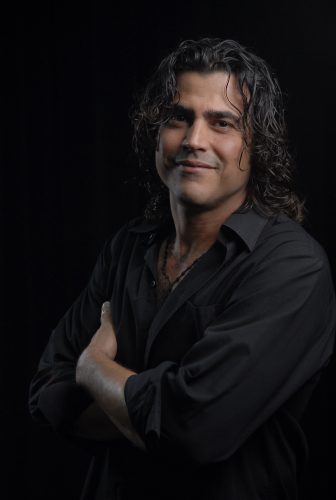

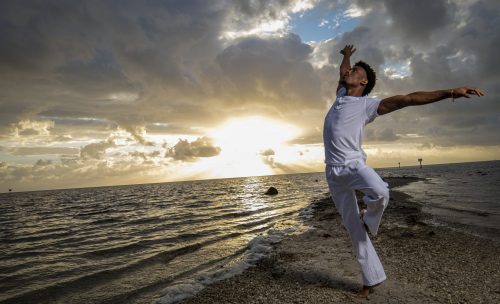
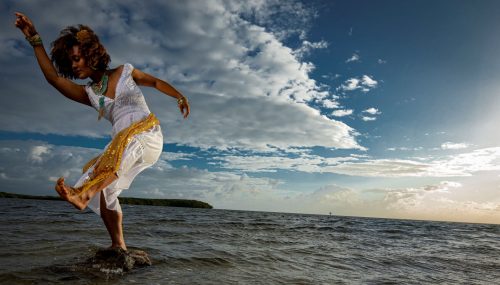
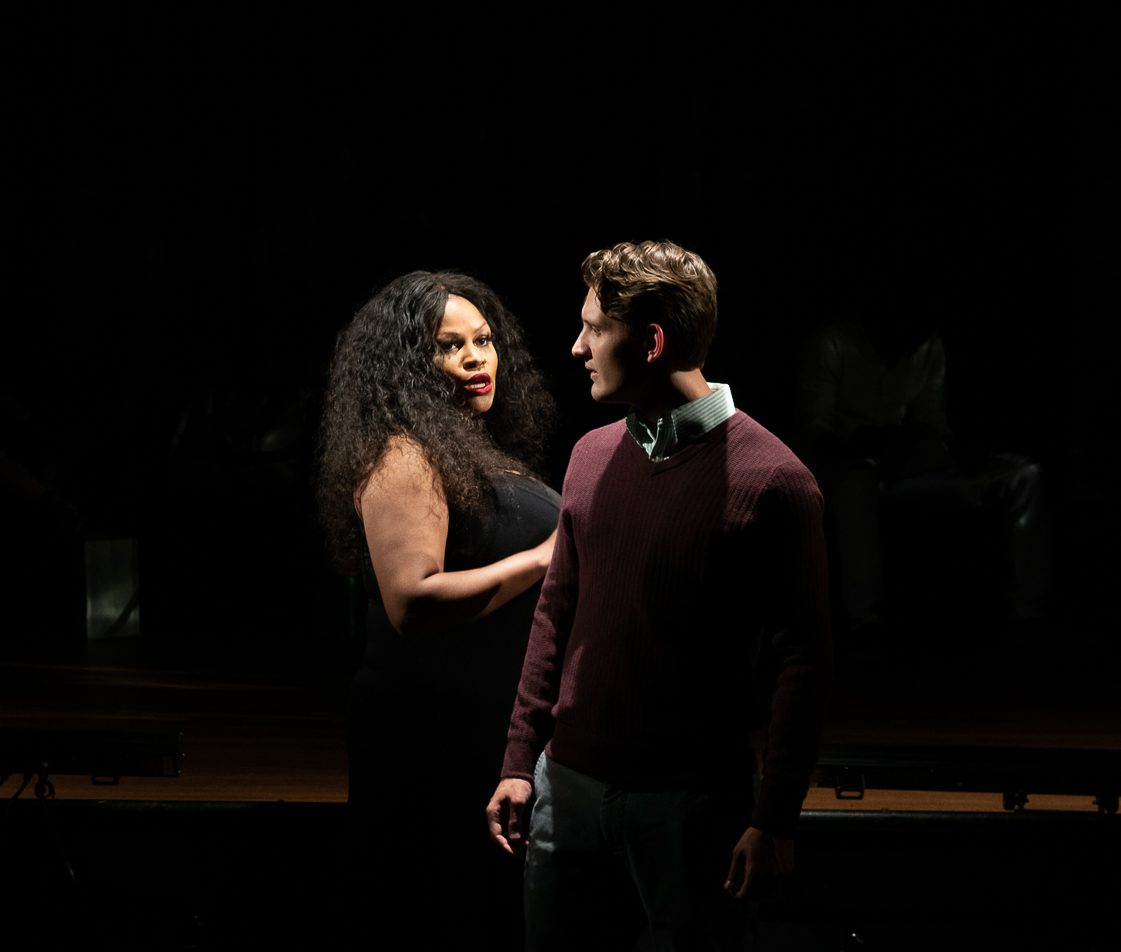

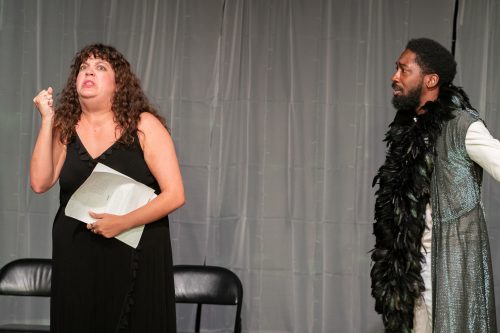
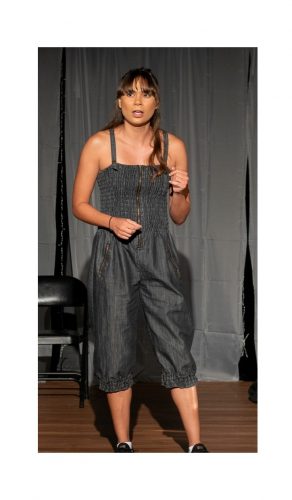


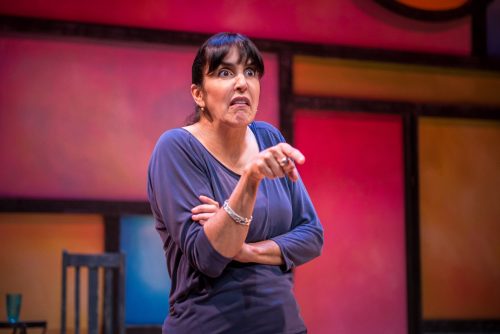

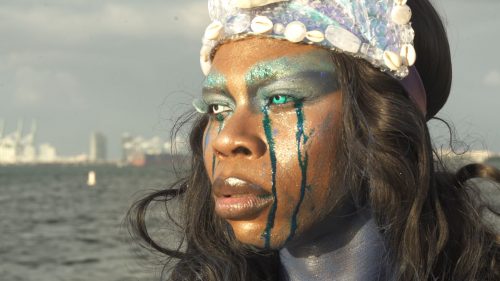


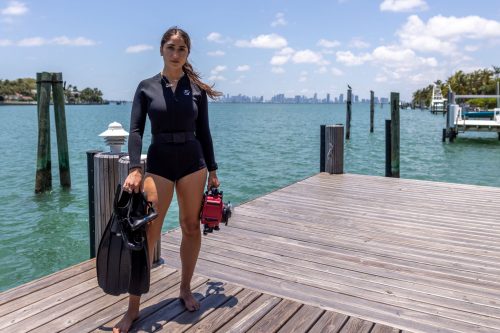


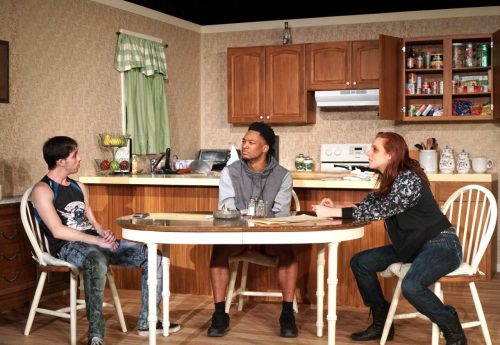
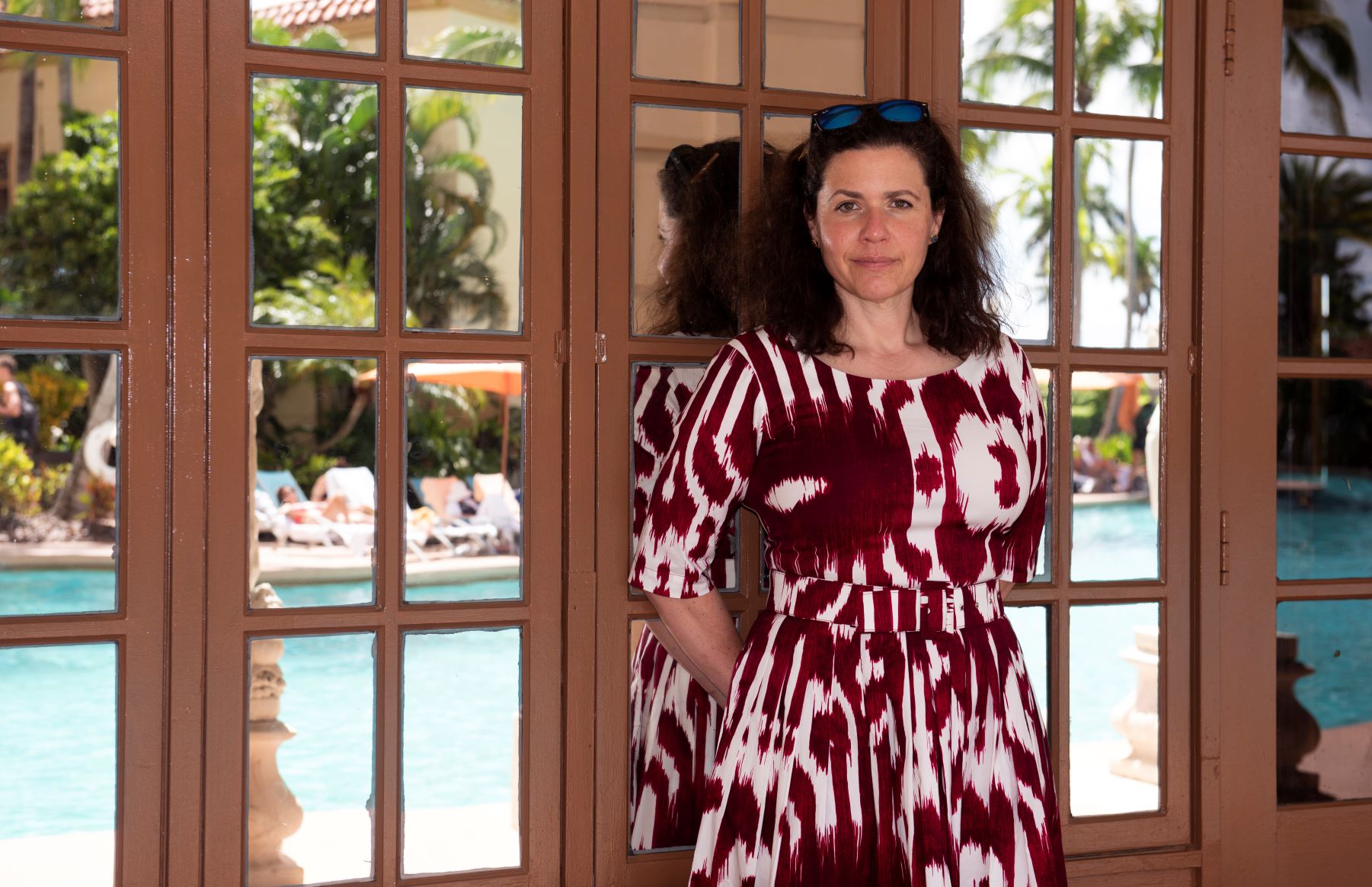
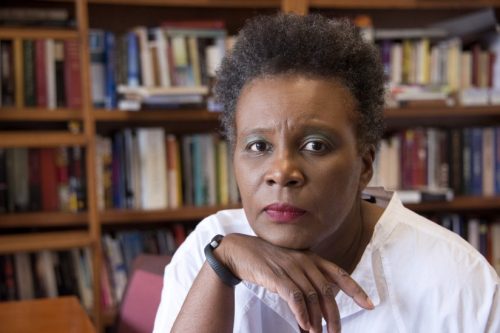
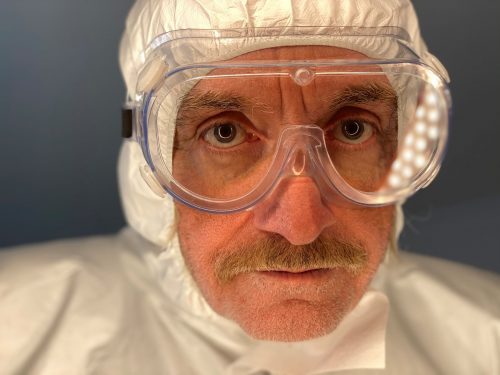

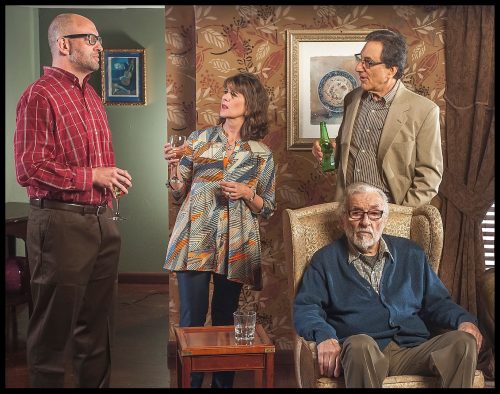
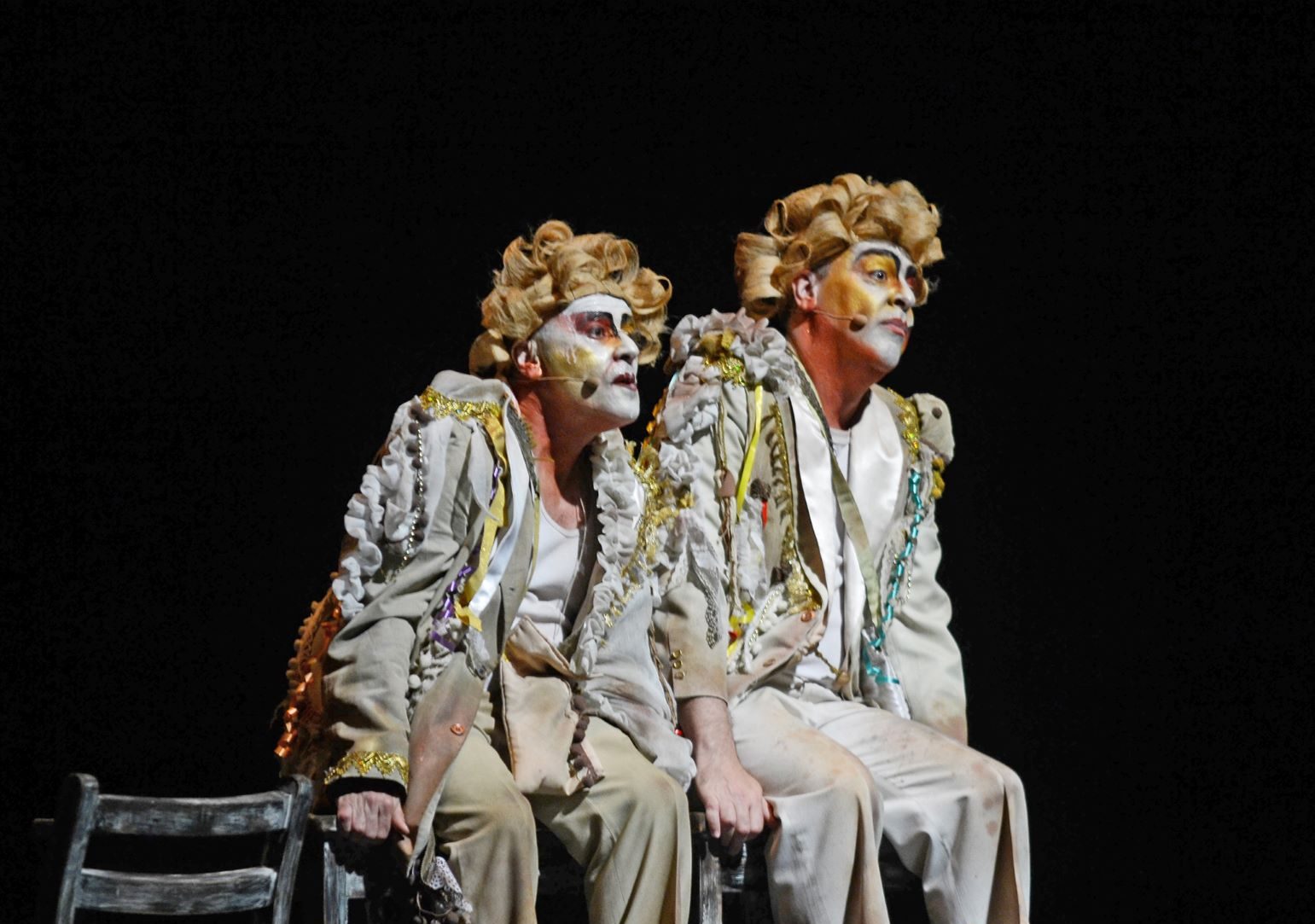

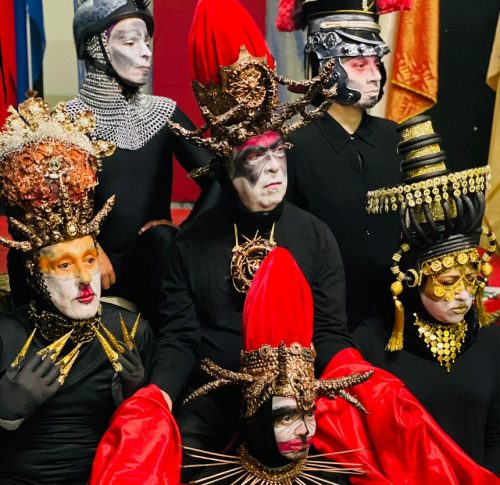






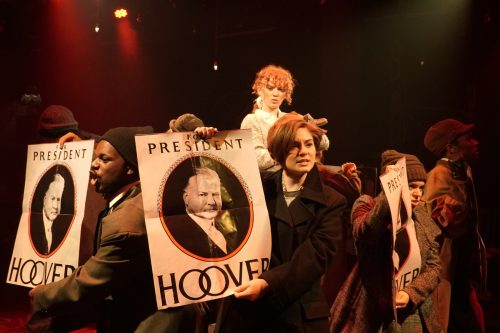
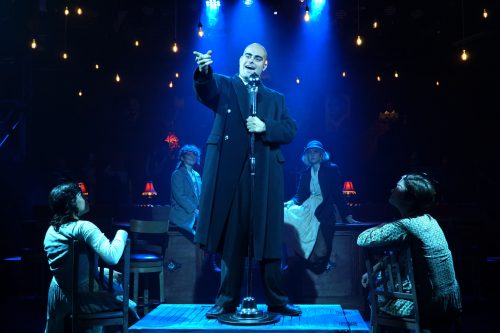
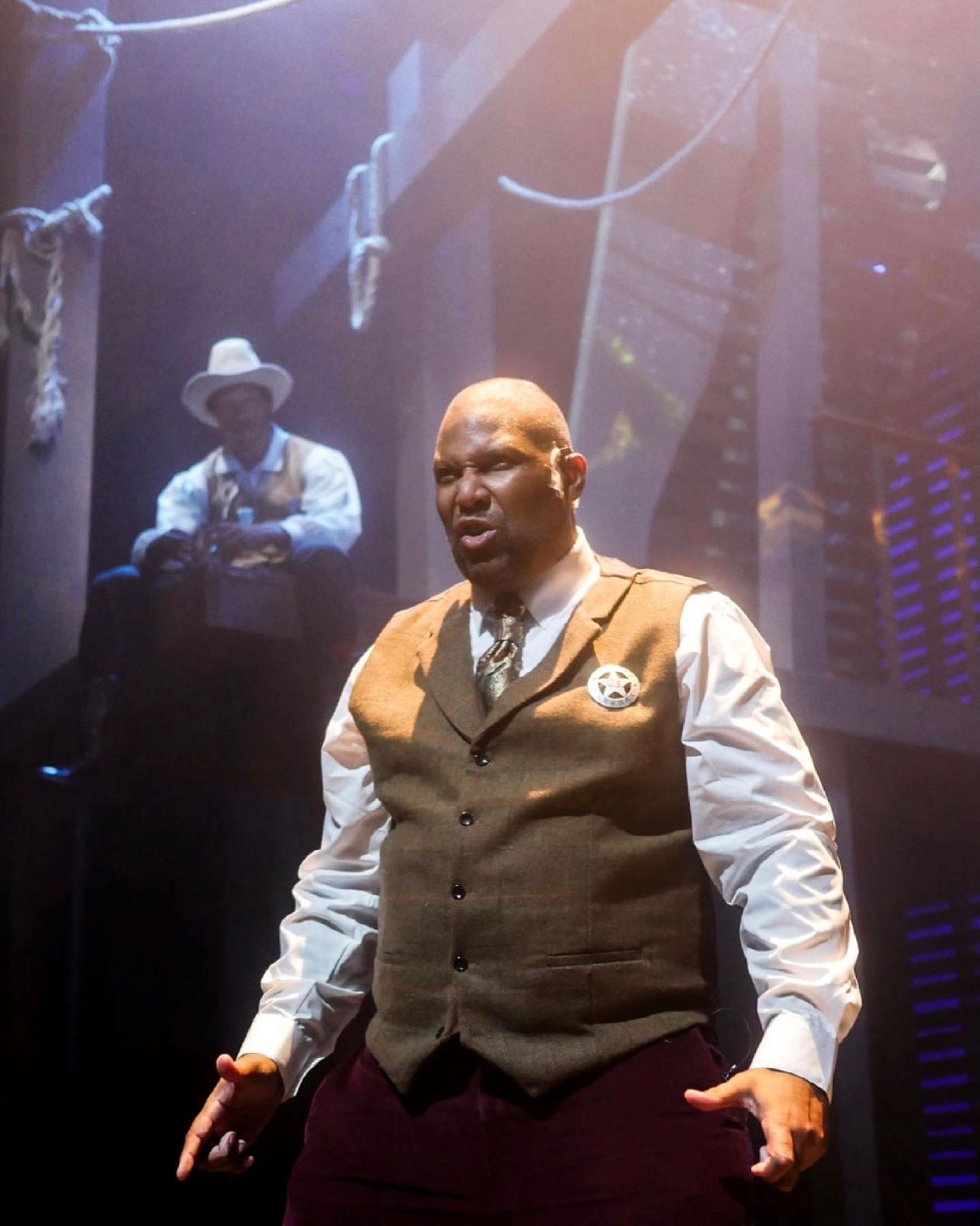
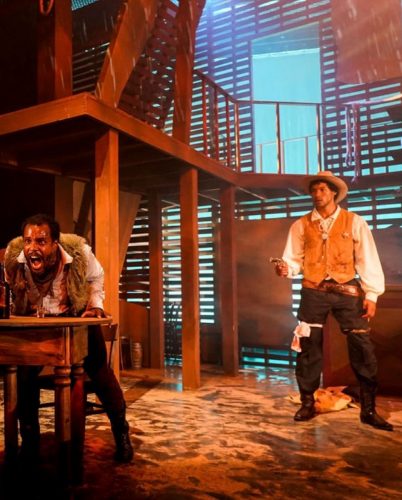


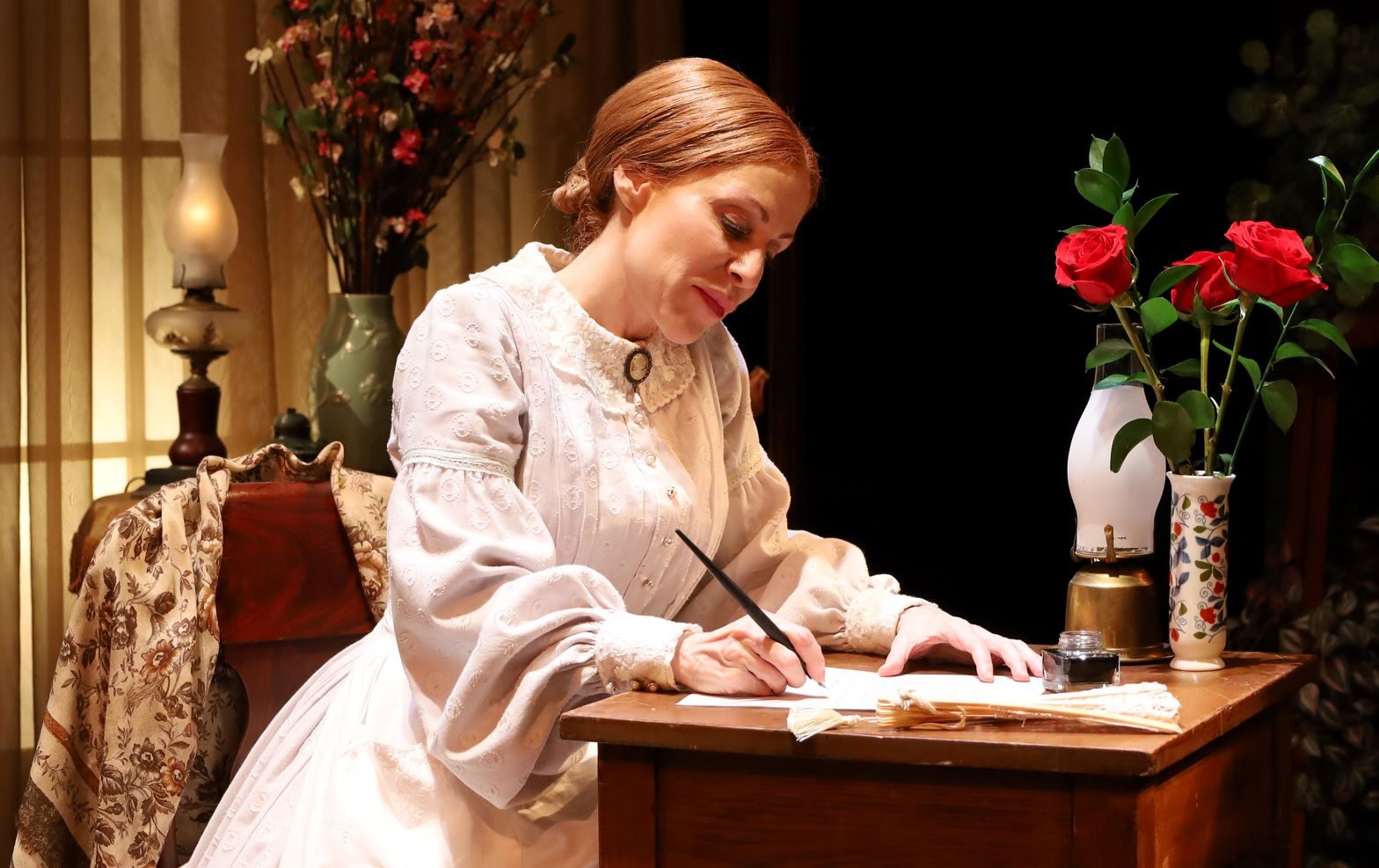

Recent Comments