Review: ‘Little Shop of Horrors’ and Audrey II come alive in east Little Havana
Written By Christine Dolen April 12, 2023 at 1:22 PM
The girl-group Urchins surround Frank Montoto’s sadistic dentist in Loxen Productions’ “Little Shop of Horrors” at the Manuel ARTime Theater, Miami, through Sunday, April 16. (Photo courtesy of Justin Azpiazu)
Little did filmmaker Roger Corman know, when he made and released the low-budget horror flick “The Little Shop of Horrors” in 1960, that his story about a ravenous man-eating plant would morph into a lasting American musical theater hit.
Yet that’s precisely what happened, thanks to composer Alan Menken and lyricist-book writer Howard Ashman. Since 1982, their darkly comic, ‘60s-style “Little Shop of Horrors” has made megabucks Off-Broadway, on Broadway, in London and uncounted American regional theaters, including a slew of them in South Florida.
Through Sunday, Miami’s Loxen Productions is offering its own “Little Shop” at the Manuel ARTime Theater in east Little Havana.
Chantal Bonitto plays the injury-prone Audrey and object of Seymour’s affection in Loxen Productions’ “Little Shop of Horrors.” (Photo courtesy of Justin Azpiazu)
This is the fourth production from a company dedicated to providing opportunities for young homegrown theater talent (its earlier shows were “In the Heights,” “The 25th Annual Putnam County Spelling Bee” and “Cabaret”), and last Saturday’s matinee proved to be a test of the troupe’s talent and willpower.
Corey Vega, who stars as the nerdy but horticulturally talented Seymour, was too sick to perform. His understudy Tico Chiriboga wasn’t available.
So rather than cancel one of the show’s eight performances, Loxen founder and CEO Benji Leon IV stepped in to play Seymour after 18 hours of study (including five rehearsing with the cast and director Damaris López Canales). Then he gave a nearly error-free performance without holding a script, and it was so well-sung and self-assured that you’d never guess the drama that preceded the actual show.
Which proves, yet again, that anything can happen in live theater.
Benji Leon IV starred in Loxen’s “In the Heights” and stepped in to a performance of the current “Little Shop of Horrors.” (Photos courtesy of Louis B. O’Neill and Bob Lasky)
Overall, Loxen’s “Little Shop of Horrors” is joyful and entertaining, if not the knockout that several other South Florida productions have been. It features a live band under musical director Ryan Crout, an expansive Skid Row set by Nobarte, lighting by Ernesto Pino and period costumes by Beth Fath, who is particularly adept at showcasing actor Chantal Bonitto’s va-va-voom curves as the abused beauty Audrey. Choreographer Imran Hylton has worked with a larger-than-usual cast, filling in the space with additional dancers without lines.
The actors tell the familiar story about a person-eating plant, developed and dubbed Audrey II by Seymour, that turns a failing Skid Row flower shop into a moneymaking sensation.
Manipulative shop owner Mr. Mushnik (Craig Dearr) pushes Seymour to make the now-gigantic Audrey II (the puppet is voiced by Mikhael Mendoza, operated by Justin Rodríguez) an even bigger source of fame and wealth, not knowing that the plant has started demanding fresh flesh-and-blood from its creator.
Meanwhile, the actual Audrey continues showing up to work with an ever-growing collection of injuries, no thanks to her sadistic dentist boyfriend Orin Scrivello (Frank Montoto).
Fabriana Cueto and the Urchins musically comment on the ongoing drama of “Little Shop of Horrors.” (Photo by Justin Azpiazu)
Throughout, a girl-group version of a Greek chorus – Fabiana Cueto as Ronnette, Amanda López as Chiffon and Patricia Christine García subbing for an ailing Maryah VanPutten as Ronnette – musically comments on the action and sings backup.
The songs are the best thing about Loxen’s “Little Shop of Horrors,” particularly Bonitto’s amusingly wistful “Somewhere That’s Green,” her lovestruck “Suddenly Seymour” duet with Leon, and Montoto’s recounting of Orin’s sadistic evolution in “Dentist!.” The three actors are the show’s standouts, though Leon’s performance was a one-time-only thing.
One note for parents: “Little Shop” is very funny, but it also has its share of vulgarity and faux violence. Just saying.
Leon, in partnership with Jim Kirstead and TourDForce Theatrical, is among the long list of producers of the current Josh Groban-led Broadway revival of “Sweeney Todd.” He seems to be another of South Florida’s younger generation of theater leaders. Here’s hoping he can realize his vision for Loxen.
WHAT: “Little Shop of Horrors”
WHEN: 8 p.m. Friday, 2 and 8 p.m. Saturday, 3 p.m. Sunday, through April 16
WHERE: Manuel ARTime Theater, 900 SW First St., Miami
ArtburstMiami.com is a nonprofit source of theater, dance, visual arts, music and performing arts news.
No posts found
Review: Robby Ramos’s ‘The Walls Have Ears’ looks inside a Cuban prison
Written By Christine Dolen April 11, 2023 at 11:35 AM
David Zaldívar (left) and Robby Ramos in the world premiere of “The Walls Have Ears” at the Westchester Cultural Arts Center, Miami, which is being performed first in English, then with a run in Spanish. (Photo courtesy of Yaniel Cantelar/Alpha 42)
In the mid-1950s, Fidel Castro and his brother Raúl were imprisoned for two years in the infamous Presidio Modelo, a facility on Cuba’s Isla de Pinos (now Isla de la Juventud).
There they plotted and planned with their fellow revolutionaries, and after they seized power with the overthrow of Fulgencio Batista’s government in 1959, Presidio Modelo became a place where thousands of political prisoners and dissidents were held, tortured – and sometimes executed.
Monica Steuer as Madre gets her orders as Juliana Aidén Martinez as Ava tends to David Zaldívar’s Rafa in “The Walls Have Ears.” (Photo courtesy of Yaniel Cantelar/Alpha 42)
Actor-turned-playwright Robby Ramos, a Miami native who plays wrestler Diego Cottonmouth on the Starz series “Heels,” understands firsthand the experiences of families whose loved ones have been Cuban political prisoners. His grandfather was once held at Presidio Modelo.
Fueled by family stories, research and his imagination, Ramos has written his first play, “The Walls Have Ears,” which has the slightly different Spanish title “Las paredes oyen” (“The walls hear”).
The world premiere is up and running at Miami’s Westchester Cultural Arts Center at Tropical Park, through April 23 in English, then April 27-May 14 in Spanish. Its producers are the Alpha 421 Group (created by Ramos to support new works in film, television and theater), Ancestor (a bilingual multimedia company) and the not-for-profit Roxy Theatre Group.
Playwright-actor Robby Ramos, left, taunts David Zaldívar in the world premiere of “The Walls Have Ears.”
Set during the Cuban Missile Crisis in October 1962, the play takes place in a space meant to evoke the panopticon circular cell block design at Presidio Modelo, where prisoners could never tell exactly when they were being watched by a guard in a dark central tower.
Set designer Andrew Rodriguez-Triana has created a slice of stacked-up cells above the prison office that serves as the central playing area, its circular floor adorned with political prisoners’ drawings. A sparse interrogation room is nearby, and farther off, a small studio at Miami’s powerful WQAM.
The audience is seated so that it totally surrounds the actors, even sitting at the very edge of that prison office. On the one hand, the seating arrangement greatly amplifies the sense of the characters being overheard and constantly watched, as the prisoners were at Presidio Modelo. On the other, theatergoers are packed around the stage, so those significant drawings aren’t visible to many in the audience.
Director Gabriel Bonilla keeps the actors moving through the space, sometimes threading their way along aisles and popping up in unexpected places. The scenes in the interrogation room and the prison office are often harrowing, while the ones in the WQAM booth are breezily entertaining as they epitomize so much of what the Cuban revolutionaries loathe about the United States.
Bill Schwartz plays WQAM host Bill Kelly in the world premiere of Robby Ramos’s “The Walls Have Ears.”(Photo courtesy of Yaniel Cantelar/Alpha 42)
Ramos’s story is this: A woman called Madre (Monica Steuer), aka La Madre de la Revolución, is running the show at the prison but taking orders from someone on the other end of various phone calls. She’s haranguing a comrade called Papo (Ramos), who has been unable to produce Rafa (David Zaldívar), a young man suspected of being behind posters of Che Guevara in drag appearing all over Havana.
When Rafa, bound and with a bag over his head, is shoved into the interrogation room, after much back-and-forth, we discover that Papo and Rafa are brothers, and that Papo’s mandatory mission is to get Rafa to sign a confession and implicate others.
Meanwhile, Madre is dealing with a seemingly unrelated incident in which a teen named Ava (Juliana Aidén Martinez) is being interrogated about a school assignment, a vulgar poem in which she calls Cuba “the whore of the Caribbean.” Ava isn’t savvy enough to comprehend the danger she’s facing. She thinks she should be able to speak up, express her views. But Madre soon disabuses her of that notion, caressing the girl’s ponytail, then using it to yank her head back hard.
Monica Steuer as Madre reports to her superior in the world premiere of “The Walls Have Ears.” (Photo courtesy of Yaniel Cantelar/Alpha 42)
Ava, as it turns out, is the sister of Papo and Rafa. So family loyalties and betrayals begin to figure heavily into “The Walls Have Ears.” And once Papo calls the revolution broken, perverted and immoral – to Madre’s face, no less – it’s clear this story won’t end well.
As tangential as he might seem, WQAM host Bill Kelly (Bill Schwartz) proves to be more than a voice booming toward Cuba from Miami. Madre calls him twice to spread the revolution’s philosophy, with the second call bringing the play to an abrupt, horrific finish.
Ramos’s writing injects a simmering unease from the play’s beginning, ratcheting up the tension until it explodes in a bloody fight between Papo and Rafa in Madre’s office (Emma Berry’s lighting reinforces the violence). Note to those sitting just outside the circle: You might want to reconsider and ask for a ticket farther back. Though some phrases – “no means no,” “I have issues,” “don’t let the door hit you where the good lord split you” – belong in 2023, not 1962.
Bonilla gets solid performances from his five-person cast (which will, except for Schwartz, change for the Spanish-language version of the play).
Steuer’s Madre is coolly observant, but there’s no doubt she can be lethal. Martinez, who trained at the Yale School of Drama, effectively walks Ava’s tightrope of defiance and fear.
The size differential between Ramos (who plays a hulking wrestler on TV) and the slight but gym-toned Zaldívar visually reinforces the danger in their interactions, and Ramos gets to make the dangerous journey from loyal revolutionary to repentant brother.
Schwartz, a veteran of productions at numerous South Florida theaters, adds a jolt of humor and polish whenever his Bill Kenny is in the spotlight. The character is very different from the others, and Schwartz’s stage presence helps make him captivating. And as the DJ plays a slew of hits from 1962, the tension is briefly put on pause.
Monica Steuer as Madre and David Zaldívar as Rafa in a scene from “The Walls Have Ears.” (Photo courtesy of Yaniel Cantelar/Alpha 42)
On opening night, sound glitches kept much of the early dialogue from being heard (do actors know how to project these days?), so the plot was harder to follow. Obscuring sightlines with the seating setup benefits no one, even if it’s meant to serve a thematic purpose.
At the packed opening performance, some people decided to leave during the 90-minute play. Whether they were upset by the content hitting close to home, not engaged or simply in need of a personal break, they traipsed noisily over the wooden floor as they headed to the only exit, disrupting the play and the audience’s concentration. Not cool.
Without a doubt, “The Walls Have Ears” will speak to many, whether or not their families have lived some version of Ramos’s story. Presenting it in English and then in Spanish will broaden the audience – a smart move for any Miami theater.
WHAT: World premiere of “The Walls Have Ears” (“Las paredes oyen”) by Robby Ramos
WHEN: 8 p.m. Thursdays-Saturdays, 4 p.m. Sundays; through April 23 in English, April 27-May 14 in Spanish
WHERE: Westchester Cultural Arts Center, 7930 SW 40th St., Miami
COST: $35-$65
EXHIBITION: Paintings by Cuban-American artist Kiki Valdes, all inspired by the play, are on display in the lobby
ArtburstMiami.com is a nonprofit source of theater, dance, visual arts, music and performing arts news.
No posts found
‘Encanto’ co-author Charise Castro Smith gets a hometown premiere at GableStage
Written By Christine Dolen April 10, 2023 at 9:00 PM
Barbara Bonilla and James Puig play a long-married Cuban couple contending with the last part of life in “El huracán” at GableStage, written by Miami native Charise Castro Smith opening in previews on Friday, April 14 and running through Sunday, May 14. (Photo courtesy of Magnus Stark)
Though it had a successful world premiere at Yale Repertory Theatre in the autumn of 2018, Charise Castro Smith’s “El huracán” has always been a play about and meant for Miami.
The moist heat. The yearly threat of hurricanes. The Cuban diaspora, with the ache of losing homeland and family. In a new country, multigenerational affection and tension under the same roof, in English and Spanish.
Using a mixture of poetically evocative language, humor, vivid theatricality, magic, magical realism and echoes of William Shakespeare’s “The Tempest,” Miami native Castro Smith has constructed a deeply recognizable world in “El huracán” (“The Hurricane”). The play’s Florida premiere previews Friday, April 14, opens Saturday, April 15 and runs through Sunday, May 14 at GableStage in Coral Gables.
Emma Garcia Seeger, Thais Menendez, James Puig, Barbara Bonilla and Adriana Sevan are family in “El huracán” at GableStage. (Photo courtesy of Marcus Stark)
Getting “El huracán” produced in her hometown – specifically by GableStage, one of Miami-Dade County’s most celebrated theater companies – was always one of Castro Smith’s goals.
Although she left Miami to earn degrees at Brown University and Yale, and now lives in the Los Angeles area where she focuses on writing for television and film, Castro Smith’s personal and family roots here run deep. She went to high school at New World School of the Arts (Oscar winner Tarell Alvin McCraney was a couple of years ahead of her) and was influenced by many productions staged by GableStage producing artistic director Joseph Adler, who passed away in 2020.
“I always intended to find a home for the play in Miami,” says Castro Smith, co-author and co-director of the Oscar-winning animated Disney film “Encanto.” “GableStage was the theater I aspired to when I was growing up.”
She has, in fact, acted in an ambitious GableStage co-production. In 2013-14, Castro Smith, who trained as an actor before shifting to playwriting, played Octavia and Iras in the McCraney-adapted production of “Antony and Cleopatra.” Directed by McCraney and set on the eve of the 1791 Haitian slave revolution in Saint-Domingue, the production was a joint effort of GableStage (which presented it at the larger Colony Theatre in Miami Beach), the Royal Shakespeare Company at Stratford-Upon-Avon and New York’s Public Theater.
At left, Miami native Charise Castro Smith is the author of “El huracán” and the co-director/co-writer of the Oscar-winning “Encanto.” Dámaso Rodríguez is directing “El huracán” at GableStage. (Photos courtesy of Charise Castro Smith and Lava Alapai)
That Castro Smith’s own play has finally landed at GableStage was the result of long-term regional theater connections.
Bari Newport, in her second season as the theater’s producing artistic director, was at California’s Pasadena Playhouse when Miami-born Dámaso Rodríguez, who is directing “El huracán” for GableStage, was serving as associate artistic director there.
The two stayed in touch as they became regional theater leaders, with Rodríguez co-founding Furious Theatre in Los Angeles and serving as artistic director of Artists Rep in Portland, Oregon, for nine seasons. He’s now an in-demand freelance director and vice president of the Arts Consulting Group.
“Dámaso is the real deal . . .He has a love of new plays and a love of reading plays, and he’s also a playwright . . . He would send me plays and playwrights he was discovering,” Newport says. “Charise made it clear to me that it was extremely important to her that this play be produced by GableStage. She was active in finding additional financial resources.”
From left, Barbara Bonilla, Gabriell Salgado, Emma Garcia Seeger, James Puig, Adriana Sevan and Thais Menendez star in GableStage’s Florida premiere of “El huracán.” (Photo courtesy of Marcus Stark)
One of those was a contribution from producer-activist-businessman Henry Muñoz III (“Funny or Die,” “Funny Girl” on Broadway). The larger budget has allowed Newport to hire a magic consultant to teach the cast tricks specified in the script, funded two sets of costumes (one appropriate to 1992, another for 2017), and helped realize the play’s many complex technical elements. All in all, Newport feels producing “El huracán” in GableStage’s relatively small space has been more like putting up a musical.
Of Castro Smith’s strengths as a playwright, she says, “I love writers who understand the genre they’re writing for, who love theatricality and who lean into what theater does best – which is express elements of the human experience through metaphor.”
Rodríguez had directed a production of Castro Smith’s “Feathers and Teeth,” a wild, bloody and darkly comic contemporary horror play inspired in part by “Hamlet,” at Artists Rep in 2017. But it was “El huracán,” which he had read a year earlier, that continued to haunt him.
“I mentioned it to different artistic directors, but I suggested to Bari that it would really connect with Miami audiences, who would see themselves in it. I sent it to her, and she quickly said, ‘We’re doing it next season,’ ” Rodríguez recalls.
He also loves Castro Smith’s writing in the six-actor, nine-character piece that incorporates magical realism, poetic moments and memories – some missing or mistaken, others joyful – of a matriarch living with Alzheimer’s disease.
“Charise is an actor, too. She writes great characters, gives them depth and specificity,” the director says. “Her work is very ambitious and boldly theatrical, with a sense of fun. She wants theater to be exciting and surprising, with a lot of emotional depth.”
Gabriell Salgado plays a helpful Miami neighbor and a Cuban cousin in “El huracán” at GableStage. (Photo courtesy of Magnus Stark)
Castro Smith was inspired to write “El huracán,” she says, by a number of things: Her Cuban mother’s interrupted childhood, the shocking devastation of Hurricane Andrew, her grandmother’s Alzheimer’s diagnosis and a 2009 trip to Havana with her parents to bury her grandfather’s ashes in the family plot. The comedy, tragedy and romance of “The Tempest,” which Castro Smith describes as “Shakespeare’s farewell to being an artist,” plus some character names and the banished nobleman Prospero’s “rough magic” figure in too.
“My mom had a childhood in one place, and then it was fractured in the middle. I didn’t visit Cuba until I was 24, when I discovered I had been missing a place I’d never been,” says the playwright, who was surprised to discover that her grandfather’s home in Cuba was a smaller version of the one he subsequently built in Miami. “My grandmother was diagnosed around the time I left for college. It took a toll on the family. It was overwhelming, sad, confusing, funny and incredibly tragic.”
Set in Miami, the first act of “El huracán” takes place before and during Hurricane Andrew in August 1992. Abuela Valeria (Barbara Bonilla), who was a dazzling young magician in Cuba before the revolution, is now in her 70s and in the advanced stages of Alzheimer’s. Her daughter Ximena (Adriana Sevan) is worn out from constant caregiving and clashes with her grad student daughter Miranda (Thais Menendez).
Valeria’s husband Alonso (James Puig), her long-ago magician’s assistant, has vanished, unable to bear watching his wife’s suffering and deterioration. The family’s hot neighbor Fernando (Gabriell Salgado) makes an appearance that will have lasting repercussions. Valeria’s younger sister Alicia and a neurologist (both played by Emma Garcia Seeger) also figure into a plot that intensifies as the massive hurricane approaches.
Castro Smith’s story then jumps ahead 25 years, with the two parts linked by some in-plain-sight theatrical magic: As assistants help transform them, the long-estranged Ximena and Miranda become the older version of themselves.
Adriana Sevan plays Ximena in the Florida premiere of “El huracán” at GableStage. (Photo courtesy of Magnus Stark)
Valeria and Alonso are present but as memories, no longer of this world. Miranda, absent since Hurricane Andrew, shows up with her now-grown daughter Val (Garcia Seeger), a young woman eager to understand the family she has never met. Theo (Salgado), the son of Ximena’s cousin, has followed the path of so many others who left Cuba to forge a new life in Miami.
The storm this time is within the family. Letting go of old wounds, reconciling and finding forgiveness figure powerfully into the second part of “El huracán.”
The vivid beauty of Castro Smith’s writing shimmers throughout the play, as in this speech by Alonso after Valeria’s Alzheimer’s diagnosis: “I could never forget you. Not as long as I breathe. If I tried to forget, my bones would remember. If my bones forgot, your scent would live in the tiny channels of my skin. And if my skin forgot, scenes from our life would play out over and over again on the insides of my eyelids, unbidden until the projector in my mind sputtered out and was no more.”
Former Miamian Thais Menendez plays Miranda in Charise Castro Smith’s “El huracán” at GableStage. (Photo courtesy of Magnus Stark)
Puig, a University of Miami graduate whose long career includes productions on and off Broadway, at major regional theaters nationwide and at numerous South Florida theaters (most recently at Miami New Drama and Zoetic Stage), is making his GableStage debut as Alonso.
Alonso, Puig feels, is a loving husband and father who makes one critical mistake that ruins the rest of his life. And he sees “El huracán” as a love story that asks how to forgive the unforgivable.
“Some plays are entertaining. Some transform you, educate you, inspire you. I don’t think you can walk into this one and then walk out the same. It provides a booster of compassion,” he says, adding that having Castro Smith in the opening night audience will be “like doing Shakespeare for Shakespeare.”
Salgado, a Miamian, New World School of the Arts grad, and the only other male actor in the cast, has had a succession of significant roles since beginning his professional career a year and a half ago.
They include the title character in Zoetic Stage’s “Frankenstein” and Puig’s son in the Zoetic world premiere of Hannah Benitez’s “Gringolandia,” the Lector in the recent Nilo Cruz-directed “Anna in the Tropics” for Miami New Drama, the grieving grandson in Amy Herzog’s “4000 Miles” at Palm Beach Dramaworks, the aspiring Olympian in “Red Speedo” and a would-be matinee idol in the world premiere of Michael McKeever’s “The Code,” both at The Foundry in Wilton Manors.
“El huracán” marks his GableStage debut, and like Castro Smith, Rodríguez and his fellow actors who have large families in South Florida, he’s hoping to fill a lot of seats during the play’s run.
“My mom went to 13 performances of ‘Frankenstein,’” he says, smiling.
In rehearsal, he has shared stories about his grandmother, who has dementia, with his colleagues. She can still carry on a conversation, is still lucid, but Salgado says “this is prime time for her and her memories.”
The actor is also clear about the roles he and Puig play in “El huracán.”
“This is not about the men. This is about the women. It’s important to be the secondary amplification sometimes,” he says.
Barbara Bonilla, Adriana Sevan, Thais Menendez and Emma Garcia Seeger play four generations of women in a Cuban-American family at GableStage. (Photo courtesy of Magnus Stark)
Sevan, who starred opposite her husband Jonathan Nichols in the 2004 Coconut Grove Playhouse production of Cruz’s Pulitzer Prize-winning “Anna in the Tropics,” has dozens of credits at major New York and regional theaters as well as in film and television. She’s also a successful playwright who looks at “El huracán” through the lens of a performer and a writer. In the Yale world premiere, she won a Connecticut Critics Circle award for playing Valeria (opposite Nichols as Alonso); at GableStage, she’ll be Ximena.
“This play grabbed me from the first time I read it. I thought I have to do this play and wondered, ‘Who is this extraordinary writer?’,” she says. “This is about exile, leaving home, the diaspora, trauma. Some have to lock that away. Others have to bring it with them. I’m so curious about the cost of exile. What you have to remember and what you have to forget to go forward.”
Castro Smith, Sevan says, “writes with epic reverberations, going back to the Greeks and Shakespeare. It’s theater as ritual and catharsis.”
Having played Valeria and now Ximena (“I have walked in Mami’s shoes,” Sevan says), she believes that capturing stories and memories of a family’s oldest members is vital.
“When an elder dies, a library burns,” she says. “With gentle urgency, you should get those stories that might have been lost. And when you leave the theater, don’t check your missed messages. Make a phone call to your family.”
WHAT: “El Huracán” by Charise Castro Smith
WHERE: GableStage in the Biltmore Hotel, 1200 Anastasia Ave., Coral Gables
WHEN: Preview 8 p.m. Friday, April 14, opening 8 p.m. Saturday, April 15; regular performances 2 and 7 p.m. Wednesday, 8 p.m. Thursday-Saturday, 2 p.m. Sunday (additional matinee Saturday, May 13), through Sunday, May 14 (streaming version available during regular performances beginning Friday, April 21 through Sunday, May 14)
With a powerhouse leading lady, ‘Bright Star’ glows at Actors’ Playhouse
Written By Christine Dolen April 3, 2023 at 4:13 PM
Kimberly Doreen Burns as Alice Murphy with the ensemble in the Actors’ Playhouse production of “Bright Star” at the Miracle Theatre through April 16. (Photo courtesy of Alberto Romeu)
In the 35 seasons since Barbara and Lawrence Stein founded Actors’ Playhouse, the company has established its identity as a place where big musicals like the just-opened “Bright Star” get produced.
Sure, with artistic director David Arisco at the helm, Actors’ Playhouse has also done plays, more intimate musicals and the occasional world premiere at the handsomely renovated Miracle Theatre in Coral Gables, the company’s home since 1995. But large-scale musicals are a key reason Actors’ loyal audiences keep coming back to Miracle Mile.
Kimberly Doreen Burns as Alice and Alex Jorth as Jimmy Ray in the Actors’ Playhouse production in “Bright Star.” (Photo courtesy of Alberto Romeu)
Many of those musicals have familiar titles – think “Evita,” “Man of La Mancha,” “La Cage aux Folles,” “The Pajama Game.” But “Bright Star,” overshadowed by the towering achievement of “Hamilton” at the 2016 Tony Awards, is a lesser-known, underappreciated show.
It shouldn’t be.
[RELATED STORY:Read the preview about Actors’ Playhouse’s “Bright Star.”]
As staged by Arisco and with the inextricable contributions of choreographer Sarah Crane and musical director Eric Alsford, “Bright Star” is as good as Actors’ Playhouse musicals get – which is really good.
With a story and music by actor-comedian Steve Martin (who also wrote the book) and singer-songwriter by Edie Brickell (the show’s lyricist), “Bright Star” is propelled by a sweeping, engaging story that hops back and forth in time between 1945-46 and 1923-24.
The bluegrass-roots-folk score has several knockout numbers, and it’s gloriously played by Alsford and seven other costumed, onstage musicians.
Teddy Warren as Billy Cane and Alexandra Van Hasselt as Margo Crawford find love in “Bright Star” at Actors’ Playhouse. (Photo courtesy of Alberto Romeu)
The cast is overflowing with accomplished musical theater performers, led by dynamo Kimberly Doreen Burns. As Alice Murphy, a North Carolina woman whose star-crossed life has enough content for several soap operas, the petite Burns has the looks of an ingenue, a powerhouse belt that Ethel Merman might have envied and the steely assurance of a Broadway star.
As lyricist Ira Gershwin mused in “I Got Rhythm,” who could ask for anything more?
Though a major plot point in “Bright Star” is based on an unfathomably awful real-life event, the story is the invention of Martin and Brickell. Because of Martin’s stellar career in comedy, many come to the show expecting to laugh a lot. That doesn’t happen, though there are funny grace notes here and there, and the dynamic duo of Conor Walton as snippy editor Daryl Ames and Charity Van Tassel as his on-the-prowl coworker Lucy Grant are masterful at spinning comedy gold.
Instead, a story set long ago in the Blue Ridge Mountains explores how we navigate a path through life, unexpected joys and devastating sorrows, the power of love and forgiveness.
For Alice, who has become the accomplished editor of the Asheville Southern Journal by the mid-1940s, the flashback scenes from the early 1920s accrue to reveal a buoyant 16-year-old determined to claim the mayor’s son Jimmy Ray (Alex Jorth) as her own true love. A baby is born, then ripped from Alice’s arms and taken away by Jimmy Ray’s iron-willed, dictatorial father Josiah (Jim Ballard), crushing the young lovers’ dreams.
Jim Ballard as Mayor Dobbs, left, and Alex Jorth as his son Jimmy Ray in Actors’ Playhouse “Bright Star.” (Photo courtesy of Alberto Romeu)
In the ‘40s, “Bright Star” focuses on aspiring writer Billy Cane (Teddy Warren), a small-town guy just back from his service in World War II. More than a little naïve and laser-focused on writing for the Asheville Southern Journal, Billy fails to notice that his grownup childhood friend, bookstore owner Margo Crawford (Alexandra Van Hasselt), is crazy about him. Eventually, career, romance and life get sorted out, and not just for Billy. That’s what traditional musicals do.
Despite the show’s many trips back and forth in time, the storytelling in Actors’ “Bright Star” is clear and seamless. It’s impressive in Shaun Mitchell’s excellent sound design, Eric Nelson’s time-traveling lighting, Ellis Tillman’s myriad period costumes and Brandon Newton’s malleable set.
Arisco and New York-based choreographer Crane, who began her blossoming career at Actors’ Playhouse as a kid, use the ensemble and principal actors to move pieces of Newton’s set – which chillingly suggests a railroad bridge critical to the plot, rough-hewn cabins and more upscale locations – so that the show keeps flowing organically. Crane’s one big dance number, set to “Another Round,” is ‘40s-infused and fabulous as it showcases Van Tassel’s funny, sultry Lucy.
This “Bright Star” is full of A-game performances from South Florida actors and out-of-towners alike. Along with the show itself, that’s one of the great delights waiting to be discovered on the Miracle Theatre’s mainstage.
Paulette Oliva, Kimberly Doreen Burns and Peter McClung fight over their family’s future as the ensemble leans in to listen in Actors’ Playhouse’s production of “Bright Star.” (Photo courtesy of Alberto Romeu)
Warren, for instance, moved to the area from New York less than two years ago and with his Actors’ Playhouse debut as Billy convincingly makes the case that another skilled musical theater leading man has come to town. Van Hasselt, a versatile dancer-singer-actor in so many South Florida shows, ascends to a new level as the lovelorn Margo.
Jorth, an actor-choreographer best known here for his work in big musicals, gets to play a romantic lead as Jimmy Ray. Walton is deadpan and hilarious as Daryl. Ballard, a Carbonell Award-winning actor who is married to Burns and now living in New York, makes Mayor Dobbs the quintessential villain.
Barry Tarallo as Billy’s warm-hearted father (and the show’s gifted mandolin player), Peter McClung as Alice’s demanding father, Paulette Oliva as her peace-making mother, and violinist/ensemble member Margaret Dudasik, whose playing helps convey the emotional tenor of so many moments, all do their parts in elevating the performance level of the production.
So do the other ensemble members: Sofi Duemichen, Brent D. Kuenning, Hugo E. Moreno, Sam Sherwood, Alexander Blanco, Keeley Anne McCormick, Alexis Semevolos-Velazquez and Paul Tuaty.
Teddy Warren as Billy Cane and Alexandra Van Hasselt as Margo Crawford find love in “Bright Star” at Actors’ Playhouse. (Photo courtesy of Alberto Romeu)
Burns is, of course, the brightest of the show’s stars. She’s as convincing as a 38-year-old sophisticate in a curve-hugging red suit as she is when she’s playing 16-year-old Alice in a light summer dress, a hat atop her long curls.
She sets up and kicks off the show with a rousing “If You Knew My Story.” With the ensemble’s women, she sings a tender song to her unborn baby, a beautifully angelic number reminiscent of the music in “O Brother, Where Art Thou?.” Thrillingly, she delivers a show-stopping “So Familiar/At Long Last” as “Bright Star” is about to wrap up.
Sometimes, all the elements come together to transform a production of a lesser-known work into something quite special. Such is the case with Actors’ Playhouse’s “Bright Star.”
WHAT: “Bright Star” by Steve Martin and Edie Brickell
WHERE: Actors Playhouse at the Miracle Theatre, 280 Miracle Mile, Coral Gables
WHEN: 8 p.m. Wednesday-Saturday, 3 p.m. Sunday, through April 16
COST: $40 to $125 (seniors 65 and over get 10 percent off weekdays only; students 25 and under with valid student ID pay $15 for a rush ticket available 15 minutes before a weekday performance)
Actors’ Playhouse Ready to Put the Shine in ‘Bright Star’
Written By Christine Dolen March 27, 2023 at 8:37 PM
Kimberly Doreen Burns and violinist Margaret Dudasik in a scene from Actors’ Playhouse’s production of “Bright Star” at the Miracle Theatre, Coral Gables. (Photo courtesy of Alberto Romeu)
Of all the shows Actors’ Playhouse is presenting this season, “Bright Star” may be the most unfamiliar to potential theatergoers.
Yes, the 2016 Broadway musical has two Texas-born, big-name creators: Steve Martin, the actor, comedian, author and banjo player extraordinaire; and songwriter Edie Brickell, lead singer of the band the New Bohemians. The two met through Brickell’s husband of more than 30 years, singer-songwriter Paul Simon.
But this traditional musical, with its bluegrass-folk score, didn’t have a lengthy run at Broadway’s Cort Theatre (30 previews and 109 regular performances). Its 2017-18 tour didn’t play South Florida. And, like the rest of 2016’s nominated Broadway musicals, it was swamped by Lin-Manuel Miranda’s heavyweight “Hamilton” at the Tony Awards.
Kimberly Doreen Burns as Alice and Alex Jorth as Jimmy Ray unexpectedly reunite after a long-ago tragedy in “Bright Star” by Steve Martin and Edie Brickell at Actors’ Playhouse. (Photo courtesy of Alberto Romeu)
Nonetheless, artistic director David Arisco believes the Martin-Brickell collaboration, which flowed from their Grammy Award-winning 2013 roots album “Love Has Come for You,” will be a welcome return to large-scale musicals on the Miracle Theatre’s mainstage in Coral Gables. The show is in previews Wednesday, March 29 and Thursday, March, 30, then opens Friday, March 31 and runs through Thursday, April 6.
“I heard the cast CD, and it just grabbed me. In college, I went through a bluegrass period – I have an affinity for that fiddle and bluegrass stuff,” says Arisco, who majored in music at the University of Connecticut, plays the trumpet and is a singer as well as a director and actor. “I’m attracted to New York shows that did well but didn’t tour here. And I realized it’s been a while since I’ve done a big musical with significance in its characters and storyline.”
“Bright Star” is set in North Carolina’s Blue Ridge Mountains in 1945-46 and 1923-24, toggling back and forth between the two time periods. A real historical incident – the story of the Iron Mountain baby – sparked a three-year developmental journey for composer-book writer Martin and composer-lyricist Brickell.
To avoid spoiling the climactic end of the show’s first act, we’ll say simply that it involves a baby who survives a great fall and is miraculously found alive on an embankment near a railroad bridge. The rest of “Bright Star” is Martin and Brickell’s invention.
The story revolves around Alice Murphy, editor of the Asheville Southern Journal, a successful literary magazine. The 38-year-old Alice is smart, powerful, demanding in her standards, and somewhat mysterious.
“Bright Star” unlocks a key part of that mystery when it travels back to Zebulon, North Carolina, in 1923. Back then, Alice was a restless 16-year-old in love with Jimmy Ray Dobbs, the mayor’s son. That passion leads to pregnancy and plans for a future together, but the families’ insistence on avoiding a scandal shatter everything, sending Alice and Jimmy Ray into very different futures.
The story’s other major thread involves Billy Cane, a soldier just back from serving in World War II. He’s an aspiring writer who leaves his small North Carolina hometown to settle in Asheville and campaign to have Alice publish his work. Therein lies a tale – as well as lots of songs full of hope and heartache.
Thematically, “Bright Star” deals with the evolution of values, men exercising power over women’s lives (and women fighting back), compromise, family, and forgiveness. Two love stories also play out over the course of the show.
Starring as Alice in the Actors’ Playhouse production is Kimberly Doreen Burns, a New York-based leading lady whose major roles have taken her to theaters throughout the country, including Miami’s Zoetic Stage in a pair of Stephen Sondheim musicals (she played Dot in “Sunday in the Park with George” and the Beggar Woman/Signor Pirelli in “Sweeney Todd”). Alice’s chief nemesis in “Bright Star” is Jimmy Ray’s father, Mayor Josiah Dobbs, who is played by Carbonell Award winner Jim Ballard – Burns’s husband.
They were paired in a production of “Bright Star” at TheatreZone in Naples in early 2022. In life, the two are a happy couple. In the show, the mayor is the one who changes Alice’s future in an instant with one shocking act.
“I play a lot of bad guys,” says Ballard, an in-demand baritone with extensive South Florida experience. “I grew up in North Carolina … I knew who this guy was. He loves his son and thinks he’s doing the right thing according to the social norms and religious views of his day.”
The actor is among his wife’s biggest supporters. Arisco remembers Ballard saying of Burns, “She’s the best and only person you should cast.”
Jim Ballard plays Mayor Josiah Dobbs in “Bright Star” at Actors’ Playhouse. (Photo courtesy of Brian Ray Norris)
In addition to playing challenging roles all over the country, Burns runs the private KDB Studio, where she teaches voice, acting and musical theater. She brings her skills in vocal technique to the task of playing Alice at 16 and Alice at 38.
“The approach is multilayered. The younger Alice shifts her body, her voice and her mind. Her thoughts are quicker, more disjointed, and her voice is higher,” Burns says. “Older Alice has more strength and confidence.”
Burns and Ballard agree that the style of “Bright Star” has more in common with the Golden Age of classic Broadway musicals than with boundary-breaking contemporary shows.
“My preference is for those types of shows anyway,” says Burns of traditional musical theater. “They pull at your emotions and heartstrings. They hit you deep. This is just a good story.”
“Bright Star” features an eight-piece band led by music director Eric Alsford, and its cast is a mixture of South Florida performers and actors based elsewhere.
Teddy Warren, a Milwaukee native who moved to Miami almost two years ago when his wife got her residency in psychiatry at Larkin Community Hospital, has been a stay-at-home dad to the couple’s nearly two-year-old daughter. A tenor who studied acting, playwriting and directing at Southern Methodist University, he’s about to make his Actors’ Playhouse debut as Billy Cane.
Of Martin’s script, Warren observes, “His work has a certain genuineness, almost a dryness to it. There are small, specific twists, well-written jokes, sprinklings of humor to create a clean and clear contrast. Because you can’t experience darkness without light.”
Teddy Warren as Billy Cane and Alexandra Van Hasselt as Margo Crawford discover a new dimension to their long friendship in “Bright Star” at Actors’ Playhouse (Photo courtesy of Alberto Romeu)
The actor adds that the tempo of the scenes is akin to bluegrass music, right on the beat, and that the score is more complex than it seems.
“It tries to deceive you into thinking it’s simple, but it has four-, five-, six-part harmonies that create this beautiful sound,” says Warren. “I believe had it not been considered for the Tonys the same year as ‘Hamilton,’ it would have won. I’m excited for it to become a cult favorite.”
New Yorker Charity Van Tassel plays Lucy Grant, an editor at the Asheville Southern Journal who develops a crush on Billy. She and Conor Walton as her sardonic fellow editor Daryl Ames get lots of Martin’s funniest lines, and she agrees with Walton that Lucy and Daryl are reminiscent of the characters Karen and Jack from TV’s “Will and Grace.”
Her pay-the-bills work in New York bars (Tiki Chick and Bathtub Gin) before, during and after the pandemic helped Van Tassel bring some verisimilitude to a particular moment involving a drink in “Bright Star.”
“I told my scene partner things about a Sloe Gin Fizz, and that it has to be red,” she says.
At left, Actors’ Playhouse artistic director David Arisco wanted New York-based choreographer Sarah Crane to be involved with its production of “Bright Star.” Crane has a history with Actors’ Playhouse as a child performer. (Photos courtesy of Alberto Romeu and Michael Kushner Photography)
Typically, the former Texan says, she’s “a chorus girl, a swing, an understudy, a Fosse dancer.” She loves the back-and-forth with Walton, and likens her big number “Another Round” (which she describes as a “Dixieland/hoedown kind of thing”) to the rollicking song about the comic villain Gaston from “Beauty and the Beast.”
Working with Arisco on “Bright Star,” a show she compares to “a warm hug or southern comfort food,” has been a wonderful, easy experience.
“I’ve worked on a lot of devised pieces and new works with directors who didn’t know what they wanted,” she says. “Dave has really got a vision. He’s great at communicating it. And he lets us be us.”
South Florida actor-choreographer Alex Jorth plays Alice’s beau Jimmy Ray, and he acknowledges that the role is also something of a departure for him.
“I’ve been doing this for 20 years now, mostly doing ensemble work,” says Jorth, who is choreographer for the new Broadway at LPAC series at the Lauderhill Performing Arts Center. “Here I’m taking on a leading man role, a guy who doesn’t have to do a tap number. It has more seriousness and heft.”
Jorth finds the show itself notable for its “romance, joy, conflict, tragedy and heartbreak. It has an old-fashioned sweetness to it.”
He also praises New York-based choreographer Sarah Crane, who got her start in showbiz as a child with roles in “The King and I” and “The Sound of Music” at Actors’ Playhouse.
“The ensemble is incredibly involved in almost every number, and she’s been instrumental in staging them. Her style is fresh, original and right for the era,” Jorth says.
Kimberly Doreen Burns as Alice and Alex Jorth as Jimmy Ray unexpectedly reunite after a long-ago tragedy in “Bright Star” at Actors’ Playhouse. (Photo courtesy of Alberto Romeu)
Crane, now 31, has been sitting by Arisco’s side during rehearsals. She learned about theater from him and finds his directing style “supportive but never coddling. He’s an actor’s director; he understands an actor’s journey. He’s kind and fills the room with love. And as a musician, he understands musical staging and musical theater.”
The choreographer is happy to be working on a Golden Age-style piece that makes the audience laugh, cry and feel on a deep level.
“It has something for everyone: ballads, stunning singing, young characters, the band onstage. It’s beautiful,” Crane says.
Arisco, whose son Drew went to school at the New World School of the Arts and the Boston Conservatory of Music with Crane, says working with her on “Bright Star” has been exactly what he had in mind when he brought her on board.
“I want to bring in young blood, new artists with fresh ideas. They have so many things they want to say,” says Arisco. “There hasn’t been a day during rehearsals when we’ve worked on one of the heavier moments, and I see the ensemble wiping away tears…This is a great story, a coming-of-age story that will hopefully connect with the audience.”
WHAT: “Bright Star” by Steve Martin and Edie Brickell
WHERE: Actors’ Playhouse at the Miracle Theatre, 280 Miracle Mile, Coral Gables
WHEN: Previews 8 p.m. Wednesday, March 29 and Thursday, March 30. Opens 8 p.m. Friday, March 31; Performances 8 p.m. Wednesday-Saturday, 3 p.m. Sunday, through April 16.
COST: $40 to $125 (seniors 65 and over receive 10 percent off weekdays only; students 25 and younger with valid student ID pay $15 for a rush ticket available 15 minutes before a weekday performance)
BRÉVO THEATRE’S ‘FRESHLY ROOTED’ PRESENTS 4 SHORT PLAYS EACH HOUR AT LITTLE HAITI CULTURAL COMPLEX
Written By Ilana Rothman March 26, 2023 at 2:31 PM
Enrique Galán and Brittany “Bk” King in Michael Oatman’s “Benediction,” part of Brévo Theatre’s “Freshly Rooted” series at the Little Haiti Cultural Complex for two nights, Friday, March 31 and Saturday, April 1. (Photo courtesy of Brévo Theatre)
If there’s one thing that’s become clear to Terrence Pride during his tenure as producing artistic director of Miami’s Brévo Theatre, it’s that there seems to be a virtually endless amount of playwrights eager for a space to share their work.
“When we started this theater company, we never thought that we’d get the response we got from playwrights wanting to connect with us,” says Pride, referring to himself and co-founder Zaylin Yates.
Pride and Yates first developed what would become Brévo Theatre as a passion project during their undergraduate years at Florida A&M University, and reignited it in 2020 after both found themselves ready to take an artistic and personal leap. The venture began with an innovative student dinner theater production and has expanded to include online protest art, community discussions, two full-scale productions, and a theater-for-youth program.
Now, having noticed an enormous demand, the company, which has an interest in showcasing works by Black playwrights and focusing on the Black experience, is expanding its horizons into new work with the upcoming launch of its “Freshly Rooted” series. The series features staged readings meant to engage with audiences and introduce community members to “brave new voices, telling stories in innovative and bold new ways.”
In “Not a Uterus in Sight,” D’Andre Jamieson and Melissa Jailene Rojas. (Photo courtesy of Brévo Theatre)
The creative space, the founders say, will also provide an opportunity for the company to showcase the work of up-and-coming artists, particularly those who may belong to underrepresented groups and lacking in other avenues to share their voices.
“. . . Who aren’t necessarily as experienced in the profession but they have a desire,” explains Pride.
At the same time, Pride is eager to produce work that “sparks conversation” and will connect with the Miami community.
“If it’s relevant and something that we want the community to think about, we will bring it to the light in our plays,” he says.
Accordingly, the series, which has been a year in the making, will begin with a presentation of four new plays by Cleveland, Ohio, based-playwright Michael Oatman. The prolific playwright is the former Playwright-In-Residence at Cleveland’s Karamu Theater, the oldest African American theater in the country. He is only the second person to hold the honor in the long history of Karamu, the first being Langston Hughes.
Oatman’s plays will be presented on Friday, March 31 and Saturday, April 1, with one play read in an hour’s time beginning at 6 p.m. on each night.
“Michael has such a passion for what he does, with him being a minority playwright and with his plays . . . we ultimately landed on his work because it’s relevant to now,” says Pride about Oatman.
Brévo Theatre’s first installment of “Freshly Rooted” features four plays by playwright, Michael Oatman. (Photo courtesy of Brévo Theatre)
One of the works featured has obvious relevance to current events given the recent repeal of Roe v. Wade. Titled “Not a Uterus in Sight,” it follows a female college professor who is arrested by a Black FBI agent after giving an incendiary speech at an abortion protest.
Another on the roster, called The Slap,” was directly inspired by the infamous Will Smith/Chris Rock Oscar incident, focusing on Jada Pinkett Smith’s memories of a confrontation between her now husband and the late Tupac Shakur as both sought to win her heart.
Then, though it may not be as obviously current as the others, “Far from a Distant Shore,” nevertheless explores topics that are incredibly relevant to life today: it centers three historical characters at work on an anti-lynching petition, which clearly ties into issues of racial injustice that unfortunately persist. And “The Benediction,” where a man, in search of a crucial piece of information, confronts a troubled pastor.
Because another major focus of this series is encouraging playwrights to further develop the featured works in process, the reading of Oatman’s last play will be followed by a discussion panel in which a group of established playwrights—in this case, Véronique George, Dr. James Webb and Bryan-Keyth Wilson—will have the opportunity to weigh in on the plays at hand.
This post-show discussion, called “Pour it Out,” will be made available to the public via streaming on Facebook Live and Zoom as well as to in-person audience members. Since plays are seldom altered after they’ve been published or in some cases even after a definitive first production, Pride hopes that this advance feedback could help improve new plays by unique playwrights before they hit the stage—ultimately making those plays stronger and more marketable, thereby increasing visibility and opportunity for the playwrights in our community.
D’Andre Jamieson, Zaire Brown, Brittany “Bk” King, Ricky Morisseau in “Far From Shore” by Michael Oatman presented by Brevo Theatre.
In accordance, Pride hopes to eventually expand the series into a full-fledged new play festival, showcasing a variety of works in one action-packed weekend as well as providing workshops and networking opportunities for fledgling playwrights and the other artists involved. He’s also eager to take the work explored in the series even further out of the box of what conventional audiences might expect—for example, by presenting theater that will not necessarily be delivered in English.
“I want to create space on the stage to be able to reflect the South Florida community as a whole, and I think that by embracing other cultures and their languages, that’s how we go about doing that,” he says.
And while Pride is hopeful that audience members will respond positively to “Freshly Rooted,” even ahead of these upcoming first performances, it is already evident that the project will have incredible benefits for the artists involved.
“Every time I am offered a platform, offered a stage, in front of audiences, it is an opportunity to convince, persuade, cajole or entertain,” says Oatman.
“I literally live for these moments. The stage is how I enter the world, the place where I am allowed to pour it all out,’ and have it still be okay,” he says.
WHAT: Brévo Theatre: “Freshly Rooted,” reading of four plays by Michael Oatman
WHERE: Little Haiti Cultural Complex, Proscenium Theatre, 212 NE 59th Terrace, Miami
WHEN: 6 p.m., Friday March 31 and Saturday, April 1
Review: Zoetic Stage’s ‘Next to Normal’ is an emotional, personal don’t-miss musical
Written By Christine Dolen March 20, 2023 at 2:13 PM
Jeni Hacker as Diana and Ben Sandomir as Dan in Zoetic Stage’s production of the musical “Next to Normal” at the Carnival Studio Theater in the Adrienne Arsht Center, Miami, through Sunday, April 9.
The complex interactions within dysfunctional families have fueled great dramas since ancient times. Hundreds of works by theater history’s finest playwrights come to mind, but Tom Kitt and Brian Yorkey’s “Next to Normal” is an extraordinary one.
So is Zoetic Stage’s new production of the rock-pop musical, which was awarded the Pulitzer Prize for drama in 2010, the year Zoetic was launched. Since it began performing in its Carnival Studio Theater home at Miami’s Arsht Center, Zoetic has staged 37 shows – world premieres, plays, musicals, solo shows, revues – in that time, winning critical acclaim, a loyal following and dozens of Carbonell Awards.
Jeni Hacker as Diana comforts Nate Promkul as Gabe while Robert Koutras as Dr. Fine listens in Zoetic Stage’s “Next to Normal.” (Photo courtesy of Justin Namon)
But this 38th show? “Next to Normal” is simply superb, every element combining to deliver a powerhouse artistic and emotional experience, one that manages to be both heartbreaking and exhilarating.
Kitt and Yorkey’s six-actor musical about a wife and mother’s long, deepening struggle with bipolar disorder has had several fine major productions in South Florida – by Actors’ Playhouse in 2012, Slow Burn Theatre in 2013, Measure for Measure/Infinite Abyss in 2018. But whether you have or haven’t experienced the show before, Zoetic’s “Next to Normal” becomes must-see theater for many reasons.
Artistic director Stuart Meltzer, whose program notes refer to his late mother’s battle with bipolar disorder, brings a depth of understanding to staging the piece. Because of his personal history, he deliberately hadn’t seen a production nor listened to the original cast recording before starting to work on it for Zoetic.
Meltzer’s version is immersively intimate. Theatergoers seated in first row must feel enveloped in the family’s conflicts and in those rarer moments when memories or feelings conveyed in song become the catalysts for joy, wistfulness, and hope. The up-close staging choice gives the audience the feeling of living each moment in tandem with the actors.
Diana (Jeni Hacker) listens as Dan (Ben Sandomir) tries to reason with her while their son Gabe (Nate Promkul) pushes back in Zoetic Stage’s “Next to Normal.” (Photo courtesy of Justin Namon)
Accompanied expressively by music director Caryl Fantel and five other musicians, the six performers are stunning in every configuration – solos, duets, small groups, the entire cast. Indeed, when they’re all singing together, it’s mind-boggling that just a half-dozen actors are creating such a glorious sound.
Five-time Carbonell winner Jeni Hacker plays Diana Goodman, the woman whose bipolar disorder surfaced after a sudden, terrible loss nearly 18 years earlier. Though a twist partway through the first act reveals Diana’s major delusion, audiences deserve to experience that surprise firsthand, so we won’t spoil it here.
As Diana, Hacker’s face is often etched with anguish or confusion, though her mood changes are quicksilver and always appropriate to the moment. She is, unequivocally, among the most expressive singer-actors in the region, a truth highlighted as she sings “I Miss the Mountains,” “I Dreamed a Dance,” “Didn’t I See this Movie?” and more. Her Diana is another triumph in a career that has included such challenging roles as Fosca in “Passion,” Mrs. Lovett in “Sweeney Todd” and Helen in “Fun Home.”
Ben Sandomir plays Diana’s patient, loyal and supportive husband Dan, a man as long-suffering as his wife. Alternating between frustration (“He’s Not Here”) and hope (“A Light in the Dark”), Sandomir finds the tamped-down exasperation and longing in his character.
Two teens full of angst, insecurity and/or rage also inhabit the Goodmans’ home.
Gabe (Nate Promkul), just turning 18, chafes at his mother’s over-protective way of parenting and repays her most often with surliness. Promkul, who was so memorable as Anthony Hope in Zoetic’s “Sweeney Todd,” has a powerful voice perfectly suited to this show’s score. In “Next to Normal,” his defiant “I’m Alive” and disturbingly persuasive “There’s a World” illustrate the great range of his talent.
Gabe’s 16-year-old sister Natalie (Gabi Gonzalez) is an academic perfectionist and pianist. Her punishing work ethic is designed to get her forever-distracted mother to notice her. She rages as she sings of the sibling status quo in “Superboy and the Invisible Girl,” then segues into a kind of partying-and-pills rebellion after she acquires a supportive boyfriend named Henry (Joseph Morell). Both actors have beautiful voices, and their scenes together have the friction of conflict as well as the sweetness of budding romance.
Robert Koutras as Dr. Fine goes overboard trying to cure Jeni Hacker’s Diana with pills in Zoetic Stage’s “Next to Normal” now in the Carnival Studio Theater at the Arsht Center. (Photo courtesy of Justin Namon)
Robert Koutras plays a pair of therapists, adding his strong voice to the mix. Dr. Fine (about whom Diana sings the lilting “My Psychopharmacologist and I”) juggles different medications and doses until finally Diana tells him, “I don’t feel like myself. I mean, I don’t feel anything.” He replies, chillingly, “Hm. Patient stable.”
After an impulsive decision to flush her meds down the toilet, Diana regresses, then goes to see a new therapist Dr. Madden (Koutras). He has been described as a “rock star” shrink, and the delusional Diana has flashes of seeing him that way, as he awkwardly rips open his staid white coat to reveal leather and chains. It’s funny for a minute. But soon, frustrated by Diana’s lack of progress, Dr. Madden recommends electroconvulsive therapy (ECT) – and erases a great chunk of her memory.
Operating on the same high creative wavelength as Meltzer and the cast, the “Next to Normal” design team has outdone itself, artfully enhancing the show’s intimacy.
As you take your seat, you see a high-backed gray armchair resting on a black floor with jagged white lines, like the cracks from an earthquake. Black velvet drapes conceal part of the playing area, but they’re quickly pulled open to reveal the Goodman family’s house – which is upside down. David Goldstein’s first set design for Zoetic is genius, a visual metaphor for the state of a family in torment.
Preston Bircher’s sensitive lighting design reflects the characters’ roller-coaster emotions, and when he bathes the house in a colorfully dappled, almost psychedelic design, it reflects Diana’s delusional mental state.
David Goldstein’s set design for Zoetic Stage’s “Next to Normal” positions the family’s house upside down, which is a visual metaphor for their lives. (Photo by Justin Namon)
Matt Corey’s sound design is perfection in this production. The words, the music, the effects are crystal clear, and you may find yourself marveling at the intricacies of Yorkey’s book and lyrics.
Costume designer Marina Pareja dresses the petite Hacker mostly in blouses or long sweaters and tank tops with jeans, the suburban mom’s uniform. Sandomir’s Dan is an architect whose look is comfortable but professional. The kids’ high school attire is convincingly age-appropriate. Koutras’s sleek docs look like men full of confidence – or themselves.
In the world of musical theater, there are all kinds of shows. Some, as creative and visually dazzling as they may be, offer nothing more profound than entertainment and escape, exactly what their audiences want. “Next to Normal” takes you on a far deeper journey, one that is observant, sometimes painfully truthful, ultimately moving in a way that leaves you thinking and feeling long after you’ve gone home.
And in the case of Zoetic’s production, you can add “thrilling” as a description. This is South Florida theater at its best.
WHAT: “Next to Normal” by Brian Yorkey and Tom Kitt
WHERE: Zoetic Stage production in the Carnival Studio Theater at the Adrienne Arsht Center for the Performing Arts, 1300 Biscayne Blvd., Miami
WHEN: 7:30 p.m. Wednesday-Saturday, 3 p.m. Sunday (no evening show Wednesday, April 5, additional matinee Saturday, April 8), through Sunday, April 9
Review: True Mirage’s original ‘Songs from the Brink’ charts time in life transition
Written By Christine Dolen March 14, 2023 at 9:11 AM
From left, Lauren C. Lopez, Eliasess Leon, Raul Andres Ramirez and Darcy Hernandez-Gil in True Mirage Theater’s “Songs from the Brink” at Main Street Playhouse, Miami Lakes, through Sunday, March 19. (Photo courtesy of Sara Jarrell-Quevedo)
The angst, hopes and life experiences of Millennials are at the heart of “Songs from the Brink,” a song cycle by Robyn Eli Brenner and Mackenzie Anderson.
Now getting its world premiere by Miami’s True Mirage Theater, the hour-long piece is being performed on weekends through Sunday, March 19 at Main Street Playhouse in Miami Lakes.
The not-for-profit company, True Mirage, was started in 2017 by New World School of the Arts grads Daniel Gil and Darcy Hernandez-Gil to present “relevant and invigorating” works reflective of issues in South Florida. Its other mission is to empower emerging South Florida artists by workshopping and producing original works.
From left, Raul Andres Ramirez, Lauren C. Lopez, Eliasess Leon and Darcy Hernandez-Gil urge the audience to take chances in “Just Jump” in True Mirage’s “On the Brink.” (Photo courtesy of Sara Jarrell-Quevedo)
What that all translates to in the case of “Songs from the Brink” is an exploration of the challenges faced by people in their 20s as they move from their student years into full-fledged adulthood. Relationships (flawed, doomed, longed-for), depression, uncertainty about how to build a fulfilling life, finding the courage to take chances: They’re all on the topically grouped menu of the 11-song show.
Instead of a musical theater book, each of the four-song segments is set up with the recitation of a thematically related poem.
Emily Dickinson’s lyric poem “Hope is the thing with feathers” sets the tone for the title song. A.E. Houseman’s “He Would Not Stay for Me” speaks to the breakup/bad romance section “The Other Person.” “Tears, Idle Tears” by Alfred, Lord Tennyson comes before “The Inner,” songs about mental and emotional struggles. Ella Wheeler Wilcox’s poem “Courage” kicks off the final section titled “The Leap,” about summoning the courage to take chances.
Brenner and Anderson, dually credited with music and lyrics, are talented at both. Brenner wrote his material while working as an actor in South Florida, and Anderson is a performer and musical theater writer based here. Their lyrics are insightful, their music pop-theatrical in a way that would fit into many a regional theater.
Directed by Francesca Toledo on a black-box stage with little more than four chairs, microphones, a keyboard for musical director Nicole Odreman and an easel to display the section titles by graffiti artist Dex One, how the show comes across is clearly dependent on the vocal and dramatic talents of its singers: Lauren C. Lopez as Woman 1, Eliasess Leon as Man 1, Hernandez-Gil as Woman 2 and Raul Andres Ramirez as Man 2.
Clockwise from left, Darcy Hernandez-Gil, Raul Andres Ramirez, Eliasess Leon and Lauren C. Lopez navigate young adulthood in “Songs from the Brink.” (Photo courtesy of Sara Jarrell-Quevedo)
Initially, when they sing solos or solo passages in duets, the performers sound almost reticent, as though they’re nervous about telling a musical story all by themselves. But when they sing together, they make magic. The vocal arrangements are lush and just right for the style of Brenner and Anderson’s music. And that support from their fellow actors seems to fuel confidence, strengthening those moments when a singer is alone in the spotlight.
“What the Hell Is Wrong With You” is an ironic number sung by Lopez and Ramirez, who rhapsodize about having found the one and then negate their good fortune by musing that something has to be wrong with someone so seemingly perfect.
Hernandez-Gil sings a haunting song of intimate betrayal in “Bad Sex,” while Lopez is bereft over her ex in “Somewhere in the Dent.” In a group therapy setting, the folky Ramirez wryly muses about “What It Means to Be a Man.” Leon conveys a still newfound confidence in “At Least.”
Together, in “This Isn’t It,” the cast makes a collective declaration: It’s time to get unstuck, take chances, reach for a future. That’s what True Mirage is doing in “Songs from the Brink,” which is worth a look and a listen.
WHAT: True Mirage Theater world premiere of “Songs from the Brink” by Robyn Eli Brenner and Mackenzie Anderson
WHERE: Main Street Playhouse, 6812 Main St., Miami Lakes
WHEN: 8 p.m. Friday-Saturday, 2 p.m. Sunday, through March 19
Review: Miami New Drama’s ‘Defacing Michael Jackson’ well acted but misses its chance to soar
Written By Christine Dolen March 13, 2023 at 6:17 PM
Xavier Edward King and Joshua Hernandez in a scene from Miami New Drama’s world premiere of Aurin Squire’s “Defacing Michael Jackson” at the Colony Theatre, Miami Beach, through April 2. (Photo courtesy of Stian Roenning)
Aurin Squire’s “Defacing Michael Jackson” is a memory play, at least in part.
Getting its world premiere by Miami New Drama at the Colony Theatre on Miami Beach’s Lincoln Road, the piece is about five teens trying to navigate life, love and a turbulent world in Opa-locka circa 1984. It was sparked by the playwright’s memories of himself and his friends doing the same, albeit some years later.
Squire, who is also a successful television writer (“Evil,” “The Good Fight” and “This Is Us”), blended fiction with lingering memories, then juxtaposed his coming-of-age story against another element: the way we escape by idolizing music superstars.
Dylan Rogers, Sydney Presendieu, Joshua Hernandez and Xavier Edward King claim their spotlights in Miami New Drama’s “Defacing Michael Jackson (Photo courtesy of Stian Roenning)
In this case, the beloved icon is the late King of Pop.
Squire’s characters are members of a Michael Jackson fan club, and they’re soon tasked with creating a mural to pay permanent tribute to “MJ” in their Miami-area city, a place dotted with famous Moorish-style buildings. Sounds exciting and easy enough, but the kids are soon busy squabbling over, well, everything.
Obadiah or Obie (Xavier Edward King) isn’t the fan club president, but he is the leader of his pack of friends, a handsome kid whose family has a little more dough — “ghetto fabulous, that’s us,” he says.
Frenchy (Sydney Presendieu) is the control freak who heads the Opa-locka chapter of the club. She’s got a detailed dreamy future mapped out, one that includes marriage to her idol and then, maybe eventually, Obie.
Twins Yellow (he stutters) and Red (he’s violent and a thief) are regularly beaten by their father (Dylan Rogers plays both, as well as a slimy city commissioner).
Dylan Rogers plays twins Red and Yellow in the Miami New Drama world premiere of Aurin Squire’s “Defacing Michael Jackson.” (Photo courtesy of Stian Roenning)
The status quo gets upended when a kid named Wesley (Joshua Hernandez) shows up. Most obvious is that he’s white (duh), while the others are Black, hence the name his new friends bestow: Jack, as in Cracker Jack. He hates it, but Obie’s attitude is “too bad, so sad” since they all go by nicknames.
Soon, something else becomes obvious: Jack has begun exploring his sexual orientation under disturbing circumstances. And he goes for Obie, big time.
Coming out, colorism, post-riot looting, sexual violence, racism, parental cruelty – those are just some of the issues in “Defacing Michael Jackson.” The kids are often funny, sure, but their words also shock and insult and pierce like daggers. Plenty are aimed at Frenchy, as when Red says, “Dark, midnight-looking-gorilla Black bitch…” And later, Obie chimes in, “You think anyone will ever love your ugly midnight ass?”
Director Shaun Patrick Tubbs gets strong, compelling performances from the young adult actors playing high school kids (more on that in a moment). But what he and Squire don’t quite achieve is finding a seamless, compelling way to incorporate Michael Jackson as an unseen presence.
Yes, thanks to composer and sound designer Quentin Chiappetta you hear that intoxicating bass line from the beginning of “Thriller.” Different kids do the briefest snippets of MJ songs. Everybody dons one sequined glove, and the actors perform a short but killer dance sequence at the curtain call (King gets to moonwalk). What choreographer Randolph Ward has dreamed up is the kind of longed-for moment that makes the often-silent crowd go wild.
Designer Frank J Oliva, a Cuban-American Miami native, has created sets for theaters throughout the country as well as locally for Miami New Drama, Area Stage and GableStage. But this one is just baffling, as it ignores Opa-locka’s distinctive look with an environment that provides zero sense of place.
The “Defacing Michael Jackson” set looks like a temple designed in the Brutalist or industrial architectural style, a place appropriate for idol worship. Different levels and ways of accessing the space give the cast a variety of playing areas, which are further defined by Nicole E. Lang’s vividly colorful lighting.
Joshua Hernandez and Dylan Rogers have different reactions to the unveiling of a Michael Jackson tribute in Miami New Drama’s “Defacing Michael Jackson.” (Photo courtesy of Stian Roenning)
Eventually, the large visage of Michael Jackson appears, but it looks more like the Wizard of Oz than the King of Pop. In Squire’s script, the teens are supposed to be creating a mural, then they switch to something that sounds more like a mosaic. What’s onstage at the Colony is a bas-relief version of Jackson’s face, but as Squire has Frenchy observe, the end result was “sloppy,” flawed and didn’t last long.
Back to the actors who, thanks to director Tubbs and their own arsenal of skills, deliver performances full of boldness, subtlety, fearlessness and abundant energy.
As Obadiah or Obie, Chicago-based King radiates the sort of magnetism that understandably attracts Frenchy and Jack. He is vulnerable and unsure as the new kid presses for a different kind of sexual exploration (the sensitive intimacy choreography is by Nicole Perry), he’s anxious to find a way to make peace between Frenchy and Jack, and when his sexual orientation is called into question, he goes on the attack in the ugliest way.
Xavier Edward King is a leader and narrator in the world premiere of Aurin Squire’s “Defacing Michael Jackson.” (Photo courtesy of Stian Roenning)
Also serving as the play’s narrator, King conveys the hindsight that comes with age and the too-early 2009 death of the Opa-locka kids’ idol. Enhancing that aspect of Obie’s role might deepen the storytelling and further blend its Jackson/coming-of-age threads.
Presendieu, in her second professional production since graduating from Miami’s New World School of the Arts (the first was “Mlima’s Tale” for Zoetic Stage), is initially more soft-spoken than the men. But as Frenchy begins to express her longing for love (she’ll randomly grab Obie and ask for a hug or kiss) and as Jack is seemingly dethroning her from her power position in all things Michael Jackson, she turns far fiercer.
Costume designer Grier Coleman has created a signature childlike look for Presendieu’s Frenchy: bib overalls worn over a variety of cute mid-‘80s tops. But once a lascivious Red explicitly threatens to attack and rape her, she fights back ferociously in an adrenaline rush survival mode (Lee Soroko’s excellent fight choreography dials up the intensity whenever disputes turn physical).
Sydney Presendieu as Frenchy makes her point in the world premiere of Aurin Squire’s “Defacing Michael Jackson” at the Colony Theatre. (Photo courtesy of Stian Roenning)
Dylan Rogers, another Chicago actor, more than meets the challenge of playing three distinct characters. His Red is a thug in the making, while Red’s twin Yellow (Coleman dresses the twins in color-coded looks) is a more decent soul with a penchant for showing up unannounced and startling the bejesus out of his friends. Rogers’s brief turn as the adult commissioner conveys another sort of duality: the public charm and true personality of a two-faced politician.
Hernandez, a Miami actor now based in New York, gives a wonderfully detailed performance as Jack. Having played upper-class characters in two race-themed plays at GableStage (“Admissions” and “The White Card”), Hernandez must navigate far shakier ground as Jack. He’s damaged, lonely, eager to make friends and find a deeper connection in this wholly new environment. He evolves from nervous to resolute in his desires to a kid who eventually shows his own true colors.
“Defacing Michael Jackson” runs an hour and 45 minutes with no intermission. That’s not especially long, but the play occasionally drags, despite the best and most energetic efforts of Tubbs and the cast. Much of Squire’s insightful writing does fly by, so perhaps some editing and an enhanced thematic blend would take care of the slow spots. As is, the play could be staged anywhere. But more of Opa-locka and Michael Jackson would make it a stronger, more distinctive piece of theater.
WHAT: “Defacing Michael Jackson” by Aurin Squire
WHERE: Miami New Drama at the Colony Theatre, 1040 Lincoln Rd., Miami Beach
WHEN: 8 p.m. Thursday-Saturday, 3 p.m. Sunday, through April 2
Play ‘Tebas Land’ at Miami-Dade County Auditorium is multi-layered, says director
Written By Jose Antonio Evora March 8, 2023 at 9:59 AM
Daniel Romero and Ariel Texidó in Sergio Blanco’s play “Tebas Land,” which Arca Images presents in Spanish with simultaneous English translations from Thursday, March 16 to Sunday, March 19 at the Black Box Theater in Miami Dade County Auditorium. (Photo courtesy of Alexa Kube/Arca Images).
A playwright visits a prison and requests permission to speak with a prisoner found guilty of killing his father. The writer and the parricide eventually meet on the prison’s basketball court when the authorities allow the request. The prisoner believes the author doesn’t care about him at all because all he wants to do is exploit him. A relationship then develops.
The play “Tebas Land,” by the Uruguayan writer living in Paris, Sergio Blanco, will debut on stage for the first time in Miami from Thursday, March 16 to Sunday, March 19 in the Black Box Theater at the Miami Dade County Auditorium (MDCA). There have been more than 30 productions of the play from Montevideo, Buenos Aires, Rio de Janeiro, Mexico City, and Barcelona to London, Paris, and Tokyo.
Sergio Blanco is the Uruguayan playwright now living in Paris, author of “Tebas Land.” Photo courtesy of Masiar Pasquali/Arca Images).
Ariel Texidó plays the writer, and Daniel Romero is the parricide in the play produced by Arca Images. The show will be in Spanish with simultaneous audio translation into English.
The staging was entrusted to Cuban-Spanish theater artist Carlos Celdrán, who, in May of last year, directed Arca’s production of “Abismo,” by Abel González Melo on the same stage. The author of “Tebas Land,” Blanco is currently one of the most recognized Latin American playwrights worldwide for works like “Narciso’s Wrath,” “Traffic,” “When You Walk Over My Grave” and “Darwin’s Leap.”
Celdrán says he’s always wanted to direct a play by Blanco.
“I’ve been a friend of the author for many years,” says Celdrán. “We have had a very close relationship since I read his first works. There was always the idea that I would direct something by him, but due to several circumstances, I postponed it, and the opportunity was not given until now.”
Celdrán says that once the opportunity presented itself, the work he would direct was going to be “Tebas Land.” He considers it Blanco’s most important play and a turning point in his dramaturgy.
“I never saw ‘Tebas Land’ performed. I read it, and I fell in love with it from the very first moment,” says the director. “I like its compositional intelligence, the way he structures all the material playing with autofiction, which allows him to present himself within the story, and how that generates a reflection on the theater itself.”
Daniel Romero, left, and Ariel Texidó in rehearsal for “Tebas Land.” (Photo courtesy of Alexa Kuve/Arca Images).
The concept of autofiction is not new. It came from literature and was coined in 1977 by the French novelist and literary critic Julien Serge Doubrovsky when he was trying to define his novel “Fils” (Sons). Although he refers to the ambiguity of the sources of the story — to what extent the fictional episodes are fed by autobiographical experiences — the resource surely goes back to the first expressions of literature, theater, and visual arts.
Blanco dared to trace it in his book “Autofiction, Engineering of the Self” (Punto de Vista Editores, Madrid, 2018), where he says that it is a “war device against oneself.”
According to Doubrovsky, autofiction is “a fiction of strictly real events and facts.” There is a famous precedent in the phrase attributed to Flaubert, “Madame Bovary c’est moi” (“Madame Bovary is me”), but it is well known that there are serious arguments questioning if it was, in fact, a phrase by Flaubert.
“Blanco puts that as an antecedent in his book, and he also quotes Rimbaud when he writes ‘I am the other one,’ which would be the key to everything,” says Celdrán.
The director explains that “in ‘Tebas Land,’ Blanco is talking about himself, about the theater, and he shows all these tools and creates structure where, in addition to telling a story, he presents several levels of reality. There is the theater, Blanco’s vision that is presented on stage; there is the story of the parricide. It is a multifaceted work, it is told from many angles, and I love that,” he says.
The fascination that “Tebas Land” has sparked in so many nations, according to Celdrán, is primarily due to the playwright’s structural game.
“The important thing is not only the story of a theater director interrogating a parricide,” he comments. “That’s the basic issue, but the key is also how all that is depicted, crossed through autofiction.”
Carlos Celdrán says he always wanted to direct the play “Tebas Land” by Uruguayan writer Sergio Blanco. Now he has the chance. (Photo courtesy Laura Ramos/Arca Images).
“Autofiction starts from fiction. It is fiction where I invent a self to strengthen the story,” explains Celdrán. In other words, autofiction gives complete freedom to mix real and imagined events.
“That is the key to Sergio Blanco’s poetics,” says Celdrán. “Blanco presents you with a story, and you know that half of it is a lie. It is based on a few true events that he strings together. With that, he creates great confusion, a great disturbance around something, and you are left wondering if it is true and where the border between truth and fiction lies.”
Lately, Blanco has dedicated himself to offering theatrical conferences that are, in fact, shows in which he talks about violence, love, or death. As per Celdrán, these are conferences-performances-theater, “something very rare,” he says.
“It is no longer a conference, but it isn’t a monologue either: it is a hybrid thing, where he appears on stage surrounded by a great production and tremendous audiovisual work to talk, for instance, about death through history,” says the director. “Then he starts showing you works of art, explains them, and mixes those explanations with intimate personal experiences, sometimes erotic ones. He talks to you about the relationship of his body with death, and you wonder: Is it real, or is he making it all up?”
In the end, it is a theatrical game, and that is precisely why “Tebas Land” brings such a rich experience to the spectator. Actually, “Tebas Land” was where this all began. “Little by little, you discover that what is happening on stage is that he is rehearsing and writing what we are seeing,” says Celdrán.
In the play, the writer rehearses with an actor who is the same one who later plays the parricide in the prison interrogations. Based on what the young man tells him, the audience will see that he is writing fiction and that the work is being created in front of his eyes, explains the director.
“You are in front of the murderer, and, at the same time, you slowly realize that this is also the actor,” he says. “The writer interrogates the parricide; he immediately comments with the actor what he saw and begins to add details to the scene that can make it more interesting. He re-introduces you to another scene, and then you realize it elaborates the actual encounter you’ll never see.”
Here comes Sophocles’s “Oedipus Rex,” Dostoevsky’s epileptic character in “The Karamazov Brothers,” Mozart’s troubled relationship with his father, and the connections to Freud.
“For me, what is interesting about this work is that it studies how to build a living relationship and how through dialogue and interest in others, an intense relationship between opposite people can be established, in this case, an intellectual and a marginal,” says Celdrán. “How, through interest and empathy, it is possible for the viewer to experience the journey of friendship that arises between people from such dissimilar worlds; the need to understand the other, to look for him and to get closer to him.”
There’s a game reminiscent of Truman Capote when he investigated the murders for “In Cold Blood,” Celdrán reveals. However, he claims “Tebas Land” is the anti “In Cold Blood,” the anti-Truman Capote.
“Capote is not mentioned at any time, but it is floating in the work,” reveals Celdrán. “The boy is filled with doubts, and what he thinks of the writer is: ‘You come here so that I can tell you what I haven’t told anyone; you come to plunder my story to make your book because it was a crime widely reported by the press.’ Little by little, he realizes that the man is genuinely interested in him and that he can become his friend. It is a journey towards understanding and trust and, amid all that, about the role that art plays in life.”
WHAT: Miami premiere of the play “Tebas Land,” by Sergio Blanco. In Spanish with simultaneous English translation.
WHEN: 8:30 p.m. Thursday, March 16, Friday, March 17, and Saturday, March 18. 5 p.m. Sunday, March 19.
WHERE: Black Box Theater at Miami Dade County Auditorium, 2901 W. Flagler St., Miami.
Icon impacts Opa-locka teens in world premiere of Miami New Drama’s ‘Defacing Michael Jackson’
Written By Christine Dolen March 6, 2023 at 11:51 AM
Xavier Edward King, Joshua Hernandez, Dylan Rogers and Sydney Presendieu star in Aurin Squire’s “Defacing Michael Jackson” getting its world premiere by Miami New Drama at the Colony Theatre. (Photo courtesy of Furiosa Productions)
When Aurin Squire was growing up in a neighborhood near Opa-locka in the 1980s and ‘90s, the future playwright-screenwriter and his friends revered consummate entertainer Michael Jackson as the idol he was, an ever-evolving King of Pop.
“We had a VCR, and people would come over to watch the ‘Thriller’ video with my sister and me,” the peripatetic Squire, a writer and co-executive producer on the Paramount+ series “Evil” and “The Good Fight,” recalled in a recent Zoom interview from Los Angeles.
Could Squire have imagined how Jackson would eventually figure into his now-thriving career? Probably not.
Playwright Aurin Squire has back-to-back world premieres with Miami New Drama’s “Defacing Michael Jackson” and “Mitchelville” in South Carolina. (Photo courtesy of Diane Wah)
A journey that began with a simple writing exercise at Manhattan’s New Dramatists in 2004 will culminate in Miami New Drama’s world premiere of Squire’s “Defacing Michael Jackson.” The play, a coming-of-age tale about five Opa-locka teens, opens in previews Thursday, March 9 and Friday, March 10, then opens to the public Saturday, March 11 and runs at the Colony Theatre on Miami Beach’s Lincoln Road through Sunday, April 2.
The play came about this way: Squire was a New Dramatists intern in 2004 when playwright Rogelio Martinez (whose “Elián” had its world premiere at Miami New Drama earlier this season) had the interns do a quick writing exercise. Each came up with a list of three childhood rituals, then wrote a short script about the one the group chose.
Watching “Thriller” is the one that got selected. “You never know how interesting your life is until you open it up to other people and see what they respond to,” Squire says. Later, when he was stuck in his dorm room at The New School one day, he took out that skeletal version and expanded it to a one-act play. That version was produced at a New York festival and picked by by publishing company Samuel French.
Jackson’s death at the age of 50 on June 25, 2009, set off a series of events that took Squire and the play in a new direction.
Xavier Edward King, Joshua Hernandez, Dylan Rogers, and Sydney Presendieu, with director Shaun Patrick Tubbs of Miami New Drama’s “Defacing Michael Jackson.” (Photo courtesy of Furiosa Productions)
“I was in a restaurant that day when a bike messenger came in and announced, ‘Michael Jackson just died. My friend works as an EMT in Los Angeles.’ I called my sister, who’s a doctor, and my mom to ask if they’d heard anything, but they both said no,” Squire says. “Later, after I got out of a meeting, I walked from 23rd Street to Union Square, and I saw people looking at their phones and being hit with the news in real time. It brought people back. They had very emotional reactions.”
A director asked Squire to expand his Jackson one-act to a full-length play, which he did over the course of a month while sitting at his parents’ kitchen table, but that director passed on doing a production.
Squire submitted the script when he applied to the playwriting program at The Juilliard School. He gained admission, and the script helped him get theater and television agents, along with the first of many television writing jobs.
In 2018, the small Chicago-based Flying Elephant Productions performed a showcase version of “Defacing Michael Jackson,” but Squire – who was on a monthlong silent meditation retreat – wasn’t involved. This time, at Miami New Drama, he is.
Director Shaun Patrick Tubbs makes his Miami New Drama debut with “Defacing Michael Jackson.” (Photo courtesy of Furiosa Productions)
“Defacing Michael Jackson” is not a play about the late icon, who was both adored and reviled. The characters are members of a Michael Jackson fan club in 1984, and their quest to cooperatively make a mural that would pay lasting tribute to their hero becomes a big point of contention – but hardly the only one.
Miami New Drama artistic director and cofounder Michel Hausmann read “Defacing Michael Jackson” before launching his company in 2016. Back then, he imagined the play being done in an intimate, black-box space rather than the 415-seat Art Deco Colony Theatre. But Hausmann began championing and commissioning Squire.
Thus far, the company has produced “Confessions of a Cocaine Cowboy” (by Billy Corben and Squire) in 2019, “Blackfish” (part of the Drama League Award-winning “7 Deadly Sins” project) in 2020, and the world premiere Louis Armstrong musical “A Wonderful World” in 2021 (Squire wrote the book for that show, which will have tryout runs in New Orleans and Chicago in October).
Miami New Drama has commissioned another Miami-connected script from Squire, but when the director Squire requested had a conflict, “Defacing Michael Jackson” slid into this season’s lineup.
Squire’s dialogue is intricately crafted, emotionally raw, funny, vulgar, and sometimes startling. He is not a writer who pulls his punches.
(Video interview with Austin Squire is courtesy of Florida International University’s Inspicio Arts e-magazine.)
Of the colorism that figures so prominently in Jackson’s life story, he says, “Almost all Black superstars strangely become whiter, their noses smaller, their features more Eurocentric, their hair longer and straighter. It is an unspoken, uncomfortable issue involving the nuances of colorism versus saying ‘I don’t want to be Black anymore.’ When I was growing up, it was implied in the media that Black people were dumb, worthless and ugly. That’s why Black lives matter. Black is beautiful.”
The world premiere of Squire’s play is being staged by New York-based director and actor Shaun Patrick Tubbs, whose next project will be directing the sweeping Tony Award-winning musical “Ragtime” for the Union Avenue Opera of St. Louis.
“I had ‘Thriller’ on vinyl, and the first concert I ever attended was a Michael Jackson concert in Cleveland when I was 10 or 11,” Tubbs says. “He provided the soundtrack to my adolescence.”
As a child, Tubbs wondered about Jackson’s ever-changing appearance: the porcelain skin, surgically reshaped nose, the long wigs he wore after the singer’s hair caught fire when he was shooting a Pepsi commercial in January 1984.
“I wondered why he didn’t want to be black anymore,” Tubbs says. “The remarkable thing was that he never changed his eyes. The eyes were who he was. He was looking at the world through those same eyes.”
Squire, Tubbs says, “did an incredible job. His writing is so authentic. These are the real voices of youth doing what everyone did then. It’s set in Opa-locka, but it could take place anywhere.”
Xavier Edward King in “Defacing Michael Jackson. (Photo courtesy of Furiosa Productions)
The friends are Obadiah (Xavier Edward King); Frenchy (Sydney Presendieu), president of the fan club and a girl hell-bent on becoming Mrs. Michael Jackson; and twins with very different personalities, Yellow and Red (Dylan Rogers plays both). When a white family moves into the Black neighborhood, new kid Wes (Joshua Hernandez) starts hanging out, upsetting the established order and fixing his gaze on Obadiah. The others dub Wes “Jack,” as in Cracker Jack.
The actors, all in their 20s, are from South Florida and Chicago.
King and Rogers were part of the acclaimed TimeLine Theatre Company production of Tyla Abercrumbie’s “Relentless,” which was presented at Chicago’s famed Goodman Theatre a year ago. Hernandez, a Miamian now based in New York, grew up in suburban Westchester and previously appeared in two race-themed GableStage productions, Joshua Harmon’s “Admissions” and Claudia Rankine’s “The White Card.” New World School of the Arts grad Sydney Presendieu made her professional debut earlier this season in Zoetic Stage’s production of Lynn Nottage’s “Mlima’s Tale.”
“I wanted individuals who made me think of people I grew up with. I searched everywhere…Some (roles) came fast, the first voice I heard, and some took 30 to 40 auditions,” Tubbs says. “They’re very young. I love the fact that they didn’t grow up with what I did (regarding) Michael . . . Michael Jackson isn’t in the show. Each character carries him from moment to moment. Where you are in your own life will change your perspective.”
Though their lives didn’t precisely intersect with Jackson’s rise and tragic fall, the actors have strong feelings about the unseen superstar at the heart of “Defacing Michael Jackson.”
“Michael Jackson is my favorite musician and entertainer of all time. There’s nobody like him – no one before him, no one since,” says King, who passed on a few plays before saying yes to this one. “I wanted to dive into more about who he was and how he affected people.”
Obadiah serves as narrator and anchor, guiding the audience from the present back to the characters’ teen realm in Opa-locka. As Squire puts it in the character’s opening monologue, most of the play is set in “the year of the eternal future: 1984.”
King says he appreciates Tubbs’s energy, humor and the acting skills that feed into his direction. He also appreciates Squire’s willingness to collaborate with the director and actors.
“He’s so busy. We did a run-through, and he just sits there and listens. I looked at him listening and wondered what’s going on in that wonderful brain of his. He’s able to let go of certain ideas,” the actor says.
Choreographer Randolph Ward, fight choreographer Lee Soroko and intimacy choreographer Nicole Perry are working with the cast, with Perry particularly focused on an evolving relationship between Obadiah and Wes/Jack.
“I have experience with intimacy coordinators in film and TV, but this is my first time working with one in the theater. She’s there to make it comfortable. Xavier and I have open conversations about everything,” Hernandez says.
“My character is exploring his sexuality. At first, it’s comical, then more serious. I’ve tried to figure out his back story . . .He’s probably the child of sexual abuse. He’s lonely, doesn’t have many friends…The play is very truthful.”
Now in her mid-20s, Presendieu gets the depth and breadth of Jackson fandom.
Miami New Drama co-founder Michel Hausmann is championing and commissioning the work of playwright Aurin Squire, who grew up near Opa-locka. (Photo courtesy of Frand Beaufrand)
“When I was growing up, I loved Michael Jackson – his talent, his shine, his perfection. I have four brothers, and when we performed we called ourselves the Presendieu Five. I would definitely have been a huge fangirl. The music is timeless, both Michael Jackson and the Jackson Five. So many people remember where they were when he passed away,” she says.
The actor calls Tubbs “a radiant ball of energy” and Squire “so funny – the jokes in his writing are very intentional. There’s always a meaning.”
And she’s thrilled to be playing Frenchy.
“She’s an incredibly bold, passionate character. She’s so determined to get what she wants. She imagines a fairy-tale future: She’ll marry Michael Jackson, but Obadiah is also in her future,” Presendieu says. “She demands the space she’s in. She’s not afraid to take up that space, even though a lot of people oppose her.”
Rogers plays not only the troubled full-of-himself Red and the reserved stuttering Yellow, but he’s also an Opa-locka commissioner who’s morally two-faced. When he first heard the play’s title, he thought it would be an exploration of Jackson’s life. Not so.
“This is a unique coming-of-age play. They’re all outcasts, but they share a love of Michael Jackson. Despite the things that make them ostracized, he gives them the strength to get through the day,” Rogers says.
“It’s about how you lose a lot of yourself in hero worship. When you realize who your hero is, you have to reinvent yourself . . .Over time, the image of Michael Jackson gets changed, warped. What happens to the mural is a representation of their evolution”
The ultra-busy Squire will be traveling to Hilton Head Island, S.C., after “Defacing Michael Jackson” opens for another world premiere running March 16-26. Lean Ensemble Theater will debut his play “Mitchelville,” about a young man whose efforts to save his Gullah family home lead him to a deep exploration of family history, the Civil War and the first American town of black freedmen.
Of the kids in “Defacing Michael Jackson,” Squire says that yes, there’s some of himself and people he knew in the play.
“These are composite characters. You begin from an honest place and put drops of real moments here and there. You find the absurd truth, then extrapolate with the craft of fiction. It’s a lot of untangling of the ball of energy which is our creativity,” he says.
Says director Tubbs: “I know the audience will see themselves in it, regardless of their age. It’s funny, and we need to laugh. Laughter opens us up to every other feeling. That’s why tears come so quickly.”
WHAT: “Defacing Michael Jackson” by Aurin Squire
WHERE: Miami New Drama at the Colony Theatre, 1040 Lincoln Rd., Miami Beach
WHEN: March 9-10, opens March 11 (opening sold out); performances are 8 p.m. Thursday-Saturday, 3 p.m. Sunday, through April 2
3 Documentaries at Miami Film Festival Delve Into Cuba’s Voices Heard Through Music
Written By Fernando Gonzalez February 28, 2023 at 1:22 PM
Cuban exile and saxophonist Paquito D’Rivera in the film “Bebo,” a documentary about Cuban musician Bebo Valdés, which will be shown at the 2023 edition of the Miami Film Festival. (Photo courtesy of 40th MDC’s Miami Film Festival)
In the Cuba of the Revolution, culture has been an often brutally disputed battlefield. Creators make for unruly subjects and present autocrats and dictators with profound challenges and elusive targets. Guns and torture particularly don’t do well against music.
Three films at the 40th Annual Miami Film Festival, opening Friday, March 3 and continuing through Sunday, March 12 at various venues throughout the city, offer a view of the costs of those battles for some artists — irreparable might-have-beens, never-will-be’s, and exile — and, implicitly, for the country — but also hope.
Roberto García in “AfroCuba ’78” showing at the Miami Film Festival. (Photo courtesy of 40th MDC’s Miami Film Festival)
“AfroCuba ’78” (5:45 p.m., Saturday, March 4, at Silverspot Cinema, 300 SE 3rd Ave., Miami) tells the story of a once-promising jazz group, a never-released album, the breaking up of the original band, and the resulting scattering of some of its members.
“Bebo” (7 p.m., Tuesday, March 7, at Silverspot Cinema, 300 SE 3rd Ave., Miami; also streaming beginning noon, Monday, March 6) offers a view of the life in exile in Sweden of the pianist, arranger, and bandleader Bebo Valdés, a towering figure of the Golden Age of Cuban music. In disagreement with the path of the Revolution, he left the country in 1960. He died in Sweden in 2013 without ever returning to Cuba.
“Patria y Vida: The Power of Music” (5 p.m., Sunday, March 5, 6:45 p.m. and 9:45 p.m., Tuesday, March 7, at Silverspot Cinema, 300 SE 3rd Ave., Miami) documents the creation, impact, and consequences for those behind a song that exploded in Cuba through social media and became an anthem in the historic protests inside and outside the island on July of 2021.
For the Cuban American director and producer of “AfroCuba ’78,” making his film wasn’t just about documenting the music of a band.
“This film is also about how political manipulation and the games the system in Cuba creates destroyed a project that had the potential to be wonderful, extraordinary,” says Emilio Oscar Alcalde.
Nicolás Reynoso and director Emilio Oscar Alcalde during filming of “AfroCuba ’78,” showing at the Miami Film Festival. (Photo courtesy of 40th MDC’s Miami Film Festival)
Government suspicions about some members wanting to defect ended the chances to travel, killed the release, and created tensions within the band. The original AfroCuba, a group of young virtuosos who blended Afro-Cuban musical traditions and post-bop, came apart. Some members regrouped under the same name but became the band accompanying singer and songwriter Silvio Rodriguez. Others indeed chose exile. “It finished them,” says Alcalde.
Bebo Valdés, a hub in the music life of the Havana of the 1940s and 50s, left for Mexico in 1960 under the pretext of fulfilling a non-existent contract. While on a tour of Europe, he fell in love with a Swedish woman, married, and settled in Stockholm. He made do for years playing modest piano bars and hotel lounges. His story seemed destined to fade to oblivion — until he was rediscovered with the release of “Bebo Rides Again,” an album produced by fellow Cuban exile Paquito D’Rivera in 1994. He debuted in the United States in 1996. He was 78. By the time he retired, Valdés had won four Grammys and five Latin Grammys.
“Bebo” is a glimpse of his story in Sweden. It includes footage from an interview he granted Swedish journalist Stina Dabrowski in 2005, interviews with Valdés’s Swedish sons, Raymond and Rickard, and footage from a tribute concert organized by Bebo’s grandson, Emilio Valdés, in Union City, New Jersey, in 2019.
Ultimately, however, “Bebo” is as much a celebration of Bebo Valdés as a meditation on resistence and life in exile.
“I’m concerned with documenting the Cuban diaspora. It’s a mission for me,” says Cuban American filmmaker Ricardo Bacallao, director of “Bebo,” from his home in Berlin, Germany.
Cuban American filmmaker Ricardo Bacallao, director of “Bebo.” (Photo courtesy of 40th MDC’s Miami Film Festival)
“Nobody asked me to do it, but I see all of us Cubans living outside of Cuba, around the world, doing things, and it’s not being documented.”
He notes that the European press still covers the Cuban Revolution with sympathy.
“Their view seems fixated 60 years ago . . . and it’s so far from reality now, and that’s a problem. You might be a tremendous musician, but if you are a Cuban living in exile, you won’t get the kind of support that other exiles might get. There is suspicion.”
That might explain, in part, why a Cuban master musician lived for decades in Sweden, surviving at times doing menial non-music jobs, unrecognized. “How Bebo lived for so long in Sweden and never got the attention he deserved is a question that is still open,” says Bacallao. “I’d like somebody to answer it.”
There is a powerful moment in Valdés’s interview when he reflects that “there are two words that must be erased: Hatred and rancor. And the other one, worse yet, vengeance. That is the vilest word there is.” For the filmmaker, the message is clear.
Cuban musician Bebo Valdés is the focus of the documentary “Bebo,”: showing at the 40th Miami Film Festival. (Photo courtesy of 40th MDC’s Miami Film Festival)
“This documentary is about us, Cubans living outside the island, and how hard it is to live in exile and the resistance,” he says. “I have interviews with people who knew Bebo from the 1950s, the 60s, and the 70s, and they told me about different Bebos. He was angry. This is a human being, not a superhero. But this (the Bebo Valdés in the interview) is the wise Bebo. You need a certain level of thinking and experience to get to the point of saying: forget about resentment, frustration, and vengeance. We need to have this healing process for the good of the Cuban family.”
But before getting to that moment, some battles remain.
In “Patria y Vida: The Power of Music,” Beatriz Luengo, a Spanish actress making her debut as director and scriptwriter, offers a privileged view of the creation of the song “Patria y Vida” (“Fatherland and Life”), how the collective that produced it came together, and the impact of the music on both its creators and the people inside and outside Cuba.
Beatriz Luengo, the director of the documentary “Patria y Vida: The Power of Music.” (Photo courtesy of 40th MDC’s Miami Film Festival)
The very title of the song turns an old Revolution slogan, “Fatherland or Death,” on its head, and the lyrics include lines such as “No more lies, my people ask for liberty/ No more doctrines, let’s no longer shout Fatherland or Death, but Fatherland and Life,” or “May no more blood flow for wanting to think differently. Who told you that Cuba is yours? My Cuba belongs to all my people.”
The song also rails against the government’s attempts at censorship, such as Decree 349, which establishes that all artistic activity had to be authorized in advance by the Cuban culture ministry. “Patria y Vida” appeared painted on walls and became the slogan of the opposition in Cuba and cities around the world, including Miami. The video was viewed millions of times on YouTube.
Success comes with costs. The scenes of the repression in Cuba following the people’s embrace of the song’s message are chilling and infuriating. Rapper Maykel Osorbo and visual artist Luis Manuel Otero Alcantara, who participated in the project while still living in Cuba, are now serving nine and five years sentences in maximum security prisons. Both are also members of the Movimiento San Isidro, a group of artists, journalists, and academics formed in 2018 to protest censorship.
The Patria y Vida collective also includes Yotuel Romero, a founder of the Paris-based hip-hop group Orishas; Alexander Delgado and Randy Malcom, who comprise the reggaeton duo Gente de Zona, composer Descemer Bueno, and rapper Eliécer Márquez “El Funky.”
“Patria y Vida: The Power of Music” documents a song that exploded in Cuba through social media and became an anthem in historic protests. (Photo courtesy of 40th MDC’s Miami Film Festival)
Luengo is the non-Cuban insider. An artist herself, she contributed to the birth and development of the song. She’s also Romero’s wife. The global phenomenon started in the couple’s house. Romero had been thinking for a while about “how to turn the government’s symbols around,” says Luengo, and a conversation about flipping “Patria o Muerte,” which she had seen splashed nearly everywhere while on a visit to Havana “led us to the piano in our living room, and we started.”
For Luengo, “this is a story of a song — and the internet. They thought it would all stay between four walls because they knocked down the internet — and as soon as they turned it on again, those images were everywhere. Now if you put the hashtag Patria y Vida on the platforms, you immediately get police abuse, the pain, real people making social denunciations.”
She chuckles as she recalls questions about the grand plan of “Patria y Vida.”
“There was no playlist, no marketing budget, calculation on followers, algorithms. There just wasn’t. It really began, as I believe great stories begin without a pretense. You watch the documentary and realize that they had no pretenses,” says Luengo. “Their big ambition was to help get the voice of Cuba heard.”



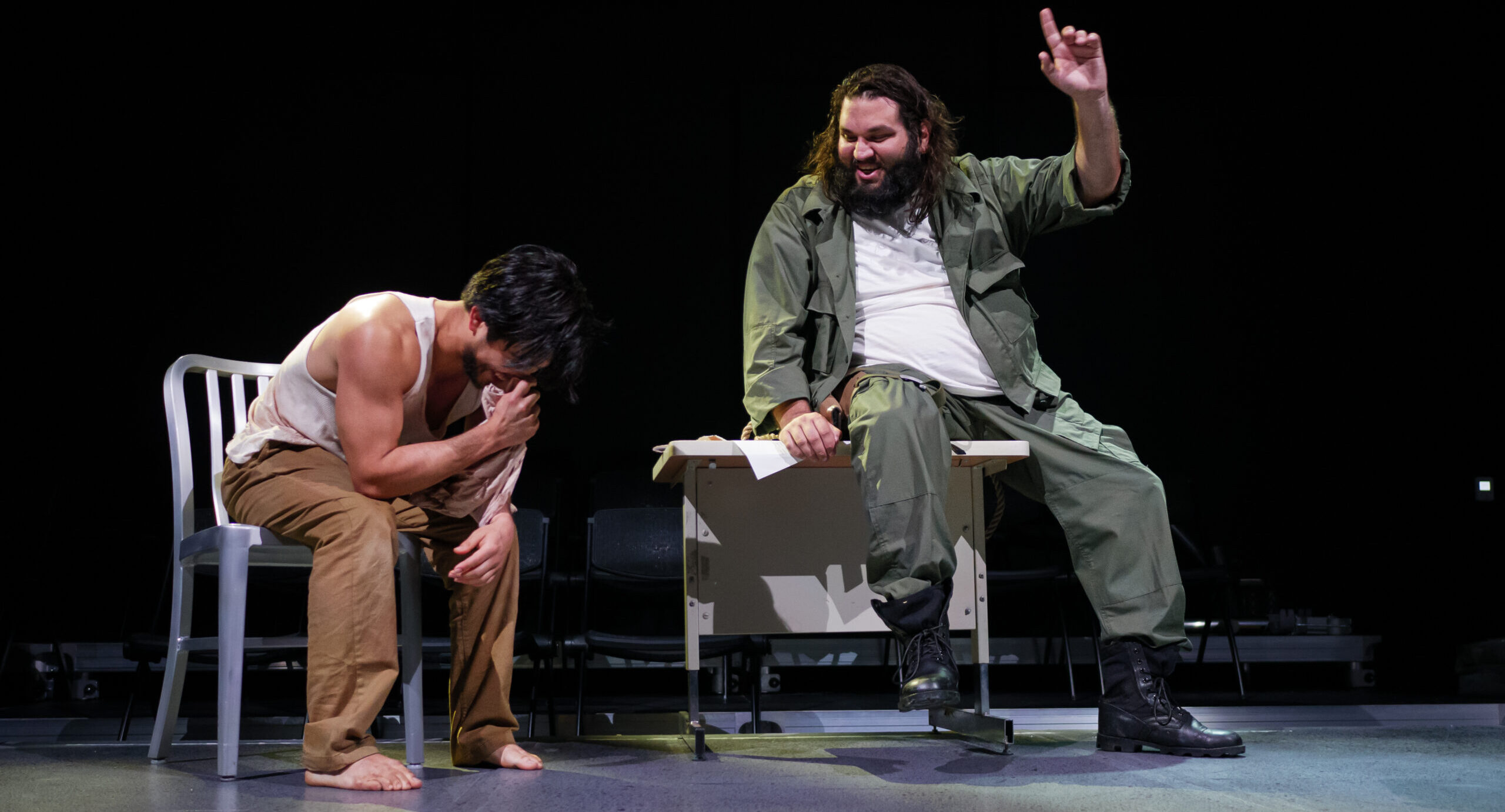
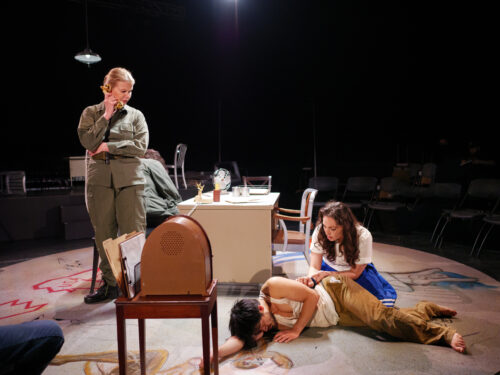
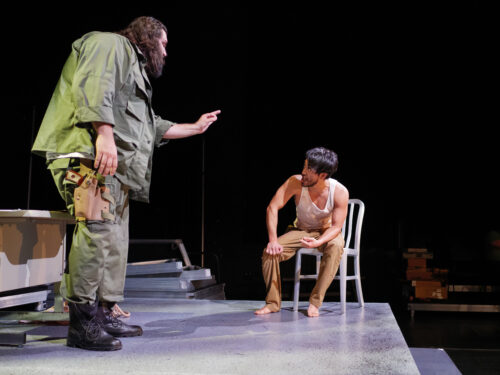

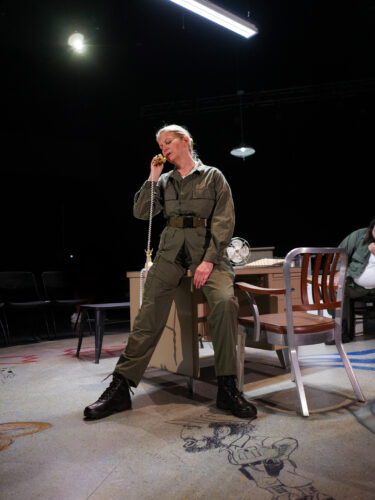
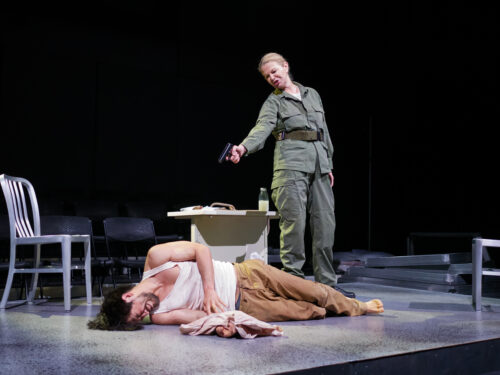
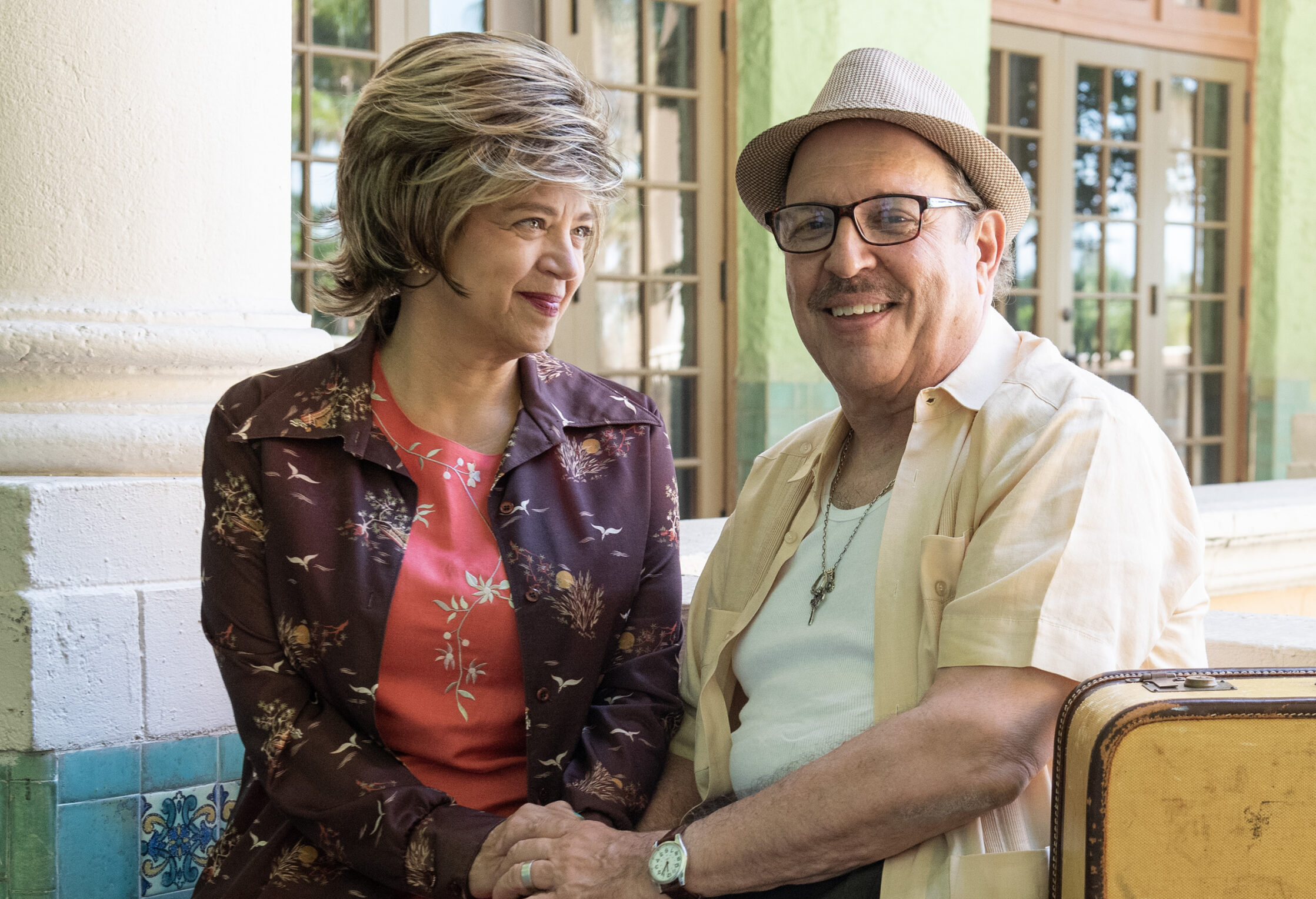



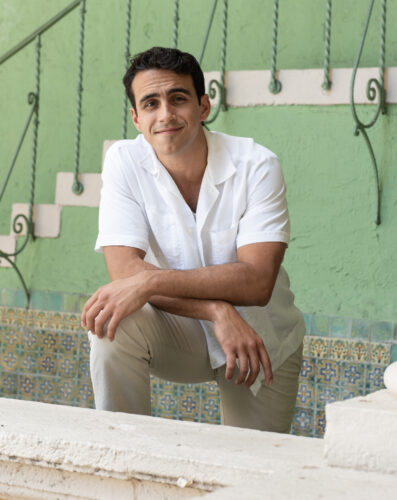

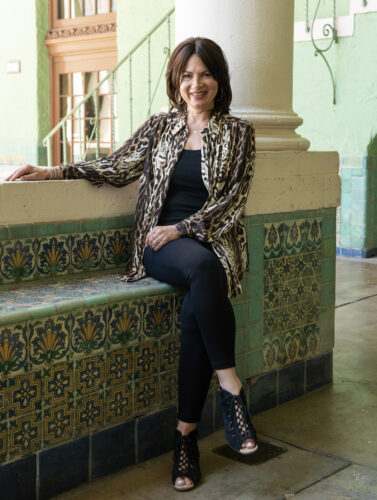

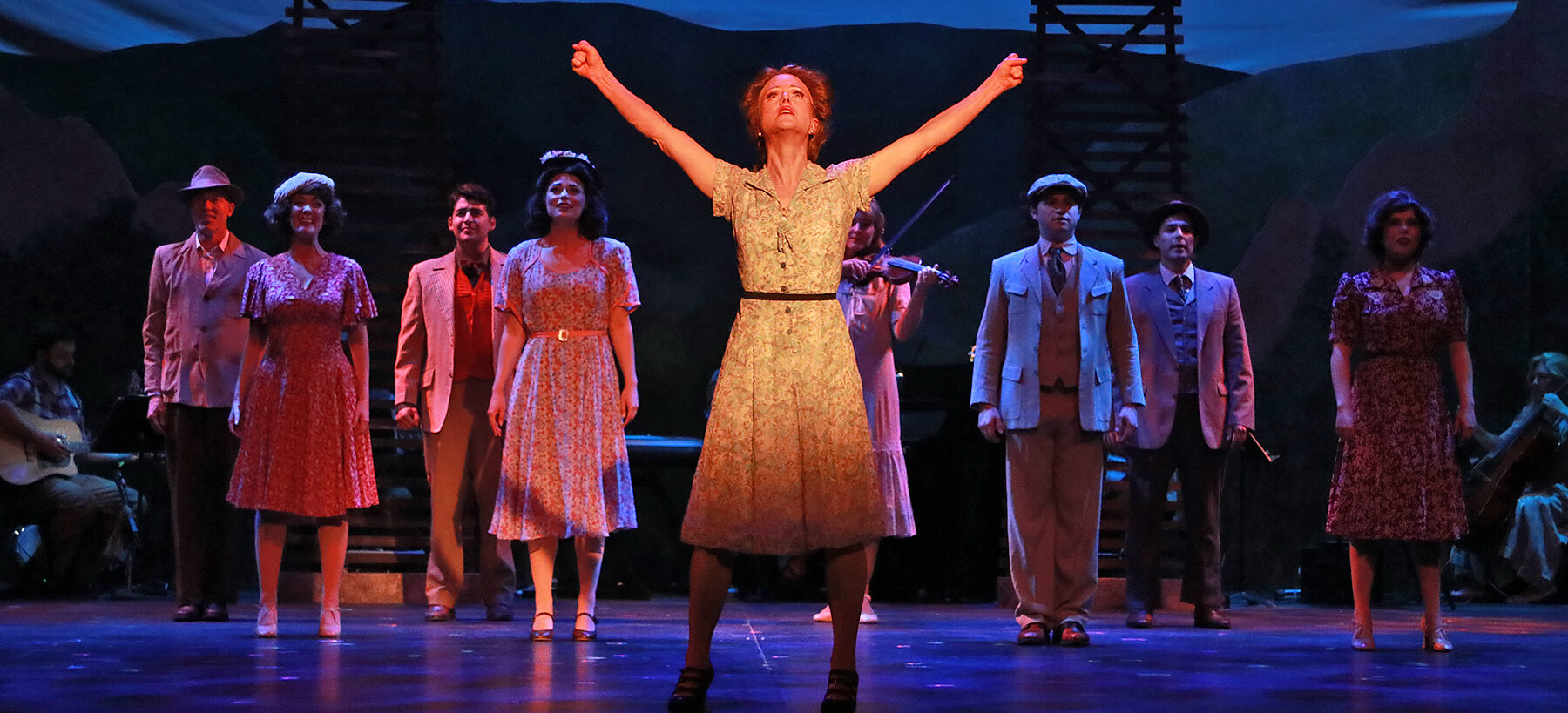


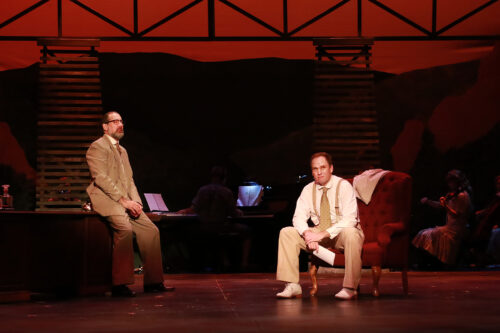
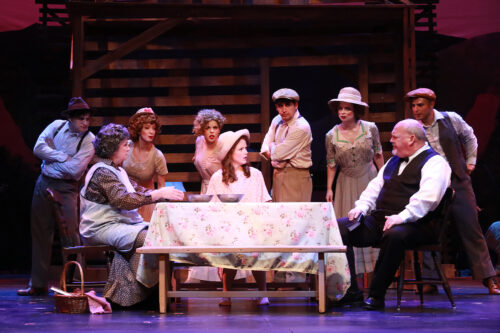
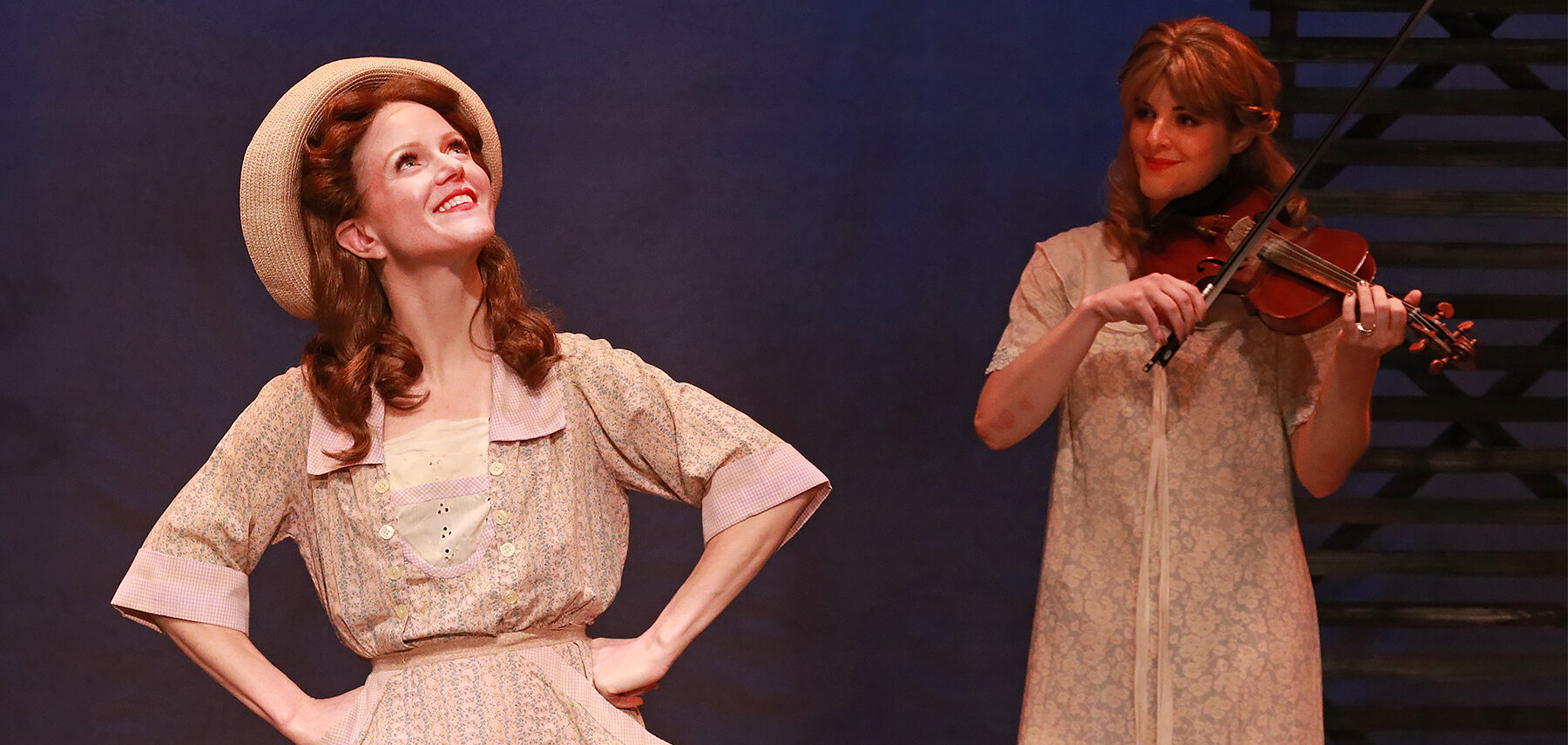
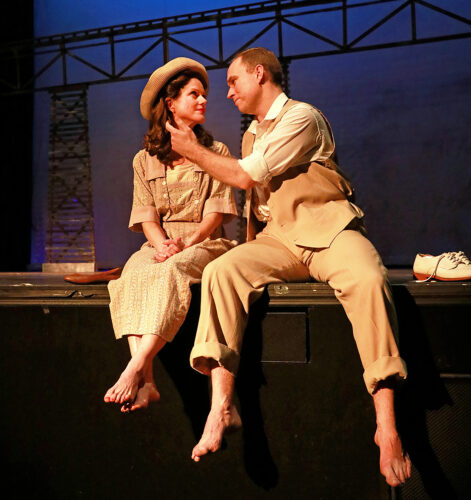
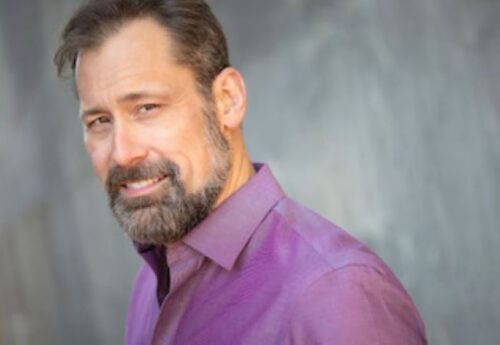
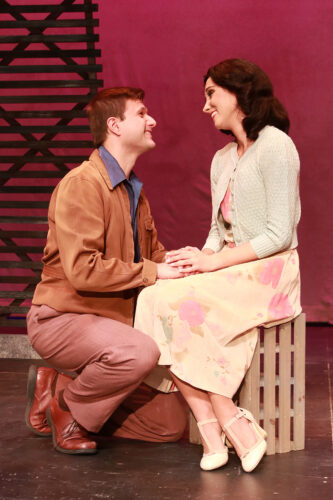
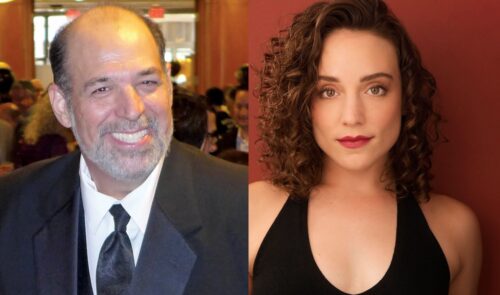

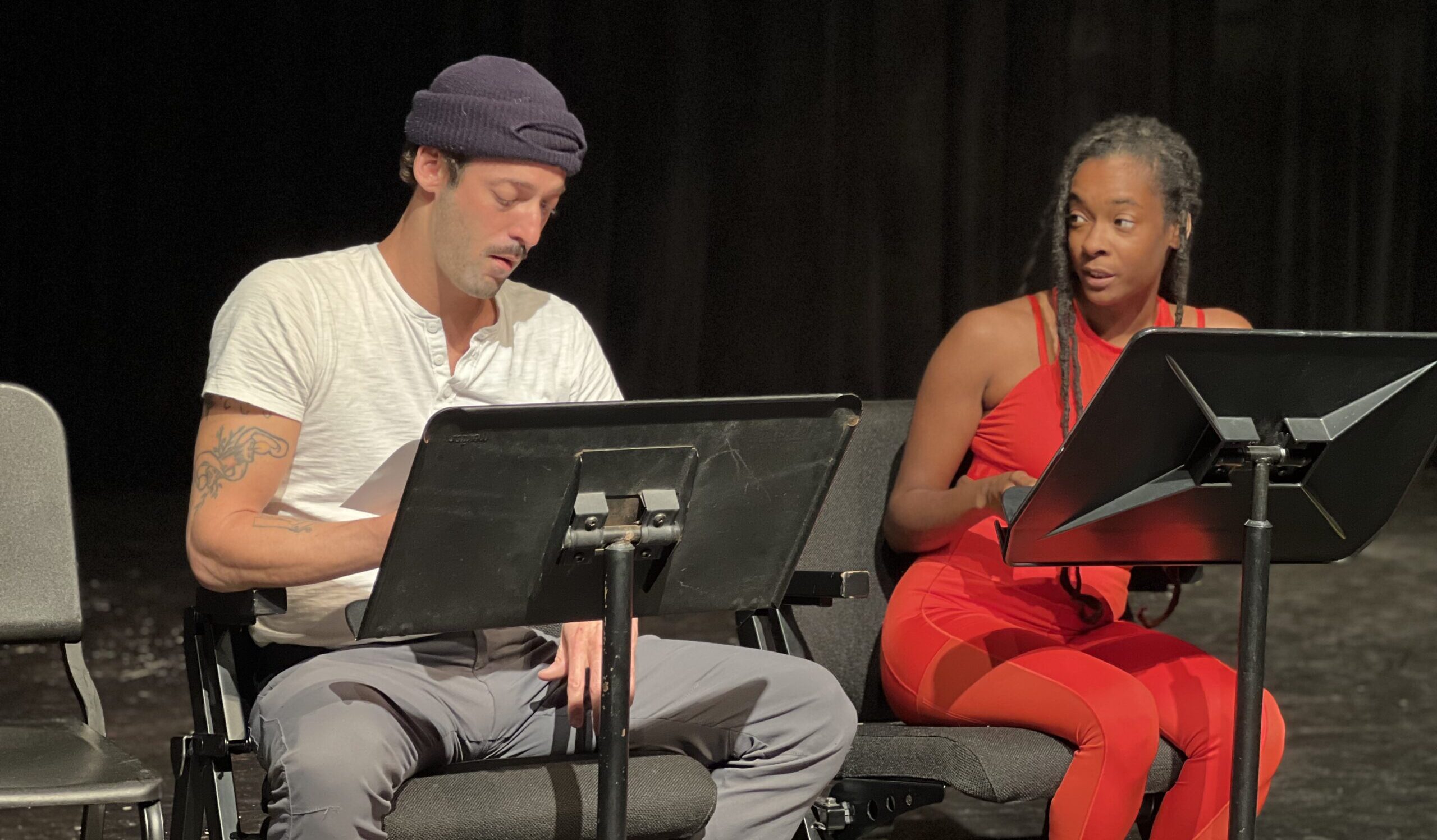
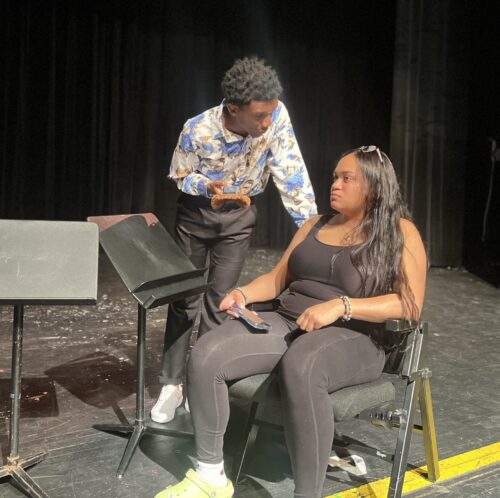
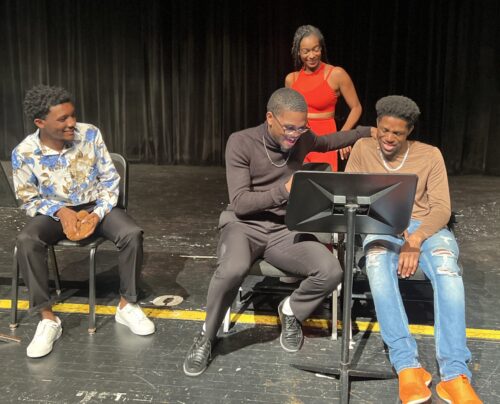


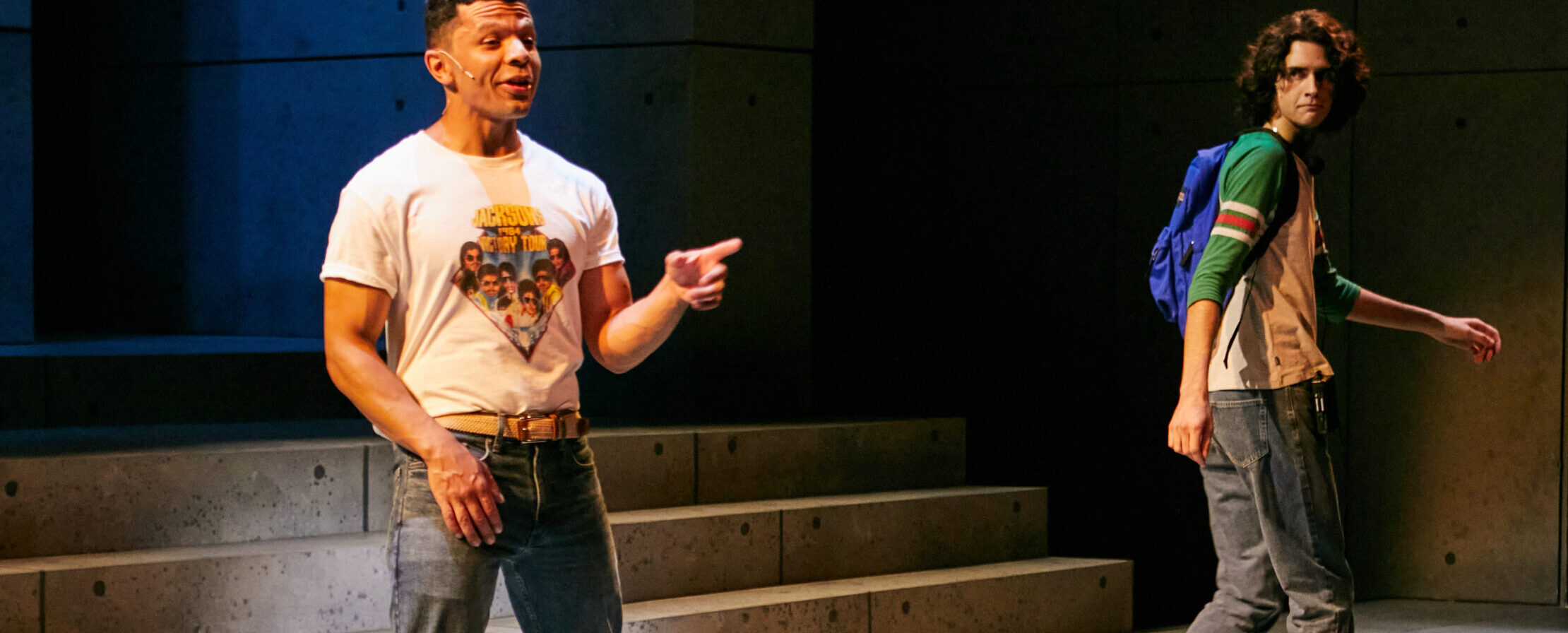


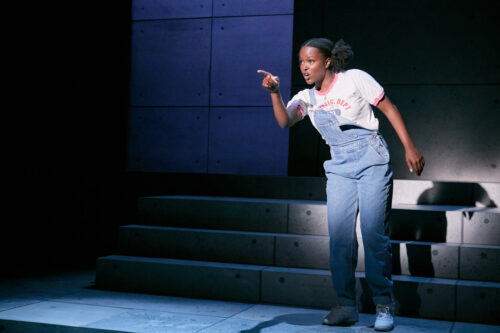
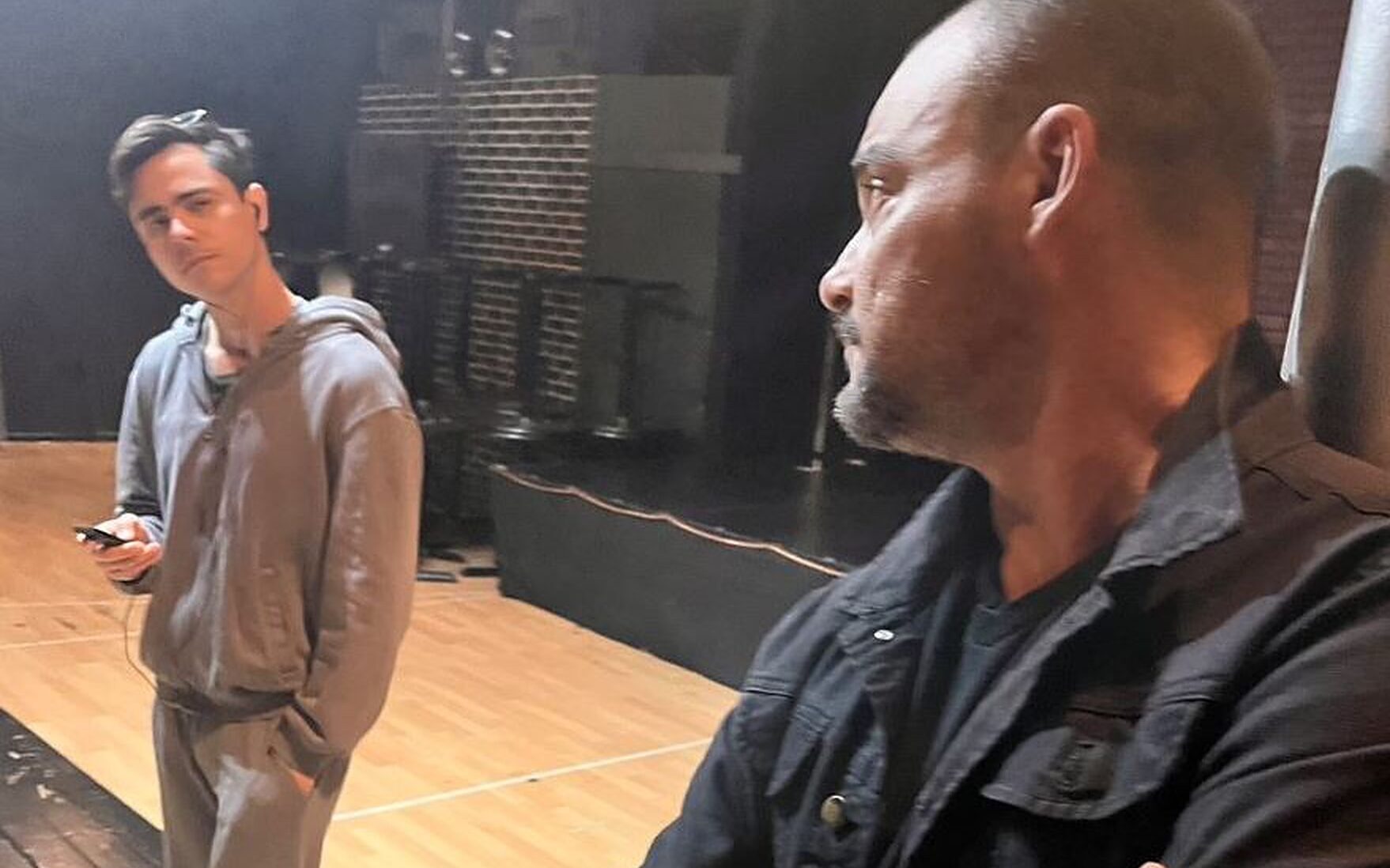
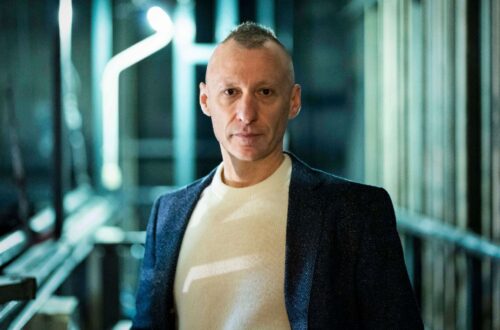
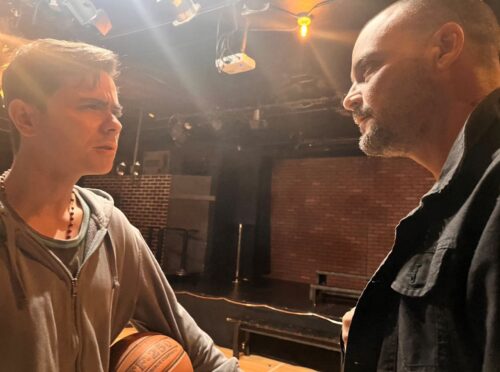


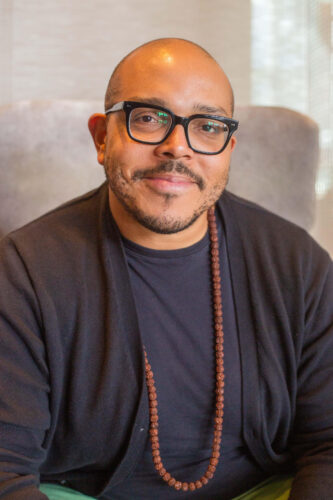

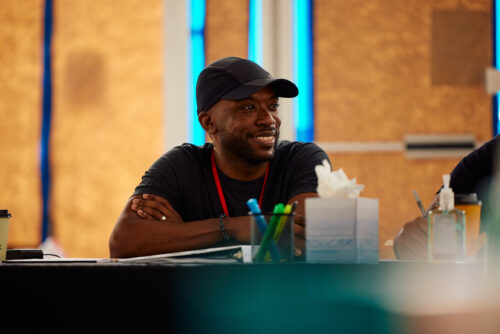

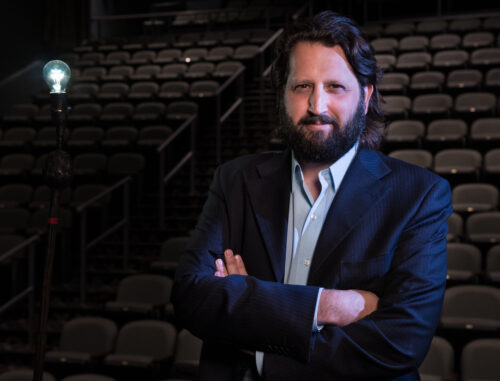


Recent Comments