Blog Article Category: Theater / Film
Review: ‘Summer Shorts’ takes a wild ride with emerging Miami playwrights
Written By Christine Dolen
June 12, 2023 at 2:51 PM
Roderick Randle and Brette-Raia Curah face an apocalyptic future in “And Other Dreams We Had” by Phanésia Pharel. (Photo courtesy of Morgan Sophia Photography)
After a two-year pandemic/post-pandemic pause, City Theatre’s signature Summer Shorts festival came back blazing last June, belatedly celebrating its 25th anniversary with a collection of mini-musicals, short dramas, and concise comedies.
This year, the company has put together an eight-play festival that feels familiar yet different. “Summer Shorts: Homegrown Edition,” running through Sunday, June 25 in the Carnival Studio Theater at Miami’s Arsht Center, showcases the talent of emerging BIPOC/Latinx playwrights, new-to-the-festival directors, plus new and seasoned acting talent
Like earlier festivals, “Homegrown” follows a tried-and-true structure as it delivers plenty of delight. The eight writers have been honing their work with master playwright Vanessa Garcia, whose “#Graced” had its world premiere in the same Arsht Center space last month. Though the subjects of the short plays differ widely, as a whole, “Summer Shorts: Homegrown Edition” is a love letter to Miami talent.
Act One features four comedies, plays that get the audience crazy with laughter, practically guaranteeing they won’t skip out during the intermission. Act Two offers three plays with more serious themes (though two also have plenty of laughs) before wrapping up with an out-of-this-world farce set in outer space.

Shaina Joseph as Hansline, Toddra Brunson as Nubia and Brette-Raia Curah as Kayla debate a vow renewal in “7” by Lolita Stewart-White. (Photo courtesy of Morgan Sophia Photography)
“I Found This on the Web” by Ivan R. López kicks things off with an insightful, imaginative look at how devices can become an omnipresent third wheel when an online date becomes a fraught real-world experience.
Marcos (Raul Ramírez) is jittery as he waits for Jake (Samuel Krogh) in a nice restaurant. The waiter (Graham Oberlink) is friendly and attentive, but once Jake walks through the door and starts talking, you think: Uh oh. Mismatch.
As it happens, Siri (Evelyn Perez), speaking from Marcos’s phone and watch, is of the same opinion. So she chimes in even when Marcos orders her to zip it (AI doomsday believers, beware). The play gets crazier – see for yourself – but know that the script, performances and excellent direction by Alex Alvarez (an acting veteran of numerous City Theatre festivals) are moment-to-moment hilarious.
Alvarez was also at the helm of “7” by poet-turned-playwright Lolita Stewart-White. Set in the dressing room of a chapel in South Miami’s Richmond Heights neighborhood, the play imagines that married couples have to follow a federal law requiring them to renew their vows every seven years; if they don’t, the marriage is null and void.
Kayla (Brette-Raia Curah), a beautiful and decidedly nervous woman, is decked out like a bride but not at all certain about her next move. Her elder sister Nubia (Toddra Brunson) and younger sister Hansline (Shaina Joseph) urge her to renew her vows with husband Curtis – Nubia is especially (and riotously) vociferous about it. But Kayla has just run into her bad-boy ex Troy, and she’s starting to feel like a runaway bride. So, Nubia goes nuclear as she reveals exactly why Kayla should stick with the good man she has.
Stewart-White spins a relatable tale out of her unusual premise, and Alvarez helps the cast deliver every laugh in the script. Brunson, reminiscent of the actor-comedian Leslie Jones in this piece, steals the show.

Roderick Randle as Tyrone gets a piece of customer Chabely Ponce’s mind in Sefanja Richard Galon’s “Banana Bread.” (Photo courtesy of Morgan Sophia Photography)
Sefanja Richard Galon’s “Banana Bread,” adroitly staged for maximum comedic effect by Joshua Jean-Baptiste, should speak to anyone who has ever had a going-nowhere fast food job. Tyrone (Roderick Randle) and Sebastian (Ramírez) are coworkers under the thumb of high-octane manager Tony (Krogh), who starts their day at 7 a.m. by making them recite the corporate motto.
Their working styles reveal plenty about their values and motivations. Sebastian is coasting, going out for a pre-shift smoke break involving weed, taking his sweet time to do anything. Tyrone is hustling hard, going by the book, trying to be sure the customers leave happy.
That last part isn’t easy: The first customer (Chabely Ponce) is hilariously intolerable without her heart-starting first dose of caffeine, and the second (Lauren Cristina López) is a sleek corporate type whose demands extend to the minutiae of her order. Well-written, well-directed and well-acted, “Banana Bread” is a scrumptious little comedy.
“Plastic Flowers” by Luis Roberto Herrera is polished, achingly funny and comes with the perfect comedic twist at the end. Directed by Maha McCain, the play involves a pair of estranged coworkers, Thaylee (Brunson) and Raia (Perez), who unfortunately pick the same moment to visit a comatose coworker (Daniella Valdivieso) in the hospital. Raia has brought a bouquet of plastic flowers for the patient – tacky, as far as Thaylee is concerned – and soon it’s off to the races with insults and f-bombs as the women resume insulting each other.

Coworkers Raia (Evelyn Perez, left) and Thaylee (Toddra Brunson) take their long-running argument into a hospital room in “Plastic Flowers” by Luis Roberto Herrera.” (Photo courtesy of Morgan Sophia Photography)
Turns out, guilt is driving a lot of Thaylee’s behavior, particularly the last thing she said to the patient before her coworker landed in the hospital. Perez and Brunson are seasoned actors who volley Herrera’s well-crafted dialogue so well that you wish “Plastic Flowers” were a little longer.
McCain is also the director of the most intense and sobering play in the “Homegrown” collection, “And Other Dreams We Had” by Phanésia Pharel. The video that precedes the dialogue shows a disintegrating world filled with pollution, a ruined environment, flooding, the latter emphasized by the occasional sound of sloshing water. Jules (Curah) and Mason (Randle) are a couple in crisis, trapped in an attic with a baby on the way – if they decide to go through with the pregnancy.
Worry and fear are omnipresent as they subsist on canned food and wonder (as so many parents do) how they could bring a child into a despoiled world. But their love is still alive in that attic, allowing them a brief escape into a reverie of beauty and hope. Pharel’s powerful, poetic voice marks her as a playwright to watch.
Ariel Cipolla’s “The Vultures” is a sly, layered piece that manages to combine the behavior of actual vultures (though the explanation of most of that is in the script’s stage directions) with the actions of three teen girls who have just finished middle school. Those years weren’t a happy time for Jade (Ponce), Hazel (López) and Riley (Curah), and Jade is determined they’ll reinvent themselves with fresh social media personas that will make them bully-proof.

Brette-Raia Curah’s Riley, left, is not happy with the demands of Chabely Ponce as Jade in Ariel Cipolla’s “The Vultures.” (Photo courtesy of Morgan Sophia Photography)
Director Melissa Almaguer gets truthful teen behavior from her young adult actors, and she flawlessly guides them through the characters’ constantly shifting emotions. Pushy, controlling Jade turns out to be the alpha vulture, wielding social media as a weapon, though Hazel’s no saint either. Part of the pleasure of Cipolla’s short play is that it’s full of surprise and emotional depth.
Almaguer has also staged Joel Castillo’s “Balloo(n),” a piece full of conflicting elements, including love, anger, comedy and condescension. Miami honeymooners Olivia (López) and Jason (Krogh) have gone to Havana, she to explore her family’s history, gringo Jason to be supportive and have an adventure. Outside the dolphin show at the Acuario Nacional, a smiling globera (Perez as the balloon seller) tries to get them to buy one of her red, blue or green balloons. Jason gives the older woman the brushoff, barely looking at her, but this globera stands her ground nearby – which proves to be a great thing.
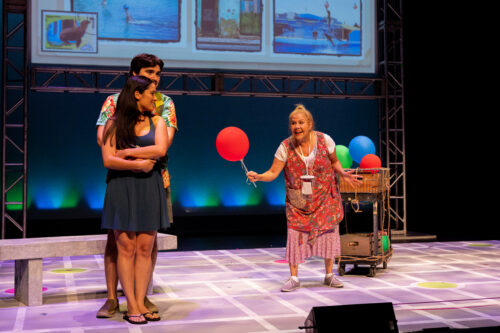
Honeymooners Olivia (Lauren Cristina López) and Jason (Samuel Krogh) decline a balloon offered by a globera (Evelyn Perez) outside Havana’s national aquarium in Joel Castillo’s “Balloo(n).” (Photo courtesy of Morgan Sophia Photography)
Perez emerges as the star of “Balloo(n),” a Cuban woman who has lived nearby with her English husband for most of her life. When Jason’s comments about the run-down condition of the country and its pushy people cause Olivia to go nuclear, the globera offers her wise, funny counsel about men, husbands and more in a mix of Spanish and enough English so that everyone in the audience gets her drift. Perez’s timing and delivery are perfección.
In “2201: Xibalba,” playwright Chris Anthony Ferrer has dreamed up a tongue-in-cheek space farce. Staged by Jean-Baptiste, who brings the quirkiness of the characters to the forefront, the play is set aboard the massive Space Station Xibalba, standing guard just outside a wormhole to prevent universe-destroying aliens from taking over our solar system.
Diverse personalities and multiple crises collide as the Xibalba crew prepares to celebrate New Year’s Eve with plenty of booze and raunchy language.
Bombastic Commander Dax Lobo (Brunson) is justifiably nervous about turning over the controls to shaking cadet Cicero Lipschitz (Ramírez), who tries to convey a confidence way beyond his capabilities – but hey, Lobo’s got a party to attend. Major Gronkzalez (Randle) appears on the Jetsons-style control deck as a hologram, just long enough to threaten Lipschitz with the deadly consequences of dereliction of duty. Sarai (Ponce, memorable again), an effervescent golden android, demonstrates that turning off her comedy function makes her an unhappy, aggressive, not-so-shiny girl. Fireworks – the traditional kind and the firepower of an approaching alien armada – close out a New Year’s Eve to remember (if anyone survives the “celebration”).

Chabely Ponce as the joke-loving android Sarai fails to amuse Toddra Brunson as Commander Dax Lobo in Chris Anthony Ferrer’s “2201: Xibalba.” (Photo courtesy of Morgan Sophia Photography)
“Summer Shorts: Homegrown Edition” may seem like a fairly compact endeavor, with eight actors performing eight plays. It isn’t, of course: More than 40 people are involved. They include City Theatre artistic director Margaret M. Ledford and executive director Gladys Ramirez, intimacy choreographer Nicole Perry, fight choreographer David Hyland, stage manager Randall Swinton, production manager Preston Bircher, and five interns.
Special kudos go to the designers: Marina Pareja, who has underscored the personalities from so many worlds with her costumes; lighting designer Eric Nelson, who summons night, day and so many moods; scenic and prop designer Jodi Dellaventura; scenic and projection designer Natalie Taveras; sound designer Ernesto K. Gonzalez; projection specialist Steven Covey; videographer Christian Vandepas.
Video and projections are a major component of “Summer Shorts: Homegrown Edition.” Before and between plays, the audience goes along on a high-speed driving tour of Miami-Dade’s cities and neighborhoods, with the camera lingering just long enough on signs for theatergoers to experience that little flash of local relatability. Props to City Theatre, too, for celebrating the theater community with shots of such companies as GableStage, Actors’ Playhouse and the much-missed Coconut Grove Playhouse.
Overall, “Summer Shorts: Homegrown Edition” proves the company’s premise — that there is depth and breadth of undiscovered and emerging theatrical talent here, and that the stories BIPOC and Latinx playwrights have to tell are both culturally specific and more broadly resonant. And these writers know how to make you laugh.
WHAT: “Summer Shorts: Homegrown Edition” by Joel Castillo, Ariel Cipolla, Chris Anthony Ferrer, Sefanja Richard Galon, Luis Roberto Herrera, Ivan R. López, Phanésia Pharel, Lolita Stewart-White
WHERE: Carnival Studio Theater in the Ziff Ballet Opera House at the Adrienne Arsht Center for the Performing Arts, 1300 Biscayne Blvd., Miami
WHEN: 7:30 p.m. Thursday-Friday, 3 and 7:30 p.m. Saturday, 3 p.m. Sunday, through June 25
COST: $50-$75 (student tickets $15 with ID)
INFORMATION: 305-949-6722 or arshtcenter.org
ArtburstMiami.com is a nonprofit source of dance, visual arts, music, and performing arts news. Sign up for our newsletter and never miss a story.
No posts found
GableStage’s ‘Native Gardens’ brings a border dispute into the backyard
Written By Christine Dolen
June 6, 2023 at 1:47 PM
From left, Diana Garle, Kevin Cruz, Barbara Sloan and David Kwiat play next-door neighbors in Karen Zacarías’ comedy “Native Gardens,” opening in previews Friday, June 9 and continuing through Sunday, July 16 at GableStage in Coral Gables. (Photo courtesy of Magnus Stark)
With conflict at the center of so many headlines, it’s easy to forget that coexistence among people with differences is possible. Not simple, but possible. And, in the case of “Native Gardens” by Karen Zacarías, the road to compromise can be uproariously funny.
Closing out the current season at GableStage, the four-character play about a burgeoning dispute between neighbors has been performed throughout the United States since its world premiere in 2016. During the 2018-2019 season, “Native Gardens” was among the top 10 plays produced by America’s regional theaters. GableStage’s production in its cozy space at Coral Gables’ Biltmore Hotel previews Friday, June 9 and opens Saturday, June 10 through Sunday, July 16.
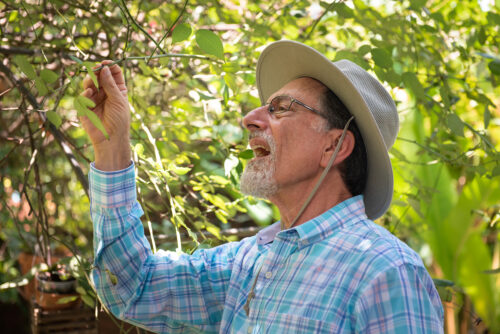
David Kwiat as Frank Butley is an avid, opinionated gardener in GableStage’s “Native Gardens.” (Photo courtesy of Magnus Stark)
“When I read the play, I thought, ‘Oh, this is fun. It’s kind of a creative vacation,” says Victoria Collado, the show’s director. “The conflicts are funny.”
Collado adds that GableStage’s production “will lean into how ridiculous an argument can be.”
When a younger Latinx couple buys the townhouse next door to one owned by an older white couple, a relationship that begins with civility and friendly gestures frays for multiple reasons, including a property line dispute.
The Mexican-born Zacarías, the first playwright-in-residence at Washington D.C.’s venerable Arena Stage, lives in the nation’s capital and set “Native Gardens” in one of the city’s historic neighborhoods.
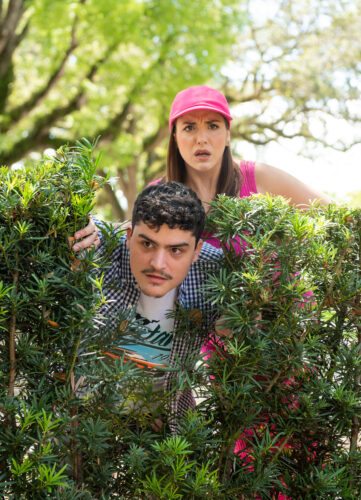
Kevin Cruz and Diana Garle play a couple checking out their neighbors’ backyard garden in GableStage’s “Native Gardens.” (Photo courtesy of Magnus Stark)
In his poem “Mending Wall,’ Robert Frost memorably wrote: “Good fences make good neighbors.” That’s not always the case, as “Native Gardens” illustrates.
In her character descriptions, Zacarías describes all four as smart and likable – in other words, no one is a villain with malicious intent. But differences and biases lead to escalating conflict.
Bari Newport, wrapping up her second season as GableStage’s producing artistic director, says, “Karen has done a fabulous job of very clearly drawing parallels between a border dispute involving two suburban lawns and all kinds of border disputes . . .The play is topical, polarizing, hysterically funny, all within a fabulous story.”
In the play, Tania Del Valle (Diana Garle), a New Mexico-born Ph.D. candidate who is eight months pregnant, is a passionate gardener dedicated to creating a garden built around native plants and natural ways of cultivating them. Her husband Pablo (Kevin Cruz), who comes from a wealthy Chilean family, is establishing himself as an attorney and trying to impress his colleagues.
Virginia Butley (Barbara Sloan), an engineer working for a defense contractor, lives next door with her husband Frank (David Kwiat), who works for an unspecified federal agency and is devoted to cultivating his formal English-style garden, pesticides and all. After Frank’s much-anticipated neighborhood horticultural competition and Pablo’s backyard barbecue for his firm are scheduled for the same weekend, simmering conflict boils over.
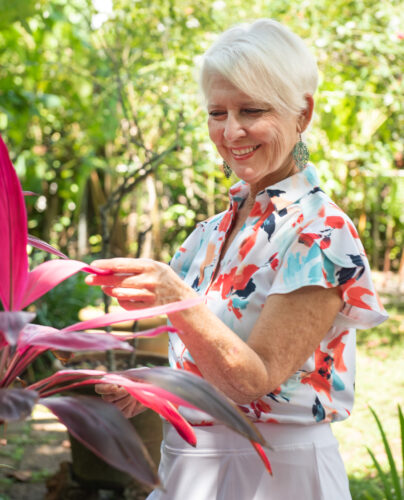
Barbara Sloan as Virginia Butley savors nature’s beauty in GableStage’s “Native Gardens.” (Photo courtesy of Magnus Stark)
Kwiat and Sloan, a couple offstage as well as on, have each been in numerous GableStage productions. This is Kwiat’s first time back at the company since the passing of longtime producing artistic director Joseph Adler during the pandemic. Sloan notes that this is her third time playing memorable women named Virginia in a GableStage show – she was Ginnie in Joshua Harmon’s “Admissions” in 2018, Virginia in Claudia Rankine’s “The White Card” in 2022 and is Virginia again in “Native Gardens.”
Discussing Zacarías’s play, the Carbonell Award-winning Kwiat sounds much like the teacher he was for so many years before retiring from the New World School of the Arts.
“I made a list of subjects she includes in the play,” he says, zeroing in on numerous issues or topics.
Kwiat says they include territorial rights, organic pest control vs. pesticides, biodiversity, a glass ceiling for women, inequity in the workplace, border walls, xenophobia, Islamophobia, politicizing issues, Brexit, ageism, racism, classicism, sexism, white privilege, homophobia, victimhood and the American Dream.
“(The playwright) uses alliteration in a really subtle way. She really crafts everything carefully. When you go over a script as much as actors do, you notice those things,” says Kwiat.

Victoria Collado is directing “Native Gardens” for GableStage. (Photo courtesy of Jorge Parra Photography/ Creative Mornings)
Sloan agrees that Zacarías is a distinctive playwright.
“Karen’s style is fabulous. I like the way she constructs sentences, though they can be difficult to remember,” says Sloan, who talks about the play and runs lines with Kwiat on their commutes to and from GableStage. “I think she’s funny.”
Garle, whose career in television and film is growing ever hotter, hasn’t been onstage in awhile but said yes to “Native Gardens” when she was cast a year ago. The daughter of a hard-working single mother, the now-bicoastal Miami actor has been performing since she was five and doing commercials since she was eight (that’s Garle playing the cashier with dimples in the latest Pollo Tropical commercial).
In the GableStage play, she’ll be wearing a weighted baby bump under her costumes. Though she saw her cousin born when she was 18 (“it was traumatic,” she admits), she hadn’t given much thought to having a family until recently – maybe because she’ll turn 30 during the run of “Native Gardens.”

Diana Garle plays Ph.D. candidate and expectant mom Tania Del Valle in GableStage’s “Native Gardens.” (Photo courtesy of Magnus Stark)
She and Sloan have been friends since working together at Miami Theater Center in Miami Shores and in City Theatre’s cruise venture, Shorts on Ships. She’ll share the stage for the first time with Kwiat and Cruz, who graduated from New World in May 2022. “Native Gardens,” Garle says, is “very much an ensemble piece” incorporating serious issues into a wild comedy that surges toward the style of a telenovela near its end.
“Vicky (Collado) has an eye for the outrageous and the farcical . . .We have these very grounded characters dealing with outlandish scenarios. I haven’t had this much fun in a room in a long time,” she says. “This is a play about community, neighbors, who we live with and how we can coexist. It’s for everyone, to build discussion.”
Garle sees a little of her past self in her costar Cruz as she thinks back to making her own GableStage debut in Stephen Karam’s “The Humans” in 2017.
“I was wide-eyed. It was a real milestone. Kevin is a sponge. He has such eagerness. He’s so good, so talented,” she says.
As it happens, “The Humans” was a milestone for Cruz as well. The aspiring actor, who lived in Puerto Rico until he was 13, saw the GableStage production during his freshman year at New World, where his co-star Kwiat was his teacher, and it left him awestruck.
“I thought, ‘This is what theater can do. It can bring us home,’ ” he says.

David Kwiat as Frank takes aim at his next door neighbors in GableStage’s “Native Gardens.” (Photo courtesy of Magnus Stark)
He began a ritual after that performance, one he continues to this day.
“After the cast left, I would stand in the theater staring at the stage,” he says. I would touch the floor and the walls. And I’d think, ‘One day. One day.’ ”
This production marks the second time Collado has directed a GableStage show. Last summer, she staged the Ruben Rabasa solo show “Rubenology,” a co-production of GableStage and the Abre Camino Collective, which she co-founded with playwright Vanessa Garcia.
Her cast, she says, “makes me feel like I won the lottery.” And she loves working with Newport.
“Bari is one of my favorite artistic directors to collaborate with. She gives space, but she’s a good sounding board (who sometimes) proposes things,” says Collado.
Newport says of Collado, “Vicki is attracted to color, to bold choices. She likes to laugh. She’s a problem solver. ‘Native Gardens’ begs for someone with a huge imagination.”
Next season
GableStage recently announced its 25th anniversary season, which Newport describes as the end of “a long and winding road” that involves “years of working relationships.”
The 2023-2024 season begins Sept. 29-Oct. 22 with the solo show “How I Learned What I Learned,” written by Pulitzer Prize winner August Wilson and Todd Kreidler. Miamian Robert Strain stars as the playwright whose Pittsburgh Cycle focused on Black life in each decade of the 20th century. MacArthur “genius” grant winner Larissa FastHorse’s “The Thanksgiving Play,” a poignant comedy that comes at a beloved American tradition from a native American point of view, follows Nov. 17-Dec. 10.
Playwright Jon Marans will direct his “Old Wicked Songs,” about a young Jewish pianist and his antisemitic professor in 1986 Vienna, with a run set for Jan. 12-Feb. 4, 2024. Newport will direct Ben Power’s adaptation of Stefano Massini’s “The Lehman Trilogy,” an epic play about the three German siblings whose namesake Lehman Brothers spectacularly collapsed in 2008; it runs March 15-April 14, 2024.
The new season wraps up May 17-June 24, 2004, with Miami native Alexis Scheer’s “Laughs in Spanish,” a comedy set in a Wynwood gallery during Art Basel.
WHAT: “Native Gardens” by Karen Zacarías
WHERE: GableStage in the Biltmore Hotel, 1200 Anastasia Ave., Coral Gables
WHEN: Preview 8 p.m. June 9, opening 8 p.m. June 10; regular performances 2 and 7 p.m. Wednesday, 8 p.m. Thursday-Saturday, 2 p.m. Sunday (additional matinees July 7 and July 15), through July 16 (streaming version available during regular performances June 16-July 16)
COST: $40-$70 (streaming ticket $27)
INFORMATION: 305-445-1119 or gablestage.org.
ArtburstMiami.com is a nonprofit source of dance, visual arts, music, and performing arts news. Sign up for our newsletter and never miss a story.
No posts found
‘Summer Shorts’ is back with diverse ‘Homegrown’ plays from the 305
Written By Christine Dolen
June 5, 2023 at 2:28 PM
Brette-Raia Curah, Lauren Cristina Lopez and Chabely Ponce are going for a social media makeover in Ariel Cipolla’s “The Vultures,” one of the plays featured in City Theatre’s “Summer Shorts: Homegrown Edition.” (Photo courtesy of Morgan Sophia Photography)
Since 1996, when City Theatre founders Susan Westfall, Stephanie Heller and Elena Wohl dreamed up an event to celebrate the art of the short play, the annual Summer Shorts festival has been a much-anticipated part of the South Florida theater season.
The Miami company’s programming has broadened over the years to include a full-length play, myriad readings at different locations, a middle school tour, a national playwrights’ conference and a host of developmental programs. After two dark years during the pandemic and its aftermath, City Theatre bounced back with its postponed 25th anniversary festival last June.

The playwrights of City Theatre’s “Summer Shorts: Homegrown Edition” are Sefanja Richard Galon, Chris Anthony Ferrerr, Ivan R. Lopez, Luis Roberto Herrera, Phanésia Pharel, Ariel Cipolla, Lolita Stewart-White and Joel Castillo. (Photo courtesy of Gregory Reed)
This year, the festival is returning with yet another evolutionary twist: The world premiere plays that make up the festival have all been written by emerging BIPOC Miami playwrights mentored by Vanessa Garcia, whose play “#Graced” had its Zoetic Stage world premiere at the Arsht in May.
Previews for “Summer Shorts: Homegrown Edition” are Thursday, June 8 with the opening date Friday, June 9 and running through Sunday, June 25 in the Carnival Studio Theater at Miami’s Arsht Center. Eight new plays performed by an eight-actor company are in the lineup, with four directors at the helm and City Theatre artistic director Margaret M. Ledford overseeing it all.
City Theatre has long given opportunities to diverse playwrights and actors, aiming to help create a sustainable arts ecosystem that will keep Miami artists living and working here. The difference this year is that the playwright cohort, the actors, the directors and much of the behind-the-scenes talent are BIPOC artists.
“Philosophically and ethically, South Florida is so rich in many different cultures. But what so often floats to the surface at major theaters are white voices and mainstream voices,” says Ledford. “We have to ask, ‘How do we represent Miami?’ This festival isn’t about the ‘tourist’ Miami.”

Margaret M. Ledford, left, is artistic director of City Theatre and master playwright Vanessa Garcia leads City Theatre’s “Homegrown “playwrights program. (Photos courtesy of Morgan Sophia Photography and Gregory Reed)
Although past festivals have featured work by a lengthy roster of well-known playwrights – including Paul Rudnick, Lin-Manuel Miranda, Dominique Morisseau, Michael McKeever, France-Luce Benson, Christopher Durang, David Ives and many more – Ledford says Summer Shorts aficionados will experience the kind of festival they’ve come to know and love.
“Nobody knows the plays they’ll be seeing, going in. This is not less than. We’re exalting and amplifying what we have in our own backyard . . . I would hope that there’s a pride that this is coming from the 305,” she says.
Ledford says theater is, and should be, a social leader.
“We have a lot of different theatrical tastes in Miami, but it’s important to remind people that a shared theatrical experience is not like anything else, particularly in a state that’s making it harder to speak out . . . We have to start the hard conversations.”
Homegrown master playwright Garcia credits City co-founder Westfall, who left her day-to-day leadership role in November and now serves on the company’s board, with the vision of finding “ . . .BIPOC writers, putting their work onstage here and pushing it out into the world.”
During the 18-month program, Garcia is working with the eight playwrights on their short plays, full-length plays and a collectively written piece to be titled “The Unbound.” She has also brought in a variety of theater professionals to talk to the participants about different aspects of achieving success as a playwright.
“City has always given voice to people who needed it in a particular moment. It has brought the voices of women to the forefront; same thing with BIPOC and Latinx writers,” says Garcia, who adds that this year’s “Summer Shorts” features a collection of what she dubs “calling card” plays. “This cohort is going places.”
The eight playwrights of “Summer Shorts: Homegrown Edition” are diverse in terms of age, experience and background.

Toddra Brunson and Brette-Raia Curah debate a vow renewal in Lolita Stewart-White’s “7,” part of “Summer Shorts: Homegrown Edition.” (Photo courtesy of Morgan Sophia Photography)
Lolita Stewart-White is an African American poet and filmmaker who is adding playwright to her skill set with “Summer Shorts.” Ariel Cipolla, a Mexican-Argentine playwright and dramaturg who recently graduated from Florida International University, was part of City Theatre’s Next Gen Young Playwrights program in 2017.
Chris Anthony Ferrer, who played Lewis in Garcia’s “#Graced,” is a New World School of the Arts alum who made his professional playwriting debut with “Swindlers” at the Aurora Theatre in Lawrenceville, Ga. That piece was directed by another “Homegrown” playwright, Ivan R. López, a Cuban American actor-playwright-director from Miami who is an FIU faculty member.
Phanésia Pharel, whose bio notes that she grew up on a dragon fruit farm in Miami, is a Haitian American Barnard College grad living in San Diego where she’s a full-time graduate student; she has also had numerous fellowships, commissions and residencies. Sefanja Richard Galon, who was born in Miami and grew up in Suriname, is an actor-director-playwright who graduated from New World School of the Arts and recently made his professional directing debut with the Main Street Players’ production of Lynn Nottage’s “Sweat.”
Luis Roberto Herrera, a Columbian American playwright and actor who graduated from the University of Florida and The New School and who teaches at New World, is a prolific playwright who performed his solo show “As I Eat the World” at New York’s Frigid Fringe Festival in February. Joel Castillo, a Cuban American University of Miami graduate, has been writing plays since high school and now writes mainly for his students at the arts magnet Coral Reef Senior High School.
As they get ready for the more intense focus that “Summer Shorts: Homegrown Edition” will inevitably bring to their work, the writers are juggling fears, excitement, anticipation – the gamut of feelings that any playwright has on the way to an opening.

Actor-director Alex Alvarez, left, is staging a pair of plays and actor-director Maha McCain is staging two of the plays in “Summer Shorts: Homegrown Edition.”
(Photos courtesy of Diana Garle and Taylor Hooper)
“I have not written this much in my life. I like to write papers, essays, presentations for school. I like to write long paragraphs. But I realized that’s not how people talk,” says Galon. “I’ve had to switch up my writing style. It’s terrifying, but you have to find it . . . I’ve rewritten my ending four times. And every time it got better.”
Herrera, who studied playwriting with Carbonell Award winner McKeever at New World, says that writing a short play for the festival is “like going home. I’m used to writing plays that are 50 to 120 pages. Now I’ve written 12 pages. It was a relief that I didn’t have to worry about anything being complicated.”
Pharel, who like Cipolla was part of City’s Next Gen program in high school, says she was inspired to become a playwright when she watched Benson’s “Risen from the Dough” at an earlier “Summer Shorts” festival.
“That was the first time I witnessed the Haitian community of Miami be honored. It was specific, true and made me really happy. I dreamed of being a ‘Summer Shorts’ playwright because it’s a big deal,” exclaims Pharel. “So many great writers have passed through this festival. . . It means the world and makes me feel like I need to raise the bar.”
After living in New York and now California, Pharel is beginning to see career possibilities in her hometown.
“This is happening in large part because of Margaret Ledford and (executive director) Gladys Ramirez, (who) are unrelenting in advocating for BIPOC voices and making sure City Theatre Miami reflects Miami,” she says. “I partially left Miami because all the writers I knew from Miami (felt they) had to leave. This festival proves you don’t.”
Ferrer believes the possibilities for Miami’s BIPOC playwrights are getting better – but he feels the need for further change.
“The community is reflecting a lot more diverse work. This is really more about professional clout,” says Ferrer. “When I graduated from college, theaters would say their subscribers wanted to see ‘Oklahoma!’ for the fifteenth time.”
Herrera has felt the bias toward the traditional and the safe in programming too.

Melissa Almaguer is directing two plays and filmmaker and director Joshua Jean-Baptiste is directing two plays in “Summer Shorts: Homegrown Edition.”
(Photos courtesy of Jayme Gershen and Dave McMahan)
“Plays that get chosen are by white playwrights or playwrights who have a previous relationship with a company. South Florida doesn’t feel like a place for new playwrights. I came back (after grad school) because I wanted to be part of the change,” he says.
Herrera points to what’s happening in other cities, particularly New York.
“It’s so sad and frustrating. Off-Broadway, you have all these stories by BIPOC and Latinx writers getting rave reviews. ‘Fat Ham’ (by James Ijames) is a queer, black adaptation of ‘Hamlet’ that won the (2022) Pulitzer Prize. The lack of opportunities is what makes people in this area leave.”
Expanding audiences by telling more inclusive stories will pay off down the line, the playwrights believe. Cipolla thinks that, while audiences that turn out for theater don’t often reflect Miami’s broad diversity, Homegrown will demonstrate what theater can be.
For “Summer Shorts: Homegrown Edition,” the acting company and the festival’s four directors are as diverse as the playwrights’ cohort.
Playing multiple roles are Toddra Brunson, Brette-Raia Curah, Samuel Krogh, Lauren Cristina López, Evelyn Perez, Chabely Ponce, Raul Ramírez and Roderick Randle. The performers were found both through auditions and through a conscious effort by Ledford, Garcia and Ramírez to seek out the region’s BIPOC talent.

Brette-Raia Curah and Roderick Randle consider the future in Phanésia Pharel’s “And Other Dreams We Had,” one of the plays in “Summer Shorts: Homegrown Edition.” (Photo courtesy of Morgan Sophia Photography)
“We spent a lot of time making sure we saw a lot of theater, and not just at the major companies,” says Ledford. “These playwrights are writing for younger voices, so we saw plays at FIU and went to New World’s showcase. We wanted to find emerging actors too.”
As for the multifaceted directors – they are teachers, actors, filmmakers, writers – each is staging two plays.
Alex Alvarez, a Cuban American artist who has acted in five editions of Summer Shorts and Winter Shorts, is directing López’s “I Found This on the Web” (a comedy about dating in a world permeated by AI) and Stewart-White’s “7” (a play about a jittery bride who might or might not recommit to her husband of seven years).
Joshua Jean-Baptiste, a Haitian American filmmaker and co-creator of the digital series “Grown,” is staging Ferrer’s “2201: Xibalba” (a wild sci-fi comedy involving a space cadet and a wormhole) and Galon’s “Banana Bread” (a dramedy about a friendship torn asunder by corporate maneuverings at a banana bread shop).
Maha McCain, an actor-director who teaches at the University of Miami, is directing Pharel’s “And Other Dreams We Had” (a young couple is on the cusp of a dream or nightmare) and Herrera’s “Plastic Flowers” (about estranged friends arguing as they visit a comatose pal in the hospital).
Melissa Almaguer, a Cuban American actor-director who teaches at Felix Varela Senior High School and who most recently starred as Catherine in Garcia’s “#Graced,” is staging Castillo’s “Ballóo(n)” (in Havana, a honeymooning Miami couple encounters a balloon seller) and Cipolla’s “The Vultures” (a trio of teens is set on doing a social media rebrand before starting high school).
In working on “Homegrown,” Alvarez has felt City Theatre’s intention becoming reality.
“It doesn’t happen that often that your values align with the story you’re telling. It’s great to give new voices a chance, to uplift those who are just starting,” he says.

Raul Ramírez and Roderick Randle in “Banana Bread” by Sefanja Richard Galon, part of City Theatre’s “Summer Shorts: Homegrown Edition.” (Photo courtesy of Morgan Sophia Photography)
Jean-Baptiste believes that change needs to start with the people leading companies, and not just artistic directors.
“Other companies should take a page from what City Theatre does, from M Ensemble and Miami New Drama,” he says. “Real conversations need to start at the top and trickle down. Do you have a board that reflects a diversity of thought? Miami is hella diverse.”
Almaguer adds, “I know what it’s like to feel that a lot of stories I see onstage are not my stories….There is so much talent here, so many stories that deserve to be told. For me as an artist, that’s the most exciting thing.”
For herself and anyone else who loves theater, McCain advocates broadening perspectives and taking chances.
“We’re in a time now when we can’t have fear about pushing back, especially in this state, where it can be terrifying to be an artist and a teacher,” she says. “I need to be taken out of my comfort zone. I can learn things that are different from me. I don’t want everything to sound and feel the same.”
As the playwrights of “Summer Shorts: Homegrown Edition” get ready for their cohort’s first milestone, they’re continuing to bond, network and figure out how to build on the opportunity City Theatre has given them. Stewart-White, for one, is confident they will.
“We’re not waiting for anybody; I think Vanessa Garcia is the model for that. We’re the new ambassadors of what can be done,” she says. “Everybody is super talented, super energetic. The door is cracked, and now we’ll come through.”
WHAT: “Summer Shorts: Homegrown Edition” by Joel Castillo, Ariel Cipolla, Chris Anthony Ferrer, Sefanja Richard Galon, Luis Roberto Herrera, Ivan R. López, Phanésia Pharel, and Lolita Stewart-White
WHERE: Carnival Studio Theater in the Ziff Ballet Opera House at the Adrienne Arsht Center for the Performing Arts, 1300 Biscayne Blvd., Miami
WHEN: Preview 7:30 p.m. June 8, opening 7:30 p.m. June 9; regular performances 7:30 p.m. Thursday-Friday, 3 and 7:30 p.m. Saturday, 3 p.m. Sunday, through June 25
COST: $50-$75 (student tickets $15 with ID)
INFORMATION: 305-949-6722 or arshtcenter.org
ArtburstMiami.com is a nonprofit source of dance, visual arts, music, and performing arts news. Sign up for our newsletter and never miss a story.
No posts found
Review: At Actors’ Playhouse, ‘Proof’ displays its undiminished power
Written By Christine Dolen
May 22, 2023 at 10:06 AM
Michael McKenzie as Robert and Jessica Sanford as Catherine have a complicated birthday celebration in “Proof” at Actors’ Playhouse. Photo by Alberto Romeu
David Auburn’s Pulitzer Prize-winning “Proof” has been produced a number of times by South Florida theaters since its Broadway debut in 2000. When the Coconut Grove Playhouse did it in 2002, Auburn himself directed the production.
Two major surprises help power the intricate drama, which is centered around a genius mathematician whose life and career were shattered by mental illness, and the daughter who fears she may have inherited his affliction along with his brilliance. Those shocks are part of the play’s enduring power, so we won’t reveal them here.
Actors’ Playhouse at the Miracle Theatre in Coral Gables has now taken on “Proof” in a strong new production in its upstairs Balcony Theatre. On opening night, you could tell that many theatergoers had never encountered the play before: When those two moments happened, they gasped, underlining the undiminished impact of this Pulitzer- and Tony Award-winning drama.
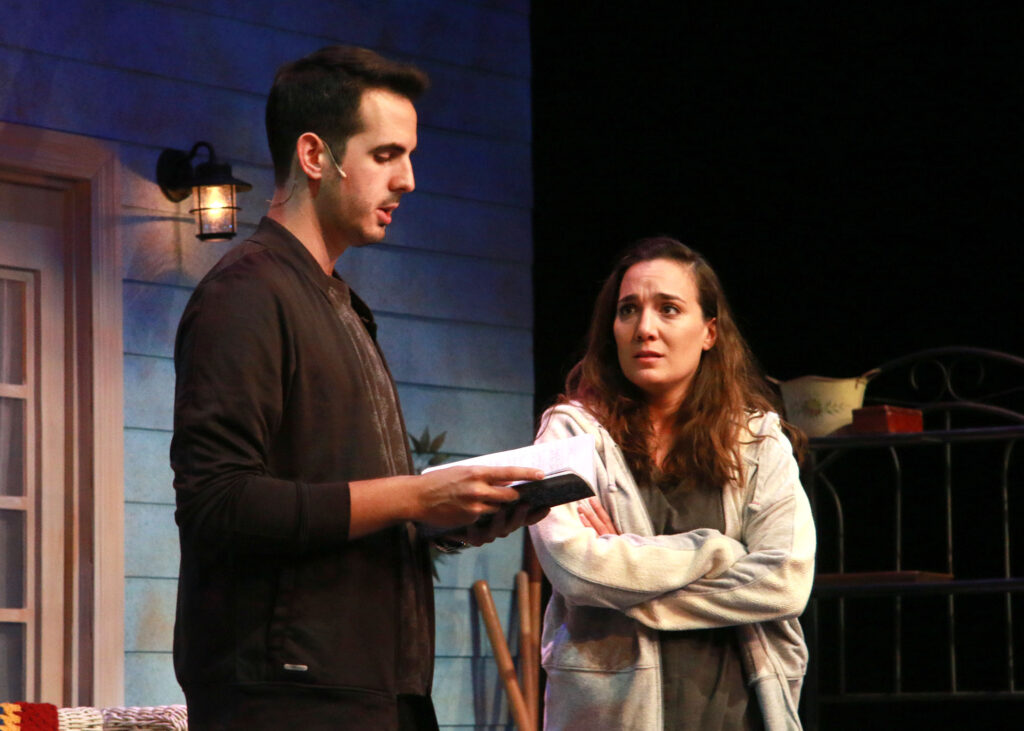
Daniel Llaca as Hal reveals a notebook entry to Jessica Sanford’s Catherine in the Actors’ Playhouse production of “Proof.” Photo by Alberto Romeu
Set on the deck of an old home near the University of Chicago, “Proof” skips back and forth in time as it assembles the pieces of a mysterious puzzle. Catherine (Jessica Sanford) grew up in the house, and though she left for a time to study math at Northwestern, she was pulled back into her role as fulltime caretaker for her delusional father Robert (Michael McKenzie).
Harold “Hal” Dobbs (Daniel Llaca), who had Robert as his doctoral adviser, has come over to comb through the many notebooks in Robert’s office, hoping that he’ll discover something to prove that during a recent nearly year-long period of lucidity, his mentor was doing important work.
Claire (Stephanie White), a successful currency analyst in New York, has paid the bills while Robert has been unable to work, leaving her younger sister to do the heavy lifting with their father 24/7. She has come back to Chicago with a proposal for Catherine: Why not move to Manhattan and start a new life?
Director David Arisco and the cast burrow into the characters’ conflicting motivations and complexities as the actors embody people in crisis.
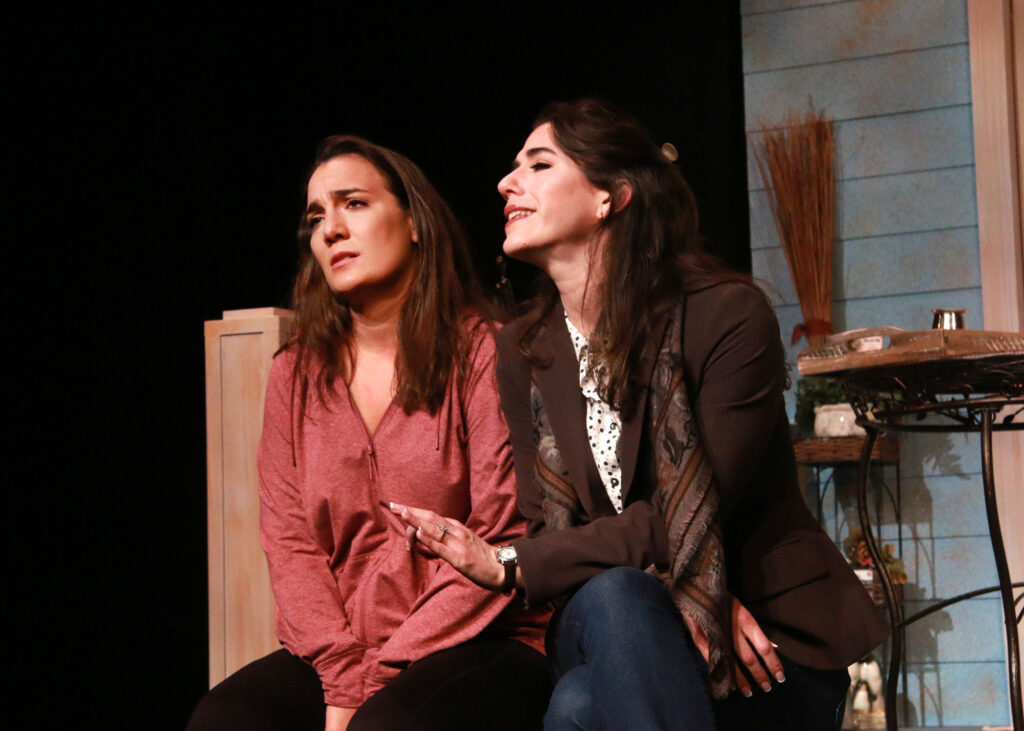
(l-r): Jessica Sanford (left) and Stephanie White play very different sisters in the Actors’ Playhouse production of “Proof.” Photo by Alberto Romeu
McKenzie’s cheery Robert is scattered, yes, but lovingly paternal toward Catherine until one chilling scene when he turns frightened and driven as it becomes clear that his disease has come back in force.
As Hal, Llaca represents superstar wannabes who believe that doing the kind of work it takes to become famous has to happen when a mathematician is in his 20s – and at 28, he feels that window closing. He’s genuinely attracted to Catherine, but the possibility of being associated with a colossally important discovery is revealed as his central motivation, and at one point he becomes Catherine’s bellowing inquisitor.
White’s brusque, know-it-all Claire is supposed to be an annoying contrast to her emotionally vulnerable sister, and oh does she succeed. Focused on her mission of persuading Catherine to move, she barely listens to anything her sister has to say. She roams over the deck describing her shiny New York life to the suffering Catherine, and before long, her hidden motivation becomes clear.

Jessica Sanford as Claire faces a crisis with Michael McKenzie as her father Robert in the Actors’ Playhouse production of “Proof.” Photo by Alberto Romeu
“Proof” revolves around Catherine, of course, and the part needs an actor whose quicksilver changes and emotional range draw the audience in, whether things are looking up or turning disastrous. Sanford is more than up to the challenge, delivering one of her finest performances. At 25, her Catherine is stubborn, vulnerable, caring, brilliant and hurting, having sacrificed so many possibilities for her father’s sake.
Because the play is being performed in the more intimate Balcony Theatre – the right space for a four-character play – Gene Seyffer’s set (with set dressing and props by Jodi Dellaventura) is necessarily more compact than it would have been had “Proof” been done on the far larger Mainstage. Though it looks more like a pale-blue cottage than a well-worn place where a University of Chicago faculty member would live, it’s pretty to look at for 2 ½ hours and provides all the levels and doors for the actors’ shifting configurations.
Eric Nelson’s lighting reveals the shift of the seasons and changes in emotions. Sound designer Alex Bonilla links the scenes with minimalist, alluring piano music. And costume designer Ellis Tillman uses clothing to communicate not just attention or indifference to style but, for Robert and Catherine, their shifting mental
states.
Actors’ production of “Proof” is fine if not flawless. One scene in particular, when Robert is sitting on the deck wearing just a T-shirt and pants, writing like a man on fire even though the outside air is frostbite cold, is just not convincingly staged.
The play itself, now almost the age of its protagonist, has so much to say about genius (and, sometimes, its cost), caretaking, sacrifice, support, honesty and more. It contains the riches of the best dramas, its impact undiminished. All you have to do is go to Coral Gables and partake.
WHAT: “Proof” by David Auburn
WHERE: Actors’ Playhouse production at the Miracle Theatre, 280 Miracle Mile, Coral Gables
WHEN: 8 p.m. Wednesday-Saturday, 3 p.m. Sunday, through June 4
COST: $40-$125 (10 percent discount for seniors and $15 student rush tickets at weekday performances)
INFORMATION: 305-444-9293 or www.ActorsPlayhouse.org
ArtburstMiami.com is a nonprofit source of theater, dance, visual arts,
music and performing arts news.
No posts found
Review: M Ensemble rolls on with compelling, complex ‘Two Trains Running’
Written By Christine Dolen
May 16, 2023 at 5:44 PM
Pamela Hankerson is Risa and Chaz Reuben is Sterling in M Ensemble’s production of August Wilson’s “Two Trains Running” at the Sandrell Rivers Theater, Miami, through Sunday, May 28. (Photo courtesy of Christa Ingraham)
“Two Trains Running,” the latest offering from M Ensemble at Miami’s Sandrell Rivers Theater, isn’t just another production of an August Wilson play. It’s an ongoing part of the mission of Florida’s oldest professional black theater company.
Creating thought-provoking art for its audiences for more than half a century now, M Ensemble is still being led by co-founders Shirley Richardson and Patricia E. Williams (the late T.G. Cooper was its third founder).
With several generations of colleagues, the women have presented the work of a wide variety of black playwrights; given opportunities to an uncounted number of actors, designers and behind-the-scenes workers; and artistically nurtured future theatergoers through the company’s programs for children.
Inarguably, among M Ensemble’s most significant programming has been producing all 10 plays in the late August Wilson’s Pittsburgh Cycle (initially called the Century Cycle): “Ma Rainey’s Black Bottom,” “Jitney,” “Fences,” “Joe Turner’s Come and Gone,” “The Piano Lesson,” “Two Trains Running,” “Seven Guitars,” “King Hedley II,” “Gem of the Ocean” and “Radio Golf.”
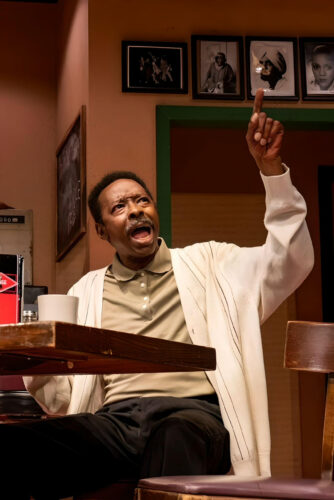
Chat Atkins as the opinionated Holloway in M Ensemble’s production of August Wilson’s “Two Trains Running.”(Photo courtesy of Christa Ingraham)
Wilson, who grew up in Pittsburgh’s Hill District (where most of these plays are set), is considered one of the country’s greatest playwrights. “Fences” and “The Piano Lesson” brought him Pulitzer Prizes. The Pittsburgh Cycle, with each play set in a different decade of the 20th century, brought him fame. And in creating worlds filled with vivid black characters, his singular blend of humor and tragedy, poetic and vernacular language, African and American traditions and history made his work unforgettable.
M Ensemble first presented “Two Trains Running,” a play set in 1969, in 2004 – nearly 20 years ago. The company’s audiences have grown and changed as older theatergoers have departed and younger ones have taken their place. Its performance location has also changed, from its longtime home in North Miami to Miami-Dade County’s state-of-the-art Sandrell Rivers Theater in Liberty City.
The point: Plenty of M Ensemble’s audiences and Miami theater fans in general haven’t seen “Two Trains Running” onstage. Now they can and should.
The title refers to the trains running daily between Pittsburgh and Jackson, Mississippi, once home to restaurant owner Memphis Lee (Melvin Huffnagle). But in the metaphorical sense, Wilson has said, the trains represent life and death – so riding them is universal and nonnegotiable.
The play is set entirely inside Memphis’s Hill District restaurant, a cozy place with a couple of booths covered in black vinyl, a table, a counter, blackboards in lieu of menus. It’s also a place where the illegal numbers racket thrives, so the winning combination goes on the menu board each day too, despite Memphis’s worry about cops showing up. A perpetually broken jukebox sits near the door, the covers of unplayable albums adorning the wall beside it, along with signed black-and-white photos of celebrities who, presumably, have dined at Memphis Lee’s.
Designed by Mitchell Ost (who also did the fine lighting) and built by Geordan Gottlieb, the eatery – in tones of pale gold, red and green – is inviting if simple. Too, the costumes by Chasity Hart reveal how well or poorly each character is living, good times and hard times obvious to everyone who sees them.
Though the restaurant is tidy thanks to Risa (Pamela Hankerson), a quiet cook and server who comprises the entire staff, it has seen better days – as have most of the folks who gather there daily to share rumors or gossip, ruminate on life or eat whatever Risa can find to cook in the understocked kitchen.
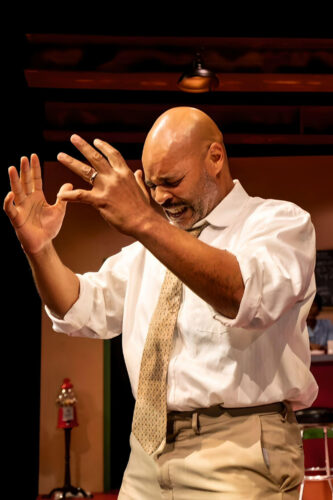
Melvin Huffnagle as restaurant owner Memphis expresses his frustration in M Ensemble’s “Two Trains Running.” (Photo courtesy of Christa Ingraham)
Politics, protest and the injustices of the turbulent ’60s go on outside the restaurant. But inside is a kind of refuge – which is not to say voices don’t get raised – where Memphis and his few remaining customers can let off steam, philosophize or talk out their problems.
Memphis, for example, is about to unwillingly sell his restaurant to the city as urban renewal sweeps through the neighborhood. He paid $5,500 for it back in the day, and it was once profitable, but the business and its owner have fallen on hard times. He’s expecting a lowball offer from the bureaucrats, though West (Ray Lockhart), the wealthy owner of the funeral home across the street, says he’ll pay $15,000. No deal, Memphis rages. He won’t take a penny less than $25,000.
At the opposite end of the Hill District’s socioeconomic scale is Hambone (Keith C. Wade), an impoverished, damaged man who loudly repeats a single sentence: “He gonna give me my ham!” You can feel tragedy on the horizon as the meaning of a years-long obsession is eventually revealed.
Wolf (Jean Hyppolite) hangs out and uses the restaurant’s pay phone to take bets on the numbers, no matter how many times Memphis yells at him not to do it. Soon Sterling (Chaz Reuben), newly released from prison, shows up. In short order, he falls for Risa, tangles with Wolf and becomes the subject of speculation by the others: Which one, Sterling or Wolf, will end up dead and which will end up behind bars?
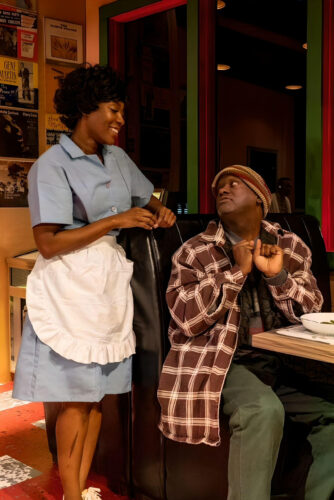
Pamela Hankerson as Risa shows compassion to Keith C. Wade as Hambone in M Ensemble’s “Two Trains Running.”(Photo courtesy of Christa Ingraham)
Holloway (Chat Atkins), newly retired, talks at length about the exploitation of Black people by white ones, the foolishness of plenty of Black folks – well, give him a topic and he’ll run with it. It’s Holloway who first utters the name “Aunt Ester” in an August Wilson play (she’s mentioned in others and then made flesh in Wilson’s “Gem of the Ocean”), and he urges anyone with troubles to seek out the ancient prophet, who professes to be 322 years old.
Staged by André L. Gainey, a longtime M Ensemble company member, the production brings out fine work by each of the actors, veterans and newcomers alike.
Huffnagle gets several lengthy Wilson soliloquies (or arias, perhaps?) and tears into them with a magnetic commitment. He relates a horrifying story about how Memphis was cheated out of his farmland back in Jackson, and he makes the telling of it so vivid that you want to weep.
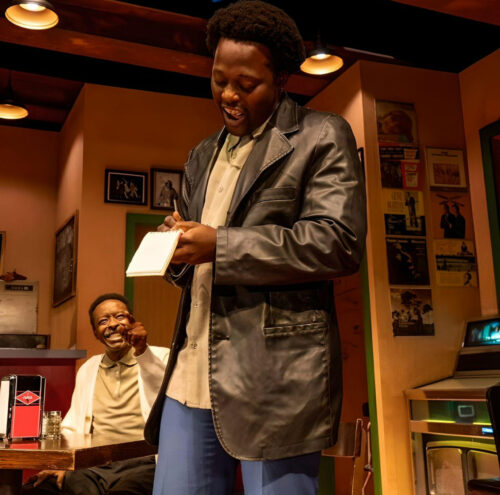
Jean Hyppolite as numbers runner Wolf gets the attention of Chat Atkins as Holloway in M Ensemble’s “Two Trains Running.”
(Photo courtesy of Christa Ingraham)
Both Hyppolite and Reuben bring boundless energy to their portrayals of Wolf and Sterling. Hyppolite’s Wolf is full of cockiness and hustle. Reuben’s Sterling is a hugely unrealistic dreamer, a man who bounces from one idea to the next, though he’s undeterred in his pursuit of Risa. Why Hankerson’s Risa, who has self-harmed by scarring her legs to keep men at bay, eventually softens toward the relentless Sterling is a bit of a mystery.
Lockhart is cool as a cucumber as West, low-key and slightly menacing in his almost all-black outfit (hat and gloves included). He’s among the wealthiest residents of the Hill District, and before long, Lockhart shows us how the sly West got that way.
Atkins and Wade both appeared in M Ensemble’s earlier production of “Two Trains Running” in different roles. Old hands and wonderful actors, the two completely inhabit their new characters. Atkins is a garrulous, funny, sobering storyteller. Wade, who was incredibly moving as Gabriel (another damaged Wilson character) in the company’s 2016 production of “Fences,” has little dialogue as Hambone. But his watchful, contained performance becomes its own kind of eloquence.
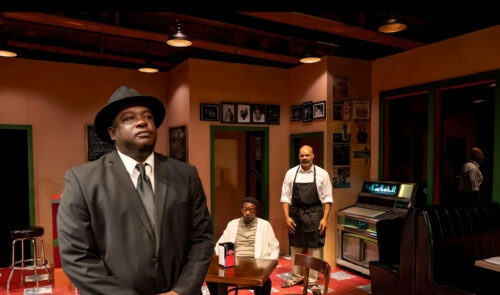
Ray Lockhart, left, as funeral director West shares his point of view with Chat Atkins as Holloway and Melvin Huffnagle as Memphis in M Ensemble’s “Two Trains Running” now at the Sandrell Rivers Theater. (Photo courtesy of Christa Ingraham)
Watching “Two Trains Running,” which unfolds over nearly three hours, serves as a reminder that the intricate, stubbornly persistent roots of racism run deep. Wilson demonstrates, as he does throughout the Pittsburgh Cycle, that the more things change, the more they stay the same. His language, his craft, his larger-than-life yet familiar characters make M Ensemble’s “Two Trains Running” a journey worth taking.
WHAT: “Two Trains Running” by August Wilson
WHERE: M Ensemble production at the Sandrell Rivers Theater, 6103 NW Seventh Ave., Miami
WHEN: 8 p.m. Friday-Saturday, 3 p.m. Sunday, through May 28
COST: $36 (student and senior discounts at box office only)
INFORMATION: 305-705-3218 or themensemble.com
ArtburstMiami.com is a nonprofit source of dance, visual arts, music, and performing arts news. Sign up for our newsletter and never miss a story.
No posts found
Review: Zoetic Stage’s world premiere of ‘#Graced’ is a journey worth taking
Written By Christine Dolen
May 9, 2023 at 1:07 PM
Melissa Almaguer and Chris Anthony Ferrer hit the road for a journey of discovery in the Zoetic Stage world premiere of Vanessa Garcia’s “#Graced” at the Adrienne Arsht Center’s Carnival Studio Theater through Sunday, May 21. (Photo courtesy of Justin Namon)
Figuring out who you are, making sense of your past, charting a course toward the future – that’s a journey that can last a lifetime, or it can come at just the right life-changing moment.
That’s what Catherine (Melissa Almaguer), the peripatetic heroine of Vanessa Garcia’s world premiere play “#Graced,” has decided to do in the wake of her recent divorce. With the financial backing of a hipster booze brand called Monteverde Moonshine, the determined Cuban-American influencer (who goes by “Cat”) is setting off on a cross-country RV trip to discover what being an American means in today’s social media-dominated world.
And if she finds a reset button for her life, so much the better.
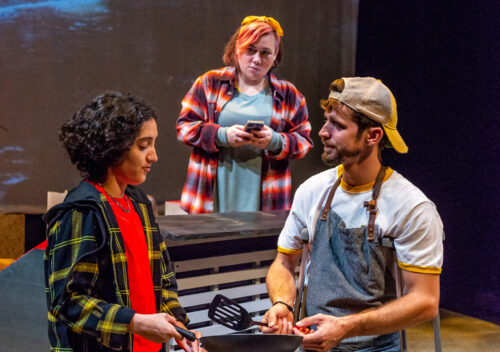
Sabrín Diehl talks to Kristin Bikic about making a social media-ready sandwich as Melissa Alamaguer is ready to capture the moment in “#Graced.”
(Photo courtesy of Justin Namon)
Produced by Miami’s Zoetic Stage in the Arsht Center’s Carnival Studio Theater, “#Graced” represents another step in Garcia’s continuing growth and impact as a playwright. It’s clever, often funny, sardonic, poignant, insightful. Carefully researched, the play references the ways social media can commodify, elevate or destroy our fellow human beings. Or us.
After their long-running success with the immersive “The Amparo Experience,” Garcia teamed up again with director Victoria Collado, her creative partner in the duo’s Abre Camino Collective, for “#Graced.” Sarah Hughes, who worked with Garcia on an earlier version of the script at New York’s WP Theater Lab, also directed this world premiere. Whatever the directors’ collaborative process was in the rehearsal room, it works: The play moves like an Airstream on a pothole-free highway.
Cat, who has a secret agenda in addition to the aforementioned ones, has a companion for the journey, which launches in Tallahassee. Lewis (Chris Anthony Ferrer), son of the Monteverde owner, was born in Argentina but came to the United States with his widower dad at nine, and he’s now as American as Key lime pie, country music and moonshine (all obsessions of his father and American stepmom). He’s the hookup for the trip’s funding, Cat’s on-the-road editor (though she bristles at the notion of him making any changes in her posts) and her now-and-again lover.
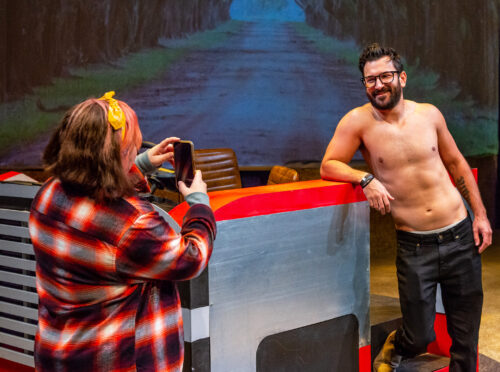
Melissa Almaguer turns Chris Anthony Ferrer into click bait in the Zoetic Stage world premiere of Vanessa Garcia’s “#Graced.” (Photo courtesy of Justin Namon)
Projected social media posts blend with the duo’s real-life encounters, sometimes chaotically (among the many characters played by Lucy Lopez is one dubbed Algorithmic Mayhem).
In New Orleans, they meet a former nun named Rosalie (Dalia Alemán), and after a tragedy, they take her on as a traveling companion whose Tinder-assisted awakening to a few of life’s long-denied pleasures – sex, drugs – happens in short order.
Near Memphis, Cat encounters 16-year-old Blake (Sabrín Diehl), a sharp-tongued, confused teen whose father has run off with his French mistress. Blake has been following #Graced, and she leads Cat to another post-worthy encounter: a stand where an Uruguayan immigrant named Gianni (Kristian Bikic) makes chivitos, his country’s crazy-popular national sandwich. Everything is friendly and mutually beneficial until a one-word slip-up in Cat’s post threatens everything Gianni has built in the United States.
Cat and company finally do make it to her non-negotiable destination – a convent in the Dakotas. Turns out her mother was among the more than 14,000 unaccompanied Cuban children who were sent to the United States from 1960 to 1962 in a Catholic Welfare Bureau program called Operación Pedro Pan. Cat’s mom – whose name was Grace – had never wanted to talk about her time at the convent and then with a foster family.

Lucy Lopez plays the older Elvis and other characters in the Zoetic Stage world premiere of Vanessa Garcia’s “#Graced.”
(Photo courtesy of Justin Namon)
But Cat, wanting to fill in the pieces of a puzzle no one else is left to assemble, persists. And her familial enlightenment shifts something in her, leading to this lovely expression of understanding, closure and unbreakable bonds near the end of the play: “My grandmother is Cuba. My grandfather is the ocean. My mother is…My mother is … motherless. A lost girl. Or a found girl . . .My mother is . . .fierce. My mother was fierce.”
In “#Graced,” Almaguer gets a breakout role she has long deserved. Sporting a plaid shirt and magenta-tinted hair, she radiates warmth, strength and compassion. Outspoken and opinionated, her Cat is in the metaphorical driver’s seat. Sex and hygiene combine to spark a close-quarters alienation between Cat and Lewis, and Almaguer commits fully to Cat’s method of determining whether there’s any truth to the embarrassed Lewis’s jab at her.
Ferrer is a handsome, skilled actor and playwright who makes his Lewis a fine fit for Almaguer’s Cat. His relatable Lewis is just nerdy and insecure enough that you believe he needs Almaguer’s Cat at least as much as she needs him.
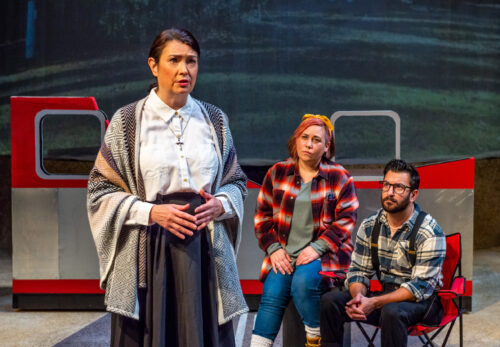
Dalia Alemán tells Melissa Almaguer and Chris Anthony Ferrer why she parted ways with religious life in Vanessa Garcia’s “#Graced.” (Photo courtesy of Justin Namon)
Diehl, who uses the pronouns he/him and they/them, is an absolute wonder as Blake, who still uses “she” but is clearly questioning her identity and sexual orientation. Lonely Blake finds a temporary anchor in the compassionate Cat, who seems to know exactly what to say and how to handle Blake’s crush on her.
At one point, Diehl appears behind a sheer screen to deliver an urgent voicemail to Cat – first at normal speed, then at 1.5 times the regular speed, then at twice the usual speed. It’s a small tour de force, and the crowd goes (deservedly) wild.
Alemán is lovely, convincingly naïve and then go-with-the-flow loose as Rosalie. Bickic’s role as Gianni is relatively brief, but he becomes such a distinctive foe to Cat that you wish he were around more. Lopez, in addition to playing Algorithmic Mayhem, cycles through a number of other characters, including Las Vegas-era Elvis, Lewis’s suave father and a cutesy young nun at the convent in the Dakotas, a character that comes off as unnecessary comic relief in an emotionally fraught scene (Garcia’s choice, obviously).
Set designer B.J. Duncan, lighting designer Tony Galaska, costume designer Natasha Hernandez, sound designer Matt Corey, video director Delavega and projection mapping designer Steven Covey have created an easily altered world for this theatrical road trip, one that blends multiple locations and the relentless intrusion of social media.
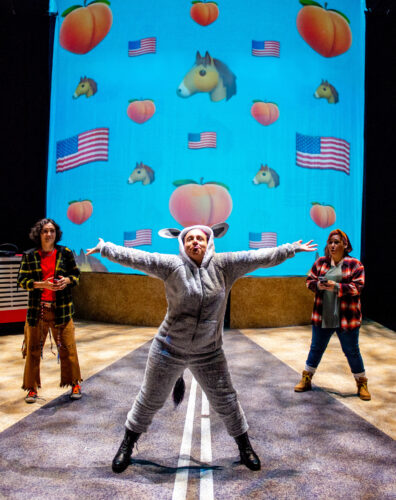
Sabrín Diehl, Lucy Lopez and Melissa Almaguer encounter algorithmic mayhem in the world premiere of Vanessa Garcia’s “#Graced” at Zoetic Stage. (Photo courtesy of Justin Namon)
The two-section “RV” is moved around by the actors so that the audience gets different perspectives of the way Cat and Lewis are living, but the major set piece looks like what it is – a skeletal, pretend RV.
World premieres are seldom perfect in their first incarnation, and “#Graced” would benefit from attention to its ending – or an altogether different one.
However, the artistic journey Garcia has taken with this play is well worth joining. Crazy, contentious, inspiring America awaits.
WHAT: World premiere of “#Graced” by Vanessa Garcia
WHERE: Zoetic Stage production in the Carnival Studio Theater at the Adrienne Arsht Center for the Performing Arts, 1300 Biscayne Blvd., Miami
WHEN: 7:30 p.m. Thursday and Friday, 3 and 7:30 p.m. Saturday, 3 p.m. Sunday (additional performance 7:30 p.m. May 10, no matinee May 13), through May 21
COST: $55-$60
INFORMATION: 305-949-6722 or arshtcenter.org
ArtburstMiami.com is a nonprofit source of theater, dance, visual arts, music and performing arts news.
No posts found
It’s a first: Miami Light Project’s ‘Here and Now’ in new Miami Shores space
Written By Sergy Odiduro
May 8, 2023 at 11:20 PM
Arsimmer McCoy’s “I’m So Depressed,” a poetry-driven stage play, is one of five original works in Miami Light Project’s “Here and Now: 2023” at Miami Theater Center, Miami Shores. (Photo courtesy of Miami Light Project)
After a 13-year run at The Light Box at Goldman Warehouse in Miami, Miami Light Project moved in January to the Miami Theater Center in Miami Shores. From Thursday, May 11 to Saturday, May 13, its signature commission program, “Here & Now: 2023” will kick off performances in its new home.
Letty Bassart, Darius Daughtry, Carlos Fabián, Gentry George, and Arsimmer McCoy are featured in individual original works for the 2023 program.
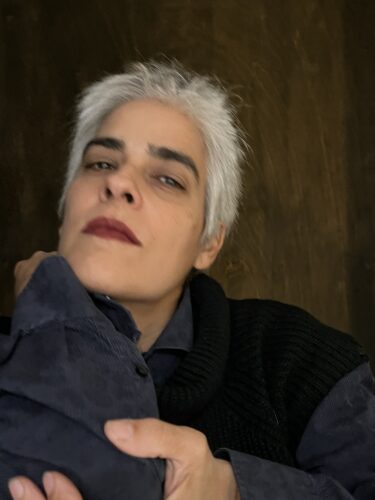
Artist and choreographer Letty Bassart performs in an improvisational duet with Daniel Bernard Roumain in “Here, Now.” (Photo courtesy of Miami Light Project)
Beth Boone, artistic and executive director of Miami Light Project, says that she is looking forward to this year’s “Here and Now” performances, particularly since this will be the first at their new location. She says that the move has been a good one.
“Miami Theater Center is a 330-seat proscenium theater. It has wonderful options connected to it, which is the way we’re using it. The configuration we’re using for ‘Here and Now’ . . . is an on-stage black box.” She explains: “. . . You close the main curtain, you do your sets on stage, and you’ve got a black box theater.”
There’s also the storefront space next door, which is part of the center.
“We have a rehearsal studio, which is where we do our year-round artists’ residency program. It’s where the artists for ‘Here and Now’ rehearse.”
“Here and Now” began in 1999 as a way to commission multi-media artists in South Florida. Participants receive free rehearsal space, technical assistance, and mentoring.
“We typically give a commission to between four and six artists on an annual basis but this year, five was the magic number in terms of the projects that rose to the top for our panel.”
Boone said audiences will find this year’s pieces multi-layered.
“We have a certain criterion and what I find particularly moving about all of the work is that it’s deeply personal and, at the same time, they’re tackling big ideas or big issues,” says Boone. “We’ve all been through a lot in recent years and I think artists, perhaps better than anyone else, are able to distill the human experience into something on stage that helps us to feel a sense of safety or outrage or conviction. I think you really will see that this year in the work.”
A range of ideas are explored including “Reverie in Black” by Daughtry, which is a thoughtful combination of theater, music, and spoken word poetry. Fabian tackles detachment, identity, and sensibility in the second chapter of “Ruminations” through his “Towards Now” production, which is a series of short theatrical vignettes. And Bassart’s “Here, Now” with Daniel Bernard Roumain is largely an exercise in faith.
“Towards Now” is a multidisciplinary performance by Venezuelan artist Carlos Fabián. The short theatrical vignettes explore detachment, identity and sensibility. (Photo courtesy of Miami Light Project)
“Trust is really the heart of this duet,” says Bassart. “It’s an improvisational performance. I will be engaging with (Roumain’s) music for the first time during the live performance.”
Bassart notes that the piece is taking the duo in a new direction.
“We’ve collaborated on multiple projects but this will be the first time we have performed in this format. It’s about a larger ethos. It’s really taking a chance on something and trusting in the process and seeing what materializes in that risk. To engage in something so raw and vulnerable, and to do it in Miami it really raises the stakes even more so.”
The nakedness of emotions, the role of fear, and triumphs achieved through pain and loss, are prominent themes in McCoy’s “I’m So Depressed” stage play.
A string of cataclysmic changes forced her to reevaluate everything, she says.
“Prior to the pandemic, I began a separation from my (now) ex-husband and that in itself was one thing to deal with. To then move into the apocalypse, which is how I viewed the pandemic . . . grappling with the world, and people having to go into isolation, my own personal family and not being able to be near them. My parents are older. They’re in their 70s and so the fear of me going out or walking into their home and harming them. The fear of my daughter, who was young at the time, not being able to go to school, her having a mask, and the world in flux.”

Darius V. Daughtry, founder and artistic director of Art Prevails Project, combines music, spoken word poetry and theater in “Reverie in Black.” (Photo courtesy of Miami Light Project)
She says the genesis of the piece begins with isolation.
“It starts with me being alone for a couple of months. I was grieving. I was grieving and trying to organize myself in the midst of grief.”
Also born during the pandemic is Gentry George’s “Afro Blue,” which embodies movement to produce his body of work.
“You know, we had hours and hours with ourselves,” says George. “This work was done during the pandemic when I happened to come across some of this music.”
He said the program is rooted in the jazz standard “Afro Blue,” which was composed by Mongo Santamaria, and then later interpreted by many artists including vocalist Abbey Lincoln.
Gentry George’s “Afro Blue” is the latest in his “Roots and Rhythms” series which commemorates Black musicians in the 20th century. (Photo courtesy of Miami Light Project)
George says “Afro Blue” is part of a series he created entitled ‘Roots and Rhythms’ that celebrates Black musical icons in the 20th century.
Through the work, George hopes the audience leaves feeling uplifted.
“I want to share a message of love, joy, and diversity. We’re celebrating music. We’re celebrating the legacy of these great artists and how that relates to our stories and how that relates to all of us. Most importantly, this is a celebration of music, life, art and dance.”
George says that, for him, “Here and Now” is an opportunity for which he’s been waiting in the wings.
“I would walk by the Miami Light Project all the time just hoping that I could be there one day. To be welcomed to create this work, it feels really quite motivating. It feels quite special. It feels like I’m on the right track and it is so worthwhile.”
Boone says his reaction is exactly what “Here and Now” is about.
“By investing modest amounts of money incrementally over time, without fail, year in and year out, what you do is move the needle in a community in terms of how it is you create an artistic scene. A place where artists feel that they can live, feel that they can do work, feel that they can progress in their profession, and that is the very essence and goal of the program.”
WHAT: Miami Light Project’s “Here and Now: 2023″
WHERE: Miami Theater Center, 9806 NE 2nd Ave, Miami Shores
WHEN: 8 p.m. Thursday, Friday and Saturday, May 11, 12 and 13
COST: $20-$25
INFORMATION: 305-576-4350, miamilightproject.com or hereandnow/tickets
ArtburstMiami.com is a nonprofit source of theater, dance, visual arts, music and performing arts news.
No posts found
Review: Miami New Drama’s ‘Create Dangerously’ brings the beauty, sorrows of Haiti to Miami Beach
Written By Christine Dolen
May 8, 2023 at 10:55 PM
Charlene Francois, left, plays Tante Ilyana to Andrea Patterson’s Edwidge Danticat in the world premiere of “Create Dangerously” at Miami New Drama. (Photo courtesy of Vanessa Díaz with FURIOSA Productions.)
In “Create Dangerously,” a new play based on the work of Haitian-American writer Edwidge Danticat, an actor portraying playwright-director Liliana Blain-Cruz describes what the audience is about to see.
“This isn’t a play!” declares Brittany Bellizeare, a vibrant vision in a yellow suit and jaunty red cap. “It’s a strange amalgam of celebration and memory and reflection.”
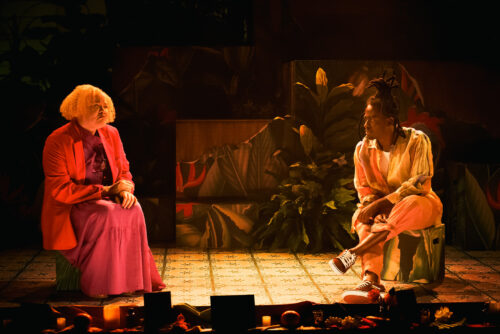
Thiana Berrick, left, and Edson Jean reenact a testy interview between art historian Marc Miller and artist Jean-Michel Basquiat in “Create Dangerously.”
(Photo courtesy of Vanessa Díaz with FURIOSA Productions.)
True enough, though one could go in many different directions trying to put into words exactly how Blain-Cruz has adapted Danticat’s 2010 book of essays for its Miami New Drama world premiere, which is running at Miami Beach’s Colony Theatre through May 28.
For instance: Partially to contextualize the work, Blain-Cruz has made herself and Danticat characters in the play (a little mind-blowing on opening night since the real Danticat and Blain-Cruz were actually in the audience). The actors, each of whom speaks as Danticat at various times in the play, dispense with theater’s imaginary fourth wall and frequently talk directly to the audience.
Stylistically, the effect is meta theater-meets-a-frame-story-meets-a-kind of visual anthropology. It’s like a hybrid of essay, theater and vivacious TED talk, with Haitian music, dance and art adding layers to the experience.
In terms of content, although “Create Dangerously” runs a fairly brisk 90 minutes, the piece incorporates a great deal of Haitian history as well as stories told in language that sometimes comes straight from the essays by Danticat, who has lived in South Florida for the past 21 years.
That’s legit, since Blain-Cruz is credited as the writer-director of the theater piece “based on the book by Edwidge Danticat.” It’s kind of lovely too, since that choice also allows you to absorb the style and impact of Danticat’s voice, one of the most important of the Haitian diaspora.

The cast of Miami New Drama’s “Create Dangerously” takes turns playing author Edwidge Danticat in the world premiere play by Lileana Blain-Cruz. (Photo courtesy of Vanessa Díaz with FURIOSA Productions.)
Her observant commentary on politics, art, family, courage and Haiti’s bloody history becomes the show’s throughline. A trek to visit her elderly Tante Ilyana on family land in mountainous Beauséjour – emphasizing the importance of nurturing ties through generations, collecting stories before the elderly depart this life for the next – has more of a beginning, middle and end than any other.
Other pieces are snapshots, some widely known, others not as much. Some untranslated Creole is sprinkled into the dialogue, but the play is performed in English.
Serious, smart and sincere, “Create Dangerously” could evolve into a more thrilling piece with an even more potent impact if its creators decide to keep working on it. But those snapshots? They’re always absorbing.
The chilling 1964 public execution of Jeune Haiti freedom fighters Marcel Numa and Louis Drouin on the orders of François “Papa Doc” Duvalier comes early on. Edson Jean and Paul Pryce portray the lifelong friends from Jérémie, Haiti’s “city of poets,” courageous men who left the safety of exile in New York to overthrow the Duvalier regime. There is no blood, but the sudden shocking sound of the firing squad and the actors’ physicalizing of Danticat’s words is horror enough.
In 2000, outspoken Radio Haiti Inter talk show host and journalist Jean Dominique (Pryce) was assassinated in the station’s parking lot, a murderous act conveyed in the play by gunfire and static. He, too, had been safe in exile but had come home to Haiti because, as he said, “My country needs hope. My country is suffering. It’s being held captive by criminals. My country is slowly dying, melting away.”

Dancer Charlene Francois poses like a figure in a Haitian painting in Miami New Drama’s “Create Dangerously.” (Photo courtesy of Vanessa Díaz with FURIOSA Productions.)
His wife Michèle Montas (Thiana Berrick, devastating yet powerfully tender), who customarily rode with him to work, tried to keep the station going for another three years until she too became the target of an assassination attempt in which one of her bodyguards lost his life.
Two hugely influential painters, Hector Hyppolite (Pryce) and Jean-Michel Basquiat (Jean), become compelling, contrasting characters. Samples of their work are “painted” behind them by projection designer Hannah Wasileski as each artist’s story is told.
The self-taught Hyppolite, a third-generation voudou priest born in poverty, initially painted with chicken feathers on cardboard because he had no money for brushes or canvases. “Discovered” at the age of 49 by American watercolorist Dewitt Peters, Hyppolite was championed by surrealist André Breton. Prolific near the end of his life, Hyppolite painted more than 600 canvases in the three years before his death at age 54 in 1948.
Basquiat was altogether different. Born in Brooklyn in 1960 to a middle-class Haitian father and Puerto Rican mother, he absorbed New York’s artistic riches and began his career as half of the graffiti duo SAMO. An American who never visited Haiti, he pointedly sought fame (and found it) but rejected being grouped with the creators of “Haitian primatives” or being probed about the sources of his cultural memory. One of the most unsettling scenes in “Create Dangerously” features Berrick as art historian Marc Miller and Jean as Basquiat artfully lip-synching to the recording of a contentious interview between the two. By the time Basquiat was 27, a drug overdose took his life, though his fame and lucrative career live on; in 2017, his painting “Untitled, 1982” sold for a then-record $110.5 million at auction.
Storytelling is the key part of “Create Dangerously,” but Haitian music and dance are also among the artistic tools Blain-Cruz uses to convey the country’s culture. The cast dances together in party and family scenes, and Francois brilliantly expresses beauty, tragedy and power in her solo dance work.

Dancer Charlene Francois moves through a Haitian landscape in Miami New Drama’s “Create Dangerously.” (Photo courtesy of Vanessa Díaz with FURIOSA Productions.)
The varied music resonates especially with those in the audience who know it, making it tough to resist standing up to dance or joining in mourning for lost loved ones and Haiti itself. Alan Cavé’s “Se pas pou dat,” Kassav’s “Zouk-la Sé Sel Médikaman Nou Ni,” Manno Charlemagne’s “Manman” and RAM’s “Symphony du Ghetto”
In the text, former Miamian Blain-Cruz acknowledges her own insecurity as an artist trying to craft a play about Haiti without ever having visited her mother’s homeland. She underscores the price an artist can pay for truth-telling when she has Danticat speak of the controversy surrounding her 1994 debut novel “Breath, Eyes, Memory.” In that book, the author writes of a traumatizing “virginity test” some Haitian mothers regularly administered to their daughters, prompting one offended reader to write, “You are a parasite and you exploit your culture for money and what passes for fame.”
Just six actors portray a universe of characters in “Create Dangerously,” but because the performers are so convincing and quick in their transformations, the cast seems much larger.
Pryce, tall and charismatic, conveys Hippolite’s sincere spirituality, the physical limitations of age in Danticat’s uncle, the fierce bravery of Dominique. Miamian Jean embodies Basquiat’s anger and ambition, the teasing affection of Danticat’s cousin, and contributes the gentle guitar accompaniment to “Manman.” Berrick, another Miamian, has a series of breakthrough moments throughout the piece in her best work to date.
Andrea Patterson is loving and curious as Danticat in her scenes with Francois as the reed-thin, devoted, stubborn Tante Ilyana, the latter transforming her limber dancer’s body into the physique of a woman who has known too many years of pain and hard work. As Blain-Cruz, Bellizeare is as much of a magnetic life force as the director herself.
The design elements of “Create Dangerously” are, at times, breathtaking. That’s not exactly a surprise since Blain-Cruz, the resident director at New York’s Lincoln Center, brought her longtime team with her to Miami Beach.
Tony Award-nominated set designer Adam Rigg has created a collection of boxes of various heights to represent Haiti’s countryside and hills, with Tante Ilyana’s mountain projected mountain behind. The boxes are adorned in the style of Haitian paintings, with lush greenery and vibrant flowers, and downstage a long row of flickering candles and voudou offerings to the gods serves as a reminder of those lost to the living.
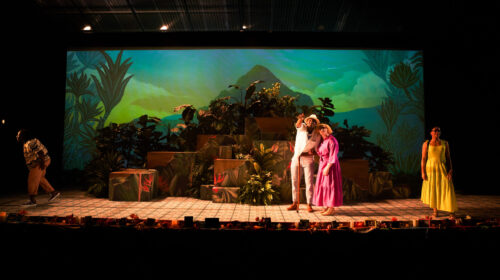
The cast of “Create Dangerously” journeys up a mountain in the Miami New Drama world premiere.(Photo courtesy of Vanessa Díaz with FURIOSA Productions.)
Wasileski’s projections and Yi Zhao’s lighting create ever-shifting backgrounds, making stars twinkle in the blue-black night sky, sending a tiny flock of birds over the mountain. Zhao is a kind of painter too, his lights bringing out melancholy, fear and the healing power of joy, however brief.
Montana Levi Blanco’s costumes range from vivid citrus-hued colors to elegant white for the finale. Sound designer and composer Palmer Hefferan serves up music both subtle and bold, jolting the audience with the sudden boom of gunfire, soothing it with a soft symphony of nighttime crickets on the mountain.
In “Create Dangerously,” Blain-Cruz and Danticat have teamed up, via this hard-to-categorize piece of theater, to urge artists and those who love the arts to take risks, speak out, and display the sort of courage explored in the play.
This has a specific cultural context, but given Florida’s largest-in-the-country Haitian-American community, it should speak resonantly to those who understand the play’s world and layered nuances. And in a region where immigrant artists from many nations have fled tyranny to work in freedom, “Create Dangerously” should have an even broader impact.
WHAT: World premiere of “Create Dangerously” by Lileana Blain-Cruz, based on the work of Edwidge Danticat
WHERE: Miami New Drama production at the Colony Theatre, 1040 Lincoln Road, Miami Beach
WHEN: 8 p.m. Thursday-Saturday, 3 p.m. Sunday, through May 28
COST: $46.50-$76.50
INFORMATION: 305-674-1040 or miaminewdrama.org
ArtburstMiami.com is a nonprofit source of theater, dance, visual arts, music and performing arts news.
No posts found
Miamian Edwidge Danticat’s book ‘Create Dangerously’ becomes an important work of theater
Written By Christine Dolen
May 3, 2023 at 10:43 AM
Miami New Drama’s Michel Hausmann, author Edwidge Danticat and writer-director Lileana Blain-Cruz joined forces to bring “Create Dangerously” to the stage, opening in previews Thursday, May 4 and running at the Colony Theater, Miami Beach, through Sunday, May 28. (Photo courtesy of FURIOSA Productions)
Artistic inspiration flows from many sources, including ideas and images created long before younger artists build upon them to fashion something new.
Take “Create Dangerously,” which began as a 1957 speech by Nobel Prize laureate Albert Camus.
When the celebrated Haitian-American author Edwidge Danticat was asked to give the second annual Toni Morrison lecture at Princeton University in 2008, inspired by Camus, she delivered a speech titled “Create Dangerously: The Immigrant Artist at Work.” In 2010, Danticat published a book with the same title, a work blending memoir, essays and stories about the courage of Haitians at home and in exile.

Director-writer Lileana Blain-Cruz has devised Miami New Drama’s world premiere play based on Edwidge Danticat’s “Create Dangerously.” (Photo courtesy of FURIOSA Productions)
This week, during Haitian Heritage Month, transformed once more, “Create Dangerously” will claim a place in the world of theater.
After previews on Thursday, May 4 and Friday, May 5, the Miami New Drama play-with-music will open at 8 p.m. Saturday, May 6 in a sold-out world premiere at the Colony Theatre on Miami Beach’s Lincoln Road.
Running through Sunday, May 28, the new “Create Dangerously” has been written and directed by Lileana Blain-Cruz, a former Miamian who most recently staged the Off-Broadway premiere of the musical “White Girl in Danger” by Michael R. Jackson, winner of the 2020 Pulitzer Prize for drama for “A Strange Loop.”
Danticat, who has lived in Miami for more than two decades, is a frequent presence in Miami New Drama’s opening night audiences as well as a fan of the company’s multicultural mission and work.
Blain-Cruz, whose upcoming projects include “Stranger Love” with the Los Angeles Philharmonic, Candrice Jones’s basketball play “Flex” at New York’s Lincoln Center and the John Adams-Peter Sellars nativity opera-oratorio “El Niño” at the Metropolitan Opera, met Miami New Drama cofounder and artistic director Michel Hausmann when the two had an artistic fellowship at the New York Theatre Workshop.
In the case of the new “Create Dangerously,” Hausmann played artistic matchmaker between Danticat and Blain-Cruz.
“This project has been in the making for years,” says Hausmann. “I came across Edwidge’s work in New York a decade ago . . . and it made such an impact on me. It’s hard to pin down what it is. The language is simple and accessible, so you lower your guard, then it punches you in the gut when you least expect it.”

Celebrated Haitian-American writer Edwidge Danticat will see her book “Create Dangerously” become a work of theater at Miami New Drama. (Photo courtesy of FURIOSA Productions)
Blain-Cruz had wanted to do a project based on Danticat’s work – “Lileana and I ‘fangirl’ whenever Edwidge comes in,” he says – and Hausmann received a grant to bring in the director and her creative team from last season’s acclaimed Lincoln Center production of Thornton Wilder’s 1942 Pulitzer-winning “The Skin of Our Teeth.”
Hausmann describes the world premiere as “a theatrical event” which will have more in common with the past Miami New Drama shows “Papá Cuatro” and “Viva la Parranda!”
“This is more a folkloric, nontraditional way of storytelling, with music, thoughts, dance, stories and direct address,” he observes.
It is also a piece with multiple shifts in tone and content, from the joyous to the tragic.
The very public 1964 execution of Marcel Numa and Louis Drouin, who left the safety of exile in New York to battle the regime of François “Papa Doc” Duvalier, is included as is the 2000 assassination of radio personality and commentator Jean Dominique. So is a family story about an exhausting, hours-long trek up a Haitian mountain for what will likely be the last visit with Danticat’s elderly Tante Ilyana in Beauséjour.
“Just like in writing fiction, you have to have peaks and valleys,” says Danticat.
Miami New Drama’s “Create Dangerously” is billed as a piece written and directed by Blain-Cruz, based on the work of Danticat. In a Zoom conversation, Danticat says she was fine with having Blain-Cruz devise the piece.

Actor Brittany Bellizeare rehearses for the world premiere of “Create Dangerously” at the Colony Theater. (Photo courtesy of FURIOSA Productions)
“I wasn’t sure I wanted to play a role in creating it. I never thought it could be adapted, so it’s a complete surrender. Writing essays or fiction is not the same as writing for theater. I have tried. It’s a whole different craft,” the author says.
Even so, Danticat has observed developmental workshops and some rehearsals, offering feedback on the representation of certain characters in the play. She is among those characters, telling stories or narrating, and at different times the cast takes turns putting on a distinctive pair of glasses to “become” her.
“For me, it’s surreal to be a character. That was not on my Bingo card, ever. But I’m honored to be a part of it with the folks who are in the story,” she says. “The book is not about me. I see it as a book that’s about the brave creators in it. I am sort of a filter, as Lileana is.”
Blain-Cruz says she made Danticat (and briefly herself) characters because she thought, “How do I frame the why of this? She writes from a very personal place . . . I wanted to make sure people didn’t think we were going to do a realistic portrayal of Edwidge. It starts from one person, then opens like a prism to allow the multiplicity of voices.”
The daughter of a Haitian mother and a Puerto Rican father, Blain-Cruz attended Miami’s Immaculata-La Salle High School, then earned degrees from Princeton and Yale.
“Edwidge’s ‘Create Dangerously’ came to me when I was contemplating what it means to be an artist,” she says. “I had been wanting to connect to my mom’s side of the family, and when Michel said we should do something for Miami, I kept coming back to Edwidge’s amazing voice.”
To transform “Create Dangerously” into theater, Blain-Cruz is collaborating with her longtime creative team: scenic designer Adam Rigg, lighting designer Yi Zhao, Tony Award-winning costume designer Montana Levi Blanco, sound designer/composer Palmer Hefferan and projection designer Hannah Wasileski.
For the cast, Blain-Cruz chose a mixture of Miamians and artists based elsewhere: Brittany Bellizeare, Thiana Berrick, dancer Charlene Francois, Edson Jean, Andrea Patterson, Paul Pryce and understudy Sydney Presendieu.
Miamian Edson Jean, who now divides his time between his hometown and Los Angeles where he has a growing career in films and television, says Miami New Drama reached out to him about “Create Dangerously,” and he has enjoyed Blain-Cruz’s collaborative way of working.
“She encourages us to bring who and what we are into the rehearsal room. I play the guitar, and she didn’t have that planned, but it adds another layer,” says Jean, who plays artist Jean-Michel Basquiat, Danticat’s cousin Nick and the author’s father. “We’re more like a reflection of what the person was. This is not a narrative or a plot-driven piece; it’s a manifestation of the book.”
Jean adds that he’s still uncertain how Miami’s vast Haitian-American community will respond to the more intense, tragic stories in “Create Dangerously.”
“My mom and auntie respond differently when they hear the name ‘Duvalier.’ Their bodies and emotions change. They were essentially trained as children not to talk about it. When you’re punished just for communicating, when you know if you said anything about Papa Doc you could lose your life, you have layers of trauma,” he says.
Actor Paul Pryce worked with Blain-Cruz when both were in graduate school at Yale, but this is their first professional project together. Born in Trinidad and Tobago to a mother from Martinique and a father from Jamaica, he also has family in France and next month will wed his South Korean finance. Like Blain-Cruz, he feels he brings a global perspective to theater.
“She has a playful, trickster personality. She’s not afraid to reimagine work in a way that’s unconventional,” he says. “Theater can get very serious, important and precious. But Lileana doesn’t allow us to fall into sentimentality.”

Actor Paul Pryce brings his global perspective to the Miami New Drama world premiere of “Create Dangerously.” (Photo courtesy of FURIOSA Productions)
Pryce, an actor-filmmaker who has performed in many of William Shakespeare’s plays, has a vividly evocative way of describing “Create Dangerously.”
“It’s not experimental. There are elements that are non-linear, fragmented, movement-driven, and the text is [from the book]. Its unique structural components collage together, almost like a living painting,” he says. “There’s not a forward arc to a resolution in an Aristotelian way, with a beginning, middle and end. It feels continuous, circular. But we do find our connections.”
Hausmann sees “Create Dangerously” as yet another artistic way Miami New Drama is trying to speak to Miami’s diverse communities while illuminating what they have in common.
“In Miami, we live in silos. We’re so diverse, but we’re not blended. You can go all day without speaking a word of English. We don’t share a lot of common spaces,” says Hausmann, who connects with the universality in so many different kinds of theater. “I’ve never been to Haiti. I don’t speak Creole. These characters don’t look like me. But I feel this is talking about me.”
In her book “Create Dangerously,” Danticat writes about the courageous Haitians who read or performed Camus’ “Caligula” in the aftermath of Numa and Drouin’s executions. She makes note of playwright Franck Fouché and poet Felix Morriseau Leroy translating Sophocles’ “Oedipus Rex” and “Antigone” into Creole and placing the dramas into Haitian settings, “striking a dangerous balance between silence and art.”
In conversation, Danticat celebrates the courage of writers who “reached through the ages to others for inspiration” as well as plausible deniability, a kind of artistic cover given the life-and-death power of brutal regimes.

Miamian Edson Jean returns to the stage in the Miami New Drama world premiere of “Create Dangerously.” (Photo courtesy of FURIOSA Productions)
Blain-Cruz hopes that the Haitians and Haitian-Americans in the audiences who come to see “Create Dangerously” will feel loved and seen.
“It’s a very powerful theatrical recognition of who you are…So many in Miami feel a connection to a place they’ve never been to. This is a way of reflecting on the idea of what home is, and how you identify with who you are in relationship to that,” she says.
The director, who blends intellectual prowess with creative joy, describes the new “Create Dangerously” as a “strange amalgamation of memory, celebration and reflection. I love knowing what I’m up for when I go to see something. You get to listen and relax. It creates a sense of ease. It’s going to be crazy, but stay with us.”
WHAT: World premiere of “Create Dangerously” by Lileana Blain-Cruz, based on the work of Edwidge Danticat
WHERE: Miami New Drama at the Colony Theatre, 1040 Lincoln Road, Miami Beach
WHEN: Previews 8 p.m. Thursday, May 4 and Friday, May 5, opens 8 p.m. Saturday, May 6 (opening night sold out); 8 p.m. Thursday-Saturday, 3 p.m. Sunday, through May 28
COST: $46.50-$76.50
INFORMATION: 305-674-1040 or miaminewdrama.org
ArtburstMiami.com is a nonprofit source of theater, dance, visual arts, music and performing arts news.
No posts found
With Zoetic Stage’s ‘#Graced,’ playwright Vanessa Garcia is soaring
Written By Christine Dolen
May 1, 2023 at 9:06 PM
Kristian Bikic, Sabrín Diehl, Chris Anthony Ferrer and Melissa Almaguer star in the world premiere of Vanessa Garcia’s road trip play “#Graced.” (Photo courtesy of Abre Camino Collective.)
These days, playwright Vanessa Garcia’s name is popping up everywhere.
Actors’ Playhouse in Coral Gables recently announced it would begin its 2023-24 season in November with the Florida premiere of “Sweet Goats and Blueberry Señoritas” by Garcia and Richard Blanco, the Miamian who read his poem “One Today” at President Barack Obama’s second inauguration in 2013.
In June, Miami’s City Theatre will devote its popular Summer Shorts program at the Arsht Center’s Carnival Studio Theater to eight brand-new short works by a diverse group of playwrights – Joel Castillo, Ariel Cipolla, Chris Anthony Ferrer, Sefanja Richard Galon, Luis Roberto Herrera, Ivan R. Lopez, Phanésia Pharel, Lolita Stewart-White – mentored by Garcia in a two-year project dubbed Homegrown.
Chris Anthony Ferrer and Melissa Almaguer take a break from their road trip in the world premiere of Vanessa Garcia’s “#Graced.” (Photo courtesy of Abre Camino Collective)
In August, “Jenna and the Whale,” a play co-written by Garcia and journalist-author Jake Cline (who were paired creatively by producer Willie Fernandez), will have its world premiere at the Ground Floor Theatre in Austin, Texas.
But first, as anyone who has strolled by the Arsht Center lately and noticed posters touting a play titled “#Graced,” comes a big hometown world premiere for Garcia, the Miami Beach-born daughter of parents who came to South Florida from Cuba as children in the 1960s.
Zoetic Stage’s production of the play aims to take audiences on a strikingly theatrical journey of self-discovery, all within the Carnival Studio Theater space. Previewing May 4 and running May 5-21, “#Graced” makes a cross-country trek, vividly utilizes the thrilling yet treacherous world of social media, and puts together illuminating puzzles for its wandering characters.
This intersection of high-profile projects for Garcia follows her breakthrough success with 2019’s “The Amparo Experience,” a commissioned site-specific immersive play centered on the family behind Havana Club Rum. Directed by Victoria Collado, Garcia’s creative partner in their company the Abre Camino Collective, “Amparo” spoke so powerfully about the Cuban revolution and exile that its extended run in a repurposed home not far from the Arsht Center lasted more than eight months.
Collado, who is codirecting “#Graced” with New York-based Sarah Cameron Hughes, acknowledges that this is an ascendant period in Garcia’s career. But she emphasizes that her friend has spent many years putting in the hard work that has led to this moment.
“She gives me a run for my money when it comes to stamina for work…It’s her time. The world is her oyster,” says Collado. “She’s been at this for over 20 years. People forget that. Nobody sees her get up at 3 a.m. to write so she can turn in a script on time.”

With the Zoetic Stage world premiere of “#Graced” and other projects, playwright Vanessa Garcia is an artist of the moment. (Photo courtesy of Chris Headshots)
Garcia, who turned 44 on the day rehearsals for “#Graced” began, does have a jam-packed life and career just now.
She and her husband Ignacio Crespi are parents to son Taika, 5, and daughter Marina, who turns 3 in mid-May. As a mother, Garcia says, “It’s challenging. I go for all of it. There’s never a dull second. The hardest thing was being away from them for so long in Maine [where “Sweet Goats and Blueberry Señoritas” had its February world premiere at Portland Stage].”
In terms of her flourishing career, Garcia is a multidisciplinary artist with a lengthy and impressive list of accomplishments.
She’s a playwright, of course, but also a novelist (her award-winning debut novel “White Light” was named one of National Public Radio’s best books of 2015), a widely published journalist and essayist, a children’s book author (“What the Bread Says”), podcaster (“Never the Empty Nest” with her mother Jackie and sister Nicole), TV writer (for shows including “Sesame Street” and “Caillou”) and visual artist (that’s her painting on the cover of “White Light”).
She has also earned four college degrees, including a master of fine arts in creative writing from the University of Miami and a Ph.D. in English with a focus on creative nonfiction from the University of California, Irvine.
But before “Amparo?” Her career as a significant South Florida playwright didn’t look like it was on a fast track to this moment.
Yes, Garcia got readings, workshops and participated in the invaluable Playwright Development Program run by Miami-Dade’s Department of Cultural Affairs. But getting South Florida theaters to produce her plays – the golden ticket for a playwright – seemed largely elusive.
“No one was paying attention or taking risks in theater. But Ricky J. Martinez and Eileen Suarez did when they produced the world premiere of ‘The Cuban Spring’ at New Theatre in 2014,” says Garcia, whose play became a contender for the best new work Carbonell Award.
Working for Bacardi, which now produces Havana Club Rum in Puerto Rico, “was an opening of saying, ‘OK, write your dream script.’ If I had given any theater here the script for ‘The Amparo Experience,’ no way would it have been produced,” she says of the complex multitrack script with scenes that played out simultaneously to different audience groups.
Also notably, it was after a performance that she met poet Blanco in the rum garden at the “Amparo” house, beginning a friendship that over time would lead to their collaboration on “Sweet Goats and Blueberry Señoritas.”
With “#Graced,” Garcia is again making theater in a fresh, thinking-outside-the-box way with text and abundant video.

Melissa Almaguer and Chris Anthony Ferrer hit the road in the Zoetic Stage world premiere of Vanessa Garcia’s “#Graced.” (Photo courtesy of Abre Camino Collective)
Since Zoetic Stage was founded in 2010, artistic director Stuart Meltzer has directed every show the company has done, 38 in all. This time, Collado (whom Garcia calls her “ride or die”) and Hughes, who worked with Garcia pre-COVID on what was going to be a showcase version of the play at New York’s WP Theatre Lab, are codirecting.
“They came to me several years ago, but it’s all in the timing,” Meltzer says. “I wanted to expand the scope of Zoetic world premieres with local writers…It gives us the opportunity to have varied new voices involved in the work.”
As for the play itself, Meltzer calls “#Graced” a play of this moment.
“It’s about the evolution of the American Dream and discovering it while traveling through this vast land. It’s not political; it looks at the world from the center. It also asks what does the American Dream mean? We live in a city where so many came for it,” he says. “Vanessa Garcia is in a place where her voice will have ramifications in the theatrical community for years to come…She’s really sharp, really astute.”
Melissa Almaguer plays Catherine in the Zoetic Stage world premiere of “#Graced” at the Arsht Center. (Photo courtesy of Dave McMahan)
Melissa Almaguer, a Cuban-American actor, director, producer and Florida International University alum, has worked at numerous South Florida companies for more than a decade.
She’s making her Zoetic Stage debut in the leading role of Catherine – Cat – a divorced social media influencer who’s making a cross-country trek with her editor and sometime lover Lewis (Chris Anthony Ferrer, actor and Homegrown playwright), whose Argentinian immigrant father’s company Monteverde Moonshine is funding the trip as a brand promotion.
Along the way, they pick up a ready-to-rebel former nun named Rosalie (Dalia Aleman); Blake, a nonbinary teen at the beginning of her gender identity journey (Sabrín Diehl); and meet an Uruguayan sandwich stand owner named Gianni (Kristian Bikic), with whom Cat gets into a major beef. Influencer and media personality Lucy Lopez plays a variety of roles.
“This is a road trip story with a Cuban-American woman in her mid-30s at the center of it. I wouldn’t expect someone like me to be cast in the role,” says Almaguer, though Garcia, Collado and Hughes all sing her praises as an actor whose work is deeply felt and reflective of the character’s complexities.
“When we get to the parts that are about Cuba, I have cried in rehearsal. I credit Vanessa. She writes about it in such a beautiful way. It’s a shared experience, but as kids we didn’t talk about it…I am struck by the poetry of her language and the humanity of her characters. There are layers under layers.”

Dalia Aleman plays a former nun ready for a life change in the world premiere of Vanessa Garcia’s “#Graced” at the Arsht Center.
Hughes, an Elevator Repair Service Theater alumna whose focus is on new and devised work (including “collaborative, site-specific and/or genre-expanding projects”), has found both a shared vision and different ways of focusing on the piece in her collaboration with Collado.
“I think of things in a big arc, dramaturgically. Vicky does deep character work and is an incredible choreographer. She brings the amazing perspective of being a Cuban-American from Miami, and I’m bringing the outsider’s eye,” Hughes says.
In taking a hard look at social media’s effect on our lives, “#Graced” raises plenty of questions.
“Some plays say social media is bad. But it is a powerful tool for sharing stories and speaking truth to power. It’s also used for misinformation and misrepresentation in ways big and small,” Hughes says.
“The play asks what it is to be human. Do I also need to be a brand? Do I need to be performing all the time? Vanessa deals with this in a more nuanced way.”
Collado says she has loved the back-and-forth with Hughes, that they share not just similar core values but that they’re having fun bringing “#Graced” to life together. Garcia had a vision of the play premiering at Zoetic, and Collado believes that with this one, the playwright is at the top of her game.
“She’s absolutely theatrical and grounded. The language lives so well inside each character. It’s not just poetry for poetry’s sake,” says Collado, another FIU alumna who moved back home from New York after the success of “Amparo.”
She’s hoping to persuade other theater artists to do the same, hoping they can contribute to Miami’s growth as a place where new work can be launched. Coincidentally, “#Graced” is opening the same weekend as Miami New Drama’s world premiere of “Create Dangerously” by Lileana Blain-Cruz. The former Miamian has based her piece on a 2010 book of essays by celebrated Haitian-American author Edwidge Danticat – one of Garcia’s former professors at the University of Miami.
“#Graced” grew from Garcia’s long-ago desire to travel the country discovering what it means to be an American, though she didn’t have the funding to do it. At last, her characters and a succession of audiences are making the trip, thanks to the theatrical magic of a long-gestating world premiere.
WHAT: World premiere of “#Graced” by Vanessa Garcia
WHERE: Zoetic Stage production in the Carnival Studio Theater at the Adrienne Arsht Center for the Performing Arts, 1300 Biscayne Blvd., Miami
WHEN: Previews 7:30 p.m. May 4, opens 7:30 p.m. May 5; 7:30 p.m. Thursday-Friday, 3 and 7:30 p.m. Saturday, 3 p.m. Sunday (additional performance 7:30 p.m. May 10, no matinee May 13), through May 21
COST: $55-$60
INFORMATION: 305-949-6722 or arshtcenter.org
ArtburstMiami.com is a nonprofit source of theater, dance, visual arts, music and performing arts news.
No posts found
With LGBTQ issues at stake, Miami Filmmakers’ ‘Clocked’ at OUTshine is lesson in empathy
Written By Michelle F. Solomon
April 21, 2023 at 12:45 AM
Armand “Cleo” Fields in Miami filmmaker Noah Salzman’s “Clocked,” getting its East Coast premiere at the OUTshine Film Festival on Wednesday, April 26. The festival opened Thursday, April 20 and runs through Sunday, April 30 at Silverspot Cinemas, Miami. (Photo courtesy of “Clocked.)
When Miami filmmaker Noah Salzman started writing his movie “Clocked” in 2019, two years later, Florida Gov. Ron DeSantis would sign into law House Bill 1557, the Parental Rights in Education Act, now notorious known as the “Don’t Say Gay Law,” banning the subject of sexual orientation and gender identity in schools for children in kindergarten through third grade. Only days before Salzman’s film about an 18-year-old struggling with his gender identity makes its Florida premiere at the Outshine Film Festival, the governor expanded the law to include all public classrooms through senior year.
Another bill, while not specifically mentioning drag shows, is to block venues from admitting children to “adult live performances.” This after the DeSantis’ administration moved to revoke the liquor license from the Hyatt Regency Miami for hosting “A Drag Queen Christmas.”

Germain Arroyo as Adolfo confesses his secret to Camilla played by Marisa Davila. (Photo courtesy of “Clocked.”)
Salzman’s film is about 18-year-old Adolfo Rivera (played by Germain Arroyo) a talented lightweight boxer living in Miami with his tight-knit Hispanic — and very Catholic family — including his older brother, Ramon. They support his boxing ambitions and while he contributes his financial winnings to help the household, he’s secretly saving up for his own dream – he wants to be a woman.
Adolfo finally confides in one person.
“I wasn’t expecting to tell someone,” he says. “Hey, it’s OK I always wanted a gay friend,” says Camilla, a girl who he has been paired with on a date by his mother.
“I’m not gay,” responds Adolfo, “I want to be a woman. I want to be a woman. I’m a woman. I just don’t like me. I don’t like my body,” he cries.
The movie follows the teen’s quest to be comfortable enough to appear in a local drag show.

Germain Arroyo as Adolfo, a boxer who feels like he’s in the wrong body in “Clocked.” (Photo courtesy of “Clocked.”)
“I wanted to write a film that was for that lost teenager who was in between the family they are born into and the other family who they find and who will accept them,” says Salzman.
While Salzman, who identifies as straight, started out with the intention of his film depicting the difficulty of people struggling with gender identity, “Clocked” now is timelier than ever, he admits, during what’s become a political war by conservatives over LGBTQ rights, especially issues concerning the transgender community.
“I think this is the best time for a film like this to be shown and honestly, I have submitted the film to festivals in states where I knew where drag and trans issues were being chastised. I think that the fact that there is this villainizing is a tragedy,” says Salzman. A subplot in his film is about a transgender woman who is shot and killed in a hate crime.

Writer-director Noah Salzman, Germain Arroyo and Danell Leyva on the set of “Clocked.” (Photo courtesy of “Clocked.”)
The 28-year-old says he got the idea for his script as a member of the theater community, where he would perform improv comedy at Little Haiti’s Villain Theater – the venue makes plenty of appearances in “Clocked” standing in as a nightclub where drag shows are performed.
“In theater spaces, wherever you are, you will end up interacting with talented, exuberant queer individuals, but when you get to know them on a deeper level, you discover their stories . . . that many of them were not able to come out on their own terms and that the reason they sought out other communities was that they weren’t accepted by their families or people they were close with,” he says.
“I want this film to provoke an open and honest dialogue about why empathy and why supporting the people in your community who are queer is so important. I thought at least our film showed why it is so important to empathize. The fact that festivals like OUTshine are alive and thriving and helping put a spotlight on films of this nature is so crucial, especially at times like this,” says Salzman.
Support for the writer-director’s script, and for many other aspects of the film, came from Salzman’s own family, including his father Bernard Salzman, a cinematographer for 45 years, who was the director of photography for “Clocked” and is also one of two executive producers.

Germain Arroyo as Adolfo and Daniel May as Jasmine in “Clocked.” (Photo courtesy of “Clocked”)
There was a level that the film needed to achieve, which was cinematic quality and, above all, genuineness.
“I am straight, but I am an ally for the LGBTQ+ community and what was most important to me was authenticity. All of the LGBTQ+ characters are played by LGBTQ+ actors. The drag queens in the film are professional drag artists who have performed off Broadway, on television . . .”
Armand Fields who plays one of the main characters, Cleo, has worked on multiple Showtime series including “Work in Progress” and “The Chi,” the television movie “The Thing About Harry,” plus on NBC’s “Chicago Fire.”
While the film was 100 percent shot in Miami, the casting was done nationally with actors from Los Angeles, Chicago, Atlanta, New York, and many from Miami. Miami stage and screen actress Elena Maria Garcia, plays Alma, the mother of Adolfo and Ramon, played by Danell Leyva.
Danell Leyva, Brandon Prado, and Germain Arroyo in a scene from “Clocked” getting its East Coast premiere at the OUTshine Film Festival-Miami. (Photo courtesy of “Clocked”)
Leyva, a Cuban-born, Miami native is the first Cuban-American on the United States Olympic men’s gymnastics team. He says his entire life was spent training for gymnastics and competitions. So, when he retired at the age of 24 in 2016, he moved from Miami to Los Angeles to pursue an acting career, something he had always wanted to do.
However, the 31-year-old remembers vividly when he decided that he wanted to be an Olympic gymnast. “My mother (who was a member of Cuba’s national gymnastics team) met up with someone who used to do gymnastics with her in Cuba. He came over and brought an old tape and I was mesmerized. I thought it was people flying and I was like, ‘I want to do that.’ ”
Competing in the London games in 2012, he won a bronze medal in the individual all-around competition and in Rio, was awarded two silver medals – one for parallel bars and one for horizontal bar.
Now, he jokes that he’s run away to join the circus. Leyva lives in Las Vegas where he performs in Cirque du Soleil’s show “KÀ” at the MGM Grand.
Leyva says that early in the casting of “Clocked,” his manager, now one of the producers on the film, Maritza Cabrera, was approached about him playing the role of Adolfo. “They reached out to her to say, ‘Hey, we have this great script we think Danell would be great as the lead.’ ” And while Leyva came out as bisexual in 2021, both he and his manager believed that Adolfo should be played by someone who was, “at least, non-binary.”
After reading through the script, the part of Ramon, the older brother, felt more suited for Leyva. On one of the first days on set, Leyva met with Arroyo, who had already been taking boxing lessons (there are no stunt doubles in the film and Arroyo did his own boxing). “I wanted us to go to this gym because I felt like it would build the chemistry between us onscreen as brothers.”

Joey Perez, Kay DaSilva, Charisma Adore, Germain Arroyo, Brandon Hudson and writer-director Noah Salzman. (Photo courtesy of “Clocked.”)
The Olympian will be honored with Outshine Film Festival’s Vanguard Award before the screening of “Clocked” on Wednesday, April 26. The prize recognizes notable individuals in entertainment for their contributions in helping to tell LGBTQ+ stories, as well as exemplifying outstanding leadership and support of community equality, representation and education.
Salzman says Leyva auditioned against 50 to 100 people and “he truly won out and his athleticism was nothing more than a benefit to add to the authenticity of the film.”
As far as the movie’s title, the writer-director explains that it has several meanings – double entendres, if you will. “In boxing, clocked means to be punched in the face, while in the drag community, to be ‘clocked’ is when someone calls you by your ‘dead’ name, i.e. your real name while you are in your drag attire.”
Whatever the meaning, with the current state of affairs in Florida, “Clocked” couldn’t be timelier.
WHAT: OUTshine Film Festival-Miami East Coast premiere of “Clocked.”
WHEN: 7:15 p.m. awards ceremony followed by the film, Wednesday, April 26. Also available to stream online May 1 to May 5. Film festival runs Thursday, April 20 through Sunday, April 30.
WHERE: Silverspot Cinemas, 300 SE 3rd St., Miami.
COST: $15 for in-person screening or online streaming.
INFORMATION: 305-751-6305 or outshinefilm.com
ArtburstMiami.com is a nonprofit source of theater, dance, visual arts, music and performing arts news.
No posts found
Review: ‘El huracán’ is a Miami story whose time has come at GableStage
Written By Christine Dolen
April 18, 2023 at 2:14 PM
Adriana Sevan as Ximena with, from left, James Puig, Barbara Bonilla and Emma Garcia Seeger in “El huracán” at GableStage through May 14. (Photo courtesy of Magnus Stark)
Love and loss, fury and forgiveness are at the heart of Charise Castro Smith’s “El huracán” (“The Hurricane”), a profoundly insightful and moving play now getting its belated Florida premiere at GableStage.
After a successful world premiere at Yale Repertory Theatre in 2018, “El huracán” had several other productions, but like nearly everything else in theater, its momentum was disrupted by the pandemic.
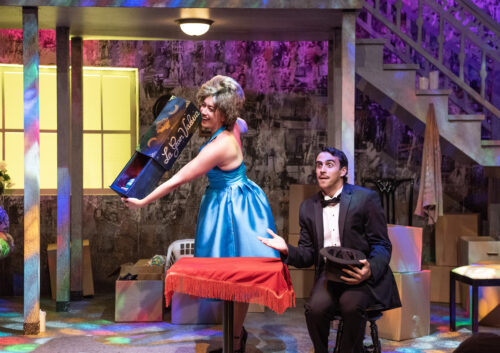
Thais Menendez and Gabriell Salgado play the younger versions of a magician and her assistant in “El huracán” at GableStage. (Photo courtesy of Magnus Stark)
But maybe the “rough magic” referenced in “El huracán” and William Shakespeare’s “The Tempest,” an inspiration for former Miamian Castro Smith, was working overtime to get it to a theater in the playwright’s hometown at just the right time with just the right people involved. Certainly, the result is magical and as fine a production as you’ll see in South Florida all season.
“El huracán” is a 100-minute play in two parts, with a glamorous Cuban origin story at the beginning and a linking interlude in the middle. It is written in English, but certain words, phrases or speeches are in Spanish. Not a stretch for Miami-area audiences, but the playwright has other characters translate or restate that content.
In the first part, set in 1992, Hurricane Andrew is roaring toward Miami on its path of unfathomable destruction. In the second, 25 years have passed. Some characters have died, only to resurface as spirits; others have been born or matured or now face a frightening future.
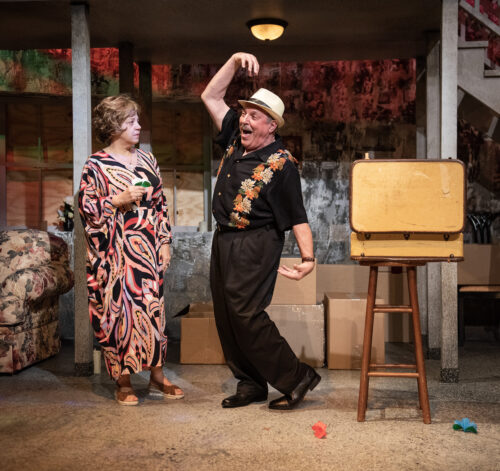
Barbara Bonilla and James Puig are a magician-wife and her assistant-husband in Charise Castro Smith’s “El huracán” at GableStage. (Photo courtesy of Magnus Stark)
When we first meet Valeria (Barbara Bonilla), she’s a beautiful up-and-coming magician in pre-revolutionary Cuba, with the handsome Alonso (James Puig) as her assistant (the younger versions of those characters are played by Thais Menendez and Gabriell Salgado).
Then the play shifts to Miami and pre-Andrew urgency, as Valeria’s middle-aged daughter Ximena (Adriana Sevan) and granddaughter Miranda (Menendez) try to quickly pack Valeria’s most important things – the items used in her magic act, especially – to keep them safe at Ximena’s.
Three things become evident: Alonso, Valeria’s devoted husband, is nowhere to be found; Ximena and Miranda, a student at Harvard, squabble frequently over their different agendas for Miranda’s life; and Valeria is suffering from Alzheimer’s disease.
Frequently, she’ll have conversations with her long-gone sister Alicia (Emma Garcia Seeger). Now and then, she’ll put on the top hat from her act, grab a huge bag and announce that she’s going out (in the torrential rain) to find Alonso. Ximena diverts Valeria by saying Alonso has gone to the pharmacy and will be back soon; in fact, he left after his wife’s diagnosis, unable to bear watching the woman he loved for a lifetime slowly vanish.
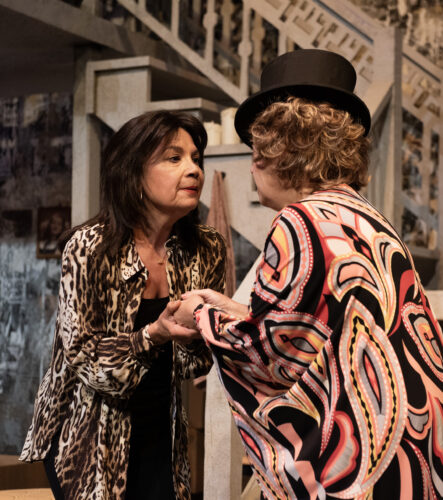
The middle-aged version of Adriana Sevan’s Ximena tries to calm Barbara Bonilla as her mother Valeria in “El huracán” at GableStage. (Photo courtesy of Magnus Stark)
Near the end of the first section, as Hurricane Andrew is about to pulverize so much of the world outside Ximena’s home, Castro Smith expertly propels the action from lust to tragedy. Miranda and Fernando (Salgado), a neighbor’s son who was a high school crush, have their own Cuba Libre-fueled hurricane party, one that will have life-changing consequences.
After they’ve retired to Miranda’s bedroom, Valeria awakens, grabs her hat and bag, and walks out the front door into that peculiar green light that can transform the sky during hurricanes. Hers is the ultimate vanishing act, though she and Alonso surface as spirits unseen by the living after the play jumps to 2017.
Now it’s Ximena, fierce as ever, who is facing Alzheimer’s. Her Cuban cousin’s son Theo (Salgado) is staying with her as he takes the first steps toward forging a life in Miami. Inevitably, he has noticed her memory lapses, agitation and confusion. So an emailed SOS has gone out to Miranda, who left home the day after her grandmother’s disappearance. The prodigal daughter returns to her still-furious mother, her own daughter Val (Garcia Seeger) in tow. Expect fireworks and tears.
Castro Smith, coauthor of the Oscar-winning Disney animated movie “Encanto,” mixes realistic dialogue with evocatively poetic imagery, sometimes crossing into the terrain of magical realism.
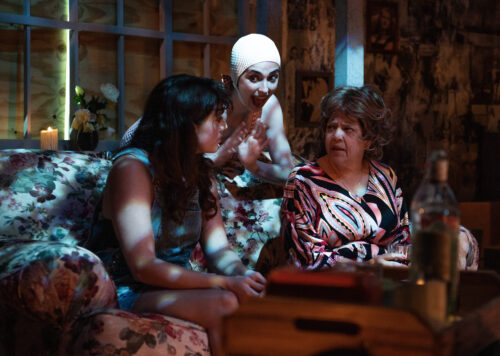
Thais Menendez, Emma Garcia Seeger and Barbara Bonilla are family in “El huracán” at GableStage. (Photo courtesy of Magnus Stark)
One small example, as Alonso is translating what Valeria says in Spanish: “As old age floods your mind, hidden away boxes and trunks float to the surface. The things that the river of memory brings back to you sometimes feel random. But they are yours, and they’re home. Love is the only real magic. Although it is sometimes tricky, it is not a trick.”
Miami-born director Dámaso Rodríguez, who first brought “El huracán” to the attention of GableStage producing artistic director Bari Newport, has done a superb job of staging a piece with myriad challenges. They include time jumps, characters that are visible to some and invisible to others while making certain that lines spoken in Spanish are contextually clear. And the performances he has helped shape? They are exquisite and tonally cohesive.
Bonilla, seen last season in GableStage’s “Boca,” gets a far deeper and more intricate role as Valeria. Now and then, her portrait of a woman in the last stages of Alzheimer’s is endearing, but as her face goes blank, she becomes utterly heartbreaking.
Sevan played Valeria in the world premiere of “El huracán” at Yale Rep (and won a critics’ award for her performance). Her Ximena is a towering achievement, as key to Castro Smith’s play as the aging magician Prospero is to “The Tempest.” Her exhausted, fearful, raging Ximena is an unforgettable portrait of a strong woman shattered by loss and by a disease that would rob her of her memories.
Menendez, who grew up in Miami and is based in Los Angeles, is a beguiling performer who fully inhabits the college-age Miranda (her scenes of drunken flirtation with Salgado’s Fernando are irresistible). She then transforms before our eyes into a middle-aged woman who is, like her mother before her, now caught between caring for an elder and raising her own daughter.
The self-assured Garcia Seeger, a recent University of Florida grad, impressively meets the challenge of playing three distinct characters. As Alicia, she’s a forever-young spirit in a one-piece bathing suit and white swim cap, a source of comfort and guilt to the aging Valeria. As Val, she’s lovable and curious about the family she has never met. As the neurologist Dr. Kempler, she is matter-of-fact and professional as she arrives at a diagnosis for Valeria.
As Alonso, Puig has to play notes of adoration and abandonment, defensiveness and the forever-painful realization that leaving when Valeria needed him most was the greatest mistake of his life. He conveys the complexities of his character’s actions with a slight nervousness of a man who knows he’s doing the wrong thing.
Salgado, who has appeared at many of the region’s theaters since making his professional debut as the Creature in Zoetic Stage’s “Frankenstein” in 2021, plays two distinct supporting roles in “El huracán,” but both draw on the young actor’s comedic ability. His Fernando is a Miami hunk who’s a magnet for Miranda. Theo is more serious – indicated by the glasses he wears – and funny as he switches from his Cuban Spanish to the English he’s trying to acquire.
Thanks to additional donor support, GableStage’s budget for “El huracán” was larger, and it shows. Magician André Garré was hired to teach the cast the magic tricks specified in the script, while Jeni Hacker did the brief segments of choreography and intimacy coordination.
Set designer Frank J. Oliva has created Ximena’s house as a two-story playing area with walls that, if you look closely, combine old photographs with the imagery of swirling hurricane winds. Jameelah Bailey and Constanza Celci dressed the set and gathered the props that convey place and era.
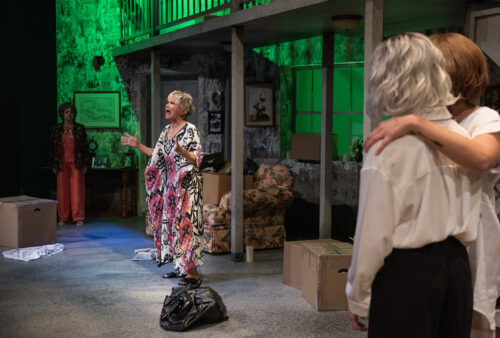
A scene from Charise Castro Smith’s “El huracán” (“The Hurricane”), a profoundly insightful and moving play, at GableStage. (Photo courtesy of Magnus Stark)
Lighting designer Blanca Forzán summons a Cuban club with an explosion of brightly colored lights. Sound designer Rodolfo Ortega provides the sudden sounds of Hurricane Andrew, a faint musical underscoring and Frank Sinatra crooning “Come Fly With Me.” Costume designer Gema Valdés facilitates the play’s time travel and provides a beautiful blue halter dress for Valeria, a costume that will link her in youth and the spirit world.
Even before Castro Smith’s success with “Encanto,” she was focusing more on writing for film and television. The movie’s Oscar (she was co-director as well as co-author) took that career path to a higher level, leaving her far less time for the developmental demands of writing plays and getting them produced.
The point is this: “El huracán” is a made-for-Miami play. It will resonate here most deeply, and it’s a thoroughly engaging story being given a great production. It will be at GableStage through May 14 – and then “poof,” like Valeria, it will be gone.
WHAT: “El huracán” by Charise Castro Smith
WHERE: GableStage in the Biltmore Hotel, 1200 Anastasia Ave., Coral Gables
WHEN: 2 and 7 p.m. Wednesday, 8 p.m. Thursday-Saturday, 2 p.m. Sunday (additional matinee May 13), through May 14 (streaming version available during regular performances April 21-May 14)
COST: $45-$75 (streaming ticket $27)
INFORMATION: 305-445-1119 or gablestage.org.
ArtburstMiami.com is a nonprofit source of theater, dance, visual arts, music and performing arts news.
No posts found


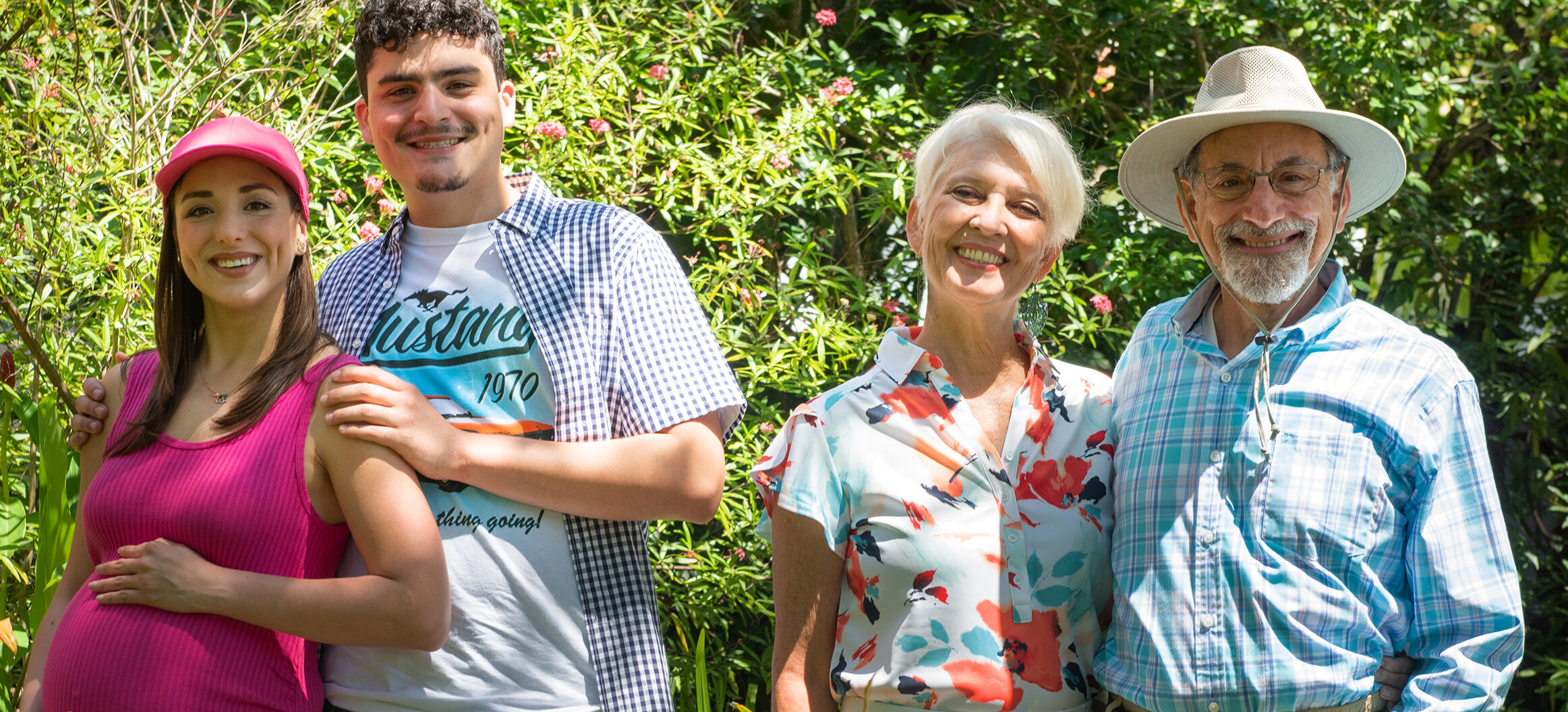

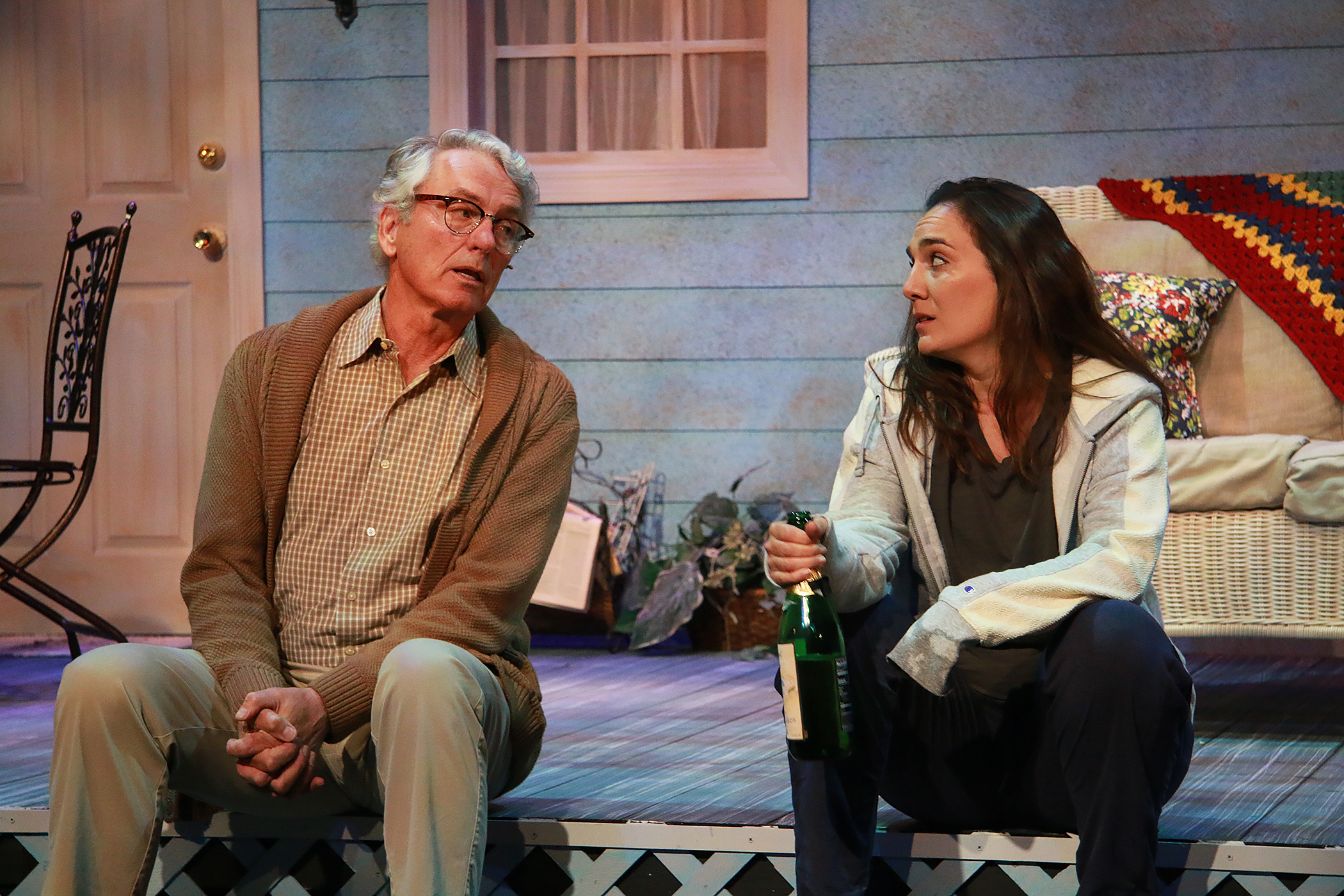
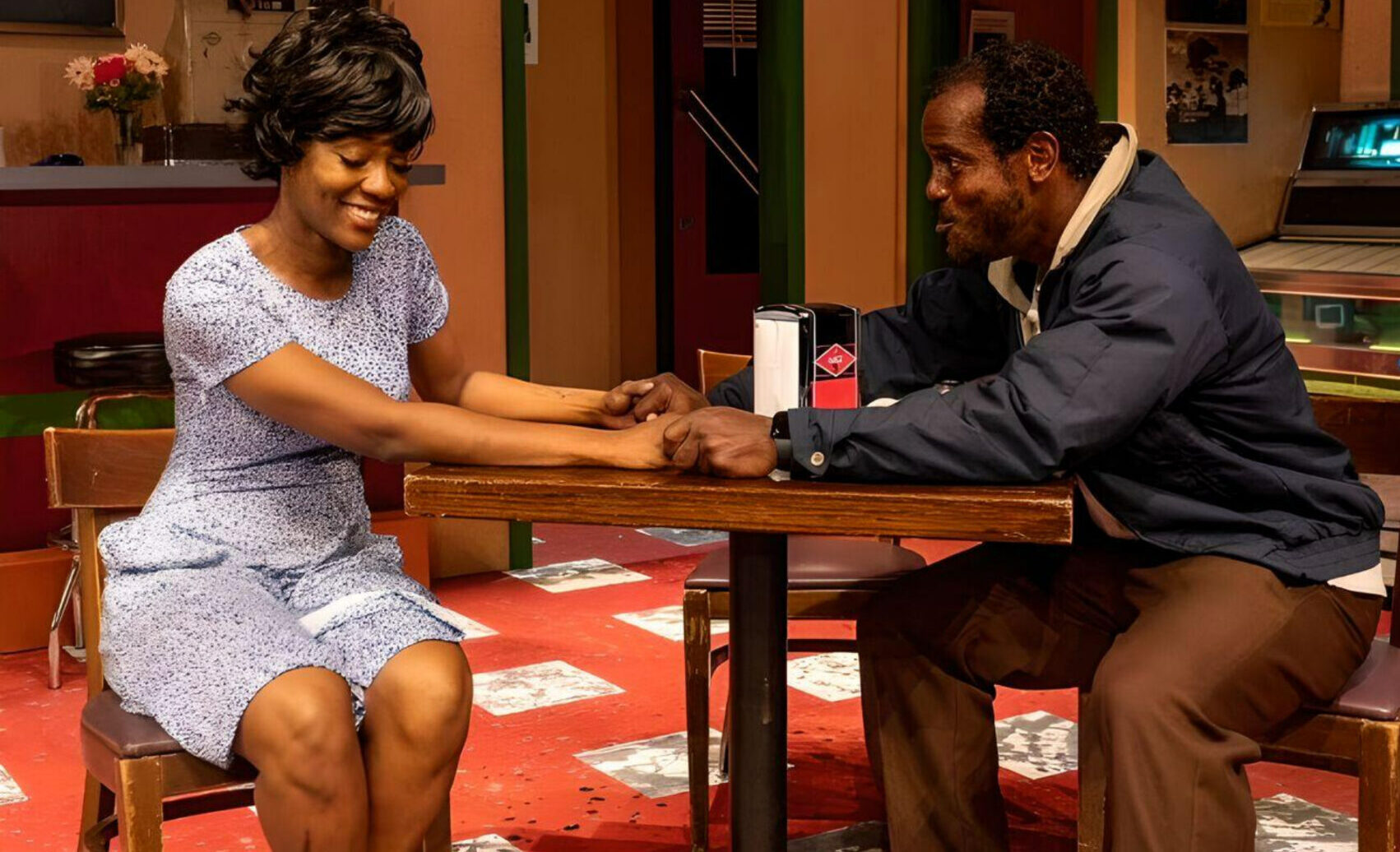
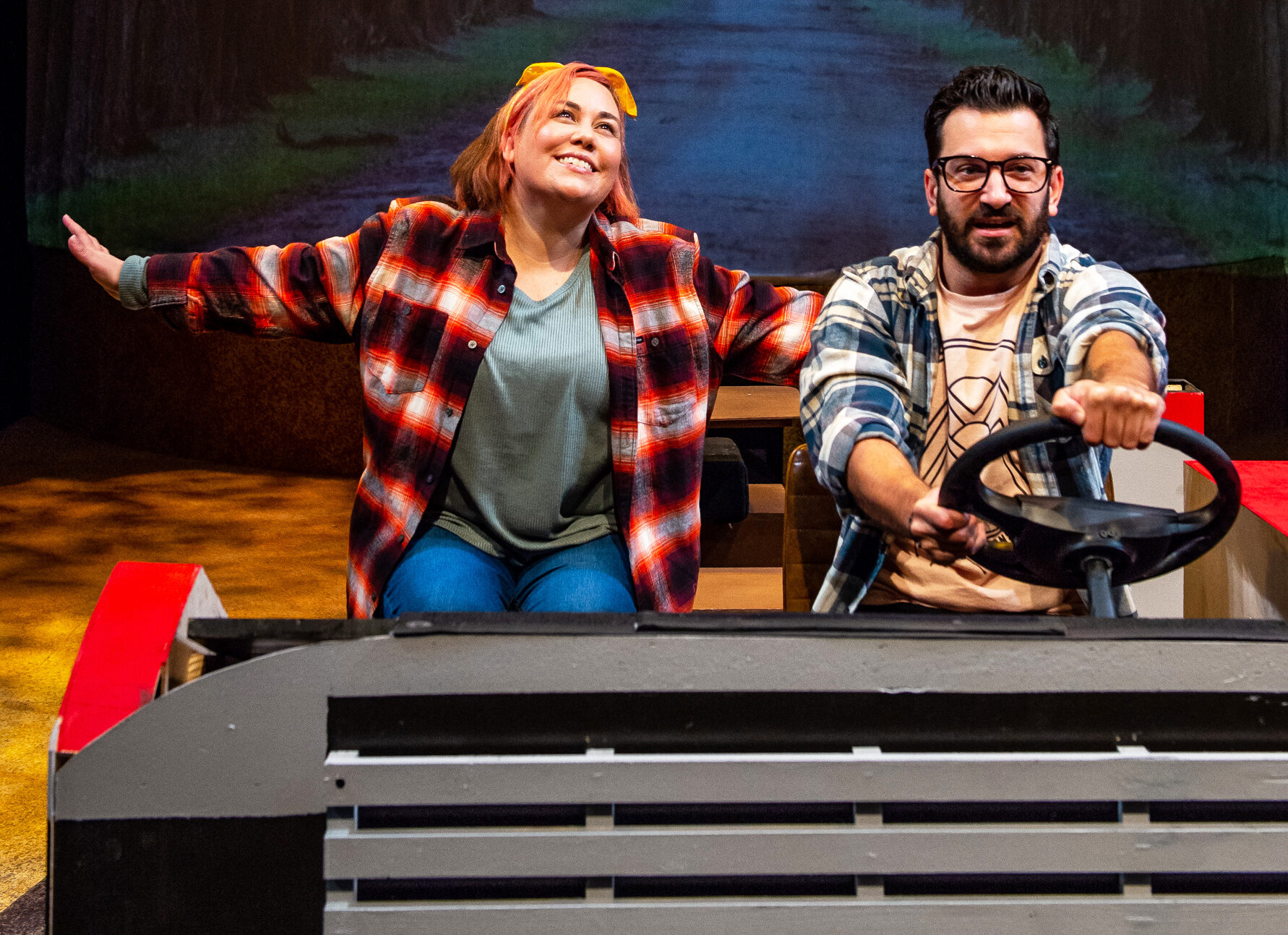
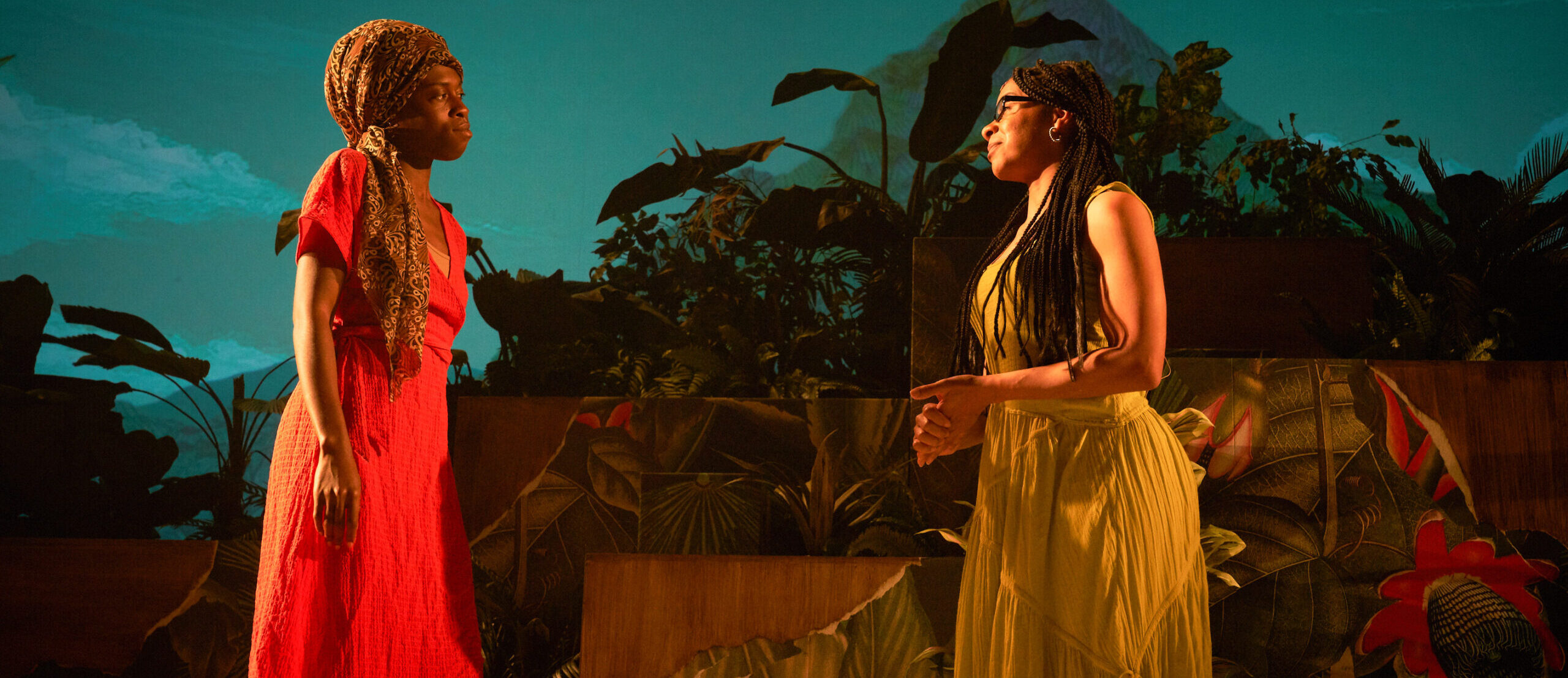



Recent Comments