Written By Christine Dolen November 20, 2023 at 5:31 PM
From left, Stephen G. Anthony as Jaxton, Jeni Hacker as Logan and Anna Lise Jensen as Alicia in “The Thanksgiving Play” at GableStage in the Biltmore Hotel, Coral Gables, through Sunday, Dec. 10. (Photo courtesy of Magnus Stark)
November is Native American Heritage Month, a time when the descendants of indigenous people who first lived on the land that became the United States commemorate their history and culture.
Did you know that? Did you know that Thanksgiving, celebrated this year on this Thursday, Nov. 23, is not just a beloved holiday but a myth-infused one?
Playwright Larissa FastHorse, a MacArthur “genius” grant winner, a member of the Sicangu Lakota Nation and the first Native American woman to have a play produced on Broadway, aims to enlighten as she entertains with “The Thanksgiving Play,” the piece that got her to Broadway earlier this year.
From left, Stephen G. Anthony’s Jaxton and Tom Wahl’s Caden work on a devised battle scene in Larissa FastHorse’s “The Thanksgiving Play” at GableStage. (Photo courtesy of Magnus Stark)
Running at GableStage through Sunday, Dec. 10 (and streaming online from Nov. 24 through Dec. 10), “The Thanksgiving Play” is not a somber rebuke to the long history of bloody tragedy involving indigenous people and white settlers.
Rather, FastHorse wields comedy and scathing satire as her weapons, her characters lobbing one trenchant observation after another about performative wokeness, inaccurate portrayals of indigenous culture, a perceived lack of Native American performers – and some of the more laughable aspects of putting on a show.
In bringing “The Thanksgiving Play” to life, GableStage producing artistic director Bari Newport has assembled a small but mighty cast of four of the region’s most seasoned, multifaceted performers. What each brings to her or his role is immeasurable, a combination of inventive creativity and skills honed over countless productions.
From left, Anna Lise Jensen, Jeni Hacker and Stephen G. Anthony are taken aback by Tom Wahl’s fiery idea of how to integrate the stories of Pilgrims and Native Americans. (Photo courtesy of Magnus Stark)
As director, Newport honors FastHorse’s layered writing and the actors’ comedic prowess with a production that is also multifaceted: flat-out hilarious at times, thought-provoking and, in a few key moments, deliberately shocking.
In “The Thanksgiving Play,” three well-meaning locals and an actress from Los Angeles have come together in a high school’s drama room in any town except the Los Angeles area.
Their mission is to devise a Thanksgiving play appropriate for elementary school students, which might sound easy but definitely is not. To prove that point, FastHorse found real examples of such pieces on the internet, and she includes a few of the cheerful, jaw-droppingly offensive results in her play.
Jeni Hacker as Logan discusses looks and intellect with Anna Lise Jensen as Alicia in “The Thanksgiving Play” at GableStage. (Photo courtesy of Magnus Stark)
The devised play’s director Logan (Hacker) is a high-energy high school drama teacher who may have torpedoed her career with her recent age-inappropriate production of “The Iceman Cometh” featuring 15-year-old actors (at least the 300 parents who signed a petition calling for her firing thought high school sophomores shouldn’t be going anywhere near that particular Eugene O’Neill play.
Logan’s mega-woke lover Jaxton (Anthony), who has already achieved his career ambitions by acting at the local farmers market and practicing yoga (including tantric sex), has volunteered to act in the play. So has elementary school history teacher Caden (Wahl), who arrives at the first rehearsal – or first script-devising session – with a massive box of research on Harvest Home/Thanksgiving festivals going back thousands of years.
Stephen G. Anthony as Jaxton and Jeni Hacker as Logan in “The Thanksgiving Play” at GableStage. (Photo courtesy of Magnus Stark)
Because Logan is far more savvy at applying for grants than she is at picking shows for her students, she has received a Native American Heritage Month Awareness Through Art grant to hire a professional actor for the project. Alicia (Jensen) is that pro, a dark-haired beauty Logan and the others plan to showcase as the Native American presence and voice in their play. Only things don’t quite pan out that way.
The topical content of “The Thanksgiving Play” is vast and varied. The women, for example, ponder the value of having beauty vs. brains. The horrific massacre of hundreds of indigenous Pequot men, women and children in 1637 is represented in a way that may make many in the GableStage audience recoil. Breaking down myths and stereotypes – of Native Americans, of Thanksgiving itself – is a noble intention that leads to a string of uproariously bad ideas about how to approach the devised play-within-“The Thanksgiving Play.”
So much of the pleasure of GableStage’s production flows from watching the four actors’ intricate, flawless delivery of FastHorse’s dialogue.
Jensen hasn’t been onstage since the COVID-19 pandemic hit, choosing to explore other career options. She’s a great musical theater actor (she won the 2019 Carbonell Award for her performance in Slow Burn Theatre’s “The Bridges of Madison County”), but as she demonstrates in “The Thanksgiving Play,” she’s just as adroit at comedy. Speaking consistently in the sort of sexpot voice used by multiple generations of seductive screen queens, Jensen plays the self-assured but generally dim Alicia as only a shrewd actor could.
Talking one-on-one with Logan, Alicia says, “…I know how to make people stare at me and not look away. And when I say something on stage, people listen and they believe me.” Jensen shares that skill.
Anna Lise Jensen as Alicia makes her grand entrance in Larissa FastHorse’s “The Thanksgiving Play” at GableStage. (Photo courtesy of Magnus Stark)
Hacker, who also choreographed the musical bits in “The Thanksgiving Play,” is another Carbonell-winning musical theater star (she received another on Nov. 13 for her performance in Zoetic Stage’s “Next to Normal”). Just as memorable in straight plays and comedies, the petite Hacker uses her lithe body and endlessly expressive face to make Logan a woman so nervous about her shot at public school redemption that she mentally twists herself into a woke pretzel.
Anthony’s New Age Jaxton – if he were older, you know he’d have been among the throngs at the original Woodstock – is a companionable boyfriend to Logan, a man who wants what he wants but doesn’t want to work too hard for it. An accomplished musician/musical theater actor whose eclectic range includes “James Joyce’s The Dead” at GableStage and “Hank Williams: Lost Highway” at Actors’ Playhouse (and before that, Off-Broadway), Anthony infuses Jaxton with both magnetism and self-absorption.
Wahl, whose lengthy list of dramatic credits includes “The White Card” and “White Guy on the Bus” at GableStage as well as his Carbonell-winning solo performance in Zoetic Stage’s “I Am My Own Wife,” deftly leans into comedy as the nerdish Caden, who is nervously aglow as he sees his secret dream – becoming a playwright – about to come true. Watching him chomp on an invisible ear of corn – part of the devising that’s going on – is just as hilariously joyful as seeing Lucille Ball stomping grapes.
Anna Lise Jensen as Alicia is aghast as Stephen G. Anthony’s Jaxton is choked by Tom Wahl as Caden in “The Thanksgiving Play” at GableStage. (Photo courtesy of Magnus Stark)
When you walk into GableStage’s small space at the grand Biltmore Hotel in Coral Gables, you may be hit by a wave of nostalgia once you catch sight of Frank J. Oliva’s set.
Oliva, who also just won a Carbonell for his design of Area Stage’s immersive “The Little Mermaid,” has re-created a vintage high school drama room. A checkerboard linoleum floor, an elevated stage with a navy velvet curtain, a private drama department “office” adapted from a still-in-use janitor’s closet make it hard to imagine any other set was ever there (though so many have been). Natasha Lopes Hernandez’s set dressing and props design is of a piece with Oliva’s work, with more than a few visual jokes.
Sean McGinley’s sound design, Tony Galaska’s lighting, Casey Sacco’s costume design (which goes in the direction of L.A. flashy/tacky for Alicia) and Maura Gergerich’s special costumes and props (for the pageant-style portions of the show) are of a piece with Oliva’s set design – just right.
From left, Jeni Hacker, Stephen G. Anthony, Anna Lise Jensen and Tom Wahl in GableStage’s production of “The Thanksgiving Play” (Photo courtesy of Magnus Stark)
If you’ve ever seen Christopher Guest’s brilliant 1996 community theater-skewering mockumentary “Waiting for Guffman,” you’ll notice echoes of it in “The Thanksgiving Play.” But what FastHorse is up to, particularly in this age of public-school curriculum wars, is as potent and necessary as it is funny.
The work of this impressive, insightful writer will be back in South Florida May 7-12 when her adaptation of the classic musical “Peter Pan” plays Miami’s Arsht Center. But why wait? GableStage has delivered ideal pre- or post-Thanksgiving fare with its sharp production of “The Thanksgiving Play.”
WHAT:“The Thanksgiving Play” by Larissa FastHorse
WHERE:GableStage in the Biltmore Hotel, 1200 Anastasia Ave., Coral Gables
WHEN: 2 and 7 p.m. Wednesday, 8 p.m. Thursday, 2 and 9 p.m. Saturday, 2 p.m. Sunday (no show on Thanksgiving, no matinee Dec. 2), through Dec. 10 (streaming version available during regular performances Nov. 24-Dec. 10)
COST:$40, $45, $50, $55, $60, $65, all with additional $10 service fee (discounts for students, teachers, artists, military and groups); streaming ticket $30: $10 off with code THANKFUL on ticket orders for performances Wednesday, Nov. 22; Friday, Nov. 24; Saturday, Nov. 25 and Sunday, Nov. 26
ArtburstMiami.com is a nonprofit media source for the arts featuring fresh and original stories by writers dedicated to theater, dance, visual arts, film, music and more. Don’t miss a story at www.artburstmiami.com.
No posts found
Review: LakehouseRanch jumps into the horror genre with ‘rabbit’
Written By Christine Dolen November 16, 2023 at 6:57 PM
Samuel Krogh as kade and Maleeha Nasser’s wren in the world premiere of Riley Elton McCarthy’s “rabbit,” a LakehouseRanchDotPNG production in Kendall. The show runs through Sunday, Nov. 19 (Photo courtesy of Juan Gamero)
Riley Elton McCarthy is a New York-based playwright whose instructions at the top of the script for the world premiere play “rabbit” are uncommonly detailed regarding gender, casting, the need for leaning into the queerness and violence of the piece.
The playwright uses the pronouns they/them, as do the characters in “rabbit,” so we’ll conform to that in writing about the LakehouseRanchDotPNG production. The play’s title and character names aren’t capitalized, so we’ll do likewise. Note that “rabbit” has just a two-weekend run, which translates into three remaining performances in the small second floor Artistic Vibes space in Kendall: 8 p.m. Friday, Nov. 17, and Saturday, Nov. 18, and 2 p.m. Sunday, Nov. 19. Hop to it and make plans if this one sounds intriguing.
Mairi Chanel’s cyprus is lost in thought and fear in the in the LakehouseRanch world premiere of “Riley Elton McCarthy’s “rabbit.” (Photo courtesy of Juan Gamero)
The third world premiere in LakehouseRanch’s second season of presenting absurdist and experimental work, “rabbit” is a horror play with plenty of room for individual interpretation.
The characters in the play’s wolf pack could be runaway kids and teens, wolves, even rabbits who hunt their own. Whoever they are, they have plenty in common with the boys in William Golding’s “Lord of the Flies” as they have created a new and violent society led by an alpha wolf called kade (Samuel Krogh, who plays the character with an entirely appropriate rock star attitude).
Established by a now-absent founder the members call “the little one,” the pack lives in the woods, never leaving, though most have hazy memories of families or home or something that came before.
Charisma Jolly’s briar turns violent with Abby Wolf’s finch in the world premiere of Riley Elton McCarthy’s “rabbit.” (Photo courtesy of Juan Gamero)
To survive, they hunt rabbits, which the eccentric sage turns into the filling for handpies. Sometimes, though, a predator becomes the prey.
In addition to sage and kade, the ultimate authority with a distinct appetite for domination and cruelty, the others are briar (Charisma Jolly), who seems to be kade’s mean-and-nasty acolyte; wren (Maleeha Naseer), who trains the new arrivals to become hunters; gale (Alex Camacho), who looks truly frightening as they lick their chops; finch, described by the playwright as “a realist;” and cyprus, a frightened type who strums a ukelele as they try (and fail) to remember the lyrics to “Twinkle, Twinkle, Little Star.”
Into this established order comes a force who will eventually change everything. After henri (Emily Valdes, strikingly mysterious) gets caught in one of the pack’s concealed bear traps, they’re taken in by the group, lusted after by some, made a target by others.
Emily Valdes as henri sits in shock after a killing in Riley Elton McCarthy’s “rabbit.” (Photo courtesy of Juan Gamero)
LakehouseRanch artistic director Brandon Urrutia, his design team (set by Indy Sullerio, sound by actor Naseer, costumes by Lucy Marie Lopez, props by Rachel Gil de Gibaja and actors Naseer and Chanel, lighting by Urrutia himself) and the performers keep the play’s unsettling, unnerving, at times horrifying and bloody vibe going throughout.
The kind of light you might imagine in a forest washes over a space plastered with child-like drawings of rabbits, an ornate cross marking the spot where “the little one” departed, and a tree that sometimes serves as a gallows. Creepy.
Samuel Krogh’s kade plots his next move in the LakehouseRanchDotPNG world premiere of “rabbit” at Artistic Vibes in Kendall. (Photo courtesy of Juan Gamero)
The Artistic Vibes black box space is tiny, with just two rows of folding chairs along each of two walls. If the actors point prop “guns” (actually cap guns/rifles) in your direction or the chase after prey comes tumbling into the space beside you, you will jump.
The young theater artists of LakehouseRanchDotPNG are attracting audiences hungry for shows that aren’t the same old same old. Some of which, like “rabbit,” may just startle the bejesus out of them.
WHAT: World premiere of “rabbit” by Riley Elton McCarthy
WHERE: LakehouseRanchDotPNG production at Artistic Vibes, 8846 SW 129th Terrace, Suite B (second floor), Miami
WHEN: 8 p.m. Friday-Saturday, 2 p.m. Sunday, through Nov. 19
ArtburstMiami.com is a nonprofit media source for the arts featuring fresh and original stories by writers dedicated to theater, dance, visual arts, film, music and more. Don’t miss a story at www.artburstmiami.com.
No posts found
Review: Miami connections in Maine-based ‘Sweet Goats’ give play a perfect home at Actors’ Playhouse
Written By Christine Dolen November 13, 2023 at 11:23 AM
From left, Elizabeth Price as Georgie, JL Rey as Tio Eme and Melissa Ann Hubicsak as Beatriz in the Actors’ Playhouse production of “Sweet Goats and Blueberry Señoritas” at the Miracle Mile Theatre in Coral Gables through Sunday, Dec. 3. (Photo courtesy of Alberto Romeu)
Before the show started on opening night, Richard Blanco began the festivities surrounding “Sweet Goats and Blueberry Señoritas” like the great poet he is, reading “A Love Song for the Miracle Theatre” – a poem he was moved to write earlier that day.
Standing downstage in the Balcony Theatre, with set designer Brandon Newton’s vision of a small Maine community at the ready behind him, the Cuban American Blanco painted a vibrant portrait in words, evoking the look and spirit of a movie theater-turned-playhouse, a place he knows well from growing up in Miami.
From left, Michael Gioia, JL Rey, Melissa Ann Hubicsak, Conor Walton and Elizabeth Price howl at the moon in the Actors’ Playhouse production of “Sweet Goats and Blueberry Señoritas.” (Photo courtesy of Alberto Romeu)
Getting to the very essence of theater’s magical reflection of life and its transportive power, he observed that for decades, “we’ve found ourselves by forgetting ourselves…”
Blanco, the country’s fifth inaugural poet and Miami-Dade County’s poet laureate, collaborated with Miami playwright and fellow Cuban American Vanessa Garcia in writing “Sweet Goats and Blueberry Señoritas.” After a world premiere at Maine’s Portland Stage, the play is getting a second production from Actors’ Playhouse at the Miracle Theatre in Coral Gables, where it will run through Sunday, Dec. 3.
Speaking of “Sweet Goats” in advance of its opening, Garcia observed, “This play roots from Miami. It is very much from here that the spirit of it comes.”
So true. Though the play is set in Maine, it is imbued with Cuban culture – food, music, dance, spiritual practices, historical touchstones, certain small speeches in impassioned Spanish. The opening night audience got all of it, laughing, joining in song, some commenting in a whisper (or not so quietly) to one another.
Melissa Ann Hubicsak as Beatriz is moved by a spirit of forgiveness in “Sweet Goats and Blueberry Señoritas.” (Photo courtesy of Alberto Romeu)
Blanco and Garcia’s story centers on Beatriz (Melissa Ann Hubicsak), a Miamian who has moved to Maine and opened the Elegua Bakery. She’s not quite a santera, she explains to her best friend Georgie (Elizabeth Price), but she is (as her uncle describes her) a daughter of the Santería deity Elegua, the trickster god of the crossroads.
Beatriz is quite the trickster herself. Estranged from her Cuban immigrant mother Marilyn (Barbara Bonilla), a woman scarred by a lifetime of loss, Beatriz sometimes phones her mom in Miami, altering her voice and pretending to represent a sweepstakes. But of course, she really just wants to hear her mother’s voice.
Having moved to Maine after the demise of her marriage to a man 20 years her senior – a son-in-law her mother scorned – Beatriz has found her people, a chosen family quite different from the Cuban bakers who first ignited her passion for making pastries.
From left, Elizabeth Price as Georgie confides in Melissa Ann Hubicsak as her bestie Beatriz in Richard Blanco and Vanessa Garcia’s “Sweet Goats and Blueberry Señoritas.” (Photo courtesy of Alberto Romeu)
Georgie, a woman of strong opinions, knows what she wants – and at this moment, she wants Beatriz to read the caricoles (cowrie shells) so the gods can fill her in on her future. Particularly her romantic future.
At one time, Georgie thought the quintessential Maine man Maynard (Michael Gioia) might be the one. But something happened with his ex-wife Clarice, for whom his pet cardinal is named, so Georgie now does her best to pretend Maynard doesn’t exist, even when he’s in the same room.
Blake (Conor Walton) is a gay man from Kentucky who’s married to a veterinarian (Blanco has noted that Blake is the character most like himself). His homemade goat cheese inspires Beatriz to come up with a pastelito filled with goat cheese and guava – the “sweet goats” of the title. His main activities seem to be bringing the snark when it’s needed and smoking. He knows he should quit, but does he want to? Hell, no.
From left, Melissa Ann Hubicsak as Beatriz and Conor Walton as Blake talk about his homemade goat cheese in the Actors’ Playhouse production of “Sweet Goats and Blueberry Señoritas.” (Photo courtesy of Alberto Romeu)
Into this mix of kindness and eccentricity comes Beatriz’s Tio Eme (Rey), who has come to Maine from Miami to see if he can break through the stalemate between his sister and his niece. Both women are similarly stubborn and sometimes volatile, so things don’t exactly proceed apace. He manages to fill his time by arguing with Beatriz about family, helping her bake and flirting with the smitten Georgie.
A 90-minute exploration of life and death, home and connection, “Sweet Goats and Blueberry Señoritas” comes off like a distant cousin to Thornton Wilder’s “Our Town.”
As you might expect, given Blanco’s contributions to the collaboration, there are moments of poetry threaded into the drama. And some of the writing by both playwrights – who wrote what isn’t specified – is heartbreakingly evocative.
Barbara Bonilla as a Miamian named Marilyn fields a prank phone call in the Actors’ Playhouse production of “Sweet Goats and Blueberry Señoritas.” (Photo courtesy of Alberto Romeu)
Marilyn, who came to the United States on a Pedro Pan flight with her brother, tells Tio Eme how she felt when their parents were finally able to leave Cuba and join them in Miami: “They looked so old. Like the world had swept the floor with them. You were my mother. And my father. And they were . . . they were strangers.”
Newton’s set provides both small and communal playing areas defined by platforms and skeletal frames, the central one being Beatriz’s Elegua Bakery, which features colorful tile floors, a display case and Cuban coffee always at the ready (Jodi Dellaventura did the set dressing and properties design). Lighting designer Eric Nelson paints sunsets onto the backdrop, finding a way to make different Maine moons striking and impossibly large.
Sound designer Reidar Sorensen brings Cuba into the space with music you might hear anywhere and everywhere in Miami, and the occasional thump of a beating heart underscores Marilyn’s worsening health. But one of Sorensen’s most significant contributions happens when he breaks the quiet with the beautiful song of a cardinal, a symbolic bird throughout the play. Costume designer Ellis Tillman’s choices are, as usual, spot on as they run the gamut from omnipresent flannel to a vibrant red dress for Marilyn in the play’s final moments.
From left, Barbara Bonilla as Marilyn invites Melissa Ann Hubicsak as Beatriz to dance with her in Richard Blanco and Vanessa Garcia’s “Sweet Goats and Blueberry Señoritas.” (Photo courtesy of Alberto Romeu)
Director David Arisco, who collaborated with Victoria Collado on the staging and movement of the spiritually uplifting final scene, guides his adroit cast to performances that bring out the longing, quirkiness and emotional conflicts of the likeable characters.
Hubicsak anchors the play as Beatriz, enriching her newfound family with her steadiness and empathy. As is so often the case, Price is superb, her masterful embodiment of Georgie an illustration of acting at its richest. Bonilla as Marilyn is sorrowful, furious and, in one remark about a Whole Foods gift certificate, perfectly hilarious.
Rey somehow infuses Tio Eme with kindness and warmth even when he’s giving Beatriz a piece of his mind in high-volume Spanish. Walton, whose Blake is at least partially inspired by Blanco, crafts a character who is excitable, observant and caring. Whether or not the skillful Gioia actually knows how to whittle, he makes you believe he does, from the tippy top of his comically large hat with earflaps to his booted feet.
Michael Gioia as Maynard whittles a wooden bird in the Actors’ Playhouse production of Richard Blanco and Vanessa Garcia’s “Sweet Goats and Blueberry Señoritas.” (Photo courtesy of Alberto Romeu)
The play’s ending, which follows a tragic loss, uses the dance and music of the Cuban guaguancó to make clear that even in mourning, Beatriz is not done with joy. Led by the spirited Marilyn, she dances with style and joy, her smile radiant as she registers a belief symbolized by the cardinal: Those who have left us in body remain in spirit.
“Sweet Goats and Blueberry Señoritas” is a play that could be produced in many regional theaters, given the universality of its characters’ search for home, identity and belonging. But the play’s corazón, its heart, is Cuban. In essence, it’s a love song to a treasured culture, a way to mourn generations of loss, an anthem to resilience. And in greater Miami at the Miracle Theatre, its impact is amplified.
WHAT: “Sweet Goats and Blueberry Señoritas” by Richard Blanco and Vanessa Garcia
WHERE: Actors Playhouse at the Miracle Theatre’s Balcony Theatre, 280 Miracle Mile, Coral Gables
WHEN: 8 p.m. Wednesday-Saturday, 3 p.m. Sunday, through Dec. 3
COST:$40, $55, $65, $75, $85 (seniors 65 and over get 10 percent off weekdays only; students with valid student ID pay $15 for a rush ticket available 15 minutes before a weekday performance)
ArtburstMiami.com is a nonprofit media source for the arts featuring fresh and original stories by writers dedicated to theater, dance, visual arts, film, music and more. Don’t miss a story at www.artburstmiami.com.
No posts found
Review: Armando Santana’s ‘Hoo Hah!’ gets a True Mirage world premiere in Miami Lakes
Written By Christine Dolen November 9, 2023 at 10:55 AM
Darcy Hernandez-Gil as Mama and Milaimys Castellon as her daughter Lil in the True Mirage world premiere of Armando Santana’s “Hoo Hah!” (Photo courtesy of Thiana Berrick)
Miami’s True Mirage had a hit last March with the Robyn Brenner-Mackenzie Anderson song cycle “Songs from the Brink,” a world premiere piece about life challenges of people in their 20s. The not-for-profit company’s stated mission is to empower emerging artists, produce new works (mainly from BIPOC playwrights with BIPOC/Latinx casts), and present thought-provoking plays.
Now the company, which performs in different spaces, has returned to Main Street Playhouse in Miami Lakes with the world premiere of Armando Santana’s “Hoo Hah!,” which runs through Sunday, Nov. 12.
From left, Daniel Gil’s Tobias Craw is attacked by Ricky J. Martinez’s President Jacob Ringer in the True Mirage world premiere of “Hoo Hah!” (Photo courtesy of Thiana Berrick)
Santana, a New World School of the Arts grad, calls his play “a comedy of preventability.” What he means is that in a piece set in the world of theater, the ego-driven characters could try to stop the obvious, imminent disaster of a preview night gone hideously wrong. Yet these narcissists, driven by emotional scars and raging ambition, stay laser-focused on themselves.
Stylistically, “Hoo Hah!” blends comedy, farce, absurdist theater, even melodrama. Though the title refers to the name of a teen actress who may or may not make it through the first preview of a play titled “A Dress Dipped in White.” But it’s also a deliberate reference (despite the “h” on the end of “hah”) to the slang for a woman’s private parts.
To wit: When Hoo Hah (Sara Jarrell) is writhing on the floor, struggling to breathe as she chokes on a walnut, the play’s director looks into her mouth and asks her mother, “How much deeper do I have to look inside your Hoo Hah?” That joke becomes the play’s running gag, never failing to get a laugh from some in the audience as others sit stony-faced.
The play’s time period isn’t made clear – director Daniel Gil describes it as post-apocalyptic, maybe after World War III has plunged the world back into a 1920s way of living – but it’s set in a gloomy dressing room with torn wallpaper and the well-worn, messy décor of a place in decline. When the story becomes particularly menacing, even deadly, Angelina Esposito’s lighting stands in for a growing bloodbath.
It begins with Hoo Hah and her leading man, R.T. Waldorf (Randy Garcia) singing the sweet Nelson Eddy-Jeanette MacDonald kind of love song that ends the first act of “A Dress Dipped in White” (the original music and lyrics are by Miamian Thiana Berrick. Then the action shifts to the star dressing room at a theater in Savannah, Georgia, where Jarrell’s curvy Hoo Hah proceeds to choke and wheeze and agonize her way through nearly the entire play.
Ricky J. Martinez (foreground) holds President Jacob Ringer’s weapon of choice in the True Mirage Theater world premiere of “Hoo Hah!” Daniel Gil is in background on left, Darcy Hernandez-Gil on right. (Photo courtesy of Thiana Berrick)
The only person who notices or seems to care about Hoo Hah’s predicament is her elder sister Lil (Milaimys Castellon), the visual opposite of her struggling sis. Lil is dressed in a potato sack (her one and only item of clothing), her face and body smeared with dirt, her long hair thoroughly matted. When her mother tells her she stinks, you believe it.
Ah, yes, Mama. Once a sparkling star of the stage, former actress Maddy Rawson (Darcy Hernandez-Gil, who stepped into the role just before opening and mastered extensive dialogue) makes Mama Rose in “Gypsy” look like Mother of the Year. She lives to push Hoo Hah to ever-greater heights, but the glory is vicarious – she’d just as soon be on the stage herself and knows she’d be better.
To Maddy, sweet and loyal Lil is nothing but an encumbrance, a servant she doesn’t have to pay. Her long speech detailing how Lil ruined her life is a skillfully chilling repudiation of motherhood.
While Hoo Hah is choking, intermission is being extended, then extended some more. That’s not a good thing.
The author of “A Dress Dipped in White” happens to be the President of the United States, Jacob Wringer (Ricky J. Martinez), a man who takes disappointment badly. He’s there at the Merrik Theater (not named for legendary producer David Merrick, we presume) with nearly 1,000 other restless audience members. By the time he gets fed up and literally blasts his way into Hoo Hah’s dressing room, Ringer has counted each cherub on the theater’s proscenium arch.
From left, Sara Jarrell’s Hoo Hah tries not to die as Milaimys Castellon’s Lil comforts her in True Mirage Theater’s world premiere of “Hoo Hah!” (Photo courtesy of Thiana Berrick)
Ringer, who is leading a nation at war, appears to be both an explosively violent lunatic and a man who could teach Hannibal Lecter a thing or two about deceptively soothing words. Martinez, the most experienced actor in the cast, is wonderful as infuses the production with artful energy.
Everyone else has to contend with Ringer’s volatility: Stagehand Charlie (Nick Valdes), who doesn’t have to put up with Ringer for long; a quaking “Dress Dipped in White” director Tobias Craw (Gil, who directed Santana’s play, designed the set, co-designed the costumes with Hernandez-Gil and did the sound with the playwright and Hernandez-Gil); the usually drunk Waldorf, choking Hoo Hah, predictably surprising Lil and Mama Maddy, whose domineering personality evaporates in the presence of the playwright-politician who once added her to his long list of conquests.
“Hoo Hah!” is an inside baseball sort of play, most fully appealing and accessible to those who find even the minutiae of the theater world fascinating.
Santana is a talented playwright who doesn’t need a joke title or crude language to make audiences connect with his script. Plenty of people in the first Saturday-night audience did just that, laughing a lot, gasping when President Ringer did his worst. But could “Hoo Hah!” have used more rehearsal time, a bigger budget and a few more actors of Martinez’s caliber? Absolutely.
WHAT: True Mirage Theater world premiere of “Hoo Hah!” by Armando Santana
WHERE: Main Street Playhouse, 6812 Main St., Miami Lakes
WHEN: 8 p.m. Friday-Saturday, 2 p.m. Sunday, through Nov. 12
ArtburstMiami.com is a nonprofit media source for the arts featuring fresh and original stories by writers dedicated to theater, dance, visual arts, film, music and more. Don’t miss a story at www.artburstmiami.com.
No posts found
Actors’ Playhouse’s ‘Sweet Goats’ born in Maine but its roots are in Miami
Written By Christine Dolen November 6, 2023 at 5:02 PM
From left, Elizabeth Price as Georgie, Melissa Ann Hubicsak as Beatriz, and JL Rey as Tio Eme in “Sweet Goats and Blueberry Señoritas” by Richard Blanco and Vanessa Garcia opening at Actors’ Playhouse in Coral Gables in previews Wednesday, Nov. 8, and opening Friday, Nov. 9 through Sunday, Dec. 3. (Photo courtesy of Alberto Romeu)
Home. It’s just a four-letter word, but one that encompasses so many emotions: joy, sorrow, warmth, longing, loss. Home is part of our essence, an ache if it’s lost, a quest for deep connection that so many in Miami’s exile communities know as well as anyone.
Celebrated Cuban-American poet Richard Blanco, whose literary life vaulted to another level in 2013 after President Barack Obama made him the fifth Presidential Inaugural Poet in the country’s history, says, “Home is not just a place. It’s a state of mind.”
From left, Barbara Bonilla’s Marilyn talks to JL Rey as her brother Tio Eme in Richard Blanco and Vanessa Garcia’s “Sweet Goats and Blueberry Señoritas.” (Photo courtesy of Alberto Romeu)
Cuban-American playwright Vanessa Garcia, whose immersive “The Amparo Experience” made her a higher-profile artist with its months-long Miami run in 2019, likewise has devoted much of her writing to the longing for home and the exploration of roots.
The two Miami writers had never met when Blanco went to an “Amparo” performance and asked Garcia to chat over martinis at Tap 42 afterwards.
Blanco had been living in Maine, where he moved “on a whim.”
He says: “I had been searching for home, a place, belonging – the essential question of my work.”
Blanco was commissioned by Maine’s Portland Stage to write a play – the offer came after an onstage conversation with Pulitzer Prize-winning Miami playwright Nilo Cruz – but he wasn’t happy with his early draft.
He was intrigued by the site-specific “Amparo,” Garcia’s deeply impactful immersive story of the family behind Havana Club Rum, the Fidel Castro-led Cuban Revolution, and the diaspora that followed. The poet and the playwright talked, met again and talked some more, and Blanco says that eventually, they decided to collaborate on the piece for Portland Stage.
From left, Conor Walton, Melissa Ann Hubicsak, Elizabeth Price, Michael Gioia and JL Rey (seated) celebrate Beatriz’s Maine family in “Sweet Goats and Blueberry Señoritas” at Actors’ Playhouse at the Miracle Theatre. (Photo courtesy of Alberto Romeu)
“Sweet Goats and Blueberry Señoritas” was the result. The play about a Cuban American baker named Beatriz who has moved from Miami to Maine had its world premiere run Jan. 25 to Feb. 12, 2023. Now “Sweet Goats” has come south to Miami for a major second production by Actors’ Playhouse at the Miracle Theatre in Coral Gables. Set in Maine but thoroughly infused with Cuban culture (and food), it explores the complexities of home as well as the estrangement of Beatriz and her unhappy mother Marilyn. “Sweet Goats and Blueberry Señoritas” will preview Wednesday, Nov. 8, and Thursday, Nov. 9, with opening night on Friday, Nov. 10. The play runs through Sunday, Dec. 3.
“I am trying to find plays that speak to the community,” says artistic director David Arisco, who chose “Sweet Goats” to kick off the company’s 36th season. “So many theaters do world premieres, but a lot of plays don’t get a second production. I thought it would also be exciting for the playwrights to have it seen on their home turf….It was written for Maine, but its roots are in Miami.”
“Sweet Goats and Blueberry Señoritas” pulses with spirit and symbolism, tradition and the act of finding family in friendships. With the exception of JL Rey, a Tampa actor reprising his world premiere role as Beatriz’s Tio Eme, the South Florida-based cast is new, with several making their Actors’ Playhouse debuts.
Melissa Ann Hubicsak plays Beatriz (or Bea), who invents the two Cuban-style pastries that give the play its title: Sweet Goats are pastelitos with Maine-made goat cheese and guava, Blueberry Señoritas a flaky pastry filled with Maine blueberries and custard.
From left, Melissa Ann Hubicsak as Beatriz and JL Rey as Tio Eme talk about life and family over coffee and pastries in “Sweet Goats and Blueberry Señoritas” at Actors’ Playhouse at the Miracle Theatre. (Photo courtesy of Alberto Romeu)
Georgie (Elizabeth Price) is her neighbor and closest friend, Maynard (Michael Gioia) a classic salt-of-the-earth Maine character, Blake (Conor Walton) a gay southerner who brings style and wit to the land of plaid flannel shirts, and Marilyn (Barbara Bonilla), Bea’s ailing and lonely mom in Miami.
For Hubicsak – whose heritage is Hungarian, German and Irish on her father’s side, Cuban on her mother’s – snagging the leading role of Beatriz in her first Actors’ Playhouse show is part of a personal and career renaissance.
The 2008 Florida International University grad developed such a deep fear of auditioning that she stepped back from acting for a while. Then, after she lost her relationship, her apartment and her day job around the same time, she found solace in seeing a lot of theater, falling in love with the art form again. She met playwright Garcia when she played a principal role in “The Amparo Experience,” which led her to explore her own Cuban family history.
“This play has a theme of forgiveness, of other people and oneself,” says Hubicsak. “I’m the first-generation daughter of immigrants. I started digging into history of my own family; there were people who were political prisoners, who were tortured, but they didn’t talk about it….I had been asking. I was older and wanted to know. Now I’m recording and documenting everything. Our family has fought and yelled and cried, all because of me.”
From left, Conor Walton, Melissa Ann Hubicsak, Elizabeth Price, Michael Gioia and JL Rey (seated) take in the symbolism of a red bird in “Sweet Goats and Blueberry Señoritas”at Actors’ Playhouse at the Miracle Theatre. (Photo courtesy of Alberto Romeu)
The actor feels the commonalities between herself and the character of Beatriz deeply, from a long-absent father (Hubicksak’s dad has battled addiction and homelessness) to navigating the complexities of the mother-daughter relationship. She praises Blanco and Garcia for the way the two convey the interactions in a Cuban family.
“The play has very Miami things and very Cuban things. It captures the dynamics of how we speak to each other. Richard and Vanessa’s writing is very real. One second, you’re screaming. Then you laugh,” she says.
Born in Cuba, Rey moved to Manhattan’s Inwood neighborhood (where “In the Heights” is set) with his family in 1969, then to Tampa in the early ‘80s. He worked there for 25 years, then went back to New York, then post-pandemic went back to Tampa. But he has fallen in love with Miami (“I’m thinking of moving to this part of the state,” he says) and his second group of “Sweet Goats and Blueberry Señoritas” castmates.
From left, Conor Walton as Blake and Michael Gioia as Maynard watch a red Cardinal fly away in “Sweet Goats and Blueberry Señoritas,” an Actors’ Playhouse production at the Miracle Theatre. (Photo courtesy of Alberto Romeu)
“I love the character. I get to tell the Cuban side of the story,” says Rey. “He’s trying to be a bridge between two people he loves. He’s attempting to be a peacekeeper, someone who reminds (his sister and niece) that they love each other.”
Rey appreciates Arisco’s take on the play – “this is being led by a very capable, open-minded and collaborative director,” he says – and the way Garcia and other collaborators are continuing to work on the play’s final scene. The ending involves the dance and music of a Cuban guaguancó, a distinct type of rumba, as well as a deeply-felt spiritual experience that “becomes more visceral for the audience,” he says.
“Obviously, the audience will know about these things – the Pedro Pan program, Freedom Flights, the wonders of Cuban food. It doesn’t have to feel as expositional. It can be more emotionally grounded,” adds Rey. “In many ways, this is a new play. It’s beautifully moving.”
Arisco agrees that the scenes between Beatriz and Tio Eme are likely to resonate more powerfully with Miami-Dade County’s Cuban population than they might have in Maine. But he hopes audiences at the Miracle’s more intimate Balcony Theatre will also have another thematic takeaway.
Richard Blanco, the country’s fifth presidential inaugural poet and Miami-Dade County’s poet laureate, collaborated with playwright Vanessa Garcia on “Sweet Goats and Blueberry Señoritas,” his first play. (Photo courtesy of Matt Stagliano)
“It’s more about people understanding that you can make a new community, a new family. In Maine, Beatriz is home,” says the director.
Born in Madrid to Cuban exile parents and raised in Miami, Blanco earned a Bachelor of Science degree in civil engineering and a Master of Fine Arts degree in creative writing at Florida International University.
(Above, watch an interview with ArtSpeak from 2015 with Richard Blanco)
While he notes “I’ve been a civil engineer for most of my adult life,” he adds that “once the White House called, it was a game changer.”
The inaugural poet tradition began with Robert Frost reading at President John F. Kennedy’s 1961 ceremony, and when he was chosen to read his “One Today,” Blanco was the first immigrant, first openly gay man and the then-youngest inaugural poet. (Amanda Gorman, the sixth inaugural poet, read “The Hill We Climb” at President Joe Biden’s 2021 ceremony and is three decades younger than Blanco.)
Now, Blanco says, his professional life is 100 percent devoted to writing.
His latest book of poems, “Homeland of My Body: New and Selected Poems” (Beacon Press, 216 pages), contains a mixture of previously published poems and new ones. He’ll discuss it with his former teacher and mentor, poet Campbell McGrath, on Sunday, Nov. 19, at 3:30 p.m. at the Miami Book Fair on Miami Dade College’s Wolfson Campus, Building 1, Auditorium 1261, 300 NE Second Ave., Miami.
Blanco has several other items on his artistic agenda, including an in-development TV pilot based on his memoir “The Prince of Los Cocuyos: A Miami Childhood” and a musical based on “Waiting for Snow in Havana” (playwright Karen Zacarias is writing the book, Benjamin Velez the music, and Velez and Blanco are co-lyricists).
Vanessa Garcia joined poet Richard Blanco in writing “Sweet Goats and Blueberry Señoritas,” which premiered in Maine and is getting its second production by Actors’ Playhouse at the Miracle Theatre in Coral Gables. (Photo courtesy of Chris Headshots)
In working with Garcia on “Sweet Goats and Blueberry Señoritas,” he says he learned a great deal about the mechanics of writing a play, the collaborative nature of theater and trusting the “spareness” of a play’s dialogue in comparison to poetry. Would he try playwriting again?
“I’ve always liked theater, the communal nature of it. To see something you wrote come to life, in three dimensions, making people laugh and cry. That’s addictive,” he says.
As for Garcia, she hadn’t thought that the second production of “Sweet Goats” would happen in her hometown, but as she sits in on rehearsals, makes small changes and workshops the ending, she sees that it makes sense.
“This play roots from Miami. It is very much from here that the spirit of it comes. Like the bird in the play, it came south,” says Garcia.
Garcia has another world premiere in the works, “1,000 Miles.” It will be produced by Fort Lauderdale’s New City Players (www.newcityplayers.org) and co-produced by the Abre Camino Collective, the arts partnership of Garcia and director Victoria Collado. Elizabeth Price – Georgie in “Sweet Goats” – will direct the play, which will run March 7-24, 2024, at the Island City Stage space in Wilton Manors.
Garcia enjoys collaboration with other writers – “Jenna and the Whale,” which she wrote with Miamian Jake Cline, had its world premiere in August at the Ground Floor Theatre in Austin, Texas – and she says working with Blanco was great all around.
“Apart from being an amazing writer, he’s an amazing person,” she says, adding in so many words that he’s an admirable role model when it comes to juggling a thriving career and staying true to himself: “God, please keep me that humble.”
WHAT: “Sweet Goats and Blueberry Señoritas” by Richard Blanco and Vanessa Garcia
WHERE: Actors’ Playhouse at the Miracle Theatre’s Balcony Theatre, 280 Miracle Mile, Coral Gables
WHEN: Previews 8 p.m. Wednesday, Nov. 8, and Thursday, Nov. 9; opens at 8 p.m. Friday, Nov. 10; regular performances 8 p.m. Wednesday-Saturday, 3 p.m. Sunday, through Dec. 3
COST: $40, $55, $65, $75, $85 (seniors 65 and over get 10 percent off weekdays only; students with valid student ID pay $15 for a rush ticket available 15 minutes before a weekday performance)
ArtburstMiami.com is a nonprofit media source for the arts featuring fresh and original stories by writers dedicated to theater, dance, visual arts, film, music and more. Don’t miss a story at www.artburstmiami.com.
No posts found
Review: Zoetic Stage’s ‘Clyde’s’ cooks up masterful writing, great acting and the power of laughter
Written By Christine Dolen November 6, 2023 at 3:38 PM
From left, Karen Stephens as Clyde, Gabriell Salgado as Rafael, and Kristian Bikic as Jason in Zoetic Stage’s production of Lynn Nottage’s “Clyde’s” in the Carnival Studio Theater at the Adrienne Arsht Center, Miami, through Sunday, Nov. 19. (Photo courtesy of Morgan Sophia Photography)
The luckiest among us love going to work. We embrace the challenges, appreciate the camaraderie, find opportunities to grow. Is that picture idealized? Sure, but it does happen.
The unlucky ones, people whose options are limited, don’t have the luxury of feeling fulfilled by what they do to keep food on the table. Walking into work each day can feel like passing through the gates of hell if someone or something makes the place toxic.
The folks who toil at Clyde’s eponymous truck stop sandwich shop fall firmly into the latter category.
From left, Randy Coleman, Sydney Presendieu, Gabriell Salgado and Kristian Bikic lean in as Karen Stephens reads a review of her truck stop restaurant. (Photo courtesy of Morgan Sophia Photography)
Lynn Nottage’s “Clyde’s, which is kicking off Zoetic Stage’s 14th season at the Adrienne Arsht Center’s Carnival Studio Theater in Miami, is second on the list of most-produced plays at America’s regional theaters in 2023-2024 (last season, it was first). Zoetic’s production is one of the finest from artistic director Stuart Meltzer and company, with the uncommonly rich comedy delivering every note of humor and pathos in Nottage’s multifaceted play about folks who have done time.
Nottage, the only woman who has won the Pulitzer Prize for drama twice, wants the audience to truly see and empathize with this formerly incarcerated kitchen crew, if not with Clyde (Karen Stephens) herself. As the grill guy Rafael (Gabriell Salgado) notes, he was told that Clyde “sold her soul to get this joint,” and nothing about her tyrannical, aggressive behavior argues otherwise.
In addition to the Latino Rafael, the restaurant on what the playwright calls a “nondescript” stretch of road in Berks County, Pa., employs three others who have done time.
Montrellous (Randy Coleman), a lanky Black man who has found spiritual salvation in appreciating food in its most perfect form, is described by Rafael this way: “Montrellous, he like the Budda if he’d grown up in the ‘hood.”
Beautiful Letitia, nicknamed Tish (Sydney Presendieu), is a Black mother with a disabled daughter and an unreliable, abusive ex. Jason (Kristian Bikic), the new guy, sports tattoos that brand him as a white supremacist, marking him as an unwelcome and untrustworthy presence in Clyde’s kitchen.
From left, Karen Stephens as Clyde stares down Kristian Bikic’s angry Jason in Zoetic Stage’s “Clyde’s” at the Arsht Center. (Photo courtesy of Morgan Sophia Photography)
As for Clyde herself, she too was once incarcerated. As incarnated by Stephens, she’s a visually alluring Black woman who never met a leopard print she didn’t love.
When it comes to sexual harassment, she’s an equal opportunity practitioner, at one point aggressively putting her hands on Rafael, then Jason (intimacy direction is by Jeni Hacker). More significantly, she’s a crusher of dreams. The word “killjoy” could have been coined for her.
Clyde wants to maintain the culinary status quo at her restaurant, serving greasy spoon classics that should come flying though the pass-through window.
Montrellous, on the other hand, dreams of improving the place by elevating the quality, creativity and ingredients of its sandwiches, and he gets the others to buy into his vision as they verbally share some wild but delicious-sounding ideas.
That’s the setup for a collision course between Clyde and her crew, and collide they do – again and again, often hilariously.
Throughout his career, Meltzer has displayed a gift for staging comedy, even enhancing more serious plays by finding moments of leavening humor. His “Clyde’s” cast brings moments of tenderness, self-reckoning and furious frustration fully to life, but wow, can they make the audience roar with laughter.
As the impossibly demanding Clyde, actor Karen Stephens never met a leopard print she didn’t love. (Photo courtesy of Morgan Sophia Photography)
Stephens, who won a Carbonell Award a decade ago for her performance in Zoetic’s world premiere of Christopher Demos-Brown’s “Fear Up Harsh,” is at the top of her game in “Clyde’s.” Her words, her actions, even Clyde’s omnipresent cigarette become tools to keep the workers, who didn’t have abundant employment options once they got out of prison, in her debt. Though she’s attractive and petite, Stephens plays Clyde with a swaggering confidence that reveals the outsized monster within.
Salgado has displayed enormous range in his work at several South Florida theaters since graduating from Miami’s New World School of the Arts in 2019. He has been a literary leading man (Miami New Drama’s “Anna in the Tropics”), an evolving monster (Zoetic Stage’s “Frankenstein”), a would-be Olympic swimmer (Ronnie Larsen productions’ “Red Speedo”), the sexy boy next door (GableStage’s “El Huracán”) and more. But never has he been funnier than he is in “Clyde’s.”
He rhythmically sways his culo as he dances while grilling. Kitchen implements become a superhero’s weapons in his hands. He cluelessly tries to sell his prowess as a would-be boyfriend to Tish, but the way that thread plays out leads to the story’s most tender moment. And the look of horror on his face as Clyde comes on way strong both verbally and physically? Priceless.
Bikic has what could be viewed as a thankless task in bringing Jason, who was also a character in Nottage’s earlier play “Sweat,” to life. But the skillful actor goes from keeping his head down and trying to avoid confrontation to genuinely embracing remorse for the act that landed him in prison, sharing his torment and aiming for redemption.
Presendieu conveys Tish’s frustration at the unreliability of her childcare options while trying to avoid the wrath of her impossibly demanding boss. And she makes clear that a succession of bad choices in the romance department has kept her from truly seeing the good thing dancing at the grill.
From left, Randy Coleman’s Montrellous teaches Sydney Presendieu’s Letitia how to lovingly handle the ingredients for a sandwich in Zoetic Stage’s “Clyde’s.” (Photo courtesy of Morgan Sophia Photography)
Coleman’s Montrellous is so Zen that he sometimes seems to be meditating when he isn’t. He comes to life when he describes his personal redemption through the quality, texture, aroma of food, particularly the perfection embodied in an “elevated” sandwich. For the others, he’s a sensei, a listener, an adviser. When he finally talks about what landed him in prison – everyone except Clyde gets around to that moment – it becomes clear that he is one elevated human being.
The artists on Zoetic’s creative team have outdone themselves with “Clyde’s.”
Scenic designers Jodi Dellaventura and Natalie Tavares, and properties designer Natasha Hernandez have created a commercial kitchen with orderly stations as well as painted green and white-tiled walls smeared with what looks like decades of grease, splatter and dirt on them.
Doubling as costume designer, Hernandez makes her boldest statement about class and taste with Clyde’s attire, emphasizing heavy gold jewelry, splashes of devilish red, and omnipresent leopard prints atop faux leather pants.
Lighting designer Tony Galaska underscores and enhances moments of flaring emotions and intimate feelings, and Matt Corey’s sound design contributes the sizzle of the grill, the bubbling of French fry oil and so much more, including Clyde’s perfect musical coda: “Sympathy for the Devil.”
From left, Gabriell Salgado shows off his grill ninja skills as Kristian Bikic and Sydney Presendieu gawk in Zoetic Stage’s production of “Clyde’s.” (Photo courtesy of Morgan Sophia Photography)
The fact that “Clyde’s,” which had its world premiere on Broadway in 2021, is being produced by so many theaters is no surprise, both for qualitative reasons (Nottage’s writing is, as always, layered and deeply insightful) and pragmatic ones (a cast of five makes economic sense in these hard times for many theaters). Seeing Zoetic’s good-as-it-gets regional production is a delectable experience, and in a world rife with conflict, laughter really is sustenance for the soul.
WHAT: “Clyde’s” by Lynn Nottage
WHERE:Zoetic Stage production in the Carnival Studio Theater at the Adrienne Arsht Center for the Performing Arts, 1300 Biscayne Blvd., Miami
WHEN: 7:30 p.m. Thursday-Friday, 2:30 p.m. and 7:30 p.m. Saturday, 2:30 p.m. Sunday, through Nov. 19
ArtburstMiami.com is a nonprofit media source for the arts featuring fresh and original stories by writers dedicated to theater, dance, visual arts, film, music and more. Don’t miss a story at www.artburstmiami.com.
No posts found
Nilo Cruz goes back to his childhood in Cuba with ‘A Park In Our House’
Written By Jose Antonio Evora November 2, 2023 at 10:15 PM
Ricky Saavedra, Grettel Trujillo, Carlos Acosta Milián and Claudia Tomás are four of the six-member cast of “A Park in Our House,” by Nilo Cruz. Arca Images presents the play in Spanish with simultaneous English translation at the Miami-Dade County Auditorium’s On.Stage Black Box Theatre opening Thursday, Nov. 9. (Photo courtesy of Alfredo Armas/Arca Images).
When Fidel Castro, against all warnings, assured in 1970 that Cuba was ready to produce 10 million tons of sugar, many Cuban families wondered if the dictator’s “revolutionary enthusiasm” was just an alibi to impose the voluntarism typical of communist regimes.
One of those families is the protagonist of “A Park in Our House,” the play by Nilo Cruz that Arca Images presents in Spanish opening on Thursday, Nov. 9through the Sunday, Nov. 12 in the Miami-Dade County Auditorium’s On.Stage Black Box Theatre, with simultaneous translation into English.
The author, winner of the Pulitzer Prize for Drama for his play “Anna in the Tropics,” also directs the staging, with a cast of six actors: Grettel Trujillo, Claudia Tomás, Daniel Romero, Carlos Acosta Milián, Guillermo Lavandera and Ricky Saavedra.
Daniel Romero is Fifo in the Spanish version of “A Park in Our House, under the direction of the play’s author, Nilo Cruz.(Photo courtesy of Alfredo Armas/Arca Images).
“Moved by the idea that the revolution was going to change their lives for good, a Cuban family is waiting in 1970 for the visit of a Russian national who is going to live with them for a while as part of an international exchange program,” says Cruz when asked to share a synopsis. “He comes from the mecca of communism, where life is supposedly free of problems, but what they find is a disillusioned individual whose experience begins to validate the emptiness the family feels. And that changes their lives.”
Born in Matanzas, Cuba, in 1960, Cruz came with his family to Miami a year before the 10 million ton sugar harvest disaster in 1969. He studied theater with Teresa María Rojas in the Prometeo group at Miami-Dade College and later in New York with Irene Fornés.
It is the first of his plays where he addresses the Cuban issue from the perspective of someone who lives on the island.
“This company from Princeton University, McCarter Theater, invited me to write something for their festival under one theme: Home,” explains Cruz on how “A Park in Our House” began to take shape. “For me, home was Cuba when I was 10 years old, the age I was when I came to the United States. I sent them a monologue: ‘Madrigal,’ which is now at the center of the story.” Then they asked him if he would add more characters, and he said “Yes.”
Guillermo Lavandera in Nilo Cruz’s “A Park in Our House,” at the MDCA On.Stage Black Box Theatre from Thursday, Nov. 9 to Saturday, Nov. 11 at 8:30 p.m. and Sunday, Nov. 12 at 5 p.m. (Photo courtesy of Alfredo Armas/Arca Images.
“In all my work, there is always something personal, even in an indirect way,” says the author. “But this play is very autobiographical: there are characters like me in 1970, the mute child, for example — I was not mute, but I was absorbing everything happening around me. I felt a certain fear of vulnerability when writing something autobiographical. I wouldn’t say fear, per se — it was feeling exposed, and perhaps that’s why I had evaded the topic. With ‘A Park in Our House,’ I went in”.
As a pedagogue, Cruz has taught playwriting at Yale, Iowa, and Brown universities. He mentions the case of one of his students, an Iraqi girl who had lived through the experience of war and felt that she was not able to write about the subject. “I suggested to her to do it little by little, indirectly at first, and I could understand her because that’s what happened to me.”
Among the six characters in “A Park in My House,” Ofelina is the one responsible for keeping the family balanced amid everything, says Cruz. “But sometimes, she also looks for a way to escape that reality. She is inspired by women in my life, like my mother, grandmother, and even one of my sisters. They were fighting women because working men were people already damaged by the system.”
Ofelina is played by actress Grettel Trujillo, who in 2004 played Conchita, the protagonist of “Anna in the Tropics,” when it was onstage for the first time in Spanish in New York. Here in Miami, Trujillo joined the casts of other works by Cruz in 2006 and 2013: Sofia in “Two Sisters and a Piano” and Luciana in “Hortensia and the Museum of Dreams.”
“Ofelina is the type of character that any actress dreams of. Vibrant and optimistic, tender, earthly and simultaneously dreamy, full of transitions,” explains Trujillo. “It is in the tradition of great female characters of Cuban Theater such as Luz Marina from ‘Aire Frio’ by Virgilio Piñera. It’s very curious that an author who came to the United States as a child and lived here most of his life has captured that spirit of the Cuban woman so well”.
Cruz believes that women are braver than men.
Nilo Cruz, the author of “A Park in Our House” with founder and executive producing director of Arca Images, Alexa Kuve. (Photo courtesy of Alfredo Armas/Arca Images).
“Maybe I’m saying that from my own experience; my father was a man marked by the system,” says Cruz. “He was in prison, and that has greatly nourished my work, especially with the male characters.”
Considering how often he directs productions of his own plays, what methods does he employ to work with actors, if any, to direct them? Cruz remembers that he began his career in theater as a director, not as an author.
“You have to be very patient with the actors; you have to give them space so that they can explore the characters,” he responds. “The playwright as a dictator when going to direct his or her own plays does not work. You must be willing to see it through new eyes, and you need to undertake a completely different task. It’s a different responsibility with the piece because you want to get certain things out of the actor, but flexibly, not rigidly”.
When he and Alexa Kuve, the founder and executive producing director of Arca Images, were trying to decide which one of his plays they would stage, he sent her the text of “A Park in Our House” without rereading it. “More than 20 years after writing it, I came to listen to it in the reading session with the actors here in Miami. I wanted to see it through new eyes as if it was not my work.”
WHAT: Spanish premiere of Nilo Cruz’s “A Park in Our House,” in a production by Arca Images.
WHERE: Miami-Dade County Auditorium On.Stage Black Box Theatre, 2901 West Flagler St., Miami.
WHEN: 8:30 p.m., Thursday, Nov. 9, Friday, Nov. 10 and Saturday Nov. 11, 5 p.m., Sunday, Nov. 12. In Spanish with simultaneous English translation. Following Sunday’s performance, there will be a bilingual Q&A with the author, the producer and the actors.
COST: $30, $25, students, seniors and groups.
INFORMATION: Tickets can be purchased at www.arcaimages.org and at the theater box office on the same day of each performance.
ArtburstMiami.com is a nonprofit media source for the arts featuring fresh and original stories by writers dedicated to theater, dance, visual arts, film, music, and more. Don’t miss a story atwww.artburstmiami.com.
No posts found
REVIEW: Moisés Kaufman’s ‘Juan Planchard’ is a wild ride through Venezuela’s past at Miami New Drama
Written By Christine Dolen October 31, 2023 at 2:53 PM
Carlos Fabián Medina is Alias Ramiro in the Miami New Drama world premiere of “Las Aventuras de Juan Planchard” at the Colony Theatre on Lincoln Road in Miami Beach through Sunday, Nov. 12. (Photo courtesy of Morgan Sophia Photography)
Developing world premiere theater and bringing it to the fruition of a gala opening requires (among other things) immense creativity, abundant courage, collaborative fortitude and a budget to realize the creators’ dreams.
In the case of the Miami New Drama-Tectonic Theater Project world premiere of Moisés Kaufman’s “Las Aventuras de Juan Planchard,” the play got all of the above, including a budget in the neighborhood of $1 million.
The co-production runs through Sunday, Nov. 12 at the Colony Theatre on Lincoln Road in Miami Beach.
From left, Roberto Jaramillo as the bodyguard Pantera and Christian McGaffney as Juan Planchard seek vengeance in the Miami New Drama world premiere of Moisés Kaufman’s “Las Aventuras de Juan Planchard.” (Photo courtesy of Morgan Sophia Photography)
Based on the massively popular 2016 novel by Jonathan Jakubowicz, “Las Aventuras de Juan Planchard” is a departure for Kaufman, the celebrated playwright-director whose credits include “The Laramie Project,” “Gross Indecency: The Three Trials of Oscar Wilde” and dozens of plays on Broadway, Off-Broadway and in major regional theaters.
“Juan Planchard” is Kaufman’s first play written and performed in Spanish, and the first to deal with the political and personal realities of the Venezuelan homeland he left in 1987. Satire, ugly politics and stark tragedy blend in his theatricalized version of Jakubowicz’s story.
Launching the play at Miami New Drama, the theater Kaufman co-founded with artistic director Michel Hausmann, makes sense. Nearly 200,000 Venezuelans now call South Florida home, as do a vast potential audience of other Spanish speakers.
To make the piece accessible for those who don’t know the language, the dialogue is translated into English (or Spanish, in the few sequences where the characters speak English) and displayed as a running subtitle just under the playing area.
A devastated Elba Escobar as Mamá is comforted by Christian McGaffney as Juan Planchard in the Miami New Drama world premiere of Moisés Kaufman’s “Las Aventuras de Juan Planchard.” (Photo courtesy of Morgan Sophia Photography)
One problem: If you’re an audience member sitting at certain angles behind a tall person, forget trying to follow along word for word. Supertitles at the top of the stage might not have worked as well aesthetically, but that placement would have been far better for anyone with minimal Spanish.
In truth, it’s best to keep your eyes on the action so you don’t miss any of Kaufman’s masterful staging or the powerful performances from the cast of nine, seven of whom are from Venezuela.
As the title promises, the play revolves around the evolving adventures of Juan Planchard (Christian McGaffney), the 29-year-old son of middle-class educators who deeply disapprove of the socialist government of President Hugo Chávez.
Juan is a believer, in part because his entrepreneurial dealings with corrupt officials have allowed him to amass a $50 million fortune, though the people the revolution was to have uplifted continue to live in violent, poverty-stricken barrios.
As the narrator and central character, the striking McGaffney has to command the stage. Juan evolves from bored jet-setting rich guy who’s a little shocked at his own unhappiness to ardent lover in pursuit of his American dream girl to a man whose wakeup call is bathed in blood. Rarely off the stage, McGaffney grows even more compelling as the play turns darker.
From left, Mariaca Semprún as La Brasileña sings a samba in the shower as Christian McGaffney’s Juan Planchard proclaims his unhappiness in “Las Aventuras de Juan Planchard.” (Photo courtesy of Morgan Sophia Photography)
Initially, Juan Planchard is living out a rather comic love story. He meets the radiant blonde psychology major Scarlet Thomas (Elysia Roorbach) at a Las Vegas poker table, then goes into romance overdrive. Juan woos her with rides in his private plane, takes her to a performance of “Il Postino” at the Metropolitan Opera and eventually consummates their fast-developing passion in Manhattan’s Battery Park, within sight of the Statue of Liberty.
In truth, this isn’t a cultured couple. Juan’s sleek apartment is in the building that houses the Metropolitan Museum of Art, though he’s never bothered to visit the museum; California girl Scarlet has not only never been to the opera, she’s never gone to New York. More problematically, they’re both shady, Juan in the way he has amassed his wealth, Scarlet in her side hustle as a high-end prostitute who has figured out an easy way to pay her UCLA tuition.
“Las Aventuras de Juan Planchard” grows more interesting, compelling and unnerving when the action moves to Venezuela.
It’s 2011, two years before the death of Chávez from cancer. Scarlet is entranced by the beauty of twinkling lights on a hillside as Juan’s plane approaches Caracas, not realizing that they’re dotting the impoverished barrios near the port of Guaira, the dangerous Petare, the place called Los sin techos (without roofs).
From left, Elysia Roorbach as Scarlet and Christian McGaffney as Juan Planchard begin their high-flying romance in the world premiere of “Las Aventuras de Juan Planchard.” (Photo courtesy of Morgan Sophia Photography)
She (and we) meet Juan’s parents. Papá (Orlando Urdaneta) makes clear his disapproval of Juan’s embrace of a system that has brought increasing violence and poverty to Venezuela. Mamá (Elba Escobar) lovingly shows Juan’s childhood photos to Scarlet, who smoothly lies and says the two have been together for a year. Outside, deadly disaster beckons.
One of the most arresting scenes takes place at the Palacio de Miraflores at a reception where Juan learns he can get in on a deal to construct prisons, making millions without actually building them.
At first, the deal-making among Juan, an official dubbed Diputada Endragonada (Deputy Dragon Lady, also played by Escobar) and Juan’s government fixer Vera Góldiger (Mariaca Semprún) is played as high comedy. Just before an ailing Chávez arrives, the characters have thermometers stuck in their mouths because their leader can’t be around anyone who is sick. As they speak, the thermometers wiggle.
But once the president enters, sporting a red beret, the temperature in the room changes. Tall and somber, Roberto Jaramillo as Chávez delivers a chilling fable about a hunter, cannibals and a white elephant, a story whose meaning other characters will try to pinpoint several times. The scene, with its emotional turns, demonstrates Kaufman’s prowess at tonal shifts.
Though the first act of “Las Aventuras de Juan Planchard” is overly long (the play currently runs about 2½ hours including intermission), the second is intense, urgent and filled with tragedy. People important to Juan are murdered. Seeking vengeance, he comes up against Liebre (Carlos Fabián Medina), who knows where the perpetrators are. Revenge transforms him, and Juan’s dealings with the ruthless Alias Ramiro (also played by Medina) are even worse, the outcome more horrific.
At center, Roberto Jaramillo as Hugo Chávez (in red beret) is greeted by Christian McGaffney as Juan Planchard at a Caracas palace reception in “Las Aventuras de Juan Planchard.” (Photo courtesy of Morgan Sophia Photography)
A kind of coda involving Scarlet, her violent ex-boyfriend Michael (Patrick Ball) and Juan becomes the setup for a Juan Planchard sequel. But it plays like something of an afterthought, except when the radiant Góldiger visits Juan in prison – see the play to find out why he’s there – to offer him an unexpected future.
Kaufman’s creative team, which includes Tony Award-winning set designer Derek McLane, creates a stylish yet somewhat minimalist/abstract world that’s just right for a story emanating from Juan’s memories.
Evelyn Villegas’s costumes (particularly the stunning blue outfit Góldiger wears to visit Juan in his orange jumpsuit), the lighting (and strategic darkness) by co-designers by Alejandro Fajardo and Ben Stanton, music and sound by Salomon Lerner, Arnoldo Maal’s props, movement choreography by Marcos Santana, intimacy choreography by Lauren Kiele DeLeon and fight choreography by Lee Soroko are all first rate and essential to Kaufman’s fluid storytelling.
The cast seems far larger than it is because most of the actors play two, three, four or more roles.
Semprún, who won a best actress Carbonell Award for her role in last season’s “Papá Cuatro” at Miami New Drama, is sensational as Góldiger (pay attention to how her accent changes), Scarlet’s ebullient friend Francesca and a Brazilian beauty who “toasts” Juan with a pre-orgy tab of Ecstasy sporting Che Guevara’s likeness.
Mariaca Semprún is Scarlet’s gossiping bad-girl friend Francesca, one of several roles she plays in the Miami New Drama world premiere of Moisés Kaufman’s “Las Aventuras de Juan Planchard.” (Photo courtesy of Morgan Sophia Photography)
Urdaneta and Escobar are wonderful, seasoned actors who bring the gravitas of their long careers in Venezuela to playing Juan’s stricken parents and other roles.
Vicente Peña flies high as Juan’s coke-sniffing pal Eduardo, anxious to get his fortune smuggled out of Venezuela before Chávez dies. In addition to Chávez, Jaramillo is an imposing presence as Juan’s longtime friend and bodyguard Pantera. Medina is truly chilling, particularly as Alias Ramiro.
The Juan-Scarlet-Michael triangle may intrigue some, but it seems to pale against the power of the Venezuelan story. Roorbach is certainly alluring as Scarlet, but though she conveys the character’s faux innocence and self-serving pragmatism, she lacks the steel Scarlet would have in unguarded moments. Ball’s domineering Michael is a bully, a blackmailer and an abuser, so who wouldn’t give him up for a rich Venezuelan hottie?
Miami audiences are getting the rare opportunity to be among the first to see theatrical master Moisés Kaufman’s “Las Aventuras de Juan Planchard” getting its Miami New Drama premiere at the Colony Theatre in Miami Beach. (Photo courtesy of Jenny Anderson)
Watching Kaufman’s take on the cultural phenomenon that is “Las Aventuras de Juan Planchard” offers a rare opportunity to be among the first audiences experiencing the work of a theatrical master. But there are levels of engagement, and the deepest ones will be felt by those able to appreciate the intricacies of Kaufman’s script and the references/details that make up the world of Juan Planchard.
WHAT: World premiere of “Las Aventuras de Juan Planchard” (“The Adventures of Juan Planchard”) by Moisés Kaufman (in Spanish with English supertitles)
WHERE:Miami New Drama production at the Colony Theatre, 1040 Lincoln Road, Miami Beach
WHEN: 8 p.m. Thursday, Friday and Saturday, 3 p.m. Sunday. Extended through Nov. 19
ArtburstMiami.com is a nonprofit media source for the arts featuring fresh and original stories by writers dedicated to theater, dance, visual arts, film, music and more. Don’t miss a story at www.artburstmiami.com.
No posts found
Zoetic Stage’s quest for the perfect sandwich is food for thought in Lynn Nottage’s ‘Clyde’s’
Written By Christine Dolen October 30, 2023 at 9:30 AM
From left, Kristian Bikic, Randy Coleman, Karen Stephens, Gabriell Salgado and Sydney Presendieu in Zoetic Stage’s “Clyde’s” in previews on Thursday, Nov. 2 and opening, Friday, Nov. 3 through Sunday, Nov. 19 at the Adrienne Arsht Center’s Carnival Studio Theater, Miami. (Photo courtesy of Justin Namon, ra-haus/Adrienne Arsht Center)
For the second year in a row, two-time Pulitzer Prize winner Lynn Nottage has topped the list of the country’s most-produced playwrights, with 22 productions of different Nottage plays planned by regional theaters.
Her play “Clyde’s,” which ran on Broadway from November 2021 to January 2022 and has just opened at London’s Donmar Warehouse, will be this year’s second most-produced play regionally, with 14 productions.
From left, Kristian Bikic, Randy Coleman and Gabriell Salgado dissect the magic of a sandwich in Zoetic Stage’s “Clyde’s.” (Photo courtesy of Justin Namon, ra-haus/Adrienne Arsht Center)
One of those productions will launch the 2023-2024 season for Miami’s Zoetic Stage, which performs in the Carnival Studio Theater at Miami’s Adrienne Arsht Center for the Performing Arts. Previewing on Thursday, Nov. 2 and opening Friday, Nov. 3, the comedy – which has as many layers as a sky-high old-school Dagwood sandwich – runs through Sunday, Nov. 19.
The sandwich metaphor may seem odd when applied to the work of an artist whose Pulitzers were awarded in 2009 for “Ruined” (about women’s struggles to survive the violence of civil war in the Democratic Republic of Congo) and 2017 for “Sweat” (locked-out steelworkers and their families in Reading, Pa., cope with economic disaster). Zoetic’s last season opener, Nottage’s “Mlima’s Tale,” was similarly and heartbreakingly serious in its exploration of the illegal ivory trade and the slaughter of a majestic African elephant.
This time, though, “Clyde’s” serves up laughs aplenty. And sandwiches. Lots and lots of sandwiches.
Karen Stephens plays the domineering title character in Zoetic Stage’s “Clyde’s.” (Photo courtesy of Justin Namon, ra-haus/Adrienne Arsht Center)
For Stuart Meltzer, who is staging “Clyde’s,” he says: “It shows that a systemic circle of negativity doesn’t always have to be there. You can swim to land if you want to.”
“Clyde’s” is set in a truck stop sandwich shop in Berks County, Pa. The place is operated by the tough-as-nails Clyde (Carbonell Award winner Karen Stephens), who shares one particular item of personal history with her four employees: All were formerly incarcerated, and the diner represents their only post-prison job opportunity.
In a Zoom conversation from Nottage’s childhood home in Brooklyn (she and her filmmaker husband Tony Gerber now own it), the playwright says the idea for “Clyde’s” began brewing as she was interviewing people in Reading before writing “Sweat.”
“One of the common threads I found was that many were formerly incarcerated. I think that’s because of the spaces I liked entering – shantytowns, halfway houses, unemployment centers,” says Nottage. “They came to Reading with the hope of finding employment, but they had to check the box saying they were formerly incarcerated. Therefore, their options were limited.”
Two-time Pulitzer winner Lynn Nottage is the most-produced playwright in America’s regional theaters for the second year in a row. (Photo courtesy of Lynn Savarese)
Given the darkness of “Sweat,” Nottage wanted to write a comedy about hope, redemption and resilience. She knew that humor can be disarming and wanted to give “three dimensions to folks who are not really seen.” The characters who began speaking to her as she was writing “Clyde’s” were “just funny, full of joy and full of life.”
Though “Clyde’s” is a comedy, it shares at least a little DNA with Jean-Paul Sartre’s “No Exit.” Nottage’s characters are free to come and go, of course, but Clyde uses condescension and cruelty to nip their dreams of a better life in the bud.
Nottage says in her script that the kitchen where the play takes place is a “liminal space,” a kind of threshold or limbo or purgatory between what came before and what could follow. And while Clyde may not be the devil, she appears to have made a deal with the prince of darkness.
From left, Gabriell Salgado’s Rafael flirts with Sydney Presendieu’s Letitia as Karen Stephens’ Clyde looks on in Zoetic Stage’s “Clyde’s.” (Photo courtesy of Justin Namon, ra-haus/Adrienne Arsht Center)
“Clyde is the personification of all the obstacles these people face; someone who is on the surface enticing but underneath somewhat diabolical, the manifestation of all the things they fear,” says the playwright.
The role of Clyde is often played by physically imposing women whose size becomes another weapon in their arsenal of intimidation. Though she sports Clyde’s bold wardrobe, big jewelry and talon-like nails, Stephens is a slender woman who stands just 5’3″. But she has Clyde’s nature down cold.
“She’s the boss, the overseer, oppressive and cruel,” Stephens says. “Her No. 1 objective is to keep these people down. She pulled them out of their s—holes. She needs them to not strive to be better,” says the actor. “She’s the representation of how society treats them and how they view themselves as unworthy of anything more.”
On Clyde’s crew are Montrellous (Randy Coleman), a man who has dedicated himself to inner peace and the creation of a perfect sandwich; Rafael (Gabriell Salgado), a goofy guy with a romantic streak; Letitia (Sydney Presendieu), a single mother who keeps getting drawn back to her abusive ex; and Jason (Kristian Bikic), a standoffish white supremacist whose face and neck tattoos let his BIPOC coworkers know his point of view.
Jason is the only character who appeared in “Sweat.” Nottage put him in “Clyde’s,” she says, “because I felt that of all the characters in ‘Sweat,’ he’s the most unresolved. The play ends before we understand where he’s landed.”
Bikic knows Jason is the outsider in “Clyde’s,” the last to be hired and someone unlikely to be accepted by the others.
“He’s trying to move on from his past. He’s looking for forgiveness . . . He finds solace in the kitchen with this unlikely group, but because of his physical appearance, he can’t hide who he is,” says Bikic.
Kristian Bikic’s Jason wants to keep to himself – not an easy task – in Zoetic Stage’s “Clyde’s.” (Photo courtesy of Justin Namon, ra-haus/Adrienne Arsht Center)
He adds of Nottage’s writing, “Her language is so deeply rooted in reality, yet there’s such a heightened element to it while it remains truthful. It’s a recipe for magic.”
Of Montrellous, Coleman says, “He has his eyes set on the prize, big plans, dreams and aspirations. He’s not scared. He feels he has to look out for these young ones and share his wisdom.”
Presendieu, the only cast member who was also in Zoetic’s “Mlima’s Tale,” compares Clyde to “that warden boss you have to defeat in the final stages of a video game.” Although her character Letitia (aka Tish) respects Clyde as another Black woman who was also formerly incarcerated, she feels broken by her impossible-to-please boss. She’s also wary of Rafael, who seems sweet and protective of her but more like a big goofy kid, not the go-getter she needs.
“I love a Nottage play. It has so many layers,” says Presendieu.
Randy Coleman’s Montrellous is the Zen master of creative sandwiches in Zoetic Stage’s season-opening production of Lynn Nottage’s “Clyde’s.” (Photo courtesy of Justin Namon, ra-haus/Adrienne Arsht Center)
Salgado, who will return to Miami New Drama Jan. 25-Feb. 18 in “Two Sisters and a Piano” written and directed by Miami Pulitzer winner Nilo Cruz, sees similarities between himself and Rafael.
“We have a lot in common, up to a point,” says Salgado. “He’s an innocent, honest, goofy guy who wears his heart on his sleeve. He’s romantic and a people pleaser. He protects himself by being submissive and eager to learn.”
Like the others in “Clyde’s,” Salgado has to make sandwiches at precise moments throughout the 90-minute play – while handling ingredients and knives. Though he’s not a superbly trained chef like Jeremy Allen White’s Carmy in the Hulu series “The Bear,” Salgado thinks he can handle the speaking and cooking combo in “Clyde’s.”
Gabriell Salgado’s Rafael is a goofy kitchen ninja in Zoetic Stage’s production of Lynn Nottage’s “Clyde’s.” (Photo courtesy of Justin Namon, ra-haus/Adrienne Arsht Center)
“This (role) is like a dance,” he says.
Meltzer agrees.
“Gabe and Sydney and Kristian have to learn their (roles) with the choreography,” he says. “Especially Gabe, who has so many comic bits. We had to figure out how to create realistic chaos.”
Says Nottage: “Directors are always surprised by how complicated it is to keep the kitchen alive.”
WHAT: “Clyde’s” by Lynn Nottage
WHERE:Zoetic Stage production in the Carnival Studio Theater at the Adrienne Arsht Center for the Performing Arts, 1300 Biscayne Blvd., Miami
ArtburstMiami.com is a nonprofit media source for the arts featuring fresh and original stories by writers dedicated to theater, dance, visual arts, film, music and more. Don’t miss a story at www.artburstmiami.com.
No posts found
‘Yankee Bajan’ at MDC Explores What It Means to Return to Ancestral Roots
Written By Sergy Odiduro October 28, 2023 at 3:20 PM
A story of migration, expatriation and immigration comes to the stage in “Yankee Bajan,” at the Lehman Theater on Miami Dade College’s North Campus on Friday, Nov. 3 and Saturday, Nov. 4. (Photo courtesy of Russell Watson (RSTUDIO)/Parris-Bailey Arts Inc.)
They say home is where the heart is, but when you’re an immigrant that can be a complicated matter.
Linda Parris-Bailey delves into the conundrum in her new play “Yankee Bajan,” playing Friday, Nov. 3 and Saturday, Nov. 4 at the Lehman Theatre on Miami Dade College’s North Campus.
Directed by Dahlak Brathwaite with music composed by H. Stefan Walcott, the introspective performance takes an in-depth look into how one family grapples with the question of what or where is home after experiencing racial strife in the United States and then deciding to return to Barbados.
The premiere performance of “Yankee Bajan ” at Walcott Warner Theatre University of the West Indies Cave Hill Campus on June 23, 2023. The play comes to the Lehman Theater at Miami Dade College’s North Campus. (Photo courtesy of Russell Watson (RSTUDIO)/Parris-Bailey Arts Inc.)
Parris-Bailey, whose grandparents immigrated from Barbados, uses the play as a theatrical outlet to give the issue a closer look, she says.
“For the past five years I’ve been thinking about the African diaspora broadly, but also our relationship to that diaspora in terms of being an African American,” says Parris-Bailey, adding that she began to think about her own roots.
“ . . . How immigration and migration patterns shift and change and why people leave where they are and go to where they go And so this is a story about a family that explores that dynamic of, ‘Where do we belong? Where is home? How do I want to raise my family and in what environment?’ ”
The piece, she says, was “built in Barbados” and the production is touring as part of the National Performance Network Tour Subsidy program and supported by a New England Foundation for the Arts Touring Grant.
The scene, “Maya’s Dream with Grandmother Lou,” with actors Drew Drake, Simon Alleyne, Callie Holley and Rashida Brereton. (Photo courtesy of Russell Watson (RStudio)/Parris-Bailey Arts Inc.)
“Miami was selected for a (stop on the tour) for many reasons,” she says, one of which is primary partner Rosie Gordon-Wallace who “believed in the concept from the very beginning,” she says. “There are significant partnerships that really enabled this work to move forward.”
Another she says is because of Miami’s diverse population.
“We intentionally selected cities with significant populations from the West Indies so that we could make a deep and authentic connection with the Bajan community in the U.S.,” the playwright says.
Parris-Bailey, who lives in Knoxville, Tenn., explains that “Yankee Bajan” also explores the reasons why going back to one’s ancestral land can prove to be an attractive option.
“There is a certain sense of self that you’ve gained by being in a space where you are in the majority,” she says. “You see leadership. You see success. You see cultural richness. You see all of these things that are sometimes absent in a space where you are considered a minority or less than or suspect or any of those things, and I think there’s a certain power in being in that environment. And I really wanted to explore that through the family.”
But Parris-Bailey does not shy away from discussing some of the pitfalls that the family encounters. She points out that many times the transplants feel that they aren’t as welcome as they might think. The playwright uses scenes in “Yankee Bajan” as a springboard to broach a broader issue of elitism and, additionally, how those who come from the United States are often viewed by those who live abroad.
“People don’t always appreciate the behavior of Americans,” she says. “And we know that there are cases where that’s legitimate. We have to acknowledge American privilege and that not everyone sees that privilege in the same way.”
Brathwaite says that he can relate.
“There’s a lot of intersections with my own life,” he reveals. “My dad is from Trinidad. My mom is from Eritrea. I was born here in the United States, but I think I’ve always had an international sense of the world.”
Dhalik Brathwaite, left, directs “Yankee Bajan,” by Linda Parris-Bailey, right, coming Lehman Theatre on Friday, Nov. 3 and Saturday, Nov. 4. (Photos courtesy of Justin Chu Cary and Jenny Zander)
The New York-based director says as a youngster, he visited both countries.
“They gave me the opportunity to experience life outside of America and see what my own culture and heritage and lineage have to offer,” says Braithwaite.
Though he jokingly concludes that he is “hopelessly American,” he sees the value in how rich and complex his cultural heritage is.
“After a while, I think I just surrendered to what I have grown up to be. And there are great things about America. There are great things about our culture, and I tried to lean into that, but the idea that I could ever transcend — that I think I’ve actually lost hope in.”
His understanding of how affecting cultures can be is why he shares Parris-Bailey’s insistence in presenting the family’s Barbados’ experience accurately.
Simon Alleyne and Victor Musoni in “Xavian’s Bussa Dream,” a scene from Yankee Bajan. (Photo courtesy of Russell Watson (RSTUDIO)/Parris-Bailey Arts Inc.)
“What we were striving for was a really authentic experience,” says Brathwaite, adding that the play includes traditional dances and music from Barbados. “We were very deliberate, no matter how difficult it was, about making sure that the cast playing the characters from Barbados were from Barbados, and the U.S. characters are from the U.S.”
Parris-Bailey agrees that taking measures to ensure this was key.
“This whole project was built on partnering with Bajans and Americans and people who have this work in their heart.”
Parris-Bailey hopes that the play will spark discussions while ultimately causing audience members to look closely at their own heritage and how that translates into where they want to be.
“Charleston Massacre,” a scene from “Yankee Bajan,” with Andresia Moseley (Photo courtesy of Russell Watson (RSTUDIO)/Parris-Bailey Arts Inc.)
“We have choices,” she says. “We have mobility. We have the ability to decide to be where we are. And I think that sometimes that is lost on many of us. That we think we’re kind of stuck where we are.
She wants audiences to be inspired and connect with their roots through her play.
“I hope that they see the spirit of Sankofa in that we are all connected in a very significant way, and that we should love and respect that. I hope that people will be inspired to make these exchanges happen.”
ArtburstMiami.com is a nonprofit media source for the arts featuring fresh and original stories by writers dedicated to theater, dance, visual arts, film, music and more. Don’t miss a story at www.artburstmiami.com.
No posts found
Immersive ‘G7: 2070’ Puts Audiences Inside a Global Summit at The Kampong
Written By Michelle F. Solomon October 19, 2023 at 12:05 PM
Anastasiia Perevozova as Russia’s Minister of Sport and former international figure skating star, left, and Amanda Ortega, President of the United States and Founding Sister of the new constitution, right, ponder the new world order in William Hector’s “G7: 2070” playing Thursday, Oct. 19, Friday, Oct. 20 and Saturday, Oct. 21 at The Kampong, Coconut Grove. (Photo courtesy of Ted Hartshorn)
Immersively performed in the nine-acre botanical garden The Kampong in Coconut Grove, William Hector’s theatrical summit “G7: 2070” puts audiences in Miami’s future. The year? 2070. The landscape? A post-sea-level rise Miami.
The playwright has imagined that audiences join the action as dignitaries of what are now the seven most powerful nations. Power has shifted and the nations aren’t what they used to be.
“Disney is now a nation,” says Hector. “You trade away your rights to the Mouse and you get a very good life. You may not have freedom of work or freedom of speech, but you have freedom of purpose. You have a story and isn’t that more important? According to them, ‘Yes’ ”, he says with all the vigor of someone premiering a play that’s been five years in the making.
Elizabeth Price as Leslie Kimball, President of the Disney Nation and Michael Ferreiro as Thiago Alfonso, President of Uruguay in William Hector’s original immersive play, “G7: 2020” (Photo courtesy of Patrick Rodriguez)
In 2018, Hector submitted his idea for the inaugural Knight New Work grant. It was an open call to artists, according to the Knight Foundation, “to celebrate innovative ideas that embodied the diverse essence of Miami.” His immersive theatrical summit set in a flooded Miami was awarded $75,000. He hopes this three-day premiere at The Kampong is only the beginning. He’d like “G7: 2070” to have a continuous run somewhere much like Miami’s “The Amparo Experience” did — eight months in 2019.
For the first iteration, admission is “pay as you will” with no set charge. “I wanted the show to be accessible to students and other people new to immersive theater,” says Hector. And be prepared to walk the grounds, too, as the action takes advantage of the beautiful and historic The Kampong. Hector says theater attire here is comfortable clothes and shoes.
The cue for the play is taken from the real intergovernmental political forum, the G7 (Group of Seven). Initially, France, Italy, Japan, the United Kingdom, the United States and West Germany formed the Group of Six in 1975. The next year, Canada joined the “World Economic Summit” as a global forum for the most powerful nations to discuss crises affecting the world economy. In 1997, Russia joined, creating the G8, but that country was suspended in 2014 after annexing Crimea from Ukraine.
Anastasiia Perevozova as Russia’s Minister of Sport and former international figure skating star, left, and Amanda Ortega, President of the United States, right, in a heated exchange in William Hector’s “G7: 2070.” (Photo courtesy of Ted Hartshorn)
Russia is, however, included in Hector’s futuristic G7 where the nations have met to decide the fate of the world amid a climate crisis. Hector’s explanation of Russia’s current status is that they are “surviving and thriving through hell and high water.”
Joining The Walt Disney Nation and Russia are the United States, China, Ethiopia, Uruguay and The European Papal Federation headed by 25-year-old Pope Joan II (played by Rachel Eddy).
“China is at the top of the world, but it’s not easy being there. There are challenges being the kingpin,” says Hector. China’s Paramount Leader is Song Xiaoyuan (played by Gwen Lai), a cautious pessimist along with Ning Baoshun, China’s premier (played by Helen Wu), the yin to Xiaoyuan’s yang, described as an enthusiastic optimist.
The U.S. has almost collapsed but it has been the underdog before, according to Hector. Uruguay is now the world’s financial capital. Ethiopia has humanity as its origin and it is the future in Hector’s reimagining of world order.
“Part of the inspiration (for the play) was the 1994 Summit of the Americas,” says Hector, born in Coconut Grove — the Ransom Everglades and University of Miami grad vows he never wants to leave the area.
In rehearsal at The Kampong with playwright William Hector, center, for his play “G7: 2020.” From left, Helen Wu, Adriana Santos and Rachel Eddy. (Photo courtesy of Joanna Lombard)
In the 1994 summit, held in Miami and convoked by President Bill Clinton to engage with the countries of Latin America, leaders agreed to a series of initiatives in support of the four Summit themes — strengthening democracy, promoting economic prosperity, eradicating poverty and discrimination, and guaranteeing sustainable development.
Here in 2070 at The Kampong, just four miles away from where the 1994 Summit was held at Vizcaya, “the idea is that Miami is absolutely flooded and the countries have now returned. . . . now we’ve gone so far past the point of no return. If we’re doing this 50-plus years in the future then climate change is going to be the dominant theme,” says Hector.
Behind the scenes at this fictional 2070 conference, the heads of each country are jockeying for power, which is where the drama comes in.
“There are costs and consequences – who is going to choose for the good of the world or for the good of their own country,” says Hector.
Victoria Collado, the director behind Miami’s “The Amparo Experience,” which took its audiences back in time to 1958 Havana, says with “G7: 2070” she worked on creating the tension so prevalent in Hector’s play. “ . . .What these countries want and how they are going after getting it. Really giving the audience the experience that they have a say over the rest of the world,” she says.
Jarryd Arden as The Federal Democratic Republic of Ethiopia’s minister of peace, left, and LeoRising Scott as the Prime Minister of The Federal Democratic Republic of Ethiopia in William Hector’s “G7: 2020” at The Kampong. (Photo courtesy of Ted Hartshorn)
Hector saw “The Amparo Experience” at least eight times, he says, to absorb that immersive play and figure out “what the different modes were that worked.” One of the most important, he says, was that the audience should always feel like they are a character in the play.
“You can be the fly on the wall or you can become totally immersed. If you are talkative, you will have an amazing time. If you are more on the shy side, you’ll still feel like ‘wow, I was included.’ ”
But he pulls no punches when he says it is a high-stakes game albeit with humor as two actors, each portraying the leader of a country, guide audiences through speeches, meetings, schemings and plottings.
The structure of the play puts 12 to 14 audience members, a.k.a. dignitaries, in each country’s group. There are 14 cast members in the play, two representatives for each country. The machinations are that each group is in a “segment” and they are split into four to five scenes happening simultaneously — so while the Uruguay group is being taken one way by its leaders, perhaps Ethiopia is gathering its delegates in another area. At times, the groups all converge, for instance, for speeches in the great hall. Dialogue may have the head of one country trying to convince the “delegate” of another why their country wield more power.
During the ticket process (there is no admission fee), participants pick which country they want to be included in or take the choice of “let the producer decide.”
“Disney was the most popular, then ‘let the producer decide’ came in second,” says Hector.
Fedleine Jerome as Dalia Mack, US Green Energy Billionaire, left, and Melissa Almaguer as playing Dr. Laura Olivera, Uruguayan Minister of Foreign Relations are two of the 14 actors in William Hector’s “G7: 2070.” (Photo courtesy of Patrick Rodriguez)
“It’s a gigantic undertaking,” admits Collado, who would know thanks to “Amparo.”
“Every writer has their own iambic pentameter,” she explains. “And William’s text is so specific and it is so fast so that it needs to be performed in a specific way.”
She says the play is firm on reality even though it is set in the future.
“It really is about making audiences be in love with what’s happening with the text. I want them to be invested in the summit. I want them to be on the edge of their seat.”
Or, in this case, on the edge of their feet.
WHAT: William Hector’s “G7: 2070”
WHERE: The Kampong, National Tropical Botanical Garden, 4013 Douglas Road, Miami
INFORMATION:g72070.com. The production is also accommodating those who may not be able to stand or walk for long periods of time. Email: g72070@gmail.com.
ArtburstMiami.com is a nonprofit media source for the arts featuring fresh and original stories by writers dedicated to theater, dance, visual arts, film, music and more. Don’t miss a story at www.artburstmiami.com.
No posts found
Moisés Kaufman transforms bestseller ‘Juan Planchard’ into a Miami New Drama world premiere
Written By Christine Dolen October 17, 2023 at 9:26 PM
The cast of Miami New Drama’s “Las Aventuras de Juan Planchard” in Moisés Kaufman’s stage adaptation at Miami New Drama. The production runs at the Colony Theatre on Lincoln Road in Miami Beach through Sunday, Nov. 12. (Photo courtesy of FURIOSA Productions)
Not long after filmmaker-screenwriter Jonathan Jakubowicz published his debut novel in late 2016, Venezuelans at home and abroad began asking each other the same question: “Have you read it?”
“It” is the politically pointed, darkly comic and heart-wrenching “Las Aventuras de Juan Planchard” (“The Adventures of Juan Planchard”), and by February 2017 the book topped Amazon’s foreign fiction list.
Among the Spanish-language novel’s deeply affected readers were theatermakers Moisés Kaufman and Michel Hausmann.
From left, Mariaca Semprún as La Brasileña and Christian McGaffney as Juan Planchard are off to sample extreme Las Vegas nightlife in “Las Aventuras de Juan Planchard.” (Photo courtesy of Morgan Sophia Photography)
The longtime friends, Jewish artists who left Venezuela (Kaufman in 1987, Hausmann in 2010) to forge careers in the United States, are the co-founders of Miami New Drama at the Colony Theatre on Miami Beach’s Lincoln Road. It’s there that Kaufman’s stage version of “Las Aventuras de Juan Planchard” will have its world premiere, with previews beginning Wednesday, Oct. 18 through Sunday, Oct. 22 and Thursday and Friday, Oct. 26 and 27. The sold-out gala opening is Saturday, Oct. 28. The co-production of Miami New Drama and the Tectonic Theater Project runs through Sunday, Nov. 12.
A Kaufman world premiere is a big deal in the world of theater – on Broadway, Off-Broadway, in regional or international theaters. After co-founding the Manhattan-based Tectonic Theater Project in 1991, Kaufman has amassed impressive and eclectic credits as a playwright, director or both, all the while serving as Tectonic’s artistic director.
Among his best-known projects are 1997’s “Gross Indecency: The Three Trials of Oscar Wilde,” 2000’s “The Laramie Project” (a piece about the hate crime murder of Matthew Shepard, devised by Kaufman and multiple members of Tectonic), 2004’s production of Doug Wright’s “I Am My Own Wife,” 2007’s “33 Variations” starring Jane Fonda, 2011’s Broadway production of Rajiv Joseph’s “Bengal Tiger at the Baghdad Zoo” starring Robin Williams, and the 2022 Broadway musical “Paradise Square.”
From left, Miami New Drama founders Michel Hausmann and Moisés Kaufman are bringing “Las Aventuras de Juan Planchard” to the Colony Theatre stage. (Photo courtesy of FURIOSA Productions)
Hausmann thought Jakubowicz’s novel, set during the waning days of Hugo Chávez’s rule, was “a really great work of fiction. It unmasked the corrupt nature of the Chavista government. It was really a cultural punch we hadn’t been able to deliver . . . Moisés called me and asked if I’d read it, and when I said ‘of course,’ he said, ‘It’s a play.’ I thought he had lost his mind.”
Because the book is written like a screenplay, with dozens of characters and a story full of sex, violence, political intrigue and action set in multiple locations in the United States and Venezuela, a Hollywood movie version of the novel would cost $100 million, in Hausmann’s estimation. So how could Kaufman make a play of “Las Aventuras de Juan Planchard?”
“I forgot who I was talking to,” says Hausmann. “Moisés is a champion of theatricality.”
Kaufman left Venezuela 12 years before Chávez came to power in 1999. Observing from afar as “my country was destroyed by a dictator, I felt like I was in a Chekhov play, watching the cherry orchard vanish.”
When he read Jakubowicz’s novel, he found it to be “exquisite literature with an unerring view of the situation in Venezuela.” Although much of Kaufman’s work weaves together the personal and the political, he felt guilty that he hadn’t yet addressed the decline and destruction of his home country, once one of South America’s greatest and wealthiest democracies.
Elysia Roorbach as Scarlet and Christian McGaffney as Juan make a romantic connection in “Las Aventuras de Juan Planchard.” (Photo courtesy of Morgan Sophia Photography)
“When I read it, I thought, ‘This is my play. This is for Miami New Drama,’” Kaufman says. “This is an act of defiance for me. The novel is brilliant. The play can only be as good as the novel. The characters literally leap off the page. I felt a great deal of passion about the story. It was thrilling to adapt it.”
Kaufman wrote his adaptation in Spanish, his first time creating a script in his original language. The play will be performed in Spanish with English supertitles, though several of the cast members play non-Latinx characters who speak in English.
As the adaptor of a Spanish-language novel, Kaufman felt the play should tell its story in Spanish too, and not just because of the vast Spanish-speaking population of Miami-Dade County. The creators hope that the stage version of “Las Aventuras de Juan Planchard” can have an ongoing life in other countries, as well as American regional theaters and in high-profile Manhattan.
Besides, Kaufman says, “During the pandemic, we became so adept at watching foreign films with subtitles. I think Americans are much more comfortable with that now.”
Watch the trailer for “Las Aventuras de Juan Planchard”
Seven of the nine actors are Venezuelan, several of them among that country’s best-known actors. At one rehearsal, when Kaufman asked how many could not go back to Venezuela because of threats – including death threats – from supporters of President Nicolás Maduro, five actors raised their hands.
The story follows the adventures and many misadventures of Juan Planchard (Christian McGaffney), the handsome 29-year-old son of middle-class, anti-Chávez educators played by longtime Venezuelan stars Orlando Urdaneta and Elba Escobar.
Juan is a jet setter with his own plane and a $50 million fortune amassed through his business dealings with corrupt government officials. Partying, recreational drugs and a succession of exquisite women are his real passions – until, one night at a pro poker table in Las Vegas, he spies a stunning blonde named Scarlet (Elysia Roorbach).
Instantly, Juan downsizes his priorities to one: wooing and winning Scarlet. What he doesn’t know is that she isn’t merely a UCLA psychology student. Her baggage includes a domineering long-term boyfriend, one who’s clueless about her lucrative side gig as a high-end call girl. Nonetheless, she decides to go with the flow of Juan’s dazzling courtship, which leads back to Caracas, his parents and a horrific reckoning.
The Los Angeles-based Jakubowicz, for one, says he was “blown away” when he came to Miami for a reading of Kaufman’s transformation of his novel into theater.
Director-screenwriter Jonathan Jakubowicz, filming “Hands of Stone,” had a bestseller with his first novel, “Las Aventuras de Juan Planchard.” (Courtesy of Rico Torres)
“The book is a thrill ride with nonstop action. Nothing about it says ‘stage.’ But when I met Moisés, it made sense,” says Jakubowicz, who moved to the United States in 2006 after growing up in the same Caracas neighborhood and going to the same school some years after Kaufman did.
He adds that “Juan’s voice in the novel is a confessional. The story is a Shakespearean tragedy. I had no idea how Moisés would do it, but I know he can do anything.”
Jakubowicz jokes that “80 percent of Venezuelan Jews in the arts are involved in this play.” But he’s serious when he talks about why he wrote the novel and why its continuing life as a play is so meaningful.
“My friend in Venezuela was kidnapped and shot in the head. I was in Los Angeles, frustrated that I was unable to write a screenplay and shoot the movie in my home country. So I wrote the novel knowing it would communicate what I knew was the real face of the revolution,” says the director, whose best-known movies are 2004’s “Sequestro Express,” 2016’s “Hands of Stone” (starring Édgar Ramírez as boxer Roberto Durán and Robert DeNiro as his trainer) and 2020’s “Resistance,” winner of the German Film Peace Prize, with Jesse Eisenberg as the not-yet-famous Marcel Marceau.
Christian McGaffney plays the title role in Moisés Kaufman’s world premiere stage version of “Las Aventuras de Juan Planchard” at Miami New Drama. (Photo courtesy of Morgan Sophia Photography)
Jakubowicz is hopeful that “Las Aventuras de Juan Planchard” will be produced in many of the places that have become home to the Venezuelan diaspora, now numbering nearly 8 million worldwide and nearly 200,000 in South Florida, the largest concentration of Venezuelan expats in the United States.
“This can help lead to change. The narrative is that Chávez was a good guy and Maduro destroyed everything. Especially now, there’s so much disinformation. People forget. It’s easy to romanticize Chávez. Maduro is a continuation of the original sin,” says Jakubowicz.
Kaufman calls making this particular play an act of defiance. He believes that “the Chávez phenomenon is being reenacted in so many different countries now, in all these places where authoritarian dictators are democratically elected, then take control of the country.”
In crafting his script, he has had an uncommon resource: the actors, whom he calls artists-in-exile.
Throughout rehearsals, he has used a Tectonic technique called “moment work” to explore, refine and heighten the play’s 47 flowing scenes, incorporating those moments into the final version of the production. Roorbach, who graduated from New York University’s Tisch School of the Arts in May, is making her professional debut as Scarlet, and she found Kaufman’s “moment work” exhilarating.
From left, Mariaca Semprún, Christian McGaffney and Elysia Roorbach star in Miami New Drama’s “Las Aventuras de Juan Planchard.” (Photo courtesy of FURIOSA Productions)
“He uses the text, but he allows us to improvise – he calls it ‘making sketches.’ Then he sharpens and molds them. He’s engineering a solid sense of reality but being soft to change, trying everything. It’s really collaborative and focused,” she says.
The performers’ sharing of memories and personal stories, their expressions of grief about events that occurred long after Kaufman had left Venezuela, unleashed intense emotions in everyone.
One example: McGaffney and Urdaneta were working on a difficult scene between Juan Planchard and his father. Urdaneta, a famous actor, television personality and radio political commentator who had spent three hours a day on the air ribbing and criticizing the Chávez regime, escaped Venezuela 20 years ago after the assassination of two of his bodyguards and a clear death threat.
Some of the material in “Las Aventuras de Juan Planchard” was proving hard for him to handle emotionally. He cried more than once.
“I said to Moisés, ‘Today I’m going to open the tank, but I don’t know if I can close it again,’” says Urdaneta. “But the scene was beautiful, tender and funny. We’d rehearse, then Moisés would come up with a box of Kleenex, and we’d all be laughing and crying.”
Veteran Venezuelan actor Orlando Urdaneta, who fled his country after a death threat, plays the father in ‘”Las Aventuras de Juan Planchard.” (Photo courtesy of FURIOSA Productions)
McGaffney, whose father is British and mother Venezuelan, first worked with Hausmann and Kaufman 14 years ago in a Venezuelan production of “Gross Indecency: The Three Trials of Oscar Wilde.” After starting in the ensemble, he stepped into the role of Wilde’s beloved Sir Alfred Douglas, aka Bosie. Hausmann directed, but Kaufman came to Caracas to fine-tune the production.
“I was 20, the youngest cast member, and I didn’t know who Moisés Kaufman was. He was working with us, and his cell phone rang. He said, ‘I have to take this,’ which I thought was strange. Afterwards, he told us it was Robin Williams,” say McGaffney.
The actor and playwright became friends, and Kaufman wrote McGaffney a letter of support when he applied for a Green Card. Kaufman reached out to the actor about “Juan Planchard” in 2019, and the transformation from novel to stage has been going on ever since.
“This guy is a freaking genius, that’s for sure. It feels like a workshop, an exploration that goes very deep, like we are the storytellers instead of just following the guidelines,” McGaffney says. “You need a head like the one Moisés has. I can’t imagine how he can rest his brain during rehearsals. He keeps grinding, looking for stuff.”
Perhaps ironically, McGaffney embodies a completely different kind of Venezuelan in director-screenwriter Diego Vicentini’s 2023 feature film debut “Simón.”
In the title role of the made-in-Miami movie, he plays a student leader/freedom fighter who escapes to Miami after being captured and tortured, only to face PTSD, survivor’s guilt and the prospect of building a new life if he isn’t deported.
“Juan Planchard is the other side…He is the consequence of so many decisions he didn’t take or make,” McGaffney says. “The story is so rich and deep, with so many layers – black, white and gray.”
Actor-singer Mariaca Semprún won South Florida’s 2022 Carbonell Award for her leading role in the Miami New Drama world premiere musical “Papá Cuatro.” In “Juan Planchard” she plays a trio of roles: a sexy model called La Brasileña, Scarlet’s wild BFF Francesca, and Vera Góldiger, a character inspired by the American writer-lawyer Eva Golinger, who specialized in international and immigration law and was an ardent Chávez supporter.
In “Papá Cuatro” Semprún, who can currently be seen in Telemundo’s “Malverde” and “Pálpito” on Netflix, shared parts of her Venezuelan past: the 2014 murder of her beauty queen friend Monica Spear and Spear’s husband by armed robbers during a Venezuelan vacation; a call from an airline employee warning Semprún and her writer-husband Leonardo Padrón not to come back to Caracas when they traveled to Miami to work on their Edith Piaf musical “Piaf, Voz y Delirio.”
From left, Mariaca Semprún as La Brasileña showers while Christian McGaffney’s Juan Planchard tells his story in the Miami New Drama world premiere of “Las Aventuras de Juan Planchard.” (Photo courtesy of Morgan Sophia Photography)
“That was my first time telling my story onstage,” says Semprún. “I had always had a character as a shield…but I discovered that vulnerability is a superpower.”
Semprún became part of the “Juan Planchard” world premiere after Kaufman saw her in last summer’s return engagement of “Papá Cuatro.” Although she usually plays leading roles onstage, she took the three parts because she wanted to work with Kaufman, a creative experience she calls an amazingly personal and moving gift.
When she read Jakubowicz’s novel, she says, “I felt so sad. I felt a pain in my chest. Everything the book said was the truth.”
She adds of the play: “I think it’s my destiny to keep telling our story as a Venezuelan – the good, the bad, the horrible.”
Even before “Las Aventuras de Juan Planchard” opens, Kaufman feels changed by his work on it.
Moisés Kaufman, cofounder of the Tectonic Theater Project and Miami New Drama, has taken the best seller “Las Aventuras de Juan Planchard” and made a play of it. (Photo courtesy of Jenny Anderson
“It has been one of the most moving, epic and daunting experiences of my life in theater to be in that room with those artists…All of them gathered to make a point, a play against the government that exiled them,” he says.
“I got a feeling like I was in an underground meeting of the French resistance . . . I am so much in awe of the courage of these actors who are willing to revisit some of the worst episodes of their lives. It’s a kind of artistic revenge.”
WHAT:World premiere of “Las Aventuras de Juan Planchard” (“The Adventures of Juan Planchard”) by Moisés Kaufman (in Spanish with English supertitles)
WHERE:Miami New Drama production at the Colony Theatre, 1040 Lincoln Road, Miami Beach
ArtburstMiami.com is a nonprofit media source for the arts featuring fresh and original stories by writers dedicated to theater, dance, visual arts, film, music and more. Don’t miss a story at www.artburstmiami.com.

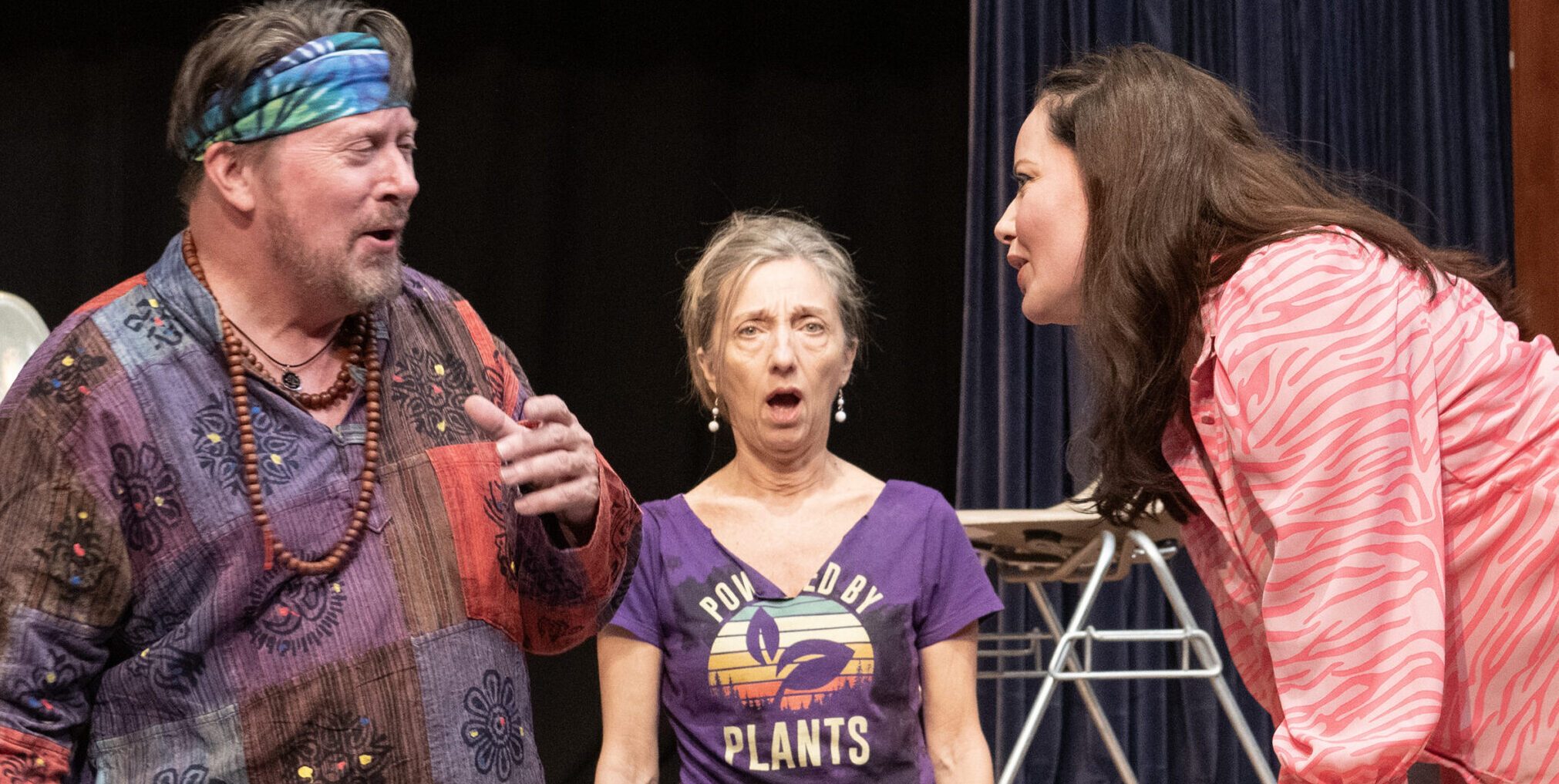
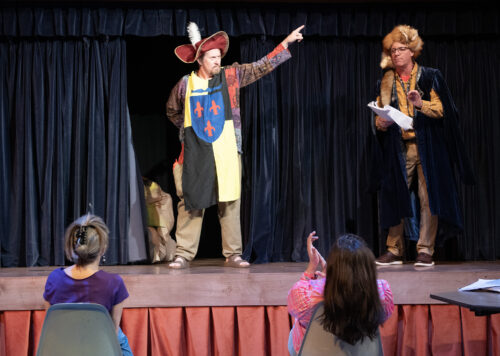
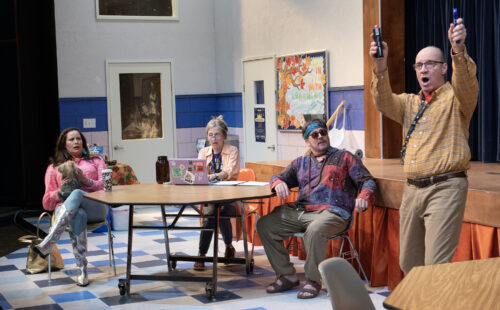
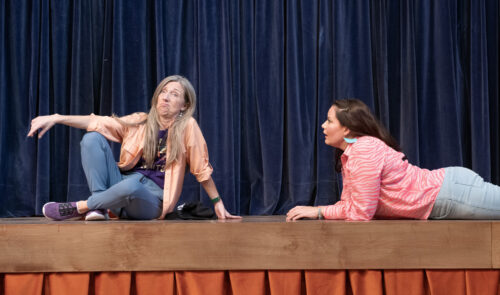
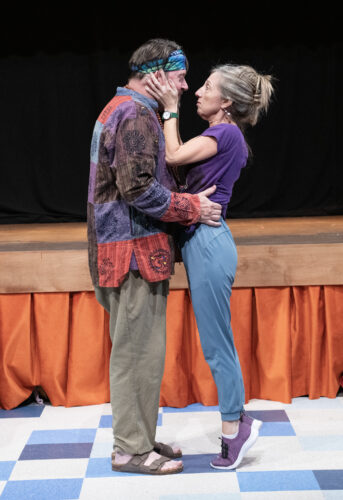

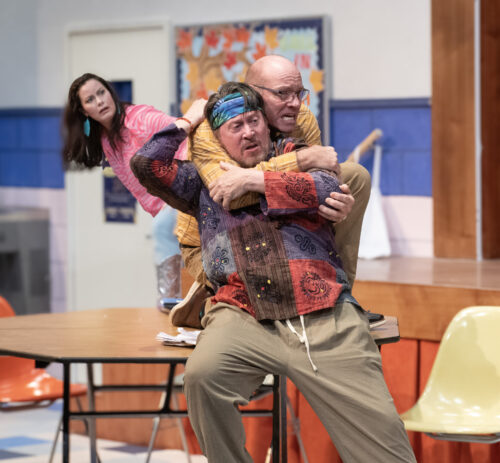

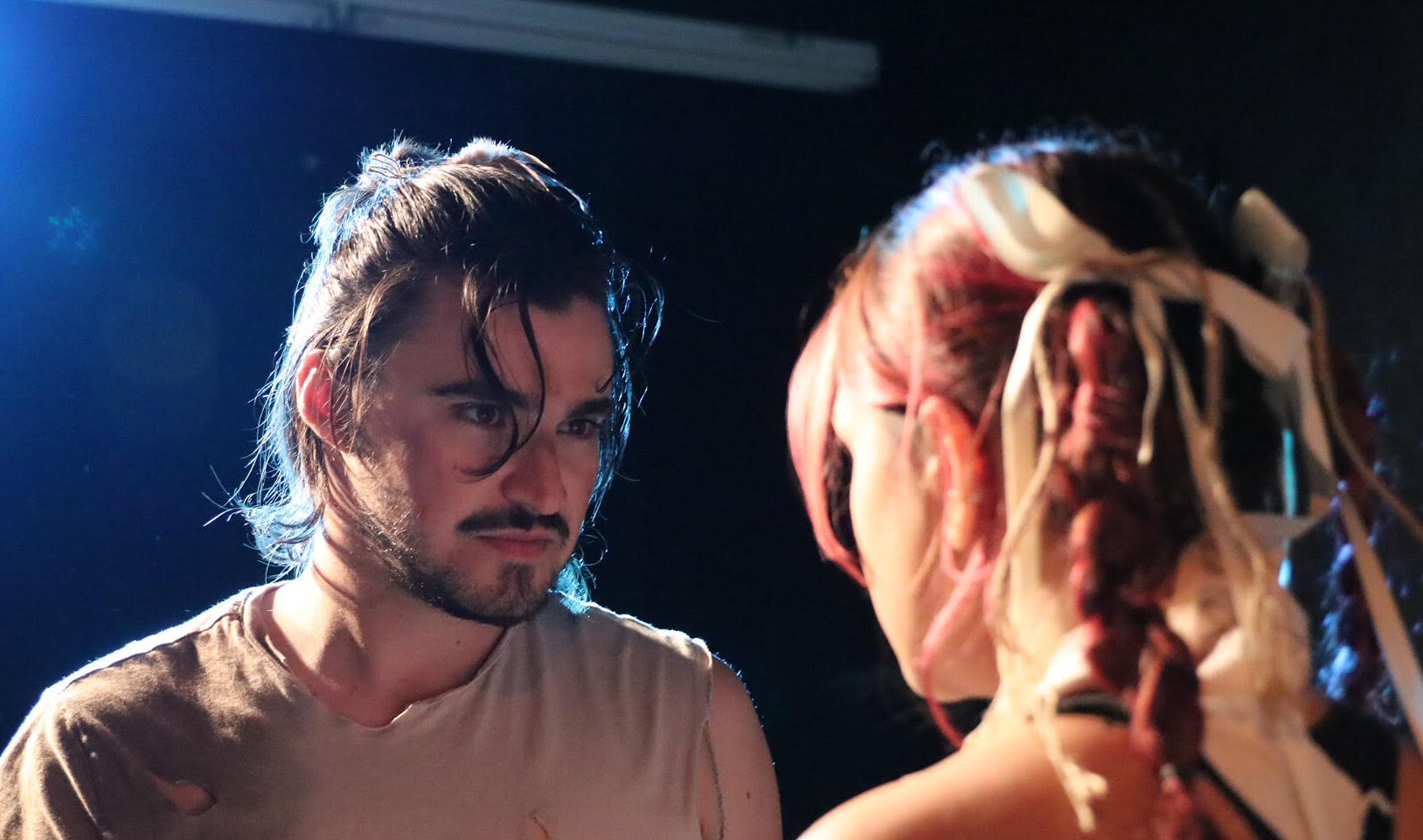
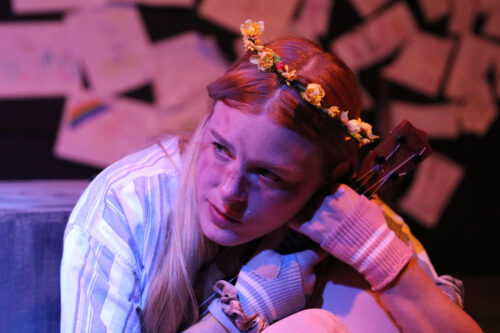


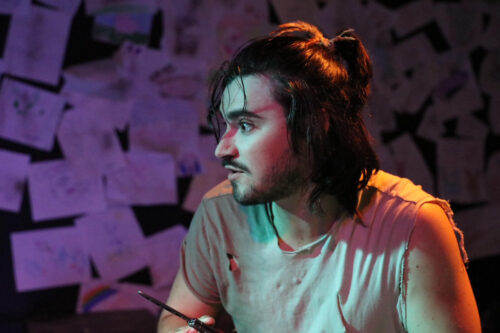


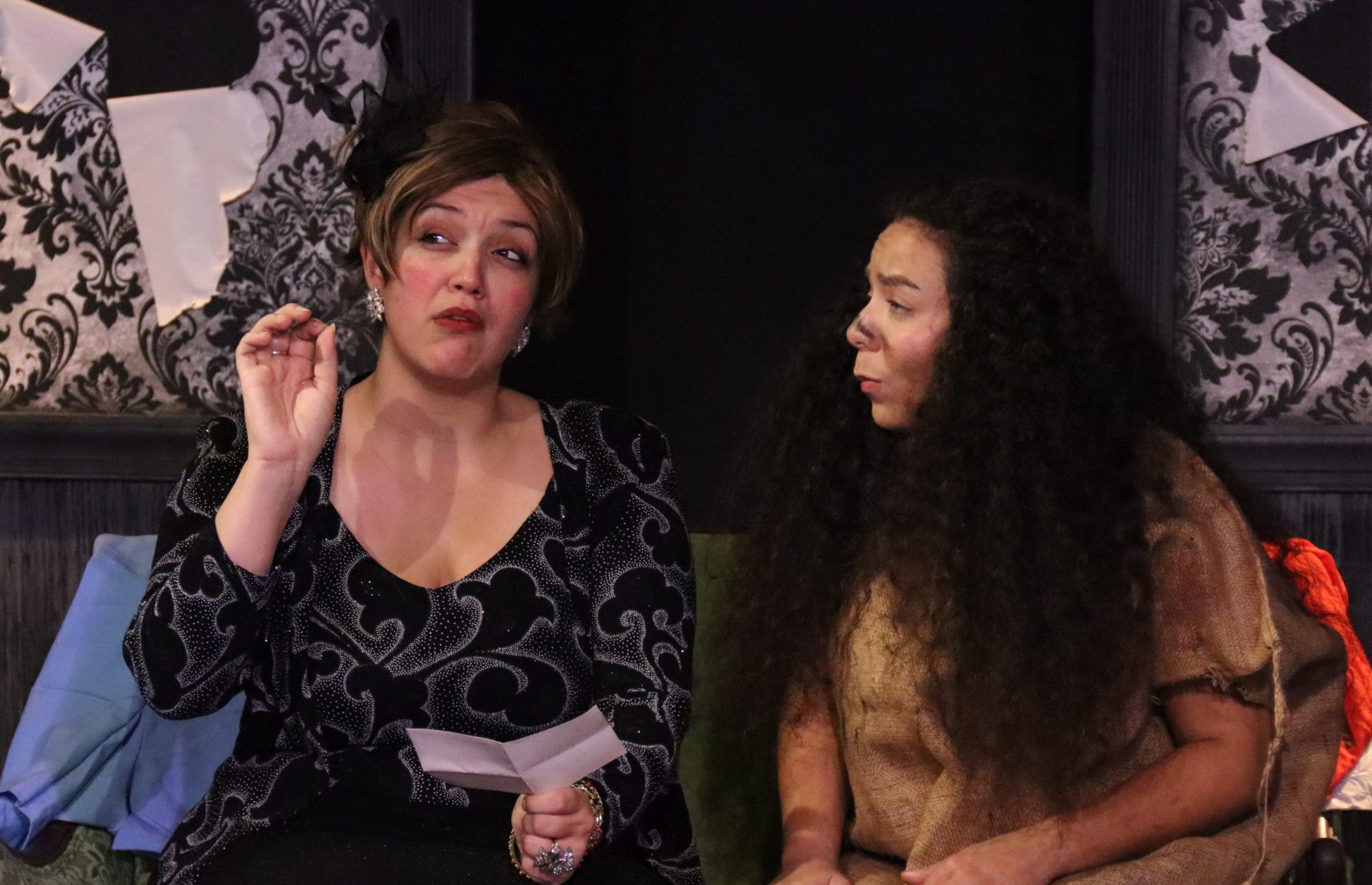

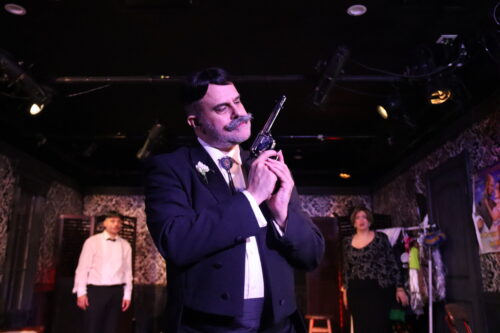
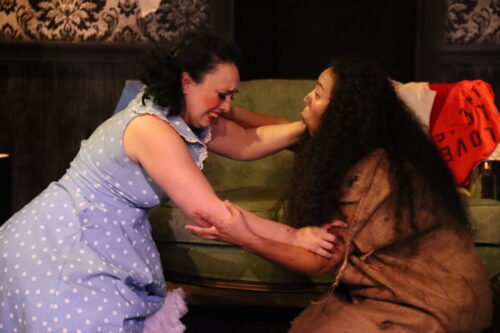
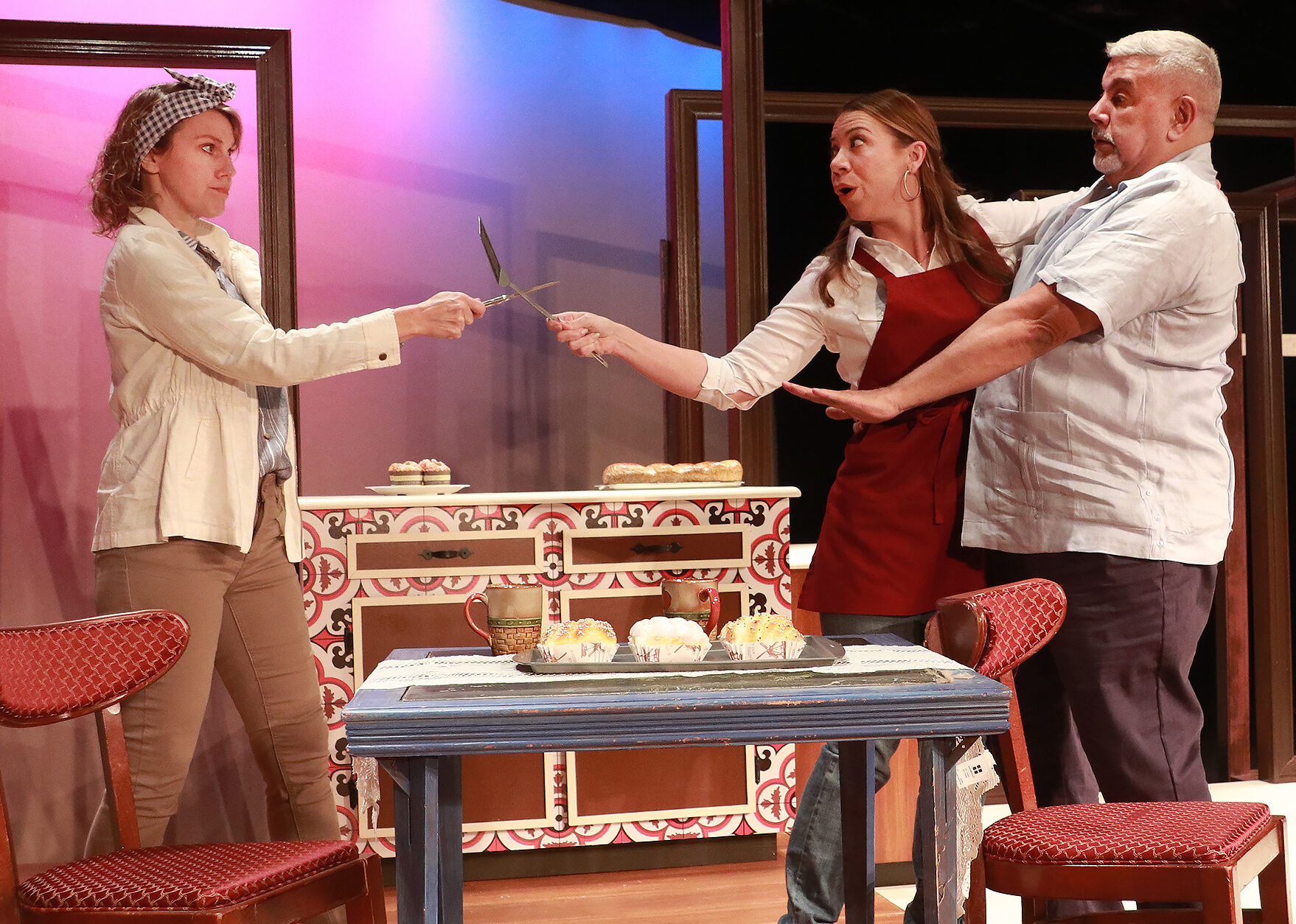
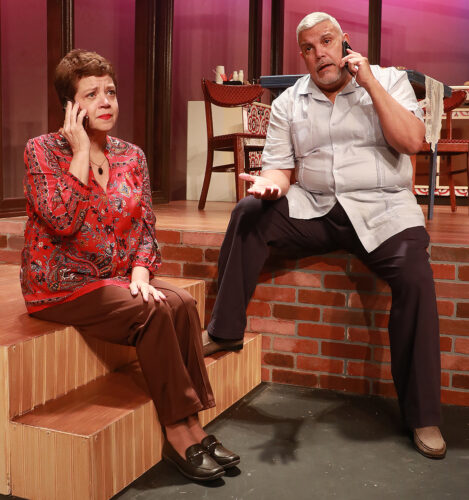



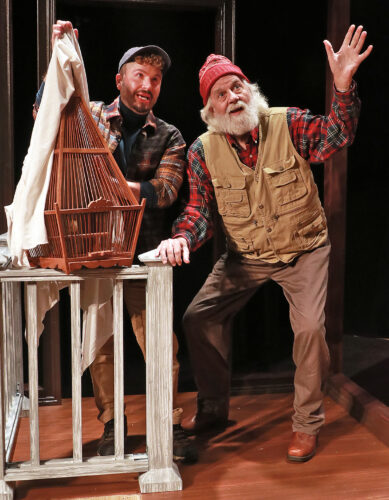


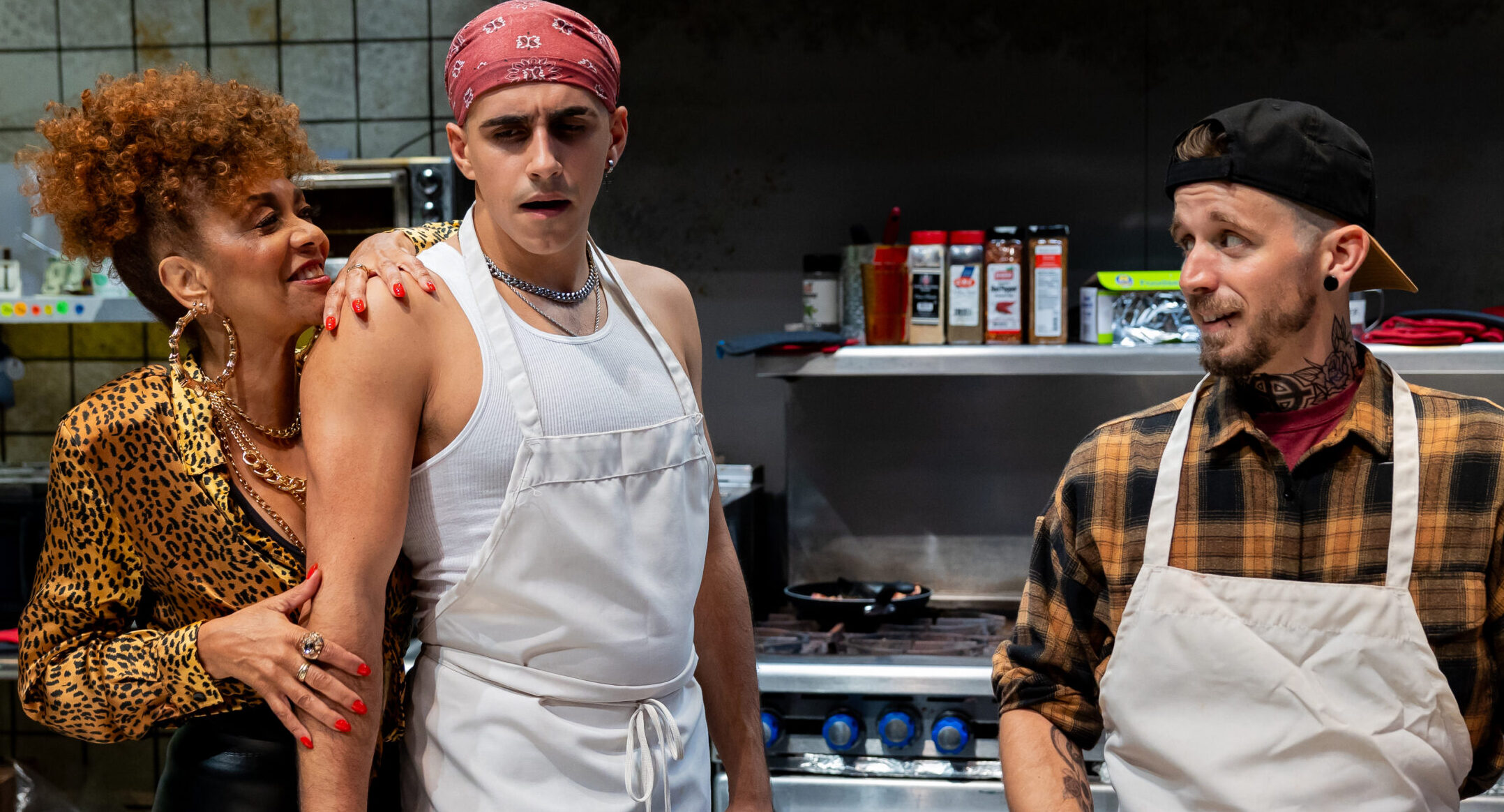

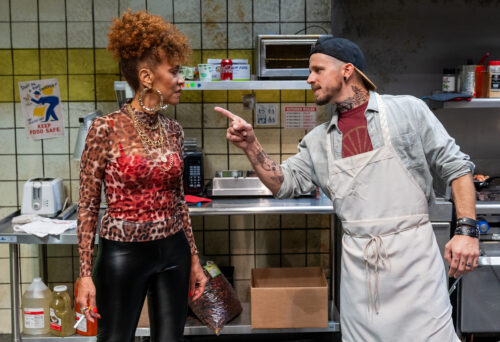
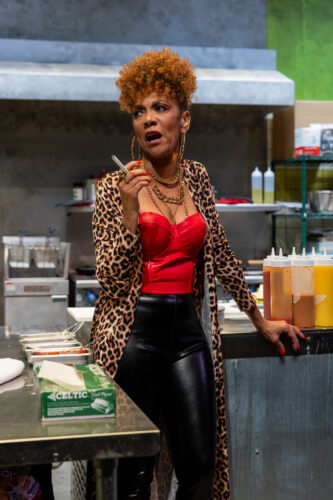





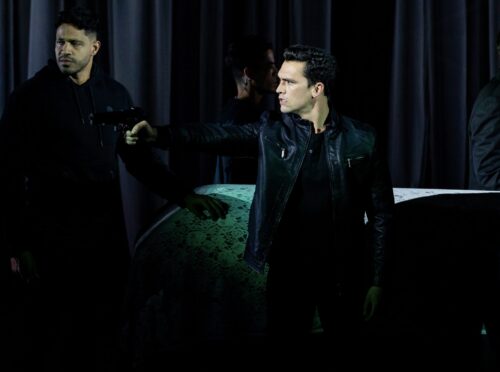
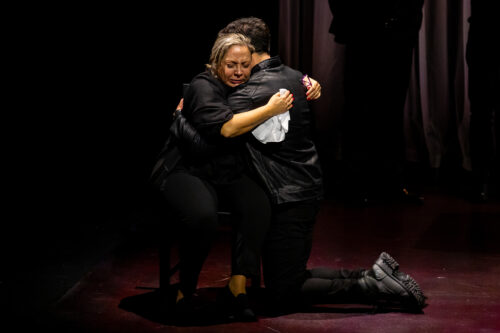


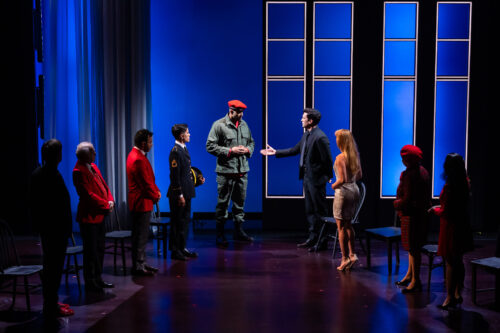


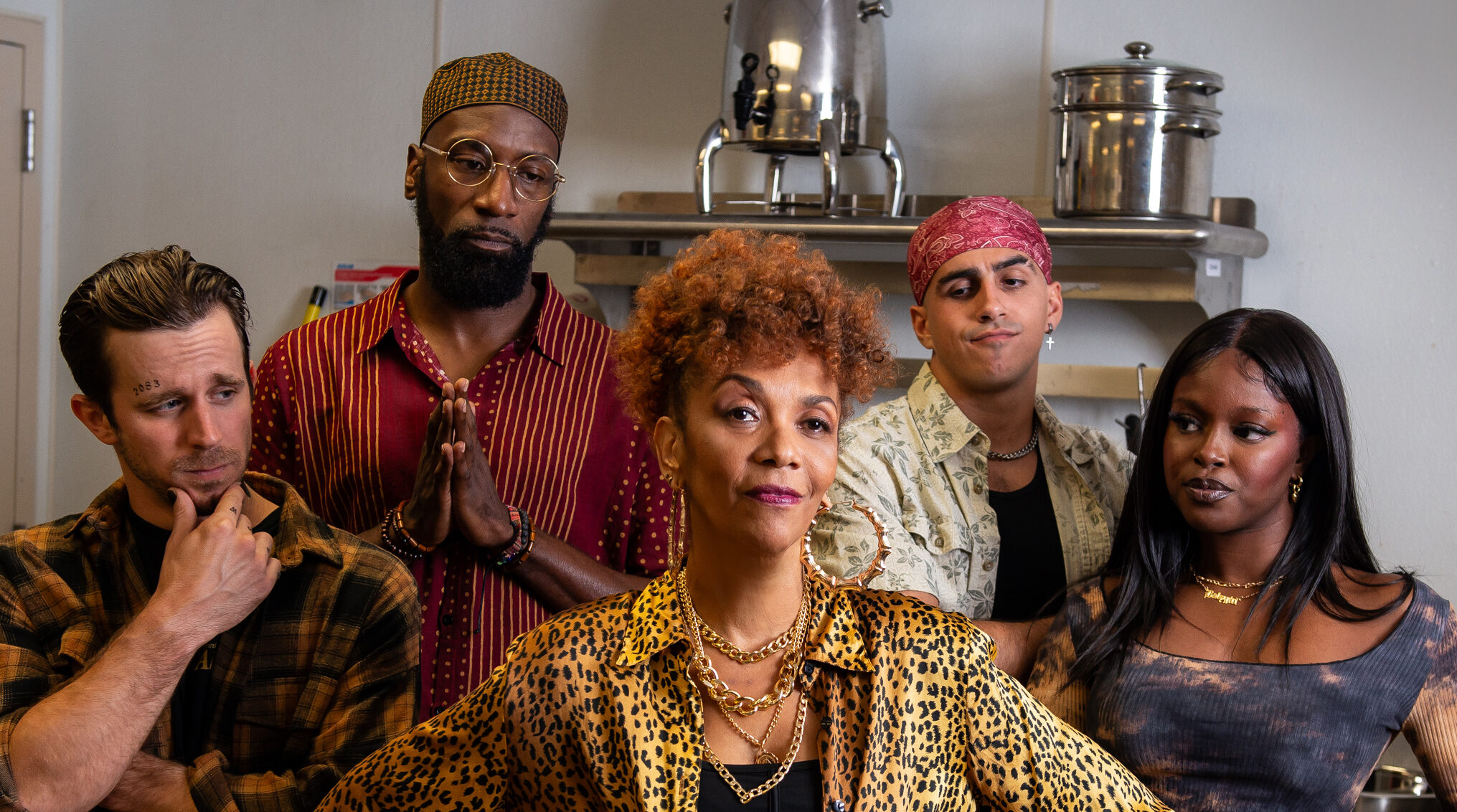

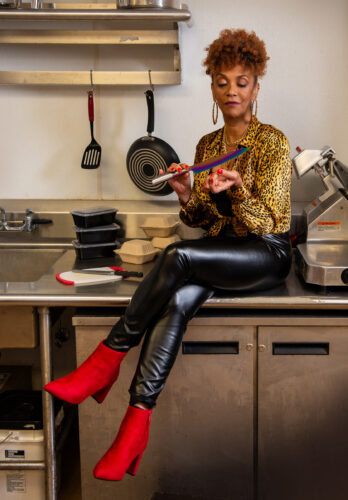
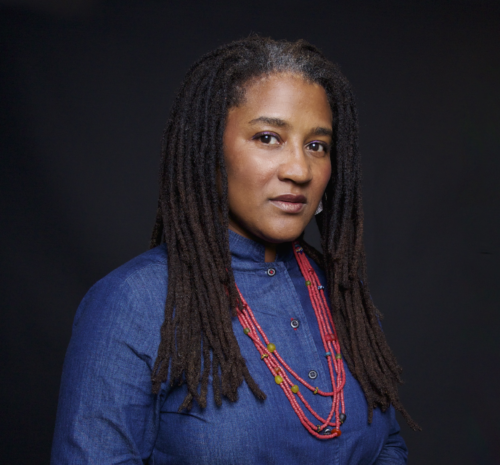







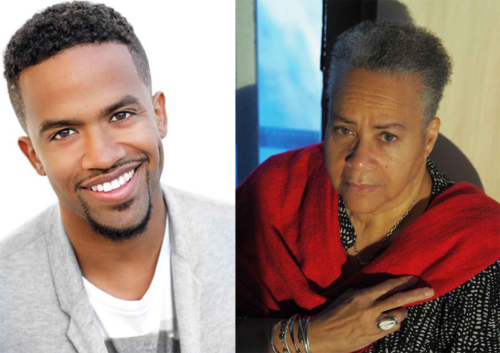


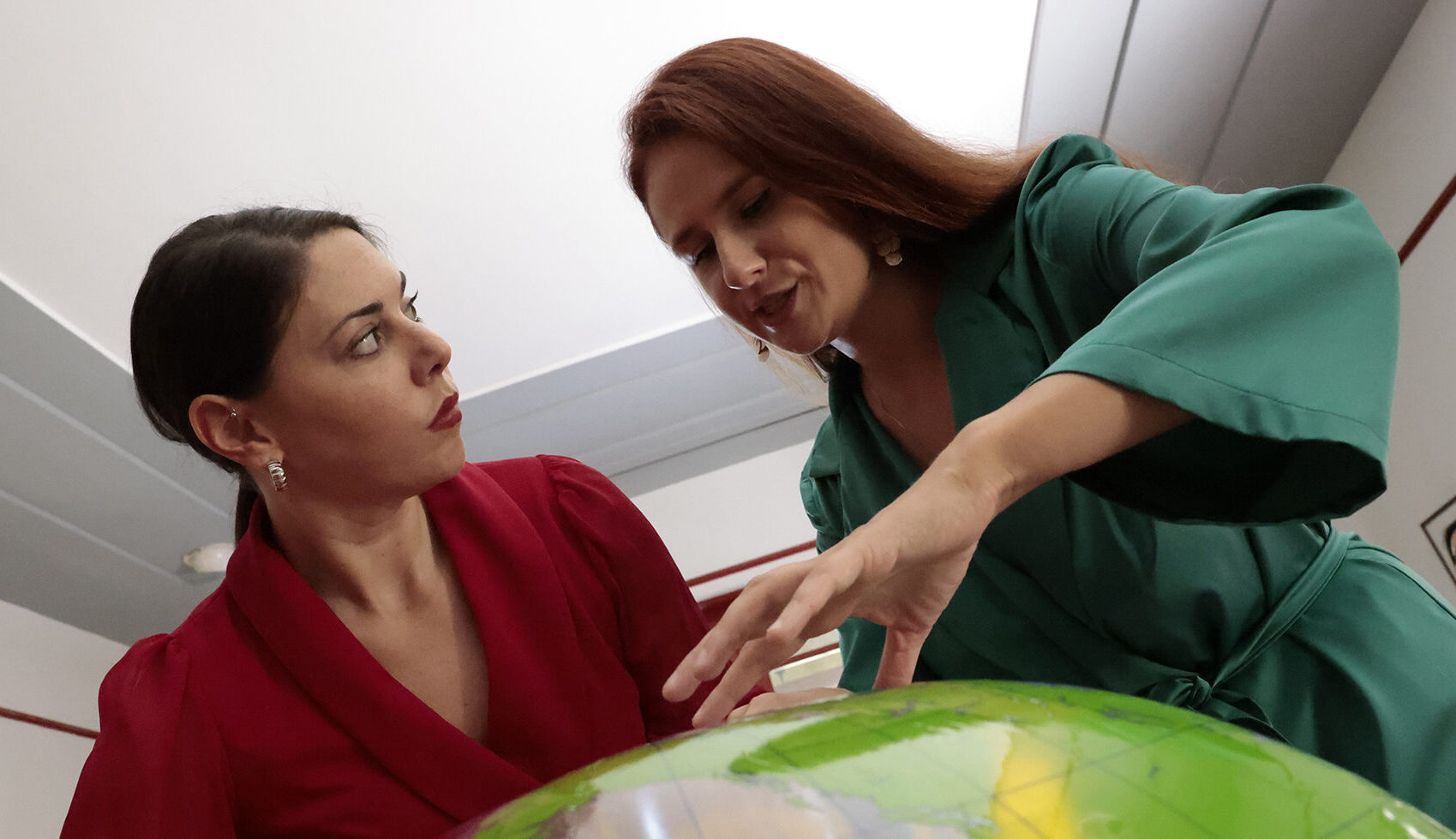









Recent Comments