Blog Article Category: Theater / Film
Review: An artfully crafted ‘Two Sisters and a Piano’ by Nilo Cruz at Miami New Drama
Written By Christine Dolen
January 29, 2024 at 4:14 PM
Stephanie Machado as Sofia, left, and Thais Menendez as Maria Celia in the Miami New Drama production of Nilo Cruz’s “Two Sisters and a Piano” at the Colony Theatre, Miami Beach, through Sunday, Feb. 18. (Photo courtesy of Morgan Sophia Photography)
Cuban-born, Miami-raised playwright Nilo Cruz writes all sorts of plays – tender, bold, nostalgic, mysterious, provocative.
The first Latino winner of the Pulitzer Prize for drama for “Anna in the Tropics,” Cruz is a sublime wordsmith with a distinctive style. On opening night, Saturday, Jan. 27, of Miami New Drama’s new production of Cruz’s “Two Sisters and a Piano,” artistic director Michel Hausmann described him as a painter with words. And he is.
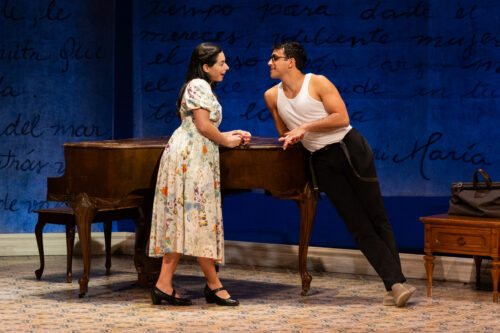
Stephanie Machado as Sofia and Gabriell Salgado as Victor Manuel get acquainted in the Miami New Drama production of Nilo Cruz’s “Two Sisters and a Piano.” (Photo courtesy of Morgan Sophia Photography)
Cruz is also a director who understands deeply how to paint theatrical pictures, how to create art in three dimensions.
As he did when he staged an exquisite “Anna in the Tropics” for Miami New Drama at the Colony Theatre last season, Cruz the director has infused “Two Sisters” with a spirit of adventurous reinvention, no matter that the play was written in 1998 and had its world premiere the following year.
[RELATED: Read the preview story about “Two Sisters and a Piano”]
He also gave himself a playwriting assignment, creating a monologue for the handsome piano tuner who has, in the blink of an eye, stolen the younger sister’s heart.
A summary of the story he and his collaborators are telling: It’s 1991, and the successful Pan American Games are wrapping up in Havana just as the Soviet Union is fracturing.
Sisters Maria Celia (Thais Menendez) and Sofia (Stephanie Machado) have just returned to the Obispo family home after serving two years in prison. Their crime? Signing a manifesto demanding changes in the repressive Cuban system – and more creative freedom for artists like Maria Celia, a well-regarded novelist, and Sofia, an accomplished pianist.
As they live under house arrest, their new “prison” is familiar yet changed. Furniture and other household items have been confiscated, now existing only as memories suspended in midair. Still present is the home’s most treasured object: a worn baby grand piano, out of tune, plagued with wear and tear from its 90-plus years as a family heirloom.
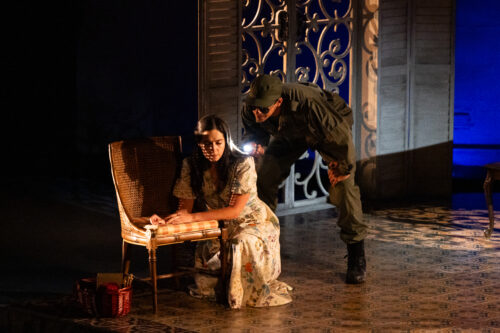
Stephanie Machado as Sofia is menaced by Gabriell Salgado’s overpowering soldier in Nilo Cruz’s “Two Sisters and a Piano.” (Photo courtesy of Morgan Sophia Photography)
After ransacking the tidy colonial home with another soldier (Gabriell Salgado, doubling in a brief, brutal role) to look for anti-revolutionary correspondence between Maria Celia and her exiled husband Antonio, Lieutenant Portuondo (Maurice Compte) undertakes a different way of controlling the beautiful, outspoken writer.
If Maria Celia will tell him a particular story that fascinates him, he’ll read passages from Antonio’s letters – which he’s been confiscating for months. Their relationship evolves, turns sensual, then implodes as the prisoner and her jailer remember what they really are to each other.
As for the ebullient, restless Sofia, she wills herself into instantaneous love with Victor Manuel (Salgado), a funny, music-loving piano tuner who would be a free spirit were he living anywhere except communist Cuba. Both characters supply moments of hope and comic relief along with fear and disappointment. And in this production, their chemistry is off-the-charts intense.
Under Cruz’s guidance, the actors deliver memorable, even extraordinary moments.
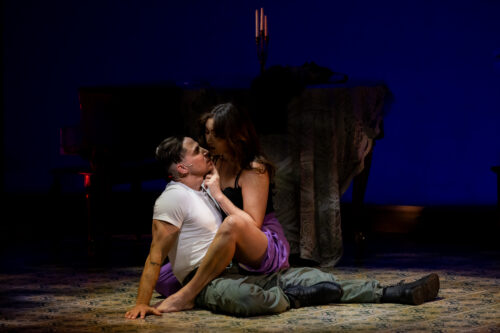
Maurice Compte as Lieutenant Portuondo and Thais Menendez as Maria Celia surrender to each other in the Miami New Drama production of Nilo Cruz’s “Two Sisters and a Piano.” (Photo courtesy of Morgan Sophia Photography)
The Miami-raised Compte, best known for his extensive work in film and television, makes Lieutenant Portuondo a low-key enemy, calculating and seductive with Maria Celia – making the moment when he goes ballistic all the more frightening.
Salgado’s Victor Manuel is Portuondo’s opposite. He’s loose and goofy, but particularly with the addition of the monologue (a welcome way to bring the character back after the first act), he illuminates the dangers of taking chances in a place where vigilant neighbors watch your every move.
He, too, is adept at painting with Cruz’s words as Victor Manuel stands with his blue bicycle outside the sisters’ house, willing his newfound love to realize he’s there: “Sofia, if only you would open your window. If only I could sneak in through the blinds and come in and out, the way light enters and leaves your house.”
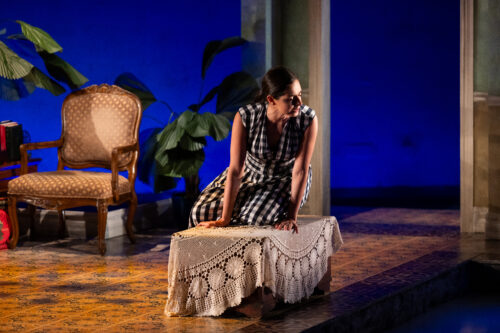
Stephanie Machado as Sofia in Miami New Drama’s production of Nilo Cruz’s “Two Sisters and a Piano.” (Photo courtesy of Morgan Sophia Photography)
It’s another great, inventive performance for Salgado to add to his impressive theater portfolio.
Menendez, who appeared last season in GableStage’s production of Charise Castro Smith’s “El huracán” (“The Hurricane”), contrasts clearly with Machado in playing the elder of the two sisters. Her Maria Celia is self-possessed, unwilling to capitulate to the government that has robbed her of freedom and her beloved husband. She is dignified, sensuous, playful and motherly with Sofia.
As Sofia, Machado is a perfect complement to Salgado, matching him in physical comedy and intensity of feeling. She’s such a ball of energy that you fear she may jump out of her skin. Childish petulance, sexual hunger and deep frustration at her inability to move forward keep her emotionally suspended.
As she says to Maria Celia, “It just feels like all my life I’ve been waiting and I haven’t lived.”
The creation of this arresting piece of theatrical art would not have been possible, Cruz would doubtless tell you, without the contributions of his collaborators, though the idea of suspension-as-metaphor came from him.
Carbonell Award-winning brothers Christopher Swader and Justin Swader have designed a set that adheres to the playwright-director’s increasingly minimalist aesthetic.
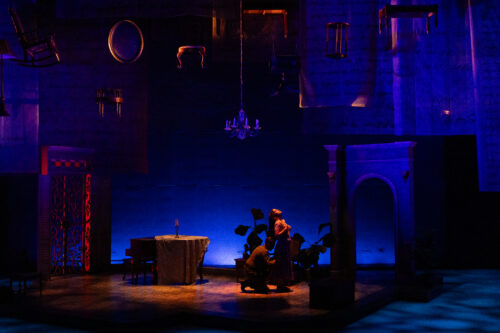
The set design at the Colony Theatre for Nilo Cruz’s “Two Sisters and a Piano” at Miami New Drama. (Photo courtesy of Morgan Sophia Photography)
An archway serves as a portal to the tiled living room – as much an isolated island as Cuba itself – with metalwork and plantation shutters on the opposite side. The smattering of remaining furniture puts the focus on the all-important piano. In lieu of wallpaper, massive versions of Maria Celia’s handwritten letters from Antonio descend to serve as a visual reminder of lost love and political stakes.
Lighting designer David Lander’s work is stunning, often utilizing supersaturated colors to create Havana sunsets, the dark blue of a dangerous nighttime, the sun-fired heat of daytime.
Michiko Kitayama Skinner dresses Compte in uniforms and, for a visit when Portuondo arrives bearing rum (which he has obviously sampled), earth-toned casual clothes. Salgado wears glasses (maybe to make him look a wee bit nerdy?), but after he removes his rain-soaked shirt and stands around in an undershirt that showcases his toned arms, it’s bye-bye nerd.
Skinner costumes Maria Celia in skirts, blouses and eventually some lovely nightwear. Sofia’s look is younger, mainly dresses that suggest a love of style despite the sisters’ now-meager mean. By contrast, when they invite Victor Manuel for dinner, both put on striking party dresses (a shiny magenta-and-black print for Maria Celia, sunset orange for Sofia), do their hair and makeup, and dance with each other as they wait, then wait some more.
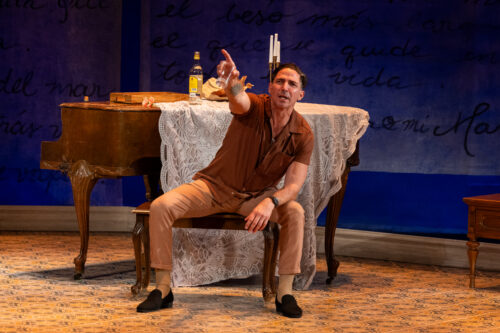
Maurice Compte as Lieutenant Portuondo in Nilo Cruz’s “Two Sisters and a Piano.” (Photo courtesy of Morgan Sophia Photography)
Composer Salomon Lerner supplies original music, evoking Cuba and threading the sound of the piano through the play as an aural reminder of its significance. Intimacy choreographer and associate director Samantha Pazos sculpts the ecstasy of unlikely lovers, while fight choreographer Lee Soroko shapes the agony of Portuondo’s fury.
As much as imagination has granted the sisters brief reprieves from the suspended state of their lives, no one escapes the oppressive reality depicted in “Two Sisters and a Piano” – not even the piano itself. As writer and director, Cruz delivers an entrancing, cautionary story about art and the ache for freedom.
WHAT: “Two Sisters and a Piano” by Nilo Cruz, in English with Spanish subtitles
WHERE: Miami New Drama production at the Colony Theatre, 1040 Lincoln Road, Miami Beach
WHEN: 8 p.m. Thursday-Saturday, 3 p.m. Sunday, through Feb. 18
COST: $46.50, $66.50, $69.50, $76.50, $83.50
INFORMATION: 305-674-1040 or www.miaminewdrama.org
ArtburstMiami.com is a nonprofit media source for the arts featuring fresh and original stories by writers dedicated to theater, dance, visual arts, film, music and more. Don’t miss a story at www.artburstmiami.com.
No posts found
Repression, creative freedom clash in Nilo Cruz’s ‘Two Sisters and a Piano’ at Miami New Drama
Written By Christine Dolen
January 23, 2024 at 7:50 AM
Gabriell Salgado, Stephanie Machado, Maurice Compte and Thais Menendez in Nilo Cruz’s “Two Sisters and a Piano” at Miami New Drama opens in previews on Thursday, Jan. 25 at the Colony Theatre on Miami Beach. (Photo courtesy of Morgan Sophia Photography)
Writers draw inspiration from countless sources and experiences. For a younger Nilo Cruz, a New York Times story about the 1991 arrest and imprisonment of Cuban poet and novelist María Elena Cruz Varela helped spark his play “Two Sisters and a Piano.”
“She and her friends wrote a manifesto asking for Cuba to open up, the equivalent of perestroika,” Cruz says in a Zoom interview from his Miami apartment on a rare day off from the production of “Two Sisters” he’s directing for Miami New Drama. “Brigadiers dragged her into the street and tried to force her to eat the manifesto. She spent two years in prison and another year under house arrest.”
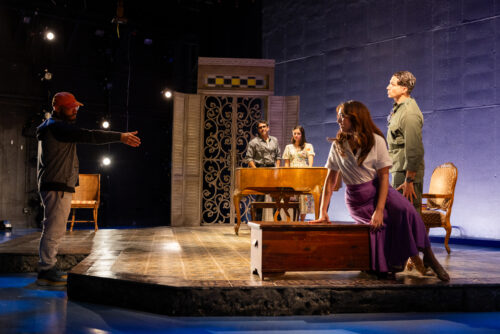
Playwright Nilo Cruz gives direction to actors Gabriell Salgado and Stephanie Machado (at piano), Thais Mendendez and Maurice Compte in Miami New Drama’s “Two Sisters and a Piano.” (Photo courtesy of Morgan Sophia Photography)
“Two Sisters and a Piano,” which previews at Miami Beach’s Colony Theatre on Thursday, Jan. 25, and Friday, Jan. 26, then officially opens with an already sold-out performance on Saturday, Jan. 27, follows last season’s box office and critical success with Miami New Drama’s Cruz-directed production of “Anna in the Tropics,” which was seen by 8,700 theatergoers, according to the Miami-based theater company. That play was a life-changing work of art that made Cruz the first Latino winner of the Pulitzer Prize for drama in 2003.
“Two Sisters” is an earlier play, a kind of prelude to “Anna in the Tropics” in its exploration of the power of literature, the escape that words and the imagination can provide, the relationship of two disparate sisters. It began in the 1990s as a radio play, then was expanded for its 1999 world premiere at the Tony Award-winning McCarter Theatre Center in Princeton, New Jersey, where Cruz found ongoing champions for his work in former artistic director-playwright Emily Mann and dramaturg Janice Paran.
Returning to “Two Sisters and a Piano” in Florida at this moment in time, Cruz says, seems right – particularly since so many school districts here have banned books.

Gabriell Salgado, Stephanie Machado, playwright Nilo Cruz, Thais Menendez and Maurice Compte are telling the story of two sisters under house arrest in 1991 Havana in Miami New Drama’s “Two Sisters and a Piano.” (Photo courtesy of Furiosa Productions)
“(Cuba is) a country we criticize because of dictatorships, but here we are in the United States where books are being censored, not just because of sexual content but because of historical content as well,” says the playwright, who came to Miami from Cuba on a 1970 Freedom Flight when he was 10. “I read books like ‘The Bluest Eye,’ ‘The Diary of Anne Frank,’ ‘To Kill a Mockingbird’ as a teenager. They had an impact on me, understanding words as a way to escape oppression.”
[FROM THE ARCHIVES: Nilo Cruz’s ‘Two Sisters and a Piano’ Now a Story Told In Spanish]
Cruz’s two sisters are Maria Celia (Thais Menendez), a novelist whose husband Antonio has left for Europe, where he’s working to get her out of Cuba, and the younger Sofia (Stephanie Machado), a talented pianist and imaginative romantic. After two years in prison, the women have come back to the Obispo family’s once-stately home, now stripped of much of its furniture and treasures – except for Sofia’s precious piano.

Thais Menendez as Maria Celia falls under the spell of Maurice Compte as Lieutenant Portuondo in Nilo Cruz’s “Two Sisters and a Piano” for Miami New Drama. (Photo courtesy of Furiosa Productions)
Two men – one a dangerous official with an agenda, the other an amusing romantic who loves music as much as Sofia does – enter the sisters’ closed-off world.
Lieutenant Portuondo (Maurice Compte) has been confiscating Maria Celia’s letters to Antonio, and his to her. He’s trying to crack the coded communication between the couple – while at the same time finding himself increasingly beguiled by the writer and her prose.
Although the sisters have a permit to have their badly neglected piano tuned, they wait, then wait some more, for someone to arrive. Victor Manuel (Gabriell Salgado) finally does, and he proves to be everything that the yearning Sofia could desire.
“Two Sisters and a Piano” has had a sporadic presence in South Florida, including a 2008 production at the now-closed Promethean Theatre in Davie, where actors Deborah L. Sherman and Ursula Cataan (who originated the roles of sisters Conchita and Marela in New Theatre’s 2002 world premiere of “Anna in the Tropics”) played Maria Celia and Sofia.
Cruz, who writes and publishes his plays in English, translated “Two Sisters” into Spanish in 2019 and staged a production for Miami’s Arca Images at Miami Dade County Auditorium’s On.Stage Black Box. In June 2023, he directed a production at Two River Theater in Red Bank, New Jersey, using his original English script; ditto at Miami New Drama.
As he did with “Anna in the Tropics” at last season, Cruz has approached the new “Two Sisters and a Piano” with deep knowledge gleaned from past productions coupled with a collaborative willingness to take a fresh approach with the actors and designers, including Carbonell Award-winning set designers Christopher and Justin Swader.
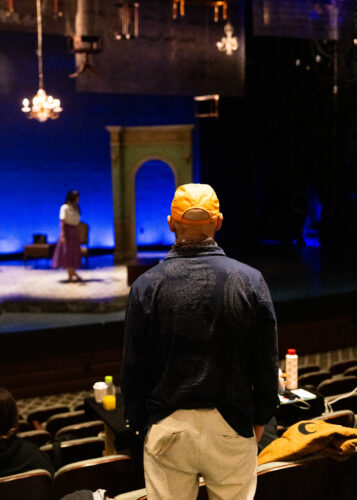
Nilo Cruz watches a technical rehearsal of his play “Two Sisters and a Piano” at Miami New Drama. (Photo courtesy of Morgan Sophia Photography)
“I wanted to explore the metaphor of suspension. When you walk into the production, you’ll see the furniture that was taken hanging in midair. Later, you’ll see a suspended labyrinth of letters from Maria Celia and her husband,” says Cruz, who was inspired by his memory of a long-ago exhibition with suspended works of art at the Duomo in Naples, Italy. “The suspension applies to the lives of the women, the island itself and the sisters’ future.”
Cruz has also added something to the script: a monologue for Victor Manuel, the piano tuner who is deeply drawn to Sofia but afraid of the consequences if he continues to act on his feelings “in a world that is so vigilant,” says the playwright.
All four cast members grew up in Miami, though only Salgado still lives here. Cruz has been inspired by them during the give-and-take of rehearsals, and vice versa.
The marquee name in the cast belongs to Compte, whose father Roman fought at the Bay of Pigs and later ran the Mutiny Hotel in Coconut Grove in its flashy heyday; a limited-series MGM+ crime thriller, “Hotel Cocaine,” starring Miami native Danny Pino as Roman Compte, should begin airing this summer. Of note: “Hotel Cocaine” was created by Chris Brancato, the co-creator of the Netflix series “Narcos,” which featured Maurice Compte as Horacio Carillo in a dozen episodes.
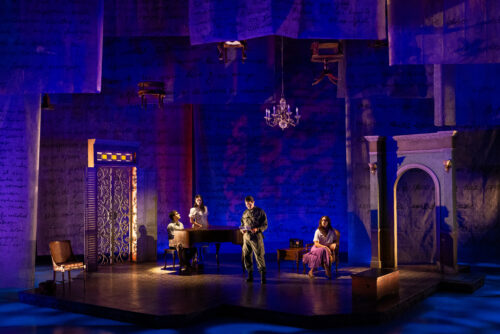
Gabriell Salgado, Stephanie Machado, Maurice Compte and Thais Menendez tell a story of repression and longing in Nilo Cruz’s “Two Sisters and a Piano” at Miami New Drama. (Photo courtesy of Morgan Sophia Photography)
The younger Compte has done theater in the past, some in his hometown where he went to Miami Senior High, but his very long list of credits is largely focused on film and television. He said yes to “Two Sisters and a Piano,” he says, “because of Nilo and Miami New Drama.”
Compte has a vivid memory of going to the Colony Theatre in 1995 to see a production of “Romeo and Juliet” starring Pino and Blaine Dunham.
“I thought, ‘One day I’ll come back and be the lead here in a play,” says Compte.
The actor is enthralled with the discoveries that come during the rehearsal process, making tiny adjustments, solidifying choices. He finds Cruz’s unique writing style both descriptive and colorful, lying somewhere between reality and a dream world.
As an actor, Cruz says, “Maurice has a certain mystery, ambiguity, rawness, danger, which is like what Marlon Brando had.”
Menendez comes from a Cuban American family, Machado from a Brazilian one. Both grew up reading or seeing Cruz’s plays and seem a little in awe of working with him.
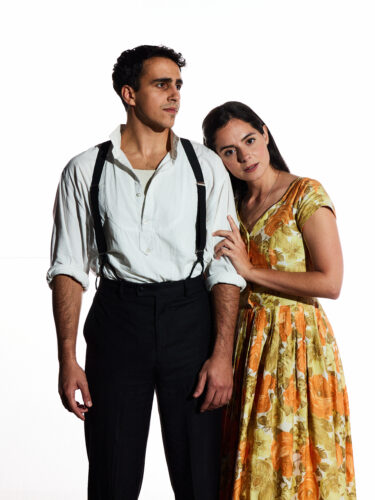
Gabriell Salgado as Victor Manuel and Stephanie Machado as Sofia in Nilo Cruz’s “Two Sisters and a Piano” for Miami New Drama. (Photo courtesy of Furiosa Productions)
Menendez appeared in GableStage’s intense production of Charise Castro Smith’s “El huracán” (“The Hurricane”) last season with Adriana Savan, who played Maria Celia in the 2000 Public Theater production of “Two Sisters” in New York. She says of Cruz, “Just because it’s his play doesn’t mean he knows everything. He knows what works. But you get the sense he’s doing it with fresh eyes every time.”
A Boston College graduate who speaks fluent Spanish and French as well as English, Menendez has found a key to Cruz’s distinctive style: “Nilo’s writing is like singing. It has melody, rhythm and crescendos. He writes in English, but the sentence structure is the way it is in Spanish.”
Cruz cast Menendez, who is younger than some actors who have played Maria Celia, because this time he wanted the character to be “someone who hasn’t had enough time in her marriage, someone longing for children. I wanted her to have physical beauty and a certain elegance, holding onto an Old World dignity.”
To play Sofia, he chose Machado, who has a master’s degree in acting from Yale, also because of the way she exudes elegance – and more.
“She has so many tools at her disposal – she embodies fragility and innocence, but she can also be comedic and tragic. I told her, ‘You’re meant to be in my plays,’” he says.
Machado, who speaks Portuguese as well as English, lives in New York where she teaches and acts (“I vowed I would never wait tables,” she says, laughing). When her father comes to “Two Sisters and a Piano” on opening night, it will be the first time he has seen her perform since her days as a high school musical theater major at Miami’s New World School of the Arts.
Cruz, she says, is a wonderful writer and director.
“I love heightened text. It’s what drew me to Nilo from the get-go. His language can get so poetic, but it’s rooted in truth. His characters want big things,” she observes. “The way he directs is also poetic. He told me that the character I’m playing ‘is like a pomegranate about to explode.’ He has so much dignity and poise.”
Machado had a “pinch me” moment in rehearsals when she and Menendez were working on a scene in which the sisters “escape” by dressing up and dancing together.
“He helped us do the salsa. It hit me all at once: Here I am dancing with Nilo Cruz, looking into his eyes, doing this play in Miami,” she says. “He’s not pompous at all. He just nonchalantly throws wisdom at us.”
Salgado, a New World college grad who appeared with Menendez in “El huracán,” has built an eclectic resume appearing at theaters throughout South Florida, most recently adding his turn as one very funny cook in “Clyde’s” for Miami’s Zoetic Stage. Last season, he played the pivotal role of the dreamy lector in Cruz’s “Anna in the Tropics,” and though Salgado intended to focus on film projects this season, Cruz, “Two Sisters” and Miami New Drama drew him back to the stage.
“Nilo wrote this beautiful monologue, which I wasn’t aware of until the first day of rehearsals…There is definitely humor in this play. I’m practically doing clown work, borderline physical comedy for the scenes in the first act,” says Salgado.
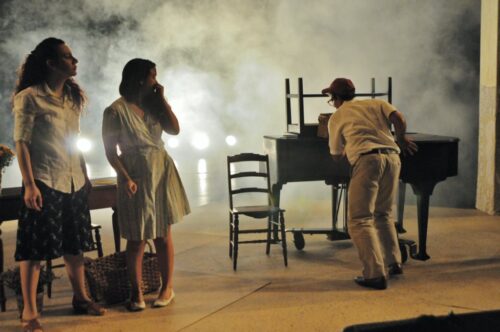
Nilo Cruz directed a Spanish-language production of “Two Sisters and a Piano” in 2019 for Arca Images featuring (left to right) Ysmercy Salomón, Laura Alemán and Andy Barbosa. (Photo courtesy of Julio De la Nuez)
He adds: “I have never felt more in my wheelhouse than I do now. Every time Nilo does something, it’s like he’s doing it for the first time. He puts all the same sand in the sandbox, but when he takes it out he builds a new castle…What a genuine, present, vulnerable and gracious director and artist he is.”
Once “Two Sisters and a Piano” is up and running, Cruz will have very little time before going into rehearsals for his next project: the world premiere of “Sed en la calle del agua” (“Thirst on Water Street”) for Arca Images. The Spanish-language production, which will have simultaneous English translation, will have a brief run at the On.Stage Black Box from Thursday, March 14, to Sunday, March 17. About an artist fighting to regain her sanity after a tragedy, it is set in a New York asylum, with flashbacks to earlier days in Mexico.
Cruz is also writing a new play for Miami New Drama, creating a historical play for Ford’s Theatre in Washington D.C., working on likely New York productions of “Two Sisters and a Piano” at Classic Stage Company and “Anna in the Tropics” by an as-yet unannounced major company. In 2025, “El ultimo sueño de Frida y Diego” (“The Last Dream of Frida and Diego”), with music by Gabriela Lena Frank and a libretto by Cruz, will mark the playwright’s Metropolitan Opera debut.
And he has other projects in the works too.
The workflow, he says with a smile, can make him “feel like Sisyphus” as he does the playwright’s equivalent of rolling a boulder up a hill over and over again. But at the same time, he’s happy about what’s on the horizon.
“I’ll just be glad to be working in New York again,” says Cruz, who lives in Miami. “It’s my second home.”
WHAT: “Two Sisters and a Piano” by Nilo Cruz
WHERE: Miami New Drama production at the Colony Theatre, 1040 Lincoln Road, Miami Beach
WHEN: Previews 8 p.m. Thursday, Jan. 25, and Friday, Jan. 26; sold-out opening 8 p.m. Saturday, Jan. 27; regular performances 8 p.m. Thursday-Saturday, 3 p.m. Sunday, through Feb. 18
COST: $46.50, $66.50, $69.50, $76.50, $83.50
INFORMATION: 305-674-1040 or www.miaminewdrama.org
ArtburstMiami.com is a nonprofit media source for the arts featuring fresh and original stories by writers dedicated to theater, dance, visual arts, film, music and more. Don’t miss a story at www.artburstmiami.com.
No posts found
Review: Science weighs in on a divorce in LakehouseRanch’s ‘push.’
Written By Christine Dolen
January 17, 2024 at 3:57 PM
Lucy Marie Lopez and Michael Fernandez play a divorcing couple in the world premiere of Mackenzie Raine Kirkman’s “push.” by LakehouseRanchDotPNG at Artistic Vibes in Kendall through Sunday, Jan. 21. (Photo courtesy of Juan Gamero)
In a second season filled with world premieres, Miami’s LakehouseRanchDotPNG has already presented four plays that, to varying degrees, hewed to its focus on absurdist or experimental theater.
The young company, mostly made up of Florida International University theater grads, is for the moment embracing greater realism with its fifth play, Mackenzie Raine Kirkman’s “push.”
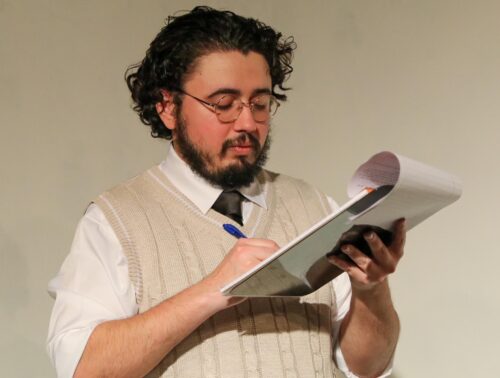
Pedro Urquia is the Mediator in the LakehouseRanchDotPNG world premiere of Mackenzie Raine Kirkman’s “push.” (Photo courtesy of Juan Gamero)
With three performances remaining in a two-weekend run that began Jan. 12, “push.” is a play worth seeking out. The company’s intimate rented space at Artistic Vibes in a Kendall-area warehouse district serves the play about a divorcing couple going through mediation; the audience’s proximity to the action dials up both discomfort and empathy as it learns the details of a shattered relationship.
Science and/or a whiff of absurdism enter the picture via the Mediator (Pedro Urquia), an official (court-appointed, maybe?) whose job it is to get the couple talking about their marriage so he can submit a report on whether the divorce should be granted.
He explains, pleasantly enough, the strict rules about how the session will be conducted. And he has help: A button at the center of the table where the couple is sitting lights up if it detects a lie or significant omission, giving the spouse who hasn’t been talking the chance to push the button and force the other to tell the truth. Not sure how that works, but it’s a device that inevitably takes the discussion deeper.

Michael Fernandez as Dad and Lucy Marie Lopez as Mom try to sort through the issues in their divorce in the world premiere of “push.” (Photo courtesy of Juan Gamero)
The warring couple is called Dad (Michael “Mikey” Fernandez) and Mom (Lucy Marie Lopez). At this fraught moment (and he’s late for the session, which doesn’t help), they’re understandably tense and combative. But as the Mediator gets them talking about the earlier days of their meeting and marriage, we come to understand why these opposites were attracted to each other and how the embers of love can still glow.
Artistic director Brandon Urrutia, who staged the play, cast it with actors who artfully convey the essence of their characters, often without words.
The willowy Lopez, who doubles as costume designer, lets her hand caress her small belly now and then, and in the course of the play we learn that Mom is expecting a baby girl (as is Lopez herself).
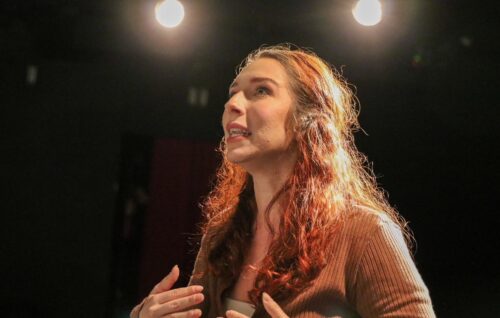
Lucy Marie Lopez, who is also the costume designer for the show, plays Mom in the world premiere of Mackenzie Raine Kirkman’s “push.” at LakehouseRanchDotPNG. (Photo courtesy of Juan Gamero)
When Mom rails at how little her husband does around the house, how the day-to-day responsibilities for their two boys are all hers, how Dad doesn’t even know where various household items are kept, she seems thoroughly exhausted and overwhelmed. (The household item mystery is a common one at my house and at the home of a friend, who asked his wife where the linen closet was.)
As Dad, Fernandez is all edgy irritation, at first bouncing one leg as he speaks, yelling instead of calmly speaking, violating the prohibition against vulgar language. Heavily tattooed, radiating a volatile strength, at times his Dad seems dangerous. But as the actor sorts through more tender memories, Fernandez becomes the man who wishes the divorce weren’t happening.
LakehouseRanchDotPNG sticks with the simplest of design elements for “push.” Indy Sulleiro’s set consists of a white-painted wall and a long table holding three bottles of water and that all-important button. Urrutia’s lighting design and Kyran Wright’s sound enhance the conference-room feeling of the space.
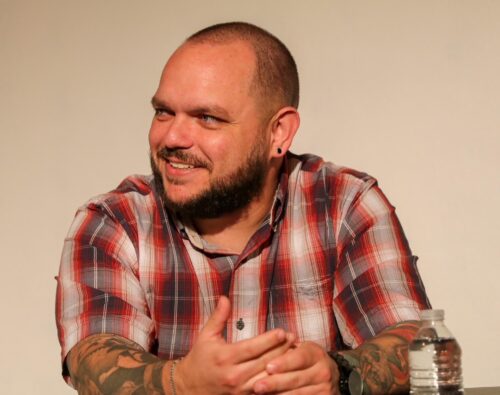
Michael Fernandez as Dad shares a happier memory in the LakehouseRanchDotPNG world premiere of Mackenzie Raine Kirkman’s “push.” (Photo courtesy of Juan Gamero)
Though it follows a more familiar stylistic path than most LakehouseRanchDotPNG plays, “push.” showcases the company at its best.
Kirkman’s writing is insightful and, particularly for anyone who has endured the end of a marriage, quite accurate. (Parents take note: Due to some of the play’s language and subjects, “push.” is OK for teens but not younger kids.)
Under Urrutia’s direction, Urquia is exactly as officious as the Mediator should be, Fernandez both scary and vulnerable as Dad, Lopez the quintessence of a Mom ready to shed her biggest “kid.” Bravo.
WHAT: World premiere of “push” by Mackenzie Raine Kirkman
WHERE: LakehouseRanchDotPNG production at Artistic Vibes, 8846 SW 129th Terrace, Suite B (second floor), Miami
WHEN: 8 p.m. Friday-Saturday, 2 p.m. Sunday, through Jan. 21
COST: $20 (discounts for students and artists)
INFORMATION: 786-427-4721 or Lakehouseranch-png.webnode.page
ArtburstMiami.com is a nonprofit media source for the arts featuring fresh and original stories by writers dedicated to theater, dance, visual arts, film, music and more. Don’t miss a story at www.artburstmiami.com.
No posts found
Review: ‘Old Wicked Songs’ Answers the Call of a Drama With Music
Written By Christine Dolen
January 16, 2024 at 2:35 AM
Keith Baker as Professor Mashkan, standing, and Teddy Warren as Stephen Hoffman in GableStage’s “Old Wicked Songs” by Jon Marans through Sunday, Feb. 4 at the theater in the Biltmore Hotel, Coral Gables. (Photo courtesy of Magnus Stark)
When Bari Newport arrived in South Florida to begin her tenure as producing artistic director at GableStage a couple of years ago, one of her innumerable tasks involved asking the theater’s patrons what they’d like to see more of in the company’s intimate space at the historic Biltmore Hotel.
Plays with music, they told her, something that had been a rare but Carbonell Award-winning part of late producing artistic director Joseph Adler’s programming. Newport listened, and the result – “Old Wicked Songs,” written and directed by Jon Marans – opened for a run through Sunday, Feb. 4.
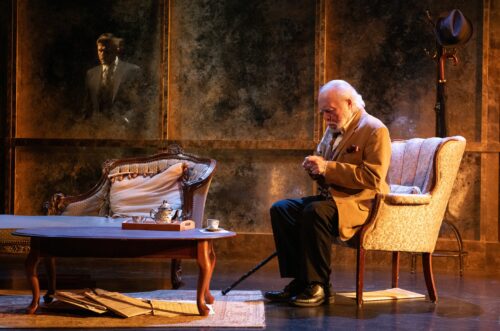
Keith Baker’s Professor Mashkan fusses as Teddy Warren’s troubled Stephen Hoffman stands outside, shown in back left, in Jon Marans’ “Old Wicked Songs” at GableStage. (Photo courtesy of Magnus Stark)
The play, which was a finalist for the Pulitzer Prize in 1996 (“Rent” won that year), is set in Vienna in 1986 while former United Nations Secretary-General Kurt Waldheim – whose past as an intelligence officer in the Wehrmacht (Nazi armed forces) had been recently revealed – was running his successful campaign to become president of Austria.
[RELATED: Read Christine Dolen’s preview of “Old Wicked Songs.”]
Marans pairs two disparate pianist/musicians in “Old Wicked Songs,” which was inspired in part by his own studies in Vienna.
Professor Joseph Mashkan (Keith Baker) is drawing closer to the end of a diminishing career, though despite having to overcome repeated obstacles and objections from his newest (and only) student, he proves himself an insightful teacher.
Stephen Hoffman (Teddy Warren) is a 25-year-old American piano prodigy who has lost the spark that compelled him to play. He has come to Vienna to study accompaniment, only to discover that he must first study singing with Mashkan, the better to understand the interplay of singer and accompanist. Together they’ll work on Robert Schumann’s Dichterliebe, a song cycle with words taken from the poetry of Heinrich Heine.
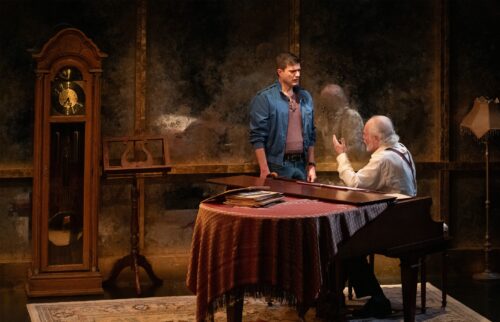
Teddy Warren is Stephen Hoffman and Keith Baker portrays Professor Mashkan in “Old Wicked Songs” at GableStage. (Photo courtesy of Magnus Stark)
Feeling outraged and deceived, the inflexible Hoffman threatens to leave but doesn’t. Good thing. Otherwise the audience would miss out on two hours of a compelling play-with-music about two eccentric men who help to change each other’s lives.
The play, Marans’ first, requires a pair of performers who can act, sing and play piano at an impressive level. Marans turned to Baker (whom he directed in a production of “Old Wicked Songs” 14 years ago in Pennsylvania) and Warren, a Miami transplant from Milwaukee. Both men are masterful in all three facets of their roles.
Baker utilizes a courtly charm that hides Mashkan’s justifiable worries about his future and diminishing funds. Secrets lie beneath the layers of his personality and the very shirt on his back. He sings Mashkan’s sections of the Dichterliebe in a baritone appropriate to the professor’s age, and if his adept piano playing sometimes includes a mistake or two, that’s in the script.
Warren’s Stephen is so tightly wound it’s surprising his hair doesn’t stand straight up, or perhaps the character is meant to be on the autism spectrum. His obsessive-compulsive behavior when he sits to play the piano involves a deep breath and tugging his ears three times. But wow, can he play.
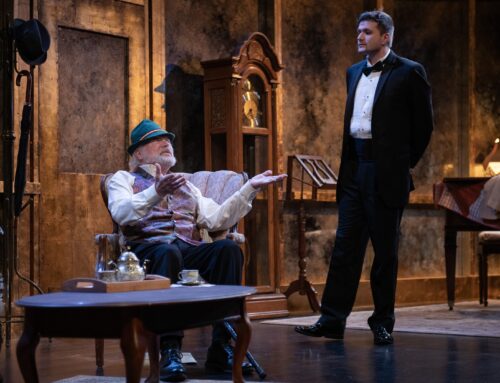
Keith Baker’s Professor Mashkan (seated) speaks to an eleganty dressed Teddy Warren as Stephen Hoffman as returns from an aborted trip to the opera. (Photo courtesy of Magnus Stark)
Hoffman assures Mashkan that he’s not a prodigy, just a stylistic mimic, then delightfully demonstrates the truth of that statement. Warren is a better singer than Hoffman is supposed to be, so he sometimes pulls back vocally. But when the exhilarated student comes back from the opera and bursts into Mashkan’s rehearsal studio singing Vesti la Giubba from Pagliacci, Warren’s tenor soars.
That studio has been designed by Frank J. Oliva, with props by Marialexia Hernandez and set dressing by Nicole Quintana. Like Vienna itself, it’s visually of a different time and place, with its worn gold-brushed walls affording a peek to the outside, a stopped grandfather clock, and a phonograph with a colorful horn. And, of course, the shawl-draped piano.
Tony Galaska’s warm-hued lighting design, Sean McGinley’s sound design with its Dichterliebe bridges between scenes, and the costumes by Gema Valdes (Mashkan’s well-worn elegance for a man of a certain age, Hoffman’s evolving looks which reflect the changes within himself) deepen the artfulness of Marans’ story.
“Old Wicked Songs” contains jokes (Mashkan tells a bad but funny one about Waldheim), disturbing moments as the professor drops antisemitic remarks, and rage as Hoffman returns from a trip to the Dachau concentration camp, a visit he had promised his father he would make. World War II, the Nazis, the Holocaust – Hoffman learns about more than music during his time in Vienna.
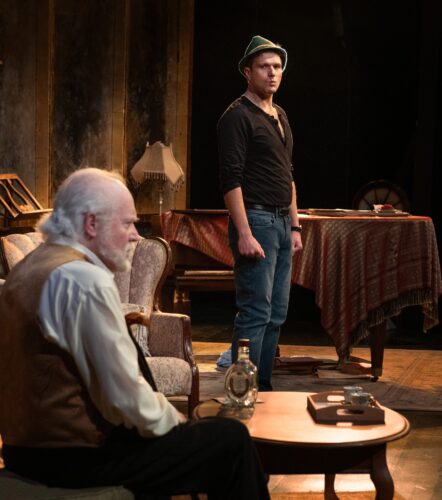
Teddy Warren’s Stephen Hoffman returns from a trip sporting a Tyrolean hat as Keith Baker’s Professor Mashkan doesn’t seem to take notice in “Old Wicked Songs” at GableStage. (Photo courtesy of Magnus Stark
Music – how to teach it, how to learn it, how subtle adjustments make all the difference – is the great strength of “Old Wicked Songs.” That Marans applied his insights as a writer, musician and director to GableStage’s version of his play is a multifaceted gift to the company’s audiences.
WHAT: “Old Wicked Songs” by Jon Marans
WHERE: GableStage in the Biltmore Hotel, 1200 Anastasia Ave., Coral Gables
WHEN: 2 and 7 p.m. Wednesday, 8 p.m. Thursday-Saturday, 2 p.m. Sunday (additional 2 p.m. matinee Saturday, Feb. 3), through Feb. 4 (streaming version available during regular performances Jan. 19-Feb. 4)
COST: $40, $45, $50, $55, $60, $65, all with additional $10 service fee (discounts for students, teachers, artists, military and groups); streaming ticket $30
INFORMATION: 305-445-1119 or gablestage.org.
RELATED EVENT: A conversation with Gerard Schwarz, artistic and music director of the Palm Beach Symphony and professor of music at the Frost School of Music, in honor of Holocaust Remembrance Day, will follow the 2 p.m. matinee on Sunday, Jan. 28. Visit gablestage.org/events for details.
ArtburstMiami.com is a nonprofit media source for the arts featuring fresh and original stories by writers dedicated to theater, dance, visual arts, film, music and more. Don’t miss a story at www.artburstmiami.com.
No posts found
Review: Zoetic Stage’s world premiere of ‘Wicked Child’ brings conflict and a family into focus
Written By Christine Dolen
January 15, 2024 at 3:42 PM
From left, Wayne LeGette, Margery Lowe, Ben Katz, Gracie Blu, Jeff Brackett, Michael McKeever and Jeni Hacker in the Zoetic Stage world premiere of “Wicked Child” at the Carnival Studio Theater in the Adrienne Arsht Center through Sunday, Jan. 28. (Photo courtesy of Justin Namon)
David Rosenberg’s “Wicked Child,” now getting its Zoetic Stage world premiere in the Carnival Studio Theater at Miami’s Arsht Center, is not a reaction to the Oct. 7 Hamas terrorist attack on Israel.
Eerily, though, it feels like one.
“Wicked Child” was written in 2016, and former Miamian Rosenberg workshopped it at Zoetic’s Finstrom Festival of new plays in 2022. Each act takes place during an April Passover Seder, the first in 2022, the second in 2023. Today’s war hadn’t happened yet.
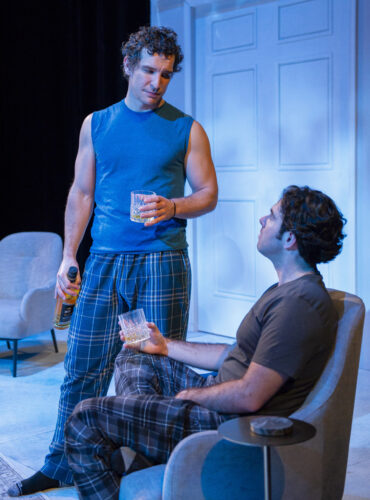
Jeff Brackett and Ben Katz play stepbrothers Ben and Jake in the Zoetic Stage world premiere of David Rosenberg’s “Wicked Child” at the Arsht Center. (Photo courtesy of Justin Namon)
But so many of the issues that continue to fuel furious conflict in the Middle East are artfully woven by the playwright into an extended family’s conversations as they celebrate their ancient ancestors’ deliverance from slavery in Egypt.
The traditional feast takes place in the expansive, expensive home of Mark Silver (Michael McKeever) and his wife Fay (Jeni Hacker) in affluent Rye, New York. Fay’s sister Cindy Blumenthal (Margery Lowe), her husband Leo (Wayne LeGette) and their sons from previous marriages – Cindy’s Ben (Jeff Brackett), Leo’s Jake (Ben Katz) – are the guests, along with Jake’s Asian American girlfriend Amelia (Gracie Blu).
[RELATED: Read Christine Dolen’s preview of “Wicked Child.”]
Ben has just returned from his Birthright visit to Israel, joyously bearing gifts which he distributes as the family awaits an elegant Seder meal prepared by the Silvers’ live-in Filipino chef, Arnulfo.
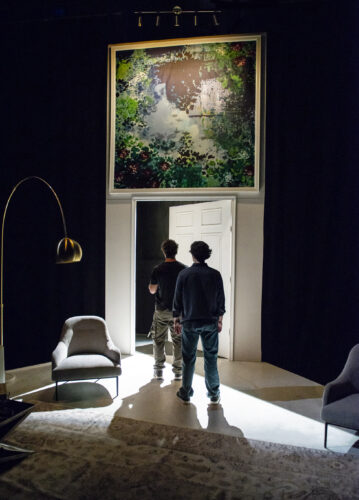
Jeff Brackett, left, as Ben and Ben Katz as Jake look for the prophet Elijah in the world premiere of “Wicked Child”at the Arsht Center. (Photo courtesy of Justin Namon)
The gifts run the gamut from a beautiful Haggadah in Hebrew to use in retelling the Passover story during the Seder to an antique box containing – surprise! – a dildo in Israeli colors for Jake. The latter is in keeping with the stepbrothers’ relationship. Though they’re in their mid-to-late 20s, at this reunion they regress to hurling bro/frat boy insults. Amelia, who assumed she was dating an adult male, is not impressed.
Through the lens of this particular family, Rosenberg, director Stuart Meltzer and the seven actors touch on or dive more deeply into a host of issues, including Israel’s very existence, the necessity of educating younger Jewish generations about their heritage, antisemitism, the world-altering tragedy of the Holocaust. But the playwright doesn’t stick with a one-sided view of Israel.
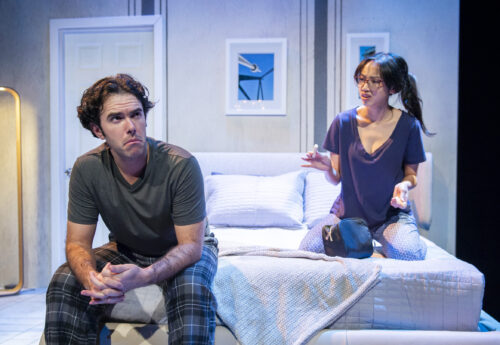
Ben Katz and Gracie Blu trade differing views of Israel in the Zoetic Stage world premiere of “Wicked Child” at the Arsht Center. (Photo courtesy of Justin Namon)
Following Ben’s shocking after-dinner announcement that he quit his successful New York job to sign up for combat duty with the Israeli Defense Forces, Rosenberg has Amelia, as the non-Jewish outsider, drop bombshells to Jake about her views of the State of Israel and its treatment of Palestinians.
A year later, Ben has come home after a shattering event that occurred when he and his fellow soldiers were on patrol, and Jake has a thriving political blog that is far too anti-Israeli/pro-Palestinian for the family’s taste – he has become in many ways the questioning, challenging “wicked child” mentioned in the Haggadah. During the second Seder, Jake makes a speech so incendiary that he and Ben come to blows. Fay then lets Jake have it with her words.
“You’ve never faced an existential threat. You don’t know what you’d do if you did. It’s not a perfect country, of course it’s not,” she says. “But if something happens? When this boils over, and it will, soon, when something happens. You’ll be awfully glad you have that place. And terrified if it’s gone.”
As serious and timely as the issues in “Wicked Child” are, the play is also an artful family dramedy. Meltzer is deft at finding funny, lighter moments in otherwise serious material, and there are many in Rosenberg’s script.
For instance: When Cindy realizes Ben will be going to the desert to fight, she insists the two of them have to go to the Nordstrom store in White Plains the very next day to find him a hat that will give him complete sun protection. Or this: One of Ben’s gifts to Leo and Mark is a bottle of a new Israeli whiskey – which happens to be terrible. This gives each of the men the chance to have a taste, then make a face showing different kinds of utter disgust.
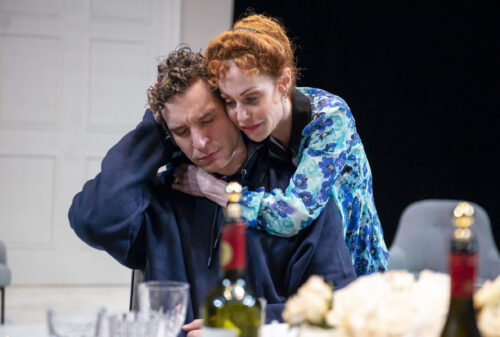
Jeff Brackett as Ben and Margery Lowe as his mom Cindy in the Zoetic Stage world premiere of David Rosenberg’s “Wicked Child.” (Photo courtesy of Justin Namon)
The performances, by a mix of Zoetic Stage veterans and newcomers, are impressive and uniformly strong.
McKeever, one of the company’s founders, is a prolific South Florida playwright who also happens to be a fine actor. His Mark in “Wicked Child” is a man privately battling cancer, putting on a brave host’s face for the rest of the family as Fay watches him like a hawk. By the second act, his little pot belly has disappeared, and he’s clearly very ill. McKeever’s performance, among the best of his career, is quietly heartbreaking.
Hacker’s Fay is a down-to-earth rock for Mark and the rest of the family. An eloquent woman with unshakeable convictions, she’s fierce in battling for her beliefs and for those she loves.
LeGette and Lowe breathe believability into the more stereotypical Leo and Cindy. LeGette’s Leo is a dad who emotionally supports both of his sons, listening, occasionally chiming in or intervening. Lowe’s Cindy, always impeccably turned out, is the mom who fusses over her family, her cooking and being gracious, a real home-and-hearth sort.
As part of a younger generation trying to find its place in the world, Brackett’s Ben, Katz’s Jake and Blu’s Amelia are very different people.
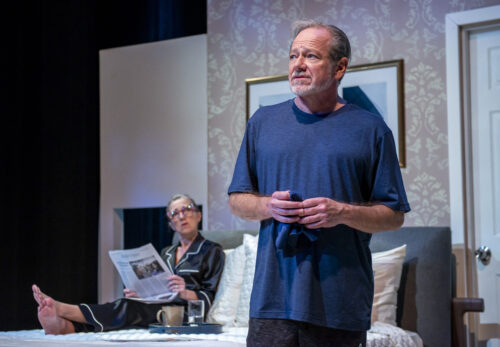
Jeni Hacker as Fay and Michael McKeever as her husband Mark work through their own problems in the Zoetic Stage world premiere of “Wicked Child” at the Arsht Center. (Photo courtesy of Justin Namon)
Brackett compellingly conveys Ben’s idealism and naïve enthusiasm, then later takes Jake and the audience through a crushing story that will likely haunt Ben for the rest of his life.
Katz embraces Jake’s flaws – his initial cluelessness about the political complexities of the Middle East, his tone-deaf criticisms of Israel at the family’s Seder – and thus serves as an effective catalyst for a great deal of conflict.
Blu, who is making her professional debut in “Wicked Child,” takes Amelia from coolly analytical to appalled about how much she doesn’t know about the attractive man sharing her bed.
Meltzer and company do their storytelling this time on a traverse stage, with audience seated on either long side of the rectangular playing area designed by B.J. Duncan with props design by Natasha Hernandez.
The round Passover table is in the center of the space atop a turntable, so occasionally it rotates a bit, giving the audience views of different actors’ faces. The set does not, however, suggest the sort of tasteful affluence specified in the script.
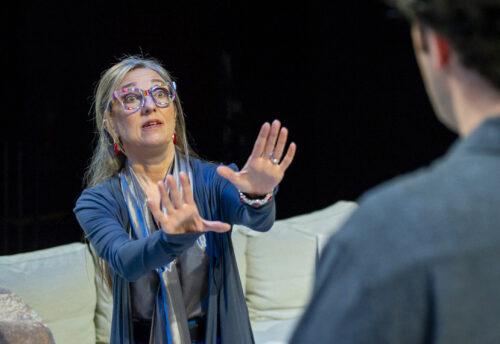
Jeni Hacker’s Fay has stern words for Ben Katz’s Jake in Zoetic Stage’s world premiere of “Wicked Child” at the Arsht Center. (Photo courtesy of Justin Namon)
Laura Turnbull, best known in South Florida as an actor, has done a beautiful job with the costume design, particularly in the way she reflects Fay and Cindy’s personalities through the way they like to dress.
Lighting designer Becky Montero helps to amplify and mute emotions, and her final framing of Jake and Ben as they ritualistically watch for the arrival of the prophet Elijah is haunting. Sound designer Matt Corey’s work, including short musical interludes, is subtle yet potent. Hacker has contributed intimacy direction, while Paul Homza has done the fight choreography that turns a verbal altercation into something physical.
“Wicked Child” is not, as noted, about the current war. But Rosenberg’s script is timely, thought-provoking and prescient as it explores the ever-escalating stakes in that volatile part of the world.
WHAT: World premiere of “Wicked Child” by David Rosenberg
WHERE: Zoetic Stage production in the Carnival Studio Theater at the Adrienne Arsht Center for the Performing Arts, 1300 Biscayne Blvd., Miami
WHEN: 7:30 p.m. Thursday-Friday, 2:30 p.m. and 7:30 p.m. Saturday, 2:30 p.m. Sunday (additional 7:30 p.m. show Wednesday, Jan. 17, no matinee on Saturday, Jan. 20), through Sunday, Jan. 28
COST: $55 and $60
SPECIAL EVENT: Talkback with playwright David Rosenberg, director Stuart Meltzer and the cast following the Jan. 21 Sunday matinee.
INFORMATION: 305-949-6722 or www.arshtcenter.org
ArtburstMiami.com is a nonprofit media source for the arts featuring fresh and original stories by writers dedicated to theater, dance, visual arts, film, music and more. Don’t miss a story at www.artburstmiami.com.
No posts found
Two documentaries at the Miami Jewish Film Festival dive into family struggles in search for self
Written By Michelle F. Solomon
January 10, 2024 at 3:47 PM
Genie Milgrom, brought up in a Catholic Cuban family, searches for her Jewish roots in the movie “Between the Stone and the Flower,” a documentary making its world premiere at the Miami Jewish Film Festival. (Photo courtesy of the Miami Jewish Film Festival)
There was always something tugging inside the heart and mind of Genie Milgrom. At the crux of this tug of war was religion.
Born in Havana, Cuba, raised in Miami, and currently living in Pinecrest, Milgrom says she had been having an “existential crisis” her whole life.
Milgrom’s story of how she decided to covert to Judaism after growing up in a family of Cuban Catholics – not to mention her own Roman Catholic schooling – caused turmoil within her circle of relatives and friends. Her experience is documented in the film “Between the Stone and the Flower: The Duality of the Conversos,” directed by Roberto Otero.
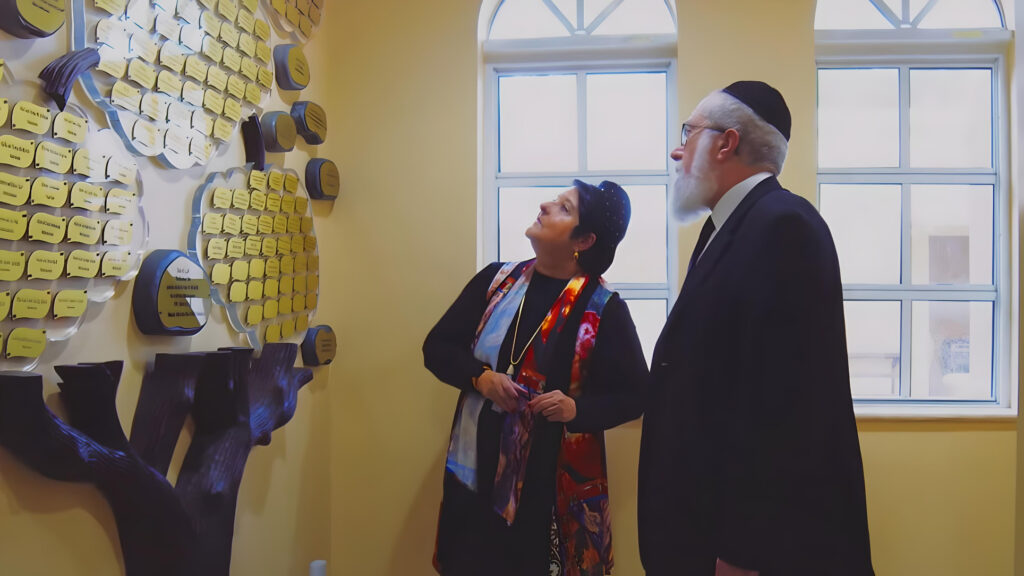
Genie Milgrom with Rabbi Hershel Becker at Young Israel of Kendall. (Photo courtesy of the Miami Jewish Film Festival)
The hour-long made-in-Miami documentary makes its world premiere at the Miami Jewish Film Festival at 3:30 p.m. on Sunday, Jan. 14 at The Hub at Temple Beth Am, Pinecrest; it plays again at 7:30 p.m. on Thursday, Jan. 18 at the Jewish Museum of Florida-FIU, Miami Beach.
Larry King Jr. had an existential crisis of his own. The son of CNN television personality Larry King, he knew who his father was but didn’t forge a relationship with him until he was in his 30s and his famous father was in his early 60s.
The short 13-minute film, Lisa Melmed’s “When Larry Met Larry,” is part of the online streaming segment of the Miami Jewish Film Festival. It becomes available for viewing on Friday, Jan. 12 at 9 a.m. and can be seen through Thursday, Feb. 4, as part of the festival’s “Short Block: Documentary.”

After more than three decades, Larry King, left, and his son, Larry King Jr. became involved in each other’s lives. (Photo courtesy of the Miami Jewish Film Festival)
The elder King, who died at age 87 on Jan. 23, 2021, weeks after he was admitted to the hospital with COVID-19, was a Miami figure when his son was born in November of 1961. The year before, King had conducted his first celebrity interview while at WIOD-AM. Singer Bobby Darin was performing at a Miami Beach hotel. King spotted him and, as the story goes, did the interview on the spot from a booth at Pumpernik’s, a deli at Collins Avenue and 67th Street. The spontaneous “get” would be a bellwether for the fame that was to come for the man who would become a television legend.
King Jr. remembers growing up and listening to the dad he had not yet met while the announcer was calling a Miami Dolphins game at the Orange Bowl.
“I was a youngster on the 25-yard line on the Dolphins side. But I could see him up there and hear him on the transistor radio that I was listening to and it was like I was at the game with him. Wildly enough, years later, when I got closer to my dad, (owner) Stephen Ross invited both of us to a game and we spent a whole day there together at the new stadium,” says King Jr.
King was married eight times to seven women. He married King Jr.’s mother, Annette Kaye, in 1961, and though the two had a child together, the marriage didn’t last, and they divorced the same year. King Jr. remembers being about 9, 10 or 11 years old, “right in that window sometime in the early ‘70s and I was questioning my mother: ‘Why doesn’t he call or why isn’t he here?’ She made a point to coach me and tell me that his career was taking off, plus he had already been married three times by then.”
His mother told him that the issue was that King didn’t have time for a son and “being there for you is not where he is right now, and that there would be another day and time for that. And I had to trust in the fact that my mom was giving me the best advice,” says King Jr., who was born in Miami and now at 63 is living in Tampa.
Milgrom had her own family estrangements, but she had to move forward in committing to her Jewish roots. “I knew that I had left behind me a wake of not happiness . . . My family wasn’t happy, my friends weren’t happy, my previous life wasn’t happy, my ex wasn’t happy, my grandparents weren’t happy.” But as she was steeped in her conversion to Judaism, she says she remembers feeling, ‘Oh my gosh, this is amazing. I am where I need to be.”

Larry King Jr. would listen to his father Larry King in the broadcast booth at the Miami Dolphins game on a transistor radio. In the film “When Larry Met Larry,” King’s son tells about when the two went to a game together. (Photo courtesy of the Miami Jewish Film Festival)
For King Jr., the beginning of the relationship with his father was bittersweet. When his mother learned she had inoperable brain cancer, she wrote to her former husband. “By this time, my father had been married seven times.” In the letter, which King Jr. didn’t know about at the time, Kaye wrote, “This kid doesn’t want anything from you. I don’t want anything from you, other than that before I go, I just want to know that you’ll recognize (him) and be there. He just wants to know his dad.’ And, you know, my dad came through . . .,” says King Jr.
He recalls that when the two met it was an immediate friendship. “We had a bond through sports and our personalities . . . the first time we sat down, it was funny, our mannerisms were even similar.”
He remembers when King almost died from a heart attack in 1986. “I don’t know what would have happened because I always would have wondered if I had never talked to him,” he says.
Kaye, who had remarried in 1969, was still alive when what King Jr. says the “handoff” happened. “Some of my mom’s final words to me were, ‘I gave you 33 years and your father now is there for you.’ And he was.”
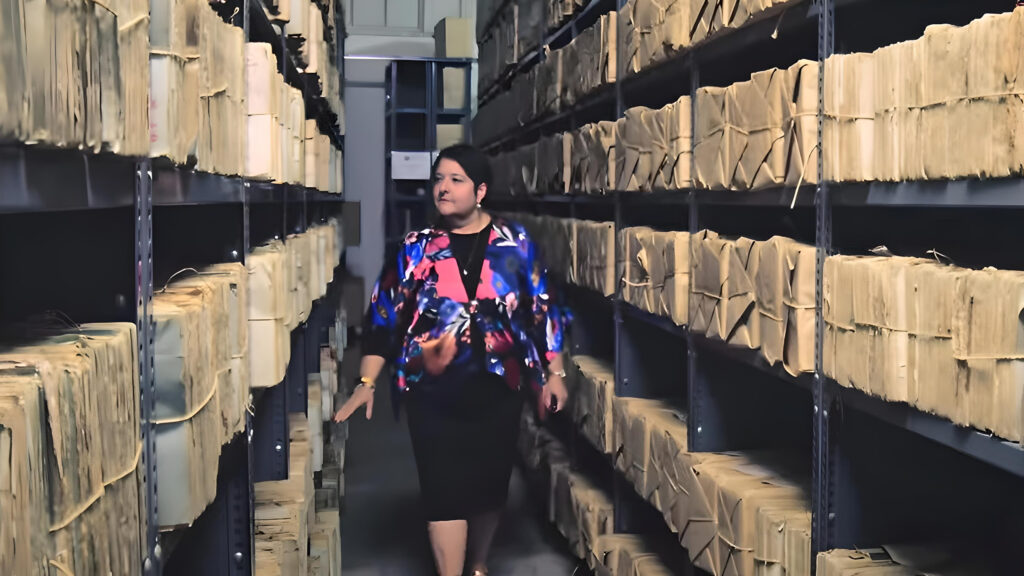
Genie Milgrom in Portugal walking through Arquivo Distrital de Évora. (Photo courtesy of the Miami Jewish Film Festival)
Milgrom found her roots through 15 abuelas (grandmothers), which she says showed through genealogical records an unbroken maternal lineage going back to the early 1500s that proved her family was Jewish before the Spanish Inquisition. “I was able to compile all the birth, marriage, death and Inquisition documents for my family proving to important Beit dins (Jewish Courts) that the family was always Jewish via my maternal lineage.”
In her research, she discovered and subsequently visited a small Spanish village, Fermoselle, across from Mogaduro, Portugal. Milgrom says the ancestors practiced Judaism there in secret while living as Christians to avoid being killed.
“They were Crypto-Jews until the late 17th century and lived as Catholics from then on,” she says.
In the film, both of Milgrom’s children are interviewed. They talk about what it was like in the midst of their mother making the decision to convert to Judaism.
Her daughter, Nicole, remembers as a teen that “I didn’t have my mom with me on Saturdays or Friday nights . .. (because of Milgrom, now an Orthodox Jews, in Shabbat). If it was cheerleading or horseback riding. I was still doing the things normally I would do as a Catholic kid, going to church on Sundays, you know my life didn’t change, my friends didn’t change, but my relationship with my mom maybe was affected,” says Nicole. “It was tough because she wasn’t a part of my weekends. She would do the best that she could under the circumstances of her having Sabbath on Saturday. Now I feel like I have a good grasp on religion on general because I know both religions so well.”
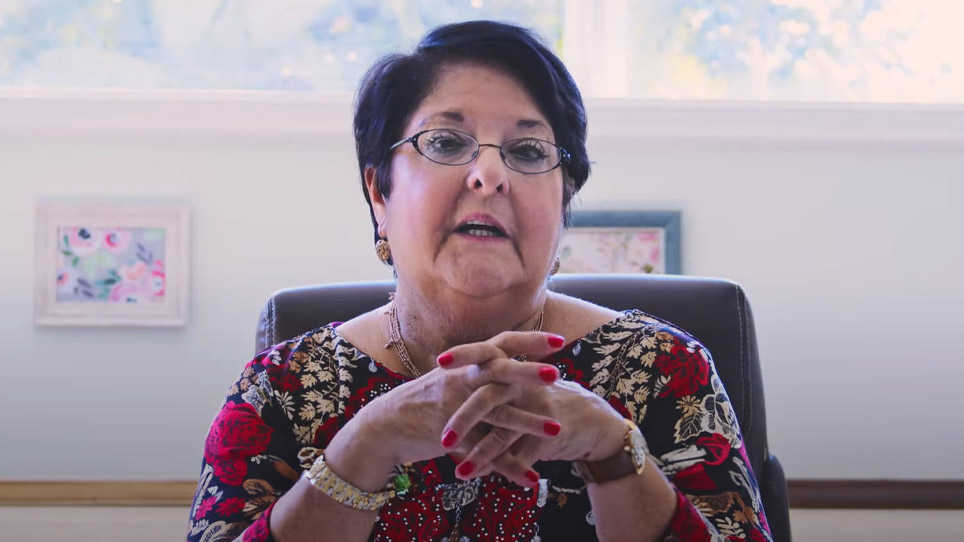
Genie Milgrom of Pinecrest crossed the globe in search of her Crypto-Jewish ancestors and is now in the process of creating a digital archive for those who want to research their ancestry through the archives in Spain. (Photo courtesy of the Miami Jewish Film Festival)
For Milgrom’s son, Sergio, the biggest change was at the family house around food. He said he was a teenager and about to graduate from high school.
“The meals at home changed, and for me that was very dramatic. I supported her, I said, ‘Look this is your project . . . this is what you want to do, but for me it was a change.” He says there was no longer a Christmas tree, you have to eat the Kosher food . . that was a radical change. “So I had to leave the house and I had to find a place to live. That was the moment I said, ‘This is getting too complicated.’“
Milgrom says she didn’t see the interviews with her children until she saw the final cut of filmmaker Roberto Otero’s movie. She says she called her daughter after watching the clips and said: ” ‘Nikki, I felt pain in your eyes. Just in case there was pain, I want to apologize because I battled through this.’ And I did, I battled through it.”
Her work now is focusing on digitizing all the Inquisition records that contain genealogies of the Jews who were processed during the Inquisition. She knows there are more documents that can give insight into the story of the Crypto-Jews, those who were Catholic on the outside and Jewish on the inside. The Roman Catholic Church’s highest “father” has given her his support. She met with Pope Francis in June of 2023.
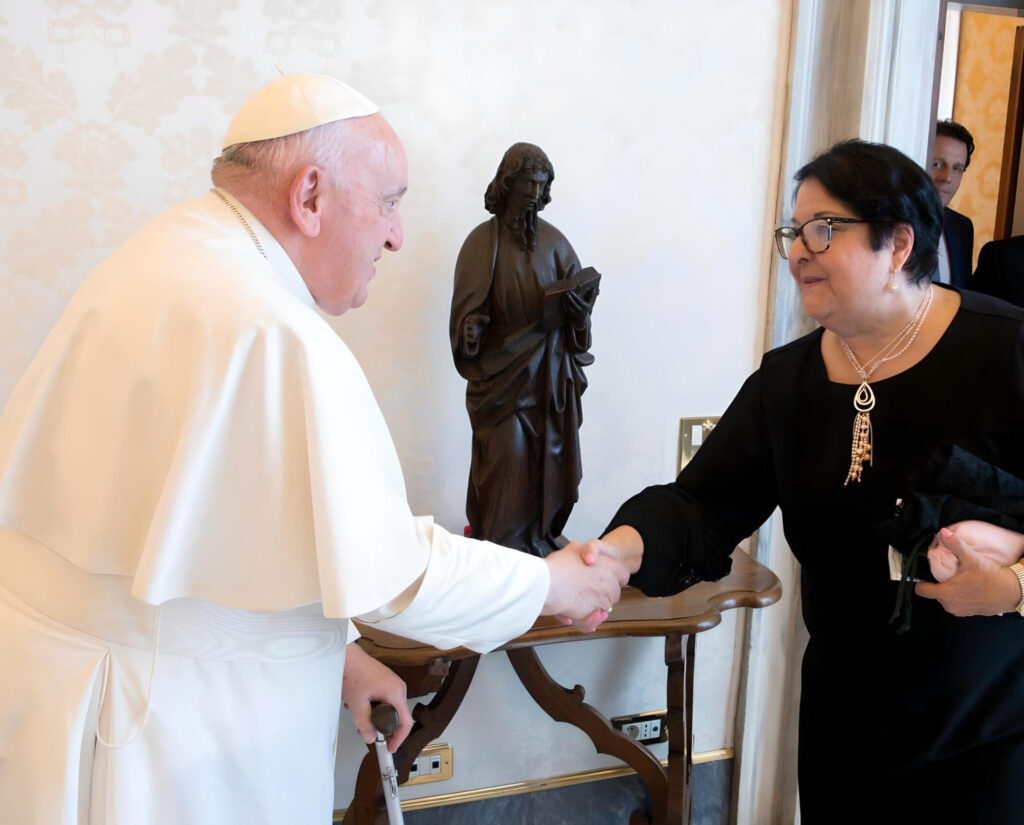
A meeting with Pope Francis in 2023 paved the way for Genie Milgrom’s access to Vatican Archives. (Photo courtesy of Miami Jewish Film Festival)
“We were nose to nose. We went off in a corner and spoke Spanish,” says Milgrom. He has assigned a papal emissary to collaborate with her to view texts from the Vatican’s “Secret Archives.” “Archivum Secretum,” which means “private archive’” in Latin, contains the personal records of the popes. Vatican Apostolic Archives are millions of documents that date back to over 12 centuries.
“I am planning on flying out there in February and meeting (with the emissary) in the ‘Secret Archives,’ ” says Milgrom, whose quest to connect others with their Jewish roots continues.
King Jr.’s wholeness in his identity came from a nearly three-decade relationship with his father after more than three decades estranged. The two were very involved in each other’s lives from 1994 until King’s death in 2021. “When I think about myself, I’m not the only son or daughter whose parent might not have been with them, but I hope I can be an example of how it can all come together.”
WHAT: The Miami Jewish Film Festival
WHEN: Opens Thursday, Jan. 11 through Thursday, Jan. 25.
WHERE: Screenings held Coral Gables Art Cinema, 260 Aragon Ave., Coral Gables; The Hub at Temple Beth Am, 5950 SW 88th St., Pinecrest; Miami Beach Bandshell, 7275 Collins Ave., Miami Beach; Miami Theater Center, 9806 NE 2nd Ave., Miami Shores; Michael-Ann Russell JCC, 18900 NE 25th Ave., North Miami Beach; O Cinema South Beach, 1130 Washington Ave., Miami Beach; and the Miami Beach JCC, 4221 Pine Tree Drive, Miami Beach.
COST: $35, opening night; $15 general admission, $14, seniors and students; $10, virtual streaming.
INFORMATION: 305-503-5182 or miamijewishfilmfestival.org/
ArtburstMiami.com is a nonprofit media source for the arts featuring fresh and original stories by writers dedicated to theater, dance, visual arts, film, music and more. Don’t miss a story at www.artburstmiami.com
No posts found
As war rages in the Middle East, two Jewish-themed plays open in Miami
Written By Christine Dolen
January 9, 2024 at 4:15 PM
Keith Baker, left, and Teddy Warren, in GableStage’s “Old Wicked Songs” previewing on Friday, Jan. 12, opening on Saturday, Jan. 13 and running through Sunday, Feb. 4 at the playhouse inside the Biltmore Hotel, Coral Gables. (Photo courtesy of Magnus Stark)
Although both productions were in the works long before the Oct. 7 Hamas attack on Israel, a pair of plays – each, coincidentally, with the word “Wicked” in its title – will open this coming weekend at two regional theaters in Miami-Dade County.
Inevitably, the war that has raged ever since that shocking incursion from Gaza and its retaliatory aftermath will thrum through the minds of many theatergoers as they watch Zoetic Stage’s world premiere of Miami native David Rosenberg’s “Wicked Child” and GableStage’s production of “Old Wicked Songs,” a 1996 Pulitzer Prize finalist written and directed by Jon Marans (the musical “Rent” won the prize that year).
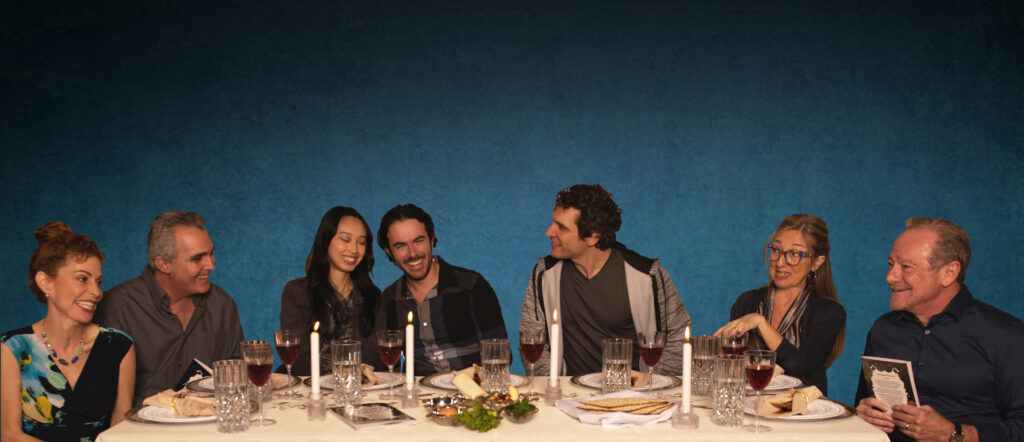
The cast of Zoetic Stage’s world premiere play “Wicked Child,” from left, Margery Lowe, Wayne LeGette, Gracie Blu, Ben Katz, Jeff Brackett, Jeni Hacker, and Michael McKeever. (Photo courtesy of Justin Namon, ra-haus)
Though neither play is specifically about the reignited turmoil in the Middle East – “Wicked Child” is set in 2022-2023, “Old Wicked Songs” in 1986 – powerful art invites context and connections. With themes including antisemitism and the enduring trauma of the Holocaust, the plays have much to say in this volatile moment.
“Unfortunately, these plays always have resonance,” says Bari Newport, GableStage’s producing artistic director, who worked for two years to get “Old Wicked Songs” to its Miami-Dade debut. “Oct. 7 has re-catapulted so many deep-seated issues into the forefront again . . . That’s how the zeitgeist happens.”
Zoetic Stage’s producing artistic director Stuart Meltzer, who is directing “Wicked Child,” wants people to arrive at the theater ready to take in conflicting points of view.
“I hope audiences don’t come in with their dukes up. I hope they’re ready to listen,” says Meltzer. “We don’t want to anger anyone. We want to engage people.”

At left, Zoetic Stage’s Stuart Meltzer directs “Wicked Child,” while at GableStage, Bari Newport chose playwright Jon Marans to direct “Old Wicked Songs.” (Photos courtesy of Chris Headshots and Alex Fox)
“Wicked Child,” which previews Thursday, Jan. 11, and opens Friday, Jan. 12, in the Carnival Studio Theater at Miami’s Arsht Center, underwent a Zoetic developmental process in which Meltzer and playwright Michael McKeever, who appears in the world premiere, both played a part. Initially, the play seems to be a dramedy about an extended Jewish family gathering for a Passover seder in affluent Rye, New York.
The older generation – Fay (Jeni Hacker) and her husband Mark (McKeever), Fay’s sister Cindy (Margery Lowe) and her husband Leo (Wayne LeGette) – isn’t especially religious, but this tradition and family mean a great deal to them. The younger generation – Leo’s son Jake (Ben Katz), his Asian American girlfriend Amelia (Gracie Blu), Cindy’s son (and Jake’s stepbrother) Ben (Jeff Brackett) – are trying to launch their lives, though Ben has already snagged a lucrative 65-hours-a-week job with a law firm.
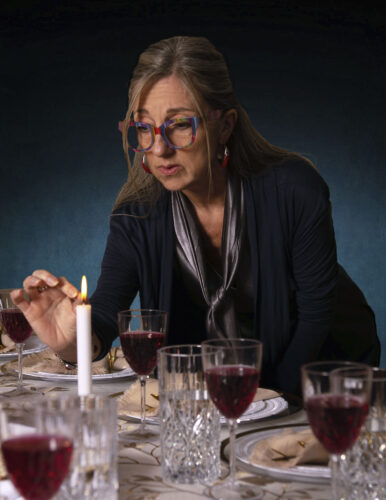
Jeni Hacker plays a Jewish woman with strong convictions about her faith and Israel in Zoetic Stage’s “Wicked Child.” (Photo courtesy of Justin Namon, ra-haus)
But as the seder comes to a close, Ben drops a bombshell: He fell so deeply in love with Israel as a Jewish homeland during his recent Birthright trip that he has enlisted in the Israeli Defense Forces.
The New York-based Rosenberg graduated from Miami Palmetto Senior High, then went to New York University followed by the acting program at Juilliard (he appeared in GableStage’s 2014 production of Joshua Harmon’s “Bad Jews”). He says “Wicked Child” flowed from his desire to write about his family (he’s staying with them in Coral Gables in the runup to Zoetic’s opening) and from an argument about Middle East politics that made him realize the limits of his knowledge.
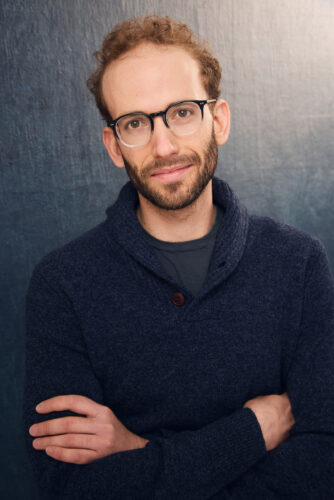
David Rosenberg comes home to South Florida for the Zoetic Stage world premiere of his play “Wicked Child.” (Photo courtesy of Mindy Tucker)
“It’s a very difficult moment to be doing a play about Israel and Palestine, but also a good time,” says the playwright, whose play received a workshop and public reading at Zoetic’s 2022 Finstrom Festival of new work. “I’ve been rewriting, not to encapsulate this moment but trying to be sensitive. I hope I can contribute to the discussion. I believe theater is about questions, not statements….I have no intent to traumatize or yell at anyone.”
The title “Wicked Child” was suggested by Meltzer and McKeever as a more potent alternative to Rosenberg’s original, “Effect If Not Intent.” The term for a self-destructive, challenging child is used in the maggid (telling) section of the Passover seder about the Jewish journey from slavery in Egypt to freedom, as related in the biblical book of Exodus.
“Stuart and Michael have been big dramaturgical assets. The play is leaner, sharper and more refined in its message and structure,” says Rosenberg. “Stuart and I don’t believe all the same things, so that has sharpened the argument.”
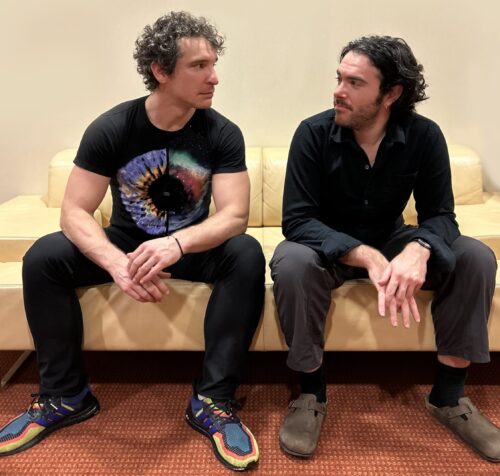
Jeff Brackett, left, and Ben Katz play stepbrothers in the world premiere of David Rosenberg’s “Wicked Child” at Zoetic Stage. (Photo courtesy of Michael McKeever)
Meltzer is a Miamian who lived on an Israeli kibbutz for a year during the time of the first Gulf War, working in the kitchen and learning Hebrew. He vividly remembers watching as a Scud missile flew from Iraq toward Haifa on his first night in Israel.
Of the current war he says, “It’s hard on our souls. I’m a Jewish male and a proud Zionist…You can’t not feel this, absorb this, have it tie you in knots. I can support Israel and still be critical of it . . . How can we resolve this in a way that will be longer lasting? These conversations are tough, emotional and very difficult.”
“Old Wicked Songs,” which previews Friday, Jan. 12, and opens Saturday, Jan. 13, at GableStage, presents a host of different challenges to its two-man cast. The performers must be excellent pianists, singers and actors who can impressively play and sing (in German and English) Robert Schumann’s Dichterliebe, a song cycle that weds his music to the joyous, sorrowful poetry of Heinrich Heine.
“The music adds a whole other layer,” says playwright Marans. “It’s so haunting, electric, exciting.”
As Rosenberg did with “Wicked Child,” Marans drew from his own experiences in creating “Old Wicked Songs.” A Duke University graduate who majored in math and minored in music, as a student the aspiring lyricist spent a semester in Vienna studying singing, exploring a singer’s process and feelings from the inside out.
Marans’ play, his first, takes its title from one of several possible translations of the German word bösen in the phrase die alten, bösen lieder (the old, wicked songs).
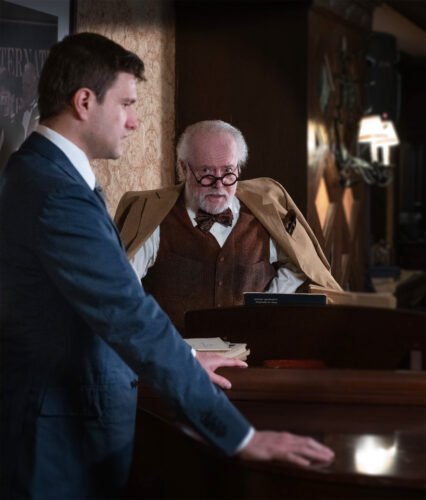
Teddy Warren, left, and Keith Baker play at-odds musicians in GableStage’s “Old Wicked Songs.” (Photo courtesy of Magnus Stark)
In the play-with-music, burnt-out 25-year-old American piano prodigy Stephen Hoffman (Teddy Warren) has come to Vienna hoping to reclaim the passionate spark that propelled his career. He plans to study accompaniment with a renowned professor but discovers – to his vast and often-expressed displeasure – he must first spend three months studying singing with eccentric Professor Josef Mashkan (Carbonell Award winner Keith Baker, who was artistic director of Florida Repertory Theatre when the company was located in West Palm Beach).
“Old Wicked Songs” plays out against the backdrop of former United Nations Secretary-General Kurt Waldheim’s 1986 run for president of Austria, an office he held from 1986 to 1992 despite the revelation of his past as an intelligence officer in the Wehrmacht (Nazi armed forces).
In the course of their lessons, Mashkan peppers his conversation with antisemitic remarks. The Jewish Hoffman, who promised his father he’d go to see the concentration camp at Dachau, is stunned. But thus begins the gradual unraveling of a mystery.

Pulitzer Prize finalist Jon Marans is directing his play “Old Wicked Songs”at GableStage. (Photo courtesy of B. Hargrove)
“I haven’t directed the play in a while, but I did direct Keith in a production at the Bristol Riverside Theatre,” says Marans of Baker, who was artistic director of the company located a half hour northeast of Philadelphia, and who won a best actor Broadway World award for his 2010 performance. “Some lines seem to land differently. So sometimes I’m ignoring the playwright’s stage directions, going for a more heightened version of the play.”
Marans’ mother, a history teacher, and father, whom he describes as “an angry letter writer who wrote at least 1,000 letters a year to different newspapers,” had saved a letter he wrote them after his own long-ago visit to Dachau, and the sentiments he expressed as an angry young man made it into “Old Wicked Songs” as a second-act monologue for Stephen.
“I was conditioned by my parents. They trained me without my realizing it,” says Marans, who often incorporates historical events into his theatrical storytelling. “My mom isn’t remotely religious, but my dad is, and quite political on the issue of Israel.”
Newport says she wanted to produce “Old Wicked Songs,” which she had seen when she was based in Los Angeles, because audiences were telling her they wanted to see a piece with music. It also dovetails with GableStage’s commitment to including Jewish stories in its programming, something the company’s late producing artistic director Joseph Adler did for many seasons.
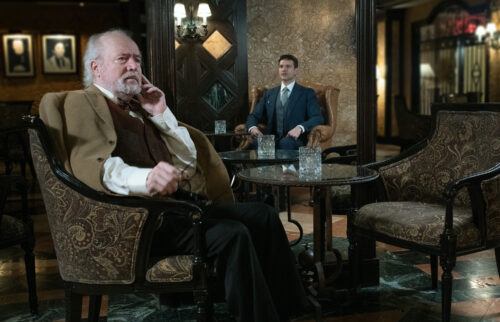
Keith Baker, left, and Teddy Warren play at-odds musicians in GableStage’s “Old Wicked Songs.” (Photo courtesy of Magnus Stark)
Now the Middle East is again enveloped in turmoil. Antisemitic and anti-Muslim incidents are spiking, while dueling protests – some in support of Israel, others critical of the huge civilian death toll and humanitarian crisis in Gaza – have taken place all over the world.
“To most Jewish people, this is so personal. It hits a very deep and sensitive nerve. Antisemitism goes way back…We have so often been ‘othered,’” says Newport. “But we’re a persistent people.”
Meltzer, who says he hasn’t been “this emotionally involved in a project” since Zoetic’s production of “Next to Normal,” finds solace and opportunity in art: “I feel wonderful and blessed, because the times are as they are, to have the chance to make art. To be in a country that allows these artistic conversations to happen.”
WHAT: World premiere of “Wicked Child” by David Rosenberg
WHERE: Zoetic Stage production in the Carnival Studio Theater at the Adrienne Arsht Center for the Performing Arts, 1300 Biscayne Blvd., Miami
WHEN: Previews 7:30 p.m. Thursday, Jan. 11, opens 7:30 p.m. Friday, Jan. 12; 7:30 p.m. Thursday-Friday, 2:30 p.m. and 7:30 p.m. Saturday, 2:30 p.m. Sunday (additional 7:30 p.m. show Wednesday, Jan. 17, no matinee on Saturday, Jan. 20), through Jan. 28
COST: $55 and $60
INFORMATION: 305-949-6722 or www.arshtcenter.org
WHAT: “Old Wicked Songs” by Jon Marans
WHERE: GableStage in the Biltmore Hotel, 1200 Anastasia Ave., Coral Gables
WHEN: Previews 8 p.m. Friday, Jan. 12, opens 8 p.m. Saturday, Jan. 13; 2 and 7 p.m. Wednesday, 8 p.m. Thursday-Saturday, 2 p.m. Sunday (additional 2 p.m. matinee Saturday, Feb. 3), through Feb. 4 (streaming version available during regular performances Jan. 19-Feb. 4)
COST: $40, $45, $50, $55, $60, $65, all with additional $10 service fee (discounts for students, teachers, artists, military and groups); streaming ticket $30
INFORMATION: 305-445-1119 or www.gablestage.org.
RELATED EVENT: A conversation with Gerard Schwarz, artistic and music director of the Palm Beach Symphony and professor of music at the Frost School of Music, in honor of Holocaust Remembrance Day, will follow the 2 p.m. matinee on Sunday, Jan. 28. Visit https://www.gablestage.org/events/mosaic-miami-gablestage-lets-talk/ for details.
ArtburstMiami.com is a nonprofit media source for the arts featuring fresh and original stories by writers dedicated to theater, dance, visual arts, film, music and more. Don’t miss a story at www.artburstmiami.com
No posts found
Oolite Arts’ filmmakers focus lens on Little Haiti, social justice issues
Written By Jonel Juste
December 11, 2023 at 4:06 PM
“El Soldador,” directed by Alexandra Martinez, explores the life of a homeless welder and the care he receives from a team of street medics. The film will be screened as part of “Pass the Mic: We Will Tell Our Stories” on Wednesday, Dec. 13 at the Little Haiti Cultural Complex. (Photo courtesy of Alexandra Martinez)
Storytelling possesses the ability to disrupt preconceived notions and biases through the presentation of varied narratives and perspectives. With this principle in mind, Oolite Arts will screen the works of 13 filmmakers on Wednesday, Dec. 13 at Little Haiti Cultural Complex.
Through a series of short films that weave together a tapestry of diverse stories, the movie creators hope to draw the public’s attention on Miami’s Little Haiti neighborhood affected by gentrification and issues that many Miamians face daily.
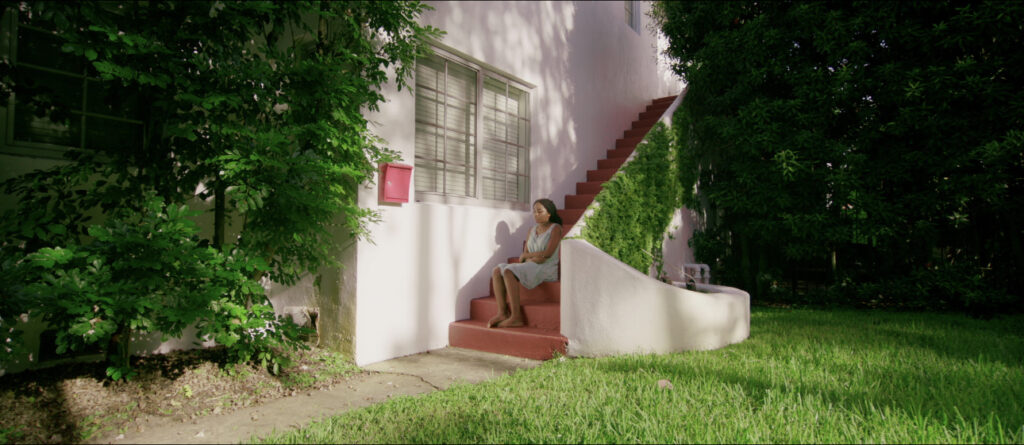
In Angelica Bourland’s “Kaila,” a young girl who is forced to leave Haiti struggles to adapt to life with her aunt in Miami, in a story that speaks to the neighborhood as a place for new beginnings. (Photo courtesy of Angelica Bourland)
Hansel Porras Garcia, Oolite’s cinematic arts manager, emphasizes the significance of featuring stories from communities such as Little Haiti. “It helps in preserving and celebrating their cultural heritage. It acknowledges their contributions to the larger societal tapestry, encouraging cultural preservation and pride.”
In discussing the narratives addressing social issues portrayed in the films—such as immigration, affordable housing, representation and inclusion challenges, and criminal justice reform—Garcia believes that they “also have the potential to motivate individuals and communities to take action.”
The short films, which be screened in the arts complex’s Proscenium Theater were made through two programs supported by Oolite Arts.
The first,“Pass the Mic: We Will Tell Our Stories,” returns for its third edition. According to Garcia, it was created as a collaboration between Oolite Arts and Community Justice Project. The three filmmakers had four months to complete the commissioned works and were paired with community experts from the Florida Immigrant Coalition, Miami Street Medicine, and Chainless Change. Each filmmaker received $7,500 to create the work.
The approach involves the subjects themselves serving as the storytellers, offering a firsthand perspective on the challenges they encounter.
In “El Soldador,” director Alexandra Martinez focuses on Ramon Duarte, a Nicaraguan welder who is now living on the streets struggling with alcoholism and depression. “The short documentary follows his journey to make better decisions for himself amid countless systemic failures, and how receiving care from the Miami Street Medicine team empowered him to hopefully make those decisions,” says Martinez.
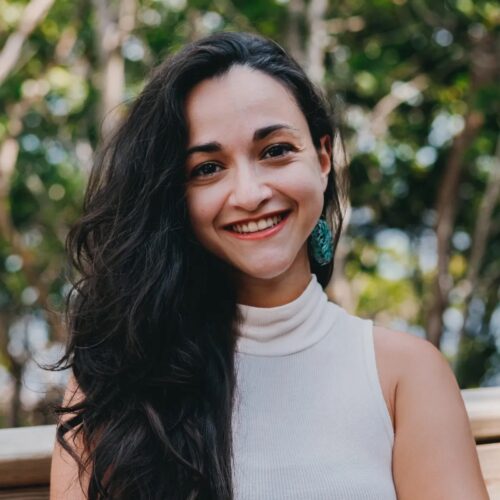
Filmmaker Alexandra Martinez worked with Miami Street Medicine on her short “El Soldador” for “Pass the Mic: We Will Tell Our Stories.” (Photo courtesy of Alejandra Libertad)
The local filmmaker says she visited the public library to read archived newspaper articles and legal filings, gathering historical insights into the treatment of the homeless community in Miami.
To research Ramon’s story in particular, Martinez says she spent time with him—as much as he was comfortable with. “We spoke about his life in Nicaragua, the music he grew up with, his family, and how so much changed when he immigrated to Miami. He showed me the areas he spends time in, where he stays now, and where he used to work.”
The filmmaker confesses making the movie impacted her perspective on homelessness. “Just realizing how quickly and easily someone can become homeless, how dangerous and unstable conditions are, how rapidly someone can be sent to jail, then released back onto the streets without any support systems in place—it was jarring.”
Also included in “Pass the Mic” are Chad Tingle’s “Preemption,” which highlights the efforts of local advocates associated with Chainless Change, a South Floridan organization fighting mass incarceration, and Pamela Largaespada’s “Madre Sombra” chronicling a family’s efforts to attain legal status for their mother in the context of Florida’s evolving immigration laws, working with Florida Immigrant Coalition.

Over a cup of steaming lemongrass tea, Haitian-American author Edwidge Danticat reflects on tradition, love, and motherhood in Alilcia Edwards’ “Citronelle.” (Photo courtesy of Alicia Edwards)
The second part of the program, “Local Love Letters,” which is in its second year, debuted in 2022 in response to a joint initiative by Oolite Arts and the City of Miami, urging filmmakers from Miami to create short films inspired by their city. Ten filmmakers were selected each receiving $5,000 to create short films set against the backdrop of Little Haiti.
This year’s “Local Love Letters: Little Haiti” includes Nadia Wolff’s “Chante Lapenn,” which is described as an experimental grief portrait, while Diana Larrea’s “Querido Pequeño Haiti” explores immigrant communities bidding farewell to a disappearing neighborhood.
Each film contributes to a vibrant tapestry of experiences within Little Haiti. In “Down to Zero,” Joshua Jean-Baptiste portrays a man navigating the challenges of aging through a candid conversation with his lifelong barber. Xavier Serrano’s “En la Pequeña Haití” follows a Cuban woman’s exploration in Little Haiti, and Alicia Edwards’ “Citronelle” features Edwidge Danticat reflecting on tradition, love, and motherhood.
In her short film centered around the author of “Breath, Eyes, Memory,” filmmaker Alicia Edwards explains that it was a natural choice for her to create a movie about the esteemed novelist, describing Danticat as “a stalwart supporter of her Little Haiti community.”
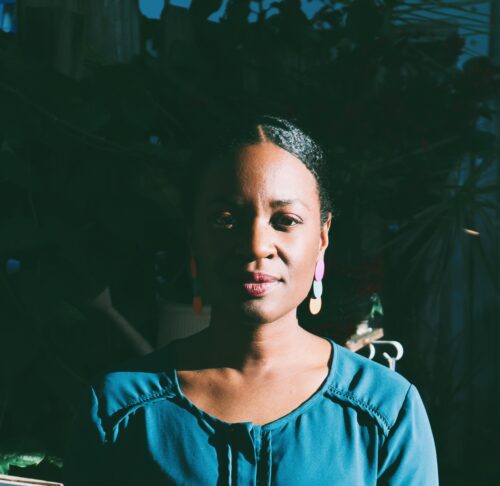
Filmmaker Alicia Edwards shares that creating a film about acclaimed novelist Edwidge Danticat was a natural choice, given Danticat’s steadfast support for her Little Haiti community.” (Photo courtesy of Alicia Edwards)
Edwards elaborates: “Edwidge Danticat has raised her family in the area, she’s fought for causes that are dear to her, and supported local businesses. When ‘Love Letters to Little Haiti’ was proposed, the idea of the film was inevitable. Little Haiti and Ms. Danticat are inseparable in my mind.”
The filmmaker hopes that viewers will perceive the author as a mother successfully navigating the balance between family and work, much like many others.
Noteworthy as well is Angelica Bourland’s “Kaila,” a short film following the challenges of a young girl who was compelled to leave Haiti and her endeavors to adapt to a new life with her aunt in Miami.
Bourland, drawing from her own upbringing in Miami with a Brazilian refugee mother, expresses a profound understanding of her mother’s experience immigrating to the United States.
“In today’s world, she says, where displacement due to conflict and violence are prevalent, the film ‘Kaila’ humanizes the refugee experience. The narrative of a young refugee meeting her aunt for the first time was an opportunity for me to explore family dynamics with the themes of connection, trust, and eventually the start of building a new family unit,” says Bourland.

Angelica Bourland directed “Kaila,” a short film following the challenges of a young girl compelled to leave Haiti trying to adapt to a new life with her aunt in Miami. (Photo courtesy of Angelica Bourland)
Beyond personal narratives, Bourland’s intention extends to advocating for the preservation of Little Haiti, spotlighting the “beauty, resilience, and cultural richness” of the Haitian neighborhood confronting the threat of aggressive gentrification.
“When Little Haiti was first established,” says Bourland, “the main purpose was to welcome Haitians in the U.S. I want this film to be a reflection of why it needs to keep on existing, to be a safe space for Haitians to come to when moving to the U.S. To have a community with their people and their culture alive and thriving.”
Garcia underscores the importance of screening the films, emphasizing that they humanize complex social issues by putting faces to the challenges individuals encounter.
“These stories provide a window into the lives of others, fostering empathy and understanding,” says Garcia. “By experiencing different perspectives and narratives, viewers can develop a deeper appreciation for the challenges and triumphs of communities like Little Haiti, ultimately promoting a more compassionate society.”
For Martinez of “El Soldador,” the films not only tell stories but, as she says, “speak truth to power.”
WHAT: “Pass the Mic + Local Love Letters: Little Haiti Screening”
WHERE: Little Haiti Cultural Complex, 212 NE 59th Terrace, Miami
WHEN: 7 to 9 p.m. Wednesday, Dec. 13
COST: Free. RSVP at Oolite Arts
INFORMATION: 305-674-8278 or oolitearts.org
ArtburstMiami.com is a nonprofit media source for the arts featuring fresh and original stories by writers dedicated to theater, dance, visual arts, film, music and more. Don’t miss a story at www.artburstmiami.com
No posts found
Review: A different Gilda Radner confronts mortality in ‘Enter, Grapefruit’
Written By Christine Dolen
December 5, 2023 at 1:12 PM
Charisma Jolly wrote, directed and stars in “Enter, Grapefruit,” a play getting its world premiere in at LakehouseRanchDotPNG through Sunday, Dec. 10. (Photo courtesy of Juan Gamero)
The late actor-comedian Gilda Radner was many things, but if you weren’t around to appreciate her in her heyday, maybe you don’t know much about her showbiz/personal journey.
As a member of the original Not Ready for Prime Time Players on NBC’s “Saturday Night Live” from 1975 to 1980, she created indelible characters: nerdy Lisa Loopner, hard-of-hearing Emily Litella (whose catchphrase was “never mind” after she’d delivered a genteel rant about some news event she’d misheard), bombastic TV journalist Roseanne Rosannadanna (whose huge hairdo was almost in the shape of a pyramid) and Baba Wawa, an interviewer with a noticeable speech impediment based on the widely admired Barbara Walters, who at first didn’t like the parody one little bit.
Actor-playwright Charisma Jolly stars in the premiere of her play “Enter, Grapefruit.” (Photo courtesy of Juan Gamero)
Radner also waged a nearly lifelong battle with eating disorders. She had relationships with a number of famous men, including a comedy who’s who consisting of Bill Murray and his brother Brian Doyle-Murray, Dan Aykroyd, Harold Ramis and Martin Short.
Her first marriage, to musician G.E. Smith, didn’t work out, but the love-at-first-sight second one, to actor Gene Wilder, was happy before fate intervened and Radner was diagnosed with the stage IV ovarian cancer that would take her life in 1989 at the age of 42. Thanks to the charitable efforts of Wilder and others after her passing, Radner posthumously became a significant figure in the fight against ovarian cancer.
“Enter, Grapefruit,” an almost-solo show by Charisma Jolly, doesn’t dwell on Radner’s biography in its LakehouseRanchDotPNG world premiere at Artistic Vibes in Miami.
Instead, Jolly – who wrote, directed and stars in the piece, as well as co-designing the set, lights and costume with stage manager Amanda Hernandez – gives the audience Gilda in a kind of comedian’s purgatory. That’s in keeping with the company’s dedication to less straightforward, more absurdist/experimental theater.
Just when she gets going, a grapefruit interrupts the show in Charisma Jolly’s world premiere LakehouseRanchDotPNG production “Enter, Grapefruit” at Miami’s Artistic Vibes. (Photo courtesy of Juan Gamero)
When she was in remission during her cancer treatment in the spring of 1988, Radner was to have been the first female former cast member to host an episode of “Saturday Night Live,” but a writers’ strike ended the season early. In “Enter, Grapefruit,” Jolly imagines that Gilda is getting something like that shot, albeit a nightmarish version of it.
In other words, whatever can go wrong does go wrong.
The fictional stage manager (Carlos Artze) sits on the set until Gilda dismisses him, then when she needs him, he’s nowhere to be found (yes, she even tries the bathroom). Her nervous chit chat with the audience, meant to warm them up, is often met with silence or reluctant participation, dialing up the character’s unease. Startling sound effects go off, seemingly at random.
And then there are the grapefruits – seen, hidden, omnipresent.
The title of the show refers to the grapefruit-sized tumor that was removed from Radner after her cancer was initially misdiagnosed, delaying the treatment that might have saved her life.

Symbolic of the illness that took comedian Gilda Radner’s life, grapefruits are everywhere in Charisma Jolly’s world premiere play “Enter, Grapefruit.” (Photo courtesy of Juan Gamero)
What Jolly gets so right in “Enter, Grapefruit” are the realities of living with – while knowing you’ll die from – a terminal illness. Her Gilda forgets, putting on her tap shoes to entertain us, only to have another grapefruit appear. A piece of her hair falls out; a grapefruit appears. Wanting normalcy, the waiting Gilda gets grapefruits.
The closing moments of this half-hour show deliver a graceful ending, one inspired by the way Steve Martin paid tribute to Radner when he was hosting “Saturday Night Live” on the day her death was announced. He shared an old clip of Radner and himself in a Fred Astaire-Cyd Charisse “Dancing in the Dark” parody. That dance combined elegance and goofiness.
In “Enter, Grapefruit” as Jolly and Artze dance their way offstage, the elegance prevails.
Playing the late Gilda Radner, actor-playwright Charisma Jolly gets ready to tapdance in her world premiere play “Enter, Grapefruit.” (Photo courtesy of Juan Gamero)
Jolly has noted that she wrote this play about an artist who continues to inspire her as a senior project at Florida International University. As a performer, she’s eager to please but skittish, appearing quite young in her pink overalls, white blouse and stylish loafers. She doesn’t particularly look or sound like Radner, but she conveys the essence of a woman who battled demons even as she became a comedy goddess.
As is, “Enter, Grapefruit” contains plenty of truth. But there’s room for more, maybe with an expansion to 45 minutes or an hour, and using relevant bits of Radner’s biography.
WHAT: World premiere of “Enter, Grapefruit” by Charisma Jolly
WHERE: LakehouseRanchDotPNG production at Artistic Vibes, 8846 SW 129th Terrace, Suite B (second floor), Miami
WHEN: 8 p.m. Friday-Saturday, 2 p.m. Sunday, through Dec. 10
COST: $20 (discounts for students and artists)
INFORMATION: 786-427-4721 or Lakehouseranchpng
ArtburstMiami.com is a nonprofit media source for the arts featuring fresh and original stories by writers dedicated to theater, dance, visual arts, film, music and more. Don’t miss a story at www.artburstmiami.com.
No posts found
Review: City Theatre’s ‘La Gringa’ is ‘muy maravilloso’
Written By Christine Dolen
December 4, 2023 at 5:50 PM
Mario Silva as Ramón “Monchi” Reyes and Emily Garcia Carrerou as María Elena García in City Theatre’s “La Gringa” at the Adrienne Arsht Center’s Carnival Studio Theatre through Sunday, Dec. 17. (Photo courtesy of Jason Koerner)
Among the great pleasures of theater is its ability to transport us, so thoroughly enmeshing us in the story and world of a play that we feel we’ve been on a vivid journey – without ever leaving our seats.
Carmen Rivera’s “La Gringa,” the longest-running Spanish-language play in Off-Broadway history, is graced with that magical power.
For its annual holiday season full-length production, City Theatre is giving Rivera’s play about a young Nuyorican woman’s exploration of her Puerto Rican roots the Miami debut it deserves.
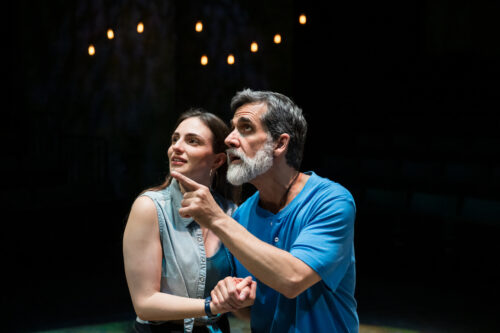
From left, Emily Garcia Carrerou as María Elena García watches as Carlos Orizondo’s Tío Manolo revels in the beauty of Puerto Rico in “La Gringa” at the Arsht Center. (Photo courtesy of Jason Koerner)
Running at Manhattan’s Repertorio Español since 1996, the OBIE Award-winning “La Gringa” is both specific and universal in its treatment of timeless subjects, including the schisms within families, the search for identity, economic insecurity and blossoming love.
Staged by executive director Gladys Ramírez with intricate attention to detail and meaning, City’s “La Gringa” begins casting its spell from the moment the audience enters the infinitely malleable Carnival Studio Theater space.
[RELATED: Read Christine Dolen’s preview story of “La Gringa”]
The audience is seated around a circular stage adorned with the Great Seal symbol of the island’s ancient Taino people. Just beyond the circle are rooms in a well-kept family home in rural Las Piedras, places where props and furniture reside when they’re not being used in a scene: the bedroom where the seriously ill Manolo (Carlos Orizondo) lives out his days, and the kitchen and living area where his bossy sister Norma (Talita Real) delivers her orders (Manolo calls her “General Norma”).
Over the stage are monitors aimed at each section of the audience, with items evocative of Puerto Rico (a stop sign with the word Pare, various hats, a bicycle, Puerto Rican license plates, shirts emblazoned with the word “Boricua,” tropical greenery) surrounding them.
Because the central character – niece and cousin María Elena García (Emily Garcia Carrerou) – is a New Yorker not fluent in Spanish, the play’s dialogue flows back and forth between the two languages, as it does in so many Miami homes. And because Ramírez, who collaborated with Rivera on this version of the script, wanted to be sure that anyone not fully bilingual could understand each moment of the play, captions on the monitor screens display every word in both English and Spanish.
This world is so evocative that you’d swear you can smell the salt air, feel the splash of a waterfall in the El Yunque rain forest, hear the noisy nighttime song of tiny frog-like coquís as stars glisten overhead.
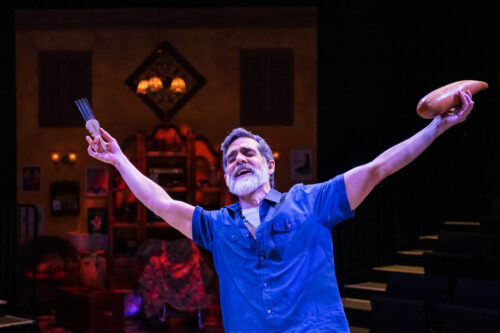
Carlos Orizondo as Manolo Cofressí plays the guiro in City Theatre’s “La Gringa” at the Arsht Center. (Photo courtesy of Jason Koerner)
Ramírez’s design team – scenic and property designers Jodi Dellaventura and Natalie Taveras Rosario, lighting designer Eric Nelson, costume designer Darío Almirón, sound designer Ernesto Gonzalez – have collaborated to create a kind of artistic love letter to Puerto Rico.
That’s appropriate because the central story of “La Gringa” turns on the Christmas season visit of 22-year-old María Elena García (Carrerou), the daughter of Manolo and Norma’s older sister Olga, who left Puerto Rico as an economic émigré.
Born and raised in New York, María has never been to the island, but she truly, madly, deeply loves all things Puerto Rican – much to the annoyance of her cousin Iris (Analisa Velez), who is constantly annoyed by María’s over-the-top enthusiasm.
At home, María has always felt Puerto Rican; here, she’s called “la gringa” and viewed as thoroughly American. Her feeling that she is ni de aquí, ni de allá (neither from here nor there) has propelled her quest to solidify her identity.
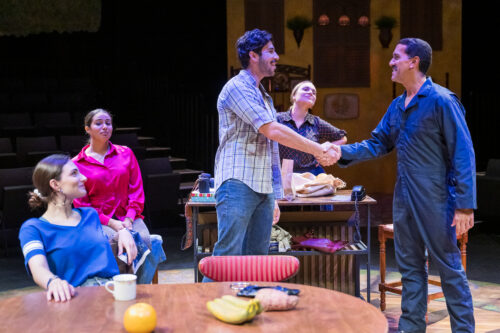
From left, Emily Garcia Carrerou, Analisa Velez and Talita Real look on as Mario Silva and Armando Acevedo greet each other with a handshake in “La Gringa.” (Photo courtesy of Jason Koerner)
As with anything so passionately imagined and idealized, María’s encounters with Puerto Rican life and her extended family aren’t always blissful.
Thinking she might stay if she can get a job in the Puerto Rican office of the New York insurance company where she works, she applies and gets turned down.
From the get-go, her Tía Norma (Real) is cool to her, keeping her at arm’s length but turning furious when a petulant María hurls her denim jacket adorned with the Puerto Rican flag onto the floor – Real’s sandaled foot practically vibrates as Norma fights the urge to smack her childish niece with her chancla.
“La Gringa” is a comedy suffused with many emotions – envy, tenderness, fear, loss, love in many forms. If God is in the details, City Theatre’s production is blessed with an ensemble that navigates all those varying moments with precision and artistry.
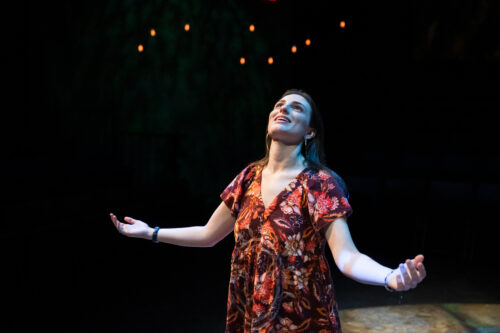
Emily Garcia Carrerou as María Elena García feels the bliss of connecting with her family’s Puerto Rican homeland in “La Gringa” at the Arsht Center. (Photo courtesy of Jason Koerner)
The younger members of the cast – Carrerou, making her professional debut after graduating from the New World School of the Arts last spring, Velez as the truth-telling Iris, Mario Silva as the dreamy farmer Ramón “Monchi” Reyes” – are all vibrant presences in the story. The blossoming romance between María and Monchi is an audience favorite, with lots of oohs and aahs every time their attraction almost leads to a kiss (no spoiler here).
Real and Armando Acevedo, who plays Norma’s good-guy husband Víctor, demonstrate their differences in the first scene when María takes leave of them by saying “bendición tía y tío (blessing, aunt and uncle).” Víctor responds with a sweet “que la virgen te acompañe (may the Virgin accompany you),” and while Norma says the same thing, her delivery is rote, devoid of emotion. Later, husband and wife have the kind of blistering argument that long-married couples try to avoid because it cuts so close to the bone – or the heart. Real and Acevedo are simply masterful in that scene.
Orizondo, a veteran actor with the region’s English-language companies, crafts one of the best performances of his long career as the ailing Manolo. His voice gruff from Manolo’s age and illness, Orizondo becomes María’s funny, encouraging, knowledgeable guide to all things Puerto Rican, including his revered Taino goddess Atabey. The tenderness of the evolving relationship between uncle and niece is at the heart of “La Gringa.”
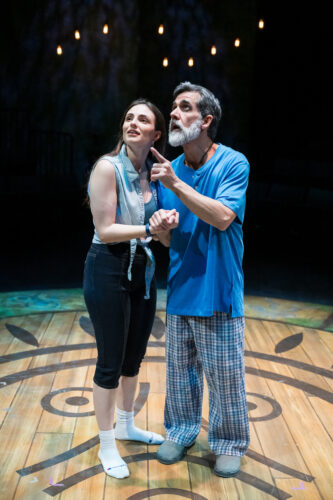
Emily Garcia Carrerou as María Elena García, left, listens as Carlos Orizondo’s Tío Manolo describes the natural wonders of Puerto Rico in “La Gringa” at the Arsht Center. (Photo courtesy of Jason Koerner)
As is typical at this time of year, celebration figures into the end of the play, with Manolo and then María scraping a palillo (a kind of pick with tines) rhythmically along a guiro (an instrument made from a gourd). Bomba, an invented-on-the-spot cross between music and poetry, is shared, as are dancing and food.
Then something sad if not unexpected happens. But because Ramírez, this cast and the designers have been so adept at guiding us through María’s journey, we embrace the full spectrum of emotions stirred by Rivera’s play. Qué maravilloso.
WHAT: “La Gringa” by Carmen Rivera
WHERE: City Theatre production in the Carnival Studio Theater at the Adrienne Arsht Center for the Performing Arts, 1300 Biscayne Blvd., Miami
WHEN: 7:30 p.m. Thursday-Friday, 3 and 7:30 p.m. Saturday, 3 p.m. Sunday, through Dec. 17
COST: $55 and $60
INFORMATION: 305-949-6722 or arshtcenter.org
ArtburstMiami.com is a nonprofit media source for the arts featuring fresh and original stories by writers dedicated to theater, dance, visual arts, film, music and more. Don’t miss a story at www.artburstmiami.com.
No posts found
Identity is at the root of City Theatre’s latest play at the Arsht Center
Written By Christine Dolen
November 27, 2023 at 8:15 PM
From left, Armando Acevedo, Talita Real, Emily Garcia Carrerou and Analisa Velez in City Theatre’s production of Carmen Rivera’s “La Gringa” at the Arsht Center through Sunday, Dec. 17. (Photo courtesy of Morgan Sophia Photography)
In vast and varied South Florida, cultural identity doesn’t get blended or homogenized within a proverbial melting pot. Instead, we become part of what theater artist Gladys Ramirez describes as “a tapestry of cultures” – Cuban, Venezuelan, Colombian, Argentine, Haitian, Dominican and so many more.
Ramirez, executive director of Miami’s City Theatre, is staging the company’s about-to-open production of Carmen Rivera’s “La Gringa.” And as a Miamian born to parents who came to the United States from Peru, she has a deep understanding of the play’s protagonist.

Emily Garcia Carrerou as María Elena García pays a visit to Puerto Rico in a scene from City Theatre’s “La Gringa.” (Photo courtesy of Morgan Sophia Photography)
The poignant comedy focuses on Bronx-born María Elena García, who will be played by Emily Garcia Carrerou in her professional debut.
María is a lifelong Nuyorican, a 22-year-old who decides to make her first trip to Puerto Rico during the Christmas holidays.
But despite her passion for all things Puerto Rican – her college major was Puerto Rican studies – María’s extended family views her as a decidedly American “gringa,” while in New York she’s seen as a Borinqueña (Puerto Rican).
So who is she? Ramirez understands that navigation, that dilemma.
“My agent wanted me to change my name,” says Ramirez, a New World School of the Arts graduate. “In Peru, I’m the American. Here, I’m the Latina.”

Carlos Orizondo and Emily Garcia Carrerou in City Theatre’s “La Gringa” at Miami’s Arsht Center. (Photo courtesy of Morgan Sophia Photography)
“La Gringa,” which previews at 7:30 p.m. Thursday, Nov. 30, and opens at 7:30 p.m. Friday, Dec. 1, runs through Sunday, Dec. 17, in the Carnival Studio Theater at Miami’s Arsht Center.
It’s a play with an impressive history: It has been running at Manhattan’s Repertorio Español since 1996 (it streamed during the pandemic), and is the longest-running Spanish-language play in Off-Broadway history. Its original director, Repertorio Español co-founder and artistic director René Buch, worked with Rivera to translate a script she wrote in English into Spanish. It also won Off-Broadway’s OBIE Award.
Yet this is the play’s debut in Miami, where many a play about Cuban roots and cultural identity has been produced, including Zoetic Stage’s world premiere of Hannah Benitez’s “GringoLandia” in the same Carnival Theater space in 2022.
“La Gringa,” which artistic director Margaret Ledford suggested as the company’s annual full-length play, deals with a different diaspora.
“This story is for everyone forced to emigrate for economic reasons. What does that do to the people left behind?” says Ramirez. “And it celebrates the culture of Puerto Rico.”
Carmen Rivera’s “La Gringa” is the longest-running Spanish-language play in Off-Broadway history. (Photo courtesy of the artist)
Ledford traditionally directs City’s winter play and several pieces in the company’s annual Summer Shorts festival. But this time the Tennessee native felt Ramirez, who staged the family-friendly musical “Bob Marley’s Three Little Birds” in 2022 for City, was the better choice to direct “La Gringa.”
“I didn’t feel I was the best person for the job . . . The more we talked about it, the more Gladys got passionate about it,” says Ledford, who knows some Spanish but in no way considers herself bilingual. “Originally, we chose the English version of the script. Then we thought about doing the English version and the Spanish version, which would have required two separate rehearsal schedules. Then we thought, ‘What if we integrated the languages?’”
A bilingual version was done in June 2023 by St. Petersburg-based American Stage. But when Ramirez contacted Rivera about wanting to incorporate both languages, the playwright told her to create a combined script and send it to her.
“In my family, we switch back and forth between languages. How does that happen organically? The hardest part was getting the jokes right,” says Ramirez. “Carmen was so open that it set the tone for how we’d collaborate.”
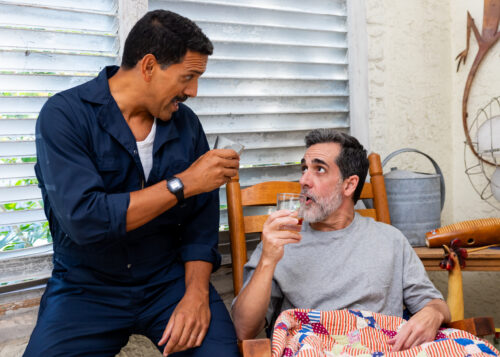
Armando Acevedo, left, and Carlos Orizondo sneak a drink in a scene from Carmen Rivera’s “La Gringa” at the Arsht Center. (Photo courtesy of Morgan Sophia Photography)
So now, City’s in-the-round production will be a bilingual blend, with the entire show captioned in English and Spanish to make it accessible to everyone.
“That’s how we live. It reflects our day-to-day. You’re not one thing or the other. I hope it resonates with people in a way that brings them together,” says the director.
Rivera was impressed with the result of Ramirez’s work.
“I’m excited. The script just flowed. Gladys did such an amazing job,” she says.
“La Gringa” is the story of a young woman much like the playwright. Born in New York to Puerto Rican parents who spoke to her in English, Rivera didn’t learn Spanish until she became a student at New York University.
Although she says, “I sound like a gringa when I speak Spanish. It’s the accent of the diaspora,” Rivera used her newly acquired Spanish to talk with her grandmother, who didn’t speak English, acquiring the cultural treasures and family stories the two hadn’t been able to share so completely.
“I wrote an essay about my relationship to Spanish,” says Rivera. “At first it was a language of incomprehension, then fear, then frustration. But as I started to understand my grandmother, it became a language of discovery . . . now it’s a language of freedom.”
At the suggestion of her husband, playwright Cándido Tirado, Rivera expanded her short two-character play “The Universe” into “La Gringa,” incorporating elements of her experience into the character of María Elena García.
“He told me, ‘You have to make this a full-length play. It’s about identity, and we’re still becoming, still asking where do I belong?’” she says.
Although her experiences with relatives in Puerto Rico were happier, like Maria, the playwright tried to get a job on the island without success. Her grandmother had lost dreams of wanting to be a singer, like Maria’s aunt in the play. Her uncle Manuel, like the play’s Manolo, was a very funny man.

From left, Mario Silva and Emily Garcia Carrerou feel an unexpected attraction in City Theatre’s “La Gringa” at the Arsht Center. (Photo courtesy of Morgan Sophia Photography)
After “La Gringa,” Rivera wrote the Off-Broadway musical “La Lupe: My Life, My Destiny” about Cuban singer Victoria Lupe Yoli. Together, Rivera and Tirado wrote “Celia: The Life and Music of Celia Cruz,” which played at the Arsht Center in June 2009. The two are also founders and codirectors of Educational Play Productions, which takes thought-provoking plays into New York City schools.
Thanks in part to the work of dramaturg Karina Batchelor, the cast and creative team of City Theatre’s “La Gringa” – a group whose heritage spans multiple countries – is steeped in all things Puerto Rican, many referenced in Rivera’s script. They know about the coquí, tiny male tree frogs who sing their mating call all night. They know the music of the Bomba, the indigenous Taíno who were in Puerto Rico long before Christopher Columbus arrived, the supreme goddess Atabey, the traveling holiday celebration that is the parranda.
Carrerou leads the cast just months after graduating from the New World School of the Arts in May. (One necessary note for those steeped in South Florida theater: The play’s central character is not to be confused with Carbonell Award-winning actor-playwright Elena Maria Garcia, who will be back on the Carnival Theater stage May 2-19 in Zoetic Stage’s world premiere of “Cuban Chicken Soup When There’s No More Café,” the sequel to her popular solo show “¡FUÁCATA!”)

The cast of City Theatre’s “La Gringa” celebrates with a holiday parranda, with music, food, drink and storytelling on the menu. (Photo courtesy of Morgan Sophia Photography)
Armando Acevedo plays María’s welcoming uncle-by-marriage, Victor Burgos, with Talita Real as her notably unhappy aunt Norma and Analisa Velez as María’s cousin Iris. Carlos Orizondo, who originated the role of Palomo in the New Theatre world premiere of Nilo Cruz’s Pulitzer Prize-winning “Anna in the Tropics,” plays María’s ailing, funny, spirited uncle Manolo Cofresí. And Mario Silva is the entrepreneurial neighbor-farmer Ramón “Monci” Reyes who becomes close to María as he helps her navigate the disappointments of her dream trip.
Like her character, Carrerou is 22. And like María, the actor – whose family is Cuban and Argentine – doesn’t speak Spanish. She had thought that post-New World she might move to Spain for a time to learn the language, but given her debut in “La Gringa,” she’s extremely happy she stayed.
“To make my professional debut at the Arsht Center means a lot. I’m a Miami girl. The Arsht is our Broadway,” she says.
WHAT: “La Gringa” by Carmen Rivera
WHERE: City Theatre production in the Carnival Studio Theater at the Adrienne Arsht Center for the Performing Arts, 1300 Biscayne Blvd., Miami
WHEN: Preview 7:30 p.m. Thursday, Nov. 30, opening 7:30 p.m. Friday, Dec. 1 (a pre-show Parranda on the Plaza with music, food and drinks happens at 6 p.m. on opening night); regular performances 7:30 p.m. Thursday-Friday, 3 and 7:30 p.m. Saturday, 3 p.m. Sunday, through Dec. 17
COST: $55 and $60
INFORMATION: 305-949-6722 or www.arshtcenter.org
ArtburstMiami.com is a nonprofit media source for the arts featuring fresh and original stories by writers dedicated to theater, dance, visual arts, film, music and more. Don’t miss a story at www.artburstmiami.com.
No posts found
A.I. Is Top Topic At 10th Anniversary FilmGate Miami Festival
Written By Michelle F. Solomon
November 27, 2023 at 5:53 PM
“Folding Harmonies” from Taiwan is one of the immersive audiovisual experiences that are part of this year’s FilmGate Interactive Media Festival held in various locations in Miami from Wednesday, Nov. 29 through Sunday, Dec. 3. (Photo courtesy of FilmGate Miami)
The conversations and programming at the FilmGate Interactive Media Festival evolve quickly. In fact, you could say that the landscape changes so fast that just as one trend is the hottest topic, another takes its place.
“FilmGate came out of curiosity,” says Diliana Alexander, executive director of FilmGate Miami, whose FilmGate Interactive Media Festival is in its 10th year and takes place this year at various locations from Wednesday, Nov. 29, through Sunday, Dec. 3.
It will be no surprise to anyone familiar with what’s happening in the world of immersive technologies that this year’s FilmGate will be at the forefront of the latest conversation point – artificial intelligence or A.I.

Diliana Alexander, co-founder, executive director of FilmGate Miami (Photo courtesy of Filmgate Miami)
For perspective, just three years ago, Alexander says FilmGate was helping the masses make sense of the confusion over NFTs, an art, music, game, video or another digital asset that exists solely online. “And NFTs are still in it,” she says. “All of these technologies that are pushing in different directions are really pushing in the same direction. But A.I. is a major shift.”
Alexander adds, “(A.I.) is the closest to magic we’ve ever been, and it will be exciting to see what that means for the creative process. What it means for audiences. What it means for us.”
The theme for this year’s festival is Regenerate X, which includes talks, workshops, and, as has come to be expected of the festival, 35 immersive and experiential installations open to the public.
This year, FilmGate has partnered with the University of Miami where much of the festival, including immersive experiences, will take place at its Lakeside Village Expo Center. Other locations for VR/XR and interactive experiences are the Phillip and Patricia Frost Museum of Science, Downtown Media Center, Perez Art Museum, Bayside Marina, and a variety of outdoor locations in downtown Miami.

“Body of Mine,” a virtual reality experience, explores what it’s like to be transgender at the FilmGate Interactive Media Festival. (Photo courtesy of Cameron Kostopoulos)
A virtual reality project that made its world premiere in June at the South by Southwest (SXSW) Film and TV Festival in Austin, Texas, comes to the FilmGate festival at Lakeside Village as part of the expo offerings. In “Body of Mine,” users put on a headset and body-tracking sensors for a full-body immersive experience that will allow them to inhabit the body of a different gender. Cameron Kostopoulos, the creator of the VR, describes “Body of Mine” as an exploration of the transgender body in virtual reality, adding that the inspiration for the project came from the political and homophobic atmosphere in the United States.
Alexander felt that its placement at FilmGate was essential. “It is an important topic to cover, and in Florida, because there’s not a lot of empathy at the moment around this issue.” The interactive demo prompts the user to touch their virtual body and audio clips from trans people can be heard describing parts of their bodies.
Time capsule messages meant for Miamians of the “far future” is at the center of South Florida artist Fereshteh Toosi’s audio interactive experience, “Voice Memos for the Future.”
The piece invites people to connect to nature in locations chosen by the interviewees: Katherine Jones in Legion Park, Blanche Spiner in Biscayne National Park, Yaneisy Reyes in Morningside Park, Ashley Kow in Hollywood Beach, Isabella Marie Garcia in Enchanted Forest Park, and Kasia Williams in Crandon Park. The recordings, which can be heard for free on mobile devices through the audio AR platform echoes.xyz are only accessible when the listener visits the exact places that are being discussed.

South Florida artist Fereshteh Toosi created the audio interactive experience, “Voice Memos for the Future,” part of this year’s FilmGate Interactive Media Festival. (Photo courtesy of FilmGate Miami)
The project started when Toosi created a workshop for people in their 20s. “I wanted to hear what they had to say about what it’s like to live in Miami. A lot of people applied, and from that set of applications, I narrowed down the list,” says Toosi, whose pronouns are they and them.
They wanted to have a conversation about climate change and how living in South Florida is a place that continues to be impacted both financially and in the physical environment by ecological changes. “So, what do they want to communicate with the future? And there is a fear, and there’s already a lot of grief around what’s happening,” says Toosi.
For one example, Reyes in Morningside Park, addressing those in Toosi’s far future, says she can see “Miami Beach across the pond,” that “we’re finding ways to stay sane over here in the past,” and apologizes for “anything that we as a collective are failing to do now that may have landed you in a s—– situation in your present.”
At the Frost Science Museum, FilmGate gives viewers the chance to immerse themselves in three dome experiences, which include two from Taiwan: “Folding Harmonies,” an immersive audiovisual presentation that also includes a live performance which is meant to challenge conventional perceptions of time by creating a space where time is a flexible entity, and “Limbotopia,” which also takes up the issue of time and its place between utopia and dystopia. From Canada, “Biliminal” oscillates between meditative serenity and explosive chaos, according to its creators.
Artificial Intelligence (A.I.) shows up here and there in this year’s FilmGate including a workshop presented by Snapchat to show attendees how to use its software Lens Studio on a mobile device to create AI agents, basically intelligent virtual assistants.
And a virtual encyclopedia of AI knowledge, South Florida’s Rony Abovitz, who founded Magic Leap in 2011 and the co-founder of surgical robotics creator Mako Surgical Corp., will show his short film “Yellow Dove Aftermath: The World of Hour Blue,” which will introduce a synthetic being, Jako Vega, also known as Yellow Dove. “We’ve been incubating this world, ‘Hour Blue,’ for a number of years. Jako Vega can parse between the current world and the Hour Blue world.”
The film is from Abovitz’s new company called Sun and Thunder whose focus is on AI characters and interactive storytelling.
During a talk he is scheduled to give on Thursday, Nov. 30, after the showing of his film at 5 p.m., Abovitz says he’ll speak about SynthBee, Inc., a sister company to his film production company.
“It is developing a human-friendly collaborative A.I. architecture that allows ambitious projects to get done,” he says. Citing films like “The Lord of the Rings,” Abovitz says a movie trilogy like “Rings” that would have taken decades to make with 10,000-plus people, can now use “synthies” (or synthetic beings) which would allow mammoth projects to be done by maybe a dozen people and a cadre of “synthies.” Abovitz says it is a way of democratizing computational intelligence.
He has a larger interest, he says, than capital and resources. There’s a fight for the soul of A.I. as the New York Times recently put it. Artificial intelligence has progressed so rapidly in recent months that leading researchers have signed an open letter urging an immediate pause in its development, plus stronger regulation, due to their fears that the technology could pose “profound risks to society and humanity.”
Jako Vega, a synthetic being or “synthie,” stars in Rony Abovitz’s Sun and Thunder company’s first animated short film, “Yellow Dove Aftermath,” which will be screened at the FilmGate Interactive Media Festival. (Photo courtesy of Sun and Thunder)
“I think A.I. itself, the underlying computational intelligence, could be harnessed in many ways for social good,” says Abovitz. “Think about the filmmakers that come to FilmGate, they may never get $500 million like a Steven Spielberg or a James Cameron and have (access) to that huge amount of capital and resources to make these sorts of grand movies. You’re a small team of five or six, so what if you were empowered to make a grand film? They’re not taking away anyone’s job because no one was going to give them that money or chance, most likely anyway. This is a way of creating empowerment to do something that never would have happened.”
This is the age of computing where you can make this a reality, says Abovitz, adding that AI characters will not replace people but instead will work in harmony with them, doing things that were impossible before, and pushing the envelope. “Jako Vega is the first tiny step that we’re showing the public within this much bigger idea that we’re going after.”
WHAT: FilmGate Interactive Media Festival “Regenerate X”
WHERE: University of Miami Lakeside Village, 12800 Stanford Drive, Coral Gables, Phillip and Patricia Frost Museum of Science, 1101 Biscayne Blvd., Miami, University of Miami’s Bill Cosford Cinema, 5030 Brunson Drive, Coral Gables, Perez Art Museum Miami, 1103 Biscayne Blvd., and other downtown Miami locations.
WHEN: 7 p.m., Wednesday, Nov. 29, VIP reception; 7 to 10 p.m., Thursday, Dec. 1, Dome experiences; 10 a.m. to 6 p.m. Thursday, Nov. 30 through Saturday, Dec. 2, immersive experiences and interactive installations; 3 p.m., Friday, Dec. 1, 11 a.m., 1 p.m. and 3 p.m., Saturday, Dec. 2, and 11 a.m. Sunday, Dec. 3. Olympia Arts Bicycle Theater Adventure, “Tales of the Magic City,” 4 p.m. Sunday, Dec. 3, awards ceremony and boat sunset cruise. Download the complete schedule here.
COST: $220 ($5.39 fee), VIP access to all festival events, $85 ($2.69 fee), VIP student with current ID; $50 ($1.99 fee), Frost Dome experience, Thursday, Nov. 30; $30, Bicycle Theater adventure; free one-day passes available for FGI Virtual Portal Room at UM for Thursday, Nov. 30, Friday, Dec. 1 and Saturday, Dec. 2. Tech talks free.
INFORMATION: 305-916-6973 and filmgate.miami/fgix
ArtburstMiami.com is a nonprofit media source for the arts featuring fresh and original stories by writers dedicated to theater, dance, visual arts, film, music and more. Don’t miss a story at www.artburstmiami.com.
No posts found

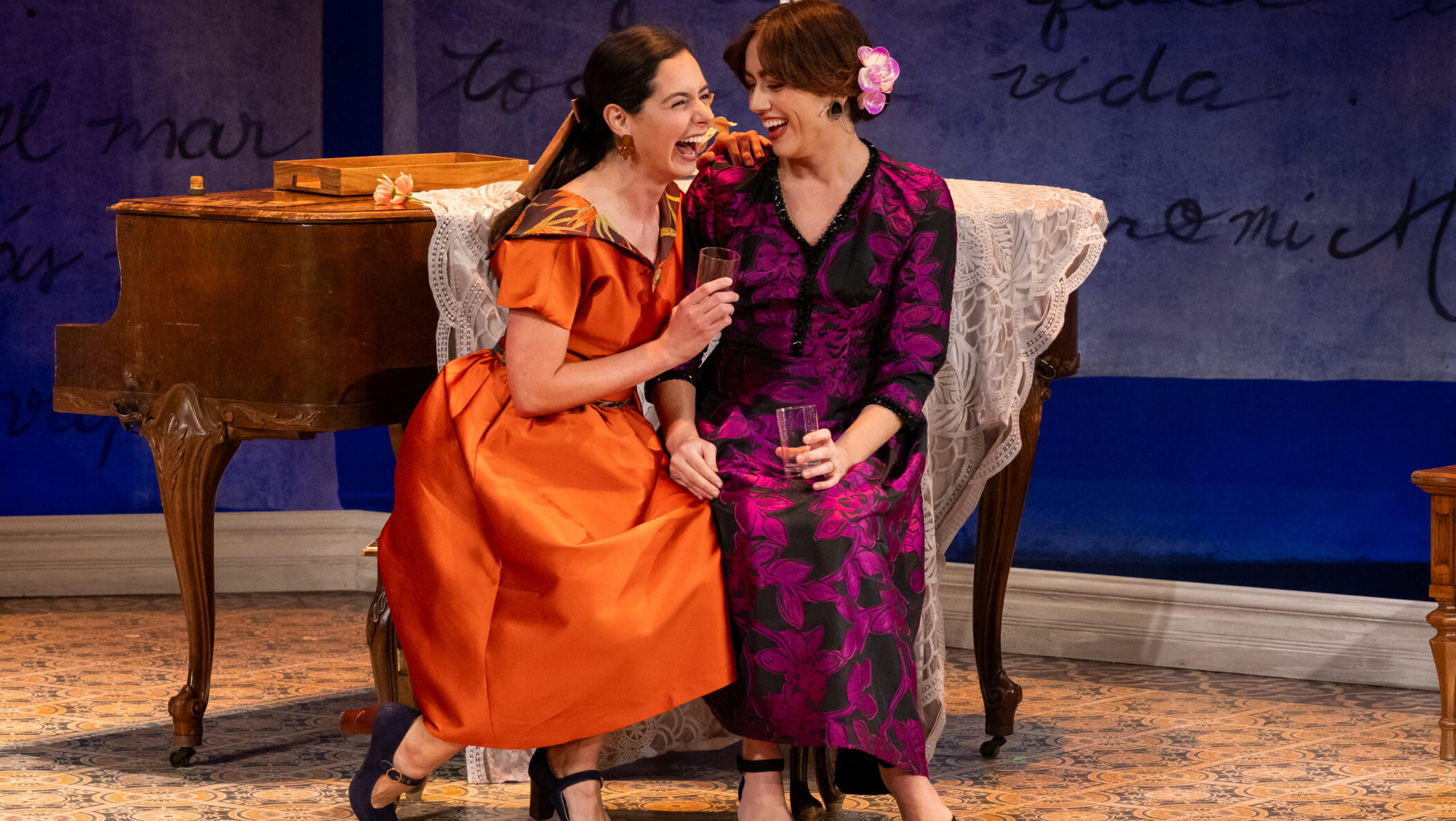
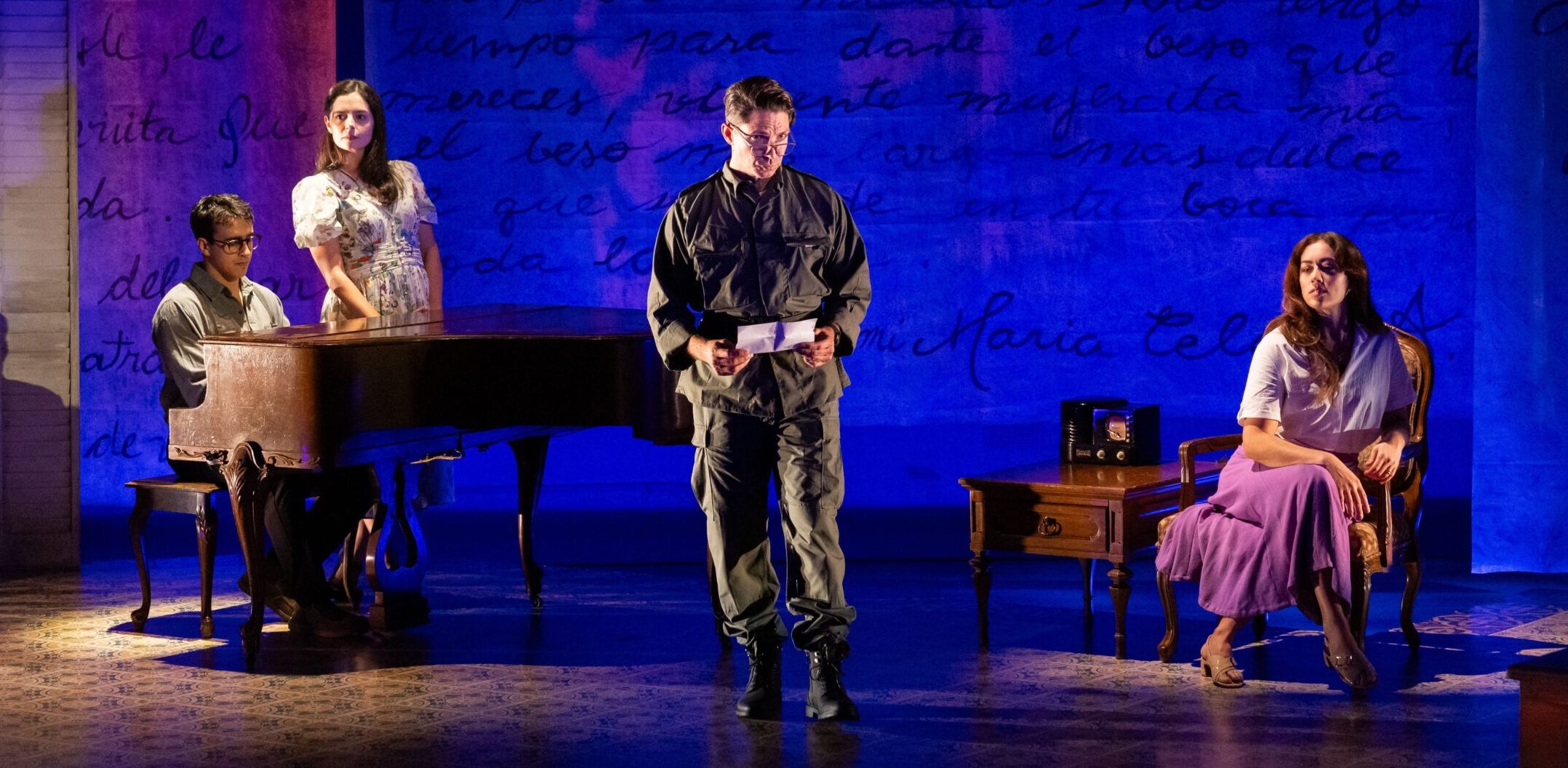
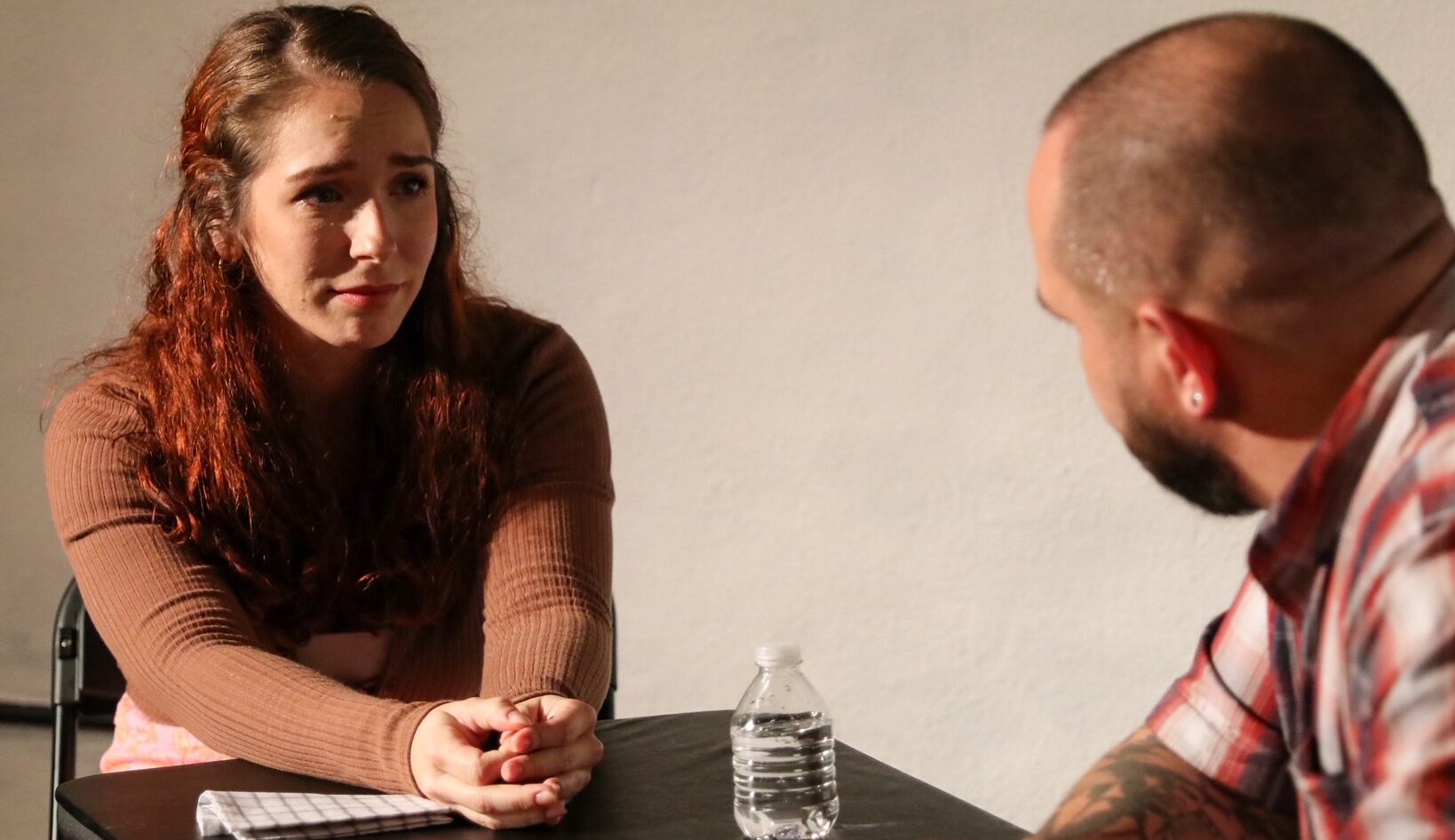
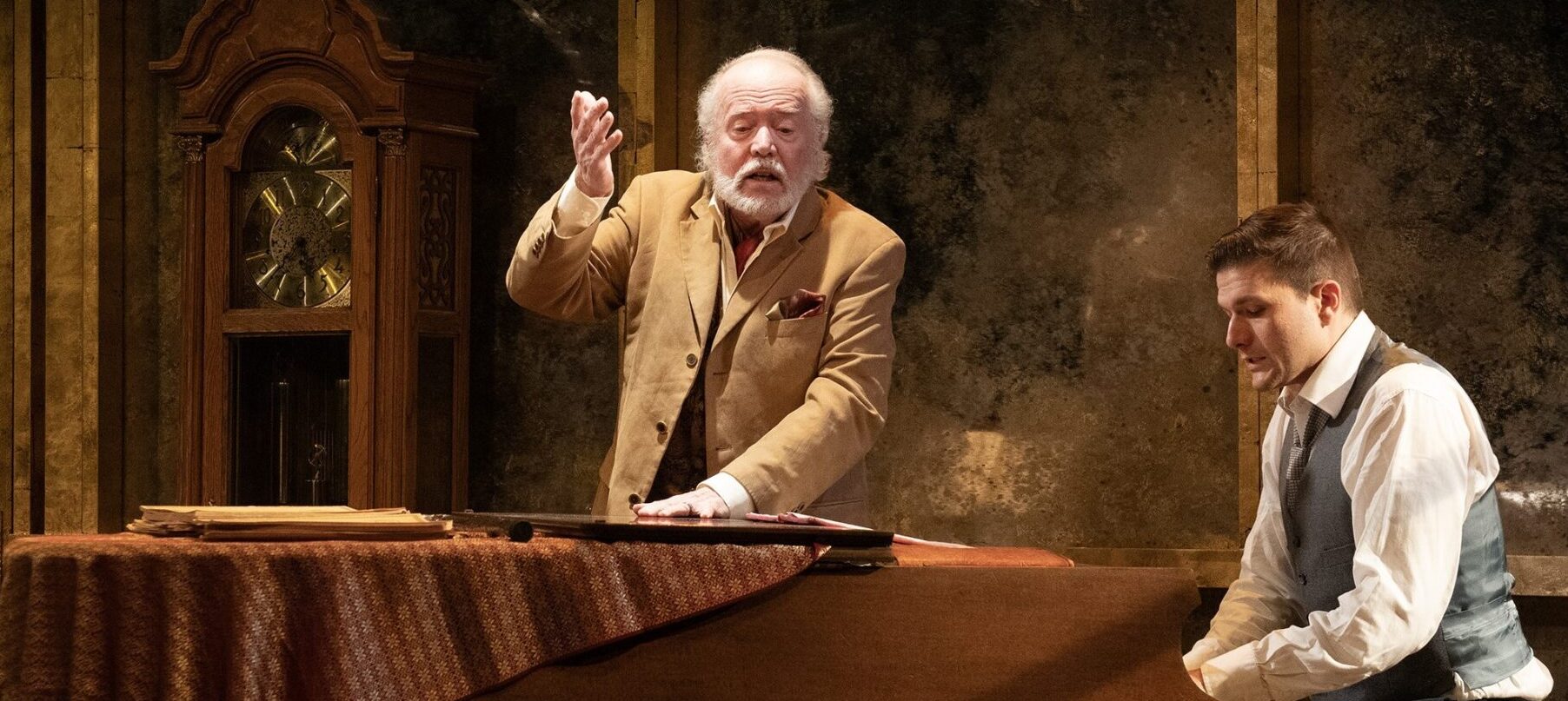
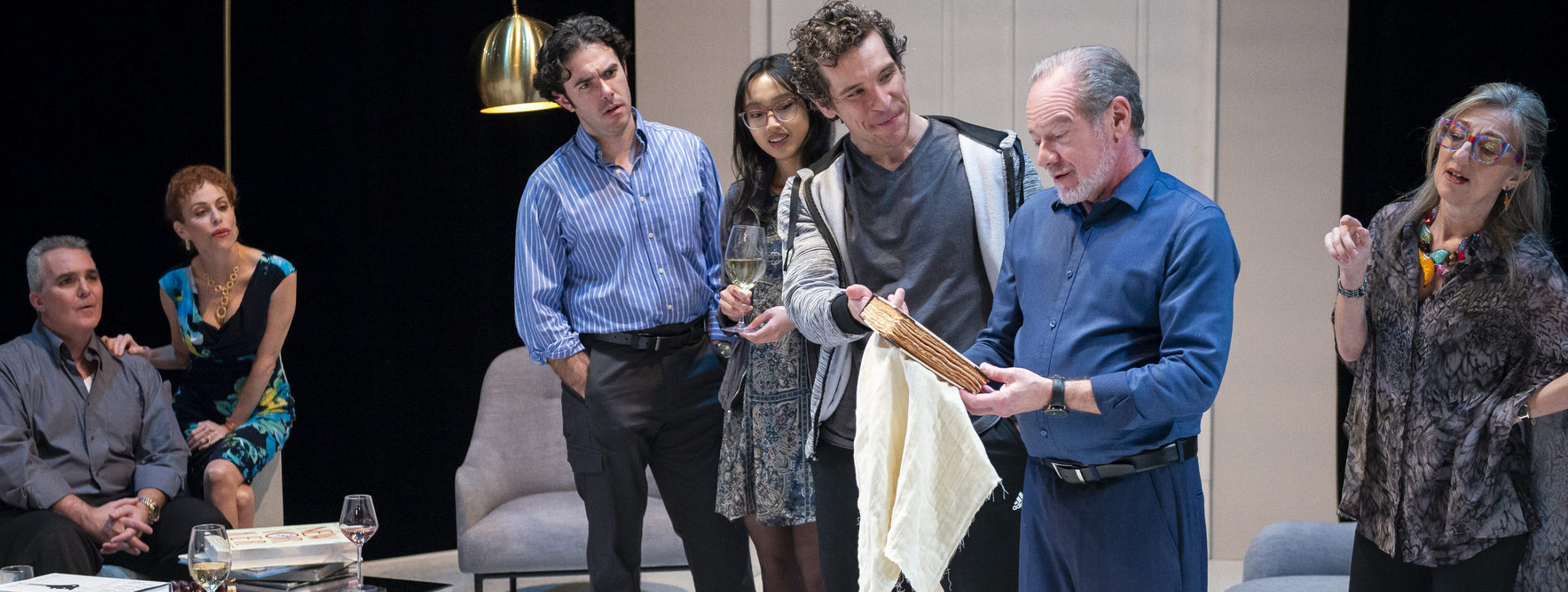
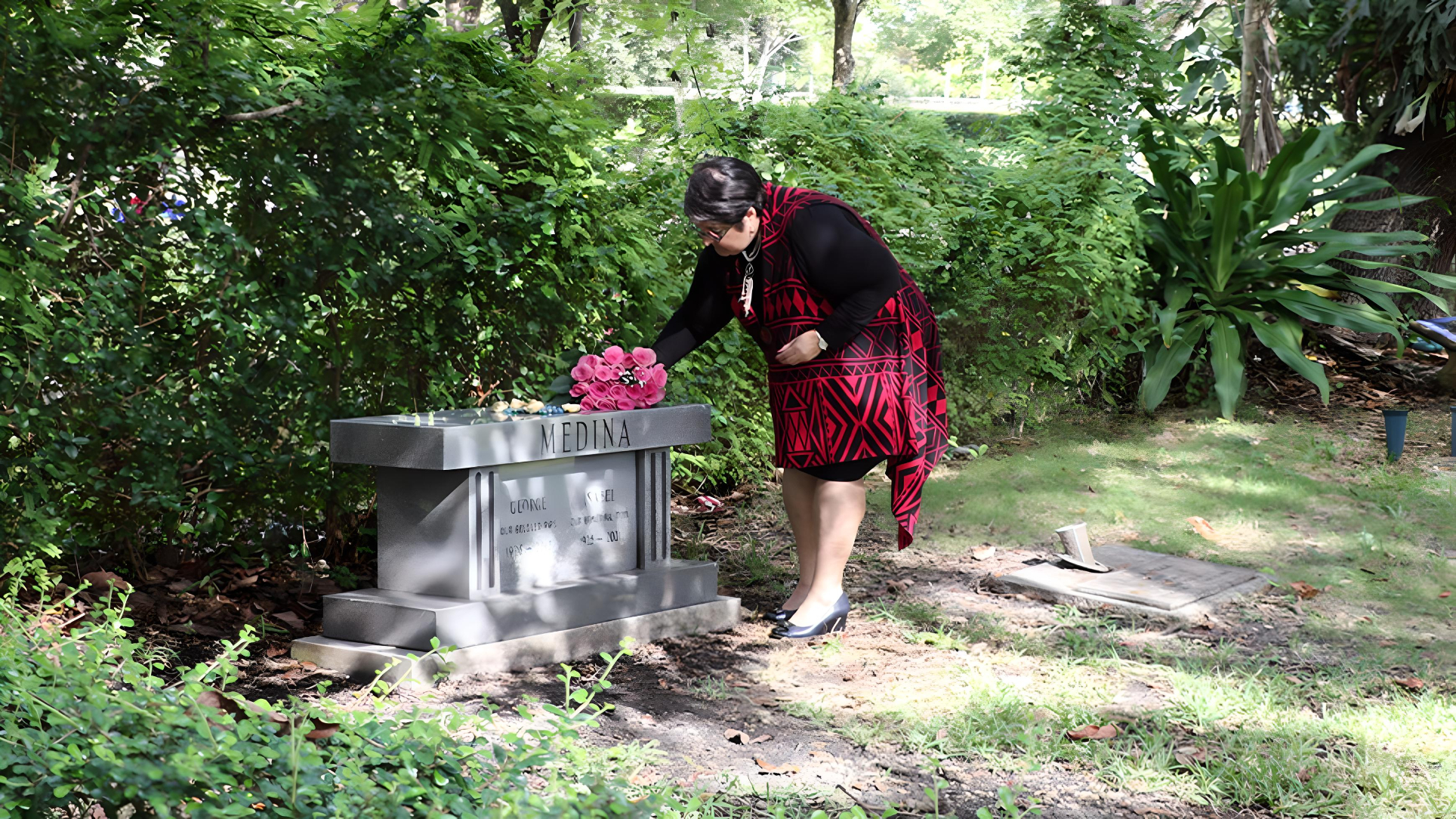
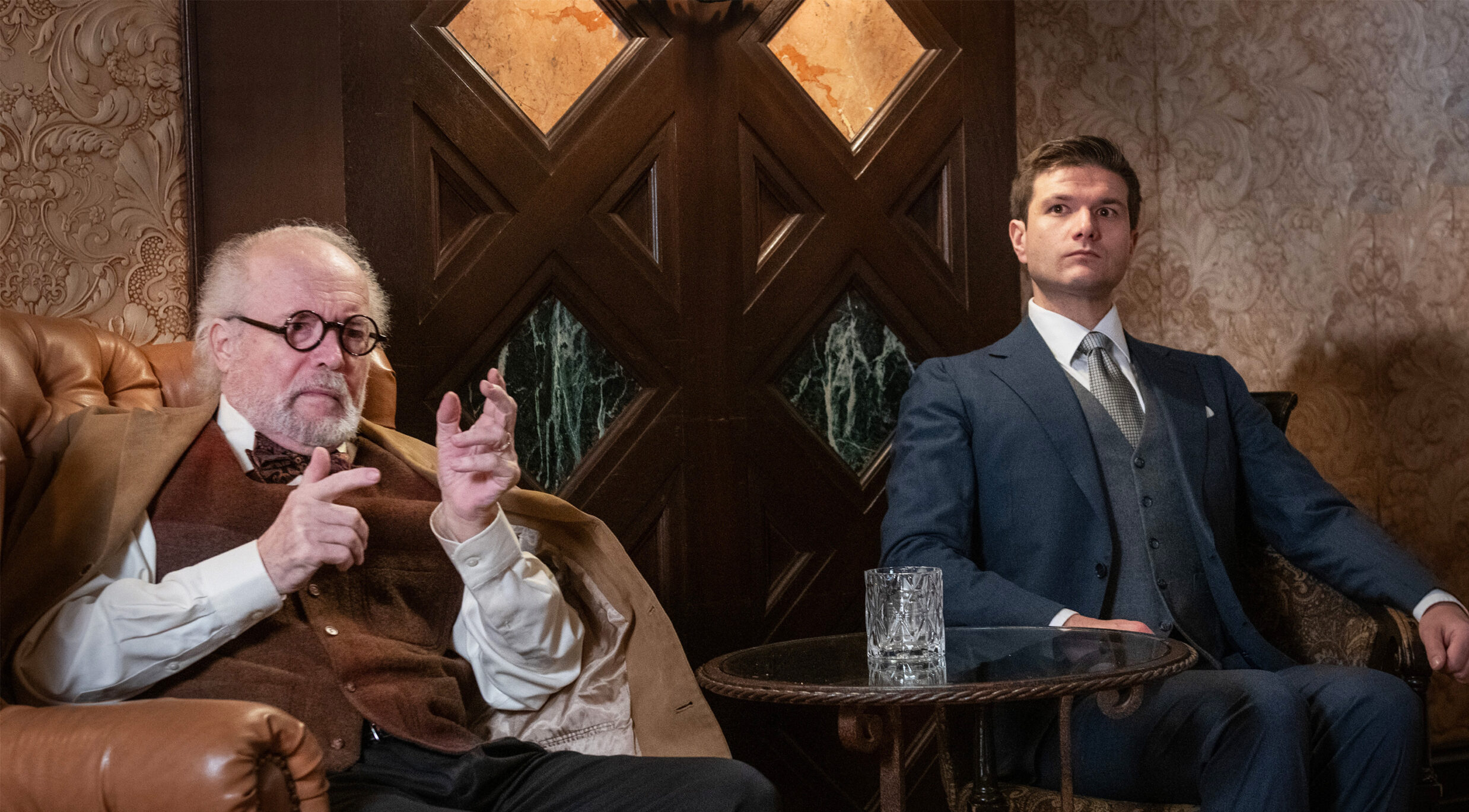
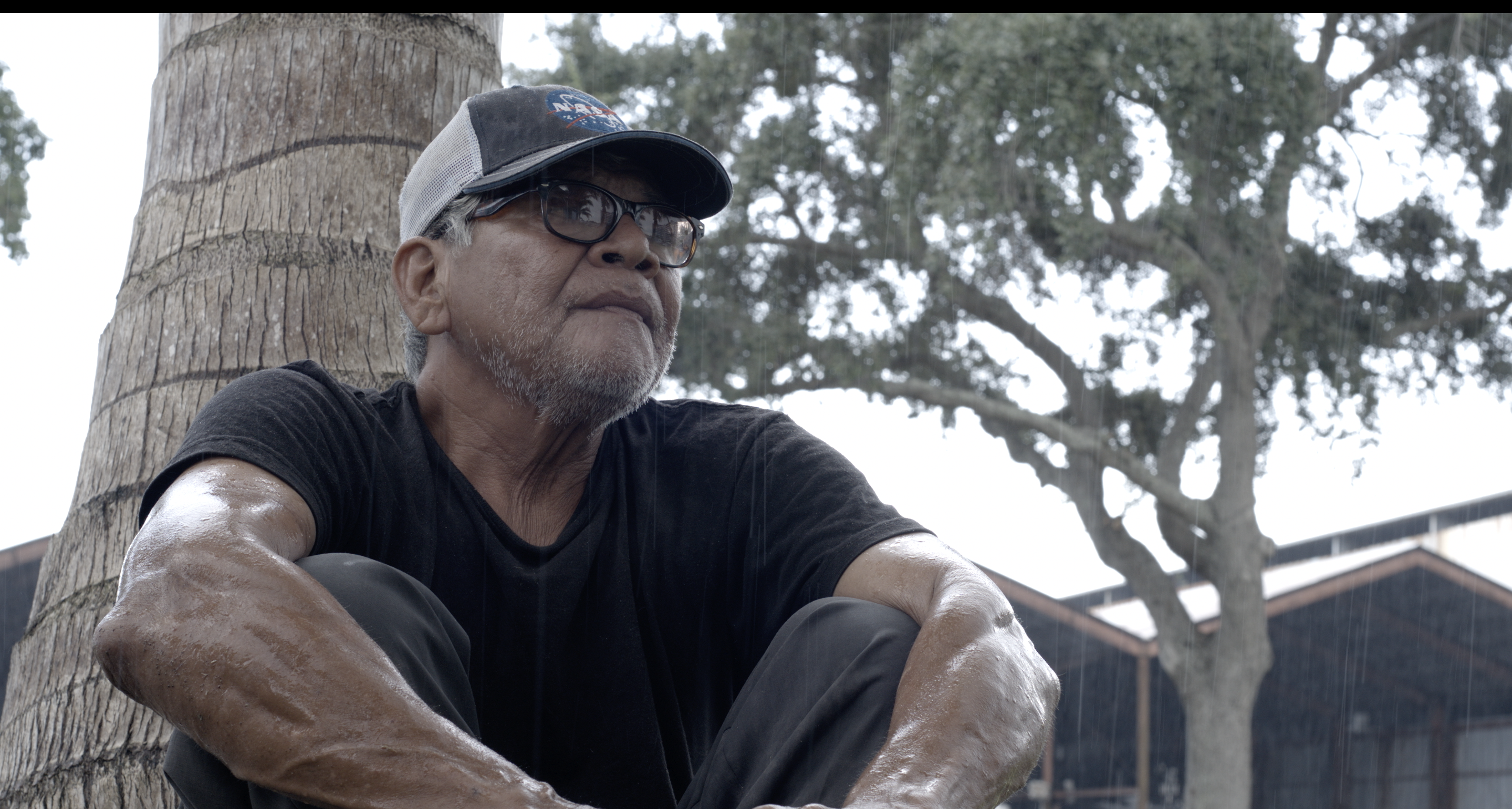
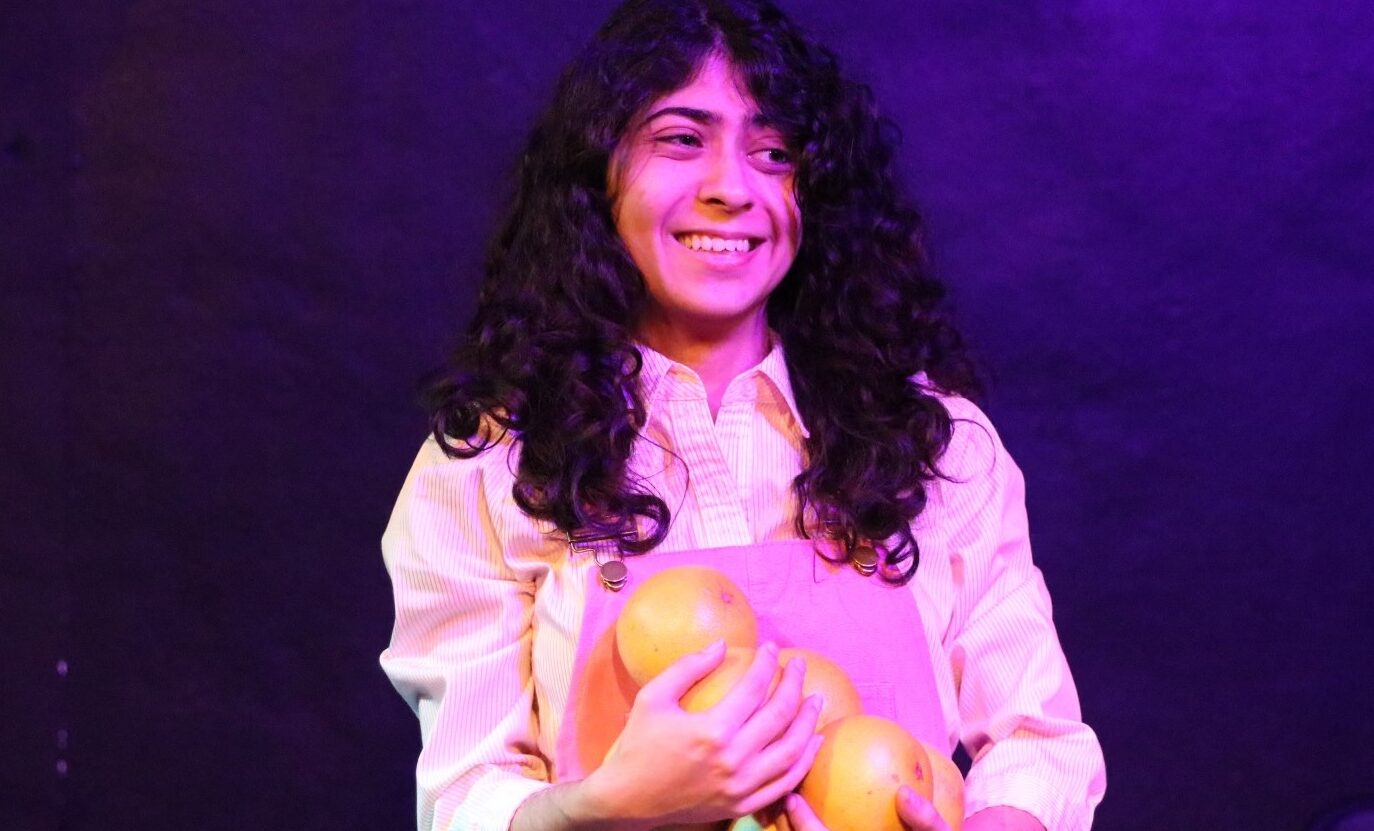
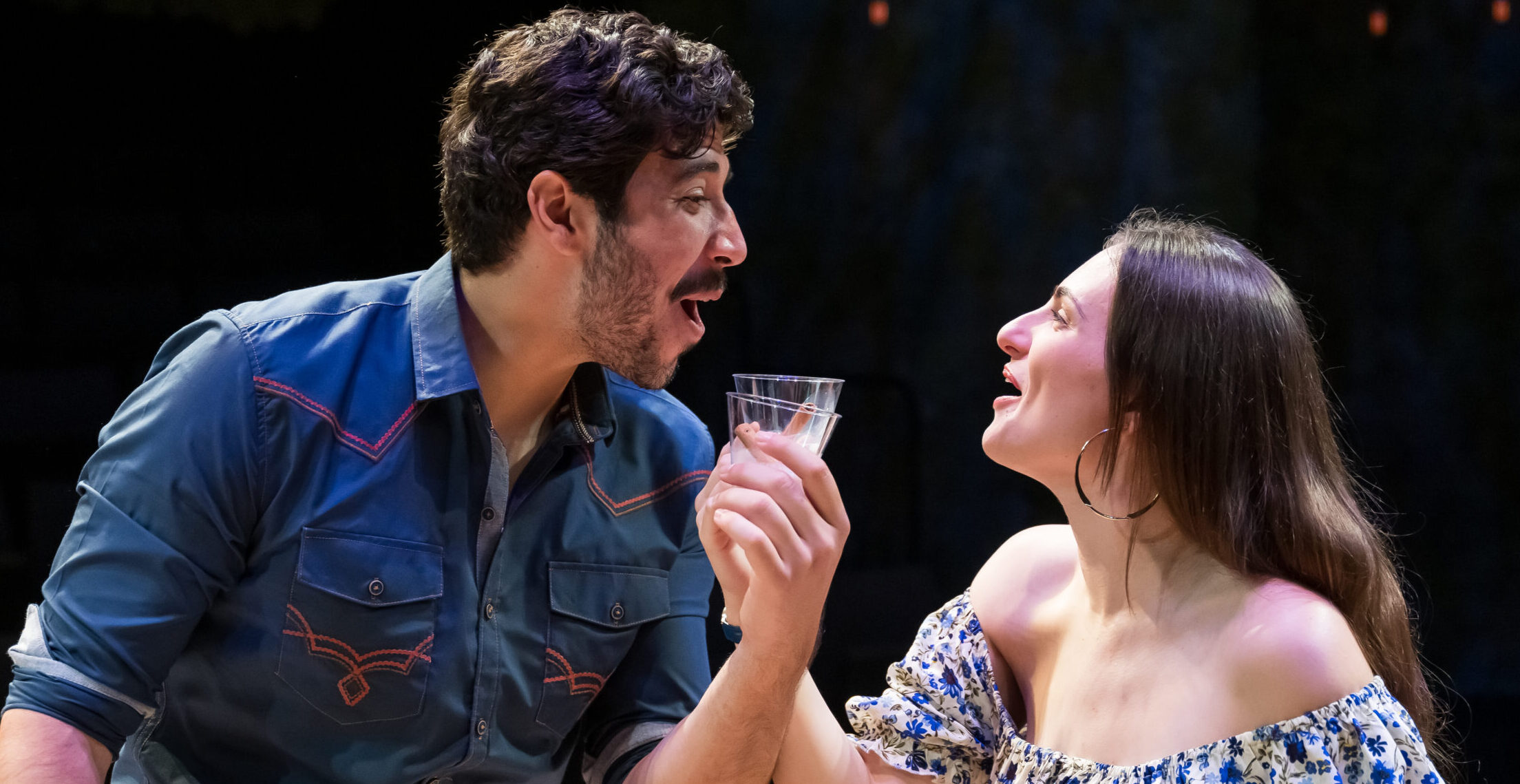


Recent Comments