Blog Article Category: Theater / Film
Review: Miami New Drama’s ‘Museum Plays’ merges art forms at the Rubell
Written By Christine Dolen
February 27, 2024 at 3:17 PM
In one of six of Miami New Drama’s “The Museum Plays,” Jovon Jacobs sits in front of Kehinde Wiley’s masterpiece “Sleep” in Aurin Squire’s play “Maybe Love” at the Rubell Museum. (Photo courtesy of James Jackman)
For those who are passionate about the visual arts, a museum is a repository of treasures, a place to ponder the end result of an artist’s vision. Miami’s Rubell Museum is, as always, full of works that nourish the eye, the intellect and sometimes the soul as they invite personal interpretation.
For the month of March, the Rubell is also home to a different kind of art, thanks to Miami New Drama’s cofounder and artistic director Michel Hausmann. As commissioner and curator, Hausmann worked with six playwrights to derive short pieces inspired by works in the vast collection of Don and Mera Rubell, key players in the transformation of Miami into an international art hub.
“The Museum Plays” are as different as the writers who created them.
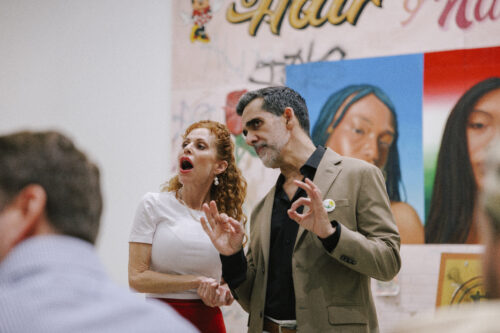
Margery Lowe and Carlos Orizondo haggle over art and bitcoins in Harley Elias’s “Pump and Dump,” one of Miami New Drama’s “Museum Plays” at the Rubell Museum. (Photo courtesy of James Jackman)
Although this project is somewhat in the spirit of “Seven Deadly Sins” — Miami New Drama’s pandemic-era production that saw actors performing in Lincoln Road storefronts as small groups of masked-up audiences watched from seats outside each space — that leap into a different kind of creativity came from necessity.
“The Museum Plays” is an exploration of collaborative possibilities for institutions specializing in different art forms. Though it has some structural similarities – guides lead five groups of 30 from one play to the next, with each guide told via an earpiece when to move from one space to another – seeing art-inspired plays in a museum setting is a singular experience.
For one thing, you react to a work of art and the playwright’s creative reaction to it. For another, although the plays are carefully placed throughout the museum, its spacious galleries weren’t created with sound, sets and lighting effects in mind, so sometimes acoustics are less than ideal, and the sets are mainly the inspirational pieces of art.
Still, Hausmann, who directed all six plays, chose his writers wisely. These playwrights know precisely how to fashion impactful short theater with a clear beginning, middle and end. The entire 150-person audience gathers only for the final play; otherwise, the order in which you see the others is determined by a color-coded wristband given to each ticket buyer. So if your wristband is orange, you’ll see the short plays in a different order than the blue group, and so on.
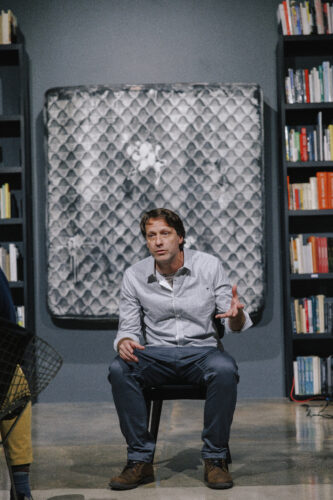
Caleb Scott portrays playwright Rogelio Martinez in “Bedfellows,” one of Miami New Drama’s “Museum Plays” at the Rubell Museum. (Photo courtesy of Josh Aronson)
Rogelio Martinez has crafted a clever, moving piece of meta theater in “Bedfellows.” Inspired by the late Kaari Upson’s 2014 work “Rubells” – which looks very much like a worn-out mattress hanging on the wall of the museum’s library – the play features Caleb Scott as Martinez. He initially butts heads with Hausmann (played by Hannah Benitez, who wrote “Mousa” for “The Museum Plays”) as the artistic director sends back early drafts of a script and pushes Martinez to do more, see more.
Martinez teaches playwriting, and he intersperses information and examples about various aspects of the craft – a call to action, stasis, obstacles, intrusions, withholding information – expertly into the script. A recording of Upson’s voice is heartbreaking, as is the play, performed with expert rhythm and intensity by Scott.
One opening-night group got a unique insight into the artwork when a moved Mera Rubell stood after the play to share that she and her husband had commissioned the piece for their 50th anniversary. Although what hangs on the wall is made of silicone, spandex and fiberglass, the work is based on the couple’s own mattress – described by Martinez in “Bedfellows” this way: “Where I once saw a mattress now I see folds, small gaps, depressions, grooves…all things to indicate that a person once inhabited that space and for a long time they rose.”
Carmen Pelaez wrote “Waiting for America,” in which she plays a Rubell Museum guard named Celeste. In a gallery showcasing Glenn Ligon’s buzzing, blinking neon sign “America,” she is showing the ropes to Darwin (Carlos Fabian Medina), young Venezuelan who is trying to figure out his new job – and the country itself.
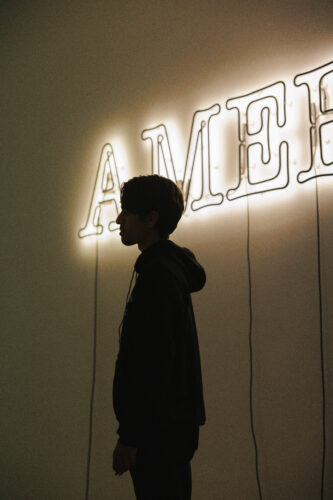
Carlos Fabian Medina ponders his future in Carmen Pelaez’s “Waiting for America,” part of “The Museum Plays” at the Rubell Museum. (Photo courtesy of James Jackman)
Celeste, who seasons her English with Spanish words here and there, sets Darwin straight about his illusions, from her perspective. She’s a straight shooter, intense yet expert in the art of dealing with museum visitors and asserting her authority in a low-key way. The performance space, however, is dimly lit to keep focus on the “America” sign, and the acoustics are sometimes problematic. A good, thought-provoking play should be seen and heard better.
“Mousa” by Benitez, inspired by a Jenna Gribbon painting, is styled as a lecture by a highly educated Docent (Timothy Mark Davis) on what he and other experts believe is the most important element in all art: the female body. His accompanying slides slip through the centuries, as he makes awkward jokes and comments – until he notices that a well-dressed Woman (Kelly Pekar) has positioned herself near the Gribbon, staring at it as she inches closer.

Timothy Mark Davis as the Docent gives a lecture in Hannah Benitez’s “Mousa,” one of Miami New Drama’s “Museum Plays” at the Rubell Museum. (Photo courtesy of James Jackman)
Flustered, he tells her to move back, even using a tall red stool like the ones holding some of the theatergoers to create a line of demarcation. Her response is to strip down to her bra and let her wavy hair down. Horrified, the Docent runs off in search of a guard.
But the Woman restarts the slide show and explains each image from her perspective – as the muse behind the artwork. Davis’s haughty, jittery Docent is quite funny, and Pekar exudes the kind of mystery and strength that could inspire many an artist. Benitez’s flip into a feminist view of the art we have just heard described quite differently is clever indeed.
Aurin Squire, who wrote the book for Miami New Drama’s world premiere Louis Armstrong Musical “A Wonderful World,” has crafted a wonderful (albeit much shorter) play in “Maybe Love.” Surrounded by three magnificent Kehinde Wiley paintings – the massive “Sleep,” “Triple Portrait of Charles I” and “Equestrian Portrait of the Count-Duke Olivares” – Regina (Renata Eastlick) and Terrence (Jovon Jacobs) have a first date in that very room in the Rubell.

Jovon Jacobs and Renata Eastlick try to navigate a first date at the Rubell Museum in Aurin Squire’s “Maybe Love,” one of Miami New Drama’s “Museum Plays.” (Photo courtesy of Josh Aronson)
She’s interested in how Terrence reacts to Wiley’s paintings of Black subjects against intricately patterned, colorful backgrounds. He’s interested in what she wants for dinner at which Miami hotspot – and the sooner the better. Though the two seem to have zero chance at a future, Squire expertly takes them through arguments and conflicts to a point where each is cautiously taking in the other’s perspective. Eastlick and Jacobs are so good, so vibrant that you feel you need to root for them.
In Harley Elias’s “Pump and Dump,” inspired by the work of Los Angeles artist Alfonso Gonzalez Jr., an art and bitcoin Dealer (Carlos Orizondo) is pitted against a Buyer (Margery Lowe) who seems to be an eager-to-please mom. As we learn before she arrives, he’s ruthless and foul-mouthed. He changes his tune – or maybe partially mutes his true nature – once the red-haired dynamo arrives. They haggle and try to make a deal, then do so, only to have the Dealer’s world explode.
Getting every nuance of the play requires at least a passing knowledge of the world of bitcoin, and if you don’t have that, good luck. But Elias has created two fierce competitors, each played ravenously by Orizondo and Lowe. Would you have sympathy for either one? Nah. But they leave an impression.
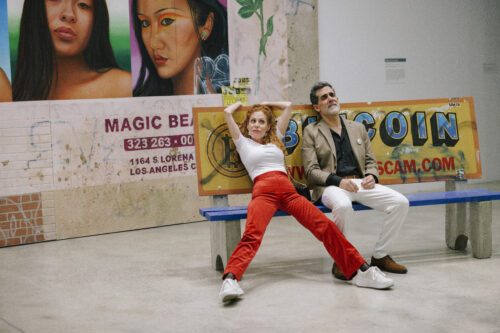
Margery Lowe savors her impending triumph over Carlos Orizondo in Harley Elias’s “Pump and Dump,” part of Miami New Drama’s “The Museum Plays.” (Photo courtesy of James Jackman)
The final play, Marco Ramirez’s “Body of Work,” is the show everyone watches together, performed by all 10 actors. A gallery is set up ostensibly for a funeral service – right there, front and center, is a shiny lipstick-red casket. A Eulogizer (Pelaez) speaks of the deceased, an artist who called herself Vivian Nameless. But things take a turn, and as it happens, the service turns into an art auction
Totally Ramirez’s invention (in other words, not linked to specific art at the Rubell), “Body of Work” audaciously, sometimes hilariously skewers performance art and art world pretentions (theater has those too, by the way).
Scenic consultants Justin and Christopher Swader, costume designers Olatz Zanguitu and Saul Mendoza, and lighting designer Leo Urbina worked within the art-bedecked surroundings of the Rubell to make this collection of theatrical art come to life.
“The Museum Plays,” a collaborative experiment that pays off, is bringing theater lovers to a place not known for drama and visual arts lovers to an environment where smart playwrights are commenting on the works that are right there in front of each audience. Creative risks can have many pitfalls, but they can also bring inspiring rewards. “The Museum Plays” does the latter.
WHAT: “The Museum Plays” by Marco Ramirez, Aurin Squire, Carmen Pelaez, Hannah Benitez, Rogelio Martinez and Harley Elias
WHERE: Miami New Drama production at the Rubell Museum galleries, 1100 NW 23rd St., Miami
WHEN: 8 p.m. Thursday-Saturday, 7 p.m. Sunday, through March 31
COST: $81.50 or $91.50 for premium seating, $45.50 for standing room
INFORMATION: 305-674-1040 or miaminewdrama.org
ArtburstMiami.com is a nonprofit source of theater, dance, visual arts, music and performing arts news. Sign up for our newsletter and never miss a story.
No posts found
Elvis Fandom In a Secret Location Propels Juggerknot’s Newest Experience
Written By Christine Dolen
February 26, 2024 at 11:36 AM
Susie K. Taylor, left, and June Raven Romero alternate as an Elvis fan club president named Avery in Juggerknot Theatre’s latest solo show “Conjuring the King” opening Friday, March 1 and running through Sunday, April 28, in a Little River location announced when tickets are purchased. (Photo courtesy of Scott McIntyre)
When it comes to extreme fandom, Elvis Presley’s devoted followers have made him the G.O.A.T. of celebrity worship for 70 years.
Sure, the Swifties have an insatiable appetite for all things Taylor Swift right now. But almost 50 years after his untimely death, the man known as The King fuels a never-ending stream of creativity, including movies (Baz Luhrmann’s “Elvis” in 2022, Sofia Coppola’s “Priscilla” in 2023), books, TV projects, compilation CDs and stage shows (“The Million Dollar Quartet”).
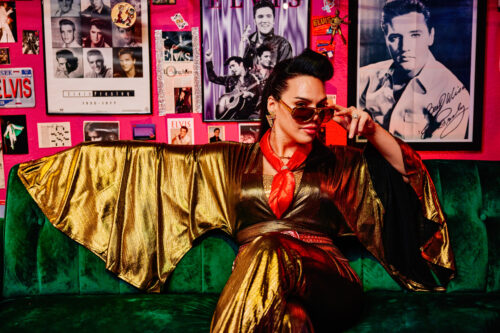
June Raven Romero plays Elvis fan club president Avery in the world premiere of Juggerknot Theatre Company’s solo show “Conjuring the King.” (Photo courtesy of Scott McIntyre)
Beginning Friday, March 1, and running through Sunday, April 28, the enduring spirit of Elvis will enter another realm as Miami’s Juggerknot Theatre Company presents the world premiere of “Conjuring the King” in the city’s Little River neighborhood.
Although Juggerknot made its name with various iterations of “Miami Motel Stories,” large-scale immersive experiences set in repurposed hotels and motels, the pandemic forced the company to adapt.
Two editions of “Long Distance Affair” (2020 and 2021), in which audiences watched virtually as solo actors in cities around the world performed; a virtual “Miami Bus Stop Stories” for students in 2022; and the small-scale, in-person solo show “The Blues Opera” in 2023 kept the company moving forward as it tested different ways to produce theater.
Tanya Bravo, founder and executive artistic director, says Juggerknot is workshopping a new large-scale production and expects to do a live version of “Miami Bus Stop Stories” in the future. But for “Conjuring the King,” it’s back to more intimate work.
For a script, she turned to India-born, New York-raised playwright Dipti Bramhandkar. A five-minute scene about an Elvis fan that Bramhandkar wrote for a showcase at Manhattan’s LAByrinth Theater Company (she is a member of LAByrinth’s ensemble) had stuck with Bravo. So, the producer pitched an idea.
“What if you had an iconic, complex figure, and a fan club, which is closed and intimate and you have to become a member?” Bravo muses. “Dipti has written such an extremely vulnerable, complex woman, and she’s holding up a mirror to the audience. Why do we become obsessed? What does it mean to be lonely?”
For her part, Bramhandkar calls the brief piece that first intrigued Bravo “the seed of an idea, not even a sapling.” But starting a year ago, the writer developed a full-fledged play, going back and forth creatively with Romanian-born, New York-based director Ana Margineanu, a Juggerknot veteran who is credited with “immersive concept and direction” for “Conjuring the King.”
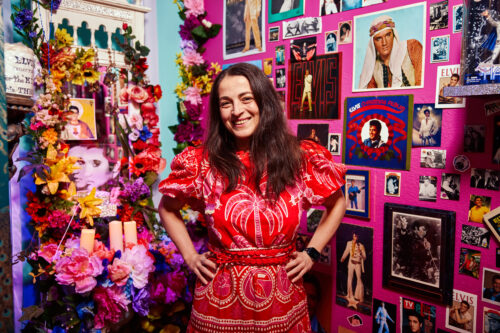
Director Ana Margineanu developed the immersive concept for Juggerknot Theatre’s “Conjuring the King.” (Photo courtesy of Scott McIntyre)
“I was less interested in creating an Elvis experience, more interested in creating a fan experience – why in some cases it becomes a huge obsession, what’s that thing that drives us toward being obsessed? We project ourselves into that mythology,” Bramhandkar says.
Here’s how Juggerknot’s newest immersive event is structured.
Every Wednesday through Sunday during the show’s run, an audience of 15 people will gather outside a “secret” location (you’re sent the address once you buy your ticket). A woman named Avery welcomes you into the Miami Elvis Fan Club, a place bursting at the seams with Elvis memorabilia. The evening follows Bramhandkar’s script but necessarily includes some improvisation as the actor interacts with audience members.
Avery leads trivia games, a dance session, karaoke and miscellaneous activities – a Juggerknot show always has elements of engagement and fun – but the heart of “Conjuring the King” is what its title implies. No one plays Elvis, but as her stories accumulate, Avery (a Mississippian, like the Tupelo-born Presley) clearly makes her version of an icon seem present.
His voice and hits are part of the storytelling, of course. You’ll hear snippets of famous Elvis recordings – “Trouble,” “A Little Less Conversation,” “Jailhouse Rock,” “That’s Alright Mama,” “Burning Love,” “Are You Lonesome Tonight?” – a playlist to steep you in Avery’s obsessive world. Ticket buyers are also invited to dress in the spirit of Elvis, his different eras, his fans, however they interpret that suggestion.
Because Juggerknot wanted to present two shows per night, a pair of actors has been cast as Avery, with each performing one show a night. Actors Susie K. Taylor and June Raven Romero have appeared in multiple Juggerknot shows, so both know their way around immersive theater.

Susie K. Taylor leads a Miami Elvis fan club in Dipti Bramhandkar’s “Conjuring the King” for Juggerknot Theatre Company. (Photo courtesy of Scott McIntyre)
What’s unusual in this case is that a character is being created around two performers, not one.
“Each brought a lot, so Avery became even more multidimensional than what is in the text,” says their director, Margineanu. “Susie and June are wonderful actors with different skill sets. Susie is an unbelievable dancer. June is an unbelievable singer. They are two rivers that poured into the same character. Each came and brought to the character their own struggles as an artist, their struggles with being a woman, their personal relationship with loneliness.”
Taylor says that, rather than being competitive in working out how to play Avery, she and Romero are more like sisters.
“I’ve never had this before, two people building the same character; we’re like two different branches of the same tree,” says Taylor. “June is incredibly powerful, magnetic, and she has an incredible voice. I’m bringing the essence of my performance art work to it.”
Although Taylor has been in three Juggerknot productions, she had never worked with Margineanu, cofounder of the international immersive group PopUp Theatrics. But being in a Margineanu-directed show was on the actor’s bucket list.
“I felt like a pretzel. I knew she would push me beyond (where) I have been before. She’s the most powerful director I’ve ever worked with,” says Taylor, who believes she has found her tribe in a company largely made up of women. “Juggerknot is the beginning of the immersive conversation here…Tanya is one of the top immersive producers in the country. She’s always ahead of everyone.”
Romero is a transgender actor and community advocate whose professional performing career began in a 2018 Area Stage Company production of “Cabaret.” She appeared in Area’s “She Kills Monsters,” two editions of “Miami Motel Stories” and is a member of the Pioneer Winter Collective.
“As soon as I saw the script, I said yes,” says Romero of her response to Avery. “Tanya’s selective in the best ways. I’m lucky to be part of things that are cutting edge. Juggerknot is one of those playgrounds.”
The actor sees similarities between herself and Avery – sadness, social marginalization, glamor, power – but after initially not feeling excited about developing the character with another performer, she has flipped that script.
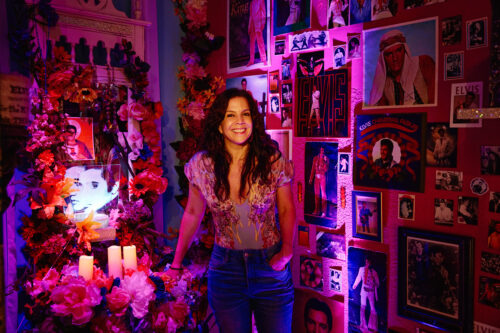
Juggerknot Theatre Company founder Tanya Bravo worked with playwright Dipti Bramhandkar and director Ana Margineanu to develop “Conjuring the King.” (Photo courtesy of Scott McIntyre)
“We have had fusion rehearsals during the process. It’s like a cheat code to a one-woman show. You pick the best of each interpretation. Here we are, innovating again with Juggerknot,” says Romero.
Bramhandkar finds the differences in the actors’ performances intriguing and hopes that theater fans who can afford it will try to see both Romero and Taylor in the play.
“June has a profound sense of the different identities Avery has throughout the play, starting with her first fandom. She brought that transformational story to the table,” the playwright says. “Susie connects with ageism, experiences, expectations. Both of them said, ‘I feel like the script is really speaking to me.’”
Though she had never written an immersive piece, Bramhandkar describes creating “Conjuring the King” as transformational.
“Immersive is one of the futures of theater. It doesn’t hold people ‘hostage.’ It’s much more responsive, more like the digital world. But it’s not just style over substance,” she says.
Style does count, though. Bravo and the Juggerknot team have turned to eBay, OfferUp, collectors and fans in their quest for the Elvis memorabilia that has turned Avery’s lair into a shrine. Even Elvis toilet paper has a place there.
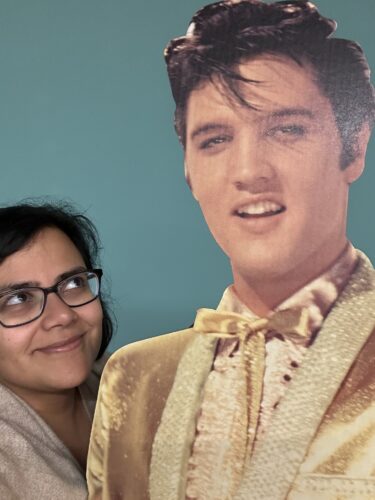
Playwright Dipti Bramhandkar shows her newfound devotion to Elvis after researching his life for Juggerknot’s “Conjuring the King.” (Photo courtesy of Dipti Bramhandkar)
One surprising query came from an actual Elvis fan club president, who let Bravo know that the vast network of Elvis fans had become aware of “Conjuring the King.” She wanted to know whether Juggerknot’s fan club was registered with Graceland, Elvis’s Memphis estate, final resting place and the mothership of Presley fandom.
“I love that, when you really blur the line with true immersive theater,” says Bravo. “I hope we get a lot of those people coming to the show. We’ve all fallen in love with Elvis.”
WHAT: World premiere of Juggerknot Theatre Company’s “Conjuring the King” by Dipti Bramhandkar
WHERE: Exact location in Little River neighborhood of Miami disclosed after ticket purchase.
WHEN: Performances begin Friday, March 1; shows at 7 p.m. and 9:20 p.m. Wednesday-Thursday and Sunday; 7:30 p.m. and 9:45 p.m. Friday-Saturday, through April 28
COST: $81 (includes fee), $112.50 VIP (includes fee, one drink and Elvis swag)
INFORMATION: 786-757-1986 or juggerknottheatrecompany.com
ArtburstMiami.com is a nonprofit source of theater, dance, visual arts, music and performing arts news. Sign up for our newsletter and never miss a story.
No posts found
Review: Main Street Players’ ‘Christiana Lysistrata’ blends laughs with a letdown
Written By Christine Dolen
February 22, 2024 at 1:11 PM
Amanda Ortega, JaVonda Carter, Shana Goldman, Brittany Nicholson and Sara Jarrell take refuge in a church in Vinecia Coleman’s “Christiana Lysistrata” at Main Street Playhouse through Sunday, March 3. (Photo courtesy of Olimac Media)
Aristophanes’ 411 B.C. “Lysistrata,” in which the women of Greek city-states try to end the Peloponnesian War by withholding sex until peace is achieved, is an ancient Greek comedy that endured because of its author’s brilliance and the timeless truth-telling it contains.
In a place like South Florida, “Lysistrata” is more likely to be produced in an educational setting than by a professional regional theater, maybe because producers or artistic directors are wary of trying to sell a play so steeped in ancient history to their audiences. But sometimes (though not always), new takes on old plays can create fresh conduits for connection with contemporary theatergoers.
Main Street Players in Miami Lakes commissioned playwright Vinecia Coleman, a writer and actor based in the Minneapolis-St. Paul area, to write a different “Lysistrata” for the company. Coleman has retained the bones of Aristophanes’ classic in her “Christiana Lysistrata,” but she sets the play near a church in a rural village in western Europe during the High Middle Ages (which lasted from 1000 to 1300 A.D.).

Amanda Ortega, left, and Shana Goldman are best friends in the Main Street Players premiere of “Christiana Lysistrata.” (Photo courtesy of Olimac Media)
So the Greek references are gone, but we must enter the High Middle Ages and deal with (likely) unfamiliar terms such as “Catharism” (a dualist Gnostic movement) and “Beguines” (a medieval lay order of women leading lives of devotion). The former is the “crime” of a heretic who gets questioned and executed in the first scene. The latter group becomes the latest target of the village’s always-ready-to-fight men – until the widow Christiana Lysistrata (Amanda Ortega) steps up and leads the women into a different sort of battle.
Christiana’s Best Friend (Shana Goldman) and her Husband (Sergio Tamayo) are an example of what’s wrong with married life in the village. Best Friend cooks, cleans, takes care of the children, works the fields. Husband, who lost an eye in a previous crusade, asks what’s for dinner. They both enjoy sex – but is that enough to offset the imbalance in everything else?
When Christiana convinces the women to join her in the no-sex edict and lock themselves away in the church, things go swimmingly for a time. While the men walk around in agony (just ask them), the women enjoy good food and each other’s company. Eventually, they start tossing out ideas for things that could change their world: a wheelbarrow, glasses, a more logical market square, something like a coffee shop.
But the forces of men, the church and misogyny are mighty. Let’s just say that “Christiana Lysistrata” doesn’t have the same sort of upbeat ending Aristophanes devised.

Adriana Caraballo, Brittany Nicholson, JaVonda Carter, Roderick Randle, Sara Jarrell (center), Amanda Ortega, Shana Goldman, Cameron Holder and Sergio Tamayo appear in the Main Street Players premiere of “Christiana Lysistrata.” (Photo courtesy of Olimac Media)
Coleman supplies plenty of laugh lines, but director Katlin Svadbik and the cast deliver what looks and sounds a little too reminiscent of a Monty Python sketch (not that the play is at that level), working-class British accents and all.
Except for Ortega as the earnest and intriguing Christiana, the other seven actors play multiple roles.
Goldman is charismatic as Christiana’s Best Friend, a woman who can connect with joy despite her daily drudgery. Brittany Nicholson is funny as the Bishop, a man who mangles Christiana’s first name repeatedly and who takes it for granted that women will obey him. Sara Jarrell is deliberately annoying as the Priest, appealing as one of Christiana’s group of rebels. Stage manager Roderick Randle plays a villager who has no lines, but he does more with zero words than others do with many.
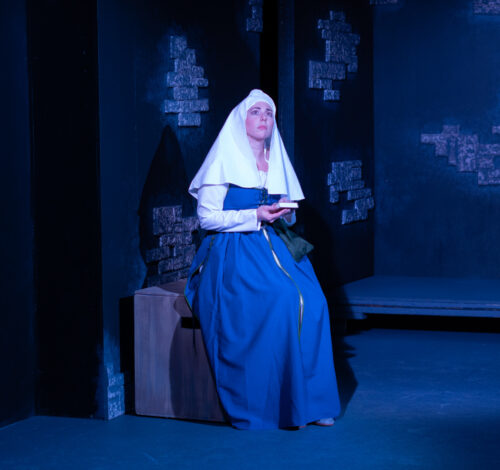
Amanda Ortega plays the title role in Main Street Players’ world premiere production of “Christiana Lysistrata.” (Photo courtesy of Olimac Media)
Adriana Caraballo gets two plum roles, one as the Old Man threatening to burn down the church, the other as God in all Her splendor. JaVonda Carter is the Old Woman who is not about to let her elderly, nasty hubby incinerate her friends. Cameron Holder sparkles as a guy who dresses in bright colors, does his makeup better than most of the women and wonders if just maybe he was born to be something else. As the Husband, once Tamayo settles into his role, his timing and delivery are more potent than anyone’s.
The production values in “Christiana Lysistrata” are basic at best. Ashley Rivas’ gloomy gray set requires the appearance and removal of benches throughout the play. Angie Esposito’s costumes are colorful, but some don’t fit. Lighting designer Amanda Sparhawk combines with sound designers Benjamin Olmos de Aguilera and Adrian Gonzalez to make God’s entrance a snazzy one.
It’s admirable that Main Street Players tried to find a way to make “Lysistrata” a funny, accessible, thought-provoking experience for its audiences, many of whom do laugh at the script’s jokes and bawdy references. But qualitatively, on too many levels, “Christiana Lysistrata” is a battle lost.
WHAT: World premiere of “Christiana Lysistrata” by Vinecia Coleman
WHERE: Main Street Playhouse, 6812 Main St., Miami Lakes
WHEN: 8 p.m. Friday-Saturday, 2 p.m. Sunday, through Sunday, March 3
COST: $30, $25 for students and military personell with ID
INFORMATION: 305-558-3737 or mainstreetplayers.com.
ArtburstMiami.com is a nonprofit media source for the arts featuring fresh and original stories by writers dedicated to theater, dance, visual arts, film, music and more. Don’t miss a story at www.artburstmiami.com
No posts found
Miami New Drama takes its stage to Rubell Museum for a collaboration
Written By Christine Dolen
February 19, 2024 at 3:03 PM
Marco Ramirez, Carmen Pelaez, Michel Hausmann and Aurin Squire are among the theater artists working to create Miami New Drama’s “The Museum Plays” at Miami’s Rubell Museum. (Photo courtesy of FURIOSA Productions)
Michel Hausmann, co-founder and artistic director of Miami New Drama, is an artistic innovator whose mind is often aswirl with ideas about how to get broader audiences even half as excited about theater as he is.
He earned national recognition and a Drama League Award for “Seven Deadly Sins,” a collection of commissioned short plays presented in Lincoln Road storefronts in 2020-2021. Small masked-up audiences were seated outside to do what they otherwise couldn’t during the COVID-19 pandemic: experience live world premiere theater.

Actors Carlos Orizondo and Margery Lowe talk with museum cofounder Mera Rubell at a reading of “The Museum Plays.” (Photo courtesy of Morgan Sophia Photography)
Though Hausmann describes the multi-location show as “very expensive to produce,” the experiment was a smashing success, generating national coverage and critical acclaim. The other Miami New Drama cofounder, Moisés Kaufman, followed up with his own version of “Seven Deadly Sins” in Manhattan’s Meatpacking District.
Now Hausmann is again creating theater away from his Miami Beach-based company’s home at the Colony Theatre. Joining forces with Miami’s Rubell Museum, Miami New Drama will premiere “The Museum Plays,” six commissioned short works inspired by pieces in the Rubell’s superb collection. The experience previews Thursday, Feb. 22, and Friday, Feb. 23, has a sold-out opening Saturday, Feb. 24, and runs through March 31 at the Rubell Museum, 1100 NW 23rd St., Miami.
“When we did ‘Seven Deadly Sins,’ something in our DNA changed,” says Hausmann, who is directing all of the art-themed plays. “A lightbulb came on. Were we selling tickets to the Colony Theatre or are we in the live storytelling business?”
Hausmann’s collaboration with international art world titans Don and Mera Rubell is also a response to the post-pandemic landscape for regional theaters throughout the United States.
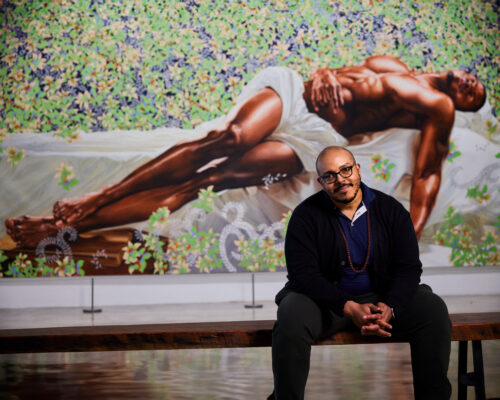
Aurin Squire found some of the inspiration for his play “Maybe Love” in Kehinde Wiley’s 2008 painting “Sleep.” (Photo courtesy of FURIOSA Productions)
“Something massive has been happening in America’s regional theater, a crisis unlike anything we’ve seen. Some have gone belly up, some have canceled seasons,” says Hausmann. “Miami New Drama has grown a lot. We’re a regional theater with a $5 million-a-year budget, so we’re more exposed…How can we explore more work outside the theater without breaking the bank?”
He describes “The Museum Plays” as work being done “in another cultural temple,” and he hopes to continue exploring collaborations with other art forms and institutions.
For her part, Mera Rubell has been enthusiastic about joining forces with Miami New Drama from the get-go.
“Any kind of cross-fertilization of creativity is dynamic and exciting. Michel is such a creative, open-minded, exhilarating person. He has the spark which can spark more creativity,” says Rubell. “We have artist residencies, so we understand what it is to have artists in the building. For us, it’s an extension of what we do – encouraging art.”
The idea this time is that a half-dozen playwrights – some new to the company, others familiar to Miami New Drama regulars – have been commissioned to write 10-minute plays in response to works of art at the Rubell. Some of the writers visited the museum to find the work that would inspire them, others used the internet to choose the piece that would start their creative process. Each submitted a short list of requests, and Hausmann played matchmaker based on factors including logistics – moving audiences from play to play, whether the sound from one play would bleed through to another and so on.
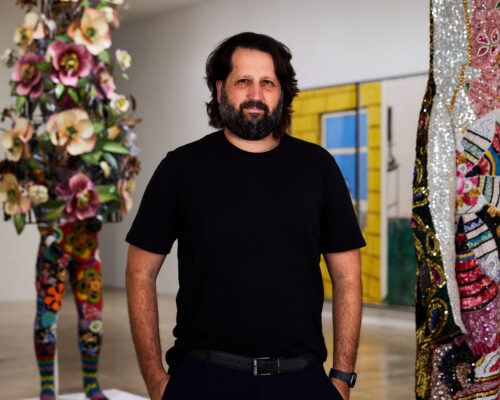
Miami New Drama cofounder Michel Hausmann came up with the idea for “The Museum Plays” and partnered with the Rubell Museum to present them. (Photo courtesy of FURIOSA Productions)
“I had to take into account the spacing within the museum,” the director says. “Each performance will be for 150 people divided into five groups of 30. They rotate among five plays, then everyone comes together at the end in the main gallery for Marco’s play.”
Marco is Hialeah native Marco Ramirez, whose play “Body of Work” closes out “The Museum Plays” with a single performance for all 150 audience members.
The others, performed five times per night for the rotating groups of 30, are Aurin Squire’s “Maybe Love,” inspired by Kehinde Wiley’s “The Portrait of Charles I;” Carmen Pelaez’s “Waiting for America,” inspired by Glenn Ligon’s “America;” Harley Elias’s “Pump and Dump,” inspired by Alfonso Gonzalez Jr.’s “Your Ad Here;” Rogelio Martinez’s “Bedfellows,” inspired by Kaari Upson’s “Rubells;” and Hannah Benitez’s “Mousa,” inspired by Jenna Gribbon’s “Scenicscape.”
Each short play is performed by two actors, but all 10 – Renata Eastlick, Jovon Jacobs, Kelly Pekar, Timothy Mark Davis, Carlos Fabian, Caleb Scott, Carlos Orizondo, Margery Lowe and actor-playwrights Benitez and Pelaez – appear in “Body of Work.”
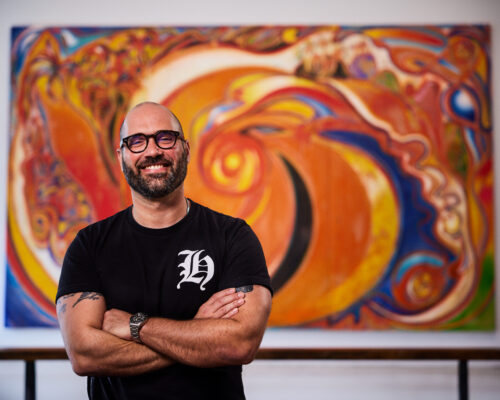
Marco Ramirez, whose play “Body of Work” closes out Miami New Drama’s “The Museum Plays,” poses in front of “Tormenta Solar,” a 2023 work by Alejandro Piñeiro Bello, although Ramirez’s piece is the only one not linked to a specific work of art. (Photo courtesy of FURIOSA Productions)
Ramirez, whose 2016 play “The Royale” (inspired by Black heavyweight champ Jack Johnson) has had more than 30 productions throughout the country (including one at GableStage), most recently wrote the book for the Atlantic Theater Company’s Off-Broadway premiere of “The Buena Vista Social Club.” He’s also the writer of Hulu’s first Spanish-language limited series, the upcoming “La Maquina” starring Gael García Bernal and Diego Luna.
“It’s the first show I’ve written that my (Spanish-speaking) grandparents can watch,” says Ramirez, whose large Cuban-American family still lives in the Miami area.
As experienced as Ramirez is in long-form writing, he is masterful at short plays, twice winning the Heideman Award (for “I am not Batman” and “3:59 a.m.: a drag race for two actors”) at the high-profile Humana Festival of New American Plays, which brought theater practitioners and critics to Actors Theatre of Louisville from 1976 to 2022.
“We toured the museum once or twice to see if any of the pieces struck our fancy. It was an embarrassment of riches,” he says of his favorite Miami museum. “I was willing to help in any way. There were no creative directions given to me, but I knew the evening should end with an energetic piece that used all the actors.”
Crafting a rich short play, he says, isn’t so different from writing a short story.

Carmen Pelaez wrote and performs in “Waiting for America,” part of “The Museum Plays” at Miami’s Rubell Museum. (Photo courtesy of FURIOSA Productions)
“There has to be a whole world before the play and a whole world after – why these 10 minutes?” asks Ramirez, whose play is the only one not inspired by a piece at the Rubell. “Short plays often have their own rules. I thought it might be really interesting to do a funeral, an event with a beginning, middle and end.”
And what he came up with for “Body of Work” isn’t just energetic. On the page, anyway, it’s deeply observant of art world particulars and peculiarities, as well as very, very funny.
Squire’s ongoing association with Miami New Drama has so far led to productions of “Confessions of a Cocaine Cowboy” (coauthored with Miamian Billy Corben), the Louis Armstrong musical “A Wonderful World” (Squire wrote the book), “Defacing Michael Jackson” and the “Seven Deadly Sins” play “Blackfish” (about cultural appropriation). He’s working on the fifth and final season of the Paramount+ series TV’s “Evil,” where he’s co-executive producer, and Miami New Drama has commissioned him to write a dark comedy related to the O.J. Simpson trial.
When Squire said yes to participating in “The Museum Plays,” he was thrilled to discover that the museum’s works by Wiley – painter of President Barack Obama’s official portrait – could be chosen. An art collector friend had taken him to a Wiley exhibition two years ago, and Squire remembers thinking, “I don’t even have a wall that big.”
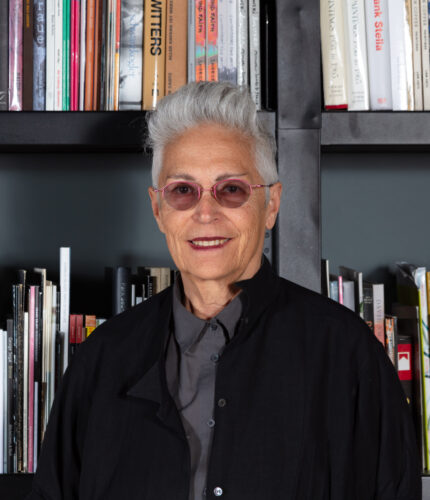
Rubell Museum cofounder Mera Rubell is enthusiastic about welcoming theater into the Rubell Museum with Miami New Drama’s “The Museum Plays.” (Photo courtesy of the Rubell Museum)
Known in part for his paintings of Black subjects posed against bright, ornately patterned backgrounds, Wiley has taken some of his inspiration from Old Masters works.
Wiley’s stunning, massive 2008 painting “Sleep” is one of the works discussed in Squire’s “Maybe Love.” The others are the artist’s 2005 “Equestrian Portrait of the Count-Duke Olivares” (inspired by Diego Velázquez’s 1636 painting with a nearly identical title) and the 2007 triptych “Triple Portrait of Charles I” (Anthony Van Dyck painted his triple portrait in 1635-1636). In Wiley’s interpretation, two of the three perspectives of King Charles I present him with a hoodie partially obscuring his face as he gazes at the viewer.
Squire, a world traveler who has sought out great art all over the planet, wrote “Maybe Love” as a first-date play steeped in discovery. Regina surprises Terrence with a visit to the Rubell and its works by Wiley. She is deeply into art. He’s more about nightlife – and food, because he’s very hungry. They verbally fence as they get to know each other, working in some speculative art analysis.
The characters, Squire says, represent the ways he looks at art: “Part of me is a more serious aficionado. The other part is free-styling.”
Calling the Rubells “the artistic lynchpin of Miami” in the world of visual art, Squire believes “The Museum Plays” is an example of how theater is evolving.

Rogelio Martinez contributed the meta play “Bedfellows” to Miami New Drama’s “The Museum Plays” at the Rubell Museum. (Photo courtesy of Karen Martinez)
“Theater isn’t just at the Colony or in a small black box. To grow the audience, you have to go to different spaces to wake people up. Theater is happening all around us – on boats, in cargo containers, in museums,” he says.
Hausmann anticipates that “The Museum Plays” will attract different kinds of audiences, some from the visual arts world, others fans of theater. He’s a little nervous about his latest experiment in off-site theater, as the location doesn’t allow for sets or theatrical lighting, so “the play is everything.” He describes the plays as having “very different flavors” and hopes to do productions in unconventional spaces every season or two.
As for Rubell, she’s game for anything the playwrights have created.
“The playwrights were free to do as they pleased. There were no limits on their creativity,” says Rubell, whose name comes up in the course of the evening. “It’s exciting to fall in love with a work of art, which I’ve done my whole life. I can’t wait to see how these playwrights responded.”
WHAT: Miami New Drama’s “The Museum Plays” by Marco Ramirez, Aurin Squire, Carmen Pelaez, Hannah Benitez, Rogelio Martinez and Harley Elias
WHERE: Rubell Museum galleries, 1100 NW 23rd St., Miami
WHEN: Previews 8 p.m. Thursday, Feb. 22, and Friday, Feb. 23; sold-out opening 8 p.m. Saturday, Feb. 24; regular performances 8 p.m. Thursday-Saturday, 7 p.m. Sunday, through March 31
COST: $81.50 or $91.50 for premium seating, $45.50 for standing room
INFORMATION: 305-674-1040 or miaminewdrama.org
ArtburstMiami.com is a nonprofit media source for the arts featuring fresh and original stories by writers dedicated to theater, dance, visual arts, film, music and more. Don’t miss a story at www.artburstmiami.com
No posts found
Dark Musical Comedy, ‘The Great Soviet Bucket,’ Gets Premiere With Miami Light Project
Written By Miguel Sirgado
February 17, 2024 at 3:07 PM
“The Great Soviet Bucket” will have its world premiere on Thursday, Feb. 22 through Saturday, Feb. 24 at the Miami Theater Center, Miami Shores. From left, Matt Podd, pianist, Puppet “Comrade Bucket” (designed by Rachel Burson), Timur Bekbosunov, creator and lead performer, and Yvette Cornelia Holzwarth, violinist. (Photo courtesy of Sandra Powers)
In the German film Good Bye Lenin! from 2003, there is an unforgettable sequence in which a statue of Lenin is seen, through a window, flying over the city like a ghost. It should be remembered that the Bolshevik leader—father of the 1917 Russian Revolution that first implemented a Communist system—was one of the great symbols of the Eastern Bloc.
In many of those countries’ cities stood statues of Lenin, murals bearing his likeness, streets and town squares bearing his name . . . all celebrating the deceased leader and the once triumphant Russian Revolution and Communism. In that ideology, Lenin was practically a sacred figure. Therefore seeing him being carried by helicopter in Wolfgang Becker’s film vividly reinforced the idea that change had taken place in the Soviet Bloc. A change so radical and profound that it affected even the great “god” of the Communist model: Lenin.
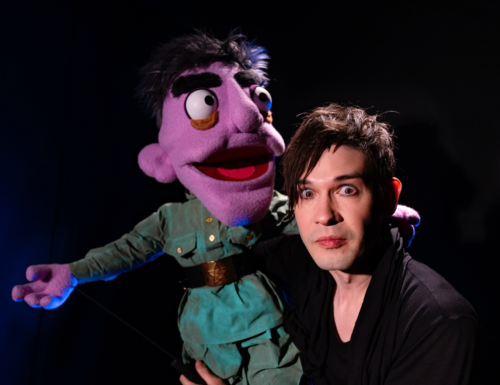
Its producers describe the show as a dark musical comedy that follows Timur, a dutiful Soviet citizen, and his unhinged puppet of “Mother Russia,” Comrade Bucket. (Photo courtesy of Sandra Powers)
Much has been done in the arts universe to document how suffocating it was to live under a system bent on total power over and control of its territory, even at the cost of the lives (and minds) of many affected citizens. The aftermath is evident in the devastated psyches of survivors of totalitarian regimes.
This and much more is what “The Great Soviet Bucket,” a multimedia show featuring protest and resistance songs from the former Soviet Union, intends to address. Grammy Award-nominated Kazakh-American opera singer Timur Bekbosunov, who is said to be “gifted with a spectacular vocal and emotional range,” is the headliner of this project.
He is backed on stage by pianist, composer, arranger and musical director Matt Podd, and versatile violinist, vocalist and composer, Yvette Cornelia Holzwarth. The production is directed by Sandra Powers, an Emmy-nominated Peruvian-American filmmaker, screenwriter and editor.
“The Great Soviet Bucket” will have its world premiere at the Miami Theater Center, Miami Shores, opening Thursday, Feb. 22 through Saturday, Feb. 24. It’s part of the National Performance Network/Visual Artists Network (NPN/VAN) Creation and Development Fund Project co-commissioned by Beth Morrison Projects in partnership with Miami Light Project and NPN.
Its producers describe the show as a dark musical comedy that follows Timur, a dutiful Soviet citizen, and his unhinged puppet of “Mother Russia,” Comrade Bucket. A true believer, Timur patiently tolerates the complexities of the USSR, knowing that a better future is just around the corner. His local commander, Comrade Bucket—named for an enamel bucket now part of Soviet-era folklore—encourages him to understand and embrace the way of life of the masses.

Matt Podd in “The Great Soviet Bucket” at Miami Light Project. (Photo courtesy of Sandra Powers)
One must imagine the relationship between Timur and his puppet as a dramatic device, advancing the story from political stubbornness through its absurdity. In this parody comprised of dialogue and song, the anti-heroes represented by Timur and Comrade Bucket can be a sort of Don Quixote and Sancho Panza, Sherlock Holmes and Dr. Watson, and even Batman and Robin. Anachronistic Soviet slogans and hymns serve as its backdrop, and a completely collapsed fourth wall recalls Bertlodt Brecht’s The Threepenny Opera.
But as the empire of the Soviet Union begins to crumble, so does Timur’s Soviet identity. The brilliant tenor uses the songs of his childhood to raise pressing questions about the intertwined forces of identity, politics and history.
“The play is not a monodrama, but a genuine conversation with the audience, using dark satire—very bitter humor—to question, mock and dismantle certain stereotypes of the Soviet Union, trying to understand its history and relevance to contemporary events in Russia,” explains Timur, who boasts a classical background but is also a rock musician.
The play has a confessional, almost intimate tone, and is intended to be an interactive experience between the audience and what happens on stage. “The Great Soviet Bucket” explores the phenomenon of mass “brainwashing” in the Socialist Bloc’s countries, and how difficult the “de-programming” of state propaganda has been for so many.
“(Writing this work) I went back to my childhood, having grown up in the Soviet Union, in Soviet Kazakhstan, and realized that for years I had been singing official songs approved by the regime, which concealed the true Soviet reality,” says the musician. “It is very difficult to understand today’s Russia without first examining the pernicious past of the USSR.”

At left, Matt Podd, pianist, and Yvette Cornelia Holzworth, volinist, in “The Great Soviet Bucket,” a multimedia show featuring protest and resistance songs from the former Soviet Union. (Photo courtesy of Sandra Powers)
But in “The Great Soviet Bucket,” Timur departs from specifics to delve into much more encompassing questions: what is it that leads to the formation and establishment of oppressive regimes? What is it that leads people to be complacent under those regimes and—why not?—what lessons can we learn from the past so that we don’t repeat the same mistakes today and in the future?
“Russia is the example of a country that is committing atrocities (right now) and never apologized for its past,” says Timur. “(There were) families there who lost their loved ones and (also lost) their cultural identity . . . I myself, being part Kazakh and part Russian, was never allowed to speak my own native language.”
He continues, “So what does it take to carve your way out of that very difficult situation? Behind a dictator there are much bigger forces, external and internal, working to undermine democracies. And democracies are for me very fragile; people (make) the heart of them, and it is (people) who carry the resistance against the absolute powers.”
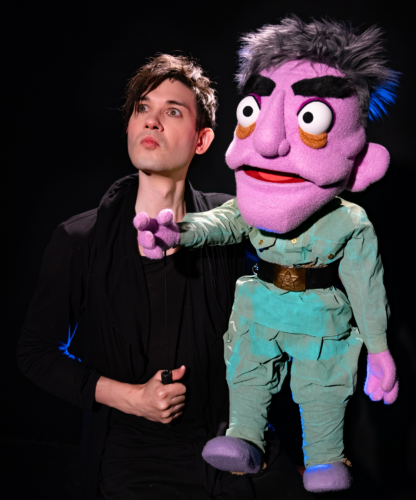
Local commander, Comrade Bucket—named for an enamel bucket now part of Soviet-era folklore—encourages Timur to understand and embrace the way of life of the masses. (Photo courtesy of Sandra Powers)
For Beth Morrison, founder, president and creative producer of BMP, it was not difficult to collaborate with an artist who she says is as complex and brilliant as Timur. Morrison’s and BMP’s mission is “discovering” emerging or established composers dedicated to experimentation and innovation, and who take artistic risks in the realms of “opera-theater” and music theater.
“I’ve worked with him for about ten years, even a little longer, and we’ve collaborated together on a number of shows,” says Morrison. “Timur is someone I really believe in wholeheartedly, not only as a creative force, but also as an artist.”
On how the collaboration with the Miami Light Project came about, Beth Morrison says there was no doubt in her mind that MLP was the right partner for a premiere of this caliber. “Beth Boone (Miami Light Project’s artistic and executive director since 1998) I’ve known for fifteen years. She is someone who has done, and is doing, the most interesting work with experimental artists, artists who really don’t have a home in traditional institutions,” says Morrison.
WHAT: “Timur: The Great Soviet Bucket”
WHERE: Miami Theater Center. 9806 NE 2nd Ave Miami Shores
WHEN: 8 p.m. Thursday, Feb. 22, Friday, Feb. 23 and Saturday, Feb. 24
COST: $30 general admission (plus a $3.37 fee), $20 for students and seniors (plus a $2.92 fee), $100, VIP include preferred seating and admission to post performance party. (VIP tickets only available for Friday, Feb. 23 performance.) Tickets at www.eventbrite.com
INFORMATION: 305-576-4350 or miamilightproject.com
ArtburstMiami.com is a nonprofit media source for the arts featuring fresh and original stories by writers dedicated to theater, dance, visual arts, film, music and more. Don’t miss a story at www.artburstmiami.com.
No posts found
Local Filmmaker Directs, Writes Father’s Passion Project Starring an A-List Cast
Written By Michelle F. Solomon
February 16, 2024 at 4:45 PM
Diane Ladd as Carmen and Mary Stuart Masterson as her daughter, Victoria, in Aventura Entertainment’s movie “Isle of Hope” being released in Florida theaters including Miami and Fort Lauderdale on Friday, Feb. 23. (Photo courtesy of Aventura Entertainment)
South Florida filmmaker and director Damian Romay remembers when his father, Omar, approached him about adapting a play and making it into a movie that his Aventura, Fla., based-film company would finance and produce.
Omar Romay had become entranced with an Argentinian stage play “Dias Contados” (“Days Counted”) by Buenos Aires-born actor-playwright Oscar Martinez, which had been performed at theaters in the capital city.
“My father called me up and told me he saw this play that he liked and that I should watch it,” recalls Romay. It was available online through Teatrix, a platform created by his aunt, Mirta Romay, his father’s sister.
“It’s sort of a Netflix for theater lovers dedicated to recording, producing and showing musicals and plays from Argentina and other places in Latin America,” explains Damian.
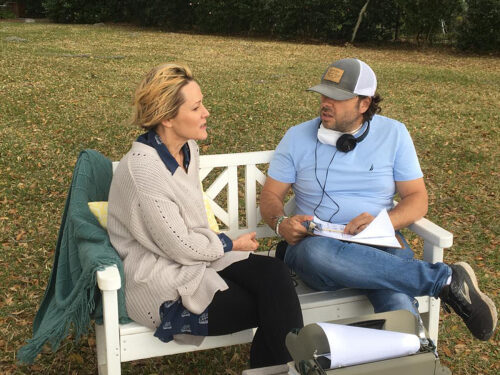
Mary Stuart Masterson and director/writer Damian Romay on the set of “Isle of Hope” in Savannah, Ga. (Photo courtesy of Aventura Entertainment)
The play by Martinez is about Ana, who is co-parenting her teenage daughter with her ex-husband as she also deals with the combative relationship she has with her mother, Carmen. When her mother is hospitalized Ana ends up having to face the years of conflict.
After Damian finished the online screening, he called his father and said to him, “Yes, that’s a good play. So, what’s your interest in it?” The idea was to make a movie based on the script and to have Damian write it. Omar’s film and television production company, Aventura Entertainment, based in Aventura, Fla., would produce the film.
The elder Romay had started his own company in 2016 but had been in Miami since 1988 when he arrived to run the television station WJAN, which his father, Alejandro, had purchased. Alejandro Romay was a media mogul in Buenos Aires, best known as the chairman of Channel 9, which held the No. 1 spot as Argentina’s top television station for a decade in the 1980s.
“I wanted to know why that play when there are a million other plays or books or stories that he could use as inspiration for a movie,” says Damian. “He was unable to give me a precise answer at the moment, but I believe I understood why the story spoke to him.”
The story of family dynamics and family relationships has been explored in everything from Shakespeare’s “King Lear” to Disney’s “The Lion King.”
” . . . This pressure of living up to what your parents did before you, wondering if you’re good enough and just trying to make your own path,” says Damian.
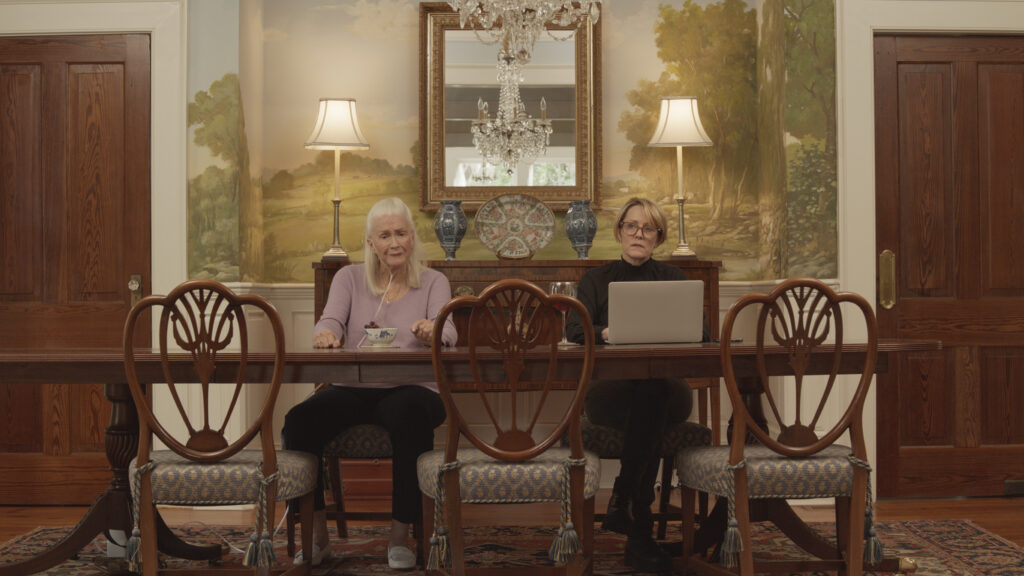
Diane Ladd and Mary Stuart Masterson in a scene from “Isle of Hope,” produced by South Florida-based Aventura Entertainment. (Photo courtesy of Aventura Entertainment)
The writer-director, who recently moved his own company Sunshine Films from Miami to Fort Lauderdale, added a third act to the adaptation of “Dias Contados,” and titled the film “Isle of Hope.”
“I added a third act because it was kind of that wish fulfillment of wondering, ‘How would it be?’ How would that conversation go if you finally had the chance to say the things you want to say and maybe mend those mistakes from the past? I wanted to take that to its conclusion and see what happened. It brought me some satisfaction and hopefully, the people who watch it will get that, too,” says Damian.
Ana’s name was changed to Victoria in Aventura Entertainment’s movie, but the mother’s name remains the same.
Victoria is played by Mary Stuart Masterson, who became a Hollywood icon for her roles in “Fried Green Tomatoes,” “Some Kind of Wonderful,” and “Benny and Joon.”
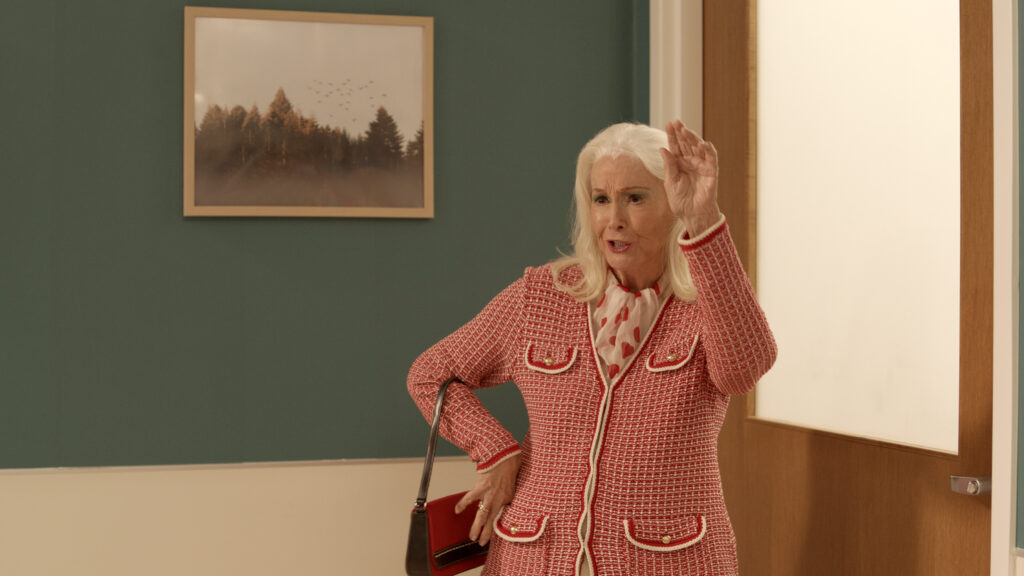
Three-time Academy Award nominee Diane Ladd plays Carmen in Aventura Entertainment’s “Isle of Hope.” (Photo courtesy of Aventura Entertainment)
Starring as her mother, Carmen, is three-time Academy Award nominee Diane Ladd, who was the first to come onboard for “Isle of Hope.”
“My agent called me and sent me the script to look at,” says Ladd in a telephone interview from her Ojai, Calif., home. She liked it for several reasons. A straight shooter, she says, “it was a job,” adding that there aren’t a lot of movie roles for 88-year-old women. With her Deep South accent coming through, she says, “Listen, honey, there are 28 parts for every man to one part for a woman. Did you know that?”
But besides that, Ladd says that she saw “great potential” in the film and when she spoke to Damian about the third act he had added, Ladd says: “That’s where the meat for me was as an actor. Resolving the differences between the mother and daughter. It was in line with my desires and in line with a book I wrote called ‘Honey, Baby, Mine,’ with my, daughter, Laura (actress Laura Dern). It’s all about communicating with the people we love.”
In the film, Victoria has a grudge against her self-absorbed mother, the well-known actress named Carmen Crawford. Her mother has crushed her dreams of becoming a playwright. When Carmen suffers a life-threatening stroke and wakes up from a coma thinking she is living 15 years in the past, Victoria is faced with figuring out where her life went off track and how to reconcile the relationship.
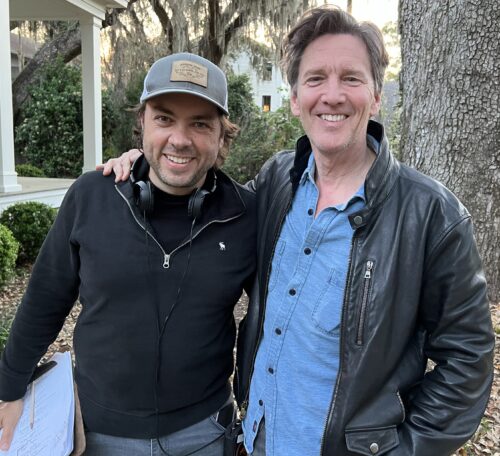
Damian Romay and actor Andrew McCarthy on the set of “Isle of Hope.” (Photo courtesy of Aventura Entertainment)
Andrew McCarthy stars as Victoria’s ex-husband and Sam Robards, the son of Jason Robards and Lauren Bacall, is Victoria’s psychiatrist brother. Miami actor Antoni Corone plays Dr. Garrison and Jessica Lynn Wallace plays Victoria’s daughter, Elonor.
“Damian and I are now working together,” says Ladd about a project that would be produced by his company. “He had read a short story that he thought would be perfect for me and a great male star about an elderly couple. And it’s a terrific idea. So, we optioned the book,” she says. Ladd says the two worked on the screenplay together and came up with a title ” . . . And a Day.”
“Isle of Hope” isn’t the typical multiplex film, and Damian says he brought that concern to his father. “No explosions, no violence, no sex, no politics. It’s not edgy. It’s the type of story that hit its peak of success in the late 1970s and ’80s but that no one is producing anymore. I don’t know who’s going to watch it,” he told his father. Damian said his father retorted with a theory about who would come to see his passion project.
“He told me, ‘Look, if it touches me, then there has to be other people like me, that will want to see this and feel this.’ He showed a lot of faith and invested his own money. And I think that’s also what drew these actors to participate. My biggest wish is that people will go see the movie because my father really cares about it. It’s so hard to make a movie like this. It requires so much effort and sacrifice and money.”

The movie was shot on a small inland island eight miles from downtown Savannah, a place called Isle of Hope. (Photo courtesy of Aventura Entertainment)
Aventura Entertainment is releasing the movie to Florida theaters first, says Damian. “I’m just hoping that people will get a chance to see this film that my father so much wants to share with them.”
The movie was made in Savannah, Georgia. Damian says he does shoot his films locally (his company Sunshine Films has made about 60 movies since 2015 many for cable networks like Lifetime and Hallmark, along with Netflix) in Broward and Miami-Dade counties, and also in places like Kentucky, Louisiana and Massachusetts, and in Canada, but what he liked about Savannah, he says, was that it suited Diane and her character so well. “Because she’s so Southern just in her personality and her way of talking. It just has an old-world charm and doing it in Miami, well, it seemed a bit modern for this story,” says Damian.
The four weeks of filming were shot on a small inland island, Isle of Hope, which is eight miles from downtown Savannah.
“In addition to the place where I imagined Carmen’s house, I felt the name was full of poetry and relevant because it’s the place that provides a small opportunity for Carmen and Victoria to mend their broken relationship,” says Damian.
“Isle of Hope” opens in South Florida on Friday, Feb. 23. In Miami at the Coral Gables Art Cinema, AMC Aventura, AMC Sunset Place, and Silverspot Cinemas. In Broward County at Regal Oakwood-Hollywood, Silverspot Coconut Creek, Regal Magnolia Place – Coral Springs, and AMC Pompano Beach 18.
ArtburstMiami.com is a nonprofit source of theater, dance, visual arts, music and performing arts news. Sign up for our newsletter and never miss a story.
No posts found
Review: Layon Gray’s ‘The Girls of Summer’ focuses on a mystery at M Ensemble
Written By Christine Dolen
February 12, 2024 at 7:53 PM
The members of the Red Diamonds baseball team rejoice in “The Girls of Summer” by Layon Gray at M Ensemble at the Sandrell Rivers Theater, Liberty City’s performing arts center, through Sunday, Feb. 25. (Photo courtesy of Christa Ingraham)
Playwright, director and actor Layon Gray has a talent for getting inside so many different facets of Black life and history – and for taking engaged audiences on that journey with him.
Miami’s M Ensemble, the state’s oldest Black theater company, has just begun its 53rd season with a production of Gray’s “The Girls of Summer.”
After presenting his “Kings of Harlem” in 2017 as the company’s inaugural production at the Sandrell Rivers Theater, then following it with “Meet Me at the Oak” in 2019, “Cowboy” in 2021 and “The Dahomey Warriors” in 2022, M Ensemble founders Shirley Richardson and Patricia E. Williams know their audiences respond to his signature blend of history and highly theatrical storytelling.
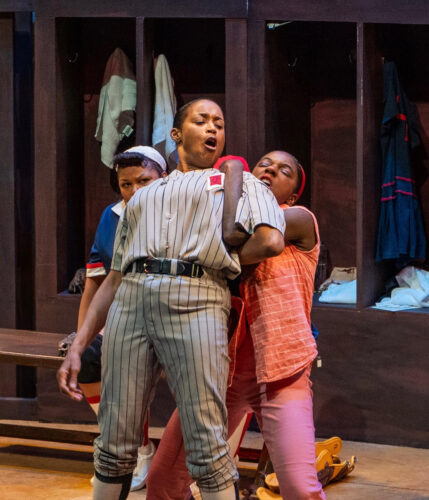
Chasity Hart’s Coby Rae watches as Lela Elam’s Coach Hicks shows Genesis Summers as Jonetta how tough she is in Layon Gray’s “The Girls of Summer.” (Photo courtesy of Christa Ingraham)
“The Girls of Summer,” which debuted in 2009, takes some of its inspiration from the history of Black women baseball players (and from the movie “A League of Their Own”). But this Gray play orbits around the mysterious disappearance of Coach Odessa Hicks (Lela Elam), who vanishes just before an exhibition game that could have been the triumph of her career.
It’s the mid-1940s, and Gray’s fictitious Hicks was once a barrier-breaking player in the all-male Negro Leagues (the play name checks Toni Stone, Mamie “Peanut” Johnson and Connie Morgan, three women who actually did so). Then someone threw a pitch that smashed her knee, her nascent career ended, and she became embittered and ill, carrying on as the sole caretaker for her sunny but slow daughter Lucy (Jenora Hamilton).
[RELATED: M Ensemble Celebrates 53-Year History]
For Hicks, the stakes in the exhibition game at Chicago’s Wrigley Field between the all-Black Red Diamonds and the all-white Racine Belles (the latter a real team in the All-American Girls Professional Baseball League) could not be higher. Personal redemption, a brighter future for Black women athletes and demanding respect for her race all swirl through the coach’s mind as she drives the Red Diamonds to the breaking point in an often-cruel style.
Unsurprisingly, the women who make up the Diamonds don’t take to their coach’s critical, dismissive style.
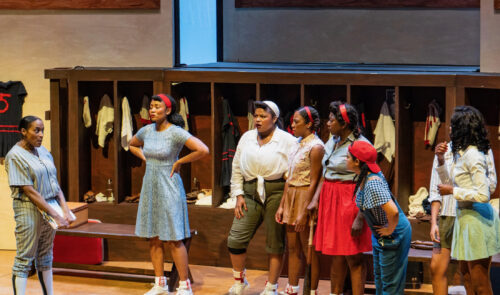
Lela Elam’s Coach Hicks, left, has some words with the women of the Red Diamonds baseball team in “The Girls of Summer” at M Ensemble. (Photo courtesy of Christa Ingraham)
Piper (Mysia Anderson) lodges complaints that earn the others a session of running laps at night in the rain. Pitcher Mattie (Katchana Agama) has men on her mind as much as (or more than) baseball. Coby Rae (Chasity Hart) left a husband and child behind, with his support, to pursue her baseball dream. Floridian Martha Faye (Toddra Brunson) has a funny, bawdy mouth and a larger-than-life personality.
The team’s catcher Eddie (pronounced Edie and played by Dina Lewis) is an always-upbeat type who gets friendly quite fast with journalist Peter James (Milton Lyles II), who comes to interview the women about the coach’s disappearance. Jonetta (Genesis Summers) is a late and pointedly hostile addition to the team. And twin sisters Betty (Sophia Kenol, as a wide-eyed and insecure player) and Billie (Janine Johnson, aggressive and without boundaries) are as different as can be.
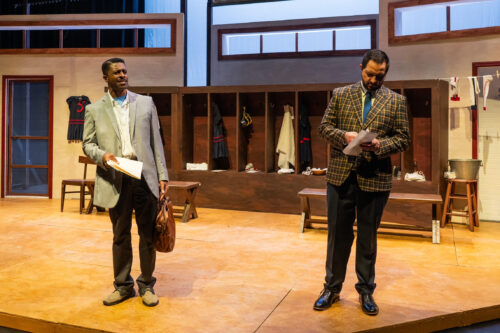
Milton Lyles II, left, is a journalist digging into a mystery, much to the displeasure of Rick Urban as baseball executive Mr. West in M Ensemble’s “The Girls of Summer.” (Photo courtesy of Christa Ingraham)
The play’s literal odd man out is Mr. West (Rick Urban), a white baseball executive who refuses to let anything – including the team’s missing coach – ruin what promises to be a huge payday, given the robust advance sales to mostly Black women ticket buyers. He wants to shut down the inquisitive Mr. James pronto, repeatedly mangling the Black reporter’s last name because he’s not really paying attention, even though he knows James poses a threat.
Structurally, Gray hops back and forth in time, utilizing Lyles’s effective James as a character and narrator to supply just enough information at any given time without ruining the mystery. As the director, his staging helps maintain the clarity of location and time. Could the play be shorter? Is a bloody scene near the end way too drawn out? Yes and yes.
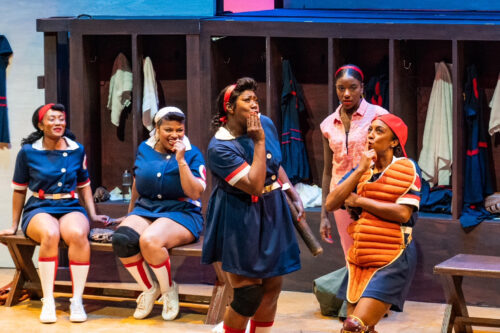
From left, Mysia Anderson, Chasity Hart, Toddra Brunson and Dina Lewis as members of the Red Diamonds baseball team in “The Girls of Summer.” (Photo courtesy of Christa Ingraham)
Without explicitly detailing all the twists and turns of its story, “The Girls of Summer” touches on bipolar disorder, sexual orientation, a boss crossing a line with a subordinate and the toll on those who become groundbreakers. Gray’s dialogue is authentic and believable, and the funny parts (yes, there are funny parts) get plenty of laughs from the audience.
Although sometimes certain actors can be difficult to hear clearly, Mitchell Ost’s locker room set and lighting design, the costumes by Richardson and Dunia Pacheco, Williams’s set dressing and Diego Villada’s fight direction all work with strong performances to enhance Gray’s storytelling.
Elam has the most problematic, challenging role in the play – portraying a flawed human being is never easy – but the two-time Carbonell Award winner delivers one of the finest (perhaps the finest) performances of her career. Her Coach Hicks has to be volatile, controlling, broken in body and spirit. Elam digs deep, then goes deeper and deeper. Her work is both intense and, because of its excellence, electrifying.
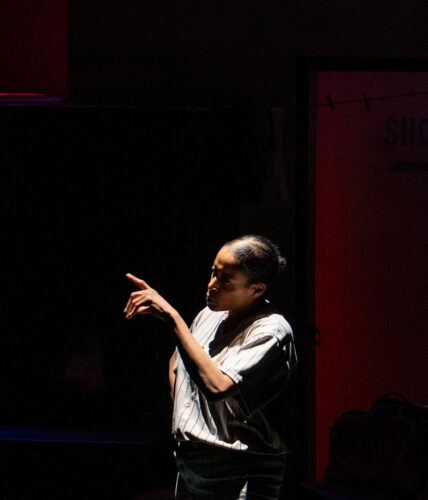
Lela Elam as Coach Odessa Hicks the M Ensemble production of Layon Gray’s “The Girls of Summer.” (Photo courtesy of Christa Ingraham)
Watching the women portraying the Red Diamonds – Hart, Lewis, Summers, Johnson, Hamilton, Agama, Anderson, Kenol and Brunson – stirs a sense of discovery and affirmation. Some of the actors are new to M Ensemble, others familiar talents.
When they’re facing casting challenges at other South Florida theaters, some producers have been known to ask, “Where are Miami’s great Black actors?”
The answer, but only through Feb. 25, is this: They’re appearing in M Ensemble’s “The Girls of Summer.”
WHAT: M Ensemble’s “The Girls of Summer” by Layron Gray
WHERE: Sandrell Rivers Theater, 6103 NW Seventh Ave., Miami
WHEN: 8 p.m. Friday-Saturday, 3 p.m. Sunday, through Feb. 25
COST: $36 plus $4.25 fee. (student and senior discounts at box office); special 2 for 1 tickets for certain nights at eventbrite.com.
INFORMATION: 305-705-3218 or themensemble.com
EXHIBITION: A Golden Years exhibit of M Ensemble’s 53rd season is on the second level of the Sandrell Rivers Theater and can be viewed from noon to 5 p.m. Monday through Friday until Feb. 29.
ArtburstMiami.com is a nonprofit media source for the arts featuring fresh and original stories by writers dedicated to theater, dance, visual arts, film, music and more. Don’t miss a story at www.artburstmiami.com.
No posts found
Review: Area Stage’s ‘Oliver!’ at the Arsht Center wraps audiences in a classic
Written By Christine Dolen
February 12, 2024 at 11:39 AM
Frank Montoto is the menacing Bill Sikes in Area Stage Company’s immersive production of “Oliver!” at the Adrienne Arsht Center’s Carnival Studio Theater in Miami through Sunday, Feb. 25. (Photo courtesy of Giancarlo Rodaz)
When was the last time a piece of theater made you gasp? Thrilled you, engaged you, delivered a story in such a unique way that even the familiar felt fresh?
Go to Area Stage Company’s production of Lionel Bart’s “Oliver!” before it ends its too-brief run Feb. 25 in the Carnival Studio Theater a Miami’s Arsht Center, and you just may experience all of the above.
“Oliver!,” the enduring 1960 musical based on “Oliver Twist” by Charles Dickens, won the Best Picture Academy Award for its 1968 movie version and has had numerous major revivals over the past 64 years, many from British super producer Cameron Mackintosh (or, as he was knighted in 1996, Sir Cameron Mackintosh).

Hallie Walker as the orphan Oliver in Area Stage Company’s “Oliver!” in the Arsht Center’s Carnival Studio Theater. (Photo courtesy of Giancarlo Rodaz)
High schools, colleges and universities, community theaters and regional theaters — including the Maltz Jupiter Theatre, which presented a critically acclaimed production in 2023 — have turned to “Oliver!” when they’re looking for a musical classic with a beloved score and a large cast.
But here’s a truth: It’s doubtful you’ve seen an “Oliver!” like the one Area Stage has dreamed up. More accurately, it’s the company’s 28-year-old artistic director Giancarlo Rodaz who has been doing the dreaming.
[RELATED: Christine Dolen’s preview of Area Stage’s “Oliver”]
The Carbonell Award-winning director has been attracting attention locally and in broader theater circles with his immersive productions of “Annie” in 2021, Disney’s “Beauty and the Beast” in 2022 and Disney’s “The Little Mermaid” in 2023. “Oliver!,” another collaboration with Carbonell-winning set designer Frank J. Oliva, tops them all.
From the moment you enter an unrecognizable Carnival Studio Theater, you realize that Area Stage’s production is unlikely to be a jaunty musical comedy “Oliver!.”
Oliva has transformed the space into a workhouse in Victorian London, the place where the famished, orphaned Oliver (Hallie Walker) has the audacity to ask for a second helping of gruel in the opening song “Food, Glorious Food.” The walls are weathered brick, the beams above wood, and the sign at the front of the room proclaims “God Is Just.” Theatergoers sit on benches at wooden tables edged with flickering faux candles, and the tables turn into long, narrow stages whenever actors hop up to play a scene on them. The effect, with soft light from designer Joe Naftal filtered through the windows, is quite church-like.
Much of the story, however, is anything but balm for the spirit.

Frank Montoto as Bill Sikes is a threatening villain in Area Stage Company’s immersive production of “Oliver!” (Photo courtesy of Frank Oliva)
Against all odds, the impoverished Oliver is a street kid who remains rather naïve and sweetly optimistic. After the gruel incident, he is sold into an apprenticeship by the greedy workhouse beadle Mr. Bumble (Frank Montoto) and his domineering bride-to-be Widow Corney (Annette Rodriguez).
Undertaker Mr. Sowerberry (John Mazuelos) and his Mrs. (Katie Duerr) scheme to maximize their profit from Oliver by having him walk as a paid mourner behind child-sized coffins. Servant Charlotte (Greta Hicks) treats the new boy abominably, as she has eyes for another apprentice, Noah Claypole (Luke Surretsky), who taunts and fights Oliver until the new boy winds up confined to a coffin.
After escaping and starving on the streets of London, Oliver meets the irresistibly charming Artful Dodger (Staci Stout). Dodger takes him home to the crafty Fagin (Mazuelos also plays that role), who runs a gang of juvenile pickpockets and calls the boys “m’dear.”
He also meets Nancy (Ashlee Waldbauer), a vibrant angel who’s something of a mother to Fagin’s gang, and her violent lover Bill Sikes (Montoto in a dual role), a ruthless devil who steals items for Fagin to fence and plays the abusive tyrant with the woman he loves.
For better or worse – and it does get much worse – Oliver has temporarily found his family of choice.
In case “Oliver!” has somehow escaped your notice over these past six-plus decades, the musical juxtaposes an often-jaunty but sometimes aching score against the harrowing story of a homeless boy who too often finds himself imperiled by the uncaring, exploitative adults around him. The stylistic range flows from Bart, the show’s British creator who did everything: adapted (and necessarily trimmed) “Oliver Twist,” then wrote the music and lyrics.
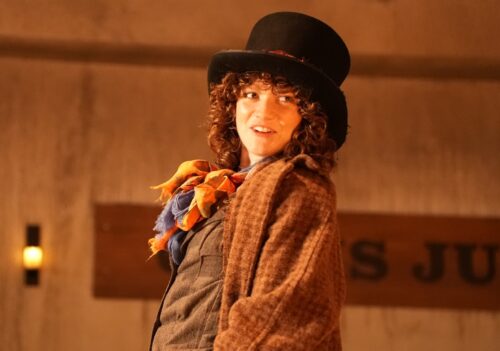
Staci Stout’s Artful Dodger welcomes Oliver into Fagin’s gang in Area Stage Company’s immersive “Oliver!” at the Arsht Center’s Carnival Studio Theater. (Photo courtesy of Giancarlo Rodaz)
Area Stage’s production brings the joy in numbers such as “Consider Yourself,” “It’s a Fine Life,” “Be Back Soon” and the audience singalong “Oom-Pah-Pah.” It also showcases melancholy (as Oliver sings a plaintive “Where Is Love”), an abused woman’s codependence (Nancy’s “As Long as He Needs Me), and a man unaccustomed to self-analysis doing just that (Fagin’s “Reviewing the Situation).
People know and love this score, as you’ll see if someone sitting next to you starts mouthing the lyrics or starts singing along. It’s tough to resist that impulse, particularly given the accompaniment of music director/pianist Michael Day, reeds player Frank Capoferri and violinist Liubov Ohrimenco, who sit in an alcove opposite the entryway and play impeccably.
What makes this “Oliver!” so extraordinary and so special are the ideas that came from Rodaz which were then realized by his creative collaborators under his guidance.
The acting company has just 10 adult performers, many with two or more roles, and two key roles usually played by boys – Oliver and the Artful Dodger – are here played by adult women whose work is completely convincing.
Fagin’s “gang” consists of puppets created by Erik Sanko of New York’s Phantom Limb Company. They’re operated and voiced by actors wearing masks that blend with the gaggle of puppets – who look haunted or traumatized, much like Oliver most likely feels inside.
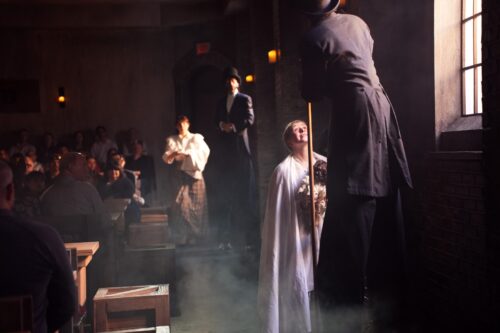
Hallie Walker’s Oliver tries to survive as a London orphan in Area Stage Company’s immersive production of “Oliver!” (Photo courtesy of Frank Oliva)
The first massive “wow” moment in the production occurs when actors wearing full Victorian garb concealing stilts under their clothing enter the room. Sofia Ortega’s costumes, with necessarily long skirts and pants, are era-perfect, and with some of the men wearing top hats, the adults in this “Oliver!” seem utterly frightening, particularly as backlit by Naftal. Rodaz wanted the story told from Oliver’s point of view, and the elongated adults help do just that.
The acting and singing, mostly by Area Stage Company veterans with a few newcomers, are really fine, the varied British accents quite good. Quiana Major’s sound design is so effective and the audience so rapt (most of the time) that you can hear a pin drop,
Walker, who weaves in and out silently through the maze of tables before the show begins, has the audience in the palm of her hand from the moment she approaches Mr. Bumble with Oliver’s empty bowl and asks, “Please, sir, may I have some more?” Her voice is lovely and light yet powerful when it needs to be, and her face radiates the goodness Oliver embodies.
Stout is simply a pistol as the Artful Dodger, joyous as she plays the banjo, just flat-out irresistible as Dodger lures the clueless Oliver into the family business.
Mazuelos is a superb Fagin, friendly yet also ruthless, not willing to cave in to Bill Sikes or anyone else. As he sings “Reviewing the Situation,” the arrangement sounds like klezmer music, underscoring his Jewish character, and Mazuelos sings it as if Fagin is just at that moment assessing his life.

John Mazuelos is the conniving Fagin in Area Stage Company’s immersive production of “Oliver!” at Miami’s Arsht Center. (Photo courtesy of Giancarlo Rodaz)
Montoto is chilling as Bill Sikes, who takes a billy club to Nancy at will, and amusing as Beadle Bumble, very tall and very round. He’s markedly different as each character, and his killer voice serves both.
As Nancy, Waldbauer is a striking red-haired beauty in a pale dress (not the character’s usual blood-red frock), and she makes “As Long As He Needs Me” the heartbreaking number it needs to be.
Rodriguez is a funny nag as Widow Corney, Duerr a bully as Mrs. Sowerberry and the soul of kindness as Ms. Bedwin, Hicks so very different as Nancy’s friend and confidante Bet vs. her look and manner in playing Charlotte. Surretsky makes Noah an overwhelming aging brat, and Carbonell winner Tico Chiriboga brings love and deliverance into Oliver’s life as Mr. Brownlow.
Immersive theater is the thing now, and it may not be to everyone’s taste. Maybe you don’t want to watch Bill Sikes attacking Nancy right in front of you – literally. Maybe constantly shifting your focus to different parts of the room (sometimes, the action may be behind you or off to the side) will start to annoy you.
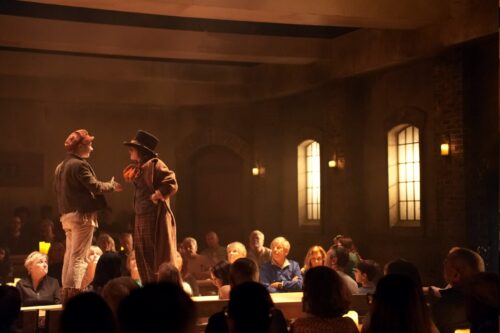
Hallie Walker’s Oliver, left, meets Staci Stout’s Artful Dodger in Area Stage’s immersive “Oliver!” at the Arsht Center’s Carnival Studio Theater. (Photo courtesy of Giancarlo Rodaz)
The way Rodaz and his collaborators relate the story of “Oliver!” is unique and deeply creative as it enmeshes the audience within the story. It will be fascinating to watch how Rodaz interprets familiar works and new plays going forward. But “Oliver!” is his best work to date. And that’s saying something.
WHAT: Area Stage Company’s “Oliver!”
WHERE: Carnival Studio Theater at the Adrienne Arsht Center for the Performing Arts, 1300 Biscayne Blvd., Miami
WHEN 7:30 p.m. Friday, 1 and 7 p.m. Saturday, 1 p.m. Sunday, through Feb. 25
COST: $68 general admission, $ 36.50 student seats with promo code OLISCHOOL (student ID required for ticket pickup), $31 lap seating (day of show only at box office)
INFORMATION: 305-949-6722 or arshtcenter.org
ArtburstMiami.com is a nonprofit media source for the arts featuring fresh and original stories by writers dedicated to theater, dance, visual arts, film, music and more. Don’t miss a story at www.artburstmiami.com.
No posts found
Miami’s M Ensemble Theater Company Turns 53 with plenty of history
Written By Christine Dolen
February 7, 2024 at 5:58 PM
Layon Gray’s “Kings of Harlem” inaugurated M Ensemble’s new home at the Sandrell Rivers Theater in 2017. Now Gray’s “The Girls of Summer” ignites M Ensemble’s 53rd season opening Thursday, April 8 at the theater in Liberty City. (Photo courtesy of Deborah Gray Mitchell)
In Miami-Dade County’s arts and culture circles or in the broader South Florida theater community, if you say “Pat and Shirley” (or “Shirley and Pat”), last names aren’t necessary.
Patricia E. Williams and Shirley Richardson, winners of the Carbonell Awards’ George Abbott Award for Outstanding Achievement in the Arts in 2016, have been presenting the work of Black playwrights, actors, directors (frequently John Pryor or Jerry Maple Jr.), designers, stage managers and crew members since 1971.

Writer-director Layon Gray, standing, and stage manager Carey Brianna Hart work with the cast of Gray’s “The Girls of Summer.” The production opens on Thursday, Feb. 8. (Photo courtesy of Akins Allman)
That’s when T.G. Cooper, his wife Grace, Williams and Richardson founded the M Ensemble Company, Florida’s oldest still-operating Black theater company. Cooper left the University of Miami the following year to become head of the drama department at Howard University in Washington D.C., so ever since then, M Ensemble has been the Pat-and-Shirley show.
About to embark on its 53rd season, the company has put together a pair of special events to bookend its three productions in Liberty City’s Sandrell Rivers Theater.
On display through Thursday, Feb. 29 and open from noon to 5 p.m. Monday through Friday is a “Golden Years” photo exhibition highlighting impactful productions from each decade of M Ensemble’s existence. A tour of the exhibition will precede the opening night of Layon Gray’s “The Girls of Summer” on Thursday, Feb. 8, with regular performances of the show at 8 p.m. Friday and Saturday, 3 p.m. Sunday, through Feb. 25.
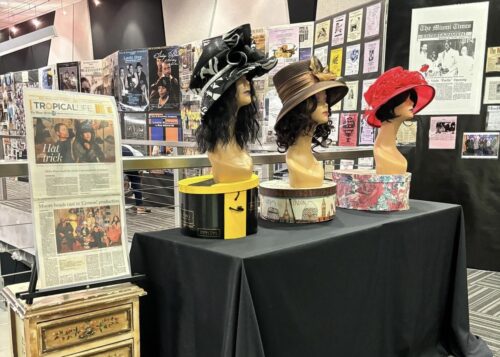
M Ensemble’s Golden Years art exhibition runs concurrently with its production of “The Girls of Summer.” (Photo courtesy of Chasity Hart)
Pearl Cleage’s “Bourbon at the Border” is on stage from April 11-28, then Lanie Robertson’s Billie Holiday play “Lady Day at Emerson’s Bar and Grill” folllows June 6-23. A Golden Gala to celebrate and raise funds for M Ensemble’s future is set for Friday, Nov. 16.
Clearly, M Ensemble has come a long way since Richardson and Williams thought of an inventive way to earn seed money for their young company.
“There used to be Saturday night dances in Coconut Grove,” says Richardson, a University of Miami graduate who grew up not too far from the Coconut Grove Playhouse. “We’d make roasted peanuts and conch fritters to sell there.”
“Dancing made everyone sweaty and hot and hungry,” adds Williams, a Northwestern University grad from the Bunche Park neighborhood of Miami Gardens.

Patricia E. Williams, left, and Shirley Richardson received the Carbonell’s George Abbott Award for Outstanding Achievement in the Arts. (Photo courtesy of the Carbonell Awards)
The early days were tough. Without grants or solid community financial support, Richardson and Williams did everything from paying the bills to cleaning the bathrooms. One night, knowing the company couldn’t pay its rent, Richardson woke up to a strong feeling that they needed to retrieve all the M Ensemble documents at the space they were using – which they did, just before the locks were changed.
Until their retirements, both women held demanding day jobs – Richardson as a substance abuse prevention specialist with the Miami-Dade Office of Rehabilitative Services, Williams as director of the after-school programs at the YWCA of Greater Miami. Now they can pour their passion for theater into M Ensemble fulltime.
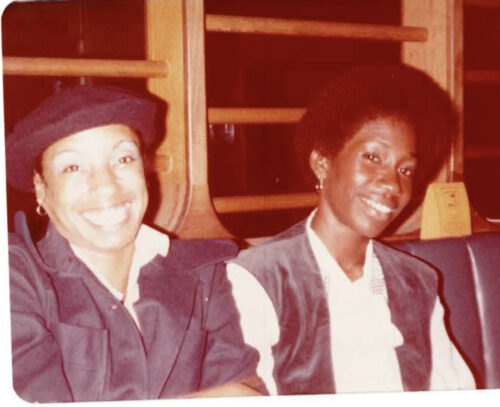
Shirley Richardson, left, and Patricia E. Williams have been running M Ensemble since its founding. (Photo courtesy of M Ensemble)
“Shirley and Pat are missionaries. They do their jobs and never know if they’re going to get anything out of it,” says actor and drama teacher André L. Gainey, who won a Carbonell Award for his 2017 performance in Gray’s “Kings of Harlem,” M Ensemble’s first production at the Sandrell Rivers Theatre. “It’s not Black theater. It’s good theater.”
[RELATED: Read Christine Dolen’s review of “Kings of Harlem” from 2017]
M Ensemble’s stated mission is “…to preserve and promote the African American culture and experiences through the performing arts.” The company has done just that for more than half a century, training and showcasing several generations of Black artists, giving uncounted children early theater experiences, illuminating Black lives through the powerful storytelling of playwrights like double Pulitzer Prize winner August Wilson, Gray and many others.

Keith C. Wade, left, and Jovon Jacobs in August Wilson’s “Fences” for M Ensemble. (Photo courtesy of Deborah Gray Mitchell)
The company has already presented all 10 of the plays in Wilson’s Pittsburgh Cycle, with each drama set in a different decade of the 20th century. Among the talented actors who have appeared in the cycle – some who have since left the area, others who stayed – are Sheaun McKinney (a regular on CBS’s “The Neighborhood”), Ethan Henry, Makeba Pace, Lela Elam, Carolyn Johnson, Chat Atkins, Keith C. Wade and, in “The Piano Lesson,” MacArthur “Genius Grant” recipient Tarell Alvin McCraney, who is now artistic director of the Geffen Playhouse in Los Angeles. M Ensemble continues working its way through the cycle again, with a production every two years, so that younger theatergoers can experience his powerful voice.
Beginning with “Kings of Harlem” in 2017, M Ensemble found a kindred spirit to showcase in playwright-director-actor Gray, who finds inspiration for many of his plays in Black history.
“I love telling stories from history that people don’t know,” says Gray, who is directing “The Girls of Summer.”
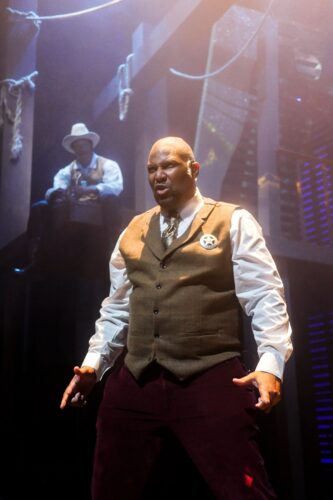
Layon Gray played Old West lawman Bass Reeves in his play “Cowboy” for M Ensemble. (Photo courtesy of Christa Ingraham)
Of the M Ensemble founders, Gray says, “Pat and Shirley are legends here. They bring unique stories to the stage, and I truly appreciate them for bringing me back. They give me 100 percent creative control. They’re like my family in Miami.”
The company presented Gray’s “Meet Me at the Oak” (about racism and its deadly legacy in 1955 Louisiana) in 2019, “Cowboy” (about Black U.S. Marshal Bass Reeves, an Old West legend who also inspired the recent Paramount+ limited series) in 2021, and “The Dahomey Warriors” (about a fierce women’s army in the African Republic of Benin at the end of the 19th century) in 2022.
“Layon is very popular. Actors come from all over to audition for him,” says Williams.
Carey Brianna Hart, an actor, director and stage manager who has done all three things at M Ensemble over her many years working with the company, is stage managing “The Girls of Summer,” a rare Gray play not based on a historical event. She has, in fact, stage managed every M Ensemble production of his plays.
She observes of Gray, “He likes bringing something fresh and new to old stories. The event in ‘The Girls of Summer’ didn’t take place, but the play has a lot of layers. We’re looking for people to come back and see it more than once – they’ll want to look for those hidden clues.”

Layon Gray crawls toward his fate in the M Ensemble production of “The Dahomey Warriors.” (Photo courtesy of Christa Ingraham)
The play is set in the summer of 1946, as the all-Black women’s baseball team the Red Diamonds is preparing to play the white Racine Belles (a real team in the American Girls Professional Baseball League from 1943 to 1950, represented in the 1992 movie “A League of Their Own”) in an exhibition game. The Diamonds are being brutally driven by their coach, Odessa Hicks (Elam), the only woman to have played in the Negro Leagues (in reality, a number of women did so). Shocks, secrets and a disappearance are woven into the script – those layers and clues Hart mentioned.
Performed by a cast of 10 Black women and two males, “The Girls of Summer” offers an opportunity more common in the world of musical theater.
“You don’t see a cast of all-Black women in a drama,” says Gray, who wasn’t certain he could cast the entire show locally – but did.
The fierce Coach Hicks was inspired by his father, grandfather and mother, who taught him to “stay the course” and work hard to sustain his goals. He worried most about casting that role but was very happy when the Carbonell Award-winning Elam came to auditions.
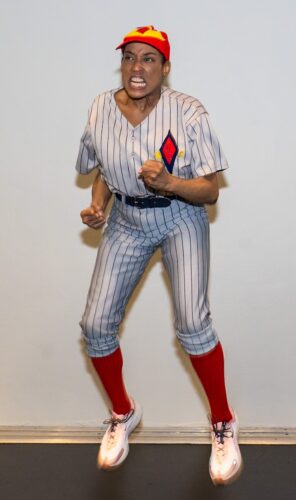
Lela Elam plays Coach Odessa Hicks in the M Ensemble production of Layon Gray’s “The Girls of Summer.” (Photo courtesy of Christa Ingraham)
“She came in with that energy and nailed it. I knew I wanted to work with her,” he says.
Elam had never played softball or baseball, but she immersed herself in movies about women who did, including “A League of Their Own” and, she says, “every baseball movie on the planet.” Cast member Toddra Brunson leads movement sessions before rehearsals to help the cast bond as a team
She is thrilled to be working with Gray, whose vision she describes as both challenging and clear, and overjoyed as she thinks about what seeing a stage full of Black women artists could represent: “I didn’t have anything like that when I was a little girl.”
This is Elam’s first time performing for M Ensemble at the Sandrell Rivers Theater, though she has been in several earlier productions of Wilson plays and others for the company and works at theaters throughout South Florida. She is quick to emphasize the company’s importance.
“If you’re Black and want to be in theater here, M Ensemble should be the first place you look. It’s where I got my start, that jumping off place when no one else would pay attention to you or see you,” says Elam.

“God’s Trombones” was among the musicals presented by Miami’s M Ensemble. (Photo courtesy of Deborah Gray Mitchell)
The actor points out that M Ensemble’s fare is for diverse audiences, that these stories from the Black experience and perspective are have a universal power.
“Shirley and Pat are movin’ and shakin’. The work they’ve done is beyond impressive” says Elam. “And they get diverse crowds. Some might think, ‘That’s not for me.’ But the plays speak to everyone. Our stories are American stories.”
Chasity Hart (no relation to Carey Brianna Hart) plays Coby Rae in “The Girls of Summer.” A New World School of the Arts graduate who teaches middle school drama, she has worked behind the scenes in multiple ways with M Ensemble since 2019. She calls Richardson and Williams “my girls.”
“They have such a commitment to honoring our voices. I’ve watched them be so tired, stay up late to get grant writing done. They have such pride in our stories. But so many kids don’t know who they are – and who we are as a people,” says Hart. “M Ensemble is important. It exposes Black people to work they would probably never see otherwise.”
Today, having gone from (literally) peanuts to a budget of $278,000 for their 53rd season, Williams and Richardson are necessarily looking ahead. They remember with gratitude every home M Ensemble has ever had, every politician or government entity or foundation that has helped the company.

August Wilson’s “Seven Guitars” is among the 10 plays of his Pittsburgh Cycle presented by M Ensemble. (Photo courtesy of Deborah Gray Mitchell)
If Williams and Richardson ever do move on from the company they created – though they have no plans to do so – that will be a challenge for M Ensemble. It’s always tough when an arts organization’s founders seem irreplaceable.
“Pat and Shirley are pioneers. They have high standards for the quality of their productions, and they’re the epitome of teamwork. It’s wonderful to see them working together the way they do,” says Carey Brianna Hart. “That type of perseverance is so important to legacy building.”
Richardson and Williams remain mindful of that legacy.
“We consider M Ensemble to be an institution. You can’t walk away and leave it in just anybody’s hands…You have to get people who won’t abandon it,” Richardson says, and given the Pat-and-Shirley track record, it seems likely that they’ll handle a future handoff as well as they’ve coped with every other challenge in their company’s history.
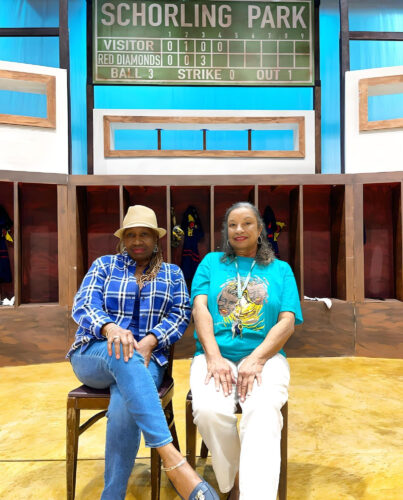
Patricia E. Williams, left, and Shirley Richardson on the set of M Ensemble’s “The Girls of Summer” at the Sandrell Rivers Theater in Liberty City. (Photo courtesy of Chasity Hart)
In that spirit: Did you ever wonder what the “M” in M Ensemble signifies? Richardson explains that it stood for Maria, the name of the Coopers’ daughter. When the founding couple moved away, she says, “we decided that the M would stand for magical, which always happens when we’re confronted with the many challenges of putting a show up; mystery, which was we were never quite sure what we’d be doing in the earlier years; and movement – we were always moving.”
WHAT: M Ensemble’s “The Girls of Summer” by Layon Gray
WHERE: Sandrell Rivers Theater, 6103 NW Seventh Ave., Miami
WHEN: Opens 8 p.m. Thursday, Feb. 8; regular performances 8 p.m. Friday-Saturday, 3 p.m. Sunday, through Feb. 25
COST: $41 plus $4.59 fee for opening night, $36 plus $4.25 fee for other performances (student and senior discounts at box office only)
INFORMATION: 305-705-3218 or themensemble.com
EXHIBITION: The Golden Years exhibit is on the second level of the Sandrell Rivers Theater and can be viewed from noon to 5 p.m. Monday through Friday until Feb. 29.
ArtburstMiami.com is a nonprofit media source for the arts featuring fresh and original stories by writers dedicated to theater, dance, visual arts, film, music and more. Don’t miss a story at www.artburstmiami.com.
No posts found
Area Stage Co. adds immersive twist to classic musical ‘Oliver!’
Written By Christine Dolen
February 6, 2024 at 6:44 PM
Hallie Walker’s Oliver sings with Fagin’s boys in the immersive Area Stage Company production of “Oliver!” in the Carnival Studio Theater at the Adrienne Arsht Center for the Performing Arts. Previews start Wednesday, Feb. 7 with an opening set for Saturday, Feb. 10. (Photo courtesy of Giancarlo Rodaz)
Miami’s Area Stage Company has returned to the Arsht Center’s Carnival Studio Theater this week, ready to open its newest immersive production. This time without a Disney character in sight.
As popular as the company’s earlier Disney fare has been – 2022’s “Beauty and the Beast” came first, followed by “The Little Mermaid” in 2023 – fans who saw artistic director Giancarlo Rodaz’s reimagined “Annie” at the company’s South Miami space in 2021 know that his passion for creating inventive immersive productions of all sorts of shows is boundless.
Lionel Bart’s much-loved “Oliver!,” which begins previews Wednesday, Feb. 7 through Friday, Feb. 9, and opens Saturday, Feb. 10, is the next big musical to ignite Rodaz’s imagination. The production runs through Sunday, Feb. 25.
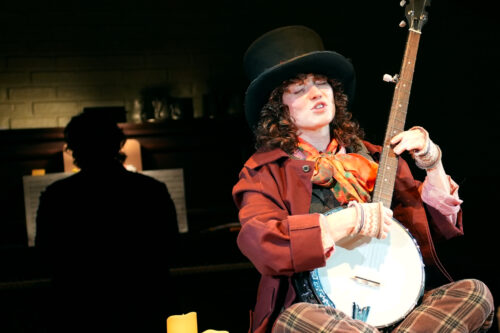
Staci Stout plays The Artful Dodger in Area Stage’s “Oliver!” at the Arsht Center. (Photo courtesy of Giancarlo Rodaz)
“’Oliver!’ is a project, like ‘Annie,’ that is very personal to me,” says Rodaz, who succeeded his father John as Area’s artistic director in July. “It has been many years of thinking about it.”
Bart wrote the 1960 British musical’s book, music and lyrics, basing it on Charles Dickens’s hefty 1838 novel “Oliver Twist,” which was inspired in part by Dickens’s boyhood experiences living with his family in a London debtors’ prison as well as his adult opposition to prison-like workhouses. The musical follows the impoverished orphan Oliver (played in Area Stage’s production by Hallie Walker) from the workhouse to a forced apprenticeship with an undertaker to a street life with the wily Fagin (John Mazuelos) and his gang of pickpocket kids.
“‘Oliver!’ is a project that I immediately hooked onto because I was profoundly moved by the story and how it manages to connect us with these characters from all walks of life,” says Rodaz. “The musical is equally masterful in how it captures the spirit of the novel’s winding story in a two-hour show.”

Giancarlo Rodaz, left, and Frank Oliva have brought Area Stage Company’s immersive sets to life. (Photo courtesy of Andres Hernandez)
What will be different about Area Stage’s “Oliver!?” Perspective, for one thing, which the audience, sitting at tables in the “workhouse,” will experience as the actors move all around the space.
“The adults will walk on stilts, so you see the show from Oliver’s perspective. I wanted to reorient it to the perspective of a child — they are towering over you. It’s creepy and cool. You understand his fears,” says Rodaz.
A key partner in making the director’s immersive dreams come true is Carbonell Award-winning set designer Frank Oliva, who smiles over Zoom as he calls Rodaz “the brains of the operation.” Oliva got his start in theater at Area Stage when he was 15 and now designs for theaters throughout the U.S. — most recently, the set for Washington D.C.’s Gala Hispanic Theatre world premiere of Cristina Garcia’s “Las Hermanas Palacios,” a version of Anton Chekhov’s “Three Sisters” set in 1985 Miami.
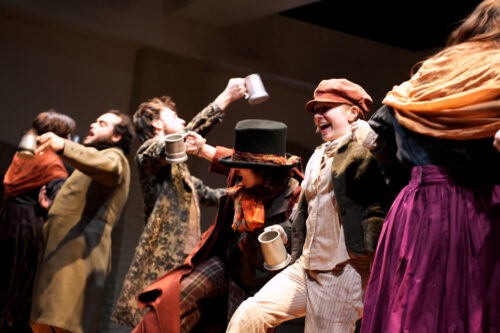
The cast performs a merry dance in Area Stage’s “Oliver!” in the Arsht Center’s Carnival Studio Theater. (Photo courtesy of Giancarlo Rodaz)
Oliva and Rodaz sent drawings and images of life in Victorian London to each other, did screen sharing, texted or just spoke on the phone throughout the creative process for “Oliver!.”
“We knew that the set had to be an oppressive, historically accurate, dynamic space,” says Oliva of his Victorian workhouse design. “We went through 25 to 30 orientations, and I think it was ultimately iteration 25 that we chose.”
As he did with “Annie,” Rodaz is using a smaller-than-usual cast of 10 adult actors (four of whom play two roles each) and no children. He had intended to cast a boy in the title role but asked Walker, who played Ariel’s sidekick Flounder in Area’s “The Little Mermaid,” to audition.
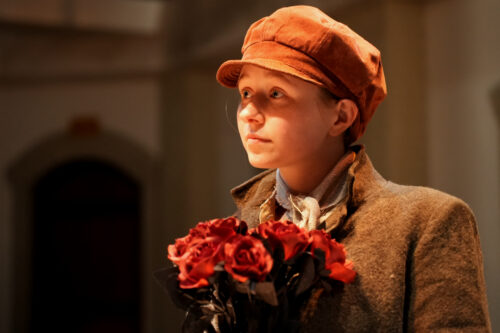
Hallie Walker is the first adult woman to play the role of the young boy Oliver. (Photo courtesy of Giancarlo Rodaz)
She sent me a video of her singing ‘Where Is Love?’ The depth of character, the heartbreak . . . I had to cast her as Oliver,” says Rodaz.
Walker is the first-ever adult woman to play the young Oliver in a production.
“It’s a very new take, and it works pretty well,” says the actress. “There’s so much Oliver has seen, so much innocence he’s lost. A lot of the adults use stilts, so it really does look as if I’m a child.”
The juicy part of the persuasive Artful Dodger is being played by Staci Stout, who had the title role in Area’s “Annie.” She stepped away from acting after that show to focus on writing music, but she’s finding a connection with her role in “Oliver!.”
“I have a lot in common with him. I feel naturally masculine and androgynous. When I sing, I drop into more of a growl. I had a lot of practice with this hardcore band I’ve been in…And I get to play the banjo and play the bucket as a drum,” says Stout.
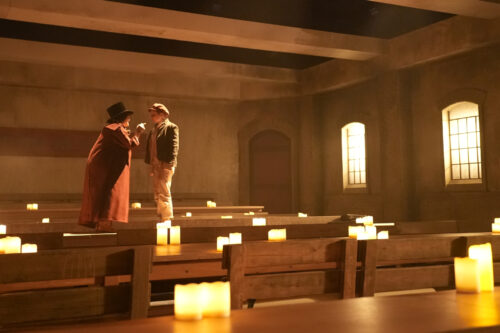
Staci Stout as The Artful Dodger, left, and Hallie Walker as Oliver on the immersive set of Area Stage Company’s production of “Oliver!” inside the Arsht Center. (Photo courtesy of Giancarlo Rodaz)
The other boy pickpockets in Fagin’s gang will be played by puppets designed by the New York-based Phantom Limb Company. The effect, Rodaz says, is like having 20 actors onstage instead of 10.
Of course, “Oliver!” has plenty of unforgettable adult roles too.
Frank Montoto plays the violent and abusive Bill Sikes, as well as the cruel workhouse beadle Mr. Bumble. Mazuelos has the major role of Fagin and a smaller one as Mr. Sowerberry, the undertaker. Annette Rodriguez is the Widow Corney, who joins Mr. Bumble in mistreating the orphans. Katie Duerr is Mrs. Sowerberry and Ms. Bedwin, Greta Hicks plays Bet and Charlotte, Luke Surretsky is Noah Claypool and Carbonell winner Tico Chiriboga is Mr. Brownlow, the man who makes a true difference in Oliver’s life.
As Nancy, the frequent victim of Bill Sike’s cruel wrath, Ashlee Waldbauer gets to sing some of the most unforgettable songs in “Oliver!” – particularly the mournful, soaring solo “As Long as He Needs Me.” The actor had played one of Fagin’s boys as a kid, then was Nancy in a high school production.
“That was one of my bucket list characters to revisit,” says the New York-based Waldbauer, who heard about Area Stage through her friend Marilyn Caserta, who starred in many Area shows and went on to appear on Broadway in “Six the Musical.”
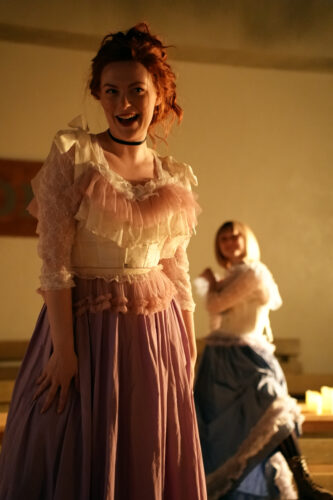
Ashlee Waldbauer plays the tragic Nancy in Area Stage Company’s “Oliver!” at the Arsht Center. (Photo courtesy of Giancarlo Rodaz)
“I’ve never done immersive theater,” says Waldbauer. “I wanted to try something new. I haven’t been in a space in a very long time where everything was so collaborative…Nancy is a light to Fagin’s boys. I’m not afraid to lean into her hope.”
Nor is Rodaz afraid to lean into treating a musical classic like “Oliver!” the same way he would a new work.
“Being able to approach it in a new way makes it feel like I discovered one of the greatest stories of all time, and I get to bring it to life how I see fit,” he says. “How often does a storyteller get that opportunity?”
WHAT: Area Stage Company’s “Oliver!”
WHERE: Carnival Studio Theater at the Adrienne Arsht Center for the Performing Arts, 1300 Biscayne Blvd., Miami
WHEN: Previews 7:30 p.m. Wednesday, Feb. 7, Thursday, Feb. 8, Friday, Feb. 9, and 1 p.m. Saturday, Feb. 10. Opens 7 p.m. Saturday, Feb. 10 with regular performances at 7:30 p.m. Friday, 1 and 7 p.m. Saturday, 1 p.m. Sunday, through Feb. 25
COST: $68 general admission plus additional fees, $ 36.50 student seats with promo code OLISCHOOL (student ID required for ticket pickup) plus additional fees, $31 lap seating for children, 2 and under, plus additional fees. Lap seating available at box office only on day of show.
INFORMATION: 305-949-6722 or arshtcenter.org
ArtburstMiami.com is a nonprofit media source for the arts featuring fresh and original stories by writers dedicated to theater, dance, visual arts, film, music and more. Don’t miss a story at www.artburstmiami.com.
No posts found
Review: ‘Legally Blonde’ rules the Actors’ Playhouse stage
Written By Christine Dolen
February 4, 2024 at 10:04 PM
Becca Andrews as Elle Woods and the ensemble in the Actors’ Playhouse production of “Legally Blonde the Musical” at the Miracle Theatre in Coral Gables through Sunday, Feb. 25. (Photo courtesy of Gregory F Reed)
The opening number is titled “Omigod You Guys,” sung with enough effervescent peppiness to power the next moon mission. A host of sorority hotties performs it dancing on a set which features pink “ironwork” containing silhouette images of a Barbie-style ponytailed gal.
So you know, don’t you guys, that you’re either at an as-yet-unwritten “Barbie” musical or watching a production of “Legally Blonde the Musical.”

Jessica Brooke Sanford, Hana Slevin, Stephanie White, Becca Andrews, Heather Jane Rolff and Michael Dean Morgan in “Legally Blonde the Musical” at Actors’ Playhouse. (Photo courtesy of Gregory F Reed, MFA)
Visit Actors’ Playhouse in Coral Gables and you’ll discover the latter. Through Sunday, Feb. 25, the Main Stage at the Miracle Theatre belongs to Becca Andrews as Elle Woods, Stephen Christopher Anthony as Emmett Forrest, almost two dozen more talented humans, and a pair of well-schooled canines playing Bruiser and Rufus.
Based on the 2001 movie starring Reese Witherspoon as the SoCal Delta Nu sorority president who pursues her ex-boyfriend all the way to Harvard Law School, the 2007 Broadway version of the story was previously produced by Slow Burn Theatre at the Broward Center at the end of 2018.
Just over five years later, Actors’ Playhouse artistic director David Arisco has made “Legally Blonde the Musical” the big-budget centerpiece of the company’s season. In the interim, COVID-19 and the 2020 election happened, as did a whole lot of world chaos. So it’s an escapist relief to welcome back Elle Woods in her transformative, stereotype-busting story.

Becca Andrews as Elle Woods holds Cha Cha as her best pal Bruiser while, from left, Stephen Christopher Anthony, AJ Cola and Diego Klock-Pérez consider the new addition to Harvard Law in “Legally Blonde the Musical” at Actors’ Playhouse. (Photo courtesy of Gregory F Reed, MFA)
With a clever book by Heather Hach and a stylistically varied score by Nell Benjamin and Laurence O’Keefe, “Legally Blonde the Musical” preserves big moments from the movie original while cutting or consolidating some material to make room for the songs.
You’ll see Elle (Andrews) taking her pink-forward décor and fashion to hallowed Harvard. Of course she teaches her tongue-tied friend Paulette (Heather Jane Rolff) her surefire “Bend and Snap” maneuver so her pal can seal the deal with the clearly interested UPS delivery guy Kyle (Diego Klock-Pérez). The egotistical Professor Callahan (Michael Dean Morgan) hits on Elle a little harder than in the movie, but the sympathetic witness this time is Vivienne Kensington (Hana Slevin), the bride-to-be of Elle’s judgmental ex Warner Huntington III (Alexander Zenoz).
But as fun and frothy as “Legally Blonde the Musical” can be – and it is – the musical gives Elle a bit more depth than her movie predecessor.
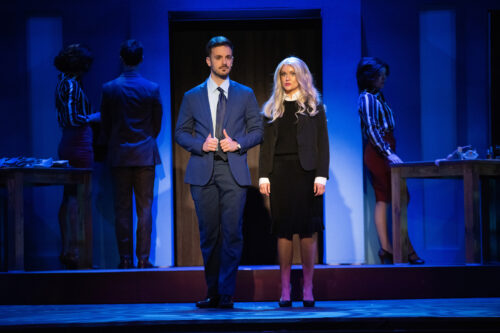
Stephen Christopher Anthony as Emmett Forrest and Becca Andrews as Elle Woods in “Legally Blonde the Musical” at Actors’ Playhouse at Theatre. (Photo courtesy of Gregory F Reed)
Some of that flows from Andrews, who also played Elle for Slow Burn and in four other productions. Even when she’s called upon to be Elle-as-beautiful-blonde (in her high-kicking personal Harvard “essay” with cheerleaders and marching band, or when she’s tricked into wearing a pale pink Playboy Bunny getup to a non-costume party), Andrews remains a smart and believable woman, not a caricature.
She also has a powerful pop voice, one that can also convey plaintive yearning as she sings the most beautiful duet on the title song with Anthony. The latter, a New World School of the Arts high school alum, has seen his career take off with starring roles in Broadway’s “Dear Evan Hansen” and the touring “Catch Me If You Can.” You can see – and hear – why in “Legally Blonde the Musical” with his stellar vocals and understated yet pitch-perfect comic timing.
Among the standouts in the large cast are Rolff as Paulette, warmer and less eccentric than Jennifer Coolidge was in the movie; Zenoz, effective as Elle’s smiling, ruthlessly ambitious Warren (his duet with Andrews on “Serious” is an upbeat heartbreaker); Morgan as the ruthless Callahan; Slevin as the (somewhat) kinder, gentler Vivienne; Stephanie White as fitness queen and murder suspect Brooke Wyndham; Jessica Sanford as Elle’s activist classmate Enid; David Nick Alaya as the sarcastic pool boy; and Camryn Handler as Serena, Nicolette Hernandez as Margot and Whitney Renee as Pilar, Elle’s very own Greek chorus.

Becca Andrews as Elle Woods watches as Heather Jane Rolff’s Paulette sees something she likes in Diego Klock-Pérez as Kyle the UPS guy in “Legally Blonde the Musical.” (Photo courtesy of Gregory F Reed)
Also mega-props to Klock-Pérez and choreographer-associate director Sarah Crane for offering a different take on Kyle. This UPS guy is no heart-melting hunk. He’s as loose as a Slinky, twisting, turning, posing, provoking and earning every laugh.
As Elle’s beloved chihuahua Bruiser Woods and Paulette’s goofy bulldog Rufus, Cha Cha (Bruiser) and Tony (Rufus) get oohs and aahs (and treats) whenever they show up on stage.
Kudos to Actors’ Playhouse for using a live eight-piece band under the musical direction of Nick Guerrero. That doesn’t always happen at South Florida theaters, but the give-and-take with the actor-singers does make a difference.
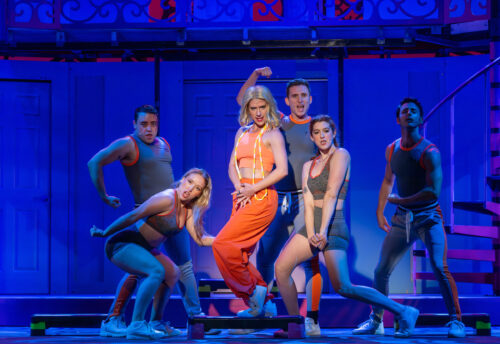
Stephanie White as fitness queen Brooke Wyndham, center, demonstrates her tough-love style in “Legally Blonde the Musical” at Actors’ Playhouse at the Miracle Theatre. (Photo courtesy of Gregory F Reed, MFA)
Brandon Newton’s set, of necessity, has to morph into many locations. The two-level Delta Nu house is on a turntable, so it can revolve to reveal the restaurant where Warner crushes Elle’s life plan, the chic Boston shop where Elle transforms Emmett from a rumpled corduroy kind of guy into a GQ type, the beauty shop where Paulette does nails, the courtroom where Brooke is on trial for her wealthy older husband’s murder. Velvet curtains hang at either side of the centerstage set, so when the actors dash backstage to make a costume change, you can see the next set pieces waiting for their entrance. Awkward.

Michael Dean Morgan as the ruthless Professor Callahan advises his law students to seek “blood in the water” in “Legally Blonde the Musical” at Actors’ Playhouse.” (Photo courtesy of Gregory F Reed, MFA)
Eric Nelson’s lighting is first rate, as are Reidar Sorensen’s sound design, Jodi Dellaventura’s props and set dressing, and Ellis Tillman’s huge array of costumes, pink and otherwise.
Arisco and Crane, here infusing her choreography with a spirit as bubbly as the Delta Nu sisters, have brought back Elle and company with joyous finesse. Some of the obviously adult references aren’t great for younger kids – though the double entendres will likely go over their heads – because “Legally Blonde the Musical” isn’t an all-ages “Barbie” movie. But it’s absolutely worth a visit or revisit.
WHAT: “Legally Blonde the Musical”
WHERE: Actors Playhouse at the Miracle Theatre, 280 Miracle Mile, Coral Gables
WHEN: 8 p.m. Wednesday-Saturday, 3 p.m. Sunday (additional matinees at 2 p.m. Saturday, Feb. 3; Wednesday, Feb. 7, and Saturday, Feb. 10), through Feb. 25
COST: $40, $55, $65, $75, $85; seniors 65 and over get 10 percent off weekdays only, students with valid student ID pay $15 for a rush ticket available 15 minutes before a weekday performance
INFORMATION: 305-444-9293 or actorsplayhouse.org
ArtburstMiami.com is a nonprofit media source for the arts featuring fresh and original stories by writers dedicated to theater, dance, visual arts, film, music and more. Don’t miss a story at www.artburstmiami.com.
No posts found
Actors’ Playhouse builds a case for the power of pink in ‘Legally Blonde: The Musical’
Written By Christine Dolen
January 31, 2024 at 2:13 PM
Becca Andrews is Elle Woods in the Actors’ Playhouse production of “Legally Blonde: The Musical” at the Miracle Mile Theatre in Coral Gables through Feb. 25. (Photo courtesy of Gregory F Reed, MFA)
Before Elle Woods, there was the Barbie doll, Mattel’s 65-year-old ageless wonder. After Elle Woods, there was “Barbie” the movie, the box office giant killer with a $1.4 billion (and counting) worldwide gross.
But in between? Elle Woods triumphed in 2001’s “Legally Blonde,” 2003’s “Legally Blonde 2: Red, White & Blonde” and on Broadway in 2007’s “Legally Blonde: The Musical.” Brainy beauties with a penchant for pink-forward fashion, Elle and Barbie are much-loved exemplars of self-empowerment.
Elle Woods, the Delta Nu sorority girl from Los Angeles who found her future at Harvard Law School, gets another turn in the spotlight as Actors’ Playhouse in Coral Gables opens its production of “Legally Blonde: The Musical.” The show previews at the Miracle Theatre on Wednesday, Jan. 31, and Thursday, Feb. 1, then opens Friday, Feb. 2, for a run through Sunday, Feb. 25.
“Legally Blonde: The Musical” is the biggest show of the 2023-2024 Actors’ Playhouse season, with a $400,000 budget, a cast of 21, two swing performers and a pair of pooches (a chihuahua to play Elle’s dog Bruiser, a bulldog as her friend Paulette’s dog Rufus). All told, artistic director David Arisco estimates more than 40 people are working on the show, onstage and off.
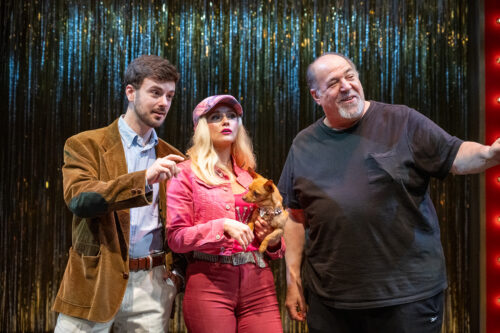
Stephen Christopher Anthony and Becca Andrews with director David Arisco during a rehearsal for “Legally Blonde: The Musical.” (Photo courtesy of Gregory F Reed, MFA)
Both the “Barbie” movie and “Legally Blonde” are about “girl power, pink power, women stepping up for themselves and coming together,” says Arisco. “Elle Woods is a great character. She perseveres, fights, works hard and makes better people out of the people around her.”
Though he was familiar with the “Legally Blonde” movies, he had never seen a production of “Legally Blonde: The Musical” when he chose it as the season centerpiece. And he has become a fan.
“I think the musical does everything better, in such a sincere, honest, heartfelt way,” he says. “This is entertainment with a capital E.”
To play Elle, Arisco cast Becca Andrews, who starred in the production by Fort Lauderdale’s Slow Burn Theatre at the Broward Center in 2018. This will be Andrews’ sixth time playing Elle, and Arisco has found her to be “more than willing to offer up a moment or a bit she thought was missed, but also more than willing to go different ways.”
Andrews, who also sings in a country band called the Honky Tonk Chicks, loves playing Elle Woods in a show she describes as “a balance of comedy and heart.” As with the “Barbie” movie, the musical “explores the complexity of being a woman in general, and what the world expects of us. They want us to be ambitious and a go-getter, but not too much.”

Heather Jane Rolff as Paulette and Becca Andrews as Elle Woods with Tony as Rufus the bulldog in “Legally Blonde” at Actors’ Playhouse. (Photo courtesy of Gregory F Reed)
While her actor husband Elliott Litherland is appearing in an Indiana production of “Beautiful: The Carole King Musical” (the couple’s rescue dog Richie is with him), Andrews is loving playing what she considers a dream role but with new costars.
“Based on the way other people are playing their roles, what they’re giving me, it can change my line,” she says, adding of the show, “I think the story of this passionate, ambitious, amazing woman is told better through song.”
In truth, Andrews has appeared before with one of her fellow actors: Cha Cha, the chihuahua who plays Bruiser. The dog made her theater debut opposite Andrews in a previous “Legally Blonde” production, and their reunion has been impressive.

Heather Jane Rolff as Paulette, Tony as Rufus, and Diego Klock-Pérez as Kyle the UPS guy meet up in “Legally Blonde: The Musical.” (Photo courtesy of Gregory F Reed, MFA)
“I have a very special place in my heart for Cha Cha. She was rescued from a hoarding situation,” says Andrews. “The first time we did the blocking for this production, she got it right away, and she also looked up at me on the right line.”
Cha Cha and Tony, who plays Rufus, have canine understudies, and are both rescues who were adopted and trained by William Berloni. Once an aspiring actor, Berloni got his start in 1976 when lyricist Martin Charnin asked the 19-year-old to find and train a dog to play Sandy in the pre-Broadway tryout of “Annie.” A 2011 Tony Honoree for Excellence in Theatre, Berloni explains in a Zoom interview how he makes his animal performers the best in the biz.
“People ask if I can train any dog, and my answer is no. You have to find dogs who are friendly, who can deal with stress and are food-motivated,” he says of the rescue animals, who live with Berloni and his wife. “It’s important to bond the dogs emotionally to the actors they’re working with, to teach the actors to give commands and foster a temporary relationship with the animals. The dogs have to want to go onstage.”

Heather Jane Rolff as Paulette gives Tony as Rufus a squeeze in “Legally Blonde” at Actors’ Playhouse. (Photo courtesy of Gregory F Reed)
Only the traveling trainer and the actors who interact onstage with Bruiser and Rufus are allowed to touch the dogs – or even look them in the eyes. When they’re brought in for daily rehearsals, the other actors turn away.
Two of the artists involved in the new “Legally Blonde” are having a reunion/homecoming of sorts. Stephen Christopher Anthony, who plays Elle’s mentor and future beau Emmett Forrest, and Sarah Crane, the show’s associate director and choreographer, met when they were Miami kids training with the Musical Miracles program at Actors’ Playhouse.

Sarah Crane, left, is the choreographer and associate director of “Legally Blonde: The Musical” at Actors’ Playhouse. At right, William Berloni is the famed trainer of the dogs who appear onstage. (Photos courtesy of Michael Kushner Photography and Jenna Berloni)
“I’ve known Stephen since I was 10. He’s a star now,” says Crane. “On the first day of rehearsals, we walked through the theater’s front door together, and he said, ‘I’m so happy to be back!’”
Also an actor, Crane toured nationally in “Mean Girls” and “The Prom.” She has auditioned for different productions of “Legally Blonde,” but directors always see her as a Serena (the fiancé of Elle’s college boyfriend) or Brooke (the fitness queen accused of murder). Crane already knew Andrews because she has choreographed for the Honky Tonk Chicks and believes Andrews is just right for Elle: “We had to find someone who is really smart, and Becca is that.”
Her approach to the show’s choreography, she says, is to “keep it energetic, make it new and interesting, but also honor why it was so successful.”
So get ready to “Bend and Snap.”

Stephen Christopher Anthony as Emmett and Becca Andrews as Elle take on the legal system in “Legally Blonde: The Musical” at Actors’ Playhouse. (Photo courtesy of Gregory F Reed, MFA)
Anthony went to high school at Miami’s New World School of the Arts after starting his theater career at Actors’ Playhouse when he was 11. Crane is right: He is a star now, having played the title role in “Dear Evan Hansen” on Broadway and on tour, as well as the lead role of Frank Abagnale Jr. in the tour of “Catch Me If You Can.”
(Side note: Stephen Christopher Anthony is his stage name, the “Christopher” in memory of his late uncle because there’s already a Stephen Anthony, a Carbonell Award winner who lives in South Florida, in the Actors’ Equity union.)
Anthony calls Andrews “a superstar – so fun, so charming, magnetic, playful and charismatic. My character is drawn to Elle, who reminds me that it’s OK to play…We lift each other up.”
He also agrees that the comparisons between Barbie and Elle Woods are on-the-nose apt.
“With Barbie, there’s an assumption that every woman should fit into a box,” he says. “This show does a very delicate job of saying you can look how you want and be what you want. It unpacks our perceptions. You can be a feminine person and the smartest person in the room.”
WHAT: “Legally Blonde: The Musical” by Nell Benjamin, Laurence O’Keefe and Heather Hach
WHERE: Actors’ Playhouse at the Miracle Theatre, 280 Miracle Mile, Coral Gables
WHEN: Previews 8 p.m. Wednesday, Jan. 31, and Thursday, Feb. 1; opens at 8 p.m. Friday, Feb. 2; regular performances 8 p.m. Wednesday-Saturday, 3 p.m. Sunday (additional matinees at 2 p.m. Saturday, Feb. 3; Wednesday, Feb. 7, and Saturday, Feb. 10), through Feb. 25
COST: $40, $55, $65, $75, $85, $250 opening night tickets include open bar and reception. Seniors 65 and over get 10 percent off weekdays only, students with valid student ID pay $15 for a rush ticket available 15 minutes before a weekday performance
INFORMATION: 305-444-9293 or actorsplayhouse.org
ArtburstMiami.com is a nonprofit media source for the arts featuring fresh and original stories by writers dedicated to theater, dance, visual arts, film, music and more. Don’t miss a story at www.artburstmiami.com.
No posts found

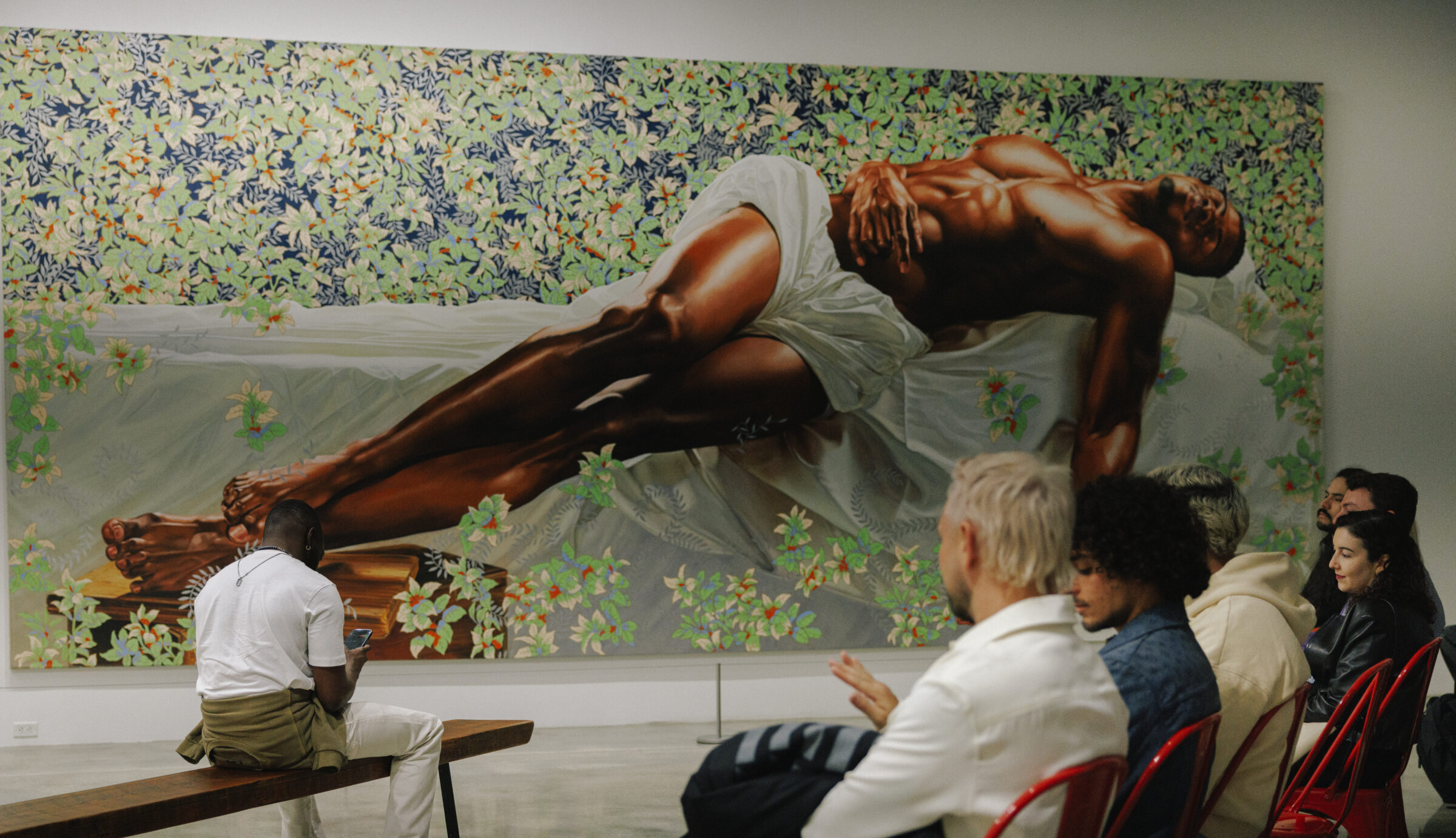
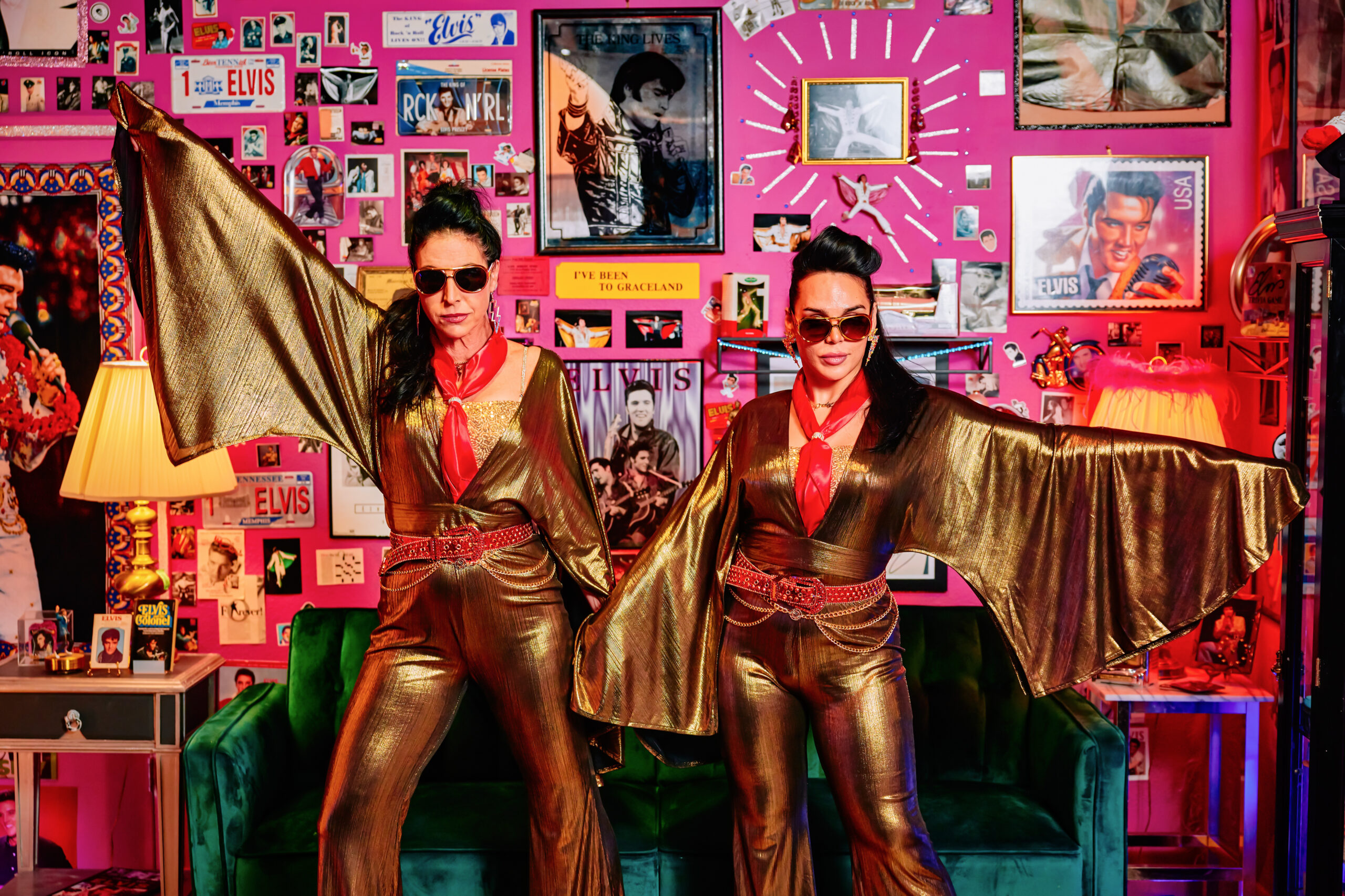
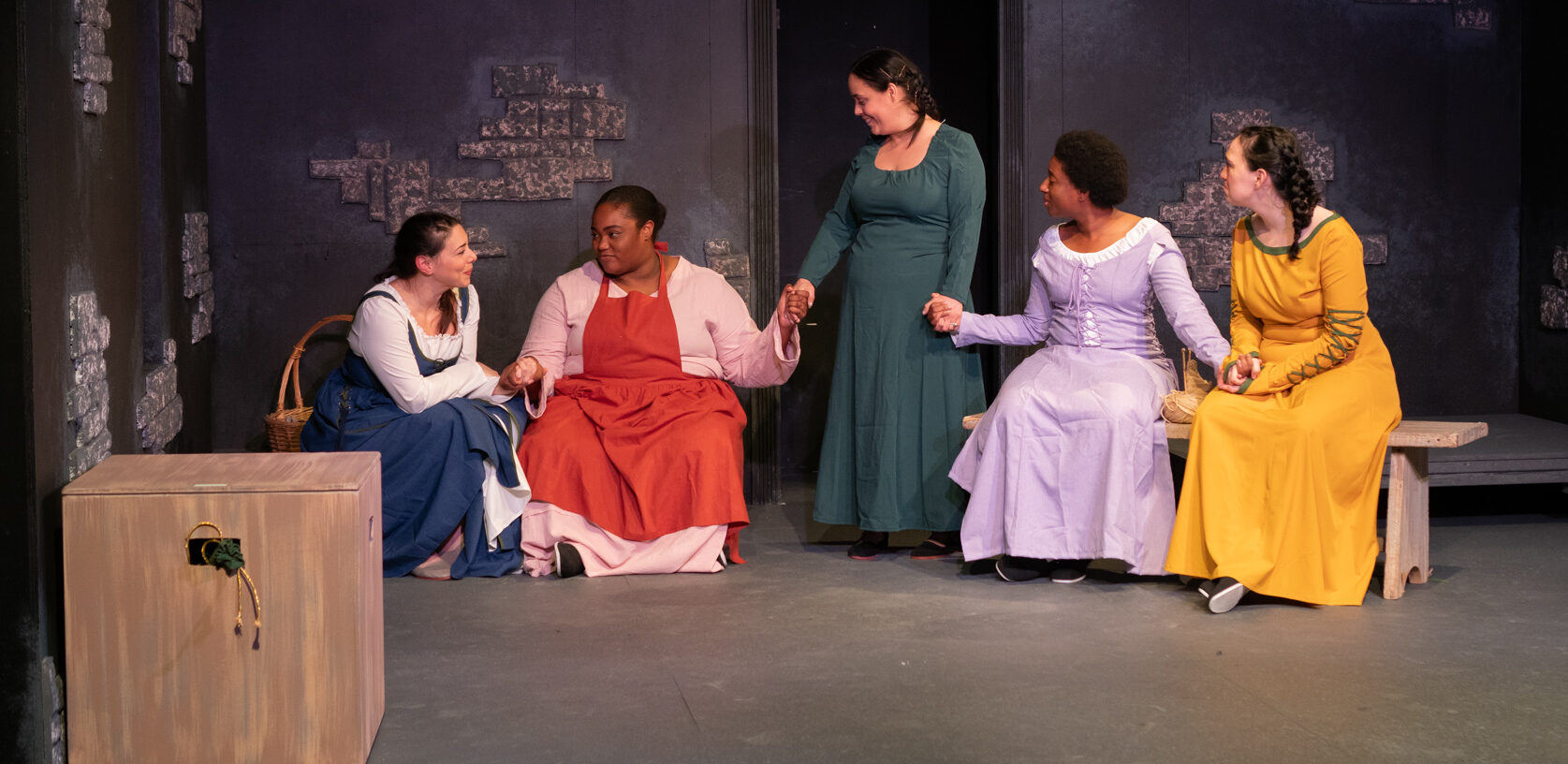
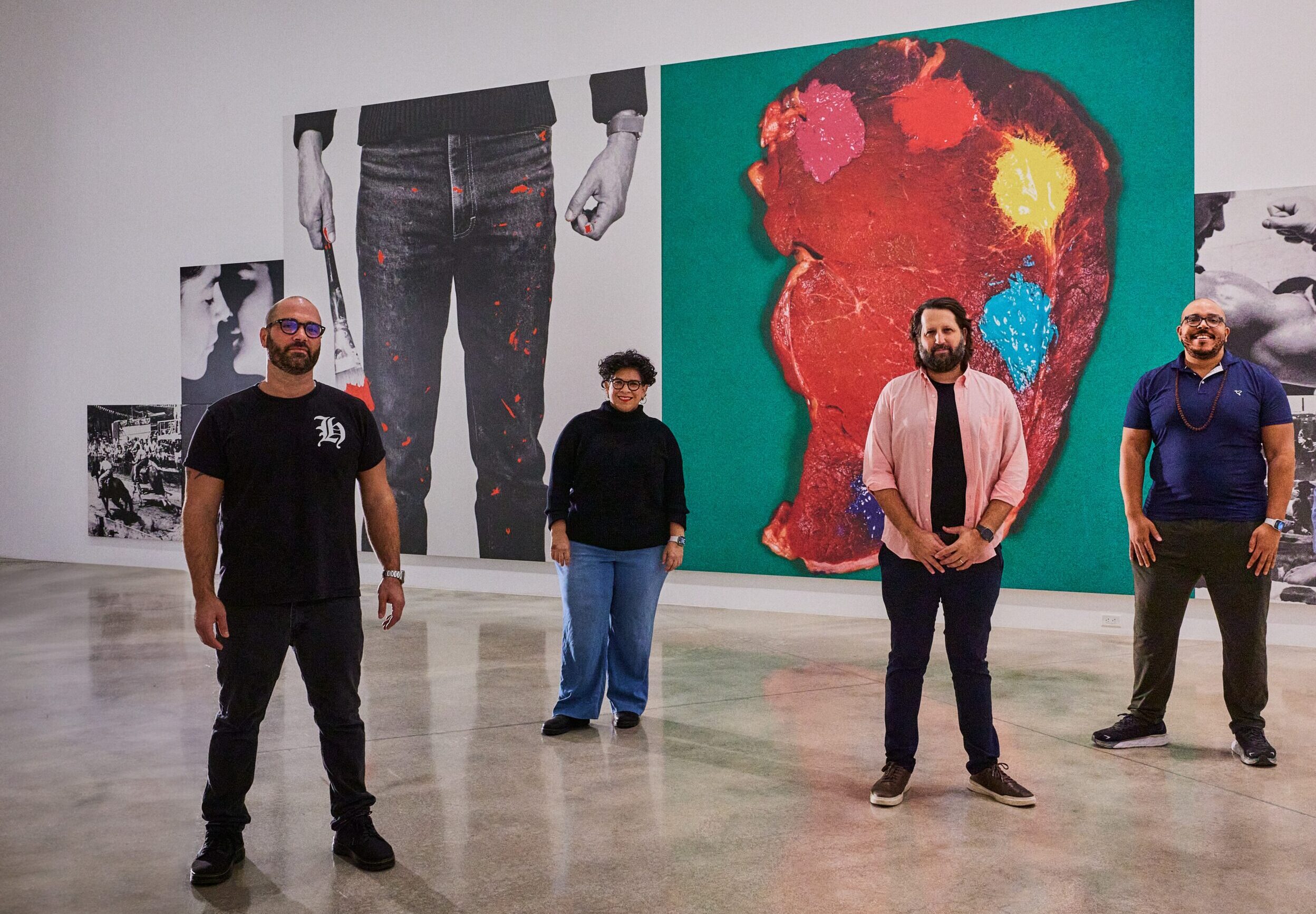

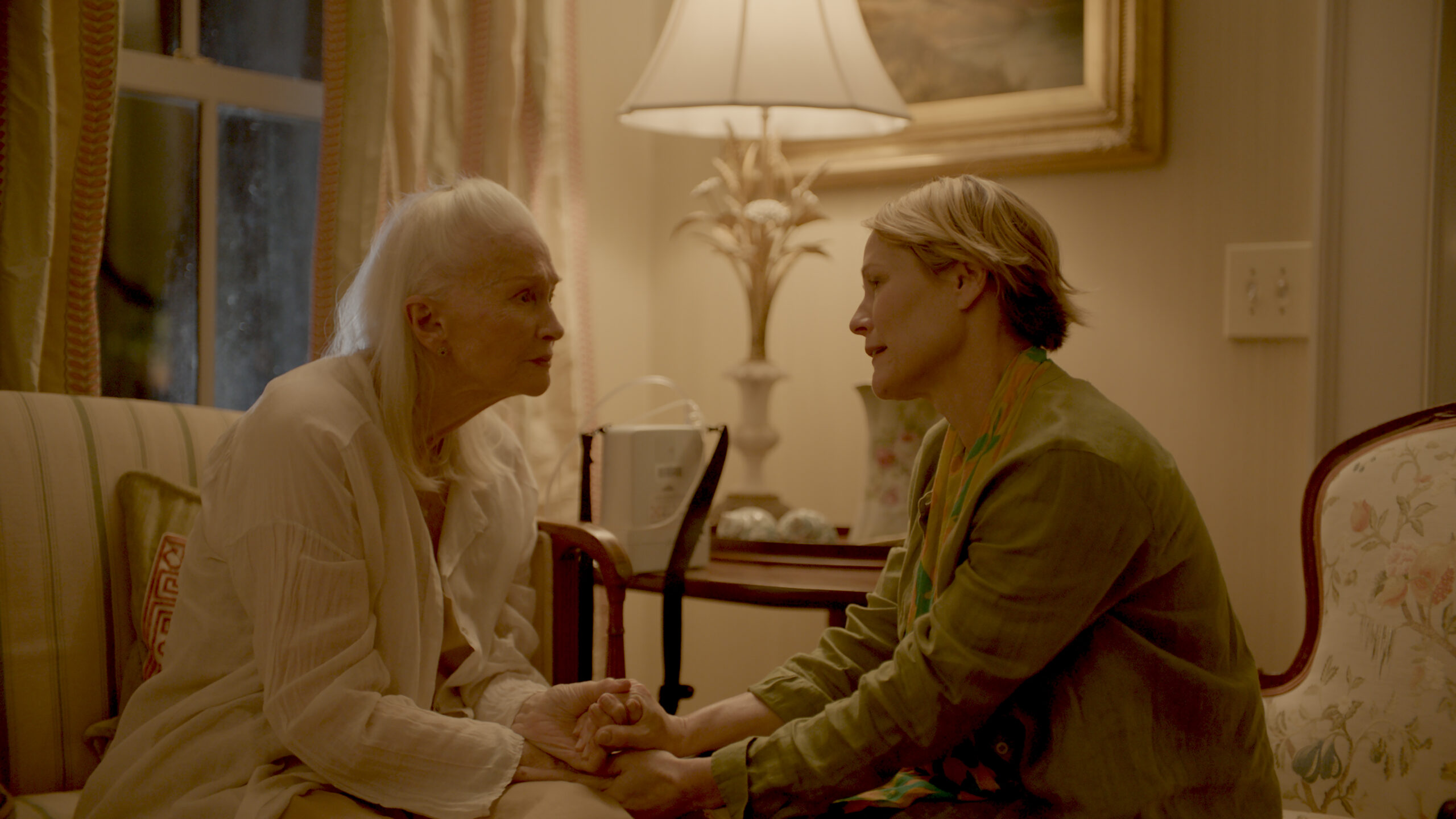
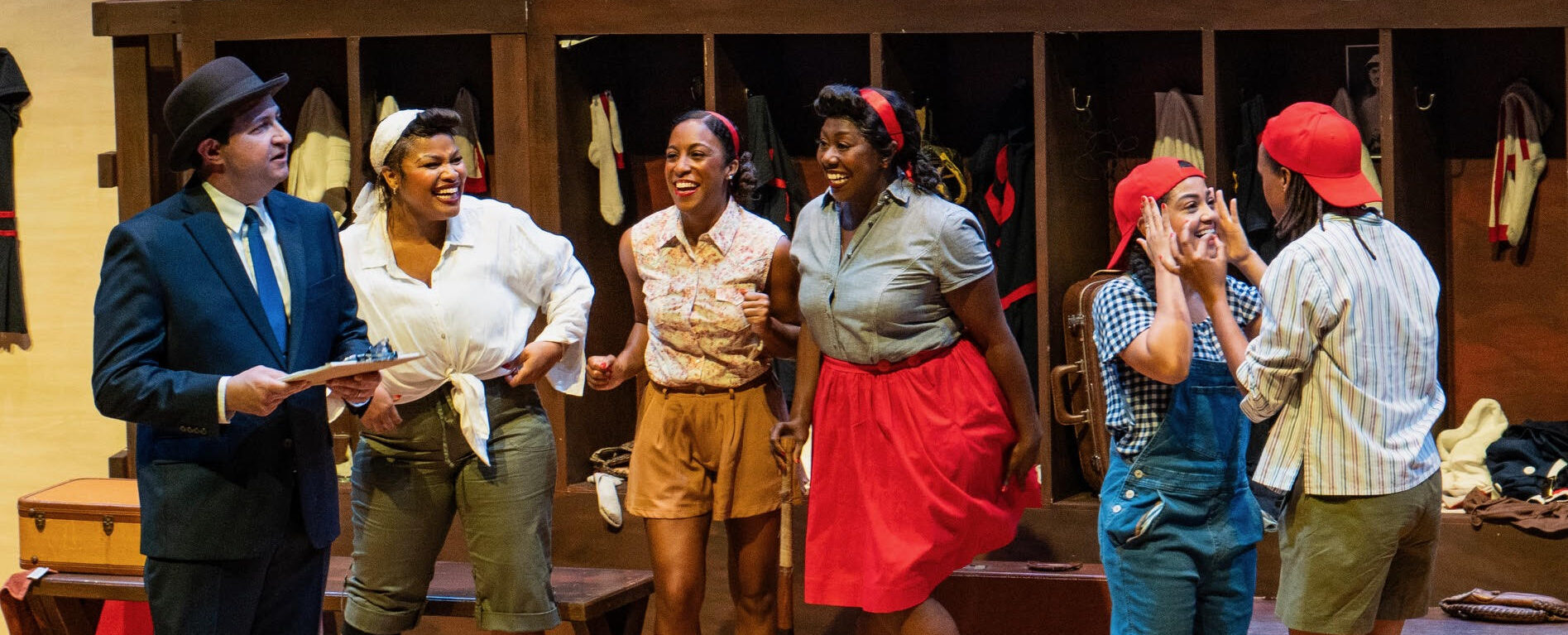
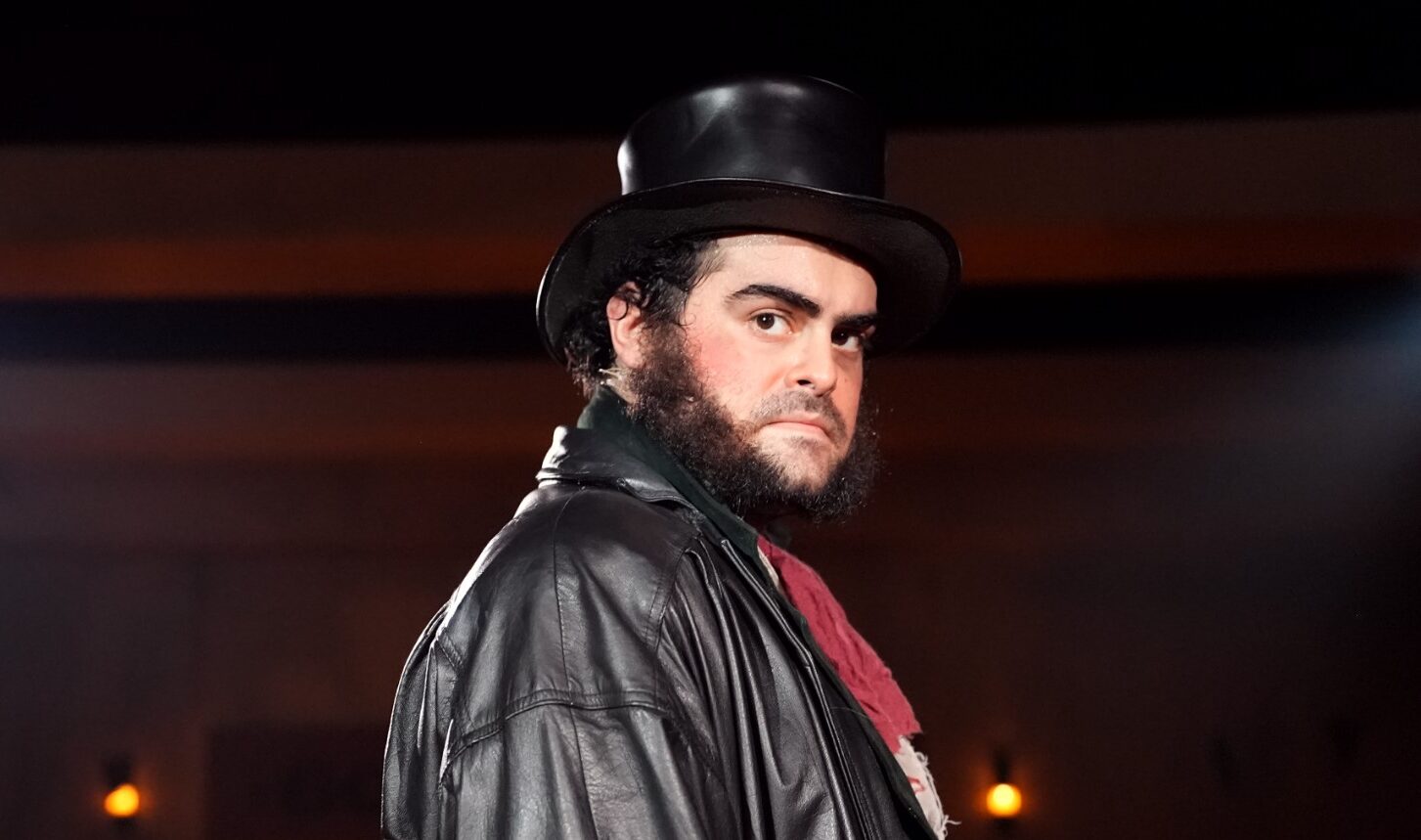
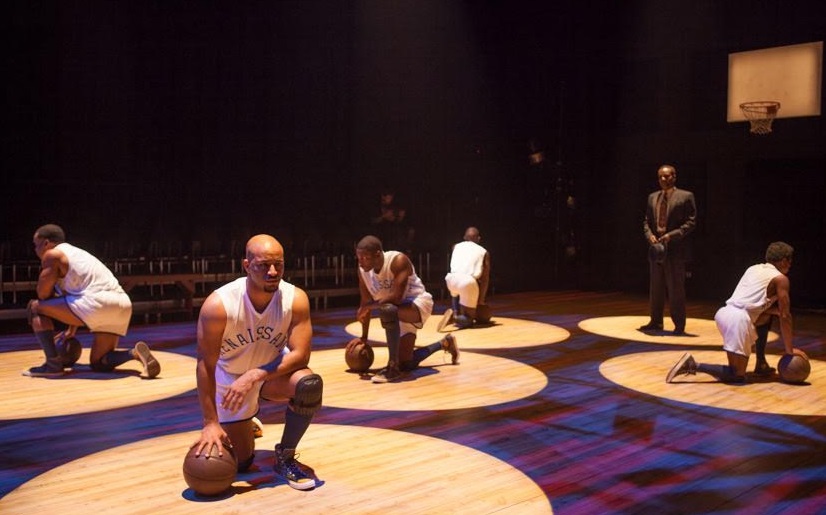

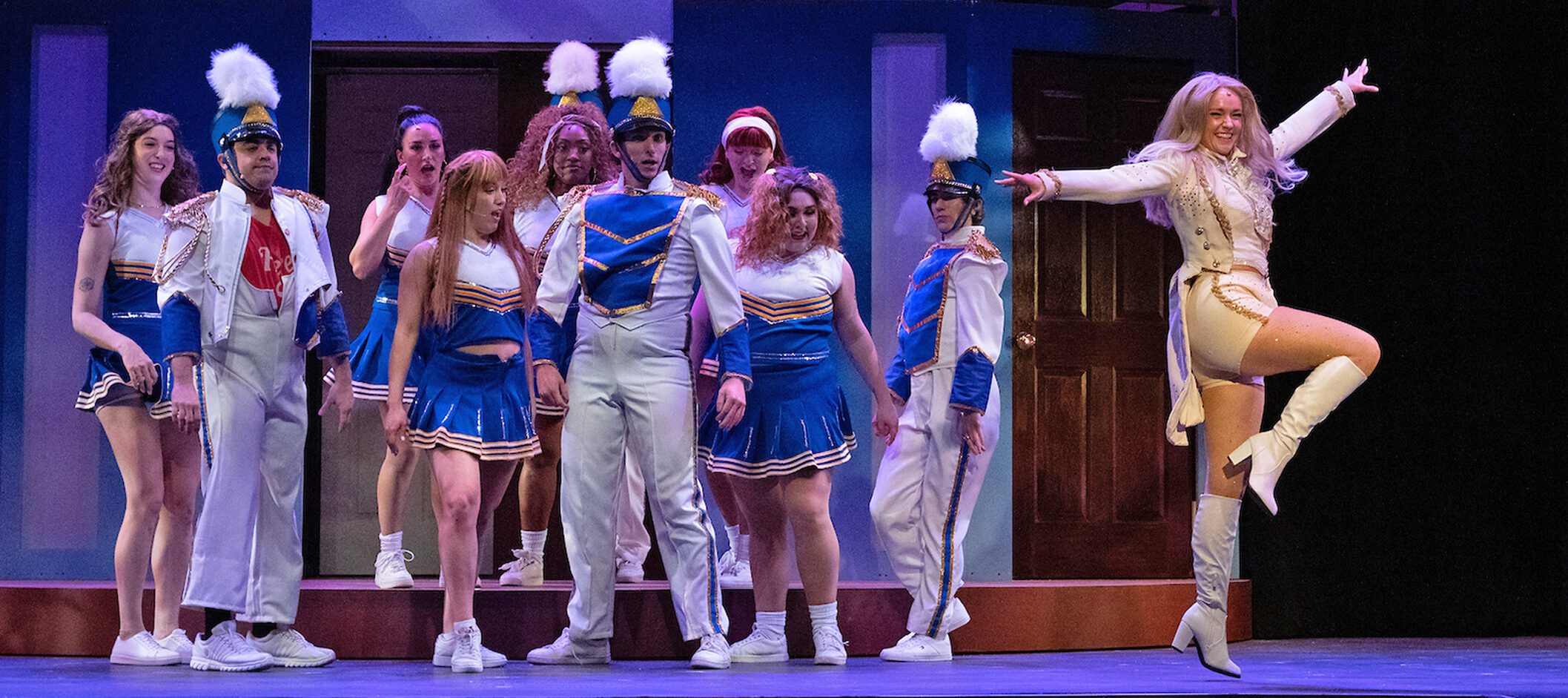
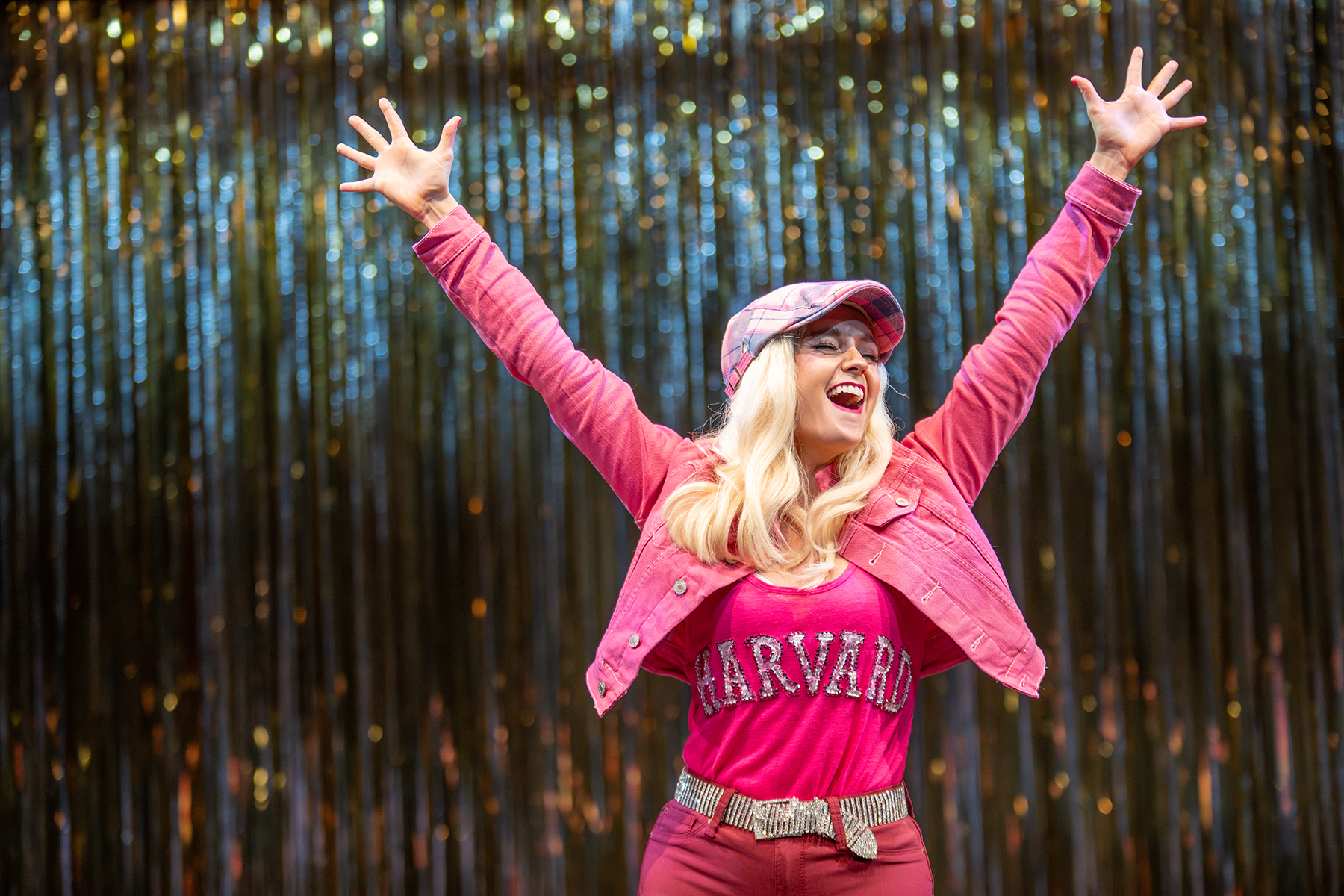
Recent Comments