Doral holiday series to feature ‘Creole Christmas,’ Arturo Sandoval, Nu Deco & more
Written By Mike Hamersly December 1, 2021 at 9:29 PM
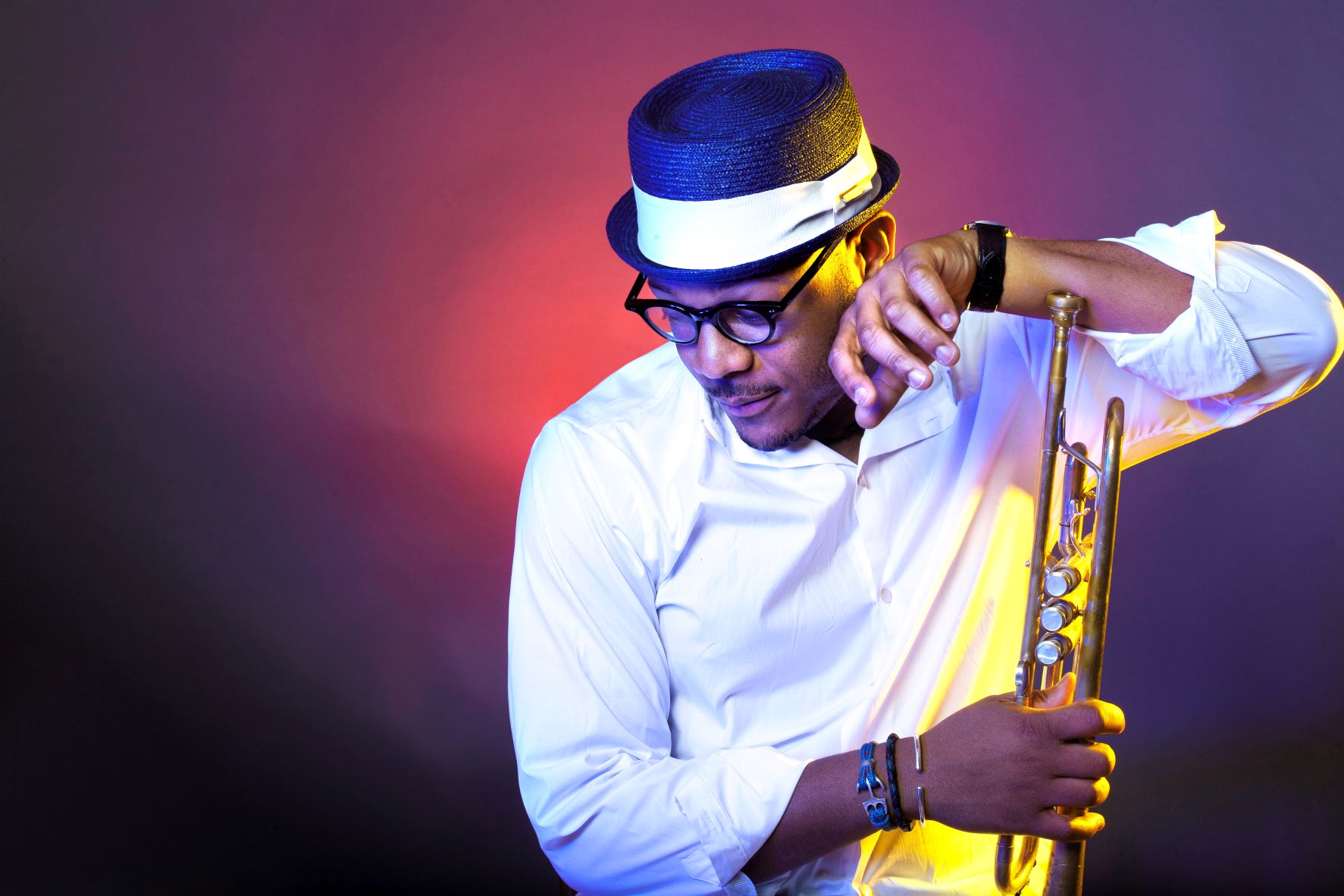
Jazz trumpeter and bandleader Etienne Charles will present his “Creole Christmas” show on Dec. 18, as part of Doral’s holiday concert series. (Photo courtesy of Laura Ferreira)
Longing for a spectacular musical and cultural experience to help enrich your holiday season? Doral LIVE has got you covered.
This outdoor concert series features a remarkably diverse lineup of entertainment running from Dec. 3-19 in the spacious Downtown Doral Park. It’s all part of the inaugural Downtown Doral Holiday Fest, presented by the Downtown Doral Arts and Culture Foundation.
The park spans 4 1/2 acres in the heart of downtown Doral, providing an ideal space for guests to enjoy high-quality talent while remaining socially distant.
“Obviously, we’re coming out of COVID, and a lot of people still feel more comfortable outdoors, so I think it’s unique from that perspective,” said Ana-Marie Codina Barlick, CEO of Codina Partners, master developer of Downtown Doral. “It’s a beautiful setting – we have the Michele Oka Doner sculpture ‘Micco’ in the background, and the park has a large, rectangular green that makes it very conducive to having these events.”
“The community just had an amazing reaction to coming to the park and having a performance there,” Codina Barlick said. “It was so well-received that we decided this year to partner again with Miami City Ballet. We’re opening the fest with Miami City Ballet’s ‘Radiance,’ a special program that they’re putting together just for us in the park, followed by a number of other concerts throughout the month of December.
“In terms of logistics, ‘Nutcracker’ ended up being really a trial by fire, how to make [the Holiday Fest] work.”
Miami City Ballet’s 2020 show, titled “George Balanchine’s Nutcracker in the Park,” was a live, full-length production with an outdoor audience. It paved the way for this year’s park holiday festivities, organizers say. (Photo courtesy of Brett Hufziger)
“Radiance” — a program of five works featuring the showstopper, “Rubies,” among them, as well as the famous pas de deux from “The Nutcracker” — will kick off the festival with 7:30 p.m. performances on Friday and Saturday. The first weekend comes to a close with Indonesian jazz-piano prodigy Joey Alexander, who released his first album in 2015 at age 11 and is reportedly the youngest jazz musician ever nominated for a Grammy Award. The Joey Alexander Trio is set to perform at 7 p.m. Sunday.
The rest of the lineup features quite a diverse mix of groups and solo artists. Among them is jazz trumpeter and bandleader Etienne Charles, who is presenting his “Creole Christmas” show at 8 p.m. Dec. 18.
Originally from Trinidad and Tobago, Charles moved to Miami this year to take up the position of associate professor of studio music and jazz at the University of Miami’s Frost School of Music, where he directs the Studio Jazz Band and Blue Note Ensemble.
“I love it. Such great students and colleagues,” Charles said. “Miami has a great energy based on the numerous cultures here. I’m really enjoying it.”
Charles’ “Creole Christmas” show, based on his 2015 album, is a great way for Americans to expand their experience of the holiday music.
“It’s a celebration of holiday traditions from the scope of my Caribbean upbringing,” said Charles, about what to expect from the concert. “In my homeland, we have a rich tradition of ‘parang’ (Afro-Venezuelan folk music), as well as calypsos about the season. So the show always features the Venezuelan ‘cuatro,’ which is one of the main instruments used in Trini Christmas music. We’ll also have trumpet, bass, saxophone, bass clarinet and percussion.”
(Video courtesy of Downtown Doral Holiday Fest)
So what inspired Charles to take on the holiday season musically?
“I love the season and wanted to show Christmas from a different cultural perspective — one where the songs don’t mention snow!” he said. “I did the ‘Creole Christmas’ album a few years ago, and it’s been a blessing being able to bring Trini Christmas joy to audiences worldwide during the season.”
For fans of Charles’ six other albums, all featuring his cool jazz sound, the show won’t be all Christmas music.
“We always throw a little surprise in the pot, whether it’s something from Carnival or one of my other albums,” he said.
Even though Charles no longer lives in Trinidad, it’s still home and has always influenced his sound.
“Growing up playing in a steel band is really a big influence on my music. Calypso, parang, soca, orisha music, reggae and traditional Carnival music are other styles that I’ve incorporated into my sound. I always see myself as a citizen of the world, open to being touched by many cultures,” he said.
“Music brings people together. It keeps us human, and it can remind us of the past as well as take us into the future. My mission is to bring people together through great live music and communicate through my compositions.”
DORAL LIVE 2021 SCHEDULE
Dec. 3-4: Miami City Ballet’s “Radiance”
Dec. 5: Joey Alexander Trio
Dec. 10: Swing-revival band Big Bad Voodoo Daddy’s Wild and Swingin’ Holiday Party
Dec. 11: Jazz legend Arturo Sandoval
Dec. 12: Soprano Elizabeth Caballero with pianist Shelly Berg (dean of UM’s Frost School of Music)
Dec. 15: Hybrid orchestra Nu Deco Ensemble
Dec. 16: Miami dance company Siudy Flamenco’s “Flamenco Intimo”
Dec. 19: Bluegrass virtuosos Chris Thile and Aoife O’Donovan
Doral’s holiday concert series is taking place from Dec. 3-19, 2021, at Downtown Doral Park, 8395 NW 53rd St. Prices start at $37 for individual tickets. Three- and five-show packages are also available. For more information, visit downtowndoral.com/holiday-fest.
African Heritage Cultural Arts Center presents 5th annual Art, Blues & Soul Festival
Written By Tracy Fields November 24, 2021 at 7:24 PM
Chrisette Michele, whose album, “Be OK,” won her a 2008 Grammy Award, will perform at the 2021 Art, Blues & Soul Festival. (Photo courtesy of the artist)
This year’s Art, Blues & Soul Festival returns to its home in Liberty City after going virtual in 2020.
Scheduled for the end of Miami Art Week, on Saturday, Dec. 4, the fifth annual edition of this musical event brings to the African Heritage Cultural Arts Center (AHCAC) a bevy of talent: national acts like Chrisette Michele, Jon B. and Glenn Jones, as well as local stars Courtney Mickens and The Harden Project (made up of husband-wife duo John and Ja’Nia Harden).
“Courtney Mickens has performed with us before, and John Harden is actually a teacher here,” said Ruby Brown, the center’s communications director.
Founded in 1975, the AHCAC is one of South Florida’s premier arts training institutions. Alumni include Tarell Alvin McCraney, co-creator of the 2017 Academy Award-winning movie, “Moonlight,” and Robert Battle, artistic director of the Alvin Ailey American Dance Theater in New York City.
Local performer Courtney Mickens said the African Heritage Cultural Arts Center is “a part of my home.” (Photo courtesy of the artist)
Mickens, a singer who teaches as well as performs, looks forward to a homecoming.
“I was a student of the AHCAC for middle and high school,” she said via email. “I volunteered and instructed there as well. AHCAC is a part of my home. I’ve gained so much knowledge and experience from each and every instructor I encountered and paid it forward to my own students.
“Performing at the festival is an honor for me. I get to represent my hometown as well as the place that helped train me to be the awesome entertainer that I am.”
Hosting will be Chello and DJ Chico the Leo. Chello also studied at the AHCAC, and is known for hosting “Lyric Live” at Overtown’s Historic Lyric Theater and appearing on the long-running BET show, “ComicView.”
Music lovers can enjoy the sounds Michele, who is known for her songs, “Epiphany (I’m Leaving)” and “A Couple of Forevers,” and whose album, “Be OK,” won her a 2008 Grammy Award in the “Best Urban/Alternative Performance” category.
Jon B.’s 1995 debut album, “Bonafide,” went platinum, selling more than a million copies; he’s also a songwriter and music producer. And the Jacksonville-born Jones started out singing gospel with The Modulations before moving to R&B. He teamed up successfully with Regina Belle for 2018’s “Love by Design.”
Florida native Glenn Jones started out singing gospel with The Modulations before embracing R&B. (Photo courtesy of the artist)
Along with musical entertainment, the festival will feature displays by local visual artists, food options and other vendors. Guests who choose the VIP ticketing option get dinner and drinks, too.
While at the AHCAC for the festival, visitors can also bask in another art experience. In partnership with former Miami Dolphins player Louis Oliver, the center’s Amadlozi Gallery is offering the exhibit, “Le Art Noir: Diversity in Color,” described as a “unique multicultural collaboration of artists from around the globe showcasing innovative exhibitions that capture the heartbeat of our society and focus on relevant topics,” according to leartnoir.com. Separate $25 tickets are required for the exhibit, but festivalgoers get a $10 discount.
Last year’s Art, Blues & Soul Festival streamed virtually, and the center’s main campus and buildings have been undergoing renovations, so it’s been a time of change and flexibility for the AHCAC. But staff are thrilled to see things approaching normal again, Brown said.
“We’re not fully open yet, but we’re really excited to have people on the grounds again,” said Brown.
WHAT: Art, Blues & Soul Festival
WHEN: 3 p.m. Saturday, Dec. 4, 2021
WHERE: African Heritage Cultural Arts Center, 6161 NW 22nd Ave., Miami
COST: $35 for general admission; $55 for reserved seats; and $85 for VIP access
SAFETY PROTOCOLS: Mask use and social distancing will be encouraged, according to Ruby Brown, the center’s communications director.
Miami Beach remembers Josephine Baker 70 years after her stand for civil rights
Written By Deborah Ramirez November 17, 2021 at 8:15 PM
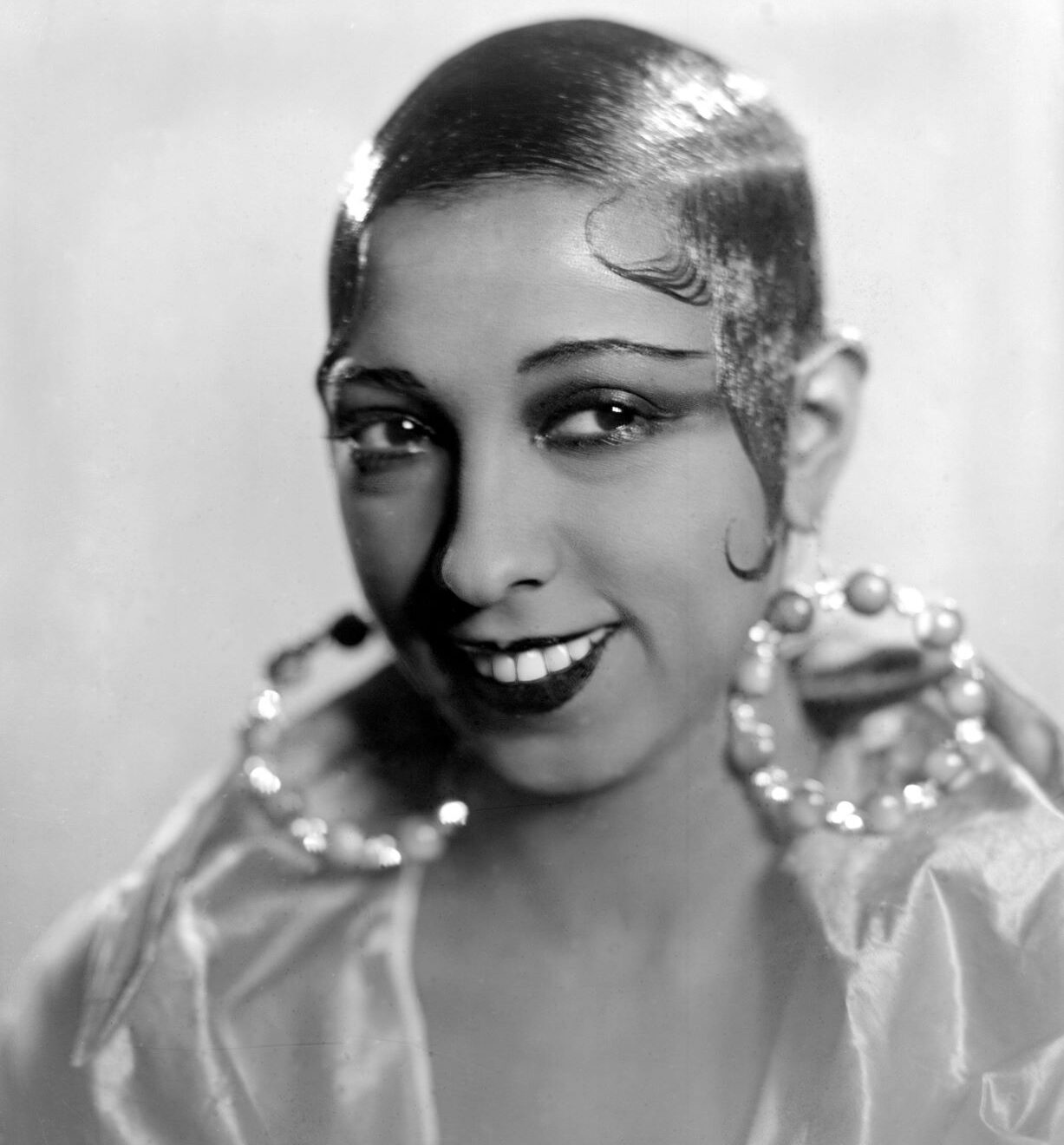
Josephine Baker made civil rights history in Miami Beach in 1951 when she insisted Black guests be allowed in the audience during her shows. (Photo courtesy of Consulate General of France in Miami)
Before Rosa Parks and John Lewis, there was Josephine Baker.
Baker may have seemed like an unlikely civil rights figure — a cabaret singer and dancer who appeared onstage in glamorous style, sometimes barely clad or accompanied by a pet cheetah.
Yet in 1951, Baker made history in Miami Beach when she refused to perform at a swanky nightclub unless Black guests were welcomed there. As the story goes, the famed Copa City Club initially denied her demand. Miami was still under Jim Crow segregation rules.
But Baker persisted. The singer had moved to Paris decades earlier and, by then, was an international star who toured the world, packing venues wherever she appeared. On Jan. 10, 1951, Baker became the first known entertainer to perform at a prominent Miami Beach club before an integrated audience.
“She was a bridge between France and the U.S., especially in the fight against discrimination,” said Laurent Gallissot, consul general of France in Miami, whose office will host a special tribute to the American-French performer on Sunday, Nov. 28, at Miami Beach’s National Hotel.
Baker, who died in 1975, is in the news again. Not only is she about to become the first Black woman inducted in Paris’s Panthéon — an honor reserved for France’s most illustrious citizens, such as Victor Hugo, Jean-Jacques Rousseau and Marie Curie — but the city of Miami Beach has declared Nov. 28 as Josephine Baker Day.
“I think women do connect very much with her, because they do feel how difficult it is to be the first in a lot of different things,” Gallissot said. “The first onstage, first in the movies, first Black woman to really break the rules and push the boundaries.”
Baker spent a lifetime breaking through barriers. Born in 1906 to a working-class family in St. Louis, Mo., she first appeared in all-Black musicals including “The Chocolate Dandies” on Broadway before heading to Paris in 1925. In the City of Light, she enraptured audiences with her captivating looks and seductive dance moves. (She became a French citizen in 1937.)
She hung out with artists and literary figures, including Pablo Picasso and Ernest Hemingway. The American writer once described her as “the most sensational woman anybody ever saw. Or ever will.”
She also played a role in the French Resistance after the Nazis invaded France. She was known to have helped the Allies by smuggling secret documents on sheet music and became a volunteer pilot in the women’s auxiliary of the French Air Force. She received French military honors at her funeral.
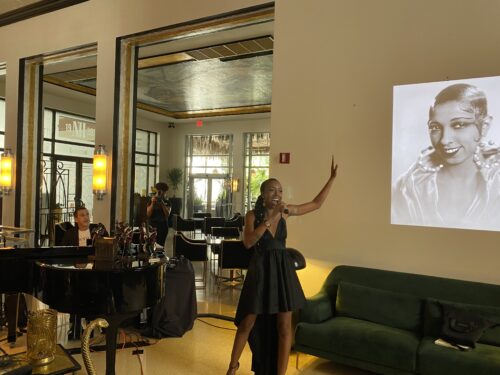
Jazz singer Bianca Rosarrio is scheduled to perform at the tribute on Nov. 28. (Photo courtesy of Deborah Ramirez)
“In France, she was very loved — especially in Paris — because she had such an amazing connection with the French people,” Gallissot said.
Throughout her life, Baker spoke against segregation and racism in her native country.
In 1963, she joined the Rev. Martin Luther King Jr. at the March on Washington. There, she addressed the crowd, talking about her reasons for leaving the United States: “You know, friends, that I do not lie to you when I tell you I have walked into the palaces of kings and queens and into the houses of presidents. And much more. But I could not walk into a hotel in America and get a cup of coffee, and that made me mad.
“And when I get mad, you know that I open my big mouth. And then look out, cause when Josephine opens her mouth, they hear it all over the world.”
Baker’s extraordinary life matched her outspokenness. She married four times and adopted 12 children from different parts of the world, calling them her rainbow tribe.
She’s also embraced by the LGBTQ (lesbian, gay, bisexual, transgender and queer or questioning) community. She was linked romantically to several women, including Mexican artist Frida Kahlo and blues singer Clara Smith.
“I did not know much about her, now I’m totally in love with her,” said Paul Thomas, chairman of Miami Beach’s LGBTQ Advisory Committee, and designated master of ceremony at the Baker tribute on Nov. 28.
Thomas said he was inspired by the artist’s sense of inclusion and social justice.
“I’m really wanting to build on her courage and strength, on her tenacity and her perseverance,” said Thomas, speaking at a news conference at the National Hotel in early November. “Her drawing that line, saying: I’m not asking you if I can be in this space, I’m saying to you, if I come to this space, I come this way. If I come, everyone comes.”
Jazz singer Bianca Rosarrio has found her space in Baker’s songs. The West Palm Beach singer recently joined The Joséphine Jazz Sextet, which is scheduled to perform during the National Hotel tribute.
“She has opened up the doors for all of us, especially African-American women,” said Rosarrio, who sang at the National Hotel news conference. “To be able to perform in venues such as this one because she refused to perform for segregated audiences — that speaks volumes.
“She could have took the gig, took the money, but she said, ‘No, this is how it’s going to be, and if you don’t like it, I’m not doing it,’” Rosarrio added. “I can relate to her and that type of spirit.”
The special tribute, “Miami Celebrates Josephine Baker,” is set for 8-10 p.m. Sunday, Nov. 28, at the National Hotel, 1677 Collins Ave., Miami Beach. Though the event is free and open to the public, online registration is required and appears to have sold out. For more information on this event, visit josephinmiami.eventbrite.com.
And the Emmy Award goes to … UM’s Carlos Rafael Rivera
Written By Mike Hamersly October 26, 2021 at 7:32 PM
Of winning an Emmy Award in September 2021, Carlos Rafael Rivera says, “It’s been really surreal, to say the least. Very, very crazy ride.” (Photo courtesy of Jenny Abreu)
For someone who just won an Emmy, Carlos Rafael Rivera is a remarkably humble guy.
The composer — whose day job is assistant professor and director of the Media Scoring and Production program at the University of Miami’s Frost School of Music — won the award for his work in the 2020 hit Netflix series, “The Queen’s Gambit,” which stars Anya Taylor-Joy as a chess prodigy.
The official category for Rivera’s win, announced during the September 2021 ceremony in Los Angeles, is “Outstanding Music Composition for a Limited or Anthology Series, Movie or Special (Original Dramatic Score).”
The Miami resident beat out, among others, Christophe Beck, who was nominated for scoring the smash-hit Disney+ series, “WandaVision,” and is also renowned for his work on TV’s cult classic, “Buffy the Vampire Slayer,” and movies such as “Frozen” and “The Hangover.”
“I was like, ‘There’s no way I’m gonna win,’ because I loved ‘WandaVision’ so much,” Rivera says. “It was so popular, not like I was the only one who liked it – millions of people saw that show. And it was a tremendous hit because it’s such a well-made show. It’s been really surreal, to say the least. Very, very crazy ride.”
Rivera recalls meeting Beck during the Emmy-week events in L.A.: “He’s one of the top-tier composers working today. I can talk about it all day, because I was just as starstruck as anybody could be when they meet somebody they respect a lot. And we became friends.”
Rivera says he became friendly with everyone who competed in his category, which sounds unlikely until one gets to know his laid-back personality.
“What’s cool is, among all the nominees — I know them all in a way now — it never felt like a competition. It was like, ‘Look, it’s not your turn this time,’ that kind of thing. They’ll be back around, because they’re all freaking brilliant. And it’s not like the Olympics, either, where you’re like, ‘Next time I’m too old for this,’” he says, with a laugh. “We’re in a career where being young is not important, or as important.”
Ironically, if Rivera’s dream as a younger man — he’s 51 now — had worked out completely, he most likely wouldn’t have ended up scoring the music for “The Queen’s Gambit.”
In the early-to-mid-2000s, Rivera was lead guitarist for a rock band in Los Angeles that landed a deal with Universal Records and even opened for The Who. (Its various names included Zoo Story.)
Rivera could really shred on guitar back then, though in typical self-deprecating fashion he downplays his skill a bit.
“Back in my day, I could do it all,” he says, in an exaggerated grandfather voice. “[But] the older I get, the better I used to be. That’s the best way to put it. And I’ve earned the right to brag about it, because I kind of suck now. But as a guitarist, I would play everything. I was legitimately good, and I can say that because I’m not good now.”
He might be slightly out of practice on guitar, but Rivera switches freely between guitar and piano during the early stages of composing.
“I play piano to write, I play guitar to write, I sing into my phone,” he says. “It doesn’t matter how you tool yourself into a piece of music — whatever works at the time.”
Speaking of songwriting, Rivera had the opportunity of a lifetime while a student at the University of Southern California in Los Angeles. He was mentored by Emmy-, Grammy- and Oscar-winning composer Randy Newman (“Short People,” “You’ve Got a Friend in Me”), an experience that transcends his approach to creative work.
“I would never dare compare anything I did to what he does. He’s just so good at it. But he’s a very normal person, and real, that guy who just calls it straight as he sees it and is who he is around you, the president of a university or a big director, anybody. It doesn’t matter to him,” he says. “If there’s anything I’ve tried to copy, it’s that personality trait. You are yourself in any endeavor, as opposed to playing a part, like we all do to a certain degree.”
So how did that gig with The Who happen?
“We got management by a guy called Doc McGhee, who in the ’80s and ’90s managed all the big rock bands, all the hair metal bands, like Motley Crue and eventually KISS,” Rivera says. “And at the time [in 2005], The Who needed an opening act, and he just put us up and said, ‘You’re opening for The Who,’ and I was like, ‘Are you kidding me?’
“It was surreal to be backstage,” he adds, “and when you’re backstage with The Who, it’s the people coming to visit The Who, like the lead singer of Pearl Jam, Eddie Vedder, and [comedian] Jimmy Fallon was backstage … I certainly didn’t feel like I belonged there at the time. It felt like I snuck in backstage.”
The band rose to the tall task that night with a rocking set before The Who took the stage.
“I think it was well-received,” Rivera recalls. “We were unknowns, and we got a good reaction. We were playing live for a very long time, so we were a good live act. We had songs placed in movies, and the TV show, ‘Scrubs,’ and we were doing the L.A. scene. But it wasn’t the path. It wasn’t meant to be. That dream died pretty hard. It was a 10-year dream that just crashed and burned.”
Though the band’s demise was devastating at the time, Rivera is more than happy with how his career has turned out.
“Since ‘The Queen’s Gambit’ came out, I’ve been getting a lot more offers for work,” he says. “I worked on a show called ‘Hacks’ with HBO Max that just won Jean Smart her Emmy for her performance in that. So it’s been a busy year, suddenly. Very surreal.”
As busy as he’s become, Rivera says he has no plans to ditch his job with the Frost School of Music.
“It’s like, ‘All right, guys, time to pack my bags!’” he says, jokingly, about his recent success. “No, [I wouldn’t leave] because I never thought I wouldn’t be teaching. My life goal was to teach in academia. I studied and got my doctoral degree in classical music, and [I enjoy] having orchestral performances and being part of that world of classical music and having the anchor of a place to teach …
“I’m up for tenure this year, and it’s been a real life goal,” he continues. “As long as I can manage both schedules, which I’ve been able to do so far, then that would be it. I love teaching – it’s real.”
South Motors Jazz Series: ‘We’ve Survived, We’re Back and We’re Better Than Ever’
Written By Tracy Fields September 24, 2021 at 5:28 PM
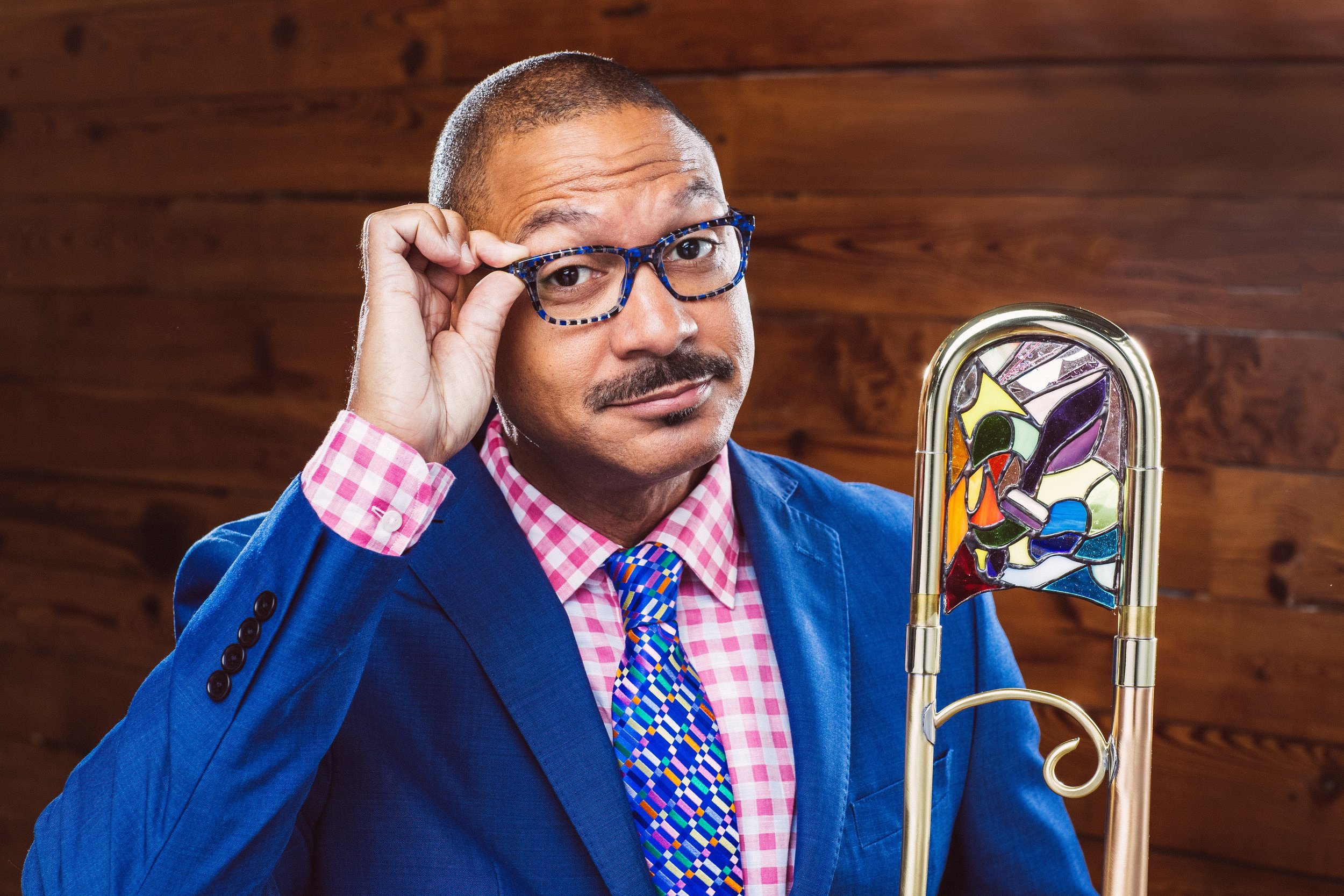
Trombonist Delfeayo Marsalis will start off the new year performing on Jan. 15 at the Banyan Bowl with the Uptown Jazz Orchestra. (Photo courtesy of Pinecrest Gardens’ South Motors Jazz Series)
Back for its 12th season, the jazz series at Pinecrest Gardens is a pandemic survivor.
Last year’s concerts were highly produced virtual experiences, with artists onstage at the park, and audiences scattered across the globe. This year, music-lovers can return to the Banyan Bowl amphitheater in the lush gardens south of Miami to enjoy eight shows, starting Saturday, Oct. 16.
“Given the strange circumstances of the past year and a half, we can call this season ‘South Motors Jazz at Pinecrest Gardens: We’ve Survived, We’re Back and We’re Better Than Ever,’” said Pinecrest Gardens Director Alana Perez. “We are so excited to see our Banyan Bowl come to life.”
The latest edition, set for October 2021 through April 2022, boasts quite the lineup, including The Max Weinberg Quintet, which kicks off the series, as well as The Count Basie Orchestra, trombonist Delfeayo Marsalis and trumpeter Arturo Sandoval.
Vocalist Ashley Pezzotti, who grew up in Plantation and graduated from the University of Miami’s Frost School of Music, performed last year and is set to return on Feb. 12 with the South Florida Jazz Orchestra.
Ashley Pezzotti. (Photo courtesy of Pinecrest Gardens’ South Motors Jazz Series)
“It’s like nothing else to play where you were raised,” Pezzotti said. “I had a great time performing [last year] because, you know, there were no performances.”
Of course, she has missed the energy and interaction of singing before an in-person audience.
“I’m super-appreciative of the opportunity to make music for a live audience. I don’t take that lightly, and there’s nothing like it,” she said.
Perez is happy to have her back. “We wanted her back live onstage,” Perez said. “She was wonderful.”
Max Weinberg. (Photo courtesy of Pinecrest Gardens’ South Motors Jazz Series)
The complete schedule is as follows:
Oct. 16, 2021 — The Max Weinberg Quintet
The name may be more familiar to rock fans than jazzheads, as Max Weinberg was for years the drummer in Bruce Springsteen’s E Street Band. Weinberg also was known as the bandleader for “Late Night with Conan O’Brien” and “The Tonight Show with Conan O’Brien.” A member of the Rock & Roll Hall of Fame, Weinberg has a group featuring jazz musicians of the caliber of pianist David Kikoski and bassist Cameron Brown. They focus on mid-1960s hard bop.
Bob James. (Photo courtesy of Pinecrest Gardens’ South Motors Jazz Series)
Nov. 13, 2021 — Bob James
Another storied musician, smooth jazz progenitor Bob James was discovered by the legendary Quincy Jones in 1963. Among his many accomplishments, including winning a couple of Grammy Awards, James is known as the composer of “Angela,” which was the theme song of the TV show, “Taxi.” James also founded the smooth jazz group, Fourplay. His music has been sampled by artists including De la Soul and Redman.
The Count Basie Orchestra. (Photo courtesy of Pinecrest Gardens’ South Motors Jazz Series)
Dec. 18, 2021 — The Count Basie Orchestra
The big band marked its 85th anniversary last year, still going strong after the 1984 death of its namesake founder in Hollywood, Fla. It’s led today by Scotty Barnhart, a trumpeter and associate professor at Florida State University, and features guest vocalist Carmen Bradford. The orchestra released its latest album, “Live at Birdland,” in September 2021.
Jan. 15, 2022 — Delfeayo Marsalis and the Uptown Jazz Orchestra
Trombonist Delfeayo Marsalis and the Uptown Jazz Orchestra will start off the new year playing old-school jazz in celebration of the musical heritage of New Orleans. Along with his late father, Ellis, and brothers Branford, Wynton and Jason, Marsalis was named an NEA Jazz Master, the nation’s highest honor for jazz musicians. One of his latest accomplishments is music for the audio drama, “Shadow/Land,” about a mother and daughter selling their family hotel in New Orleans as Hurricane Katrina closes in.
Feb. 12, 2022 — Ashley Pezzotti and the South Florida Jazz Orchestra
Tito Puente Jr. (Photo courtesy of the artist)
Feb. 26, 2022 — Tito Puente Jr. and his Latin Jazz Ensemble
Following Pezzotti’s performance on Feb. 12, there will be a second February concert. Tito Puente Jr. and his Latin Jazz Ensemble appear in what’s billed as a special presentation. Son of the late Latin music legend, he strives to keep his father’s memory and music alive. Puente’s Feb. 26 show is meant to celebrate renowned singer Celia Cruz, with vocalist Melina Almodovar.
John Pizzarelli. (Photo courtesy of Pinecrest Gardens’ South Motors Jazz Series)
March 12, 2022 — The John Pizzarelli Trio
John Pizzarelli specializes in Great American Songbook tunes. A guitarist like his late father, Bucky Pizzarelli, he has released three albums celebrating the singer and pianist Nat King Cole, most recently “For Centennial Reasons” in 2019.
Arturo Sandoval. (File photo courtesy of artist management)
April 9, 2022 — Arturo Sandoval
Jazz musician Arturo Sandoval returns to South Florida to wrap up the series. Famed for his association with bebop legend Dizzy Gillespie and his escape from his native Cuba, Sandoval has even been the subject of a 2000 movie, “For Love or Country,” in which he was portrayed by Andy Garcia. Winner of Grammy, Emmy and Billboard awards, the trumpeter also has written music for films.
WHAT: Pinecrest Gardens’ South Motors Jazz Series
WHEN: Starts 8 p.m. Oct. 16, 2021, then continues monthly – with two in February – through April 9, 2022
WHERE: Pinecrest Gardens’ Banyan Bowl, 11000 Red Road, Pinecrest
COST: Single tickets start at $45 (plus $5 service fee) and full subscriptions start at $215 (plus $10 service fee). Purchase them at the website below, or call 305-669-6990 for a series subscription or 305-350-0765 for single tickets.
SAFETY PROTOCOLS: Masks must be worn in the Banyan Bowl. There will also be a COVID-19 canine detection team on duty; rapid tests will be administered if needed.
Miami Beach Reggae Fest aims to spread ‘Peace & Love’ … and feel-good music
Written By Mike Hamersly September 3, 2021 at 5:42 PM
Miami Beach Reggae Fest founder Eddy Morillo also helms the Miami-based, Venezuelan band, Bachaco. (Photo courtesy of Dani Perez)
The Miami Beach Reggae Fest promises to serve up groovy music and great vibes. But it’s also being envisioned as more than your typical concert.
Billed as promoting “Peace & Love,” the festival – which was scheduled for Sept. 11 at the North Beach Bandshell – seeks to offer a life-affirming sense of community, something we’ve had far too little of over the past year and a half.
“Being on a date that is so politicized, I figured I have to pay tribute to peace,” said festival founder and organizer Eddy Morillo, who also helms the headlining Miami-based Venezuelan band, Bachaco. “I wanted to do something that is not politicized, but is mostly about connecting left and right, peace and love. All together.
“And I liked the symbolism behind the date because of reggae music being a way of transmitting love,” he continued. “I figured it would be a good match to try it on a date that has been shadowed by negative events, so I wanted to make something positive out of something dark, basically.”
The festival will feature three acts (plus special guests): Fidel Nadal, Bachaco and Doctor Krapula, presenting a mix of feel-good reggae rock with conscious lyrics and a Latin touch.
“It’s a mix of three different nationalities: Argentina, Venezuela and Colombia,” said Morillo about the lineup. “Three different groups that each interpret reggae in their own particular way. Fidel is an Afro-Argentinian, which is very peculiar – most Argentinians are not even close to being Afro – so his perspective is something unique. Doctor Krapula from Colombia is more of a reggae-rock, ska set-up, but very heavily influenced by reggae …
“If you’re a true reggae fan, whether it’s Jamaican or not, this [festival] is gonna be something you should definitely look forward to.”
The Miami Beach Reggae Fest is taking place at the North Beach Bandshell in Miami Beach. (Photo courtesy of The Rhythm Foundation)
The lineup pays homage to how beloved reggae is in Spanish-speaking countries and shines a light on Miami’s mix of Latin and Caribbean influences.
“I’m very happy that he’s bringing this talent,” said James Quinlan, director of The Rhythm Foundation and its venue, the North Beach Bandshell. “I think it’s very interesting the strength that reggae acquired in South American culture, and he’s been able to put it together into a package here. That’s exciting, and that’s what makes it different.”
Of course, the pandemic continues to disrupt life as we knew it pre-shutdown, way back in early 2020. But Morillo felt it was time for an audience and musicians to get together and celebrate the joy of live performances again.
“This is my first show since the pandemic started,” said Morillo. “I have not done any events for over a year now. And that is also a reason why I decided to come with a bang, trying to do it as big as possible, because there’s a thirst. There’s a thirst for music in people’s lives now. And I’m trying to do something where we can start where we left off, basically.”
Why a full festival?
“We have a lack of festivals,” Morillo said. “I know there’s probably a lot of festivals of other genres, other styles, other types of producers and promoters, but the Latin community doesn’t really have a festival that is not mainstream. I’m not even talking about myself – there really isn’t an avenue for these artists to come together at a festival setting.
“So I do this more from a cultural standpoint: Obviously it’s supposed to be a for-profit event, but I do it without even thinking about what the profit is going to be. I do it more for the love of the community, for being able to connect with these artists that are similar to myself. There isn’t a festival where I fit, I think. So I decided to put it together and not only promote myself, but other artists that are similar, that share similar values, thoughts and concerns.”
Morillo couldn’t have chosen a better venue for reggae music’s soothing, swaying beats than the Bandshell.
“Just before we had to close [because of the shutdown], we finished the installation of this canopy at the Bandshell,” said Quinlan. “And that has really been a significant change, an upgrade to the experience, and just a protection from the sun and rain. The shape of the stage is also a wind-deflection element for the breezes that come off the ocean. You feel the breezes, but when those breezes become winds, and they do, you really appreciate the thinking that went into that design of the Bandshell stage itself.”
The themes of peace and love, naturally, recall the music of Bob Marley, and it’s no surprise that the life and legacy of the reggae legend had a profound impact on Morillo’s life.
“Being a Latino, having grown up with reggae music very close to me, it’s a joy to be able to share the music,” he said. “I remember when I was 13, 14 years old in Venezuela, traveling cross-country, and somehow I ended up with a copy of Bob Marley’s [greatest hits album] ‘Legend.’ At the beginning, I didn’t even know what it meant, because I didn’t speak English that well. And translating the words, understanding the meaning, and seeing that there was more to music than what I had already been introduced to as a Latino kid, it really opened up my eyes to the world.
“The lyrics are very positive, about love, about peace, with yourself and with the world,” he continued. “It’s more spiritual, and that’s what we need today.”
WHAT: Miami Beach Reggae Fest
WHEN: 4:20 p.m. Saturday, Sept. 11, 2021
WHERE: North Beach Bandshell, 7275 Collins Ave., Miami Beach
South Florida jazz-pop diva Nicole Henry tells her story through Whitney Houston songs
Written By Deborah Ramirez September 3, 2021 at 3:48 PM
Nicole Henry is bringing her one-woman tribute to Whitney Houston, “I Wanna Dance with Somebody,” to the South Miami-Dade Cultural Arts Center. (Photo courtesy of Will Hunt)
Most artists can trace their craft back to someone who inspired them as youngsters and left a lasting impression. For South Florida’s jazz-pop diva Nicole Henry, that someone is Whitney Houston.
“There was something so appealing to me as a female singer at a young age. Something so dramatic and romantic about her songs,” says Henry, from her Miami home. “Her voice was so angelic. Her voice was perfection.
“Her music made me realize how much I love the voice to soar in a song. Whitney definitely had an influence on my voice, but I’ve never tried to mimic or impersonate her.”
Instead, the songstress — who is known for her vocal gymnastics and impeccable phrasing — has created a theatrical experience that not only pays tribute to the icon but also allows Henry to tell her own story. That one-woman show, “I Wanna Dance with Somebody: The Music of Whitney Houston,” is coming to the South Miami-Dade Cultural Arts Center on Saturday, Sept. 11.
For about 90 minutes, Henry will sing her favorite Houston hits, weaving in stories about how the legendary Black singer and one of America’s greatest recording artists influenced a young Black girl growing up in Bucks County, north of Philadelphia, who also wanted to be a singer.
Accompanying Henry on this musical journey will be Pete Wallace on piano (doubling as musical director), Allen Paul on keyboards, Dwayne Bennett on electric bass and David Chiverton on drums, along with background vocalists LeNora Jaye, Ellison Kendrick and Nikki Kidd.
(Video courtesy of Nicole Henry)
The show delves into Henry’s childhood and teenage years. Henry first sang in her church choir and was heavily influenced by gospel music, as was her childhood idol.
“She had a touch of soul, but I can still hear that church gospel in her voice,” Henry says. “It was something new that she was bringing to pop music.”
Early in the show, Henry sings “His Eye is on the Sparrow,” the 1905 gospel hymn that Houston recorded for the remake of the movie, “Sparkle.” Houston’s version was released as a single a few months after her death on Feb. 11, 2012, at age 48.
Henry incorporates much of Houston’s songbook to advance her narrative. “Saving All My Love for You” marks Henry’s three-year winning streak at her school talent show. “You Give Good Love” is about her awakening to passion. “The Greatest Love of All” comes as Henry gains confidence and self-awareness.
By the time she sings Houston’s mega-hit, “I Will Always Love You,” confidence brims in her voice. She hits the high notes with ease, as did Houston. But Henry’s interpretation of the Dolly Parton song is more mellow and laced with sorrow – different from the way Houston sang it.
“To connect to honest emotions is just a dream for me as a singer and actor,” Henry says. “That’s one of the things I love about a great script and a great song.”
The Miami-based singer is getting ready to release “Time to Love Again,” her first studio album in a decade. (Photo courtesy of Leesa Richards)
Henry credits New York-based theater director Will Nunziata with helping her find the right combination of great script and songs. Nunziata, who has worked with singers Jackie Evancho and Haley Swindal, conceived “I Wanna Dance with Somebody” and co-wrote the script, along with Henry.
Longtime friends, they had talked about creating a one-woman show that would help boost Henry’s theater credentials.
“One day, he called and said, ‘I got it,’” Henry recalled. “We met for coffee … he had put the concept and the storyline together, and I loved it.”
By then, Henry had temporarily relocated to New York, where she took acting lessons, found an agent and started auditioning for roles. She had built a career as an international recording artist with three Top 10 U.S. Billboard albums, top jazz albums in Japan, and a Soul Train Award. But she longed to return to theater, which was her major at the University of Miami.
In September 2019, “I Wanna Dance with Somebody” debuted at Feinstein’s/54 Below, a popular Broadway supper club, where it sold out and earned a prestigious Broadway World nomination for best theatrical concert. She was invited back twice to do her one-woman show — the last time in March 2020.
Through Houston’s music, Henry found her path back to theater. After her show debut, she appeared in another Houston-related production — the stage musical, “The Bodyguard.” In the fall of 2019, Henry was cast as Nicki Marron, the lead character’s troubled sister, in a brief run at North Shore Music Theatre in Beverly, Mass.
The digital site, Broadway World, Boston praised Henry: “She has a beautiful voice, very strong acting skills, and brings her character to life with a passion and pathos in her performance, which leaves you wanting to see even more of her character.”
Henry also played Alpha Smith, Louis Armstrong’s third wife in the musical premiere, “A Wonderful World” at Miami Beach’s Colony Theatre, shortly before the pandemic forced theaters to close. She hopes to rejoin the cast when the play returns to The Colony, possibly at the end of this year.
Still, she’s forever a singer. She’s about to release her first studio album in 10 years, “Time to Love Again,” on her indie label, Banister Records. The new album, expected to be released Sept. 24 on all digital platforms, is a compilation of love songs by great songwriters such as Stevie Wonders and Buffy Sainte-Marie. Henry is asking the public to visit her website, nicolehenry.com, and contribute to her fundraising campaign to market the new album.
She also plans to hit the road soon with “I Wanna Dance with Somebody,” with engagements in New York, Connecticut, Nevada and Wisconsin – and looks forward to adding more. “I want to tour the nation and, hopefully, the world.”
Henry sees the show’s appeal as universal, as is Houston’s music.
“I don’t think it will ever get old, because Whitney Houston is timeless,” Henry says. “Her songs are timeless.”
WHAT: Nicole Henry presents “I Wanna Dance with Somebody: The Music of Whitney Houston”
WHEN: 8 p.m. Saturday, Sept. 11, 2021
WHERE: South Miami-Dade Cultural Arts Center, 10950 SW 211th St., Cutler Bay
COST: $30-$40 general admission, $55 VIP ticket
SAFETY PROTOCOLS: Visitors will be asked to maintain social distance and wear masks at all times except when consuming food or beverages at their seats; for more on safety, visit smdcac.org/content/updates
INFORMATION: Visit smdcac.org or call 786-573-5300
‘An Evening with Julian Marley’ to soothe the soul
Written By Tracy Fields July 28, 2021 at 5:37 PM
Julian Marley was nominated for a “Best Reggae Album” Grammy in 2009 and again in 2019. (Photo courtesy of Joey Clay Studio)
During troubled times, several South Florida organizations hope to offer some comfort and soul soothing — hosting a free outdoor concert by Julian Marley, son of the legendary Bob Marley.
The July 31 show, produced by Diaspora Vibe Cultural Arts Incubator (DVCAI) and The Rhythm Foundation, was originally intended to be a ticketed event at Miami Beach’s North Beach Bandshell. The fundraiser was meant to benefit an award for a rising artist, at a time when the entertainment industry is still reeling from the effects of the pandemic.
And then the Surfside building collapse happened nearby, and organizers made some changes.
“In the face of all of the tragedy, sadness and just melancholy, we are doing the concert for free,” said DVCAI founder and president Rosie Gordon-Wallace. They also moved it to the ArtsPark at Young Circle in Hollywood.
The concert is now being presented by the Hollywood Community Redevelopment Agency as part of the Hollywood ArtsPark Experience Concert Series.
“We’re asking the community to come out with their blankets, with their little nibbles, and enjoy Julian Marley,” Gordon-Wallace added.
Born in London in 1975, Marley was nominated for a “Best Reggae Album” Grammy Award in 2009 and again in 2019. He played guitar on Lauryn Hill’s 1998 multi-Grammy-winning classic, “The Miseducation of Lauryn Hill,” and also is proficient on drums, bass and keyboard instruments. Opening for him will be Sounds by Dubwise.
“In the same tradition as his father, Julian is a devout Rastafarian whose music is inspired by life and spirituality,” according to The Rhythm Foundation’s event page.
Gordon-Wallace hopes the event will help locals heal. After all, caring for community, both artists and at large, is what DVCAI is all about. The organization’s earliest days were at the Bakehouse Art Complex in Wynwood.
Rosie Gordon-Wallace is the founder and president of Diaspora Vibe Cultural Arts Incubator (DVCAI). (Photo courtesy of Roy Wallace)
“I used to do a program called Final Fridays at the Bakehouse, where we did music and spoken word and contemporary art and a full Caribbean dinner. It was really to trick folks into learning about contemporary art from the Caribbean,” said Gordon-Wallace, who was born in Jamaica.
She was inspired to start that series, she said, by young artists who returned here after studying at prestigious institutions and who had good portfolios but were unable to find work. Her idea became a nonprofit in 2003, and DVCAI has just hired its first executive director, Tanya Desdunes.
“DVCAI is a nomadic museum space that continues to nurture, promote and exhibit the work of Black and brown contemporary artists. My focus is the global south, the Caribbean and Latin America all the way over to Suriname,” said Gordon-Wallace. “I’m committed to helping them move forward. They’re bright and fresh and exciting to work with.”
“An Evening with Julian Marley” marks the start of a new partnership in South Florida.
“It is an honor for The Rhythm Foundation to be in collaboration with the esteemed DVCAI during their 25th season,” said foundation director James Quinlan, in a statement. “Julian Marley is the perfect artist for this first joint effort.”
WHAT: “An Evening with Julian Marley,” with opening act Sounds by Dubwise
WHEN: 8 p.m. Saturday, July 31
WHERE: ArtsPark at Young Circle, 1 Young Circle, Hollywood
COST: Free with RSVP; to make a donation for the Diaspora Vibe Cultural Arts Incubator, go to dvcai.org
Miami Carnival 2021: ‘We are excited about this comeback’
Written By Jonel Juste July 23, 2021 at 5:26 PM
Revelers get painted during a past J’ouvert, one of the activities planned as part of Miami Carnival. (Photo courtesy of Miami Broward One Carnival)
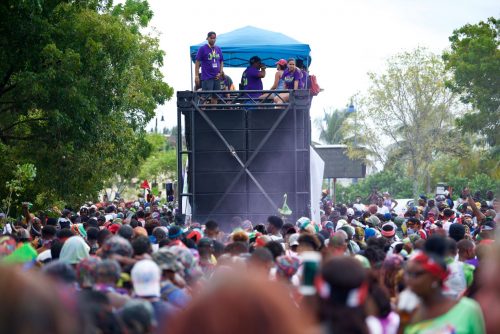
Miami Carnival is leaving behind the virtual version of 2020 and embracing the splendor of the occasion in 2021 – with a parade, live performances, masquerade bands, competitions and a full celebration of Caribbean cultures.
The two organizing groups, the Miami Broward One Carnival Host Committee and the South Florida Carnival Bandleaders Association, have scheduled the 37th edition of the beloved community event on Sunday, Oct. 10, during Columbus Day weekend, at the Miami-Dade County Fairgrounds located at 10901 SW 24th St. There will also be a string of activities leading up to this date in Broward County.
Among organizers and participants, excitement is the operative word.
“Last year, the [in-person] Carnival did not happen, and people understood it was the right thing to do. This year, because we haven’t had a chance to come together as a community and celebrate different cultures from the Caribbean, [so] people are very excited,” said Matthew Waddell, director of GenX Carnival, one of 20 participating masquerade bands.
“We are excited about this comeback,” said Connie W. Kinnard, vice president of Multicultural Tourism & Development at the Greater Miami Convention & Visitors Bureau. “We realize that the whole virus situation is much better than before, although not totally over. People are getting vaccinated, being more cautious. So we are welcoming the Miami Carnival.”
(Video courtesy of Miami Broward One Carnival)
With the pandemic not totally over, what should revelers expect in terms of safety at an event where closeness is the norm and social distance the exception? The producers behind the Miami Carnival announced they have been working with medical and park department officials from Miami-Dade and Broward counties. Of course, mask wearing and vaccinations are recommended.
“With any event, not just Miami Carnival, people will have to take the necessary steps to feel safe and comfortable. The organizers are going to put in place measures, as much as they possibly can, to enforce and encourage safety guidelines for participating in the event,” Kinnard said.
Impact of the Carnival on South Florida
Miami Carnival has been around for almost four decades, showcasing the city and helping to connect the community and its different cultures.
“This area of Miami and South Florida is so diverse from a standpoint of our Caribbean family and roots,” Kinnard said. “The carnival means a lot to this area.”
The economic impact is important, too.
“We see an increase in hotel occupancy during that time. We know from surveys that a lot of visitors are from out of town,” Kinnard said. “This translates to hotel rooms, rental cars, people spending money in restaurants, in the community.
“Some events like the Carnival are what we call destination drivers. It means that people come to that destination because of the event. The fact that people plan to come to Miami just because of the Carnival is a big deal for us.”
This year, the Miami Carnival website does offer some rules and guidance about traveling for the event: “If you are planning to travel to attend Miami Carnival, we ask that you do so responsibly and practice CDC [U.S. Centers for Disease Control and Prevention] safety guidelines…
“The Federal Government requires that all travelers to the U.S. produce proof of a recent negative test for COVID-19 … prior to entry and within three days before their flights,” it states, among other regulations.
The main event, set for Sunday, Oct. 10. will include performances and a parade. (Photo courtesy of Miami Broward One Carnival)
A string of events
Before the Miami Carnival parade and concert, multiple events are planned at Central Broward Regional Park, 3700 NW 11th Place, Lauderhill, starting with the Junior Carnival for kids on Saturday, Oct. 2, and the Panorama event on Friday, Oct. 8. The Panorama event will feature a steel band competition and the crowning of the Carnival King and Queen.
Saturday, Oct. 9, will offer a J’ouvert celebration, akin to a large street party.
“It is an opportunity for people to come and celebrate,” said Yvette Harris, public relations director for Miami Carnival. “It’s a time where people get covered in oil, paint … a festive opportunity for people to be free.”
The main event, on Oct. 10, will showcase masquerade bands from the Caribbean islands, New York, and, of course, Miami. Among the bands expected to participate are: One Island Mas Band, Break-Awae’ Kru Mas, Dingolay Mas, K-Paya Carnival, Party Room Squad, Revel Nation Carnival, Savage Mas the Band, and Ti Chapo.
“It will be a celebration of music, culture, pageantry, with colorful and elaborate costume garbs,” said Waddell, of the GenX Carnival band. “Each band will represent 13 to 14 individual beautiful feather costumes inspired by Caribbean culture.”
Oct. 10 will also be a concert day. The carnival is expected to start at 11 a.m., with a soca concert scheduled at 3 p.m.
“There will be a parade going during the concert. It will be a nice melting pot of music performances and celebration of Caribbean heritage, a real opportunity to share and people learning from one another from different Caribbean backgrounds,” Harris said. “We have artists and bands coming from the Bahamas, Barbados, Trinidad and Tobago, Grenada, Haiti, St-Lucia, Jamaica … All of them will have the opportunity to perform after a year of COVID.”
Big names such as Wyclef Jean have highlighted the event in past years. The Haitian music star took part in the parade in 2017.
There will also be a display of Caribbean foods and drinks and arts and crafts.
“If you want to have a taste of everything Caribbean in one shot,” Waddell said, “the Carnival is where you need to be.”
WHAT: Miami Carnival 2021 main event
WHEN: 11 a.m.-11 p.m. Sunday, Oct. 10
WHERE: Miami-Dade County Fairgrounds, 10901 SW 24th St., Miami
COST: $40 admission; free for children younger than 12
Wayne Anderson: Rebranding the Historic Hampton House
Written By Deborah Ramirez July 12, 2021 at 6:49 PM
Wayne Anderson is a marketing consultant who has brought glamour back to Miami’s Historic Hampton House, which was once called “the Cotton Club of the South.” (Photo courtesy of Antoinette Anderson)
Wayne Anderson has made a career out of creating things of beauty and moments of magic.
He is a former college football player, restaurant owner and jewelry designer turned marketing and public relations consultant. Through the years, he has rubbed elbows with the rich and famous — his clients including celebrities, foundations and sports teams.
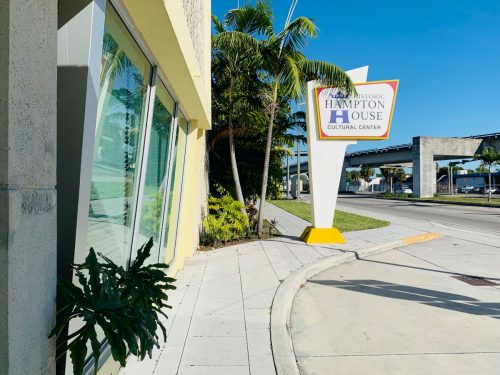
Yet one of Anderson’s proudest accomplishments can be found in Miami’s Historic Hampton House, a former segregation-era motel on the edge of Liberty City. Earlier this year, Anderson helped transform the modest Civil Rights museum and cultural center on Northwest 27th Avenue into a place to see and be seen.
In March, he and marketing associate Curb Gardner launched the “From BeBop to HipHop” supper-concert series — a tribute to the Hampton House’s cultural past. The former motel was known for its all-night restaurant and jazz lounge, where leading Black entertainers once performed, including Josephine Baker, Duke Ellington, Nina Simone and Sammy Davis Jr.
“We wanted to start by honoring what happened here,” Anderson says. “Some of the best talent in the world performed here, and some of the most famous people of that era stayed here. It was called ‘the Cotton Club of the South.’ We wanted to bring that vibe back. We wanted to wow people.”
The wow factor was part of Anderson’s plan. The Hampton House’s interior courtyard became an open-air cabaret, with white-linen-covered tables and a four-course dinner curated by celebrity chefs Jernard Wells of Cleo TV, Cooking Channel and Food Network fame, and Georgios Di Vogi from South Beach’s Santorini by Georgios.
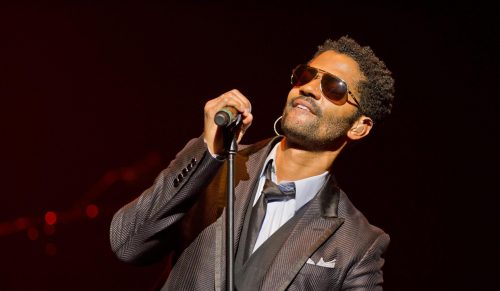
The series debuted with Grammy-nominated singer-songwriter Eric Benét. A second concert, in May, featured legendary funk diva Chaka Khan. She opened her show with the ’60s hit, “To Sir With Love,” on a makeshift stage facing the smiling portraits of Martin Luther King Jr and Nat King Cole, two of the Hampton House’s past famous guests.
The Oscar-nominated motion picture, “One Night in Miami,” has brought new attention to the Historic Hampton House, which is central to the film’s plot. (Photo courtesy of Historic Hampton House)
The sold-out shows brought ticketholders dressed to the nines to the former “Green Book” motel, which had welcomed Civil Rights leaders and other Black travelers and celebrities during Miami’s Jim Crow years.
The Hampton House is working on four more concerts for this year, soon to be announced, Anderson says.
Prices have been kept affordable thanks to sponsors, he added. They have ranged from $110-$150 per person. Sponsors also allowed the Hampton House to donate tickets to neighborhood youngsters from underprivileged households.
“For the first show, we probably gave away 10 tickets to children that came from challenging backgrounds,” Anderson says.
This wasn’t the first time Anderson has tried to create magic for needy youngsters.
In 2018, he hooked up with the Friends of Jaclyn Foundation to invite children with brain tumors and their families to Madison Square Garden, as special guests of the New York Knicks basketball team.
“Part of the reason that I do work with foundations is that I consider myself lucky, even privileged, because of the relationships that I have been afforded,” Anderson says. “I’m the son of immigrants, and we came here to have a better life. Now it’s about giving back.”
Anderson came to the United States from Jamaica at age 10, settling with his family in White Plains, N.Y. Growing up, he watched his parents work hard for their children. His main inspiration was his mother, who cleaned homes while earning her degree as a registered nurse.
“Like most immigrant parents, they sacrificed for their kids, so we could get an American education and have a brighter future,” he says.
Anderson’s brighter future led him to the University at Albany, State University of New York, where he played college football and twice made the All-America Team. After graduating with a major in marketing and economics, he tried out for the Miami Dolphins. He didn’t make the team, but he fell in love with the city. “I always knew I would come back here,” he says.
Anderson went on to own and sell two restaurants and run a jewelry-design company, Vita. (Anderson and Vita are listed in the film credits for the 2013 biopic, “Lovelace,” because Amanda Seyfried, who played porn star Linda Lovelace, wore one of Anderson’s designs, a silver, Egyptian-style necklace, in the movie.)
Now through his marketing, public relations and web design consulting firm, Manderson PR, he’s working with the likes of basketball legend and influencer Julius “Dr. J” Erving. They have plans to make several episodes of “House Call with Dr. J” podcasts before a live South Florida audience.
R&B and neo-soul singer-songwriter Eric Benét inaugurates “From BeBop to HipHop,” a new concert series that started March 27 at Miami’s Historic Hampton House. (Photo courtesy of the artist)
Anderson moved to Miami two years ago, just before New York became the epicenter of the coronavirus pandemic.
“I was seeing a trend [of New Yorkers moving to Florida] and I wanted to be a part of it,” he says.
He learned of the Hampton House from a friend who had recently visited it. “I’m embarrassed to say that I had never heard about it,” he says, “and I consider myself a pretty hip person.”
Anderson booked a Hampton House tour in August 2020. By then, word was out that the historic gem would be featured in a new Hollywood film, “One Night in Miami,” which was released the following December. The movie, available on Amazon Prime, tells a fictional account of a 1964 encounter between four of the Hampton House’s famous guests: Malcolm X, Muhammad Ali (then Cassius Clay), Jim Brown and Sam Cooke.
After his tour, Anderson spent two hours discussing the Hampton House’s future with its directors.
“They wanted to leverage the media attention they knew that was coming their way from the movie,” Anderson recalls. “When I went back a second time, I told them: That’s fine, but you guys are far more than just trying to take advantage of a moment. There’s history here, things people are going to have a real strong interest in. No differently than I did because I was completely ignorant about your existence.
“And you think about this rich history, the people who came here, from Martin Luther King to Muhammad Ali. You can’t make that up.”
The Historic Hampton House features framed photos of famous people who visited through the years, including jazz great Duke Ellington. (Photo courtesy of Historic Hampton House)
Jacqui Colyer, chairperson of the Hampton House board, recalls that conversation and the skills Anderson has brought to the table — from reviving the venue’s supper club to redesigning its website and working on other projects that include a permanent “Green Book” exhibit.
“He’s accelerated our trajectory, our growth, in a way that we didn’t know how to do, especially during a pandemic,” Colyer says. “He set out a roadmap for us.”
Colyer and Anderson have a running joke about the first time she met him, a moment she later described as “when the Pope walked in with slippers … and I knew we were going to be saved.”
During that first encounter, Anderson was wearing a pair of low-cut, gray designer sneakers. “They were the most gorgeous shoes I had ever seen (…) it reminded me of what the Pope wears,” Colyer recalls.
In her view, Anderson has pulled off a small miracle — taking a former Jim Crow-era motel in a historic Black neighborhood and placing it on Miami’s cultural A list.
CAP Summer Concert Series to feature jazz, classical music online only
Written By Tracy Fields July 5, 2021 at 3:43 PM
The Troy Roberts Trio, featuring Roberts joined by guitarist Tim Jago and bassist Alex Hernandez, will open the series with “All That Jazz!” (Photo courtesy of Community Arts Program Summer Concert Series)
The long-running annual summer concert series presented by a Coral Gables church is online-only again this year.
The Coral Gables Congregational United Church of Christ, which has put on its Community Arts Program (CAP) Summer Concert Series since 1985, will feature six free virtual shows with jazz and classical music on successive Thursday evenings beginning July 8.
“I decided to err on the side of complete caution, that being to go virtual,” said Mark Hart, CAP executive and artistic director.
There’s no charge for the livestream, but donations are welcomed. While the experience of gathering in the historic church’s cozy sanctuary will be missing, there is an upside.
“It doesn’t hurt to tell our story again to a wide audience, that being the world,” said Hart, who added that last year’s concerts were viewed in a handful of other countries. “We just wanted people to be able to tune in and tell our story so they could become more familiar with what the CAP is and the level of excellence we’re all about.”
In addition to the summer concert series, the arts program provides music education to local youngsters via its CAP Conservatory for the Arts and CAP Miami Jazz Institute.
This year’s opening concert stars the Troy Roberts Trio, presenting an evening of standards with “All That Jazz!” Roberts is joined by guitarist Tim Jago and bassist Alex Hernandez.
During the pandemic, Roberts became accustomed to playing for an audience with whom he couldn’t interact in the usual way.
“Performing virtually feels like a recording session, with a one-take, in-the-moment, live element to it,” said Roberts via email. “And although many recording sessions are like this anyway, the unique part is knowing I’m performing for an imaginary live audience somewhere out there. Conceptually odd, yet surprisingly exciting!”
The Zach Bartholomew Trio features pianist Bartholomew with bassist Marty Quinn and drummer Rodolfo Zuniga. (Photo courtesy of Community Arts Program Summer Concert Series)
He and Jago have just released an album, “Best Buddies.”
“Tim and I are really thrilled to have made this album,” Roberts said. “The music really is the fruits of our urge to play and create during one of the hardest times for us artists, presenting a whole other level of purpose and drive.”
Next, on July 15, the series continues with “Creative Classics with Bravura!” New World Symphony fellows Elizabeth Lu (flute), James Riggs (oboe), Kelsi Doolittle (clarinet), Julia Paine (bassoon) and Corbin Castro (French horn) will play music by Zemlinsky, Barber, Ravel, Piazzolla, and Ligeti.
The July 22 show is “La Fiesta: A Tribute to Chick Corea!” The Zach Bartholomew Trio — Bartholomew at the piano, Marty Quinn on bass and Rodolfo Zuniga on drums — will celebrate the life and work of the iconic pianist and composer, who died in February after decades at the forefront of jazz.
The Diego Melgar Trio, with vocalist Justine Garcia, will present “Day Dream: The Music of Strayhorn and Ellington” on July 29. Guitarist Melgar, drummer Gibb Mandish and returning bassist Quinn will explore the work of legendary collaborators Billy Strayhorn and Duke Ellington.
“I’m really glad to give Billy Strayhorn some due notice. He kind of got overshadowed by Duke Ellington,” Hart said. “It’s going to be a different twist on their music, but it’ll be a lot of fun.”
Pianist Priscila Navarro will perform classics from greats including Mozart, Granados and Rachmaninoff. (Photo courtesy of Community Arts Program Summer Concert Series)
This different twist will come from the trio’s use of technology. As Melgar explained, “the group will take the already emotionally impactful compositions of Billy Strayhorn and Duke Ellington and run them through a hyper-real lens. ‘Real’ meaning the sounds and general aesthetic are based on the acoustic jazz tradition that these compositions come from … ‘Hyper’ meaning the entire ensemble has been processed through computer software to fine-tune the sounds in ways that ordinarily would be impossible.
“As jazz musicians tend to be conservative towards new technology, this approach to orchestration still has plenty of sounds to discover.”
Pianist Priscila Navarro stars in the Aug. 5 show, “Classics for a Summer Soiree!” She’ll perform a varied program of compositions by Mozart, Granados, Ponce, Rachmaninoff, Lecuona, and Gershwin.
The series concludes Aug. 12 with local standouts John Daversa and Tal Cohen presenting “Something Old, Something New, Something Borrowed, Something Blue!” Hart called their duo “the perfect marriage between trumpet and piano.”
WHAT: Community Arts Program 2021 Virtual Summer Concert Series
Frost Chopin Academy and Festival offers free access to top performers
Written By Sean Erwin July 2, 2021 at 12:53 AM
During the final performance of the 2019 Frost Chopin Academy and Festival, pianist Piotr Pawlak is given a theme on which to improvise by Frank Cooper (far left, sitting at desk), the Frost School’s research professor emeritus, musicology. (Photo courtesy of Frost School of Music)
After the death of Polish-born composer and pianist Frederic Chopin (1810-1849), his heart was encased in a jar and sealed in a pillar of the Holy Cross Church in Warsaw. During World War II, the Nazis got their hands on it. When it finally returned to the church, a biblical inscription was added: “For where your treasure is, there your heart will be also.”
As with the story of his heart, conversations about Chopin move between a reliquary-like approach to preserving the composer’s essence and the need to connect him with new generations of students and audiences.
The third edition of the Frost Chopin Academy and Festival, being presented online from July 7-10, straddles these two concepts.
“In the end, none of us can know that much about Chopin,” says Kevin Kenner, artistic director of the Frost Chopin Academy and Festival and assistant professor of piano at the University of Miami’s Frost School of Music. “He was a person of history, and we only have these documents, pieces of paper with scribbles on them, as to how his music should have sounded. But we don’t have recordings of him playing. We are always looking for clues to get at the heart of what can essentially describe his music and his sound world.”
For Kenner, clues about that original soundscape can act as a platform to innovate something new.
“The idea is to understand what is it that is essentially Chopin. I don’t think it is that useful to recreate the actual Chopin, though there is some merit in it,” he adds. “In the end, what I think is most important about the information that is being done on Chopin is to use that to recreate it constantly from generation to generation, to reveal what is essential in Chopin’s sound world. Not to play the way he did.
“I think the idea of updating is important but to do so in an informed way.”
For this reason, the Frost Chopin event – presented in collaboration with the Chopin Foundation of the United States – combines an academy and a festival.
The academy is for the nation’s top student pianists to hone their performance skills and includes lectures on Chopin and his influence. In the evenings, the festival portion showcases Chopin’s works through performances by his most in-demand interpreters, including 1965 and 1990 International Chopin Competition winners Edward Auer and Margarita Shevchenko, as well as Robert McDonald, a Juilliard School professor and pianist, and Zlata Chochieva, whose recording of “Etudes” was selected by Gramophone as one of the best Chopin recordings of all time.
“In the end, none of us can know that much about Chopin,” says Kevin Kenner, artistic director of the Frost Chopin Academy and Festival and assistant professor of piano at the University of Miami’s Frost School of Music. (Photo courtesy of Christian Steiner)
“Chopin was not so interested in showing off his pianistic skill. He was more interested in making it sound like a voice,” Kenner says. “The wrist of the pianist was the respiration of the voice and the lung of the voice. This way of hearing music did impact the future of music. That may be one reason why he stands out from the composer pianists of the 19th century, because he had such a unique tonal aesthetic.”
The issue of Chopin’s aesthetic is key for pianist Sarah Tuan, an incoming Juilliard sophomore and San Jose, Calif., native.
“I have always been drawn to certain types of aesthetic, and Chopin’s music has a very clear aesthetic,” Tuan says. “It is very salon-like. It is very much an image out of Jane Austen’s ‘Pride and Prejudice,’ and I love it very much.”
For Victor Shlyakhtenko, a Los Angeles native and incoming Oberlin College and Conservatory freshman, “Chopin has always been a very big challenge.”
“He is very polyphonic and his work sounds effortless, and this makes it challenging,” says Shlyakhtenko, who’s in his third year attending the Frost Academy and Festival. “His ‘Piano Concerto No. 1’ in E minor was my first piece. I was 13 at that time, and I wasn’t ready to appreciate all the different genres he combined in that work.”
An aura of competitiveness surrounds the performances at this level. Kenner himself was a two-time prize winner at the International Chopin Piano Competition in Warsaw, and Tuan is expected to compete this summer in the preliminary round of the International Chopin Festival in Poland.
Despite this landscape of competition, Tuan, Shlyakhtenko and Kenner all agreed that the importance of the festival’s social aspect is a key draw for young musicians.
“There is wonderful camaraderie among the musicians,” Shlyakhtenko says. “I think the word ‘competition’ in and of itself is not the best word for what it is. I think it really is a celebration of Chopin’s music.
“Of course, everyone wants to win,” he adds. “But at the end of the day, the competition itself is only a small part of the entire journey. The years of preparation of the repertoire and the discovery together is a huge part of the process.”
WHAT: Frost Chopin Academy and Festival
WHEN: July 7–10, with workshops and performances streamed each day at 2:30 p.m., 5 p.m. and 7 p.m.
WHERE: Available via livestreaming, with registration



Recent Comments