Can I get an amen? Free Gospel Sundays expands, adds Singing in the Streets
Written By Sergy Odiduro October 5, 2022 at 12:47 PM
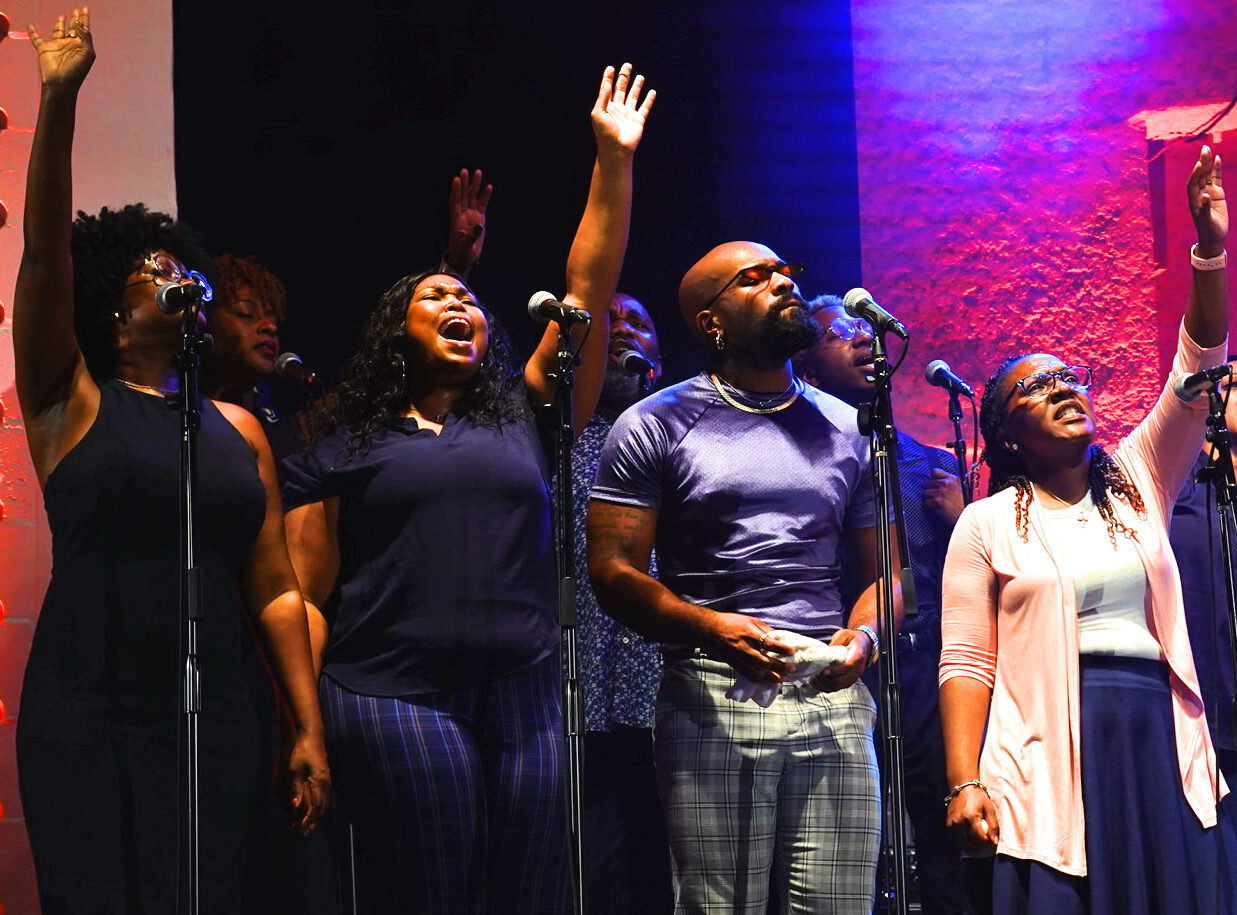
Miami Mass Choir is one of the performance groups in the Free Gospel Sundays series at the Adrienne Arsht Center. Above, the choir performs at the North Beach Bandshell in 2021. (Photo courtesy of Eyeworks Production)
There will be singing in the streets as the Adrienne Arsht Center for the Performing Arts of Miami-Dade County unleashes its Free Gospel Sundays series, now in its 16th year.
Jekalyn Carr, who at 25 years old has become one of the titans at the top of the gospel music charts for the last decade, will perform on Sunday, Oct. 9, at the center’s Knight Concert Hall.
New this year, according to Jairo Ontiveros, vice president for education and community engagement at the Arsht Center, is the Singing in the Streets celebration beginning at 5 p.m. Saturday, Oct. 8.
Jekalyn Carr headlines Free Gospel Sunday on Oct. 9 at the Adrienne Arsht Center’s Knight Concert Hall, a kick off to the 16th year of the series. (Photo courtesy of artist management)
“We’re really taking it to the streets,” says Ontiveros, explaining that the Singing in the Streets component of Free Gospel Sundays consists of pop-up performances. On Saturday, it will be a dual presentation of two choirs, according to Ontiveros.
“The Florida Memorial University Ambassador Chorale will have a public performance at the Mount Zion Missionary Baptist Church (309 NW 9th St., Miami), which we all know is historic to our community, and then the second one will be the Florida Fellowship Super Choir. They’ll at Miami Gardens City Hall (18605 NW 27th Ave., Miami Gardens).”
Corey P. Edwards, founder and executive director of the Florida Fellowship Super Choir, says it’s a great opportunity for his ministry.
“It’s exciting to finally get a chance to be a part of this,” says Edwards.
The Super Choir’s performance is the first in a series of additional productions that will take place throughout the year, which include three-time Grammy Award-winning Soweto Gospel Choir on Sunday, Dec. 18. In 2023, a Black History Month celebration follows. with a performance slated for Feb. 26 with Pastor Marc Cooper and Miami Mass Choir. The Little Haiti Cultural Center’s first Gospel Fest will round out the events with free performances throughout the day on March 26. Another event is scheduled for April 2023, but details have not yet been announced. WPLG-TV Local 10 Anchor Calvin Hughes will serve as host for the season.
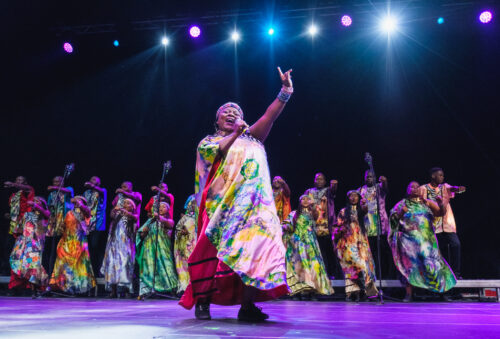
Hailing from Soweto (South West Township), a town outside of Johannesburg and home of Nelson Mandela, Soweto Gospel Choir comes to the Arsht Center as part of Free Gospel Sundays on Sunday, Dec. 18. (Photo courtesy of Henry Engelbrecht)
“I want people to know that gospel music is a legitimate art form,” says Edwards. “That it’s birthed out of African American culture. Just like jazz, just like the blues, just like hip hop, gospel music is a vital part of that music culture that comes from the heart, the soul, the mind, the fingers, and the mouths of African Americans.”
He says the Arsht Center’s dedication to the program, with its “vast amount of resources,” is a considerable commitment. “They have a wide reach, they have great influence and for them to think enough of gospel music to promote it on the level that they are, especially in South Florida, and hopefully across the country, is significant. “
Ontiveros says that is precisely one of the goals for Free Gospel Sunday — to provide audiences accessibility to gospel artists that may seem out of reach.
“You know, art has to be accessible. Art is for everybody. And I think the idea of gospel music being put center stage, just like any other series, and the fact that people can come see Yolanda Adams, CeCe Winans, Shirley Caesar and Donnie McClurkin and… the Soweto Gospel Choir . . . (a well-known international choir coming in later as part of the season) is a good thing.”
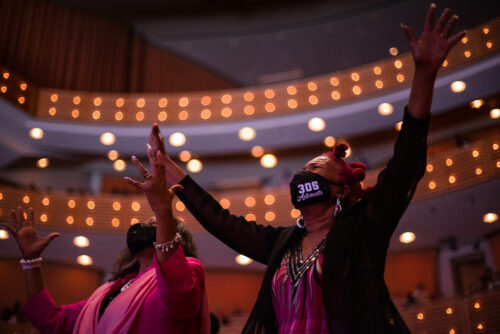
Participants at a previous Free Gospel Sundays at the Arsht Center. (Photo courtesy of Taylor Brown)
According to Ontiveros, Free Gospel Sundays was first created jointly with the Arsht Center along with Pastor Marc Cooper and his Miami Mass Choir and it has proven an overwhelming success. Since its inception, over 50,000 attendees have attended Free Gospel Sundays, Ontiveros says, adding that feedback from audiences has been overwhelmingly positive.
“It is one of the series at the center that when the first-access passes become available, they get snatched up between five minutes to the hour,” he said. “I mean, that fast.”
A showcase for local talent is also one of the missions of the series.
“Our focus for this season has been on how we can highlight local talent because there’s such rich local talent for gospel music in Miami and in South Florida at large,” he says.
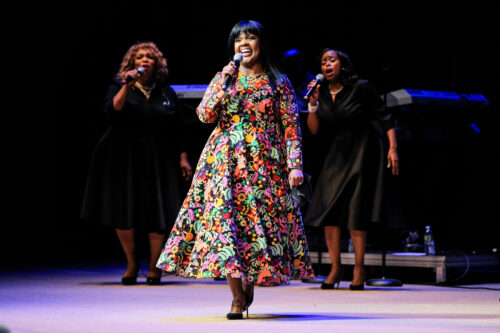
Gospel superstar CeCe Winans performs on stage at the Arsht Center on Sept. 17, 2017 as part of Free Gospel Sundays at the Adrienne Arsht Center. (Photo courtesy of Sergi Alexander/Eyeworks Production).
For Edwards, no matter where it is performed, he says authentic gospel music is best when it is shared.
“That is the best part of it. You can walk into any African American church on any given Sunday and gospel music is very much a part of the culture. Simply because it is generated by us. It is sung by us. And it is played by us.”
WHAT: Free Gospel Sundays featuring Jekalyn Carr; Singing in the Streets Celebration
WHERE: Saturday, Oct. 8, Historic Mount Zion Missionary Baptist Church, 301 NW 9th St., Miami, also in the courtyard of Miami Gardens City Hall, 18605 NW 27th Ave., Miami Gardens; Sunday, Oct. 9, Knight Concert Hall at the Adrienne Arsht Center, 1300 Biscayne Blvd., Miami.
With a new name, reggae fest returns to Miami Beach with headliners Inner Circle
Written By Jonel Juste September 12, 2022 at 3:27 PM
With a 50-year-plus history and a string of hits including “Bad Boys,” Jamaica’s Inner Circle comes to Miami Beach for the Feel Good Fest. (Photo courtesy of Larry Marano)
What began as a small showcase at a popular midtown Miami venue known at the time as The Stage grew into a music festival that featured local and international performers. The “5 de Mayo Fest” made its debut at the Miami Beach Bandshell in 2014; two years later, the name was changed to the Miami Beach Reggae Fest to reflect the music and the performers.
After that, the reggae fest all but disappeared.
“From 2016 to 2021, my partner and I took a break from production to become parents, and when the pandemic hit, we would dream of the days when live music was back,” says Edilberto “Eddy” Morillo, one of the co-founders of the event along with Eliane Mayer that this year returns as the Feel Good Music Fest at the North Beach Bandshell on Sunday, Sept. 18.
Morillo, who lives in Miami and is a native of Venezuela, created the band Bachaco, which is also on the Feel Good Music Fest lineup.
With a new name and more internationally renowned artists and bands, it will “be a party like no other. And as if that wasn’t enough, there will be multiple guest DJs and a drum jam by the Vibe Tribe,” says Morillo.
Edilberto “Eddy” Morillo, one of the organizers of the Feel Good Music Fest, also created the band Bachaco, which will be performing at the music festival. (Photo courtesy of Juan Jose Romero)
In the past, the festival has hosted renowned Latin and Caribbean artists such as Doctor Krapula (Colombia), Gondwana (Chile), Los Rabanes (Panama), Laguna Pai (Peru), Ojo de Buey (Costa Rica), Alika (Uruguay), Johnny Dread (Cuba), Sudakaya (Ecuador), Tarmac (Colombia), Reggae Lou (USA), among others.
Morillo says it is the only festival in the region to feature top Latin Reggae and Caribbean stars; its aim is to appeal to a wider audience. “It’s all themed around ‘feel good music.’ The idea of mixing different music genres like reggae and rock or hip-hop to create a unique feel-good vibe is what we are after,” says Morillo.
One of the big draws for Feel Good is Inner Circle, a Jamaican reggae band that has stood the test of time. Founded in Kingston, Jamaica in 1968 for the love of music and playing live instruments, they became well known for hits such as “Bad Boys,” featured in the eponymous movie with Will Smith and Martin Lawrence, and for the song “Sweat (A La La La La Long).”
“It was all about live music,” says Ian Lewis, bassist, vocalist, and founding member of the band.
The Grammy-winning quintet has had a string of successes stretching back to the mid-1970s.
Its secret to success, Lewis says, is a shared belief in music’s ability to unite and heal, which has kept the band together through five and a half decades of triumphs and tragedies.
“The longevity through the ever-changing music industry and the fact that we’re still here performing and bringing the reggae roots to all cultures mean the world to us,” says Lewis.
Lewis says authenticity is at the band’s core, too.
Gombah Jahbari from Puerto Rico is also on the bill of the Feel Good Music Fest set for Sunday, Sept. 18 at the North Beach Bandshell. (Photo courtesy of the artist)
“From Jamaica to Miami, we have gotten to meet so many artists from all different cultures from Latin to hip hop. The relationships we make are so important to us. That’s what keeps us going. We are always growing and always changing because the music business is always moving. You need to keep up and keep your integrity and creativity with a splash of authenticity,” he says.
Also performing are Bahiano, an Argentinian reggae legend well known for his deep voice style and success in Latin America; Gondwana formed in 1987 in Santiago, Chile, and Gomba Jahbari from Puerto Rico, along with Mulato and Alimoña Kush.
“The family keeps growing and the support for feel-good music this year has been overwhelming,” says Morillo.
WHAT: Feel Good Music Fest
WHERE: North Beach Bandshell, 7275 Collins Ave., Miami Beach
A journey begun in Havana creates a musical bond for Gonzalo Rubalcaba and Aymée Nuviola
Written By Vanessa Reyes September 5, 2022 at 1:03 PM
Pianist Gonzalo Rubalcaba and Afro-Cuban singer Aymée Nuviola perform music from their latest release “Live in Marciac” for the opening concert of the Live in the Park fall series at the Westchester Cultural Arts Center on Friday, Sept. 9. (Photo courtesy of Emilio Guede Jr.)
When Gonzalo Rubalcaba and Aymée Nuviola get together they have a language all their own. Their melding of Afro-Cuban rhythm and jazz speaks through their stage presence, their charm and a history that began as children in Cuba.
The two artists and Grammy winners will share the experience in an intimate performance on Friday, Sept. 9, when they kick off the Live in the Park fall concert series at Westchester Cultural Arts Center.
Rubalcaba, an international jazz pianist and composer and Nuviola, a vocalist, songwriter and actress, will perform music from their latest album “Live in Marciac.” Released on the label 5Passion Records, the album was recorded in July 2021 at the Marciac Jazz Festival in southwest France, released on digital platforms in May, and as a CD in August.
Jazz pianist and composer Gonzalo Rubalcaba is a five-time Grammy winner. (Photo courtesy of Pachy Lopez)
With numerous collaborations under their belts, Rubalcaba and Nuviola say they share a bond that goes beyond the music they’ve made together.
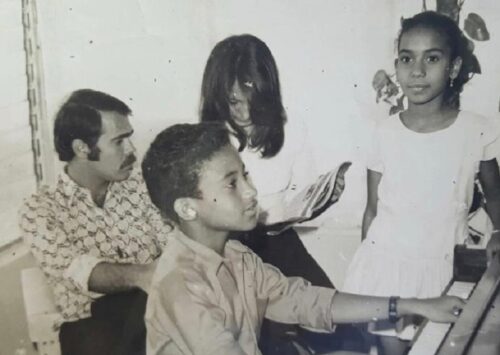
Rubalcaba and Nuviola met in Havana when they were both accepted into the prestigious Manuel Saumell Conservatory for musically gifted children. It began initially with their mothers befriending each other at the elementary school as they waited for their children in the pick-up lines. The young Rubalcaba and Nuviola soon learned their families shared a musical way of life.
“It wasn’t unusual (for either of us) to have uncles or cousins break out in a spontaneous concert at home with everyone having some kind of musical talent to share,” says Rubalcaba from his home in Coral Springs.
Nuviola adds “Gonzalo’s father would fine tune my piano; we were all like family, so it was a beautiful union.”
Gonzalo Rubalcaba and Aymée Nuviola were brought together by music in Havana, Cuba, as children. (Photo courtesy of Tamy Salas)
It was Rubalcaba’s connection and love for his mother, who encouraged him to focus on the piano, which began and fueled his artistic journey, eventually earning him five Grammy awards.
“She believed it was quite possibly the most complete instrument that exists,” says Rubalcaba. He initially was interested in percussion, playing with his father Guillermo Rubalcaba’s band at the age of 5. He says he switched to piano to please his mother. “Aymée’s mom was a music teacher; my mom never dedicated herself to music, but she dedicated herself completely to me. I know what discipline is thanks to her,” he says. It has been years since his mother, Yolanda “Chiquitica” Fonseca, passed away, but, he says, “I’ll never stop talking about her . . . because I am who I am today mainly because of her.”
“Live in Marciac” is a follow-up to the Grammy-nominated “Viento y Tiempo,” which was recorded in front of a live audience at the Blue Note Tokyo in August 2019. What’s different about “Live in Marciac” is its artistic boldness. There are no other instruments besides Rubalcaba’s piano and Nuviola’s vocals– no safety net.
“It’s like a roller coaster ride,” adds Nuviola about the recording and what people can expect at the “Live in the Park” concert.
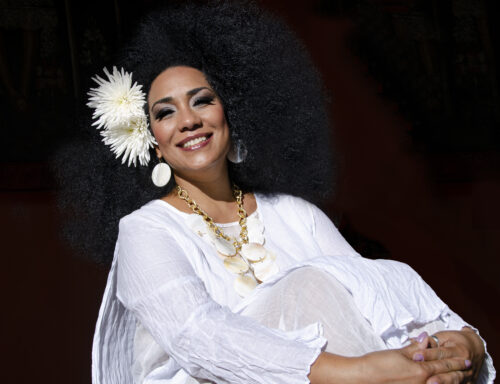
Cuban singer, pianist, composer and actress Aymée Nuviola is also known for having played Celia Cruz in the Colombian telenovela “Celia.” (Photo courtesy of the artist)
“It’s not just about coming to hear the songs, it’s about the spontaneity of the show and the collaborations between them and us,” says Nuviola, who will be performing tracks from the new album, like the Cuban classics “Bemba Colorá” (one of Celia Cruz’s signatures) and “El Manisero” (arguably one of Cuba’s most recognizable song).
For Rubalcaba, it’s the energy the two artists create and how they feed off each other that he believes resonates with the public.
“When people talk about music, the word spirituality comes into play. There’s a language you have to learn . . . how to control, develop and perfect — and it’s that language that dominates when you are performing,” Rubalcaba says. “There’s a close relationship between what you do artistically and who you are as a person,” he adds. “The essence of the artist should be a reflection of what their life is.”
For both artists, the essence is Cuba and the music they grew up listening to and absorbing.
“It was very social and normal to have the doors and windows open and know what was happening in the neighborhood,” Rubalcaba recalls. “You knew what music the person across the street was listening to, or the neighbor to the left, the good and the bad, you could see everything that was going on.”
For Nuviola, the difficult decision to leave Cuba and her family, left an indelible mark in the emotional experience that her audiences get to see when she is performing.
The childhood friends from Havana, Cuba, during the pair’s six-night sold out stint at Tokyo’s prestigious Blue Note Tokyo in August 2019. (Photo courtesy of Blue Note Tokyo)
Nuviola’s journey to America included a 17-day stay in an immigration detention center at the United States-Mexico border.
She remembers it was 2004. “(Former President) Ronald Reagan had just died, so there was a longer delay and I ended up in the immigration jail,” explains Nuviola, who now resides in Miami. “I remember crying so much when they told me I could go, both from sheer joy of leaving and sadness when I’d see the faces of those who had to stay. That experience made me appreciate things so much more and reinforced my faith in God even more.”
For both artists, Cuba, music and the bond they’ve forged over the years feed the energy they bounce off each other on stage.
‘’With Aymée you never know because she has this amazing ability to communicate with the public,” says Rubalcaba.” So, when we get together, there are so many different emotional transits the audience takes from retrospection to happiness. I don’t think there is room for sadness, but nostalgia yes, a lot of nostalgia.”
The Live in the Park fall concert series continues with Saturday night performances featuring La Descarga con Albita on Sept. 10, Cortadito on Oct. 15, Nestor Torres on Nov. 26, Tito Puente Jr. on Dec. 3, and New Year’s Eve in the Park with DJ El Russo and the Marlow Rosado Orchestra on Dec. 31.
WHAT: Gonzalo Rubalcaba and Aymée Nuviola
WHERE: Westchester Cultural Arts Center at the entrance to Tropical Park, 7930 SW 40th St., Miami
Sound artist Gustavo Matamoros curates collaborative experiments at Deering Estate
Written By Fernando Gonzalez August 28, 2022 at 4:05 PM
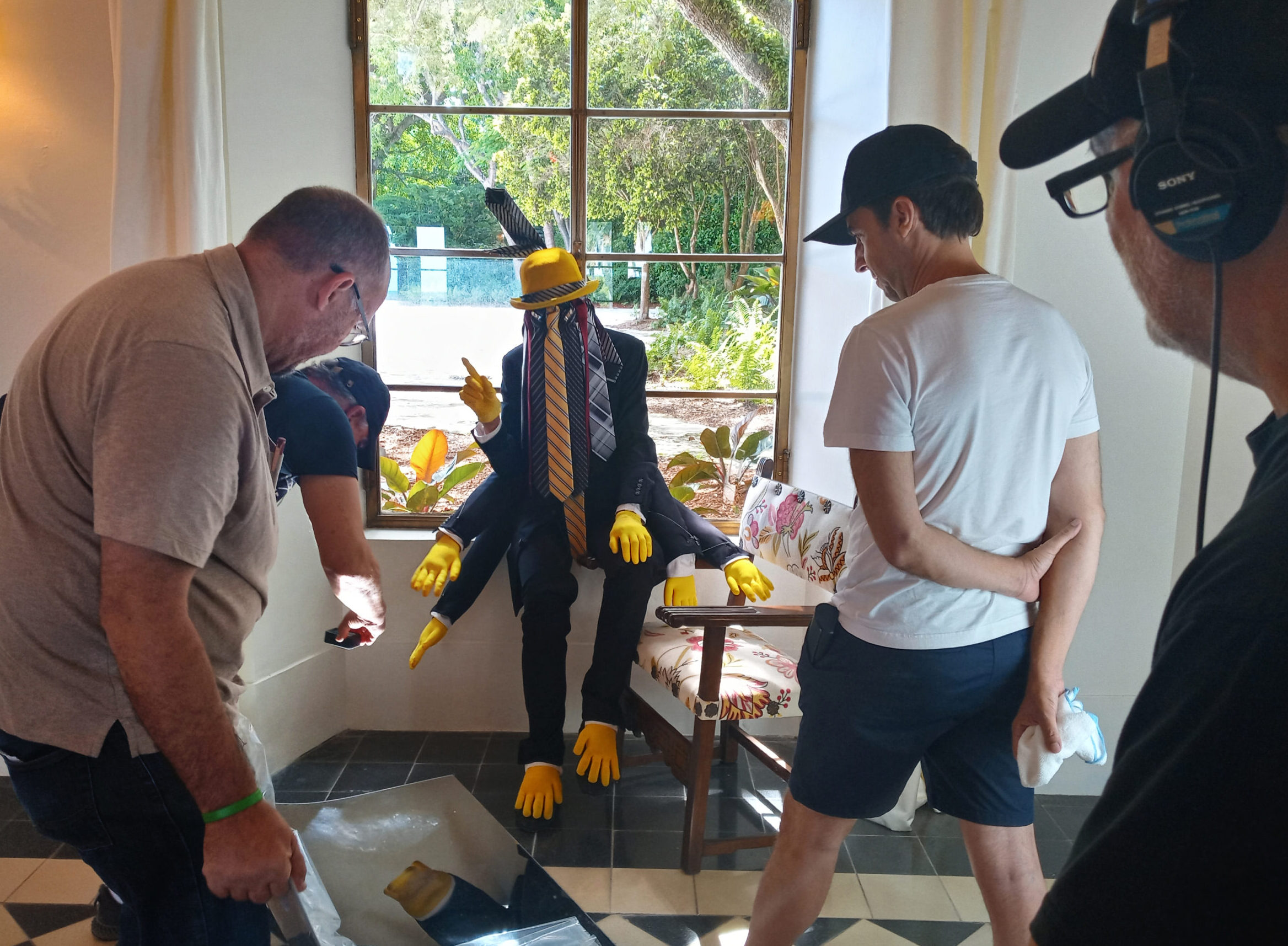
Working on a collaboration for “And Sometimes . . . The Space is Full of a Previous Space” at Deering Estate are, from left, Freddy Jouwayed, filmmaker Ricardo Matamoros, performance artist Pat Oleszko, and intermedia composers José Hernández Sánchez and Gustavo Matamoros, commissioned artist. (Photo courtesy of Claudia Arano)
We live surrounded by sound, much of it muted by habit and routine — the drumming on keyboards, the glissandi of elevators, the humming of a refrigerator, the accents and rhythms in nature. Gustavo Matamoros hears it — and summons its possibilities
Born in Caracas, Venezuela, and living in Miami since 1979, Matamoros is a one-person musical research and development department. As a composer, curator, and sound artist, his work has featured a broad range of devices and strategies, from conventional instruments and the musical saw to electronics, tape, installations, text, and video.
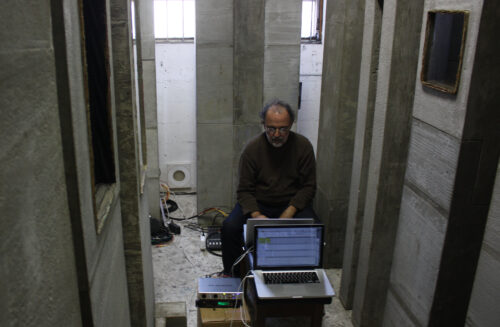
Gustavo Matamoros, a composer, curator, and sound artist, seen here at Bridge Red Studios in North Miami, is an artist-in-residence at Deering Estate where he is presenting a four-part collaborative series on Thursdays in September. (Photo courtesy of Rene Barge)
He is also the founder and director of Subtropics, an organization dedicated to “the creation, public presentation, documentation, discussion, and publication of experimental music and sound-based intermedia.”
Subtropics’ flagship event is the Subtropics Festival in Miami. It was founded in 1989 and held annually until 2007, when it became a biennial gathering. Last year it celebrated its 25th edition. But Subtropics has also produced programs such as the Audiotheque (2012-2018), a sound-based art and performance experience at Matamoros’ studio at ArtCenter South Florida (now Oolite Arts ), and the Listening Gallery (2010-2015), which offered sound art in a public art setting. It operated from the facade at 800 Lincoln Road and was complemented by a video installation piece.
“Art is about discovery. Then the results of those experiments become available for people to experience. These events are experiments, but I do them to build awareness about sound,” says Matamoros. “For me, the experience of sound is most important, and it’s both a tool for enjoyment and understanding life. Life speaks to us through sound.”
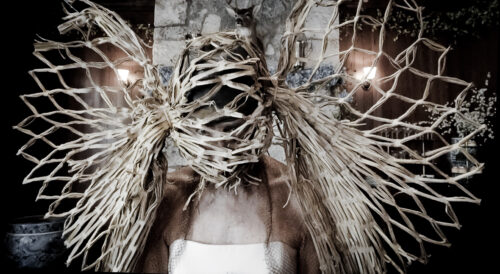
Paranormal’s Lizard Queen character by Pat Oleszko, part of “And Sometimes . . .The Space is Full of a Previous Space” by Gustavo Matamoras at Deering Estate. (Photo by Ricardo Matamoros)
Beginning Thursday, Sept. 1, Subtropics and the historic Deering Estate are presenting “And Sometimes . . . The Space is Full of a Previous Space,” a four-part series created by Matamoros, who is a current Deering Estate artist-in-residence. It features experimental multimedia collaborations that include site-specific recordings, new pieces, and a retrospective of Subtropics’ work over the years. The events will take place indoors at the Deering Estate Visitor Center theater.
“When you get off the beaten path, you really have no idea what you’re going to find, so it’s work that’s very challenging to package,” says Matamoros. “I’m not an impresario or anything like that. I’m simply an artist motivated to create community around this weird stuff that I do. I’m thinking about exploring sound, not making a product, so after 30 years of work, I don’t even have a CD. So, what I thought I’d do this time is work around four things that might result in something concrete.”
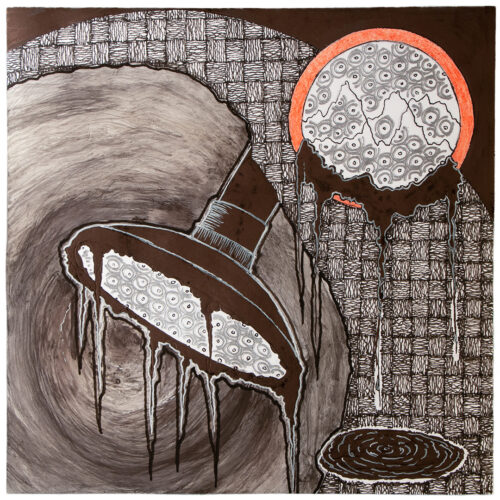
“Coincidence,” a drawing by collaborator Ralph Provisero, was created for the audio track of the same name in “Indivisible” in collaboration with David Dunn. (Photo courtesy of the artist)
The opening evening, “Indivisibles,” is inspired by making a CD, he explains. “It’s going to be an intermedia exploration of the tracks that David Dunn and I have put together, recordings from 30 years of making music, for this limited-edition art album CD, released by Subtropics Editions. It’s a kind of retrospective. We’ll play the tracks in four channels and have projections of the visual interpretations (that) Ralph Provisero, a local artist, made of each of the tracks.”
From its inception, the idea of “And Sometimes . . .” was “to create excuses for collaboration with other artists,” says Matamoros. The second evening, on Thursday, Sept. 8, entitled “Pin Pan Pun” is a collaboration with Miami-based composer Jose Hernández Sánchez. “We met a few years ago, and he’s been composing really interesting works with theatrical elements, combining video with the sound.”
He notes that “Paranormal,” the third installment in the series on Thursday, Sept. 15, draws from the mythology of the place. “When you visit the Richmond House, on the second floor, they have a whole room with documentation of what people claim to be paranormal activity in the house. It’s part of the history of Deering Estate,” explains Matamoros. “So, we went in and made a 24-hour recording at the mansion, at a very high sampling rate. That means that we recorded sounds that were beyond the threshold of our hearing. When the sound is that high, you have to slow it down three or four octaves before you start hearing something — we then picked from what we found and made an installation with those sounds.”
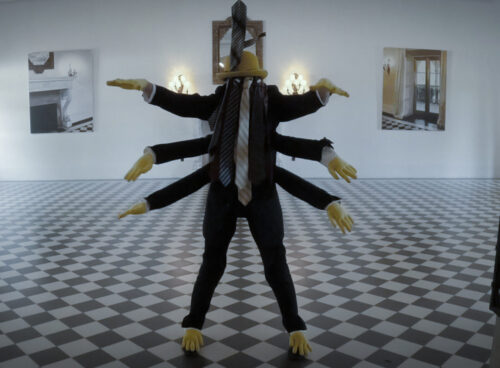
“Paranormal,” the third installment in Gustavo Matamoros’ “And Sometimes . . . The Space is Full of a Previous Space,” features performance artist Pat Olesko’s “Army Man.” (Photo courtesy of Ricardo Matamoros)
The evening will also feature performance artist Pat Olesko, and filmmaker Ricardo Matamoros, Gustavo’s brother, who lives in Germany.
“We started discussing expanding this idea for “Paranormal” to a format in which we would have images and maybe even performance. So, we got the ball rolling. Pat created these characters like ‘Army guy’ with eight arms and decided to see where it will take us. We might end up making a movie of it.”
The closing performance, “And Sometimes . . .There Is More,” on Thursday, Sept. 22, highlights content from Subtropic’s archive featured in an audio-visual setting designed and performed by Freddy Jouwayed and Rodrigo Arcaya. “I want to find new ways to repurpose and present some of that material,” says Matamoros. “I don’t want all this work just to live in our archives.”
WHAT: “And Sometimes . . . The Space is Full of a Previous Space.”
WHEN: 7 to 9 p.m. Thursdays opening Sept. 1 with events on Sept. 8, 15, and 22.
WHERE: Deering Estate Visitor Center theater, 16701 SW 72nd Ave., Miami. The Visitor Center is located on 168th Street, half a block South of the main entrance.
‘Escribe Aqui/Write Here’ at The Betsy Hotel inspires writers, musicians to stay, create
Written By Josie Gulliksen August 15, 2022 at 4:58 PM
Mia Leonin at BBar in The Betsy Hotel (2014). She is one of the poets in residence in The Betsy’s 2022 Escribe Aqui/Write Here Festival. (Photo courtesy of The Betsy Hotel)
Caridad Moro-Gronlier remembers going to The Betsy Hotel as “a literary citizen.” The author, poet and writer says the boutique hotel on South Beach has been a source of inspiration for her.
She was one of the first writers in residence in The Betsy’s “Escribe Aqui/Write Here” series, which began in 2015, funded with a seed grant from the John S. and James L. Knight Foundation’s Knight Arts Challenge.
Moro-Gronlier is curating the eighth annual “Escribe Aquí/Write Here” festival, which has 10 artists in residence with a focus on Latinx poets and musicians.
Caridad Moro-Gronlier in The Betsy Hotel’s Writer’s Room. Moro-Gronlier is the curator and a writer in residence at this year’s Escribe/Aqui Write Here. (Photo courtesy of The Betsy Hotel)
The month-long programming culminates with a live and streamed event at Barry University’s Institute for Immigration Studies on Wednesday, Aug. 31 at 7 p.m. with Moro-Gronlier and IIS Founding Director Dr. Giselle Elgarresta-Rios. Elgarresta-Rios is a music professor, choral conductor and soprano and is working with Barry University English department students for the final program.
The eight writers in residence are Elisa Albo, Francisco Aragon, Clayrre Benzadon, Silvia Curbelo, J. Bruce Fuller, Mia Leonin, Alexandra Relagado along with Moro-Gronlier.
Also in residence are musicians-jazz pianists Olegario Diaz and Edgar Pantoja. Through August, Diaz performs at The Betsy Hotel on Wednesdays and Pantoja on Sundays.
For the final program at Barry University, Pantoja will open the program followed by an introduction of all eight Betsy resident poets some of which will be in attendance and others via Zoom. Barry University students will read the poets’ work, which will be accompanied by Pantoja’s musical improvision.
The literary program was the vision of Deborah Plutzik-Briggs, The Betsy Hotel’s vice president of Arts and Community Engagement, after she met local writer Pablo Cartaya at the Miami Book Fair in 2015.
The Betsy Hotel’s owner Jonathan Plutzik and his sister Deborah Plutzik-Briggs, the hotel’s vice president of Arts and Community Engagement, were surrounded by writers from a very early age. Their father, the late Hyam Plutzik, is a three-time Pulitzer finalist poet. (Photo courtesy of The Betsy Hotel)
“Pablo and I wrote the grant together that began ‘Escribe Aqui.’ Moro-Gronlier was the perfect choice for curating the writers as she embodies this year’s celebration of Latinx as well as the intersection of arts, culture and identity that we aim to represent,” said Plutzik-Briggs.
Plutzik-Briggs and her brother, Jonathan, who is co-owner of The Betsy Hotel with his wife, Lesley Goldwasser, have the arts in their DNA. Deborah and Jonathan are the children of three-time Pulitzer finalist poet the late Hyam Plutzik.
Their father’s work is the inspiration for this writer’s festival and the hotel’s Writer’s Room which houses Hyam’s desk. Each artist in residence gets to stay for a few days in the writer’s room where “they get a free room and a per diem for food while here,” says Plutzik-Briggs. Residencies are typically Sunday through Wednesday. It’s also meant as a quiet space for them to concentrate on their work.
Hyam’s writings are also featured at the hotel in The Poetry Rail, a public art installation inscribed with his words as well as those of 11 other influential writers that have shaped Miami’s literary landscape. Featured are poems by Muhammad Ali, Richard Blanco, Adrian Castro, Chenjerai Hove, Langston Hughes, Donald Justice, Campbell McGrath, Geoffrey Philp, Carlos Pintado, Gerald Stern and Julie Marie Wade
“Deborah and Jonathan are literary and creative citizens in Miami and they really help the public know art works in many functions,” Moro-Gronlier says. “They provide a wonderful space to meet and connect, showing there’s true stewardship on the beach.”
The inspirational studio space for resident artists inside The Betsy Hotel, the focus of The Writer’s Room is the working desk of poet Hyam Plutzik. (Photo courtesy of The Betsy Hotel)
Tasked with choosing the writers, Moro-Gronlier took the process to heart, being ever so selective.
“All the poets in this residency are known to me. I chose writers with dual culture, that are bilingual. I wanted to see their bi-cultural life and how that shows up in their work. The queer was another hyphen and there are three queer poets included in the group,” she says.
Fellow local writer Mia Leonin is also a program alumnus with 2022 being her third residency at The Betsy. She says she appreciates Moro-Gronlier’s curatorial process. “I love how (she) is curating the program with both a music and literary component, connecting the local community in a unique way. I feel we’ve learned over the last couple of years to be more flexible and to truly connect and appreciate that connection. I’m benefiting from the program just as a citizen and Miami local. I treasure these programs.”
Throughout the years, Leonin met several Spanish language writers whom she’s kept in touch with including “one of which used my work in an anthology she edited and who I also introduced to Moro-Gronlier.”
Leonin also recalls advice from one of her professors at the University of Miami who told her to use the residency to either finish or start a project, she recalls.
“For this particular residency, my goal is to finish a piece that I started earlier this summer based on Reproductive Autonomy.” The piece will be drawn from her interviews with several friends about their pregnancy journey. Leonin says she’ll use the stories anonymously as part of vignettes to create a lyric essay.
“In light of the overturning of Roe v. Wade, and with the permission of the women I interviewed, I want to write stories that reveal the complexity of a woman’s relationship with her reproductive life, and the absolute autonomy that this complexity necessitates,” she says.
Deborah Plutzik-Briggs, who has a doctorate in arts education, is also the vice president of Arts and Community Engagement at The Betsy Hotel. (Photo courtesy of The Betsy Hotel)
Albo, who grew up in Lakeland with Cuban parents, remembers feeling like an outsider, visiting Miami Beach as a kid.
“Growing up in Lakeland I felt like an outsider because when I went home, I lived in a Cuban household. During that time, we would always come to visit family in Miami Beach. Many summers were spent exploring on Miami Beach with my cousins,” says Albo, who was selected for this year’s residence. She eventually moved to Miami.
While at The Betsy, Albo plans to work on her manuscripts covering a multitude of subjects from the pandemic to food, cultural identity and the Black Lives Matter movement.
“I draw strength from my immigrant story and diverse cultural background, especially seeing how my family members were able to thrive and establish a home and make a life in the United States. All of that got me to where I am today,” she says.
Serving both as curator but also a writer in residence, Moro-Gronlier echoes her fellow writer’s sentiments saying, “(The Betsy) is just a creative space unlike anything I know.”
That is exactly the mission of the residency program, where Plutzik says “we have no concrete expectations; we want writers to be productive in whatever way they choose while they’re here . . . We have an appreciation for communities that operate in multiple languages, particularly the immigrant community, especially South Florida which is so immigrant-rich. We’re very excited to have the opportunity to embrace those that are writing perhaps in multiple languages.”
Leonin believes that showcasing the work by inviting the public to engage in the process is another element that makes the program so rich.
“Deborah and Jonathan have never lost sight of the fact that without the local people experiencing The Betsy Hotel, it is not a creative incubator. They always remember the individual artist and programs like ‘Escribe Aqui’ showcase this,” Leonin says.
WHAT: Escribe Aqui/Write Here 2022
WHERE: The Betsy Hotel, 1440 Ocean Dr., Miami Beach; closing night event at Barry University Institute for Immigration Studies, 11300 NE 2 Ave., Miami Shores
WHEN: Various activities at The Betsy Hotel through Aug. 31. Aug. 31 Closing night event at Barry University Institute or Immigration Studies, 7 p.m., 11300 NE 2 Ave., Miami Shores. Free but RSVP required.
Mexico’s rising star Silvana Estrada brings poetic lyrics, soaring voice to Miami
Written By Helena Alonso Paisley July 31, 2022 at 9:48 PM
In her first appearance in Miami, Mexican singer Silvana Estrada will present
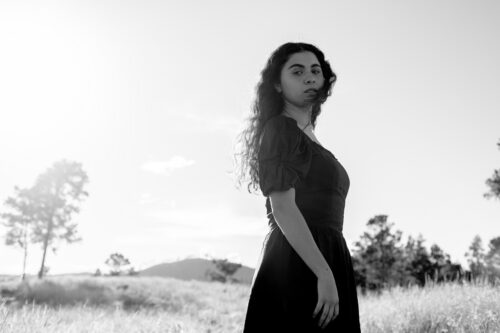
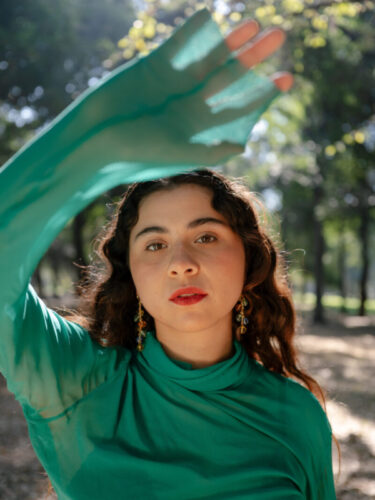
songs from her debut solo album “Marchita” at The Citadel on Friday, Aug. 5. (Photo by Jackie Ruso)
To understand just how talented the 25-year-old Mexican singer/songwriter Silvana Estrada is, you need only watch the first few minutes of her song “Si me matan” on YouTube. With a single camera and a lean budget, the video captures the power of her unique voice and the intense, honest way she connects as a performer, even with an audience of just one.
Estrada, guitar in hand, is seated in a large stone courtyard empty but for two chairs and a stand-up mike. She sings to another woman, seated directly across from her, whose identity keeps changing—a young woman with tattoos, an older woman with glasses who begins to weep with the first words of the song, an indigenous woman with a squirming girl on her lap, a woman whose arms embrace her very pregnant belly.
The lyrics of “Si me matan” speak in an achingly personal way to the gender violence that every day takes the lives of more than ten women in Mexico, with Estrada imagining what she hopes would be said of her if she too were found murdered: “Digan…que como todas crecí con miedo / Y aun así, salí solita a ver estrellas” (“Say… that like all girls, I grew up with fear / But that even so, I would go out all alone to see the stars”). She writes in her notes on the video that she hopes the song will be a balm for the wounds left by the indiscriminate violence.
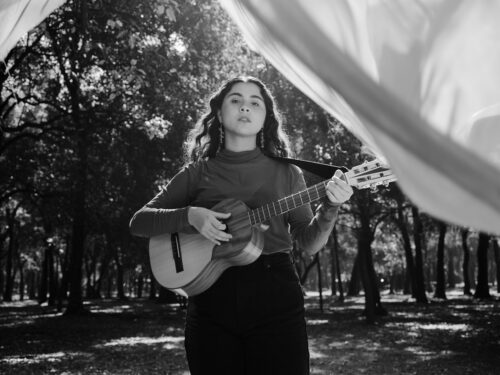
Silvana Estrada poses for a portrait in Bosque Chapultepec, Mexico City with her cuatro, a small four-stringed guitar, which was made by her parents in their luthier in Veracruz. (Photo courtesy of Jackie Ruso)
Like her mentor and friend, Natalia Lafourcade, Estrada caresses her native Spanish as she sings, and like the jazz singer Cécile McLorin Salvant, she can take a note and effortlessly twist it into sublime, otherworldly patterns.
Miami audiences will have the opportunity to see the rising star, who has been selling out concerts in Mexico, the United States, and Europe, at The Citadel’s intimate, state-of-the-art music space on Friday, Aug. 5.
Estrada hails from Coatepec, Veracruz, an area of Mexico rich in musical traditions. “I grew up playing with my family and with my friends,” she explains in a telephone interview, “going with my family to the fandango,” neighborhood hootenannies where the community would come together to sing and dance the son jarocho, the typical folk music of the region.
Her childhood, in fact, was fertile ground for a budding musician. Both of her parents not only play instruments, but they also make them: “I grew up in family of luthiers,” she says. “My mom, she does violins and violas, and my dad, he does double basses and cellos.”
She remembers growing up in her country home as a joyous environment.
“The memories I have are of a lot of musicians going to my house to buy instruments or to repair instruments. My house was always full of musicians just playing around, trying their instruments for the first time,” says Estrada.
During a Tiny Desk concert for National Public Radio, which featured the singer, there’s a glimpse of the idyllic childhood. The performance was filmed in her parents’ home workshop, where tools and string instruments in different states of assembly line the walls and nature seems poised to burst in through the windows. Estrada finishes the video singing a haunting duet in the garden with her father, who accompanies her on the double bass. It is a musician’s heaven.
Miami’s concert will showcase music from “Marchita,” Silvana Estrada’s debut solo album released by Glassnote Records. (Photo courtesy of Hilda Pellerano)
In addition to her parents, Estrada’s main reference points growing up, she says, were legendary Latin American singers and songwriters. Chile’s Violeta Parra, Argentina’s Mercedes Sosa, and Mexico’s adopted daughter, Chavela Vargas, were the soundtrack of her youth, with a healthy dose of American jazz from Ella Fitzgerald, Billie Holiday, and Sarah Vaughan rounding out the mix. In fact, Estrada was so taken with jazz that as an adolescent she studied it in Xalapa’s university conservatory, then went to the U.S. to immerse herself in the New York jazz scene.
At nineteen, she was doing background vocals for Snarky Puppy, among others. But when band leader Michael League heard Estrada’s own compositions, he helped to convince her that she should really be cutting her own path as a songwriter in Mexico.
Estrada, who says she has been writing poetry “since always,” at first didn’t see her future as a singer-songwriter. The encouragement of musical guardian angels like League, guitarist Charlie Hunter, and drummer Antonio Sánchez helped her to realize that singing her own work was a more authentic expression of who she was as an artist than singing jazz in English could ever be.
Musician Silvana Estrada poses for a portrait in Bosque Chapultepec, Mexico City, in advance of the release of her album “Marchita.” (Photo courtesy of Jackie Ruso)
Miami’s concert will showcase music from “Marchita,” her debut solo album from Glassnote Records. “Marchita,” which garnered a four-star rating from Rolling Stone magazine and was featured in British newspaper The Guardian’s June list of the best albums of 2022, is an ode to first love and the singular pain felt at its loss. Her lyrics are richly poetic: “Cambiaste mareas y corrientes / Dejaste tu nombre en el mar / Volteaste la cara sonriente / Y yo, que no supe nadar” (“You changed the tides and the currents / You left your name on the sea / You turned your smiling face / And I, who didn’t know how to swim”). The arrangements are sparse, letting the raw honesty of Estrada’s voice shine.
While Estrada licks the wounds of lost love on “Marchita,” her first passion, the Venezuelan cuatro, is still with her. She has said in interviews that when she discovered the small, guitar-like instrument at 16 or 17 years old — it was one of her father’s that was lying around the workshop—she also discovered her voice as a songwriter. What was forced on the piano, which she studied at conservatory, flowed effortlessly on the cuatro. A cantautora was born.
Estrada already feels far removed from that difficult moment in her young life that ushered “Marchita” into the world and is bent on enjoying every minute of this new, hard-won period, performing around the world and sharing the stage with musicians like Lafourcade, Mon Laferte, or Andrew Bird. As she says in one of her songs, “Sonreír es remedio de valientes” (“To smile is the cure of the brave”).
WHAT: Escala Sonora Presents Silvana Estrada WHERE: The Citadel, 8300 NE 2nd Avenue, Miami WHEN: 8 p.m., Friday, Aug. 5. COST: $45 + $7.16 service fee INFORMATION:seetickets.us and escalasonora.com
A tribute to Nina, ‘Ladies of Simone’ kicks off live music series
Written By Michelle F. Solomon July 26, 2022 at 5:39 PM
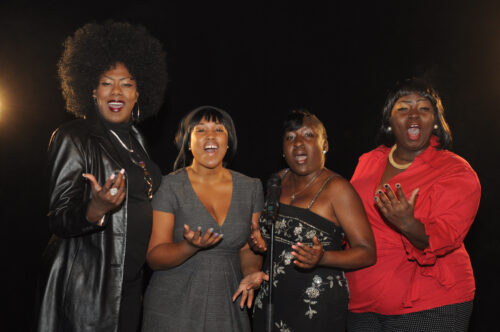
Ja’Nia Harden, Toddra Brunson, Sarah Gracel, and Deana Butler Rahming are the “Ladies of Simone” performing Saturday, July 30 at Westchester Cultural Arts Center’s Live in the Park! series. (Photo courtesy of Juan E. Cabrera)
A musical revue about singer, pianist, and Civil Rights activist Nina Simone at the African Heritage Cultural Arts Center in Liberty City had a successful almost monthlong run in 2016. Sarah Gracel was one of four women in the show entitled “Simply Simone – The Music of Nina Simone” who portrayed the performer at different stages of her life. She especially remembers the reaction. “The audience, people in the community, and even us, well, we didn’t want to the show to end because of how wonderful it was.”
Theodore “Teddy” Harrell Jr. directed the production, which was complete with a full set, props, lighting and two costume changes, he recalls.
“After the musical, produced by the African Heritage Cultural Arts Center, closed,” he says, “there was interest for the talented four vocalists, Gracel, Ja’Nia Harden, Toddra Brunson and Deana Butler Rahming to perform Nina Simone’s music for a couple of shows that featured jazz music.”
Audiences took to the only-music-no-dialogue performances, too. Harrell named it “Ladies of Simone,” he says, “to differentiate it from the musical.” A year later, the “Ladies,” along with the original band from the full-fledged “Simply” show was performing as a group in the cultural arts center’s Sankofa Jazz Festival. Then there was a special request by Keith Clarke, a Miami jazz aficionado who began the Miami Jazz and Film Society, for the group to perform at the Olympia Theater’s Lobby Lounge Jazz series, plus two gigs at the Hampton House, along with a performance in Delray Beach at Arts Garage.
“Ladies of Simone” is back again with two shows on Saturday, July 30, to kick off the new Live in the Park! music series at the Westchester Cultural Arts Center, located at the entrance to Tropical Park, 7930 SW 40th St., Miami. Live in the Park! is an eight-show series that continues through Dec. 31.
The four singers interpret standards from the Empress of Soul’s legendary songbook, each with highlights that correspond to a specific period in Simone’s life.
Toddra Brunson, Sarah Gracel, Deana Butler Rahming, and Ja’Nia Harden, began singing the music of Nina Simone in a production of “Simply Simone” at the African Heritage Cultural Arts Center. (Photo courtesy of Juan E. Cabrera)
Harrell promises that audiences will be re-introduced to “the music, the sassiness and the attitude of Nina Simone with songs in the repertoire such as “Sinnerman,” “To Be Young, Gifted and Black,” “My Baby Just Cares for Me,” and “I Put a Spell on You.” The performers are backed by a four-piece band including keyboard, guitar, bass and drums.
Gracel is Nina #1, “the young Nina,” she says, adding that her Nina is the one who gets rejected from a classical music conservatory dimming her sights set on being a classical pianist. She’s the Nina who goes through hard times that lead to the next steps in her career.
Harden is Nina #2, the nightclub and jazz singer at the beginning of her ascent. One of Harden’s favorites to perform is the song that launched Simone into the spotlight – her rendition in 1958 of George Gershwin’s 1935 “I Loves You, Porgy.”
With some of the set list retooled from “Simply Simone” for “Ladies of Simone,” Harden says she has the opportunity to sing “Wild is the Wind,” which became a hit in 1959. “It’s the kind of song where you just have to take your time. There’s no rushing. Nina just kept it simple,” says Harden. There’s also another reason the performer cherishes her time on stage with the song.
Her husband, John Harden III, with whom she co-created the band The Harden Project, and who was musical director, band leader, and pianist for “Simply Simone” and remains for “Ladies of Simone,” accompanies her.
“With (The Harden Project), he’s usually playing keyboards and with this, he gets to be free . . . to be a piano player and, you know, it highlights him. I so enjoy that connection on a personal level,” she says.
Brunson is Nina #3, “the Nina who has seen a lot. The activist,” says Brunson, who adds, “I didn’t know I would feel so connected to her until I met her revolutionary side. She is me in modern times. I believe her words and music need to be put out there with fire and passion behind it.”
When asked if there is a special highlight in her performance she cherishes, Brunson says there isn’t one but a few.
“ ‘Revolution,’ ‘Mr. Backlash,’ ‘Mississippi Goddam.’ “ she says, the latter released in 1964 and considered one of the most controversial of Simone’s civil rights songs as a response to the murder of Medgar Evers and the bombing of the 16th street Baptist Church in Birmingham.
The Westchester Cultural Arts Center’s Live in the Park! eight-show series ends with a New Year’s Eve gala on Dec. 31, 2022. (Photo by Charles Southers)
Butler Rahming as Nina #4 said while playing her role in “Simply Simone” that her Nina is “the most evolved. The Nina that has been through different stages of life and has been there and done that.”
There’s an agreement across the board that Simone’s life and music, in addition to being timeless, speaks to what’s going on in the world today.
“The racism, the injustice, our government lying to us and stripping us slowly from our freedom of speech, colorism, people still found hanging just like the times have never changed in a way. It’s all still very connected and that’s why I believe we can use her music to bridge the gap between generations,” says Brunson.
Gracel says Simone’s ability to tell stories in every song is what resonates with her. “Some days I feel that the world is upside down and I believe that through Nina’s activism, through her music, there is a relevance for today because so much seems like it’s coming back full circle. In times where you feel lost, well, I feel like her music gives a sense of direction.”
WHAT: “Ladies of Simone” – Live in the Park!
WHERE: Westchester Cultural Arts Center at the entrance to Tropical Park, 7930 SW 40th St., Miami
Community Arts Program’s summer series brings musical luminaries to Coral Gables
Written By Sean Erwin July 5, 2022 at 9:40 AM
Jazz vocalist Quiana Lynell is a “serious vocal discovery,” says trumpeter Terence Blanchard. She closes out the CAP summer concert series on Thursday, Aug. 18, in Coral Gables. (Photo courtesy of the artist)
During the pandemic summers of the past two years, the Community Arts Program (CAP) continued its tradition with virtual broadcasts. Now, with a nod to the spirit of its summer music experience, “Starry, Starry Nights Return!” celebrates CAP’s 37th season.
Community Arts Program Artistic and Executive Director Mark Hart explains his choice for this year’s title of the series, “Starry, Starry Nights Return!,” which references the pandemic and the guest artists.
“The ‘return’ of the title refers to how we’ve been online for the past two years and this summer we’re coming back on ground,” says Hart. “Of course, the stars of the evenings are the performers.”
CAP’s Summer Concert Series includes six performances in bi-weekly concerts every other Thursday. It began on June 9 and continues through Aug. 18 at the Spanish-revival style setting of the Coral Gables Congregational United Church of Christ, across from the Biltmore Hotel.
Hart explains that he was guided by an interest in diversity – both in style and ethnicity – when programming the series and emphasizes that the venue allows for an intimate experience between performer and audience.
“These artists have been playing in a lot of large venues where you don’t have the proximity that you have at the church, which lends itself to the intimacy of the evening. You get to feel a connection with the artists that you may not feel elsewhere,” says Hart.
Brazilian jazz guitarist and composer Chico Pinheiro performs with a trio of musicians at the Coral Gables Congregational United Church of Christ on Thursday, July 7. (Photo courtesy of the artist)
Upcoming concerts include the Thursday, July 7 performance of Brazilian jazz guitarist and composer Chico Pinheiro accompanied by pianist Helio Alves, bassist Sam Minaie, and drummer Alex Kautz in the trio’s Summer Concert Series debut.
Named one of the brightest lights on today’s Brazilian jazz scene by the Boston Globe, Pinheiro has been admired for his “bepop chops” and the nuance his playing lends to his peculiar blend of classical music, jazz and Brazilian.
Pinheiro’s latest album “City of Dreams,” which was released in 2021, lays down tracks notable for being both upbeat and dreamy.
On July 21, the Brass Institutes of America Quintet returns to the CAP series with members Dakota Corbliss on French horn, Kenneth Johnson on trombone, Derek Ganong and Buddy Deshler both playing trumpet, and Sam Ambrose on tuba. The group is popular with audiences for its mash-up repertoire that blends classical and Broadway favorites with Latin and jazz.
Five-time Grammy nominee, jazz pianist Christian Sands, performs as part of the summer concert series on Thursday, Aug. 4. (Photo courtesy of Anna Webber)
“Motion is the whole concept of this record,” explains Sands discussing his approach to “Be Water.”
“Moving, fitting into places where you might not fit into, going into places where you might not go, being still where you might not be still, going from point A to point B – you’re going from darkness, really, and going into life.”
The series caps off on Aug. 18 with Sarah Vaughan International Jazz Vocal Competition winner, Quiana Lynell whose 2019 album, “A Little Love,” released through Concord Jazz, shows off her phenomenal range, classical training as well as her roots learning to sing in church choirs growing up in a small town in West Texas.
Lynell has performed with Nicolas Payton, Tank and the Bangas, Patti Austin, Ledisi, Herbie Hancock, and Jon Batiste, among others, in venues that range from Marians Jazzroom in Switzerland to New York’s Carnegie Hall.
Trumpeter/composer Terence Blanchard explains, “Quiana Lynell is a unique talent. She possesses the maturity of a well-seasoned vocalist while having a forward-thinking approach to creativity, all while making her audience feel at home as she does her thing.”
Shelly Berg, dean of the Phillip and Patricia Frost School of Music at the University of Miami, says that the Community Arts Program (CAP) Summer Concert Series offers a rare opportunity to hear world-renowned artists in an intimate and beautiful space, the Coral Gables Congregational United Church of Christ.
Another component of the Community Arts Program is the after-school education program. “The CAP Conservatory for the Arts provides high-quality music education to children, many of whom would otherwise be denied access to the wonder of music and the beauty of the artistic spirit,” says Berg.
WHAT: Community Arts Program’s 2022 Summer Concert Series
WHERE: Coral Gables Congregational United Church of Christ, 3010 De Soto Boulevard, Coral Gables
WHEN: Every other Thursday through Aug. 18.
COST: Tickets range from $35 to $50, with ticket packages available.
Wagner opera, new venues as Miami Beach Classical Music Festival expands summer offerings
Written By Jesús Vega June 24, 2022 at 9:13 AM
Miami Beach Classical Music Festival presents symphonic conductors from its Conducting Institute on Thursday, July 7, at the Temple Emanu-El.
Miami Beach Classical Music Festival (MMF) has been offering free public concerts each summer since 2013. This year, Michael Rossi, founder and artistic director, promises there will be even more to enjoy.
“MMF has increased performances, including five opera productions, two symphony concerts, and a series of summer concerts on the new Ocean Drive Promenade,” Rossi says.
The eight-week intensive training program gives young classical musicians the opportunity to work with world-renowned mentors and gain professional performing experience. The community benefits from free public concerts featuring top talent, Rossi explains. Nearly 1,500 international applicants vie for one of about 300 spots in its training institutes in orchestra, opera, piano, and conducting. Entry to get in is through a rigorous audition process, explains Rossi.
“Miami Music Festival began with a vision to provide quality classical music programming during the summer months, where most arts organizations are in their off-season,” Rossi continues. “For many attendees, especially young children, our performances may be their first exposure to classical music experiences.”
Performances at various venues throughout Miami Beach are scheduled from Friday, July 1 through Sunday, July 24. Arias, Broadway and chamber music by MMF are at Lummus Park each Sunday throughout July as part of the Ocean Drive Association’s Ocean Drive Promenade Series.
Miami Music Festivals’ Wagner Institute makes its debut at the Adrienne Arsht Center in 2019 with a performance of “The Flying Dutchman.”(Photo courtesy of MMF)
The MMF kick-off begins Friday, July 1 as the MMF’s Wagner Institute will host an intimate night of arias at The Betsy Hotel. Singers will perform select pieces produced by Luana de Vol and Dolora Zajick from the American Wagner Project (AWP).
It’s also the Wagner Institute that will present “Das Rheingold,” the exciting prelude to Wagner’s famous “Ring Cycle” (also made up of “The Valkyrie”; “Siegfried” and “The Twilight of the Gods”), on Thursday, July 16 at 7:30 at the Temple House on Euclid Avenue, one of MMF’s new venues this year.
“This year, we are pleased to announce Temple House as a new performance venue in Miami Beach,” says Rossi. “In such a unique venue, we will present opera in a way that has never been experienced before, immersing the audience on stage using state-of-the-art 360-degree projections.”
Rossi explains that “Das Rheingold” was originally planned for the summer of 2020 but was postponed due to the pandemic.
“Our artists have been training and practicing their roles for over two years and are extremely blissful that the time has come to step onto the stage and have the privilege of presenting the first fully staged production of this masterpiece in South Florida,” he says.
MMF’s Wagner Institute presents Opera at the Faena. (Photo courtesy of MMF).
The opera celebration continues with its Opera at the Faena series in the Faena Forum with three productions: Georges Bizet’s “Carmen” (Thursday, July 21 and Saturday, July 23); Benjamin Britten’s “A Midsummer Night’s Dream” (Friday, July 22 and Sunday, July 24) and Claudio Monteverdi’s “L’Orfeo” (Saturday, July 23 and Sunday, July 24, at the Faena Forum Amphitheatre).
MMF’s “Family Opera” is Mozart’s “The Magic Flute” at Temple Emanu-El. Rossi explains that it has been conceived for young children and will be staged with dialogue in English.
But the offerings of MMF are not limited to opera. As in previous editions, music also occupies a prominent place in the program. On Thursday, July 7, at the Temple Emanu-El, the Conductor’s Symphony Concert will be presenting a group of new symphonic conductors from its Conducting Institute. They will lead the orchestra in pieces by Montgomery, Mozart, Okpepholo, Verdi, Saint-Saëns, and Schumann.
Subsequently, on Monday, July 18, the MMF’s Orchestral Institute will stage a chamber music concert at The Betsy Hotel. Rossi says it is a special event since the participating musicians are students who have selected their repertoires in partnership with teachers and artists in residence.
And the MMF Symphony Orchestra helps Miami Beach celebrate Independence Day with a program of patriotic and Broadway music at 8:30 p.m. for the Fourth of July at Lummus Park.
“Miami Music Festival began with a vision to provide quality classical music programming during the summer months, where most arts organizations are in their off-season,” Rossi says. “We are now expanding our programming beyond the summer months by presenting various performances throughout the city of Miami Beach, including annual concerts such as a New Year’s Day celebration. Every third Thursday of the month, MMF alumni and young artists surprise audiences on the terrace of The Betsy Hotel at the Miami Beach Culture Crawl. And we have many additional exciting plans.”
WHAT: Miami Beach Classical Music Festival
WHERE: Various venues throughout Miami Beach
WHEN: Throughout the month of July
TICKETS: Admission is free, but RSVP required. Admission for “Das Rheingold is $50, $125. For some events, there are nominal general admission prices with VIP seating and priority seating at $75.
French Caribbean power trio Delgres gears up for Fête de la Musique
Written By Fernando Gonzalez June 16, 2022 at 12:33 PM
Singer, songwriter, and guitarist Pascal Danaë, founder and leader of Delgres and Rafgee on sousaphone at the France Rocks Festival. The trio plays the North Beach Bandshell in Miami Beach on Tuesday, June 21. (Photo courtesy of Sachyn Mital)
The Creole blues of the Paris-based power trio Delgres suggest the earthy sound of Mississippi blues reimagined with an African and French Caribbean accent. Featuring electric guitar, drums, and sousaphone, a brass instrument of the tuba family in place of a conventional acoustic or electric bass, the trio can hit like a heavy blues-rock group one moment and then hint at a New Orleans street parade the next. The lyrics, sung mainly in Creole, may tell personal stories or speak of matters such as poverty, social justice, and the plight of the immigrant.
It’s an old blues sleight of hand: a spoonful of reality in a serving of a good time.
“This is probably a Black music thing that’s universal,” says singer, songwriter, and guitarist Pascal Danaë, the founder and leader of Delgres. “The blues is not sad music. They might be talking about terrible conditions, they might be talking about terrible losses, but the bottom line is hope. That hope comes from when you pick up your guitar and start singing about your problem. They’re going to hear the problem — but the music is for having a good time and will also give them the cure. We get the trouble and medicine at the same time.”
Comprising Danaë, Baptiste Brondy on drums and vocals, and Rafgee on sousaphone, Delgres headlines the Fête de la Musique at the North Beach Bandshell Tuesday, June 21, at 8 p.m. The show is presented by the Cultural Services of the Consulate of France in Miami and the Rhythm Foundation, in partnership with Make Music Miami and with the support of Miami Beach Arts in the Parks. The event is free, but it does require RSVP.
The group has released two albums “Mo Jodi” (“I’ll Die Today”) and “4 AM.” Sang in Creole and English, “Mo Jodi” addresses issues such as freedom and slavery. It served notice about the direction of the music while paying tribute to the historical figure the trio has taken its name.
Delgres is singer, songwriter, and guitarist Pascal Danaë, Baptiste Brondy on drums, and vocals, and Rafgee on sousaphone. (Photo courtesy of Remy Serre)
Louis Delgrès, a Creole officer in the French Army, died in Guadeloupe in 1802, fighting against Napoleon’s Army, which had been sent to the French Caribbean to re-establish slavery. The follow-up, “4 AM,” speaks of immigrants dying for a new beginning, joblessness, and slavery, but also family stories such as the anguish of separation when parents emigrate and children are temporarily left behind.
“I’m doing a bit of my own therapy with all this,” Danaë once said about the themes in his lyrics.
“Growing up in France as a French person, but of Guadeloupean roots, not completely French, … just led me to wonder later on in my life: So, who am I exactly?” elaborates Danaë now. “You start scratching that surface and start going deeper and deeper. That’s what’s in those songs. Even when I play like fierce rock and roll or very heavy, heavy guitar, it’s a release from pain and things that I have to cope with.”
Born and raised in Paris of Guadeloupean parents, Danaë grew up listening to a variety of music, from Cuban Son to Congolese rumba to jazz and English rock. He got his first guitar at 15, a gift from his brother-in-law to pass the time one summer. He started playing American folk music at home and eventually graduated to playing jazz and fusion in clubs around Paris. In 1997 he moved to London, where he lived for eight years, and then to Amsterdam, where he spent three years before returning to Paris. Along the way, he worked as a studio musician and performed and recorded with artists such as Peter Gabriel, Youssou N’Dour, and Harry Belafonte.
While in Amsterdam, he discovered the Dobro, a resonator guitar with a distinct sound that, says Danaë, “comes with the history of the blues.” The find had a profound impact on his work. “You must let it resonate . . . so you start listening to yourself. It becomes a dialogue with the instrument. It was like learning to walk again. I use an electric guitar on stage because it’s more practical, but when I get back to the Dobro, it’s like, okay, this is the blues, this is roots.”
He was at the time “at a crossroads between different professional pathways,” he once said in an interview, and the find led him to play blues. He said his writing acquired a new depth, and he went back to singing in Creole, “like my ancestors had in Guadeloupe.”
Danaë is working on a third album with Delgres, speaking about new battles he once felt had long been settled.
“When we did “Mo Jodi,” some people looked at it like ‘well, that’s something in the past,'” says Danaë. “But you look at the world now, and it’s all coming back. It’s not a thing from the past. The fight about freedom, dignity, equality, and injustice is now. We have to keep our eyes open and keep talking about these things because there’s still a lot of work to be done. So, I feel that we as artists must do our part. It’s a small one, but we need to keep going, keep singing those songs and get people together as much as we can.”
WHAT: Fête de la Musique featuring Delgres
WHERE: North Beach Bandshell, 7275 Collins Ave., Miami Beach
WHEN: 6:30 p.m., doors open, show at 8 p.m., Tuesday, June 21
Three Miami experiences celebrate Juneteenth with music, art and a juke-joint party
Written By Clayton Gutzmore June 13, 2022 at 2:59 PM
J’Von Brown, Vanya Allen, Jasmine Williams, Thando Mamba, Gentry George, Miriam King, Shanna Woods and Troy Davis of Hued Songs at last year’s “Juneteenth Experience” performance. (Photo courtesy of Passion Ward)
Juneteenth became America’s newest national holiday in 2021 when legislation was signed into law making June 19 a federal holiday to commemorate the end of slavery in the United States. While there are a number of celebrations throughout South Florida, here are three events in Miami planned to celebrate Black voices through arts.
Kunya C. Rowley, founder and artistic director of Hued Songs, a Miami-based collective which celebrates Black culture through artistic experiences that are rooted in music, says that “this day of Juneteenth is an important one. We are celebrating Black joy and liberation on a day that represents freedom.” Hued Songs hosts its second annual “Juneteenth Experience” at the North Beach Bandshell, 7275 Collins Ave., Miami Beach, on Sunday, June 19, at 6:30 p.m. with the procession and show beginning at 8 p.m. Admission is free, but registration is required.
The “Juneteenth Experience” is a multidisciplinary immersive performance featuring song, dance, spoken word, and animation. The show’s mission, according to Rowley, is to honor Juneteenth’s past, present, and future. Rowley wants to captivate and inspire the audience with what they will see on stage.
Kunya Rowley is the founder and artistic director of Hued Songs. (Photo courtesy of Osiris Ramirez)
“I hope folks walk away from the show thinking about what we can do every day to push for liberty and equality in Black and brown communities,” says Rowley.
The cast of the “Experience” is composed of local performers. Ace Anderson, Shanna Woods, Vanya Allen, and Miriam King are some of the talents that star in the show. Michelle Grant-Murray is the choreographer with musical direction by Wilkie Ferguson III.
Rowley explains that the show is intentionally collaborative.
“Many times, we ask artists to think about what they would like to contribute as part of the process. We are always considering how we want the performing artists to be able to bring their full selves into the process. Some of them wrote material that will be in the show, and some of the artists are performing pieces they created,” says Rowley.
In this year’s Hued Songs, animation by Izia Lindsay, a Trinidad visual artist, will give a sense of the location of where different parts of the show take place, according to Rowley.
Anthony Reed II, also known as Mojo, creates his site-specific mural for Juneteenth. (Photo courtesy of Mojo Visuals, LLC)
An interactive art project meant to tell unfamiliar stories of individuals and sites significant to Miami’s hidden Black history is the Miami Museum of Contemporary Art of African Diaspora’s (Miami MoCAAD) and Hampton Art Lovers’ celebration of Juneteenth. “Veo Veo, I See I See, Mwen wè Mwen wè” features a site-specific mural created by Anthony Reed II, who is artistically known as Mojo. His work will be at the late Lawson E. Thomas Courthouse Center, located at 1021 NW 2nd Avenue in Miami. Thomas was Miami-Dade County’s first Black Judge.
“We want people to know about him. Not only is the building like a perfect canvas for a mural, but Lawson E. Thomas is a Black man that achieved the unachievable at a particular time in Miami. We hope people will want to learn more about some of the great individuals that came out of those accounts,” said Donnamarie Baptiste, curator of “Veo Veo, I See I See, Mwen wè Mwen wè.”
A QR code will be embedded in the mural that showcases the artist’s work and features an interactive 3-D model of the artist, along with an interactive treasure hunt game and other experiences.
There are a host of activities planned around the launch of the mural. On Friday, June 17, doors open at 5:30 p.m. for the event that starts at the Ward Rooming House, 249 NW 9th St., Miami. At 6 p.m., MoCAAD continues its Creative Conversation series discussing the mural and oral history project, which celebrates Black Miami history. At 7:30 p.m., attendees will be among the first to experience “Veo Veo, I See I See, Mwen wè Mwen wè” at the Courthouse Center, 1021 NW 2nd Ave., Miami.
Miami R&B performer LaVie will take the audience on a journey through the rich history of Black music at the Juneteenth Joint Join at the Adrienne Arsht Center for the Performing Arts. (Photo courtesy of the artist’s management)
The Adrienne Arsht Center for the Performing Arts Center is recreating the vibe of a juke joint with the idea of creating a space for celebrating America’s second Independence Day. Bridget Stegall, programming manager at the performing arts center, promises that “people have never seen the Arsht Center put together anything like this.”
The inaugural Juneteenth Juke Joint will be Thursday, June 16 starting at 7 p.m. inside the Peacock Foundation Studio. Juke Joint is part of the center’s Heritage Project series to “promote social equality and amplify Black voices,” according to the Arsht.
The inspiration for the Juke Joint came from the backwoods, roadside establishments, which were run and supported by Black people in the years after slavery ended.
“The Juke Joint is going to be an experience through our music and Black history. When people arrive, I want them to leave the stress of life at the door and step away educated from what they saw,” says LaVie, Miami R&B singer, who will be performing at the event.
WHAT: Hued Songs “Juneteenth Experience,” Miami Museum of Contemporary Art of African Diaspora “Veo Veo, I See, I See, Mwen wè Mwen wè,” and The Adrienne Arsht Center for the Performing Arts “Juneteenth Juke Joint.”
WHERE: Hued Songs at North Beach Bandshell, 7275 Collins Ave., Miami Beach; Miami MoCAAD, Ward Rooming House, 249 NW 9th St., Miami and Lawson E. Thomas Courthouse Center, 175 NW First Ave., Miami; Juneteenth Juke Joint, Peacock Foundation Studio at the Adrienne Arsht Center for the Performing Arts, 1300 Biscayne Blvd., Miami.
Chopin Festival at UM Frost dedicated to Ukraine features some of country’s performers
Written By Sean Erwin June 13, 2022 at 9:28 AM
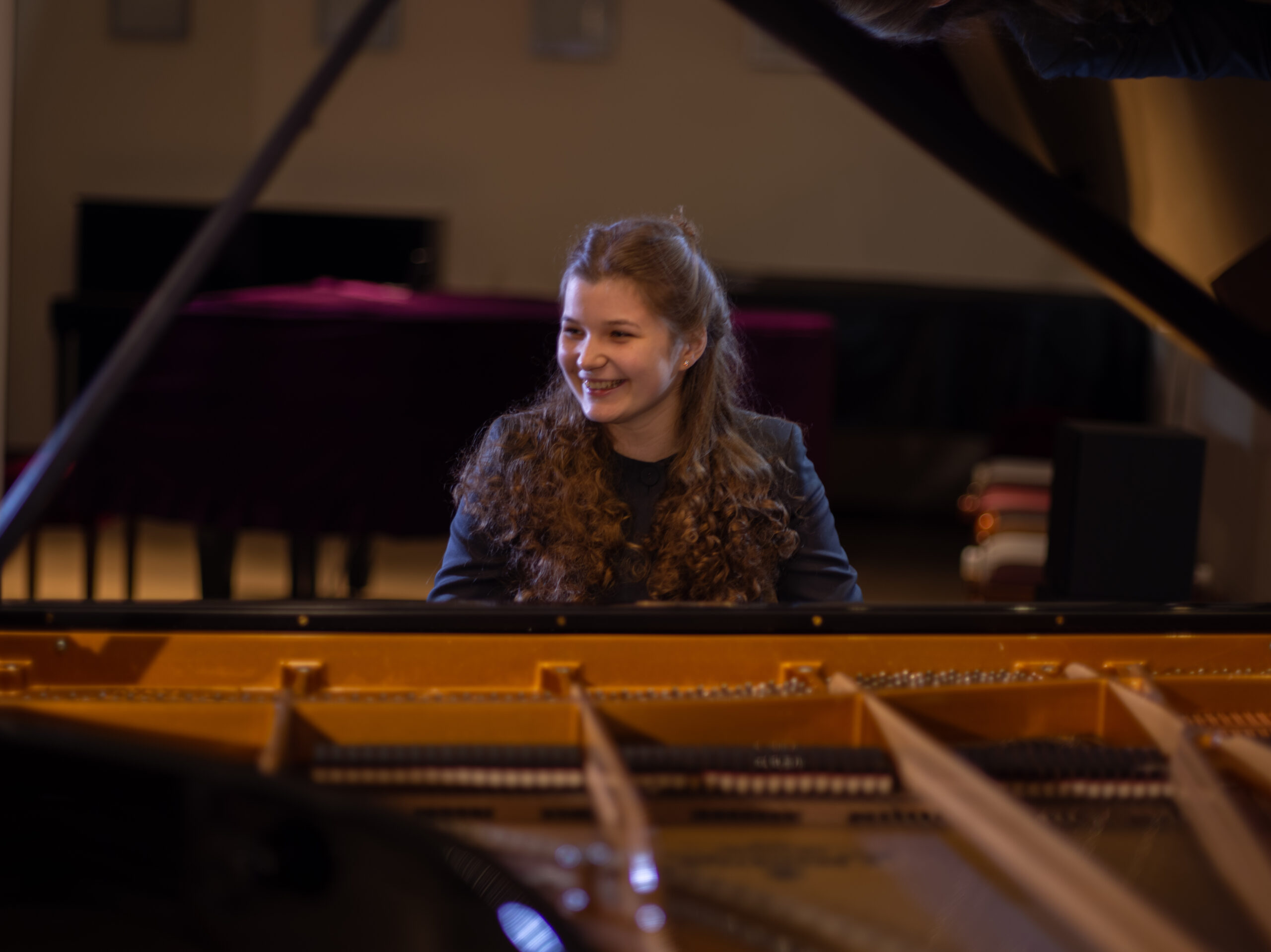
Khrystyna Mykhailichenko, a 16-year-old Ukrainian refugee, will perform in a program of Young Virtuosos as part of the 4th Frost Chopin Festival at the University of Miami’s Gusman Hall. (Photo courtesy of Frost School of Music)
In the 19th century, the work of composer and pianist, Fryderyck Chopin served as a symbol of liberation and revolution for his Polish homeland. Chopin became a symbol of 19th- and 20th-century freedom movements.
It is one reason why Kevin Kenner, founder and artistic director of the 4th Annual Frost Chopin Festival and Academy has dedicated a weeklong series of lectures, workshops, and world-class performances of Chopin’s life and work to the people of Ukraine.
“There are very few musicians and arts presenters who do not feel the shame that we all feel that our world cannot somehow live in peace,” says Kenner, who is also associate professor of piano at the University of Miami Frost School of Music. “Seeing what is currently going on in the world that is currently unthinkable… it would have been somehow negligent on my part as a musician to not respond in some way to what is going on in Ukraine.”
The festival is Sunday, June 19 to Sunday, June 26 at the University of Miami, Maurice Gusman Concert Hall, 1314 Miller Drive, Coral Gables. Donor support has made admission free to the 2022 festival’s lectures and performances, which the public can attend in person or virtually.
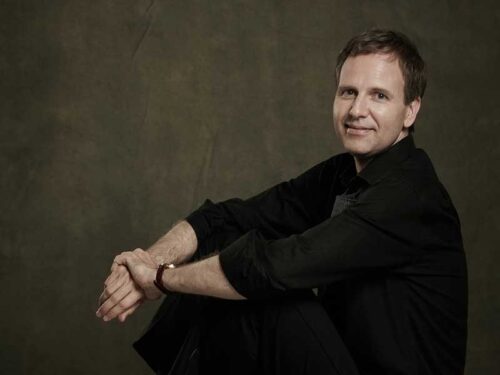
Kevin Kenner is founder and artistic director of the Frost Chopin Festival and Academy. (Photo courtesy of Frost School of Music)
Kenner explains that the decision to make the festival free follows the example set by the Chopin Foundation of the United States, which provides scholarships for the young musicians who attend the Frost Chopin Academy as well as free admission to the Foundation’s “Chopin For All” concerts presented throughout South Florida during the year.
Kenner views the current war in Eastern Europe as not only a political war but a cultural one that has gravely impacted Ukrainian artists and the country’s art institutions. Despite no admission charge, festival organizers are encouraging donations that will go to support Ukrainian arts and artists.
Guest pianist Garrick Ohlsson, a 1970 Gold medalist at the 8th International Chopin Competition held in Warsaw, and currently a faculty member of the San Francisco Conservatory of Music, says the festival’s support of the Ukrainian people is a natural tie-in.
“Chopin (was a) patriotic Pole, no question about it, but it’s true,” says Kenner. He cites the composer’s Étude Opus 10, No. 12, known as the Revolutionary Étude. “Even (German critic) Theodor Adorno said it would be impossible to listen to this masterpiece without knowing there is a patriotic, even revolutionary fervor, to the music.”
Ohlsson – whose book, “The Pianist: Conversations with Garrick Ohlsson” was just released through the Fryderyk Chopin Institute – will close out the festival on Sunday, June 26 with a mixed program featuring the works of Johannes Brahms and Chopin.
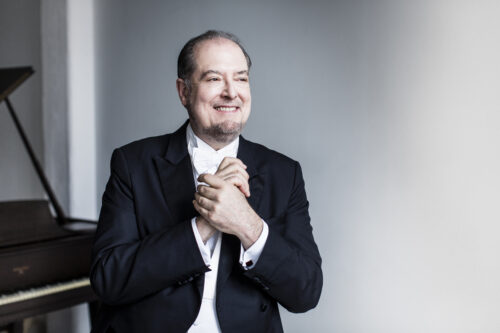
Pianist Garrick Ohlsson, a gold medalist at the 8th Chopin Competition in Warsaw in 1970, closes out the festival performances with a program of Chopin and Brahms. (Photo courtesy of Dario Acosta)
Asked about the connection between the two composers, Ohlsson explains: “Brahms was one of the greatest fans of Chopin. In the 19th century, when it was becoming clear in Europe, especially in the German-speaking world, that we now had a canonical body of great literature, this was also the time when the first complete editions were put together.”
The Germans and Austrians were compiling a “Gesamtausgabe,” according to Ohlsson, which is a complete work of all the great masters, and Brahms was one of the editors.
“Basically, a lot of people wanted it to be a ‘German boys only’ club,” he says. Brahms insisted that foreign masters were included and that meant Chopin, according to Ohlsson.
Ohlsson emphasizes that mastery of Chopin’s style is crucial to being a great pianist. While additionally, the qualities needed to be a good Chopin player are the same qualities needed to be a great interpreter of any classical music.
“Chopin is intrinsic to everybody who plays the piano because he is the Rosetta Stone who teaches you how,” says Ohlsson.
In addition to Ohlsson and Kenner, festival performances are by many of Chopin’s top interpreters including Ewa Poblocka, Dina Yoffe, and Ukrainian-born soprano Olga Pasichnyk. Performing in a program of the Academy’s “Young Virtuosos” is 16-year-old Ukrainian refugee Khrystyna Mykhailichenko.
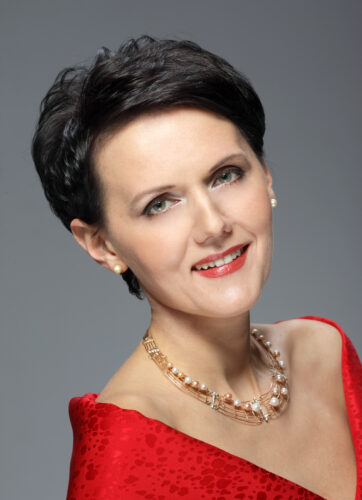
Soprano Olga Pasichnyk performs in “An Evening of Ukrainian and Polish Song” on Wednesday, June 22, as part of the 4th Frost Chopin Festival and Academy in University of Miami’s Gusman Hall. (Photo courtesy of Frost School of Music)
Exposure to master pianists and scholars of Chopin’s works has motivated student pianist Eric Guo to attend the Chopin Academy for the third time. The Academy offers pianists up to the age of 30 the opportunity to immerse themselves in all things Chopin.
“The first time (I attended) was in 2019. I felt that I benefitted from learning from all these masters of Chopin, to hear them, and this has made me want to return,” says Guo.
Kenner points out that the social atmosphere provided for the pianists who attend the Academy is another important element of its success.
“To have people together not as competitors but to work with each other as siblings, that’s an important thing for the students,” says Kenner.
WHAT: 4th Annual Frost Chopin Academy and Festival
WHERE: University of Miami, Maurice Gusman Concert Hall, 1314 Miller Drive, Coral Gables
WHEN: Concerts are 4 p.m., Sunday, June 19, and 7 p.m., Wednesday, June 22, Thursday, June 23, Friday, June 24, and Sunday, June 26. Workshops and lectures, also open to the public, are planned each day. Performances and some workshops will be featured live on Frost School of Music’s YouTube channel.















Recent Comments