Drink in Pink Martini’s multi-genre music mix in its 5th appearance at the Arsht
Written By Guillermo Perez February 6, 2023 at 2:40 PM
Thomas Lauderdale, at the piano, and lead singer China Forbes, in red dress at front, of Pink Martini coming to the Adrienne Arsht Centers’ Knight Concert Hall as part of its Sunshine Tour on Saturday, Feb. 11. (Photo courtesy of Chris Hornbecker).
For their musical concoctions, the talented mixologists behind Pink Martini keep to the most intoxicating melodies, just the right parts of glee and longing, and always an unfailing beat. Need a taste? Angle up to the Adrienne Arsht Center for the Performing Arts’ Knight Concert Hall, where America’s biggest little orchestra, with its soul in the symphony hall and its heart in a lounge, will perform on Saturday, Feb. 11.
Led by founder and mood-meister Thomas Lauderdale at the piano and spotlighting China Forbes on vocals, the group from Portland, Oregon has been crossing multiple genres like musicians without borders since 1994.
Whether serving up the classics or originals in jazz, pop and world sounds, Pink Martini has a wily way of reviving vintage tunes and burnishing newly minted songs for a pedigreed glow. Forbes and guest vocalists sing beyond its repertoire in English, but also in Spanish, French, and Italian, which Lauderdale points out was not that uncommon for American pop singers in the 1950s and 1960s. Add to that Japanese, Romanian and Turkish, and, if you’d like a ditty in Farsi or Croatian, why, they’ve got that, too.
Thomas Lauderdale and China Forbes of Pink Martini. (Photo courtesy of Chris Hornbecker)
In fact, their signature song, “Sympathique,” boasts lyrics en français. It was featured on the band’s first and same-named 1997 album, an equally happy home for Ravel’s “Bolero” and Cuban composer Ernesto Lecuona’s “Andalucía” alongside the band’s take on “Que Será Será (‘Whatever Will Be Will Be’)” and film-noir import “Amado Mío (‘My Beloved’).” The Forbes-Lauderdale “Sympathique” landed like an anthem in France, nominated for a national award and adopted by striking workers, its Gallic nonchalance announcing a hankering to resist work and forget the world while blowing smoke rings.
The group upholds Lauderdale’s notion that Pink Martini rolls on as if the United Nations had a house band. That’s true not only due to their polyglot songbook but also the universal equity they’ve upheld from the start. Their origin story entails a fight for civil rights in Portland when Lauderdale rustled up his first combo to entertain at progressive political events. That displayed spunk—not to mention sparkle—when he also recruited The Del Rio Triplets, senior sirens at the guitar, and slipped on a cocktail dress to glamour things up.
Liberté, Egalité, Fraternité, proclaim the French, and Pink Martini stands by that motto, their musical freedom putting the whole world on an equal footing of joy. It’s the mission—sustained by good old American enterprise—that drives their constant globetrotting and now brings them back to Miami for its Sunshine Tour. The group has made Miami a regular stop on its tours performing first at the Arsht in 2008 and now returning for its fifth appearance.
From Austin, Texas, Forbes reflected on being on the road so much, especially from the moment pandemic conditions eased. “It’s difficult for me now that I have a thirteen-year-old son,” she admits, missing mothering him and the comforts of their Portland home, a quirky nest where she plays her piano and composes. “But touring is the best way to share our work. People just don’t buy that many albums anymore. And this lets us bring the fans the musical intimacy we cherish.” Even at the larger venues the band likes to keep the groove cozy, welcoming audience participation and opening up for requests.
In his hometown of Portland, Oregon, Thomas Lauderdale founded the “little orchestra” Pink Martini in 1994. One year later, he called China Forbes, a Harvard classmate who was living in New York City, and asked her to join. (Photo courtesy of Pink Martini)
In her embrace of Miami, Forbes has always been game to deliver audience favorites, from the rip-roaring “Brazil” to “Hey Eugene,” its bounce drawing us in as if over a page in her diary. “I wouldn’t want not to do these,” says the singer-composer. “It would be weird to disrespect the songs and fans that way. I know when I attend a concert, that’s just how I feel.”
The current tour also includes material from recent and upcoming releases on the band’s Heinz label, including Forbes’ first solo album in fifteen years. “That’s scheduled for September—good timing since it has a very autumnal feel,” notes the artist.
Among her new works, “Full Circle” offers—as a listener was moved to tell Forbes after a concert—a balm to mend any broken spirit. And “Rise,” which has been taken up by suicide-prevention networks, is a touching memorial to the late Pink Martini percussionist Derek Rieth, who made sparks fly from assorted drums, helping to stamp the band with its distinctive Latin sounds.
Now keeping the music percolating with his own heat is Cuban-born Miguel Bernal, a percussionist nurtured in his island’s Afro rhythms. And Forbes affirms he can also make your heart ache crooning Lecuona’s “Yo te quiero siempre (‘I’ll Keep On Loving You’).” Let that be a clarion call to South Florida’s large and enthusiastic Latin music community to get ready for a rousing good time.
Bringing more Hispanic power, Mexican singer Edna Vázquez will accompany herself on the guitar. Her voice glides over notes with a viola’s plaintiveness or breaks out with a brassy roar in original songs—“Sola soy (‘Alone Am I’),” for instance, is a personal cry for authenticity—and the deftly reinterpreted standards she treasures.
Artist, composer, and singer-songwriter Edna Vazquez joined Pink Martini’s lineup and began touring with the group as a regular guest singer in 2017. (Photo courtesy of Pink Martini)
Among those is “Bésame mucho,” a passionate plea for a string of kisses, which is the title track on her 2019 EP. That also includes “Lo que pasó pasó (‘What’s Done Is Done’),” made famous by the wild woman of Cuban bolero, La Lupe. “Te esperaba (‘I Waited for You’),” an album due out in spring, uses time-honored Latin-music forms in her own creations.
In her teens Vázquez was sent by her mother to live in the United States, a move she then resented but now appreciates as a leap toward self-fulfillment. She carried deep within her a trove of Mexican music, the banda, norteño, and mariachi gems that have accompanied her throughout a career also open to rock, rhythm and blues, and protest songs.
What bound her to Lauderdale was a song made famous by Chavela Vargas, a rebellious icon of Mexican rancheras. “Piensa en mí (‘Think of Me’)” is a gut-wrenching tune Vázquez had covered and Vargas herself performed on Pink Martini’s 2009 album, “Splendor in the Grass” (also featuring the debut of NPR’s Ari Shapiro, who joins the band on their Miami gig). Having shared their musical tastes upon meeting eventually led Lauderdale to invite Vázquez to tour with Pink Martini in 2017 after he saw her with the all-women mariachis Flor de Toloache at the Latin Grammys.
“I’ve never felt as well-received as I have been since joining Pink Martini,” says Vázquez, grateful to raise her voice in the band’s full-throated toast to humanity. “My journey hasn’t been easy. It’s been especially tough to push back against the machismo in the industry. But I’ve grown with every setback. And now nothing deters me from my goal to inspire.”
WHAT: Pink Martini
WHEN: 8 p.m., Saturday, Feb. 11
WHERE: John S. and James L. Knight Concert Hall, Adrienne Arsht Center for the Performing Arts, 1300 Biscayne Blvd., Miami
GroundUp Festival on Miami Beach Serves Up Good Vibes, Great Music
Written By Helena Alonso Paisley January 29, 2023 at 4:07 PM
Multi-Grammy award winners Snarky Puppy, founders of GroundUp, perform all three nights of the festival over three days beginning Friday, Feb. 3 at the Miami Beach Bandshell and Faena Theater. (Photo courtesy of GroundUP Music)
Since the GroundUP Music Festival’s inception in 2017, musically minded travelers set their sights on North Beach area of Miami Beach which, for a few short days, feels a bit like Williamsburg, Brooklyn, but with better light and balmier weather.
The February festival is the creation of Michael League, Miami music promotor Paul Lehr, and the instrumental collective Snarky Puppy. Not content to simply make music themselves, as the band has done since their college days in North Texas, League and company founded something of a maker-space for established and up-and-coming musicians they admired—some from the United States, others from far beyond. The group now has a record label, GroundUP Music, and a roster of more than 30 bands and individual artists.
This year’s festival is Friday, Feb. 3 through Sunday, Feb. 5 at the Miami Beach Bandshell with late-night shows at the Faena Theater.
Silvana Estrada, the Latin Grammy’s Best New Artist winner for 2022, plays the Miami Beach Bandshell stage on Friday evening and an intimate, unplugged brunch on Saturday. (Photo courtesy of Jackie Ruso)
Diehard GroundUP acolytes travel to Miami from all corners of the globe to listen to music, learn from master musicians, be part of an afternoon a capella sing-along on the sand, and rub shoulders with performers in a much more relaxed and intimate atmosphere than any megafestival can offer. And the event’s setting —outside, next to the ocean, on Miami Beach, in February—is the secret sauce that makes the dish even more delicious, not just for out-of-towners, but for Miamians wanting to savor their city in a way only tourists often do.
Snarky Puppy leader Michael League is the mastermind behind the GroundUP lineup of extraordinary and eclectic musicians. (Photo courtesy of GroundUP Music)
League, the mastermind behind GroundUP, is like a musical mad scientist experimenting with different novel and boundary-pushing sonic concoctions. The common denominator of all of League’s ventures is the ace musicians he attracts. “He has a gentleness and an openness that has its own kind of magnetism,” singer Lizz Wright says. Virtually all the artists stick around for the entire weekend—sitting in with other bands, giving master classes, or just hearing each other perform. The late, legendary David Crosby, for example, one of the festival’s earliest and most ardent supporters, would do just that.
“While standing at the first set of the first GUMFest, I heard some dude next to me cheering like crazy between songs,” said John Westbay, a drummer and GroundUP habitué who hasn’t missed a festival. “When I looked next to me, it was the one and only David Crosby!”
Crosby was also one of the renowned teaching artists at the festival, offering songwriting workshops in 2017 and 2019. In 2020, the songwriting class was led by Michael McDonald of the Doobie Brothers.
Onstage, attendees will hear unlikely but delicious pairings like that of Brazilian harmonica virtuoso Grégoire Maret with jazz harpist Edmar Castañeda. Other performers include progressive jazz players like keyboardist Rachel Eckroth and her band, and the ultra-indie Australian singer Nai Palm.
The ethereal Silvana Estrada, Mexico’s great revelation of 2022, opens the festival on Friday. The Latin Grammy “Best New Artist” winner from rural Coatepec met League during an early attempt at becoming a jazz artist in New York City, when he hired her to sing backup vocals. After her stint in the States ended, she returned to Mexico to reassess her artistic options. League and other mentors in the United States like guitarist Charlie Hunter and drummer Antonio Sánchez were convinced of her talent as a lyricist and the uniqueness of her voice, and they had urged her to strike her own path. It took the pain of a broken heart, though, to inspire her to pen the soulful album “Marchita,” which put her firmly on the road to stardom.
Wright, performing Saturday, also had a childhood that was rooted in music. Her father was pastor and musical director at a little church in Hahirah, Ga.
“I was immediately put to work in my father’s church,” she says. “I was five.”
Wright layers that bedrock gospel foundation with jazz, soul—even folk. To hear her sing can feel like a religious experience, her lush and velvety vocals like a prayer.
“I sing what I know,” says Wright. “I sing my time in the mountains, the look on my grandmother’s face, what I’ve dreamed, the way I’ve lived.”
Singer Gisela Joao will bring the soulful sounds of Portuguese fado to the festival. Her lyrics put a contemporary spin on this traditional form while remaining true to fado’s emblematic vocal style and emotional intensity. She has a solo performance on Friday, and appears Saturday with Mirrors, a jazz group formed in Portugal in 2021 with Joao, League, Justin Stanton, Becca Stevens and Louis Cato (Cato recently replaced Jon Batiste as the new musical director on “Late Night with Stephen Colbert”).
Singer Magda Giannikou, leads audience members in “A Capella by the Sea,” a beloved staple of the GroundUP experience. (Photo courtesy of GroundUP Music)
GroundUP always has a rich offering of instrumental music, and this year’s edition will be a literal smorgasbord for guitar enthusiasts: genre-busting guitarist Isaiah Sharkey is this year’s musician-at-large, sitting in with different groups throughout the weekend. Friday’s lineup includes both jazz guitarist Kurt Rosenwinkel and Grammy-nominated folk singer/songwriter Madison Cunningham, a consummate player in her own right. Mark Lettieri, San Francisco’s neofunk gift to the guitar gods, will bring in the funk on his Saturday set.
Anchoring the festival, as always, are League’s own band of bros, the jazz and funkmasters Snarky Puppy. The four-time Grammy-winning group performs a closing set nightly on the Bandshell’s main stage. It’s part of their charm that The Fam, as they like to call themselves, still seem a bit mystified by their runaway success and the accolades that have come with it. League told Washington’s WTOP that the first two times the group won Grammys, “we brought the whole band on stage, like 20 people . . .We’re like the misfits of the Grammys, like the Bad News Bears”—if, that is, the Bad News Bears had started a successful record label, sold out London’s Royal Albert Hall, or had a tribe of avid groupies willing to crisscross continents to hear them play.
While none of the programming at GroundUP overlaps, even the most hardcore fans would be hard put to remain conscious for all the events the festival offers. For night owls, the show moves south on Collins to the Faena Theater, starting at midnight to 4 a.m. Friday and Saturday, and at 11 p.m. and wrapping up at 3 a.m. on Sunday. And early-ish risers with deep pockets can catch intimate brunch performances by Silvana Estrada on Saturday and Jeff Tweedy on Sunday.
Raised in the gospel tradition, jazz singer Lizz Wright brings her rich and powerful vocals to Saturday’s lineup. (Photo courtesy of Jesse Kitt)
In a new educational initiative, GroundUP is partnering this year with Miami’s Young Musicians Unite to give high school and college musicians the opportunity to attend a free Snarky Puppy master class and open rehearsal at the Adrienne Arsht Center on Thursday, Feb. 2 at 5 pm (students should preregister at the link on GroundUP Festival’s Instagram page.
“The workshop is a dream come true for many of our students,” says Young Musicians Unite CEO Sammy Gonzalez via email. “Our students and staff are huge fans of Snarky Puppy. Everyone is excited to meet Michael (League) and honored to have an opportunity to perform for him and even play a song together!”
WHAT: GroundUP Music Festival
WHERE: Miami Beach Bandshell, 7275 Collins Ave., Miami Beach, also Faena Theater, 3201 Collins Ave., Miami Beach
WHEN: Friday, Feb. 3, Saturday, Feb. 4 and Sunday, Feb. 5. Festival grounds open at 2:15 pm Friday and Saturday, 1:30 pm on Sunday. Music ends on the mainstage by 11 p.m. Friday and Saturday, 10 p.m. on Sunday.
2 Weeks at New World: Festival Explores Harlem Renaissance in Europe
Written By Vanessa Reyes January 29, 2023 at 2:36 PM
The Ambassador Chorale of Florida Memorial University performs at New World Symphony’s “I Dream a World” in 2022. This year’s festival is at the New World Center from Feb. 3 through Wednesday, Feb. 15. (Photo courtesy of Gregory Reed)
New World Symphony’s “I Dream a World: The Harlem Renaissance in Europe” takes its name from Langston Hughes’ 1941 poem. As Hughes writes in “I Dream a World,” “I dream a world where black or white, whatever race you be, will share the bounties of the earth.”
For festival organizers, music and art are the bounties and their power lies in connecting people of all races through a look back at the Harlem Renaissance in Europe.
The festival, running from Friday, Feb. 3 through Wednesday, Feb. 15 at the New World Center in Miami Beach, focuses on music, visual arts and poetry dating from the late 19th century through the 1930s.
“This music is going to reveal that in that spirit of perseverance (a century ago) there was also joy, and as long as you don’t allow people to take your joy, no matter what they do or say to you, that is a powerful message,” says Tammy Kernodle, musicologist and professor at Miami University in Ohio, who is curating the festival. “That is what this music exemplifies, that hope and joy.”
British musicologist and pianist Samantha Ege, performs in a piano-centric program “Transatlantic Conversations: Black Renaissance Pianism Across the Pond” at 7:30 p.m. on Wednesday, Feb. 8. (Photo by Jason Dodd, courtesy of New World Symphony)
Through art, the Harlem Renaissance spearheaded social progression. Artists moved to Europe to be able to be seen as artists.
“African American artists that fled to Paris were vast (and) just to think that a Black man from Philly moved to Paris in the 1880s so he could be free to be himself,” says Christopher Norwood, of Henry Ossawa Tanner, whose works are featured in an exhibition that is on display throughout the festival. “(Tanner) was a beacon for African-American artists in America and for those who later followed his lead in the next century through the Jazz age to sojourn to Paris where liberty and dignity were more available.”
Norwood is curator and founder of Hampton Art Lovers which operates the Historic Ward Rooming House gallery in Overtown. He curated the exhibition “Le Paris Noir: Henry Ossawa Tanner and Lois Mailou Jones.” Jones, a female African American artist also went to France to seek artistic freedom. The works from The Norwood Collection will be on display in the New World Center’s Atrium Lobby.
“Culture is a currency, “ says Norwood, “Our ability to understand each other advances community, business and humanity.”
Pianist Michelle Cann performs during New World Symphony’s 2022 “I Dream a World” festival. (Photo courtesy of Gregory Reed)
In its second year, the festival continues its focus on creating a deeper connection with South Florida’s community.
Kernodle who works as a preservationist and uncovers history through archival work, says she has been working with NWS to make the festival more inclusive.
“(NWS) wants to create a relationship with the larger Miami community, particularly with black and brown people,” says Kernodle. “This has become part of a larger DE&I (diversity, equity and inclusion) initiative; that says something about how they envision this festival.”
NWS has long strived to make inclusion an important part of its makeup.
“We search for talent everywhere and when you do that you begin to see an orchestra that becomes ever more inclusive (in) gender, ethnic background and geographic distribution,” says Howard Herring, President and CEO of New World Symphony. “Then came the murder of George Floyd and there was a new sense of urgency.”
Like George Floyd, other names are forever etched into history. There’s American bandleader James Reese Europe, who is credited with bringing ragtime and jazz to European audiences for the first time, and who was a member of the Harlem Hellfighters, the first all-Black infantry that fought in World War I.
On Tuesday, Feb. 7 at 7:30 p.m., Grammy award-winning saxophonist Branford Marsalis will be leading “The Sound Heard Around the World” tribute concert to American bandleader Reese Europe. Also, The Hellfighters’ journey is chronicled in the documentary “The Harlem Hellfighters Great War,” which will be shown for free in New World Center’s SoundScape Park on the giant WALLCAST® screen at 8 p.m. Wednesday, Feb. 15, as part of the festival.
Soprano Michelle Bradley performing in NWS’s 2022 “I Dream a World” festival. (Photo courtesy of Gregory Reed)
“I think people will be shocked to see these Black men fighting for democracy and not having freedom at home . . . being celebrated in France, being credited with being part of the allied victory, but coming back (to America) and being stripped of that and some of them being lynched,” says Kernodle. The Equal Justice Initiative, through its research found that thousands of Black veterans were assaulted, threatened, abused and lynched following military service. According to the Initiative, the veterans were seen as a threat to Jim Crow and racial subordination. “There are some bad and good things that are a part of our history, that’s why I love history, because it can be the pathway to deeper understanding,” says Kernodle.
Although heavy in topic at times, the festival is meant to be uplifting, motivating, and family friendly. On Sunday, Feb. 12 at 11:30 a.m., Chad Goodman, a New World Symphony conducting fellow, leads a program of jazz, blues and ragtime in “Concert for Kids: I Dream a World,” in New World’s Michael Tilson Thomas Performance Hall. The concert, according to organizers, is designed for children ages 4 to 9 years old.
“I am hoping (the festival) will build understanding of who we are (as Americans), but also facilitate specific conversations that need to happen in order for us to survive or navigate what are some very difficult and polarizing times,” says Kernodle.
WHAT: New World Symphony presents “I Dream a World: The Harlem Renaissance in Europe”
WHERE: New World Center, 500 17th St., Miami Beach
WHEN: Friday, Feb. 3 through Wednesday, Feb. 15
COST: $15, $20, $25, $60, $85, $95, depending on seats and performance. $100 festival passes available, $150 sold out.
Miami music legend Willy Chirino and HistoryMiami Museum look back on iconic five-decade career
Written By Fernando Gonzalez January 25, 2023 at 3:43 PM
Music icon Willy Chirino performs at an outdoor concert in Panama for Cuban detainees in 1994. Chirino’s five decades in music are at the center of an exhibition at HistoryMiami Museum through September. (Photo courtesy of Zarabanda Productions).
In the pop music business, a lifetime is measured in weeks and months. That’s how long it takes for trends to fade, styles to fall out of fashion, and stars to be made and discarded as the next one is ready to sell a product. A 50-year music career is unimaginable. But there always have been more than pop hits to Cuban-born singer, songwriter, and producer Willy Chirino. There is the refugee-kid-to-pop star story and his role in the development of the Miami Sound, a musical mirror to a city that was growing speaking in many languages and accents. And then there is Chirino’s bold human rights activism regarding Cuba – and the songs, of course, including some, such as “Nuestro día (Ya viene llegando)” (“Our Day is Coming”), that became anthems for many Cubans, both in Cuba and exile.
Willy Chirino doing what he loves best, performing in concert in Miami, circa 1981. (Photo courtesy of Zarabanda Productions)
It’s a story that will be celebrated at HistoryMiami Museum’s “Willy Chirino: 50 Years of Music,” which opens Friday, Jan. 27 and runs through Sunday, Sept. 10. On display will be memorabilia such as his Grammy award, Latin Grammy award, Billboard awards, clothing worn at significant events, and his first guitar after arriving in the United States. But also pieces such as the original handwritten lyrics to his hits, “Soy” (1974) and “Nuestro día” (1991), and a torn Cuban flag with his name on it, found on an empty raft by the Coast Guard in the Florida Straits in the early 1990s.
For Chirino, 75, the exhibit is a chance “for people to get a better idea of where I come from, who I am, and what I have done to survive 50 years in the music business which is not easy,” he says during an in-person interview. “To still be making music is awesome.” He just released a new album . . . “ ‘Sigo Pa’lante,’ which means ‘I Keep Going Forward,’ and that’s what it’s all about — (to) keep moving.” The album is his first studio recording of new music since “Pa’lante” in 2008.
Also, as part of this year of celebrations, Chirino is headlining a concert at the James L. Knight Center, 400 SE 2nd Ave., Miami, on Saturday, March 11. The event, which he notes will feature “a lot of big friends of mine,” will review his long career and highlight the new album.
Willy Chirino with his first band, The Whalers, Miami, 1964. (Photo courtesy of Zarabanda Productions)
Telling Chirino’s life and career was a natural fit for the museum’s mission, said Natalia Crujeiras, chief executive officer and executive director of HistoryMiami Museum.
“For 82 years, HistoryMiami has been the steward in collecting artifacts, objects, audio, oral history stories, everything that tells the story of Miami — and Willy Chirino’s story is a Miami story,” said Crujeiras. “It is, perhaps, the ultimate Miami story.”
Born Wilfredo Jose Chirino Rodriguez in Consolación del Sur, a small town in the Pinar del Río province, Cuba, he arrived in Miami in August 1961 as part of Operation Pedro Pan, an exodus of young people following the revolution in Cuba. He was 14 years old.
Like many who left the island nation then, Chirino thought he would return home in a matter of weeks.
“Oh yes, that was me when I left, which made the process a little bit less painful,” he says.
Willy Chirino, at front, on a bike in Consolación del Sur, Cuba, 1957. (Photos courtesy of Zarabanda Productions)
“When I said goodbye to my friends, I wasn’t very emotional because, in my mind, how could a declared communist government survive 90 miles away from the United States? So, I’ll be gone maybe three months, six months at the most, I’ll learn a little English and be back. Little did we know.”
There have been many hits and gold records since those days, but Cuba and the political situation never seem far from his mind. As he sees it, with success came other responsibilities, and Chirino embraces his role as an activist artist. He recalls writing “Nuestro día (Ya viene llegando)” (“Our Day is Coming”), “to help me heal myself. To have the world listen to your experiences . . . share your pain and who you are. It tends to be a process of self-healing.”
The song was too long for radio and positioned last in the album. But ‘Nuestro día’ touched a nerve inside Cuba, where his music was then banned, and among exiles. “That song is a mystery to me,” he says quietly, as if thinking out loud. “When I wrote it, I wasn’t expecting anything of it, and neither did the record company. It’s a song that talks about my own experiences and, in the end, has a message of hope to the Cuban people.” His latest album also has a protest anthem about the Cuban regime in “Que Se Vayan Ya” (“Get Out Now”).
A photo of Willy Chirino a year after he arrived in Florida. (Photo courtesy of Zarabanda Productions)
“I am Cuban, we have a very sad situation, and I have a megaphone,” he says. ” For 64 years, my country has been under the rule of a very oppressive government that nobody elected. People in Cuba are desperate. So it’s my responsibility as an artist, as a Cuban who knows the pain of my people, to be their voice because they have no voice. I have to speak about that.”
But Chirino also calls himself “a proud Miamian.” He grew up in Miami, and some experiences remain fresh in his memory. A serious Beatles fan – in 2011, he reimagined a dozen Beatles classics with a Latin accent for his album “My Beatles Heart” – Chirino still becomes animated as he recalls witnessing the band’s arrival in Miami in 1964. “My friends and I decided to go to the airport, and I remember moving without moving my feet,” he says, letting out a chuckle. “The crowd was lifting me as it moved. It was an unbelievable experience.” It is clearly a thrill for him recalling that, years later, he performed at the Napoleon Ballroom, at the recently demolished Deauville Hotel, in Miami Beach, on the same stage where The Beatles played for their second appearance on “The Ed Sullivan Show.”
He also grew up with Miami.
Along with fellow Cuban exile Carlos Oliva, he was instrumental in developing the Miami Sound, a novel blend of Cuban music, rock, pop, jazz, and R&B that spoke to the sounds and rhythms of a growing city.
“I loved Celia Cruz, Beny Moré, Conjunto Casino, bands that were very important in Cuba when I left. But when I got here, I was listening to The Beatles, The Rolling Stones, and The Beach Boys. I loved Motown. I had to put them together because I loved them all.”
A photo from 2008 as Willy Chirino and his wife, singer Lissette Alvarez, perform at the White House for President George W. Bush, is featured in the exhibition at HistoryMiami Museum. (Photo courtesy of Zarabanda Productions)
There was nothing calculated about it. To Oliva and Chirino, fusion came naturally, he says. “But in those times, fusions were not popular because record companies and radio stations . . . didn’t know what to do with them. They’d say, ‘it’s not salsa, it’s not bolero, it’s not a ballad, it’s not rock . . . so our music had no place to go. We had a tough time in the beginning.”
For Chirino, that story is just one of the many involving Cuban exiles shaping Miami as we now know it. “It’s a beautiful thing to know that Miami is Miami because of so many Cubans that came in that era,” he says. Those exiles had nothing, he underlines, but “they had the knowledge of how to be successful – and they started building Miami, and Miami has turned so big and so incredible from those early years of Cuban exile.”
He pauses to reflect on his career and the exhibit. “It’s been a roller-coaster experience. And after so many years and having seen everything that I’ve seen, I’m honored and happy to share it.”
WHAT: “Willy Chirino: 50 Years of Music”
WHERE: HistoryMiami Museum, 101 W. Flagler St., Miami.
WHEN: Friday, Jan. 27 through Sept. 10, 2023. 10 a.m. to 4 p.m. Wednesday, Thursday, Friday and Saturday, noon to 4 p.m., Sunday. Closed Monday and Tuesday.
COST: $10, $8 senior citizen, $5 children up to ages 12 years old. Children under six admitted free. Opening day, Friday, Jan. 27, is free admission to all visitors.
South Florida Symphony Started In Key West, 25 Years Later It Brings Music To 3 Counties
Written By Jesús Vega January 12, 2023 at 8:12 PM
The South Florida Symphony Orchestra performs the second series of its 25th-anniversary celebration beginning Tuesday, Jan. 24 at New World Center. (Photo courtesy of South Florida Symphony Orchestra)
The South Florida Symphony Orchestra (SFSO) continues the celebration of a quarter century of fruitful existence this year with a series of concerts that began in November and will last until April. There are five installments with world premieres, selections of operas, concertos for various instruments, and symphonies along with Bruckner’s moving “Te Deum.”
The second series for the XXV anniversary (Masterworks II) will be composed of Shostakovich’s “Ninth Symphony”; Gottsch’s “Ocklawaha” (world premiere), and a selection of opera arias by Verdi and Puccini with the soprano Catalina Cuervo and the tenor Adam Diegel. This is the first year that the symphony is performing its Miami concerts inside New World Center’s Michael Tilson Performance Hall. They kick off the second series on Tuesday, Jan. 24 there, then at The Parker in Fort Lauderdale on Wednesday, Jan 25, and at The Tennessee Williams Theatre at the College of the Florida Keys on Saturday, Jan. 28.
Sebrina María Alfonso, founder and Music Director of the South Florida Symphony Orchestra. (Photo by Steven Shires courtesy of the South Florida Symphony Orchestra)
SFSO was a dream come true in 1997 when Sebrina María Alfonso founded the Key West Symphony Orchestra with the support of family, friends, and civic leaders interested in making live symphonic music accessible to the community. A dedicated and intense work materialized when 48 musicians gathered at the Tennessee Williams Theatre to perform their first concert on Dec. 11, 1998. Since then, the group has become a cultural institution with a wide sphere of action covering Palm Beach, Miami-Dade, Broward, and Monroe counties.
Born and raised in Key West, SFSO’s music director and conductor had a great passion for music from an early age. She earned her bachelor’s and master’s degrees in music from Virginia Commonwealth University. Then pursued Ph.D. studies in Orchestral Conducting at the Peabody Institute at Johns Hopkins University.
“I have always had a passion for the New World Center. As we celebrate our twenty-fifth anniversary and our Miami audience continues to grow, performing in this purpose-built concert hall is a thrill and an honor,” says Alfonso. “Our first concert at NWC last November was a very emotional event for musicians, soloists, audience, staff, and me especially. We knew it would be a beautiful experience, and it was.”
Although she was educated at universities in other states and had the opportunity to have a successful career in the United States and abroad, Alfonso was faithful to her native Florida. “I always wanted to bring symphonic music to the community that I didn’t have in my childhood growing up in Key West,” she adds.
South Florida Symphony founder Sebrina María Alfonso says: “I was overlooked because there was only room for one female conductor, So, I started my orchestra.” (Photo by Steven Shires courtesy of the South Florida Symphony Orchestra)
The universe of orchestral conducting, like many other fields of culture and life in general, has historically been dominated by men. For Alfonso, it has always been a challenge to navigate those waters, regardless of her talent. “I was overlooked because there was only room for one female conductor,” she recalls. “So, I started my orchestra. The attitude is changing. Today, more women are leading orchestras worldwide.”
Another essential facet of Alfonso’s work is the implementation of musical education programs, which occupies as important a place as conducting the orchestra. “Since Day One, educational programs have been part of our mission,” she says. “SFSO is committed to giving the gift of music to children in all three counties (Broward, Miami-Dade, and Monroe),” she adds. “Our first concert at the Tennessee Williams Theater in 1998 was dedicated to the children of Monroe County Schools, whom we bus to the concert hall. Today, we have served one hundred thousand South Florida children.”
Alfonso digs deep into music history. “My approach to music implies a great knowledge of the time when it was created,” explains Alfonso, referring specifically to Shostakovich’s “Ninth Symphony,” which is on the upcoming program. “Shostakovich’s music has such a history that we must understand his world. He lived in terror of Stalin, but his works were those of a courageous man who revealed atrocities through his compositions.”
Sebrina María Alfonso performs with her orchestra in Miami-Dade, Broward and Monroe counties. (Photo by Steven Shires courtesy of the South Florida Symphony Orchestra)
Also on the program are opera arias from Verdi and Puccini, featuring soprano Catalina Cuervo and tenor Adam Diegel.
“We will also have the world premiere of our composer-in-residence John Gottsch’s ‘Ocklawaha,’ inspired by nature and native Florida.”
Celebrating 25 years of the SFSO is a great achievement for such a dedicated group. According to Jacqueline Lorber, SFSO president, and CEO. “We are thrilled to bring these masterpieces to our audience . . . and to perform these works at the renowned New World Center. And we look forward to kicking off our season at Key West’s iconic Tennessee Williams Theatre, where the orchestra was initially created.”
WHERE: New World Center, 500 17th St., Miami Beach; The Parker, 707 NE 8th St., Fort Lauderdale, Tennessee Williams Theatre, 5901 College Road, Key West.
COST: $15, $25, $40, $65, $80, $95 depending on seats and venue, student tickets available.
Seraphic Fire Performs Rarely Recorded Works In ‘Old|New’
Written By Sean Erwin January 10, 2023 at 9:54 PM
Emily Marvosh, Marques Ruff, Amanda Crider, Anicet Castel, and Rebecca Myers are part of the choral group “Seraphic Fire.” The group performs four shows beginning Thursday, Jan. 19 with guest conductor Jason Max Ferdinand. (Photo courtesy of Mary Beth Koeth)
Twice Grammy-nominated Miami-based professional choir, Seraphic Fire, celebrates the new year with performances of American choral gems in “Old|New.” Conducted by composer and guest conductor, Jason Max Ferdinand, “Old|New” includes works by rarely recorded performers like Betty Jackson King, Roland Carter and James Mulholland.
The choir performs four shows beginning Thursday, Jan. 19 in Naples then heads back to South Florida where three churches in Coral Gables, Miami Beach and Fort Lauderdale will be the settings for the music. On Friday, Jan. 20, the group performs at 8 p.m. at Church of the Little Flower in Coral Gables, then on Saturday, Jan. 21 at 7:30 p.m., it’s All Saints Episcopal Church in Fort Lauderdale. The final concert is a matinee on Sunday, Jan. 22 at 4 p.m. at All Souls Episcopal Church in Miami Beach.
Seraphic Fire Soprano Lauren Snouffer, Countertenor Reginald Mobley, and Violinists Isabelle Seula Lee and Edson Scheid. (Photo courtesy of Alex Markow)
Founded in 2002 by current artistic director, Patrick Dupre Quigley, the ensemble boasts a roster of top performers, teachers, and scholars as well as sixteen albums to date and collaborations with, among others, The Cleveland Orchestra, New World Symphony and pop star Shakira. The choir has an international reputation for dynamic, cutting-edge, and historically informed programming that encompasses both secular and sacred literature.
It was a meeting at a choral conference that both Ferdinand, now director of choral activities at the University of Maryland and previously at Oakwood University in Hunstville, Alabama, and Quigley were attending that led to the invitation for Ferdinand to guest conduct Seraphic Fire.
“I’ve known Patrick over the last few years, and we met in person in 2019 American Choral Directors Association. Many of us attend the same conferences and many of us have mutual friends,” Ferdinand says.
The program is conceived around American composer and conductor Aaron Copland’s “Old American Songs” – two song sets Copland published in 1950 and 1952 for voice and piano. The collections include well-known favorites like the spirituals “At the River” and “Simple Gifts.”
“We start in America and we end in America,” Ferdinand explains about the program. “I thought it would be pretty cool to begin with Copland doing this Americana music and to do music that was born and birthed here.”
Jason Max Ferdinand is guest conductor for Seraphic Fire’s “Old|New” program. (Photo courtesy of Gianna Snell)
An original program, which was to feature all Copland choral music, needed to be canceled by Seraphic Fire during the pandemic.
“It was a program that a number of our patrons were very sad to have missed, so we looked for a way to include the ‘Old American Songs’ on a future program,” says Quigley. “When we solidified Jason’s program, we asked him to use ‘Old American Songs’ as the basis for his program, which he has done expertly.”
However, for the January program, Ferdinand went further and added rarely heard pieces like Mulholland’s “Keramos and works by African-American composers like Hall Johnson’s “I Cannot Stay Here By Myself,” Moses Hogan’s, “My Soul’s Been Anchored in the Lord,” and Chicago-born King’s enchanting and airy, “Psalm 57.”
Ferdinand included works that reflect America’s history of slavery and racism, since keeping this history alive allows it to act as an inspiration to new composers, he says.
“The fact that it was born right here means (this music) has the footprint and all the reverberations that made this music,” explains Ferdinand. “The moment in time was not a pretty one but sometimes the most noble gifts come from what are not the most ideal circumstances.”
Ferdinand also included on the program “Hold Fast to Dreams” by 35-year-old, up-and-coming African-American conductor and composer, Joel Thompson.
Seraphic Fire Artistic Director Patrick Quigley, left, and Associate Conductor James Bass, right. (Photo courtesy of Mary Beth Koeth)
“Young composers of all ethnicities should have the inspiration to keep creating,” says Ferdinand.
Thompson’s 2015 choral work, “Seven Last Words of the Unarmed,” won the 2018 American Prize for Choral Composition with a libretto built around the seven last words spoken by unarmed Black men.
“(Thompson) gives a lot of thought to what he’s composing and the texts he’s using,” says Ferdinand. “None of it is writing for writing’s sake – he is really trying to reflect what’s happening in society.”
Though the January performance presents many rarely heard spirituals, as an African-American conductor and composer Ferdinand is careful when it comes to programming spiritual music.
“I don’t program spirituals sometimes so as not to be pigeon-holed,” he says. “I try to participate in all the genres of choral music I can. I spend a lot of time doing Brahms and Beethoven.”
Patrick Dupre Quigley founded Seraphic Fire in 2002. (Photo courtesy of Alex Markow)
In 2019, Ferdinand conducted the Oakwood Aeolians in a program for the American Choral Directors Association conference where he says he intentionally fashioned a program without a concert spiritual.
“We programmed Bach, (Pietro) Ferarrio, and more classical things,” said Ferdinand. “We might be Black but we can do all the other types of music. It is important for the younger people to see us doing all kinds of music.”
In fact, this 2019 performance proved the catalyst behind the current program. Quigley and Seraphic Fire just happened to be headlining that same ACDA conference.
“(Jason) was there leading the Oakwood University Aeolians as part of the conference in a program that included J.S. Bach’s ‘Singet dem Herrn.’ They blew everyone at the conference away with their performance,” says Quigley. “One of our members, Reginald Mobley, is an Oakwood alum, and introduced me. From then on, we looked for a way to get Jason to Miami to collaborate with Seraphic Fire, and the rest is history.”
WHAT: Seraphic Fire presents “Old|New” with guest conductor Jason Max Ferdinand
WHEN AND WHERE: 7 p.m., Thursday, Jan. 19 at Vanderbilt Presbyterian, 1225 Piper Boulevard, Naples; 8 p.m., Friday, Jan 20, Church of the Little Flower, 2711 Indian Mound Trail, Coral Gables; 7:30 p.m., Saturday, Jan. 21, All Saints Episcopal Church, 333 Tarpon Drive, Fort Lauderdale; 4 p.m., Sunday, Jan. 22, All Souls Episcopal Church, 4025 Pine Tree Drive, Miami Beach.
Jazz Fest: Heirs of Latin music’s great masters bring mambo night to Miami Beach
Written By Fernando Gonzalez December 28, 2022 at 4:54 PM
Tito Puente Jr. performs as part of the Big 3 Palladium Orchestra on Saturday, Jan. 7 at the South Beach Jazz Festival on Miami Beach. (Photo courtesy of MasterWing Creative Agency)
The 2023 South Beach Jazz Festival promises a compelling sampler of styles and talent, from established veterans to future stars. The annual event takes place for three days beginning Jan. 5 through Jan. 8 in several Miami Beach locations and will showcase artists such as pianist Monty Alexander, percussionist Sammy Figueroa, and vocalist Wendy Pedersen.
But a particularly intriguing highlight is the Big 3 Palladium Orchestra conjuring the sound of the legendary Palladium Ballroom in New York City. Led by three musicians with famous fathers and artists in their own right, Mario Grillo, the son of the great sonero Francisco “Machito” Grillo, Tito Puente Jr., and Tito Rodriguez Jr., perform Mambo Night in Miami Beach at 8 p.m. Saturday, Jan. 7 at the Miami Beach Bandshell (7275 Collins Ave., Miami Beach).
Timbalero, arranger, composer, producer and bandleader, Tito Rodriguez Jr. joins the Big 3 Palladium Orchestra for the South Beach Jazz Festival and Mambo Night in Miami Beach. (Photo courtesy of the artist)
No place impacted the development and popularity of Latin music in the United States more than the Palladium Ballroom, the home of the mambo. Located at the northeast corner of Broadway and 53rd Street, it started as a dance studio in 1946, and the following year, it added a live show on Sundays. The response was such that soon after, the Palladium was hosting live Latin music Wednesday, Friday, Saturday, and Sunday nights.
As the rumba craze took over the country in 1948 and through the 1950s, the undisputed kings of the Palladium – and mambo, cha-cha-cha, and the world of Latin music bubbling up to the surface in American culture – were Machito and his Afro-Cubans, the Tito Puente Orchestra and Tito Rodriguez.
They were The Big 3 and not only set the high bar by which Latin bands have been judged since, but their innovations changed the sound and accents of American music.
“Everything we play is from the original book,” says Grillo, percussionist and bandleader. “Keep in mind that Machito recorded nearly 100 albums, and that’s a thousand arrangements. Tito Puente recorded 100 albums, and that’s another thousand arrangements. Unfortunately, Tito Rodriguez (who died of leukemia in 1973 at the age of 50) only got to record maybe 50 albums, but that’s another 500 tunes. So, we have a choice of 2,500 pieces to play. We could start playing today, and we wouldn’t finish until next year,” says Grillo breaking into a laugh.
Mario Grillo is the son of Francisco “Machito” Jr. He’s part of the Big 3 Palladium Orchestra performing at the South Bech Jazz Festival. (Photo courtesy of Toca Percussion)
The 90-minute program might include classics such as “Mambo Inn,” “Babarabatiri,” “Mama Guela,” “Chévere,” “El Cayuco,” “Complicación,” and, of course, “Oye Como Va.”
The original bands developed distinct sounds and had faithful followings, and while the competition between the bandleaders could, at times, get intense, their friendship prevailed.
“According to my father, it was a friendly rivalry,” says bandleader and percussionist Tito Puente Jr. ” But it really helped bring people to the Palladium. He loved Tito Rodriguez. And Tito Rodriguez was a very, very good timbal player. And Machito was, of course, Tito Puente’s mentor and brought Dad to the front of the orchestra to play the timbales. He was highly regarded as one of the pioneers and leaders of the Afro-Cuban music movement.”
Grillo recalls that Puente “came into Machito’s band when he was still in high school. (Machito’s musical director) Mario Bauzá recruited him. The association between the three of them (Puente, Rodriguez, and Machito) was longstanding. Yes, they were competitors, but they were friends, too, which made it unique.”
Bandleader and percussionist Rodriguez concurs. He notes that his father was closer to Machito and was using Machito’s orchestra to accompany him before he passed away.
“You got to give credit to Machito and Mario Bauzá because they were the ones that put the American jazz horn lines to Afro-Cuban rhythm. They were the innovators, and I would say that Tito Puente and my father improved on it a bit and put a different sound to it. That’s why the three big bands sound differently. It really worked out,” says Rodriguez.
Tito Puente Jr. follows in his father’s footsteps. (Photo courtesy of the artist)
The three bandleaders, who grew up on the sound of their fathers’ bands and lived the excitement the bands created, emphasize the role of the orchestras as the foundation of so much of the Latin music heard since beginning with the salsa explosion in the 1970s.
“What’s amazing is that some of these arrangements are 50, 60 years old, and they don’t sound dated,” notes Rodriguez. “Now, that’s a pretty amazing thing to pull off, isn’t it?
The festival opens on Thursday, Jan. 5 with legendary pianist Monty Alexander with Luke Sellick, bass, and Jason Brown, drums. 9 p.m. Faena Theater (3201 Collins Ave.), 9 p.m. Cost: $60, $75, $90, $95 and $100.
Friday, Jan. 6, Society Jazz Night with South Florida Jazz Orchestra featuring special guest Nicole Henry. The Bass ( 2100 Collins Ave.), 8 p.m. Cost: $75 plus $4.81 fee.
Saturday, Jan. 7 is the Big 3 Palladium Orchestra, Miami Beach Bandshell (7275 Collins Ave.)
Sunday, Jan. 8, Jazz Hits the Road, Power Access Main Stage (1100 Lincoln Road). Events are free, but reservations are suggested.
New World Symphony Embraces Every Aspect Of ‘Spanish Dances’
Written By Helena Alonso Paisley December 7, 2022 at 2:15 PM
Esperanza Fernández has sung “El amor brujo” with orchestras across the globe and joins the New World Symphony for concerts this weekend performing Spanish composer Manuel de Falla’s work. (Photo courtesy of the artist)
Falla, flamenco and a fiery soprano make for a triple treat of a concert. Mexican conductor Carlos Miguel Prieto, who first led the New World Symphony as a guest conductor in 2019, will be leading the ensemble in “Spanish Dances” at New World Center on Friday, Dec. 9 and Saturday, Dec. 10.
On the bill are flamenco diva Esperanza Fernández, Colombian American opera singer Catalina Cuervo and, of course, the Spanish dances of the title, performed by the Isaac Tovar Compañía Flamenca. The program will include Manuel de Falla’s “El amor brujo,” “El sombrero de tres picos” and selections from “La vida breve.”
At Prieto’s New World debut three years ago, the conductor was lauded for his easy rapport with the musicians, and the energy and brio he coaxed from the ensemble.
Best known both as a champion of Latin American and new music from living composers, Prieto is also very much at home with young orchestras. In addition to international appearances with renowned groups such as the London Philharmonic or the Chicago Symphony, he has also worked extensively with Washington’s Youth Orchestra of the Americas, as well as with England’s National Youth Orchestra.
Principal dancer Isaac Tovar was also in his teens when he became a professional artist, and his very first contract in 2004 was in a performance of Falla’s work in which Esperanza Fernández, coincidentally, was the singer. This is the first time the two have performed together since then.
Spanish dancer Isaac Tovar was a soloist with the Ballet Nacional de España and performed with companies like the Ballet Flamenco de Andalucía before founding the Compañía Flamenca Isaac Tovar in 2018. (Photo courtesy of Félix Vázquez)
Tovar adheres faithfully to the sacred commandments of Spain’s best male dancers: Thou shalt be fleet of foot and elegant of line; thou shalt spin like a top and stop on a dime. Oh, and you must be able to accomplish all of these things while playing a musical instrument, the castanets (which audiences will hear from the hands of a master in these performances). A soloist for years with the Ballet Nacional de España, Tovar’s technical virtuosity encompasses the many different styles of Spanish dance that company requires of its performers.
“Spanish dance is like a tree,” says Tovar, “with flamenco as only one of its branches. It’s varied–it’s flamenco, it’s stylized dance, escuela bolero, it’s folklore.”
“El sombrero de tres picos,” in the second half of the program, will showcase many of the different dance and music styles.
Manuel de Falla, one of the great Spanish composers of the 20th century, was born in the southern port city of Cádiz. The warmth and passion of the Andalusian spirit infuses his music, as does an affinity for flamenco that was only deepened through his friendship with poet, playwright—and pianist—Federico García Lorca. Both composer and writer loved cante jondo, flamenco’s “deep song,” even organizing a contest in 1922 at the Alhambra to find the best, most “pure” flamenco singers of their time period.
Roma music like the csardas of Hungary or the flamenco of Andalucía has long held an outsized impact on the Western classical music canon. Composers from Beethoven to Brahms to Bartok have been inspired by Roma melodies and rhythms, and Spanish composers have certainly also felt this pull. “El amor brujo” is not only steeped in the sounds of Roma singing, but also in the romanticized image of Roma people that Falla—and other artists like Isaac Albéniz, Lorca, and Pablo Picasso, to name a few—were so enamored of.
Guest conductor Carlos Miguel Prieto makes his second appearance leading the New World Symphony in a program featuring the music of Spanish composer Manuel de Falla. (Photo courtesy of Benjamin Ealovega)
Falla wrote “El amor brujo” in 1915 for the famed Sevillian singer Pastora Imperio; it is fitting, then, that another legendary singer from Seville, Esperanza Fernández, should be performing this piece with the New World Symphony.
Born into a Roma family in Seville’s Triana neighborhood, Fernández’s life was always centered around the arts: her father, Curro Fernández, was a famous flamenco singer, and her mother, Pepa Vargas, a dancer. The daughter originally opted for dance, but fate had other plans: Fernández was only a teenager when the great choreographer and dancer Mario Maya asked her father to allow her to go to Madrid to sing for his company in a new Lorca-inspired production,“El Amargo.” With her father’s blessing, she joined Maya’s company, and so the die was cast.
Faithful to her roots but always open to new ideas and influences, Fernández is one of the few artists in her genre who has been able to bridge the gap between flamenco and the classical concert stage.
“I have been performing ‘El amor brujo’ since 1994 with orchestras all over the world,” she says in a telephone interview. The first time she sang the piece, she had to completely memorize the role with the patient assistance of her conductor, who saw in the young singer a great Candela.
“I don’t know how to read music,” she explains, “but it’s true that flamenco artists have a real talent for capturing any type of music by ear and then being able to recreate it.”
The program’s second half shifts focus from flamenco to the more varied styles of Spanish music and dance.
“There are very technically demanding Spanish dance sections, others with more of a flamenco style, then in the last section we dance the jota,” says Tovar about the joyous, athletic folkloric dance of the northern region of Aragón. The company includes Irene Lorenzo, Natalia Novela and Laura Peralta, and the dancers will be wearing costumes sewn from the designs Pablo Picasso created in 1919 for Sergei Diaghilev’s Ballet Russe de Monte Carlo.
Colombian American soprano Catalina Cuervo’s “year of Manuel de Falla,” 2017, saw her singing the composer’s work with four different orchestras throughout the U.S. This performance marks her New World Symphony debut. (Photo courtesy of the artist)
“El sombrero de tres picos” will be sung by Cuervo. Nicknamed “The Fiery Soprano,” Cuervo is something of a Falla expert herself, having performed a number of the works included in this program with noted symphonies and opera companies throughout the Americas. Cuervo, who was born in Colombia but is based in Miami, is well known to South Florida audiences; among her most important roles was her portrayal of Frida Kahlo in the Florida Grand Opera’s “Frida” and that of María in the FGO production of “Maria de Buenos Aires,” based on the music of Astor Piazzola. This is Cuervo’s New World Symphony debut.
Performing with artists like Cuervo, Fernández, Prieto, “and of course, the orchestra itself,” say Tovar, is “a luxury.” He hopes that in the future more symphonies will open themselves to this type of collaboration.
“I think there should be more frequent opportunities to do projects like this one, where dance is incorporated with orchestra performances, especially Spanish dance,” he says. “Falla’s music is a jewel, and dancing to it is so much fun.”
WHAT: New World Symphony with guest conductor Carlos Miguel Prieto, flamenco singer Esperanza Fernández, soprano Catalina Cuervo and Isaac Tovar Compañía Flamenca in “Spanish Dances”
WHERE: New World Center, Michael Tilson Thomas Performance Hall, 500 17th St., Miami Beach FL 33139 (Saturday’s WALLCAST® takes place in the park adjacent to the Center)
WHEN: 7:30 p.m. Friday and Saturday, Dec. 9 and 10
COST: $38 – $130 Note: WALLCAST® concerts are free, no tickets required.
For Nestor Torres, upcoming ‘Live in the Park’ is love letter to Dominican Republic
Written By Jesús Vega November 21, 2022 at 2:28 PM
Néstor Torres will perform his favorites plus new works from “Dominican Suite” in a concert Saturday, Nov. 26 at the Westchester Cultural Arts Center. (Photo courtesy of MagicalPhotos/Mitchell Zachs)
Néstor Torres, flutist, composer, Latin Grammy winner, and Grammy nominee, is an artist loved and appreciated by the Miami public that watched him grow up. So, the announcement of his next concert, which will take place on Saturday, Nov. 26, at 8 p.m. at the Westchester Cultural Arts Center, is welcome news.
“This concert has a deep meaning for me because I owe my career to the public from South Florida, but especially to Miami,” says Torres. “When I moved here, first with Hansel and Raúl, and then dabbling in my career as a soloist on Calle 8, a very affectionate audience supported us. It’s exhilarating, especially knowing there is a great expectation, and many of the public are responding because they want to see us. So, this is a very special presentation.”
“I owe my career to the public from South Florida, but especially to Miami,” says Néstor Torres. (Photo courtesy of Paul Richardson/ALG Entertainment)
The concert of Torres and his ensemble will take place within the framework of the autumn season from the musical series Live in the Park! (a collaboration between the Roxy Theater and Broadway Factor, a theatrical production company based in Miami). There will be the classics along with notable selections from “Dominican Suite,” an album dedicated to the music and culture of the Dominican Republic, which premiered in October.
“Dominican Suite” is conceived for flute and “big band” by Corey Allen, a producer and arranger. Allen has worked with prestigious singers and groups, such as The Manhattan Transfer, Lou Rawls, and Chuck Mangione. But this is the first musical project of the veteran producer with Torres and could be defined as a love letter to the town, landscape, and musical culture of the Dominican Republic, materialized in genres such as merengue, bolero, bachata, salve, and mangulina.
“Dominican Suite” was released in October. Torres says it is a love letter for Dominicana. (Courtesy of Nine-PM Records)
“The idea of collaborating with Corey goes back about five years when we were in Santo Domingo, Dominican Republic, at the International Jazz Festival Restoration,” remembers Torres. “There, he told me his concern that the Dominican public was not well receiving his style. So I suggested that he keep his style faithful to the essence of his sound. Adding that he could apply it to songs in Latin American repertoire to give the audience a sense of familiarity.”
“He followed my suggestion, it worked for him, and it was very efficient, very effective,” says Torres.
“From there, he says, Allen began to explore possibilities and develop this idea of making a work, a jazz suite for ‘big band’ and flute with Dominican rhythms. The project evolved, and he invited the Dominican artists Maridalia Hernández and Pavel Núñez, among others.
“In addition, he makes a special version of the song ‘Si tú no bailas conmigo’ by Juan Luis Guerra, his friend and classmate at Berklee College of Music. That’s how this musical gem came to fruition. It gives me great satisfaction to have been like a trigger for his muse because ‘Dominican Suite’ is an extraordinary production”.
The making of an album whose central piece is a suite made up for flute and “big band” by four different themes, also supported by another six, is,”a challenge, an achievement, and a possibility,” according to Torres.
“The production was extremely relevant to me. First, because the compositions and Corey’s arrangements are difficult, technically demanding, and it’s an idiom of traditional jazz, specifically the bebop style,” explains Torres. “The other aspect of the challenge was that I am regularly a spontaneous artist, and I improvise and do the phrasing my way.”
Néstor Torres and his ensemble’s performance Saturday, Nov. 26, will take place within the framework of the musical series Live in the Park! (Photo courtesy of ALG Entertainment)
Torres says that Corey was precise in what he wanted. “It was a challenge and an opportunity to give in and put myself in the hands of someone else’s product to serve his vision. And that is the achievement of the project. It was not easy, but I managed to expand my vocabulary. It was very emotional and intense in a way that I had never experienced before.”
The album and the presentation at Westchester Cultural Arts Center constitute a show of love for the Dominican people and their traditions, he says.
“The message I want to give the Dominican public is that this project is a love letter for Dominicana, its people, culture, and music. This process made me rediscover something. Although my earliest influences musically were those of my father and long before those of the Cuban charanga (I always say that Cuban music runs through my musical veins). Still, the first memory of my childhood goes back to when my uncles arrived with instruments like tamboras and güiras from the Market Square of Santo Domingo. Therefore, Dominican music and its people have always been very present in me. To them, I dedicate this music that unites us in time,” he says.
The Live in the Park! series, dedicated to the memory of George Cabrera, a Broadway Factor producer and contributor to the Westchester Center and the Roxy Theatre, continues with three more concerts: Tito Puente Jr. (December 3); Albita (December 17), and Marlow Orchestra Rosado and DJ El Russo (December 31).
WHAT: Nestor Torres
WHERE: Westchester Cultural Arts Center, 7930 SW 40 St., Miami
‘Art With Me’ promises paradise in 2-day festival on Virginia Key
Written By Douglas Markowitz November 21, 2022 at 1:18 PM
A performer in Art With Me 2021. The 2-day festival returns Nov. 26 and 27 to Virginia Key. (Photo courtesy of Stuart Tracte)
When Tulum, Mexico-based event promoter “Art With Me” selected the weekend between Thanksgiving and Miami Art Week for their flagship festival on Virginia Key, they came face to face with the challenges of launching into Miami’s crowded market at the most oversaturated time of year.
“People told us it was a really hard weekend,” says Matt Caines, a managing partner for the festival who also handles talent booking. According to him, the festival decided on Thanksgiving weekend to avoid conflicting directly with either Art Week the following weekend or Miami Music Week in March, to say nothing of the low season. They fielded offers to top acts, only to have them pull out because of the holiday.
“The challenge with the date is that it’s out of touring season,” Caines says. “At a certain point, you’ve got to take what you can get.”
Electronic and live performers at Art With Me’s first edition last November 2021. (Photo courtesy of Lito Vidaurre)
Still, the fact that the festival is even holding a second edition can be seen as proof that they’ve risen to the occasion. It helps that, rather than targeting the Art Week fly-ins or the “all-night rave” crowd, they’re making an effort to pull in a wide-ranging, family-friendly audience.
The music lineup in “Art With Me” is replete with both big international talent and local favorites from across the genre spectrum. Caines, who will himself play a DJ set under his own name, says he prioritized booking acts with a “sophisticated, feel-good, timeless sound.” Top-line DJs such as Jaime xx, SG Lewis, Moderat and Bedouin will play alongside singer-songwriters like Vagabon as well as local-origin bands Haute Tension and Magdalena Bay. Pretty good for “taking what you can get.”
And music is just one facet of the festival. “Art With Me” boasts six “core pillars” that go beyond music and arts into lifestyle, wellness and tech. “Dance With Me” is the musical component. “Breathe With Me” is a full slate of wellness programs featuring yoga, sound healing, meditation and similar activities. There’s “Eat With Me,” the food and drink program; “Care With Me,” the festival’s nonprofit foundation; and “Play With Me,” the children’s activity section.
Sublime with Rome performing at the Kiss n Fly stage at Art With Me with sculpture by Michael Benisty. (Photo courtesy of Peter Ruprecht)
Then there’s the art. The festival promises plenty of incredible interactions with immersive artworks, large-scale installations, an NFT gallery, live muralists and even art classes. Last year pulled in legendary local figures like Mira Lehr. This year, works on display will include “Adelita,” Chris Carnabuci’s massive sculpture of a female figure breaking free of chains that was premiered this year at Burning Man. Berlin-based Argentinian artist Marina Zumi will present a nighttime light installation. Other participants include Daniel Jonathan Popper and Miami’s own Moksha Arts Collective. Caines sees Art With Me as an opportunity to promote artists who might not get a look-in at Art Basel or its satellite fairs.
Beyond these disciplines, there’s also the natural environment of Historic Virginia Key Beach Park, which Caines considers an essential facet of the festival experience. “The park is a pleasure to work with,” he says. “We love being in nature, that’s a component of Art With Me.”
Other festivals have also taken advantage of the island’s idyllic oceanside setting. The all-night dance music party Rakastella has taken place at Virginia Key every Art Week since 2017. Ultra Music Festival also held its chaotic 2019 edition there after being temporarily ousted from Bayfront Park.
Despite its popularity among event planners and the public, the park, a local favorite that was a segregated, black-only beach during the Jim Crow era, has faced threats from the city government as of late. On Sept. 13, the City of Miami Commission voted to take control of the park from the majority-black Virginia Key Beach Park Trust. The move came after protests over embattled District 3 Commissioner Joe Carollo’s proposal to turn the public beach into a holding zone for the city’s homeless ended with the commission voting to terminate Esther Alonso’s lease on the Virginia Key Outdoor Center.
Cole Knight at the Palmetto Stage at Art With Me 2021. (Photo courtesy of offbrandproject)
“Art With Me” may be a chance to transcend these concerns, at least for a weekend. Caines emphasizes it as an event for everyone and a chance for the community to connect and enjoy art, nature and much more in a setting that’s as far as possible from the white tents and gallery walls on South Beach.
“It was a challenge to move into the U.S. and start a new festival, and this year starting in Year Two we’ve gained a lot of momentum and a lot of growth,” he says. “We’re going to deliver an amazing experience, and we’re just going to keep growing and gaining opportunities to achieve more over the next couple of years.”
WHAT: Art With Me Festival 2022
WHEN: Doors open at 1 p.m., close at 3 a.m., Saturday and Sunday, Nov. 26 and 27
WHERE: Historic Virginia Key Beach Park, 4020 Virginia Beach Drive, Miami
COST: General admission is $169 for two days; $99 for one day and $75 before 3 p.m.
Florida Grand Opera opener moves 18th-century Italy to 20th-century Miami Beach
Written By Michelle F. Solomon November 8, 2022 at 12:08 PM
The cast of Florida Grand Opera’s “El Matrimonio Secreto” rehearses a scene. Standing is Phillip Lopez as Geronimo. Seated, from left, are Catalina Cuervo as Elisetta, Michael Pandolfo as Count Robinson, Vanessa Becerra as Carolina, and Erin Alford as Fidalma. (Photo courtesy of Eric Joannes)
Florida Grand Opera is putting a 20th-century spin on an 18th-century opera and firmly planting it in Miami circa the 1980s complete with the Italian text translated into Spanish.
Successful entrepreneur and father, Geronimo is at the center of “El Matrimonio Secreto” (“The Secret Marriage”), where he wants to marry off his two daughters, especially his oldest to a wealthy Count. Complications abound, of course, with mistaken identities and plot twists in the quintessential opera buffa.
Stage Director Elena Araoz, center, rehearses the cast of Florida Grand Opera’s “El Matrimonio Secreto,” from left, Erin Alford (Fidalma), Phillip Lopez (Geronimo), Catalina Cuervo (Elisetta), Vanessa Becerra (Carolina), and Michael Pandolfo (Count Robinson). (Photo courtesy of Eric Johannes)
Composer Domenico Cimarosa’s two-act opera could play just fine in its Italian original, but Florida Grand Opera has taken a different tact. As part of its Made for Miami series, the setting is now 1980s Miami Beach and Geronimo is the proprietor of Hotel Paraiso, an Art Deco hotel. He’s a Cuban businessman running the inn with the help of his daughters Elisetta and Carolina.
Susan T. Danis, general director and CEO of FGO, says she had been floating the idea of presenting the opera for quite some time, assured that her audiences would enjoy the familiar sound of Cimarosa’s composition despite him not being a household name.
“(Cimarosa) was writing around the time of Mozart so stylistically the music will sound familiar,” she says.
Making it even more appealing to her audiences dawned on Danis while she was a patron at a hair salon in the Calle Ocho neighborhood of Miami, where a large Cuban population resides.
“I was in the salon getting my hair done,” Danis recalls. “And there was a bridal party, a group of Cuban-American women, getting ready for a wedding,” she says. Watching the drama unfold in front of her, she says that the bride began “melting down.” She saw the rumblings of sibling rivalry and jealousy emerging. “One of her friends in the wedding party had a bigger diamond ring than she had. She was taking note that maybe some of the bridesmaids and her sisters were more attractive than she was on her big day.”
Then the idea struck. “There were so many of the same elements in ‘Matrimonio.’ I thought, ‘What if I moved this opera to Miami?’ ” And what if the Italian was translated to Spanish?
She had another goal. “I wanted to tell the story from a female perspective because the original is so patriarchal.”
Geronimo (Phillip Lopez) introduces Count Robinson (Michael Pandolfo) to his eldest daughter, Elisetta (Catalina Cuervo) in a rehearsal shot from Florida Grand Opera’s “El Matrimonio Secreto.” (Photo courtesy of Eric Johannes)
She signed on Crystal Manich, herself a Latina, a Puerto Rican opera director with tons of artistic excellence under her belt and experience directing everywhere from Boston to Brazil.
Former FGO music staff, conductor, and composer Darwin Aquino, and his wife, Italian mezzo-soprano Benedetta Orsi were enlisted as the translators. Although the characters are Cuban, the translation is “Caribbean Spanish,” according to Aquino with “Espanenglish” terms tossed in. There will be supertitles in English and in Spanish, which are the norm for FGO productions.
Danis calls the production “a love story to Miami.” She says the plot is reminiscent of the recent remake of the American romantic comedy “Father of the Bride,” which was focused on two Latino cultures and starred Andy Garcia and Miami’s own Gloria Estefan.
“Our sense of funny has changed over the centuries, let alone just a couple of decades. So when I think about (our version of ‘Matrimonio’) I think about the sitcoms of 20 years ago,” Danis says.
Florida Grand Opera cast of “El Matrimonio Secreto” are, from left, Michael Pandolfo (Count Robinson), Ashley Shalna (Elisetta, Sunday matinee), Phillip Lopez (Geronimo), Vanessa Becerra (Catalina), Joseph McBrayer (Paolino), Erin Alford (Fidalma), Page Michels (Carolina, Sunday matinee). (Photo courtesy of Eric Joannes)
While the setting of 1980s Miami Beach is colorful and comic — think pastel suits and vintage brick cellphones, which were a major status symbol of the day — there is an emphasis, too, on cultural sensitivity.
“We didn’t want to do anything that would offend anyone so what I did was I sent to Crystal what I affectionally call my Cuban-American female posse – women of various ages that were involved with the opera in some capacity, on the board level, staff, patrons. She spoke with these women and it really did change the direction in which she decided to take the opera,” Danis says.
Manich says she started interviewing people and, while her Puerto Rican roots helped her in understanding Cuban culture, she says she learned inside stories and much more from the women. “There were customs brought here from the Old World that carried over to their American lives, funny little quirks,” she says. “I took (so much of my conversations with them) and what I know about immigrant families in general and created this concept where we are setting the story in a hotel in Miami.”
Despite the modern setting, Manich says she’s adhered to her convictions about opera. “Operas really stand on their own and they are relevant no matter what time period you put them in as long as you are adhering to what the core story is. That’s what I’ve tried to do is make the core solid,” she says.
Manich also believes in what FGO is doing with its focus on local culture. “Sometimes I feel like companies want to be recognized outside of their community more so than within. I really admire this approach by FGO to serve people within the community. It makes a difference.”
Tenor Joseph McBrayer and soprano Vanessa Becerra as the secretly married couple, Paolino and Carolina in Florida Grand Opera’s “El Matrimonio Secreto.” (Photo courtesy of Eric Joannes)
She hopes audiences that wouldn’t usually put attending an opera at the top of their entertainment to-do list think differently because of the modernity of this production.
“Oddly enough, I believe that people are afraid to go to the opera and laugh even when they are supposed to. I think that opera has a reputation of being stodgy or stuck up and this will quell that notion. I really encourage people to come to this show with an open mind and allow themselves to laugh when they want to laugh,” Manich says.
Danis says Lindsay Fuori’s set is yet another reason to come to see the production, where especially the hotel’s pool on stage is a point of pride.
“It is one of those glass blocks pools from the era . . . with real water in it,” she says.
Guitarist José Almarcha’s music comes from the heart
Written By Helena Alonso Paisley October 29, 2022 at 6:17 PM
Guitarist José Almarcha and Lucía Ruibal, choreographer and flamenco dancer, in “Alejandra,” coming to the Miami-Dade County Auditorium on Saturday, Nov. 5 and Sunday, Nov. 6. (Photo courtesy of the artists)
José Almarcha’s “Alejandra” is a true labor of love from one of Spain’s most promising young composers for the guitar. “Alejandra” began as a malagueña, a single song dedicated to Almarcha’s then-living mother. When she died suddenly in 2015, Almarcha says he saw his world turn around.
“And then I thought, ‘Why just one song, why not an entire record?’ ” Almarcha recalls.
The song “Alejandra” grew into the album that was eventually shaped into the full-length concert being presented as an evening of music and dance in its United States debut on Saturday, Nov. 5 and Sunday, Nov. 6, at the Miami-Dade County Auditorium. It is part of Miami-based cultural incubator FUNDarte’s ongoing commitment to bringing cutting-edge flamenco to South Florida.
José Almarcha’s “Alejandra” is an homage to his native town, Tomelloso, in Castilla-La Mancha, and to the memory of his mother. (Photo courtesy of Alberto Romo)
“At some point I realized that when she was alive, I played in one way,” the guitarist explains. “And when she died, everything changed—my way of playing as well as my way of composing.”
Almarcha has performed in more than 30 countries and played and written for some of the most innovative dancers in Spain—performers like Olga Pericet, Mariana Collado, and Karen Lugo.
He was in Miami last May with yet another leader of flamenco’s vanguard, Marco Flores. The two performed “Milonga, Sonata y Plata,” an exquisite and emotionally daring work of utter artistic abandon that married Almarcha’s music with Flores’s dance.
“Alejandra” strikes a different note, albeit an equally tender one. Firmly rooted in family and in place, the work references Tomelloso, the small city in Castilla-La Mancha where Almarcha grew up. An important grape-growing region, it is also home to many passionate flamenco fans. Almarcha explained that flamenco’s start there was in the vineyards: “The Andalusians would come up to work the fields, and later at night after work they would eat together and they would sing their songs.” Peñas, intimate neighborhood flamenco clubs, eventually sprung up around town, providing another artistic outlet for itinerate aficionados.
Choreographer and flamenco dancer Lucía Ruibal, the daughter of singer/songwriter and flamenco guitarist Javier Ruibal, with José Almarcha in “Alejandra.” (Photo courtesy of the artists)
The atmosphere was enough to ignite the interest of a budding adolescent guitar player. Once bitten by the flamenco bug, the art form became Almarcha’s all-consuming passion. “I became serious about the guitar at thirteen or fourteen,” he says, going on to receive his degree in the instrument from the prestigious Conservatory of Music in Cordoba.
The musician sees the guitar as one of Spain’s great gifts to world culture. Historically, the piano or the violin were classical instruments that were inaccessible to the common people, he says. Cheap and portable, the guitar played a critical role in bringing the joy of music to the masses.
“The guitar is the instrument that is most accessible to the pueblo, not just to people of a bit higher status. It brought culture and music to the working people… A family that might not have money to eat could pick up their guitar in the evening and forget their troubles for a while.”
The song “Alejandra” by José Almarcha grew into the album that was eventually shaped into a full-length concert. (Photo courtesy of Alberto Romo)
Flamenco’s own DNA is woven of many musical influences: it blends Romani strands that stretch back to northern India with Moorish and Sephardic Jewish roots, as well as imprints from the many of the other groups that have made the Iberian Peninsula their home over the course of history. “There has always been such a variety of peoples in Spain . . .Musically and culturally, all have left their mark—especially in flamenco,” says Almarcha.
Accompanying Almarcha in concert is a small cadre of first-class musicians. Among them is percussionist Epi Pacheco, something of a mad scientist whose bag of tricks includes instruments seldom heard in flamenco that nevertheless lend an earthy, grounded flavor to the music that feels perfect for the genre.
Singer Fabiola Santiago hails from a small town in Malaga, where her father saw to it that she was steeped in flamenco tradition from early childhood. Blessed with a powerful pair of lungs, she can sing traditional palos “por derecho,” as one can imagine they were heard when aficionados like Federico García Lorca or Manuel de Falla first fell in love with the form. Violin virtuoso, sound designer and actor Fernando Clemente, from Seville, rounds out the group.
José Almarcha says Lucía Ruibal is one of the most musical dancers he has worked with. (Photo by Rafael Casado)
The concert also features Lucía Ruibal, the daughter of singer/songwriter and flamenco guitarist Javier Ruibal. Almarcha calls her one of the most musical dancers he has worked with. She also happens to be his romantic partner, and theirs is the other love story that permeates “Alejandra.” When Ruibal dances her farruca, Almarcha says, the stage is empty but for the two of them. “You see an incredible dialogue, a caring and a respect onstage. It is the most intimate moment in the show.”
Finally, he says, there are the fond memories of his hometown and region that permeate the piece. These are most strongly felt in a composition dedicated to that most celebrated of La Mancha’s fictional residents, Don Quixote. Many are convinced that the famous scene in which Alonso Quijano is “knighted” was inspired by a 16th century inn not far from Tomelloso, “la Venta de Borondo.” A bulerías by Almarcha imagines that scene, the protagonist’s inner struggle, and the newly minted “knight” finally setting off on the first of his adventures.
“In the Quixote,” Almarcha says, “there’s an ongoing battle between reality and Don Quixote’s imagination . . .I try to have my feet on the ground, but when you compose or create music, your imagination needs to fly, so maybe that’s when I become more quixotic. But I try to land on the ground.”
WHAT: FUNDarte presents “Alejandra” by José Almarcha
WHERE: Miami-Dade County Auditorium, 2901 W. Flagler St., Miami

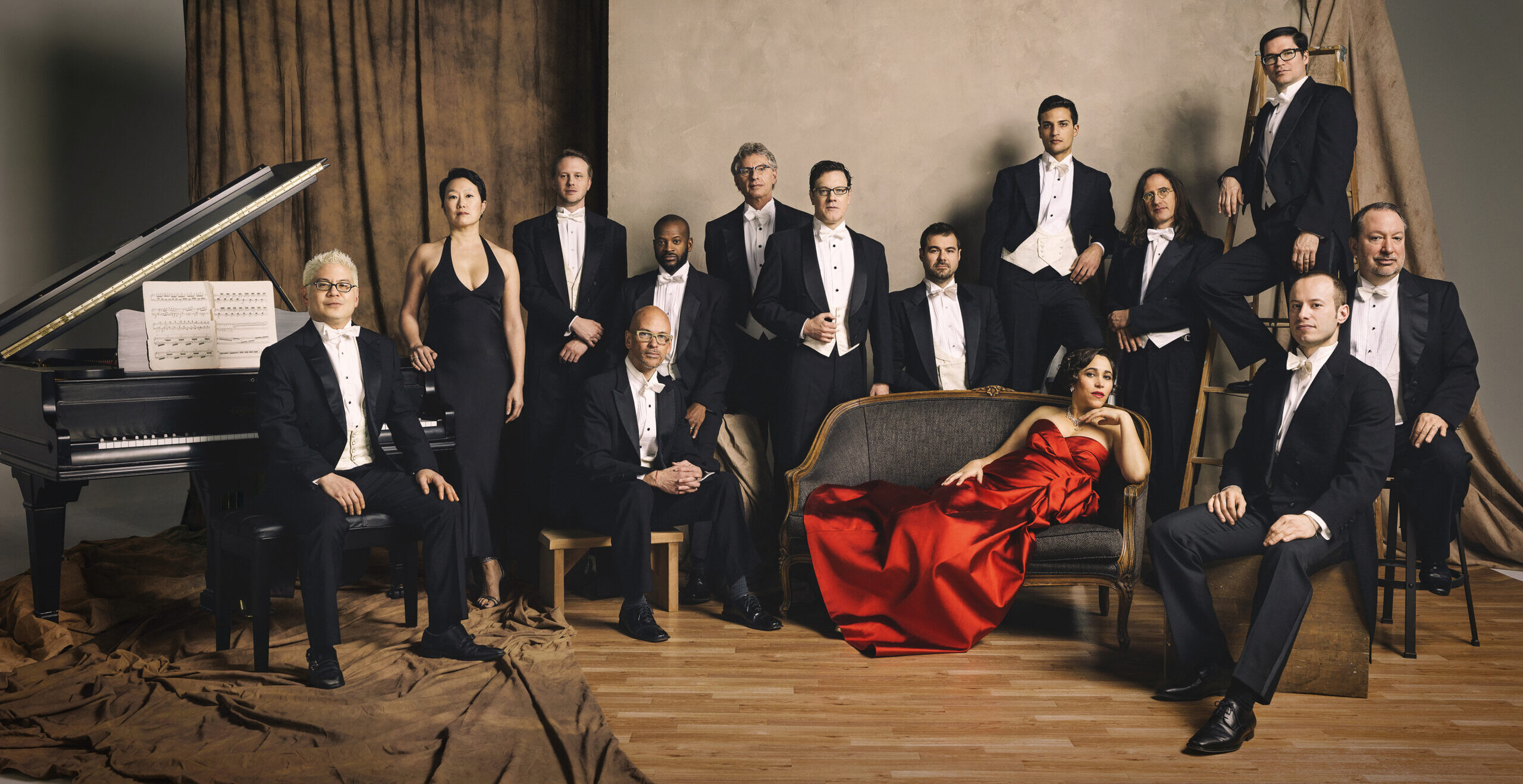

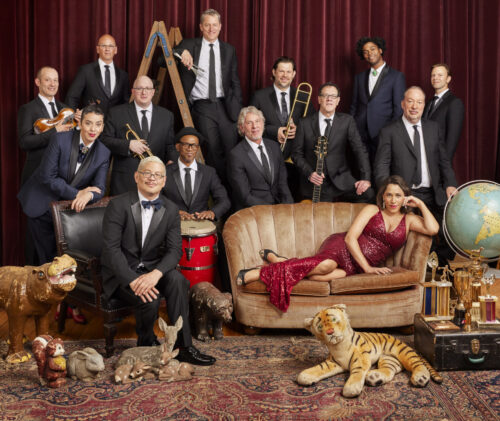

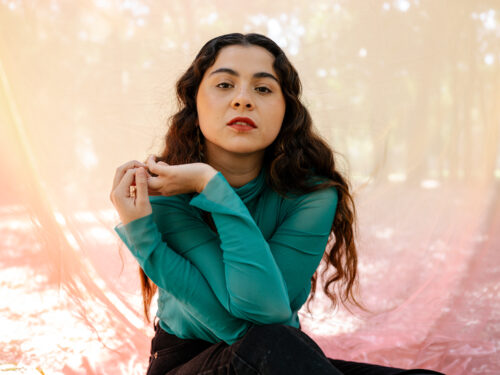
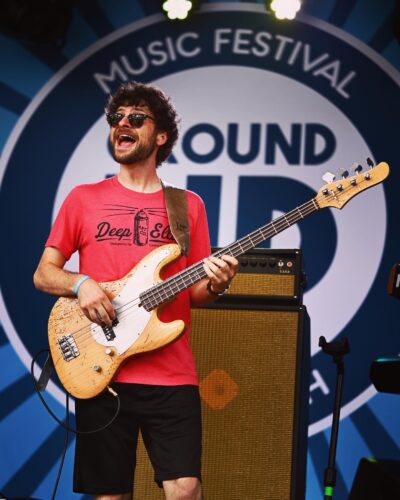
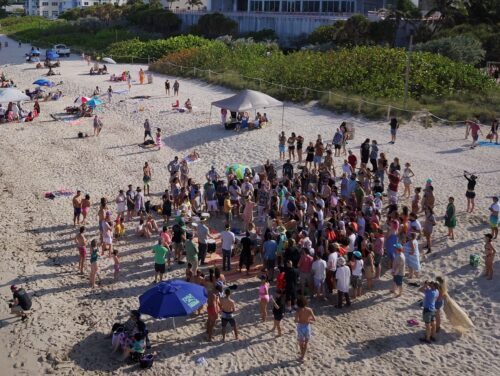
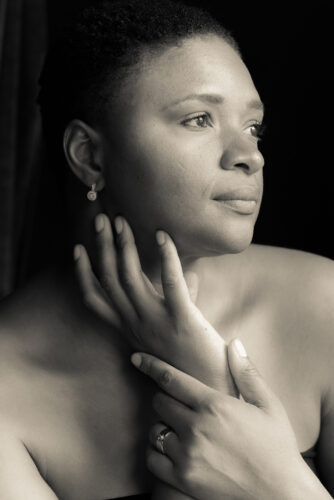
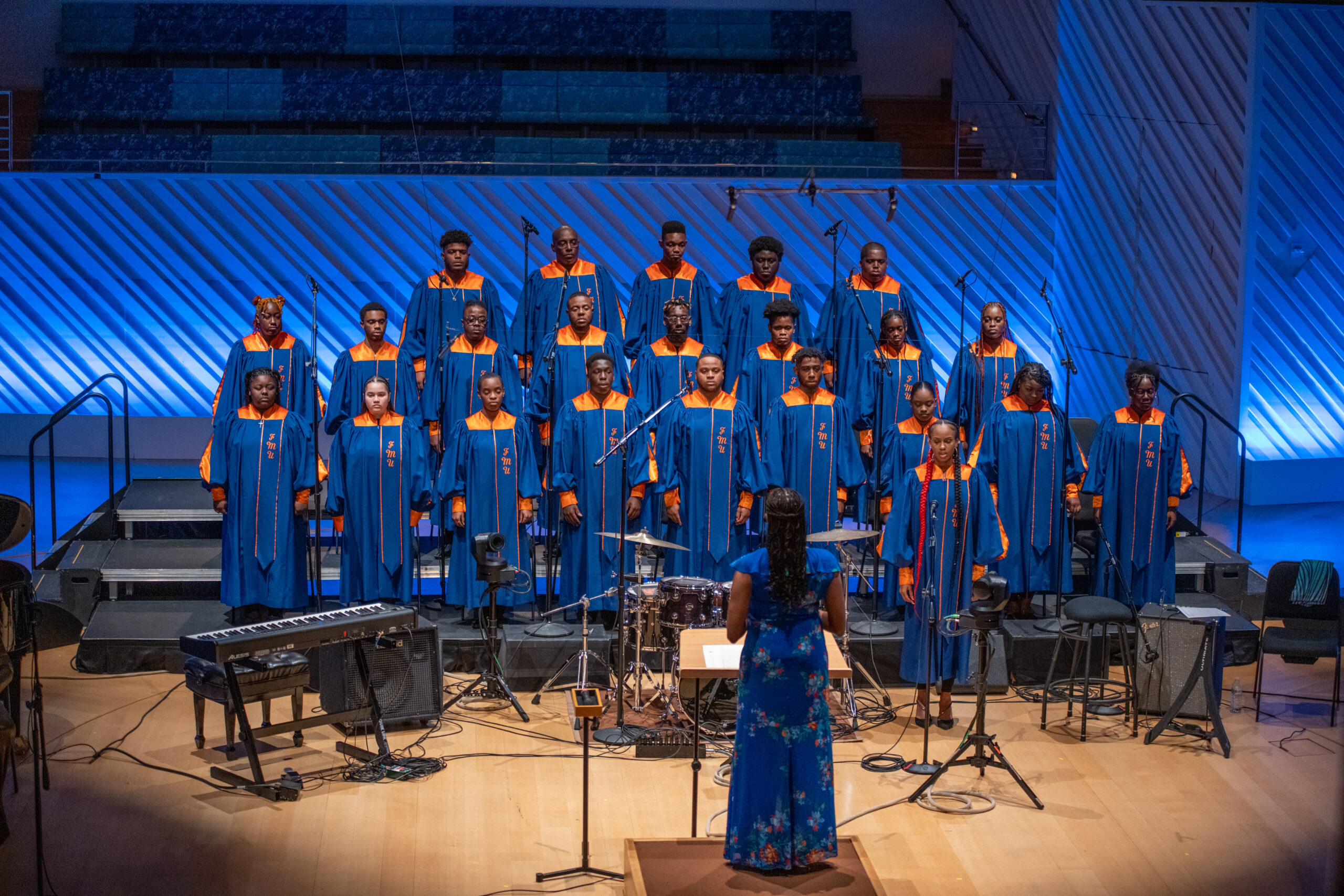
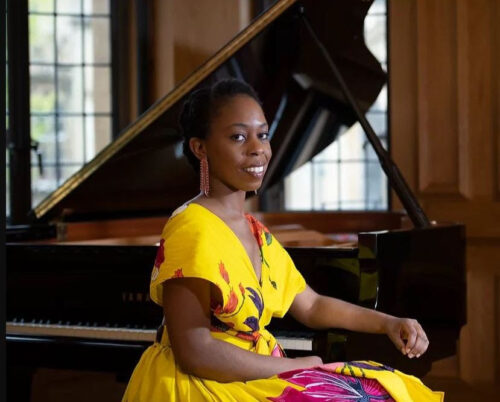
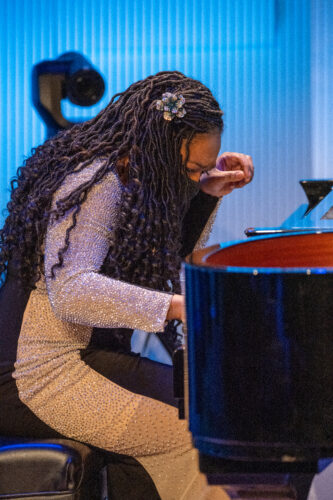
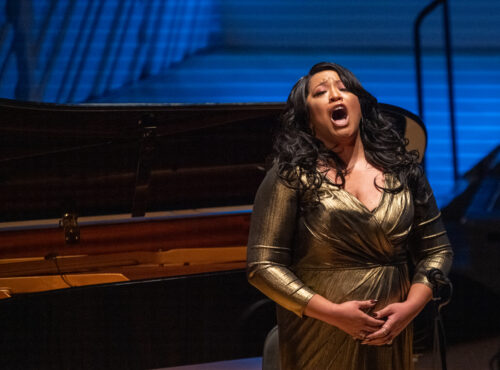
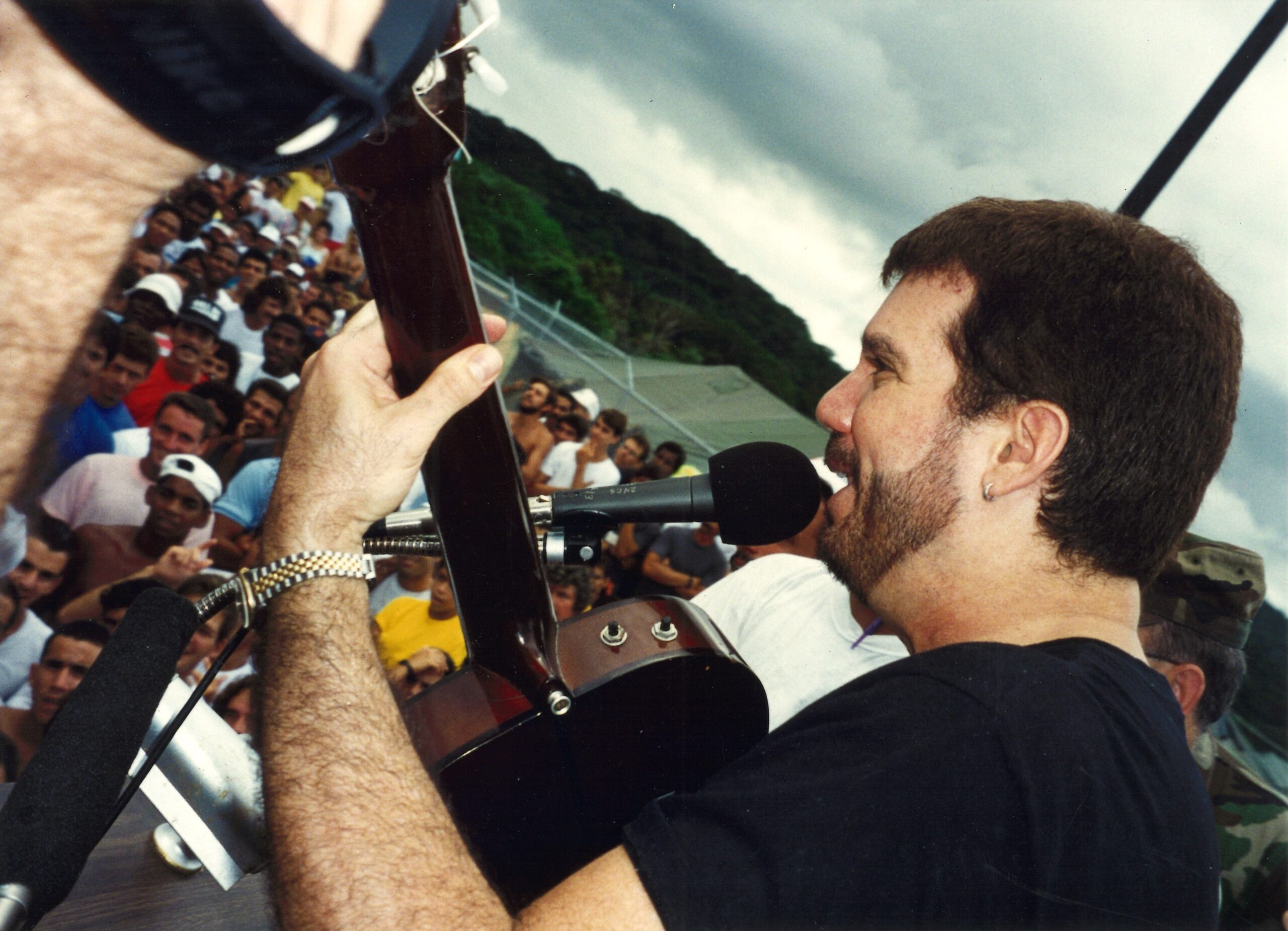
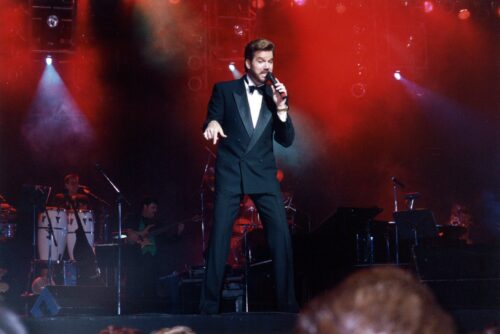
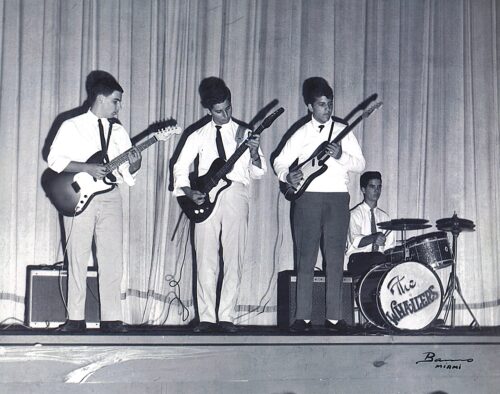
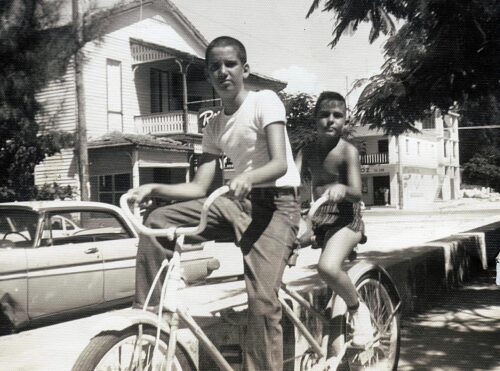
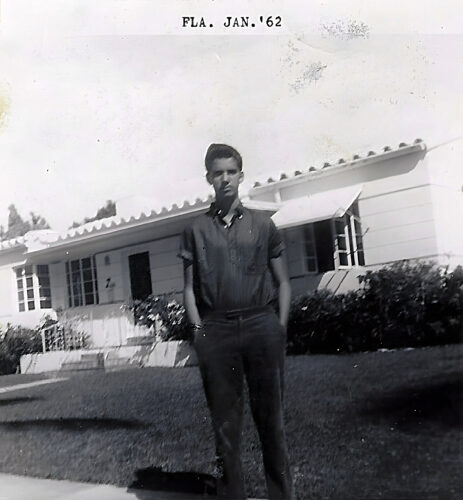
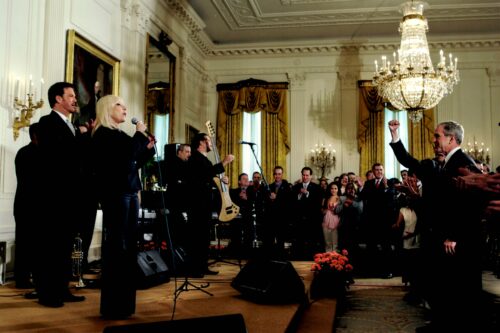
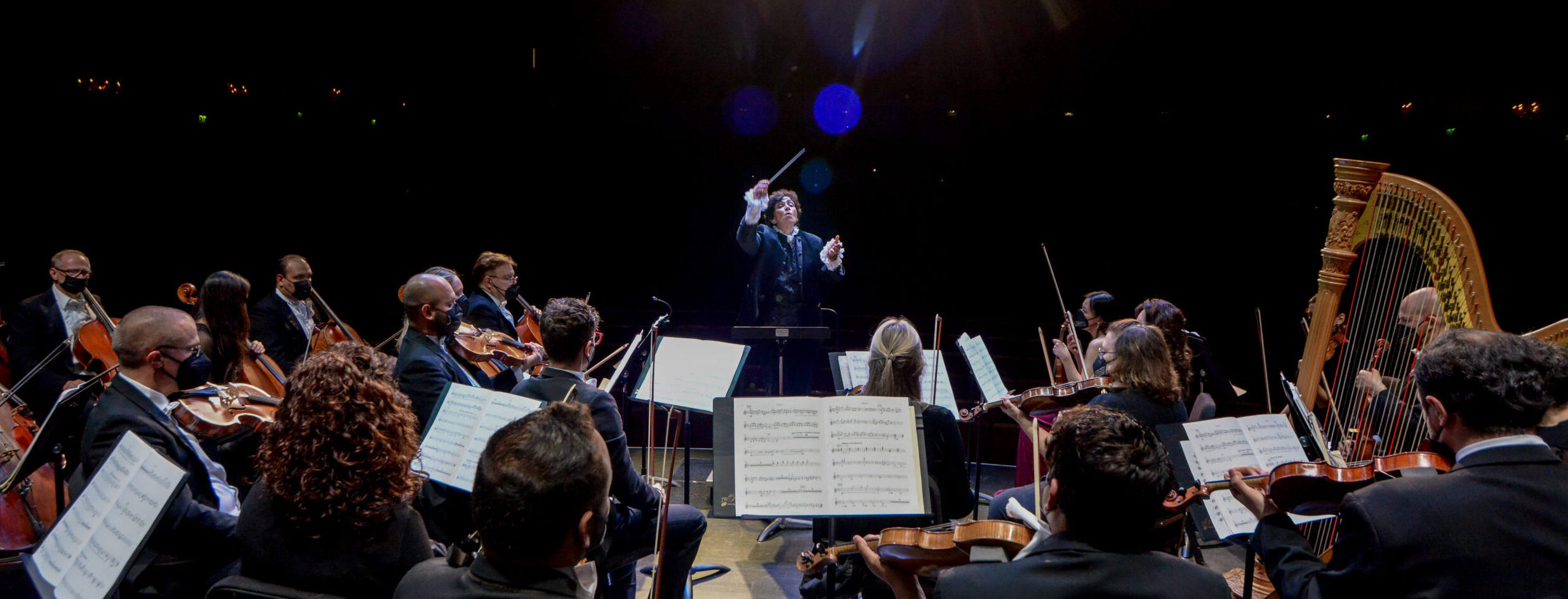
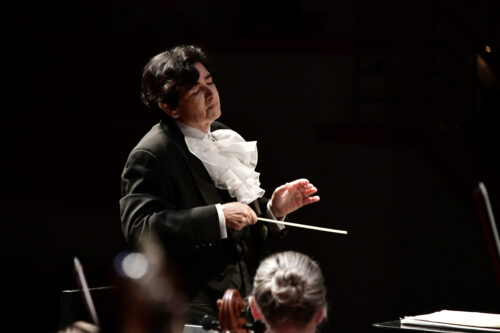
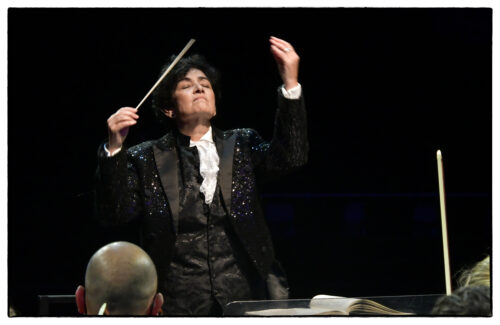
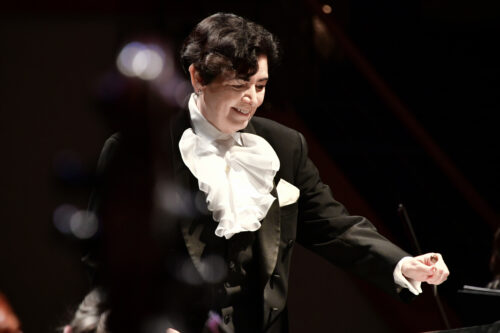

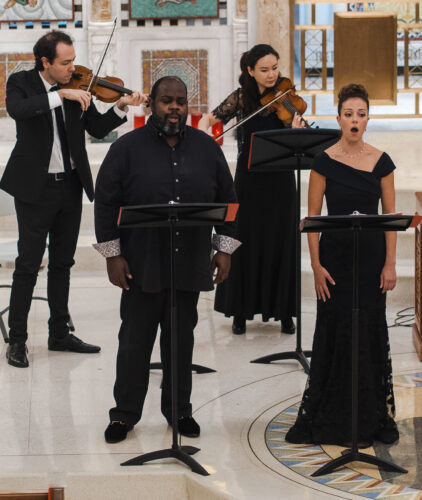
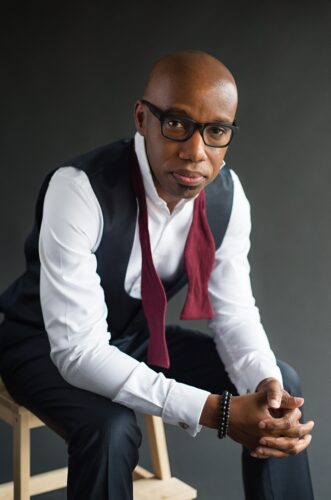
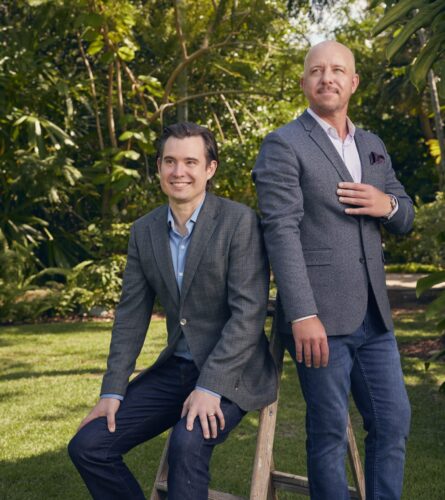
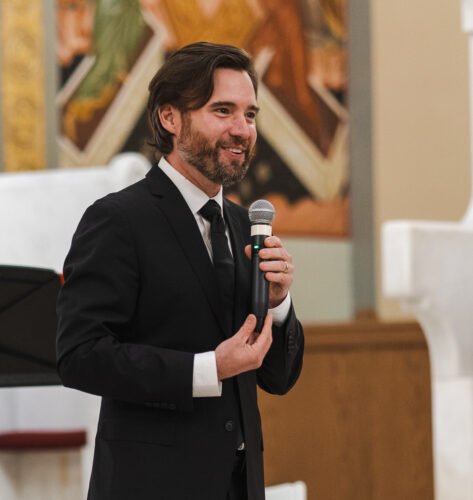

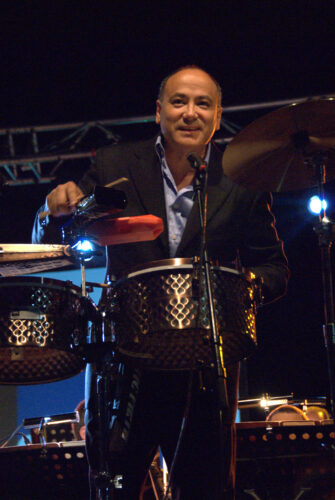
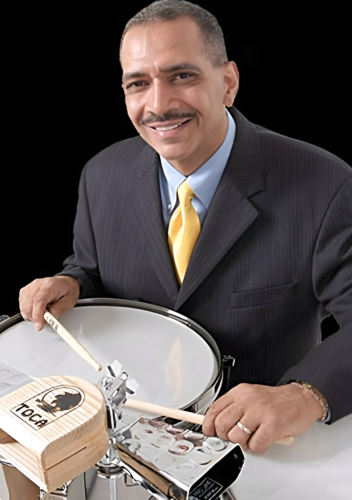
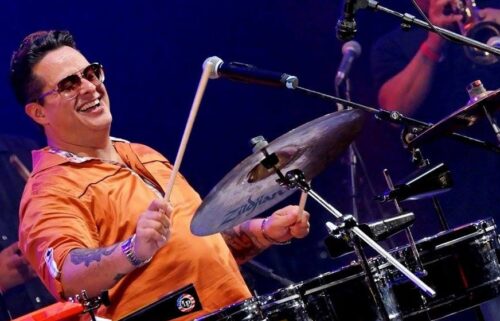

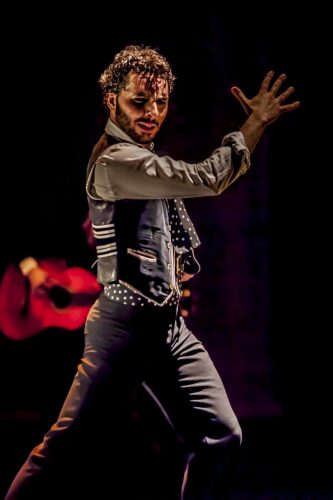
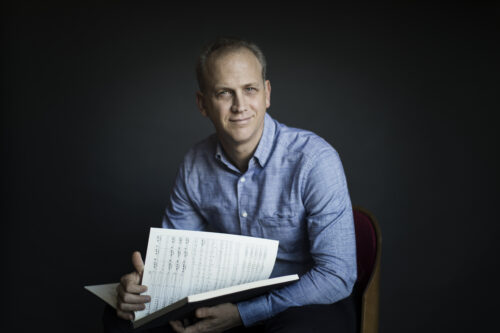

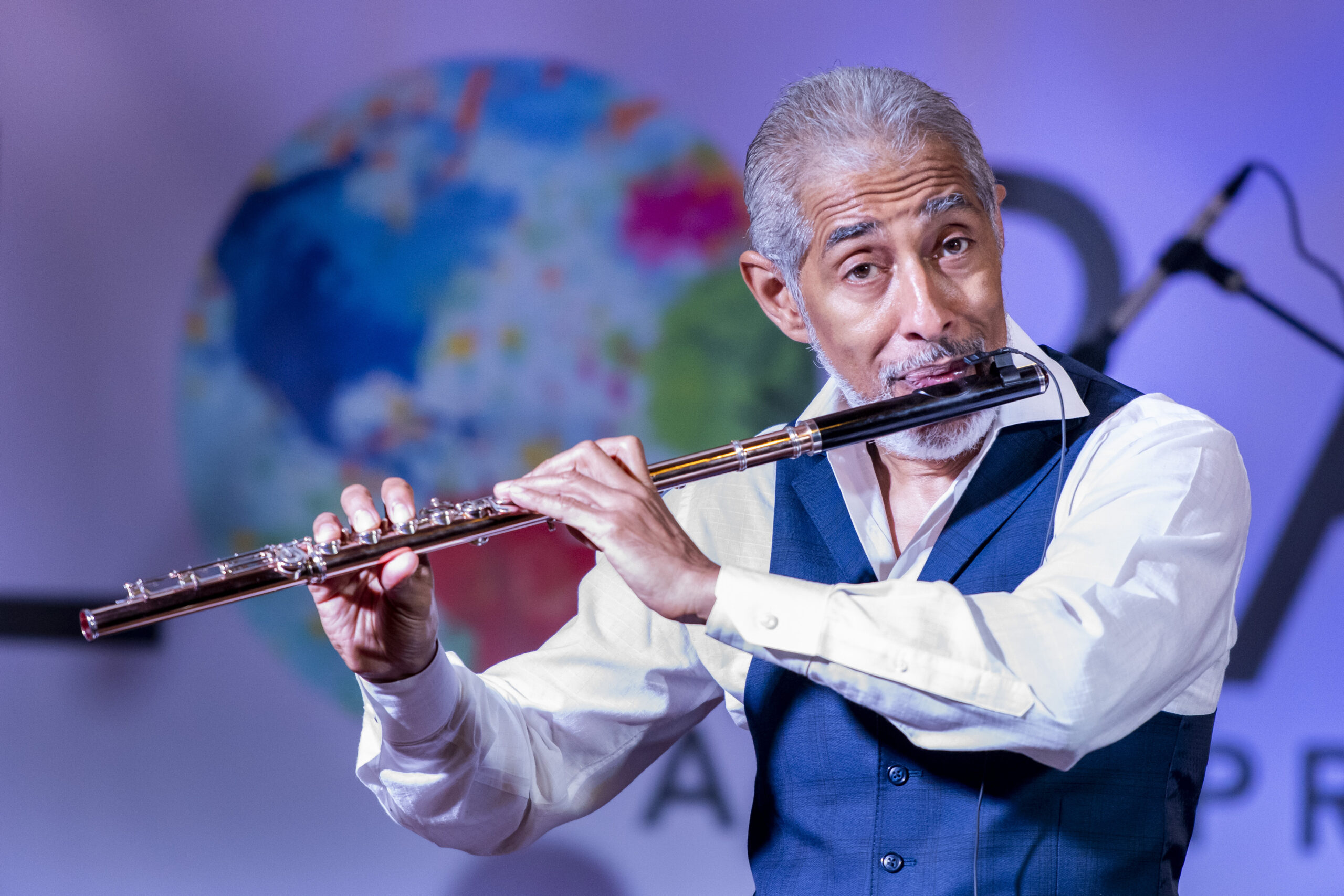
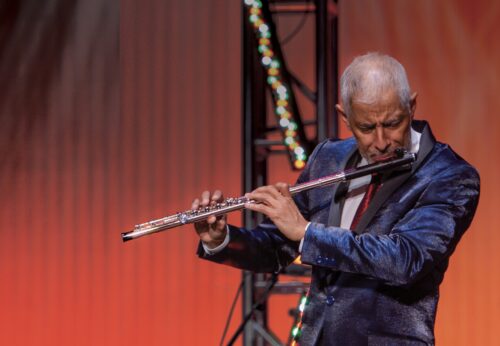
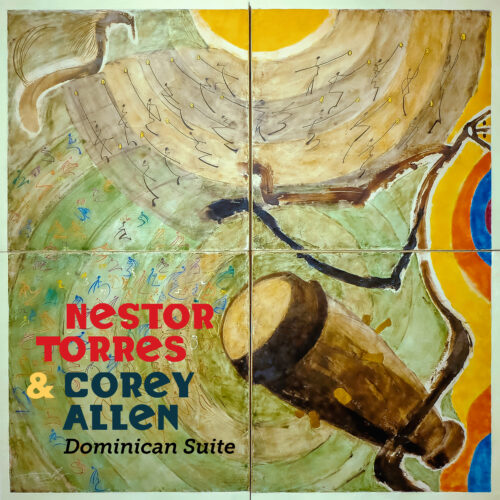
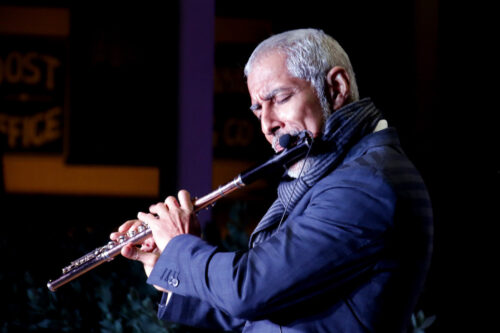

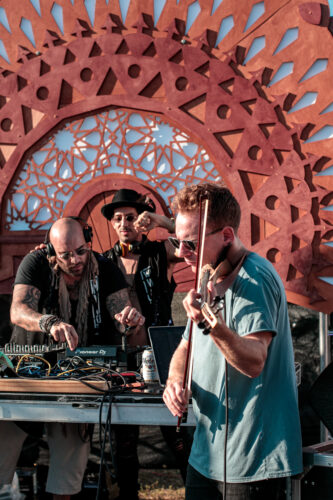
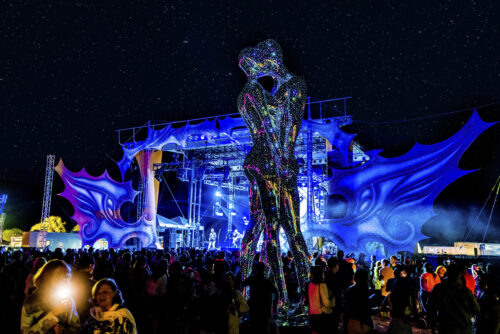

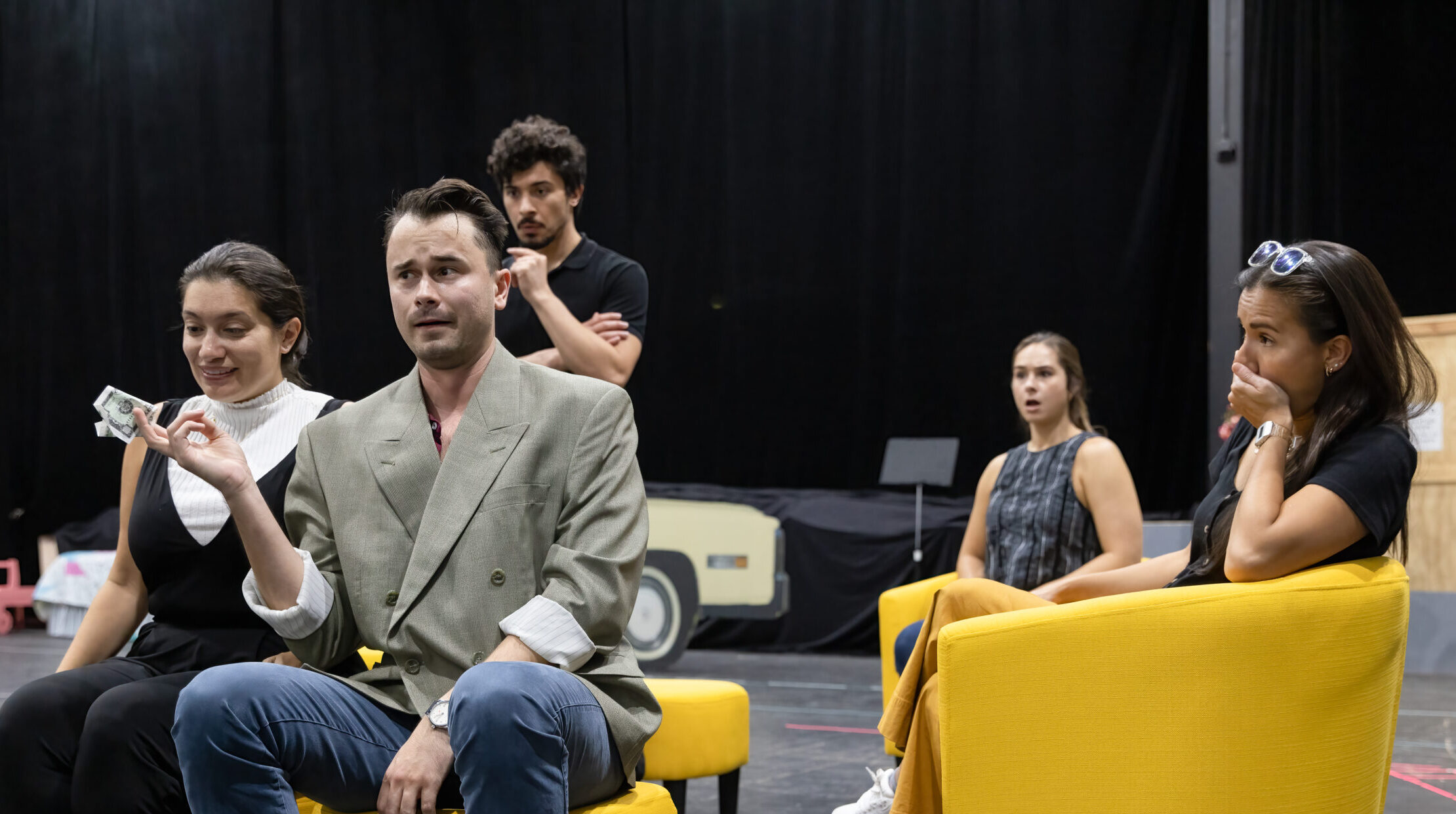
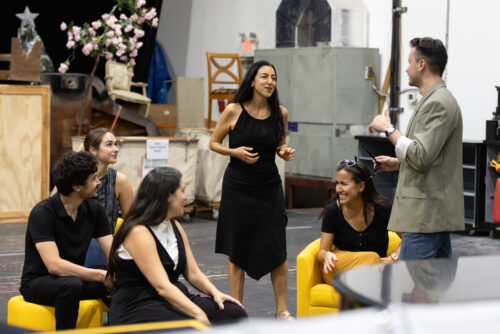
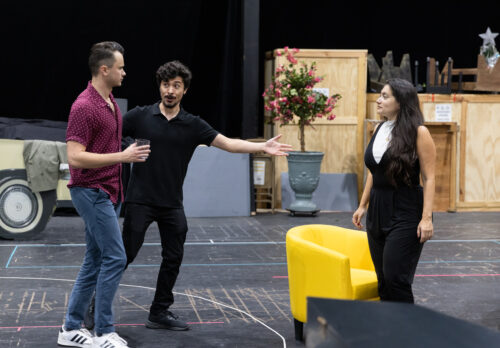
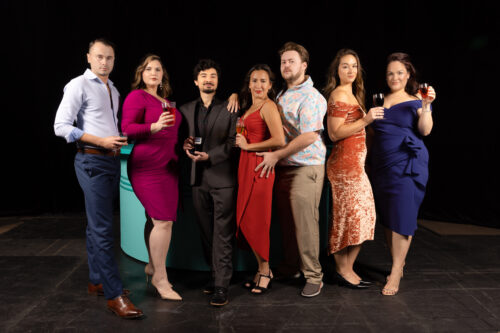

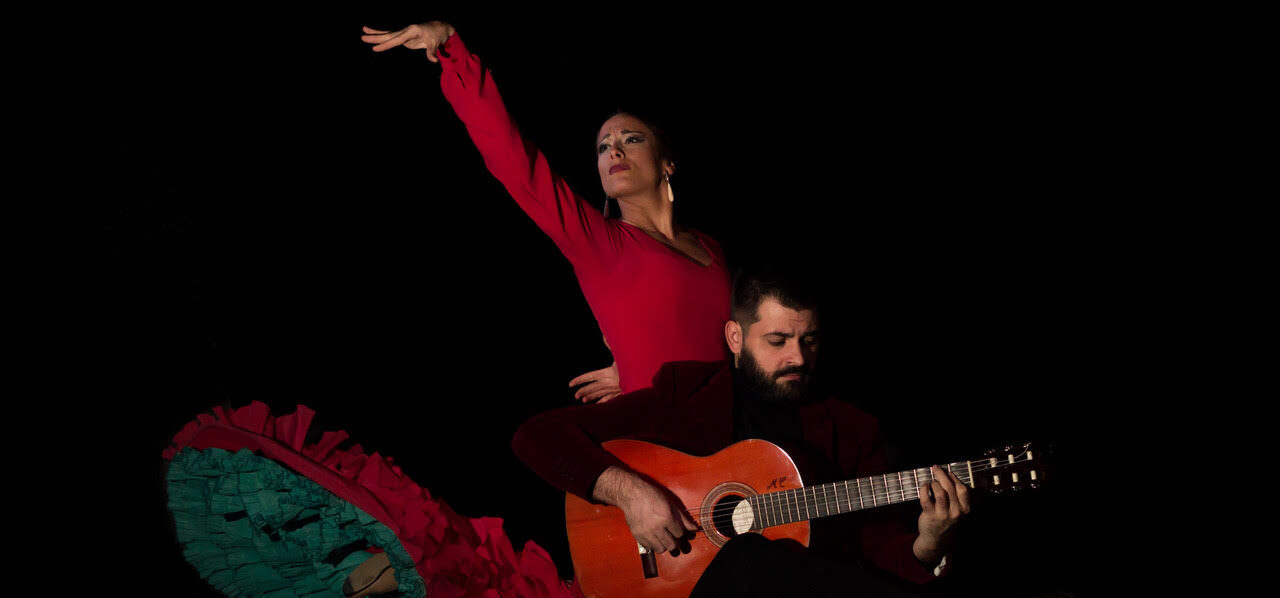

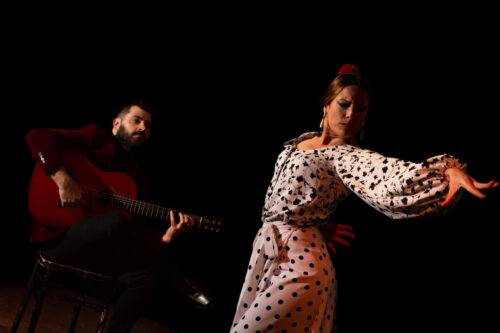
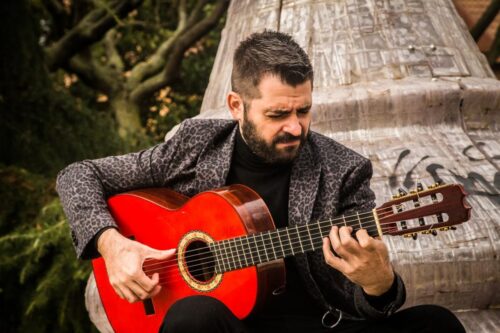
Recent Comments