Dimensions Dance Theatre Staging Two Premieres Plus Cuban’s Legacy Ballet For First Time
Written By Guillermo Perez July 8, 2024 at 5:11 PM
Dimensions Dance Theatre of Miami is presenting its first company staging of Cuban choreographer Jorge García’s “Majísimo,” along with two world premieres in its program “Kaleidoscope” at the Dennis C. Moss Center on Saturday, July 13. Above, the ensemble in “Majísimo.” (Photo courtesy of Dimensions Dance Theatre)
With a bow to our intense summer, Dimensions Dance Theatre of Miami is offering a show full of colorful, shifting formations pierced by bright light. At the Moss Center on Saturday, July 13, “Kaleidoscope” presents two world premieres—each vivid in its particular palette—and a much-anticipated first company staging of “Majísimo,” a Spanish-hued ballet that’s spread its warmth and sparkle around the world through a long series of seasons.
“Commissioning and developing new work is a significant part of our mission, as we contribute to the art form’s evolution to keep it relevant for today’s audiences,” says company co-director Jennifer Kronenberg. “But we also had in mind a kaleidoscopic vision of tradition and classicism, with ‘Majísimo’ juxtaposed to the shapes and musicality of the present.”
Jessica Arechavaleta and Ariel Morilla strike a Spanish pose in Jorge García’s “Majísimo.” (Photo courtesy of Dimensions Dance Theatre)
On the legacy front, 1965 saw the emergence of Cuban choreographer Jorge García (he died in Portugal in 2021), a dancer at Ballet Nacional de Cuba (BNC) when he devised, through classical ballet’s crisp idiom, a tribute to Spanish dance—in stance and movement references as flirtatious as the unfurling of a fan—and to the proud spirit of the land of flamenco and escuela bolera, a hybrid of popular and academic dance. García’s “Majísimo” has as its title the superlative for majo, a distinctively Iberian version of a great-looker, a charmer, a surefire seducer. In other words, get ready to surrender.
“Since we started our company, Jen and I have discussed doing this ballet,” says Carlos Guerra, DDTM’s co-artistic director and Kronenberg’s husband. “Our dancers have such a strong classical base we wanted to give them this opportunity—and especially now that we have some really powerful guys.”
As someone who adored dancing “Majísimo” at Cuba’s Ballet de Camagüey in the late 90s, Guerra respects its importance as a time-proven audience favorite, a high point for his native country in the art form. Foremost, he was determined to stage it under the right conditions.
“About a year and a half ago, we had the chance to purchase the costumes from a school that was closing—and they are beautiful,” explains Guerra. “Also, Orlando Salgado, who knows this work intimately and has long been a friend of mine, was available to coach it. So no better moment than now to go ahead with the ballet.”
Salgado, indeed, is a zealous keeper of this treasure. He began dancing “Majísimo” at BNC in the late 1960s and became the lead until his last performance in Spain in 1997.
“I always enjoyed dancing ‘Majísimo,’ feeling a great vibe from the audience,” he says. “The choreographer put in ingredients that keep the ballet from getting old, detailing a refined relationship among the dancers through four movements and a brilliant coda, its crescendo arousing enthusiasm to the last step.”
Orlando Salgado, front, began dancing “Majísimo” in the late 1960s and became the lead until his last performance in Spain in 1997. Here he rehearses Pedro Aldana for Dimension Dance Theatre’s “Majísimo.” (Photo courtesy of Dimensions Dance Theatre)
The sumptuous style displayed in the work, observes Salgado, comes directly from the music, selections from Jules Massenet’s “Le Cid.” No wonder some quip that Spanish orchestral music was invented by the French—Debussy, Ravel, and Bizet among composers who enthusiastically appropriated inflections from the Spaniards. Massenet, with exquisite Gallic taste, filtered the colors of Spain for his tones and rhythms, rendering them especially vibrant—a boon for García’s ballet in elegance and vigor.
Fast forward six decades to works finished just days ago—the currents of dance roll along lapping on different stylistic shores while channeled in bedrock principles—and find Dimensions making a splash in the freshest of choreographic waters. Those feed off an idyllic spring in “Arcadia,” a new work by company artist-in-residence Yanis Eric Pikieris, once more immersed in the sounds of contemporary English composer Oliver Davis, whose “Voyager” the choreographer used for a premiere last year.
“His music lends itself to dance well. There’s so much variety and texture,” Pikeiris judges, in fellowship with notable dance makers such as Edwaard Liang who’ve mined the Davis catalog. The composer himself has identified the rhythmic pulse and compactness of his scores as choreographic magnets.
Pikieris’ present four-movement piece culminates in the titular selection, drawn from a 2019 Davis album of the same name. The piano phrases in this have a cloudless quality as if a blessed destination has been reached. To get there, five other tracks from “Liberty,” a 2018 Davis recording, provide momentum: a cello concerto opens with throaty enthusiasm and then the violin goes forth with exhortations, especially when the lead couples— their leotards and tights sporting festive colors—seem to explore a landscape of enchantment.
Amelia Rouff stays attentive to the angle of a balance in Ryan Jolicoeur-Nye’s “Sweet and Bitter.” (Photo courtesy of Dimensions Dance Theatre)
“The music definitely evokes feelings of summer, as does the piece,” says Pikieris, reflecting that his Arcadia—a pastoral haven for ancient Greeks—“could be lush and sunny and tropical.” In the imagination of this creator, who jovially admits record-breaking high temperatures are far from his ideal, sweat evaporates into a hovering fine feeling, no air conditioning required.
Pikieris credits the cast for enlivening his choreographic ideas. “In a way it’s been the same for all my pieces,” he says, “but more for this one and ‘Voyager,’ where I’ve wanted to get the dancers moving big.” That, he notes, bubbles up from their generous delivery.
Emily Bromberg, as a prime example, has shown she can take what Pikieris gives her—from brisk and nervy moves to the dreamy—and hand it back alluringly amplified. She admits the current piece “does feel more grand.”
In her estimation, “Arcadia” moves forth on circulating interaction, which heightens the sense of shared energy among the dancers. To an extent, Bromberg identifies the base for the work’s expansive look in what Pikieris brings to his own performances. “There’s a special way he uses his upper body—an opening of the torso—that makes his moves seem larger.” His compact frame can thus deliver huge dancing, a joy and boldness he passes on to interpreters of his creations.
According to Bromberg, “The Davis score always makes it look like something major is happening. Emotion is deep, complicated, but never sad.” Zipping by with the ensemble or slinkily linked with Maikel Hernandez—even just watching fellow dancers—she’s swept along. “You may get out of breath,” she says “but still feel great connecting.”
Emily Bromberg and Maikel Hernandez soar to a blissful place in Yanis Eric Pikieris’ “Arcadia.” (Photo by Simon Soong)
For the ballerina, a passionate musicality also marks the other premiere on the bill. Oklahoma City Ballet’s artistic director Ryan Jolicoeur-Nye’s “Sweet and Bitter” uses a score by the late Ezio Bosso, an Italian composer who’s another favorite of choreographers—among them again, Liang, whose “Murmuration,” to a Bosso violin concerto, Bromberg danced at Slovak National Theatre.
But her ties here go further, for she’s known Joliecoeur-Nye since their early days as dancers at Festival Ballet Providence (now Ballet Rhode Island). In fact, she introduced the choreographer to Dimensions, which mounted a pas de deux by him that Bromberg learned to perform through video.
“This is the first time I’ve worked with Ryan as he choreographs in person,” says the ballerina, impressed by how fast he’s tailored this piece on company personalities. She finds it remarkable he approached this project without preconceived notions—even the music was undetermined before the first studio encounter—a situation which could prove daunting for dancers.
Yet Bromberg, who reaches a high point here in a quick, bounding solo, confesses, “I wasn’t nervous. Once Ryan gets on a roll, he just goes and goes. The steps flow organically, and he changes very little. There’s always a strong emotion to hang on to.” And gliding on the music, she’s discovered it’s really colors from the dancers’ spirit that brighten the view.
WHAT: Dimensions Dance Theatre of Miami “Kaleidoscope”
WHEN: 8 p.m., Saturday, July 13
WHERE: Dennis C. Moss Cultural Arts Center, 10950 SW 211 Street, Cutler Bay
ArtburstMiami.com is a nonprofit media source for the arts featuring fresh and original stories by writers dedicated to theater, dance, visual arts, film, music and more. Don’t miss a story at www.artburstmiami.com.
No posts found
Choreographer, Dancer Randolph T. Ward Examines Social Fractures In ‘Them and Us’
Written By Sean Erwin July 8, 2024 at 11:31 AM
Dancer Natanael Leal performs in “The Big Dig” by choreographer Randolph Ward, one of the pieces in “Them and Us,” on Friday, July 12 at Sandrell Rivers Theater, Miami. (Photo courtesy of Randolph Ward)
“Gender bending,” “politically charged,” “provocative” are a few of the descriptors Miami peers and critics have applied to Randolph T. Ward, since the choreographer, dancer and artistic director returned to his hometown and founded his company, RTW Dance, in 2019.
Ward’s latest program, “Them and Us,” with a performance at 7:30 p.m. on Friday, July 12, at the Sandrell Rivers Theater in Miami, extends his examination of the ways racism and gender stereotypes trap the human body and divide people from one another.
The program includes two world premieres, “The Big Dig” and “Dystopia,” as well as a remake of an audience favorite, “Code Switch.”
“Code Switch” first premiered at the Broward Center of the Performing Arts as part of the “Men Who Dance” festival in November 2022.
Since that premiere, Ward has added new music and new sections to the nine-minute, three-movement social dance commentary on the idea of code-switching (when individuals who identify as BIPOC shift body language and style of verbal communication to fit into white-dominated spaces).
Dancer Destiny Diaz performs the role of “The Zealot” in “Dystopia” by choreographer Randolph Ward. (Photo courtesy of Randolph Ward)
Ward based the original work on his own reactions to the 2022 PBS documentary, “Making Black America.” Central to “Code Switch” is the 1968 speech by African American writer, James Baldwin, to the question, “what does a Negro want?” Cited in the documentary, Ward included it in his own piece in its entirety.
Though Ward himself notably performed the lead role in the 2022 premiere, the revamped version features dancers Nala Cook, Destiny Diaz and Natanael Leal.
“The movement vocabulary has been improved,” says Ward. “The work now has a bigger and more nuanced African-American vocabulary to it.” The revised piece even includes a Black majorette dance section inspired by half-time performances by bands at historically Black colleges and universities (HBCUs). “These are all ideas I wanted in the original work but had no time to develop,” adds Ward.
Miami audiences got a glimpse of an excerpt from the two-movement solo work, “The Big Dig,” in May 2024 when Ward premiered it as part of the “Miami Dances” program presented by Miami Dance Hub at the Sandrell Rivers Theater.
In the completed piece included in “Them and Us,” Ward takes a deep dive into the notion of anxiety, which the choreographer described as emanating from a deeply personal experience of the feeling.
“I believe that my anxiety is created by circumstance: lack of money, emotional stress, societal pressure to conform, professional stress…etc.,” explains Ward, “and something that is created can also be destroyed.”
Dancer Natanael Leal performs in “The Big Dig” by choreographer Randolph Ward. (Photo courtesy of Randolph Ward)
He cast Leal, a nonbinary Brazilian artist, in the solo role, because he sees in the dancer a shared work ethic. “(Leal’s work ethic) is an unapologetic pursuit in investigating and discovering the work. What does the work need? What do I need to do to get there? I needed an artist that was not going to allow fear to govern the artistic journey. ‘The Big Dig’ needed real authenticity,” says Ward.
Though Leal frequently performs in Ward’s works, “The Big Dig” was especially challenging for the dancer because of their own personal connection to the subject matter.
“Anxiety has always been a friend of mine and I am very familiar with this emotion,” says Leal. “It has been a necessary nightmare that I have had to face . . . Being this vulnerable has taught me that it is okay to connect with the most painful parts of oneself,” says Leal.
“Them and Us” rounds off with a world premiere of “Dystopia,” where the choreographer gives a nod to how the recent pandemic revealed the limits of human control. “Dystopia” combines dance with theatrical elements and a new electronic music composition that the choreographer created expressly for the new work.
For “Dystopia,” Ward drew on the talents of five dancers including Leal, Diaz, Stephanie Sanchez, Luzcarina Nunez, and Tayanna Love. Ward included the talents of local jazz vocalist, Ja’Nia Harden.
“(In ‘Dystopia’) I am getting to showcase different sides of myself musically,” says Harden, “jazz singing, gospel singing, musical theater style singing, and I play the clarinet.”
Costumed in a white doctor’s lab coat studded with black rhinestones, Harden reprises the role of Lady X in the new work.
“Lady X is inspired by all sectors of American life that are obsessed with control,” explains Ward. “Think North Korea, Donald Trump, Ron DeSantis, Nazi Germany, Putin, or a mad scientist.”
Building on the idea of a top-down society, the choreographer modeled the group dance sequences in “Dystopia” on the behavior of ants: “(Ants) social societies closely mirror ours. Each ant has a specific purpose that is directly in service of the queen and the colony. They have a social hierarchy system as well. I wanted to use the idea of ants all in a line that follow the orders of the matriarch.”
Dancer Natanael Leal performs in “Dystopia” by choreographer Randolph Ward. (Photo courtesy of Randolph Ward)
Diaz, a Florida International University theater graduate, performs the role of “The Zealot,” which she found especially challenging because she says she couldn’t personally relate to the character.
“I have had to do a lot of research for the role and within my research I have discovered behaviors and mannerisms of a specific societal group/race that I wasn’t necessarily paying attention to,” says Diaz. “It has made me explore how I would behave or act if I were confronted by this societal community.”
Ward included the character of “The Zealot” to explore the sociological effects of racism on the racists themselves. When asked how the role functions in the piece, Ward quotes Baldwin: “I imagine one of the reasons people cling to their hates so stubbornly is because they sense, once the hate is gone, they will be forced to deal with pain,” says the choreographer.
WHAT: RTW Dance presents “Them and Us”
WHERE: The Sandrell Rivers Theater, 6103 NW 7th Ave., Miami
WHEN: 7:30 p.m. Friday, July 12. The performance will be followed by a question and session with choreographer and cast.
COST: Presale ends July 8, $35 general admission, $45 at the door
ArtburstMiami.com is a nonprofit media source for the arts featuring fresh and original stories by writers dedicated to theater, dance, visual arts, film, music and more. Don’t miss a story at www.artburstmiami.com.
No posts found
Peter London to premiere his different and distinct ‘Carmen’ at Sanctuary of the Arts
Written By Orlando Taquechel June 18, 2024 at 9:24 PM
The dancers of Peter London Global Dance Company in “Caribbean Suite,” choreography by Peter London that closes the program “Rebellion & Resilience” to be presented on Sunday, June 23, at the Sanctuary of the Arts in Coral Gables. (Photo by Gregory Reed, courtesy of PLGDC).
Peter London’s latest offering, a powerful and inspiring “Rebellion & Resilience,” features a world premiere of the choreographer’s “Carmen,” a work with a woman’s name for three dancers inspired by the erotic myth of the beautiful and provocative gypsy cigar maker.
The Peter London Global Dance Company (PLGDC) will perform “Rebellion & Resilience” at 4 p.m., Sunday, June 23, at the Sanctuary of the Arts in Coral Gables.
Carmen’s story originates in the short novel by Prosper Mérimeé that bears her name, written in 1845 and published in 1847. According to its author, it is based on a real-life anecdote about “a bully from Malaga who had killed his beloved.” Mérimeé moves the action to Seville and makes his protagonist a gypsy.
Performers in Peter London’s “Carmen,” from left, Carlos Realegeno, Yanil Pabón, and Camilo Toro. (Photo by Clinton Harris, courtesy of PLGDC)
The eponymous opera by Georges Bizet premiered in March 1875.
London now joins the long list of choreographers who have created works based on “Carmen,” including Roland Petit (in 1949), Alberto Alonso (1967), Antonio Gades (1983), and Mats Ek (1992), to name just a few of the most iconic stagings.
Many think the first dance work inspired by Carmen (the character) came after Bizet’s opera. Still, the truth is that the famous French dancer and choreographer Marius Petipa (long before his period in Russia collaborating with Tchaikovsky on “Swan Lake,” “The Nutcracker” and “The Sleeping Beauty”) has to his credit a ballet entitled “Carmen and the Bullfighter.”
The work was conceived at the same time he was a premier danseur at the Teatro Real in Madrid (Spain) and even before the official publication of the novel. Perhaps Petipa and Mérimée shared ideas. Petipa left Spain in 1846.
To see a rehearsal of this new Carmen “made in Miami,” we visited the Little Haiti Cultural Center, where PLGDC is based, and spoke with London.
The dancers who performed it on the morning of Sunday, June 9, were Jeona Pinnock (as Carmen), Carlos Realegeno, and Ryan Charles-Mac.
Yanil Pabón is the protagonist of Peter London’s new “Carmen.” (Photo by Clinton Harris, courtesy of PLGDC)
On Sunday, June 23, “Carmen” will be performed by Yanil Pabón, Realegeno, and Camilo Toro.
The first thing that stands out in London’s “Carmen,” which lasts about 22 minutes, is the absence of Bizet’s music. “I don’t have the authorization to use it,” admits the choreographer.
Instead, we hear a musical collage that includes songs by the cantaora, actress, and bailaora from Cádiz, Ana Salazar.
“I chose flamenco music to represent Carmen’s passion, which I think you can feel in the power of flamenco and its bailaoras.”
London adds that the music should give audiences the feeling of being in Spain.
“It’s not about following the lyrics of the songs because if you do, you’ll see something completely different, and this is not music to dance to. If you’re listening to the music, looking for the steps, you’re no longer in the story. And that’s what I don’t want to happen. I want to give an atmosphere where the music is part of the cycle of energy present in the environment,” says London.
Similarly, we don’t see the soldier and the bullfighter who always accompany Carmen.
“They are an abstraction,” explains London. “They represent first the men she met in prison and then the gang of thieves she was part of. They represent the masculine energies in her life. Those she joined to survive, and that would eventually kill her.”
The dancers of Peter London Global Dance Company in “Steppe Tango,” choreography by Armando González. (Photo by Gregory Reed, courtesy of PLGDC)
London says Pablo Picasso and his paintings before he moved to Paris were present in the choreographer’s thoughts when he conceived the work.
“If Picasso were painting a painting of Carmen, what would his Carmen look like? With a normal face and hair?” London asks as he moves his hands around his head for emphasis.
“Or with different abstractions? Perhaps, with one eye looking in one direction and the other directed at a man located somewhere else.”
In this “Carmen,” stripped of unnecessary references and open to all interpretations, “the main idea,” its creator points out, “is that we observe how women have always struggled to find their way in a patriarchal society and often get into trouble if they go against the flow. If they are genuinely rebellious, they lose their lives when they try to go beyond the place that has been assigned to them.”
This promises to be a different and distinct “Carmen.”
For Puerto Rican dancer Pabón, having the opportunity to play Carmen “is an honor.”
She moved to Miami a year ago after a successful career with New York’s Ballet Hispánico, to complete her studies at the New World School of the Arts.
“That’s how I got in touch with Mr. London,” she says in a telephone interview.
“With ‘Carmen,’ London is doing everything he can to give Hispanic culture a platform,” she adds. “He usually focuses on celebrating culture, and I knew of his work with Haitian and African American Caribbean cultures. I love seeing him working now to celebrate Hispanic culture as well. In this case, celebrating Spain. ‘Carmen’ has a lot of Spanish dance moves, which makes me very happy because it’s something closer to my roots.”
The premiere of “Carmen” is undoubtedly the main attraction, but eight other works are also included in the program.
“Rebellion & Resilience” will open with “I Am My Brother’s Keeper” by Vitalia Jeune and “Frosties” by Justin Rapaport (with music by Dizzy Gillespie). Following will be “The Witness” by London (with the voice of Nina Simone) and “Steppe Tango” by Armando González (with “Libertango” by Astor Piazzolla). The first half will close with “Azúcar,” also by London, inspired by the music of Celia Cruz.
The rest of the program is filled with works created by London. Three of them in the second part: “Touch Me One Last Time,” with songs by Billie Holiday, the solo “Roses for Women,” and then “Carmen.”
The show closes with London’s “Caribbean Suite,” set to traditional Caribbean and Latin music.
In short, “Rebellion & Resilience” is jazz, tango, rumba and flamenco blending European and African elements. PLGDC brings them all together in an exercise of unity in diversity – rebellious as Carmen and resilient as the voices of Nina Simone, Billie Holiday and Celia Cruz.
WHAT: Peter London Global Dance Company in “Rebellion & Resilience.”
WHEN: 4 p.m., Sunday, June 23
WHERE: Sanctuary of the Arts, 410 Andalusia Ave., Coral Gables
ArtburstMiami.com is a nonprofit media source for the arts featuring fresh and original stories by writers dedicated to theater, dance, visual arts, film, music, and more. Don’t miss a story at www.artburstmiami.com.
No posts found
South Florida Symphony Joins Siudy Flamenco To Cast Spell Of Spanish Gypsy Story
Written By Guillermo Perez June 11, 2024 at 11:37 AM
Siudy Garrido and Argentina Lopez in “Amor Brujo,” a concert-dance piece featuring the Siudy Garrido Flamenco Company and South Florida Symphony Orchestra on Saturday, Jan. 15 at the Adrienne Arsht Center, Miami. (Photo courtesy of Omar Cruz)
Sorcery of all sorts captures our imaginations. There’s witchcraft, with its errant rites for reward and retribution; love— at times seeming just as supernatural—casting its own spells; and art, relying on the wiles of truth and beauty to enchant the senses and possess the mind. Pick your potion or imbibe all, which are contained in “Amor Brujo.” This concert-dance piece embraces a classic of haunted passions among Spanish gypsies that Siudy Garrido Flamenco Company (SGFC) and South Florida Symphony Orchestra (SFSO) are restaging at the Adrienne Arsht Center for the Performing Arts on Saturday, June 15.
An exorcism’s fiery dance. Siudy Garrido in “Amor Brujo.” (Photo courtesy of Eugene Yankevich)
The collaboration presents Manuel de Falla’s early 20th-century composition similarly titled “El amor brujo” (known as “Love, the Magician,” though variously translated), expanding the musical offering and embodying it in movement shaped both by Iberian tradition and a contemporary sensibility. It brings, among other recognizable and some revelatory passages, the famous “Danza ritual del fuego,” the Spanish composer’s ritual fire dance flaring up in Garrido’s flamenco.
With Garrido in the lead and as choreographer, co-designer, and director, the show carries a notable performance history. It was commissioned, in somewhat different form, at the bequest of renowned Venezuelan conductor Gustavo Dudamel, the headliner’s countryman, who led its premiere with the Los Angeles Philharmonic at Walt Disney Concert Hall in 2015.
“The toast afterwards was a beautifully shared moment since previous to this project Gustavo and I didn’t have a personal relationship—though we both had long dreamed of working together,” Garrido says in Spanish.
Sold-out houses and touring followed, culminating in a 2018 debut at the Arsht—where Garrido is a well-established arts partner (her “Bailaora” had them sharing a 2022 Latin Grammy nomination for best long-form music video) —with SFSO’s founding director Sebrina Alfonso at the baton. Paolo Bortolameolli conducted an L.A. Philharmonic revival a year later at the Hollywood Bowl.
Maestra Sebrina Alfonso keeps an eye on the dance and her baton on the beat. (Photo courtesy of South Florida Symphony Orchestra)
By now, Garrido’s intimacy with these complex productions lets her meet their demands with aplomb, but in the beginning the task could prove daunting. “I’m grateful Gustavo trusted me since I’d never mounted a work based on another artist’s creation before—a responsibility I approached with a lot of respect,” she emphasizes. It turned into a high point for her company, founded in Caracas in 2000 and relocating fifteen years later to Miami, where their swanky shows have become audience favorites.
“It’s been a great adventure to come into Falla’s world and not lose my identity, finding my way into a story of gypsy life,” says Garrido.
Colored by Andalusian folklore, the worldly and the otherworldly intertwine throughout the narrative—in flesh and spirit—fomenting ardor and affliction. Here the widow Candela long endures fevered dance-driven visitations from the ghost of her unfaithful husband—murdered by a man he cuckolded. But she yearns to exorcise him having found new love in the dashing Carmelo. That devilish triangle is squared off by Lucía, the lover who sparked the ghost’s last-lived infidelity—and who might be a means to Candela’s emancipation.
Singing with earthy and haunted passion is Argentina Lopez in “Amor Brujo.” (Photo courtesy of Jorge Lozada)
Originally conceived as a chamber piece in 1915, with dancers, actors, and a female flamenco singer, Falla’s score went through different versions, moving to full orchestra and a mezzo-soprano voice by the time of its 1927 American premiere in Philadelphia. Piano suites have helped popularize movements from the score, including that turbulent fire dance which in the tale turns up the heat for the exorcism.
Alfonso comments, “In my career I started out with Falla’s music by presenting a couple of dances from ‘El amor brujo.’ Originally written for chamber ensemble, those pieces were easier for me to put together. But I became more deeply involved with the whole score when Siudy wanted us to do this project.”
The excitement of working with a flamenco dancer-choreographer broadened her appreciation of Falla’s aim to bring Spain’s national sounds into the classical world. She points out, “His honing into folk melodies produces interesting orchestral effects—as in the back-and-forth bowing of the violins and violas and pizzicato which imitates the strumming of guitars.”
Siudy Flamenco Dance Company rehearses “Amor Brujo.” (Photo courtesy of Migdalia Salazar)
Undoubtedly, Alfonso’s previous experience branching into other art forms beyond straight-out conducting of classical masterworks, eased her into the job of accommodating the nuances and exclamations of dancing. SFSO has mounted movie and pop band tributes, and in 2009 marked its 20th-anniversary playing for Martha Graham Dance Company.
But this was uncharted territory as no exclusive choreography comes with Falla’s music, though “El amor brujo” has had various interpretations, prominently in a same-titled 1986 Carlos Saura film with flamenco giants Cristina Hoyos (Candela) and Antonio Gades (Carmelo) doing dance honors to the choreographic wizardry of María Pagés.
Having found rich open ground for her own concepts, Garrido says, “How was I as a contemporary artist going to delve into this? Doing research, I saw very few artists had staged it completely as a dramatic work. So that was a bigger challenge. I realized the importance of bringing in the rich colors of flamenco, given the immense love the composer had for this kind of music. Fortunately, that’s something my company has mastery over, and the result is full of marvels.”
George Akram and Siudy Garrido in “Amor Brujo.” (Photo courtesy of Omar Cruz)
Garrido underscores the interplay of legacy material and up-to-date invention in this. The operatic voice goes back to a flamenco cantaora, namely Argentina López, a rousing recording and festival phenom, who gusts through representing Candela’s soul. Yet Falla’s score finds complement in an orchestral prologue with original compositions by José Luis de la Paz, a highly-regarded guitarist in South Florida and beyond. “He’s composed for almost all my works,” the choreographer says.
While filling in back story and introducing the characters, the opening section also strengthens the defining flamenco flavor of Garrido’s creation. And as the artist takes possession of Candela’s character, her steps are set to draw a portrait more reliant on the inner strength of a woman than on the crutch of sorcery.
“I started off with a seguiriya, a very deep flamenco palo [a rhythmic modality] that lets us portray a procession during a funeral wake,” explains Garrido. “Here the widow is watching over her dead husband and does an energetic solo of frenzied footwork. This can carry a lot of pain and proves perfect for this dramatic setting.”
South Florida Symphony Orchestra’s Sebrina Alfonso comments, “In my career I started out with (Manuel de) Falla’s music,” preparing her for the upcoming concert-dance with Siudy Flamenco Company. (Photo courtesy of Steven T. Shires/South Florida Symphony Orchestra)
Keen on their roles as impassioned opposites pulling on Candela, two high-achievers from separate yet here allied artistic worlds add their own power. José Manuel Alvarez, a bailaor whose hard-hitting, heart-heating footwork have won him recognition, will breathe masculine vim into Carmelo. And Broadway standout George Akram —his Sharks-leader Bernardo in the 2009 revival of “West Side Story” lauded all-around—takes impudence and dark desires for a spin as the ghost. SGFC’s five-women troupe puts accents, grave and acute, on the action.
Garrido’s husband Pablo Croce—who directed the 2020 documentary “Siudy Between Worlds,” about the challenges of bringing her troupe to a New York stage—took charge of lighting and shared scene design with his wife. But for this flamenco multitasker the pleasure of her family support doesn’t end there. As the daughter of an admired teacher and dancer, she’s happy to report her mother, along with the parents of many of her collaborators who are also second-generation artists, will be in the audience cheering the cast on.
“I’m so full of gratitude,” she confesses, “for all the wonderful people, on and off stage, who’ve helped me bring this show to fruition.”
WHAT: Siudy Garrido Flamenco Company and South Florida Symphony Orchestra in “Amor Brujo”
WHEN: 8 p.m. Saturday, June 15
WHERE: Adrienne Arsht Center for the Performing Arts, 1300 Biscayne Blvd., Miami
ArtburstMiami.com is a nonprofit media source for the arts featuring fresh and original stories by writers dedicated to theater, dance, visual arts, film, music and more. Don’t miss a story at www.artburstmiami.com
No posts found
The charm of Ballet Flamenco La Rosa returns with ‘Callejon Flamenco’ at the Koubek Center
Written By Jesús Vega May 24, 2024 at 3:17 PM
Ballet Flamenco La Rosa premieres “Callejón Flamenco” on Sunday, May 26 at the Koubek Center, Miami. Pictured are soloist María Mercedes Pérez, the “cantaor” José Díaz “El Cachito” and guitarist José Luis de la Paz, composer of the music of “Callejón Flamenco.” (Photo by Jenny Abreu, courtesy of Ballet Flamenco La Rosa)
Each performance by Ballet Flamenco La Rosa (BFLR) is synonymous with a new exploration of a genre that has yet to exhaust its possibilities. The company will evidence this with its show “Callejón Flamenco” on Sunday, May 26, at 3 p.m. at the Koubek Center at Miami-Dade College.
BFLR, founded in 1985 by teacher, choreographer, soloist, and artistic director Ilisa Rosal, is a non-profit Miami group of Spanish, American, and Latin American artists dedicated to flamenco as a genre in continuous evolution and open to all types of rhythms, styles, and forms of improvisation, as has been demonstrated in its long history of presentations.
An assertion that Rosal demonstrates.
“First, we do three main types of shows,” explains the artist. “One is pure flamenco, the other is a fusion of flamenco with other styles of dance and music that we have done a lot; and the other is narrative pieces performed in flamenco that are works of literature or theater from many countries, and important classics performed in flamenco, something very unique that no one else in the world does.”
María Mercedes Pérez of Ballet Flamenco La Rosa. (Photo by Jenny Abreu, courtesy of Ballet Flamenco La Rosa)
The new production, led by Rosal, manifests the enchanting power of flamenco at its best, incorporating live music, choreography, and excellent artists of the genre, such as Mayelu Pérez, María Mercedes Pérez, Sandra Bara, and Pilar Fernández.
How did the idea for “Callejón Flamenco” come about? No one is better than Rosal to reveal the creation of this show, where the captivating interaction between music and dance will take the audience back to a Sevillian “tablao” with its magic.
“As with all the flamenco works that we have done for so many years, we seek a very intimate bond between the artists that we have in the company right now, three dancers and two musicians, in addition to the director and choreographer,” says Rosal. “We wanted to investigate in some depth the style of each one, what they have in common, and how they collaborate, always respecting the authenticity of flamenco and the point of view of each artist under the vision of a choreographer. It is exciting because we have outstanding artists, and we can take advantage of their talent.”
The “cantaor” José Díaz “El Cachito” and José Luis de la Paz, guitarist and composer of the music of “Callejón Flamenco.” (Photo by Jenny Abreu, courtesy of Ballet Flamenco La Rosa)
“Within the world of flamenco and within the pure flamenco works that we have done, this work is, let’s say, a search for the differences and common elements in the diverse styles of each dancer,” adds the choreographer and artistic director. “Because each dancer has been dancing for a long time, she is a great professional, and in flamenco (I don’t know if everyone knows this), it is an art for soloists that begins by dancing alone on a stage, in a ‘tablao.'”
Rosal explains the characteristics distinguishing flamenco and its artists from other dance manifestations. “It’s a little different because normally in ballet or contemporary dance, or whatever, you start in the corps de ballet, and if you stand out, they put you as a soloist,” she adds. “But flamenco is almost the other way around: you must ‘take the tables’ dancing alone because you must know how to interpret and progress, collaborate with musicians, and when you are strong enough as a soloist, you can participate in a company.”
This is what she says will be seen in the production.
“Each dancer will do a dance alone that highlights their style, choreography, and improvisation. But then there are four group dances, like a corps de ballet but with soloists, so each one brings her style, but interpreting the choreographer’s vision.”
The soloists María Mercedes Pérez and Mayeli Pérez with Milagros Ventura, guest artist. (Photo by Jenny Abreu, courtesy of Ballet Flamenco La Rosa)
Since dance and music are an inseparable union in flamenco, “Callejón Flamenco” has its surprises, with the guitarist José Luis de la Paz, responsible for the composition, arrangements, and interpretation of the music, and the “cantaor” José Díaz, “El Cachito.” Both are prestigious and recognized exponents of flamenco worldwide.
“José Luis de la Paz has worked a lot with us. The first was in ‘Caesar and Cleopatra,’ inspired by a famous play by George Bernard Shaw. He composed all the music for the production. Later, when he came to live in Miami more permanently, he participated in the different pure flamenco presentations with us,” recalls Rosal. “We have had him for five or six productions, and it is a great pleasure to work with him because he has a lot of art, is at an incredible level, is a very good person, and is very creative. It is a luxury to have him with us.”
Next year will have an extraordinary meaning for the BFLR, marking its 40th anniversary.
“I feel like I have achieved something complicated,” says the Rosal. “It really was a tremendous struggle, and it still is, but I have also managed to make my dream come true because, for a long time, I had exactly this in mind. And so, I did it, with everything it requires, with a lot of work, with a lot of struggles, but in the end, I achieved everything I tried to do.”
The soloist Sandra Bara. (Photo by Jenny Abreu, courtesy of Ballet Flamenco La Rosa)
But before the anniversary, the BFLR Ballet has a lot of work ahead of it. Its programming does not stop and requires choreographic and musical work and the preparation of several productions, each with its own identity and charm.
“In July, we are going to do a pure flamenco show at the Miami Beach Bandshell called Fiesta Flamenco,” says Rosal. “It will be a more typical improvisation work, like a ‘jam session,’ like a party where the artists improvise most of the time. Then we will do new work in September, ‘The Virgin and the Gypsy,’ inspired by one of D.H. (Lawrence’s) lesser-known novels. We have it scheduled for the Koubek Center at Miami Dade College.”
Presenting authentically and precisely a genre as dynamic and profound as flamenco is, without a doubt, a challenge that Rosal, her group Ballet Flamenco La Rosa, her male and female dancers, and her musicians have been able to face with professionalism and dedication.
“It is a huge challenge because flamenco is big, complex, and deep. And it is always developing, always evolving. Therefore, from the beginning, you must have a lot of respect and a lot of attention to flamenco, its roots, its tradition, and its authenticity, and within that, look for ways to be creative without ever forgetting what flamenco is,” she says.
WHAT: Ballet Flamenco La Rosa presents “Callejón Flamenco”
ArtburstMiami.comis a nonprofit media source for the arts featuring fresh and original stories by writers dedicated to theater, dance, visual arts, film, music, and more. Don’t miss a story atwww.artburstmiami.com
No posts found
Peter London Global Dance Co. Brings ‘Heart’ to Miami Beach Botanical Garden
Written By Vanessa Elie May 21, 2024 at 3:22 PM
Peter London Dance Company performs various works in “Heart of the Garden” on Sunday, May 26 in a free performance in Miami Beach Botanical Garden. (Photo courtesy of Gregory Reed)
Dance is the nucleus of culture. In Miami, a melting pot of diverse communities, it serves as a unifying force that binds communities without the need for words. When it comes to the Peter London Global Dance Company, the dancers and choreographer’s pulsating performance add an additional beat to Miami’s multi heritage. Celebrating 13 years as the multicultural, contemporary dance company in Miami, the group will perform at 4 p.m. on Sunday, May 26 at the Miami Beach Botanical Garden in “Heart of the Garden.”
Founder, artistic director, choreographer and native of Trinidad and Tobago, Peter London says his inspiration for “Heart of the Garden” is to choreograph a fusion of classical ballet, modern dance, and dances from his home country while still preserving moves from The Juilliard School. “This will be the third performance at the Miami Beach Botanical Garden,” says London.
Peter London Global Dance Company is home to Miami artists from various backgrounds and people of color, its founder says. (Photo courtesy of Gregory Reed)
“The performances are very colorful and vibrant just like the garden. It’s imperative to show our true Miami community; beaches, hotels, parks, bandshell. The garden is one of the venues that best celebrates the multicultural heritage that’s in Miami.”
When London established the company more than a decade ago, he had a vision that still remains, he says. “I want to provide an opportunity and home for young talent to develop their skills and grow; possibly one day be able to choreograph as well.”
He says his dance company is home to Miami artists from various backgrounds and people of color. “Caribbean, Hispanic-Latin, people stemming from Liberty City and other underrepresented communities, and the multiculturalism that captures the true essence of Miami along with their dances. I wanted to create an opportunity for women to choreograph as well . . . create new music by female composers and local musicians.”
Company dancer Clinton Harris says that PLGDC has shaped who he is today.
“Beyond prejudices, I still want to dance and expand my artistry because of PLGDC. Instead of being in the streets, dancing with this company took me further. Not only that, my hunger mindset stems from dancing with my peers.” Harris says that the opportunity to dance wasn’t given to him, but that he had to “fight to be here.”
A PLGDC dancer performs in choreographer Kashia Kancey’s piece. (Photo courtesy of Gregory Reed)
“Now, because I am with the Peter London Global Dance Company, people notice the dance skills I’m acquiring and although I wasn’t raised in the studio like some, I’ve acquired the essence of it,” says Harris.
“Fulfillment. Hunger. Belonging” are the three words Harris uses to describe what he feels when performing with PLGDC.
“Heart of the Garden” will feature new company productions of “I Am My Brother’s Keeper” by Vitolio Jeune, Haitian-American dancer and choreographer, “Steppe Tango” by Armando Gonzalez, principal dancer with Grand Ballet de Geneve, Switzerland, “And So I Run” by Kashia Kancey, Overtown’s Black Girl Magic, “Current” by Justin Rapaport, recipient of the Danish Dance Theater Award at the Copenhagen International Choreography Competition and “Caribbean Suite” by Peter London.
Returning to Miami from Los Angeles, choreographer, teacher, and movement artist Stephanie Franco has joined the Peter London Global Dance Company. “The dance company brings me back to my roots,” says Franco. It helps me with form because we are constantly doing the work in rooted areas that some companies might fast forward on. This groundwork that Peter London encourages can help me succeed. Also, Peter grants us with a spiritual essence to the work that we do. Our work becomes spiritual and communal for the audience while simultaneously pushing us beyond our limits. He believes in us,” she says
Dancers in Kashia Kancey’s “And So I Run,” which will be performed at “Heart of the Garden” by Peter London Global Dance Company. (Photo courtesy of Gregory Reed)
Franco speaks of the sense of urgency and commitment that PLGDC has to honor all kinds of cultures. “We are able to lift up all cultures due to the company’s awareness. There’s a lot of passion and belief in the room for the whole group to feed off on when incorporating modern technique with Afro-Caribbean moves . . .”
In the heat that’s overtaken Miami, the dancers recognize that “Heart of the Garden” will be performed in a different atmosphere and Harris says they’ve prepared for the challenge. “Everyone knows how extreme the heat in Miami can get. Because of it we had to prepare differently; ensuring constant water nourishment, the contrast of surface compared to the typical flat surface of a studio. However, it’s fun dancing in the grass and having different terrains to mount in the garden,” he says.
WHAT: Peter London Global Dance Company in “Heart of the Garden”
ArtburstMiami.com is a nonprofit media source for the arts featuring fresh and original stories by writers dedicated to theater, dance, visual arts, film, music and more. Don’t miss a story at www.artburstmiami.com.
No posts found
Dance NOW! Miami Reaches Into 1980s Musical Grab Bag for ‘Pop’
Written By Guillermo Perez May 13, 2024 at 12:35 PM
Jenny Hegarty and Dariel Milan in Diego Salterini’s “Pop” for Dance NOW! Miami. The company performs two shows on Friday, May 17 and Saturday, May 18 at the Broward Center and at the Aventura Cultural Arts Center. (Photo courtesy of Jenny Abreu)
The soundtracks of the past—each generation perpetually longing, loving, reliving fulfillment and loss to different tunes — switch on the stage lights in everyone’s mind. And, through that music, choreographers can lead us into spaces, once shared or to be discovered, that from the realm of the heart they bring before our eyes.
In “Pop,” Dance Now! Miami co-artistic director Diego Salterini whisks us to the 1980s to consider the decade as if we were going over last night’s entry in our diary. His premiere joins re-stagings of company co-director Hannah Baumgarten’s “Tethered” and New World School of the Arts founding dean of dance Daniel Lewis’ “Open Book.“ Performances are Friday, May 17 and Saturday, 18, respectively at Broward Center for the Performing Arts and Aventura Arts and Cultural Center.
Luke Stockton in Diego Salterini’s “Pop” for Dance NOW! Miami. (Photo courtesy of Jenny Abreu)
Last millennium’s march toward the end of the 20th century: It was the brightest of times, it was the bleakest of times – although many might say the same about their own green leaves-and-blossoms days, thorns duly noted. For Salterini, the 1980s were noteworthy, with rhythms that shook the dance floor, events that shook the world. And the tunes of the era beckoned to him like a ticket to return there.
“I’d been toying with the idea of using popular music for my contemporary dance pieces,” says Salterini. “I usually lean towards what’s more obscure or emotionally heavy. But let’s be real, my memories of growing up are full of Madonna, Tears for Fears, Prince.”
Those songsters drove a beat into Salterini that still reverberates in his body and his soul. As a teenager in Rome and then a young professional dancer, the Italian native says American pop music was always part of the entertainment. “And MTV was big. So, in my piece there are all sorts of stylized video projections.”
Dance NOW! Miami in Daniel Lewis’ “Open Book,” from left, Amanda Davis, Jean Da Silva, David Jewett, Julia Faris, Austin Duclos, and Rae Wilcoxson. (Photo courtesy of Quinn Lewis)
For these, designer Bruce F. Brown came up with a rising backdrop of vividly hued bubbles, to make you as wishful as do rainbows and giddy as does Champagne. The costumes by Haydee and Maria Morales have swaths of Italian-ice colors, refreshing for steamy scenes.
Knowing the personal must find communal tenor through art, Salterini went into action. “I reached out to my Gen X buddies and asked for their top songs,” he says. “I then made a Venn diagram of our choices—and I can’t lie, we had to cut out a lot of options or our show would’ve been 10 hours long.”
He turned to trusted collaborator Davidson Jaconello for the right period playlist. “We went back and forth reimagining these songs,” explains Salterini, “until we landed on a soundtrack that takes you on a journey. People my age will love this trip down memory lane, and younger generations I hope will come along for the ride.”
Madonna, Grace Jones, and Billy Idol made the cut to keep Salterini’s purpose on a roll. “Even if meant for head bopping, ‘Pop’ still talks about teenage angst, first love, identity, the AIDS crisis and youth power,” he says. “All the while we hear The Terminator’s ‘I’ll be back!’ and (Ronald) Reagan’s ‘Mr. Gorbachev, tear down this wall!’”
Salterini emphasizes his personal style provides overall cohesion being “contemporary with modern and ballet vocabulary. Although Davidson’s soundtrack gives a perfect structure for narrative, not all the choreography is directly related to the meaning of each song.”
In the Billy Idol section, for instance, “Eyes Without a Face” does not reference AIDS. But the choreographer says, “It gave me the opportunity to touch on the subject, while offering a strong athletic section.” A mirror of the times, this reflects the surge and bounce of the Idol video, representing a larger media phenomenon which Salterini happened to be in the middle of while working in Italian television. Yet this also lets him raise a memorial to those who have fallen from AIDS.
“Pop” lasts nearly 40 minutes and features five women and four men. At a recent run-through in the company’s Little Haiti Cultural Complex studio, the cast simmered until boil point to the Grace Jones version of Astor Piazzolla’s “Libertango,” following Eros on a night stalk. And Madonna added her own hot breath in “Justify My Love,” the dancers spelling out desires with the S-curves of their bodies. A more light-hearted—dreamy—communal atmosphere prevailed as a youthful, perhaps innocent enthusiasm circulated in formations ready to take on the world.
For 22-year-old dancer Jean Da Silva, who joined DNM this season, “Pop” leads to family and fantasy. “When I shared these songs and videos with my dad, he teared up,” he says of their bonding over a past liveliness that spread to their native Uruguay. “But I’m also an old soul,” admits the dancer, who while training at Joffrey Ballet School in New York preferred to groove in clubs with a throwback jam—a prelude to his current evocation of a distant era.
From left, Natalia Uribe Flores, Austin Duclos, Rae Wilcoxson, and David Jewett, in Dance Now! Miami’s “Tethered.” (Photo courtesy of Simon Soong)
By honoring all the figures in his art brought down by AIDS, he says, “I feel as if I’m letting them dance once more.” And that brings elation, especially “when the whole cast is together, and we shoot for the sky.”
Co-director Baumgarten comments, “Diego is holding down the show’s second half by taking people through laughs and sorrow and sex.”
This makes for a satisfying program, she says, “creating a rhythm for the viewer. Danny Lewis’s piece is more classical-modern (Mahler, Wagner, and Rossini in the mix). And I’m bringing back contemporary ballet—one of my favorite idioms—in ‘Tethered,’ where audiences can recognize the structure and technical base.”
This balancing act springs straight from the two directors’ credo. “As long as we have been blending our voices,” says Baumgarten, “Diego and I still want to have the capacity to develop our ideas individually from inception to fruition. The more we invest in that, the more we bring to the table.”
Jenny Hegarty and Dariel Milan in Diego Salterini’s “Pop” for Dance NOW! Miami. (Photo courtesy of Jenny Abreu)
“Tethered” offers human fundamentals to an original Davidson Jaconello-Felix Rosch composition. Though not historically referential, autobiography colors the piece.
“I grew up playing tetherball,” says Baumgarten. “The effect of a ball tied to a pole can be rather maddening. It escapes control, leading to frustration and sometimes your head being slapped. But I tried to allow this to manifest in a constructive way. One person connects to another for fun, a tug of war. Then two others exchange energies, breath. The couples connect for more ways to find one’s own identity and the necessity— the power — of the group. Will they ultimately decide to sever the cord or dive into a world where connection is home?”
She recognizes family members, mentors, and students among her tethered relationships. And that sort of union even plays out in DNM’s highly charged shows. “Diego and I are quite tethered,” she admits. “We interconnected our artistic lives and in that have found a balance in our private lives as well. Those of us who enter into the deeply personal process of making art with another are few. This may be the most intimate, soul-baring experience. But we love it.”
WHAT: Dance NOW! Miami Program III, featuring the world premiere of “Pop”
WHEN: 8 p.m. Friday, May 17 and Saturday, May 18
WHERE: Broward Center for the Performing Arts Amaturo Theater, 201 SW Fifth Ave., Fort Lauderdale; Aventura Arts and Cultural Center, 3385 N.E. 188th St., Aventura.
COST: In Broward, $50 reserved seating, $20 for students with valid ID at box office only; in Aventura, $45 reserved, $20 students with valid ID at box office.
ArtburstMiami.com is a nonprofit media source for the arts featuring fresh and original stories by writers dedicated to theater, dance, visual arts, film, music, and more. Don’t miss a story at www.artburstmiami.com.
No posts found
Review: Celebration and Reaffirmation in the Second Season of Miami City Ballet’s ‘Swan Lake’
Written By Orlando Taquechel May 9, 2024 at 3:33 PM
Dawn Atkins and Stanislav Olshanskyi, on Thursday, April 18, at the Arsht Center in Miami, the night of their debut in the leading roles of Alexei Ratmansky’s “Swan Lake.” (Photo by Alexander Iziliaev, courtesy of Miami City Ballet)
As expected, Miami City Ballet’s (MCB) recent season closer at the Arsht Center with Alexei Ratmansky’s “Swan Lake” was a celebration and a reaffirmation.
The success of the performance is a celebration for the artists and the spectators. With their encouragement and support, the audience plays a crucial role in appreciating the splendid staging of this classical Russian ballet. In the end, they return home with a heart full of gratitude.
Above all, the performance is a testament to the transformative leadership of Lourdes López (as artistic director) and Juan José Escalante (as executive director). Their creative project has elevated Miami City Ballet to its status as one of the most esteemed ballet companies in the United States.
In the first scene of Alexei Ratmansky’s “Swan Lake,” Miami City Ballet dancers around the pole with multicolored ribbons. (Photo by Alexander Iziliaev, courtesy of Miami City Ballet)
The return of Ratmansky’s “Lake” to the Arsht Center, then to the Broward Center in Fort Lauderdale, and closing the season at the Kravis Center in West Palm Beach was a reunion with a work that is a watershed in the history of ballet in Miami and South Florida. This experience also allowed us to appreciate the splendor of the MCB dancers, from the principal dancers to the extras in the group scenes.
This is a long ballet with a plot where the excellence of the corps de ballet is imperative. The showstopper of the performance is the dance around the tall wooden pole with multicolored ribbons that takes place in the first scene of the first act, and the achievement belongs entirely to them. Also, the scenes of ballet blanc(where all the dancers dress in white) and the character dances (Spanish, Neapolitan, Hungarian, and Polish) of the second act party.
When the artists starring in the five performances scheduled at the Arsht Center were announced, we realized that the company planned to use only three different couples of dancers: Stanislav Olshanskyi and Dawn Atkins on two nights (Thursday and Saturday), Renan Cerdeiro and Samantha Hope Galler on two other occasions (Friday and Sunday afternoon), and Steven Loch and Jennifer Lauren only on Saturday afternoon.
Dawn Atkins and Stanislav Olshanskyi as Odette and Prince Siegfried in the second scene of the first act of Alexei Ratmansky’s “Swan Lake.” (Photo by Alexander Iziliaev, courtesy of Miami City Ballet)
Renan, Samantha, Steven, and Jennifer debuted as Prince Siegfried and Odette/Odile during the first season. They were acclaimed then and now. Stanislav and Dawn did it for the first time. And how!
The handsome Stanislav Olshanskyi (a breathtaking example of a danseur noble) and the statuesque Dawn Atkins (a prima ballerina of ineffable poise) are performers anointed with a breathtaking confidence that makes them seem indefectible in everything they do. “The essence of any art is to conceal the technique,” the legendary English dance critic Arnold Haskell once said.
The success of their debut here is no surprise because they had already prepared us for the occasion through several performances of mind-blowing authority in highly demanding works such as Jerome Robbins’ “Afternoon of a Faun” (in May 2023) and George Balanchine’s “Agon,” in March of this year.
Dawn Atkins and Stanislav Olshanskyi as Odile and Prince Siegfried in the second act of Alexei Ratmansky’s “Swan Lake.” (Photo by Alexander Iziliaev, courtesy of Miami City Ballet)
The emotional connection between Stanislav and Dawn feels authentic from the first encounter of Siegfried and Odette. His interactions with his friend Benno (a self-assured Damián Zamorano) and with his mother (a magnificent Yuliia Moskalenko), as well as those of Odette /Odile with Von Rothbart (a skillful Cameron Catazzaro), produce dramatic scenes of enormous communicative effectiveness.
To watch their impeccable partnering, which both draw with exquisite musicality, is to witness a master class that categorically places them in a privileged place as performers.
For obvious reasons, reviewing a “first-time” performance is always fascinating. That’s why we also went to the Broward Center to see Brooks Landegger and Taylor Naturkas on Saturday afternoon, the 27th.
Any analysis of a dancer’s performance must consider the moment they are in their career. If the experienced Stanislav and Dawn are the epitome of the present, the juvenile Brooks and Taylor are the forecast of an auspicious future. There are still things to adjust in their partnering, but nothing that diminishes their effort.
Brooks Landegger and Taylor Naturkas at the afternoon performance on Saturday, April 27, at the Broward Center in Fort Lauderdale, when they first performed the lead roles in Alexei Ratmansky’s “Swan Lake.” (Photo by Alexander Iziliaev, courtesy of Miami City Ballet)
You can play an 18-year-old prince and make us believe you are. This is the case of Stanislav. Or you can be a performer close to Siegfried’s age like Brooks and make us forget you are acting.
Brooks inhabits the stage with charming naturalness, and his debut as Siegfried (as it was his debut as Romeo in John Cranko’s “Romeo and Juliet” in October 2022) is the most cordial achievement of the season. To top it off, Brooks manages to astonish the audience by executing his variation of the second act, pas de deux, in a surefire, even-handed manner and avoiding arbitrary virtuosity.
As an actor, he manages to make his emotional and physical collapse in the third act a devastating event for the spectator who sees “Swan Lake” for the first time and an unprecedented empathetic experience for those who have seen it many times.
Brooks Landegger and Taylor Naturkas as Prince Siegfried and Odile in Alexei Ratmansky’s “Swan Lake.”(Photo by Alexander Iziliaev, courtesy of Miami City Ballet)
At his side, Taylor Naturkas is an effervescent demi-caractère dancer (small, versatile), always restless and, at times, disturbing. Her Odette is a creature of urgency, and her Odile’s aggressive flirtation is a subversive assignment.
Of course, we must remember that not all 18-year-olds (princes or not) behave similarly and that not all femme fatales -and Taylor’s Odile is spiteful- react the same or use the same tricks.
When Odile and Siegfried move forward together in the second act, Stanislav jumps for joy, always at her side. Dawn’s expression shows her complacency with the situation. When Brooks and Taylor perform the same scene, things vary a little. Brooks’ Siegfried cannot contain himself and sometimes leaves behind Taylor’s Odile. But she is not paying attention to him. For her, what is truly important is Von Rothbart’s approval, and what Siegfried does or happens to him is merely collateral damage.
Taylor Naturkas and Brooks Landegger in the pas de deux of the second act of “Alexei Ratmansky’s “Swan Lake.” (Photo by Alexander Iziliaev, courtesy of Miami City Ballet)
Moments like this abound in Ratmansky’s “Swan Lake.” They define this production as a prodigious artistic triumph and remind us that the small details—like the “small print” in any contract—always contain the most essential information.
At the end of the performance, we left the theater with the comforting feeling that Miami City Ballet is committed to thought-provoking art—and this is not a small thing.
ArtburstMiami.comis a nonprofit media source for the arts featuring fresh and original stories by writers dedicated to theater, dance, visual arts, film, music, and more. Don’t miss a story atwww.artburstmiami.com
No posts found
Paula Rodríguez and Her Shawl, One Night Only at the Colony Theater in Miami Beach
Written By Orlando Taquechel May 8, 2024 at 5:09 PM
Spanish dancer Paula Rodríguez visits Miami to offer a single performance of her show “The Beating of the Shawl” on Saturday, May 11, at the Colony Theater in Miami Beach. (Photo by Luca Dommit/courtesy of CCEMiami)
The emergence of new flamenco dance artists continues in Spain. And Miami has become, little by little, a must-visit for them on this bank of the “wide river,” as the flamencologist José Luis Salinas Rodríguez baptized the Atlantic Ocean in his book “Jazz, Flamenco, and Tango: The Banks of a Wide River” (Catriel, 1994) where he addresses their shared roots.
On Saturday, May 11, at 8 p.m., at the Colony Theater in Miami Beach, the Spanish Cultural Center of Miami (CCEMiami), in collaboration with the Miami-Dade County Auditorium (MDCA), will present the flamenco dancer Paula Rodríguez Lázaro with her show “The Beating of the Shawl” (in Spanish, “El Latir del Mantón”). The show initially premiered in Santander, Spain, in November 2021.
Born in Santander in 1991, she began dancing at the age of four and studied classical and contemporary dance in her hometown. She moved to Madrid in 2007 and started her professional career in 2010.
Dancer Paula Rodríguez will offer a single performance in Miami as part of Flamengo 2024, presented by the Spanish Cultural Center (CCEMIami) in collaboration with the Miami-Dade County Auditorium (MDCA). (Photo by Luca Dommit/courtesy of CCEMiami)
With an extensive and successful career in several dance groups as a répétiteur, dancer, and choreographer, she has worked frequently in some important Madrid flamenco venues called tablaos—as a regular performer in the Cardamomo—and currently directs her own company. Today, it has five successful programs in its repertoire.
In 2008, she received her first recognition in a flamenco dance competition. In 2021, she won the “Desplante” award (female modality) at the Cante de las Minas International Flamenco Festival in La Unión (Murcia, Spain). This event is considered the most important annual competition in flamenco worldwide.
The Cante de las Minas festival was founded as a singing competition in 1961. In the 1980s, it expanded with the addition of a competitive guitar section and, in 1990, a dance section. Its highest awards are in the categories of music (“Bordón Minero”), dance (“Desplante” male and female), and singing (“Lámpara Minera”).
In flamenco dance, the term desplante identifies the moment of affirmation of the performer—male or female—when closing a section. The performer finishes with a blow on the floor and assumes a final challenging posture.
In some way, the “Desplante” award represents the affirmation and challenge of a new talent. It has been given since 1994, and among today’s most famous dancers who received it when they were very young are Israel Galván (1996), Patricia Guerrero (2007), Jesús Carmona (2012), and Eduardo Guerrero (2013).
To get an idea of the level of the competition, it is enough to add that the year Lázaro received hers, the male “Desplante” went to Rafael Ramírez, who triumphed in Miami with his show “Lo Preciso” last November.
Today, the Manila shawl is “the flamenco shawl” and an undisputed reference to elegance in Spanish culture. (Photo by Luca Dommit/courtesy of CCEMiami)
In her presentation at the Colony Theater, Lázaro will be accompanied by the flamenco singer José del Calli, who won the first prize for Seguiriyas -the prototype of a dramatic flamenco vocal style called cante jondo – in that same festival edition.
“Guajira and tango landed in Europe in the middle of the 19th century,” says Juan Vergillos in his book “New History of Flamenco” (Almuzara, 2021). Now, they returned to America as flamenco singing styles called Palos. Something similar happens with the Manila shawl, which the same author describes as originating in China.
Vergillos also explains that the Manila shawl went to the Philippines, arrived in Acapulco (Mexico) on the legendary Manila Galleon, and left for Seville (Spain) from Veracruz.
For years, it was considered an exotic imported product in Spain until its growing use and enormous popularity led to its production in Seville at the end of the 19th century.
When it stopped being used to protect oneself from the cold and walking down the street, the shawl remained alive in flamenco shows, highlighting the female dancer’s beauty.
It passed from the singing cafes as an expressive banner of flamenco emotionality to flamenco venues, concert dance, and theater (where it was immortalized by the Habanera “Where are you going with a Manila shawl?” from an 1894 Zarzuela (a kind of Spanish comic folk opera), cinema, television, and the world of fashion. Today, the Manila shawl is “the flamenco shawl” and an undisputed reference to elegance in Spanish culture.
“The important thing about a shawl for dancing is that the weight is on the bangs,” explains a charming Paula Rodríguez in the documentary “The Flamenco Outfit” (“El Traje Flamenco”), which can be enjoyed by visiting the Cardamomo Tablao website.
Depending on the performer’s style of dance, the shawl moves in very different ways, and its communicative effectiveness requires detailed knowledge of a technique that is as difficult as the training that demands the long-tailed beautiful dress called bata de cola, another stapled costume piece for female flamenco stars.
Dancer Paula Rodríguez and singer José de Calli, two award-winning artists at the prestigious Cante de las Minas International Flamenco Festival in La Unión (Murcia, Spain), will perform for the first time in Miami with “The Beating of the Shawl.” (Photo by Luca Dommit/courtesy of CCEMiami)
The performer can allow himself to be embraced by the shawl or throw it into the air, simulating a cape. She/he can transform it into a dance partner or use it as a weapon of conquest.
So, be prepared because Paula Rodríguez promises us an exciting “The beating of the shawl” —desplantes included—whose only presentation in Miami also brings good news at the local level.
This year, the FlamenGO program is part of the MDCA Away from Home Series initiative that will keep the presence of the Miami-Dade County Auditorium alive during the renovation period of its facilities.
WHAT: FlamenGO 2024 with dancer Paula Rodríguez in “The Beating of the Shawl”
WHEN: 8 p.m., Saturday, May 11
WHERE: Colony Theater, 1040 Lincoln Road, Miami Beach
ArtburstMiami.com is a nonprofit media source for the arts featuring fresh and original stories by writers dedicated to theater, dance, visual arts, film, music, and more. Don’t miss a story at www.artburstmiami.com.
No posts found
In Its 2nd Year, ‘Miami Dances’ Spotlights Top Notch, Affordable Dance Over 2 Days
Written By Guillermo Perez May 6, 2024 at 5:34 PM
Dance NOW! Miami joins the “Miami Dances” lineup with the finale from Hannah Baumgarten and co-director Diego Salterini’s “Gli Altri/The Others.” ‘Miami Dances” features two night of programs at the Sandrell Rivers Theater, Miami, on Friday, May 10 and Saturday, May 11. (Photo by Simon Soong)
Extend your vision over South Florida to peek into windows where dancers work. Down by Cutler Bay a whirligig of ballerinas might stop off-kilter, steadied by sturdy partners until they all jump away. Not far from there, performers in wheelchairs and companions striding around them may be riffing off each other. In Coral Gables a former church provides sanctuary to new movement explorers. At a cultural center in Little Haiti, a modern dance troupe readies a premiere or a 20th-century classic.
Beachside, a young choreographer puts a fresh face on neoclassicism, and in Miami Shores a band of outliers tackles the latest gender/climate/you-name-it issues.
Other places lie along the way for you to steal a glance of the action—whether at a state-of-the-art facility or a makeshift space adapted for dance making, adopted for dance dreaming.
Maikel Hernandez, left, Miranda Montes de Oca and Pedro Aldana of Dimensions Dance Theatre Miami. (Photo courtesy of Simon Soong)
And, precisely for that extended vision of what’s cooking in these creative hotspots, “Miami Dances” brings it all together at the Sandrell Rivers Theater on Friday, May 10 and Saturday, May 11. This is the second year for the program; in its inaugural year, it was held at the Lehman Theater on Miami Dade College’s North Campus.
Cameron Basden, the director of Miami Dance Hub, producers of “Miami Dances,” aims for the two programs “to celebrate the culmination of our dance season with the multiple genres we’re fortunate to have—to excite and perhaps introduce audiences to what they may not be aware of.”
This brings attention, says Basden, not only to established companies but to the many new voices in the region, including “some within larger dance organizations who are also creators in their own right.” The back and forth among big and small-scale groups, well-rooted and emerging artists, creates opportunity to connect and just to socialize. “Many of them,” says Basden, “are meeting each other for the first time.”
Basden says she intentionally keeps the ticket prices low in hopes of having those that may not see dance find the shows affordable and she also specifically chooses venues where dance may not be as accessible in the community.
Friday night’s program includes Ballet Flamenco La Rosa, Aeon De La Cruz and Nicole Pedraza, Chachi Perez and Carne Viva Dance Theatre, Dance NOW! Miami, Dimensions Dance Theatre of Miami, Emily Ricca, and Pioneer Winter Collective, with a pre-performance show by Junior Domingos. On Saturday night, Arts Ballet Theatre of Florida, Ballet Vero Beach, Clarita Filgueiras, Karen Peterson and Dancers, Randolph Ward, RTW Dance, Chloe Freytag in Durante Verzola’s “The Typewriter” and Syncopate Collective perform with a pre-curtain show by Reshma Anwar. The schedule is subject to change.
Nicole Pedraza, right, takes the stage alongside performer/composer Aeon De La Cruz in a collaborative duet at 7 p.m. Friday, May 10. (Photo courtesy of the artists)
A native Texan with pedigreed Russian and Balanchine ballet training, Basden was a dancer and then associate director at the Joffrey—one of America’s premier troupes — and remains a guardian of its legacy as a rehearsal supervisor for company co-founder Gerald Arpino’s ballets.
She came upon another mission after moving to South Florida a decade ago with her wife, becoming attuned to dance activity around her and often writing about it.
In 2018 she organized Miami Dance Hub, as she explains, “in response to multiple conversations within this community.” These turned her to serving the need for greater resources, interaction, and visibility for practitioners of her art form. That on-going effort—offering newsletters, website access, archived interviews, etc.—led to “Miami Dances” as “the natural progression to take it to the next level.”
Rachel Keane Dancers are, from left, Sam Perez, Jennifer Rivera, Chachi Perez, and David Velazco, percussion. (Photo courtesy of Rachel Keane)
It’s not that this area has been devoid of other unifying efforts—back in the 1980s we had “Dance Umbrella” and the “Daniel Lewis Dance Sampler” reached its thirteenth edition in 2023. But to maintain regional cohesion and resonance requires, through time and changing conditions, multiple management. And Basden has taken on that challenge drawing many artists to her cause.
Hannah Baumgarten, artistic co-director of Dance NOW! Miami recalls how her company came up as a grass-roots organization associated with this area’s Performing Arts Network, “creating art with local talent organically at a collective space. Now it’s our turn not only to focus on our work but also provide guidance and opportunities for younger talents to blossom. For us being in the ‘Miami Dances’ mix is just natural.”
DNM joins the ‘Miami Dances’ lineup with the finale from Baumgarten’s and co-director Diego Salterini’s “Gli Altri/The Others,” which the choreographer describes as entertaining yet meaningful, a strong pre-intermission closer for the first program.
“Programming a group show is a big challenge,” reflects Baumgarten about Basden’s enterprise, adding, “You’re never quite sure what each group has ready and how to put these together to keep audiences engaged.”
Basden’s organizational process starts almost two years in advance through brainstorming and grants writing before a submissions call-out seeking video documentation. This time out she’s gathered sixteen participants, including an outreach to Ballet Vero Beach. “Variety is needed,” she says. “It’s like putting a puzzle together.” And that will reveal a panorama from traditional flamenco to fierce independents on the fringe.
Dimensions Dance Theatre of Miami co-director Jennifer Kronenberg is particularly enthused about her company’s contribution. “Voyager,” by Yanis Eric Pikieris. “(It) is colorful and quick, technically demanding and emotionally sensitive.” And this is a good representation of their artistic profile, something Basden advocates for.
Flamenco dancer Clarita Filgueiras performs Flamenco Puro where passion meets the grace of Spain’s culture. (Photo courtesy of Maria Roldan)
Says Kronenberg, “We’re constantly on a mission to grow our profile. Miami is such a big city that we’re all busy hustling to survive. But we have so much to learn from one another, and opportunities like this offer a unique space to network.” She thinks of “Miami Dances” as a quilt participants can sew adding their own distinctive squares.
Up-and-coming dancers and choreographers have rushed forward to be welcomed into this fold. Among these, Enrique Villacreses, a 2019 BFA graduate of New World School of the Arts, considers how the solitary work of artists finds balance here in productive camaraderie.
“Being an individual,” he says, “does not mean being alone but taking time to reflect on what you’re doing, checking in with yourself. To work with others, you have to start with the most basic thing—showing up to see their work. Maybe they’ll invite you to a rehearsal. That makes sure you’re present and others aren’t left out.”
“Miami Dances” jibes with his involvement in Syncopate Collective, a pod of collaborators across disciplines which supports development and performance opportunities.
Syncopate Collective’s “Rinne Tensei,” featuring Rafael Ruiz-Del-Vizo and Stephanie Perez, choreographed by Enrique Villacreses, references concepts of origins and rebirth. (Photo courtesy of Syncopate Collective)
Under their aegis, his “Rinne Tensei” (featuring Stephanie Perez and Rafael Ruiz-Del-Vizo) will reference concepts of origins and rebirth. While Villacreses prefers viewers to draw their own interpretations, he does reveal that keeping this 2022 piece pared down, now a good fit for the show, served as a creative catalyst.
The NWSA connection continues as 2021 BFA graduate Nicole Pedraza takes the stage alongside performer/composer Aeon De La Cruz in a collaborative duet. De La Cruz says that the “manipulated sonic layers” in this emerge as “roomy and glossy.” The piece, says Pedraza, “is a lot about falling and reconfiguring oneself in the intricacy and multiplicity of identity.”
While alert to the contemporary, she champions ballet, and he delves into different disciplines. In this, she affirms, “we’re swapping identities and coming back into ourselves—without a male-female divide.” De La Cruz calls the interaction “visceral and robust.”
Their Latino heritage, “without us intending it,” acknowledges Pedraza, “seeps into our practice.” Nicaraguan culture stays close to her heart. And De La Cruz admits to a Dominican defiance in his artistic strides. Their voices, their names, also vibrate in the soundscape—and the composer observes this breaks down isolating barriers.
Karen Peterson and Dancers perform in “Miami Dances” at 7 p.m. on Saturday, May 11. (Photo courtesy of Karen Peterson and Dancers)
Fellowship is equally important for Durante Verzola, the Miami City Ballet teacher an artisan of playful ballet in his solo “The Typewriter” from a longer piece, set on long-admired Chloe Freytag (“her genuine joy comes alive through music and movement,” he says), and Pioneer Winter, whose dance collective of alternative dance styles and content birthed a cross-generational duet excerpted from “Birds of Paradise.”
“It’s very freeing,” says Winter, “to let a section of an evening-length work stand on its own.” This way the strength and balanced intimacies of the partnering come to the fore. He appreciates a showcase anthology that reconnects with his first artistic breaks.
“It gives me a lot of hope to see Cameron put this together,” adds Verzola. “The range and enthusiasm of all involved is inspiring and invigorating. Dance in Miami has something to say.”
ArtburstMiami.com is a nonprofit media source for the arts featuring fresh and original stories by writers dedicated to theater, dance, visual arts, film, music, and more. Don’t miss a story at www.artburstmiami.com.
No posts found
Cuban Classical Ballet of Miami Greets Newly Arrived Cuban Dancers In Season Finale
Written By Orlando Taquechel April 26, 2024 at 1:15 PM
“Aurora’s Wedding” by the Cuban Classical Ballet of Miami will be performed on Saturday, May 11, at the Fillmore Miami Beach, and will feature dancers who abandoned the National Ballet of Cuban while in Puerto Rico. (Photo by Simon Soong/courtesy of Cuban Classical Ballet of Miami).
Miami audiences will meet a recently arrived group of young Cuban dancers when the Cuban Classical Ballet of Miami presents a banquet for ballet lovers on Saturday, May 11 at the Fillmore in Miami Beach.
Ten dancers abandoned the National Ballet of Cuba while in Puerto Rico in March with six of them later arriving in Miami, according to Eriberto Jimenez, the artistic director of CCBM. Four will dance in the May 11 program.
In 2014, seven Cuban ballet dancers who defected while on tour in Puerto Rico made international headlines when they debuted with CCBM.
With history repeating itself, Jimenez says the program once again has dancers realizing their dreams of making a debut in the United States.
“We have the dancers who recently left the National Ballet of Cuba when they were on tour in Puerto Rico. Six of them are here in Miami. The idea is to allow each one of them to shine.”
The Cuban Classical Ballet of Miami dancers in “Aurora’s Wedding.” (Photo by Simon Soong, courtesy of Cuban Classical Ballet of Miami)
The company, directed by Jimenez since 2018, which makes its home at the Miami Hispanic Cultural Arts Center, has prepared a program with some works already favorites of Miami’s audiences. The highlight is expected to be the revival of “Aurora’s Wedding,” a spectacular staging based on the third act of the ballet “Sleeping Beauty,” with music by Pyotr Ilyich Tchaikovsky.
“Sleeping Beauty” premiered at the Mariinsky Theater in St. Petersburg in 1890, with Marius Petipa choreographing. It is one of the longest ballets in the classical repertoire, lasting almost four hours, including intermissions.
Due to its duration and the expense of its production, the ballet is almost always performed in “cut” or “synthesized” versions. The most famous is “Aurora’s Wedding,” which went on stage for the first time in 1921 when the legendary impresario Serge Diaghilev (creator of the famous Ballets Russes) was forced to fulfill a contract and did not have the means to present the complete work.
Jimenez took time out between a class and rehearsal to discuss the upcoming CCBM production.
“The program presents ‘Aurora’s Weddings’ in its second part,” he says. “Our version lasts a little over an hour. For the first part, we have the pas de trois from ‘Swan Lake,’ the solo ‘Narcissus’ and the pas de deux from ‘Raymonda.’
“Swan Lake” has music by Tchaikovsky (it was his first ballet); the music of “Narcissus” is by Nikolai Tcherepnin, and the composer of “Raymonda” music is Alexander Glazunov.
“One of the recently arrived Cuban boys, Ariel Morilla, is going to do the pas de deux of ‘Raymonda’ with Natalie Álvarez,” explains Jimenez. “In the pas de trois of ‘Lago,’ there will be one of the girls (Yelenia Riverón) and another of the boys (Yandy Álvarez), along with Eleni Gialas. In the second part of the program, Yandi will be “the bluebird” with Eleni, and the witch Carabosse will be played by Carlos Caballero Hopuy, who danced with the Trockadero Ballet for several years and now resides in Miami.”
Narcissus will be performed by Brazilian dancer Kaique Barbosa, who made quite an impression in CCBM’s “Giselle,” presented in February at the Miami-Dade County Auditorium.
A scene from the second act of “Giselle,” performed on Saturday, Feb. 10, at the Miami-Dade County Auditorium (Photo by Simon Soong/courtesy of Cuban Classical Ballet of Miami).
The leading role in “Aurora’s Wedding” is the North American first appearance of María Luisa Márquez (Havana, Cuba, 2003). A dancer “beautiful, confident and strong,” proclaims Jimenez, she had a meteoric career in Cuba, where, at 17 years old, she entered the National Ballet of Cuba. In 2022, she was promoted to the soloist category, and in October 2023, she was named principal dancer. Accompanying her as Prince Désiré will be Ihosvany Rodríguez, a favorite of Miami audiences primarily due to his acclaimed performances at several International Ballet Festival of Miami editions.
So why bring back “Aurora’s Wedding” now?
“The company has been working with different titles that we return to repeatedly, every five years or so,” he explains. “We have in our repertoire the suite from ‘The Corsair,’ ‘Don Quixote,’ ‘Giselle,’ and ‘Sleeping Beauty.’ We repeat those ‘classic works’ because the public remembers them with pleasure and wants to see them again.”
The artistic director says this will be the last time for audiences to see CCBM until the fall.
A scene from the first act of “Giselle,” from the Saturday, Feb. 10 performance by the Cuban Classical Ballet of Miami at the Miami-Dade County Auditorium (Photo by Simon Soong/courtesy of Cuban Classical Ballet of Miami).
“We will not perform again until October . . . We have to dedicate ourselves to preparing for the (the XXIX International Ballet Festival of Miami).”
This year, the festival will be held from July 20 to Aug. 11 at the Miami Dade County Auditorium. Jimenez has been bringing world-class ballet companies to Miami with the festival since 1996.
WHAT: “Aurora’s Wedding” by the Cuban Classical Ballet of Miami.
WHEN: 8 p.m., Saturday, May 11
WHERE: Fillmore Miami Beach, 1700 Washington Ave., Miami Beach
ArtburstMiami.comis a nonprofit media source for the arts featuring fresh and original stories by writers dedicated to theater, dance, visual arts, film, music, and more. Don’t miss a story atwww.artburstmiami.com
No posts found
A Feat and Feast, Miami City Ballet Revives Its ‘Swan Lake’
Written By Guillermo Perez April 16, 2024 at 1:53 PM
Miami City Ballet dancers rehearse choreographer Alexei Ratmansky’s “Swan Lake” opening Thursday, April 18 at the Arsht Center for the Performing Arts, Miami, through Sunday, April 21. (Photo courtesy of Alexander Iziliaev)
“Swan Lake” is such a pretty name for a ballet it sounds like the perfect place to cavort with friends and find the love of your life, graceful white birds gliding by and the moon working its magic. But beware. Those waters can turn as ominously dark as a raven’s wing—or the up-flung cape of an evil wizard ready to spoil your festivity.
Enchantment and calamity will indeed color the storyline when Miami City Ballet reveals this panorama from the perspective of choreographer Alexei Ratmansky. His tending to the work’s 19th-century roots first bore heirloom fruit in 2016 at Zurich Ballet before our local company took charge of the North American premiere in 2022. Now the production will open in Miami at the Arsht Center on Thursday, April 18 running through Sunday, April 21, then moving to Fort Lauderdale’s Broward Center and West Palm Beach’s Kravis Center in the following weeks.
Principal dancer Dawn Atkins will dance dual roles of Odette/Odile in Miami City Ballet’s “Swan Lake,” choreography by Alexei Ratmansky. (Photo courtesy of Alexander Iziliaev)
“Swan Lake” unfolds fantastic elements with a palpitating heart, Tchaikovsky’s score hastening the action and heightening emotion. Royal protocol demands Prince Siegfried choose a mate, but first he goes bird hunting with his pals in the forest. But as he aims, it’s Cupid’s arrow that pierces him. A mysterious maiden has emerged lakeside, and he’s smitten. Odette embodies feminine charms, and yet—what’s that ethereal quality about her? Every time she flutters by, she seems poised to take wing. And a bevy of similar beauties flocks around her with companionable buoyancy.
From left, Tatiana Ratmansky, Choreographer Alexei Ratmansky, Miami Ciby Ballet Artistic Director Lourdes Lopez, and Rehearsal Director Joan Latham during a rehearsal for Miami City Ballet’s “Swan Lake.”
Odette is a shape-shifter, from woman to swan, under sorcerer Rothbart’s spell, only to be broken when a swain pledges true love to her—Siegfried to the rescue. Still, man is weak and sorcery strong when Odile, Rothbart’s secret agent and Odette doppelganger, seduces the prince at a ball. Doom will cloud the lake but not before we see some of the most gorgeous dancing in ballet ever and—very telling in this version—lots of poignant pantomime, lovingly restored.
To power this, MCB dancers have put in long studio hours for months. In-house rehearsal directors, eagle-eyed guardians of steps and overall style, kept things on track until Ratmansky, with his wife, Tatiana, in assistance, took over. Under all their tutelage, newcomer to “Swan Lake” Dawn Atkins has approached her dual roles of Odette/Odile attuned to every physical detail and the insights of history.
“ ‘Swan Lake’ has so many moving parts,” says Atkins, “it’s quite challenging. All those layers call for a different kind of preparation.” Keen on polishing technique and the demands of acting—the highs and lows of a tragic heroine on the path she must brave—she adds, “What’s so striking about Ratmansky’s version is how it tugs at the heartstrings.”
This will be Stanislav Olshanskyi’s seventh version of “Swan Lake,” pictured with dancer Dawn Atkins. (Photo courtesy of Alexander Iziliaev)
The ballet’s background has been discussed in the studio, but Atkins says, “I’ve taken it upon myself to do a lot of reading and watching a lot of videos to get to my own interpretation.” It’s let her offer more to the choreographer to best fulfill his vision.
Indeed, Ratmansky’s vision—what he salvaged from archives and how he applied his own magisterial touches—created a buzz upon the premiere of his “Swan Lake” here two years ago.
The original 1877 Moscow production, despite Tchaikovsky’s big score, failed to score big. But in 1895, the composer already dead, a revival took place at St. Petersburg’s Mariinsky Theatre, the music and scenario tweaked and with new choreography by the great Marius Petipa and his assistant Lev Ivanov (for the epochal lakeside action). That sent this much-traveled ballet off on a glorious trajectory though additions and adaptations have been imposed along the way.
Miami City Ballet dancers rehearse a scene from Alexei Ratmansky’s “Swan Lake.” (Photo courtesy of Alexander Iziliaev)
Having delved deep into Stepanov notation—a system created in Imperial Russia to record choreography—and other archival materials, Ratmansky wanted to home in closer to the Petipa/Ivanov intent for his “Swan Lake.” He revived discarded technical elements—differently angled legs here, more demi-pointe footwork there—and hairstyles and costumes that hark back to the original era. Tender flesh reigns here over feathers, and the vintage glow brings revelations.
Working with Ratmansky to inhabit this setting can be transformative. As Atkins attests, “He wants me to emphasize establishing positions and use transitions simply as that. He’s trying to create more inflections in my dancing. For dramatic interpretation, he stresses how important it is to keep the pantomime interesting, saying I need to become each word—for example, ‘love’ or ‘evil.’ This allows the storytelling to come alive and not just be gestures.”
Steven Loch and Jennifer Lauren rehearse Miami City Ballet’s “Swan Lake.” Choreography by Alexei Ratmansky. (Photo courtesy of Alexander Iziliaev)
While Atkins fits the profile of first-time Swan Queens who, without fossilized notions, wholeheartedly take to Ratmansky’s construct, Stanislav Olshanskyi, her Prince Siegfried, brings a long personal acquaintance with this classic. Yet the project at hand equally excites him. “It can get boring to do the same thing every time,” he says, referring to his lengthy resumé.
Olshanskyi already danced the male lead in Ratmansky’s “Giselle” in Europe with the United Ukrainian Ballet, formed in the wake of the Russian invasion of his homeland. Now this will be his seventh version of “Swan Lake” and he admits, “Some of the variations are still very difficult to do. So you need to be really smart how you rehearse.”
Foremost for him is the introductory love scene with Odette—historically aligned here, unlike other versions, since Siegfried’s friend Benno is also in attendance—and his seduction by Odile—her typical plumage shed for a party-princess demeanor.
Renan Cerdeiro and Samantha Hope Galler were paired in the 2002 production of Miami City Ballet’s “Swan Lake,” so this will be their second go-round working with choreographer Alexei Ratmansky. (Photo courtesy of Alexander Iziliaev)
Olshanskyi and Atkins have developed a special rapport dancing together this season. “That helps us very much,” he says, “because we have trust and a possibility to learn from each other’s way of being on stage, to the point where we can predict what the other is going to do.”
And he’s putting the man before the fairy-tale prince. “He’s just a human being exploring life and looking for something as we all are—for happiness and basically himself. I always say I’m not trying to act. I’m living in this world.”
Brooks Landegger, another Siegfried, like Atkins new to his role (the gifted Taylor Naturkas debuts with him as Odette/Odile), finds inspiration in his colleagues. “I had the opportunity to watch Dawn and Stas rehearse, and it was very impactful,” he says, and the addition of Benno to the scene (the steadfast Damian Zamorano) made it “extraordinarily touching.”
Playing Siegfried is quite a quest for Landegger. But he draws from dramatic know-how, having toured in the Broadway musical “Billy Elliot” and earned a standout performance recognition in 2022 from national magazine Pointe for his lead in MCB’s “Romeo and Juliet.” He links his right-on course to guidance from his earlier teachers and MCB’s artistic team. “There have been such generous voices around me every day,” he says.
Renan Cerdeiro and Samantha Hope Galler rehearsing “Swan Lake” inside the Miami City Ballet studios. (Photo courtesy of Alexander Iziliaev)
Among cast members with established “Swan Lake” credentials (she also performed a different version at Alabama Ballet), Samantha Hope Galler—alongside Renan Cerdeiro in their second go-round at MCB—is focusing on fortifying the narrative through pacing, real-life experiences, and pantomime as natural as conversation.
This balances Odette’s fragility with her swan-clan protectiveness and adds sparkle to Odile’s sneakiness (acting out mischief, Galler concedes, is great fun).
Happy to report her husband’s the love of her life, Galler also confesses she’s no stranger to heartbreak—a source of her authenticity in this ballet. Now the schoolgirl who once swooned over “Swan Lake” music at bedtime is about to realize her best ballerina dream at show time. “My goal is to bring real emotional connection at a deep level,” she says. “That’s what this is all about. I hope audiences at the end will have to take out their tissues.”
WHAT: Miami City Ballet’s “Swan Lake”
WHEN: 7:30 p.m. Thursday, Friday and Saturday, April 18, 19 and 20; 2 Saturday, April 20 and Sunday, March 21
WHERE: Adrienne Arsht Center for the Performing Arts, 1300 Biscayne Blvd., Miami
Free pre-performance talks moderated by Artburst Spanish Editor Orlando Taquchel at the Arsht Center, 6:30 p.m., Saturday, April 20 with Principal Dancers Renan Cerdeiro and Samantha Hope Galler and 1 p.m., Sunday, April 21 with Principal Dancers Steven Loch and Jennifer Lauren.
ADDITIONAL PERFORMANCES: Broward Center for the Performing Arts, 201 SW Fifth Ave., Fort Lauderdale, 7:30 p.m. Friday, April 26 and Saturday, April 27; 2 p.m. Saturday April 27 and Sunday, April 28; Kravis Center for the Performing Arts, 701 Okeechobee Blvd., West Palm Beach; 2 p.m Friday, May 10 and Saturday, May 11; 7:30 p.m Saturday, May 11 and 1 p.m., Sunday, May 12
COST: $39, $40, $79, $115, $189, depending on show time and venue.
ArtburstMiami.com is a nonprofit media source for the arts featuring fresh and original stories by writers dedicated to theater, dance, visual arts, film, music and more. Don’t miss a story at www.artburstmiami.com.





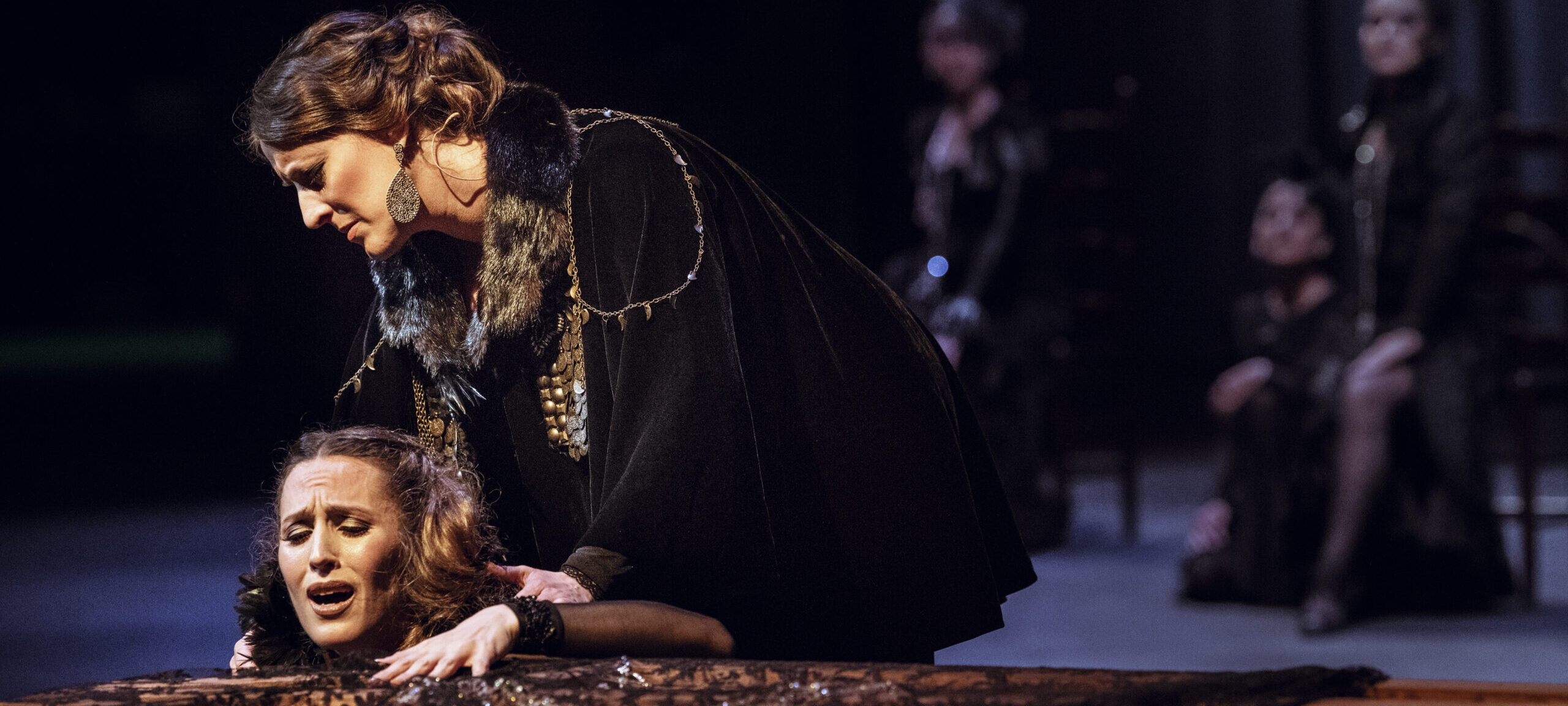
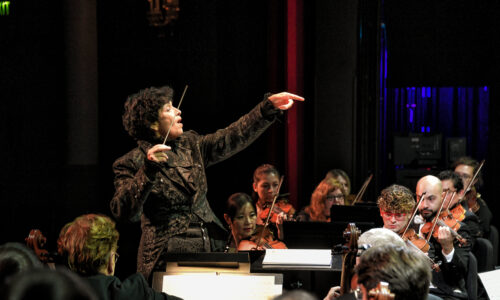
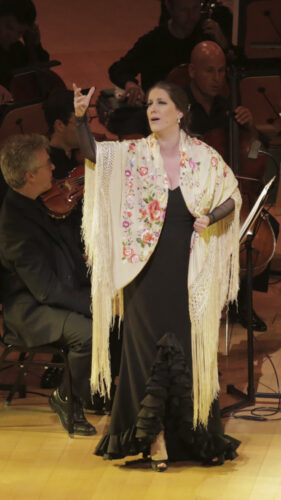
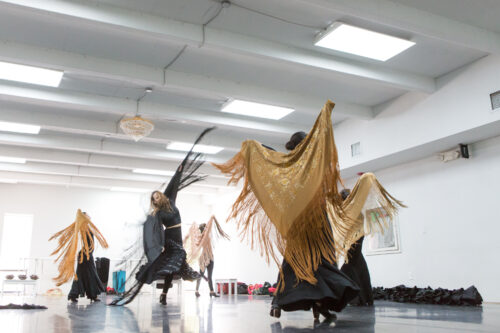
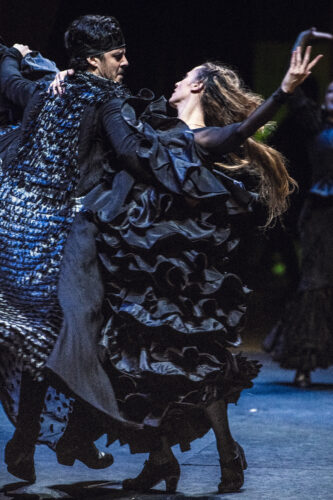
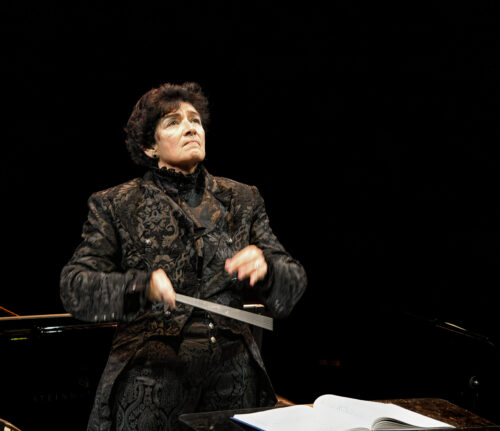


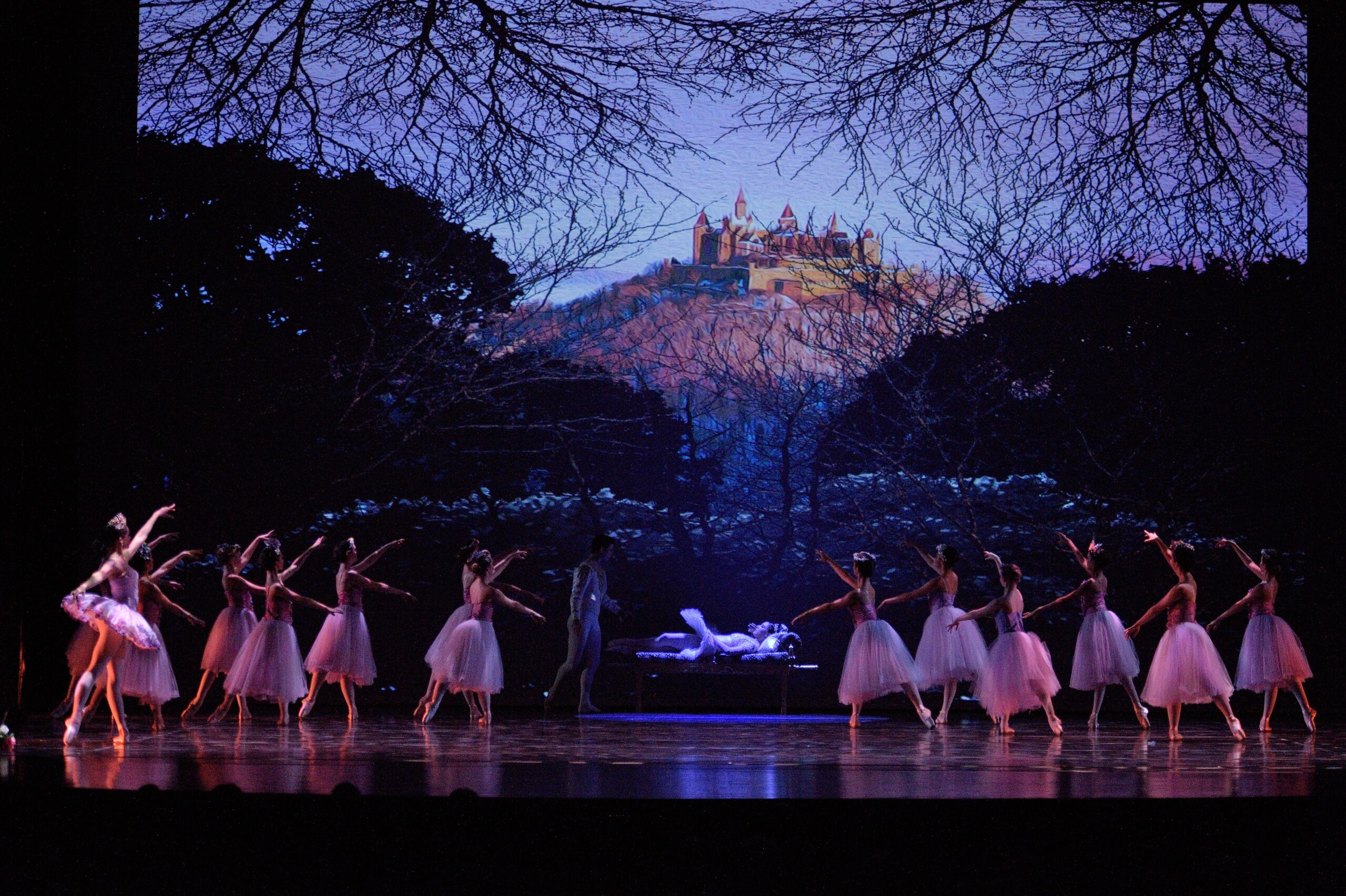
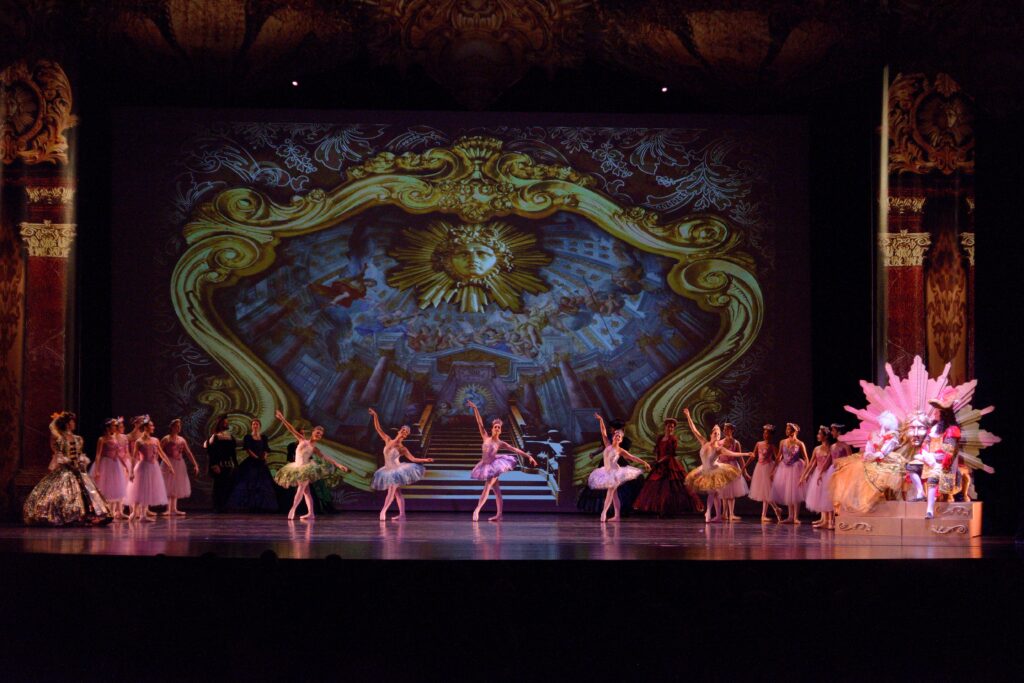
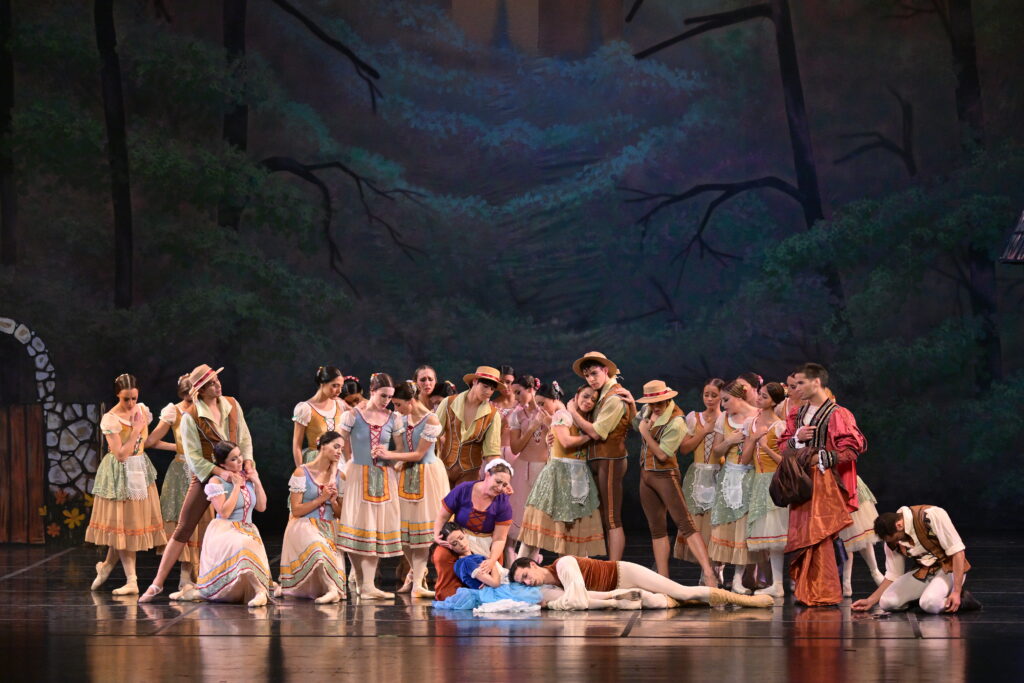
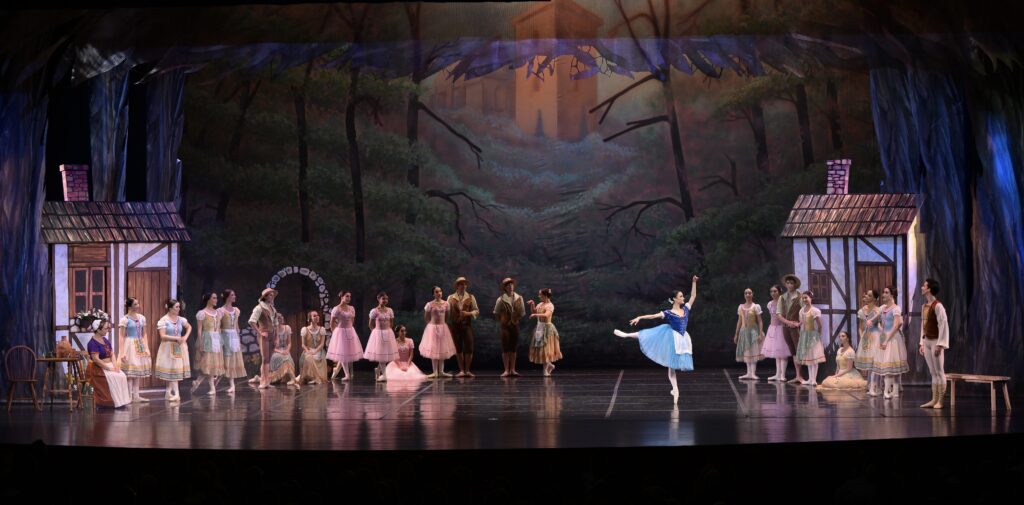
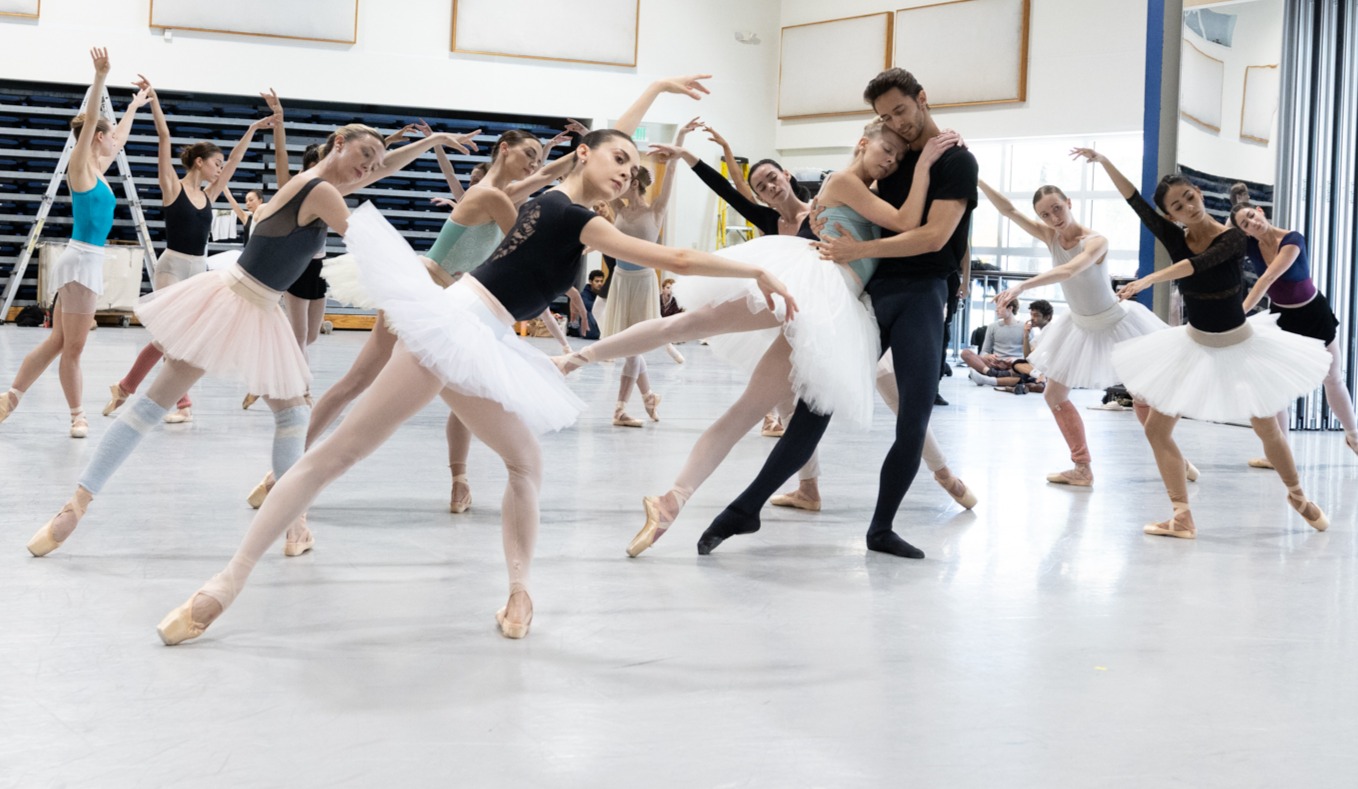
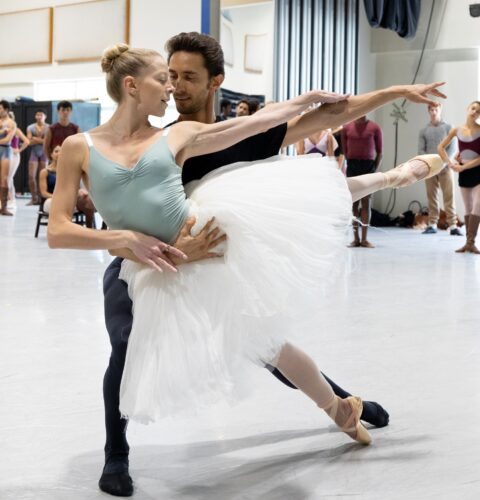
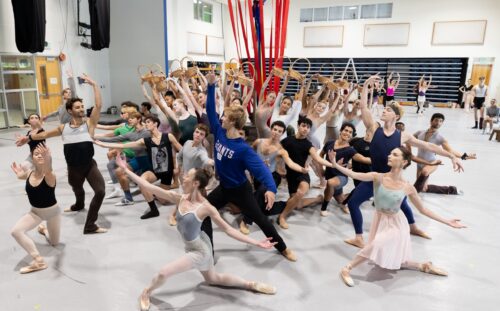

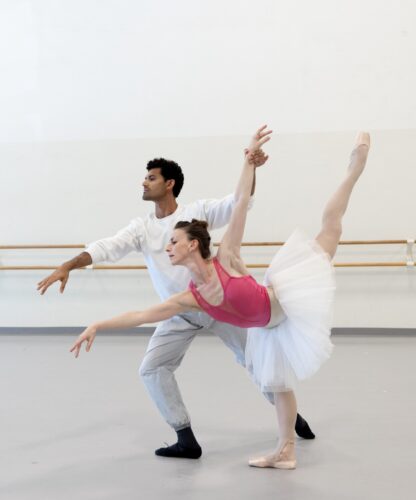
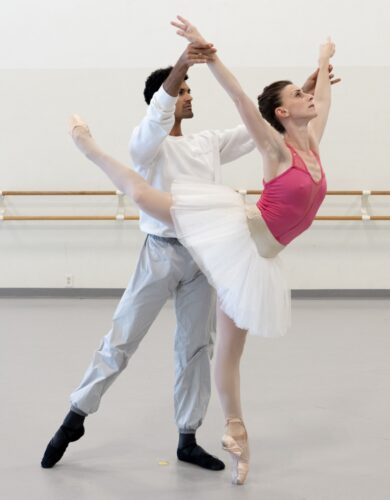
Recent Comments