Blog Article Category: Dance
Miami City Ballet’s Swan Song For A Sugar Plum Fairy In ‘Nutcracker’
Written By Guillermo Perez
December 6, 2024 at 1:25 PM
In 2007, Jennifer Lauren joined Miami City Ballet as a member of the Corps de Ballet and became a principal dancer in 2017. In the company’s production of “George Balanchine’s ‘The Nutcracker,’ ” she’ll perform her final role as Sugar Plum Fairy.
Weeks ahead of “George Balanchine’s ‘The Nutcracker,’ ” the Sugar Plum Fairy is getting ready to entertain. Her wand at hand, she has magic to command. At her palace in the Land of the Sweets the decor glows, a caravan of dance is about to be received.
Since 1990, Miami City Ballet has brought a number of noteworthy ballerinas into the story’s lead. But the upcoming shows feature an incomparable Sugar Plum Fairy at a special juncture. After 27 seasons as a professional dancer, the last 18 at MCB, principal ballerina Jennifer Lauren is retiring from the company.
Miami City Ballet will present “George Balanchine’s ‘The Nutcracker,’ ” opening Friday, Dec. 13 through Tuesday, Dec. 24 at the Adrienne Arsht Center for the Performing Arts in Miami. (Lauren dances the role at the Arsht at 7 p.m. Tuesday, Dec. 17 and noon on Sunday, Dec. 24. Before she performs in Miami, Lauren will be a guest artist dancing the role in her hometown of Tuscaloosa. Other dancers performing at MCB as Sugar Plum Fairy include Dawn Atkins, Hannah Fischer, Samantha Hope Galler, Ashley Knox, Jordan-Elizabeth Long and Taylor Naturkas.)

Impish projections by Wendall K. Harrington along with designers Isabel and Ruben Toledo’s costumes and set are the hallmarks of MCB’s production with its made-for-Miami look sparked by company artistic director Lourdes Lopez in 2017. Peter Tchaikovsky’s score, often the soundtrack to our yuletide chores and cheer, will sound livelier than elsewhere coming from the company orchestra.
Need a rundown on the Sugar Plum Fairy —or most things “Nutcracker?” Lauren’s history with the ballet makes her an encyclopedia of such knowledge.
“When I talked to Lourdes about retiring,” says Lauren, “we looked over the season, and ‘The Nutcracker’ stood out as near and dear to my heart.” The role of Sugar Plum Fairy loomed perfect for a farewell.
Familiar and meaningful—Lauren likes to compare “The Nutcracker” to cherished visits from a loved one—the work has the status of a cultural ritual. And while studying ballet in her native Alabama and participating in Tuscaloosa Community Dancers’ annual “Nutcracker,” the young dancer fell under the fairy’s spell.
“I’ve looked up to this ballet since I danced as a Polichinelle at the age of eight,” says the Tuscaloosa native. Having watched countless shows and moved through different roles in the Christmas favorite, by the time she performed the role as a professional at Alabama Ballet—the Birmingham-based company among a select few to do the Balanchine “Nutcracker,” the same one as MCB —Lauren says she “knew the choreography, the music, inside out.”

Jennifer Lauren as Sugar Plum Fairy in “George Balanchine’s The Nutcracker’ ” in a role she first danced with the company in 2017. Choreography by George Balanchine. © George Balanchine Trust. (Photo by Alexander Izilieav)
She carried that know-how joining the corps at MCB in 2007. Many Snowflakes, Flowers, sweets and dancing dolls later—all merry roles throughout “The Nutcracker”—Lauren plugged back into her wand power in 2013, when director Lopez—just entering her second year at the helm—assigned Sugar Plum Fairy to the ballerina for the first time at her current company.
“This opportunity felt huge and I was ecstatic,” says Lauren, appreciative that Lopez paired her with Cuban-born principal Reyneris Reyes as the Cavalier, his experience and affability bolstering the ballerina’s artistry.
Other Cavaliers thereafter joined forces with Lauren to put luster on the pas de deux, which is the culmination of “The Nutcracker,” imposing without being bombastic, a silky bespoke fit for the ballerina.
Former MCB principal Renan Cerdeiro, a long-time dance partner of Lauren’s in many memorable ballets, says, “The way Jennifer approaches her Sugar Plum had an influence on me. I used to go for a more stern, regal look. But she’s so sweet and lighthearted that taking her hand and looking into her beautiful blue eyes on stage let me put more sparkle in the dance. After all,” he says with a laugh, “the Cavalier is probably made of candy.”
It’s not that dance technique here brings empty calories but that it indulges the illusion of a sugar high. As Cerdeiro points out, “Balanchine’s choreography (created in 1954) is packed with steps, a greater challenge for me than more traditional versions.”

Former MCB principal Renan Cerdeiro, right, has been a long-time dance partner of Jennifer Lauren’s in many memorable ballets shown here in a previous production of “George Balanchine’s ‘The Nutcracker.’ ” Choreography by George Balanchine. © George Balanchine Trust. (Photo by Alexander Izilieav)
In this, Lauren’s interpretations have evolved. “When I was younger, I was just thrilled to get out there and do what I’d dreamed of since I was a little girl. As I grew into the dancer I am today, it became less about executing steps and more about presence, how I carried myself. Sugar Plum Fairy is not simply about a smile and looking pretty. I’m there to tell a story. With so many eyes on me, it’s a huge responsibility.”
The character initially sets a tone of wonder mingling with angels—here it’s children from MCB School—opening her realm, her heart, soon to welcome Marie and the prince into a world alien to discord. Sugar Plum Fairy oversees dances with regional flavors which are treats for the soul as much as the senses. When she takes center stage in her iconic pas de deux, says Lauren, “The music is quite luxurious, and that’s where she confirms her leadership.”
And the ballerina must beam with generosity, and for that, Lauren tells us, she draws inspiration from her mother. Betty Quarles has always been there for her younger daughter: to drive her to dance classes without a miss while encouraging academics; to not just attend shows from day one but, at some points, to make them look better by sewing production costumes; to greenlight her apprenticeship at a young age away from home and eventually to cheer on her daughter’s career—hand in hand with Jennifer’s late father, Ronnie, —with trips to Miami to watch many a “Nutcracker.”
“It was always so much fun afterward to spend Christmas with her in her small South Beach apartment,” says Quarles, their dear company including Blake, her daughter’s husband since 2009 and Jennifer’s pug Sophie, once even featured in “Pointe” dance magazine.

Miami City Ballet School students in “George Balanchine’s The Nutcracker’ “. Choreography by George Balanchine. © George Balanchine Trust. (Photo by Alexander Izilieav)
Though Quarles realized ballet was Jennifer’s oxygen early on, she maintains she’s mostly wanted her daughter “to be a well-rounded human being.” That’s what she communicates to all those ballet mothers who often ask her how best to support their children in the art form.
For her farewell, Lauren is dancing Sugar Plum alongside Stephen Loch, her Cavalier since only last season. Yet he underscores his deep level of comfort with the ballerina. Both dancers grew up in Southern towns (he’s from Denton, Texas) and worked hard for their ballet dreams away from glamour hubs. Tackling choreography, they’re highly attuned (he came to MCB as a principal in 2021 from Seattle’s Pacific Northwest Ballet, another Balanchine-based company), and their temperaments harmonize.
He says, “When we’re in the studio, there’s no pretense. Jennifer is very grounded, and there’s great energy between us. It’s been magical to find a partnership like ours at this time in my career.”

Miami City Ballet dancers in the company’s production of “George Balanchine’s ‘The Nutcracker.’ ” Choreography by George Balanchine. © George Balanchine Trust. (Photo by Alexander Izilieav)
In a delightful turn of planet ballet, on Dec. 1— Lauren’s 43rd birthday—they performed Sugar Plum and the Cavalier as guests at Lake Cities Ballet Theatre in Lewisville, Texas, where Loch as a five year old first took the stage in the party scene. Likewise marking a homecoming, Lauren has often returned to dance Sugar Plum with Tuscaloosa Community Dancers. She returns in its production as headlining artist from Thursday, Dec. 12 through Sunday, Dec. 15 where her Cavalier is Rainer Krenstetter, another former MCB principal.
And that part of her farewell seems like a signpost in a future direction.
“Dancing Sugar Plum has allowed me to be a positive role model for many young, aspiring dancers,” says Lauren. “And over the past five years, I’ve been teaching a lot more. Now I can enhance that. No matter what I do, I’m going to be sharing my knowledge.”
WHAT: Miami City Ballet’s “George Balanchine’s The Nutcracker”
WHEN: 7 p.m. Friday, Dec. 13 and Saturday, Dec. 14; 7 p.m. Tuesday, Dec. 17-Saturday, Dec. 21 and Monday, Dec. 23; 6:30 p.m. Sunday, Dec. 15 and Sunday, Dec. 22; 2 p.m. Saturday, Dec. 14, Friday, Dec. 20, Saturday, Dec. 21, and Monday, Dec. 23. 1 p.m. Sunday, Dec. 15 and Sunday, Dec. 22; noon, Tuesday, Dec. 24.
WHERE: Adrienne Arsht Center for the Performing Arts, 1300 Biscayne Blvd., Miami
COST: $43-$264
INFORMATION: 305-929-7010 or miamicityballet.org
ArtburstMiami.com is a nonprofit media source for the arts featuring fresh and original stories by writers dedicated to theater, dance, visual arts, film, music and more. Don’t miss a story at www.artburstmiami.com.
No posts found
Five Years Strong: ‘Men Who Dance’ Festival Showcases the Best of Male Dance
Written By Sean Erwin
November 25, 2024 at 1:18 PM
Arts Ballet Theatre of Florida dancers in“Vuelo” by ABTF artistic director and choreographer, Vladimir Issaev. The company will be part of this year’s “Men Who Dance” festival at the Broward Center for the Performing Arts, Fort Lauderdale, and featuring more than 40 dancers representing more than 20 counties on Saturday, Nov. 30 and Sunday, Dec. 1. (Photo courtesy of Simon Soong).
In 2020, Rafi Maldonado-Lopez, artistic director of the “Men Who Dance” all-male dance festival and founder of the Inter-American Choreographic Institute, introduced the inaugural program as a bold initiative to challenge stereotypes surrounding male dance.
Starting with a modest group of 15 performers, the festival has grown into a prominent event. This year’s program at Fort Lauderdale’s Broward Center for the Arts, which features many Miami-Dade County companies, features more than 40 dancers accompanied by a chamber music ensemble and opera singers.
Just back from Mexico, Maldonado-Lopez speaks passionately about his vision for the South Florida dance scene. “I want artists to be able to raise families,” he says. “When I worked in dance in New York, Boston and Minnesota, I didn’t have to do anything else – just dance.”
For Maldonado-Lopez great art takes both shrewd business instincts and artistic talent.

Dancers from AV Dance perform at the 2023 Men Who Dance Festival. (Photo courtesy of Simon Soong)
“I feel we had to educate the artist on how to speak about why art is important. How are you going to convince others that art is important if you don’t know how to explain how it is necessary?” explains Maldonado-Lopez. “We are challenged with creating a new narrative and to look at this differently. Let’s face it – artist rich communities enjoy higher real estate values.”
This year’s festival features an impressive lineup of groups and dancers representing more than 20 countries. Highlights include performances by Miami City Ballet, Cuban Classical Ballet of Miami, Dimensions Dance Theatre of Miami, AV Dance (Anthony Velazquez), The National Dance Company of Mexico, Tango Out, Dance NOW! Miami, Florida Grand Opera, and the Sanctuary of the Arts Ensemble.
Reflecting on his own journey, Maldonado-Lopez says, “I’ve been lucky at the Sanctuary of the Arts,” referring to the fine arts campus in Coral Gables he co-founded in 2019 with lawyer and President of Colson Hicks Eidson, Mike Eidson. “What we’ve been trying to do is keep people here and keep them from leaving. We’re still this gig-based economy (in South Florida dance), and other than dancers at Miami City Ballet, think of one (South Florida) organization where you can get a salary for being a dancer.”

Dancer Argenis Montalvo of the National Dance Company of Mexico interprets “Pavana.” (Photo courtesy of Simon Soong)
Although a few South Florida companies provide stipends for performances, most dancers in the area must take on additional jobs to cover their living expenses.
The fifth iteration of the MWD festival offers Maldonado-Lopez a dual opportunity: to expand its reach and revisit highlights from its formative years.
“For the first time, we’ll have five men from the National Company of Mexico performing,” he says. “Arts Ballet Theatre of Florida is bringing back one of their larger pieces, and I’m reviving ‘The Sixth Day,’ the original opening work from the first festival, symbolizing the day man was created.”
He enthusiastically says that Gabriel Lorena will be featured.
“(He’s) a former student of mine from Miami City Ballet who now dances at Kansas City Ballet. He’ll be premiering a new work choreographed specifically for the festival.”
Jennifer Kronenberg and husband Carlos Guerra, co-founders and co-artistic directors of Dimensions Dance Theatre of Miami, form another cornerstone of the festival. Former principal dancers with Miami City Ballet, Kronenberg and Guerra have been integral to the festival since its beginning.
Fresh off their company’s season opener at the Dennis C. Moss Cultural Arts Center in Cutler Bay, Kronenberg is frank about the challenges South Florida dance companies face with unexpected state cutbacks in arts funding and the high cost of living here that impacts the availability of male dancers.

Tango Out’s “Tango Twins” – Nicolás & Germán Filipeli – perform a milonga at a previous Men Who Dance Festival. (Photo courtesy of Simon Soong)
“There’s a shortage of male dancers in South Florida,” says Kronenberg. “Men in this field are hot commodities and it’s hard to keep people here when the cost of living is so high.”
Kronenberg sees in the festival an ongoing opportunity to shift people’s perceptions around male dance and to prod audiences to acknowledge that ballet is an artform for both genders. “I think that just like anything else it (the festival) helps open people’s eyes to what dance is in the 21st century and where we are trying to evolve it – the men are a big part of that. People go to the ballet thinking that ballet is woman, and the MWD experience provides something different than what most people are used to.”
Like Kronenberg and Guerra, Miami City Ballet soloist and choreographer Ariel Rose has been a founding and ongoing contributor to the festival.
“I think everyone who contributes to the show contributes what they think male dancing means to them,” says Rose about the festival’s value. “I’m still dancing professionally, and so I choreograph what I think is wonderful about male dancing with its musicality, grace and strength.”
This year, Rose brings his newest work, “Duo Tasso”, to the festival, a piece that premiered in March at the New World Center during the symphony’s “Cello and Dance” program and was originally performed by Miami City Ballet dancers, Renan Cerdeiro and Satoki Habuchi.

Dancer Kaique Israel Barbosa of the Sanctuary of the Arts Choreographic Ensemble solos in “Narcissus” by Cuban Classical Ballet of Miami (CCBM) choreographer and artistic director, Eriberto Jiménez. (Photo courtesy of Simon Soong)
Rose set this pas de deux to the third movement of a cello duet by contemporary Italian composer Giovanni Sollima, titled “Il Tasso” (“The Badger”). Inspired by the cello duet’s interplay, where the instruments alternately claim the melody and bass lines, Rose crafted his work to mirror this musical exchange.
“It sounds like a race to the finish, and so I have the two dancers chase one another during the piece,” explains Rose. “One dancer is one count behind the other, and then the roles shift, with the other dancer taking the lead.”
Rose sees in the festival as a space for presenting diverse expressions of male dance. “I am very proud of where this show has grown from, and I get such good feedback from fathers who bring their sons to the show. This is as wide a genre show as you can get. You are probably going to walk away loving at least one thing.”
WHAT: “Men Who Dance” produced by the Inter-American Choreographic Institute
WHERE: The Amaturo Theater at the Broward Center for the Performing Arts, 201 SW 5th Ave., Fort Lauderdale
WHEN: 8 p.m., Saturday, Nov. 30 and 3 p.m., Sunday, Dec. 1
COST: $25, $35, $45
INFORMATION: (954) 462-0222 or BrowardCenter.org
ArtburstMiami.com is a nonprofit media source for the arts featuring fresh and original stories by writers dedicated to theater, dance, visual arts, film, music and more. Don’t miss a story at www.artburstmiami.com.
No posts found
‘Huang Yi & KUKA,’ A Dance Duet Of Man and Robot, at Live Arts Miami
Written By Carolina del Busto
November 18, 2024 at 7:31 PM
Taiwanese dancer, choreographer, and inventor Huang Yi brings his tantalizing performance of “Huang Yi & KUKA” to Miami for two nights on Friday, Nov. 22, and Saturday, Nov. 23, at the Koubek Center as part of Live Arts Miami. (Photo by Summer Yen/courtesy of Live Arts Miami)
A robot as a dance partner is perhaps not the first idea that comes to mind for a creative type. As for Taiwanese dancer, choreographer, and inventor Huang Yi, a robot is precisely the type of partner he’s always envisioned.
Yi brings his tantalizing performance of “Huang Yi & KUKA” to Miami for two nights on Friday, Nov. 22, and Saturday, Nov. 23, at the Koubek Center.
The piece is part of Live Arts Miami’s Future Earth series, where the mission is to present community performances that explore the intersection of art, technology and innovation, and the environment.
“I think what we’ve learned in this Future Earth series is that there’s just far more questions than answers,” says Live Arts Miami executive director Kathryn Garcia. “And that’s an okay thing. That’s a good place to be. One of the reasons we wanted to put this forth as an offering for the community is to create spaces where we could engage in some of these discussions and ask the questions like, ‘What does this all mean for the future?’

Dancers Tai Yi-Fen and Chen Chao-Li in Huang Yi’s “Huang & Kuka” coming to Live Arts Miami in its Miami premiere on Friday, Nov. 22 and Saturday, Nov. 23. (Photo by Huang Yi/courtesy Live Arts Miami)
“Huang Yi & KUKA” is the season closer for the Future Earth series and Garcia believes it is a special way to tie the notions of art, innovation, and climate awareness together since Yi has been experimenting in this space for many years.
“That’s why artists are here,” says Garcia. “To help us key into our thoughts, our emotions, the questions we have about the world we live in. So this performance is a spectacular outlet for that.”
In addition to his performance at the Koubek Center, Yi will be in conversation with artist Natasha Tsakos as part of a Miami Book Fair panel at noon on Saturday, Nov. 23. Inside the AI Center, Building 2, first floor, at 300 NE Second Ave., the two will discuss the intersection of creativity and how innovations are transforming artistic practices.
In “Huang Yi & KUKA,” the Taiwanese choreographer attempts to tackle a few not-so-simple questions himself. He explains how he was inspired by the idea of how humans and robots can dance together.

Each minute of choreography for KUKA took hours of programming for performer Huang Yi. (Photo by Summer Yen/courtesy of Live Arts Miami)
“When a robot gains a way to see, how does it view humans, how does it view itself? How does it perceive dance? And what else does it see?,” writes Huang in an email for the Artburst interview done through a translator. “I hope to provide the audience with different perspectives from various angles, prompting collective reflection.”
While complex in the questions the dance provokes, the story itself deals with the simple notion of life — and creating life. It’s as if Yi is constructing his partner on stage for everyone to see and the audience is also seeing moments through KUKA’s point of view.
The entire performance is like a conversation between humans and robotics. Yi positions the routine to be told in segments with different dancers joining him on stage. “In one segment, I act like a doctor,” he reveals. “As I’m installing KUKA’s eyes, which are cameras, the audience can see in real-time what KUKA sees through projections on stage.”
As KUKA comes alive on stage, the audience experiences its birth. The robot essentially wakes up and starts to take in everything around it — Yi’s hands, his legs, then later its own metal hands and metal legs. It’s gaining a sense of self awareness that is crucial to life on earth.
Yi hopes “Huang Yi & KUKA” will resonate differently for everyone, which is part of the intent behind the piece, he says. When viewing the performance, the inventor recommends entering the theater with a clear, open mind. “As long as you empty your mind and enter like a blank sheet of paper, everyone can let the work leave its own unique mark on the blank page in their heart.”
As for the incentive behind Yi studying robotics, the dancer refers to his childhood. He recalls how he and his sister were to behave like model children in order to not stress their parents. In these formative years, he says he felt almost like a robot, acting in a very precise, mechanical fashion.

Dancer Hu Chien dances with a robot in “Huang Yi and KUKA” (Photo by Huang Yi/courtesy of Live Arts Miami)
“This makes me particularly empathetic toward robots because, like me, robots never refuse anyone’s requests. Therefore, in ‘Huang Yi & KUKA,’ there are many moments where KUKA and I are like mirror images of each other. I project my movement qualities onto KUKA; KUKA learns my movements; we become each other.”
He further explains their dance sequence is like a duet between his physical self and his mechanical self. KUKA’s programming, after all, is an extension of its programmer.
The smoothness of each of KUKA’s movements is stunning. The precision in the mechanics is completely awe-inspiring. For each minute of choreography for his robot, Yi spends hours working on the programming. The piece itself has been in the works for over a decade. Yi explains how as technology advances, he incorporates the new changes into his programming for KUKA and into the performance.
“The work progresses alongside technological developments,” he says. “Some technologies used in the current piece didn’t exist ten years ago. Whenever I accumulate ideas to a certain point, I might add new segments or elements.”
Whereas some see art and technology as opposing forces, “Huang Yi & KUKA” brings together the two beautifully and seamlessly.

“Huang Yi & KUKA” is meant to stir up questions about the intersection of art and technology. (Photo by Summer Yen/courtesy of Live Arts Miami)
“I believe that both art and technology are about exploring the essence and limits of things,” says Yi.
“Science explores the principles of how everything operates, thereby creating advancements that positively benefit human society. Art, through exploring human thought and inner essence, distills each era’s interpretation of beauty, becoming nourishment for the next generation of artists.”
WHAT: Live Arts Miami Presents “Huang Yi & KUKA”
WHERE: Koubek Center Theater, 2705 SW 3rd St., Miami
WHEN: 8 p.m., Friday, Nov. 22 and Saturday, Nov. 23
COST: $35
INFORMATION: (305) 237 3010 or liveartsmiami.org
ArtburstMiami.com is a nonprofit media source for the arts featuring fresh and original stories by writers dedicated to theater, dance, visual arts, film, music and more. Don’t miss a story at www.artburstmiami.com.
No posts found
Dimensions Dance Theatre of Miami And The Facets of Contemporary Ballet
Written By Sean Erwin
November 11, 2024 at 12:37 PM
Dimensions Dance Theatre of Miami dancers in “Chopin Variations” by choreographer Samuel Kurkjian. The company performs on Saturday, Nov. 16 at the Dennis C. Moss Cultural Arts Center, South Miami. (Photo courtesy of Simon Soong, courtesy of Dimensions Dance Theatre of Miami)
Since its founding in 2016, Dimensions Dance Theatre of Miami has consistently spotlighted new ballets created by contemporary, cutting-edge choreographers in an art form that often showcases works created centuries ago.
The company’s Saturday, Nov. 16 program at the Dennis C. Moss Cultural Arts Center features three premieres: The Miami debut of Samuel Kurkjian’s “Chopin Variations,” the company premiere of “Something to Remember You By” by Chicago-based choreographer Stephanie Martinez, and “Surrender,” a poignant duet by Jerry Opdenaker.
The evening closes with a high-energy reprisal of “Imagined Notions” by Yanis Pikieris, DDTM’s artist-in-residence.

DDTM dancers perform, “Imagined Notions” by choreographer, Yanis Pikieris. (Photo courtesy of Simon Soong, courtesy of Dimensions Dance Theatre of Miami)
“If I had to title the program I might name it ‘Facets’ because I think each work represents a different facet of what ballet has become in the 20th century and a hint at where it’s going,” explains Jennifer Kronenberg, who is co-artistic director of the company with husband Carlos Guerra.
Kurkjian’s “Chopin Variations” is the most traditional work in the forward-leaning program. Set to the piano solos of Polish composer, Frédéric Chopin (1810-1849), the 14-minute work features DDTM dancers Emily Bromberg, Maikel Hernandez, Chloe Freytag, Mayrel Martinez, Selah Jane Oliver, Paulina Zambrana, Jessica Arechavaleta and Amelia Rouff.
Kurkjian joined Boston Ballet in 1968 serving as a principal dancer and the company’s first resident choreographer before teaching at the Walnut Hill School in Boston until his death in 2013.
“Chopin Variations” finds its way into the DDTM program through its relationship with Ballet Vero Beach. Adam Schnell, founder and artistic director of BVB, attended the Walnut Hill School and was Kurkjian’s student. Schnell cites the reason for the choreographer’s enduring relevance in his teacher’s musicality.
“Sam studied choreography with George Balanchine while on a Ford Foundation fellowship,” says Schnell referring to the legendary New York City Ballet artistic director and choreographer. “They (Balanchine and Kurkjian) are very similar in the way they break down steps and energies and accents.”
Co-artistic director Guerra says that when he first saw Kurkjian’s piece it recalled his own time dancing “Allegro Brillante,” referring to the Balanchine masterwork.
“All my memories of dancing Balanchine works came flooding back. For some of my dancers like Emily and Chloe,” he said referring to DDTM dancers, Emily Bromberg and Chloe Freytag, “this makes them so happy since they have also been Balanchine trained at Miami City Ballet.”

DDTM dancers Emily Bromberg and Maikel Hernandez dance “Chopin Variations” by choreographer, Samuel Kurkjian. (Photo courtesy of Simon Soong, courtesy of Dimensions Dance Theatre of Miami)
A late addition to the November program is the DDTM debut of “Surrender,” a poignant duet set to the music of Mark O’Connor and choreographed by Jerry Opdenaker, artistic director and founder of Palm Beach County’s O Dance.
“(Jerry) was inspired by a painting by Nigel Van Wieck,” says Kronenberg. Van Wieck is a contemporary American realist artist whose paintings are frequently compared to those of Edward Hopper. “The painting is of a couple with the man standing in silhouette in the foreground and a woman sprawled in the background.”
The choreographer conceived the duet as a conversation between the two leading up to the moment captured in the painting and the ballet closes by recreating its scene. Melissa Verdecia and Rafael Ruiz del Vizo will dance the work for the company.
The program also includes the company premiere of “Something to Remember You By.” Martinez originally created “Something to Remember You By” for Tulsa Ballet II, the semi-professional company of Tulsa Ballet, which premiered the work in September 2021. The ballet features twelve dancers – seven women and five men – and is set to music by Johann Sebastian Bach, Frédéric Chopin, Felix Mendelssohn and Pyotr Ilyich Tchaikovsky.
The inspiration for the piece was the choreographer’s grief over the loss of her mother. “I almost canceled the commission with Tulsa Ballet II because it occurred just weeks after (her passing),” she explains. “Then I decided that I am just going to do this because I need to. I was deeply myself in that moment and wanted to celebrate what happens to a person when they are going through a stage of grief.”
Martinez has worked previously with Joffrey Ballet, Ballet Hispanico and Nashville Ballet, among others. In 2020, she launched PARA.MAR Dance Theatre in Chicago, dedicated to amplifying diverse voices in contemporary ballet.
The November program closes with “Imagined Notions,” a 25-minute work in five movements set to music by Welsh composer, Karl Jenkins, and danced by the company.

DDTM dancers strike the final pose in “Imagined Notions” by choreographer, Yanis Pikieris. (Photo courtesy of Simon Soong, courtesy of Dimensions Dance Theatre of Miami)
Last performed by DDTM in 2019 at the renowned Jacob’s Pillow dance festival in the Berkshires of Massachusetts, this high-energy piece was originally created by Pikieris in 2002 while he was with Miami’s Maximum Dance Company, which he co-founded in 1996 with David Palmer. The two are former Miami City Ballet dancers.
Both Kronenberg and Guerra say they connected viscerally with the piece as young dancers when they were beginning their careers with Miami City Ballet.
“I had just turned 18,” says Kronenberg, “and I have very vivid memories of being starstruck by some of the principal soloists and dancers in the company.”
As those dancers retired from MCB, many of them found a new home in Maximum Dance.
“Maximum was just a bouquet of superstars to me, and I wanted to be like all of them,” added Kronenberg.
The choreographer himself notes how much the piece has grown since its 2019 premiere with DDTM.
“The piece has evolved over the time I’ve had to play with it, and I adapt it to the abilities of the performers I work with,” says Pikieris. “The piece used to be a series of duets but now it’s more of a group piece. It makes fun use of large black boxes at the beginning where the ladies sit and wait for the guys who are late. When they arrive, the pure fun begins.”
WHAT: Dimensions Dance Theatre of Miami’s “Fall Performance”
WHERE: The Dennis C. Moss Cultural Arts Center Main Stage, 10950 SW 211 St., Miami
WHEN: 8 p.m. Saturday, November 16
COST: $25, $35 and $45
INFORMATION: (786) 573-5300 or www.mosscenter.org.
ArtburstMiami.com is a nonprofit media source for the arts featuring fresh and original stories by writers dedicated to theater, dance, visual arts, film, music and more. Don’t miss a story at www.artburstmiami.com.
No posts found
Sonia Franco, the flamenco dancer who is not afraid of ‘Ser.Rana,’ returns to Miami
Written By Orlando Taquechel
October 28, 2024 at 5:59 PM
Dancer Sonia Franco will present “Ser.Rana” on Saturday, Nov. 2 and Sunday, Nov. 3 at the Aventura Arts & Cultural Center. (Photo by Alberto Centella/courtesy of FUNDarte)
Like a jeweler who travels the world showing her most endearing filigree, the renowned producer and cultural promoter Begoña Fernández Pellicer (Santander, 1972) comes to Miami every year to participate in FUNDarte’s successful FL.Flamencos series, always accompanied by the most exquisite chamber flamenco “made in Spain.”
Throughout this last decade, the proposals she selected for her so-called “North American tour”—first with Fundación Casa Patas and now with Spain Flamenco Arts in association with the Federation of Andalusian Communities of Central Spain (FECACE)—have been characterized by being novel creations, often frankly risky, that have been imprinted in the memory of lovers of the genre and the general public.
“Lo Preciso’ (2023) by Rafael Ramirez, “No Borders” (2021) with Sara Perez and Ruben Puertas, “Raíz de 4” (2019) with Rafael Peral and Marisa Adame, “Reditum” (2018) by Jose Barrios and “Flamenco Frequencies” (2015) with Karen Lugo, are some beautiful examples.

This tour is also the opportunity to return to Miami for Sonia Franco. “It’s a gift that life has given me. I want to enjoy every moment.” (Photo by Alberto Centella/courtesy of FUNDarte)
This year promises to be no different, “Ser.Rana,” a show conceived and choreographed by dancer and actress Sonia Franco (Madrid, 1990), will be performed at 8 p.m., Saturday, Nov. 2 and 2 p.m., Sunday, Nov. 3 at Aventura Arts & Cultural Center.
From Spain, on Thursday, Oct. 10 (“We are leaving for Miami! From there to Puerto Rico!”), during their brief stopover at the Miami airport (“We just landed! Everything is perfect!”), while they have been going from city to city, we have kept in touch with Pellicer and Franco, exchanging questions and answers, photos and videos.
And that is when we learned about the beginnings of Pellicer’s collaboration with FUNDarte. “It was exactly in 2012. I traveled to Miami to present the show ‘Flamenco Algarabía’ by the great choreographer and dancer José Barrios,” says Pellicer. “I met Ever Chavez, and a working relationship and friendship arose that lasts until today. I hope this marriage lasts for many years. He and Carlos Caballero are the alma mater of an institution that works for and with culture in Miami.”

Sonia Franco and Alejandro Peralta at the performance of “Ser.Rana,” which took place on October 18 at Benaroya Hall in downtown Seattle. (Photo by SOUNDGLARE/courtesy of Spain Flamenco Arts)
About the North American tours, Pellicer attests that they are “an open window to an increasingly cultured public eager to discover Flamenco. Incredibly, there is enthusiasm throughout the country and warmth with which they welcome us. I come to this country every year as if I were coming home.”
After performing in Puerto Rico, they were in Seattle, Walla Walla and Portland, before returning to Miami. Next, they will perform in Washington, DC, and the final will be in Chicago. “We’ll be an average of a week in each city, so we won’t be back in Spain until mid-November,” mentions Pellicer, without a hint of nostalgia.
The morning after the tour’s first performance, Pellicer told us it was “deluxe” while Franco confessed that she felt “as if she had given birth.” Those were her words. “That’s what it really is: You bring to light a creative proposal that you have been working on all year.”
For Franco, the tour is also the opportunity to return to Miami. ” For me, it is a gift that life has given me. I want to enjoy every moment.” In 2019, she performed at the Arsht Center with the show “Sombras” by Sara Baras’ company. “It was a wonderful experience. The public welcomed us with great affection. I loved the weather, the people in the streets playing basketball with the music. It’s another world for us.”
About Franco and “Ser.Rana,” Pellicer comments that it is a sui generis proposal. “Every year, I select one-of-a-kind proposals because I believe that variety is the spice of life.”

Rosa Linares, El Pepi, Sonia Franco, Alejandro Peralta, and Cristina Soler, at the close of the performance of “Ser.Rana,” which took place on Oct. 18 at Benaroya Hall in downtown Seattle. (Photo by SOUNDGLARE/courtesy of Spain Flamenco Arts).
For her part, Franco affirms that “her” Flamenco is born from her experiences, “From my ancestors, from the influence of other artistic disciplines and from the mixture of multiple cultures with which I have collaborated throughout my career. There are many creative proposals in Spain, from the most traditional language to the most avant-garde. My line of work is inserted between these two aspects, without forgetting the tradition that must always be known and respected”.
Although its title seems to suggest that “Ser.Rana” is an anthropomorphic exercise or a work that addresses animal dysphoria, in reality, “it is an experience that transforms the movement and releases the desire to dance, like the water that cannot be contained, like the flow of the river that you have inside you and does not cease,” clarifies its creator.
The choreographer, winner of the second prize for “Solo” of the Madrid 2024 Spanish Dance and Flamenco Choreography Contest with her piece “Mujer de rojo sobre fondo gris” explains further: “The serrana is a style of flamenco, as we say in slang, a flamenco ‘palo,’ and with a serrana we open the show. So, it is a play on words. I admit frogs’ capacity to adapt to any medium, and my work has always had that characteristic. I can adapt to different languages, cultures, and styles”.
In fact, the phonetic joke in Spanish, resulting from using “serrana” (the song) and “ser.rana” (to be a frog), is lost in translation.
In “Ser.Rana,” Franco is accompanied by a guitarist, Alejandro Peralta; two cantaoras, Cristina Soler and Rosa Linero; and a percussionist, El Pepi. “They are great artists,” she exclaims,” what we affectionately say, ‘artistazos,’ a term used to identify people you respect professionally. They have an excellent background collaborating with various artists and developing their own creative projects.”

“Ser.Rana” is an experience that transforms movement and liberates the desire to dance, says Sonia Franco. (Photo by Alberto Centella/courtesy of FUNDarte).
Franco says her mission is to give her all — to give everything she has to the audience.
“When I face the stage,” she reflects,” I always aim to go one step further, be honest, face my fears, and give my love and gratitude . . .” She concludes, “I wish that the public of ‘Ser.Rana’ remember this proposal in their hearts for a long time, just as I will always keep this time in Miami in my memory.”
WHAT: “Ser.Rana” by Sonia Franco
WHEN: 8 p.m., Saturday, Nov. 2, and 2 p.m., Sunday, Nov. 3
WHERE: Aventura Arts & Cultural Center, 3385 NE 188th St., Aventura
COST: Assigned seating at Level 1 is $42, Level 2 is $47, and children 14 and younger are $35
INFORMATION: (305) 466-8002 and (786)-348-0789 and www.FUNDarte.us
ArtburstMiami.com is a nonprofit media source for the arts featuring fresh and original stories by writers dedicated to theater, dance, visual arts, film, music and more. Don’t miss a story at www.artburstmiami.com.
No posts found
Miami City Ballet’s Reimagined ‘Midsummer’s Night Dream’ Returns
Written By Guillermo Perez
October 14, 2024 at 1:01 PM
Miami City Ballet’s premiered “A Midsummer Night’s Dream” in 2016 and opens its season this year at the Arsht Center in Miami Friday, Oct. 18 and at the Broward Center in Fort Lauderdale on Saturday, Nov. 3. Above, dancers from the 2018-2019 season production. Choreography by George Balanchine © The George Balanchine Trust. (Photo courtesy of Alexander Iziliaev/Miami City Ballet)
A dream gains impact if it’s recurring. And for the third time in eight years, Miami City Ballet will regale us with one they’ve made their own. William Shakespeare first conjured it; Felix Mendelssohn scored it; and eventually George Balanchine choreographed it.
But now MCB’s “A Midsummer Night’s Dream” returns with its unique, wondrously subtropical setting when it opens at the Adrienne Arsht Center in Miami on Friday, Oct. 18 through Sunday, Oct. 20. And then in Fort Lauderdale at the Broward Center for the Performing Arts on Saturday, Nov. 2 and Sunday, Nov. 3.
Artistic director Lourdes Lopez had for years harbored a dream herself: to bring a fresh look to Balanchine’s1962 narrative masterpiece, animated by the choreographer’s intimate love of both the play and the music.

Brooks Landegger and Dawn Atkins rehearsing “A Midsummer Night’s Dream” being performed as this season’s Miami City Ballet opener. Choreography by George Balanchine © The George Balanchine Trust. (Photo courtesy of Alexander Iziliaev/Miami City Ballet)
As her company’s 30th anniversary approached in 2016, Lopez took the initiative to add to the repertory not just a work that could become a programming mainstay but one also reimagined to reflect South Florida.
Having received the green light from the Balanchine Trust, Lopez turned to widely commissioned, award-winning artist Michele Oka Doner—her local roots as strong as a banyan’s, her creative spirit sun-pierced and salty breeze-swept—to re-design the ballet’s set and the costumes. MacArthur Fellow and Academy Award-winning scriptwriter Tarell Alvin McCraney, born in Miami’s Liberty City, came in to guide dancers through the dramaturgy. And New York-based theatrical projection designer, Wendall K. Harrington, who has a lengthy resume that spans decades designing Broadway, opera, ballet and concerts, created the spectacular projections.
Oka Doner recalls the initial meeting with Lopez from which sprung the aquatic theme the artist proposed for her first foray into ballet design. “Lourdes and I had a wonderful dinner at the Raleigh Hotel (in Miami Beach) under a seagrape tree. There were leaves and sky above us in an atmosphere of conviviality so much like Eden.”
This boded well for the project since Oka Doner—a native of Miami Beach, where her father served as mayor—has a keen eye for the shapes and textures of fauna and flora in the region’s coastal environment, which has captivated her since childhood and continues to inform her art.
“There’s still a lot of magic in our world, even with all its concrete and asphalt, ” observes Oka Doner, insisting we just have to know where to look and how to find it.

Lauren Fadeley, Renato Penteado and Miami City Ballet dancers in the 2018-2019 season’s “A Midsummer Night’s Dream.” Choreography by George Balanchine © The George Balanchine Trust. (Photo courtesy of Alexander Iziliaev/Miami City Ballet)
The Athenian forest of “A Midsummer Night’s Dream,” along with the royal court and whimsical characters—who owe no allegiance to a particular geography—were whisked off to our littoral and life below the Atlantic would be the source for the ballet’s oneiric realm. The overall re-design arose from an investigative process that’s long characterized the artist’s creative approach.
“My science gene is very strong,” says Oka Doner. She relates how one of her meticulously designed high school science projects prompted the teacher to direct her to the art room. Throughout her career, those disciplines have never been far apart.
The action of the ballet, extraordinary and complicated, obeys its literary source. And Balanchine’s steps, while now leaving their imprint beachside, remain intact. They impart clarity as two sets of lovers, at first thwarted, are blissfully matched; as royals Theseus of Athens, and Hippolyta, Queen of the Amazons, forge an amorous alliance; and fairy crown-heads Titania and Oberon, dueling over a changeling are finally reconciled—though not before Puck, an agent of magic, spreads plenty of mirth and mischief all around.
Oka Doner says she watched many renditions of the ballet and—not surprising since her father was also a violinist—had heard the music early on. In addition to Felix Mendelssohn’s Overture (from 1826) and Incidental Music for Shakespeare’s play (including the well-known “Wedding March,” from 1842), Balanchine used excerpts from other works by the composer to sustain the story.
“I was able to pick up the tropes of the ballet,” says Oka Doner. Always an adventure for her, the ongoing research proved thrilling.

Miami City Ballet dancers in the 2018-2019 season’s “A Midsummer Night’s Dream.” Choreography by George Balanchine © The George Balanchine Trust. (Photo courtesy of Alexander Iziliaev/Miami City Ballet)
A joint excursion with Lopez to the University of Miami Rosenstiel School Marine Invertebrate Collection provided inspiration through the myriad forms in its multitude of specimens. Oka Doner also drew ideas from her own photos of submarine life at the Port of Miami. For such visual bounty to take practical shape in fabric type, cut and colors, Lopez introduced Oka Doner to New York costume makers. The artist is still amazed at the skills of Haydee and Maria Morales, who led the construction of such shimmering marvels as luxurious headdresses and beaded bodices in the MCB costume shop.
Among Oka Doner’s favorite confections are the seahorses—here a substitute for Hippolyta’s hounds (other regional transformations populate this, including having Bottom turn into a manatee). She liked showing off Puck, who wears a short, shoulder-baring tunic, “jumping in his golden seaweed.”

Rui Cruz rehearsing “A Midsummer Night’s Dream” for Miami City Ballet. Choreography by George Balanchine © The George Balanchine Trust. (Photo courtesy of Alexander Iziliaev/Miami City Ballet)
For Rui Cruz, who’ll portray him, that look helps release an irrepressible spirit. His character makes many entrances, spanning human and fairy worlds, and his dancing is speedy and bouncy—a great fit for Cruz, his turns and leaps a specialty. He learned of the casting during summer break in his hometown of Levi Gasparian, in the state of Rio de Janeiro. As an Afro-Brazilian his sense of honor and responsibility was immediate.
“I was very emotional sharing the news with my mom,” he says, knowing the importance of doing a role originated by Arthur Mitchell, the first African-American dancer at New York City Ballet and later founder of Dance Theatre of Harlem.

Sargassum seaweed lends its golden look to Puck’s pearled costume of soft leather and organza, adding beauty to his mischief in a costume design by Michele Oka Doner. (Photo courtesy of Michele Oka Doner)
“Mitchell was so honest in his dancing, he made Puck believable,” adds Cruz, who says he’s working hard to do right by his role model.
Underscoring the importance of having notable ballets return to the stage for new generations to embrace, Cruz is among many company members performing their parts for the first time. Equally lucky are Taylor Naturkas and Brooks Landegger—though last spring they had the special opportunity to dance the work’s second-act divertissement, which they’ll reprise here, as guests of New York City Ballet during that company’s 75th anniversary. Now they’re expanding their acting range among the quartet of young lovers.
Set to play the frustrated Helena, Naturkas has gone through her usual preparation—reading, watching videos—but she’s especially profited from coaching by Lopez, who herself acknowledges having grown artistically through various roles in “Midsummer” during her time at NYCB, culminating in the rank of principal dancer.
“She tells me to be normal,” says Naturkas. “Though this has a dream quality, emotions should read naturally. Helena’s desperate because her love interest Demetrius rejects her. Everyone relates to that.”

Taylor Naturkas leaps through the air in rehearsal for Miami City Ballet’s “A Midsummer Night’s Dream.” Choreography by George Balanchine © The George Balanchine Trust. (Photo courtesy of Alexander Iziliaev/Miami City Ballet)
Helena’s chasing after her man and, at one point, scurrying away from another (Lysander)—romantics fear not, through Puck’s ministrations all heartbeats harmonize in the end—must also let comedy shine through.
To play Lysander and dance the divertissement, Landegger can reference the countless New York City Ballet productions he attended, watching the greats throughout his years at the School of American Ballet. Chosen from there, his younger sister Liesl, whom he credits for his choosing ballet as a career, played one of the flit-about bugs among the participating squad of youngsters. In the Miami production, those will be cast from MCB School.
“The images in the ballet brilliantly balance happy and unhappy love,” says Landegger, appreciating progression through such contrasts. “My relationship with Hermia is very natural—you can even see it in the beautiful way we walk on a diagonal.” Later, he points out, Demetrius is moping around, and on his track Helena looks desperate. Audiences get the differences and are all in when insistence builds into hilarity.
For other performances, Naturkas and Landegger will do the second-act divertissement, which is set at South Dade County’s Coral Castle. Celebrants of love’s triumph during a triple wedding, they capture the quintessence of classicism. In this Landegger considers it his task to be a supreme cavalier, saying, “My job is to be there for Taylor.”

Artist Michele Oka Doner’s costume design for the character Helena, a painted, beaded, and appliquéd creation representing marine shapes and surfaces for Miami City Ballet’s “A Midsummer Night’s Dream.” (Photo courtesy of Michele Oka Doner)
Naturkas explains that the pas de deux “takes strength and stamina—lots of control to create calmness.” The partners maintain purity in the dance “relating to the music. He feels that from me, and I from him.”
Such musicality and clearly delineated mobility are what Oka Doner delights in upholding: real artistry within a dream world.
“It’s so exciting,” she says, “to sit back and watch the drama unfold, everything moving with so much emotion. To have been able to share in this—and have audiences enjoy it going forward—was a wonderful opportunity.”
WHAT: Miami City Ballet’s “A Midsummer’s Night Dream”
WHEN: 7:30 p.m. Friday, Oct. 18; 2 and 7:30 p.m., Saturday, Oct. 19, and 2 p.m. Sunday, Oct. 20.
WHERE: Adrienne Arsht Center for the Performing Arts, 1300 Biscayne Blvd., Miami
Pre-performance, “Ballet in a Box,” an immersive exhibition mounted in collaboration with the digital production experts at Dania Beach’s MAD Arts Museum, delve into the story, choreography, and design of the ballet in the Arsht Center’s Peacock Room. And on Saturday, prior to the matinee, MCB School artistic director Arantxa Ochoa will lead a 15-minute class for children to learn the “bugs” choreography accompanied by the cast’s costumed youngsters. Included in ticket price.
ADDITIONAL PERFORMANCES: Broward Center for the Performing Arts, 201 SW Fifth Ave., Fort Lauderdale, 2 and 7:30 p.m. Saturday, Nov. 2; 2 p.m., Sunday, Nov. 3.
COST: $270, $220, $215, $210, $179, $156, $138, $134, $132, $128, $120, $118, $108, $105,$100, $90, $82, $80, $72, $70,$65, $60, $54, $52 and $40 (depending on show time and venue).
INFORMATION: 305-929-7010 or miamicityballet.org
ArtburstMiami.com is a nonprofit media source for the arts featuring fresh and original stories by writers dedicated to theater, dance, visual arts, film, music and more. Don’t miss a story at www.artburstmiami.com.
No posts found
Carne Viva’s ‘Dame La Receta,’ A Dance to Feed the Soul
Written By Guillermo Perez
October 4, 2024 at 11:57 AM
Carne Viva Dance Theatre’s co-director Chachi Perez, right, with dancer Genesis Castaneda work through a passage of “Dame Le Receta,” premiering at Salamander Miami in historic Overtown on Friday, Oct. 11. (Photo courtesy by Dance Place CD courtesy of The Inaugural Latinx Movement Festival)
Seated at a Coral Gables café parsing all that’s gone into their next show, which will premiere at Salamander Miami in the heart of historic Overtown on Friday, Oct. 11, the directors of Carne Viva Dance Theatre serve up details like art-struck co-conspirators.
The caffeinated drinks and empanadas laid out for consumption—with Latin music percolating in the background— blend well with the strong local taste for personal stories and craft of one of South Florida’s newest dance-theater groups.
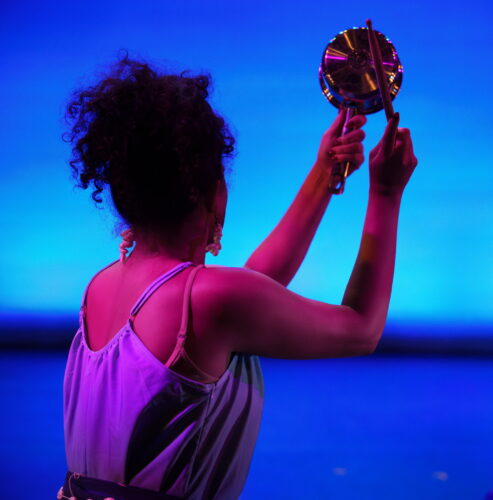
Dancer Genesis Castaneda bangs a pot in a call to pass on life’s recipes in “Dame La Receta.” (Photo by Dance Place DC courtesy of The Inaugural Latinx Movement Festival)
“Dame La Receta” (“Give Me the Recipe”) is a show into which Chachi Pérez and David Velazco have poured plenty of social observation and soul-deep exploration. Stirred with good humor but serious aim, the title references the rituals of passing on culinary (and other) practices among families, friends and all who would claim a place at life’s banquets.
Afro-Cuban rhythms and moves help set the temperature and blend ingredients, but these creator-performers along with their collaborators—six dancers and Velvet Gruve, a fusion band from Springfield, Va. —have come up with layers of flavor everyone can savor.
Perez heads the dance and percussionist Velazco the music—though stepping out and sounding off spill over boundaries in their presentations. The chemistry of their creative process provides a perfect match for their artistic mission.

Carne Viva Dance Theatre directors Chachi Perez, founder, and David Velazco are ready to stir up the American Dream in “Dame La Receta.” (Photo courtesy of Benny Valencia)
“David and I have this magic,” says Perez. “Together in a room we have a way of transmuting our energy and enthusiasm, so the work develops. We give each other leeway but also challenges.” Letting out a hearty laugh, the choreographer adds, “We’re always joking that he’s my work hubby.”
Through this association, Velazco recognizes he’s grown as an artist. Before Carne Viva, he says, “I was just connecting with the music. Now connection comes not just from my perspective but from the dancers. I have to see something and react to it, playing with these women and for them. My vision is more than just beats, and that’s very unique.”
A wiz on the tumbadora, his hands hopping across the conga drums, Velazco also brings his skills as sound producer to keep “Dame La Receta” strutting forward. He has independently reclaimed the treasure of Afro-Cuban music, which he approaches as a cultural legacy—all respect to its roots in the Yoruba religion, though that didn’t figure in his evangelical upbringing.
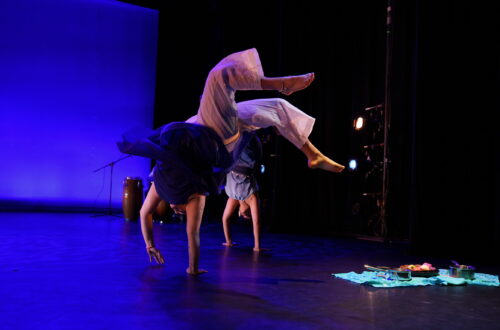
Carne Viva’s co-director Chachi Perez, left, and dancer Genesis Castaneda at The Inaugural Latinx Movement Festival. (Photo by Dance Place DC courtesy of The Inaugural Latinx Movement)
Velazco, 28, came to Miami from his native Camagüey, Cuba, at the age of ten, and Miami-born Perez—three years younger—is the child of exiles from the island.
As Kendall residents, they met while enrolled at that area’s campus of Miami-Dade College, where Michelle Grant-Murray, the school’s coordinator of dance —“She’s like, oh, so many books of knowledge,” says Perez —recruited Velazco to play drums for a show. The professor became a mentor, and now Perez regards her as “a one-woman board of directors.”
Seeing Perez’s 2019 MDC thesis piece, “Viajando Pa La Frontera” (“Traveling to the Border”), which was both a protest against the Trump presidency’s border actions and a paean to the caravans of the undocumented, brought Velazco to tears. He says he saw his family story reflected in the oppressed gestures and hopeful strides of the dance. It seemed that a partnership between the two was inevitable.
But further studies took the soul siblings to distant locations. He was attending the California Institute of Arts (CalArts) in Santa Clarita, Calif., when COVID-19 hit, and she went on to get her BFA in 2021 from University of the Arts in Philadelphia, where she maintains a home base and teaches at Philly PACK, a community-conscious theater and dance education center.
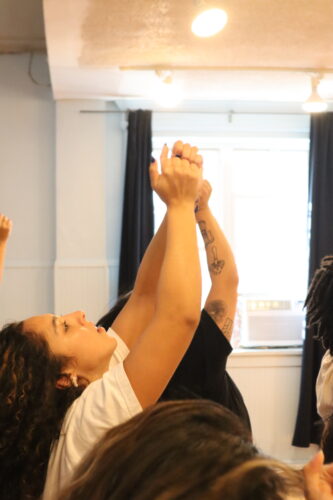
Dancer Nicole Machado leads a prayerful moment in Carne Viva’s “Dame La Receta.” (Photo courtesy of Benny Valencia)
Velazco has developed a career as a music producer and performer, most recently alongside Daymé Arocena, a Grammy-nominated Afro-Cuban jazz singer-composer.
Somewhat at loose ends after graduation, questioning her Latina identity and higher education’s stress on the Western canon, Perez retreated for a warm South Florida embrace one Thanksgiving. Heading back to Philadelphia by car with her girlfriend at the steering wheel, she rifled through notes and sent queries out to the horizon: Should she form a company? If so, what to name it? Unexpectedly, the yummiest of road treats—her father’s churrasco—answered not just the appetite but her artistic yearnings.
“I love odd things,” confesses Perez. “And there I was enjoying this carne, meat that made me feel viva, so alive. I put the two words together, and it sounded very theatrical, which is what we’re all about. My partner, well, she thought it was weird—and for me that was the perfect reaction.”
Carne Viva nonetheless translates as the tender flesh under the skin and can refer to something deeply felt, as in raw emotion—equally fitting for this company.
The group made its debut at 2022’s Cannonball Festival-Philly Fringe in Philadelphia with “Mío/Tuyo/Nuestro”—those possessive adjectives, while coming from a queer angle, the keys to rooms any love inhabits. But soon thereafter, having shown an excerpt of “Dame La Receta” at Pérez Art Museum Miami (PAMM), the director found herself at an impasse. “I’d spent too many nights crying,” she admits, having confronted the hard work of running a company.
Then a drum circle on South Beach, with Velazco included, recharged Perez amid the sea breezes and alongside dancers Genesis Castaneda, Nicole Machado, and Sam Perez (Chachi’s sister). “We were just engulfed by the music,” recalls the director. “The next day I woke up to several voice messages from David, making me wonder if he was okay. But he just couldn’t stop thinking about seeing us dancing and insisted we had to take ‘Dame La Receta’ to the next level. And we haven’t stopped since.”
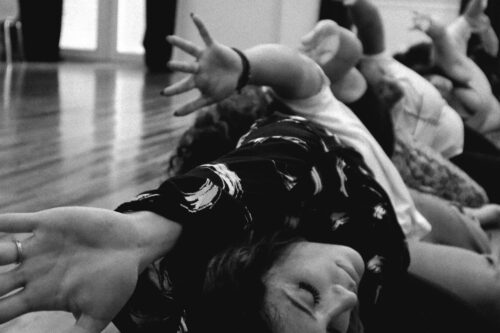
The Carne Viva ensemble reaches out to form human connections among different bodies, varied backgrounds. (Photo courtesy of Benny Valencia)
Having creative cohorts at different locations—the band in Virginia, dancers split between Philadelphia and Miami, and Velazco in South Florida when he’s not flying off to his own gigs around the country — presents challenges like travel time and costs and exacting coordination. But the music director feels the team welcomes the chance to gain enrichment from different settings, audiences, and cultural input.
To question the world in the wake of immigration, reclaiming ancestry and reshaping aspects of their immediate environment, is naturally central to these young artists’ journey. “There’s an urgency for us to disrupt and dismantle our spaces,” declares Perez, but she also insists on rebuilding by using the imagination.
“Our work seems very Latino-centric,” she continues, “but it’s truly about the complexity of living the American Dream. We’re all an extension of that, as immigrants ourselves or even if our families have been here for generations.”
Whether by way of African-American dancer Alina Spears, another Miamian trained at MDC’s Kendall Campus, or the band’s Korean-American bassist from Virginia, Daniel Ubin Burgess, for example, individual perspectives, as Perez points out, strengthen a larger sense of community for Carne Viva. She says, “We have different backgrounds and bodies, but we’re able to tie them all in through our work.”
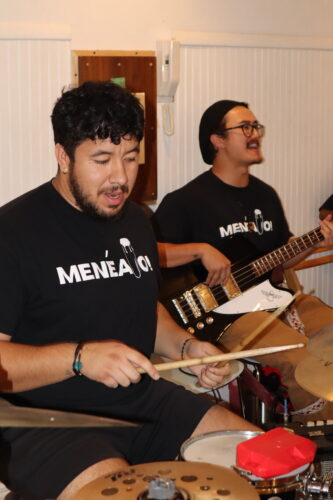
Drummer Javier Molina and Bassist Daniel Ubin Burgess wearing T-shirts emblazoned with “MENÉALO!” (Photo courtesy of Benny Valencia)
It’s no surprise when, walking away from lunch on a palm-shaded street in the Gables, the directors drew interested glances at what’s emblazoned on their T-shirts: “MENÉALO!” But Perez says the catch phrase—meaning “shake it”—has become popular as a call-and-response among audiences even where Spanish spice isn’t as prevalent.
“Sure, ‘Dame La Receta’ is about recipes—it’s about food,” she says. “But this comes with a universal understanding (that) our homes offer communal spaces, like our kitchens, where everyone wants to find joy. And radical joy becomes an act of rebellion. Through our stories we’re offering a mixed tape everyone can groove on.”
WHAT: Carne Viva Dance Theatre in “Dame La Receta”
WHEN: 7:30 p.m., Friday and Saturday, Oct. 11 and12
WHERE: Salamander Miami, 702 NW 5th Ave., Miami
COST: $26.50; $21.40 for artists and educators; $16.30 for children 8 years old and older and seniors; $14.26 for students; children 7 and younger admitted free. Tickets at www.ticketleap.events
INFORMATION: carnevivadancetheatre.com
ArtburstMiami.com is a nonprofit media source for the arts featuring fresh and original stories by writers dedicated to theater, dance, visual arts, film, music and more. Don’t miss a story at www.artburstmiami.com.
No posts found
Smaller ‘Dance Sampler’ To Go On Despite Effects Of State Arts Budget Cuts
Written By Orlando Taquechel
September 30, 2024 at 9:43 AM
Dancers from Dance NOW! Miami will perform in the 14th edition of the Daniel Lewis Dance Sampler at 8 p.m., Saturday, Oct. 5 in the New World School of the Arts dance theater. (Photo courtesy of Simon Soong)
For years, the Daniel Lewis Dance Sampler (DLDS), an event colloquially referred to as the “Sampler” and named after an iconic figure in the Miami dance world, has symbolically kicked off the dance season in South Florida.
This year, the Sampler, which in previous editions reached as far as Vero Beach in the north and Naples in the west, will offer a stripped-down version, with a single performance and program by six groups.
Each group will present a short work selected from the best pieces in their respective repertoires. In 2023, ten groups participated in three performances.
The 14th edition of the Daniel Lewis Dance Sampler is set for 8 p.m., Saturday, Oct. 5, at the New World School of the Arts dance theater in a production of the Florida Dance Education Organization (FDEO) in collaboration with the New World School of the Arts, Dance NOW! Miami (DNM), and Miami Dance Futures.

Jessica Arechavaleta and Rafael Ruiz, from Dimensions Dance Theatre of Miami in “On the Sky.” (Photo courtesy of Simon Soong)
Hannah Baumgarten and Diego Salterini, the founders and artistic directors of DNM, recount the circumstances that almost prevented the annual event from happening this year.
“By now, the whole country has heard about Florida Governor (Ron) DeSantis cutting the state’s arts budget,” says Baumgarten. “But I don’t think many people realized that this came on the heels of a legislative action that eliminated over $4 million in funding for an entire category called Culture Builds Florida.”
Additionally, according to Salterini, a large portion of its funding had been cut via the slashing of Culture Builds Florida before the governor’s $32 million veto in June.
“Fortunately, FDEO was able to continue to provide a minimum fee to artists from a county grant, and NWSA continued its partnership with the use of its theater, box office, and administrative support,” says Salterini, adding that the program “essentially lost almost 75 percent of its funding.”
FDEO, of which Lewis is general manager and treasurer, is a state affiliate for The National Dance Education Organization, a non-profit member organization supporting dance educators based in Maryland.

Martha Graham dancer Yanil Pabon performing with the New World Dance Ensemble in “Prelude to Action,” choreographed by Martha Graham. (Photo courtesy of Juan Cabrera)
The pair says they had to make difficult choices in programming. “We did it during COVID, turning the programming online for more than a year and we would do it again,” says Baumgarten.
They pared down the program selecting groups that they say had become “anchors” over the years of the Sampler: Arts Ballet Theatre of Florida (ABTF), Dimensions Dance Theatre of Miami (DDTM), Ballet Flamenco La Rosa (BFLR), and their Dance NOW! Miami troupe. “(We also) included Zest Collective, one of the newer troupes, and New World Dance Ensemble,” says Salterini.
For Ilisa Rosal, founder, and artistic director of Ballet Flamenco La Rosa, participating in the Sampler is essential, “because it allows us,” she says, “to collaborate with some of the best dance companies in Miami, representing different dance styles, and allows us to introduce flamenco to new audiences and educate them about this complex, sophisticated and unique art form.”
This year, the company is presenting “Tarantos/Tangos,” a traditional flamenco “Palo” or rhythm, choreographed by Manolete, Eloy Agular, and Rosal, performed with live music.
Ruby Romero-Issaev, executive director of ABTF, believes that participating in the Sampler is “an opportunity to establish yourself as part of the dance community in Miami and South Florida.”
This year, the company will perform the pas de deux from its original ballet “Le Papillon” choreographed by Vladimir Issaev and featuring music by French composer and German-born Jacques Offenbach.

Dancers from Ballet Flamenco La Rosa in “Taranto.” From left, Maria Mercedes Perez, Sandra Bara, Pilar Fernandez, and Mayelu Perez. (Photo courtesy of Jenny Abreu)
The Sampler also doubles as a celebration of Lewis’ 80th birthday, which will be celebrated with a program at 3 p.m. Sunday, Oct. 6 at NWSA.
“Daniel Lewis is a friend, a colleague, and a mentor,” says Baumgarten. “When he reached out to me last October and asked me to organize his 80th Birthday Celebration, I was honored, to say the least, but wondered how I could fulfill this request. We chatted with him, and he brought in Mary Lisa Burns, the current dean of dance at NWSA, to join the party planning.”
Salterini adds that “Danny is beloved worldwide, first as a timeless and renowned modern dancer with and then directing the Limón Dance Company, and for codifying the Limón technique.”
Lewis joined the NWSA in 1987 as its founding dean of dance. Before that, he was assistant to Martha Hill, the director of the Dance Division at The Julliard School where he was a faculty member since 1967.
Salterini says he has been impactful since arriving in Miami “for his vision as founding Dean of Dance at New World School of the Arts, for his contribution to the regional and National High School Dance Festivals. And for his own non-profit Miami Dance Futures, that nurtured and mentored dance organizations and choreographers such as National Water Dance, the Haunted Ballet, Chris Rudd and so many others.”

Daniel Lewis in “The Unsung” (1971), choreographed by José Limón. Lewis will be honored on his 80th birthday in the 14th edition of the Daniel Lewis Dance Sampler. (Photo courtesy of Limón Foundation)
The birthday celebration evening will include tributes and performances by NWSA dance students, with a special participation of Masha Dashinka Maddux, a former principal dancer with the Martha Graham Company and an NWSA graduate. DNM will perform “Open Book,” one of Lewis’ seminal works from 1981.
Guest speakers offering tributes will be Donna H. Krasnow, co-author of the celebrated Lewis biography “Daniel Lewis: A Life in Choreography and the Art of Dance;” his friend and colleague Michael Uthoff, artistic director of Dance St. Louis; Dante Puleio, current artistic director of the Limón Dance Company; and Robert Battle, former artistic director of the Alvin Ailey American Dance Theater and an NWSA graduate.
“It will be an evening to remember,” says Baumgarten, adding that after the performance “everyone is invited to the NWSA Art Gallery for a catered reception and a dance costume exhibit.”

Suzuka Matsumoto and Remina Tanaka of Arts Ballet Theatre of Florida in “Le Papillon.” (Photo courtesy of @patriciasphotography)
Ticket proceeds from the evening support Miami Dance Futures, “so that Danny can continue his work growing and mentoring dance in South Florida,” says Salterini.
Lewis remains president of Miami Dance Futures as well as teaching, lecturing and choreographing. He also continues to stage his own and Limón works throughout the world.
“Does this man ever get tired?” Baumgarten says jokingly. “He seems unstoppable, but we all think his 80th birthday is a good time for us to stop and thank him for everything.”
WHAT: 14th Annual Daniel Lewis Dance Sampler and Daniel Lewis 80th Birthday Celebration
WHEN: Sampler performance, 8 p.m., Saturday, Oct. 5; birthday celebration program, 3 p.m., Sunday, Oct. 6.
WHERE: New World School of the Arts Dance Theater, 25 NE 2nd Street, 8th floor, Miami.
COST: Sampler, $25 general admission, $15 students / Birthday Celebration, $100 per person, $150 per couple. Tickets can be purchased in advance online for both events at www.dancenowmiami.org.
INFORMATION: 305-975-8489 or dancenowmiami.org
ArtburstMiami.com is a nonprofit media source for the arts featuring fresh and original stories by writers dedicated to theater, dance, visual arts, film, music, and more. Don’t miss a story at www.artburstmiami.com.
No posts found
Miami Cante Festival Showcases Guitar, Dance and the Role of the Singer
Written By Jesús Vega
August 19, 2024 at 1:52 PM
Paco Fonta is a guitarist and co-founder of “Siempre Flamenco” and the Miami Cante Festival, which begins Thursday, Aug. 22 and continues through Sunday, Aug. 25 at the Adrienne Arsht Center. (Photo by Dan Pérez/courtesy of Festival de Cante Miami 2024).
Generally, when discussing flamenco, we associate it with the magical influence of dance and the guitar. However, another component called cante (a Flamenco term for singing) has a life of its own, and due to its value, it deserves the same attention.
The cante, a unique dialogue between guitar, dance, and the soul of the singer (a cante singer is called cantaor or cantaora), will be a captivating experience at the 18th Miami Cante Festival, which will be held from Thursday, Aug. 22, to Sunday, Aug. 25, at the Carnival Studio Theater of the Ziff Ballet Opera House of the Adrienne Arsht Center for the Performing Arts.
This 18th edition will show once again the fruit of the tireless work of Celia and Paco Fonta. Two recognized Miamian luminaries of dance, cante, and guitar and founders in 2002 of the non-profit organization Siempre Flamenco, whose mission it is to preserve this art whose roots take us back to the Moorish, Gypsy, and Jewish traditions.
Since 2006, the Miami Cante Festival has been an emblematic project of the Fontas.
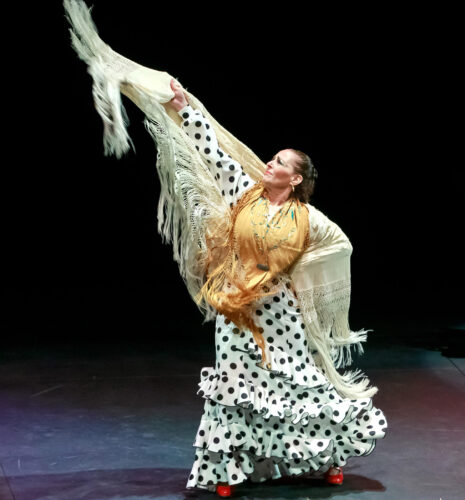
Celia Fonta, bailaora extraordinaire. (Photo by Jenny Abreu/courtesy of Festival de Cante Miami 2024).
“The idea of organizing the first cante event in Miami arose during the trips that my husband Paco and I made every summer to several towns and cities in Spain, specifically in Andalusia, to see the flamenco festivals,” says Celia Fonta.
“We had already been in Miami for some time,” recalls the bailaora extraordinaire. A Flamenco dancer is called bailaor or bailaora. “(We) working in tableaus with Spanish artists based here, with excellent dance and guitar performances, but not cante, so we decided to open that door to the public, which has enjoyed and still enjoys great acceptance.”
The Festival’s continuity has served the Fontas as a guide and orientation so that new and well-known artists participate each year.
Celia explains that they have organized the festival in a “pattern that consists of inviting three singers, one or two guitarists, and a dancer who is participating for the first time. In addition, experience tells us that we must also have a selection of artists who have come to other editions of the festival, who the public knows, and who are part of this family. Because this event is really done as a family.”
This year’s Festival (which could have been the nineteenth edition, but the event had to be interrupted for a year due to the pandemic) has as guests young figures who, although they are making their debut in cante, have entered through the so-called ‘big door’ and already enjoy recognition and prestige.

The cantaor Samuel Serrano. Photo by Lorenzo Carnero/courtesy of Festival de Cante Miami 2024).
“We will have Samuel Serrano, a cantaor from Chipiona, Spain, who is hitting very hard and participates in all the festivals of the flamenco community. He has a very pure voice, very authentically gypsy,” says Celia. “We also have the bailaor, José Jiménez, from Madrid (also known as ‘El Bocadillo’), son of the cantaor of the same name, now deceased. He is an exceptional bailaor from a family of cantaores and bailaores.”
The talented performers are joined by other renowned figures such as Macarena de Jerez, a cantaora born in the cradle of flamenco; the young cantaor from Cádiz José Campos, son of Morenito de Illora; and the exceptional guitarist José Cortés (Pansequito), son of the cantaor “Pansequito del Puerto” and one of the most prestigious today.
Among the new features of this year’s edition will be the special presentation titled “Canta la Guitarra” (“Sings the Guitar”), which will pay tribute to the instrument of so much tradition and vitality that gives meaning and emotion to flamenco singing and dancing.
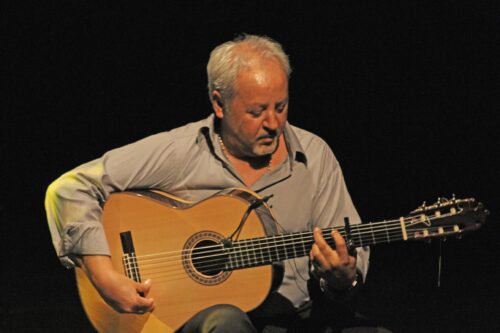
The guitarist José Cortés (Pansequito). (Photo by Zizi Zabaneh/courtesy of Festival de Cante Miami 2024).
“The tribute to the guitar is going to be a special event. Some guitarists sing when we are at parties. Still, others never sing,” highlights the eminent guitarist Paco Fonta, who has had an extensive career and dedication to that instrument. “But in this presentation, we will have three guitarists who also sing: Paco Cepero; “Pansequito,” with whom I have worked for many years; and myself,” he says.
He adds that Cepero is the composer of “Esta cobardía” and other songs performed by Julio Iglesias, Rocío Jurado, and other artists.
“(Cepero) is my idol and a true legend who has accompanied what is most valuable and shining in flamenco. I want to clarify that it will not be a formal concert but a complement to the Cante Festival. We will perform in a quite experimental and spontaneous way,” he promises.
At 82 years old, Cepero is a true representative of flamenco, according to Celia. “(He) will give our festival a historic character due to his importance as an artist, mentor, and guide to so many cultivators of the genre,” she says, adding that “the Festival’s evolution, from its humble beginnings with local artists to an event that now attracts the most prestigious figures in Spain, is a testament to the growing support for flamenco in Miami. This cultural growth has allowed us to reach where we are now.”
WHAT: XVIII Miami Cante Festival
WHERE: Ziff Ballet Opera House’s Carnival Studio Theater at the Arsht Center, 1300 Biscayne Blvd., Miami
WHEN: 8 p.m., Thursday, Aug. 22, “Canta la Guitarra” concert, 8 p.m., Friday, Aug. 23, Cante Festival, 2 p.m., Saturday, Aug. 24, and 4 p.m., Sunday, Aug. 25.
COST: $50, $68 for VIP, $40 and $50 for “Canta la Guitarra.”
INFORMATION: 305-949-6722 or arshtcenter.org/tickets and 305-527-5666 or siempreflamenco.com.
ArtburstMiami.com is a nonprofit media source for the arts featuring fresh and original stories by writers dedicated to theater, dance, visual arts, film, music, and more. Don’t miss a story at www.artburstmiami.com.
No posts found
FUNDarte presents the world premiere of ‘Bio’Ngo,’ an anthropological stage installation
Written By Miguel Sirgado
August 16, 2024 at 2:49 PM
“Bio’Ngo,” by Mexican creator Lukas Avendaño, will premiere Friday, Aug. 23 and Saturday, Aug. 24 at the Fantasy Theatre Factory at Sandrell Rivers Theater, Miami, presented by FUNDarte. (Photo by Huracán Films/courtesy of FUNDarte)
Dance, theater and the visual arts in general often blur the theoretical boundaries that separate them to create integral works that defy definition. From Martha Graham to Merce Cunningham, Marina Abramovic, Joan Jonas, Paul McCarty, Steve McQueen and Pina Baush, many are the multidisciplinary artists who have consolidated their ideas through multi-sensorial performances that follow the aforementioned premise.
Following this interdisciplinary tradition is the show “Bio’Ngo,” by Mexican creator Lukas Avendaño. Presented by FUNDarte, the piece will be on stage Friday, Aug. 23 and Saturday, Aug. 24 at the Sandrell Rivers Theater. In addition to Avendaño, participating in this project are dancers José Ramón Corral (also Mexican) and Miami-based Charlene Francois, Enrique Villacreces and Lize Lotte Pitlo.
The director states that this “stage installation” with an anthropological look revolves around several axes, the first one being the Bio’Ngo -or what in the Caribbean is known as the Ceiba tree. “The symbolic value of this tree in many of the cultures or settlements in the Caribbean seemed to me an important gluing element that symbolically unifies many imaginaries (of different cultures),” says Avendaño, whose most recent work consisted of a queer performative intervention of traditional female images, particularly those related to the Zapotec Tehuana woman.
[RELATED: Read Jesús Vega’s story in Artburst Español: FUNDarte presenta el estreno mundial de “Bio’Ngo”]
Another axis of the project is the exploration of the ancestral cultures of his native Mexico and, at the same time, of the indigenous people who once populated the Caribbean. “The piece is a sort of time travel to the past before the geopolitical borders that today give name to the countries (that) were built,” says Avendaño.

Lukas Avendaño says that this “stage installation” is a sort of time travel to the past, before the geopolitical borders that today give name to the countries that were established. (Photo by Huracán Films/courtesy of FUNDarte)
“If we start from the Caribbean as a cultural ecosystem, we could speculate about the time when there were no borders, and how it would have facilitated crossings and exchanges between these cultures. We would be living in the time before the divisions between heterosexuals and homosexuals, the avant-garde and the rearguard, all those dichotomies that have appeared and have been imposed throughout the history of mankind.”
According to Ever Chávez, executive director of FUNDarte, who together with the International Cultural Partnership (ICP) program of Miami Dade’s Department of Cultural Affairs are presenting this project, the work fits perfectly with the vision and trajectory that has moved this organization since its inception. “We are facing the fusion between the vibrant cultural diversity of Miami and the deep roots of the native peoples of Mexico. What motivated us to bring it was precisely that unique blend of cultures and expressions,” explains Chavez. “For us it’s something completely new and authentic. It’s a journey that goes from the jungles of Oaxaca to the swamps of the Everglades, where music, dance and nature intertwine in a unique experience.”
As for the structure of the work, Avendaño decided to collaborate with artists from various specialties and backgrounds: dancers, designers, filmmakers, musicians. “The music was created by percussionist artist Yissy Garcia. We also collaborated with Huracán Films, with some stunning footage of the Everglades,” he says. “All the performers are creative people who bring a very particular and fresh look. It’s like, despite the exodus and diaspora, it’s still possible to find them and make a community.”

Percussionist Yissy Garcia, shown here in a 2018 concert with Bandancha at the Fabrica de Arte Cubano, a multidisciplinary space in Havana, collaborated on the music for “Bio’Ngo.” (Photo by Larisa López)
For FUNDarte, the project is important because it shows, in an artistic way, the connection between two worlds that, although distant, share a common essence. “Oaxaca and South Florida, two places separated by thousands of miles, meet in this work through their ancestral cultures: the Zapotec and Miccosukee. As a spectator, you witness how these cultures have survived and flourished, keeping their traditions alive in a changing world. For us, it is a testament to our dedication to celebrating cultural diversity and exploring the roots that connect us,” concludes Chavez.
Avendaño’s presentation closes the season of the “Out in the Tropics” series, featuring works by some of today’s most innovative and relevant LGBTQIA+ artists.
WHAT: Bio’Ngo by Lukas Avendaño
WHEN: Friday, Aug. 23 and Saturday, Aug. 24
WHERE: Fantasy Theatre Factory at the Sandrell Rivers Theater. 6103 NW 7th Ave., Miami
COST: $20, $15 seniors and students; tickets.ftfshows.com
INFORMATION: (786) 348-0789 or FUNDarte.us
ArtburstMiami.com is a nonprofit media source for the arts featuring fresh and original stories by writers dedicated to theater, dance, visual arts, film, music and more. Don’t miss a story at www.artburstmiami.com.
No posts found
Afro-Cuban Dance Festival’s Theme This Year Is Joy, Freedom
Written By Jesús Vega
August 6, 2024 at 6:55 PM
The 2024 IFE-ILE Afro-Cuban Dance Festival begins Thursday, Aug. 8 through Saturday, Aug. 10 at the Koubek Center of Miami Dade College and the HistoryMiami Museum. Picture are Deyanira Formental, left, and Siuleydde Rivera of IFÉ-ILÉ Dance Company. (Photo by Mitchell Zachs-Knight Foundation /Courtesy IFÉ-ILÉ Dance Company)
Since its founding in 1996, the IFE-ILE Afro-Cuban Dance Company, under the artistic direction of Neri Torres, has been at the forefront of rescuing, presenting, and preserving Afro-Cuban culture in Miami.
The 2024 IFE-ILE Afro-Cuban Dance Festival, beginning Thursday, Aug. 8 through Saturday, Aug. 10 at the Koubek Center of Miami Dade College and the HistoryMiami Museum, is being presented with a thought-provoking theme, “The Joy of Dancing: The Embodiment of Freedom,” which unifies two terms linked to dance: joy and freedom.
“Throughout my career as a dancer, I have noticed changes in the way young people enjoy dance and in the way they socialize. I have also noticed that there are not many spaces available for middle-aged people to enjoy dance, which is sad because previous generations always loved going out dancing,” explains Torres, “and dancing is the best exercise for all ages.”

IFÉ-ILÉ Dance Company from left, Deyanira Formental, Juinier Quintero, Giselle Molina and Siuleydde Rivera, at bottom. (Photo by Mitchell Zachs-Knight Foundation/Courtesy of IFÉ-ILÉ Dance Company)
According to the founder, dancing has become the privileged position of a few specialized performers, and the rest have become static spectators. “Spontaneity and the sense of community that moving together implies and creates have been lost. Cuban culture, in particular, is based on motor skills; we dance on every occasion. We have transmitted this quality to the world, and I think it is necessary to rescue it and share it in these hectic times in which we live.”
That is what the festival is about, she says. “There must be a space for fleeting madness, freedom, and emotional transcendence to find motivation and meaning to our existence. Let us try to rescue that joy that is precisely the theme of the festival.”
This year, in addition to the dance and reflection spaces on Afro-Cuban dance, such as presentations and workshops, new proposals give the festival a quality of multicultural cohesion and diversity, ensuring that everyone feels included and valued, according to Torres.

Juinier Quintero with the IFÉ-ILÉ Dance Company Afro-Cuban dance troupe in Miami led, by choreographer/dancer Neri Torres, photographed in the Miami Design District. (Photo by Mitchell Zachs-Knight Foundation/Courtesy of IFÉ-ILÉ Dance Company)
“Understanding between cultures is part of IFE-ILE’s mission as an organization,” she says. “As part of that mission, we have collaborated with local artists and guests of different styles to reflect the diversity of Miami and our community and share our common points, especially what identifies us as humans.”
Among the guest artists in this year’s edition are Niurca Márquez, who has collaborated on many occasions with IFE-ILE and will teach a flamenco fusion class, and Ducarmel Sekou Desormeau, an instructor specializing in the Capoeira style.
Another distinctive feature of the IFE-ILE Festival is the participation of Cuban dancers, both established and new, in charge of workshops that characterize the event, which are dedicated to various aspects of Afro-Cuban dance.

Deyanira Formental, left, and Giselle Molina of IFÉ-ILÉ Dance Company (Photo by Mitchell Zachs-Knight Foundation/Courtesy of IFÉ-ILÉ Dance Company)
The workshops will cover a range of dance styles, from the traditional orichas Oyá and Yemayá to the contemporary Cubatón, ensuring something for everyone.
Members of the “old guard” of IFE-ILE, dancers Juinier Quintero and Yosvani González, who will also teach classes on Orichas, Rumba, and Palo, and Deyanira Formental, who will teach the Cubatón class, the contemporary style of Cuban reggaeton, among others, will also participate.
“I will teach a Cuban conga workshop, ‘as if it were nothing,’ on the subject of the joy of living,” shares Torres with noticeable enthusiasm.
Another festival program that should not be missed is the conference and demonstration “Cuban Rumba and Son: Cooking Transnational Salsa” on Thursday, Aug. 8, at the HistoryMiami Museum. It will be led by Yunielis Hernández, dancers from IFE-ILE, and introduced by Torres. Admission is free.
On Saturday, Aug. 10, at 8 p.m., the festival culminates with a gala presentation at the Koubek Center with a sample of various styles of Cuban dance.
Among the special guests at the closing performance will be Dance Heals from Philadelphia, who will perform in their second presentation in Miami, according to Torres.
“We recommend that the public come prepared to ‘walk the walk,’ ” she says.
IFE-ILE is approaching a fundamental milestone: its third decade of existence — a sum in time of tireless work and well-deserved successes. How does Torres feel about the imminent celebration of thirty years of the group?

From left, Deyanira Formental, Juinier Quintero, Siuleydde Rivera, Giselle Molina and Neri Torres, founder of the IFÉ-ILÉ Dance Company. (Photo by Mitchell Zachs-Knight Foundation/Courtesy of IFÉ-ILÉ Dance Company)
“Time flies,” she says. “It seems like yesterday when I did my first performance with the group in West Palm Beach in 1994. Almost fresh from arriving, after having deserted a tour in Italy and with a tremendous desire to ‘take on the world,’ ” recalls Torres. “Sometimes I am too demanding, and I think I have not done enough to tell my story, which is that of all Cubans in exile, and to share our culture.”
However, she says there is something that gives her pause when she reflects on her career.
“I look back at the numerous press clippings and photos of my restless steps, of all the dancers who have just arrived and have knocked on my door, and I have welcomed them, and of the artists from other disciplines with whom I have collaborated, of the dreams I have realized in dance; I tell myself with a smile: we can always do more.”
WHAT: The 2024 IFE-ILE Afro-Cuban Dance Festival
WHERE: Koubek Center, 2705 SW 3rd Street, and HistoryMiami Museum, 101 West Flagler St.
WHEN: 2 to 4 p.m., Thursday, Aug. 8, lecture and demonstration at HistoryMuseum Miami, free admission). 8:30 a.m. to 5:50 p.m., Friday, Aug. 9 and 8:30 a.m. to 4:50 p.m., Saturday, Aug. 10, Afro-Cuban workshops, Koubek Center. 8 p.m. gala, 10 p.m., closing party, Saturday, Aug. 10, Koubek Center Theater.
COST: Performance, $20, general admission, $15, students and retirees with identification; Workshops, $115, $60, $40, $25,
INFORMATION: ife-ile.org/festival/
ArtburstMiami.com is a nonprofit media source for the arts featuring fresh and original stories by writers dedicated to theater, dance, visual arts, film, music, and more. Don’t miss a story at www.artburstmiami.com.
No posts found
International Ballet Festival of Miami, A South Florida Home for the World of Dance
Written By Guillermo Perez
July 26, 2024 at 3:26 PM
Contemporary dance, as pictured above, along with classical performances are part of the 29th edition of the International Ballet Festival of Miami beginning Friday, Aug. 2 through Sunday, Aug. 11 at various locations throughout the city. (Photo by Simon Soong/courtesy of Miami Hispanic Ballet/International Ballet Festival of Miami)
To keep the International Ballet Festival of Miami on course up to its present 29th edition, director Eriberto Jiménez has relied on a bifocal guiding vision with added telescopic range. Close at hand are his myriad day-to-day administrative duties. More generally, he never loses sight of the event’s mission to unite dance across borders. And, tending to his art’s past glories, he aims to invest in its productive future.
Complemented by other activities, the festival’s contemporary and classical performances can be seen at different South Florida locations beginning Friday, Aug. 2 through Sunday, Aug. 11. The events close with the Gala of the Stars at The Fillmore Miami Beach, where the yearly dance culture and criticism recognition will be given to Perfecto Uriel, from Spain’s Casa de la Danza and Danza en Escena magazine. And on the previous evening Valentina Kozlova, a Bolshoi and New York City Ballet principal emerita and more recently a sought-after educator, will receive the “A Life for Dance” award.

Mayuko Nijei and Erick Rodriguez of Compania Nacional de Danza-Mexico Theatre (Photo by Simon Soong/courtesy of Miami Hispanic Ballet/International Ballet Festival of Miami)
This year, there are eight participating companies from abroad ranging from Uruguay and Brazil to Serbia and Romania. Compañía Nacional de Danza de México, on the roster since the start of the festival, will also return.
Jiménez coordinates festival logistics, some of which are visa approvals, which he confides, can be a concern for participants from abroad.
“Visa denials or last-minute injuries may throw off the flow of a program,” says Jiménez. In such cases, he must race to make rearrangements and substitutions. But he emphasizes, “You just can’t let that sour the artistic experience. It’s part of who I am to find a solution whenever a problem pops up.”
Joining the Latin Americans and Europeans, this edition will bring members of troupes from Milwaukee (a long-time and frequent presence), Pittsburgh and Kansas City. Performances by Jimenez’s Cuban Classical Ballet of Miami and Dimensions Dance Theatre of Miami and Arts Ballet Theatre of Florida will round out the offerings from locals, for a total of eighteen troupes on the main programs.

Marize Fumero and Arionel Vargas of the Milwaukee Ballet (Photo by Simon Soong/courtesy of Miami Hispanic Ballet/International Ballet Festival of Miami)
Representing Milwaukee Ballet in the classical lineup, Cuban-born-and-trained ballerina Marize Fumero takes personal and professional pleasure in her decade of appearances here. “In these, I can see myself maturing both as an artist and a woman,” she says.
Upon her 2014 arrival in Miami, the festival opened to her the doors of its headquarters at the historic Warner House by the Miami River, easing Fumero’s way into a new life in the American dance arena. From then on, she’s taken to stages far and wide, but Miami still holds a special place in her heart. Applause here seems different—closer to the sounds of family, she feels—which makes her especially happy to come back as a fully confident artist, ready to regale audiences with a passionate scene from Kenneth MacMillan’s “Manon,” its music surging from Jules Massenet’s Romantic-era score.
While championing the bravura of the classical pas de deux—its exuberant spins and spring tradition-set—Jiménez has also secured a place for the shadows and shimmer of today’s ballet. An Imperial-to-Soviet Russian style informs his own company’s offers: a duet from “Raymonda”—its nineteenth-century Marius Petipa choreography to an Alexander Glazunov score variously staged throughout history—and “Diana and Acteon,” to the delight of die-hard balletomanes its grim myth transformed by literal leaps and bounds into a love fest between goddess and hunter.

Meisy Laffitte and Maikel Hernandez of Dimensions Dance Theatre (Photo by Simon Soong/courtesy of Miami Hispanic Ballet/International Ballet Festival of Miami)
But then Dimensions brings two sensitively paced pairings, their tenderness and tensions closer to the pulse of our own emotions. Ryan Jolicoeur-Nye’s “On the Sky” and Yanis Eric Pikieris’s “If” will put on view more of choreographers’ works whose premieres were warmly received at this year’s company-season finale.
“We love showing the audience a different side of ballet,” says DDTM’s artistic co-director Jennifer Kronenberg, underscoring how a relatable lyricism enhances variety at an event they’ve performed in since 2017. And she adds, “It’s important for us to return because this is home. We’re proud to contribute to a landscape we share with the festival.”
Kronenberg sums up the experience of appearing alongside international artists as “inspiring.” And that’s the effect Jiménez hoped to reinforce when he took over the festival after founder Pedro Pablo Peña died in 2018. The current director had assisted his predecessor from the beginning of this project, but his association with Peña stretched further back.
“I’ll be forever grateful to Pedro Pablo,” says the Bogotá, Colombia native. “When I first came to this country in 1989, he not only offered me a scholarship to study at his then-called Creation Ballet but even a place to stay in the studio. I soon saw he could use help with work around the office and reciprocated by doing that.”

The director of the International Ballet Festival of Miami, Eriberto Jimenez. (Photo by Baltasar Santiago)
Their partnership blossomed as the festival took shape and grew, with Peña forever the tenacious custodian of big ballet dreams and Jiménez his steadfast right-hand man keen on practicalities. “Luckily, I’d learned administrative assistance at school in Bogotá, and it came in handy with payrolls and budgets,” says Jiménez, who’d planned to study business administration until ballet won out. To the advantage of the festival, he’s the kind of artistic director whose knack for numbers goes beyond the counts in a dance phrase.
Although he’s given continuity to Peña’s achievements, Jiménez has also ushered the festival into newer territory. “We’ve evolved for the better throughout our history,” he judges, considering festival offerings from the initial single weekend to added activities now spread throughout three weeks, the last two dividing contemporary and classical programs.
The contemporary bill is about to reveal fresh faces from England’s Rambert School Ballet and France’s Arles Youth Ballet. And that focus on the next generation has become a priority for Jiménez.

Arles Youth Ballet Company featuring Diana Brandao and Maxence Deveaux (Photo by Simon Soong/courtesy of Miami Hispanic Ballet/International Ballet Festival of Miami)
“I’ve added a summer intensive course for ballet students, which lets them not only attend festival shows but, in some cases, also perform in them,” says the director. This educational initiative, he underscores, is also an aid to festival finances, which—as is the case with almost every cultural organization in Florida—have suffered from a gubernatorial veto of all state arts funds for the next fiscal year.
To encourage dancers who might very well someday return to the festival as representatives of notable companies, Jiménez has also instituted a young medalists show, a Dance Marathon, and Rising Stars on the Streets—free at Lincoln Road’s Euclid Circle—introducing these emerging talents to our community as prolog to the upcoming main events.
“I’ve always wanted to see more of that contact,” says Jiménez. “The promise of these young people’s success, after all, is inseparable from the future of the festival.”
WHAT: XXIX International Ballet Festival of Miami
WHEN: (Contemporary I and II) 8 p.m., Friday and Saturday, Aug. 2 and 3
(Contemporary III) 5 p.m., Sunday, Aug. 4
(Classical Galas) 8 p.m., Saturday, Aug. 10; 5 p.m., Sunday, Aug. 11
WHERE: (Contemporary I) Miami-Dade College, North Campus, Lehman Theater, 11380 NW 27th St., Miami
(Contemporary II) Dennis C. Moss Cultural Arts Center, 10950 SW 211 St., Cutler Bay
(Contemporary III) Amaturo Theater, Broward Center of the Performing Arts, 201 SW 5th Ave., Fort Lauderdale
(Classical Galas) Fillmore Miami Beach, 1700 Washington Ave., Miami Beach
COST: (Contemporary) $30, $35, $45; (Classical) $58.50, $70.50, $81.50, $91.50, $119.25, ticket prices vary based on time and location
INFORMATION: (786) 747-1877 or internationalballetfestival.org
ArtburstMiami.com is a nonprofit media source for the arts featuring fresh and original stories by writers dedicated to theater, dance, visual arts, film, music and more. Don’t miss a story at www.artburstmiami.com.
No posts found



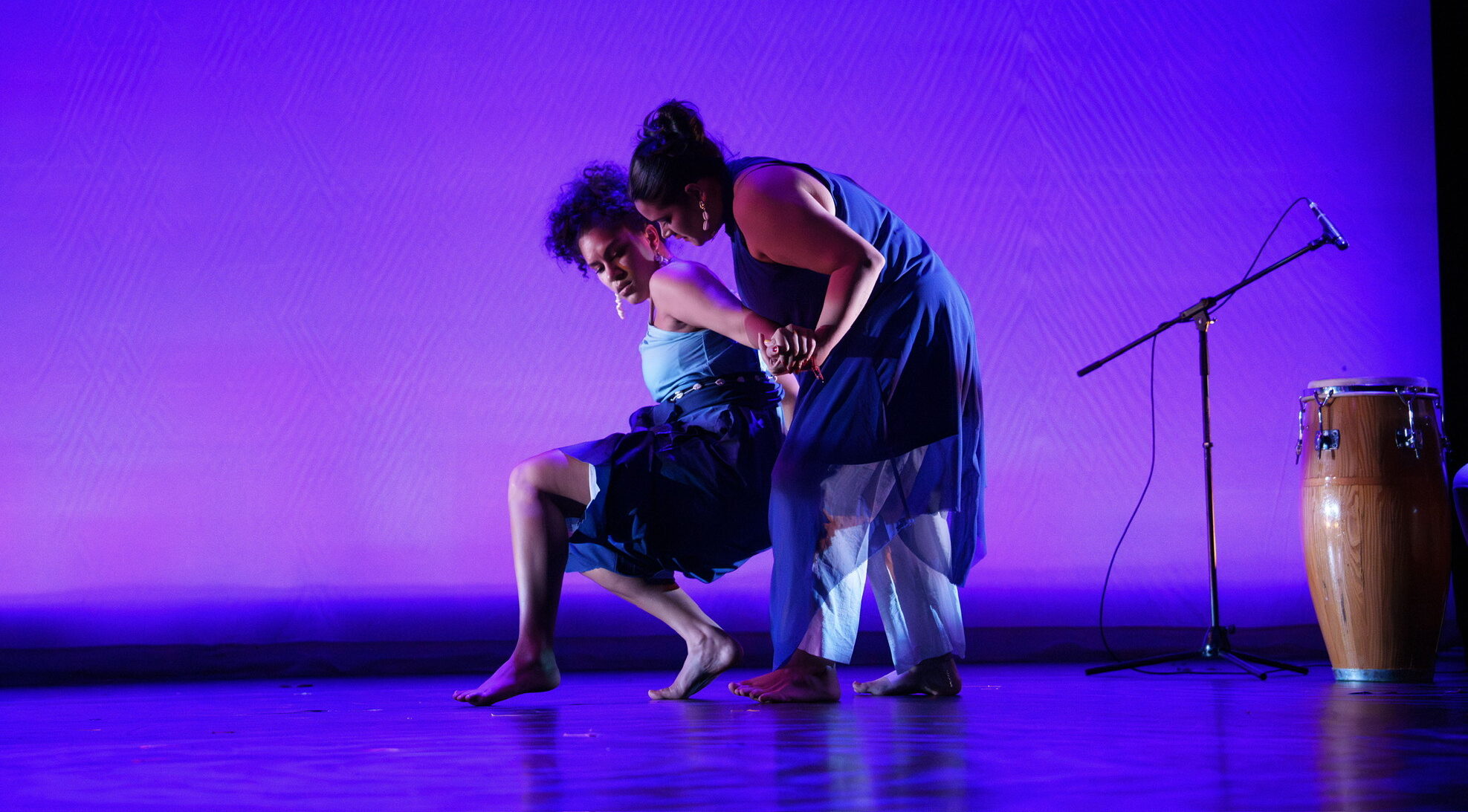

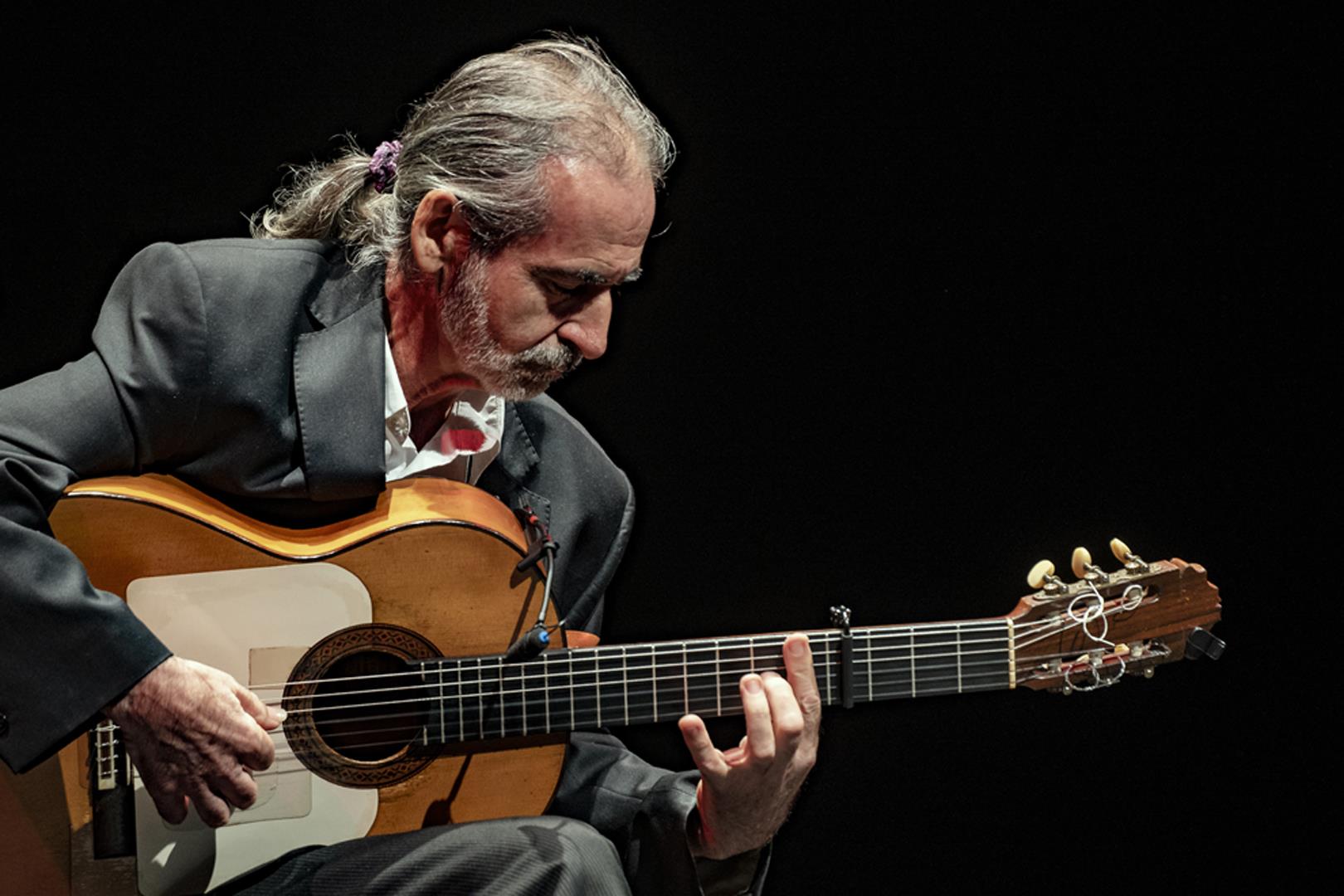


Recent Comments