Miami City Ballet’s ‘The Nutcracker’ through the eyes of a principal dancer
Written By Guillermo Perez December 12, 2022 at 12:28 PM
Dancers in Miami City Ballet’s production of “George Balanchine’s The Nutcracker” at the Adrienne Arsht Center for the Performing Arts beginning Friday, Dec. 16 through Saturday, Dec. 24. (Photo courtesy of Alexander Iziliaev)
In 25 years of performing George Balanchine’s “The Nutcracker,” Miami City Ballet principal Tricia Albertson has been the Sugar Plum Fairy, Dewdrop, a waltzing flower, and confections of Spanish chocolate and marzipan. Those credentials already make her an ambassador from the Land of the Sweets. But add to them a snowflake, a dancing doll, a genteel hausfrau, and a ready-to-party grandma in Act One’s Stahlbaum-family Christmas festivity, and that certifies her all-inclusive view of the holiday spectacle, a yearly ritual MCB will bring back to South Florida stages beginning its run at the Arsht Center on Friday, Dec. 16.
Considering what makes “The Nutcracker” a ballet unlike any other, Albertson credits the sparkling craft and joyous spirit that conjures up the marvels of childhood. And, for a ballerina, she says, “Every year it’s great to revisit it and try to find new aspects.” Other fine works that come up, at best, a few times in a career simply don’t afford so much repeated opportunity.
Tricia Albertson estimates she’s danced the Sugar Plum Fairy around 70 times throughout 17 seasons in Miami City Ballet’s production of “George Balanchine’s The Nutcracker.” (Photo courtesy of Alexander Iziliaev)
Albertson estimates she’s danced the Sugar Plum Fairy around 70 times throughout 17 seasons, which makes it—well, the plummiest of plum roles. The fairy drives the action in the beloved second act: her raised-lights entrance and solo as the guardian of the Angels (little girls from MCB School); her welcoming of Marie Stahlbaum and the Nutcracker Prince before overseeing diversions in her high-calorie queendom, and the culminating pas de deux with her Cavalier.
That lovely pairing puts the royal icing on the ballet with the scene’s sweep of leaps and pirouettes: Its peaks of ballerina run-jumps onto her consort’s shoulder and one top-tier balance when Sugar Plum lets go of the Cavalier‘s steadying hand and, firm in arabesque, claims the pose on pointe solely on her own—in case anyone had any doubts as to who rules the roost here.
Among all of Albertson’s partners, Sugar Plum’s Cavaliers hold a special place. Standing out as her first one was Didier Bramaz, a friend from their time at New York’s School of American Ballet, who “had a very calm presence that helped me feel grounded. I also danced with Reyneris Reyes for many years, and we had a unique chemistry I loved. I knew he was always there for me.”
This year she’s partnered with Steven Loch, only in his second season with the company but experienced in this part from a decade at Pacific Northwest Ballet. “We did our roles together last year and from our first rehearsal, everything worked,” Albertson says. “We have the same musicality, which makes it easier. He’s also taller than lots of guys I’ve danced with, so I feel well connected.”
Still, Albertson points out it’s when Sugar Plum first comes on the scene to herd the Angels that eases her—after long weeks of rehearsals—into the luminosity of the role. “It’s one of the nicest touches Balanchine put in,” she says. “The ballerina gets to look at all those children around her, and the magic takes the nerves away.”
Tricia Albertson and Reyneris Reyes in Miami City Ballet’s production of “George Balanchine’s The Nutcracker.” Choreography by George Balanchine. (Photo courtesy of Alexander Iziliaev)
Since she joined MCB as a coryphée (pre-soloist), Albertson hasn’t missed a single Nutcracker run. “I played the grandmother at 17, the youngest dancer doing the oldest character,” she recalls. And even while getting over an injury in 2019, she acted in Act One’s party scene as Frau Stahlbaum. Naturally, she’ll never forget the 2004 shows in which she first danced Sugar Plum, the butterflies in her stomach soon turning into a commanding ballerina’s wings.
Nonetheless, early in her career, Albertson sometimes preferred dancing Dewdrop in the Waltz of the Flowers. “I had more power in my legs then and loved all the jumping and fouettés. But I came to learn there’s so much more to this piece—so grand, so beautiful—which lets you fly to the music with the corps all around you.”
For the current production, Albertson is also coaching the snow scene, which closes Act One and signals the fantasy to follow. Not that there’s any shortage of hocus-pocus in the previous sections, which include a Christmas tree growing into a colossus, toys battling comically menacing mice, and the mysterious Drosselmeier, who not only fixes a broken nutcracker but devises transforming it into a prince to gladden Marie’s heart.
Tricia Albertson in Miami City Ballet’s production of “George Balanchine’s The Nutcracker.” Choreography by George Balanchine. (Photo courtesy of Alexander Iziliaev)
“Staging Snowflakes has brought back how hard this is for the ballerinas—the hardest thing in Nutcracker, I’d say, with that amount of jumping and fast pointe work,” judges Albertson. “And it has to be perfectly in sync, or the charm’s not there.” She tips her Sugar Plum’s tiara to all those diligent corps members who stay on tireless duty through a half-month-long run.
Of course, she also recognizes the support of the score, with “musical cues, little twinkly sounds making you think of snow and how light you’re supposed to be on your feet. It’s fun to read into that different intentions—certain steps I feel like snow flurries, and others like shards of ice, almost dangerous.” She laughs noting she grew up in Santa Cruz, Calif., has lived in South Florida most of her life, and for her by now “snow is a foreign concept.”
But it’s true Tchaikovsky’s score brims with dramatic suggestion. Though many of its selections have become clichés we hear in seasonal TV commercials, shopping at the mall, or driving to a workplace party, those are only trivial ghosts of sound. Animated by live orchestra, the music regains a robust presence that—teasing, caressing, arousing—leads us to a realm of wonders.
And we love to keep going back, the pleasure not lost on Albertson’s close friend and fellow principal Jennifer Lauren—herself a Nutcracker trouper since her days at Alabama Ballet, among only a handful of companies licensed to stage Balanchine’s work, which debuted at New York City Ballet in 1954 and MCB adopted in 1990.
In the midst of readying her own interpretation of Sugar Plum alongside Renan Cerdeiro’s Cavalier, Lauren attests to the primacy of “The Nutcracker” in the repertory and to the deep-seated grace of Albertson’s portrayals.
Miami City Ballet’s production of “George Balanchine’s The Nutcracker.” Choreography by George Balanchine. (Photo courtesy of Alexander Iziliaev)
“This ballet is like a family member I get to hug every Christmas,” Lauren says, acknowledging the work’s noble values. “And Tricia is someone I’ve always looked up to. By nature, she keeps things light and loves to laugh. She’s so serene. And that shines in her dancing.”
Sorting through Nutcracker memories, both splendid and quirky (once in Clearwater, a fist-fight broke out in the audience, but to great applause the show went on), Albertson can retrace her remarkable artistic journey as she draws near retirement, which comes especially early for dancers. Other gems from choreographic masters and premieres from young creators have brightened her way. But, among these blessings, the yuletide classic remains a constant gift.
“Whether I’m performing or watching from the front, it always strikes me how free and big this show is. Nothing about it comes off as stressful,” says the ballerina, offering the best description of what everyone needs right about now.
WHAT: Miami City Ballet’s “George Balanchine’s The Nutcracker”
WHERE: Adrienne Arsht Center for the Performing Arts, 1300 Biscayne Blvd., Miami
ADDITIONAL PERFORMANCES: 7 p.m. Wednesday, Thursday, and Friday, Dec. 28, 29, and 30; 2 p.m. Thursday and Friday, Dec. 29 and 30, Kravis Center for the Performing Arts, 701 Okeechobee Blvd., West Palm Beach
‘Dance Now’s’ adult take on holiday favorite isn’t your grandma’s ‘Nutcracker’
Written By Sean Erwin December 6, 2022 at 9:46 AM
Dancers David Harris and Amanda Davis in Dance NOW! Miami’s “Clara” to be performed at Miami Theater Center, Miami Shores, on Saturday, Dec. 10. (Photo courtesy of Simon Soong)
The traditional “Nutcracker” ballet tells a children’s story of a young girl transported to a magical world of sweets accompanied by her Nutcracker doll who transforms into a prince.
The ballet is also performed with a large number of children in key roles and auditoriums frequently packed with families.
For Dance NOW! Miami co-artistic directors, Diego Salterini and Hannah Baumgarten, it’s time for a new “Nutcracker.” The pair say they are taking the holiday classic in a new direction with “Clara,” a ballet that reconceives the “Nutcracker” story using mature themes with an adult audience in mind.
“Clara” tells the story of the self-discovery of a young woman. A main feature of DNM’s new “Nutcracker” is the notable absence of the Nutcracker role.
“This is both supposed to be a holiday experience, and it is expected to be enjoyed by adults,” says Baumgarten. “No one under 13 is allowed,” she says as the DNM dancers set up for rehearsal of the new work on a recent Wednesday at the Little Haiti Cultural Center.
Baumgarten and Salterini came up with the idea last year but began to create new choreographies for the company in October.
Dance NOW! Miami dancers perform in “Clara,” from left, Matthew Huefner, Cesar Vetina, Anthony Velazquez. (Photo courtesy of Simon Soong)
“Canadian composer Davidson Jaconello took Tchaikovsky’s original music and put it through the mixer,” says Salterini referring to Russian composer Pyotr Illyich Tchaikovsky who wrote the traditional ballet’s original score. “The traditional music is recognizable . . . but he (Jaconello) has taken it to a different place.”
In Jaconello’s re-imagining, the music begins and the ballet’s opening melody is instantly recognizable but enveloped by jazzy rhythms and instrumentation that conjure a Manhattan lounge club vibe.
The dancers enter in gray pebble coats jogging from one side of the floor to the other. Nine boxes are piled on the sides, each square painted in a way that, when combined, form the ballet’s key props from a Christmas tree to a throne.
Dancers Austin Duclos and Julia Faris open with a duet and are quickly joined by Allyn Ginns Ayers, Amanda Davis, Renee Roberts, David Jewett, Anthony Velazquez and DNM newcomer Rae Wilcoxson.
The traditional “Nutcracker” ballet opens with the arrival of guests to a holiday party at the house of Dr. and Mrs. Stahlbaum.
DNM’s revised version shows a young-adult Clara (danced by Amanda Davis) welcoming friends by executing quick, flirtatious pirouettes with each as they arrive. Once greeted, the guests mass at the back of the stage suggestively grinding and entwining together.
Also, in the traditional “Nutcracker,” Clara’s mysterious godfather Drosselmeier performs a supporting, non-dance role, which drops out before Act II.
Compagnia Opus Ballet in “The Labyrinth.” From left, Sofia Galavan, Stefania Menstrina, Ginevra Gioli, and in back Matheus De Oliviera Alves. (Photo courtesy of Enrico Gallina)
For DNM’s “Clara,” Drosselmeier – danced by David Harris – wears cigarette pants and a purple corset. During the opening of the piece, his main objective is to prevent Clara from getting too close to the other dancers.
“He (Drosselmeier) is first so focused on blocking Clara from growing up and exploring herself that he doesn’t get to know himself,” explains Harris. “As things progress, he gets intrigued to discover who he is. When he is finally forced to reveal who he is, he doesn’t know why he was keeping (himself) in all the time.”
The scenes that follow innovate on the traditional sequences in a way that recasts the themes of the tale in an adult frame.
In the dance of Chocolate, the trio of Duclos, Roberts and Faris are together for a pas de trois that quickly morphs into a menage a trois, working out every combination possible of passionate couplings.
Finally, where the traditional “Nutcracker” closes with Clara and the Prince flying off in a magical sleigh, “Clara” closes with Davis and Harris dancing a final duet to a light piano solo. Then with a crash of cymbals, the other dancers join in as jazzy trumpets and saxophones on melody shed Christmas for a New Year’s countdown party vibe.
DNM’s Program 1 also includes the American premiere of the Italian company, Compagnia Opus Ballet.
In 2019, DNM traveled to Florence where they performed “Bridges Not Walls,” the company’s choreographic response to former President Donald Trump’s immigration policy. During the tour, DNM collaborated with the Florentine company, Compagnia Opus Ballet (COP).
At the upcoming performance, COP makes its United States debut with an excerpt from “The Labyrinth.” Danced by Sofia Galvan, Stefania Menestrina, Riccardo Papa, Giulia Orlando and choreographed by Arianna Benedetti, the work presents a psychological take on the myth of Ariadne and the Minotaur.
COP also performs the light and playful, “Ototeman,” choreographed by Sofia Galvan and Stefania Menestrina who are also the dancers in the piece. “Ototeman” is about shaping a dance work without having a basic concept, which allows the two dancers complete creative freedom.
Compagnia Opus Ballet dancers Stefania Menestrina, left, and Sofia Galvan perform “Ototeman.” (Photo courtesy of Gaia Biagiotti)
On the same program is “And First They Slaughtered the Angels,” a 1974 work by Daniel Lewis, choreographer and former founding dean of dance at New World School of the Arts.
Lewis composed the 15-minute work for twelve dancers drawing inspiration from poet Leonore Kandel’s 1967 six-part poem of the same name.
“I used the poem as my inspiration,” explains Lewis. “She (Kandel) was one of the Beat poets from the ’60s. One dancer – the Black angel – reads some of the poem’s lines, and three women perform the roles of white angels and three men perform as Hell’s Angels. Then there is a Superstar angel and two couples who do pass-throughs.”
Lewis says it is one of his favorite works.
“It always closed any program I ever did and audiences loved it. The whole purpose of this piece is for everyone to walk away with a different idea. People walk away smiling,” he says, adding that part of the reason is the music – the Johann Pachelbel Canon in D. “People just love it.”
WHAT: Dance NOW! Miami’s Program 1: “Clara” featuring guest performances from Italy’s Opus Ballet
WHERE: Miami Theater Center, 9806 NE 2nd Ave, Miami Shores, FL 33138
WHEN: 8 p.m., Saturday, Dec. 10
COST: General admission, $40 in advance, and $45 day of the show; $25 for Miami Shores residents. Student tickets $5 in advance only at cultureshockmiami.com
Ground-shifting ‘Men Who Dance’ returns as it ponders notion of masculinity
Written By Sean Erwin November 21, 2022 at 12:43 PM
Jorge Cortés Gallego will represent Chile at Men Who Dance 2022. (Photo courtesy of Erwin Bukacezek)
“There’s an aversion to male beauty in this country. We have this idea that beauty has to be defined as feminine,” says Ariel Rose, Miami City Ballet soloist and choreographer.
Rose is a founding contributor of “Men Who Dance,” a ground-shifting dance program showcasing all male performers that returns to the Broward Center for the Performing Arts’ Amaturo Theater for two performances on 8 p.m. Saturday, Nov. 26 and 3 p.m. Sunday, Nov. 27.
“For us masculinity is rough and abrasive,” he continues. “Our view (of masculinity) is very different than, for example, what the ancient Greeks thought about it. For them it was something beautiful so long as it was right and fit,” Rose explains.
Rafi Maldonado-Lopez, artistic director of “Men Who Dance” and director of the Inter-American Choreographic Institute, produced the first program in 2020 as a platform for exploring gender through dance.
Tango Out’s contribution to the 2021 festival was “Monólogo,” performed by Argentine twin brothers Nicolas and German Filipeli. (Photo courtesy of Gabriela Yero)
Since then, MWD has grown from 15 dancers to 40 dancers and also includes two opera singers. The program’s mission has expanded, too.
“In fact, what has happened to us as we have gone to different countries, we’ve come to realize that the stereotypes of masculinity change,” explains Maldonado-Lopez. “In Chile we encountered an indigenous people who were never invaded by the Europeans. Their notion of masculinity was very different. Every country we have gone to it has been different.”
Rose adds a bit of American and European history.
“Whereas for Europeans it was acceptable to be the romantic, more expressive male, (those aspects of masculinity) didn’t make it over here. For us it was the Marlboro man, the cold stereo-typical male which became dominant, and things that are bred in culture over time can take a long time to unravel.”
In 2021, Maldonado-Lopez assumed the role of principal managing director of the Sanctuary of the Arts, an artist-led arts institution and arts campus located in Coral Gables at two historic locations – the Church of Christ complex at 410 Andalusia Ave. and St. Mary’s First Missionary Baptist at 136 Frow Ave.
Though he calls Miami-Dade home, Maldonado-Lopez has chosen to stage each iteration of “Men Who Dance” at the Broward Center for the Performing Arts.
“I really wanted it to be in Broward because we need to have a unified South Florida approach to the arts,” explains Maldonado-Lopez. “If we don’t advocate for the cultural councils to think of a tri-county approach to the arts we will not be able operate differently post COVID then we did pre-Covid.”
For their part Broward Center officials have cultivated close ties with Maldonado-Lopez and The Sanctuary of the Arts with game-changing implications for the South Florida dance scene, he says.
“There is not a single professional dance company in Broward,” says Maldonado-Lopez. “We would like to help Broward grow their own professional companies.”
For Maldonado-Lopez the central motivation behind MWD is about giving opportunities to dancers.
For instance, Rose will premiere at this year’s MWD a new work, “Messianico,” a four-minute quartet for four male dancers inspired by the overture to Handel’s “Messiah.”
Rose invited Miami City Ballet Corps dancers Jordan Martinez, Ethan Rodrigues, Francisco Schilereff and Sean Miller to dance his new work because they joined MCB either right before or during COVID. Recent MCB programs have showcased women’s dance roles, and Rose says the four have had limited stage time.
“Most of my growth as an artist occurred when ballets were made on me,” says Rose. “This will be a good opportunity for them.”
Another returning performer is Randolph Ward, dancer, choreographer and artistic director of RTW Dance. Ward is known locally for cutting-edge choreographies that confront notions of “toxic masculinity.” His new work for MWD is “Code Switching,” which he performs with dancers Natanael Leal and Savery Morgan.
“The first section is about being yourself and not dumbing down your Blackness to feel safe,” explains Ward. The second section reflects on the response given in 1968 by African American writer, James Baldwin, to the question, ‘What does a Negro want?’ The last section goes back to the motherland,” adds Ward, who researched tribal communities for this part of the work. “We have red handkerchiefs in our mouths and throughout the piece, we are dressed in neon green to represent the alertness you need to have in order to code switch.”
Daniel White of Dimension Dance Theater of Miami in Men Who Dance 2021. (Photo courtesy of Gabriela Yero)
Dancer, choreographer and filmmaker Enrique Villacreses is another founding MWD contributor who returns this year. Villacreses first met Maldonado-Lopez at the New World School of the Arts when Maldonado-Lopez taught musical theater there.
Villacreses’ new work, “Jupiter Jazz,” is an 11-minute piece in three sections set to music by United Kingdom cellist Oliver Coates.
“I first workshopped and experimented this at the Sanctuary of the Arts over the summer,” says Villacreses. “I brought in six dancers, both straight and gay. All six (performers) dance in all three sections and are on stage for the entire performance.”
Villacreses worked through his choreography by assigning each dancer a purpose.
“I’m mostly following my intuition as I experiment with sequences on the dancers. These dancers were so different from different backgrounds and different training I had to design and adapt the dance around their specific bodies,” he says.
Maldonado-Lopez says that each of the pieces stands on its own.
“Each of these three (performances) is so different from the other,” added Maldonado-Lopez, “and then think about how there will be seventeen performers. Well, as an audience member from last year’s MWD said to me, “If you don’t like this one wait for the next one because they are all so different from the one before.””
WHAT: “Men Who Dance” produced by the Inter-American Choreographic Institute
WHEN: Saturday, Nov. 26 at 8 p.m. and Sunday, Nov. 27 at 3 p.m.
WHERE: Amaturo Theatre at the Broward Center for the Performing Arts, 201 SW Fifth Ave., Fort Lauderdale
ArtburstMiami.com is a nonprofit source of dance, visual arts, music and performing arts news. Sign up for our newsletter and never miss a story.
No posts found
Latin Voices take center stage in Dimensions Dance Theatre of Miami’s Program 1
Written By Sean Erwin November 9, 2022 at 11:28 AM
Miranda Montes de Oca, Dimensions Dance Theatre of Miami company member, in “Latin Voices.” (Photo courtesy of Simon Soong)
Daniel White spins his partner, Chloe Freytag, and she strikes an attitude and leans back in his arms. White slides her across the floor into a lift and then backpedals as her legs scissor in front of her. She pivots to face him and he press lifts her overhead then sets her down and snaps out a final jetée of his own.
The couple are rehearsing “Hold My Hand,” the latest work by DDTM Choreographer and Dancer Yanis Eric Pikieris set to premiere Saturday, Nov. 12 at the Dennis C. Moss Cultural Arts Center Main Stage (formerly the South Miami-Dade Cultural Arts Center).
In a purple hoody, Pikieris calls out instructions to the couple from the side. He then begins to mirror and model the movements he intends as Freytag and White pay close attention.
“It (‘Hold My Hand’) was commissioned by Sharon Asbell, a big supporter of Dimensions Dance, and she wanted to commission something in the memory of her late sister,” says Pikieris.
Asbell wanted it set to “Avinu Malkeinu” (a Jewish prayer sung during services from Rosh Hashanah through Yom Kippur); Pikieris located an instrumental version of it.
“Her earliest memory of that prayer put her back in synagogue with her father holding her hand, added Pikieris. “The words of the prayer are about the guidance and protection a father-like figure can give.”
For the choreographer, creating this work was timely given the climate of anti-Semitism, especially prevalent on social media, he says.
“I don’t have a lot of Jewish friends personally, but there are a lot of things being shared by prominent people with huge followings that I find incredibly concerning. Any person in power can incite violence toward a group of people, and I find this terrifying.”
With support from a three-year South Arts grant, the company has been touring aggressively over the last six months with dates in New Orleans and Alexandria, La., as well as Gainesville, Florida.
The Dimensions Dance Theatre of Miami company in Septime Webre’s “Juanita y Alicia.” (Photo courtesy of Simon Soong)
“We’re still feeling the aftereffects of the pandemic,” says Jennifer Kronenberg, former Miami City Ballet principal dancer and co-Artistic Director of DDTM with husband, Carlos Guerra (also a former MCB principal). “The dance touring model in the United States is not sustainable without subsidies and without grant help. There is still a lot of the dance sector that is stuck in the digital world (that developed to stream dance performances during the pandemic) and a lot of the audience that’s also still stuck there,” she says.
Freytag and White finish up as the rest of the company enter the sunny studio to rehearse a favorite DDTM ballet, “Juanita y Alicia.”.
DDTM last staged the work in Miami for the company’s debut performance in November 2016, but the ballet originated when DDTM was still just an idea in the minds of Guerra and Kronenberg.
“We only said we were thinking of forming a company, and former Washington Ballet Artistic Director and Choreographer Septime Webre immediately offered us a ballet for the program,” says Kronenberg.
The company then took the 25-minute ballet on tour and performed it in June 2018 at New York’s storied Joyce Theater.
Webre based “Juanita y Alicia” on traditional Cuban folk boleros. It is an homage to the essence of Cuban culture using the vocabulary of classical ballet. Romantic love is a recurrent theme of the work.
For instance, one movement begins with dancer Chloe Freytag standing with her hands crossed over her heart as dancer Alexey Minkin walks across the floor and kisses her on the neck.
He then spins her as the singer croons, “Las gardenias para ti – Te quiero” (“The Gardenias are for you – I love you”), from the Cuban ballad, “Dos Gardenias,” which will be performed live during the Saturday performance by Alain Garcia and his Latin Power band.
Minkin lifts Freytag in splits and carries her across the floor, and when Minkin lifts her in a seated position overhead the other dancers in the rehearsal cheer.
The piece ends with Minkin kissing her neck before walking off the floor.
When asked about the story of the pas de deux, Freytag explains, “The character is someone who never married, and she had a wild love affair with a man from a rural area that the family would never approve.”
Freytag adds: “Septime based this on his family. He told us about his aunt who had the experience that he relates through the choreography. All of the characters in the ballet are based on Webre’s family.”
Freytag says this is the third time she is dancing the role. “Erin Du (Webre’s Répétiteur) was also an original cast member of the ballet. She keeps keep filling in the spots and giving us more details of the stories Septime tells in the work.”
Masiel Alonso and Ignacio Galindez in Dimensions Dance Theatre of Miami’s “Juanita y Alicia.” (Photo courtesy of Simon Soong)
In later movements, the women wear their hair unbound – unusual in classical dance. The look makes their spins and quick pivots especially dramatic.
“It changes the whole ballet because all of a sudden we go from being uncontrolled,” says Selah Jane Oliver, a dancer and company veteran.
“We all start with our hair in a French twist and our costumes start all tied up and buttoned up like school outfits. At the end we end up with our costumes relaxed with our hair . . . down,” she says.
The company’s movements are crisp, assured and missteps are quickly shaken off. The company moves with energy and unity of technique, as a genuine ensemble.
“The challenging part of this piece is that it changes from soft to hard,” explains DDTM dancer Kevin Hernandez. “You have to be soft during many sequences but then you have to change back and be hard for the other (classical) movements.”
The Saturday, Nov. 12 program also includes two additional South Florida premieres – “Balanced” by choreographer and former BalletMet dancer Jimmy Orrante and “Lecuona” – a traditional classical ballet for five couples, named in honor of Cuba’s own “Gershwin,” pianist Ernesto Lecuona – contributed by DDTM Choreographer in Residence Yanis Pikieris and the father of Yanis Eric Pikieris.
“Part of DDTM’s mission is to celebrate the diverse Latin voices within the Miami community. This evening of dance encapsulates how and why Latinx artists are an important facet of the dance world,” says Kronenberg.
WHAT: Dimensions Dance Theatre of Miami’s “Latin Voices”
WHERE: Dennis C. Moss Cultural Arts Center (formerly South Miami-Dade Cultural Arts Center) 10950 SW 211 Street, Cutler Bay
Review: ‘Romeo and Juliet’ captures splendor of Miami City Ballet
Written By Orlando Taquechel November 6, 2022 at 10:18 PM
The famous balcony scene in “Romeo and Juliet” with Katia Carranza (Juliet) and Renan Cerdeiro (Romeo) in the Miami City Ballet production. (Photo courtesy of Alexander Iziliaev)
For ballet lovers and knowledgeable audiences (including critics, who are nothing more than specialized spectators), attending all performances provides true enjoyment in any season of a repertory ballet with a plot performed by a big company.
You already know what the play is about. But the key is discovering how the cast transforms it into something personal. Although in some countries, it’s common to say, “a ballet by Tchaikovsky,” and in others, you will be using the expression “a ballet by Balanchine,” the truth is that once the composer and the choreographer have created the work, the staging of it belongs entirely to the performers. Dance is also theater, and it is the performances of the dancers that make the difference.
Montagues versus Capulets. (Photo courtesy of Alexander Iziliaev)
The first three performances of the Miami City Ballet (MCB) season at the Adrienne Arsht Center in Miami with “Romeo and Juliet” (music by Sergei Prokofiev and choreography by John Cranko) turned out to be an excellent offer. It was a tremendous success on a recent Sunday when centralized by the charismatic couple of Isadora Valero and Brooks Lendegger.
Katia Carranza is a star and an elegant dancer whose expressive authority allows her to conceive and project a very youthful Juliet but one that illustrates how women mature emotionally before men. In the original play, Juliet is only 13, and Romeo is about 16. But, of course, being 13 or 16 then is nothing like being 13 or 16 today.
Katia Carranza (Juliet) and Renan Cerdeiro (Romeo). (Photo courtesy of Alexander Iziliaev)
Renan Cerdeiro is a sensitive interpreter and an ideal partner for a figure of Katia’s artistic stature. They opened the season on Friday night and did it in style, offering a couple’s work of impeccable texture.
On Saturday night, the freshness of Nina Fernandes’ almost childlike Juliet and the joviality of Cameron Catazaro’s Romeo was captivating. Their debut developed into a pleasant experience and a very worthy achievement. When they dance or act together, the pair stand out for their honesty, and when interacting with other characters, they draw attention to their ineffable naturalness.
Nina Fernandes (Juliet) and Cameron Catazaro (Romeo). (Photo courtesy of Daniel Azoulay)
The third and final performance shows that history often repeats itself.
In February 2003, a Sunday performance at the Jackie Gleason in Miami Beach with a classic (“Coppelia”) was a “star is born” event for Carranza (“a luxury milestone for a soloist,” we called it then) and her Swanilda remains vivid in our memory.
Now, Isadora Valero’s exquisite Juliet – her debut in the role – seems destined to be indelible, too. Her performance threads the character’s story with unusual candor as she dances with dazzling poise. This is undoubtedly the appearance of a rare talent.
Landegger – also in his debut – is a real discovery playing Romeo. He is as close as you can get to a movie matinée idol of yesteryear. His smile -reminiscent of Baryshnikov’s in his younger years- appeals to the complicity of the spectators, and the applause he receives in response to the slightest of his provocations is absolutely deserved.
Isadora Valero (Juliet) and Brooks Landegger (Romeo). (Photo courtesy of Daniel Azoulay)
But it’s not just the dancers in charge of the leading roles who offer outstanding performances in MCB’s “Romeo and Juliet.” All dancers in secondary or incidental roles equally deserve recognition, members of the corps de ballet included.
The excellence of Damian Zamorano as Tybalt, Chase Swatosh as Count Paris, Andrew Larose as Benvolio, and Tricia Albertson as Juliet’s nurse is worth mentioning. Without forgetting Alexander Peters, Alexander Kaden, and Shimon Ito, who alternated the role of Mercury, Luiz Silva as the King of Carnival, and Jordan-Elizabeth Long as Rosalinda.
The gypsies, performed by the Miami City Ballet dance team. (Photo courtesy of Alexander Iziliaev)
To finish, we must celebrate the return of Gary Sheldon as the head of the orchestra. Live music adds an enormous charm to MCB performances. And the audience recognizes it when Sheldon appears onstage at the end of each performance and is rewarded with the approbatory exclamations reserved for exceptional artists.
Brigid Baker Wholeproject conjures good vibrations with ‘Abracadabra’
Written By Sean Erwin November 6, 2022 at 7:50 PM
Dancer Meredith Barton in brigid baker wholeproject’s “Abracadabra.” (Photo courtesy of Julien Hyvrard)
A noisy wet greeting from pitbull chihuahua, Finny, ushers me into the Little Havana studio of choreographer Brigid Baker, artistic director of brigid baker wholeproject. Company dancers Amy Trieger, Meredith Barton and Isaiah Gonzalez warm up in the center of the floor for the afternoon rehearsal of the company’s latest work, “Abracadabra.”
Stage props from earlier installments of the four-part “Return of the Bird Tribes” series frame the practice floor. On one side is the cardboard tree from the 2022 program, “Numinous Land,” and against the wall the great golden crown from the 2021 pandemic work, “Crown.”
For Baker, the RBT series began with the October 2019 program, “Remain in Light.” She says that program shifted her creative energies.
Dancers Isaiah Gonzalez, Meredith Barton and Amy Trieger perform a three-person waltz in brigid baker wholeproject’s “Abracadabra.” (Photo courtesy of Julien Hyvrard)
“It all goes back to “Remain in Light” whose theme was the ocean, but at that point the direction had not really emerged,” says Baker.
“(These four works) are all about pure energy and about what comes from the physical world,” she explains. ” ‘Crown’ laid down the geometry of these new possibilities for the new beginning we were making then we go through the different physical representations on earth. First was ‘Operation Birdsong’ where we had to attend to the things of the air and then there was ‘Numinous Land’ where we were attending to things of the earth.”
Baker sees her current project, “Abracadabra,” continuing that trajectory. For Baker, this latest program, premiering Thursday, Nov. 10 through Sunday, Nov. 13 at Miami Dade County Auditorium On.Stage Black Box Theatre, investigates the energy behind things.
“The stage will be all gold without embellishment. The idea is to express a vibration,” says Baker. “We’re becoming aware of the emergence of energetic values that are becoming manifest.”
Baker wearing a loose fitting shirt and sweater engages in the interview as she pins in place a golden collar on Barton.
” ‘Abracadabra’ opens with one of my hack movies with people making gold orbs,” said Baker referring to her crowd-sourced films spliced together from YouTube movies. “And then it transitions to women from the ’50s making globes and then spiders going ’round and ’round making webs.”
Musician and composer Brian Eno’s subdued 2005 composition, “And then so clear” accompanies Baker’s visuals. The piece starts quietly with chords then an electronic voice breaks in, “In these the world to open/so much to lose to save.”
The three dancers move to the center of the floor sporting full-body tights and gold collars. Behind them, a tall draped golden figure casts golden shadows on the black studio floor as the dancers center themselves and Baker cues up the music.
Dancer Isaiah Gonzalez in brigid baker wholeproject’s “Abracadabra.” (Photo courtesy of Julien Hyvrard)
The centerpiece of “Abracadabra” is a 24-minute dance piece of the same name set to Eno’s just-released work, “We Let It In.”
The dancers begin and their movements are striking, patterns transforming unexpectedly. In one sequence, Trieger stretches back then steps to Gonzalez’s side before pivoting to face him in a lunge as they both hop forward. Gonzalez supports her in a quick lift in arabesque before they run the length of the floor. To their right, Barton snaps back in arabesque, hops forward twice then spins.
The choreography shifts rapidly from the flamboyant to the introspective. In one sequence, dancers leap into the air, arms fully extended, legs snapping out at right angles. In another, dancers waltz as a trio before shrinking into a sculpture-like twist at the center.
Throughout the choreography, the three dancers exhibit astonishing unity of technique.
The program also includes a gorgeous set of visuals with a film by Justin Trieger, New World Symphony’s multimedia producer and husband of dancer Amy Trieger, which will be projected on the screen during the main dance number.
The film begins with black and white digitally produced orbs that float like stars in space after the Big Bang. With a sudden crash, the scene shatters with movement and the color spectrum shifts to shades of gold.
Near the end of the dance number, three dancers form a diagonal, feet in first position, arms at their sides gently curved, gaze intent.
They raise a hand to their shoulders and then extend it out in front as the music closes.
When I ask how the dancers exhibit such unity of technique Baker replies: “It comes from training in a holistic way – notice that there is no one even heavy breathing,” which is true. “This comes from training in a certain way,” says Baker referring to her own dance technique which she calls, Lightbody.
“(The technique) sophisticates the nervous system and the training aligns the breathing with the natural pulse of the nervous system,” she adds.
Dancers Meredith Barton, Amy Trieger and Isaiah Gonzalez, in brigid baker wholeproject’s “Abracadabra.” (Photo courtesy of Julien Hyvrard)
Each of the dancers has performed with wholeproject for several seasons. Gonzalez joined the company in 2019 and Barton in 2014.
For Amy Trieger – who joined the company in 2005 – “Abracadabra” will be her 20th program danced with the company.
When asked what she hoped the audience would take away from the program, she says:
“There are things about the way that we work that people don’t understand because we are so calm or what appears to be calm. They don’t know all the back work that goes into it. I want them to sit there and be there with us because that would open their hearts. Then after that, I would love to sit there and have a conversation and talk about how we got there.”
WHAT: brigid baker wholeproject,“Abracadabra, Part 4, a Return of the Bird Tribes Interlude”
Review: Third time a charm for Miami City Ballet’s ‘Romeo and Juliet’
Written By Sean Erwin October 26, 2022 at 7:06 PM
The company in Miami City Ballet’s “Romeo and Juliet.” (Photo courtesy of Daniel Azoulay)
Miami City Ballet opened its 37th season at the Adrienne Arsht Center with a reprisal of choreographer John Cranko’s ballet, “Romeo and Juliet,” set to music by the Russian composer Sergei Prokofiev. It is the third time MCB has presented Cranko’s ballet, the first in 2011 and the second in 2014.
The ballet tells the story of two warring Veronese noble families – the Montagues and the Capulets. The ballet tells the story of two warring Veronese noble families – the Montagues and the Capulets. Two beloved children from each family – Juliet Capulet and Romeo Montague – fall passionately in love and then secretly marry.
Their attempt to pursue happiness ends tragically with their deaths.
The ballet is based on William Shakespeare’s classic love story which first debuted in January 1595 at the Curtain Theater in London.
Katia Carranza and Renan Cerdeiro dance during the opening scene of Act 3 in Miami City Ballet’s “Romeo and Juliet.” (Photo courtesy of Alexander Iziliaev)
The Kirov Theater’s choreographer Leonid Lavrosky first presented “Romeo and Juliet” in 1940. Sergei Prokofiev composed his ballet in 1935 for the Kirov Theater’s adaptation of the classic. The Kirov ultimately rejected Prokofiev’s score because they considered the ending unsuitable for dancing.
South African ballet dancer and choreographer, John Cranko, was the first to bring Prokofiev’s score to the stage in 1962 when it premiered in Germany with the Stuttgart Ballet. The first American company to perform Cranko’s “Romeo and Juliet” was the Joffrey Ballet in 1985 in New York.
In addition to the score, the ballet showcases gorgeous costuming and memorable sets.
For instance, the masked ball scene (Act 1, scene 4), opens to a stage full of male dancers in grand Venetian masks draped in full-length gold, black and scarlet capes. The men begin the scene with four ominous stomps and then walk a pattern of four long steps to each side.
The women enter in full gowns and weave between their ranks. The sequence is simple but executed beneath a billboard-sized golden lion head with a flaring mane and bared teeth. The assemblage exudes courtly power as the Prokofiev score masterfully trades fifths up and down the scale.
Directed by principal conductor Gary Sheldon, the Opus 1 orchestra – especially its horns, percussion and double reeds – made the Prokofiev score a highlight of the weekend. Flutists Karen Fuller and Elizabeth Lu were oustanding.
Another happy feature of the weekend was the different castings for each of the performances, which allowed audiences to glimpse talented corps dancers tackling leading roles.
On Friday, Katia Carranza and Renan Cerdeiro danced the parts of Juliet and Romeo. The two principal dancers brought strong technique and theatricality to the roles.
Renan Cerdeiro as Romeo and and Katia Carranza as Juliet in Miami City Ballet’s production of John Cranko’s “Romeo and Juliet.” (Photo courtesy of Alexander Iziliaev)
The two were lovely during the balcony scene as Cerdeiro press-lifted Carranza overhead and Carranza melted her suspended body against his.
Cerdeiro’s double tours were the strongest among the weekend’s male leads while Carranza was a gorgeous Juliet who handled well the role’s demanding theatricality. Her dance sequences deepened a sense of the character she performed of a young woman experiencing her first real love.
On Saturday corps dancers Cameron Catazaro and Nina Fernandes took up the title roles. The physical height difference between the two emphasized the youth of the characters (Romeo’s character is roughly 17-years-old and Juliet is 13).
Also, Catazaro partnered Fernandes well when flipping her in arabesque and supporting her in lifts. The two were convincing lovers when they nuzzled during the balcony scene.
Cameron Catazaro and Nina Fernandes in Miami City Ballet’s “Romeo and Juliet” with choreography by John Cranko. (Photo courtesy of Daniel Azoulay)
On Sunday, MCB newcomers and corps dancers Brooks Landegger and Isadora Valero danced the main roles.
During some sequences, Landegger struggled, visibly winded. However, Valero’s dancing and acting was consistently exquisite. With careful pantomime and gesture she brought to life the codes of courtly propriety that Juliet uses to distance herself from her betrothed Count Paris – a role performed well by principal soloist Chase Swatosh on Friday and Saturday and corps dancer Francisco Shilereff on Sunday.
The ballet is strong on theater and many of the dance sequences behave as motifs that give body to the characters performed. For instance, Romeo’s good friend, Mercutio, is witty, playful and wild, and his sequences expressed the character’s restless brilliance with lots of quick turns and sharp pivots ending with arms wagging and head bobs.
Alexander Peters made the sequences look effortless, which emphasized an important feature of Mercutio’s character as a brilliant swordsman. Alexander Kadan on Saturday and Shimon Ito on Sunday were equally strong in the role.
Damian Zamorano and Alexander Peters in a duel in Miami City Ballet’s “Romeo and Juliet.” (Photo courtesy of Daniel Azoulay)
Also noteworthy was Damian Zamarano as Juliet’s first cousin Tybalt. With black beard and hair slicked back he made for a powerful and threatening presence onstage. However, Steven Loch on Saturday strengthened the sense of Tybalt’s villainy through small additions as when he extemporaneously grabbed his sword hilt just as the lights went out as the two families faced off in the opening scene.
Performances of “Romeo and Juliet” continue in November at the Broward Center in Fort Lauderdale and the Kravis Center in West Palm Beach.
WHAT: Miami City Ballet ‘s “Romeo and Juliet”
WHEN AND WHERE: 7:30 p.m. Saturday, Nov. 5 and 2 p.m. Sunday, Nov. 6, Broward Center for the Performing Arts, 201 SW Fifth Ave., Fort Lauderdale. Also, 7:30 p.m. Friday, Nov. 11, 2 p.m. and 7:30 p.m., Saturday, Nov. 12 and 1 p.m. Sunday, Nov. 13, Kravis Center for the Performing Arts, 701 Okeechobee Blvd., West Palm Beach
Karen Peterson Dancers to premiere commission at Forward Motion Dance Festival
Written By Sean Erwin October 24, 2022 at 4:45 PM
Empty chairs act as a centerpiece for “Time-Being” by Victoria Marks, created for Karen Peterson Dancers, set to be performed as part of the Forward Motion Dance Festival at Miami-Dade County Auditorium. (Photo courtesy of Lisa Nalvin)
Physically integrated (PI) dance brings together disabled and non-disabled dancers in choreographies bent on challenging notions of who can and can’t dance and what constitutes beautiful movement.
Miami’s Forward Motion Dance Festival showcases the nation’s top PI dance companies. Now in its fourth year, performances are set for Thursday, Oct. 27 and Friday, Oct. 28 at the Miami-Dade County Auditorium. Workshops and lectures on PI dance technique are Saturday, Oct. 29 at Miami-Dade College’s Koubek Center.
Choreographer Karen Peterson, artistic and executive director of Miami’s physically integrated dance company, Karen Peterson Dancers – organized the first Forward Motion Dance Festival in 2018, bringing to Miami PI dance companies from across the nation.
Karen Peterson Dancers in “Time Being” by Victoria Marks are, from left, Adam Eckstat, Sun Young Park, Marjorie Burnett, Karen Peterson, and Shawn Buller (Photo courtesy of Lisa Nalvin)
This year, Peterson’s company premieres a commission by Victoria Marks – Guggenheim Fellow and Alpert Award-winning choreographer, filmmaker, scholar and activist. She is also a professor at the University of California Los Angeles (UCLA) and director of the school’s Dancing Disability Lab.
Marks is known for PI choreographies organized around the politics of citizenship and disability and her contribution to the festival is original choreography for Karen Peterson Dancers entitled, “Time Being.”
The work grew out of a three-way collaboration between Marks, KPD dancers and Onikho – an Oakland-based indie electronic artist and producer who wrote her debut EP after becoming paralyzed in a car accident in 2014.
“I thought that setting a piece by Victoria Marks on my group would benefit my group,” said Peterson. “And then we always wanted to find a composer who also had a disability, and we found someone in San Francisco, Carina Ho, whose artistic name is Onikho. Victoria and Onikho created the score conjointly.”
Onikho will join dancers onstage during the debut of “Time Being,” performing original music and live vocals alongside KPD dancers Shawn Buller, Marjorie Burnett, Adam Eckstat, Barney Espinal and Sun Young Park.
The words for the score grew from a discussion on Zoom that Marks had with KPD dancers last July. Marks then gave the score to Onikho who set it to music.
Victoria Marks collaborated with Karen Peterson Dancers and a San Francisco composer for the commission “Time Being” (Photo courtesy of UCLA)
“Often a composer will just give us a piece and tell us to create a dance,” says Peterson. “When there’s a three-way interaction, you have a much deeper relationship between the choreographer, composer and the dancers.”
Marks explained that the goal of her choreographic process is not to impose a dance on the performers but to listen for the dance that is in the room.
“I pay attention to what’s going on and the aspiration in the room. I aim to make a dance that is a gift, a kind of portrait of the dancers,” explains Marks. “It’s not a terribly scientific process, but it’s not like I come to the dancers with a dance I want to make.”
Peterson remembers the Zoom call.
“Victoria asked them to close their eyes and think about their favorite day and the sensations that came to mind. She then asked them about the most difficult thing they do in their wheelchair. She elicited very personal answers to these questions. She didn’t know us at all, so she tried to get us much information about as people as she could.”
“Time Being” is organized around the life-enhancing possibilities of wheelchair movement.
“There are five dancers in the dance and three of the dancers perform in wheelchairs and two are non-disabled. I thought, what is it that wheelchairs can do that’s amazing – how is it an asset and how is there pleasure in a wheelchair?” she recalls asking herself.
Marks will also teach a workshop on the process she calls “Choreo-Portraiture” on Saturday, Oct. 29, at Miami Dade College’s Koubek Center.
“Thinking about dance and disability I work on remaining tuned in to the political and social concerns that circulate with PI dance,” says Marks. “The experience of dancers with disabilities is an opportunity for everyone to learn about living in a body. The question that is potentially on the table is what could happen if our way of seeing or apprehending was shifted to grow attuned with how our bodies are constantly in transformation.”
Marks’ passion in the pursuit of her art is the possibility it presents for social and political change.
“Can our physical imaginations elevate equity for all of us?” she asks.
Full Radius Dance duo Peter L. Trojic and Juliana Feracota. (Photo courtesy of Bubba Carr)
Also at this year’s festival is a first-time participant, Full Radius Dance Company from Atlanta.
FRD was founded by Douglas Scott, artistic and executive director, in 1990 as a traditional dance company, but it quickly shifted focus to include disabled dancers. Peterson says she connected with FRD through a series of workshops organized by Dance/USA, a national service organization for professional dance.
The group will perform two works. The first, “Alice, Peter and Dorothy,” examines the fantasy novels – “Alice in Wonderland,” “Peter and Wendy,” and “The Wizard of Oz” – through a disability-centric lens.
Douglas arranged the work for six dancers, two chair dancers, and four able-bodied. It will be danced by FRD company dancers AK Bayer, Julianna Feracota, Courtney Michelle McClendon, Ashlee Jo Ramsey-Borunov, Matthew Smith, and Peter Trojic.
Also in its program is “Undercurrents,” a 25-minute piece, performed by the same dancers and set to the music of Andrew Choe, the music director and composer for Abilities Dance Boston. The work investigates relationships, how partnerships form and dissolve and where subtle shifts between people reveal hidden feelings and impulses below the surface.
WHAT: Fourth Annual Forward Motion Physically Integrated Dance Festival and Conference, Performances and Workshops
WHEN: Performances at 7:30 p.m., Thursday, Oct. 27 and Friday, Oct. 28. Workshop and conference, 10 a.m. to 5 p.m., Saturday, Oct. 29.
WHERE: Miami Dade County Auditorium, 2901 West Flagler Street, Miami. Workshop and conference at the Koubek Center-Miami Dade College, 2705 SW 3rd Street, Miami
COST: $25, $18 for students with identification, seniors 65 and older and people with disabilities. Workshops and conference, $20, $10.
Dancers in Miami City Ballet’s ‘Romeo and Juliet’ prepare for roles of star-crossed lovers
Written By Guillermo Perez October 17, 2022 at 11:51 PM
Isadora Valero and Brooks Landegger rehearse for Miami City Ballet’s production of “Romeo and Juliet” opening on Friday, Oct. 21 at the Adrienne Arsht Center, Miami. (Photo courtesy of Alexander Iziliaev)
With their cloud-nine highs and rock-bottom lows, who or what can rein in the passions of teenagers in love? The question that’s put fizz in pop songs and shudders in drama reverberates throughout John Cranko’s “Romeo and Juliet,” a full-evening ballet with a Sergei Prokofiev score. Beginning its run at Miami’s Adrienne Arsht Center on Friday, Oct. 21, Miami City Ballet will stage this take on Shakespeare’s tragedy about Verona’s star-crossed lovers with dance steps turning into poetry.
In addition to showing how a famed romantic story translates into a storied ballet—its music deftly spectacular—the season-opener from MCB brings a noteworthy casting choice: two corps de ballet dancers, hired just this year, debuting together with their new company in the title roles. Isadora Valero, a 31-year-old Venezuelan, and Brooks Landegger, a 20-year-old New York City-native, have arrived at this auspicious—and out-of-the ordinary—career juncture through different paths, but they share a steady, straight-ahead artistic focus.
Isadora Valero is Juliet in Miami City Ballet’s season opener, “Romeo and Juliet,” with a score by Sergei Prokofiev and choreography of John Cranko. (Photo courtesy of Alexander Izilaev)
“A great opportunity means a great responsibility,” says Valero, appreciative as is Landegger of the support MCB artistic director Lourdes Lopez has lent their endeavor. “I’ve got to give this two-hundred percent. Brooks and I have been discovering our parts together, and that’s a beautiful thing.”
(Principals Katia Carranza and Renan Cerderio, with long-established “Romeo and Juliet” credits, and another pair of corps members, Cameron Catazaro and Nina Fernandes, will alternate as the leads in the production.)
After weeks of rehearsals post-summer hiatus, the dancers are putting the final and demandingly fine touches on their interpretations under the watchful eye of a former Romeo and now artistic director of Czech National Ballet, Warsaw-born Filip Barankiewicz. As the répétiteur, it’s his mission to preserve the choreographer’s vision in the 1962 work for Germany’s Stuttgart Ballet, where South-African born dancer and choreographer Cranko was director until his untimely death in a 1973 plane crash. Both Valero and Landegger credit Barankiewicz’s curatorial skills, bolstered by MCB’s ballet masters, as the basis of an artistically transforming experience.
“I just find Cranko’s dramaturgy so amazing,” says the ballerina. “It gives his choreography such a natural feel, letting flesh-and-blood individuals shine through. And it tells me to always ask of my character, ‘What will you do now, and why?’ “ For her, this becomes a search for mental and situational stimuli, fuel and framework for the dance moves.
Katia Carranza and Renan Cerdeiro work with répétiteur Filip Barankiewicz on “Romeo and Juliet” in MCB’s rehearsal studio. (Photo courtesy of Alexander Iziliaev)
Landegger remains thankful for a deep dive he took into Shakespeare’s play in middle school under the guidance of a favorite English teacher. And, for a through-line in the ballet, he relies on the notion that “the music is the dance,” part of a foundation built upon the guidance of Peter Stark (whose own mentor was Cuban-American ballet star Fernando Bujones) and School of American Ballet’s Jock Soto.
But Landegger emphasizes that in a ballet with so much bustle—the ballroom scene in the first act, the hubbub of the marketplace in the second—the most valuable lesson he’s drawn from recent coaching has been “to find the power of stillness.” Sure, the big moments are there for him to charge through, whether cavorting with his Montague cohorts or against Tybalt, his Capulet antagonist, and—strong arms at the ready—raising Juliet heavenward in her swoons. But, as Landegger has learned, double aerial turns and effusive lifts must leave room for quiet moments illuminated by the contained power of love.
To bring this popular ballet a personal voice also requires, according to Valero, “digging through the work’s layers.” Luckily for her, this has involved incisive conversations with her mother, a specialist in adolescent psychology, about the teenage brain.
Renana Cerdeiro and Katia Carranza rehearse “Romeo and Juliet,” Miami City Ballet’s season opener. (Photo courtesy of Alexander Iziliaev)
“Decision making is so different for teens—more intuitive, intense,” Valero points out. “This is related to hormones, of course—to discovering sexuality, with the personality still in development. It can be wonderful but also over-the-top. You see that in the ballet from the start. As things get heavy, Juliet feels she can plunge through them. So tragedy develops. But this is a crescendo. There’s also incredible joy here. As an actress, a ballerina, I must play this one step at a time, as if with no knowledge of the ending, making sure the audience feels what Juliet does at every moment.” And rarely as in “Romeo and Juliet” have dopamine surges and perilous choices, based on the amygdala’s emotional hiccups, found such splendid portraiture.
Valero further connects this choreography to her own training and early career at Hamburg Ballet, directed by John Neumeier, once a Cranko protégé and himself a creator of notable narrative ballets. At her former company, Valero even got to perform in Cranko’s Onegin, inspired by Alexander Pushkin’s verses in another thwarted-love story.
Isadora Valero and Brooks Landegger in rehearsal for Miami City Ballet’s “Romeo and Juliet.” (Photo by Alexander Iziliaev)
For his part, Landegger is no stranger to the stagecraft of storytelling, having toured in the lead of the musical “Billy Elliot” for over a year in his early teens. “That’s a story with great happiness but also great sadness,” he says, linking this to his current role. “And it’s all about the journey.”
Landegger’s experience in musical theater strengthens his bond with Andrei Chagas, a fellow corps member and live-wire friend Mercutio to his Romeo. Chagas, who danced different roles the previous two times MCB has put on this ballet, now brings a fresh perspective returning to the company after a period of dancing on Broadway and appearing as a Shark in Steven Spielberg’s film version of “West Side Story.”
“I am a different artist today,” says Chagas. “I’ve learned to make sure I know a character’s story inside out.”
Not diminishing the physical challenge of staying aloft in Mercutio’s whirlwind—including some tricky sword fighting—Chagas emphasizes, “You really have to hold the narrative, which calls for a lot of emotional stamina. There’s a showy, funny aspect to Mercutio, but he’s not a clown. He sees his friend struggling in love and wants to clear the way by challenging Tybalt’s hostility through teasing. He can’t foresee his own death.” There’s that teen brashness again, and as Valero also indicates, the step-by-step, multi-threaded weaving of the tragedy.
“This is all about a thoughtful partnership,” underscores Chagas, who through his musical-theater stint gained a deeper respect for how all involved in complicated productions—not unlike “Romeo and Juliet”—cultivate their craft. He says, “Every time I step into the studio, I try to figure out ways to better help not just me but the whole collective. Whoever we are, whatever we do, we’re better by working at this together.”
WHAT: Miami City Ballet ‘s “Romeo and Juliet”
WHEN: 7:30 p.m. Friday and Saturday, Oct. 21 and 22 and 2 p.m. Sunday, Oct. 23
WHERE: Adrienne Arsht Center for the Performing Arts, 1300 Biscayne Blvd., Miami
ADDITIONAL PERFORMANCES: 7:30 p.m. Saturday, Nov. 5 and 2 p.m. Sunday, Nov. 6, Broward Center for the Performing Arts, 201 SW Fifth Ave., Fort Lauderdale. Also, 7:30 p.m. Friday, Nov. 11, 2 p.m. and 7:30 p.m., Saturday, Nov. 12 and 1 p.m. Sunday, Nov. 13, Kravis Center for the Performing Arts, 701 Okeechobee Blvd., West Palm Beach
Like flamenco, but not sure about modern? Dance Sampler offers chance to experience it all
Written By Sean Erwin October 10, 2022 at 7:13 PM
Dimensions Dance Theatre of Miami is one of the companies in the Daniel Lewis Dance Sampler. Pictured above are Melissa Verdecia and Lyvan Verdecia in “Smallest-Orbits.” (Photo courtesy of Simon Soong)
For decades, the Daniel Lewis Dance Sampler has opened the South Florida dance season with a diverse program of Miami dance companies hosted at Miami’s New World School of the Arts.
In 2020, the Sampler expanded to include a virtual program and has also included performances at multiple venues.
Daniel Lewis, the founder and Dance Sampler namesake, has been a guiding force behind the growing event.
Formerly an assistant director of dance and faculty member at the Julliard School, Lewis accepted the position of founding Dean of Dance at the New World School of the Arts in Miami in 1987.
When Lewis took on the new position, Miami’s dance scene was just getting off the ground.
Seeing a number of small companies struggling to fill halls, Lewis had the idea of presenting multiple companies in the same program and combining their audiences.
“I started the Sampler in 1989 mainly as an audience development tool,” says Lewis, “because I was going to dance performances for the local companies that were only 25 percent full. My hope with the Sampler was that all these different audiences would come to see their company, and they would like the other companies they saw, and then they’d come out for them, too.”
In the decades since, not only have many of those small companies matured but so has the appreciation of dance in the region. Many South Florida companies enjoy well-attended performances and often fill venues to capacity.
Around 2010, Lewis was ready to retire from his position at New World and he was ready to let go of the considerable task of grant-writing and organizing behind the Dance Sampler’s success. He wanted to turn his attention to arts education for children through a nonprofit organization he founded, Miami Dance Futures.
“It’s expensive to put this on. You can’t make money doing this,” explains Lewis. The Sampler receives funding from Miami Dade County as well as the state of Florida, which allows dancers and companies who participate in the event to be paid for their work. “Thank God for the state and the county who gave us the funding that we match with private donations.”
Dance NOW! Miami and the Limón Dance Company in “The Waldstein Sonata.” (Photo courtesy of Carlos Ochoa)
Having fulfilled its original purpose, the Sampler could have faded. Instead, the event changed and grew.
Diego Salterini and Hannah Baumgarten – co-artistic directors of Dance NOW! Miami – breathed new life into the Sampler.
“The Sampler allowed us to aggregate audiences,” says Salterini, “but, more importantly, also cross-pollinate audiences. With the Sampler, someone could go to see flamenco and then have a chance to see modern dance as well.”
Baumgarten adds that for audiences, it allows for the chance to experience a range of performers.
“Many people are pretty sure what they’re going to see when they go to classical ballet or flamenco. But we all have limited time and limited funds. The Sampler gives audiences a chance to go for one thing they know they are going to like.”
With this mission, Salterini and Baumgarten have evolved the Dance Sampler’s initial mission beyond merely filling a venue to exposing audiences to new dance experiences.
This year’s Sampler features a curated group of eight companies, from ballet to modern, contemporary to flamenco, including Arts Ballet Theatre of Florida, Ballet Flamenco La Rosa, Ballet Vero Beach, Dimensions Dance Theatre of Miami, Dance NOW! Miami, Miami Movement Collective, New World Dance Ensemble and a new addition – Zest Collective.
Ballet Flamenco Rosa in “Señorita Julia.” From left, Eloy Aguilar, Nieves Diaz, and Nella Madarro. (Photo courtesy of Jenny Abreu)
But the Dance Sampler also sets the stage for South Florida choreographers, artistic directors and dancers to network with colleagues during group classes and rehearsals that lead up to the event.
“While it is an opportunity for the audiences it is also an opportunity for the performers,” says Salterini. “All the dancers are taking classes together and they are all getting to meet and become acquainted often for the first time. It is one of the most significant moments for the community as a whole during the season.”
And performers will get to head to the other side of the state for an additional performance.
The program opener happens at its traditional East coast location at New World School of the Arts in Miami with a second performance the following week in Naples at the Artis—Naples Hayes Hall. The venue escaped significant damage during the recent Hurricane Ian that devastated Southwest Florida. An online Dance Sampler experience, begun during the pandemic because of live-performance restrictions, is continuing, too. The online Sampler program on a digital platform is composed of works specifically made for film.
Arts Ballet Theatre of Florida, “Shostakovich-Suite” featuring Johnny Almeida and Ayami Sato. (Photo courtesy of Patricia Laine)
“We are trying to expand outside of South Florida. Last year we went to the Duncan Theatre in (Palm Beach) and now we are going to Naples,” explains Baumgarten. “Diego and I care about the product for the audience, but we are also community builders.”
Lewis says initially he was not in favor of the traveling performances.
“For me, I love the fact that now local companies are getting the chance to be seen outside of the area, even though I was originally against it,” said Lewis. “Going viral and streaming the Sampler on video opened it up to people throughout Florida. And dance right now on film is big all over the world. All that grew out of the pandemic.”
He remains a dedicated part of the event.
“(Organizing the Sampler) is an act of love and I’m putting money in the pockets of dancers and dance companies, and what else could you ask for in this world?” he says.
WHAT: Daniel Lewis Dance Sampler featuring eight Florida companies
WHEN: 8 p.m. Friday, Oct. 21 and Saturday, Oct. 22, also Sunday, Oct. 23 in Naples
WHERE: New World School of the Arts, 25 NE 2nd Street, 8th floor, Miami; Artis–Naples Hayes Hall, 5833 Pelican Bay Blvd., Naples
COST: At New World, $25 general admission, $15 students; at Artis–Naples, $29-$59.
Dance Intermingles with Miami Beach’s Public Art For ‘Freeze Frame’
Written By Guillermo Perez September 16, 2022 at 9:28 AM
Dancer David Harris in “Bubbles: Humanoids” at Collins Canal Park, part of the site-specific series “Freeze Frame,” taking place at locations throughout Miami Beach on Thursday, Sept. 22 and Thursday, Sept. 29. (Photo courtesy of Simon Soong)
All the world may be a stage, but when performing beyond theaters, dancers still need a good foothold. They’ll certainly get that—plus the spurs of live music and evocative sculptures to interact with—in “Freeze Frame,” a triad of works set to animate public-art spots throughout South Beach.
The events, with choreography from Dance NOW! Miami’s co-director Hannah Baumgarten, music direction from Aleksandar Djuric, and production design by Bruce F. Brown, in cooperation with Miami Arts Charter School, bring the pleasures and particularities of site-specific dance to Collins Canal Park (on the north side of the Convention Center), Pride Park (across from the Center), and 1111 Plaza on Lincoln Road. On-site performances are Thursday, Sept. 22 and Thursday, Sept. 29.
At each location, whimsical installations by contemporary artists turn the urban scene into a playground for the eyes and—in the case of “Freeze Frame” dancers—for exploratory bodies.
“Trapped,” part of the “Freeze Frame” site specific performances, is at 1111 Plaza, Lincoln Road. Pictured is dancer Fatima Andere of the original cast of “Freeze Frame.” (Photo courtesy of Simon Soong)
Not just from her choreographer’s perspective but as a longtime South Florida resident, Baumgarten wants the performances to celebrate Miami Beach’s investment in making art accessible in public places, an invitation to turn people’s wandering into wonder.
“These sculptures are really a coup for the city,” says Baumgarten. “When I started seeing them going up, I got very excited and went just to spend time resonating with them.”
To “Freeze Frame,” Baumgarten adds the label, “migrating spaces.” Audiences move from site to site on the trail of three performances, each eight to twelve minutes long and presented twice. To a degree, the set-up allows onlookers, within a two-and-a-half-hour frame, to fashion their own viewing experience. This factors in time for a leisurely progression that may include snack breaks and even a visit to the nearby Miami Beach Botanical Garden.
“The Deep End” with dancers Julia Faris and Amanda Davis at Elmgreen & Dragset’s “Bent Pool” in Miami Beach’s Pride Park.
The Miami Beach OnStage encore presentation of “Freeze Frame,” funded by the State of Florida last year and this year by the City of Miami Beach’s Mayor and the city’s Commission, continues the choreographer’s career-long journey through site-specific creations, saying that she’s been involved with “this kind of work” since she was a student at the Juilliard School in New York.
“Putting performances on anywhere, anytime, supports my belief art can be democratic.”
As a developing dancer and choreographer, Baumgarten rolled out her projects in Manhattan, often in response to natural, architectural and visual-art elements. But she recalls that her interest dates back further.
Growing up in Santa Cruz, Calif., Baumgarten recalls climbing and dancing on a wooden sculpture outside of Stevenson College where her father was a professor.
The structure by northern California sculptor JB Blunk, in the shape of a boat, let her imagination set sail, she recalls, to a place where stories unfold while dancers—stretching, clutching, leaping—yield to or defy surfaces, both prickly and smooth.
“Bubbles” with Joep van Lieshout’s sculpture group, “Humanoids” in Collins Canal Park featuring dancers Ryker Laramore, Austin Duclos and David Jewett. (Photo courtesy of Simoon Song)
Early on at Dance NOW! Miami, Baumgarten found a committed partner for on-site presentations in the company’s co-director, Diego Salterini. They regularly devised dances for the Bass Museum of Art on Miami Beach—among other locations—riffing off its exhibits and front lawns.
“We got turned on to this term, ekphrasis,” explains Baumgarten. “That’s a process through which one medium reacts to—and transforms—another. A site becomes a voice, and without it the dance piece wouldn’t stand.”
Ekphrasis usually refers to poetry that comments on art objects—see John Keats’ “Ode on a Grecian Urn” or Anne Sexton’s communion with Van Gogh in “The Starry Night.” But choreography can also arise from a similar inspiration.
“This is not just about performing outside, as exciting as that is, to reach new audiences,” emphasizes Baumgarten. “It’s the integration of different art forms and how that synergy makes them more impactful.” And dance, after all, has had this sort of relationship with music over millennia.
In “Bubbles,” the first dance at Collins Canal Park with performances at 6:30 and 6:55 p.m., audiences will encounter Joep van Lieshout’s sculpture group, Humanoids. The globular and sinuous formations provide a dreamscape for a young man to come under the spell of three fantastical beings. Light as breath on water, the slinky dance sequences course by on the plink-plunk of steel pan drums.
“To make this choreography, I had to rely on interaction with the dancers, who were being asked to work on tall, slippery objects,” says Baumgarten. “We had to find the right shoes and gloves for traction and over several weeks developed what supported my narrative.”
Next is “The Deep End” at 7:25 and 7:40 p.m. performed to a recording of Claude Debussy’s “Pagodes”—a reflection of Javanese gamelan music in piano ripples, dreamy to pulse-quickening, which plunges viewers into complex emotions at “Bent Pool,” Elmgreen and Dragset’s doubled-over construction in Pride Park.
Renee Roberts in “The Deep End” at Elmgreen & Dragset’s “Bent Pool” in Pride Park, one in a series of site-specific performances in Dance NOW! Miami’s “Freeze Frame.” (Photo courtesy of Simon Soong)
As Baumgarten explains, “There’s a catch to this, with two dances—one joyous, the other angst-ridden—happening at the same time. On one side of the sculpture, a couple is falling deeply in love, and on the other a person is looking for companionship, not able to find it. My choice to use females honors same-gender love, which is under-represented in dance. And you have to decide how to see this—a challenge I’ve proposed.” Either walk around, watching the women’s actions intermittently, or watch one dance and then the other when it’s repeated minutes later.
“We couldn’t spend a great deal of time to prepare inside this sculpture,” points out Baumgarten. “So I found a confined space at the Little Haiti Cultural Complex, where Dance NOW! Miami rehearses, and developed the piece there.” Once an on-site permit came through, the group adapted better to the curved contours, scant depth and slickness of “Bent Pool,” she explains.
“The third piece is enclosed in glass. And I’d definitely suggest people watch it from different angles.”
“Trapped!” at 8:20 and 8:45 p.m. puts a solo, stewing in obsession, inside the reflective and translucent barriers of Dan Graham’s compact funhouse—titled Morris’—at the Alton end of Lincoln Road. For this, composer Cliff Sutton custom fit his marimba and cajón score, performed onsite by four musicians, to the strenuous physicality that required the dancer to wear kneepads and thick sneakers.
“This is about the walls we build for ourselves and are driven mad by,” Baumgarten says. “But if we just find a moment of clarity, we can walk out and not be in such constant struggle.”
Thus, each installation along this pilgrimage is like a gate, each dancer its key-holder, each dance an inward promenade. Performances bear down on points in the shared cityscape to disclose deep personal reserves.
But why call this “Freeze Frame”?
Baumgarten is playing with words. “In the visual arts there’s a tangible object you can take away or revisit,” she says. “But not in dance. Yet here people can hopefully capture moments and relive them when they go back to the sites.”
WHAT: “Freeze Frame”
WHERE: Collins Canal Park, 2100 Convention Center Drive; Pride Park, 2000 Convention Center Drive; 1111 Plaza, Lincoln Road, all in Miami Beach
WHEN: 6:30 to 9 p.m. Thursday, Sept. 22 and Thursday, Sept. 29. Rain dates, Sept. 25 and Oct. 6
Miami creators of Siempre festival at Arsht Center say song and flamenco go hand-in-hand
Written By Sean Erwin September 12, 2022 at 2:39 PM
Dancer Celia Fonta and her husband, guitarist Paco Fonta, are presenting Siempre Flamenco’s 16th annual Festival de Cante Flamenco at the Adrienne Arsht Center beginning Friday, Sept. 16. (Photo by Zizi Zabaneh courtesy of Siempre Flamenco)
The rhythms that a skilled flamenco dancer hammers out are masterful and maybe that’s why the artform has come to be identified with flamenco as a dance.
Miami husband and wife flamenco masters, Celia and Paco Fonta, value what the dancers contribute to the artform, but for the 2016 Florida Department of State Folk Heritage Award winners, flamenco begins with the song.
“Flamenco started with the song and then some people started to dance to it,” said Paco Fonta in a telephone interview. “Sometimes there was not even a guitar, but (flamenco) started with the song and afterward came the rhythm. The experts agree that in the beginning there was no rhythm – it was just the song.”
Singer-dancer Macarena de Jerez performs with Siempre Flamenco’s Paco Fonta in a previous Cante production. (Photo by Zizi Zabaneh courtesy of Siempre Flamenco)
To promote flamenco’s traditions the couple organized the non-profit Siempre Flamenco organization in 2002, and in 2006 presented their first “Siempre Festival de Cante Miami” and ever since have continued to present the best of the artform to Miami audiences.
Even during the pandemic the couple organized “Café Cantante” with performances streamed live on Zoom and in 2021 gave a special live performance on the plaza at the Arsht with United States-based artists from California and Miami.
Now in its 16th year with pandemic restrictions lifting, the couple considers it high time to return to the pre-pandemic formula. “This is the first time (since the pandemic) that we will go back to the line-up of 3 singers, a guest guitarist, and ourselves,” explains Celia.
And the Fontas have packed the line-up with flamenco luminaries, which include returning singer/dancer, Macarena de Jerez, as well as father and son singing duo Morenito de Illora and José Campos, guest guitarist Paco Fernandez as well as the Fontas themselves – Paco Fonta on guitar and Celia Fonta as dancer.
Juan José Jaén Arroyo, better known as the “Junco” was born in Cádiz, in the neighborhood of Santa María. He’ll perform at Siempre Flamenco’s 16th annual Festival de Cante Miami. (Photo by Juan Conca courtesy of Siempre Flamenco)
“Macarena sings and dances in the Bulería style,” Celia says referring to the playful, fast-paced 12-beat flamenco phrase, “and she is both a good singer and dancer,” she adds.
Morenito de Illora has been touring worldwide with the legendary guitarist Tomatito as part of the Joaquin Cortes’ flamenco dance company for 15 years and has recorded several discs, including the 2004, “Alumbra mi vida.”
Son of Morenito de Illora, José Campos has been pursuing the family craft with a U.S. tour after winning first place at the Alcobendas New Talent Cante competition in 2019.
The Fontas also speak excitedly about a new addition to the festival – dancer Juan Jose “El Junco.”
“He is a major star with a very tall profile,” says Celia. “He has got incredible technique, very fast with great footwork and upper body work – he’s very spontaneous. His dancing seems very pure – pure flamenco.”
Siempre Flamenco’s 16th Festival de Cante Miami is packed with luminaries including guitarist Paco Fernandez. (Photo by Zizi Zabaneh courtesy of Siempre Flamenco)
Paco adds, “(El Junco) has the Andalusian, the South of Spain, flavor. He captures the way those from there move, the way we laugh, the way we live in the South of Spain. And he is very elegant.”
When asked what makes a flamenco style “pure” Paco pauses, then replies: “When (the performers) respect the rules of flamenco, then the style is pure. When a singer performs a song with the12-beat “Soleares” – meaning “loneliness” – rhythm, the audience expects something sad, and when they sing a fast-paced 12-beat “Bulería” rhythm – which means “to joke and have fun” – then the audience expects something light and funny.”
He adds: “You could sing anything to these either of these rhythms – happy or sad – but you must respect the spirit of that rhythm that’s infused with the history of that rhythm. At a wedding, you wouldn’t sing Soleás but you would be singing Bulerías and Tangos.”
Paco explains that the rhythms are not as much a rhythm as a phrase.
“The musical phrase is what gives you the rhythm. In the old time flamenco used to be its own alphabet. In the old time they didn’t know how to count,” says Paco. “The 12-beat rhythms only showed up as a measure of the sung phrase.”
Celia chimes in: “You can say the phrase is designated by the words that are being sung – the poetry of the verses were sung and the beats came after that.”
Guillermo Campos Jiménez, better known as “Morenito de Illora” is a gypsy singer born in Illora, Granada. (Photo courtesy of Siempre Flamenco)
But even the dancer’s part includes elements that go beyond the percussive, rhythm-dominated footwork. Visual features also exude meaning. For instance, women during the dance make energetic use of a broad shawl with a thick fringe called the Manila shawl.
“The shawl was a garment that the Andalusian women wore and little by little it became a prop as part of the woman’s costume,” explains Celia. “The same is true of the bata de cola (the train of the woman’s dress) and her fan but it’s also the same for the man’s hat and jacket. Each of these props has its own language that accentuates the dance.”
Celia says that the shawl becomes part of the performer’s body. “It gives you something to emphasize your dancing with. You use the shawl during the singing. We don’t use the shawl to do footwork, but we do use it to accompany the singer’s voice and the lyrical parts,” she explains.
For the Fontas, even the choice of venue – the Arsht Carnival Studio Theater – shows the respect the couple has for the artform as song.
“The small space (of the Carnival Studio Theater) is wonderful and really allows the audience to focus on the singer,” said Celia.
With its 250 seats, the Studio Theater may be one of the best venues for experiencing flamenco in the Magic City – short of a seat at the bar of a tablao (singing club) in Madrid.
WHAT: Siempre Flamenco’s 16th “Festival de Cante Miami”
WHERE: Carnival Studio Theater, Adrienne Arsht Center for the Performing Arts, 1300 Biscayne Blvd., Miami.
WHEN: 8 p.m. Friday, Sept. 16, 3 and 8 p.m., Saturday, Sept. 17, and 4 p.m., Sunday, Sept. 18.

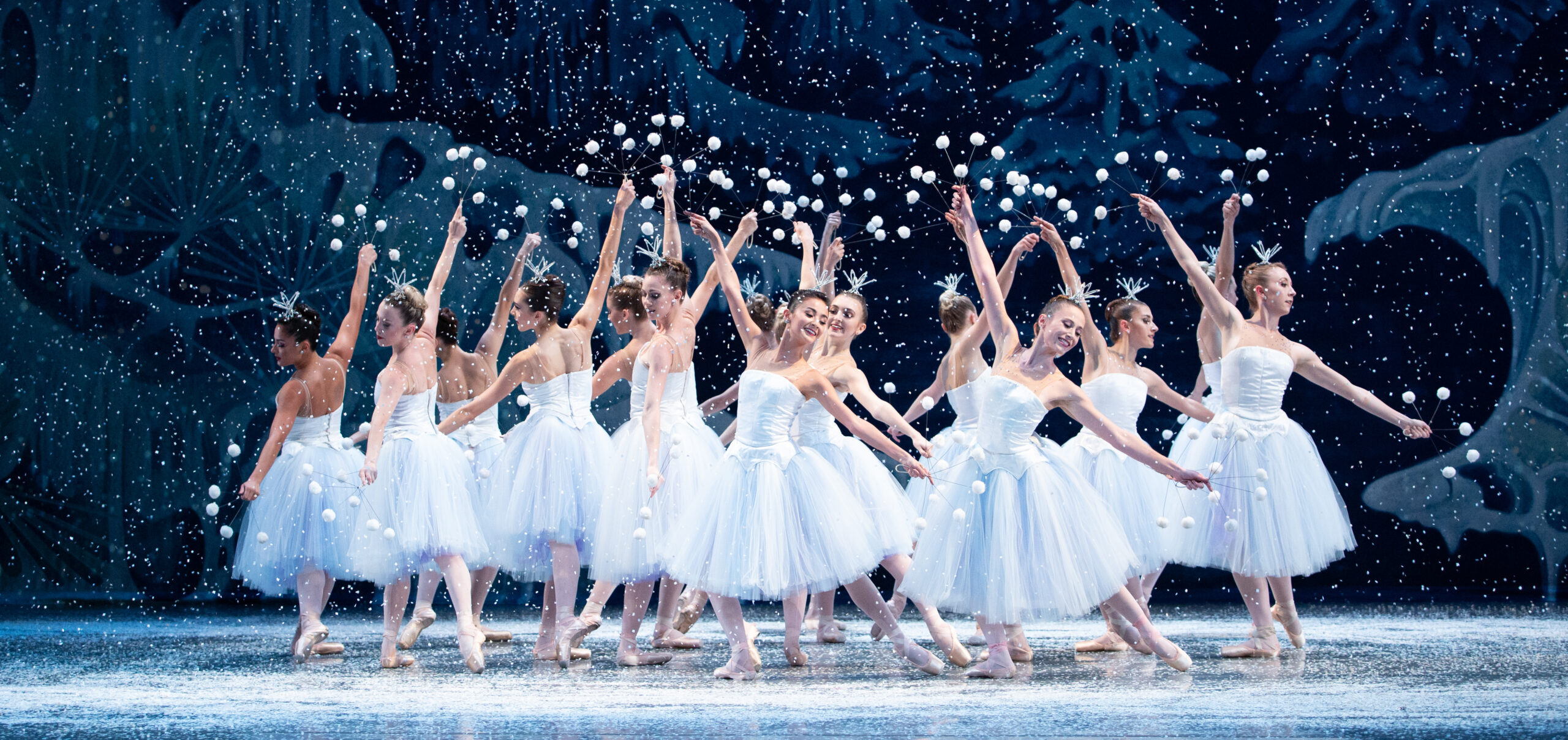
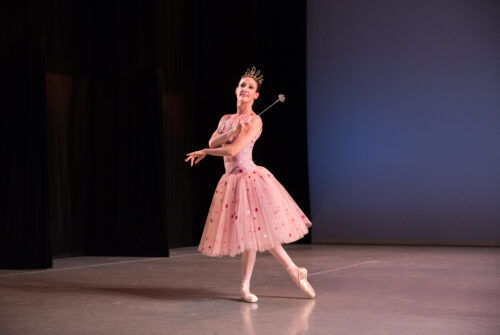
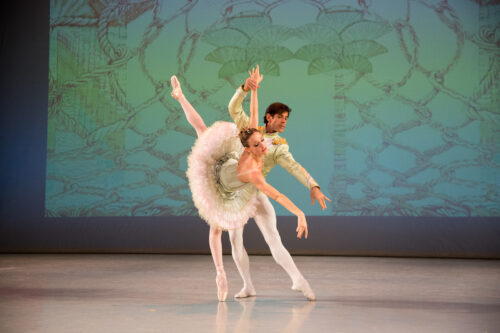
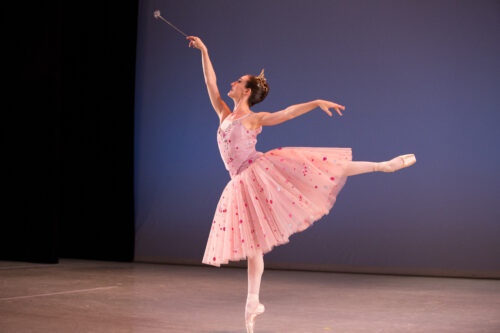
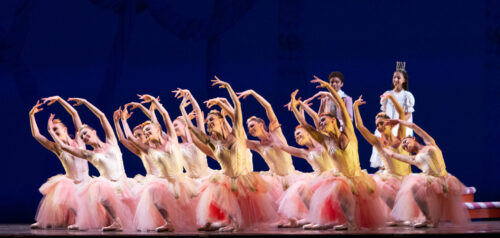
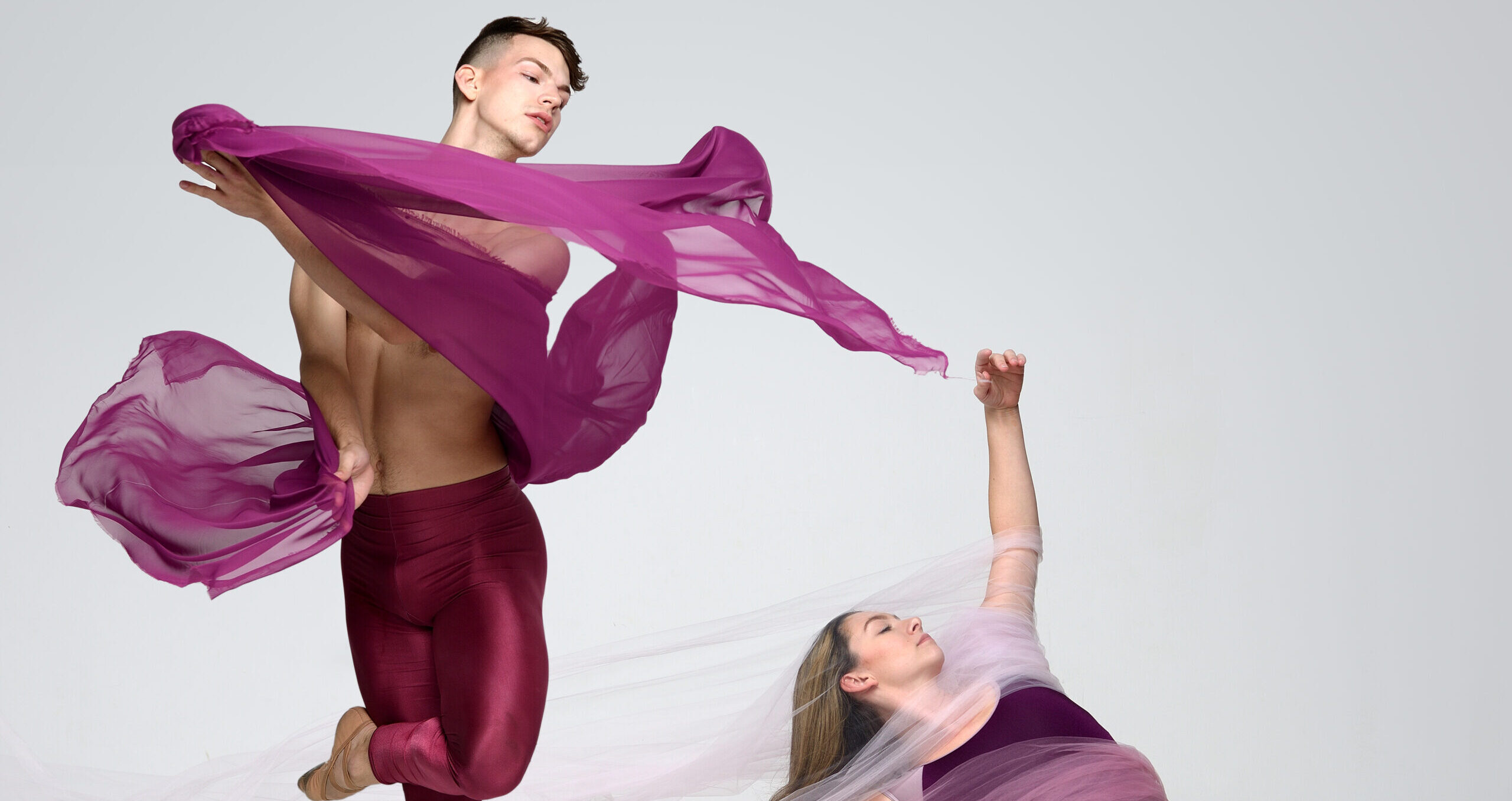
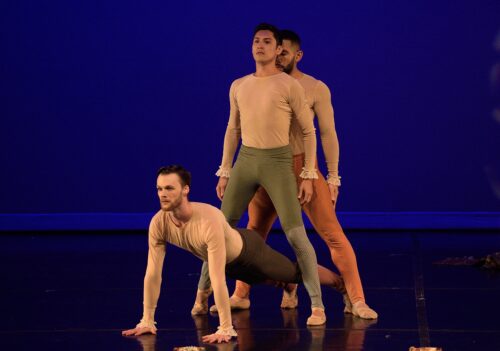
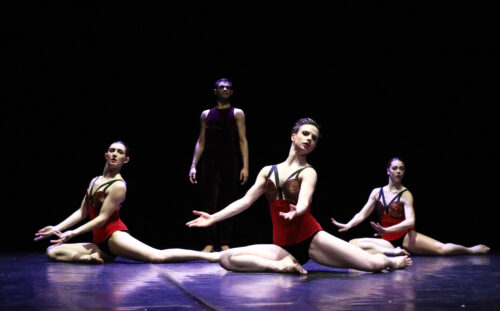
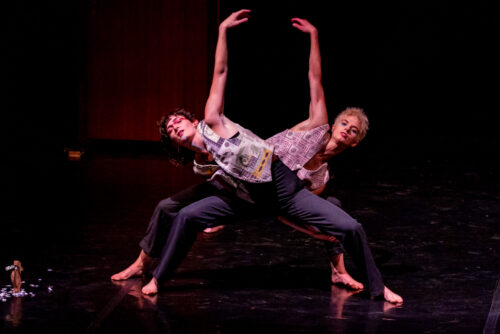

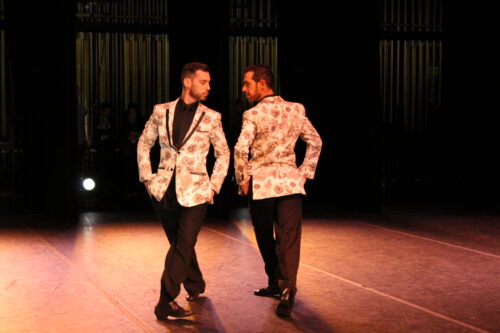
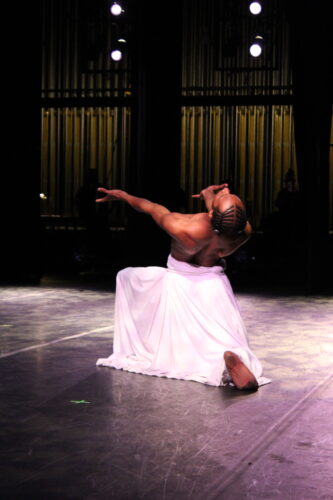
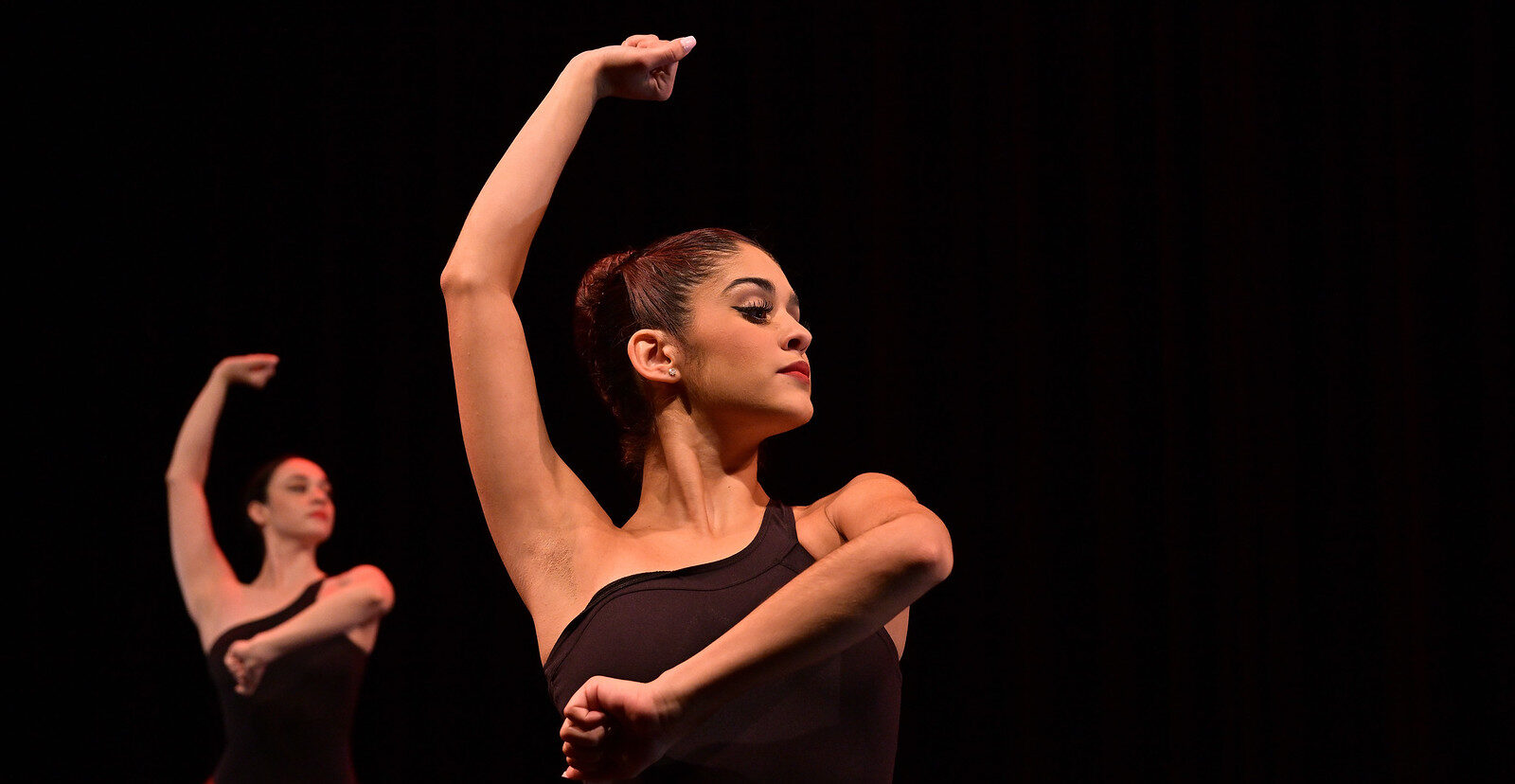
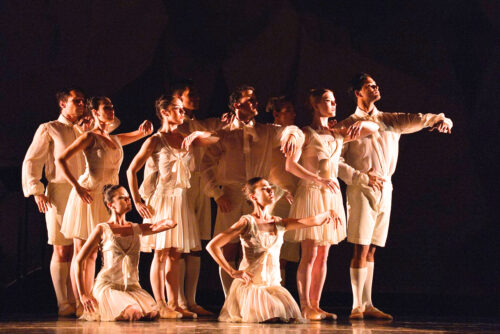
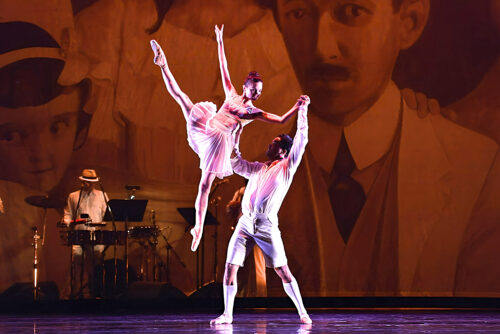
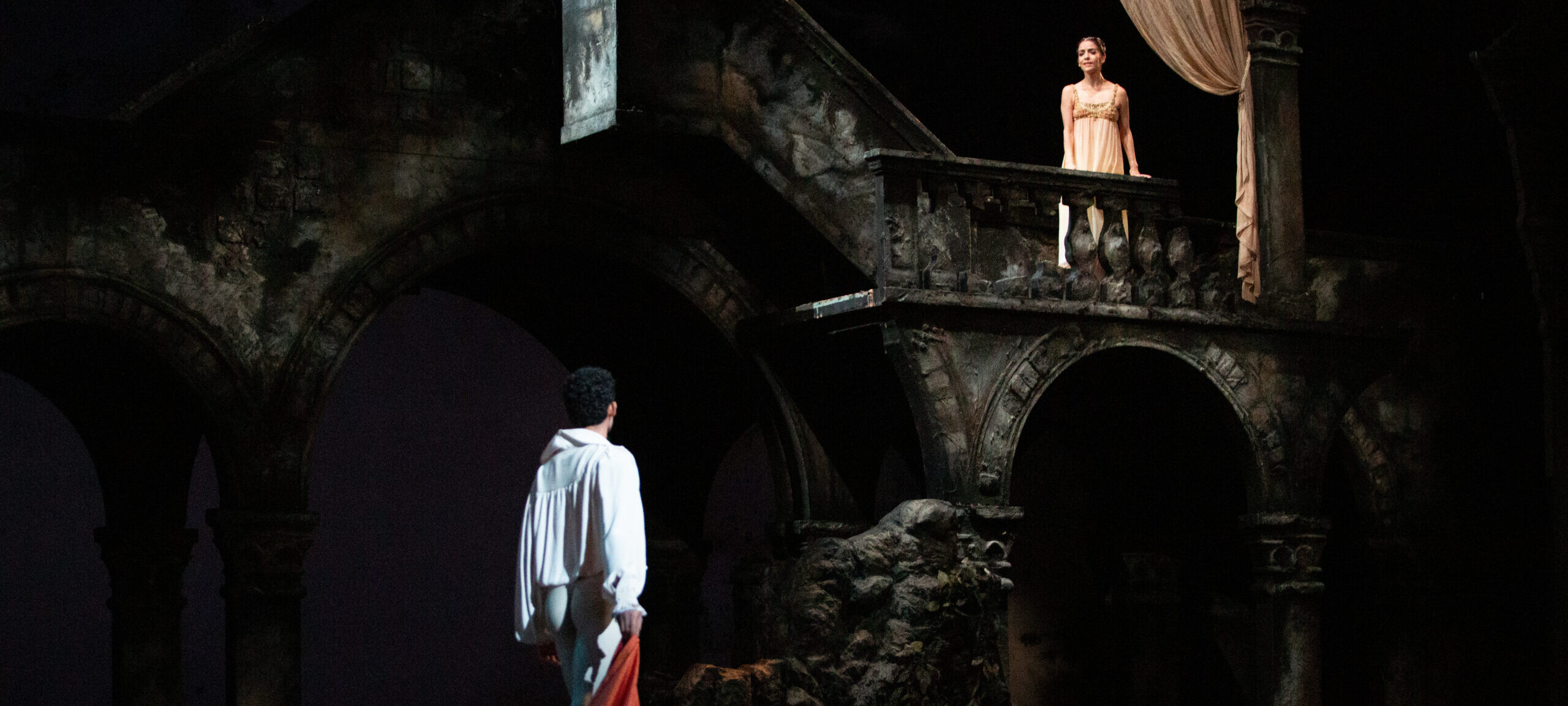
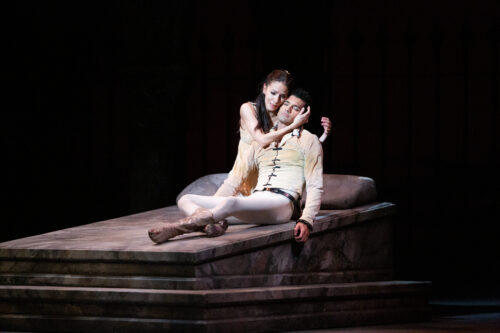
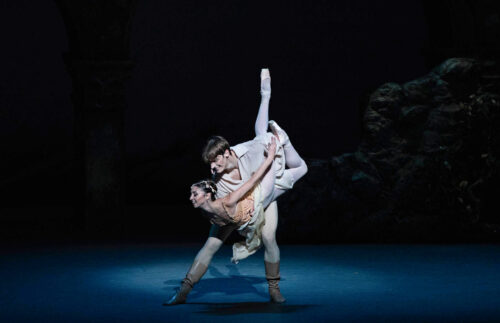
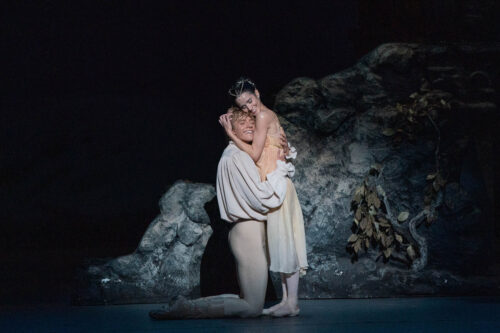
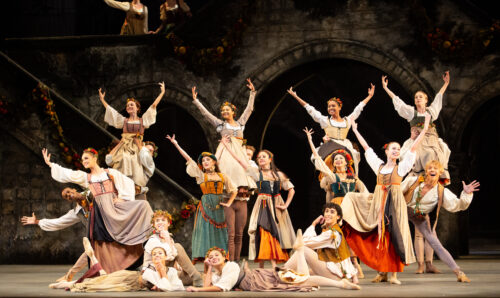
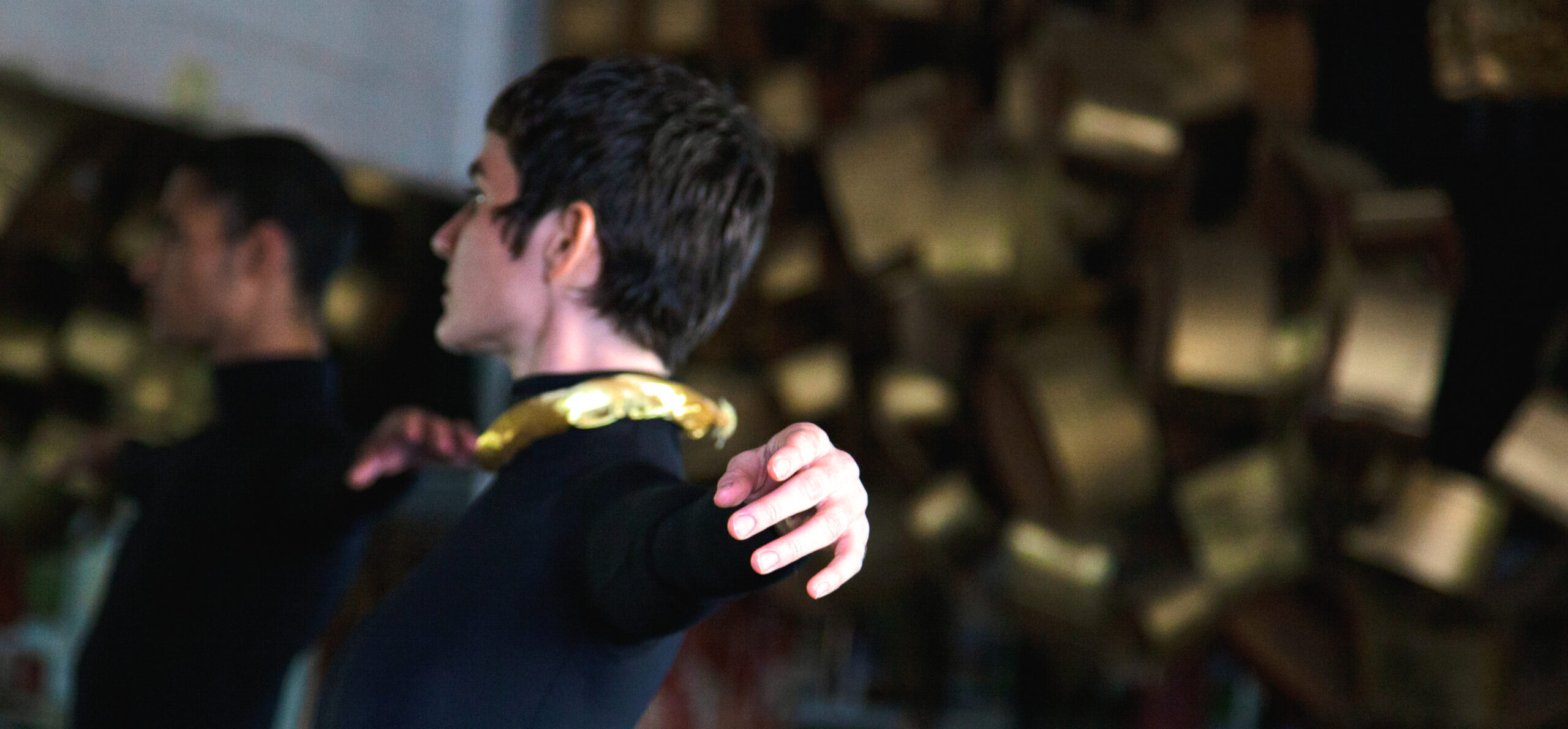
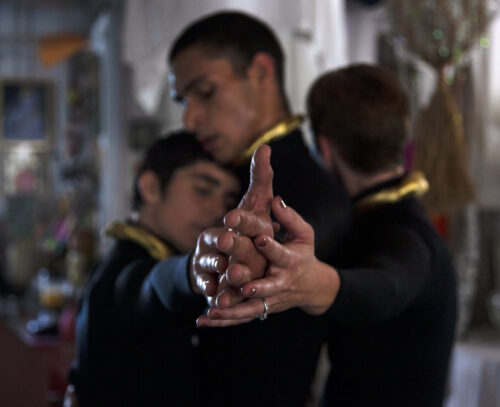
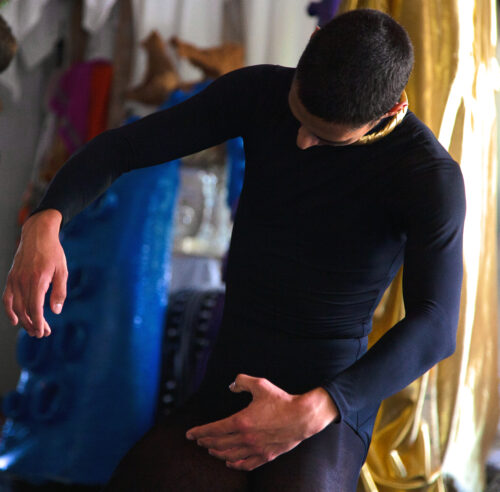
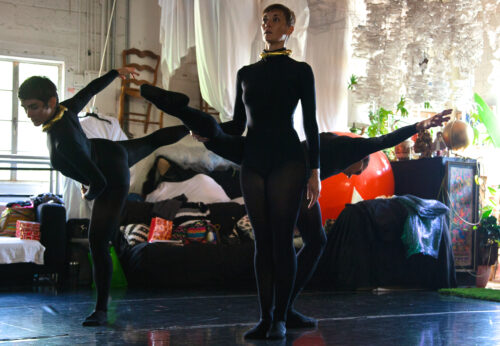
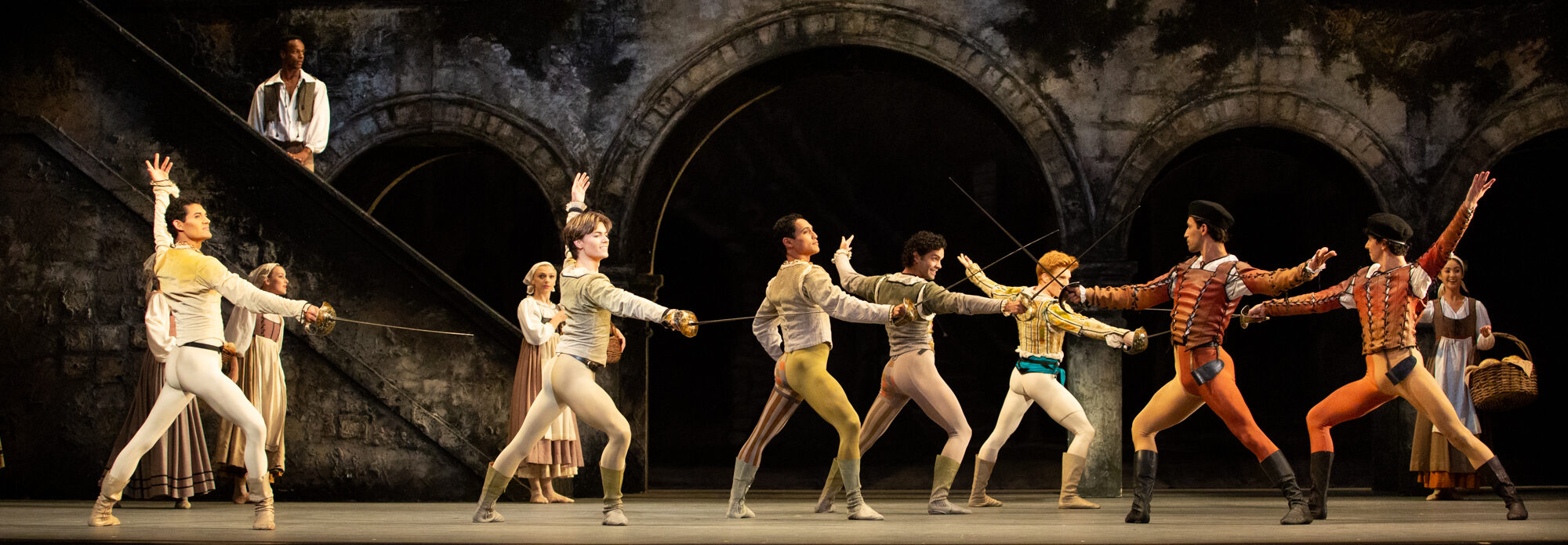
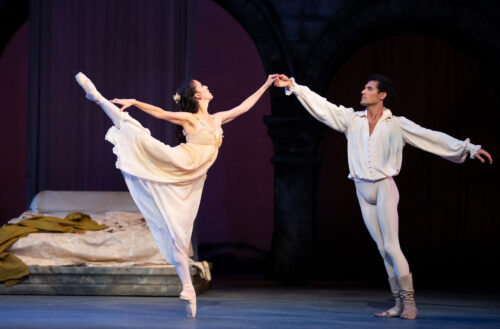
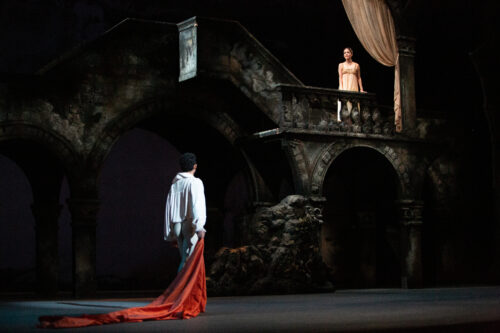
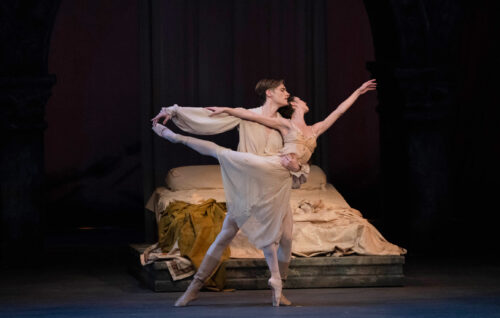
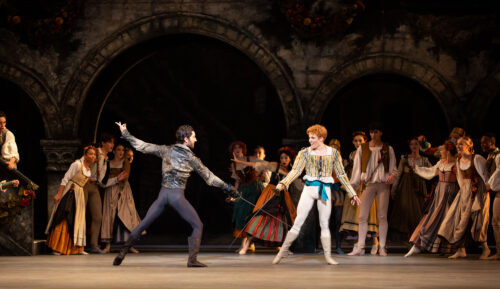




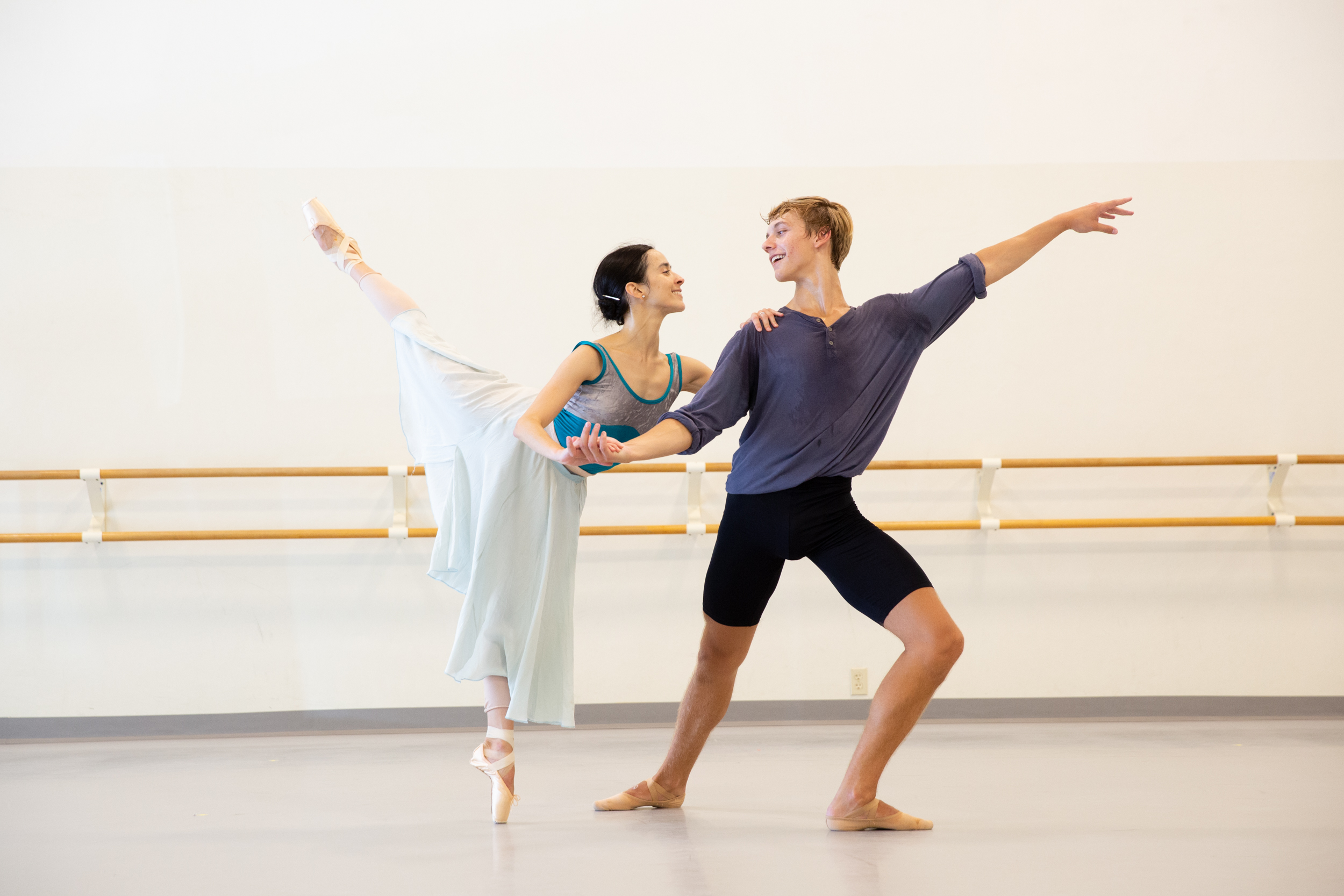
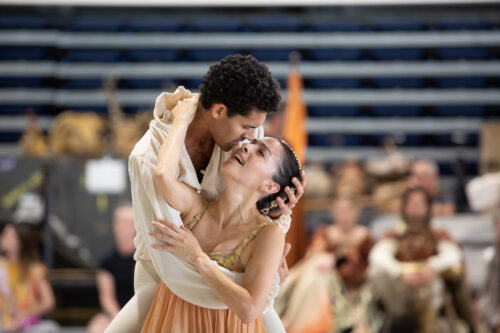
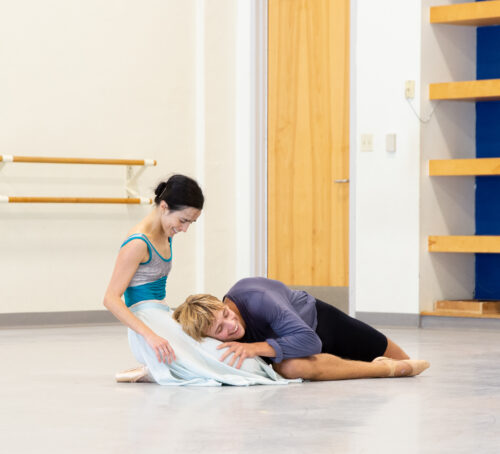
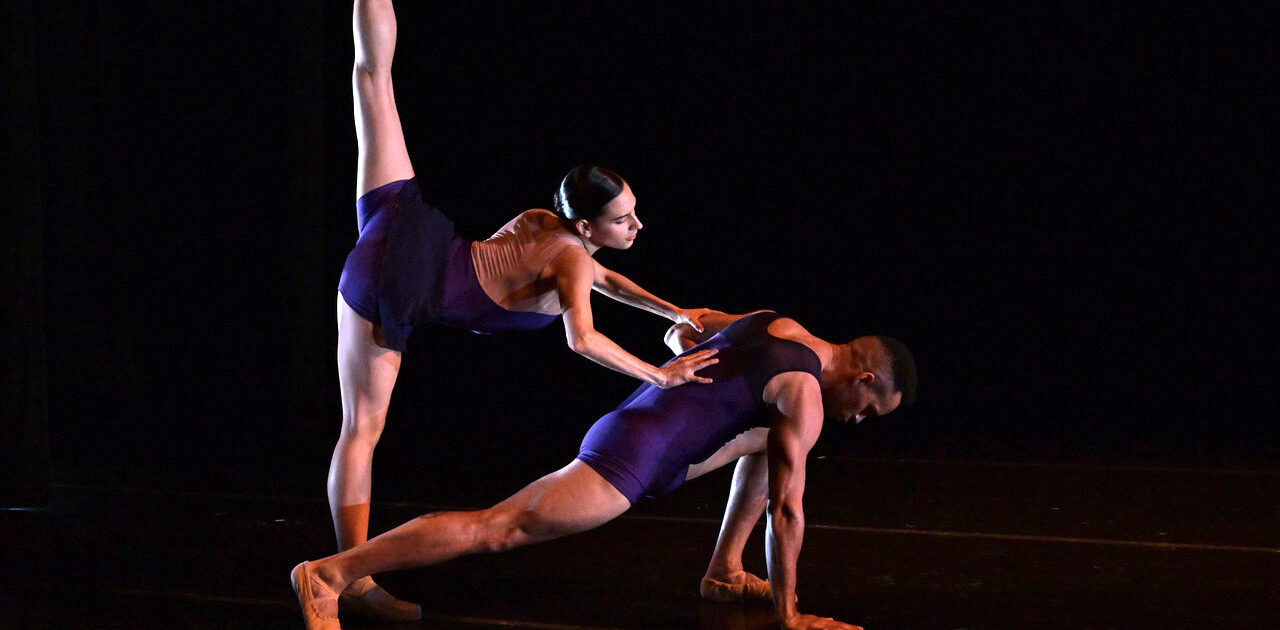


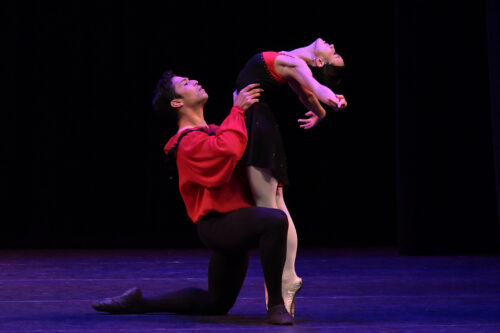
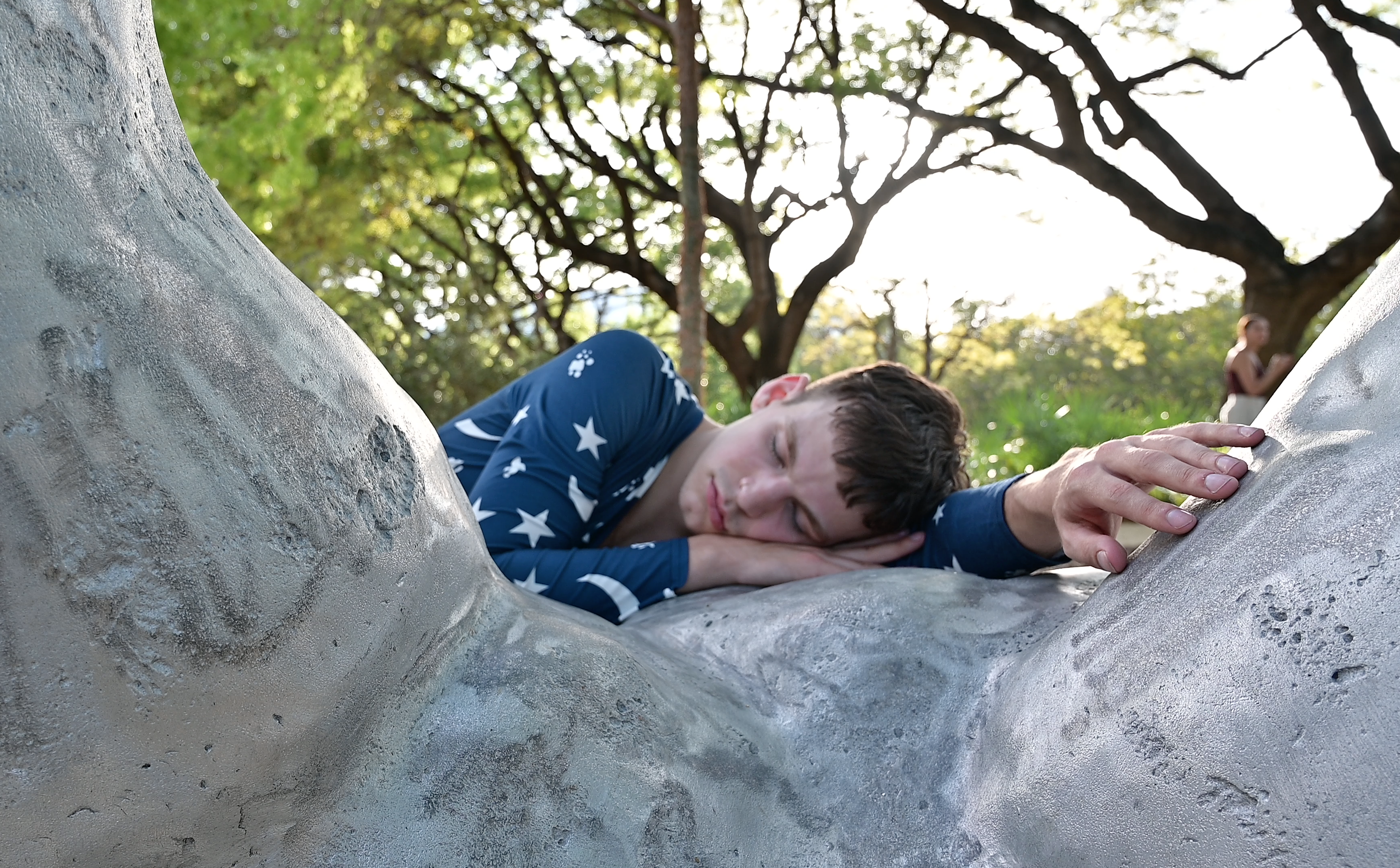
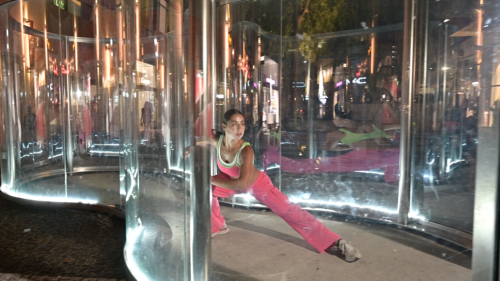
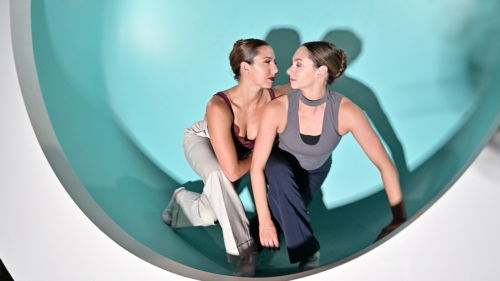
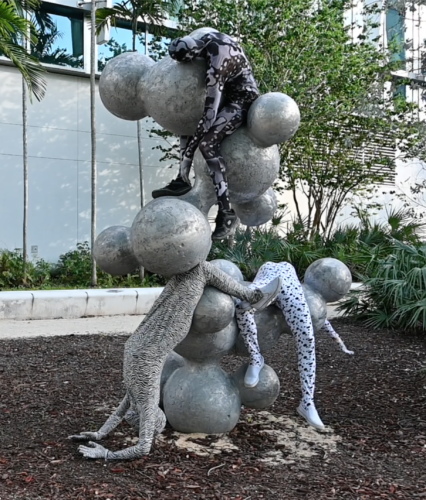
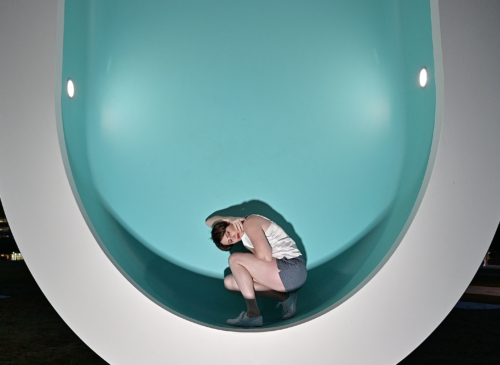
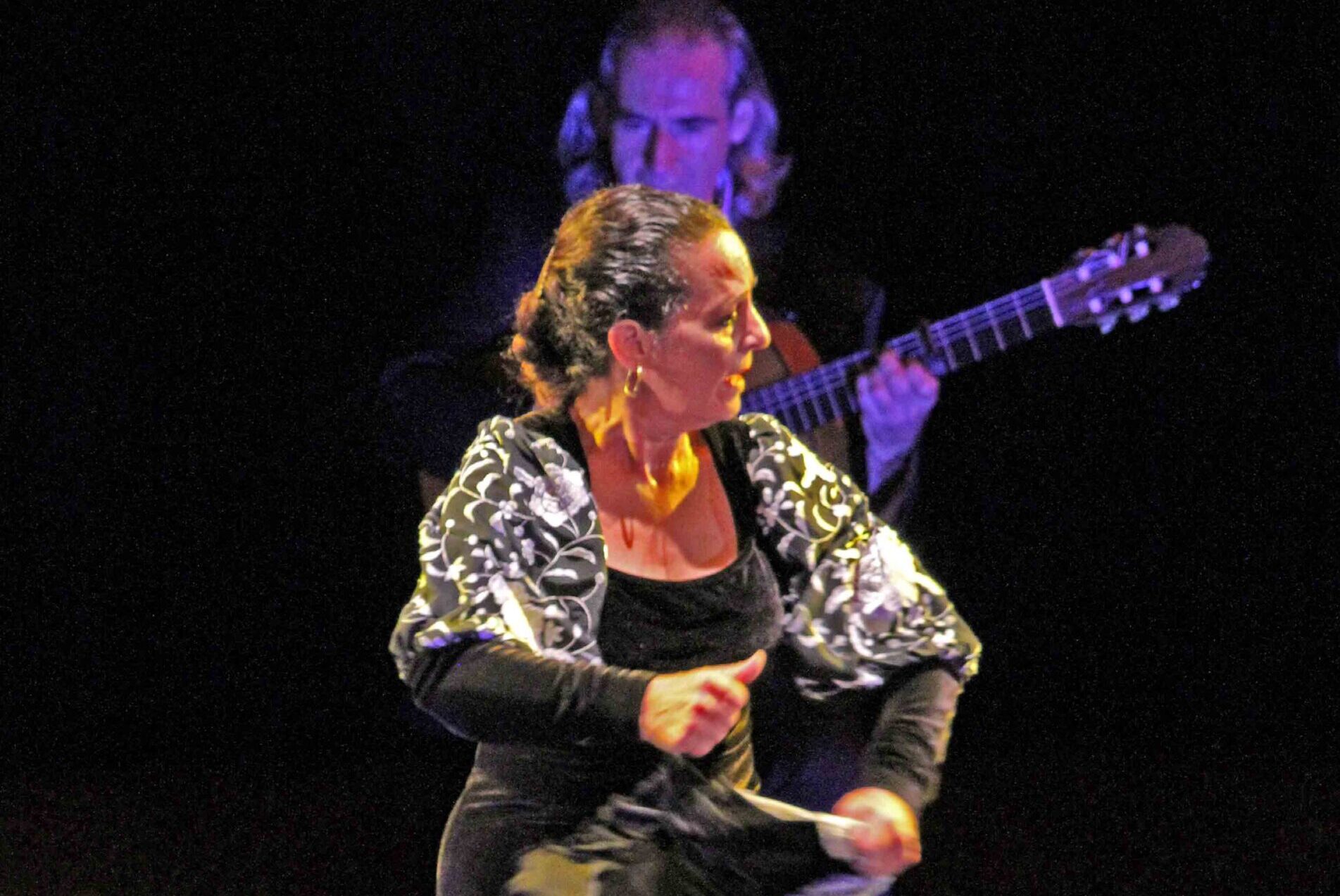
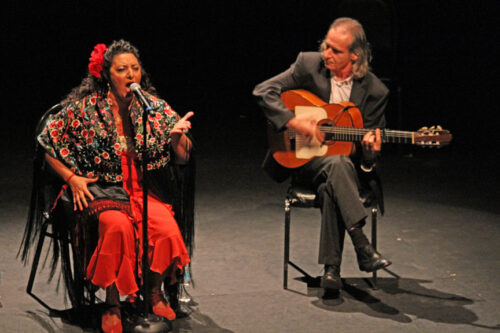

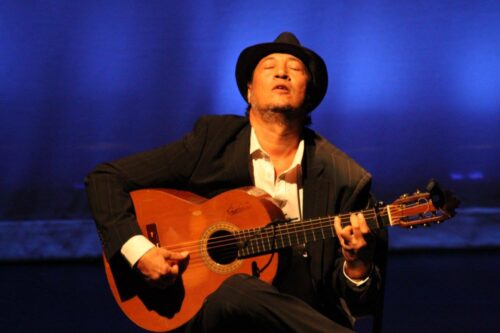
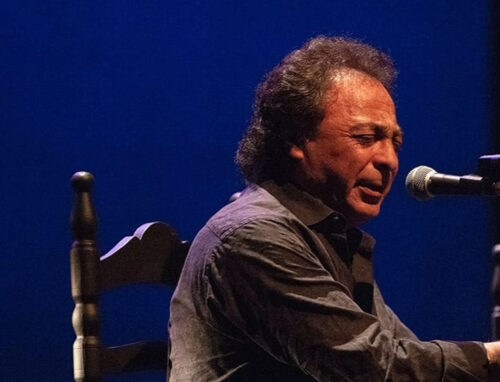
Recent Comments