
Visual Art
‘Anchors of Light’ Reframes 30 Years of MOCA North Miami
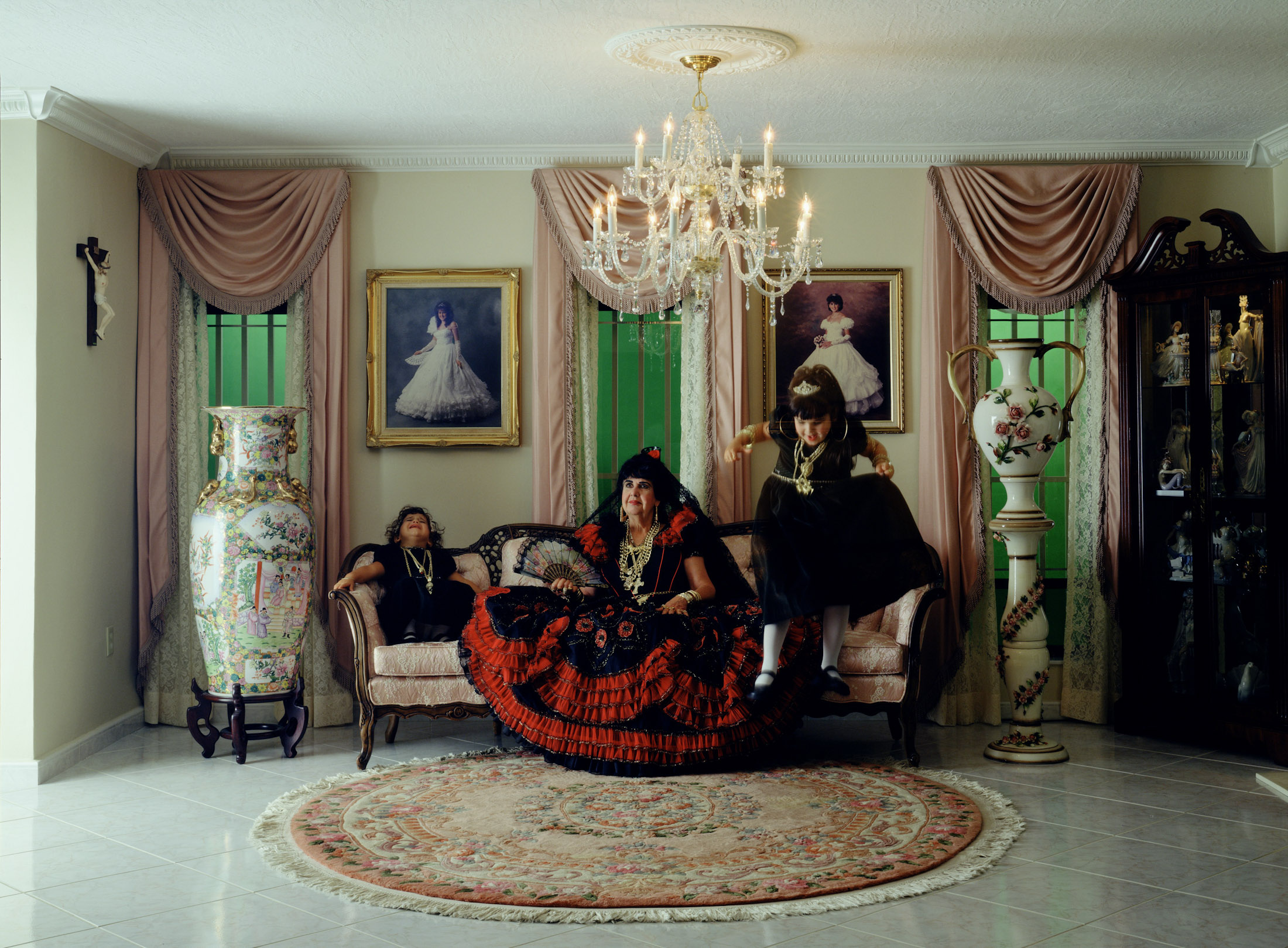
Luis Gispert, “Untitled (Living Room)” 2003 is part of “Anchors of Light” at the Museum of Contemporary Art, North Miami, and features many artists from the museum’s history. The show is on display through Sunday, Oct. 4. (Photo courtesy of the artist and the Museum of Contemporary Art, North Miami)
As the Museum of Contemporary Art North Miami celebrates its 30th anniversary, a new exhibition is as much about looking back as it is about moving forward.
Focusing on works from the museum’s collection, “Anchors of Light,” which opened on Wednesday, April 15, features many artists from the museum’s history. Nearly 50 artists are represented in a presentation that spans historical artists (Robert Rauschenberg, Claes Oldenberg), past retrospective subjects (Maryan S. Maryan, Edouard Duval-Carrie), and beloved locals (Purvis Young, Pepe Mar).
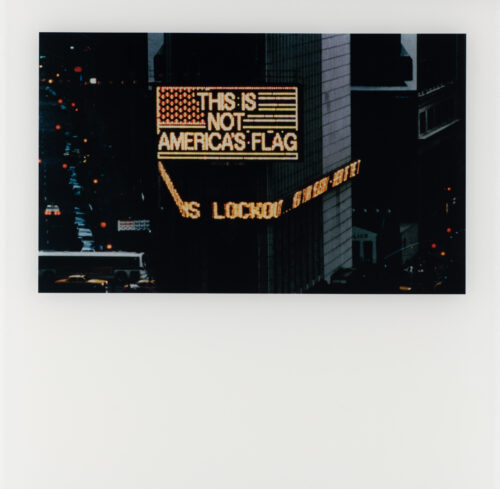
Alfredo Jaar, “A Logo for America,” 1995. (Photo courtesy of the artist and the Museum of Contemporary Art, North Miami)
But it’s also a platform for ambitious new voices. The museum invited Catherine Camargo, a Miami native and founder of the ultracontemporary Queue Gallery, to curate the show. Camargo is known for consciously programming art that runs against the usual perceptions of Miami’s scene, and her predilection towards dark and muted colors and unconventional materials shines through. A perfect example comes in the Will Boone painting that gives the show a bold opening statement. “Widowmaker” features horizontal gray and black stripes underneath a thin, pink circular outline that can be taken for a solar form, an apt visual metaphor for Miami as a place where sunny weather often provides a thin façade for moral shades of gray.
“The guest curator program at MOCA overall has a goal of providing a platform for different voices and perspectives,” says Chana Sheldon, the museum’s executive director, “and bringing in someone like Catherine to have a fresh look at works that our team and some of our visitors know always brings about really exciting results.”
One interesting segment comes in the form of a “video corridor,” in which a group of six flat-screen TVs protrude from the walls, allowing visitors to watch video artworks as they walk through. Camargo says the idea came from space constraints: she wanted to show multiple video works but didn’t want to build multiple separate screening rooms, such as the one reserved for the Ragnar Kjartansson installation “God.”
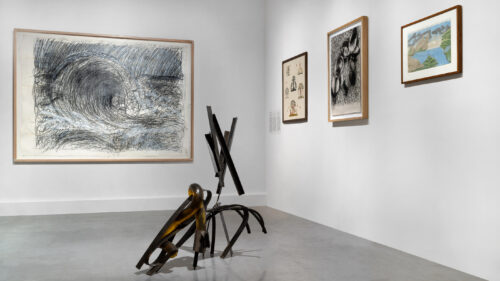
The museum invited Catherine Camargo, a Miami native and founder of the ultracontemporary Queue Gallery, to curate the show. (Photo by Zachary Balber)
“I knew I couldn’t have a room for each piece,” she says. “They have a lot of amazing films in the collection, and I was getting to the point where my list of works to be shown felt never ending. And I was worried about space. So I came up with the idea of having a video corridor so that I could arrange these videos in a way where people can still interact with it.”
That ingenuity also came in handy when confronted with another critical issue, the size of the collection and the works that are no longer there. Although MOCA’s collection of some 600 artworks is smaller than other local institutions – the Pérez Art Museum Miami claims almost 3,000 pieces, while the privately-owned Rubell Museum owns over 7,700 – its age reflects the museum’s pioneer status within the local art scene. The collection is as old as the museum building itself, which opened in 1996 as an evolution of the former Center for Contemporary Art under Bonnie Clearwater, now director and chief curator at NSU Art Museum Fort Lauderdale.
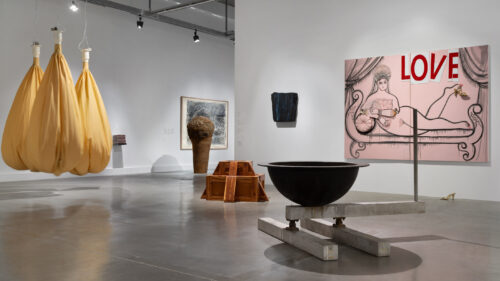
The “Miami School” section focuses on works from artists that made their careers in South Florida, such as Cano, Robert Chambers, and Purvis Young. (Photo by Zachary Balber)
“The idea was to create a program and a collection that would resonate with the South Florida art audiences, and also…that it would be an international museum located in North Miami,” Clearwater says. “We were a hybrid between a community center and an international museum of contemporary art, and we basically were able to maintain that vision all the way through and bring some of the best works to Miami, as well as bringing attention to the incredible, dynamic artist scene that was developing at that time.”
Under Clearwater’s leadership, MOCA quickly made a name for itself exhibiting major contemporary artists, giving retrospectives to starry names such as Keith Haring and Roy Lichtenstein as well as platforming locals such as Pablo Cano and Teresita Fernandez. Few other local institutions were seriously collecting at the time, and some hadn’t even been founded yet in the pre-Art Basel period.
After she left in 2013, a bitter dispute ensued between the City of North Miami, which owns the museum, and the board, which included collectors such as Irma Braman and Ray Ellen Yarkin. Both the city and the patrons made ownership claims on the museum’s collection, and a settlement resulted in MOCA retaining the majority but losing a portion of key objects as the board defected to form the Institute of Contemporary Art, Miami.
Since then, MOCA has continued to platform major contemporary artists, but in a way that centers North Miami’s diverse population. Recent years have seen shows from Haitian heritage artists like Manuel Mathieu and Didier William as well as art world stars like Cecilia Vicuña and Lonnie Holley, and the museum is one of the few in the United States that provides artwork information in Haitian Creole.
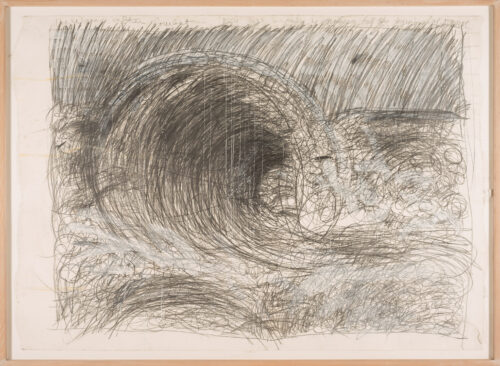
Pat Steir, “From the Sea, Wave After Courbet,” 1984. (Photo courtesy of the artist and the Museum of Contemporary Art, North Miami)
Still, Camargo found she had less to work with than she expected. The ICA ended up taking pieces by big name artists including James Turrell, Ed Ruscha, Dan Flavin and Raymond Pettibon. “The ICA split definitely did alter what was left in the collection and kind of changed a lot of the story I was able to tell,” she says. “It forced me to focus on what remained, and there were still so many gems that I was able to pull out, and that was exciting. But that was definitely something that presented itself as a challenge.”
So, how does a curator tell a comprehensive story when so many of the pieces that form MOCA’s history are unavailable? Certainly, a few big names are still present, including a video installation from Ragnar Kjartansson and works on paper from Pat Steir and Jose Bedia.
Beyond that, it came down to celebrating Miami and its artists. The “Miami School” section focuses on works from artists that made their careers in South Florida, such as Cano, Robert Chambers, and Purvis Young. Connections are made to a show curated by Clearwater, “Defining the ‘90s,” that was one of the first attempts at placing Miami on the same level as New York and Los Angeles as a major contemporary art scene.
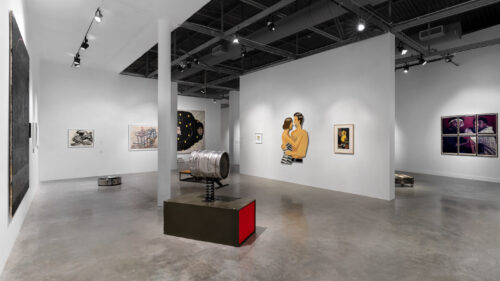
Works throughout “Anchors of Light” reflect the themes that animate the artistic discourse that takes place in South Florida. (Photo by Zachary Balber)
Works throughout the show reflect the themes that animate the artistic discourse that takes place in South Florida. Artworks in “The Body” reflect the city’s obsession with the material world, from Tom Wesselman and Alex Katz’s pop-centric odes to skin contact to Luis Gispert’s photo of his own Cuban family’s living room, decorated floor to ceiling with faux-baroque kitsch.
Alfredo Jaar’s “A Logo for America” famously recenters the broader Latin conception of the bi-continental landmass, arguing against U.S. exceptionalism – appropriate for a city that considers itself the capital of Latin America.
Much has changed in Miami in the 30 years since MOCA’s founding, but as many moments in “Anchors of Light” attest to, just as much has remained the same.
WHAT: “Anchors of Light”
WHEN: Through Sunday, Oct. 4.
WHERE: Museum of Contemporary Art North Miami, 770 NE 125 St., North Miami
COST: $10 for general admission; $5 for seniors, students with ID, youth ages 12 to 17, and visitors identifying as disabled; free for children under 12, North Miami residents, city employees, veterans, and caregivers of disabled visitors.
INFORMATION: 305-893-6211 or mocanomi.org
ArtburstMiami.com is a nonprofit media source for the arts featuring fresh and original stories by writers dedicated to theater, dance, visual arts, film, music and more. Don’t miss a story at www.artburstmiami.com