Miami Jewish Film Festival Brings ‘Made in Florida’ Stories to the Big Screen
Written By Michelle F. Solomon January 13, 2026 at 12:21 PM
Leading the slate of the Miami Jewish Film Festival’s “Made in Florida” is the world premiere of Jerrod “Jerry” Levine’s “From Cuba to America,” a Miami-made portrait of entrepreneur George Feldenkreis and his journey from Havana to building the Perry Ellis fashion empire in Miami. (Photo courtesy of the filmmaker)
The Miami Jewish Film Festival Made in Florida segment, unveiled during the festival’s 29th edition, reflects the event’s continued growth in both the number of films it presents and the South Florida venues it fills.
The focus is on movies that are rooted in Miami’s community and crafted by filmmakers who either call Florida home or whose subjects have a place in South Florida.
Leading the slate is the world premiere of Jerrod “Jerry” Levine’s “From Cuba to America,” a Miami-made portrait of entrepreneur George Feldenkreis and his journey from Havana to building the Perry Ellis fashion empire in Miami.
George Feldenkreis, center, his son, Oscar, left, wife Mariita, and his daughter, Fanny, right, at the New York Stock Exchange for Perry Ellis International. (Photo courtesy of the filmmaker)
The film began initially as a personal film for the Feldenkreis family, projects Levine had done many times previously for others. “They were nonbroadcast projects I did quietly for different people – influential families.” Oscar, George’s son, knew of one that Levine had done about his best friend’s parents. So a family film about his father was begun.
Levine started interviewing George for what was to be a six-part series. “And while getting all these interviews, I said to George, ‘You know, some of what you are saying here is so incredible, why don’t we turn this into a documentary, a broadcast documentary, so other people can see it.’”
Levine said it took a while for George Feldenkreis, born in 1935 in Havana to Cuban-Ukranian-Jewish parents, to “wrap his mind around it.”
The filmmaker began in 2020 interviewing the entrepreneur and completed the family project in 2022. Levine has spent the last few years working on what is now “From Cuba to America.” “We added other interviews and stories. We essentially took six hours of finished material and turned it into an hour and 20 minutes and it was very challenging.”
What’s emerged is a narrative that captures not only Feldenkreis’s rise in business and the transformation of his company into a family endeavor with his son Oscar and daughter Fanny, but also his high-stakes acquisition and battle to revive the Perry Ellis brand. At the same time, the film chronicles his personal journey and illuminates the broader story of Cuban immigrants building new lives in America.
The film also features an original track by Grammy-winning Emilio Estefan, who has a long-standing friendship with Feldenkreis. One piece of archive video given to Levine for his film by Estefan features a very young pre-Miami Sound Machine playing at Fanny Feldenkreis’s wedding.
“Whoever was the videographer at that wedding decided to turn the camera around photographer. So, we don’t have some random cut. We have the cut that Emilio talks about in the film, remembering the party he was at.” Estefan contributed an original track for the film that Levine says “has never been in a movie before.” “Por Si Acaso No Regreso,” performed by Celia Cruz and written by Anjeanette Chirino and Estefan, closes out the film.
There is also a poignant time caught on film as Levine follows the family traveling to Havana, where George says, “We went to Old Havana to where I used to live and then I decided to go to the second floor.” Levine captures him and his family in front of the apartment, knocking on the door and speaking to the person who lives there now and who lets them in. “I lived here since I was born. Here is my room that I shared with my grandfather and my sister,” he tells his family traveling with him.
George Feldenkreis, born in 1935 in Havana to Cuban-Ukranian-Jewish parents is featured in the film “From Cuba to America.” (Photo courtesy of the filmmaker)
And then a party in Havana for George’s birthday. “There was a guy who was a cook for Fidel Castro. The guy can do anything you want. I told him I want wine, I want this, and get me a group of singers. He got me musicians. My Cuban friends from law school were there. We had a great time.”
He didn’t live to see his legacy on film. Levine’s end notes of the film read, “George Gidalio Feldenkreis passed away peacefully on Feb. 20, 2025.” He died in Miami Beach at the age of 89.
“From Cuba to America:” 7:30 p.m., Saturday, Jan. 24, Miami Theater Center, 9806 NE 2nd Ave., Miami Shores; Monday, Jan. 26, Temple Menorah, 620 75th St., Miami Beach; Wednesday, Jan. 28, Michael-Ann Russell JCC (sold out).
Marty Lurie, the Major League Baseball broadcaster whose voice is synonymous with San Francisco’s Giants, traces his remarkable journey from Brooklyn and Miami Beach to becoming the voice of sports in the Bay Area, in the documentary “Baseball Mensch: The Marty Lurie Story,” by Randy Field.
“I came from Brooklyn to Miami in the sixth grade,” says Lurie. “I went from a school that looked like a penitentiary to a ranch house school in Miami Beach, and I met all my lifelong friends at that point—Joel Brown, who became the chief judge of Dade County; Ricky Perillo, a major flower importer; Bobby Flam from Jumbo’s Restaurant; Seth Werner, the entrepreneur. We’ve been friends our whole lives.”
After high school, Lurie attended the University of Florida and University of Miami Law School, then co-founded a legal practice in Miami that provided representation to those who couldn’t access legal aid. “We opened a little storefront office; it used to be Henry’s Imperial Steakhouse. The waiting room could hold 200 people, and our office was the kitchen. We would sit under the exhaust fan and talk to people. That’s the way we started the practice,” he recalls.
Marty Lurie, the Major League Baseball broadcaster whose voice is synonymous with San Francisco’s Giants, traces his remarkable journey from Brooklyn and Miami Beach to becoming the voice of sports in the Bay Area, in the documentary “Baseball Mensch: The Marty Lurie Story,” by Randy Field. (Photo courtesy of Miami Jewish Film Festival)
Miami Beach, he emphasizes, was the foundation for his later success. “Without Miami Beach High, without the Gators, without the University of Miami, I never would have been anybody. From Brooklyn, my father had died, and my mother and sisters and I were moved to Miami Beach by my uncle. Life all of a sudden—green grass in North Shore Park, beautiful people—it was so different. My mother became part of Temple Menorah, which was started in Miami Beach, and I was the second bar mitzvah there in 1958. Miami really made me the man I am today.”
While he tells of many highlights of his broadcasting career, one of the pinnacles came in the form of a World Series ring. “The president of the Giants was on the radio with me. After the show, he said, ‘What’s your ring size?’ I told him, and six months later, they called me in and gave me a World Series ring. For me, it meant a lot because it was the first time I got validated. Being a criminal lawyer, you never got validation. No one ever called you up and said, ‘Hey, great job.’”
Beyond the accolades, Lurie’s story is about the connections between his Jewish upbringing, his Miami Beach roots, and his lifelong mission to fight for the underdog. “It talks about the influence of Judaism on me, and what it meant to me, and how it connects to baseball, fighting for the underdog. I’ve always tried to do right, and I’ve mentored people in criminal law. It’s all connected to my Jewish background,” he says.
At 80, Lurie continues broadcasting Giants games and hosting his YouTube channel, “Marty Lurie & Friends, Talking Baseball.” We all followed our passion, and we still do at this age,” he reflects.
7:30 p.m., Monday, Jan. 26, “Baseball Mensch: The Marty Lurie Story,” Miami Beach JCC, 4221 Pine Tree Drive, Miami Beach. East Coast Premiere. Tickets are $16, $15 for seniors 65 and older and students.
In “Sheitel: Beauty in the Hidden,” documentary filmmaker Lynda Mejuck-Suissa explores the centuries-old spiritual practice of Orthodox Jewish women covering their hair as a sign of modesty, privacy, and marital practice.
Rebbetzin Chani Lipskar of the Shul of Bal Harbour in “Sheitel: Beauty in the Hidden” by documentary filmmaker Lynda Mejuck-Suissa. (Photo courtesy of the filmmaker)
Mejuck-Suissa’s curiosity begins close to home. Living in Nova Scotia, and dividing her time between Toronto and Halifax, the film balances historical context with contemporary voices from rabbis who explain religious laws to their wives who reflect on their own views of the “sheitel.” An interview with a judge, the first Hasidic woman elected to public office in Canada, and other professional women from Los Angeles to New York highlight the balance of tradition and their personas in the modern world. Among the most poignant moments is following a young bride as she goes for her first wig fitting, marking the Orthodox practice that married women begin covering their hair publicly immediately after marriage. “It’s not just about putting on a wig,” says Mejuck-Suissa. “It’s part of a committed lifestyle.”
Sheitel machers (wig makers) figure prominently in the film from Jerusalem, Montreal, Toronto, Brooklyn, as well as an inside look at Yaffa Wigs in Bal Harbour and Yaffa Tenami’s decades-long dedication to wigmaking and wig fitting.
Bal Harbour’s Yaffa Tenami’s decades-long dedication to wigmaking and wig fitting is profiled in “Sheitel” Beauty in the Hidden.” (Photo courtesy of the filmmaker)
“I love Bal Harbour because it’s fashionable, but it’s also deeply religious. It really shows how tradition and self-expression aren’t opposites.”
Throughout the film, Mejuck-Suissa challenges assumptions about religious women. “People say, ‘Jewish women are so oppressed,’” she said. “But when you actually talk to these women, they’re not oppressed.”
Mejuck-Suissa grounds the film in history using archival photographs and advertisements that trace how wigs moved from European courts into Jewish communities. Images of Marie Antoinette, alongside photographs of Russian Jewish women in the early 20th century, place contemporary practice with the long lineage of the spiritual practice. “Jewish women always wanted to look as good as possible and as current as possible,” says Mejuck-Suissa. “Style is relative—it depends on where you live and when you live.”
7:30 p.m., Thursday, Jan. 15, “Sheitel: Beauty in the Hidden,” Miami Beach JCC, 4221 Pine Tree Drive, Miami Beach. U.S. Premiere. The premiere event will feature director Lynda Medjuck-Suissa in attendance for an introduction and post-film conversation. Tickets are $16, $15 for seniors 65 and older and students.
Sergio Maza, the director of the documentary “The New Yorker Theater: Talbot Legacy,” discovered the legendary Dan and Toby Talbot, a visionary Jewish couple from the Bronx, almost by way of Argentina.
“My first education in cinema came from a neighbor who programmed independent films on cable TV. Those movies were so important that I decided I didn’t want to be an architect—I wanted to immerse myself in film.” Moving to New York brought Maza into contact with the world the Talbots had helped create, and the story of their pioneering work inspired him to make the documentary.
The Miami connection in the film “The New Yorker: Talbot Legacy” is Nat Chediak, Miami Film Festival co-founder and former executive director, who appears in the film and who championed independent and art house cinema in Miami for decades. (Photo courtesy of the Miami Jewish Film Festival)
“For me, this is a very important story, also because they were able to revolutionize film exhibition in the 1960s. And right now, we are in a very complex moment of movies and we need to find different ways to connect the world of different directors to audiences.”
The Miami connection in the film is Nat Chediak, Miami Film Festival co-founder and former executive director, who appears in the film and who championed independent and art house cinema in Miami for decades.
“Before the New Yorker, he [Dan Talbot] wanted to run a bookstore,” recalls Chediak, who says he had a lifelong friendship with Talbot. “I’m glad he chose film instead. He wasn’t after blockbusters—he was passionate about discovering films that broke new ground, that saw reality in a different way. And he inspired me to do the same here in Miami.”
6 p.m., Sunday, Jan. 18, “The New Yorker Theater: Talbot Legacy,” O Cinema South Beach, 1130 Washington Ave., Miami Beach. Florida Premiere. $16, $15 seniors 65 and older and student. Also included will be a screening of Robert Bresson’s “A Man Escaped,” a film which the Talbots championed and distributed. Maza and Chediak will be in attendance to introduce the film and participate in a conversation following the film with former Miami Herald Film Critic Rene Rodriguez.
Also included in the “Made in Florida” programming are “Parting the Waters,” 6 p.m., Jan. 15 at Miami Theater Center, an inspiring portrait of Florida native Michele Kupfer’s journey to the Maccabiah Games and Justin Schein’s acclaimed “Death & Taxes,” 6 p.m., Jan. 21, O Cinema South Beach, featuring Robert Reich, Paul Krugman, David Stockman, and Grover Norquist in a probing examination of wealth, tax policy, and inequality.
WHAT: The 29th edition of the Miami Jewish Film Festival
WHEN: Wednesday, Jan. 14 through Thursday, Jan. 29
WHERE: Bill Cosford Cinema, 5030 Brunson Drive, Coral Gables; Coral Gables Art Cinema, 260 Aragon Ave., Coral Gables; Michael-Ann Russell JCC, 18900 NE 25th Ave., North Miami Beach; Miami Beach Bandshell, 7275 Collins Ave., Miami Beach JCC, 4221 Pine Tree Drive, O Cinema South Beach, 1130 Washington Ave., Miami Beach; Miami Theater Center, 9806 NE 2nd Ave., Miami Shores; The Hub at Temple Beth Am, 5950 N. Kendall Drive, Pinecrest.
COST: $25- $54 for special events; $16 general admission for all other films, $15 seniors 65 and older and students with ID; $350 for all access.
ArtburstMiami.com is a nonprofit media source for the arts featuring fresh and original stories by writers dedicated to theater, dance, visual arts, film, music and more. Don’t miss a story at www.artburstmiami.com
No posts found
Zoetic Stage Premieres Bold, Epic ‘The Inheritance Part 1’ at Miami’s Arsht Center
Written By Michelle F. Solomon January 8, 2026 at 11:48 AM
The cast of Zoetic Stage’s production of Matthew López’s “The Inheritance, Part 1,” which opens in previews on Thursday, Jan. 8 and then runs from Friday, Jan. 9 through Sunday, Jan. 25 in the Adrienne Arsht Center’s Carnival Studio Theater, Miami. From left, Angel Dominguez, Sam Lantz, Aidan Paul, Anthony Michael Martinez, Imran Hylton, Larry Toyter, Alex Weisman, and Randall Swinton. (Photo courtesy of Zoetic Stage)
Growing up in Panama City, Fla., playwright Matthew López first encountered the film adaptation of E.M. Forster’s 1910 novel “Howards End” while he was in high school when his mother took him to the movies. At 16, a Puerto Rican teenager in Florida’s Panhandle, López was captivated by the story of three families navigating class, social convention, and relationships in turn-of-the-century England.
After moving to New York, López picked up Forster’s novel in a bookstore and learned that the author was a gay man. That discovery, combined with his early fascination with the film, ultimately inspired “The Inheritance,” a sweeping epic that explores similar themes through the lives of gay men across generations.
Zoetic Stage is premiering “The Inheritance, Part 1” as part of the company’s Theater Up Close series at the Adrienne Arsht Center for the Performing Arts, opening in previews Thursday, Jan. 8, then running from Friday, Jan. 9 through Sunday, Jan. 25.
Alex Weisman as Eric Glass and Anthony Michael Martinez as Toby Darling take direction from Stuart Meltzer during rehearsals of “The Inheritance, Part 1” at Zoetic Stage. (Photo by Michael McKeever, courtesy of Zoetic Stage)
Zoetic Stage Artistic Director Stuart Meltzer said he has wanted to produce and direct “The Inheritance” since first reading the script in 2020.
Meltzer sees López’s play as taking on what Forster could not openly do in his own time. “It picks up the written word of gay men across decades,” he said, tracing a lineage from sexual liberation to the devastation of the AIDS crisis and its aftermath. “It’s about learning from the past in order to move forward.”
The play is meant to be presented in two parts, “The Inheritance, Part 1, and “The Inheritance, Part 2,” unfolding over two evenings or in a marathon same-day presentation and roughly running seven hours.
“Early on, we tried to figure out how to produce both parts,” Meltzer said, a format widely recommended so audiences could experience the full work, but “the costs were exorbitant. It’s such a large piece of theater; it was just too much.”
“Part 1” establishes the characters, their relationships, and their inheritance.
While Meltzer said he always understood the significance of the work, its impact deepened as he began working on Zoetic Stage’s production.
“I don’t think I fully realized and recognized the importance of the play until really working on it. Seeing it now, it serves as a lesson of generations of gay men coming together and telling their story to resist erasure and pass on the torch to the next generation. It is a piece of theatrical literature that transcends audiences.”
Anthony Michael Martinez and Alex Weisman in Zoetic Stage’s “The Inheritance, Part 1.” (Photo by Michael Kushner, courtesy of Zoetic Stage)
For actor and South Florida native Alex Weisman, who stars as Eric Glass, one of the central characters in “The Inheritance,” seeing the play in its opening night on Broadway and now performing the character himself has been profound.
“So, we’ve got Eric Glass, you know, this gay Jewish guy in New York, and there I am—a gay Jewish guy in New York. The thing that really was most impactful for me was the exploration of this lost generation. You know, you have all this culture, all this creation, all this art from gay men from around 1900 to 1980, and then it just stops,” said Weisman, who grew up in Davie, Fla., before heading to Chicago to study theater at Northwestern University.
“And then in the late ‘90s, we start to see it again. But you think about these 20 to 30 years of stories of history, of culture that were just lost to the AIDS epidemic and realizing my generation of gay men having to start from scratch in some ways — having to reach farther back to find a foothold in culture because of this.”
Weisman recalled that during his work on Zoetic Stage’s 2022 production of Michael McKeever’s “American Rhapsody,” Meltzer was curious if he was familiar with “The Inheritance.” “He asked me then, ‘Have you seen or read this play.’ And I said, ‘I’ve read, seen and love this play. It is one of the most important plays of my generation of theater makers. And Stuart sort of planted the seed years ago that we’re now getting to grow into this beautiful tree.’”
South Florida native Anthony Michael Martinez, who grew up in Plantation Acres, graduated from Fort Lauderdale’s St. Thomas Aquinas High School “many moons ago,” and Florida State University, plays Toby Darling, Glass’s partner.
Caio Ferreira Santos as Young Man 4 and Anthony Michael Martinez as Toby Darling (Photo by Michael McKeever, courtesy of Zoetic Stage)
“Toby is this charismatic, ambitious young man who’s achieved some success… and he wears his heart on his sleeve, and he represents an aspect of the play that is someone who is just . . . dying to break through and achieve gain and fortune and success.”
For Martinez, the heart of the play lies in connection, honesty, and the truth Lopez has imbued in the characters’ lives. “There’s this spirit of honesty, transparency and just unapologetic, raw truth telling and storytelling and community building.”
The Shakespearean-trained actor said that while the writing is contemporary, “it feels like Shakespeare . . . poetic. I call it magical realism, it feels like the language speeds through like a bullet and then it suspends and the rhythm of it all feels like one big heartbeat.” He believes audiences will “get a good laugh and a good cry” as well as a deeper appreciation for their own lives, families, communities, and the causes they care about. “This piece, in many ways, is not saying you have to believe in something particular, but it does invite us to believe in each other. And I think that message could hit really hard right now.”
Meltzer agreed that the writing of the play has a rhythm. “I connect to it. It’s a very sort of New York rhythm. The characters are an array of gay men and it is a fully gay cast – men from all different kind of backgrounds.” “The Inheritance, Part 1,” even on its own, runs three and a half hours with two intermissions and the ensemble includes a dozen actors.
Aidan Neal and Larry Toyter during rehearsals for Zoetic Stage’s “The Inheritance, Part 1.” (Photo by Michael McKeever, courtesy of Zoetic Stage)
The plan for the director is that “The Inheritance, Part 2” will be added to next season but Meltzer acknowledges that presenting works with LGBTQ+ themes is not without its challenges in Florida. “The Inheritance” can only be attended by those 18 years or older. [Zoetic’s site has this disclaimer: This show contains mature themes and content, including depictions of nudity and explicit material as part of the play’s storytelling.] In 2023, Florida’s legislature passed a law that prevents venues from allowing anyone under 18 to attend a show that depicts “nudity, sexual conduct, or specific sexual activities that are deemed offensive or without serious value for children.”
While the law does not specifically mention plays about LGBTQ+ life, it can restrict minors from attending works that may be deemed inappropriate. The law has sparked debate about censorship and LGBTQ+ expression.
“We didn’t get any money from the state specifically, but we have our relationship with the Adrienne Arsht Center, who does, so it’s important that we adhere to these stipulations,” said Meltzer, talking about funding and the state’s provisions.
“It is unfortunate that in the time that we live, it limits audiences and who can come into the theater, but that’s certainly not going to stop us from pursuing challenging and honest plays — what some people could see as dangerous literature for youth, but which I, with every cell of my body, disagree with. We’re going to continue creating and presenting art that challenges, that increases empathy, and that encourages understanding. That’s my hope. That’s what I’m doing this year. That’s what I’m doing next year. And as long as I have been producing theater that has been my goal.”
WHAT: Zoetic Stage’s “The Inheritance, Part 1”
WHERE: Carnival Studio Theater at the Adrienne Arsht Center for the Performing Arts, 1300 Biscayne Blvd., Miami
WHEN: Performances 7:30 p.m., Wednesday, Thursday, Friday and Saturday, 2:30 p.m. Sunday. Through Sunday, Jan. 25.
ArtburstMiami.com is a nonprofit media source for the arts featuring fresh and original stories by writers dedicated to theater, dance, visual arts, film, music and more. Don’t miss a story at www.artburstmiami.com
No posts found
Brévo Theatre Builds a Holiday Tradition With Langston Hughes’ Black Nativity’
Written By Jonel Juste December 5, 2025 at 4:44 PM
A scene from last year’s Brévo Theatre’s featuring Mary and Joseph (Jeffery Cason and Keyona Omega) speaking with a villager, Anika Dara. The company presents the show in Miami at the Sandrell Rivers Theater from Thursday, Dec. 11 to Sunday, Dec. 14 and then in the Abdo New River Room at the Broward Center in Fort Lauderdale. (Photo by Trish Rosales, courtesy of Brévo Theatre)
When Brévo Theatre staged “Black Nativity” at the Sandrell Rivers Theater in 2024, the company discovered there was a strong community appetite for its newest holiday production.
“Langston Hughes created a work that is joyful, spiritual and deeply connected to the African American experience and yet it had rarely been produced in this region at the scale it deserves,” says Zaylin Yates, founding managing director of Brévo Theatre, who directs the production.
Mary and Joseph, portrayed by Jeffery Cason and Keyona Omega, perform a duet, dancing and singing “My Way’s Cloudy.” (Photo by Trish Rosales, courtesy of Brévo Theatre)
This year, the company broadens its reach with performances in both Miami-Dade and Broward counties. The season opens with a concert version on Saturday, Dec. 6 at the Pompano Beach Cultural Center, followed by a full run at the Sandrell Rivers Theater in Miami from Thursday, Dec. 11 to Sunday, Dec 14 and additional performances in the Abdo New River Room at the Broward Center for the Performing Arts in Fort Lauderdale from Thursday, Dec. 18 to Sunday, Dec. 21.
The decision marks a continued investment in building a seasonal tradition grounded in Black culture and community, according to Yates, who started the theater company along with producing artistic director, Terrence “TM” Pride in 2021. Pride is choreographing “Black Navity.”
What began as an experiment soon revealed itself as an awaited tradition. “The response to our first production was overwhelming. Audiences didn’t just attend, they embraced it,” says Yates. “Families returned with new relatives, and community members shared how healing and affirming it felt to see the Nativity told through a cultural lens they recognized. That demand made it clear: ‘Black Nativity’ wasn’t just a production; it was the beginning of a new holiday tradition for South Florida, and we felt a responsibility to nurture it.”
The goal of Black Nativity is to honor the legacy of Langston Hughes while deepening the experience for new audiences each year, according to Zaylin Yates who directs the production, (Photo by Trish Rosales, courtesy of Brévo Theatre)
The work, created 60 years ago, became a perfect addition to its repertoire.
“Brévo Theatre has always been rooted in amplifying Black stories and ensuring that our cultural narratives have a home on South Florida stages,” says Yates. “Black Nativity felt like a natural extension of that mission. Langston Hughes created a work that is joyful, spiritual and deeply connected to the African American experience and yet it had rarely been produced in this region at the scale it deserves.”
Staging across multiple venues also aligns with Brévo Theatre’s commitment to accessibility. “Expanding into multiple venues allows us to bring Black Nativity to communities that may not often experience large scale cultural productions,” says Yates. “It ensures that no one is left out of this holiday celebration.”
Yates describes the show as a “celebration” and a “jubilant, music driven retelling of the birth of Christ.”
“Rather than a quiet, somber reenactment, Hughes gives us a celebration, a blending of gospel, African rhythms, dance, and poetic narration,” says Yates, adding that it is “set within the soundscape, movement and spirit of the Black church.”
Dancer Antonia Scott, left, and actor John Hamilton, are in this year’s production of Brévo Theatre’s “Black Nativity.” (Photo by Trish Rosales, courtesy of Brévo Theatre)
Yates sees the retelling not as a departure from the biblical story but as a reclamation of cultural space. “Representation is restoration,” he says. “Retelling the Nativity through our lens allows us to reclaim and re center our place within the narrative of faith.”
Music director Elijah Taj Gee joined the team this year and focused on honoring the legacy of gospel while presenting a contemporary and layered soundscape. “My role is to handle the arrangements of the pieces of the musical as well connect the band with the cast to best convey the story of Jesus’ birth which coincided with the celebration of gospel music,” says Gee.
He approaches the score as a musical journey through African American sacred traditions. “Via the lens of African American Gospel music, we start from the roots with African tribal drumming, morph into spirituals, Cogic gospel, contemporary fusion gospel, and leading to CCM.” For audiences hearing the production for the first time, he says they can expect “an extremely beautiful blend of African Drumming, traditional gospel and Contemporary Christian music. It has music for every generation of gospel music.”
Gee emphasizes his commitment to preserving the integrity of the source material while adding new dimensions. “I respect the original composers of the gospel music and tried not to over complicate the music,” he says. “It’s about ministering the word through the music and adding new elements. African drumming with traditional gospel music was a new territory and has worked beautifully.”
Some numbers were reimagined with a deeper spiritual tone and heavier African influences. Gee says multiple instruments are used to enrich the sound. “You will see on multiple occasions the pianist and bassist will pick up auxiliary percussion to add more African drumming flair,” Gee says. Live instrumentation, he adds, is central to the show’s emotional depth. “The music heavily shifts the tone to joy, sadness, hope and triumph and really transforms the narrative for the audiences to feel the message even deeper.”
For performers returning from last year, the production’s impact remains personal and profound. John Hamilton played a shepherd in the first edition and now is cast as one of the three narrators. “Last year’s atmosphere is really what brought me back,” says Hamilton. “There was something powerful about being in a room full of people who were all focused on telling a story that still matters today.”
The shift from shepherd to narrator broadened Hamilton’s understanding of the story. “This role feels deeper, like I’m not just in the story but helping reveal its meaning to others.” He says delivering scripture onstage last year revealed the show’s spiritual resonance. “As I was speaking it, I could hear people in the audience saying, ‘Amen,’ yelling ‘Glory,’ and I could see others nodding their heads in agreement. That moment reminded me just how deeply this play reaches people.”
For first time cast members like dancer Antonia Scott, entering such an established ensemble has been both challenging and rewarding. Scott says she auditioned after seeing the production last year. “I fell in love with the music and the story and knew I wanted to be a part (of it),” she says.
Black Nativity’s three wise men, portrayed by Kris Mitchell, Jamaine Benjamin, and RJ Rosasco, present their gifts to Jesus in last year’s staging of the gospel song play. (Photo by Trish Rosales, courtesy of Brévo Theatre)
As a young Black woman raised on gospel music, Scott says performing in “Black Nativity” feels deeply meaningful. “It feels like home honestly,” she says. “To be able to perform songs I grew up listening to onstage feels amazing as well as blending in movement and music from the African diaspora.” She hopes audiences feel her enthusiasm. “I hope my performance brings energy to this production. I hope the audience will feel joy and excitement when they watch me on stage.”
Throughout its evolution, “Black Nativity” remains tethered to the vision Hughes shaped more than six decades ago. Its longevity, according to Yates, stems from its spiritual and cultural honesty. “Young audiences crave authenticity and truth,” he says. “The themes of hope, faith and love are timeless, but they resonate even more strongly in today’s climate.”
For Yates, the aspiration is a long-lasting tradition. “Our dream is for Black Nativity to become a cherished holiday tradition, something families anticipate every year, something children grow up attending.”
WHAT: Brévo Theatre’s “Black Nativity”
WHERE: Pompano Beach Cultural Center, 50 W. Atlantic Blvd, Pompano Beach (concert); Sandrell Rivers Theater, 6101 NW 7th Ave, Miami (full production), and Abdo New River Room at the Broward Center for the Performing Arts, 201 SW 5th Ave., Fort Lauderdale (Full production)
COST: Concert tickets $25 general admission; Miami, $45 plus $6.50 fees; $15 plus $3.50 in fees, children under 12; Broward, general admission, $53.10.
ArtburstMiami.com is a nonprofit media source for the arts featuring fresh and original stories by writers dedicated to theater, dance, visual arts, film, music and more. Don’t miss a story at www.artburstmiami.com.
No posts found
Review: ‘Left on Tenth’ at GableStage Tugs at All the Right Emotions
Written By Mary Damiano November 28, 2025 at 4:20 PM
Dalia Aleman as Delia and Stephen Schnetzer as Peter in “Left on Tenth,” based on Delia Ephron’s bestselling novel, now at GableStage in Coral Gables through Dec. 21. (Photo by Magnus Stark/courtesy of GableStage)
Make sure to bring plenty of tissues to “Left on Tenth,” now at GableStage, for all the happy and sad tears it evokes.
“Left on Tenth” is a biographical play by Delia Ephron, a journalist, novelist, and screenwriter whose work includes the screenplay for “The Sisterhood of the Traveling Pants” and “You’ve Got Mail,” which she co-wrote with her sister, Nora Ephron. The play details Delia’s remarkable story of finding new love in her 70s and the devastating cancer diagnosis she received shortly into the relationship.
The play, running at GableStage through Sunday, Dec. 21, begins with Delia on a call with her cell phone company—an exchange so frustrating she writes an article about it. Delia has been widowed for six months, and the adjustment to life alone has been difficult. The publication of the article prompts an email from Peter, a man who went on a date with Delia when they were teenagers that Delia doesn’t remember.
So begins the swoon-worthy romance of Delia and Peter. It’s always wonderful to watch characters fall in love, but it’s especially refreshing to see an older couple confront each other’s baggage, break down their walls, and open themselves to loving someone new.
Buddy Dalton as Honey the dog accompanies her owner Delia (Dalia Alemon) as she embarks on a late-in-life romance with Peter (Stephen Schnetzer) in “Left on Tenth,” now at GableStage in Coral Gables through Dec. 21. (Photo by Magnus Stark/courtesy of GableStage)
“Left on Tenth” explores Delia’s insecurities about embarking on a new relationship after her 33-year marriage. Those insecurities deepen when she’s diagnosed with a rare form of cancer—the same cancer that took the life of her sister Nora. A life-threatening illness can test even the strongest partnership, so how does it fit into a burgeoning romance?
Playwright Ephron examines that question and expertly mines the humor and pain of her situation. Even though you know she survived, there are moments when you fear Delia won’t. It’s a moving and beautifully written play.
Dalia Aleman plays Delia, capturing the thrill of unexpected romance, the fear of losing everything to cancer, and the tentativeness of committing to a new man. Several times, Delia expresses her shock and denial of her diagnosis by insisting that something so terrible can’t possibly happen while she’s falling in love. In those moments, Aleman’s voice cracks ever so slightly, and her plaintive denial is heartbreaking.
Stephen Schnetzer plays Peter, Delia’s new love. Peter is something of a unicorn—a rare breed of man who embodies everything anyone could want. His character is one of those truth-is-stranger-than-fiction figures; were Peter not based on a real person, you’d never believe such a man existed. A role like this can be difficult, but Schnetzer’s portrayal invites the audience into the romance and grounds Peter with warmth, charm, and openness.
Delia (Dalia Aleman) in bed with Peter (Stephen Schnetzer) as their figment-of-Delia’s-imagination counterparts (Margot Moreland and Ben Sandomir) hover over the headboard in “Left on Tenth,” now at GableStage in Coral Gables through Dec. 21. (Photo by Magnus Stark/courtesy of GableStage)
Margot Moreland and Ban Sandomir play a variety of characters, including Delia’s friends, doctors, and figments of her imagination. Both create delineated characters quickly and add humor and drama to the production. In one scene, Delia tells the audience she fell in love with romantic comedy movies after watching the musical “Seven Brides for Seven Brothers,” and Moreland and Sandomir hilariously appear in old western costumes as exaggerated characters from the film, teasing each other in a flirty frolic.
There are two other characters in the play: Delia’s dogs, Honey and Charlie. Honey, played by Buddy Dalton, is a trouper—an older pooch unfazed by the lights and audience. Charlie, played by Winston Benjamin Dalton, is a different story. Winston bounds onto the stage with rambunctious energy and a big grin that seems to announce, “I’m a star!” Having both dogs onstage is an absolute delight.
Frank J. Oliva’s scenic design consists of dark bookcases filled with white books, some labeled with titles of novels and screenplays by Delia, Nora, and their other sisters, who are also writers.
Delia (Dalia Aleman) remembers watching the movie “Seven Brides for Seven Brothers” as characters from the movie (Margot Moreland and Ben Sandomir) come to life in “Left on Tenth,” now at GableStage in Coral Gables through Dec. 21. (Photo by Magnus Stark/courtesy of GableStage)
The bookcases slide back and forth, becoming a metaphor for Delia’s emotional walls and boundaries in her new romance with Peter. It’s a striking design, enhanced by David Lander’s lighting, which makes the white books glow as if radiating light, complementing the play’s theme of unexpected love.
With all its humor and heartbreak, “Left on Tenth” is ultimately about hope—hope for love late in life, hope for happiness, and hope for survival.
ArtburstMiami.com is a nonprofit media source for the arts featuring fresh and original stories by writers dedicated to theater, dance, visual arts, film, music and more. Don’t miss a story at www.artburstmiami.com.
No posts found
‘Clue: On Stage’ Brings Whodunnit Fun to Arsht During Busy Art Week
Written By Michelle F. Solomon November 28, 2025 at 3:28 PM
Murder and blackmail are on the menu when six mysterious guests assemble at Boddy Manor in the whodunnit mystery “Clue” at the Adrienne Arsht Center as part of the Broadway in Miami series opening Tuesday, Dec. 2 through Sunday, Dec. 7. (Photo by Evan Zimmerman for MurphyMade)
For theater lovers looking for something to escape the crowd of Miami Art Week, the Broadway in Miami series at the Adrienne Arsht Center has the touring production of the whodunnit “Clue,” inspired by the classic Hasbro board game and the 1985 Paramount movie
And while the international set will be unraveling the mystery that is Art Basel, TJ Lamando who plays Mr. Green and is no stranger to South Florida theater having been a regular when the now-defunct Stage Door Theatre was performing in Lauderhill, says “Clue” at the Arsht Center is perfectly fitting.
“ ‘Clue’ is just unabashedly fun. It’s a show where you can unplug and have fun. And I think that’s what everyone will be craving.”
In the midst of Miami Art Week, there’s a mystery afoot at the Adrienne Arsht Center as “Clue” makes its Miami premiere. (Photo by Evan Zimmerman for Murphy Made)
Its been 76 years since the board game debuted in 1949. Who doesn’t remember trying to deduce if it was Colonel Mustard in the library with the wrench? Or Mrs. Peacock in the study with the knife?
Lamando plays one of the six suspects in “Clue,” State Department employee Mr. Green, despite revealing that when playing the board game as a kid he chose to be Colonel Mustard – “just because he looks so cool on the box.”
But Mr. Green isn’t the cool one in this show.
“He’s this sort of anxious, timid guy. Obviously, if you’re an anxious and timid person, being invited into the middle of a murder mystery is not gonna end well for you,” says Lamando on the telephone from a tour stop in Jacksonville. “Mr. Green is also sort of the lightning rod for everybody else to rag on at some point during the show.
The actor, originally from outside of Salem, Mass., describes Mr. Green as a “fool.”
TJ Lamando as one of the six suspects in “Clue,” State Department employee Mr. Green. (photo by Evan Zimmerman for MurphyMade)
“I feel like with whenever you play the fool people are, there’s bound to be surprises. There’s always something new to find out about the character that everybody’s laughing at.”
The actor has some great memories performing in South Florida in the lead of Jimmy Winter in Stage Door Theatre company’s musical “Nice Work If You Can Get It in 2018 – “Michael Small is one of the nicest guys I’ve ever worked with” — and opposite Stage Door Theatre regular Ken Clement in its production of “The Producers” in 2019, both in Lauderhill.
“Clue” is one of the few non-musical plays on the Broadway Across America circuit, but Camille Capers who is playing Miss Scarlet in the current touring production that comes to the Arsht Center opening on Dec 2 and running through Dec. 7, says the show has a musical rhythm to it.
“It’s a comedy, it’s a farce, but there is a lot of musicality to it – the way we maneuver through scenes and we’re searching through the house, and it is set to music,” says Capers, who is a classically trained singer.
Lamando goes so far as to say “Clue” blends the worlds of farce with a musical undertone to form a unique stage hybrid.
“There are some orchestrations that are from the movie and it really adds to the pace of the show.”
Capers, a graduate of Howard University, and who studied abroad at the British American Drama Academy, booked her first regional job after graduating from college in 2020. “The pandemic was definitely a weird time to graduate,” she recalls.
TJ Lamando, left, and Camille Capers, star in the North American Tour of “Clue” coming to the Adrienne Arsht Center, Miami, from Dec. 2 to Dec. 7. (Photos courtesy of Clue)
“Clue” is her first national tour.
She has some shoes to fill playing Miss Scarlet who actress Lesley Ann Warren made so memorable in the film, and the role that has made the 1985 “Clue” movie a cult classic. Capers says she’s looked out into the audience and have seen fans dressed as the character.
“I think in the play the character is very different than she is in the movie, but she still maintains her sarcasm and her one liners,” says the actress.
She mentions meeting with playwright Sandy Rustin, who adapted “Clue: On Stage” when the actress was rehearsing the play. “She told me to watch a lot of 1940s and 1950s movies that have a bombshell, femme fatale type of character and pay attention to how they spoke, how they carried themselves, how they would stand and sit.”
Another dimension of her role is that Miss Scarlet in this production is played by an artist of color. “I think we are starting to see more and more diversity in productions of Clue.” Tiffany Denise Hobs played Miss Scarlet in the Kennedy Center’s 2024 production of “Clue,” for example.
Camille Capers as Miss Scarlet, front row left, and TJ Lamando as Mr. Green, second row right, in the North American tour of “Clue,” coming to the Adrienne Arsht Center from Dec. 2 through Dec. 7. (Photo by Evan Zimmerman for MurphyMade)
“I love that I have an opportunity to play a role that doesn’t just limit me to my race. It allows me to play and do many different things. And of course, I do want to perform in the amazing roles written for African American women, but I think what’s fun about this one is they were casting based on type, and I get an opportunity to play this really fun character,” she says.
And she promises the audience will have fun, too. “If you’re a fan of the movie, there are so many nods to it in the play.”
Lamardo says it is human nature that everyone wants to be the one to figure out who is the guilty party. “People like to collect the clues and look at the popularity of the series, ‘Only Murders in the Building?” I think it’s a universal truth that everyone has – that they want to be ahead of the game in that way.”
Pun intended.
WHAT: “Clue”
WHEN: 8 p.m., Tuesday, Dec. 2 through Saturday, Dec. 6. 2 p.m. Saturday, Dec. 6 and 1 and 7 p.m. Sunday, Dec 7. The show has a running time of 80 minutes with no intermission. Special event 6:30 p.m., Tuesday, Dec. 2, game night, a detective themed photo station and an improv workshop. Admission is free with a ticket to the evening’s performance.
WHERE: Ziff Ballet Opera House at the Adrienne Arsht Center for the Performing Arts, 1300 Biscayne Blvd., Miami
ArtburstMiami.com is a nonprofit media source for the arts featuring fresh and original stories by writers dedicated to theater, dance, visual arts, film, music and more. Don’t miss a story at www.artburstmiami.com.
No posts found
Review: ‘Here There Are Blueberries’ At Miami New Drama Uses Powerful Lens To Tell Story
Written By Michelle F. Solomon November 18, 2025 at 12:14 PM
Delia Cunningham and the cast of “Here There Are Blueberries” now playing at Miami New Drama at the Colony Theatre, Miami Beach, through Dec. 7. (Photo by Morgan Sophia Photography)
Before “Here There Are Blueberries” begins, the stage evokes a sense of nostalgia. As the audience settles in, lively 1940s music fills the air. On a small, slender table sits an object that, upon closer inspection, is revealed to be a camera—its presence confirmed by the prominent Leica logo as a backdrop.
Even before the 100-minute play begins at Miami New Drama, Moisés Kaufman and co-writer Amanda Gronich are already urging the audience to look more closely.
A man with an accordion arrives on stage. He plays bubbly German music. Then the Expert arrives to talk about the camera. “Where photography was before a cumbersome operation, available only to the few, now it was available to the masses . . . at the same time, one more factor made these cameras hugely popular . . . the pursuit of happiness.”
An accordion player (Marrick Smith) accompanies an expert (Folami Williams) as she talks about the pursuit of happiness of the Leica camera in “Here There Are Blueberries.” (Photo by Morgan Sophia Photography)
Splashes of still pictures are projected on the curtain. Larger than life black-and-white images of people frolicking, at the beach, in family photos, people with their Leica cameras. Then the large, snapshot images change, the accordion player continues the German music but there’s another sound – an ominous undercurrent. The photos change, too, children holding Nazi flags, women posed in a Nazi salute, a seemingly innocent-looking family on a couch, the two boys to the right and left doing the Heil sign.
Everything goes to black. The photos are gone, so is the accordion player, the curtain goes up and large text is projected on the brick back wall: “The play tells the story of an album of photographs, the images are real.”
Already the dichotomy has been revealed. Photos of an ordinary day-to-day existence show something happening on a deeper level.
“Here There Are Blueberries” unfolds like a forensic investigation — part lecture, part documentary, part letting us in on a secret past that has been buried – almost “Da Vinci Code”-esque.” The central object is the Höcker Album, a scrapbook like set of photographs taken by an SS officer stationed at Auschwitz. Not images of horror, but of leisure: picnics, sing-alongs, blueberry-picking afternoons. The album was mailed anonymously to the U.S. Holocaust Memorial Museum in 2007, and the play follows historians, archivists, and researchers as they piece together who the smiling people are — and what it means to look at them.
There’s another interesting connection to “Blueberries,” another focus on the past. Eight years ago, inside Miami Beach’s Colony Theatre, Miami New Drama would do the first workshop of a play, “The Album.” It was developed over several years by Kaufman (he co-founded Miami New Drama with artistic director Michel Hausmann), whose New York-based Tectonic Theater Project, specializes in documentary inspired theater. Probably Tectonic’s most well-known and most produced is “The Laramie Project” examining the aftermath of Matthew Shepard’s murder.
The primary researcher, Rebecca Erbelding (Delia Cunningham), is at the center of “Here There are Blueberries” at Miami New Drama. (Photo by Morgan Sophia Photography)
Now, “Blueberries,” fully developed and realized, is back at Miami New Drama. And the hopes of its producers is that it makes it to Broadway. It’s touring with the next stop Seattle beginning at the end of January after its run at Miami New Drama, which continues through Dec. 7.
The cast includes original Tectonic Theater Project company members who play various roles. The core of these roles are of the researchers but they do bring to life the other people who come in and out of the story.
The primary researcher, Rebecca Erbelding (Delia Cunningham), is at the center of the play. The playwrights make her the only “researcher” who plays just one other role near the end of the play. It is a dramatic choice.
Other company members who play researchers and step into other roles include Barbara Pitts McAdams as Judy Cohen, Grant Varjas as Peter Wirths, Folami Williams as Charlotte Schünzel, Kimberly Fairbanks as Melita Maschmann.
Jonathan Raviv is Tilman Taube, a German businessman who recognizes his grandfather, a doctor in a Nazi uniform, he sees in a news story about the museum obtaining the photo album. Taube is the character that carries the subplot of the story where he goes to find others who he believes should speak out about their relative’s involvement as perpetrators; Marrick Smith plays Rainer Höss and Christian Pederson is Karl Höcker, the man who sends the album to the museum.
Derek McClane’s set design puts us into a dark, almost basement-like, research lab. The researchers sit at drafting tables and look at photos through loupes (magnifiers). Dede Ayite’s costumes fit the period – 2007, workaday styles. David Lander’s lighting supports the black and white investigative tone of the play, and we feel as if we’re sharing this research space with those who become invested in digging into this album’s past.
Barbara Pitts McAdams as Judy Cohen is another researcher caught up in questions after an photo album is received by the U.S. Holocaust Museum in “Here There Are Blueberries.” (Photo by Morgan Sophia Photography)
The production’s sound design makes one of its sharpest impressions through old-fashioned, radio-play Foley. The actors create the handmade effects, at stage right behind microphones — sounds of teenage girls in photos giggling, the clink of spoons against bowls filled with blueberries. Bobby McElver’s other sounds create a murmur of off-duty life that recreate the carefree world suggested by the photographs, and tit is precisely what makes them unsettling.
Then there are the projections by David Bengali – the engine that drives “Blueberries” and create the most impact.
The projections expand the album beyond the stage, making the audience complicit in the act of viewing. The archivists narrate with a sort of professional detachment. Sometimes we may wish for more emotion, but in contemplating the choice of this detachment, it works in the context of what it is the authors want to make us feel. The idea is to, like the researchers, gather the information, then decide.
There are tension-filled moments, including when the director of the museum questions whether to put the album on exhibition. “What happens when a survivor or a descendant comes here and sees these leisure photos of the people who murdered their family members?”
Kaufman and Gronich go in and out of having the ensemble interact with one another but Rebecca many times breaks the fourth wall to speak to the audience. She’s the narrator of the story giving us piece by piece what happens, and bringing us into the emotion of what this album means – someone kept a scrapbook of the leisure activities of people whose day jobs were the extermination of people.
The ensemble plays multiple roles in “Here There Are Blueberries,” a story about a museum obtaining a scrapbook of Nazi officers’ day to day living. (Photo by Morgan Sophia Photography)
The photographs speak for themselves; the ensemble the storytellers. What happens after the lights go down is the aftermath that lingers, and that is where “Here There Are Blueberries” shows it strength. Near the end of the play, the projected images show the prisoners of Auschwitz. After the performance, a man in the lobby was close to tears. When those images appeared, he said, he found himself scanning the faces searching to see if perhaps he could see one of his own relatives.
This is the power of this play. It doesn’t just show history, it turns the lens back on us. And if you find that you’re questioning moments where you may want to look away – whether at the past or the present, that’s where “Here There Are Blueberries” proves it is a powerful piece of theater.
WHAT: Miami New Drama’s “Here There Are Blueberries”
WHERE: Colony Theatre, 1040 Lincoln Road, Miami Beach.
WHEN: Opens 7 p.m., Thursday, Nov. 13. Shows 7:30 p.m., Thursday, Friday and Saturday, Matinees, 2 p.m., Saturday and Sunday. Additional performance on final day at 6 p.m., Sunday, Dec. 7. Extended to Sunday, Dec. 14.
ArtburstMiami.com is a nonprofit media source for the arts featuring fresh and original stories by writers dedicated to theater, dance, visual arts, film, music and more. Don’t miss a story at www.artburstmiami.com.
No posts found
Actors’ Playhouse Relives Its Impossible Dream With ‘Man of La Mancha’
Written By Michelle F. Solomon November 17, 2025 at 1:36 PM
Actors’ Playhouse celebrates its 30th anniversary season with “Man of La Mancha,” the same musical it debuted at the Miracle Theatre in 1995. The cast includes E.L. Losada, Jose Luaces, Corey Vega, Michael Hunsaker, Hugo E. Moreno and Joey Rodriguez. The show opens in previews Wednesday, Nov. 19 and runs through Sunday, Dec. 21 at the Miracle Theatre, Coral Gables. (Photo by Alberto Romeu)
The story of Actors’ Playhouse starts in a dentist’s chair one day in 1987 in Kendall. A practicing dentist at the time, Lawrence (“Larry”) E. Stein, was chatting with one of his patients who had arrived to his office with a toothache. The patient was Wometco Enterprises president Michael Brown.
Turns out Brown had bought a movie theater inside a Kendall mall but his idea of arthouse movies playing there wasn’t working, and he was selling it. Larry Stein followed up, offering to buy the lease and put live theater in the space. Stein had grown up in Philadelphia, where he remembers seeing tryouts of Broadway shows in his hometown, and in Kendall, there was nothing like that.
The late Jerry Gulledge (Don Quixote) in the 1995 Actors’ Playhouse production of “Man of La Mancha” wearing the breast plate E.L. Losada will be outfitted in for the 2025 production. Francisco “Pancho” Padura is pictured as Sancho Panza. (Photo by Ruben Romeu)
This was the beginning of Actors’ Playhouse, and the first show in its new Kendall space in 1988 was the musical “Man of La Mancha.” For seven years, the playhouse performed in the former twin cinema, with a 304-seat theater for its mainstage shows and the other 350-seat space for children’s theater. In 1992, Hurricane Andrew arrived and, as David Arisco, Actors’ Playhouse artistic director, says, “messed everything up.”
They rebuilt and continued for two years, until Wometco sold the Miracle Theatre in Coral Gables to the city of Coral Gables. The Steins thought they could bring excitement to downtown Coral Gables with their theater company and eventually, through a public–private partnership, Actors’ Playhouse signed a 40-year lease to manage and operate the Miracle Theatre.
Actors’ Playhouse Artistic Director David Arisco, Founding Executive Producing Director Barbara S. Stein, and Founding Chairman of the Board Dr. Lawrence E. Stein review plans for the Miracle Theatre in 1994. (Photo courtesy of Actors’ Playhouse)
They opened within six months of signing the agreement and led a $10 million capital campaign to create what is now a three-stage performing arts center.
“It was a big, big move,” says Arisco about the Miracle Theatre undertaking. He has been with the Steins and artistic director of the company since 1988.
Their first production 30 years ago in the newly restored Miracle Theatre? “Man of La Mancha,” a tip of the hat to where the Playhouse got its start in Kendall.
Coral Gables Mayor Dorothy Thomson; Actors’ Playhouse’s Lawrence Stein; Coral Gables Commissioner William Kerdyk Jr.; and Actors’ Playhouse’s Barbara Stein accept a proclamation from the office of Miami-Dade Mayor Alex Penelas on opening night of “Man of La Mancha” and the Miracle Theatre’s debut as Actors’ Playhouse on Nov. 17, 1995. (Photo by Ruben Romeu)
Arisco has directed at least 180 shows for the company since it opened. “I saw their production of ‘La Mancha’ in Kendall,” he says, “but I didn’t direct it. At the time, I was in rehearsal as an actor for Coconut Grove Playhouse’s production of ‘A Funny Thing Happened on the Way to the Forum.’ That was the only show in Actors’ Playhouse history that I wasn’t involved in.”
But he was involved in the reconstruction of the Miracle Theatre. “We were finishing renovations, securing a certificate of occupancy, and rehearsing ‘La Mancha’ all at once. We were on stage trying to run tech rehearsals with seats still being painted and a sprinkler system being installed.”
Jose Luaces as Sancho Panza, E.L. Losada as Don Quixote/Cervantes and Gaby Tortoledo as Aldonza in Actors’ Playhouse’s 30th anniversary production of “Man of La Mancha.” (Photo by Alberto Romeu)
For its 30th anniversary at the Miracle Theatre, Arisco will direct “Man of La Mancha,” opening in previews on Wednesday, Nov. 19, and Thursday, Nov. 20, then running from Friday, Nov. 21, through Sunday, Dec. 21.
“It’s not only the 30th anniversary of doing the musical and the Miracle Theatre as a performing arts center, but literally we are opening this show almost to the date of when we opened it 30 years ago,” says Arisco.
For this newly minted production, the director says he is honoring the Spanish roots of the musical inspired by Miguel de Cervantes’ 17th-century novel “El Ingenioso Hidalgo Don Quijote de la Mancha.”
“I felt that it was important for me to cast as many Hispanic people in the roles as possible. So all three of our leads… and pretty much 90 percent of the whole ensemble is Hispanic,” says Arisco.
South Florida-based actress Gaby Tortoledo, who plays Aldonza, the musical’s female lead, grew up in Venezuela and says she has a personal and meaningful connection with Cervantes’ book.
Aldonza is played by Gaby Tortoledo in Actors’ Playhouse’s production of the musical “Man of La Mancha.” (Photo by Alberto Romeu)
“I came to the United States when I was 24 years old. So my entire high school experience, my education—well, Cervantes is our Shakespeare. And because we learn it at such a young age, it is ingrained in your own DNA. The minute those arrangements start playing in ‘La Mancha’ and the story begins being told, it resonates with me on such a level.
“I’m sure I won’t be alone—the audience coming to see the show, seeing a majority Latino cast on stage, and calibrating our dialects to be a bit Spanish Castilian. We’re really trying to give this the specificity that our audience now, because of the melting pot that is South Florida, will be expecting.”
Inspired by Cervantes’ classic, “Man of La Mancha” is set during the Spanish Inquisition as a man, imprisoned and awaiting trial, leads his fellow inmates in a play within a play.
E.L. Losada, who plays Miguel de Cervantes/Don Quixote, describes what has been going on in rehearsals to get the authenticity. “We have been consciously looking for phrases in the script and things that we can say in Spanish as opposed to English that will still be very understandable,” he says, adding that plot points are not being changed. “But things that make you understand that this world is in Spain.”
E.L. Losada in the same breast plate of armor that was worn by Don Quixote in Actors’ Playhouse’s production three decades ago. With Losada is Jose Luaces as Sancho Panza. (Photo by Alberto Romeu)
Losada, who was born in Santa Fe, Cuba, and grew up in Kendall, says his decision for a career in theater began with Actors’ Playhouse. “When I was in high school at Southwest Miami Senior High, I auditioned for the children’s theater show they were doing, ‘Anne of Green Gables,’ and I was cast with a bunch of friends,” says the actor.
Now, as Don Quixote, Losada is donning the armor that Jerry Gulledge, the actor who played the role in the Actors’ Playhouse production 30 years ago, wore.
“It’s really, really cool. I put it on two days ago for the fitting and it was incredible. The same breastplate he wore 30 years ago.”
Losada recalls seeing Gulledge in another production of “Man of La Mancha”—“this tall, skinny man with this gorgeous, gorgeous voice.”
While Actors’ Playhouse and Arisco do delve into some challenging works—mostly in its balcony theater upstairs—the mainstage theater is where he says the “big musicals” shine.
Michael Hunsaker as Captain of the Inquisition/Pedro has his grips on Aldonza, played by Gaby Tortoledo, in Actors’ Playhouse’s production of the musical “Man of La Mancha.” (Photo by Alberto Romeu)
“What’s going to be exciting for audiences is that they’ve seen the big musicals here in the last few years like ‘Jersey Boys,’ ‘Waitress,’ ‘On Your Feet,’ and ‘Escape to Margaritaville,’ to name a few. And they’ve been contemporary shows, but ‘Man of La Mancha’ is a classic. I want people to be transported, especially at this time,” says Arisco.
Tortoledo believes that staging “Man of La Mancha,” a show that made its debut in 1965, has messages that still resonate with 2025 audiences. Her character, which the actress says was written in the ‘60s, could be played as a brassy caricature of a woman wronged by the world. But in her portrayal, audiences see something deeper.
“There’s a moment where you see hope in Aldonza,” says Tortoledo. “And I think in 2025, when it’s so easy to fall into hopelessness, it’s powerful to have a story about characters who find hope again. That’s what makes it so beautiful.”
WHAT: 30th anniversary production of “Man of La Mancha”
WHERE: Actors’ Playhouse at the Miracle Theatre, 280 Miracle Mile, Coral Gables
WHEN: 8 p.m. Wednesday, Thursday, Friday and Saturday; 3 p.m., Sunday. Special weekday matinee at 2 p.m., Wednesday, Nov. 26. Through Sunday, Dec. 21.
ArtburstMiami.com is a nonprofit media source for the arts featuring fresh and original stories by writers dedicated to theater, dance, visual arts, film, music and more. Don’t miss a story at www.artburstmiami.com.
No posts found
Review: Bringing Complexity to Life, Zoetic Stage Reveals a Masterful ‘The Mother’
Written By Michelle F. Solomon November 12, 2025 at 9:29 AM
Jeni Hacker as The Mother and Davis Parks as The Son in a scene from Florian Zeller’s play “The Mother” at Zoetic Stage at the Adrienne Arsht Center through Sunday, Nov. 23. (Photo by Justin Namon/Courtesy of the Adrienne Arsht Center)
“The Mother” by French playwright Florian Zeller is the story of a woman, Anne, whose empty nest syndrome has mentally gotten the best (or worst) of her.
Stuart Meltzer, artistic director of Zoetic Stage and director of the regional company’s 16th season opener, has long wanted to stage a play by Zeller —one of the most frequently produced contemporary playwrights today, known for his domestic trilogy “The Mother,” “The Father,” and “The Son.”
During his opening speech, Meltzer asked for a show of hands from the audience of how many had seen the film “The Father,” which won two Oscars at the 2021 awards for Anthony Hopkins as Best Actor and Zeller and Christopher Hampton, for adapted screenplay. Many had. If Hampton’s name is somewhat familiar, he’s best known for his translation of “Dangerous Liasons” and for Yasmina Reza’s play “Art” (now in a revival on Broadway) and “God of Carnage. He has become Zeller’s most trusted collaborator and the playwright himself credits Hampton with preserving the emotional integrity of the original French in the English versions.
Jeni Hacker as The Mother comforts The Son (Davis Parks) after his breakup. (Photo by Justin Namon/Courtesy of the Adrienne Arsht Center)
Meltzer retained the British dialect (Rebecca Covey’s dialect consulting helps with the authenticity) used in Hampton’s translation. The director’s choice keeps the cadence of Zeller’s dialogue, which is essential to the play’s rhythm and emotional precision.
It is the right call. A bit jarring and unexpected at first, it proves essential, heightening the tension and capturing these people’s lives, where everything looks fine on the outside but the mess underneath is hard to ignore.
Jeni Hacker, veteran South Florida actor and a favorite of Meltzer’s, plays The Mother, Anne. We’ve seen her venture into this “unraveling mind” territory before in the company’s 2023 “Next to Normal” as Diana, a mother battling bipolar disorder. Here as Anne, Hacker explores similar territory – another complex portrait of a women grappling with identity dependent on family and the maternal.
While they share some commonalities, Hacker’s Anne unravels inward – most indicative is when she mumbles things under her breath, side swipes about her husband, Pierre (Stephen B. Anthony) — knowing that he is within earshot. Many of the murmurings allude to her believing he is cheating on her.
A place on a long white couch becomes The Mother’s safe haven. Here, Jeni Hacker as The Mother and Stephen G. Anthony as The Father are seated at opposite ends showing their emotional and physical distance. (Photo by Justin Namon/Courtesy of the Adrienne Arsht Center)
The long white couch is an important element in “The Mother” as Anne almost never leaves it. Barefoot and curled up with her feet under her, she seems physically and emotionally stuck — the couch becomes a marker of isolation. It also defines the space of the play, with much of the action revolving around it. When Pierre sits with her, he positions himself at the far end, emphasizing their emotional and physical distance.
Zeller has a clear stylistic choice in his plays, especially the trilogy: scenes often play out and then repeat with small changes. The repetition doesn’t push the plot forward but draws the audience deeper into Anne’s spiraling thoughts.
This looping structure recalls the existential absurdity of Samuel Beckett and the way Harold Pinter blurs reality and perception. Meltzer understands both Beckett and Pinter and his deft direction allows for satisfying shades of these influences.
Anthony as Pierre is constantly under Anne’s scrutiny, as she questions whether he might be unfaithful. The actor balances her emotional rollercoaster with a calm, often deliciously snide demeanor, playing up their daily routines and highlighting the distance between them while acting as the steady calm to her sudden storms.
The object of Anne’s obsession is her son, Nicolas, now 25, out of the house, and in a relationship with “The Girl,” whom Anne blames for taking him away. She recalls, “Before he used to drop by the house. On Sundays. Not every Sunday… but some Sundays… I leave him messages, he doesn’t answer.” When Pierre tells her “he’s growing up,” she snaps back, “You call that growing up? I call it being cruel…” Anne also admits she’s always loved Nicolas more than her daughter, Sara: “It’s never been a secret, I’ve always preferred Nicolas.” She adds that she remembers the day her daughter was born she felt “strangely repelled.” We never see Sara.
Jeni Hacker as The Mother wants a night on the town with her son, Nicolas, as she coaxes him to go out with her. (Photo by Justin Namon/courtesy of the Adrienne Arsht Center)
Davis Parks, as Nicolas, The Son, skillfully embodies the weight of his mother’s obsession — sometimes comforting her and other times losing patience with her smothering. Parks makes us feel the claustrophobia.
Allie Beltran as The Girl (her name referenced in the play as Eloide), the outsider who adds more fuel to Anne’s obsession with her son, has a demanding role. She must shift between different facets of the character – the sobbing ex who shows up at the door, then having to step into flirtier and sometimes even sinister personas. Through her changes in tone and movement, she makes the distinctions while also conveying how Anne sees her – both real and a projection of The Mother’s fears.
Meltzer consistently heightens the anxiety throughout the 100-minute, no intermission play. At two points, the back wall opens to reveal a pianist (Jeff Hess) playing “Für Alina” and “Variationen zur Gesundung von Arinuschka,” but only when Anne is alone. The musician, behind a scrim, bathed in color yet dressed in white and almost angelic, creates an eerie, dreamlike effect. These interludes deepen the sense of disorientation and isolation, while the haunting music mirrors and amplifies Anne’s emotional spirals.
Allie Beltran as The Girl has to play different personas from the sobbing ex girlfriend to the vixen. (Photo by Justin Namon/Courtesy of the Adrienne Arsht Center)
Jacob Brown’s scenic design of the main playing area — the living room — centers on the long white couch, which acts as the anchor of Anne’s world. The space is neat and stylish, signaling an upper-middle-class household, but small details like the liquor cart stage right remind us of Anne’s coping mechanisms and add to her sense of isolation.
Costumes by Laura Turnbull highlight the generational and emotional contrasts in the play. At one point, The Girl shows up in a red dress — the same one Anne covets and dreams of wearing for a night on the town — emphasizing the age divide and Anne’s jealousy. Pierre’s suit and tie look reflects his composed, down-to-business presence, while Anne wears Ann Taylor–style shirts and pants, neat and put-together, which contrasts her inner turmoil.
Lighting design by Rebecca Montero reflects shifts in moods and times of day. A scene where two characters have direct white lighting beaming down on them while the rest of the stage is bathed in a deep blue highlights the isolation. Bailey Hacker’s sound design helps shape the emotional world of “The Mother.” Subtle ambient sounds and well-placed cues reflect Anne’s shifting moods, while the piano interludes start quietly and build to an almost maddening pitch, amplifying the sense of her spiraling, out-of-control thoughts.
Both in red dresses, a scene in “The Mother” shows the generational divide. (Photo by Justin Namon/Courtesy of the Adrienne Arsht Center)
Tying everything together in a subtle choice and likely to be missed except for the keenest of ears, Meltzer chooses English singer Kate Bush’s “Mother Stands for Comfort,” which plays at the curtain call. The song, about a mother’s willingness to protect her child at all costs, is indicative of the attention to detail that makes Zoetic Stage’s production of this psychological dramedy challenging and satisfying theater.
WHAT: Zoetic Stage’s “The Mother”
WHERE: Carnival Studio Theater at the Adrienne Arsht Center for the Performing Arts, 1300 Biscayne Blvd., Miami
ArtburstMiami.com is a nonprofit media source for the arts featuring fresh and original stories by writers dedicated to theater, dance, visual arts, film, music and more. Don’t miss a story at www.artburstmiami.com.
No posts found
‘Here There Are Blueberries’ Comes Home To Miami New Drama
Written By Miguel Sirgado November 11, 2025 at 10:06 AM
Marrick Smith (as Rainer Höss) and Delia Cunningham (as Rebecca Erbelding) appear in the 2025 tour of “Here There Are Blueberries.” The two appear in the Miami New Drama production, which runs Thursday, Nov. 13 through Sunday, Dec. 7 at Miami New Drama’s Colony Theatre, in Miami Beach. (Photo by Kevin Parry Photography)
Eight years ago, inside Miami Beach’s Colony Theatre, a group of actors and researchers gathered around a reproduction of a strange object: a photo album filled with images of Nazi officers smiling, picnicking, and eating blueberries at Auschwitz. That first workshop, then titled “The Album,” marked the quiet beginning of a play that would go on to travel the country, earn critical acclaim, break box-office records, and become a 2024 Pulitzer Prize Finalist for Drama. Now, the play returns to the very stage where it was born.
“Here There Are Blueberries”—co-written by Moisés Kaufman and Amanda Gronich and directed by Kaufman—will run Nov. 13 through Dec. 7 at Miami New Drama’s Colony Theatre. This time it arrives not as a work-in-progress, but as an award-winning production with a national tour, a CBS “60 Minutes” feature, and an audience already primed to attend.
Actor Marrick Smith, as Rainer Höss in the play’s 2025 tour, captures the haunting restraint of “Here There Are Blueberries.” (Photo by Kevin Parry Photography)
“The DNA of the play was born in Miami,” says Kaufman, the Venezuelan-born creator of “The Laramie Project” and “Gross Indecency.” “Amanda and I always say it wasn’t just workshopped at Miami New Drama: it was built there. The architecture of the play was created in that rehearsal room.”
Some of the original cast members who helped build it are returning to perform it again, including Barbara Pitts McAdams and Grant Varjas—a rare instance of actors re-inhabiting roles they helped shape from the ground up.
The play begins not with a battlefield, but with an envelope. In 2007, the U.S. Holocaust Memorial Museum received a package containing a private photo album belonging to SS officer Karl Höcker. The images, never meant for public view, showed officers eating fruit, decorating Christmas trees, singing, relaxing with their dogs. All of it at Auschwitz.
Kaufman, a child of Holocaust survivors, had long wanted to write a play on the subject but resisted adding to what he calls “the most documented event in modern history.” The Höcker album changed that.
Moisés Kaufman—shown here during the 2025 table reading of “Here There Are Blueberries”—long wanted to write a play about the Holocaust but hesitated to add to what he calls “the most documented event in modern history.” The discovery of the Höcker album changed that. (Photo by Morgan Sophia Photography)
“When I saw the photographs, I thought: this is new. We’ve never seen the perpetrators like this,” he says. “I became obsessed with the idea that photographs could carry the narrative, that a play could ask the audience to look, to decode, to become investigators themselves.”
The core storyline—museum archivist Rebecca Erbelding receiving the album and slowly decoding the faces—was already in place in the 2018 Miami workshop. What has evolved is a second dramatic thread: the descendants of the perpetrators reckoning with what they inherited. “That wasn’t there at the beginning,” says Kaufman. “Now it makes the play land in a deeper way.”
That shift also sharpened the play’s relevance.
“Whenever there is man’s inhumanity to man, the play is relevant,” he says. “The dictatorship in Venezuela could not have happened without accomplices, without people who participated, and without people who looked away. That is the same question the play is asking: where do we fall between culpability, complicity, and complacency?”
For Venezuelan Michel Hausmann, Miami New Drama’s founding artistic director, the play’s return is more than a booking. It is a mirror held up to a city built by people who fled authoritarian states.
Delia Cunningham as Rebecca Erbelding in the 2025 tour of “Here There Are Blueberries.” She returns for Miami New Drama’s production. The play opens at Miami New Drama Thursday, Nov. 13 through Sunday, Dec. 7. (Photo by Kevin Parry Photography)
“Miami is full of people who escaped surveillance, repression, propaganda,” he says. “This play will not feel foreign here. We know what it means to watch a country collapse because too many stayed silent.”
Hausmann invited Kaufman and Tectonic Theater Project to develop the work in Miami in 2017, at a moment when nationalist populism was rising globally, at home and abroad.
“None of these regimes succeed without collaborators,” he says. “It’s not just the people who do the harm, but the people who allow it.”
In “Here There Are Blueberries” there are no reenactments, no camp scenes, no actors playing victims. “The horror lives in the silence, in the gap between what the photographs show and what the audience knows was happening just beyond the frame,” says Kauffman. “The play reveals not the brutality of genocide, but the comfort that coexisted with it.”
The title comes from a handwritten line in the album, casually noting a plate of blueberries served after lunch. An ordinary pleasure inside a death camp.
Miami New Drama Artistic Director Michel Hausmann (left) and Tectonic Theater Project Founding Artistic Director Moisés Kaufman (right) first began developing “Here There Are Blueberries” in Miami in 2017. (Photo by FURIOSA Productions)
Kaufman describes the audience response the same way in every city: “I’ve never heard a theater so quiet. People stop being spectators. They lean forward, scanning the projected images, trying to solve them. They become witnesses.”
Since leaving Miami, the play has been produced at La Jolla Playhouse, where it was named one of the Los Angeles Times’ Best Plays of 2022; at Washington D.C.’s Shakespeare Theatre Company, where Kaufman won the Helen Hayes Award for Outstanding Director; and at New York Theatre Workshop, where it became the highest-grossing production in the theater’s 45-year history. CBS’ “60 Minutes” profiled the play earlier this year.
Still, the Miami return carries a different weight.
“This is the room where it started,” says Kaufman. “To bring it back—with Amanda’s name on it, with the actors who built it—that feels like completion.”
WHAT: Miami New Drama’s “Here There Are Blueberries”
WHERE: Colony Theatre, 1040 Lincoln Road, Miami Beach.
WHEN: Opens Thursday, Nov. 13 through Sunday, Dec. 7.
ArtburstMiami.com is a nonprofit media source for the arts featuring fresh and original stories by writers dedicated to theater, dance, visual arts, film, music and more. Don’t miss a story at www.artburstmiami.com.
No posts found
Something to Chew On: 2 Miami Regional Theaters Small, But Mighty With New Works
Written By Michelle F. Solomon November 8, 2025 at 12:38 PM
Lena Marie Gonzalez stars in “Here, Chew, Chew,” Armando Santana’s original psychological thriller that made its world premiere with Main Street Players in Miami Lakes. (Photo by Gabriel Medina)
In South Miami and in Miami Lakes, those looking for challenging, original works got what they were looking for with two recent productions.
At True Mirage Theater, Ricky J Martinez’s “With the Swallows”—which ran through October—is a compelling drama about a grieving widower who returns to the woods of Idaho to scatter his wife’s ashes, only to face plenty of complications along the way. The play, rich with family dynamics, was directed by Martinez, the former artistic director of New Theatre.
Running through early November, Main Street Players in Miami Lakes staged the world premiere of Armando Santana’s edge-of-your-seat psychological thriller “Here, Chew, Chew,” directed by Emalie Belokon. The story follows Perdita (Lena Marie Gonzalez), who is mourning the loss of her husband after a tragic accident. When his twin sister, Max (Thiana Berrick), arrives unexpectedly, reality takes a strange turn.
Evelyn Perez as Laura Trejo, Bill Schwartz as Randall Winning, and Alice Rodriguez as Dante in True Mirage Theater’s world premiere of Ricky J. Martinez’s “With the Swallows.” (Photo by Darcy Hernandez-Gil)
With “Here, Chew, Chew,” Santana delivers a gripping horror thriller that draws its scares from a smart, layered script rather than slasher clichés, leaving the fright lingering long after the lights come up.
As the audience enters the intimate Main Street space, Perdita is already seated on the couch—a strong choice that establishes the world before the first line is spoken. The living room around her is a mess: garbage scattered everywhere, plastic bottles and crumpled bags on the floor, no electricity. The couch she’s perched on is ripped on both sides—as if a dog had clawed or chewed through it—and black splatters stain the doors. The place looks filthy, lived-in, and unsettling.
This two-hander demands both physical and emotional endurance from its actors, and Gonzalez and Berrick fully rise to the challenge. A highly physical fight scene unfolds in near darkness, with Perdita nearly striking Max with a baseball bat—a shocking moment that drives the tension to a breaking point. Gonzalez is spellbinding as the seemingly innocent widow caught in a downward psychological spiral following her husband’s death. She never overplays the limp caused by her hip injury from the accident; instead, she uses it to underscore her character’s physical and emotional deterioration.
Berrick provides the perfect counterbalance to the fragile, birdlike Perdita, portraying Max as the no-nonsense family protector. And Berrick does well bringing the audience along in her shoes as Max, everyone caught up in Perdita’s spider web of confusion.
Max (Thiana Berrick) shows up at the house of Perdita (Lena Marie Gonzalez) in Main Street Players’ world premiere of Armando Santana’s “Here, Chew, Chew.” (Photo by Gabriel Medina)
Santana builds a “Misery”-type thriller where the suspense grows through storytelling rather than spectacle. Max learns that her brother’s dog, Hershey, has disappeared—but later, Perdita claims the dog is dead. Why has Max really shown up? To check on Perdita’s well-being, or to find out whether she had something to do with her brother’s missing remains? And perhaps the biggest question of all: is Chew Chew a sinister figment of grief, or a real and vengeful hound?
While Santana’s world dives deep into psychological dread and blurred realities, Martinez’s “With the Swallows” offers its own kind of haunting—an emotional one. Where “Here, Chew, Chew” plays with fear and illusion, “With the Swallows” turns inward, examining love, loss, acceptance, and the ache of memory.
The cast of “With the Swallows” includes veteran actor Bill Schwartz, who brings a lived-in, take-no-crap quality to Randall Winning. Alice Rodriguez, as Dante Trejo—the young companion who affectionately calls his older lover “Daddy”—adds just the right touch of sass to the role.
Dante has a job as a fashion photographer, perhaps working for a fashion magazine (this probably could be a bit clearer in the script), a detail that complicates assumptions about his motives. Winning’s bitter, homophobic son, Bryce, alludes to Dante’s potential interest in Winning’s money, but it seems that Dante isn’t looking for a sugar daddy. In one memorable moment, Dante takes “Daddy” shopping and insists on paying for everything, leaving the question of who really holds the power between them open.
Enrique Galan, left, as Bryce Winning, confronts his father Randall (Bill Schwartz) and Randall’s young lover, Dante (Alice Rodriguez) after showing up at their hotel room in Ricky J. Martinez’s “With the Swallows.” (Photo by Darcy Hernandez-Gil)
Enrique Galan plays Bryce, now the mayor of the small town, who has some of his own skeletons in the closet, and newcomer Derrick Quiles portrays Young Bryce.
Martinez weaves connections across generations, including a beautifully crafted scene where the two older figures — Randall and Dante’s mother, Laura Trejo (portrayed with captivating authenticity by Evelyn Perez) — share wine, get a little tipsy, and bond over the experiences and reflections that come with age.
The play first unfolds in a Best Western hotel room, which then transforms—almost magically—into a forest setting anchored by two Shibari rope trees, an inspired design choice that works beautifully in the small True Mirage space. Set design and construction is credited to Daniel Gil and Martinez. Both settings place the audience close to the characters, bringing the emotions close — and a credit to the actors and the director for how they move within the space to take advantage of the intimacy. Martinez skillfully allows each character moments that draw the audience into their point of view, creating a multi-faceted storytelling experience much in the framework, and done so well here, in the model of the Great American Family Drama.
“With the Swallows” and “Here, Chew, Chew” were world premieres written by Miami-based playwrights.
Miami’s regional theater scene continues to thrive with bold, original works—some tucked just out of plain sight. Seek them out.
True Mirage Theater is located at 8846 SW 129th Terrace, Suite B, Miami. Info at www.truemiragetheater.com. Main Street Players perform at the Main Street Playhouse, 6812 Main St., Miami Lakes. Its next production is “Medea by Euripedes” opening Feb. 28. Info at www.mainstreetplayers.com.
ArtburstMiami.com is a nonprofit media source for the arts featuring fresh and original stories by writers dedicated to theater, dance, visual arts, film, music and more. Don’t miss a story at www.artburstmiami.com.
No posts found
A Diary and A Dream: Miami New World Alumni Develop ‘Rutka’ Musical
Written By Michelle F. Solomon October 28, 2025 at 11:25 PM
Lana Schwartz as Rutka in the Cincinnati Playhouse in the Park production of the world premiere of “Rutka.” Two Miami natives created and are producers of the project, while the playwright is also originally from Miami. The producers will host “Behind the Scenes of ‘Rutka’ ” at South Florida JCCs throughout November. (Photo by Mikki Schaffner, courtesy of Cincinnati Playhouse in the Park)
Anne Frank’s diary has been synonymous with a true account of what life was like amid the horrors of the Holocaust. But two New World School of the Arts graduates, who came across another teenage diarist from the same era, are hoping to get her voice heard.
Rutka Laskier was living in the Będzin Ghetto in Nazi-occupied Poland during World War II, where she documented her experiences in a school notebook, ultimately hiding it beneath a floorboard before she was taken to a gas chamber in Auschwitz.
David Schwartz and Amy Langer, both Miami natives, are the creators and lead producers of “Rutka,” an original musical with a book by another Miamian, playwright Neena Beber, set to an indie-rock score. After its world premiere at the Cincinnati Playhouse, Schwartz and Langer, now living in New York, are hosting a series of events that will offer a behind-the-scenes look at the making of the show, and will feature current students from New World School of the Arts performing selections from the original musical.
Ben Cherry (Yaacov), Lana Schwartz (Rutka), and Bex Odorisio (Dvorah) from the Cincinnati Playhouse in the Park world premiere of “Rutka.” (Photo by Mikki Schaffner, courtesy of Cincinnati Playhouse in the Park)
“Behind the Scenes of ‘Rutka’ “events are at Michael-Ann Russell JCC in North Miami on Wednesday, Nov. 5; Alper JCC Miami, on Tuesday, Nov. 18, and the Miami Beach JCC, on Wednesday, Nov. 19. The producers will also be on hand for a discussion and question-and-answer session.
The road to “Rutka” began, Langer recalled, about seven years ago, with a two-year delay due to everything coming to a halt during COVID-19.
With anti-Semitism on the rise, Langer started thinking about finding voices who might resonate with a younger generation.
“I was wondering if there were any other diarists. And I knew there were, but who were they?” And there, after a hunt on Amazon, was the answer: “Rutka’s Notebook: A Voice from the Holocaust.”
The couple was immediately hooked and felt like they were onto something. “As soon as we read it and heard her words, she just sounded like any teenager,” said Langer. “We thought, ‘this could be a way to bring audiences that could connect with a younger generation.’”
Delaney Brown played Stasia, the real-life best friend of Rutka (Lana Schwartz) who retrieved her diaries, in the Cincinnati Playhouse in the Park production. (Photo by Mikki Schaffner, courtesy of Cincinnati Playhouse in the Park)
The notebook, recovered after the war by the only person Laskier confided to about the diary—her childhood best friend, a Polish girl named Stanisława Sapińska – was publicly unveiled in 2007 at Yad Vashem, the Israeli Holocaust museum, and was published in English as “Rutka’s Notebook.” (Sapińska is one of the characters in “Rutka.”)
What struck Langer and Schwartz was the stark contrast within Rutka’s pages—between the everyday worries of a teenage girl and the unimaginable horrors surrounding her. “All of those things were juxtaposed with the horrific events happening around her in the world,” explained Schwartz.
The creators found the composers for “Rutka” after searching for a sound that fit Rutka’s voice. Initially imagining a punk rock style, they spent several days listening to music on Spotify. Langer discovered the band Pearl and the Beard. “I thought that their sound was cinematic and visceral, and it just felt right.”
Schwartz said that after setting their sights on and planning to approach the band, he discovered they had broken up. But an email address he discovered on the defunct band’s website was the ticket.
A meeting was set for a Starbucks in Brooklyn with Jeremy Lloyd-Styles and Jocelyn Mackenzie, the two founders of the band. “They spent two hours with us that day and asked incredibly smart, insightful questions,” said Schwartz. In the end, they said, “We’re in. We want to do this,” she recalled.
Now they needed a writer. Someone already involved in the project recommended looking at Beber’s work. “We did and thought her writing was really insightful and powerful.” She, too, agreed to meet with them. Quickly, the three discovered that they had a connection – Beber, who had recently been a writer and executive producer on the hit television show, “The Marvelous Mrs. Maisel,” was a Miami native, too.
Amy Langer and David Schwartz, graduates of New World School of the Arts and Miami natives, are the creators and lead producers of “Rutka,” the musical based on Rutka Laskier’s diaries. (Photo courtesy of Cincinnati Playhouse in the Park)
She also had knowledge of the Holocaust, which the playwright said helped to fill in some of the gaps. Rutka’s diary is only 60 pages long. The producers, who had secured the rights to the book from Rutka’s half-sister, Dr. Zahava Scherz, had been speaking with Holocaust survivors and learning about Bedzin, where Rutka lived. Beber said that she talked to Zahava, describing her as an “amazing woman who discovered, when she was about 14, that her father had another family that had been killed in the Holocaust.”
Insights like those from Zahava and the producers have helped inform the script, while the playwright said she has drawn from her own experiences.
“We are writing a show that isn’t historical journalism, said Beber, “so we’ve had to imagine things. My own story as a Jewish person is (that) I remember my parents talking about it, but they didn’t experience it. But on my husband’s side, both of his parents were Holocaust survivors who came to the U.S. as children as refugees. My children, who are now young adults, know that their great grandmother was killed in Poland by Nazis. So, there are stories, but I think it’s becoming more distant in time.”.
The musical started as a one-week workshop at the Professional Performing Arts High School on West 48th Street in New York.
“It’s sort of the New World analog here where a lot of the professional Broadway teens go to high school. We thought it would be a perfect fit for the show, both because it gave us an opportunity to see how the next generation would connect with the piece and the music and because it gave them an educational opportunity to be part of a professional workshop,” said Schwartz.
The students continued for weeks after the workshop was supposed to be finished. And then there was the offer to do a pair of concerts of the music at the New York Performing Arts Library at Lincoln Center in January of 2023.
Hannah Skokan, Zoe Siegel, Sabrina Koss, Lana Schwartz, Julia Ty Goldberg, Dillon Klena, and Ayden Weinstein. in a scene from “Rutka.” (Photo by Mikki Schaffner, courtesy of Cincinnati Playhouse in the Park)
“Those sold out instantly and had long standby lines, and it was the first opportunity for industry professionals to hear the music and get familiar with the piece. And then we quickly got an offer from the Cincinnati Playhouse to present the musical’s world premiere.
It’s not a pie-in-the-sky idea that the musical could end up on New York’s Great White Way and London’s West End. The playhouse has garnered a track record of being a launching pad for musicals, including “Ragtime,” and “The Last Five Years.”
The married collaborators, who met while performing in Miami’s Southwood Junior High/South Center for the Arts production of “The Music Man,” said they are determined to bring this show to as many people as possible.
They want “Rutka” to be a catalyst for community, education, and healing. Langer, who is a teaching artist as well as a performer, said that in talkbacks and workshops with students, “many had never heard of the Holocaust.” Following a student matinee in Cincinnati, kids from parochial schools, public schools, and from diverse backgrounds, wanted to know more: “Where can I read the diary? Where can we learn more? Listen to the music again?” Langer said the cast received fan art and impromptu letters from the students recounting their experiences.
(WATCH: “Rutka” World Premiere)
Beber said she has found immeasurable satisfaction in being part of continuing Rutka’s story and introducing her to a new generation.
“Rutka wanted her story to go on, and she very much wrote, and hid this diary, with the hope that even if she did not live – and this we know from her friend who did survive and who retrieved the diary – that people would learn what had happened to them.”
For Schwartz and Langer, bringing “Rutka” home is a chance for the community to be part of the musical’s next chapter.
“We don’t want it to be just another show; there’s a bigger mission and we would be beyond thrilled to have as many South Floridians be a part of this process and this journey as possible.”
WHAT: “Behind the Scenes of ‘Rutka’’’
WHEN AND WHERE: 7:30 p.m., Wednesday, Nov. 5, Michael-Ann Russell JCC, 18900 NE 125th St., North Miami. $15, general admission, $10, members, students and seniors; 7:30 p.m., Tuesday, Nov. 18, Alper JCC Miami, 11155 SW 112 St., Miami, $10 members; 7:30 p.m., Nov. 19, Miami Beach JCC, 4221 Pinetree Drive, Miami Beach, $10 members.
ArtburstMiami.com is a nonprofit media source for the arts featuring fresh and original stories by writers dedicated to theater, dance, visual arts, film, music and more. Don’t miss a story at www.artburstmiami.com.
No posts found
Review: Unmasking Gablestage’s ‘Harry Clarke’: One Actor, Endless Personas
Written By Michelle F. Solomon October 17, 2025 at 2:34 PM
Mark H. Dold stars in GableStage’s production of David Cale’s “Harry Clarke,” through Sunday, Nov. 2 at the Coral Gables theater. (Photo by Magnus Stark, courtesy of GableStage)
Mark H. Dold returns in his third production with GableStage — a one-man tour de force, David Cale’s “Harry Clarke.”
Dold, so memorable playing dozens of characters in producing artistic director Bari Newport’s 2024 “The Lehman Trilogy,” performs his shapeshifting magic again. This time, he’s Philip Brugglestein, a shy Midwestern man, emotionally stunted by an abusive childhood. He invented a bolder character as a youngster — a cocky Englishman — and now as a grown man and living in New York, he finds that people, as well as a himself, seem to like the seductive persona of an alter ego. Harry Clarke, unlike Philip Brugglestein, can be (and bed) virtually anyone.
In the 80-minute play, Dold brings to life 19 characters and believably portrays not only Philip and Harry, but is father and mother, a closeted boyfriend, the boyfriend’s folk-singing sister and their parents, and some others along the way – each are distinct.
The set is purposefully sparse: an Adirondack chair and table on stage left, six-cylinder lights positioned in the corners, and a large LED screen stretching across the back wall. (Photo by Magnus Stark, courtesy of GableStage)
Frank J. Oliva’s set is purposefully sparse with an Adirondack chair and table on stage left, and six-cylindrical lights in different corners of the stage.
There’s a large LED screen that covers the entire back wall that changes color to create the different atmospheres that Philip/Harry inhabits – a small New York studio apartment, a lavish loft, luxury yacht, a Cherry Hill, N.J. backyard, and late-night gay bar. The lighting design with hues of pinks, blues, and violet, are impeccable by David Lander, making sure the changes are sharp but not intrusive to the character’s world.
Alexander Sovronsky is sound designer and audio engineer Hector Martinez makes sure that the echoes of waves crashing on a Caribbean beach, music by Sade (there’s a story that goes along with that in the play), an a capella singer in a folksy bar along with the cacophony of New York City is crisp.
Harry Clarke is the devil on Brugglestein’s shoulder. At first, it all starts off innocently enough, but one day, when staring into the mirror, Clarke tells Brugglestein, “Give me 90 days.” And the whirlwind of the double life begins. While Philip is quiet, socially awkward, almost invisible, Harry is everything he’s not—confident, suave, and fearless.
In “Harry Clarke,” Mark H. Dold brings to life 19 characters. (Photo by Magnus Stark, courtesy of GableStage)
Cale has said his writing is inspired by film noir and crime movies and wanted elements of a thriller in his play. In fact, when Bruggelstein is alone in his apartment, he plays noir soundtracks. When a visitor comes to the apartment, they point out the number of the genre films on the shelf. When Bruggelstein decides to follow a stranger, he exclaims, “This must be what a stalker feels like.”
The playwright’s words offer glimpses of someone who could be on the verge of mentally unraveling—but, the choices it seems in this production, hold back just as things could become uncomfortably intense.
There’s a particularly tragic moment when Bruggelstein tells the story of his drunken father getting run over by a mower, which the young boy witnessed. He describes it almost casually, as if watching from a distance, and here, Cale’s words give us the insight the disassociation that has led to Bruggelstein’s emotional fracture.
Mark H. Dold returns in his third production with GableStage in a one-man tour de force — David Cale’s “Harry Clarke.” (Photo by Magnus Stark, courtesy of GableStage)
Might the delivery and direction have been more raw, more disturbing — maybe the choice for a hint of maniacal ? There are other places that were ripe for edge-of-your-seat impact: when Harry Clarke approaches a young boy in a gay bar late at night – the boy tells the man he still lives with his parents. Will Harry Clarke take advantage? When he travels to New Jersey for a tryst with his boyfriend’s mother, there’s something cagey, but here it’s played on the surface. There are pieces of Bruggelstein that are off kilter here simmering beneath the surface, never fully realized, and lacking in any sort of tension except that his true identity might be revealed.
The interpretation does give us other ways to relate to Harry Clarke – the different faces we all wear in daily lives, to impress, to find a piece of ourselves that might cover our own insecurities.
Regardless, what’s left is an undeniably skillful and often thrilling performance, wrapped in a clever script. It’s also pure magic to be taken on the journey with Dold who, along with director Julianne Boyd, has created full-fledged personas in the individual characters present yet played by one man.
There’s an intriguing backstory, too, which GableStage’s audiences unknowingly part of something bigger.
Mark H. Dold inhabits Philip Brugglestein and Harry Clarke in a scene from the play “Harry Clarke” at GableStage. (Photo by Magnus Stark, courtesy of GableStage)
This production was to have been performed at Boyd’s Barrington Stage Company in Pittsfield, Mass., indoors in its 2020 season during the pandemic, becoming the first theater in the United States to put on an indoor show featuring an Actors’ Equity performer since the outbreak, according to the New York Times. But Massachusetts’ government, despite allowing museums and indoor dining establishments to allow patrons, would not say yes to indoor theater.
Boyd moved Dold and “Harry Clarke” outdoors, performing the show with a seated audience of 60 maintaining social distancing from each other and from the stage. Five years later, the production, now opening GableStage’s season, allowed for the director, actor and lighting designer, as Newport said “to fully explore the play’s uniquely titillating story in a controlled environment, with all the visual and technical sophistication that couldn’t have been achieved under a tent.” The team rehearsed this version in New York and finalized the updated production in Miami.
It’s a good example as to why GableStage, under Newport’s leadership, presents such satisfying theater – it’s her willingness to take on challenges and put interesting works on stage.
WHAT: “Harry Clarke” by David Cale
WHERE: GableStage at the Wolfson Family Theatre in the Biltmore Hotel, 1200 Anastasia Ave., Coral Gables
WHEN: 7:30 p.m. Wednesday, Thursday, Friday and Saturday. 2 p.m. Wednesday (with a performance talkback) and Sunday. Also, 2 p.m. performance on Saturday, Nov. 1. Through Sunday, Nov. 2. On Sunday, Oct. 26 after the 2 p.m. performance, MOSAIC Miami: Can We Talk: “To Thine Own Harry Clarke Be True.”
COST: $60, $70, and and $80 includes $10 service fee.
ArtburstMiami.com is a nonprofit media source for the arts featuring fresh and original stories by writers dedicated to theater, dance, visual arts, film, music and more. Don’t miss a story at www.artburstmiami.com.



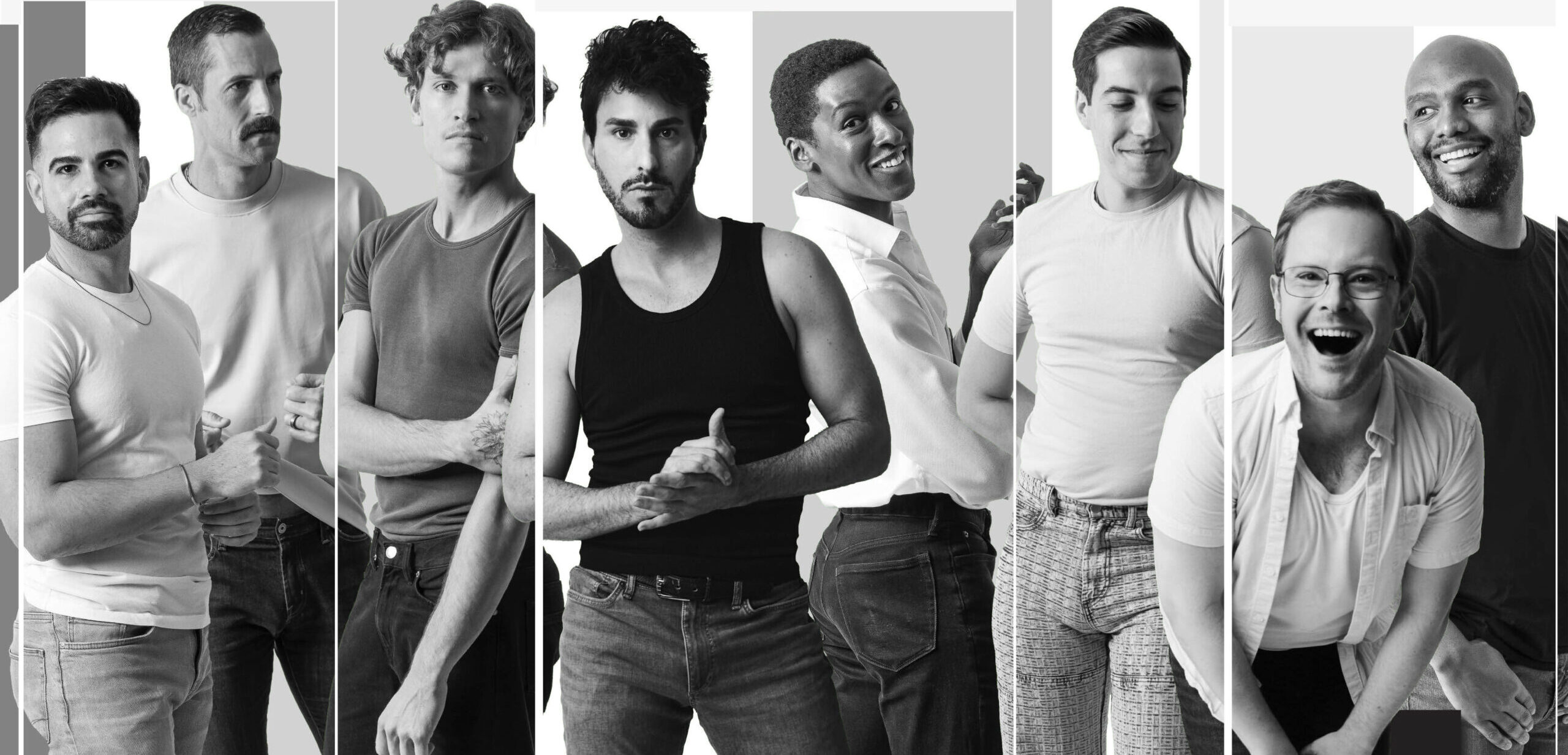
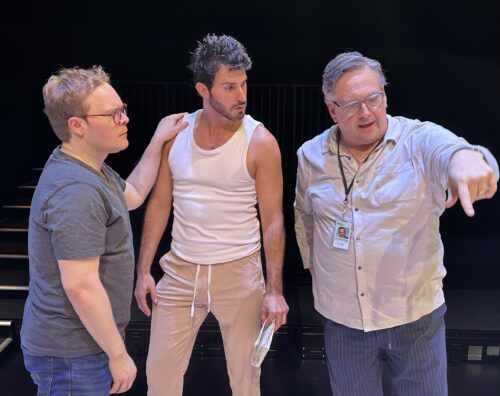
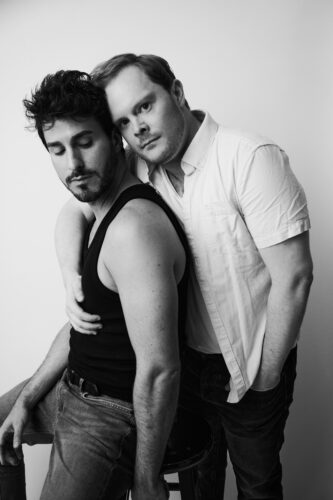
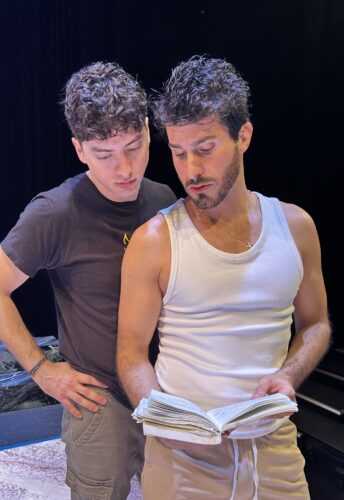
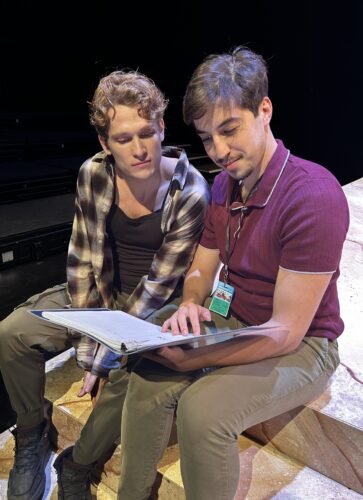


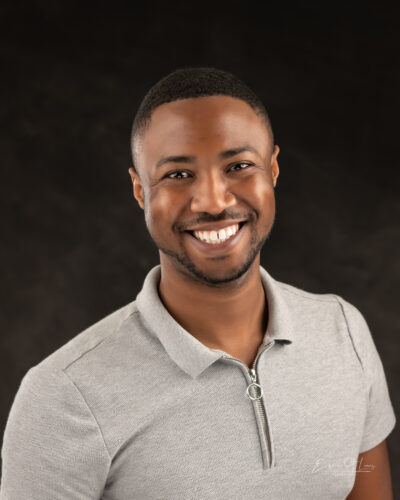
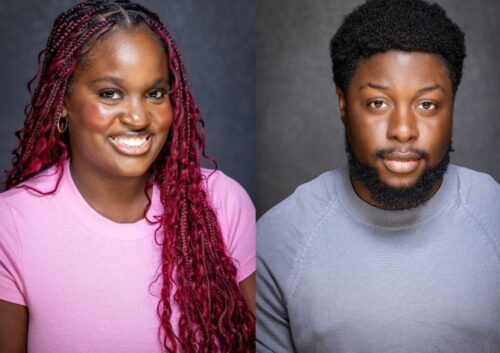



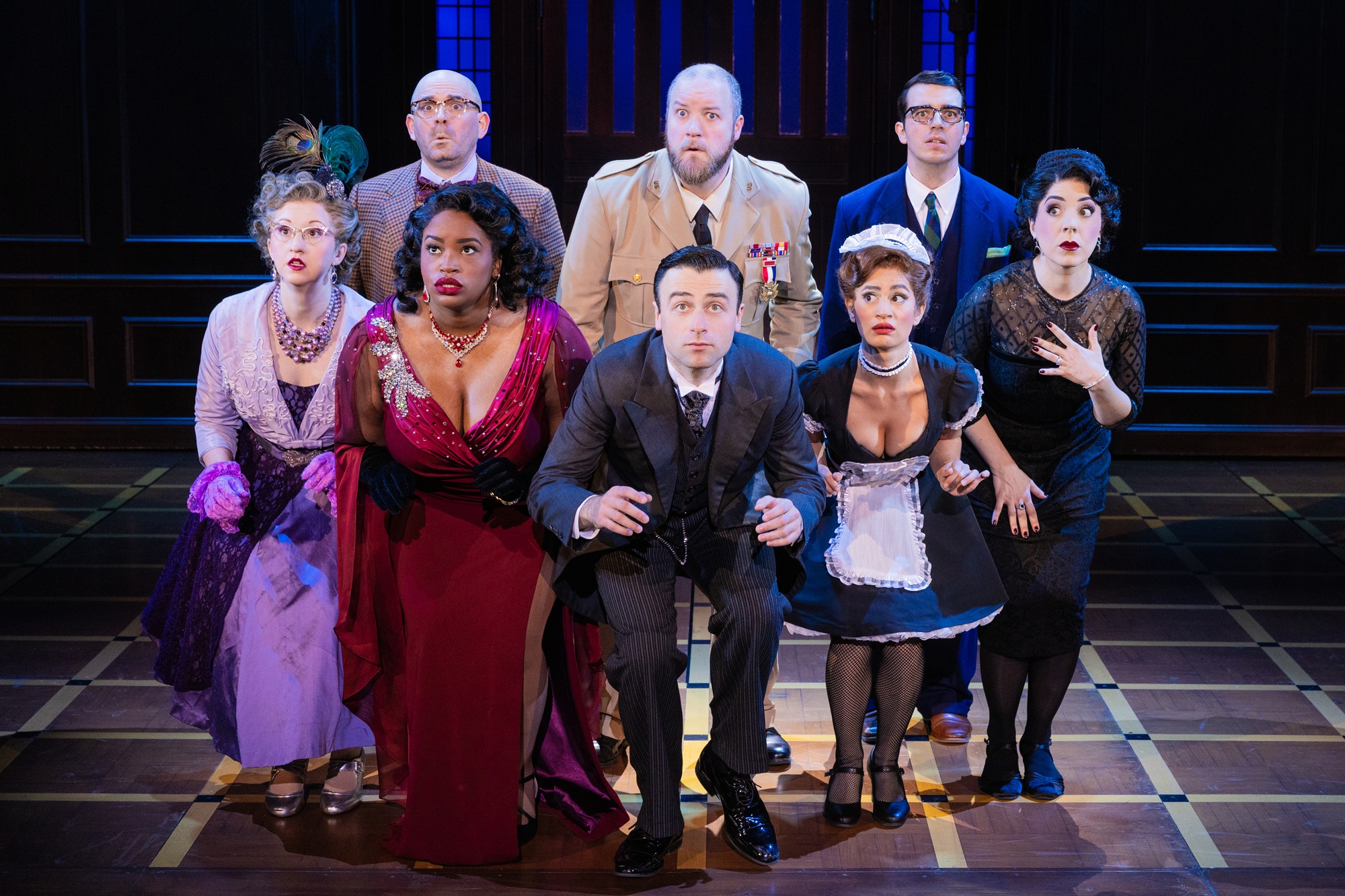
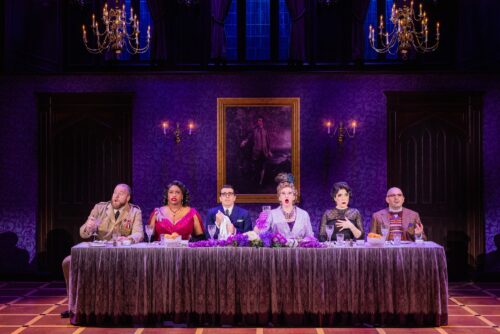
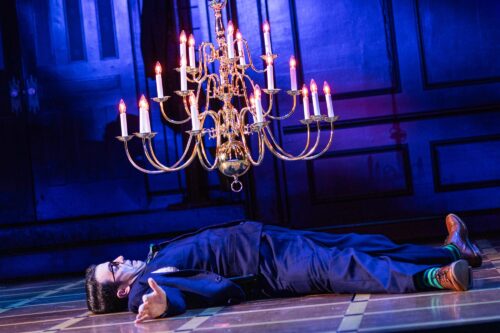
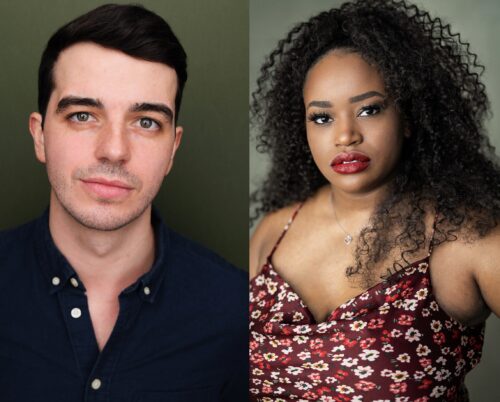
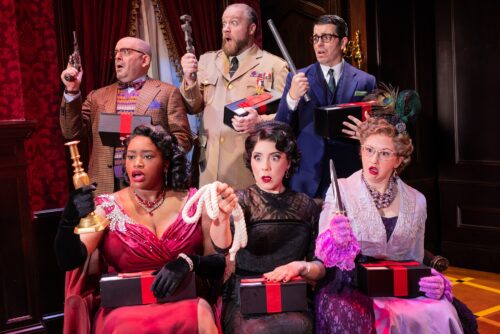
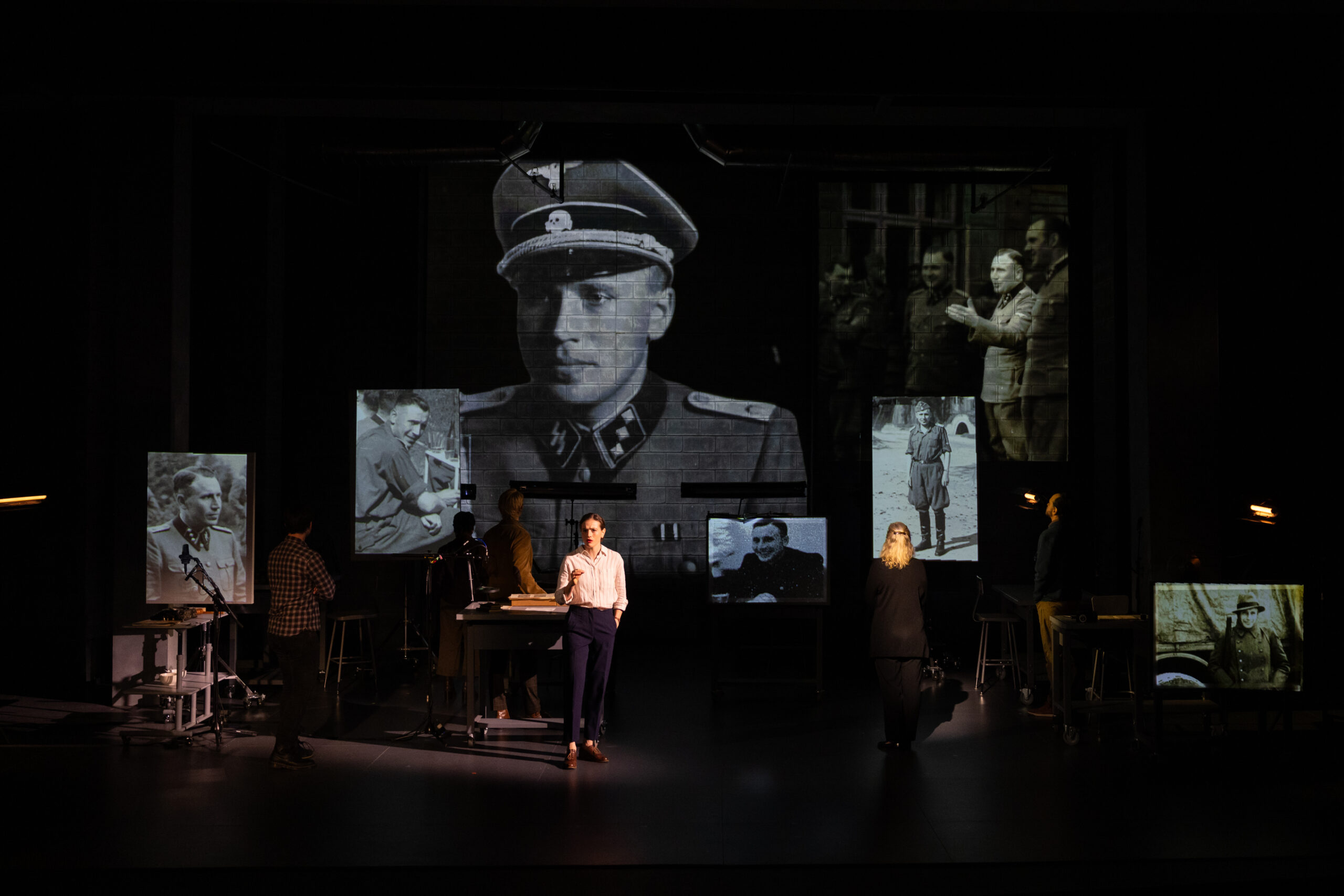


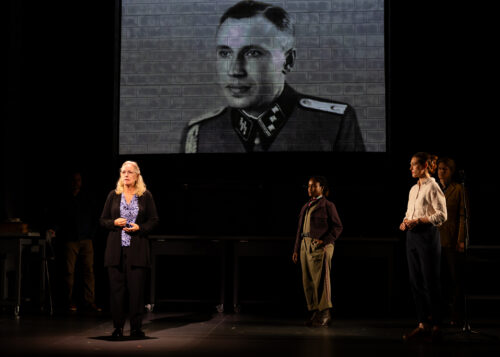
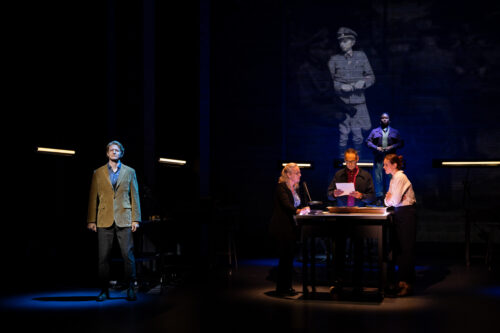


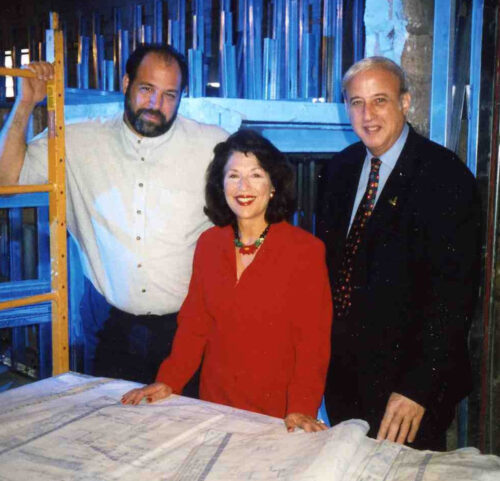
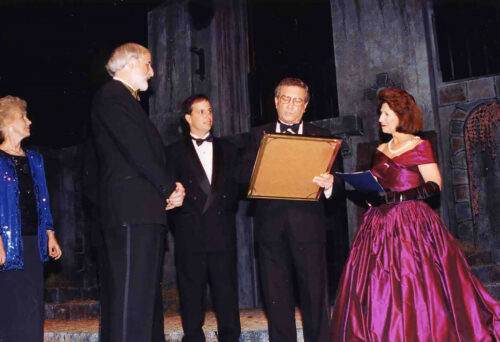
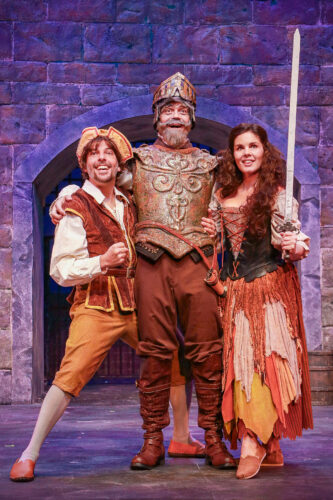
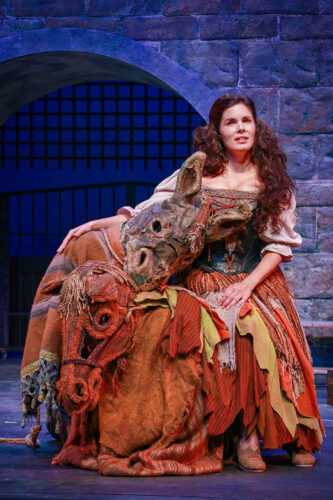
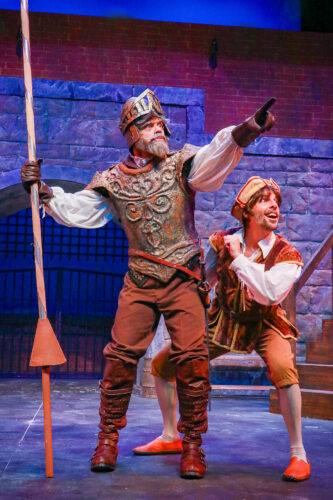
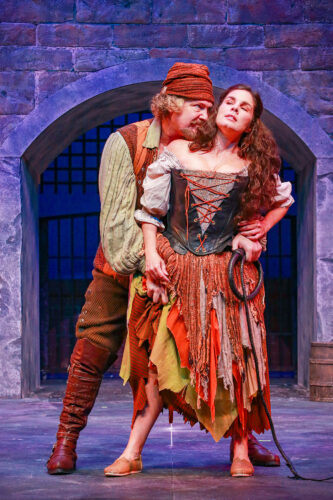
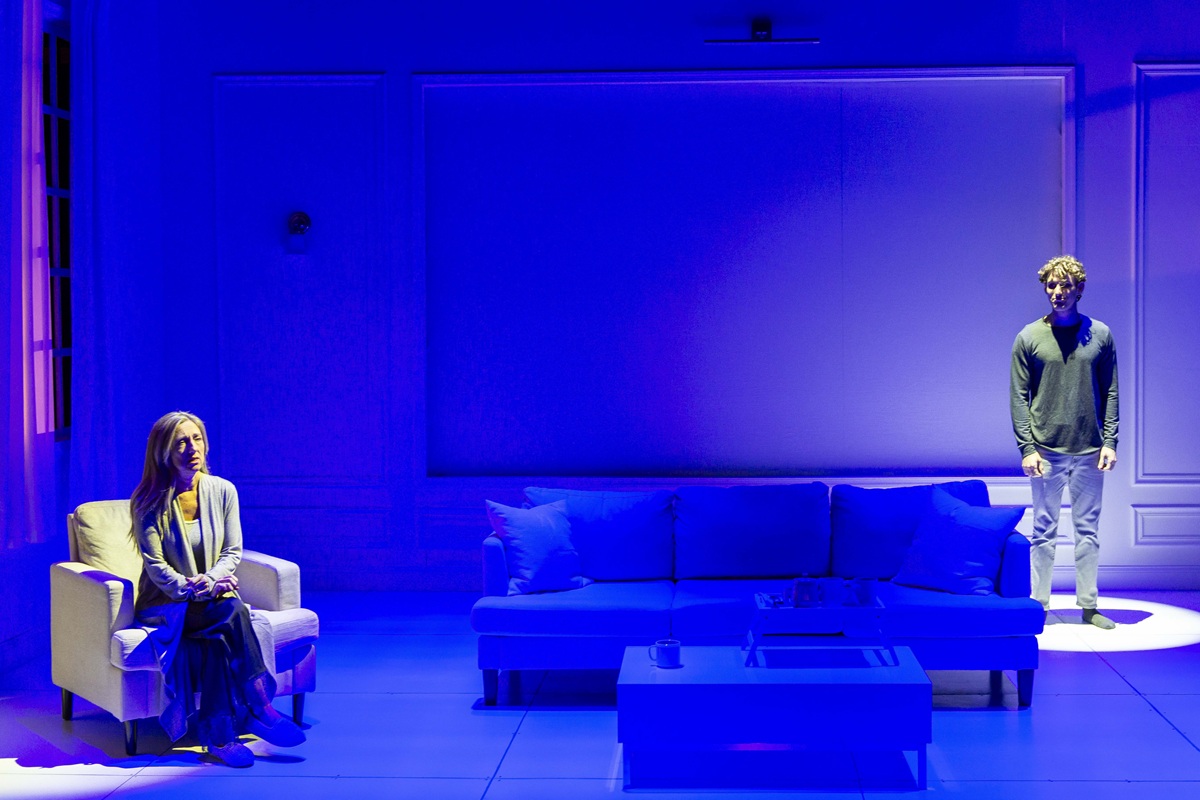
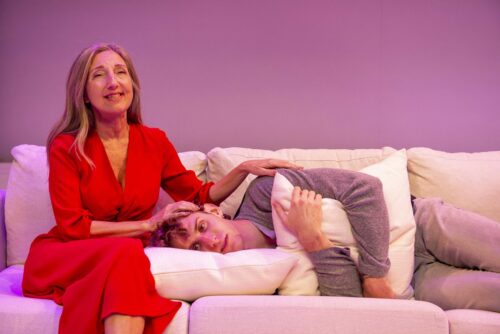

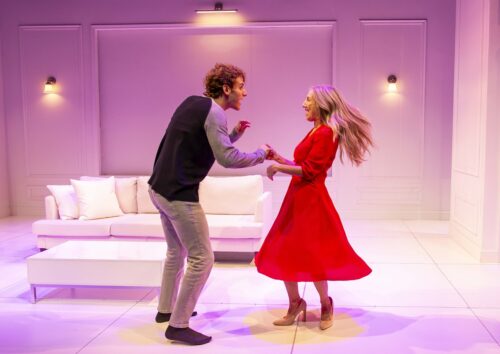
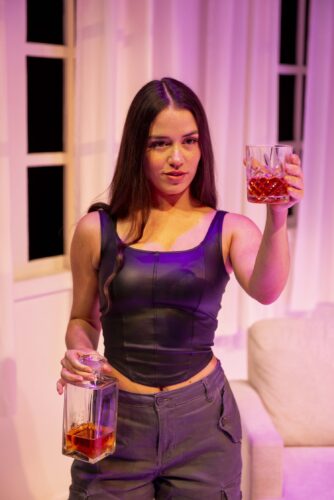
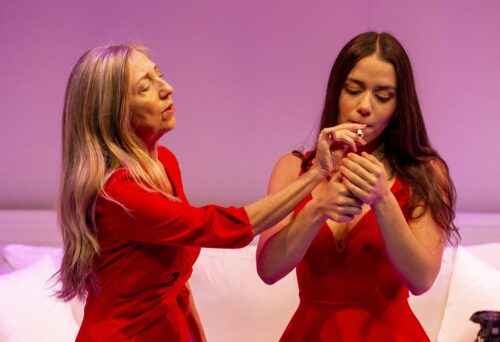
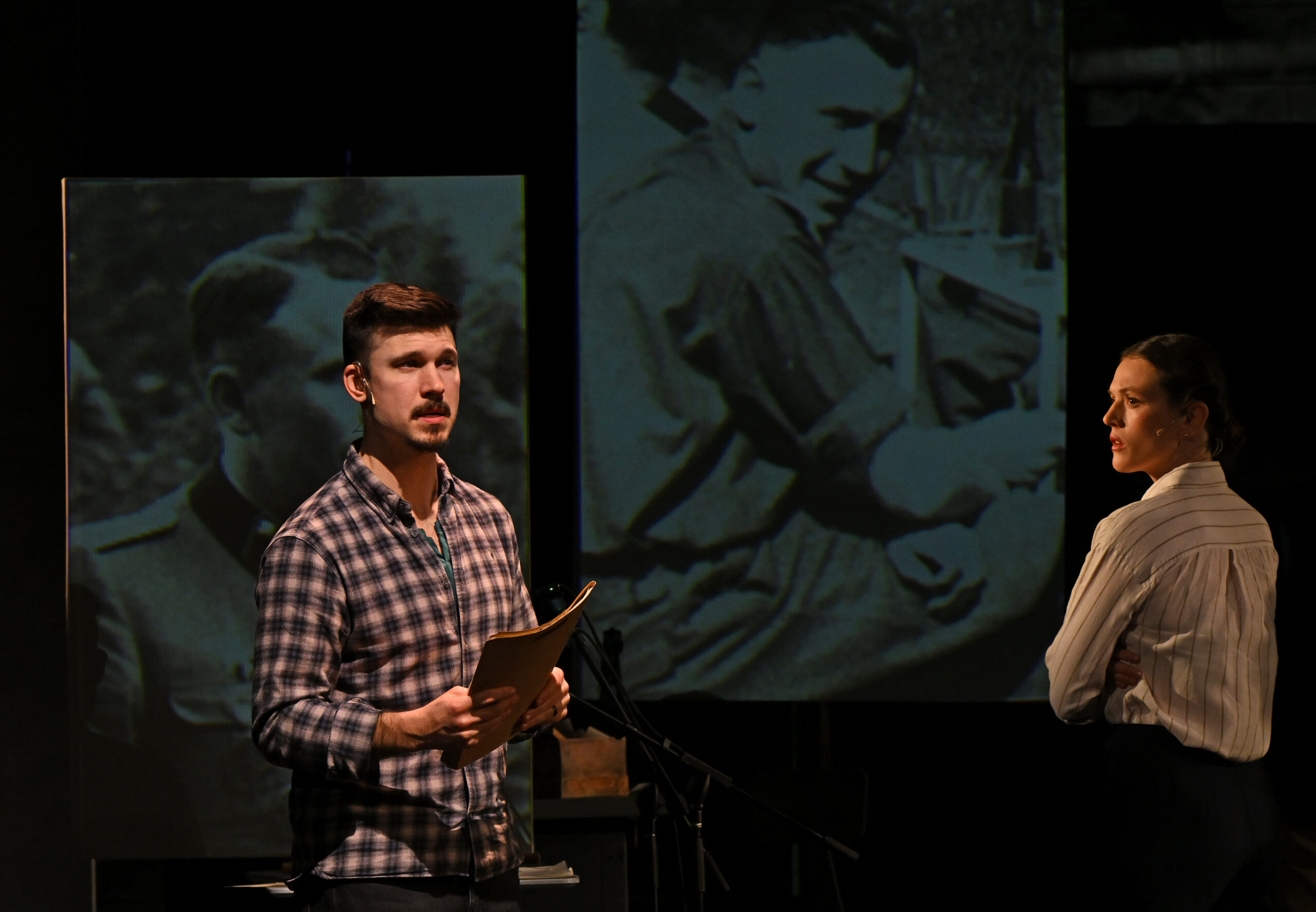
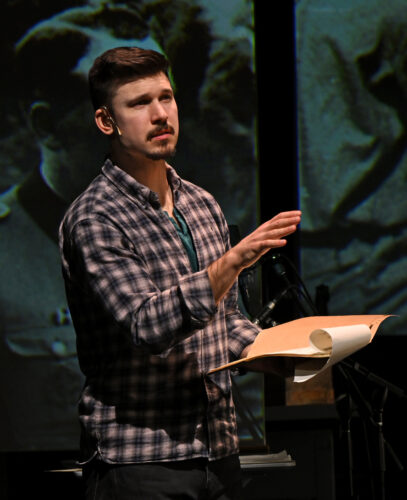
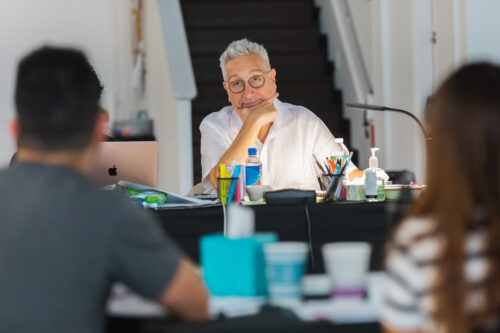
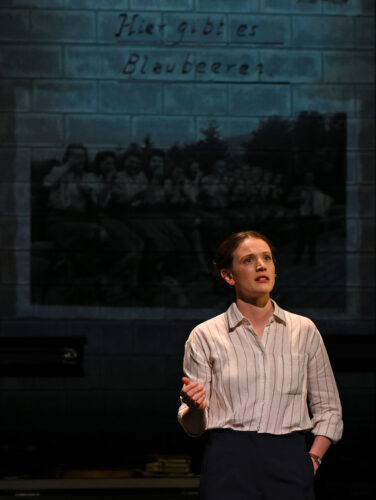
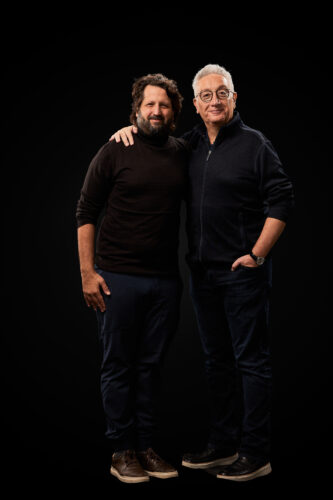


Recent Comments