City Theatre’s 25th anniversary a perfect time to look back, despite pandemic pause
Written By Christine Dolen May 5, 2020 at 1:29 PM
Rayner Garranchan and Irene Adjan performed Susan Westfall’s “Feel the Tango” in Summer Shorts 2013. (Photo courtesy of George Schiavone)
Next month was to have marked a milestone anniversary for City Theatre co-founder Susan Westfall and the company’s much-admired Summer Shorts festival.
The event, set for June 4-July 5 at Miami’s Adrienne Arsht Center for the Performing Arts, would have been City Theatre’s 25th annual summer presentation of short plays and musicals. But since COVID-19 altered the worldwide arts landscape, Miami’s included, the theater’s silver anniversary celebration has been pushed to June 3-July 3, 2021.
This pandemic pause notwithstanding, it’s an appropriate time to look back and assess what Westfall – known as Susi to one and all – and City Theatre have accomplished.
In its 25 years, more than 300 plays and counting have been produced as part of Summer Shorts, not to mention numerous other iterations of the form: Short Cuts, Winter Shorts, Shorts 4 Kids, Undershorts, Shorts Gone Wild, Swamp Shorts, Island Shorts and Shorts on Ships, plus several full-length plays and musicals.
The seeds that became City Theatre and Summer Shorts were sown in a holiday conversation around actor Elena Wohl’s kitchen table in late 1995. Wohl, playwright Westfall and producer Stephanie Norman, all mothers of young kids at the time, thought a one-time summer festival of short plays might be a great project.
The first edition – which ran June 21-July 7, 1996, at the University of Miami’s Ring Theatre – proved them right. Presenting 18 plays (including eight world premieres) in two, nine-show programs with a light picnic dinner sandwiched in between, the event was a huge success.
“Short plays weren’t what anyone else was doing, and we didn’t want to step on anyone’s toes,” Westfall recalls, adding that she and the other founders envisioned the festival as “a unique, fun and seasonally informal event, created by a large and dynamic artistic cohort, [one that] also functioned as a showcase for regional talent and a diversity of playwrights and storytelling.”
City Theatre literary director Susan Westfall, left, and artistic director Margaret M. Ledford met at the Arsht Center’s Books & Books cafe before seeing “Hamilton” earlier this year. (Photo courtesy of Alan Fein)
Although it evolved and adapted through the years, moving from the Ring to the Arsht Center (then called the Carnival Center) in 2007, the festival has remained focused on that mission.
Wohl left the company to move to Los Angeles before the second Summer Shorts in 1997, while Norman remained until 2011. Westfall served on City Theatre’s board and moved into a staff position as literary director in 2011. Her husband, Miami Heat attorney and Miami-Dade County arts leader Alan Fein, was City Theatre’s longtime board chairman, and Westfall calls him “my biggest champion.”
The company has had a number of talented artistic directors and leaders through the years. The current artistic director, Margaret M. Ledford, as well as Gail Garrisan, Marjorie O’Neill-Butler, J. Barry Lewis, Stuart Meltzer (who subsequently co-founded the Arsht Center-based Zoetic Stage) and John Manzelli are all award-winning artists with multifaceted careers.
“In the early years, there were a lot of firsts,” Garrisan remembers. “Not the least of which was the genre itself, [which was] new to the community. Then the two programs of plays, a number of directors. A lot going on, organizing and managing a lot of people and projects, different points of view and as many personalities … It’s complex on a number of levels.”
By the time Manzelli came on board in 2010, the company was struggling financially, and the Summer Shorts lineup was slimmed down to a single program. In retrospect, he says, he tried to help re-establish Summer Shorts as a theatrical event – in 2011 bringing in original “Queer Eye for the Straight Guy” cast member Jai Rodriguez as a marquee draw; programming the Lisa Loeb family musical, “Camp Kappawanna;” working with Westfall to establish the $1,000 National Award for Short Playwriting contest and the CityWrights playwrights’ conference.
“I really enjoyed putting the show together with so many talented artists year after year and working on a formula that would create the best overall production out of eight to nine unrelated plays,” Manzelli says. “It was a magic trick of how do I support each of the short plays as their own independent piece of art with different directors and yet give the audience an intentional, dynamic show?”
Ledford directed in a number of Summer Shorts festivals before becoming festival artistic director in 2016, then joining City Theatre as its full-time artistic director. She gives Westfall the major credit for the company reaching its milestone anniversary.
“She has a terrific ear for plays, being a playwright herself. She loves actors and loves the potential of everything. She’s an outstanding community member with an encyclopedic knowledge of Miami and its history,” Ledford says. “Susi has been a great leader, a constant through many changes. The company is still here because of her determination.”
Indeed, among the ways Westfall and Fein have demonstrated their faith in the short-play concept is by contributing financially to the nonprofit company during its toughest times.
“We’ve stepped in when we needed to,” she says. “Maybe we could have put another kid through college with that money.”
A Miami native with a playwriting degree from Florida State University, Westfall has continued to write short plays and longer ones, including “The Boy From Russia,” inspired by the couple’s adoption of younger son Pete in 2000. Raising her sons and championing the work of other writers via City Theatre has claimed much of her time over the past 25 years, though she has just contributed a new play – “Quarantinis in the Time of COVID” (performed by Garrisan and directed by Ledford) – which will become part of the Arsht Center’s virtual Arsht@Home content.
The alchemy of Summer Shorts flows from several elements, including the versatility of its actors and the variety of its plays. Many of the region’s best veteran actors – including Elizabeth Dimon, Tom Wahl, Gregg Weiner, Margot Moreland, Karen Stephens, Irene Adjan and, for many years, Stephen Trovillion – have repeatedly returned to Summer Shorts to perform in the acting ensemble alongside younger artists.
Too, the shifting mixture of short comedies, dramas and musicals exposes audiences to a wide range of playwrights’ voices in a single program, with something different coming along every 10 to 15 minutes.
Creating the pieces poses a particular challenge for Summer Shorts playwrights, many of whom are celebrated authors of full-length plays or writers with burgeoning television careers. Los Angeles-based Steve Yockey, for example, has been a writer-producer for the TV series, “Supernatural,” and the upcoming thriller series, “The Flight Attendant,” but he’s also City Theatre’s most frequently commissioned Summer Shorts playwright.
“It’s tricky to tell a full story with a beginning, middle and end in such a short time and have it feel dramatically satisfying,” Yockey says. “But if you can pick one thematic element, one core relationship and one big ‘event’ to build around, 10-minute plays can be beautiful, and you can really land the punch. And they’re great vehicles for adventurous ideas because you can do anything to an audience when they know it will be over in 10 minutes. The ride can be as wild and theatrical as you want.”
Irene Adjan, Elizabeth Dimon and Niki Fridh performed “Make John Patrick Shanley Go Home!” in Summer Shorts 2014. (Photo courtesy of George Schiavone)
Of Westfall, Ledford and Summer Shorts, Yockey adds, “They produce short plays at a level of quality that’s unmatched … And they really let me swing for the fences creatively, even when I turn in something full-tilt crazy.”
City Theatre is, of course, not the only company that produces short plays. The Samuel French Off Off Broadway Short Play Festival (for which Westfall and Ledford have served as judges) is a New York theater mainstay. Self-produced short plays and musicals make up the annual Short Play Festival at The Players Theatre in Manhattan. Benefit overnight theater festivals around the country, in which short plays are written, rehearsed and performed in just 24 hours, showcase the talents of playwrights, actors and directors.
And closer to City Theatre’s home in the Arsht Center’s Carnival Studio Theater – where the stage is named the Susan Westfall Playwrights Stage – Microtheater Miami produces short plays year-round in converted shipping containers in the courtyard of Centro Cultural Español.
Still, City Theatre’s curated, impeccably produced Summer Shorts and other short-play programs have won the pioneering company national recognition.
“There are few other theaters that stage short plays and musicals at the level and with the care that City Theatre gives this form,” says Amy Rose Marsh, senior director of acquisitions and artistic development for Concord Theatricals, which now includes the Samuel French licensing and publishing agency. “It’s been exciting to watch the evolution of the [Summer Shorts] festival over the years. The plays have been hilarious, dramatic, poignant and revelatory … The quality of the directing, performances and design really makes for an impactful, enjoyable evening.”
Nan Barnett, executive director of the National New Play Network, has been attending Summer Shorts festivals since she worked as managing director of Florida Stage in the early 2010s, and she has vivid memories of those experiences.
What City Theatre and Summer Shorts have contributed to South Florida theater, she says, is the development of artists, “the playwrights, of course, many of whom have become national treasures, the chameleon actors who have graced their stages, the directors who got their first shot, the designers and technicians who have done some of their best work when faced with the restrictions, demands, opportunities presented by the form – these are the people who have made it all look like magic.”
As with so many events and rituals that are now on hold, having to postpone the 25th anniversary edition of Summer Shorts is a letdown. But Westfall, described by Barnett as “indefatigable,” remains driven by her devotion to playwrights and their short-form work.
“I don’t think the thrill of finding a wonderful new play ever leaves you,” Westfall says. “And nothing beats calling a playwright to say we’re going to produce their play.”
All set for theatrical debuts, 4 South Florida films adapt to virtual cinema in coronavirus era
Written By Michelle F. Solomon April 23, 2020 at 2:33 PM
Michael Salzhauer – aka Dr. Miami — is a world-famous plastic surgeon best known for livestreaming his surgeries to millions of devoted social media followers. (Photo courtesy of Cargo Film & Releasing)
Overnight closures of local film festivals and regional arthouse theaters – because of COVID-19, safer-at-home orders – have been a double-edged sword for smaller, independent movies, their directors and distributors.
The pros of going virtual: Arthouses with one screen now have unlimited cinema space to host multiple screenings.
The downside: Festivals are canceled, people aren’t buying concessions, and releases that were on the verge of getting their theatrical world premieres are getting less fanfare since they’ve been reduced to the small screen.
Four movies with South Florida roots are in just that position.
“THEY CALL ME DR. MIAMI”
Ready to make its world premiere on March 12, the documentary, “They Call me Dr. Miami,” was one of the first public events in Miami to get caught in the crosshairs of coronavirus.
March 12 was the day festival director Jaie Laplante announced the closing: “Under the advice of Gov. Ron DeSantis, Miami Dade College is canceling all special events.” The festival is part of Miami Dade College’s cultural affairs programming.
“They Call me Dr. Miami” was meant to be one of the highlights of the festival, scheduled to make its world premiere that evening with the director, Montreal’s Jean-Simon Chartier, as well as Dr. Michael Salzhauer, a.k.a. Dr. Miami, in attendance.
“[Salzhauer] is so larger than life in person,” says Lauren Cohen, the festival’s associate director of programming. “To have him and the director at the screening, and ‘Dr. Miami’ making its world premiere here because the movie is so Miami, [was going to be special]. It was one of the big disappointments.”
“They Call Me Dr. Miami” is about plastic surgeon and social media phenom Salzhauer, who has amassed 1.4 million Instagram followers. With his patients’ consent, he streams live plastic surgery procedures on Instagram and Snapchat from his Bay Harbor Islands office. In the film, Chartier aims to show the other side of that larger-than-life media persona: In his private life, Salzhauer is an Orthodox Jew who observes the Sabbath and is devoted to his family.
Cohen says: “We chased this movie for a long time.”
Now the film will be shown on the festival’s new Vimeo Video On Demand channel at Vimeo.com/ondemand/theycallmedrmiamimff. Having “Dr. Miami” be the first online world premiere on the channel was a no-brainer.
“At the festival, you would have a cap on how many seats you could fill in the theater, and it would be shown to a local crowd. Now the sky’s the limit as to how many people can rent this film,” Cohen says. “With his social media presence, this is the right film for this platform.”
The film will premiere April 25-26 on the Miami Film Festival’s Vimeo VOD channel for a 48-hour period. Tickets cost $13 for the general public and $10 for Miami Film Festival members. On April 26, Cohen will host a free question-and-answer session with Salzhauer on the festival’s Instagram page, Instagram.com/miamifilm.
“The Infiltrators” – part documentary, part narrative – was a Sundance Film Festival Audience Award: NEXT winner. (Photo courtesy of Oscilloscope Laboratories)
“THE INFILTRATORS”
After acquiring the U.S. rights to the Sundance Film Festival’s Audience Award: NEXT winner, “The Infiltrators,” distributor Oscilloscope Laboratories planned to release the movie in theaters before streaming on digital platforms.
Three of those theatrical release destinations were in South Florida: Coral Gables Art Cinema, O Cinema in Miami Beach, and Savor Cinema in Fort Lauderdale.
That was before COVID-19. Now Oscilloscope has had to skip the theatrical release and go straight to Video On Demand.
“We love opening films in theaters. However, this is a very strange time and we’re making the best of it by utilizing this virtual cinema model,” says Andrew Carlin, Oscilloscope Laboratories theatrical booker. “The Infiltrators” is an interesting mix of documentary and narrative. Without a doubt, a film like this is challenging theatrically. However, now that we are talking a purely virtual space, more theaters around the country are willing to sign up to screen it.”
The film is timely and especially relevant in South Florida, focusing on immigrants taken by Immigration and Customs Enforcement (ICE) agents to the Broward Transitional Center in Pompano Beach to await deportation. The movie – part documentary, part narrative – centers around young activists who purposely get detained to infiltrate the facility. One of the detainees already there, Claudio Rojas, ended up acting as an inside source on conditions inside the center.
The film garnered national attention after Rojas was invited to attend the Miami Film Festival in March 2019 but was detained during his annual visa check-in. He was eventually deported to Argentina.
For this genre, Carlin says he’s usually dealing with arthouses that have to make decisions based on limited capacity: “Sometimes they will only have two screens, so they might have to make choices. Now the doors are wide open for them to offer 10 films to their audience via this virtual cinema platform.”
Still, he looks forward to a return to actual theaters.
“I think the indie theater space will be affected for a long time to come, but we are optimistic that things will get back to normal and have everyone be able to get back to the theater again.”
The film is opening virtually on May 1 at Coral Gables Art Cinema, O Cinema in Miami Beach, and Savor Cinema in Fort Lauderdale. The theater you select to screen the film receives a portion of ticket proceeds. Price varies by theater, as does the amount of rental time. Most of the theaters charge $9.99 for rentals, but that price is subject to change depending on movie.
“Lifeline,” a new documentary directed by Miami’s Dennis Scholl about artist Clyfford Still, is streaming on Kino Now. (Photo courtesy of Sandra Still Campbell)
“LIFELINE: CLYFFORD STILL”
Miami’s Dennis Scholl – whose documentary films focus on arts, artists and culture – had been looking forward to sharing his latest film in his hometown.
His full-length portrait of artist Clyfford Still was set to screen March 14, in partnership with the Miami Film Festival and Perez Art Museum Miami.
“The hometown guy wants his hometown premiere to be special. Well, it was canceled,” Scholl says.
Before COVID-19, Scholl had booked dozens of museum screening dates, from Stanford University to the Phoenix Art Museum, and those were canceled, too.
“My goal was, and still is, though, to have 50 screenings in museums everywhere over a year,” he says.
Until then, however, the distributor of the film, Kino Lober, has “Lifeline: Clyfford Still” available by streaming on its KinoNow virtual cinema site, under “New & Featured,” as well as for sale on DVD.
Scholl, who is president and CEO of Oolite Arts, began making “Lifeline” in 2014.
“There were 12,000 personal photos, 3,000 paintings and drawings, and over 34 hours of audiotape [previously unreleased] by the artist, so it was a long period of research,” says Scholl.
Through interviews and those unreleased recordings, the documentary focuses a lens on the enigmatic artist. Museums still vie to be the permanent home of the Still collection – if they can meet the strict demands of his will.
Says Scholl: “He was talented and cantankerous.”
The documentary is showing at KinoNow.com, under “New & Featured.” Rent it for $4.99, or purchase it for $12.99.
The 15-minute “Noche Buena” is based on writer/director Andres Rovira’s Cuban-American family. The short was shot in Miami using one camera, and all its cast and crew are from here. (Photo courtesy of Andres Rovira)
“NOCHE BUENA”
“Noche Buena” – a 15-minute short about a dysfunctional Cuban family’s holiday gathering – never made it to the Slamdance Film Festival. So writer/director Andres Rovira quickly realized he needed to get the film online.
“We were all set to get on the path of getting into festivals, but as the coronavirus began to ramp up, we were fearful of holding back, of waiting. We came to the realization that it might not be possible to screen this with an audience until 2021,” Rovira says. “When we got the notice that Slamdance was canceled, that was the catalyst. Within seven days, we decided to create a program to get some buzz and get the film online.”
That program involved he and his crew creating social media pages and posting photos and teasers to create buzz. The short is available for viewing on YouTube, as well as on the director’s personal website, Andres-Rovira.com.
Based on his own Cuban-American family, the short was shot in Miami using one camera, and all its cast and crew are from here. There are only three professional actors in the film, including Rovira’s cousin, Ray Tezanos, who stars as the protagonist and is also a producer.
“I do think people will be surprised at how well the non-actors tapped into the truth of their real characters,” he says.
Rovira – whose horror feature film, “Come, Said The Night,” was an official selection for Silicon Valley’s 2019 Cinequest Film Festival – is already working on a longer feature film that’s a continuation of sorts of “Noche Buena.”
The filmmaker says he still plans on submitting “Noche Buena” to festivals when “things get back to normal,” but in the meantime doesn’t regret his decision to release it online now. He says it’s a crucial time to show feel-good, funny comedies.
“Every time we watch television, even with commercials, we’re reminded of the state we’re living in. I think we all need a reprieve from that.”
South Florida’s push for theater art and relief goes on
Written By Christine Dolen April 14, 2020 at 7:02 PM
FAU Theatre Lab’s second Original Online Monologue Festival featuring multiple artists in virtual performance will celebrate unsung theater heroes at the end of April. (Photo courtesy of Theatre Lab)
It’s mid-April, a month into isolating at home, and South Florida’s theater artists and companies are busily engaged in virtual programming, classes and relief efforts. Here’s a roundup of initiatives, some new, others ongoing.
FAU THEATRE LAB
Theatre Lab’s Online Original Monologue Festival (#OOMF) in March was a hit, so now the Florida Atlantic University company is planning a slightly different April edition of its virtual effort to help the region’s theater artists.
The first festival raised more than $4,000 in direct-to-artist contributions and more than $1,000 for the South Florida Theatre League’s Relief Fund, which now totals more than $7,000. The second iteration of #OOMF will also encourage contributions to the league’s fund, but its primary purpose is to help those considered unsung, behind-the-scenes theater heroes, such as stage managers, technicians, designers, administrators and box office workers.
Matt Stabile, Theatre Lab’s producing artistic director, has just announced details of the festival’s second edition, with the first deadline coming up at 10 a.m. April 15 when those wishing to be a a beneficiary need to apply via the company’s Facebook page or send an email to theatrelab@fau.edu. Beneficiaries will be featured on Theatre Lab’s Facebook page in the leadup to the festival.
Playwrights will then write pieces on the broad theme of heroes, and actors will perform the original stories, monologues or two-character, three-page scenes.
“We’re looking for writers from Jupiter to the Keys, because we all work throughout the area,” Stabile says.
Among the workshops offered, there will be a scene-writing session on the Facebook page at 12:30 p.m. and 7 p.m. April 16. Previous online workshops on elements of storytelling and crafting a monologue are still available on the page.
Submissions of material to education director Jill Carr at carrj@fau.edu must be received no later than 10 a.m. April 20. The event will be livestreamed on Theatre Lab’s Facebook page at 7:30 p.m. April 27, and those watching can make direct contributions to the featured heroes.
From left, Actors’ Playhouse co-founder Dr. Lawrence E. Stein; co-founder and executive producing director Barbara Stein; artistic director David Arisco; and Theater for Young Audiences director Earl Maulding have launched a writing competition and online classes. (Photo courtesy of Alberto Romeu)
ACTORS’ PLAYHOUSE
Actors’ Playhouse at The Miracle Theatre in Coral Gables has launched a program titled, “Stories That Connect Us All.”
The company is asking writers from Miami-Dade, Broward, Palm Beach and Monroe counties to create pieces about this unprecedented moment in time, either as a monologue or a third-person story (no multi-character pieces will be accepted). Each piece should run under eight minutes.
Deadline for submissions is May 1. Writers and actors expect to perform the selected pieces at a public event in The Miracle’s Balcony Theatre once it’s safe to gather again.
For more information, go to actorsplayhouse.org and click on “Stories That Connect Us All.”
Also from Actors’ Playhouse: Earl Maulding, director of the company’s Theatre for Young Audiences, and actor/dancer Reynel Reynaldo are teaching a series of virtual theater master classes. Subjects include musical theater, jazz dance, monologues, hip-hop and vocal performance.
Students are grouped by age (7 to 12 and 13 to 18), and each Zoom class costs $20. Individual classes are available at $60 per hour.
For more information and registration, go to actorsplayhouse.org and click on “Theatre Classes.”
Contributing to Florida International University’s “60 Second Somethings for Seniors” are, clockwise from left: retired English professor Rick Schwartz; Panther Tech store manager Larry Misrahi; theater major Shayda Muvdi; and FIU Miami Beach Urban Studios executive director John Stuart. (Photo courtesy of FIU)
FIU DEPARTMENT OF THEATRE
The Department of Theatre at Florida International University has created a program titled, “60 Second Somethings for Seniors.” And in this case, “seniors” doesn’t refer to soon-to-be graduates but rather to senior citizens isolated in places such as nursing homes, independent and assisted living facilities, and Veterans Administration hospitals.
The department – with an assist from students Shadya Muvdi, Glenda Umana, Dayron Leon and Ana Gorayeb – is seeking video submissions of about a minute each showcasing all sorts of talents, such as music, drama, juggling, comedy, magic or photography. These will then be woven together in a series of half-hour programs sent to the facilities that are home to seniors.
Associate Professor Phillip M. Church asks would-be participants to email him at 60secondsomethings@gmail.com. They’ll then receive a Google Drive link with a password to post their videos. He expects the first episode to go out about two weeks after the semester ends in late April.
MIAMI NEW DRAMA
Miami New Drama is continuing its free virtual master classes, dubbed MasterMiND, in both English and Spanish.
On April 16, director Javier Vidal will lead a Spanish-language workshop titled, “La firma del director” (“The Director’s Signature”). The following week, Pablo Gershanik offers “Metaforas como posibilidad de resiliencia” (“Metaphors as a Possibility of Resilience”) in Spanish on April 20. David Schrader leads a workshop on the business of theater on April 22. And on April 24, playwright Rogelio Martinez will deliver a workshop on how to incorporate history into writing in a dynamic way.
All the above sessions are set for 11 a.m. to 1 p.m.
Florida Shakespeare Theater is offering a free online staged reading of the Bard’s great comedy, “Much Ado About Nothing.”
Set for 8 p.m. April 18 and directed by artistic director Colleen Stovall, the reading features Caitlin Duffey as Beatrice; Seth Trucks as Benedick; Nick Lamedica as Claudio; Susannah Eig as Hero; and Jordon Armstrong as Don John.
Also performing are Sara Grant, Peter Galman, Nicole Minardi, Neil Evangelista, Ned Cray, Michelle Perkins, Lito Becerra, Joseph Urick, Johnbarry Green, Daniel Capote, Christopher Dreeson, Chris Cooper and Aletta Kemp.
For more information or registration to watch the Zoom reading, go to floridashakes.com.
ARSHT CENTER
Miami’s Adrienne Arsht Center for the Performing Arts keeps adding to its online Arsht@Home content, and now two offerings from the center’s theater partners are available.
A massive Artist Relief effort has been launched by a group of national arts grant-making groups, including the Miami-based National YoungArts Foundation.
Begun with a $5 million grant from The Andrew W. Mellon Foundation, the fund has received an additional $5 million in contributions from YoungArts, the Academy of American Poets, Artadia, Creative Capital, the Foundation for Contemporary Arts, the MAP Fund and United States Artists. Those organizations will continue to raise funds on behalf of Artist Relief.
The unrestricted $5,000 grants, prioritized by financial need, will be distributed over the next six months to artists throughout the United States in a wide array of disciplines.
In addition, the National YoungArts Foundation is launching the YoungArts Emergency Microgrant program to provide unrestricted $1,000 grants to alumni from April through June.
New City Players artistic director Timothy Mark Davis is continuing his 9 p.m. “Late Show Live” Instagram conversations with people from South Florida’s theater community.
This week’s lineup features City Theatre artistic director Margaret M. Ledford on April 14; actor Gregg Stuart Weiner on April 15; director Jessica Schulte on April 16; and actor Alex Joyel on April 17.
You can also watch Davis’s previous conversations with theater artists from throughout the region.
Theater artists keep body, soul and craft together in the time of COVID-19
Written By Christine Dolen April 9, 2020 at 4:32 PM
Slow Burn Theatre has rescheduled “Ragtime” for spring 2021. (Photo courtesy of Patrick Fitzwater)
As worldwide coronavirus cases have soared past a million, with South Florida a COVID-19 hotspot, the region’s theater artists are – like all of us – confronting the questions of daily life in a temporarily remade world.
How do we pay rent, the mortgage, our bills? How do we keep food on the table? What happens when health insurance, current work or future projects suddenly vanish? How can we use creativity to keep moving forward?
What follows are snapshots of the ways some individual theater artists and couples are coping during this strange moment in time.
Clay Cartland was the trapped weatherman in Slow Burn Theatre’s “Groundhog Day.” (Photo courtesy of Rodrigo Balfanz)
CLAY CARTLAND
In February, Carbonell Award-winning actor Clay Cartland gave another richly nuanced, inventive, funny-yet-moving performance as the cynical TV weatherman in Slow Burn Theatre Co.’s “Groundhog Day.” After that show closed, he continued doing his side jobs – work as a voiceover artist, driving for Lyft and Uber – and started rehearsals for the Actors’ Playhouse production of “Camelot” at The Miracle Theatre in Coral Gables.
Then came the shutdown of shows about to open, the loss of three potential future jobs and the majority of the side-job work, and self-isolation.
Cartland, who is nominated for another Carbonell for playing the nastily narcissistic, height-challenged Lord Farquaad in Slow Burn’s 2019 production of “Shrek,” has been keeping busy in a variety of ways.
He has put up shelves for his vast collection of Funko Pop comic/superhero bobbleheads. As an avid bodybuilder who can no longer go to the gym, he’s created an outdoor gym on the patio of the house where he and musical director Eric Alsford are roommates. He’s hanging out with his dogs, visiting his mom in Hollywood every day (he stands at her front door to talk to her), and he managed to navigate Florida’s overwhelmed website to file for unemployment.
He’s also having Skype sessions with a therapist once a week, dealing with anxiety and depression, and a temporary spiral when his mother thought she had COVID-19.
On March 29, he participated in Theatre Lab’s Online Original Monologue Festival as both a performer and a playwright. The 3 ½-hour fundraising event for South Florida theater artists has now been viewed nearly 2,500 times.
“It was such a joy to get up and take a shower and put pants on!” he says.
Creatively, he’s revising his 90-minute play, “That’s My Time,” which had a staged reading as part of Jan McArt’s New Play Readings series at Boca Raton’s Lynn University in February.
Although he thinks the coronavirus shutdown will alter theater in the region, he also has faith that it will come back – maybe for the better.
“I really do believe that there will be the usual crowd, and maybe more from the younger generation,” he says. “They’re saving some money from not running around, ordering food and eating out. I think there will be a yearning to go outside.”
Karen Stephens starred in Thinking Cap Theatre’s production of Samuel Beckett’s “Happy Days.” (Photo courtesy of Nicole Stodard)
KAREN STEPHENS
Karen Stephens had one of the most challenging, rewarding roles of her career in February – playing Winnie in Samuel Beckett’s absurdist “Happy Days” at Fort Lauderdale’s Thinking Cap Theatre. The Carbonell-winning actor is also a talented hairstylist with her own West Palm Beach salon, and for the first part of March, she was serving her regular clients.
“I rely on my salon business to tide me over,” she says. But now she’s at home with her two dogs and three cats, out of work for the foreseeable future, except for unemployment benefits.
“When things are stressful, I don’t expand. I curl up,” she says. “Emotionally and financially, I’m trying to cope. I just paid off the mortgage on my salon, so I don’t want to saddle myself with more debt. I don’t want to decimate my rainy-day savings. But if this lasts much past May, I don’t know what I’ll do.”
Still, she believes some good can come of this socially distanced time.
“This allows us to rid ourselves of all the things that didn’t serve us, without all the distractions we usually have,” she says. “Will we be left with residual fear because of this? I’d hope people will be happy when theaters eventually reopen. I’m praying the layoff is not too long. I hope that people don’t get out of the habit of going and supporting live theater.”
Alex Alvarez played the harried director in Juggerknot Theatre’s “Miami Motel Stories: North Beach.” (Photo courtesy of Daniela Piantini)
ALEX ALVAREZ AND SAHID PABON
Miami-based partners Alex Alvarez and Sahid Pabon are busy working actors with several side survival jobs. Both do voiceover work (though not much since studios in the region severely cut back or shut down).
Carbonell winner Alvarez, who played the harried director in Juggerknot Theatre Co.’s immersive now-on-hiatus “Miami Motel Stories: North Beach,” is also an adjunct theater professor whose three classes at Nova Southeastern University have all moved online.
“To survive as a performer in South Florida, you have to have several things going,” observes Alvarez, who has been depending on his next scheduled theater job in City Theatre’s annual Summer Shorts festival to reactivate his Actors’ Equity health insurance.
Pabon was delivering for Shipt, driving for Lyft, and getting ready for a busy professional period. He was about to open as Bobby Strong in the Pembroke Pines Theatre of the Performing Arts (PPTOPA) production of “Urinetown.” Then he was to go back to another edition of “Rock Odyssey” at Miami’s Adrienne Arsht Center; play Cliff in “Cabaret” for the Kravis Center-based MNM Theatre Co.; then move on to playing Che in “Evita” for PPTOPA.
Shalia Sakona and Sahid Pabon were getting ready to open “Urinetown” for the Pembroke Pines Theatre of the Performing Arts. (Photo courtesy of Ron Pollack Photography)
Those opportunities have evaporated, at least for the time being, and Pabon says that he “stopped both of my survival jobs. I thought shopping for Shipt was very dangerous, nerve-wracking and terrifying. I’ve been trying to get online jobs, like recording audiobooks or teaching English to kids in China.”
Pabon was one of the performers in Theatre Lab’s Online Original Monologue Festival, and the contributions he received helped him pay some bills. He had been hungry for an artistic outlet and was grateful to join in a community-supportive project with hope-themed pieces.
“With all of us shut in, it’s easy to lose hope,” he says. “But we can pave the way and show the value of art. Without the arts, we’d all be going crazy.”
Carbonell Award nominee Rita Cole was rehearsing for the starring role in Thinking Cap Theatre’s “Fefu and Her Friends.” (Photo courtesy of Joe Wesley)
RITA COLE
Rita Cole, Carbonell-nominated for her performance as Ruth Younger in New City Players’ “A Raisin in the Sun,” had one day of rehearsal for her next project. She was to play the lead role in Maria Irene Fornes’ “Fefu and Her Friends,” which had been set to run at Thinking Cap Theatre from April 2 to 19.
But rehearsals were paused so that she could go to Atlanta to attend unified auditions for multiple theater companies there, something she had previously scheduled.
She had paid the membership fee and ordered new headshots – and then the auditions were indefinitely postponed, as are “Fefu” and a reading she was set to do at Palm Beach Dramaworks.
“I don’t have a plane ticket home yet,” says Cole, who has been staying with friends and a cousin in Atlanta. “I’m playing it by ear. I’m choosing to stay here for my safety. I’m not coming back to anything.”
Cole works often at theaters in Miami-Dade, Broward and Palm Beach counties, but her survival job is as an interim teacher replacing teachers who have taken extended leaves.
She, too, is concerned about what the theater experience will be like when social distancing is no longer necessary.
“There will be a period when you’re not sure if you have it, when even regular coughs will be scary,” she says. “Actors have to be so in each other’s space … Maybe we can have go-live gatherings broadcast on the internet, and socially condition people, so we slowly return to normal.”
Nicole Stodard, left, and Bree-Anna Obst run Fort Lauderdale’s Thinking Cap Theatre. (Photo courtesy of Ian Dawson)
NICOLE STODARD AND BREE-ANNA OBST
Nicole Stodard, founder and artistic director of Thinking Cap Theatre, and Bree-Anna Obst, the company’s managing director, are partners who are isolating at home with Stodard’s three children.
Obst is also the manager of theatrical and early childhood experiences for the Miami Children’s Museum, and she continues to lead her team in creating virtual projects.
The women are also supervising the online middle school, third-grade and pre-K classes that Stodard’s kids are taking.
“We started working with them in shifts, because we were feeling fried,” Stodard says. “The name of the game around here is structure – normal bed times and routines. But we’re also trying to do what we can to make this fun, like eating outside by candlelight.”
Obst is thankful that her full-time museum job is virtual for the time being, though it sometimes means that she starts her day at 5:30 a.m., “and I am not a morning person.”
“But the more we share, the more we write, the more people who see the content justifies keeping the part-time staff on,” she adds.
As for Thinking Cap, this is the company’s 10th anniversary season, and Stodard is determined to press on once it’s safe to return to The Vanguard, a former church space that is the company’s home.
“We have five mainstage shows and a co-production with City Theatre. We’re hoping to use a portion of funds from a grant project to adapt and record ‘Coming Out Stories,’ then open that up to people – to the world – online,” she says. “June would have been the official anniversary of our first production. We were going to have a gala to try to raise $25,000 … Our goal is to resume as planned, in sequential order.”
Stodard and Obst remain focused on the nonprofit Thinking Cap’s mission. But they’re also ready to embrace the possibilities for whatever comes next.
“Too much worry keeps us on the path of panic and resisting change,” Stodard says. “Change is here.”
Real-life spouses Robert Fritz and Amy Coker played honeymooners in Juggerknot Theatre’s “Miami Motel Stories: North Beach.” (Photo courtesy of Daniella Mia)
AMY COKER AND ROBERT FRITZ
Amy Coker and Robert Fritz, actors married just over a year, were playing honeymooners in Juggerknot’s “Miami Motel Stories: North Beach” when the show and South Florida theater shut down.
The couple, who live in North Miami Beach, had health insurance through Coker’s job at Lush Cosmetics on Miami Beach’s Lincoln Road, and she was able to continue working there until March 22, when the business closed down the day after her birthday.
Fritz, a member of the Miami Children’s Museum Theater Troupe, is continuing to work part time virtually on projects for the museum. Both participated as performers in Theatre Lab’s Online Original Monologue Festival.
“It felt good to have something to do,” Fritz says. “I saw people performing who I’ve known, but I’ve never had the chance to see their work before.”
The pair are applying for unemployment and awaiting stimulus checks to make it through. They’re also looking forward to when they can return to playing the honeymoon couple tempted to stay in North Beach for good.
“It was a really sad close to the show. It had extended once and was going to extend again, so we were only halfway through the run,” Coker says.
Leah Marie Sessa played a lonely single woman in Slow Burn Theatre’s “Groundhog Day.” (Photo courtesy of Rodrigo Balfanz)
LEAH MARIE SESSA
In Slow Burn’s “Groundhog Day,” Leah Marie Sessa played a pretty, lonely woman who has a fling with the stranded TV weatherman during his endless loop of repeated days. Then she went into rehearsals for the Actors’ Playhouse production of “Camelot.”
Once that show shut down before it could open, she thought she could get by with her survival job as a Monday-night bartender. But the restaurant where she worked also shut down. Now, like so many of us, she’s living her own “Groundhog Day.”
“I’m in two industries where a lot of people live paycheck to paycheck,” Sessa says. “I can get by for a month, but I don’t know how long this will last.”
Sessa participated in the Online Original Monologue Festival, which allowed performers to show links where those watching could make direct donations to them. That part wasn’t easy.
“I’m very proud. It’s hard to admit you have to raise money for yourself. But you have to have income,” she says.
Even so, Sessa dedicated a Facebook birthday fundraiser to Slow Burn and raised $600 for the company. She’s a member of the 1940s-inspired musical group The Victory Dolls and is brainstorming ways to help the community with her fellow performers. She’s also making a video of herself singing a song to benefit MNM.
“Theater people don’t know how to sit around and do nothing,” she says. “We’re so used to a life that is go, go, go … It’s hard not to have a creative outlet.”
Slow Burn Theatre was in rehearsals for “Ragtime,” with Anna Lise Jensen Arvelo (back row, center) set to play Mother for the second time. (Photo courtesy of Patrick Fitzwater)
ANNA LISE JENSEN ARVELO
Before the pandemic, Anna Lise Jensen Arvelo was about to open as Mother in Slow Burn’s production of “Ragtime.”
Eerily, the musical’s Tony Award-winning book writer, Terrence McNally, died March 24 of coronavirus complications. And the New York City suburban community where Arvelo’s character lives with her white, upper-class family – New Rochelle – was an early virus hotspot, one of the first areas to be locked down to try to stop the spread of COVID-19.
The Lynn Ahrens-Stephen Flaherty-McNally musical, based on E.L. Doctorow’s sweeping novel about white, black and Jewish immigrant families whose lives intertwine in the early 20th century, is a show Arvelo first performed in New York in 2009.
“Two things are different now,” Arvelo says. “I am different, and the world is very different.”
For the time being, Slow Burn has rescheduled “Ragtime” for spring 2021.
After “Ragtime,” Arvelo was to have performed in and served as dialect coach for the Actors’ Playhouse production of “Murder on the Orient Express,” now postponed to an indefinite date.
Instead, when her husband leaves their Miami Shores home to go to work as a systems engineer for ChenMed, Arvelo teaches online classes to high school freshmen as a New World School of the Arts adjunct and also teaches English to children in China.
In thinking about what South Florida theater may look like once it resumes, Arvelo cites one of Mother’s songs from “Ragtime,” which says: “We can never go back to before.”
“We often get stuck in a cycle of production,” says Arvelo, a Carbonell winner for her performance in Slow Burn’s “The Bridges of Madison County.”
“We’ll do ourselves a disservice if we don’t see this as giving us a gift of clarity. I hope we start seeing new and interesting things.”
South Florida theater community plans for its next act
Written By Christine Dolen March 30, 2020 at 9:39 PM
The cast of the Actors’ Playhouse production of “Camelot” posed with director David Arisco (top right) on the set before the show was put on hold. (Photo courtesy of Brook Noble)
In the good ol’ days of early March, people in South Florida were still congregating like crazy – going out for dinner or drinks, flocking to sporting events, attending school, working on tans at the beach, packing movie theaters, planning to see one or more of the height-of-season shows the region’s theaters were getting ready to open.
Then, like a slow-rolling, invisible hurricane, the COVID-19 pandemic hit. From the second weekend of March onward, life as we knew it has been on hold. We’re social distancing, self-isolating, devouring books, voraciously consuming whatever streams to our TVs. But with no clear end to this strange new state of existence in sight, it can also feel like we’re trapped in a perpetual production of Jean-Paul Sartre’s “No Exit.”
Michael Yawney, an associate professor of theater at Florida International University and president of the South Florida Theatre League, puts it this way: “We’re in a zombie apocalypse movie without the zombies.”
The leaders of artistic institutions and companies that make up South Florida’s vibrant tri-county theater scene – resilient and creative as they are – can relate.
At the Colony Theatre on Miami Beach’s Lincoln Road, Miami New Drama was ready to open the $1.2 million world premiere Louis Armstrong bio musical, “A Wonderful World,” on March 14. But after a final preview on March 13, the theater went dark, though the lavish set is still on the Colony stage, ready for its on-hold cast and future audiences.
The Michael McKeever-designed set for Zoetic Stage’s production of Stephen Sondheim’s “A Little Night Music” had been loaded into the Carnival Studio Theater at the Adrienne Arsht Center for the Performing Arts in Miami. With 200 Edison bulbs hung above the playing area, the technical rehearsal was about to take place in advance of the show’s March 20 opening.
As with Miami New Drama’s show, the set is still there. But there are no actors or audiences. Currently, the plan is to move “A Little Night Music” into the musical slot for Zoetic’s 2020-2021 season.
“We have spent the past few weeks looking at every scenario for ‘A Little Night Music’ and the world premiere of Hannah Benitez’s ‘Gringolandia,’” says McKeever, a celebrated playwright who is Zoetic’s managing director as well as an actor in Miami New Drama’s “A Wonderful World.”
From left, Juson Williams, DeWitt Fleming Jr. and Dionne Figgins got through previews of Miami New Drama’s “A Wonderful World” before the show had to abruptly shut down. (Photo courtey of Stian Roenning)
“All of the actors in ‘A Little Night Music’ want to stay with it. It was heartbreaking to stop. It had such promise. It was so beautifully acted, staged and sung,” he adds.
The Actors’ Playhouse production of “Camelot,” which was to open March 20 at The Miracle Theatre in Coral Gables, was also ready for technical rehearsals. That Alan Jay Lerner-Frederick Loewe classic and the summer solo show “¡Fuácata!” by Elena Maria Garcia and Stuart Meltzer are still going to be done – but when?
“It’s a very scary situation. No product means no revenue means no work,” says artistic director David Arisco. “Once people know they’re safe, they’ll desperately want to go out and do things … I don’t think we’ve hit the darkest days yet, but we have a good plan about how to come back.”
Executive producing director Barbara Stein estimates that The Miracle Theatre shutdown will cost Actors’ Playhouse $150,000 to $200,000. But she’s confident that the company, which started in a former twin movie theater in Kendall, will bounce back.
“If we made it through Hurricane Andrew [in 1992], we’ll make it through this,” she says.
GableStage at Coral Gables’ Biltmore Hotel first postponed, then dropped its planned production of Arthur Miller’s “The Price.”
‘SO MANY UNKNOWNS’
Producing artistic director Joseph Adler, who was staging “The Price,” says, “There are so many unknowns. We were able to pay the actors two weeks’ salary and pay the staff, which makes closing easier to live with … My goal is to come back to the season we’ve announced. But who knows when that will be?”
Slow Burn Theatre Co. had to halt work on its production of “Ragtime” at the Broward Center for the Performing Art’s Amaturo Theater in Fort Lauderdale. Co-founder and artistic director Patrick Fitzwater is planning to slide “Ragtime” into the same slot the following season (once he figures out where to store the set for a year) then pick up in late summer with the “more familiar and lighthearted ‘Footloose.’”
A total of 10 shows set to open between March 12 and March 21 in Miami-Dade, Broward and Palm Beach counties became temporary casualties of the sudden shutdown. These included Florida Atlantic University Theatre Lab’s “To Fall in Love,” Measure for Measure Theatre’s “Island Song,” The Wick Theatre’s “A Chorus Line,” Pembroke Pines’ Theatre of the Performing Arts’ “Urinetown” and Primal Forces’ “Warrior Class.”
Tanya Bravo, founder and artistic director of Juggerknot Theatre Co., had to shutter the company’s successful immersive production of “Miami Motel Stories: North Beach,” which had been extended through March and was slated for another extension through April.
It was, she says, “heartbreaking putting a team of over 30 actors, crew and staff out of work without a definite timeline to bring the show back. It meant an enormous loss in revenue, and outstanding marketing and vendor invoices to be paid. It meant our internal executive team would take pay cuts in order to make payroll and take care of our ‘Miami Motel Stories’ family first.”
Still, she adds, developer Sandor Scher – who was at the final show on March 5 – let her know that he was securing the performance space at the Ocean Terrace Hotel so that the show could eventually go on.
“It was a sense of hope and relief that we would be back,” Bravo says.
Miami New Drama co-founder and artistic director Michel Hausmann estimates that a four-month shutdown with no performances of “A Wonderful World,” or the subsequent production of “The Great Leap” (a co-production with Sarasota’s Asolo Repertory Theatre), would cost his company $600,000.
“Being an artist is walking a tightrope, financially speaking,” he says. “This is like someone breaking the tightrope.”
On the flip side, adversity can lead to opportunity and reinvention, says Nicholas Richberg, Miami New Drama’s managing director.
“This will be defining for the theater community … No two boats are exactly alike, but we’re all navigating the same waters,” Richberg says. “I think it will change us and all companies forever, for the most part for the better. We have to face realities about the world, about habits, about new ways of doing things.”
Given that a clear end-date to the pause in live performances is impossible to predict, a host of questions follow. Among them: How can performers, designers and theater staffs, like so many others, pay their bills and keep food on the table? How can companies keep their audiences engaged, supportive and interested in coming back when it’s safe to start gathering again? Are there ways in which virtual theater experiences – streaming (difficult, given restrictions by licensing agencies and the Actors’ Equity Association), online performances or classes – can foster connections now and be used to enhance the live experience in the future?
Johann Zietsman, president and CEO of the Arsht Center, notes that “crises have a way of forcing us to rethink, reshape and be extraordinarily creative … We are having to think about business not as usual in creative ways. Some societal changes are already happening, and this will accelerate some aspects of our ever-increasing virtual life.
FAU Theatre Lab artistic director Matt Stabile created an online monologue festival to help the region’s theater artists. (Photo courtesy of Julia Rose Photo)
“But human beings are social animals, and the need to physically gather to enjoy a shared experience will always be part of our DNA. This is a moment to reflect on what our shared experiences in the future might look like – to meet the post-COVID community where they are.”
However the current drama plays out, theater is and has always been a collaborative, collective experience.
“This is separating us. But theater involves community. We are people people. We like to be live in front of other people,” says Margaret M. Ledford, artistic director of City Theatre and its popular, Arsht-based Summer Shorts Festival.
QUICK-RESPONSE INITIATIVE
So how are theaters and theater artists coping, as well as staying creative? And how can those who love theater stay engaged with the community until it comes back live?
One of the most impressive, quick-response initiatives – the Online Original Monologue Festival led by Matt Stabile, artistic director of Theatre Lab – engaged writers, actors and directors from Miami-Dade, Broward and Palm Beach counties. Many South Florida artists work at companies in all three counties, and with theater experiences moving online for the foreseeable future, geographical boundaries for artists and audiences no longer exist at the moment.
On March 22, Theatre Lab put out a call for short plays and stories centered around the theme of hope. Stabile and Jill Carr, the company’s director of education and community outreach, led online sessions about crafting the pieces, and more than 50 were submitted by the March 27 deadline.
On March 28, the selected monologues were assigned to actors and directors, who worked together virtually. And on March 29, more than three hours of original work – designed to directly benefit actors – premiered. Though technical difficulties scuttled a plan to livestream the event, it was recorded and is now available on Theatre Lab’s YouTube channel.
“I wanted to rush this. I waited tables, then was a working actor, then a teacher for seven years. I knew how that life worked,” says Stabile, who will star in “To Fall in Love’ opposite his Carbonell Award-winning wife, Niki Fridh, once Theatre Lab reopens.
“Very few of our artist friends make their living only in the arts. It’s supplemented with service industry jobs and teaching. I tried to prioritize people who need help. I’ve wept a couple of times. These are dear friends.”
The South Florida Theatre League, led by executive director Andie Arthur and Yawney, has repurposed the $3,000 it would have spent on an after-party for the region’s Carbonell Awards ceremony, which was set for April 6 but is now postponed.
Now, the League has launched a relief fund to provide grants to theaters so they can pay artists and laid-off employees.
“This is going to be a marathon, not a sprint. It’s not a hurricane, where there’s an end point,” Arthur says.
Adds Yawney, “Our individual members are financially devastated. Equity actors are concerned about having enough performance weeks to qualify for insurance – most of them need it now, when it’s the most unstable.”
Miami New Drama is using its performance down time to offer a free online master class series dubbed MasterMiND. The two-hour sessions, from 3 to 5 p.m., are available to anyone who registers, and the lineup so far includes: actors Peter Romano and Brynne McManimie on March 31; director Christopher Renshaw on April 2; playwright Winter Miller on April 6; playwright Carmen Pelaez on April 8; and actor Lana Gordon on April 10. “A Wonderful World” playwright Aurin Squire has already done a session, which is available on the MasterMiND page.
Later this week, the Arsht Center plans to launch Arsht@Home. Zietsman says the initiative will offer tutorial videos from about 25 teaching artists, as well as “Miami Monologues” by theater artists and companies, intimate musical performances by local artists dubbed “Couch Cabaret,” and more.
Tim Davis, producing artistic director of Fort Lauderdale’s New City Players, has always made community engagement part of his company’s mission via its City Speaks seminars on topics related to its plays or to theater in general. Nightly on Instagram Live at 9 p.m., Davis is conducting “Late Show Live” online interviews with actors and others throughout South Florida.
This week’s lineup features: Carbonell winner Jeni Hacker on March 30; Theatre Lab’s Stabile on March 31; actor Krystal Millie Valdes on April 1; Carbonell winner Clay Cartland on April 2; actor Roderick Randle on April 3; and actor Gaby Tortoledo on April 4.
New City, Davis says, is committed to reaching audiences in myriad ways and knows that connecting online is vital. Yet he adds, “As the streaming market continues to saturate our lives, I’m convinced that we’ll still want things that are locally crafted, locally sourced, live and communal. It’s the organic farming of art.”
During this sudden down time, Meltzer, who is also Zoetic Stage’s artistic director, has plenty to keep him busy: adjusting his company’s lineup and communicating with colleagues; writing a new play; collaborating on another piece with “¡Fuácata!” co-author Garcia; thinking about the inevitable yet unpredictable return to live performances.
“All of us are unsure about how to start back up … We’re trying to figure out a way to get the community excited again. I think that will happen incrementally,” he says.
In the meantime, the region’s theaters are hoping their patrons will hang tough if they can, keeping their tickets for future use or considering the purchase as a donation to the nonprofit companies. Investing by committing to a subscription for 2020-2021 would help sustain companies. And even something as simple as connecting with individual artists – and not just with donations – can help.
City Theatre’s Ledford says: “If you know an actor or a writer you like, reach out to them and let them know their artistry is important to you.”
‘Pretty Fire’: One-woman show delivers multitude of messages for Women’s History Month
Written By Michelle F. Solomon March 9, 2020 at 6:55 PM
Khadijah Rolle, right, is directing Trittney Huzzie in the African Heritage Cultural Arts Center’s production of “Pretty Fire.” (Photo courtesy of African Heritage Cultural Arts Center)
When the African Heritage Cultural Arts Center wanted to select a play for its Women’s History Month celebration, Charlayne Woodard’s NAACP award-winning, one-woman show, “Pretty Fire,” was top of mind.
“Pretty Fire” is a five-part story that moves through the discrimination and oppression experienced by African-Americans in the 1950s and ’60s. The play, which Woodard performed in its 1992 premiere in Los Angeles, is autobiographical.
In it, the actress and playwright talks about being born in Albany, N.Y., and spending time at her grandparents’ house in Georgia. It was there, as a wide-eyed, 8-year-old, that she sees a Ku Klux Klan cross burning while looking through her grandparents’ window. It is her introduction to racism.
“The play, while basically about a young girl into selfhood, is about being black in America, things that we have to go through like the rape culture in the African-American community and so many different trials and tribulations,” director Khadijah Rolle says. “Charlayne touches on the idea of taking the everyday events of her life and turning them into tales that speak on how the African-American family got through adversity. She touches on events that gave her the epiphanies in her formative years.”
For this South Florida production – set for March 13-15 at the Sandrell Rivers Theater – actress Trittney Huzzie will bring to life 15 characters, including a little girl who says she wants to be Lassie when she grows up and a grandfather who objects to his granddaughter being named Africa. (“She don’t have a hard enough time already? She a child, not a land mass,” he shouts.)
Huzzie has put her focus into differentiating the characters, not just vocally and physically, but by making them distinct in their emotions.
“I play my mother, my father, my little sister, my grandparents on both sides, a preacher, a choir director, a nurse, a doctor, and that’s just some of them,” Huzzie says.
From left, Trittney Huzzie and Khadijah Rolle rehearse a scene from “Pretty Fire,” which will run March 13-15 at Miami’s Sandrell Rivers Theater. (Photo courtesy of African Heritage Cultural Arts Center)
She related most with Woodard’s grandparents: “How her grandmother told her to do what she wanted and she became an artist. I related to that,” she says.
To emphasize the power of women and to celebrate Women’s History Month, the African Heritage Cultural Arts Center wanted a predominantly female production, from set designers to stage manager to Rolle as director – a statement to show women of color in the director’s chair. This is the Miami-raised, Chicago-based actress’ first time as director.
“It’s so rewarding to work with such dynamic women of color, and I’m honored to work with the cultural arts center,” Rolle says. “The center is a staple among the arts community and has impacted so many lives of people that look like me.”
The center, in the heart of Liberty City, was founded in 1975 to provide a place for learning, training and access for Miami-Dade County’s African-American community. The arts training institution is celebrating its 45th anniversary.
Rolle says the play can be a metaphor as well for what the center represents to the students it helps develop.
“It is a powerful story about how did you become who you are today? Who were the people who were your role models? Woodard shows a family that encouraged her and instilled in her specific core values like courage, love and how to love.”
What:African Heritage Cultural Arts Center presents “Pretty Fire,” by Charlayne Woodard
Miami Film Festival: Homegrown talent dedicated to telling S. Florida stories
Written By Michelle F. Solomon March 3, 2020 at 8:22 PM
“When Liberty Burns,” a documentary by Miami-based filmmaker Alexis Dudley, makes its world premiere at the Miami Film Festival. (Photo courtesy of Miami Film Festival)
There’s a community of filmmakers that is evolving and has put a stake in the ground in Miami – dedicated to staying put rather than leaving South Florida for New York or Los Angeles.
It’s a definite talking point this year surrounding Miami Dade College’s Miami Film Festival, said Jaie Laplante, executive director and director of programming for the annual event, which will run from March 6 through March 15.
“There are changes that have been happening in Miami,” said Laplante, who is in his 10th year as director and is an integral part of this Miami movement.
“[There is a] flourishing of creativity among Miami creators who are working in cinema, the global reach of Miami stories,” he added, emphasizing the attention to such films when “Moonlight” won the Academy Award for “Best Picture” in 2017. “There are some filmmakers in this community who are making organic stories and those from around the world that are recognizing the richness of South Florida stories. This year, too, there are about a dozen Miami-based filmmakers who are in the program that have made stories in other parts of the country.”
Two documentarians and a feature filmmaker, all from Miami, are the working example of Laplante’s statements of a resurgence in the film community – and how the city shapes their points of view from story to screen. Their films are “Reefa,” “When Liberty Burns,” and “River City Drumbeat.”
Jessica Kavana Dornbusch’s “Reefa” makes its world premiere at this year’s festival. The made-in Miami, feature-length film is based on the 2013 police Taser death in Miami Beach of 18-year-old graffiti artist Israel “Reefa” Hernandez.
Dornbusch grew up in Miami, graduated from North Miami Beach Senior High, left for Boston University’s film program, worked in New York in the independent film industry, and returned to Miami as an assistant director at television station Univision. Now, she concentrates entirely on made-in Miami films. Her first movie, 2006’s “Love and Debate,” originally written for Project Greenlight, was based on her experiences as a high school and college award-winning debater.
“I’m a Miami girl. All of my films have been based here, written for here, and I’ve shot them all here,” Dornbusch said.
Florida’s lack of tax incentives for filmmakers causes some hardships, she said. The state’s film tax credits launched July 1, 2010, and ended on June 30, 2016. Since then, bills have been introduced in the Florida Legislature, but so far, the incentives haven’t been re-instated.
Dornbusch said she had to stretch a small budget – a $1 million budget is relatively slight to produce a full-length feature – but the filmmaker insisted she had to create “Reefa” in Miami.
“Had we gone to Atlanta or someplace, that money would have gone a longer way with an incentive. But this is a Miami story, and it was important for us to shoot it here,” she said. “The family is here, Reefa lived here, and I wanted to shoot the film on the streets where he used to roam with his friends.”
Going into the making of the film, she knew that the tight-knit film community would step in, she said.
“Whatever incentive we didn’t have would be made up in so many ways here, being part of this film community and their help.”
“Reefa” could get a different kind of incentive if it wins in two competitions. It goes up against 11 other feature-length films for a $30,000 cash prize in the festival’s Knight-funded Made in MIA Award competition. The competition is looking for the film that features a “substantial portion of its content (story, setting and actual filming location) in South Florida … and that most universally demonstrates a common ground of pride, emotion, and faith for the South Florida community.”
Clara McGregor and Tyler Dean Flores in Wynwood in a scene from “Reefa.” (Photo courtesy of Gaston Suaya)
Dornbusch’s movie will also compete for the festival’s Knight MARIMBAS Award, an international competition that awards $40,000 to the film that “best exemplifies richness and resonance for cinema’s future.”
“We capture a side of Miami in ‘Reefa’ that is rarely seen on film,” Dornbusch said. “There’s the ‘Moonlight’ side that did an extraordinary job with everything that’s Liberty City and that raw beach side that still exists in Miami. There’s the commercial [side], the ‘Birdcage’ side, the music video side with the big helicopter shots of Ocean Drive and South Beach and the glitz and all of that.”
Then there’s the rest of Miami, she said, including “Wynwood and there’s a side of Overtown and the streets and underpasses and parks. We shot all over Key Biscayne. We found a beautiful color to paint the Miami landscape.”
Another world premiere, “When Liberty Burns,” is directed by North Miami’s Dudley Alexis. The documentary examines the 40th anniversary of the Arthur McDuffie race riots in Liberty City.
“There are a lot of people that don’t want to talk about it. But you go to Liberty City and you can see the effects of the riots are still there,” Alexis said.
He was inspired to make his second documentary – his first, “Liberty Soup,” explored his Haitian roots and a Haitian Independence Day tradition – from a personally felt incident that sparked his interest in researching policing in Miami. Junior Prosper, a 31-year-old cab driver, was killed in September 2015 in a police altercation.
“A friend of mine got into an altercation with a police officer on the highway and was shot by police and died,” he said.
Three years in the making, his documentary includes first-person stories, his interviews with McDuffie’s family and close friends, and tells a piece of history that, he says, “many people want to bury.”
“I hope to draw awareness to why there is a culture like this in Miami and why Liberty City remains the way it does today. Maybe it will draw interest for more investment in that neighborhood, which I don’t feel is happening,” he said.
Members of the River City Drum Corp head to a showcase in Evansville, Ind., in a scene from “River City Drumbeat.” (Photo courtesy of Owsley Brown Presents)
Documentarian Marlon Johnson sees parallels between how he grew up in Liberty City and the experiences of a group of high schoolers in Kentucky. He said he was able to draw on his own experiences for “River City Drumbeat.”
Johnson said he and co-director Anne Flatté were approached by producer/filmmaker Owsley Brown, who was born and raised in Louisville, about an African-American drum corps from a West Louisville neighborhood that thrives by being connected through music, art and the cultural traditions of their African ancestors.
The documentary follows the group’s founder, Edward “Nardie” White, who was retiring after three decades – and highlights his dedication to community drum corps and the training of his successor Albert Shumake, whose troubled life, much like Johnson’s story, was transformed by participating in the after-school arts program.
“I’m a Liberty City kid. And what a lot of ‘River City’ shows is the way the kids are like who I was. My life was saved by the arts, and a lot of these kids have the same story,” he said. “The opportunities I had to participate in performing arts programs growing up in Miami kept me, for lack of a better term, on the straight and narrow. Being part of that is a way to see the world through a different lens.”
Johnson never left Miami and went on to study film at the University of Miami.
“I wasn’t going to sew my seeds [as a filmmaker] in New York or L.A. I wanted to plant my roots right here.”
Four wives share Louis Armstrong’s story in ‘A Wonderful World’
Written By Christine Dolen March 2, 2020 at 8:34 PM
Juson Williams, a New York actor, director and choreographer, stars as Louis Armstrong.(Photo courtesy of Roberto Mata)
If you’re a person of a certain age, a lover of jazz, a fan of outsized personalities, you’re probably familiar with the late Louis Armstrong.
He was the great jazz trumpeter and gravel-voiced singer whose 1964 recording of “Hello, Dolly!” dethroned the Beatles from a 14-week run atop Billboard’s Hot 100 chart. He pulled that off at the record-setting age of 62, scoring the biggest seller of his career and topping the chart for 22 weeks with a song he hadn’t particularly wanted to record.
As impactful, admired and versatile as he was during a multifaceted career that began at 13 and lasted until his death at 69, Armstrong’s life was the stuff of complicated drama.
At age 11, Armstrong dropped out of school and later was sent to the Colored Waif’s Home in his native New Orleans for taking and firing his stepdad’s gun while celebrating New Year’s Eve. He went on to have four marriages – faithful, he was not – and his first wife, Daisy Parker, was working as a prostitute when they met. For decades, he was an enthusiastic pot smoker, and he did nine days in jail after being arrested for drug possession in 1930. At several points, the mob was after him. Some of his fellow black musicians called him an “Uncle Tom” for ingratiating himself with white audiences, yet his outspokenness during the Civil Rights era earned him an FBI file.
Complicated, yes – yet so rich with interpretive artistic possibilities.
That’s what Tony Award-nominated director Christopher Renshaw and his writer friend, Andrew Delaplaine, thought when they came up with the idea for the biographical Armstrong musical, “A Wonderful World.”
With a book by South Florida native Aurin Squire, and nearly 40 Armstrong-linked songs arranged and orchestrated by Annastasia Victory and Michael O. Mitchell, the show will get its official Miami New Drama world premiere on March 14 at Lincoln Road’s Colony Theatre on Miami Beach. Previews are set to begin March 5, and the musical runs through April 5.
Taking its title from the 1967 Armstrong recording “What a Wonderful World,” the musical is Miami New Drama’s most ambitious show since it launched in 2016 with “The Golem of Havana.” With a cast of 18 and a seven-member band, the production has a $1.2 million budget, thanks in part to enhancement money from investors Tom and Renee Rodgers. A typical Miami New Drama show costs $300,000.
Told from the shifting perspectives of his four wives, “A Wonderful World” is full of Armstrong songs both well-known and obscure. But it is not, everyone involved emphasizes, a simple jukebox musical.
“This is a dangerous play. It’s not a safe, feel-good play,” says Miami New Drama artistic director Michel Hausmann, who played collaborative matchmaker between playwright Squire and director Renshaw. “It explores without restriction the life of a very complicated man. We don’t know about him in the way we know about an artist like Elvis … It’s impossible to tell the story of Louis Armstrong without telling the story of racism in America in the 20th century. And the repercussions are not finished.”
When they first got together at a restaurant near the Colony, Renshaw asked Squire about his background and his interest in Armstrong. The playwright, who grew up in Opa-Locka and co-wrote Miami New Drama’s “Confessions of a Cocaine Cowboy” with Billy Corben, is a writer-producer for the CBS series “Evil” and “The Good Fight.”
He first took a deep dive into Armstrong’s life through happenstance. When he was at Manhattan’s New School, he spent a year working as a gig coordinator for the School for Jazz and Contemporary Music. In a Secret Santa gift exchange among the musicians, there was one present left over, and it was given to Squire.
“It was a giant biography of Louis Armstrong,” he recalls. “I sat and read it and became enthralled and engrossed in it.”
Squire says he signed on to write “A Wonderful World” in part because “I’m fascinated by his life. He led the life of 20 people, compressed into one. I knew Miami New Drama would let us create it the way we wanted to.”
Renshaw – a British director whose Broadway and West End credits include “Taboo,” “We Will Rock You” and the Tony Award-winning 1996 revival of “The King and I” – has lived a stone’s throw from the Colony for the past 14 years. He notes that “A Wonderful World” progressed from idea to production in about a year and a half, a very fast developmental process for a new musical.
“The only other show I directed that came together this fast was the original ‘Taboo’ with Boy George,” Renshaw says. “It can happen when you have the right collaborators and an artistic director willing to take risks. I’m getting older and don’t want to spend years on a musical.”
A white British theater artist, Renshaw says he initially was insecure about taking on a show about “an icon of black American culture.” Squire reassured him about the value of his perspective, then created a script that the director calls “filmic” and unconventional in its style.
Playwright Aurin Squire and director Christopher Renshaw have collaborated on the Miami New Drama world premiere of “A Wonderful World.” (Courtesy of Aurin Squire)
“For example, ‘I Can’t Give You Anything But Love’ is used for all four wives in different situations,” Renshaw says. “The music feels like it was written for the show.”
Also on the creative team with Renshaw and Squire are choreographer Rickey Tripp, set designer Adam Koch and his associate designer Steven Royal, costume designer Ari Fulton, lighting designer Cory Pattak and Tony Award-winning sound designer Kai Harada.
As for the actors, the world premiere cast is a mixture of New York- and South Florida-based performers.
Juson Williams – a New York actor, director and choreographer who appeared in the 2001 Actors’ Playhouse production of “Smokey Joe’s Cafe” – stars as Armstrong. Although he doesn’t play the trumpet, the actor is altering his natural tenor voice to speak and sing with some of Armstrong’s signature rasp. Yamin Mustafa will be performing live when Williams mimes playing the instrument
“I’m not trying to emulate him; it needs to be the essence of him, because we are doing an icon,” Williams says.
Dionne Figgins, who began her career with the Dance Theatre of Harlem, plays the first wife and anchors the New Orleans section of the show. Lana Gordon, who has played Nala in “The Lion King” and Velma Kelly in “Chicago” on Broadway, portrays second wife Lil Harden, a musician who helped transform Armstrong’s image when they lived in Chicago. Third wife Alpha Smith, married to Armstrong during his Hollywood years, is played by University of Miami grad and jazz singer Nicole Henry. Homestead-born Darlene Hope plays fourth wife Lucille Wilson, a Cotton Club singer whose marriage to Armstrong was the musician’s longest, lasting from 1942 until his death in 1971. The home she shared with him in Queens is now the Louis Armstrong House Museum.
Also in key roles are Carbonell Award winners Stephen G. Anthony as Joe Glaser and actor-playwright Michael McKeever as Johnny Collins, men who were Armstrong’s managers; DeWitt Fleming Jr. as Lincoln Perry, the actor-comedian known as Stepin Fetchit; Gavin Gregory as bandleader and cornet player King Joe Oliver; Carbonell winner Lindsey Corey as a reporter; Jamal Christopher Douglas as Banjo Boy; and Kareema Khouri as a nightclub singer.
Once cast, Williams – who describes himself as “an R&B singer who incorporates jazz” – started his Armstrong research and got coached on how to properly hold a trumpet. What he discovered, he says, are similarities between himself and the man known as “Satchmo,” “Satch” and “Pops.”
“His story lines up with mine,” Williams says. “I fight hard for the things I believe in. I don’t get things easily. I hide things by being so joyful – Louis did that too … This is a beautiful show. I feel it was crafted for me. I’m exercising muscles I didn’t know I had. Everything I can do, I do in this show … This is all the universe feeding into it. When it’s right, it’s right.”
For Figgins, creating the role of Daisy Parker, whom she describes as “very complex, violent, not educated but with a lot of heart,” has involved a certain amount of freedom because the only descriptions of her came from Armstrong, who was also a prolific writer.
“This has changed my perspective about sex work. It’s hard, violent and dangerous,” Figgins says. “This has been a surprising journey. There are layers to Daisy, including loving a man you can’t go with when he’s ready to move on with his career. Yet she never thought marriage was a possibility, never expected to find a love who would see her and accept her.”
Gordon identifies with the passion that pianist Lil Harden brought to her music and her makeover of the man she initially saw as “a country bumpkin.” Of Williams, she says, “He has such an infectious personality, such charisma. You just want to hug him.” She also appreciates the way Armstrong’s music and Squire’s writing are intertwined, and the combination of narration and scenes.
“I’ve never experienced this as an actress. There’s a flow. It keeps the audience leaning forward,” she says.
Henry, who moved to New York from Miami three years ago to kickstart her acting career, read Laurence Bergreen’s 2012 Armstrong biography, “An Extravagant Life,” as she researched Alpha Smith – who was, she points out, “the only wife who left Louis.”
Acting, she says, is a challenge she’s appreciating: “I love the psychological investigation of it. I thought acting would bring me closer to [understanding] myself … Alpha is still evolving. I tell myself I can do this. We are our own worst critics,” she says.
Hope, who grew up in Orlando, earned her bachelor degree from the University of South Florida and a master of fine arts degree from Florida State University and Sarasota’s Asolo Repertory Theatre. She took the subway to Queens to research Lucille Wilson, looking through archives and memorabilia Armstrong’s widow donated to the city of New York as well as touring the couple’s home.
She is a writer as well as a performer, and she has a deep appreciation for Squire’s work on “A Wonderful World.”
“The book could stand on its own as a play. I was impressed with how complex it is,” she says. “You get smart, fun, sometimes serious and dark commentary on the state of the human soul. I hope it does go to Broadway.”
That’s a hope shared by everyone involved, though Hausmann is pointed about the musical’s South Florida debut.
“This is a black empowerment show written by an African-American member of this community. Aurin is a Miami-Dade guy in all of his writing,” he says. “I think this has extraordinary potential. But before that, I want it to resonate profoundly in this community.”
What: Miami New Drama production of “A Wonderful World,” by Aurin Squire
When: Previews 8 p.m. March 5-7; 2 p.m. March 7; 3 p.m. March 8; 8 p.m. March 12-13. Opens 8 p.m. March 14. After opening, performances are 8 p.m. Thursdays-Fridays, 2 p.m. and 8 p.m. Saturdays and 3 p.m. Sundays, through April 5. The March 5 show is sold out, according to the website.
Where: Colony Theatre, 1040 Lincoln Road, Miami Beach
‘As Much As I Can’ at Little Haiti center tells a touching, vital story
Written By Elizabeth Hanly February 28, 2020 at 9:09 PM
Marquis Johnson and James Watson in “As Much As I Can.” (Photo courtesy of Harley & Co.)
Almost five years ago, multiplatform storyteller Sarah Hall looked at an ethnographic report that showed HIV rates were falling for most segments of the population but remained steady or rose for gay, black men. The question was why.
The answer comes to Miami in “As Much as I Can,” a multiple award-winning theater performance set for March 12-15 at the Little Haiti Cultural Center.
This is theater built on hundreds of hours of oral histories from gay, black men in Baltimore and Mississippi – and the mega-stories contained in so many of the individual ones. It is theater arising from a partnership with ViiV Healthcare and its ACCELERATE! Initiative, which supports community projects to improve HIV outcomes for gay, black men.
This is theater committed to the community out of which it grew, returning to those cities as the play was revised and reworked, finetuning its message with feedback from doctors, community stakeholders and the men themselves. This is theater setting out to reduce the stigma these men face.
Hall puts it this way: “Ultimately, the play shows us the power that we have over ourselves and over each other – and the tremendous capacity that community support has to create meaningful change.”
Hall recalls an audience member telling her, “This play is about love.”
Marquis Johnson stars in “As Much As I Can,” which plays March 12-15 at the Little Haiti Cultural Complex in Miami. (Photo courtesy of Harley & Co.)
The audience lives through a day in the life of four gay, black men. One has just discovered that he is HIV-positive. We watch as he wrestles with what this means to him, and how this news affects his friends and lover, as well as their wider community.
Hall organizes her play around a series of rooms that audience members visit along with the actors, including a clinic, a barbershop, a living room, a bedroom, a local gay bar featuring a drag show performance, and a church. These are rooms where the men have felt most accepted, most rejected, most afraid.
In explaining why she organized the play this way, she refers to neurological studies that suggest that, when lingering in a detailed environment, the brain can’t tell whether the action it witnesses is real or stagecraft.
“The potential for fostering empathy is quite real,” she says.
Among the stories that kept repeating in the men’s oral histories were those having to do with church.
“This was a place of powerful experience for many of the men,” Hall says. “This was the place of important early childhood memories. Many of the men want to return but don’t know how. In some cases, they can’t.”
Hall created a scene in which the audience sits in pews hearing the same message far too many of the men heard in their lives. Yet Hall is quick to emphasize how many of the themes of these stories are ones each of us wrestle with.
Cory Gibson in “As Much As I Can,” which takes the audience through a day in the life of four gay, black men. (Photo courtesy of Harley & Co.)
“They are questions of how to negotiate power in an intimate relationship, of whether I am even worthy of taking care of my own health, of whether my parents and my wider community can accept my true self,” she says.
One of the high points of the production for Hall is the spinning of a love story with no dialogue, “a dance that manages to find the physical correlatives to emotion, a dance that has everything and nothing to do with sex.”
It’s not surprising that Hall wanted to bring her production to South Florida, since new HIV infection rates here are among the highest in the nation. When she started this project, she says, studies indicated that if the incidence of infection didn’t decline, by 2020 one out of every two sexually active gay, black men would contract HIV in their lifetimes.
“It’s 2020,” she says.
“As Much As I Can” was conceived, co-created and produced by N.Y.-based creative studio Harley & Company, with guidance and sponsorhip from ViiV Healthcare.
Admission to the play is free. Hall set out to make it easy for members from every sector of the community to come for the play and the varied discussion groups that she is arranging. She welcomes anyone interested in “connecting men to care,” or offering them fellowship.
“As much As I Can” comes to Miami after a soldout run at Joe’s Pub, a program of New York City’s celebrated Public Theater. The audience there “was wonderfully raucous,” Hall says.
Don’t disappoint, Miami.
What: “As Much as I Can,” by Sarah Hall
When: 7 p.m. March 12-15, and 3 p.m. March 14-15
Where: Little Haiti Cultural Complex, 212 NE 59th Terrace, Miami
Cost: Free, but call for reservations, or go to Eventbrite.com
Review: Arsht Center’s ‘Hamilton’ lives up to its reputation, in every way
Written By Christine Dolen February 20, 2020 at 11:52 PM
Bryson Bruce plays a cocky Thomas Jefferson in “Hamilton” at the Arsht Center. (Photo courtesy of Joan Marcus)
Last season, undisputed honors for the hottest theater ticket in town went to Lin-Manuel Miranda’s Pulitzer Prize-winning “Hamilton” in its regional debut at the Broward Center for the Performing Arts.
This season, the “Hamilton” love continues unabated, albeit with a different touring company of the same show. Fresh from three weeks at the Kravis Center in West Palm Beach, the “Angelica” cast has begun a four-week run at Miami’s Arsht Center. The actors are different from the ones in the “Philip” cast who played Fort Lauderdale last season, and of course each brings his or her interpretive skill set to these now-famous roles.
But as the silent attentiveness to specific moments and the appreciative roars at the end of multiple numbers so clearly demonstrate, the play (or musical, in this case) is resoundingly the thing. Everyone from diehard “Hamilfans” to first-timers in the audience is there to experience the groundbreaking vision of Miranda and his creative collaborators.
From its sold-out debut at New York’s Public Theater in 2015, “Hamilton” has been a piece of wildly inventive yet carefully crafted theater and a cultural phenomenon.
MacArthur “genius” grant winner Miranda, director Thomas Kail, musical director-orchestrator Alex Lacamoire and choreographer Andy Blankenbuehler set out to tell the story of the “ten-dollar Founding Father” by bringing a great man’s history to life, flaws and all, from a 21st-century perspective.
Edred Utomi stars as Alexander Hamilton. (Photo courtesy of “Hamilton”)
Inspired by Ron Chernow’s weighty biography “Alexander Hamilton,” composer-lyricist-book writer Miranda used a richly varied musical vocabulary – dizzyingly quick hip-hop and rap, ballads tender and aching, razzle-dazzle Broadway numbers and more – to illuminate the stunning rise of an orphaned, illegitimate Caribbean immigrant to the center of power in the brand-new United States of America.
The warts-and-all success story, which frequently pits the baldly ambitious Hamilton (Edred Utomi) against his more cautious rival Aaron Burr (Alexander Ferguson), is told largely by actors of color. Miranda, whose roots are Puerto Rican, originated the title role. Beyond casting lead roles with actors whose triple- threat talents get showcased in a theatrical phenomenon, the choice reinforces the evolution of the country Hamilton and his revolutionary contemporaries helped establish.
In terms of touring Broadway, each element of “Hamilton” is of the highest caliber: from David Korins’ massive brick-and-wood set to costume designer Paul Tazewell’s alluring interpretation of revolutionary style; from the hurricane-summoning and mood-underscoring lighting by Howell Binkley to the clarity of Nevin Steinberg’s sound design. Conductor Patrick Fanning leads a superb eight-piece orchestra. At certain moments, the simple accompanying sound of keyboard and strings makes the massive Ziff Ballet Opera House feel positively intimate.
Part of the joy of seeing different casts perform “Hamilton” is appreciating the way the chemistry changes as performers interpret the roles. Director Kail and choreographer Blankenbuehler don’t force carbon-copy performances, so even for those seeing “Hamilton” multiple times, there are fresh discoveries to be made.
Alexander Ferguson is a standby actor for five characters: Hamilton, Burr, John Laurens/Philip Hamilton and King George. (Photo courtesy of “Hamilton”)
In Miami, Utomi’s Hamilton is at first the unpolished newcomer, then a quick study who ingratiates himself into the circles of power. The actor is a wonderful singer and dancer who slays in his critical (and comical) rap battles with Bryson Bruce’s cocky Thomas Jefferson. And his seduction scenes with Olivia Puckett’s Maria Reynolds – he’s dressed in vibrant green, she in fallen-woman red – positively sizzle.
Ferguson, a standby actor for five characters (Hamilton, Burr, John Laurens/Philip Hamilton and King George), performed as Burr at a considerably hotter temperature than Broadway original Leslie Odom Jr. Playing the show’s sometime narrator and the man who ended Hamilton’s life at 49 in a duel, Ferguson is a great singer-dancer, and his work on “The Room Where It Happens” is a study in ravenous ambition.
As the Marquis de Lafayette in the first act, Bruce is difficult to understand, perhaps because of the too-heavy French accent he uses. Once he switches to playing Jefferson in the second, the actor oozes confidence, calculation and charisma, and his look-at-me rosy frock coat is just right for a performer who seems to dance with goofy abandon.
Tall and deep-voiced, Paul Oakley Stovall is a literally commanding George Washington, moving as he sings the nostalgically bittersweet “One Last Time,” and funny as he appropriates the style of a wrestling announcer to referee the Jefferson-Hamilton rap battles.
As King George, who can’t quite believe that his rebellious colony is slipping away, Peter Matthew Smith combines bemusement with menace. On Broadway, the wonderful Jonathan Groff played the king as controlled if somewhat silly, pleasantly smiling even as he threatened to kill the colonists’ friends and families. Smith’s king more obviously struggles to maintain a deceptive decorum, and he’s all the funnier for it.
Zoe Jensen plays Eliza Schuyler Hamilton as a loving wife who encourages her workaholic husband to engage more with the family. (Photo courtesy of “Hamilton”)
Then there are the two loves of Hamilton’s life: one actual, the other exaggerated by Miranda for dramatic effect. Zoe Jensen is a sweetly besotted Eliza Schuyler Hamilton, a loving wife who encourages her workaholic husband to engage more with the family and then transmits the sorrow of her broken heart as she sings “Burn.” Stephanie Umoh plays her elder sister, Angelica Schuyler, Hamilton’s mental match, though she keeps her attraction unrequited for Eliza’s sake.
The other key players in the fine “Angelica” company are Tyler Belo as Hercules Mulligan/James Madison; Jon Viktor Corpuz as John Laurens/Philip Hamilton; Joshua Rivera as Philip Schuyler/James Reynolds/the Doctor; Patrick Garr as Samuel Seabury; Robbie Nicholson as Charles Lee; and Taylor N. Daniels as George Eacker. Along with the selectively used turntable, the production’s superb ensemble of singer-dancers keeps “Hamilton” in dynamic motion.
In every way, “Hamilton” lives up to its reputation. The musical is enlightening, deeply touching, thoroughly engaging. It’s the work of creators at the top of their game. If you love great theater, don’t throw away your shot while the show is in town. Whether you buy a ticket or enter the daily #HAM4HAM digital lottery, you need to be in the room where “Hamilton” happens.
What: “Hamilton,” by Lin-Manuel Miranda
When: 8 p.m. Tuesdays-Fridays, 2 and 8 p.m. Saturdays, 1 and 7 p.m. Sundays, through March 15
Where: Ziff Ballet Opera House at the Adrienne Arsht Center for the Performing Arts, 1300 Biscayne Blvd., Miami
Review: ‘Miami Motel Stories: North Beach’ tries something different
Written By Christine Dolen February 12, 2020 at 6:18 PM
June Raven Romero’s performance as Madge, a 1930s undercover reporter in “Miami Motel Stories: North Beach,” is the highlight of the blue track – and arguably the entire production. (Photo courtesy of Pedro Portal)
“Miami Motel Stories,” Juggerknot Theatre Co.’s immersive gift to a theatrically diverse South Florida, is back for another round. This time, resident playwright Juan C. Sanchez has interwoven historically inspired short plays with an overarching concept, pushing boundaries yet remaining true to the immersive style that has won Juggerknot so many loyal fans.
Titled “Miami Motel Stories: North Beach,” the show begins in the inviting lobby of The Broadmoor Hotel on Miami Beach’s Ocean Terrace.
Before its Feb. 8 opening, the company kept the conceit of this edition of “Motel Stories” under wraps, but the idea is so deeply integrated into the production that it’s impossible to review the four-part show without going into particulars. So, spoiler alert: They’re making an indie movie about North Beach and we, the audience, are “volunteers” who have come to watch the final rehearsal before shooting begins the next day.
With 2017’s “Miami Motel Stories: Little Havana,” 2018’s “Miami Motel Stories: MiMo” and 2019’s “Wynwood Stories” under its belt, Juggerknot is better than ever at organizing and intricately timing the four different themed tracks of the show’s short plays, which are performed simultaneously. The pieces in the yellow track are dubbed “home,” the pink track is “glamor,” the orange track “outsiders” and the blue track “crime.”
The fun begins when Lenny (Alex Alvarez), the excited director of the “movie,” bustles into The Broadmoor’s lobby to greet the “volunteers.” Theatergoers are divided into color-coded groups of 18 each, with each color further divided into three groups. Sometimes, you experience the action with everyone in your group; sometimes, just the six in your subgroup enter a hotel room to watch a play.
Jeff Jean plays a teen bused from Overtown to North Beach in Juggerknot’s “Miami Motel Stories: North Beach.” (Photo courtesy of Pedro Portal)
Actors playing production assistants (PAs) lead each group outside and a few doors down to the old Ocean Terrace Hotel, which almost looks boarded-up and abandoned, except for the colored lights visible in the upper windows. Then the PA knocks, the wooden planks standing in for proper doors swing open, you pass through a tiny lobby where several characters are dancing, and you’re taken to your color-coded area to be guided through 90 minutes of plays and encounters.
In its physical setup, “Miami Motel Stories: North Beach” is reminiscent of the first edition at Little Havana’s Tower Hotel. You walk or squeeze through narrow hallways to go from room to room, and once you enter to watch one of the 15-minute plays, you grab a seat or stand, trying to stay out of the way of the actors.
This time, though, the more improvisational-interactive part of the experience, which usually followed watching the plays, is woven throughout. Thus, as a fictional volunteer, you might be asked to place props around a room before a scene begins or to carry sponsor Perrier’s drinks from one room to another. (Truth? Not only are you not getting paid for the get-involved gimmicks, you’re actually paying almost $70 a ticket to serve as free “labor” – not that anything is burdensome or strictly required.)
Some of the improv is fun, particularly if you wind up in the hilarious clutches of the yellow track’s PA, Robert (Jeff Quintana), who has decided he should be called Axel. Quintana is quick and funny and impossible to resist when he tells you to read for a replacement casting and gives you ridiculous direction.
Even some of the scripted scenes involve bits of improv, as actors playing actors break out of their formal characters to ask the volunteers for advice on career choices, how to end a scene and more.
Tai Thompson and Ana Margineanu split directing duties, but the plays and performances in all four tracks are cohesive. Each track has haunting pieces and ones that don’t quite land, so it’s tough to recommend one over the others.
Susie K. Taylor plays a Hasidic woman navigating a life-altering move in “Miami Motel Stories: North Beach.” (Photo courtesy of Pedro Portal)
In the yellow track, Susie K. Taylor is heartbreaking as Deb, a Hasidic woman in 1980 who has left her community and, unwillingly, her children. Making a video for her beloved children to watch when they’re older, she radiates love and copes with life-shattering loss.
In another yellow-track play, Jeff Jean plays Leroy, a black student in 1972 who is bused from Overtown to attend a North Beach high school. He is studying at the home of his naive white classmate David (Pedro Urquia), and as their conversation progresses, it’s clear their differences haven’t yet been bridged by physical proximity.
Then there are 2018 squatters Patrick (Roderick Randle) and Jorge (Laurie Tanner), who are living in the most horrifying two rooms at the Ocean Terrace – scenic designer Li Milian went crazy on this one – and are locked in perpetual war. And the other yellow-track PA, Danny (Rayner Garranchan), is hamstrung as he scurries around, worrying and waiting for his wife to go into labor.
The glamorous pink track features a disparate crew. Sandi Stock plays a makeup artist named April, a talented woman who’s so incensed that Lenny hasn’t cast her in the movie that she proceeds to complain for a good hour before she comes up with a dramatic solution. Real-life spouses Robert Fritz and Amy Coker play 1956 honeymooners Harold and Marion, fussing in their kitschy pink-dominated room about whether to relocate to Miami Beach.
In another pink space, Luckner Bruno is Gibbs, a magical soul whose gift for restoring shoes is layered over his lifelong insight into North Beach’s racist past. The award for creepiest play of “Miami Motel Stories: North Beach” goes to the one about Gianni Versace assassin Andrew Cunanan. Set in 1997, the play about a killer’s unraveling features Charles Sothers as a man whose soft-spoken attempts at charm and his clear ego give way to an action that will send you fleeing from the room.
The orange track, overseen by likeable assistant director Ramona (Liana Martell), is devoted to people who have found their way to North Beach without quite fitting in. A 1960 domestic worker named Mary (Maggie Maxwell) kneads pie dough as she spouts a series of cliches about her nice white Jewish employers, then the actor drops her character in frustration as she wonders why she couldn’t have played a more glamorous role.
J.C. Gutierrez as a bartender has an encounter with Kevin Veloz as a young Hasidic man in “Miami Motel Stories: North Beach.” (Photo courtesy of Pedro Portal)
Circa 1991, a charismatic South Beach bartender named Emilio (J.C. Gutierrez) and a quiet, young Hasidic man named Jacob (Kevin Veloz) are having an awkward yet enlightening morning-after conversation in Emilio’s room. As 1995 Argentine exes Ricardo and Cecilia, Mitch Lemos and Hannah Ghelman loudly perform a frequently vulgar two-level play about the sex-crazed former couple and how actors at odds deal with intimacy in a scene.
The highlight of the blue track – and arguably the entire production – is June Raven Romero’s performance as Madge, an impassioned undercover reporter in 1933. She’s a tough Southern gal crusading against vice, and when Romero drops that character to become the actor playing Madge, she’s a presence wherever she goes.
The other blue track plays feature Fernando Guillen as a menacing mob guy in the 1960s; Aubrey S. Kessler and Phillip Andrew Santiago as a pair of 1991 thieves waiting to go through suitcases of stuff they’ve taken from someone notable; and Stephen Kaiser as a man whose horrific 1995 beating in a park has left him unable to go on with life. Also in the blue track, Alvarez as director Lenny is crazed because it’s not at all clear if he’ll have a camera on set by the time the shoot is supposed to begin. But he has been given little to do but storm around, scream and drop f-bombs, a severe underutilization of a fine actor’s abilities.
Juggerknot’s all-woman team – producers Tanya and Natasha Bravo; scenic designer Milian; lighting designer Ana Maria Morales; sound designer Sarah Vingerhoedt; props designer Stephanie Debrecht; costume designer Lee Harrison; and choreographer Sandra Portal-Andreu – has accomplished the monumental task of transforming the spaces within the Ocean Terrace into distinctive worlds that help tell the stories. Stage manager Michelle M. Lavergne and her four assistants keep the action flowing precisely – not one but two times each night.
The let’s-play aspect of immersive theater, plus the regular post-show party, makes “Miami Motel Stories” a draw for younger audiences more likely to end up in a club than a traditional theater when they’re making weekend plans. Because the idea has been around for a bit now, it’s no longer novel, and this batch of plays has fewer clear standouts.
Yet what Juggerknot reliably delivers – a dramatic deep dive into a neighborhood’s changing character throughout time – shines through again.
What: “Miami Motel Stories: North Beach” by Juan C. Sanchez
When: 7:30 and 9:30 p.m. Thursdays-Sundays, through March 28
Where: Juggerknot Theatre Co. production starts at The Broadmoor Hotel, 7450 Ocean Terrace, Miami Beach
Cost: Separate orange, yellow, pink and blue tracks cost $69.99 each (orange track is accessible to theatergoers with disabilities)
Review: M Ensemble’s ‘Ain’t Misbehavin’’ doesn’t fully hit its stride
Written By Christine Dolen February 10, 2020 at 4:00 PM
From left, Deana Butler-Rahming, Don Seward, Asher Makeba, Vlad Dorson and Paulette Dozier sing the music of Fats Waller in “Ain’t Misbehavin’” at the Sandrell Rivers Theater. (Photo courtesy of Deborah Gray Mitchell)
Thomas Wright “Fats” Waller was a prodigious composer, a great entertainer and a plus-sized pianist whose life ended way too early when he died of pneumonia on a cross-country train trip in 1943. He was just 39.
Thanks in part to the 1978 Tony Award-winning revue, “Ain’t Misbehavin’,” Waller’s musical legacy lives on. His wit (and that of his frequent lyricist, Andy Razaf), joy and famous stride piano style have been enjoyed by generations born long after Waller’s Harlem Renaissance heyday.
Miami’s Carbonell Award-winning M Ensemble, South Florida’s oldest continuously producing professional theater company, is taking 21st century audiences on an imaginary trip back in time to a Harlem nightclub with its new production of “Ain’t Misbehavin’.” Directed by Jerry Maple Jr. – with musical direction by onstage conductor Christina Alexander and choreography by Keith Wilson – the production has notable virtues and frustrating flaws, sometimes within the same number.
One example: Wilson has a non-speaking part as the nightclub’s waiter. He sometimes joins in the dancing or performs brief solos, adding some razzle-dazzle to the movement. But he way too frequently appears with “drinks” for the cast or comes out to clear glasses from the set’s two tables, pulling focus from whoever is singing. Just no.
The cast – three women, two men – perform on Rachel Finley’s elevated nightclub set. The show’s title, spelled out in large letters, hangs above the stage, and black-and-white photographs of famous black entertainers adorn the front of the stage at floor level. Guy Haubrich’s color-changing lighting is even part of the wood barrier separating the actors from the six-piece upstage band led by Alexander. Shirley Richardson’s costumes make the gals look chic and the guys look sharp, though the wigs on the men seem an unnecessary nuisance.
Paulette Dozier, Asher Makeba and Deana Butler-Rahming all have a rich, powerful tone when they’re singing full out; these women can belt with the best of them. Don Seward, whose glorious bass-baritone was made for Waller’s music, becomes the star of the show by virtue of his performance skills and wondrous voice. Vlad Dorson, an engaging dancer, has problems with volume (he sounds almost muted compared with the other singers) and articulating lyrics. The latter makes his showcase solo, “The Viper’s Drag,” an underwhelming number – yes, the singer is sleepily celebrating the virtues of weed, but if you can’t clearly get what he’s saying, the humor goes up in smoke.
From left, Deana Butler-Rahming, Paulette Dozier and Asher Makeba deliver the peppy “Off-Time” in The M Ensemble’s “Ain’t Misbehavin’.” (Photo courtesy of Deborah Gray Mitchell)
Highlights are dotted throughout the show. Makeba delivers a come-hither “Squeeze Me” and a memorable “That Ain’t Right.” Butler-Rahming slays on “Keepin’ Out of Mischief Now.” Dozier navigates the tricky “Cash for Your Trash” and sings an aching “Mean to Me.” Dorson has fun with Seward as the guys sing “Fat and Greasy,” and Seward kills on the comic novelty number, “Your Feet’s Too Big.” He’s great, too, as he sings “I’m Gonna Sit Right Down and Write Myself a Letter” – he’s the show’s Waller stand-in, though he’s tall rather than hefty – and his voice enriches the group numbers.
The show’s most intensely emotional number is the powerful “Black and Blue,” delivered by all five singers as a haunting lament about the disconnect between how they feel about themselves and the injustices visited upon them because of their race.
By rights, “Ain’t Misbehavin’” should be a slam dunk for The M Ensemble. But the sound balance between the band, which is visible but sitting lower than the playing area, and the actors sometimes obscures lyrics. Tonally, the performances range from straightforward to caricatured. Adjustments can and should be made so that the talent involved can soar.
What: The M Ensemble production of “Ain’t Misbehavin’,” by Richard Maltby Jr., Murray Horwitz and Fats Waller
When: 8 p.m. Thursdays-Saturdays, 3 p.m. Sundays; through Feb. 23

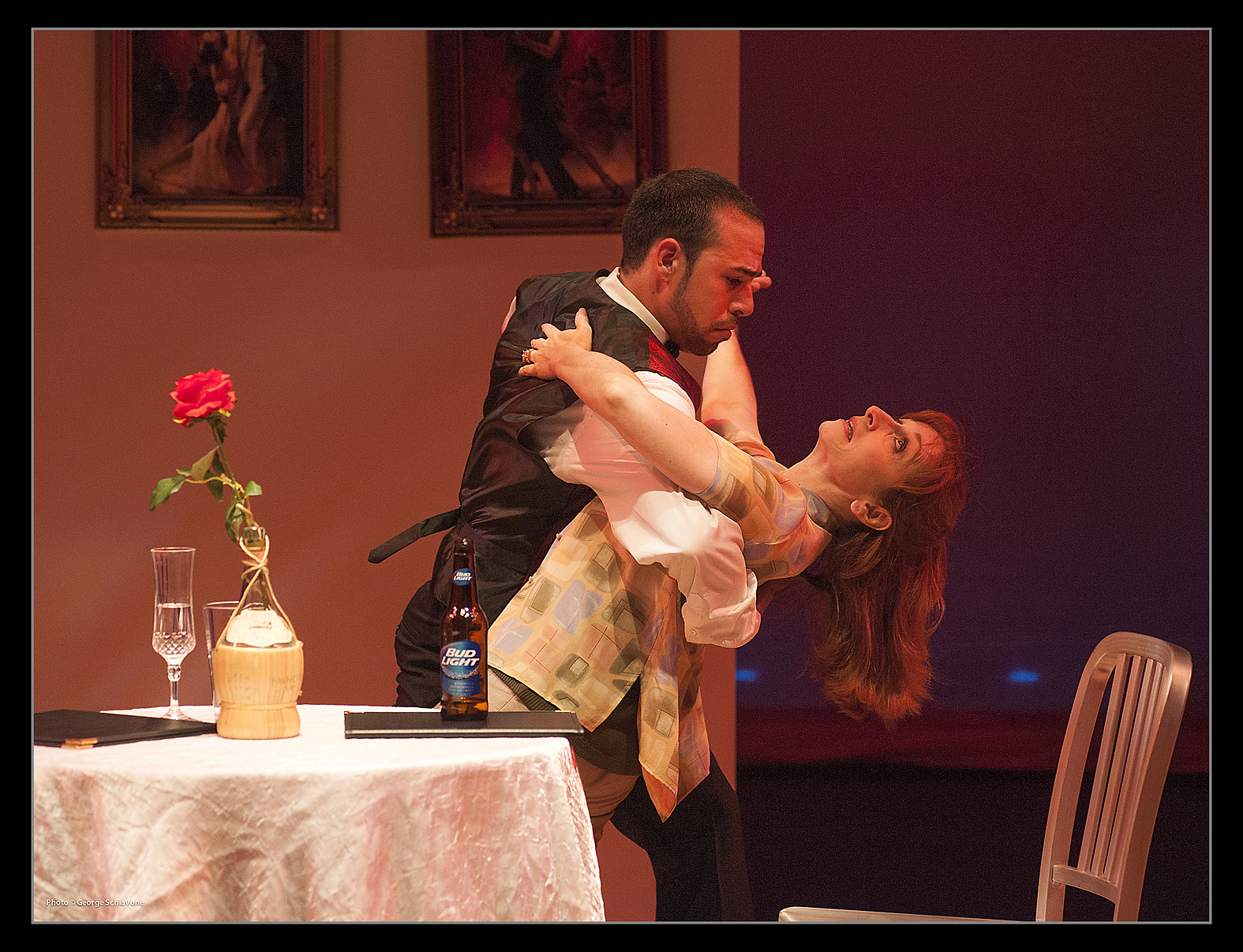
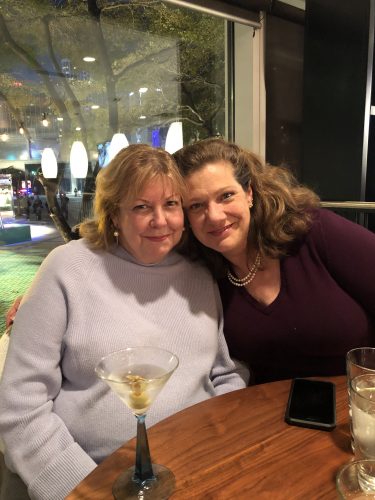
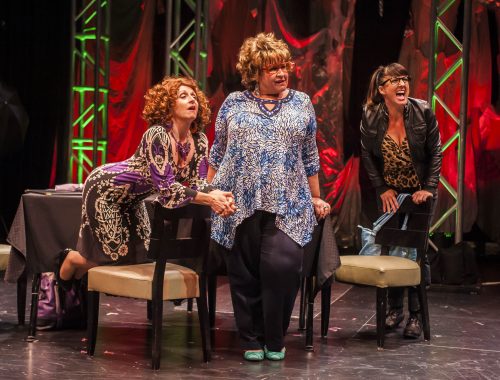
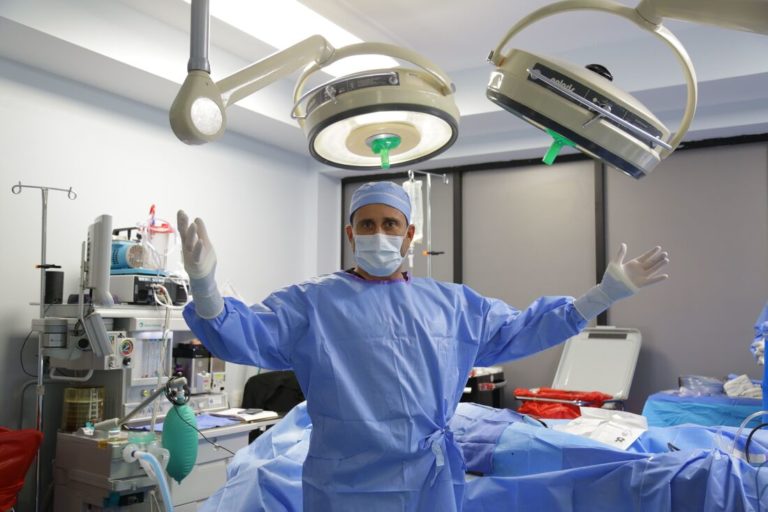
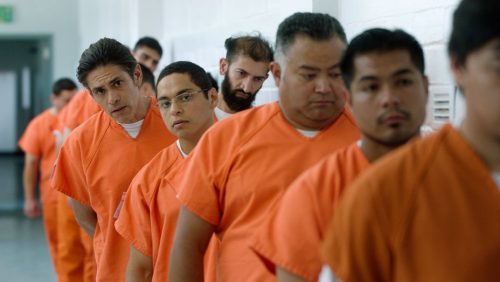
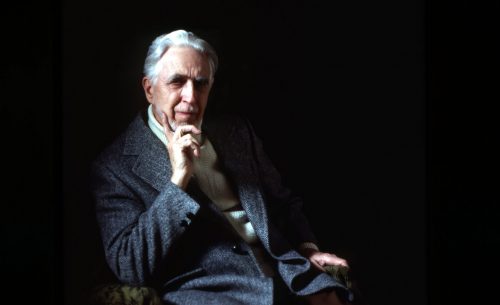
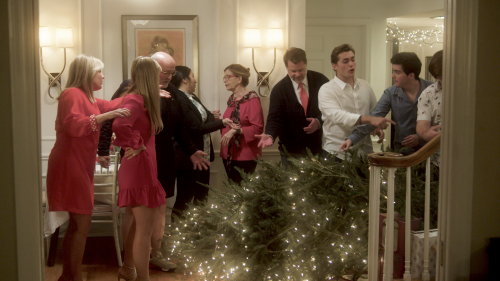


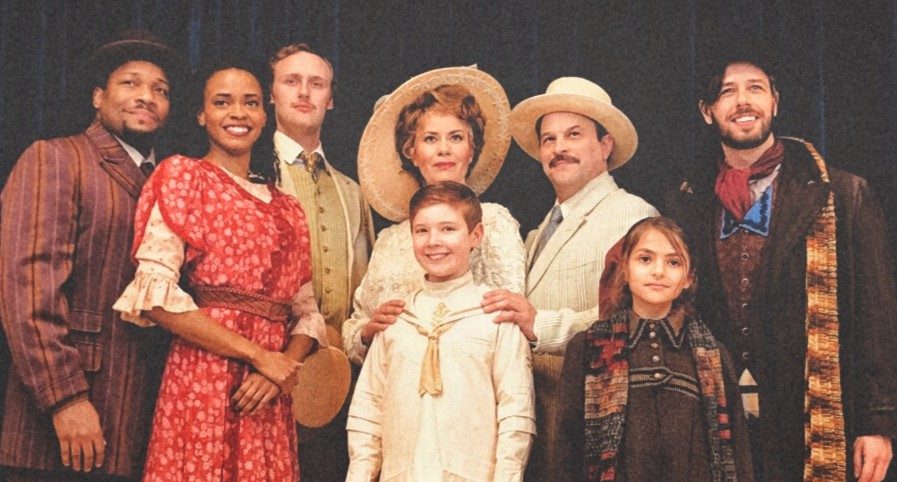
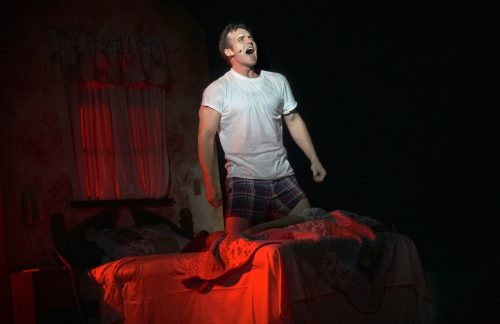
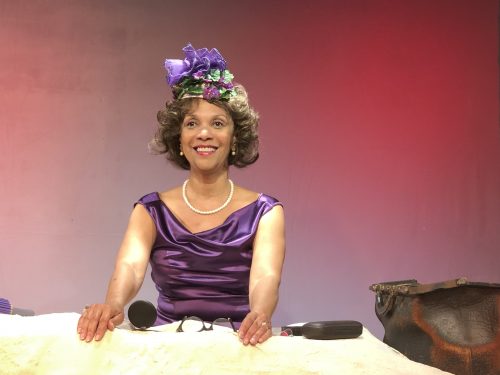
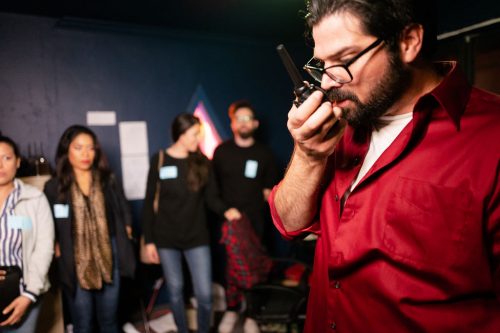
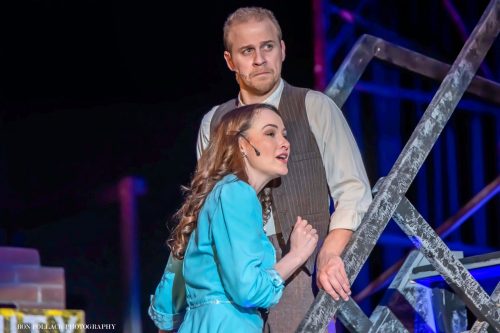
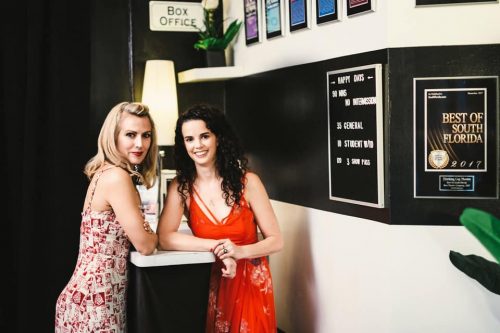
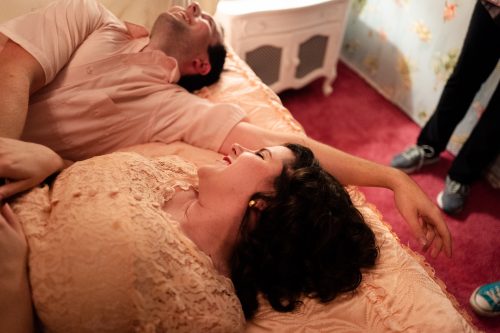
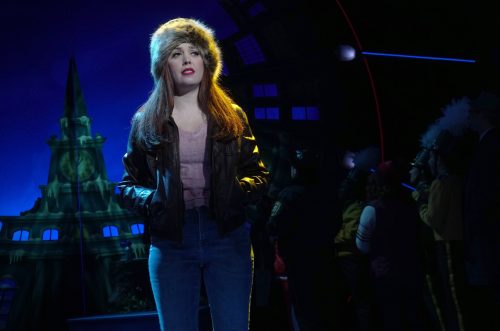
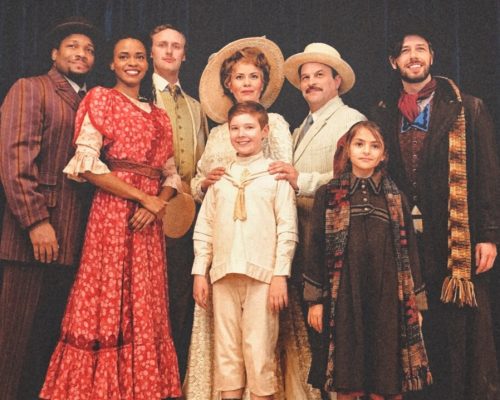
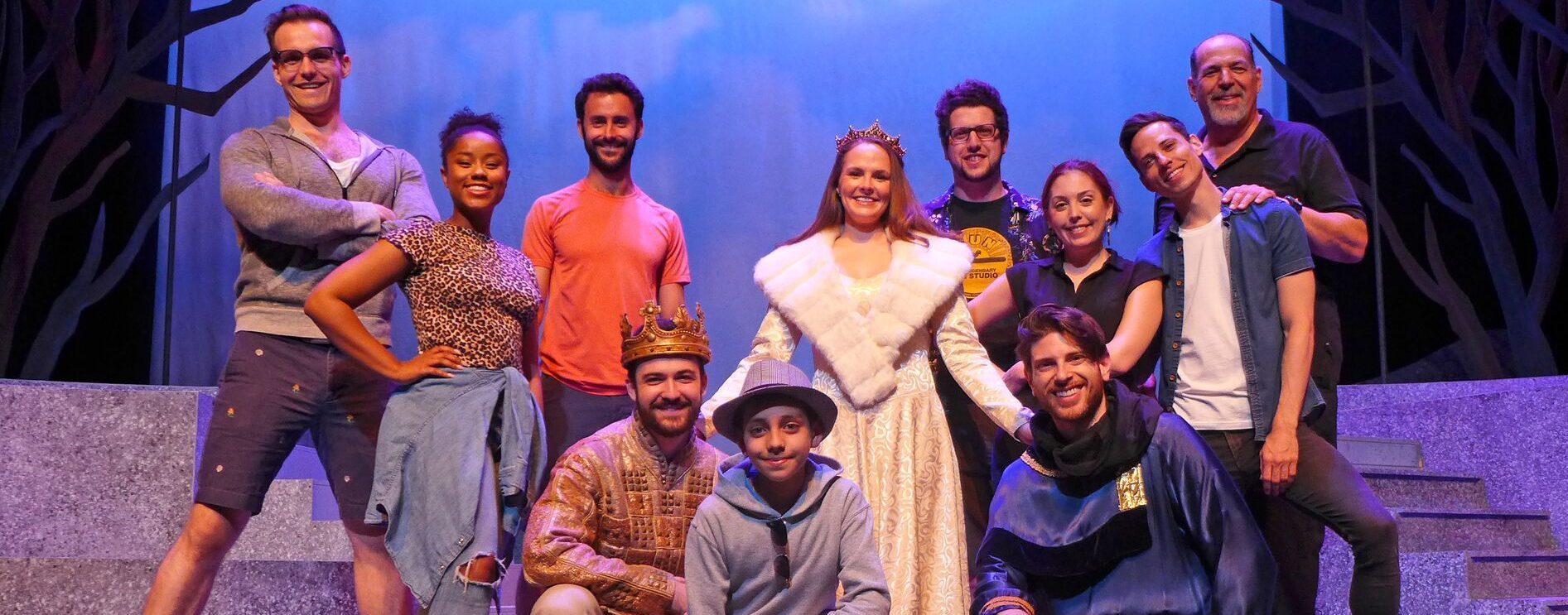
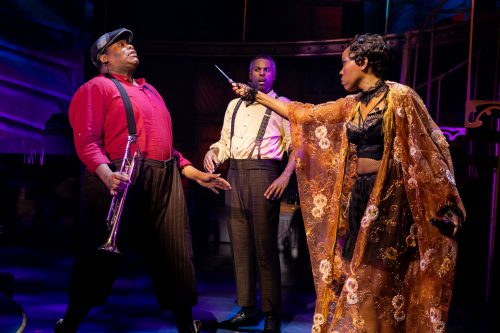

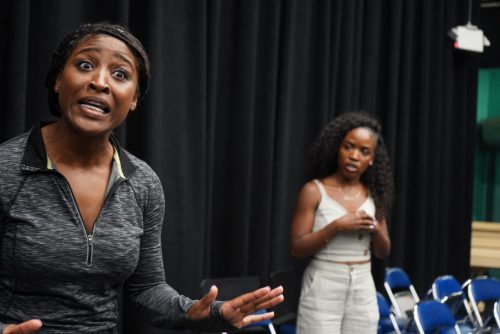
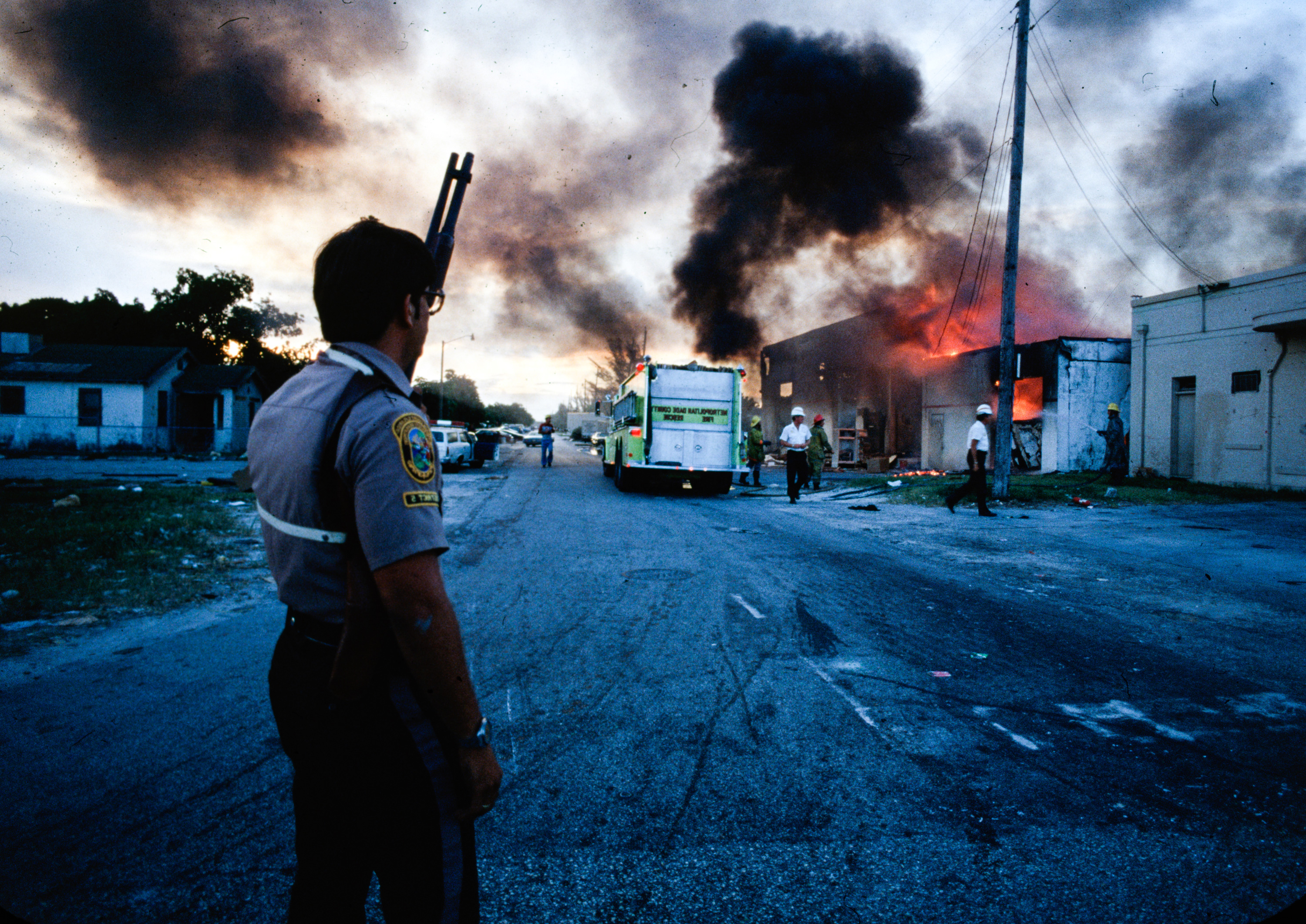
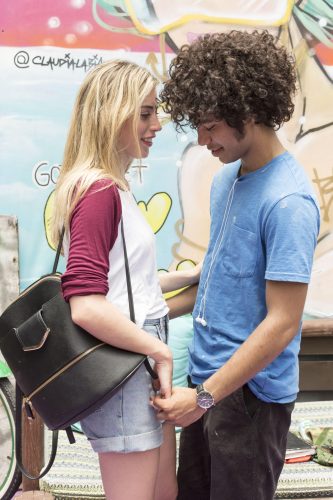
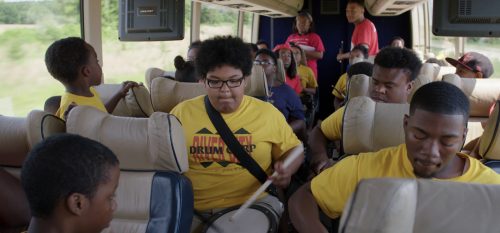
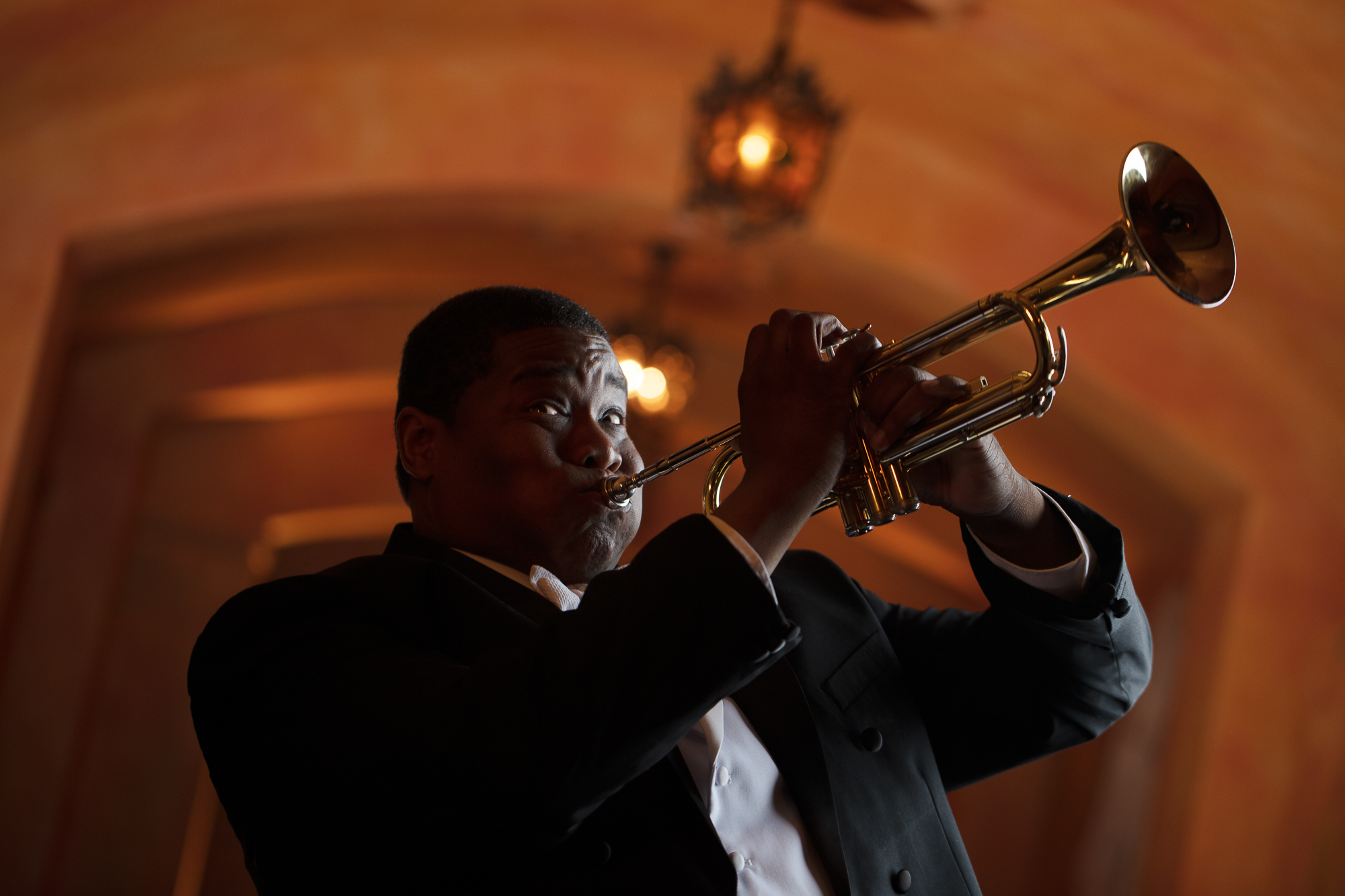



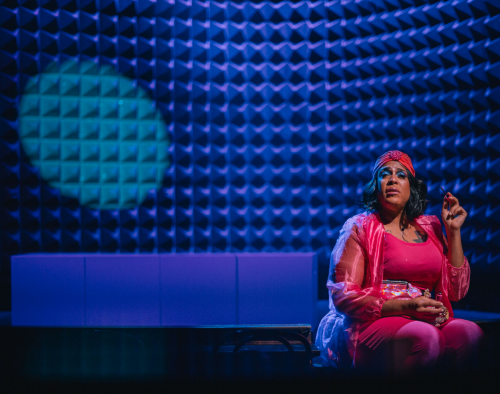
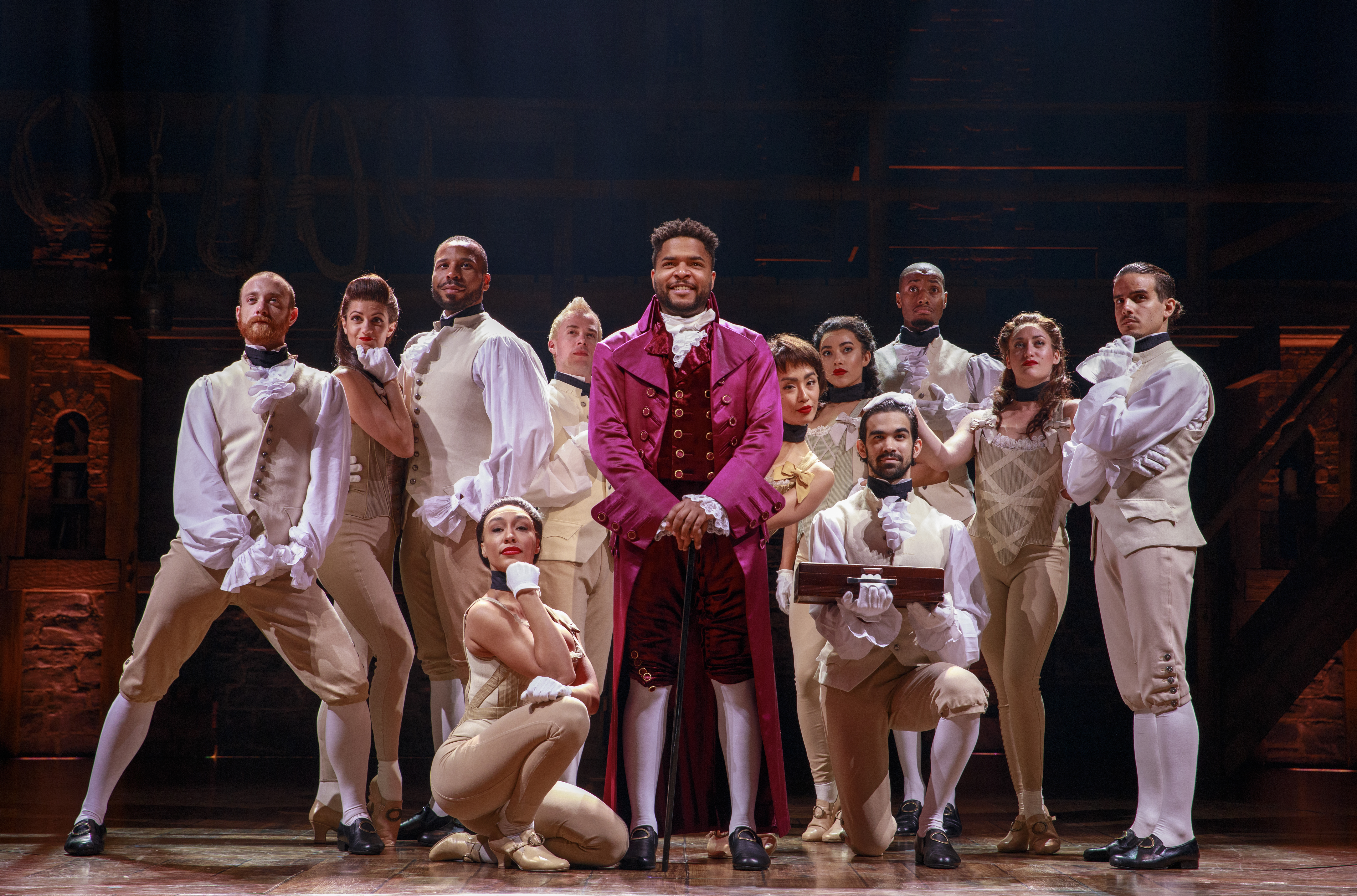
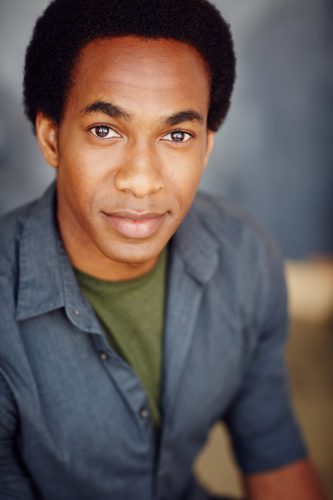
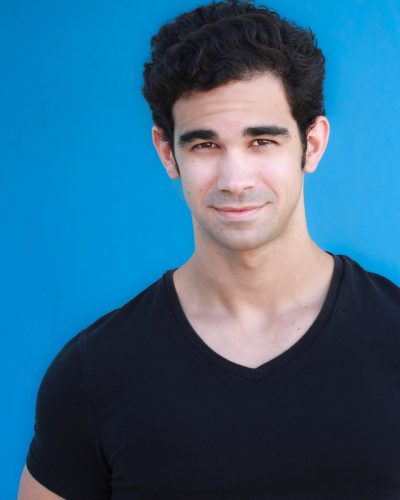
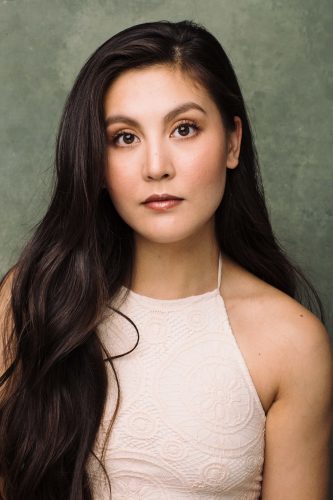
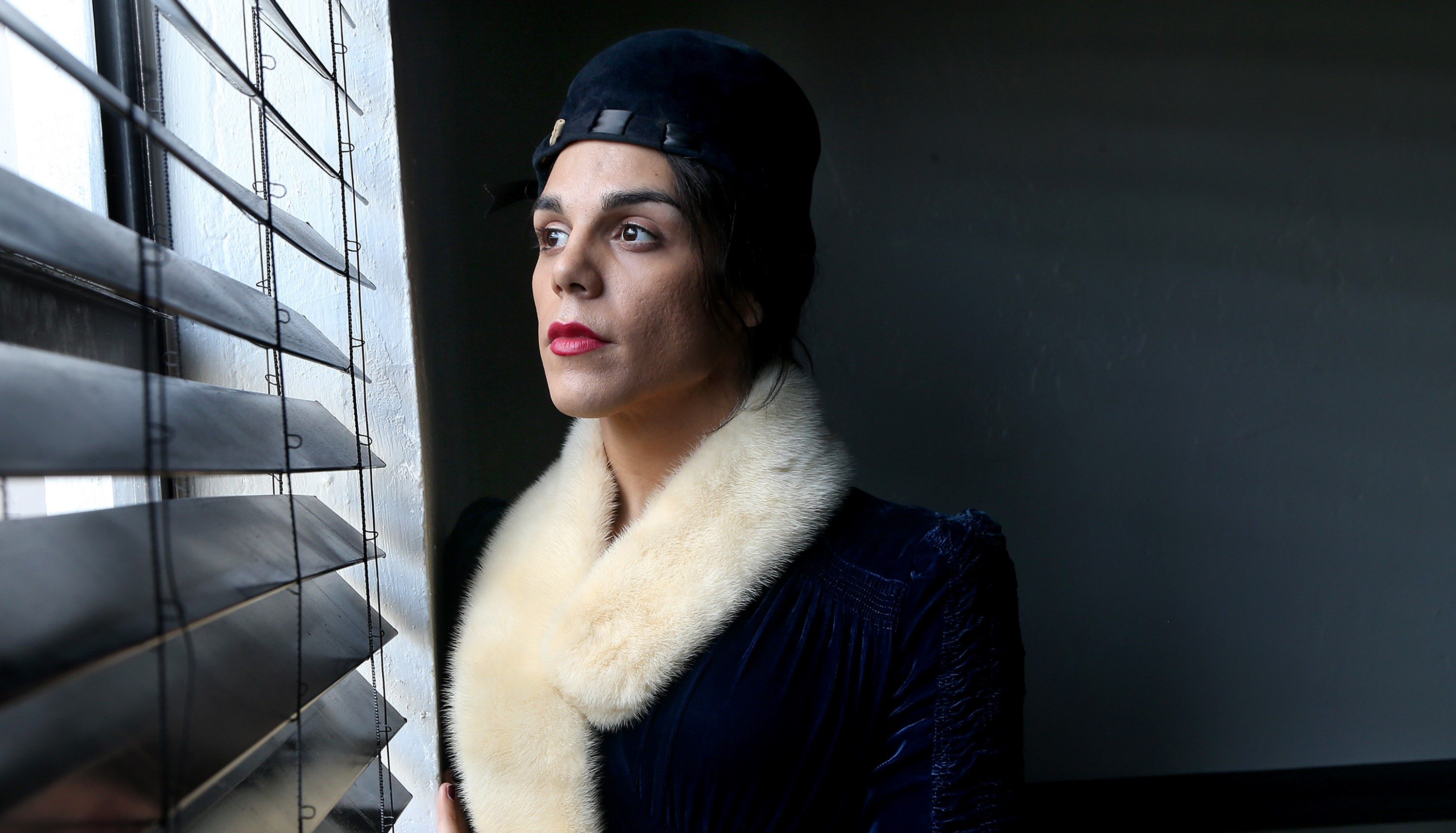
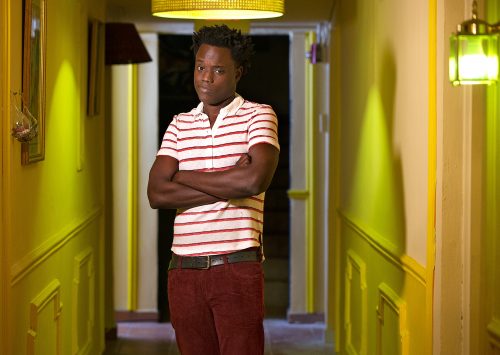
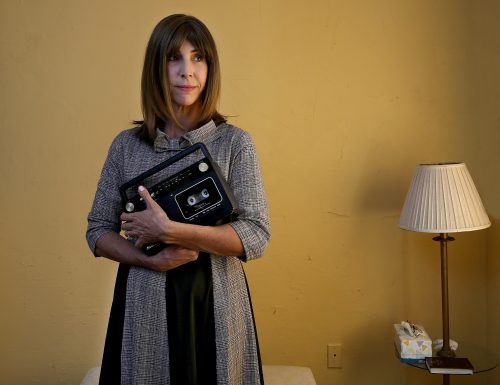
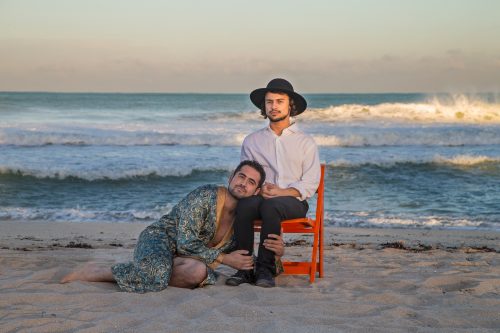
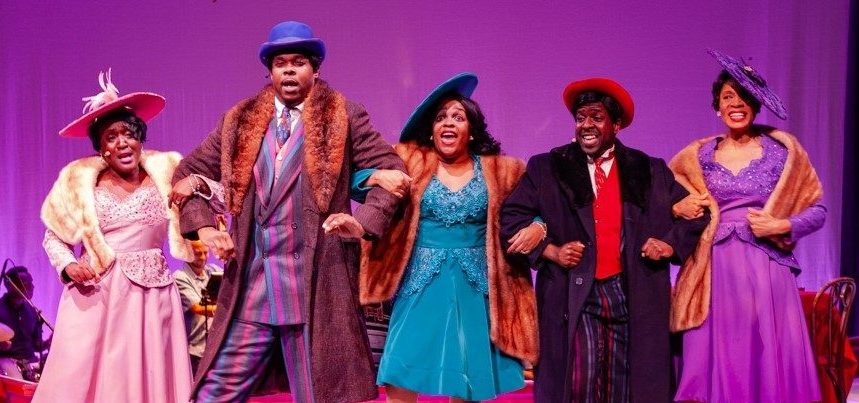
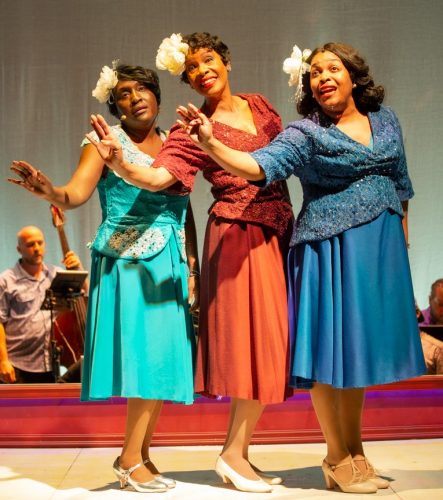
Recent Comments