Blog Article Category: Theater / Film
Review: Actors’ Playhouse Mixes Gasps and Laughs in ‘Dial M For Murder’
Written By Michelle F. Solomon
June 1, 2026 at 4:50 PM
Mallory Newbrough as Margot and Lindsey Corey as Maxine in “Dial M for Murder” at Actors’
Playhouse at the Miracle Theatre through Sunday, June 7 at the Miracle Theatre in Coral Gables. (Photo by Javier Franceschi, courtesy of GableStage)
Actors’ Playhouse once again puts audiences within arm’s reach of murder in its intimate and comfortable balcony space. Following productions of “Murder on the Orient Express” and “The Girl on the Train,” the company is staging Jeffrey Hatcher’s 2022 adaptation of Frederick Knott’s “Dial M for Murder.”
“Dial M for Murder” didn’t become a thriller staple because of Knott’s 1952 play but moreso because of Alfred Hitchcock’s stylish 1954 film adaptation put it on the map. Hatcher modernizes some of the dialogue and character dynamics while keeping the action firmly placed in the 1950s.
One of the most notable changes is transforming Max Hadley into Maxine Hadley, Margot Wendice’s former lover. The shift adds additional layers of secrecy and risk in 1950s London beyond merely marital infidelity.
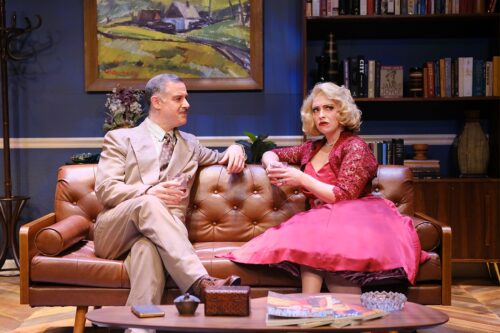
Ben Sandomir as Tony Wendice and Mallory Newbrough as Margot Wendice in “Dial M for Murder” at Actors’ Playhouse. (Photo by Javier Franceschi, courtesy of GableStage)
Director David Arisco refers to the work as a “puzzle play,” and his production treats it exactly that way. The story begins with what seems like a model marriage, followed by the revelation of a secret affair and a carefully orchestrated murder plot that intriguingly unravels as the evening unfolds. The most fun comes from watching the pieces click into place. Then there’s Maxine, a New York-based mystery writer, who is just as determined to solve the mystery as she is to win back her woman.
Arisco has assembled a top-notch cast, led by Ben Sandomir as Tony Wendice. Hatcher’s update makes Tony a failed novelist who works for Maxine’s publisher rather than a tennis pro, creating an added layer of history and tension between the husband and his wife’s former lover.
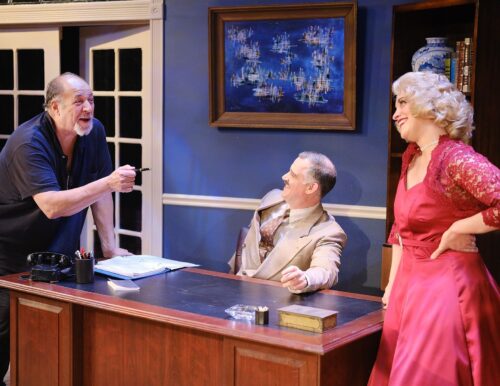
From left, David Arisco directs Ben Sandomir and Mallory Newbrough during a rehearsal for Actors’ Playhouse’s “Dial M for Murder.” (Photo by Javier Franceschi, courtesy of GableStage)
Lindsey Corey continues to be one of South Florida theater’s most interesting actors to watch because she consistently finds a distinct point of view for her characters. Here, she gives Maxine a sharp intelligence and no-frills confidence.
As the lone American amid a cast of British-accented characters, Corey also reinforces Maxine’s status as an outsider looking in.
Like Corey, Mallory Newbrough is one of those actors capable of tackling any role. Here, she balances vulnerability with comic instincts as Margot and shows an unexpected flair for physical comedy as the increasingly frazzled wife caught at the center of the plot.
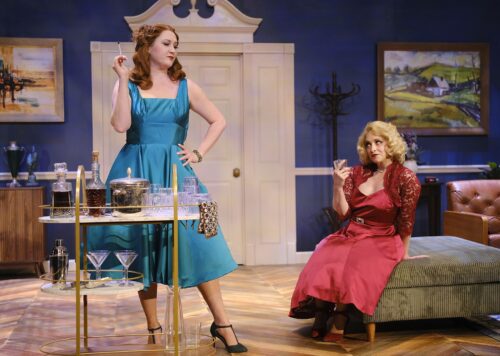
Cigarette in hand, Lindsey Corey’s mystery writer, Maxine, carries herself as someone who is always one step ahead of the game. Mallory Newbrough shows a knack for physical comedy as her former lover Margot Wendice in “Dial M for Murder” at Actors’ Playhouse. (Photo by Javier Franceschi, courtesy of GableStage)
Despite the pair’s acting strengths, their relationship as a romantic couple didn’t play powerful enough to alter the course of multiple lives. Whether the choice for emotional reserve reflected the social constraints of the era or simply the production’s interpretation of the characters is difficult to say, but the connection between the two women was too understated. As a result, the adaptation’s most significant update didn’t always heighten the stakes in the way it seems intended.
Fortunately, there are plenty of parlor tricks to keep the plot on overdrive. Sandomir is wonderfully calculating as Wendice, adding a sly and unsettling mix of charm and cold precision to the character. Daniel Llaca as Lesgate looks like a villain from a silent movie and provides solid support as the man who gets drawn into a murder-for-hire scheme.
Stephen G. Anthony brings a Cockney accent and a no-b.s. approach to Inspector Hubbard as his investigation begins to uncover the carefully constructed plan.
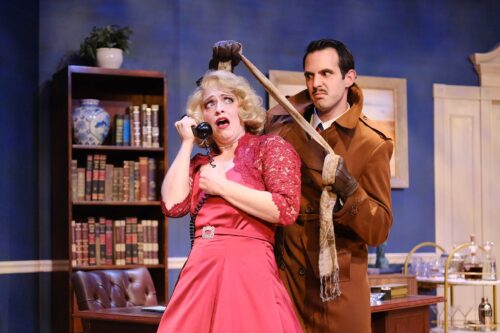
Daniel Llaca as Lesgate has murderous intentions in mind for Mallory Newbrough as Margot Wendice. (Photo by Javier Franceschi, courtesy of GableStage)
The production is equally well served by the design team. K. April Soroko’s scenic design creates an authentic setting for the Wendices’ 1950s London home, with a comfortable living room complemented by an office area and desk at stage right where much of the plotting unfolds. Period-specific props by property master Sam Sigler and properties consultant Jodi Dellaventura help establish the era.
Ellis Tillman’s costumes further cement the production in the 1950s, from the women’s stylish dresses and Margot’s tailored pantsuits to Inspector Hubbard’s detective-worthy trench coat. Eric Nelson’s lighting and Reidar Sorensen’s sound design support the suspenseful atmosphere, while Lee Soroko’s fight choreography finds just the right blend of intrigue and humor.
The struggle between Margot and her would-be killer earns both gasps and laughs, particularly after an attack leaves a man sprawled on the floor with scissors sticking out of his back.
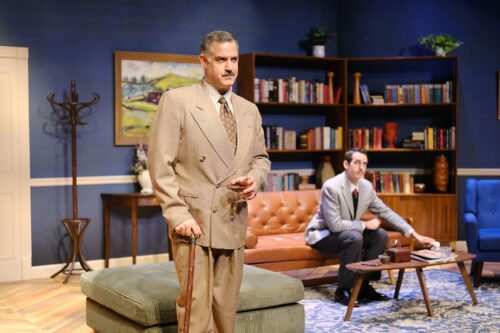
Ben Sandomir as Tony Wendice has a plan and wants Daniel Llaca as Lesgate in on the game in “Dial M for Murder” at Actors’ Playhouse. (Photo by
Javier Franceschi, courtesy of GableStage)
Arisco frequently leans into the play’s comic possibilities with a wink to the clever plotting and carefully woven twists.
True crime podcast bingers, mystery lovers and armchair detectives will be in their element, but Actors’ Playhouse’s production provides plenty of suspenseful and humorous entertainment even for those more interested in the journey than solving the crime.
WHAT: “Dial M for Murder” adapted by Jeffrey Hatcher, original story by Frederick Knott
WHERE: Actors’ Playhouse at the Miracle Theatre, 280 Miracle Mile, Coral Gables
WHEN: Performances 8 p.m. Wednesday, Thursday, Friday and Saturday; 3 p.m. Sunday. Through Sunday, June 7.
COST: $50, $70, $80, $95
INFORMATION: (305) 444-9293 or actorsplayhouse.org
ArtburstMiami.com is a nonprofit media source for the arts featuring fresh and original stories by writers dedicated to theater, dance, visual arts, film, music and more. Don’t miss a story at www.artburst.com.
No posts found
Review: Superb ‘Eureka Day’ at GableStage Skewers the Vaccine Debate
Written By Mary Damiano
May 26, 2026 at 8:10 PM
A scene from GableStage’s production of Jonathan Spector’s “Eureka Day” playing through Sunday, June 14 in Coral Gables. (Photo by Magnus Stark, courtesy of GableStage)
An ultra-progressive day school in Berkeley, California, a city whose name has become synonymous for ultra-progressiveness, faces the conundrum of individual rights versus the good of the larger group in “Eureka Day” by Jonathan Spector.
Now at GableStage through Sunday, June 14, “Eureka Day” follows a small group of parents, along with the principal, as they decide issues affecting the school by consensus. This is the kind of school where they strive for snacks made of locally sourced ingredients — paper plates and other disposables are frowned upon.
The principal, Don (Mark H. Dold), loves to go barefoot and quote Rumi at the council meetings. Suzanne (Jeni Hacker) is an older mom who jokes that she and her husband had another baby just so Suzanne could stay involved with the school.

Ryan Didato and Mark H. Dold get chummy in GableStage’s production of “Eureka Day.” (Photo by Magnus Stark, courtesy of GableStage)
Eli (Ryan Didato) became wealthy as one of the first employees at a tech giant and is now a doting, stay at home dad.
There’s also Meiko (Jordyn Moone), a single mom who knits during the meetings and sometimes struggles to voice her opinions. The newest council member is Carina (Rita Cole), a businesswoman whose child has just started at Eureka Day.
The sharp comedy follows their meetings over the course of the school year, revealing the micro-aggressions, class distinctions, and prejudices of the council members, which Spector addresses with clever, amusing insight.
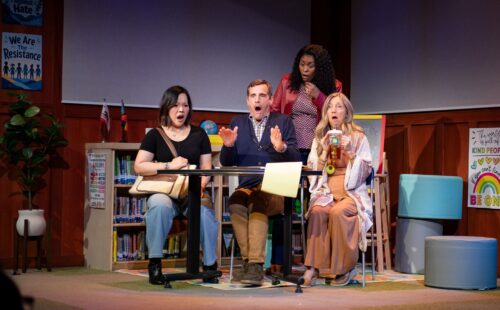
From left, Jordyn Moone, Mark H. Dold and Jeni Hacker. Standing is Rita Cole in GableStage’s production of “Eureka Day.” (Photo by Magnus Stark, courtesy of GableStage)
When a child at the school comes down with the mumps, the council faces the heated issue of vaccinations. Suzanne is strongly against a vaccine mandate, even as the mumps spreads through the student body. The other members struggle with their desire to keep their children safe through herd immunity while respecting the rights of the individual parents. This leads to heated debates, heart-wrenching, personal experiences and revelations, and hilarious comedy, especially during a town hall meeting with parents over Zoom.
“Eureka Day” premiered at the Aurora Theatre Company in Berkeley in 2018, before the COVID-19 pandemic, so Spector’s play feels like a prophecy. Last year it won the Tony award for best revival of a play.
Each member of the cast gets a chance to shine, but what makes the production especially effective is how fully they function as an ensemble.
Dold, who has distinguished himself in past GableStage productions of “Harry Clarke,” “Appropriate,” and “The Lehman Trilogy,” is terrific as Don, a crunchy-granola kind of guy who quotes poetry and carries an NPR tote bag. Dold capitalizes on these qualities with his funny and moving performance.
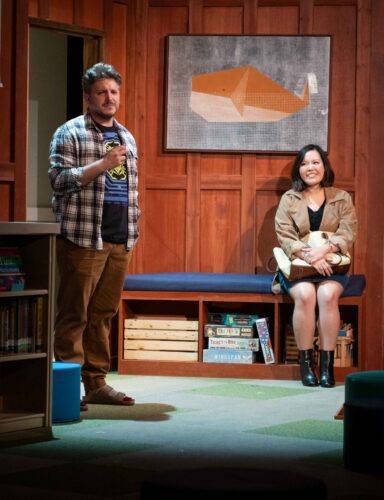
Ryan Didato as stay-at-home dad Eli and Jordyn Moone as Meiko in GableStage’s production of “Eureka Day.” (Photo by Magnus Stark, courtesy of GableStage)
New to Miami stages, Moone is a welcome addition. As Meiko, a quiet single mom with a pension for knitting like a cheerful Madame DeFarge, Moone embodies Meiko’s optimism, which, as the situation escalates, explodes into an everybody’s-thinking-it-but-no-one-wants-to-say-it, show-stopping monologue.
Rita Cole plays Carina, the newest council member. She serves as the audience-perspective character—she’s new here, just like the rest of us. While the other characters know each other and how these meetings work, we see the proceedings through her eyes. As the only Black member of the council, which strives for diversity, equity, and inclusion in all things, views the others with caution, especially as racism surfaces in comments from the group. Cole plays Carina with dignity and a delicious, knowing side-eye as she observes and responds to the other council members.
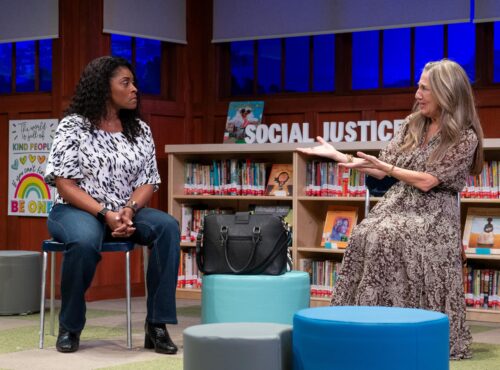
Rita Cole as Carina and Jeni Hacker as earth mother Suzanne in GableStage’s production of “Eureka Day.” (Photo by Magnus Stark, courtesy of GableStage)
As Eli, Didato brings an easygoing, affable charm to the role. He’s the likable tech whiz always ready to come to the rescue, though Eli harbors some secrets. As the play progresses, Eli develops a very personal perspective on the vaccine issue, and Didato’s performance reflects that change beautifully.
Hacker is well cast as Suzanne, an earth mother type whose life revolves around her family and Eureka Day, not necessarily in that order. Hacker plays Suzanne with passion and shines during a powerful monologue late in the play.
Stuart Meltzer, artistic director of Zoetic Stage and here guest directing at GableStage, keeps the action moving briskly while still allowing the play’s more powerful moments room to breathe.
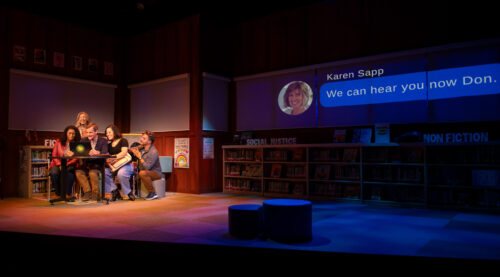
Steven Covey’s projection design shines in GableStage’s production of “Eureka Day.” (Photo by Magnus Stark, courtesy of GableStage)
Frank J. Oliva’s scenic design captures the sunny and cheerful vibe of an elementary school classroom, and is perfectly juxtaposed with the play’s satirical edge. Steven Covey’s projection design, especially during the Zoom meeting, is a marvel. Laura Turnbull’s costume design perfectly defines each character.
Tony Galaska’s lighting and Sean McGinley’s sound work cohesively with the other design level elements to create the vibe of the play.
“Eureka Day” skewers a ripped-from-the-headlines debate in an effective and introspective way without making one side the villain. It is modern comedy at its best, tinged with drama and realism, and the GableStage production is superb.
WHAT: “Eureka Day”
WHERE: GableStage at the Biltmore Hotel, 1200 Anastasia Ave., Coral Gables
WHEN: 7:30 p.m. Wednesday, Thursday, Friday, and Saturday, 2 p.m. Wednesday, Saturday, and Sunday. Through Sunday, June 14.
COST: $60 and $70
INFORMATION: 305-445-1119 or gablestage.org.
ArtburstMiami.com is a nonprofit media source for the arts featuring fresh and original stories by writers dedicated to theater, dance, visual arts, film, music and more. Don’t miss a story at www.artburstmiami.com.
No posts found
Review: ‘Kevin and the River Flan’ Blends Magical Realism and Emotional Truth
Written By Michelle F. Solomon
May 15, 2026 at 5:30 PM
Kevin (Nico Grimes) with best friend Gwen (Jessica Calle) in Brandon Urrutia’s “Kevin and the River Flan” getting its world premiere at Main Street Players. (Photos courtesy of Main Street Players)
Playwright Brandon Urrutia draws on personal experience for “Kevin and the River Flan,” a funny, poignant and often surreal almost 90-minute play receiving its world premiere at Main Street Players through Sunday, May 17.
According to Urrutia, the play began after they accidentally killed a monarch butterfly on the way to Miami’s Summer Shorts Festival. Overcome with guilt, they transformed that small but unsettling moment into a story exploring depression, cultural identity and what it means to feel caught between worlds.
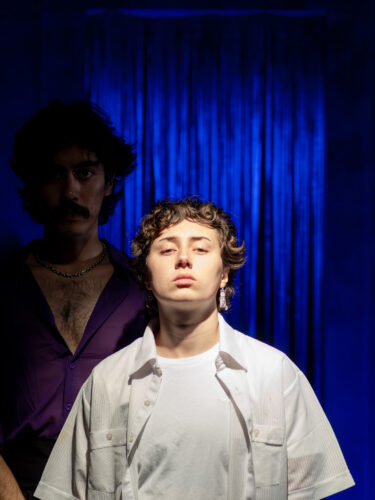
Nico Grimes plays Kevin in what the director calls a love letter for what it’s like to be a queer person with mental health struggles. (Photo courtesy of Main Street Players)
The script blends magical realism with dark comedy in a story that follows a young Cuban American grappling with depression, cultural identity and disconnection.
After a defiant act involving an offering left for the Yoruba goddess Ochún, the titular character is thrust into a metaphysical journey where he is confronted by a mother in mourning, a goddess ticked off that her dessert has been absconded, and a best friend exasperated by Kevin’s constant threats of killing themselves. The impulsive act of devouring the dessert sends Kevin on a metaphysical journey that forces them to confront both the consequences of their actions and their own ambivalence about life.
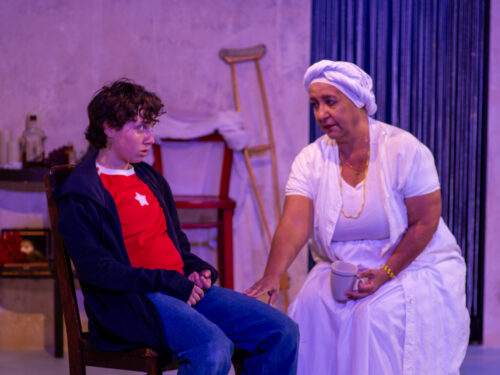
Nico Graves as Kevin and Rubi Del Rio-Herrera as Ofelia in Brandon Urrutia’s “Kevin and the River Flan” getting its world premiere at Main Street Players. (Photos courtesy of Main Street Players)
Kevin, portrayed with emotional honesty by Nico Grimes, fully inhabits the title character, balancing Kevin’s repeated declarations of wanting to die with the frustration of feeling disconnected, which is compounded by them being alienated from a language and culture that should feel like home. Grimes never lets Kevin become a symbol of despair but using physicality and a wind-eyed wonderment finds humor and vulnerability in the character.
Kevin’s best friend, Gwen (Jessica Calle), has shown up with a $2 Taco Bell meal and just wants to make sure the burritos don’t go to waste. Weary of Kevin’s repeated declarations that they want to die, Gwen initially responds with exasperation before the play gradually reveals that Kevin is grappling with emotional struggles. Calle as Gwen is a believable bestie and balances just the right bit of visible irritation mixed with a genuine caring. She’s someone you’d want as your BFF.
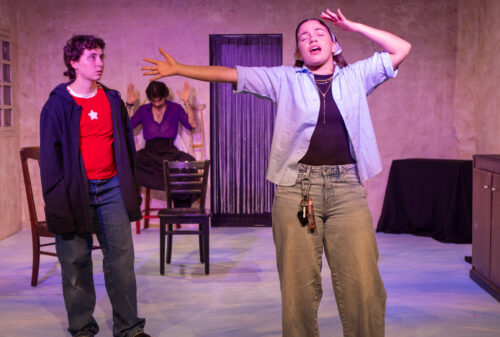
Gwen (Jessica Calle) breaks free in a moment as Kevin (Nico Grimes) looks on. Giuseppe Fusca as Babalu-Aye is in the background. (Photo courtesy of Main Street Players)
Kevin’s troubles multiply after they eat a slice of flan left as an offering to the Yoruba goddess Ochún by a grieving mother, Ofelia Marin (superbly played by Rubi Del Rio-Herrera), mourning the loss of her son.
Among the production’s strongest moments are the scenes shared by Grimes and Del Rio-Herrera. Their emotional confrontation after Kevin consumes the flan she has left as an offering to her dead son carries genuine weight, particularly as Ochún insists Kevin seek forgiveness by asking Ofelia to prepare another.
One of the play’s most effective devices involves language. Kevin repeatedly insists they do not speak Spanish, reflecting Urrutia’s own experience growing up with a Cuban father and white mother while never fully mastering the language. Much of the Spanish dialogue is intentionally left untranslated.
In a note to producers, Urrutia writes: “I did not get subtitles, neither do you.”
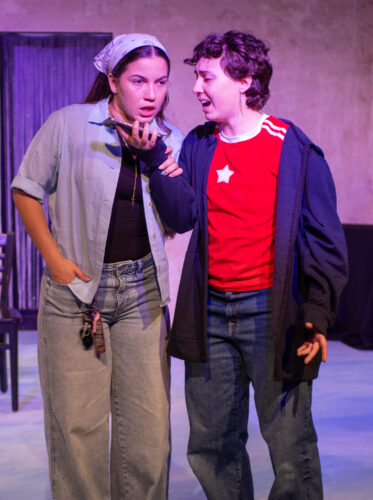
Best friends Gwen (Jessica Calle) and Kevin (Nico Grimes) in Brandon Urrutia’s “Kevin and the River Flan” getting its world premiere at Main Street Players. (Photos courtesy of Main Street Players)
Rather than translating those moments, Urrutia mirrors Kevin’s own experience of feeling disconnected from a language and culture that remain deeply personal but never fully accessible. It seeps from the stage and out into the audience – a purposeful choice to be part of the journey.
Another thoughtful choice came in the casting of Kevin, portrayed by a nonbinary actor.
The playwright, who identifies as nonbinary, said the decision was director Ina Ruiz’s rather than something specified in the script. While they intentionally leave future productions open to different casting choices, Urrutia said they appreciated how the production’s approach added another dimension to Kevin’s search for identity. This may be another layer, however, that the playwright might want to consider if other regional theaters choose to present the work.
When the audience enters, a figure resembling a meditative statue sits quietly cross-legged on a stool with a crutch and a bottle of pills nearby, signaling the play’s blend of spirituality and emotional struggle. It’s Giuseppe Fusca who lends an understated presence to Babalú-Ayé, deepening the play’s spiritual landscape and reinforcing its exploration of life, death and transformation.
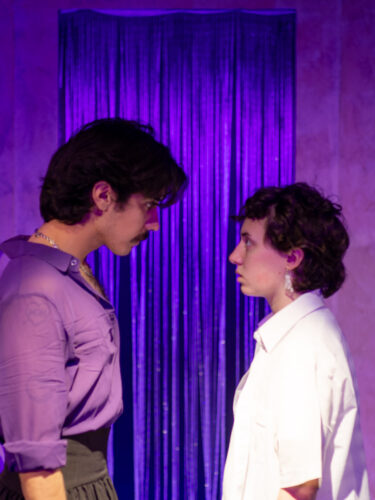
Giuseppe Fusca, left, lends an understated presence to Babalú-Ayé. Shown with Nico Grimes as Kevin in Brandon Urrutia’s “Kevin and the River Flan” getting its world premiere at Main Street Players. (Photos courtesy of Main Street Players)
Chaira Jacobus brings a forceful, wise and watchful presence to Ochún, sitting unnoticed in the audience before stepping into the action, subtly suggesting the goddess’s influence long before Kevin recognizes it.
Ruiz’s direction confidently navigates the play’s shifts, never overwhelming the emotional stakes between dark comedy and magical realism so that the personal core of the story remains intact.
Amanda Sparhawk’s scenic design uses Main Street’s small space to create a flexible environment that moves fluidly between the ordinary and the metaphysical. Danny Nieves’ lighting bathes the stage in surreal colors that heighten the emotional and spiritual landscape. Hunter Castlemann’s costumes establish each character’s identity, keeping the earthbound grounded in the everyday while the otherworldly beings are more ethereal. The exhibition is how he dresses Ofelia who seems to straddle both worlds.
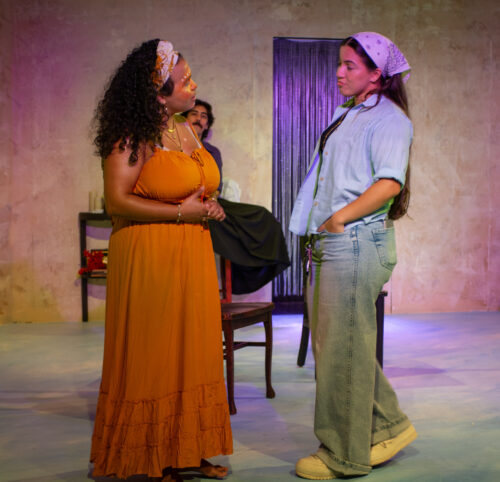
Chaira Jacobus brings a forceful, wise and watchful presence to Ochún, shown with Jessica Calle. (Photo courtesy of Main Street Players)
While “Kevin and the River Flan” confronts suicide, depression and grief, its humor keeps it from becoming a meditation. The play ultimately explores cultural identity, forgiveness and the possibility that even life’s smallest moments can lead to unexpected transformation.
While “Kevin and the River Flan” confronts suicide, depression and grief, it also finds room for humor, tenderness and moments of absurdity. Ruiz and the cast strike the balance that Urrutia’s play deserves, giving equal weight to the exploration of cultural identity, belonging, self-discovery and forgiveness.
WHAT: “Kevin and the River Flan”
WHERE: Main Street Players, Main Street Playhouse, 6812 Main St., Miami Lakes
WHEN: 8 p.m. Friday-Saturday, 2 p.m. Sunday, through Sunday, May 17
COST: $30, $25 for students and seniors with ID
INFORMATION: 305-558-3737 or mainstreetplayers.com.
ArtburstMiami.com is a nonprofit media source for the arts featuring fresh and original stories by writers dedicated to theater, dance, visual arts, film, music and more. Don’t miss a story at www.artburstmiami.com
No posts found
Actors’ Playhouse Dials Up Classic ‘Dial M for Murder’ In an Updated Version
Written By Carolina del Busto
May 13, 2026 at 10:21 AM
Ben Sandomir as Tony Wendice and Mallory Newbrough as Margot Wendice in Actors’ Playhouse’s production of “Dial M for Murder,” opening in previews, then running from Friday, May 15 through Sunday, June 7, on Miracle Mile, Coral Gables. (Photo by Javier Franceschi)
Discovering a spouse’s affair might inspire thoughts of revenge — a premise at the heart of Frederick Knott’s “Dial M for Murder.” First staged in 1952 and later adapted into a film noir thriller by Alfred Hitchcock, the classic turns marital betrayal into a suspenseful tale of deception, blackmail and attempted murder.
Now reimagined by writer Jeffrey Hatcher, Actors’ Playhouse is producing a more modern adaptation of the same story. The show opens in previews Wednesday, May 13 and runs through Sunday, June 7 at the Miracle Mile theater.
Director and Actors’ Playhouse Artistic Director David Arisco is a fan of the updated adaptation by Hatcher. He puts it plainly, “I’ll just say it: the old version is old. It’s long, winded, and wordy. Jeffrey Hatcher took a look at the original text and tightened it … and then added another little twist.”
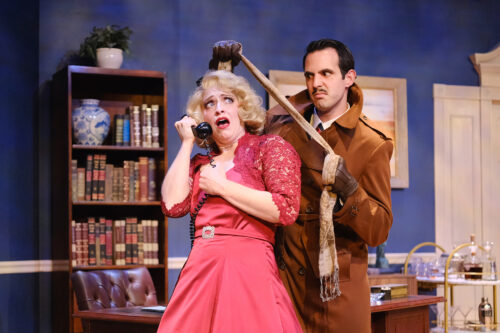
Mallory Newbrough and Daniel Llaca in “Dial M for Murder at Actors’ Playhouse” at the Miracle Theatre. (Photo by Javier Franceschi)
While the twists and turns in the murder mystery play are best kept a secret, the new additions appeal to Arisco’s love of what he calls “puzzle plays.” Which are, he explains, “Plays where you have to put the puzzle together with the right pieces in the right place and the audience has to follow.”
“Dial M for Murder” is a classic suspense – the audience is given information that some of the characters on stage do not know, yet Arisco promises a few deceptions.
“So many little things in the show are red herrings,” he says. “We’re leaving clues that are false clues just so that the audience might go down the wrong path. And that’s always fun to do.”
While the story is fundamentally the same as the original production — man discovers wife is having an affair, man then plots for his wife’s murder, man then must evade the cops — Hatcher brings the story to the 21st century in many ways. In addition to the you-have-to-see-it-for-yourself twists, one of the biggest changes in Hatcher’s adaptation is that the lover character, originally Max Hadley, is now Maxine Hadley.
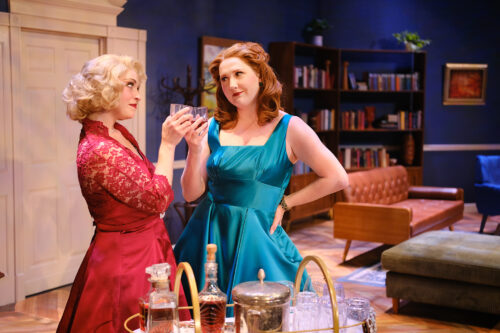
Mallory Newbrough as Margot Wendice and Lindsey Corey, who is playing Maxine. The role was updated from Max Hadley in Jeffrey Hatcher’s adaptation, which Actors’ Playhouse is staging. (Photo by Javier Franceschi)
Actress Lindsey Corey, who plays the role of Maxine, sees this gender change as significant and adding to the tension on stage.
“It’s such an interesting way to update the script. In a way, it makes the situation with Maxine and Margot more dangerous because at that time, it wasn’t the easiest or safest to be in a same-sex relationship, much less an affair with a married woman,” says Corey. “It heightens the stakes a lot, but it’s also a cool way to allow these characters to hide their affair.”
Corey had seen the original Knott version over a decade ago at The Maltz Jupiter Theatre in Jupiter, Florida. She adds how an affair between a lonely housewife and another man has been done so many times before that it’s often expected. This new adaptation, she says, is one that “audiences will really resonate with.”
While Knott set the story in 1920s London, Hatcher’s version puts the play in the period that it was originally written — the 1950s. The Actor’s Playhouse version will transform its stage into a London apartment, with the cast speaking in British accents. The exception is Maxine, who is American.
Arisco says that making Maxine American is another way the play is more contemporary, emphasizing a connection between the United States and England. “It shows we’re doing business across the pond.”
The character of Max isn’t the only one to undergo a twist. The play’s central schemer, Tony Wendice is no longer a retired tennis player, but instead he’s a failing writer.
The role of Tony will be played by local actor Ben Sandomir.
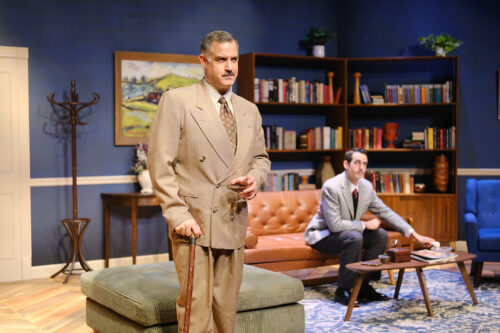
Ben Sandomir and Daniel Llaca in Actors’ Playhouse’s “Dial M for Murder.” (Photo by Javier Franceschi)
Wearing a smart suit jacket during rehearsal, Sandomir is very much the character of Tony. “Tony is described as ‘charming,’ so I’m trying to bring that to the performance,” he says.
“I want to make sure I bring enough volume and energy to the role,” continues Sandomir. “Tony talks a lot and gives a lot of exposition, so I wanted to make sure it was done in a way where the audience might actually remember what he says.”
Sandomir, a prolific local actor, is having his Actors’ Playhouse debut with “Dial M for Murder.” Although he’s been a working actor in South Florida for decades, Sandomir has yet to step foot (professionally) on the Actors’ Playhouse stage. That will all change this month.
“I’m glad I’m finally getting a chance to work here,” Sandomir says.
Known for his work on local musicals, like his role of Teyve in Zoetic Stage’s 2025 adaptation of “Fiddler on the Roof,” Sandomir says he doesn’t often get to work on dialogue-driven plays. “It’s a muscle I don’t get to stretch very often, but I have a great time doing it.”
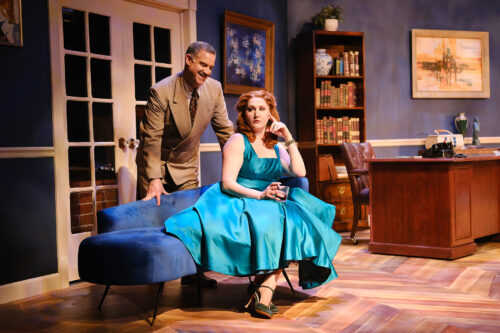
Ben Sandomir as Tony Wendice and Lindsey Corey as Maxine Hadley. ((Photo by Javier Franceschi)
Sandomir says he is especially pleased to be working with a cast and creative team he has known for years.
“I feel fortunate to be working with the group that I’m working with now. It’s a bunch of people that I’ve known and loved for a long time. I’m very happy about this opportunity,” Sandomir says.
Arisco is excited to finally be working with Sandomir. He’s seen the actor perform at other venues throughout the area and has tried in the past to sign him onto a show, but the timing never worked out. Until now.
Rounding out the cast of “Dial M for Murder” are Mallory Newbrough (playing Margot Wendice), Daniel Llaca (Lesgate) and Stephen G. Anthony (Inspector Hubbard).
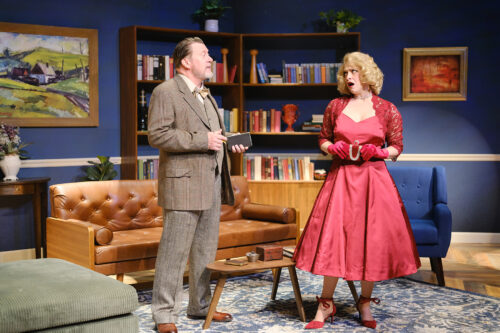
Stephen G. Anthony as Inspector Hubbard grills Mallory Newbrough as Margot Wendice. (Photo by Javier Franceschi)
“It’s just a great story,” says Arisco. “It’s so much fun to watch people try to plot the most horrific thing in the world, but at the same time, they’re having fun. Of course it’s an awful thing to plan a murder, but it’s fun for the audience to be following the story and trying to figure things out on their own.”
There’s blackmail, scheming, and, of course, a plot for murder. The play is more of a thriller than a whodunit. From the very start, the audience knows who did what.
“What’s interesting about this play is how the audience sees exactly what happens early in the play, and they get to go on the journey with us as we discover everything,” says Corey. “We’re putting it together while they’re sitting there, watching us, rooting for us to get it right.”
And for those who know the play or the movie well, the updated version still has some surprises in store.
WHAT: “Dial M for Murder” adapted by Jeffrey Hatcher, original story by Frederick Knott
WHERE: Actors’ Playhouse at the Miracle Theatre, 280 Miracle Mile, Coral Gables
WHEN: 8 p.m. preview Wednesday and Thursday, May 13 and 14. Opens Friday, May 15. Performances 8 p.m. Wednesday, Thursday, Friday and Saturday; 3 p.m. Sunday. Through Sunday, June 7. Weekday matinee 2 p.m., Wednesday, May 20.
COST: $40 for preview performances; $50, $70, $80, $95
INFORMATION: (305) 444-9293 or actorsplayhouse.org
ArtburstMiami.com is a nonprofit media source for the arts featuring fresh and original stories by writers dedicated to theater, dance, visual arts, film, music and more. Don’t miss a story at www.artburst.com.
No posts found
‘The Bard in Bars’ Blends Shakespeare And Hip-Hop at Miami’s Lyric Theater
Written By Miguel Sirgado
May 12, 2026 at 3:15 PM
Miami performer David H. Hepburn is Willy Shakes, The Bard, in “The Bard in Bars” coming to the Historic Lyric Theater in Overtown on Friday, May 15 and Saturday, May 16. (Photo by Gregory Reed, courtesy of Art Prevails Project)
For playwright and educator Darius V. Daughtry, the connection between Shakespeare and hip-hop began in the classroom.
Daughtry, founder of Fort Lauderdale-based Art Prevails Project, was teaching “Romeo and Juliet” at Northeast High School in Oakland Park when his students made it clear they were not connecting with the material.
“They were like, ‘What is this?'” Daughtry recalls.
He reframed the rivalry between the Capulets and Montagues as the East Coast-West Coast hip-hop feud.
“And suddenly they got it.”
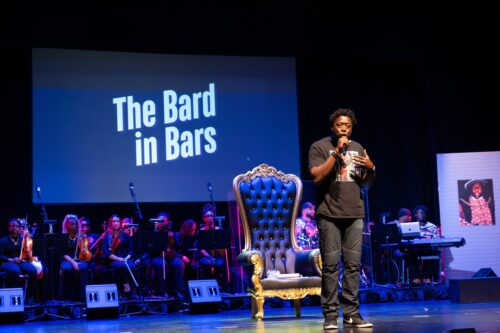
Darius V. Daughtry, founder of the Art Prevails Project, brings Shakespeare and hip-hop together in “The Bard in Bars,” a genre-blending production coming to the Historic Lyric Theater in Overtown on Friday, May 15 and Saturday, May 16. (Photo by Gregory Reed, courtesy of Art Prevails Project).
That teaching strategy became the foundation for “The Bard in Bars,” a production that blends Shakespeare with spoken word, rap and live orchestral music. “The Bard in Bars” is at Overtown’s Historic Lyric Theater on Friday, May 15 and Saturday, May 16.
“The genesis of ‘The Bard in Bars’ came from trying to help my students understand the themes in ‘Macbeth,’” he says.
Daughtry started developing “The Bard in Bars” in June 2023, the work was first presented in Pompano Beach in the The Pavilion at the Sample McDougald House, then in Fort Lauderdale in 2025 as part of the Broward Center’s Arts for Action: Black Voices Initiative, and at the African American Research Library and Cultural Center (AARLCC) in Fort Lauderdale in early May.
The performances at the Lyric Theater is the first time the show will be performed in Miami. “It’s been a dream of mine to do a show at the Lyric Theater,” Daughtry says.

Xaire Goodridge as Lysander, Yamille Mercedes as Helena and Omari Miles as Demetrius in “The Bard in Bars,” which reimagines Shakespeare through spoken word, rap and live orchestral music. (Photo by Gregory Reed, courtesy of Art Prevails Project).
For Daughtry, adapting Shakespeare is less about preservation than connection.
“It’s about the story and the universal themes,” he says. “Shakespeare was writing for everybody, using slang, innuendo and the language of everyday people.”
That philosophy guides the production’s fluid use of text.
“There are moments where I don’t touch the words at all,” he says. “And others where I help translate them so audiences can connect.”
The result is what Daughtry calls “a theatrical experience.”
“There are moments you might learn something or laugh, and others where you’re throwing your hands in the air like you’re at a show.”

Denzel McCausland and Marlo Vashti Rodríguez in a previous production of “The Bard in Bars.” (Photo by Ian Ibbotson. courtesy of Art Prevails Project)
Another perspective comes from Marlo Vashti Rodríguez, a Miami actress and jazz vocalist, trained in theater performance at Florida Atlantic University, who plays both Juliet and Lady Macbeth in the production.
“I access the characters through physicality first,” says Rodríguez. “Lady Macbeth has this elegance, this regal confidence. Juliet is playful, curious and youthful. They’re different colors of energy.”
Music helps her move between the characters.
“Sometimes when a character doesn’t know what else to say, they have to sing it,” she says. “The music gives us another way to express the story.”
Performing Shakespeare to hip-hop rhythms also gave her a new appreciation for the language.
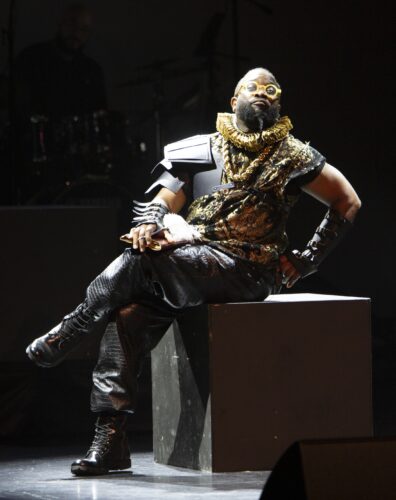
David H. Hepburn, who plays Willy Shakes, The Bard in “The Bard in Bars,” says the production’s physical demands become part of the storytelling. (Photo by Ian Ibbotson. courtesy of Art Prevails Project).
“Rapping Shakespearean language to 50 Cent or J. Cole, it’s very different,” says Rodríguez. “It gave me another way to understand the text.”
This approach allows actors to move beyond the traditional.
“We’re not always in iambic pentameter. We’re in the rhythm of the music, in our own flow,” she says. “It lets us take ownership of the language.”
That physical dimension extends across the cast, including David H. Hepburn, a member of Miami’s theater improv company troupe Just the Funny, who also often performs with Art Prevails Project The Miami-based actor plays Willy Shakes, the Bard.
He says the production demands a high level of physicality and it presents challenges.
“You’re moving, you’re breathing, and you still have to deliver the work clearly,” he says.
The production brings together nearly 30 South Florida artists, including actors and the New Canon Chamber Collective, a 12-piece Miami ensemble performing live onstage.
“They’re not just musicians, they’re part of the cast,” says Daughtry. “Everything happening onstage is collaborative.”
Rodríguez sees that collaboration as central to the show
“You build a real sense of community and family,” she says.
And the production also engages questions of access and representation.
“Theater is powerful and healing, but it’s often inaccessible,” Rodríguez says. “And growing up, I didn’t see people who looked like me in those spaces.”
Now, performing Shakespeare within a diverse cast carries added meaning.
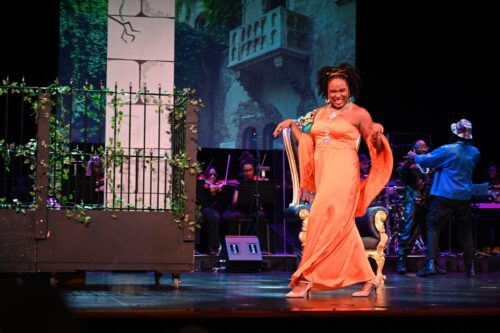
Marlo Vashti Rodríguez, who plays Juliet and Lady Macbeth in “The Bard in Bars,” says performing at the Historic Lyric Theater in Overtown carries special meaning because of the neighborhood’s rich Black cultural history. (Photo by Gregory Reed, courtesy of Art Prevails Project).
“Being part of a cast of Black and brown artists performing these stories reflects the world we actually live in,” she says.
That sense of place is amplified by the production’s setting in Overtown, which Rodríguez says has such a rich Black history that is ever present in Overtown.
“Performing at the Lyric Theater, where artists like Ella Fitzgerald once performed, is an honor.”
Ultimately, “The Bard in Bars” aims to create a shared experience that resonates across backgrounds.
“I want people to have a good time,” Daughtry says. “You need moments of joy.”
He also hopes audiences leave with something more.
“If you didn’t understand ‘Macbeth’ before, maybe now you do. If you didn’t connect with hip-hop, maybe now you feel it.”
Rodríguez sees the production transcend multiple barriers.
“My uncle only speaks Spanish, and he still understood the show through the music and movement,” she says. “That meant everything to me.”
WHAT: “The Bard in Bars”
WHEN: 8 p.m. Friday, May 15, Saturday, May 16
WHERE: The Historic Lyric Theater, 819 Northwest 2nd Ave., Miami.
COST: Free or $20 for VIP includes pre-show art exhibition
INFORMATION: (954) 652-6545 or artprevailsproject.org
ArtburstMiami.com is a nonprofit media source for the arts featuring fresh and original stories by writers dedicated to theater, dance, visual arts, film, music and more. Don’t miss a story at www.artburstmiami.com.
No posts found
Review: Zoetic Stage’s ‘Moses’ Is a Demanding One-Man Journey
Written By Michelle F. Solomon
May 8, 2026 at 10:51 PM
David Rosenberg stars in Zoetic Stage’s Florida premiere of Michele Lowe’s “Moses” now playing through Sunday, May 17 at the Adrienne Arsht Center in the Carnival Studio Theater. (Photo by Morgan Sophia Photography)
Michele Lowe’s “Moses” does not begin by clearly introducing its narrator. Third-person narrators in plays are usually anonymous observers. Sometimes they have a personal connection to the story, but more often they serve as a vehicle to guide the audience through the narrative.
At first glance, that seems to be the role of the character Lowe identifies only as the Man in “Moses,” now having its Florida premiere at Zoetic Stage at the Adrienne Arsht Center.
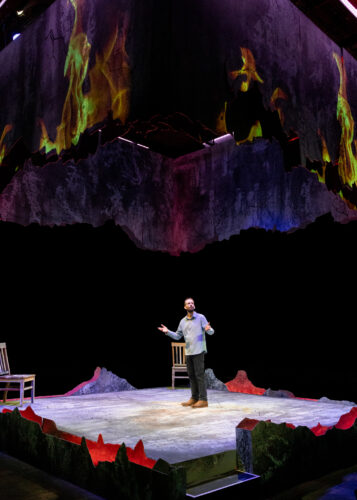
Zoetic Stage’s “Moses” follows a man confronting the memories of his wife and five children after a devastating fire. (Photo by Morgan Sophia Photography)
The Man speaks about Moses Schneider in the third person, describing him as if he knew him, as someone who watched tragedy unfold and saw him become what his best friend describes as “a man with no heart.”
At the beginning of the play, the Man describes Moses this way: “Brown pants, brown and white shirt. A nothing. A nobody.”
So perhaps it is that the narrator and Moses are one and the same. Taking a psychological deep dive, is Moses Schneider witnessing his own life? Has he dissociated after suffering severe trauma?
At first, the split is confusing. Who is this narrator? And why is he telling this story in such detail — memories of a boy who once thought he might become a rabbi, and of the grown man who marries the rabbi’s daughter and builds a life with her?
But as the 90-minute one-man drama unfolds, the structure begins to make sense. Moses is so consumed by guilt and grief after a fire kills his wife and five children while he is away that he can recount his life only as if it happened to someone else.
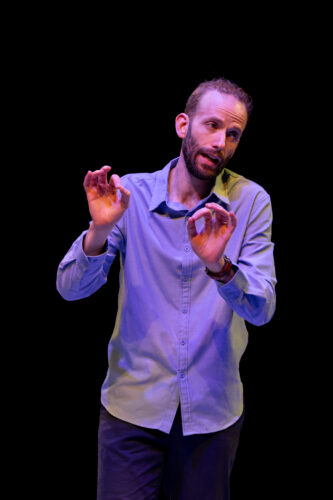
David Rosenberg, who stars in Zoetic Stage’s one-man production of “Moses” wrote “Wicked Child,” which Zoetic Stage presented in 2024. (Photo by Morgan Sophia Photography)
This is the same person who eventually has it out with God near the fountain at Lincoln Center.
“Where are you? You have wronged me.”
He calls God a coward, a cretin and a hack.
“Just the same thing over and over again. Death. And more death.”
Director Stuart Meltzer has staged the production in the round at the Adrienne Arsht Center for the Performing Arts’ Carnival Studio Theater.
David Rosenberg — a graduate of Juilliard, NYU, and Miami Palmetto Senior High (he states in the program notes), and the playwright whose “Wicked Child” received its world premiere from Zoetic Stage in 2024 — is the Man.
His playing area, designed by Nick Serrano, is a stark square platform surrounded on all four sides by the audience. The space appears abstract, stripped to its essentials. There is one chair, then stagehands quietly bring him another, and then a third at different points in the play. Rebecca Montero’s lighting design and Steve Covey’s projection design helps define the many places Moses inhabits, shifting the mood and focus with subtle changes that suggest everything from cold, city streets to synagogues to the Berkshire woods.
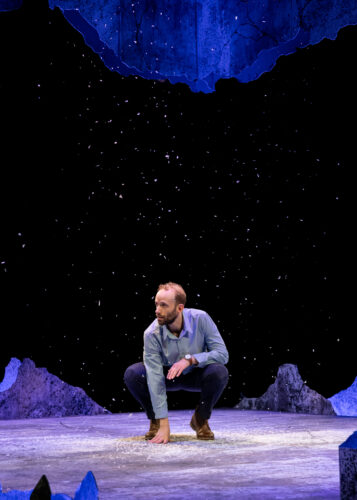
Nick Serrano’s scenic design for “Moses” transforms a bare square platform into a symbol of loss in Zoetic Stage’s Florida premiere of Michele Lowe’s play. (Photo by Morgan Sophia Photography)
Debbie Richardson’s costume design is similarly understated. Rosenberg is dressed in dark pants, a blue button-down shirt and brown leather, lace-up boots — clothing deliberately nondescript that he could be almost anyone.
Meltzer’s in-the-round staging creates a sense of openness as Rosenberg tells the story. Without calling attention to itself, the focus shifts from one section of the audience to another, so that everyone becomes a witness. No one is allowed to remain a detached observer. One of the pleasures of theater in the round is being able to glance across the stage and see how others are reacting to what is unfolding.
There is another witness in the room. Early in the play, the narrator asks if there is a rabbi in the audience. It is one of the only directions the playwright gives in her script. The rest she has left open to the director’s interpretation.
In her play’s introduction Lowe writes, “I coach rabbis. I help them write their sermons . . . over the years I’ve worked with about 40 rabbis, and they helped inspire this story.”
For this production, Zoetic Stage invited rabbis from across South Florida to participate throughout the run. Seated among the audience and miked to be heard, they answer several questions in real time before falling silent when Moses asks what may be an unanswerable question: whether God makes mistakes.
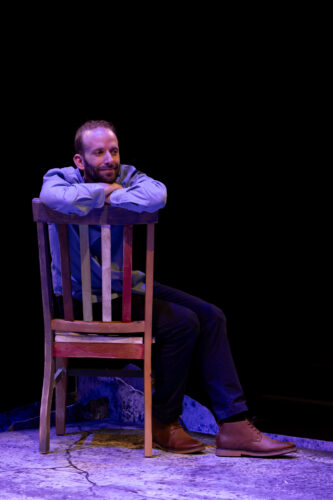
In Zoetic Stage’s “Moses,” grief, faith and memory intersect in an intimate one-man drama. (Photo by Morgan Sophia Photography)
Another quiet but essential presence is Orin Jacobs, whose live clarinet playing drifts in and out of the production. The plaintive melodies are mournful yet comforting. They also break up the long spoken passages.
While one-person shows are often built to showcase an actor’s shape-shifting skills, Lowe’s script, Meltzer’s direction and Rosenberg’s performance use the many supporting characters as a means of deepening Moses’ story.
Family members, rabbis, strangers, a best friend and his inquisitive wife, an insurance adjuster, a tattoo artist and Julie — the woman who eventually helps pull Moses back toward life — all serve the larger narrative.
This is not a solo show built around theatrical impersonation. Rosenberg never falls into the “watch how I do this character now” trap. His focus remains on Moses — impossible to handle grief, numbness, questions about faith, the meaning of life and death, and how he will survive to a reawakening.
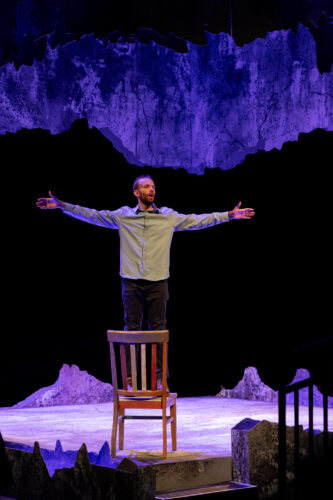
Grounded in Jewish ritual, language and questions of faith, Michele Lowe’s “Moses” follows one man’s search for meaning after devastating loss.(Photo by Morgan Sophia Photography)
The play is not flawless. There is an overwhelming amount to digest. Moses’ story encompasses catastrophic loss, a spiritual crisis, the loss of his insurance settlement in the 2008 stock market crash, a suicide attempt, a year of living in a Honda Civic, an escape from New York, and a move to Massachusetts, where he learns to make sourdough bread and becomes known for his English scones and Irish soda bread.
At times, the accumulation of events threatens to overburden the play. Recurring images help anchor the story: fire and snow, light bulbs and tattoos, bread and broken electrical wiring, and the Hebrew letter “vav,” which connects one story to the next.
Then there are two objects tied to Moses’ children: Pinky, a child’s pink toy horse, and a yarmulke belonging to his eldest son. Both become agents to memories Moses wants to keep locked away yet hold them close.
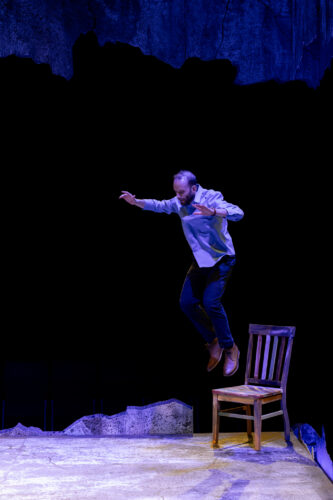
Directed by Stuart Meltzer, Zoetic Stage’s “Moses” features David Rosenberg in a one-man play that explores faith, memory and survivor’s guilt. (Photo by Morgan Sophia Photography)
At times, “Moses” feels more like a novel than a stage play. There is a lot to take in, and not every detour feels necessary. The road drifts, then gets back on track.
Through the bobbing and weaving, Rosenberg and Meltzer keep the story grounded even when it seems in danger of losing its way. It eventually leads to a place where Moses can live with his memories rather than run from them. Whether that destination is enough to justify the journey may depend on how strongly the play’s world of ritual, language and faith resonates.
WHAT: Zoetic Stage’s production of “Moses” by Michele Lowe.
WHEN: 7:30 p.m. Wednesday through Saturday; and 2:30 p.m. Saturday and Sunday. Through Sunday, May 17.
WHERE: The Adrienne Arsht Center’s Carnival Studio Theater, 1300 Biscayne Blvd., Miami
COST: $66.69-$72.54 (includes fees)
INFORMATION: (305) 949-6722 and www.zoeticstage.com.
ArtburstMiami.com is a nonprofit media source for the arts featuring fresh and original stories by writers dedicated to theater, dance, visual arts, film, music, and more. Don’t miss a story at www.artburstmiami.com.
No posts found
Miami native embraces role as iconic Noah in ‘The Notebook’ and life on the road
Written By Michelle F. Solomon
May 4, 2026 at 10:32 AM
Coral Reef Senior High and UM grad Ken Wulf Clark stars as Middle Noah with Alysha Deslorieux as Allie in the national Broadway tour of “The Notebook” coming to the Arsht Center Tuesday, May 5 through Sunday, May 10. (Photo by Roger Mastroianni)
Miami-born actor Ken Wulf Clark has traded the tour bus of the national Broadway company of “The Notebook,” in which he plays middle Noah, for a Subaru Outback.
Speaking in an interview from a stop at the Kravis Center in West Palm Beach, just before the show’s arrival in Miami at the Adrienne Arsht Center opening Tuesday, May 5 through Sunday, May 10, Wulf Clark is waiting for his wife, Logan, to get back to the hotel room with the car.
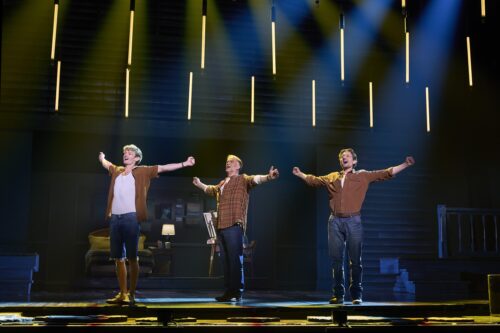
The Three Noahs: Kyle Mangold (Younger Noah), Beau Gravitte (Older Noah) and Ken Wulf Clark (Middle Noah) in national Broadway tour of “The Notebook.” (Photo by Roger Mastroianni)
She’s six months pregnant with their first baby, a boy, and an actress too, who he met at the University of Miami. The couple has put the entire contents of their New York apartment in storage and are on the road. “I didn’t want her to be in our apartment and some of her work she can do remotely, so it was just like, let’s get a car and let’s do this.”
It’s that take-a-leap-of-faith practicality that’s served him well in his life and career.
As a student at Coral Reef Senior High School, he was into athletics and hadn’t dreamed of theater as a way to make a living. “I was on the football team and lacrosse. I thought maybe I could do something with that. But it became clear that a music scholarship was more likely than anything else and I needed a scholarship.”
Everything shifted when Coral Reef’s choral department staged Gilbert and Sullivan’s “The Mikado” and he played the comical character Ko-Ko.
“I think the moment I made an audience laugh on purpose that’s when the chemicals hit my brain and that was it.”
Still, he didn’t take it seriously. “I was considering going into the military,” he says. But he had teachers who kept encouraging him.
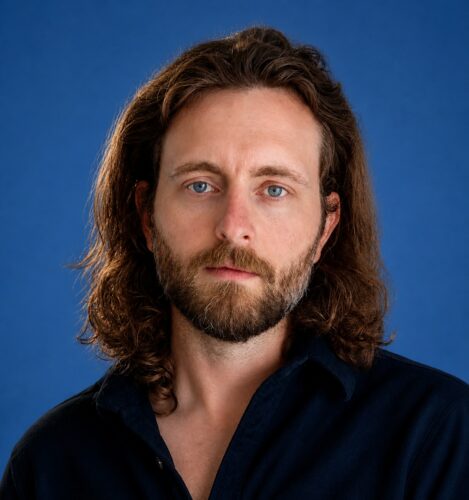
Ken Wulf Clark, growing up in Homestead, didn’t have ambitions to be a full-time actor. “I was considering going into the military,” he says. (Photo courtesy of the artist)
“I had some voice teachers who said, ‘You know, this could be a good niche for you with your voice type and your physicality and your presence. This is something you could be successful at.’ And they didn’t really encourage a lot of people to go into music or theater performance.” He took their advice.
For college, he had two Florida schools in mind, Florida State University and University of Miami. “I auditioned at both and UM offered me a better scholarship, and I was very relieved because I didn’t want to have to stop rooting for the ‘Canes,” he says, referring to UM’s football team, which he had been cheering for growing up in Homestead.
“My dad worked for the Florida Marine Patrol for 37 years and South Florida was where his work was.”
He’s excited to come back to Miami and has plans beyond performances at the Arsht. “I’m gonna go play golf at Palmetto Golf Course; that’s where my grandfather taught me to play.”
Wulf Clark currently plays middle Noah in the national Broadway tour of “The Notebook,” the adult version of the character still holding onto a long-ago summer romance with Allie Hamilton.
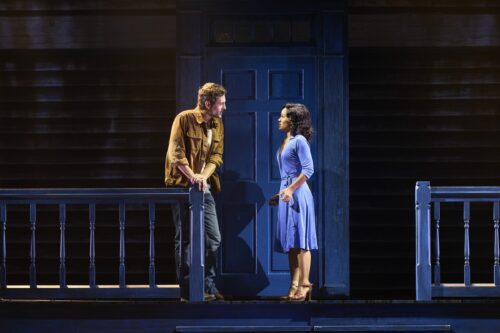
Miami’s Ken Wulf Clark, seen here with Alysha Deslorieux in “The Notebook,” has packed up a Subaru and is taking the tour on his own road trip. (Photo by Roger Mastroianni)
Made famous on film by Ryan Gosling, Wulf Clark steps into one of romance’s most iconic characters. He describes Noah as someone who “every day reaffirms himself as this immovable object of a person who believes that somewhere out there this woman is still thinking of him the way that he thinks of her.”
The actor had never seen the movie or read the Nicholas Sparks book when he first auditioned, choosing to keep it at arm’s length. “I got a call back and then I got another call back and I was thinking to myself, ‘maybe I just don’t watch it. They like what I’m doing, and I didn’t want to muddy the waters.’”
Once he got the part and started rehearsing, whatever the character became was his “because I had nothing else in my head.” Before the tour began in Cleveland, he told his wife,
It’s time.” He finally watched the film. “It’s beautiful,” he says. His biggest takeaway? “Heck, I’ll watch Rachel McAdams read the phone book.”
With the musical stage adaptation, the story leans more heavily into the couple’s later years, says Wulf Clark, in which older Allie’s dementia shapes the narrative as Noah retells their love story to her while she’s in a care facility.
The Alzheimer’s Association is a community partner in the national Broadway tour of “The Notebook.”
Wulf Clark says audiences often respond personally to that aspect of the show. “We get a lot of feedback from people in the audience who have similar stories.” He says while he hasn’t experienced what it’s like to go through the process with a family member or anyone close to him,” he hopes that the show offers some light. “I hope there is some catharsis from we’re doing because I know it’s painful.”
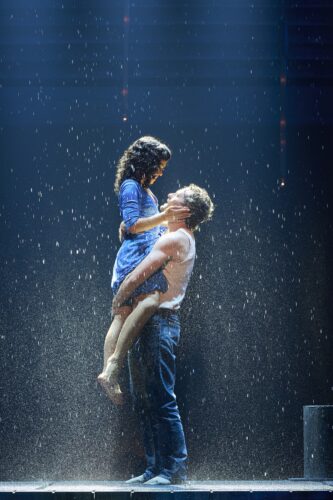
Ken Wulf Clark with Alysha Deslorieux in the infamous rain scene of “The Notebook” in the national Broadway tour of “The Notebook.” The actor says they get rained on for real in each performance. (Photo by Roger Mastroianni)
And that famous rain scene. Wulf Clark gets to play it out as middle Noah. “There’s a rain machine and yes, I get drenched sometimes twice a day,” he says, adding that there’s a small reprieve albeit little. “We call it a screen of rain and sometimes we’re upstage of it, but we still get rained on every day.”
He says he wouldn’t trade his life for anything right now. Touring in the first national Broadway production since its launch last September, the 37-year-old is booked through May 2027.
By then, he’ll be a dad. So, will they still be traveling around in the Subaru?
“My wife’s family is in Sarasota so once we get to Tampa at the end of May, she’ll stay there until the baby comes in July. I have paternity leave, so I’ll head down there.”
By the time the tour winds toward its scheduled end in May 2027 (it will swing through Fort Lauderdale at the Broward Center in 2027 starting Tuesday, March 9 through Sunday, March 14), Clark will have logged as many miles in the Subaru as he has performances as Noah.
After graduation from the University of Miami, Wulf Clark sold his Volvo and moved to Harlem for a shot at a full-time theater career. For this tour, he’s given up the couple’s New York apartment lease and is already planning for the next phase of life on the road.
“As soon as the kid’s old enough to get in the car seat and us not freaking out about it, we’ll all be back on the road.”
WHAT: “The Notebook”
WHEN: 8 p.m., Tuesday, May 5 through Saturday, May 9. 2 p.m. Saturday, May 9 and 1 and 7 p.m. Sunday, May 10.
WHERE: Ziff Ballet Opera House at the Adrienne Arsht Center for the Performing Arts, 1300 Biscayne Blvd., Miami
COST: $35.01, $65.52, $89, $147.42, $164.97 (includes fees)
INFORMATION: (305) 949-6722 and arshtcenter.org
ArtburstMiami.com is a nonprofit media source for the arts featuring fresh and original stories by writers dedicated to theater, dance, visual arts, film, music, and more. Don’t miss a story at www.artburstmiami.com.
No posts found
Legacy and Laughter: Original Show ‘Muerto de Risa’ Tributes Álvarez Guedes
Written By Fernando Gonzalez
April 27, 2026 at 10:46 AM
Written in Spanish, sprinkled with Spanglish references, and featuring Cuban actor Ariel Texido in the lead role, “Muerto de Risa El Último Show de Álvarez Guedes” opens on Thursday, April 30 through Sunday, May 31 in Tropical Park. (Photo by Yusnel Suárez, courtesy of Loud and Live)
The legacy of Cuban comic Guillermo Alvarez Guedes is no laughing matter.
He was a stand-up comic and television and film actor with a rare blend of talents for physical and linguistic humor. He managed to turn “¡ñó!,” an abbreviated version of a four-letter-word Cuban expletive, into his signature flourish without entirely diluting its power or making it sound offensive. He was a skilled storyteller, the voice of home for a wounded exile community, while also making his streetwise cubaneo popular throughout Latin America.
But Guedes, who died at his home in Kendall in July 2013, at the age of 86, was also a writer, a visionary entrepreneur, and the co-founder of Gema, considered one of the most important record labels in Caribbean music. Its catalog includes the work of figures such as Lena Burke, Bebo Valdés, Rolando Laserie, Rafael Cortijo, El Gran Combo de Puerto Rico, and a young, unknown but promising singer and songwriter, Willy Chirino, who recorded his first three albums with the label.
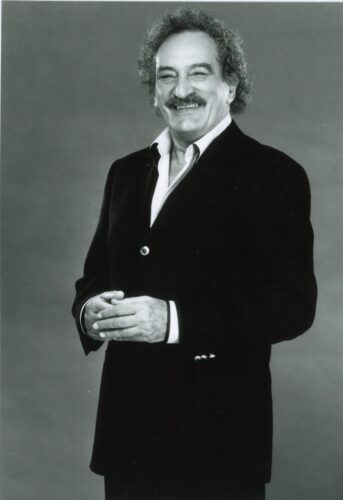
Stand-up comic, television and film actor, writer, producer and entrepreneur Guillermo Alvarez Guedes’ impact went well beyond Miami’s exile community, including Puerto Rico, his second home, Dominican Republic, Venezuela, Colombia, and Panama. (Publicity photo courtesy of Loud and Live)
Now “Muerto de Risa El Último Show de Álvarez Guedes,” an immersive theatrical experience, opening at a custom-built space in Tropical Park on Thursday, April 30 to Sunday, May 31, summons the words and spirit of the comic to celebrate his legacy in one last run.
“His impact on preserving Cuban culture, on preserving the exile and immigrant story in a funny, happy, joyful way, and the impact he had on music, is felt to this day,” said Nelson Albareda, co-producer, co-writer and co-director along with co-writers and co-directors Héctor Medina and Robby Ramos.
Albareda compares Guedes’ place in Latin comedy to that of Celia Cruz’s in Latin music.
“The same way that Celia opened the way for Gloria and for Shakira, Alvarez Guedes opened up Latin Comedy for today’s comedians whether it be Fluffy (Gabriel Iglesias), Paul Rodriguez, Marcelo Hernandez, or George Harris,” says Albareda. “I think of Guedes as the father of Latin comedy.”
Even academia took note of the reach of his work. In “Diversión: Play and Popular Culture in Cuban America,” Yale scholar Albert Laguna examines the place of Guedes’s stand-up comedy in Cuban life in the United States.

Cuban actor Ariel Texido as Alvarez Guedes in “Muerto de Risa – El Último Show de Álvarez Guedes” premiering in a custom-built venue for the show at Tropical Park. (Photo by Yusnel Suárez, courtesy of Loud and Live )
And yet, notes Albareda, Guedes, who left Cuba in exile in 1960, “never got a proper tribute recognition on his legacy while he was alive,” adding that he’s been working on the show for close to eight years.
Written in Spanish, sprinkled with Spanglish references, and featuring Cuban actor Ariel Texido in the lead role, “Muerto de Risa” sets Guedes coming from the heavens to Miami to put on one last show. For it, the production has buildt a custom space in Westchester’s Tropical Park. “Think Cirque du Soleil,” says Albareda. It’s outfitted with a bar, a cabaret performing space, and a patio.
“We thought it was fitting to do this show in Westchester, because it was a key Cuban neighborhood for a lot of Cubans,” explains Albareda.
“Muerto de Risa” comprises three distinct experiences. A pre-show bar área, a cabaret setting, where the play takes place as well as a show with music and dancers, and then a post-show experience in the form of a patio.
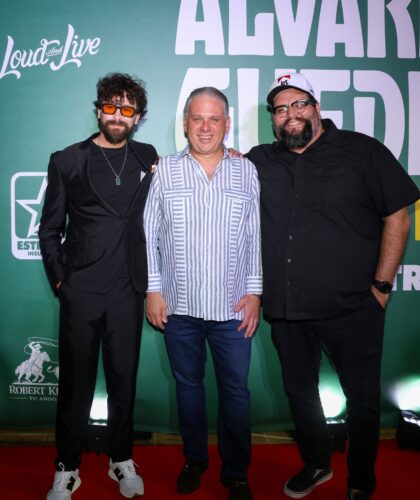
Hector Medina, left, co-writer and co-director, Nelson Albareda, co-producer, co-writer and co-director, and Robby Ramos, co-writer and co-director, of “Muerto de Risa – El Último Show de Álvarez Guedes.” (Photo courtesy of Loud and Live)
“We want . . . it to be something that people would want to talk about with their children afterward— to connect across generations and have a good time with food and drinks,” says Ramos.
It’s an idea that mirrors what emerges as a ritual of sorts among Guedes’ fans. Ask about him to your Cuban or Cuban American friends, and chances are they will have a story or two of listening to his comedy albums — he recorded more than 30 throughout his career – as part of a family get-together. Albareda remembers his entire family, “30 or 40 people, including grandparents and my parents, cousins, listening on Christmas Eve, after dinner. We would all sit around and listen to it.”
Ramos speaks of knowing “all Guedes’ jokes by heart” after hearing his uncle reciting them at parties and having his parents and grandfather “always listening to Alvarez Guedes’ records and talking about him. He was truly part of my childhood.”
Even in Cuba, long after he was gone, his humor and storytelling brought people together, notes Medina, a Cuban actor, writer, director, and producer who moved to Miami in 2015.
“As a kid, I’d always see groups of people in Cuba listening to the radio in secret,” recalls Medina. “And when I’d ask, I’d find that there were two things they had to listen to very quietly: one was Radio Martí, the other was when they played the cassettes by Guedes. He was funny and said all those swear words but so elegantly — and he also said many things that many of us wanted to say. That was my early experience with Alvarez Guedes.”
Texido reminisces about listening to the cassettes his grandmother owned.
“I don’t know where she got them, but she had about six or seven of his cassettes that I listened to over and over again. For us in Cuba, it was a relief amid all that tension and pressure and repression and everything else. Still, I only came to realize what a big deal he was when I came here.”
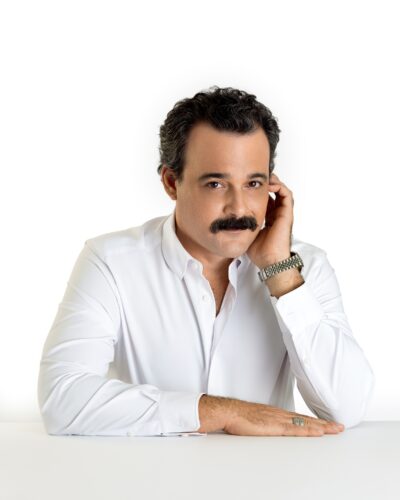
Cuban actor Ariel Texido steps into the shoes of Alvarez Guedes in “Muerto de Risa – El Último Show de Álvarez Guedes.” He listened to the comic on his grandmother’s cassettes. “For us in Cuba, it was a relief amid all that tension and pressure and repression and everything else.” (Photo by Yusnel Suárez, courtesy of Loud and Live)
But Guedes made a point in not taking things too seriously — including his place in the cultural landscape. Fittingly, “Muerto de Risa” keeps nostalgia at a distance.
“If we choose to make it like a biopic, or to make it nostalgic, I think we’d be failing him,” says Medina. Instead, “Muerto de Risa” stays true to the spirit of its subject, suggests Texido.
Texido says that there’s a moment in the show where Guedes says, “For me, leaving Cuba . . . really hurt me a lot. It made me so angry.”
A silence.
Then the character says, “But I never let the pain — that pain and that hatred — consume me. From then on, joy was my only mission.“
“I believe that when he said that, he wasn’t talking about just his own joy—it was the joy of the people,” says Texido.
WHAT: “Muerto de Risa – El Último Show de Álvarez Guedes”
WHERE: Tropical Park, 7900 SW 40th St., Miami
WHEN: Opening Thursday, April 30 through Sunday, May 31. Shows Thursday through Sunday. 8 p.m., Thursday and Friday; 6 p.m. Saturday and Sunday; 9:30 p.m. Saturday.
COST: $79.99, $119, and $139
INFORMATION: https://alvarezguedesmiami.com/
ArtburstMiami.com is a nonprofit media source for the arts featuring fresh and original stories by writers dedicated to theater, dance, visual arts, film, music, and more. Don’t miss a story at www.artburstmiami.com.
No posts found
Arca Images Premieres Carlos Celdrán Work ‘Variations on an Insignificant Theme’
Written By Maité Hernández-Lorenzo
April 19, 2026 at 6:03 PM
Actors Laura Ramos and Daniel Romero play She and The Author in the Spanish language drama ” Variations on an Insignificant Theme” (Variaciones para un Tema Insignificante) by Cuban-Spanish dramatist Carlos Celdrán. (Photo by Alexa Kuve, courtesy of Arca Images)
A woman, identified only as She, reflects on a decision she made in the past—one that has affected her entire life. She and another character, known only as The Author, reconstruct the day her life changed forever. That’s the plot of the world premiere of “Variations on an Insignificant Theme” (Variaciones para un Tema Insignificante) by Cuban-Spanish dramatist Carlos Celdrán, resident director at Arca Images.
“It is an examination of conscience, a meditation on mistrust — on fear embedded within our private lives, acting as a mechanism of the power that dominates us,” says Celdrán, who also directs the Spanish-language play.
He says the idea emerged years ago from an idea he had that would potentially be a monologue.
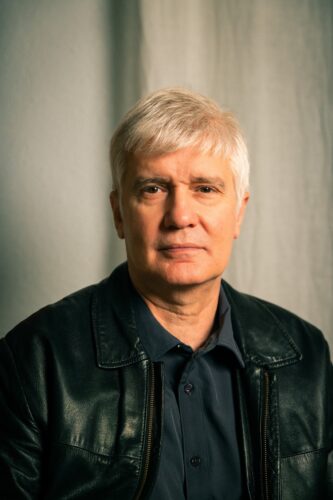
Cuban-Spanish director and playwright Carlos Celdrán. (Photo by Alejandro Gutiérrez, courtesy of the artist)
I wrote a few pages, a first draft,” he says, “about a woman seeking to understand herself and to recognize why she made a certain decision at a specific moment in her life — a decision that would later have a profound impact on her.”
Laura Ramos and Daniel Romero star in the play, which opens Friday, April 24 and runs through Sunday, May 3 at the Westchester Cultural Arts Center.
“It has been a recurring theme in my writing for the theater,” says Celdrán, “the exploration of who we once were, and the subsequent metamorphoses we undergo as individuals — changes that distance us from our former selves and that we later struggle to recognize. The most persistent idea has been to construct a collective biography that explains — that explains to me — why we accepted living through the experiences we have lived.”
In “Variations,” the playwright returns to autofiction, a mix of autobiography and fiction, as a writing strategy— just as he has done in several of his previous works — and explains that, for him, it is a way of “bearing witness, of verifying what I recount—what I want to be accepted as legitimate, rather than merely as fiction. It is a matter of recording, rather than fabulating.”
A diaspora permeated by trauma, pain, the revisiting of memory, and the imperative of reinvention constitutes an integral part of Celdrán’s dramaturgy — a body of work that has been steadily solidifying since he resumed authorship of many of his stage productions over a decade ago.
The vast and diverse landscape of the Cuban exile has been a recurring presence in his most recent productions. As in “Papier Maché” and “Acceptance Speech” (Discurso de Agradecimiento), the realm of “Greater Cuba” reappears in “Variations.”
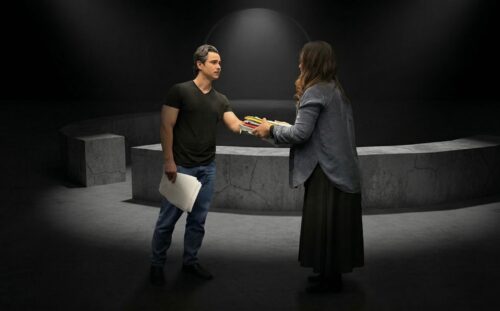
Laura Ramos (She) and Daniel Romero (The Author) in a scene from Arca Images’ “Variations on an Insignificant Theme.” (Photo by Alexa Kuve, courtesy of Arca Images)
Thus, Miami — one of the historical and contemporary hubs around which this “Greater Cuba” gravitates — is inevitably part of a map constantly reinventing and repopulating itself with stories from both the past and the present.
“Living outside of Cuba has profoundly influenced this panoramic vision of Cuban civility,” reflects Celdrán. “I believe it is impossible for our contemporary dramaturgy to exist today without doing so — without viewing us in this light: dispersed, yet united by bonds that transcend the myth of the land itself and its borders. An insular dramaturgy would be utterly exhausted without the perspective of those who left — those who inhabit Cuba through diverse narratives and modes of existence, yet remain united by the same pain, the same trauma.”
In Celdrán’s productions, the meticulous selection of scenic elements stands out. From the music, lighting design, and set design to the costumes and the poster, everything forms part of a visual and sonic realm that transforms Celdrán’s shows into a thought-provoking universe.
An important element of the staging is the music. Bach’s “Cello Suites” provides an unceasing score, interwoven throughout the piece.

Daniel Romero is The Author and Laura Ramos is She in “Variations on an Insignificant Theme.” at Arca Images. (Photos by Jorge Roguez and Manuel Fiestas, courtesy of the artists)
With “Variations,” longtime admirers of Celdrán’s extensive body of work and new audiences witness one of the author’s recurring themes—and motifs.
In his own words, he describes it like this: “The ceaseless quest for the past, for memory, and for the secret, collective biography we all share. We are not merely children of the private sphere; we are children of a social project that seized control of our destinies. The theater ought to know this.”
WHAT: World premiere of “Variations on an Insignificant Theme” by Carlos Celdrán (in Spanish with simultaneous audio English translation)
WHEN: 8 p.m., Friday and Saturday, 5 p.m. Sunday. Opens Friday, April 24 through Sunday, May 3.
WHERE: Westchester Cultural Arts Center, 7930 SW 40th St., Miami
COST: $30, $25 for seniors (ages 65 and older), students with a valid ID.
INFORMATION: (305) 934-5103 and www.arcaimages.org
ArtburstMiami.com is a nonprofit media source for the arts featuring fresh and original stories by writers dedicated to theater, dance, visual arts, film, music, and more. Don’t miss a story at www.artburstmiami.com
No posts found
Review: Political Family Rift at the Center of Miami New Drama’s ‘The Zionists’
Written By Mary Damiano
April 16, 2026 at 10:03 PM
A prominent Jewish family, fractured by the politics and aftermath of October 7, gathers for a fragile reunion at a luxury Caribbean resort in S. Asher Gelman’s new play, “The Zionists,” having its world premiere at Miami New Drama through May 10. (Photo by Morgan Sophia Photography)
An intense tropical storm in the Caribbean puts a damper on a Jewish family’s vacation, but also forces them to confront their differing political opinions in “The Zionists: A Family Storm” by S. Asher Gelman, now making its world premiere at Miami New Drama in Miami Beach.
It’s November 2024 and the Rosenberg gathering in the Turks and Caicos is a reunion of sorts, with matriarch Ruth determined to bring the family together for Thanksgiving. Her husband, Mitchell, is a happy-go-lucky man who frequently references showtunes and breaks into song. The family is wealthy and each member shares in the family money. The family estate and holdings are managed by son David, whose wife, Maria, is expecting their first child. Daughter Bex is also there with her wife, Dana. Last to arrive is youngest son, Aaron, and his husband, Zephyr.
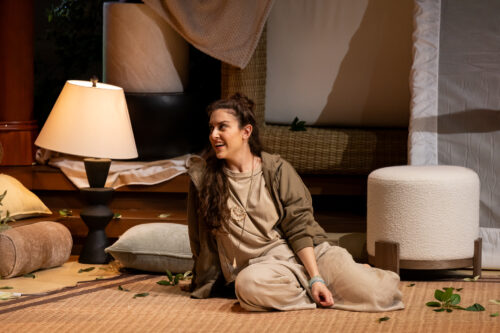
Dani Stoller as Bex who was part of the Israel Defense Forces (IDF) in Miami New Drama’s “The Zionists” by S. Asher Gelman. (Photo by Morgan Sophia Photography)
The action takes places 13 months after the October 7 Hamas attack on Israel, in which more than 1,200 Israelis, mostly civilians, were killed, and more than 250 others were taken hostage, and that tragedy is the inciting point for the relationship rifts in the Rosenberg family.
Each member of the family has a deep Jewish identity – Bex and Dana were part of the Israel Defense Forces (IDF) and made their home in Israel for many years. Zephyr teaches at a Jewish day school. David is involved in fundraisers for the IDF. Maria, who converted to Judaism, teaches at Columbia University and is knowledgeable about Israeli history and its political situation.
[RELATED: See the Review of Miami New Drama’s “Birthright”]
Mitchell and Ruth are respected members of the Jewish community actively working for peace. And although Aaron says he has deep connections to his Jewish roots, he has founded an organization that funds pro-Palestinian causes, and used his share of the family money to do it.
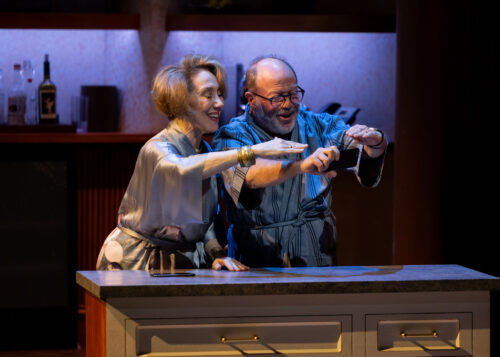
Joanna Glushak as the matriarch, Ruth, of the Rosenberg family Ruth and Avi Hoffman as patriarch Mitchell in Miami New Drama’s “The Zionists.” ({Photo by Morgan Sophia Photography)
As the play unfolds, there are flashbacks to key moments in each couple’s lives – Bex and Dana discussing leaving Israel; David confessing a secret to Maria; Zephyr coming to terms with Aaron’s decision to start the foundation; Mitchell and Ruth planning the trip to bring the family together. As Aaron tries to justify his actions, he is confronted by each family member about how the October 7 attacks and his pro-Palestinian position have forever altered their lives.
“The Zionists: A Family Storm” is an explosive play that explores volatile territory. The Sunday matinee audience was vocal in their pro-Israel support, erupting into applause in reaction to several lines in the show.
Gelman expertly navigates the drama, weaving in history and politics, while keeping the story at a personal level, and avoiding rhetoric for its own sake. He drops in little bits of backstory without drowning the audience in exposition. Setting the story on an island threatened by a storm is also a stroke of genius, as it becomes a metaphor for a family under siege, conjuring unsettling images of the Holocaust.
Every element of Miami New Drama’s production of “The Zionists: A Family Storm” is thrillingly executed. The sleek, modern, island villa set by Adam Koch is jaw-dropping in its detail, design, and scope, and includes ingenious changes to represent each couple’s home.

Adam Koch’s sleek, modern, island villa set for Miami New Drama’s “The Zionist” is jaw-dropping in its detail, design, and scope. (Photo by Morgan Sophia Photography)
Solomon Weisbard’s lighting design bathes the villa in warmth, but as the storm builds outside and becomes a metaphor for family conflict, the lighting dims and becomes ominous. Andy Cohen and Salomon Lerner designed the sound with such fervor that the storm becomes another character, a representation of the thing in the world that has threatened Jews for centuries. Fight director Lee Soroko stages an action-packed sequence when the Rosenbergs engage in physical altercations.
[RELATED: Feature Story: Inside ‘The Zionists’ ]
Each cast member is excellent and given many moments to shine. Gregg Weiner plays David with the right amount of older brother swagger, protectiveness, and thinly veiled anger. Even when he has no dialogue, William DeMeritt shows the anguish of a man torn between loyalty to his husband and his own convictions. As Mitchell, Avi Hoffman exhibits quiet power as a father heartbroken to see his children at odds. With so much of the drama hinging on whether or not Aaron will set aside his beliefs when confronted by his family’s pain, Coby Getzug plays the black sheep with steadfast stubbornness.

Gregg Weiner as David confesses a secret to Jaime Ann Romero as Maria in “The Zionists” at Miami New Drama through May 10. (Photo by Morgan Sophia Photography)
As Dana, Shira Alon delivers an explosive performance as a woman trying to hold onto her family despite tremendous loss. Jamie Ann Romero portrays Maria as a strong female who seems concerned about the world and family her child will grow up in. Dani Stoller plays Bex with the stance of a woman exhausted and drained by the consequences of Aaron’s actions. As Ruth, Joanna Glushak embodies a mother fiercely trying to keep the peace within her family.
“The Zionists: A Family Storm” is well-written and, at its core, deals with a subject that will always be timely – a family in crisis. It is the rare world premiere that feels complete and fully formed, ready to go forth into the world.
Note: The Colony Theatre has installed a metal detector and extra security, including bag searches, for this show. Allow time to get through the line. Also, as the audience left the theater after Sunday’s matinee, protesters from an organization called Jewish Voice for Peace handed out leaflets disguised as Playbills that contained information sympathetic toward Palestinians, sparking some heated confrontations on Lincoln Road.
WHAT: “The Zionists: A Family Storm”
WHERE: Miami New Drama, The Colony Theatre, 1040 Lincoln Road, Miami Beach
WHEN: 8 p.m. Thursday through Saturday; 3 p.m. Sunday. Through May 3.
COST: $40, $70, and $85 Thursday and Friday; $45, $75, and $90 Saturday and Sunday, including fees
INFORMATION: (305) 674-1040 and miaminewdrama.org
ArtburstMiami.com is a nonprofit media source for the arts featuring fresh and original stories by writers dedicated to theater, dance, visual arts, film, music and more. Don’t miss a story at www.artburstmiami.com.
No posts found
Review: Layon Gray’s ‘Willie Lynch’ Finds A Comfortable Home at M Ensemble
Written By Michelle F. Solomon
April 16, 2026 at 12:18 PM
Jarryd Joseph as Peanut in M Ensemble’s production of Layon Gray’s “Searching for Willie Lynch” through Sunday, April 26 at the Sandrell Rivers Theater. (Photo by Seven Fleurimond, Studio Seven Miami)
Three generations of the Foster family inhabit the same home at different points in time in Layon Gray’s “Searching for Willie Lynch” at M Ensemble through Sunday, April 26. Gray wrote, directed and stars in the production, which he has been evolving for more than a decade.
It premiered at the National Black Theatre Festival and has since been reworked through readings in New York and San Francisco, a full production in Pittsburgh and an Off-Off-Broadway run last year. With a mostly local, professional cast, one out-of-town actor has been with the play almost since its inception. Gray, originally from Alexandria, Louisiana, is based in New York City.
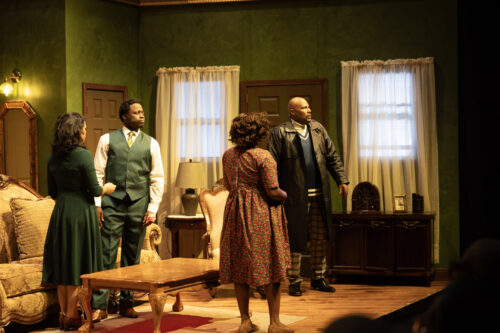
Andrea Garcia, Jean Hyppolite, Sheena O. Murray and Layon Gray in a scene from M Ensemble’s “Searching for Willie Lynch.” (Photo by Seven Fleurimond, Studio Seven Miami)
The ensemble and the current production are as comfortable at M Ensemble as the overstuffed couch at the center of the play’s set.
Miami has been steadily building a reputation as a place where new work can grow, and this is a solid example.
“Searching for Willie Lynch” follows three generations of the Foster family across different eras, all unfolding in the same Louisiana house in different “moments in time” on a single day: Nov. 4. The day carries weight from family birthdays to presidential elections that can have a lasting impact on the lives of the Fosters.
At first, the way Gray has structured his two-hour play (there’s a ten minute intermission between the two-act play) between eras – 1930, 1965, 2008 – may seem disorienting. Characters from different times inhabit the same space without clear separation, and it isn’t immediately obvious how the timelines connect. But that’s where the magic becomes clearer. The smart, intentional device Gray employs allows the connections to unfold, and what seems unclear early on comes together in a way that establishes the generations. For those in the audience, it’s like being let in on a family secret.
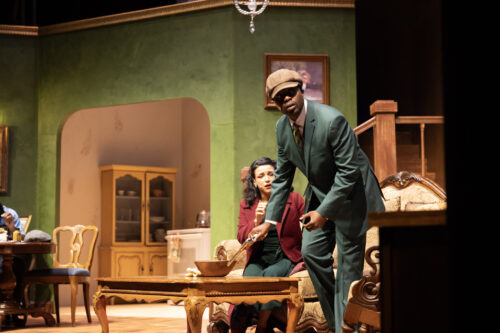
Jean Hyppolite plays Rahman and Andrea Garcia is his wife Phibe in Layon Gray’s play “Searching for Willie Lynch” now at M Ensemble at the Sandrell Rivers Theater. (Photo by Seven Fleurimond, Studio Seven Miami)
The timelines also overlap and echo each other. Moments in one era respond to something that happened decades earlier, even if the characters themselves aren’t aware of it. Over time, patterns emerge within each family, and conflicts and choices often lead to the same consequences for family members despite their years apart.
Then there’s the house that’s central to the story, where memories of generations weave in and out, where ghosts live within the walls, and the home itself is meant to move the storytelling forward.
Time periods don’t just shift in and out — they exist together, with characters from different eras moving through the same rooms as if time isn’t fully separated. It’s a difficult device to pull off, but Gray’s direction and the tight-knit ensemble make it believable.
The set design by Mitchell Ost, along with details like family photos and small African statues (set dressing by Patricia E. Williams), helps ground the story while allowing the timelines to intersect. A worn, overstuffed couch and chair are at the center, with an antique radio nearby. A modest chandelier hangs over the living room. The décor has obviously remained largely unchanged over decades. A kitchen upstage right is visible, with a small stove and refrigerator, and the director has made good use, too, of that space.
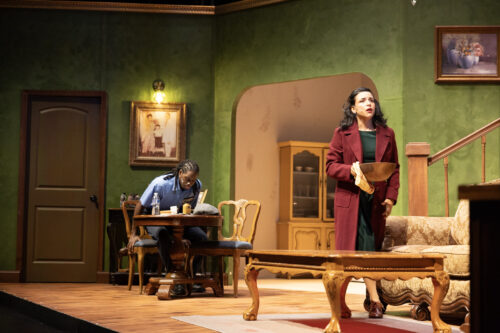
Andrea Garcia as Phibem, right, and Jarryd Joseph as Peanut in “Searching for Willie Lynch.” (Photo by Seven Fleurimond, Studio Seven Miami)
Projections of constant rain hanging high on the back walls reinforce stormy times. Enhanced by Aidan Cole’s thunderclaps, along with music underscoring key monologues, the sound design helps bring everything together.
In one opening scene, a character turns on the radio to a song by the Temptations, “I Want a Love I Can See.” Music plays a role in the play and especially in a segment where Phibe (Andrea Garcia) and Charlene (Sheena O. Murray) gloriously sing together, each from different eras, the African-American spiritual “Wade in the Water.”
Garcia plays Rahman’s wife in the 1930 storyline. Jean Hyppolite (an actor who has proven he can play any role) is a man whose life is unraveling after a homicidal scuffle on the street, and police are closing in on him.
The 1965 section centers on Basil, played by Gray, alongside Murray, who has a knack for shifting effortlessly between humor and seriousness that commands attention. Their storyline, with Charlene obviously in the last stages of her pregnancy, creates a domestic urgency that’s shaped by anticipation of a baby boy on the way but also adds to their financial strain.
In the 2008 storyline, Peanut (Jarryd Joseph) is part of the family, having been befriended by Cricket Foster (Roderick Randle) when both were in elementary school. As single dad Mo, Daniels returns to a role he originated in earlier productions, bringing a solid, deeply rooted, lived-in performance. He’s also appeared in Gray’s Off-Broadway play “Black Angels Over Tuskegee.”
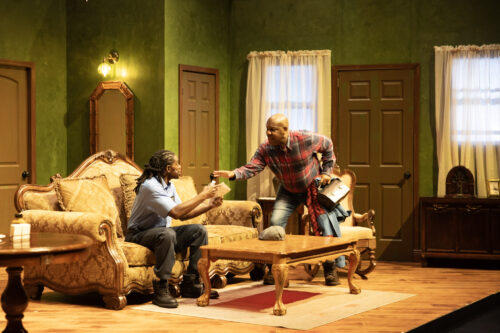
Thaddeus Daniels, right, talks to Jarryd Joseph as Peanut in M Ensemble’s production of “Searching for Willie Lynch” now at the Sandrell Rivers Theatre. (Photo by Seven Fleurimond, Studio Seven Miami)
This trio of characters live in the most current of the time periods, unfolding on the day of the presidential election that will bring Barack Obama to victory; it’s a historical marker that brings home the Fosters’ hopes for their future. Here, Mo’s financial struggles come into focus as his failure to keep up payments leads to a possible loss of the house, bringing in Melvin Huffnagle as real estate tycoon Davis Harlan, who is buying the home. An unusual and surprising revelation shifts the villainous character in a more sympathetic direction.
Roderick Randle has one of the most difficult tasks as Cricket, delivering a long monologue that explains the family’s ancestry. With strong control of the words and emotional clarity, he finds a way to navigate its shifting tone — from brutal history to intimate family memory — with a grounded presence that keeps the story coherent and compelling.
One directing note was Gray having the monologue entirely delivered to the audience, which seemed a bit awkward as he never turns to Peanut, who is intently listening on the couch. A bit of acknowledgment of the person in the room may help add nuance to the monologue, with the reaction of the second character to the incredible story.
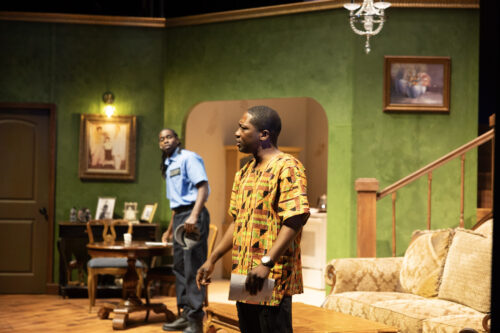
Roderick Randle is Cricket Foster, right. At left is Jarryd Joseph as his friend, Peanut. (Photo by Seven Fleurimond, Studio Seven Miami)
Costume design by Shirley Richardson and Dunia Pacheco shapes the production’s sense of time and character. The earlier generations appear in earthy green tones and period silhouettes that evoke their respective eras. One character wears a newsboy-style cap, grounding the 1930s setting in working-class detail. The 1965 sequence brings Basil in a vintage sweater and trousers that reflect a more contained domestic life, while the 2008 storyline dresses Mo in workwear tied to his job at a sugar cane factory, emphasizing labor and economic pressure across generations.
Gray’s ability to manage the demands of writing, directing, and performing in the same production is evident throughout. It’s difficult to navigate the triple role, but it’s evident that it helps that, as the playwright, he understands how to direct the actors and deliver the story to hold together the structure that constantly shifts across time periods. He helps his ensemble understand how to maintain clarity and emotional continuity across the ensemble.
Beyond the family drama, the play also expands into something mythic — that they are all connected not only across generations, but through a deeper ancestral line tied to an African king (Chat Atkins plays both early ancestors, Peter and the King).
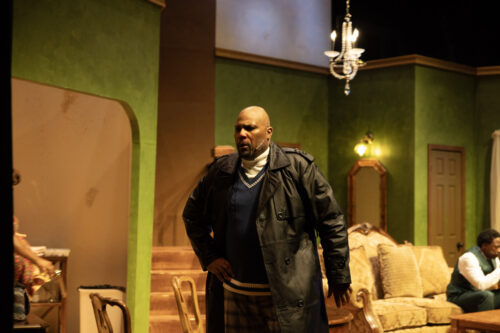
Layon Gray wrote, directed and stars as Basil in his play “Searching for Willie Lynch” now at M Ensemble. (Photo by Seven Fleurimond, Studio Seven Miami)
This layer, along with Gray’s historical reference to the Willie Lynch legacy — a letter, not verified as historical fact, that suggests enslaved Africans were divided and controlled through psychological methods— explores the ideas of division and how inherited trauma both from experiences inside the family and from cultural conflict throughout history has shaped three generations of a Black family.
With a strong ensemble and the ease of M Ensemble’s production, this may be where Gray’s play has found its groove, pushing it into the broader recognition he’s been searching for. M Ensemble, long a champion of exceptional Black theater, has a winner with “Searching for Willie Lynch.”
WHAT: “Searching for Willie Lynch” by Layon Gray
WHERE: M Ensemble at the Sandrell Rivers Theater, 6103 NW 7th Ave., Miami.
WHEN: 8 p.m. Friday and Saturday, 3 p.m. Sunday. Through April 26.
COST: $40.25 (includes a $4.25 fee).
INFORMATION: 305-705-3210 or themensemble.com
ArtburstMiami.com is a nonprofit media source for the arts featuring fresh and original stories by writers dedicated to theater, dance, visual arts, film, music, and more. Don’t miss a story at www.artburstmiami.com
No posts found
Coconut Grove Theatre Festival Gives Playwrights Stage For New Work
Written By Carolina del Busto
April 14, 2026 at 12:11 AM
Last year’s Coconut Grove Theatre Festival featured David Kwiat and Kyran Wright on stage for “A Shiva for Joseph Day Two.” This year, the four-day festival returns to the Woman’s Club of Coconut Grove. (Photo by Donny Randle)
In its second year, the Coconut Grove Theatre Festival (CGTF) returns to the stage of the Woman’s Club of Coconut Grove in an effort to carve out a more permanent space for itself.
The four-day festival runs from Thursday, April 16 through Sunday, April 19 and features eight new plays.
Staged as a series of play readings, it’s a simple setup: music stands with actors reading and performing. This allows for both versatility and for more plays to be read.
Playwright Mysia Anderson White readies for rehearsals. (Photo by Amelia Furlong)
“What’s fun about the format,” says William Hector, the creator of the theater festival, “is that there’s so much room for creativity.” As part of the festival, some readings will feature projections while another will have a live band on stage.
For playwright Edward G. Excalibur, he says he feels like CGTF has “been going on for decades.”
Based in Los Angeles and a screenwriter by day, Excalibur is a born and bred Miami kid with a foundation in theater. His latest play, “638: An Uncommonly Comical Review of an Accidental Assassination Attempt of Fidel Castro,” will have its Miami debut as part of the play-reading theater festival on Sunday, April 19.
Excalibur began writing “638” a few years ago during the writer’s strike in California. “I hadn’t written a play in a while, and for some reason, it was kind of calling me.” A Puerto Rican himself, he worked with his Cuban American wife to conceptualize and write the satirical story about Cuba’s late dictator.
Many plays about Cubans tend to focus on generational trauma or hardships, comments Excalibur. With “638,” he aims to dispel those tropes and show the Cuban people as more jovial and lighthearted. Inspired by classic comedies like Mel Brooks’ “The Producers” (and its play-within-a-play, “Springtime for Hitler”) as well as a little “Weekend at Bernie’s,” Excalibur’s play will have audiences laughing with its characters — not at them.

Playwright Edward Excalibur presents “638: An Uncommonly Comical Review of an Accidental Assassination Attempt of Fidel Castro” on Sunday, April 19. (Photo courtesy of the playwright)
“It takes place in 1963 Havana, Cuba at the height of the Castro regime,” explains Excalibur. “A father, who was contacted by the CIA to take down Castro, is trying to marry off his daughter to a high-ranking member of Castro’s army. At the engagement party, Castro shows up and inadvertently gets killed. But obviously, they don’t want his body to be found at the party so there’s a little switch-a-roo that happens.”
Told primarily through a narrator and a cast size of 10, the play alludes to the 638 assassination attempts on Castro’s life. It’s part slapstick humor, part reflective on today’s society.
The Puerto Rican writer admits he’s been working to get the play shown in Miami for a while. “I’m so happy to share it with a more appropriate audience and I’m looking forward to hearing the reactions. Hopefully it’s just received with open hearts and laughter,” says Excalibur.

Playwright Mysia Anderson White dives deep into the lives of the M Ensemble for her latest play. (Photo courtesy of the playwright)
Another wholly unique Miami story premiering at the Coconut Grove Theater Fest is Mysia Anderson White’s “Shadows and Light: The M Ensemble Story,” on Saturday, April 18. Raised in Miami Gardens, Anderson White currently resides in San Diego. Although theater is the name of her game, she’s trained as a researcher in theater and performance arts studies. Naturally, her play about Miami’s Black theater group involved loads and loads of research.
“I was really curious about expressions of theater, and really genealogies of theater arts, particularly for Black Miami,” says Anderson White. As she embarked on her research, she was led to M Ensemble, the oldest continuously operating African American theater company in Florida. She spent months interviewing members of the troupe and the result is a feature play that blends both fact and fiction to weave together the stories of these theater people.
Anderson White had a slight advantage in her research for “Shadows and Light.” As she recounts, after sending countless emails and getting no reply, she flew home to Miami to introduce herself in person to the ensemble. Turns out, they were holding auditions that day and, an actor herself, she decided to audition. Anderson White ended up getting a part in M Ensemble’s 2024 production of “The Girls of Summer” by Leon Gray.
Vanessa Garcia, author and playwright, speaks on a panel about her
participation in the 2025 CGTF. (Photo by Marra Finkelstein)
“I didn’t expect to get cast, I was just there to show my face and make that connection,” says Anderson White. “But I really believe that theater is a collaborative experience, and you need all the different points of view to really take the work to the next level.”
Hector shares the same sentiment. For him, theater is all about collaboration and connectivity, which he says is the primary reason he started CGTF in the first place.
“I wanted to give a space for Miami writers and directors to share their work,” shares Hector. “Whereas I’m the kind of person who will find a way to stage my own play reading, it shouldn’t be the obligation of a writer to stage their own work. There should exist theater festivals that bring their work to life.”
Hector says he learned from his inaugural event that there was an appetite for bilingual plays, so this year audiences can expect more Spanglish. And there was also a desire for children’s theater. Saturday, April 18, will be dedicated to children’s theaters with a CGTF Children’s Matinee performance featuring two 30-minute plays by Vanessa Garcia and Brandon Urrutia.
Director Katerin Crespo-Montano has a virtual meeting with her playwright, Edward Excalibur. (Photo by Genevieve Block Apaza)
For Hector, performing only blocks away from where the Coconut Grove Playhouse welcomed so many premieres and big dreams, he has one of his own.
“One dream,” he shares, “is that we could have a main stage show taking place somewhere like the Women’s Club and then a one-person show happening simultaneously at an old storefront in the Grove, and maybe mini, 10-minute plays popping around these different places. This way, it sort of takes over the whole community in a good, friendly way.”
WHAT: Coconut Grove Theatre Festival
WHERE: Woman’s Club of Coconut Grove, 2985 S. Bayshore Drive, Coconut Grove.
WHEN: Performances 7:30 p.m. Thursday, Friday, and Sunday; 2, 5, and 8 p.m. Saturday, and 4 p.m. Sunday, April 16 through 19.
COST: $15-$25.
INFORMATION:cgtfest.com.
ArtburstMiami.com is a nonprofit media source for the arts featuring fresh and original stories by writers dedicated to theater, dance, visual arts, film, music and more. Don’t miss a story at www.artburstmiami.com.
No posts found

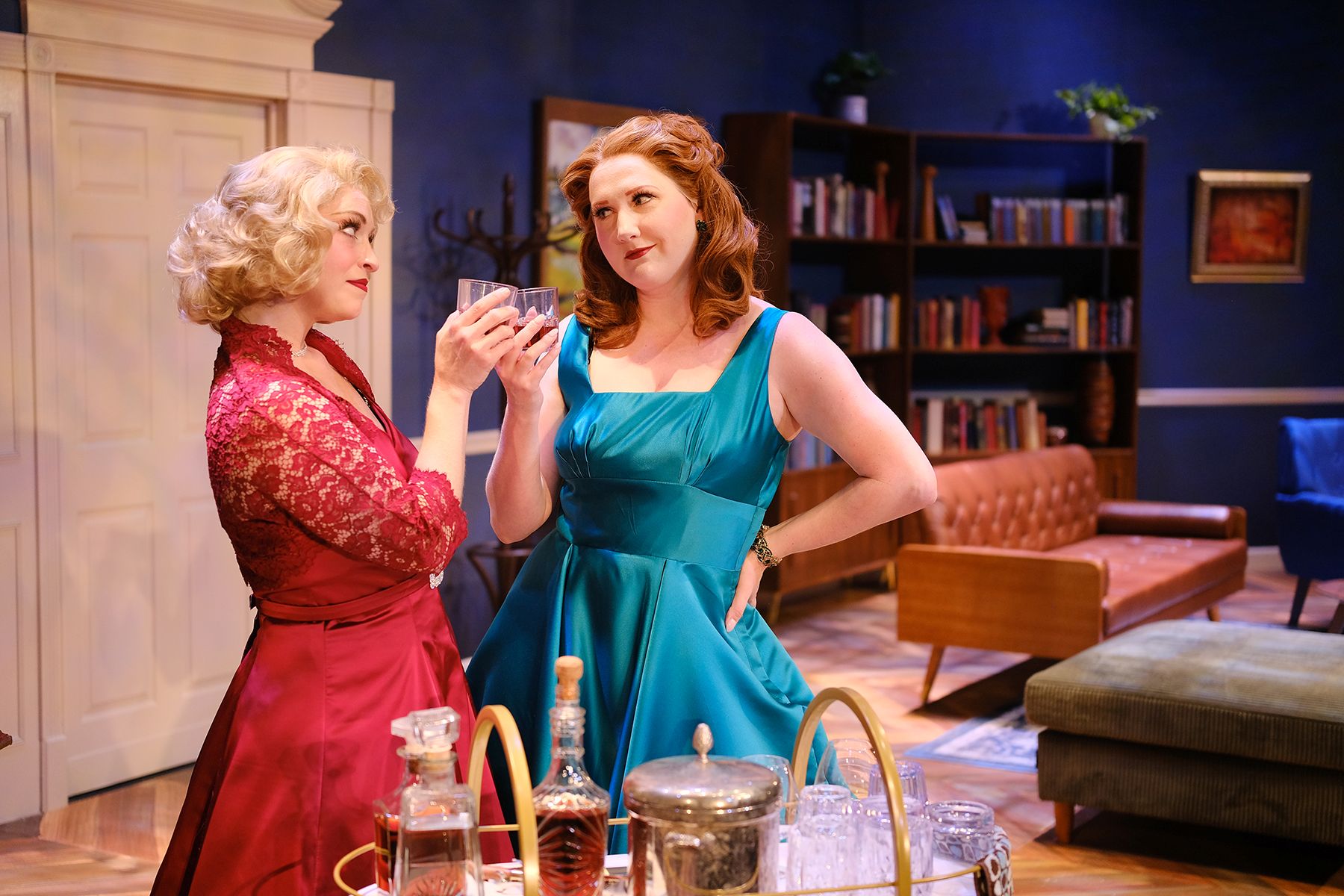

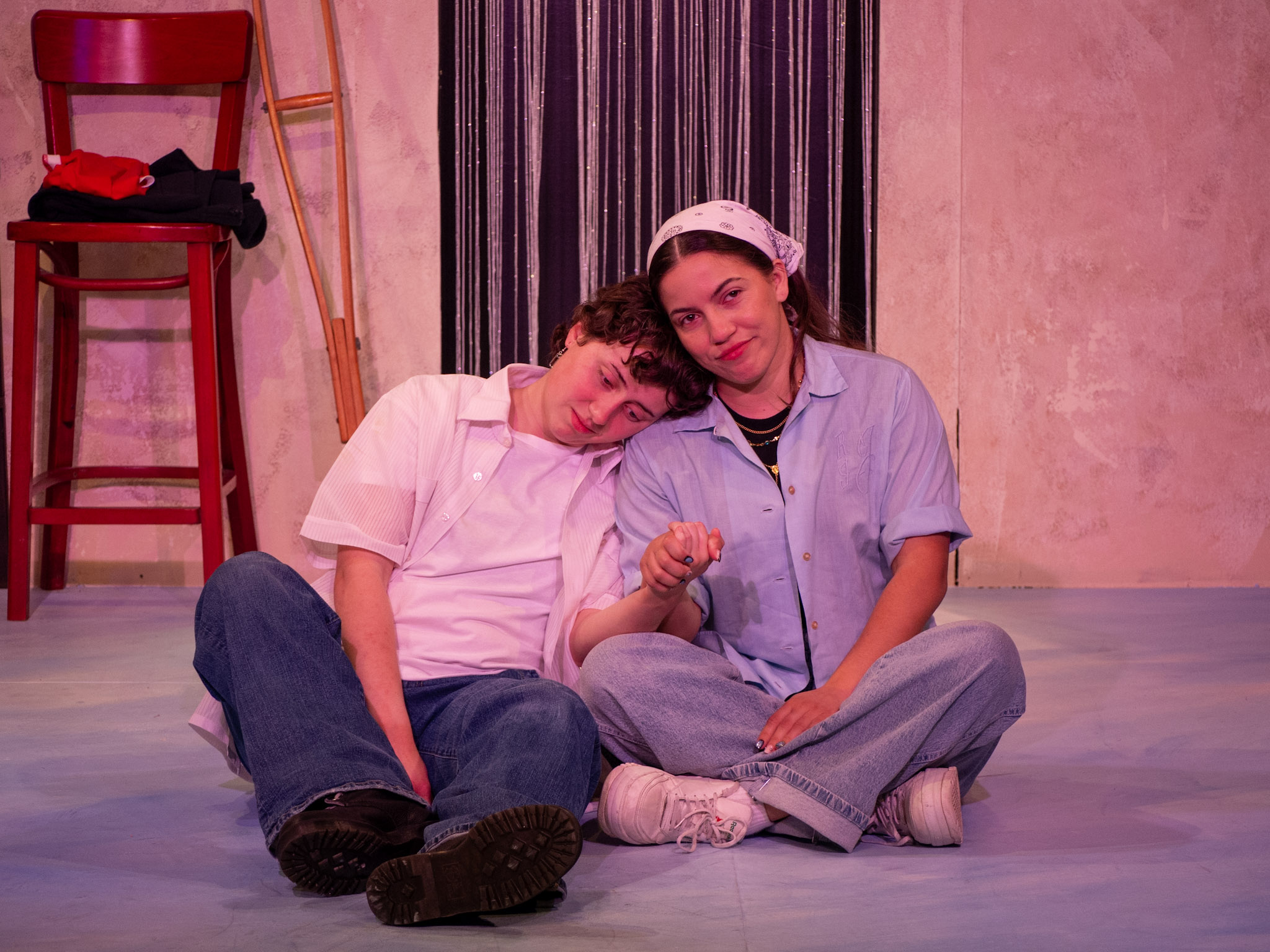
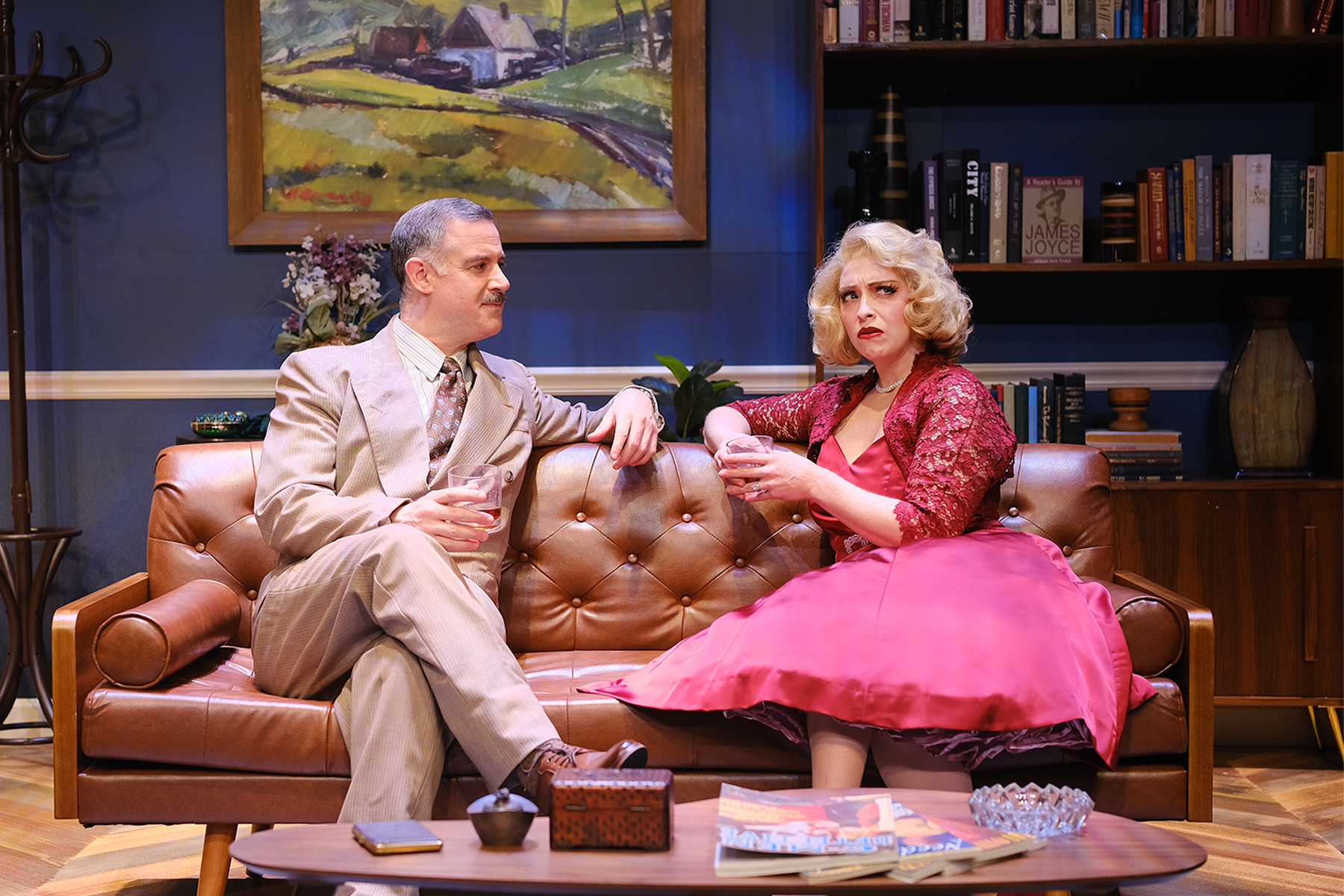
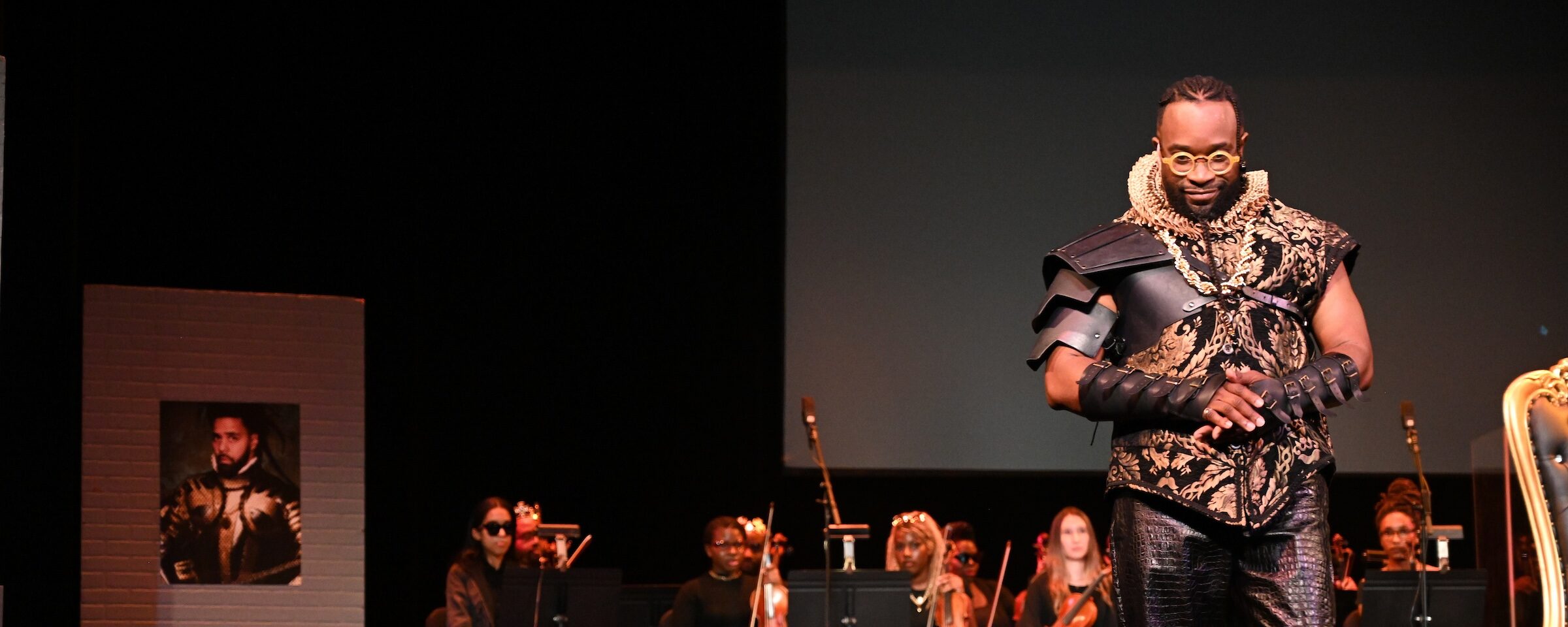
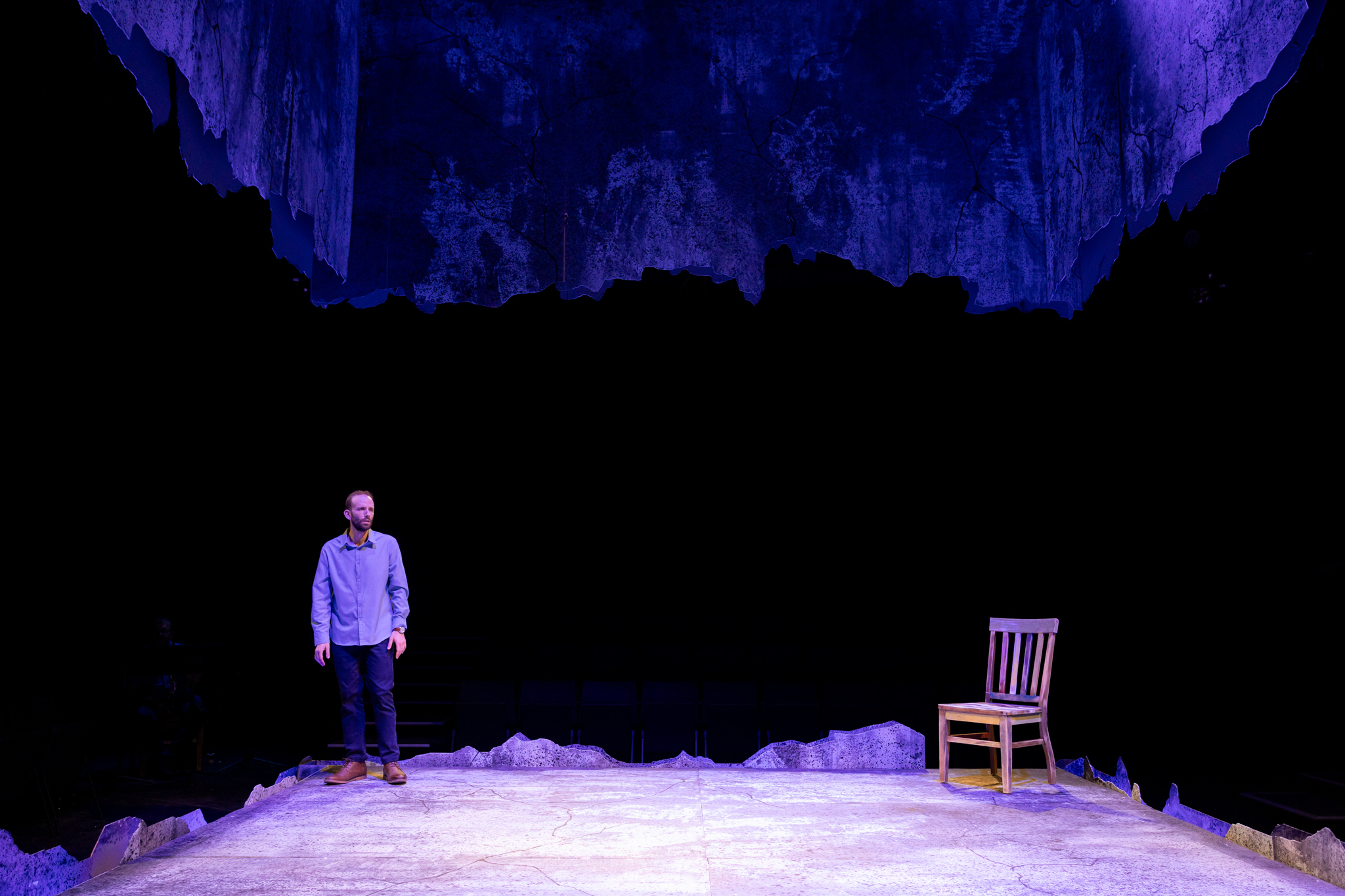
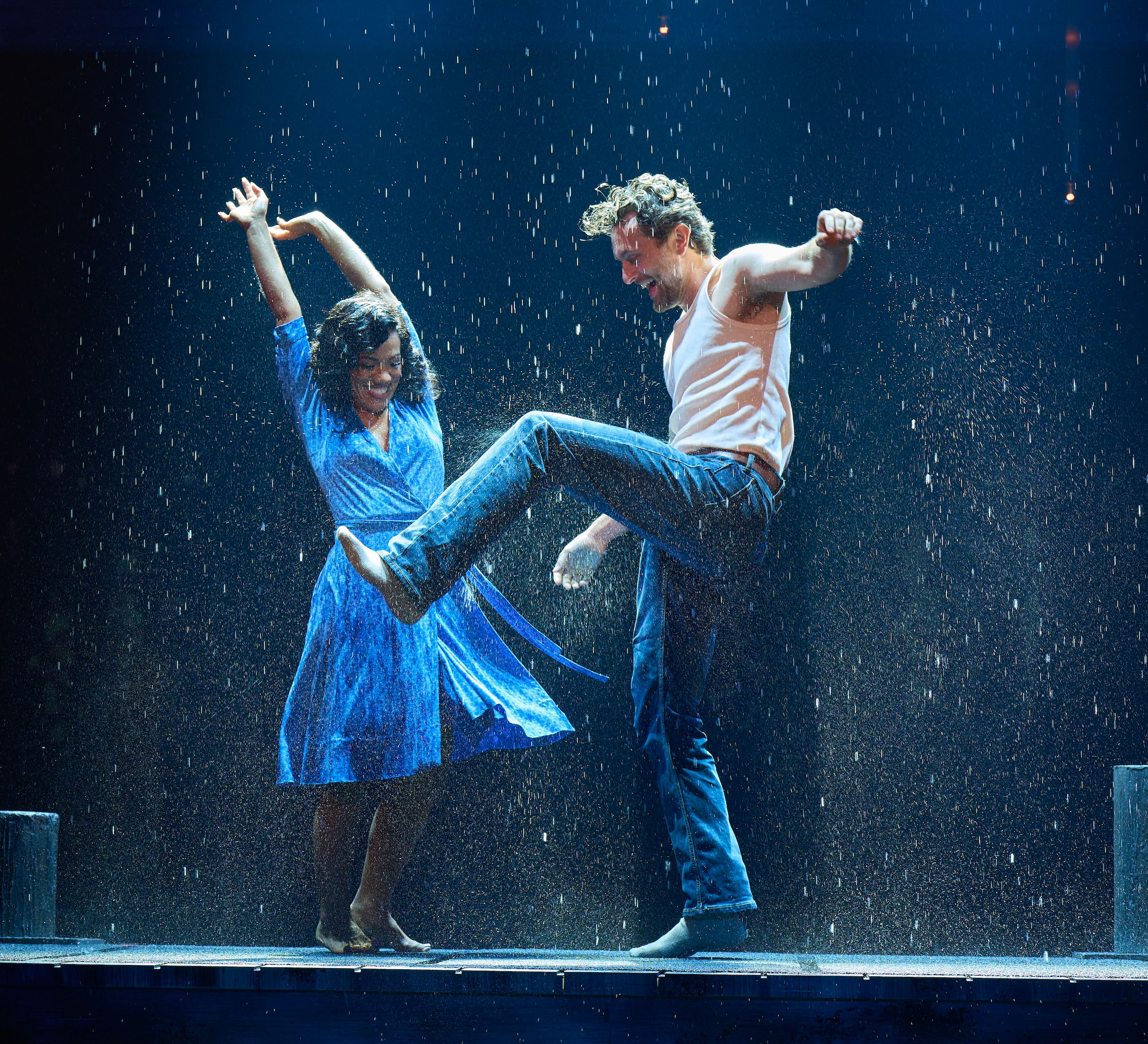
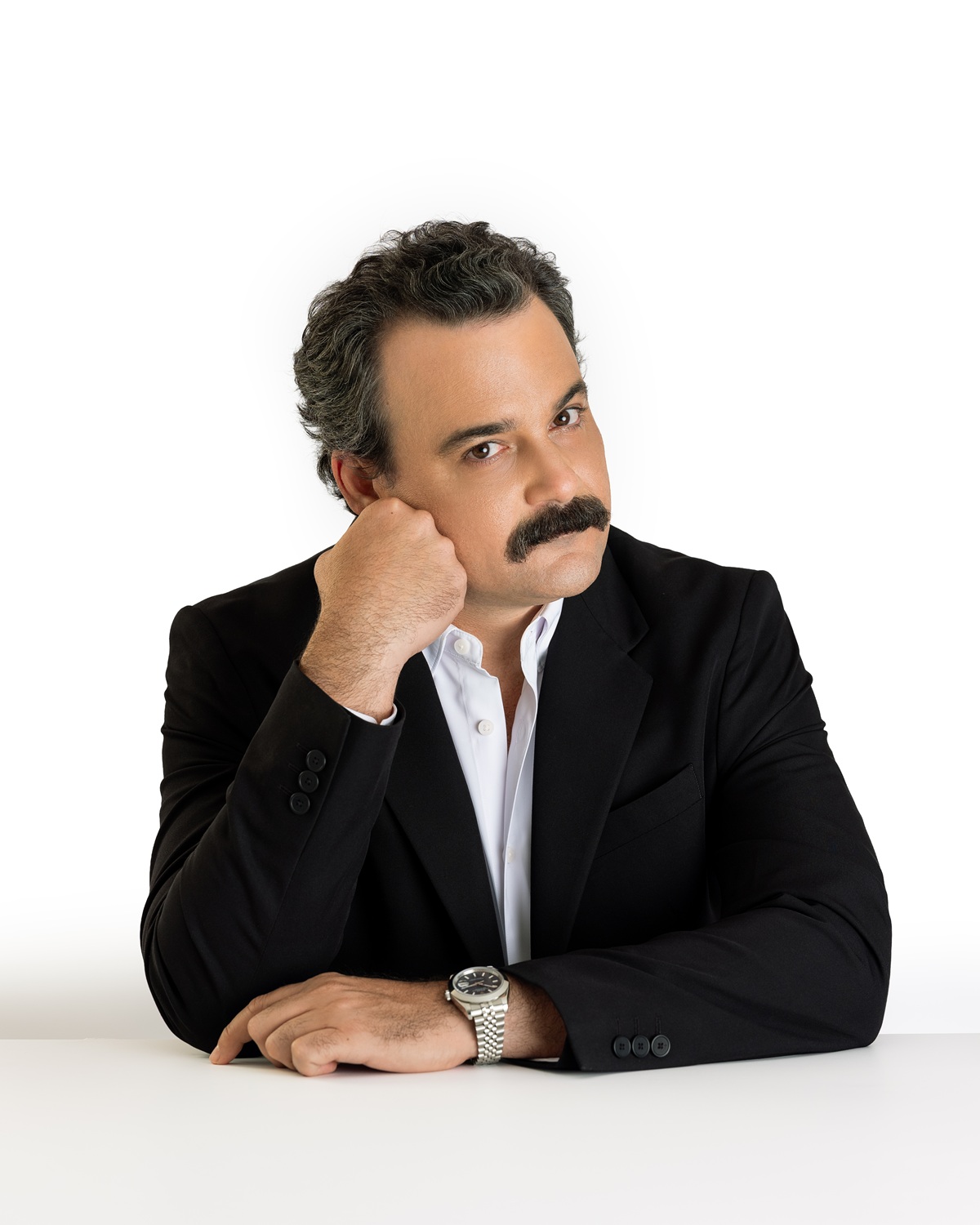
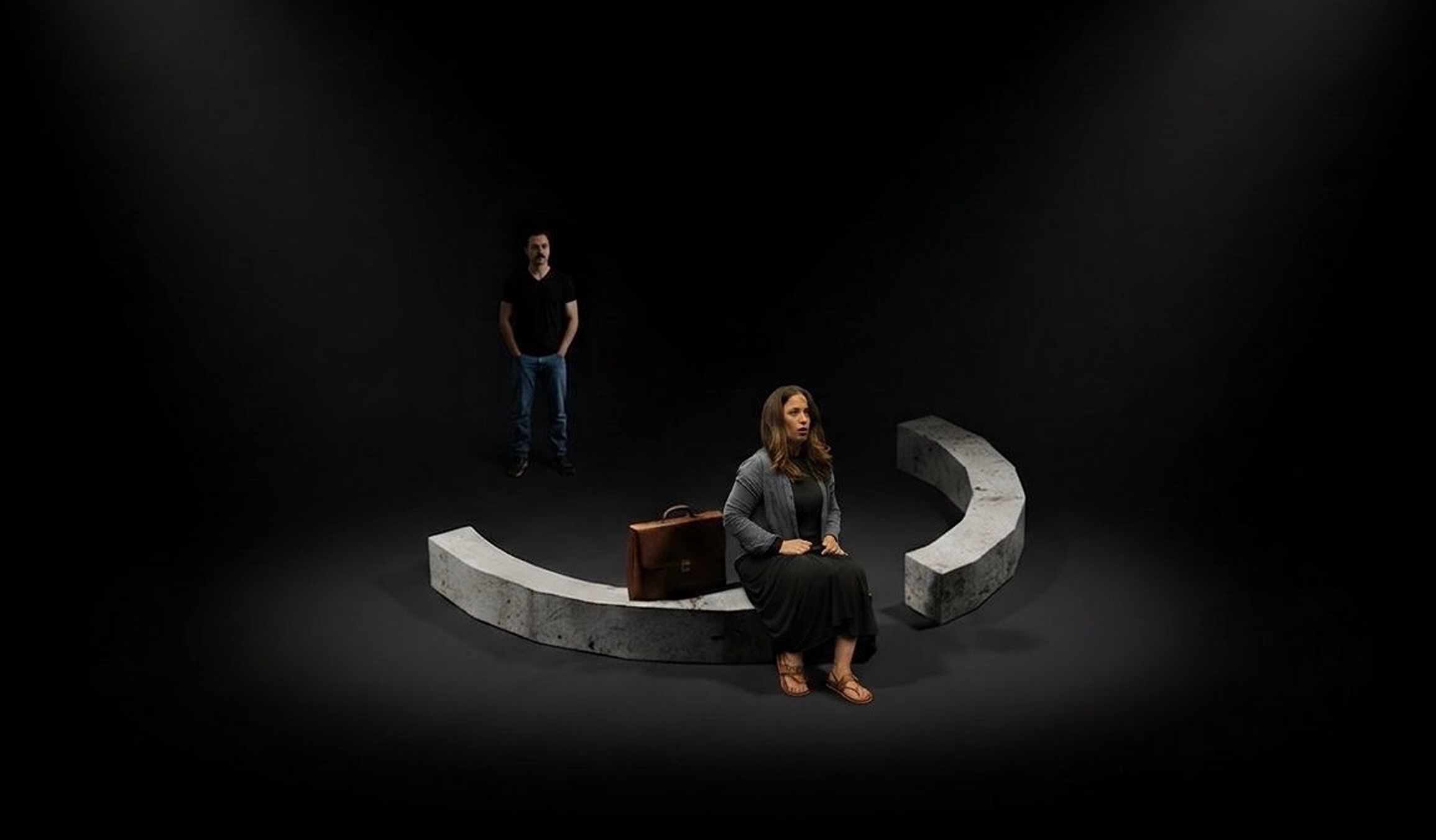
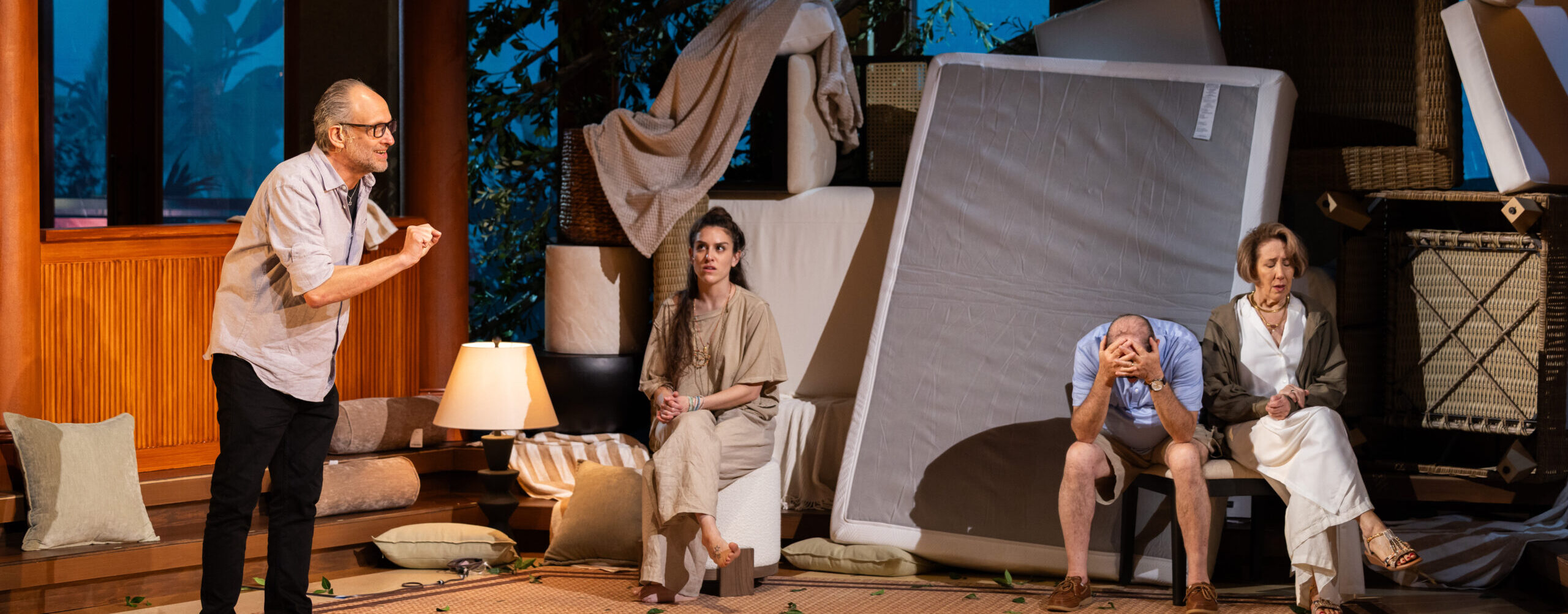
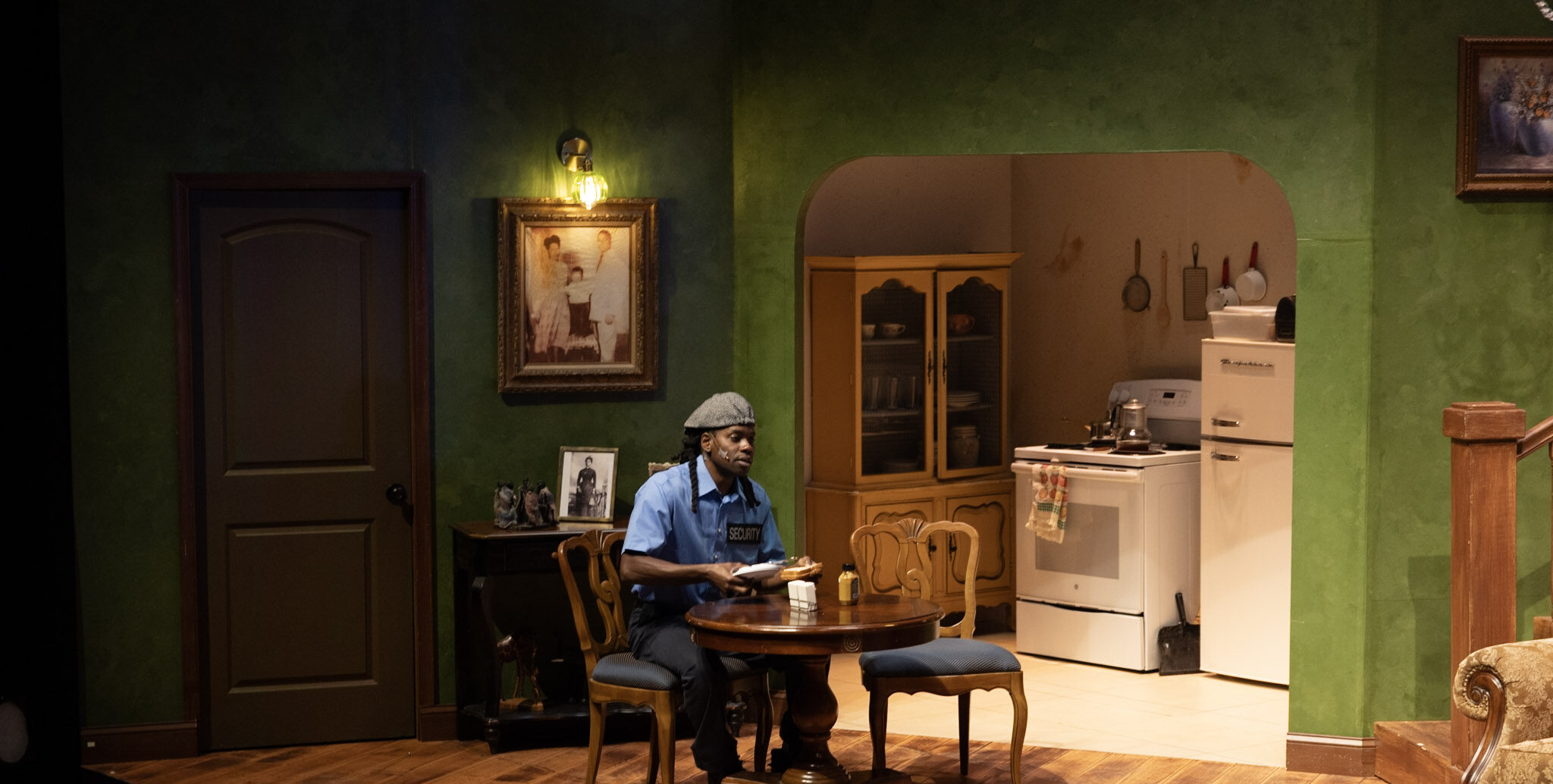
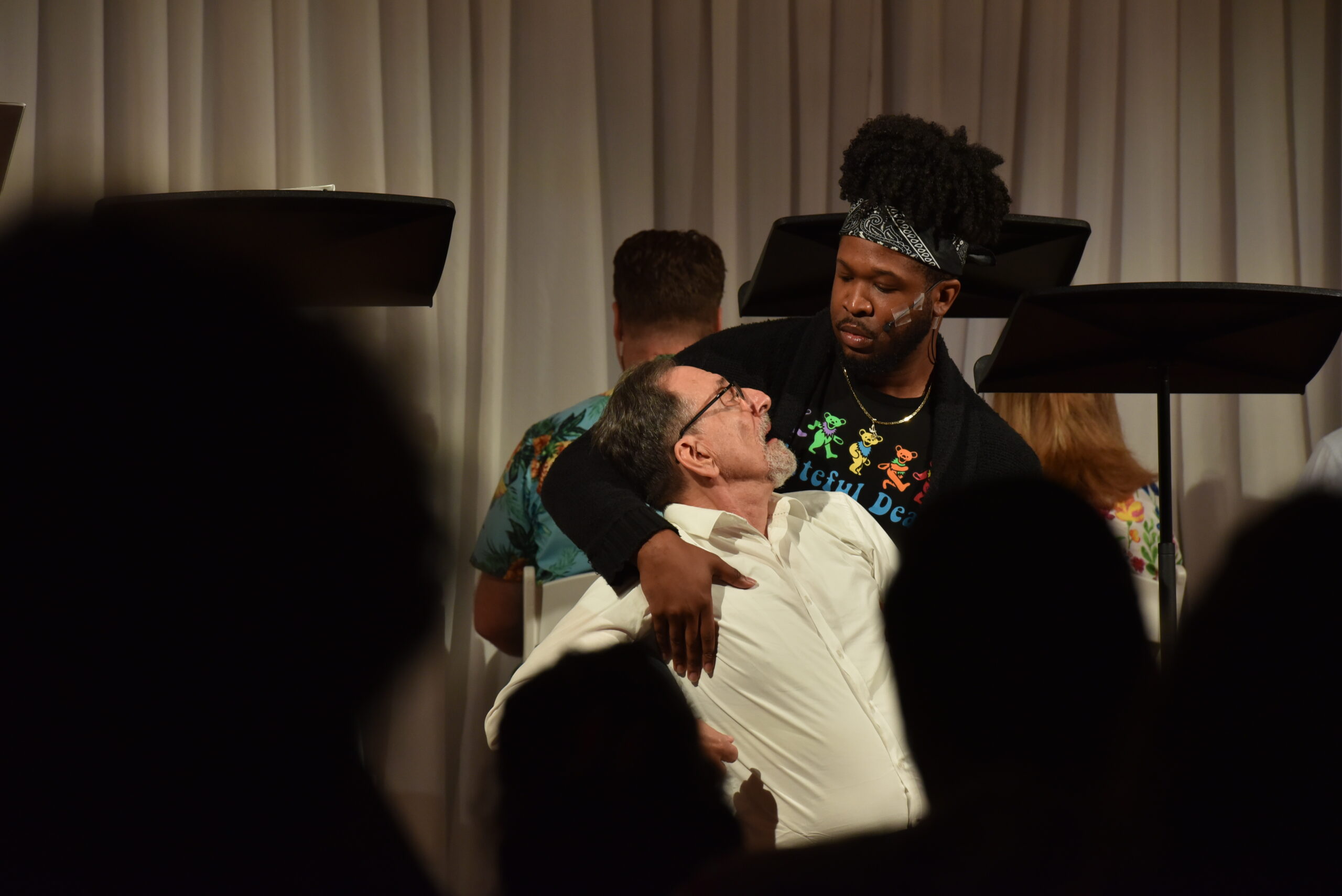
Recent Comments