Blog Article Category: Theater / Film
Miami Cuban Roots of Writer, Choreographer Help Shape ‘Buena Vista Social Club’
Written By Michelle F. Solomon
September 20, 2026 at 10:40 PM
Isa Antonetti as Young Omara in the Broadway production of “Buena Vista Social Club.” The Broadway touring production opens at the Arsht Center on Tuesday, Sept. 29 in Miami, and at the Broward Center in Fort Lauderdale on Tuesday, Oct. 13. (Photo by Matthew Murphy)
When playwright Marco Ramirez was growing up in Hialeah, music from Cuba’s great orchestras could be heard through his grandfather’s small Sony boombox on cassette tapes at family gatherings, from Nochebuena celebrations to weddings.
Now Ramirez’s grandfather, Felix, who is in his mid-90s, will be in the audience at the Adrienne Arsht Center when “Buena Vista Social Club,” the Broadway musical his grandson wrote, comes to Miami. Traveling to New York had been too difficult for Felix, so Ramirez waited and hoped the production would eventually reach him.
“I was rooting for its longevity because I was just like, ‘Broadway’s cool, but it’s got to go on tour so that my grandfather can see it,’” Ramirez said.
The production opens Tuesday, Sept. 29 and runs through Sunday, Oct. 4 at the Adrienne Arsht Center for the Performing Arts in Miami, then Tuesday, Oct. 13 through Sunday, Oct. 18 at the Broward Center for the Performing Arts in Fort Lauderdale.
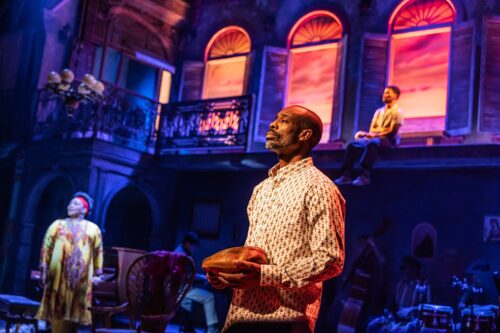
From left, Natalie Venetia Belcon as Omara, Mel Semé as Ibrahim and Wesley Wray as Young Ibrahim in the Broadway production of “Buena Vista Social Club.” (Photo by Matthew Murphy)
Ramirez remembered when the 1997 “Buena Vista Social Club” album arrived on CD. The clarity of the recording changed the way he had taken in the music that had always sounded fuzzy on cassette.
“Now, it was like listening to it in IMAX,” he said.
As he and his grandfather looked through the liner notes, Felix recognized musicians and remembered the bands in which they had played. It was the first time Ramirez could remember introducing his grandfather to music rather than the other way around.
For choreographer Patricia Delgado, who won a Tony Award with her choreographer-husband, Justin Peck, for the Broadway production, the music had always been part of her family life.
“I didn’t know that I knew the Buena Vista Social Club music. It was always playing in my grandparents’ house, my parents, my cousins. Growing up, there was this soundtrack.”

The choreography by Patricia Delgado and Justin Peck brings together ballet, contemporary movement and Afro-Cuban dance in the Broadway production of “Buena Vista Social Club.” (Photo by Matthew Murphy)
It wasn’t until she met her Peck that Delgado understood the significance of the 1997 album, which reintroduced an influential generation of Cuban musicians and opened Cuban musical traditions to a global audience.
Back To School
Years earlier, Ramirez and Delgado had recognized a kinship before their professional careers intersected in New York when Delgado joined the creative team of “Buena Vista Social Club.”
Their paths first crossed at Coral Reef Senior High School. Ramirez was enrolled in the drama magnet and already knew he wanted to write plays, television and film. Delgado was in the ballet magnet and was already pursuing the career that would lead her to 17 years with the Miami City Ballet, including a decade as a principal dancer.
“I remember meeting him in our last year of high school and wondering ‘Why did it take until senior year?’ He was so interesting,” Delgado said.
Ramirez recalled that the connection was in their shared seriousness about becoming artists.
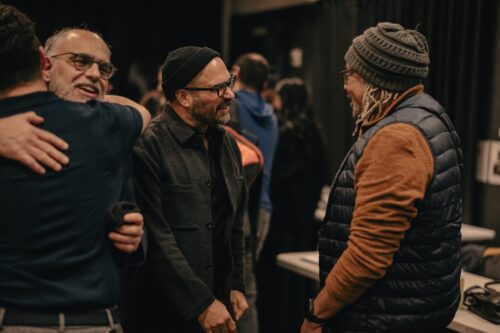
Playwright Marco Ramirez talks to music consultant Juan de Marcos at the first rehearsal for the Broadway production of “Buena Vista Social Club.” Creative consultant David Yazbek is at left. (Photo by Andy Henderson)
“We just saw it with each other. I think, like, ‘Oh, you’re gonna really make a go at this. You know, this is not a hobby. This is your life,’” Ramirez said.
When the Miami natives were reunited with the Broadway musical, it was the early influences from the Cuban music they heard growing up that shaped what they brought to “Buena Vista Social Club.”
” ‘El Carretero’ is in the show. ‘Veinte Años’ is in the show, and I remember … I must have been four years old when I heard that song. And that was a couple years before the Buena Vista record came out,” said Ramirez.
These memories helped Ramirez find the musical’s point of entry. He then concentrated the story on the musicians gathering to make the album in an unbelievably short amount of time. It was recorded in Havana in about six or seven days in March 1996 at EGREM studios.

Musicians and dancers share the stage in the Broadway production of “Buena Vista Social Club” with Miami natives as creatives in the show. The book is by Marco Ramirez and choreography is by Patricia Delgado. (Photo by Matthew Murphy)
“The show is what happened in those few days,” he said. The musical moves between the 1990s recording sessions and the performers’ younger lives in the 1950s. “So many people know what the record is. So many people know the story of what happened after the record came out – they tour the world, it’s a global sensation. But I wanted us to be in the room. I’m always attracted to stories that tell a specific moment as opposed to trying to tell a whole life. The people that walked into that room, and came out making the record.”
For Delgado, the connection to the music took a different route. Her now-husband and co-choreographer was fascinated by her Cuban background from early in their relationship, she said.
“Justin really brought out a lot of my Cubanness,” Delgado said. “He was curious about it. He was the first relationship I had that someone was really into it and wanted to learn how to cook all the food and wanted to hear all the stories.”

Wesley Wray, center at microphone, with the Broadway company of “Buena Vista Social Club.” (Photo by Matthew Murphy)
Peck was also the one who made Delgado realize how much of the “Buena Vista Social Club” repertoire she already knew. When he asked whether she knew the album, her initial answer was no.
“And then I was like, ‘Well, yes, I know every song,’” she said. “I just didn’t know it.”
First Dance
Years before they would work on “Buena Vista Social Club,” a song from the landmark album, that is not included in the musical, “Pueblo Nuevo,” became an important moment for the couple at their wedding in 2019.
“I think he’s just always been really fascinated and in love with all the traditions,” Delgado said of Peck.
” ‘He’s like, ‘For our first dance, let’s not do the traditional dance, just us. Why don’t we choreograph a song to the Buena Vista Social Club?’ ”
Years later, when they began choreographing the musical together, that shared connection gave them a way into its movement. Delgado also said there was definitely influence from her days training with Cuban dance teachers when she began at age 5 at the now closed Liana Navarro and Vivian Tobio Ballet School on Bird Road.
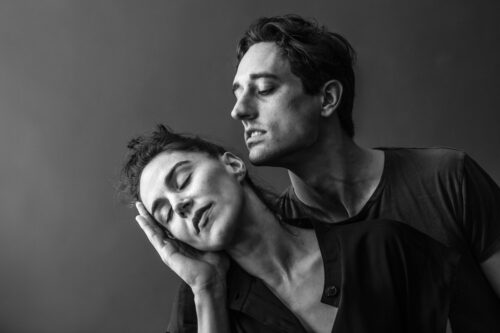
Tony Award-winning co-choreographers, Patricia Delgado and Justin Peck brought Delgado’s Cuban roots and the couple’s shared background in ballet to “Buena Vista Social Club.” (Photo by Michael Avedon)
For the pair, Delgado and Peck did not want the dancing simply to illustrate Cuban music or fall into a recognizable category of “Latin dance.” They began looking for a movement language that grew out of the rhythms themselves and could carry character and story.
The best-known song in the musical, “Chan Chan,” became the team’s greatest choreographic and narrative challenge. Early versions included spoken dialogue between the sisters at the center of the story. Ramirez ultimately removed the scene and allowed gesture and movement to carry when they say goodbye to one another.
“It takes a lot for a musical to trust in dance,” she said.
Ramirez said there’s dialogue in the show that he has considered changing slightly when the production reaches South Florida.
“It’s funny, there’s a line that says, ‘Right now, you and I are a thousand miles away … But a sound like this? It tends to travel.’ And I’ve been thinking about where we’ll be and maybe it should be, ‘We’re just about a couple of hundred miles away.’ Doing the show in Miami is going to be the closest thing right now to doing the show in Cuba.”
WHAT: “Buena Vista Social Club”
WHEN: Opens Tuesday, Sept. 29. 7:30 p.m. Tuesday through Thursday, 8 p.m. Friday, 2 and 8 p.m. Saturday, and 1 and 7 p.m. Sunday. Through Sunday, Oct. 4.
WHERE: Ziff Ballet Opera House at the Adrienne Arsht Center for the Performing Arts, 1300 Biscayne Blvd., Miami
COST: $52.65 to $228.15 (includes fees)
INFORMATION: (305) 949-6722 and arshtcenter.org
Free, weeklong celebration, “Rhythm and Roots,” inspired by the South Florida premiere of “Buena Vista Social Club” during the show’s run on Thompson Plaza with live music, domino games, local artisans and pop-up vendors. Free but RSVP required.
Also in Fort Lauderdale: Opens Tuesday, Oct. 13. 7:30 p.m. Tuesday through Thursday, 8 p.m. Friday, 2 and 8 p.m. Saturday, and 1 and 6:30 p.m. Sunday. Through Sunday, Oct. 18, at the Au-Rene Theater at the Broward Center for the Performing Arts, 201 SW Fifth Ave., Fort Lauderdale. $59 to $184.38; (954) 462-0222 or browardcenter.org.
ArtburstMiami.com is a nonprofit media source for the arts featuring fresh and original stories by writers dedicated to theater, dance, visual arts, film, music and more. Don’t miss a story at www.artburstmiami.com.
No posts found
‘Deconstructing a Human Sacrifice’ Workshop Digs Into Family Secrets at LakehouseRanchDotPNG
Written By Michelle F. Solomon
September 17, 2026 at 9:43 PM
The Lucindas in Erin Proctor’s “Deconstructing a Human Sacrifice” at LakehouseRanchDotPNG, Richard Headley, River Iraida Estrada, and Sara Jarrell. (Photo courtesy of LakehouseRanchDotPNG)
Having a character already onstage as the audience enters a theater is a familiar device. In “Deconstructing a Human Sacrifice,” it has a strong effect. An old woman sits in a rocking chair in a stark house. Soon a visitor will arrive, trying to unravel a disturbing piece of family history for her own self-preservation.
Playwright Erin Proctor’s search for answers becomes a cathartic act as she considers whether the bizarre trauma has passed through generations, leaving her with gripping anxiety almost as if it were carried in her DNA.
The woman in the rocking chair is Lucinda Ward Mills, one of three Lucindas, played by River Iraida Estrada. The young actress is made up to look elderly, and the play acknowledges the obvious age difference with a joke about how difficult it is to find older actresses.
That willingness to acknowledge the people putting on the show is part of Proctor’s approach to telling her family’s story. People from the 1930s scroll through cellphones. Characters break the fourth wall. The past is present, but so are the actors bringing it to life.
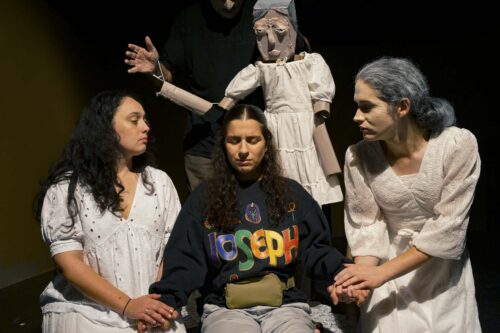
From left, Sara Jarrell, Olivia Polo, and River Iraida Estrada. Richard Headley is in the back. (Photo courtesy of LakehouseRanchDotPNG)
The one-act is being presented by LakehouseRanchDotPNG and directed by Brandon Urrutia, co-founder and artistic director of the Miami Lakes-based company, as a fully staged workshop production. It offers an opportunity to see a play while its writer is still exploring what works and what needs more attention. It’s not a usual occurrence in South Florida theater and something to be seen.
The play continues to evolve. Its New York development includes upcoming inclusion in the Spark Theater Festival at the 28th St. Theater on Oct. 16 and 23. A previous Aug. 3 reading was presented by the Center at West Park.
In this staging, Olivia Polo plays Erin, who enters carrying a suitcase. Lucinda gets up and takes her luggage, a familiar gesture that briefly makes this seem like an ordinary visit to an older relative.
The suitcase holds a surprise revealed later: an accordion, which old Lucinda plays. During a talkback after Saturday night’s performance, Proctor explained that the instrument changes depending on what a cast member can play. Here, Estrada’s accordion skills became part of the staging.
But Lucinda has been dead for decades. In rural Kentucky in 1933, she was killed in a ritual sacrifice involving her children. Erin, her great-great-great-granddaughter, has a need to know what happened and how religion became tangled up in such a horrifying act.
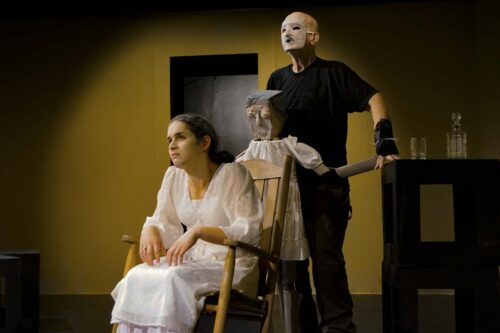
The Lucindas: River Iraida Estrada and Richard Headley. (Photo courtesy of LakehouseRanchDotPNG)
She asks those questions repeatedly, trying to make sense of a family story that newspaper reports have not fully explained to her. At one point, Erin pulls out her cellphone to show the chilling accounts after the incident in 1933.
To Proctor’s credit, the scene doesn’t become a joke about time travel. No one reacts to the cellphone as some newfangled contraption. The older Lucinda simply scrolls, interested in relishing her celebrity.
Estrada’s elderly Lucinda is only one version of the woman Erin encounters. Sara Jarrell plays a younger Lucinda, spunky and bourbon-swilling. Her earthy presence gives Lucinda some life beyond the terrible details of her death.
Then there is Richard Headley’s Lucinda, a dark, menacing figure wearing a frightening mask and manipulating an odd, paper-like puppet (created with craft by Kaleb Hernandez Arci) through which the character speaks. This Lucinda seems to come from somewhere beyond the world of the other two. Creepy hardly covers it. This is no comforting ghost dropping in to help a descendant sort through the past.
The three Lucindas are among the production’s most interesting choices. Erin gets no single version of her ancestor to question; the differences between them keep the encounters unpredictable.
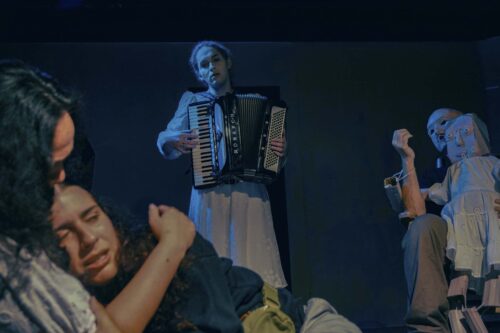
From left, Sara Jarrell, Olivia Polo, River Iraida Estrada. and Richard Headley in Erin Proctor’s “Deconstructing a Human Sacrifice.” (Photo courtesy of LakehouseRanchDotPNG)
Religion is woven through the play, but giving the audience a way to get a connection between the three Lucindas and the Holy Trinity would be a strong choice for such a darkly religious themed play.
The male/puppet Lucinda’s threatening presence also suggests an opportunity to connect this character to John, Lucinda’s son, who choked and killed his mother in the ritual, as is revealed in the play. As male figure in the cast, the character could offer a subtle echo of the son who was responsible for his mother’s death by his own hands.
That connection might give one scene particular power. Jarrell’s Lucinda uses zip ties to chain Erin to a chair. Maybe they’ll sacrifice her. Had Headley’s figure performed that action, even a slight suggestion of John might have brought the son’s role into sharper focus.
The cellphones and occasional remarks to the audience bring humor into the grim story. They also prepare the audience for the ending, when the characters become actors staging a play.
The shift follows the approach Proctor has established, but it doesn’t land with the strength of what comes before it. After the questions, the menace and the restraint, the return to putting on a show lets some of the tension slip away.
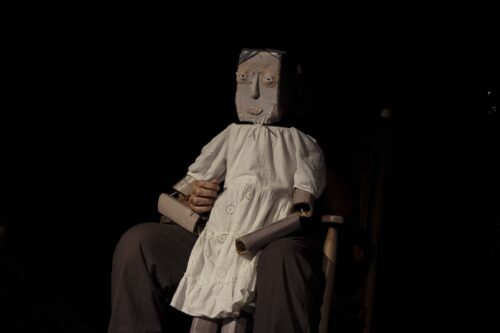
Richard Headley as Puppet Lucinda. (Photo courtesy of LakehouseRanchDotPNG)
During the talkback, Proctor explained that theater is her safe space, which is why she brings the ending back there. That explanation gives the choice a personal meaning that needs to be more apparent in the performance. The ending could do more to show what this return to safety means for Erin after such a disturbing encounter.
Proctor’s vulnerability is what makes the play compelling. An actress as well as a playwright, she has considered playing Erin herself. Casting another actress is a better choice, allowing for the audience to experience the distance she’s kept for so long from the deeply personal material.
Urrutia and the cast give three distinct faces to a woman whose death could easily overwhelm everything else about her. This workshop version makes Erin’s arrival in that strange house compelling. Her way out could be just as strong.
The set is stark with the sound of a cold, whistling wind bubbling up frequently throughout.
Proctor’s willingness to confront her family’s disturbing and bizarre history and her inventive use of three Lucindas make this a play worth following. “Deconstructing a Human Sacrifice” creates a curiosity in many ways including wanting to know how the play itself will eventually end up.
WHAT: LakehouseRanchDotPNG’s Workshop Production of “Deconstructing a Human Sacrifice” by Erin Proctor
WHERE: Main Street Players, 6812 Main St., Miami Lakes
WHEN: 8 p.m., Friday and Saturday, 2 p.m. Sunday. Through Sunday, Sept. 20.
COST: $20 general admission; $50 “Art Believer” supporter.
INFORMATION: (305) 558 -3737 or https://www.lakehouseranchdotpng.com/
ArtburstMiami.com is a nonprofit media source for the arts featuring fresh and original stories by writers dedicated to theater, dance, visual arts, film, music and more. Don’t miss a story at www.artburstmiami.com.
No posts found
Miami-Dade Theaters, Productions Top List of Carbonell Award Nominees
Written By Michelle F. Solomon, Artburst Editor
September 15, 2026 at 11:43 PM
The production receiving the most Carbonell Award nominations was Actors’ Playhouse’s “Man of La Mancha” with 12 nominations. Awards will be announced at the 49th annual ceremonies on Monday, Nov. 16. (Photo courtesy of Actors’ Playhouse)
Miami Dade County regional theaters earned some of the top nominations for the 2025-26 Carbonell Awards with awards announced at the 49th annual ceremonies, which will be presented Monday, Nov. 16, at FAU’s University Theatre in Boca Raton.
GableStage, based at the Hotel Biltmore in Coral Gables, earned 17 nominations along with Actors’ Playhouse at the Miracle Theatre netting 16. Miami Beach-based Miami New Drama at the Colony Theatre received 15 nominations, Miami’s Zoetic Stage based at the Adrienne Arsht Center earned 13, Liberty City’s M Ensemble picked up four nominations, with Spanish-language company Arca Images, performing out of the Westchester Cultural Arts Center received two. City Theatre Miami and True Mirage Theater each receive a single nomination.
The production, which received the most nominations was Actors’ Playhouse’s “Man of La Mancha” with 12 nominations. GableStage’s “Left on Tenth” and Miami New Drama’s “The Zionists received seven nominations, while “Here There Are Blueberries” at Miami New Drama, “Harry Clarke” at GableStage, and “Merrily We Roll Along” at Zoetic Stage earned five.

Mark H. Dold inhabits Philip Brugglestein and Harry Clarke in a scene from the play “Harry Clarke” at GableStage. (Photo by Magnus Stark, courtesy of GableStage)
In other counties, Palm Beach County’s Maltz Jupiter Theater had 12 nominations while, the Wick Theatre in Boca Raton received 10 and Palm Beach Dramaworks received seven. Theatre Lab at FAU earned a single nomination. In Broward County, Fort Lauderdale’s Slow Burn Theatre had nine finalists, New City Players picked up three, and Pompano Beach-based Brévo Theatre received two nominations.
More than 100 professional productions at 33 theatres were evaluated by a group of nearly 50 judges representing all three participating counties: Broward, Miami-Dade, and Palm Beach.
In addition to the 20 competitive award categories, the Carbonell Awards will present nine Special Awards selected by the nonprofit organization’s board of directors.

The late Christine Dolen and Artburst Miami editor and theater critic Michelle F. Solomon at the 2023 Silver Palm Awards. Solomon will receive The Charlie Cinnamon Award at this year’s Carbonell Awards, while the inaugural Christine Dolen Award for Outstanding Debut will be presented in honor of the legendary Miami Herald theater critic. (Photo courtesy of Artburst Miami)
- Stuart Meltzer, founding artistic director of Zoetic Stage will receive The George Abbott Award for Outstanding Achievement in the Arts
- ArtburstMiami editor and theater writer Michelle F. Solomon will be awarded The Charlie Cinnamon Award for outstanding support of South Florida theater and the Carbonell Awards.
- Ali Tallman, director of “The 39 Steps” for New City Players will receive The Christine Dolen Award for outstanding debut. The award is named after Miami Herald and ArtburstMiami theater critic.
- The Ruth Foreman Award for outstanding contribution to the development of South Florida theater to Margaret M. Ledford, artistic director of City Theatre in Miami.
- The Howard Kleinberg Award for outstanding contribution to the health and development of the arts in South Florida to educators inspiring the next generation: Gary Cadwallader (Palm Beach Dramaworks), Jairo Ontiveros (Adrienne Arsht Center for the Performing Arts of Miami-Dade County) and Lori Slade Sessions (South Florida Cappies).
- The Jan McArt Award recognizing significant achievement by a small theater to Brévo Theatre.
- The Bill von Maurer Award for Theatrical Excellence, honoring a theater company that exemplifies excellence for the totality of its programming — productions, educational outreach, developmental programs and audiences served — to Broward County’s Island City Stage.
- The Bill Hindman Award for onstage career achievement by performing artists based in South Florida to actor, playwright and educator Elena Maria Garcia.
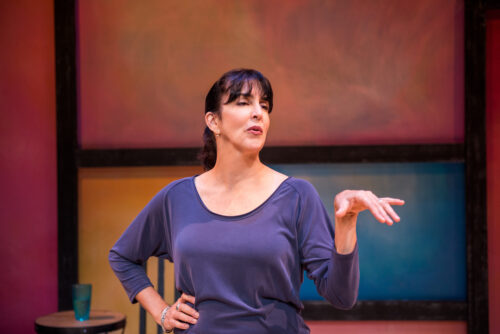
Elena María García, seen in her solo show “¡FUÁCATA!,” will receive The Bill Hindman Award for onstage career achievement by performing artists based in South Florida at this year’s Carbonell Awards. (Photo by Justin Namon)
Carbonell Award Finalists 2026
Outstanding New Work
• “English Only” by Nicholas Griffin, Miami New Drama
• “How to Break in a Glove” by Chris Anthony Ferrer, City Theatre Miami
• “The City in the City in the City” by Matthew Capodicasa, Theatre Lab
• “The Zionists” by S. Asher Gelman, Miami New Drama
• “Todo Lo Que No Dije” by Harley Elias, Miami New Drama
• “With the Swallows” by Ricky J. Martinez, True Mirage Theater
Outstanding Production, Play
• “Harry Clarke,” GableStage
• “Here There Are Blueberries,” Miami New Drama
• “Kassandra,” Arca Images
• “Prayer for the French Republic,” GableStage
• “Searching for Willie Lynch,” M Ensemble Company
• “The Inheritance, Part 1,” Zoetic Stage
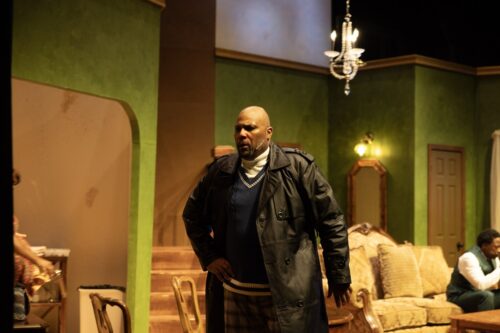
Layon Gray is nominated for Outstanding Direction for his play “Searching for Willie Lynch” at M Ensemble Company. (Photo courtesy of M Ensemble)
Outstanding Direction, Play
• Julianne Boyd, “Harry Clarke,” GableStage
• Layon Gray, “Searching for Willie Lynch,” M Ensemble Company
• Moisés Kaufman, “Here There Are Blueberries,” Miami New Drama
• Stuart Meltzer, “The Inheritance, Part 1,” Zoetic Stage
• Bari Newport, “Left on Tenth,” GableStage
• Chloe Treat, “The Zionists,” Miami New Drama
Outstanding Performance by an Actor in a Lead Male Role, Play
• Mark H. Dold, “Harry Clarke,” GableStage
• Christopher Marquis Lindsay, “The Mountaintop,” Palm Beach Dramaworks
• Christian McGaffney, “Todo Lo Que No Dije,” Miami New Drama
• Carlos Acosta Milian, “Muerta de un Viajante,” Arca Images
• Max Roll, “Good Night, Oscar,” Maltz Jupiter Theatre
• Ray Anthony Thomas, “Driving Miss Daisy,” Palm Beach Dramaworks
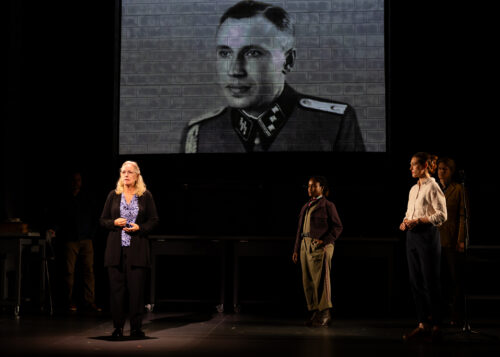
Barbara Pitts McAdams as Judy Cohen is another researcher caught up in an album that the U.S. Holocaust Museum receives. (Photo by Morgan Sophia Photography)
Outstanding Performance by an Actor in a Lead Female Role, Play
• Dalia Aleman, “Left on Tenth,” GableStage
• Rita Cole, “The Mountaintop,” Palm Beach Dramaworks
• Jeni Hacker, “The Mother,” Zoetic Stage
• Nicole Hulett, “Burst,” New City Players
• Barb Pitts McAdams, “Here There Are Blueberries,” Miami New Drama
• Laura Turnbull, “Everything Beautiful Happens at Night,” Island City Stage
Outstanding Performance by an Actor in a Supporting Male Role, Play
• Thaddeus Daniels, “Searching for Willie Lynch,” M Ensemble Company
• Matthew W. Korinko, “Driving Miss Daisy,” Palm Beach Dramaworks
• Michael McKeever, “The Inheritance, Part 1,” Zoetic Stage
• Aidan Paul, “The Inheritance, Part 1,” Zoetic Stage
• Jeremy Sevelovitz, “Prayer for the French Republic,” GableStage
• Stephen Trovillion, “Prayer for the French Republic,” GableStage

Michael McKeever as Walter Poole talks about his past while Eric Glass (Alex Weisman) listens in Zoetic Stage’s “The Inheritance, Part 1.” (Photo by Morgan Sophia Photography, courtesy of the Adrienne Arsht Center)
Outstanding Performance by an Actor in a Supporting Female Role, Play
• Rita Cole, “Eureka Day,” GableStage
• Mary Gundlach, “Burst,” New City Players
• Julie Kleiner, “The Crucible,” Palm Beach Dramaworks
• Margery Lowe, “The Little Foxes,” Island City Stage
• Dayana Morales, “Burst,” New City Players
• Sheena O. Murray, “Searching for Willie Lynch,” M Ensemble Company
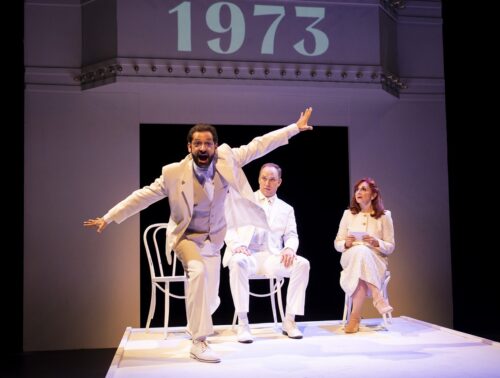
Stuart Meltzer was nominated for Outstanding Direction for a Musical” for “Merrily We Roll Along” at Zoetic Stage and the play was nominated for Outstanding Production, Musical. (Photo by Justin Namon)
Outstanding Production, Musical
• “Camelot,” The Wick Theatre
• “Come From Away,” Maltz Jupiter Theatre
• “Man of La Mancha,” Actors’ Playhouse
• “Man of La Mancha,” Maltz Jupiter Theatre
• “Merrily We Roll Along,” Zoetic Stage
• “The Cher Show,” The Wick Theatre
Outstanding Direction, Musical
• David Arisco, “Man of La Mancha,” Actors’ Playhouse
• Patrick Fitzwater, “Catch Me If You Can,” Slow Burn Theatre Company
• Stuart Meltzer, “Merrily We Roll Along,” Zoetic Stage
• Andy Rogow, “Ruthless,” Island City Stage
• Marcos Santana, “Man of La Mancha,” Maltz Jupiter Theatre
• Jennifer Werner, “Come From Away,” Maltz Jupiter Theatre
Outstanding Performance by an Actor in a Lead Male Role, Musical
• Jarod Bakum, “Catch Me If You Can,” Slow Burn Theatre Company
• Logan Clinger, “Dear Evan Hansen,” Actors’ Playhouse
• E.L. Losada, “Man of La Mancha,” Actors’ Playhouse
• Jesse Luttrell, “Camelot,” The Wick Theatre
• Alex Martinez, “Camelot,” The Wick Theatre
• Eddie Noel Rodríguez, “Man of La Mancha,” Maltz Jupiter Theatre

Donya Layne received a nomination for The Wick Theatre’s musical direction of “The Cher Show.” From left, Catherine Ariale, Kristin Rose Kelleher, and Ella Perez, were nominated for their performances in the musical. (Photo courtesy of The Wick Theatre)
Outstanding Performance by an Actor in a Lead Female Role, Musical
• Catherine Ariale, “The Cher Show,” The Wick Theatre
• Lindsey Corey, “Ruthless,” Island City Stage
• Kristin Rose Kelleher, “The Cher Show,” The Wick Theatre
• Ariella Kvashny, “Man of La Mancha,” Maltz Jupiter Theatre
• Ella Perez, “The Cher Show,” The Wick Theatre
• Monet Sabel, “Beautiful: The Carole King Musical,” Slow Burn Theatre Company
Outstanding Performance by an Actor in a Supporting Male Role, Musical
• Jim Ballard, “The Spitfire Grill,” Actors’ Playhouse
• Kalen Edean, “Frozen,” Slow Burn Theatre Company
• Michael Focas, “Man of La Mancha,” Actors’ Playhouse
• Henry Gainza, “Man of La Mancha,” Actors’ Playhouse
• Paul Louis-Gonzalez, “Man of La Mancha,” Actors’ Playhouse
• Jose Luaces, “Man of La Mancha,” Actors’ Playhouse
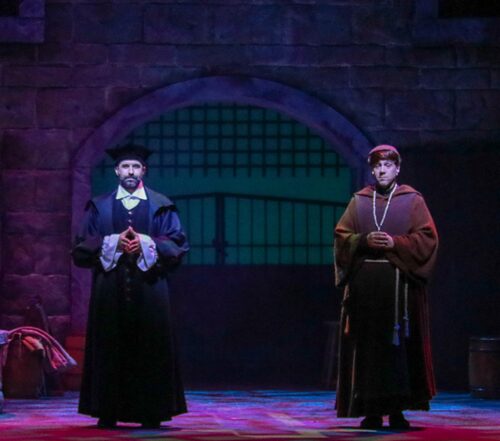
Michael Focas and Henry Gainza in “Man of La Mancha” at Actors’ Playhouse at the Miracle Theatre. (Photo by Alberto Romeu)
Outstanding Performance by an Actor in a Supporting Female Role, Musical
• Aaron Bower, “The Cher Show,” The Wick Theatre
• Lindsey Corey, “Merrily We Roll Along,” Zoetic Stage
• Dayna Jarae Dantzler, “Come From Away,” Maltz Jupiter Theatre
• Sydney Freihofer, “Jagged Little Pill,” Slow Burn Theatre Company
• Ashley Nicole Portis, “The Color Purple,” Brévo Theatre
• Leah Sessa, “Merrily We Roll Along,” Zoetic Stage
Outstanding Music Direction
• Eric Alsford, “Come From Away,” Maltz Jupiter Theatre
• Bruce Barnes, “Man of La Mancha,” Actors’ Playhouse
• Nick Guerrero, “The Spitfire Grill,” Actors’ Playhouse
• Donya Lane, “The Cher Show,” The Wick Theatre
• Paul Tine, “Man of La Mancha,” Maltz Jupiter Theatre
• Gio Tio, “Beautiful: The Carole King Musical,” Slow Burn Theatre Company
Outstanding Choreography
• Madeline Dunn, “Jagged Little Pill,” Slow Burn Theatre Company
• Henry Gainza, “Man of La Mancha,” Actors’ Playhouse
• Lauren Danielle Horgan, “Merrily We Roll Along,” Zoetic Stage
• Sabrina Gail Lobner, “The Cher Show,” The Wick Theatre
• Cat Pagano, “Catch Me If You Can,” Slow Burn Theatre Company
• TM Pride and Ajia Northern, “The Color Purple,” Brévo Theatre
Outstanding Scenic Design
• Jacob Brown, “The Mother,” Zoetic Stage
• Adam Koch, “The Zionists,” Miami New Drama
• Ardean Landhuis, “The Little Foxes,” Island City Stage
• Anne Mundell, “Misery,” Maltz Jupiter Theatre
• Frank J. Oliva, “Left on Tenth,” GableStage
• K. April Soroko, “Man of La Mancha,” Actors’ Playhouse

Adam Koch’s sleek, modern, island villa set for Miami New Drama’s “The Zionist” is jaw-dropping in its detail, design, and scope. (Photo by Morgan Sophia Photography)
Outstanding Lighting Design
• Paul Black, “Vineland Place,” Palm Beach Dramaworks
• Kirk Bookman and Dalton Hamilton, “Come From Away,” Maltz Jupiter Theatre
• David Lander, “Harry Clarke,” GableStage
• Rebecca Montero, “The Mother,” Zoetic Stage
• Solomon Weisbard, “The Zionists,” Miami New Drama
• Jessica Winward, “Prayer for the French Republic,” GableStage
Outstanding Sound Design
• Andy Cohen and Saloman Lerner, “The Zionists,” Miami New Drama
• David Hart, “Ruthless,” Island City Stage
• Dan Mayer, “Left on Tenth,” GableStage
• Bobby McElver, “Here There Are Blueberries,” Miami New Drama
• Reidar Sorensen, “Man of La Mancha,” Actors’ Playhouse
• Alexander Sovronsky, “Harry Clarke,” GableStage
Outstanding Costume Design
• Anya Klepikov, “The Zionists,” Miami New Drama
• Lorena Lopez, “Left on Tenth,” GableStage
• Brian O’Keefe, “Driving Miss Daisy,” Palm Beach Dramaworks
• Rick Peña, “Jagged Little Pill,” Slow Burn Theatre Company
• Ellis Tillman, “Man of La Mancha,” Actors’ Playhouse
• Laura Turnbull, “The Mother,” Zoetic Stage
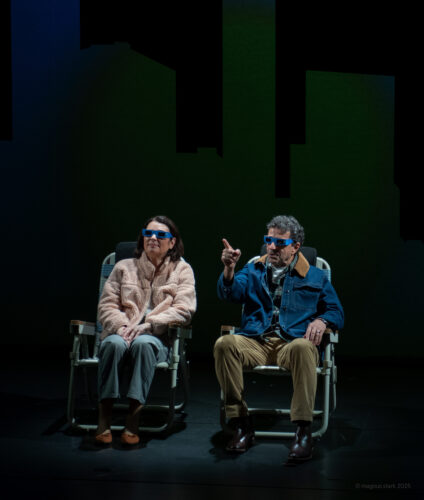
Delia (Dalia Aleman) and Peter (Stephen Schnetzer) watch an eclipse in “Left on Tenth” in the GableStage production of “Left on Tenth.” (Photo by Magnus Stark/courtesy of GableStage)
Outstanding Achievement of an Artistic Specialty
• David Bengali for projection design, “Here There Are Blueberries,” Miami New Drama
• Bryce Cutler for projection video design, “The Zionists,” Miami New Drama
• Jamie Godwin for projection design, “Left on Tenth,” GableStage
• Josieu Jean for multimedia design, “Dear Evan Hansen,” Actors’ Playhouse
• Bong Redila for illustration, “Everything Beautiful Happens at Night,” Island City Stage
• Jenny Wake for dressing/props, “Left on Tenth,” GableStage
As part of the 2026 Carbonell Awards, $2,000 Jack Zink Memorial Student Scholarships will be presented to Matthew Aidan Sanchez (Miami-Dade County), Sofia Bornia (Palm Beach County) and Avery Garfinkel. They will also each receive a bonus $1,000 scholarship from the new Hap Erstein Memorial Scholarship, named after the longtime theater reviewer and Carbonell judge.
In addition, for the first time, three runners-up this year will each receive a $500 Hap Erstein Memorial Scholarship: Maya Beaufort (Miami-Dade County), Jay Hendrix Boegem (Broward County) and SkyLynn Silver (Palm Beach County).
For the Carbonell Awards ceremony, Andrew Kato is executive producer and director, producer is Eloisa Ferrer, and Caryl Fantel is associate producer and musical director.
Tickets for the ceremony and after-party are $45 and go on public sale in mid-October.
Along with New York’s Drama Desk and Chicago’s Joseph Jefferson Awards, the Carbonell Awards are among the nation’s oldest regional arts awards and predate others, including Washington, D.C.’s Helen Hayes Awards. The Carbonell Awards are named after the internationally renowned sculptor Manuel Carbonell, who designed the signature solid bronze and marble award given annually to Carbonell Award winners.
For more information, go to www.carbonellawards.org.
ArtburstMiami.com is a nonprofit media source for the arts featuring fresh and original stories by writers dedicated to theater, dance, visual arts, film, music and more. Don’t miss a story at www.artburstmiami.com
No posts found
Playwright’s ‘Beginnings’ Is Opening in Boca Raton, But Her Start Began in Miami
Written By Michelle F. Solomon
September 4, 2026 at 3:12 PM
Jonathan White, Clare Bawarski, and Daniel Llaca in Theatre Lab’s “Baker Street Beginnings” written by Gina Montét and opening Saturday, Sept. 5. (Photo by Morgan Sophia Photography, courtesy of Theatre Lab)
Gina Montét may be opening her newest play in Boca Raton, but “Baker Street Beginnings” grew out of her work and people she met in Miami-Dade County. Theatre Lab premieres the play on Saturday, Sept. 5 at Florida Atlantic University.
Her relationship with Miami started in 1991 when she said she moved from Iowa to study theater and film at the University of Miami. She ended up never leaving after graduating in 1994.
“I’ve been here ever since. I’ve put down roots. I’ve raised my three kids here. So, yeah, I am very Miami Dade,” Montét, who now lives in Cutler Bay, said.

Paige Rogers, Clare Bawarski, Daniel Llaca, and Jonathan White. (Photo by Morgan Sophia Photography, courtesy of Theatre Lab)
She traces her Miami theater roots to the Coconut Grove Playhouse, where she worked in production and began her playwriting career. In 1998, she wrote and directed the educational musical “Adventures With Louie the Lizard: The Quest for Little Fire” for the Playhouse’s school-touring program during Arnold Mittelman’s tenure as producing artistic director.
Montét continued writing and directing there for eight seasons. “I met my husband there — he’s a lighting designer (Eric Nelson) and now our oldest son works at Actors’ Playhouse at the Miracle Theatre.” Her son Kairick Nelson-Montet is an audio/video technician there. “We’re really a Miami-Dade theater family. South Florida is home.”
Around 2000, she joined Fantasy Theatre Factory, now at the Sandrell Rivers Theater in Liberty City, but then an exclusively touring company rehearsing above a storage facility near Bird Road and the Palmetto Expressway. Montét wrote plays for the company. Matt Stabile, now Theatre Lab’s producing artistic director, was one of her collaborators.
“Several of the shows I did during my time there were written by Gina, so I’ve been a fan of her writing for decades,” Stabile said.

Jonathan White and Gustavo Garcia in “Baker Street Beginnings” by Miami Playwright Gina Montét. (Photo by Morgan Sophia Photography, courtesy of Theatre Lab)
The two later became founding members of Mangrove Creative Collective, a company that developed South Florida stories. Theatre Lab presented readings of Montét’s work and premiered her dark comedy “Overactive Letdown” in 2022. Stabile acted in the premiere of her “Dangerous Instruments” at Palm Beach Dramaworks.
That long friendship and artistic partnership led to “Baker Street Beginnings.” It is the second play the Boca Raton company has commissioned from the Miami playwright for its Heckscher Theatre for Families series.
“Matt and I met doing educational theater over 20 years ago, and one of the things that we always agreed on was that there is a real need for theater that caters to all age groups. We have a lot of theater that works really well for the K through 4,” said the educator. “We have a lot of really great mature theater for our mature audiences.”
But, she said what is missing is anything for children in the fifth-grade age group and into early high school.
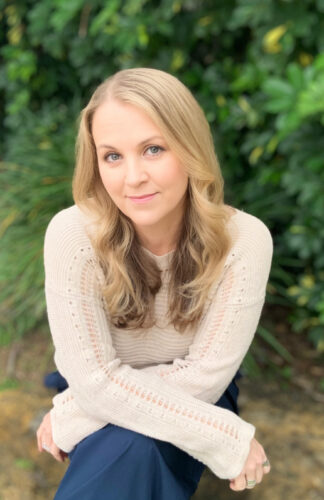
Miami Playwright Gina Montét imagines Sherlock Holmes’ beginnings in a new play commissioned by Theatre Lab at Florida Atlantic University. (Photo courtesy of Theatre Lab)
“There really isn’t a whole lot of quality material. Theaters aren’t really catering to that age group, and as somebody who teaches that age group? Well, Matt knows that I’m always on the lookout, and so when he reached out to me, I said, ‘I would love create pieces that that work for all generations, not just young person educational theater, which I think we see a lot.”
Stabile said he had been struggling to find family productions that met the same standards of imagination and quality as Theatre Lab’s other work, and Montét was the first writer he thought of.
“Today’s young people are really sophisticated,” Montét said. “They have access to a lot of different kinds of entertainment, and so we want to meet them where they are.”
For the playwright, that means creating theater that children, parents and grandparents can experience together, rather than a children’s show with a few jokes thrown in for the adults.
Theatre Lab commissioned “Baker Street Beginnings” and Montét’s “Heebie Jeebies: Tales from the Midnight Campfire” at the same time in spring 2025.
” ‘Heebie Jeebies’ was a play that I had written for my students actually, and then we adapted it for a smaller professional cast.”
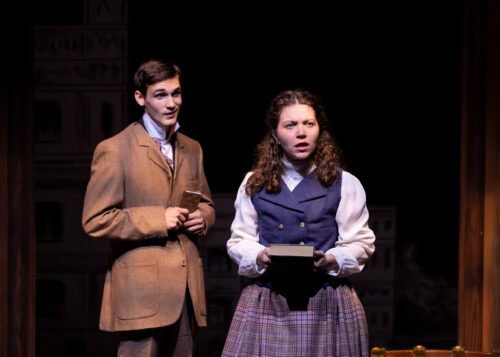
Jonathan White, Clare Bawarski in “Baker Street Beginnings” at Theatre Lab at Florida Atlantic University. (Photo by Morgan Sophia Photography, courtesy of Theatre Lab)
The original play for 30 of her students and then for six professional actors, became Theatre’ Lab’s top-selling family production when it premiered last September, according to Stabile.
“The idea was that we could present the show with six actors and, if our school partners wanted to do it at their schools, they could adjust the cast size to fit their needs,” Stabile said.
For her second commission, “Baker Street Beginnings” began with an idea Montét had been considering for some time: Sherlock Holmes was partly inspired by Dr. Joseph Bell, one of Arthur Conan Doyle’s (the Scottish writer who created the character of Sherlock Holmes) medical-school professors and a man known for drawing conclusions through close observation.
“I started to imagine what that might have been like, how that inspiration might have taken hold of a young Conan Doyle, and there are a lot of historical figures in the play that were around at the time when he was coming of age, and they are also coming of age. I was excited about this imagined adventure where all these people team up, and their paths intersect before their emergence into greatness.”
Her play travels to 1870s London, where Doyle is still a teenager and Holmes does not yet exist. The aspiring doctor is taken under Bell’s wing, then pulled with his friends into a mystery involving intrigue, danger and deception.
Centering Doyle instead of Holmes gave Montét something the famous detective audiences never met: a protagonist unsure of himself. She saw in Doyle a character close to the age of the young people in the audience.
Writing a Sherlock Holmes-style mystery about the beginnings of the detective was, Montét admitted, “a tall order.” She had never written a mystery before, but it was what attracted her to the project.
The play combines historical and fictional characters and treats London almost like a game board, moving through different locations and introducing figures who might have crossed paths at the time. Six actors portray about 15 characters.

Jonathan White, Paige Rogers, and Clare Bawarski in Theatre Lab’s “Baker Street Beginnings.” (Photo by Morgan Sophia Photography, courtesy of Theatre Lab)
There are puzzles audience members can try to solve along with the characters, experiments in an apothecary and humor to keep the danger from becoming too dark. Montét also planted an Easter egg: another writer from the period, one with an affinity for the macabre, crosses Doyle’s path.
The play was read at Theatre Lab’s Owl New Play Festival in April. Although the festival audience was primarily adults, its response reassured Montét that the story could work across generations.
“Even if we hadn’t already committed to a second play, we would have immediately gone back to her again. The play was a big hit, again, and underwent relatively few changes over the summer before we got into rehearsals in mid-August,” Stabile, who is directing the play, said.
“Baker Street Beginnings” is the first production in Theatre Lab’s Marleen Forkas Studio One Theatre. The larger space allows for a more expansive production than “Heebie Jeebies,” with period costumes, special effects and a set that moves the action through Doyle’s London.
“Finding something that works for everybody is something that I really want to provide. It isn’t just a mystery. It’s got comedy, said Montét. “It really does have something for everybody, and Theater Lab is absolutely bringing everything to the table in terms of production value.”
WHAT: World premiere of “Baker Street Beginnings” by Gina Montét, directed by Matt Stabile
WHEN: Saturdays at 7 p.m. and Sundays at 3 p.m., Sept. 5-20. Additional 4:30 p.m., Saturday, Sept. 19 performance. Detective Science activities begin one hour before public performances.
WHERE: Theatre Lab, Marleen Forkas Studio One Theatre, Performing Arts Building (PA-51), Room 103, Florida Atlantic University, 777 Glades Road, Boca Raton
COST: $25 for adults; one child admitted free with each adult ticket; additional children’s tickets are $5
INFO: 561-297-6124 or fauevents.universitytickets.com
ArtburstMiami.com is a nonprofit media source for the arts featuring fresh and original stories by writers dedicated to theater, dance, visual arts, film, music and more. Don’t miss a story at www.artburstmiami.com.
No posts found
Free Films, Big Dreams at Miami’s Urban Film Festival
Written By Sergy Odiduro
August 28, 2026 at 8:57 PM
Miami filmmaker Valentino Dors, director of the short film “Shades,” at right, works with cast and crew during production. “Shades” is part of the lineup in the Urban Film Festival happening in Overtown and downtown Miami from Friday, Sept. 4 to Sunday, Sept. 6. (Photo courtesy of Valentino Dors)
Isabel Bacigalupo feared she was running out of time.
The Miami-based filmmaker had just wrapped up shooting for “May Death Connect Us Apart,” a sci-fi short film starring Michele Lepe, Xavier Corone, Katherine Wright and Bacigalupo’s daughter, Oriana Fifer.
The plot centered on a grieving woman who reconnects with her late husband using AI.
Back in 2014 when Bacigalupo came up with the concept, the premise seemed far-fetched, but with each technological advance she wondered whether her film would be rendered obsolete.
“I was racing against the clock.” Bacigalupo said. “I started to realize that this is not going to be sci-fi anymore; this is becoming reality.”
Limited resources also hampered production timelines.
“The budget was definitely a challenge because there was none,” she said.
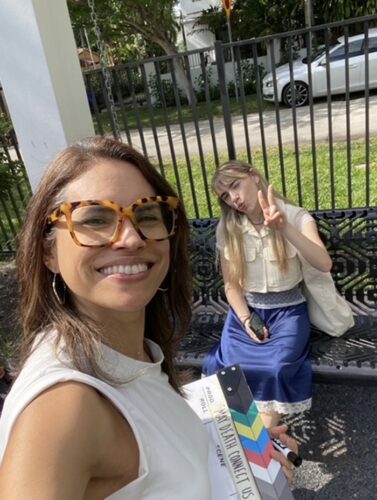
Director Isabel Bacigalupo and Actress Oriana Fifer in “May Death Connect Us Apart.” The sci-fi short film is about a grieving woman who reconnects with her late husband using AI. (Photo courtesy of Isabel Bacigalupo)
But the generosity of those who surrounded her propelled the project forward. And of course, faith always helps, because that’s practically all Bacigalupo had when she worked up the nerve to reach out to Lepe.
Known to a generation of preschoolers as the host of PBS Kids Sprout’s “The Good Night Show,” Lepe was a dream casting choice for Bacigalupo and Fifer, who grew up watching the program. They were thrilled when she agreed to take the role.
But hopes, dreams and pixie dust can only take you so far. This is where the hard work began.
After the film was finished shooting, it then took an entire year of editing for it to be complete.
Turns out it came out in the nick of time.
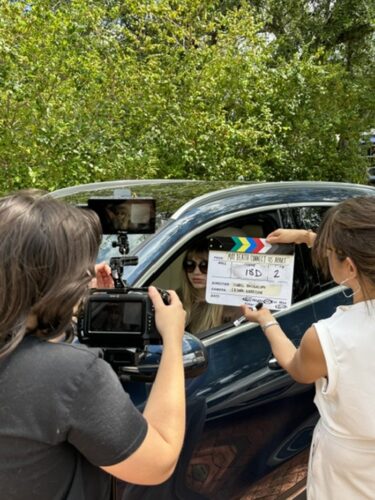
Shooting a scene from “May Death Connect Us Apart,” a sci-fi short film starring Michele Lepe, Xavier Corone, Katherine Wright and Oriana Fifer. (Photo courtesy of Isabel Bacigalupo)
“May Death Connect Us Apart” is one of nearly 200 films set to be featured during the 11th annual 2026 Urban Film Festival (UFF).
One of the largest free film festivals in the country, Urban Film Festival has free screenings during Labor Day weekend from Friday, Sept. 4 to Sunday, Sept. 6 in Overtown and in downtown Miami.
As part of the event, A Welcome to Miami Party will be held at Red Rooster Overtown. Filmmakers, industry professionals, educators and students will also benefit from networking and educational opportunities.
Marco (“Mall”) Molinet, founder of Florida FilmHouse International and Urban Film Festival, believes that the sessions are a great way of supporting those who may feel that there’s no hope in sight.
He knows because he’s been there.
“We started our festival because we couldn’t get into any festivals,” Molinet said.
Looking back, Molinet said he is proud of how much the festival has grown since it began in 2015 and that it received an enthusiastic response right from the beginning. Part of the draw, he said, is offering a supportive environment for those who are starting out in the industry.
Molinet watches every movie that is submitted and said he has personally seen the evolution of many filmmakers, particularly those who joined the festival from the outset.
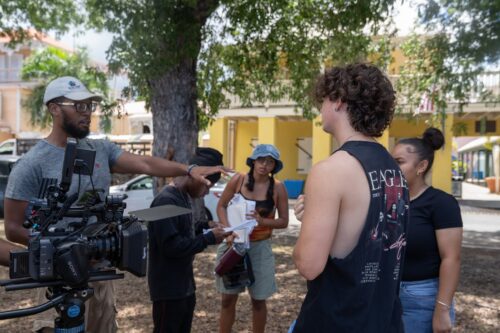
George W. Cannon III, left, is the director of “Verified.” The film was made by students in the Film Over Gun Violence Program. (Photo courtesy of George W. Cannon III)
“We started off with about 60 to 70 films, and a lot of those films were pretty horrible,” Molinet admitted. “They weren’t really great films. But I just saw something in the filmmaker or something in the film. And a lot of those filmmakers are still with us to this day. Now their films have gone to a whole other level.”
For Molinet, that early willingness to take a chance on unpolished work was part of the festival’s purpose from the beginning.
“They just needed someone to give them a shot and keep them in the game. We look at it like we’re keeping young filmmakers motivated because it’s very important that every genre has their own people to tell their story.”
This includes young filmmakers.
The festival’s opening day will also spotlight young filmmakers enrolled in the 1st Take Youth Film Program, a year-round initiative that introduces teens to the filmmaking process through hands-on training in areas including screenwriting, producing, cinematography and editing. Students in the program will premiere their films Friday, Sept. 4 at the Overtown Performing Arts Center.
The 1st Take students aren’t the only young filmmakers getting a chance in the spotlight. The festival will also showcase work created by students from the U.S. Virgin Islands.
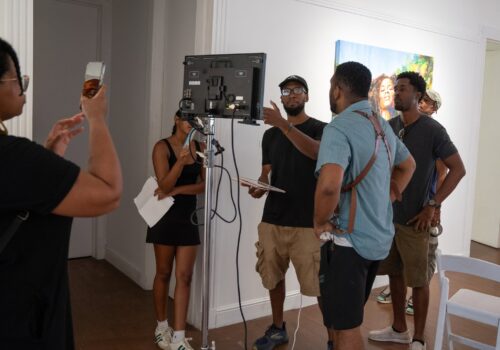
Filmmaker George W. Cannon III, center, watches a playback of a scene with members of the Film Over Gun Violence team during production. (Photo courtesy of George W. Cannon III)
St. Croix filmmaker George W. Cannon III directed “Verified,” a film created by young participants in the Film Over Gun Violence summer program. The film follows a teen struggling with the pressure to seek validation through social media.
“We do this summer program called Film Over Gun Violence where we have high schoolers come, and we basically have them write their own film,” Cannon explained. “We help them shoot it. We teach them elements of storytelling and how to write scripts and we show them how to use the camera.”
For Cannon, having the students’ work screened in Miami gives them an opportunity to see where those newly developed filmmaking skills can lead.
Miami filmmaker Valentino Dors, whose film “Shade” will be shown at UFF, encourages others, both young and old, to do the same. He realizes how much he has learned from launching “Shade.”
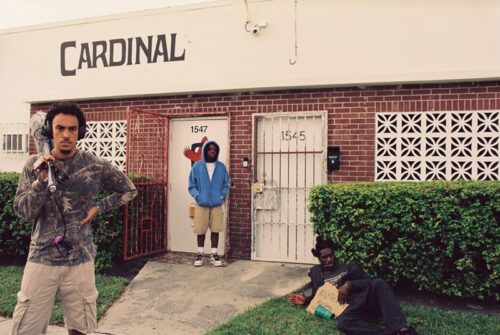
Directed by Valentino Dors, “Shade” is about a South Florida videographer. (Photo courtesy of Valentino Dors)
“Chase your dreams. Chase your aspirations. A perfect film doesn’t exist,” he emphasized. “Go out and film, even if all you have is an iPhone. If you don’t know how to write a script, start with a line a day. Take it day by day and just go out and film.”
It is that kind of persistence that Molinet hopes the festival will continue to encourage in emerging filmmakers.
“All of these filmmakers are on the cusp of being the next big thing,” Molinet said. “They all have what it takes to be great.”
WHAT: 2026 Urban Film Festival
WHERE: Various locations. On Friday, 1st Take Youth Film Program will premiere their films at Overtown Performing Arts Center, 1074 NW 3rd Ave, Miami. Welcome to Miami Party will be held at Red Rooster Overtown, 920 NW 2nd Ave, Miami, On Saturday and Sunday, the festival moves to Silverspot Cinema, 300 SE 3rd St #100, Miami
WHEN: Labor Day Weekend, Friday, Sept. 4 through Sunday, Sept. 6
COST: Free
INFORMATION: For full schedule and times, urbanfilmfestival26.eventive.org
ArtburstMiami.com is a nonprofit media source for the arts featuring fresh and original stories by writers dedicated to theater, dance, visual arts, film, music and more. Don’t miss a story at www.artburstmiami.com.
No posts found
‘RESET’ Brings Bodies, Humor and AI to Koubek Center
Written By Miguel Sirgado
August 21, 2026 at 7:04 PM
Luciano Cortés, Luciano Rosso, and Alfonso Barón in “RESET,” a physical-theater work exploring technology, artificial intelligence and human connection, at Miami’s Koubek Center Friday, Aug. 28, and Saturday, Aug. 29. (Photo by Javier Labrador, courtesy of FUNDarte)
Three bodies enter a system. They repeat, obey and function as expected.
Then something goes wrong.
That breakdown is the starting point of “RESET,” a physical-theater work by Argentine performers Alfonso Barón, Luciano Cortés and Luciano Rosso, coming to Miami’s Koubek Center Friday, Aug. 28, and Saturday, Aug. 29.
“We wanted to talk about the speed of the world we live in and how we’re constantly running after this ball, or this carrot, that seems to be life,” Rosso says.
Presented by FUNDarte, Miami-Dade County Auditorium’s “Away from Home” Series and the Koubek Center, “RESET” uses movement, extreme gesture, absurdist humor and tightly synchronized choreography to explore technology, artificial intelligence and the systems increasingly woven into everyday life.
The project began with a proposal from FUNDarte and the desire, Rosso says, for three longtime friends to create together. Their questions about the accelerating pace of contemporary life quickly led them to technology and AI —not only as subjects, but as tools in the creative process.
Rosso experimented directly with artificial intelligence while developing the work, using prompts and ideas to generate material that could become a starting point for scenes.
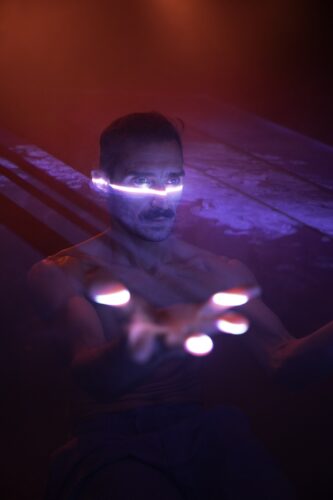
Luciano Rosso in “RESET.” “I’m a theater animal,” he says. “I’d rather spend that time rehearsing a new show than creating content online.” (Photo by Javier Labrador, courtesy of FUNDarte)
“It was sort of a collaboration,” he says, amused by the idea. “It’s strange to say that because we’re talking about technology and not a person. But I learned how to approach it so it could give me material that I could then enrich.”
The results surprised him.
“I had never given AI this kind of role in the creative process,” Rosso says. “It became a trigger for so many things, and some of those scenes are still evolving—a little like technology itself.”
Rosso and Barón, both based in Paris, bring to “RESET” a long shared history performing together in “Un Poyo Rojo,” a largely wordless physical-theater work that has toured internationally for more than 15 years.
Cortés followed a different path. An actor, dancer and physical-theater performer, he has worked with the Argentine immersive-theater company Fuerza Bruta and Catalan experimental-theater company La Fura dels Baus. After moving to Miami in 2018, he founded the physical-theater company Salvaje Teatro, bringing his own approach to movement and performance to the trio.
Joining an established partnership made Cortés apprehensive at first.
“Their bodies had already developed this symbiosis,” he says. “I wondered how my body, with its own way of moving, would fit into that dynamic.”

Luciano Rosso, Luciano Cortés and Alfonso Barón in “RESET.” “There is something about the value of the living human body—the body that gets tired, becomes exhausted, fails—that connects us with our humanity,” says Cortés. (Photo by Javier Labrador, courtesy of FUNDarte)
Instead, he says, the connection came quickly.
“We’ve been friends for many years, and we share humor and many ways of seeing and thinking about art,” Cortés says. “Suddenly we became a triad, like a chord with three notes. We played it, and it sounded wonderful.”
Barón says the three also share an instinct that became essential during the creative process: saying yes to one another’s ideas.
“If somebody says, ‘I want to be a dinosaur,’ and somebody else says, ‘I want to be a robot,’ instead of saying no, you say, ‘OK, let’s make robot dinosaurs,’” he says. “Instead of shutting down an idea, you accept it and see how you can transform it.”
As the work took shape, that creative freedom gave way to tightly structured choreography.
“There is very little room for improvisation now,” Barón says. “The movement has to be extremely precise to create the effect we want. Suddenly you’re human, then an android, then an animal. The quality of movement keeps changing.”
For all its focus on technology, Barón describes what happens onstage as surprisingly handmade.

Alfonso Barón in “RESET.” “In a world that is becoming more virtual, theater for me is a place of refuge and salvation,” Barón says. (Photo by Javier Labrador, courtesy of FUNDarte)
“When you see it, you’re going to see something very artisanal,” he says. “We represent things in a very theatrical way. Technology doesn’t win.”
“There are no machines,” Barón continues. “You see three people representing technology with their bodies. In a world that is becoming more virtual, theater for me is a place of refuge and salvation.”
Cortés takes the question further.
“What interests us, beyond technology being the excuse for all of this, is ‘What is the value of the human being onstage in this era?’ ” he says.
He notes that AI has already entered music, writing and film, but theater may be a different genre altogether.
“We feel that theater may be one of those territories of resistance where it is very difficult for AI to enter. So our question became: How does AI enter that territory?”

Luciano Cortés, Alfonso Barón and Luciano Rosso star in “RESET.” Rosso says the work grew from a desire to explore “the speed of the world we live in” and the constant race to keep up with it. (Photo by Javier Labrador, courtesy of FUNDarte)
Cortés says it is the audience may be what sets theater apart,
“For theater to exist, that connection with the audience has to exist,” he says. “There is something about the value of the living human body—the body that gets tired, becomes exhausted, fails—that connects us with our humanity.”
For Cortés, those questions also resonate with the city where “RESET” will be performed. His work in Miami has included physical and immersive productions that challenge conventional relationships between performer and spectator.
“Technology crosses our lives every day,” he says. “But what happens to the body and to the real connection between human beings?”
He sees that question playing out in ordinary Miami life, where even getting together with friends can require coordinating packed calendars weeks in advance.
“We’re creating all this technological paraphernalia, and it’s great,” Cortés says. “But it is also distracting us and pulling us away from what is essential.”
But “RESET” also intends to make audiences laugh.
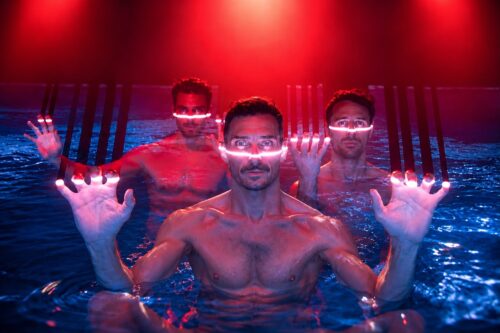
Luciano Cortés, Luciano Rosso and Alfonso Barón in “RESET.” “Suddenly we became a triad, like a chord with three notes,” Cortés says. “We played it, and it sounded wonderful.” (Photo by Javier Labrador, courtesy of FUNDarte).
For Rosso, humor has been part of his language since childhood, when he would stand in front of the television during family dinners, dancing and lip-syncing to commercials.
“Humor is very healthy. It’s something beautiful, a way of communicating that fills my spirit,” he says. “Onstage, it is a wonderful and very powerful weapon. It’s been part of me since before it became my career.”
Barón hopes the physical language of the work leaves space for audiences to find meanings of their own.
“You lead the audience in a direction, but that direction opens other places,” he says. “The meaning may be one thing for you, another for me and another for my mother.”
Rosso has a simpler test for what he hopes audiences carry with them after “RESET.”
First, he wants them to have a good time. Then, perhaps, to leave with something to think about.
And one more thing.
“I’d love for people to leave the theater and not want to look at their phones for a while.”
WHAT: “RESET” by Alfonso Barón, Luciano Cortés and Luciano Rosso
WHERE: Koubek Center, 2705 SW 3rd St., Miami
WHEN: 8 p.m., Friday, Aug. 28, and Saturday, Aug. 29
COST: $20
INFORMATION: 786-348-0789 or www.koubekcenter.org
ArtburstMiami.com is a nonprofit media source for the arts featuring fresh and original stories by writers dedicated to theater, dance, visual arts, film, music and more. Don’t miss a story at www.artburstmiami.com
No posts found
Arca Images Takes on the American Dream in Spanish ‘Death of a Salesman’
Written By Michelle F. Solomon
August 16, 2026 at 10:49 PM
Carlos Acosta Milián as Willy Loman and Rosalinda Rodríguez as Linda Loman in Arca Images’ “Death of a Salesman.” The original Spanish language production with simultaneous audio English translation opens Sunday, Aug. 21, at the Westchester Cultural Arts Center. (Photo courtesy of Arca Images)
Pulitzer Prize-winning playwright Nilo Cruz had the idea of bringing Arthur Miller’s great American classic, “Death of a Salesman,” to a Hispanic audience. Alexa Kuve, founder and artistic director of Arca Images, had been looking for a way for her company to mark America’s 250th anniversary.
The play bridged the two ambitions.
Miller’s Willy Loman has spent more than 75 years chasing the American Dream.
For Kuve, presenting “Death of a Salesman” in Spanish in Miami doesn’t change that story. It may, in fact, bring it closer to an audience that knows something about starting over, striving to succeed and discovering that the promises attached to that dream don’t always come true.
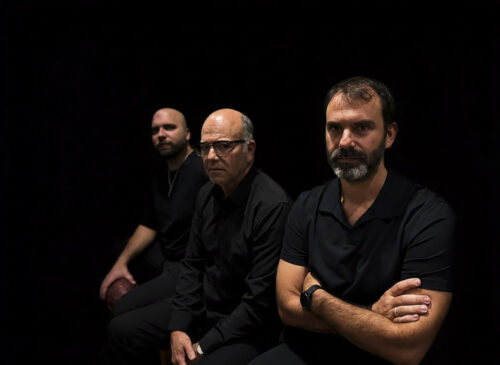
Guillermo Cabré (Happy Loman), Carlos Acosta Milián (Willy Loman) and Caleb Casas (Biff Loman) in in Arca Images’ “Death of a Salesman.” (Photo courtesy of Arca Images)
Arca Images presents “Death of a Salesman” (“La muerte de un viajante”) Friday, Aug. 21 through Sunday, Aug. 30, at the Westchester Cultural Arts Center.
A Tony Award-winning revival of the 1949 Pulitzer Prize-winning drama just ended its run on Broadway. The enduring American play follows Willy Loman, an aging traveling salesman confronting the collapse of the life he believed he was building for himself and his family. Willy’s faith in success is distilled in one of the play’s best-known lines: “Be liked and you will never want.” For Kuve, that drive toward recognition is part of what makes the story feel so current.
“It’s a universal dream of hope, of being someone in life, getting somewhere in life, your children to succeed in life, to be important, to become someone,” she says.
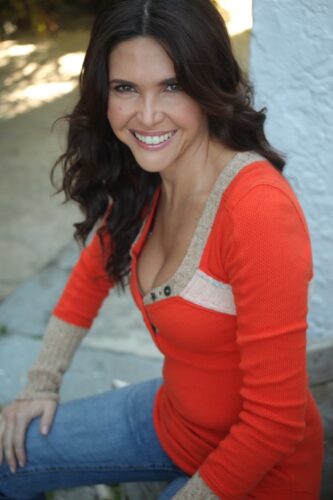
Alexa Kuve, artistic director of Arca Images’ translated Arthur Miller’s “Death of a Salesman” into Spanish. (Photo by Justin Macala, courtesy of Arca Images)
For immigrants, Kuve says, that pursuit can carry even more weight.
“I think it even takes another dimension because it’s becoming someone in another country that is not yours,” she says. “Most of the time, starting from scratch.”
That idea is not theoretical for Carlos Acosta-Milián, the Cuban-born actor playing Willy.
Acosta-Milián left Cuba, lived and worked in Spain and eventually came to Miami in 2012, rebuilding both his life and his career along the way.
“I know what it means to start over — and not just once, but several times,” he says.
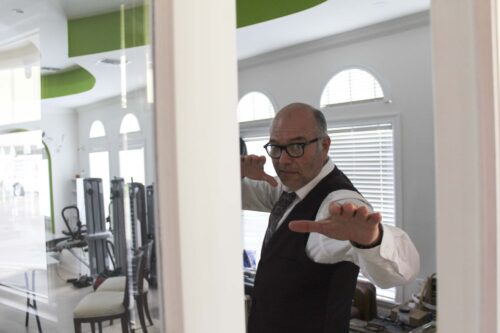
Carlos Acosta Milián in rehearsal. He says Willy Loman is a role he always wanted to play but never thought he’d have the chance. He stars in Arca Images’ “Death of a Salesman.” (Photo courtesy of Arca Images)
He landed in Spain as an established actor only to discover, he says, that much of what he had already accomplished didn’t mean much in a new country. Then came another beginning in Miami.
“I arrived in Miami with almost nothing, without money, without guarantees, and already in my forties,” Acosta-Milián says. “At that age, you no longer have the body or the innocence of someone in their twenties. Every new beginning weighs more.”
It is one reason he understands Willy as more than one of American theater’s iconic roles.
“Willy Loman lives exactly in that territory: the territory of a man who feels he has arrived too late, that the world has changed and he no longer knows how to fit into it,” Acosta-Milián says.
The role was one he had dreamed about but never expected to play.
“Willy is one of the great summits of world drama, and certainly of American theater.”
Cruz and Acosta-Milián have a long artistic collaboration. The two have worked together on productions including “Lorca en un vestido verde,” “Baño de luna,” “Exquisita agonía,” “Dos hermanas y un piano,” “Sed en la calle del agua” and “Tres veces Cruz.”
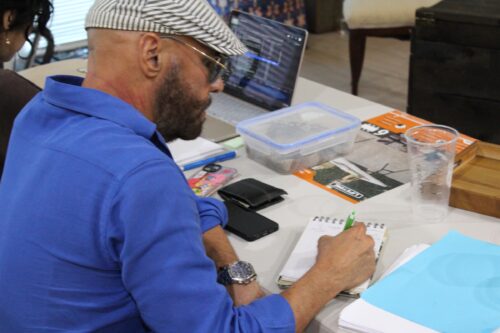
Nilo Cruz had the idea of producing Arthur Miller’s “Death of a Salesman” in Spanish. He found a willing partner in Arca Images. (Photo courtesy of Arca Images)
Acosta-Milián recalls Cruz telling him after the pandemic: “I want to do ‘Death of a Salesman,’ and I want you to play Willy Loman.”
There wasn’t a hint of hesitation in accepting the role.
“I said yes right then and there. That was when the project was born. From that moment on, it began to take shape, to grow, to find its moment, until finally becoming a reality now, in 2026.”
Cruz is co-directing the Arca Images production with Samantha Pazos, a director he has previously mentored and worked with on productions including “Two Sisters and a Piano” and “Anna in the Tropics.”
Kuve translated and adapted Miller’s play for the production, but it doesn’t attempt to transform the Lomans into a specifically Latino family.
“There is no reference to the characters being American or Hispanics,” Kuve says. “It can easily be (a) Hispanic family, but it can be an American family. It’s just that we’re doing it in Spanish.”
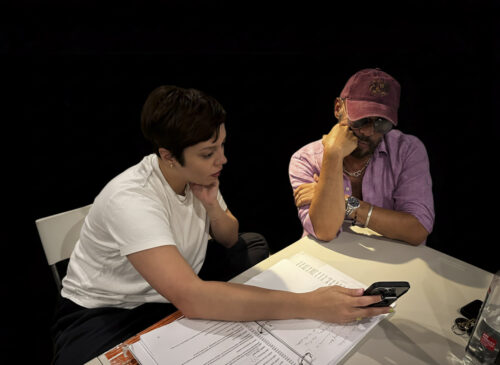
Co-directors Samantha Pazos and Nilo Cruz in rehearsal for Arca Images’ “Death of a Salesman.” (Photo courtesy of Arca Images)
Acosta-Milián believes the language itself changes the audience’s entry point into Miller’s world.
“To translate a work like this is not simply to change words,” he says. “It is to open a door for the Latino spectator, so that they can enter the story through their own sensitivity, their own rhythm, their own way of hearing the world.”
For the actor, the story of Willy’s diminishing place in a changing world is increasingly contemporary.
“That feeling of invisibility, of not being recognized, of sensing that your life depends on someone giving you an opportunity — that I know,” Acosta-Milián says. “I know how it feels.”
Acosta-Milián first encountered American theater as a young actor in Havana, where, he says, it offered artists a way to speak indirectly about things they could not address openly.
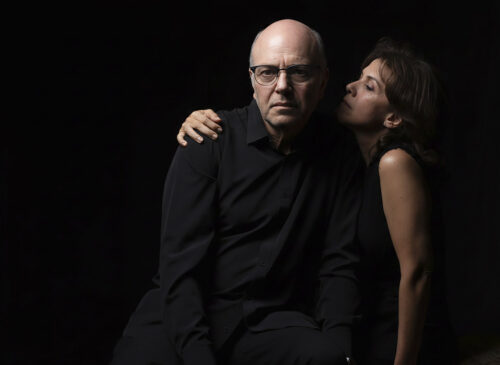
Carlos Acosta Milián as Willy Loman and Rosalinda Rodríguez as Linda Loman in Arca Images’ “Death of a Salesman.” (Photo courtesy of Arca Images)
“Not only because of the quality of the work, but because of what it allowed us to say. We had to approach it metaphorically in order to pass through the filter of censorship. It was theater that gave us a way to express things we could not say directly. For a young actor that was a mixture of risk, discovery and freedom.”
At 61, age has changed the way he approaches Willy, he says, adding that the play resonates differently now.
“I no longer read it as a theatrical exercise. I read it as a mirror of life. In Cuba, the trilogy was a metaphor for a country falling apart,” Acosta-Milián says.
The connection is more personal.
“Today, ‘Death of a Salesman’ is the story of a man fighting not to disappear. And I understand that fight. I know what it means to feel that the world is changing and that you must change with it in order not to be left behind. Before, I was a young actor encountering American theater. Today, I am a man who has lived enough to understand it from the inside.”
WHAT: Arthur Miller’s “Death of a Salesman” (in Spanish with simultaneous audio English translation)
WHEN: 8 p.m., Friday and Saturday, 5 p.m. Sunday. Opens Friday, Aug. 21 through Sunday, Aug. 30.
WHERE: Westchester Cultural Arts Center, 7930 SW 40th St., Miami
COST: $25, $20 for seniors (ages 65 and older), students with a valid ID.
INFORMATION: (305) 934-5103 and www.arcaimages.org
ArtburstMiami.com is a nonprofit media source for the arts featuring fresh and original stories by writers dedicated to theater, dance, visual arts, film, music, and more. Don’t miss a story at www.artburstmiami.com
No posts found
Review: ‘The Shark Is Broken’ Finds Its Sea Legs at Actors’ Playhouse
Written By Michelle F. Solomon
July 21, 2026 at 6:46 PM
Adam Poole as Roy Scheider), Wesley Slade as Richard Dreyfuss) and Iain Batchelor as Robert Shaw) in “The Shark Is Broken” at Actors’ Playhouse at the Miracle Theatre through Sunday, Aug. 9. (Photo by Alberto Romeu)
The mechanical shark may have repeatedly broken down during the filming of Steven Spielberg’s 1975 blockbuster “Jaws,” but those frustrating delays provide the perfect setup for the behind-the-scenes comedy “The Shark Is Broken,” now on stage at Actors’ Playhouse.
Director David Arisco steers three strong performances and spot on technical elements through Ian Shaw and Joseph Nixon’s behind-the-scenes comedy. “The Shark Is Broken” premiered in 2019 and later played London’s West End before moving to Broadway in 2023.
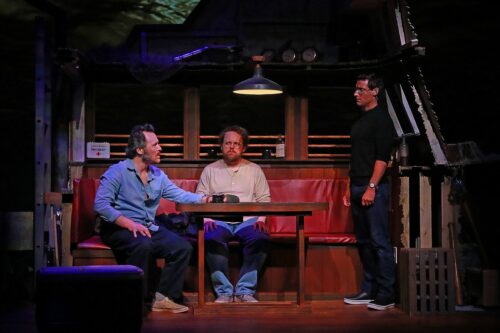
Iain Batchelor as Robert Shaw has a drink while Wesley Slade as Richard Dreyfuss and Adam Poole as Roy Scheider listen aboard the Orca in Actors’ Playhouse’s production of “The Shark Is Broken.” (Photo by Alberto Romeu)
The 90-minute play is set entirely aboard the cramped deck of the fishing boat the Orca in the waters off Martha’s Vineyard during the 1974 filming of “Jaws.” Ian Shaw, who starred as his father in the English and Broadway productions, draws on Robert Shaw’s journals and the well-documented production delays caused by Bruce, the malfunctioning mechanical shark.
The actors grumble about shooting on the open ocean, trade stories, debate Shakespeare, art and fame, reveal stories of their past and share insecurities as the delays stretch on. Running throughout is the recurring question: Why didn’t Spielberg simply film in a Hollywood tank instead of battling the unpredictable Atlantic?
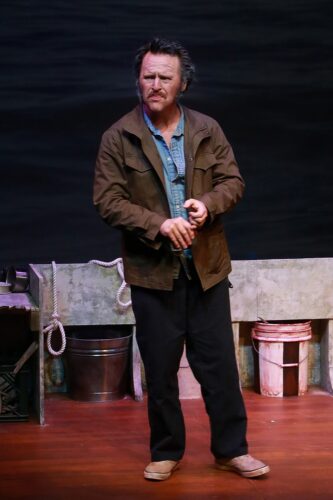
Iain Batchelor portrays Robert Shaw in “The Shark Is Broken” at Actors’ Playhouse. (Photo by Alberto Romeu)
South Florida’s Iain Batchelor is virtually unrecognizable from his performance in last season’s “The Girl on the Train.” Sporting long dark hair and a pronounced bald spot, he captures Robert Shaw’s imposing authority, sarcasm, and self-destructive tendencies without resorting to a straight impersonation.
As Richard Dreyfuss, New York-based actor Wesley Slade wisely avoids mimicking the Oscar-winning actor’s familiar voice and mannerisms. Instead, he embraces the character’s ambition and restless neurotic energy, creating a performance that feels authentic rather than imitative. (The real Dreyfuss has publicly criticized the play’s portrayal, saying Ian Shaw never sought his perspective and that he was unfairly depicted as a fool. In the play, Shaw even tells Dreyfuss he’d be good in a Shakespeare play in the role of a fool.)
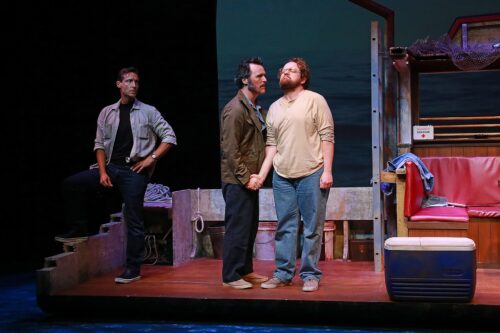
Tensions flare aboard the Orca as Robert Shaw (Iain Batchelor) twists Richard Dreyfuss’ (Wesley Slade) hand while Roy Scheider (Adam Poole) looks on in Actors’ Playhouse’s production of “The Shark Is Broken.” (Photo by Alberto Romeu)
Adam Poole rounds out the trio as Roy Scheider, serving as the play’s steady center. The Los Angeles actor captures the easygoing professionalism that often places him between the clashing personalities of Shaw and Dreyfuss. A scene in which he’s preparing to settle in for a tanning session on the boat, meticulously folding each piece of clothing, is impeccably executed. Although the script often limits Scheider to playing mediator, repeatedly urging the other two men to cool their tempers, Poole gives the character warmth and a quiet authority that make him more than simply the referee.
While the dialogue is often witty and revealing, the script occasionally circles back to the same conflicts. Much of the tension comes from Shaw’s relentless badgering of Dreyfuss, a dynamic that can grow somewhat repetitive as the play progresses.
Presented in Actors’ Playhouse’s intimate Balcony Theatre, “The Shark Is Broken” makes smart use of its compact setting.
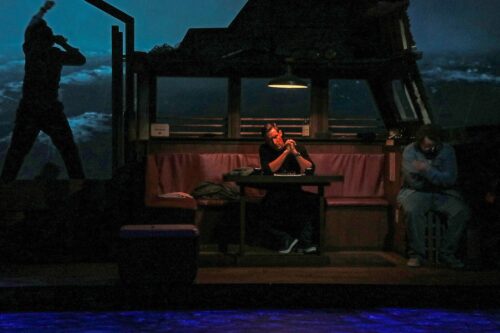
The mood aboard the Orca is heightened by projections, lighting and scenic design in Actors’ Playhouse’s production of “The Shark Is Broken.” (Photo by Alberto Romeu)
Brandon M. Newton’s scenic design places the actors aboard the Orca, while projections of sometimes tranquil, sometimes churning waters reinforce the feeling of being stuck at sea. Sam Sigler’s props give the Orca the feel of a working fishing boat. A first-aid kit, cooler, fishing net, life jackets and coiled ropes add authenticity, while liquor bottles tucked beneath tables and into hidden nooks become recurring reminders of Shaw’s alcoholism.
Reidar Sorensen’s sound design completes the illusion. The cries of seagulls, water lapping against the boat, the rumble of engines and the arrival of speedboats ferrying cast and crew give the sense of sharing the actors’ long waits on the open water. Eric Nelson’s lighting subtly marks the passage of time, distinguishing day from night while reflecting changing weather conditions, and preventing the single-set production from feeling visually static.
Ellis Tillman’s costumes help to convey the character’s personalities. Dreyfuss’ faded Levi’s and denim jacket make it stand out even more that he is younger than the others, while Scheider’s practical boating clothes—including the deck boots he carefully removes before sunbathing —reinforce his methodical nature. Batchelor, in an olive field jacket, weathered work clothes and distinctive mutton-chop sideburns, completes the convincing transformation of Shaw.
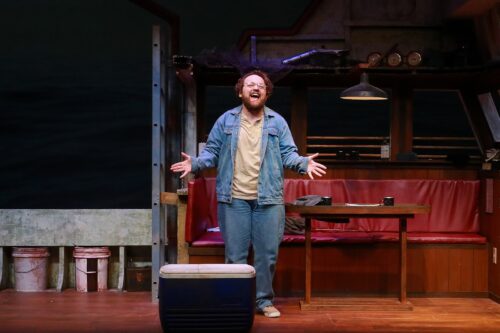
Wesley Slade portrays a young Richard Dreyfuss in “The Shark Is Broken” at Actors’ Playhouse. (Photo by Alberto Romeu)
Arisco clearly enjoys productions that rely on sharp dialogue and strong storytelling rather than spectacle. He keeps the action moving at an easy pace, using the cast’s chemistry and the production’s polished technical elements to overcome the script’s minor shortcomings. Even when the play returns to the familiar rhythm of Shaw provoking Dreyfuss and Scheider stepping in to restore peace, the performances keep the interactions engaging.
Those unfamiliar with “Jaws” (yes, there may be some) will find plenty to enjoy from this well-executed and entertaining production because “The Shark Is Broken” is less a tribute to the film than a comedy about three actors who have no idea they’re making a future classic.
WHAT: “The Shark Is Broken” by Ian Shaw and Joseph Nixon
WHERE: Actors’ Playhouse at the Miracle Theatre, Balcony Theatre, 280 Miracle Mile, Coral Gables
WHEN: 8 p.m., Wednesday through Saturday, 3 p.m. Sunday. Special matinee Wednesday, July 22. Through Sunday, Aug. 9.
TICKETS: $40, $50, $60, $70, $75, $80 and $95, depending on performance.
INFORMATION: (305) 444-9293; actorsplayhouse.org
ArtburstMiami.com is a nonprofit media source for the arts featuring fresh and original stories by writers dedicated to theater, dance, visual arts, film, music and more. Don’t miss a story at www.artburstmiami.com
No posts found
4-Day Miami Takeover Opens With ‘Comedy Vybez’ At Bandshell
Written By Sergy Odiduro
July 21, 2026 at 12:49 PM
Comedian Esau McGraw is among the performers appearing at “Comedy Vybez Festival,” the comedy kickoff to the 18th annual Miami Takeover at the Miami Beach Bandshell on Friday, July 24. (Photo courtesy of the artist and The Miami Takeover)
Stand-up comedy is often overlooked as an art form, according to Wylie Kynard.
“You have music as an art form . . . You have visual art as an art form. Sometimes people when they talk about the arts, they leave out that part of it, and they don’t see comedy as an art,” says Kynard, the co-founder and partner of The Miami Takeover (MTO).
And like other mediums, Kynard notes that comedians seek to elicit reactions from a captive audience.
“When you get on the stage and you create a comedy show, you have to be creative and innovative to make the people laugh, and that’s an art.”
This year, the annual MTO, one of the largest Black cultural festivals, is exploring that comedy dynamic with “Comedy Vybez Festival,” the kick-off to the four-day festival on Friday, July 24 at the Miami Beach Bandshell. Events are scheduled through Monday, July 27.

Miami spoken-word poet and cultural curator Ingrid B hosts “Comedy Vybez,” the comedy kickoff to the 18th annual Miami Takeover. (Photo courtesy of the artist and The Miami Takeover)
Miami-spoken word poet, Ingrid “Ingrid B” Bazin, who has actively curated and produced local events for the last 25 years, is serving as host and looking forward to bringing talent in from other parts of the country.
Founded by three HBCU graduates and event curators from the Washington, D.C. area— Kynard, Antwoine McCoy and Vincent Peden– Bazin says there’s a D.C.-Miami connection that makes the event special.
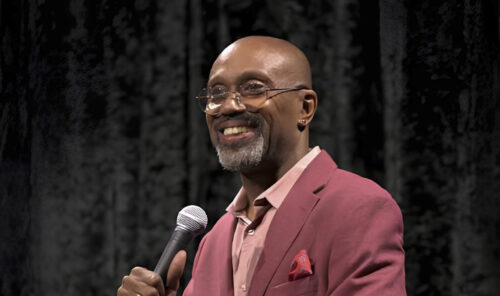
Tony Woods is a seasoned comedy veteran with an endless list of credits. (Photo courtesy of the artist and The Miami Takeover)
“This is a part of an annual event that happens in South Florida every year, and that D.C. energy is a beautiful space to be in. And for those that are coming into town, they get to experience South Florida and experience Miami beyond what people think Miami is.”
The scenery for visitors adds to the allure.
“The Bandshell is a dope location. You’re right by the water, so people that are not from South Florida will get to experience that. And the people that are from South Florida, but who never go to the beach, they’ll get to experience it as well,” says Bazin.
Eddie Bryant, a Washington, D.C.-based comedian who’s been featured on BET, Magic Johnson’s Aspire, TVOne, and Starz television network, calls the MTO event “a comedy lovers buffet of comedy from comedians from across the country.”

Eddie Bryant, a Washington, D.C.-based comedian who’s been featured on BET, Magic Johnson’s Aspire, TVOne, and Starz television network, is one of the featured comedians. (Photo courtesy of the artist and The Miami Takeover)
Along with Bryant, Joe Clair, Esau McGraw, Lawrence Killabrew, Antoine Scott, Maria Sanchez, Ashima Franklin, Tony Woods, Ronnie Jordan and Howie Bell will also perform.
Bryant believes that the combined talent is sure to bring the house down.
“You take Ashima. She just did Just for Laughs Comedy Festival in Montreal and then Netflix Is a Joke Festival. Ronnie Jordan’s touring all over. He does 250 shows a year minimum. Joe Clair has been in the game for decades. Rap City, MADD Sports, stuff like that. Very funny stand up. Tony Woods is a mentor to Dave Chappelle. A phenomenal comedian. In Dave Chappelle’s acceptance speech at the Mark Twain (Prize for American Humor), aside from speaking of his mother and father, he made it a point to highlight Tony Woods. He’s a champion when it comes to stand-up. He’s a purist.”
And no topic is off limits.
In a climate where comedians have expressed concern about cancel culture, Bryant holds true to a no-holds-bar approach, regardless of the consequences.

Standup comedian Ashima Franklin was featured on “Netflix is a Joke” earlier this year. (Photo courtesy of the artist and The Miami Takeover)
“Sometimes you have to throw caution to the wind and just say it, and let the chips fall where they may,” he asserts.
Bryant says that stand-up helps push the envelope to push conversations forward.
“We cross boundaries so that we can get to the other side. Whether we’re talking about race, whether we’re talking about family life, whether we’re talking about personal dysfunctions, all of those things are made light of to help the audience get through what they’re going through.”
And comedy gives its audience a break from what’s going on in their lives, says Bryant.
“So, when you go to a comedy show. You’re taking a mental vacation for that hour and a half or two hours to feel good. Laughter heals.”
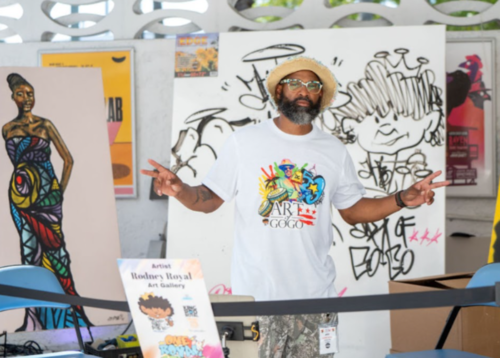
Miami visual artist Rodney Royal will present a solo art exhibit highlighting iconic Black comedians at “Comedy Vybez Festival.” (Photo courtesy of The Miami Takeover)
In addition to the Friday night standup comedian headliners, attendees at the 18th annual MTO will have the option of six events including a yacht party and a community service beach cleanup. Live music will be on hand with three R&B band performances along with a tribute to Toni Braxton performed by R&B singer Latasha Bla’q! Miami visual artist Rodney Royal, who is known for displaying themes of culture and community, will present a solo art exhibit highlighting iconic Black comedians.
WHAT: The Miami Takeover’s “Comedy Vybez Festival”
WHERE: Miami Beach Bandshell, 7275 Collins Ave., Miami Beach. Check online for additional sites for related events.
WHEN: 4 p.m. Friday, July 24.
COST: $55.20 includes fees. Other events through Monday, July 24, cost varies depending on event. Free for community beach cleanup. Individual tickets and weekend party passes available. Tickets here.
INFORMATION: themiamitakeover.com.
ArtburstMiami.com is a nonprofit media source for the arts featuring fresh and original stories by writers dedicated to theater, dance, visual arts, film, music and more. Don’t miss a story at www.artburstmiami.com
No posts found
As LakehouseRanchDotPNG Turns 5, Partnership With Main Street Players Grows
Written By Michelle F. Solomon
July 16, 2026 at 8:56 AM
From left, Douglas Gonzalez as Oswaldo, Alejandro Arreola as Julio, Daniel Nieves as Martin, and Nicholas Valdes as Manny in “Salida” by Nicholas Quintana, opening at Main Street Playhouse on Saturday, July 18 through Sunday, Aug. 2 at Miami Lakes. (Photo by Daniel Manso, courtesy of Main Street Players)
Main Street Players closes its season with “Salida” by Miami playwright Nicholas Quintana. Beyond bringing a new play to the stage, the production also reflects a growing partnership between the Miami Lakes theater and LakehouseRanchDotPNG, the experimental theater company marking its fifth season this year.
Since becoming Main Street Players’ artistic director last fall, Sara Jarrell has been working to broaden that company’s commitment to original work, local playwrights and artistic collaboration.
“Our mission is to be a place for the community to create and collaborate,” Jarrell said. “A lot of the work that I’m hoping to do now that I’ve stepped in as artistic director is expanding the kind of work that we do and how that reflects our community.”
That vision aligned naturally with LakehouseRanchDotPNG, which has been presenting productions at Main Street Players since 2024. Florida International University graduates Brandon Urrutia and Indy Sulliero founded the experimental theater company during COVID-19.
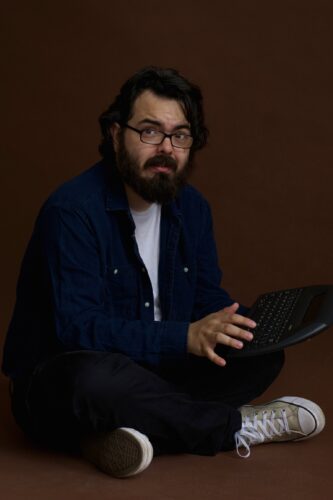
Brandon Urrutia is the artistic director and co-founder of LakehouseRanchDotPNG, which is now entering its fifth season. (Photo courtesy of LakehouseRanchDotPNG)
The company’s unusual name traces back to a road trip to Lakewood Ranch, the master-planned community in Southwest Florida. After later misremembering the destination as “Lakehouse Ranch” and saving a photo as “LakehouseRanch.png,” they decided the accidental digital file name perfectly captured the spirit of the company they were creating.
“It was the summer after we graduated and we both wanted to do work but no one was hiring because of COVID-19. So we decided, ‘Let’s figure it out ourselves,’ ” Urrutia said.
In addition to being the artistic director of LakehouseRanchDotPNG, Urrutia is the drama teacher at Mater Lakes Academy.
LakehouseRanchDotPNG staged its first production in 2022 at Artistic Vibes, a small black-box theater in Kendall.
“I loved it. I love a good little black-box theater. We moved because Main Street offered us a better deal for rent. Realistically it came down to money,” they said.
But the relationship with Main Street Players stretches back much further than Lakehouse.
“They’ve been a part of Main Street Players since they were in high school — teaching, working, assistant directing,” Jarrell said. “It’s really where they cut their teeth and got their feet wet,” she says about Urrutia.
Today, they direct productions, serves on Main Street Players’ board of directors and helps develop new work while continuing to lead LakehouseRanchDotPNG.
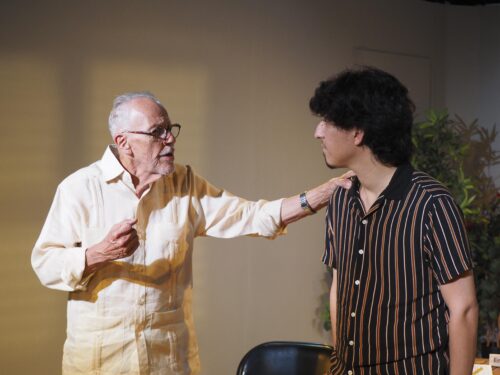
Douglas Gonzalo as Oswaldo and Alejandro Arreola as Julio in Main Street Players’ “Salida,” directed by Brandon Urrutia. (Photo by Daniel Manso, courtesy of Main Street Players)
That collaboration is evident in “Salida,” which opens on Saturday, July 18 and runs through Sunday, Aug. 2, a new play about three generations of Cuban men whose annual Noche Buena gathering is upended when the youngest member of the family comes out as gay.
“When I read the play, it had a lot of really great bones, so we workshopped the production with Nicholas,” Jarrell said. Quintana originally shared only the play’s first act.
“He came to us and said, ‘Hey, I have a second act,'” Jarrell said. “I saw it and said, ‘Listen, it needs a little bit of work, but it works perfectly for our season.'”
Rather than simply presenting the play, Main Street Players used the workshop process to continue developing it.
“We’ve taken the time, in the process with Brandon sort of spearheading that charge, to fully flesh out this story,” Jarrell said, who will direct the second show of LakehouseRanchDotPNG’s recently announced fifth season.
Bianca Utset in “Have You Seen Boomer?” by Robert Kerr, the opener in Lakehouse Ranch’s first season at Main Street Playhouse in Miami Lakes. (Photo courtesy of LakehouseRanchDotPNG)
And Urrutia contributions have extended beyond directing individual productions.
“Brandon was on our decision committee and really helped foster meaningful relationships with playwrights in New York to produce their work at Main Street Players,” she said. “They’ve been really integral.”
That collaborative spirit has defined LakehouseRanchDotPNG since its founding five years ago.
“We wanted to do the work that no one else seems to be doing,” Urrutia said. “The stuff that makes us excited.”
That philosophy has shaped all 17 productions LakehouseRanchDotPNG has presented over the past five years, building a reputation for experimental works and premieres that many theaters might consider too difficult to produce.
“I’ve started saying that there’s no such thing as an impossible stage direction,” Urrutia said. “More often than not, we get folks saying, ‘This play … no one wants to do it because they’re saying it’s impossible to produce.'”

The Bonilla brothers, Miguel and Manuel, as Old Art and New Art in LakehouseRanchPNG’s “The Exhibit” by Mackenzie Raine Kirkman, the closing show of its fourth season. (Photo by Zachary Oshaughnessy, courtesy of LakehouseRanchPNG)
Rather than viewing those challenges as obstacles, Urrutia sees them as invitations to experiment.
“I just think it’s easier to be safe than take a risk,” they said. “That’s not what we try to do with Lakehouse.”
The company’s anniversary comes during a year of milestones for Urrutia. Earlier this year, Main Street Players presented the world premiere of “Kevin and the River Flan,” a play inspired by Urrutia’s own experiences. Their autobiographical solo play, “Lo Siento, Mi Español es de Mierda Más,” was selected from nearly 700 submissions for New York’s Downtown Urban Arts Festival, where it received an off-off-Broadway production. The play returns to Main Street Players for a one-night performance Saturday, Aug. 8 with Marla Lopez as Marlá.
Much of Urrutia’s own work draws from personal experiences. As one of the few openly nonbinary theater artists working in South Florida, they have learned that authenticity often challenges expectations.
“(I am) one of maybe four open and out nonbinary folks in the (theater) scene here that I am aware of,” Urrutia said.
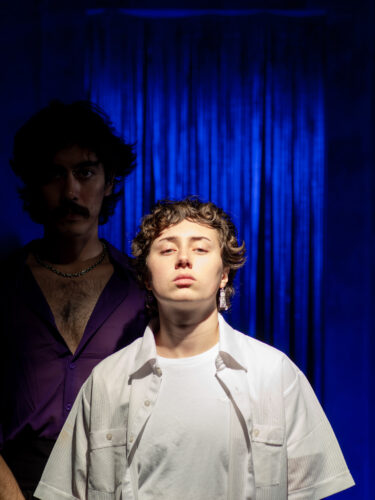
Nico Grimes as Kevin in Brandon Urrutia’s “Kevin and the River Flan.” Giuseppe Fusca is in the background as Babalú-Ayé. (Photo courtesy of Main Street Players)
In the world premiere of “Kevin and the River Flan,” director Ina Ruiz cast a nonbinary actor in the title role. Urrutia said the choice wasn’t dictated by the script but appreciated how it added another dimension to the character.
[RELATED: Review of “Kevin and the River Flan”]
“It’s nice to know that we’re not afraid to take risks,” Urrutia said. “We’re very openly queer and I’m very openly nonbinary.”
Urrutia said LakehouseRanchDotPNG’s programming isn’t defined by identity, however. Instead, the company’s mission is to create opportunities for new playwrights, directors and actors.
In their devotion to new work and playwrights, Urrutia has a deal with play publishing company 1319 Press, which originally published Erin Proctor’s “Plague Play,” LakehouseRanchDotPNG’s Season Two opener.
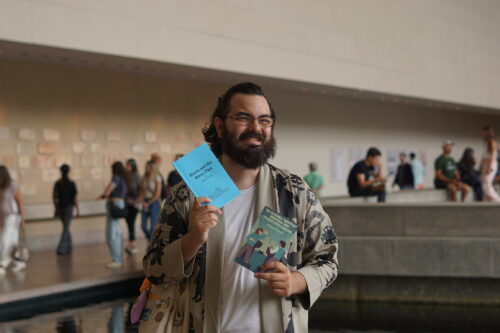
Brandon Urrutia with scripts from the company’s productions. Play publishing company 1319 Press publishes every script that LakehouseRanchDotPNG gives a world premiere. (Photo courtesy of LakehouseRanchDotPNG)
“I began talking to them and they wanted to get more companies involved. I said that we only do new work. And one thing led to another and now every show that we give a premiere gets a publication opportunity through 1319 Press.”
Scripts are available for purchase on a bookshelf at Main Street Players.
“It is a great opportunity for playwrights because now their works can be licensed for performance through the publishing company. A perfect example is ‘juice’ by McKenzie Raine Kirkman (Season One). Someone licensed it and did it for their thesis project in San Diego.”
Urrutia said LakehouseRanchDotPNG initially attracted a younger audience but has watched that audience progress over the past five years.
“It’s kind of evolved into being theater for someone who is excited by something that is different than you might usually watch. If you wanted to see something that felt safer, you could go anywhere else. But what we try to do is something that you’re not going to find at another house. We have many people who tell us, ‘This is the theater I’ve been looking for.’ ”
WHAT: “Salida” by Nicholas Quintana directed by Brandon Urrutia
WHERE: Main Street Players, Main Street Playhouse, 6812 Main St., Miami Lakes
WHEN: 8 p.m. Friday and Saturday, 2 p.m. Sunday. Also, 8 p.m. Thursday, July 30. Opens Saturday, July 18 and runs through Sunday, Aug. 2
COST: $30, $25 for students and seniors with ID. Tickets here.
INFORMATION: 305-558-3737 or mainstreetplayers.com.
ArtburstMiami.com is a nonprofit media source for the arts featuring fresh and original stories by writers dedicated to theater, dance, visual arts, film, music and more. Don’t miss a story at www.artburstmiami.com
No posts found
The Audience Becomes Part of the Story in Miami New Drama’s ‘Todo Lo Que No Dije’
Written By Michelle F. Solomon
June 30, 2026 at 1:54 PM
Christian McGaffney stars in Miami New Drama’s one-man world premiere “Todo Lo Que No Dije” (“Everything I Didn’t Say”) now at the Colony Theatre through Sunday, Aug. 2. (Photo by Ari Feldmiller, courtesy of Miami New Drama)
Miami New Drama once again finds a way to reinvent the theatrical experience with the world premiere of its original one-man show, “Todo Lo Que No Dije” (“Everything I Didn’t Say”).
The company reimagines the Colony Theatre stage, turning it into a black-box theater where audiences become collaborators rather than spectators.
From the get-go, theatergoers get their first indication that they aren’t in for something conventional. Instead of taking their seats in the historic auditorium, they are directed onto the stage, where 122 seats are configured for a playing area in the round. A table scattered with vintage postcards hints at what’s to come.

The discovery of an old postcard sends the Narrator on a journey to reconnect with his father in “Todo Lo Que No Dije” (“Everything I Didn’t Say”). Photo by Ari Feldmiller, courtesy of Miami New Drama)
For 90 minutes and seated just a few feet from the character, only identified as Narrator, they will become participants in a story; the intimate setting changes the relationship between audience and performer at every show.
Two years in the making, written by Harley Elias and directed by Michel Hausmann, the play follows a man whose discovery of an old postcard sends him on a journey to reconnect with the father he hasn’t spoken to in decades. Along the way, he shares memories and family history, bringing audience members into the play as different characters from his life – a private investigator, a nurse in a Madrid nursing home, a security guard, a man with a tattoo, his father. How the interactions unfold is one of the production’s pleasures, and it would be a spoiler to reveal them. It’s all part of a theatrical experience that is difficult to categorize.
Playwright Harley Elias wrote “Todo Lo Que No Dije” (“Everything I Didn’t Say”), a one-man show now at Miami New Drama. (Photo courtesy of Furiosa Productions)
“I wanted to write something that was a solo show that wasn’t just a story that was said and done in the past,” Elias said. “What I was after was a mystery and a search for something that’s kind of in the present moment that is, you’re not sure where it’s going to go, and you’re not sure how it’s going to resolve.”
Although audience members are invited to read postcards, interact with the Narrator, lend personal items, and step into the action, Elias said he was careful not to let those moments become theatrical tricks.
“I didn’t want it to feel gimmicky at all,” he said. “I wanted it to feel emotionally true and grounded in a present storytelling with the audience.”
[RELATED: Miami New Drama’s 2024 world premiere of ‘Birthright’ is now off-Broadway. Read the original review of the Miami production.]
The play itself also represents a departure for Elias, whose previous Miami New Drama collaborations, “Lincoln Road Hustle,” which he co-wrote with Billy Corben, and “Bad Dog,” which Elias based on his time working in a gallery, all have included larger ensemble productions.
The first actor that came to mind to bring to life “Todo Lo Que No Dije” (“Everything I Didn’t Say”) was Christian McGaffney. (Photo by Ari Feldmiller, courtesy of Miami New Drama)
“This is the play I was born to write,” he said. “It’s a more personal play than anything I’ve ever written.”
Finding the right actor proved equally important.
Hausmann immediately thought of Venezuelan actor Christian McGaffney, who previously appeared in Miami New Drama’s “Las Aventuras de Juan Planchard.”
“I worked with Michel Hausmann 17 years ago in my first theatrical experience in Caracas, a play by Moisés Kaufman, and Michel was directing it.” McGaffney, who is now based in Los Angeles, was 20 years old then. The play was “Gross Indecency: The Three Trials of Oscar Wilde.”
Christian McGaffney starred in the Venezuelan film shot in Miami in 2021, “Simón,” where he plays a freedom fighter who escapes to Miami to obtain political asylum; it’s now on Netflix. (Photo courtesy of SimonTheFilm/Black Hole Enterprises)
“I was just a telenovela guy who wanted to experience theater. Michel gave me my first opportunity in theater.”
In 2021, during COVID, McGaffney was in Miami shooting Venezuelan movie “Simón” where he plays a freedom fighter who escapes to Miami to obtain political asylum; it’s now on Netflix. “That was my first job here in Miami and then I was back two years later to work with Moisés for ‘Juan Planchard.’ “
Elias said McGaffney’s natural rhythm matched the voice he’d imagined while writing.
“There was one guy that could do this,” Elias recalled Hausmann telling him. “It’s Christian.”
For McGaffney, reading the script for the first time was unlike any project he had encountered.
Founder and artistic director of Miami New Drama, Michel Hausmann, worked with Harley Elias in crafting “Todo Lo Que No Dije” (“Everything I Didn’t Say”). He directs the world premiere. (Photo courtesy of Miami New Drama)
“I had a lot of questions,” he said. “Is this a drama? Is this a comedy? Is this a comedy with a heart? It was beautiful to actually work with Harley and Michel and start discovering what this play was about.”
The collaborative rehearsal process allowed the actor, playwright and director to shape the work together.
“I think it was more of us really exploring what we think would work and also what we think wouldn’t work in order for us to understand the play better,” McGaffney said.
Because audience members become part of each performance, McGaffney said no two shows are the same. The difficult part, but one he’s mastered, is that every show requires him to remain fully present while adapting to different volunteers who, by the nature of the show, create unplanned moments.

The audience is spectator and collaborator in Miami New Drama’s “Todo Lo Que No Dije” (“Everything I Didn’t Say”). (Photo by Ari Feldmiller, courtesy of Miami New Drama)
The script is in Spanish, but every performance includes live English translation through headsets, allowing English-speaking audiences to also be immersed in the action.
For Elias, that accessibility is essential because the play ultimately transcends language.
“This is more pure theatrical experience and storytelling,” he said. “It’s that kind of old theater experience where you say to someone, ‘Listen, you have to be there.'”
The surprises continue after the applause and up until the time the audience gets ready to head back out into Lincoln Road. Vintage postcards scattered around high-top tables in the lobby invite everyone to fill them out, send them to someone they love or even to themselves. Drop them in the big blue Miami New Drama postal box in the lobby and they will be mailed.
“It’s like the show; it’s another way to connect,” Elias said.
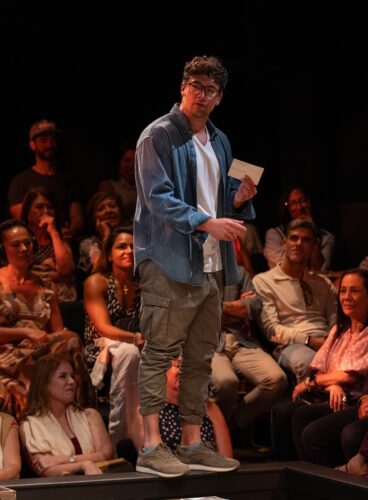
Miami New Drama reimagines the Colony Theatre stage, turning it into a black-box theater for “Todo Lo Que No Dije” (“Everything I Didn’t Say”) now at the Colony Theatre through Sunday, Aug. 2. (Photo by Ari Feldmiller, courtesy of Miami New Drama)
Born in Caracas where he lived until he was about 25 or 26, McGaffney said that doing a no intermission show, being on stage the whole time, and having to be the multitasker of so much interaction takes a lot of stamina. There’s also something else that has been an unexpected source of where he puts his energy during his time in Miami.
He has been volunteering at a donation center in Doral that is collecting for those affected by the recent earthquakes in Venezuela.
“It’s been a sweet-and sour situation for us as Venezuelans doing the play. I’ve had Venezuelans come up to me in the lobby who just want to talk and to express how grateful they are that they could see something like this in the midst of everything. Right now, while things are so tough, it’s also a good place to be taken away for a bit, to soothe the soul.”
WHAT: “Todo Lo Que No Dije” (“Everything I Didn’t Say”). Performed in Spanish with live English translation available via headsets.
WHERE: Colony Theatre, 1040 Lincoln Road, Miami Beach
WHEN: 8 p.m. Wednesday through Friday; 2 and 8 p.m., Saturday; 3 p.m. Sunday. Through Sunday, Aug. 2.
COST: $65, $70, $80 and $85 (a portion of ticket sales will be donated to We Love Foundation to support earthquake relief efforts in Venezuela)
INFORMATION: 305-674-1040 and miaminewdrama.org
ArtburstMiami.com is a nonprofit media source for the arts featuring fresh and original stories by writers dedicated to theater, dance, visual arts, film, music and more. Don’t miss a story at www.artburst.com.
No posts found
After 30 years, Summer Shorts honors the people who built it
Written By Miguel Sirgado
June 12, 2026 at 1:21 PM
Stephen Trovillion and María Elena García appear in the third annual Summer Shorts festival in 1998, three years after City Theatre launched the short-play event at the University of Miami’s Ring Theatre. To celebrate 30 years, the festival features an afternoon preview and one-night event at the Westchester Cultural Arts Center on Saturday, June 13. (Photo Courtesy of City Theatre)
Thirty years after an ambitious theatrical idea at the University of Miami’s Ring Theatre grew into one of Miami’s most enduring theater traditions, City Theatre is taking time to honor the people who helped make it possible.
Unlike the festival’s traditional multi-performance run of affordable 10-minute plays, the nonprofit’s flagship “Summer Shorts” has been reimagined as a one-day celebration on Saturday, June 13 at the Westchester Cultural Arts Center. First, there’s a 2 p.m. preview performance. The premium-priced evening cabaret gala features 10 short plays with dinner and live music.
Honored at the evening event will be co-founder Susan J. Westfall and founding board chairman Alan H. Fein.
Honorees Alan H. Fein, Susan J. Westfall will be honored during the 30th anniversary celebration of Summer Shorts on June 13. The one-night event at the Westchester Cultural Arts Center pays tribute to the people who helped build one of Miami’s longest-running theater traditions. (Photo courtesy of City Theatre)
” ‘Summer Shorts’ traditionally runs for several weeks, but this year we asked ourselves how we could keep producing the work while adapting to the realities we’re facing,” Ramírez says. “We’re trying to balance what we can realistically afford with the experience audiences expect from ‘Summer Shorts.’ Presenting all 10 fully produced plays in a single day became a way to preserve the heart of the festival while working within those realities.”
Both performances feature the a lineup of 10 short plays, including three world premieres by Miami playwrights Paolo Benedict, Alize Medina and Paul Torres Wong.
“We wouldn’t have made it to 30 without our audiences and our artists,” says Ramírez, City Theatre’s executive director. “It feels like a celebration of the connection that we’ve been able to make through theater.”
According to Ramirez, the 2 p.m. preview features the same lineup of 10 fully produced short plays that will be performed at the evening event.
“The evening event serves as a fundraiser for City Theatre, while the afternoon performance provides a more accessible price point. Sometimes you have to think outside the box to keep making theater happen,” Ramirez says.
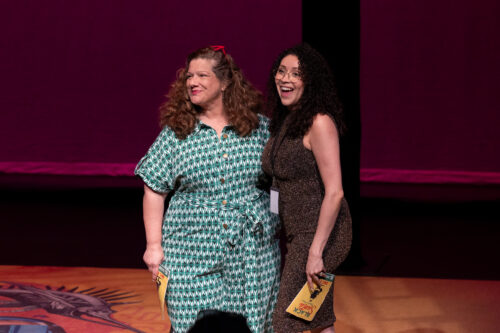
City Theatre executive director Gladys Ramírez, right, and artistic director Margaret Ledford are marking the 30th anniversary of Summer Shorts, the company’s flagship festival that has introduced generations of audiences and playwrights to short-form theater since 1996. (Photo by Morgan Sophia Photography)
“Summer Shorts” has occupied several homes over the years, including the Ring Theatre, the Adrienne Arsht Center and, more recently, the Westchester Cultural Arts Center. The anniversary format also gave organizers an opportunity to recapture some of the communal spirit that shaped the festival’s earliest years.
“We wanted to capture the essence of what they created in 1996,” Ramírez says. “The sharing of a meal together, the conversation, the community. Those are the experiences people remember.”
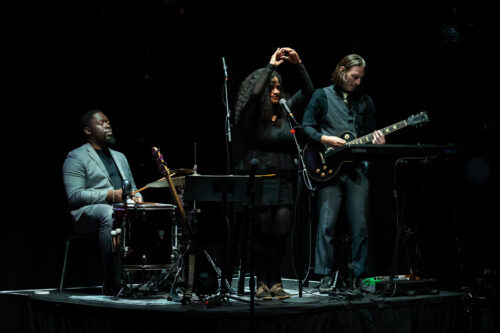
Hola Hi performing at Summer Shorts in 2025. The group returns this year as City Theatre reimagines its flagship festival as a one-night, cabaret-style anniversary celebration. Pictured from left: Caleb Joseph, Angelina López Catledge and Paul Curtis. (Photo by Morgan Sophia Photography)
As City Theatre looks ahead, Ramírez hopes “Summer Shorts” continues to be more than a showcase for new plays.
“I hope it’s less of just a show and more of a community cultural experience that connects us with each other,” she says. “The plays will always be new. They’ll always be different. What makes ‘Summer Shorts’ special is all the people who get to be in the room and share that experience together.”
WHAT: City Theatre’s 30th Anniversary of “Summer Shorts.”
WHEN: 2 p.m. preview, 7 p.m. performance and dinner, Saturday, June 13.
WHERE: Westchester Cultural Arts Center at Tropical Park, 7930 SW 40th St., Miami.
COST: $25 general admission, preview matinee (no food or beverage included);evening, $175
general admission, $250 VIP, both include dinner.
INFORMATION: westchesterculturalartscenter.com or (305) 226-0030
ArtburstMiami.com is a nonprofit media source for the arts featuring fresh and original stories by writers dedicated to theater, dance, visual arts, film, music and more. Don’t miss a story at www.artburst.com.
No posts found

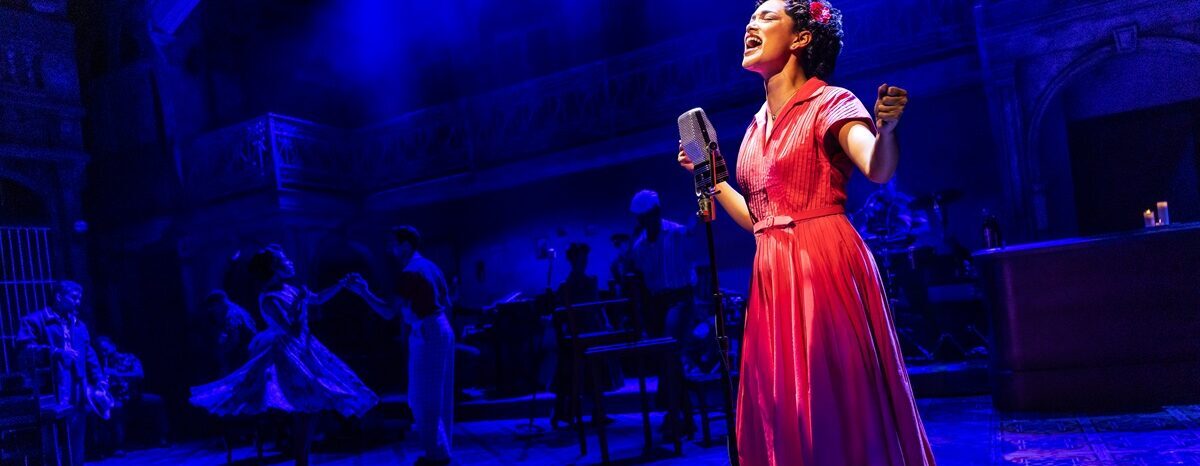
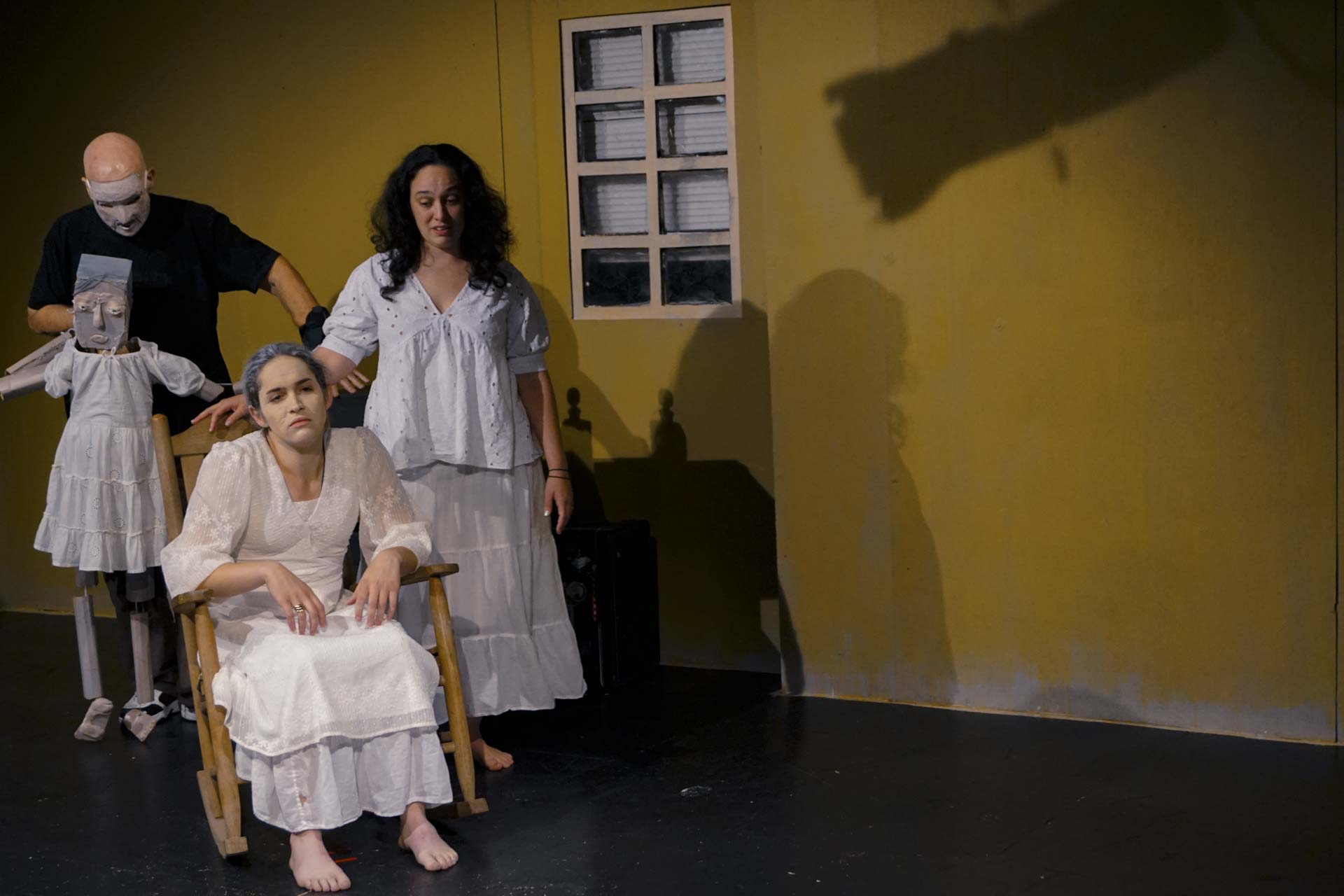


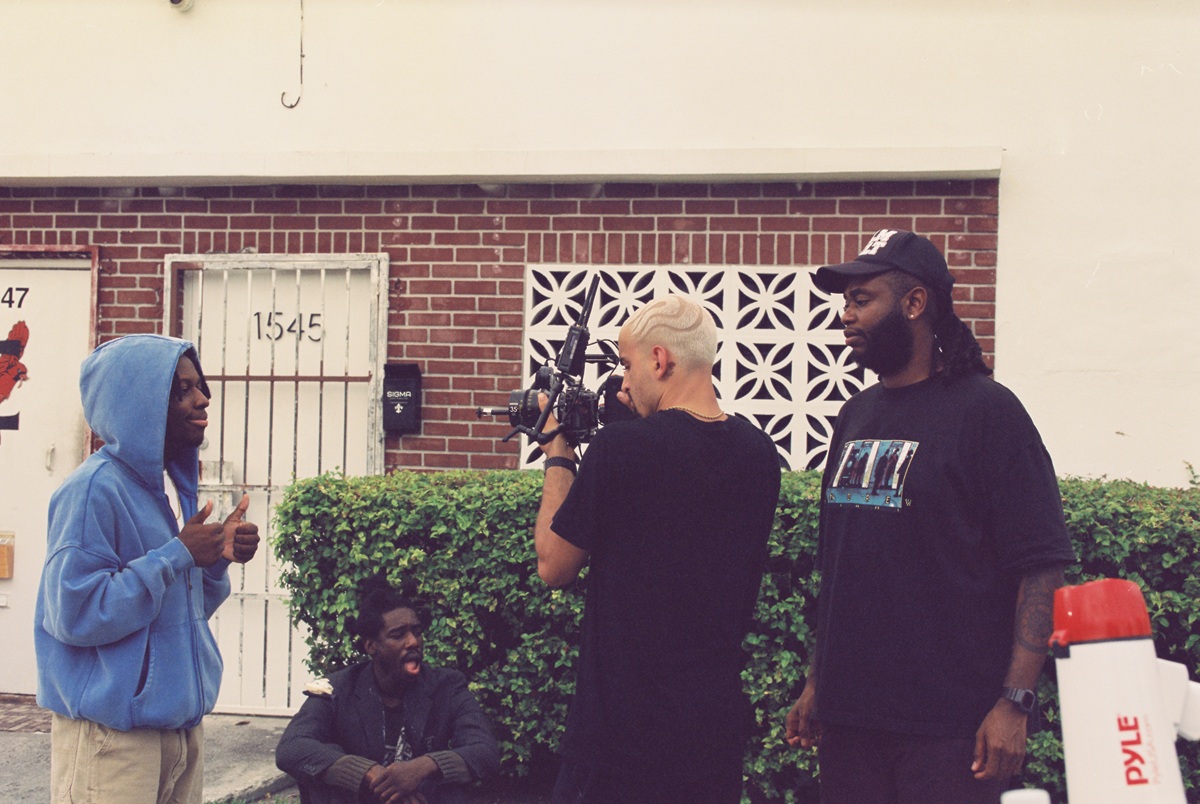

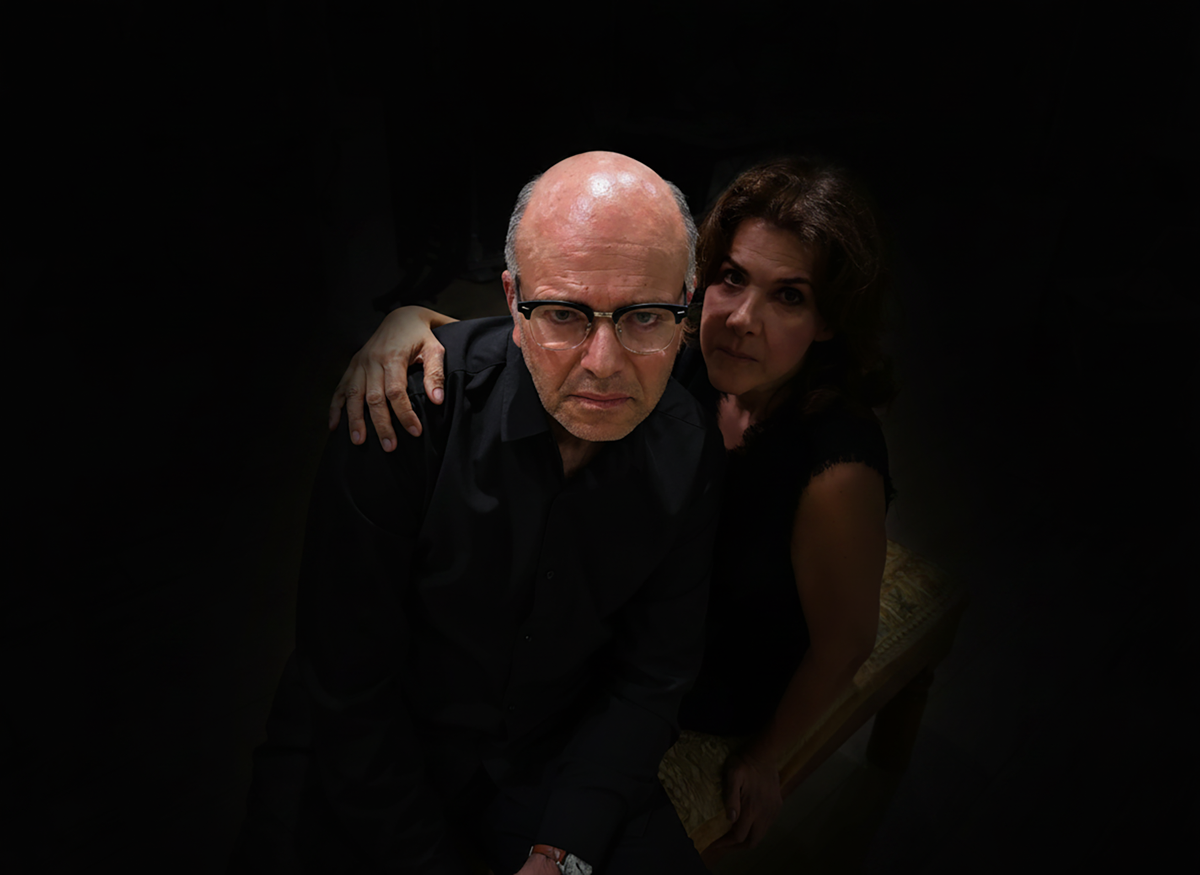
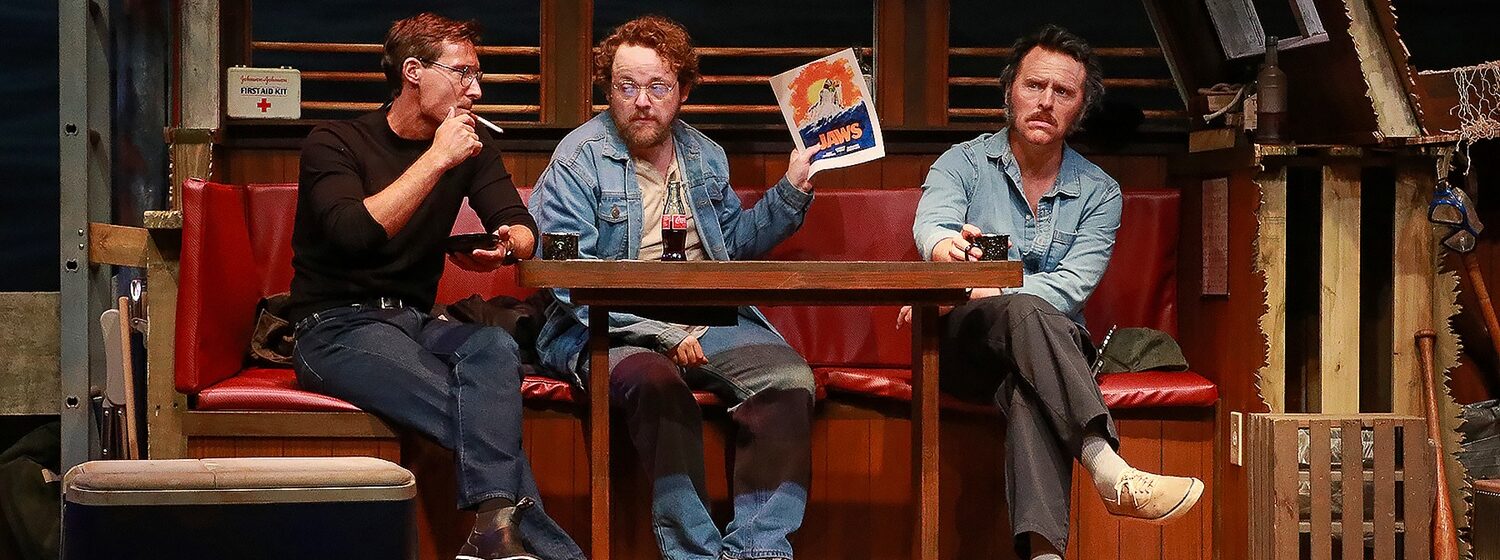

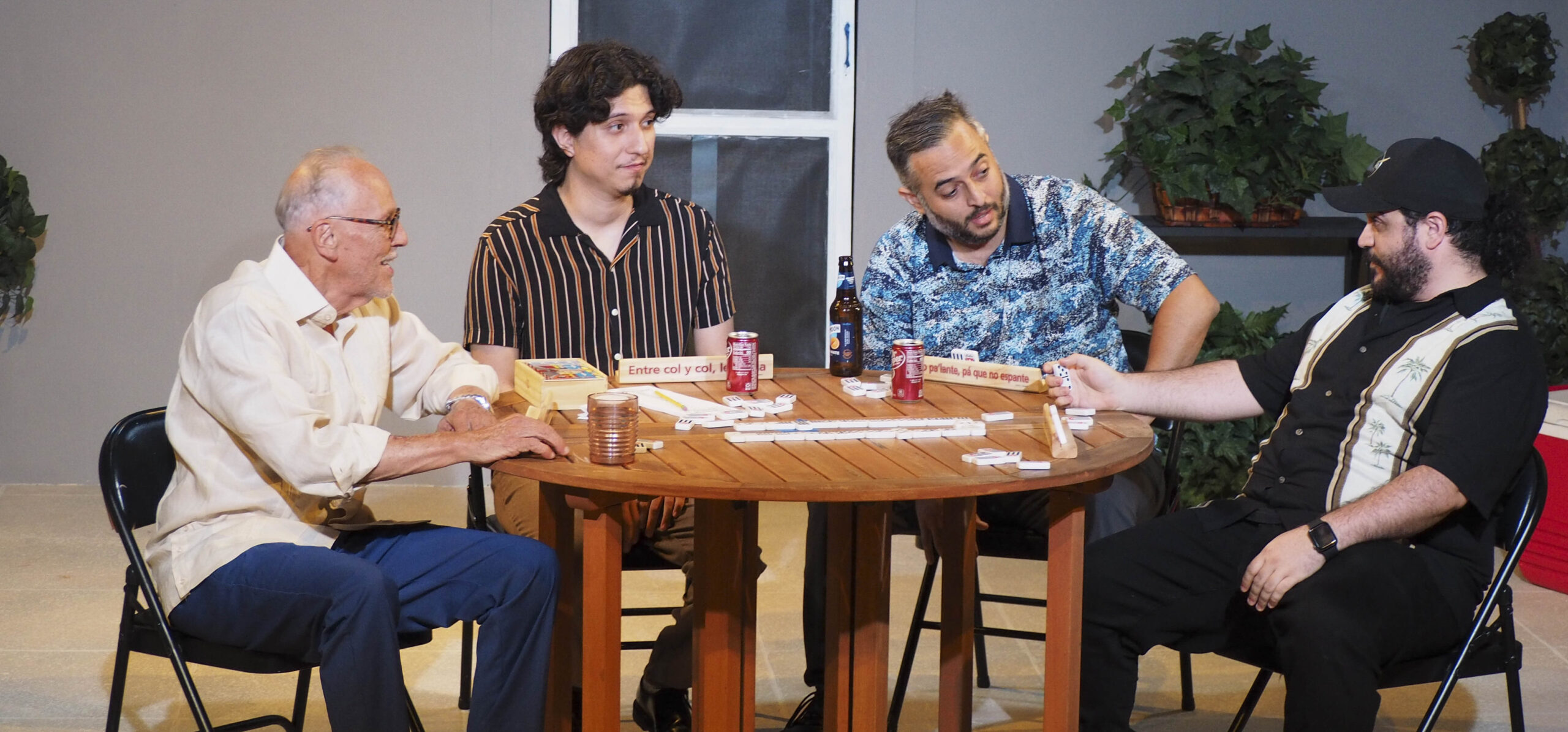
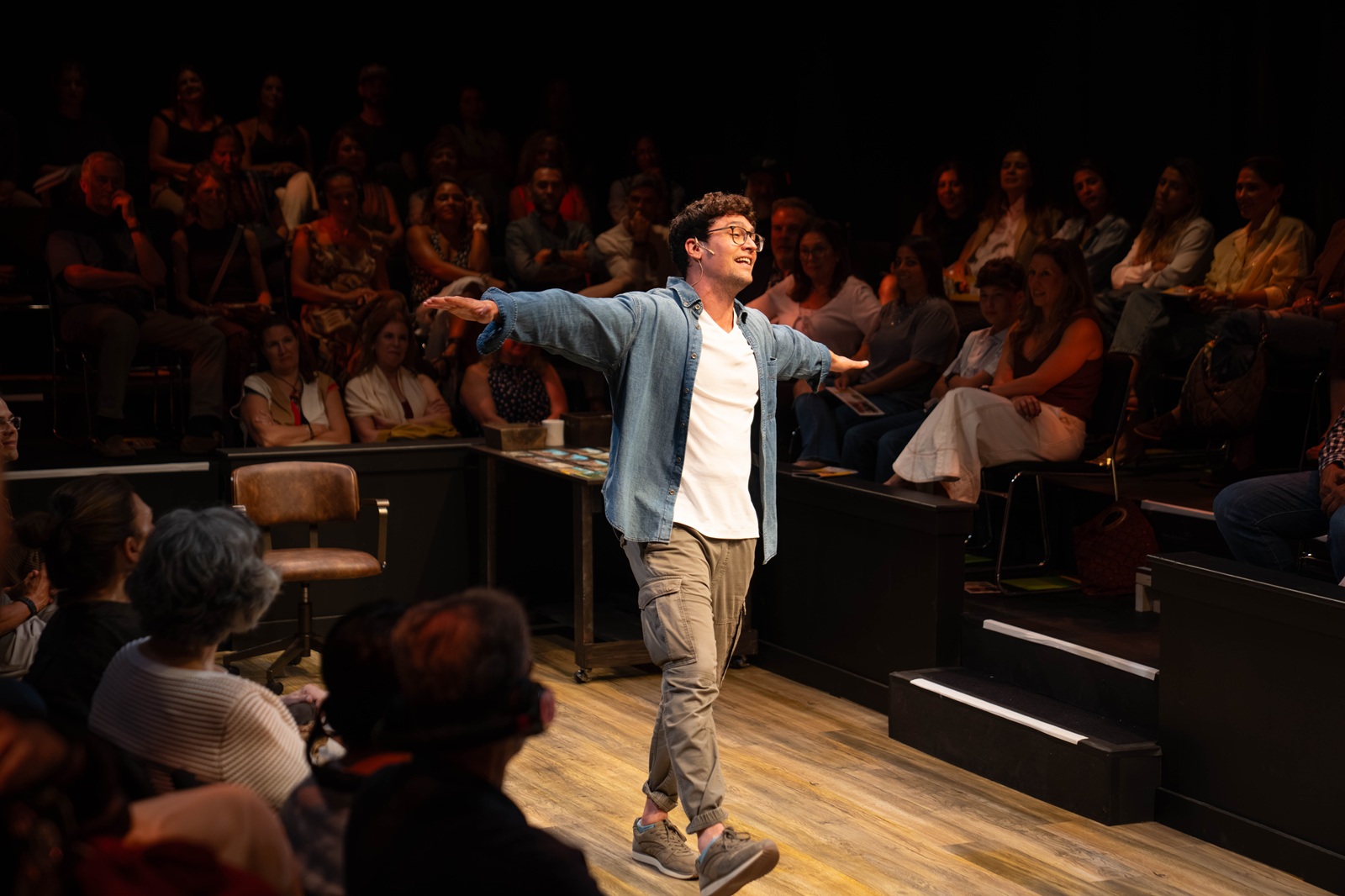
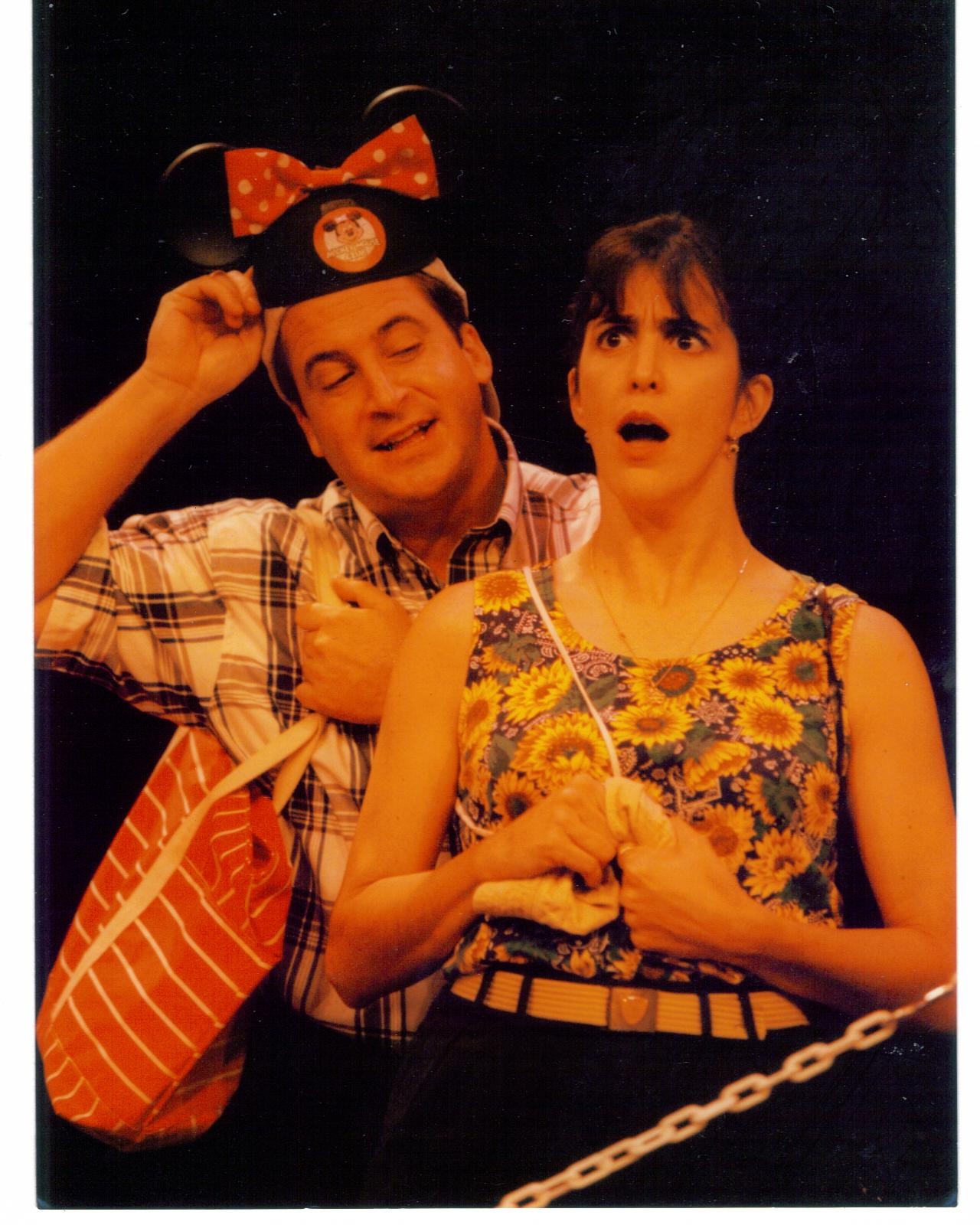
Recent Comments