For A Decade, ‘Sounds of Little Haiti’ Spotlights Haitian Music in Miami
Written By Jonel Juste October 12, 2025 at 11:55 PM
“Sounds of Little Haiti,” held at the Little Haiti Cultural Complex every third Friday of the month, has served as a steady stage where Haitian music and community life meet since 2016. On Friday, Oct. 17, the spotlight is on singer Alan Cavé. (Photo courtesy of Sounds of Little Haiti)
For the past ten years, a courtyard in Little Haiti has served as a steady stage where Haitian music and community life meet. “Sounds of Little Haiti,” held at the Little Haiti Cultural Complex every third Friday of each month, has grown from a neighborhood gathering to a platform that draws audiences from across South Florida and visitors who seek a direct window into Haitian culture.
After celebrating its tenth anniversary last month with Tabou Combo, the long-standing konpa band known for bringing Haitian music to international audiences, organizers will feature singer Alan Cavé, a prominent voice in Haitian konpa love, on Friday, Oct. 17 as the series continues its new season.
“Sounds of Little Haiti” launched in 2016 following the closure of “Big Night in Little Haiti,” a similar event, which ended due to a lack of funding.
Arly Lariviere, lead singer of Nu Look, one of the Haitian bands invited to perform during the monthly “Sounds of Little Haiti” series over the past decade. (Photo courtesy of Sounds of Little Haiti)
Led by Sandy Dorsainvil, the new series carries forward the tradition of live Haitian music at the Little Haiti Cultural Complex. A village-style atmosphere not only highlights performances but also includes vendors, local businesses, and community organizations.
Dorsainvil and Terry Louis, co-producers, describe the series as a monthly point of contact between tradition and change, a meeting place for the diaspora, and an introduction for those who are discovering Haitian culture for the first time.
“It’s a bridge to identity,” says Dorsainvil. “Many Haitian-American youth don’t have daily exposure to Haiti, so “Sounds of Little Haiti” gives them a space to feel proud, to dance, to hear Creole, to eat griyo (fried pork), and to connect to something bigger than themselves. It keeps the culture alive — not just remembered, but experienced.”
The program has showcased established musicians while also presenting Haiti’s modern musical landscape to new listeners. Dorsainvil explains the philosophy: “We call it ‘honoring the masters while cultivating the next wave.’ Each lineup is designed to celebrate legacy while creating opportunity.”
Led by Sandy Dorsainvil, “Sounds of Little Haiti” has carried on the tradition of live Haitian music at the Little Haiti Cultural Complex since 2016, following the closure of Big Night in Little Haiti, which ended due to a lack of funding. (Photo courtesy of Sounds of Little Haiti)
Dorsainvil says the decade-long milestone reflects more than event continuity. “For the Haitian community, it’s validation that our culture, our music, and our stories matter,” she says, adding that the series has become a dependable gathering space. The journey included obstacles that affected cultural programming across Miami. Organizers point to the pandemic, shifts in partnerships, and the passing of co-founder Sandra Morrisseau as moments that required adjustment.
“Sustainability has always been our biggest challenge — consistent funding, logistics, and weather are unpredictable. We’ve had to rebuild after setbacks. But every time, the community rallies,” says Louis.
He emphasizes the role of residents in keeping the series active. “The community is the heartbeat of ‘Sounds of Little Haiti.’ Local vendors, artists, families, and small businesses show up month after month. That unwavering support is what’s kept us going.”
Dorsainvil says they are always looking for ways to grow.
“We’re expanding the Route 1804 Foundation’s network of sponsors, developing merchandise and brand collaborations, and exploring new grant opportunities. We’re also investing in documentation and digital storytelling to reach broader audiences and preserve our legacy.”
The series now presents itself as a consistent calendar item that highlights Haitian music. Louis also outlines how bookings are made. “We curate a balance between household names and emerging talent,” he says. “We consider who’s making waves in Haiti, in the diaspora, and in Miami’s own backyard. It’s important to give new artists exposure while honoring those who paved the way.”
This month, the featured artist is Alan Cavé, whose smooth vocals have for decades defined the genre of “konpa love,” a romantic subgenre of Haitian konpa, marked by slower tempos, smooth melodies, and lyrics that focus on love and relationships.
Singer Alan Cavé, a leading voice in Haitian konpa love, will headline the “Sounds of Little Haiti” concert on Friday, Oct. 17 as the series continues its tenth season. (Photo courtesy of Sounds of Little Haiti)
“Alan Cavé represents timeless konpa love, romantic, soulful, and deeply Haitian,” says Louis. “His voice transcends generations. Audiences can expect a night of pure nostalgia, elegance, and dance-floor magic, the kind of energy that reminds us why we fell in love with Haitian music in the first place.”
For Cavé, the invitation to perform in the gathering carries special meaning. “I’m truly proud to be part of an event like ‘Sounds of Little Haiti,’ a production that has represented our culture for so long,” he says.
The Haitian-American singer reflected on the reach of his music and its connection across generations. At ‘Sounds of Little Haiti,’ he expects to see longtime fans of “Zin,” his former band that found success in Haiti and the diaspora during the 1990s and 2000s, alongside younger listeners who have followed his solo career since the release of “Se Pa Pou Dat,” one of his most popular albums that was released in 2000.
“That means I’ll be performing for almost three generations, a beautiful thing. It’s going to be a movie with a few surprises in store.”
Known for his poetic lyrics, Cavé traced his inspiration to his parents. “I wouldn’t be the lyricist I am today without my parents’ influence,” he says. “My father, Syto Cavé, is a poet, and my mother was one, too. I truly inherited that gift from both of them.”
Cavé also described how his influences stretched across languages and continents. “I was born (in the United States) and moved back and forth (to Haiti) growing up,” he says. “During my adolescent years, I was influenced by French music, and later, as a young dancer who loved pop and R&B, those sounds naturally became part of me.”
His hit “Se Pa Pou Dat,” roughly translated as “It’s Been a Long Time,” has become one of the most internationally recognized Haitian songs. It is especially known in Haiti, across the Haitian diaspora, throughout the Caribbean, and in parts of Africa. In November of last year, Cavé performed the song at New York’s Madison Square Garden while opening for French Congolese singer Gandhi Alimasi Djuna (Gims).
Terry Louis, co-producer, emphasizes the role of residents in keeping the program active: “The community is the heartbeat of “Sounds of Little Haiti.” Local vendors, artists, families and small businesses show up month after month.” (Photo courtesy of Sounds of Little Haiti)
“Over time, I’ve realized that music is truly universal — it has no barriers,” says Cavé, adding that he is proud that “Se Pa Pou Dat” has become one of the most international Haitian songs.
“That also inspires me to encourage the younger generation to embrace different genres without hesitation. That openness has been one of the best decisions of my career.”
Cavé’s presence ties the monthly event to a broader diaspora conversation. The artist records and tours in several languages, and his catalogue has played in spaces that reach beyond Haitian venues. Organizers say that they have the same objective for their series on a citywide scale.
“Our dream is for ‘Sounds of Little Haiti’ to become a permanent cultural institution — a destination like ‘Jazz in the Gardens’ or ‘Art Basel,’ but distinctly Haitian,” shares Dorsainvil.
WHAT: “Sounds of Little Haiti “
WHEN: 6 p.m., Friday, Oct. 17 and every third Friday of the month
WHERE: Little Haiti Cultural Complex, 212 NE 59th Terrace, Miami
COST: $30.52 general admission; $87.61 VIP. Free admission for children 5 years old or under
ArtburstMiami.com is a nonprofit media source for the arts featuring fresh and original stories by writers dedicated to theater, dance, visual arts, film, music, and more. Don’t miss a story at www.artburstmiami.com.
No posts found
At the Betsy Hotel, Its Free Opera For All On Ocean Drive
Written By Jonel Juste October 6, 2025 at 8:15 PM
With Ocean Drive as the stage and The Betsy as the set, Gerard Ortega sings during a recent “Opera on the Terrace.” The free series, now in its eleventh year, is performed at 9 p.m. Saturdays once a month. (Photo courtesy of Ryan J. Troy)
The terrace of The Betsy Hotel on Ocean Drive looks out onto one of Miami Beach’s busiest corridors, where foot traffic, scooters, and beachgoers provide a steady backdrop in a neighborhood known more for nightlife than classical music. Co-owner of The Betsy, Jonathan Plutzik, says that set up is by design.
The terrace becomes a public opera stage with “Opera on the Terrace,” a 30-minute program of light opera, Broadway selections and other popular music with the series now in its eleventh year.
“Opera on the Terrace” is performed at 9 p.m. Saturdays once a month with the next upcoming on Oct. 25, Nov. 22 and Dec. 27.
Tenor Gerardo Ortega and lyric soprano Megan Barrera perform on the front terrace of The Betsy Hotel as part of the “Opera on the Terrace” series. (Photo courtesy of the Miami Beach Classical Music Festival)
Plutzik describes the series as an effort to let opera meet people where they are rather than wait for audiences to buy a ticket and find a seat.
“When we started celebrating arts and culture at The Betsy, we imagined creating programs that were traditional – in terms of content and space – and those that might pop up in unexpected places like the front Terrace,” says Plutzik. “Our partnership with Miami Beach Classical Music Festival provided a perfect opportunity to bring opera out onto the street, and to surprise tourists walking down Ocean Drive with an introduction to classical music.”
Plutzik believes that the series’ decade-long presence has changed the way people think about Ocean Drive and about opera itself. Partnering with the Miami Beach Classical Music Festival and featuring both students and professionals has connected performers and audiences in unexpected ways. “Because we’ve been offering the program for more than a decade, we have locals that stop by to hear their favorite arias, some even choosing to go live on their phones and share it with friends,” he says.
What excites him even more are those who stumble upon the performances by chance. “The music pulls them in, and they see a side of Ocean Drive and South Beach that they simply didn’t expect.”
Jonathan Plutzik, co-owner of The Betsy Hotel, says the series’ decade-long run has changed how people think about Ocean Drive and opera itself. (Photo courtesy of The Betsy Hotel)
He adds that opera has always been rooted in the lives of ordinary people, with stories and music that explore deep human emotions. By staging it outdoors, he says, the performances remove any perception of opera as distant or overly formal. “What we’ve found in this program is that when opera moves into the street, those concerns disappear.”
The street front format is also part of the hotel’s stated goal to make culture a daily experience. The hotel presents other free programs that feed the same goal, including frequent jazz in the lobby Piano Bar and a weekly Promenade Music Series in Lummus Park.
The larger philosophy, says Plutzik, is to weave the arts into the hospitality experience through exhibitions, partnerships and residencies. “Our walls, halls, and special spaces have all been designed as artistic destinations.”
For opera singers, the terrace setting is both challenging and liberating.
Tenor Gerard Ortega, an alumnus of the Miami Beach Classical Music Festival who now sings on international stages, confesses that the Terrace altered his view of what an opera performance can be.
To tenor Gerard Ortega, there’s something magical about performing on the Terrace. “Seeing someone pause mid-stroll and become captivated reminds me that opera is for everyone.” (Photo courtesy of Gerard Ortega)
“There’s something magical about performing on the Terrace,” he says. “The first time I sang there, it completely surprised me. Classical music had always been formal in my experience—sung in conservatories or opera houses with audiences who could often afford the highest tickets. On the Terrace, it’s completely different.”
The tenor says the environment creates a special kind of immediacy.
“The moment the music starts, the atmosphere shifts—the crowd gathers, phones come out, and a few listeners quickly turn into an entire audience,” says Ortega. “Seeing someone pause mid-stroll and become captivated reminds me that opera is for everyone.”
“Over the years, I have returned many times to perform opera and jazz as part of this series and can personally chart my growth as an artist through those years,” says soprano Elizabeth Zito. (Photo courtesy of Elizabeth Zito)
Repertoire for the terrace often favors familiar melodies and vocal showpieces that land quickly with a mixed crowd. Ortega says “Granada” by Agustin Lara “always get an amazing reaction,” and he also cites “Maria” from “West Side Story,” “Bring Him Home” from “Les Miserables,” “La donna è mobile,” “Una furtiva lagrima,” and “O Sole Mio.”
Soprano Elizabeth Zito has also performed at The Betsy since her student days, and she says the program has become a personal touchstone.
“As a young student with the Miami Beach Music Festival, it was one of the first venues where I got to test and hone my work,” says Zito. “Over the years, I have returned many times to perform opera and jazz as part of this series and can personally chart my growth as an artist through those years. Of all the places I perform, coming back to The Betsy feels like coming home.”
Zito adds that the terrace performances bring a connection not possible in a traditional opera house.
“A traditional opera house is a bit like a private club – the art is intended for those who have already chosen to be there and partake in it,” she says. “But when opera moves beyond the confines of an opera house into an unconventional setting like the Terrace, it transforms. We get to bring art directly into the world, meeting people right where they are.”
Haley Rayfield performs on The Betsy’s front terrace. (Photo courtesy of Miami Beach Classical Music Festival)
For Zito, the stakes for the art form are clear. “Opera needs more of this kind of programming, full stop,” she says. “The Opera on the Terrace program actively demonstrates that, when shared, the music holds universal enchantment, and people just need a chance to engage with it.”
The series has become part of the cultural identity the hotel is trying to advance, according to Plutzik. “Ocean Drive in Miami Beach is our stage, and The Betsy is our set. It’s a place where diversity thrives and global culture is celebrated 24/7/365.”
ArtburstMiami.com is a nonprofit media source for the arts featuring fresh and original stories by writers dedicated to theater, dance, visual arts, film, music, and more. Don’t miss a story at www.artburstmiami.com.
No posts found
Upgraded Wallcast Experience Opens New World Symphony Season
Written By Miguel Sirgado September 30, 2025 at 11:38 AM
The New World Symphony launches its 2025–26 season this weekend on Saturday, Oct. 4 and Sunday, Oct 5. On Saturday night, the live concert will be broadast on an upgraded WALLCAST® in Soundscape Park. (Photo by Rui-Dias Aidos, courtesy of New World Symphony.)
On many Miami Beach nights, Soundscape Park becomes more than just a park. Under the stars, hundreds gather on blankets and folding chairs, some with picnic baskets and bottles of wine, others as passersby who stop, captivated by the 7,000-square-foot screen lighting up the New World Center. What they see and hear is not an ordinary show: it’s a live New World Symphony concert, projected in real time from inside Frank Gehry’s hall. Since 2011, Wallcast® concerts have reshaped Miami’s cultural landscape, turning classical music into a civic ritual that’s free, collective, and unmistakably local.
“What makes Wallcast® concerts so unique is the sense of community,” said Clyde Scott, vice president and creative director of NWS Media. “We get families, we get groups of friends, people of all ages and all different walks of life. What we’re doing is taking the production from inside the concert hall, turning it into this highly produced video and audio experience that really isn’t matched anywhere in the world, and presenting it to as many as 1,500 or 2,000 people in the park for free. It’s a pretty unique experience that you can’t find anywhere else in Miami.”
New World Symphony Artistic Director Stéphane Denève, now in his third season, leads the orchestra’s boundary-pushing programming. (Photo by Alex Markow, courtesy of New World Symphony)
The season-opening program, on Saturday, October 4, and Sunday, October 5, is led by Artistic Director Stéphane Denève. It pairs Aaron Copland’s “Lincoln Portrait”—with actor Joshua Malina as narrator—with James Lee III’s “Chuphshah! Harriet’s Drive to Canaan” and Beethoven’s Symphony No. 3, the “Eroica,” a trio of works that speak to endurance and freedom.
At the same time, Wallcast® enters a new chapter with an upgrade of its audio and camera systems.
“When we opened the building in 2011, we had a custom Meyer Constellation sound system. It was beautiful, but this is the first time we’ve been able to upgrade it. The new speakers are incredible, and the cameras inside the hall have also been replaced with the latest technology. The picture quality is phenomenal,” said Scott. “The experience will be even more immersive than before.”
Technology, however, is only part of the story. “Our biggest challenge is always maintaining the integrity of the piece—deciding what shots and what rhythm of shots will help us tell the story of the music so that someone sitting in the park goes away not just having enjoyed the performance, but with a deeper understanding of the music.”
From the start, Gehry’s design of the New World Center emphasized transparency: glass façades that let people peek into rehearsals and see musicians at work. The Wallcast® extends that idea outward, turning the building inside out. “It’s exactly the opposite of what people often feel when they think about classical music,” explained Scott. “The Wallcast® concerts are a great extension of that—total openness and access.”
Actor Joshua Malina brings Abraham Lincoln’s words to life in “Copland’s Lincoln Portrait” with the New World Symphony. (Photo by Manfred Baumann, courtesy of New World Symphony)
Against that backdrop of openness comes the voice of Abraham Lincoln, performed by Joshua Malina. Known for his television roles in “The West Wing,” “Scandal,” and “The Big Bang Theory,” Malina will narrate “Lincoln Portrait,” a work that interlaces orchestral writing with Lincoln’s speeches and letters.
“As an actor, you’re always looking for good writing, and it’s hard to beat the writing of Abraham Lincoln,” said Malina. “There’s a particularly wonderful quote from the Lincoln-Douglas debates where he calls the fight over slavery ‘the eternal struggle between two principles, right and wrong, throughout the world.’ That one really hit me. While the issues roiling America today may be more nuanced than slavery, there are still stark contrasts—forces of democracy and authoritarianism that can pretty fairly be described as right and wrong. That quotation speaks to me and to the relevance of Lincoln’s words.”
Copland composed the piece in 1942, in the immediate aftermath of Pearl Harbor.
“Part of his motivation was to bring unity to the nation at a time when we desperately needed it, when we needed to mend our differences and fight a common foe,” Malina explained. “He did that by honoring a president known as the Great Uniter. And nowadays, as polarizing as the political times are in the United States, ‘Lincoln Portrait’ offers a little bit of hope that maybe we can come together again.”
For Malina, narration is new territory. “I’ve prepared by listening to the piece over and over, reading the material, really processing the narration and the intent of the words,” he explains.
New World Symphony Wallcast concert. Inside, Fellows perform; outside, Soundscape Park becomes a public square where Miami gathers around music. (Photo by WorldRedEye, courtesy of New World Symphony)
“But a lot of the challenge will come when I arrive in Miami. This is outside my normal field of work, which is one of the exciting things about it. I’ve tried to become more of a person who, when presented with a challenge, says ‘yes.’ So I’m excited to learn as rehearsals unfold.”
Recently back on stage after decades of screen work, he’s eager for the immediacy of the concert hall. “It’s much more exciting and electric to be performing a piece and getting a connection to an audience as it happens. That’s what I’m looking forward to—feeling the energy in the room.”
That energy won’t be confined to four walls when the performance broadcasts live to Soundscape Park on Saturday, Oct. 4. “I’m excited to do something I’ve never done before and be part of a new technology bringing art to more people,” said Malina.
(WATCH: ArtSpeak’s interview with Clyde Scott about upgrades”)
Behind that energy is the next generation: Eighty-seven Fellows, young musicians selected for their talent and promise, who spend three years at NWS refining their craft and learning to connect with audiences in new ways.
Since its founding in 1987 by Michael Tilson Thomas, the fellowship has launched more than 1,300 alumni into leadership roles across orchestras worldwide. The Wallcast® is both a tool and a symbol of that mission: innovation in service of access.
Stéphane Denève conducts the New World Symphony in the Michael Tilson Thomas Performance Hall. The orchestra is powered by 87 Fellows, musicians in a three year training program begun by Michael Tilson Thomas. (Photo by Alex Markow, courtesy of New World Symphony)
The season begins with heroes—Tubman, Lincoln, Beethoven—but its intent is forward-looking. Inside the hall, Fellows interpret landmarks of the repertoire. Outside, the city gathers as a community, turning Soundscape Park into an agora.
“What happens at the Wallcast® is more than a concert,” said Scott. “It’s a reminder that music can be a common space, a public square where we meet to celebrate what unites us.”
WHAT: New World Symphony’s “Denève: Beethoven’s ‘Eroica’ ”
ArtburstMiami.com is a nonprofit media source for the arts featuring fresh and original stories by writers dedicated to theater, dance, visual arts, film, music and more. Don’t miss a story at www.artburstmiami.com.
No posts found
‘Spain, My Love’ Brings Together Opera and Ballet in Coral Gables
Written By Miguel Sirgado September 22, 2025 at 6:29 PM
Mezzo-soprano Greisel Domínguez with members of Voices of Miami during The Opera Atelier’s 2023 performance of “Spain, My Love.” The Opera Atelier and Arts Ballet Theatre of Florida are presenting “Spain, My Love: Opera Meets Ballet” at the Miracle Theater in Coral Gables Saturday, Sept. 27 and Sunday, Sept. 28. (Photo courtesy of The Opera Atelier)
From the Baroque courts of Europe to the great theaters of the 19th century, opera and ballet have shared the stage as two languages that heighten both emotion and storytelling. That dialogue between voice and movement comes together in South Florida as two local institutions join forces at Coral Gables’ Miracle Theatre to celebrate Hispanic Heritage Month.
The Opera Atelier and Arts Ballet Theatre of Florida join forces to present “Spain, My Love: Opera Meets Ballet,” a double bill featuring the world premiere of Juana Inés alongside two ballets: “Tarde en la Siesta” and “Viva España.” Performances are scheduled for 8 p.m., Saturday, Sept. 27 and 4 p.m., Sunday, Sept. 28. The program combines music, dance, and cultural reflection, designed to attract both opera lovers and ballet audiences.
This collaboration, part of the celebration of Hispanic Heritage Month, is both a remarkable offering for Miami audiences and a strategic necessity. With cultural budgets under scrutiny, pooling resources has become essential. Opera Atelier Music Director Daniel Daroca acknowledges this, saying, “Funding is always a challenge, but we make up for it with ingenuity and commitment because Miami audiences deserve productions on par with the great capitals of the world.”
Mezzo-soprano Greisel Domínguez portrays Sor Juana Inés de la Cruz. (Photo by Xiomara Ponce, courtesy of Arts Ballet Theatre of Florida)
The Opera Atelier was founded in 2010 by Jacqueline Solózano, Xiomara Ponce, Jorge Arcila, and Daroca, opera professionals with diverse artistic and academic backgrounds, united by the mission to present chamber-scale productions and unconventional repertoire, emphasizing new works and figures from the Hispanic world.
“Our productions ask questions and seek to educate more than entertain,” says Daroca. “We emphasize creating new repertoire, the contributions of figures from the Hispanic and Latin American world, and especially great women artists who left a body of work despite the obstacles they faced.”
In that spirit comes “Juana Inés,” inspired by the life and work of Sor Juana Inés de la Cruz, the 17th-century Mexican nun, poet, and philosopher.
Mezzo-soprano Greisel Domínguez, who shares the title role of Sor Juana with soprano Silvia Ludueña, captures the essence of the project.
“One thing is to read about Sor Juana Inés de la Cruz—a religious woman in a world of men who faced discrimination yet had the bravery to write what she wanted, even when it defied convention—and another is to step into her skin. It made me reconnect with her, to understand her from an emotional place.”
For Daroca, the choice was natural.
“I have always deeply admired Sor Juana because I am passionate about letters, and she was an example of love for knowledge and science. Her life was marked by the conflicts of being a woman in an oppressive society, and yet she left a monumental body of work. She was largely self-taught, amassed 4,000 books in her library, and became our intellectual foremother in Latin America.”
Arts Ballet Theatre director Vladimir Issaev’s “Viva España.” (Photo by Patricia Laine Romero, courtesy of Arts Ballet Theatre of Florida)
Sor Juana’s lasting relevance is central to the opera’s message. “She remains vivid because of the brilliance of her intellect and the depth of her life,” says Daroca. “At a time when second- and third-generation immigrants use the language and culture less and less, and negative stereotypes about Hispanics persist, highlighting figures like Sor Juana becomes urgent. It is an act of cultural defense.”
The world premiere of “Juana Inés” unfolds in a single 45-minute act, conceived as a dreamlike, symbolic work. “It develops as a series of interconnected vignettes that take place in Sor Juana’s mind,” explains Daroca. “From the overture with ballet to the central scene of the debate with the Bishop of Puebla, and the final apotheosis in which she ascends to the heavens. Sor Juana is always onstage; everything moves in relation to her.”
For Domínguez, the challenge has also been an act of creation.
“There are no precedents. We are creating her from scratch—a moment from zero. Two of us are bringing the same role to life, and it has been beautiful because our ideas reconcile in that common thread.”
She underscores the vocal demands. “The music is gorgeous but technically very challenging. It has many leaps and changes because it is infused with what she is experiencing emotionally.”
In addition to Domínguez and Ludueña who share the role of Sor Juana, other Miami artists include basses Jorge Arcila and Yohan Rodríguez portraying the Bishop of Puebla; mezzo-soprano Patricia Arcadí and dancer Mayara Alfonso embody Saint Teresa of Ávila; tenor Karel Morell appears as the adult Diego and child actor Juan Pablo Cervantes as Diego as a boy, with Voices of Miami as the chorus of nuns. “It is an arduous intellectual and physical task in which we share many duties on and off the stage,” says Daroca.
Silvia Ludueña, soprano; Karel Morell, tenor; and Daniel Daroca, pianist, in rehearsal for The Opera Atelier and Arts Ballet Theatre for the return of “Spain, My Love: Opera Meets Ballet.” (Photo by Xiomara Ponce, courtesy of Arts Ballet Theatre of Florida)
Two ballets add contrast and vitality. “Tarde en la Siesta,” by Cuban choreographer Alberto Méndez, is a jewel of the repertoire for Vladimir Issaev.
“It’s a spectacular ballet, a Cuban classic that I love. I discovered it in Venezuela in 1987 and had the good fortune for Méndez to stage it personally with my company. I want audiences who don’t know Cuban music to discover this piece.”
The second work, “Viva España,” is Issaev’s own creation and revels in the color and energy of Spanish tradition. “It’s excellent to present a program like this in Miami, because the audience here is mostly Hispanic and very open to these languages. It’s the perfect setting for this kind of show.”
Arts Ballet Theatre of Florida, now in its 28th year under Issaev’s direction, presents productions that blend Russian discipline with the richness of Latin American repertoire. “Since we began collaborating with the opera, it has always been well received,” says Issaev. “Two different audiences come together—the opera public and the ballet public—and both discover something new.”
Domínguez—co-founder of Voices of Miami, Inc., together with Marilin Cruz and Aimée Fiuza—knows firsthand the need for institutional and community alliances.
“These collaborations between companies enrich us, extend us, and help us reach more audiences. Art cannot be silenced or trampled. I think there is ignorance—or perhaps political strategy—behind funding cuts. Yes, a budget was approved, but it’s temporary. Next year we have to fight again.”
Beyond the production itself, both directors agree on the broader message: Hispanic culture holds a central place in Miami and should be celebrated. “We want to tell the world that Hispanic culture is on a par with any other,” affirms Daroca. “The Spanish language is immensely rich, and figures like Sor Juana prove it.”
WHAT: “Spain, My Love: Opera Meets Ballet” WHEN: 8 p.m. Saturday, Sept. 27, 4 p.m. Sunday, Sept. 28 WHERE: Miracle Theatre, 280 Miracle Mile, Coral Gables COST: $20, $35, $45 and $55. INFORMATION: 305-444-9293 and theoperaatelier.org
ArtburstMiami.com is a nonprofit media source for the arts featuring fresh and original stories by writers dedicated to theater, dance, visual arts, film, music and more. Don’t miss a story at www.artburstmiami.com.
No posts found
A Look Ahead at The Upcoming Classical Season
Written By Sebastián Spreng September 22, 2025 at 5:45 PM
In January, a rare event with the New World Symphony: John Adams joins forces with Víkingur Ólafsson (pictured) and Stéphane Denève. It is just one of the highlights of the South Florida classical music season. (Photo by Ari Magg, courtesy of NWS).
From grand symphonic blockbusters to intimate chamber music gems, the 2025–26 classical season in South Florida promises excitement, artistry, and musical riches. Highlights include Verdi’s monumental Requiem featuring the incandescent soprano of the day Asmik Grigorian, Kevin Puts’ Pulitzer-winning opera “Silent Night,” a star turn by tenor Juan Diego Flórez, and high-stakes orchestral visits from the Philadelphia Orchestra and the Royal Philharmonic.
There are also notable collaborations, including the New World Symphony and Miami City Ballet, as well as a special appearance by composer John Adams with Víkingur Ólafsson.
Below is a selection of what will be presented in Miami between October 2025 and May 2026.
The Adrienne Arsht Center’s Knight Masterworks Classical Series features four unmissable evenings. The series begins with two legendary orchestras: the Royal Philharmonic Orchestra on Jan. 18, under Vasily Petrenko, and the Philadelphia Orchestra on Feb. 19, led by its charismatic music director Yannick Nézet-Séguin, now artistic director of New York’s Metropolitan Opera. The Royal Philharmonic’s program includes Nielsen’s Helios Overture, Tchaikovsky’s Violin Concerto with virtuoso Ray Chen, and Sibelius’s Symphony No. 2. The Philadelphia Orchestra counters with an all-Brahms program, sure to satisfy lovers of the great Romantic repertoire.
Juan Diego Flórez. (Photo by Kristin Hoebermann, courtesy of the Arsht Center).
The season’s vocal event arrives Feb. 15, when Juan Diego Flórez, one of today’s few truly global opera stars, offers an evening of favorite arias and Spanish-language songs, accompanied by guitar.
The series concludes with the Academy of St Martin in the Fields on April 8, with Joshua Bell both conducting and performing Saint-Saëns’ Violin Concerto No. 3, paired with Schumann’s perennial Spring Symphony.
The Cleveland Orchestra Residency
Miami’s winter residency by The Cleveland Orchestra remains a cornerstone of the local musical landscape. This season opens Jan. 23–24 with an awaited performance of Verdi’s Requiem, featuring Lituanian soprano Asmik Grigorian, mezzo Deniz Uzun, tenor Joshua Guerrero, bass Tareq Nazmi, and conductor Franz Welser-Möst.
Asmik Grigorian. (Photo by Olivia Kahler, courtesy of the Cleveland Orchestra).
Later programs include Itzhak PerlmanCinematic Serenade, Yefim Bronfman in Beethoven’s Emperor Concerto alongside Mozart’s Jupiter Symphony, and a bold closing concert pairing Stravinsky’s The Rite of Spring with Sergey Khachatryan performing Sibelius’s Violin Concerto, conducted by Rafael Payare.
Florida Grand Opera opens its season Nov. 15 with Kevin Puts’ Silent Night, a moving opera based on the WWI Christmas truce. With a libretto by Mark Campbell and production by Tomer Zvulun, the work solidified Puts’ reputation following his success with The Hours at the Met.
In January, Johann Strauss II’s beloved operetta Die Fledermaus arrives in a intriguing “Florida-flavored” production conducted by new music director Pablo Mielgo, who also leads the season’s final opera: Puccini’s Turandot, scheduled for early March.
The Miami Symphony Orchestra, led by Eduardo Marturet, launches its season Nov. 16 with a powerful program: Rachmaninoff’s Symphony No. 2, Wagner’s Tristan und Isolde Prelude and Liebestod, and Dvořák’s Cello Concerto featuring Anna Litvinenko.
February’s “Latin American Landscapes” explores music by Carreño, Vollmer, Bonora, Marqueza, and Marturet. On March 8, the orchestra celebrates 250 years of U.S. history with world premieres by Lefrak and Campos Sala, concluding with Dvořák’s New World Symphony. The season finale on May 3 features Britten’s Young Person’s Guide to the Orchestra, Brahms’ Symphony No. 2, and the premiere of Chick Corea’s Concerto for Double Bass, arranged by Marturet.
At the New World Center, Stéphane Denève and the New World Symphony’s season kicks off October 4–5 with Beethoven’s Eroica, Copland’s Lincoln Portrait narrated by Joshua Malina, and the immersive Chuphshah! Harriet’s Drive to Canaan.
Denève returns to lead Nikolaj Szeps-Znaider in Tchaikovsky’s Violin Concerto and Florence Price’s majestic Symphony No. 3. November welcomes Johannes Moser and Domingo Hindoyan with Glanert’s Cello Concerto and Dvořák’s New World Symphony, while Carlos Miguel Prieto conducts “Music of the Americas” with works by Bernstein, Ginastera, Contreras, and Castellanos.
Stéphane Denève and the New World Symphony performing at the New World Center in Miami Beach. (Photo by Alex Markow, courtesy of NWS)
December features Mahler’s Fourth Symphony with Manfred Honeck, and in January, a rare event: John Adams joins forces with Víkingur Ólafsson and Stéphane Denève for Adams’ new piano concerto composed for the Icelandic world famous pianist.
In February, Ryan Bancroft leads an all-American program, and the astonishing Davóne Tines returns with Second Concerto: ANTHEM, under Kalena Bovell. March brings a Strauss-Korngold mini-festival, and the season ends in April with “American Dance Odyssey” in collaboration with Miami City Ballet, and a festive Bernstein-Gershwin celebration featuring Jean-Yves Thibaudet.
Additional concerts at the Arsht Center include:
Denève conducts The Best of John Williams (Oct. 18),
Rhapsody in Blue with the Marcus Roberts Trio (Jan. 10), and
A March 7 performance of Peter Lieberson’s Neruda Songswith Kelly O’Connor, plus Ravel’s Daphnis et Chloé.
Sebrina María Alfonso leads three concerts at the New World Center, starting with Barber, Prokofiev, and Ravel’s Piano Concerto in G Major performed by Svetlana Smolina. The second concert features Mozart and Rimsky-Korsakov plus premieres by Simon and Joachim. The final concert pairs Beethoven’s Fourth Symphony with Rossini’s Stabat Mater.
Sebrina María Alfonso and the South Florida Symphony Orchestra. (Photo by Steven Shires, courtesy of the South Florida Symphony Orchestra).
The acclaimed vocal ensemble Seraphic Fire, founded by Patrick Dupré Quigley, continues its tradition of excellence. The season opens in October with “The Best of Seraphic Fire,” featuring works by Ticheli, Lauridsen, and Alvaro Bermúdez, conducted by James Bass.
November brings a full Bach motet program with the Seraphic Fire’s Period Orchestra period instruments. After the traditional Xmas holiday concerts, January introduces a gospel program led by Jason Max Ferdinand, and February’s “American Folk” explores spiritual and folk traditions including Ingram Marshall’s Hymnodic Delays, conducted by Quigley. In March, Arianne Abela debuts with a candlelight concert, and April closes with “Surround Sound,” inspired by Venetian polyphony.
The venerable organization, which has brought musical greats since 1955, is preparing for its first season without its founder, the unforgettable Julian Kreeger. The 70th season begins on Oct. 24 at the FIU Werther Performing Arts Center, with soprano Laura León accompanied by Ken Noda. Benjamin Beilman and Gloria Chien will follow on violin and piano (at Coral Gables Congregational Church), and the return of renowned pianist Benjamin Grosvenor in December at FIU, prior to the gala tribute to its founder on Dec. 20 at the UM Knight Center for Music Innovation.
On Feb. 9, at Coral Gables Congregational Church, the New York Philharmonic Quartet will perform with clarinetist Alexander Fiterstein, and on March 29, at Temple Bet Shira, the Goldmund Quartet will perform, followed by the Balourdet String Quartet and pianist Asiya Korepanova. The season closes at UM with the Fiterstein-Ngwenyama-Brown Trio on May 19.
With a program inspired by Olga de Amaral’s exhibition, the ICA (Institute of Contemporary Art) opens its 12th season on Sept. 26 with Álvaro Bermúdez, Alan Johnson, and Catalina Cuervo. The program continues on Nov. 6 at the Lowe Museum with “Naples: Sacred and Profane,” and on Jan. 23 with “Songs of the Earth” at the Miami Beach Botanical Garden, featuring the multimedia work of Juraj Kojs. Finally, on March 20, the ICA opens with “Emerging Artists” at UM’s Knight Hall.
ArtburstMiami.com is a nonprofit media source for the arts featuring fresh and original stories by writers dedicated to theater, dance, visual arts, film, music, and more. Don’t miss a story at www.artburstmiami.com.
No posts found
An evening of Bomba, Plena and Caribbean Hip-Hop at the Bandshell
Written By Fernando Gonzalez July 11, 2025 at 1:08 PM
Rapper Marti, shown above performing at the Carnaval on the Mile, Coral Gables, joins bomba and plena big band El Laberinto del Coco for a show presented by The Rhythm Foundation and Live Arts Miami’s MUNDO series at the Miami Beach Bandshell on Saturday, July 19. (Photo courtesy of Live Arts Miami)
The pairing of Puerto Rican 15-piece bomba and plena big band El Laberinto del Coco and Miami-born and raised rapper Marti at the Miami Beach Bandshell Saturday, July 19, at 8 p.m. is a meeting of evolving old and new traditions.
Led by percussionist and composer Hector “Coco” Barez, the 14-piece band El Laberinto del Coco updates the sound of Afro-Puerto Rican bomba and plena with elements of jazz, R&B, rock, hip hop, and global influences from the Americas.
Mario Obregon, a.k.a. Rapper Marti, embodies Miami’s multiculturalism, performing in both English and Spanish over a sound that seamlessly blends elements of rhythm and blues, NuSoul, and Caribbean grooves. The show is presented by The Rhythm Foundation and Live Arts Miami’s MUNDO Series.
Percussionist, composer and bandleader Hector “Coco” Barez has performed with major acts such as Calle 13, Don Omar, and Shakira before launching his 14-piece band El Laberinto del Coco (Coco’s Maze). (Photo by Alex Diaz, courtesy of Live Arts Miami)
“The name El Laberinto del Coco (Coco’s Maze) has to do with my entire career,” says Barez in a phone interview conducted in Spanish. “I worked with William Cepeda (trombonist, bandleader and grandson of folklorist Rafael Cepeda ‘The Patriarch of the Bomba and Plena’), I played with Bacilos, a group from Miami, with Calle 13, with (rapper and reggaeton performer) Don Omar, with the Areyto National Folkloric Ballet of Puerto Rico, and all these experiences gave me a certain vision. I kept asking, ‘Why can’t I hear my music played on the radio or in places where there’s salsa, or merengue? This community music has been stigmatized,” he says. Looking for answers “was like being in a maze.”
Barez recorded his first album, “El Laberinto del Coco,” in 2017, in part due to a grant from the Puerto Rican Cultural Institute. At the time, he had “five unfinished songs and was playing with Bacilos. I had to go out and get musicians,” he says. “There was no band.”
And yet, the result, firmly anchored on bomba and plena rhythms, is an astonishing mix of driving powerhouse drumming, daring horns and brass arrangements drawing from jazz and R&B, rock guitars, and strong vocals. There had been few attempts at exploring the possibilities of the genre with a large ensemble more ambitious or successful. A generation of Puerto Rican jazz artists including Cepeda, saxophonist and MacArthur fellow Miguel Zenon, and saxophonist David Sanchez have called attention, each in his style, to the riches in traditional Puerto Rican music. But Barez´s “El Laberinto de Coco” evokes the sound and vision of percussionist and bandleader Rafael Cortijo’s 1973 masterwork, “Cortijo y Su Máquina del Tiempo” (“Cortijo and His Time Machine”).
Historians date the African-rooted bomba to the 15th century. It emerged along the coastal region and sugar cane fields of Puerto Rico. It features a call-and-response between the lead singer and the group, and a musical conversation between the lead dancer and the lead drummer. The quintessential instruments are the barriles de bomba (the bomba barrels), built from rum storage barrels topped with a goatskin head. The lead drum, called primo or subidor, dialogues with the dancer; one or two buleador drums, which keep the steady pulse, and the cuá, a small, hollow wooden barrel open at both ends, played with wooden sticks, that plays complementary rhythms.
Plena, another major Afro-Puerto Rican genre, originated in the early 20th century as work songs. It features prominently three tambourines, and because of the storytelling in its lyrics, it has been described as “a sung newspaper.”
But despite their power and depth, these Puerto Rican genres were long overshadowed in the popular music marketplace by Afro-Cuban music in its various manifestations, including salsa.
Hector “Coco” Barez, center, and his Bomba big band El Laberinto del Coco (Coco’s Maze). He says he wondered “Why don’t people dare to make a whole Bomba album? So, we did.” (Photo by Alex Diaz courtesy of Live Arts Miami)
“The initial spark for me was not hearing Bomba on the radio,” says Barez. “Why don’t people dare to make a whole Bomba album? So, we did. We wanted to show this music’s roots and its evolution, to what it can be.”
While Barez is working his innovations within an old tradition, rapper Marti is giving hip hop a Miami accent. He calls his music Caribbean hip-hop.
Born in Miami into a Cuban immigrant family, Obregon grew up “listening to all sorts of music, but just gravitated to hip hop. I just fell in love with it.” He was especially moved by Tupac Shakur. “I was young, I didn’t know about the specific issues and things he was talking about, but I just felt something, and at that age, it’s just about feelings.”
He had heard his parents’ and his grandfather’s stories about Cuba, “and Tupac’s was a completely different story. Still, it was just a perfect blend of the hip-hop that I loved, plus stories of what was going on in his neighborhood, with his people, and bringing it to people like me who had no idea what they go through.” The leap to adapting the approach to the stories he knew was crucial as he started writing his songs.
“I learned that the majority of people are going through the same things,” he says. “Even if it’s not the exact same way, and they gravitate towards something real, not made-up stories.”
Born and raised in Miami, Mario Obregon (a.k.a Marti) says he grew up “listening to all sorts of music, but gravitated to hip hop. (Photo courtesy of Live Arts Miami)
He studied classical piano, then bass, and freestyling for fun with his friend Christian Martinez, an audio engineering student, led to creating a band. “A drunk night led to an obsession that I can’t get rid of,” he jokes with mock frustration. That group became Problem Kids, which was very active in the Miami live music scene and released two albums. Then COVID hit. “It kind of forced us to do music on our own — and that’s when my solo project started taking off.”
Since then, the rapper has released the EPs “Whispers From a Muse,” (2024) and “Luck Is for Losers,” (2025), several singles, and created the successful “Break Bread” music video series, featuring freestyle performances at local eateries such as Miami’s Tropical Chinese, Versailles on Calle Ocho, and the upscale eatery in Coconut Grove, Ariete.
“My music was born from what I was raised on, and it just morphed into what it is today,” he says. “It’s Miami, with many different types of sounds and rhythms and the storytelling of hip hop.”
WHAT: The Rhythm Foundation and Live Arts Miami’s MUNDO Series Present El Laberinto del Coco and Marti
ArtburstMiami.com is a nonprofit media source for the arts featuring fresh and original stories by writers dedicated to theater, dance, visual arts, film, music, and more. Don’t miss a story at www.artburstmiami.com.
No posts found
Audiences in the Midst of the Music at Miami Beach Classical Music Festival
Written By Douglas Markowitz June 23, 2025 at 6:57 PM
The Miami Beach Classical Music Festival is using projection mapping to create “immersive” performances at Temple Emanu-El. One of its most popular is the “Immersive Space Symphony,” which was presented last season and will return in July and August. (Photo courtesy of The Miami Beach Classical Music Festival)
At a historic synagogue in Miami Beach, a festival organizer is creating a visual experience to accompany symphonic music and opera, hoping it will bring in a whole new group of concertgoers.
The Miami Beach Classical Music Festival is presenting a series of “immersive” performances, one of which sold out last season. This year, it is utilizing a new, permanently installed projection mapping system housed in the ballroom at Temple Emanu-El, the landmark 1948 synagogue located on the intersection of 17th Street and Washington Avenue in Miami Beach.
With the Fillmore Miami Beach concert hall and the New World Center just steps away, the new addition gives the area yet another musical venue, albeit one that’s rooted in new technology. Projection mapping involves using specialized software to create a digital model of any irregular surface – the facade of a building, for instance – in order to cleanly display an image onto it with a video projector.
MFF’s immersive rendition of “The Planets” ran for seven weeks last year and returns for 2025. “It was basically like a Disney ride,” says festival director Michael Rossi. (Photo courtesy of Miami Beach Classical Music Festival)
“We put the entire audience inside of the set with projections” says Michael Rossi, director of the festival. “Last year, we did a ‘space symphony,’ consisting of Gustav Holst’s ‘The Planets.’ It was basically like a Disney ride where the audience was flying from one planet to the other and the whole room was moving with those projections. And that was so popular that we ran for over seven weeks.”
Rossi first encountered the technology at Walt Disney World, where it was used to illuminate the Cinderella Castle at the Magic Kingdom theme park. He then researched its use in elaborate holiday lighting displays, including on his own home in Miami Beach. The lights displays attracted interest from local businesses such as the Betsy Hotel, a sponsor of the festival, and Rossi eventually applied to the City of Miami Beach for funding from the $439 million General Obligation Bond passed in 2018.
“They saw my work, they liked it, and they gave us a million and a half dollars to buy the equipment,” he says.
The projection mapping infrastructure has been warmly welcomed by the temple as well. Ricardo Gil, general manager of Emanu-El Luxury Venue, the company that books and runs private events at the temple, says the technology has already attracted clients beyond the festival. Upcoming bar mitzvah planners at the temple have requested use of the projection mapping, and the venue is currently in talks with a handful of corporate clients. MMF also plans on hosting performances there beyond its festival season.
Mozart’s “The Magic Flute” opera was presented inside Temple Emanu-El’s new permanent projection-mapped ballroom. Featuring opera singer Daniel Ugluntus, projection designs were by Michael Rossi, and stage direction was by Marc Callahan. (Photo courtesy of Miami Beach Classical Music Festival)
“Not a lot of people know about our venue,” says Gil. “So it gave us a lot of exposure, and we just felt like it was a really good way to not only service the community by having MMF do these performances there, basically year round. Because before they were able to come in for a certain period of time, set up, and then the projectors would be taken down. But now they’re just going to be permanently installed.”
Founded in 2013, the festival has served as a crucial training ground for young musicians, many of whom move on to more prestigious orchestras; some have been accepted into the Fellows program at New World Symphony, according to Rossi.
The “Immersive Space Symphony” will return in July and August, with performances on Saturday, July 26, Sunday, July 27, and Thursday, July 31 and every Saturday and Sunday in August. Music includes selections from Hans Zimmer’s movie soundtracks such as “Man of Steel” and James Zimmer’s “Apollo 13,” along with other works that create the immersive environment.
The Miami Music Festival presented “Gianni Schicchi” by Giacomo Puccini at Temple Emanu-El Ballroom in July 2023. The opera incorporated moving projections to provide an immersive experience. (Photo by Dennis Oda, courtesy of Miami Music Festival)
Additionally, the festival is also hosting immersive performances of operas at the temple throughout July: Mozart’s “The Marriage of Figaro” on Saturday, July 12 and Sunday, July 13, Dvořák’s “Rusalka” on Friday, July 18 and Saturday, July 19, and John Corigliano’s “The Ghosts of Versailles” on Friday, July 25 and Sunday, July 27. Notably, the festival is making the opera performances free and only charging for preferred seating closer to the stage, which is available for $35 per seat.
WHAT: Miami Beach Classical Music Festival: “Immersive Space Symphony”
WHERE: Temple Emanu-El Ballroom, 1701 Washington Ave., Miami Beach
WHEN:5 and 7 p.m. Saturday, July 26; 7 p.m. Sunday, July 27; 5 and 7 p.m. Thursday, August 31; 5 and 7 p.m. Friday, August 1; 5 and 7 p.m. every Saturday and Sunday in August.
COST: $35, $55, $65, and $100, along with special pricing for seniors, military and group pricing.
ArtburstMiami.com is a nonprofit media source for the arts featuring fresh and original stories by writers dedicated to theater, dance, visual arts, film, music, and more. Don’t miss a story at www.artburstmiami.com.
No posts found
Choir Winners And Former Destiny’s Child Singer Perform in Arsht’s Gospel Fest Weekend
Written By Jonel Juste June 16, 2025 at 2:27 PM
Gamaliel Fleurantin and Community Sounds, winners of the Arsht Center’s Gospel Choir Invitational in January, will bring its Caribbean-flavored gospel to Gospel Fest Miami Weekend (Photo by Taylor Brown, courtesy of the Adrienne Arsht Center for the Performing Arts)
When Gamaliel Fleurantin and Community Sounds were announced as the winners of the Arsht Center’s Gospel Center’s Choir Invitational last January, Fleurantin described the moment as “overwhelming.”
“Joy. Gratitude. Validation. We felt seen and heard. That moment was a testimony in itself,” says the leader of the Miami-based choir.
The group won the People’s Choice Award, and were overall winners for the grand prize of $5,000 and the chance to perform at Gospel Fest Miami Weekend.
Michelle Williams, former Destiny’s Child member, gospel singer, and Broadway star in “Death Becomes Her,” headlines the inaugural Gospel Fest Miami Weekend on Saturday, June 21 at the Knight Concert Hall at the Adrienne Arsht Center (Photo courtesy of artist management)
Gospel Fest Miami Weekend takes place from Friday, June 20 through Sunday, June 22 at the Adrienne Arsht Center’s Knight Concert Hall, closing out the Center’s inaugural Gospel Fest Miami series with a weekend lineup of concerts, discussions, and a film screening.
Gamaliel Fleurantin and Community Sounds perform on Saturday, June 21 in a headlining concert that features Grammy Award winner Michelle Williams.
“Personally, it’s amazing. It’s great to be on the inaugural Gospel Fest and for them to ask me to be a part of it. So, I’m really excited about that,” says Williams, a former member of Destiny’s Child, an established gospel singer, and now starring on Broadway as Viola Van Horn in the musical “Death Becomes Her.”
“I grew up with Gospel music. My foundation is the church. I still serve in a church. So, I give my all, whether it’s on Broadway, whether it was with Destiny’s Child or myself with gospel music, thanking God for the opportunities to be a voice used by Him,” says Williams.
Michelle Williams says she’s excited to be part of the inaugural Gospel Fest Miami Weekend shown here performing in the Los Angeles Philharmonic Association’s Juneteenth Celebration. (Photo by Timothy Norris, courtesy of the Adrienne Arsht Center for the Performing Arts)
Known for her gospel hit “Say Yes” featuring Beyoncé and Kelly Rowland, Williams says her Miami performance will include songs that shaped her spiritual journey. “We’ll revisit some of my old catalog and some of the songs that get me through life. There are songs that I play on a daily basis, that I use to pray and do my devotions. I want to bring people along on my journey.”
The series began in January with the Arsht Gospel Choir Invitational, where choirs from across Florida competed. From February to May, the series continued with four pop-up concerts by local artists throughout Miami-Dade County.
Festivities begin Friday, June 20, with a free screening of “Gospel: The Gospel Train,” the first installment of Henry Louis Gates Jr.’s docuseries exploring the history of gospel music. The event will take place at The Peacock Foundation Education Center, located inside the John S. and James L. Knight Concert Hall, at the Arsht Center.
Following the screening, Bobby Jones, host and executive producer of BET’s “Bobby Jones Gospel,” will lead a conversation on gospel’s cultural impact in the Arsht’s Knight Concert Hall.
Jones, who received a Grammy Lifetime Achievement Award and helped introduce artists like CeCe Winans and Kirk Franklin to national audiences, is known for his role in expanding the genre’s visibility.
A pre-show panel, held before the headlining event on Saturday, titled “Gospel and the Civil Rights Movement,” will explore how gospel music served as a tool for hope and resilience during a pivotal era in American history.
Then, at 7 p.m., Williams, the Gospel Fest Invitational winners, gospel great Hezekiah Walker and South Florida artist Otis Kemp will perform the headlining event.
Fleurantin says audiences can expect “a journey” in their performance.
“You’ll hear a cappella harmonies, passionate worship, beloved choir classics, the vibrant sound of Kreyòl, and some original compositions straight from the heart of our ministry. We want the audience to feel every note,” he says.
Gia Wyre, one of the local artists set to perform at the Arsht Center on Sunday, June 22, is shown during a 2021 appearance at the former Arsht Free Gospel Sundays series. (Photo by Sergi Alexander/Eyeworks Production for Miami Music Project)
Gia Wyre, another South Florida act, who will perform on Sunday, described the festival as a moment of recognition for local gospel artists.
“South Florida has so much talent, and to be recognized among some of the most inspiring voices in the region is truly humbling. This festival isn’t just about music, it’s about ministry, community, and lifting people’s spirits,” she says.
A Miami native with over 30 years in music ministry, Wyre has performed at Carnegie Hall and toured with gospel artists such as BeBe and CeCe Winans, Kirk Franklin, and Fred Hammond. “During my performance, I hope to bring a message of healing, connection, and strength. I want to remind everyone that no matter what they’re going through, they’re not alone,” she says.
The final day of the festival begins with a panel discussion on gospel’s influence on mainstream genres such as soul, R&B, and hip-hop, then the closing concert features Tye Tribbett with local acts, including Wyre, Sensere, and Danielle Davis and the Revolution Choir.
Gospel star Tye Tribbet invites the audience to a Holy Ghost cardio workout. “We gon’ sweat, shout, and maybe cry a little too.” (Photo courtesy artist management)
“Man, listen… it feels like a divine continuation. I’ve always said, God moves in seasons and this? This feels like the next wave. From Free Gospel Sundays to Gospel Fest Miami, it’s like we’re upgrading from glory to glory ‘2 Corinthians 3:18’ style,” Tribbett says about the new format of the former Arsht’s Free Gospel Sundays. “I’m just grateful to still be in the mix, still lifting up Jesus, and still watching chains break through music.”
Calling the festival a “sacred block party,” Tribbett says Gospel Fest Miami reminds people that gospel music is powerful and joyful. “We need these events to remind folks that God is not boring. This is kingdom culture in real life,” he says.
WHAT: “Gospel Fest Miami Weekend”
WHERE: Adrienne Arsht Center for the Performing Arts, 1300 Biscayne Blvd., Miami
WHEN:7 p.m., Friday, June 20, “Gospel : The Gospel Train” screening; 5 p.m. Saturday, June 21, preshow conversation: “Gospel and Civil Rights,” 7 p.m., June 21, Michelle Williams, Hezekiah Walker, Otis Kemp and Gamaliel Fleurantin and Community Sounds; 5 p.m., Sunday, June 22, preshow conversation: “The Cultural Impact of Gospel,” 7 p.m., Sunday, June 22, Tye Tribbett featuring Gia Wyre, Sensere and Danielle Davis and the Revolution.
COST: All events free (RSVP required) except for Michelle Williams ticketed concert. Tickets are $36-$76.
ArtburstMiami.com is a nonprofit media source for the arts featuring fresh and original stories by writers dedicated to theater, dance, visual arts, film, music, and more. Don’t miss a story at www.artburstmiami.com
No posts found
Community Arts Series Has A Hot Summer Lineup for Its 40th Year
Written By Michelle F. Solomon June 10, 2025 at 11:18 AM
The Community Arts Program’s 40th season series kicks off Thursday, June 12 with the husband-and-wife duo Hot Fiddle, featuring Ashley Liberty and Daniel Strange. The six-concert series continues in Coral Gables through Thursday, Aug. 21. (Photo courtesy of CAP)
When the performing arts calendar slows down for the Miami summer, a six-concert music series plays every other Thursday inside a historic Coral Gables church.
From the clarinet stylings in a show remembering bandleader Benny Goodman to the transcendent sounds from a solo harp, the Community Arts Program (CAP) Summer Concert Series has going for it a varied program – something for everyone, you might say, along with the sublime setting of the Coral Gables Congregational United Church of Christ.
Bridget Kibbey’s great musical instincts transcend the harp. She performs for CAP on June 26. (Photo courtesy of CAP)
There’s also the conversational aspect the performers bring to the series that gives CAP a homespun feeling.
“My goal as an artistic director, and as a musician myself, is to present artists that deliver not only a compelling performance, but also establish an inviting rapport with the audience,” says Mark Hart, executive and artistic director of CAP.
CAP is now in its 40th year and Hart says he chooses artists that “continue to stretch their abilities and offerings to draw in the concertgoer.”
The series kicks off Thursday, June 12 with the husband-and-wife duo Hot Fiddle, featuring violinist Ashley Liberty and pianist Daniel Strange.
Anthony Hervey’s appearance on July 10 as part of the Community Arts Program series is a bit of a homecoming. He graduated from Dillard High School, Fort Lauderdale. (Photo courtesy of CAP)
“It’s a very high energy performance. They go through a wide variety of music from classical and jazz to fiddle and rock; one of those really good celebratory backdrops to open up a series like this,” says Hart.
Shows are every other Thursday through Aug. 21. Harpist Bridget Kibbey is the second concert of the series on June 26, trumpeter Anthony Hervey on July 10, cellist Leland Ko on July 24 with pianist Adria Ye, clarinetist Ken Peplowski with pianist Rossano Sportiello and drummer Kevin Dorn on Aug. 7, and vocalist Tyreek McDole accompanied by piano, bass, and drums to close out the season.
Hart mentions Hervey’s performance as a homecoming. “He’s an original South Florida guy who went to Dillard High School. And the bass player in his group is a kid by the name of Sebastian Rio, who was part of the Community Arts Program as a kid. He was in our jazz ensemble and went with us to Jazz at Lincoln Center.”
Throughout the school year, the Community Arts Program (CAP) has an after-school music education program teaching music education to students from more than 58 Miami-Dade County schools with its CAP Conservatory for the Arts and its Miami Jazz Institute.
CAP’s All-Star Jazz Ensemble, made up of high school students, were three-time finalists in Jazz at Lincoln Center’s Essentially Ellington Competition and Festival. (Photo courtesy of CAP)
“No student is turned away,” says Hart. Tuition is based on a sliding scale. “All I ask is for interest and enthusiasm and commitment.”
On Friday mornings from 10 a.m. to noon, following some of the CAP concerts, musicians present CAP summer master classes and jam sessions, which Hart says always lead to “fun discoveries.” Bridget Kibbey, Anthony Harvey, Leland Ko and Ken Peplowski, will host the Friday morning master classes and jam sessions after their concerts, also held in the United Church of Christ sanctuary.
“We have Bridget and Leland on the classical side where they do more of a master class. Students come and play for them, but the public comes, too, and then they answer questions about their music and careers. Then on the jam side is Anthony and Ken, where they talk about their profession and we invite kids or anyone to bring their instruments for a jam session,” says Hart.
“When you grow up in Cleveland, Ohio, playing in a Polish polka band, you learn to think fast on your feet”, says Ken Peplowski, who played his first pro engagement when he was still in elementary school. Peplowski brings his tribute to Benny Goodman to CAP on Aug. 7 and will host a jam session on Aug. 8. (Photo courtesy of CAP)
The piano part of the Hot Fiddle duo, who open the series, Strange is the director of CAP’s All-Star Jazz Ensemble. Under Strange’s leadership, the student group released an album, “With A Swing!” and were three-time finalists in Jazz at Lincoln Center’s Essentially Ellington Competition and Festival.
“We started the All-Star Jazz Ensemble in 2009. It was a big band originally, and four years in, when Jazz at Lincoln Center’s Essentially Ellington Competition opened up to community bands, we scored an invite . . . and it was a life changing experience,” says Strange.
He is the Assistant Professor of Contemporary Keyboard and the MADE (Musicianship, Artistry Development and Entrepreneurship) program director at the University of Miami’s Frost School of Music, where he directs the award-winning American Music Ensemble.
The Community Arts Program (CAP) 2025 Summer Concert Series concludes with Haitian-American Tyreek McDole, only the second male singer to win the Sarah Vaughan International Jazz Vocal Competition. (Photo courtesy of CAP)
“One of my primary roles at Frost is working with young songwriters and composers in the commercial vein and I thought it was a missing element for high school instrumentalists because generally you show up to a group in your school and you learn the song,” says Strange.
He had a student who was a writer in the group who wanted to play their music.
“Other students said they wanted to write. The group is now Jazz Ensemble Plus with the plus being with the emphasis on composition. I’ve discovered some real talented writers. Over the last four years more than 30 pieces have been written. I guide them and give them my opinions, but it’s very collaborative like it would be in any real band situation,” says Strange.
The Hot Fiddle duo were once young music students themselves and actually met when they were youngsters.
“When we were kids, we played in chamber groups in summer camps. We lost touch for 10 years and reunited at a camp that I was working at in Maine,” says Strange.
Liberty had transferred from the Manhattan School of Music in the middle of her master’s degree to the Frost School of Music at University of Miami after an opportunity to be an assistant to violinist Glenn Basham.
By that time, the music duo was deeply in love, and she convinced him to follow her to the University of Miami. It wasn’t that difficult of a sell — Strange wanted to study piano with Shelley Berg, who became dean of the Frost School of Music in 2007.
Violinist Ashley Liberty and pianist Daniel Strange, the Hot Fiddle duo, met in Maine and moved to Miami to study at the University of Miami’s Frost School of Music, where Strange is now an assistant professor, program director and directs the American Music Ensemble. He also oversees CAP’s All-Star Jazz Ensemble. (Photo courtesy of CAP)
Liberty plays as a professional violinist with multiple orchestras including stints with the Miami City Ballet orchestra and as an orchestra member with the Naples Philharmonic Orchestra but says one of her proudest achievements as of late is working with the Southwood Orchestra at Southwood Middle School in Palmetto Bay. Other professional highlights include a regular gig with Andrea Bocelli when he’s in South Florida; she’ll join the Italian tenor when he comes to Miami’s Kaseya Center on Sunday, Dec. 21, and her appearance with Shakira in the Super Bowl LIV halftime show in Miami on Feb. 2, 2020.
The couple formed Hot Fiddle in 2007 after a show they performed in Maine. “We called that show Hot Fiddle and then we realized that it was a really great name for our artistry and who we are. And it kind of stuck from there,” says Strange.
Liberty says the name Hot Fiddle is the promise of something fun.
“We just love playing for audiences because we end up connecting with them. There’s just this undeniable connection and there’s a feeling of excitement. And that’s the ‘hot’ part, you know?” says Liberty.
WHAT: Community Arts Program 2025 Summer Concert Series
WHERE: Coral Gables Congregational United Church of Christ, 3010 De Soto Blvd., Coral Gables
WHEN: Performances 7:30 p.m. every other Thursday from June 12 through Aug. 21. Master classes and jam sessions 10 a.m. Fridays on specific days through Aug. 8.
TICKETS: $35 in advance, $40 at the door. $50 advance, $55 at the door patron ticket includes reserved seating in rows 1 through 9. Series packages available. Master classes and jam sessions are free and audiences are invited to watch. Musicians who want to perform for jam should register.
Florida Chamber Orchestra Spotlights Opera’s Next Generation
Written By Miguel Sirgado May 27, 2025 at 5:45 PM
The Florida Chamber Orchestra, led by Marlene Urbay, presents “Echoes of Tomorrow” at St. Dominic Catholic Parish on Sunday, June 1, at 8 p.m. as part of the Miami-Dade County Auditorium’s “Away From Home” series. (Photo courtesy of Florida Chamber Orchestra)
The Florida Chamber Orchestra, led by conductor Marlene Urbay, is giving audiences a glimpse into the future of opera with up-and-comers from South Florida.
The nave at St. Dominic Catholic Parish in Miami will resonate with their powerful voices in “Echoes of Tomorrow” at 8 p.m. on Sunday, June 1.
Part of the Miami-Dade County Auditorium’s “Away From Home” series—an initiative bringing the arts to unexpected venues during the auditorium’s renovation—”Echoes of Tomorrow” will feature vocalists from the studio of tenor and vocal coach Manny Pérez.
The performers—Josue Brizuela, Claudia Céspedes, Ana Collado, Mayara García, London Gutiérrez, Dalila Lugo, Silvio Plata, and Isaac Rodríguez—represent a wide spectrum of backgrounds, stories, and ambitions. They’ll be performing selections from “Rigoletto,” “La Bohème,” “Così fan tutte,” “María La O,” “L’elisir d’amore,” and “Cecilia Valdés.”
Nicaraguan-born tenor Silvio Plata, 21, is one of eight young singers featured in Echoes of Tomorrow. Plata, who is blind, describes music as his “sixth sense.” (Photo courtesy of Florida Chamber Orchestra)
Plata, a 21-year-old tenor born in Nicaragua and raised in Miami, this performance is deeply personal. “Classical music became my greatest passion,” he says. “It started as a hobby, but everything changed when I was offered a full scholarship to the University of Miami. I felt like life was giving me a sign.”
The young singer who lost his sight as a child due to retinal cancer, feels music as a lifeline and a new way of perceiving the world. “I was just a year or two old when my parents had to make the decision to remove both of my eyes. We had no resources, and the community came together to help us. Music gave me a way to give something back—something that brings peace, joy, and comfort.”
He describes music as a sixth sense. “Every song, every opera tells a story. It’s how I understand emotions, how I understand my surroundings. Even though I lost my vision, music gave me a new way of seeing.”
Maestro Marlen Urbay says that the upcoming concert featuring singers along with her Florida Chamber Orchestra is proof that the “future of opera isn’t just alive—it’s thriving.” (Photo courtesy of Florida Chamber Orchestra)
Also taking the stage is a 20-year-old Cuban-American soprano currently studying at Juilliard. “Opera wasn’t something I grew up with,” Lugo admits. “My parents are not musicians—my dad, Blas Lugo, is actually a former international chess master. Music just wasn’t part of my heritage.”
Still, she recalls singing constantly as a child. Her parents encouraged it, even if they didn’t always understand it. “I was humming and singing in the car all the time. When I was seven, I started voice lessons with an opera singer, and it completely changed my path.” Along with a fierce commitment to mastering her voice, her love of opera deepened through years of study with Cuban-American colatura soprano Eglise Gutiérrez, also a student of Perez’s.
Now a student at one of the most prestigious conservatories in the world, Lugo finds opera to be more relevant than ever. “People think opera is old-fashioned or inaccessible, but it tells real stories about real people. It’s more relatable than people realize.” She also sees her participation in “Echoes of Tomorrow” as a way to bridge generations. “This concert makes opera accessible. It invites people in without intimidating them. And that’s how we keep this art form alive.”
Her performance of Ernesto Lecuona’s “Siboney” promises to be a highlight. “I love coming back to Miami to sing songs in Spanish. In New York, I rarely hear zarzuela or Latin American art songs. Here, it feels like home.”
Cuban-American soprano Dalila Lugo, now a Juilliard student, grew up far from opera—her father, Blas Lugo, is a former international chess master. (Photo courtesy of the artist)
At the heart of it all is Urbay, whose artistic leadership has shaped the Florida Chamber Orchestra into one of the few fully professional chamber ensembles in South Florida. As the orchestra approaches its 30th anniversary in 2026, “Echoes of Tomorrow” is also a reflection of her enduring legacy.
The daughter of acclaimed Cuban conductor Jose Ramon Urbay, Marlene came to Miami in 1991 as a political refugee with a distinguished international résumé but few professional prospects. She graduated from the University of Miami in the mid-1990s, rebuilding her credentials in a new country. “None of the doors opened for me,” she recalls. “So I did the only thing I knew how to do: I started my own orchestra.”
Now 61, Urbay has led the Florida Chamber Orchestra for nearly three decades. Made up of 30 local musicians who also perform with the Florida Grand Opera and Miami City Ballet orchestras, Palm Beach Symphony and the Naples Philharmonic, the orchestra’s programming often blends classical repertoire with Latin American and Cuban music to reach wider audiences. “One thing that makes us different,” she says, “is that we don’t only perform Beethoven—we also play Lecuona.”
Her mission has always included creating space for new generations of musicians. “I’ve presented talented young performers every season,” she explains. “Whether it’s a pianist at age eleven or a young singer just starting out—these are the future voices of music.”
Marlene Urbay started her own orchestra nearly 30 years ago. The Florida Chamber Orchestra features local professional musicians. (Photo courtesy of Florida Chamber Orchestra)
But running a professional orchestra hasn’t been easy. “They don’t teach you how to be an entrepreneur in music school,” says Urbay. “I had to learn how to raise money, how to build an audience, how to keep going even when resources were scarce. And being a Latina woman in this field? That’s another challenge altogether.”
Still, her resilience and vision have endured, as she explains: “We’ve carved out our own identity. Our audience knows who we are. And this concert is proof that the future of opera isn’t just alive—it’s thriving.”
WHAT: “Echoes of Tomorrow” by the Florida Chamber Orchestra as part of the Miami-Dade County Auditorium’s “Away From Home” series.
WHERE: St. Dominic Catholic Parish. 5909 NW 7th St., Miami
WHEN: 8 p.m. Sunday, June 1. COST: $40, general admission, $50 VIP for first to fifth row. INFORMATION: 305-993-9855 or visit caroentertainment.com
ArtburstMiami.com is a nonprofit media source for the arts featuring fresh and original stories by writers dedicated to theater, dance, visual arts, film, music and more. Don’t miss a story at www.artburstmiami.com.
No posts found
Miamibloco’s 80 drummers and a bevy of guests equal 100-plus for ‘Sadeira Social’
Written By Fernando Gonzalez May 16, 2025 at 1:36 PM
Percussionist Brian Potts is founder, CEO, and musical director of Miamibloco. The 80-member strong percussion ensemble with more than 20 guests will be performing in its fifth annual “Saideira Social” at the Miami Beach Bandshell at 7 p.m. on Saturday, May 24. (Photo by Osmany Torres, courtesy of Miamibloco)
Music is a social art. How music is played and how it´s shared is informed by the community in which it´s created. In turn, in ways obvious and subtle, music reflects and shapes the community that produces it.
It’s a process that goes as far back as humanity has been creating sound, and it’s at the heart of the work of Miamibloco, a Miami-based samba drumming ensemble comprising professional musicians and community music enthusiasts. In sound and spirit, it is modeled after the blocos de carnaval that parade through the streets during the Brazilian Carnival.
Miamibloco perform at the Miami Beach Bandshell last year. (Photo by Osmany Torres, courtesy of Miamibloco)
Reflecting the diversity of South Florida, Miamibloco often blends Afro-Brazilian samba grooves and rhythms from next-door-neighbor sources such as Dominican merengue or Puerto Rican plena but also traditions as far afield as Moroccan Gnawa.
Miamibloco’s 80-member strong percussion ensemble Bateria Saideira, augmented by more than 20 guests, will be performing in its fifth annual “Saideira Social” at the Miami Beach Bandshell at 7 p.m. on Saturday, May 24.
Bateria is a percussion band or the rhythm section of a Samba School. Saideira is a casual term that translates as “nightcap” (much akin to a drumming nightcap).
Guests for the performance include Tato Marenco, a Colombian percussionist and gaita player (a traditional double-reed wind instrument), who brings into the mix the irresistible groove of Afro-Colombian bullerengue.
Local favorite Afrobeta, the duo of Cuci Amador on vocals and Smurphio (aka Toni Laurencio), on synth player, producer, and arranger, will be part of Miamibloco’s “Saideira Social” at the Miami Beach Bandshell. (Photo by Wyatt Meagher, courtesy of Miamibloco)
Meanwhile, the samba drumming will be pushed up a notch by the presence of Brazilian master percussionists Boka Reis, from Salvador, Bahia; and Gustavo and Guilherme Oliveira, members of the rhythm section of the storied samba school Gremio Recreativo Escola de Samba Academicos de Salgueiro, which in 2023 was declared intangible cultural patrimony of Rio de Janeiro. A strong lineup of Miami-based musicians including Gilmar Gomes, Rose Max, Ramatis Moraes, and Afrobeta, round out the program.
“This show is a continuation of the idea of using the bateria as an orchestra to support different artists throughout the night and create the feeling of a mini festival,” says Brian Potts, founder, percussionist, CEO, and music director of Miamibloco. With a Ph.D. in Musical Arts from the University of Miami, Potts became passionate about Brazilian music and has been traveling to Brazil to study and perform for more than fifteen years. Having Reis and the Oliveira brothers in this performance “means a lot to me personally,” he says.
“The way we play the drums is inspired by the samba schools of Rio de Janeiro, but in particular, it’s inspired by the Salgueiro samba school,” he says. “I’ve learned from Guilherme and Gustavo. I paraded with Salgueiro this year. Having them here and getting a chance to play with them is incredible for us. You are learning from masters, and it’s the kind of thing that you can’t learn from the books. It’s experiential.”
Miamibloco co-founder SuOm Francis had an idea for the project to turn “what was a small hangout thing into something by which you feel a sense of true belonging to a community.” (Photo by Osmany Torres, courtesy of Miamibloco)
The chance to experience the samba schools’ work in their home neighborhoods gave Potts insights that went beyond the music, arriving at the experience “from a musician’s perspective,” he says.
“I studied music all my life and was a classical percussionist, and then I went to Brazil and saw this incredible musical tradition. But the other thing that was very striking was its social aspect. You have 300 people playing in the bateria [the drumming ensemble, the engine room of the samba school], but when the samba school marches, you have 4,000 people in the parade.
Potts say there is a rehearsal every week and different events.
“From having feijoadas (a bean and meat stew) to bringing in doctors and doing health events sponsored by the samba school for the community. They do a lot of good in terms of holding the community together and creating bonds between people. People grow up in these schools. Think of the bloco and all that it involves as a community-building technology.”
Colombian percussionist and gaita player Tato Marenco brings to the “Saideira Social” the grooves of Afro-Colombian bullerengue and echoes of the fabled Carnival of Barranquilla, Colombia. (Photo by Andrea Wattley, courtesy of Miamibloco)
He credits his partner SuOm Francis, a designer and urban planner who became Miamibloco’s co-founder and Chief Operations Officer, for putting that technology to good use.
“She has a background in community building that has been huge in terms of constructing the community that we have now,” says Potts.
He says when he began in 2017, he was inviting people to come and drum, mostly posting on Facebook to get interest.
“I never got more than like five to 10 people to show up at a time. I was working as a freelance musician, and it was hard for me to put too much time into the project.” After the disruptions caused by COVID-19, Miamibloco “started for real in 2021, after the pandemic.”
Francis says that she wanted to turn “what was a small hangout thing into something by which you feel a sense of true belonging to a community. Something that’s very special to me is that we have begun to have an impact on the other work that makes a bloco a bloco besides the music, which is community participation and not necessarily playing.”
As for Miamibloco’s going musically outside samba and incorporating other traditions, Potts credits Batuquebato, a group from Rio de Janeiro with which he has also performed.
Gustavo and Guilherme Oliveira, members of the rhythm section of the storied samba school Gremio Recreativo Escola de Samba Academicos de Salgueiro, will join Miamibloco at this year´s “Saideira Social.” (Photo courtesy of the artists)
“They are always experimenting with a bunch of different influences from all over the world,” he says. He adds that while most samba schools prepare during the year for fierce competition during carnival, Batuquebato is not competitive. “They’re focused on teaching people how to play drums, how to play with each other, and creating a community where there wasn’t one before.”
Music offers many lessons, from learning to play your part and understanding that no matter how seemingly small, it’s necessary to the overall sound, to listening, a lost art these days.
“Creating musically interesting ideas by fusing other cultures with the sound of the bateria is amplified by the fact that you’re bringing all these people together and creating community,” says Potts. “That’s the big inspiration for what we do.”
WHAT: Miamibloco 5th Saideira Social with guests including Colombian gaita player and percussionist Tato Marenco, Brazilian master percussionists Bóka Reis, Gustavo & Guilherme Oliveira, and Gilmar Gomes, Rose Max & Ramatis Moraes, and Afrobeta.
ArtburstMiami.com is a nonprofit media source for the arts featuring fresh and original stories by writers dedicated to theater, dance, visual arts, film, music and more. Don’t miss a story at www.artburstmiami.com.
No posts found
Immersive Opera At The Bass Museum Inspired By ‘Perspectives’
Written By Miguel Sirgado May 12, 2025 at 4:15 PM
Nathan Felix, shown during a rehearsal in Orlando in 2022, will present “Mirrors,” a one-night-only immersive opera presentation as part of The Bass Museum of Arts’ Third Thursdays. (Photo by Laurenna Roma, courtesy of Nathan Felix)
When Mexican-American composer and director Nathan Felix first heard about The Bass Museum of Art, it wasn’t from a curator or a press release. A colleague who visited the venue had raved about the acoustics, the architecture, and the way sound moved through the galleries. That was all Felix needed to hear. Known for creating immersive operas in unconventional spaces —compared by the press to flash mobs for their fluid movement and element of surprise — Felix reached out with an idea. A year later, his concept has become reality.
The immersive opera “Mirrors” draws inspiration from the museum’s exhibition “Performing Perspectives: A Collection in Dialogue,” shown in photo, and will unfold in motion, as performers guide the audience through a story about identity, immigration, and transformation. (Photo by Zaire Aranguren / courtesy of The Bass Museum)
“ ‘Performing Perspectives: A Collection in Dialogue’ looks at how self and identity can be performative and theatrical, especially across different social and cultural settings. The whole show has inspired a series of site-specific performances happening at the museum throughout the year — including Nathan Felix’s ‘Mirrors,’” says Grace Castro, director of public and private events at The Bass.
The narrative, written and composed by Felix, follows two immigrant nurses—one from Mexico and the other from Europe—as they arrive in the United States and confront cultural challenges, manage shifting expectations, and face the fear that their children and grandchildren might endure the same discrimination they had. The setting, he says, is intentionally ambiguous, meant to evoke a border region like South Florida or South Texas, places where immigrant stories are ever-present.
“It’s about how we see ourselves versus how we’re seen by others,” says Felix, the founding director of Opera Austin Festival, a one day festival in Austin, Texas, celebrating new opera works, and a recipient of Opera America’s IDEA Grant. His work often explores Latinx stories and border narratives.
Nathan Felix’s immersive “Cadence of Life” at Drake University’s Anderson Gallery, in Des Moines, Iowa. He says his works in museum spaces are boundary-blurring performances. (Photo by Emilia Jurzich /Courtesy of Nathan Felix)
“It’s not set in a specific city, so it can resonate more broadly. I want people to reflect on how identity is shaped when you leave one place and begin in another,” he adds.
Felix calls “Mirrors” an “immersive” opera, not because it takes place in a museum, but also because it eliminates the divide between performer and audience. As the story unfolds, singers and string players move through the galleries, leading the audience from one space to the next. There’s no fixed stage. Instead, the museum becomes a living, breathing set. The music is memorized and fluid, which allows for spontaneous transitions as the cast responds to the architecture and to the audience’s movements.
“The performers are often side by side the viewers,” he says. “You’re not watching from a distance. You’re inside the piece.”
The 50-minute performance features soprano Yingxi Li, baritone Lovell Rose, mezzo-soprano Madison Marie McIntosh, and tenor Pedro Carreras. The musical ensemble includes violinist Naeun Ju, violist Angie Bolivar, cellist Natalie Van Winkle, and conductor Aron Frank. All are based in Miami or the surrounding area, and several have worked with Felix on previous productions. “One of the singers, Pedro Carreras, is from Miami but he works in Atlanta,” he notes. “This is kind of a homecoming for him.”
Composer, director and producer Nathan Felix is partnering with The Bass Museum of Art for “Mirrors,” a one-night-only performance as part of the institution’s “Third Thursday” program on Thursday, May 15. (Photo courtesy of Laurenna Roma/courtesy of Nathan Felix)
Felix has been creating operas in art spaces across the country for several years. He composes, directs, and produces each one himself, tailoring the work to the venue. While his musical approach follows a structure he’s developed over time, he says that the staging is always redesigned from scratch.
“I spend time just walking through the space, listening to how the sound bounces off the walls: that’s where it starts — the music. Then I build everything else around that.”
Felix said that the idea for “Mirrors” emerged from reading about two exhibitions at The Bass — “Reflections of Self” and Performing Perspectives: A Collection in Dialogue.” The themes of reflection and identity in the shows led Felix to consider the inner and outer perceptions of self that shape the immigrant experience. He began crafting the libretto and score with those ideas in mind, layering them with movement and staging to match the museum’s galleries.
Though the piece takes inspiration from The Bass’s exhibitions, Felix explains it does not reference any specific artworks directly. Instead, the presence of the art becomes part of the atmosphere — a visual echo that amplifies the story being told.
“Everyone will have a different experience depending on where they are standing, what they’re looking at, and what they’re hearing,” he asserts. “That’s the beauty of it. It never repeats itself.”
One of the greatest challenges of staging an opera in a non-traditional space, explains Felix, is the technical coordination — making sure the conductor can communicate with musicians as they move from gallery to gallery. But the larger variable is the audience itself. How they choose to engage, where they choose to stand or walk, becomes part of the performance.
Nathan Felix directing at Fralin Museum of Art at University of Virginia. (Photo by Lucianna Astorga/courtesy of Nathan Felix)
“We build in flexibility,” he says. “There’s a kind of improvisation that happens in real time. You have to allow for that, and you have to trust the performers will know how to respond.”
The immersive nature of “Mirrors” also serves another purpose: it invites the audience to discover the museum in a new way. By following the movement of music and narrative through the space, attendees engage not just with the story, but with the physical environment in which it unfolds.
“ ‘Mirrors’ tears down the barrier between performer and audience, using story, movement and sound to draw people in. It fits perfectly with an exhibition that dives into how self and identity can be performative, pushing even further to blur the lines between artwork and viewer, who we are and how we experience things, and the place where identity meets context,” explains Castro, who works closely with the curatorial team and local performers to develop the full schedule of public programs.
Felix will not appear on stage during the performance. “I’m behind the scenes,” he says. “I shape the vision, but it’s the performers who bring it to life.”
Soprano Lucianna Astorga, center, sings “The Artificial Heart,” Nathan Felix’s immersive opera at the Speed Art Museum, in Louisville, Kentucky. (Photo courtesy of Nathan Felix)
“Mirrors” marks Felix’s first collaboration with The Bass Museum and his Miami debut with this form of site-specific opera. As with many of his past productions, the goal is not just to entertain but to create an encounter — one that lingers, shifts, and invites reflection.
“It’s an experience,” he says. “It’s about music and identity, yes — but it’s also about how we move through a space, how we listen, and what we notice when we slow down and follow the story,” says Felix.
WHAT: “Mirrors,” Immersive Opera by Composer Nathan Felix
WHEN:7 p.m., Thursday, May 15
WHERE: The Bass Museum of Art, 2100 Collins Ave., Miami Beach
ArtburstMiami.com is a nonprofit media source for the arts featuring fresh and original stories by writers dedicated to theater, dance, visual arts, film, music and more. Don’t miss a story at www.artburstmiami.com.

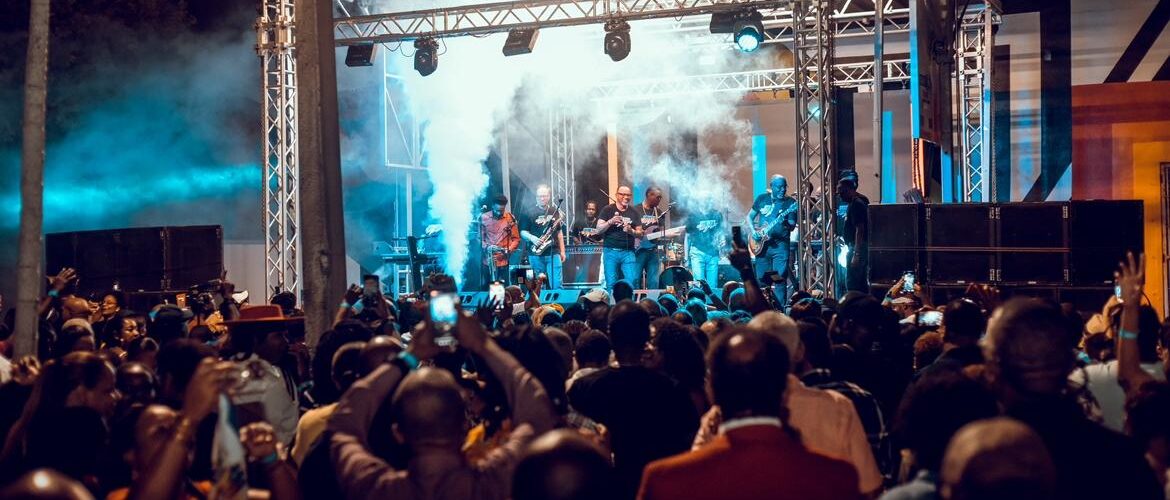

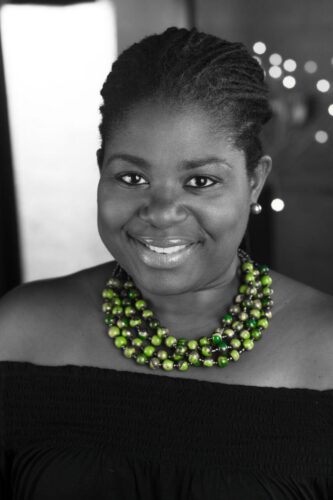


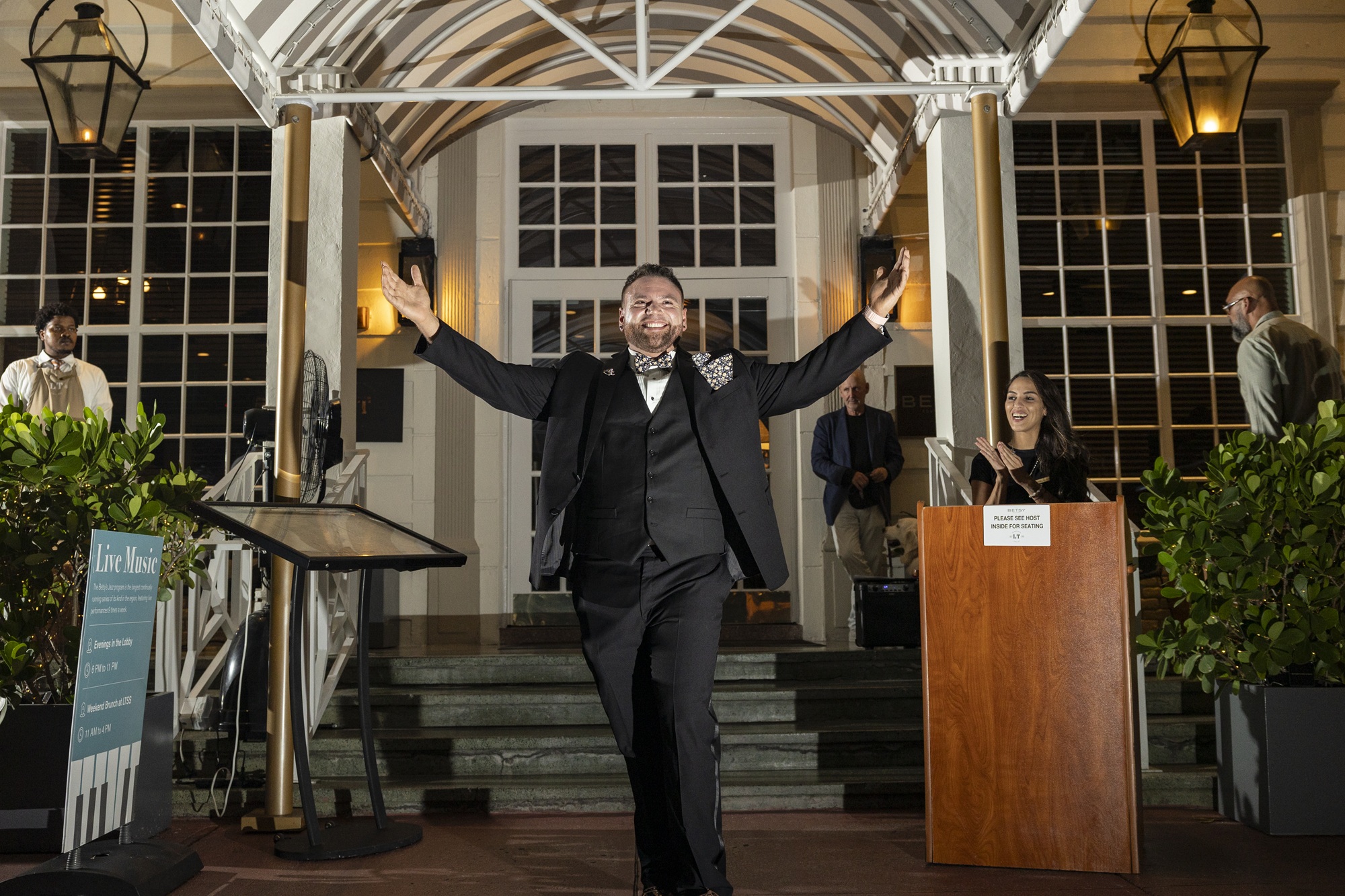
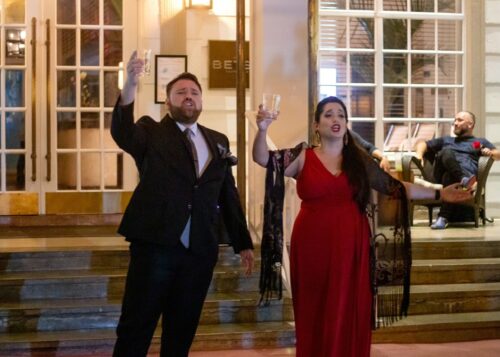
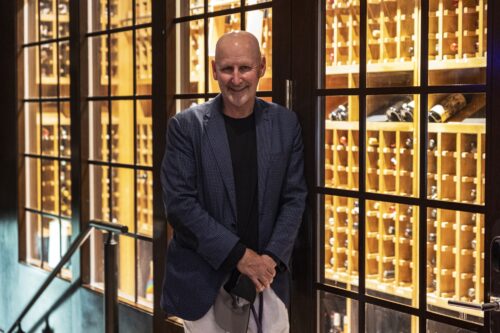

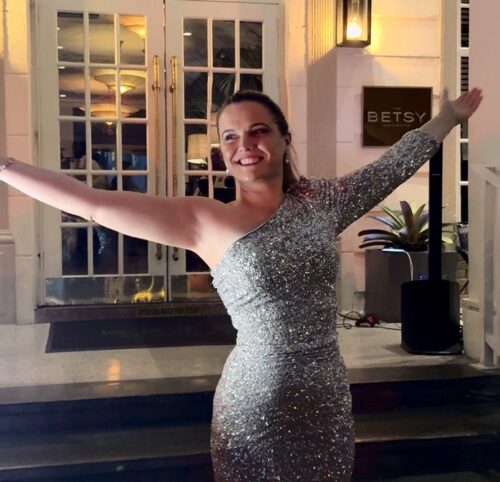
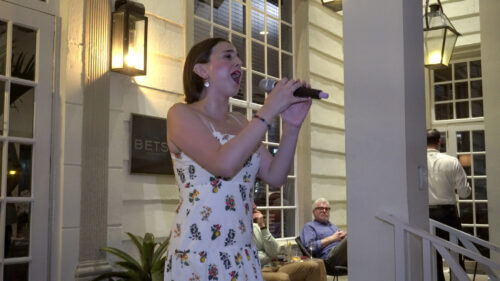

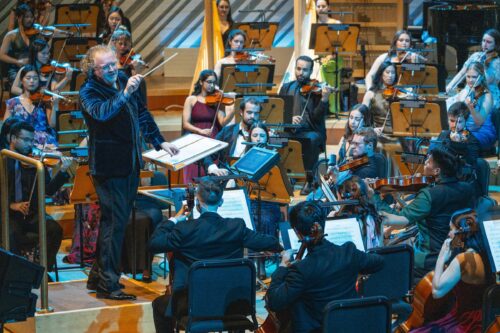
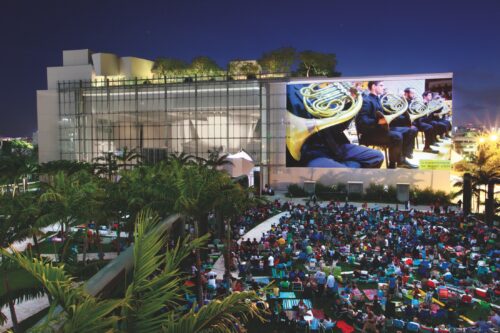
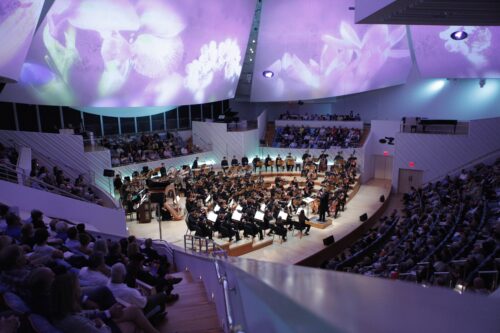
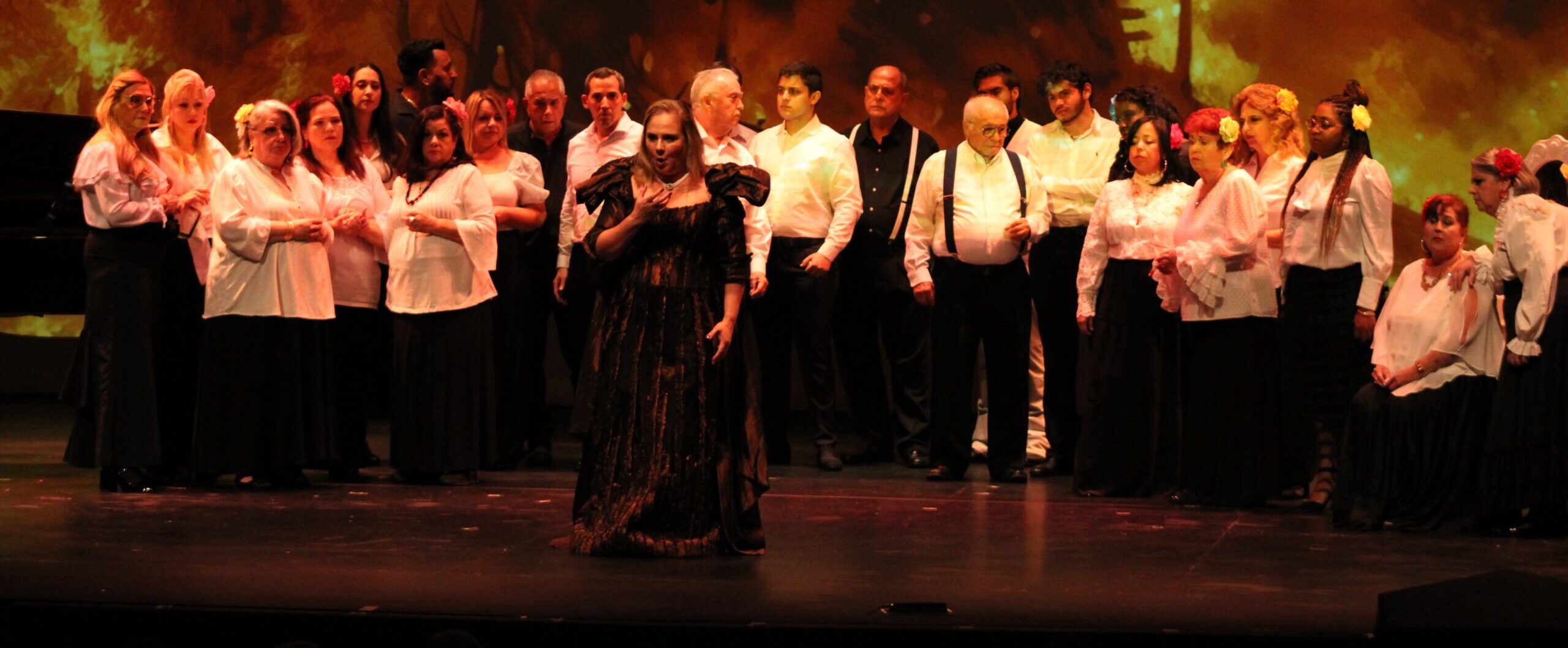
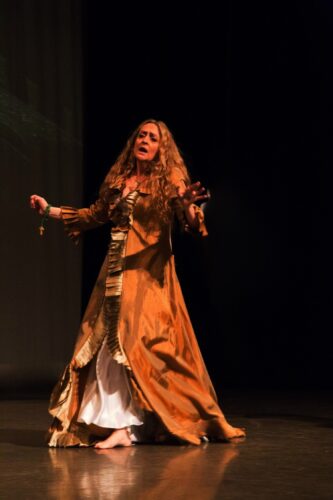
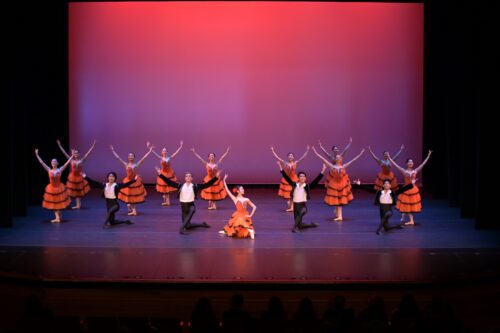
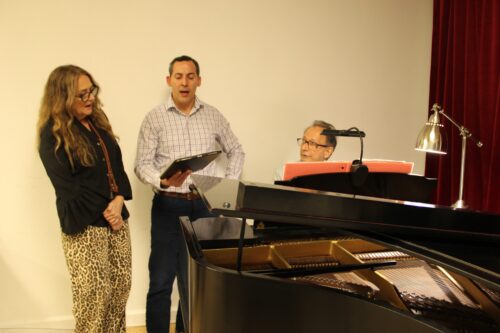
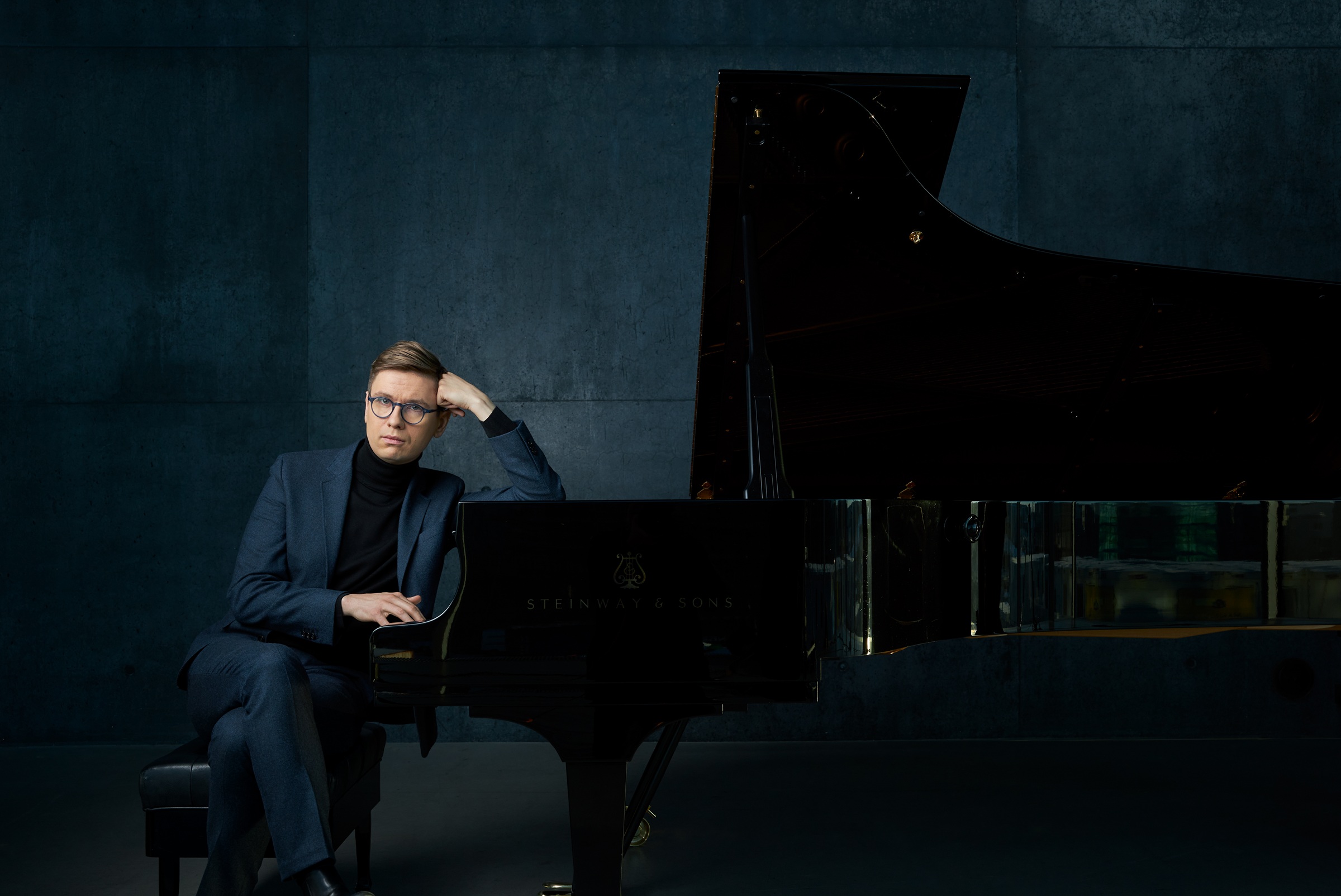
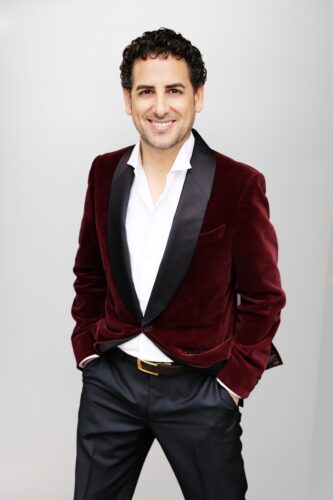
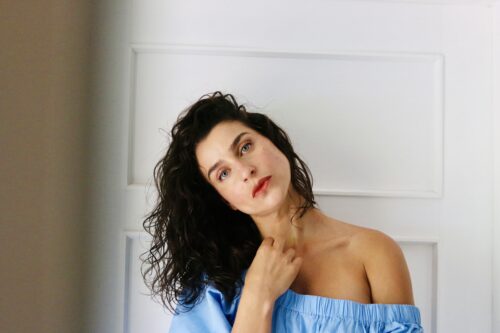
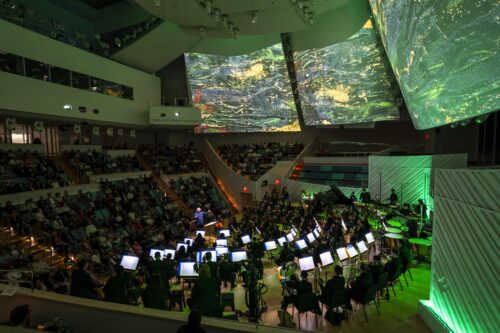
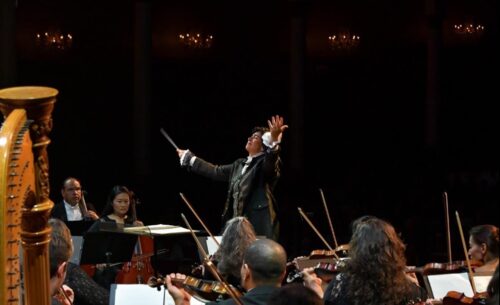


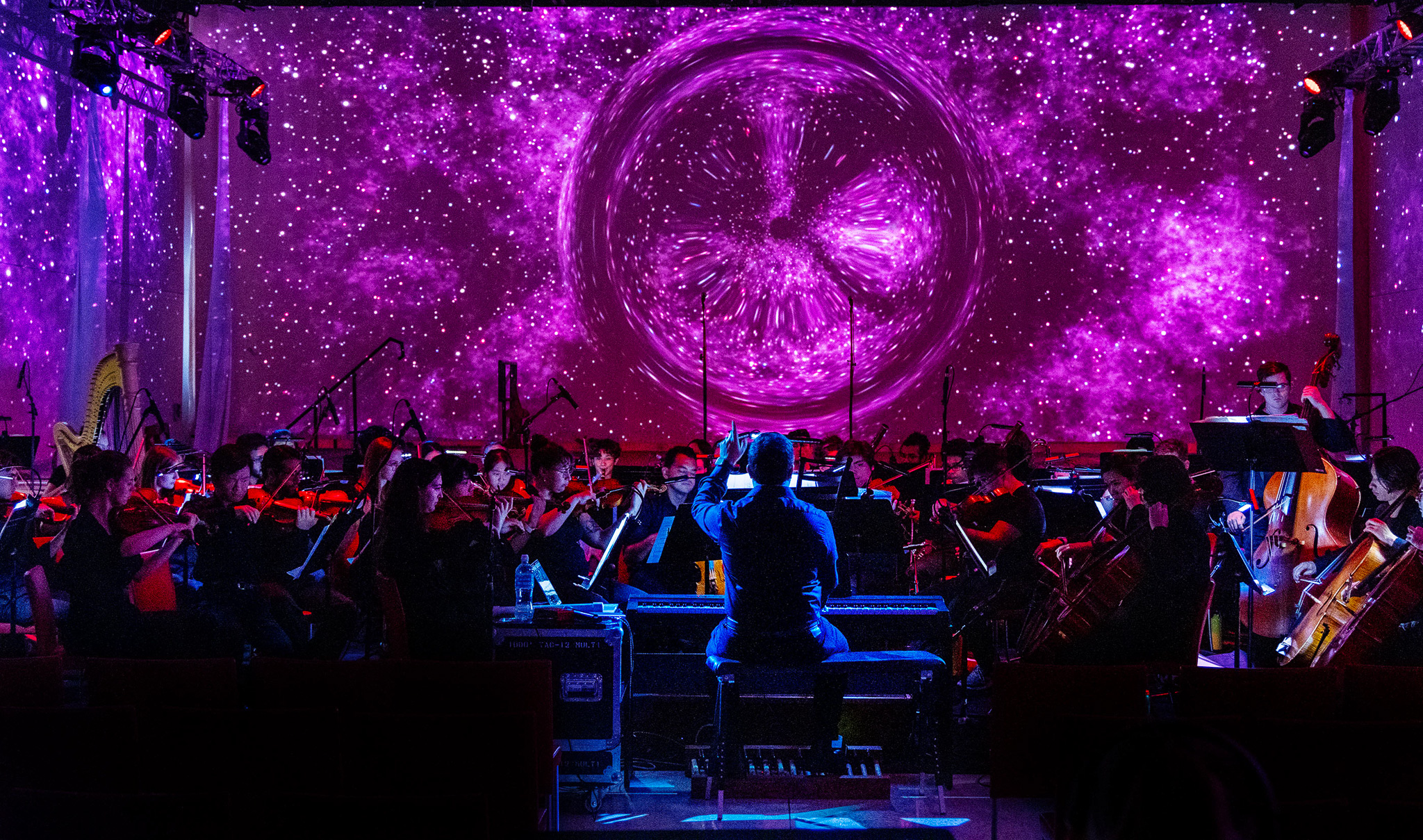
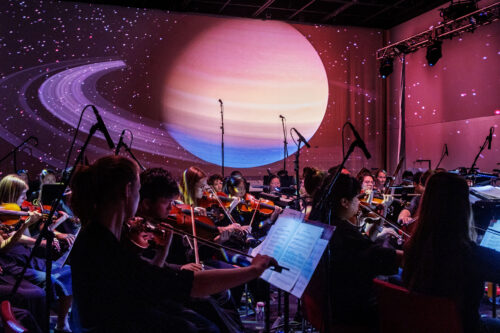
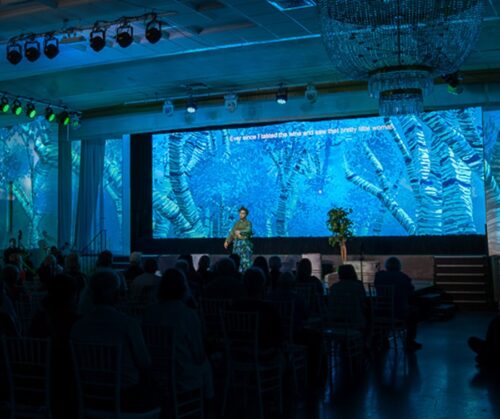
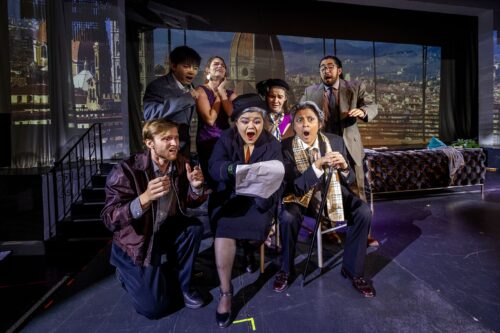
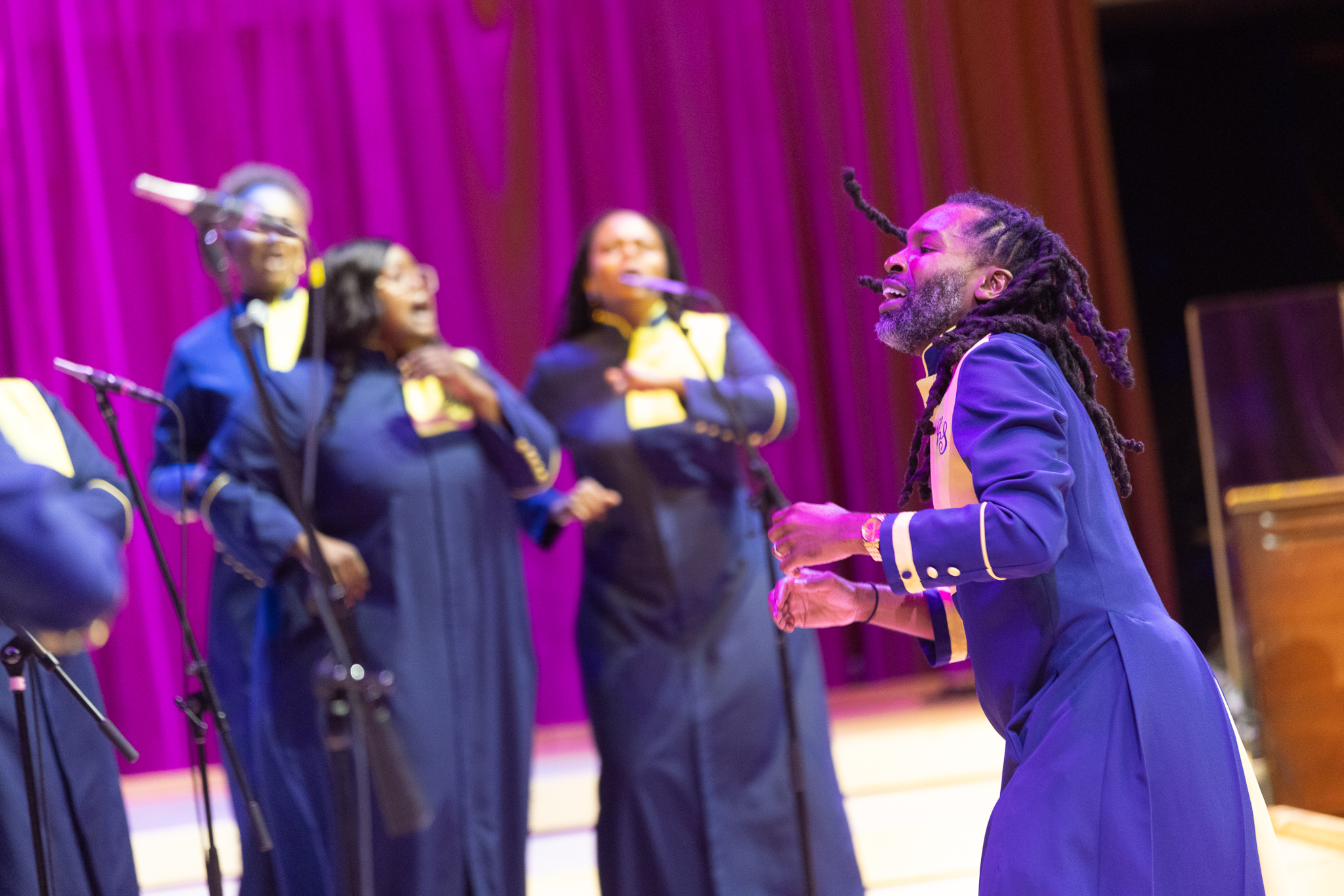


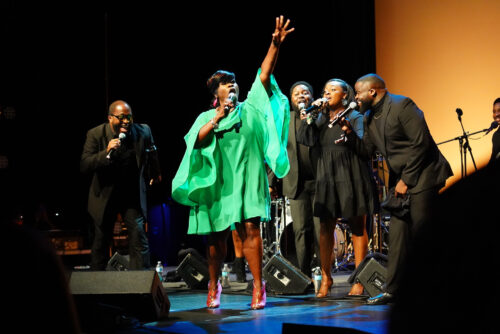
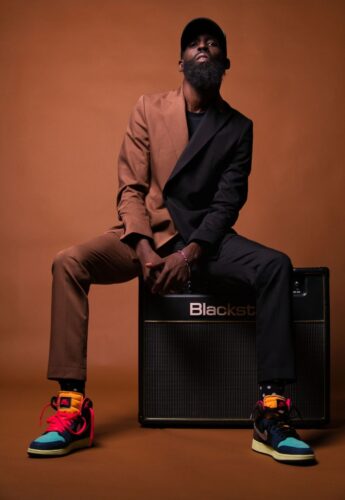


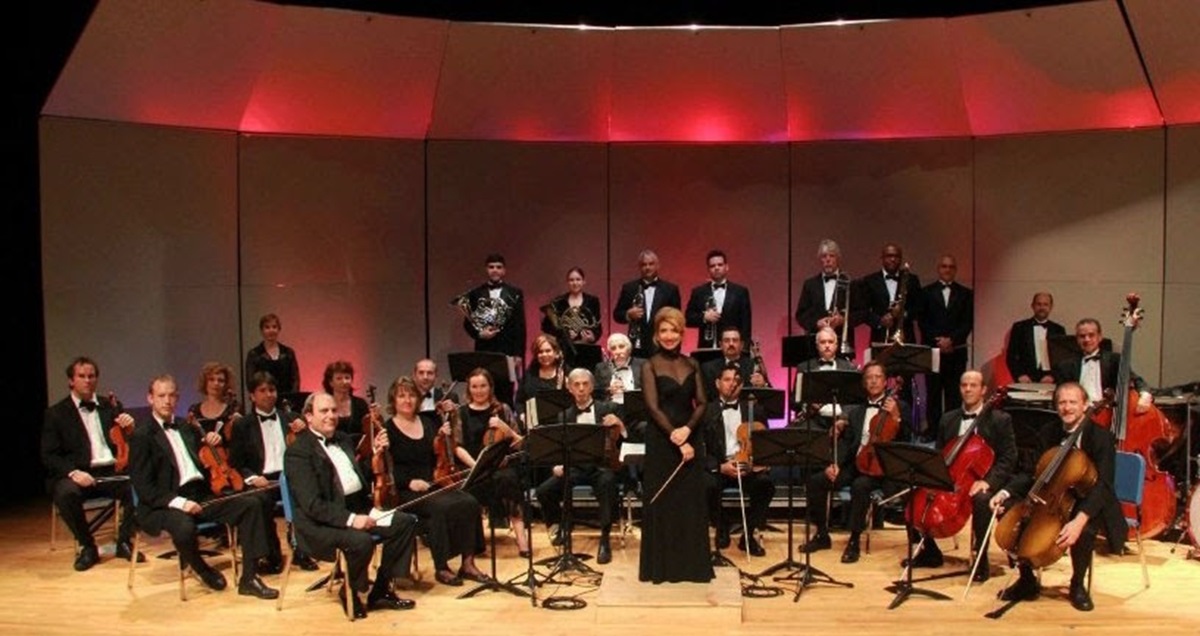
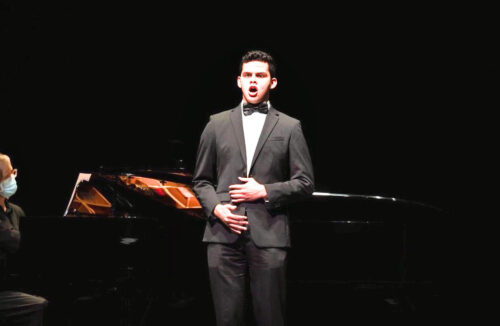
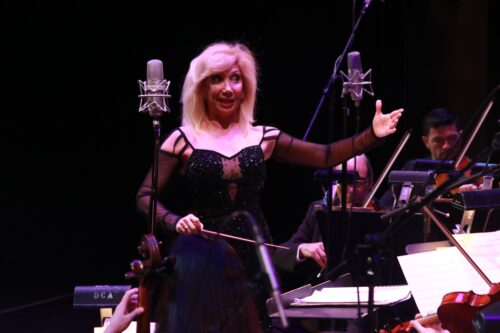
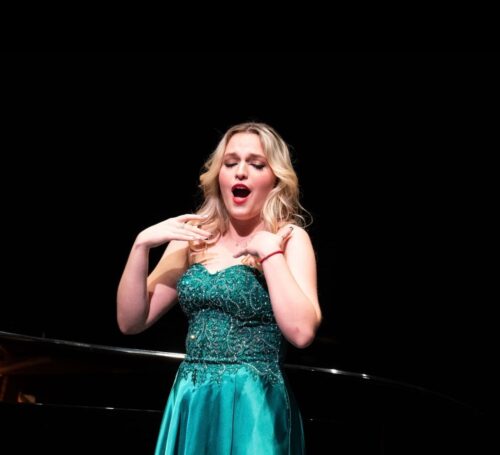
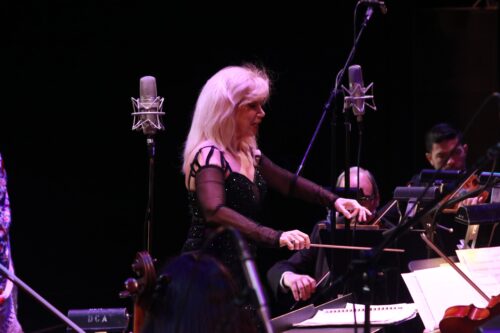



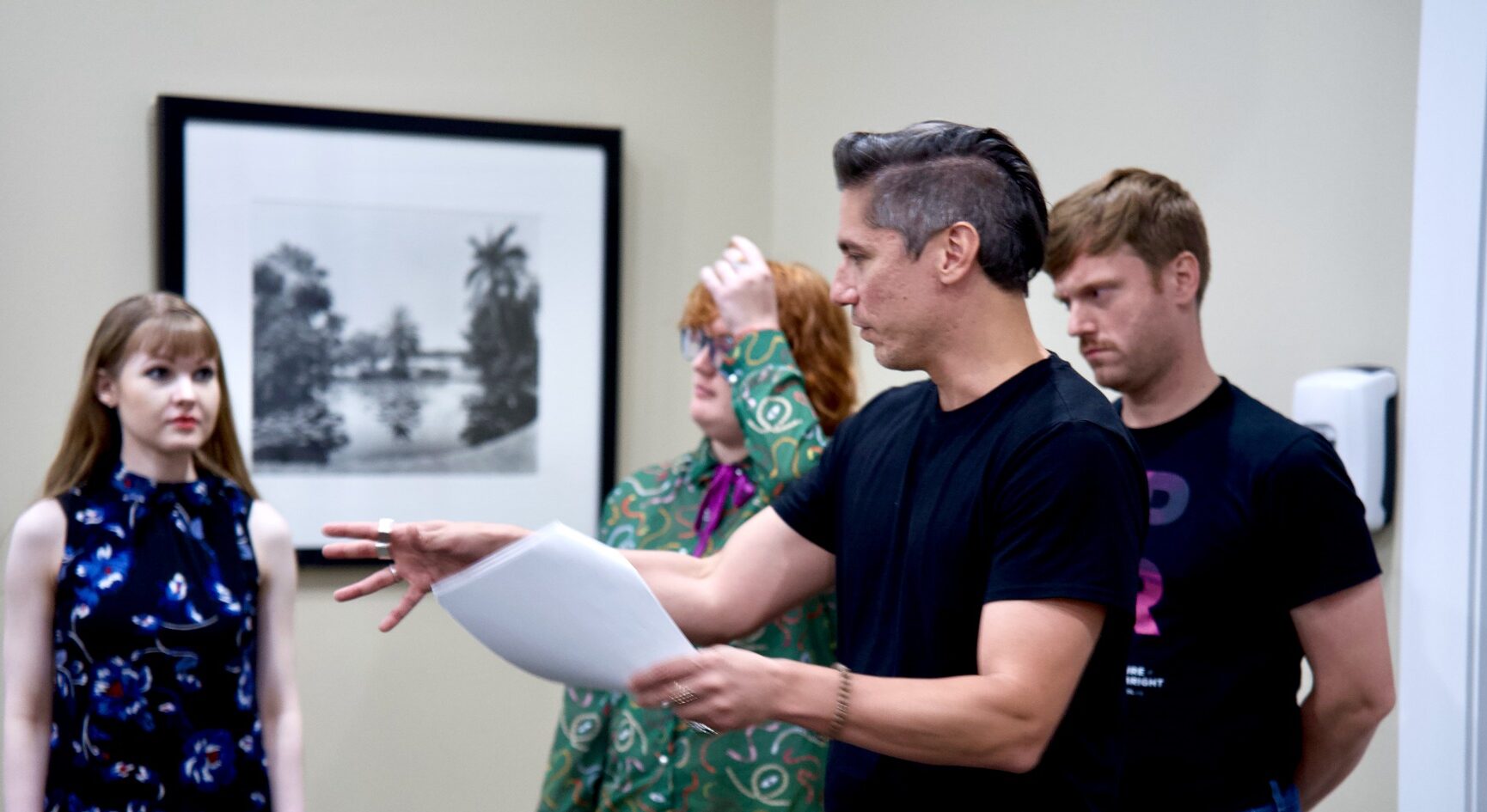
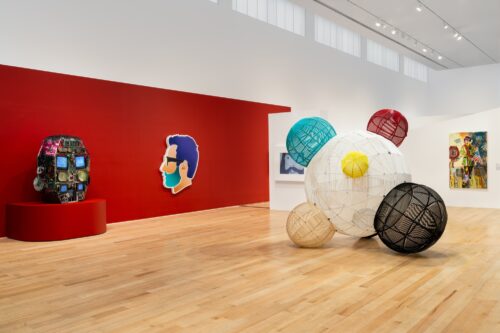
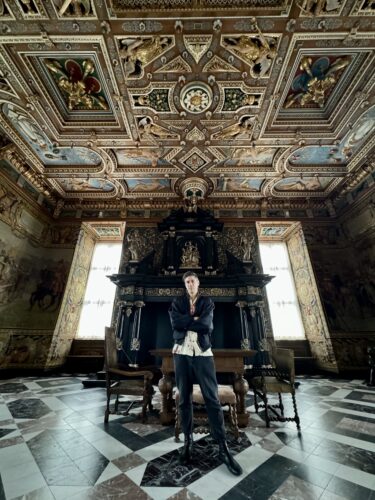
Recent Comments