Rhiannon Giddens & the Old-Time Revue Bring American Roots To The Bandshell
Written By Helena Alonso Paisley April 20, 2025 at 2:45 PM
Rhiannon Giddens is joined by five musicians, including fiddler Justin Robinson, on her current tour. Giddens and the Old-Time Revue come to the Miami Beach Bandshell on Friday, May 2. (Photo by Karen Cox/Courtesy Shorefire Media and The Rhythm Foundation)
When a musician of Rhiannon Giddens’ stature comes to perform in your town for the first time, a celebration is in order.
So, hey, Miami, how about a good, old-fashioned porch party?
The MacArthur “genius grant-,” Pulitzer Prize-, Grammy-winning Giddens proposes just that with her Friday, May 2 concert at the Miami Beach Bandshell. Rhiannon Giddens & the Old-Time Revue will play the kind of foot-stomping, hand-clapping, heart-lifting music that first brought her to prominence nearly two decades ago as a founding member of the Black string band the Carolina Chocolate Drops.
Rhiannon Giddens, who has explored many musical styles in her celebrated career, got her start in the “old time” music of the Carolina Piedmont in her late 20s. On this tour, the virtuosic singer and multi-instrumentalist returns to her down-home roots. (Photo by Karen Cox/Courtesy Shorefire Media and The Rhythm Foundation)
A North Carolina native, Giddens began her career as an opera singer, studying at the Oberlin College and Conservatory.
Degree in hand and back in her home state, her musical path took a 90-degree turn when she met 86-year-old Joe Thompson, one of the last living repositories of Carolina Piedmont music. He became her mentor. It wasn’t long before Giddens and fellow Thompson acolytes Justin Robinson and Dom Flemons had formed the Chocolate Drops, and a whole genre of American music that had been on life support was revived. In 2011, their second album “Genuine Negro Jig,” garnered the group a Grammy, and the accolades for Giddens’ gifts have not stopped since.
If Giddens’ musical journey has been full of twists and turns, it may be because her artistic boldness is only matched by her curiosity. The kind of person that says “yes” first then thinks about it later, every time she has a creative itch, it seems like she can’t help but scratch it.
For years Giddens has made her home in Ireland, and in the current season of the PBS series “My Music with Rhiannon Giddens,” she explores the melodies and rhythms of the island, singing in Gaelic on some of the tunes. And although she hasn’t taken a single class in composition, a few years back she decided that she would try her hand at composing an opera. Giddens and Michael Abel cowrote “Omar” about a Muslim African scholar who was enslaved in North Carolina. It garnered its two creators a Pulitzer. She was chosen to succeed Yo-Yo Ma as a director of the Silkroad Ensemble. Under her tutelage, they put out an album in 2024 highlighting the music of the Native American and immigrant groups who built the Transcontinental Railroad.
Rhiannon Giddens often plays a replica of a 19th-century fretless banjo, which has a deeper sound than the modern fretted instrument. It was a revelation to her when she first learned in her 20s that the banjo’s true origins were in Africa and the Caribbean. (Photo by Karen Cox/Courtesy Shorefire Media and The Rhythm Foundation)
With as many musical miles beneath her feet as those lines of railroad track, Giddens reveals in a telephone interview what brought her back around to her roots in the folk music of the Carolinas.
“Well, I guess kind of thinking back, it’s coming on the 20th anniversary of the beginning of the Carolina Chocolate Drops and the Black banjo gathering that kind of brought us together and, you know, I’m thinking about how that’s how everything started for me and wanting to kind of pay respect to that,” she says.
The style of music Giddens and her band will be playing at the Miami Beach Bandshell emerged from people living through hard times and coming together to create connections, to forge community. If they could do it, Giddens seems to say, so might we.
“It’s a very AI world right now and this music, this old-time music, made by people—poor people, you know—and made in community, is kind of like, for me, like anti-AI. I mean it’s just about as real as you want to get. So, I thought, ‘Man, it’d be really nice to have a tour kind of really leaning into that.’”
An artist whose boundless creative curiosity has led her to explore many musical styles, Rhiannon Giddens consistently emphasizes music’s connective role in the world, and how we use it to create community. (Photo by Ebru Yildiz/Courtesy Shorefire Media and The Rhythm Foundation)
For the musician, it just felt like time, she says.
“You know, ‘Let’s give the drums a rest for a second and the electric instruments, let’s just let them go and sit down for a second and really just focus on a string band.’ ”
This tour is her way of sharing a piece of our history that could have been forgotten, and it is that idea, not of grandstanding, but of coming together through music to strengthen the ties that bind us—no matter our ethnicity.
Giddens may beguile listeners with her astonishing voice, but she isn’t one to hog the limelight. “I love backing up people,” she says, adding that the banjo is great for that.
“I just, I really love supporting someone else who’s like killing it,” she says.
She gets to do that with Robinson. “What Did the Blackbird Say to the Crow?,” the pair’s first album since recording with the Chocolate Drops, came out on Friday, April 18. Fittingly, it was recorded outdoors, with birdsong included. Giddens is grateful to be once again touring and sharing a stage with a man she calls “just a pure musician.”
“He’s not doing any of it for fame or, you know, any of that stuff. Applause? He does not care,” she says.
“There’s something about me and Justin starting our journey together in our 20s, you know, 20 years ago… Playing fiddle and banjo together, it just feels really great,” she says. “He and I play together like we don’t play together with anybody else.”
(WATCH: Silkroad Ensemble with Rhiannon Giddens)
As with Robinson, her ties with the other musicians in the Old-Time Revue—multi-instrumentalist Dirk Powell, his daughter, guitarist Amelia Powell, bassist Jason Sypher, and Giddens’ nephew, bones player and rapper Demeanor—have developed over years of playing together.
“These are blood family and chosen family, and it felt really important to tour this music with that kind of group…. I feel like we represent a lot of where American music came from,” says Giddens.
The tunes they will play in concert honor the diversity of their heritages: Cajun and Creole, Blues, four-part harmony and, of course, old-time Carolina string music.
“Oh, it’s going to be all the things,” she says. “It’ll be like working class acoustic music, basically… That’s what we’re going to be playing.”
WHAT: Rhiannon Giddens & the Old-Time Revue, presented by the Rhythm Foundation. Opening set by Quiana Major.
ArtburstMiami.com is a nonprofit media source for the arts featuring fresh and original stories by writers dedicated to theater, dance, visual arts, film, music, and more. Don’t miss a story at www.artburstmiami.com
No posts found
In Concert, Nu Deco Ensemble Celebrates 10 Years Of Its Visionary Sound
Written By Miguel Sirgado April 17, 2025 at 5:13 PM
Founded in 2015, Miami’s Nu Deco Ensemble will mark its 10th anniversary at the Knight Concert Hall at the Adrienne Arsht Center for the Performing Arts on Saturday, April 26. (Photo by Alex Markow / Courtesy of Nu Deco Ensemble)
Not all orchestras sound the same—and few sound quite like Nu Deco Ensemble. Since its debut in 2015, the Miami-based group has transformed the city’s music scene with a vibrant, genre-blurring concept that’s both versatile and visionary: a fusion of classical tradition with popular styles such as pop, jazz, funk, and electronica.
The idea, conceived by conductor Jacomo Bairos and composer-arranger Sam Hyken was to create a 21st-century orchestra: agile, experimental, and deeply connected to its community and culture.
A Nu Deco performance offers a musical experience where the sophistication of a chamber ensemble meets the raw energy of contemporary music. Called a “chamber orchestra for the 21st century” by The New York Times, its repertoire features collaborations with artists such as Macy Gray, Ben Folds, Jacob Collier, Stephen Marley, and Danay Suárez, alongside bold reimaginings of music by Daft Punk, Rosalía, and The Weeknd.
The idea behind Nu Deco Ensemble, conceived by composer-arranger Sam Hyken, left, and conductor Jacomo Bairos, right, was to create a 21st-century orchestra. (Photo by Alex Markow/Courtesy of Nu Deco Ensemble)
“I always look back on our concert with Wyclef Jean with great emotion,” recalls Bairos, a Portuguese-American conductor, producer, and host of the Nu Deco “Unfiltered” podcast. About the collaborative performance in 2022, he says: “It wasn’t just an electrifying show—it made me feel that everything we had dreamed of with this orchestra was becoming reality: collaboration, energy, diversity, and a powerful connection with the audience. It’s also been incredible to see how we’ve grown within our community, impacting young musicians and audiences who hadn’t previously engaged with orchestral music.”
“This program represents the best of who we are. It has every element we aspire to express,” says Bairos, a graduate of both The Juilliard School and the Peabody Institute, who has performed and toured internationally with the New York Philharmonic, the Chicago Symphony Orchestra, and the Cincinnati Symphony and Pops. “We’ll start with our anniversary suite—a kind of ‘greatest hits’ collection that includes orchestral interpretations of songs by The Police, Daft Punk, Bill Withers, and Outkast. It’s a tribute to the artists who’ve become part of our musical DNA.”
Also in the program is the “Symphonic Dances of ‘West Side Story’ “ by Leonard Bernstein, which Bairos describes as “a 20th-century masterpiece that blends musical genres and perfectly embodies our philosophy of performing works by 20th- and 21st-century composers.”
Kishi Bashi, an American singer-songwriter, multi-instrumentalist, and Emmy-nominated award winning filmmaker, was one of Nu Deco Ensemble’s earliest collaborators. ( Photo by Rob Williamson/Courtesy of Nu Deco Ensemble)
The evening also includes the world premiere of a commissioned piece by Grammy-winning artist PJ Morton, composed specifically for Nu Deco. “This work is a great example of our commitment to commissioning new music from artists who don’t typically write for orchestras,” explains Bairos.
A piece with composer and multi-instrumentalist Kishi Bashi was built “through a uniquely collaborative process—just like a legendary band would. It reflects our willingness to break traditional molds,” he adds.
One of the ensemble’s earliest collaborators, Bashi says he was invited by Nu Deco where he worked with members of the ensemble to craft a composition, which he adds, taps into jazz, fusion and contemporary composition.
“You can hear the result,” says Bashi. It was an honor to be one of their first artists in this type of collaboration. I worked with Sam Hyken to finish the piece, and we are extremely excited to share the resulting work, ‘The Calling,’ ” says Bashi.
The grand finale will feature Puerto Rican Luis Fonsi—winner of four Latin Grammy Awards, seven Billboard Latin Music Awards, and three Grammy nominations—performing live with the ensemble. “Fonsi is a global icon,” says Bairos. “Our goal is to elevate his music and offer a new perspective through the full spectrum of colors that only an orchestra can provide.”
One of Nu Deco’s most notable accomplishments is its foundation in local talent with a core of musicians from South Florida. (Photo by Alex Markow / Courtesy of Nu Deco Ensemble)
One of Nu Deco’s most notable accomplishments is its foundation in local talent. “Most of our musicians are freelancers based in Miami,” says Bairos. “While we occasionally bring in players from out of town for specific needs, our core is built from musicians who’ve forged careers playing in orchestras, opera pits, chamber groups, and teaching here in the city. In fact, we still have six or seven musicians who were with us from our very first season.”
In recent years, Nu Deco has launched open auditions for substitute players, expanding access and helping to discover fresh talent in the area. “A lot of musicians wanted to play with us but didn’t know how. These auditions have allowed us to find emerging artists and musicians new to Miami. If they meet our standards, we invite them to join us. It’s been a fantastic way to strengthen Miami’s artistic ecosystem.”
Operating in a landscape where public funding for the arts continues to shrink, Nu Deco has had to be both adaptive and inventive. While the ensemble enjoys support from private donors and philanthropic programs, the reduction in state funding poses serious challenges.
“We’re a small organization. When a $90,000 state grant disappears due to political shifts, it has a serious impact on our operations,” says Bairos. “Our budget is limited, so any cut is felt deeply.”
Nonetheless, the ensemble has embraced an entrepreneurial mindset, diversifying its revenue streams through performances, corporate sponsorships, membership programs, and robust educational outreach.
Jacomo Bairos, co-founder, conducts the Nu Deco Ensemble’s 10th anniversary celebration set for Saturday, April 26 at the Knight Concert Hall at the Adrienne Arsht Center, Miami. (Photo by Alex Markow / Courtesy of Nu Deco Ensemble)
“Foundations are still out there, but their priorities are shifting. That’s why we’re evolving the way we serve our community,” adds Bairos. “We all want this city to thrive, and we believe art, culture, and education are essential to that goal.”
Still, sustainable growth is key to the future. “To keep producing full seasons every year, we need to secure more funding, and that means growing our staff,” says Bairos.
Ten years in, Nu Deco Ensemble’s founders believe they represent far more than an innovative musical concept. They want to show what a bold redefinition of what a modern orchestra can be—one that’s inclusive, forward-thinking, and deeply rooted in its community. Bairos and Hyken have proven that symphonic music can be vibrant, relevant, and unafraid to evolve.
“Music unites us all—and that’s what we want to keep doing: unite,” says Bairos.
WHAT: Nu Deco Ensemble Anniversary Concert with Special Guest Luis Fonsi, Kishi Bashi, and music by PJ Morton.
WHEN: 8 p.m., Saturday, April 26
WHERE: Adrienne Arsht Center for the Performing Arts, 1300 Biscayne Blvd., Miami
Piano Slam: Sounds of the Future, Music of the Present and Past
Written By Jonel Juste April 9, 2025 at 7:14 PM
At Piano Slam 2024, then junior Edwina Tony from Miami Norland Senior High passionately delivers her spoken word poem, “From Permed to Proud.” This year’s “Piano Slam” is Wednesday, April 23 at the Adrienne Arsht Center for the Performing Arts. (Photo by Cristian Lazzari/courtesy of Dranoff 2 Piano Fusion)
Poetry combined with hip-hop, classical and pop music has young poets competing for prizes from $100 to $1,000 at this year’s Dranoff 2 Piano Fusion “Piano Slam.”
The music-poetry mashup is at the Adrienne Arsht Center for the Performing Arts on Wednesday, April 23.
Since its inception in 2007, Piano Slam has been a platform for young poets in Miami-Dade County to merge their creative writing with classical and contemporary music.
Ysabella Villaflor, a seventh grader from Bowman Ash Doolin K-8 performing her Piano Slam poem about Miami on The Adrienne Arsht Center stage last year. (Photo by Cristian Lazzari/courtesy of Dranoff 2 Piano Fusion)
“It is a fully STEM-integrated creative writing program in schools inspired by music,” says Emily Cardenas, executive director of Dranoff 2 Piano Fusion, adding that for audiences it is a “dynamic, professional show.” A curriculum is periodically adapted in collaboration with Miami-Dade County Public School educators and administrators in line with the annual theme and integrated into classroom activities.
The districtwide poetry competition was open to all students in Miami-Dade County’s middle and high schools. Finalists have already been selected.
Behind Piano Slam is Dranoff 2 Piano Fusion. Founded in 1987 by Loretta Dranoff, the organization was originally known as the Murray Dranoff International Foundation and focused on promoting the two-piano artform through an international competition. As the global landscape for piano duos expanded, the foundation shifted its focus under the leadership of Carlene Sawyer, leading to the creation of Piano Slam, according to Cardenas.
The program’s name draws inspiration from slam, the performance-based poetry movement that emerged in the 1980s. “It is a form of performance poetry that combines the elements of performance, writing, competition, and audience participation and it is presented at events called poetry slams. Since Dranoff has its origins in classical piano music, the decision was made to fuse the words piano with slam to create Piano Slam,” explains Cardenas.
For the first time, Piano Slam will have a live judging panel led by presidential poet laureate Richard Blanco. (Photo by Matt Stagliano/courtesy of Dranoff 2 Piano Fusion)
This year’s theme, “Music of My Past … Sounds of the Future,” challenges students to explore their cultural musical heritage while envisioning the future. Part of the program requires students to integrate music and science terms into their poetry writing.
“The program inspires confidence and self-expression; it propels students to believe in the power of their opinions and express them in a creative way,” says Cardenas.
Brenis Bostick, a former student at Miami Norland Senior High and now an English Creative Writing major at the University of Miami, was a finalist in the 2020 Piano Slam competition with his poem “Mother Miami.” He reflects on how deeply the program influenced his life. “The Piano Slam program was a turning point in my life—it truly saved me; this opportunity arrived during one of the darkest periods I’ve faced,” he shares.
Miami Norland Senior High School student Brenis Bostick performing his winning Piano Slam poem in 2020. (Photo courtesy of Dranoff 2 Piano Fusion)
For the first time, Piano Slam will have a live judging panel led by presidential poet laureate Richard Blanco and including Haitian American poet Mecca “Grimo” Marcelin, Miami-Dade poet laureate Caridad Moro-Gronlier and Miami Book Fair executive director Lissette Mendez.
“Poetry and music are kindred spirits, having the two come together will be magical,” says Blanco. He emphasizes the importance of live performance in capturing the essence of a poem. “No matter what, there’s nothing like hearing a poem recited. When we hear a poem out loud, especially in the voice of the poet, we catch all the nuances, cadences, pauses, etc. that make the poem come alive in a new way,” he explains.
Blanco adds that his role would involve balancing the technical merits of the written work with the emotional impact of its performance. He also shares his expectations of the contestants. “Poems can be over-performed. I’m looking for honest performances—that is to say performances that are informed by real and honest emotions. Not merely performances for the sake of performance. That can come across as disingenuous.”
“(Piano Slam) is a fully STEM-integrated creative writing program in schools inspired by music,” says Emily Cardenas, executive director of Dranoff 2 Piano Fusion. (Photo by Gregory Reed/courtesy of Dranoff 2 Piano Fusion)
Director Teo Castellanos, returning after a seven-year hiatus from Piano Slam, discussed the unique challenges of directing an event that fuses live music with spoken word poetry. “The challenge is working with non-traditionally trained performers. I’m speaking of the students, not the professional musicians, dancers, choreographers or adult poets,” he says.
Despite having only about 10 days to work with the students, Castellanos finds the experience “exciting” as it brings together professionals and young talent. He noted that the involvement of experienced coaches and musicians helps elevate the performances.
The musical direction of the show is led by Martin Bejerano, a Miami-born Afro-Cuban jazz pianist. He outlines his approach to blending classical, jazz, and pop music elements for the show. “We have a collaborative approach to picking both the classical and other contemporary music selections, as well as blending or ‘mashing’ them together,” he says.
Bejerano detailed the musical selections, noting that the event will feature works by composers such as Mozart, Ravel, Stravinsky, Chopin, and Gershwin alongside contemporary tracks by Kendrick Lamar, Bad Bunny, Coldplay, Billie Eilish, and Sly and the Family Stone.
“The music of our youth will one day become the music of our past, and thus, the popular music we feature from today will one day be the sounds of these students’ past,” he says. Bejerano further emphasizes that the music is designed “to create a special vibe for each poem,” ensuring that the powerful spoken word performances remain at the forefront.
Independent actor, writer, and director with over 30 years of experience, Teo Castellanos has been tapped to direct Piano Slam, a live show that fuses live music with spoken word poetry.(Photo by Randy Valdez/courtesy of Dranoff 2 Piano Fusion)
Piano Slam combines classical and contemporary elements in a way that aligns with Dranoff 2 Piano Fusion’s broader mission to bring together different cultural expressions through the arts, according to Cardenas.
“Piano Slam . . . gives them a voice they didn’t know they had” while also providing “valuable exposure of classical music to young people who have never experienced it or who have had little appreciation for it until now.”
To the student performing, Castellanos advises, “Dig. Dig into your soul. Express yourself to your fullest capability. Never mind being judged. Do you, and have fun doing it.”
ArtburstMiami.com is a nonprofit media source for the arts featuring fresh and original stories by writers dedicated to theater, dance, visual arts, film, music, and more. Don’t miss a story at www.artburstmiami.com
No posts found
FGO’s ‘Carmen’ Has Plenty of Legacy And A Real Housewife of Miami
Written By Michelle F. Solomon April 8, 2025 at 5:01 PM
Ginger Costa-Jackson is Carmen in Maria Todaro’s Florida Grand Opera production of George Bizet’s opera, opening Saturday, April 12 at the Adrienne Arsht Center for the Performing Arts, Miami. (Photo by Walt Jackson/courtesy of the artist)
Behind the scenes of Florida Grand Opera’s “Carmen,” there are intriguing legacies: This will be the 24th production for mezzo soprano Ginger Costa-Jackson who will be singing the role of “Carmen”; Julia Lemigova, one of the stars of the reality television series “The Real Housewives of Miami,” is in the production in a role that has always been miniscule but now has more stage time; and director Maria Todaro comes from a long line of “Carmen” history – her mother, a celebrated Brazilian mezzo-soprano, has sung the role of Carmen 250 times.
Todaro has reimagined the production, taking it out of George Bizet’s early 19th century Spain and placing it in the midst of the Spanish Civil War in 1937.
In rehearsal, Rafael Davila as Don José and Ginger Costa-Jackson as Carmen for Florida Grand Opera’s “Carmen.” (Photo by Lewis Valdes/courtesy Florida Grand Opera)
Todaro, who has been with Florida Grand Opera (FGO) since October 2023, first as its interim general director and general director and CEO since 2024, conceived and directs FGO’s “Carmen,” opening Saturday, April 12, at the Adrienne Arsht Center for the Performing Arts. It will also be performed in Fort Lauderdale at the Broward Center for the Performing Arts on Thursday, April 24 and Friday, April 25.
“This is for me, an enormous joy,” says Todaro, who has sung the role as a mezzo soprano in her own professional career, “because I’ll be working with exquisite artists that I’ve chosen and without changing a word, without changing the music, we are telling a very powerful story. [It is] the same story, but with layers that are deeper and empowering for women.”
For the French-born Todaro, “Carmen” is not just an opera, but a deeply personal, artistic and familial touchstone.
“When I was an opera singer, I performed many Carmens,” says Todaro. “And my mother was the youngest singer in the history of “Carmen.” She is the daughter of opera singers José Todaro, a Spanish/Italian operatic tenor, who frequently played the role of Don José, and Brazilian mezzo soprano Maria-Helena de Olivera who, at 21 was the youngest singer to debut in the role, performing at La Monnaie in Brussels. She went on to perform the Spanish gypsy 250 times.
When Ginger Costa-Jackson takes the stage in Florida Grand Opera’s “Carmen,” it will be her 24th production. (Photo by Walt Jackson/courtesy of the artist)
In FGO’s production of “Carmen,” Todaro cast Ginger Costa-Jackson in a role that has become her signature, performing as Carmen in productions with major companies in Seattle, San Diego, San Francisco, Nashville, Detroit, Vancouver and Tokyo. In a first, her soprano sisters, Marina Costa-Jackson and Miriam Costa-Jackson, will alternate performances as Micaëla, the first time all three have performed in a production together, albeit only sharing a brief scene. “There’s only one moment that In Act 3 where Micaëla and my character interact on stage. She’s disguised as a boy and I am actually the one that removes her hat because she is in disguise and the minute I take off her hat, I see all of her hair falling down and I say, ‘It’s a woman.’ “
Ginger Costa-Jackson recalls that during rehearsals the sisters would all “break down laughing because we have this face off and we would just crack up when I would reveal Micaëla’s identity.” She says they have been working to remain serious when the curtain goes up. While Ginger Costa-Jackson has worked with Todaro in other productions, this will be the three sisters debut with FGO.
Ginger Costa Jackson, left, with her sisters, Miriam and Marina. The sisters will alternate performances as Micaëla, the first time all three have performed in a production together, albeit only sharing a brief scene. (Photo courtesy of Florida Grand Opera)
“And you’ve heard that we have a Miami housewife with us,” says Costa-Jackson. Lemigova, the wife of tennis star Martina Navratilova, and the first LGBTQ+ housewife to be featured in Bravo’s reality television show, has been studying voice with Florida Grand Opera for the past year, and is making her opera debut in a non-singing role as Manuelita, a factory worker and Carmen’s rival.
“We have some cat fighting scenes together and it’s so fun,” says Costa-Jackson.
Todaro says it is a very physical role she’s given Lemigova.
“The Real Housewives of Miami” star Julia Lemigova plays Manuelita, a role director Maria Todaro calls physically demanding in Florida Grand Opera’s production of “Carmen.” (Photo by Lewis Valdes/courtesy Florida Grand Opera)
“Usually, the character is seen for about ten seconds and, in some productions you don’t even see her, she is just mentioned. In my version, you’ll see her in all four acts,” says Todaro, who worked with Lemigova on stage combat, a disfiguration sequence, and “intense interactions” with the cast.
Todaro says deliberately expanding the character’s presence in the opera emphasizes the role of women in the director’s Spanish Civil War setting.
“The Spanish Civil War offers a context that Carmen is a freedom fighter,” says Todaro.
Martina Navratilova, Maria Todaro, and Julia Lemigova at an announcement that “The Real Housewives of Miami” star would be creating the role of Manuelita in Florida Grand Opera’s production of “Carmen.” (Photo by Ana Andrade/courtesy of Florida Grand Opera)
She references the book “Carmen” by Prosper Mérimée, the original novella from 1845 that inspired the classic opera by Bizet. “Before Carmen dies, she says ‘I was born free and I will die free.’ So this statement from Mérimée is really the epitome of who Carmen is,” she says. “Placing it in the Spanish Civil War allowed me to give another sense to the word freedom that is always so emphasized. It’s not just her sexual freedom. She says, ‘I have had many lovers. And one day they are here and one day they are gone.’ Now, her mission is the fight for freedom during a war.”
“Carmen,” Bizet’s opera of a free-spirited Gypsy woman, has become one of the most frequently performed operas. Some of the French opera’s arias have become part of pop culture, such as the recognizable “Habanera,” with its familiar pizzicato strings and orchestra used as a soundtrack for television and movie comedic moments — such as the Swedish Chef and Beaker singing together on “The Muppets,” in a Doritos commercial during the 2008 Super Bowl, and to dramatize Mr. Carl Fredricksen’s long descend down the stairs to start his day in Disney Pixar’s film “Up.”
Maria Todaro, who has been with Florida Grand Opera (FGO) since October 2023, first as its interim general director and general director and CEO since 2024, conceived and directs FGO’s “Carmen,” opening Saturday, April 12, at the Adrienne Arsht Center for the Performing Arts. (Photo by Lewis Valdes/courtesy Florida Grand Opera)
“The traditionalist will look at it with an eye of ‘ooh, I’m surprised,’’’ says Todaro about her “Carmen.”
“There are things in this production like the treatment of ‘Habanera,’ for instance and the first time Carmen enters the stage. Usually, you see her as a femme fatale, but I’ve done something very different. But I don’t want to give away the secrets.”
She does divulge that she inserted writer Ernest Hemingway into her version – the novelist was in Spain during the Civil War as a correspondent.
Since her opera is set in the midst of Francisco Franco’s dictatorship she had to consult with her prop master about elements on the set that would be relevant to 1937. Should a poster say “Libertad” like she had used in a previous production she directed in 2018 or would she rather “Unidad” in 2025?
Maria Todaro in rehearsal directing a fight scene for Florida Grand Opera’s “Carmen.” Orchestra conductor Ramón Tebar looks on. (Photo by Lewis Valdes/courtesy Florida Grand Opera)
“In my other shows I always had ‘libertad,” like a cry for freedom. In today’s context, we debated about the purpose of art and the responsibility that we have. Whatever is happening in the world does not belong to me, the interpretation is for the audience. This company is a place of connection, of unity, a place where we want to create dialogue and where it should be a safe place for everyone to come and to discuss.”
Todaro says as the executive director, CEO of FGO and the director of its current production,” she sees her job as this: “My role is not to influence. My role is to present.”
WHAT: Florida Grand Opera’s “Carmen” (Sung in French with English and Spanish projected translations)
WHEN: 7 p.m., Saturday, April 12, 3 p.m., Sunday, April 13 and 8 p.m., Tuesday, April 15; also in Fort Lauderdale, 7:30 p.m., Thursday, April 24 and Saturday, April 26.
WHERE: Adrienne Arsht Center for the Performing Arts, 1300 Biscayne Blvd., and Broward Center for the Performing Arts, 201 SW 5th Ave., Fort Lauderdale.
Powerhouse singer-songwriters Pascuala Ilabaca, La Muchacha, pair traditions with modern sensibilities
Written By Fernando Gonzalez March 28, 2025 at 11:54 AM
Chilean singer, songwriter, and multi-instrumentalist Pascuala Ilabaca, above, appears at the Miami Beach Bandshell on Saturday, April 5, in a double bill with La Muchacha (aka Isabel Ramírez Ocampo).
Singer-songwriters Pascuala Ilabaca, from Chile, and La Muchacha (aka Isabel Ramírez Ocampo), from Colombia, bring to the stage traditional styles and rhythms updated with elements drawn from a broad range of sources, from rap and rhythm and blues to music from India. Their lyrics, at times poetic, at times blunt like hammers, celebrate love, community, and women’s history but also jagged-edged issues such as police brutality, immigration, and sexual harassment.
Both join a long tradition of women storytellers in Latin America that includes forebears such as Violeta Parra, Mercedes Sosa, Susana Baca and the great cantadoras of Colombia, voices such as Totó La Momposina, Petrona Martínez, ad Etelvina Maldonado, all keepers of the people’s memory.
La Muchacha and her trio, El Propio Junte. From left, Camilo Bartelsman, drums; Miguel Velásquez Matijasevic, bass, and Isabel Ramirez Ocampo, vocals, guitar, are part of a double bill at the Miami Beach Bandshell on Saturday, April 5. (Photo courtesy of the artist)
Ilabaca and La Muchacha headline a double bill part of FUNDarte Out (Loud) in the Tropics annual event at the Miami Beach Bandshell at 8 p.m., Saturday April 5. The show is a co-presentacion of FUNDarte, the Rhythm Foundation, and Live Arts with the Miami Dade County Auditorium Away from home series. Count on serious messages framed by danceable music. Count on serious messages framed by danceable music.
“I like the music I make to enter through the body,” says Ilabaca, in a recent conversation in Spanish from her home in Valparaiso, Chile. “This music comes with a journey, it’s the sound of the carnivals of the Andes, so it cannot be without sweat. That’s also why the EP that I bring on this tour is called “Poética Bailable (Danceable Poetics).” The idea is to find the irresistible rhythms we have in Latin America, such as bullerengue, cumbia, or timba, and then put philosophy and poetry into it. Sweaty poetry enters better,” she says, breaking into a laugh.
Ilabaca was born in Girona, Spain, where her family had taken refuge from Pinochet’s dictatorship. On their return to Chile, her father, a visual artist, won a scholarship, and his art project involved touring all the traditional festivals in Chile in a car.
Chilean singer, songwriter, and multi-instrumentalist Pascuala Ilabaca and her six-piece group Fauna bring to the Miami Beach Bandshell “the sound of the carnivals of the Andes, so it cannot be without sweat. Sweaty poetry enters better,” she says. (Photo courtesy of the artist)
“That was my entrance to Chile,” recalls Ilabaca. “It was dazzling because . . .I discovered Chile.” From then on, she says, she has always contrasted that country “with the story of Chile … pretending to be the England of Latin America.”
That said, Ilabaca’s passion for Chilean culture and her roots is accompanied by a curiosity and openness to other cultures borne of her personal experience.
“Having this nomadic upbringing, having a craftswoman mother and an artist father, I lived in India when I was a child, and then also in Guatemala, in Mexico. The experience of growing up in a constantly changing reality and context, spending the night in the house of an Indian family or a gypsy family in the desert of Rajasthan, transformed my worldview. There was no turning back. I want to contribute something so we can open up our perspectives. That’s what excites me, communicating with the world.”
Chilean singer-songwriter Pasacuala Ilabaca brings music she calls “Poética Bailable (Danceable Poetics)” to the Miami Beach Bandshell. (Photo courtesy of the artist)
She returned several times to India to study. She has incorporated Hindi singing and concepts from Indian traditional music into her work. In keeping with her many interests, she has also written for a string quartet (for her album “Amatoria”), collaborated with (among others) the Fela Kuti-inspired Chilean group Newen Afrobeat, and is currently working on a Big Band project.
At the Miami Beach Bandshell, Ilabaca will be performing on vocals, piano, and accordion, accompanied by a sextet version of her band, Fauna, featuring congas, brass, guitar, bass, and drums.
Meanwhile, Ramírez, La Muchacha, has seen several of her songs become anthems in Colombia, including titles such as “No me toques mal (Don’t Touch Me Wrong)”, a feminist anthem that since has been embraced by children’s advocates, or “No Azara’ (which translates roughly as “No Fear”), and “El Blues De Los Tombos, (Cops’ Blues”) denouncing police brutality. Her earlier work, unvarnished, passionate, and direct, delivers blunt messages.
Colombian singer-songwriter La Muchacha, aka Isabel Ramírez Ocampo has seen several of her songs become anthems in Colombia. (Photo courtesy of the artist)
She titled two of her albums “Raw Songs”: “Canciones Crudas “(2020) and “Más Canciones Crudas” ( 2021).
“It has been crazy to see how these songs accompany people, make visible, and amplify things. But it is painful, to be honest,” she says in an interview in Spanish from Colombia. But then, sometimes, the audience and the context reframe the hard messages and give songs a new life, she says. “‘No Me Toques Mal’ has become a song people dance to, and I enjoy singing it because it now has a different fire, which comes not only from the wound but from us saying, ‘I am here, and I’m saying ‘No Más.’ (No More).’ ”
Many of her songs touch a nerve, and while necessary, sometimes it can get too painful. “I’ve had people telling me, ‘Right now I can’t listen to your music because I’m in so much pain. I can’t stand it,” she says. “We have to be very careful not to fall into a vicious circle of pain as we stick our finger into the wound. I feel it is also important to talk about hope about things that are weighing us down.”
“La Muchacha” is a term often used in Latin America when referring to domestic help. She says she was not making a statement when she chose the name of her alter ego. In fact, originally, it was going to be Muchacha Pájaro (Bird girl). “It was later, when I checked the etymology, that I realized how strong (the choice) was. Then I saw the reflection between the girl who washes the dishes and the one who breaks them. I was not the girl who followed orders, but the girl who spoke up, who says what needs to be said — even if she liked doing the dishes too.”
Accompanied by El Propio Junte, a trio featuring Miguel Velásquez Matijasevic on bass and Camilo Bartelsman on drums, and percussion, Ramírez will be playing some of her best-known material but also presenting music from her most recent release “Los Ombligos, (The Navels)”, in which she brings together a social long view and personal stories.
“I have songs that mobilize spaces of anger, of pain. I’ve had people telling me, ‘Right now I can’t listen to your music because I’m in so much pain. I can’t stand it.’ ”
From left, Isabel Ramirez Ocampo, vocals, guitar; Miguel Velásquez Matijasevic, bass; Camilo Bartelsman, drums. La Muchacha and her trio, El Propio Junte.“ (Photo courtesy of the artist)
She earnestly says that she “needs to make ‘ointment songs,´ ‘mattress songs,’ and ‘little cloud songs.’ They don’t have to be all in pink and romantic, but we need to realize that we can talk about other things.”
Ilabaca and Ramírez are bold print names in a generation of women singers and songwriters in Latin America leading the way with their new folk fusion and their messages. But if we are surprised, we probably haven’t been paying attention, suggests Ramírez.
“We have always been here. What has happened is that we have had so many centuries of being invisible, of repression, . . . biases that, obviously, there is a historical gap in which many of these things never came to light,” she says. “But women have always been doing things. Always.”
WHAT:FUNDarte in collaboration with the Rhythm Foundation and Live Arts with Miami Dade County Auditorium Away home series presents La Muchacha and El Propio Junte and Pascuala Ilabaca & Fauna as part of Out (Loud) in the Tropics 2025
ArtburstMiami.com is a nonprofit media source for the arts featuring fresh and original stories by writers dedicated to theater, dance, visual arts, film, music and more. Don’t miss a story at www.artburstmiami.com.
No posts found
South Beach Chamber Ensemble Finds ‘Music in Beautiful Spaces’
Written By Jesús Vega March 19, 2025 at 4:57 PM
Karen Powell, Sheena Gutiérrez, Michael Andrews, and Angela Kratchmer of the South Beach Chamber Ensemble during a performance at The Betsy Hotel. The ensemble plays two concerts in its “Music in Beautiful Spaces” series in Miami Beach and Coral Gables on Saturday, April 5 and Sunday, April 6. (Photo courtesy of Paul Seligman)
The South Beach Chamber Ensemble has been presenting its “Music in Beautiful Spaces” series for the past 26 years.
“The Music in Beautiful Spaces series has always been our signature set of chamber concerts,” says Michael Andrews, cellist, founder, and executive artistic director of the South Beach Chamber Ensemble, which was founded in 1997.
“The main purpose of our flagship series is to fulfill our vision of a world where music inspires and motivates audiences, creating peace, harmony, joy, and the unprecedented satisfaction of being alive,” says Andrews. “It’s the perfect match between the (architecturally significant) spaces and the spirit of music.”
For its latest “Music in Beautiful Spaces,” the ensemble will pay tribute to two composers whose works Andrews says deserve greater exposure: Fanny Mendelssohn and Rebecca Clarke.
Performances are at 2 p.m. Saturday, April 5 at All Souls’ Episcopal Church, Miami Beach, and at 2 p.m. on Sunday, April 6 at St. Philips Episcopal Church, Coral Gables. The repertoire for both performances includes Fanny Mendelssohn’s “Piano Trio in C minor, Op. 11” (1846-47) and Rebecca Clarke’s “Piano Trio in E-flat major” (1951).
Karen Powell, Sheena Gutiérrez, Michael Andrews, and Angela Kratchmer at All Souls’ Episcopal Church, Miami Beach, where the South Beach Chamber Ensemble (SBCE) will perform one of its tribute concerts to Fanny Mendelssohn and Rebecca Clarke. (Photo courtesy of Linda Kolko)
Mendelssohn (1805-1847) was a talented German composer and pianist of the early Romantic period. Her works include a piano trio, a piano quartet, an orchestral overture, four cantatas, more than 125 piano pieces, and more than 250 lieders, many of which were published after her death. Despite her mastery of the instrument, she rarely performed in public concerts. Due to the social status of her time, several of her works were published under the name of her younger brother, the more well-known Felix Mendelssohn.
“Our purpose is to present composers who have been overlooked, sometimes because of their gender, nationality, ethnic background, or sexual orientation. Despite their musical repertoire and accomplishments are evident,” explains Andrews. “Fanny Mendelssohn’s work has always been overshadowed by the work of her famous brother. However, her piano trio is a compelling masterpiece.”
Rebecca Clarke (1886-1979) was an English American classical composer and violinist known for her chamber pieces featuring the viola. She is considered one of the most important British composers of the period between the two World Wars and the most distinguished composer of her generation. Born in England to a German mother and an American father, she always retained her U.S. citizenship and settled permanently in the United States after World War II.
“A few years ago, SBCE performed Rebecca Clarke’s ‘Two Movements for String Quartet.’ Its harmonies and style sparked the interest of our musicians and the audience,” recalls Andrews. “Working with her piano trio, we discovered a much more complex and masterful piece, full of more modern harmonies and special effects like ‘sul ponticello’ [playing the bow near the bridge of the stringed instrument to emphasize the higher harmonics] and natural harmonies in the strings, creating an ethereal and spiritual sound.”
Michael Andrews, cellist, founder, and artistic executive director of South Beach Chamber Ensemble (SBCE), at the Miami Beach Botanical Garden. (Photo courtesy of Stephan Rudenko)
When asked about SBCE’s motivation for choosing two piano trios, each performed by Karen Lord Powell (violin), Michael Andrews (cello), and Michael Linville (piano), the ensemble’s executive artistic director responded by referring to the ensemble’s history.
“In our 27-year history, we have presented piano trio concerts, alternating with string quartets. There is so much chamber music composed for these two ensemble forms that we will always have something to delight our audiences. We are honored to have Michael Linville, Dean of Instrumental Performance at the New World Symphony, on piano.”
South Beach Chamber Ensemble: Price String Quartet #2 in A minor, 1st movt., excerpt
South Beach Chamber Ensemble also performs outside of the region including its “Music in Motion” series of collaborations with musicians worldwide.
“We have performed in Brazil, Argentina, and Mexico,” says Andrews.
The ensemble heads to the Midwest for its summer concert series, “South Beach Up North,” which celebrates its 19th anniversary this year in Andrews’ hometown of Wausau, Wisc.
“(We) have a full calendar of activities and work that wouldn’t exist without the support of numerous organizations and friends who inspire and motivate us,” says Andrews.
WHAT: South Beach Chamber Ensemble “Music in Beautiful Spaces”
WHERE: All Souls’ Episcopal Church, 4025 Pine Tree Drive, Miami Beach, and St. Philips Episcopal Church, 1121 Andalusia Avenue, Coral Gables.
WHEN: 2 p.m., Saturday, April 5 (All Souls’ Episcopal Church); 2 p.m. Sunday, April 6 (St. Philips Episcopal Church).
COST: $30; $20, senior citizens; students admitted free with ID. Tickets can be purchased online and at the door.
ArtburstMiami.comis a nonprofit media source for the arts featuring fresh and original stories by writers dedicated to theater, dance, visual arts, film, music, and more. Don’t miss a story at artburstmiami.com/
No posts found
Israel Philharmonic’s U.S. tour goes beyond borders, opens at Miami’s Arsht Center
Written By Miguel Sirgado March 5, 2025 at 2:27 PM
The Israel Philharmonic Orchestra, led by music director Lahav Shani, returns to the United States for five-city tour in Florida and California with the opening tour performance in Miami at 8 p.m. Wednesday, March 19 at the Adrienne Arsht Center for the Performing Arts. (Photo by Marco Borggreve/courtesy of Israel Philharmonic Orchestra)
It began as a vision—a bold dream to give Jewish musicians a home, and a young nation an orchestra. When Polish violinist Bronislaw Huberman founded the Israel Philharmonic Orchestra in 1936, he set out to “unite the country’s desire for an orchestra with the Jewish musicians’ desire for a homeland.” Nearly 90 years later, his dream not only endures but thrives. The orchestra remains a cornerstone of Israel’s cultural identity, bringing generations together through music, and its mission remains as powerful as ever: to inspire, connect, and share the universal language of music.
Since its creation in 1936, the orchestra remains a cornerstone of Israel’s cultural identity with a mission to inspire, connect, and share the universal language of music. (Photo by Oded Antman/courtesy of Israel Philharmonic Orchestra)
“People often say classical music is in decline, but in reality, it’s everywhere—in films, video games, and the media we consume daily,” says Yuval Shapiro, Trumpet Chair and a member of the orchestra’s management team. “The challenge for orchestras today is to bridge that gap, to show audiences that attending a live concert isn’t intimidating but an enriching experience.”
Expanding its reach both locally and internationally, the orchestra has seen a surge in attendance, particularly among younger listeners. “In Israel, we have around 13,000 concert subscribers, mainly in Tel Aviv, Haifa, and Jerusalem. When we couldn’t travel abroad (during COVID), we focused on our local audience—and it paid off,” explains Yair Mashiach, secretary general of the ensemble.
With new energy, an evolving repertoire, and Lahav Shani at the helm, the orchestra is exploring fresh ways to engage its audience. “People are shifting from buying subscriptions to purchasing single tickets, largely due to the challenges of recent years—the pandemic, the war, and other uncertainties. But when we look at the bigger picture, we’re encouraged. Our audience’s faith in us remains strong, and in the end, we’re not playing to fewer people—we’re playing to more,” explains Mashiach.
The renowned institution, led and conducted by Shani, returns to the United States for a five-city tour with Miami the first stop on Wednesday, March 19 at 8 p.m. at the Adrienne Arsht Center for the Performing Arts in Miami.
Lahav Shani took over the role of music director from the renowned Zuben Mehta in 2020 for the Israel Philharmonic Orchestra. (Photo by Marco Borggreve / courtesy of Israel Philharmonic Orchestra)
“Lahav is a phenomenal musician and a fascinating person—intelligent, knowledgeable, and deeply connected to the orchestra. Many of us have known him for years, and watching him step into this role has been truly interesting,” says Shapiro.
Shani renewed his contract with the orchestra in February 2025 and will remain music director until at least 2032. He first stepped into the role in 2020 when he succeeded the renowned conductor Zubin Mehta.
“(Shani) actively commissions new works and champions major Israeli compositions from the 20th century. Planning meetings with him are a privilege—his approach is collaborative, engaging, and full of fresh ideas. It’s always a dynamic exchange, never about authority, but about listening and creating together.”
The tour’s program showcases masterpieces from the 19th and 20th centuries, including Mendelssohn’s Symphony No. 3, “Scottish,” inspired by the rugged beauty of Scotland, and one of Tchaikovsky’s most iconic works—either Symphony No. 5 or “Pathétique” (No. 6), depending on the city. In Miami, Tchaikovsky’s “Symphony No. 6” is on the program.
“Tchaikovsky’s Fifth and Sixth Symphonies are such a huge part of our repertoire. They’re these big, sweeping, emotional works, and we wanted to pair them with pieces that have a strong connection to Jewish composers,” says Shapiro.
The day after the Miami performance, the orchestra travels to West Palm Beach for a performance on Thursday, March 20 at the Kravis Center for the Performing Arts, where the program features Tchaikovsky’s “Symphony No. 5” along with Mendelssohn’s “Symphony No. 3.”
“For the Fifth Symphony, we’re playing it alongside Mendelssohn’s Scottish Symphony—which isn’t Jewish at all, but it’s interesting because it shows this transition from classical to romantic music. Both symphonies go on this really powerful journey, starting in a minor key, full of tension and struggle, and then breaking through into something hopeful. That shift—from darkness to light—feels especially relevant right now.”
Yuval Shapiro, Trumpet Chair and a member of the Israel Philharmonic Orchestra management team says what the orchestra represents is “purely the artistry and excellence of Israeli musicianship.” (Photo by Miri Davidovitz/courtesy of Israel Philharmonic Orchestra)
In addition to these symphonic masterworks, the orchestra will present music deeply rooted in Jewish heritage, carrying both historical and emotional significance.
Shapiro shares that the first half of the program in Miami features works by Jewish composers: Tzvi Avni’s “Prayer,” Max Bruch’s “Kol Nidrei,” and Leonard Bernstein’s “Halil.”
“Bernstein’s ‘Halil’ is a deeply moving flute concerto he wrote in memory of a young musician who was killed in the Yom Kippur War. Bernstein was such a huge part of our orchestra’s history—he even conducted us during Israel’s War of Independence. So this program feels incredibly meaningful, especially now. It’s not about religion, it’s about emotion—grief, memory, resilience. And then you have Tchaikovsky’s “Pathétique,” which is so heartbreaking—it builds and builds with all this energy, and then in the final movement, it just fades away, like a heartbeat slowing down. It’s devastating but beautiful. If people can make it to both programs in Florida, they’ll really get to experience two sides of an incredible musical story.”
The orchestra embarks on the tour at a time of heightened political tensions and rising antisemitism. When asked about the challenges of performing in such an environment, Shapiro and Mashiach emphasize the importance of focusing on the music.
“I try to explain, no matter where we play—whether in Europe or the U.S.—that we are at the heart of Israeli culture. But we are not ambassadors of the Israeli government. What we represent is purely the artistry and excellence of Israeli musicianship,” says Shapiro. “You should treat us the same way you would treat the Berlin Philharmonic. This is about great music, a great program, a great conductor, and outstanding soloists. The priority should be the music —this orchestra has 88 years of history, and that legacy speaks for itself.”
Yair Mashiach, Secretary General of the orchestra, says the orchestra “has a sound like no other” shaped by its musicians and the spirit of the country it represents. (Photo by Shlomi Pinto/courtesy of Israel Philharmonic Orchestra)
Despite the political climate, the orchestra remains committed to its mission of sharing music with audiences from all walks of life.
“We know where we come from, and we understand the complexities. Even when people protest against us, we try to engage with them. We ask, ‘What is it you want?’ Because in reality, what we do is an example of maintaining normalcy in Israel—preserving culture, keeping the arts alive, even in times of war, even with all the challenges we face,” say Mashiach. “Music offers comfort. We don’t ask about political views when people come to our concerts, and frankly, we don’t care. What matters is that, for those two hours, people can find a moment of escape, a moment of connection.”
And as the Israel Philharmonic Orchestra embarks on its tour, its musicians remain dedicated to creating moments of deep emotional connection—both for themselves and their audiences. Music, after all, has the power to transcend barriers, offering comfort, reflection, and inspiration. “I remember just a few weeks ago, I went to see “War Requiem” by Britten at the Israeli Opera, and it was so moving—I just started crying in the audience. And I wasn’t the only one,” one musician shared. “It’s something we need to do. I truly hope the public in Miami, West Palm Beach, and California (the orchestra continues its tour to Palm Desert, San Francisco and Costa Mesa) will come to the concert and have an experience that is both beneficial and meaningful,” says Shapiro.
Beyond its history and its mission, the Israel Philharmonic carries something intangible yet unmistakable—a unique sound, shaped by its musicians and the spirit of the country it represents. “We have a sound like no other,” says Mashiach.
They hope to share that sound with audiences, offering an experience that lingers long after the final note fades.
WHAT: The Israel Philharmonic conducted by Music Director Lahav Shani
WHEN: 8 p.m., Wednesday, March 19 and 7:30 p.m., Thursday, March 20
WHERE: Adrienne Arsht Center for the Performing Arts, 1300 Biscayne Blvd, Miami, Kravis Center for the Performing Arts, 701 Okeechobee Blvd., West Palm Beach.
COST: In Miami: $40, $55, $80, $97, $131, $190; in West Palm Beach: $40, $75, $90, $125, $165, $180.
ArtburstMiami.com is a nonprofit media source for the arts featuring fresh and original stories by writers dedicated to theater, dance, visual arts, film, music and more. Don’t miss a story atwww.artburstmiami.com.
No posts found
The Melton Mustafa Jazz Festival: 28 Years Of Jazz, Education, and Community
Written By Fernando Gonzalez February 25, 2025 at 7:39 PM
Melton Mustafa Jr. leads the Melton Mustafa Orchestra on Sunday as part of The Melton Mustafa Jazz Festival. The festival culminates Sunday, March 2, with a tribute to Florida-born Jaco Pastorius at the historic Lyric Theater in Miami’s Overtown. (Photo by Jerome Louden-JML Photo Services)
The Melton Mustafa Jazz Festival, which celebrates its 28th edition from Friday, Feb. 28 to Sunday, March 2, is one of the most significant events in the South Florida jazz calendar. Throughout the years, it not only brought to the area headliners such as James Moody, Grover Washington Jr., Wallace Roney, Patrice Rushen, Billy Cobham, Herbie Mann, Billy Taylor, Clark Terry, and Randy Brecker but has had an impact as an educational and community event.
For the 10th consecutive year, the Black Archives is hosting the closing night concert at the historic Lyric Theater in Miami’s Overtown. The festival also includes events at local landmarks such as the Dunns-Josephine Hotel, the Lil Green House Grill, the Red Rooster Restaurant, and the African Heritage Cultural Arts Center.
Saxophonist Jesse Jones Jr., Melton Mustafa Sr.’s older brother, photographed performing at the 2022 concert, recalls how “The festival was a community family-type thing for him.” (Photo courtesy of Gregg Reed)
A highlight of this year’s Festival is the Sunday concert, a tribute to Florida-born Jaco Pastorius, a musician who had a transformational impact on 20th-century jazz as an electric bass player, composer, and bandleader. Guitarist Pat Metheny called him the “last jazz musician of the 20th century to have made a major impact on the musical world at large.”
But for the Mustafas, Pastorius was also a family friend.
“I had a unique childhood. I was privileged to be around famous musicians that I didn’t even know were famous, they were just my dad’s friends,” says Melton Mustafa Jr., who, as a director, has carried the festival forward after the passing of his parents, Melton and Zakiyyah Mustafa. “Jaco Pastorius used to come over to the house and practice with my dad and my uncle. He’d come over to the house and practice the blues, write music, play, talk, and watch TV, and it was just a good hang. And he did that often. I grew up with Jaco in the house. He wasn’t Jaco Pastorius. Not to me and my brothers. He was Uncle Jaco, a funny, funny guy who would laugh a lot and tell great jokes.”
Saxophonist Jesse Jones Jr., Melton Mustafa Sr.’s older brother, chuckles at the memory.
“Jaco has really been a part of our family for many years,” he notes. “He was a great musician.”
Jaco Pastorius and Peter Graves at a family event in 1978. The deep friendship and musical collaboration between Pastorius and Graves went back decades. (Photo courtesy of Peter Graves)
Bandleader and long-time Pastorius collaborator Peter Graves, who will conduct the Jaco Pastorius Big Band at Sunday’s concert, notes that “as good as Jaco was as a player, he was even better as a composer and arranger. I just wish people could hear the things he left unrecorded.” The Jaco Pastorius Big Band, featuring guests such as trumpeter Randy Brecker and bass players Gerald Veasley and Mark Egan, will revisit some of Pastorius’s classic compositions, including “Three Views of a Secret,” “Liberty City” and “Domingo,” as well as Pee Wee Ellis’s “The Chicken,” a Pastorius favorite workout.
As for the festival, Jones underscores how his brother emphasized the connection with the community and the educational components of his effort.
“The festival was a community family-type thing for him,” says Jones. “And my brother always wanted to incorporate kids, students from the beginning. He wanted to get a program where young musicians could be a part of the event, always. You’re teaching them not only music, but you’re teaching them about life.”
A trumpeter, bandleader, and educator, Melton Mustafa, who died in 2017 of prostate cancer, had a solid career on the bandstand and in the classroom. In the late 1960s, he worked with top soul acts such as Sam & Dave, Betty Wright, and Latimore, before becoming active in the jazz scene of Miami and joining saxophonist Ira Sullivan’s band. In the early 1980s, he played in Pastorius’s fabled Word of Mouth Band but also worked with classic outfits such as the Count Basie Orchestra, the Duke Ellington Orchestra, Woody Herman and His Orchestra, and with composer and educator Gunther Schuller.
Melton Mustafa Jr. with a painting of his father Melton Mustafa Sr. “My father loved Miami. He loved South Florida, the people, the community […] he wanted to include and involve as much of the community as possible.” (Photo by Jerome Louden/JML Photo Services)
He also led the Melton Mustafa Orchestra and the Melton Mustafa Quintet and was an active music teacher. He founded the program for jazz studies at what was then known as Florida Memorial College (now Florida Memorial University) in Miami Gardens and, in 1996, launched the annual Melton Mustafa Jazz Festival with the idea of serving as a fundraiser for college and high school jazz students.
“At the time, my dad was touring all over the world, playing with all these great jazz musicians, and he wanted to bring them to the South Florida area,” recalls Mustafa Jr., a three-time Grammy-nominated musician and active educator. “So, he basically got his friends and some of the musicians he played with to come down to Miami to do a jazz festival. He wanted to touch the students at Florida Memorial because they were so dear to him. He added that educational component so the students would have a chance to study or go to a workshop with these master musicians and learn directly from them.”
Melton Mustafa Jr. leads a rehearsal of the Melton Mustafa Orchestra at the Marshall Davis African Heritage Cultural Arts Center. (Photo by Jerome Louden/JML Photo Services)
For much of its history, jazz was an oral tradition, the rules of the road were learned on the bandstand. “That was the main thing that my brother wanted for the students,” says Jones. “Share his experience. Pass it on.”
As for community involvement, Mustafa Jr. recalls how his father “loved Miami. He loved South Florida, the people, the community. He was very active on different levels. And when starting this concert, which became a festival he wanted to include and involve as much of the community as possible. This started with the international artists — and then it spilled over.”
WHAT: 28th Annual Melton Mustafa Jazz Festival – “Tribute to Jaco Pastorius” Red Carpet Event and Festival Concert
WHEN: 5 to 6 p.m., Red Carpet event with Dr. Michale Krop Jazz Band under the director of Bringel Cidel, 6 p.m. Melton Mustafa Jazz Festival Concert and 7 p.m., Jaco Pastorius Big Band directed by Peter Graves, Sunday, March 2.
ArtburstMiami.com is a nonprofit media source for the arts featuring fresh and original stories by writers dedicated to theater, dance, visual arts, film, music and more. Don’t miss a story at www.artburstmiami.com.
No posts found
Montreux Miami Jazz Festival Returns For Part Deux
Written By Michelle F. Solomon February 25, 2025 at 2:48 PM
The second Montreux Miami Jazz Festival takes over The Hangar at Regatta Harbour in Coconut Grove starting Friday, Feb. 28 through Sunday, March 2. (Photo by Valerie Chapparo, courtesy of Montreux Miami Jazz Festival)
Emily Estefan is following in the footsteps of her Miami music royalty parents Emilio and Gloria Estefan, who are longtime ambassadors of the city’s live music experience.
Estefan performs at the Montreux Jazz Festival in Miami for its second year as part of Sunday night’s Afro-Cuban event, “La Descarga.”The festival, at the Hangar in Coconut Grove, begins Friday, Feb. 28 and continues through Sunday, March 2, culminating with the all-star jam session.
The singer, songwriter and multi-instrumentalist was part of the inaugural Montreux Miami in 2024. A new chapter in the legendary Switzerland-based jazz festival, which started in 1967 on the shores of Lake Geneva, and spread across the ocean, most recently to Latin America with the Rio Montreux Jazz Festival in Rio de Janiero in 2019 and then Miami last year.
“Even though jazz is firmly in the festival’s DNA, we are committed to breaking musical siloes and getting audiences to discover artists and music that they may not have realized they would love. The Montreux Jazz Festival in Switzerland has been doing this for nearly 60 years. Miami’s artistic diversity and advantages as a destination make it an incredible fit,” says co-producer and Miami native Jeremy Arditi who was instrumental in bringing Montreux to his hometown in 2024.
Chaka Khan headlines the Montreux Miami Jazz Festival on Saturday. (Photo by Timothy Felding, courtesy of Montreux Miami Jazz Festival)
“I thought someone should do for music in Miami what Basel had done for art. Fortunately, the Montreux brand and reputation spoke for itself; officials and partners understood the opportunity for the city within about 60 seconds,” says Arditi.
Estefan will join an all-star lineup hosted by Jon Batiste and Cimafunk at Sunday night’s “La Descarga.” This year, Emilio Estefan became an investor and co-owner of Montreux Jazz Miami.
“Bringing artists to the city and having artists from Miami involved, it’s very important to have this kind of event in Miami for the music scene, music lovers and for local businesses,” says Emilio Estefan, adding “I’m very honored to be involved in the festival and am looking forward to this weekend.”
On the three-day bill are Batiste, who is co-owner and, who this year curated the festival lineup, WILLOW and Justin Lee-Schultz on Friday, Feb. 28; Chaka Khan, Janelle Monáe and Griff on Saturday, March 1, and then the Afro-Cuban “La Descarga” on Sunday, March 2, featuring Emily Estefan, Chucho Valdés, Paquito D’Rivera, Gonzalo Rubalcaba, Ibrahim Maalouf, Cimafunk & La Tribu, Alfredo Rodriguez, Pedrito Martinez, Hamilton de Holanda, Sammy Figueroa, Yilian Cañizares, Yissy Garcia, Brenda Navarette, Robe L Ninho, Victor Campbell, Yussa, Wampi and Aymée Nuviola. Each night will conclude with an after-hours jam session led by Jon Batiste and his band Stay Human.
Emily Estefan says that Montreux has injected an energy back into Miami. “Live music in Miami used to be something back in the day when I was still a seed somewhere floating in the multiverse. [Jazz trumpeter and vocalist] Chet Baker used to play on Calle Ocho and Nat King Cole (performing in Miami in the 1960s. There are so many places that are historic when it comes to live music and specifically jazz. We have places like Lagniappe that continue to keep the tradition alive. You’ll see Corey Henry jamming there at 3 a.m. but we’ve kind of lost the connection to that.”
Multi-percussionist and singer Emily Estefan, a true daughter of Miami’s eclectic music scene, performs Sunday. (Photo Aysia Marotta, Styling by Gemeny Hernandez, courtesy of Montreux Jazz Festival Miami)
And that’s where Montreux is bringing a new vibe to the city. “It is so great for Miami music lovers to have these kinds of moments. There is so much variation of talent here and I feel sometimes the world doesn’t’ realize that because of all the other amazing things that make us Miami. We are the party and this and that but the jazz party definitely happens at Montreux.” Estefan predicts that “this side of Miami is going to continue to be rediscovered – maybe some new jazz clubs opening up, maybe jazz residences of artists residencies for Latin jazz. We have a lot of potential to continue on this trail.”
She’s giddy with excitement about performing in the jam session and especially the DNA that’s built into jazz. “There is improvisation that is the excitement of the music – that you’re only going to experience this moment at this time. And The Hangar is such an intimate venue – an open space – that it breathes those kinds of moments. And what an amazing collection of human beings.
Also in the mix for “La Descarga” is another “Woman of Montreux Miami,” Aymée Nuviola.
“It’s an important invitation for me,” says the Cuban native. “Many important musicians from my country – friends like Paquito D’Rivera, Gonzalo Rubalcaba, and so many musicians I admire,” says Nuviola.
Aymée Nuviola, who has earned the nickname “La Sonora del Mundo,” performs Sunday at the Montreux Miami Jazz Festival. (Photo courtesy Courtesy of Paulo Simeon and Worldwide Entertainment & Productions, LLC)
In fact, Nuviola was featured along with Rubalcaba on Figueroa’s 2024 Latin Grammy-nominated album “Searching For A Memory (Busco Tu Recuerdo).”
She reveals that one of the songs she’ll be performing in the jam is Puerto Rican singer and composer of salsa and bolero music, Cheo Feliciano’s 1964 classic “El Raton.”
“It is very jammy and with very funny lyrics but there’s a special way for the harmonies and the treatment. I think it will be wonderful to perform this with the boys.”
But with all the light-heartedness aside, she says to play at Montreux Miami has a deeper meaning at this time. An advocate for the Afro-LatinX and Afro-Cuban community, the Latin Grammy winner who has earned the nickname “La Sonera del Mundo,” says that it is significant for “a woman like me” to be in the festival.
At the 2024 Montreux Jazz Festival, Jon Batiste and actor Will Smith. (Photo by Valerie Chapparo, courtesy of Montreux Jazz Festival)
“In America, it is very important to not lose culture and jazz. It is a genre that came from the very heart of the United States. So, the reason that we do this festival is so that we can bring all the Cuban flavor, Latino flavor, all together in Miami and United States. And with all those prominent musicians that are going to be there, it is very important . . .”
What she says she hopes to bring to Montreux Miami this year is a unifying message. “Music is like an island without borders. It is the universal language.”
WHAT: Montreux Jazz Festival Miami
WHEN: Gates open at 5 p.m., hangar doors at 6:30 p.m., music at 7 p.m., Friday, Feb. 28 and Saturday, March 1. Friday lineup: Jon Batiste & Friends, WILLOW, Justin Lee Schultz. Saturday, March 1: Chaka Khan, Janelle Monáe, Griff; Hangar doors at 6 p.m., 6:30 p.m., music: Sunday, March 2: Afro Cuban “La Descarga” with opening sets by Monsieur Periné and Alfredo Rodriguez. Friday and Saturday will conclude with an after-hours jam session led by Jon Batiste and his band Stay Human.
WHERE: The Hangar at Regatta Harbour, 3385 Pan American Drive, Coconut Grove
COST: $299 per day, general admission, no seating; $499, 2 day general admission, $599 for one day VIP, includes seating, jam session entry, and extras; $1,199 Legend pass (Saturday); $999 Legend pass (Sunday), includes front row seating.
ArtburstMiami.com is a nonprofit media source for the arts featuring fresh and original stories by writers dedicated to theater, dance, visual arts, film, music and more. Don’t miss a story at www.artburstmiami.com
No posts found
‘I Dream A World’ At New World Dedicated to Black Trailblazers
Written By Jonel Juste February 5, 2025 at 12:16 PM
The New World Symphony launched “I Dream a World” in 2022 serves also as a platform to encourage dialogue about the enduring relevance of Black artists in shaping American culture. This year’s festival is a four-concert series beginning Thursday, Feb. 6 at the New World Center. (Photo courtesy of New World Symphony)
Black artists like William Grant Still, the first Black composer to have a symphony performed by a major orchestra, and Hazel Scott, who bridged the gap between jazz and classical music, are central to this year’s New World Symphony’s “I Dream A World” festival. The artists, who rose to prominence during the Harlem Renaissance, paved the way for future generations by pushing boundaries within the music industry and society at large.
Titled “Transitions and Trailblazers,” the festival, which is part of NWS’s “Resonance of Remembrance: WWII and the Holocaust” series, marks the 80th anniversary of the end of World War II and highlights the intersection of music, politics, and culture.
Pianist Michelle Cann, a passionate advocate for Hazel Scott’s legacy, will perform jazz interpretations of classical works, including “Bach’s Invention,” as Scott famously reimagined them. (Photo by Titilayo Ayangade)
It is a four-concert series that will take place at the New World Center in Miami Beach and the Black Archives Historic Lyric Theater in Overtown.
Among the highlights of the festival is “The Hazel Scott Show,” an intimate concert dedicated to pianist and jazz singer Hazel Scott. The concert, which takes place Thursday, Feb. 6 at the New World Center and Friday, Feb. 7 at the Black Archives Historic Lyric Theater, will feature pianist Michelle Cann, a fervent advocate for Scott’s legacy.
Cann, who first discovered Scott’s music while working on a project with Washington Performing Arts in Washington D.C. is deeply inspired by Scott’s resilience in both her musical career and her activism.
“Her legacy extends beyond her musical genius,” says Cann, who adds that Scott used her platform to push for equality and challenged industry norms.
“At a time when women artists, performers, and activists were often sidelined, Scott refused to be confined. She married Adam Clayton Powell Jr. and actively supported civil rights. In Hollywood, she fought for better representation, insisting that Black women not be relegated to maid roles.”
Wesley Ducote, a former New World Symphony piano fellow, worked with Michelle Cann to bring Hazel Scott’s previously unpublished arrangements to life by transcribing her complex improvisations. (Photo courtesy of New World Symphony)
Also serving as a mentor at the Curtis Institute of Music and Manhattan School of Music, Cann feels personally connected to Scott’s story and legacy, especially as a Black woman in the arts.
To honor Scott, Cann will be performing “Hungarian Rhapsody,” “Rachmaninoff’s Prelude in C-sharp Minor,” a Bach Invention in A Minor,” “Country Gardens,” and two Chopin waltzes. “Hazel took exact themes, motifs, and ideas from classical standards—like Bach’s ‘Invention,’ dating back to the 1600s—and infused them with a modern, 1940s jazz sound. She called it ‘swinging the classics.’”
NWS Piano Fellow Shih-Man Weng performing at the 2024 I Dream a World Festival’s cabaret performance. This year, she will be part of “The Hazel Scott Show.” (Photo courtesy of Ezequiel Williams, Moment77.com)
Cann has collaborated with Wesley Ducote, a former New World Symphony piano fellow, to bring Scott’s previously unpublished arrangements to life. Ducote has painstakingly transcribed Scott’s complex improvisations from 1940s LP recordings, a process that posed several challenges.
“The greatest challenge is presented by the quality of the recordings themselves”, according to Ducote. “Many of the recordings have static or even the sounds of other instruments (drums and bass) obscuring what Hazel Scott is playing. So, I have to interpolate and experiment with different chord voicings until I find something that blends in perfectly with the recording.”
On Saturday, Feb. 8 and Sunday, Feb. 9, conductor Jeri Lynne Johnson, founder and artistic director of the Philadelphia-based Black Pearl Chamber Orchestra, will debut with NWS, guiding the fellows through an orchestral program spotlighting Black composers whose work connected the Harlem Renaissance to the Civil Rights Movement. The program includes Julia Perry’s “Stabat Mater,” featuring mezzo-soprano Briana Hunter, William L. Dawson’s “Negro Folk Symphony,” and William Grant Still’s “Afro-American Symphony.”
The audience at the 2024 I Dream A World Festival. (Photo by Alex Markow/courtesy of New World Symphony)
“Audiences can expect to hear three very distinct works representing a small but significant cohort from the diverse array of African American compositional voices during this period,” Johnson says. “Emotionally, this concert is wide-ranging, taking people from feelings of pride in country and culture, through depths of agony and heights of religious fervor.”
Johnson emphasizes the importance of exploring the cultural and historical roots of these works with the New World Symphony’s fellows. “I expect that this will be the first time many of them have encountered these three works,” she says. “I’m really looking forward to exploring the cultural and historic roots of these works and the composers.”
The festival, which New World Symphony launched in 2022 with “I Dream a World: The Harlem Renaissance and Beyond,” serves also as a platform to encourage dialogue about the enduring relevance of Black artists in shaping American culture. The inclusion of discussions with Adam Clayton Powell III, son of Hazel Scott and Reverend Adam Clayton Powell Jr., will offer insights into Scott’s life and legacy.
“My hope is that the audience leaves inspired,” says Cann. “By learning about Hazel Scott’s life, they will see the ways in which art, activism, and resilience can change the world.”
Curated by Tammy L. Kernodle, Ph.D., professor at Miami University of Ohio, this year’s festival emphasizes the transition from the Harlem Renaissance to the Civil Rights Movement, exploring the legacy of Black artists, reflecting on their struggles and triumphs during and after World War II.
Tammy Kernodle, Ph.D., professor at Miami University of Ohio, curated this year’s festival that emphasizes the transition from the Harlem Renaissance to the Civil Rights Movement. (Photo courtesy of New World Symphony )
According to Kernodle, the theme “Transitions and Trailblazers” serves to highlight the shift in America’s cultural and political landscape during this time and that the festival’s music honors the contributions to the war effort of Black artists. “The music that audiences will hear during this year’s festival invokes a context of remembrance and reflection that is nested in the Black experience,” she says.
Kernodle emphasizes the significance of Black artists during WWII stating that musicians were key to the war effort.” She talks about Scott, the Trinidad-born pianist, who, Kernodle says made several V-discs (recordings made especially for Armed Forces radio) and film shorts used to boost troops morale.
She also acknowledges the importance of Scott’s music being performed at the Black Archives Historic Lyric Theater.
Conductor Jeri Lynne Johnson will guide the NWS fellows through an orchestral program spotlighting Black composers whose work connected the Harlem Renaissance to the Civil Rights Movement. (Photo by Vanessa Briceno Photography)
“I’m drawn to the story of Overtown as it represents how Black people created communities and spaces that nurtured their existence and upward mobility. It’s important to me that the I Dream a World Festival live in some form beyond South Beach,” says Kernodle.
As the festival looks toward the future, Kernodle envisions expanding its scope to include other forms of cultural expression, such as dance and poetry.
“My prayer is that this festival empowers and educates New World fellows to become advocates for inclusion and cultural change in performance spaces. I also hope that audiences will walk away with an interest in Black history, with a more expansive concept of what constitutes Black music.”
WHAT: The New World Symphony’s “I Dream A World Festival”
WHERE: New World Center, 500 17th S.t, Miami Beach, and Black Archives Historic Lyric Theater, 819 NW 2nd Ave, Miami
WHEN: 7:30 p.m., Thursday, Feb. 6, “Cabaret: The Hazel Scott Show,” New World Center; 7:30 p.m., Friday, Feb. 7, The Hazel Scott Show, Black Archives Historic Lyric Theater; 7:30 p.m., “I Dream a World: Transitions and Trailblazers,” 7:30 p.m. Saturday, Feb. 8, and 7:30 p.m., Sunday. New World Center
COST: “Cabaret: The Hazel Scott Show,” $100 to $500; “The Hazel Scott Show,” $10; “I Dream a World: Transitions and Trailblazers,” $40 to $140
ArtburstMiami.com is a nonprofit media source for the arts featuring fresh and original stories by writers dedicated to theater, dance, visual arts, film, music and more. Don’t miss a story at www.artburstmiami.com.
No posts found
GroundUp Serves Up Spontaneity At Festival’s Family Dinner
Written By Florencia Franceschetti February 4, 2025 at 3:59 PM
The GroundUP Music Festival introduces a new format to its lineup called “Family Dinner Weekend,” which features a variety of well-known collaborators in the mix at the Miami Beach Bandshell on Saturday, Feb. 8 and Sunday, Feb. 9. (Photo courtesy of GroundUP Music Festival)
The GroundUP Music Festival is a reflection of Miami’s multicultural essence, reuniting virtuoso musicians from around the world at the North Beach Bandshell. For the past nine years, it has served as a space for artistic exploration and collaboration, offering an alternative to the typical festival experience.
Now, in times when community, culture, and art seem more important than ever, GroundUP Music Festival is evolving. The event—founded by Michael League (Snarky Puppy) and Paul Lehr—introduces a new format: “Family Dinner Weekend” inspired by Snarky Puppy’s Grammy-winning “Family Dinner” albums.
Legendary Senegalese musician Youssou N’Dour will be performing on Sunday, Feb. 9 (Photo courtesy of GroundUP Music Festival)
GroundUP Music Festival is on Saturday, Feb. 8 and Sunday, Feb. 9 at the Miami Beach Bandshell.
“This festival has always been about discovery,” says League. “We’ve stayed true to our mission—giving space to incredible musicians rather than chasing big names. “The Family Dinner” format allows us to embrace that even more.”
Since its inception, GroundUP has aimed to break barriers between artists and audiences, offering an alternative to the large-scale, corporate festival model, according to its founders.
Lehr, the co-founder and CEO, a Miami Beach native, and former CEO of YoungArts, recalls how the idea was born from a desire to foster deeper connections between musicians and fans.
“I don’t love big festivals—getting lost in a crowd, running between stages, greasy food. That’s not what we wanted,” says Lehr. “We built this to be small and intimate, where artists and audiences truly interact. You can sit with musicians, learn from them, and maybe even see them play in a way they never have before.”
GroundUP Music Festival bills itself a celebration of music and culture. (Photo courtesy of GroundUP Music Festival)
That ethos has resonated beyond Miami. Despite being a boutique festival, GroundUP has attracted audiences from 49 states and 54 countries and helped contribute to the county’s economic impact while maintaining its artist-first approach. But local attendance remains a challenge in a city where mainstream pop and electronic music dominate.
“We’re fighting the good fight,” says Lehr. “Miami needs this kind of festival—one that showcases incredible, globally diverse music in a way no other event here does.”
Since moving to Los Angeles from her native Guatemala, Gaby Moreno has released nine albums and won a Grammy for her project X Mí (Vol. 1). Moreno performs Saturday, Feb. 8, at GroundUp. (Photo courtesy of Lana Mack)
This year’s “Family Dinner Weekend” presents a rich mix of artists. Each night, Snarky Puppy will host “Family Dinner sessions,” bringing an array of guest musicians to the stage in real-time collaborations, including: Youssou N’Dour, the legendary Senegalese singer Rolling Stone once called “perhaps the most famous singer alive” in Africa; John Scofield, Bill Frisell, and Eric Gales, three of the world’s most influential guitarists; Lisa Fischer, Shayna Steele, and Madison McFerrin, powerhouse vocalists who have worked with legends like The Rolling Stones, Rhianna, and Bobby McFerrin; and Gaby Moreno, Grammy-winning singer-songwriter blending blues, folk, and Latin influences.
For League, this kind of variety isn’t just a draw—it’s essential to the creative process. “Musicians need inspiration,” he says. “Bringing in fresh collaborators keeps the energy alive, both for the artists and the audience.”
For N’Dour, who is also working with League as the producer for his upcoming album, “Eclairer Le Monde (Light the World),” collaboration is second nature. “I’ve spent my life blending traditions with new sounds,” he says. “Michael is a visionary. I knew he was the only person I wanted to produce my new album.”
“The Family Dinner” concept creates a unique challenge—many of these collaborations come together with plenty of spontaneity and with little rehearsal. For Ryan Haft, a Miami-based sound engineer and producer who has worked on Snarky Puppy’s tours and recordings, this spontaneity is part of what makes GroundUP special.
“From a sound perspective, you have to be ready,” says Haft. “We try to leave like a bunch of extra channels open, readily available for people to come up and play. It’s eclectic, but that’s what makes it feel alive.”
Haft, who has worked with Snarky Puppy both on tour and in the studio, is no stranger to large-scale productions. He recently engineered the band’s upcoming album, recorded live with the Metropole Orkest, a 56-piece orchestra in the Netherlands. But despite the technical complexity of that project, he finds something equally rewarding in the rawness of GroundUP’s live collaborations.
“You don’t get this level of cross-genre collaboration at most festivals,” he says. “I think it ties into the culture of Miami, being such a melting pot of different ethnicities and cultures, and GroundUP mimics that in a way, you have a music festival with all kinds of different music from all different places of the world”.
Beyond the music, GroundUP has championed the idea that art can be a unifying force. For League, that message is more important than ever.
The John Scofield Trio takes part in the Family Dinner jam on Sunday, Feb. 9. (Photo courtesy of Nick Suttle)
“There are so many forces working to divide people at this time in our nation’s history,” he says. “Music, and art at large, are great unifiers. When we witness beautiful music, we feel a sense of community. We feel love, joy, and hope. And I don’t think anyone—on either side of the aisle—would say those things aren’t in great demand right now.”
N’Dour, whose music has long carried messages of social change, echoes that sentiment. “The world has changed since COVID,” he says. “We have different emergencies now. We need to focus on what we can give to the world. With this upcoming album and this festival, I want to bring light.”
With a mix of workshops, masterclasses, and intimate performances, GroundUP serves to be more than a festival but a space where artists and audiences come together.
“If you love music, this is where you need to be,” says Lehr. “You won’t just hear incredible performances—you’ll connect with artists, discover new sounds, and be part of something truly special. And it’s all happening right in Miami’s backyard.”
WHEN: 1 to 5:30 p.m., workshops and masterclasses, 6 to 11 p.m., music sets, Saturday, Feb 8; noon to 4:30 p.m.; noon to 4:30 p.m., 5 to 10 p.m., music sets, Sunday, Feb. 9.
COST: Day passes: $95, two-day passes, $180; premium passes, $160; two-day premium passes, $290. Late night shows, $30 or two night passes for $50. All in pass $650. More details here.
ArtburstMiami.com is a nonprofit media source for the arts featuring fresh and original stories by writers dedicated to theater, dance, visual arts, film, music and more. Don’t miss a story at artburstmiami.com
No posts found
Gather ‘Round’s ‘Live Music and Meditation Spectacle’ A Communal Happening
Written By Fernando Gonzalez January 27, 2025 at 6:04 PM
Drummer Marvin Clairsant is part of the seven-piece Gather ‘Round band. Its third gathering is at the Plaza at HistoryMiami Museum on Sunday, Feb. 2. (Photo courtesy of Gather ‘Round)
There was a time before streaming apps, stadium tours, and a multi-billion-dollar music industry churning disposable stars when music was a familial, communal event. There were instruments, players, and singers seemingly in every home, and music was not a spectator sport but a chance to share and even participate in creating.
Those notions inform the spirit of Gather ‘Round, an immersive listening experience of mainly improvised music presented as a “Live Music and Meditation Spectacle”at the Plaza at HistoryMiami Museum in Miami on Sunday, Feb. 2, at 8 p.m.
At the center of it all, literally, given the planned in-the-round setting, will be the seven-piece Gather ‘Round band, featuring Pierangela Dozsa, vocals; Marcelo Romero, saxophone; Julian Bermudez, piano and keyboards; Sami Head, bass; Marvin Clairsaint, drums; Katie Berns Lee, percussion and Michael Cantalupo, multi-instrumentalist (hand pan, harmonium, percussion, and vocals), bandleader and the mastermind of the project.
The mastermind of Gather ‘Round, Michael Cantalupo during a sound check from a May 2024 show. (Photo by Eva Gareeva/courtesy of Gather ‘Round)
“The seven musicians that are the lead onstage are all Miami-based,” Cantalupo says in a recent conversation. “Most of them grew up through the music system here —Pierangela went to New World School of the Arts, and so did Marcello. Marvin grew up through the system in Coral Springs, and I feel Miami’s ripe to showcase a sound that is uniquely ours. You think Miami, and you immediately think of some sort of Latin-based sound — and these guys can play that as well. But there’s also this rapidly growing community here in Miami around a sound-healing type of instrumentation, and our music is a combination of the two.”
In fact, the ensemble combines conventional instruments and what Cantalupo calls “traditional sound healing, more mystical instrumentation.” The studio session yielded several pieces that are the core of the repertoire, but much of the music was, and remains, improvised. “We’d have a basic melodic concept, maybe, for half of the song. And then there’s a couple of tracks that were created out of pure air,” said Cantalupo. “And this is the way that the show still works.”
That is, in part, what attracted Dozsa (who prefers to be referred to only as Pierangela), the vocalist of the group, who is currently a student at Berklee College of Music in Boston. She met Cantalupo at a local jam session. “It was just a very free and fluid environment where people would really just create with whatever was on their mind at that moment,” she recalls. “Miami’s jam culture is incredible. There are so many jam sessions always going on. There would always be jam sessions in my local community. That was my introduction to music.”
Pierangela Dozsa, a vocalist with Gather ‘Round, met bandleader Michael Cantalupo at a Miami jam session. (Photo by Eva Gareeva/courtesy of Gather ‘Round)
Improvising and a shared vision about music and community with Cantalupo and Gather ‘Round moved to her to join.
“Being able to come to a jamming space where there was a band was very unique,” she says. “And also, my goal as a musician is to try to make music that truly uplifts others. I want to share a message of goodness to unite society further. So, when I met Michael and I saw that is what he wants also, I knew that this was the right place for me.”
Cantalupo recalls that for the first two Gather ‘Round shows, he would ask potential participants if they liked yoga and jazz. “And they would say: ‘Yeah, I like both,” and I’d tell them ‘Great. But we’re not really either of those. We’re in this middle ground.’” The goal, he notes, is “to get into the state in which you are able to free-flow create.”
He calls playing and listening to Gather ‘Round music “a deeply, deeply introspective experience. Whatever you’re doing in whatever instrument or tool you choose, is just an outward expression of whatever is going on internally. So, it’s about listening to yourself before anything is ever played.”
Noelia Madiedo opens a show at NOMA Sanctuary with gongs and a sound bath. (Photo by Eva Gareeva/courtesy of Gather ‘Round)
The loose setup of Gather ‘Round actually began as a free-form session in the often-forbidding setting of a recording studio.
“I had this idea of bringing a couple of musicians and having a live recording session. We would be creating in real time,” recalls Cantalupo. “We ended up having a 12-hour day at Criteria Studios in North Miami and walked out of it with this sense of having experienced something special. We really listened to each other, we created in real-time, and we were able to allow the magic of not knowing where we were going next. And we wanted to replicate that experience, that feeling, for as large of an audience as possible. So, the next question was: how do we help somebody feel this, and can we do it so non-musicians can feel it and participate as well?”
The upcoming show will be the third Gather ‘Round event and the most ambitious yet.
“This will be the first actual iteration of the 360-degree surrounding stage that we wanted, which allows for a much more intimate connection with the audience and it allows for different sightlines than most people are used to during concert experiences,” says Cantalupo.
The goal is to encourage the audience “to explore their own creativity in the soundscape we’re creating in real time,” he says. “Many of our songs have simple melodic structures for the audience to sing along and riff off of them if they want to throw something out.
Keyboardist Julian Bermudez and bassist Sami Head at a 2024 show. (Photo by Eva Gareeva/courtesy of Gather ‘Round)
He emphasizes that there was a time when making music wasn’t to get the most downloads, streaming, or amass album sales.
“All I’m trying to do is point people back into their own creativity and intuition and perhaps touch something that they might have forgotten was there.”
WHAT: Gather ‘Round: “The Live Music and Meditation Spectacle”
ArtburstMiami.com is a nonprofit media source for the arts featuring fresh and original stories by writers dedicated to theater, dance, visual arts, film, music and more. Don’t miss a story at www.artburstmiami.com.




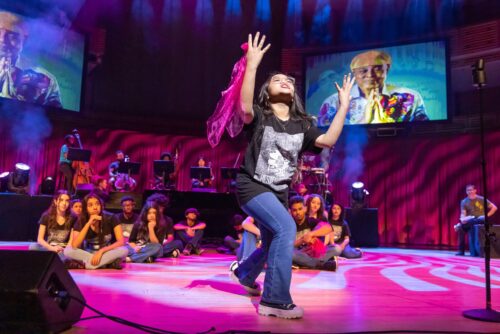
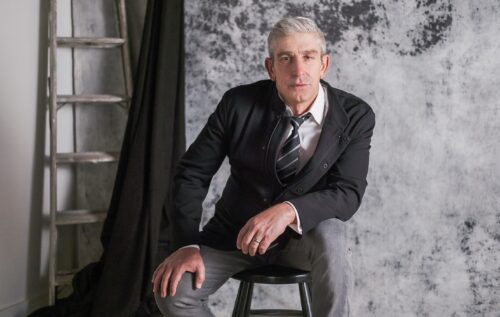
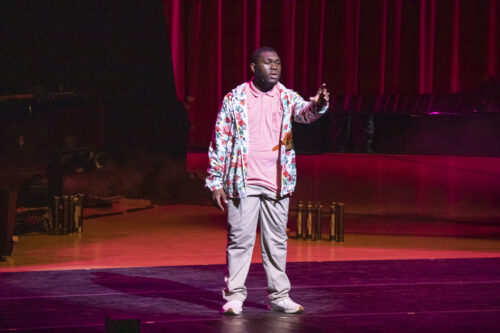
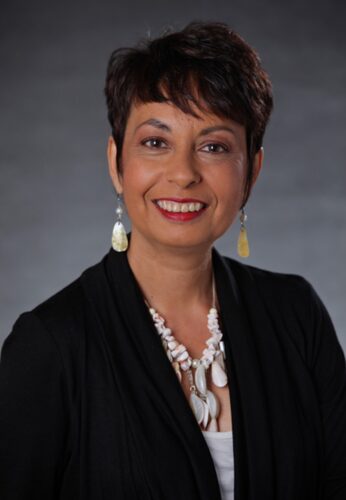
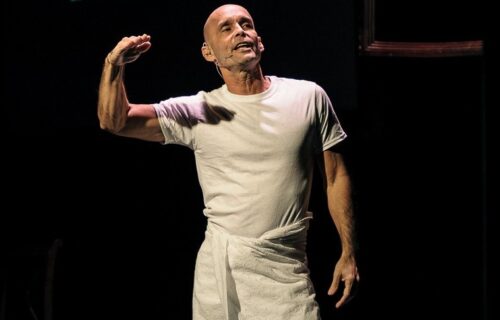




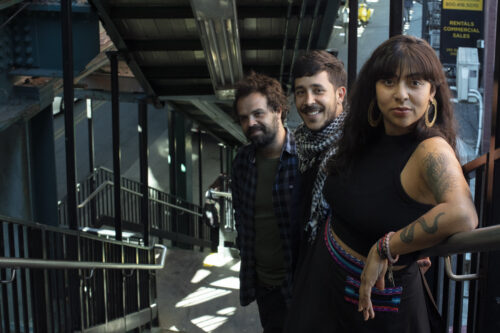


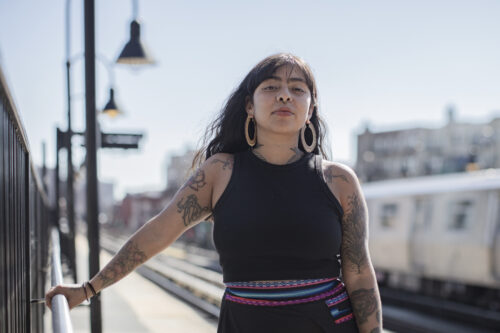
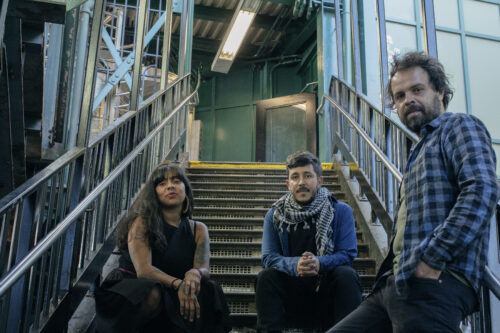


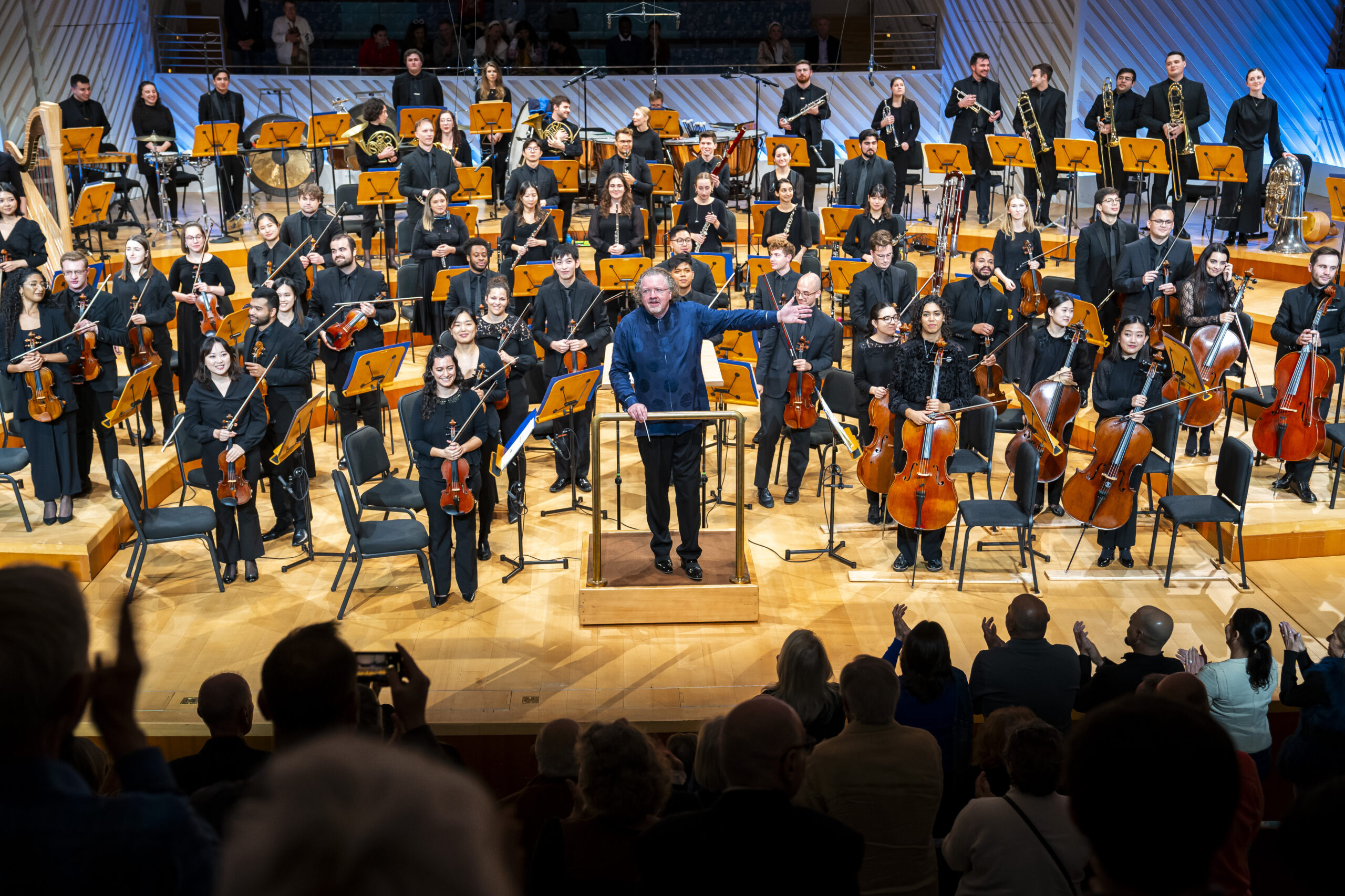
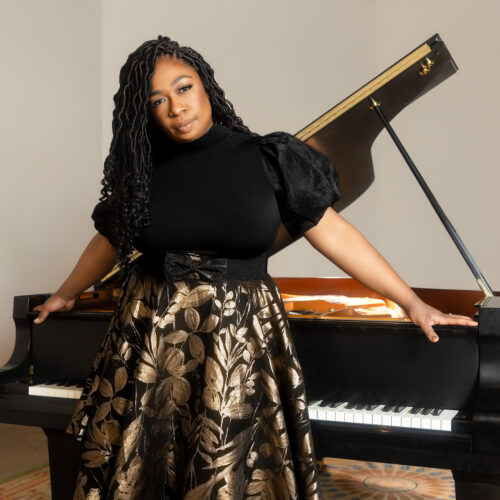
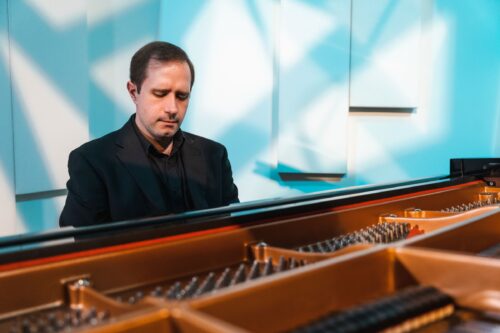
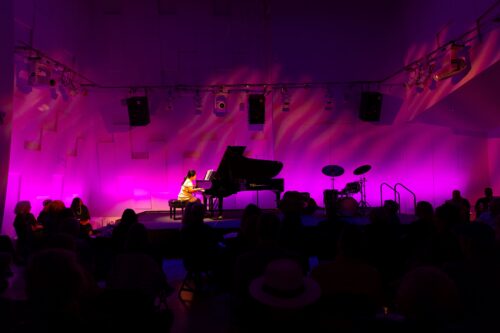
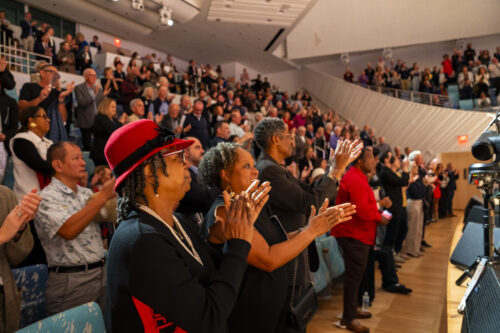
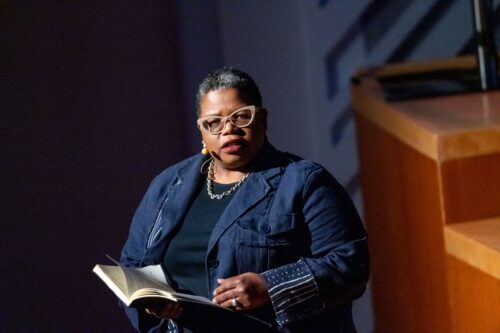
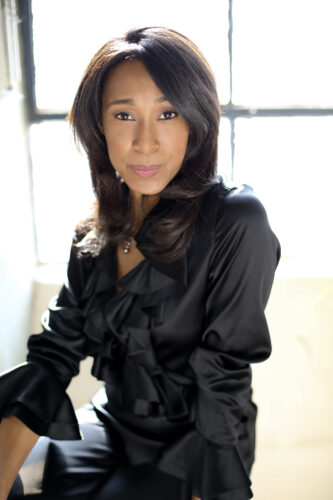


Recent Comments