South Florida’s Albert Castiglia home-delivers a hard-driving live set of blues rock
Written By Bob Weinberg April 6, 2020 at 5:38 PM
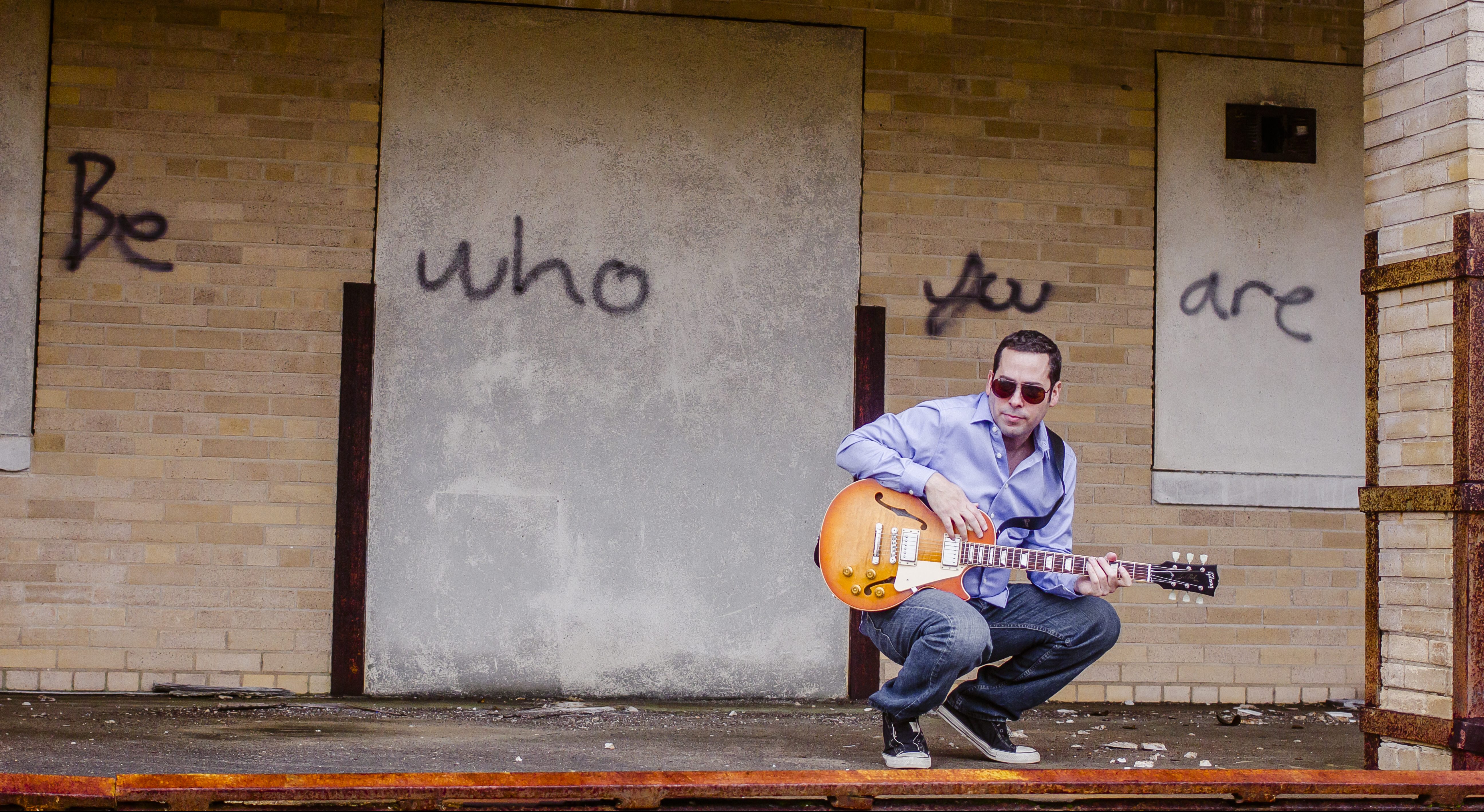
Albert Castiglia, 50, has developed his craft in bars and clubs throughout South Florida and on the road. (Photo courtesy of Norma Hinojosa)
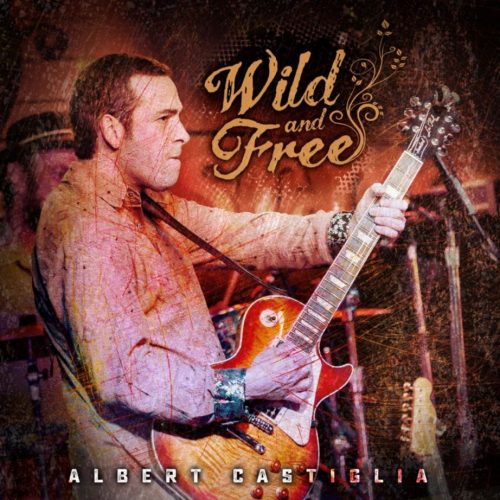
From the opening notes of Albert Castiglia’s new live release, “Wild and Free,” the Miami-raised bluesman’s guitar bites deep and draws blood.
A frenzied, feedback-drenched read of Freddie King’s “Boogie Funk” sets the template for the program that follows — an unrelenting and mostly joyful romp that unapologetically cranks the amps to 11. Recorded at the Funky Biscuit in Boca Raton over two days in early January, “Wild and Free” represents the unfettered, unfiltered Castiglia that his loyal, hard-won fan base has come to expect from his live performances.
“People have been wanting me to do [a live album] for years,” says Castiglia, speaking by phone from coronavirus lockdown at his home in Wilton Manors, where he’s sequestered with his wife, Michelle, and their boxer dog, Ella. “Not a lot of my studio records have really captured my live sound, so it was the right time to do it.”
In the past three decades, Castiglia has won fans night by night, gig by gig, developing his craft in bars and clubs throughout South Florida and on the road. In 1997, he caught the ear of legendary bluesman Junior Wells, who brought Castiglia to his home base of Chicago and around the world. Following Wells’ death in 1998, Castiglia relocated to Atlanta to work with blues singer Sandra Hall, before returning to South Florida, where he was embraced like a prodigal son. Blues fans flocked to his shows, some sporting T-shirts informing the uninitiated as to the pronunciation of his name: “It’s ka-STEEL-ya, dammit!” He’s since recorded a dozen albums, earned multiple Blues Music Award nominations, and toured throughout the United States and Europe.
For the live album, Castiglia, 50, turned again to his friend and producer, Texas-based blues guitarist Mike Zito, on whose Gulf Coast label he had recorded his 2019 release, “Masterpiece.” Zito brought his ears and gear to Boca’s Funky Biscuit — a favorite haunt of blues and roots fans — as well as his keyboardist, Lewis Stephens, who had played with Texas blues giant Freddie King in the 1970s and with Castiglia on two previous albums.
Zito straps on his axe and joins Castiglia on the album’s closer, a scathing, two-guitar slow grind on Johnny Winter’s “Too Much Seconal,” one of four numbers reprised from the deeply personal “Masterpiece.” He and Zito had played all the instruments on that album, which had been turned down by Ruf Records, the German-based label for which Castiglia had recorded his last few projects.
“I think ‘Masterpiece’ might have been too rockin’ or a little too raw or a little too outside the box [for Ruf],” Castiglia posits.
Zito came to the rescue, releasing the record on his fledgling Gulf Coast imprint.
Zito had also supported his friend during an emotionally challenging time. In 2018, Castiglia, who grew up in Coral Gables, discovered that he had a 29-year-old daughter, Rayne. At once elated but saddened at missing out on his daughter’s childhood, Castiglia set about making up for lost time. He developed a close relationship with Rayne and her two children, who live in Palm Bay, and the experience provided much of the raw material for his moving original songs on “Masterpiece.”
“Last year was pretty good for me,” he said, jokingly, from the stage of the Funky Biscuit in 2019. “A daughter and two grandkids — best f***in’ middle-age crisis ever.”
Of course, he was delighted that Rayne was at the Biscuit when he recorded the live album.
The new live release, “Wild and Free,” was recorded at the Funky Biscuit in Boca Raton over two days in early January. (Courtesy photo)
There were other faces that buoyed Castiglia’s spirits during those two nights as well, including fans from the Northeast and West Coast and guest musicians such as keyboard ace John Ginty and guitarist Anthony Geraci, who joined Castiglia, bassist Justine Tompkins and drummer Ephraim Lowell on tracks of the recording.
Although he’s not on the album, the presence of one particular guest, Muddy Waters band alum Luther “Guitar Jr.” Johnson, truly honored Castiglia.
“I had solo albums of his, and they blew me away,” he says of the octogenarian bluesman, who drove down from his winter home in The Villages to sit in. “There were a few of Muddy’s guitar players that get credit for being awesome, but I think Luther was overlooked.”
One of the great perks of his job, Castiglia says, has been getting to meet his heroes — from Wells to B.B. King to Johnny Winter — some of whom became treasured friends and mentors.
On “Wild and Free,” he salutes blues guitarist Bill “Sauce Boss” Wharton and Iko-Iko frontman Graham Drout with versions of their songs “Let the Big Dog Eat” and “Searching the Desert for the Blues,” respectively.
As a budding bluesman and University of Central Florida student, he had watched them perform at Miami’s much-missed Tobacco Road, hungrily waiting till the wee hours for a bowl of Wharton’s gumbo served alongside his sizzling slide blues, and devouring Drout’s swampy sounds and hoodoo-laced lyrics. He considers Drout something of a totem, including a song by him on nearly all his releases. Drout also provided the evocative cover art for “Masterpiece.”
“It’s unbelievable how many great memories I’ve collected over the years from doing this,” Castiglia says. “And that’s really why we do it. It’s certainly not for the money. You can’t put a price on these kind of memories.”
Nonetheless, especially during the pandemic — with bars going dark and tours canceled — Castiglia has been depending upon his fans to help him pay the mortgage via contributions for his online performances. A virtual CD release party took place April 3 on Cantstoptheblues.com.
The goodwill he’s generated through the years has paid off, reminding him of the impact he’s made on his audience’s lives.
“This really opened my eyes, the whole busking online and seeing how people are responding,” he says. “It’s quite heartwarming.”
‘Ritmo Doral’: Betsayda Machado and Parranda El Clavo to showcase Afro-Venezuelan music
Written By Fernando Gonzalez March 10, 2020 at 9:31 PM
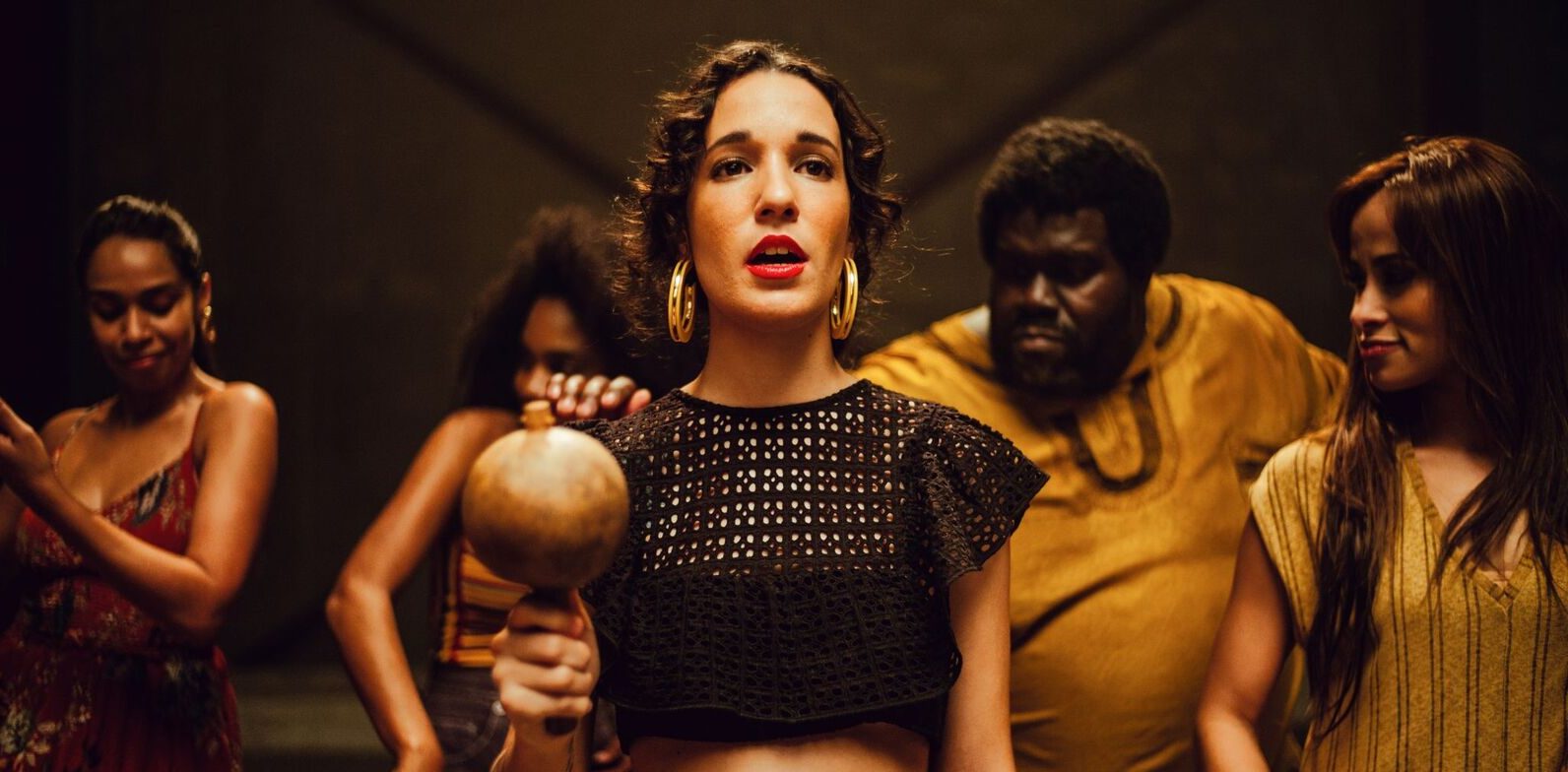
Betsayda Machado and Parranda El Clavo are putting a spotlight on Afro-Venezuelan traditions and music. (Photo courtesy of Luis Acosta)
Countries like Cuba, Brazil and Colombia have long-established the wealth of their musical traditions on the global stage. But the extraordinary variety and richness of Venezuelan music remain largely a secret hidden in plain view, in some cases to Venezuelans themselves.
Betsayda Machado and Parranda El Clavo are helping to change that as they put a spotlight on Afro-Venezuelan traditions and music. They will be appearing in concert March 14 at Downtown Doral Park, as part of the city and The Rhythm Foundation’s joint musical and cultural event, “Ritmo Doral.”
“What people know about Venezuelan music, outside and inside the country, is the ‘joropo.’ That seems to be the one genre that identifies Venezuelan culture, and there is so much more,” says Machado, during a Spanish-language phone interview from the Boston area. The group was there performing and conducting workshops at Brandeis University.
Opening that evening will be local favorites Cortadito and Zona de Bomba. Cortadito is a continuously evolving group, anchored by tres player and founder Jose Elias, that puts an updated spin on traditional Cuban music. The band has recorded a CD and EP and backed artists such as Cuban singer and guitarist Eliades Ochoa, of Buena Vista Social Club fame. Meanwhile, Zona de Bomba is a six-piece, multinational, voice and drums ensemble whose music is anchored in the Afro-Puerto Rican bomba tradition. The genre, they note in their self-titled debut album, is not “a museum piece” — and they prove that by updating it with fresh, original material.
Machado — who has a degree in business administration because her father, a trumpeter, told her, “You can’t make a living playing music” — is a highly regarded singer often referred to as “The Voice of Venezuela.”
She’s had formal musical training, and her professional career includes: a stint with the respected folkloric ensemble Vasallos de Venezuela; a role as the lead female vocalist in the bolero theatrical show, “En La Vida Hay Amores,” by Cesar Miguel Rondon and Miguel Delgado Estevez; and the release of two albums under her name.
The seven-member, drums-and-voices Parranda El Clavo is a true, up-from-the-roots neighborhood ensemble composed of family and friends. It includes singers, dancers and drummers such as Nereida Machado, Betsayda’s sister and also an insurance analyst; Blanca Castillo, who is a retired nurse, and her firefighter son, Youse Cardozo; Adrian Gomez, who is also a cocoa farmer and storyteller; Asterio Betancourt, who plays traditional drums such as “quinto,” “culo’e puya” and “cumaco;” and Nelson Gomez, with dance and drums.
While Parranda El Clavo is more than 30 years old, it had never recorded or performed outside the town until it was discovered in 2015 by producer Juan Souki, who was working with Machado at the time and went on to produce and manage the ensemble.
“I have great respect for Juan because once he met us, he saw the potential, and we love to bring the audience to El Clavo in our music, and share who we are,” Machado says. “Times are difficult now [in Venezuela] and, after this tour, we are all going home. We all live in Venezuela. But wherever we are, no matter if times are hard, we keep going with our music and energy.
Since then, the group has recorded an album, “Loe Loa (Rural Recordings Under the Mango Tree),” released in 2017, and taken Afro-Venezuelan music around the world.
Machado and her group are no strangers to South Florida. Last year, they spent a monthlong residency with the musical, “Viva La Parranda!” at the Colony Theatre in Miami Beach.
Created in collaboration with Miami New Drama, “Viva La Parranda!” played like a live documentary of the music and culture of their town, El Clavo, in Barlovento, in the state of Miranda, “a town of about 1,500 people,” she notes.
“We are surrounded by jungle, and while we are only two hours from Caracas, we are such a small town that we don’t have a bank or a university. We don’t have much, but talent? We have talent [up to our ears],” she says, breaking into a laugh.
Parranda means “party” but is also the name of a musical celebration, mixing religious and popular traditions, associated with Christmas. Parranda is also the name of the ensemble that performs it. The music, referred to simply as “tambor” (drum), is rooted in African tradition but also informed by Spanish and indigenous elements. The lyrics address everything from religious themes to local events, becoming like a sung newspaper.
“A Venezuelan who doesn’t think of himself as a ‘parrandero’ is not Venezuelan,” says Machado, chuckling. “This is one of our cherished traditions. Venezuela has a calendar of holidays that might start on Christmas but goes nearly all year-round …
“We have a parranda in El Clavo every New Year’s Day. It leaves from my house,” she adds. “Now that parranda involves the whole town of El Clavo. The group that will be performing [in Doral] is just a small representation of the town’s parranda.”
What: “Ritmo Doral” featuring Betsayda Machado and Parranda El Clavo; with opening acts Cortadito and Zona de Bomba
Jazz in the Gardens fest: Pay attention to South Florida’s Savannah Cristina
Written By Mike Hamersly March 10, 2020 at 3:32 PM
Savannah Cristina, 22, was born in Miami and graduated from Fort Lauderdale’s Stranahan High School. (Photo courtesy of Royal Eyez Photography)
The Jazz in the Gardens Music Fest perennially serves up a stellar lineup of top jazz, R&B, soul and hip-hop artists – and this year, its 15th, is business as usual.
Headlining acts for the festival, which hits Hard Rock Stadium in Miami Gardens on March 14-15, include Mary J. Blige, Jill Scott, H.E.R., Charlie Wilson of The Gap Band, Ludacris, Keyshia Cole, Kirk Franklin, SWV, Stokley, Mark Felton, Mike Phillips, and The Roots with Bilal and Uncle Luke.
But you’ll also want to pay close attention to Savannah Cristina, a local artist who just might steal the show.
The 22-year-old, neo-soul singer-songwriter, who was born in Miami and graduated from Fort Lauderdale’s Stranahan High School, possesses a voice that’s immediately captivating, at once smooth and exhilarating.
YouTube followers would agree: Cristina’s latest video, featuring her singing her empowering anthem “Self Care” alone on a beach, has scored more than 4 million views so far.
At least one of those views came from Miami Gardens Mayor Oliver Gilbert, who quickly became one of Cristina’s many admirers.
“You’re gonna really, really enjoy her – she is incredible,” says Gilbert, who has been involved with the festival for the past 10 years. “A friend of mine said, ‘You gotta check out this kid,’ and she pulls up this video of this song, ‘Self Care.’ I thought her voice was soulful and intimate, but strong. She has a very unique voice and a unique style, and I think she has a very bright future. So I got her information, and we started talking to her, and I said it’d be great to have her on one of our stages.”
Mission accomplished: Cristina will perform on March 14.
“I’m very excited,” she says. “It’s my first time being able to go. I was never able to get a ticket my whole life, and now I actually get to see it and be a part of it, so I’m super-excited.”
Cristina has yet to learn her start time or the length of her set but says she’ll be prepared nonetheless.
“I’ve done so many performances, and I’m really flexible, so I’m gonna just practice all five of my songs that I love to perform,” she says. “But I definitely have to do ‘Self Care’ – that’s my main priority – I have to play that song.”
Other popular songs on YouTube by Cristina include “SoulTies,” “Rebound,” “Belong to the Streets” and “What You Won’t Do” – which have received more than 500,000 hits apiece. Still, Cristina is stunned at the response to “Self Care” so far.
“I was definitely surprised,” she says. “I really, really did not expect that, and it was so organic, and everybody was just commenting and sharing. Alicia Keys co-signed, and it was really shocking, honestly. She did a reaction video to it – she made a video of herself watching my video, and she talked about how she loved the song and how she agreed with the message. It was definitely surreal – I was like, ‘What is going on?’ This is one of those moments that it just doesn’t make sense. I had to watch it like five times just to process it.”
Cristina is also excited to perform on the same stage as one of her favorite singers.
“I have to see Jill Scott,” she says. “I’m gonna cry. I’ve seen her perform before, at The Fillmore [Miami Beach]. But just getting to see her again is super-inspiring, because she does what I do, which is spoken-word poetry and neo-soul. So she’s kind of my idol.”
Like Scott, Cristina wants her music to convey a message, rather than settling for catchy but ultimately empty pop songs.
“I want my music to be like ‘soul therapy,’” she says. “I want it to be something where you use it in your healing process or your growth process, your self-care process. That’s my goal for my music: ‘Soul therapy’ would be my little made-up genre, to have a lot of soothing harmonies and encouraging words. That’s how I would describe it.
“All my songs are based off of personal experiences, definitely a lot of crazy relationships, a lot of abusive and toxic relationships,” she continues. “And it just came from not knowing any better. But luckily, for some reason, God gave me some wisdom to make me a little bit smarter, and I think my way of giving back is to make music that can help girls, and men, do the same thing. That’s just me trying to spread the word, I guess.”
What: Jazz in the Gardens Music Fest
When: March 14-15; gates open at 3 p.m.
Where: Hard Rock Stadium, 347 Don Shula Drive, Miami Gardens
Cost: Single-day tickets start at $83; two-day passes start at $99
Nu Deco Ensemble to feature piano great Robert Glasper
Written By Mike Hamersly March 9, 2020 at 3:46 PM
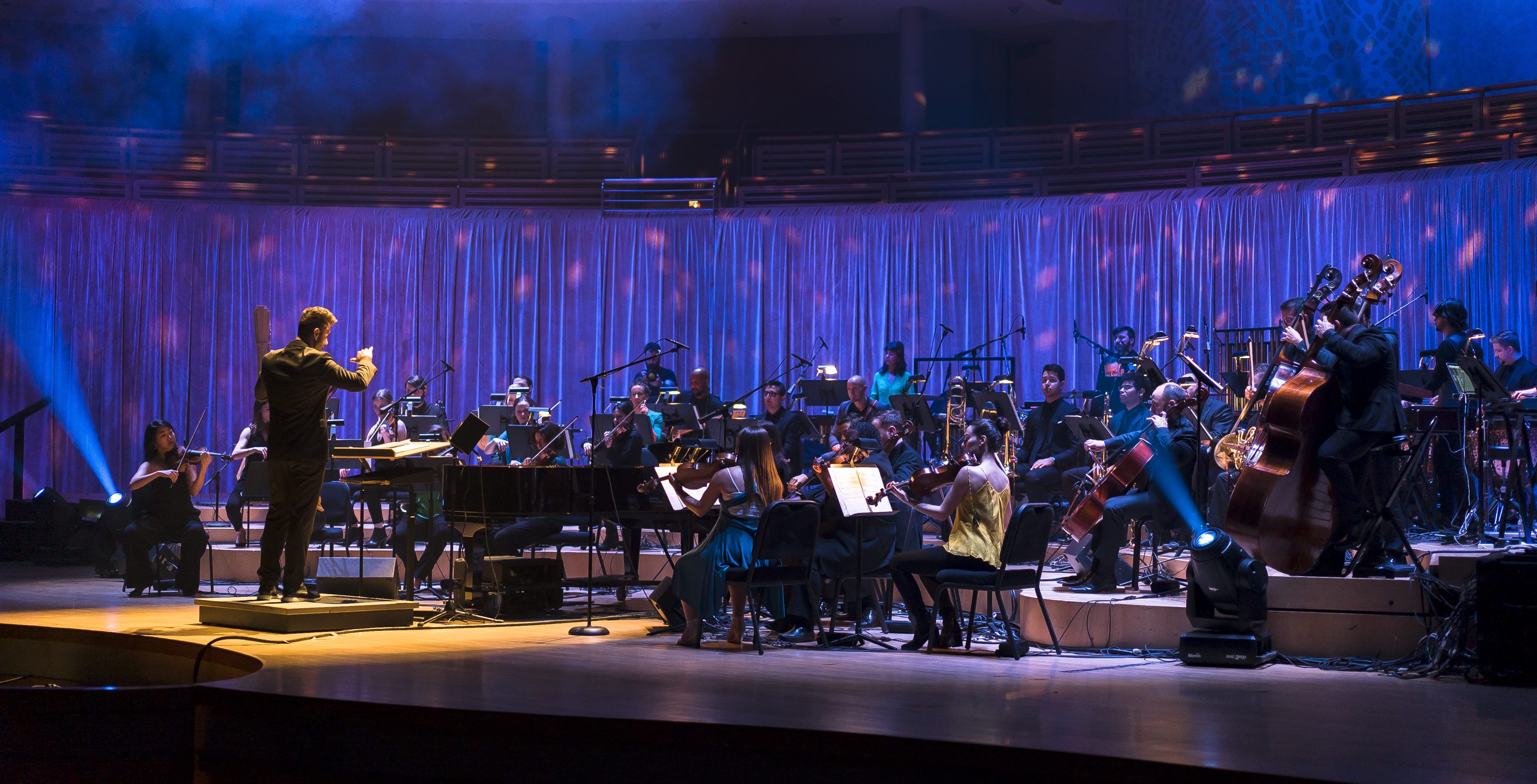
Nu Deco Ensemble is teaming up for two shows this month with Grammy-winning jazz pianist Robert Glasper. (Photo courtesy of Alex Markow)
Since its inception five years ago, the Nu Deco Ensemble has consistently sought to combine the artistry of cutting-edge, genre-bending musicians with the unique vision of its hybrid orchestra.
Its latest project perfectly captures that mission.
For two shows at the New World Center in Miami Beach, on March 13 and 14, Nu Deco will team up with Grammy-winning jazz pianist Robert Glasper, who is equally renowned for his virtuosic skill and eclectic taste, putting his mark on a diverse range of styles from jazz, R&B, neo-soul, hip-hop and even experimental rock.
One of Glasper’s most inspired works is his signature mash-up of Herbie Hancock’s track, “Maiden Voyage,” and art-rock group Radiohead’s “Everything in Its Right Place,” a mesmerizing combination that helped cement his status as a “must-have” performer for Nu Deco.
Nu Deco co-founder, composer and artistic director Sam Hyken dubbed Glasper a “dream guest” for the ensemble. And fellow founder and artistic director, Jacomo Bairos, called him a “bucket-list” performer for Nu Deco.
“We had to work with Robert, because we just felt like what he was doing in the jazz world mirrored what we’re doing in the classical world,” says Bairos. “Robert is going to create something in conjunction with Sam that really speaks to not only this idea of genre-bending in terms of bringing jazz and hip-hop and funk and neo-soul together, which Robert has been doing for almost 20 years now, but having the backdrop of the orchestra be that ultimate vehicle for musical expression. So it’s really perfect timing for this collaboration.”
Glasper’s piece will not only be a world premiere for the audience, but also for himself, paradoxically.
“I composed one big, long movement, a piece specifically for this,” he says. “So these are compositions that don’t live anywhere – I literally wrote these compositions for this particular concert. It’s kind of like a suite, and it goes from one thing to another. I’m really interested to see how it sounds with the orchestra. I’m gonna hear it with the orchestra for the first time when I get to Miami for rehearsals.”
Glasper says he usually brings his own crew of musicians, mainly upright bass and drums, on tour with him, but for this Miami gig, he’ll rely on Nu Deco’s band.
“I’m gonna use the cats in the house,” he says. “Sam told me that they’re dope and can do whatever needs to be done, so I’m just going with it. Normally, I go with my guys, but Sam assured me, and I’m gonna give this a shot.”
Glasper is the headlining attraction for these concerts, but he’s far from the only highlight. Also on the bill: a movement from Russian composer Sergei Prokofiev’s “Symphony No. 5;” Terry Riley’s 1964 piece, “In C,” one of the first minimalist compositions; and a symphonic suite of the music of the “Godfather of Funk and Soul,” James Brown.
It might seem at first glance like an incongruous group of works, but Bairos offers a connection.
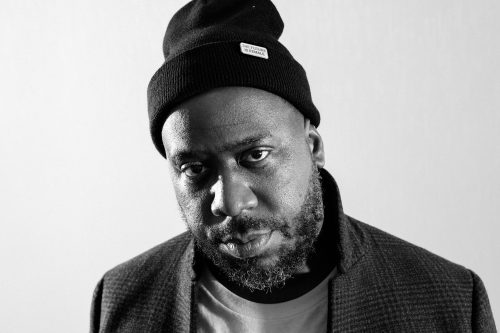
Pianist Robert Glasper is equally renowned for his virtuosic skill and eclectic taste, putting his mark on a diverse range of styles. (Photo courtesy of Todd Cooper)
“There’s a theme of improv and creating on the spot through the entire program,” he says. “’In C’ is literally one piece of paper with 52 different motives on it, and then it’s up to the orchestra, the ensemble, the musicians, to come up with their own pacing, their own unique take on it, and how to create it in a certain way.”
Bairos says the James Brown suite isn’t simply cover versions of his most well-known songs.
“We take some of the pieces that we feel that our musicians will thrive on, and then reimagine it in a suite form, so it takes you on a journey throughout the career of James Brown,” he says. “It’s more a reimagining of the context of the music and then fleshing it out and making it strictly orchestral. So while the strings, winds, brass, percussion are all part of the piece, we do have a rhythm section that’s gonna be really driving the funk and soul and groove of it all.”
Bairos sees “Symphony No. 5” as relevant to current events.
“The Prokofiev piece is more just connecting to the feeling that’s going on not only in our country, but around the world,” he says. “Prokofiev was a champion of freedom and freedom from oppression, and this piece that we’re performing is very angst-y, very rigid. But it’s also very fiery and captivating, and that’s gonna set the tone for the entire concert.”
Glasper is celebrated for embracing the unexpected in his performances – call it improvisation or having “musical ADD,” as he once described it, but it’s never dull.
“It’s just always searching, always moving,” he says. “I could easily go from one song to another, but in the middle of a song – whatever musically I’m feeling at that moment. It’s not that I can’t sit somewhere for a long time musically – I can vamp all day, as long as it feels good. It just depends on what I’m feeling. I do like to not do the obvious. I like to catch people off guard, and so it makes you want to pay attention.”
Glasper says he even likes to catch himself off guard.
“That’s the key. When you’re truly improvising, you should be surprising yourself,” he says. “Most jazz musicians don’t truly improvise. A lot of musicians play what they know will work – they don’t play things that might not work.
“That’s when the real s— comes in, when you play stuff that might not work, and you’re not sure. That’s when you’re really walking that line, you know?”
What: Nu Deco at New World Center featuring Robert Glasper
When: 8 p.m. March 13-14
Where: New World Center, 500 17th St., Miami Beach
South Florida Symphony Orchestra’s ‘Masterworks III’ plays to its Sunshine State roots
Written By Mike Hamersly March 2, 2020 at 3:41 PM
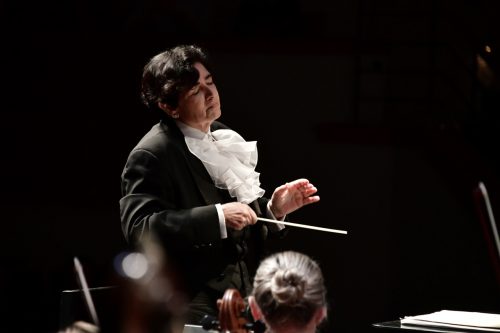
The South Florida Symphony Orchestra will perform two world premieres, both by composers with Florida ties. (Photo courtesy of Stephen Shires)
When the South Florida Symphony Orchestra presents its “Masterworks III” concert, you’ll enjoy well-known pieces by Beethoven and Mendelssohn.
But what makes this show truly special is the music you’ve never heard before.
Two world premieres – both by composers with Florida ties – will be performed March 5-8 at venues in Miami, Fort Lauderdale and Key West. “Sunset” by John Gottsch is a symphonic poem that captures his love for the beauty and fragility of Key West; and “Concerto for Cello and Orchestra” by Miami’s Ellen Taaffe Zwilich reflects her love for the versatility and power of the cello.
Both pieces were dedicated to the South Florida Symphony Orchestra’s founder and conductor, Maestra Sebrina Alfonso, who was born and raised in Key West.
As “a sixth-generation Conch,” she says, Gottsch’s work hits home with her.
“The thing that I love about ‘Sunset’ is that there’s a rhythm in it that really grabs you,” she says. “You sort of feel like you’re in the ocean, and he’s really captured that. And it’s written in a way, sort of like ‘Scheherazade,’ where it has seven different movements but it’s all one piece. It’s only about 15 minutes, and each piece is a different visual, or different story, about what goes on around the Keys.”
Presenting Zwilich’s concerto, which features Grammy-winning cellist Zuill Bailey as guest soloist, also is a great source of pride for Alfonso.
“Ellen is someone I’ve known since I was a student conductor,” she says. “I used to go to a summer program, and she would come there and we would perform her work. And I’ve just been a fan of hers ever since then. When she was writing this piece, she would imagine Zuill and I onstage performing it together, and she wrote it in the sense of how we move.
“And it’s an honor – it’s the very first time in my time knowing Ellen that we’ve been able to commission a work and be the first to perform it. I’ve never had the opportunity to perform a world premiere of hers, so this is a very big deal for me.”
Maestra Sebrina Alfonso founded the the South Florida Symphony Orchestra in 1997. (Photo courtesy of Stephen Shir)
Zwilich, 80, is a Coral Gables High School grad who became the first female composer to win the Pulitzer Prize for Music in 1983 for her “Symphony No. 1.” She is accomplished on both violin and the trumpet. But for the first time, she was drawn to the cello for her latest concerto, which she finished last summer after about six months of work.
“The inspiration is my love of the cello, because it has the entire range of the human voice, from the lowest male voice to the highest soprano,” she says. “And it is so wonderful all the way through that range. The string instruments – they’re like singers on steroids because, besides singing, they can do all kinds of acrobatics and all kinds of strong, strong movements, here and there and back and forth with the orchestras.
“I have written a lot of concertos, and I love writing for instruments, partly because I think of them as creatures,” she continues. “They have their own ways of moving, and they have their own weight. And they have a karma, they really do, and that’s what I try to get into.”
In addition to Alfonso and Bailey, Zwilich wrote her new concerto in memory of Leonard Rose and Mstislav Rostropovich, two great cellists of the 20th century.
“These are the people that were in my head when I was doing this,” she says. “It’s a pleasure to write for people. I do love the idea that my performers sort of breathe life into my music. So that’s an inspiration for me.”
Zwilich doesn’t play the cello, so it’s fair to wonder how composers write works for instruments with which they aren’t especially familiar.
“It’s very interesting because if I’m writing for an instrument that I’ve played, I don’t want to be limited to my techniques and my understanding of it. So I do a lot of work on the side, so to speak,” Zwilich says. “And when it’s an instrument that I don’t play, I really, really go into it, and I study their etudes, and I listen to their literature, and I do all kinds of things like that.
“I joke about how I wrote a bassoon concerto for a wonderful bassoonist for the Pittsburgh Symphony, and I always say I don’t know how to play the bassoon, but I don’t know why you would [laughs]. There are so many things about it: It’s made of wood, and wood is extremely Goldilocks-y. It doesn’t like it too cold or too hot, it doesn’t like it too dry or too moist. It’s very, very fussy, and it’s also made of cork, and you have to make the reed. Anyway, I did so much study with it, and then one day I woke up and said if I open up my mouth a bassoon sound is gonna come out [laughs]. And then I sat down and wrote the piece.”
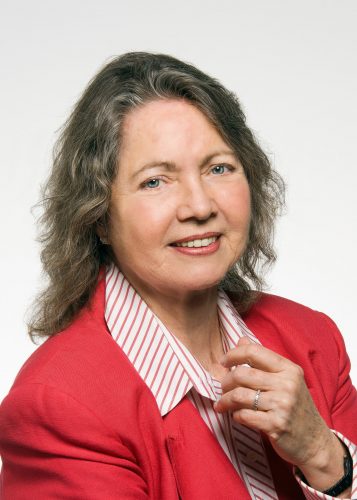
Miami’s Ellen Taaffe Zwilich became the first female composer to win the Pulitzer Prize for Music in 1983. (Photo courtesy of Bill Keefrey)
Alfonso says she has felt destined to become a conductor from a young age.
“I was always into music as a child, and from a very young age, everyone just assumed I was going to go into music,” she says. “I moved to Italy for a year, and I stumbled into an opera that was being shown during the day, and it was [Puccini’s] ‘La Boheme,’ of all things. And the whole audience was crying, literally bawling, and I realized that there was more to music than junior high band, that there was a whole world out there for me to learn about. And that’s what inspired me: the power, the virtuosity of the music. To me, it just sang to my soul, and my soul wanted it. So I didn’t really have a choice.”
Alfonso has conducted all over the world and has received countless accolades for her work. But when she founded the South Florida Symphony Orchestra in 1997, it was for a decidedly humble motive.
“Basically, I wanted my family to share my music,” she says. “I just wanted my grandma to see me conduct.”
Zwilich, despite a distinguished five-decade-plus career that includes being inducted into the Florida Artists Hall of Fame in 1994, is similarly modest about her profession.
“One thing I love about what I do: It’s not like you learn how to do it, and then you repeat it,” she says. “I still feel like I’m at the starting gate. I’m still jumping into something, and I feel confident in a lot of ways and I have a lot of experience and all that, and then I’m still not quite there, and it’s wonderful. I call it a voyage, writing music. I also sometimes call it a disease [laughs].”
What: South Florida Symphony Orchestra’s “Masterworks III”
When/where: All shows start at 7:30 p.m.
March 5 at Broward Center for the Performing Arts, Amaturo Theater, 201 SW Fifth Ave., Fort Lauderdale
March 7 at Temple Israel of Greater Miami, 137 NE 19th St., Miami
March 8 at Tennessee Williams Theatre, 5901 College Road, Key West
Review: Frost Percussion Group in the category of world-class ensembles
Written By Nevena Stanić Kovačević February 19, 2020 at 4:56 PM
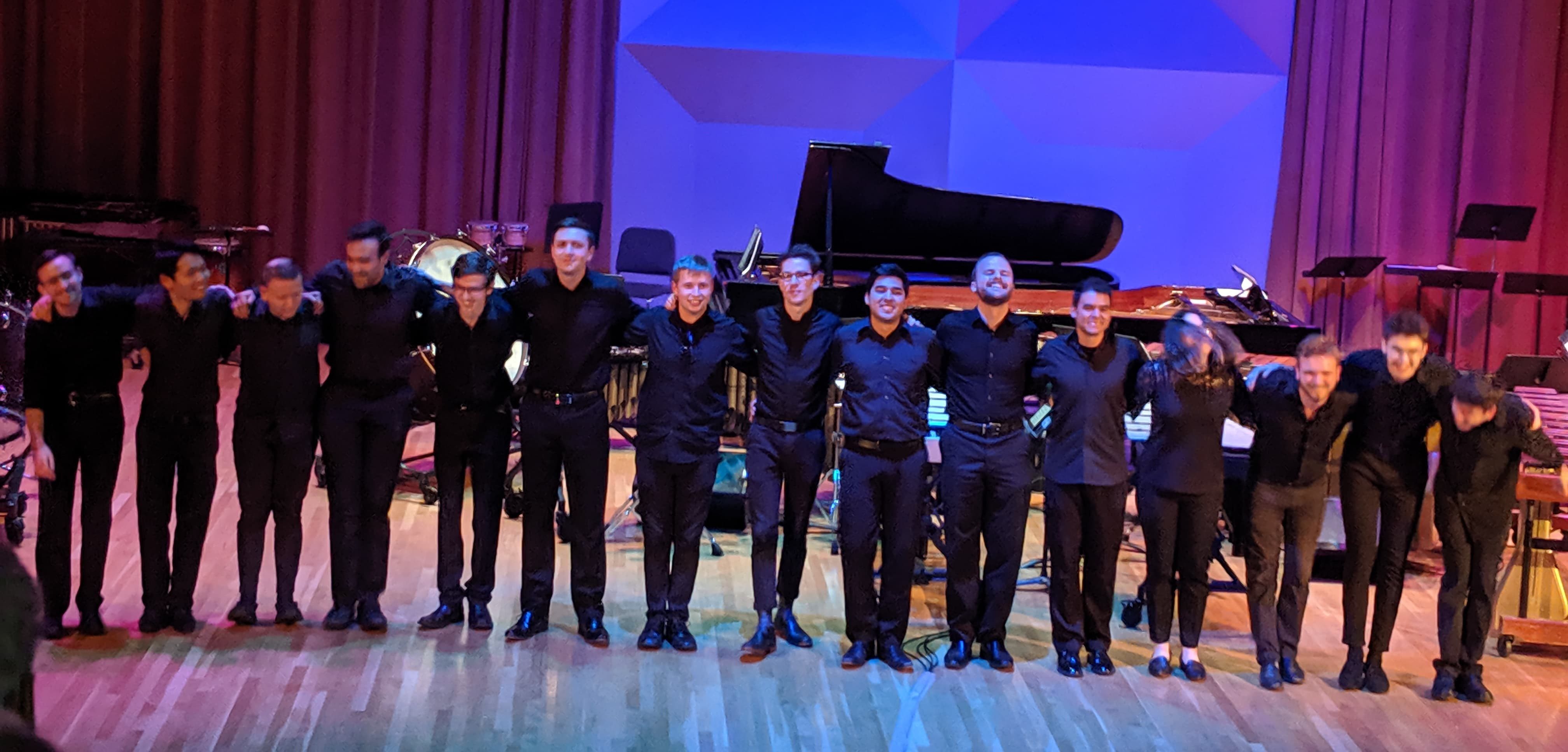
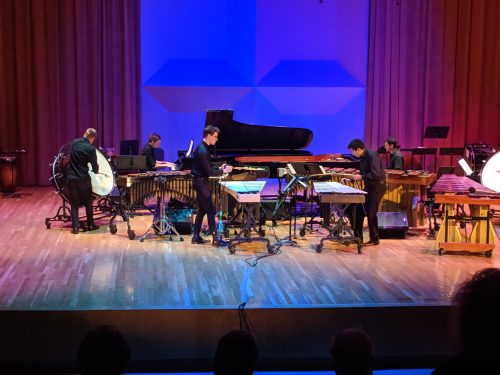
The Frost Percussion Group performed Feb. 5 at the University of Miami’s Gusman Concert Hall. (Photo courtesy of Jessica MacLean)
Although Steve Reich is acclaimed as one of the most performed living composers, one does not often hear his music played in Miami. Part of the reason likely lies in its high-performing demands.
The Frost Percussion Group courageously tackled this and many other challenges in a well-attended performance Feb. 5 at the University of Miami’s Gusman Concert Hall. The group’s student members belong to UM’s Frost School of Music percussion studio, led by Svet Stoyanov, whose matured career calls for admiration.
The ensemble consists of 15 male and one female virtuoso who demonstrated passion through every note of the well-curated repertoire. With fine dramaturgical changes, the percussionists alternated in their chamber and solo performances of some monumental pieces composed between the 1980s and mid-2010s, including works by Iannis Xenakis, Roger Reynolds, Steve Reich, Alejandro Viñao, James Wood and Andy Akiho.
Three large chamber music pieces stood out as pillars denoting the beginning, middle and the end of the concert: two quartets by Viñao and Akiho, and a sextet by Reich. These illustrated the group’s musical and performing potential, making this concert a highly rewarding experience for the audience.
The first part of the concert was framed with two newly composed quartets. The concert opened with a long-awaited piece, “Stress and Flow” (2018), by Viñao, who is one of the most popular composers for percussion today. His affinity for rhythmic and timbral explorations between live percussion and electronics seized the audience from the opening notes of Antoni Olesik’s resolute bass groove, which were followed by Kosuke Matsuda, who amplified the sonority of two marimbas.
Svet Stoyanov is director of Percussion Studies at the University of Miami’s Frost School of Music. (Photo courtesy of Frost School of Music)
In the first movement, “Bright and Dark,” Stoyanov and Noel Holloway masterfully accomplished a fine timbre and articulation on vibraphones, making every note sound clear yet warm, often contributing to echo effects. Owing to the complexity of such a chamber performance, the performers appeared highly attuned to one another, and perhaps even more so to the invisible “fifth member” of the group – the track. One might wonder if Viñao’s music might present itself to the audiences as a well-kept secret that only the players are aware of intimately; a braid of complex rhythms and grooves bouncily passed between the players. The intricate architecture of the piece came to life in a fascinating choreography of musical ebbs and flows.
The diptych of two Xenakis pieces followed as a sort of baroque prelude and fugue. “Rebonds B” (1987-89) for a solo percussionist displayed many expressive and dynamical shades under Katherine Fortunato’s interpretation. Making a clear dialog between high and low register of the percussion set, she unified the contrasting timbres and promptly shifted between soft dynamics and powerful accents in unexpected situations.
“Okho” (1989) demands for complete control over the motif that transfers between performers, often in unisons. Nathan Coffman, Victor Sintchak and Dominic Grande had their ears wide open during another extensive Xenakis piece. Their performance was well thought-out with carefully executed equal accents. By the end of the piece, they successfully conveyed the dynamical and dramaturgical crescendo to the audience.
“Islands from Archipelago II: Autumn Island” (1986) by Roger Reynolds followed as a long sonic rest before the actual concert intermission. The audience could witness Matsuda’s extraordinary memory, holding every notated detail of this melodically extensive and fragmented piece. Alone with his marimba under the beam of yellow light, Matsuda created a pointillistic musical monodrama. Every melody was brought as a flickering luminosity that would appear up and down the marimba’s keyboard, depicting the imaginary landscape of this introverted musical experience.
“Pillar IV” (2016) is the second most recent piece from the repertoire, and the second dramaturgical column of the concert. Akiho uses a plethora of melodic-rhythmic resources within a repetitive phrase by continually adding more elements in an enthralling crescendo. Timbral resources include found objects such as a selection of glass bottles. With complete control over complex rhythms and excellent communication, Andrew Riley, Guillermo Ospina, Joseph Pazanowski, and Conor Mulford exhibited great attention to detail with authority and precision. Riley’s groove on the bass drum anchored the ensemble in various moments. The quartet exhibited a masterful control over the projection of sound in the hall; a feat generously rewarded by the audience.
The Frost Percussion Group performs Steve Reich’s “Sextet.” (Photo courtesy of Jessica MacLean)
The second part of the concert, too, was designed as a diptych with one solo and one chamber work. Holloway performed “Rogośanti” by Wood, a composer well-known among the lovers of percussion music. In this piece, Wood evoked tribal ritualistic elements through singing and playing multiple membranophone instruments and a gong. Holloway immersed himself in the music, delivering a highly nuanced performance.
However, “Rogośanti” was just a prelude to the pinnacle of the event: Reich’s “Sextet.”
When introducing the piece, Stoyanov presented Reich as a champion of percussion. In “Sextet,” Reich kept experimenting with repetitive pulses in piano and keyboards (with piano and organ sound) contributing to the timbral variety and register depth. The keyboard organ sound evoked the taste of an early Reich; the composer’s retained arch form from previous compositions did, too, in which the motif often transforms through constant addition and subtraction of notes.
Cristian Zavala, Evan Saddler, Colin Williams, Ospina, Riley, and Tony Kirk delivered an engaging performance of the musical material’s growth and decline. The slow middle movement unveiled an exceptionally lyrical contrast with effective long mystical bowed vibraphone sonorities. After the gradual crescendo and an impeccable resonance of resulting patterns, the concert culminated with the final bars of “Sextet,” which caused the audience to erupt in standing ovations for the Frost Percussion Group.
Handling such a gigantic repertoire, the Frost Percussion Group demonstrated fine and skillful musicianship – which qualifies it to enter the category of world-class ensembles.
Chopin competition: The ‘Super Bowl of Piano’ comes to Miami this Saturday
Written By Mike Hamersly February 18, 2020 at 5:57 PM
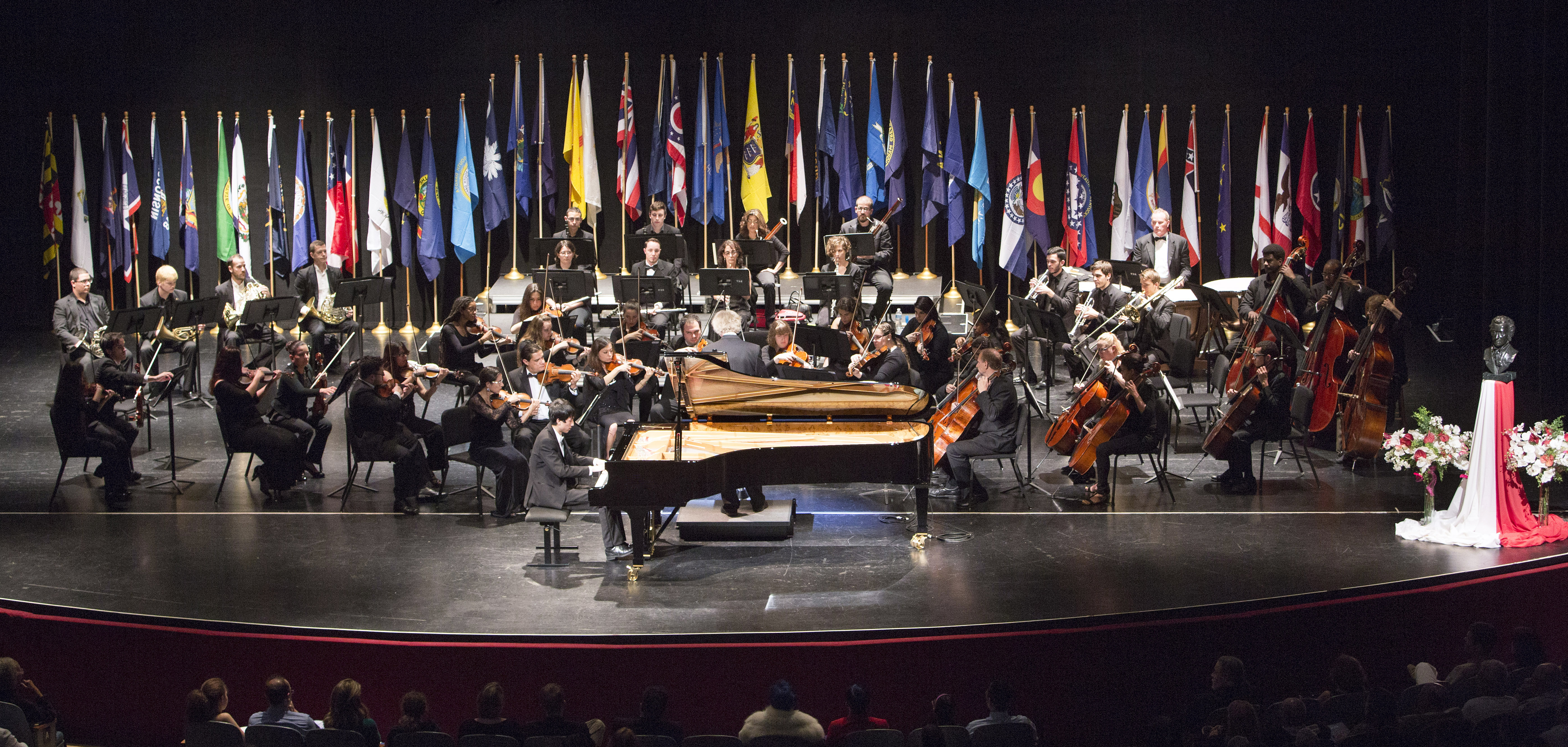
The National Chopin Piano Competition, which began in 1975 and happens every five years, is mirrored after the International Chopin Piano Competition in Warsaw. (Photo courtesy of Chopin Foundation of the United States)
The repertoire of Frédéric Chopin is widely considered among the most challenging for pianists to tackle. And for nine days, beginning Feb. 22, young hopefuls from across the country will do just that, taking on the works of the great Polish composer for the 10th National Chopin Piano Competition.
The 26 contestants will perform at the Miami-Dade County Auditorium – half on Saturday and the other half on Sunday – for the preliminary sessions. They must be U.S. citizens between 16 and 30 years old.
“The first weekend is where you get to see everybody, and their recitals are 20 minutes each,” says Barbara Muze, executive director of the Chopin Foundation of the United States. “After each round, the number of pianists gets smaller. In the quarterfinals, there will be 18 pianists, and the recitals start getting longer. Then in the semifinals, there will be 12 pianists performing, six on Wednesday and six on Thursday.”
Six contestants will make the finals, to take place Feb. 29 and March 1, and the winner will receive $100,000 ($30,000 and $20,000 go to the second- and third-place winners, respectively).
South Florida fans of Chopin are winners, too, as most of the shows are free.
“It’s just the most intensive experience and immersion into the music of Chopin that you can imagine,” Muze says. “And people can just show up and walk into the Miami-Dade County Auditorium and see Chopin’s music being performed at the very highest level.”
The U.S. competition, which began in 1975 and happens every five years, is mirrored after the International Chopin Piano Competition in Warsaw, which began in 1927. The stakes are high even beyond the prize money: The top two American winners are automatically accepted to compete in Warsaw in October.
“We’re only one of two international Chopin competitions that has that privilege – the other one is the Poland National Competition – so the U.S. competition is really, really, highly respected,” Muze says.
The perks don’t stop there: The Chopin Foundation also sends the U.S. winner on an extensive concert tour.
“That really is what pushes these pianists out to the world and makes them visible on the world’s stages,” Muze says. “What we hear back from the winners is that [the tour] is the most valuable piece of their participation in the competition.
“For example, our winner in 2015 was Eric Lu. We paid for him to go compete in Warsaw, and he took home the fourth prize, which is significant. And then two years later, in the summer of 2018, he went on to win first prize at the Leeds competition in England. As a result of that, he got a tremendous amount of visibility, professional management and a recording contract,” she adds. “He was 17 years old when he won our competition, and just to hear this amazing fairytale story that his life has become since winning our competition is just phenomenal. And now at the ripe age of 21 [laughs], he’s a seasoned professional, a highly sought-after performer on the world’s stages. So he’s our poster child.”
The nine-person jury is made up of Chopin experts and virtuoso pianists, some of them grand-prize winners in Warsaw, and is responsible for judging the American contestants on many different aspects of their performances, style and technique.
“It runs the gamut,” Muze says. “Precision is definitely one thing, but just because you make a mistake doesn’t mean you won’t be the best, in the judges’ eyes. There are so many different criteria, from staying true to the composer’s score, to being able to communicate convincingly to an audience, your tempo, your timing, your dynamics. I wouldn’t want to be one of the judges – let’s just say that [laughs].”
The top prize of $100,000 – which is underwritten by the Chopin Foundation’s founder and president, Lady Blanka Rosenstiel and The Rosenstiel Foundation – is a staggering figure, and it’s meant to be.
“She puts that money toward the first prize because she believes that [the contestants] are professional pianists who have studied basically their entire lives, and put in six to eight hours a day to hone their craft,” says Muze, who herself is a classically trained pianist. “Why shouldn’t they be compensated like any other professional working person in the world, like an attorney, a physician or even sports players? We’ve been referring to [the competition], kind of tongue-in-cheek, as the Super Bowl of Piano, because the Super Bowl was here just a few weeks ago, and I can assure you that these musicians put in as much time and effort as any of the professional sports players, and yet the compensation isn’t nearly reflected. So that’s her mission.”
The National Chopin Piano Competition celebrates the life and legacy of the Polish composer and virtuoso pianist of the Romantic era in the early 1800s, who died too young in 1849 at age 39. But why choose him over other masters such as Beethoven, Mozart, Bach or Rachmaninoff, to name a few?
“His music is just the most beloved, and the music that gets people really passionate about piano music,” Muze says. “It’s just profoundly emotional, and it touches people in ways that a lot of other music doesn’t. And it’s super-virtuosic – a lot of it is accessible only to the finest technically accomplished and musically astute performers.”
And there’s another, far more personal, reason.
“Chopin is Polish, and our founder and president [Rosenstiel] is Polish,” Muze says. “She felt like there was a lack of education in the United States about Chopin’s music. And because she came out of Poland in the World War II era, she knew firsthand of a time in Poland when the Nazis actually banned his music, because it evoked such nationalistic pride in the people of Poland. They knocked down Chopin’s statues. When you fly to Warsaw now, you actually fly into Chopin Airport. When they hold the International Chopin Piano Competition in Warsaw, the whole country basically shuts down to watch who’s going to be crowned the next Chopin first-prize winner.”
Muze, who has promoted classical music in South Florida for more than 20 years but is relatively new to her current position, envies the intense passion surrounding the event in Poland.
“For the Warsaw competition in October 2020, tickets went on sale on Oct. 1, 2019, and within the first day, they were completely sold out,” she says. “The ticket system crashed, and people who had been waiting for hours online, and went from, like, No. 600 to No. 30, were booted off the system and couldn’t get tickets. I get a block of 20 tickets and I have a long waiting list of people who are trying to go with the group we’ll bring to Poland. So that’s the kind of excitement that I want to bring to this national Chopin competition.”
What: 10th National Chopin Piano Competition
When: Feb. 22-March 1
Where: Miami-Dade County Auditorium, 2901 W. Flagler St., Miami
Cost: Competition sessions are free, but gala concert and finals (Feb. 28-March 1) cost $15-$150
Jon Secada to pay tribute to Beny Moré at the Arsht
Written By Mike Hamersly February 18, 2020 at 4:43 PM
Jon Secada is proud to be a “Hialeah homeboy,” but he was born in Havana and lived there till he was 8. (Photo courtesy of Tato Gomez)
While growing up in Hialeah in the early ’70s, Jon Secada’s home pulsed to the iconic tropical sounds of Cuban singer, songwriter and bandleader Beny Moré.
“My parents would listen to that stuff all the time,” recalls Secada, now 58. “And as a kid, when you hear your parents listen to music, you never know what’s gonna stick with you.”
Moré’s songs certainly stuck with Secada. So much so that decades later, in 2017, Secada recorded a tribute album, “To Beny Moré With Love,” which won the Latin Grammy Award for “Best Traditional Tropical Album.”
“As an artist, Moré had a tremendous personality that was very influential,” Secada says. “When I became a musician and an artist myself, that’s when I realized how important his career had been to so many artists. I grew up listening to that music, and then as an adult, I really respected it.”
Secada, who has sold more than 20 million records over a 30-plus-year career, will perform songs from his tribute album on Feb. 22 at the Adrienne Arsht Center for the Performing Arts in Miami.
He is thrilled by the opportunity.
“As a singer, to do something that emulated what he did for me is a big deal, to do a record that paid homage, but in my own style,” Secada says. “I’m going to have a great band onstage with great musicians, the same orchestration of musicians that were part of the record, and the same instrumentation.”
Expect to hear Moré timeless classics, including “Como Fue” and “Santa Isabel de las Lajas.” You will also hear plenty of Secada favorites, though, such as “Angel,” “She’s All I Ever Had” and “Just Another Day.”
“The show is in two halves,” he says. “It’s not only the music of Beny, but also my hits. It’s gonna be a nice program, but it definitely starts with Beny’s music.”
Secada’s tribute album sounds smooth and effortless, just like Moré’s music, and just as the songs in the show are likely to come across. But don’t be fooled by the artists’ fluidity.
“As a singer, when I really started getting into the record and [analyzing] Beny’s songs, that’s when I understood the depth, musically speaking, of his phrasing and how difficult it is to sing that music,” Secada says. “It’s tough, and he made it sound so easy, so seamless. But it’s not.”
Secada is proud to be a “Hialeah homeboy” – “I love the city for the fact that it’s given me everything as a person and as an artist that I could ever want” – but he was born in Havana and lived there till he was 8.
“I remember a lot about Cuba,” he says. “I remember my neighborhood, I remember my friends, everything. It was an interesting time for me because I was raised an only child, and at the same time, my father was a political prisoner, and it was weird because I was raised by my mother for a large part of my childhood there.
“She was by herself, so I have this mixed memory of being in Cuba and knowing that my parents wanted to leave, and needed to leave.”
Secada blossomed in Miami, graduating from the University of Miami’s Frost School of Music, then receiving a master degree in jazz vocal performance there three years later.
During a stint as professor at Miami Dade College, Secada was introduced to Miami music royalty Gloria and Emilio Estefan. It was his first big break, getting an “in” with their band, Miami Sound Machine.
“I worked as part of the production crew – songwriter, producer, background vocalist,” Secada says. “I did that for a long time, and I will always appreciate that because that’s when I learned what the music industry was all about. Gloria gave me a huge break in her show, letting me have a song by myself, and then things snowballed from there, and then I got my chance. And luckily, my chance worked out.”
Secada co-wrote music and lyrics to Gloria Estefan’s hit, “Coming Out of the Dark,” a song about her 1990 tour-bus accident, in which she broke her back, and her road to recovery.
“I was a studio rat, and I was just in the right place, right time,” he says. “Gloria and Emilio wanted to write a song about her experience and her hardship, but at the same time a song that was inspirational. And she allowed me to be in the room and be a writer in
the process. So I’m thankful that she and Emilio allowed me to be part of that song.”
Another eye-opening moment in Secada’s career: He performed the song, “The Best Is Yet to Come,” with Frank Sinatra on “Duets II” in 1994.
“Amazing, amazing,” he says. “Sinatra I never got to see in person – on all those recordings, Sinatra would put his voice, and then the producer, Phil Ramone, would bring it and I’d match my voice with his. But, of course, all the artists had to be approved by Sinatra, so … another landmark in my career. And I studied Sinatra in college and, among jazz musicians, Sinatra is a respected dude.”
But it’s hard to imagine anything topping his 1996 performance with opera legend Luciano Pavarotti in Modena, Italy.
“Pavarotti was a different situation, because I sang with him live, in his hometown,” Secada says. “And I can tell you, I’ve been truly nervous maybe six times in my lifetime, like nervous to the point where you get a gut feeling in your stomach and you can’t get rid of it. And that was one of them, man [laughs].
“I was singing next to him, on this huge Spanish song, ‘Granada,’ and I don’t want to screw it up. And I’m hearing this huge voice and stuck to my microphone just so I’d be able to stay with him, you know? And I did, and it worked out, and it was a tremendous evening.”
What: “To Beny Moré With Love – Jon Secada In Concert”
When: 8 p.m. Feb. 22
Where: Adrienne Arsht Center for the Performing Arts of Miami-Dade County, Knight Concert Hall, 1300 Biscayne Blvd., Miami
Puerto Rican songstress iLe to bring seductive, revolutionary rhythms to North Beach Bandshell
Written By Helena Alonso Paisley February 18, 2020 at 3:43 PM
Puerto Rican singer and activist iLe (Ileana Mercedes Cabra Joglar) has an impassioned intensity and fierce attitude, a fearless radicalism that is meant to be contagious. (Photo courtesy of Cesar Berrios)
Fresh off of sold-out shows in New York and Boston, Puerto Rican singer and activist iLe (Ileana Mercedes Cabra Joglar) will bring her signature sound to the North Beach Bandshell this Friday.
Her 2016 debut album, “iLevitable,” won a Grammy Award for “Best Latin Rock, Urban or Alternative Album.” NPR called her second album, “Almadura,” “an ode to Puerto Rico, an homage to its history and a plea for political action.”
Touring with her nine-piece band, she sings Afro-Caribbean rhythms and boleros with a bite, taking on issues of machismo and patriarchy. Backed by a driving drum section, she uses “bomba” y “plena,” “rumba” and “palo” (traditional rhythms) to address colonialism and Puerto Rican empowerment.
iLe has been a professional singer for nearly half of her 30 years. She began her career as PG-13, the name her brothers Residente (Rene Perez Joglar) and Visitante (Eduardo Cabra Martinez) gave her when she began singing with their hip-hop group, Calle 13. As a child, she studied piano at conservatory, but her grandmother, an amateur songwriter and singer herself, encouraged her to take her singing more seriously.
“I come from a very artistic family,” she said in a telephone interview from San Juan just before traveling to Los Angeles for this year’s Grammy Awards. “We all are aware that art is a very uncertain profession, but it’s very profound. We can learn so much about who we are through art. It’s a tool that helps us channel everything in life.”
iLe’s mother, an actress, taught her to appreciate great Latino songwriters like Tite Curet Alonso and Ruben Blades.
“It’s the type of music where it seems like someone is talking to you and telling you stories,” she said.
Her songwriting can be a very intuitive, instinctual process: “Songwriting for me is opening yourself,” she said. “It’s like letting go of a skin, or a weight, in a way, and forming something else.”
The weight that led to the creation of “Almadura” was anger: anger at the government’s ineffectual response to Hurricane Maria in 2017.
“I think when you’re angry, you let yourself show even more,” she said. “At least for me, it allowed me to let my anger go through the songs, but to try to think of an empowered way to express it … not focusing necessarily only on the problems, but recognizing that we can do something about it.”
The rage she was channeling was felt by many Puerto Ricans, and the rebellion iLe is promoting through her artistry is clearly in full swing. For the last months, the singer has been a catalyst in the street protests that led to the ouster of a governor and energized activists calling for nothing less than independence for the island.
The rhythm of this revolution, in fact, was set to music by iLe, brother Residente and trap singer Bad Bunny (Benito Martinez). Together, the three wrote the song “Afilando los Cuchillos” (“Sharpening the Knives”), which was to become the unofficial anthem of the protests. Together with Ricky Martin and a half-million other Puerto Ricans, they took to the streets of San Juan in July in anti-government demonstrations that eventually led to the resignation of then-Gov. Ricardo Rossello.
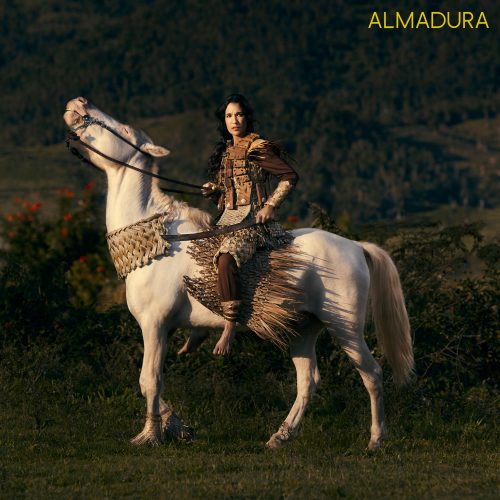
NPR called iLe’s second album, “Almadura,” “an ode to Puerto Rico, an homage to its history and a plea for political action.” (Photo courtesy of Christopher Gregory)
She is optimistic at the new attitude this victory has sparked in her countrymen and women: “We never expected that we could make a statehood governor resign,” she said. “If you said that to me a few months ago, I would say that that would never happen, but it happened, and we did it. We can accomplish so much more than we know.”
iLe has an impassioned intensity and fierce attitude, a fearless radicalism that is meant to be contagious. Her warrior spirit can clearly be felt on “Almadura,” (which means “Strong Soul,” but is also a play on the word for “armor”).
Songs like “Contra Todo” (“Against Everything”) are like a battle cry, calling out the colonialism that has plagued Puerto Rico since Columbus first set foot on the island in 1493 and which persisted with the arrival of U.S. sovereignty in 1898.
Another song, “Sin Masticar” (“Without Chewing”), is a blunt plea to her fellow Puerto Ricans: Change can only happen if they make it happen themselves, she says.
“Queremos comer sin tener que masticar/Queremos beber, sin tener que tragar” (“We want to eat without having to chew/We want to drink without having to swallow”).
Most of “Almadura” was written with drummer Ismael Cancel, so it’s not surprising that at the heart of many of the songs is a driving percussion section, with Afrolatino rhythms that make it difficult for listeners to stay in their seats.
“It was very important for me to have that drum and that rhythm throughout the songs,” iLe said.
In “Almadura,” she also takes on the old-school “boleros” that her mother and grandmother first introduced her to, but with a contemporary twist. “Temes” (“You Fear”) is a gentle-sounding ballad that is really a full-frontal questioning of machismo. For her, it’s an attitude that is grounded not in strength, but in fear.
“Tu Rumba” (“Your Rumba”), on the other hand, is pure female seduction, with a conga baseline and infectious melody that enter your head like an earworm.
Onstage, iLe savors the connection she feels with her band and her audience.
“I love performing, because it makes me feel alive,” she said. “There’s no going back, you have to enjoy the moment at its fullest.”
Asked where she wants her music to take her, she replied: “I just want it to take me, and that’s it. I prefer to be surprised.”
What: iLe in Concert, with opening set by Dracula
When: 8 p.m. Feb. 21
Where: North Beach Bandshell, 7275 Collins Ave., Miami Beach
Cost: $25 in advance, plus fees; $30 same day, plus fees; $35 at door, includes fees
Bluesman Selwyn Birchwood to headline ‘Joey Gilmore Appreciation Show’
Written By Deborah Ramirez February 13, 2020 at 2:50 PM
Blues guitarist Selwyn Birchwood is honoring the blues with a fresh new sound and lyrics. He is set to perform Feb. 21 at the Miramar Readiness Center. (Photo courtesy of Allison Morgan)
Selwyn Birchwood is a young man with an old blues soul.
The 34-year-old blues guitarist, singer, songwriter and bandleader has followed in the footsteps of his heroes – icons like Muddy Waters, Buddy Guy and Howlin’ Wolf – since launching his own music career a decade ago.
But while these blues masters made their way out of the Deep South, taking their music to the world, Birchwood’s journey started in Central Florida, where he learned to play the guitar and the lap steel and earned an MBA from the University of Tampa.
Along the way, the young musician picked up coveted blues music awards and recording deals that took him from small Florida pubs to international festival stages. Birchwood will headline the “Joey Gilmore Appreciation Show” on Feb. 21 at the Miramar Readiness Center, at the Miami-Dade/Broward county line. The concert will showcase the 75-year-old Gilmore, a South Florida legend known as one of the best blues vocalists in the business.
Other entertainers sharing the stage: Atlanta-based jazz vocalist and composer Lutalo “Sweet Lu” Olutosin, local R&B and soul singer Cory Wallace, and ReaXtion Band, a South Florida party band.
“Joey is one of my buddies,” said Birchwood from his home in Tampa, about the show’s honoree, Gilmore. “He is an encyclopedia of blues and R&B music, and it’s always a pleasure to be able to see him.”
Birchwood is known for his gritty vocals, his guitar and lap steel prowess, and his lyrics about contemporary themes.
He is a modern blues performer who honors the past while focusing on the present and the future – trying to make it relevant to a new generation while remaining faithful to the musical form and traditions.
“I’m writing songs that are a little more up-to-date, with a different sound and arrangements, to have a wider appeal,” he said. “At the end of the day, I’m still going to be talking about Muddy Waters and B.B. King. I’m still going to try to lift these guys up.
“None of us would have a job if it weren’t for B.B. King bringing the blues around the world.”
Birchwood’s connection to the blues started in Orlando, where he grew up in a culturally diverse home – his father was from Tobago and his mother from the United Kingdom. As a teenager, he learned to play the guitar and discovered Jimi Hendrix, prompting him to explore the rock guitarist’s blues influences.
“I was never one of those people who wanted to play like Hendrix,” Birchwood said. “I was more interested in what would inspire someone to write that kind of music, because to me it was not like anything that I had ever heard.
“And when you look back in his bio, you find all the old blues guys – Muddy Waters, Elmore James, Buddy Guy – and when I heard those guys playing, I found the sound that I had been looking for. I kept on listening and learning.”
The title track of Selwyn Birchwood’s latest album, “Pick Your Poison,” deals with his battle with alcohol addiction.
As he got good on the guitar, a 19-year-old Birchwood was introduced to Sonny Rhodes, a legendary Texas-born blues lap-steel guitarist who had relocated to Florida. Rhodes took the young musician under his wing, and Birchwood spent the next few years touring with Rhodes’ band. The elder musician also insisted that Birchwood enroll in college, holding his place in the band whenever he was available.
“I learned everything about fronting a band and being a bandleader – it was a complete, almost apprenticeship in blues music through him,” Birchwood said.
The apprenticeship paid off. Birchwood went on to win the 2013 International Blues Challenge, the industry’s highest award for an unsigned blues artist or band. He was signed to the premier blues label Alligator Records. “Don’t Call No Ambulance,” his first recording for Alligator, earned him a Blues Music Award and a Living Blues critics’ award.
The recognitions helped open doors, and Birchwood has performed at major festivals around the world, including the Montreux Jazz Festival in Switzerland, and toured almost nonstop with his band. He will be playing Feb. 21 with bandmates Regi Oliver (baritone, tenor and alto sax and flutes), Huff Wright (bass), Philip Walker (drums and percussion), and a new addition, Bunt May (keyboard).
Birchwood also continues to write all the songs on his recordings. The title track of his latest album, “Pick Your Poison,” deals with his personal battle with alcohol addiction. (He proudly notes that he’s coming up on four years without a drink.) His gospel-infused “Even The Saved Need Saving” is his take on religious hypocrisy, while “Police State” touches on social themes of the day.
Birchwood is completing his third Alligator record. He is thrilled about having worked on the album with three-time Grammy winner Tom Hambridge, the producer on two of Buddy Guy’s critically acclaimed recordings, “Living Proof” and “Born to Play Guitar.”
“It’s been awesome getting his expertise in the studio when we are tracking and mixing. He’s just an asset in his work, impeccable,” said Birchwood about the veteran producer. “I just wanted to be working with people on that professional level. We’ve got a really good record out of it, and I’m excited for everyone to hear it.”
What: Selwyn Birchwood Live headlining “Joey Gilmore Appreciation Show”
When: 7 p.m. Feb. 21
Where: Miramar Readiness Center, 20155 NW 67th Ave., Hialeah(CQ)
Miami Beach’s GroundUP fest to unite music lovers, musicians from around the globe this Valentine’s weekend
Written By Helena Alonso Paisley February 12, 2020 at 4:09 PM
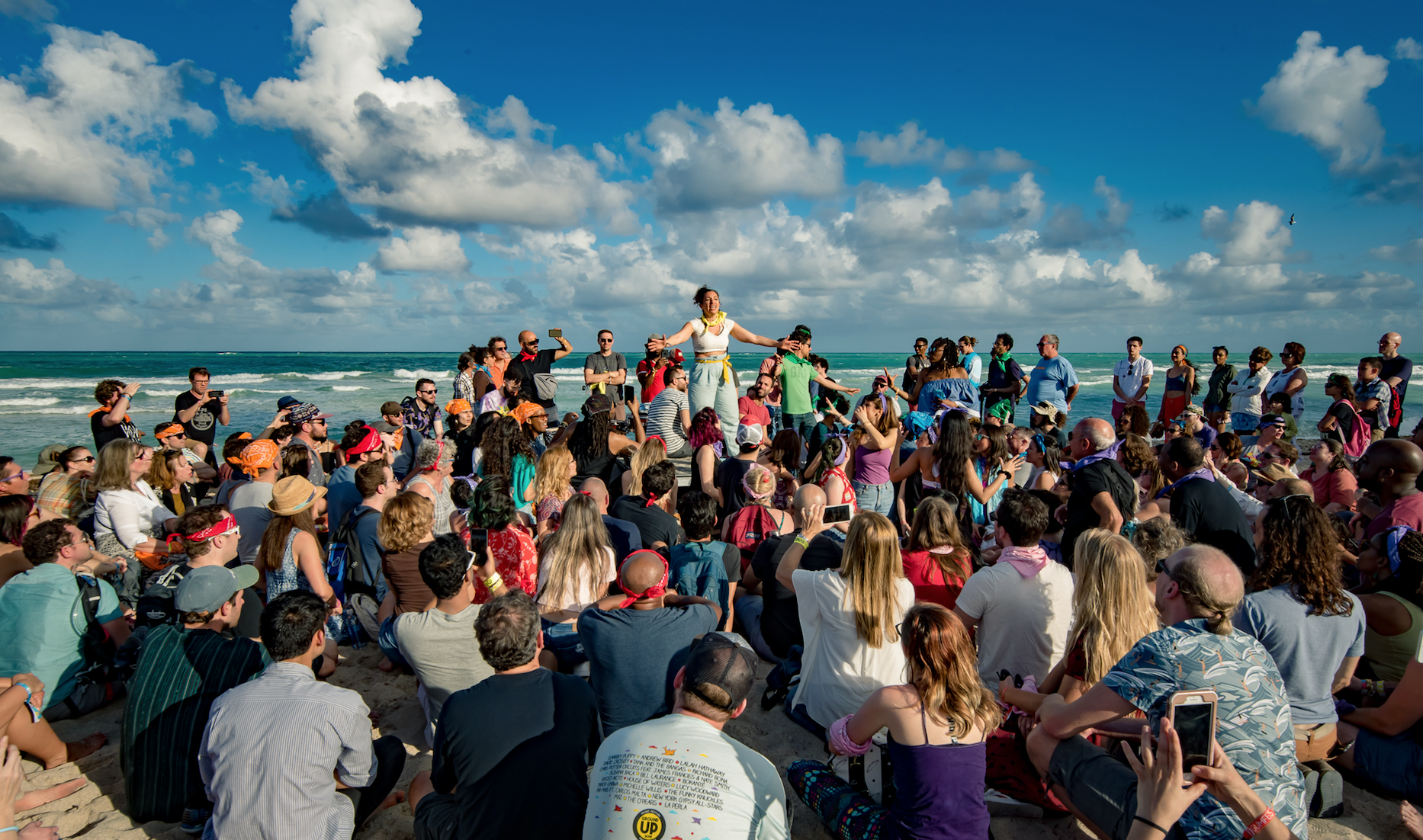
One of the highlights of the GroundUP Music Festival is Banda Magda’s A Capella by the Sea, in which festivalgoers head to the beach for a community singalong led by Magda Giannikou. (Photo courtesy of Stella K.)
If it’s music that your heart is hungry for this Valentine’s Day weekend, a smorgasbord awaits you at the fourth annual GroundUP Music Festival in Miami Beach.
This three-day concert experience at the North Beach Bandshell features an eclectic blend of musicians and an intimate approach to music. It was created to bring together great performers in a laid-back setting that encourages up-close interactions – not just between musicians, but also between the performers and their audience.
“It’s jazz and it’s rock and it’s world and it’s folk and it’s funk, it’s all the different things,” said GroundUP CEO and founder Paul Lehr. “It’s not pigeonholed as one thing or another.”
The festival is the brainchild of Snarky Puppy, the funk and pop-infused jazz band out of Brooklyn that organized the first GroundUP Music Festival in 2017, bringing along with it a huge following of intensely loyal fans willing to travel here. Since then, the festival, which is co-presented by The Rhythm Foundation, continues to draw fans from around the country and the world.
“It’s always exciting even just meeting the people,” Lehr said. “It’s wild that … 60 percent of the audience is from out of the state and out of the country. It’s just an exciting mix of people, an exciting mix of musicians.”
In putting together the roster of artists, Lehr noted nice guys and gals finish first: “What we look for are two things: It’s artistry, and it’s sort of thoughtfulness and kindness. The artists who we bring in are really interested in the music and in being here.”
Although GroundUP occupies a large swath of the beachfront park south of the bandshell — there is a second, smaller stage; a palm grove for lounging in hammocks and such; and a building where talks and classes take place — the North Beach space is tiny compared with other festival venues around the country.
This cozy setting means festivalgoers can rub shoulders with their favorite artists without feeling like paparazzi. Musicians don’t just fly in, play, and fly out. Between master classes and sitting in with other artists, they are on-site for the entire weekend. It’s one of the festivals biggest draws.
“You know, the barriers are broken down … so it’s the artists and the audience all hanging out, and it’s great fun,” Lehr said.
Snarky Puppy will perform every day, as will Chris Potter, the jazz saxophonist who is artist-in-residence this year and will sit in with a number of different performers.
The festival will kick off at 4:05 p.m. Feb. 14, when Portuguese jazz singer Sofia Ribeiro takes the stage. Although she was born an ocean away from Brazil and a few decades late for the Tropicalia music movement of the ’60s, the luscious sensuality of Ribeiro’s voice would have been right at home in that cultural moment.
There are a number of Latin American artists this year as well, such as Mexican singer-songwriter Lila Downs and the all-female mariachi band Flor de Toloache. Drummer, vocalist and composer Yissy Garcia, who follows Ribeiro’s set, descends from Cuban jazz royalty: Her father was percussionist Bernardo Garcia, a founding member of the iconic group Irakere. At 32, she’s a musical revolution in her own right. While drumming in Cuba has traditionally been the exclusive province of men, it isn’t just her gender that sets Garcia apart, but also the virtuosity of her technique and the inventiveness of her compositions.
Feb. 14 is also the night to hear Michael McDonald, former lead singer of both The Doobie Brothers and Steely Dan. Though he will be in South Florida later this year for The Doobie Brothers’ 50th anniversary tour, GroundUP promises listeners a fresh take on the artist.
“We’ve put together this all-star jazz band to play along with Michael McDonald,” Lehr said. “It’s a really cool way to hear his music like you’ve never heard it before.”
McDonald will also be giving a master class in songwriting. Opportunities like this one make the GroundUP festival different, Lehr said.
“What we really try to do is reinvent how people connect to the artists that they love,” he said. “We wanted to have an intimate festival. Instead of going so broad, we wanted to go deeper with our audience.”
The workshops and classes, he said, have been extremely popular: “It’s very real … you’re sitting down and you’re talking to David Crosby, or Michael McDonald, or The Wood Brothers, and learning songwriting and asking the questions that everybody’s always wondered about…
“It really is a unique situation where you just get to hang out with … sometimes living legends, and just some of the greatest musicians on the planet, and everybody’s really chill about it.”
Miami native Cecile McLorin Salvant is scheduled to perform Feb. 16 at the bandshell for a general audience, but she will also be doing an acoustic set that day in an intimate pre-concert brunch for a lucky hundred or so VIP ticket-holders.
Her voice, Lehr said, “has this incredible character that harkens back to Ella and the greats.”
One of the most cathartic experiences GroundUP offers is Banda Magda’s A Capella by the Sea. On the last day, festivalgoers will tromp down to the beach for a community singalong led by Magda Giannikou, who assigns parts and puts together an impromptu vocal piece.
“It’s just blown up into this giant thing,” Lehr said. “All these unsuspecting beachgoers have no idea what’s going on, then they start joining in. It’s magical.”
What: GroundUP Music Festival
When: Feb. 14-16
Where: North Beach Bandshell, 7275 Collins Ave., Miami Beach
Cost: Regular admission is $85 each day or $225 for three-day pass. VIP tickets are $170 each day or $450 for three-day pass. Late-night performances (11 p.m.-4 a.m.) cost $25 extra per evening and take place at The Alexander, 5225 Collins Ave., Miami Beach.
Seraphic Fire’s Enlightenment Festival to focus on Haydn, Bach and Handel
Written By Mike Hamersly February 10, 2020 at 11:40 PM
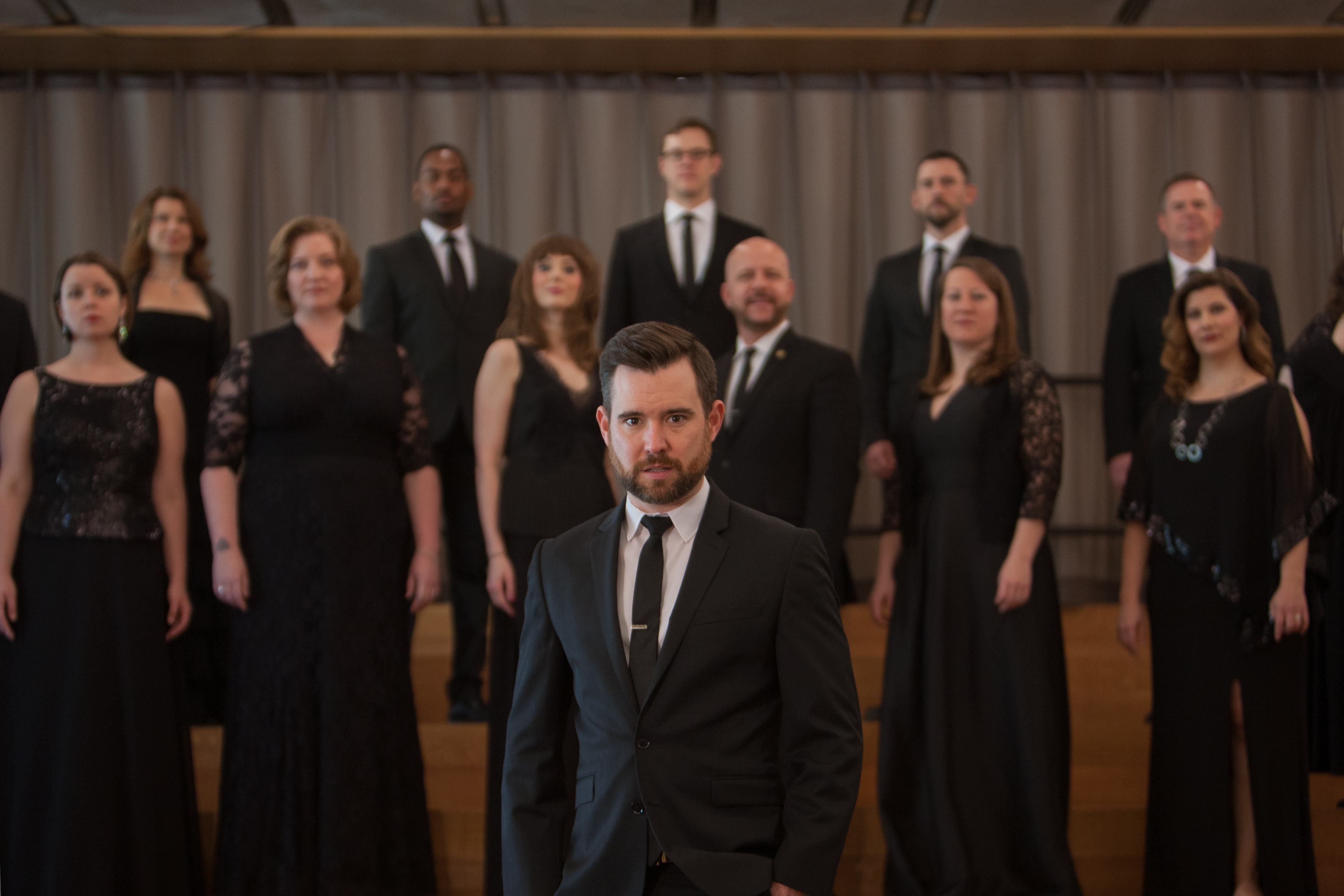
Patrick Dupre Quigley, at center, is conductor and artistic director of Seraphic Fire. He founded the South Florida ensemble in 2002. (Photo courtesy of Southern Land Films)
The South Florida vocal group Seraphic Fire is second-to-none in presenting a wide range of music, from the Gregorian chants of the Medieval era through post-1950 compositions, a period that spans well over a millennium.
But with its inaugural Enlightenment Festival, the ensemble drastically narrows its focus. From Feb. 12-23 in various locations throughout South Florida and Naples, Seraphic Fire will perform notable works by 18th-century masters Haydn, Bach and Handel.
“This festival has been a long time coming for our organization,” says Patrick Dupre Quigley, conductor and artistic director of Seraphic Fire, which he founded in 2002. “In many ways, the forces that we put together are very much ideal for the music of the late Baroque and early Classical period.”
Quigley and Seraphic Fire have been eager for some time to concentrate on these three composers.
“We try to present a very varied season throughout the year. But we were trying to figure out a way to be able to perform more of the music of Bach, Haydn and Handel and their contemporaries, while not having to change our season format, so that we were solely an 18th-century presenting organization,” he said.
“The idea of the festival is to be able to get a little bit more in-depth to the meat of what makes their music have such a spectacular impact across the centuries. Sometimes we listen to music that has a particular time period associated with it, even when you hear it. But the music of these composers really sort of steps across time and national origin, and that’s what we’re hoping to communicate.”
Here’s the breakdown of works being presented: Haydn’s “Arianna a Naxos,” Feb. 12-13; Bach’s “Coffee Cantata” and “Wedding Cantata,” Feb. 14-16; Bach’s “Cello Suites,” Feb. 18-19; and Handel’s “Acis and Galatea,” Feb. 21-23.
For those unfamiliar with these titles, Quigley offers details and some personal insight on each.
On “Arianna a Naxos”: “This is one of the pieces that exemplifies what was new about music of the 18th century. It’s almost like an opera for individual voice, like a song soliloquy in a way, and Haydn does so much with the expressivity of the female voice. The focus is on one of our long-term members, [mezzo-soprano] Clara Osowski. We’re lucky we get to work with her on a regular basis … she’s just a dynamite interpreter of song. It’s one thing to be an opera singer and stand onstage with a costume on and a set behind you and a full orchestra – there are so many things working in your favor to communicate the idea of what you’re singing. Whereas with song, there’s only the singer, the player and the audience, and when a singer is able to communicate song in the way that Clara does, it’s a riveting, interpersonal experience.”
On the “Wedding Cantata” and “Coffee Cantata”: “As a vocal-instrumental organization that focuses on a lot of choral works, Seraphic Fire often encounters Bach in his ‘sacred’ repertoire. But this program is focusing on Bach’s ‘secular’ repertoire for voice in two instances. One is the solo cantata, the ‘Wedding Cantata,’ which is being sung by Margot Rood, who is a soprano soloist all over the country nowadays, and has been singing with us for almost 10 years. She’s a remarkable Bach interpreter. This is one of Bach’s most-recorded works, so to hear Margot sing it with a period band will be a wonderful thing.
“Bach is approached as a saint in many ways when he approaches music, yet he clearly had a sense of humor. The ‘Coffee Cantata,’ besides being brilliant music written by perhaps the most brilliant musician of the modern age, is also hilarious. It’s an operetta about a father who is very disapproving of his daughter’s addiction to coffee and caffeine.”
On Bach’s “Cello Suites:” “Guy Fishman, who is the principal cellist of Boston’s Handel & Haydn Society, is coming to play three of the Bach ‘Cello Suites’ – the first, second and third – on Baroque cello. When we were thinking about this festival, one of the things I wanted to feature was members of our ensemble who are often not in the flashiest of roles, which usually are people like mezzos or tenors and basses who don’t get the flashy things that sopranos do. Similarly, for our orchestra, the basso continuo line, which is led by the principal cello, is the workhorse of the Baroque orchestra. It plays literally every note, where the upper strings and the winds take entire movements off. And so, we wanted to be able to feature one of our regular cellists, Guy, because he’s such a compelling soloist.”
On Handel’s “Acis and Galatea”: “Handel wrote this piece when Italian opera sort of went out of style in London, so he was having a hard time with the economics at the time. But the music itself is stunningly complex. It has all of the joy and interest that Handel’s English-language oratorios would have coming later, but in such a smaller form. The orchestra is only for two individual violins, two oboes, a cello and bass and harpsichord – it’s a tiny, tiny orchestra because it was probably performed for the first time not as an opera or in a theater, but in someone’s ballroom.”
Quigley – who was born in New Orleans and has degrees from both Notre Dame and Yale – has performed all over the world with dozens of symphony orchestras. But he definitely has a soft spot for Miami.
“I think that we have some of the most warm and loving audiences of any that I’ve encountered anywhere,” he says. “I like that people are so interested here in things that are new and that expand their horizons …
“Often, the music that we’re performing, while it might have been performed perhaps tens or hundreds of times in Boston or New York, it might be the first time getting performed in South Florida. And the enthusiasm with which our audiences and the community have received that – I don’t know that it could have happened anywhere else. It’s a particularly intellectually curious audience, and the community in which we are based has been one of the great joys of Seraphic Fire.”
What: Seraphic Fire’s Enlightenment Festival
When: Feb. 12-23
Where: Venues in Coral Gables, Fort Lauderdale, Boca Raton and Naples





Recent Comments