Written By Deborah Ramirez August 10, 2020 at 9:26 PM
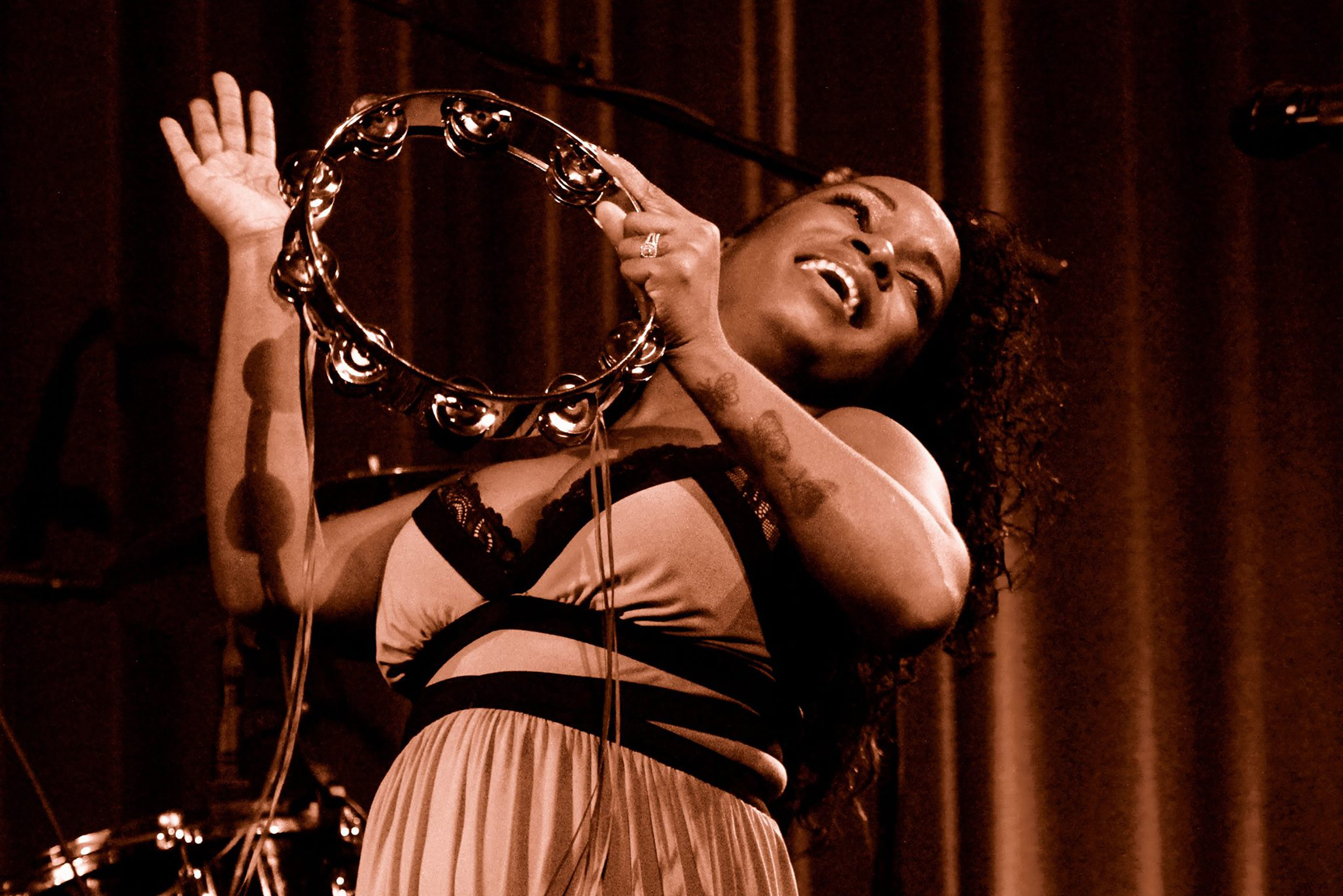
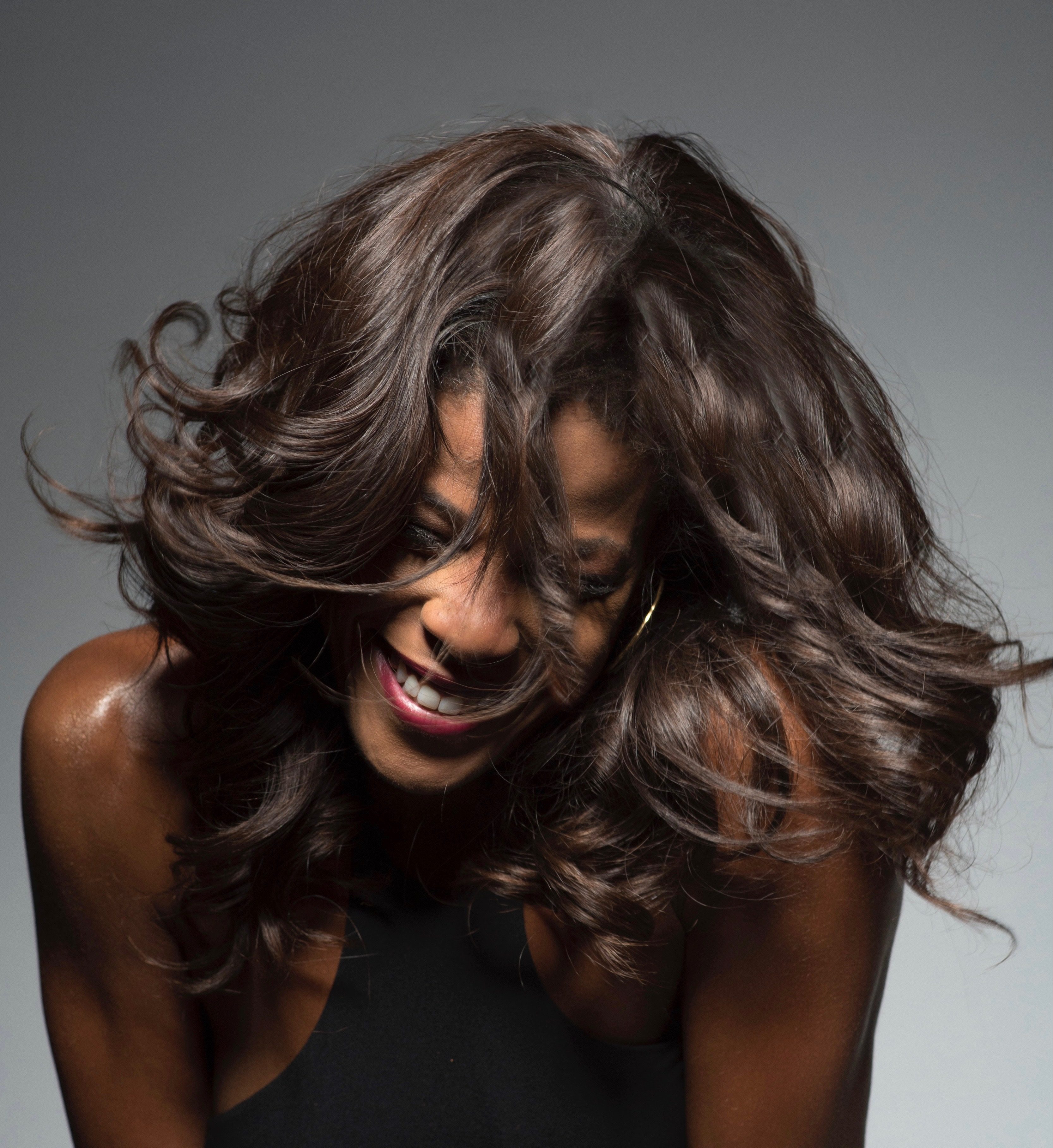
Kat Riggins is a contemporary blues artist who writes about racial and social injustice. (Photo courtesy of Herman Buisman)
Her voice carries traces of the blues matriarchs who came before her.
They’re in her raspy, raw vocals and high-energy performances.
Like the blues divas she admires, Miami-born, singer-songwriter Kat Riggins sings about love, hard times, and people living on the edge. The rhythms that she grew up with – soul, R&B and hip-hop – have influenced her style.
But at her core, she’s a blues sister, like Koko Taylor, Etta James and Tina Turner, to name a few.
“I heard in those women the attitude and the sass and the freedom to be strong and that was so attractive to me, and I think that’s how I fell in love with it,” said Riggins, from her Fort Lauderdale home.
The contemporary blues artist, who is 40 and fabulous, is getting ready to celebrate her new album, “Cry Out” (Gulf Coast Records), to be released Aug. 14 on all digital platforms. “Cry Out” is Riggins’ first label album.
Her songs reflect her times: violence against the transgendered, gay rights, homeless veterans and systemic racism. She penned all 13 songs for the new album, including the title track, which is her call to action against bias and social injustice.
The timing couldn’t be better. “Cry Out” talks about “the mother down and praying on her knees, begging for a place to raise her son without fear.” The line could be about George Floyd and the Black Lives Matter movement. But Riggins wrote the song a year before the streets erupted in protest over police violence and the killing of unarmed men and women of color.
The song is about decades-old biases and hatred of people who are different – and its harmful effects, she said.
“It’s painful to realize that all of this is still happening to groups of people that I personally identify with – African-American and gay people,” said the singer-songwriter, who married her partner in 2015, after same-sex marriage became legal.
“I feel I can’t remain silent anymore. These are things I have been wanting to say out loud for a while, things that have been sitting in my songbook.”
Riggins has spent most of her life filling her songbook.
She grew up in Miami’s Brownsville neighborhood, a historic black district where Martin Luther King Jr., Malcolm X and Muhammad Ali stayed in the ’60s during segregation.
A child of the ’80s, Riggins listened to her parents’ record collection, a mix of gospel, blues, R&B, soul, country, hip-hop and rock ’n’ roll. At an early age, she wrote poetry – this is where she says her songwriting started. She also sang in church and school, and showed a talent for painting and drawing.
Her creative nature and good grades helped Riggins get into Miami’s magnet public schools for gifted students, starting in grade school. She graduated from the prestigious Design and Architecture Senior High School in Wynwood, before enrolling at Barry University, where she majored in musical theater. But Riggins’ money ran out after her freshman year. She became a bartender – a job she did for 13 years.
South Florida singer-songwriter Kat Riggins said her songwriting developed from writing poetry during her childhood. (Photo courtesy of Sebastian Santiago)
During this time, Riggins occasionally sang in pubs and lounges. But she was afraid to try to live off her music.
“I was being hard-headed,” she said. “The bartending was easy; it was cash every day and I was able to pay my bills. I was nervous and weary about the uncertainty of the music business.”
It took nearly a decade for Riggins to overcome these fears. Around 2010, she was offered a job managing a bar in New Orleans, where she relocated with her then-partner. One day, she noticed an internet ad seeking Top ’40s singers and musicians for work in Southeast Asia and the Middle East. At her partner’s urging, Riggins auditioned for the job and soon found herself on a plane to Vietnam.
She spent the next 18 months traveling throughout the region, including monthlong stops in Thailand, South Korea, China and the United Arab Emirates. She became the singer of a traveling house band that performed six nights a week in upscale hotel nightclubs.
She described the experience as her “live music boot camp” – one that taught her to move freely on stage and keep audiences entertained. Most importantly, it gave her confidence as a performer.
“It got me in shape to do what I do now without getting too winded and without falling apart,” Riggins said. “And mentally, it let me know that I can do this.”
After the tour ended, Riggins returned to South Florida, where she worked with other bands before starting her own group. She also self-produced three albums, developed a local following, and toured Europe with her blues revival band.
Last year, through her friendship with fellow Miamian and blues artist Albert Castiglia, Riggins was introduced to Gulf Coast Records, a Texas-based label specializing in blues, roots music and Americana. The label’s co-founder, Mike Zito, had produced Castiglia’s groundbreaking 2019 album, “Masterpiece,” which won a Blues Music Award – the Grammy of the blues industry – for best blues-rock album of the year.
Zito, who is also an award-winning blues guitarist and vocalist, agreed to produce Riggins’ new album, “Cry Out.”
“Albert has always been so generous and supportive of me … he went to the label on my behalf,” said Riggins, about this new chapter in her career. “And Mike is a hilarious, musical genius.”
Whatever comes next, Riggins is passionate about preserving a genre she loves: “It’s like any calling in life … You can try to stay away all you want but that call is always going to be there, and the more you ignore it, the louder it gets and it tortures you, until you give in to it.”
What: “Cry Out” album release party, drive-in When: 7-9 p.m. Aug. 21 Where: Dezerland Park, 14401 NE 19th Ave., North Miami Cost: $45; four-person maximum per vehicle. Tickets can be purchased at Katriggins.com.com by clicking on “Agenda.” More information:Facebook.com/kat.riggins
Summer concert series’ 35th season takes place in cyberspace
Written By Tracy Fields July 7, 2020 at 3:54 PM
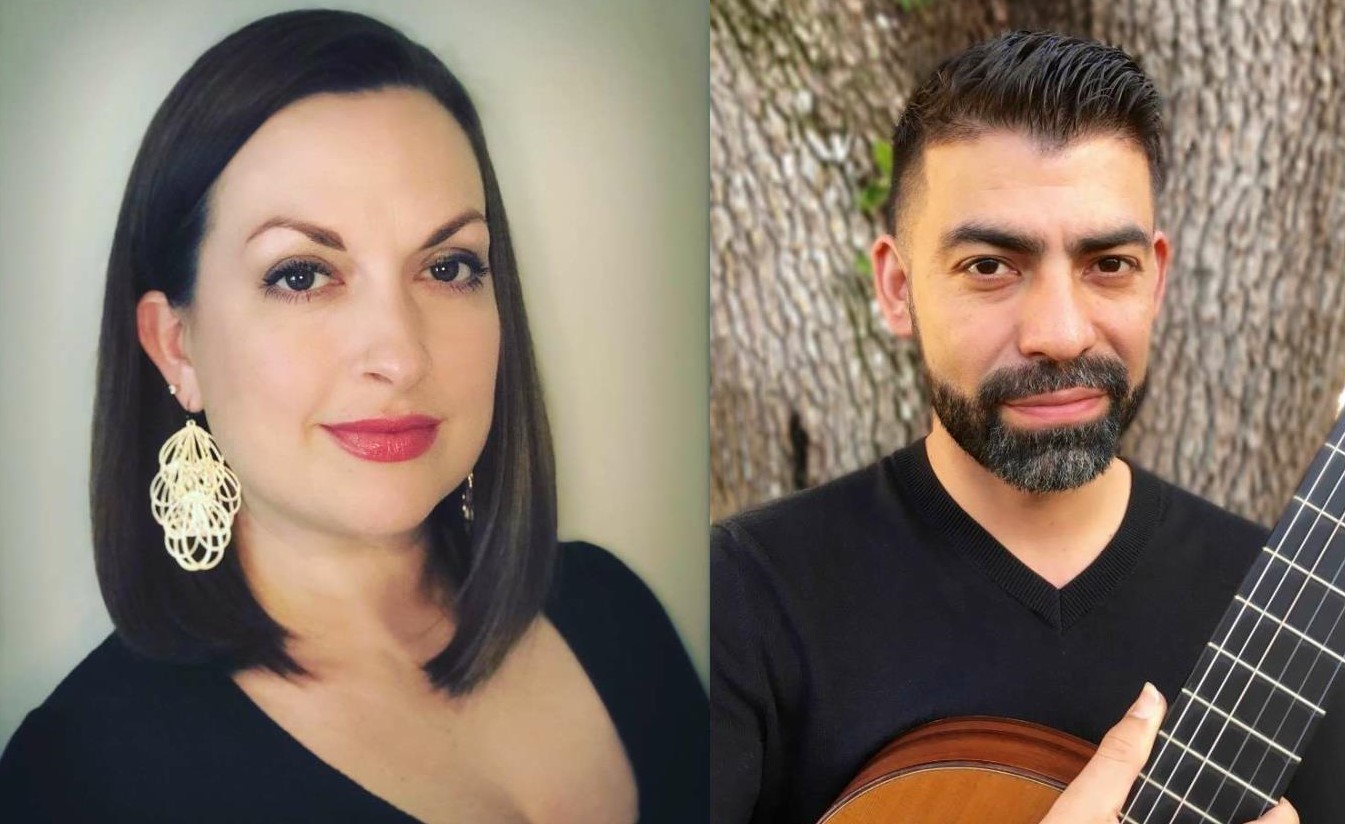
The husband-and-wife team of Alvaro Bermudez and Misty Leah Bermudez will present “Classic Latin Love Songs & Melodies” on July 16. (Photos courtesy of Community Arts Program)
The shows must go on, pandemic notwithstanding.
Since 1985, the Coral Gables Congregational United Church of Christ has presented a series of biweekly concerts each summer. Music-lovers have gathered in the intimate sanctuary of the historic church, across from The Biltmore Hotel, to hear jazz and classical music.
They won’t this summer, thanks to COVID-19. But they’ll still be able to enjoy the concerts – virtually.
“After 34 years, we could not just have a gap,” said Mark Hart, executive and artistic director of the church’s Community Arts Program (CAP). “We had to keep it going, we had to keep the tradition going.”
This year, the series returns to its roots. The six concerts, which run weekly from July 9 through Aug. 13, feature local artists. The first is Shelly Berg, acclaimed pianist and dean of the University of Miami’s Frost School of Music, who will play some of his best-loved jazz and classical pieces in a performance entitled, “My Favorite Things!”
One week later, the married duo of Misty Leah Bermudez and Alvaro Bermudez present “Classic Latin Love Songs & Melodies.” He will accompany his mezzo-soprano wife on guitar, doing songs from the early and middle part of the last century that originated in places including Mexico, Cuba and Ecuador.
Then, on July 23, it’s “Oscar Meets Ella,” with pianist Zach Bartholomew’s trio, featuring vocalist Linda Alvarado. They’ll do the music of pianist Oscar Peterson and singer Ella Fitzgerald with help from bassist Gary Thomas and Lucas Apostoleris on drums.
The 5 String Swing Trio – violinist Steffen Zeichner, pianist Derek Fairholm and bassist Benjamin Whitman – team up with violinist and vocalist Nicole Yarling on July 30 for an evening of tunes from “The Great American Songbook.”
Yarling said she’s been adjusting to this new style of living and performing, high-tech and low-touch, since the pandemic reached South Florida.
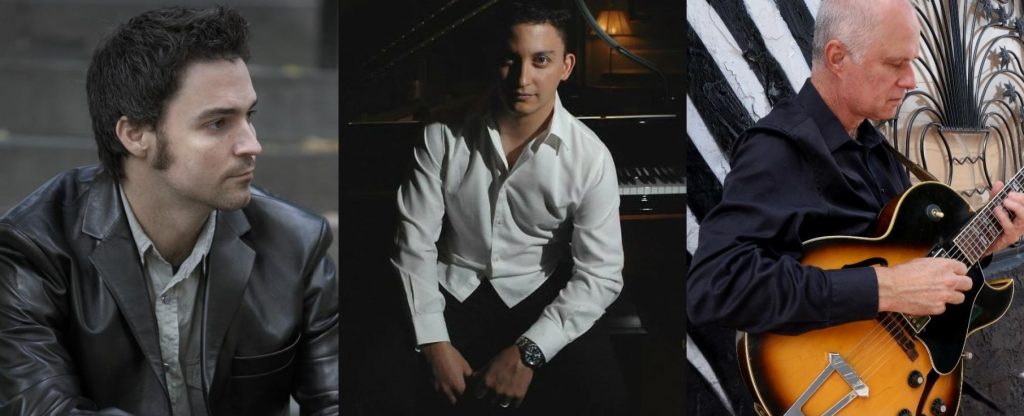
Threefold features saxophonist Mark Small, pianist Martin Bejerano and guitarist John Hart. (Photos courtesy of Community Arts Program)“It’s kooky. This is like every sci-fi movie I’ve ever watched, you know those movies where there’s an outbreak of something,” she said. “I certainly never imagined this in my lifetime.”
Without the audience present, she says, her performances nowadays are more about interaction with her fellow musicians.
Virtual showgoers will be able to focus on that as well, and Hart hopes the concerts will be a source of joy and relaxation.
“We’re all dealing with enough stress,” he said. “This is just a time for people to tune in and sit back and spend time with some great artists.”
The concert on Aug. 6 has a single star: violinist Scott Flavin, who will present “One Voice,” with music from Europe, the African Diaspora and the United States.
The series is scheduled to conclude on Aug. 13 with a centennial tribute to pianist and composer Dave Brubeck. It’ll be presented by Threefold, which includes saxophonist Mark Small, pianist Martin Bejerano and guitarist John Hart.
“People are welcome to make donations to help engage the artists and the tech team making this possible,” Mark Hart says.
He hopes people will invite family and friends from everywhere to enjoy this year’s concerts together – sort of – and is excited about the chance to make new fans for the series. It’s just part of CAP’s year-round work of providing music education to young people in South Florida.
“The great thing about this year is that we’re also able to tell our story to the world,” he said. “That’s the silver lining in all of this.”
What: 2020 Virtual Summer Concert Series, presented by the Coral Gables Congregational United Church of Christ
Nu Deco director remains optimistic about ensemble & wider world of live music
Written By Rebekah Lanae Lengel June 30, 2020 at 5:16 PM
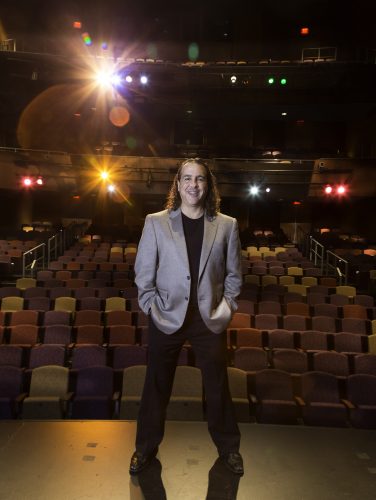
Nu Deco Ensemble cofounder Sam Hyken is instrumental in developing the artistic vision of the orchestra, and its collaborations with artists. (Photo courtesy of Alex Markow Photography)
Composer-producer Sam Hyken was living out a creative dream.
In late winter, he got to spend a few days in Los Angeles working on the world premiere of Grammy- and Emmy award-winner Robert Glasper’s first orchestral work, commissioned by Miami’s Nu Deco Ensemble. As the ensemble’s cofounder and artistic director, Hyken is instrumental in developing the artistic vision of the orchestra, and its collaborations with artists.
“It was an absolute bucket-list collaborator,” says Hyken. “He is such an incredible artist that is really breaking boundaries and just revered in the musical world. The opportunity to get him to write a piece for orchestra the first time with Nu Deco was really exciting.”
Fast-forward to mid-March and COVID-19 changed everything.
“We were gearing up for [the world premiere concert] … He had come in, we did one rehearsal within New World Center, and it was a total match made in heaven. Everyone was really excited about the work and the collaboration,” Hyken says. “Then the very next day, the world started shutdown.”
The ensemble scrambled to come up with an alternative to a full program cancellation, something it had never had to do in its history of programming. But its efforts wouldn’t come to pass, as closures came swiftly and broadly across Miami, effectively halting any efforts the ensemble had to share the program, even in a digital capacity.
“This was going on for everybody, so it was not like we were in unique situations. But it was definitely new ground for us, and we made the decision that we were going to compensate all of our artists fully for the week even though we were canceling,” says Hyken, about the decision made along with cofounder/artistic director Jacomo Bairos. “We were leading up to this very momentous collaboration. Once the dust settled slightly, we just had to reevaluate where everything was.”
An organization built on innovation, the ensemble quickly found it was uniquely positioned for the adaptability required to get through a complete shutdown of indeterminable length.
For starters, Nu Deco has several seasons of concert footage available to share with audiences hungry for cultural offerings during the pandemic. The ensemble will feature new videos on its social media channels throughout the summer, including concerts with Ben Folds, Kimbra and PJ Morton.
“We have been fortunate that, from the very beginning, we cinematically filmed every concert that we have done, and more recently, we have been actually filming more behind-the-scenes, backstage stuff as well,” Hyken says. “All the performances have been cinematically captured with high-definition, multi-track audio recordings, and we will be releasing videos of the performances as well as short behind-the-scenes documentaries about the collaborations.”
The ensemble also quickly shifted to have its youth orchestra, Nu Deco NXT, meet digitally – with one-on-one music lessons, group practice sessions and meditation. This allowed them to continue building with the seventh- through 12th-graders in the group, despite losing the ability to meet in person.
Nu Deco also has been using its extensive concert archives to support wider education efforts with videos for music instructors across the country.
“We have been creating these 45-minute education videos, which cover very simple topics like rhythm, Latin music, collaboration, different musical genres, and really creating virtual field trips that have enhanced visual content within them, “ Hyken says. “So, if you are watching one of our performances, different pop-ups come on the screen – kind of like an old MTV music video – that have different information.”
Hyken remains optimistic on what the future holds for Nu Deco and the wider world of live music.
“I think that we are in the process of accelerating something that was already happening anyways,” he says. “The way we consume content is constantly evolving. I think that live performance, in a lot of ways, has an opportunity to look at how we present art, and it is an exciting opportunity.”
Make Music Miami organizers bring the tunes online
Written By Mike Hamersly June 16, 2020 at 8:50 PM
Justin Trieger is co-founder of Buskerfest Miami, the main organizer of Make Music Miami. (Photo courtesy of Justin Trieger)
Make Music Day – the annual international celebration of June 21, aka the summer solstice – is almost upon us. In normal, non-quarantine times, millions of people around the world would be encouraged to gather outside and perform music in a joyful welcome to the beginning of summer.
In 2020, things are obviously very different. But although the logistics of the event must change to honor social distancing, its spirit and goals remain the same: to provide free access for everyone to musical activities and performances.
Make Music Miami, the South Florida branch of the global festival, has come up with new ways to get into the spirit of the day.
“When we were putting together the program for this year, we were doing it under the auspices of a stay-at-home order and a lot of uncertainty as to where we would be right now,” says Justin Trieger, co-founder of Buskerfest Miami, the main organizer of Make Music Miami. “So we made a decision early on to just focus on streaming live performances that day and collating them all in one place, so that hopefully we’d be able to offer it to everyone we normally do.”
Make Music Day started in Paris in 1982 as the Fête de la Musique, and its popularity has since exploded across the world.
“It’s grown to be an annual celebration in something like a thousand cities at this point,” says Trieger. “And we’re part of that – we’re the local chapter of a much larger community effort.”
The local event will feature streams and activities starting at 8 a.m. June 21 and lasting into the evening, collated on the Make Music Miami 2020 Facebook event page: Facebook.com/events/184266112729006.
Fans of gypsy jazz, swing and modern French music can enjoy a livestreamed performance by The French Horn Collective, presented by the Rhythm Foundation at 8 p.m. from the North Beach Bandshell.
New music will also be presented by Liset Alea, a Cuban-born, Miami-raised singer-songwriter now living in Paris. She’s best known as one of the former lead vocalists for Nouvelle Vague, the French cover band that performs lounge-y, bossa nova versions of classic punk and new wave songs, such as Joy Division’s “Love Will Tear Us Apart,” Blondie’s “Heart of Glass” and New Order’s “Blue Monday.”
Alea is scheduled to perform three songs, all from her home in Paris.
“I’m doing a French song, a Serge Gainsbourg cover that I love,” she says. “That one’s in the living room, and two of them are on the balcony – two originals: One is called ‘Going Home,’ which is all about my first time returning to Cuba after 20 years of exile. It’s funny, because home is also about going back to Miami, so ‘home’ has kind of kept changing. And another one called ‘Moonlight,’ which I wrote in Miami about being on the beach at night, and the kind of mood and landscape that you get, which is very special.”
There is a catch: Alea is due to give birth on June 21 to her first child (“He’s named after a street in Miami, but I won’t say which!”), with husband and music partner Rodriguez Jr., a techno DJ and producer.
Plan B, in case Liset is unavailable that day: “We’re holding out some kind of hope that she’ll be able to last till then for us,” Trieger says. “But in the event that that can’t happen, she’s got a few songs prerecorded that we’ll roll before the show at the Bandshell.”
Liset Alea is a Cuban-born, Miami-raised singer-songwriter now living in Paris who is scheduled to perform on June 21. (Photo courtesy of Benoit Courti)
Alea was born in Havana, moved to Costa Rica briefly before landing in Miami when she was “5 or 6,” and graduated from the New World School of the Arts before moving to New York when she was 19. She and Rodriguez Jr. are preparing to release a new album, which will feature songs with a Euro-house vibe, similar to the sounds of Australian group Rufus du Sol and legendary British electronic band Underworld, if they were to employ a female singer.
“That’s part of the ‘quarantine project’ that we had, which was finishing our duo album,” says Alea. “Our project is called RJLA – RJ is Rodriguez Jr. and LA is me, Alea. We’ve done a lot of touring as a duo, and we were making music together before we were ‘together,’ for like 15 years already. It’s really great because he doesn’t have to do exactly what he does with his techno project, and I don’t have to do exactly what I do with my acoustic stuff, and we can kind of create another universe for ourselves.”
You can count Trieger among those who are impressed by Alea’s sound.
“Liset has a very eclectic style, likely owing to the mix of cultures in the places she has lived: Cuba, Miami and France,” he says. “You can hear those influences in the variety of songwriting she creates, and it’s a perfect fit for Make Music Miami, which is all about the global celebration of musical culture.”
Alea was also a perfect fit for Nouvelle Vague, which has featured several female singers over its 17-year existence. In 2010, Alea opened for Nouvelle Vague at the Manuel Artime Theater in Miami and afterward the band’s producer, Marc Collin, asked her to join, saying they needed a new singer.
“I definitely was a fan of what they were doing because, as a Cuban, the Latin bossa nova thing I loved,” says Alea. “And the new wave songs they were covering, it was all the stuff I was listening to – Joy Division and Depeche Mode. I was like, this is totally my cup of tea, what I love.”
Alea stayed with Nouvelle Vague for about eight years, although she says she did a show with the band in early 2020.
“I still kind of pop in and out when they need something,” she says. “But I needed desperately to do other things, because at the end of the day, as much as I loved it, it’s a cover band.”
One traditional part of Make Music Miami that can’t happen this year: the series of performances along Lincoln Road, Miami Beach’s iconic walking mall. Typically, more than 40 artists show off their creativity outside along the mall on this one day. But now everything must be done virtually – one could call 2020 the Year of the Livestream.
“We’re sad like everybody else that it has to be done through a screen-shot,” Trieger says. “But we’ve got some cool projects that we normally wouldn’t have pursued because of that.”
One is the Contagious Beats idea: “We got together a group of artists, and they laid down a short, original musical piece or beat,” Trieger says, “and we’re inviting the public to submit their own overdubs to lay over the top of it, and then we’re merging those into a finished project to be shown on June 21.”
Miami songwriter behind ‘Despacito’ sings of quarantine-relevant themes
Written By Mike Hamersly June 4, 2020 at 7:01 PM
Erika Ender won a Latin Grammy in 2017 for co-writing the global crossover hit, “Despacito,” with Luis Fonsi and Daddy Yankee. (Courtesy of Erika Ender)
Miami singer-songwriter Erika Ender penned her latest single, “Back to the Basics,” months before the COVID-19 pandemic hit. But the heartfelt ballad seems even more relevant since the quarantine.
Inspired by “observing how nowadays everything that you have is more valuable than who you are,” Ender says the song is about “the things we miss – the essentials of life, the real relationships, the real communication, connecting with others and understanding what we’re here for.”
The Panamanian-born artist – who won a Latin Grammy for co-writing the global crossover hit, “Despacito,” with Luis Fonsi and Daddy Yankee – has been very active creatively. Self-isolated since March 18, Ender has been writing music as well as producing “#EriKonversa,” a new interview show featuring conversations with fellow artists on Instagram (@erikaender).
“This whole situation has got us in a very vulnerable condition. So I’m trying to do the best that I can and to be the most productive that I can, but at the same time, [stay] very connected with myself and with whatever I can do to make this world a better place from my corner,” Ender says. “I’m reflecting a lot about all of this and meditating and trying to see the positive things behind the lesson of the invisible master that has come to change everything around.”
When the shutdown happened, Ender took recording equipment from her studio home with her, a decision that turned out to be crucial.
“We didn’t know where this was going, so I decided to record [the song] at home, because I couldn’t go back to the studio,” she says. “And for me it was such a powerful message, because it went beyond what we saw last year. It was more realistic, and something as simple as a kiss or a hug was already a lethal weapon at this moment.”
The video for “Back to the Basics” originally showed Ender singing the song, but it now features everyday people – many wearing masks – dealing with the new somber reality of COVID-19.
“I was trying to put my heart out there and to give a message through music, which I think is an amazing tool, in order for people to connect with their feelings and understand the importance of this moment and how we can really connect with what’s real. And to try to work for a better place for us to live, from now on, and whenever we can get back out there,” she says.
Ender’s interview show, “#EriKonversa,” which runs at 7 p.m. three nights a week, has featured singer-songwriter Rosana Arbelo, fashion designer Nicolas Felizola, and songwriter and producer Desmond Child (Bon Jovi’s “Livin’ on a Prayer,” Aerosmith’s “Angel” and “Crazy,” and Ricky Martin’s “Livin’ la Vida Loca,” among dozens of others).
“That’s a space I created right after we started this quarantine,” Ender said. “That’s the only way I have to communicate with others. And maybe sharing my story and the vulnerable moments I’ve been through – the dark moments, and the tools I’ve used to get out there and reach my dreams and make them come true – could help others.”
Erika Ender’s latest single, “Back to the Basics,” is about “the things we miss – the essentials of life, the real relationships, the real communication, connecting with others and understanding what we’re here for.” (Courtesy of Victoria Shaw)
She hopes “#EriKonversa” will show her fans that whether you’ve achieved fame and fortune or not, everyone is all in this together.
“Some colleagues that I have that I love and admire very much, I’ve been calling them to speak about their life, their human side, to help other people that are at home, that are scared about the future, that maybe are facing depression because maybe they don’t know what’s gonna happen, or that they lost their job,” she says. “I’m trying to be a little of the light in the middle of this tunnel, and I think it’s coming out amazing, because people that are connecting to it are really connecting with themselves, and that’s what I’m really looking for.”
Ender has written tunes sung by big names including Marc Anthony, Prince Royce, Chayanne and Jenni Rivera. And she has scored some prominent guests on her show, but one person in particular would truly make her day.
“If we could dream big, maybe Oprah [Winfrey]. She’s one of the most amazing living examples of people who have come out of a very difficult upbringing and that has reached everything and keeps helping others to find the light within themselves. So I think that would be great. I don’t think small!” she says, with a laugh.
Ender has seen enormous success with “Despacito,” which was nominated for “Record of the Year” and “Song of the Year” at the 2018 Grammy Awards.
“We knew we had a great song, and it was special, but we didn’t ever think that it would be a crossover [hit] and be No. 1 all over the world and break all records in history,” she says. “That was a total surprise.”
Ender is proud of “Despacito” for reasons beyond its massive commercial success, which even saw pop star Justin Bieber later joining up for a remix version.
The song explains “how a woman would like to be seduced – slowly,” and Ender sees it as a “very responsible song.”
“We were very conscious of what we were doing,” she adds. “We were very careful when we wrote the lyrics, especially in such a difficult moment … when songs were so aggressive toward women. And especially with a woman being part of it, I had to be as truthful and as responsible as possible with my job.
“When I do a song, I put 100 percent into it, trying to make a work of art that will really stay forever in whomever would adopt it, because it becomes the soundtrack of people’s lives, in a certain way. I don’t think that what we put in there was different from what we used to put in another song, but apparently each song decides how far it wants to fly, and how high it wants to fly. We weren’t expecting this at all, but we’re so happy and grateful that this happened.”
For more information on Erika Ender, see her official website at erikaender.com.
New World Symphony, Veza Sur Brewing Co. pair up for ‘Beer and Brass’
Written By Sean Erwin June 2, 2020 at 6:46 PM
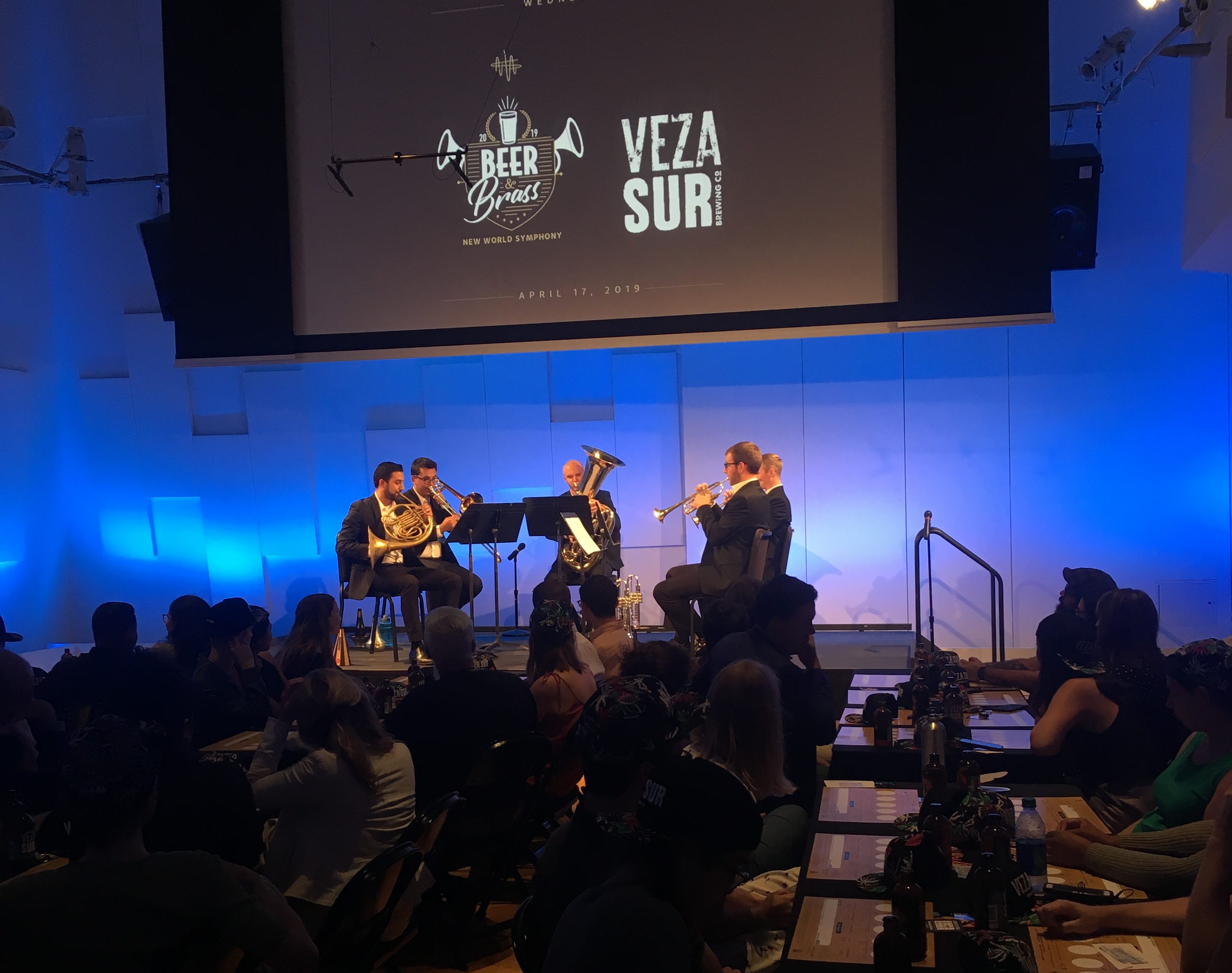
The first “Beer and Brass” program took place last year at the New World Center on Miami Beach. This year, you’ll see the performance online and drink the beer at home. (Photo courtesy of New World Symphony)
Amid a slew of events going online this year, Miami’s New World Symphony is doing something a little different.
It is adding some flavor to its next performance.
The orchestral academy has partnered with the Wynwood brewery Veza Sur to present “Beer and Brass,” a brass quintet performance on June 6 that will pair each of four musical works with its own craft beer. For $25 a ticket, viewers get online access to the performance, a selection of beers, a souvenir pint glass, and an invitation to participate in a live question-and-answer session with musicians and the brewmaster.
“When you can reach people online, you are no longer restricted by the facility itself. You are free to create experiences,” says New World Symphony CEO and president Howard Herring. “If they can’t come to you, you can go to them.”
For Herring, “Beer and Brass” is just a continuation of the symphony’s long-term strategy to add to its audience. Bridging the digital divide is nothing new for this orchestral academy, which prepares graduates of music programs for leadership roles in professional orchestras and ensembles.
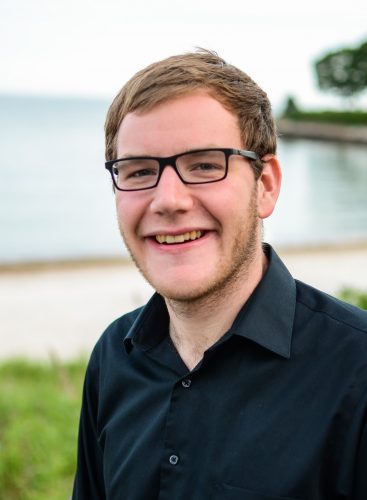
New World Symphony trumpet fellow Aaron Ney helped create “Beer and Brass” last year. (Photo courtesy of New World Symphony)
New World is known for its ethos of experimentation and pressing the limits of what’s possible in classical music, says trumpet fellow Aaron Ney. “Beer and Brass” grew out of a basic passion for beer among a couple of brass players, Ney says.
“It was an idea in my head. We thought it would be nice to have a concert and pair a beer with the recital,” says Ney, who started discussing it last year with tuba fellow Evan Zegiel.
The first “Beer and Brass” program took place at the New World Center on Miami Beach. For this year’s virtual event, they decided to offer the beers for delivery or pickup and to record the performances in advance to comply with social distancing guidelines.
Far from seeing this change as a limitation, Ney likes that it allows people to enjoy the drinks in the privacy of their homes.
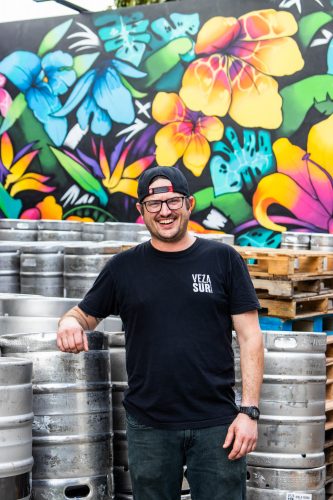
Key to the success of “Beer and Brass” is Rhett Dougherty, one-time trumpet player and now Veza Sur master brewer.
Dougherty says he picked up the brewing bug during downtime between deployments as a nuclear mechanic on a ballistic missile submarine. For him, the pairing of beer and brass is a no-brainer.
“Last year, when the fellows came to Veza, we sat together and drank the beers. Then we talked about them. The color that’s given to something, the timbre was all important,” Dougherty says. “When I drink something, my mind is working in timbre or feel. It is so unique to see artists interpret that idea into their own creative outlets.”
Former trumpet player Rhett Dougherty is now Veza Sur’s master brewer. (Photo courtesy of Veza Sur)
The performance will open with 16th-century composer Tielman Susato’s bright and cheerful “Renaissance Dances.” The mood then will take a dark shift with an arrangement for horns in Samuel Barber’s “Adagio” (1938), before transitioning again to Enrique Crespo’s joyful “Suite Americana No. 1” (1977). It will conclude with the melodic late-night perfume of Duke Ellington’s “In a Sentimental Mood” (1935).
Barber’s “Adagio” is paired with the brewery’s La Yuma Dark Lager.
“La Yuma Dark Lager is near and dear to my heart,” Dougherty says. “It’s a Munich-style lager with some roasty caramel, coffee flavors and noble hops that rounds out at a nice 4.4 percent [alcohol content]. When I get off work and have a good La Yuma – it is doesn’t get much better than that.”
When asked to compare the timbre in the beer with Barber’s work, Dougherty adds, “I feel the timbre in the brown amber color of the beer. I get an autumnal fall flavor with leaves falling off the tree. I get the same vibe from the “Adagio.””
Adds Ney: “In the ‘Adagio,’ there is nothing too jarring for the audience as they listen, and we have a smooth, malty finish to the La Yuma as well. Also, a lager is very American and it fits to pair this with an American composer.”
The last beer will be Veza Sur’s Mala Yerba Session IPA, with Ellington’s “In a Sentimental Mood.”
“I look at Ellington and I see him improvising this somewhere in a jazz club,” Ney says. “The Mala Yerba is light and hoppy and smooth, and I love drinking it with friends. This is a session IPA – just a little bit of complexity in there to remind everyone there is something underneath the rug.”
That pairing just makes a lot of sense to Dougherty.
“When I think of Sir Duke, I think of just a cool guy. I think of that IPA as very cool and sessionable. I think of the timbre of green and blue when I drink that beer,” he says. “Listening to some Duke and [drinking] a couple IPAs sounds like a very good night.”
What: New World Symphony and Veza Sur Brewing Co. present “Beer and Brass”
When: 7:30 p.m. June 6
Where: Participants will receive a custom access link on June 5.
Cost: $25 per household; event limited to 200 patrons. The beer delivery deadline has passed, so participants must pick up their beer package from Veza Sur. Ticket-holders must be at least age 21 and present valid identification at time of beer pickup.
Rhythm Foundation to present the folk sounds of Matthew Sabatella
Written By Mike Hamersly May 19, 2020 at 5:19 PM
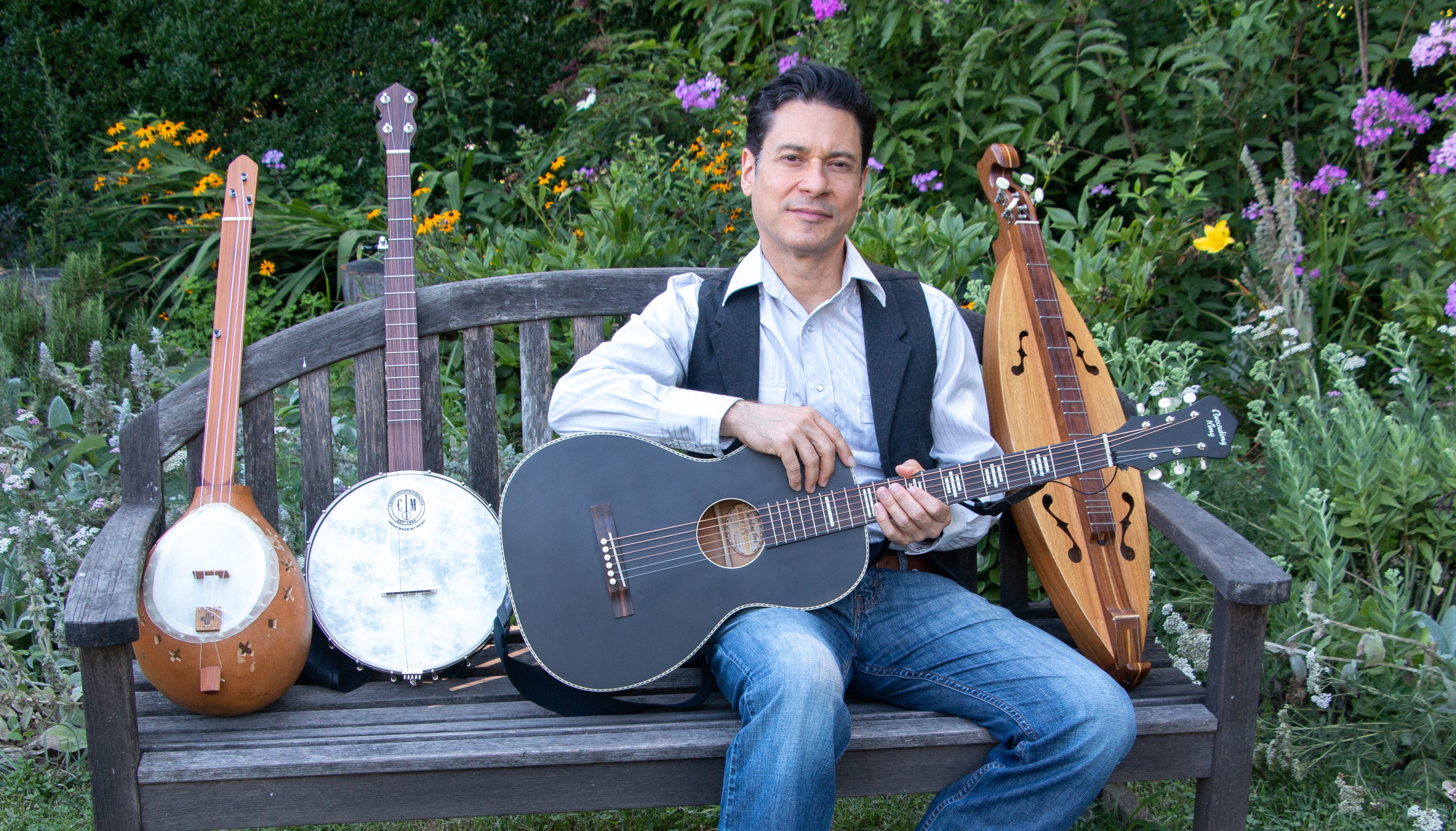
Matthew Sabatella plans to bring his acoustic guitar, a couple of banjos, and possibly a mountain dulcimer to his May 21 performance at the North Beach Bandshell. (Photo courtesy of Arlin Geyer)
Two decades ago, Matthew Sabatella was forging a nice career in South Florida as a pop-rock singer-songwriter and bass player. Then, he had an epiphany.
“The big change was discovering this whole body of American folk music, music that came before Elvis, basically, that I was only marginally aware of,” says Sabatella, who earned a Bachelor of Arts in Music at the University of Miami in 1990. “But I really became fascinated with traditional folk music when I stumbled on the ‘Anthology of American Folk Music,’ which was a six-album set that came out in the 1950s …
“It really just showed the roots of contemporary music, but it also kind of tied the whole story of America together for me, and that’s where the real interest is for me – the intersection between music and the history of our country, and the people who came here and settled here.”
Suddenly, Sabatella wasn’t especially interested in making his own music, so he dove right in to this fascinating new world. He formed the Rambling String Band, which features traditional folk and bluegrass instruments such as banjo, fiddle, mandolin, bass fiddle and mountain dulcimer.
And he began studying the history of American folk music with a fervor he had never felt before.
“The lyrics to a lot of the songs really just humanized people from past generations and their experiences here,” he says.
Sabatella was also drawn to “the way the music interacted to create new genres that could only have been invented by the combination of cultures coming together in the United States: the Scots, Irish fiddle tunes, and ballads with the African singing and instrumental traditions that really kind of set this whole path toward blues and ragtime and country and gospel and bluegrass music. And rock ‘n’ roll.”
On Thursday night, The Rhythm Foundation will present Sabatella performing a closed-set solo show at the North Beach Bandshell, to be livestreamed on Rhythmfoundation.com. The concert was supposed to feature the full band until the coronavirus pandemic struck.
“It was booked as a show for the Rambling String Band. When all this came down, they contacted me and asked if I could do a solo version to minimize social contact,” he says. “I’ve done a couple of individual songs for a couple of events online over the last month or so, but I haven’t done a full concert, so I’m happy to have this opportunity.”
Sabatella says he’ll bring his acoustic guitar, a couple of banjos, and possibly a mountain dulcimer, which he plays on his lap, and he’ll perform songs he’s learned over the past 20 years of studying folk music.
It’s difficult to know exactly what to expect, as Sabatella has never played to an empty venue before.
“It’ll definitely be a different experience for me – performing but without having any audience feedback,” he says. “And also, the videos I’ve streamed so far have been from home, so this is gonna be better production values with lighting and camera people, but no audience in front of me.”
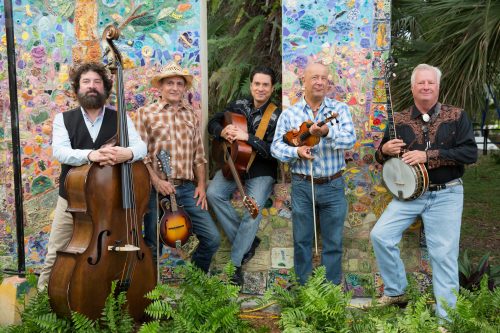
Before the pandemic, the concert was supposed to feature the full Rambling String Band, which includes (from left) Chris DeAngelis, Sean Edelson, Matthew Sabatella, Jack Stamates and Lynn Griffith. (Photo courtesy of Allison Langer)
It would be logical to guess that Sabatella enjoyed studying American history in high school, but that couldn’t be further from the truth.
“No, I definitely did not,” he says, with a laugh. “I didn’t connect at all when I was in the history classes. I wasn’t relating it to actual human beings. It would focus on maybe the presidents and laws and whatnot, but there wasn’t a lot of emphasis on what actual people were going through. And that’s where the music really changed everything – coming to hear and understand people through their music is really when the switch flipped. And that’s why, for me, my performances have almost always also talked about the history of the songs and the history of the people, because I think that’s an important aspect to understanding and appreciating the music.”
Sabatella and the Rambling String Band have released three albums full of songs with familiar titles – “Home on the Range,” “I’ve Been Working on the Railroad,” “Skip to My Lou,” “Oh Susanna!” – and obscure ones such as “Sweet Betsy From Pike,” “Once More a-Lumb-ring Go” and “Crawdad Song.”
Some of the songs are hundreds of years old.
“A lot of them, from the 1700s and 1800s, were passed down orally,” Sabatella says. “Many of them were published in sheet music at some point in the 1800s, and many of them were recorded for the first time in the 1920s. So sometimes I learned them from recordings, sometimes I learned them from old folk song books … I’ve been doing a lot of traveling and studying with musicians in the Appalachians, so I’ve had a chance to learn a lot of songs from older-generation musicians who learned them just through their culture and through their family and community history.”
Sabatella’s interest in this subject grew to the point that he went back to school, earning a Master of Arts in History at Florida International University in 2015. Today, he’s doing much more than merely talking about the history of American folk music.
“I’ve recently started a nonprofit organization, Ballad of America, that’s really about helping not just the teachers and classrooms, but to spread that story of America’s music and the United States through music,” he says. “We just put out a document, ‘The Story of the United States in 12 Songs,’ that’s a free PDF, and we’re just trying to get it out there for anybody, including teachers and home-school families, as a way to make history more real and relevant to people.”
One of the stated purposes of Ballad of America is to “preserve” the music. Sabatella further clarifies: “I don’t think they’ll ever be ‘lost,’ per se. [The songs] are all there on record in various archives and books and recordings. It’s just preserving their presence in society and American life, and kind of keeping them relevant, so that they’re not just collecting dust.”
What: The Rhythm Foundation presents Matthew Sabatella via livestream
SMDCAC Sessions presents a ‘virtual cabaret’ of local music
Written By Mike Hamersly May 12, 2020 at 9:22 PM
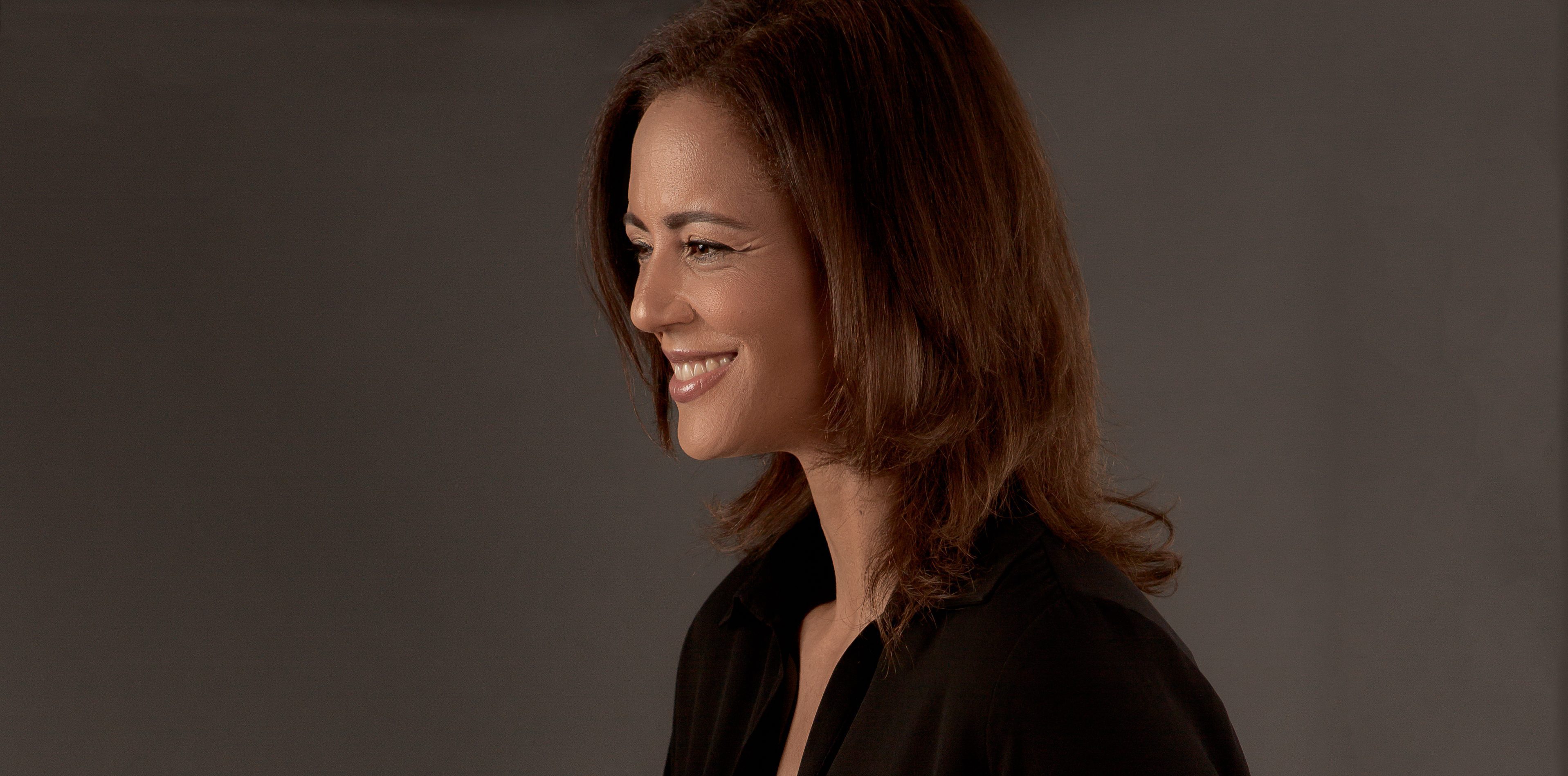
Nicole Henry is scheduled to perform as part of SMDCAC Sessions. (Photo courtesy of Leesa Richards)
No matter how dire the circumstances or challenging the obstacles may be, artists always find a way to express themselves.
The latest example in South Florida: the SMDCAC Sessions, a weekly online presentation of short videos by local performers that kicks off at 7 p.m. May 14 at Facebook.com/SMDCAC – and will continue indefinitely, until life regains something close to normalcy.
Billed as a “virtual cabaret,” SMDCAC Sessions aims to support artists “financially, emotionally and creatively” during the coronavirus pandemic, as well as to keep alive the relationship between them and their followers. It’s the brainchild of Eric Fliss, managing director of the South Miami-Dade Cultural Arts Center in Cutler Bay, although he won’t take credit for the concept.
“I’d love to say it’s an original thought, but it’s not,” he says, with a laugh. “I belong to a very large consortium of presenters, and we were talking about things we can do to keep our audience engaged. We have a mandate to provide opportunities for our local artists and also to reach our audiences. We know our local artists are really having a hard time, and we really wanted to do something to make sure they are taken care of.”
The performers will receive a modest fee for their three- to five-minute videos, plus viewers will be encouraged to donate.
“We really can’t monetize it the same way, but most of the artists have some form of pay app,” Fliss says. “And not only can we guarantee them money, but we can also put them on the platform and promote basically a virtual tip jar.”
The performances will be mostly musical, but they are mixed disciplines, featuring contemporary ballet, flamenco, electronic dance music, jazz and blues. And all will be recognizable to SMDCAC patrons.
“I chose artists that we actually have a relationship with,” Fliss says. “We see close to 100,000 people come through our doors each year, and we have a very robust mailing list, and so we’re not asking people to tune in to an artist they don’t even know, but an artist that they’ve actually seen and enjoyed at our center.”
The first performance will be by the ballet company Dimensions Dance Theatre of Miami, followed in upcoming weeks by Latin Grammy-nominated DJ Mr. Pauer, blues singer and guitarist Albert Castiglia and the dance company Siempre Flamenco.
Other confirmed performers include Aaron Lebos, Flamenco Puro, Wendy Pedersen and Jim Gasior, Martin Bejerano and Nicole Henry.
Nicole Henry attended the University of Miami in the mid-1990s and today resides in Miami. Check out more video interviews of Henry at Inspicio.fiu.edu. (Video courtesy of Inspicio)
Henry – a singer whose versatile, powerful voice can tackle everything from jazz, blues, gospel, R&B and the American Songbook – has performed twice at SMDCAC, and was looking forward to a third concert before the pandemic hit.
“I was scheduled to do their main room with a new show that I have in August, but of course we’ve postponed that for now. But they did invite me to come do one of these specials, which I think is so brilliant, and I really appreciate the way Eric and the team are doing it,” says Henry, who grew up in Philadelphia and attended the University of Miami in the mid-1990s.
She has recorded five albums, so choosing material for her video is no easy task.
“There’s not a lot of time, but I might squeeze two songs in,” she says, with a laugh. “I have a feeling I’ll probably do a song from the show I had booked [at SMDCAC], which is called, ‘I Wanna Dance with Somebody,’ and it’s a tribute to the music of Whitney Houston, one of the best voices that ever graced the planet. And then I might do a jazz song from one of my albums.”
Henry was dubbed in 2012 by the Huffington Post as “this generation’s First Lady of Jazz,” but she’s reluctant to put a label on her musical style or sound.
“It’s really tough to classify it with a genre, because I really just like to inspire people with music, and I have found that through jazz, and I’ve found it through what people might call gospel or inspirational music when I sing at churches,” she says. “And I love soul and R&B, and that’s what I was raised on. So I would really not classify my genre, because it’s too confining for me as an artist. I just do what feels good and allows me to inspire, and spread hope and love and joy – as trite as that might sound [laughs].
“And whenever I open my mouth to sing, I try not to sound like anybody else – I want to sound like Nicole talking to a girlfriend and just telling a story.”
Eric Fliss, managing director of the South Miami-Dade Cultural Arts Center, says: “We know our local artists are really having a hard time, and we really wanted to do something to make sure they are taken care of.” (Photo courtesy of Joshua Prezant)
However you want to describe Henry’s approach, it’s working. In 2013, she beat out Tony Bennett, George Benson, Terence Blanchard and Jeffrey Osborne for the Soul Train Music Award for “Best Traditional Jazz Performance.”
“It really does blow my mind, particularly because it was the fans’ choice. The fact that people said, ‘This is what we decide to be the jazz voice of today,’” she says. “That is such a ridiculous compliment. I need to remind myself of that every day.”
As the quarantine drags on, Henry says she’s keeping busy with activities such as taking online acting classes, reading plays and making videos. But all of that can’t compare with working side by side with other artists and interacting with her fans.
“I just miss people, seeing faces,” she says. “We were one day away from our opening night in this new musical at the Colony Theatre called ‘A Wonderful World.’ So I miss just continuing my journey as an entertainer and bringing inspiration to people and seeing their faces after the show. I miss the cast and the directors and that whole energy of having a family of musicians and actors and singers.”
What: SMDCAC Sessions
When: Kicks off 7 p.m. May 14 and runs every Thursday
UM’s Frost School goes ‘Live at Home in the City Beautiful’
Written By Fernando Gonzalez May 8, 2020 at 12:30 PM
Jennifer Grim, associate professor of flute at the University of Miami Frost School of Music, is scheduled to perform in May. (Photo courtesy of Lucky Wenzel)
The University of Miami’s Frost School of Music and the City of Coral Gables have joined forces to provide weekly moments of musical relief.
The “Live at Home in the City Beautiful” virtual concert series features Frost faculty, students and alumni in performance every Monday and Wednesday at 6 p.m. on Coral Gables’ Instagram channel, @cityofcoralgables.
The mini-concerts, which will continue until the end of May, are part of UM’s efforts to fill the gap in actual live performances. The school’s other online programs include: Friday Nights @ Frost, a series featuring Frost Music Live concerts from this past season; and #FrostiesPerformForU, with at-home performances posted by students, faculty and alumni on the school’s Instagram and Facebook accounts. (There’s a YouTube Channel compilation at tinyurl.com/FrostiesPlaylist.)
“Music unites and heals,” said Patricia San Pedro, executive director of marketing and communications at the Frost School of Music. “If you have any doubt, all you have to do is look at the videos coming out of Italy and Spain, of people playing their instruments and singing from their balconies. Such beauty amid such sadness and uncertainty.
The “Live at Home in the City Beautiful” virtual concert series will feature student Melissa Martinez. (Photo courtesy of Image1st Miami)
“So, at the Frost School of Music, we wanted to do something that would offer the healing and joy and hope in music, while at the same time giving our students, alumni and faculty a stage where they could share their art until the curtain rises again.”
The collaboration with the City of Coral Gables also underscores a confluence of interests between business and music.
For attracting new businesses, “the things that we offer as a city, a good quality of life, arts and culture and all the amenities, are most important,” said Belkys Perez, assistant director of the Coral Gables’ Economic Development Department. “This city has five live theaters that cater to different audiences and numerous concert halls as well. So when coronavirus hit, we wanted to step in and do something for our community. UM was a natural partner, so I immediately reached out to the dean of the Frost School of Music.”
The series started just a few days later, premiering April 1.
The programs have showcased classical music, Broadway and jazz, and provided “an opportunity for our residents, for the community, in general, to sit back and catch their breath away from all of the craziness happening around us,” Perez said. “Our goal is for you to sit back with a smile and maybe expose yourself to some music that you might not have thought about in the past.”
The virtual concert series gives students such as Alexandra Brandenburg a stage where they can share their art. (Photo courtesy of Mackenzie Karbon)
Among the scheduled performers this month are: jazz pianist and musicologist David Ake, associate professor of flute Jennifer Grim, and Frost students Melissa Martinez and Alexandra Skye Brandenburg.
For both established musicians and students at UM, the virtual concerts offer an outlet at a time of social distancing, as well as a chance to explore the future of live performances long after the pandemic fades away.
“One of the blessings in all this for our students has been that they’re learning a lot of new skills,” San Pedro said. “They’re having to be a lot more innovative and learn more about technology, and that’s going to help them. That’s going to enhance their learning and their career.”
Still, weeks without a chance to perform, and no end in sight, pose a serious challenge.
There are “students and alumni and faculty for whom this is their life, this is their passion,” San Pedro said. “Performing live was taken away from them just like that, in one fell swoop. This [series] was a way to give them a stage. We hope that this situation is going to create an even greater appreciation of live music when we go back to the new normal.”
What: “Live at Home in the City Beautiful” virtual concert series
When: 6-6:15 p.m. Mondays and Wednesdays, through the end of May
Grammy-nominated jazz musician Raul Midón has a message for you
Written By Mike Hamersly April 27, 2020 at 3:16 PM
Grammy-nominated jazz singer and guitarist Raul Midón was recognized as the University of Miami Frost School of Music’s Alumnus of the Year in 2019. (Photo courtesy of Samuel Prather)
Fed up with being cooped up in your home? Raul Midón has a message for you that might change your perspective: Embrace it and go with the flow.
“This is a time for us to slow down and reflect,” says the Grammy-nominated jazz singer and guitarist, who graduated from the University of Miami’s Frost School of Music in 1990. “We’re always complaining about not having enough time. Well, now we’ve got time.”
Midón is no stranger to overcoming obstacles. Born in New Mexico in 1966, he was a premature baby, and he and twin brother Marco lost their sight permanently after incubator complications. Midón’s parents never let his blindness limit his goals and dreams.
“From very young, I was told that I could do anything I wanted to do. And it’s the same way I think about this [coronavirus] situation,” says Midón, who today lives in Columbia, Md., just outside Baltimore. “As much as it sucks for us, especially those of us who are performers, there is no situation that doesn’t present some kind of an opportunity. The only question is, are you open to it?”
Midón will join the ranks of musicians performing via livestream. He will appear at 5:15 p.m. May 2 through Bandsintown.com.
Midón’s list of musical accomplishments is extraordinary. He released his 11th studio album, “The Mirror,” on March 13, which continues the artist’s dedication to eclecticism by branching beyond jazz into folk, blues, rock, reggae, R&B, funk, soul, Latin pop, acoustic ballads and even spoken-word. His 2018 album, “If You Really Want,” features the Dutch Metropole Orchestra and conductor Vince Mendoza.
He has collaborated with a who’s-who list of musical legends, including Herbie Hancock, Dianne Reeves, Jason Mraz, Stevie Wonder, DJ “Little Louie” Vega, Snoop Dogg and the late, great Bill Withers.
And he was recognized as the Frost School of Music’s Alumnus of the Year in 2019. Midón has very fond memories of his time in Coral Gables.
“I’ve always looked on that period as a good period,” he says. “I really enjoyed being in school, and I learned a lot and met a lot of people. What they talk about, the college experience – now, they’re talking about replacing that, but you’re never gonna replace that online. Because what I got wasn’t just information but networking, and some of those people I still work with today.”
Midón is proud of his collaborations, especially his version of Stevie Wonder’s hit, “I Just Called to Say I Love You,” on Herbie Hancock’s album “Possibilities,” and the sultry Spanish ballad, “Mi Amigo Cubano,” with Bill Withers.
“My goodness, I got to write with Bill Withers. Not a whole lot of people did that,” he says.
But it’s Midón’s 2017 album, “Bad Ass and Blind,” that truly captures the essence of this fast-fingered, vocally elastic artist. Its musicianship is virtuosic as always, but its title is slightly tongue-in-cheek and reveals a chip that’s been on Midón’s shoulder for years.
Raul Midón will be performing via livestream at 5:15 p.m. May 2. (Photo courtesy of Blair Allen)
“The title came out of a little bit of frustration with answering questions in interviews. People would always ask me the same things about working with Stevie Wonder and stuff. And that’s cool, but I wanted to bring attention to the fact that I engineered and produced my last five albums myself, as a blind person. So the title is a perfect set-up for that,” he says.
Doing the production himself is no small task for Midón, as he requires customized software.
“I use a digital audio workstation like a lot of other people, but it has scripts that are written to re-map some of the functions so that they’re all keyboard commands,” he says. “The things that you would do with a mouse normally, you do with a key. Now, given the complexity of a digital audio workstation, it’s a hell of a lot of work to make everything that you need keyboard-triggered.”
The title track from “Bad Ass and Blind” contains an unexpected passage that is truly mind-boggling. While executing a funky chord progression on guitar, Midón breaks off into a 30-second rap that is as lyrically clever as it is rhythmically intricate. And being able to perform both at the same time is impressive. So how does he do it?
“It always starts in the studio, and then I learn how to do it live,” he says, with a laugh. “When I originally did the song, I did them separately, and then I just practiced until I could do it live. It starts with a concept, and then sometimes I have to catch up a little bit.”
Rap isn’t Midón’s only surprising vocal talent. He’s also quite gifted at “mouth trumpet,” a skill he discovered and developed while in college, and which he uses to harmonize with the notes he plays on the guitar.
“When I first went to the University of Miami, there was a trumpet player in Miami named Pete Minger. He was on the scene in ’84, ’85, ’86, and he was a member of the [Count] Basie band and he had great technique, and he played a lot of flugelhorn,” Midón recalls. “That sound was very attractive to me, because it’s a slightly warmer sound than a trumpet. I was just starting to study jazz, and I just basically started to take all of the things that I learned that I was practicing on guitar, and practiced them vocally, and the trumpet was kind of a way to get that articulation. I wasn’t [scatting], you know, ‘Scoo-bla-doo-ba-dee-n’day!’ Which is cool, but I just wanted to do something else.
“All of that is sort of musical geekdom that I’ve always been interested in, just taking vocal lines that are normally considered not singable, or very difficult to sing, and singing them.”
Check out Midón singing and playing guitar in his numerous videos on YouTube (especially his live NPR Music Tiny Desk Concert). You also can tune in to his upcoming livestream at 5:15 p.m. May 2 through Bandsintown.com.
Written By Mike Hamersly April 21, 2020 at 2:14 PM
Ricky Valido’s songs, including “Swamp Stomp,” “I Love Livin’” and “69 Camaro,” touch upon typical country-music themes with an authenticity that belies his age and upbringing. (Photo courtesy of Ricky Valido)
Having artists livestream their performances is certainly nothing new these days. But can it be done as an open mic night?
The Seminole Theatre is taking the open mic concept online on April 30, with an intriguing mix of known and unknown acts teaming up for an eclectic and unpredictable two-hour tour through music, spoken-word and other genres. The show can be seen free of charge on its website, Seminoletheatre.org.
The popular Homestead venue will kick off the event at 6:30 p.m., with two thriving local acts: country music singer-songwriter Ricky Valido with his band, the Hialeah Hillbillies, and blues rocker AJ Gaytan and his band, Southern Stampede.
Each is expected to perform 15-minute sets, and then the rest of the evening will be open to anyone who registers and is accepted, until capacity is reached. Most performers will get about five minutes to show their stuff.
“We’ve mapped it out to where we can take 15 to 20 slots, depending on how many registrations we are getting and the type of artistry that they have,” says Katherine Rubio, executive director of Seminole Theatre. “I’ll be moderating and, if people have questions, I’ll direct them to who is on the livestream with us and make sure we work that out.”
The driving force behind the night is not only providing a creative outlet for artists, but also promoting and embracing unity.
“About two weeks in from us being closed, we kind of realized that what was happening around us was going to be our new normal for a while,” Rubio says. “One of the most important things for the theater is to always be connected with our community and our patrons. And because of the situation, digital is the only way we can do it. We can’t give them the programming that we had planned for the remainder of our season, but what we can do is showcase some of the incredible talent that we have in this town.”
One of the main draws is Valido, who at age 27 is an old soul, heavily influenced by country legends such as Johnny Cash and Waylon Jennings. While his peers – and siblings – might prefer trendy styles like reggaeton, rap and hip-hop, Valido is drawn to the storytelling and down-home style of country music.
“I was born and raised in a Cuban-American household, so I listened to pretty much everything,” he says. “But the lyrics themselves attracted me to [country music], because my grandfather listened to it in Cuba. He had all the records, and then he brought some of those records here. When I was younger, I didn’t pay much attention to it because it was country music and it might not be as cool as I think it is. But once I started to listen to it more, I started to really dive in deep.
“Even artists like Bob Dylan and John Prine, though they’re not 100 percent country, they influenced a lot of country writers, and they wrote a lot of country songs. I have a lot of respect for them.”
That passion shows in Valido’s music. Songs such as “Swamp Stomp,” “I Love Livin’,” “69 Camaro,” and the sultry new blues jam, “Hello Darkness,” touch upon typical country-music themes with an authenticity that belies his age and upbringing.
But then again, Valido’s bio touts a musical style that “transcends genres and generations alike.”
“That’s my goal,” Valido says. “I hope that my music attracts not only the country music listener, but also other people that might not normally listen to this genre. I hope my music might reach them somehow.”
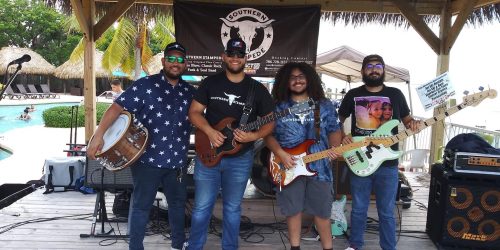
From left, Chris Diaz, Willy William Perez, AJ Gaytan and Anthony Tony Amador are scheduled to perform on April 30. (Photo courtesy of AJ Gaytan)
Through the years, Valido has opened for superstars including Thomas Rhett, Alan Jackson, Brad Paisley, Rascal Flatts, Aaron Lewis, Luke Bryan and even the classic rock band Heart. But the time he was most star-struck came at a random moment.
“When I went to Nashville to record a project in November 2018, that was the same time the Academy of Country Music Awards were happening there,” Valido recalls. “And there’s an artist named Sturgill Simpson, who I admire and love and am a huge fan of, and he was actually busking outside the ACM Awards with his guitar, and he had a Grammy sitting inside his guitar case. And he was talking to and interacting with fans, and that was pretty cool. I was not expecting it, because I was just walking around downtown. It took me a while to approach him, but I got to talk to him and he was just a down-to-earth guy.”
There obviously won’t be an open guitar case to throw change in, but viewers will have the opportunity to donate money during Open Mic Night.
“The entertainment industry, the hospitality industry – pretty much everyone across every field is struggling right now,” Rubio says. “We’re doing [the show] via Zoom, which is now everyone’s favorite app, and we have the capacity to livestream directly to Facebook, and we’ll have donation options.
“The beautiful thing about this is, the donations are for the continued support of the theater, but it’s also for the participating artists. And depending on how successful this is, maybe not only for our two headlining artists, but also for some of the artists that are showcasing their talents.”
The other headliners, Gaytan, a soulful blues rocker from Homestead, and Southern Stampede are known for their originals (you’ll hear their new single, “Ghost”), as well as for classic-rock covers such as The Allman Brothers Band’s “Whipping Post” and Joe Cocker’s growling version of The Beatles’ “With a Little Help from My Friends.”
About slot security: If you’re an artist who has already been awarded time on Open Mic Night, your spot is guaranteed, no matter how many incredible performers might apply afterward. According to Rubio, no one will be bumped.
And if you apply too late for the April 30 show, don’t worry. Your time will come.
“If we get to the point where we are over the capacity for our slots, what we will do is probably do a second session,” Rubio says. “It’s only a bigger opportunity for us to showcase even more people and maybe find some different headliners from town, and then we can do a different series. We’ll definitely find a way to accommodate everyone.”
Please don’t stop the music: How South Florida musicians are getting by during the crisis
Written By Mike Hamersly April 8, 2020 at 6:43 PM
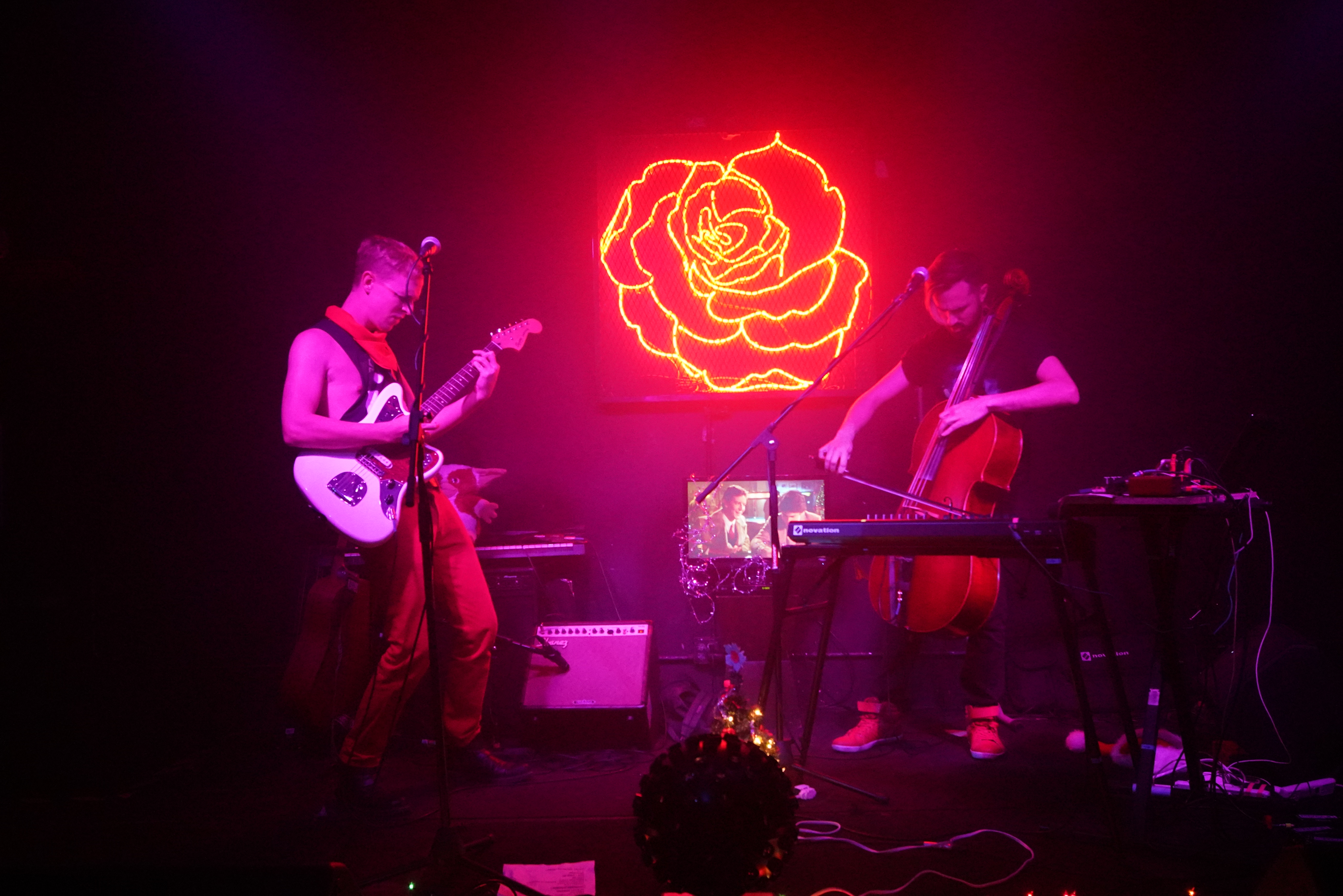
Singer-songwriter-guitarist Jay Thomas and cellist-keyboardist Oscar Quesada will be performing April 16 as part of The Rhythm Foundation concerts at the Bandshell. (Photo courtesy of @danny_beard)
“Please don’t stop the music,” implores the chart-topping, Grammy-nominated, 2007 dance-pop hit by Rihanna.
Don’t worry, South Florida, our local musicians have no intention of doing so.
Even as the coronavirus crisis has forced an indefinite, global shutdown of clubs, arenas and concert halls, performers from every genre – pop, rock, jazz, Latin, R&B, electronica and even classical and opera – are finding ways to bring intricate melodies, inspired harmonies and funky beats to their fans.
Virtual entertainment has become our new reality, indefinitely, and for the most part, it’s free of charge.
Some examples: The New World Symphony is streaming previous concerts and master classes, with new commentary by artistic director Michael Tilson Thomas, plus live broadcasts from NWS Fellows from their own homes. The University of Miami’s Frost School of Music is offering “Live at Home in the City Beautiful” concerts by students, faculty and alumni on the city of Coral Gables’ Instagram page.
The Florida Grand Opera has launched its “FGO GO” Virtual Opera Experience, which shares performances and interviews. Arts Garage is rolling out “From Our HeARTS to Your Home,” a virtual series that includes live music performances, classes, poetry, comedy and more.
The Adrienne Arsht Center for the Performing Arts aims to inspire creativity with “Arsht@Home,” featuring educational and entertaining content designed to keep the community connected. The Rhythm Foundation is continuing to present live concerts from the North Beach Bandshell on its Facebook page, only with no fans in attendance.
And countless deejays are spinning dance sets from their homes for all to see.
“When people are doing their live feeds, it’s a good outlet not only for the artist, but also gives some semblance of solace for the fan base,” says Carmel Ophir, who for the past 30 years has been a vital and influential figure in the Miami music scene, as a deejay, club owner, nightlife visionary and enthusiastic fan. “They actually see someone deejaying in their own home, in their bedroom. [British deejay] John Digweed is a good friend of mine, and he’s done three or four Saturday night sets – he calls it ‘Live From the Bunker.’ I think they are very positive outlets for both sides.”
Carmel Ophir has been a vital and influential figure in the Miami music scene for the past 30 years. (Photo courtesy of Carmel Ophir)
It’s both sobering and compelling to think that these types of online celebrations were unimaginable even 20 years ago.
“We’re very fortunate that we have the connectivity of the internet,” says Ophir, who is perhaps best-known for his late, great club, Vagabond, which he closed in 2014. “We can talk to our loved ones, our family members, our friends, globally, and check in and see their faces, their expressions, how gray everybody’s getting [laughs]. Because imagine if this were a lockdown without cable or internet or Netflix and binge-watching – you’d have the stir-craziness. It’s a distraction, so it somewhat solves the problem of people going out in the street and causing trouble.”
Singer-songwriter and guitarist Jay Thomas will be performing as part of The Rhythm Foundation concerts at the Bandshell. Along with partner Oscar Quesada on cello and keyboards, he will take the stage at 8 p.m. April 16.
“We are going to do a mixture, songs that I think are speaking to the moment, but also hopefully having a little bit of fun,” says Thomas. “It’s been a heavy kind of quest – I mean, I make it heavy on myself. We could just go up there and play like normal-normal, but I want to address the situation and sing to it, and be activated. It seems to be a call to a lot of artists, and it’s kind of needed right now. I feel even as a listener that I want to hear artists speak about what they’re going through, and see what they’re creating in these circumstances, you know?”
The duo’s body of work is melodically rich, cutting-edge and emotional, ranging from indie-pop, folk, rock and electronic, all of which will be represented at the show.
Thomas and Quesada are grateful to still be getting paid by The Rhythm Foundation for their show, but similar gigs are obviously far from a regular thing, and the near future for artists is cloudy at best.
“I feel relatively safe right now, but as this quarantine elongates, I’m going to be looking at what other musicians do, in terms of streaming shows, or trying to increase streaming music plays,” says Thomas. “This has only just begun, it seems, so as a community, we’ll be figuring out how to best keep afloat as artists together.”
Shelly Berg, who is dean of UM’s Frost School of Music, thinks people will be “more hungry to experience music live again” when the pandemic is over. (Photo courtesy of Daniel Azoulay)
Shelly Berg, who is dean of UM’s Frost School of Music and a Grammy-nominated pianist himself, says the university has to be careful how it spends its money right now.
“We’re not under a severe financial hardship, but we are needing to cut back on expenses, so that means we risk creating a hardship because we’re not bringing some artists in who were counting on that money to come and perform for us,” he says. “I worry about that a lot, but there are organizations that help them, [such as] Musicians Foundation and MusiCares and others. Those of us who are more fortunate right now, I hope they’re all helping those organizations help musicians.”
Berg mentions a former student of his, pianist Emmet Cohen, as another example of how musicians can survive.
“We live in a world where your best career strategy is to curate and maintain an audience that will be loyal to you,” Berg says. “[Cohen] is giving a concert every Monday night from his apartment, and I went online to see the concert, and there were a thousand people watching him. And they were all texting in asking, ‘How do we donate?’
“And I thought that if each viewer donated an average of $5, then he made $5,000 last night.”
Another way to get by is to keep creating. Thomas and Quesada are self-quarantining with Thomas’ sister, Zjolie, a singer who in February released the freestyle-esque single “Miami Girlz.” The three are working on a three-song EP inspired by the coronavirus crisis.
“We’re working on music, so luckily we’ve got something on our hands to do,” Thomas says. “The challenge is to release this music fast, so that the lyrics are right here, right now, but also to make sure we put enough work into the music itself, so that it sounds good.”
Artists performing shows with no visible fans wasn’t uncommon before the pandemic, but having safety be the reason is something entirely new.
“We’ve done closed-studio performances before, so it’s not gonna be completely alien,” Thomas says. “But the circumstances are gonna be what makes it feel different – nobody is allowed to come. So in a way it’ll be similar to playing on the radio, that kind of stuff, where you know people are out there listening, but I think it’s more intense than that. People are listening, and that’s the only thing they’re able to do – it’s a little bit like ‘War of the Worlds’ on the radio, you know?”
While we wait for a return to normalcy, Berg has a message for art-lovers everywhere.
“I hope people become much more attuned to how much they need music during this pandemic, because it’s going to be one of the things that they really turn to, and they’re going to be more hungry to experience music live again when it’s over,” he says. “I know the first time I’m back out in public playing will be a great joy for me.”





Recent Comments