Blog Article Category: Dance
The Folkloric Traditions of Chile Bring Vivid Color To Miami Beach
Written By Orlando Taquechel
September 29, 2025 at 9:45 PM
The Antumapu Folkloric Ballet of the University of Chile performs a free program at the Miami Beach Bandshell on Friday, Oct. 3, bringing traditions of its country to South Florida. (Photo courtesy of FUNDarte)
Chile’s Antumapu Folkloric Ballet will come to Miami for the first time in its more than 50-year history, presenting a program of emblematic folk dances at the Miami Beach Bandshell.
The company, dedicated exclusively to traditional folk dances of its country, performs at 8 p.m. Friday, Oct. 3 in a free performance.
Founded in 1971 at the University of Chile by Oscar Ramírez, who has been its artistic director since its inception, the presentation is a collaboration between the company, FUNDarte, and the Rhythm Foundation as part of the “Away from Home” series at the Miami-Dade County Auditorium. The performance is also produced with support from the Consulate of Chile in Miami.

One dance depicts a competition between the guaso (a Chilean countryman and skilled horseman) and a very characteristic figure known as the gañán, the farm worker. (Photo courtesy of FUNDarte)
“The show we are bringing to Miami is a synthesis that I call ‘Chiliche (People of Chile),’ where we take a journey from north to south, showcasing the geography of our country,” said Ramírez.
Ramírez, the company’s choreographer, said that his “Chilean peasant background” afforded him firsthand experiences with the folklore, specifically that of central Chile.
Growing up in the Colchagua region in the central part of the country — “a region characterized by its rural culture, a productive world where people are primarily engaged in livestock farming and working the land” — it was those experiences that he has incorporated into what he called his “choreographic vision.”
“Chiliche (People of Chile)” originally premiere in 1982. With this work, he seeks to share a message of unity, “because no matter what region you come from, you are Chilean,” said Ramírez, whose path to choreography was not through formal dance training, but rather through folklore.
He explained that at the University of Chile in the school’s Institute of Physical Education, there is a specialization in folklore, which includes musical and artistic groups. Ramírez himself graduated with a degree from the university in Physical Education.

“It’s essential that the audience doesn’t base their appreciation solely on the beauty of the costumes or the lighting effects,” says Oscar Ramírez, founder, choreographer, and artistic director of the Antumapu Folkloric Ballet of the University of Chile. (Photo by Lucas Ramírez)
Antumapu, which means “land of the sun,” is one of these artistic groups, comprising students from various majors at the university, including dance.
Ramírez said that one of the most important aspects of his choreography is to present the culture of his country.
“I use the foundation and the roots of the tradition without stylizing it. Rather, I try to be as careful as possible in my interpretation of the folk culture, so as not to distort it and to stay true to that essence which is fundamental for us. I don’t want it to be affected by my own creative interpretations, but rather that the choreography remains very closely aligned with what the folklore itself offers as material.”
The show, which features 16 dancers, draws on a range of cultural traditions, including sikura, a dance from northern Chile; huayno, the characteristic rhythm of many dances from the northern Chilean Andes; kai-kai, a Rapa Nui rope game traditionally made from horsehair; and rucatún, a Mapuche ceremony that celebrates the construction of a new home.
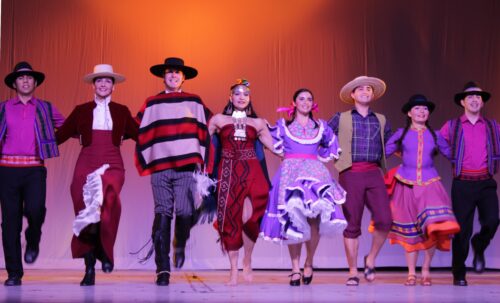
Founded in 1971 and based at the University of Chile, the ensemble is dedicated to preserving and sharing the rich cultural heritage of Chile’s diverse regions. (Photo courtesy of FUNDarte)
While Ramírez acknowledged that the costumes and staging are full of color and wonderful effects, he hopes that South Florida audiences dive deep into “Chiliche.”
“For us,” he stated with genuine anticipation, “it is essential that the audience doesn’t focus solely on the beauty of the costumes or the lighting effects, but that they truly grasp, through the expression of each region we represent, the true essence of what it means to be Chilean.”
WHAT: “Chiliche, People of Chile” by the Antumapu Folk Ballet of the University of Chile
WHEN: 8 p.m., Friday, Oct. 3.
WHERE: Miami Beach Bandshell, 7275 Collins Ave., Miami Beach
COST: Free (RSVP required) at www.eventbrite.com/o/rhythm-foundation
INFORMATION: fundarte.us
ArtburstMiami.com is a nonprofit media source for the arts featuring fresh and original stories by writers dedicated to theater, dance, visual arts, film, music, and more. Don’t miss a story at www.artburstmiami.com.
No posts found
A Look At The Season of Dance
Written By Orlando Taquechel
September 26, 2025 at 5:19 PM
Siudy Garrido and her dancers, featured here in “Bailaora: Mis Pies Son Mi Voz,” will perform at the Arsht Center (Photo by Migdalia Salazar/courtesy by Siudy Flamenco).
For the second consecutive year, the uncertainty caused by the announcement of budget cuts is the underlying theme of Miami’s dance season programming.
Still, interesting creative proposals abound, and this is a brief—not exhaustive, due to time and space constraints—guide for the 2025-26 period, based on the information currently available on local and visiting companies.
LOCAL COMPANIES
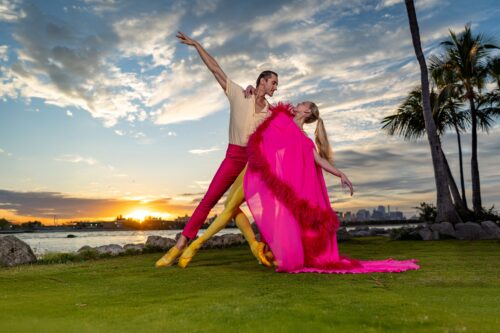
Stanislav Olshanskyi and Dawn Atkins, principal dancers with Miami City Ballet (MCB), in a promotional photo for the Spring Mix program of the company’s 40th anniversary season. (Photo by Christian Lockerman and The Warhol Creative/courtesy of MCB).
Miami City Ballet (MCB)
“Peck: Miami in Motion,” Oct. 17-19. A program featuring three choreographies by Justin Peck: “Year of the Rabbit,” “Chutes and Ladders,” and “Heatscape.”
George Balanchine’s “The Nutcracker,” Dec. 12-28. Performances with live orchestra (21 total) and an immersive pre-show experience created in collaboration with MAD Arts, Dania Beach.
“Into the Magic City,” Feb. 20-22, 2026. Featuring a revival of George Balanchine’s “Serenade” and a world premiere by Alexei Ratmansky. Live orchestra.
“Jewels,” March 27-29. A Balanchine masterpiece and a crowd favorite.
“Carmen,” March 26-28. The return of Annabelle López Ochoa’s version, and, for the first time, with a live orchestra.
All performances at the Arsht Center’s Ziff Ballet Opera House, 1300 Biscayne Blvd., Miami
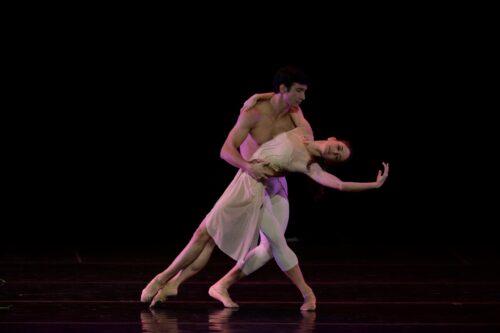
Emily Bromberg and Ariel Morilla, dancers with Dimensions Dance Theatre of Miami (DDTM), in “Apollo & Daphne,” choreographed by Ben Needham-Wood. (Photo by Simon Soong/courtesy by DDTM).
Dimensions Dance Theatre of Miami (DDTM)
Fall Program, Nov. 8 (Moss Center, 10950 SW 211 St., Cutler Bay), with three world premieres, including one by Yanis Eric Pikieris.
Ballet in the Gardens, Jan. 31, 2026 (Pinecrest Gardens, 1000 Red Road, Pinecrest), featuring works that complement the tropical landscape.
Love in the Air, Feb. 14 (Sanctuary of the Arts, 410 Andalusia Ave., Coral Gables), featuring DDTM’s most romantic repertoire and the premiere of “Fases” by Rafael Ruiz del Vizo.
Salon Series, Mar. 6-8 (Moss Center, 10950 SW 211 St., Cutler Bay). An intimate look at the creative process, with the choreographers developing works for DDTM.
Latin Night. Apr. 18 (Sanctuary of the Arts, 410 Andalusia Ave., Coral Gables), featuring ballets inspired by Latin culture, including the premiere of “Till Death Do Us Part” by Melissa Verdecia and excerpts from “Tangos del Plata” by Leonardo Reale.
Summer Dances and 2 Pianos, Jul. 11 (Moss Center, 10950 SW 211 St., Cutler Bay). A DDTM collaboration with Dranoff 2 Piano Fusion, featuring the premiere of “There, Never There” by DaYoung Jung, and live musical accompaniment by piano duo Stephanie & Saar.
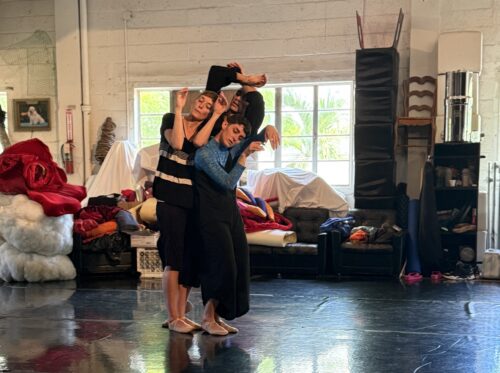
From left to right: Amy Trieger, Isaiah González, and Meredith Barton, dancers with brigid baker wholeproject, at the 6th Street Dance Studio during a rehearsal for “GULF,” Brigid Baker’s latest work. (Photo by Salvador Gómez).
Brigid Baker Wholeproject
Fall Performance, in November (6th Street Dance Studio, 1155 SW 6th St., Miami). Forced to dismantle the studio due to the building’s renovation, Brigid Baker plans to present one last work there before Thanksgiving as a farewell.
Arts Ballet Theatre of Florida (ABTF)
“Firebird,” Oct. 11. With a program that includes “Glinka Suite Fantastique,” “Talisman Pas de Deux,” and “Double Quaver” by Vicente Nebrada.
“The Nutcracker,” Dec. 11–14. Including a sensory-inclusive performance on Sunday, Dec. 14, at 11 a.m., designed especially for children and adults with sensory sensitivities.
“Dr. Ouch!,” Mar. 7–8, 2026. A presentation of its Family Series.
Spring Gala, May 3. Featuring Yanis Pikieris’s “Danzón,” “La Traviata Pas de Deux,” “Shostakovich Suites,” “Tarde en la Siesta” (by Cuban choreographer Alberto Méndez), and the premiere of “Polovtsian Dances,” a work by Maestro Vladimir Issaev for 32 dancers.
All performances at the Aventura Arts & Cultural Center, 3385 NE 188th St., Aventura
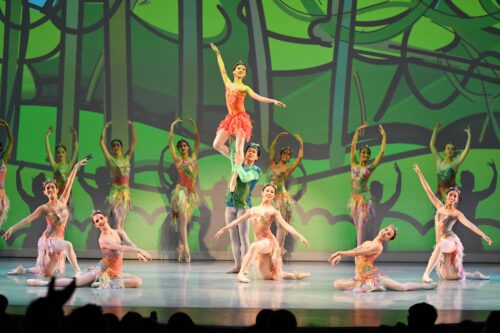
Arts Ballet Theatre of Florida (ABTF) dancers in the ballet “Dr. Ouch!” (Photo by :@Patriciasphotography/courtesy of ABTF).
Siudy Flamenco
“Alive” – Siudy Garrido 25th Anniversary Celebration Gala, Nov. 8 (Knight Concert Hall, Arsht Center).
Holiday Gala, Dec. 14 (Flamingo Theater, 905 Brickell Bay Drive, Miami).
The Creative Process, Jun. 22–27, 2026 (Carnival Studio Theater, Arsht Center). A week of intensive courses and special presentations.
Cuban Classical Ballet of Miami (CCBM)
Choreographers Showcase, Oct. 24 (Lincoln Road Mall, Miami Beach) and Oct. 25 (Lehman Theater, 11380 NW 27th Ave., Miami), celebrating Hispanic Heritage Month.
Jewels of the Russian Ballets, Feb. 21, 2026 (The Fillmore Miami Beach, 1700 Washington Ave., Miami Beach), featuring works by legendary Russian choreographer Mikhail Fokine.
Choreographers Showcase, March 27 (Lincoln Road Mall, Miami Beach) and March 28 (Lehman Theater, 11380 NW 27th Ave., Miami). A program designed to experiment and create new pieces for the company’s repertoire.
“Le Corsaire Suite,” May 23 (The Fillmore Miami Beach, 1700 Washington Ave., Miami Beach).
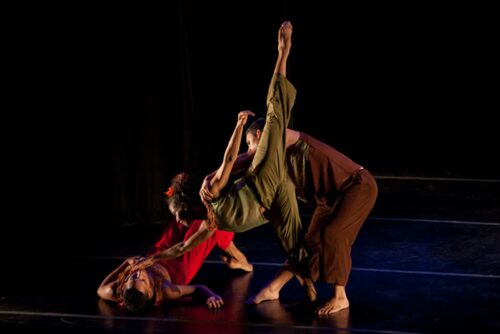
From left, Quilvio Rodriguez, Cristiane Silva, and Dariel Milan, Dance NOW! Miami dancers, in “Random Patterns of Falling Leaves,” choreographed by Hannah Baumgarten and Diego Salterini. (Photo by Jenny Abreu/courtesy of Dance NOW! Miami).
Dance NOW! Miami (DNM)
The 15th Annual Daniel Lewis Dance Sampler, Oct. 18 (New World School of the Arts, 25 NE 2nd St., Miami).
Program I, Dec. 19 (Sanctuary of the Arts, 410 Andalusia Ave., Coral Gables), with Jon Lehrer Dance Company as guest artist.
Program II, Mar. 14, 2026 (Miami Theater Center, 9806 NE 2nd Ave., Miami Shores), with a revival of “Blue Pencil.”
Program III, May 9 (Aventura Arts & Cultural Center, 3385 NE 188th St., Aventura), with the premiere of “Love-less: Dance of the Last Moho Braccatus.”
La Rosa Flamenco Ballet
Callejón Flamenco, Mar. 8, 2026 (Miami Beach Bandshell, 7275 Collins Ave., Miami Beach).
“Señorita Julia,” May 23 and 24 (The Colony Theatre, 1040 Lincoln Road, Miami Beach). An original flamenco ballet inspired by Strindberg’s “Miss Julia.”
Flamenco Night, Sep. 24 (The Miami Beach JCC, 4221 Pine Tree Drive, Miami Beach).
STYX The Company
Volume 4 Annual Fundraiser/Benefit, Nov. 2 (Black Box Media Miami, 12355 NE 13th Ave., North Miami).
“The Teller Returns,” Jun. 26 (Aventura Arts & Cultural Center, 3385 NE 188th St., Aventura), a sequel to Brianna Campbell’s play “The Teller,” premiering in 2024.
Karen Peterson & Dancers (KPD)
Forward Motion Dance Festival, May 15-17, 2026 (Sandrell Rivers Theater, 6103 NW 7th Ave., Miami). The seventh edition of the event, featuring KPD and national guest artists.
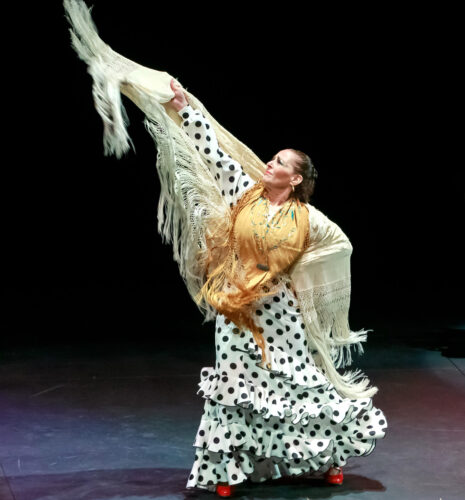
Flamenco dancer Celia Fonta, from Siempre Flamenco. (Photo by Jenny Abreu/courtesy of Siempre Flamenco).
Siempre Flamenco
12th Flamenco Sephardit, Jan. 18, 2026 (Miami Beach Bandshell, 7275 Collins Ave., Miami Beach).
20th Flamenco Cante Festival, Jul. 10-12 (Carnival Studio Theater, Arsht Center, 1300 Biscayne Blvd., Miami).
Peter London Global Dance Company (PLGDC)
“The Oneness,” Dec. 19–21 (Carnival Studio Theater, Arsht Center, 1300 Biscayne Blvd., Miami). A program featuring premieres, new productions, and Peter Gordon’s “Kaiso Bacchanal” suite.
Women’s Choreographic Voices, Mar. 28, 2026 (Sanctuary of the Arts, 410 Andalusia Ave., Coral Gables).
VISITING COMPANIES

Les Ballets Africains, Guinea’s national dance company. The Moss Center. (Photo courtesy of The Moss Center).
Presented by FUNDarte
Antumapu Folkloric Ballet from the University of Chile (Chile), Oct. 3 (Miami Beach Bandshell, 7275 Collins Ave., Miami Beach). Co-presented by Rhythm Foundation as part of Miami Beach Arts in the Parks and the Miami-Dade County Auditorium’s Away from Home series.
Rafael Ramírez (Spain) in “Crónica de un Suceso,” Nov. 1 and 2 (Aventura Arts & Cultural Center, 3385 NE 188th St., Aventura). On tour in the United States, organized by Spain Flamenco Arts. A collaboration with Aventura Arts & Cultural Center and the Miami-Dade County Auditorium’s Away from Home series.
Dennis C. Moss Cultural Arts Center, 10950 SW 211 St., Cutler Bay
Saxyn Dance Works, Oct. 3-5
Monica Bill Barnes & Company, Jan. 23-25, 2026
Les Ballets Africains (Guinea), Feb. 1
Rubberband (Canada), March 22
At the Arsht Center, 1300 Biscayne Blvd., Miami
Rennie Harris Puremovement American Street Dance Theater, Oct. 30–Nov. 1 (Carnival Studio Theater).
Flamenco Festival Miami XVII: Sara Baras (Spain), Feb. 28–March 1, 2026 (Knight Concert Hall).
AileyCamp Miami Final Performance, July 25 (Knight Concert Hall).
ArtburstMiami.com is a nonprofit media source for the arts featuring fresh and original stories by writers dedicated to theater, dance, visual arts, film, music, and more. Don’t miss a story at www.artburstmiami.com.
No posts found
At The Arsht Center, A Flamenco Festival Where Song Reigns Supreme
Written By Emily Cardenas
September 1, 2025 at 6:55 PM
Flamenco singer Gabriel Georgio. (Photo by Kiko Valle)
Amparo Heredia has a vivid recollection of her parents performing in what was Miami’s vibrant Flamenco scene in the 1980s when many tablaos dotted the city. These flamenco venues originally developed during the 1960s throughout Spain replacing cabarets.
“I have wonderful memories of those times … I felt very much at home in Miami,” says Heredia, the daughter of Málaga-born singer Rafaela Reyes “La Repompa” and Madrid-born guitarist Luis Heredia.
“We made many Cuban friends, and I still have friendships there.” She lived in Miami with her parents for about four years before leaving for Mexico and eventually returning to Spain.
Now known as “La Repompilla,” Heredia will have the chance to reacquaint herself with the city that launched her career at age 16 when she returns to Miami as a headliner for “Festival de Cante Flamenco” at the Adrienne Arsht Center from Friday, Sept. 5 through Sunday, Sept. 7.
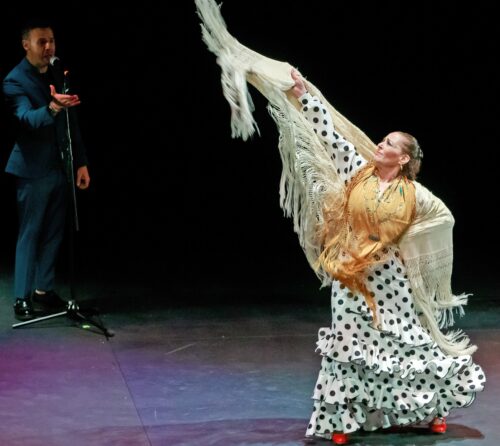
Dancer Celia Fonta, co-founder of Siempre Flamenco and the annual Festival de Cante Flamenco. (Photo by Jenny Abreu)
The annual festival of flamenco song is now in its nineteenth year, a partnership between Siempre Flamenco and the Arsht Center.
In 2021, Heredia won the most prestigious flamenco singing award,The Lampara Minera, at the National Festival de Cante de las Minas in Spain, the most esteemed flamenco song festival in the world, making her one of the art form’s most sought-after singers.
But there was a time when “La Repompilla” was very shy.
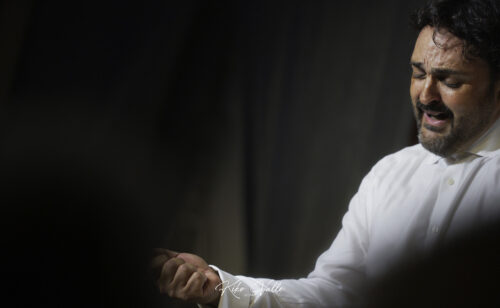
Flamenco singer Gabriel Georgio. (Photo by Kiko Valle)
“My mother was shocked when I told her I was going to be a singer,” she says. “I always liked to sing, but I was very embarrassed, and it was hard for me to sing publicly at first … now I don’t know how to live without flamenco.”
Heredia will sing three songs during “Cante Flamenco,” as will Guillermo Campos “Morenito de Illora” and Gabriel Georgio, “Gabriel de la Tomasa.” Campos is currently touring with legendary guitarist Tomatito, as well as with the Joaquin Cortes Flamenco Dance Company. Georgio is the son of renowned flamenco singer Jose de la Tomasa and serves as resident singer for the Spanish National Ballet.
Festivals of flamenco song are popular in the summers of Andalucia, Spain, but in the United States, this festival is one of a kind, presenting a unique opportunity for South Florida audiences to experience this gripping, traditional music with strong Moorish, Gypsy, and Jewish influences.
For those who already have a passion for flamenco dance, “La Repompilla” wants you to know that the origin of flamenco is song, first heard acapella alongside the rhythms of iron workers driving down their hammers.
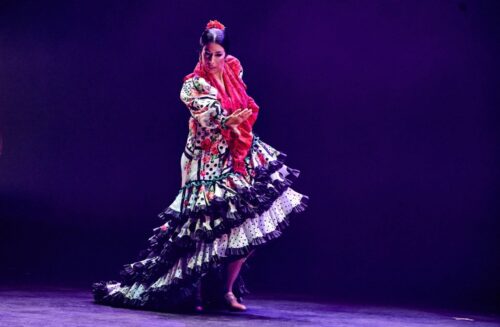
Flamenco dancer Ireni “La Chiqui” Lozano lighting up the stage. (Photo courtesy of the artist)
“Then the guitar began to be incorporated, and dance followed,” says Heredia. “As a matter of fact, dance has no inspiration without a singer.”
Miami-based flamenco dancer, rising international star, and fellow Malagueña Irene “La Chiqui” Lozano agrees.
“Singing is the pillar on which flamenco dance is built. It is absolutely fundamental because it constitutes the soul and origin of this art,” she explains.
Lozano is the featured dancer in this year’s “Cante Flamenco.”
“Amparo is a great singer with whom I’ve had the pleasure of performing alongside of before, so it is always a joy and a pleasure to share the stage with artists of the caliber of this amazing singer, especially when she is from my homeland … I’m looking forward to being on stage with my Amparo again.”
Accompanying them is guest guitarist Jose Cortes who also hails from an acclaimed flamenco dynasty and is the son of singer Jose Cortes “Pansequito del Puerto.”
Siempre Flamenco founders Paco and Celia Fonta will join the ensemble with their guitar and dance respectively to complete this notable lineup of artists.
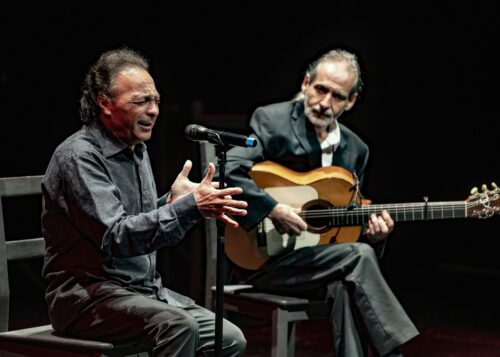
Guillermo Campos “Morenito de Illora” singing alongside Paco Fonta on guitar. (Photo by Dan Perez)
And when it’s over, you can still catch Lozano on weekends at Cava Flamenco in Little Havana, Miami’s only remaining authentic tablao.
“When not performing in other cities or countries, Cava Flamenco is my home and where you can find me performing with wonderful colleagues and professionals offering a very authentic flamenco show,” says Lozano.
Like Heredia, Lozano earned recognition at the National Festival de Cante de las Minas, winning the top global award for flamenco dance, the Desplante.
While dance and music are vital to flamenco, the festival showcases one of the pillars of the art form.
“Singing conveys the primary emotion — pain, joy, nostalgia, strength — and dance interprets and amplifies it through the body, establishing a constant dialogue between the two. Without singing, dance loses authenticity because it would have nothing to dialogue with or respond to,” says Lozano.
WHAT: Siempre Flamenco’s Festival de Cante Flamenco
WHERE: The Adrienne Arsht Center Carnival Studio Theater inside the Ziff Ballet Opera House, 1300 Biscayne Blvd., Miami
WHEN: 8 p.m. Friday, Sept. 5; 3 and 8 p.m. Saturday, Sept. 6; and 4 p.m. Sunday, Sept. 7.
COST: $55 general admission; $70 premium seating.
INFORMATION: 305-949-6722 or arshtcenter.org.
ArtburstMiami.com is a nonprofit media source for the arts featuring fresh and original stories by writers dedicated to theater, dance, visual arts, film, music and more. Don’t miss a story at www.artburstmiami.com.
No posts found
Weightless Stages: Miami-based artist exploring performance in zero gravity
Written By Carmen F de Terenzio
August 7, 2025 at 8:38 PM
Miami-based Natasha Tsakos conceived the first full-scale multimedia performance for microgravity working with MIT’s Space Exploration Initiative. She and three performers will engage in a parabolic flight, experiencing zero gravity in “Paraboles.” (Concept photo courtesy of Natasha Tsakos)
Miami-based Natasha Tsakos will take a bold step toward a vision she’s nurtured for years: bringing theatrical performance into zero gravity and simulating space as an essential part of human flourishing beyond Earth.
Aboard a zero-gravity aircraft, she will stage “Paraboles,” the first full-scale multimedia performance conceived for microgravity, which will unfold across 25 parabolic areas, each offering 22 seconds of weightlessness. She and three performers will engage in the parabolic flight, where an aircraft is flown in a series of arcs that create brief periods of weightlessness. As the aircraft free-falls, the results are a temporary state of reduced or zero gravity. Looking ahead, says Tsakos, this will be training for performances for future places in space, where gravity conditions are different than on Earth.
The project, currently in its final rehearsal phase, was developed in collaboration with MIT’s Space Exploration Initiative and its the Initiative that will work out the details as to where the launch will take place.
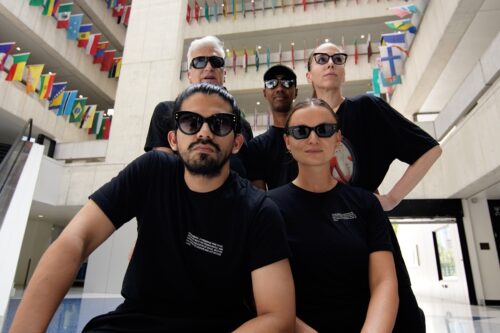
The Paraboles team. Top row, from left, Octavio Campos, Luis Alberto Cuevas and Natasha Tsakos. Bottom row, Enrique Villacreses, left, and Gabija Birina.
(Photo by Jorge Parra and Rafael Núñez, courtesy of Paraboles)
Locally, Live Arts Miami offered training facilities, and O Cinema, which provided space for virtual reality simulation and is also a presenting venue partner.
Tsakos and her collaborators, alumni of Cirque du Soleil, NASA, and National Geographic, will explore how movement, narrative, and film production adapt when gravity disappears, while asking a question that feels increasingly resonant: what kind of culture will we carry with us as we venture beyond Earth?
Tsakos, originally from Geneva, but now based in Miami, hesitates to call herself an artist – she’s more of a showmaker, she concludes.
“Showmaking gives me room to create all kinds of adventures,” says Tsakos. Her multimedia theatrical works often blend movement, animation, and sound, ranging from techno-theater pieces at Miami Light Project to an eco-opera that opened the 2012 G20 Summit in Los Cabos, Mexico.
The course shifted in 2009, when Patricia Cowings, Ph.D., a NASA psychophysiologist, recruited Tsakos for a lunar-gravity flight. Training at Johnson Space Center in Houston, Texas, and floating alongside astronauts, Tsakos felt what she calls “another level of presence and work ethic.”
A self-exercise at Singularity University, a Silicon Valley-based think tank and education hub, made her realize that she was someone who makes short shows for space. Naming the goal crystallized it and set her on a deliberate path toward its realization.

Natasha Tsakos, Octavio Campos and Adam Dipert hold Gabija Birina during tank training for “Paraboles” as Enrique Villacreses watches on. (Photo by Jorge Parra and Rafael Núñez, courtesy of Paraboles)
The conceptual framework for “Paraboles” is a counterpoint between holding on and letting go, explains Tsakos.
Three performers clutch battered suitcases—symbols of memory, identity, and attachment—as they move between hypergravity, when gravity nearly doubles, and microgravity, when it disappears. The narrative is purposefully distilled to anchor performers amid the sensory disorientation.
“Hypergravity is dramaturgically just as interesting as microgravity,” says Tsakos. “It’s a dance between contraction and release, certainty and possibility.”
Lead choreographer and performance researcher Luis Alberto Cuevas—a New World School of the Arts alumni whose résumé spans Rosie Herrera Dance Theater to HBO’s “David Makes Man”—is charged with translating metaphor into motion.
“Dancers have an intimate relationship with gravity,” he explains. “A pirouette begins with your center, spiraling around the foot that holds you to the ground. Take gravity away, and you lose that anchor. So we have to look elsewhere—maybe a harness, maybe a chair, maybe the cabin ceiling—to find new points of rotation, new ways the body can turn through space.”
Cuevas envisions a sitcom-style setup, with three cameras capturing each 22-second phrase from different angles to minimize the need for retakes.
“We want to capture different points in space at the same time,” he explains, acknowledging the unpredictable effects of weightlessness on timing and movement. Cuevas is exploring a hybrid approach: part green screen, part physical set allowing editors to later blend real objects with digital environments in post-production. “There’s no real precedent,” Cuevas admits, “which makes it thrilling. We’re setting the rubric for whoever comes next.”

Natasha Tsakos and Luis Alberto Cuevas take a break while Gabija Birina hang around on a harness. (Photo by Jorge Parra and Rafael Núñez, courtesy of Paraboles)
For him, the timing is political as well as technical. Florida’s recent elimination of arts funding, he says, underscores why artists must make bold, visible choices. “The only way to combat the desire to dissolve art is by making the choice to create—by taking it where art isn’t expected, like microgravity.”
Scientific rigor is woven just as tightly into the project. Yvette Gonzalez, MPH—bioastronautics officer, opera singer, and advocate for Indigenous STEM access—oversees the project’s human-subject protocols. Each performer will wear a sensor-laden vest used in suborbital missions, which will record heart rate, blood-oxygen levels, and vestibular responses before, during, and after the flight.
“Microgravity is really a spectrum of free fall,” explains Gonzalez, currently based in Arizona. “We want to know: Are artists better off, worse off, or simply different in that environment?” Multiple baseline sessions such as treadmill walks help establish individual norms. Spikes or dips in flight will then reveal whether the body is responding to stress, adrenaline, or some yet-unknown factor of weightlessness.
Lessons from cave analogs and the Polaris Dawn mission shape her safety approach: small doses of anti-nausea medication, fixed gaze points to calm the inner ear, and thoughtful sensor placement that won’t disrupt the choreography’s visual language. “A bulky headband won’t do,” says Gonzalez with a laugh. “Finger sensors capture oxygen data without ruining the shot.”

Three performers will clutch battered suitcases—symbols of memory, identity, and attachment—as they move between hypergravity, when gravity nearly doubles, and microgravity, when it disappears for “Paraboles.” (Concept photo courtesy of Natasha Tsakos)
Between now and October, Tsakos’s five-member performance team will cycle through wind-tunnel drills (to master subtle shifts of center of gravity), underwater sessions, VR rehearsals, and even aerobatic flights in XL-300 aircraft capable of six-g maneuvers. All told, the preparation will take 15 days. “(American rock band) OK Go filmed its zero g video after 21 flights and no formal training,” notes Tsakos. “We’re doing fine.”
Still, the greatest unknown is the human nervous system. “Floating isn’t what makes people sick,” explains Gonzalez. “It’s the rapid switch from 0 g to 2 g and back.” The body doesn’t have time to adjust—it reacts to the sudden shifts. Cuevas, however, is optimistic. Performers, he says, may adapt more easily than tourists. “We live in our bodies. Kinesthetic awareness is half our job.”
Tsakos says Miami provides the perfect setting for the creation of the work, partly because she lives here, but also because the city’s eccentricity and cross-cultural energy are embedded in the work. Local partners like Live Arts Miami and O Cinema help anchor a project that could easily drift into pure spectacle.
“Miami inspires me even when I’m just staring at my laptop,” says Tsakos. “There’s a freedom to be, and room to make.” That creative openness, she argues, makes the city an ideal test site for culture-driven futurism.
There are plans for “Paraboles” to premiere as an art film, immersive installation, and documentary. Tsakos hopes audiences will experience the visceral thrill of weightlessness, and leave asking a deeper question. As space shifts from the realm of engineers to a frontier for private industry, and as everyday people, not just astronauts, begin to leave Earth, what traces of humanity will we take with us?

Gabija Birina tank training for zero gravity. (Photo by Jorge Parra and Rafael Núñez, courtesy of Paraboles)
For Tsakos, the answer lies in reverence. “Artists remind us of wonder. That wonder has to travel, or the journey isn’t worth it.”
Cuevas answers pragmatically: “We’ll take culture no matter what. Humans share stories of how to hunt, how to survive. That’s art.”
For Gonzalez, it’s also about rethinking how knowledge is handled. “Different cultures teach and value knowledge differently,” she says. “For ‘Paraboles,’ that means ensuring our methods respect the performers, that the data aren’t hoarded, and that the story remains accessible and human.”
Whether ten minutes of free fall can seed a new artistic frontier remains to be seen. But by launching themselves and their suitcases of metaphor into the sky, Tsakos and her team stake a claim: the next giant leap for humankind should make room for wonder.
ArtburstMiami.com is a nonprofit media source for the arts featuring fresh and original stories by writers dedicated to theater, dance, visual arts, film, music and more. Don’t miss a story at www.artburstmiami.com.
No posts found
So Much Dance At This Year’s International Ballet Festival of Miami
Written By Orlando Taquechel
July 18, 2025 at 3:39 PM
The 30th Miami International Ballet Festival (IBFM), taking place from Saturday, July 26 to Sunday, Aug. 17 throughout South Florida, will feature artists from 17 companies and 11 countries. Pictured are Emily Bromberg and Ariel Morilla (Dimensions Dance Theatre of Miami) in “If” by Yanis Eric Pikieris. (Photo by Simon Soong, courtesy of Miami Hispanic Ballet/IBFM).
What began as a series of classical ballet performances has grown into a multidisciplinary international event and now with a strong Latin American presence.
The International Ballet Festival of Miami (IBFM), under the executive and artistic direction of Eriberto Jiménez, marks its 30th edition beginning Saturday, July 26 to Sunday, Aug. 17, and will feature 17 companies from 11 countries with indoor and outdoor public performances, and grand classical galas.
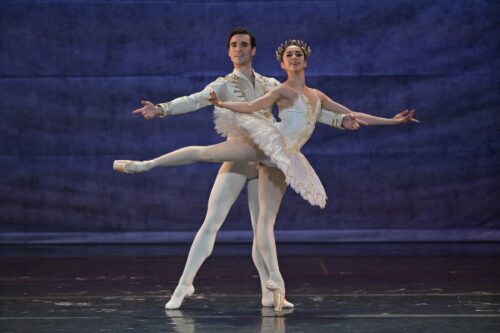
Katherine Rodríguez and Emmanuel Vázquez of the Santiago Ballet (Chile) in “Sleeping Beauty.” The company was featured in the 29th Miami International Ballet Festival. (Photo by Simon Soong, courtesy of Miami Hispanic Ballet/IBFM).
According to Jiménez, who is also the artistic director of the Cuban Classical Ballet of Miami (CCBM), it has been “its resilience in the face of challenges and its continuous work promoting dance that have ensured (the festival’s) relevance and international projection over time.”
When its founder, Pedro Pablo Peña, passed away in March 2018, Jiménez assumed the reins of both organizations. “The Festival has evolved significantly since its first edition,” says Jiménez.
The event will showcase dance performances in Miami, Miami Beach, South Miami, and Fort Lauderdale, along with a variety of collateral activities.
United States-based groups sending representatives to Miami are Ballet Inc., Cincinnati Ballet, Milwaukee Ballet, and Virginia National Ballet.
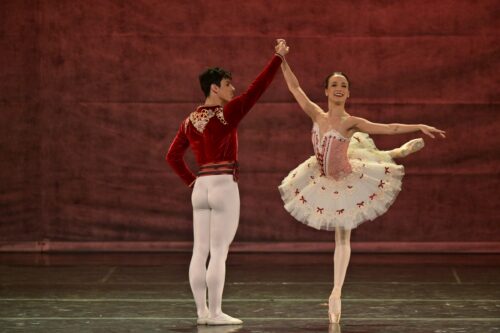
Melissa Oliveira and Agustín Pereyra (Ballet Nacional Sodre, Uruguay) in “The Flames of Paris.” (Photo by Simon Soong, courtesy of Miami Hispanic Ballet/IBFM).
From the rest of the Americas, IBFM will be welcoming the Ballet do Theatro Municipal do Rio de Janeiro (Brazil), Les Grands Ballets Canadiens (Canada), the Colombian Ballet Company (Colombia), the Compañía Nacional de Danza Contemporánea (Dominican Republic), the Ballet Nacional Sodre (Uruguay), and three groups from Mexico will participate: the Compañía Nacional de Danza, the Ballet de Monterrey, and Cuerpo Etéreo Danza Contemporánea.
From Europe, the National Ballet Theatre of Košice (Slovakia) will participate.
Miami will be represented by Arts Ballet Theatre of Florida (ABTF), Marez Contemporary Dance, Dimensions Dance Theatre of Miami (DDTM), and CCBM as the host company.
The festival opens on Saturday, July 26, with a VIP reception for the unveiling of the festival poster (designed by Camilo Rubio and illustrated by Omar Corrales Mora) at the Miami Hispanic Cultural Arts Center (MHCAC), 111 S.W. 5th Ave.
From Monday, July 28 to Friday, Aug. 15, students from various companies and countries will participate in the event’s Intensive Ballet Course at the MHCAC.
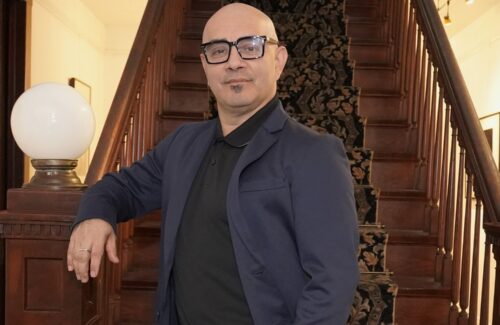
“The star-studded galas remain the heart of the festival,” says Eriberto Jiménez, executive and artistic director of IBFM. (Photo by Ismael Requejo, courtesy of Miami Hispanic Ballet/IBFM).
Jiménez adds that on Tuesday, July 29, a conference titled “The Magic of the Body on Stage” will be led by director and choreographer Keyla Ermecheo and theater director José Eduardo Pardo. “There will also be a special presentation by Ballet Iberoamericano plus a unique performance project comprised of former dancers over 50 years of age,” says Jiménez about the free performance open to the public and set for 6 p.m. at the MHCAC.
A significant initiative in the history of the IBFM has been the creation of two awards presented at each edition: “A Lifetime of Dance” since 1998 and “Ballet Criticism and Culture” since 2007.
This year, the first award will be presented at the Grand Classical Gala to Argentine principal dancer Julio Bocca on Saturday, Aug. 16, to and American dance critic Robert Johnson will receive the second award at the start of the festival’s Closing Gala, scheduled for Sunday, Aug. 17.
“For those attending the festival for the first time,” says Jiménez, “I would recommend starting with the international star galas, which bring together leading dancers from renowned companies from around the world and are true spectacles of technical and artistic excellence. You should also attend the contemporary dance performances, where you can discover innovative proposals and more avant-garde styles.”
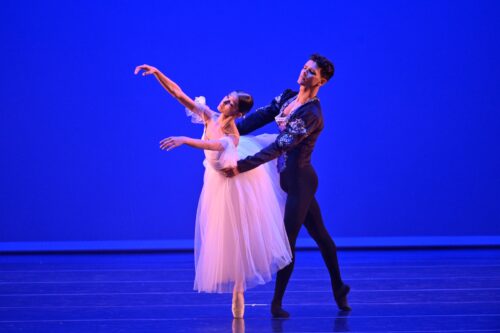
Nathalia Duque and Andrés Felipe Vargas (Incolballet, Colombia) in “Giselle” Pas de Deux from Act II. (Photo by Simon Soong, courtesy of Miami Hispanic Ballet/IBFM).
From Friday, Aug. 1, to Sunday, Aug. 3, there will be performances by young medalists. Miami dance lovers will have the opportunity to enjoy contemporary dance performances from Thursday, Aug. 7 to Sunday, Aug. 10. The festival will culminate with two concert galas on Saturday, Aug. 16, and Sunday, Aug. 17.
Jiménez recommends that “for regular festivalgoers, who are already familiar with our essence and history, I would recommend not missing some of this year’s most notable new features. (There’s) the debut of the Slovak National Ballet and Marez Contemporary Dance, and the special participation of the Cincinnati Ballet, now under the artistic direction of Cervilio Amador, a Cuban dancer who participated in the festival years ago.”
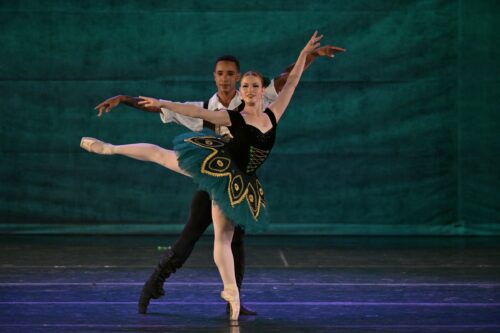
María Luisa Márquez with Ihosvany Rodríguez (Cuban Classical Ballet of Miami) in “La Esmeralda” Pas de Deux. (Photo by Simon Soong, courtesy of Miami Hispanic Ballet/IBFM).
While the heart of the festival is the star-studded galas, Jiménez promises something more this celebratory year.
“The 30th edition features new offerings and collaborations that will surprise even our most loyal fans.”
WHAT: 30th International Ballet Festival Miami (IBFM)
WHEN AND WHERE: Young Medalists: 8 p.m., Friday, Aug. 1, Lincoln Road, Euclid Circle, 1623 Euclid Ave, South Beach Plaza, Miami Beach; 8 p.m., Saturday, Aug. 2, Manuel Artime Theater, 900 SW 1st St., Miami; 11 a.m., Sunday, Aug. 3, Dance Marathon, Bayfront Park, Tina Hills Pavilion, 301 N. Biscayne Blvd., Miami; Contemporary Dance: Thursday, Aug. 7, outdoor show at Brickell City Centre (second floor), 701 S. Miami Ave., Miami; 8 p.m., Aug. 8, Manuel Artime Theater; 8 p.m., Aug. 9, Dennis C. Moss Cultural Arts Center, 10950 SW 211 St., Cutler Bay; 5 p.m., Aug. 10, Amaturo Theater, Broward Center for the Performing Arts, 201 SW 5th Ave., Fort Lauderdale; Grand Classical Galas: 8 p.m., Saturday, Aug. 16 and 5 p.m., Sunday, Aug. 17, Fillmore Miami Beach, 1700 Washington Ave., Miami Beach.
COST: $35, $45, $65 depending on venue and performance. Outdoor events are free.
INFORMATION: (786) 747-1877 and internationalballetfestival.org
ArtburstMiami.com is a nonprofit media source for the arts featuring fresh and original stories by writers dedicated to theater, dance, visual arts, film, music, and more. Don’t miss a story at www.artburstmiami.com.
No posts found
Need a dose of dance for the summer? Dimensions Dance Brings It On
Written By Guillermo Perez
July 2, 2025 at 6:10 PM
Dimensions Dance Theatre of Miami presents “Summer Dances” at the Dennis C. Moss Cultural Arts Center on Saturday, July 12. Above, dancers in “The Four Seasons” by Yanis Pikieris will be one of the ensemble pieces performed. (Photo by Simon Soong, courtesy of DDTM)
One plus one doesn’t just make two in a pas de deux. Dance duets may amount to a singular force with their concentrated cohesion or a seeming multiplicity spread out through all the changes paired movement can bring. Now, Dimensions Dance Theatre of Miami closes its performing season with contrasting examples of this fluid sum among the four works of “Summer Dances,” coming to the Moss Center Main Stage on Saturday, July 12.
Partnered exchanges will flash amid the program’s ensemble pieces—Yanis Pikieris’ robust “The Four Seasons,” a company standard to Vivaldi, and the Moss main-stage debut of Alysa Pires’ “In Between,” its intimacies awash in a classic-to-contemporary ebb and flow. But the stand-alone duets will hold our attention for special rewards.

Emily Bromberg and Eric Paz in “In Between” by Alysa Pires, which will be performed as part of Dimensions Dance Theatre’s “Summer Dances” at the Moss Center on Saturday, July 12. (Photo by Simon Soong, courtesy of DDTM)
“Confronting Genius,” by Orlando Ballet’s rehearsal director Heath Gill, though being staged for the first time by Dimensions, has the elements that could have been custom-made for the nine-year old Miami company from its start. Speed, punch, and plenty of flair are among the demands here that a Dimensions cast thrives on.
DDTM co-artistic directors Carlos Guerra and Jennifer Kronenberg “were blown away,” as she puts it, by the wit and physicality of Gill’s piece when they saw it two years ago at the Riverside Dance Festival, co-produced by their artistic partner Ballet Vero Beach. This ballet upholds the virtue that the directors—in their co-authored book “Experiencing the Art of Pas de Deux” (University Press of Florida, 2016)—attribute to well-crafted partnering with its “incredible power to take dancers and their audiences on an epic journey.”
As a standout dancer at Atlanta Ballet—his skills earning him a place on Dance Magazine’s “25 To Watch” list in 2014—Gill was already forging a path in choreography (mostly for Wabi Sabi, an Atlanta Ballet summer offshoot) when he, along with other AB dancers, stepped away from their home company to form Atlanta’s Terminus Modern Ballet Theatre in 2017. It was there that “Confronting Genius” was born.

Orlando Ballet’s rehearsal director Heath Gill’s “Confronting Genius” is being staged for the first time by Dimensions Dance Theatre. (Photo courtesy of Dimensions Dance)
“I created it during our first season,” says Gill. “Up to then I’d made a wealth of works but always on my timeline—whenever I had an idea, not feeling immense pressure. At Terminus I’d choreographed LORE, a full-length ballet for the first time, and I was thrilled with it. But the new year rolled around and—boom!—I had to do a new piece still feeling a bit drained.”
At this impasse, he was wondering how to stay on a steadily productive track when a Terminus dancer turned him on to “Big Magic,” a treatise by Elizabeth Gilbert (of “Eat Pray Love” fame) on embracing the forces that nourish the imagination.
“It’s a brilliant book,” says Gill. “The author cleverly paints a picture of how ideas come from some entity outside yourself. In classical Greece, that was the concept of the genius. If your ideas were great, it meant your genius rocked. That takes some pressure off the artist—though, of course, you still have to keep showing up to do the work. This helped me get over my roadblock. For my next project I had two dancers—the kind of parameter I love. Right there was my piece. I was going to have an artist and this external entity. And I finished it in six days.”
Gill’s own genius found support in his artistic toolbox. “I always have this catalog of ideas filed away. Every time I have a new work and feel a particular vibe, I go into it to move things along.”

Mayrel Martinez and Alexey Minkin in “The Four Seasons” by Ynais Pikieris. (Photo by Simon Soong, courtesy of DDTM)
And reaching in for the music is fundamental to his approach. “I’m very rhythmic,” he says, “having started out as a tap dancer.”
Always happy to entertain while growing up in Albion, a little town in southern Illinois, he was asked to join a nearby production of “The Music Man,” where a connection eventually led him to a summer intensive at Houston Ballet. “That was a big jump forward in my journey,” recalls Gill.
In “Confronting Genius,” he turned his well-attuned ear to a rousing sound mix. “The first track is an incredibly challenging Paganini caprice,” he explains. “So this starts out in a burst of energy to the violin. By the time my work closes, it’s soulful, simple, with another violin piece that feels fragile and beautifully human—like owning up to not having all the answers. But there’s lots going on in the middle.”
That includes dancing to a voiceover of Gilbert’s text. “I’m fascinated by speech as music,” says Gill. “The rhythm, the change in tones, make me think of songbirds speaking to each other. Of course, language brings us pictures, and these play off the physicality of the dancers in a cartoon of sorts.”
For Gill, humor is the helium that makes the weightiest of topics soar. He says, “It invites people to the table to feel more comfortable laughing together. I’ve always been a bit of a cut-up myself.” Confessing his love for improv shows, he notes how timing is everything in comedy as in his art form. “Ours is such a funny profession, and dancers can get pretty goofy. They’re game to showcase this.”

Chloe Freytag in “In Between” by Alysa Pires , which will be performed as part of Dimensions Dance Theatre’s “Summer Dances” at the Moss Center on Saturday, July 12. (Photo by Simon Soong, courtesy of DDTM)
If one pair of dancers can set off a string of firecracker moments, as in “Confronting Genius,” another can focus their energy for gradual luminosity. It is what brightens “Apollo and Daphne,” Boulder Ballet artistic director Ben Needham-Wood’s deeply felt response to Baroque sculptor Gian Lorenzo Bernini’s encapsulation of myth in a marble masterpiece.
Made flesh by the choreographer, the encounter between the ardent god and a demurring nymph—by divine intervention turned into a laurel tree within his reach—gains sentient human value, following an emotional arc that for Gill reigns over the specifics of narrative.
“The piece was inspired when I was on a trip to Italy with my mom, and we visited Rome’s Borghese Gallery where the statue is,” says Needham-Wood, a student of Latin and classical mythology from his high school days in New Hampshire. Bernini’s freezing of the moment of the nymph’s arboreal transformation entranced mother and son for nearly their whole gallery visit.
“Bernini gives you such a strong feeling for the space around the action, and that’s where my ballet lives,” says the choreographer, who listening on his headset during the flight home from Italy chanced upon Arvo Pärt’s “Spiegel im Spiegel,” its repeated three-note pattern on piano over sustained violin “having so much air and swell it was perfect to accompany my dancers. To stand and hold a place in simplicity is one of the most difficult things for any performer to do. But it lets them and audiences connect on a deeper level.”

Emily Bromberg and Ariel Morilla in “Apollo and Daphne” by Ben Needham-Wood. (Photo by Simon Soong, courtesy of DDTM)
That’s a maxim he learned from mentor Bruce Simpson, then-director of Louisville Ballet, where Needham-Wood danced and “Apollo and Daphne” premiered in 2011, allowing the choreographer’s mother to admire the work shortly before she died.
DDTM’s directors ran across “Apollo and Daphne” searching the Internet in 2017. Kronenberg says the ballet—which will be accompanied by live music—struck them as rapturous, adding that after a successful DDTM stage premiere in 2019, it streamed during the pandemic lockdown as part of Kennedy Center’s Arts Across America series, serving as “a poignant vehicle to connect with audiences on an emotional and spiritual level.”
The work, too, connects with an observation in the directors’ book: “The best array of actions and emotions within a pas de deux can prove incredibly intense and extraordinarily delicate simultaneously.” A double magic for all times, be they troubled or fine.
WHAT: Dimensions Dance Theatre of Miami “Summer Dances”
WHERE: The Dennis C. Moss Cultural Arts Center, 10950 SW 211 St., Miami
WHEN: 8 p.m. Saturday, July 12.
COST: $25-$45, $10 student tickets available by phone or in person with ID.
INFORMATION: (786) 573-5300 or mosscenter.org
ArtburstMiami.com is a nonprofit media source for the arts featuring fresh and original stories by writers dedicated to theater, dance, visual arts, film, music and more. Don’t miss a story at www.artburstmiami.com.
No posts found
New artistic director named for Miami City Ballet, only 3rd in 40-year history
Written By Michelle F. Solomon
June 16, 2025 at 9:59 AM
Gonzalo Garcia, a former principal dancer with the San Francisco Ballet and the New York City Ballet, currently serves as repertory director for NYCB and faculty at the School of American Ballet, and will become Miami City Ballet’s third artistic director following the departure of Lourdes Lopez. (Photo by Rodrigo Díaz Wichman)
When Lourdes Lopez, Miami City Ballet’s artistic director, announced last February that the 2024-25 season would be her last with the company, one of the reasons she cited for stepping down was to help usher in a new chapter for the 40 year old company. “. . .A company needs new energy, a new way of looking at the dancers, a new way of looking at the community.”
The venerable organization may have found just that with Gonzalo Garcia, 45, who has been named MCB’s new artistic director effective Aug. 11. He will be only the third artistic director since the ballet was founded in 1985 with Edward Villella, who helped launch the company, being the first.
Garcia has spent most of his career as a principal dancer – first with the San Francisco Ballet and then New York City Ballet, where he was a principal dancer until announcing his retirement in 2022. He was appointed Repertory Director for the company and was on the faculty of the School of American Ballet at the Lincoln Center, co-founded by George Balanchine. He’ll leave those two positions to lead MCB.

Gonzalo Garcia’s repertoire with the San Francisco Ballet and New York City Ballet includes George Balanchine’s “Apollo,” pictured. © The George Balanchine Trust. (Photo by Paul Kolnick, courtesy
New York City Ballet )
At 15, the native of Zaragoza, Spain, was the youngest dancer to receive a gold medal at international dance competition the Prix de Lausanne (Switzerland) in 1995. At 17, he was offered a contract to join San Francisco Ballet but decided to study one more year, joining the company in 1998. He was promoted to principal dancer at 22, one of the youngest dancers in the company to reach the status. He arrived at New York City Ballet as a principal dancer in 2007.
Garcia’s known for his strong dance repertoire, which included works by Balanchine and Jerome Robbins, and for creating original roles in works by two of the contemporary choreographic masters, Justin Peck, resident choreographer and artistic advisor of New York City Ballet, and choreographer Alexei Ratmansky. For his farewell performance with NYCB in February of 2022 he danced works by Balanchine, Robbins and Peck.
It is this pedigree that led to MCB’s board of directors choosing Garcia as the right fit to take the reins.
Villella, MCB’s founding artistic director, worked with Balanchine as a principal dancer from 1957 to 1979 at NYCB. Legendary changemaking choreographer Jerome Robbins created his 1976 ballet “Watermill” to be danced by Villella, among other dance partnerships with Villella. Shortly after Lopez’s 16th birthday, while attending the School of American Ballet, Balanchine invited her to join the corps of NYCB, and she became principal in 1984, playing numerous roles in choreographies created by Balanchine and Robbins.
“The two artistic directors we’ve had both were with Balanchine and Robbins and they had that pedigree about them,” said Jeff Davis, MCB’s chair of the board of trustees. “Gonzalo was heavily trained in the Balanchine technique [and] in Jerome Robbins.”
The company’s repertoire includes more than 100 ballets, with significant works by Balanchine and Robbins. It has expanded its repertoire to include contemporary choreographers including Peck and Ratmansky.
“Gonzalo is in tune with the next wave of choreographic voices,” said Davis. “He has great connections with Justin Peck, Patricia Delgado [a former Miami City Ballet principal, she won the 2025 Best Choreography Tony Award along with husband Peck for Broadway’s “Buena Vista Social Club”], and [British choreographer] Wayne McGregor.”
Garcia mentions “destiny” when it comes to his appointment.

Gonzalo Garcia becomes the third artistic director in the history of Miami City Ballet effective Aug. 11, 2025. (Photo by Rodrigo Díaz Wichman)
“It was meant to happen. The more I went through the process, the more I felt energized and more comfortable with the idea that it was me. I kept thinking, ‘that’s me. I speak Spanish. I’m an immigrant. I can relate to so many people that represent the community. I also have this incredible trajectory with the Balanchine and the Robbins and these American companies that have been represented in Miami City Ballet’s history. I feel like it’s been like almost every step and every skill that I have acquired through my life has brought me to this place and I do believe that strongly.”
While the 40th anniversary season is already programmed, Garcia will begin working on what’s next for the company, including the following season but also using his skills as “a great collaborator.”
“I love being in the studio with dancers, I’m a teacher and an educator. I understand the different needs and technical abilities, but I also understand emotional abilities because I have danced a lot of the repertoire. I think [the company} needs someone that is going to get in there and really inspire them, reenergize them.”
Garcia also sees MCB becoming more a part of what he says is the culture that is Miami.
“The stories that are happening in Miami, maybe that can be represented on stage. And who can be the right dance maker that can bring those stories to life? That’s something that I want to invest in. Miami is just simmering with potential from all areas and parts of the world and the country. I don’t seek to change what’s already been created, but how do we make that bigger and better and how do we add things that are representative of the community we are dancing for?”
With his background working with the School of American Ballet, he’s also hoping to tap into the potential at the Miami City Ballet School.
“I want to continue teaching. How do we prepare those dancers to be future dancers not only for Miami City Ballet but also internationally to carry on the legacy,” he said. “Who knows? We might have new choreographers there, perhaps the next Alexei Ratmansky.”
The search, according to Davis, was led by Phillip DeBoer of executive search firm DHR Global.
“We started first with surveying all of our stakeholders –our dancers, our board, community members, our funders – asking them what their vision was for the next artistic director. We also contacted artistic directors of other ballet companies, choreographers and presenters. So out of that whole process, we had about 70 prospective names.”
It considered 40 applicants. Garcia was one of two final candidates. He has a five-year contract with the company.
The new artistic director begins his role in the midst of a precarious state of the arts both in support from the state of Florida and in the federal government.

Gonzalo Garcia retired from the New York City Ballet with a final performance in February of 2022. Pictured, Garcia in George Balanchine’s “Apollo.”© The George Balanchine Trust. (Photo by Paul Kolnick, courtesy
New York City Ballet )
“The Miami City Ballet has a strategic plan to build an endowment, and it is a very ambitious five year plan. I am going to be very much a part of that and trying to find places that we haven’t previously found support. The reality is that in order to move the company forward without certain economic support, it will be very hard to do. So we’ll need to be more strategic and conservative, but still ambitious,” said Garcia.
He’ll move to Miami with husband Ezra Hurwitz, an Emmy Award winning film director (he won the award for his short film “Inside and Outwards” that was narrated by Sarah Jessica Parker and dealt with mental health during COVID), he’s also worked with Tiffany & Co., Dior, Apple and Netflix. Prior to his film career, he was a professional dancer and spent eight years with the Miami City Ballet. He’s looking forward to Hurwitz helping the company to expand its digital presence. “That’s something incredibly important for us to be relevant.”
Garcia says he met Hurwitz during his last year with MCB. “I remember going to visit him in Miami and taking class with the company. I’ve become close with the friends he made there so I have been surrounded with these conversations and his historical knowledge around my living room in New York many times through many years. I have worked with Edward Villella and Lourdes Lopez in different capacities in my life so with all of that, I feel emotionally connected to the company in so many ways.”
ArtburstMiami.com is a nonprofit media source for the arts featuring fresh and original stories by writers dedicated to theater, dance, visual arts, film, music and more. Don’t miss a story at www.artburstmiami.com.
No posts found
‘Revelations in Rhythm’ honors the African roots of the art of tap dance
Written By Jonel Juste
May 20, 2025 at 3:42 PM
The Marshall L. Davis, Sr. African Heritage Cultural Arts Center’s (AHCAC) Winds of Heritage Dance Company “Revelations in Rhythm,” a live performance celebrating African rhythms and American tap dance, will be performed Saturday, May 24 at Florida Memorial University’s Lou Rawls Center for the Performing Arts, Miami Gardens. (Photo by Gregory Reed; courtesy of African Heritage Cultural Arts Center)
Tap dance is as much a part of Americana as blue jeans, barbecue or the Statue of Liberty. While not as popular today as it was during its “Golden Age” from 1920 to 1940, the American art form has seen a resurgence since the 1970s, returning to Broadway and pop culture.
Against this backdrop, the Marshall L. Davis Sr. African Heritage Cultural Arts Center’s (AHCAC) Winds of Heritage Dance Company will present “Revelations in Rhythm,” a live performance highlighting the roots of African rhythms in American tap dance on Saturday, May 24, ahead of National Tap Dance Day on Sunday, May 25.
The performance will take place at Florida Memorial University’s Lou Rawls Center for the Performing Arts in Miami Gardens. The headliner and creator of the show, Marshall Davis Jr., says the inspiration came from Alvin Ailey’s “Revelations” and his own spiritual journey through dance.

Marshall Davis Jr., center, creator, director, and choreographer of “Revelations in Rhythm,” with, vocalist Sophia Strickland, left, dancer Afra Hines, in back, and dancer Funmi Sofola, right, during a 2024 performance. (Photo by Gregory Reed; courtesy of African Heritage Cultural Arts Center)
“I wanted to create a work that primarily utilizes tap to examine the parallels and intersections of dance and music created by Blacks during enslavement as a means of spiritual praise and expression,” says Davis, who also directs and choreographs the production.
Now in its fifth edition, “Revelations in Rhythm” continues to evolve, reflecting Davis’s personal and artistic journey. “As I’ve changed, the show has changed. Each version has grown in accordance with how I’ve grown as an artist and human being. It’s a reflection of who I am, who I’m becoming and who I shall be.”
At the foundation of his artistic journey, Davis Jr. credits the African Heritage Cultural Arts Center where he began his artistic journey at six years old. The son of Marshall Davis Sr., who has served as the center’s managing director since 1983, and for whom the center was named in August 2024, the younger Davis has memories of days spent soaking up the arts.
“Every summer I remember taking art classes in the various disciplines of dance, music, theater and visual arts,” he recalls. It was during these formative years that his talent began to shine: he won local talent shows, in 1989, he became Florida’s winner in Tri-Star Pictures’ “National Tap Day Challenge” at age 11, a competition to promote the movie, “Tap” and by 13 had earned national acclaim as the 1991 “Star Search” Teen Dance Champion.

Marshall L. Davis Sr., has been the managing director of the African Heritage Cultural Arts Center since 1983. (Photo by Brian Bayerl; courtesy of African Heritage Cultural Arts Center)
“Since then, I’ve worked all over the United States, Europe, Japan and Australia as a performer and educator.” He’s also performed on Broadway (“Bring in ‘da Noise, Bring in ‘da Funk”, “Shuffle Along”) and taught at major institutions such as Manhattan School of Music, Queens College, and New York University.
But it’s the center where he says his early talent was nurtured.
“With all of the accolades, achievements and success, I will always continue to recognize and return to the Center to share my experiences with everyone. There’s no question about it. I’m the artist I am today because of the training I first received at the African Heritage Cultural Arts Center.”
This year’s edition of “Revelations in Rhythm” carries the theme “Passing On…” which the creator says is rooted in personal loss and legacy. He recalls losing his mentor Steve Condos, an acclaimed vaudeville and tap performer, who died of a heart attack after performing at a dance biennial in France in 1990. He was 71 and was living in Hollywood, Fla. Davis Jr. was 13 years old.

“Revelations in Rhythm” with Marshall Davis Jr. is now in its fifth edition and will be presented this year on Saturday, May 24, ahead of National Tap Dance Day on Sunday, May 25. (Photo by Gregory Reed; courtesy of African Heritage Cultural Arts Center)
“What helped me during that time and continues to help me now is, as opposed to considering it a loss, I consider all that I’ve gained because of his life and the light that he passed on.”
The show features a collective of artists who bring that light to life. “We have an incredibly talented cast,” says Davis, naming musicians like Willerm Delisfort, Marcus Strickland, Kirk Green, Harvel Nakundi and vocalist Sophia Strickland. Dancers include Time Brickey, Karissa Royster and Robyn Watson, with modern dance by Roxanne Young.
(Marshall’s) return to curate this event is a full-circle moment,” says his father.
He adds that the event has grown from a solo act into a dynamic show that has featured prominent tap performers like Savion Glover, with a broader program and a deeper celebration of the form each year. “Tap brings to life the cultural expressions of a people, reflecting not just movement, but the rich history, resilience and creativity of African Americans,” says Davis Sr.
“Revelations in Rhythm” also serves as a tribute to Bill “Bojangles” Robinson, whose birthday is commemorated annually on National Tap Dance Day. “This show would not be possible without the sacrifices and contributions he made,” says Davis Jr.
His father agrees, adding that Robinson “paved the way for generations of artists” and served as a mentor, philanthropist and cultural ambassador during a time of racial adversity.
The show blends music styles such as gospel and jazz, and according to Davis Sr., “celebrates rhythm, resilience, and creativity, reflecting the cultural fabric of America and the deep history of African-American life.”
AHCAC Dance manager Eulyce Eason emphasizes the educational and emotional experience the concert provides. “People want to go somewhere they feel safe, inspired, and connected,” she says. “We want to offer something right here in Miami that’s on the same level as what you’d find in New York or anywhere else.”

Dance manager Eulyce Eason emphasizes the educational and emotional experience the concert provides. (Photo by Gregory Reed; courtesy of African Heritage Cultural Arts Center)
For Eason, tap dance is more than choreography; it’s a form of storytelling unique to the United States. “Tap is an American art form. Its rhythms originated in Africa, but it developed and flourished right here in the United States,” she says. “It’s a language. When you hear the sounds from those tap shoes, it’s not just noise, it’s the body filtering rhythm down to the feet.”
She says one goal of the event is to inspire young dancers to take up tap, which still exists in small pockets throughout Florida. “Tap is not outdated, it’s a valuable, expressive form that can take you places,” Eason says, pointing to stories of local dancers landing roles on Broadway thanks to tap training.
This year’s show coincides with the center’s 50th anniversary, giving it additional momentum and visibility. “We’re going all out,” says Eason. “More energy, more creativity, and a greater sense of purpose.” The event will also honor two dance community figures—Florian Nichols and Edward Allen—for their contributions.
Eason notes that the show’s success is built on legacy, from mentors like Condos to the spirit of Bojangles that lives on in performers like Davis Jr. “When you watch Marshall perform, you can hear the influence in his feet and see the passion on his face,” she says. “It’s a continuation of a legacy.”
“Revelations in Rhythm” also supports early-stage dance education through the center’s Instrumental Start program for ages 5 to 16. “We want to ensure the longevity of tap dance,” says Davis Sr., encouraging the community to support the effort by attending and mentoring.
Aspiring tap dancers can also find support through the Mabel-Faye Richards Solomon Tappin’ On Gold Legacy Scholarship. Established by Michelle F. Solomon, editor of Artburst, and sponsored by Miami Dance Hub in honor of her mother—a South Florida resident, teacher, dance advocate, and tap dance. The scholarship, which relies on donations, is designed for students ages 17 and older pursuing careers in tap and musical theater. Deborah Winer, a former member of the Miami Dance Collective and who is currently working toward her BFA in commercial dance at Pace University New York, was the first recipient of the scholarship.
To Davis Jr., “Revelations in Rhythm” is a testimony. “Tap dance is one of my gifts,” he says. “I’m known as a tap dancer. A hoofer to be more specific. But my gift is one of the means by which I have been able to attain a higher understanding of who I truly am,” says the choreographer, hoping that “these revelations will leave audiences uplifted, enlightened and empowered.
WHAT: “Revelations in Rhythm” presented by AHCAC Winds of Heritage Dance Company
WHERE: Florida Memorial University’s Lou Rawls Center for the Performing Arts, 15800 NW 42nd Av.e, Miami Gardens
WHEN: 7 p.m. Saturday, May 24
COST: $50
INFORMATION: 305-638-6771 or ahcacmiami.org
ArtburstMiami.com is a nonprofit media source for the arts featuring fresh and original stories by writers dedicated to theater, dance, visual arts, film, music, and more. Don’t miss a story at www.artburstmiami.com
No posts found
‘Miami Dances,’ United in Motion for the Sake of Art
Written By Guillermo Perez
May 14, 2025 at 11:51 AM
Dimensions Dance Theatre of Miami (DDTM) in “Resilience.” The company will be participating in Miami Dances, an anthology, now in its third year, on Friday, May 16. (Photo by Simon Soong, courtesy of Miami Dance Hub)
How does Miami dance on stage? With classical flair and contemporary daring. In elaborate productions or performances as pared-down as studio work. In waves of movement by big ensembles. In the back-and-forth of intimate duets, and in the sharply-focused displays of solos. Name a style of theatrical dancing, and you’ll find it in a single night at Miami Dances.
The yearly anthology of local dance is in its third edition, brought by Miami Dance Hub (MDH), a non-profit organization founded seven years ago to promote all aspects of the art form in South Florida.

Karen Peterson Dancers, “In The Blink of an Eye.” (Photo by Karime Arabia, courtesy of Miami Dance Hub)
Appealing to already devoted audience members as well as curious first-timers, the show is at Sandrell Rivers Theater on Friday, May 16. (Performances will be followed by a Q&A session led by Orlando Taquechel, dance critic and editor of the Artburst Spanish-language section.)
MDH director Cameron Basden regards Miami Dances, given its creative drive and community outreach, as a prime activity of her organization. “This celebrates new and established voices, and it’s a constant discovery because dance in Miami is ever-evolving. We showcase a bit of it all.”

Dance Now! “Court Dance,” featuring, from left, Rae Wilcoxson and David Harris . (Photo by Simon Soong/courtesy of Miami Dance Hub)
This year, that assortment includes artists who’ve already made history in the local dance scene and those set to make it. The best-known are Miami City Ballet, Dimensions Dance Theatre of Miami (DDTM), Karen Peterson Dancers (KPD), Dance NOW! Miami (DNM), and flamenco bailaora Clarita Filgueiras. Others who’ll be turning up the lights so we can get to know them better are Carne Viva Dance Theatre, STYX The Company, and No Box Movement.
Basden underscores how inspired she feels seeing this year’s edition about to take place despite cuts in arts funding from the state of Florida.
“We had to scale back from two shows to one with half as many artists,” she says. “And I couldn’t bring any instructors in for classes. But, thankfully, we received funding from the National Endowment for the Arts. We always do as much as possible for dancers and technicians to be compensated adequately.” She never fails to be impressed by the resilience of artists in such difficult times, adding, “Their creativity knows no bounds.”

Director-choreographer J9 with her No Box Movement dancers. (Courtesy of No Box Movement)
No matter their differences in trajectory, style, and budget, Miami Dance participants agree that there’s power in numbers, standing together to advocate for their art.
“Of course we keep going back,” declares Jennifer Kronenberg, who, along with Carlos Guerra, co-directs Dimensions, a contemporary ballet company approaching its tenth anniversary and present at Miami Dances since the show began. Considering each invitation to this event a privilege, the directors stage works for the showcase that are both impactful and representative of their repertoire.
This year, two movements from Ryan Jolicoeur-Nye’s “Resilience,” which has music by Ezio Bosso and premiered last summer, grab the viewer, as Kronenberg puts it, “with the palpable energy and intensity that are quintessentially Dimensions. The themes of grit and hope in forging new paths resonate deeply with our journey and—especially meaningful for this collective evening—speak to other organizations in our community.” And the cast of eight dancers lays out a good sample of the personalities that give this company its spark.
Also on view, Dance NOW! Miami’s “Court Dance,” long an audience favorite according to company co-director Hannah Baumgarten, has gained relevance today with its political intrigue. And from this zone of conflict, the show transitions into the stylistically distant but equally engrossing territory of the opening segment of “In the Blink of an Eye,” from Karen Peterson and Dancers.
Peterson, active in Miami since 1990, choreographed the work last year for her physically-integrated troupe, which includes differently mobile dancers, some in wheelchairs. She says it satisfies Basden’s interest in “including live music, shadow imagery, and projections in the program. It stands out for its unique integration of multi-layered media and live-music elements, offering a distinct experience within the showcase.”
Miami Dances furthermore offers evidence of newer talents. Durante Verzola returns with a fresh look on neoclassical ballet with his variation from “Danse Adieu,” a solo he’s re-set on Chloe Freytag from DDTM, and “Clair de Lune,” for two ballerinas from Miami City Ballet’s most recent generation. Also from that company, principal ballerina Nathalia Arja, here as choreographer, and her soloist, Rui Cesar, give body and soul to an Etta James love anthem in “At Last.”

STYX The Company’s “Out Inside” with Mika Santo and Joaquin Espinosa. (Photo by Juan E. Cabrera, courtesy of Miami Dance Hub)
From a different dance neighborhood, choreographer-director Chachi Perez and her collaborators in Carne Viva Dance Theatre add Latin spice to “Dame la Receta (Give Me the Recipe).” And STYX The Company endows its “Out Inside,” by director Brianna Campbell, with the seductive resourcefulness of commercial productions.
That kind of up-to-the-moment dynamism gets picked up by No Box Movement, recent arrivals on the scene. The director-choreographer goes by J9, and she and her female team draw energy from urban dance, with its street and club-bred liveliness, to delve without reservations into themes of growth, healing, and self-discovery. A quartet from their “Journey to the Sun” takes its title from a House music selection that generates, as J9 explains, “loving dance I believe connects people to a higher purpose—a nice addition to this wonderful line up.”
From the perspective of making dance locally for the last twenty-five years, DNM’s Baumgarten and company co-director Diego Salterini point to the enthusiasm they still share with fellow artists at this event. Baumgarten says, “We get to intersect with people we don’t often see or meet, people from younger generations and from different genres.” And there’s a lot of beauty in this—in the fostering of their art form, of course, but also in “the new friendships that are born.”
WHAT: Miami Dances
WHEN: 7 p.m., Friday, May 16
WHERE: Sandrell Rivers Theater, 6103 NW 7th Ave., Miami
COST: $20
INFORMATION: 305-284-8872 or miamidancehub.com/miami-dances
ArtburstMiami.com is a nonprofit media source for the arts featuring fresh and original stories by writers dedicated to theater, dance, visual arts, film, music and more. Don’t miss a story at www.artburstmiami.com.
Story editor Michelle F. Solomon
No posts found
Styx Dance Company Blends Technique, Grit and Miami Style
Written By Sean Erwin
May 7, 2025 at 1:51 PM
Dancers of Styx The Company, founded by Brianna Campbell and Mika Santo, presents “1st: A Technicolor Mind Museum ” Saturday, May 17 at the Aventura Arts & Cultural Center (Photo courtesy of Mika Santo)
For those raised on ballet, with its centuries of tradition, dance often means elegance, precision, and refinement. But in Miami, a city where creative categories often blend, dance thrives as much on street battles as on barre. Dance forms like breaking, waacking, and voguing have stepped beyond subculture and onto the main stage. To some purists, this shift raises eyebrows and questions: “Is that really dance? Is it even art?”
Brianna Campbell, co-founder and co-artistic director of Styx the Company has heard it all before. But for her, dance begins with one principle: movement is movement. And all movement tells a story. Styx’s last program, “Not a Ballet,” challenged that bias — the idea that ballet or modern are “real” dances while everything else might look flashy on Instagram but lacks substance. For Campbell, that’s exactly the kind of assumption worth choreographing against.

From left, Joaquín Espinosa, Abigail Mas and Rachel Abelenda, dancers of Styx The Company. (Photo courtesy of Mika Santo)
Co-founded in 2022 by dancers Campbell and Mika Santo, Styx emerged just as Miami’s arts scene was surfacing from the long shadow of the COVID lockdown — a time when even the most established organizations were struggling to stay afloat. A transplant from North Carolina, Campbell saw in Miami what many overlook: a city rich in dance talent, where artists train across styles — from classical to contemporary, from concert stages to commercial shoots.
“There’s a variety of training here,” says Campbell. “Dancers can do concert work, modern and contemporary, or go into commercial styles like jazz, funk, and hip hop. And some (performers) are still strictly ballet.”
Santo says that the range of styles Miami dancers exhibited was a plus.
“Being in Miami, we couldn’t ignore the obvious strength in commercial dance,” says Santo. “A lot of opportunities for jobs are in commercial dance styles like hip hop and funk. Our dancers are not just trained in concert forms. Many of us are trained in commercial style, and we don’t want to stick our commercial training in the background. You can do commercial work and concert work. I mean, dance is dance,” says Santo.

Styx The Company dancer Rachel Abelenda. (Photo courtesy of Mika Santo)
Their next show – “1st: A Technicolor Mind Museum ” – opens Saturday, May 17 at the Aventura Arts & Cultural Center and showcases the commercial training of the company’s dancers. “All the music (for the show) is super upbeat and funky – think RuPaul’s Drag Race but our edition of it,” says Campbell. For this show, Styx has also teamed up with BreakinMIA – a group of professional breakdancers based in Hialeah.
“We started the company by making videos for each other,” recalls Campbell. In May 2022, she and Santo collaborated on “Roses,” a video project that became their test run for launching the company. “(“Roses”) was one of the first projects where we were able to pay for everything. We paid the dancers, we paid for the space and we realized we could start a company on the basis of our success there,” explains Santo.
Santo is a Florida native and graduate of New World School of the Arts. Campbell, by contrast, grew up in Charleston, N.C., where — she’s quick to point out — arts patrons are both vocal and financially committed to their causes. In Miami, finding reliable support from private donors has been a tougher climb. The two submitted seven grant applications to fund their upcoming season, but without a dedicated administrative team, navigating the process has been a serious uphill task, they said.
“We put in so much work and effort,” says Campbell. “It is very hard to do all of it, but it was because no one has seen us in that light yet. There is so much involved both in creating art and in managing art.”
Despite the obstacles, Campbell and Santo have kept Styx not only intact but thriving, with dancers paid and the company moving into its fourth year. Along the way, Styx has become a launchpad — offering many South Florida dancers their first professional opportunity.

Styx The Company dancer Abigail Mas. (Photo courtesy of Mika Santo)
One of them is Abigail Mas, a graduate of Nova Southeastern University’s dance program. Mas first connected with “Styx” through classes with Santo and joined the company as an apprentice during its “Volume 1” season (2022–2023), stepping in when others were absent or injured. Now she’ll appear in eleven of the May program’s fifteen works as a full company member.
A dancer since she was 4 years old, Mas trained almost exclusively in ballet and modern before joining Styx in 2022. Since then, she’s expanded her range to include commercial styles like hip hop — part of the company’s hybrid ethos.
In the May program, Mas performs a contemporary duet with fellow dancer, Grace Andersen, choreographed by Campbell and set to Gwen Stefani’s 2006 hit, “Wind It Up.” Mas admits the piece pushes her limits — and not just choreographically. She’ll be dancing it in four-and-a-half-inch, hot pink heels.
When asked what has made Styx successful with audiences, Campbell pointed to one element above all: the music.
“It’s our music—I did a solo (in our last show) that was choreographed by Rachel Abelenda – it was in the styles of (José) Limón and (Martha) Graham, and I was doing it to “Money Trees” by Kendrick (Lamar) – we did ballet to pure hip hop music,” says Campbell. “We also took classical music from, “Don Quixote,” and we did everything but ballet to it. This shows we can break technique but still show it.”

Styx The Company dancer Joaquin Espinosa. (Photo courtesy of Mika Santo)
For Mas, the company’s success lies in its embrace of diversity. “I do think that what Styx has to offer is very diverse and different than the other dance shows that you will see in the area,” says Mas. “We have a high production quality, and I think the passion that we all have really stands out as well – there is a really strong community in Styx that really cares for each other, and it’s a beautiful thing to see.”
WHAT: “1st: A Technicolor Mind Museum” presented by Styx The Company
WHERE: Aventura Arts and Cultural Center, 3385 NE 188th Street, Aventura
WHEN: 3 and 8 p.m., Saturday, May 17
COST: $38-$47
INFORMATION: 305-466-8002 or www.aventuracenter.org/events
ArtburstMiami.com is a nonprofit media source for the arts featuring fresh and original stories by writers dedicated to theater, dance, visual arts, film, music and more. Don’t miss a story at www.artburstmiami.com.
No posts found
Brigid Baker’s ‘GULF’ Finds Silver Lining In A Time Of Upheaval
Written By Orlando Taquechel
May 7, 2025 at 8:30 AM
Isaiah González, Meredith Barton, and Amy Trieger in a rehearsal for “GULF,” Brigid Baker’s new work, which will have its world premiere on Friday, May 9 and Saturday, May 10, at the Lehman Theater on MDC North Campus. (Photo by Julien Hyvrard, courtesy brigid baker wholeproject)
“You’ll see there a soft sculpture made of barbed wire,” says Brigid Baker, pointing to the left corner of a rehearsal room. “It will be multicolored, and the barbed wire will emerge from the heart. In the end, it will retain its shape, and its accessories slightly raised,” she says as she looks across the 6th Street Dance Studio rehearsal space, home to the brigid baker wholeproject, the company she founded and has directed since 2004.
“A darker velvet will cover this piece,” she notes. “And the rose will also be here,” says Baker gesturing to a massive flower resting near a window. “So, this will stick out from the side like a toppled tower. That is what it’s going to look like. Probably.”
“Probably” is the watchword in a Brigid Baker rehearsal. A visit to her studio year after year realizes the expectations that many times the vision during rehearsal may not be what will appear on opening night.
Still, the visits are a fascinating experience to watch her interact with her dancers and hear the verbalizing of her intentions.

Amy Trieger, Isaiah González, and Meredith Barton rehearsing “GULF” at the 6th Street Dance Studio, home of brigid baker whole project. (Photo by Salvador Gómez, courtesy brigid baker wholeproject)
The opening night of a brigid baker wholeproject also far exceeds the descriptions during rehearsal.
The latest visit is in preparation for her new work, “GULF,” which will premiere Friday, May 9 and Saturday, May 10 at the Lehman Theatre on Miami Dade College’s North Campus.
“The audience will be seated on stage because we need everyone close to the big screen we use, or we won’t be able to create the experience we want to offer them,” says Baker.
Baker choreographs, designs sets, creates costumes, and creates video work for “GULF.” Justin Trieger provides sound design, projections, and photography, and Quanikqua “Q” Bryant Bradshaw controls lighting.
Running just under an hour, “GULF” is an ode to that geographical feature that seems to promise a hug. It is composed of six short sections: three videos and three dance scenes. “That’s what I usually do, without intermission,” explains the iconic creator.

Since the creation of “Abracadabra” in November 2022, dancers Amy Trieger, Isaiah González, and Meredith Barton have performed all of Brigid Baker’s works. They are in the premiere of “GULF.” (Photo by Rafael Balcazar, courtesy brigid baker wholeproject)
Regarding the music, Baker mentions using excerpts from Gavin Bryars’ “The Sinking of the Titanic” in two videos. The third, located in the center of the piece, features Meredith Monk’s “Dolmen Music,” which is “very spiritual” to her.
In the first video, a Titanic survivor is interviewed. At one point, the moderator asks, “When did you first realize the gravity of the situation?” The survivor replies, “I didn’t think it was serious because I didn’t believe a ship as big as that could sink.” Baker edited the video, having the survivor repeat the answer four times.
Definitely, “it is no easy task to be alive,” as stated in the quote by Bulgarian essayist Maria Popova that Baker plans to include in the program notes for “Gulf.”
Then there is a group dance to Sofia Gubaidulina’s “Alleluia.” The next dance section, which Baker defines as “a duet for three” and lasts about seven minutes, features a beautiful composition for two strings entitled “Rhapsody No. 1” by African American composer Jesse Montgomery. In the final dance scene, the choreographer again turns to Gavin Bryars’ “The Sinking of the Titanic.”
“We’re in a time of total upheaval, but, you know, I always see a silver lining in everything,” she says. “And when it comes to the Gulf of Mexico and its name change, it seems silly to think about it from a worldly perspective. But it’s a fact that represents everything we’re going through. It describes the destabilized way we live today, each person thinking differently.”

The three dancers from brigid baker wholeproject (with Amy Trieger, center) during one of the final rehearsals for “GULF” at the 6th Street Dance Studio, before its May 9 premiere at the Lehman Theater. (Photo by Salvador Gómez, courtesy brigid baker wholeproject)
So is “GULF” a political piece? “It’s interesting because everything is political and nothing is political,” replies Baker. “And for me, everything is ecology, including politics. Ecology is the study of consequences, and with anything you plan to do, the first question you have to ask yourself is, ‘Who will it hurt if I do it?’ ”
Although “GULF” is a plotless work, Baker proclaims that it contains “every place where there was no justice, every place where there was no love, and every place we left and will simply return from . . . and it will be better.”
Since the creation of “Abracadabra” in November 2022, dancers Meredith Barton, Isaiah González, and Amy Trieger have performed all of Baker’s works. They are also in the premiere of “GULF.”
“The process of entering it has the most meaning to me,” says González.

From left, dancers Isaiah González, Meredith Barton, and Amy Trieger in rehearsal for “GULF,” Brigid Baker’s new work, which will have its world premiere on Friday, May 9, at the Lehman Theater on MDC North Campus. (Photo by Julien Hyvrard, courtesy brigid baker wholeproject)
Barton says that understanding the title of the piece amid the current circumstances in the world and the country influences how it is performed.
“This is how we are part of all of that, this is how we play our part.”
For Trieger, it is a very emotional work, “when all the elements come together and the other part of the equation appears, which is the audience.”
WHAT: brigid baker wholeproject and the 6th Street Dance Studio present “GULF,” by Brigid Baker, a co-production of Live Arts Miami and MDCA Away from Home Series
WHEN: 8 p.m., Friday, May 9 and Saturday, May 10
WHERE: Lehman Theater at MDC North Campus, 11380 NW 27th Ave., Room 1315, Miami
COST: $30; free admission for MDC students (code required)
INFORMATION: liveartsmiami.org/events/gulf/
ArtburstMiami.com is a nonprofit media source for the arts featuring fresh and original stories by writers dedicated to theater, dance, visual arts, film, music, and more. Don’t miss a story at www.artburstmiami.com
No posts found
Choreographer’s Italian Roots Inspire Dance NOW! World Premiere
Written By Orlando Taquechel
April 29, 2025 at 10:12 AM
Dance NOW! Miami will present the world premiere of Diego Salterini’s work “Terra Mia | My Land” in Fort Lauderdale and Aventura on Friday, May 9 and Saturday, May 10. (Photo by Jenny Abreu, courtesy Dance NOW! Miami)
Diego Salterini, co-founder of Dance NOW! Miami,” describes his latest choreographic, work, “Terra Mia | My Land,” as an exploration of feeling and place.
The 30-minute abstract ballet gets it inspiration from Salterini’s Italian roots.
“Italy is a dance of contrasts: haute couture alongside ancient cobblestones, a young artist harmonizing with the legendary Mina, and the weight of history countering relentless innovation,” he explains.

Rae Wilcoxson, Diego Salterini, and Amanda Davis at a rehearsal for “Terra Mia | My Land.” (Photo by Sophia Pfitzenmaier, courtesy Dance NOW! Miami)
“With ‘Terra Mia | My Land,’ I hope to capture this pulse, this multifaceted beauty, without needing a story to define it.”
This year marks the 25th anniversary of the contemporary dance company, which Salterini co-founded with dancer and choreographer Hannah Baumgarten. The world premiere of “Terra Mia | My Land” will be presented in Program III, the final performance of its anniversary season on stage Friday, May 9 at the Broward Center for the Performing Arts in Fort Lauderdale, and Saturday, May 10 at the Aventura Arts and Cultural Center, Aventura.
Born in Rome, Salterini arrived in the United States in 1997. “My days dancing on Italian television were coming to an end, and I felt the need to explore something more authentic — concert dance, where my artistic soul could breathe.”

Diego Salterini and Hannah Baumgarten, circa 2009. (Photo Dance NOW! Miami archive)
He says he met his co-founder immediately. “Everything clicked. We were artistic soulmates, united by a tacit understanding, and from that moment on, our shared journey began to unfold,” he recalls of Baumgarten, who he co-founded the company with in 2000.
“Terra Mia | My Land” features the professional company’s current 10 dancers, six women and four men. The women are Julia Faris, Amanda Davis, Rae Wilcoxson, Kristen Velasco, Sophie Pfitzenmaier, and Sophie Leung (as an apprentice) as well as Ally Ginns Ayers, also DNM’s associate director. The men are Giovanni Castellon, Austin Duclos, David Harris, and Alexander Campbell.
“Italy is the paradox that fuels this ballet,” says Salterini, adding that he visits his home country about four times a year, seeing friends and family along with working.
“Upon landing in Rome or Milan, I’m assailed by chaos. Still, amid the frenzy, there is breathtaking beauty and moments of tranquility: sitting on a bench atop Villa Borghese, with the grandeur of Rome stretching out below, the noise fading into a hum. This is what I feel when I visit Rome’s Cimitero Acattolico or enter a small church, where a Caravaggio painting shines on a solitary person praying, while the soft strings of an organ fill the air.”

From left, Austin Duclos, David Harris, and Alex Campbell, rehearsing “Terra Mia | My Land,” choreographed by Diego Salterini. (Photo by Arman Bayev, courtesy Dance NOW! Miami)
So, is “Terra Mia | My Land” a work born from nostalgia?
“Yes and no. (It) depends on how you define nostalgia. Talking about Italy inevitably stirs up nostalgia for my family, my friends, and the sheer beauty of the place. But it’s not a longing to return. I can’t imagine living there again without the freedom to create and lead something like Dance NOW! Miami.”
The choreographer says he’s avoided clichés like pizza and mandolins in the work, explaining that those are stereotypes more closely tied to Italian-American culture than modern Italy.
“The country continues to evolve, and I try to weave a thread of tradition, a nod to the roots that sustain it, without it feeling like a postcard from the past.”
The music for “Terra Mia | My Land” is by Federico Bonacossa, “a trusted collaborator . . . on countless projects.”

Diego Salterini at a rehearsal for “Terra Mia | My Land.” (Photo by Sophia Pfitzenmaier, courtesy Dance NOW! Miami)
According to Salterini, the goal of the music was to create “a soundtrack that resonates with the soul of Italy, fusing the timeless with the unexpected.”
“Terra Mía / My Land” will occupy the program’s second half. For the first half, Dance NOW! Miami will revive two of the company’s works: Baumgarten’s 2006 “Court Dance” and the company’s 2016 debut “Bridges NOT Walls.” Of the latter, only a solo and the finale will be presented.
Regarding “Bridges NOT Walls,” Baumgarten believes its message “seems more powerful than ever when global forces separate us; it challenges us to rise up and challenge the walls and barriers that separate us to embrace our common humanity.”
She says “Court Dance” was her first foray into political work.

Dance NOW! Miami dancers in “Court Dance.” (Photo by Jenny Abreu, courtesy Dance NOW! Miami)
“Both are quite intense, so we’ll be interspersing them with a new quartet I’m creating called ‘Among Lovers and Friends.’ It’s a kind of ‘Dangerous Liaisons’ meets Robert Schumann’s sweeping piano piece ‘Flower Piece in D-flat major,'” says Baumgarten.
As for the world premiere of “Terra Mía | My Land,” Salterini hopes the work stays with the audience long after they leave the theater.
“Dance performances don’t last; they happen and then go away, leaving only what the audience remembers and feels. In this case, I want the premiere to leave a lasting impression. I hope people take some of the images and sounds we created with them, and they will have a little piece of Italy in their minds when they remember it.”
WHAT: Dance NOW! Miami 2025 Program III featuring world premiere of “Terra Mia / My Land”
WHEN: Friday, May 9 in Fort Lauderdale, Saturday, May 10 in Aventura. Both shows at 8 p.m.
WHERE: Broward Center for the Performing Arts’ Amaturo Theater, 201 SW Fifth Ave., Fort Lauderdale, Aventura Arts and Cultural Center, 3385 NE 188th St., Aventura).
COST: $30 to $40 reserved seating, $20 for students with valid ID, at box office only.
INFORMATION: (305) 975-8489, dancenowmiami.org/events/terramia
ArtburstMiami.com is a nonprofit media source for the arts featuring fresh and original stories by writers dedicated to theater, dance, visual arts, film, music, and more. Don’t miss a story at www.artburstmiami.com
No posts found


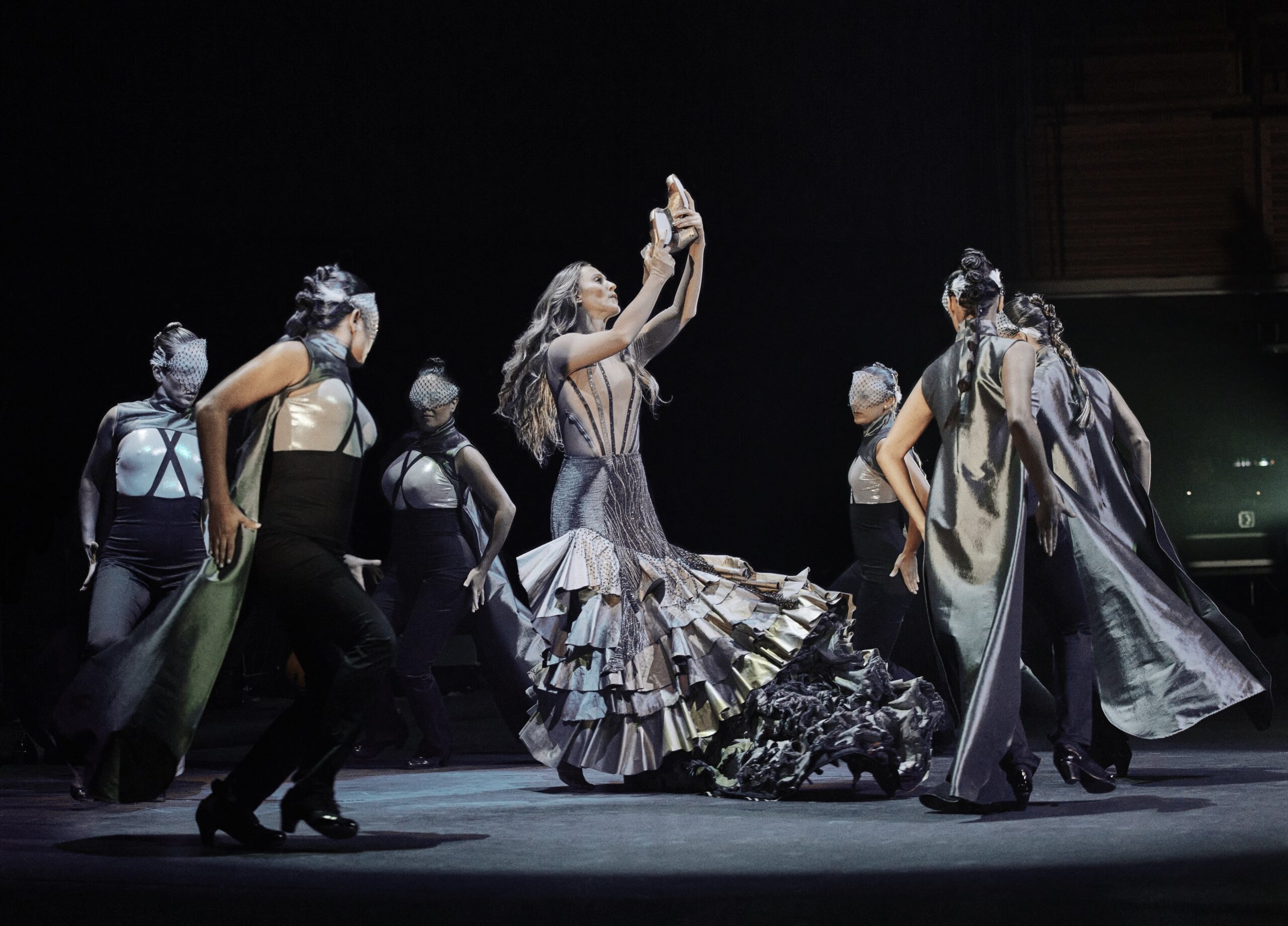
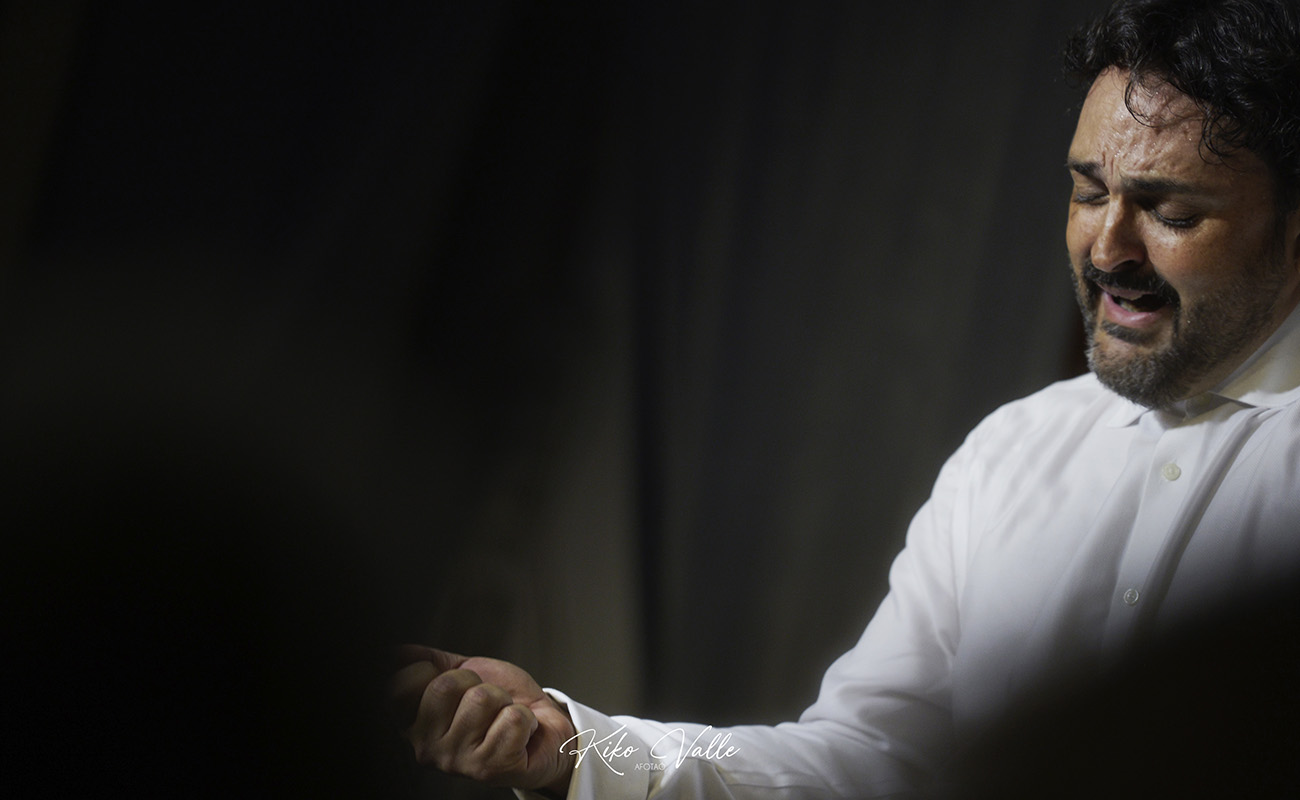

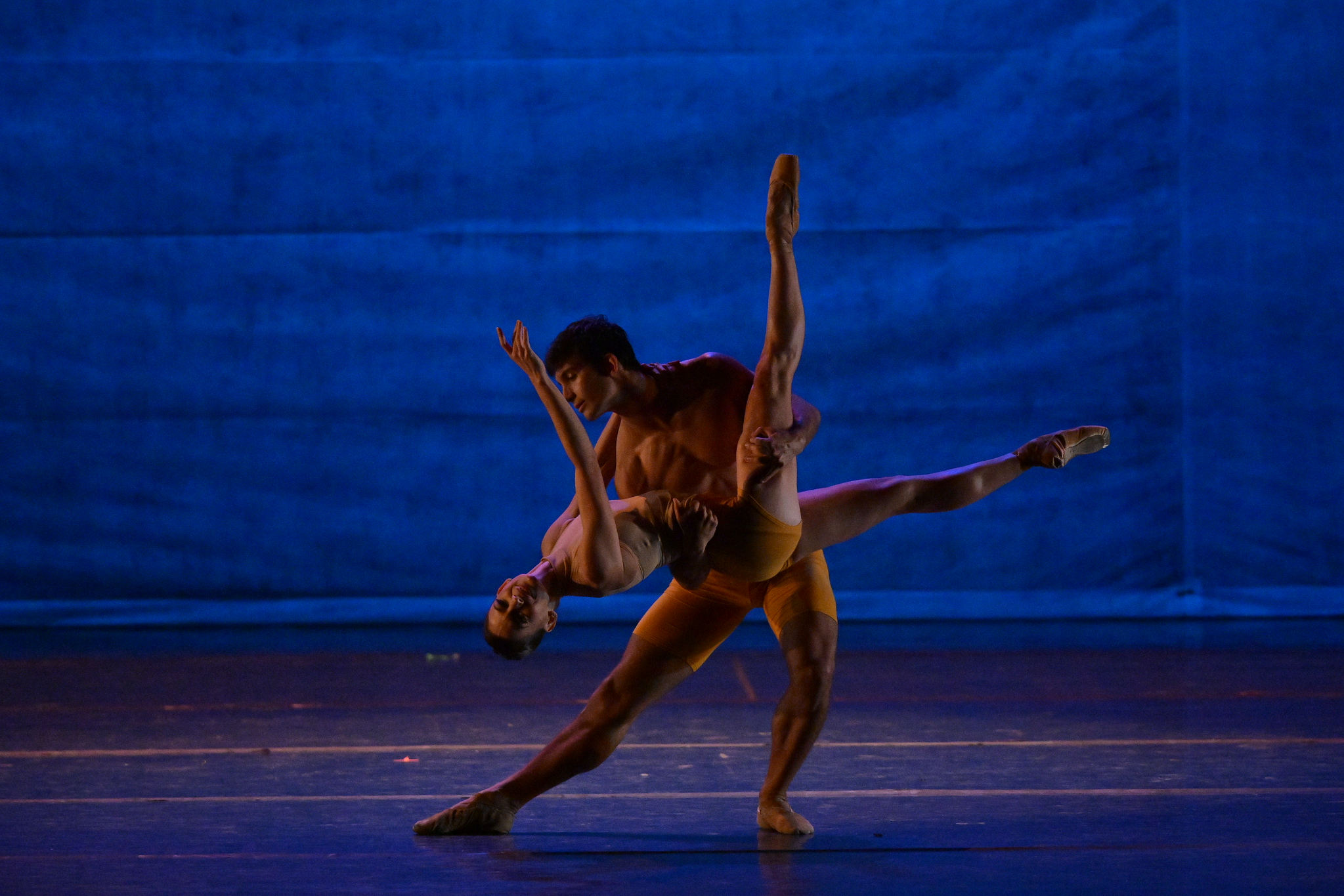


Recent Comments