Blog Article Category: Dance
New World Symphony, Miami City Ballet Pair Composers, Choreographers for ‘American Dance Odyssey’
Written By Carolina del Busto
April 13, 2026 at 11:41 PM
New World Symphony, led by Stéphane Denève and featuring the New World Symphony Fellows, present “American Dance Odyssey” in collaboration with Miami City Ballet featuring five new works along with a tribute to Jerome Robbins. (Photo by Alex Markow, courtesy of NWS)
Dance and music go together like bright stars in a dark sky – one enhances the other. Two powerhouse Miami arts institutions are collaborating on an all-new performance that elevates American music and contemporary ballet.
New World Symphony is partnering with Miami City Ballet to premiere new music from contemporary American composers and choreographers. “American Dance Odyssey,” which will be performed at New World Center on Friday, April 17 through Sunday, April 19, brings together five composers and pairs them with five choreographers.
“It’s logical, of course, that we try to unite the art forms,” says Stéphane Denève, artistic director of New World Symphony. “We’re linking creativity to new music and new choreography.”
Dancers from Miami City Ballet, New York City Ballet, Houston Ballet, and St. Louis Ballet will perform in the original pieces; the program also includes a tribute to the late American dancer and choreographer Jerome Robbins.
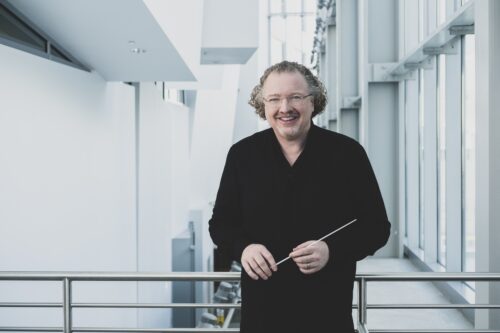
In his fourth year as artistic director for NWS, Stéphane Denève is at the helm of “American Dream Odyssey.” (Photo by Dario Acosta, courtesy of NWS)
“We really want to show off the American music and ballet of today,” says Denève, who had a hand in selecting the composers.
The project also reflects a longer commissioning strategy at Miami City Ballet, which has increasingly expanded beyond its George Balanchine and Jerome Robbins repertory to invest in new works by contemporary choreographers. Choreographer Brian Brooks will be participating in American Dance Odyssey; he was commissioned during the 2017-2018 MCB season and created “One Line Drawn.” Brooks has been paired with Pulitzer Prize-winning composer Kevin Puts.
“American Dance Odyssey” is structured around five composer-choreographer pairings curated by New World Symphony and Miami City Ballet: Carlos Simon, an Atlanta-born composer whose work engages with Black American musical traditions and contemporary themes, with Miami-born choreographer and former Alvin Ailey dancer Jamar Roberts; Sarah Kirkland Snider with choreographer Claudia Schreier; Pulitzer Prize and Grammy award winner Jennifer Higdon with New York City Ballet principal dancer Tiler Peck; Michael Abels, a composer active in both concert and film music including scores for filmmaker Jordan Peele, with choreographer Pam Tanowitz, and the pairing of Puts and Brooks.
Each composer and choreographer pair was instructed to create a 5-to-7 minute arrangement. “We organized the pieces so that they could be performed together, as a choreographic concerto, but that each piece also has an individual life of its own,” explains Denève.
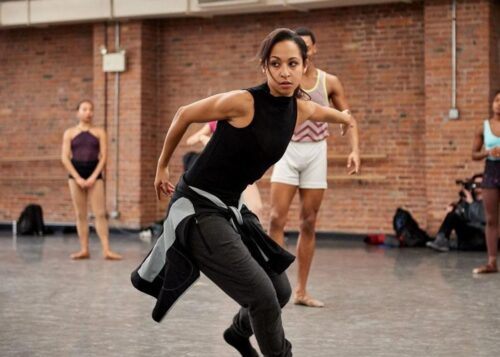
In her third collaboration with Miami City Ballet, Claudia Schreier choreographed “Iris,” an original work in a pairing with composer Sarah Kirkland Snider. (Photo courtesy of NWS)
Many of the composers and choreographers knew of each other and some even worked together in the past; but for others, this will be the first time meeting. Such is the case with Kirkland Snider and Schreier.
The two were first introduced via email and began conversations about what their collaborative piece would sound like and look like.
Schreier is a New York City-based choreographer and this will be her third time working with Miami City Ballet. She created the world-premiere ballet “Slipstream” for MCB in 2019. When she was first introduced to Kirkland Snider, the two spoke about the different themes they hoped to evoke with their piece.
“She and I spoke before she composed it and I was so enamored with what she produced. It’s a beautiful, rapturous, lush piece of music,” Schreier says.
The choreographer admits that part of her creative process involved referring frequently to a written description from Kirkland Snider about what “Iris” meant to her.
Schreier, during a telephone interview, reads from Kirkland Snider’s email and recites, “I called it ‘Iris’ because iris is a symbol for hope and wisdom, and it’s also the part of the eye that lets the light in. It’s a short piece, but in thinking about the state of our country at this point in time, I am praying for wisdom, hope, and light.”
In her email to Schreier, the composer describes the harp as a steady rhythmic undercurrent—persisting beneath the shifting music around it. At times, she notes, the piece opens into moments of celebration, which she interprets as expressions of the human spirit’s resilience.

Composer Sarah Kirkland Snider said her piece “Iris” Kirkland Snider was largely inspired by reflecting on the current state of the country. (Photo Courtesy of NWS)
“I want to celebrate the good in people… and I hope that better days lie ahead,” is how Kirkland Snider closed her statement.
“She sent me her thoughts before I started creating, so I had that as kind of my point of inspiration,” Schreier explains. “I love the idea of the iris being the part of the eye that lets the light in and having this kind of circular entry point into the music.”
Schreier choreographed a work for six dancers, each paired with another, to show the interconnectedness of people and relationships. She ensured that the sense of hope and connection is the driving force for the dance.
“As I was writing this piece, knowing that it would be used by a choreographer, I was trying to think in terms of levels, of pulse and rhythm, so that they would have different musical layers to respond to,” says Kirkland Snider.
Echoing what she first shared with her choreographer partner, Kirkland Snider says the work was largely inspired by reflecting on the current state of the country. “No matter where you fall politically,” she notes, “we can all agree that the country feels deeply polarized right now, with very little empathy across that divide. We’re made up of many different backgrounds, heritages and cultural traditions—and that diversity is something to celebrate—but the question is, how do we actually do that?”
Her answer is felt in “Iris.”
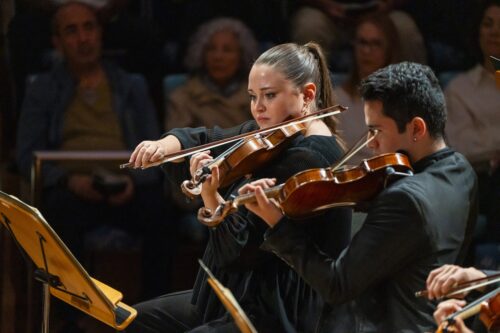
Second year NWS fellow and violinist Hannah Corbett is concert master for “American Dream Odyssey.” (Photo by Alex Markow, courtesy of NWS)
“It starts from a small idea and that little fragment is repeated and grows into this huge body of sound throughout the piece,” says second-year NWS fellow Hannah Corbett speaking about “Iris.” “Texturally, it’s pretty complicated but it’s truly a stunning piece.”
Corbett will be acting as the concert master for “American Dance Odyssey” and as leader of the string section, and will be violin soloist as part of the concerto.
The Toronto native expresses gratitude for the New World Symphony program and adds how exhilarating it is when guest composers write music specifically for the fellows. “So much of my musical life is spent studying the mastery of others and replicating that excellence. But playing a premiere, especially five premieres, is different. There’s no recording in existence… We get to be the first people to play this music and our recording will be the one that future musicians use as their reference when performing this choreographic concerto somewhere else.”
Playing in performances like “American Dance Odyssey” is part of why she became a musician.
“It’s gratifying to bring to life the music of my time,” Corbett says.
WHAT: “American Dance Odyssey”
WHERE: New World Center, 500 17th St., Miami Beach
WHEN: 8 p.m. Friday and Saturday, April 17 and 18; and 2 p.m. Sunday, April 19. The Saturday, April 18 showing will also be shown live on Wallcast in Soundscape Park with free admission.
COST: $55, $99, $135, $160, $290
INFORMATION: (305) 673-3330 or https://nws.edu/dance
ArtburstMiami.com is a nonprofit media source for the arts featuring fresh and original stories by writers dedicated to theater, dance, visual arts, film, music and more. Don’t miss a story at www.artburstmiami.com.
No posts found
Dance NOW! Miami’s Mirror of History, Humanity with ‘1933’ and ‘Bridges NOT Walls’
Written By Orlando Taquechel
March 8, 2026 at 3:54 PM
Dance NOW! Miami presents “Bridges NOT Walls” and other works on Sunday, March 15, at the Aventura Arts & Cultural Center. (Photo by Simon Soong, courtesy of Dance NOW! Miami)
The second program of Dance NOW! Miami’s 2025–2026 season brings together two works—one a world premiere and another first performed in 2017—connected by a common thread of politically charged history.
The world premiere, “1933,” choreographed by Hannah Baumgarten, and the other, “Bridges NOT Walls,” created by Baumgarten and Diego Salterini, co-founders and co-directors of Dance NOW! Miami, are part of the company’s Program II at the Aventura Arts and Cultural Center on Sunday, March 15.

Dance NOW! Miami dancers in “Bridges NOT Walls,” by Hannah Baumgarten and Diego Salterini.(Photo by Simon Soong, courtesy of Dance NOW! Miami)
“1933,” a cabaret-inspired work for three dancers, addresses the rise of Nazi leader Adolf Hitler. It was first performed last December at the Sanctuary of the Arts in Coral Gables.
Describing it as a dramatic creation, “1933” “ironically started as a playful romp… an upbeat and athletic dance piece,” says Baumgarten. “I found some fun Balkan music and started playing (around) in the studio with the dancers. But the news of comedians being censored by the government, removed from their jobs, pushed the fun right out of me,” she says, referring to the controversies of late-night talk show host Jimmy Kimmel, who was temporarily suspended from ABC, and Stephen Colbert’s show, which faces the end of its run on CBS in May.
She recalls jesters—also called court fools—popular during the Medieval and Renaissance periods. “A society that silences the jesters is on the brink of losing its freedom,” says Baumgarten. “They, from the time of kings, were meant to release political tension, but also to speak out without being condemned. And so, the story unfolded: artists taking action, using their art to speak out, of the sounds of fascism, in rallies, on the streets. In the past and perhaps even today…”
Those sounds of reality in “1933” made it a companion piece to “Bridges NOT Walls,” which has not been presented in full since 2019.

Dance NOW! Miami presents Program II at the Aventura Arts and Cultural Center on Sunday, March 15. (Photo by Simon Soong, courtesy of Dance NOW! Miami)
Salterini says that when the pair began to conceive “Bridges NOT Walls” in 2015, it was in response to the changing social climate around them.
“Conversations about racism, immigration, LGBTQ+ rights, and women’s rights were intensifying, and public discourse was becoming increasingly defined by division: the looming metaphor of the ‘wall’ as a reality of political debate.”
By the time it premiered in the company’s 2016–2017 season, Salterini says, the divisions had become even deeper.
“Entrenched in ways we could hardly have imagined, ‘Bridges NOT Walls’ emerged as a reflection of that moment and as a call for empathy, dialogue, and connection.”
As the work gained momentum, the company began to collaborate with the Ballet of Mexico City and the Classical Ballet of Quintana Roo, “sharing the stage, adding sections, and performing with both companies in both Mexico and the United States,” says Baumgarten.
A few years later, the piece resurfaced when the migration crisis reached its peak in Italy. “At that time, we were collaborating with Opus Ballet and realized that the work had a specific meaning for that moment,” she says. “We presented it in Florence to a full house, with the audience on their feet, and again in Rome in April 2019. The work was received with a sense of urgency and a hope for a future that could offer greater acceptance and compassion to those in need.”
Salterini adds that a decade later, the message is as urgent as ever.

Dance NOW! Miami dancers in “Bridges NOT Walls,” by Hannah Baumgarten and Diego Salterini.(Photo by Simon Soong, courtesy of Dance NOW! Miami)
“A reminder that art can and should continue to be a bridge when the world insists on building walls.” While the leaders of Dance NOW! Miami are not bound to promoting a specific political cause, they agree that what is happening around the world influences their work.
“It is not our explicit mission to promote a political or social agenda, but as artists—and simply as human beings living in profoundly complex times—it is impossible to separate our creative voices from the world we inhabit. We strive to create dances that transcend immediate headlines, works that can resonate across generations and cultures through universal themes,” says Salterini.
For Baumgarten, she equates art to a mirror.
“It reflects, questions, and invites awareness. In that sense, our work is not political, but human, because its purpose is connection, compassion, and understanding—timeless values that endure beyond the politics of any given moment.”
Also on Program II are two short pieces: the duo “Strings of Goodbye” (2009), by Salterini, which Baumgarten defines as “the powerful and poetic journey of a couple, dealing with the direction their relationship will take,” and the solo “OH!” (2003), by Baumgarten, which she affirms explores “the choppy moments of falling in love, remembering that first kiss that sends shivers down your spine.”

Luke Stockton and Jenny Hegarty in “Strings of Goodbye,” by Diego Salterini. (Photo by Jenny Abreu, courtesy of Dance NOW! Miami)
The program also includes “Forest Dreams,” by choreographer Tandy Beal, which Salterini describes as “a modern dance work that creates a vivid, almost sculptural landscape on stage, where the dancers move through space in wide runs and changing ‘planes,’ evoking the feeling of traversing a living, dreamlike forest environment.”
“Forest Dreams” is part of the company’s “Moving Masterpiece” series, meant to provide Florida audiences with opportunities to see masterpieces created by living choreographers such as Beal or by legendary great masters including Isadora Duncan, José Limón, Doris Humphrey, and Gerald Arpino.

From left, Justin Dinkins, Cristiane Silva, Jason Williams, and Megan Holsinger in “Forest Dreams.” (Photo by Jenny Abreu, courtesy of Dance NOW! Miami)
The program was conceived, according to Salterini, with the objective that “people leave the theater not only moved by the dance, but also more curious, reflective, and open to dialogue.”
And while there may be emotionally challenging moments throughout, Baumgarten believes there will be many moments with a positive impact.
“We promise that our audience will leave the theater uplifted, with their hearts full and brimming with optimism for the future.”
WHAT: Dance NOW! Program II: “Bridges NOT Walls” and other works
WHEN: 7 p.m., Sunday, March 15
WHERE: Aventura Arts & Cultural Center, 3385 NE 188th St., Aventura
COST: $25.96, $37.76, $49.56 (includes fees before taxes); $20, students with a valid ID at box office.
INFORMATION: (305) 975-8489 and at dancenowmiami.org/events/bnw
ArtburstMiami.com is a nonprofit media source for the arts featuring fresh and original stories by writers dedicated to theater, dance, visual arts, film, music and more. Don’t miss a story at www.artburstmiami.com.
No posts found
Sara Baras Brings ‘Vuela’ to Flamenco Festival Miami in Tribute to Paco de Lucía
Written By Helena Alonso Paisley
February 21, 2026 at 1:59 PM
Ballet Flamenco Sara Baras’s “Vuela” comes to Flamenco Festival Miami on Saturday, Feb. 28 and Sunday, March 1, the exclusive big-ticket concert of this year’s annual celebration of the art form at the Adrienne Arsht Center. (Photo by Sofia Wittert, courtesy of the Adrienne Arsht Center)
Onstage, “prima bailaora assoluta” Sara Baras is as indomitable as a force of nature. With footwork as relentless as a summer rainstorm on a metal roof, arms that look as though they could hold up the sky, and a face that radiates warmth like the sunlight of her native Cadiz, it is easy to see why she has been an audience favorite at Flamenco Festival Miami since the event began.
Her company’s first performance here was in 2005, the festival’s inaugural year, before it moved from the Jackie Gleason Theater (now Filmore) to the then newly erected Adrienne Arsht Center.
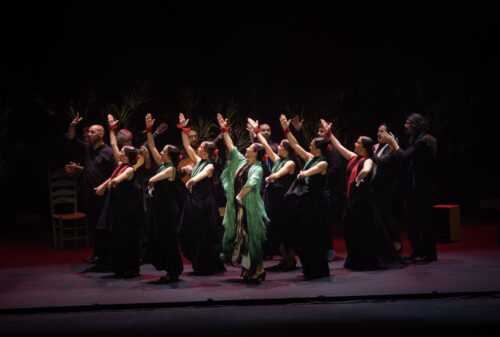
After three sold-out runs in Madrid and international performances from London to Hong Kong and stops in between, audiences continue clamoring to see “Vuela,” Sara Baras’s tribute to iconic flamenco guitarist Paco de Lucía. (Photo by Sofia Wittert, courtesy of the Adrienne Arsht Center)
In its fourth visit to Flamenco Festival Miami on Saturday, Feb. 28 and Sunday, March 1, the company performs “Vuela,” a concert-length work that pays homage to guitar titan Paco de Lucía, whose untimely death in 2014 sent shock waves through the flamenco world.
Guitarist Paco Fonta, long a pillar of Miami’s flamenco scene, explains that de Lucía “made his mark on all of us,” not just with his playing and his incredible technical prowess, but with the music he created. “He was a god, practically,” says Fonta.
Baras explains that she thinks of “Vuela” as her way of thanking the musician she calls one of her greatest teachers.
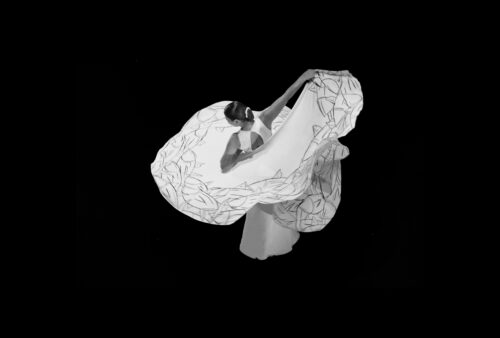
Dancer Sara Baras possesses the strength, technique and attention to detail of an Olympic athlete, but she says dance for her is more about emotional depth than mere physical prowess. (Photo by Sofia Wittert, courtesy of the Adrienne Arsht Center)
“I was lucky to be close to the Maestro and to have his advice and warmth my entire life,” De Lucía admonished her to “never forget where you come from,” says Baras. “Of course, you must travel and live and share and learn from all cultures, but without forgetting who you are.”
If de Lucía opened flamenco to the world, Baras, for her part, opened the world to flamenco. With his embrace of jazz, Latin and rock influences and the incorporation of instruments like the Peruvian cajón, the saxophone, and the electric bass into his ensemble, de Lucía breathed new vigor into traditional flamenco and brought millions of young listeners into the fold. And Baras, with over a quarter century and five continents’ worth of touring under her belt, has herself become one of the art form’s preeminent international ambassadors.
Since the debut of “Vuela” in 2024, Baras has played to sold-out theaters in cities like London, Paris and Hong Kong, and will have its fourth run in Madrid this spring.
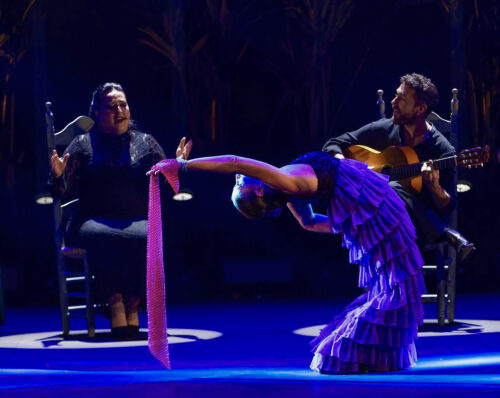
Singer May Fernández, dancer Sara Baras and guitarist Keko Baldomero all hail from the southern port city of Cádiz, one of the cradles of flamenco. (Photo by Sofia Wittert, courtesy of the Adrienne Arsht Center)
“Vuela” is a work in four acts— “Tierra,” “Mar,” “Muerte” and “Volar”—with fifteen dance and musical numbers that Baras says explore elements like the earth and the sea to create a work that she says is more experience than spectacle. Wooden canes pound the ground in the section “Earth,” while “Mar” speaks of “the immensity of the sea and the water. Afterwards “Death,” being able to accept that our loved ones leave us, not only with the sadness of losing them, but also with gratitude for having had them with us.”
In the end, she says, the performers allow those emotions to “fly through dance,” first out to the audience then back to the performers on stage, in that profound energetic circle that only live performances can create.
The troupe is made up of a corps of six dancers, Baras, and six musicians, including guitarist and musical director Keke Baldomero, who was tasked with composing and arranging the music for this ambitious production.
Baldomero, who played for many years for singer José Mercé, joined the Baras troupe in 2012. He has written many full-length works for them since, from 2012’s “La Pepa” to “Alma,” a highlight of the Arsht’s 2023 festival. Still, the notion of composing a nearly two-hour piece in homage to the god of the flamenco guitar must have been a daunting one. Baldomero chose to weave recordings of de Lucía in with his own compositions; these, too, contain motifs that play off the Maestro’s rhythms and melodies.
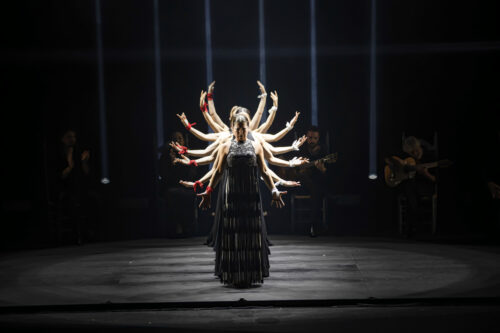
“Vuela” (meaning “fly”) is performed by Sara Baras together with 13 dancers and musicians. (Photo by Sofia Wittert, courtesy of Adrienne Arsht Center)
Miguel Marín, founder and director of the international Flamenco Festival, explains that “one of the lovely things in the show is that each of the artists has their moment.” Audiences, he says “see these sublime moments of guitar, singing, dance, percussion.”
Indeed, while a Sara Baras concert is always a visual feast, it is as rewarding to simply listen to as it is to see. While it would be nearly impossible to close your eyes during one of Baras’s solos, if you did, you might appreciate more fully what a virtuoso percussionist she truly is. This is perhaps one of the qualities that endears her to guitarists like de Lucía: she is as much as a fellow musician as she is a dancer. And, like her guitarist mentor, Baras never holds back.
“When she performs,” Marín says, “she gives herself over completely, and it’s not just her. It’s her whole group that has to give of themselves as she does.”
Other musicians in her group include singer May Fernández, who, like Baras, hails from Cádiz, Spain’s oldest city and one of the cradles of flamenco. Her powerful voice has the rich, gutsy authenticity of someone who grew up in the “barrio de Santa María,” historically a hotbed of flamenco tradition and southern Spanish sass. Matías López, “El Mati,” approaches lyrics with tender sensitivity. His voice carries a delicious sweetness punctuated by moments of raw emotional intensity.
“The show,” Marín says, “has the additional element of collective energy. You see Sara and you see how she is giving it her all and, as the singer, you too are inspired. You have to give it your all, it’s something that feeds itself.”
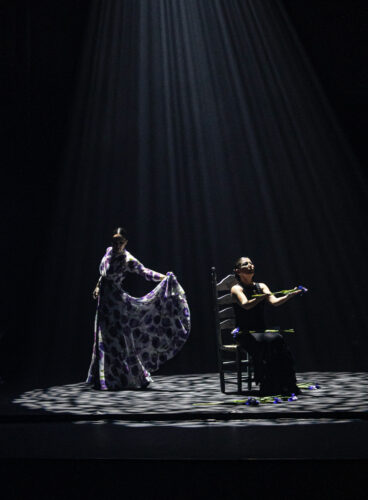
“Vuela” is a work in four acts— “Tierra,” “Mar,” “Muerte” and “Volar.” In the section entitled “Earth,” the dancers pound the
floor with wooden canes in syncopation with the rhythms of their feet. (Photo by Sofia Wittert, courtesy of the
Adrienne Arsht Center)
Marín notes that de Lucía had an unwavering dedication to flamenco that Baras shares, as well as “a humility that makes both of them even greater.”
“I want to connect with everyone,” says Baras. “I don’t want to dance just for myself.” Onstage, “when you stand up there, the truth is you want to reach the last heart in the last row.”
She wants the audience to find themselves immersed in the performance.
“Whether or not you can tell a ‘soleares’ apart from a ‘seguidilla,’ it doesn’t matter,” she says. “Flamenco knows nothing about passports or languages. It doesn’t have any of those limits. It goes directly to the heart.”
Other events in the Flamenco Festival include “Son Gitano,” a Latin American and flamenco fusion band, performing outdoors on the Arsht’s Thompson Plaza at 7:30 p.m., Wednesday, Feb. 25. Tickets are $29.95 at 305-949-6722 or arshtcenter.org. Singer Ángeles Toledano, a rising star in the flamenco firmament, plays the Miami Beach Bandshell at 8 p.m. Thursday, March 5. Tickets are $26.43 at miamibeachbandshell.com/.
WHAT: Flamenco Festival Miami presents “Vuela,” by Ballet Flamenco Sara Baras
WHEN: 7:30 p.m. Saturday, Feb. 28, and 3 p.m. Sunday, March 1
WHERE: Knight Center Hall, Adrienne Arsht Center for the Performing Arts, 1300 Biscayne Blvd., Miami
COST: $35.10 – $204.75, includes fees.
INFORMATION: (305) 949-6722 or arshtcenter.org
ArtburstMiami.com is a nonprofit media source for the arts featuring fresh and original stories by writers dedicated to theater, dance, visual arts, film, music, and more. Don’t miss a story at www.artburstmiami.com
No posts found
Miami City Ballet Founder Celebrated with Original Work ‘Three Waltzes for Toby’
Written By Guillermo Perez
February 15, 2026 at 11:46 AM
Miami City Ballet performs George Balanchine’s “Serenade” in “Into the Magic City,” the company’s winter program, also featuring a world premiere by Alexie Ratmansky for Miami City Ballet Founder Toby Lerner Ansin. (Photo by Alexander Iziliaev, courtesy of Miami City Ballet)
It was 1985 when Toby Lerner Ansin, an arts advocate and divorced mother of three, set out to secure a professional ballet company in South Florida. For her mission, she would enlist dance world-luminary Edward Villella as artistic director and the backing of kindred spirits.
Almost 6,000 miles across the globe, Alexei Ratmansky, a ballet talent pulsing with creative longing to move beyond Soviet strictures, was starting on his career path in Kyiv, Ukraine. Just a few years later in Zaragoza, Spain, high-spirited eight year old Gonzalo Garcia, was enrolled in ballet classes by his mother, who’d noticed how moving to music brightened her son’s days. As destiny would have it, María de Ávila’s prestigious dance academy was steps away from their family home.
These three figures come together in both a celebration of MCB’s 40th anniversary and the visionary’s 85th birthday.
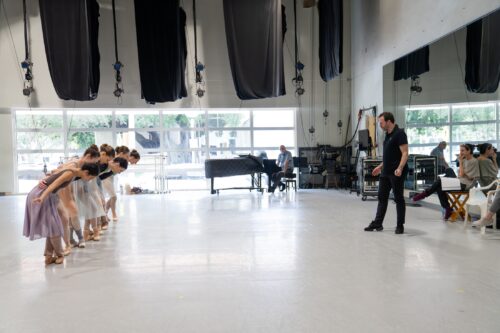
Alexei Ratmansky considers the ballerinas’ reverence to Strauss’s music during a rehearsal of his “Roses from the South, Three Waltzes for Toby.” (Photo courtesy of Miami City Ballet)
“Into the Magic City,” the company’s winter program, is a layered treat of two significant George Balanchine works and a world premiere by Ratmansky entitled “Roses from the South, Three Waltzes for Toby,” set to a Johann Strauss II score.
MCB performs the program Friday through Sunday, Feb. 20 to 22 at Miami’s Adrienne Arsht Center and in West Palm Beach at the Kravis Center Saturday, Feb. 28 and Sunday, March 1.
“When my children asked me what I wanted for my birthday,” says Lerner Ansin, “I immediately said a new ballet.“
Anyone who has known Ansin for any length of time would not be surprised by her answer. She began ballet lessons as a child to help strengthen her ankles, but what started as therapy became a lifelong passion that stayed with her into adulthood.
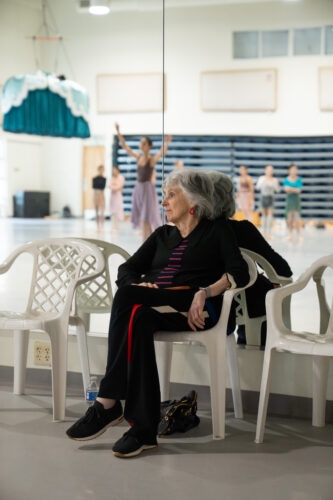
Toby Lerner Ansin watches rehearsal for “Roses from the South, Three Waltzes for Toby,” choreographed by Alexei Ratmansky and created as a celebration of Ansin’s birthday. (Photo courtesy of Miami City Ballet)
“To this day,” she says, “I’m carried away by the magic of ballet — its beauty and musicality. As a girl, it captured my imagination. From the first time I walked into a studio, that’s all I wanted to do.”
When she realized she would not become a professional dancer, she didn’t abandon the art form. She held on to the enrichment ballet offered, which made her both an enthralled theatergoer and a dedicated presence in boardrooms — a true champion of the arts, ensuring ballet continues to flourish. She acknowledges that her own tenacity has been indispensable in drawing allies to her cause.
“I just wouldn’t take no for an answer,” she says, reflecting on the persistence it took to bring Miami City Ballet wider recognition.
Now Ratmansky’s aptly titled “Roses from the South” is giving MCB’s founder her flowers.
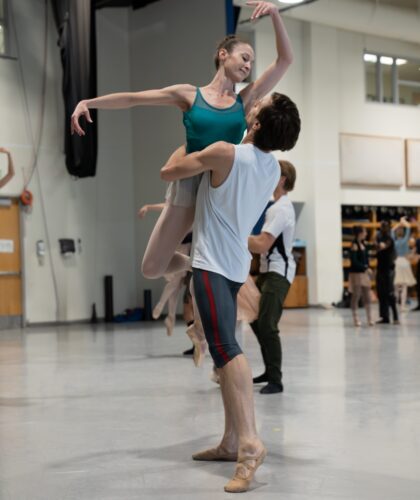
Nicole Stalker and Steven Loch merging athleticism with conviviality rehearsing “Roses from the South, Three Waltzes for Toby” by Alexei Ratmansky. (Photo courtesy of Miami City Ballet)
The efforts of former Miami City Ballet artistic director Lourdes Lopez and the sponsorship of The Ansin Family Foundation brought back the renowned choreographer to the company. Ratmansky, who was artist-in-residence at American Ballet Theatre and has held the same role at New York City Ballet since 2023, premiered his “Symphonic Dances” at MCB in 2012 and staged his version of “Swan Lake” for its first North American production here four years ago.
Lerner Ansin is captivated by Ratmansky’s choreographic approach. “He came last November,” she says, “and while he set the ballet, I watched for hours in the studio over most of three weeks. Alexei had no notes — he just came in and created, very interactive with the dancers. If something didn’t feel right, they tried something else. He added twists and turns and some comical touches the audience will love. The music is so festive it later made me dance around my bedroom.”
At a recent studio run-through, MCB rehearsal director Joan Latham oversaw the cast’s energetic response to three compositions from 1880s Vienna: “Lagoon Waltz” (for eight women), “Roses from the South” (for eight men), and “Emperor Waltz” (bringing both groups together). Leisurely passages broke into a gallop, but that cavalcade was never devoid of convivial configurations.
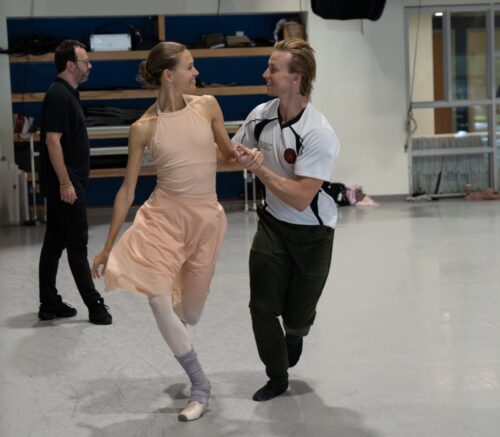
Alexei Ratmansky and dancers Yuliia Moskalenko and Chase Swatosh on a friendly stroll rehearsing “Roses from the South, Three Waltzes for Toby” by Alexei Ratmansky. (Photo courtesy of Miami City Ballet)
“This is my first choreography to Strauss,” says Ratmansky. “It wasn’t just him but Arnold Schoenberg’s arrangements that also interested me. Strauss, of course, is very danceable, but he can get a little too sweet. These versions give the music deeper layers.” In 1921, modernist master Schoenberg arranged the waltzes to raise funds for his performance society, bridging new music and the past.
Inspired by Lerner Ansin’s vision for MCB, Ratmansky crafted celebratory movements. “I’m trying to gently portray the special quality of the company, which resembles a supportive family. I like that these are great professionals who are also humble in how they present themselves. I want to give each one a moment to shine.”
Garcia, who as a principal at New York City Ballet originated roles in Ratmansky’s “Concerto DSCH” and “Pictures at an Exhibition”—both now in MCB’s repertory—says interpreting these works is “a high-caliber experience that can propel the dancers. The common denominator among Alexei’s ballets is how confident he is—how specific—from the comical to the melancholy. You have to work hard, be very present in the room, but he knows what you’re capable of and how to make you better.”
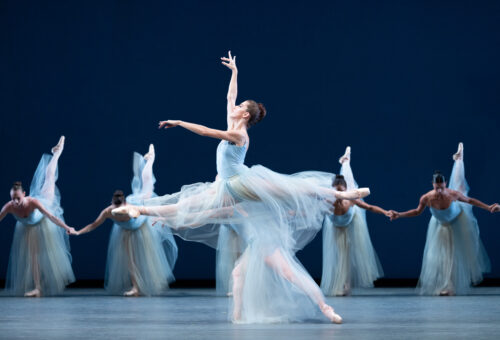
Taylor Naturkas leaping toward an other-worldly sphere in George Balanchine’s “Serenade.” Choreography by George Balanchine © The George Balanchine Trust. (Photo by Alexander Iziliaev)
Although Garcia did not curate this MCB season, his perspective on the programming is invaluable. In fact, he added a piece not originally planned for the show. Alongside Balanchine’s “Serenade” to Tchaikovsky—a work he prizes for its historical significance and beauty (it was Balanchine’s first U.S. creation in 1935)—he included the fireworks of “Tarantella,” a 1964 bravura duet originally choreographed at New York City Ballet for Edward Villella. “Apart from its historical significance,” Garcia says of the fast, virtuosic piece set to music by New Orleans composer Louis Moreau Gottschalk, “this is a great showcase for company talent.”
As a young dancer at San Francisco Ballet, Garcia was once called on at short notice to substitute for a “Tarantella” lead. “When the legs started to scream, I learned how to deal,” he recalls. “But the ensuing performances taught me how to deepen characterization and economize energy.” That intimate understanding of this and other works is something he now passes on to MCB dancers, while giving them space to make each role their own.
“They learn quickly and work hard,” he adds. “With a good eye, they shoot for the highest level.”
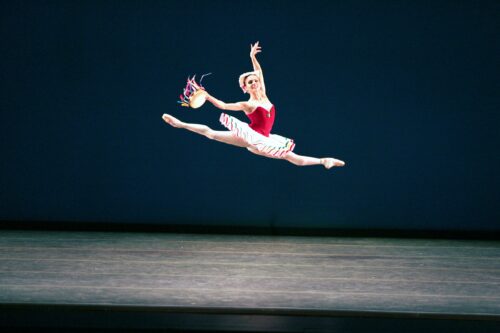
Mary Carmen Catoya displaying the high energy of George Balanchine’s “Tarantella” in a previous MCB production. (Photo by Joe Gato, courtesy of Miami City Ballet)
The impact of this achievement—a communal one, as Lerner Ansin notes, her aspirations realized through successive generations—carries a message Ratmansky finds especially meaningful today.
“It’s notable that these dancers come from different places,” Ratmansky says, pointing to company members with roots in Japan, Latin America, Canada, Ukraine, and the United States. “This is what America is about. Each person brings something special, and there should be a space—with respect and appreciation—for all.”
”WHAT: Miami City Ballet’s “Into the Magic City”
WHEN: 7:30 p.m. Friday, Feb. 20; 2 and 7:30 p.m. Saturday, Feb. 21; 2 p.m. Sunday, Feb. 22
WHERE: Adrienne Arsht Center for the Performing Arts, 1300 Biscayne
Blvd., Miami
ADDITIONAL PERFORMANCES: Kravis Center for the Performing Arts, 701 Okeechobee Blvd., West Palm Beach; 2 and 7:30 p.m. Saturday, Feb. 28; 1 p.m. Sunday, March 1
COST: $45-$265, depending on show time and venue.
INFORMATION: 305-929-7010 or miamicityballet.org
ArtburstMiami.com is a nonprofit media source for the arts featuring fresh and original stories by writers dedicated to theater, dance, visual arts, film, music and more. Don’t miss a story at www.artburstmiami.com.
No posts found
ScreenDance Miami Returns, Exploring Dance and Identity
Written By Carolina del Busto
January 19, 2026 at 12:45 PM
“Imamou” explores the beauty of a traditional Haitian folk dance. The film will be shown as part of ScreenDance Miami on Saturday, Jan. 24 at Perez Art Museum Miami. (Photo courtesy of filmmaker Portsha Terae Jefferson)
How do you celebrate dance? ScreenDance Miami, a four-day festival opening on Wednesday, Jan. 21, elevates this traditional art form with a little help from another visual medium. Through film screenings and artist talks, ScreenDance Miami 2026 aims to bring the community together over a shared passion.
While ScreenDance Miami features a wide range of dance films taking place across various venues in the city, this year’s lineup leans into documentary.
Filmmaker Jennifer Lin will screen two works spotlighting Asians in dance as part of the Wallcast at Soundscape Park on Friday, Jan. 23. The evening begins with her short film, “Ten Times Better,” followed by her feature documentary, “About Face: Disrupting Ballet.”

“W” by Lisa Kusanagi and Li-Chin Li screens as part of the Miami Incubator
Documentaries. program at Miami Theater Center on Thursday, Jan. 22. (Photo courtesy of the filmmakers)
ScreenDance Miami’s festival director, Pioneer Winter, read Phil Chan’s book, “Final Bow for Yellowface,” and discovered that New York City-based Lin had created a film about it titled “About Face.” He reached out to the director and asked to screen her film, to which Lin cheekily suggested a double feature.
“The two films, one grew out of the other, and I feel like they’re kind of bookends to the story of Asians in ballet,” says the reporter-turned-author-turned filmmaker. “‘Ten Times Better’ really looks at a pioneering dancer, George Lee, who represents the past. And Georgina and Phil in ‘About Face’ kind of represent the present and the future in terms of Asian Americans in dance.”
In “About Face,” Lin explores the authenticity of Asian dancers with a particular connection to “The Nutcracker” and the famed Chinese “Tea” dance. Lin herself grew up going to the ballet with her mother, and later in life would take her daughter to see the classic ballet. “The Chinese dance in ‘The Nutcracker’ never felt right to me, but I could never pinpoint why. When I read Phil Chan’s book, he gave me the language to explain why it was offensive.”
As she embarked to create “About Face,” Lin stumbled upon a man who would become the focus of her other documentary. In her research, she found a newspaper clipping about a young Asian dancer who was in the Chinese “Tea” dance in George Balanchine’s “The Nutcracker” in 1954 with the New York City Ballet. That young man was named George Lee. After months of searching, Lin discovered Lee had changed his name (from Li to Lee) and moved to Las Vegas where he was no longer dancing but working as a blackjack dealer. Lee was 88 years old when Lin met him.

Dancer Bill T. Jones reflects on why he dances for Keith Glassman’s documentary,
“Lives Beyond Motion.” (Courtesy of the filmmaker)
Naturally, she felt an urgency to interview Lee due to his age and share his story with the world. “Ten Times Better” had its world premiere on Feb. 10, 2024, at Lincoln Center’s Film at Lincoln Center in New York.
“I hope that people are drawn into Lee’s story and the discussion Phil Chan and Georgina Pazcoguin are trying to lead in ‘About Face’ and the issues they’re trying to address,” says Lin. “I hope people will stop and think about diversity and inclusion in the dance world.”
The dance world is saturated with female dancers. It’s a place where men often feel marginalized. Enter dancer-turned-filmmaker Keith Glassman. The Los Angeles-based dancer spent most of his life dancing. Why? He wasn’t sure.
“I’ve been dancing for a long time, and I wasn’t quite sure why I kept doing it,” says Glassman, whose film screens . The question stayed with him, and he eventually began asking other male dancers the same thing. After over a decade of asking friends and colleagues, “Why do you dance?” Glassman was ready to make a film.
“I didn’t know anything about filmmaking,’” recalls Glassman. But he reached out to producer and composer The Angel, who instantly fell in love with the project.
“I felt there was some real depth in this film,” says the producer, jumping on a Zoom call with the director. “The human aspect of it, that it could speak to anyone, not just the dance community. It really just spoke to me as a human being, first and foremost.”

Dancer Cecilia Benitez transforms into the spirit of an egg in “La Superstición del
Huevo.” (Photo courtesy of Darmyn Calderon )
Part of what drew The Angel to Glassman’s film was the stories she heard through the interviews. “Most of the men went through hell to be able to dance. From sleeping on park benches to sweeping floors… no matter what was thrown at them, they felt compelled to dance.”
Glassman posed the same question to 33 other male dancers in his feature-length documentary, “Lives Beyond Motion,” which is screening on Saturday, Jan. 24, at Pérez Art Museum Miami (PAMM).
“I love the fact that it branches out and shows a whole bunch of different people coming from different dance backgrounds but they all have similar experiences because of their gender. The male experience in dance is specific.”
Winter says he can relate first-hand to the experiences featured in “Life Beyond Motion” having been a dancer since he was child. He shares that the film is “refreshing,” adding, “It’s a lot of talking heads, a lot of history, a lot of conversation. I would say the content is very rich as far as the conversations and the frankness and the honesty of the people being interviewed.”
Working with a local jury to view and select all of the films screening for ScreenDance Miami., Winter speaks of the curation as a subtle art form — moving one film here, adding another there, and then stepping back to ensure all the ingredients meld together for a delicious meal. “Part of the curation is seeing how to best support films so they’re not just floating on their own,” explains Winter.
He can see the bigger picture and how one film might need a little support from another. Winter felt it was important to screen “Adele Myers and Dancers Presents: Miami DanceMakers Documentary” but felt that on its own it would get lost. He paired it with another doc, “Grass Stains 2024,” as part of the Miami Incubator Documentaries program on Thursday, Jan. 22. “Grass Stains” is a site‑specific dance initiative and mentorship project launched by Winter.
“I thought the Adele Myers doc was important to include, and we were able to include it by then bringing in these other films, because then it makes sense as a conversation,” says Winter.
The 2026 program features 17 short films and three feature-length films.

How would you personify an egg cleansing ritual? Find out in “La Superstición del
Huevo” on Saturday, Jan. 24 at PAMM. (Photo courtesy of Darmyn Calderon )
One dancer that will be featured in the Adele Myers documentary and another film of her own is Miami dancer and choreographer Cecilia Benitez.
“The thing I think is really cool about Cecilia is that she is sort of an example of an artist that has been able to take advantage of multiple artist opportunities that are available for professional development in the community,” says Winter. “She did ‘Grass Stains’ with me, she’s done ‘Here and Now,’ and now we’re screening her film at ScreenDance.”
Benitez’s short film, “La Superstición del Huevo,” is the dancer’s first official film. She worked on it with director Darmyn Calderon. The 12-minute movie will screen as part of Program 2 on Saturday, Jan. 24 at PAMM.
Calderon approached Benitez with the idea for “La Superstición del Huevo.” She wanted to turn a photography series into a dance film. The two worked together and Benitez stepped into the role of the only movement artist in the piece. The story follows the Latin ritual, or superstition, where one uses an egg to cleanse the negative energy from another. “It’s really about the relationship between a mother and a daughter and the rituals we do to either cleanse, or to connect, or to heal,” explains Benitez.
She says ScreenDance is another opportunity that the Miami community has given to her.
“Miami Light Project gave me my start with ‘Here and Now,’” says Benitez. “I’ve just been able to take advantage of various grants and programs, like ‘Grass Stains’… I truly believe in the Miami dance community so much our resilience and our ability to be really resourceful. This community’s pretty awesome.”
WHAT: Miami Light Project: ScreenDance Miami
WHERE: Miami Beach Bandshell, 7275 Collins Ave., Miami Beach; The Light Box Studio at Miami Theater Center, 9816 NE 2nd Ave., Miami Shores; New World Center’s Wallcast at Soundscape Park, 400 17th St., Miami Beach; and Pérez Art Museum Miami, 1103 Biscayne Blvd., Miami.
WHEN: 7:30 p.m. Wednesday, Jan. 21, 7 p.m., Thursday, Jan. 22 and Friday, Jan. 23, and noon and 5 p.m. Saturday, Jan. 24.
COST: Select screenings are free with RSVP and others are $5 not including fees via miamilightproject.com. At PAMM, free with museum admission. Admission is $18 for adults and free for museum members.
INFORMATION: (305) 576-4350 or miamilightproject.com. Complete schedule at miamibeachbandshell.com/event/screendance-miami-festival-2026/
ArtburstMiami.com is a nonprofit media source for the arts featuring fresh and original stories by writers dedicated to theater, dance, visual arts, film, music and more. Don’t miss a story at www.artburstmiami.com.
No posts found
The ‘Winter’s Breath’ of Dance NOW Miami! Features Jon Lehrer Company in Coral Gables
Written By Orlando Taquechel
December 16, 2025 at 2:37 PM
Dancers Hunter Hoffman and Julia Faris, from Dance NOW! Miami, in the love duet from “Havisham!” by Hannah Baumgarten, which will be performed as part of the program “Winter’s Breath” at Coral Gables’ Sanctuary of the Arts. (Photo by Simon Soong, courtesy of Dance NOW! Miami)
Miami dance returns to Coral Gables as the Jon Lehrer Dance Company (JLDC) joins Dance Now! Miami (DNM) for an evening of performances. The program includes signature DNM pieces, a new work-in-progress, and a world premiere, showcasing a vibrant dance scene.
The 18-year-old modern dance company, based in New York City, will perform with DNM on Friday, Dec. 19, in a program titled “Winter’s Breath.”
Diego Salterini, co-founder and co-director of DNM, joined by Hannah Baumgarten, explains how the relationship between the two companies began in 2021.
“A few seasons back, we presented one of his works, ‘Solstice,’ and when Jon came down for a residency with our dancers, that’s when our camaraderie and friendship really deepened. Our audiences loved ‘Solstice’ — it stayed in our repertory for two seasons and received a great response here in Miami and beyond,” says Salterini.
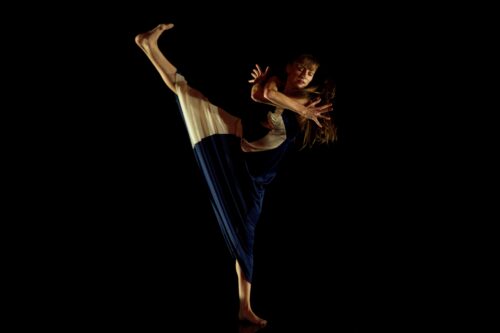
Dancer Jenny Hegarty in “There I am, Here” by Hannah Baumgarten. (Photo by Simon Soong, courtesy of Dance NOW! Miami)
The two companies are collaborating for the one-night seasonal celebration featuring nine short pieces.
The evening opens with “Ave Maria,” a serene homage to mothers, specifically to the Virgin Mary. The piece, created by Isadora Duncan, which premiered in 1914 at Carnegie Hall, is set to music by Franz Schubert. Andrea Mantell Seidel, who staged it for DNM, is a Professor of Dance and the founding director of the Intercultural Dance and Music Institute, which is housed in the Latin American and Caribbean Center at Florida International University.
A dancer and choreographer recognized as an authority on Isadora Duncan, Seidel, also the founder of The Isadora Duncan Dance Ensemble, dedicated to maintaining her legacy, has trained DNM dancers in Isadora’s free and emotional style.
“(‘Ave Maria’) is a perfect choice for a holiday show, establishing the program’s warm opening,” says Baumgarten.
The program includes another Duncan work, a delicate and fairytale-like solo titled “Harp Etude” (1917), set to the music of Frédéric Chopin, also staged by Mantell Seidel and performed by DCM dancer Allyn Ginns-Ayers.
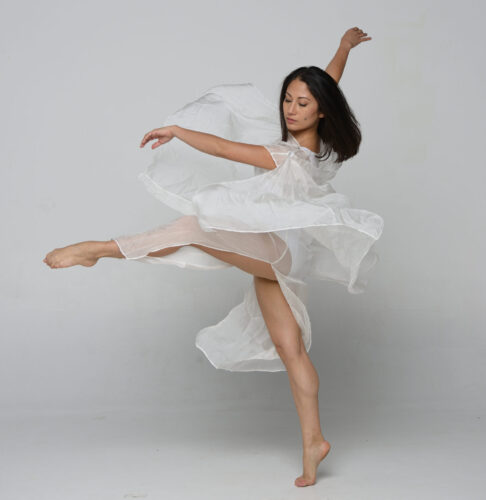
Dancer Allyn Ginns Ayers in “Harp Etude,” a choreography by Isadora Duncan, staged by Andrea Mantell Seidel. (Photo by Simon Soong, courtesy of Dance NOW! Miami)
In her book, “Isadora Duncan in the 21st Century,” published in 2016, Mantell Seidel writes that the dance was inspired by the tale of Ondine, “a water nymph who was in search of a human soul so that she could unite with her human lover.”
The evening also features the world premiere of Salterini’s newest work, “Deco-de” (2025)..
“I created ‘Deco-de’ in response to an invitation from George Neary, interim director of the Miami Design Preservation League, to develop performances for the 2026 Art Deco Festival,” says Salterini. “I wanted to capture the essence of the Art Deco movement — that incredible sense of modernity, optimism, and bold design that defines both the architecture and the era.”
He explains that it is a seven-minute trio based on George Gershwin’s 1919 composition “Lullaby.”
“In my research — and reflecting on my own artistic upbringing — I connected to how Art Deco often feels like a visual ‘Will to Power’: vertical lines, sunbursts, sleek forms, and that sense of forward motion and confidence.”
Salterini says he doesn’t like to explain too much about his works.
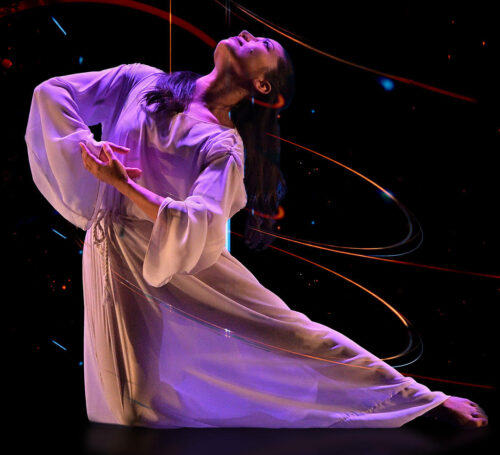
Dance NOW! Miami with the Jon Lehrer Dance Company perform at the Coral Gables Sanctuary of the Arts on Friday, Dec. 19. (Photo courtesy of Dance NOW! Miami)
“I want audiences to discover their own meaning through what they see and feel,” he says. “But what I can share is that “Deco-de” channels those Art Deco ideals through three extraordinary dancers — Austin Duclos, Sophia Pfitzenmeier, and Kirsten Velasco— whose physicality and artistry bring the concept vividly to life. And I hope it will captivate audiences with its beauty, strength, and elegance.”
Three pieces by Baumgarten are included in the “Winter’s Breath” program including a work-in-progress, “1933,” along with “Love Duet from Havisham!” (2024) and “There I am, Here” (2008).
Presented as a rough draft, ‘1933’ is “a visit to a time when artists are silenced,” says Baumgarten. “The small cast of three, Alexander Campbell, Sophie Leung, and Julia Faris, carries a large message.”
The love duet from “Havisham!,” which Baumgarten describes as “a romantic duet that makes us all smile,” will be performed by Faris and DNM’s newest dancer, Hunter Hoffman, who “brings his own romantic sensibility to this piece,” says the choreographer.
“Havisham!” was first presented in 2024 as a site-specific premiere at the Ancient Spanish Monastery in North Miami Beach. It reimagines Miss Havisham, the infamous wealthy spinster from Charles Dickens’ “Great Expectations.”
The lyrical “There I am, Here” will feature a guest performance from Jenny Hegarty, former DNM Rehearsal Director, now based out of New York, who is in Miami to restage a work of Tandy Beal titled ‘Forest Dreams’ for DNM’s Program II in March. “We are blessed to have her distinct and powerful presence on stage for this show,” says Baumgarten.
Lehrer’s company will perform “Here in this Eden” (2013). The company made its debut in February at the Sanctuary of the Arts and also performed there again in May.
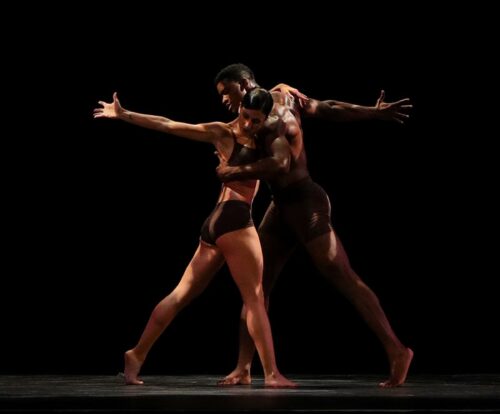
Dancers Cristiana Cavallo and Ricardo G. Barret, from Jon Lehrer Dance Company, in Jon Lehrer’s “Here in Eden.” (Photo by Kiesha Stephens, courtesy of Dance NOW! Miami)
“Here in this Eden” is described by the choreographer as “a classic love duet about two people who want to be exactly where they are, at this moment, with this person—in other words, creating their own Eden.”
“I am so excited for our audiences to experience its intensity and grace,” shares Baumgarten.
Drawing the evening to a close will be “Winter’s Breath” (2014), a work by Baumgarten and Salterini, from which the program takes its name. Created during a residency at New Jersey’s Stockton University, “Winter’s Breath” offers a magical view of winter’s many facets. “The music is Max Richter’s reimagining of Vivaldi’s ‘Four Seasons’ that takes audiences on a remarkable journey,” says Baumgarten.
Staged by Ayers and Faris, who are also the DNM associate director and rehearsal director, respectively, “Winter’s Breath” feature Alexander Campbell, Austin Duclos, Hunter Hoffman, Sophie Leung, Sophia Pfitzenmaier, and Kirsten Velasco.
“The program is beautifully varied,” says Salterini about the company’s upcoming show, adding “it’s a performance that truly reflects the season — inviting, heartfelt, and rich with emotion.”
WHAT: “Winter’s Breath,” a dance concert by Dance NOW! Miami with special guest Jon Lehrer Dance Company.
WHEN: 8:30 p.m., Friday, Dec. 19
WHERE: Sanctuary of the Arts, 410 Andalusia Avenue, Coral Gables
COST: $28, $18 includes fees.
INFORMATION: www.dancenowmiami.org/events/wb
ArtburstMiami.com is a nonprofit media source for the arts featuring fresh and original stories by writers dedicated to theater, dance, visual arts, film, music and more. Don’t miss a story at www.artburstmiami.com.
No posts found
A Sugar Plum for a Newly Arrived Ballerina in MCB’s ‘The Nutcracker’
Written By Guillermo Perez
December 8, 2025 at 4:06 PM
Miami City Ballet dancers in “George Balanchine’s The Nutcracker®’ “. Choreography by George Balanchine. © George Balanchine Trust. (Photo by Alexander Izilieav)
With its year-after-year performances, a long-burnished classic like “The Nutcracker” gains new glow when a gifted ballerina takes command for the first time of a prominent and career-elevating role. Showing this, Macarena Giménez, hired this season as a principal at Miami City Ballet, will debut as the Sugar Plum Fairy in the company’s George Balanchine version of the holiday dance tradition.
Miami City Ballet’s “George Balanchine’s The Nutcracker” is at the Adrienne Arsht Center, Miami, opening Friday, Dec. 12 through Sunday, Dec. 28.
“I so look forward to this opportunity,” says Giménez, a 32-year-old native of Longchamps, Argentina. In Buenos Aires, she entered the school of the venerable Ballet Estable del Teatro Colón and joined the company in 2012, eventually rising to the rank of principal under the direction of former American Ballet Theatre star Paloma Herrera.
All along, “The Nutcracker” in Rudolf Nureyev’s darker rendition marked key moments in Giménez’s career. As a youngster she danced small roles like a mouse and a child in the Party Scene. Her promotion to principal came after a rousing performance of Clara as a young woman.
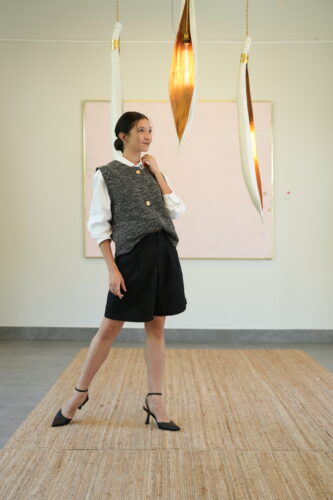
Macarena Giménez, hired this season as a principal at Miami City Ballet, debuts as the Sugar Plum Fairy in the company’s George Balanchine version of the holiday dance tradition, on view at the Adrienne Arsht Center for the Performing Arts, opening Friday, Dec. 12. (Photo courtesy of Miami City Ballet)
“At the Colón, Clara was my first performance after I gave birth to my daughter,” says the ballerina. “Now, immersing myself in Miami City Ballet’s ‘Nutcracker’ for Sugar Plum, I’ve been truly enchanted by the whole endeavor—costumes, sets, and especially the choreography, which is so attentive to the music.”
The magic of the ballet’s fantastic world, evoked through Balanchine’s wizardly dance strokes to Tchaikovsky’s famed score, culminates in Giménez’s regal ministrations as Sugar Plum in the second act’s Land of the Sweets. This follows iconic scenes as the first act’s Christmas party, the conjuring of mysterious guest Herr Drosselmeyer, the battle between mischievous mice and upright toys under a Sequoia-sized Christmas tree—with the Nutcracker at the helm—and a flurry of lissome Snowflakes.
Let it be said, though, that ruling this fairyland—where sweets jump through hoops, perky as peppermint, or swirl around, rich as Spanish chocolate—requires not just a decorous carriage and a cordial disposition but true ballerina grit.
Giménez has gained praise in how she balances suppleness with strength. And now, she explains, “By dancing Balanchine I’ve learned to apply technique in a novel way so that the movement looks natural and feels right in my body.”
Unlike most dancers at MCB, the Argentine newcomer did not develop her artistry in a Balanchine-based environment. Luckily, she does bring experience in some of the master’s works. Throughout her eleven years at the Colón and then at Sarasota Ballet, the company that drew her and her husband, Maximiliano Iglesias, as principals to Florida in 2022, she danced notable roles in Balanchine ballets such as “Allegro Brillante” and “The Four Temperaments.”
Giménez emphasizes how important it’s been for her to not just adapt but to flourish in Balanchine’s inventive laying out of dance phrases, which, she notes, often land right on the strongest beats of the music.

Macarena Giménez and Chase Swatosh in Miami City Ballet’s “Year of The Rabbit.” Choreography by Justin Peck. (Photo courtesy of Miami City Ballet)
About Sugar Plum’s displays alongside her Cavalier, she explains that “partnering feels especially different. It seems so much more three-dimensional. The spacing between me and the man allows for greater freedom in doing turns and participating in lifts. Of course, my classical base is there to bolster me, so it’s mostly been a matter of building on that with a new set of tools.”
In this, she’s had the good fortune to be partnered by Stanislav Olshanskyi, a mutual discovery that has worked beautifully for both. Apart from his impactful stage presence, the Ukrainian-born dancer has well-honed skills to develop a productive artistic relationship with a variety of ballerinas. He recalls how back in the National Opera of Ukraine, where he was a principal dancer until coming to Miami City Ballet in 2022, he was serially assigned roles alongside more than twelve of the company women. At MCB, however, he’s been most frequently paired with Dawn Atkins, his trusted and terrific Sugar Plum.

Dawn Atkins and Stanislav Olshanskyi in Miami City Ballet’s “George Balanchine’s The Nutcracker®.” Choreography by George Balanchine. © George Balanchine Trust. (Photo by Alexander Iziliaev)
“Sure, everyone’s different,” he says. “And for me to adjust to someone new could be a little challenging. There are nuances, and adjustments have to be made. But we all speak the same language of ballet, and sometimes it’s just a matter of us finding other, though similar words.”
A shared exemplary talent is, of course, a big part of this partnership. And in the case of Giménez and Olshanskyi, add a companionable understanding of what it takes to accommodate to a new environment, artistic as well as personal. Both dancers have as background classical European dance training—Giménez refers to the Russian academic lineage at the Colón—and had to shift to the dynamics of the American school—the speed, the keen musicality—once at their present company.
All that came to bear on Olshanskyi when he first portrayed the Cavalier at MCB three years ago, given that at his former Ukrainian company the Nutcracker story (choreographed by Valery Kovtun), as in the case of the Colón version, does not include a Sugar Plum and her consort.

Miami City Ballet School students in “George Balanchine’s The Nutcracker®’ “. Choreography by George Balanchine. © George Balanchine Trust. (Photo by Alexander Izilieav)
“It’s turned out to be a pretty easy process with Macarena,” says Olshanskyi. “Occasionally we can be on different pages since we’ve never danced together before. But if there’s something we need to clear up, we just talk it out. And I think that doing this in a classical ballet, rather than in something contemporary, has also helped out.”
When the couple unveils their detailed crafting of the pas de deux that figures as the climax of MCB’s “The Nutcracker,” they’re determined to shine in its formidable feats and harmonious elegance. Still, Giménez has reserved a special place in her heart—as an artist and a mother—for Sugar Plum’s initial entrance into the ballet. There she sets the tone for her realm by dancing among students from MCB School, who will, no doubt, take her back to her own childhood experiences on stage.
She recalls a story of her eight-year-old daughter, Emma, when after a visit to see “The Nutcracker” wished she could take the Sugar Plum Fairy’s magic wand home.
“She became entranced by all the dance, the music—by so many sounds and colors,” says Giménez, and that’s a delight she can’t wait for her daughter to experience again.
WHAT: Miami City Ballet’s “Balanchine’s The Nutcracker”
WHEN: 7 p.m. Friday, Dec. 12, Saturday, Dec. 13, Friday, Dec. 19, Saturday, Dec. 20, Tuesday, Dec. 23, Friday, Dec. 26, Saturday, Dec. 27; 6:30 p.m., Sunday, Dec. 21; matinee performances: noon, Wednesday, Dec. 24, 1 p.m. Sunday, Dec. 14, Wednesday, Dec. 17, Thursday, Dec. 18, Sunday, Dec. 21; 2 p.m. Saturday, Dec. 13, Friday, Dec. 19, Saturday, Dec. 20, Tuesday, Dec. 23, Saturday, Dec. 27.
WHERE: Adrienne Arsht Center for the Performing Arts, 1300 Biscayne Blvd., Miami
COST: $52.65 to $360.95 includes fees.
INFORMATION: 305-929-7010 or miamicityballet.org
ArtburstMiami.com is a nonprofit media source for the arts featuring fresh and original stories by writers dedicated to theater, dance, visual arts, film, music and more. Don’t miss a story at www.artburstmiami.com.
No posts found
‘Men Who Dance’ Festival: Six Years Of Breaking Stereotypes
Written By Jesús Vega
November 21, 2025 at 5:20 PM
Dancers Taylor Garcez, Daniel Romero, Duam Castro, and Tobias Souza in “On The Sixth Day” by Rafi Maldonado-López, the opening number of the 2024 Men Who Dance Festival. This year’s festival, at the Broward Center, is set for 8 p.m., Saturday, Nov. 29 and 3 p.m., Sunday, Nov. 30. (Photo by Simon Soong, courtesy of the Men Who Dance Festival).
Six years of history has demonstrated the triumph “Men Who Dance.” Since its inception, the initiative has set out to, and succeeded in, setting a decisive precedent for breaking down stereotypes and prejudices that have long hindered the development of male dance.
The “Men Who Dance Festival 2025,” in the Amaturo Theater at the Broward Center for the Performing Arts in Fort Lauderdale, is set for 8 p.m., Saturday, Nov. 29 and 3 p.m., Sunday, Nov. 30.

Brazilian dancer Iago Breschi, of the San Diego Ballet, in “On The Sixth Day” by Rafi Maldonado López, the opening number of the 2024 Men Who Dance Festival. (Photo by Simon Soong, courtesy of the Men Who Dance Festival)
Rafi Maldonado-López, festival artistic director, says that this year, the “Men Who Dance” has its biggest lineup of dancers and companies yet, having grown from the small number of participants in its early days to 52 dancers representing more than twenty countries.
In its first year, fifteen dancers took to the stage after an eight-month quarantine during the pandemic. “It was an overwhelming and emotional moment for all of us to be back in front of an audience, doing what we are most passionate about: dancing,” recalls Maldonado-López, a multidisciplinary dancer, choreographer, managing director of the Sanctuary of the Arts cultural center, and founder of the Inter-American Choreographic Institute.
Today, he says, it is the largest male dance festival in the United States.
“We never imagined that our adventure was just beginning, and some bet that contacting the South Florida dance community and asking them to join forces would be an impossible task.”
A dance festival of this nature brings with it numerous achievements, but also deeply rooted challenges that require unwavering courage and a firm grasp of the role played by art, artists, and the institutions that support them, especially when issues of gender and diversity are at stake.

Dancer Ataru Matsuya, of the Arts Ballet Theatre of Florida, in “Taiko Man” by Vladimir Issaev. (Photo by Simon Soong, courtesy of the Men Who Dance Festival)
“Decades ago, when I was growing up and starting my career as a dancer, the world was very different. Dancers, especially in classical ballet, were subjected to ridicule and overwhelming stereotypes. Parents shuddered at the idea of their sons enrolling in dance classes,” says Maldonado-López. “While we are still not without problems, things have slowly improved, and we are seeing more and more men joining professional companies.”
Eight major companies are returning to this year’s festival: Miami City Ballet (MCB), Dance NOW! Miami (DNM), Cuban Classical Ballet of Miami (CCBM), Dimensions Dance Theatre of Miami (DDTM), RTW Dance, Arts Ballet Theatre of Florida (ABTF), New Canon Chamber Collective, and Syncopate Collective.
Joining them are five other companies including, Jon Lehrer Dance Company (New York), Tropilla Malambo (Buenos Aires), Ensemble Español Spanish Dance Theatre (Chicago), and C.A.M. Dance Company (Davie, Florida). Not forgetting Enterprise (Arizona), the first company of Native American dancers to perform at the 2025 Men Who Dance Festival.

Dancers Anthony Velázquez, David Harris, and Ralphie Ruiz, of AV Dance Company, in “Triad” by Anthony Velázquez. (Photo by Simon Soong, courtesy of Men Who Dance Festival)
“This year, the biggest challenge has been maintaining the festival’s international character. This is due to delays or denials of international visas, even though the vast majority of the dancers representing various countries already reside in the country,” says Maldonado-López.
He comments on the current arts climate in the state of Florida but emphasizes that “Men Who Dance” is not about an agenda.
“Unfortunately, in recent years, the state of Florida has not supported any form of diversity, including gender diversity,” he adds. “Some might say that the legislative climate was becoming somewhat hostile to any group that wanted to celebrate and honor the historical contributions of women, Black people, Latinos, or any other diverse group.”
“ ‘Men Who Dance,’ ” says the director offers a space for expression and exploration. From Indigenous dance to ballet, contemporary dance, jazz, tango, flamenco, and malambo, the main objective of the festival is to normalize the presence of men in dance in all its disciplines, as well as to foster public support.”
But the work of the Men Who Dance Festival, its artistic director, its dancers, and its dedicated team doesn’t stop there, as its growth and activity naturally carry a global perspective.

Dancers/choreographers German Filipeli and Nicolas Filipeli, of Tango Out, in “Milonga.” (Photo by Simon Soong, courtesy of the Men Who Dance Festival)
“In 2021, we created ‘Men Who Dance Global.’ So far, we’ve held global editions in Brazil, Paraguay, Chile, Argentina, and Mexico,” explains Maldonado.
Its his production company, the Inter-American Choreographic Institute, which coordinates a three-day seminar/audition with local dance organizations, teachers, and companies.
“The featured artist then comes to represent their city and country at the national Festival here at the Broward Center. However, as I mentioned before, the visa situation has hampered the project’s progress.”
There are two goals he shares for the future of the festival.
“The first is to expand the Men Who Dance Festival seminars/auditions across the country and into Europe, increasing the Festival’s visibility and broadening the range of artists, for the benefit and enjoyment of our audience. The second is to seek out and support the next generation of ‘men who dance’ and achieve their inclusion in the larger Festival.”
He credits the camaraderie that forms each year among dancers, companies and artistic directors.
“It is the driving force behind the festival’s exponential growth.”
WHAT: Men Who Dance Festival 2025
WHERE: Amaturo Theater at the Broward Center for the Performing Arts, 201 SW 5th Ave., Fort Lauderdale
WHEN: 8 p.m., Saturday, Nov. 29, 3 p.m., Sunday, Nov. 30
COST: $29.50, $41.30, $53.10, includes fees
INFORMATION: www.browardcenter.org
ArtburstMiami.com is a nonprofit media source for the arts featuring fresh and original stories by writers dedicated to theater, dance, visual arts, film, music, and more. Don’t miss a story at www.artburstmiami.com.
No posts found
From the Street to the Stratosphere, Rennie Harris Puremovement Explores New Sounds
Written By Guillermo Perez
October 24, 2025 at 12:15 PM
Celebrated choreographer Rennie Harris — known as the “ambassador of hip-hop” — brings his company, Rennie Harris Puremovement American Street Dance Theater, to the Adrienne Arsht Center Oct. 30 and Nov. 1 with “Nuttin’ But a Word. (Photo courtesy of Artist Management)
The high priest of hip hop, street dance ambassador, a living legend—all these epithets, often bestowed upon Rennie Harris, ring true in announcing what he represents in American culture and beyond our borders. Yet also call this mission-driven leader maestro. He’s both a master of his art form and—inseparably from his resonance and continuity—a dedicated educator.
When maestro Harris brings his “Nuttin’ But a Word” to Miami, this recent work for Puremovement—the company he founded in 1992—will offer an array of highly-charged dance that comes in the context of the history, philosophy, and technique of a street-born genre that can dominate the stage.
“Nuttin’ But a Word”—the phrase, common to hip hop, puts proof above chatter—will be performed at the Arsht Center’s Carnival Studio Theater, at 7:30 p.m., Thursday, Oct. 30 and Saturday, Nov. 1

Over the last 20 years, Rennie Harris and his company have built deep ties in Miami through partnerships with Miami Light Project and Miami Dade College. (Photo courtesy of artist management)
Ticket purchase on the first day includes an on-site dance workshop at 6:30 p.m. which is open to all ages and abilities and led by a Puremovement company member along with a deejay. A residency for dance students at Miami-Dade County schools is set for Friday, Oct. 31.
The educational component arms audiences with a deeper understanding of a great tradition rooted in the African diaspora and, through community activities, encourages practitioners to strike forward on their own paths.
“Nuttin’ But a Word” is a suite that puts the counted-on electrifying dance on an unexpected soundscape. As Puremovement company manager and director Rodney Hill puts it, “A lot of the music in the show challenges the dancers because it’s not typical to hip-hop.”
As examples, he points to Al Jarreau’s “Round, Round, Round, Blue Rondo a la Turk,” with its classical echoes in jazz quarters, and an insistent drum patter from Raphael Xavier, a long-standing Harris associate, which turns dancers into comets. Add other waves of ambient music and what could be the soundtrack for a superheroes flick, The Cinematic Orchestra’s “Man with the Movie Camera,” and you’ve got a reverberating mixtape that reels everyone off into the stratosphere.
And who better than Harris to pilot dancers boldly into new spaces? Ever since Hill was a young practitioner, dancing by the glow of his elder’s ascent in their shared North Philadelphia neighborhood, he has tracked how Harris has advanced the art form.

Angel Anderson of Renee Harris Puremovement Amercian Street Dance Theater. (Photo courtesy of artist management)
Early on, featured with his crew on the lineup of Illadelph Legends, the festival Harris founded in 1997 to encompass performance and pedagogy, and later as a member of Puremovement touring the world, Hill was rewarded by a transformation, not just artistic but personal—one he’s been grateful to see in others as well as himself.
“Through this, I got to learn so much more about hip-hop dance. I hadn’t known who created it, where the moves came from, that we were standing on the shoulders of others,” admits Hill. “I got stronger in the style, and yes even my body changed. The work Rennie was doing was much more athletic. But, more importantly, I found it had a different approach because he was aiming this at concerts. Well, I’d been developing my own pop moves, but they were mostly stationary, even when I worked with rappers. But to perform on an actual theater, that different use of space, that’s what I had to master.”
Skills for the craft—breaking tasks down, digging deeper into one’s talent, adaptability and growth—all became assets to enhance other aspects of Hill’s life. He can’t imagine having succeeded in getting his MFA or having been elected as councilman for his Philadelphia suburb without his relationship to this dance and the man who uplifted it.
Hill is thereby invested in Rennie Harris Puremovement’s support of new generations, in the need for them to be encouraged—as he once was—to make their own contributions. And that’s just what Jamaican-born, Miami-raised company member Joshua Archibald—who still calls our area home—is raring to do, especially since local friends and relatives, including his great-grandmother, will now be seeing him in a show like “Nuttin’ But a Word” for the first time.
“I’m blessed to work with Puremovement. Having this chance to perform in front of my community is like the perfect beginning of my next chapter,” says the TERRA magnet high school-graduate who—drawn into jazz and theater there, with hip hop as extracurricular—left engineering behind for his dance courses at Miami-Dade College, where Professor Michelle Grant-Murray introduced him to Harris’ work ten years ago.

Joshua Culbreath of Renee Harris Puremoement American Street Dance Theater does a solo flip. (Photo courtesy of artist management)
“I strive to create in accordance with my own vision and ideals,” says Archibald, “but being exposed to Rennie’s process opened my eyes to so many possibilities creatively. He’s such a wise man—like a walking amalgam of street smarts and esoteric knowledge dressed up like your favorite uncle—that even in casual conversations I’ll catch myself taking mental notes. How I approach spaces and people, how I understand the world in general, has been elevated.”
Having thundered through a lot of competitive dancing, Archibald will forever cherish his first Puremovement role playing Tybalt in “Rome & Jewels.” Now the contrast between that dialog-driven dance drama and the sonics-spurred adventure of “Nuttin’ But a Word” excites him.
“The impetus of this show lies in the powerful dynamic of action versus words, with moments that highlight police brutality and loss and grief. But the genius of Rennie’s work allows dancers and audiences to inject their own experiences. We take our individual journeys, overlap and interact, and somehow might end up at the same destination.”
WHAT: Rennie Harris Puremovement American Street Dance Theater in “Nuttin’ But a Word”
WHEN: 7:30 p.m. Thursday, Oct. 30 and Saturday, Nov 1
WHERE: Adrienne Arsht Center for the Performing Arts, Carnival Studio Theater, 1300 Biscayne Blvd., Miami
COST: $70.20 including fees
INFORMATION: 305-949-6722 or arshtcenter.org.
ArtburstMiami.com is a nonprofit media source for the arts featuring fresh and original stories by writers dedicated to theater, dance, visual arts, film, music and more. Don’t miss a story at www.artburstmiami.com.
No posts found
‘Peck: In Motion’: One Choreographer, Three Dances in MCB’s Season Opener
Written By Guillermo Perez
October 13, 2025 at 1:18 AM
Shimon Ito in “Heatscape” choreographed by Justin Peck. It is one of three ballets that make up Miami City Ballet’s season opener, “Peck in Motion.” (Photo by Alexander Iziliaev, courtesy of Miami City Ballet)
Dances can be a temporary dwelling for performers to inhabit and audiences to gaze into, the push and pull, yield and resistance on stage as intense as it is contained. As such, the works on the opening program of Miami City Ballet’s 40th anniversary season welcome some to a homecoming and others to a housewarming.
“Peck: Miami in Motion” features the local return of three ballets by a choreographer whose history is intimately entwined with Miami City Ballet. Performances are at Miami’s Adrienne Arsht Center Friday, Oct. 17 through Sunday, Oct. 19 and Fort Lauderdale’s Broward Center for the Performing Arts, Saturday, Nov. 1 and Sunday, Nov. 2. Whether fixed in memory or about to be discovered, each piece offers the pleasure of artistic continuity.
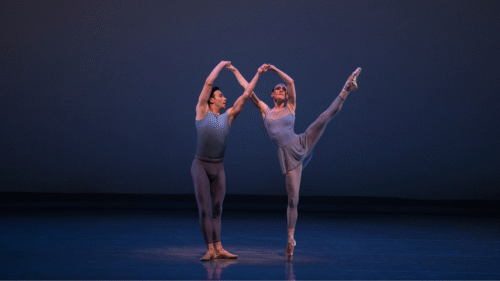
Tricia Albertson, right, performed for 26 years with MCB. Here’s she’s shown in “Chutes and Ladders” with with Renato Penteado, choreographed by Justin Peck. Albertson now serves as rehearsal director for the season-opening”Peck: In Motion.” (Photo by Alexander Iziliaev)
Justin Peck, New York City Ballet’s resident choreographer for the past eleven years, received his first major commission outside his home company from MCB (in collaboration with New World Symphony) in 2013. That duet, “Chutes and Ladders,” was followed in two years by MCB’s world premiere of “Heatscape” to Bohuslav Martinů’s Piano Concerto No. 1.
Its references to South Florida’s environment and personality, laid out in a contemporary but classically informed esthetic, marked a high point in the company repertory, which gained more Peck panache in 2016 with “Year of the Rabbit,” which premiered at NYCB four years earlier.
Peck recognizes the special nature of the MCB commissions early in his career. He found not only the right creative conditions here but also personal connections. Many MCB dancers shared the formative influence of his time at New York’s School of American Ballet and its Balanchine foundation, a few among these even bonded to him in friendship.
Peck has praised the eager attitude and sprightly talent of the MCB originators, pointing to their “very distinct personalities that came together in a balanced way”—something which importantly holds true for the current casts.
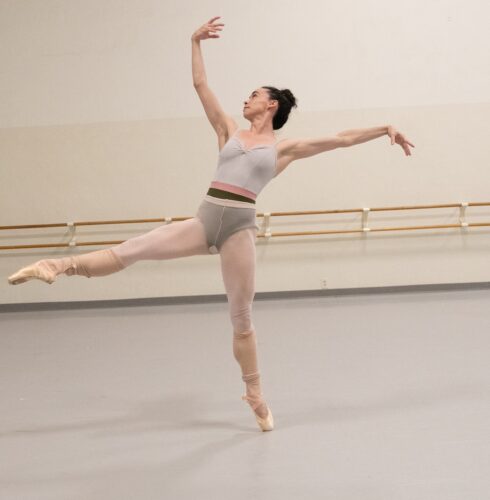
Adrienne Carter in rehearsal for “Heatscape,” choreographed by Justin Peck. (Photo courtesy of Miami City Ballet)
In the bouquet of praise he offers the company, a prize rose must go to former MCB principal Patricia Delgado, who contributed Miami-native radiance to her role in “Heatscape,” a ballet inspired by the Miami sunshine, especially as it streams over the murals at Wynwood Walls.
It was Shepard Fairey’s bold creations that impressed Peck enough for him to have this street artist design the mandala backdrop that spreads spiritual luminosity over “Heatscape.”
Artistic admiration between Delgado and Peck blossomed into romance, and they went on to get married. Today she’s part of a team that helps set Peck’s ballets. The two also collaborate on other film and stage projects. This year, they won the Tony Award for best choreography for the musical “Buena Vista Social Club.“ It was Peck’s third, after winning the award in 2018 for “Carousel” and last year for “Illinoise.”
Along with Peck and Delgado, the current MCB re-staging of the choreographer’s works has been under the care of Patricia’s sister, Jeanette—another former MCB ballerina who put her special stamp on roles—and company rehearsal directors Arnold Quintane and Tricia Albertson, who was a lead in the original productions.
Given that most dancers in the present program have no previous experience with the works, Albertson emphasizes the importance of veterans who guide newcomers toward their own claim in Peck’s colorful, bustling, and sometimes sanctuary-like spaces.
While making sure everything is resonating in each ballet, she explains, “I like to let the principals settle into the steps with their own take, while more often with the corps I try to clarify intention. I emphasize the differences among the ballets to show clearly, for example, how the energy behind ‘Year of the Rabbit’ differs from that of ‘Heatscape.’ It’s pretty cool to rehearse all these ballets from just one choreographer—this sort of evening isn’t common—realizing how even when certain steps repeat, they register so differently in each context.”
With her insider’s perspective on each work, Albertson describes how “Chutes and Ladders,” to Benjamin Britten’s String Quartet No. 1, with the musicians seated upstage from the dancing couple, “creates a very intimate force field. There are energetic pops, but you almost get into a meditative state. Justin has such a great way of using the arms, adding to the impression that the dancers have become instruments themselves.”
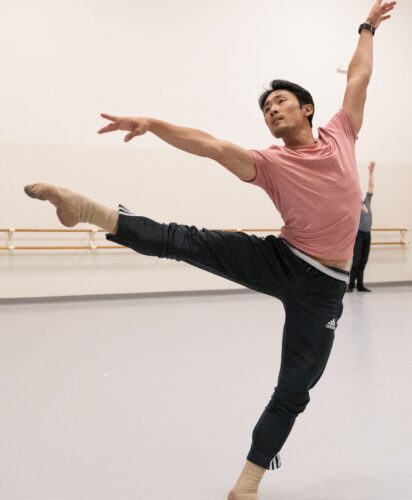
After a two-year absence from Miami City Ballet dancing at Carolina Ballet, Shimon Ito makes his return. (Photo courtesy of Miami City Ballet)
“Year of the Rabbit” moves to the orchestrated score based on a Sufjan Stevens electronica album, its dance segments labeled according to animals in the Chinese zodiac. While not explicitly mimicking their moves, from scuttling to pounces the choreography does have a vigor that drives friendly and fierce moves into the fantastic.
“It’s high intensity,” says the rehearsal director, “and then Justin puts in a duet as beautiful as moving through water. This state feels very sacred yet leads into a finale that’s really aggressive.”
Albertson agrees that in Peck’s “Heatscape,” sunshine and sociability are the keys, something she was happy to see even members of Finnish National Ballet grasp—though cultured in those never-ending Nordic winter nights—when she and a colleague worked with the Finnish dancers a few years ago on the piece.
According to Albertson, the challenge lies in maintaining precision in acceleration. Quick switches, she says, “can be really difficult. Your body always has to be on alert just to stay on track.”
One dancer more than ready for this is Shimon Ito, whose detailed physicality stood out when the ballet debuted at MCB. After a two-year absence from MCB dancing at Carolina Ballet, Ito feels he can bring a deeper understanding and more comfortable calibration to his trio (with first-timers Anabel Katsnelson and Guillermo Dominguez) interwoven throughout “Heatscape.”
“The choreography immediately challenges the dancers,” says Ito. “The movements are so big, so quick, and that defines Justin’s piece as we play off each other. In the end, there’s a stronger relationship among the group.”
Such camaraderie extends off-stage as he now gets to share his long view. He says, “It’s nice to reciprocate and pass what I’ve learned from others on to the new dancers.” Among these, soloist Satoki Habuchi stands out as a former student of his in Japan who’s been initiated into Ito’s “Heatscape” role for the second cast.
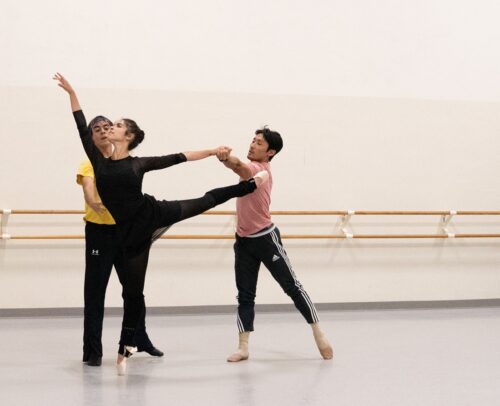
Anabel Katsnelson rehearsing an intricate pose with Guillermo Dominguez and Shimon Ito in “Heatscape” trio. (Photo courtesy of Miami City Ballet)
This kind of networking through art enthuses MCB’s newly appointed artistic director Gonzalo Garcia, which he made clear on a recent panel in Wynwood, steps away from murals like those that gave impetus to “Heatscape.” During his own time at NYCB, Garcia danced in Peck’s “Rodeo” and was further drawn into the choreographer’s circle through Ezra Hurwitz, a retired MCB dancer turned filmmaker who is Garcia’s husband.
A present thus informed by the past creates a sturdy springboard toward an exciting future. As Garcia puts it, “This is an important time to raise expectations for all the years to come—an opportunity to reinvent and open doors to fresh initiatives.”
WHAT: Miami City Ballet’s “Peck: Miami in Motion”
WHEN: 7:30 p.m. Friday, Oct. 17; 2 and 7:30 p.m., Saturday, Oct. 18, and 2 p.m. Sunday, Oct. 19.
WHERE: Adrienne Arsht Center for the Performing Arts, 1300 Biscayne Blvd., Miami
ADDITIONAL PERFORMANCES: Broward Center for the Performing Arts, 201 SW Fifth Ave., Fort Lauderdale, 7:30 p.m. Saturday, Nov. 1; 1 and 6:30 p.m., Sunday, Nov. 2.
COST: $45, $67, $90, $100, $106, $118, $134, $140, $205, $214, $225, $263, depending on showtime and venue.
INFORMATION: 305-929-7010 or miamicityballet.org
ArtburstMiami.com is a nonprofit media source for the arts featuring fresh and original stories by writers dedicated to theater, dance, visual arts, film, music, and more. Don’t miss a story at www.artburstmiami.com
No posts found
Daniel Lewis Dance Sampler Offers Hearty Buffet Of Miami Companies
Written By Jesús Vega
October 9, 2025 at 8:05 PM
Dancer Courtney Stalhton of Cuban Classical Ballet of Miami (CCBM), one of the companies that will perform in this year’s Daniel Lewis Dance Sampler on Saturday, Oct. 18, at the New World Dance Theater. (Photo by Simon Soong, courtesy CCBM)
The Daniel Lewis Dance Sampler, now in its 15th year, has become the unofficial kick of the dance season in Miami.
This year, seven Florida choreographers and dance companies will be featured on Saturday, Oct. 18 in a show at the New World Dance Theater.
The Dance Sampler has a long history of triumphs, dating back to its founding in 2012 by Hannah Baumgarten and Diego Salterini, artistic directors of Dance NOW! Miami (DNM), to honor Daniel Lewis.
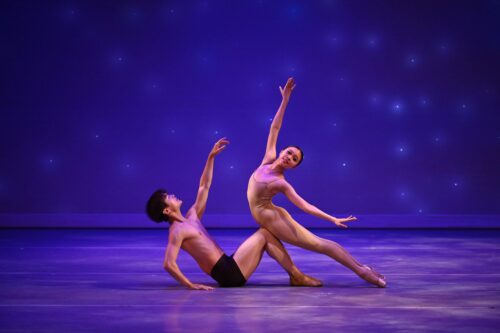
Dancers Indira Mayrani and Yoichi Habaguchi of Arts Ballet Theatre of Florida (ABTF). (Photo by @Patriciasphotography, courtesy Arts Ballet Theatre)
Lewis is a former director, dance assistant, faculty member at The Juilliard School, and founding dean of dance at New World School of the Arts in Miami from 1987 to 2011, where he created the eight-year professional dance division program. Now, he heads his Miami Dance Futures, a nonprofit organization that he founded to support and grow the dance community in Florida and New York by providing administrative, financial, and technical assistance to dance companies and young artists.
“The 15th anniversary of the Daniel Lewis Dance Sampler is significant to me as its artistic director and one of its founders, as well as to Hannah Baumgarten and Lewis himself,” said Salterini, adding that over the years it has become more than just a presentation.
“It’s a true celebration of the South Florida dance community. At this point, it’s firmly established as the moment the season begins, and the dance stage officially opens.”
Salterini also said that not only has it become an integral part of Miami’s dance scene but the concept has become an instrumental force.
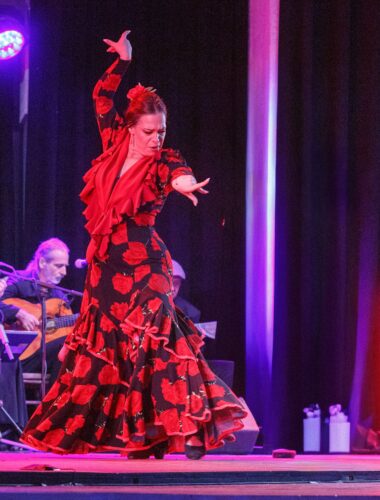
Flamenco dancer Sandra Bara of Ballet Flamenco La Rosa (BFLR). (Photo by Jenny Abreu)
“One of the aspects I’m most proud of is how it has inspired other initiatives, such as Dance Makers, Miami Dances, and ScreenDance, which expand the platform to include emerging voices, new styles, and innovative approaches,” said Salterini.
“Collectively, these events create a diverse and beautifully layered landscape of our dance community. For Hannah and Danny, and for me, it’s gratifying to know that the decisions we make at the Showcase solidify and strengthen the dance season in Miami.”
The event, which encompasses a diverse range of genres, including ballet, contemporary dance, and flamenco, will feature short pieces and excerpts from the repertoires of participating groups.
Arts Ballet Theatre of Florida (ABFT) will present “La Traviata Pas de Deux” by artistic director Vladimir Issaev, with music from the opera of the same name.
“It is a brilliant blend of classical and contemporary ballet with an elegant partnership,” said Baumgarten.

From left, dancers Charles Salnave, Sun Young Park, Anastasia Arkin, and Marjorie Burnett of Karen Peterson & Dancers (KPD). (Photo by Karen Peterson Corash)
New World Dance Ensemble will present “The Envelope” by modern dance choreographer David Parsons. From Dimensions Dance Theatre of Miami (DDTM), it’s the duo “Apollo & Daphne,” choreographed by Ben Needham-Wood, artistic director of Boulder Ballet.
Karen Peterson & Dancers (KPD) will showcase a selection from the work ‘DUET 4 FOUR.” And, Ballet Flamenco La Rosa (BFLR) returns this year with an excerpt from “Deseo,” a Flamenco Theatre original created by Ilisa Rosal, inspired by Tennessee Williams’ “A Streetcar Named Desire.”
Baumgarten pointed out that the Cuban Classical Ballet of Miami will perform the trio “Lecuona Suite.”
“Choreographed by artistic and executive director Eriberto Jiménez, it is a work that pays tribute to Cuban composer Ernesto Lecuona, capturing the essence of his music through movement, emotion, and storytelling,” she described.
Salterini said that it is a privilege to showcase notable organizations, choreographers and dancers.
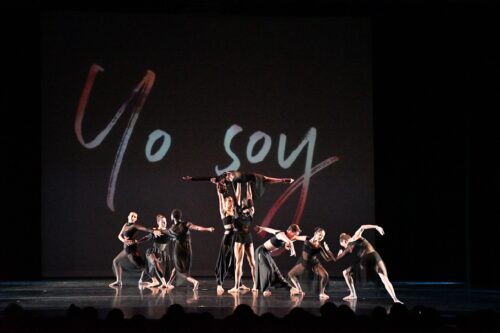
Dancers from Dance NOW! Miami (DNM) in “Bridges Not Walls.” (Photo by Simon Soong, courtesy of Dance NOW!)
“Each year, our goal is to create a meaningful and memorable event, offering our community a dynamic preview of what’s to come in the upcoming season. While the selection process is never easy, we intend to highlight mid-sized companies that not only employ professional artists but also engage with the community through sustained and thoughtful programming,” he concluded.
This year’s edition will also feature a moment of recognition for those in the community who cover the arts.
“Media coverage plays a vital role in strengthening the ecosystem around the arts,” said Salterini. “Investors, whether public agencies, foundations, corporations, or private donors, often rely on third-party validation before making significant investments.”
He added that “promoters and agents consider reviews and press coverage as tools to promote artists on the touring circuit. In this sense, investing in solid journalism around the arts is almost as important as financial investment in the art itself.”
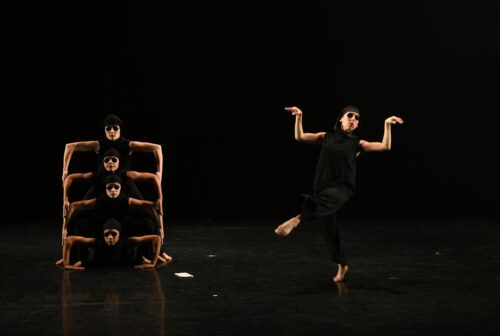
Dancers from the New World Dance Ensemble in “The Envelope,” by David Parsons. (Photo by Juan Cabrera, courtesy New World Dance Ensemble)
Honorees of the evening will be Michelle F. Solomon, editor of ArtburstMiami, Orlando Taquechel, editor of ArtburstEspanol, Harvey J. Burstein, founder of Miamiartzine.com, Christine DiMattei, journalist for WLRN Radio, and dance contributors Cameron Basden, Guillermo Pérez, Sean Erwin, and Diana Dunbar.”
“By presenting awards to these founders, editors, journalists, and media outlets in general, we not only want to thank them directly, but also highlight their important role for audiences who might not be aware of the privilege of so much arts press,” said Baumgarten.
Regarding the star attraction, the dances, Baumgarten said the evening will be a diverse showing of abstract, thematic, and narrative works.
“Each piece represents a small sample of each company’s season. We hope that dance audiences will grow as they explore upcoming opportunities to be moved, stimulated, and entertained,” she said.
WHAT: 15th Annual Daniel Lewis Dance Sampler
WHERE: New World Dance Theater, 25 NE 2nd St., Miami
WHEN: Pre-show reception at 7 p.m., 8 p.m. show, Saturday, Oct. 18.
ADMISSION: $25; $15 for students. Reception is complimentary with the presentation of a ticket.
INFORMATION: (305) 975-8489 and www.dancenowmiami.org
ArtburstMiami.com is a nonprofit media source for the arts featuring fresh and original stories by writers dedicated to theater, dance, visual arts, film, music, and more. Don’t miss a story at www.artburstmiami.com.
No posts found
Pioneer Winter Collective Flies High With Personal New Work
Written By Guillermo Perez
October 3, 2025 at 10:59 AM
Pioneer Winter in a work-in-progress performance of “In the Belly of the Bird/Godmother.” (Photo by Passion Ward, courtesy of Pioneer Winter Collective)
It starts as a melancholy tale. A woman dies in her prime, and her impressionable young son—already prone to flights of fancy—imagines his mother’s pet African Grey parrot, which was gifted away, has taken off with her voice.
Would he ever find that dear sound again? His search was on, propelling him through regions of dance and poetry and song. And what seems like fable is in fact autobiography, now being told in a multi-art performance by South Florida dancer-choreographer-director Pioneer Winter alongside special members of his collective.
“In the Belly of the Bird/Godmother,” the staging of an incident in Winter’s early life and the ripples of yearning it sent down the course of his artistic journey, comes to the auditorium at Miami Beach Regional Library on Thursday, Oct. 9, presented by the City of Miami Beach OnStage! in partnership with O, Miami, a promoter of collaborative poetry projects.

Pioneer Winter and Andréa Labbée appear in the foreground with Lisa Nalven in the background in “In the Belly of the Bird/Godmother.” (Photo by Chantal Lawrie, courtesy Pioneer Winter Collective)
“This is really a celebration of all types of mothering,” says Winter, who has reached the same age his mother was when she died at 37 and he was just nine years old. “The older I get, the more I realize that it’s been women who have had the biggest influence on my life, especially in dance.” That began with his mother, who introduced him to the magic of movement and music—the sounds of her favorite female singers flooding the house.
“I started taking dance because she attended weekly tap classes,” says Winter. “I would stand on the top of her feet while she practiced the Shim Sham, a tap standard.”
Beyond personal memories. Winter has gone all the way to the eminent presence of dance trailblazer Isadora Duncan, not just incorporating her signature moves into this piece but feeling empowered enough to perform them himself, quite a rarity for a man.
“Isadora made sense to me here since she’s a mother of modern dance, deeply flawed but also a revolutionary without whom we wouldn’t be where we are,” explains Winter as he considers the base of unconditional love—familial and artistic—that nurtures his project. “I always talk about not being able to separate the wound from the gift, and this dance is honoring all the mothers that have given us gifts though leaving us with an absence or a wound.”
And the historical model proves irresistible. Rebelling against the strictures of ballet, barefoot and in loose, flowing tunics, Isadora would strike ancient Greek poses and sway and turn to-and-fro as if driven by currents of wind and ocean, a force of nature herself. Her movements alternately seemed to come from a concentration of spirit and its release.
Despite a personal life unsettled by missteps and darkened by tragedy (car-related accidents cut short the lives of Isadora’s children and, thirteen years later in 1927, her own at 50), this San Francisco-born rebel forged a world-acclaimed career after which Western dance would never be the same.

Portrait of Pioneer Winter, holding a notebook and a photo of his mom with her African grey, for “In the Belly of the Bird/Godmother.” (Photo by Chantal Lawrie, courtesy Pioneer Winter Collective)
“Isadora was not all frolicking and skipping,” emphasizes Winter, correcting a wildflower-wreathed cliché of her dance image. “She put much deep feeling and maturity in her work—emotion before motion, she’d say—especially in her mother pieces, which for me were an aha! moment.”
That artistic connection spurred Winter—after a preliminary showing of “In the Belly … ” in April with improvised movement—to seek expert training in Santa Fe, New Mexico, from Duncan scholar Andrea Mantell Seidel, a former colleague of his at Florida International University, who for years directed the Isadora Duncan Dance Ensemble in Miami.
Winter tuned up his body through Duncan-style exercises—energy radiating from his solar plexus out to his limbs—at the dance barre. He learned to adopt the Tanagra poses, based on ancient Greek terracotta figurines that once inspired Isadora at the Louvre. And he improvised on these foundations alongside Seidel, finding revelations whether in the charged intimacy of eye-contact or in the opening of his arms and chest as if to welcome the universe.
In addition to setting Isadora’s angel-winged “Nocturne” (to Chopin) on Winter, Seidel also “committed ‘Mother’ really well in my bones,” says the artist about an iconic dance where Duncan responded to the loss of her children. These choreographies are shown throughout “In the Belly … ”, albeit with movement adaptations and novel musical treatments by local composers Juraj Kojš and Laurah Merisier, her live vocals in the mix.
Back in Miami, Winter finessed his preparation with former Duncan Ensemble dancer Ivette Sotomayor. “Having this movement ingrained in her, she could tell me what was reading well and what wasn’t,” says Winter, who has nonetheless researched different versions of Duncan works filtered down to us through generations of interpreters.
The absence of strict codification has allowed him freer agency in a creation he personalized taking on movement traditionally assigned to women. In this effort, he recognizes a significant antecedent in the Japanese modern-dance artist Satoru Shimazaki, who in the 1980s gained attention interpreting Duncan solos.

Pioneer Winter, Andréa Labbée, Lisa Nalven in a work-in-progress performance of “In the Belly of the Bird/Godmother.”
The power of an abiding trinity is also not lost on Winter, who will be interacting with three women in their sixties and beyond, the ardor of long lives adding dimension to the dance. There’s Andrea Labbée, a motivational speaker with a theater background; Gaile Holland, for decades a local ballet teacher whose former students include Winter; and Lisa Nalven, a veteran of notable modern dance companies, now a photographer impassioned by human diversity.
Sources of succor and disquiet—currents which Winter has ridden in life and art—each female elder is a maternal presence who offers complementary textures to the tapestry Winter has woven from threads of experience and sheer imagination.
“For this I wrote different poems assigned to each one of the dancers,” says Winter. “While Gaile is dancing a solo to my mother‘s voice, I am doing the poetry, and my musical collaborator Laurah is singing to different parts of Gaile’s body, much like a vocalist invading the dancer’s personal space and treating her like a harmonica. Lisa is dancing the Godmother, a kind of a midwife crone who puts other people before herself, always beside them. I based her off my mom’s best friend. Then there’s the voice of the bird from all, with Andrea dancing to it.” With the addition of community-sourced storytelling, this brings forth a hybrid form of word and physical performance Winter calls a “somapoem.”
Fittingly, in one of his poems, the artist seizes upon a vivid artistic legacy—in harmony with the likes of Isadora—where the misplaced maternal voice has been present all along. He writes:
I inherited movement from my mother.
It’s through her I’m guided –
not as an icon, but as a way of being.
And so, I make.
Everything I make is for my future body.
For the hands that will know how to carry.
For the bones that will settle into my shape.
For the voice that will no longer catch
when it speaks its own name.
WHAT: Pioneer Winter Collective, “In the Belly of the Bird/Godmother”
WHERE: Miami Beach Regional Library, 227 22nd Street Miami Beach
WHEN: 4 p.m; 7 p.m (sold out but wait list available), Thursday Oct. 9
COST: Free, with RSVP
INFORMATION: https://pioneerwinter.com/
A dress rehearsal can also be attended for free at the same location on Wednesday, Oct. 8 at 7 p.m.
ArtburstMiami.com is a nonprofit media source for the arts featuring fresh and original stories by writers dedicated to theater, dance, visual arts, film, music, and more. Don’t miss a story at www.artburstmiami.com.
No posts found

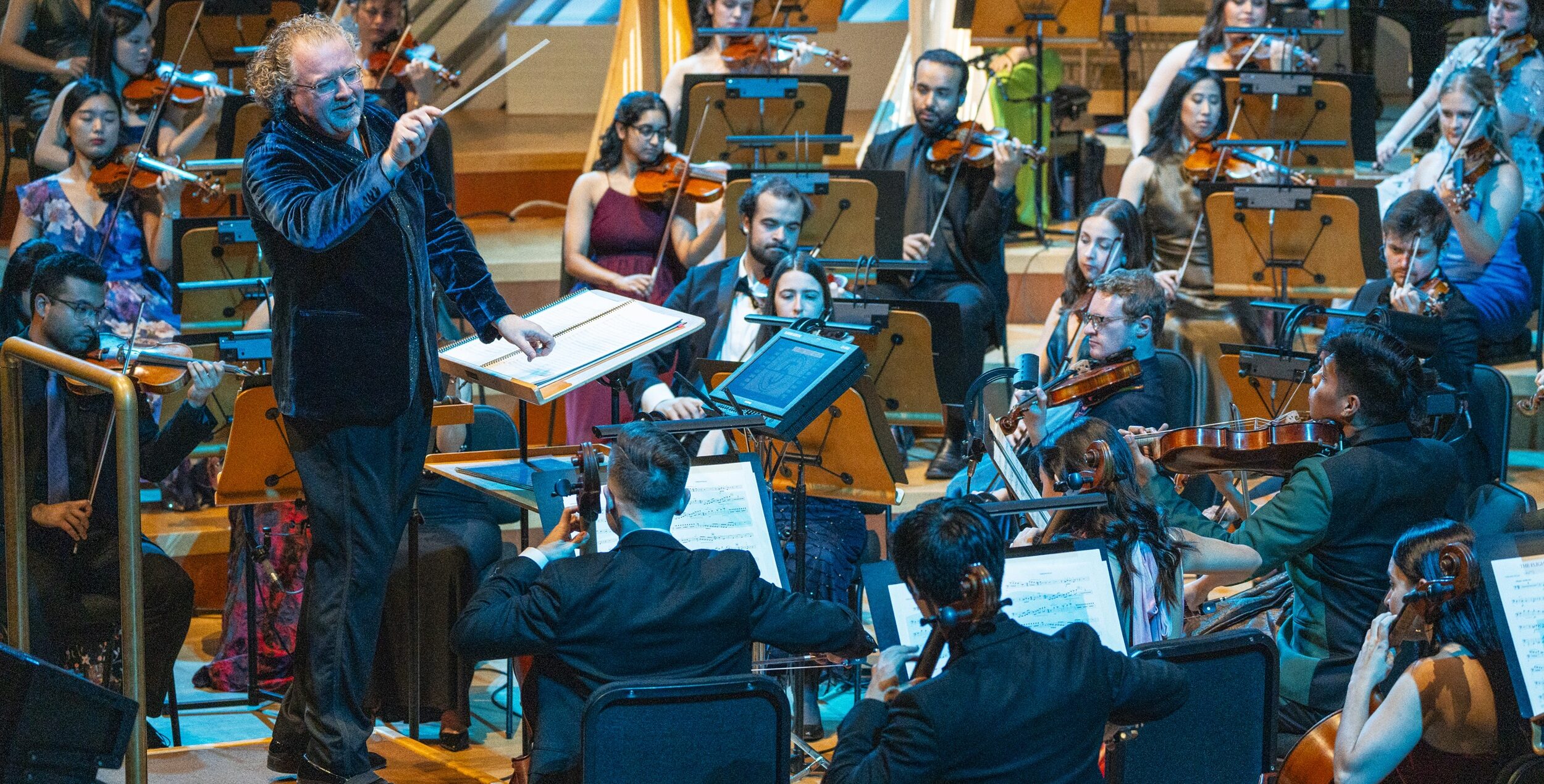

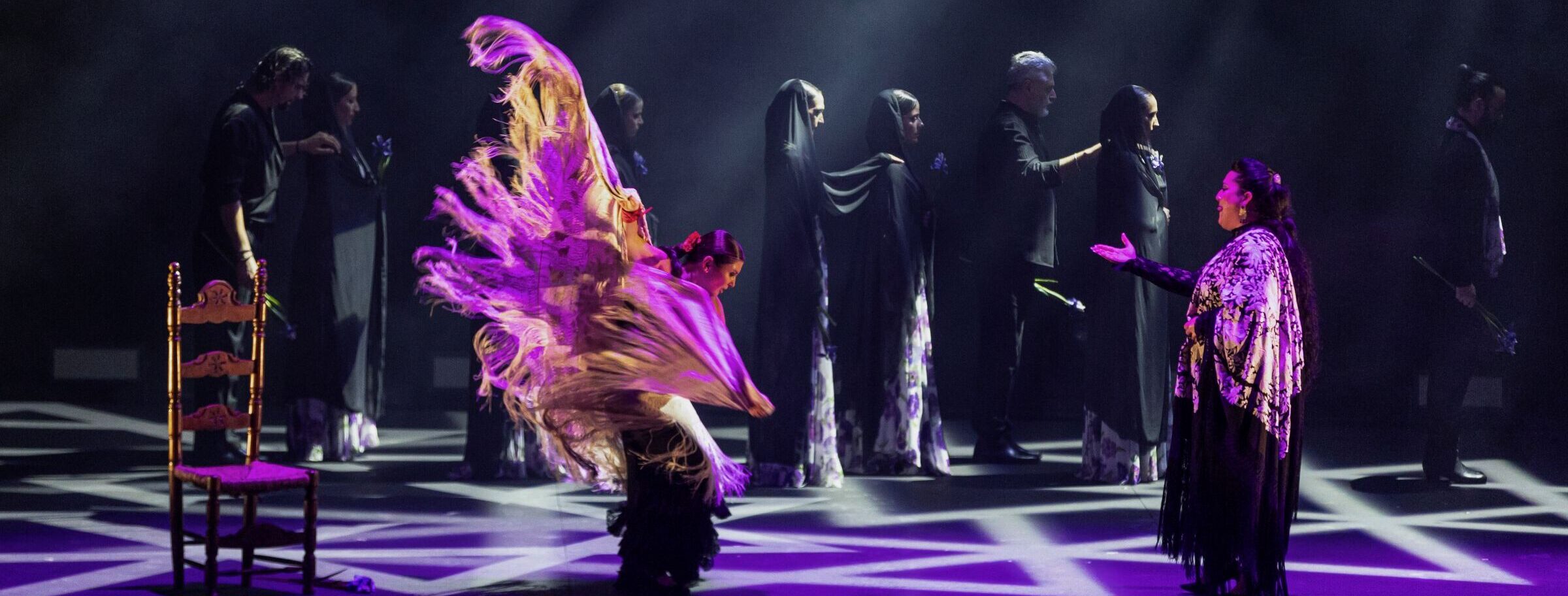
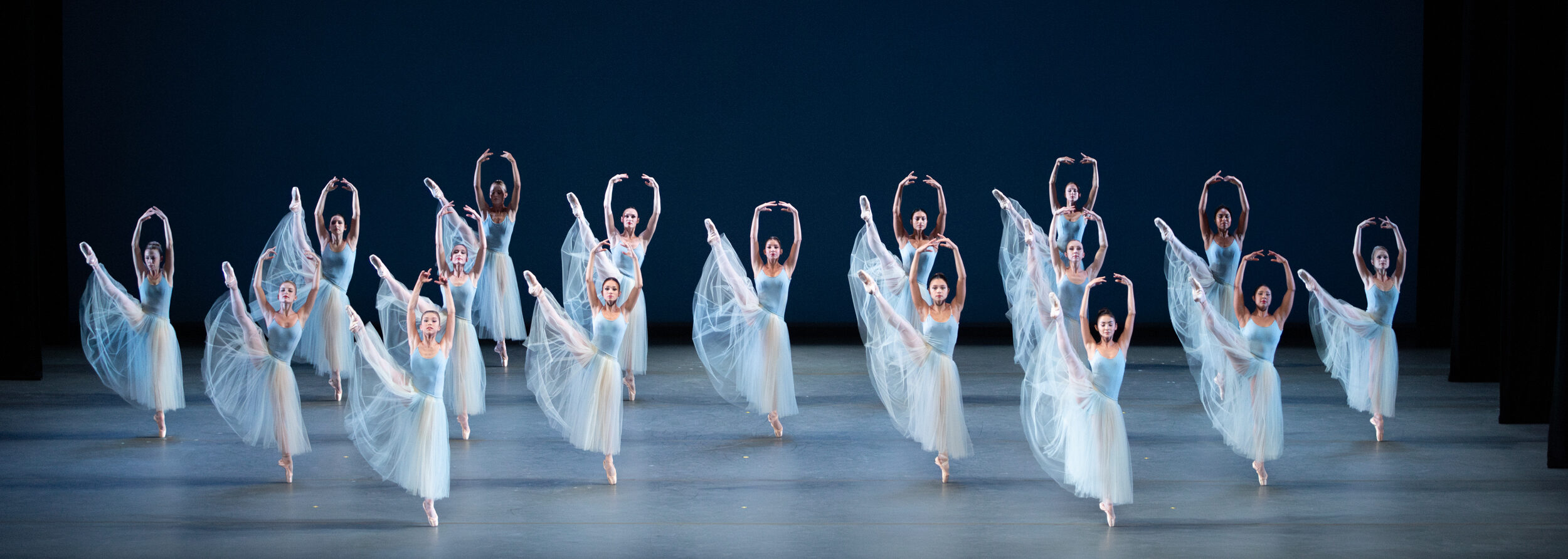

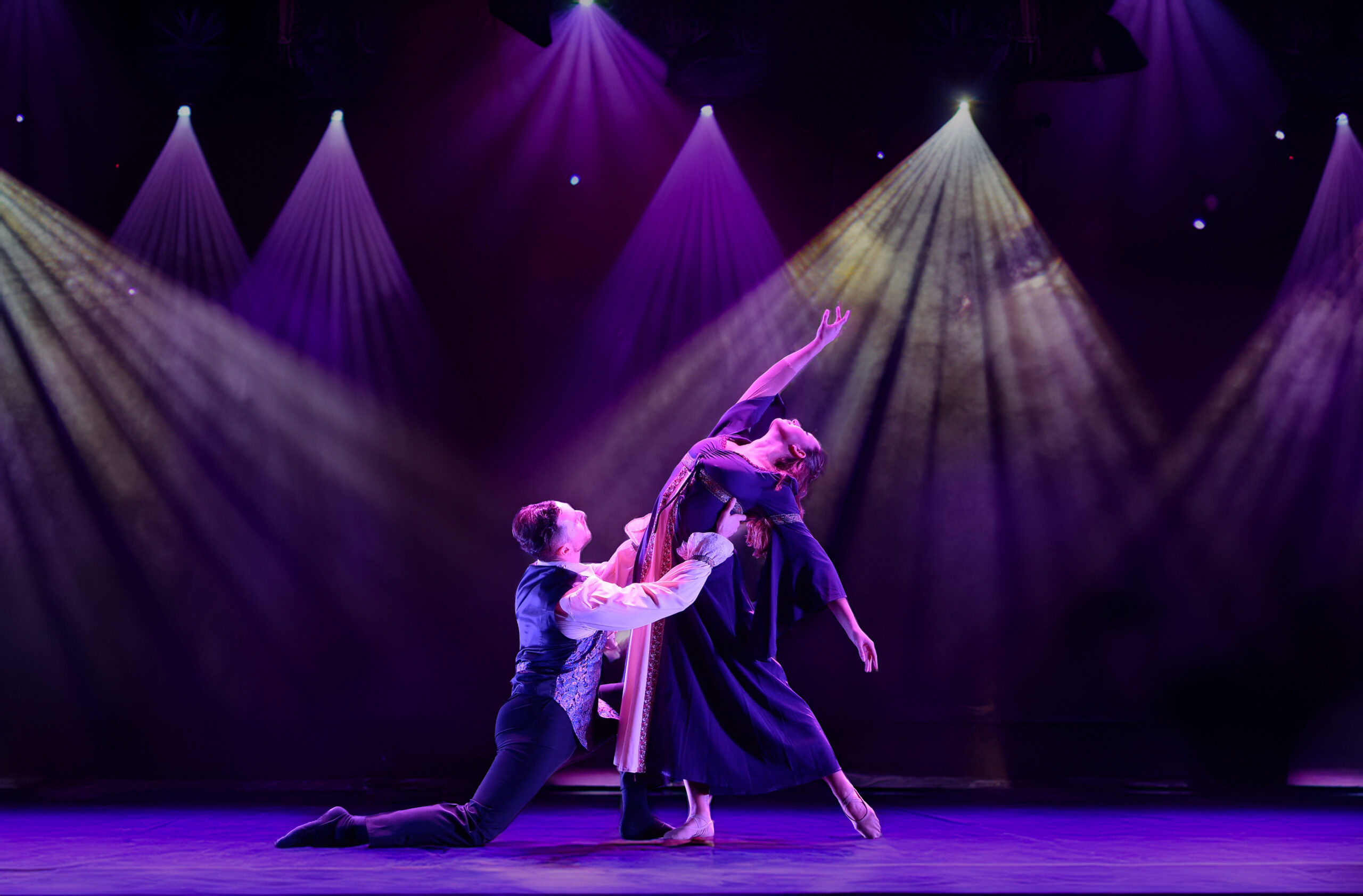


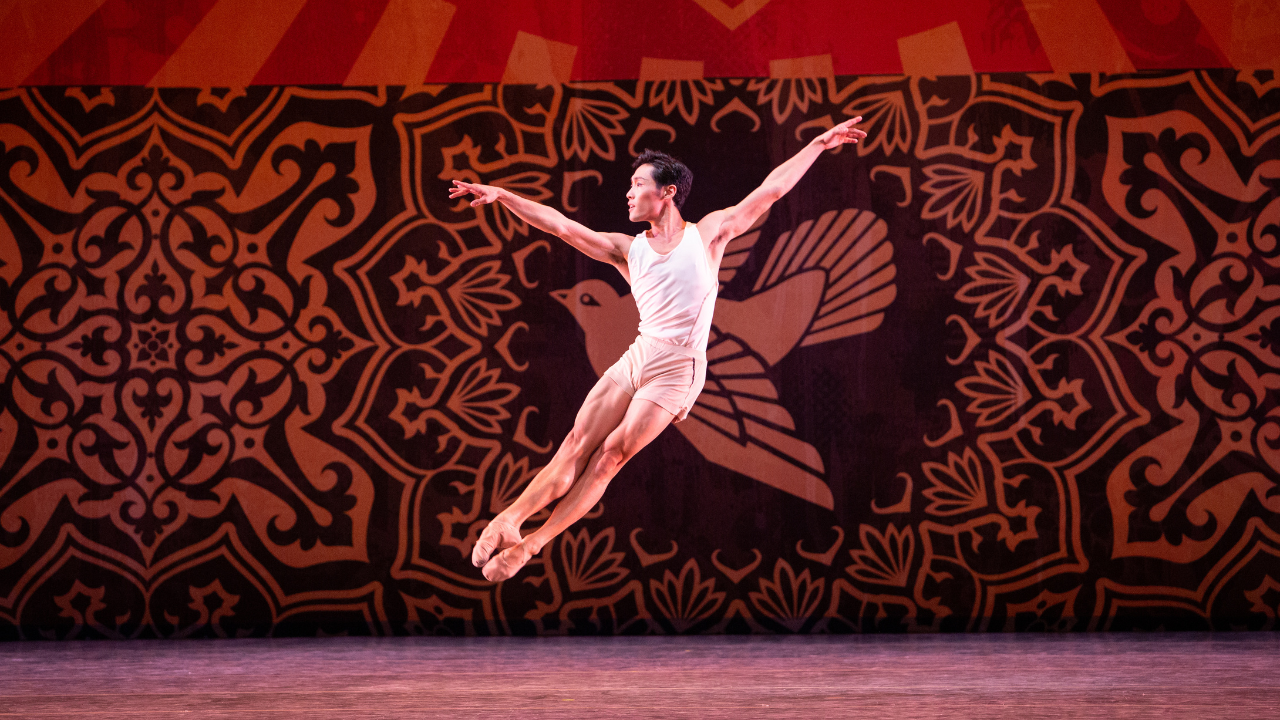
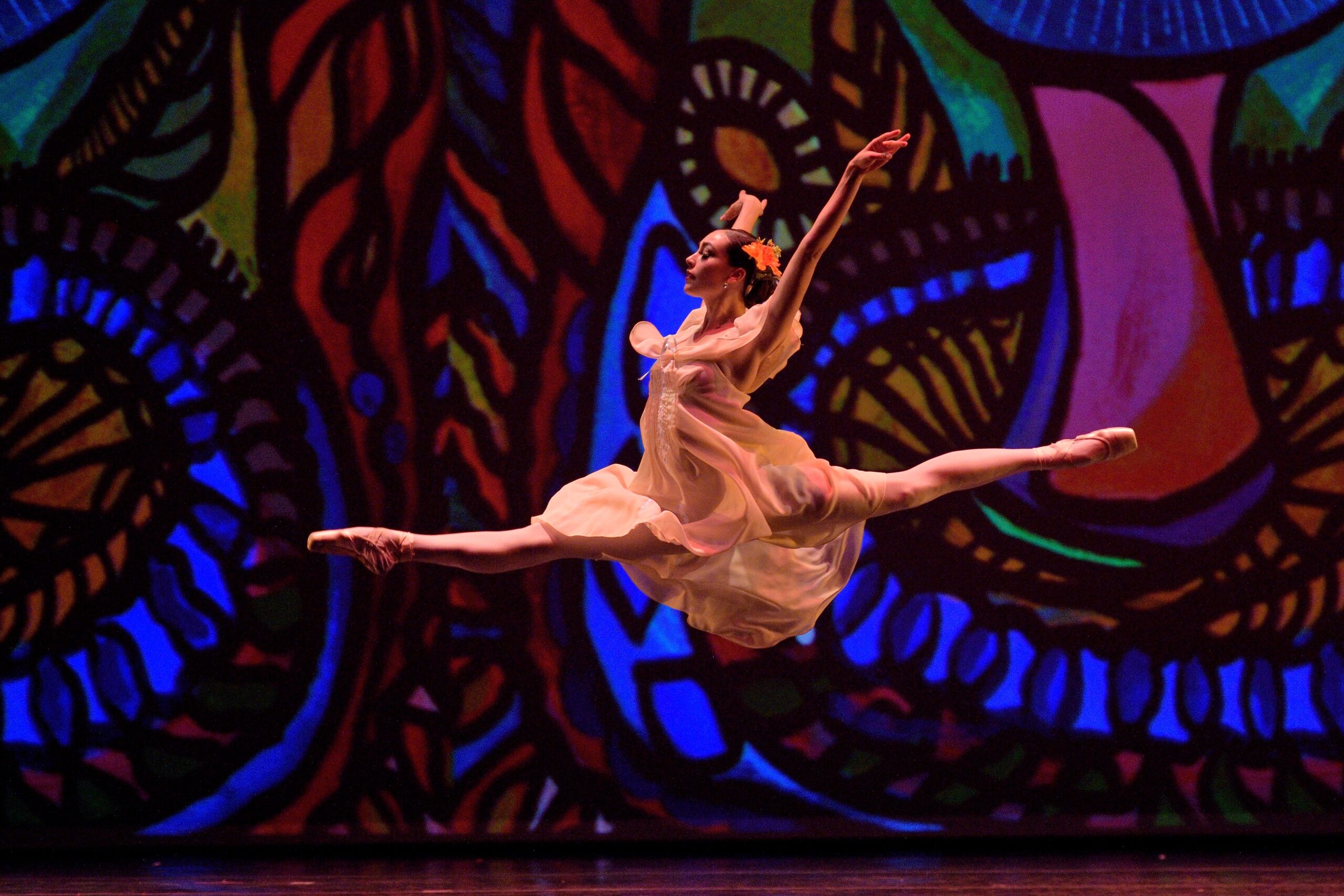

Recent Comments