
Visual Art
‘Ode to the 305’ On View at Newly Opened University of Miami gallery
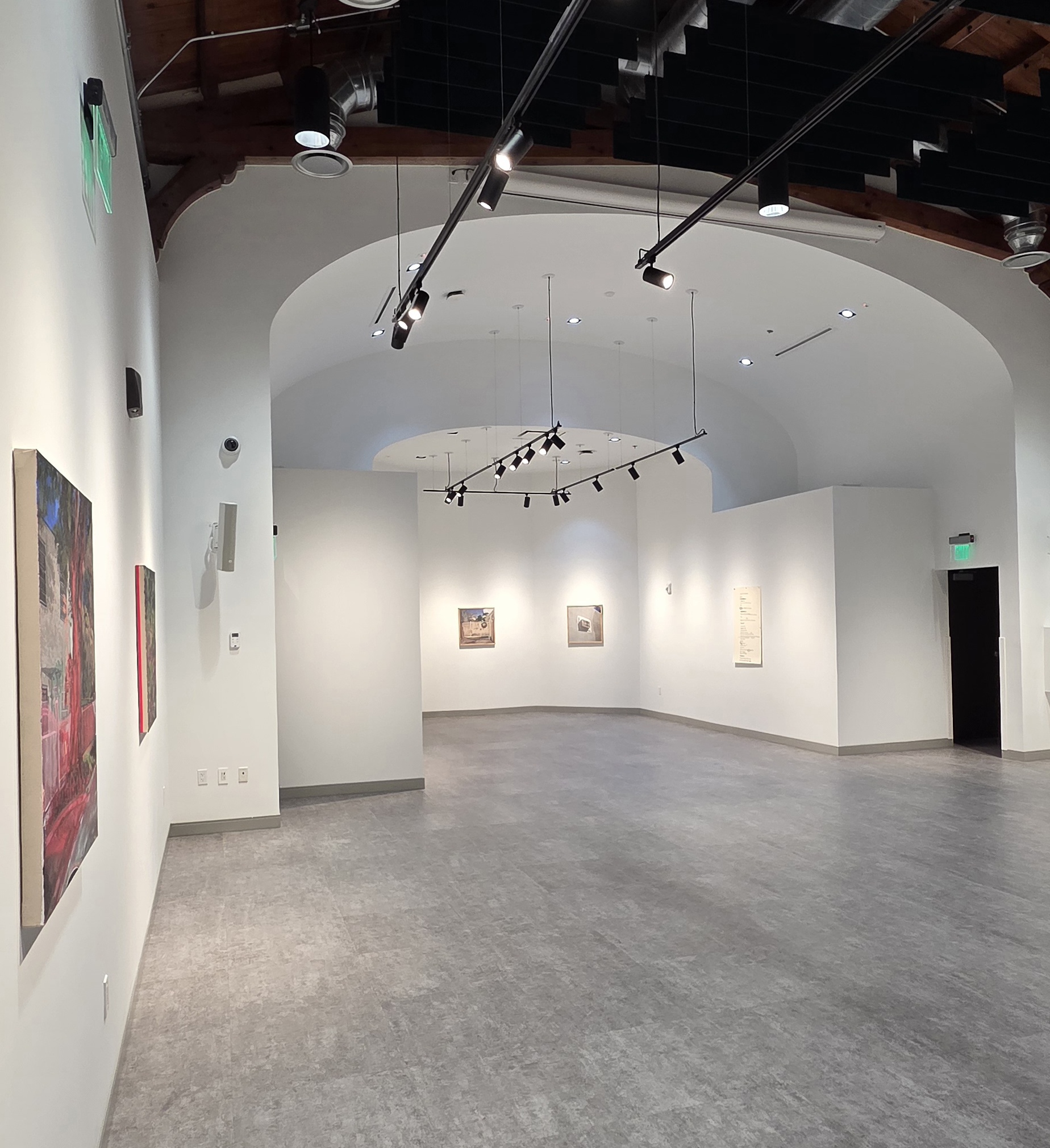
The newly renovated University of Miami Art Gallery @ The Chapel provides the setting for “Ode to the 305: A Love Letter to Miami,” an exhibition curated by Ronald Sánchez that explores the city’s overlooked histories, working-class neighborhoods, and everyday realities beyond the tourist gaze. (Photo by Ronald Sánchez)
For decades, Miami has sold itself through a carefully curated fantasy. Palm trees sway against pastel Art Deco facades. Luxury towers rise beside turquoise water. Nightlife stretches until dawn. The city appears polished, glamorous, and perpetually on vacation.
Yet for those who call Miami home, another city exists beneath the postcards.
It is a city of working-class neighborhoods, crowded highways, corner stores, backyard gatherings, immigrant communities, and fading storefronts. It is a city where memory resides in familiar fences, old apartment blocks, neighborhood landmarks, and family photographs. It is this Miami—raw, imperfect, and deeply human—that curator Ronald Sánchez explores in “Ode to the 305: A Love Letter to Miami,” on view at the newly opened University of Miami Art Gallery @ The Chapel through Friday, June 26.
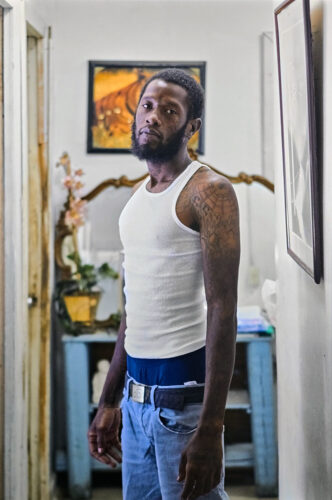
Roscoe B. Thicke III’s photographic portraits draw from personal and family histories rooted in Miami’s Pork ‘n’ Beans community, honoring place, memory, and the generations that shaped the city’s cultural fabric. (Photo by Ronald Sánchez)
Rather than celebrating Miami’s polished exterior, the exhibition embraces its contradictions.
“I feel like it reflects authenticity,” says Sánchez. “The Miami we know. Tourists won’t understand what Flanigan’s is. They won’t understand taking the green cup home. Going to a Hurricanes game. Being stuck on US-1 or I-95 during rush hour. The heat when you get into your car. Those are the things that make Miami what it is.”
Featuring works by Valerie Catalan, Mark Herrera, Katelyn Kopenhaver, Isabella Rodriguez, Richard Rodriguez, Roscoe B. Thicke III, and Julia Zurilla, the exhibition presents a collective portrait of a city rarely depicted in tourism campaigns.
Instead, viewers encounter stories rooted in migration, family histories, labor, resilience, and belonging.
A New Home for Miami Stories
The exhibition also arrives during a significant moment for the University of Miami’s art program.
Located inside a historic 1948 chapel, the gallery recently completed an extensive renovation after relocating from Wynwood, where it had spent more than a decade. Gallery Manager and Curator Milly Cardoso describe the move as transformative.
“We really needed something on campus,” Cardoso says. “It makes the gallery accessible to students and the university community in a completely different way.”
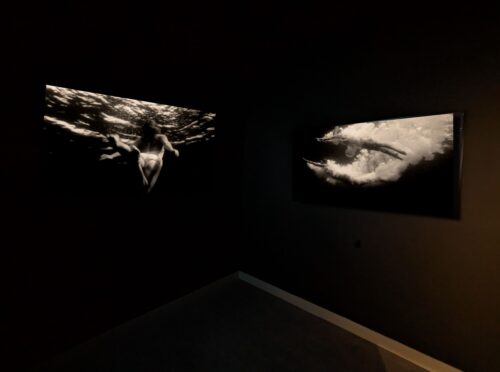
Julia Zurilla’s multichannel video installation, “Portrait of a Bather in Three Movements,” uses water as both subject and metaphor, reflecting on adaptation, memory, and survival in a city shaped by the sea. (Photo by Ronald Sánchez)
Rather than erasing the building’s past, the renovation carefully preserved many of its architectural features, including portions of the original stained-glass windows and vaulted wooden ceiling.
“It’s a landmark building,” Cardoso explains. “We were very careful with the renovation. The stained glass couldn’t be altered, and the ceiling couldn’t be disturbed. We wanted to respect the history while creating a space that could serve contemporary art.”
The result is a venue uniquely suited for an exhibition concerned with memory and transformation.
Beyond the Miami Myth
Sánchez originally developed many of the ideas behind “Ode to the 305 “through an earlier exhibition, “Magic City: Contemporary Visions of Miami,” presented at the Doral Contemporary Art Museum. That project even earned recognition at the Telly Awards through an accompanying documentary. But this new iteration feels more focused, more intimate, and more rooted in everyday experience.
“I wanted to steer away from the title ‘Magic City,’” Sánchez says. “This show is a little different.”
The difference is immediately apparent.
In Roscoe B. Thicke III’s photographs, family members from the Pork ‘n’ Beans housing projects become living archives of Miami history. The images honor a neighborhood often omitted from mainstream narratives while emphasizing the role of memory in shaping identity.
“People who don’t know Miami don’t know Pork ‘n’ Beans,” Sánchez notes. “That’s where the love letter comes in.”
Nearby, Valerie Catalan’s photographs capture landscapes that feel simultaneously specific and universal. During the walkthrough, viewers repeatedly tried to identify the locations depicted.
“People kept saying, ‘I know a place exactly like that,'” Sánchez recalls. “It could be Hialeah. It could be Little Havana. It could be Westchester.”
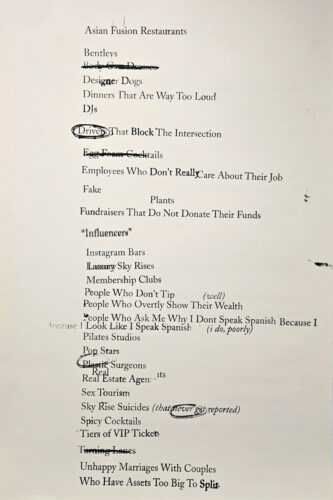
Katelyn Kopenhaver’s text-based work offers a satirical inventory of things Miami does not need more of, blending humor and critique to examine the city’s culture of excess, development, and performance. (Photo by Ronald Sánchez)
The photographs evoke the textures of everyday Miami—the hum of air-conditioning units, chain-link fences, overgrown yards, and the warm light that settles over residential neighborhoods in the late afternoon.
For many Miamians, the images feel less like documentation than recognition.
Migration, Identity, and Resistance
The exhibition’s emotional center emerges through works addressing migration and belonging.
Mark Herrera, himself a Coast Guard officer, transforms firsthand encounters with migrants into haunting drawings that depict journeys across the Florida Straits and beyond. Technical boat schematics become visual frameworks for stories of displacement, survival, and hope.
“He has witnessed these moments firsthand,” Sánchez explains. “People use anything that floats.”
A sculptural life vest fabricated from found materials reinforces the precarious reality behind migration statistics.
Nearby, Richard Rodriguez’s provocative print work confronts immigration enforcement directly. Featuring an altered Department of Homeland Security seal alongside the phrase “Los pendejos de Homeland Security” and the declaration against ICE, the piece refuses neutrality.
Its placement within a university gallery feels especially significant.
“I really appreciate the art department letting me show this piece,” Sánchez says. “Other institutions might not.”
The work’s unapologetic stance reflects broader conversations happening across Miami’s immigrant communities while underscoring the exhibition’s commitment to authenticity over comfort.
Familiar Places, Shared Memories
Other works approach Miami through quieter observations.
Isabella Rodriguez’s paintings transform ordinary architectural details into moments of contemplation. Louvered windows, metal fences, tropical vegetation, and pastel facades become visual markers of collective memory.
“We all know buildings like that,” Sánchez says while pointing to one painting. “I have that exact fence at my house.”
The recognition is immediate.
Likewise, Katelyn Kopenhaver’s humorous text-based work offers a satirical inventory of things Miami does not need more of, poking fun at luxury culture, traffic, and the city’s endless cycles of reinvention.
Together, these works reveal a Miami that is simultaneously frustrating and beloved.
Learning to Stay Afloat
The exhibition concludes with Julia Zurilla’s multichannel video installation, “Portrait of a Bather in Three Movements.”
Presented within the gallery’s dedicated video room, the work examines swimming as both a literal and metaphorical act of survival. Water becomes a recurring symbol throughout the piece—sometimes nurturing, sometimes threatening.
Sánchez describes the installation as “poetic.”
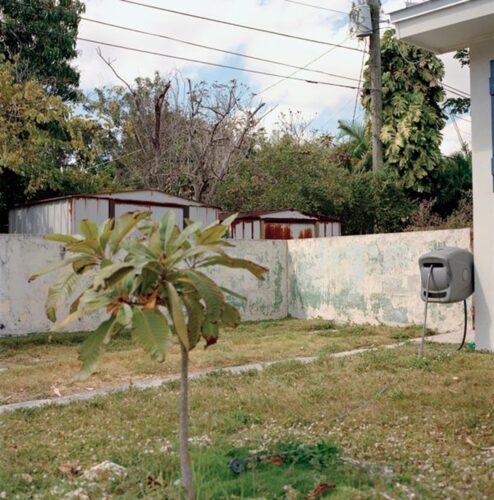
In Valerie Catalan’s photographs, familiar South Florida landscapes become sites of emotional reflection, where beauty, uncertainty, and the quiet rhythms of everyday life coexist. (Photo by Ronald Sánchez)
Projected imagery of swimmers, ocean currents, and shifting rock formations creates an immersive environment that feels deeply connected to Miami’s relationship with the sea.
In a city defined by water, the work becomes a meditation on adaptation itself.
A Love Letter Without Nostalgia
What makes “Ode to the 305” successful is its refusal to romanticize Miami.
The exhibition does not ignore the city’s inequalities, its displacement, its political tensions, or its rapid transformation. Instead, it embraces these realities as essential parts of the story.
“This is my representation of what real Miami is,” Sánchez says.
That representation feels especially urgent as Miami continues to reinvent itself.
In the renovated chapel gallery, surrounded by works that honor neighborhoods, memories, and often-overlooked communities, viewers encounter a version of Miami that cannot be found in travel brochures.
It is a city of contradictions, but it is also a city worth loving precisely because of them.
WHAT: “Ode to the 305: A Love Letter to Miami”
WHERE: University of Miami Art Gallery at The Chapel, Room 112, 6565 Red Road, Coral Gables
WHEN: 9 a.m. to 3 p.m., Tuesday through Friday. Closed Saturday. Through Friday, June 26, 2026. Private tours available by appointment.
COST: Free
INFORMATION: (305) 284-3161 and https://art.as.miami.edu/
COMING UP: The next exhibition at the museum is “Common Ground” by William Osorio, curated by Milly Cardoso, with an opening reception from 5 to 8 p.m. on Thursday, July 9 and on view from Wednesday, July 8 through Wednesday, Aug. 5.
ArtburstMiami.com is a nonprofit media source for the arts featuring fresh and original stories by writers dedicated to theater, dance, visual arts, film, music, and more. Don’t miss a story at www.artburstmiami.com.