
Music
Gipsy Kings Look Back and Ahead Before Miami Concert
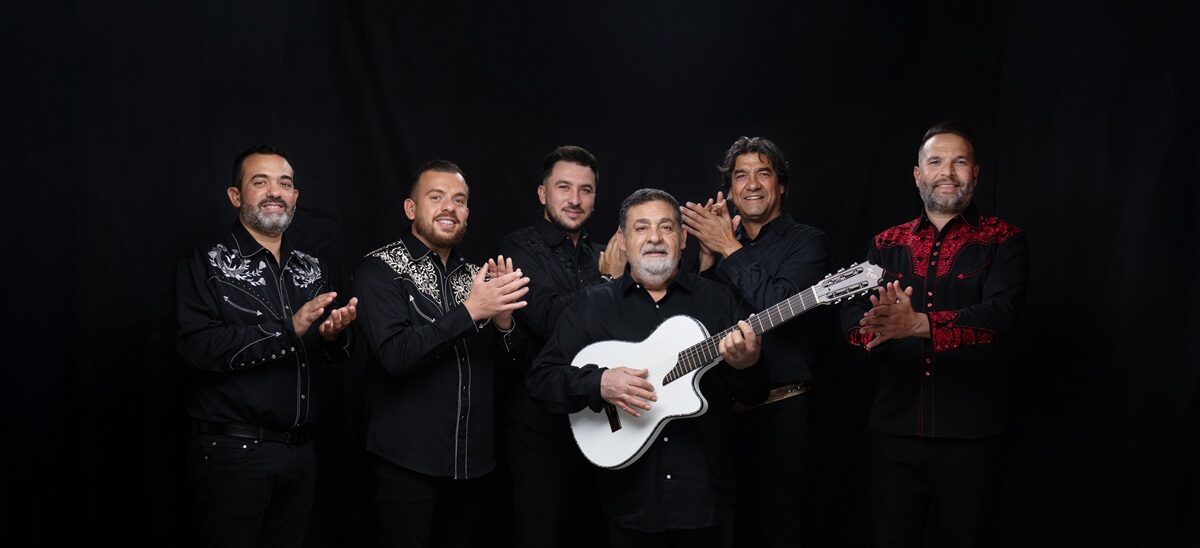
Gipsy Kings featuring Tonino Baliardo, center, with his sons Mikael Baliardo, first from left, and Benji “Cosso” Baliardo, second from left. Mikael and Cosso Bailardo have been part of the group the past 14 years. The group comes to Miami for a show at the James L. Knight Center on Saturday, Aug. 15. (Photo courtesy of Gipsy Kings featuring Tonino Baliardo)
The title of the Gipsy Kings’ most recent release, “Historia” (“History”), may suggest a retrospective, but the music, mixing the familiar with subtle innovations, sounds like a reaffirmation and a look forward. And why not? They have a distinct sound, built on a joyful, high-energy mix of Catalan rumba, flamenco, and pop, highlighted with brushstrokes of styles from around the world, and simple, direct lyrics sung mostly in Spanish, but also French, Catalan, and languages of southern France. The combination turned a group of Gypsy Romanis, once seemingly destined to scratch a living performing in restaurants, street events or busking on the beaches of Saint Tropez, into a global phenomenon.
But success was never a given. Their first two albums went largely unnoticed. Then their third recording, released in 1987, included the monster hits “Djobi Djoba” and “Bamboleo,” and the Gipsy Kings were on their way. Since then, they have won a Grammy (in 2014 for Best Global Music Album), have been featured in the soundtracks of Hollywood feature films including “Toy Story 3” and “The Big Lebowski,” sold more than 25 million albums, have had in excess of 2 billion streams, and played to full houses all over the world.
They will be performing at the James L. Knight Center on Saturday, Aug. 15, at 8 p.m.
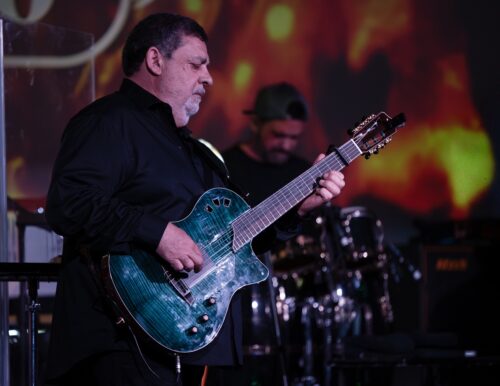
“No, I never imagined this kind of success,” said Gipsy Kings leader, founder and main composer Tonino Baliardo. (Photo courtesy of Tobin Hill)
“No, I never imagined that kind of success,” said Gipsy Kings leader, founder and main composer Tonino Baliardo, speaking in French through a translator from his home in the South of France. “We thought we could make a little living. We were doing private parties, and we did a little bit of work in Saint Tropez, but very little. When it exploded onto the world scene, it was just quite remarkable.”
The group was founded in 1979 in Arles, France, and featured two sets of brothers, the Baliardos (Tonino, Paco, and Diego, nephews of the great flamenco guitarist Ricardo Baliardo, better known as Manitas de Plata) and the Reyes (Nicolas, Canut, Paul, Patchai, and Andre, sons of Manitas’ cousin, flamenco singer José Reyes). Manitas de Plata and Reyes performed as a duo in the 1970s. It’s a story that speaks of a close-knit community, strong family ties, a fierce attachment to their traditions and legacies that must be honored.
Baliardo once called Manitas de Plata “the original Gipsy King.”
Over the years, the group has undergone several personnel changes while remaining a family affair. This iteration of the Gipsy Kings features Baliardo’s sons, Cosso and Mikeal. They have been part of the group since 2014.
Baliardo said “Historia” preserves the group’s sound while introducing new ideas.
“I wanted to make a new album preserving our sound, our gypsy feel, but with new melodies, new energy,” he said. “I love having my sons play with me. They grew up with this music, so they’re rooted in the culture. But they bring a young energy, a young spirit. And I also learn with them because music has evolved so much the past 35, 40 years.”
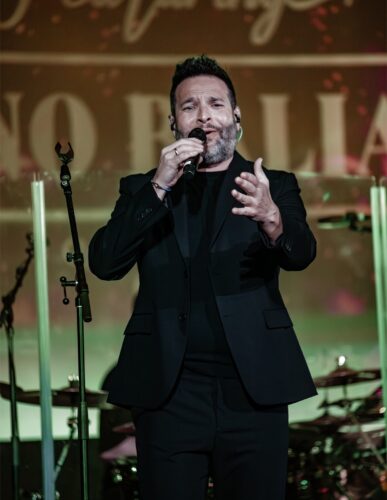
Jean Samuel (“Same”) Ray is the lead singer of Gipsy Kings (Photo courtesy of Tobin Hill)
As for how they describe their music and the blurry line between rumba Catalana, a style that emerged in Barcelona in the 1950s, and rumba flamenca, one of the palos or classic styles in flamenco, Baliardo sounds unconcerned. “At the end of the day, we are originally from Catalonia,” said Baliardo with a shrug. “My parents were born in Barcelona, Catalonia. So, we call it rumba Catalana (Catalan rumba).”
Over the years, the Gipsy Kings have added to it elements drawn from different sources, from Brazilian music and reggae to Algerian rai. “Historia” includes touches such as jazz piano solos, a hint of a montuno, and electric guitar rock solos.
“We kept the rhythms, the sound of the guitars. We call it the compas, and over that, our sound is always evolving,” explained Baliardo. “We always learn something in our world tours, new styles, new things.”
But the overall theme in the album, not surprisingly, remains family and community.
That theme runs through songs such as “El Campo” (“The Countryside”), a snapshot of life among the Romani; “Primavera” (“Spring”), which begins with the line, “I remember the time I spent in this neighborhood where I was born, life was sweeter, more beautiful”; and “La Guerra” (“The War”), an anti-war lament that hints at the impact of war on many Romani families, including the Baliardos, who were once refugees from the Spanish Civil War.
Even the instrumental “Cielo” (“Heaven”) is a deeply personal statement, a tribute to Baliardo’s brother Paco, who died in April 2025.
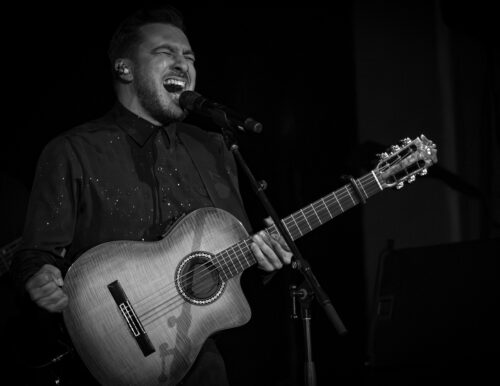
Since its beginnings in 1979, family has played a central role in the Gipsy Kings and their music. Benji (“Cosso”) Baliardo has been part of the group for 14 years. (Photo courtesy of Tobin Hill)
“In ‘Historia’ I wanted to tell the story of our ancestors, the story of our community,” said Baliardo, the main composer in the group. “It revolves a lot around that, about telling the long history of the Roma people, the Gypsies, and spreading that message throughout the world.”
His favorite song, however, is the title track “because (in it) we welcome the people who come to see us at the concerts and invite them to have a party with us,” explained Baliardo. “We have seen people so happy, partying, dancing in our concerts — and people were crying too, because something in the music touched them. And it’s a public that has been following us for years. Now it’s their children who come to see us because they have listened to our music with their parents. So, the story continues.”
WHAT: Gipsy Kings featuring Tonino Baliardo
WHERE: James L. Knight Center, 400 SE 2nd Ave., Miami
WHEN: 8 p.m., Saturday, Aug. 15
COST: $64.47, $80.75, $105.10, $158.35 and $218.23, including fees before taxes. Ticket information here.
INFORMATION: 305-416-5970; jlkc.com
ArtburstMiami.com is a nonprofit media source for the arts featuring fresh and original stories by writers dedicated to theater, dance, visual arts, film, music, and more. Don’t miss a story at www.artburstmiami.com.