Blog Article Category: Visual Arts
Doral International Art Fair Goes Beyond Visual This Year
Written By Megan Fitzgerald
November 1, 2025 at 12:23 PM
Venezuelan artist Sydia Reyes’ sculptures will be exhibited at the Doral International Art Fair held at the Doral Cultural Arts Center starting Thursday, Nov. 6 through Sunday, Nov. 9. (Photo courtesy of Sydia Reyes)
The Doral International Art Fair was created in 2023 as a way to bring contemporary art beyond Miami’s galleries and into downtown Doral. This year, sound activation and virtual reality, along with contemporary art, highlight the Doral International Art Fair.
The art fair is free to attend at the Doral Cultural Arts Center beginning Thursday, Nov. 6 through Sunday, Nov. 9.
“We don’t want to compete with Miami Art Week [which is held Dec. 2 through 7 this year] —we want to complement it,” said curator Adriana Meneses. “This is a place where families, collectors, and new audiences can all experience high-quality art together.”

Visitors explore gallery booths during the 2024 Doral International Art Fair at the Doral Cultural Arts Center. (Photo courtesy of Doral International Art Fair)
The art fair is directed by Jesús Alberto Fuenmayor and curated by Meneses, along with Félix Suazo, an art critic and professor at Universidad Nacional Experimental de las Artes and art critic, and Luis Gómez Rincón, a visual artist and architect, who have led the event since its inception, in partnership with the city of Doral.
“It’s not just visual—there’s sound, performance, even smell in some spaces,” said Meneses. “We wanted it to be a living experience, not a static one.”
Meneses said that one of the most exciting additions to this year’s fair is “Solaris Galaxy Park and Museum,” an immersive installation that combines art, storytelling, and virtual reality. Up to 20 visitors at a time can use the virtual reality headsets to explore an imaginary solar-powered city on the moon. Astronaut costumes will be available for children to dress the part as they step into the virtual city. A companion comic book, created by artist and project founder Andreina Fuentes Angarita, will also debut at the fair.
Fuentes Angarita, a Venezuelan artist living in Miami and creator of “Solaris Galaxy Park & Museum,” said that the exhibit is to make art a family experience.
“It is a wonderful family adventure that you can’t miss,” she said. “And the storytelling has a beautiful message for all communities about listening to nature, about listening to each other, and about how to protect the earth because it could disappear.”

“Solaris Galaxy Park & Museum” is an immersive art and technology project by Andreína Fuentes Angarita that will be featured at the 2025 Doral International Art Fair. (Photo courtesy of Doral International Art Fair)
Children can play, families can explore together and learn about energy, ecology, and the planet’s future.
The installation uses video projections, interactive sound, and virtual landscapes.
“It’s like visiting the moon without leaving Doral,” said Fuentes Angarita.
The fair also includes discussion panels, concerts, book presentations, and live painting by Venezuelan caricaturist RAYMA, along with sound art activations by the Primal Ensemble and Muu Blanco, performance art by Ilian Arvelo, and guided tours.
“We have performances, sound art, installations, sculptures, and paintings,” said Meneses. “There’s always something happening inside and outside, so people can enjoy the fair in different ways. The idea is that art isn’t distant — it’s part of the community experience.”
Local and international galleries will present work at the fair, including Miami International Fine Arts, a Miami-based gallery and arts institution, as well as galleries from Mexico, Argentina, Colombia, Venezuela and Russia.
(See the complete list of galleries)
Among the exhibiting artists are Venezuelan American sculptor Sydia Reyes, whose pieces explore transformation and identity, and the late Colombian abstract sculptor Edgar Negret, known for geometric sculptures made from industrial materials that depict natural forms such as the sun and flowers.

Curators Félix Suazo, left, and Adriana Meneses speak during a panel at the 2024 Doral International Art Fair. (Photo courtesy of Doral International Art Fair)
“Exhibiting at DIAF means reaffirming my commitment to art and to the power of art as a universal language,” said Reyes. “This fair has an integrative spirit; it brings together artists from different generations and backgrounds in a shared space of encounter, which I find truly valuable.”
Reyes said that free admission to the fair is a way to make art more accessible.
“Art gives us the opportunity to see the world from another angle, and that’s something everyone should experience,” she said.
Meneses said the goal is for every visitor to take something away from the art fair — whether it’s a new artwork or connecting with the arts community.
“People can come, see, and if they want, they can buy something and take a piece of art home,” she said. “But even if they don’t, they leave with the experience.”
WHAT: Doral International Art Fair
WHEN: Noon to 8 p.m. Thursday, Nov. 6 through Sunday, Nov. 9
WHERE: Doral Cultural Arts Center, 8363 NW 53rd St., Doral
COST: Free
INFORMATION: 305-209-5101 or artdoral.com
ArtburstMiami.com is a nonprofit media source for the arts featuring fresh and original stories by writers dedicated to theater, dance, visual arts, film, music, and more. Don’t miss a story at www.artburstmiami.com.
No posts found
The Woman Behind The Freedom Tower’s ‘Voices of Miami’ Photographs
Written By Michelle F. Solomon
October 31, 2025 at 7:46 PM
“Voices of Miami” is a permanent exhibition inside the newly restored and reopened Freedom Tower at Miami Dade College on Biscayne Boulevard. (Photo courtesy of Miami Dade College)
Clara Toro began her quest to create a photographic archive of immigrants and the Miami neighborhoods like Allapattah, Wynwood, and Little Haiti before they disappeared due to gentrification.
It was those stories in pictures that got her noticed and commissioned, in a sense, as the photographic historian for “Voices of Miami,” a permanent exhibition in the recently reopened, restored Freedom Tower at Miami Dade College
The photos are a companion to the community-driven oral history project, led by the Museum of Art and Design (MOAD), the museum of Miami Dade College, in partnership with the MDC Archives.
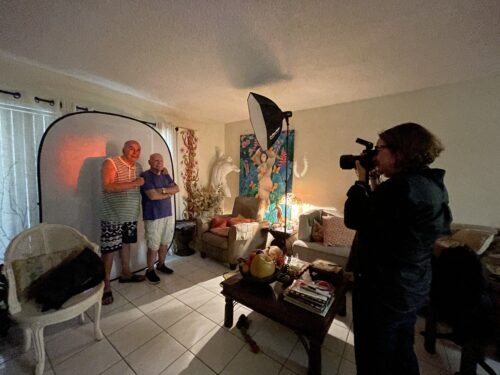
Clara Toro photographing her subjects for the “Voices of Miami” permanent exhibition at the Freedom Tower. (Photo courtesy of Miami Dade College)
The Freedom Tower Oral History Archive captured the voices that helped to tell the story of the historic landmark, which originally served as the headquarters for the Miami News daily newspaper and later as a processing center for more than 650,000 Cuban exiles.
Toro’s subjects are from all walks of life and they were selected from those who participated in the oral history project. There are 350 black and white photographs in the “Voices of Miami” exhibition.
She wanted to have her subjects be the focus, so she grabbed with what she said is her “favorite Leica camera” paired with a 90 mm lens, and got to work.
The photos are all black and white. “I wanted the photographs to be timeless and I felt with color it would add a sense of the time when they were made and didn’t want that.” But there was another thought Toro said she had when deciding how to portray the people. The idea of an identity card or passport photo came to mind.
“I think that is something that is very important about the immigrant (experience) – it is the passport photo or the photo that is taken for any sort of identity card. I wanted to make a commentary about those photos – the ones with the white background that do not specialize. They just identify us as immigrants, right?”
She said when she first began the project she had a vision that each portrait would be somewhat serious. “I would tell people not to smile because I wanted something more sober. And then I realized that I was not honoring their beautiful spirit. After the first 10 portraits, I realized it was very important for people to smile. Many of them had asked me if they could.”
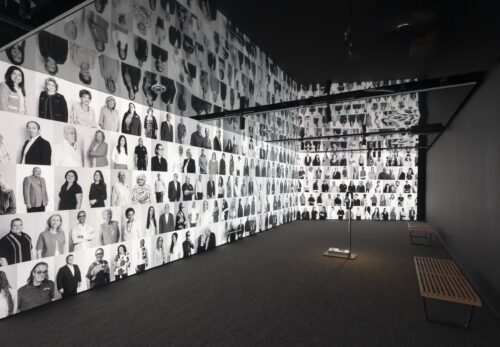
Miami Dade College commissioned Clara Toro to take all of the photos for “Voices of Miami” permanent exhibition inside the newly restored and reopened Freedom Tower on Biscayne Boulevard. The subjects were selected from the community Oral History Project. (Photo courtesy of Miami Dade College)
She also wanted her photos to be kept simple. “I didn’t want people to arrive dressed up,” said Toro. “I think the photos are honest. I wanted for people to look at them and be curious and wonder about the subjects, what was going through their minds, what were their dreams or their fears. In some of them, you see a little bit of fear. In some of them, you see joy. You see pride. Different emotions from different people. And I hope I was able to convey that.”
The focus would be on her subjects, plain backgrounds, and not on anything else. She would tell the people she was going to photograph that it would just be them in the picture. But one time she had to make an exception.
One woman brought something that she merely wanted to share with Toro.
“This one lady came in with a tiny, tiny little dress that her mother had made. She said she wanted to show it to me. And the fabric, the fabric was really beautiful. It looked, of course, old and yellow and worn. But it was hers. And she told me that she had worn that dress when she arrived to the States. And that her mother had saved it.”
Toro shared that she doesn’t like to photograph people with any sort of objects. But in this case, she said, she had to.
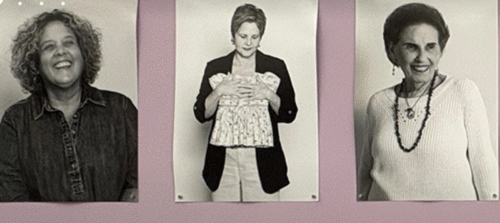
There is only one photo where someone is holding an object in “Voices of Miami,” a dress made by a mother that the small girl wore when she came to the States. (Photo courtesy of Miami Dade College)
“It was so very touching — the way she held it and the story behind it, how her mother had made it, and her mother no longer being alive. So I broke the rule and it might be the only photograph(in ‘Voices of Miami’) that has an object. But sometimes you just gotta roll,” she said.
Toro didn’t start her career as a photographer. She said that came later in life.
Born in Medellin, Colombia, she studied industrial design there. “Then the 1980s happened. I left Colombia.” She said she remembers it being “all Pablo Escobar and bombs and people dead on the street. It was very violent. So, my parents told me I should go because it was so dangerous.”
She applied and got a scholarship to the University of Montreal and there received a master’s degree in industrial design and marketing. She married while in Montrela and moved to New York and then came to Miami.
“I decided I wanted to raise my kids, so I became an art teacher in an elementary school for 15 years.” At a Montessori school in Key Biscayne ,she taught art, then second and third grade.
When she turned 50 and her kids had grown, she decided to go back to “her passion,” which was photography. “Being a photographer when I was in Colombia was not going to be an accepted profession for my parents So, I thought to myself, ‘I am 50 now, I paid my dues.’”
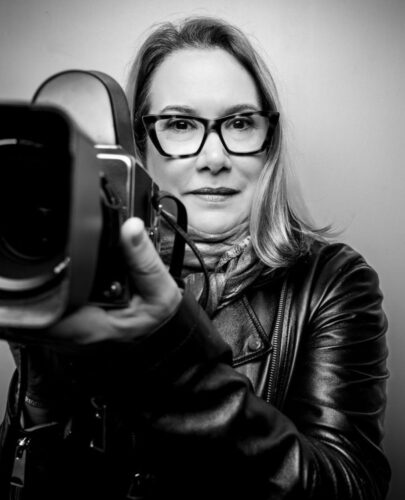
Photographer Clara Toro has been documenting Miami neighborhoods that she believes will eventually disappear due to gentrification. (Photo courtesy of Clara Toro)
She took some photography courses and then went on to to get a master’s degree from PhotoEspaña.
“At my age, I knew it would be difficult to get a job as a documentary photographer,” she said, adding that there was a stint as a freelance photographer for the Wall Street journal.”
Now 60, she has spent time on a personal body of work and continues her longtime project of preserving in photography the people and places of Miami’s neighborhoods. She has been a resident artist at the Bakehouse Art Complex since 2018.
Toro feels like there’s more to continue, though, in the “Voices of Miami” project.
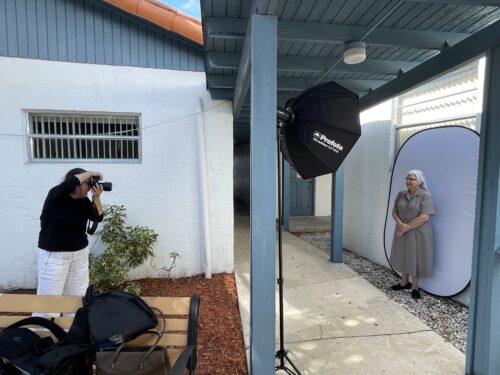
Clara Toro wanted her photos to focus only on the subjects and all of the photos are in black and white. (Photo courtesy of Miami Dade College)
“We have over 300, but I am hoping that we continue,” said Toro, since the oral history project continues to grow. “There hasn’t been a single day when I say I’m done. I guess by nature, I’m a storyteller, and I learned a lot and I enjoyed all of the stories about the people I photographed.”
WHAT: Freedom Tower at Miami Dade College
WHERE: 600 Biscayne Blvd., Miami
COST: $18 general admission, $17, children ages 7 to 18; $14, students and seniors over 62 years old with ID. Miami Dade College students and employees free.
INFORMATION: moadmdc.org/freedom-tower/
MORE INFORMATION: Share Your History Story
Share Your Operation Pedro Pan
ArtburstMiami.com is a nonprofit media source for the arts featuring fresh and original stories by writers dedicated to theater, dance, visual arts, film, music and more. Don’t miss a story at www.artburstmiami.com.
No posts found
Heritage Trail Celebrates City of Opa-locka and Its Architectural Gems
Written By Carmen F de Terenzio
October 27, 2025 at 5:10 PM
Phase II of the Opa-locka Heritage Trail will be unveiled on Saturday, Nov. 1, during a free, public event at the Opa-locka Museum of Art & History. (Photo by Alex Van Mecl)
It’s not every day that a city reintroduces itself, not through fanfare, but through attention. In Opa-locka, a place whose fantastical origin story has long overshadowed its tangible historic sites, 15 stops across its historic core is transforming the way the city is seen and felt.
The Heritage Trail reframes a place once imagined in minarets and myth, now made newly legible through restoration, storytelling, and design. Walking the trail reveals not only the whimsy of its architecture, but something more urgent: the sense that preserving beauty can spark belonging, and that beauty, in Opa-locka, might just be a beginning.
The trail was spearheaded by Alex Van Mecl, senior project manager at Ten North Group and founder of the Opa-locka Preservation Association, a grassroots effort he began after moving into a historic home in the city. “The original idea behind the association was to connect historic homeowners,” he says, “but it grew into something larger—a desire to bring a heritage program into the downtown district.”
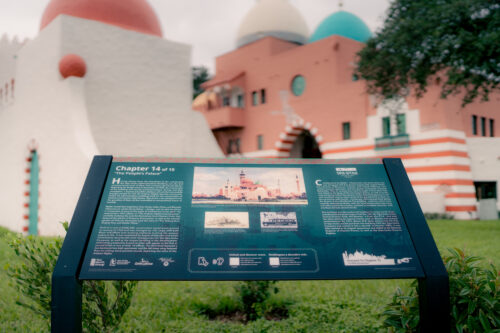
The Heritage Trail, introduced to the public in April 2024, is the city’s first permanent historical display. Now its Phase II marks the debut of a companion piece: a printed and digital map that expands access to the trail’s sites. (Photo by Alex Van Mecl)
That vision crystallized after Van Mecl and his husband purchased a 1920s Moorish-style house on Jann Avenue. “I was swept away with imagination the moment I started researching the house,” he recalls. Through University of Miami archives, he found the original architectural drawings and learned about the families who had lived there. That curiosity led to an Instagram page, then a website, and ultimately, a movement. Within months of moving in, the house itself became part of the story—hosting more than 16 film and television productions, from music videos to a Harper’s Bazaar Vietnam edition cover shoot.
[RELATED: Introducing Opa-locka’s Heritage Trail]
The Heritage Trail, introduced to the public in April 2024, is the city’s first permanent historical display. Now, Phase II of the Heritage Trail, is making its debut: a companion piece, which includes a printed and digital map that expands access to the trail’s sites. Supported in part by a grant from the Florida Division of Historical Resources and developed with Ten North and the City of Opa-locka, the trail now spans 15 sites, each with redesigned markers and a digital guide in English and Spanish. The trail is open to the public year-round, allowing visitors to explore the city’s architectural and cultural history at their own pace. The map will be officially unveiled on Saturday, Nov. 1, during a public event at the Opa-locka Museum of Art & History, where visitors can meet the map’s designer, receive a printed copy, and participate in downtown activities.
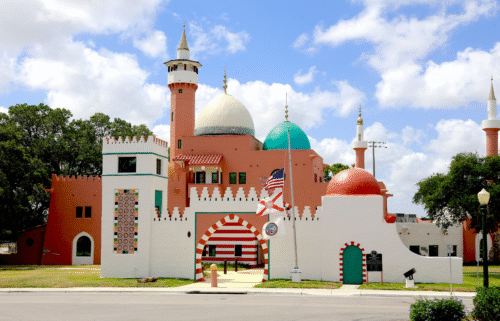
Opa-locka’s historic City Hall is indicative of the Arabian Nights-inspired architecture. (Photo by Alex Van Meci)
“It’s about permanence,” says Van Mecl. “And helping people understand a sense of place that creates emotional connection.” Ahead of Opa-locka’s centennial in 2026, the project invites new narratives to take shape, grounded in memory, and open to transformation.
When graphic artist Ana Maria Rodriguez was first introduced to Opa-locka, she was captivated not just by its architecture, but by the story behind it. A longtime Miami resident and two-time Emmy-winning co-producer for Univision’s Spanish-language news programming, Rodriguez approached the map with both design and documentary instincts. “What inspired me most was the magical origin of the city,” she says, “born from the imagination of a dreamer who refused to believe in limitations.” That dreamer was aviation pioneer Glenn Curtiss, who in 1926 founded Opa-locka as a Moorish fantasy, drawing on “One Thousand and One Nights,” a collection of Arabic folktales, for its names, domes, and decorative flourishes.
Rodriguez translated that mythical history into the visual language of the guide. The city is depicted as a constellation of magic carpets floating through a starry sky, with tile patterns from the original train station worked into the layout.
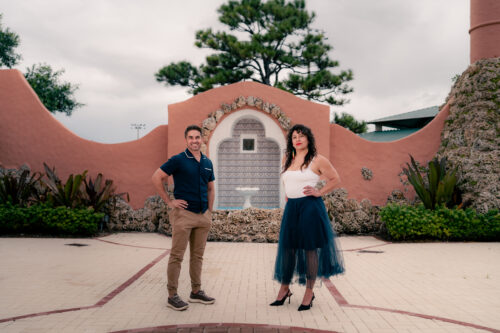
The trail was spearheaded by Alex Van Mecl, senior project nanager at Ten North Group and founder of the Opa-locka Preservation Association. At right is graphic artist Ana Maria Rodriguez, who created a printed and digital map that expands access to the trail’s sites. (Photo by Juan Carlos Castillo)
“We wanted the map to be playful and artistic, not just functional,” she explains. “But it was also important to include architectural details that encourage discovery.” She solved the challenge of representing multiple neighborhoods on a single map by using isometric perspective—a technical choice that allowed the guide to feel both expansive and intimate. The result is a guide that invites visitors to explore, not just a city, but a story, stitched together by memory, myth, and texture.
The history behind that fantasy is equally compelling. Opa-locka’s origin story is inseparable from the frenzied development of South Florida in the 1920s. “To sell your subdivision, you needed a unique, attractive style,” explains Paul S. George, Ph.D., resident historian at HistoryMiami Museum. “Mediterranean and its variations dominated, but Opa-locka stood out with its Arabian Nights theme,” he says.
George Merrick leaned into Spanish Mediterranean for Coral Gables, while Miami Shores favored Italianate flourishes. Glenn Curtiss chose something entirely different: minarets and tilework, blending fantasy with futurism in a city unlike any other.
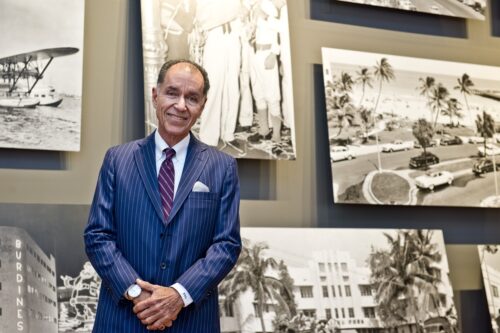
For historian Paul S. George, the Heritage Trail and new museum offer more than context—they serve as entry points into Opa-locka’s layered legacy. (Photo courtesy of HistoryMiami Museum)
For George, the Heritage Trail and new museum offer more than context—they serve as entry points into Opa-locka’s layered legacy. “They help explain the uniqueness of Opa-locka’s style, and the remarkable ambition of its founder,” he says. That ambition lives on in the preserved facades and reimagined spaces, offering a portal into both the city’s past and its aspirations for the future.
Projects like the Heritage Trail do more than restore facades; they restore continuity. In a city as rapidly changing as Miami, the act of slowing down to preserve, narrate, and walk through the past becomes a form of belonging. For Opa-locka, whose Moorish Revival architecture is unlike anything else in the region, that belonging is also a kind of reawakening. “These landmarks make people believe the city cares about itself,” says Van Mecl.
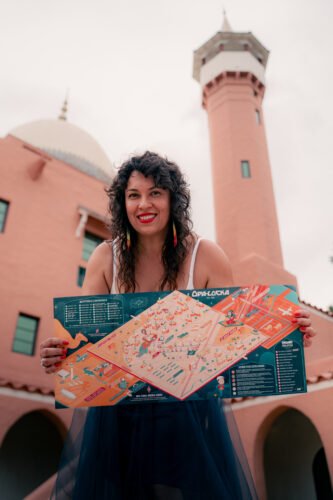
When graphic artist Ana Maria Rodriguez was first introduced to Opa-locka, she was captivated not just by its architecture, but by the story behind it. (Photo by Juan Carlos Castillo)
“It creates a ripple effect—people feel pride, and that pride translates into business, safety, and beauty.” As Rodriguez observes, understanding history becomes “an act of connection, an invitation to feel at home in the ever-evolving place we call our own.” Here, preservation is not nostalgia. It is strategy, imagination, and love made visible.
WHAT: New Heritage Guide and Map Experience (printed and digital), with meet-the-artist event featuring map designer Ana Maria Rodriguez
WHERE: Opa-locka Museum of Art & History, 490 Ali Baba Avenue, Opa-locka
WHEN: 10 a.m. to 4 p.m., Saturday, Nov. 1
COST: Free
INFORMATION: (305) 687-3545 and www.discoveropalocka.org
ArtburstMiami.com is a nonprofit media source for the arts featuring fresh and original stories by writers dedicated to theater, dance, visual arts, film, music and more. Don’t miss a story at www.artburstmiami.com.
No posts found
MOAD Art Exhibition Another Reason To Visit Newly Reopened Freedom Tower
Written By Douglas Markowitz
October 24, 2025 at 11:34 AM
The Museum of Art and Design at Miami-Dade College, which has made its home in the Freedom Tower since 2012, returns with a new art exhibition, “We Carry Our Homes With Us,” tying into the building’s legacy as a gateway for migration. (Photo by Oriol Tarridas, courtesy of MOAD)
After a two year, $25 million restoration, Freedom Tower has reopened in downtown Miami just in time for its centennial – and so has its resident art museum. The Museum of Art and Design at Miami-Dade College, which has made its home in the historic landmark since 2012, returns with a new art exhibition tying into the building’s legacy as a gateway for migration.
“We Carry Our Homes With Us” takes its name and concept from the eponymous memoir by Cuban-American author Marisela Vega, who herself came through Freedom Tower with her family upon arriving in the United States, later settling in Minnesota.
Vega’s experience is shared with countless Cuban Americans. According to Maria Carla Chicuen, executive director of cultural affairs for Miami-Dade College, many returning visitors to the tower after its renovation had been processed at the tower through the Cuban Refugee Center in the 1960s and ‘70s.

Several of the works in the show come from artists such as José Bedia, Felix González-Torres, and Ana Mendieta, who were born in Cuba and later immigrated. (Photo by Oriol Tarridas, courtesy of MOAD)
“We have been so excited to see the overwhelming positive response from the community,” she says. “It has been very emotional to see so many people coming in. We’ve had families. We’ve had people who participated in the oral history interviews that we’ve recorded for the past two years and have informed the exhibits. We’ve had everything from tears to people meeting for the first time on a tour and leaving as friends, taking photos together.”
That lived experience also extends to the exhibition itself. Several of the works in the show come from José Bedia, Felix González-Torres, and Ana Mendieta were born in Cuba and later immigrated. But the cast of artists also features non-immigrants such as Rashid Johnson and locals including Tomm El-Saieh, Joel Gaitan, and Yanira Collado.
That diversity is intentional according to Amy Galpin, executive director and head curator of MOAD..
“I wanted to make sure that the exhibition gave a nod to the incredibly powerful history of this space,” she says. “At the same time, I wanted to include a broad cross-section of artists in the exhibition, both artists who live here in Miami and artists who live in other places, and to have a conversation about memory, place, material culture – a lot of the works in the exhibition are tied to material culture in some way.”

“We Carry Our Homes With Us” takes its name from the memoir by Cuban-American author Marisela Vega, who immigrated to the U.S. through Freedom Tower. (Photo by Oriol Tarridas, courtesy of MOAD)
Artworks utilizing physical objects are a key factor in the show, with Galpin wanting to explore the ways in which specific objects are given meaning. Some of these do not relate specifically to migration: One of González-Torres’ famous candy works, consisting of a pile of hard candies that visitors are allowed to take from, features in the show, for instance. González-Torres’ began his “candy works” oeuvre after the death of his partner and the gradual depletion of the candy pile was a metaphor for the deterioration of the body from AIDS. Though often seen as an allegory for the AIDS crisis, in the context of the MOAD show the piece can take on a different interpretation.
Other works such as a Rashid Johnson painting made from wood marked with scorched patterns and tar speak to the ways in which migration can be an involuntary process. The materiality of the work references ships on the Transatlantic slave trade that brought kidnapped Africans to the Americas.
The show also introduces the museum’s redesigned interiors, which were refreshed along with the wider renovation of the building. Floors three and four have been opened as exhibition space for the first time, and new accessibility and wayfinding improvements have been made, including new elevators and staircases.
Declared a National Historic Landmark in 2008, it has gone through several incarnations since it was completed in 1925. Originally the headquarters of the Miami News newspaper, who moved out in 1957, the building earned its current name as headquarters for the Cuban Assistance Program from 1962 to 1974.

Artworks utilizing physical objects are a key factor in the show, with curator Amy Galpin wanting to explore the ways in which specific objects are given meaning. (Photo by Oriol Tarridas, courtesy of MOAD)
The building changed hands and mostly sat derelict until 1997 when it was purchased by controversial businessman and political figure Jorge Mas Canosa, whose death two months later left his son, now-billionaire and Inter Miami owner Jorge Mas Santos, to develop it into a center for Cuban heritage. During this period the building hosted a memorial for legendary salsa singer Celia Cruz, who lay in state there after her death in 2003.
Miami-Dade College took control in 2005, fully restoring the building and converting it into its current form as a home for the college’s cultural programs. Now, after another restoration, the tower is once again ready to become a beacon of both freedom and artistry.
WHAT: “We Carry Our Homes With Us”
WHEN: 10 a.m. to 6 p.m. Wednesday through Sunday. Through Jan. 11, 2026.
WHERE: Museum of Art and Design at Miami-Dade College, Freedom Tower, 600 Biscayne Blvd., Miami
COST: $18 for general admission; $14 for seniors; $12 for students with ID and children ages 7-18; free for MDC students and employees with ID, children 6 and under, active U.S. military and veterans, and disabled visitors and caregivers.
INFORMATION: 305-237-7700 or moadmdc.org
ArtburstMiami.com is a nonprofit media source for the arts featuring fresh and original stories by writers dedicated to theater, dance, visual arts, film, music, and more. Don’t miss a story at www.artburstmiami.com.
No posts found
Art and Technology Bring Leonardo Da Vinci To Life at Frost Science Museum
Written By Douglas Markowitz
October 10, 2025 at 2:13 PM
Masterpieces such as Leonardo Da Vinci’s “The Last Supper’ are explored in The Frost Science Museum’s “Leonardo – 500 Years of Genius” on view through Sunday, April 5. (Photo courtesy of Grande Experiences)
Few individuals have been able to blend artistry and science together as well as Leonardo Da Vinci. An artist as well as an architect, inventor, and philosopher, the Italian typified the idea of the “Renaissance Man,” helping to usher in an era of renewed interest in technology, discovery, and creativity at the close of the Middle Ages. Not only did Da Vinci produce some of the most famous and influential artworks of all time – the Mona Lisa, The Last Supper, the Vitruvian Man – he also devised flying machines, made comprehensive studies of human anatomy, and documented countless scientific observations.
“Leonardo – 500 Years of Genius,” the Frost Science Museum’ latest Da Vinci exhibition which opened on Saturday, Oct. 4, follows its last Da Vinci exhibition in 2018 with an updated, immersive presentation.
“I think what’s so unique about ‘500 Years of Genius’ is that it tells the story of Leonardo Da Vinci very beautifully,” says Analisa Duran, senior director of science education at Frost Science. The show is produced by Grande Experiences, an Australia-based company that has specialized in immersive experiences since 2011.
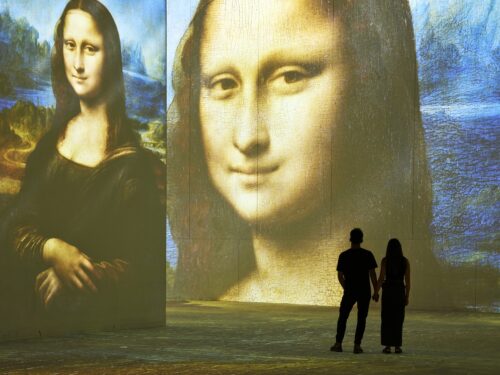
The “Mona Lisa Revealed” section of the exhibition uses imagery captured by special multi-spectral camera equipment. (Photo courtesy of Grande Experiences)
“It talks about his work in engineering, anatomy, as an artist, as a scientist, and it tells that story in an immersive way. And that’s very different from what we had before.”
Rob Kirk, head of touring experiences at Grande, says it’s the focus on storytelling that creates an emotional journey for the visitor.
“We very much take a curatorial approach.”
The exhibition is produced with assistance from the Museo Leonardo Da Vinci, a private institution headquartered in Rome at the Casa Poppolo. After analyzing the roughly 6,000 extant pages of Da Vinci’s notebooks in which he drew his many inventions, the Museo employed artisans to create physical replicas of many of Da Vinci’s conceptual machines, including flying machines and armored vehicles. These models, some of which are interactive, form about 50 percent of the exhibition, according to Kirk.
Technology also ups the ante on the exhibition experience.
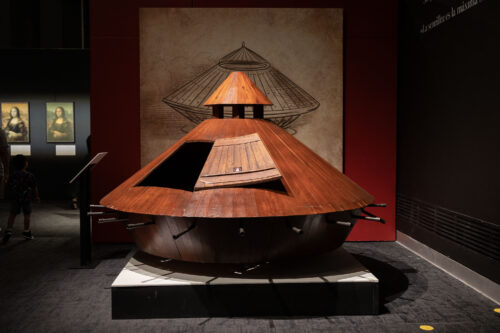
Full-scale replicas of many of Da Vinci’s concept designs for machines are on display, such as this armored vehicle. (Photo courtesy of Frost Science Museum)
Much in the way Da Vinci lived at a time of significant scientific progress and disruption, the producers of “Leonardo” are using new innovations to deepen their explorations of the master’s work. Along with the Museo Da Vinci, Grande established an exclusive partnership with Pascal Cotte, a French scientist who made a multi-decade study of the “Mona Lisa” after the Louvre Museum invited him to make scans of the painting in 2004.
Using a special multi-spectral camera to analyze the artwork, Cotte’s imagery reveals unprecedented hidden details beneath the painting’s surface, such as a previously unknown sketch the artist drew prior to finishing the painting.
The images form the backbone of “Mona Lisa Revealed,” a section of the show dedicated to the famous painting. Projected onto walls, they display the hidden layers and details uncovered by Cotte on a large scale. It may be a better way to experience the Mona Lisa than actually visiting the Louvre, where one must fight with crowds just to glimpse the small, dark painting behind bulletproof glass.
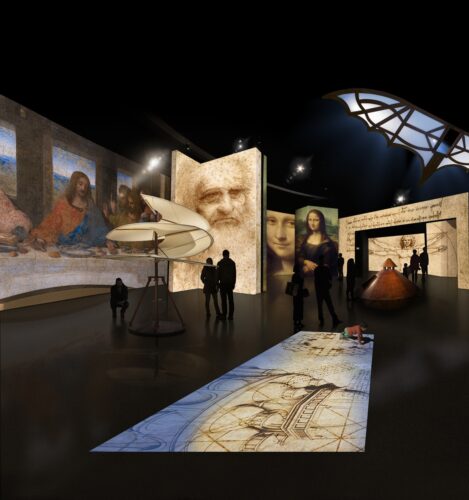
Many displays at the Da Vinci exhibition are interactive. (Photo courtesy of Grand Experiences)
Other experiences in the show, which is broken into 16 sections that each explore one of Da Vinci’s many disciplines, include a large-scale projection of The Last Supper; a Vitruvian Man display where one can compare their own form to the famous anatomical sketch; and blow-ups of the polymath’s famously detailed sketchbooks.
The show arrives at a time in which the market for immersive exhibitions has exploded, with everything from sophisticated digital art displays from legitimate organizations like teamLab to more pedestrian shows that focus on projection-mapping.
Kirk admits that the genre has been somewhat diluted by the boom.
“It’s the reason why we’ve been kind of very careful about selecting who and where we work with in the presentation of our experiences, because there isn’t (anything) stopping anyone from renting a space downtown and turning it into what they perceive to be an immersive experience.”
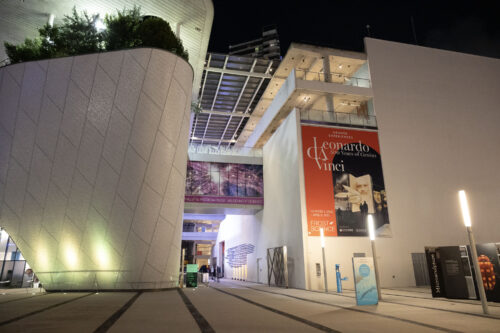
Miami’s Frost Science Museum’s “Leonardo – 500 Years of Genius” is on display through Sunday, April 5, 2026. (Photo courtesy of Frost Science Museum)
The full-scale physicality and digital innovation of “500 Years of Genius” presents a mix of art and science. More than most other artists, Da Vinci’s work is perfectly compatible with the Frost Museum of Science.
WHAT: “Leonardo: 500 Years of Genius”
WHEN: 10 a.m. to 5 p.m. Monday through Thursday; 10 a.m. to 6 p.m. Friday through Sunday. Through Sunday, April 5, 2026.
WHERE: Philip and Patricia Frost Museum of Science, 1101 Biscayne Blvd., Miami
COST: $34.95 and $29.95, ; $26.95 and $24.95, ages four to 11, admission free for children 3 and younger. Free admission for museum members.
INFORMATION: (305) 434-9600 or frostscience.org.
ArtburstMiami.com is a nonprofit media source for the arts featuring fresh and original stories by writers dedicated to theater, dance, visual arts, film, music, and more. Don’t miss a story at www.artburstmiami.com.
No posts found
North Miami Finds Poetry in Trash
Written By Jonel Juste
September 1, 2025 at 5:44 PM
A trilingual poem made from recycled materials is part of “Poetry on the Plaza,” on display through Sunday, Sept. 21 at MOCA North Miami. (Photo by Daniel Bock)
Poetry is typically found in books, its words inked onto the page to stir emotions such as love and passion. However, in the case of “Poetry on the Plaza,” it sometimes appears on public walls, crafted from recycled materials to raise awareness about environmental issues.
Since July, MOCA Plaza in North Miami has been the host of the public walls adorned with trilingual poems made from recycled plastic. The installation remains on view at Museum of Contemporary Art (MOCA) North Miami through Sunday, Sept. 21.
The installation, Poetry on the Plaza, was created by artist and designer Nathan Justice Moyer, founder of the nonprofit Free Plastic. With support from O, Miami and MOCA North Miami, the initiative invited community members to collect discarded plastic, repurpose it into letters, and form poems in English, Haitian Creole, and Spanish.
“As an artist, I explore the wasted potential of discarded materials, transforming waste into both creation and solution,” says Moyer.

Nathan Justice Moyer is the creator of the Poetry on the Plaza installation and founder of the nonprofit Free Plastic. (Photo by Daniel Bock)
Moyer explains that the project is part of the broader Plastic Poetry program, launched in 2020, which merges cleanups, poetry workshops, and public art. The program has produced more than 30 installations across South Florida, each one written by members of the community where it is displayed.
“At each location, our mission is to educate the local community about the environmental impacts of plastic, to activate the community with a cleanup, to engage participants in a poetry-generative workshop, and to celebrate their work by selecting a poem written by a community member,” he says.
For the MOCA installation, three North Miami residents contributed poems: Angela Delgado, Jennifer Kramer, and Rebeca Lugo Carrillo.
One of the poems reads, “I feel like I could stretch out my arms and hug this city” in English; “Mwen santi mwen ka louvri bra mwen e anbrase vil sa a” in Haitian Creole; and “Siento que podría extender mis brazos y abrazar esta ciudad” in Spanish.
“The quick answer here is simply, inclusion,” says Moyer of the trilingual approach. “Through the presentation of the three poems in three of North Miami’s commonly spoken languages, I hope to demonstrate the idea that there is no linguistic hierarchy, that no language is superior to another.”
Kimari Jackson, curatorial assistant at MOCA, says the choice to display poetry on the museum’s exterior aligns with its mission to connect with the community.
“As an art museum, we tend to focus on the visual arts and I think it is important for MOCA to display poetry as it shows there are many forms of art, not just the visual,” says Jackson. “It allows MOCA to highlight these different forms, especially those that incorporate MOCA’s community.”
For the O, Miami, Poetry Festival the collaboration was a natural extension of its mission to bring poetry into public life.

One of the poems from the Poetry on the Plaza installation, written in English, Haitian Creole, and Spanish, is titled “Feel, Siento, Santi.” It is a ZipOde, a poetic form created by O, Miami that structures each line according to the digits of a U.S. ZIP code. (Photo by Daniel Bock)
“O, Miami has collaborated with Nate and Free Plastic to produce Plastic Poetry since 2020,” says Caroline Cabrera, artistic director of O, Miami. “Plastic Poetry is deeply rooted in place, both through the sustainability efforts of upcycling plastic waste and the poetic action of publishing resident work in public spaces.”
She added that seeing community poems elevated in a museum setting was particularly meaningful. “It’s exhilarating to see resident work elevated in this way,” says Cabrera. “Poetry can live anywhere. Over the years we’ve put poetry on buses, benches, parking tickets, fruit stickers, fence wraps—the list goes on. What feels most special about Poetry on the Plaza is seeing poetry adopted by a major art institution and validated as a fine art alongside the works displayed inside the museum.”
Workshops encouraged participants to write in the languages most natural to them, often leading to hybrid forms that reflected Miami’s cultural mix. “The results are often surprising and delightful—Spanglish, Creolish, Frenchlish poems that play with hybrid languages the way so many Miamians do in their day-to-day lives,” says Cabrera.
By turning plastic into poetry, the project not only gives voice to community expression but also confronts the urgent issue of waste. Nearly 50 pounds of discarded plastic were repurposed for the MOCA installation.
“Art allows us a space to question, to explore,” says Moyer. “Through a community art project like this, art is a catalyst. We engage viewers to reconsider their preconceptions about plastic and its environmental impact. We demonstrate that this material should not be blindly discarded after just one use.”

According to Caroline Cabrera, artistic director of O, Miami, “Plastic Poetry is deeply rooted in place, both through the sustainability of upcycling plastic waste and the poetic action of publishing resident work in public spaces.” (Photo by Chantal Lawrie)
Cabrera echoes that perspective, noting that sustainability and poetry are deeply connected in the project. “Our approach to poetry is inherently tied to place and to a sense of responsibility for the stewardship of this place,” she says.
For MOCA, the project was also an opportunity to deepen ties with its community through workshops and cleanups, including one at North Miami Senior High. “Plastic Poetry and Free Plastic is all about community engagement, and the community is what makes the installation,” according to Jackson.
Since its inception, the Plastic Poetry program has expanded across South Florida, from Homestead to Boca Raton, and continues to grow. MOCA’s Poetry on the Plaza is its latest installation, with others planned for Everglades National Park and Westchester.
“Each year we add a few more installations throughout South Florida, and we aim to reach new communities with each one,” says Moyer.
Poetry on the Plaza will remain on view at MOCA North Miami through September 21, 2025.
WHAT: Poetry on the Plaza
WHEN: Through Sunday, Sept. 21.
WHERE: Museum of Contemporary Art (MOCA), 770 NE 125 St., North Miami
COST: Free
INFORMATION: 305-893-6211 or mocanomi.org
ArtburstMiami.com is a nonprofit media source for the arts featuring fresh and original stories by writers dedicated to theater, dance, visual arts, film, music, and more. Don’t miss a story at www.artburstmiami.com.
No posts found
At PAMM, the Jiménez Twins Reimagine Afro-Cuban Spirituality Through Art
Written By Miguel Sirgado
August 28, 2025 at 10:29 AM
Cuban American photographers Elliot and Erick Jiménez debut their first solo museum exhibition with “El Monte,” opening August 28 at PAMM. Above, “El Monte (Ibejí),” 2024, archival pigment print on paper, 36 x 48 in. (Photo courtesy of the artists and Spinello Projects)
Cuban writer and ethnographer Lydia Cabrera published “El Monte” in 1954, a groundbreaking study of Afro-Cuban spirituality and oral traditions. Cabrera devoted her life to documenting the Lucumí faith—also known as Santería or Regla de Ocha—a syncretic religion that emerged in Cuba from Yoruba belief systems brought by enslaved Africans and merged with Catholicism. Her work preserved stories, rituals, and sacred knowledge that might otherwise have remained hidden, earning her the trust of communities that rarely shared such practices with outsiders. Cabrera died in exile in Miami in 1991, but her scholarship continues to shape the way Afro-Cuban culture is understood worldwide.
With the opening of the exhibition, Cabrera’s presence resonates in a new way. “El Monte,” the first solo museum exhibition by Cuban American twin photographers Elliot and Erick Jiménez, opens on Thursday, Aug. 28, at the Pérez Art Museum Miami (PAMM).
The show draws inspiration from Cabrera’s seminal text, published in English for the first time in 2023 by Duke University Press.
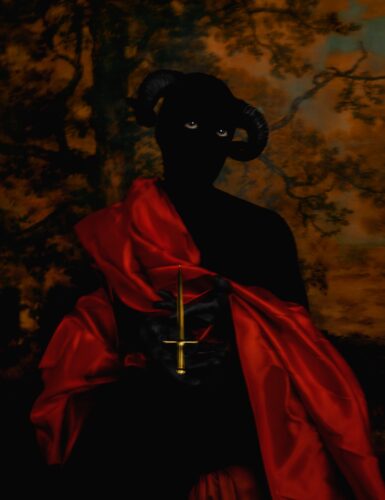
The Jiménez brothers use in-camera techniques, staging, and body paint to achieve a painterly effect. “Who is the Ram and Who is the Knife? ” (2025), archival pigment print on canvas with metal glitter, 64 ½ x 50 in. Courtesy the artists and Spinello Projects. (Photo courtesy of the artists and Spinello Projects)
PAMM’s Associate Curator Maritza Lacayo, who organized the exhibition for the museum, sees the translation as pivotal. “‘El Monte’ is one of the most influential books in Cuban cultural history, and now, with its English translation, it has become accessible to a new generation of readers,” she said. “For the Jiménez twins, who grew up in Miami as Cuban Americans, the translation is deeply meaningful. It connects them to their heritage in their first language.”
Elliot Jiménez echoes the sentiment. “We felt that having our first exhibition here in Miami, referencing Cabrera’s book, was important—especially because when we began working on the show, we learned the book was being translated into English for the first time. That widens access not just to a new audience, but also to first-generation Cuban Americans like us. Many of our peers don’t necessarily speak Spanish, so now they can finally read this work and connect to it.”
For the artists, Cabrera’s text is not a script to be illustrated but a catalyst. “We didn’t set out to necessarily recreate Lydia Cabrera’s book—we set out to create a world inspired by its spirit,” says Elliot. “‘El Monte’ is not an illustration; it’s a response born of heritage and imagination.”
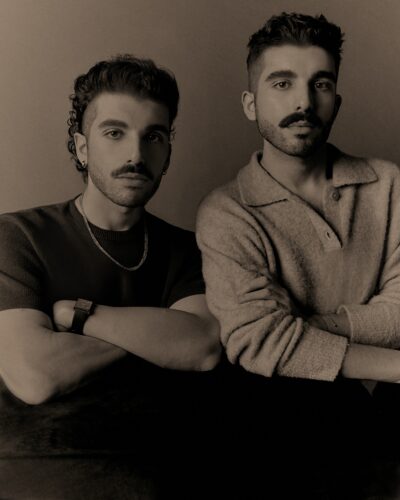
Miami-born photographers Elliot and Erick Jiménez explore work that reflects on Afro-Cuban spirituality and cultural memory. Their first solo museum exhibition, “El Monte,” opens Thursday, Aug. 28 at PAMM. (Photo courtesy of the artists)
Erick Jiménez adds that Cabrera’s exile gives the exhibition particular resonance in Miami. “It’s an interesting circle—that Lydia was forced into exile and lived her last years here, and now her work comes alive again in this city,” he says. “Our own family also fled Cuba, seeking asylum in Costa Rica before coming to Miami. For us, and for so many in this community, that story of displacement and refuge feels deeply familiar.”
Visitors to the exhibition will encounter an immersive environment: a nocturnal forest where flora and spirits come alive. At its center stands a towering Ceiba tree, sacred in Afro-Cuban cosmology and believed to connect heaven, earth, and the underworld. Inside the tree, a space represents the shared womb of twins, housing the Ibejí Chapel, dedicated to the divine twins of Lucumí who symbolize duality, balance, and sacred siblinghood.
“Our idea was that you walk into ‘El Monte’ at night,” according to Erick. “The space is designed intentionally so that visitors don’t just look at works on a wall, but wander through a forest, encountering figures along the way. Inside the Ceiba, the space shifts—it becomes a chapel, more tied to Catholic references. That duality is at the heart of the show, reflecting both the history of the island and our own story as twins, bilingual Cuban Americans of mixed heritage.”
For the brothers, the Ibejí imagery is deeply personal. “We see the Ibejí not just as divine twins in Lucumí, but as a reflection of ourselves,” says Elliot. “Their story—of loss, of care, of sacred bond—becomes a way to tell our own.”
The exhibition also reflects on motherhood, presence and absence, and the dualities that have shaped the artists’ lives. These personal narratives are interwoven with references to Western art history, Catholic iconography, and Yoruba mythology, creating what they call a “visual syncretism” that invites connections across cultures.
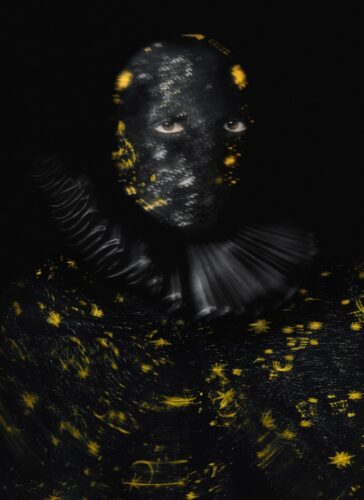
“Children of the Moon,” (2025), reflects the twins’ interest in myth, duality, and diaspora. Archival pigment print on canvas with raw brass and metal glitter, 55 x 40 in. (Photo courtesy of the artists and Spinello Projects)
Known for their painterly approach to photography, the brothers reject digital manipulation in favor of experimental techniques. “All of our works are photographs. There’s no Photoshop—everything happens on set,” explains Elliot. “We build the costumes, the sets, the lighting, and even print on canvas, working the surface while the ink is still wet to give it a painterly effect. We want to push photography beyond documentation, to expand what it can be inside a museum.”
Among their recurring motifs are shadow figures—anonymous bodies with only the eyes visible.
Elliot recalls that the religions the brothers that surrounded them growing up —Lucumí, Santería, Palo—were always practiced in hiding.
“So we use concealment to reference that secrecy. At the same time, the anonymity lets viewers see themselves in the work. Even if they don’t know Santería, they can connect to themes of resilience, concealment, and transformation.”
Exhibition organizer Lacayo explained that this strategy enriches the show. “They’re creating a space that reflects how spirituality exists—in fragments, in mystery, in what’s seen and what’s hidden. That ambiguity is part of the story.”
For the Jiménez brothers, Miami is not just a backdrop but an essential part of the narrative. “If you had told me five years ago that our first solo museum show would be in Miami, I probably wouldn’t have believed it,” says Elliot.
He explains that the twins moved to New York a decade ago because they felt photography didn’t have much visibility in Miami.
“Things have changed, and coming back with this exhibition feels surreal—a full circle moment.”
Erick added: “It feels different to show this work here rather than anywhere else. Miami is where we were born, and it’s also where Lucumí and other Afro-Cuban traditions are so present in daily life. That means audiences here can connect to it in a way that’s very personal. For us, that makes it the most special of all.”
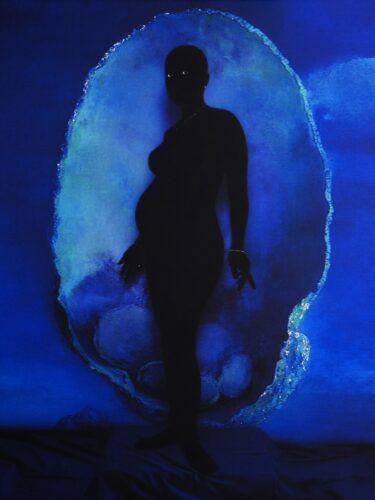
In works like “The Rebirth of Venus,” (2025), the artists merge photography with embellishments such as crystals and pearls, creating images that blur the line between sacred ritual and Western art history. (Photo courtesy of the artists and Spinello Projects)
Lacayo underlined the significance of the museum’s role. “Whenever we do an artist’s first solo museum show, we’re investing in that artist,” she said. “Because they were born here, and because their story mirrors so many others in Miami—first-generation Americans living between cultures—it felt essential to debut this exhibition at PAMM. It couldn’t have been anywhere else.”
Ultimately, “El Monte” is a dialogue across generations—between Cabrera’s anthropological work and the Jiménez brothers’ artistic practice. That dialogue is not only conceptual but literal: the exhibition incorporates field recordings Cabrera made during her investigations in Cuba.
“Through those recordings, Cabrera is not just referenced, she’s there,” says Lacayo. “Her voice and the chants she documented become part of the soundscape.” Cabrera gained extraordinary access at a time when women were rarely allowed into such sacred spaces. By recording babalawos—male priests whose rituals were traditionally closed to outsiders—she preserved songs, chants, and oral histories that might otherwise have been lost.
In the PAMM galleries, those recordings mingle with the Jiménez brothers’ imagery, bridging past and present. She returns to the city where she lived her final years not only as an intellectual presence but as a living voice.
The brothers believe that Lucumí has existed for centuries in hiding, and their exhibition is to make the “invisible visible” while honoring a tradition passed down orally and shaping it into something new.
And in that space of images and sound, Cabrera’s voice does not echo from the past but breathes into the present, keeping Afro-Cuban memory alive in Miami, the city she once called home.
WHAT: “Elliot and Erick Jiménez: El Monte”
WHERE: Perez Art Museum Miami (PAMM), 1103 Biscayne Blvd., Miami
WHEN: 11 a.m. to 6 p.m., Monday, Friday, Saturday and Sunday, 11 a.m. to 9 p.m., Thursday. Closed Tuesday and Wednesday. Opens Thursday, Aug. 28, 2025 through Sunday, March 22, 2026
INFORMATION: (305) 375-3000 or www.pamm.org/en/visit
ArtburstMiami.com is a nonprofit media source for the arts featuring fresh and original stories by writers dedicated to theater, dance, visual arts, film, music, and more. Don’t miss a story at www.artburstmiami.com.
No posts found
Two Immersive Exhibitions at Locust Projects Explore Culture, Communication
Written By Douglas Markowitz
August 25, 2025 at 7:00 PM
Artist William Cordova reconstructed the sets of two 1970s sitcoms, “Good Times” and “Que Pasa, U.S.A.?,” as part of “william cordova: algo•ritmos (2 tienes santo pero no eres babalao).” The installation exhibition is at Locust Projects through October. (Photo by Logan Fazio, courtesy of Locust Projects)
Raw concrete and exposed drywall – these rough materials form the skeletons of two immersive new shows at Locust Projects, yet each one explores distinct ideas about connection, communication, and forgotten architecture.
The bare walls of the mazelike environment constructed by William Cordova in the art center’s main space may seem forbidding at first. It’s easy to get lost while navigating the cramped, liminal rooms and hallways, reminiscent of urban legends such as the “backrooms,” an extra-dimensional realm resembling a creepy, nondescript office environment that originated from paranormal internet fandom communities.
But this stripped-down interior is based on a pair of much warmer, fictitious houses. In the installation, titled “algo•ritmos (2 tienes santo pero no eres babalao),” Cordova has reconstructed the floorplans of two 1970s sitcom sets: “Good Times,” which aired on CBS for six seasons, and “¿Qué Pasa U.S.A.?,” produced by local PBS affiliate WPBT.

Untitled (frequencies), Polaroid 600 prints, oil stick, tape. 2007-2022. (Photo courtesy of William Cordova)
According to Cordova, the aim of “algo•ritmos” is to compare and contrast these two shows, which ran concurrently. Both offer distinctive depictions of minority experiences in America, and in the process, ask probing questions about how media affects our perceptions of each other. The show reflects on the ephemerality of cultural memory. We find sculptures by Cordova reminiscent of various artifacts from the sitcoms: bead circles and Polaroid photos, a triangular ornamental mirror that resembles one hung on the wall in “Good Times.” Aside from these few pieces of decor, the stripped-down sets offer little indication of what was once there, a physical manifestation of our fading memories of these once-familiar homes and families.
There’s also content from shows that never were: A mini-TV plays video from “Sak Pasé, U.S.A.?,” an unproduced Haitian Creole version of “Qué Pasa.” The only extant footage from the project, showing the title sequence, was recovered and digitized by Barron Sherer, a Miami-based media artist and archivist.
“The exhibit in general is this meditation on time, space, architecture, (and) subtle, nuanced narratives on race and culture – and who is interpreting those narratives,” says Cordova, who grew up watching both shows. “Who’s writing it, who’s producing it, and who’s presenting it? And is it flawed? Is it real? Does it matter?”
Though similar in many ways, the two shows were made for very different reasons. “Good Times” focused on the working class, African-American Evans family in a Chicago housing project. it was a commercial sitcom produced in Hollywood and was part of what was essentially a sitcom franchise under the umbrella of Norman Lear and his influential, politically contentious hit “All in the Family.”

A mini-TV plays video from “Sak Pasé, U.S.A.?,” an unproduced Haitian Creole version of “Qué Pasa.” The only extant footage from the project, showing the title sequence, was recovered and digitized by Barron Sherer, a Miami-based media artist and archivist. (Photo courtesy of William Cordova and Barron Sherer)
“¿Qué Pasa U.S.A.?,” meanwhile, looked at a Cuban immigrant family in Little Havana, the Peñas. Made entirely in Miami, it innovated as America’s first bilingual sitcom and was relatively successful for a PBS show, yet it only ran for four seasons (39 episodes) and was cancelled when its funding, which came from a federal grant, ran out. Production issues are reflected in Cordova’s work: But he considers the program to be even more challenging than even Lear’s socially-minded shows.
“It was way ahead of its time because it was addressing, and not in a two dimensional way, themes of race, of religion, of homosexuality, of class, the hypocrisy of people’s nationalisms – just a plethora of information on themes that were going on that you would never see, not even on ‘All in the Family.’ You just didn’t see that there. You saw certain things, but it was mostly laughable.”

William Cordova with a work from his installation at Locust Projects. (Photo by Logan Fazio, courtesy of Locust Projects)
Nearby, another project has similarly transformed Locust’s space, with markedly different results. “Drawn Breath, Exhaled Frequencies” is a collaboration between three artists: Michael Webster, a sculptor and photographer based in South Carolina, and two spoken-word artists, Arsimmer McCoy of Miami and Selina Nwulu, who is of Nigerian-British heritage and lives in London.
The installation is concerned with communication in a time of crisis: An arched doorway lined with soundproofing foam leads us into the art center’s project room, where we find a group of satellite dishes hewn from what looks like raw concrete (really a combination of wood and a water-based sculpting material called Aqua Resin) emitting curious messages.
The satellite dishes are meant to evoke sound mirrors, the massive concrete structures that were placed all along the south coast of England between the World Wars as an early warning device in case of aerial invasion. McCoy, Nwulu, and Webster have repurposed the idea for a novel form of transatlantic exchange.
“We thought about this as a conversation across the ocean that was an early warning system in itself,” says Webster. “How can poetics and writing and performance become a system of early warning that’s more about experience, and about perspective, and about the ongoing kind of political and social climate that’s happening between the two countries?”

“Drawn Breath, Exhaled Frequencies” addresses how “poetic and writing and performance become a system of early warning,” according to artist Michael Webster. (Photo by Michael Webster, courtesy of Locust Projects)
McCoy sees the work as a response to the multitude of crises facing both the United States and the United Kingdom. “I think we’re not tacking on one thing, because it’s all insane from every angle, from every point,” she says. “This is the warning that if we do not address them, if we do not take the time to heal and to take care of ourselves, what the end result will be.”
She continues, “The politics of pushing past is what I think I’m addressing through this work. And I think we are all kind of having that conversation. And so the warning is like, what is the cost of the push-through? What is the end result of just sucking it up and saying ‘oh, that’s life?’”
In all, four mirrors occupy the room, two on the floor and two mounted on a wall. The higher pair are each equipped with a speaker playing recordings of poetry from McCoy and Nwulu. Viewers can sit in front of the lower mirrors to hear one side or wander through the room and listen as the two voices mix, forming a kind of sonic architecture.

Sound mirrors along the southern English coastline inspired Michael Webster’s design for “Drawn Breath, Exhaled Frequencies.” (Photo by Michael Webster, courtesy of Locust Projects)
Though Webster provided the initial concept of the show and brought McCoy and Nwulu on later, all three consider themselves equal partners.
“Some artists will ask for collaborations, but really it’s, you know, plug and play into my vision. And this is very different,” says McCoy. “This is, yes, his pieces, he made them, but he has brought us in to also be sculptors in our own right. All of our names are on the wall, and that doesn’t happen all the time.”
WHAT: “algo•ritmos (2 tienes santo pero no eres babalao)” and “Drawn Breath, Exhaled Frequencies”
WHEN: 11 a.m. to 5 p.m. Wednesday through Saturday. Through Saturday, Oct. 25.
WHERE: Locust Projects, 297 NE 67th St., Miami
COST: Free
INFORMATION: (305) 576-8570 or locustprojects.org.
ArtburstMiami.com is a nonprofit media source for the arts featuring fresh and original stories by writers dedicated to theater, dance, visual arts, film, music, and more. Don’t miss a story at www.artburstmiami.com.
No posts found
40th Anniversary Oolite Exhibition Looks At The Past, Envisions The Future
Written By Douglas Markowitz
August 22, 2025 at 3:01 PM
“Penumbras: a narrative of ArtCenter/South Florida • Oolite Arts (1984–2014)” opened on Wednesday, Aug. 6 runs through Sunday, Oct. 19 at Oolite Arts on Lincoln Road. (Photo by Zachary Balber, courtesy of Oolite Arts)
How do you distill 40 years of Miami art history into one exhibition?
This was the dilemma faced by artist William Cordova when he was asked to curate an anniversary show for Oolite Arts, an organization whose scope and impact is both influential and tough to summarize. Known as ArtCenter/South Florida until it was renamed in 2019, the organization stages exhibitions and events throughout Miami-Dade County, hosts an artists’ residency and art classes at its Lincoln Road headquarters, and offers grants to artists through its awards program the Ellies. Artists who have participated in Oolite residencies include Teresita Fernandez, Cara Despain, Reginald O’Neal, and Anastasia Samoylova.
“It’s impossible to, of course, include every single artist’s artwork,” says Cordova, himself a former resident at Oolite. “But it was possible to draw from the ephemera from the archives at Oolite Arts and have different types of representations of all the projects and exhibits, through brochures, photographs, catalogs, even video, and also to honor all of those alumni and those who have also passed away.”
The result is “Penumbras: a narrative of ArtCenter/South Florida • Oolite Arts (1984–2014),” which opened on Wednesday, Aug. 6 and runs through Sunday, Oct. 19. Co-curated by Marie Vickles, head of education at the Pérez Art Museum Miami, the show looks back at the organization’s history, spotlighting the artists that have come and gone through its doors through both their artistic output and various pieces of memorabilia.
Brochures, pamphlets, posters, archival materials, and other goods relating to the institution’s history have all been gathered and put on display.

In the corner of one room at Oolite Arts sits a neon sign for ArtsCenter from the early 2000s. Photo artworks by Cordova, Ximenia Carrion and Manuel Acevedo hang alongside framed press clippings and posters. (Photo by Zachary Balber, courtesy of Oolite Arts)
In the downstairs vitrine running along the wall by the entrance, a wide variety of goods sits in front of a wall listing all known artists who participated in ArtsCenter activities in the three decades covered in the show. Upstairs, in the corner of one room, sits a neon sign for ArtsCenter from the early 2000s. Photo artworks by Cordova, Ximenia Carrion and Manuel Acevedo hang alongside framed press clippings and posters. Most of the works feature a blue color scheme coordinated with the glow of the neon sign. Across the way, a video room features a variety of rare materials, including a profile of ArtCenter dating back to 1999, a CBS News Miami interview with founder Ellie Schneiderman, and films from artists Lazaro Amaral and Josh Levine.
The main gallery changes up the color scheme from the cool blue of the sign to tropical oranges and yellows. There’s a particular focus on African diaspora artists in this section: Paintings by Fenol Marcelin and Edouard Duval-Carrié emphasize Caribbean themes, while Charo Oquet’s ornate ceramics are a riot of colors and shapes. For Cordova, who watched the transformation of Oolite and its surroundings on Lincoln Road since moving to Miami from Lima in 1987, it was also important to highlight art and artists from underserved backgrounds.
“I wanted to reflect on the marginalized community, the histories of that community,” he says. “That’s why I titled it ‘Penumbra,’ which is a less shaded part of a shadow, the outcast part. The marginalized communities and artists tend to be part of that outlaw culture.”
While “Penumbras” looks back into Oolite’s past, the organization is also hoping to move ahead into its future. Plans continue to move forward for its new campus in Little River, which is now estimated to begin construction in 2026 according to President and CEO John Abodeely. The complex was originally unveiled in 2022, with a design by Barcelona architecture firm Barozzi Vega themed after a “village of artists” featuring new studio and exhibition spaces as well as a multipurpose theater.

A wall lists all known artists who participated in ArtsCenter activities in the three decades covered in the show. (Photo by Zachary Balber, courtesy of Oolite Arts)
“My expectation would be that we do demolition on the current buildings on the site and start construction in the first half of next year,” says Abodeely. “All this stuff always takes a little bit longer than you want, whether it’s permitting or architects doing their thing, but it is 100 percent happening. And we expect all the physical stuff to start happening next year.”
Abodeely is a former Obama administration official who served as acting director and deputy director of the President’s Committee on the Arts. He left his previous job as CEO of the Houston Arts Alliance in Texas’ largest city to join Oolite officially in January and hopes to rebuild relationships upended by a censorship issue it faced in May of last year.
After Oolite abruptly removed an artwork featuring a pro-Palestine political slogan from public view, there was an uproar by artists and community members and a boycott was called by Miami Arts Accountability, a group comprised partially of former and current Oolite residents.
Drawing on a principle called “dynamic accountability,” the organization plans to create an advisory group in order to “bring diverse voices into our decision making in a formal way,” says Abodeely. He also hopes to establish working groups made up of arts community members in order to restructure the grant process, an idea imported from his work in Houston.
Conversations have already been held with staff and resident artists with such dialogues deemed necessary in the wake of the controversy.
“One of the things that we need to be better about after last year is how the staff kind of more deeply engages with the artists we work with. . . . We are rethinking a lot of our processes and how we do things. I think we can engage more deeply and be in a conversation and work more closely with our artists to support them in the ways they want to be supported.”

Works by Fenol Marcelin, left, and Charo Oquet, right, on display in “Penumbras.” Curator William Cordova made an effort to highlight Caribbean and African diasporic artists in the show. (Photo by Zachary Balber, courtesy of Oolite Arts)
Do Oolite artists have to worry about further limits on expression? “No, I don’t think so at all,” says Abodeely. “We do serve a diverse group of audiences, and so, for example, what goes up in a public environment versus what goes up in our gallery are two different conversations.”
As Oolite moves into a new phase, however, it remains a crucial cornerstone of the arts community in South Florida. For Vickles, who came to Miami in 2005, the organization has always held an outsize importance in the community, especially as the city continues to present economic obstacles for artists.
“We’re always talking about how challenging it is to find not only studio space, but living space in Miami and South Florida in general. So I think what a place like Art Center/South Florida, Oolite can offer is incredibly important, and the fact that they’ve been around for 40 years at this point, I think, also underscores that.”
She continues, “without the artists continuously reinvesting into it, through their time, their energy, making work, a place like this would not even exist. I mean, it was founded by artists for artists. So I think as long as that continues to be the core essence of what Oolite is, I think we’re going to continue to see it be something that is helpful, supportive and a strong part of the arts ecosystem.”
WHAT: “Penumbras: a narrative of ArtCenter/South Florida • Oolite Arts (1984–2014)”
WHEN: Noon to 5 p.m. daily. Through Sunday, Oct. 19.
WHERE: Oolite Arts, 924 Lincoln Road, Miami Beach
COST: Free
INFORMATION: (305) 674-8278 or oolitearts.org
ArtburstMiami.com is a nonprofit media source for the arts featuring fresh and original stories by writers dedicated to theater, dance, visual arts, film, music, and more. Don’t miss a story at www.artburstmiami.com.
No posts found
‘Joined at the Roots’ an Exhibition to Change the Haitian and Black American Narrative
Written By Jonel Juste
July 30, 2025 at 11:46 AM
Artists from “Joined at the Roots: The Haitian and Black American Bond” are, from left, Oscar Martinez, Fabienne Polycarpe, Tawana Dixon, Ruth Louissaint, Ed Waffle, Nate Dee, Anthony Lumpkin, and Goodwin Ferrier. The exhibit is on view at the Little Haiti Cultural Complex through Saturday, Aug. 30. (Photo courtesy of Cacos MUCE)
Haitians and Black Americans have lived side by side in South Florida for decades. While the relationship between the two communities has not always been smooth, they have managed to coexist, “building families, businesses, churches, and communities that defied the odds,” according to Bart Mervil, CEO of My Urban Contemporary Experience (MUCE) and organizer of the “Joined at the Roots” exhibit, currently on view at the Little Haiti Cultural Complex through Saturday, Aug. 30.
The exhibition aims to shift public perception by exploring shared stories that connect Haitians and African Americans, emphasizing the historical and ongoing ties between the communities. It showcases the works of a diverse group of artists working across painting, sculpture, and photography.
“Joined at the Roots was born out of a need to honor the quiet, powerful history of solidarity between Haitians and African Americans,” says Mervil, describing a legacy often eclipsed by stories of division. He notes that while both communities have made significant contributions, their impact is rarely part of mainstream conversations.
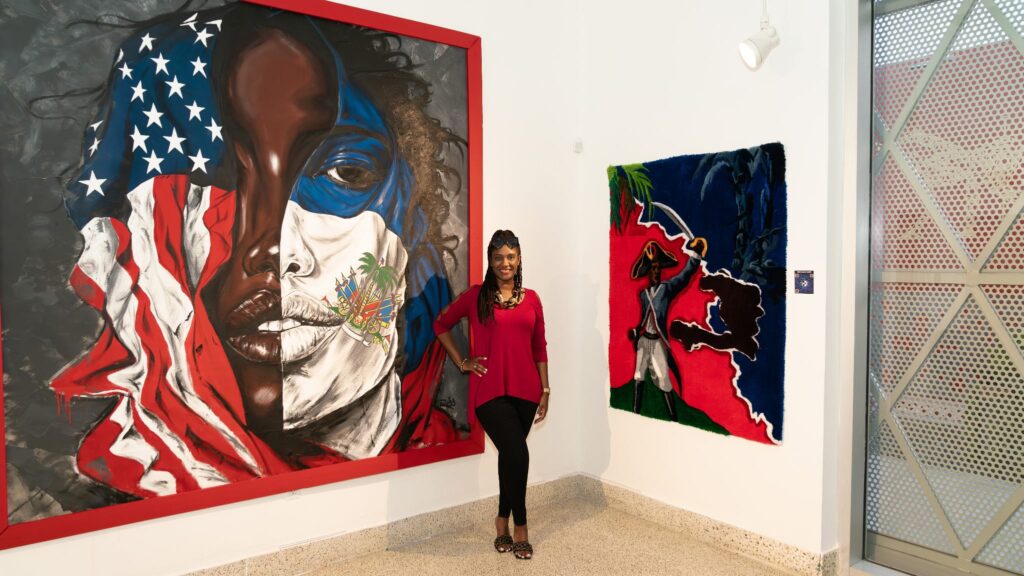
Two emblematic artworks of the “Joined at the Roots” exhibit: At left, “Haitian & Black American” by Rico Melvin Costoso Jr., and at right, “Taking Power” by Goodwin Ferrier. In the middle, author and South Florida‑based youth advocate, Shirley Plantin who introduced the exhibition last May. (Photo courtesy of Cacos MUCE).
“From local politics to high school championships to shared porches and block parties, we have had real moments of collaboration, unity, and brotherhood,” adds Mervil. “This hybrid culture did not just survive poverty. It gave rise to entrepreneurs, educators, artists, and a thriving Black middle class. This exhibition is a love letter to that shared struggle and success.”
According to Mervil, every artwork featured in the exhibition contains an element of the shared narrative of the two black communities in Miami.
Mervil explains that the exhibition highlights significant historical examples of collaboration between Haitians and African Americans in South Florida. “The first wave of Haitian immigrants were welcomed by Black churches; residents in Overtown opened their homes, shared meals, and offered resources,” says Mervil.
A central quote prominently displayed within the exhibition reads, “We’re either going to come together or we’re going to perish together.” Mervil describes this message as pivotal. “That quote hits deep because it’s not just a warning, it’s a truth. We chose it because it speaks to the heartbeat of the exhibition: We go together,” according to Mervil..
He continues, “There is no separation in this family. Haitian, Bahamian, African, Jamaican, African American, we are all branches from the same root. When we see ourselves as one body, one vision, imagine the power of our collective economics, our collective voice, our collective vote. We don’t rise until we rise together.”
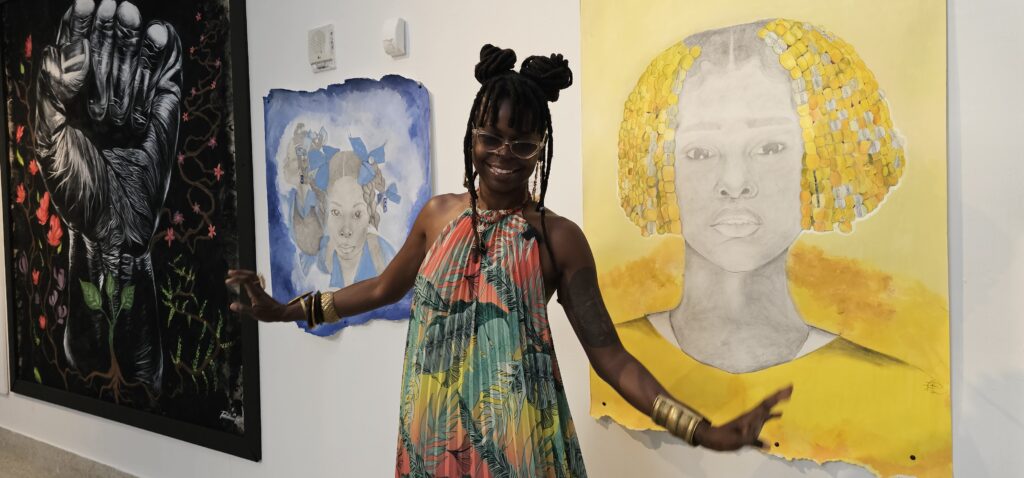
Haitian American artist Fabienne Polycarpe standing between her two artworks. Polycarpe’s art explores hair as a profound cultural symbol, reflecting both Haitian traditions and Black American influences. On her left, an artwork by Rico Melvin Costoso Jr. titled “Black Power.” (Photo by courtesy of Cacos MUCE).
The idea for the exhibit began with a series of conversations with artists and community leaders about the underrepresented stories of cooperation between Haitian and African American residents in Miami.
Among the artists contributing to the exhibit is Fabienne Polycarpe, a first-generation Haitian American and cultural wellness curator. She contributed a series rooted in her upbringing around her mother’s beauty salon. Polycarpe’s art explores hair as a profound cultural symbol, reflecting both Haitian traditions and Black American influences.
“Hair has always been more than just hair; it’s been ritual, identity, memory, and survival,” says Polycarpe. As a child, she remembers how her Haitian mother instilled the importance of hairstyles that reflected discipline and respectability. “I wore ribbons and ‘boule gogo’ [braid balls]; my hair parted into clean plaits,” she says. “But deep down, I admired the colorful beads Black American girls wore.”
Over time, Polycarpe began to recognize how her artistic voice was influenced by both cultures. “And as I got older,” she adds, “I realized my artistic voice was formed by that dual gaze, the Haitian lens of structure and reverence, and the Black American lens of freedom, creativity, and expression.” Ultimately, she concludes, her art exists in the space where these two cultures meet, carrying the language of both traditions.
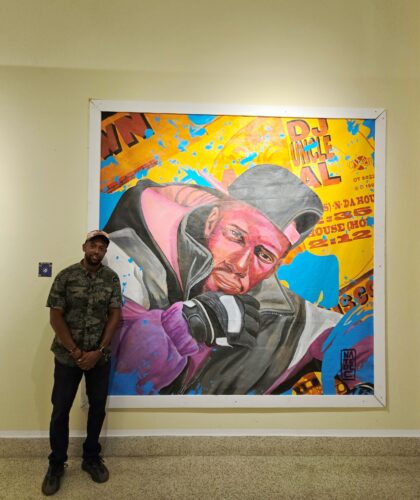
Haitian American muralist Nate Dee next to his artwork is an homage to Uncle Al (Albert Leroy Moss), an African American DJ and community leader whose legacy helped bridge cultural gaps between Haitians and African Americans. (Photo courtesy of Cacos MUCE).
Another featured artist, Nate Dee, who grew up in Miami, presents a portrait of Uncle Al (Albert Leroy Moss), an African American DJ and community leader whose legacy helped bridge cultural gaps. Dee, a Haitian American muralist, recalls coming of age during a period when being Haitian carried social stigma. DJ Uncle Al’s visible support for the Haitian community left a lasting impression on him.
“I went to high school down here in the 1990s, and it was really rough to be Haitian, especially in the late 80s and early 90s,” Dee says. “So, to see a person like DJ Uncle Al, who wasn’t Haitian, showing love was big for me.”
Reflecting on those years, Dee adds, “As a teen I listened to his music and even grew up thinking he was a Haitian American DJ, only to find out later that he was in fact African American. This was in part because he was very active in Little Haiti.”
DJ Uncle Al, recalls Dee, founded the Peace in the Hood festival to bring together people from various neighborhoods and cultural backgrounds. His goal was to celebrate community and demonstrate that peaceful coexistence and mutual respect were possible and necessary. “He wanted to show that we have more in common than what differentiates us, that we are all truly the same. Just different branches from the same tree.”
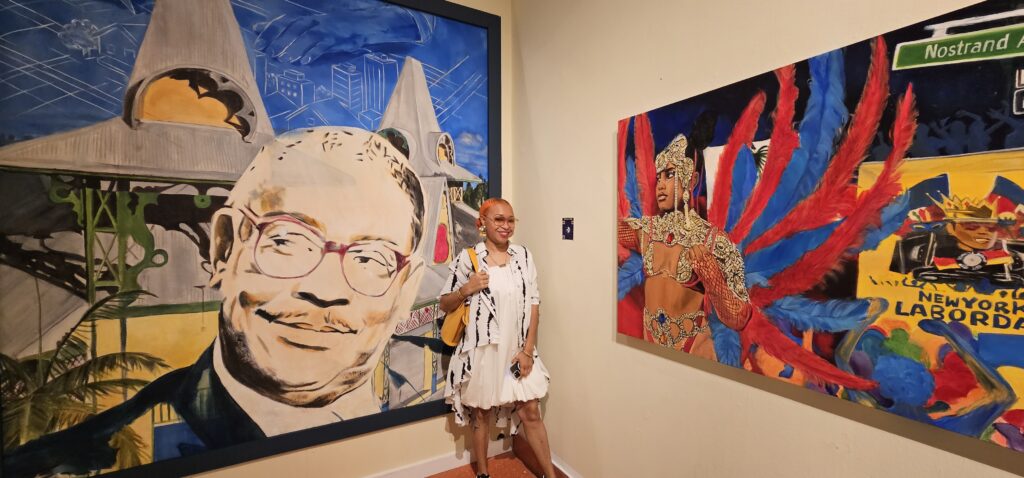
Artist Tawana Dixon contributed two pieces to the exhibition. One pays tribute to Arthur Teele, an African American political figure whose work helped lay the foundation for the Little Haiti Cultural Complex (Photo courtesy of Cacos MUCE).
Artist Tawana Dixon contributed two pieces to the exhibition. One pays tribute to Arthur Teele, an African American political figure whose work helped lay the foundation for the Little Haiti Cultural Complex. The other captures the vibrant Haitian presence at the West Indian American Day Parade in Brooklyn.
“I ultimately chose to center the portrait around Teele because I wanted to explore the relationship between communities,” says Dixon, who was raised in New York and now resides in Miami. “In doing so, I hoped to honor the bond between Haitian and African American communities in a way that wasn’t too literal or expected.”
Reflecting on her second piece, Dixon says her New York upbringing made it essential to include Brooklyn’s Little Haiti in the show. “While Miami’s Little Haiti came first and is home to established institutions like the Cultural Complex, Brooklyn has the largest Haitian population in the U.S. and a community that has fought hard for recognition,” she says. She adds, “Haitians in New York were once seen as underdogs in the Caribbean community, but through resilience and pride, they’ve earned deep respect. Their presence, especially during the West Indian Day Parade, is powerful.”
Ruth Louissaint, an educator and Haitian artist, contributed a shrine centered around Dana A. Dorsey, Miami’s first Black millionaire. Her installation incorporates flags, religious symbols, and historical elements that reflect the intersection of culture and spirituality. “To me, the shrine embodies all three themes of the exhibition: identity, resistance, and unity,” says Louissaint.
Other artists in the exhibition also explore the emotional depth of blended identities. Joe Wesley’s photography captures moments of intimacy, pride, and joy between community members. Oscar Martinez sculpts a tribute to Dana A. Dorsey. Rico Melvin’s paintings evoke ancestral memory, while Rico Melvin’s textile art speaks in the quiet, powerful language of heritage passed down. The works of Edwaffle, Nica Sweet, and Anthony Lumpkin add layers of generational reflection, migration, and domestic life.

Bart Mervil, CEO of My Urban Contemporary Experience (MUCE) and organizer of the “Joined at the Roots” exhibit, currently on view at the Little Haiti Cultural Complex through Saturday, Aug. 30, 2025. (Photo by Joe Wesley, courtesy of Cacos MUCE)
For Mervil, the exhibit reflects MUCE’s broader mission to preserve heritage while diversifying the artistic landscape in South Florida. “MUCE has always believed in bringing culture to the people, not keeping it hidden behind museum walls,” he says. “This exhibit lives right where it belongs: in the neighborhood, in the community, and in a space built for cultural expression.”
Beyond its artistic value, the exhibit aims to foster real-life conversations among community members and visitors alike.
Polycarpe says the community’s response has been emotional and affirming. “What I cherish most is when someone stands in front of my work, pauses, and says, ‘That’s my story,’” she explains.
Dee hopes younger generations inspired by his tribute to Uncle Al will learn about the DJ’s contributions. “I hope they explore his legacy and all of the positive impact he had on the Miami cultural scene,” he says. Louissaint echoes the sentiment, emphasizing the role of art in countering the divisiveness currently shaping American discourse. “We are currently in a strange time in the U.S. where much of the rhetoric is divisive. I think events like this are important and an act of resistance against this growing trend throughout the country.”
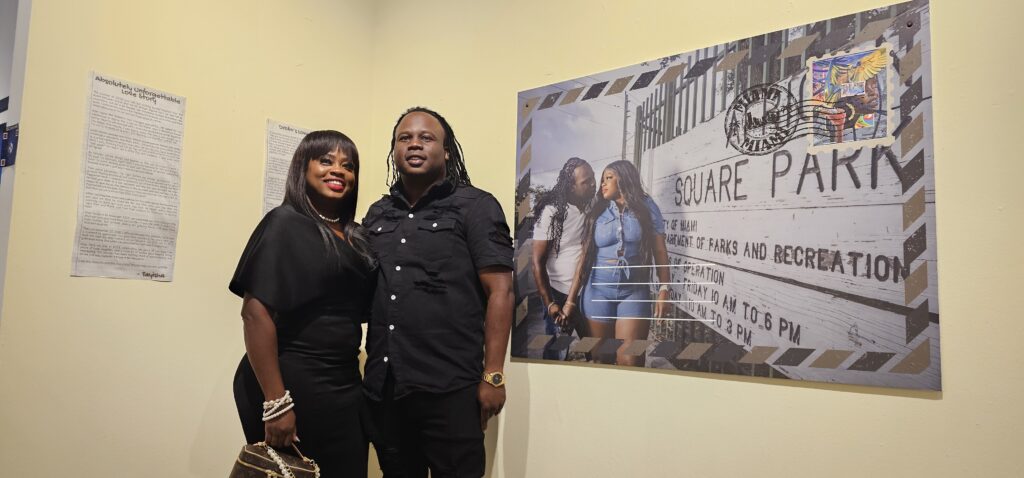
“Unforgettable Love Story” is an art piece by Joe Wesley that tells the love story of married couple Taylisha Scott and Drolin Celestin, an African American woman and a Haitian man, who are seen here posing next to the artwork. (Photo courtesy of Cacos MUCE)
“Joined at the Roots” also acknowledges the evolving nature of cultural identity in cities like Miami, where gentrification and displacement threaten to erase long-standing community narratives. Artists like Polycarpe see their participation as a form of preservation, a way to anchor the stories of a vanishing neighborhood in memory and meaning.
“There’s a deep sense of loss, but also a sense of responsibility to share my stories of witnessing and experiencing the forever that are no longer ‘forevers’ but a love letter to Little Haiti,” Polycarpe says. “Being part of this exhibition is an honor. It feels like I am giving something back to the place that raised me.”
WHAT: “Joined at the the Roots”
WHEN: 9 a.m. to 9 p.m., Monday through Friday; Saturday and Sunday schedule may vary based on programming and events. Through Saturday, Aug 30.
WHERE: Little Haiti Cultural Complex, 212 NE 59th Terrace, Miami
COST: Free
INFORMATION:(305) 960-2969 or Miami.gov/lhcc or muce305.org
ArtburstMiami.com is a nonprofit media source for the arts featuring fresh and original stories by writers dedicated to theater, dance, visual arts, film, music, and more. Don’t miss a story at www.artburstmiami.com.
No posts found
Laura Marsh and Inés Raiteri Threaded Together at Dot Fiftyone Gallery
Written By Miguel Sirgado
July 22, 2025 at 6:00 PM
“Laura Marsh and Inés Raiteri: Labyrinth of Thread” is on view at Miami’s Dot Fiftyone Gallery through Saturday, Aug. 30. (Photo courtesy of Dot Fiftyone Gallery)
In a white-walled gallery in the heart of Miami’s Allapattah neighborhood, thread does more than sew fabric—it stitches memory, language, and art as a form of care.
That’s the premise behind “Laura Marsh and Inés Raiteri: Labyrinth of Thread” at Dot Fiftyone Gallery featuring the distinct yet deeply intertwined textile works of Binghamton, N.Y.,-born, Miami-based Laura Marsh and Argentina’s Inés Raiteri. Though shaped by different geographies and generations, both artists converge around embroidery as a collective act, fabric as symbolic language, and art as a form of care.

Textiles—historically dismissed as decorative or domestic—take on new meaning “Laura Marsh and Inés Raiteri: Labyrinth of Thread” at Dot FiftyOne Gallery in Miami. (Photo courtesy of Dot FiftyOne Gallery)
Curated by Saul Ostrow, a critic, editor, and curator currently based in New York City, three large-scale textile pieces demand attention. Two are collaborative—one initiated by Marsh and finished by Raiteri, and one in the opposite direction. The third, a communal canvas, was started in Argentina and found new life in Miami Springs, where Marsh leads weekly embroidery sessions with older adults.
“When Alfredo Guzmán (director of Dot Fiftyone Gallery) brought me the pieces from Inés’s studio—one nearly finished, one blank, and a communal canvas—I felt I had to respond through making,” says Marsh. “I dove into the community textile, which became the heart of the show and is still open to new interventions. For months, I stitched it with students at the Miami Springs Adult Center. Every week they’d add an image, a memory, a symbol from their lives.”
That workshop, says Marsh, “wasn’t just a teaching space—it became a circle of listening, affection, and intergenerational exchange.” One participant embroidered a bird that had started appearing in her backyard after her niece passed away. Another participant, named Luceli, added a small bird before she died. “I wrote a poem in her honor,” says Marsh, adding that “she was a survivor of domestic violence, gifted in watercolor and embroidery. Her presence is still there. Every thread is a memory. Every stitch, a story told by hand.”

“I moved to Miami ten years ago because of the vibrant cultural mix, the fiber arts scene, and the opportunity to grow roots. There’s a fast pace, but if you’re focused, the city gives back,” says artist Laura Marsh. (Photo courtesy of Dot Fiftyone Gallery)
For Ostrow, it was this intersection of materiality, intimacy, and pedagogy that inspired the exhibition’s conceptual core. “The show has a dual focus,” he explains. “First, it examines evolving practices that challenge the traditional boundaries between craft and art. Second—and this inspired the title—it delves into the conceptual foundations of each artist’s work, emphasizing how their ideas could only be fully realized through their chosen mediums. The labyrinth becomes a metaphor for the intricate, deliberate paths both artists navigate.”
Raiteri, who studied at Guillermo Kuitka’s Programa de Talleres para las Artes Visuales (Workshop Program for the Visual Arts), in Buenos Aires, has long explored embroidery’s communal dimension. “Art happens with others,” she says. “From the beginning, Laura and I were able to step into each other’s work so quickly, despite not knowing one another. We both understand collectivity as a creative act.”
Her contribution includes a canvas embroidered in workshops she held in Argentina using bedsheets that belonged to her grandmother. “The fabric preserves touch like repeated caresses,” she says. “Embroidery is a kind of text—sometimes hidden, but always speaking. It activates memory.”

Inés Raiteri’s “Flowers for You” (2025). (Photo courtesy of Dot Fiftyone Gallery)
Raiteri also embroidered semamoris, amulets inspired by Japanese traditions in which mothers sew protective symbols into their children’s clothing. “They’re like portable charms,” she explains. “I paired them with wallpaper patterns evoking natural landscapes. Speaking about architecture is, in a way, speaking about how we inhabit space.”
For Marsh, who has degrees from Yale University and the Cleveland Institute of Art, embroidery is a critical language rooted in autobiography, protest, and care. “One of my pieces in the show is a large blue band embroidered with the Indian shisha technique,” she says. “Mirrors symbolize self-reflection and protection. I come from a difficult family background, and this is my way of saying: I don’t agree with cruelty. Let’s be kind to each other.”
Her artistic influences include Jenny Holzer, Sheila Hicks, and Jessica Stockholder, as well as Alfredo Jaar. “His vision of America as plural—North and South together—has always resonated,” she says. “That perspective shaped how I approached this collaboration.”

Laura Marsh’s “Caretaking Is Underrated” (2023). Embroidery, indigo, and iridescent stain on cotton and upholstery material. (Photo courtesy of Dot Fiftyone Gallery)
Ostrow notes that their practices, while distinct, share an “indexical” impulse. “Laura emerges from a sculpture and fine arts background while engaging with themes of identity,” he says. “Inés is rooted in craft but conceptually invested in community. Interestingly, their seemingly antithetical approaches found common ground in teaching, which became a key point of overlap and exchange.”
[Click to read the essay by curator and art critic Saul Ostrow]
This educational dimension—Marsh’s Miami-based sewing circles and Raiteri’s decades working in early education—infuses the exhibition with an ethics of transmission. “Community workshops are everything,” says Marsh says. “Twice a week, I lead sessions with elders. We explore stitches—split stitch, French knots, feather stitch—and what those gestures mean. It’s meditative, tactile, and empowering.”
One standout work is a color wheel of embroidery stitches, created collaboratively with her students. “It helps them see thread as a painting medium,” according to Marsh. “Embroidery can blend colors, layer meaning, and offer presence.”
As curator, Ostrow underscores how both artists reclaim embroidery as a conceptual and political tool. “They transmute embroidery from a passive craft into an active critical practice—both personal and collective,” he says. “The needle and thread become a line of inquiry, and the fabric a palimpsest of texts whose layers refuse resolution.”

Laura Marsh’s “Rejection is Redirection” (2025). Macramé cord around mirror, gouache, and gel medium on suede. (Photo courtesy of Dot Fiftyone Gallery)
Textiles, historically dismissed as decorative or domestic, take on new meaning here. “Viewers sometimes expect something soft, minor, domestic,” according to Marsh. “But here, thread is charged with symbolic force and layered with personal and collective histories.”
For Ostrow, this transformation is emblematic of textile art’s current status. “Today, textile art occupies an insurgent—almost subversive—position. It plays an active role in shaping discourses of materiality, labor, decolonization, and traditional hierarchies. It’s a site of productive tension that reflects broader shifts in contemporary culture.”
Despite the physical distance, both artists developed a meaningful dialogue. “We communicated in English and some Spanish—enough to understand each other,” recalls Marsh. “We both wished we spoke the other’s language better, but the willingness was there. That says a lot about the nature of coexistence. Collaborating this way felt human, compassionate.”
Raiteri says they joined forces in whatever way they could.
“Her community understood what it means to create together—respecting each other’s space, stitching from within. This show confirmed something I deeply believe,” says Raiteri. “Beauty can be built together. And I love that I still get surprised.”
WHAT: “Laura Marsh and Inés Raiteri: Labyrinth of Thread”
WHERE: Dot Fiftyone Gallery, 7275 NE 4th Ave., Miami
WHEN: noon to 7 p.m. Monday through Friday; 2 to 6 p.m., Saturday. Through Saturday, Aug. 30.
COST: Free
INFO: (305) 573-9994 or dotfiftyone.com
ArtburstMiami.com is a nonprofit media source for the arts featuring fresh and original stories by writers dedicated to theater, dance, visual arts, film, music, and more. Don’t miss a story at www.artburstmiami.com
No posts found
Communing With The Everglades Brings Inspiration To AIRIE Artists
Written By Carolina del Busto
July 18, 2025 at 4:59 PM
Inspired by nature, artist Lee Pivnik creates mainly sculptures but also documents images, like this piece titled “Swamp Lily in the Springs.” Pivnik begins his AIRIE residency in Everglades National Park in September. (Photo by Lee Pivnik)
With its efforts to bring the art and environment closer together since 2001, the non-profit Artists in Residence in the Everglades (AIRIE) has not only grown in size, but in depth.
Each year, the organization selects approximately 12 artists to be part of their residency program. The residency lasts for one calendar month, where artists stay in a cabin within the Everglades National Park. Every morning, they see the sunrise over the Everglades and experience the sunset. The hope is to inspire the creation of something beautiful.
This season, AIRIE is celebrating its 25th anniversary. The celebration comes in the form of new programming throughout the year as well as an extended residency program featuring 18 fellows instead of the usual dozen. T
The new season began in July with artist Sterling Rook as the first fellow to take up residency at AIRIE. (Photo courtesy of Sterling Rook and AIRIE)
“We’ve also grown in terms of what we’re trying to say, which is around creating an affirming space for artists to come and engage with the environment,” says Tracey Robertson Carter, AIRIE’s acting director. “We want to encourage the use of the arts around the challenges that we face every day in our, in our precious environment, and particularly that in South Florida.”
The most recent open call for AIRE garnered over 500 applicants, more than any other year, says Carter. While the selection process is lengthy and tough, the director admits it’s also wholly inspiring. “I love reading in the application about what the residency can be,” she says.
Carter mentions one incoming fellow, musician Thandeka Mfinyongo from Cape Town, South Africa, who works with ancestral instruments and sounds. “She’s bringing her ancestral instruments here and wanting to create new sounds in our Florida environment. (Reading in her application) what that would mean to the sound, what it might mean to her connection back to her ancestry, it’s projects like that you just can’t help but be in awe.”
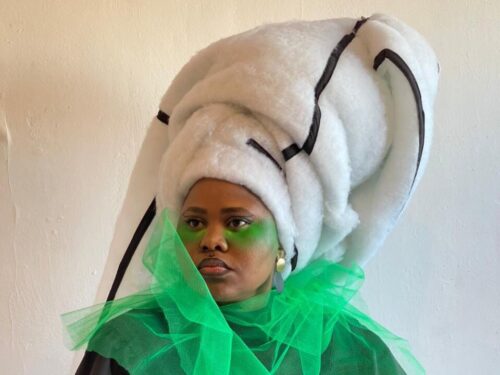
Thandeka Mfinyongo, born in Cape Town, is a musician deeply rooted in African musical traditions. (Photo courtesy of Thandeka Mfinyongo and AIRIE)
Artist residents are given one month to stay on property within the Everglades and given the freedom to create. There is also a stipend for expenses and exclusive access to the national park. Their singular mission is to take inspiration from their surroundings and apply it to their practice.
“We really look at it as a research residency,” says Cornelius Tulloch, global artistic director for AIRIE and former fellow himself. “The artists’ only commitment is to be in the park, engage with the community, and to do one public programming, which could be a talk, a walk, or some other kind of format where we meet the artists… we aren’t afraid to allow the artists to be artists.”
Tulloch was part of the 2022 AIRIE cohort and was so inspired, he stuck around. “I think that’s the beauty of doing AIRIE,” he says. “No matter what you thought you’d come in with, you leave with so much more.”
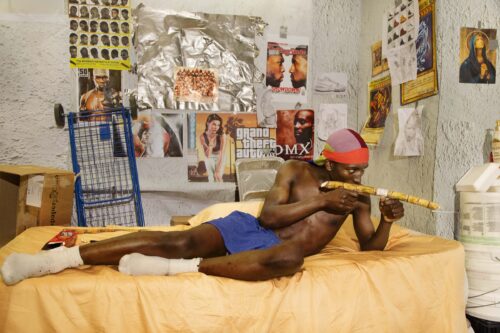
Artist Daveed Baptiste plans on hosting extravagant photoshoots during his residency and aims to capture images like this piece titled “Boy Dreams.” (Photo courtesy of Daveed Baptiste and AIRIE)
Throughout his time with AIRIE, Tulloch has become a pseudo-Everglades influencer, he quips. He went from posting pictures of art and fashion to posting about the national park. “I feel like for a lot of people, it’s that kind of literal fact of representation like, how do I exist in this space?”
Tulloch’s social media feed inspired fellow artist and friend, Daveed Baptiste. The Haitian-American textile artist and photographer never really saw himself in an environment like the Everglades. That is, until he saw Tulloch’s posts. He was inspired and applied to AIRIE. Baptiste will begin his residency at the Everglades National Park in March 2026.
“I just remember seeing footage for like a whole month,” says Baptiste of his friend Tulloch. “He was posting in the Everglades, like the swamp and trails.”
Incoming AIRIE fellow David Baptiste focuses his practice on photography and textile design. (Photo courtesy of Daveed Baptiste and AIRIE).
Based in New York City, Baptiste grew up in Miami and shares that he’s been searching for an opportunity that would bring him home. “Miami is where I discovered art… I feel like Miami is the soul of my practice.”
When it comes to his residency, the photographer plans on hosting multiple photoshoots among the trees and water.
“When you look up the Everglades, you didn’t really see a lot of Black folk in the (attraction) videos or photos. There’s this large absence of Black folks. And so during my time there, I’m going to be looking at how visual culture shapes our perception of who has access to the Everglades… and I will be hosting the most fabulous photo shoots with beautiful Black families, friends, queer people, and kind of just presenting this Black Utopia within the river of grass,” says Baptiste.
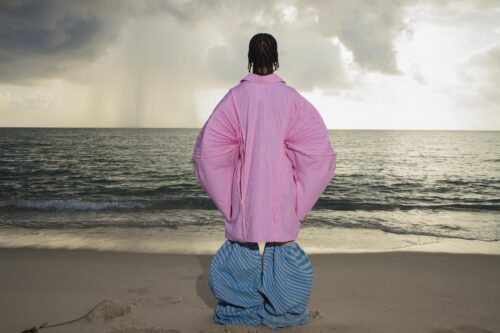
“Homecoming” by Daveed Baptiste. (Photo courtesy of Daveed Baptiste and AIRIE)
Another Miami native and incoming fellow is Lee Pivnik. The young artist has been applying to the residency on-and-off since 2016. His upcoming residency in September is a dream come true. He lists a handful of growing ideas he has for his one month in nature.
“I’m so excited for September,” shares Pivnik. “I have two ongoing projects right now that are very Everglades focused and inspired. I’ll be thinking about how the Everglades holds all of these histories and stories of trauma, survival, neglect, and then resurgence.”
Pivnik adds, “I’m hoping to really use the experience to produce materials and ideas that’ll continue to feed my practice.”
In addition to Baptiste, Pivnik, Mfinyongo and Rook, this season’s fellows include Ashia Ajani (Denver, Colo.), The Honourable Elizabeth A. Baker (who works within the Radcliffe Institute for Advanced Study at Harvard University), Shenny de Los Angeles (Kissimmee, Fla.), Sarah Doerfel and Vincent Scheers (Munich), Samuel Dominguez (London), Laurena Finéus (New York, N.Y.), Havîn Hât (Germany), Julius Karoubi (Oslo, Norway), Bex McCharen (Miami), Jewel Rodgers (Nebraska), Ackeem Salmon (Detroit), Jean Shin (Brooklyn, N.Y.), Sheherazade Thénard (Miami) and Coco Villa (Queens, N.Y.), and David Rahahę•tih Webb (Tuscarora Nation of North Carolina).
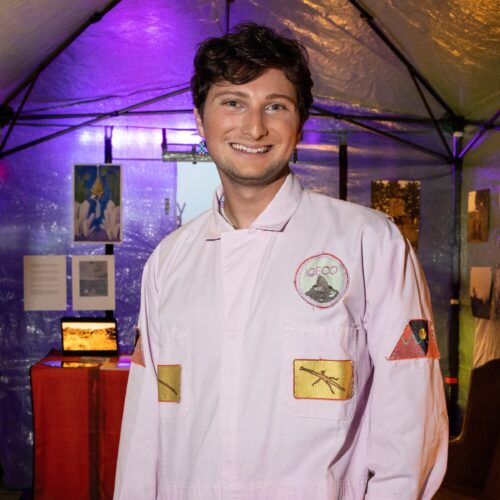
Artist Lee Pivnik begins his AIRIE residency in September. (Photo courtesy of Lee
Pivnik and AIRIE)
Board president Zoë McKenzie has been with AIRE for two years and sees her role as bridging a connection between the organization and the community.
“The folks that are in this cohort have already begun to intersect their point of view and experience and influence with their fellow participants,” says McKenzie. “They are already building an incredible legacy and network that will go from South Florida, from AIRIE and the Everglades, and beyond.”
WHAT: Artists in Residence in the Everglades (AIRIE)
WHERE: Everglades National Park, Ernest F. Coe Visitor Center, 40001 State Highway 9336, Homestead
INFORMATION: (305) 209-0177 or airie.org.
ArtburstMiami.com is a nonprofit media source for the arts featuring fresh and original stories by writers dedicated to theater, dance, visual arts, film, music and more. Don’t miss a story at www.artburstmiami.com
No posts found



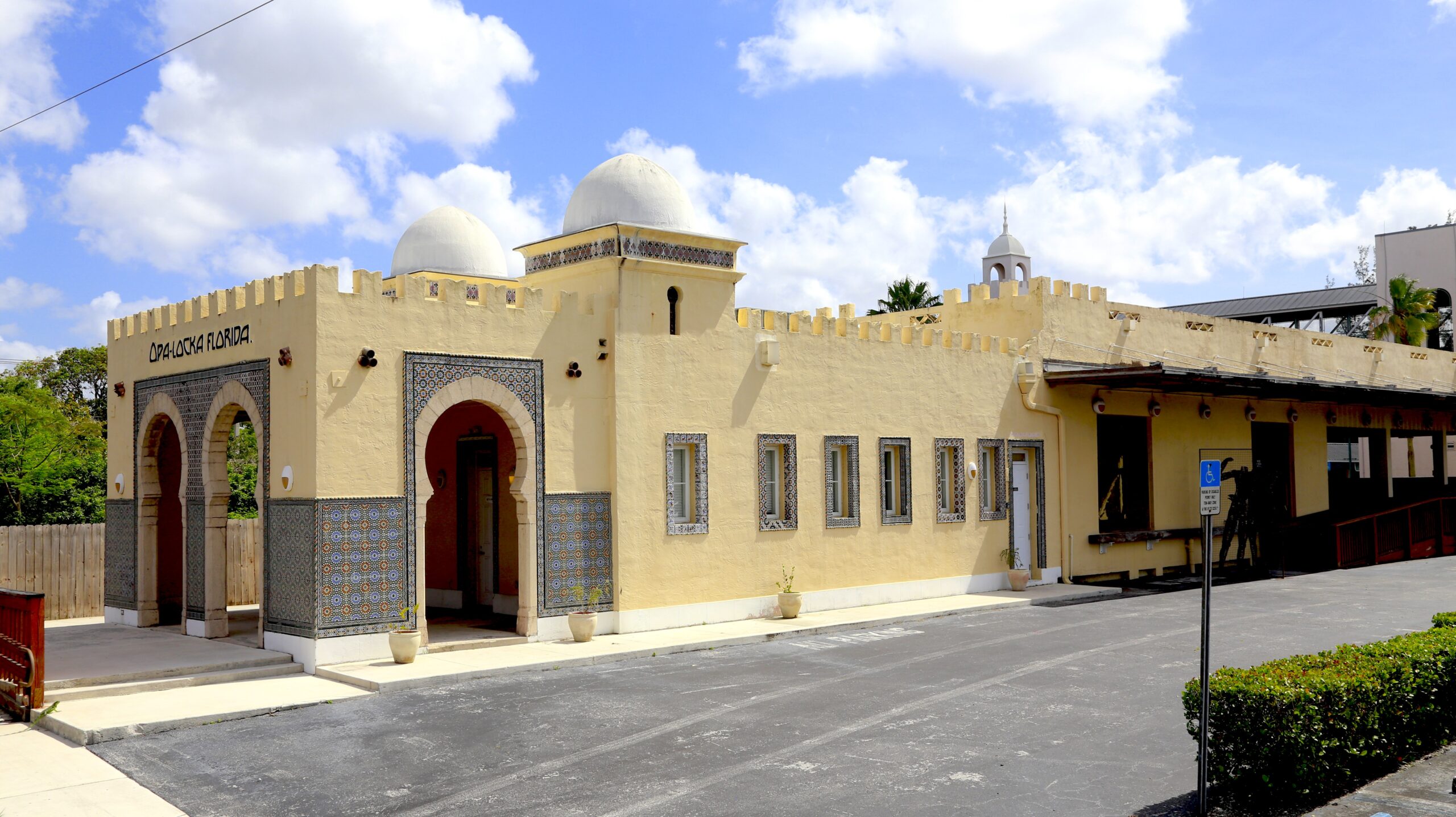

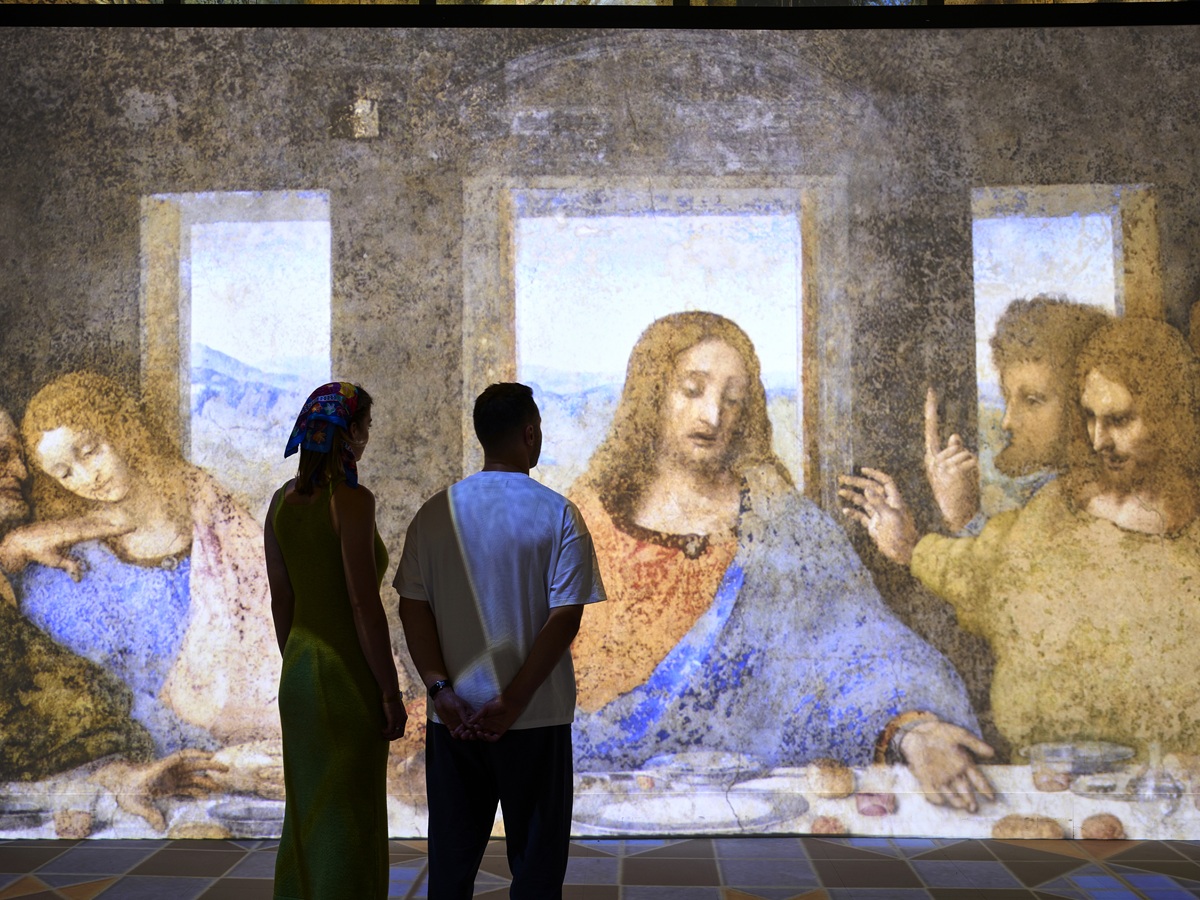

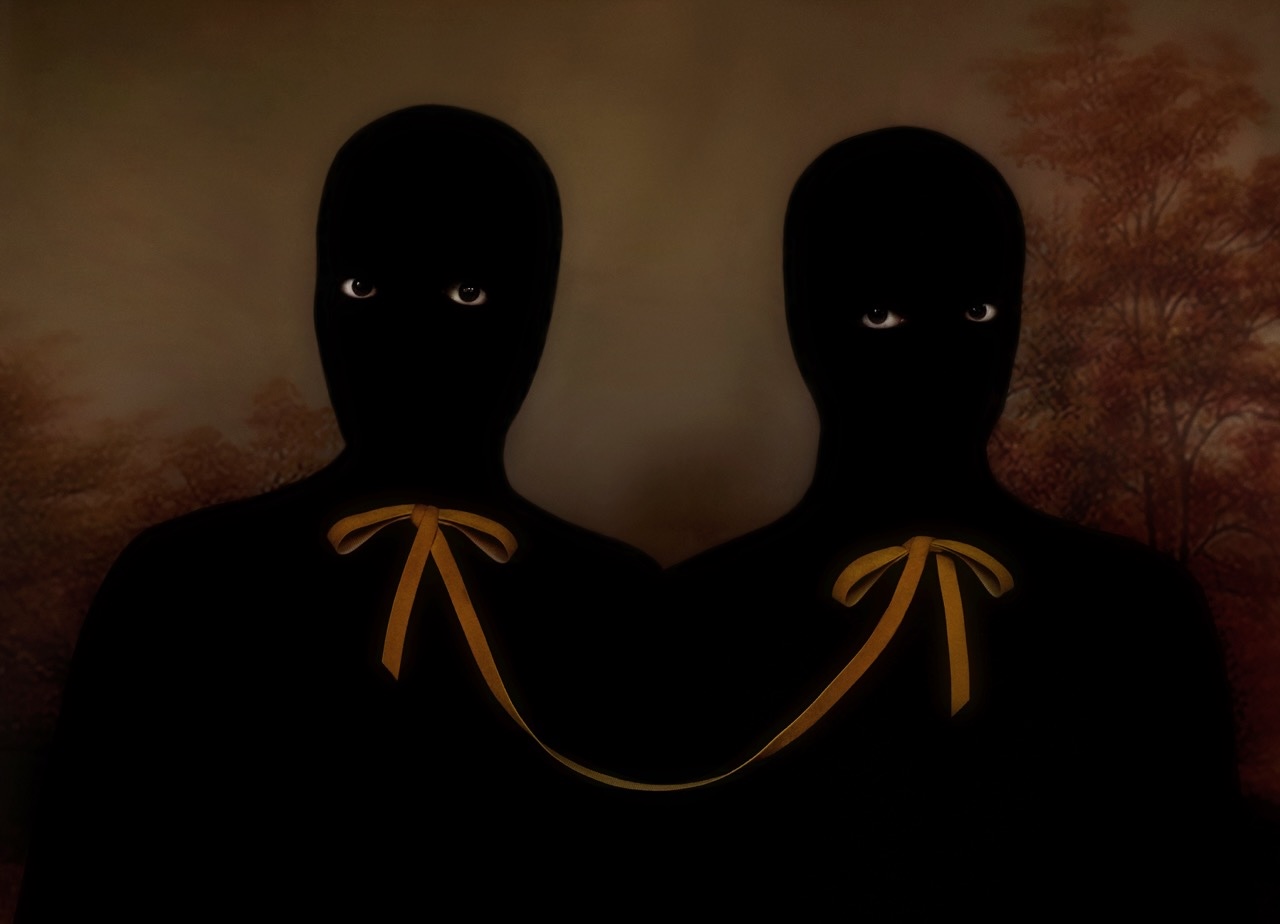


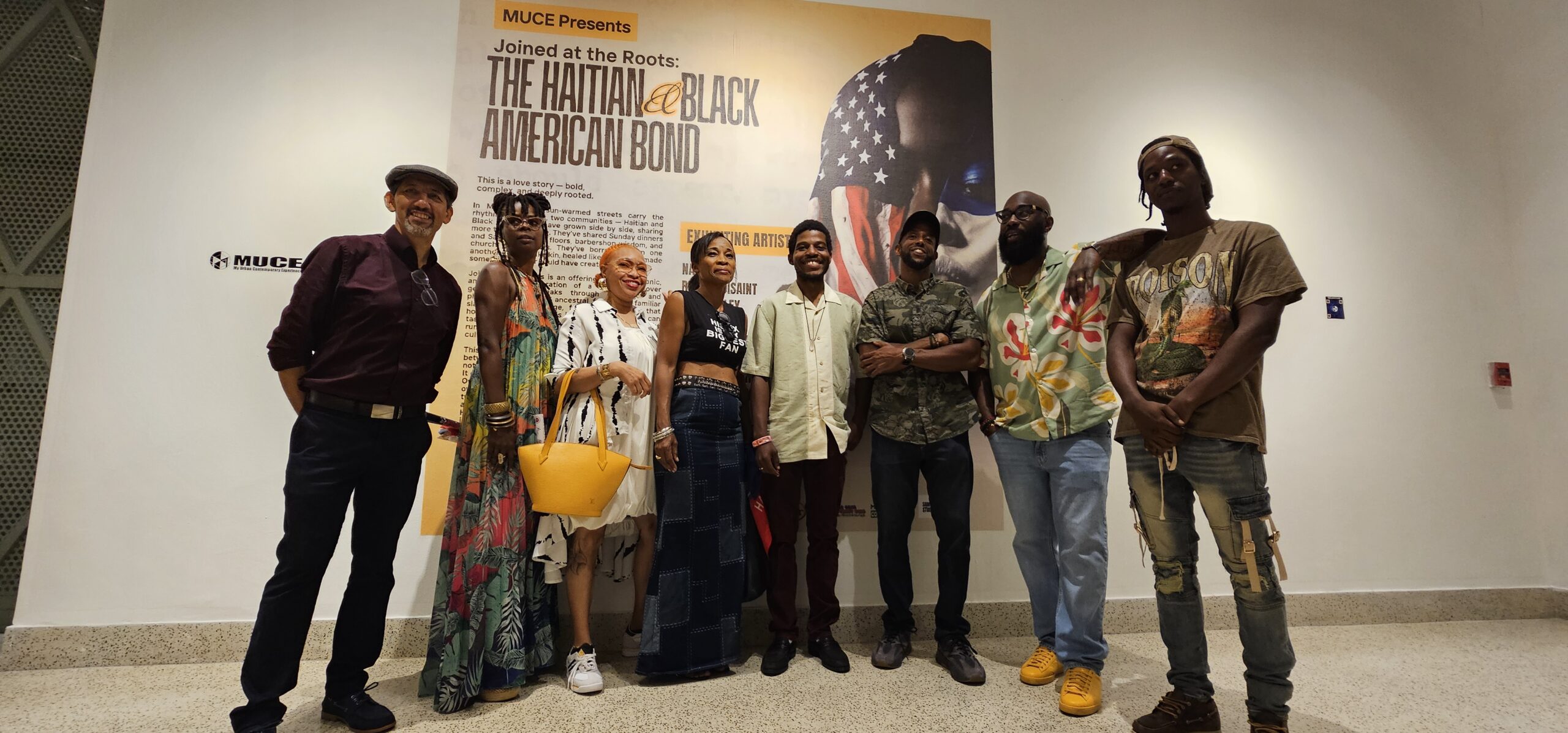

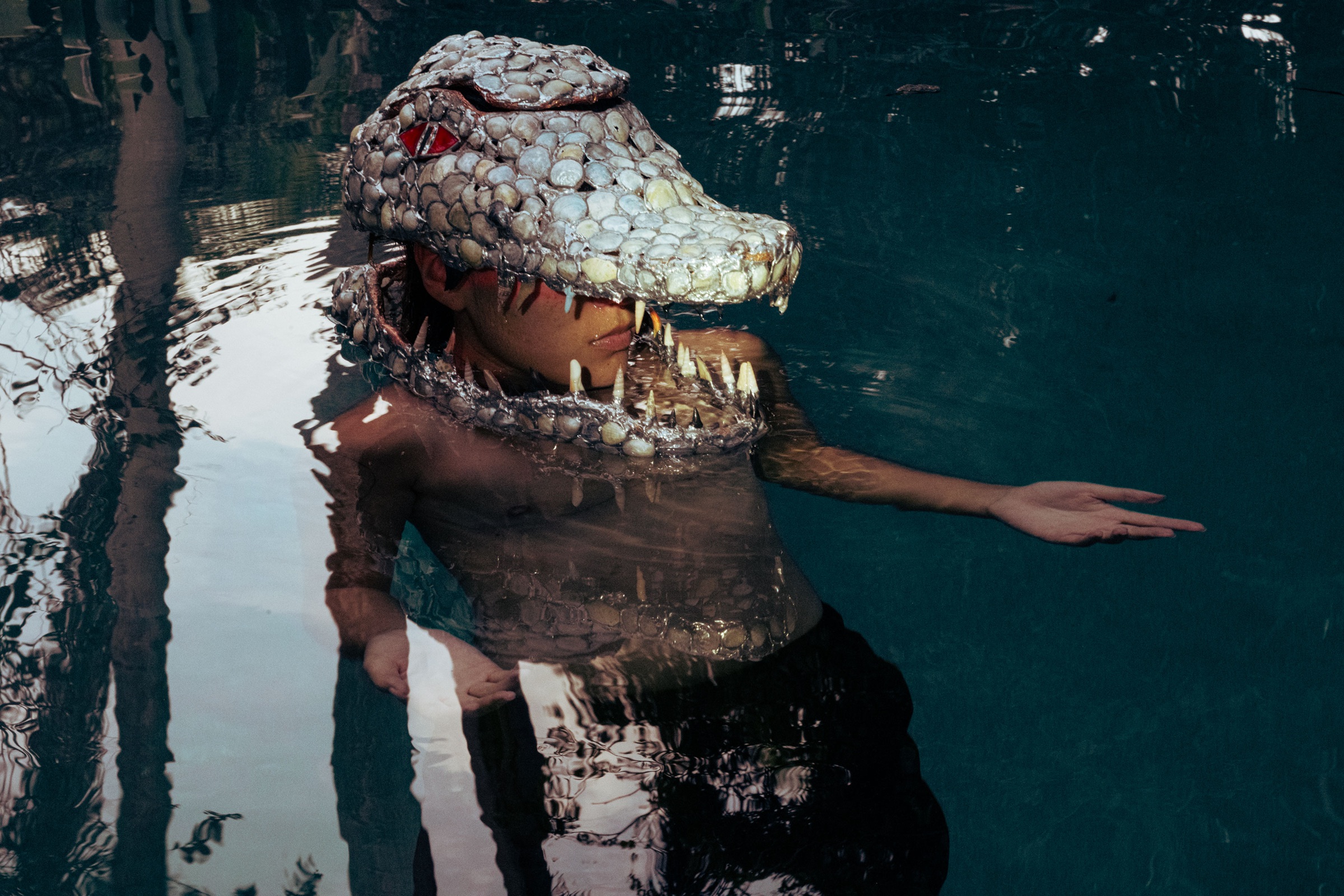
Recent Comments