Blog Article Category: Visual Arts
Local Artists Find Joy in Green Space Group Show
Written By Douglas Markowitz
August 25, 2026 at 3:27 PM
“Count it All Joy!” brings together work from 15 Miami-area artists, all intended to evoke joyful feelings or express what the artist takes joy from at MiMi’s Green Space gallery through Thursday, Sept. 27. (Photo by Zachary Balber, courtesy of Green Space)
At MiMo’s Green Space gallery, a new exhibition places joy at its center, bringing together works that explore pleasure, optimism and delight.
Organized by curators Donnamarie Baptiste and Arsimmer McCoy, “Count it All Joy!” brings together work from 15 Miami-area artists, all intended to evoke joyful feelings or express what the artist takes joy from.
The show includes work in a variety of mediums, all giving distinct perspectives on the show’s theme and occasionally doubling as insights into the diverse backgrounds that cohabit in Miami.
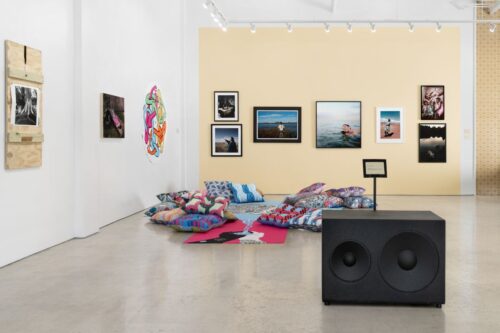
Photographs taken in the Everglades by Maggie Steber and Lisette Morales show subjects cohabiting with nature. (Photo by Zachary Balber, courtesy of Green Space)
Photographs taken by Maggie Steber and Lisette Morales show people cohabiting with nature – women float and swim in still waters, a man looks out at the expanse of the Everglades – while Sophie Wong depicts scenes of Caribbean life in her paintings. An installation by Chinese-Panamanian artist MaiYap features sculpted mooncakes arranged in a traditional batea, or wooden tray, from Panama’s Bayano region, reflecting the artist’s heritage. And a quilted work by Genesis Moreno features a screenshotted TikTok video demonstrating the “butterfly hug,” a self-soothing technique; the video itself plays nearby on a monitor.
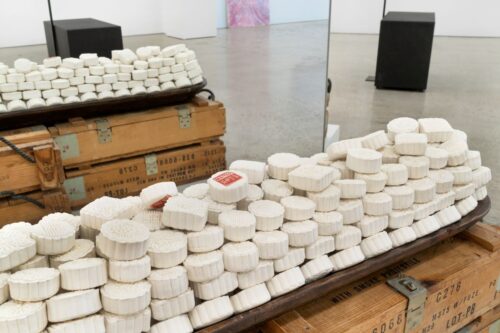
MaiYap’s installation features sculpted mooncakes served in an indigenous batea tray reflecting the artist’s Chinese Panamanian heritage. (Photo by Zachary Balber, courtesy of Green Space)
Baptiste and McCoy were both separately selected by Green Space to curate the show. Both were enticed by the theme, which they saw as providing an antidote to a zeitgeist dominated by politics.
“They wanted to activate the gallery space with works that were centered around joy and create this joyful space,” McCoy says. “Everybody feels a little uneasy, and they wanted to bring into the space a place of ease, a place that brings joy to folks.”
The two found their contrasting, yet compatible curatorial styles worked well together. McCoy treated selection more intuitively, selecting work that “moved her immediately.” Baptiste, meanwhile, took a more measured, research-based approach by visiting studios and having conversations with artists.
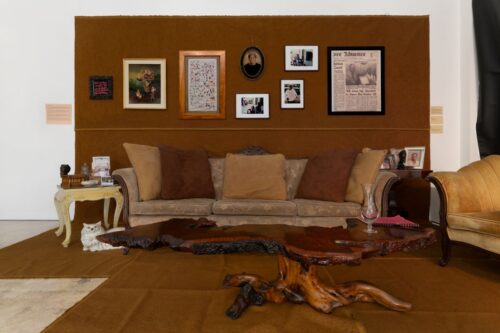
One of the largest artworks in the show comes curator Arsimmer McCoy, an “archive install” of furniture and other heirlooms from her grandmother’s living room. (Photo by Zachary Balber, courtesy of Green Space)
“I wanted it to be something where whoever walked in the room could take a look at something and either immediately connect with it or dig into the context a little deeper and find a bit of themselves in there,” she says. “And I think Arsimmer came from a point of, immediately as an artist, seeing something and feeling joy.”
One of the largest artworks in the show comes from McCoy herself, an “archive install” of furniture and other heirlooms from her grandmother’s living room. Decorated with items such as an ornate couch, a reclaimed-wood coffee table, and a CRT television stand complete with Disney films on VHS, the space is meant to evoke nostalgic memories of time spent in similar spaces, for the artist herself and for others. The installation is part of the Carol City Museum, a long-gestating project in which McCoy plans to transform her home in Miami Gardens into an arts and community institution.
“That installation is an homage to the joy that I find in iconography, the joy that I find in the archives,” McCoy says. “You can see those moments of rest, of connectivity, of love, of culture. And it’s also a little disruption of the white-walled gallery space as well, because I know people will gather in that space, and they will find themselves.”
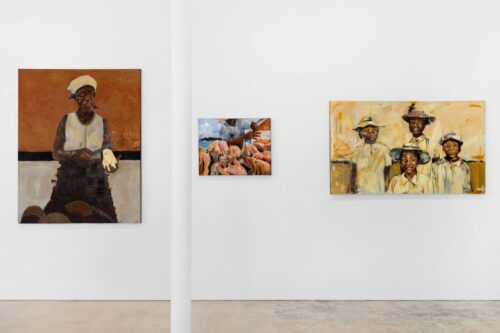
Sophie Wong depicts scenes of Caribbean life in her paintings. (Photo by Zachary Balber, courtesy of Green Space)
McCoy says visitors have offered a variety of comments on the artwork and the comforting feelings it generated. “I had an elder hit me up and say ‘I just wanted to watch ‘Touched By An Angel’ with Della Reese in that room,’ it reminded me of my grandmother’s room,” she says. “And then we see younger folks who are like ‘Man, I remember that, the color of that carpet,’ or ‘I remember those photos, the obituaries.’”
Whether through McCoy’s nostalgic archive, Steber’s photos, or the self-soothing depicted in Moreno’s quilts, the works in “Count it All Joy!” prove that happiness can come from a variety of places, some more unexpected than others.
WHAT: “Count It All Joy!”
WHERE: Green Space, 7200 Biscayne Blvd., Miami
WHEN: noon to 6 p.m. Wednesday through Sunday through Thursday, Sept. 27.
COST: Free
INFORMATION: (786) 266-6392; greenspacemiami.org
ArtburstMiami.com is a nonprofit media source for the arts featuring fresh and original stories by writers dedicated to theater, dance, visual arts, film, music and more. Don’t miss a story at www.artburstmiami.com
No posts found
Milton Mizell’s Blackquetry, Black identity through the craft of marquetry
Written By Jonel Juste
August 23, 2026 at 12:50 PM
“I Said I Love You” by Milton Mizell is one of the works featured in “Blackquetry” at CLAUG Creative Studio, Miami Shores. (Photo by Leesa Richards)
A clean slate awaiting inspiration and creativity to become something beautiful and meaningful. This is how marquetry artist Milton Mizell describes “Blackquetry,” his work that will be on view from Saturday, Aug. 22, to Wednesday, Sept. 30 at CLAUG Creative Studio in Miami Shores.
Marquetry is defined as the covering of the surface of a board or piece of furniture, either entirely or in part, with wooden veneers in the form of a skillfully applied design or picture. In the hands of Mizell, it becomes Blackquetry, Black identity expressed through the craft of marquetry.
“It is a visual language shaped from wood, memory, and cultural truth. The name reflects that union,” says Mizell. “It honors resilience, beauty, and ancestral storytelling while expanding the tradition into a space where Blackness is centered and celebrated.”
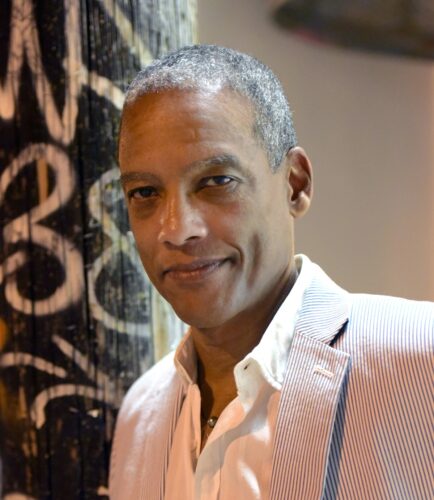
Miami-based artist Milton Mizell brings together marquetry, graphic design, and woodworking in his art. (Photo by Leesa Richards)
Mizell, who was born and raised in Miami, didn’t start his artistic career in woodworking. He studied fine art and graphic design and has been working as a graphic artist for many years. However, as a child, he used to watch his father — a jack of all trades — working on wood, fixing and building all kinds of things.
“That planted the seed. I returned to woodworking as an adult when burnout pushed me back toward making physical objects. Wood has been a constant thread, even before marquetry,” he says.
The artist’s journey has not been without challenges. In the past few years, aphasia has taken a toll on his communication skills, limiting his ability to speak, read and write. “However,” he said, “I continue to communicate powerfully through my art, demonstrating that creativity often speaks louder than words and that my intelligence, artistic vision, and passion for storytelling remain as strong as ever.”
The artist describes marquetry as moderately difficult, requiring patience, precision, and a steady hand.
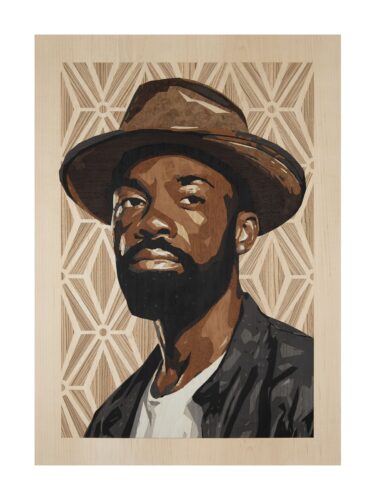
“The Man in the Fedora Hat” by Milton Mizell (Photo by Gregory Reed)
“I admired marquetry for years, ” he says, “but only discovered my path into it when I bought a diode laser in 2023 and joined a weekly Zoom group. After a lifetime of drawing, I finally found a way to merge drawing with wood — everything clicked.”
Among Mizell’s woodworks are handcrafted boxes, keepsake boxes, jewelry boxes but most of all portraits whose subjects come from his community, his culture, and the stories that move him.
“Some portraits depict specific individuals whose presence or emotion I want to preserve; others represent broader aspects of Black identity, resilience, and humanity.”
The process begins with simplifying an image, almost like creating a painter’s palette. Mizell prints a full‑size poster, cuts every shape with the diode laser, a computer-controlled machine that cuts or engraves material with a concentrated beam of light, and assembles hundreds or thousands of pieces with tape.
“Then I create a three‑layer sandwich: veneer, MDF, veneer backer, pressed in a vacuum bag,” he explains. “Sanding is delicate because veneers vary in thickness, and dark dust can stain lighter woods. I dye my own veneers, so color penetrates deeply enough to survive sanding. Step by step, the face comes into view,” he adds.
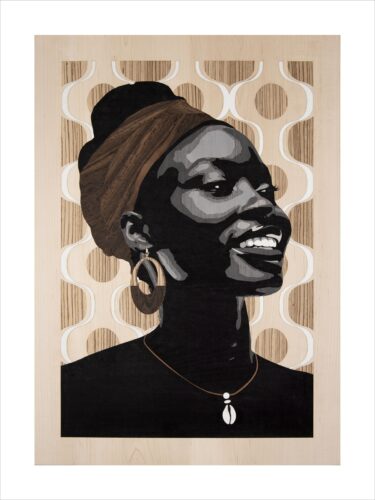
“Ebony Portrait” by Milton Mizell (Photo by Leesa Richards)
Donnamarie Baptiste, a Miami-based arts producer and cultural strategist who consulted on “Blackquetry” and wrote its curatorial statement, sees the works as both painting and sculpture.
“When you see it, it’s so masterfully done. It’s almost hard to tell whether you’re looking at a painting or something else. Once you understand the process and see how it’s put together, you realize it’s quite sculpture in its essence. It’s sort of like a painting made of wood.”
Since Mizell is a graphic artist by trade, technology plays a central role in his marquetry. In fact, it is foundational, as Mizell puts it. “Adobe Illustrator has been part of my life for over 30 years, and CNC and laser tools allow me to translate digital design into cuttable sections. Technology maps the structure; craft gives it soul.”
For this exhibition, Mizell will show a total of 21 new original pieces and prints. His declared goal is to celebrate resilience, beauty, identity, and humanity — the aspects of Black life that often go unseen. “Blackquetry gives voice to the unspoken,” says the artist.
CLAUG’s resident artist and studio owner Carlos Andrade recalls that Mizell, after receiving a grant from the Miami-Dade County Department of Cultural Affairs was looking for a space for a solo exhibition. “He was having a hard time finding one. One day, he was walking by, and we connected right away,” he says.
About Mizell’s work, Andrade says, “I think it’s very powerful. When you’re standing in front of one of the portraits, you see the amount of details, and I think that makes an impression on people. You begin to understand the process, how tedious it is, and also the talent that Milton has as an artist.”
But beyond showcasing Mizell’s craftsmanship, the exhibition also tells the story of his personal journey.
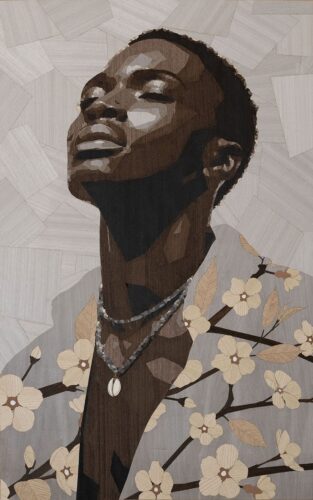
“Dream Big” by Milton Mizell (Photo by Gregory Reed)
“Obviously,” Andrade says, “we want to showcase his work, but we also want to showcase his journey. Because of his condition, one of the best ways for him to communicate and connect with people is through his art,” he adds.
The artist is also the curator of Blackquetry. Curating his own work, Mizell says that means shaping how viewers encounter the pieces — guiding the rhythm, the scale, and the emotional arc. “It’s an opportunity to frame the craft, the stories, and the cultural context with intention. It’s both vulnerable and empowering: I’m presenting not just the art, but the journey behind it,” he says.
As a curator, he selected works that show the evolution of his voice, pieces that merge tradition with technology, and craft with culture. Each portrait was chosen for its grain, tone, and emotional resonance. “The arrangement highlights the layered construction, the narrative depth, and the diversity of identities represented. The goal was to create an experience that feels both intimate and monumental,” he says.
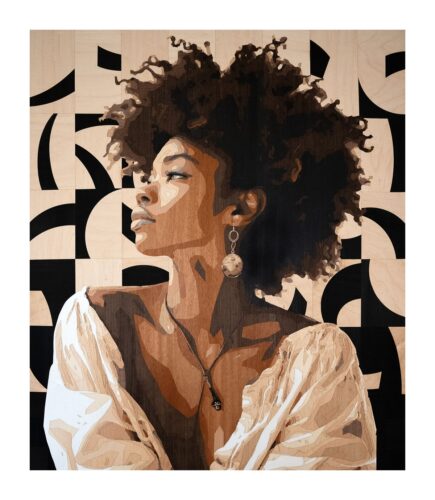
“Break of Dawn” by Milton Mizell. (Photo by Leesa Richards)
When people walk out of Blackquetry, especially Black viewers, Mizell hopes they feel seen.
“I want them to carry a sense of pride and connection, knowing these portraits honor the beauty and humanity within our community. I hope they leave feeling uplifted, affirmed, and part of the narrative.”
WHAT: “Blackquetry: My Fusion of Marquetry and the Black Experience”
WHERE: CLAUG Creative Studio, 9703 NE 2nd Ave, Miami Shores
WHEN: Opening receptions: 6 p.m., Saturday, Aug. 22 and 4 p.m., Sunday, Aug. 23. Regular hours noon to 6 p.m., Tuesday to Saturday. Through Wednesday, Sept. 30.
COST: Free (RSVP for reception)
INFORMATION: claug.art or (645) 243-0333
ArtburstMiami.com is a nonprofit media source for the arts featuring fresh and original stories by writers dedicated to theater, dance, visual arts, film, music, and more. Don’t miss a story at www.artburstmiami.com.
No posts found
Still Underrated, Modern Master Louise Nevelson Gets Her Due at the Frost
Written By Douglas Markowitz
August 20, 2026 at 6:15 PM
(Louise Nevelson (1899–1988), Martha Graham, ca. 1950. Cast bronze, 8 x 17 7/8 x 9 3/4 inches. Collection of the Farnsworth Art Museum, Rockland, Maine, gift of Louise Nevelson, 1984.23.8. © 2026 Estate of Louise Nevelson / Artists Rights Society (ARS), New York. “Dawn to Dusk” now at the Frost Museum through January 2027)
One of the most important, yet underrated American modern artists of all time is getting the retrospective treatment at the Patricia and Phillip Frost Art Museum at FIU – and it’s not who you might expect.
Louise Nevelson may not be among the first names that come to mind in the pantheon of important artists of the modernist movement. In the mid-20th century, she was a household name, representing the U.S. at the Venice Biennale and appearing on the cover of Life magazine. Today the public is more likely to know Pablo Picasso and Henri Matisse, Mark Rothko and Jackson Pollock, even Georgia O’Keeffe and Helen Frankenthaler.
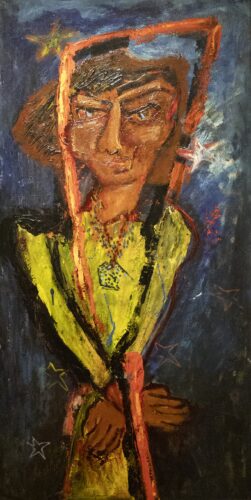
Louise Nevelson (1899–1988), “Woman with a Red Scarf, circa. 1947. Oil on board, 56 5/8 x 33 x 1 3/8 inches. Collection of the Farnsworth Art Museum, Rockland, Maine, bequest of Nathan Berliawsky, 1980.35.24. © 2026 Estate of Louise Nevelson / Artists Rights Society (ARS), New York
But the Russian-born Jewish-American might just dwarf them all in terms of influence. Her large-scale, abstract sculptures made way for a bold new typology: installation art, going beyond sculpture and considering the way an artwork is staged.
“She is, in many ways, the founder of what we understand as installation art,” said Jaime DeSimone, chief curator at the Farnsworth Art Museum in Nevelson’s hometown of Rockland, Maine. “In one of her first shows, she creates an environment where she’s inviting the visitor to engage with these sculptures. She’s thinking about the way the floor is, the way the walls are covered, using blue lights. This is so much more than just a sculpture that she’s created from discarded wood and fragments and unified by paint.”
“Louise Nevelson: Dawn to Dusk,” opening at the Frost Museum on Thursday, Aug. 20, features a number of Nevelson’s installation works. The artist executed most of her sculptures monochromatically, usually in solid black but also occasionally working with white or gold. These colors correlate to specific themes in Nevelson’s life. Black often represents her interest in space and celestial bodies amid the technological progress of the 20th century, as do the futuristic, abstract forms they take influenced by cubism, Art Deco, and the rising skyscrapers of her adoptive home of New York.
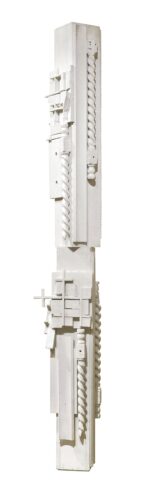
Louise Nevelson (1899–1988), Dawn Column I, 1959. Wood and found wooden objects painted white, 92 3/8 x 13 1/2 x 13 1/2 inches. Collection of the Farnsworth Art Museum, Rockland, Maine, museum purchase, 1979.81. © 2026 Estate of Louise Nevelson / Artists Rights Society (ARS), New York.
White works such as “Dawn Column I,” meanwhile, indicate matrimonial themes, sometimes reflecting on the artist’s own failed marriage. The piece comes from the larger 1959 installation “Dawn’s Wedding Feast,” created for the Museum of Modern Art’s group exhibition “Sixteen Americans” in New York. The installation marked a major turning point for Nevelson’s career and progression as an artist – it was the first time she had used white on such a scale – and earned her the Venice commission, for which she appropriated parts of the installation into a new work, “Voyage.” The individual components have been split up and are now held by various museums.
“Because of what we understand of Nevelson’s work, she’s constantly creating, and as pieces evolved, she would disassemble them and make them into new works,” DeSimone said. “So people can see how a single column has kind of lived on into a unique work of art.”
But there’s more to her career than the large-scale, sculptural pieces she’s best known for. “Dawn to Dusk,” which travels to the Frost from Rockland, features a number of objects from the Frost’s own collection that offer a broader view of Nevelson as an artist. These include jewelry and a unique set of works on paper: a series of collages made from photographs of Nevelson’s own work.
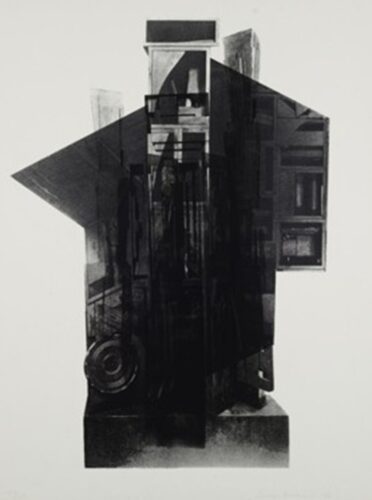
Louise Nevelson (1899–1988), Mariner Man, from the portfolio Façade: Twelve Original Serigraphs in Homage to Edith Sitwell, 1966. Silkscreen, mylar, 23 x 17 1/2 inches. Collection of the Patricia and Phillip Frost Art Museum. Gift of Dr. and Mrs. Rudolph E. Drosd. MET 77.21.5. © 2026 Estate of Louise Nevelson / Artists Rights Society (ARS), New York.
“What’s nice about this exhibition is that it shows these early paintings, it shows sculpture, it shows collage, it shows other forms of assemblages,” said Natalia Zuluaga, chief curator at the Frost Museum. “And I think when you’re able to see the full breadth of her practice. You see the way in which she developed that language.”
And beyond her art, there are ways in which Nevelson’s life story is likely to appeal to Miamians. The artist was a first-generation American, joining a wave of Jewish immigration from the Russian Empire – specifically what is now Ukraine – to the United States. Her family spoke Yiddish at home and struggled to assimilate into the small town, which led Louise to marry early in order to escape to New York in the early 1920s. There, she rebelled against the stifling confines of her husband’s conservative values and expectations of submissive domesticity, eventually divorcing him and taking up art full-time.
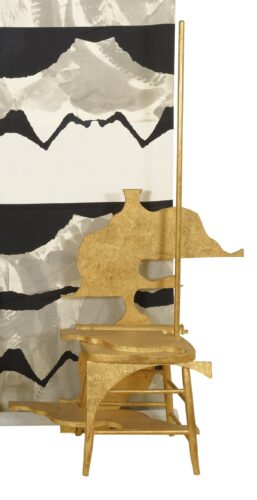
Louise Nevelson (1899–1988), Orfeo: Gold Throne I, 1984. Gold leaf on wood, 36 3/4 x 35 x 18 1/2 inches. Collection of the Farnsworth Art Museum, Rockland, Maine, gift of Louise Nevelson, 1985.23.29. © 2026 Estate of Louise Nevelson / Artists Rights Society (ARS), New York.
“I think Louise was an intellectually curious person, and it’s worth looking at the kinds of questions that she asked about the moment in time that she was living in, right? Like for me, maybe this is like a story that kind of touches upon the way in which we learn and read and think about the world,” Zuluaga said. “But yeah, she was an immigrant. She was a first-generation immigrant who was growing up in a port town, trying to find her way into New York City in order to pursue a career in art. I think from that perspective, also, there’s a lot of compatibility or parallels to many stories in our community.”
Though she may not be as famous as Picasso or Pollock, Louise Nevelson’s place in the modern art canon is as solid and firm as her sculptures are pitch black. Now, Miami will get the chance to come into deeper contact with this vital artistic voice.
WHAT: “Louise Nevelson: Dawn to Dusk”
WHERE: Patricia and Philip Frost Art Museum, Florida International University Modesto A. Maidique Campus, 10975 SW 17th St., Miami
WHEN: 11 a.m. to 5 p.m. Tuesday through Sunday. Thursday, Aug. 20 through Sunday, Jan. 17, 2027
COST: Free
INFORMATION: (305) 348-2890; frost.fiu.edu
ArtburstMiami.com is a nonprofit media source for the arts featuring fresh and original stories by writers dedicated to theater, dance, visual arts, film, music and more. Don’t miss a story at www.artburstmiami.com
No posts found
Edwidge Danticat’s ‘Dèy’ Connects Haiti, Miami and a Close Call at a Local Mall
Written By Michelle F. Solomon
August 20, 2026 at 2:04 PM
Edwidge Danticat’s new novel, “Dèy,” was partly inspired by a frightening 2017 false alarm at Aventura Mall, where she thought she was caught in a mass shooting. Danticat will discuss the book with Miami Herald Haiti/Caribbean correspondent Jacqueline Charles on Saturday, Aug. 29 at Coral Gables Congregational United Church of Christ, 3010 De Soto Boulevard, Coral Gables. (Photo courtesy Penguin Random House)
While doing some last-minute Christmas shopping for her daughter in 2017, novelist Edwidge Danticat had an experience that would become a spark for her latest novel, “Dèy.”
It was Dec. 23, 2017, and Danticat was inside Aventura Mall when she heard a series of loud pops that sounded like gunshots.
“We hear about mass shootings all the time in this country, and I immediately thought, ‘I am in one right now,'” she recalled.
It turned out to be a false alarm. But as she later wrote in a letter to readers, her body may have recovered from its fight-or-flight response, it did not forget.
She first wrote about the experience in “This is My Body,” an essay in her 2024 collection, “We’re Alone.” There the character of Magnolia Elie, a Haitian American real estate agent and mother, began to emerge.
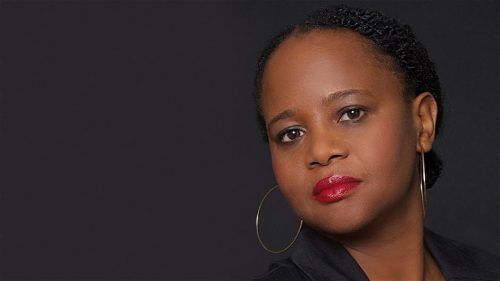
Edwidge Danticat lived in Miami for more than two decades before moving to New York to teach at Columbia University. Her new novel, “Dèy,” is deeply rooted in Miami. (Photo courtesy of Lynn Savarese)
“Magnolia’s character grew out of that moment in the mall when I thought my life might end dramatically and violently,” Danticat wrote on her website in a letter to readers.
“Dèy,” which will be released on Tuesday, Aug. 25 by Penguin Random House, takes its title from the Haitian Kreyòl word for grief and mourning. Magnolia survives a mass shooting. But rather than talking about how it affected her, she tells no one and tries to go back into the life she was already questioning — selling real estate in rapidly changing Miami neighborhoods, raising a daughter nearing adolescence, living apart from her partner and worrying about her parents still in Haiti.
Loss and mortality have long been themes in the author’s books, along with family, migration, memory and belonging. In “Dèy,” it is also about people trying to remain connected across distance and to feel rooted in the different places they call home.
She confided that those questions are especially personal in a novel she was writing as she prepared to leave Miami for New York after living in South Florida for more than two decades.
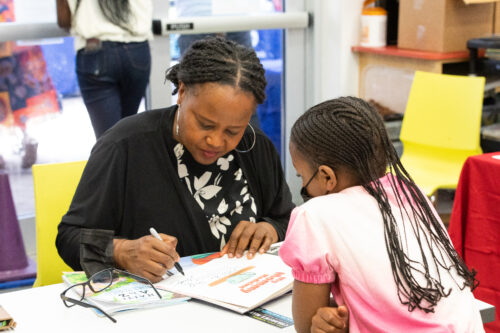
Haitian American author Edwidge Danticat is also the author of children’s books. Here she signs her book “My Mommy Medicine” at the 2019 Miami Book Fair. (Photo courtesy of Miami Book Fair)
Danticat moved to New York to teach at Columbia University, where she is on the faculty in African American and African Diaspora Studies.
“In a way it was kind of like this book is also about saying goodbye to Miami,” she said.
Danticat will be in conversation with Miami Herald Haiti/Caribbean correspondent Jacqueline Charles to discuss “Dèy” on Saturday, Aug. 29 at Books & Books in Coral Gables.
The two will have much to talk about, said Charles, including that both were at Aventura Mall during the 2017 scare that helped set the novel in motion. Danticat said she started texting Charles that day “because it was news” when she got a return text: “I’m in the mall, I’m hiding in a closet in a store.”
Charles said that in the years since the incident, she and Danticat have revisited that day many times in their conversations. “Even more so we’ve shared many discussions about Haiti, the ongoing violence, the aftershocks, and the voice notes she has received from relatives that include the sounds of gunshots in the background,” Charles said.
For her, the novel’s depiction of Haitian life in Miami is immediately recognizable.
“If you’re Haitian and from Miami you recognize yourself in this book,” she said.
Charles pointed to details including the neighborhoods, the strict Haitian household, the “aunts” who aren’t actually blood relatives and even the different ways Haitians refer to Haiti — as “down there” or “back there” — depending on their relationship to the country.
The novelist said those details are part of a larger set of themes she has returned to again and again in her work. She grew up in Haiti during “a time of dictatorship where you would hear about neighbors disappearing, so this precariousness of life was always part of my psyche.”
She said Magnolia’s story is more rooted in the present as people in Haiti, including members of Danticat’s own family, contend with displacement and armed violence.
Her more than two decades in Miami and Little Haiti also brought other concerns into the novel: environmental vulnerability, gentrification, migration and the uncertainty immigration status can create for families.
“People coming and new arrivals and a feeling with issues like TPS have the constant question in mind ‘What is home? What is belonging?’ ”
Charles said that tension between places is one of the parts of “Dèy” she finds most familiar.

Edwidge Danticat’s book “Create Dangerously” become a work of theater at Miami New Drama in 2023. (Photo courtesy of FURIOSA Productions)
“This is the story of many of us in the diaspora who must remain connected, either because our family still lives there or we grieve for the country of our childhood,” she said. “The Haiti she describes is spot on. She avoids overwhelming you with gang violence and instability while conveying how Magnolia straddles and attempts to navigate two worlds simultaneously. Instead, she weaves them into her everyday reality.”
For their conversation at Books & Books, Charles said there will be questions that come out of their shared personal experiences.
“As someone who has had many heart-to-heart conversations with her — sometimes in the middle of the night while we were both writing — about Haiti and its ripple effects, I want to ask her about how she processes grief and the invisible scars that few see.”
Making Magnolia a real estate agent allowed Danticat to explore the question of home in a literal way.
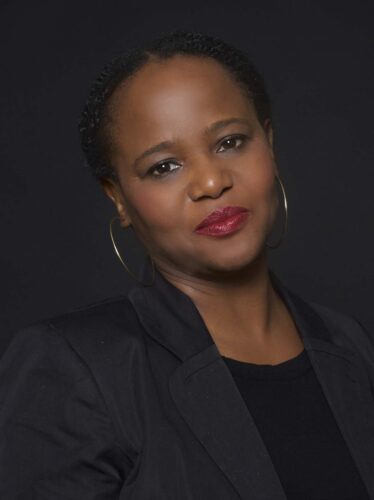
Edwidge Danticat returns to Miami with “Dèy,” her first novel in more than a decade, a book she has described as both a love letter and a goodbye to the city she called home for more than 20 years. (Photo by Lynn Savarese)
Magnolia helps other people buy and sell homes while wrestling with her own ideas about where she belongs. She is also aware that in a rapidly changing Miami, real estate can mean opportunity for some while displacement for others, Danticat explained.
“I wanted to pick that profession because it gives you an opportunity to explore what home can mean,” she said, “both in terms of physical spaces” and in terms of memory and the places where families gather and create their lives.
Within hours of surviving the shooting, Magnolia is back at work showing a Brickell condominium, trying to return to the ordinary routine of her life.
Charles cites a sentence in the novel about one of Magnolia’s clients, a professor who has moved away but is reluctant to sell her Brickell condominium.
In the novel, Magnolia observes of the professor, “While growing roots elsewhere, she’s nevertheless having trouble letting go.”
For Charles, the passage captures the complicated struggle between building a life elsewhere and remaining attached to the place left behind.
For Danticat, the book was a way to hold onto the city she had come to know through its neighborhoods and communities. And after more than 20 years here, she said there was no separating the novel from the place that helped produce it.
“This is definitely a book born out of the soil of Miami.”
WHAT: Edwidge Danticat discusses her new novel, “Dèy,” in conversation with Miami Herald Haitian/Caribbean correspondent Jacqueline Charles.
WHEN: 7 p.m. Saturday, Aug. 29
WHERE: Coral Gables Congregational United Church of Christ, 3010 De Soto Boulevard, Coral Gables.
COST: Free or entry with book cost $33.64 includes fees and one or two guests; RSVP required.
INFORMATION: Books & Books, 305-442-4408
ArtburstMiami.com is a nonprofit media source for the arts featuring fresh and original stories by writers dedicated to theater, dance, visual arts, film, music, and more. Don’t miss a story at www.artburstmiami.com
No posts found
John Baldessari Show Reflects PAMM’s Programming Pivot
Written By Douglas Markowitz
August 16, 2026 at 9:18 PM
John Baldessari, “Kissing Series: Simone. Palm Trees (Near),” 1975, two color photographs, from the Craig Robins Collection, Miami, is one of the works in “John Baldessari: End of the Line,” opening Thursday, Aug. 20 at PAMM. © 1975 -2026 John Baldessari Family Foundation. (Courtesy Estate of John Baldessari; Spruth Magers)
John Baldessari was one of the great iconoclasts of 20th century art. Coming of age as abstract expressionism ruled the art world, he rejected the dominant style and looked towards conceptualism, art focused on ideas rather than aesthetics. He embraced text and photography, creating work that interrogated what art can be and how it can be made, forming a bridge between conceptual and pop art. He also influenced countless artists both as a teacher at institutions such as UCLA and CalArts – some of his students include David Salle, Jack Goldstein, and Analia Saban – and as an inspiration to artists like Cindy Sherman, Barbara Krueger, and Anastasia Samoylova.
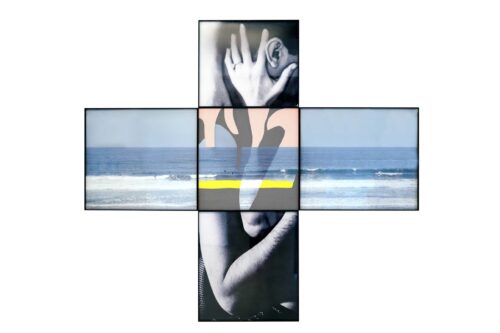
John Baldessari, “Intersection Series: Embrace (Hand and Ear)/Seascape,” 2001, Five digital photographic prints (one with acrylic paint) mounted on foam PVC board. (Courtesy Estate of John Baldessari; Spruth Magers)
“I think someone like Baldessari is super impactful,” says José Diaz, senior director of curatorial affairs and chief curator at PAMM. “He was someone who broke the rules. I think he helped define that art can be reinterpreted in new ways, and I think he’s done that with visuals, but also with text. And because he was also a professor, I think he’s also been able to contribute to the way artists think today.”
Now, six years after his death in 2020, Pérez Art Museum Miami is celebrating Baldessari’s legacy with a new retrospective of the boundary-pushing artist. “John Baldessari: The End of the Line” is the first major survey of Baldessari’s work in South Florida. It features nearly 40 works from across the artist’s career, mostly drawn from the collection of Craig Robins, the Miami-based property developer best known for developing the Miami Design District. The show comes to PAMM in its largest format yet after successful runs in Buenos Aires, Argentina, and Maldonado, Uruguay.
Miamians are already likely to be familiar with the artist, even if they don’t realize it. Thanks to the artist’s friendship with Robins, Baldessari’s art has become an integral part of the built environment of Miami. In the early 2010s the developer invited the artist to design two murals for the Design District, both titled “Fun,” which incorporate vintage photos of beachgoers that wryly comment on the city’s tourism industry.
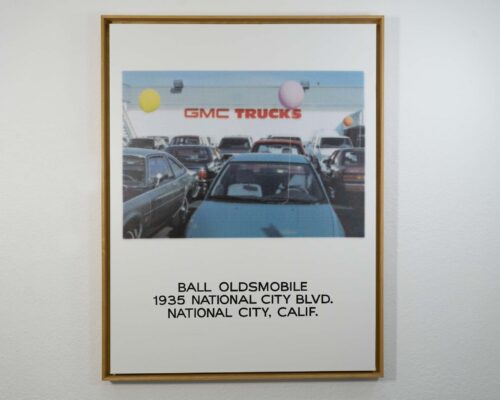
John Baldessari, “Ball Oldsmobile, 1935 National City Blvd., National City, Calif.,” 1996, Ink-jet and enamel paint on canvas 149.9 x 114.9 cm, 59 x 45 1/4 inches. Craig Robins Collection, Miami. © 1996 -2026 John Baldessari Family Foundation
(Courtesy Estate of John Baldessari; Spruth Magers)
“I think Craig likes art that is smart and punchy, and that sort of has an impact through either sense of humor or wit,” says Karen Grimson, curator of the Craig Robins Collection. “That’s always something that attracts him, and that’s why he has a significant roster of conceptualists in the collection.”
Indeed, while Baldessari’s work might seem bland and intellectual at first glance, plenty of pieces in the show put his sense of humor on full display. These include a series of photographs with the self-explanatory title “Throwing Three Balls in the Air to Get a Straight Line (Best of Thirty-Six Attempts)” and his “Repository” series, ironically responding to Marcel Duchamp’s famous urinal-turned-artwork “Fountain” by inscribing a succession of colorful bedpans with the slogan “The artist is a fountain.”
Other works in the show are more provocative, such as an archival, nine-minute film documenting the one-time performance of his infamous “Cremation Project.” A major turning point in the artist’s career, the piece saw Baldessari famously burning nearly all of his early paintings in 1970, repurposing a destructive act as a creative one.
“It’s sort of a rebirth,” says Diaz. “It’s really inspirational because he starts to think about photography as he transitions away from painting, thinking about cameras and how they can function as an artistic medium. That’s how he accumulates this abundant inventory of film stills and images that you see throughout his later work, and I think that use of images to tell stories is something you see in a lot of artists.”
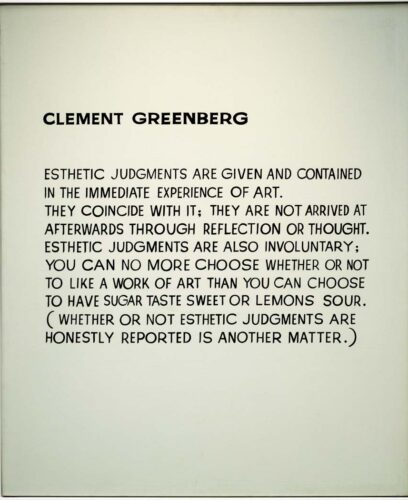
John Baldessari, “Clement Greenberg,” 1966-68, acrylic on canvas 172.7 x 142.2 cm, 68 x 56 inches, Craig Robins Collection, Miami. © 1966-68 – 2026 John Baldessari Family Foundation (Courtesy Estate of John Baldessari; Spruth Magers)
The Baldessari show might also be seen as something of a rebirth for PAMM itself. It’s the first presentation at the museum under Diaz’s stewardship as chief curator after joining PAMM last year from the Seattle Art Museum. It’s also part of an intentional pivot in programming towards what Diaz calls “landmark artists,” household names from the 20th-century onward. Baldessari, with his outsize influence on contemporary art, is one example, as are a concurrently running show of paintings by Jean-Michel Basquiat and an upcoming presentation featuring work by three masters of modern art: Pablo Picasso, Paul Klee, and Henri Matisse.
For Diaz, a born-and-raised local who witnessed Miami’s transformation into an art city in the post-Art Basel era, the shift reflects a belief that PAMM should serve the community by allowing them to engage with important, canonical art, not just the ultra-contemporary work that the city has become famous for.
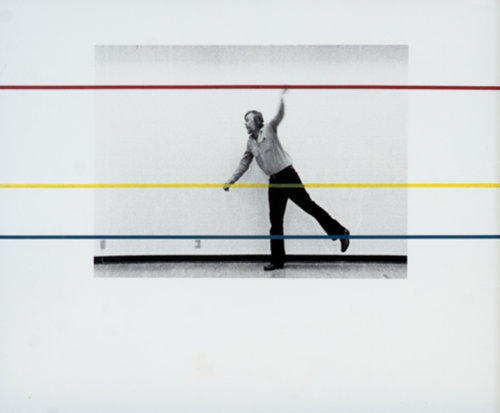
“Throwing a Ball Once to Get Three Melodies and Fifteen Chords (detail),” 1975
Three pages from the unpaginated (32 pages) artist book: softcover, staple bound, offset lithography 20.3 x 25.4 cm, 8 x 10 inches (each) (framed). Craig Robins Collection, Miami. © 1975 -2026 John Baldessari Family Foundation. (Courtesy Estate of John Baldessari; Spruth Magers)
“The fact that somebody can come here and see close to a dozen works by Basquiat from the particular period ‘82 to ‘85, it’s like a really fantastic opportunity,” Diaz says. “But it’s also like being very thoughtful of people who actually live here that get a chance to see these types of arts without having to go to New York or having to have to go to other places.”
Throughout his life, Baldessari made reference to his outsider status in the art world, particularly his birthplace of National City, Calif., near the Mexican border – “the end of the line,” as he called it, the phrase that gives the show its name. As another city on the margins of America, a place caught between commercialism and conceptualism, there are perhaps few artists better suited to Miami than Baldessari.
WHAT: “John Baldessari: The End of the Line”
WHERE: Pérez Art Museum Miami (PAMM), 1103 Biscayne Blvd, Miami
WHEN: 11 a.m. to 6 p.m. Monday, Friday and Saturday; 11 a.m. to 9 p.m. Thursday; 1 to 6 p.m. Sunday. Opening Thursday, Aug. 20 through Sunday, May 9, 2027.
COST: $18 adults; $14 seniors 62 and older, students with ID, and ages 7 to 18; free for members, children 6 and under, and free admission for all on Thursdays after 5 p.m.; Other free admissions with ID: active U.S. military and veterans, health care professionals and first responders, Florida educators, and visitors identifying as disabled and their accompanying caregiver.
INFORMATION: (305) 375-3000 or pamm.org
ArtburstMiami.com is a nonprofit media source for the arts featuring fresh and original stories by writers dedicated to theater, dance, visual arts, film, music and more. Don’t miss a story at www.artburstmiami.com.
No posts found
12 Miami Arts Share in $60,000 For Locust Projects’ WaveMaker Grants
Written By Artburst Editor
August 9, 2026 at 8:11 PM
Bex McCharen was one of the recipients of a grant for New Work for the experimental documentary project “Queer Atlantics” as part of Locust Projects 2026 WaveMaker Grants. (Photo courtesy of Locust Projects)
A dozen Miami artists and collectives will receive a total of $60,000 to develop projects ranging from art on basketball courts and Miami beaches to an experimental radio installation and an exhibition inside a Coral Gables bar.
The 12 are recipients of Locust Projects‘ 2026 WaveMaker Grants, the 11th year of a program designed to support experimental work created outside traditional arts spaces. The grants, supported by the Andy Warhol Foundation for the Visual Arts’ Regional Regranting Program, provide artists with awards of up to $6,000.
Since the program began in 2015, WaveMaker has awarded $750,000 to 152 Miami artists, curators and collectives, according to Locust Projects. There were 115 applicants who submitted projects that were evaluated for their artistic rigor, connection to Miami-Dade, community impact, feasibility and accessibility to the public.
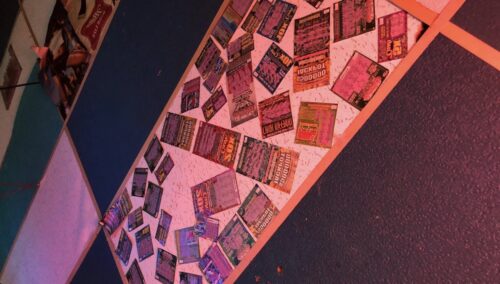
Larí García and Sue Montoya, “Reasoning and Feeling” at Seven Seas Bar. (Photo courtesy of Locust Projects)
The seven artists receiving $6,000 New Work/Projects grants offer a particularly wide-ranging look at where Miami artists are turning their attention. The projects are intended to eventually move beyond the grant stage and into public view. WaveMaker specifically supports work presented in unconventional spaces and made accessible to the public, with this year’s projects planned for locations including beaches, basketball courts, parking lots, transit hubs and a neighborhood bar.
Artists larí garcía and Sue Montoya will create “Reasoning and Feeling,” a two-person exhibition at Coral Gables’ Seven Seas Bar that considers the disappearance of informal community gathering places, or “third spaces.”
Lisa Kusanagi’s “Until My Ocean Dries” will take place along Miami’s coastline, where the artist will use a monumental calligraphy brush and ocean water to write words on concrete pathways that gradually disappear in the heat.
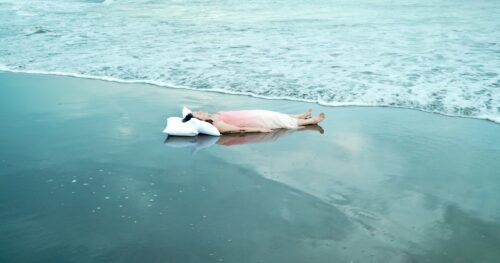
Lisa Kusanagi, “Until My Ocean Dries.” (Courtesy of Locust Projects)
Najja Moon will turn outdoor basketball courts throughout Miami-Dade into classrooms for “Movement Studies,” a lecture-performance series that uses basketball as a way into art history.
Enrique Villacreses’ “NIJI: BLUE,” meanwhile, transforms a sports field into an outdoor installation and performance viewed both from the ground and through aerial drone footage.
Other New Work recipients are Bex McCharen for the experimental documentary project “Queer Atlantics”; Ọmọlará Williams McCallister for “CREAM (Community Rules Everything Around Me),” a project built around a speculative local paper currency; and Luka Gotsiridze for “GO TO BED,” an interactive public art project exploring rest, memory and what it means never to have had a bed of one’s own.
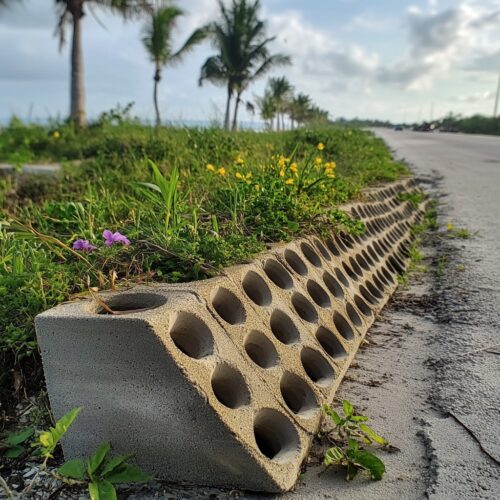
Teri Watson, “SEED Erosion Blocks. “(Photo courtesy of Locust Projects)
Isabella Bru will receive a $6,000 Long-Haul Project grant for “We Are Permitted,” the monthly series that turns parking lots and transit hubs into free pop-up galleries. Research and development grants of $2,000 each go to Nicole Combeau, Orlando Estrada and Oscar Rieveling, while Teri Watson will recieve a $4,000 implementation grant for “SEED Erosion Blocks,” which repurposes invasive sargassum seaweed into modular concrete blocks designed to help stabilize shorelines while functioning as public art.
ArtburstMiami.com is a nonprofit media source for the arts featuring fresh and original stories by writers dedicated to theater, dance, visual arts, film, music and more. Don’t miss a story at www.artburstmiami.com
No posts found
In ‘Vigil,’ Ana Mosquera Redraws the Systems That Decide Who We Are
Written By Olga Garcia-Mayoral
August 4, 2026 at 1:12 PM
Ana Mosquera transforms the gallery architecture in Vigil with an immersive, hand-drawn environment inspired by the Palacio de las Academias in Caracas, creating a space where personal memory, family history, and Venezuela’s political past converge. (Photo courtesy of the artist)
At first, Ana Mosquera’s “Vigil” seems impossibly delicate.
The curved entrance walls at Oolite Arts are enveloped in pale pinks, muted reds and cool blues. Arches rise across the architecture. Columns, patterned surfaces and imagined passageways turn the gallery into something resembling a temple, civic building or ceremonial chamber. Look closer, however, and the decorative surfaces begin to reveal a considerably more bureaucratic origin.
Mosquera built this environment from the security patterns embedded in passports, visas and residency documents—the nearly invisible designs intended to establish that a document, and by extension the person carrying it, is legitimate.
“I collected the patterns from 10 years of documents,” says Mosquera during a studio visit. “There were 100 patterns, and they’re all here.”
That act of extraction and redrawing forms the foundation of “Vigil,” Mosquera’s installation in “Sites of the Self,” Oolite Arts’ annual resident exhibition, curated by René Morales and on view through Sunday, Oct. 4. Spanning approximately 65 feet across the exhibition’s curved entrance walls, the installation incorporates digital drawing, prints, a pen-plotter drawing and an interactive website.
But its real subject is less the passport than the fragile relationship between a human being and the institutions empowered to recognize them.
“What happens when the system that is there to recognize you and give you an institutional identity fails?” Mosquera asks. “How do you continue after that failure?”
For Mosquera, who was born in Caracas and now lives in Miami, that question isn’t theoretical.
She describes spending six years unable to renew her Venezuelan passport after diplomatic relations deteriorated between Venezuela and the United States. Her body, of course, continued moving through the world. Institutionally, however, movement became something else.
“You keep breathing, moving, making your life,” she says, “but you can’t do anything else.”
That contradiction gives Vigil its tension. The installation is visually seductive, even soothing, while its source material belongs to systems of verification, surveillance and control.
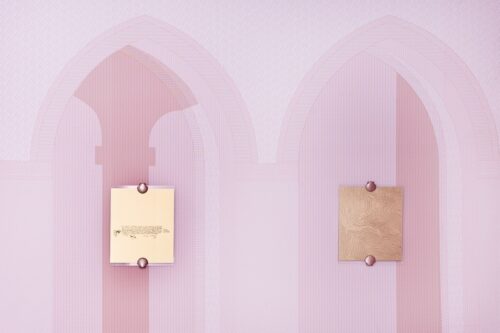
Archival documents are mounted within Ana Mosquera’s intricately patterned reconstruction of the Palacio de las Academias in Vigil. The installation draws connections between the artist’s family history and Venezuela’s larger political and economic history. (Photo courtesy of the artist)
Security patterns are normally designed to disappear into documents. Mosquera makes them monumental.
Some derive from guilloché, the intricate interlocking lines historically used in currency and official papers. Others carry national imagery. Mosquera painstakingly studies their geometries and reconstructs them because the technologies used to produce them are intentionally inaccessible.
There is something mischievous about the process.
Mosquera describes herself as becoming “almost like a counterfeiter,” moving from document to document, deciphering patterns and figuring out how to redraw them.
Yet she isn’t manufacturing a false passport. She is stripping the state’s visual language from its original function and asking what happens when an individual takes possession of it.
That transformation is particularly effective because Vigil doesn’t resemble an immigration office. Its architecture borrows from temples, churches, and institutional buildings.
Mosquera’s architectural training—she earned a degree in architecture at Universidad Central de Venezuela before completing an MFA in sculpture at Tyler School of Art and Architecture at Philadelphia’s Temple University —shapes the installation’s spatial logic. During the studio visit, she traces a connection between religious and governmental systems: institutions change over centuries, she observes, yet many of the structures through which society establishes authority and legitimacy are inherited from earlier religious forms.
The gallery becomes both sanctuary and checkpoint.
Small objects interrupt the vast patterned architecture. Among them are prints made on gold scratch-off paper depicting the topography of the Caracas valley and a centuries-old baptismal record Mosquera discovered while researching her family history.
That baptismal record opened another route into the work.
The document described a child as “illegitimate” and identified the place associated with the record as Tierra Quemada—“burned land.” Mosquera became fascinated by the double exclusion embedded in the language: a person positioned outside an accepted familial structure and connected to a place that itself lay outside an officially recognized geography.
While searching further, she discovered women in her own family recorded as hijas naturales, or “natural daughters.”
What disturbed her was the endurance of those classifications.
Her ancestors were gone, but the documents remained.
“The record continues to exist even though the body isn’t there,” Mosquera says, noting that it could continue assigning a judgment to someone long after death.
By printing these records on scratch-off material—the stuff of lotteries and chance—Mosquera introduces a sharp irony. Birthplace, citizenship, parentage, and access to documentation can profoundly determine a person’s possibilities, yet none are circumstances an individual chooses.
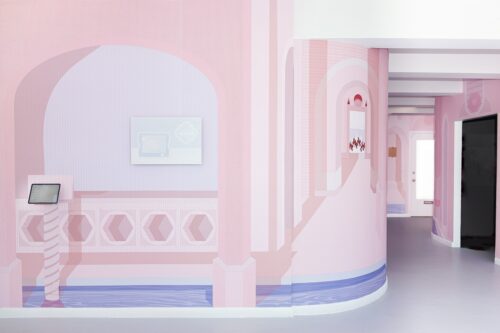
In “Vigil,” Ana Mosquera brings archival imagery, architectural drawing, and digital technology into a single immersive environment, collapsing distinctions among historical record, personal memory, and the present. (Photo courtesy of the artist)
Elsewhere, technology pushes that inquiry toward the present. An interactive component allows visitors to manipulate curves and generate personalized security patterns based on their responses. The viewer is no longer simply looking at the state’s visual apparatus but participating in the creation of another system of identification.
Mosquera is careful, however, not to propose that society can simply abandon documentation. Passports, identification numbers and institutional records provide access to rights and services precisely because societies require systems capable of recognizing people.
Her question is more difficult.
“Is it the best system?” she asks. “There’s nothing else available.”
That ambiguity keeps “Vigil” from settling into a straightforward critique of bureaucracy. Mosquera is interested instead in what comes afterward: how people operate within structures they need but that can also exclude them, and how identity survives when the machinery responsible for certifying it breaks down.
The installation makes that paradox physical.
Visitors enter “Sites of the Self” by walking through Mosquera’s invented architecture, surrounded by patterns once designed to determine authenticity. Here, however, they have escaped the passport. They have become walls, arches, lines and pathways.
The institution’s private language has been expanded so that everyone can see it.
And the person who once needed to prove herself to the system has become the one redrawing its boundaries.
WHAT: “Vigil,” an installation by Ana Mosquera, part of “Sites of the Self,” curated by René Morales
WHERE: Oolite Arts, 924 Lincoln Road, Miami Beach
WHEN: noon to 5 p.m., Monday through Sunday. Through Sunday, Oct. 4, 2026
COST: Free
INFORMATION: (305) 674-8278 and oolitearts.org/
ArtburstMiami.com is a nonprofit media source for the arts featuring fresh and original stories by writers dedicated to theater, dance, visual arts, film, music, and more. Don’t miss a story at www.artburstmiami.com.
No posts found
AES brings graffiti spirit indoors in ‘Partners in Crime’ at Central Command
Written By Olga Garcia-Mayoral
July 28, 2026 at 1:53 PM
Miami-based artist AES (“The Miracle Ghost”) paints one of his signature ghost figures during a graffiti mission. For AES, street painting remains inseparable from his studio practice, with every work in “Partners in Crime” drawing on decades of shared experiences, camaraderie, and Miami’s evolving graffiti culture. (Photo courtesy of AES.)
A ghost appears repeatedly in the world of Miami artist AES.
Sometimes it is reduced to a few economical black lines: rounded, almost cartoonlike, with dripping edges and two vertical marks suggesting eyes. Its simplicity is deceptive. The figure carries the visual immediacy of graffiti—a mark designed to be recognized quickly—but in AES’ hands, “The Miracle Ghost” has traveled beyond the wall into paintings, mixed-media works and sculpture.
That movement from street to gallery anchors “Partners in Crime,” AES’ solo exhibition at Central Command Gallery in Allapattah, on view through Saturday, Aug. 1.
For AES, who is known professionally by his graffiti moniker and did not want to disclose his legal name for this story, the gallery work grows directly from the experiences, risks and relationships that shaped him as a graffiti writer.
“You don’t lose that,” AES says of graffiti’s hold on his practice. “When you fall in love with graffiti … you just keep doing it. There’s no stopping.”
That persistence helps explain the exhibition’s title.

“Partners in Crime, “a solo exhibition by Miami graffiti artist AES (“The Miracle Ghost”), opened July 25 at Central Command Gallery in Allapattah. The exhibition celebrates friendship, trust, and the collaborative spirit at the heart of Miami’s graffiti and hip-hop culture. (Image courtesy of AES.)
“Partners in crime” refers not simply to collaborators, but to the people who stood beside AES throughout years of making art—friends who painted with him, watched his back, shared adventures and helped transform an individual act into a collective experience.
“I guess everybody that has come across in my life,” AES says, before narrowing the definition to “the people that have been next to me throughout my journey as a graffiti writer and as an artist.”
From the Wall to the Gallery
The ghost itself becomes an important bridge between those worlds.
In photographs documenting AES at work, the character stretches across concrete and corrugated surfaces with dripping black contours. The surrounding environment matters: cracked walls, discarded objects, industrial architecture, and the darkness of nighttime become part of the image.
Inside the gallery, that vocabulary is reconsidered through paintings, mixed media and sculptural objects. What was once encountered fleetingly on a wall can now be examined at length.
“There are definitely elements of nostalgia,” AES says. “Every piece has something from those adventures.”
“Partners in Crime” isn’t simply graffiti transplanted into a white cube. AES is translating a culture built around movement, improvisation and impermanence into objects meant to remain.
The exhibition’s emphasis on memory also complicates the bravado often associated with graffiti. Behind the adrenaline is intimacy.
AES describes the culture through trust: knowing who is beside you, understanding one another without explanation and recognizing that what appears to outsiders as an individual signature frequently emerges from collective effort.
“It’s teamwork,” he says. “One hand washes the other, and both hands wash the face.”
Finding Space in Allapattah
That sense of collaboration makes Central Command Gallery more than a backdrop for the exhibition.
Its founder, Louie “Lou” Caceres, comes from the same cultural ecosystem the gallery seeks to represent. With decades of involvement in breakdancing and graffiti, he describes Central Command as a home for artists whose work may be considered too raw for more conventional commercial spaces.
“We focus on artists that are urban,” he says, including artists who “might not fit into blue-chip galleries because they’re too raw or have too much of an edge.”
Wynwood once offered graffiti writers an industrial landscape of warehouses and walls. Its eventual emergence as an international arts and entertainment destination gave street art unprecedented visibility while simultaneously changing the environment that helped produce it.
AES doesn’t romanticize that transformation.
“Wynwood has definitely been gentrified,” he says. “It’s not even the shadow of what it used to be.”
What he misses is succinct: “The rawness … that was its identity.”
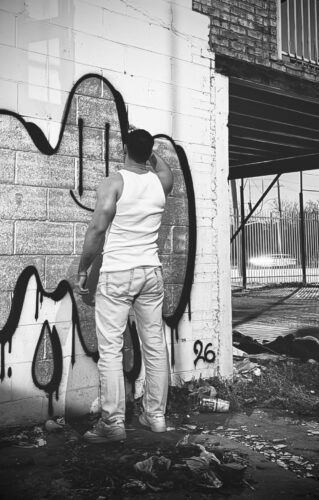
A solitary figure approaches one of AES’s signature ghost characters under the cover of night. The photograph evokes the atmosphere of the late-night graffiti missions that inspired “Partners in Crime,”where trust, collaboration, and the unwritten codes of the street become central themes of the exhibition. (Photo courtesy of AES.)
Allapattah provides a different context. Central Command sits within a neighborhood increasingly associated with contemporary art but still marked by industrial and working-class activity. For AES, its character feels appropriate.
“It’s perfect,” he says. “It’s what we’re looking for.”
Central Command’s challenge, then, is not simply to exhibit street-influenced art but to provide a gallery context without sanding away what made that work compelling in the first place.
Caceres sees himself as a connector—“the thread” between the street and exhibition space.
More Than a Solo Show
That philosophy explains why “Partners in Crime” expands beyond objects hanging on walls.
Created in collaboration with Los Angeles-based Chop’em Down Films, the project incorporates film documentation of AES’ process and graffiti activity, extending the exhibition’s interest in collaboration into another medium. Rather than functioning as an unrelated addition, the camera records something a finished painting cannot: the circumstances surrounding the act of making.
The exhibition closes on Sunday, Aug. 1 with a B-Boy Jam, bringing dance into the gallery’s orbit and reconnecting graffiti with the broader hip-hop culture from which Central Command draws its identity.
“Behind every adventure, every risk and every triumph is someone who helped make it possible,” AES has said of the project.
The Ghost Remains
There is an appealing contradiction at the center of “Partners in Crime.”
Graffiti is frequently temporary. A wall gets painted over. A building disappears. A neighborhood changes. The people who once gathered there move elsewhere.
AES is making objects that attempt to hold onto something considerably harder to preserve: the relationships surrounding those moments.
That may be where his Miracle Ghost becomes most effective.
The figure is simultaneously present and disappearing, a recognizable outline attached to something inherently elusive. In that sense, it feels appropriate for an artist looking back at a Miami street-art landscape that has changed around him while insisting that its original codes—loyalty, collaboration and trust—remain relevant.
“You have to go,” AES says of the exhibition. “You have to see the work in order to really understand what we’re talking about.”
WHAT: Partners in Crime, a solo exhibition by AES (“The Miracle Ghost”)
WHERE: Central Command Gallery, 1798 NW 20th St., Miami
WHEN: Noon to 9 p.m. Tuesday through Saturday, noon to 6 p.m., Sunday. Through Saturday, Aug. 1, 2026
COST: Free
INFORMATION: (305) 587-8520 and centralcommandmiami.com
ArtburstMiami.com is a nonprofit media source for the arts featuring fresh and original stories by writers dedicated to theater, dance, visual arts, film, music, and more. Don’t miss a story at www.artburstmiami.com.
No posts found
Kit Pancoast Nagamura returns with her family legacy at The Kampong
Written By Miguel Sirgado
July 27, 2026 at 6:32 PM
“Backbone,” acrylic on canvas, is featured in Kit Pancoast Nagamura’s “When We Come to Paint,” an exhibition of works by the great-granddaughter of botanist and plant explorer David Fairchild, and selected works of her parents. On view through Saturday, Aug. 15 at The Kampong in Coconut Grove. (Photo courtesy of the artist)
Whenever Kit Pancoast Nagamura returns to The Kampong, she’s greeted by a scent that has stayed with her since childhood.
“When I go back to The Kampong, the first thing I notice is the smell of the mangoes,” says the native Miamian visual artist. “I think our first memories as human beings are olfactory.”
That memory inspired “When We Come to Paint,” on view through Saturday, Aug. 15 at the National Tropical Botanical Garden’s nine-acre garden in Miami. The exhibition features 26 large- and medium-scale paintings by Nagamura, approximately 40 mixed-media works she calls “Afterworks,” selected works by her parents and original haiku accompanying many of the pieces.
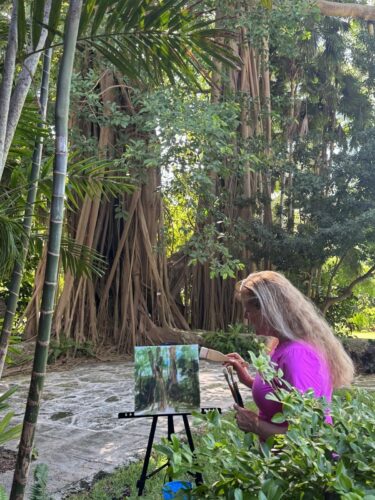
Kit Pancoast Nagamura works on “Where We Connect” (2026) at The Kampong. It is one of the paintings created for “When We Come to Paint.” (Photo courtesy of the artist)
Nagamura, who spent the first four years of her life at the garden, sees the exhibition as both a homecoming and a reflection on the people and places that shaped her artistic voice.
Her connection to the property runs deep. Nagamura is the great-granddaughter of botanist and plant explorer David Fairchild, whose Coconut Grove estate became The Kampong, now part of the National Tropical Botanical Garden. Her father, Lester Collins Pancoast, was an architect and watercolorist; her mother, Hélène Muller Pancoast, was a Japanese-style woodblock print artist and co-founder of Miami’s Bakehouse Art Complex.
Yet growing up surrounded by accomplished artists came with unexpected advice.
“My parents always said, ‘Don’t talk about your family,'” Nagamura recalls. “What they meant was, ‘Don’t boast about it. You have to make your own life.'”
A family legacy returns home
Only now does Nagamura feel she is ready to bring those generations into the same conversation.
“My family legacy is pretty heavy duty,” she says with a laugh. “I’m old enough now. I can bring them to the table.”
Visitors first encounter works by Lester and Hélène Pancoast before arriving at galleries devoted to Nagamura’s paintings, allowing connections and departures to emerge organically.
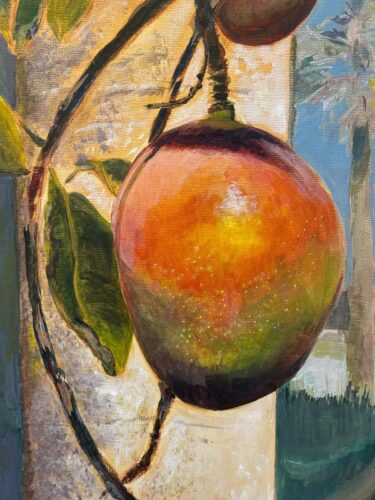
“In Stillness Fruit,” acrylic on wood panel, reflects the childhood memory that inspired “When We Come to Paint.” For Kit Pancoast Nagamura, the scent of mangoes is the first thing she notices whenever she returns to The Kampong. (Photo courtesy of the artist)
“I wanted people to see where some things came from and where I diverged,” she says. “When you spend enough time with the work, you begin to see the echoes, the similarities, the reverberations that we share.”
Brian Sidoti, director of The Kampong, says that connection made the exhibition feel almost inevitable.
“When we finally sat down together,” he says, “it was one of those conversations where you think, ‘Well, of course you’re going to have an exhibition here.'”
Sidoti believes Nagamura’s work belongs at the garden not simply because of her family history, but because of the way she understands the landscape itself.
“She has such a deep understanding of the collections here,” he says. “She could highlight that through her work.”
Sidoti looks for artists whose work grows naturally from the garden’s landscape, history and collections.
“We’re a small garden,” he says. “That allows us to create exhibitions that feel intimate and connected to our mission.”
Artmaking as Life
Rather than presenting a traditional solo exhibition, Sidoti embraced the idea of pairing Nagamura’s paintings with selected works by her parents, creating what he describes as a “living lineage of creativity.”
“We wanted to give Kit a strong platform for her own voice while also celebrating her parents’ remarkable work,” Sidoti says. “The conversations around how much of their artwork to include were a delicate balancing act. We wanted every voice to resonate.”
The exhibition also marks a return to the place where making art first became part of everyday life.
Her mother often worked on Japanese-style woodblock prints while the children created artwork nearby.
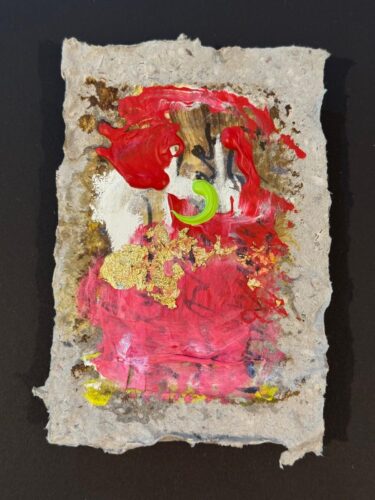
Part of Kit Pancoast Nagamura’s “Afterworks” series, this mixed-media work is created on recycled Sarasota Herald-Tribune newsprint using acrylic, handmade Japanese washi paper, ink and natural and collage elements. (Photo courtesy of the artist)
“For me, that meant freedom time and quiet focus time,” Nagamura recalls. “I loved the smell of the inks. Even today, if I open a box of crayons, everything comes back.”
Art, she learned early, was inseparable from observation, patience and daily practice.
“People think you just sit down with a paintbrush and become free,” she says with a laugh. “Not at all.”
A fellowship after college took Nagamura to a country that would shape both her artistic practice and the way she observes the natural world.
After graduating from Brown University with an independent concentration in studio art and literature—while also studying at the Rhode Island School of Design—Nagamura received an IBM-funded fellowship in Japan.
Initially, she imagined herself pursuing journalism rather than painting.
For more than 25 years, she wrote “The Backstreet Stories,” a monthly column for The Japan Times that took her through Tokyo’s neighborhoods in search of the histories hidden behind everyday streets.
“I was basically a flâneur,” she says. “A professional stroller.”
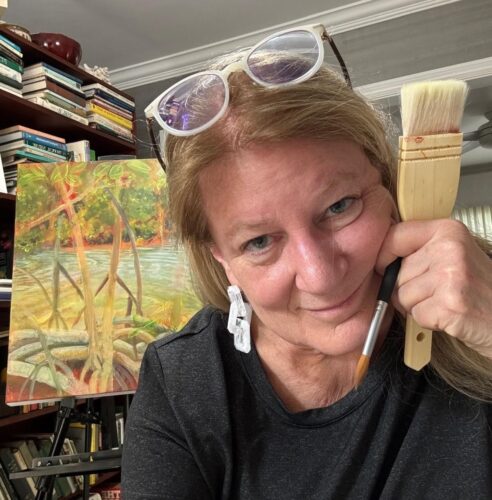
Living in Japan influenced Kit Pancoast Nagamura’s artistic language. The techniques and materials she embraced there—including handmade washi paper, mineral pigments and calligraphy—continue to shape the work featured in “When We Come to Paint.” (Photo courtesy of the artist)
Walking through historic neighborhoods, she often navigated the terrain as much by trees as by streets. Old maps revealed layers of history beneath ordinary places.
Without realizing it, those same ideas gradually found their way into her paintings.
“I realized the maps in my artwork come from this searching for meaning and development and history,” she says.
Throughout “When We Come to Paint,” maps reappear layered with handmade Japanese washi paper, mineral pigments and fragments of calligraphy. Many works are accompanied by original haiku.
“I’ve always resisted the idea that you’re either a writer or a painter,” Nagamura says. “To me, it’s all part of the same artistic practice.”
Nature became the thread connecting those disciplines.
Painting the Natural World
Rather than treating plants simply as botanical subjects, Nagamura paints them as living presences.
“I think plants communicate,” she says. “Science is finally beginning to recognize that, but in Japan that idea has existed for centuries.”
Mangrove roots, banyan trees, coconut palms and shifting light appear throughout the exhibition—not simply as botanical studies, but as reminders of humanity’s relationship with the natural world.
One recurring idea comes from the Japanese word komorebi, the shifting sunlight that filters through the leaves of trees.
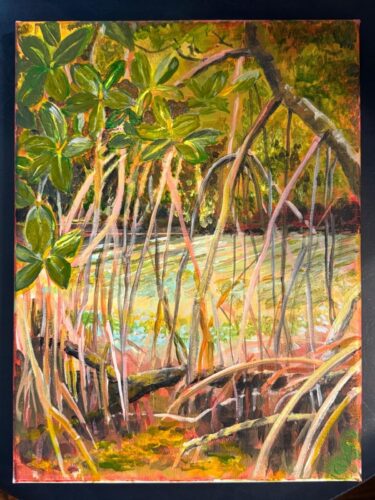
“Mangrove Inlet,” acrylic on canvas, reflects the landscape that surrounded the artist during her earliest years at The Kampong. (Photo courtesy of the artist)
“Those things are worthy of worship to me,” Nagamura says. “I hope people feel connected to plants in a new way. I hope they fall in love with them—love-affair level.”
That relationship with nature extends beyond the paintings themselves.
Among the exhibition’s most distinctive works are Nagamura’s “Afterworks,” intimate mixed-media pieces created from recycled studio materials. For Sidoti, the series reflects the same spirit of stewardship that defines the garden’s approach to conservation.
One of the larger paintings, “Aubade,” holds particular significance for the artist. The luminous five-foot-square canvas celebrating the first light of dawn represents a turning point in her creative process.
“It spoke to me about translucency,” she says. “Every time I thought I should add another layer, the painting itself seemed to say, ‘I’m perfect the way I am.’ So I listened.”
Another painting, “Road Home,” was inspired by the entrance to The Kampong and Nagamura’s reflections on what the idea of home had come to mean after decades abroad.
“If I had not been obsessing about the meaning of home,” she says, “that painting would not have appeared.”
WHAT: “When We Come to Paint,” an exhibition by Kit Pancoast Nagamura
WHERE: The Kampong, National Tropical Botanical Garden, 4013 S. Douglas Rd., Miami
WHEN: 9 a.m. to 4:30 p.m. Tuesday through Saturday. Last admission at 3 p.m. Through Saturday, Aug. 15.
COST: $17 for self-guided admission. $2 discount for visitors arriving by foot, bicycle, Uber or Lyft; EASY Perks Transit Card holders; guests of members (unless a greater discount applies); PreK-12 teachers; and residents of zip code 33133 with ID. Admission includes gardens and exhibition.
INFORMATION: 305-442-7169 or ntbg.org/gardens/kampong
ArtburstMiami.com is a nonprofit media source for the arts featuring fresh and original stories by writers dedicated to theater, dance, visual arts, film, music and more. Don’t miss a story at www.artburstmiami.com
No posts found
MOAD at Freedom Tower Explores How America Shaped Abstract Art
Written By Michelle F. Solomon
July 22, 2026 at 8:12 PM
At left, Joan Mitchell, “Untitled” (1960), oil on canvas. At right, Willem de Kooning, “Figures in a Landscape #2” (1976), oil on paper laid on canvas, are among the highlights in “Abstraction as Legacy,” MOAD at the Freedom Tower, Miami, through Sunday, Oct. 18. (Photo by Oriol Tarridas)
Inside the Freedom Tower, where exhibitions focus on immigration, the Cuban exile experience and, for now, a journey through the world of soccer, abstract art isn’t necessarily what people expect to find. On a recent afternoon, a father and son visiting Miami for the FIFA World Cup discovered the Museum of Art and Design galleries on the landmark’s second floor where “Abstraction as Legacy” is hung.
They stuck around and examined each work. For Amy Galpin, that’s exactly the kind of unexpected encounter she had hoped for. The executive director and chief curator of the Museum of Art and Design at Miami Dade College conceived the exhibition as part of the nationwide America250 initiative.
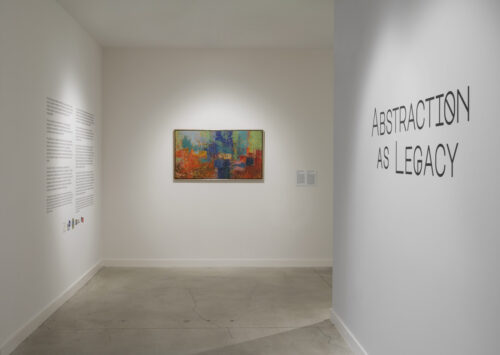
George Morrison’s “Traversal” (1958), is one of the first works visitors encounter in “Abstraction as Legacy,” reflecting on the exhibition’s expanded view of American abstraction. (Courtesy of Art Bridges and the Estate of George Morrison. Photo by Oriol Tarridas)
“We wanted to do something that would be unique and distinctive,” Galpin said. “Quickly we came to the idea of abstraction and thinking about the role of abstraction in postwar U.S. visual culture and history.”
The exhibition explores how American abstraction became one of the nation’s most influential contributions to art history.
“It is really the first time following World War II that we see the international art world looking to the U.S. as innovators, particularly what’s happening with the New York School of painters and that’s represented in the show by William de Kooning, Hans Hofmann as well as Joan Mitchell.”
Bringing together many of those artists required borrowing extensively from private collections. Nearly every work in the exhibition is on loan from collectors, artists, and institutions, giving visitors a chance to experience paintings that are seldom exhibited together. Only the salon-style installation at the end of the exhibition is drawn from the museum’s permanent collection.
“For me, it was an incredible opportunity to present work that are not often seen in public spaces in Miami,” said Galpin.
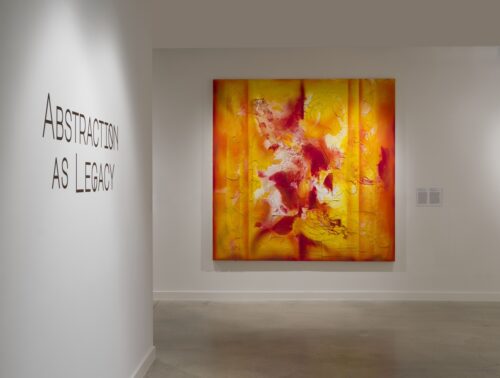
Vaughn Spann’s “Mercy after Rage” (2025), made with polymer paint and mixed media on wood, is featured in “Abstraction as Legacy” at MOAD at the Freedom Tower. (Courtesy of the artist and David Castillo. Photo by Oriol Tarridas)
Broadening American Abstraction
There are works by artists who deal with the environment, who are influenced by architecture, and some who focus on the body. “In terms of putting this together, I was looking for all the different story points to bring together. I wanted to make sure that I told certain stories, that there was a lot of different types of abstraction and to show the breadth of abstraction in the United States. And how it would all work.”
The first work visitors encounter is George Morrison’s “Traversal” with its vibrant blues, turquoise and fiery reds welcoming with an explosion of color.
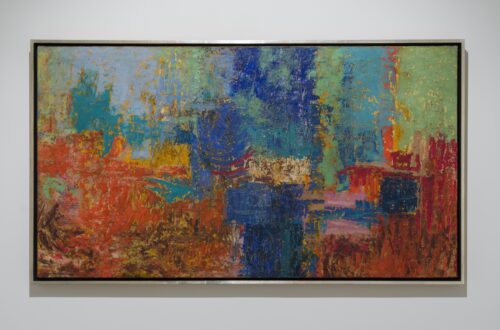
George Morrison’s “Traversal” (1958), opens “Abstraction as Legacy.” (Courtesy of Art Bridges and the Estate of George Morrison. Photo by Oriol Tarridas)
The painting broadens the idea of who belongs in the story of American abstraction, according to Galpin. “For an America250 show I think it was important to have American Indigenous artists – he’s a member of the Chippewa Tribe, spent much of his life in Minnesota, lived in New York and showed alongside de Kooning.”
It was also a way, she said, to start the show in the moment.
“The year of the piece is 1958, and while there were abstract artists active in the U.S. in the early 20th century, this is when the post-war conversation was really beginning. I wanted a painting that was of that spirit. And this is one of the works, too, in the show that speaks also to the international.”
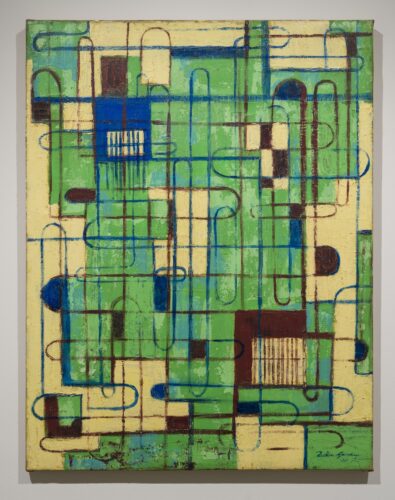
Born in Havana, Zilia Sánchez fled to New York after the Cuban Revolution and later settled in Puerto Rico. Her “Untitled” (1960) is featured in “Abstraction as Legacy” at MOAD at the Freedom Tower. (Courtesy of Cota Cohen. Photo by Oriol Tarridas)
Nearby is Zilia Sánchez’s “Untitled,” (1960). Born in Havana, she fled to New York to escape the Castro regime. “She became part of a Cuban exile group in New York of poets, of painters, and then spent much of her adult life in San Juan, Puerto Rico,” said Galpin.
Like Morrison, Sánchez challenges a traditional understanding of who shaped American abstraction.
“One of the things that was important in presenting this exhibit is to show that American abstraction is many things… just as our country is not one thing… it’s a multitude of voices.”
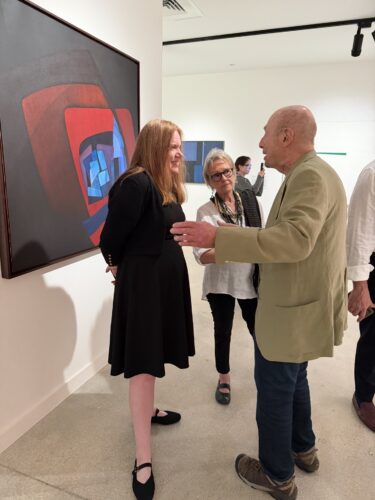
Amy Galpin, executive director and chief curator of MOAD at the Freedom Tower, with Barbara Young and Dan Gelfman at the opening of “Abstraction as Legacy” in front of Noemí Ruiz’s “Vibración en rojo y azul” (1981). (Painting courtesy of the Patricia and Phillip Frost Art Museum, Gift of Dr. Gamaliel R. Herrera. Photo by Barbara Perales)
And it is fitting at the Freedom Tower, she emphasized. “It speaks to the role of migration. In our country, artists first as immigrants, but also artists moving to different artistic centers and being influenced by different artistic centers. There are also two Cuban artists represented in the exhibit, Sánchez and Carmen Herrera,” said Galpin, pointing out that both were impacted by international influence, and both were women.
Borrowed Works Tell the Story
After Morrison there’s Joan Mitchell paired with Hans Hofmann.
On loan from collector Jorge M. Pérez’s contemporary art space El Espacio 23 in Allapattah is Hofmann’s “Yellow Glow” (1960).
“It’s a small work, but it really packs a punch,” Galpin exclaimed.
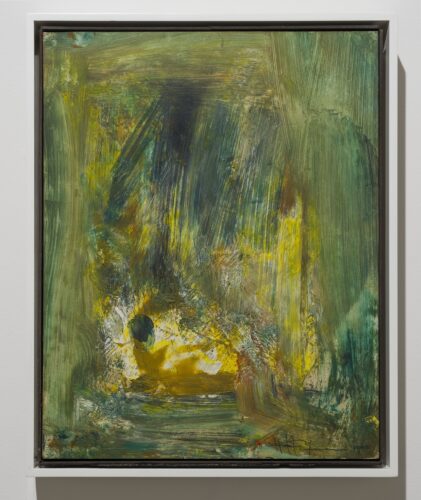
Hans Hofmann’s “Yellow Glow” (1960), courtesy of Jorge M. Pérez, El Espacio 23, is featured in “Abstraction as Legacy” at MOAD at the Freedom Tower. Photo by Oriol Tarridas.
Patricia Hanna, the curator of the Jorge M. Pérez Collection, said that the selection of the painting was an intentional and smart choice by Galpin. “It’s a kind of transition between the hard-edge abstraction to more gestural with hints of figuration,” Hanna explained.
As visitors move through the gallery they encounter works by Sam Gilliam, Lloyd Kiva New, Noemí Ruiz, Young-Il Ahn and Vaughn Spann.
The “coda” of the exhibition is a salon-style wall of works from MOAD’s collection.
“The collection was really founded by Miami artists, the two Bobs, Robert Thiele and Robert Huff, who were employed by Miami Dade College as professors and built the collection for this space.”
Hanna said that a show focused on the legacy of abstraction and its history in the U.S. that includes works from Miami collectors at the Freedom Tower was an exceptional choice for America250.
“People think about Miami as everything new and contemporary, but there are art collections in Miami that have this historical perspective.”
WHAT: “Abstraction as Legacy”
WHERE: Museum of Art and Design (MOAD) at Freedom Tower, 600 Biscayne Blvd., Miami
WHEN: 10 a.m. to 6 p.m. Wednesday through Sunday. Through Sunday, Oct. 18
COST: $18, adults $14, seniors (62 and older), $12, students and children (ages 7–12) Free for MOAD members, Miami Dade College students, faculty and staff with ID, and select other visitors. Admission includes access to Freedom Tower exhibitions.
INFORMATION: (305) 237-7700; moadmdc.org
ArtburstMiami.com is a nonprofit source of theater, dance, visual arts, music and performing arts news. Sign up for our newsletter and never miss a story.
No posts found
Honey-Barrel Boat Becomes the Heart of ‘Exile’ at Piero Atchugarry Gallery
Written By Michelle F. Solomon
July 20, 2026 at 6:00 PM
The work that gives the exhibition its title, “Exile” is a large-scale installation centered on a refugee boat salvaged from the coast of Miami after washing ashore in Key Biscayne, by Ruben Millares and Antonia Wright at the Piero Atchugarry Gallery in Miami, through Sunday, July 26. (Photo by Rudy Duboué, courtesy of the artists)
An ingeniously engineered refugee boat washed ashore on Key Biscayne in 2022. Four years later, it is the centerpiece of Antonia Wright and Ruben Millares’ exhibition “Exile.”
Now at the Piero Atchugarry Gallery in Miami, this is the last week to catch a glimpse of the vessel and other works in the show. It closes on Sunday, July 26 and is part of the Progressive Art Brunch, an event which features a dozen local galleries open from 11 a.m. to 4 p.m.
In a darkened room in the gallery, Wright and Millares have kept the refugee raft intact, bringing emotional meaning through thoughtfully orchestrated sound and light.
Welded together from steel honey barrels, marked with the words “Cuban Honey” and powered by a pre-Castro Chevrolet engine, the homemade balsa washed ashore at Crandon Beach and was headed to a scrapyard. A friend at the Key Biscayne Nature Center contacted the artists to ask if they were interested.
They jumped at the chance.
“When we saw it, we said, ‘We have to preserve this thing. This is beautiful,’ ” said Millares.
Engineering as an Escape
Rather than altering the boat, Wright and Millares took care to preserve the object exactly as they found it.
“Whoever made it made this beautiful object,” Millares said. “We didn’t want to mess with that integrity of the boat.”
However, the idea of what to do with the salvage didn’t come to the two artists immediately.
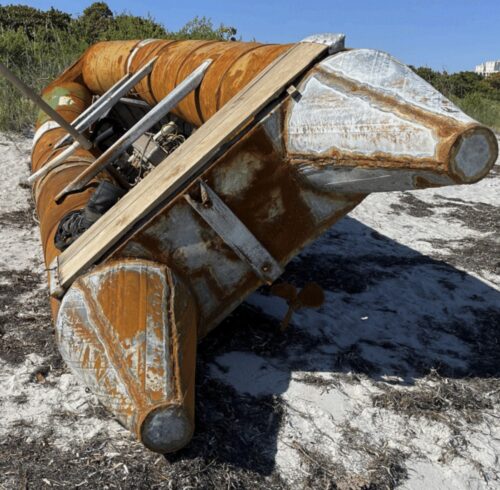
A homemade balsa washed ashore at Crandon Beach in Key Biscayne in 2022. It is now the centerpiece of the installation “Exile” by Antonia Wright and Ruben Millares. (Photo courtesy Ruben Millares)
After deciding they wanted to do something with it, they arranged to have it towed across Biscayne Bay and up the Miami River to their studio.
“We lived with it for four years,” Millares said. Living with the boat became part of the artistic process.
The artists examined every detail of its construction, discovering an extraordinary level of craftsmanship hidden beneath its rusted exterior.
The vessel was built from welded steel barrels once used by Cuba’s state honey industry.
“When it came to the beach, it had ‘Cuban honey’ on each barrel in English. We started looking into, what is Cuban honey?’ “ Wright said.
Researching the barrels revealed another layer of the story.
Wright said they discovered that the Cuban government produces the honey and sells it to Europe as one of the country’s prized exports.
“They have a whole organic farming system in Cuba because they can’t afford pesticides; everything is still done with ox and cart, so there’s no big machinery. They claim it is the purest honey in the world. It is very regulated,” she said.
Constructing a boat as an escape vessel carried significant risk on its own, but stealing the government-owned barrels to build it added another level of danger.
“If you get caught making any boat in Cuba, you’re not allowed to have a boat,” Millares said. “It was all hand-welded in secrecy.”
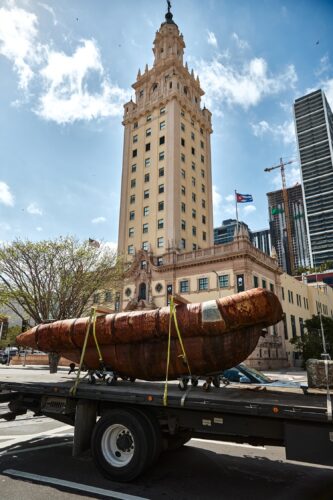
A piece of “Exile” on a flatbed truck on the way to the exhibition passes by the Freedom Tower. (Photo by Rudy Duboué, courtesy of the artists)
The boat’s ingenuity extended well beyond its materials.
“It has a 1942 Chevy engine,” Millares said. “The engineering is incredible.”
A handmade propeller, water-cooling system and carefully hammered steel siding all suggest the painstaking effort required to secretly build a vessel capable of crossing nearly 100 miles of open water. Although handmade from steel barrels and salvaged materials, Wright said its silhouette evokes that of an inflatable Zodiac.
The artists estimate as many as 12 to 15 people could have made the crossing aboard the vessel.
Early ideas for the project were dramatically different.
The artists discussed filming the boat burning at sea or filling it with books before setting it ablaze.
“It felt so heavy,” Millares said. “It was such a loaded object already. How do you intervene in a respectful way?”
Ultimately, they realized the structure itself already carried the emotional weight.
Art From Artifact
Instead of physically altering it, they composed a seven-minute soundscape that emerges from speakers concealed inside the boat.
Deep ocean recordings blend with orchestral timpani, distant explosions, vibrations and the recorded buzzing of bees. An inaudible heartbeat reverberates through the space at a frequency below human hearing, producing vibrations that can be felt by those standing nearby.
“The boat itself is like a being,” Millares said. “As the sound is playing, the boat is physically vibrating, and you’re getting a physical sensation.”
The buzzing bees reference the honey barrels from which the vessel was constructed.
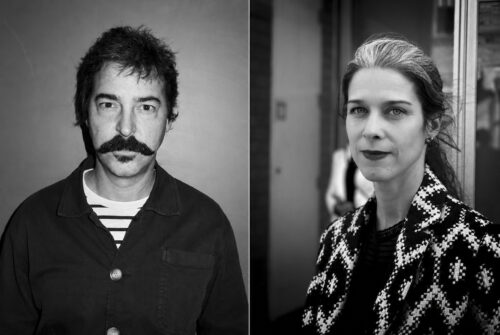
The artists: Ruben Millares, left, and Antonia Wright. (Photo of Wright by Butch Quick, photos courtesy of the artists)
The exhibition’s lighting slowly reveals another haunting detail.
As visitors spend time in the gallery, beams of light emerge through seven bullet holes scattered across the hull.
“We wanted to highlight that,” Wright said. “To talk about the violence that’s embedded on our borders, but also to use the bullet holes to honor these people.”
Both artists have Cuban family roots, making the work personal. Although the boat came from Cuba, Wright and Millares said they intentionally broadened the exhibition beyond a single migration narrative.
“It starts from the Cuban experience for us,” Millares said. “But we were really talking about worldwide migration and all the migration crises around the world. This is a symbol, a metaphor for migration in general.”
Beyond the Boat
The gallery’s second room expands on those ideas.
Wright presents a series of cyanotypes made by placing shattered glass over light-sensitive paper before exposing each image.
She explained the process. “I smash glass over light-sensitive paper and make an exposure using the glass. So, the glass becomes like a negative print to each one.”
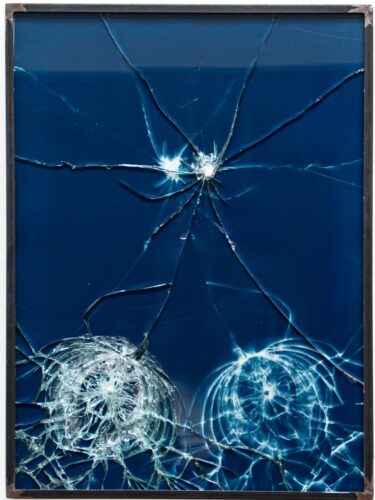
Antonia Wright, “OK,” 2026, cyanotype, broken glass, artist steel frame. (Photo courtesy of the artist and Piero Atchugarry Gallery)
The finished works echo the violence suggested by the bullet-riddled boat.
“The photos reflect those moments of violence,” Wright said.
Millares’ silkscreen paintings are built from thousands of numbers cut from financial statements, tax returns and investment documents.
He describes them as “visual cacophonies,” dense fields of information that overwhelm on purpose.
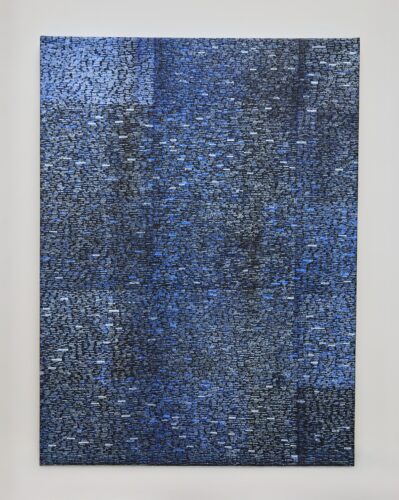
Ruben Millares, “Paint by Number,” 2017, acrylic on canvas, 36 x 48 in. (Photo courtesy of the artist and Piero Atchugarry Gallery )
“I just layer number upon number. So much data that you can’t decipher and you can’t come to some conclusion from,” he said. “How many migrants are there in the world? How many applications for asylum? How many people died crossing?”
One collaborative sculpture in the middle of this room embeds the boat’s handmade paddle into a block of South Florida oolitic limestone sourced from material associated with Vizcaya.
“When we first saw the boat, the paddle was with it and when we got back it was gone,” said Millares. They tracked it down to “reunite them.”
Displayed apart from the vessel, “Desembarco” becomes both a marker of arrival and a reminder of everything left behind. “It was this idea of the crossing and the migration, and the paddle being the arrival.”
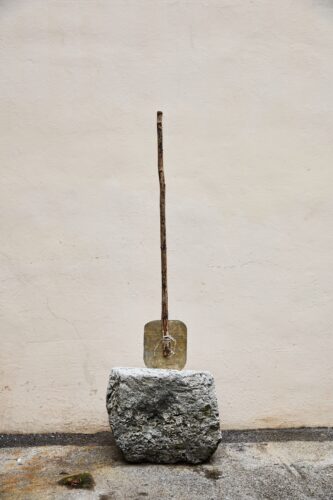
Antonia Wright and Ruben Millares, “Desembarco,” 2026, wood, metal, paddle, oolite, 78 x 24 x 29. (Photo courtesy of the artists and Piero Atchugarry Gallery )
The boat offers no names and no history beyond the evidence welded into its steel. The artists said they never discovered whether the Cuban balseros aboard reached Florida, were intercepted or died at sea.
“We didn’t want to simulate what it was to be on the boat. That wasn’t the idea. We’ve never done it. We didn’t want to try to make something didactic like, oh this is what it is to cross through the Florida Straits,” Millares said.
For Wright, it is a representation of the emotional state of migration that’s been going on for centuries.
“These boats, for instance, have always been a barometer for a level of desperation.”
WHAT: “Exile”: Antonia Wright and Ruben Millares
WHEN: 11 a.m. to 5 p.m. Tuesday through Saturday; special showing on last day of exhibition, Sunday, July 26, as part of Progressive Art Brunch, 11 a.m. to 4 p.m. See the galleries participating in the PAB.
WHERE: Piero Atchugarry Gallery, 5520 NE Fourth Ave., Miami
COST: Free
INFORMATION: 305-639-8247; Pieroatchugarry.com
ArtburstMiami.com is a nonprofit source of theater, dance, visual arts, music and performing arts news. Sign up for our newsletter and never miss a story.
No posts found
Oolite Arts Expands The Ellies With Awards for Curators, Art Writers
Written By Michelle F. Solomon, Artburst Editor
July 14, 2026 at 10:11 PM
John Abodeely, president and CEO of Oolite Arts, speaks to prospective applicants during an information session about The Ellies awards and the organization’s 2027 Open Call.
For the first time since launching The Ellies in 2018, Oolite Arts is expanding its annual awards program to include cash awards for curators and art writers.
The new Curatorial Practice and Critical Writing Award is part of Oolite Arts’ 2027 Open Call, with applications open through Friday, July 31 for curators and art writers across Miami-Dade, Broward, Palm Beach and Monroe counties. Selected applicants will receive support in 2027.
While many arts grant programs focus exclusively on artists, relatively few provide direct support to the curators and critics whose research, exhibitions, publications and writing help make artists’ work visible and accessible to the public. The new award broadens The Ellies’ investment in South Florida’s visual arts community by recognizing those who contribute to its cultural infrastructure, according to Rina Carvajal, senior director of programs for Oolite Arts.
“The Curatorial Practice and Critical Writing Award represents an investment in the intellectual and critical framework that supports artists and strengthens the long-term vitality of the visual arts in our region,” Carvajal said.
Drawing on decades of experience as a curator and arts administrator, Carvajal said the new award recognizes the critical role curators and writers play in supporting artists.
“Throughout my career, I have seen how transformative thoughtful curatorial work and rigorous art writing can be for artists and communities alike,” she said. “These awards acknowledge that cultural ecosystems are built not only by those who create art, but also by those who help us understand why it matters.”
The award provides $10,000 each to two curators or art writers whose work advances critical discourse in contemporary visual art while supporting the visibility, understanding and long-term development of artists and their practices. It recognizes the role criticism, curatorial research and writing play in connecting artists with broader audiences, institutions and public discourse.
“South Florida is home to an extraordinary community of artists, but a thriving arts scene also depends on the people who research, interpret, document, and champion their work,” Carvajal said.
In addition to The Ellies, Oolite Arts’ annual Open Call includes Studio Residencies, which provide free studio space, professional development and housing support for visual artists; Home + Away Residencies, offering national and international travel opportunities; and the Cinematic Residency, which supports filmmakers through mentorship and professional development.
Applications for The Ellies, Studio Residencies, Home + Away Residencies and the Cinematic Residency will be accepted through the end of July.
Additional information and eligibility requirements at oolitearts.org/ellies-open-calls/
ArtburstMiami.com is a nonprofit media source for the arts featuring fresh and original stories by writers dedicated to theater, dance, visual arts, film, music and more. Don’t miss a story at www.artburst.com.
No posts found

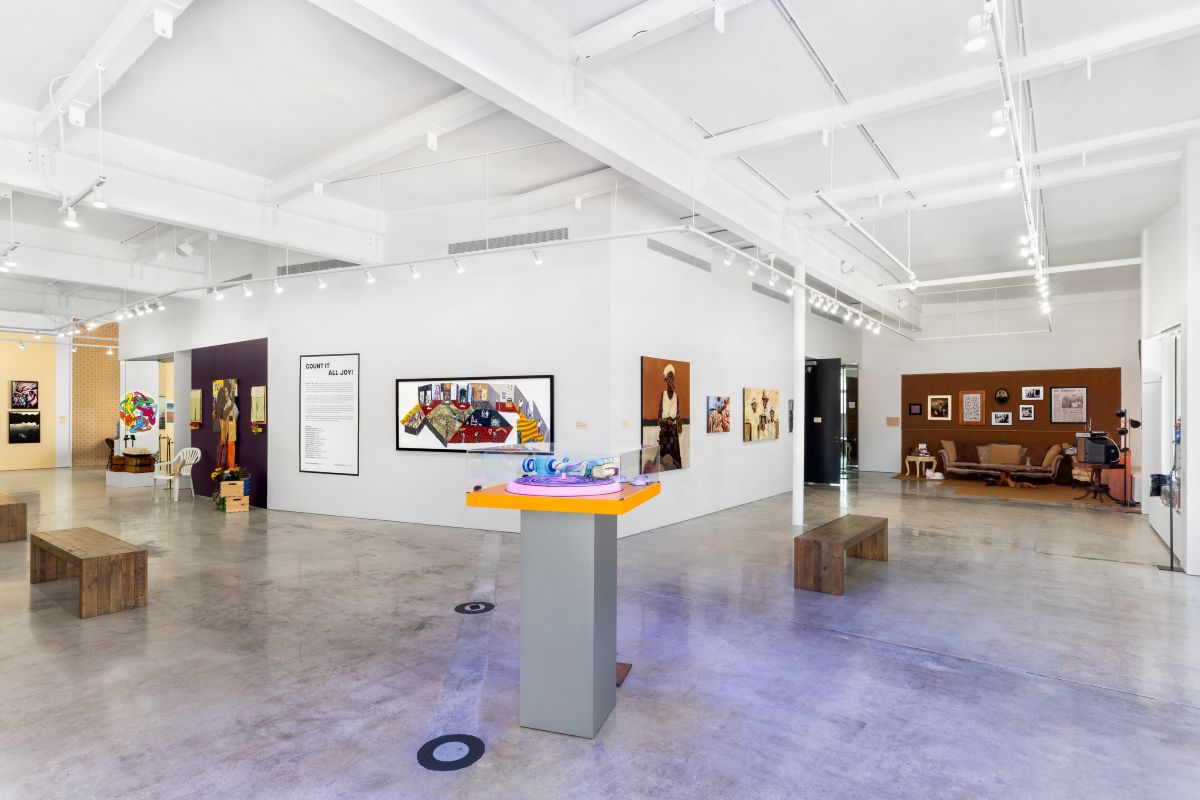
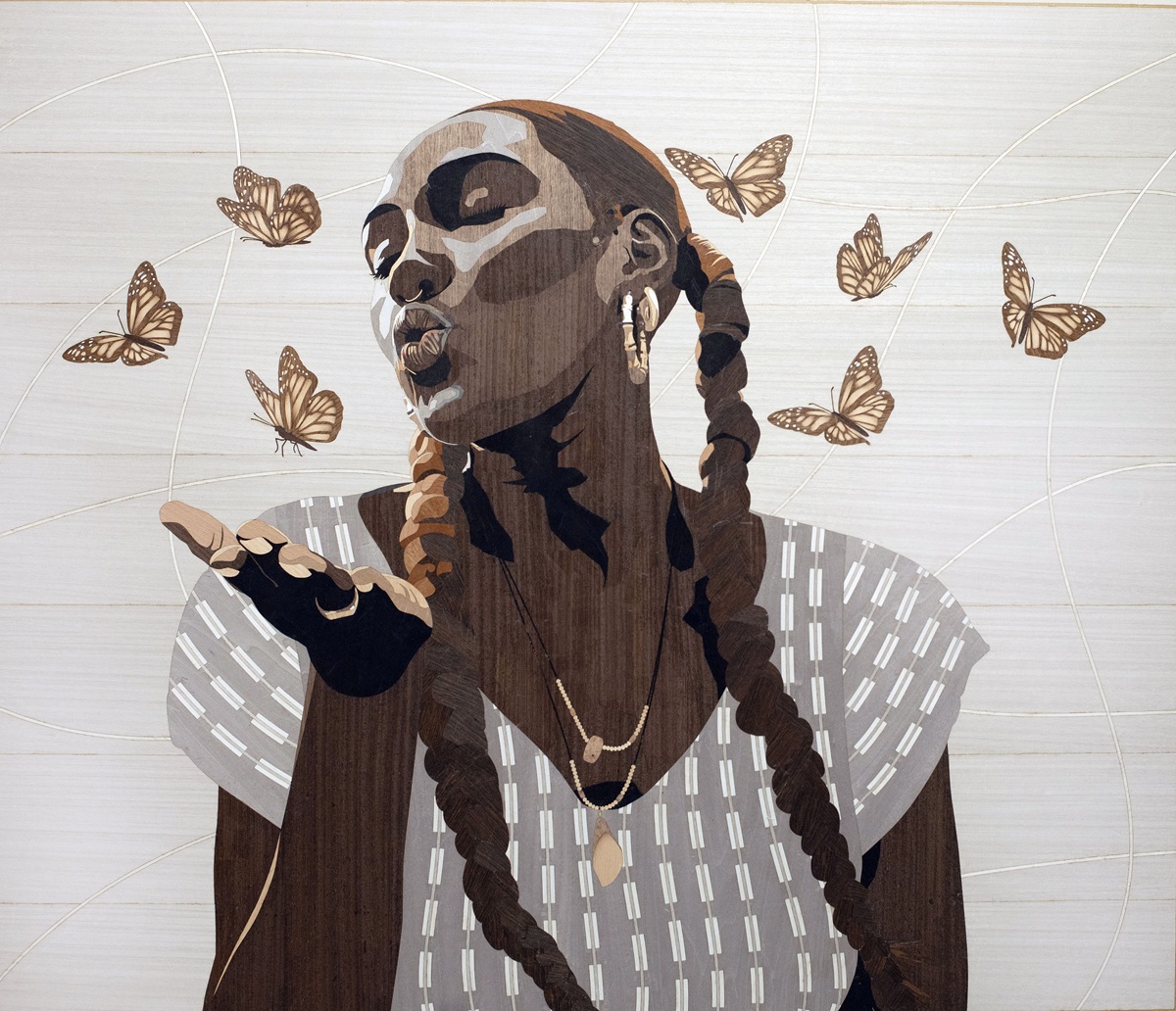
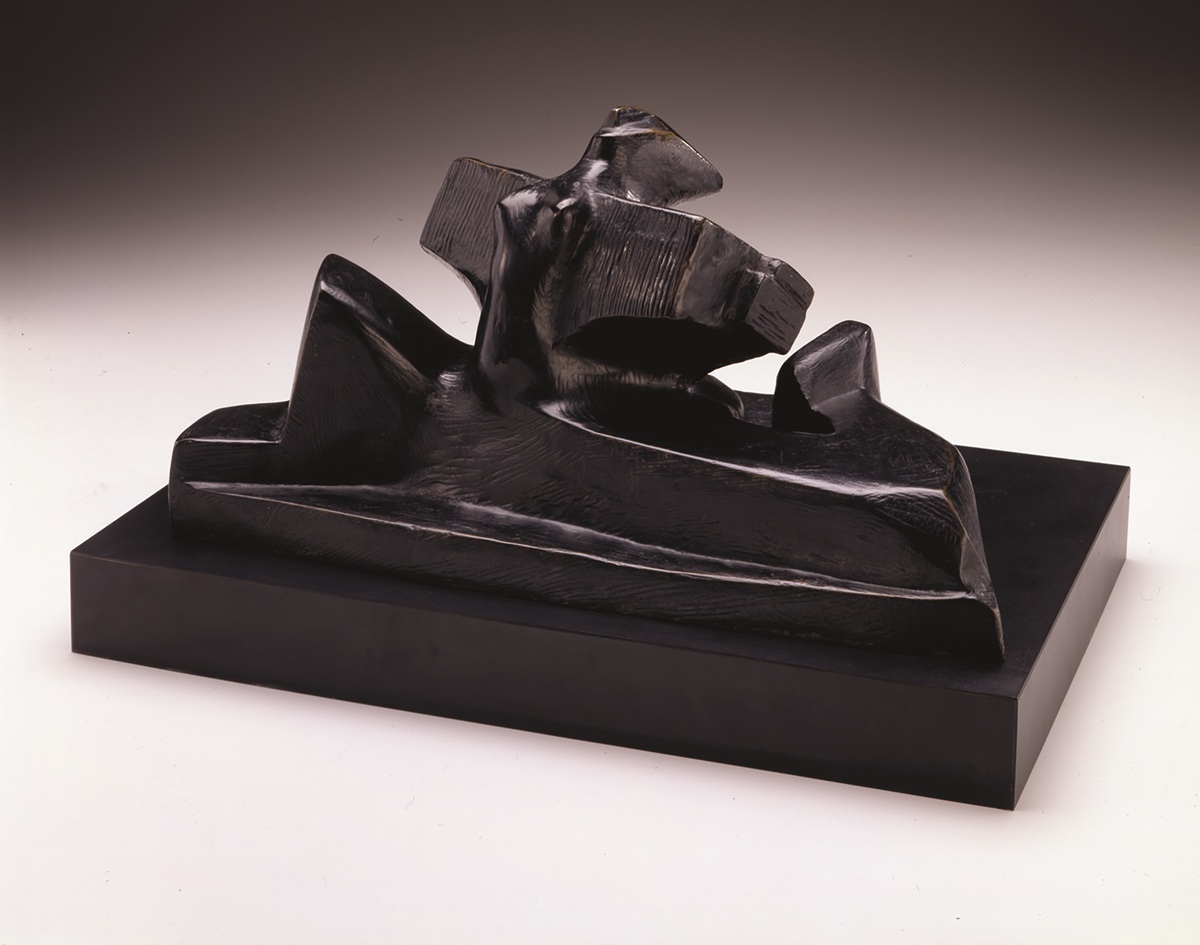
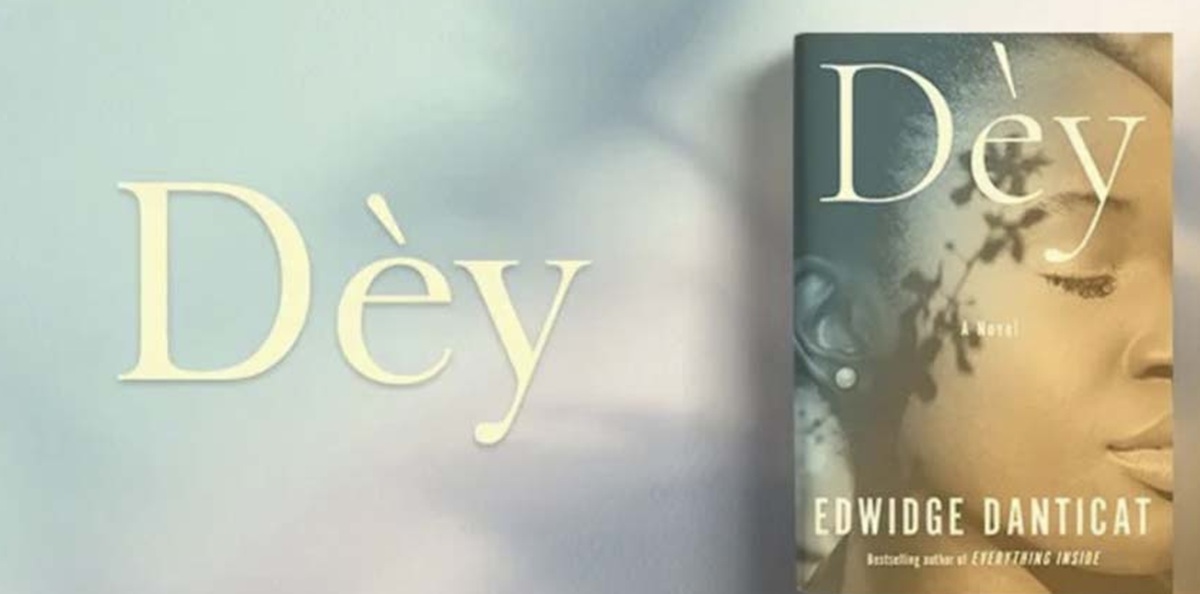
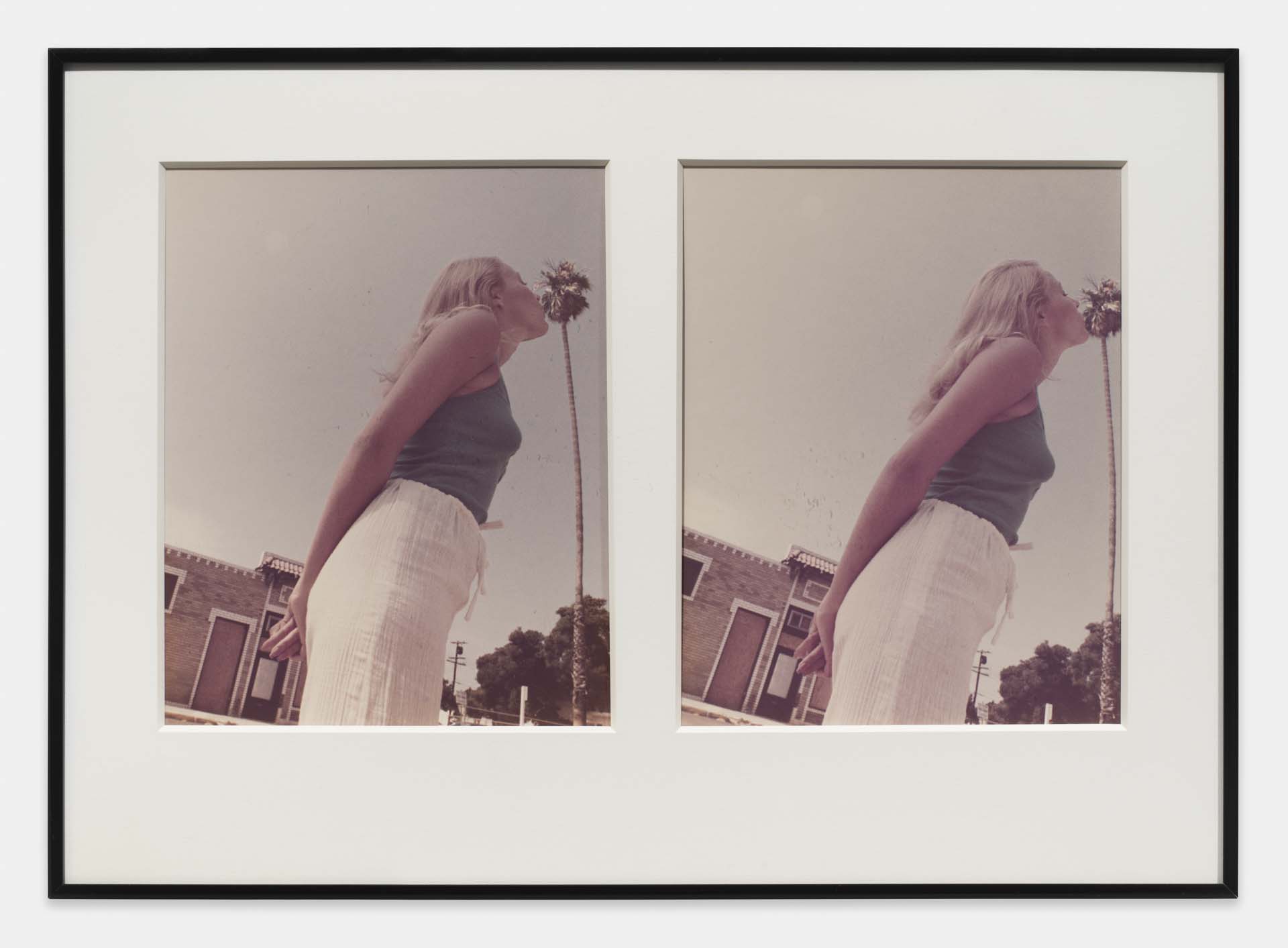
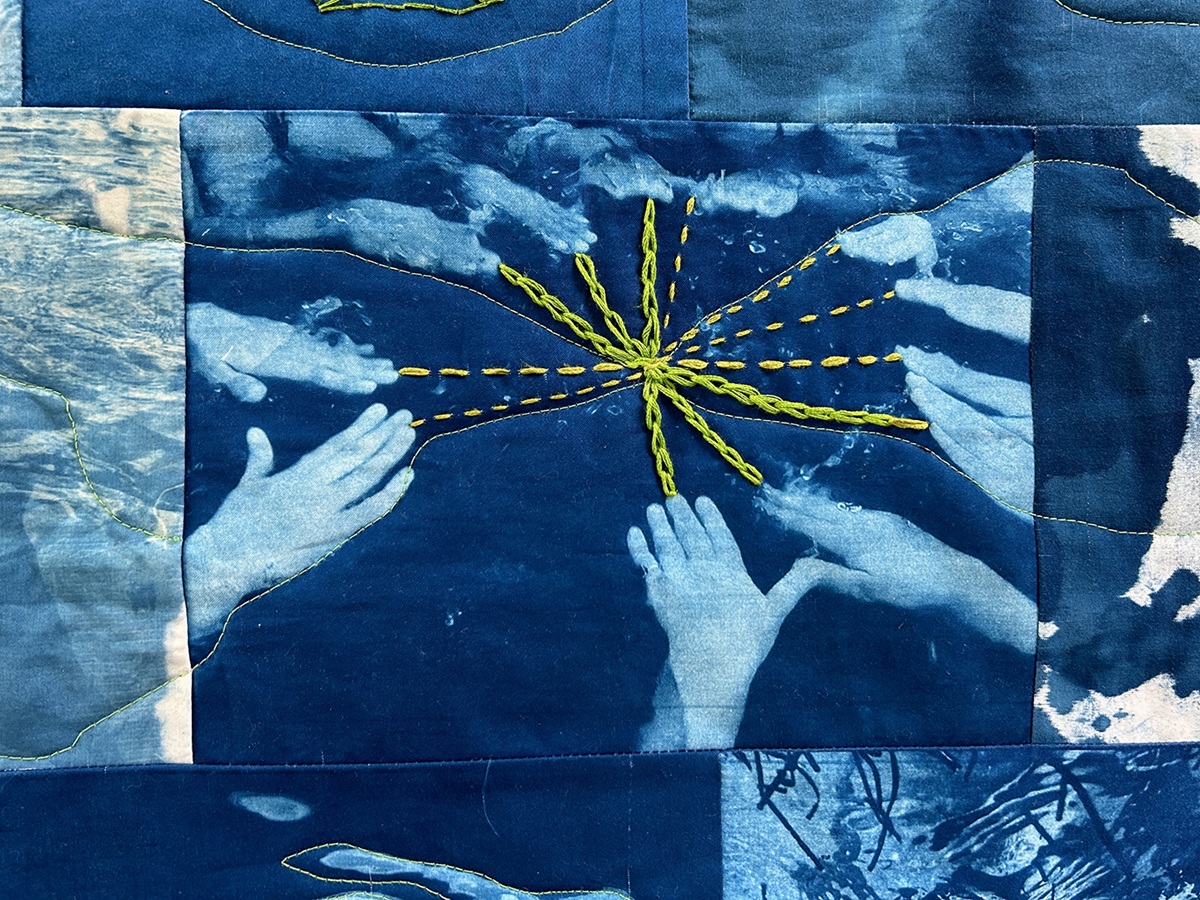
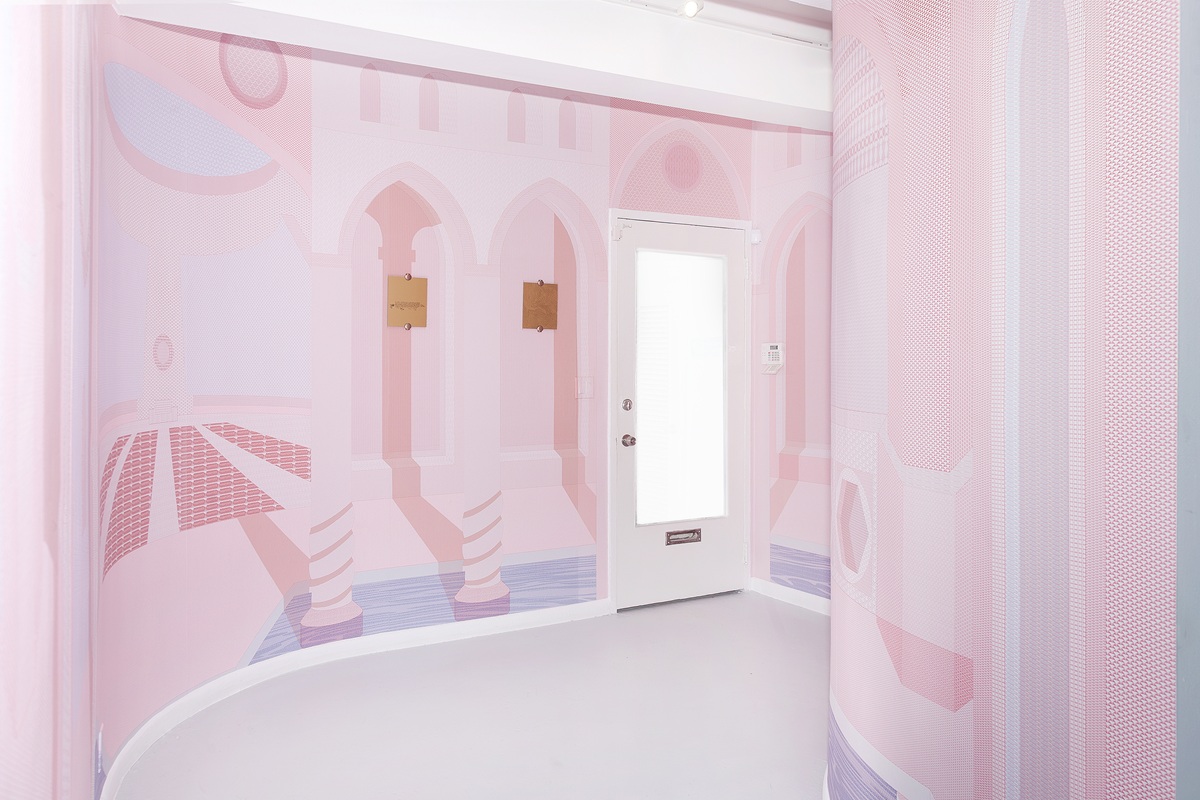
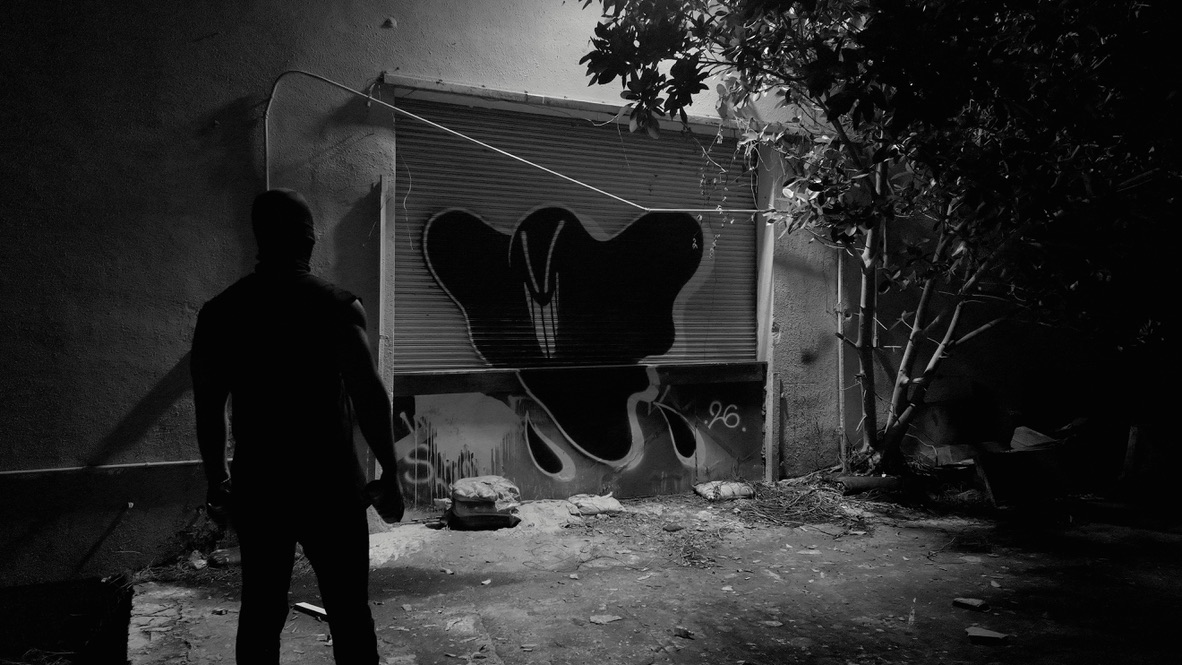
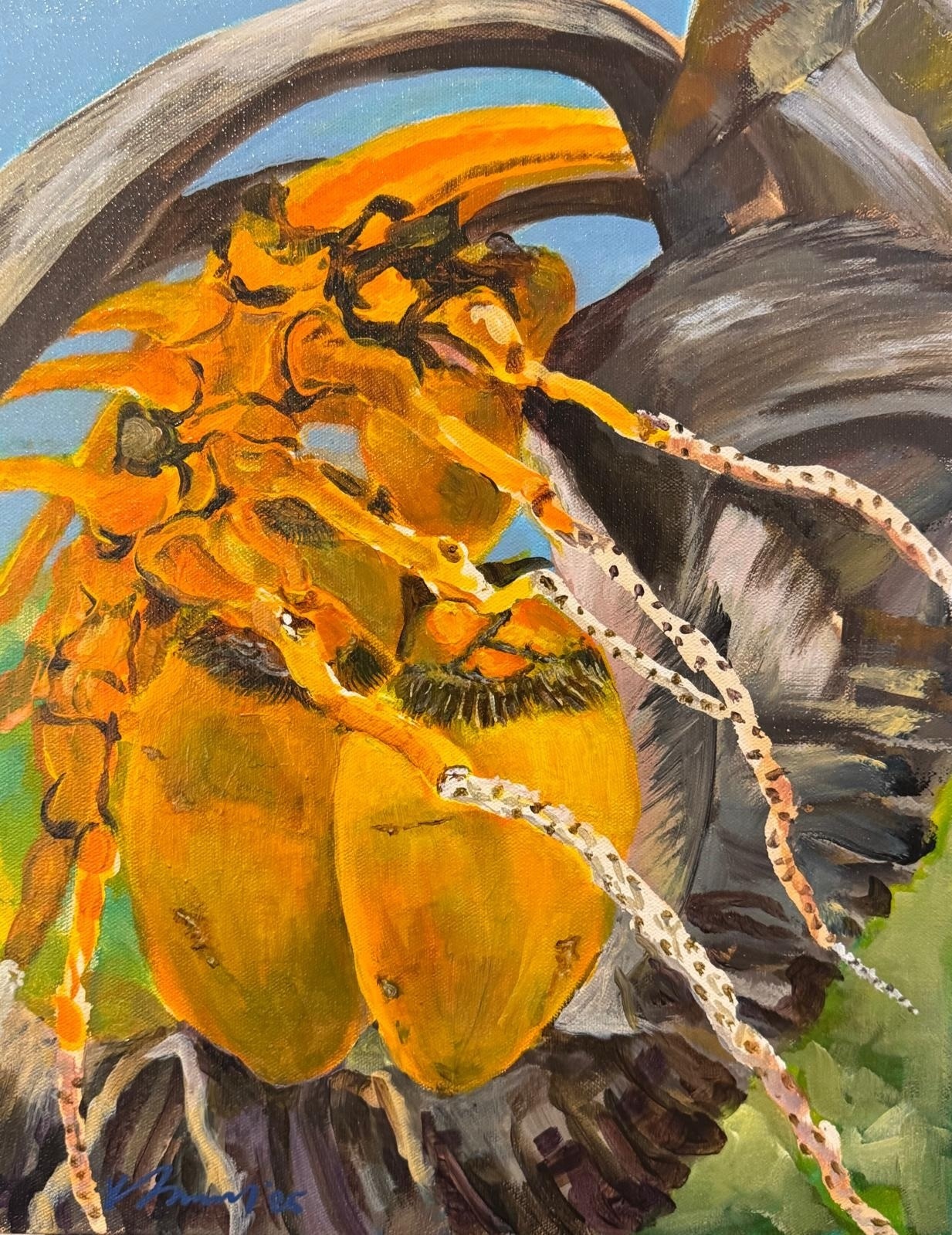
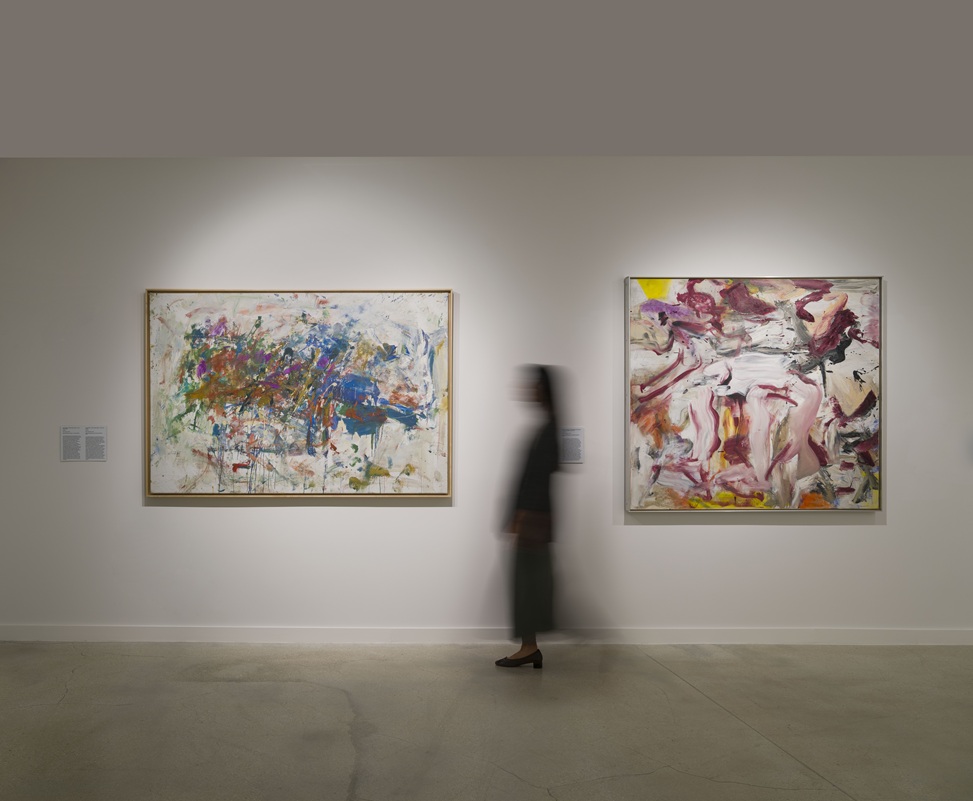
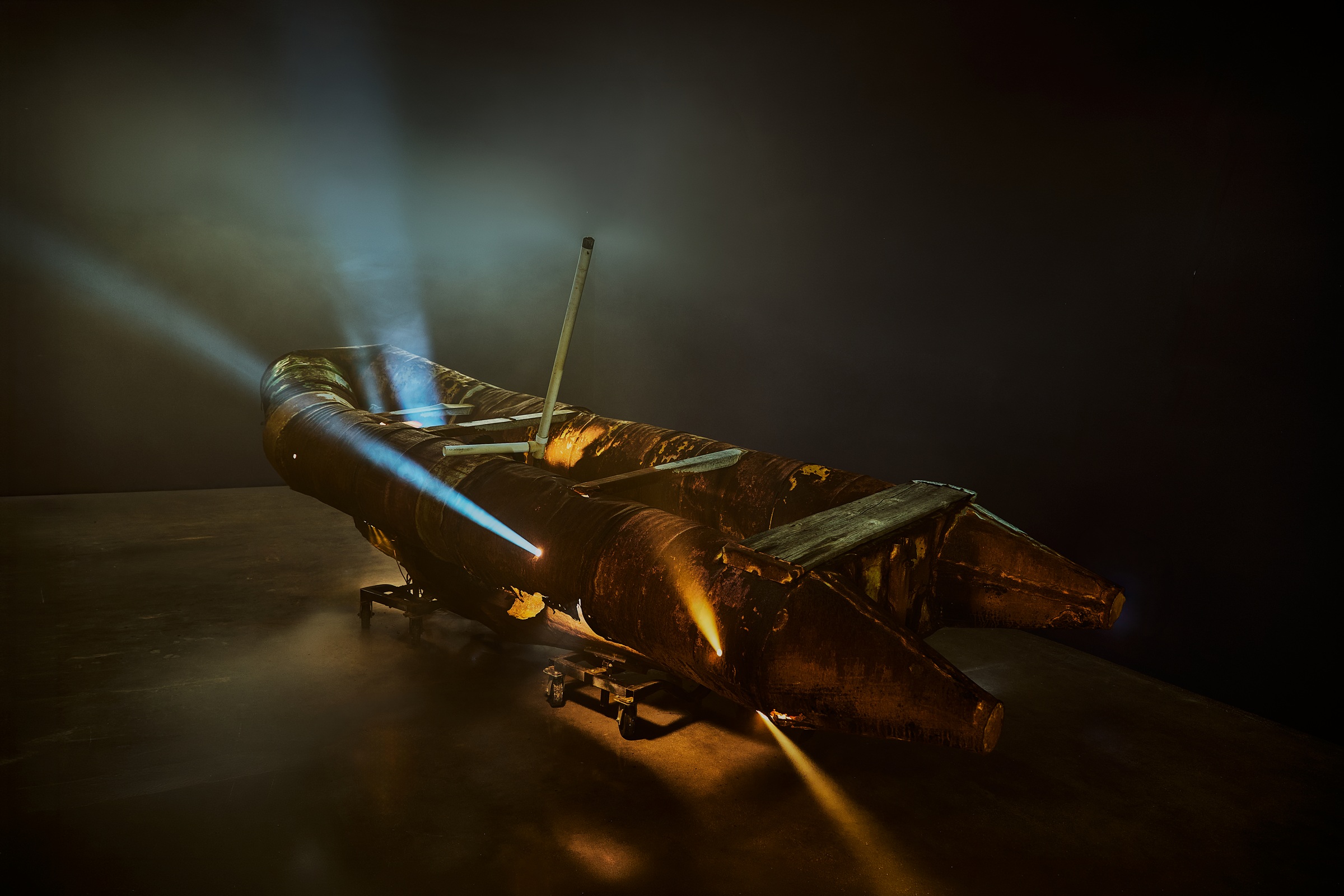
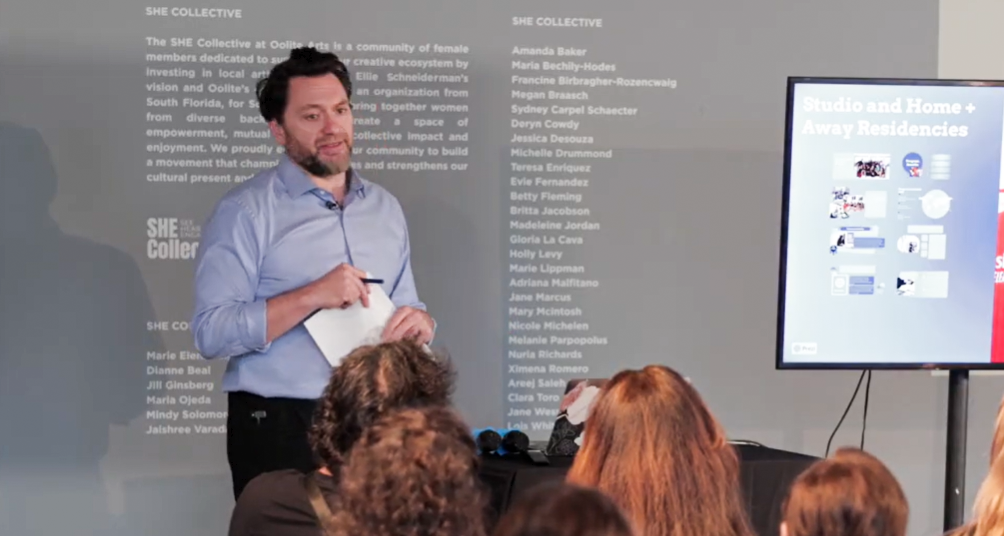
Recent Comments