The tears of a clown and the realism of Florida Grand Opera’s ‘I Pagliacci
Written By Michelle F. Solomon January 23, 2024 at 12:06 AM
Tenor Limmie Pulliam makes his Florida Grand Opera debut as Canio in ‘I Pagliacci’ opening Saturday, Jan. 27 at the Adrienne Arsht Center. Pulliam, above, in the role at Washington’s Vashon Opera. (Photo courtesy of Peter Serko).
When Florida Grand Opera opens the curtain on its mid-season production, “I Pagliacci,” it will be close to 82 years to the day that the Miami Opera Guild, the precursor to Florida Grand Opera, performed its inaugural production of Ruggero Leoncavallo’s Italian opera.
And while there is some nostalgia for the anniversary, today’s audiences will see a different “I Pagliacci” than eight decades ago.
Performed at the concert hall of Miami High School on Flagler Avenue for only one performance on Feb. 14, 1942, the production starred founder of the Opera Guild, tenor and voice teacher Arturo di Filippi, as Canio, the leader of a commedia dell’arte theatrical company who is driven to murder his actress wife and her lover.
Arturo di Filippi as Canio in Greater Opera Miami’s “I Pagliacci” in 1942. (Photo courtesy of Florida Grand Opera)
In FGO’s production, which will be performed on Saturday, Jan. 27, Sunday, Jan. 28, and Tuesday, Jan. 30 at the Adrienne Arsht Center for the Performing Arts in Miami, and Thursday, Feb. 8 and Saturday, Feb. 10 at the Broward Center for the Performing Arts in Fort Lauderdale, tenor Limmie Pulliam plays the role.
In an interview while in Miami rehearsing for “I Pagliacci” and just before a guest appearance with New World Symphony, he agrees with the assessment of great singers before him – from Mario Lanza to Enrico Caruso to Luciano Pavarotti to Placido Domingo – that the role is a challenge. The character must embody many moods, from the comedy of a clown to the drama of jealousy that turns to murderous rage. There’s the spotlight, too, on what has become one of the most recognized tenor arias and one of the most powerful and emotional songs in the world of opera, “Vesti la giubba.”
This will be the second time Limmie Pulliam has played the clown Canio in “I Pagliacci.” In 2016, he sang the role with Vashon Opera in Washington. (Photo courtesy of Peter Serko)
Pulliam acknowledges those things but there is also another challenge many other tenors before him may not have faced. Pulliam is a Black singer-actor in the role, which is not the traditional casting.
“Whether the actors are Black or white or Italian or whatever, I believe the drama remains the same,” he says. “But I do think, based on our personal biases in life, the way some may look at the character of Canio, and in his moments of anger, in his fits of rage that kind of overcome him . . .it hasn’t strayed far from my mind whenever I am doing this role that thought of the racial stigma.”
The stigma he refers to, he says, is that of the “angry Black man.”
He says that “nine times out of ten, I could be cast as Canio opposite a white female. To think of the racial dynamics of a Black male taking the life of a white female on stage is not lost on me,” he says. While his leading lady in the production is Black (soprano Kearstin Piper Brown makes her Florida Grand Opera debut), Pulliam says it doesn’t much change the dynamic he feels and that “giving into the drama” is a bit difficult at times.
Soprano Kearstin Piper Brown makes her Florida Grand Opera debut as Nedda in “I Pagliacci.” (Photo courtesy of Eric Joannes)
“While you want to give the audience the best show possible and present the characters in a realistic way that the style requires, there still is some hesitation there from a personal standpoint. It’s kind of a Catch-22 situation for me to not sacrifice the character for the personal feelings I’m dealing with . . . It’s allowing myself to take on the character, but not allowing the character to take over me.”
The son of a preacher from Kennett, Missouri, the 48-year-old graduated from the same high school as Grammy Award-winning singer Sheryl Crow, whose mother was his piano teacher. He stepped back from opera for more than a decade, dropping out of the music industry in the early 2000s after a promising career as a tenor. He had made a vow to himself: “If this stops being fun, it’s time to do something else.”
His career path began early. He sang in his church’s choir, but Pulliam remembers the moment when he fell in love with opera. He recalls that when he was 14 or 15, his choir teacher asked him to learn “Una Furtiva Lagrima” from Gaetano Donizetti’s “L’Elisir D’Amore.”
“She presented me with the sheet music and a cassette tape recording of Luciano Pavarotti singing the aria. I started by listening to that and learning the song. And then I continued to listen to other pieces on the cassette tape and the music just started to grow on me. I became enamored with it,” says Pulliam, who ended up winning a state competition for his singing of the aria.
The cast of Florida Grand Opera’s “I Pagliacci,” seated Kearstin Piper Brown (Nedda) and Limmie Pulliam (Canio). In back from left, Eleomar Cuello (Silvio), Joseph McBrayer (Beppe), and Robert Mellon (Tonio). (Photo courtesy of Eric Joannes)
When he saw a live performance of an opera on public television, that was it. “I had a knack for this and when I realized I could actually go to school to do this I was so excited.”
He was accepted at the Oberlin Conservatory of Music in Ohio where he studied with Richard Miller, a professor of singing and internationally known as one of the most influential voice pedagogues in history.
“It was life-changing for me to be able to study with someone of his caliber,” says Pulliam.
After his studies, he ventured out into the professional world of opera for about two years, he says. He had always struggled with his weight. At one point, Pulliam recalls, the shaming became too much: “It was after several instances where you would get from people in positions of power, complimenting you on your voice, but then making negative comments about your size.”
He initially thought he’d take a six-month break from singing, but it turned into 12 years. After founding a security company, he provided bodyguard services to several notables. “For most of that (time), even though I wasn’t singing I was still involved in entertainment . . .working as a bodyguard for concert tours.” He doesn’t like to drop names, but Pulliam did reveal Sheryl Crow and Cedric the Entertainer were clients. Pulliam also had a stint in politics (working on Barack Obama’s first campaign), and it was a chance encounter that led him back to singing.
“I was doing some events, and we had invited a local beauty queen to sing the national anthem. She ended up getting cold feet and not showing up. So, my boss looked at me and said, ‘I remember on your resume; it said you sang opera. Why don’t you sing it?’ ”
Tenor Limmie Pulliam took a 12-year break from singing after he became fed up with rejection based on his looks. (Photo courtesy of Daniel Welch)
In 2009, he decided it was time to hire a singing teacher, and by 2012, he won a competition with the National Opera Association.
His career has been on the rise ever since. Last year, he made his Carnegie Hall and Metropolitan Opera debuts along with stints with the Los Angeles Opera, Cleveland Orchestra and Fort Worth Opera. This will be his second time playing the role of Canio; in 2016, he sang it with the Vashon Opera in Washington.
Pulliam says he is enjoying his second chapter of success, but loss has also followed him. His father passed away on May 8, 2022; on May 21 he made his debut with the Cleveland Orchestra singing “Otello.” Six months later, on Nov. 14, his oldest sister died and a little over a month after that, on Dec. 17, Pulliam made history in “Aida” as the first Black tenor to sing the role of Radamès in 130 years of the Metropolitan Opera.
He admits that the comeback has been an emotional rollercoaster.
(Limmie Pulliam interview with ArtSpeak: Singing Black gospel and singing opera)
“I Pagliacci (The Clowns)” was written in 1892 in a style of Italian opera, verismo (“realism”), writing that flourished in the last decade of the 19th century. Jeffrey Marc Buchman, the director of FGO’s “I Pagliacci,” says the prologue delivered by Tonio is rich with meaning, and it’s a place for audiences to pay close attention.
Eleomar Cuello as Silvio and Kearstin Piper Brown as Nedda in rehearsal for Florida Grand Opera’s 82nd anniversary production of “I Pagliacci.” (Photo courtesy of Eric Joannes)
“The prologue resonates with me . . . Tonio is telling the audience, ‘We these actors, we feel real pain, we have real suffering in our lives and even though we put these masks on for you to perform whatever this scene is that we are compelled to have to play for you, we have our own lives that are causing (emotions).’ I think it’s a great reminder that these are real human beings, the opera singers that are up there playing these roles of Canio, Nedda, Silvio and Tonio that are going through huge dramatic arcs. These wonderful cast members also have their own lives that are going on, and we should be aware of that when they are performing. It’s just a reminder of the humanity that lives within the artist behind any role on stage,” says Buchman.
WHAT: Florida Grand Opera’s “I Pagliacci”
WHEN: In Miami, 6 p.m. Saturday, Jan. 27; 3 p.m. Sunday, Jan. 28; 8 p.m. Tuesday, Jan. 30. In Fort Lauderdale, 7:30 p.m. Thursday, Feb. 8, and Saturday, Feb. 10.
WHERE: Adrienne Arsht Center for the Performing Arts, 1300 Biscayne Blvd., Miami, and Broward Center for the Performing Arts, 201 SW 5th Ave., Fort Lauderdale.
RELATED EVENT: Strolling circus performers will be in the lobby before the show and during intermission along with historical photographic displays of FGO’s past “I Pagliacci” productions.
(Sung in Italian with projected translations in English and Spanish)
ArtburstMiami.com is a nonprofit media source for the arts featuring fresh and original stories by writers dedicated to theater, dance, visual arts, film, music and more. Don’t miss a story at www.artburstmiami.com.
No posts found
South Florida Symphony’s Masterworks Concert Highlights Female African-American Composers
Written By Sergy Odiduro January 12, 2024 at 4:03 PM
Maestra Sebrina María Alfonso leads the South Florida Symphony Orchestra in its first concert of 2024 with three concerts in Miami, Fort Lauderdale and Key West. (Photo courtesy of Steven T. Shires)
Sebrina María Alfonso says that her love for music began at an early age where it was nurtured during elementary school and cemented in the ninth grade.
At the time, her Key West-based family picked up and moved to Italy where she stumbled onto an opera performance, and hasn’t been the same since.
The fateful encounter planted a slew of symphonic seeds which were fertilized, then grew, and eventually bloomed into a crescendo of trees laden with classical notes and melodies.
Sebrina Maria Alfonso founded the orchestra in her hometown of Key West in 1997 (Photo courtesy of Steven T. Shires)
For the orchestra’s first Masterworks concert of the year, the Maestra will shine a spotlight on two African American female composers: Florence Price and Jessie Montgomery. Concerts are at 7:30 p.m. on Wednesday, Jan. 17 at The Parker, Fort Lauderdale, and on Thursday, Jan. 18 at Temple Israel of Greater Miami. The final concert is at the Tennessee Williams Theatre of The College of the Florida Keys, Key West, on Sunday, Jan. 20.
SFSO’s tribute to Price will embody “Andante Moderato,” a string quartet piece that combines Western music with African American spirituals.
Alfonso is hoping to introduce the composer to those who are unfamiliar with her work and is thrilled that the concert will be an opportunity to do so.
SFSO’s tribute to Florence Price will embody her “Andante Moderato,” a string quartet piece that combines Western music with African American spirituals. (Photo courtesy of G. Nelidoff and South Florida Symphony Orchestra)
Price is known for being the first African-American woman to have a composition performed by a major orchestra: the Chicago Symphony played one of her works at the 1933 World’s Fair and it is part of a long list of accomplishments for the largely unknown composer. This includes over 300 works including four concertos, four symphonies, chamber music, art songs, choral works and music for solo instruments.
“I really didn’t know that much about her,” admits Alfonso “But Florence Price was a pioneer for women. People need to learn about Florence Price in the music world. ”
Internationally renowned pianist Awadagin Pratt will do his part by highlighting Montgomery, a 42-year-old contemporary composer, violinist and educator, born in New York City.
Pratt joins SFSO with a premiere of a new piano concerto by Montgomery, who is known for her composition “Rounds” which was nominated for a 2023 Grammy Award for Best Contemporary Classical Composition.
Pianist Awadagin Pratt will join the South Florida Symphony Orchestra for the trio of January concerts. (Photo courtesy of Rob Davidson)
The piece for solo piano and orchestra was commissioned by Pratt and is based on T.S. Eliot’s poem “Burnt Norton” and the first of his “Four Quartets.” He will also perform Bach’s Keyboard Concerto No. 4 during the event.
Pratt compared the two pieces and concludes that they share common themes.
“They’re both pieces that I do enjoy quite a bit..”
“(Bach) is very rhythmic,” he explains. “It has the same kind of rhythmic energy, similar I should say, as Jesse. In an overall state they’re rather similar in that they start energetically and then have a very contemplative and beautiful kind of soliloquy-like middle sections, and then return to rhythmically vigorous music for their completion. The contrast between the rhythmically charged and that which is more reflective, and it just sort of takes its own pace, of its own time, expressing beauty.”
As part of the event, Johannes Brahms’ “Symphony No. 1 in C minor, Op. 68” will also be performed.
In all, as Alfonso looks forward to a program that highlights the accomplishments of female composers, she recalls the challenges that she and other women have faced. However, she says pleased there is change on the horizon.
“I had to carve out my own way,” recalls Alfonso. “I really did. A lot of women did and until recently, it’s always been two or three women out there. And you know, they’re getting a little older now. They’re all in their 60s. But, now I’m just so thrilled when I go and look at these major orchestras and there’s women all over.”
Sebrina Maria Alfonso is one of a very few female conductors in the United States. (Photo courtesy of Steven T. Shires)
Part of it is due to changing perspectives.
“There is this big movement in the symphonic world and I feel like we’re very cognizant of that,” she says. “And we do try to be very diverse. I think that there’s nothing wrong with trying to represent what this country is and making sure that everyone can be a part of this.”
Ultimately, Alfonso hopes that the upcoming event will bring everyone together as the orchestra strikes a balance between classic and contemporary pieces through its introduction and celebration of women composers. She aims for the audience to be just as enamored as she is.
“I just love Florence Price, because she is a hero for women,” she says.“People don’t know her story and they will learn it and they will love it because of the fact that we’re going to do her music, and then we’re going to do this young, fabulous African American composer who is alive and whose music is being played in every major orchestra I was looking at. She’s really made it because she’s talented. And that’s just amazing to me. And I love that we’ve come to that point.”
A work by Jessie Montgomery, the Grammy Award-nominated composer of“Rounds”, will be performed by the South Florida Symphony Orchestra. (Photo courtesy of Jiyang Chen)
Pratt points out that the concert will also be a unique experience, particularly for fans of Montgomery’s work.
“A lot of times music is just played once. You know, there’s a premiere, there’s a big festivity and there’s ‘Oh, here’s this great piece’ and then it never gets played again. And so here’s a piece that has been celebrated, that audiences keep wanting to hear and hopefully there’s a long life of it being performed.”
He points out the opportunity of the Brahms symphony on the same bill with Montgomery’s work.
“It’s kind of a rare opportunity to hear a piece that’s . . .in that category of a piece of music that everybody likes and also, contrasted or juxtaposed, against or with, a piece that was written 300 years before . . . (to) hear the resonances where the two pieces speak to each other, even across time . . . that is a unique opportunity.”
Alfonso agrees.
“It’s not just a concert. It’s about an experience. It’s all encompassing . . . This music replenishes the soul,” she says. “ It’s soul food.”
WHAT: South Florida Symphony Orchestra Masterworks II
WHEN 7:30 p.m. on Wednesday, Jan. 17, Thursday, Jan. 18 and Sunday, Jan. 20.
WHERE: The Parker, 707 NE 8th St., Fort Lauderdale, Temple Israel of Greater Miami, 137 NE 19th Street, Miami, and the Tennessee Williams Theatre of The College of the Florida Keys, 5901 College Road, Key West.
COST: General admission tickets in Miami are $36 with a $2.50 service fee or $75 plus a $2.50 service fee for VIP preferred seating tickets including a post-concert reception. Tickets are $15, $25, $40 and $65, $80, $95, in Fort Lauderdale. Key West tickets range from $12.50 to $95 for orchestra seats.
ArtburstMiami.com is a nonprofit media source for the arts featuring fresh and original stories by writers dedicated to theater, dance, visual arts, film, music and more. Don’t miss a story atwww.artburstmiami.com
No posts found
South Beach Jazz Festival Presents Jazz with Soul and a Mission
Written By Fernando Gonzalez December 27, 2023 at 2:56 PM
Matthew Whitaker, pianist and organist, joins saxophonist Vincent Herring and his soul-jazz group Something Else! for the eighth annual South Beach Jazz Festival taking place from Thursday, Jan. 4 to Sunday, Jan. 7 at various venues throughout Miami Beach. (Photo courtesy of Edward J Colon)
Throughout history, jazz has been the soundtrack of important social and political causes. The annual South Beach Jazz Festival, celebrating its eighth edition from Thursday, January 4 through Sunday, Jan. 7, 2024, follows that lead, founded with a mission of disability awareness, access, opportunity, and inclusion.
“I’m blind. I lost my eyesight about 23 years ago, and when I moved to Miami Beach, I got involved in the community. I felt that there were accessibility issues that needed more attention,” says David New, advocate for people with disabilities and founder of Power Access. In time, his organization produced events such as Lights Out Miami Beach, wheelchair basketball events, marathon runs, music symposiums, and children’s programs. But looking for an event with a more universal appeal and a broader reach, the nonprofit turned to music and chose jazz.
David New, advocate for people with disabilities and founder of Power Access, the nonprofit organization that produces the festival, speaking at the Miami Beach Bandshell during the 2023 South Beach Jazz Festival. (Photo courtesy of MasterWingCreative Agency)
From the beginning, a central idea of the event has been to showcase at least one person with a disability. This year’s edition features a return appearance of Matthew Whitaker, an exceptional pianist and organist who has been blind since birth. He last appeared at the South Beach Jazz Festival in 2021 and joins saxophonist Vincent Herring and his soul-jazz group Something Else! This year, he performs with Herring and his band at 8 p.m. on Friday, Jan. 5 in Collins Park, 2100 Collins Ave.
“We’re providing new modalities of accessibility for all people and also trying to showcase people who are thriving with disability,” says New.
Whitaker will be an intriguing addition to Something Else! The Hammond B3 organ was one of the distinct sounds of soul jazz, a groove-heavy popular style that drew from hard bop, soul, rhythm and blues, and gospel. It emerged in the late 1950s through the ’60s, and then by the 1970s, jazz began to evolve into new crossover variants such as rock-jazz fusion and the pop-influenced Smooth Jazz, for some an offshoot of soul jazz.
Matthew Whitaker performing at Miami Beach Bandshell during the 2021 South Beach Jazz Festival. (Photo courtesy of Edward J Colon)
Some critics have considered soul jazz, typified by the work of artists such as pianist Horace Silver and saxophonist Cannonball Adderley (who both blurred the line between hard bop and soul jazz), Stanley Turrentine and organists Jimmy Smith, Shirley Scott, and Brother Jack McDuff was an earthy, soulful response to bebop, a harmonically and melodically complex style that while intellectually stimulating, wasn’t as emotionally appealing to general audiences.
“There’s certainly truth to that,” says Herring, who hesitates at defining “soul jazz” and, as many of his peers, has reservations about the term “jazz.” “But I don’t know that that music developed for that reason. I just think of playing music. I wish I were more calculating and thought like that, but the reality is, I’m usually making music just because I enjoy it, and it inspires me.”
Herring’s Something Else! features an impressive lineup including Jeremy Pelt on trumpet, James Carter on tenor sax, Paul Bollenback, guitar, Dave Kikoski, piano, Essiet Okon Essiet, bass, and Hank Allen Barfield, drums.
Fittingly, the group is named after Cannonball Adderley’s 1958 breakthrough album “Somethin’ Else.” Not only Herring’s sound and engaging style is deeply influenced by Adderley, but he was also part of the group led by Adderley’s brother Nat, a cornetist, until his death in 2000. Herring later co-led the Cannonball Adderley Legacy Band.
Saxophonist Vincent Herring and his group Something Else! will perform at the South Beach Jazz Festival on Friday, Jan. 5 in Collins Park. (Photo courtesy of Jimmy Katz)
Like previous styles in jazz, soul jazz reimagined popular songs, and the repertoire of Herring’s group is not just extensive, but it can be eyebrow-raising diverse. A set may include originals, jazz standards such as John Coltrane’s ballad “Naima,” or Thelonious Monk’s ” ‘ Round Midnight,” and soul classics such as Pee Wee Ellis’s “Chicken,” but also pop fare such as The Beatles’s “Can’t Buy Me Love,” or Earth, Wind & Fire’s Top 40 hit “Can’t Hide Love.”
Herring had the idea of putting together this project after seeing a Motown-style musical revue. “In that show, they had so many artists and were running through all these hits . . ., it was just very inspirational and a lot of fun,” he says. “It got me thinking about some music that I really loved, wasn’t being played a lot, and I would love to hear it again. Wouldn’t it be nice to have a jazz revue of this music? And here we are. ”
Also on this year’s SoBe Jazz Festival roster are Miami native and three-time Grammy-winning singer Cécile McLorin Salvant (that show opens the festival and is already sold out) and Cuban pianist Alfredo Rodriguez.
Pianist Brandon Goldberg performs in a free concert on Sunday, Jan. 7 at the South Beach Jazz Festival. (Photo courtesy of Kasia Idzkowska)
The festival will showcase Miami-based talents such as mature-beyond-his-years pianist Brandon Goldberg, pianist Tal Cohen, and the South Florida Jazz Orchestra, led by Chuck Bergeron featuring trumpeter Brian Lynch.
A Jazz for Tomorrow student stage, directed by jazz artist and educator Nicole Yarling, showcases youth artists, including Young Musicians Unite, Frost, Broward College, JECC, Lighthouse, and the South Florida Center for Percussive Arts, at 1111 Lincoln Road.
South Florida Jazz Orchestra performs at The Bass during the 2023 South Beach Jazz Festival. (Photo courtesy of MasterWingCreative Agency)
Performances, both ticketed and free, will take place at various venues, including the intimate Faena Theater, the lawn of Collins Park and The Bass Museum, the Miami Beach Bandshell, and stages on Lincoln Road.
In all, the four-day event includes 18 performances, master classes, and a virtual panel discussion about accessibility within the arts.
WHAT: Eighth Annual South Beach Jazz Festival
WHERE: Various venues throughout Miami Beach: Faena Theater, 3201 Collins Ave.; Miami Beach Bandshell, 7275 Collins Ave.; Collins Park, 2100 Collins Ave., and 1100 Lincoln Road Plaza.
WHEN: Thursday, Jan. 4 to Sunday, Jan. 7.
COST: Free and ticketed events. Tickets range from $35 to $75
INFORMATION: 754-800-4512 or, for the full schedule and tickets, sobejazzfestival.com
ArtburstMiami.com is a nonprofit media source for the arts featuring fresh and original stories by writers dedicated to theater, dance, visual arts, film, music and more. Don’t miss a story at www.artburstmiami.com
No posts found
Cultural exchange ‘Two Islands’ brings Afro-Cuban, Aboriginal artists together
Written By Sergy Odiduro December 14, 2023 at 10:59 AM
Yolngu elder Banula Marika, center, will perform in “Two Islands,” an international cultural exchange residency featuring Afro-Cuban musicians from Miami and Aboriginal storytellers, dancers and musicians from Australia at Miami Dade College’s Koubek Center on Saturday, Dec. 16 . (Photo courtesy of Paz Tassone)
Gary Lang loved the concept, so when he was tapped to be a part of the project, he jumped at the chance.
The premise?
To put on a storytelling, musical and dance performance as part of a two-year residency pairing Afro-Cuban artists with First Nation Aboriginal Australians.
Musician and educator Michael Gil participated in the international cultural exchange residency featuring Afro-Cuban artists from Miami and Aboriginal artists from Australia for “Two Islands.” (Photo courtesy of Bert Ochoa)
“Two Islands” is the result, and now audiences can see firsthand their multidisciplinary collaboration on Saturday, Dec. 16, at Miami Dade College’s Koubek Center.
Lang, who is the artistic director and choreographer for Australia’s NT Dance Company and a member of the Larrakia nation, looked forward to bringing both cultures onstage.
“The idea was absolutely brilliant because of its cross-cultural fertilization with information and the arts,” he says.
Melissa Messulam, Koubek’s general manager, initially broached the plan.
“I’ve had the privilege of living and working in Australia,” says Messulam. “I have always been moved by the energy and the magic that has been in that land. And now I have the honor of working with Afro Cuban artists on a regular basis. And (the performance) is really just a symbol of two cultures that I genuinely love and have a deep appreciation for.”
As part of the event, musician and educator Michael Gil will team up with Afro-Cuban dancer and choreographer Marisol Blanco, dancer Suramy Suarez and musicians Manuel Clua, René Pedroso and Caridad Paisán.
Marranunggu Marrathiyel singer-songwriter David Spry will perform at MDC’s Koubek Center in its premiere of “Two Islands,” a multidisciplinary storytelling, music and dance performance on Saturday, Dec. 16. (Photo courtesy of Paz Tassone)
Yolngu elder Banula Marika and Marranunggu Marrathiyel singer-songwriter David Spry are part of the performance, too.
Gil, who has nursed a long-held interest in Australia, is thrilled that he has the chance to work with traditional people from the First Nation.
“For more than 10 years I’ve been super interested in Australia,” says Gil. “I had an incredible opportunity to meet Melissa Messulam and she has a very strong connection with Australia. We shared our passion and our love for Australia, and for the First Nations’ culture and their instruments.“
During the performance, the Aboriginal didgeridoo, Yoruba bata drums and other traditional musical instruments will be highlighted.
“Music is really important,” emphasizes Gil. “I’m from Cuba, and I was born in a family that, mostly on my father’s side, was involved in Afro Cuban music and in a traditional way.”
He quickly learned how each instrument served as a conduit into the spiritual world.
Afro-Cuban musician and educator Michael Gil. (Photo courtesy of Bert Ochoa)
“The role of the drums is to communicate with the Orisha, with the gods and with higher spirits to call them and ask them for their blessings and powers. And so, if you don’t have those drums and play them in the right pattern, a pattern that has been kept throughout centuries of slavery, and throughout the diaspora, you cannot connect with them. You cannot show up with a different type of drum. That happens with the didgeridoo too. It’s a very primitive instrument. You cannot show up with a trombone. You cannot replace its role.”
Gil marvels at how traditional dances and songs have survived through colonization, so much so that they are still used in modern performances.
“Today we have cell phones so we can record a class,” he says. “I cannot imagine how these people were able to transmit orally all these melodies and all these steps.”
He tells of the history: “Despite the First Nation people of Australia being invaded and colonized and the Yoruba diaspora separated from their own land and taken to the Americas, these traditions had to be reinvented; and it had to adapt to new realities. It’s incredible how, despite the harsh conditions of life, both cultures have kept the chanting, the dancing, and the patterns. And when you choose to keep something with you during times of sorrow, times of slavery, violence or pain, it’s because it is super important. “
Learning how each other’s cultures use instruments and dance in a traditional setting has been a rewarding experience, for both sides.
“I feel like a child,” says Lang with a laugh. “It’s like information overload!”
For Messulam, the more they delved into the project, the more she realized how much the two cultures had in common.
Gary Lang, artistic director and choreographer for Australia’s NT Dance Company, with Yolngu elder Banula Marika, left, during an Australian Ballet residency. (Photo courtesy of Edita Knowler)
“They’re incredibly drastically different cultures, but in talking to Afro-Cuban artists about ceremonies and rituals, I realized that these two cultures have a similarity in that they communicate their cultural content, richness and their language, through rituals and ceremony. And so, a light bulb went off and I thought how interesting would it be to get artists from these very superficially, seemingly different cultures (to work together).”
And though bringing international artists on one stage proved to be logistically ambitious, for Messulam it was well worth it.
“This is a very important cultural collaboration and it was put together fairly quickly, but I am a believer that things happen for a reason and all the stars just aligned,” she says, admitting that “the challenges were from a much more bureaucratic perspective, in terms of securing funding and visas.”
She says that it all came together to “work with such an incredible group of artists . . .”
Lang hopes that the audience will take advantage of the performance as a way to expand their horizons.
“I try to say to people don’t come with preconceived ideas, come along for the journey.”
ArtburstMiami.com is a nonprofit media source for the arts featuring fresh and original stories by writers dedicated to theater, dance, visual arts, film, music and more. Don’t miss a story at www.artburstmiami.com.
No posts found
At the Sanctuary of the Arts, a musical tribute to ‘El Maestro’ Ernesto Lecuona
Written By Miguel Sirgado December 5, 2023 at 12:21 PM
Cuban pianist Aldo López-Gavilán will perform as part of “Ernesto Lecuona: El Maestro,” at the Sanctuary of the Arts in Coral Gables, for three nights on Thursday, Dec. 7, Friday, Dec. 8 and Saturday, Dec. 9. (Photo by José V. Gavilondo/courtesy of the artist)
In the Cuban cultural repertoire, there is an endless list of eminent composers, but perhaps none has reached the stature of Ernesto Lecuona. The great Cuban composer and pianist has been considered a genius for his ability to synthesize in his works the feelings of an entire nation. With music that combines the popular and the traditional, the history and the presence of his people, Lecuona conquered stages throughout the world without ever forgetting the land where he was born.
On the occasion of the 60th anniversary of his death, musicians, singers and dancers will gather to pay tribute to Lecuona in a show entitled “Ernesto Lecuona: El Maestro.” The event, to be held at the Sanctuary of the Arts in Coral Gables, for three nights on Thursday, Dec. 7, Friday, Dec. 8 and Saturday, Dec. 9, will feature a performance by Cuban pianist Aldo López-Gavilán.
A multi-disciplinary homage to Cuban composer and pianist, Ernesto Lecuona, is at the Sanctuary of the Arts in Coral Gables for three nights. (Photo courtesy of the Sanctuary of the Arts)
“In my opinion, the most important thing about Lecuona’s legacy is how he managed to fuse elements of Cuban music with classical and popular influences, creating a unique style that has resonated worldwide,” says López-Gavilán. “I, like many other musicians of various generations, have followed that path that now (perhaps) is more commonplace for artists and for the public. However, his ability to manage to blend our musical roots with other genres was something very novel for his time and, in my opinion, his greatest contribution.”
For López-Gavilán, the importance of this tribute lies in, among other things, the continued discovery of the greatness of work that perhaps (for many Cubans) is not completely known. “I think there are still many aspects of his career that are not sufficiently . . . recognized, especially outside Cuba,” he explains.
The young pianist insists that Lecuona, in addition to being an extremely prolific composer with more than 500 works, was an outstanding educator who assisted numerous young musicians. He also made significant contributions to the zarzuela genre, opera, and composed music for films and outstanding musicals.
“All this (happened) at a time when the structures we have today for musical communication and promotion did not exist. So even though Lecuona is widely recognized, there is still room for a deeper appreciation and understanding of his work, and I am very happy to participate in this concert and do my bit in that endeavor,” says the pianist.
With a prolific songbook of more than 600 compositions that includes pieces for piano and symphony orchestras, film scores, songs and zarzuelas, Lecuona has been hailed as one of the most illustrious graduates of the prestigious National Conservatory of Music in Havana, Cuba. Some have even referred to him as “the Gershwin of Latin America.” Maurice Ravel is even reported to have remarked that “the Malagueña is more melodic and beautiful than my own Bolero.”
(Listen: Lecuona plays “Malaguena” and “Andalucia”)
During his career, Lecuona’s popularity was such that he had many of his compositions featured on Desi Arnaz’s “I Love Lucy” program. In addition, he composed eleven film scores, including “Always in My Heart,” whose theme song of the same name was sung in English and Spanish around the world, and was nominated for an Academy Award in 1942. Lecuona was born in Guanabacoa, Cuba, in 1895. After the Cuban revolution, Lecuona settled in Tampa, Florida. He died in 1963 and is buried in the Gate of Heaven Cemetery in Hawthorne, New York.
About the Lecuona repertoire that López-Gavilán will perform as part of the Sanctuary of the Arts tribute, the musician says there will be no shortage of the must-haves that his fans want to hear in every corner of the world.
“His catalog of songs is immense, but undoubtedly themes such as ‘Malagueña,'” ‘Siboney’ and ‘La Comparsa’ are mandatory pieces in any repertoire that intends to pay tribute to (Lecuona). Making arrangements of these well-known themes for different formats and being able to perform them live in front of an audience that knows his work is a challenge that has motivated me a lot and that has me very excited,” says López-Gavilán.
“Hopefully, in these concerts, we can capture the essence and magic of Lecuona,” says pianist Aldo López-Gavilán. (Photo by José V. Gavilondo/courtesy of the artist)
The pianist will be accompanied on stage by a group of musicians from the Miami area, as well as mezzo-soprano Solange Merdinian and tenor Martin Nusspaumer, among others. In addition, dancers from the Sanctuary of the Arts choreographic group will perform to some of Lecuona’s emblematic compositions, choreographed by Director Rafi Maldonado-López and by teacher/choreographer Alice Arja.
Isabel Custer, filmmaker and co-founder of the Key Biscayne Film Festival, will also premiere the documentary “Ernesto Lecuona, El Maestro,” narrated by award-winning actor and Miami native Andy Garcia.
López-Gavilán insists that this tribute is much more than a simple performance, but rather is in praise of Lecuona’s enormous influence on multiple generations of musicians.
“I started playing the piano at a very early age and have been influenced by numerous musicians, composers and teachers throughout my life. However, there is something in particular that deeply identifies me with Lecuona, and that is his ability to combine technique with emotion,” says López-Gavilán.
“In many of his works and performances, I think he achieved a perfect balance between these, which translates into a depth and expressiveness that is very inspiring to me. Hopefully, in these concerts we can capture the essence and magic of Lecuona,” he says.
WHAT: “Ernesto Lecuona: El Maestro”
WHERE: Sanctuary of the Arts, 401 Andalusia Ave., Coral Gables
ArtburstMiami.com is a nonprofit media source for the arts featuring fresh and original stories by writers dedicated to theater, dance, visual arts, film, music and more. Don’t miss a story at www.artburstmiami.com.
No posts found
From sweet beets to coveted soprano roles, Cecilia Violetta López comes to FGO for ‘La Traviata’
Written By Michelle F. Solomon November 8, 2023 at 11:28 AM
Cecília Violetta López as Violetta in “La Traviata” at Opera Colorado, 2018. She’ll sing the role in Florida Grand Opera’s production opening Saturday, Nov. 11 at the Adrienne Arsht Center for the Performing Arts, Miami. (Photo courtesy of Matthew Staver)
Cecilia Violetta López vividly remembers when she realized that she had something in common with Giuseppe Verdi’s tragic heroine, Violetta, in “La Traviata.”
When López began studying music in college, she recalls her introduction to the aria, “Sempre libera.”
“It was so beautiful. I wanted to learn it. And then I saw that the name of the role was Violetta, spelled exactly like mine. It was meant to be.”
Destiny arrived years before that, however. The Mexican American says that the traditional spelling of the name in Mexico is with one “t.” But her father decided, while filling out her birth certificate, that his Violetta would be spelled with two.
From left, Pavel Petrov, Cecília Violetta López, and Troy Cook, star in the Florida Grand Opera production of “La Traviata.” (Photos courtesy of Eric Joannes)
López performs in Florida Grand Opera’s season opener of “La Traviata” on Saturday, Nov. 11; Sunday, Nov. 12, and Tuesday, Nov. 14 at the Adrienne Arsht Center, in Miami, and Thursday, Nov. 30 and Saturday, Dec. 2 at the Broward Center for the Performing Arts, in Fort Lauderdale.
It took a long time for the daughter of migrant workers from Michoacán to realize that a career in opera could be possible.
“My parents settled in Idaho. My childhood and through adolescence were spent in the fields with my mother and older brother hoeing sugar beets.” Yet she was surrounded by music.
“What was taught to me was mariachi and ranchera music. Opera wasn’t something that people who ‘looked like me’ were exposed to. I went through my upbringing loving music, but loving a different genre of music completely,” she says.
When she attended the University of Nevada, Las Vegas, she studied music education with the idea of becoming a music teacher. “It seemed the most practical,” she admits.
Pavel Petrov as Alfredo and Cecília Violetta López in rehearsal for the Florida Grand Opera production of “La Traviata.” (Photos courtesy of Eric Joannes)
While there, she saw the opera, “La Boheme.” “I walked out of that theater an emotional wreck. I was completely engrossed. I was invested in the story and the way the singers were projecting their voices over the beautiful melodies of Puccini.”
It took some getting used to for her parents to grasp that their daughter was going to be an opera singer. “It wasn’t an art form that we knew about or had a taste for,” she says. López recalls explaining opera in a way that would make sense to her mother.
“Every opera has a storyline,” she told her mother. “It’s like a Hispanic novella. There’s probably a death in the story, there’s comedy, there’s romance, there’s always some sort of drama happening.”
FGO’s “La Traviata” is the 14th production for López, who moved to Albuquerque, N.M., during the pandemic after spending 20 years in Las Vegas.
And while she has sung the role of the Parisian courtesan Violetta Valéry more than a dozen times, it’s always a challenge, she says. “Violetta keeps me on my toes no matter how many times I sing her.”
Vocally, it is one of the most demanding. The famous Act 1 aria, “Sempre libera” (or “Forever Free”) – the one that López wanted to sing even before she knew anything about her namesake – is a massive musical and dramatic feat. “It is my own personal Mount Everest,” she admits.
Conductor Joe Illick says when López embarks on her ascent, he’ll be right there with her. As an opera conductor, Illick says he works with his orchestra in a way that allows the performers to do what they do best.
“Every performance will be different because there’s never the same thing happening on stage – one night, someone is going to want to hold a phrase longer. My job is to give them the feeling that they don’t even need to think about it. All they need to do is interact with one another in the most believable way. It’s letting the singers express themselves, which to me is what makes opera incredibly powerful.”
Illick says without hesitation that “La Traviata” is one of the greatest opera scores that exists. “The writing is melodic with some of the best tunes anyone ever wrote.”
All opera, he says, is driven by the text, and all the singing is driven by the text. “As an opera conductor, I’m probably at the end of the spectrum of people who really believe it is a work of theater with great music.”
Maestro Joe Illick conducts Cecilia Violetta López and Troy Cook in rehearsal for Florida Grand Opera’s “La Traviata.” Photo courtesy of Eric Joannes)
Illick returns to FGO for the first time since 1993. He was the former interim artistic director of the Greater Miami Opera, which after its merger with The Opera Guild of Fort Lauderdale formed Florida Grand Opera in 1994.
Verdi based his opera on a play by Alexandre Dumas fils, “La Dame aux camélias,” about the most fashionable courtesan in 19th century Paris, Marie Duplessis — Dumas was one of her many lovers. Duplessis died of tuberculosis at the age of 23, just five years before Verdi’s opera premiered in 1853.
In Verdi’s opera, the Parisian courtesan attempts to leave the life she knows to find true love. When she meets a nobleman, Alfredo, they embark on a passionate romance that will be put to the test by society’s expectations.
Cecilia Violetta López will be singing the role of Violetta in her 14th production of “La Traviata” this time at Florida Grand Opera (Photo courtesy of Eric Joannes)
“It’s a story that I think everyone can relate to — of selflessness, of searching for love, of that conflict of self-worth. Her feelings of ‘Is she worth being loved?,’” says López. “There’s a reason why it has withstood the test of time and truly, I think it’s because of the very human qualities that this story shares.”
WHAT: Florida Grand Opera’s “La Traviata”
WHEN: In Miami, 7 p.m. Saturday, Nov. 11; 2 p.m. Sunday, Nov. 12; 8 p.m. Tuesday, Nov. 14, and 7:30 p.m. In Fort Lauderdale, Thursday, Nov. 30, and Saturday, Dec. 2.
WHERE: Adrienne Arsht Center for the Performing Arts, 1300 Biscayne Blvd., Miami, and Broward Center for the Performing Arts, 201 SW 5th Ave., Fort Lauderdale.
(Sung in Italian with projected translations in English and Spanish)
ArtburstMiami.com is a nonprofit media source for the arts featuring fresh and original stories by writers dedicated to theater, dance, visual arts, film, music and more. Don’t miss a story at www.artburstmiami.com.
No posts found
Seraphic Fire Reconstructs A Lost Piece of Music For ‘Gods and Mortals’
Written By Sean Erwin October 30, 2023 at 10:23 PM
For the opening concert of its 21st season, Seraphic Fire presents “Gods and Mortals: Music of the French Baroque” with concerts in Miami, Fort Lauderdale and Palm Beach. (Photo courtesy of Southern Land Films)
For Patrick Dupre Quigley, artistic director and founder of Seraphic Fire, the mission of the twice Grammy-nominated, Miami-based professional choir includes bringing exciting music to audiences in Miami that they may have never heard.
Sometimes that means performing little-known works by music canon greats like Johann Sebastian Bach, Georg Friedrich Handel and Wolfgang Amadeus Mozart.
Or it may mean exposing audiences to rarely heard African American composers like Joel Thompson, Roland Carter and Betty Jackson King as the company did in their “Old|New” program last January.
But sometimes it means reviving and reinventing music that time has nearly erased.
For its latest program, “Gods and Mortals,” Quigley had his eye on a rarely performed version of the opera, “Castor et Pollux,” by the French composer and music theorist, Jean-Philippe Rameau (1683-1764).
Seraphic Fire Soprano Rebecca Myers performs at Vanderbilt Presbyterian Church in Naples. (Photo Courtesy of Naples Creative)
Rameau’s opera debuted in 1737 and tells a multi-layered love story of two half-brothers – Castor and Pollux, one mortal and the other immortal.
The opera begins with the mortal Castor’s death on the battlefield. Pollux arrives from war during the funeral of his brother and encounters grieving princess Telaira, whom both brothers love. Pollux announces his love for the princess, but the princess professes her love for his deceased brother. She asks Pollux to intercede with his Divine father to bring Castor back to life.
The themes of mortality and immortality appear throughout Rameau’s work.
Rameau penned his first opera, “Hippolyte et Aricie,” in 1733 when the composer was already 50 years old.
His first operatic works incited heated controversy among music lovers for the changes he made to the operatic conventions of the middle Baroque period Italian opera master Jean-Baptiste Lully, who was writing from 1650 to 1700.
Explaining the controversy, Quigley first recalled that Rameau’s compositions happened in a totalitarian regime, the court of Louis XV, who became king at the age of five in 1715 and ruled for 59 years.
For Quigley, the conflict boiled down to musical tastes: the conservative versus the avant-garde.
Patrick Dupre Quigley, artistic director and founder of Seraphic Fire. (Photo courtesy of Dario Acosto)
“There was no ability to become angry at governmental decisions because it was a totalitarian government,” says Quigley. “In a place (like 18th-century France) where you could only argue over clothes, fashions — even the ornaments of music shifted every season — the conflict was between those with conservative and those with avant-garde musical tastes. We see similar conflicts playing out today.”
Where the style of Lully reflects the Italianate simplicity of highly prescribed formulas and conventions that show up, for instance, in the operas of Giuseppe Verdi, Rameau’s style was harmonically complex with quick shifts of mood. For Quigley, the change reflected Rameau’s background as a music theorist.
“Rameau’s ‘Treatise on Harmony’ is very far-reaching,” says Quigley, referring to Rameau’s 1722 seminal work. “(In it) Rameau has thought about the construction of chords, the relationship of tonic to dominant, the treatment of dissonance and its meaning in music. When a work uses a dotted rhythm, quick changes in dynamics (soft to loud), these create emotions within us.”
But, the conservatives thought of it as noise. As a result, the original “Castor et Pollux” was not performed again after its debut.
Nearly 20 years later, Rameau revived the opera with substantial cuts and alterations. In its second life, the work found an enthusiastic audience, but much of Rameau’s original had been already lost.
One of the elements cut from the 1754 version was the opera’s substantial Prologue.
Seraphic Fire Chorus led by Artistic Director Patrick Dupre Quigley performing at Vanderbilt Presbyterian Church in Naples. (Photo courtesy of Naples Creative)
“The prologue for this piece is important because it is a perfectly constructed gem of a piece of music,” says Quigley. “It is like a spectacular Baroque music box.”
For Quigley, performing the lost parts of the original was another matter since no complete score exists for the original “Castor et Pollux.”
Quigley had to reconstruct the original starting from the surviving heavily condensed version of the original score and a much later remake of it by French composer, Auguste Chapuis (1858-1933) whose version incorporated anachronistic musical techniques popular at the start of the 20th century.
Quigley tackled the challenge of restoration with the help of Wesley Roy, a second-year D.M.A. candidate at UM’s Frost School of Music and Seraphic Fire assistant conducting fellow.
Roy described his process as akin to removing the additions later painters made to Michelangelo’s Sistine Chapel frescoes.
“It was Patrick’s idea to work on this,” says Roy. “We went over the history and the ins and outs of how to read the notation, which is not completely legible to your standard modern musician, and we went forward doing the transcriptions using Sibelius (a music notation software).”
Working this way, Roy successfully retrieved the original opera’s Prologue from near oblivion.
Wesley Roy, second-year D.M.A. candidate at UM’s Frost School of Music and Seraphic Fire assistant conducting fellow. (Photo courtesy of Seraphic Fire)
“The Prologue at its core is just beautiful,” says Roy, “and it is a significant amount of the original work. It functions as a modern theater overture would as a summary of everything the audience is about to hear.”
Quigley says Roy was indispensable.
“He’s an incredibly thoughtful young musician and we couldn’t have done this without him making this edition,” says Quigley. “He created the full score, then the score for the singers, and then each of the individual parts of the orchestra.”
For the November program, Seraphic Fire pairs Rameau’s “Castor et Pollux” with “Dominus Regnavit” (1734) by one of Rameau’s contemporaries, Jean-Joseph de Mondonville.
Mondonville’s “Regnavit” is a work for choir in six movements that, like “Castor et Pollux,” also explores the difference between the human and divine.
“In the program, we contrast (Rameau’s opera) with Mondonville’s piece,” says Quigley, “which was written a few years earlier for the church rather than for the theater. (Mondonville’s) piece talks about the immortal king that reigns. The contrast of these two works contrasts the church sphere with what is going on in the theatrical world at that time while also opposing different ideas of immortality.”
WHAT: Seraphic Fire’s “Gods and Mortals: Music of the French Baroque”
WHERE AND WHEN: 7:30 p.m. Thursday, Nov. 2 at St. Sophia Greek Orthodox, 2401 SW 3rd Ave., Miami; 8 p.m. Friday, Nov. 3 at Church of the Little Flower, 2711 Indian Mound Trail, Coral Gables; 7:30 p.m. Saturday, Nov. 4 at All Saints Episcopal, 333 Tarpon Dr., Fort Lauderdale; 4 p.m. Sunday, Nov. 5 at the Kravis Center, 701 Okeechobee Blvd., West Palm Beach.
COST: $50 for all performances except Kravis Center, which are $45 and $55.
ArtburstMiami.com is a nonprofit media source for the arts featuring fresh and original stories by writers dedicated to theater, dance, visual arts, film, music and more. Don’t miss a story at www.artburstmiami.com.
No posts found
Jazz Roots: Mancini’s Daughter and UM’s Frost School Celebrate Composer’s 100th
Written By Guillermo Perez October 27, 2023 at 11:46 AM
A celebration of composer Henry Mancini’s 100th birthday brings UM’s Frost School of Music’s Henry Mancini Institute Orchestra in a multi-media spectacular to open the Arsht Center’s 2023-24 Jazz Roots season on Friday, Nov. 3 in the center’s Knight Concert Hall. (Photo courtesy of artist management)
Soaked in a New York downpour, a party gal-about-town searches for her lost cat in an alley, the man whose love she’s resisted looking forlornly on. As she cries out for the pet, chords from a Henry Mancini score thump-thump like an agitated heart. A meow—and the truant feline emerges, soon to be cradled in the embrace of its owner and her would-be partner. A chorus sings above the rain—“Two drifters off to see the world . . . ” An aerial shot seals the story with the couple’s kiss.
Any fan of romance would treasure this final scene from “Breakfast at Tiffany’s,” the 1961 Blake Edwards film based on a Truman Capote novella, and perhaps want to hum along to “Moon River,” the movie’s Oscar and Grammy-winning Mancini theme, lyrics by Johnny Mercer. Better yet, go enjoy the song—indeed drifting away on its dreamy currents—among many of the composer’s standards in store at the Arsht Center for The Henry Mancini 100th Birthday Celebration on Friday, Nov. 3.
The multimedia event unites University of Miami’s Frost School of Music’s Henry Mancini Institute (HMI) Orchestra and the Frost Chorale with beguiling front artists that include Monica Mancini, whose voice—like the finest family crystal—rings out in her renowned father’s repertory with intimate authority.
Throughout his legendary five-decade career, Henry Mancini left behind a body of work that includes over 90 albums a variety of styles including big band, jazz, light classical, pop, easy listening and, of course, film scores. (Photo courtesy of artist management)
“I try to bring something new to every song of his I perform,” says the singer, referring to a career she started as a teen alongside her mother and sister in the Henry Mancini Chorus. “Over the years, the lyrics—particularly those by Mercer—have evolved for me. I’m always finding a new gem to polish. So many artists have sung my dad’s music, but the ones I enjoy most honor his melodies as written—his chords were so distinct.” And, in fact, she confesses, instrumental jazz versions of his compositions are her preference.
At the centennial concert, film and interview excerpts will also highlight Mancini’s genius, which for decades had an unsurpassed impact on cinema and television soundtracks, further embellishing the musical landscape through gold albums and crowd-pleasing concerts.
“Whenever I come across one of his films on TV, I usually tune in,” says the composer’s daughter. “The narrative of the film always influences my interpretation. There are deep and poignant messages within, which I hope to convey with each performance.”
That goes for the ever-flowing “Moon River” and others like “The Days of Wine and Roses” and “Two for the Road”—the latter a sentimental favorite of her parents—from the same-named movies.
In 2008, Shelly Berg brought the Henry Mancini Institute to UM from Los Angeles at the start of his deanship. (Photo courtesy of Gabriela Gabrielaa)
Shelly Berg, dean of the Frost School and—along with Monica’s husband, music-industry giant Gregg Field—this show’s co-producer, underscores the reach of Henry Mancini’s magic. “He wrote music that the whole world knows—even if you don’t think you know it, you do. I’ve been in piano bars, in Hong Kong, across Europe, where you can’t listen for an hour without hearing ‘Moon River,’” says Berg.
Born early enough to swing through the Big Band Era, Mancini put his initial musical training to good use as a pianist and arranger for the reconfigured Glenn Miller Orchestra in the mid-1940s. A lengthy stint as musical contributor to Universal International Studios then had him mostly raising goosebumps for 1950s B movies —including, lovers of Floridiana take note, “The Creature of the Black Lagoon” in 3D, its underwater scenes filmed in Wakulla Springs, 14 miles south of Tallahassee. But this workaday role in the studio also led to his first Academy Award nomination in 1954, fittingly for the score of “The Glenn Miller Story.”
As an independent, Mancini sprang into a more prominent sphere with his score, both rocking and jazzy, for the television series “Peter Gunn.” The dogged rhythm of the once-heard, never-forgotten opening theme stalks toward alarming crescendos like a transcript from a wily detective’s files. Wait for it at the Arsht concert.
Henry Mancini with his daughter, Monica Mancini. Monica will perform with the University of Miami’s Frost School of Music’s Henry Mancini Institute (HMI) Orchestra and the Frost Chorale. (Photo courtesy artist management)
In 1958 “The Music from Peter Gunn” won Mancini the first-ever Album of the Year award at the Grammys—he went on to nab a total of 20 Grammys and four Academy Awards—and started a collaboration with series creator Blake Edwards that lasted through 35 years and almost as many projects. Until Mancini’s death in 1994, his compositions never stopped enhancing the scenarios, whether escapist or wistfully reflective, that various directors unfurled across screens.
“I think Dad had a wonderful sense of place and relevance,” says Monica. “There is a style that he brought television and film music for the first time that opened the door for other composers to put their jazz chops to work.”
Besides her seductive talent, honed close to her patrimony, Berg heralds other gifts in the centennial lineup. The dean singles out the prime presence of singer-guitarist John Pizzarelli, an all-around power in jazz and pop. His lickety-split plucking and kind of tart, kind of sweet stylizations, cool as popsicles for a forever summer, are perfect for the Henry Mancini sound.
Notable, too, in the show are Melvin Butler, an associate professor at the Frost School whose academic credits go with his agility at the saxophone; Dawnn Lewis, a Women Song Writers Hall of Fame inductee and award-winning artist across media, her voice like a soothing breeze until you realize she’s been fanning a fire; and, most intriguingly, young Ukrainian violinist Kostia Lukyniuk. This iconoclastic explorer of repertory for strings was accepted into the music master’s program at UM just as he faced the front in his war-besieged country. That may have saved his life and allowed him to expand a career initiated in childhood that continues in fundraisers for his people.
Ukrainian violinist Kostia Lukyniuk was accepted into UM’s music master’s program just as he faced the front in his war-besieged country. He’ll be one of the musicians featured in the Mancini centennial celebration. (Photo courtesy of artist management)
Sharing the wonder of Lukyniuk’s trajectory, Berg says, “Kostia’s amazing. Here we have a Ukrainian playing a country song—kind of a hoedown thing—Mancini wrote for a movie.”
That symbiosis of sounds and sights is a cornerstone of Mancini’s achievement. As Berg promises, “There’ll be some really great footage at the concert—from ‘Pink Panther’ and ‘The Days of Wine and Roses,’ and of course ‘Breakfast at Tiffany’s.’ Some of the music tracks along with the films just as when you’re recording a score.”
The symphony orchestra, with its jazz arm—all professionally poised graduate students at the Frost School, Professor Scott Flavin at the baton—will be engaged in a way that audiences don’t usually get to see in performance. And that’s a natural fit with the mission of HMI, says Berg, who in 2008 brought the organization to UM from Los Angeles at the start of his deanship, with eager cooperation from the faculty and his longtime friends and collaborators in the Mancini circle.
Henry Mancini Institute Orchestra’s Shelly Berg at the 12th anniversary season of “Jazz Roots” in 2019. Berg leads the orchestra in a centennial tribute to Henry Mancini opening the Jazz Roots 2023-24 season at Knight Concert Hall on Friday, Nov. 3. (Photo courtesy of Daniel Azoulay)
After its first base as a summer music institute, HMI is now part of a year-round, academic program, guiding participants in all the skills needed for career trenches and opening doors to big-hall gigs and other community-integrated activities, including the Arsht Center’s Jazz Roots series, which the Mancini celebration kicks off.
“This is going to be a really spectacular evening,” says Berg, who recognizes the source of Mancini’s allure. “You’re going to hear a wide variety of music where the common thread is how great the melodies are.” And those, he guarantees, can track and heighten the movie of anybody’s life.
WHAT: Jazz Roots: The Henry Mancini 100th Birthday Celebration
WHEN: 8 p.m., Friday, Nov. 3
WHERE: Knight Concert Hall at Adrienne Arsht Center for the Performing Arts, 1300 Biscayne Blvd., Miami
ArtburstMiami.com is a nonprofit media source for the arts featuring fresh and original stories by writers dedicated to theater, dance, visual arts, film, music and more. Don’t miss a story at www.artburstmiami.com.
No posts found
Music Show At Bandshell An Extension of Hip-Hop Artist’s Wynwood MuseZeum
Written By Rebekah Lanae Lengel October 26, 2023 at 4:03 PM
When Grammy-winning producer Salaam Remi retired from producing, he started on his next chapter, a Wynwood gallery space named the MuseZeum. (Photo courtesy of the MuseZeum)
Most people will know Salaam Remi for his Grammy-winning musical career having produced hit records for Nas, Amy Winehouse, Doja Cat and others, but few will know his visual artwork. He first started creating visual art during the pandemic. When he retired from producing on his 50th birthday in 2022, his next chapter was one that united hip-hop culture, visual art and artist empowerment in a unique Wynwood gallery space, named the MuseZeum.
“When I would walk around Art Basel, I didn’t see things that were culturally relevant to myself. So, I did shows in 2018 and 2019 where I brought my personal art collection out and some personal stuff. So now that I’ve started venturing into different art, we not only have art that I’ve worked on, but art that I’m sure many people, I think, that individuals would be happy to see, and I would just make it happen the same way,” says Remi.
Salaam Remi and Busta Rhymes outside of the NYC MuseZeum pop up (Photo courtesy of the MuseZeum)
Beyond being a way to showcase his own work, the MuseZeum (2032 NW 2nd Ave., Miami) is an ecosystem that nurtures artists, embraces technology and offers them opportunities to monetize their art. Remi uses his name brand and fame to make sure the MuseZeum opens doors for other artists and uses a revenue split model for sales more common in the music world than in the visual art world.
“I know that I may get notoriety for doing visual art, even though I’ve only done it for a certain amount of time, so what I wanted to do was to create an ecosystem to where now the opportunities that I might get, I’m now passing those on to people who are full-time visual artists and as well utilizing my influence to help people now gain income.”
He says his idea comes down to this.
“There’s no reason for me not to share with people who are not necessarily going to benefit from someone else’s work. My thing is how can I maximize my own value and how can I help people that create value for themselves maximize their IP.”
Salaam Remi and rapper Busta Rhymes tour the NY MuseZeum pop up (Photo courtesy: of the MuseZeum)
Whether you’re a die-hard fan of hip-hop or someone looking for a unique artistic experience, the Wynwood-based museum is worth a visit. It’s open on Friday and Saturday from noon to midnight. In celebration of Hip Hop’s 50th Anniversary this year, pop-up locations have sprung up in New York and Washington, D.C.
“We got to take stuff to Gracie Mansion, to the mayor’s house,” says Remi. “You got a chance to really have a lot more of the hip-hop community pass by in the main area and see it. And then the same thing in D.C. we have for the month of October, leading into Howard Homecoming, there’s once again a lot of the artists and people who will get to see stuff in person.”
Expanding its reach further, in April 2023 the MuseZeum launched a live concert series, dubbed Midnight at the MuseZeum featuring hip-hop greats like Rakim and Big Daddy Kane.
Big Daddy Kane performs at Midnight at the MuseZeum concert series (Photo courtesy of the MuseZeum)
On Saturday, Oct. 28, legendary tapper Slick Rick will perform at the Miami Beach Bandshell.
“He’s my favorite rapper. Rakim, Big Daddy Kane, Slick Rick, they’re the most influential rappers of the era, which is when I grew up. The concerts are a dream come true and being able to do them in Miami really gets artists down here who don’t usually come,” says Remi.
Slick Rick will be joined by Miami’s JT Money and the Poison Clan. The event will also include a costume contest with a $500 prize in what Remi describes as “Just more unadulterated hip-hop fun.”
WHAT: Midnight at MuseZeum concert series featuring Slick Rick
ArtburstMiami.com is a nonprofit media source for the arts featuring fresh and original stories by writers dedicated to theater, dance, visual arts, film, music and more. Don’t miss a story at www.artburstmiami.com.
No posts found
Free Gospel Sundays spread the word with ‘Singing in the Streets’
Written By Jonel Juste October 24, 2023 at 11:56 AM
The Arsht Center’s Free Gospel Sundays kicks off with “Singing in the Streets” on Saturday, Oct. 28 and a Free Gospels Sundays show inside the Arsht on Sunday, Oct. 29. All events are free. (Photo courtesy of Taylor Brown)
The Free Gospel Sundays’ music series returns this month for its 15th anniversary. True to tradition, it will spotlight the talents of local and national gospel music artists on the Knight Concert Hall stage at the Adrienne Arsht Center, while bringing the inspirational gospel sounds to the streets across Miami-Dade County.
Free Gospel Sundays began in 2008 as an indoor event inside the Arsht, but in 2022, it broke away from that tradition and began exploring venues across Miami-Dade County, including the Historic Mt. Zion Missionary Baptist Church and Miami Gardens City Hall.
Performing on Saturday, Oct 28 at Betty T. Ferguson Park in Miami Gardens are Faith on Full Ensemble, from left, front, Lissa Donald-Minus, Sheray Butler-Johnson, and Ja’Nia Harden; in back, Angie Griffin, Nicole Ferguson, Glory Roberts, Julius Boyd, Erron Cooper, James Cleveland Jones, Desmond Washington, and Tonyessa Pierre. (Photo courtesy of artist management)
Gospel choirs such as Florida Memorial University Ambassador Chorale and the Florida Fellowship Super Choir joned in for an outdoor event titled “Singing in the Streets.” For the first time, the gospel show became an outdoor gathering with less spotlight and more sunlight.
This past March, Free Gospel Sundays went off-site again for the first edition of Gospel Fest at Little Haiti Cultural Complex.
Whether inside or outside, “audiences deeply embrace the experience and the spirit of Free Gospel Sundays,” says Jenni Person, director of community engagement at the Arsht Center.
This season, the street performance experience is back, not only in Little Haiti for the second edition of Gospel Fest in April 2024 but across various locations in Miami-Dade with the return of “Singing in the Streets” on Saturday, Oct. 28.
“Singing in the Streets,” according to Person, “expands our walls to envelop the whole county” with the kick-off as a celebration of the Free Gospel Sundays’ season with gospel throughout the community in North, Central and South Miami.
Cynn Sage performs at Liberty City’s Charles Hadley Park on Saturday, Oct. 28 at 5 p.m. (Photo courtesy of artist management)
The outdoor pop-up performances occur simultaneously in three locations: The Faith on Full Ensemble takes the stage at Betty T. Ferguson Park in Miami Gardens, Cynn Sage performs at Liberty City’s Charles Hadley Park, and Lady Elaine Nelson is at Larcenia J. Bullard Plaza in Richmond Heights.
“The idea is that the whole community can celebrate Gospel music together at one moment, in unity,” says Person.
And it’s called Free Gospel Sundays for a reason. Everyone is invited at no cost.
“Street performances are an excellent way for the Arsht to interact with various communities on a broader spectrum,” says Isis Roberts from The Faith on Full Ensemble. “By taking it to the streets, they are either introducing or reintroducing themselves to people who have yet to have the opportunity to experience what the Arsht has to offer.”
For gospel artist Cynn Sage, the street gospel performances are a positive initiative because they enable local artists to connect with everyday people on a spiritual level, directly touching their hearts and inspiring transformation. “This initiative demonstrates that the gospel continues to thrive through personal connections among peers,” says Sage.
One day after “Singing in the Streets,” on Sunday, Oct. 29, Free Gospel Sundays heads indoors with Tasha Page-Lockhart as the featured headliner at the Arsht Center.
A native of Detroit and a two-time Stellar Awards recipient, Page-Lockhart gained prominence as the champion of Season 6 on “Sunday Best,” the gospel singing competition on the BET network.
Tasha Page-Lockhart headlines Free Gospel Sundays returning to the Knight Concert Hall at the Arsht Center on Sunday, Oct. 29. (Photo courtesy of artist management)
On Sunday, Dec. 17, the Arsht Center will present a Christmas performance featuring the Blind Boys of Alabama. With five Grammy Awards to their name and a musical journey spanning over seven decades, the Gospel band will present holiday classics from its Grammy-winning 2004 album “Go Tell It on the Mountain” and from 2014’s “Talkin’ Christmas.”
Person has her own reasons to look forward to the December concert: “I’m really excited about it as they (the Blind Boys of Alabama) were a big part of my own introduction to Gospel music as a kid when I got to see them live.”
On Feb. 25, 20204, during Black History Month, Free Gospel Sundays will celebrate its 15th anniversary with “Music From the Bottom,” a show curated and performed by locally based artists, including some of Gospel’s prominent figures based in South Florida.
“We plan to share a historical perspective of the series as well as celebrate performers who have been a part of it. It will include some of the most celebrated Gospel performers who are based here, so it also celebrates the solid Gospel community we have here that has been nurtured over the years of Free Gospel Sundays,” says Person.
“Music from the Bottom,” she adds, “references not only the location of our community, but it also suggests that music – and in particular the work of these artists – is uplifting.”
To wrap up the season, it’s the return of Gospel Fest at the Little Haiti Cultural Center on Sunday, April 21, taking the gospel experience off-site once again. Person says the finale is about engaging the local community and envisioning a collaborative effort that will assemble a community choir made up of voices from across the county.
What does the future hold for Free Gospel Sundays? A continued commitment to Gospel music for the community, promises Person.
Gospel superstar CeCe Winans performs on stage at the Arsht Center on Sept. 17, 2017 as part of Free Gospel Sundays. (Photo courtesy of Sergi Alexander/Eyeworks Production).
“Free Gospel Sundays has been a means to both celebrate and feed the genre in South Florida as well as to uplift and fortify Black culture and community in Miami,” she says, hoping that by continuing this tradition of celebrating gospel music, “we will not only serve the community that is reflected but introduce the wider community to this important genre.”
For Roberts, “it is prevalent for programming like Free Gospel Sundays to exist because it provides a positive outlet for the community.” Sage believes an event like this in Miami-Dade County opens doors for access, “as it should not be restricted solely to the confines of churches.”
WHAT: Free Gospel Sundays
WHERE: Singing in the Streets: Betty T. Ferguson Recreational Complex, 3000 NW 199th St., Miami Gardens, Charles Hadley Park, 1300 NW 50th St., Miami, and Larcenia J. Bullard Plaza, 14508 Lincoln Blvd., South Dade, Miami. Free Gospel Sunday performance, Knight Concert Hall at the Adrienne Arsht Center, 1300 Biscayne Blvd., Miami. Also, Little Haiti Cultural Center, 212 NE 59th Terrace, Miami, in April 2024.
WHEN: 5 p.m. Saturday, Oct. 28, street performances; 5 p.m., Sunday, Oct. 29 and Dec. 17; Feb. 25 and April 21, 2024.
COST: Free (no ticket required for street performances, RSVP for other shows)
ArtburstMiami.com is a nonprofit media source for the arts featuring fresh and original stories by writers dedicated to theater, dance, visual arts, film, music and more. Don’t miss a story at www.artburstmiami.com.
No posts found
With fiddle in hand and song in her heart, Amanda Shires isn’t afraid of the tough stuff
Written By Helena Alonso Paisley October 17, 2023 at 4:04 PM
Amanda Shires began playing the violin at 15 with a Texas swing band, but her sound now is often more reminiscent of rock violin from the ’70s. Shires comes to the Miami Beach Bandshell with The Head and the Heart on Friday, Oct. 20. (Photo by Michael Schmelling)
Amanda Shires isn’t afraid to talk about hard things in her music. In her honeyed, high voice that feels like it was touched by whatever magic wand gave Dolly Parton her pipes, Shires sings with a rare vulnerability about women’s lives: from red-blooded and raunchy female desire to the quiet anguish of a teenage couple deciding to end a pregnancy, to rough times in her own marriage to fellow singer-songwriter Jason Isbell.
Shires is the opener for Seattle band The Head and the Heart at the Miami Beach Bandshell on Friday, Oct. 20.
About Miami, she says:
“Man, I want to be in Miami and go to a beach . . . I think I’m going to force my bus to go there before schedule.” She pauses before finishing her thought. “I’m going to, yeah, be baptized in some cleansing spirits.”
With country roots, but a punk soul, Amanda Shires never turns her face from life’s harshest truths. (Photo courtesy of Michael Schmelling)
Shires is often pigeonholed as an Americana musician—a label the industry likes to pin on anyone with a twang in their voice and a vaguely progressive political slant in their lyrics— but when she takes the stage in a full-body black lace leotard and six-inch platform heels, she looks more like a pop star with a debt to Eartha Kitt than anyone’s idea of a cowgirl. And when she lays into her violin with rough and raw licks that are reminiscent of bands like Jethro Tull or Jefferson Starship, she brings to mind less Grand Ole Opry Nashville and more psychedelic 1970s San Francisco.
The 41-year-old singer has come a long way from her native Texas, where she got her start as a musician when her father bought her a violin that she admired in a pawn shop. Her childhood talent quickly led to a performing career.
“I started playing fiddle when I was ten and got hired as a professional when I was fifteen with The Texas Playboys.” Shires, who was generous and humble in a telephone interview, doesn’t mention her prodigious talent as a violinist when explaining her early success. Touring with a group of men who were decades her senior, she says, simply required personal skills and discipline.
“I was just good at getting along with people and good in a group dynamic and I always showed up on time and made sure my stuff worked,” she says.
“Take It Like a Man” is the seventh solo studio album by Amanda Shires, which NPR says is her “finest release.” (Photo by Michael Schmelling)
In her 20s, she sold her record collection to finance her move to Nashville and began dueling careers, one as a solo artist and another accompanying country music greats like Isbell, the late John Prine and Justin Townes Earle.
“I was never in it for fame,” says Shires. “My goal was to play songs and explain things that I was having trouble explaining to myself and try to be a healer in the world.”
Shires pulled from her own experience with abortion for “The Problem,” which she wrote and recorded with Isbell in 2020, and which follows an 18-year-old couple through the emotional roller coaster of an unwanted pregnancy. Isbell’s refrain, “I’m on your side,” sums up in four syllables what any young woman would want to hear from a partner when faced with one of the most painful decisions she will face.
Four years ago, frustrated with the scarcity of female singers on Top 40 country radio, where fewer than one percent of back-to-back songs played are by women, Shires hit on the idea of forming an all-female country music group that would be impossible to ignore. She banded together with Brandi Carlile, Natalie Hemby and Maren Morris, and thus the supergroup The Highwomen was born. Covering everything from motherhood to mortality, lesbian barhopping to heterosexual shoe-shopping, their Grammy-winning album of the same name shows how, through struggles and our triumphs, women show up for one another. And although Shires knows that the band’s acclaim may not have changed the reality of who gets radio airplay and who doesn’t, it has shifted the narrative.
“I feel like the message is continuing more because more people have heard that group,” she says, “and more artists are feeling like they can spread the word…if I had a bigger platform like Garth Brooks or somebody I could affect probably more change, but I’m not him and I’m never gonna be…I have to define what success is to me to carry on. Success to me is what I have right now and that’s a home to live in, and food to eat and medical insurance. And I don’t have to be a waitress anymore ‘cause I sucked at that,” she says with a laugh.
With the release of her 2022 album “Take It Like a Man,” Shires’ focus shifted to a more edgy vibe. Punk rocker and producer Lawrence Rothman, who had fallen in love with Shires’ lyrics after hearing them on “The Highwomen,” helped her to shape a new, edgier sound and to reimagine her own value as a songwriter.
Bird imagery is ubiquitous in Shires’ work; it appears on the song’s title track, where the singer is “falling further and falcon-swift” and later on in “Hawk for the Dove,” where she swoops in on her lover like a raptor snatching its prey from the sky. The speaker goes on to describe what she wants from her partner:
“Come on, put pressure on me, I won’t break
I want you in all the worst ways . . .”
Shire’s raucous violin solo in the middle of the song sounds like it could be the soundtrack to the couple’s passionate encounter.
Eartha Kitt’s Catwoman’s got nothing on Shires, who often performs in platform shoes and bodysuits. (Photo courtesy of So What Management)
Later, Shires pokes at the taboo of casual sex with strangers in “Bad Behavior”:
“Call it bad behavior
Maybe it’s my nature
Maybe I like strangers
So what if I do?”
Women, she seems to be saying throughout the album, have as much right as men to speak the hidden truths of their bodies and their hearts. She says she hopes others will hear in her lyrics the words that they themselves don’t have the courage to say, and to “tether us to feeling like we belong in the world.”
Amanda Shires with Bobbie Nelson, longtime pianist for her brother, Willie Nelson. The two made the album “Loving You” during the COVID-19 lockdown. Bobbie Nelson, who Shires calls a role model, died in March of 2022 at age 91. (Photo courtesy of Joshua Black Wilkins)
Although their tour together will have just begun, Shires hopes, too, to be able to play a few songs with headlining band “The Head and the Heart.”
“What is music but the spirit of connection and collaboration?” she asks. Indeed.
ArtburstMiami.com is a nonprofit media source for the arts featuring fresh and original stories by writers dedicated to theater, dance, visual arts, film, music and more. Don’t miss a story at www.artburstmiami.com.
No posts found
Homegrown ensemble Brazilian Voices celebrates the natural world through song
Written By Rebekah Lanae Lengel October 17, 2023 at 11:27 AM
Brazilian Voices, performs Friday, Oct. 20 at the Sandrell Rivers Theater in Miami in “Amazonas, The Rhythm of Nature” (Photo courtesy of Eduardo Schneider/Brazilian Voices)
Twenty-two years ago, a group of women came together, united by homesickness, a love for music and a mutual desire to develop deeper connections to their community. Designers, lawyers and teachers, music lovers but not yet professional singers, gathered in weekly meetings around the piano of Brazilian Voices co-founder Beatriz Malnic’s Weston home in fellowship and song. From these meetings have emerged seven original CDs, opportunities as artists-in-residence in area hospitals, a performance last year at Carnegie Hall accompanying Brazilian composer Guilherme Arantes, and a celebration of Brazilian culture.
On Friday, Oct. 20, their new show at the Sandrell Rivers Theater in Miami, “Amazonas, The Rhythm of Nature,” celebrates and brings attention to the natural world and the importance of conserving it, according to the co-founders.
Brazilian Voices co-founders Loren Oliveira and Beatriz Malnic (Photo courtesy of Eduardo Schneider/Brazilian Voices)
“We started singing this one song called ‘Amazon River,’ composed by Dori Caymmi, and we fell in love with that,” says Malnic. “So, we decided to gather a lot of songs that talk about nature, that talk about forests. What gave us the inspiration was nature and the elements of nature the rhythm of nature, we came from the four elements, air, water, earth and fire, and how without them world could not function in the perfect and orderly fashion that it does.”
They see this as an opportunity to not just advocate and celebrate the Amazon rainforest, but also bring the focus locally, finding synchronicity in the Everglades that they hope will resonate on a personal level with Miami audiences.
Co-founder Loren Oliveira, who like Malnic was born in Brazil before relocating to South Florida, adds, “We have amazing musicians that will be playing with us, and we put together something that will be very inspiring. We thought, how can we inspire, awaken this connection that all of us interconnected with nature and we think that music is such a great tool to inspire people to awaken that poetic spirit.”
Brazilian Voices members Sue Scaglione, Carla Zackson Heller, Dilvar Muñoz, Isabel Escosteguy and Eliana Figueiredo. (Photo courtesy of Eduardo Schneider/Brazilian Voices)
Beyond celebrating nature, they also aim to educate audiences musically, by inviting audience members to participate in the music.
“One of the things that Brazilian Voices does that’s become our mark is weave through our Brazilian instruments,” says Malnic. “We distribute shakers, we invite them to go up on stage to play triangles and we show them about rain sticks. That way they can really feel the rhythms, because once you are able to play the instrument, then you can really feel the rhythms and be part of this.”
A full sensory experience, audiences will enter the theater where a lobby exhibition of work from Brazilian artist Clara Piquet’s paintings of native Amazonian tribes. Once in the hall, they will be immersed in the sounds of the rainforest and will be invited to participate in a call and response with the performers.
The company hopes this immersive experience will resonate with the local community and inspire a deeper connection with nature.
Brazilian Voices ensemble in concert (Photo courtesy of Eduardo Schneider/Brazilian Voices)
As Oliveira says, “From this little seed that we’re planting, many ideas and movements will be able to blossom from there. This is our contribution, a small contribution to our community that we have so much appreciation for, South Florida, it’s like our family.”
WHAT: Brazilian Voices “Amazonas, The Rhythm of Nature”
ArtburstMiami.com is a nonprofit media source for the arts featuring fresh and original stories by writers dedicated to theater, dance, visual arts, film, music and more. Don’t miss a story at www.artburstmiami.com.

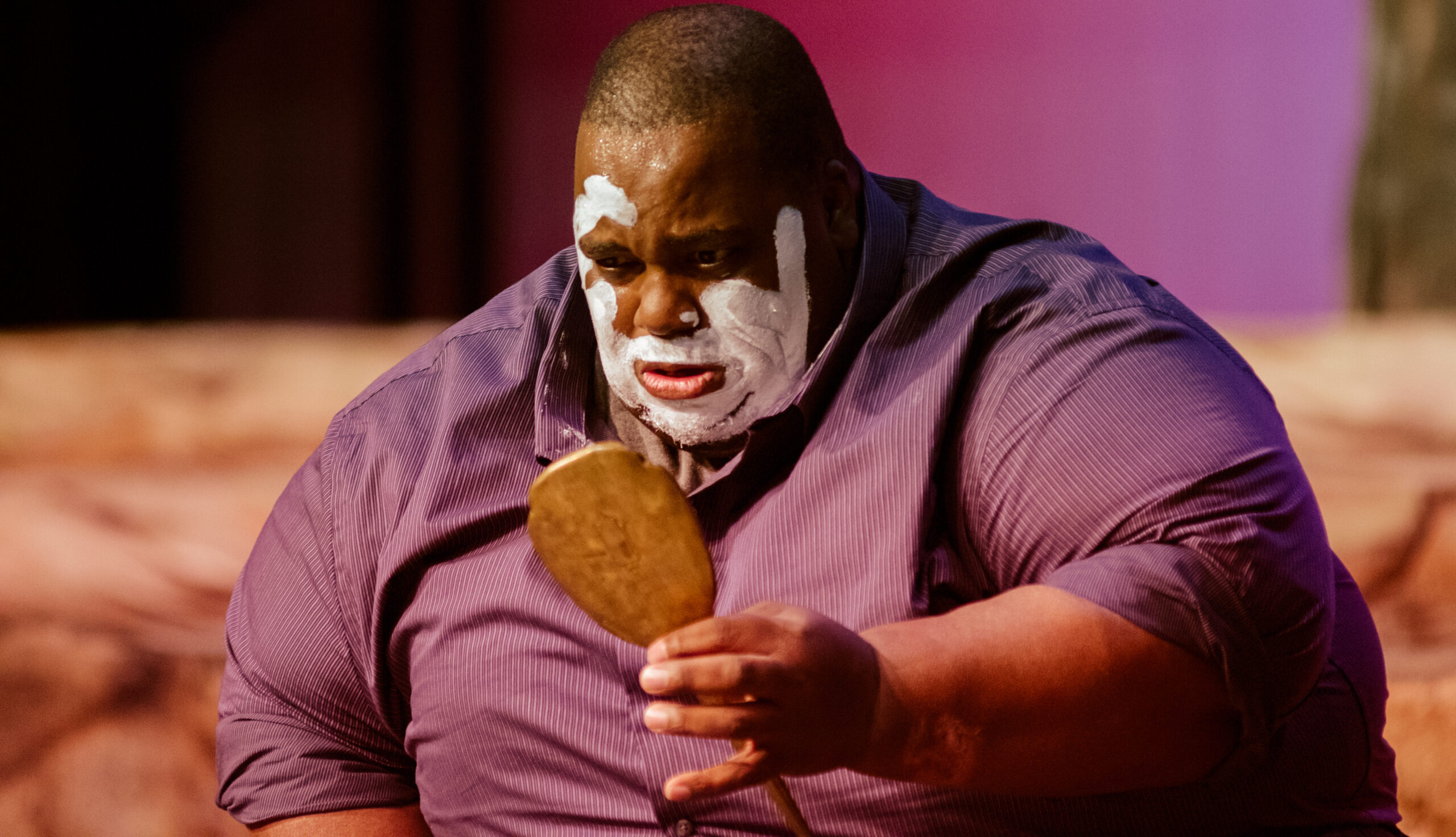
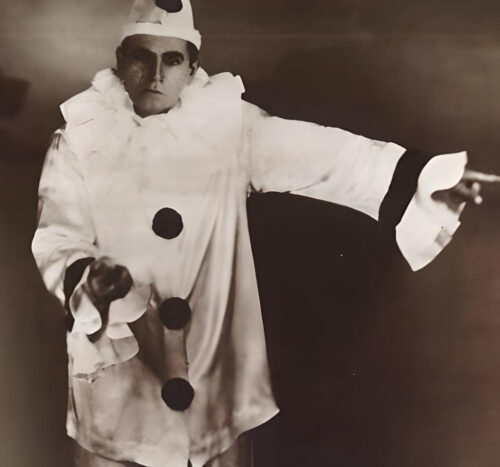
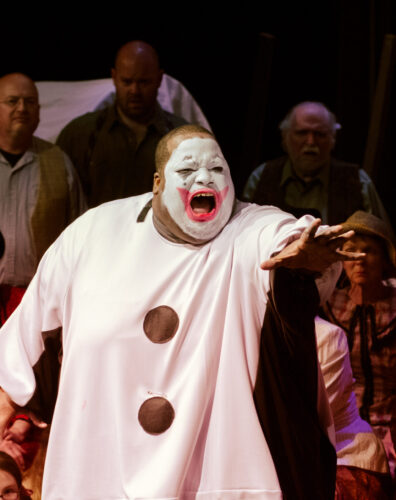
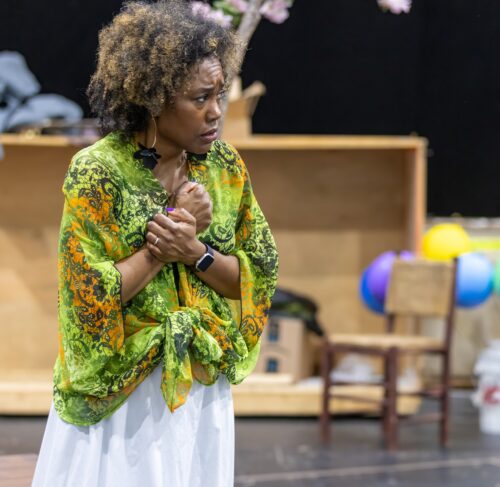
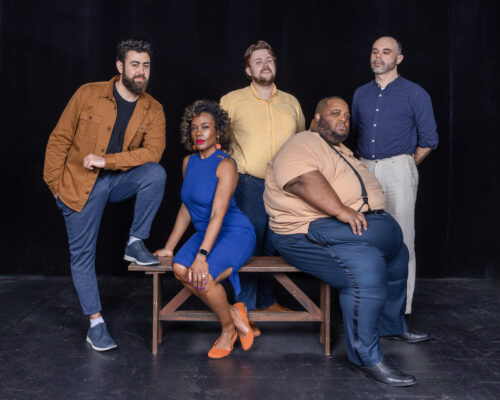
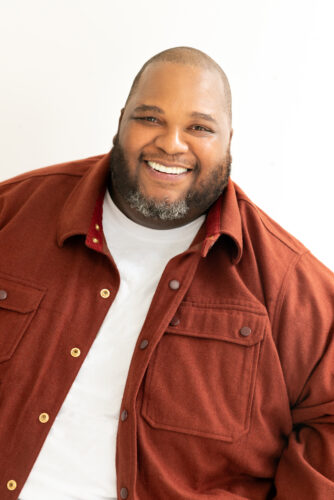
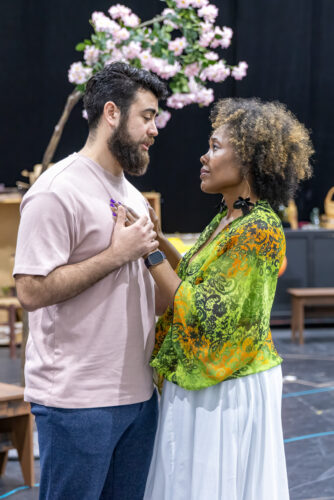
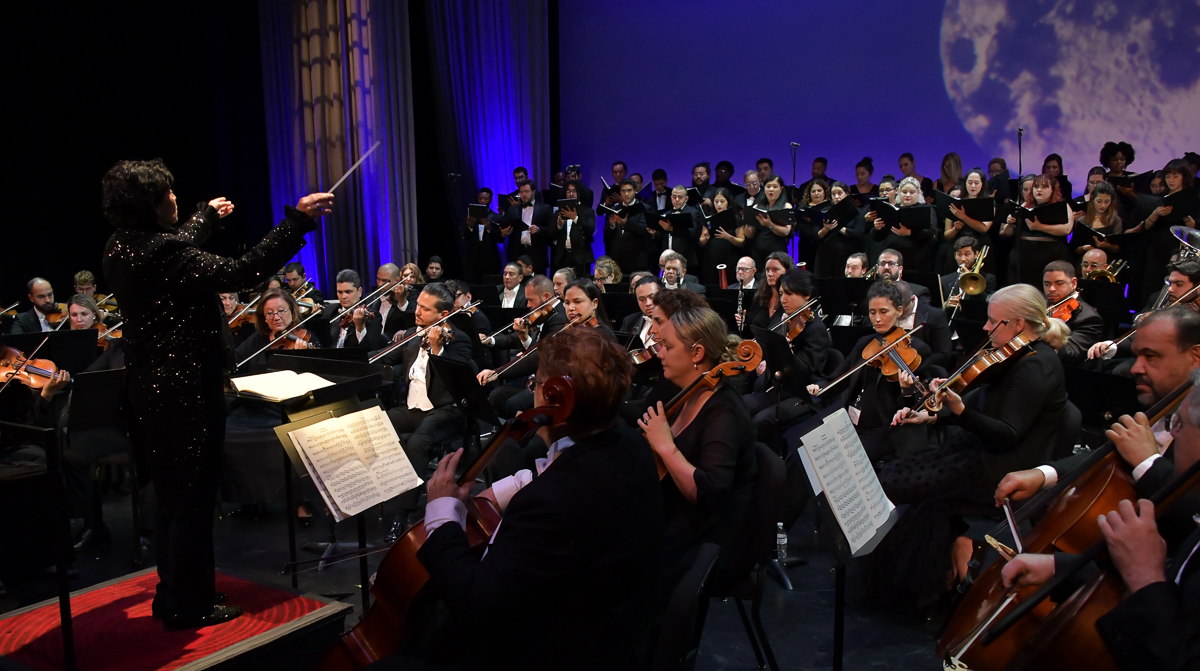
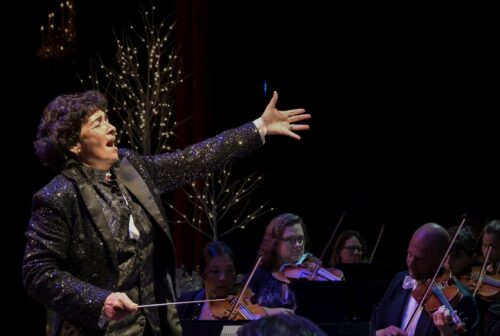
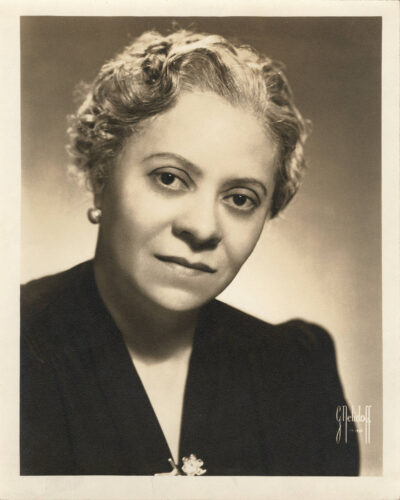
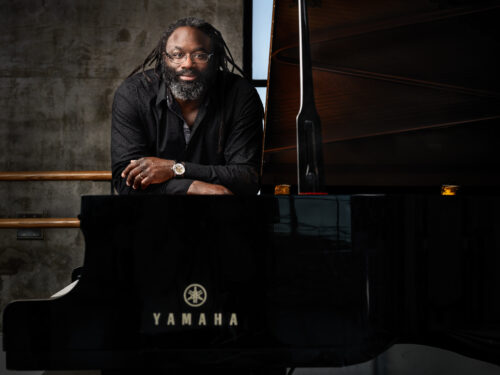
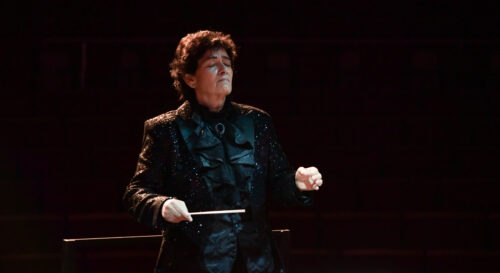
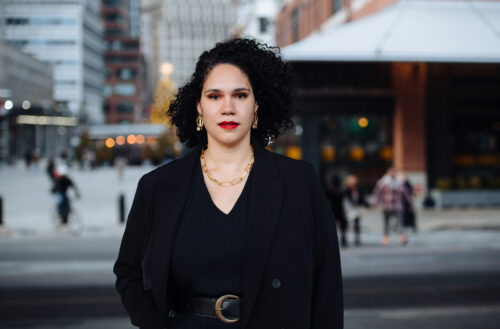

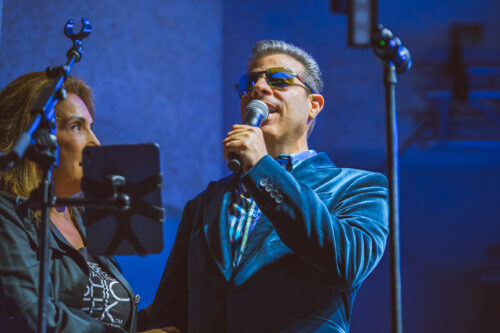
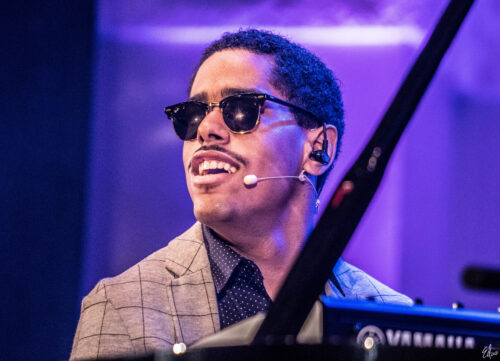
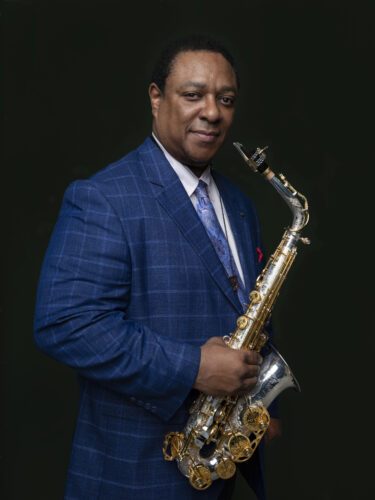
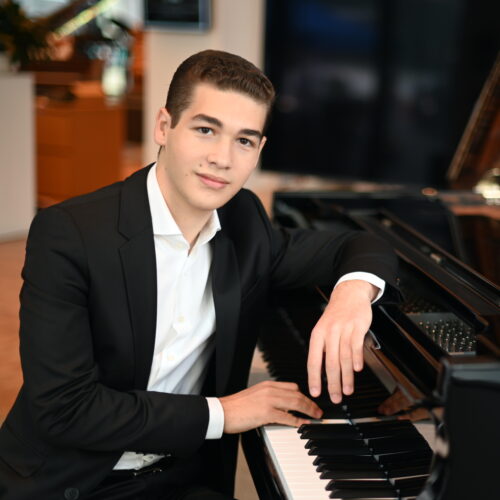
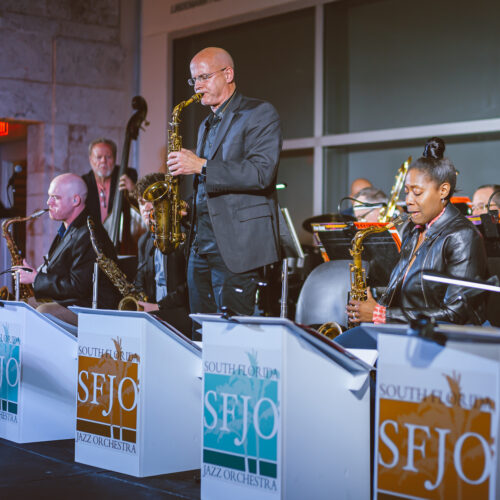
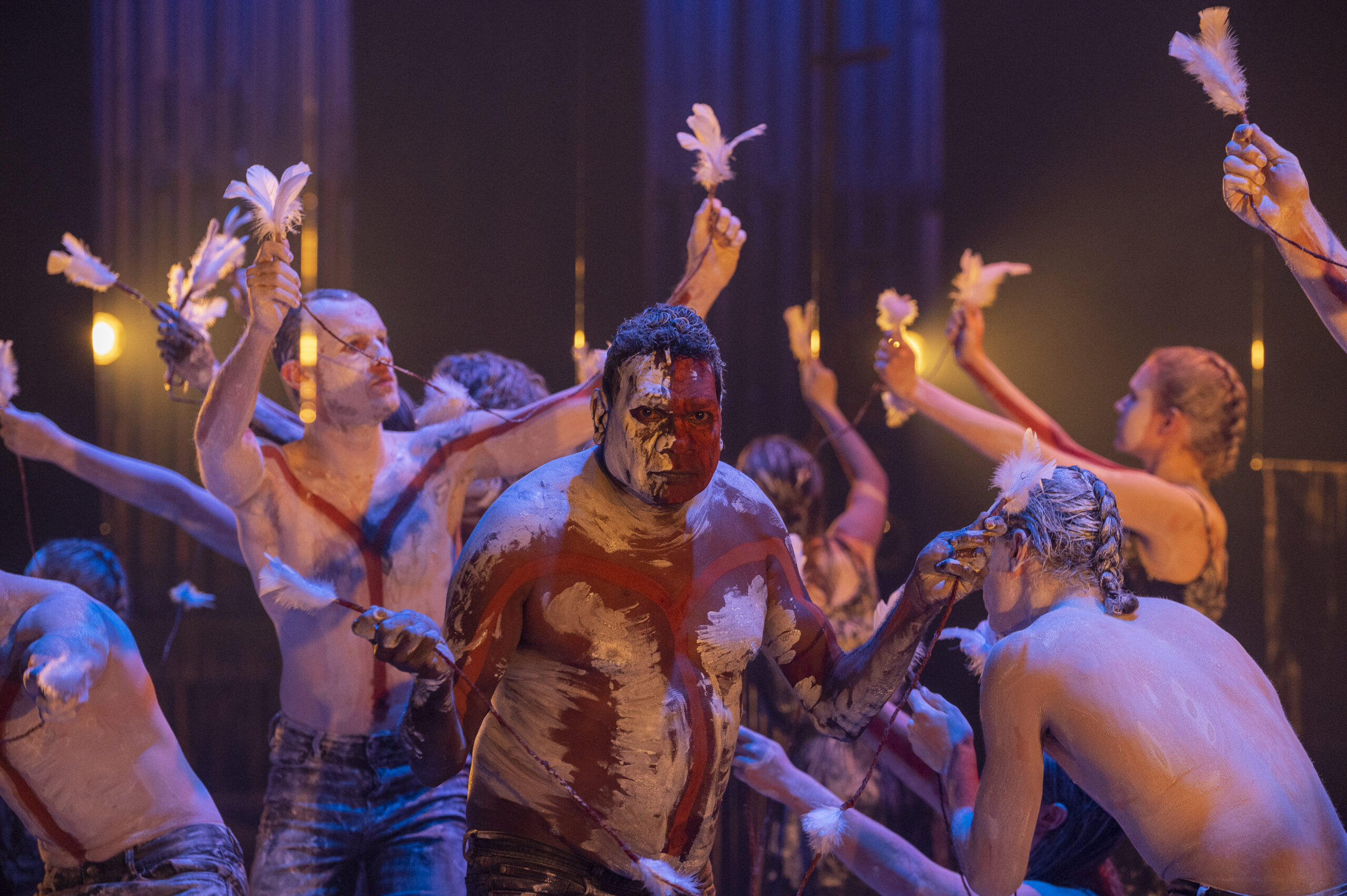
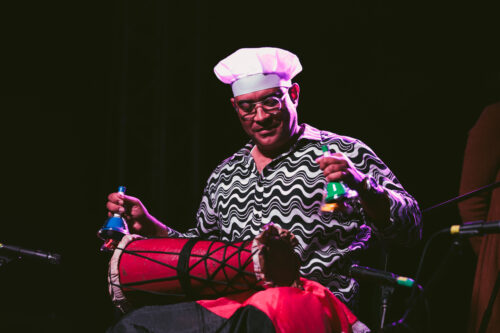
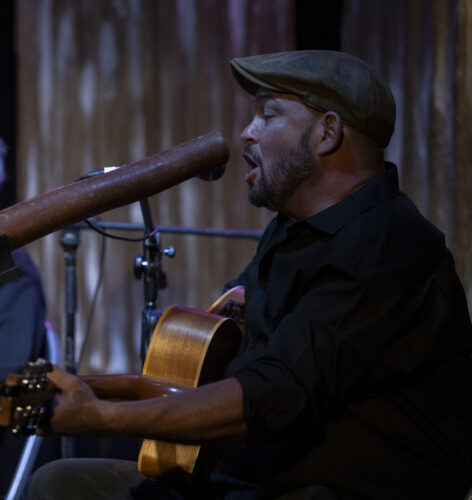
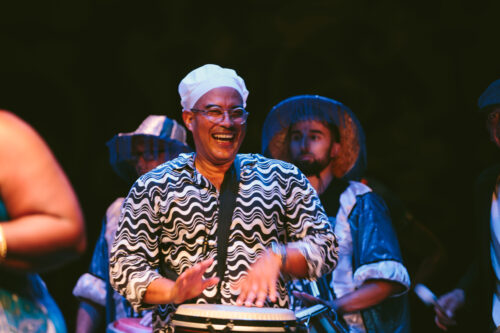
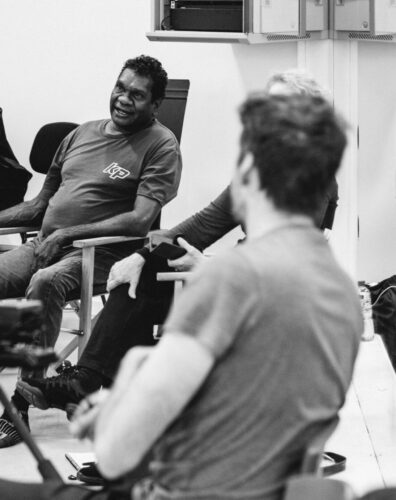


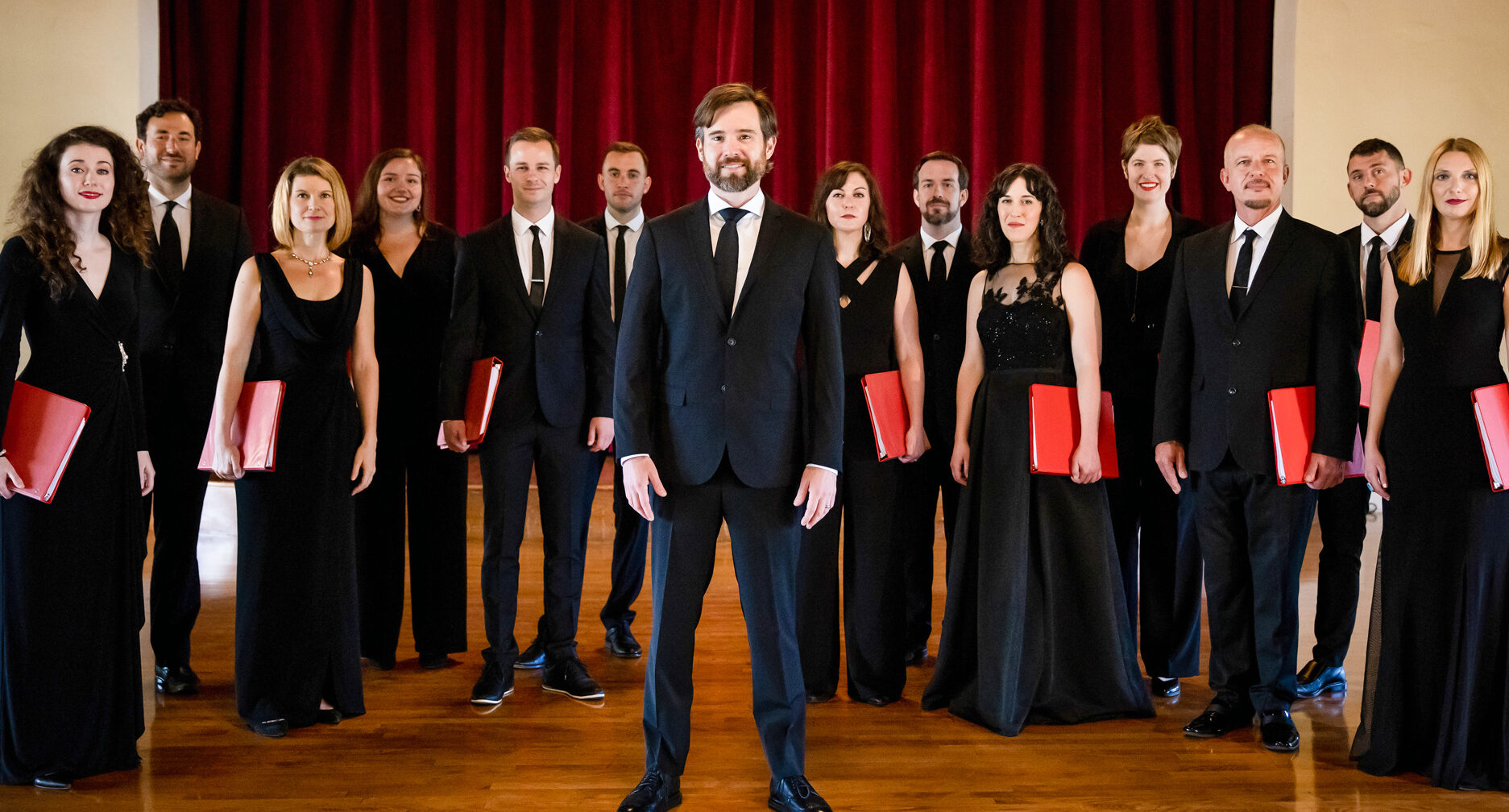
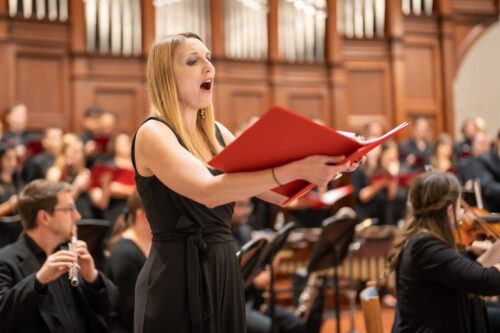
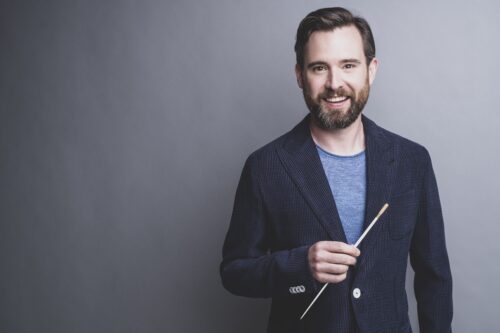
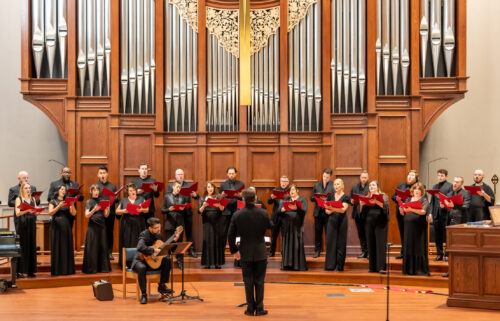
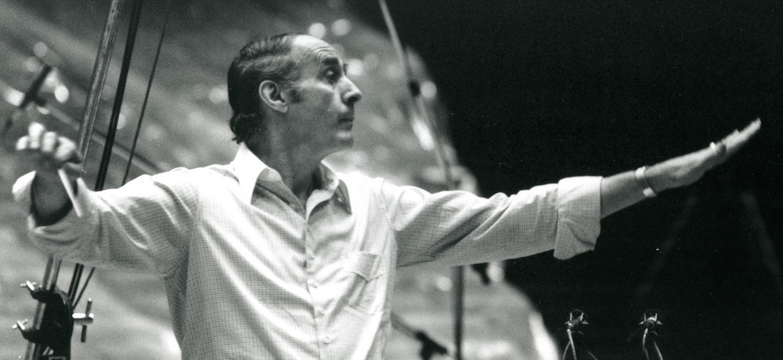
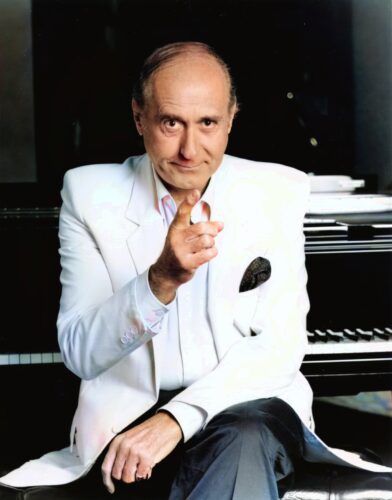
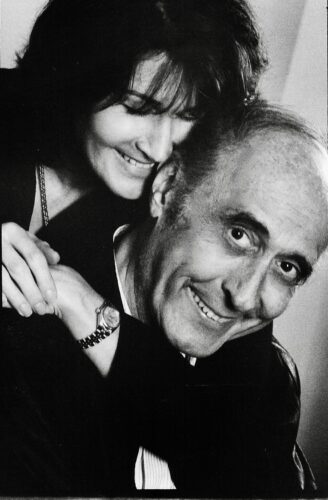
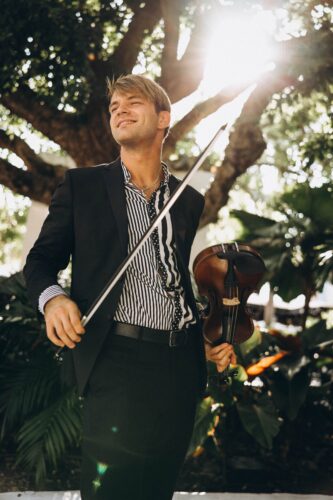
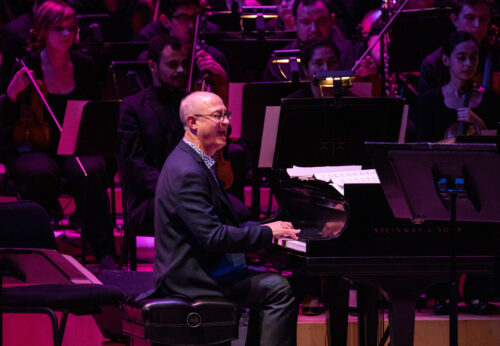
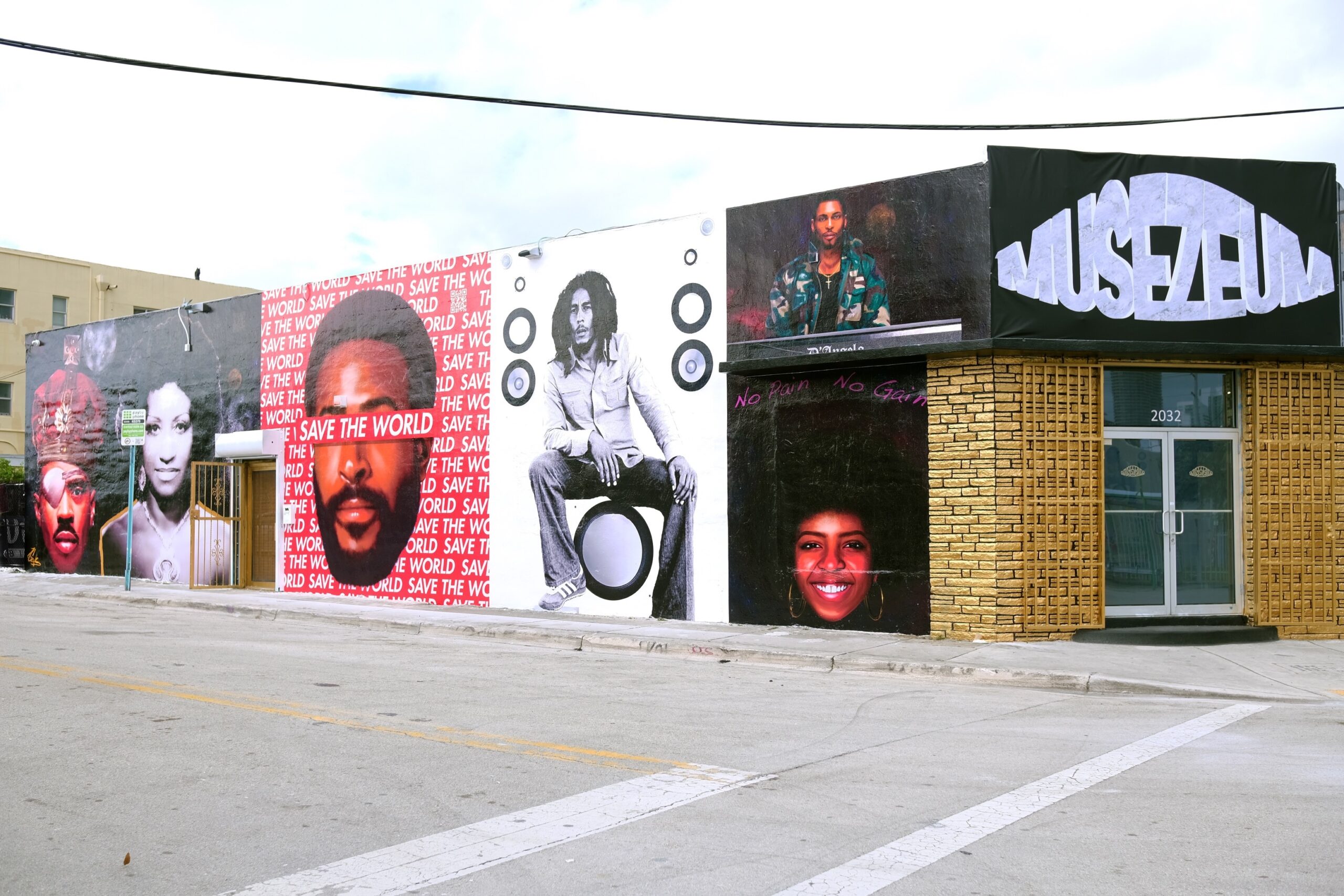
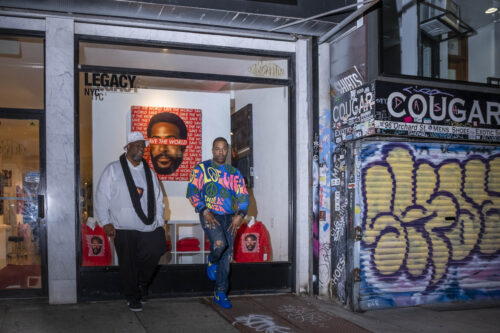


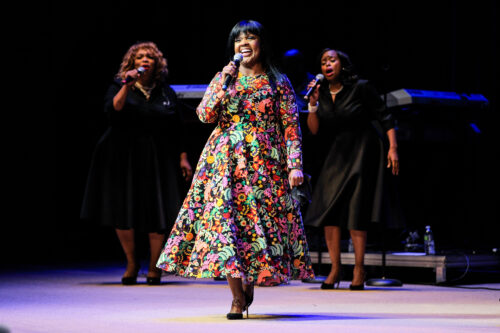
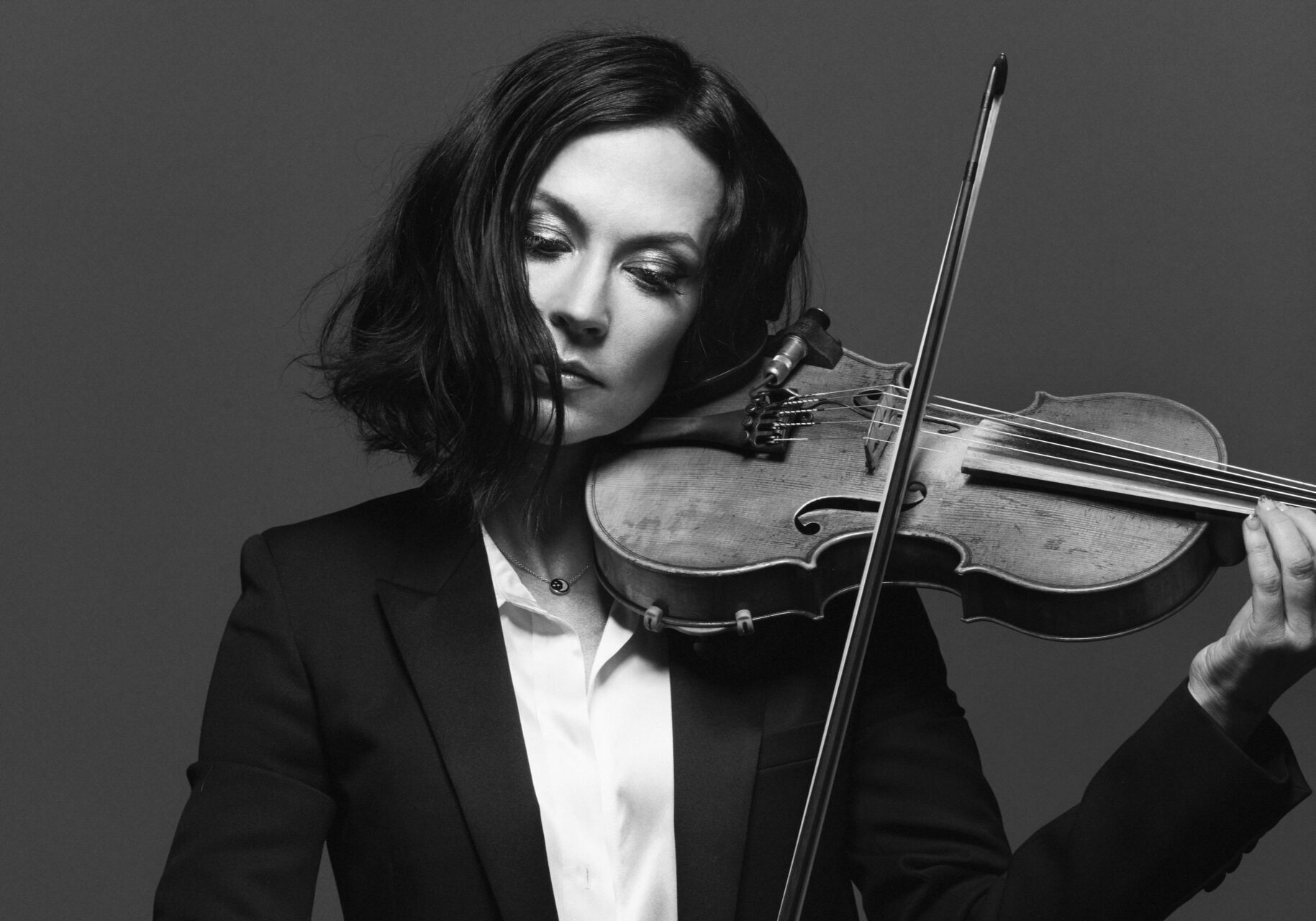
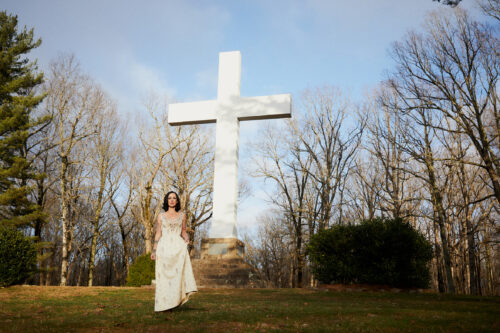
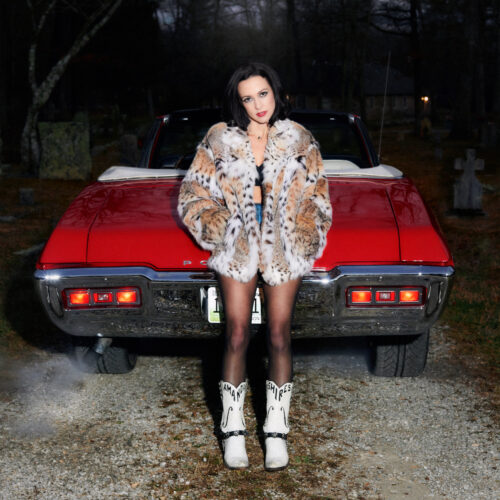
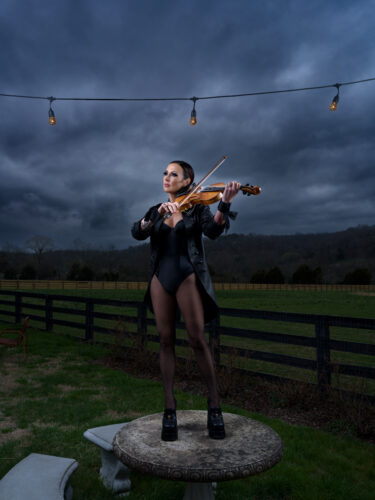
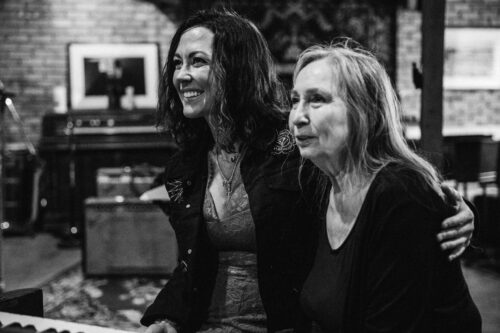
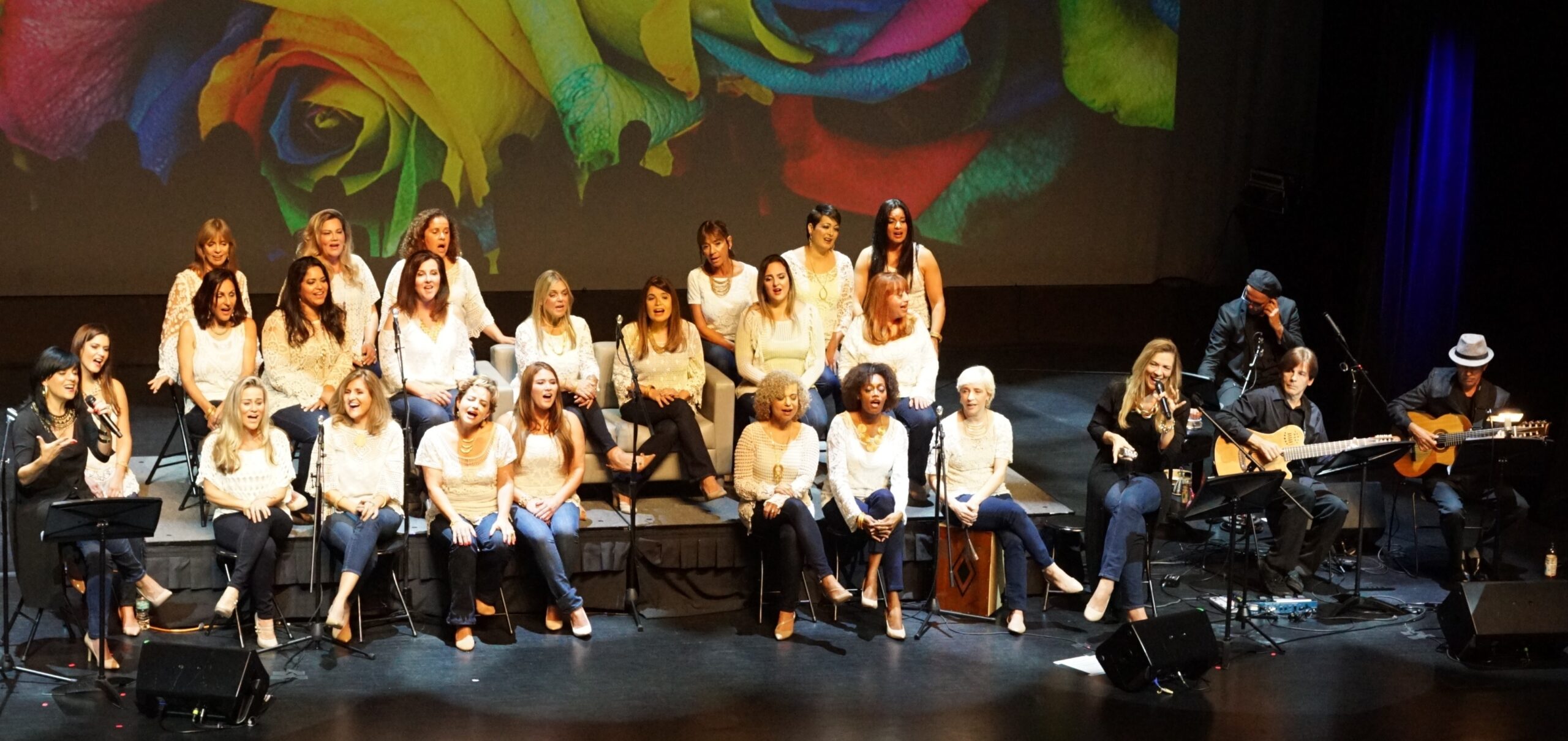
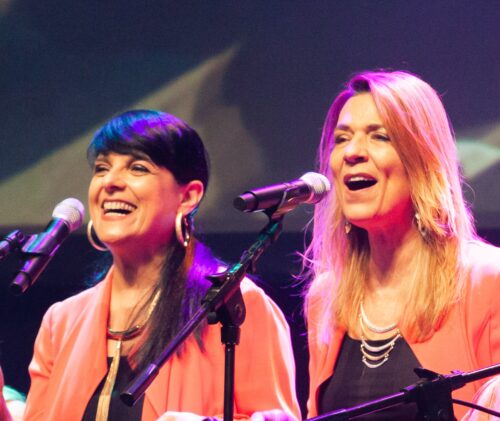

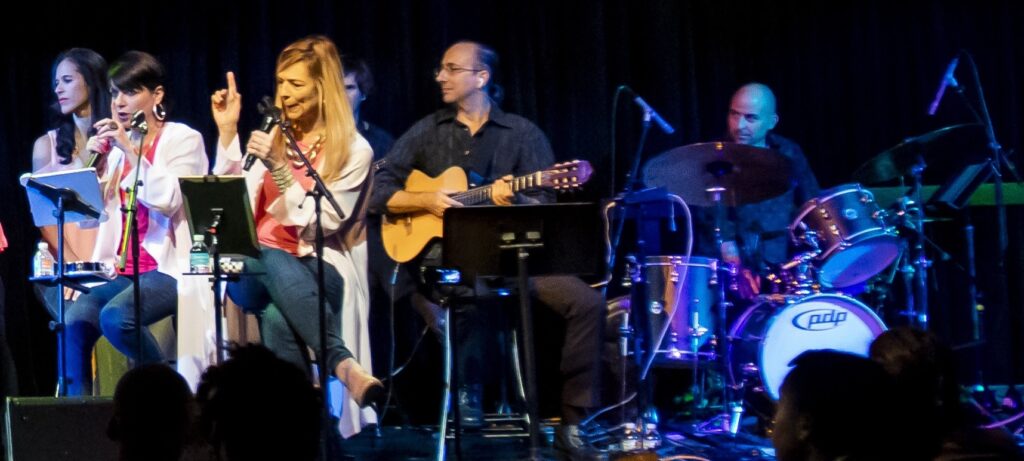
Recent Comments