
Visual Art
‘Caught in the Eye’ Revisits the 1926 Hurricane at Museum of Miami
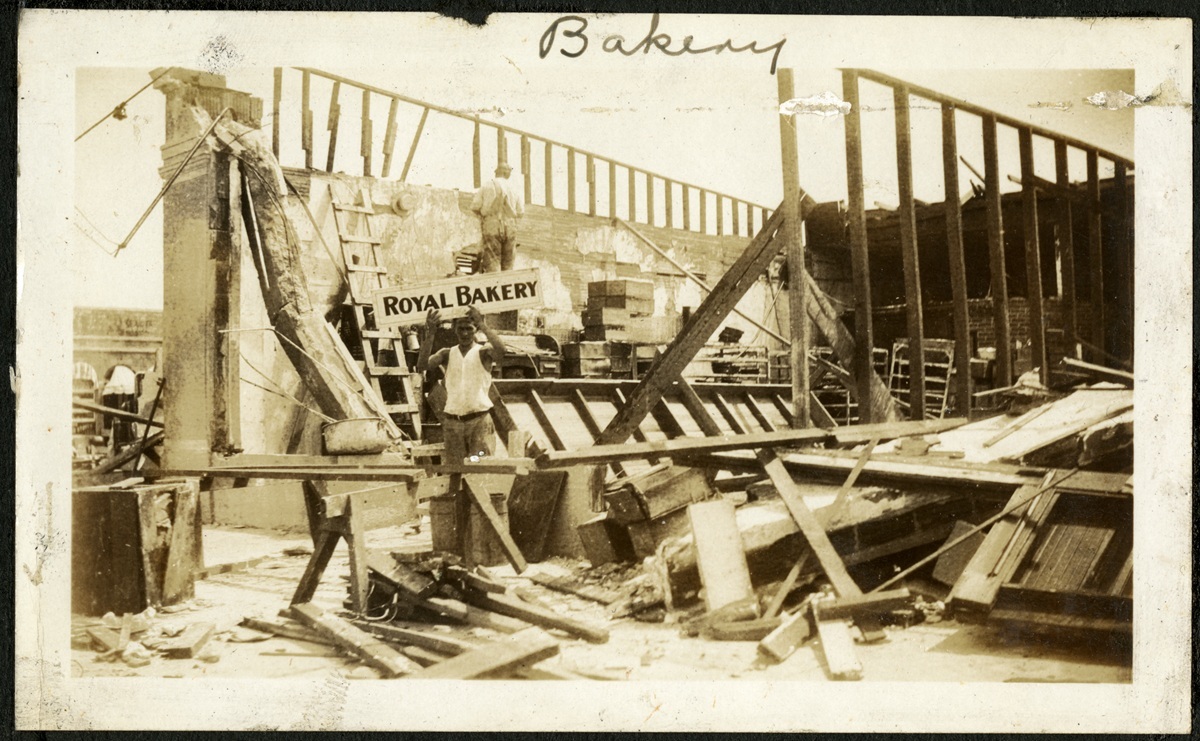
The Royal Bakery in Miami stands in ruins after the 1926 hurricane. The image is among the archival materials featured in “Caught in the Eye: Remembering the 1926 Hurricane” at Museum of Miami on view through April 11, 2027. (Photo courtesy of Museum of Miami)
While researching an exhibition about a hurricane that devastated Miami 100 years ago, historian Paul George found himself driving as slowly as he could across the MacArthur Causeway. He was trying to imagine what it looked like on Sept. 18, 1926.
The causeway was narrower then, George says, with trolley tracks running across it and Biscayne Bay on either side. During the deceptive calm of the hurricane’s eye, Miamians emerged from shelter. Some ventured onto what was then called the County Causeway, believing the storm had passed. It hadn’t.
A century later, George is revisiting those harrowing hours as co-curator of “Caught in the Eye: Remembering the 1926 Hurricane,” which is on view through April 11, 2027 at the Museum of Miami. The exhibition draws largely from the museum’s collection of photographs, film, period newspapers, letters and personal accounts to reconstruct the storm and what happened to Miami afterward.
“So many people drowned as a result of that,” George says of those who ventured onto the causeway before the hurricane’s second half ravaged the city. “That has always been the thing that struck me.”
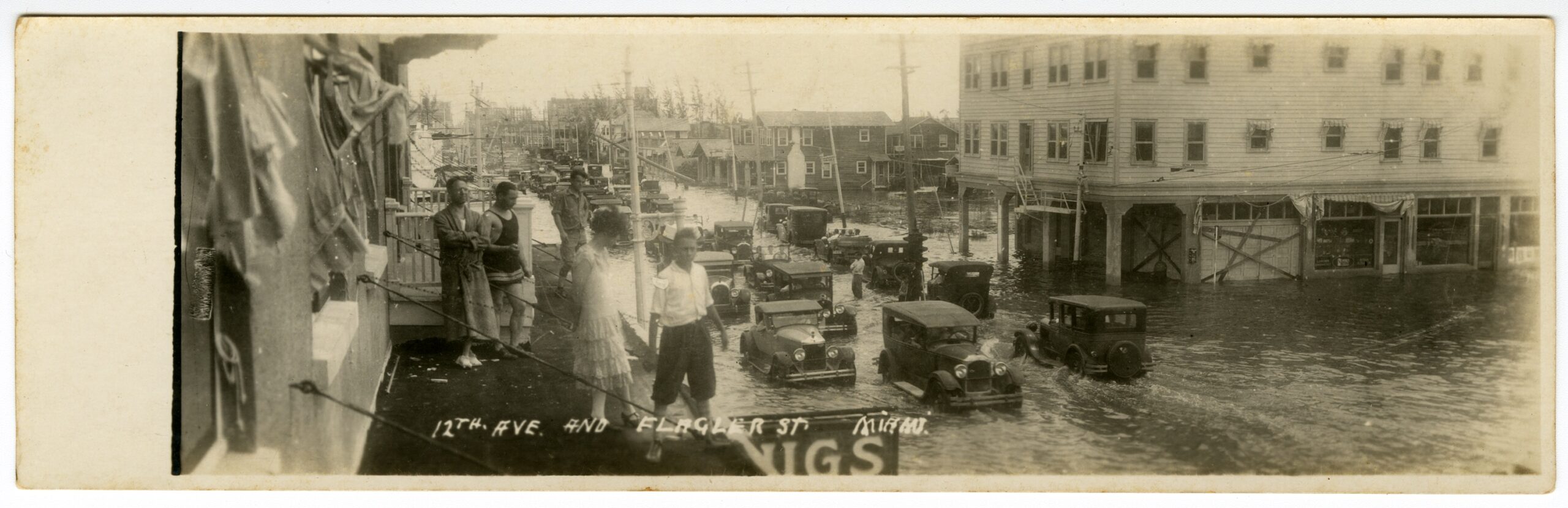
Floodwaters fill the intersection of 12th Avenue and Flagler Street in Miami in the aftermath of the 1926 hurricane, as cars make their way through the inundated streets and residents look on. (Photo courtesy of Museum of Miami)
For Natalia Crujeiras, a Mexico native who has called Miami home for more than 20 years and now serves as Museum of Miami’s CEO and executive director, the exhibition brings the human toll of the catastrophe into focus.
“You’re not simply being told that Miami was devastated by a hurricane,” Crujeiras says. “When you see photos of boats thrown into the streets, almost three blocks away from Biscayne Bay, or entire buildings torn apart … these are not historical abstractions anymore.”
Letters, Headlines and Photographs
George, Museum of Miami’s resident historian, has spent decades studying the city, curating exhibitions about its past and leading history tours through the places where it happened. While researching “Caught in the Eye,” some of his most affecting discoveries came from voices preserved in the collection.
“The thing that really impacted me more than anything else were the letters, the remembrances, the reminiscences of people who had been through the storm,” he says. “These are firsthand accounts of people who were in the storm, writing to somebody up in Philadelphia or something like that, wherever it might be.”
Newspapers provided a different record of the immediate aftermath.
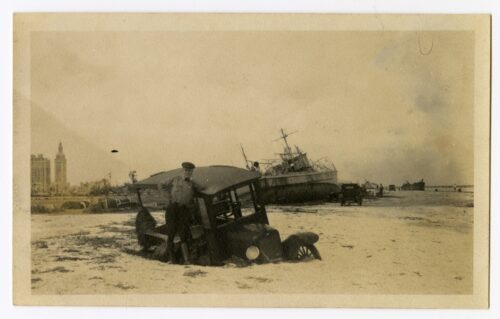
Vehicles and boats were among the scenes of destruction left by the 1926 hurricane.(Photo courtesy of Museum of Miami)
“They called it for what it was,” George says. “It was cataclysmic. And you see it in the headlines, and you see it in the subheadlines.”
Then came the photographs.
“I was drowning in the plethora of images,” George says.
George initially selected about 100 images before the choices were narrowed to roughly a third for the exhibition. One stayed with him long before he began working on the exhibition: a fully clothed woman sitting in a bathtub for protection, the wall directly across from her blown away.
A City Caught Off Guard
Miami was booming when the hurricane struck, filled with newcomers, many of whom had never experienced a major storm, George says. The city’s population grew from 5,471 in 1910 to 29,571 in 1920.
Warnings were difficult to spread. Federal weather forecaster Richard Gray tried to convince residents that the calm of the eye did not mean the hurricane was over.
“A lot of people just didn’t hear him or didn’t listen,” George says, “and they got trapped.”
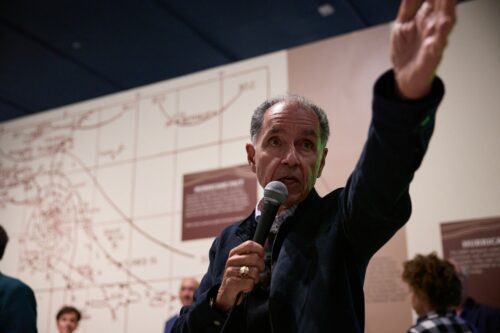
Paul George, a native Miamian and the Museum of Miami’s resident historian, co-curated “Caught in the Eye: Remembering the 1926 Hurricane.” (Photo by Ryan Troy, courtesy of Museum of Miami)
George wanted the exhibition to convey how far the destruction extended, reaching beyond downtown Miami and Miami Beach, affecting communities across South Florida and Seminole settlements in the Everglades. More than 100 people died, George says, and roughly 43,000 were left homeless.
Some evidence of the storm, George points out, remains visible outside the archives.
On his history tours he leads through downtown, George points out the former Meyer-Kiser Bank Building, now known as the Dade-Commonwealth Building, at 139 NE First St. The hurricane damaged its upper 10 floors so badly that they were later removed. The building still stands.
“What you have, and you’ve had for 100 years now, is a truncated building,” he says.
The exhibition’s final section follows the recovery. George describes residents taking in people who had lost their homes, workers restoring the water supply and the McAllister Hotel serving as a makeshift hospital. The American Red Cross, he says, spent roughly $3 million on relief and reconstruction—about $50 million in today’s dollars, by his estimate.
That recovery, George points out, was not shared equally.
In Colored Town, now Overtown, predominantly wood-frame homes were particularly vulnerable. Black men, he says, could be compelled under vagrancy laws and police authority to clear wreckage elsewhere in Miami while their own neighborhood waited.
“That’s the neighborhood that really needed cleaning up right away,” George says, “but they were second-class citizens.”
The Ward Rooming House, which still stands at 249 NW Ninth St. in Overtown, offers another example. Its roof was torn away, he says, but repairs came only after reconstruction was underway elsewhere in the city. Built in 1925, the historic building now serves as a gallery and exhibition space.
A Public Relations Campaign
George also found evidence that city leaders moved quickly to reassure the outside world that Miami was recovering. An organized cleanup and rebuilding effort accompanied by a public relations campaign intended to restore confidence in the city.
For Crujeiras, that history complicates the familiar narrative of Miami’s recovery.
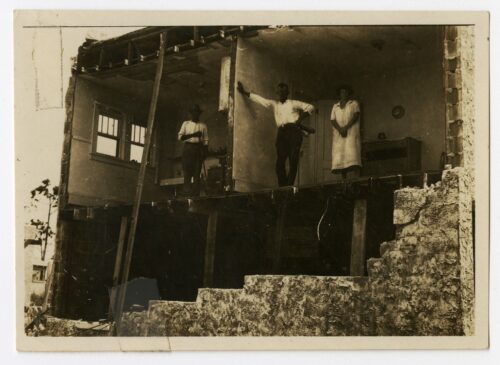
On view through April 11, 2027, the exhibition draws from photographs, film, period newspapers, letters and personal accounts to reconstruct the storm and its aftermath. (Photo: courtesy of Museum of Miami)
“If we only tell that story of the heroic recovery, we’re not telling the whole story,” she says. “The recovery was extraordinary. People came together, helped each other and showed Miami’s ability to rebuild. But it’s also true that access to that rebuilding was not equitable to all Miamians. Those two things can be true at the same time.”
The tension between the stories cities tell about themselves and the evidence they leave behind is part of what Crujeiras sees as the museum’s role.
“Cities create stories about themselves. Miami clearly does that,” she says. “We’re the Magic City that constantly reinvents itself, and there is truth in that. But our archives also preserve what doesn’t always fit neatly into that narrative.”
For Crujeiras, the museum gives visitors evidence and context to examine those stories for themselves.
“A museum should not tell Miami what to think about its history,” Crujeiras says. “But it should give people enough evidence, enough context, to think about its history more deeply.”
WHAT: “Caught in the Eye: Remembering the 1926 Hurricane”
WHERE: Museum of Miami, 101 W. Flagler St., Miami
WHEN: Noon to 5 p.m., Wednesday through Sunday. Through April 11, 2027
COST: $15 adults; $10 seniors and students; $8 children ages 6–12; free admission for children under 6
INFORMATION: 305-375-1492 or museumofmiami.org
ArtburstMiami.com is a nonprofit media source for the arts featuring fresh and original stories by writers dedicated to theater, dance, visual arts, film, music and more. Don’t miss a story at www.artburstmiami.com.