
Artburst Extras
Mahara+Co Show Explores Women, Nature and Interconnection
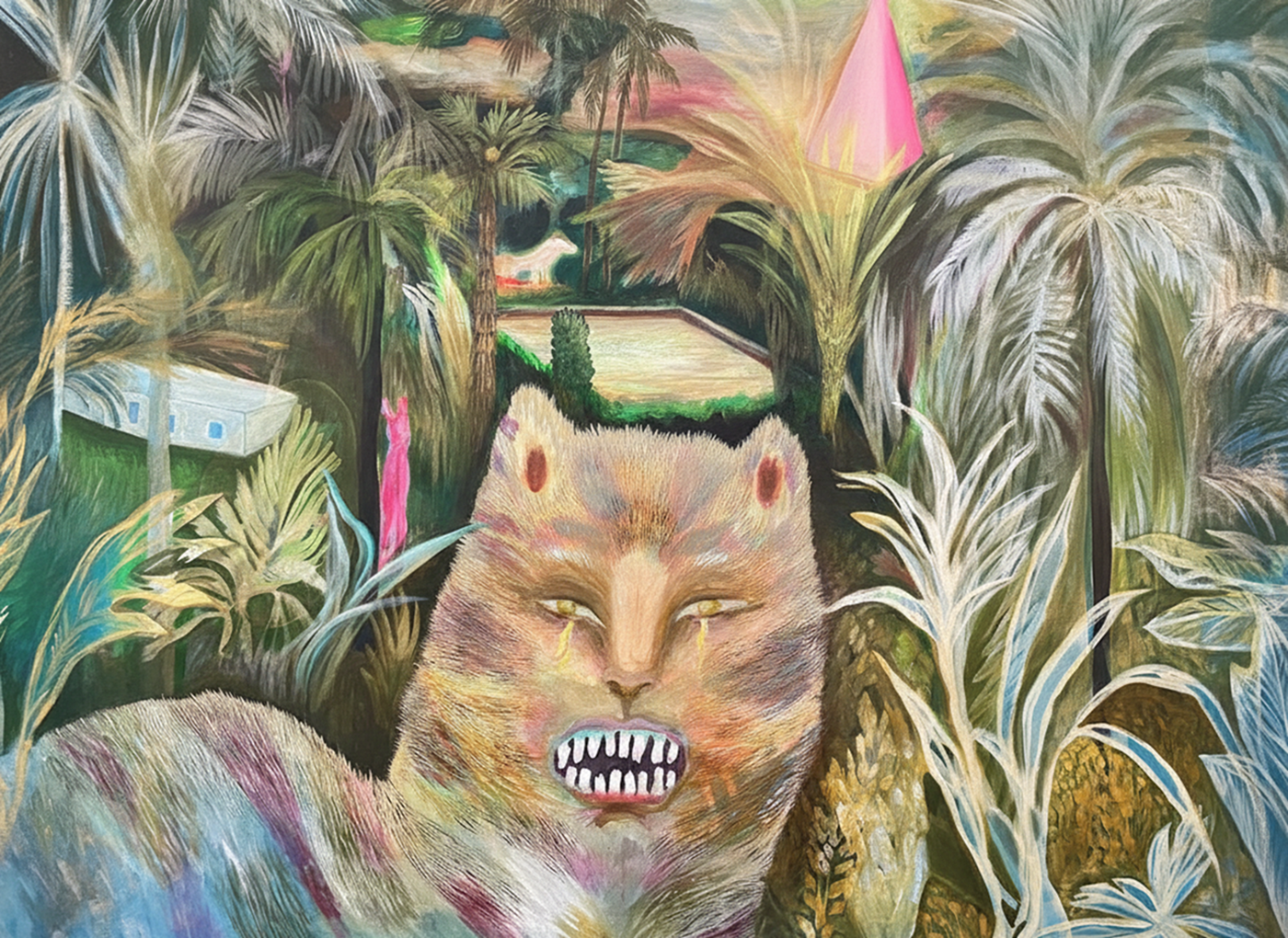
Cecilia Porras, “The Garden Door,” 2026. Acrylic on canvas. (Photo courtesy of Mahara+Co.)
Three Latin American female artists challenge the expectation that women’s art should center on gendered themes such as fertility, the body, or domesticity.
“Ser tierra, mujer, planta, animal y planeta (Being Soil, Woman, Plant, Animal, and Planet)” at Mahara+Co features the work of Paula Nicho, Cecilia Porras, and Gabriela Novoa, who take a broader perspective — that humans are one part of an interconnected web of life.
According to Marivi Véliz, the curator of the exhibition, the artists’ work breaks down the idea that humans are above nature, reflecting current critiques of the Anthropocene, the era in which human activity has fundamentally altered the Earth’s climate, ecosystems, and geology, and imagining a more connected, less human-centered way of living.
At the same time, the curatorial work speaks directly to the present moment. As the climate crisis intensifies and digital technologies reshape how people experience reality, new ways of understanding connection, belonging, and coexistence are emerging. Véliz notes that what may once have been dismissed as “magical” or “naïve” in art before, now reads as visionary. The exhibition suggests that art is not just reflecting a changing worldview that recognizes the interdependence of all living systems, but is actively helping to lead this perspective.
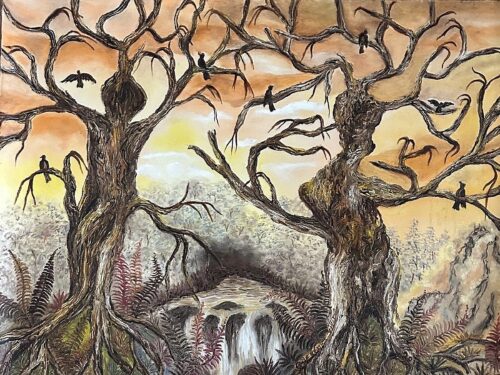
Paula Nicho, “We Want To Live,” 2017. Oil on canvas. (Photo courtesy of Mahara+Co)
This perspective is not new. It’s rooted in Indigenous and ancestral ways of seeing the world, especially in Mesoamerica, where life has always been understood as interconnected. These perspectives were often ignored in the past, but they’re now coming back into focus. The exhibition reflects this shift, showing how these ideas are not just surviving, but helping shape how we think today.
Veliz curated “Being Soil, Woman, Plant, Animal, and Planet” within a broader and rapidly evolving shift in Latin American women’s art, particularly in Central America. Drawing from her recent research with Mujeres en las Artes in Honduras, she identifies a departure from earlier artistic tendencies: women artists are increasingly engaging themes of pleasure with a level of openness and autonomy that was not as visible in previous decades. As she notes, “the finding that struck me the most was how many women are now addressing topics such as pleasure and the body.”
This shift reflects the growing influence of communitarian feminism across the region, which is reshaping both the products of art as well as the frameworks through which art is understood. Compared to her earlier experience working in Guatemala, from 2003 to 2011, Veliz sees a significant expansion in creative freedom that allows women artists to move fluidly between the personal, the collective, and the ecological.
While this exhibition extends beyond one country or community, it shares what Veliz describes as a collective reimagining of identity, embodiment, and relationality that is gaining momentum across Latin America.
Hailing from different parts of Latin America, the work of the artists exemplifies this sentiment.
Paula Nicho (San Juan Comalapa, Guatemala, 1955) is an artist whose work draws from textile and painting traditions to create dreamlike scenes where the body and nature merge. Her paintings often feature floating female figures in symbolic landscapes. Recognized internationally since the 1980s, her work is held in major collections, and in 2024 she participated in the Venice Biennale.
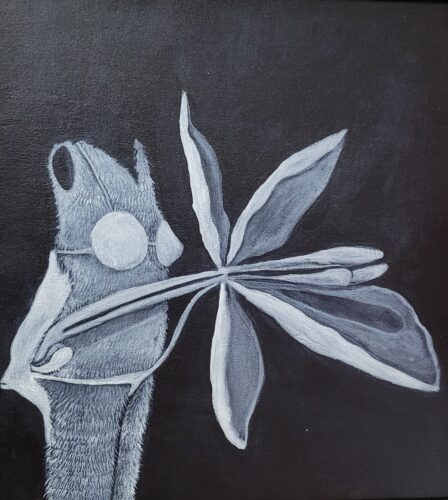
Gabriela Novoa. “To Free Oneself From the Biological Body,” 2024. Acrylic on canvas. (Photo courtesy of Mahara+Co.)
Gabriela Novoa (San Salvador, El Salvador, 1991) works across painting, textiles, and video to explore desire, sexuality, and the body. She creates hybrid, shifting figures that move between vulnerability and protection, often inspired by sewing and embroidery as ways of telling stories. Her work connects contemporary, post-human ideas with the history of women’s experiences in El Salvador.
Cecilia Porras Sáenz (Guatemala–Mexico, 1979) has a background in performance, theater, and dance, and approaches painting as an expanded, performative field. She creates large, immersive works that focus on the power and independence of nature, often minimizing the presence of humans.
By presenting these artists in Miami, the exhibition expands the cultural narrative around Central America, highlighting the region’s richness in knowledge, imagination, and artistic production. It frames Latin American women artists as vital contributors to a wider reimagining of relational life, offering visions of connection in a world searching for new ways to relate to the planet and to each other.
WHAT: “Ser tierra, mujer, planta, animal y planeta (Being Soil, Woman, Plant, Animal, and Planet)” group exhibition
WHERE: Mahara+Co Gallery, 1294 NW 29th St., Miami
WHEN: noon to 5 p.m., Wednesday through Saturday, Tuesday by appointment. Through May 18.
COST: Free
INFORMATION: (786) 498-8706 and mahara-co.com/
ArtburstMiami.com is a nonprofit media source for the arts featuring fresh and original stories by writers dedicated to theater, dance, visual arts, film, music and more. Don’t miss a story at www.artburstmiami.com