
Visual Art
Milton Mizell’s Blackquetry, Black identity through the craft of marquetry
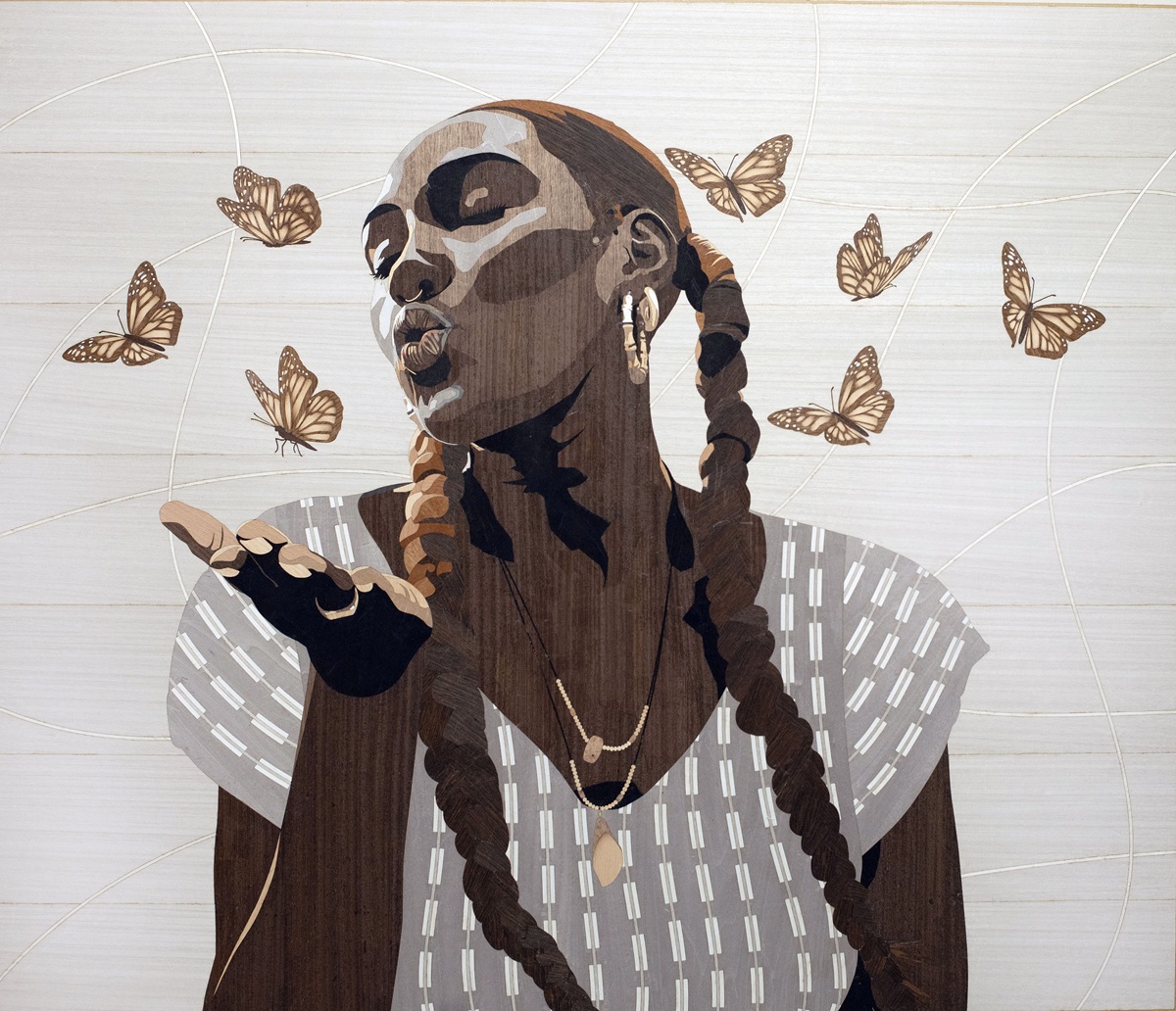
“I Said I Love You” by Milton Mizell is one of the works featured in “Blackquetry” at CLAUG Creative Studio, Miami Shores. (Photo by Leesa Richards)
A clean slate awaiting inspiration and creativity to become something beautiful and meaningful. This is how marquetry artist Milton Mizell describes “Blackquetry,” his work that will be on view from Saturday, Aug. 22, to Wednesday, Sept. 30 at CLAUG Creative Studio in Miami Shores.
Marquetry is defined as the covering of the surface of a board or piece of furniture, either entirely or in part, with wooden veneers in the form of a skillfully applied design or picture. In the hands of Mizell, it becomes Blackquetry, Black identity expressed through the craft of marquetry.
“It is a visual language shaped from wood, memory, and cultural truth. The name reflects that union,” says Mizell. “It honors resilience, beauty, and ancestral storytelling while expanding the tradition into a space where Blackness is centered and celebrated.”
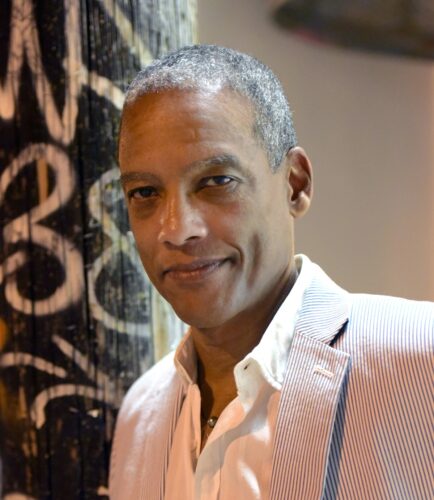
Miami-based artist Milton Mizell brings together marquetry, graphic design, and woodworking in his art. (Photo by Leesa Richards)
Mizell, who was born and raised in Miami, didn’t start his artistic career in woodworking. He studied fine art and graphic design and has been working as a graphic artist for many years. However, as a child, he used to watch his father — a jack of all trades — working on wood, fixing and building all kinds of things.
“That planted the seed. I returned to woodworking as an adult when burnout pushed me back toward making physical objects. Wood has been a constant thread, even before marquetry,” he says.
The artist’s journey has not been without challenges. In the past few years, aphasia has taken a toll on his communication skills, limiting his ability to speak, read and write. “However,” he said, “I continue to communicate powerfully through my art, demonstrating that creativity often speaks louder than words and that my intelligence, artistic vision, and passion for storytelling remain as strong as ever.”
The artist describes marquetry as moderately difficult, requiring patience, precision, and a steady hand.
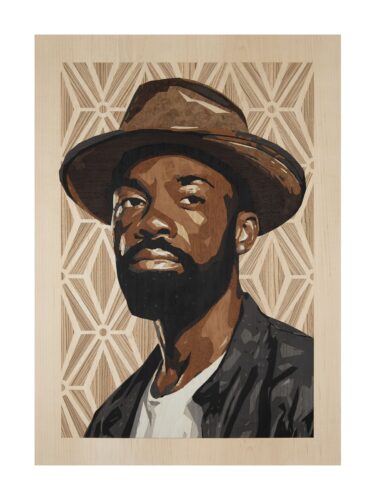
“The Man in the Fedora Hat” by Milton Mizell (Photo by Gregory Reed)
“I admired marquetry for years, ” he says, “but only discovered my path into it when I bought a diode laser in 2023 and joined a weekly Zoom group. After a lifetime of drawing, I finally found a way to merge drawing with wood — everything clicked.”
Among Mizell’s woodworks are handcrafted boxes, keepsake boxes, jewelry boxes but most of all portraits whose subjects come from his community, his culture, and the stories that move him.
“Some portraits depict specific individuals whose presence or emotion I want to preserve; others represent broader aspects of Black identity, resilience, and humanity.”
The process begins with simplifying an image, almost like creating a painter’s palette. Mizell prints a full‑size poster, cuts every shape with the diode laser, a computer-controlled machine that cuts or engraves material with a concentrated beam of light, and assembles hundreds or thousands of pieces with tape.
“Then I create a three‑layer sandwich: veneer, MDF, veneer backer, pressed in a vacuum bag,” he explains. “Sanding is delicate because veneers vary in thickness, and dark dust can stain lighter woods. I dye my own veneers, so color penetrates deeply enough to survive sanding. Step by step, the face comes into view,” he adds.
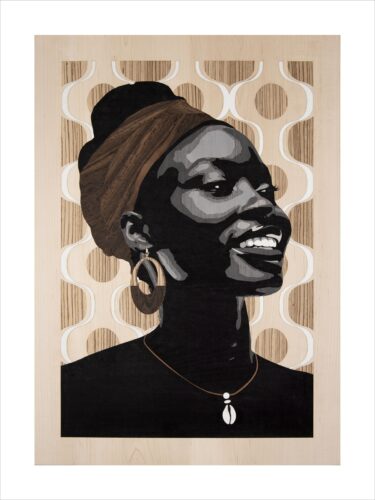
“Ebony Portrait” by Milton Mizell (Photo by Leesa Richards)
Donnamarie Baptiste, a Miami-based arts producer and cultural strategist who consulted on “Blackquetry” and wrote its curatorial statement, sees the works as both painting and sculpture.
“When you see it, it’s so masterfully done. It’s almost hard to tell whether you’re looking at a painting or something else. Once you understand the process and see how it’s put together, you realize it’s quite sculpture in its essence. It’s sort of like a painting made of wood.”
Since Mizell is a graphic artist by trade, technology plays a central role in his marquetry. In fact, it is foundational, as Mizell puts it. “Adobe Illustrator has been part of my life for over 30 years, and CNC and laser tools allow me to translate digital design into cuttable sections. Technology maps the structure; craft gives it soul.”
For this exhibition, Mizell will show a total of 21 new original pieces and prints. His declared goal is to celebrate resilience, beauty, identity, and humanity — the aspects of Black life that often go unseen. “Blackquetry gives voice to the unspoken,” says the artist.
CLAUG’s resident artist and studio owner Carlos Andrade recalls that Mizell, after receiving a grant from the Miami-Dade County Department of Cultural Affairs was looking for a space for a solo exhibition. “He was having a hard time finding one. One day, he was walking by, and we connected right away,” he says.
About Mizell’s work, Andrade says, “I think it’s very powerful. When you’re standing in front of one of the portraits, you see the amount of details, and I think that makes an impression on people. You begin to understand the process, how tedious it is, and also the talent that Milton has as an artist.”
But beyond showcasing Mizell’s craftsmanship, the exhibition also tells the story of his personal journey.
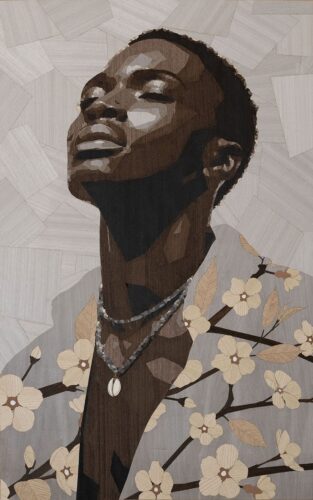
“Dream Big” by Milton Mizell (Photo by Gregory Reed)
“Obviously,” Andrade says, “we want to showcase his work, but we also want to showcase his journey. Because of his condition, one of the best ways for him to communicate and connect with people is through his art,” he adds.
The artist is also the curator of Blackquetry. Curating his own work, Mizell says that means shaping how viewers encounter the pieces — guiding the rhythm, the scale, and the emotional arc. “It’s an opportunity to frame the craft, the stories, and the cultural context with intention. It’s both vulnerable and empowering: I’m presenting not just the art, but the journey behind it,” he says.
As a curator, he selected works that show the evolution of his voice, pieces that merge tradition with technology, and craft with culture. Each portrait was chosen for its grain, tone, and emotional resonance. “The arrangement highlights the layered construction, the narrative depth, and the diversity of identities represented. The goal was to create an experience that feels both intimate and monumental,” he says.
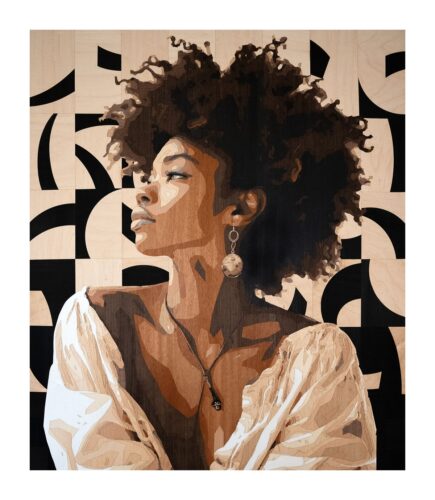
“Break of Dawn” by Milton Mizell. (Photo by Leesa Richards)
When people walk out of Blackquetry, especially Black viewers, Mizell hopes they feel seen.
“I want them to carry a sense of pride and connection, knowing these portraits honor the beauty and humanity within our community. I hope they leave feeling uplifted, affirmed, and part of the narrative.”
WHAT: “Blackquetry: My Fusion of Marquetry and the Black Experience”
WHERE: CLAUG Creative Studio, 9703 NE 2nd Ave, Miami Shores
WHEN: Opening receptions: 6 p.m., Saturday, Aug. 22 and 4 p.m., Sunday, Aug. 23. Regular hours noon to 6 p.m., Tuesday to Saturday. Through Wednesday, Sept. 30.
COST: Free (RSVP for reception)
INFORMATION: claug.art or (645) 243-0333
ArtburstMiami.com is a nonprofit media source for the arts featuring fresh and original stories by writers dedicated to theater, dance, visual arts, film, music, and more. Don’t miss a story at www.artburstmiami.com.