
Music
iLe Finds Her Soul In Boleros and More At ZeyZey in Miami
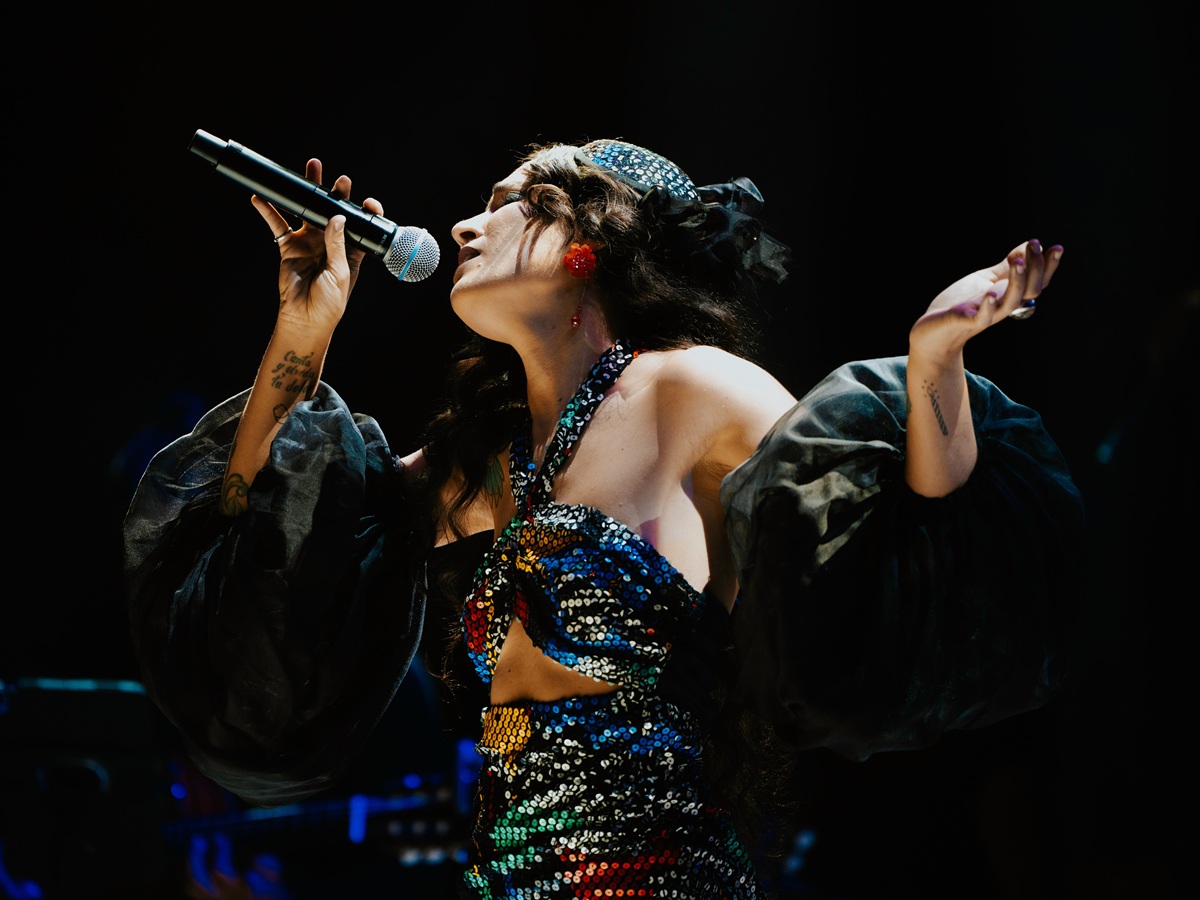
Ileana Cabra Joglar, better known as iLe, and her five-piece band will play music from throughout her 20 years as a solo artist, for an appearance at Little Haiti’s ZeyZey on Friday, Oct. 30. (Photo by Edgar Cruz )
“It was love at first listen for me when it came to the bolero,” says Puerto Rican singer Ileana Cabra Joglar, better known as iLe. Her latest album, “Como Las Canto Yo,” is a 21st-century homage to those sultry torch songs made famous by Cuban divas of the ‘50s and ‘60s. When she plays Little Haiti’s ZeyZey on Friday, Oct. 30, iLe and her five-piece band will play music from throughout her 20 years as a solo artist, including some of those boleros.
Ile began her career as an adolescent, singing backup vocals for Calle 13, the band started by her brothers, Residente and Visitante (René Pérez Joglar and Eduardo Cabra Martínez). For 10 years, she was known as PG-13 and toured the world with the group. Calle 13 became famous not just for its edgy rap and urban music, but also for loudly calling out the economic and social inequalities that afflicted Puerto Rico. The Von Trapp family they were not.
When iLe decided to strike out on a solo career in 2016, she didn’t just change her name, but her sound as well. Her musical curiosity has taken her in many directions since then, each revealing a different layer of this intriguing and complex performer. But the boleros on “Como Las Canto Yo,” mark a return to the beginning, to the house on Calle 13 where she grew up, surrounded by music.
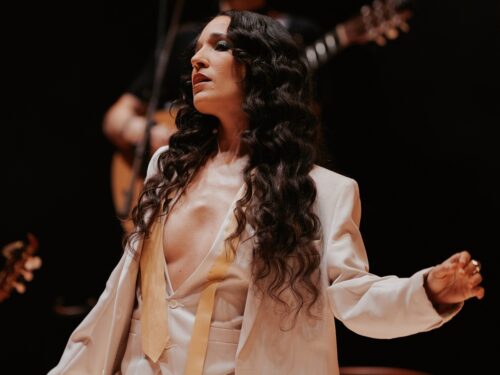
When iLe decided to strike out on a solo career in 2016, she didn’t just change her name, but her sound as well. (Photo by Chery Viruet)
“It was during my adolescence that my dad started playing music by Cuban female singers for me, and I feel that’s when I developed a deeper connection to the bolero,” iLe says. These dramatic ballads often dealt with love and heartbreak, but “interpreted in a unique way,” she says. “It really captured my attention, especially in the midst of my teenage years when you’re feeling so much.” Decades later, and continuing in the family tradition, she would go on to record boleros written many, many years before by her grandmother, Flor Amelia de Gracia.
“I try to really immerse myself in a song, in the story it tells, and approach it almost like a character,” iLe says. “These boleros, many of them resonate deeply with me. They stir up emotion, bring me to tears, or strike a chord so profound, it feels like they pierce right through my soul.”
One way iLe has found to bring boleros into the 21st century is by playing with listener ideas around gender. She gives the example of Roberto Angleró’s “La Pared” (“The Wall”), one of the first boleros she ever recorded.
“It’s about a wall that divides, a wall coming between a relationship. Usually, it’s a man who sings it.” The song is always directed at a woman. “I left it exactly as it is,” says iLe, “which ends up sparking some interesting reactions. It gives it a slightly different meaning. It’s funny, because for some people, it’s as if it’s something that ‘shouldn’t’ be done—and you’re left wondering, ‘Why not?’”
For iLe, the reactions raise a larger question about who gets to sing a bolero and to whom.
“I believe that everyone should sing their songs to whomever they feel like, to whomever they choose; the gender doesn’t matter,” she says. “The bolero is a genre from so long ago, yet I feel there are still so many ways to play with it today—to bring it into the present moment.”
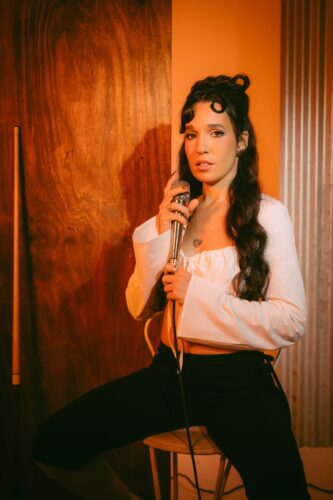
For iLe, “music and art offer new perspectives on the very things we are living through. They help introduce questions.” They provoke critical thinking. (Photo by Edgar Cruz)
iLe’s family has deep roots in political activism stretching back more than a century, and younger generations have carried on that tradition. In 2019, iLe joined Bad Bunny and Residente to write “Afilando los cuchillos” (“Sharpening the Knives”), which became an anthem for the movement to remove Puerto Rico Gov. Ricardo Rosselló after leaked messages to his inner circle revealed his contempt for ordinary Puerto Ricans. The messages, along with public corruption and the government’s faltering response to Hurricane María, brought thousands into the streets. Artists including iLe, Ricky Martin, Bad Bunny and Residente joined the protests. After 12 days, Rosselló became the first governor in the territory’s history to resign.
“There is nothing more potent than a large group of people taking to the streets for a shared cause, a common purpose—to defend their rights or to demand them,” iLe says. “It is an incredibly powerful act, which is precisely why many governments try to prevent it.”
In 2025, iLe’s passionate commitment to anti-colonialism could be heard in her lush and lyrical interpretation of Bad Bunny’s “Lo que le pasó a Hawaii” (“What Happened to Hawaii”) which she performed at the 18th concert of his residency in San Juan.
Colonialism robs nations of their self-sufficiency, a dangerous proposition for the colonized.
“The problem with being dependent on another country, is that you come to believe those other people are going to come and save you.” What if, as with Hurricane María, they don’t?
For iLe, “music and art offer new perspectives on the very things we are living through. They help introduce questions.” They provoke critical thinking.

Ileana Cabra Joglar, better known as iLe’s latest album “Como Las Canto Yo,” is a 21st century homage to those sultry torch songs made famous by Cuban divas of the ‘50s and ‘60s. (Photo by Edgar Cruz)
“I feel like that’s something that’s being lost a bit and it’s really important. People should at least be able to reach their own conclusions, not by getting swept up in the overwhelming amount of information out there, which can be confusing, but by thinking for themselves.”
“It’s tricky because I don’t write from a place of having all the answers,” iLe says. “I simply present my concerns. I share what might even seem perhaps utopian. I just put it out there.” Each of us, she says, should work to develop our own carefully considered opinions, “even if that thinking evolves over time. We’re exercising it like a muscle, right?”
At ZeyZey, iLe hopes to create a communal, collective space for her audience.
“What’s important,” she says, “is that we’re here to support one another. We aren’t alone. That’s what I love most about live settings, they’re spaces for companionship, being there together, and letting go of all of the things we’ve been holding inside.”
She’ll perform a mix of original songs and pieces from this new album. “I’m bringing my full band from Puerto Rico, too,” she says, with two guitars (Adalberto Rosario and David Díaz), bass (Jonathan González), drums (Ismael Cancel) and percussion (Yreri Irady). “I really hope the audience enjoys it—there’s a great community down there in Miami. It’s not just a Latin community, but a Caribbean one, too. I’m really looking forward to making that connection.”
WHAT: iLe in Concert
WHEN: 9 p.m., Friday, Oct 30
COST: $34.90, general admission; $57.85 VIP.
Anyone under 18 must be accompanied by a parent or guardian.
INFORMATION: For VIP table reservations, text Brooks Smith at (310) 923-4086 or email brookssmith@grassfedculture.com. General information at (305) 456-2671 and https://zeyzeymiami.com/
ArtburstMiami.com is a nonprofit media source for the arts featuring fresh and original stories by writers dedicated to theater, dance, visual arts, film, music and more. Don’t miss a story at www.artburstmiami.com.