
Artburst Extras
2026 Miami Arts Marketing Project conference spotlights creative growth, entrepreneurship
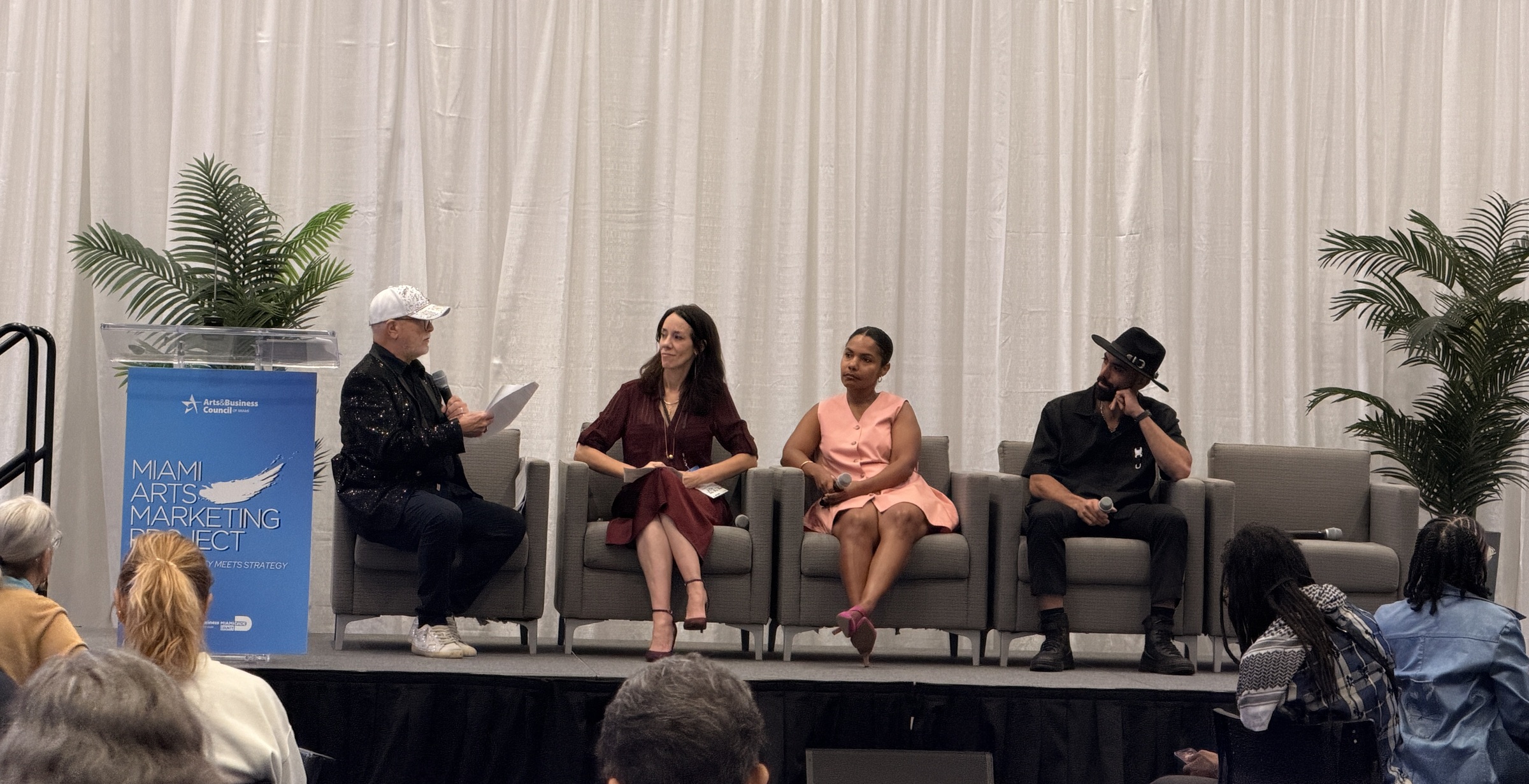
From left, George Neary, founder of Tours ‘R Us moderated the day’s first panel “Scaling Creative Growth,” with Krista Oldfield, chairperson, Miami-Dade Beacon Council Financial Advisory Council, Dejah Carrington, co-founder of the art membership program at Commissioner, and Kendrick Vasquez, founder/creative director of HGAB Studios. (Photo courtesy of Arts & Business Council of Miami)
Mitchell Bierman, the keynote speaker at this year’s 2026 Miami Arts Marketing Project addressed Miami’s arts leaders, artists, and creatives, and individual artists and creatives, acknowledging the importance of connectedness in continuing to shape the “community’s identity.”
Bierman was one of 12 speakers and panelists at the annual conference on Thursday, June 11 at Miami-Dade College’s Wolfson Campus.
Bierman, an attorney with Weiss Serota Helfman Cole + Bierman, who has served on the boards of Perez Art Museum Miami, Miami-Dade Art in Public Places and the Miami-Dade County Department of Cultural Affairs presented “Building Miami: The role of Arts, Culture, and Creativity in a Global City.”
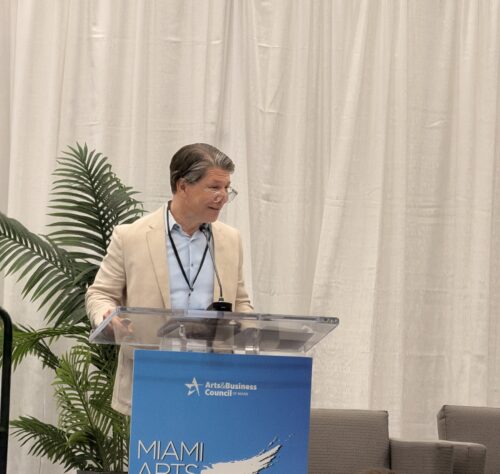
Attorney Mitchell Bierman of Weiss Serota Helfman Cole + Bierman, the day’s keynote speaker, presented “Building Miami: The Role of Arts, Culture, and Creativity in a Global City.” (Photo courtesy of Arts & Business Council of Miami)
“As a third-generation Miamian,” said Bierman, “I have seen our city evolve into what is has become, a global international city.”
He recalled when in the 1980s the Concert Association of Florida, New World Festival of the Arts, artist Christo’s Pink Islands project and then the television show “Miami Vice” happened and “it changed our idea about ourselves, we were cool.”
Bierman pointed out that decades later brought the Miami City Ballet and Edward Vilella, New World Symphony and Michael Tilson Thomas, the Miami-Dade Department of Cultural Affairs helmed by Michael Spring and the Miami-Dade Art in Public Places program. “All those began to create the cultural fabric we have in Miami today,” said Bierman.
He talked about the Kaseya Center (formerly the American Airlines Arena), and Marlins Park (now loanDepot Park) which he said “are more than just sports venues. Then Art Basel in the 2000s put us on the global stage.”
Creating civic identity and dialogue plus telling community stories “that connectedness can be difficult to achieve but these cultural institutions are helping shape our community’s identity.”
Moderating the day’s first panel “Scaling Creative Growth,” was George Neary, founder of Tours ‘R Us and former associate vice president of cultural tourism for the Greater Miami Convention & Visitors Bureau. Joining him was Dejah Carrington, co-founder of Commissioner, an art membership program, Kendrick Vasquez, photographer/videographer, and founder/creative director of HGAB Studios. and Krista Oldfield, chairperson, Miami-Dade Beacon Council, financial advisory council.
When the question was posed about how artists can find success on their own terms and remain financially sustainable, the group responded with advice from their own career trajectories.
“Align with what feels natural, this helps it feel right and you’ll find your people/tribe across all sectors. Remember we’re all individuals on our own path,” said Oldfield.
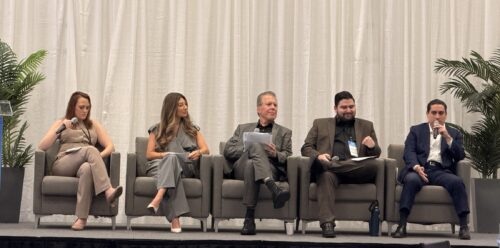
Emily Finch, assistant professor of Reference and Scholarly Communication at the University of Miami, moderated “Legal Foundations and Creative Entrepreneurs,” with Kayla Moran, founder and managing attorney at Kayla Moran Law, Alan David Barson, partner, Greenspoon Marder, Tyler Litwak, associate, Malloy & Malloy and Zachariah Evangelista, partner, Ser & Associates. (Photo courtesy of Arts & Business Council of Miami)
Carrington said, “define your purpose and get real with your own expectations. There’s a difference between market dynamics and creativity itself. Being an artist is difficult; I don’t want to sugarcoat it because it is important to acknowledge what you might give up in that creative process and ensure you are ok with that.”
And Vasquez urged attendees to “understand what success means to you and decide which lifestyle helps you build that.”
Seeing themselves as entrepreneurs is often difficult for artists and creatives but is necessary as they often work as both collaborators and leaders and is something with which all three panelists could relate.
“80% of the conversation I have with creators is helping them understand they are entrepreneurs, whether it is doing something as a creative individual or an organization, you are an entrepreneur,” said Vasquez.
Acknowledging the entrepreneurial process is vital to continue moving forward. “Be clear about your value and how you present yourself,” advised Carrington, “establish a long-term vision and develop relationships early on, all of this is entrepreneurial work.”
Relatability and a unique perspective are also critical. Said Oldfield, “look closely at what you offer and why it is important to your audience then find a link to creating visibility and showcasing your value.”
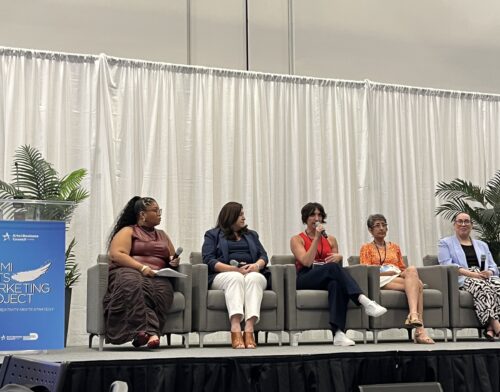
From left, Heaven Jones, outreach manager Arts & Business Council of Miami, moderates “Communicating Your Work” panel with Suzanne Scarfield Scarano, president of Forethought Marketing, Neysa King, founder of Heart-Centered Writing, Lisa Palley, of Palley Promotes and JennyLee Molina, principal of JLPR and 305 Day founder. (Photo courtesy of Arts & Business Council of Miami)
Next up was “Communicating Your Work,” moderated by Heaven Jones, outreach manager, Arts & Business Council of Miami, and featuring Neysa King, founder of Heart-Centered Writing, Suzanne Scarfield Scarano, president of Forethought Marketing, Lisa Palley, principal of Palley Promotes, and JennyLee Molina, principal of JLPR and 305 Day founder.
The communications experts tackled questions about marketing, communications, and publicity.
Collectively, the foursome agreed that public relations is about building relationships that are mutually beneficial.
Panelists stressed the importance of authenticity, strong writing, active listening and consistently sharing one’s work to build trust and visibility.
When it comes to communicating authentically, King said, “It requires all the weird connections you have and the courage to express that openly and honestly How do I sound true and like myself, that is the true competitive edge.”
Creating a clear position is vital for any organization, “everyone has their own anchor and for me it’s authenticity, adventure and fun, they need to be part of what I do. Ask yourself what you are providing for the client, be clear on what you do; what benefit will they have from the experience; why do you believe it will be beneficial to them?”
Building trust is also key, said Palley. In the more than two decades she worked with the Miami Book Fair she emphasized that she “worked to involve the community, each day I grew as a professional and was also bringing people into the fold.”
Molina focused on “fine tuning your bio, your website, whatever you use to present your work, you have to continually evolve and change,” a philosophy that helped her organic idea of Miami’s 305 Day into a 13-year success story.
Closing out the conference was the panel “Legal Foundations and Creative Entrepreneurs,” moderated by Emily Finch, assistant professor of Reference and Scholarly Communication at the University of Miami. Panelists included Tyler Litwak, associate at Malloy & Malloy; Zachariah Evangelista, partner with Ser & Associates; Kayla Moran, founder and managing attorney at Kayla Moran Law; and Alan David Barson, partner at Greenspoon Marder.
The panel explored how being legally literate can protect creatives, why incorporating as an artist can support long-term sustainability, contracts, labor, and ownership, and how to determine when to seek legal advice.
“Everything nowadays is about content, and everything is being clipped making it imperative to own your creation,” said Morgan. Barson followed saying, “ownership determines who captures the value, if you understand the rights of your work, you can protect your future options for using and getting paid for your work.”
What if a creative project spawns into something larger? “As s a creative it is important to protect that project in the early stages,” said Litwak
Panelists offered practical tips for artists and creative entrepreneurs navigating the business and legal aspects of their work. Some of the advice was:
- Choose the business structure that best fits your goals rather than assuming an LLC is right for everyone.
- Build relationships with trusted attorneys and accountants who understand your work.
- Use contracts to define ownership, payment, royalties and responsibilities before projects begin.
- Treat sweat equity as an asset when negotiating collaborations.
There are Miami Arts Marketing Project programs throughout the summer with a series of virtual Maximizing MAMP Workshops coming up July.
Info and register at artsbizmiami.org/events.
ArtburstMiami.com is a nonprofit media source for the arts featuring fresh and original stories by writers dedicated to theater, dance, visual arts, film, music and more. Don’t miss a story at www.artburst.com.